DANVILLE’S NEPHROTIC SYNDROME FOUNDATION BUILDS NETWORK OF CARE AND SUPPORT
By Traci Wyss
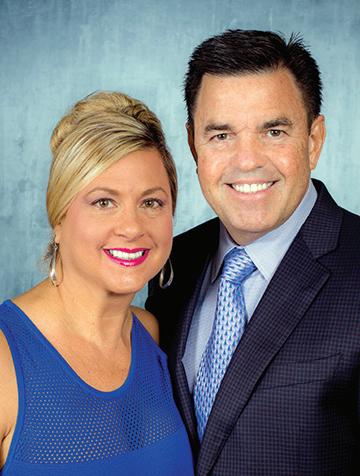
Isolation amidst a life-altering diagnosis can be daunting, and when it’s your child who is sick, the fear and uncertainty are even more profound. This was the reality for Alamo residents Andi and Tucker Callaway when their six-year-old son was diagnosed with nephrotic syndrome, a rare kidney disorder. Lacking a community who understood the diagnosis, they were overwhelmed by myriad changes for their son and family as they dealt with symptoms, treatments, and side effects.
This experience inspired the Callaways to create The Nephrotic Syndrome Foundation (NSF) in 2017 to connect families affected by nephrotic syndrome while educating the community. March is National Kidney Month, a time to raise awareness across the US about kidney health and diseases that affect the kidneys. Read on to learn more about nephrotic syndrome and how you can help this local foundation make a difference.
According to the Cleveland Clinic, nephrotic syndrome is a condition where the kidneys release an excessive amount of protein into the urine. This is typically caused by an issue with the kidney filters (glomeruli). Causes can vary, but symptoms include edema, weight gain, fatigue, decreased appetite, and trouble sleeping. Nephrotic syndrome can lead to serious complications, such as infections, anemia, and an increased risk for heart attack and stroke. It is critical that nephrotic syndrome patients work closely with their medical providers to manage the condition in addition to home monitoring of protein levels in their urine.
The majority of cases are diagnosed between the ages of four and six. Nephrotic syndrome affects about 1 in 50,000 children a year, according to the American Kidney Fund. Compare that to the rate of Type 1 diabetes in children (1 in 400-500) and you can see why awareness and support systems are not as robust for nephrotic syndrome. Additionally, experiences with nephrotic syndrome can range widely. Some children may experience a single episode and go into remission after treatment, while others
See NSF continued on page 14
MARCH 2026
VOLUNTEERS NEEDED FOR ANNUAL DANVILLE ‘LEND A HAND DAY’ APRIL 25
The Town of Danville is calling for volunteers to make a difference in the lives of local seniors during the upcoming “Lend a Hand Day” to be held Saturday, April 25th. This rewarding community event offers an opportunity to provide yard work assistance to seniors in need, fostering connections and lending a helping hand to those who could use a little extra support.
Volunteers can choose between three shifts: a partial day from 8AM to 11AM; a full day from 8AM to 1PM; and volunteers age 25 and older can register as a Project Manager for the full day. Tasks include raking, weeding, spreading mulch, and other general yard maintenance duties.
Participants must be 16 years or older, while volunteers age 12 to 15 are welcome to join with adult supervision. This event is a great chance for families, friends, and community groups to come together and make a meaningful impact. Join us by signing up at danville.ca.gov/volunteer Danville seniors who would like to be considered for yard assistance are encouraged to submit a request form at danville.ca.gov/seniors. Only a limited number of homes can be serviced, and availability is not guaranteed. For more information, please contact the Danville Senior Center at 925-314-3430 or at seniors@danville.ca.gov.
FINDING CLUBS, COMPETITIONS, AND INTERNSHIPS JUST GOT EASIER FOR TEENS
Finding good extracurricular activities can be hard for a lot of high school students. Between school, homework, sports, and other commitments, many students miss out on great opportunities simply because they don’t know they exist. To help with this, Monte Vista High School sophomore student Dylan Chandran created ECFinder.org, a free website that helps students find extracurricular programs all in one place.
ECFinder.org has over 600 programs in areas like STEM, medicine, arts, music, social sciences, languages and community service. Students can filter programs by grade level, interest, cost, and time commitment, which makes it easier to find activities that fit their schedules and goals. The website also has customization features to make it easier for students to keep track of opportunities. Each program page gives a short summary, the location, the deadline, and a direct link to apply. Students can favorite programs they’re interested in and add deadlines to a calendar so they get reminders and don’t miss important application dates.
See Teens continued on page 8
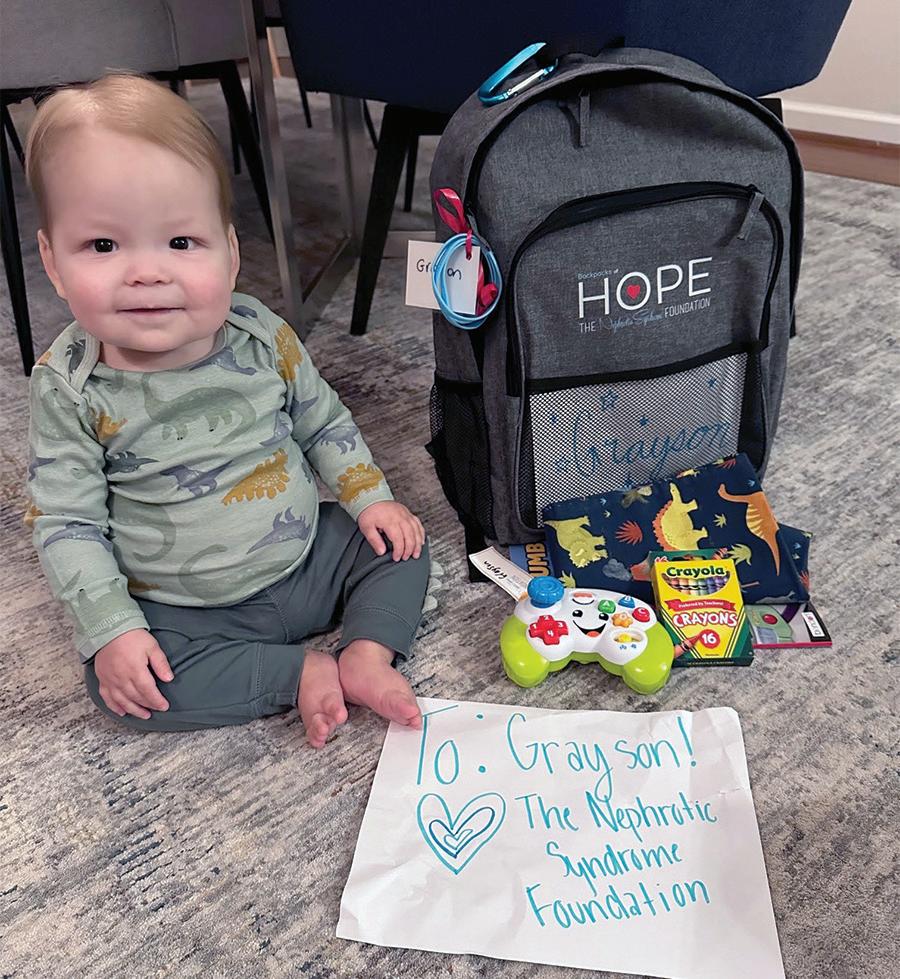
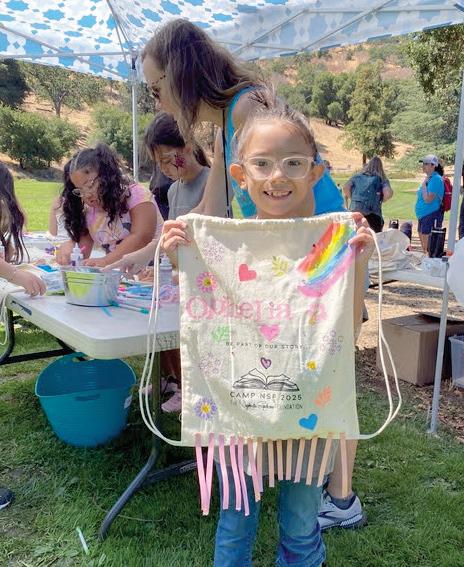
A child showing off his Backpack of Hope gifted to him by the Nephrotic Syndrome Foundation.
BOULEVARD VIEW
By Alisa Corstorphine, Editor and Publisher
My oldest kid, actually not much of a kid anymore with two children of his own, has always been an inventor, business-focused, and an entrepreneur. It started when he was young with things like “Cardboard Cafe” -- a lemonade stand fashioned from an old painted refrigerator box. He then sold candy, he purchased at Sam’s Club and Costco, at his siblings sporting events and to his buddies, keeping his “inventory” in his backpack. He learned value. He learned about cost of goods sold (I wasn’t going to fund the sales!). He learned about marketing. Paired with a home “invention center,” complete with hammers and nails, glue guns and tape, old egg cartons, pipe-cleaners and various other doo-dads and odds and ends, he spent his time creating. That knack to tinker and invent continues well into adulthood and now as a side hobby/business.
A recently found sketch of one of his first inventions was for a pair of “LEGO land loafers,” shoes for the (then) new mini figurine people. While his LEGO land loafers never made it to production, he has had several other products that have. Including his latest “OttoBag,” a wallet-sized dog waste bag so dog walkers are never without. He also branched out and purchased an existing product - a “door latch” restorer to help fix pesky doors that won’t stay closed - www.gatorstrikeplates.com. Through these endeavors he has refined his knowledge of sales, manufacturing, and marketing. With the advent of 3D printers, laser cutters, on-demand-printing, gig-workers and the like, he has found many of his ideas can easily (and relatively inexpensively) be tested out and prototyped from a myriad of materials, even in a quantity of one!
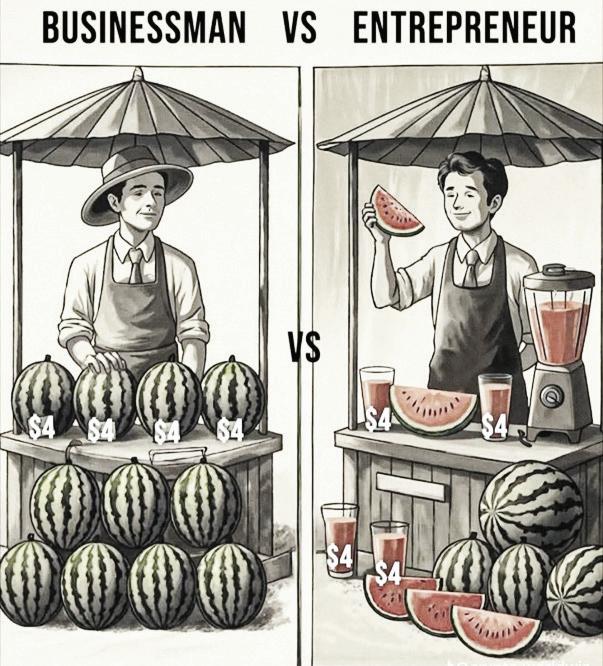
I saw a post about the differences between a “businessman” and an “entrepreneur” and the graphic and analogy fit my entrepreneur to a tee. The example given was for the sale of a whole watermelon for $4. While a watermelon is a great accompaniment to a sandwich or in a fruit salad, to get it and enjoy it, you need to buy it, haul it home, wash it, cut it, deal with the seeds, and clean up the mess. If you want juice, you’ll need a blender, more time, and additional cleanup. In our fast-paced, ready-made world, time is often more valuable than money and the entrepreneur often looks for ways to make our lives easier.
So, now, we purchase from the entrepreneur a wedge of a pre-cut melon or a ready-to-drink, perfectly chilled glass of watermelon juice for the same $4. It saves us the time of prep, cleanup, and effort. For a busy worker, parent, or anyone juggling a hectic schedule and on the go, that time savings is worth far more than the raw cost of the watermelon. For the entrepreneur though, each wedge or glass of juice may be sold for the same $4 providing many times the revenue of the initial ingredient.
Many of us have big ideas but few of us see them through. There has never been a better time to create, invent, test, and try...even the most “crazy” of ideas. If they work, marketing can be as simple as a video, a post, or an ad in this paper!
With spring in the air and summer on the horizon, how can you nurture some of your or your children’s ideas? The wallet-sized dog waste bag may not be the “next big thing”... then again, it could go viral and surprise us all. You never know until you try!
WHAT'S HAPPENING AT MSRV IN MARCH
As the Declaration of Independence was signed on the East Coast, the Anza expedition arrived at its destination on the West Coast. These events would dramatically shape the cultural and political landscapes of the United States. Collaborating with the National Park Service (NPS), the Museum of the San Ramon Valley (MSRV) presents an exhibit that celebrates the Anza expedition which opened the Presidio in San Francisco, established Mission Dolores, and led an exploration of the East Bay. The expedition’s success depended not only on careful planning and leadership, but also on provisions like chocolate, a vital source of sustenance and morale for the travelers during their arduous journey across desert and mountains. The exhibit will run until June 1st.
The “Third Thursday” free virtual program will be held on March 19th at 11:30AM. The speaker will be Christopher Bentley from the NPS. He is in charge of the Anza 250th celebration events. His presentation will be on the Anza Expedition. To attend please register at museumsrv.org, select “What’s On,” and then “Virtual Programs.”
A series of afternoon programs will also be held at MSRV on the second and fourth Saturdays at 2PM in March, April, and May during the Anza exhibit.
On March 14th equestrian Bob Cooper is the speaker. His topic, “Fifty Years Ago – the Anza Expedition Re-enactment from San Francisco to Mexico City.” Cooper portrayed Father Pedro Font for part of the re-enactment and has many stories about the event. The exhibit includes photographs and displays from this remarkable excursion in 1976.
On March 28th the museum’s collection manager Natalie Hagar will talk about chocolate and the Spanish. Her topic: “A ‘Call to Chocolate,’ A Morning Essential During the Anza Expedition.” The Aztec elite introduced chocolate to the Spanish in the 1500s – and the rest is history.
The Museum is located at 205 Railroad Ave in Danville. The Museum is open Tuesday-Friday 1PM-4PM, Saturday 10AM-1PM and Sunday noon-3PM. For more information, visit museumsrv. org or call 925-837-3750.
GOT SNEAKERS?
Donate your Athletic Shoes in ANY condition, new to very used.
WANTED All sizes, All styles, All brands.
DROP-OFF
Friday, April 17th, 2PM-5PM
Alamo Women’s Club 1401 Danville Blvd., Alamo
Hoka,
Celebrate Earth Day
Sketch for LEGO land loafers.
THE 39 STEPS, ABRIDGED A MONTH OF HITCHCOCK, MYSTERY, & LAUGH-OUT-LOUD FUN
Every weekend in March, a Hitchcock thriller becomes a hilarious stage adventure. Imagine Alfred Hitchcock meets Monty Python, then add a high-speed train chase, international espionage, and four wildly talented actors playing more than 100 characters.
With its blend of suspense, slapstick, and theatrical creativity, The 39 Steps, Abridged promises to be a great show at the Village Theatre, located at 233 Front Street in Danville.
If you love classic thrillers, sharp comedy, and the magic that only live theatre can deliver, this is one production you will not want to miss. Tickets are $32-$37, and group pricing of $20 per ticket is available when purchasing 15 or more tickets. The production runs Fridays, Saturdays, and Sundays March 6-29 . For more information and tickets, visit danville.ca.gov/tickets
CLOVER CARNIVAL
The Contra Costa County Clover Foundation (4CF) is holding its second annual Clover Carnival. 4CF was founded in 2022 to provide support to enhance the quality of Contra Costa County agricultural, Farm Bureau, and/or Grange programs, with an emphasis on youth programs. Join in for dinner, followed by a silent auction with a variety of themed baskets. Funds raised will support Contra Costa 4-H programming and scholarships. For youth attendees, Contra Costa 4-H will host a variety of carnival games. The event will be held Saturday, March 21st from 6pm to 9pm at Contra Costa Event Park located at 1201 W 10th St, Antioch. Purchase tickets at givebutter.com/c/e3ezFA. Tickets are $45 for adults (13+) and $30 for children 12 and under. Tickets include tri-tip, chicken, or a vegetarian option for dinner. For questions, please mail Briana at ccccloverfoundation@gmail.com
SENIOR RESOURCE FAIR FREE EVENT FOR SENIORS, ADULT CHILDREN, AND CAREGIVERS!
Join Sensational Seniors for a morning filled with exciting and relevant resources for seniors, caregivers, and the children of older adults. The Senior Resource Fair is a free indoor event open to the public designed to connect you with valuable information, services, and support. The fair is presented by local non-profit, Sensational Seniors Events.
The fair will be held March 12th from 9AM to noon at St. Matthew Church located at 399 Wiget Lane, Walnut Creek.
There will be free valet parking, mini workshops, local senior programs, helpful tips, interesting booths, raffle prizes, light refreshments, and more!
To attend, please RSVP at Sensationalseniors.net/event/walnut-creek2026-senior-resource-fair/
SPECIAL OPEN HOUSE EVENTS
Lunar New Year TEA tasting Tuesday, March 3 rd , 3-6 pm
Vintage jewels & Acorn art
Tuesday, March 17 th , 12-5 pm
391 Hartz Avenue, Danville
925-837-2664
Open Daily
Instagram: Cottage_Jewel_Antiques
Diablo Magazine’s “Best Place to go Treasure Hunting”
Carolyn Gwynn
CHROMATICA PRESENTS
“THERE IS SWEET MUSIC HERE: MUSIC TO MOVE THE SOUL”
East Bay’s popular chorus, Chromatica, invites you to be moved by exquisite choral music at 7pm on April 25th at Peace Lutheran Church, 3201 Camino Tassajara in Danville, and at 4pm on April 26th at Holy Shepherd Lutheran Church, 433 Moraga Way in Orinda. The Danville concert will include Chromatica’s popular post-concert reception.
Fresh from its first out of town performance in Santa Fe, New Mexico where it received a standing ovation for its performance of Christopher Tin’s Transfigurations, Chromatica returns with a selection of thrilling choral pieces for its spring concerts. David Huff, Chromatica’s founding director, has assembled some remarkable pieces sung in English, Latin, German, and Spanish to illustrate the enduring power of great choral music. Some compositions will include stringed accompaniment.
Poet Alfred Lord Tennyson wrote in an 1833 poem: “There is sweet music here,” to celebrate the emotional impact of music. In a setting composed by Zachary Moore, it frames Chromatica’s spring concerts.
Brahms, Schubert, and Schumann were all masters of vocal music, and the concerts include Brahms Abendlied , Schubert’s An Die Musik , and Schumann’s Widmung Mozart’s Sanctus from his Requiem, and Bruckner’s Locus Iste add more classical weight.
There are two Alleluias – one by Buxtehude and one more modern by Randall Thompson. Contemporary pieces by Randall Stroope (the lovely Amor de mi Alma), two pieces by Ola Gjeilo, and Dan Forrest’s The Sun Never Says add a modern emphasis to the concerts.
“It has always been Chromatica’s goal to identify and perform the best of choral music. These concerts show the extraordinary depth and beauty of choral writing across several centuries. Performing these pieces is both a privilege and a joy – and I’m sure our audience will love them” said David Huff, founding artistic director.
Concert tickets: Tickets are $30 for adults, $10 for students, and children 10 and under are admitted free. For concert tickets and to find out more about Chromatica, visit www.chromaticachorale.org. Tickets for all concerts are also available at the door. For a more personal look you can find Chromatica on Instagram (@chromaticachorale) or at Chromatica on Facebook.
AAUW DAW GARDEN TOUR
Join the American Association of University Women (AAUW) Danville-Alamo-Walnut Creek (DAW) branch
24th Annual Garden Tour
Immerse your senses and nourish your spirit with a self-guided stroll through five wonderful private gardens in Danville and Alamo.
It's Mother’s Day Weekend!
Bring Your Mom or a Friend!
Friday, May 8th and Saturday May 9th, 10AM – 4PM
Tickets: $45 per person through April 23, $50 afterwards. To purchase tickets use QR code.
To learn more about AAUW, visit daw-ca.aauw.net
About Chromatica: Chromatica Chorale was founded in 2011 and now includes 32 men and women singers. It has performed 26 prior series of ticketed concerts in the East Bay, attracting large and enthusiastic audiences. Led by David Huff, an outstanding director and operatic tenor who has sung both in New York and San Francisco and accompanied by the exceptional pianist and assistant director, Julie Rieth, it seeks to perform challenging pieces at a high level of professionalism.
FAMILY CONCERT
JOY OF THE SYMPHONY
The Diablo Symphony Orchestra’s (DSO) annual family concert will be held on March 29th at 2PM at the Lesher Center for the Arts in Walnut Creek. Titled “Joy of the Symphony,” the concert showcases the instruments of the orchestra in Benjamin Britten’s “Young Person’s Guide to the Orchestra,” narrated by Bay Area storyteller Josh Kornbluth. Also featured are “Star Wars, Main Theme” by John Williams and the first movement of Grieg’s Piano Concerto with Ellie Xuan, this season’s Young Artist Competition winner and seventh-grade student in San Ramon.
FROM QUIET REFLECTION TO RADIANT TRIUMPH
NORTHERN LIGHTS WITH CALIFORNIA SYMPHONY
Experience a soundscape where Nordic light, depth, and resonance surround you. Inspired by the beauty of the Northern Lights, this concert program unfolds from stillness to strength. Silvestrov’s “Quiet Music” opens a space for calm reflection, while Pärt’s “Tabula Rasa”—featuring California Symphony Concertmaster Jennifer Cho and Assistant Concertmaster Sam Weiser—offers a focused, expressive dialogue between two violins. Sibelius’s Symphony No. 2 rises in sweeping waves, revealing breathtaking beauty and a spirit of resilience amid uncertainty.
Tickets are available at the Lesher Center for the Arts 925-943-7469 or online through the DSO’s website at www.diablosymphony.org. Discounts for youth and groups of 10+ seniors are available; tickets for children 12 and under are free. Tickets will also be available at the door.
DANVILLE COMMUNITY BAND PERFORMANCE
The Danville Community Band slides into 2026 with a musical jaunt Around the World in 90 Minutes. Featured will be internationally-inspired tunes such as Grainger's Irish Tune/Shepherds Hey, Wagner’s Dei Meistersinger, Cesarini’s Greek Folk Song Suite, Saint Saёns’ March Militaire Francaise, and more!
The performance begins Saturday, March 21st at 3PM at Community Presbyterian Church located at 222 W. El Pintado Rd in Danville.
Admission is free and donations are accepted. There will be general audience seating. We hope you will join us.
For more information about the Danville Community Band and future performances, please visit www.danvilleband.org
Enhance your night with signature cocktails, strike a pose at the photo booth, and attend a free 30-minute pre-concert talk by award-winning instructor Scott Foglesong, one hour before the performance. Reserve your seats today to experience this concert live.
NORTHERN LIGHTS: Saturday, March 21, 7:30PM and Sunday, March 22, 4PM. Lesher Center for the Arts, 1601 Civic Drive, Walnut Creek. Purchase tickets online at californiasymphony.org or by phone at the Lesher Center Ticket Office, 925-943-7469 (Wednesday–Sunday, noon–6PM). Prices start at $50/$25 for students.
FREE GENEALOGY RESEARCH ASSISTANCE
Are you looking for your ancestors? Do you want to do a little genealogy research? Could you use some help or direction?
Bring your questions to the Danville Library, located at 400 Front Street, Danville on Tuesday, March 10th from 10am-1pm Genealogy docents from the San Ramon Valley Genealogical Society will be available to help you take your research further with print resources from the library’s genealogy collection or online material. The free genealogy research assistance is provided by the San Ramon Valley Genealogical Society in partnership with the Danville Library. For questions, call 925-314-3750 or visit srvgensoc.org
Ellie Xuan
Photo By Kristen Loken.
ROTARIANS PACK 15,000 MEALS FOR GLOBAL HUNGER RELIEF
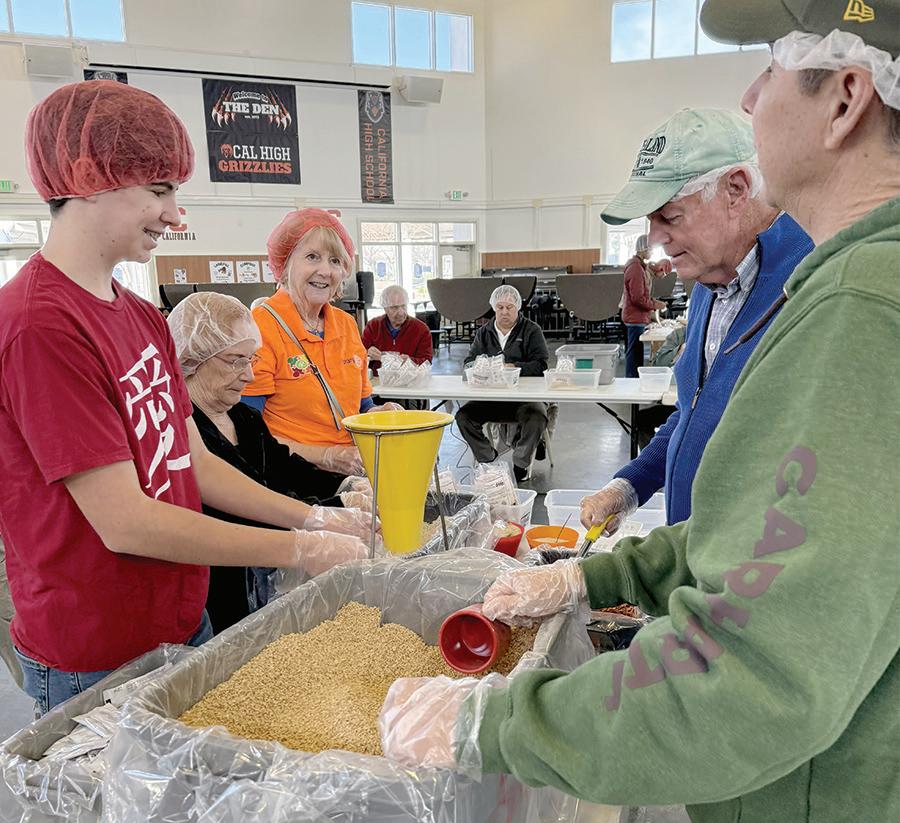
In early February, 55 participants –including Danville San Ramon Rotarians, their family members, friends, and community volunteers - came together for a high-energy service project, packing an impressive 15,000 meals to help fight global hunger.
The annual meal-packing event reflects Rotary’s ongoing commitment to being People of Action, bringing people together to make a tangible difference both locally and around the world. Tables were filled with smiling faces, steady assembly lines, and a shared sense of purpose as volunteers worked side-by-side to reach their ambitious goal.
The meals will support hunger relief efforts through Rise Against Hunger, an international organization dedicated to providing nutritious food and strengthening food security in vulnerable communities.
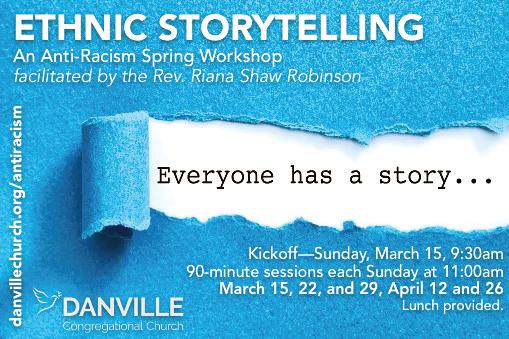
ETHNIC STORYTELLING
Danville Congregational Church (DCC) United Church of Christ maintains a sincere commitment to justice, racial equity, and faithful public witness. We all are now witnessing the level of racism in society that is happening on a daily basis that is causing many of us to question our stories of what is real and true and long for practices that are spiritually grounding, relationally meaningful, and sustainable.
To revitalize and extend our commitment to Anti-Racism, DCC is offering a new workshop series—Ethnic Storytelling—that offers a refreshing entry point into this work. Rather than beginning with what people should “do” or should “know,” this process—facilitated by DCC friend the Rev. Riana Shaw Robinson—begins with who we already are: our families, migration stories, losses, values, faith traditions, and survival stories.
For white people of faith or no faith tradition, this deep work is especially valuable. Whiteness often goes unnamed and unexamined, leaving justice work feeling external, intellectual, or burdensome. Naming one’s own ethnic story restores particularity, responsibility, and agency—without centering guilt or defensiveness. By connecting this way with ourselves and others, we can more readily see and identify areas of need and attention in our own world experience.
This process is designed to help us re ground justice commitments in faith, relationship, and story; reduce burnout by shifting from performative antiracism to formative practices; and build the spiritual and relational capacity needed for long term justice engagement.
This workshop series (see ad above for dates) is open to the community and is offered at no cost. For more information visit danvillechurch.org/antiracism
DANVILLE CITIZENS POLICE ACADEMY
Residents are encouraged to apply to the Danville Citizens Police Academy, a six-week course which begins April 15, 2026
The course will cover a variety of essential law enforcement topics, including: Patrol Procedures, Traffic Enforcement, Impaired Driving Investigations, Crime Scene Processing, and Criminal Prosecution Classes will be held Wednesday evenings from 6 to 9PM with one Saturday session.
For more information or to apply, please visit danville.ca.gov/541/ Citizens-Police-Academy or call 925-314-3717.
Special thanks to Rotarian Daniel Kodam for once again coordinating this impactful annual event - an inspiring example of how Rotary’s leadership and community collaboration turn many helping hands into meaningful service. Join us! Contact Club President Julie McKinney at 925997-9046 or visit danvillesanramonrotary.org to learn more.
UPCOMING BOOK SALE
The Friends of the Danville Library (FODL) will host a pop-up used book sale to raise money for our local library on Saturday, March 28th from 10am to 2pm. The sale will be held in the Mt. Diablo Room of the Danville Library located at 400 Front Street, Danville.
• Book prices start at $2; less for children’s books
• Cash, local checks, and credit cards accepted
• Book donations will be accepted, limit four bags
For more information, visit the bookstore Monday-Saturday 10 am -5 pm to speak with a volunteer.
MONTE VISTA HIGH SCHOOL
By Dr. Kevin Ahern, Principal
With spring only weeks away, the end of February is always a whirlwind at Monte Vista (MV). Our Seniors are beginning to feel the excitement of their upcoming graduation, while the rest of our student body is busy selecting courses and planning schedules for the 2026-27 school year.
Congratulations to our MV Leadership students and their advisors, Tommy Greenless and Chris Connor, for hosting an incredible Tri-Valley Leadership Conference on February 4th. Over 1,000 students from 18 schools across the East Bay participated in this meaningful and positive event.
Also on February 4th, hundreds of MV students exercised their right to peaceful demonstration by staging a walkout and protest during 6th period. A sincere thank you to our site and district teams, as well as the Danville Police, who worked together to ensure the safety of everyone involved.
Kudos to MV’s Dance Program and Director Ryane Siegel for earning top honors at the Hollywood Connection Dance Competition. Our dancers secured four of the top five scores, taking home five first-place and two second-place finishes across a variety of styles.
Teens continued from front page
“I built ECFinder because I saw a lot of students struggle to find opportunities that matched what they were interested in,” Chandran said. “And with college applications becoming more competitive every year, many students feel pressure to find meaningful activities, but don’t always know where to start. There are so many great programs out there, but the information is spread across hundreds of different websites. ECFinder puts it all in one place.”
Teachers and counselors have also seen how helpful the website can be for students. “We’re always looking for ways to help students explore their interests,” said Monte Vista High School counselor Ms. Brown. “ECFinder is a helpful resource students can use on their own as they think about activities and enrichment programs.”
The website has been shared with students at Monte Vista High School and across the San Ramon Valley Unified School District. Chandran also hopes the site can make things more fair for students who don’t have access to private counselors or extra help outside of school.
Since launching, ECFinder has continued to grow based on feedback from students, teachers, and counselors. New categories like arts, music, and medical-related programs were recently added to better match what students are interested in. The website is free to use and meant to help make information about extracurriculars easier for everyone to access.
Chandran plans to keep improving ECFinder by adding more programs and working with schools and student groups to reach more students.
Students and families can check out the website at ecfinder.org.
Additionally, our winter musical, All Shook Up, opened on February 25th. Performances were entirely sold out and nothing short of spectacular. Congratulations to our VAPA teachers—Chris Connor, Rosalind Neisinger, Ryane Siegel, and Ed Cloyd—and their talented students for this outstanding production. It has been a banner month for Mustang Winter Athletics:
• Men’s Soccer claimed the EBAL Tournament Championship with a 2-0 win against De La Salle and proceeded to the NCS opener.
• Men’s Basketball concluded the EBAL regular season with a thrilling comeback, erasing a 16-point deficit to defeat San Ramon Valley (SRV) 54-52. After a gritty win against Alameda in the NCS first round, they face a tough Granada squad next.
• Women’s Soccer celebrated Senior Night with a 1-0 victory over SRV and will move on to the NCS opener.
• Women’s Basketball is eyeing a deep playoff run as they open against Lick-Wilmerding in San Francisco. As we head into the final three months of the school year, campus life will only get busier. I invite our entire community to come out and support these amazing students!
For a full list of what’s happening on campus, visit mvhs.srvusd.net
SAN RAMON VALLEY HIGH SCHOOL
By Ben and Jack Livesay, seniors
With the second semester blazing by, we can’t believe it is already March! This packed month features events from all aspects of San Ramon Valley (SRV), including numerous Performing Arts shows, Spring Sports, Junior Prom, and CAASP testing. The SRV community continues to thrive, and March presents copious opportunities for students to showcase their talent, spirit, and pride for their school as we approach Spring Break.
The incredible performing arts programs continue to proudly represent SRV. This month presents an array of opportunities to witness these students’ hard work and talent on the stage. March marks the district’s celebration of “Music in our Schools”, with Area Choral and Band festivals hosted by SRVHS on March 2nd and 9th, respectively. Additionally, the Theater program proudly presents two shows this month: Anything Goes, spanning March 19-21, and Rehearsal for Murder starting on March 31st. To cap off the month for performing arts, SRVHS hosts an all-day Band and Orchestra festival in the PAC and Commons for the community to enjoy. Be sure to check out the Wolves performing in action!
On March 28th, SRV Juniors will attend their much-awaited Junior Prom! The dance venue is set at Lake Chalet, a beautiful lakeside restaurant with picturesque views and a peaceful outdoor dock setting. The Junior Class officers have been hard at work all year to orchestrate the event, having sent invitations, tasted the menu, and set the bus seats. The event begins with students arriving in their formal attire to check in at SRV and board the luxury buses that transport them to the event. Once at the event, students pick their path to a fun night, and have lots to choose from. Whether it be playing blackjack at the casino, dancing to music mixed by the DJ, singing karaoke, tasting the range of appetizers and food options, posing for photos in the photo booth, or enjoying the lakeside view with their friends, Junior Prom is truly a night to remember!
To focus on the academics at SRVHS, CAASP Testing takes place March 9th through the 27th. During their designated classes, the Junior class will take the CAASP Math and ELA Standardized tests, and Sophomores and Seniors will take the CAST Science exam. Additionally, the Spring Semester Math Lab is open! Math Lab provides help for Algebra 1, Geometry, and Algebra 2 students every Tuesday and Wednesday from 2:45 to 3:30PM. Math teacher Matthew Tolentin proudly runs this extremely helpful tutoring program, presenting the opportunity for students to seek individualized help from teachers, peer tutors, and classmates.
Our Athletics programs proudly represent the commitment and pride students have for their school, and with spring sports officially kicking off, each sport brings the energy and represents the Home of the Champions. Men’s and Women’s Lacrosse start their seasons in March, bringing fast-paced action and teamwork to the field. In the pool, Swimming and Diving athletes showcase their speed and endurance, and grind in preparation for the season’s meets. On the courts, Men’s Tennis begins its season, serving up challenging matches and intense rallies. Track and Field is also well into its season and offers a variety of events for athletes to match their skill set and demonstrate their speed and strength. Meanwhile, Baseball and Softball hit the diamond, with teams taking on league opponents and building momentum for the season ahead. With so many sports starting in March, there’s non-stop energy, excitement, and school spirit to check out.
March is packed with opportunities for students to shine on the stage, in the classroom, and on the field. Be sure to follow along and support the SRV Community and all it has to offer this month! Stay connected by following @srvhswolfpack and your class Instagrams (@srvclassof2026, 2027, 2028, or 2029), and visit srvhs.srvusd.net for the school calendar and latest updates. And, as always, go Wolves!
THE GATTI REPORT: YOUR GREATER DANVILLE AREA REAL ESTATE UPDATE
By Joseph Gatti
The 2026 spring market is officially underway. The coming months will show whether we return to last fall’s slower, volatile pace, or see a more energized, bullish housing market. January and February delivered a mix of market swings and encouraging activity across select price points and property types, with both buyers and sellers showing renewed readiness in the Greater Danville market. As spring unfolds, rising inventory, mortgage rate trends, and buyer response will be key factors to watch. If you’re considering buying or selling in 2026, the Gatti Team, powered by Compass, the nation’s #1 brokerage, is ready to guide you with clarity, strategy, and confidence.
Nationally, inflation is showing signs of easing. The Consumer Price Index (CPI) reported 2.4% on February 13, down 0.3% from December. Markets are now watching the Federal Reserve’s March 18 meeting for potential rate cut signals. Mortgage rates have gradually fallen to 6.05% after hovering near 6.20% from mid-January to mid-February, influenced by bond yields amid a possible U.S.–Europe trade dispute over Greenland during that period. These shifts highlight how global economic policy continues to impact local housing affordability.
Locally, the Greater Danville area—including Alamo, Danville, Diablo, and San Ramon, shows similarities to last year, with one notable difference: pricing. In mid-February 2025, there were 134 active detached listings; this year, there are 152, a 12.6% increase. Last year, 71 homes were under contract with a median price of $2,239,000, compared to 67 pending sales this year at a median price of $1,949,000. While contracts are slightly lower, the median price reflects a possible more significant 13% decline. Pending
Year-to-date sales further emphasize this price shift. From January 1 to mid-February 2025, 67 detached homes closed escrow at a median price of $2,075,000, before prolonged higher interest rates fully impacted the market. This year, the same number sold at a median price of $1,915,000, a 7.7% decline. In the months ahead, market
Looking toward the spring selling season, housing inventory and interest rates will remain central. Many sellers withdrew listings in late 2025 due to cautious buyer demand and a government shutdown. Those homes are expected to return, along with sellers who postponed listing last year for more favorable conditions. If rates stay above 6% and economic uncertainty persists, the market may resemble last fall’s slower, methodical pace. But, if rates drop giving buyers reason to reenter the market, higher inventory could be absorbed, and overall buyer payment trajectories may improve. With inflation easing and interest rates trending toward a potential decrease,
With the spring market underway, now is an ideal time to prepare for your next move. If you’re considering buying or selling in
With 14 years of experience serving the Greater Danville Area, I bring deep market insight and a personalized, strategic approach to every client relationship. As an Associate Broker with Compass, I combine national resources with local expertise to deliver results for both buyers and sellers. I’ve also had the privilege of working alongside my father, Ron Gatti, whose 48 years in local real estate provided a strong foundation in this community. Today, my focus remains on guiding clients with modern strategies, clear communication, and a commitment
HEALTH TIPS FOR TEENS GUM
By Serena Hicks, MVHS sophomore
For many teenagers, a pack of gum is a constant companion in their backpack or pocket. It serves as a quick fix for bad breath after lunch, a way to stay awake during a long lecture, or a nervous habit during a stressful exam. While it might seem like a mindless activity, chewing gum has a measurable impact on both physical health and cognitive performance.
One of the most notable benefits of chewing gum is its effect on the brain. Scientific studies have shown that the physical act of chewing increases blood flow to the brain by as much as 25% to 40%. This boost in oxygen and circulation can improve alertness, shorten reaction times, and enhance memory. For a student sitting through a mid-afternoon slump, a piece of sugar-free gum can act as a natural stimulant, helping to maintain focus when attention naturally begins to wane. Furthermore, the rhythmic motion of chewing can lower cortisol levels, providing a simple tool to manage anxiety during high-pressure moments like finals week.
However, these mental gains must be weighed against the physical toll of “over-chewing.” The human jaw is a powerful tool, but it is not designed for constant, hours-long exertion. Habitual, aggressive chewing can lead to Temporomandibular Joint (TMJ) dysfunction, which manifests as persistent jaw pain, clicking sounds, or tension headaches. Additionally, gum chewing often tricks the digestive system; as you chew, you swallow excess air, which can lead to uncomfortable bloating and gas. Because the act of chewing signals to the stomach to produce acid in anticipation of food that never arrives, frequent chewers may also experience digestive discomfort or acid-reflux symptoms, especially if they chew on an empty stomach.
The impact on dental health is equally complex and depends entirely on the
QUICK TRIPS
By Linda Summers Pirkle
THE EAMES LEGACY
sweeteners used. When choosing a brand, the specific sugar substitute matters just as much as the “sugar-free” label. Xylitol is widely considered the gold standard of gum sweeteners. Unlike other substitutes, Xylitol actively inhibits the growth of Streptococcus mutans, the primary bacterium responsible for cavities. It prevents bacteria from sticking to the teeth and helps maintain a neutral pH in the mouth. In contrast, other common substitutes like sorbitol, while safe in small amounts, are known to cause significant digestive distress or act as a laxative if consumed in large quantities because they are not fully absorbed by the gut. Furthermore, while aspartame is a popular calorie-free sweetener, it provides no dental benefits and has been a subject of long-standing debate regarding its potential to trigger headaches or sensitivities in certain individuals.
To maintain a healthy balance, teens should view gum as a tool rather than a constant activity. Dental experts generally recommend limiting chewing sessions to about 15 to 20 minutes after a meal. This is long enough to stimulate the saliva needed to wash away food particles and neutralize acids, but short enough to avoid overworking the jaw muscles. It is also wise to vary which side of the mouth you chew on to prevent muscle imbalances that contribute to TMJ pain.
In conclusion, while chewing gum offers several cognitive and dental benefits for teenagers, it’s essential to approach it with moderation and mindfulness. The boost in focus, memory, and stress relief can be advantageous during challenging academic moments. However, being aware of the potential physical drawbacks, such as TMJ dysfunction and digestive issues, is equally important. By choosing the right sweeteners and limiting chewing sessions to manageable durations, teens can enjoy the positive aspects of gum while safeguarding their oral and overall health.
Serena Hicks is a sophomore at Monte Vista High School (MVHS) and Teen Health Advocate hoping to improve the health of her community one column at a time.
“I Like Ike” was the campaign slogan for Dwight D. Eisenhower during his 1952 presidential run. Eisenhower, Supreme Commander of the Allied Expeditionary Force in Europe and key architect of the D-Day invasion, served two terms as president (1953–1961). His wife Mamie could have had a slogan of her own: “We Love Mamie.” As First Lady, she was beloved by the American public, especially women.
Author Michael Nordine writes, “Mamie Eisenhower was so tickled by a certain color that her favorite shade was nicknamed ‘Mamie Pink.’ It wasn’t just her dresses that were pink, however —she adorned so much of the White House residence in the color that reporters dubbed it ‘the Pink Palace.’ That included the bathroom, beginning a trend still evident in mid-century homes today. Bathrooms had been styled sanitary white for decades, and the shift to a brighter, happier hue has been identified as a visual marker of the postwar optimism that defined the 1950s. It wasn’t just a few Mamie-heads who got into the action; it’s been estimated that as many as one in four American homes built between 1946 and 1966 had some form of pink bathroom. The trend fell out of favor as the Cold War and space-race ushered in a cooler, more futuristic aesthetic.”
Alongside these bold colors, the mid-century modern (MCM) design style captured the optimism of World War II veterans returning home. This era also saw a population boom: an estimated 37 million babies were born during the early baby boom (1946–1955). In my Danville neighborhood, six families—each with a WWII veteran father—raised a combined 27 children. The local lumber yard, located near San Ramon Valley High School, was a hub of activity with scores of new houses under construction during the 1950s, and the local paint store no doubt carried the requisite “Mamie Pink.”
Mid-century modern design is characterized by uncluttered, functional forms and prominently features warm woods like teak and walnut alongside plastics, fiberglass, metal, and glass. MCM furniture is often multifunctional, emphasizing practicality.
Husband and wife team Charles and Ray Eames were pioneers of the MCM movement. Their groundbreaking, mass-produced, ergonomic furniture used stateof-the-art materials and technologies. Their multiple seating system called Eames Tandem Sling Seating, today seen worldwide, was first installed at the Dulles and O’Hare airports in 1962. The Eames lounge chair and ottoman is widely regarded as one of the most influential designs of the 20th century.
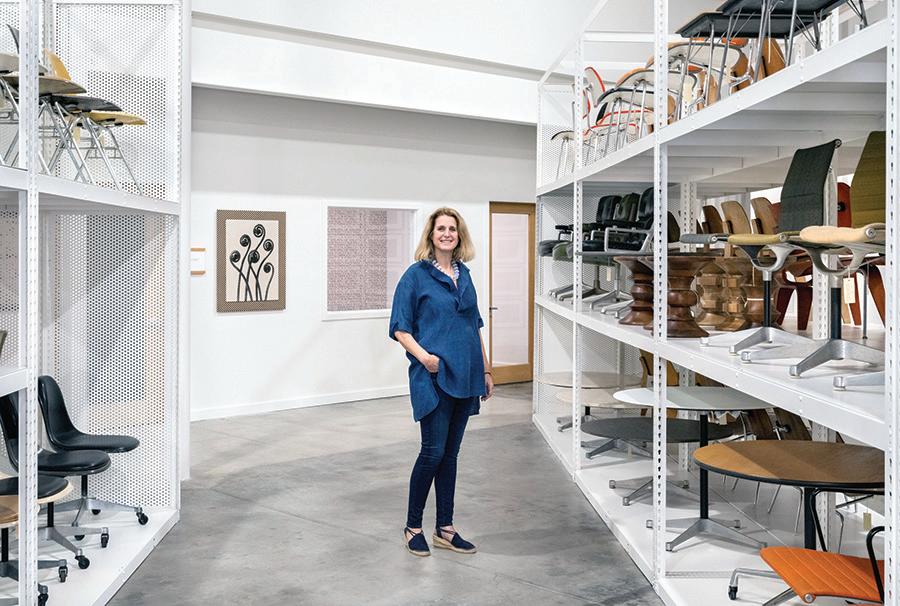
I visited the Eames Institute in Richmond which holds the world’s most significant Eames collection, with over 40,000 items—including industrial designs, prototypes, tools, and personal objects the couple used in their work. The Eames chairs are well known, but the breadth of their work goes far beyond. The Eames Institute brochure says it best: “they engaged in a tireless pursuit of problem-solving design and celebration of discovery that led to some of the most groundbreaking and iconic creations of the 20th century… their vision brought greater awareness to humankind’s impact on the planet, no subject matter or medium fell outside of their wide-angled vision. Their aim was to make things better around them.”
A signature example of the Eames’ problem-solving approach emerged during WWII. A doctor friend noted that metal splints were not only uncomfortable but actually caused pain. Charles and Ray, already experimenting with plywood for chairs, applied the same technology to create a safer, molded plywood splint. Their innovative design solved multiple problems at once: it was better for patients, easy to store, and simple to transport.
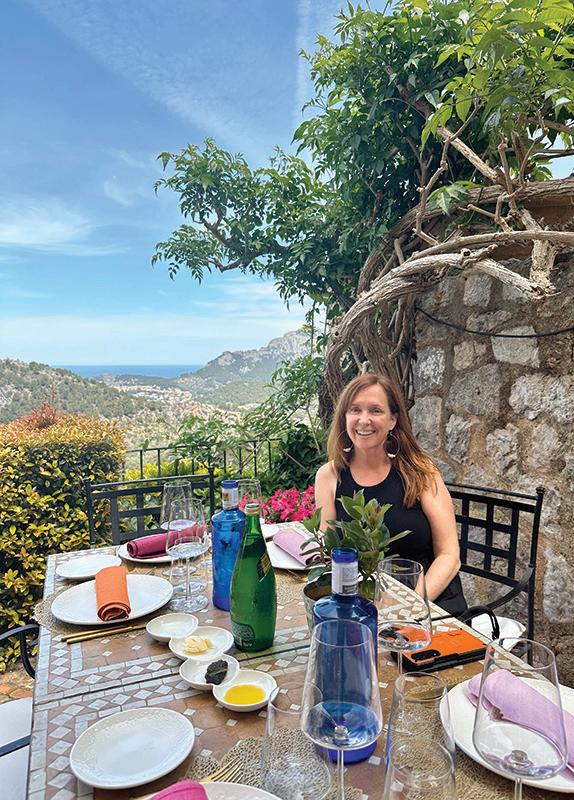
A highlight on my Eames Institute tour was meeting Llisa Demetrios, Charles’s granddaughter, who shared three foundational insights behind her grandparents’ design philosophy:
1. They never called something a failure; they called it a “misconnection” and moved to the next iteration.
2. They believed one solution always informs the next.
3. They allowed designs to emerge from hands-on learning throughout the process.
At the end of the tour, after watching a short film made by the Eames, we were invited to sit and try out a collection of the iconic Eames chairs.
Eames Institute tours are offered Thursdays and Fridays. Tickets are required. They are located at 1330 S. 52nd Street, Richmond. Their website is eamesinstitute.org.
Linda Summers Pirkle is a travel writer and long-term Danville resident.
Eames Institute lobby. Photo by Nicholas Calcott.
Llisa Demetrios. Photo by Nicholas Calcott.
PROPOSED SALES TAX INCREASE FOR CONTRA COSTA COUNTY
By County Supervisor Candace Andersen
The Contra Costa County Board of Supervisors has voted to advance plans for a temporary sales tax measure on the June 2026 ballot. Voters will decide whether the tax should be put in place. The proposed five year, countywide 0.625% tax on retail transactions (except food) is intended to help stabilize services in the face of major federal and state funding cuts. It would apply in all incorporated and unincorporated areas of the county.
The Board’s rationale for asking voters to support another tax is that because of Federal and State healthcare cuts and unfunded new responsibilities, the county is anticipating a revenue loss exceeding $307 million each year by 2028. Already $24 million has been lost this year due to the cuts. Reductions to food-assistance and other human services is also anticipated.
In July 2025 H.R. 1 was passed by both chambers of Congress. It included significant cuts to Medicaid and federal food assistance programs. H.R. 1 included several new requirements for Medicaid recipients. For the first time nationally, most low-income adults aged 19–64 enrolled in Medicaid must demonstrate 80 hours per month of work, volunteering, job training, education, or similar activities to maintain coverage. Starting no later than December 31, 2026, many expansion adults face eligibility checks every 6 months instead of annually, increasing administrative barriers and risk of disenrollment due to paperwork issues.
These changes are anticipated to cause 93,000 residents to lose health coverage. Nearly 29% of Contra Costa residents currently have Medi-Cal coverage. Approximately 9% of residents receive SNAP food assistance. It is estimated that 17,600 could lose their food-assistance benefits. Both groups face reductions under the new federal law and changes in state law.
If adopted, the sales tax is projected to generate approximately $150 million annually. This revenue would help offset some of the federal and state funding losses, supporting essential county services for vulnerable populations. At the same time, the County is actively identifying ways to save money, consolidate programs, and more effectively deliver health care services.
The tax is a general-purpose tax, meaning revenues would be deposited into the County’s General Fund and could be used with flexibility to maintain services. Unlike a special tax, it does not have to be spent on a single, voter-specified purpose. Contra Costa County needs state legislative approval before it can place a new sales tax measure on the 2026 ballot. State law currently caps the total combined sales tax rate and counties can’t exceed that cap without an exception from the Legislature.
The measure includes fiscal accountability provisions, requiring annual independent audits and the creation of a citizens’ fiscal oversight committee to review revenue collection and expenditures. Existing county sales taxes would remain unchanged, and the new tax would be additive, not a replacement for current revenue sources. It will be up to the voters in June to decide!
My office is here to serve the residents of Contra Costa County District 2, which includes Alamo, Blackhawk, Canyon, Danville, Diablo, Lafayette, Moraga, Orinda, Rossmoor, San Ramon, Tassajara Valley, and parts of un-incorporated Walnut Creek. Please contact us if we can provide you with additional information on this topic or on other County issues. I can be reached at SupervisorAndersen@bos.cccounty.us or 925-655-2300.
SIR BRANCH 116 SEEKING NEW MEMBERS! DON’T WAIT, INITIATE!
Established in 1983, SIR Branch 116 (formerly Sons in Retirement) has had a strong showing in our area with a commitment to provide men age 50+ a means to stay actively engaged, and socially connected to enhance their lifestyle. Members live in Alamo, Danville, Lafayette, Moraga, Pleasanton, Walnut Creek, and the surrounding area.
SIR Branch 116’s members enjoy a wide range of organized events from golf in various courses (including Dublin, Pleasanton, Walnut Creek), to bridge, fishing, walking, dining and more.
Behind all of this is the idea that the secret to staying young and leading fulfilling lives relies upon the social relationships people maintain. We define ourselves through our relationships with friends. These connections help us to construct our desired selves, who we are, and who we are becoming.
Find out more by contacting SIR 116 at 925-322-1160, email jeffjohnson9000@att.net or branch116@gmail.com, or visit www.sirinc2.org/branch116
VETERAN SERVICE ORGANIZATION MEETINGS
Veteran Service Organizations meet at the Veterans Memorial Building of San Ramon Valley, 400 Hartz Avenue in Danville, except as otherwise noted.
• American Legion Post 246 meets on the first Wednesday of each month (except August and October). Odd numbered months at noon and even numbered months at 6PM. Visit americanlegionpost246.org, email commanderpost246@gmail.com, or call 925-272-8480.
• Veterans of Foreign Wars Post 75 of San Ramon Valley meets on the third Wednesday of each month at 7PM. Visit vfwpost75.org or email info@vfwpost75.org
• Viet Nam Veterans of the Diablo Valley meets on the first Thursday of each month at 5PM at The Bridges Golf Club, 9000 S. Gale Ridge Rd., San Ramon. Visit vnvdv.org/index.html or call 925-838-6445.
• Marine Corps League Detachment 942 meets on the fourth Saturday of each month at 8:30AM. Visit www.facebook.com/MCL942
• Military Order of the World Wars/Military Officers Association of America meets on the third Monday of each month at 5PM. Email pattywernet@ hotmail.com or cdtaddeo@yahoo.com.
• Blue Star Moms Detachment 101 meets on the second Wednesday of each month at 7PM. Visit www.bluestarmoms.org or call 925-587-4037.
• Veterans Memorial Building of San Ramon Valley holds coffees on Saturdays from 9 AM to noon.
SONS IN RETIREMENT (SIR)
SAN RAMON VALLEY BRANCH #128
Are you a man over 50 looking for connection and camaraderie in the San Ramon Valley? SIR 128 offers exactly that, a vibrant community where friendships flourish and every day brings new opportunities to enjoy life.
Our members share an impressive range of interests: walking groups, wine tasting, book clubs, poker nights, hiking, biking, fishing expeditions, and golf outings for both 9-hole and 18-hole enthusiasts. We also organize monthly excursions throughout the Bay Area, ensuring there’s always something new to explore.
At the heart of SIR 128 are the genuine friendships you’ll build. Monthly luncheons are a member favorite, featuring excellent food and engaging speakers. These events do require advance registration, so be sure to let us know you’re coming. Attending alone? No problem—we reserve a welcoming table specifically for new guests and solo attendees.
Curious about joining us? We’d be delighted to meet you at our next gathering. To learn more or reserve your spot at an upcoming luncheon, email us at membership@sir128.com or visit www.SIR128.com
Your next chapter starts here; come see what makes SIR 128 special!
VALLEY VIGNETTE By Beverly Lane
THE JUAN BAUTISTA DE ANZA EXPEDITION OF 250 OF YEARS AGO
DESTINATION: SAN FRANCISCO BAY
At last – San Francisco Bay! Juan Bautista de Anza’s orders to found a presidio and mission at the San Francisco Bay were accomplished in late March of 1776. His epic expedition began on October 23, 1775, in Arizona.
The expedition had arrived to an enthusiastic welcome at Spain’s northernmost settlement, the Monterey Presidio and Carmel Mission on March 10th. The mission was Father Junipero Serra’s headquarters and other Franciscans there were eager to found new missions. The 240 settlers doubled the number of non-Natives in Alta California. Before moving the colonists further north, Anza organized a 20-man excursion to San Francisco Bay setting out on March 23rd. The exploration included his second in command Lt. Joaquin Moraga and Father Pedro Font, with Anza and Font providing detailed trip diary entries.
This Bay exploration followed the paths of earlier Spanish explorers such as Gaspar de Portola, Pedro Fages, and Antonio Rivera, traveling north through valleys and mountains to the harbor. Viewing the Bay on March 27th, Font wrote that it “…is a wonder of nature and may be called the Harbor of Harbors because of its great size and the number of coves it encloses on its margin or shores and at its islands.”
At the Golden Gate (a later American name), they sited the San Francisco Presidio and a mission near the Dolores River on Ohlone homelands. Natives followed their progress and were usually friendly and curious.
Anza had also been ordered to investigate the East Bay to see if a land route to the North Bay was available. At first, they followed a similar route to that taken by Capt. Pedro Fages and Father Juan Crespi in early 1772, using Crespi’s diary as a guide. They went around the south end of the Bay to the eastern shore, going over multiple rivers and wetlands. Beginning March 31st at Hayward, they skirted the Strait, went through Richmond and Concord, passed over today’s Willow Pass, and traveled through East County along the Delta.
They reached today’s Richmond on April 1st, Palm Sunday. There Font commented on the fog and said a “plague of long-billed mosquitoes” pursued them, while “all the country was very green and flower-strewn, with an abundance of lilies.”
He mentions seeing “four bears which, according to all accounts, are very plentiful through here also, for we saw several Indians badly scarred by bites and scratches of these animals.” Some Indians who saw them ran and hid, but others met them, exchanging gifts of glass beads for roasted soap root. The Indians were particularly interested in trading for fabric.
During their Bay Area trip through Ohlone and Bay Miwok homelands, Font wrote regularly about these Indian contacts. On April 2nd in the San Pablo area, he says an Ohlone village housed “some four hundred persons, (who provided) singular demonstrations of joy, singing, and dancing.” Font indicated that he “interrupted by chanting the Alabado, as we did every day on beginning the journey and as soon as I had finished, they continued their singing and shouting more strongly and on a louder note, as though intending to respond to our own song.” Food was offered by the Natives, including salmon.
The men viewed the Bay from several hills and stopped at Willow Pass where they observed the Sierra Nevadas to the east. Font noted, “In fact, in all my life I have never seen, and I never expect again to see, another horizon with so extended a view.” While Crespi had correctly identified the delta as a rivers-fed body of water which flowed to the Bay, Font was adamant (and wrong) that these waters were part of a freshwater lake. A skilled cartographer, Font’s excellent map of the Bay reflected his observations.
They were unable to continue east or north because of the bays and extensive tule marshes. One of their campgrounds, #101 (beneath today’s Antioch Bridge), is marked by a plaque and an interpretive panel from the East Bay Regional Park District and the National Park Service.
Their return to Monterey took them through the communities of Antioch, Brentwood, Oakley, and Livermore Valley on Bay Miwok and Northern Valley Yokuts lands. Then they chose to go directly south and explore the challenging Diablo Range, which they labeled the “Mountain of Disappointment,” and thence through Gilroy to reach Monterey on April 8th
For Anza and Font, the Bay Area excursion was their final Northern California exploration. After a short rest while Font drew his famous map, Anza and Font with 27 others returned to New Spain. Poignant good-byes were said on April 14th. Historian Herbert Bolton wrote that, as the colonists “parted from Anza, they wept as if saying good-bye to a beloved father.”
Lt. Joaquin Moraga managed the actual settlement of the San Francisco Presidio and Mission Dolores by colonists, troops, and missionaries beginning June 27, 1776, all recorded in the diaries of Moraga and Franciscan Father Francisco Palou. In 1777, the Santa Clara Mission and town of San Jose were founded. The Anza expedition to Alta California and through Contra Costa may be characterized as the beginnings of modern Californian society, even as they impacted 75 Indian tribal homelands. Names of Anza colonial descendants appear throughout California – Pacheco, Berryessa, Bernal, Peralta, Castro, and Moraga are only a few. In the East Bay, the Juan Bautista de Anza National Historic Trail and the Delta DeAnza Trail mark Anza’s 1776 exploration and this year, help to recognize the expedition’s 250th anniversary.
Visit the Museum of San Ramon Valley in downtown Danville to learn more about this expedition at the newly opened Anza 250th Expedition Commemoration exhibit.
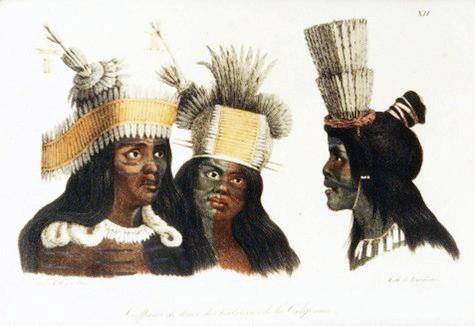
Sources: Herbert Bolton, Outpost of Empire ; Alan K. Brown, With Anza to California 1775-1776 The Journal of Pedro Font ; Maynard Geiger, Franciscan Missionaries in Hispanic California ; Vladimir Guerrero, The Anza Trail and the Settling of California ; Janet Newton, The Anza Expeditions to Alta California 1774-1776 ; 2025 NPS National Historic Trail brochure. Images: expedition images (David Rickman), Indians (Louis Choris, courtesy of Bancroft Library), Anza250 logo from the National Park Service (representing Mexican and American poppies and the diversity of people and landscapes along the Anza Trail).
A meeting of two cultures.
Bay Area Indians wearing dance regalia.
Anza’s men viewed the Bay.
WRITING MATTERS
By Linda Hora
Dear Esteemed Reader,
You embody confidence, intelligence, and drive! You have unabashedly chosen to read a column whose subject matter encourages many to run from the building screaming. One of you even found an error in that first column. I so wish I could say, “Made a mistake? Not I.” But I did. After rejiggering a sentence, I forgot to delete a pesky preposition: “was [from] Gemini, not I.” I apologize. (Proof)reading is not for sissies, which you, clearly, are not! However, just as I reminded my students, errors are not failures: they are opportunities. Mistakes always lead to learning, a reward in itself. So read this letter. You will be rewarded as it provides the template for almost any type of letter you write.
Whether the letter serves to thank the panel who just interviewed you, apologize for an egregious error in a column, or simply connect with a friend, its organization matters. Lucky for you, a failproof format exists: the letter burger. Just think of your letter as a burger you’re making for a friend. You provide two buns for easy management and as a signal that the delight you’re presenting constitutes a burger. You choose the type of bun — sesame, toasted, plain — tailored to your audience’s liking. Of course, you know you’ve grilled an amazing patty, but you don’t just hand it over in between two buns. No one really likes that. People like to feel special and seen. So you wisely add the condiments your friends enjoy: ketchup, mustard, lettuce, tomato, maybe an onion slice or two. Personalizing the burger makes your friends happy and, once enticed by the flurry of flavors bursting in their mouths, they become eager to taste your grilled masterpiece: the patty, the meat. Of course, you’ll remember to add some condiments underneath, before they hit bun. (No one likes that dry patty-to-bun taste.) Caution: don’t overload the middle. A burger that spills out of the buns and onto one’s lap or floor is neither delicious nor desired; one with some meat, delightfully covered with lettuce and other extras is.
And there you have it: a lovely letter is like a beautiful burger. If you remember this, your letters will make the recipient feel — and you look — good. Your missive becomes a treasure. Your taking the time to personalize the note assures your reader both of you exist as sentient humans, not AI, but “Authentically Intelligent.” Honor this in yourself and those with whom you communicate. From one emotional being to another, let me close by thanking you for reading, thinking, and rejoicing about learning. If you’re inspired, feel free to practice your new talent by writing to me with questions, queries, confusions, or concerns at thewritinggoal@gmail.com
RECIPE FOR THE LETTER BURGER
Directions: Picture your audience. Gather all ingredients. Compile your creation.
Top Bun: “greets” the person in an appropriate manner
• Dear Mr., Mrs., Ms., Mx., or First Name - more formal and respectful
• Hello or Salutations - informal or personal
• To whom it may concern - formal when no individual is known
The Guts: engages the reader, introduces and explains purpose, relates back to reader
• The toppings: Open with a friendly statement or claim about the recipient (focus on a “you” statement and avoid using “I”).
• The meat: State your purpose. Be clear. Be precise. Elaborate as necessary.
• The bottom condiments: Reconnect with your reader with a little bit of personalized “yum.”
Bottom bun: ends the burger and echoes the same tone of the salutation.
• Thank you, Sincerely, Regards, Love,
UPDATE HOME INSURANCE
By William W. “Bill” White, Allstate Insurance
WHAT WE KNOW NOW
The Department of Insurance has allowed carriers to increase premiums. Increases were allowed after reviewing actual cost of premiums and claims.
• Carriers are stopping non-renewals and tentatively opening up again.
• New carriers are coming into the state, which helps spread risk.
• Wildfire scoring is not completely formulated.
• Proposition 103 (1988) is legislation that prevented a carrier to include the cost of the reinsurance in premium calculation. Thirty-seven years ago, the premium was much less than today. Carriers are attempting to work with the Department of Insurance to offset this cost to have a more equitable way to establish rates. An update will be coming.
• The FAIR Plan has announced inspection requirements that requires trailing vines growing on the wall of a home to be removed.
• Many carriers are sending out quotes that are not confirmed, will not be honored, and can stop or delay a purchase or refinance. Transactions are being held up at a critical time.
• Homes will be inspected.
~ One of the lessons learned from the Southern California fires confirmed landscaping, vines, and trellises can burn up and into eaves of the roof.
WHAT CAN WE DO WITH THIS INFORMATION GOING FORWARD?
I think I have good ideas to share but a thought came to me, why not find out what you think?
I asked an attorney friend along with a local business owner and his wife to sit down and tell me what their opinions and expectations are and how they make decisions regarding buying insurance.
HOW DO YOU FIND A COMPANY OR AN AGENT?
• My first conversation is to interview the sales person. Am I comfortable with how they conduct themselves? Do they ask what factors are important to ME?
• Who is the company? What is their history and financial rating? Are they admitted or non-admitted?
•Where is the agent located? Do they know your neighborhood?
• Does the representative know their business or are they an “order taker”?
• How does the agent help me if I have a car accident or disaster at home?
• If I need service, who do I call?
• Will they review all of my needs so they don’t have gaps or overlaps?
• How do they follow-up?
• Do you feel like you were heard and that they will help you?
Price is important, but I know the least expensive product isn’t always the best. We pay a lot of money to protect ourselves and our families from possible events that could cause us irreparable harm. We all should be “In the Know,” so if something happens you can be calm knowing it’s going to be all right. It is important to be educated and make good decisions and YOU are part of that process.
The last question I pose to you as the reader is, “Are you in good hands?
The William White Insurance Agency is located at 472 Hartz Avenue in Danville. To learn more or get a quote, call us at 925-820-7220.
CA Insurance Agent #0533649 Advertorial
POSTCARDS FROM THE HEDGE By
Jill Appenzeller
I’d never heard of a white mulberry, much less tasted one. I knew about fruitless mulberry trees, a common tree when I was growing up. I knew silk worms ate mulberry leaves, and I wrote about the year my teacher-mom and science-teacher sister decided to raise silk worms. About how those tiny thread-like worms grew into fat wrinkly beige Buddhas with the girth of a crayon, and how my mom and sister had used up all the leaves on our generous neighbor’s mulberry tree, and would go on midnight raids with paper grocery bags to gather enough leaves to keep those voracious worms fed. A bit like Little Shop of Horrors. And about that one day all the silkworms decided to climb. Lacking a mulberry tree, they climbed the dining room walls. And the drapes. I came home to find my mom and my sister on ladders, holding shoeboxes and picking worms off of the walls.
But I’d never tasted a white mulberry until when we were walking through her garden, Maryam pulled a long, pale fruit from an unremarkable tree, and popped it in my mouth. It was almost white, as long as a finger, and as sweet as honey. And soft. I could see why they’re not found in markets, something that soft and sweet would not travel well.
She looked at my face and gave me a tree. One she had grown. It was small enough to fit in the front seat of my car; it is now more than twice as tall as I am, and last year I finally had a few white mulberries. I’m hoping for enough to share this year.
She also grew pistachios, male and female for they are not self fertile. She planted the trees when she was 90, knowing that pistachios take fifteen to twenty years to reach peak production, and five to seven years before any crop.
For years I had a Buddha’s hand citrus in a pot on the front porch. Sheltered from the frost, it gave me one or two fruits a year, just in time for Chinese New Year. It also gave me scale, and ants farming aphids, and eventually I got tired of the fight and gave it to a friend. I hope he is scale free.
Next in the pot was a Kaffir lime, its oddly shaped leaves essential flavoring for Thai cuisine. That tree wanted to be huge, and I could not use or give away enough leaves to keep the front door from being blocked, so I gave it to a neighbor. I warned him it might get big; I warned him it was tender. He planted it in the soil, where it’s grown to fifteen feet tall and has not been bothered by the winter frosts.
I have three blood orange trees, not as rare as a white mulberry, not as common as I think they should be. They make gorgeous orange juice, delicious marmalade. A tablespoon or two of scotch or bourbon stirred in at the end really brings out the flavor, and the alcohol boils off, so yes you can feed it to the children.
Kaffir limes do not tolerate any frost, and as my Bearss limes often lose their leaves in the cold, I planted a Kaffir lime next to the pool equipment. The frost-protect cycle means a fan comes on during freezing weather to protect the pool, and that kept the Kaffir from freezing. Those limes made the best ice cream, but the thorns were long and vicious, and picking those limes was a blood sport. I finally gave up and pulled it out. But if you want a recipe for Kaffir Lime Ice Cream I have one, and I share.
For years I had a row of espaliered antique apples on the fence just outside my kitchen window. Only the Cox’s Orange Pippin survives, and it is now a full-size tree. Fireblight took the rest, the eight antique apple trees I had carefully planted and pruned and coaxed into a Belgian fence (look it up). I think the fireblight arrived on a quince, but as I see fireblight on ornamental pear trees all around town, perhaps it’s not fair to blame the quince. If you’re interested, Trees Of Antiquity (www.treesofantiquity.com) has more than a dozen kinds of rare fruit trees, as well as berries and other small fruits. And if you’re so inclined, they also have white mulberry trees.
You can reach me via the editor at editor@yourmonthlypaper.com or visit my Instagram @jillappenzeller. Jill Appenzeller has lived and gardened in Danville for longer than she cares to admit.
NSF continued from front page
are deeply affected by their symptoms and struggle through many different types of treatments, going in and out of remission over the years.
For all the different experiences families may have, Nephrotic Syndrome Foundation offers a robust collection of programs to assist families facing a diagnosis. The Backpacks of Hope program provides individually curated backpacks full of valuable medical supplies, high-quality comfort items, information about nephrotic syndrome and gifts for the child and their siblings to help newly diagnosed families find their bearings. The items are selected by moms who have been through it, so they know what helps the most when you have just been given this diagnosis for your child.
Backpacks of Hope was NSF’s first program because it is exactly what Andi and her family wished they could have had when her son was diagnosed. Andi notes, “There is no other organization that helps families through those tough days; to have someone reach out and say we see you and we know exactly what you’re going through.” More than just material goods, Backpacks of Hope provides a first introduction to NSF’s comforting community support.
NSF’s Thermometer Program provides families with a hospital-grade thermometer, valued around $400. Having an accurate, reliable thermometer is critical for an immunosuppressed child. NSF has twice-yearly thermometer packaging events to wrap the thermometers and decorate
the packages so they feel like a special gift sent with love.
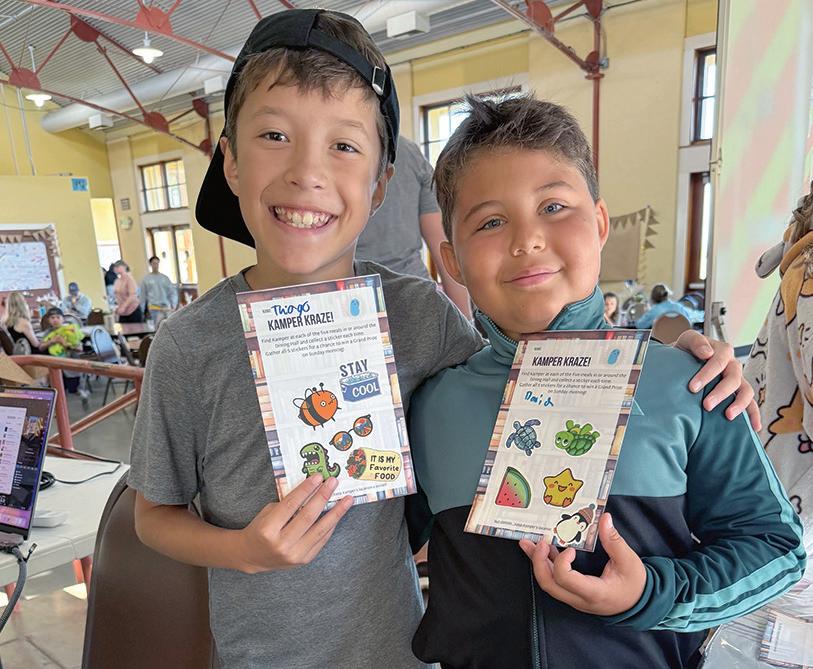
One of NSF’s most transformative programs is Camp NSF, the foundation’s yearly sleep away camp in Livermore. Camp NSF is a full weekend for the whole family to enjoy classic summer camp fun like arts and crafts, hiking, horseback riding, campfires, and more. Andi explains, “For many of the children this is the first time they have ever met another child going through the same thing.”
Bringing together the community in person is beneficial to the children, but not without risk, which NSF works hard to minimize. Many of the children haven’t been able to go to a camp because they are immunosuppressed, some are home-schooled as well to reduce that risk. Camp NSF screens campers, families, and support staff to create a safe, medically-supported environment for the kids to enjoy the camp experience with their peers who understand what they are going through.
NSF continued on page 18
BIKES & VOLUNTEERS NEEDED!
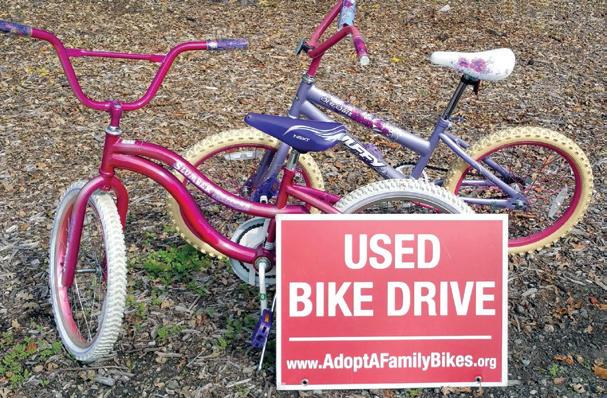
Since 2002, Adopt a Family Bikes (AAFB) has refurbished and donated thousands of bikes to adults and youth in need through Bay Area nonprofits. Since August, well over 500 bikes have been gifted and the need for more is ongoing. Adult and children bike donations are always wanted. AAFB has a drop-off space in the Alamo Plaza shopping center next door to the now-closed Rite Aid. The address is 140 Alamo Plaza, Alamo. Donations of bikes are welcome Sundays and Mondays from 11AM-4PM. The pop-up shop will be ongoing at least through the end of June.
Volunteers make minor repairs and tune-up the bikes throughout the week, and just ask that the donated bikes be free of rust and without bent frames. Cash and donations are gratefully accepted and can be dropped off at the site. Donations cover bike locks, new helmets, parts, and tires. For updated information visit the “Adopt-A-Family Bikes” Facebook page, or www.adoptafamilybikes.org
White mulberry
Camp NSF 2025 campers enjoying their day at the rock climbing wall.
DEAR TREE LOVERS
By Joe Lamb, Brende & Lamb Tree and Shrub Care
Dear Tree Lovers,
Wishing you all a very peaceful and verdant new year. If you need to have your trees tended, give Brende and Lamb a call at 510-486-8733, and one of our arborists will advise on how to keep your part of the urban forest healthy, safe, and lovely.
For this month’s column I’m including an epistolary poem I wrote together with my client and friend, Jessica Lawrence, when her beloved pittosporum which was dying from root rot needed to be removed. Felling a tree that has become an arboreal member of the family can be a bit like putting a pet with a terminal disease to sleep. Here’s the poem.
HONORING THE TREE ABOUT TO BE FELLED
Dear Tree,
Allow me to begin by honoring our shared ancestors, by inviting them to join us here today and be at peace. A mere 1.5 billion years ago our lines diverged. It is easy to forget that your ancestors were the same as my ancestors for most of life on Earth.
We are kin, not just metaphorically. Some DNA in your wood is identical to that in my flesh.
We both are twigs on the Tree of Life.
Thank you for your many gifts.
Thank you for your beauty, the sighing of your leaves, the clicking of your branches. Thank you for your many fragrances, for the lemon pepper of your blossoms, for the dank humic loveliness of your decaying leaves. Thank you for your flowers and your fruits. Thank you for being home for hummingbirds and squirrels. Thank you for being lookout perches for songbirds.
Thank you for doing your part to hold up the sky. Thank you for holding, without complaint, the swing that brought more joy than I can hold in my branches.
How can we ever thank you for photosynthesis? For the gift of life from inanimate matter? I am not alone in thanking you for taking sunlight and making it, dear alchemist, into thousands of white flowers. The bees thank you too, thank you with their lives, with their buzzing, with their children.
Thank you not just for transforming sunlight, but for protecting us from too much sun. Thank you for the nourishing darkness of shade.
Thank you for being there every morning for the last 16 years when I open the frosted bathroom window and see your trunk, your sinewy branches. Thank you for sheltering the impossibly green moss. Thank you for holding in your arms a promise that in our corner of the world things are basically right.
Thank you for the lesson learned by all of our countless ancestors, that in this life what we cannot hold onto we can still love.
Cleaning of windows, gutters, and solar panels, power washing of driveways and courtyards. Licensed and insured. 510-331-3988 rangelwindows@yahoo.com
Each year the Feral Cat Foundation (FCF) receives calls to rescue hundreds of kittens off the streets of Contra Costa and Alameda counties. These kittens are found on the side of the road, in bushes, under decks, and in sheds. Many of them are orphaned at a few weeks old when something happens to their mother. We need your help to save as many as possible. We are always looking for item donations, cash donations for medicines and vet care, and foster homes to care for the kittens until they find their forever homes. This year we have decided to make it fun and easy for the whole community to get involved by bringing back our annual kitten shower!
Online Silent Auction ~ March 1-21
Food/Litter/Toy Drive ~ March 15-21
Kitten Shower and Fun ~ March 21, 10 AM-4 PM 2005 Crow Canyon Place, Space 13, San Ramon
Thank you for the hummingbirds hatched in your branches who will now build nests in other trees.
“When you divide life by death the answer is a circle.”*
Thank you for being in my circle.
*From the novel Apeirogon by Colum McCann
If you would like one of our arborists to come and make sure your trees are healthy and happy, please call our office and arrange for a visit. 510486-8733. Additionally, visit www.brendelamb.com, to see before-and-after pictures, client testimonials, and work in your neighborhood. Advertorial
The March 21 st Kitten Shower will include:
• Activities for kids • Foster sign-up and orientation
• Information on what to do if you find kittens
• Cat behavior experts from the volunteers at FCF and local Petco staff
• Current fosters available to talk about the rewards and challenges of fostering
• Information on the importance of TNR - Trap, Neuter, Return
• And of course, cats and kittens needing foster and forever homes. For questions, call/text the FCF Hotline 925-829-9098
CONTRA COSTA ACCEPTING APPLICATIONS FOR CIVIL GRAND JURY SERVICE
Contra Costa County Superior Court is now accepting applications for Civil Grand Jury (CGJ) service for Fiscal Year 2026-2027. The CGJ is made up of 19 members who serve for one year, July through June. They monitor, review, and report on city and county governments, special districts, and school districts. Every effort is made to ensure that the CGJ reflects the makeup of the residents of the county. Individuals selected for service will be expected to be available from June 15th to June 18th and June 22nd to June 26th to attend an orientation where they will meet with department heads, become familiar with their colleagues, learn about juror responsibilities and procedures, and select committees on which they will serve. Grand jurors must be United States citizens, 18 years of age or older, who have been a resident of Contra Costa County for at least one year prior to selection. Citizens who work should apply only if they can be released from their jobs to perform their jury duties. Applications are due by March 13th. Persons interested in applying may contact the Office of the Civil Grand Jury at 925-608-2621 or visit contracosta. courts.ca.gov/divisions/civil/civil-grand-jury
ALAMO IMPROVEMENT ASSOCIATION (AIA)
By Roger Smith, President
NATIONAL
CONSUMER PROTECTION WEEK
Your personal information is your most valuable commodity. Here are three ways to help keep your tax refund out of someone else’s hands.
#1: File as early as possible
Tax identity theft relies on fraudsters getting a return submitted in your name before you do. Once you have all of your W2s, don’t wait! File immediately so you can get your refund and avoid a giant hassle.
#2: Take steps to protect your Social Security Number (SSN)
There are standard best practices that you can follow:
• Don’t carry your Social Security card in your wallet or purse
• Keep your cards locked up at home
• Get a locking mailbox and retrieve your mail promptly every day
• Shred documents that include your SSN and other personal data before you toss them
• Avoid putting your SSN on forms at doctors’ offices, hospitals, and other service providers – even if they ask for it, see if it’s really required
#3: Sign up for an Identity Protection PIN (IP PIN)
After you pass a verification process, such as providing your name, birthday, address, and some financial information, the IRS will assign you a unique six-digit number you’ll need to file your taxes.
You can set up your IP PIN through the IRS website www.irs.gov/identitytheft-fraud-scams/get-an-identity-protection-pin
If the IP PIN is not provided when a return is submitted in your name, the return will be rejected. This ensures that tax scammers cannot file a return in your name, even if they have your Social Security number. It’s an added layer of protection that may be worth the time it takes to set up, especially if your identity has been compromised.
ALAMO FARMER’S MARKET - FRESH FRUITS & VEGETABLES
Please join us and your neighbors in experiencing the live music at the Alamo Farmers Market, pick up some beautiful produce, ready-made food, and other goods, and take a moment to pause and reflect upon the bountiful relationship agriculture provides for us. Winter fare includes oranges, clementines, mandarins, grapes, persimmons, apples, and pomegranates. Our vendors welcome the opportunity to discuss their work and produce with you.
The Market is sponsored by AIA and is open rain or shine on Sundays from 9AM – 2PM in Alamo Plaza, off of Danville Blvd., near Bank of America. Please look for updated information about the Market on nextdoor.com.
HAPPY 71ST BIRTHDAY!
Now in its 71st year, AIA, a non-profit 501(c)(3) organization, has the special history of serving our community and helping shape it into “Alamo - the place where we love to live”! Since 1955, Alamo residents have been joining the Alamo Improvement Association and working in support of AIA’s mission statement, which is to “preserve the semi-rural character of Alamo.”
Visit www.AlamoCA.org for information on AIA, articles of interest to local residents, membership forms, and more. Visit www.AlamoVision2040.org for information on Alamo and Contra Costa County’s General Plan, the State of CA Housing Element and more. Please follow us on Facebook and NextDoor (Alamo Improvement Association) and Instagram @aia94507.
Don’t be left out, now is the time to renew or become a new member of AIA!
LIVING TRUSTS –BENEFITS AND PITFALLS OF LEAVING A LIFE ESTATE OF YOUR HOME
By Robert J. Silverman, Esq. (left), Silverman & Jaffe
Some clients understandably want their surviving spouse, domestic partner or another loved one to remain in the family home after their passing. But, simply leaving a person occupancy rights can lead to unintended consequences and conflict, especially in blended families or scenarios involving significant age gaps.
A “Life Estate” within a Living Trust should be viewed as a relatively sophisticated solution. It allows you to: a) provide a roof over a loved one’s head for the remainder of their life or, alternatively, for a shorter period of time, and b) ensure that the property eventually passes to your chosen heirs. To avoid family conflict, material terms should be carefully considered and meticulously defined.
Let’s hypothesize that you own a home, have a blended family, and want your surviving spouse – as a “Life Tenant” - to retain a right to occupy the property. You want your children, the “Remainder Beneficiaries,” to inherit the home after your spouse passes away.
These two stakeholders have competing interests. Generally, your spouse wants to live comfortably, with his/her housing needs provided for as fully as possible. Your children want to preserve the home’s value. The successor trustee (manager of your Trust when you are gone) will need to manage this arrangement and be empowered with certain remedies, such as the power to inspect and enforce the Life Tenant’s obligation to reasonably maintain the property. First and foremost, this points to the importance of choosing the successor trustee wisely.
What happens if, for example, the surviving spouse moves into an assisted living facility or stays with a relative for six months? Your Trust should specify when the spouse’s occupancy terminates, if at all, prior to the spouse’s death. Often, the Trust provides that if the spouse ceases to use the home as his or her primary residence for a continuous period (e.g., 6 months), the spouse’s right to occupy ceases. Then, the home can or must be sold and the proceeds distributed to the children (in certain cases, an owner may dictate that a portion goes to the spouse).
The owner may instead want the spouse to have the right to move out, rent the property and collect rent, which funds can potentially help pay for the spouse’s care. If so, the Trust should spell this out in detail.
A foundational issue involves defining what property-related expenses are to be paid by whom during the term of the Life Tenant’s occupancy: a) the Life Tenant, and/or b) the Remainder Beneficiaries. These expenses are typically allocated to one of two buckets:
• Ordinary Expenses - usually the responsibility of the Life Tenant, including property taxes, homeowner’s insurance, utility bills, and “cosmetic” maintenance (e.g. landscaping).
• Capital Improvements - typically paid by the Trust (ultimately, coming out of the Remainder Beneficiaries’ share), including “big-ticket” items that preserve the long-term value of the asset, such as replacing a failing roof, updating a HVAC system, or repairing a foundation.
Importantly, if any expenses are to be paid by the Trust, the Trust will need to reserve some specific amount of liquid funds to be available to pay these expenses (during what could be a long occupancy period).
Your Trust might include an “exchange provision,” granting the Trustee the power to sell the original home and use the proceeds to purchase a smaller, more suitable “replacement” residence for the Life Tenant.
A Life Estate can be a valuable tool, however, your Trust should contain clear ground rules, thereby helping your spouse and children avoid a damaging power struggle, if not litigation, over your home.
Estate Planning | Trust Administration & Probate | Real Estate
Please contact me to request a complimentary: i) “Estate Planning Primer”; ii) Real Estate titling brochure; iii) introductory meeting. I am an attorney with Silverman & Jaffe, 1910 Olympic Blvd., Suite 330, Walnut Creek, CA 94596; (925) 705-4474; rsilverman@silvermanjaffe.com
TECHNOLOGY MATTERS
By Evan Corstorphine, Portable CIO
24 YEARS OF KEEPING YOU SAFE
In 2001, I began looking for the “what’s next” in my career after leaving a dot-com startup. I had this idea of bringing business IT best-practices from the corporate world into small businesses, so I wrote a business plan, registered names, and paid the fees. Portable CIO was born. We began by servicing both residential and commercial clients.
The problems we dealt with back then seem rather quaint now. The Klez virus was a pain, but it didn’t really do a lot of damage; more of a nuisance. And of course, people downloading zillions of songs from sharing sites, and the music industry being up in arms. Then there were viruses that specifically targeted people’s music libraries and wrecked all of their files. That one got everyone’s attention!
But somewhere along the way, the game changed. In 2017, the WannaCry ransomware attack shut down hospitals across England — doctors couldn’t access patient records, surgeries were canceled, and ambulances were diverted. In 2021, the Colonial Pipeline attack shut down fuel distribution across the East Coast and people were lining up at gas stations like it was 1973. Cities like Atlanta and Baltimore had their entire municipal systems locked up for weeks. These weren’t theoretical risks happening in some far-off place. They were front-page news, and they showed what modern cybercriminals are capable of when they get past the front door.
Today the threats are ridiculously mean. Having the internet means we’ve invited every criminal mind with a computer into your living room. We’ve gone from having the files on your computer wrecked in the past, to now having your bank accounts emptied or your identity stolen. For businesses, we’ve gone from minor inconveniences to ransomware attacks that cripple, if not end, the business. The threats have evolved in all the wrong ways, and it means Portable CIO has had to step up to keep you safe. And we have. In fact, since 2013 our package of security software and best practices has kept you safe. None of our clients have been victimized by ransomware or suffered any other meaningful virus attack. Score one for the good guys!
The bad guys have evolved and switched to phishing scams, telephone cons, and more complex email trickery. And now they’ve added AI to their arsenal. Remember the “Nigerian Prince” emails from the early 2000s? Bad grammar, ridiculous stories — easy to spot. Today’s phishing emails look like they came from your bank, your vendor, or your boss. They use your real name, reference actual transactions, and are written in flawless English. I recently saw one that perfectly mimicked a DocuSign request, complete with correct logos and formatting, asking the recipient to “review and sign” what turned out to be a credential-harvesting page. It takes a trained eye and a lot of technology to catch these now.
One of my past employees, Jeremy Davis, started an IT company called CloudMinders. He and I have stayed in touch over the years and I’ve been impressed by the organization he has put together. We at PCIO have done a great job with our clients. However, his company is positioned to do even better because of the preventative tools and processes they’ve assembled — things like around-the-clock security monitoring, advanced threat detection that flags suspicious activity before it becomes a problem, and a dedicated team whose entire focus is keeping clients protected and operational.
In light of this, I’ve made the decision to merge our commercial operation with CloudMinders so that our commercial clients enjoy what I consider to be a superior level of protection and control. I will assume a senior sales role in the new organization, and spend my time helping Jeremy grow the company. I’ll also continue to be an ambassador to our existing client base, which I love. I’m very excited about the new role!
And, all of that being true, Portable CIO isn’t going away. It just won’t be a commercial managed service provider after March 1st. Twenty-four years of serving this community — from the Klez virus to AI-powered phishing — has been one of the great privileges of my career. I’ll continue to fix your systems and transition you from old to new computers here in our office. That won’t change. And anything requiring on-site or remote support will be performed by someone in a partner firm I trust to do a good job.
Thank you for trusting us with your technology support all these years. The next chapter is going to be a lot of fun! If you have a technology need and are not sure which direction you should turn, give us a call at 925-552-7953, or email info@pcioit.com.
AGGRESSIVE & SKILLED LEGAL ADVOCACY
VOLUNTEERS NEEDED
Now more than ever, many of our neighbors cannot afford to feed and clothe themselves or their families. Volunteer opportunities for individuals, families, and groups to serve the community are available at White Pony Express (WPE). WPE, founded in 2013 and now headquartered in Concord, is a nonprofit that rescues fresh surplus food from supermarkets, restaurants, and farmers markets. This food is then delivered free to organizations that feed the hungry free of charge.
Hundreds of volunteers make WPE possible. If you are interested in volunteering, please visit whiteponyexpress.org/volunteer or call Mandy Nakaya, Volunteer Services Coordinator, at 925-818-6361 or email Mandy@whiteponyexpress.org .
WHY LONG-TERM INVESTORS THINK DIFFERENTLY ABOUT VOLATILITY
By Waldron Partners
Over time, you’ve probably learned that real progress rarely happens overnight. Careers are built over decades. Businesses take years to mature. Homes are improved one thoughtful decision at a time. And yet when markets turn volatile, even disciplined investors can feel pressure to act immediately. Headlines become urgent. Financial news cycles accelerate. For long-term investors, volatility is not a surprise and it’s not necessarily a problem. VOLATILITY IS NORMAL…EVEN
IN GOOD YEARS
One of the most misunderstood aspects of investing is how often markets decline temporarily, even during strong overall years. Pullbacks happen almost every year. Corrections are part of the cycle. They are uncomfortable, but they are not unusual. The difference is that today’s information moves faster. It creates the impression that something extraordinary is happening when, historically speaking, it often isn’t.
Long-term investors understand this: volatility feels worse than it statistically is. They also understand what investing is actually about. It’s about consistent contributions. It’s about owning diversified, low-cost investments. It’s about staying invested through volatility, not attempting to sidestep it.
Those habits matter more than any single headline.
THE REAL RISK ISN’T THE MARKET… IT’S REACTION
Families who have built meaningful wealth didn’t get there by making emotional decisions. They succeeded through discipline, patience, and structure. The same principles apply to investing.
When portfolios decline, the instinct to “do something” can be strong. But frequent changes, chasing what’s working or abandoning what isn’t, tend to work against long-term results.
Markets often recover before the headlines do. Investors who move to the sidelines during stressful periods frequently miss the early stages of recovery, which historically account for a meaningful portion of long-term returns. In other words, reaction is often more expensive than volatility.
A more productive question during volatile periods is not “What should I change?” but “Does my timeline still support this strategy?”
A simple framework can help:
• 0–3 years: Keep it stable. Short-term money belongs in cash or low-volatility vehicles.
• 3–7 years: Balance growth and stability. Some market exposure is appropriate.
• 7+ years: Invest for growth. Volatility is expected and accepted over time. When your timeline is clear, decisions become steadier.
NSF continued from page 14
A WELL-BUILT PLAN ASSUMES DISCOMFORT
A sound investment strategy isn’t built for perfect markets. It’s built with the expectation that markets will fluctuate. Asset allocation, diversification, risk levels, and periodic rebalancing are designed to manage uncertainty, not eliminate it.
Diversification simply means not relying too heavily on any one investment, company, or sector. When risk is concentrated, one setback can have an outsized impact. Spreading exposure across asset classes and industries reduces the likelihood that a single event disrupts long-term progress.
For many families in this community, investing supports meaningful goals… education, retirement, philanthropy, and multigenerational flexibility. Those objectives are measured in decades. When the timeline is long, short-term volatility becomes less decisive.
CONFIDENCE COMES FROM STRUCTURE
Confidence in investing isn’t about predicting markets. It’s about having a plan that doesn’t rely on perfect timing. For many professionals, that structure includes:
• A 401(k) or 403(b), especially if there’s an employer match
• A Roth or Traditional IRA, if eligible
• A taxable brokerage account for long-term flexibility
Within those accounts, discipline matters more than adjustments. Contribute consistently (payroll makes it automatic). Avoid panic-selling. Rebalance periodically (once a year is often enough). Your risk level should reflect your real-time horizon and financial capacity, not just how you feel when markets are calm. Families who apply the same discipline to investing that they used to build their wealth tend to navigate volatility with more steadiness and fewer costly decisions.
A DIFFERENT WAY TO THINK ABOUT MARKET SWINGS
Many investors are business owners, executives, or professionals accustomed to solving problems. But, markets are not problems to be solved in real time. They are cycles to be navigated.
The most successful long-term investors are not the ones who avoid downturns entirely. They are the ones who prepare for them in advance and stay consistent when they arrive. Volatility will continue to be part of investing. That hasn’t changed.
At Waldron Partners, we believe structure brings clarity. And clarity helps families focus on what matters most, not on every market headline. Email us at team@waldronpartners.com to start the conversation.
Disclosure: Osaic Wealth, Inc. and its representatives do not provide legal or tax advice. You should consult a legal or tax advisor regarding any legal or tax information as it relates to your personal circumstances.
Peter Waldron CA Insurance License #0E47827. Securities and investment advisory services offered through Osaic Wealth, Inc. member FINRA/SIPC. Osaic Wealth is separately owned and other entities and/or marketing names, products or services referenced here are independent of Osaic Wealth Advertorial
To foster connections between kids and teens with nephrotic syndrome at a distance, NSF has their Peer Team Program, a group of older teens and young adults who connect with younger members on virtual hangouts. Sometimes they get together to do a craft or science activity, sometimes the kids will discuss nephrotic syndrome-specific challenges, and sometimes it’s just a place for all of them to get together with others who get it. The Peer Team Program also opens opportunities for pen-pals, meet-ups, and other activities as well.
In addition to the community of connection, sometimes families need help with the practical parts of the illness. NSF sponsors a Patient Grant Program, providing monetary assistance with costs associated with nephrotic syndrome such as counseling, tutoring, treatment-related travel expenses, or treatment costs. In 2025, NSF provided over $33,000 in grants to families in need through this program.
Education is another critical support offered through NSF’s free Finding Health Webinar to help families understand everything from treatment options and side effects to mental health and how to create school plans and accommodations for children with nephrotic syndrome. Instead of starting from scratch, families can learn from experts and other parents about what to expect, especially since some treatments for nephrotic syndrome can bring both physical and emotional challenges.
Incredibly, these programs (and more) are done with a small team of one full-time employee, a handful of part-time employees and a member team based in Danville. The member team is made up of parents and middle school and high school youth who meet monthly to help support all the NSF programs. Volunteers are also critical for fulfilling needs like Backpacks of Hope and the Thermometer Program. Those interested in volunteering can fill out the form on the NSF website to be notified of future volunteer events.
NSF is entirely privately funded without any government support, relying on individual donors and grants from private family foundations to operate. The bulk of NSF’s funding is raised at their annual golf tournament held this year on Monday, May 18th at Diablo Country Club. The community is invited to join in the fun through either participation in the tournament or sponsorship opportunities. NSF also has additional dining and shopping community fundraisers listed on their website, where direct donations can also be made, at www.nephroticsyndromefoundation.org.
Approximately 95% of NSF’s resources go directly toward supporting families through its programs, with the remaining funds dedicated to advancing clinical trials focused on prevention and improved treatments. Above all, the foundation prioritizes ensuring that every family has what they need as they manage the challenges of nephrotic syndrome.
See NSF continued on page 23
Art is a great part of camp NSF.
SCULPTING CONFIDENCE THE TRANSFORMATIVE POWER OF LIPOSUCTION
By Dr. Barbara Persons, MD, FACS
In recent years, liposuction has emerged as a popular cosmetic procedure sought by individuals looking to achieve a more sculpted and contoured physique. Sometimes, despite our best efforts, certain areas of our body don’t respond to diet and exercise as we would like. Liposuction can target these stubborn fat deposits, helping you achieve the body shape and contours you desire. Whether it’s slimming down your waistline, sculpting your thighs, or defining your arms, liposuction can provide the finishing touch to your efforts and help you reach your goals.
ENHANCED BODY CONTOURING
able body shape. This tailored approach ensures that the patient’s unique contours and natural body proportions are respected, resulting in a more personalized outcome.
IMPROVED PHYSICAL HEALTH
Beyond its aesthetic benefits, liposuction can also have positive effects on your physical health. Excess fat deposits can put strain on your joints and contribute to discomfort or even medical conditions. By removing these fat deposits, liposuction can alleviate this strain, potentially reducing joint pain and improving your overall mobility and physical well-being. It can be a step towards a healthier, more active lifestyle, and a foundation for long-term well-being. Additionally, reducing overall body fat can have positive effects on cardiovascular health, lowering the risk of conditions like high blood pressure and heart disease. However, regular exercise, a balanced diet, and overall wellness practices are crucial for long-term physical health. Liposuction can be a complementary step towards achieving overall well-being.
CONCLUSION
Liposuction is not just about removing excess fat; it’s also about enhancing your body’s overall contour and proportion. By selectively removing fat from specific areas, liposuction can create a more balanced and harmonious silhouette. It can help accentuate your natural curves, refine your body’s proportions, and highlight your best features. Body contouring through liposuction is like a sculptor’s touch, allowing you to achieve the body you’ve always dreamed of.
LASTING FAT REDUCTION
Liposuction provides a long-lasting solution for fat reduction. During the procedure, fat cells are suctioned out of the targeted areas, resulting in a permanent reduction in the number of fat cells in those areas. Unlike weight loss, where fat cells shrink but remain in the body, liposuction eliminates the excess fat cells altogether. Consequently, patients who maintain a healthy lifestyle after the procedure can enjoy a more stable and sustain-
From enhancing body shape and self-confidence to providing lasting results and improved overall well-being, the advantages of liposuction are far-reaching. Just remember that liposuction is not a substitute for a healthy lifestyle, but rather a complement to your efforts and a tool to help you reach your body’s fullest potential.
If you are interested in learning more, you can request a consultation with Dr. Barbara Persons. Dr. Persons, MD, FACS is a Board Certified Plastic Surgeon and owns Persons Plastic Surgery, Inc., located at 911 Moraga Rd, Suite 205 in Lafayette. She can be reached at 925-283-4012 or drpersons@personsplasticsurgery.com. Advertorial
KNEE PAIN IS TRYING TO TELL YOU SOMETHING AND IT’S NOT YOU’RE “OLD”
By Dr. Niele Maimone, DC
Let’s be honest. Knee pain is frustrating. It starts subtly. A little stiffness when you stand up. A hesitation before stairs. Maybe you’ve stopped walking as far, exercising the way you used to, or playing pickleball because you’re worried it will flare. Over time, you begin adjusting your life around your knee.
Most people are told one of three things: “It’s arthritis,” or “It’s wear and tear,” or “You’ll eventually need surgery.”
At Align Healing Center, we see it differently.
Knee pain is a signal. And in many cases, it’s a sign your joint needs better movement, better circulation, and better cellular support — not resignation. FIRST, WE FIGURE OUT WHAT’S REALLY
GOING ON
We don’t guess. Every knee case starts with a thorough exam. If imaging is necessary, we use it. We want to know: Is this true cartilage wear? Is the meniscus involved? Are ligaments unstable? Is inflammation the primary issue? Or, is the knee compensating for poor hip or ankle mechanics?
The knee is often the victim of dysfunction above and below it. If we don’t assess the whole system, we miss the real driver.
WE START CONSERVATIVELY — AND INTENTIONALLY
Most knees improve when you restore motion and stimulate circulation. Our first phase of care focuses on conservative therapies that work together:
Precise Chiropractic Adjustments - When hips, ankles, or the knee itself aren’t moving properly, force gets distributed unevenly. Restoring alignment reduces strain and improves joint mechanics.
Shockwave Therapy - This therapy increases blood flow to stagnant, chronically inflamed areas, stimulating tissue repair.
Class IV Laser Therapy - Laser supports cellular healing, improves circulation, and helps calm inflammation at a deeper level.
These treatments are layered intentionally. Movement improves circulation. Circulation supports healing. Healing reduces pain. Many patients feel significant improvement right here.
IF YOU’VE “TRIED EVERYTHING,” WE GO DEEPER
For more advanced cases — or for people who’ve had failed care elsewhere — we reassess and stratify based on severity.
CAN YOU GIVE RIDES TO SENIORS & VETERANS, OR DO YOU NEED A RIDE?
Are you an ambulatory senior or veteran who needs a ride to medical appointments, the grocery story, or other essential services? Or, are you aged 25-75 and able to volunteer just three hours a month to help provide a ride?
Mobility Matters (MM) is a nonprofit agency that has been serving otherwise homebound residents trying to age in place in Contra Costa County since 2004. MM provides free, door-through-door, one-on-one, escorted rides for seniors and disabled veterans with volunteer driver programs, and they match riders to accessible transportation providers through their Transportation Information and Referrals Helpline.
If you need a ride, call 925-284-6161. For volunteer opportunities, call 925-284-2215. For more details, visit www.mobilitymatterscc.com.
MEALS ON WHEELS VOLUNTEER PROGRAMS
Meals on Wheels Diablo Region (MOW Diablo Region) offers many volunteer opportunities to support seniors in our community. Do you have a few hours a month to spare? Become a volunteer Meal Delivery Driver and help bring ready-to-eat meals to neighbors in need—or sign up to be a Friendly Caller, Helper, or Visitor to provide companionship to seniors experiencing isolation. To get involved or learn more about the supportive services MOW Diablo Region offers, visit mowdiabloregion.org/ get-involved, email volunteer@mowdr.org , or call (925) 937-8311.
If conservative care plateaus or imaging shows more significant degeneration, we may introduce additional regenerative support. That can include:
Targeted Peptide Therapy - Peptides are small chains of amino acids — essentially signaling molecules your body already uses. Certain peptides are used under medical supervision to help “remind” tissues to repair, reduce inflammation, and support collagen formation. For example, peptides such as BPC-157 and TB-500 are used to support the recovery of tendons, ligaments, and soft tissues. Rather than forcing change, peptides support the body’s own healing communication pathways.
Regenerative Joint Injections - Biologic products such as PRP, exosome-based formulations, or umbilical-derived stem cell products support cushioning, cellular communication, and the body’s natural repair response. These are powerful regenerative options used within an integrative care model to help maximize your body’s healing potential.
WHY THIS APPROACH WORKS
Knee pain rarely has one single cause. It’s usually a combination of: Mechanical stress, reduced circulation, chronic inflammation, and tissue breakdown over time.
If you only treat pain, it returns.
When you restore structure, stimulate circulation, and support cellular repair, you create the environment for real change.
We’ve seen patients return to hiking, strength training, golf, long walks, and simply moving without fear, not because we masked symptoms, but because we supported the joint properly.
YOU DON’T HAVE TO ACCEPT THAT THIS IS “JUST AGING”
If your knee hurts, your body is asking for help.
Some people need only conservative care. Others benefit from layered regenerative support. The key is understanding where you are on that spectrum. You don’t have to keep modifying your life around knee pain. The sooner you understand what your body needs, the sooner you can move forward with confidence.
If you’re ready for a thoughtful, personalized plan instead of another temporary fix, schedule your knee consultation today. Visit AlignHealingCenter. com or call 925-362-8283 to book your appointment or get more information. Let’s discover what your knee truly needs, and help you get back to living fully.
The information provided in this article is for educational purposes only and is not intended to diagnose, treat, cure, or prevent any disease. Stem cell and regenerative therapies described are not approved by the U.S. Food and Drug Administration (FDA). Individual experiences and results may vary. Advertorial
YOUR PERSONAL NUTRITIONISTS
By Linda Michaelis RD, MS and Jackie Peterson RD CDCES
“CARB-FREE” AND “ZERO-NET-
CARB”
FOODS
We are seeing many people who are taking GLP’s for weight loss. Lately, they have been asking about so-called “carb-free” or “zero-net-carb” foods. Are they healthy? Are they too good to be true? And, how do they fit into a balanced diet?
You may have seen products such as Mission Zero Net Carb or Carb Balance tortillas, Ole Xtreme Wellness tortillas, Quest bars, Atkins bars, HighKey cookies, Lily’s chocolate, Quest chips, Halo Top ice cream, and Enlightened ice cream bars. These foods are widely marketed as low-carbohydrate or “zero net carb” alternatives.
UNDERSTANDING “NET CARBS” ON A PACKAGE
On the front of the Mission low-carb tortillas package it states, “3 grams net carbs.” What does this mean?
Net-carbs are calculated by subtracting non-digestible fibers (like inulin, chicory root fiber, or soluble corn fiber) from the total carbohydrates, because these fibers are not broken down into glucose and therefore have minimal impact on blood sugar. For example, if a tortilla has 15 grams of total carbohydrates and 12 grams of fiber, the net carbs would be 3 grams (15-12 or 3 grams).
So, what’s actually inside them?
HOW THESE FOODS ARE MADE LOW-CARB
Most of these products rely on purified fiber ingredients, commonly chicory root fiber, inulin, soluble corn fiber, or modified wheat starch.
These are real fibers, not “fake” or artificial. They are classified as non-digestible carbohydrates, meaning the human body does not have the enzymes needed to break them down into glucose. As a result, they do not raise blood sugar in the same way as traditional carbohydrates, which is why they are often subtracted when calculating “net carbs.”
Inulin and chicory root fiber belong to a group called fructans—chains of fructose molecules linked by bonds that humans cannot digest. Instead, these fibers pass to the large intestine, where they are fermented by gut bacteria.
POTENTIAL BENEFITS
— AND COMMON SIDE EFFECTS
Because these fibers are highly fermentable, they act as prebiotics, feeding beneficial gut bacteria. Research shows that supplementing with inulin-type fibers (often 10–20 grams per day) can lead to small but meaningful improvements in satiety, modest reductions in body weight, and improvements in fasting glucose and insulin levels.
Many of these benefits occur indirectly through the production of shortchain fatty acids, which support gut and metabolic health.
However, the same fermentability that provides benefits can also cause bloating, gas, and abdominal discomfort, especially when consumed in large amounts or by individuals with sensitive digestion. For many people, it is difficult to reach the fiber amounts used in studies using these foods alone without significant gastrointestinal symptoms.
HOW THESE FIBERS COMPARE TO WHOLE FOODS
Whole plant foods—such as beans, lentils, berries, nuts, seeds, avocados, and vegetables—contain a mix of different fiber types, including soluble and insoluble fiber, viscous and non-viscous fiber, and resistant starch. They also provide protein, healthy fats, vitamins, minerals, and plant compounds that work together to support digestion, blood sugar control, and long-lasting fullness. Some fibers found naturally in foods (such as viscous fibers in oats, beans, or psyllium) slow digestion more directly and are particularly effective for blood sugar balance and appetite control.
CLEARING UP A COMMON MYTH
There is a misconception that inulin and chicory root fiber act like fast-digesting carbohydrates. This is incorrect. These fibers are not broken down into glucose and do not spike blood sugar. They are classified as fiber precisely because humans cannot digest them.
THE BOTTOM LINE
(925) 788-2640
Whole foods should be the foundation of your fiber intake. They offer broader health benefits and are generally easier on digestion.
That said, low-carb snack foods containing inulin or chicory root fiber are not “bad” foods. If you enjoy them, tolerate them well, and they help you meet your goals, there is no need to fear them or eliminate them entirely. They are not equivalent to eating refined sugar or highly processed carbohydrates. As with most nutrition topics, individual tolerance matters.
WANT TO LEARN MORE?
If you have questions about fiber, digestion, weight management, or blood sugar control, consider scheduling a visit with us and setting up a personalized nutrition plan for you.
The good news is that most insurance companies pay for nutritional counseling including Aetna, Blue Cross, Blue Shield, CCHP, Cigna, Hill, Sutter, UHC and others. Refer to our website www.LindaRD.com for more information about our services, insurances we are contracted with, and to see our Yelp reviews. We will call your insurance for you and check on coverage for nutritional counseling. Email us at lifeweight1@yahoo.com or call us at 925-855-0150. Advertorial
THE EYE OPENER
WHY DO PRESCRIPTIONS IN KIDS AND YOUNG ADULTS ALWAYS GET WORSE?
By Gregory Kraskowsky, O.D., Alamo Optometry
For all parents of kids who are near-sighted, let me see if this sounds familiar: at every annual exam, it is noted your child’s’ distance vision is declining, and you need to update their glasses and/or contacts. This has been a consistent theme for these patients, and it is only getting worse. It is also true that the same thing happened to the parents when they were young. The good thing is we finally have some options to help manage this epidemic.
Myopia (near-sightedness) is now being classified more as a disease than a refractive condition of the eyes. Once a person becomes moderately to highly near-sighted, their risk for conditions such as retinal detachments, macular degeneration, and glaucoma grow exponentially compared to patients who are not near-sighted. Obviously, there are other contributors to these conditions such as genetics, medical conditions such as diabetes and hypertension, etc., however, there is an absolute correlation with being myopic.
What causes myopia? There are two main contributors: genetics, and environment. If at least one parent is very near-sighted, there is a good chance the child will be also. If both parents are myopic, it is a certainty the child will be. However, environment is playing a more significant role in outcomes these days.
We have become a very near-point society due to the advent of computers, laptops, smartphones, iPads, etc. This is how we conduct business, school, and personal time. Screen time has increased since COVID, but use of these devices was still high prior to the start of COVID. Regardless of how we feel regarding technology, it is here to stay, and it is not going to change anytime soon. As proof of the increase in this condition, the percentage of myopic people in the United States has more than doubled in the past 30 years. Some Asian countries have over 80% of their population being near-sighted. Going by current trends, half of the world’s population will be near-sighted by 2050.
SKINtheNEWS By
Jerome Potozkin, MD
BEFORE YOU LET ANYONE PUT A
Thankfully, there are things we can do to help our vision. Two things that everyone can do is to reduce screen use and to get outside. Studies have shown that being outdoors does influence reducing myopia progression.
Treatment options such as progressive glasses, atropine drops, and some multi-focal soft contacts are used to help combat progression. However, the main strategy we utilize at our office is Corneal Refractive Therapy (CRT) lenses. These FDA approved lenses are gas permeable lenses that are worn overnight to correct vision so that no glasses or contacts are needed during the day. After only a few days to a week, the child should not need to wear any glasses or contacts during the day. These contact lenses redistribute the fluid within the cornea; no tissue is moved, altered, or affected in any way. The goal of therapy is to reduce the progression of myopia 50%. At this point there is no cure for this epidemic, but these are the best tools we have to help combat it.
My feeling is that the days of just changing the glasses or contact lens prescriptions in children who are moderately or aggressively changing is not the proper mode of treatment. To help reduce the risk of further eye issues down the line, it is paramount to find these children while they are progressing, so something can be done. The special contact lenses are not for everyone, and some patients are not good candidates due to their prescription. With the time commitment needed, there needs to be buy-ins from both the patient and parent. However, these patients will benefit by maintaining good eye health as they get older along with not needing eye correction during daytime hours. This is only a small synopsis of this condition and treatment options. Please feel free to contact my office with any further questions. Treatment possibilities can be discussed at your exam.
Dr. K. at Alamo Optometry is your hometown eye doctor for outstanding service, vision care, and designer eyewear. He can be reached at (925) 820-6622, or visit his office at 3201 Danville Blvd., Suite 165, in Alamo. For more information, visit www.alamooptometry.com, or follow on Facebook and Instagram @Alamo Optometry. Advertorial
NEEDLE IN YOUR FACE: 5 THINGS YOU NEED TO KNOW ABOUT BOTOX AND FILLERS
Botox and dermal fillers are among the most popular cosmetic procedures in the world and, when done properly, they can be safe, effective, and confidence-boosting. But, they are still medical procedures involving prescription medications and injections into delicate facial anatomy. Before you sit back in the chair, here are five essential things every patient should know.
1. CREDENTIALS MATTER AND SO DO THE LAWS
Not everyone wearing a white coat is a physician. Each state has specific laws governing who is legally allowed to inject Botox and fillers, and under what level of supervision. Make sure the person treating you is properly licensed to perform injections in your state. In California, cosmetic injections may legally be performed by MDs, DOs, PAs, RNs, and NPs but not by estheticians. Don’t hesitate to ask about your injector’s credentials; this isn’t rude, it’s responsible.
2. TRAINING ISN’T CREATED EQUAL
There is a big difference between comprehensive medical training and a brief cosmetic course. Some injectors receive their education through accredited medical residencies or fellowships that include years of anatomy, diagnosis, and complication management. Others may learn through short vendor-led trainings or weekend courses. Ask where and how your injector was trained. Depth of education matters when working around nerves, blood vessels, and muscles of the face.
3. EXPERIENCE COUNTS
Experience is more than just time, it’s volume and variety. How long has the injector been treating patients? How often do they perform these procedures? A provider who injects faces daily will naturally develop a better eye, steadier technique, and stronger pattern recognition than someone who does it occasionally.
4.
PHYSICIAN OVERSIGHT SHOULD BE MEANINGFUL
If your treatment is performed by a non-physician, ask whether a physician is onsite and actively supervising. Also ask about that physician’s background. Is the supervising doctor trained in dermatology or plastic surgery, or are they in an unrelated specialty and located far away or even out of state? Real oversight means immediate availability and relevant expertise, not just a name on paper.
5.
HAVE A PLAN FOR COMPLICATIONS
Even in expert hands, complications can occur. The question isn’t if something could go wrong it’s what happens if it does. Is your injector trained to recognize and manage complications like vascular occlusion or asymmetry? If not, is there someone immediately available who is? A safe practice has protocols, medications, and expertise ready when needed.
THE BOTTOM LINE
This isn’t about criticizing who provides aesthetic treatments, it’s about empowering patients to ask the right questions. Botox and fillers can be wonderful when done thoughtfully and safely. An informed patient is a safer patient, and safety should always be the most beautiful outcome of all.
Dr. Jerome Potozkin is a Board Certified Dermatologist and Board Certified Micrographic Dermatologic Surgeon specializing in minimally and non-invasive cosmetic procedures. He is the author of “Botox and Beyond: Your Guide to Safe Non-Surgical Cosmetic Procedures.” The practice is accepting new patients and can be reached at (925) 838-4900 and www.MyBeautyMd.com. Advertorial
WHY SOME PHYSICIANS ARE QUIETLY CHANGING THEIR OWN PREVENTIVE STRATEGIES
By Dr. Jeffrey Mark, M.D & Dr. Frances Mark, Pharm.D., The Real Gut Doctor
Major shifts in medicine rarely begin with headlines. They begin in quieter places, research forums, peer discussions, and private conversations among physicians thinking beyond treatment and toward prevention.
In recent years, something subtle has been unfolding in those circles. The focus is shifting. The question is no longer limited to how we treat cognitive decline once it appears. Increasingly, physicians are asking: “How do we reduce the biological conditions that make decline more likely — long before symptoms emerge?”
RETHINKING RISK
Most neurological deterioration does not begin with a dramatic event. It progresses gradually through chronic inflammation, vascular stress, metabolic inefficiency, gut and immune imbalances, and cumulative environmental toxic exposure. These changes are often silent for decades.
Wildfire particulates. Microplastics. Persistent organic pollutants. Elevated lipoprotein(a). Chronic stress hormones. Inflammatory proteins that circulate longer than they should.
Modern life makes exposure unavoidable. The brain — one of the body’s most vascular organs — sits downstream from all of it.
For years, medicine addressed these risks primarily after symptoms surfaced. But, many physicians are no longer comfortable waiting for measurable decline. The focus is shifting from reacting to disease to reducing accumulated biological burden earlier.
AN ESTABLISHED PROCEDURE, RECONSIDERED
Therapeutic Plasma Exchange (TPE) has been used in hospital medicine for decades. It is a well-established inpatient procedure traditionally employed in severe autoimmune and neurologic conditions. The process is straightforward: a portion of plasma — the liquid component of blood — is removed and replaced with sterile albumin. In acute settings, this reduces circulating antibodies and inflammatory factors.
Rather than reserving TPE exclusively for crisis intervention, many physicians are exploring its uses— particularly for individuals with elevated inflammatory markers, vascular risk factors, measurable toxic burden, autoimmune tendencies, or cognitive decline.
THE PREVENTIVE LOGIC
Systemic inflammation is increasingly recognized as a driver of accelerated aging. Inflammation is protective when short-term. When chronic, it contributes to endothelial dysfunction, mitochondrial stress, gut and immune imbalances, and cognitive vulnerability.
TPE offers a direct, measurable mechanism: removal of circulating inflammatory proteins, lipids, immune complexes, and accumulated plasma components. Not permanently. But objectively.
For physicians who believe prevention must extend beyond lifestyle guidance alone, this capability has generated thoughtful interest. It represents a clinical tool for reducing inflammatory load in a controlled environment.
WHO IS PAYING ATTENTION
Many early adopters of preventive plasma exchange are not patients in crisis. They are high-functioning adults, executives, entrepreneurs, biohackers, physicians, investors, and individuals responsible for complex decisions and long-term planning. For high-performing adults, cognitive erosion represents operational risk. In that context, doing nothing can feel less like neutrality and more like exposure.
A STRUCTURED APPROACH
At The Real Gut Doctor, TPE is not offered as a standalone intervention. Dr. Jeffrey Mark, M.D., a 5X board-certified physician, integrates plasma exchange within a broader framework known as the Regenerative Plasma Renewal Protocol (RPRP), a personalized, drug-free biologic support strategy designed by Dr. Frances Mark, Pharm.D., who brings over three decades of clinical pharmacology experience. Rather than layering medications, the focus is on optimizing the body’s internal repair environment through targeted nutrient and detoxification strategies guided by individualized laboratory analysis. Patients often report improved clarity and resilience following treatment.
THE BIAS OF WAITING
There is a well-documented cognitive bias known as status quo bias, the assumption that because nothing feels urgently wrong, no action is necessary.
But biological decline rarely announces itself loudly at first. Physicians exploring preventive plasma exchange are not driven by alarm. They are guided by pattern recognition. Inflammation correlates with accelerated aging. Accumulation correlates with dysfunction. Proactive reduction may decrease burden. For individuals who built their success on foresight, ignoring emerging preventive tools can feel inconsistent with how they manage every other domain of life.
A CONVERSATION WORTH HAVING
The Real Gut Doctor offers confidential 15-minute consultations for individuals who wish to explore whether preventive TPE, integrated within the RPRP framework, may be appropriate for their health strategy. There is no obligation, only information. Book your consultation by scanning the QR code or call us at 925-736-9828. Advertorial
NSF continued from page 18
Andi shared that the future of NSF includes expanding their offerings to support young adults ages 18-25. They also plan to establish 12 community hubs across the US to provide more local support like the original model created in Danville. NSF also plans to launch the Healthy at Home Program to provide essential monitoring equipment to families, like scales and blood pressure machines, ensuring patients can respond quickly to get help when needed.
The Nephrotic Syndrome Foundation has come a long way in just shy of a decade to support families battling nephrotic syndrome and raise awareness. You don’t have to be part of this community to lend your support, visit their website or reach out directly to Andi Callaway for more information on how you can help by emailing andi@nephroticsyndromefoundation.org.
TELECARE CONNECTS WITH THE HOMEBOUND
Since 1971, member volunteers of TeleCare, a philanthropic program of Assistance League of Diablo Valley, have been making weekday reassurance calls to seniors and the homebound in our community. Clients can anticipate a friendly exchange of ideas with trained volunteers who provide high quality, consistent communications. If a client cannot be reached, family members will be notified.
This service is free! Make that call to get you or someone you know connected! For more information, call 925-934-0901. To learn about Assistance League of Diablo Valley’s other philanthropic programs, please visit www. assistanceleague.org/diablo-valley
DRE 01169357 925.838.9999 jon@ahernregroup.com ahernrealestategroup.com
01865464 925.963.0068 camille@ahernregroup.com
Open Monday - Thursday and the first two Saturdays of each month.
Meet Dr. Yvonne Hyland & Her Family
Dr. Hyland has been in private practice since 2000. She received a DDS degree from Baylor College of Dentistry in Dallas, Texas. Following dental school, she pursued a hospital-based General Practice Residency at the Veteran’s Medical Center in West Los Angeles for two years. Realizing this was not the end of her formal education, she completed a successful three-year post-graduate surgical residency in periodontics. Dr. Hyland’s experience and professional skills excel in every aspect of dentistry from general cosmetic procedures to complex surgical cases. She has placed thousands of successful dental implants and is highly trained in all phases of gum disease therapy, tissue and bone grafting procedures, and wisdom teeth extraction.
Dr. Hyland understands the desire to provide the very best care for the entire family. As a resident of Alamo, she strives to