Why Many Homeowners Face Legal Issues After Starting Construction
Page 1


Why Many Homeowners Face Legal Issues After Starting Construction

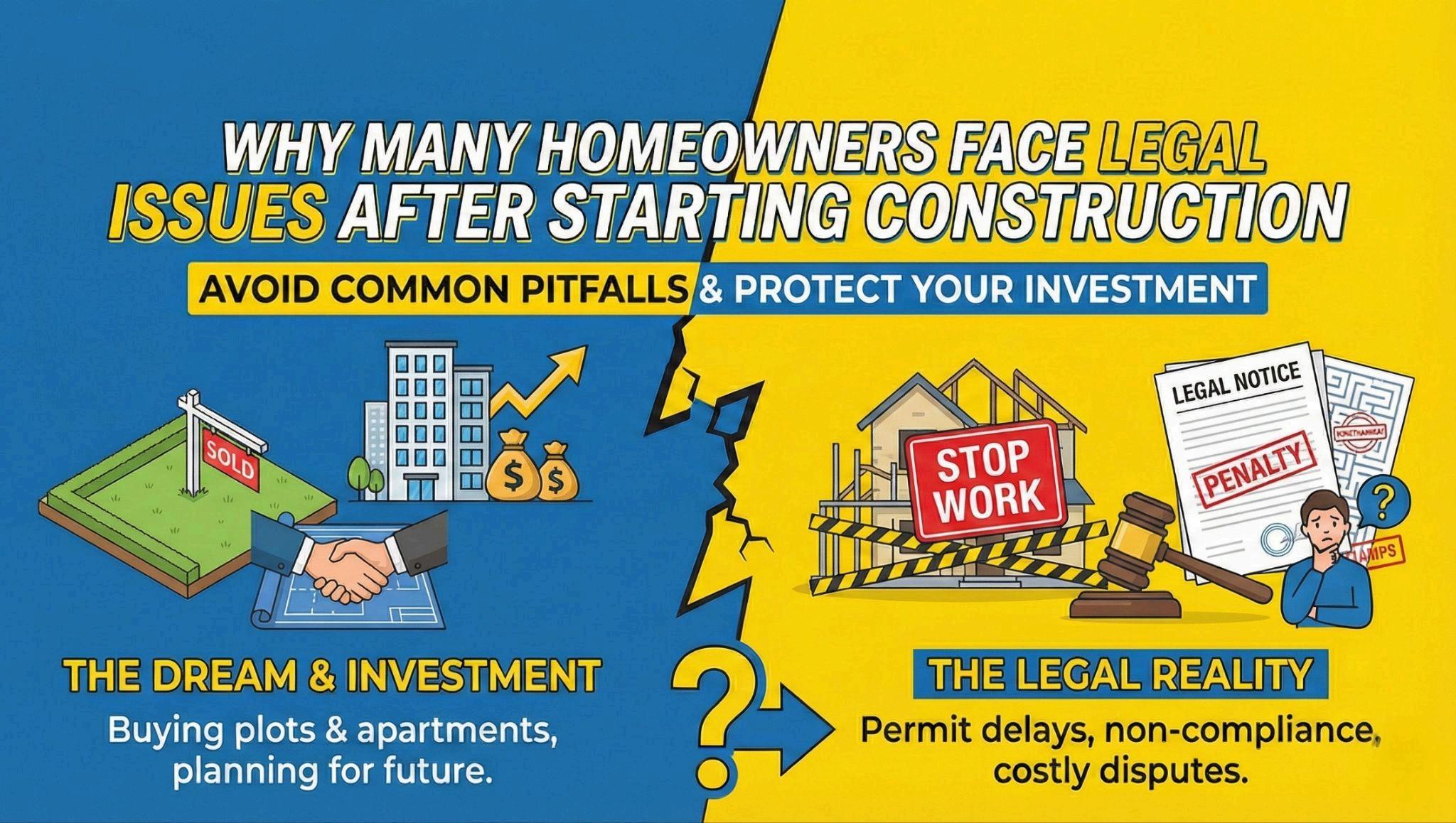
Building a house is a dream for many families. However, what begins as an exciting project can sometimes turn into a stressful experience filled with approvals, penalties, or unexpected expenses. In most cases, these complications don’t occur due to poor construction work - they happen because essential compliance steps are ignored during planning.

Two of the most common causes are skipping soil testing and ignoring setback rules These may seem like small technical steps, but they play a major role in structural safety and legal approval

Many property owners only discover the seriousness of these mistakes after facing legal issues in house construction

Understanding these risks early helps homeowners avoid disputes, approval delays, and costly corrections later

Common Planning Mistakes That Create Future Problems

When building a home, most owners focus on design, interiors, and budget Compliance and technical verification often receive attention only when approvals are required

Frequently ignored steps include:

● Conducting soil testing before foundation work

● Checking setback distances

● Verifying approved building plans

● Matching site measurements with approved drawings

● Confirming zoning compliance

Skipping these steps may save time initially but often leads to penalties or corrections later

Why Soil Testing Matters More Than Most Owners Realize

Soil conditions directly affect the strength and durability of a building Without proper testing, foundation design becomes guesswork

This can lead to:

● Structural cracks

● Uneven settlement

● Water seepage

● Reduced long-term stability

A soil test helps engineers design a foundation suited to the land’s load-bearing capacity and moisture behavior It also helps avoid structural disputes and approval complications later

Setback Rules: The Most Ignored Compliance Factor

Setbacks are mandatory open spaces that must be maintained around a building These rules ensure ventilation, safety access, and proper urban planning

Common mistakes include:

● Building too close to compound walls

● Extending balconies into setback space

● Starting construction before verifying approvals

● Assuming small deviations won’t matter

Even minor violations can create issues during occupancy certification, resale, or loan processing

Financial Impact of Ignoring Compliance

Ignoring soil tests or setback verification can lead to higher long-term costs

Homeowners may face:

● Penalties and regularization charges

● Structural modification expenses

● Approval delays

● Loan complications

● Lower resale value

Projects that follow structured planning and verification tend to progress smoothly Many homeowners prefer reviewing completed construction projects to understand how proper planning prevents compliance issues

Final Thoughts

Building a home should be a rewarding experience, not a legal challenge Most issues arise from skipping essential checks during planning. A proactive approach ensures structural safety, smoother approvals, and better long-term property value

Taking the time to verify technical and legal requirements early can save homeowners from major stress and unexpected costs later

Build Without Legal Stress

Most construction-related legal complications are preventable. When soil testing, approvals, and setback verification are handled early, the process becomes far more predictable

Careful homeowners always:

● Verify approvals before construction

● Conduct soil testing

● Confirm setback measurements

● Maintain documentation

● Work with qualified professionals

For those planning to build with proper approvals and technical clarity, exploring professional construction services can help ensure everything is handled correctly from day one

Turn static files into dynamic content formats.

Create a flipbook