
Thursday, April 9, 2026

Thursday, April 9, 2026
Inconsistency has dragged down LSU baseball’s tournament hopes despite preseason promise.




BY TRIPP BUHLER & ROSS ABBOUD Staff Writer & Deputy Sports Editor
LSU baseball is poised to take on Ole Miss in a crucial series this weekend, but it’s fumbling and stumbling its way into Oxford.
It’s been a tumultuous season that started promising but has since become more desperate. The team that was ranked No. 1 in several polls before its first pitch has dropped half of its SEC series and lost disappointing mid-week matchups.
The team currently sits at No. 24, but after a shocking loss on Tuesday night, the Tigers will likely fall unranked again just a week after moving back into the top 25.
The team was starting to improve its RPI with consecutive conference series wins. Then, LSU fell to Bethune-Cookman 10-7 on Tuesday. The Tigers’ game felt evenly matched after the first six innings, but an early crooked number in the second for the Wildcats exposed a wound LSU hasn’t been able to fully nurse.
While LSU has been strong to open games on the defensive end, opponents score the most runs on LSU in the second and third inning when the lineups start getting turned over. Opponents have scored 27 and 33 total runs against LSU in those innings.
That’s part of why LSU has to keep playing from behind and trying to get comeback wins.
“I feel like [playing from behind] is definitely becoming a trend,” centerfielder Derek Curiel said.
The key to bucking the trend, Curiel said, is making the plays and taking good at-bats.
But the trend has rarely been
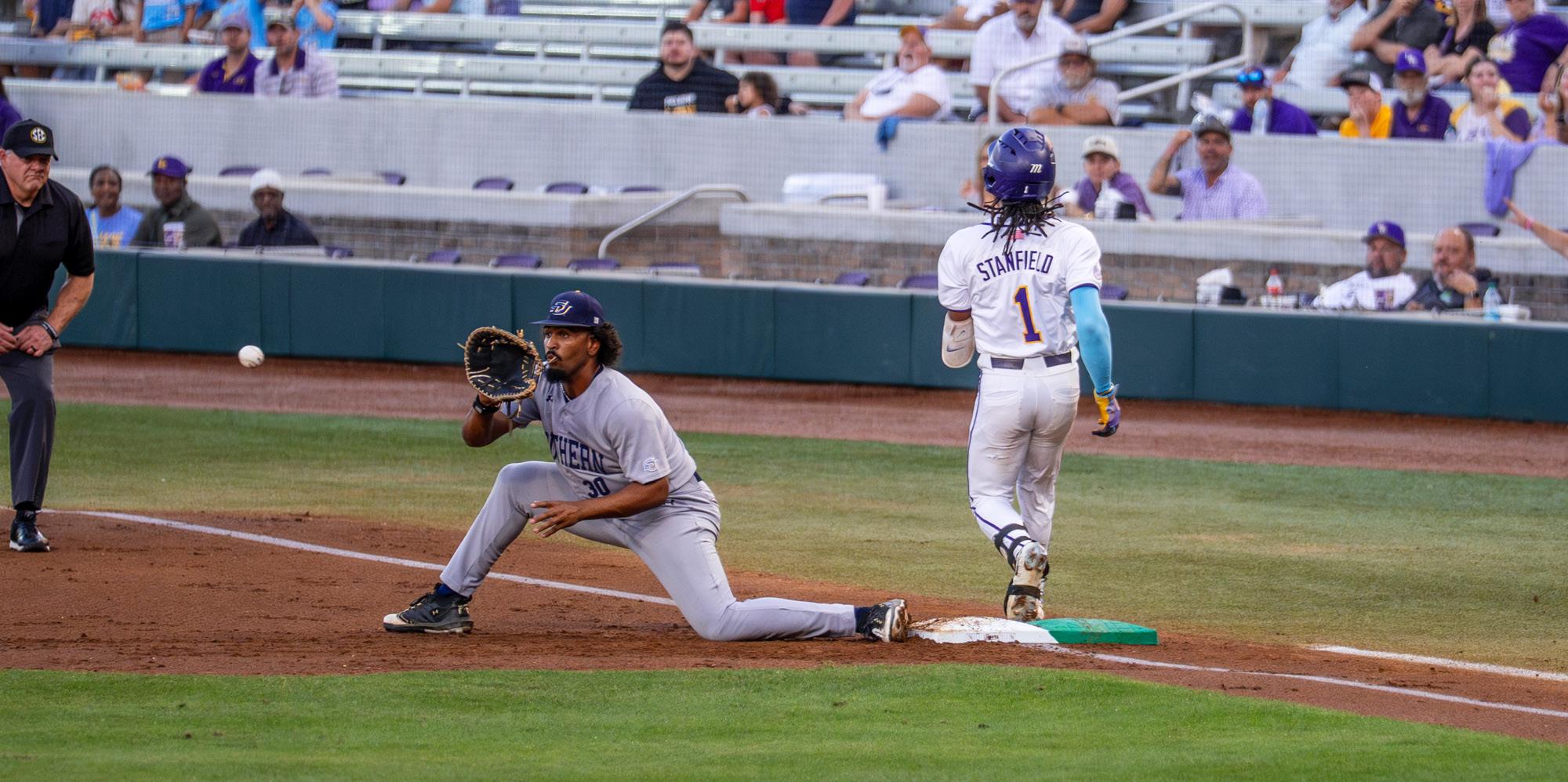
shifted as LSU has often struggled to overcome the early deficit. In a 6-1 loss in Game 3 of its series versus Sacramento State in early March, LSU had trailed by five runs before it scratched its only run in the seventh inning. In Game 2 versus Vanderbilt in mid-March, LSU found itself down 8-1 in the fifth inning, leading to a 11-3 loss.
But LSU has hinted at being able to piece together those good at-bats. In Game 3 against Kentucky, LSU found itself down 7-0 when it picked up its bats in the third inning. And in Game 3 versus Tennessee, LSU found itself down five when it stepped to the plate in the fifth.
In both cases, LSU’s defense stepped up and made clean plays for the rest of the game to help the offense capitalize off of good at-bats and come back and win.
The puzzling part is that immediately after scoring five runs to tie Tennessee in Game 3, and
then scoring 10 runs in the 12th inning to bury the Volunteers, LSU fell right back into old habits.
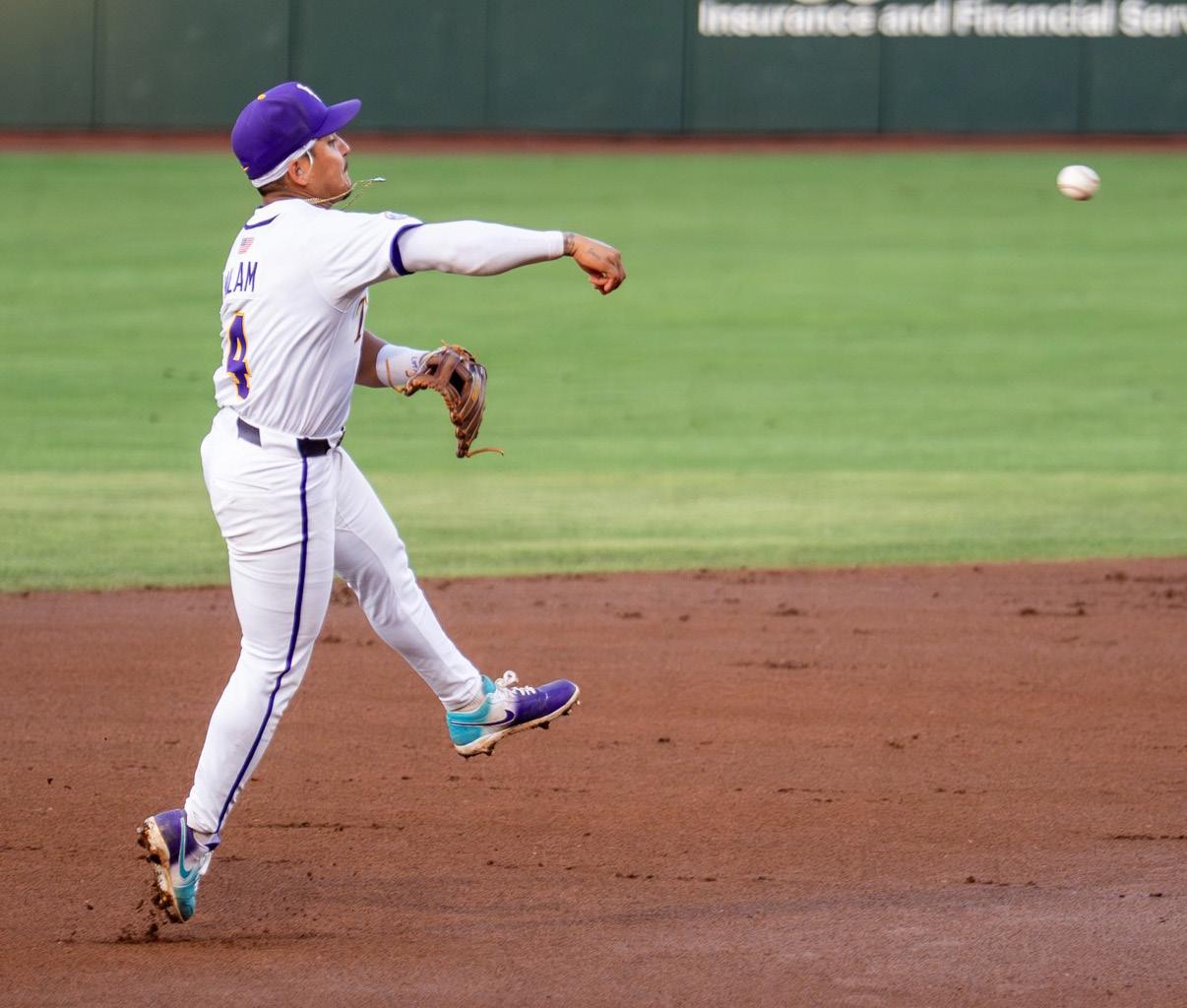
In Tuesday’s matchup, LSU had the bases loaded with no outs with the top of the order, Steven Milam, Jake Brown and John Pearson, up to bat. What should be the best part of the team’s batting order went down in order via strikeouts.
And the at-bats weren’t necessarily competitive, either.
It was uncharacteristic for three of LSU’s top guys to fail to meet the moment, despite the team’s struggles. Curiel said the whole team was surprised but would want those players at the plate in that situation again.
LSU’s best inning has been the eighth, where it has scored 59 runs. The next closest is 38 in the third.
It shows that LSU is able to play from behind, but this phenomenon of facing a deficit is happening way too often.
“It’s cool when we come back,” Curiel said. “It shows the grittiness of our team. But then obviously, when we don’t, just sucks being like, ‘Dang, we should have been the ones that come out first, or maybe not give up those runs or maybe catch a couple more in.’”
Batting and defensive errors aren’t the Tigers’ only issues. The pitching staff has struggled to perform consistently. Many of its potential stars from early in the season have struggled to throw effectively.
In Tuesday’s five-run seventh inning against the Tigers, LSU went through five pitchers. Two of them only lasted a pitch.
Danny Lachenmayer has become a matchup specialist, trusted to get one or two key outs. He threw one pitch Tuesday that hit a batter. Mavrick Rizy came in and faced four batters and allowed three free passes, which scored two runs while he was
on the mound.
Both of those pitchers are mainstays in LSU’s weekend rotation, but in a game where LSU threw nine pitchers, it was bound to throw some weekend arms.
The Tigers almost got out of the inning only allowing two runs, but like what has happened often this year, a key error prolonged a disheveled inning on Dax Dathe’s only pitch of the game.
Two more scored and Dathe was burned for the game, and head coach Jay Johnson had to go to Reagan Ricken to get out of it.
“Making it really simple, we just lost the strike zone on both sides of the ball in the seventh inning,” Johnson said.
And the results are proof of that. With a one-run lead and one out in the seventh inning, LSU’s pitching allowed a triple, a single, a hit batter and then recorded a fly out before allowing two walks and an error. With a runner on second base, the inning finally ended with a strikeout.
It’s a common theme throughout the season. Out of LSU’s 13 pitchers who have pitched over 10 innings, 11 of them have an ERA above three.
LSU’s next opponent, Ole Miss, on the other hand, has its pitching figured out. With the same criteria, it has eight pitchers with an ERA over three. On Wednesday, Johnson said Ole Miss’ pitching staff is the best the LSU will have seen this season.
Much like with LSU, outside of Tuesday’s struggles, the top of Ole Miss’ order has been hot. Its top four totaled 41 bases in Tuesday’s contest that ended in seven innings due to the run rule.
“It’s gonna take everything that we have to win [in Oxford] this weekend,” Johnson said.
NEWSROOM (225) 578-4811
Editor-in-Chief
JASON WILLIS
Managing Editor COURTNEY BELL
Digital Editor ELI LATIOLAIS
News Editor
KALEY MELANCON
Deputy News Editor
CADE SAVOY
Sports Editor
AINSLEY FLOOD
Deputy Sports Editor
ROSS ABBOUD
Entertainment Editor LAURA ALLEN
Opinion Editor
GARRETT MCENTEE
Multimedia Editor
PAYTON PRICHARD
Production Editor REI ZIMMERMAN
Chief Designer RILEY WHITE
(225) 578-6090
Layout/Ad Design ASHLEY KENNEDY
Layout/Ad Design REESE PELLEGRIN
Layout/Ad Design ALAYNA YOUNG
The Reveille holds accuracy and objectivity at the highest priority and wants to reassure its readers the reporting and content of the paper meets these standards. This space is reserved to recognize and correct any mistakes that may have been printed in The Daily Reveille. If you would like something corrected or clarified, please contact the editor at (225) 578-4811 or email editor@lsu.edu.
The Reveille is written, edited and produced solely by students of Louisiana State University. The Reveille is an independent entity of the Office of Student Media within the Manship School of Mass Communication. A single issue of The Reveille is free from multiple sites on campus and about 25 sites off campus. To obtain additional copies, please visit the Office of Student Media in B-39 Hodges Hall or email studentmedia@ lsu.edu. The Reveille is published biweekly during the fall, spring and summer semesters, except during holidays and final exams. The Reveille is funded through LSU students’ payments of the Student Media fee.
BY MORGAN VANNOSDALL Staff Writer
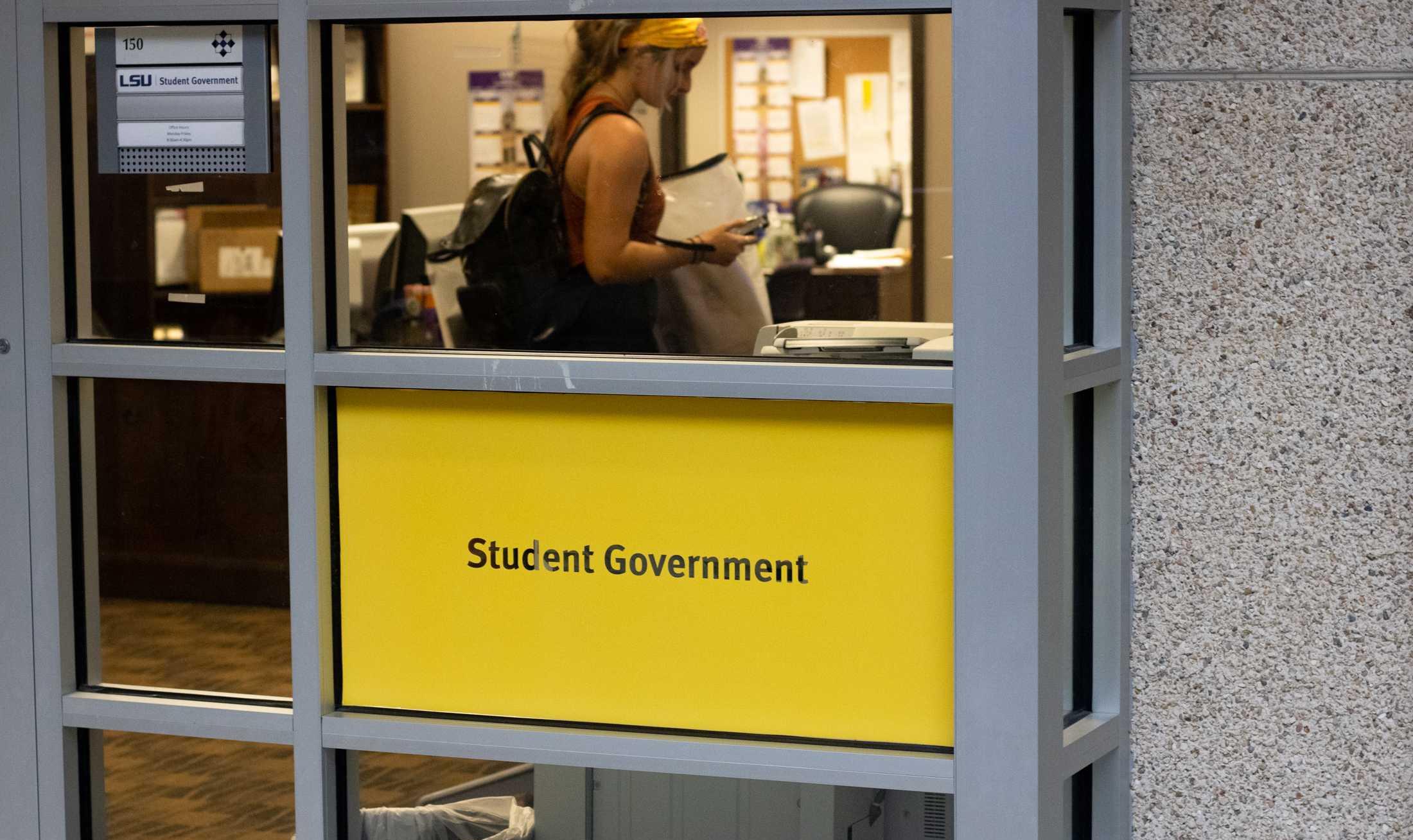
The LSU Student Senate voted Wednesday to override Student Body President Lavar Henderson’s first veto of the semester.
On Monday, Henderson issued the veto to a Senate bill limiting outside election influence. The bill, SGB 22, was passed 49-1-4 during the Senate’s meeting last week.
The bill was authored by Sen. Ducote, Sen. Jack Appleton, Sen. Benjamin Goldstein and Sen. James Williams III. If passed, it would have prohibited Student Government tickets from receiving “financial or in-kind” support from politically affiliated organizations.
The veto session was held during the Student Senate’s weekly meeting, and both the authors of the bill and Henderson were present.
Henderson stated that when he consulted LSU’s general counsel about the bill, they advised him to veto the legislation.
Henderson expressed to the body that he was not against the legislation per se. However, he said that he worried that the bill violated the First Amendment.
He has told the Senate previously that he would not sign any legislation with “politicallycharged” language; however, Ducote said the bill is entirely apolitical.
When asked what motivated them to write the bill, proponents said there is an organization known as Campus Victory Project, a subsidiary of Turning Point USA,
according to the meeting minutes. “Their scope of influence is hard to figure out but it’s up to you to do some research,” the minutes read.
Henderson told the Reveille he met with the bill’s authors and agrees there’s a “need to protect the integrity of our processes,” but the bill will need to “be revisited and be reworked.”
Sen. Ducote acknowledged these concerns and sent multiple court cases in the Senate’s Slack channel, including McCutcheon v. Federal Election Commission, to substantiate his argument that the bill did not violate the First
Amendment.
He also encouraged Senators to do their own research to determine whether the legislation complies with constitutional restrictions.
Sen. Jack Appleton, a co-author, spoke in favor of Ducote’s position, stating that he has done a lot of research in regards to legal precedents and that the bill complies with the established rules.
Ducote said the authors spoke to the Dean of Students Fran’Cee Brown-McClure as well as the Student Government Advisor Cortney Greavis. Both Brown-McClure and Greavis were in favor of the bill and said they would bring it up to
the general council.
During debate, multiple senators spoke in favor of overriding the veto.
“We’re here to protect and serve and advocate for students, and I think allowing older, middle aged individuals to be in our elections is absurd,” Sen. Trenton Craven said. “We are students, not politicians, and I don’t think real senators should have a place in our election.”
The bill was passed by a vote of 48-0-6. Since the veto was overruled, the bill will be passed but will not contain Henderson’s signature.
BY GAVIN MCMANUS Staff Writer
The LSU Student Health Center hosts events year-round meant to reduce students’ stress and bring awareness to wellness resources on campus.
These events serve to give the student body a break from classes, as well as to promote the various services the SHC offers.
The SHC is on the north side of campus, so hosting events is a way the center brings info to students who might not be nearby.
“We find that it’s really important to meet students where they are,” said Rachel Hoover, assistant director of health promotion.
Whether the topic is sexual health, stress relief or general well-being, the events serve to leave students with both an enjoyable experience and practical information.
“We try to pair education with fun and to do events that students will enjoy and want to engage with, but at the same time, take away some skill or knowledge, something that they can implement in their own life,” Hoover said.
Planning these events begins months in advance. Signature events, bigger events that often
BY JORJA ETHRIDGE Staff Writer
Mayors of cities along the Mississippi River have been pushing for a Mississippi River Compact, an agreement that would coordinate policies among the 10 states that the river runs through.
ABC News reported that members of the Mississippi River Cities and Towns Initiative expressed concerns about the river at their annual meeting with federal officials in March.
Strains on the river include drought conditions, which decrease water levels, and a growing demand for water and energy due to AI data centers, among other factors. Additionally, tensions in the Middle East have increased fuel
prices, which affect transportation costs along the river.
Protecting the Mississippi River is more than an environmental concern, these mayors warned. The river system is vital to the U.S. economy and global agriculture.
The Tulane Institute on Water Resources Law and Policy researches and tends to legislative needs regarding water issues.
Haley Gentry, assistant director of the Institute, said she has been working on a project that details the water policies or lack thereof in each of the 10 states along the river.
She explained the difficulty with coordinating water policies across multiple states.
“We have 50 states with 50 different water laws,” Gentry said.
Each state along the river has
a different degree of water management for surface ground water. Gentry added that some states do not regulate water use at all.
“It would be really helpful if we knew how much water needed to be at the river at which point to serve all the needs it has, but we don’t have that information because states regulate and monitor this to varying degrees,” Gentry said.
Only a few water systems in the country like the Delaware River and the Great Lakes are governed by interstate compacts. Gentry explained that for there to be a Mississippi River Compact, each state involved would have to pass its own law, and then Congress would have to ratify it.
BY ALAYNA FORD Staff Writer
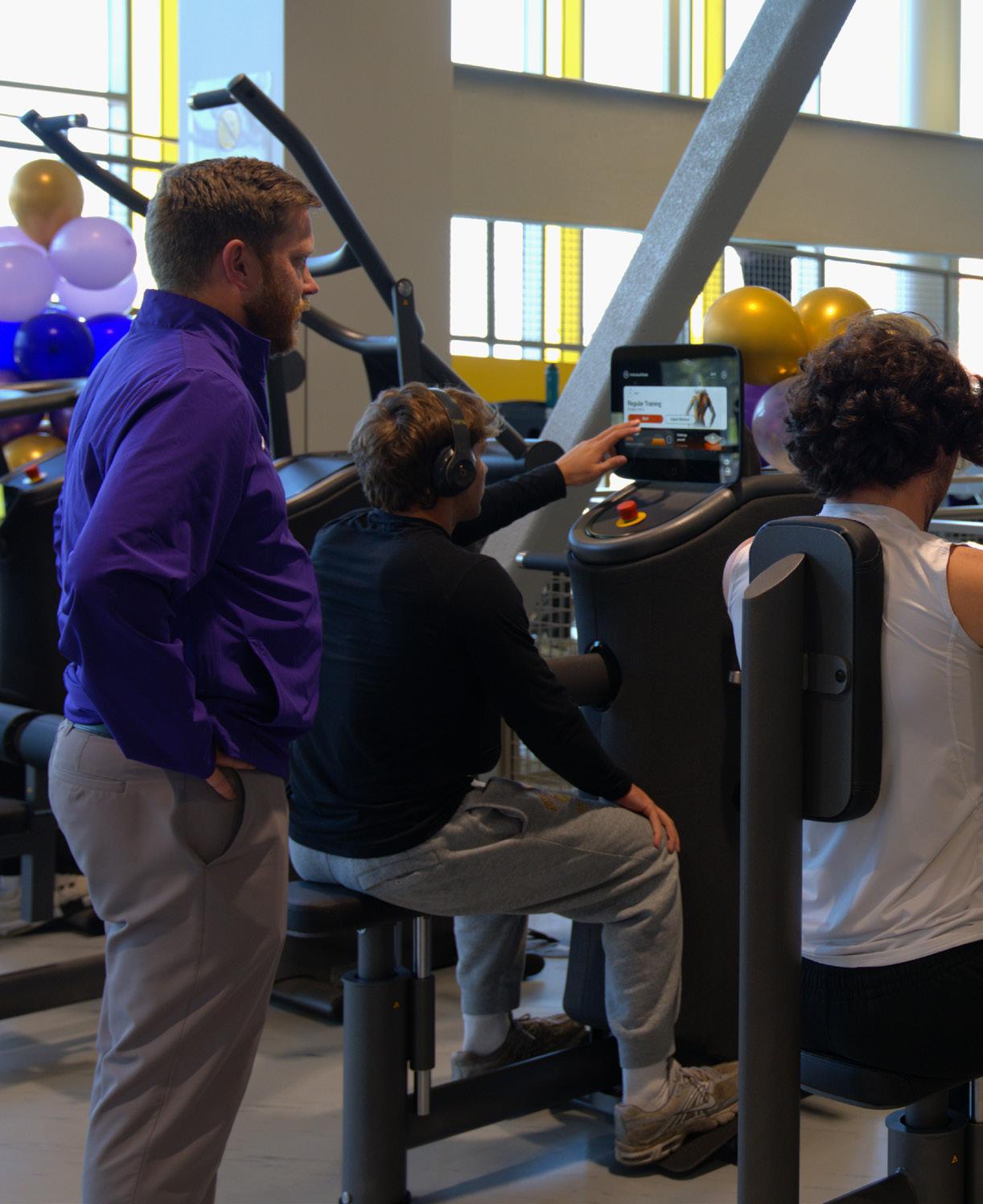
Students at LSU’s University Recreation Center now have access to a new style of training with the addition of EGYM.
The new digital fitness system was added to help guide workouts and personalize resistance simultaneously.
The EGYM uses magnetbased resistance and personalized data to adjust machines to each user’s height, weight and fitness level. The system aims to make strength training more accessible for students who might feel intimidated by traditional gym equipment.
Irma Nieves-Torres, the fitness operations coordinator at
LSU UREC, said the technology removes many of the barriers that prevent beginners from using weight machines.
The machines automatically record workout data, including reps and resistance levels, through the EGYM fitness app.
“With the onboarding process, it collects your height and weight, and once you sign into the machine with your band, it adjusts for you,” said Nieves-Torres. “All those adjusting knobs are out of the way so you can focus on pushing, pulling and pressing.”
Students can receive a free wristband that allows them to log into the machines and store

RIVER CONCERNS, from page 3
She said it would be difficult to get 10 states to agree to fundamental water flows or water pollution standards, especially in the current political environment.
Louisiana is one of the states that does not have many water regulations. Gentry explained that eastern states have not had to be as careful with water use as dryer western states.
According to ABC, the MRCTI said that water-scarce regions in the West like Arizona and Nevada are looking at the Mississippi River Basin for future water supply. However, moving water is risky.
LSU oceanography and coastal sciences professor Matthew Hiatt elaborated on the challenges of potentially moving water from the basin.
He said the water would have to be pumped through a pipeline spanning several states. That pro -
, from page 3
attract large numbers of students, are plotted out during the summer. The SHC uses student feedback to find out what events are the most favored by the campus community.
After that, the process involves finding campus partners and a place to hold the event.
The SHC then promoted the event through email, social media, television advertisements in the Student Union and flyers across campus.
The preparation pays off, with signature events tending to have
cess would be expensive, energyintensive and require interstate regulatory frameworks.
Hiatt added that pumping water from one basin to another limits the ability of the basin from which water is being pumped to deal with low water. Louisiana is at the downstream end of the basin and sees the effects of droughts in northern states.
Hiatt said low water on the river can cause issues with navigation and salt water intrusion towards New Orleans.
However, Hiatt said the river should be rising now as rainfall increases throughout the spring.
He said that climate change will likely lead to more extremes, though, like higher floods and drier droughts.
“I think with persistent droughts and also frequent flooding, there needs to be more coordinated management because states can’t really do a lot on their own,” Gentry said.
a turnout of 300 to 500 students, according to Hoover.
These events tend to be hostedin the LSU Library or on Tower Drive. Much of the attendance comes from foot traffic of students stopping by out of courtesy.
These events serve to give students a better understanding of self-care, nutrition and mental health. They also help students to get more familiar with the SHC.
“I think it creates an opportunity for students to interact with other students,” Hoover said. “It creates the opportunity for them to interact with Health Center
EGYM, from page 3
workout progress. If it gets lost or damaged, students will have to purchase a replacement band. UREC staff will also be offering complimentary guidance for students who want help learning the equipment.
“Our personal training staff is willing to help and it’s complimentary,” Nieves-Torres said. “[EGYM] is for those non-gym goers that are intimidated and don’t know what to do.”
LSU was one of the 10 flagship universities selected to introduce this technology in campus recreation centers across the country.
The selected universities are known as the “Revolutionary 10” because of the work they have done in research, development and innovation.
The process of getting the equipment started around September of last year, but EGYM is not completely new on campus; The UREC has had EGYM exposure for the past two years, but this specific EGYM equipment is new for students.
LSU is the first university in the state, and the second in the South, to implement the equipment. The project was funded through student recreation fees, which directly supports UREC programming and equipment updates.
“I came here to workout,” said Gabriel Nedelea, an electrical engineering major. “I’m most excited about the negative mode
staff and to feel more comfortable with coming to the Health Center.”
A sense of familiarity is important on such a large campus, where many students may be unaware of all the resources available to them. Hoover described student awareness as a “mixed bag,” with some students coming in for basic health concerns but many having never visited.
One of the most underutilized resources is wellness coaching, where students can receive help with their sleep, nutrition and time management among other things.

where it forces me to focus more on the concentric portion of the movement.”
As students begin to explore the new machines, UREC leaders said the goal is to create a more inclusive and engaging fitness environment. They hope the new system will make fitness more approachable for all students.
“We are a very innovative campus, and we’re always trying to bring what is not only new, but what is going to be beneficial for our students.” Nieves-Torres said.
Hoover said a large contribution to students’ hesitation comes from worries about cost.
But, mental health, wellness and student support services are all covered by tuition, with no additional cost for students whose the during the semester.
“They can also get free counseling or therapy and free wellness coaching,” Hoover added.
Success does not come without challenges, with space for events being one of the largest issues. The SHC does not have its own space for events, meaning that events must be held in other spots around campus.
The events are subject to the weather and must be scheduled around other events, so reaching students is often difficult.
Even so, partnerships across campus help expand what the SHC can offer. Collaborations with groups such as the LSU Library, Residential Life and the UREC allow for larger, more accessible events.
The SHC is hosting their Dimensions of Wellness Fair from 11 a.m. to 1 p.m. on Tower Drive Friday, which will feature more than 20 campus partners representing different aspects of student well-being.

BY SARAH WALTON Staff Writer
When one thinks about the ‘70s, there are certain things that come to mind — hippies, disco, bell-bottoms, economic turmoil and, just maybe, serial killers. But what may not be common is a woman serial killer, especially a sapphic one.
As the school year comes to an end, LSU’s film program is gearing up for its yearly Take Film Festival on May 5. One of the films being shown is “Fever.”
The film follows Carrie, “a sapphic serial killer in the 1970s that goes on a rampage,” said Sarah May Dages, a junior theatre major at LSU and the lead in “Fever.”
Dages normally performs on stage in live theater, so “Fever” was her first real entrance into the world of filmmaking.
“The process on set in September was just so eye-opening and, to this day, one of the best experiences I’ve had,” Dages said.
There were quite a few firsts on set for Dages, such as playing a serial killer and a queer character. She mentioned the challenge was not only playing a character who was so different from who she is, but also acting in a new way.
“Having a camera 2 feet away from your face, it makes you act different from when you’re on a stage in a room full of 100 people,” Dages said.
The Take Film Festival will be “Fever”’s premiere, and Dages hopes the audience is caught off guard and captivated by the story.
“I think everything is very unexpected, and it’s interesting and leaves us wanting more,” Dages said.
Emerson Boutte is the writer and director of “Fever.” She graduated from LSU in the fall with two degrees, one in film and television and the other in forensic psychology. Both degrees impacted the way the film was shaped.
The idea for a film about a female serial killer came from a producer on a feature film Boutte was working on, but it grew into something completely new. Because of her knowledge of forensic psychology, she knew she wanted to take a “realistic approach” and draw in-
spiration from the ‘70s.
“Daisy Jones and the Six” was one of the inspirations, even though the tone of the show is very different from “Fever.” She mentioned she’d seen different horror short films on TikTok and wanted to evoke the same emotion those films created. “Dead of Night” by Orville Peck was another inspiration.
“Fever” is in the final stretch of editing. Boutte said she’s both excited and nervous for its premiere. She talked about how integral the cast and crew were to bringing the short film to life.
“The people in the film department and the support from them kind of made the whole experience worth it,” Boutte said.
The things she loved most about her program were all of the opportunities and connections it gave her.
“Some of my best friends have come from the program that I still adore and would give anything to work with again,” Boutte said.
Megan Eisert is known throughout LSU Film for being the problem-solver and, oftentimes, the producer for any upcoming short films. She recently finished producing the LSU Geaux Film “Tick,” and she was the producer, costume designer, makeup designer, special effects artist and an actor from “Fever.”
The title of resident student producer came for the sheer quantity of films she has worked on, Eisert said. Starting her freshman year as one of the youngest producers in LSU Film & Television history, she has worked on more than 30 films.
Originally, Eisert wasn’t supposed to work on the film, but she got a call from her friend Emerson Boutte, the writer and director of the film, and she stepped in. Taking on all of these roles in front of and behind the camera is a large task, but a joy, she said. Eisert still has the clip of her death in the film, bloody knives and all.
“It’s funny because I’m the producer and the makeup artist and the actress and I’m doing all the SFXs,” Eisert said. “So, I have to buy all of the blood for slitting my throat, set up the knife with the blood and then explain to Sarah


Dages how she’s going to slit my throat.”
Horror films are some of Eisert’s favorite to film because of the eccentric characters and everything that can happen.
“It was extra fun for me to have my hand involved in so many different places in production,” Eisert said.
Creating a murder scene on screen takes a lot of work. Eisert had some help from Kyla Kazuschyk, the costumes and makeup professor at LSU; John Eddy, the props professor; and even Joe Crest, the acting professor known for his role as Ted Wheeler on “Stranger Things.”
“Being LSU students, we are able to access those resources in a way that’s rooted in education, but also rooted in an understanding of community,” Eisert said.
To Eisert, film is a community-based art. She also mentioned how she got help from friend and mentor Michael Papajohn, an LSU alumnus and stuntman who played Uncle Ben’s murderer in the first “Spider-Man” movie.
Papajohn took some of the cast and crew to Celtic Studios’ facility to learn some stunt work.
“I think it was really an awesome experience for the actors to be able to see what it’s like to actually work with a professional in a film rehearsal environment rather than being in a theater environment,” Eisert said.
“Fever” is not an official LSU Geaux Film, but it did earn a Tiger Grant, which students can apply for to help fund their films. LSU film students are constantly creating and improving together, and “Fever,” along with all of the other LSU short films, are real examples of that.
“I’ve toured film schools across the country, but this is what I knew I wanted to do from the jump,” Eisert said. “And what really stuck out to me about LSU’s film program is that we’re supposed to be working with each other and celebrating each other rather than getting pitted up against each other.”


The clubhouse entrance is displayed April 7 at the LSU Golf Course.
A golfer gets ready to tee off April 7 at the LSU Golf Course.


The cart’s number is displayed April 7 at the LSU Golf Course.
The LSU Golf Course is set to permantly close on June 30, 2026.
A ball sits in the bunker April 7 at the LSU Golf Course.


A hole’s information is displayed April 7 at the LSU Golf Course. Ripples move across the water April 7 at the LSU Golf Course.


BY PAIGE CHERAMIE Staff Writer
The Glassell Gallery is currently hosting exhibitions for graduate students studying fine arts, a culmination of their work and expertise built through the program.
The works of Sarah Miller, a ceramics student, and Mia Pons, a printmaking student, are on display from April 6 to April 11.
These two students, like others in the program, have spent the last three years building up to this moment. Starting out as teacher’s assistants and then becoming instructors themselves, they have worked to cultivate their skills and build up to their capstone theses.
“They’re working independently with faculty, doing thesis research, which is fundamentally not that different from a PhD. dissertation, except that it’s got a practice component,” said Rod Parker, a professor and director of the School of Art. “So the work itself that they produce is the substantial body of work rather than it just being an intellectual, theoretical thing.”
From this culmination comes the exhibitions, with the students defending their theses in the gallery itself. Here, they must stand in front of a board of professors and experts and argue why their thesis is substantial and degreeearning.
Both Miller and Pons’ exhibitions are personal to their experiences, turning their lives and
memories into a story for viewers to consume.
Miller’s exhibition, “to be closer,” is a collection of ceramic and photographic art, focusing on the connection between people and internally with oneself.
“‘To be closer’ is an exploration of the intersection of yearning and unease,” Miller said. “The series of sculptures, prints and functional vessels use the visual language of the body and its thresholds to explore how each of us build interpersonal relationships and understandings of self.”
Her ceramic art ranges in size, with some pieces as large as a full-scale body. Each symbolizes a component of connection.
“I’ve been doing work for a while around the innate human need for connection,” Miller said. “I find it hard to make friends. It can be difficult being vulnerable with another person, to push past your own uncomfortableness to be able to make those really meaningful connections.”
Those who have similar experiences can connect with these pieces, bringing people with shared emotions and memories together.
Pons’ exhibition, “this body held others,” is a collection of art that reflects her life thus far, with a focus on the storage of memories in the body.
“The exhibition ‘this body held others’ examines the body’s invisible depths, the unseen, and its interpersonal memories,” Pons said. “These ideas are explored
through printmaking, book arts and papermaking. I am interested in how these mediums connect and respond to the materiality and nature of the body.”
For Pons, her main motivation is the ability to tell a story through her work. It drives her decisions, leading to pieces that are personal to her experiences and all connect to the way the body stores these stories.
“I have always felt an embodied weight — emotions and experiences — connected to me but not belonging solely to me,” Pons said. “The body stores memories, revealing them through physical and emotional responses. I use my practice to process my feelings and explore how others’ experiences have been carried through the body.”
With such a personal collection of pieces on display, Pons’ thesis project reflects the hard work and dedication she has put into getting this degree.
“It’s really satisfying to have it all up and finished to share, but it’s also emotional and scary to share yourself like this,” Pons said.
For both Pons and Miller, the help of their peers made their exhibitions possible. Each of the artists worked alongside their cohort members and professors using the resources of the program to get to the finish line.
“When you work that big, you have to ask for help,” Miller said. “I can’t lift most of my work on my
own. It’s difficult to get in and out of kilns and to get it to and from the gallery.”
For the staff of the Glassell Gallery, Master’s of fine arts candidate exhibitions are a time of excitement. Director of Galleries Courtney Taylor has followed these students through their growth, making this final showing a fulfilling event.
“It’s an exciting time,” Taylor said. “It’s chaotic but it’s really fun. Since I’ve been in this role, this is the first group of students that I’ve gotten to see from the first year they come in all the way through. So, I love being close with them and working with them in other ways, leading up to this
point, because I’ll be involved in grad walk.”
Those looking to support the artists can attend the final reception on April 11 from 6-8 p.m. before the exhibition is closed.
For anyone who would like to view the shows of Pons and Miller or other graduating students, you can visit the Glassell Gallery website for hours of operations and the event calendar.
The following showings will be Serena Corson’s “Touching Grass: Reimagining the Commons” from April 18 to 25, Nicholas Roberts’ “Within These Walls” from May 2 to 16 and Jacob Mills’ “AEX26: Arts & Electronics Expo,” also from May 2 to 16.

BY MIA HATTAWAY Staff Writer
In a city full of coffee shops, Las Brujas is more than just a spot to grab a good latte — it is a shop that offers quality drinks that settle well, a bodega that supports local farmers and a gathering space that makes you want to stay for a while.
Las Brujas Coffee & Grocery had its soft opening on March 24, with over 200 drinks ordered in only three hours after the doors opened. Since then, the cafe has only become more of a hot spot for coworking, shopping and hanging out.
Parkview Baptist schoolteacher and Las Brujas patron Haley Spell believes the Mid City business is already playing an important role in the community.
“It’s a good third space,” Spell said. “It’s a spot in the community to just hang out that’s not home or work.”
Spell and her coworker, Gracie Feucht, decided to spend a good portion of their spring break at Las Brujas, seeing that it was a cozy, quaint spot to recharge during the downtime.
“When we came in, we immediately noticed that the vibes are very cool,” Feucht said. “This is a place that we could hang out in.”
From the first step inside of Las Brujas, guests are welcomed into the seating space, which leads into the bodega and cafe section. Available for purchase from the bodega are items such as bread and honey from local business owners and jarred Las Brujas coffee selections.
Las Brujas owner David Villa believes the storefront is bridging a gap in Baton Rouge’s small businesses at the moment.
“This is what the neighborhood is needing: a little bodega with fresh baked bread, milk and eggs,” Villa said.
When it comes to the produce coming out of the shop, Villa wanted to provide the fresh food he already consumes regularly while simultaneously supporting small farms.
“I really want to serve what I would serve in my kitchen,” Villa said. “I have a passion for local, sustainable food.”
The store is sandwiched between prominent Mid City businesses like Good Choices Co., The Radio Bar and Elsie’s Plate & Pie.
“Just this strip right here has a lot of really good places,” Spell said.
This location was very intentional for Villa.
Though Las Brujas is the freshest coffee shop in town, Villa is not new to Baton Rouge. He has
called Baton Rouge home for a number of years, including during college at LSU, after his family moved to the city from Colombia.
When looking for a venue, the Mid City location was familiar and fitting for Villa’s vision.
“This is our old stomping ground, so I knew it would work great,” Villa said. “It’s a cool little block.”
While Villa has lived in New Orleans for the past few years, producing a podcast called “Coffee Upside Down” and beginning Las Brujas as an online storefront, he is happy to now be back in Baton Rouge.
“It feels like home,” Villa said.
Though being back in the city he was raised in contributes to his feeling of nostalgia, Las Brujas is largely inspired by his Colombian heritage — in fact, the cafe’s namesake is from his family’s farm in his birth country.
“It’s kind of a global family enterprise,” Villa said. “It’s an homage to family tradition and farmhouse ways.”
Though the phrase literally translates to ‘the witches’ in Spanish, the farm’s name relates to the vegetation of the land.
“It has nothing really to do with magic,” Villa said. “It’s the Spanish moss that was hanging on the trees of the property that
looked like silver witches’ hair.”
Now, Villa’s heritage influences various aspects of the cafe, including the interior design.
“The style was always going to be warm, woody, rustic Colombian farmhouse meets mid century modern,” Villa said. “I just want [guests] to feel at home and feel welcome.”
When furnishing the shop, Villa wanted to focus on repurposing items from estate sales, Facebook Marketplace and local thrift stores, as well as furniture directly from family and friends.
This vintage feel comes through in the seating area, where large community sub-spaces are created in place of small, isolated tables.
“It’s really cozy and has lots of individualized spaces with communal tables,” Spell said.
Couches line the exterior of this space, with a long dining table and two smaller tables in place of a formal desk space.
In one spot is the Kid’s Corner, decked out with coloring pages, story books and toys to entertain the children of patrons. Villa felt it was an important space to include as built-in support for caregivers.
“There’s a place for everybody,” Villa said.
Inclusion extends past just seating, though.
Las Brujas aims to support the health needs of community members by selling fresh whole foods, gluten-free pastries and digestion friendly coffee.
“I want customers to feel like no matter who they are or what they’re doing, we’ll have something to offer them,” Villa said.
Part of Villa’s approach is to find the balance between accessible options and offering premium foods.
Lactose milks carried at the store include goat milk and A2 milk, which generally help digestion and inflammation issues common with A1 milks. Instead of popular dairy alternatives like oat milk or almond milk, Las Brujas carries homemade coconut milk, which is generally better for gut health and blood sugar maintenance.
Villa chose to be selective about milks to mirror what he has learned from his own experiences with indigestion and inflammation. It is his hope that he can help make a positive change in the eating habits of patrons.
“I definitely want to meet people where they are but also hold my values,” Villa said. “I think a lot of people don’t know what it’s like to feel vibrantly healthy and happy — that’s all I want for anybody.”

LSU
BY MARISSA REISS Staff Writer
LSU track and field started its 2026 outdoor season with impressive rankings in the second round after a competitive and recordbreaking winter indoor season.
The Tigers have built their way up to the top of the U.S. Track and Field and Cross Country Coaches Association rankings early in the season, significantly improving from the first round of rankings.
The most notable in the rankings is the LSU men’s team,
ranked No. 1 in the nation with a score of 281.61 points. This score marks a huge gap of 33.44 points ahead of the second-place team, which is No. 2 Texas at 248.27.
Behind the top-two LSU and Texas teams are multiple other SEC opponents in the top 25: No.
3 Texas A&M, No. 6 Ole Miss, No. 7 Florida, No. 9 Georgia, No. 12 Alabama, No. 14 Auburn, No. 23 Tennessee and No. 25 Kentucky.
Multiple Tigers put up personal best race times and distances throughout their most recent meet, the Battle of the Bayou, hosted at home.
For the men, the 4x400-meter dash, consisting of Amal Glasgow, Shakeem McKay, Grant Buckmiller and Gregory Prince, ran a time of 3:01.43 to win the event. Senior Jordan Turner kick-started the Tigers on the field, jumping 7.95 meters in the long jump to win the first day and hold the best long jump distance in the nation.
The LSU women recently dropped four spots in the rankings, now ranked No. 7 among all collegiate track and field teams with a score of 229.68.
BY RAMI BURKS Staff Writer
With the current state of the NCAA transfer portal, it’s not uncommon for players to go out of state to play their favorite sport, but few athletes leave their home country altogether.
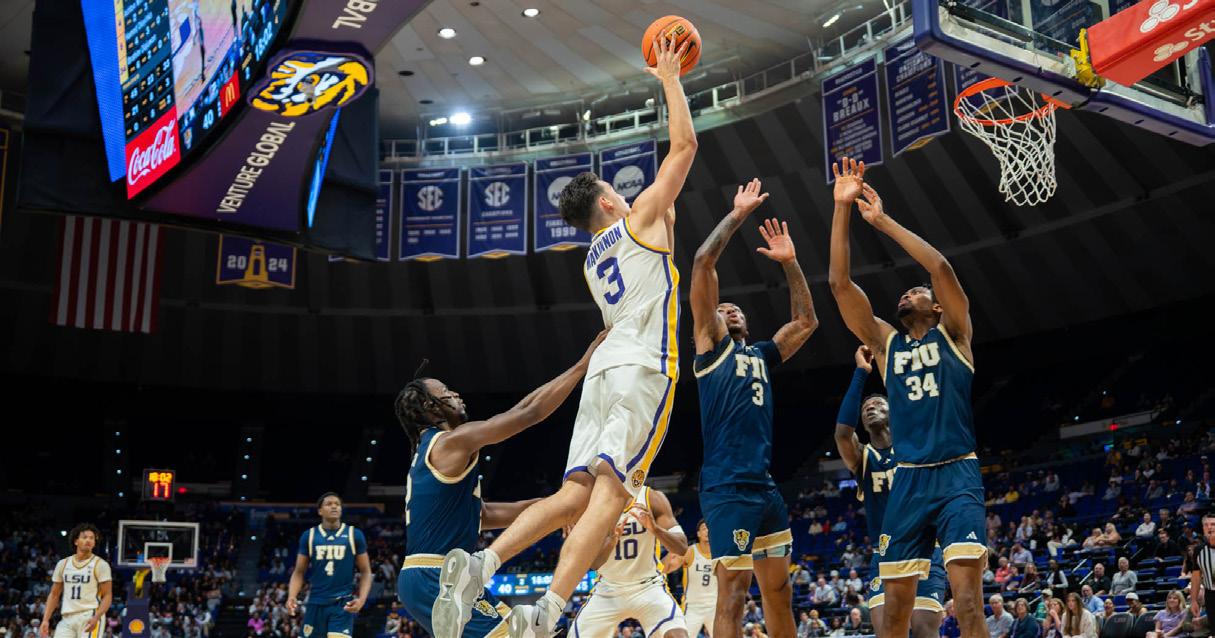
Yet, Baton Rouge was calling for these two athletes. Romanian tennis player Alexis Marginean and Australian men’s basketball player Max Mackinnon both decided to go to LSU for the culture.
“I chose LSU because I love the team,” said Marginean, a freshman tennis player. “I love the girls and the coaches. I felt like home here right when I came, so I felt it was the right decision for me.”
Going out of the country at any age can be nerve-racking, but coming to the U.S. was a must for Marginean and Mackinnon. The amenities NCAA schools bring to the table are incomparable to those of other countries, but LSU often brings more than other Division I schools.
The Tigers’ athletics staff designates a lot of time to keeping the players healthy, and that’s one of the benefits Marginean said helps her during the season. She said that the tools and resources that her coaches and trainers bring help foster a safe environment off the court.
Mackinnon said these resources have made him a better basketball player as well, and not just from a health standpoint. He said it’s helped his overall game.
“I may not look like it, but I
definitely feel more twitchier, faster, and just my movement has gotten way better,” Mackinnon said.
The culture in Baton Rouge is genuinely like no other as well, and LSU easily plays into that. Both athletes said they feel at home when they step onto campus, but for different reasons.
Marginean said her decision to come to America lies within the facilities offered. She said that in Romania, they don’t have hard courts, and it’s very unrealistic to play at the professional level.
So, she came to the U.S. for college, and in the process, she fell in love with the culture of Baton Rouge.
She said she was between choosing LSU and Clemson, but when she toured, Baton Rouge became her new home. She fell in love with the team. It would be perfect for her.
Mackinnon had more connections to the U.S. than Marginean. His mom played basketball at Alabama, and he wanted to share that experience, so he came to America. He also said that during that process, he wanted to build a potential career as a professional basketball player, which led him to LSU.
“The resources here to get better through the managers, the coaches,” Mackinnon said. “It’s like a pro team.”
But he came to the U.S. to get a degree, and that’s a big reason why he came to play basketball.
BY ADAM KIRSCHMAN Staff Writer
LSU softball secured a 9-1 run-rule win over Central Arkansas on Tuesday, off the back of stellar batting performances, including three runs from Jaila Lassiter and three RBIs from Sierra Daniel.
Despite being held scoreless in three of the six innings, LSU started and closed the contest extremely well, securing three runs in the first inning and four runs in the sixth inning.
Almost every batter played a role in securing the blowout win, as LSU combined for 11 hits compared to Central Arkansas’ three. Along with the standout performances by Lassiter and Daniel, Kylee Edwards and Alix Franklin also kept up their recent hot streak, both securing two runs and a hit.
Tatum Clopton got her first start on the mound since her
rough outing against South Carolina.
The fifth-year senior forced seven strikeouts while allowing only three hits before being replaced by freshman Cali Deal. Deal would pitch 1.2 innings and look good as well, not allowing a hit.
In the first inning, LSU held Central Arkansas off from getting on base. Clopton forced a groundout and strikeout, while Franklin hauled in an impressive diving catch, resulting in three quick outs.
On LSU’s first turn at bat, Bears pitcher Bailee Runner seemed hesitant pitching to star hitters Lassiter and Kylee Edwards, resulting in two walks through the first three batters.
With two runners on base and only one out, Franklin drove in the first run of the contest with a nice double into center field, sending Lassiter home. Maci Bergeron then knocked a double
into the gap between the Central Arkansas’ right and center fielders, sending Edwards and Franklin home comfortably from second and third.
Central Arkansas would be able to escape the first inning down three after forcing a groundout and would start to build some momentum in the second after first baseman Kaitlyn Graham smashed a home run into right-center field.
The bears followed up the run with a single, but Clopton would stay composed, forcing a strikeout to end the inning.
LSU’s defense got off the field quickly at the top of the third inning, with Clopton forcing a groundout and two strikeouts. In the Tigers’ turn at bat, Tori Edwards and Bergeron would get on first and second off a walk and a single, but they’d fail to score after a Char Lorenz groundout.
The pressure started to build for LSU in the fourth inning, after
designated player Emma Robertson hit a lofted double down the right-field line. Franklin tracked it down, advancing runners to second and third.
Central Arkansas would then load up the bases with a walk, while still on zero outs, making LSU head coach Beth Torina visibly upset.
Despite the bad start, LSU’s defense would fight back under pressure and pull off three straight outs. Clopton looked unfazed at the mound, dealing two strikeouts to keep LSU’s two-run lead.
On the first pitch of LSU’s turn on the mound, freshman Rylie Johnson smashed the second home run of her career into center field, easing nerves in Tiger Park. Shortly after, Lassiter got her third hit of the night with a single and was quickly sent home after Daniel smashed a double into left-center field.
At the top of the fifth, Clopton
would secure her seventh and final strikeout of the contest on the first at-bat before Deal replaced her. Deal forced a strikeout and groundout, resulting in the fourth straight scoreless inning for the Bears.
Central Arkansas decided to replace Runner with Lucy Crowder to start the bottom of the fifth. The change would not work as expected, though, after Tori Edwards started things off by being walked before stealing second. Lorenz then also walked, before Avery Hodge was forced out at first after a failed bunt, keeping the score at 5-1 with two innings to go.
LSU continued to make things harder for Central Arkansas, as the defense forced another scoreless inning.
The Tigers would continue pulling away from the Bears after Lassiter doubled a ball into
BY TRE ALLEN Staff Writer
Expectations are always high with the LSU faithful, but a core of Flau’jae Johnson, Mikaylah Williams and MiLaysia Fulwiley returning to center stage seemed more than just mere optimism.
Heading into the NCAA Tournament, LSU women’s basketball finished the season 27-5 and earned the No. 2 seed in its re
gion, making it the highest seeding head coach Kim Mulkey has earned with the Tigers.
However, after winning its first two games by an average margin of 56 points, the Tigers traveled to Sacramento, where their championship hopes evaporated. The result was an 86-85 loss to Duke in the Sweet 16.
As promising of a season LSU had, there were still some glaring issues that held it back and will have to be addressed if the Tigers want to get over the hump heading into next season.
Rebounding
In sports, the phrase “numbers don’t lie” is frequently used. While there may be some truth to it, numbers can also be deceiving.
LSU finished the season ranked No. 3 in the country in rebounds per game with 48.1 and No. 2 in the SEC behind Oklahoma.
The Tigers also ranked No. 3 nationally and No. 1 in the SEC for offensive rebounds per game with 17.3.
With numbers like those, one would think LSU dominated, but there’s more to the story.
In the first conference game of the season against Kentucky, the Wildcats out-rebounded the Tigers 45-29, including 17 offensive rebounds, while LSU only had four, resulting in a loss for the Tigers
In that game, Williams, who’s listed at 6-feet tall, led the team with eight rebounds. That’s more rebounds than 6-foot-5 Kate Koval and 6-foot-2 Amiya Joyner combined.
This game foreshadowed what
type of season it was going to be if the Tigers couldn’t fix the rebounding issues.
Despite winning the rebounding margin by 20 against Vanderbilt, the Commodores still had 14 offensive rebounds.
After some extra motivation with “Mebounds” T-shirts trademarked by Angel Reese and using a “bubble” device to help simulate rebounds in practice, it seemed like the rebounding woes were behind them.
But against the Blue Devils in the NCAA Tournament, the woes re-emerged. Despite both teams having 41 total rebounds, it was the Tigers who were on the wrong side of things.
Duke grabbed 20 offensive rebounds and had 19 second-chance points, while LSU only had 15 and 12 second-chance points.
“We couldn’t grab a rebound,” Mulkey said. “And you look at the stats, and we had the same number of rebounds, but that’s misleading. We couldn’t rebound the ball so that we could take off and transition. And it was just kind of like we were moving in mud.”
Mulkey stated that she intends to bring in two to three players from the transfer portal, and there’s a good chance a post player and someone who can rebound will be an option at the top of her list.
Players like Addy Brown from Iowa State, Nunu Agara from Stanford or Gracie Merkle from Penn State are all in the transfer portal and averaged more than eight rebounds this past season.
Turnovers
Turnovers are one of the most likely ways to lose any basketball game.
When a team is giving away the ball and giving away possessions that could potentially result in points, it’s going to be hard to overcome those moments in a game.
For LSU, turnovers were another problem in close games, as the Tigers averaged 14.8 per game.
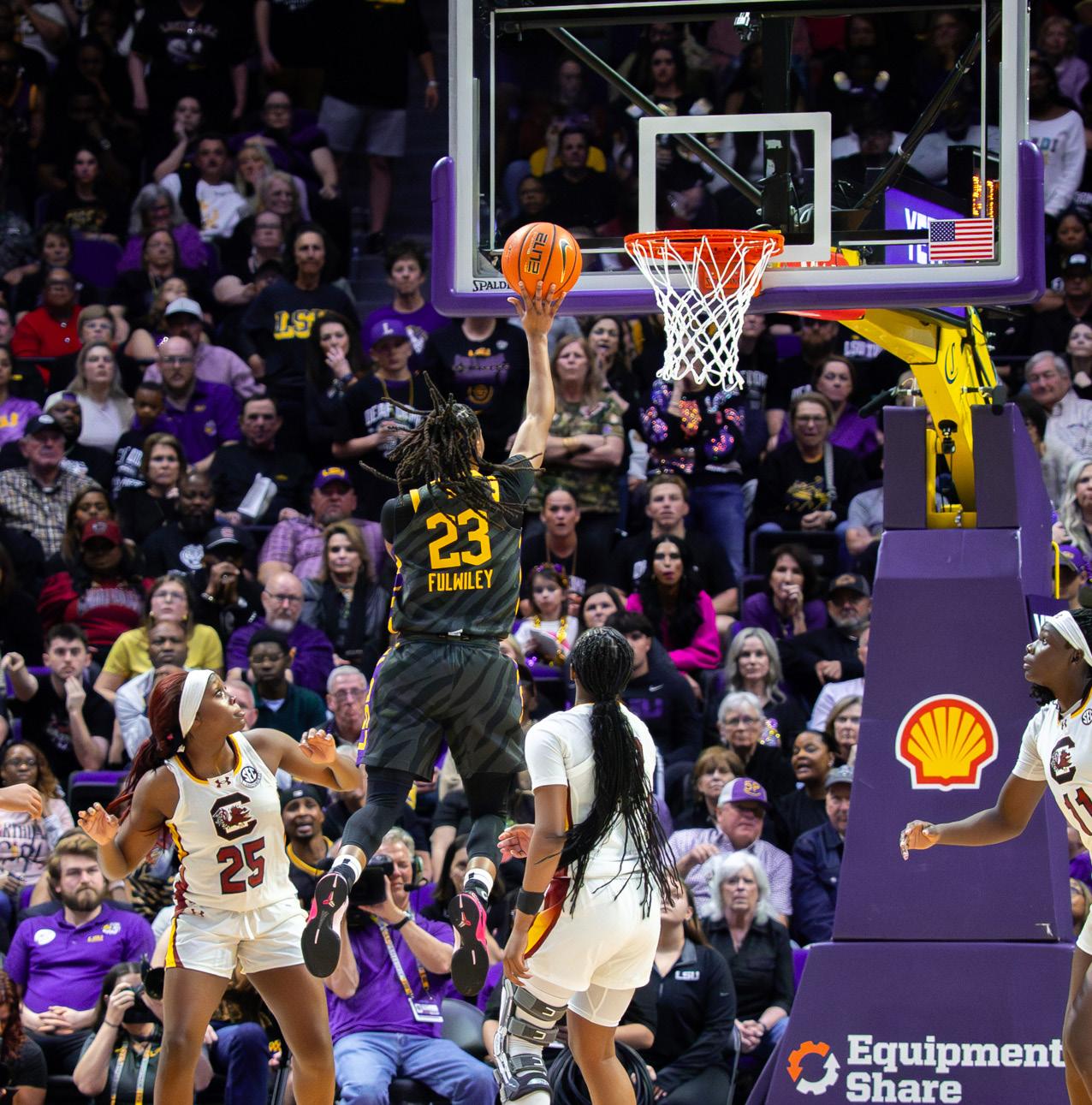
Tigers’ 79-72
rimeter players like Johnson, Fulwiley and Williams, who are balldominant and initiate the offense. The trio led the team in turnovers, combining for an average of 6.5 per game.
LSU finished seventh for the fewest turnovers committed in the SEC, but when looking at the teams that made this year’s Final Four, it was the ability to take care of the ball that allowed them to reach Phoenix.
Texas and South Carolina were ranked No. 1 (12.1) and No. 2 (12.9) in the SEC, while UConn led the Big East with 12.6 and UCLA, the national champions, finished third in the Big 10 with 12.9 per game.
While the difference was roughly two turnovers between the Tigers and the Final Four teams, it’s something the Tigers are going to have to cut down.
Perimeter defending
The Tigers struggled guarding the perimeter by having defensive lapses, not guarding their assignments and letting star players have good games.
Tonie Morgan for Kentucky scored 24 points, including the game-winning shot. Mikayla Blakes for Vanderbilt scored 32 points and South Carolina’s Tessa Johnson had 21, scoring 16 of them in the first half.
Duke was led by forward Toby Fourneir, who does most of her work in the post using her height and athleticism to score. While she did have 22 points, guards Taina Mair, who also scored 22 and Ashlon Jackson, who had 19, gave the Tigers fits.
Outside of Fulwiley, Jada Richard and freshman guard Bella Hines, the perimeter defense for LSU was not as strong as it could’ve been.
Fulwiley was one of the best defenders in the SEC, averaging 2.8 steals per game and 1.4 blocks per game while taking on the responsibility of usually guarding the opposing team’s best player when she was on the court.
While turnovers weren’t necessarily a big problem against Duke, it was still a problem throughout the season.
In the loss against the Commodores, LSU committed 22 turnovers compared to Vanderbilt’s 12. Against Texas, where it lost by 13, the Tigers had 19 turnovers while the Longhorns only had 10.
Many turnovers for the Tigers stemmed from the pe -

Softball senior outfielder Jalia Lassiter (7) hits the ball during LSU’s 9-0 win against Louisiana Tech on March 24 at Tiger Park.
RUN-RULE, from page 9
center field, which was followed by a huge Daniel home run. With the score 7-1, Kylee Edwards continued the stretch of great batting with a single, leading to the Bears’ third pitcher change of the night.
Central Arkansas continued to have no answers for LSU’s offense, as Tori Edwards hit a dou-
ble down the left field line, sending Kylee Edwards home for the eighth run of the contest.
LSU would put the contest to bed on the next at-bat, as Bergeron got her third hit of the night with a single, which sent Franklin home from second for the 9-1 run-rule win.
LSU can stretch its recent hot streak to Friday when it faces No. 12 Arizona.
INTERNATIONAL, from page 9
He said that when the ball quits bouncing, he just wants to be happy. Finding a place where he’s financially stable and still showing the world his love for basketball is the end goal.
Hines found herself a role early on this LSU team by taking charges on defense, defending and going viral against the Gamecocks for wanting the responsibility of guarding Tessa Johnson.
However, it was announced Tuesday afternoon that Hines would be leaving the Tigers and entering the transfer portal, leaving another hole on the defensive end.
With more and more players entering the portal, LSU will want to look to add a few players who can lock down on the defensive end but also contribute on offense.
A pair of Tennessee Volunteers, Talysia Cooper and Jaida Civil, have demonstrated high defensive skills and could be possible options for the Tigers. Cooper ranks No. 4 according to ESPN’s Charlie Creme transfer rankings for this offseason and Civil ranks No. 20.
The U.S. is truly a place like no other, and when it comes to trying to build a career, it was the first stop for Marginean and Mackinnon. Marginean said she
RANKING, from page 9
There are four SEC opponents that rank ahead of the women in the polls: No. 1 Texas, No. 2 Georgia, No. 5 Florida and No. 6 Texas A&M. Texas leads the collegiate outdoor season so far with a score of 270.41.
would tell every potential international athlete to grab the opportunity.
“I feel [being an international student is] a really nice experience, especially coming as an international from Europe to here,” Marginean said. “I feel like people are very nice and supportive, and it’s a really nice experience seeing how the U.S. life is. I would advise them to take the opportunity.”
For the LSU women, senior Ella Onojuvwevwo continues to make history. In the most recent meet, Onojuvwevwo clocked a 49.59-second 400-meter dash, making her the first Tiger to go under 50 seconds in both indoor and outdoor seasons. She was named the SEC Women’s Runner of the Week following the performance.
In addition, 5000-meter dash duo Edna Chepkemoi and Abigael Chemnagei moved up in LSU performance history to start the outdoor season.
In the event, Chepkemoi closed out the Battle of the Bayou with a personal best of 15:54.02 to win and become the second Tiger to go below 16 minutes in the outdoor race. Chemnagei took second place behind her with a personal record of 15:54.63.
The Tigers continue their outdoor season on Friday at the Baylor Invitational in Waco, Texas, with the meet beginning at 10 a.m.

RILEY’S REVIEW
RILEY SANDERS Columnist
I’ve been going through a strange time. When I began my freshman year, I was in quite a confused state while drifting through the brand-new world of college — making new friends, starting new classes, being unable to see my family, living on my own, ending old relationships, starting new ones and a host of other things. It’s been chaotic, beautiful and so entirely stressful.
I thought that, by this time, the confusion and weariness of having no direction would have faded. It didn’t.
Over the last month, I found myself despairing over the uneasy and unsure feelings I was having. It would have been an appropriate reaction if it was
only short-term, but it endured for quite a while.
After all, my grades are less than stellar, and I’ve always been an excellent student. The clinical insomnia I’ve been struggling with since September of last year has not resolved, and the referral appointment I made for a sleep specialist still isn’t for another two weeks. This likely implies that I will be handling exam season without any worthwhile treatment.
I still don’t have my living situation planned out with my friends for the next year of school. I’ve just started a new job in addition to my current position as a columnist. I scheduled a load of STEM and honors courses for the fall semester that I have no idea whether or not I can handle in light of the above.
It’s been so disconcerting, and it’s made me question my worth.
How could I not when so
many of my friends have everything figured out? How could I not when everyone on the internet seems to have it figured out? Perfect grades, careers, schedules, relationships, bodies, personalities, their lives in general. It feels like they have it all. Or so it seems.
At the end of the day, we really only see what people want us to see, as it is human nature to hide the unsavory parts of our lives. We don’t want other people to know what’s wrong with us — the things we don’t know, the things we aren’t good at, the things that seem strange or unruly or irresponsible — because being found out presents the possibility that we’ll be looked down upon, pitied, made fun of or all three.
That’s what I’ve been struggling with lately, and it was really distorting my self-image for a while.
Over Easter weekend, how-
ever, I found myself looking at things a little differently. I was surrounded by family and friends at my Uncle Ricky and Aunt Belinda’s annual crawfish boil, and no one was concerned with what I hadn’t accomplished or hadn’t planned out yet.
Instead, I found myself surrounded by loved ones curious about how I was doing, people who wanted to offer comfort, advice and tidbits about the things they themselves had been struggling with. I was surrounded by people who didn’t have things quite figured out and were able to shirk those things off for a day of joy, and it truly revitalized me.
So, I decided I wanted to share all of the things that I haven’t quite figured out yet in hopes that you might find solace in knowing that someone else is messing up a lot too, that we all are messing up all of the time. I’m coming to find that adulthood really is just a constant
state of confusion, and that it is perfectly okay to be confused as long as you refuse to drown in it.
We are all experiencing life for the first time at the same time, and in a lot of ways, we stay kids trying to grow and learn and understand for our entire lives. Confusion is just a part of the process, a fleeting and sometimes returning feeling that we just need to let pass through us.
As the great Scottish novelist J.M. Barrie once wrote, “We are all failures, at least, the best of us are.”
It’s okay not to know where you’re going, not to have everything figured out. Everything will happen in its own time, and the best you can do sometimes is to take a deep breath and keep moving.
Riley Sanders is a 19-year-old biology major from Denham Springs, La.
MICHAIAH’S MINUTES
MICHAIAH STEPHENS Columnist
The U.S. is a country of productivity. Your character is judged solely on how productive you are in your field. The more you work, the better you are as a person or the more useful you are. The more you are able to keep pushing forward, even to the detriment of your health, is a direct reflection of how much you care.
This sentiment is so widespread that openly hating your career — or rather only being in a career because of the paycheck — is normalized. Money over happiness is encouraged, even. Before teenagers go to college, society drills a singular idea into the youth: go into a practical field. One where you make money and have stability.
Engineering, law, analytics, tech and medical fields have become the catch-all for this mindset, and are praised for being miserable but “worth it” because you are well compensated. Admittedly, these careers do create vital and useful members of society. However, these important
EDITORIAL BOARD
Jason Willis Editor in Chief
Managing Editor Courtney Bell
Kaley Melancon News Editor
Sports Editor Ainsley Flood
Garrett McEntee Opinion Editor
fields are commonly validated by devaluing the humanities as being useless and a waste of time.
But what qualifies as being useful? Who gets to decide what is critical and what isn’t?
In a capitalistic society, being useful is be seen as going to a good school to pursue a degree in a STEM based or otherwise financially lucrative career, getting a good job in a high-paying field, aggressively climbing the ladder, and creating a family that allows you to then continue this cycle — and anything that deviates isn’t useful and should be abandoned.
This mindset is, unsurprisingly, harmful. When we primarily place value on STEM fields, fields that allow you to hoard wealth, we don’t credit how important the liberal arts are to the human soul.
We should be teaching that no matter what field you go into, you will be supported. That there is value in writing, painting, speech and philosophy. We should be encouraging young people to pursue careers that interest them, to defy our conditioning.
And yes, the job you want may not be the most respected should you pursue liberal arts, but change has to start somewhere. We must deconstruct the idea that only a degree that makes you lots of money is fulfilling. I understand
Laura Allen Entertainment Editor

having financial resources is important, but truthfully, money can’t buy you happiness.
The narrative that liberal arts degrees are useless is false. Liberal arts degrees can help you in many other fields as well. Due to what is taught, individuals are much more likely to encounter more conceptual, theoretical or philosophical issues in their studies than others who may have studied accounting or engineering, which deal in cold, hard facts, spreadsheets and numbers.
Which is a blessing. Yes,
we need mathematicians and inventors, but we also need philosophers who can discuss the depth of the human experience, then formulate the hidden truths they find into universal ideas.
Obviously, I am not advocating for everyone to now drop everything and get a liberal arts degree because they are “better.” I am advocating for both traditional and liberal arts degrees to receive the same value and importance. They are both necessary in different ways. You need ethics just as much as you need business classes; both can help you run a
Editorial Policies and Procedures
The Reveille (USPS 145-800) is written, edited and produced solely by students of Louisiana State University. The Reveille is an independent entity of the Office of Student Media within the Manship School of Mass Communication. Signed opinions are those of the author and do not necessarily represent the views of the editor, The Reveille or the university. Letters submitted for publication should be sent via e-mail to editor@lsu.edu or delivered to B-39 Hodges Hall. They must be 400 words or less. Letters must provide a contact phone number for verification purposes, which will not be printed. The Reveille reserves the right to edit letters and guest columns for space consideration while preserving the original intent. The Reveille also reserves the right to reject any letter without notification of the author. Writers must include their full names and phone numbers. The Reveille’s editor in chief, hired every semester by the LSU Student Media Board, has final authority on all editorial decisions.
successful company, but ethics keeps it human.
There are no “wrong” careers or bad fields of study. What you choose to do with the knowledge you get does matter. Getting a job that makes you a lot of money doesn’t matter if you don’t like what you do. What you choose to do with what you have is the real determining factor of your life. There is value in both STEM and in the liberal arts.
Michaiah Stephens is a 22-yearold english major from Durham, N.C.
“No