
ARTEMIS ARCHIVING
An LSU graduate student preserved history for NASA by documenting its mission to the moon.
Read on page 2




LUNAR LIBRARY
Graduate student helped archive Artemis II’s recent space travel
BY DREW SARHAN Staff Writer
NASA has been cataloguing, filming and archiving its missions ever since Apollo 11, when astronauts Neil Armstrong and Buzz Aldrin took their first steps on the moon.
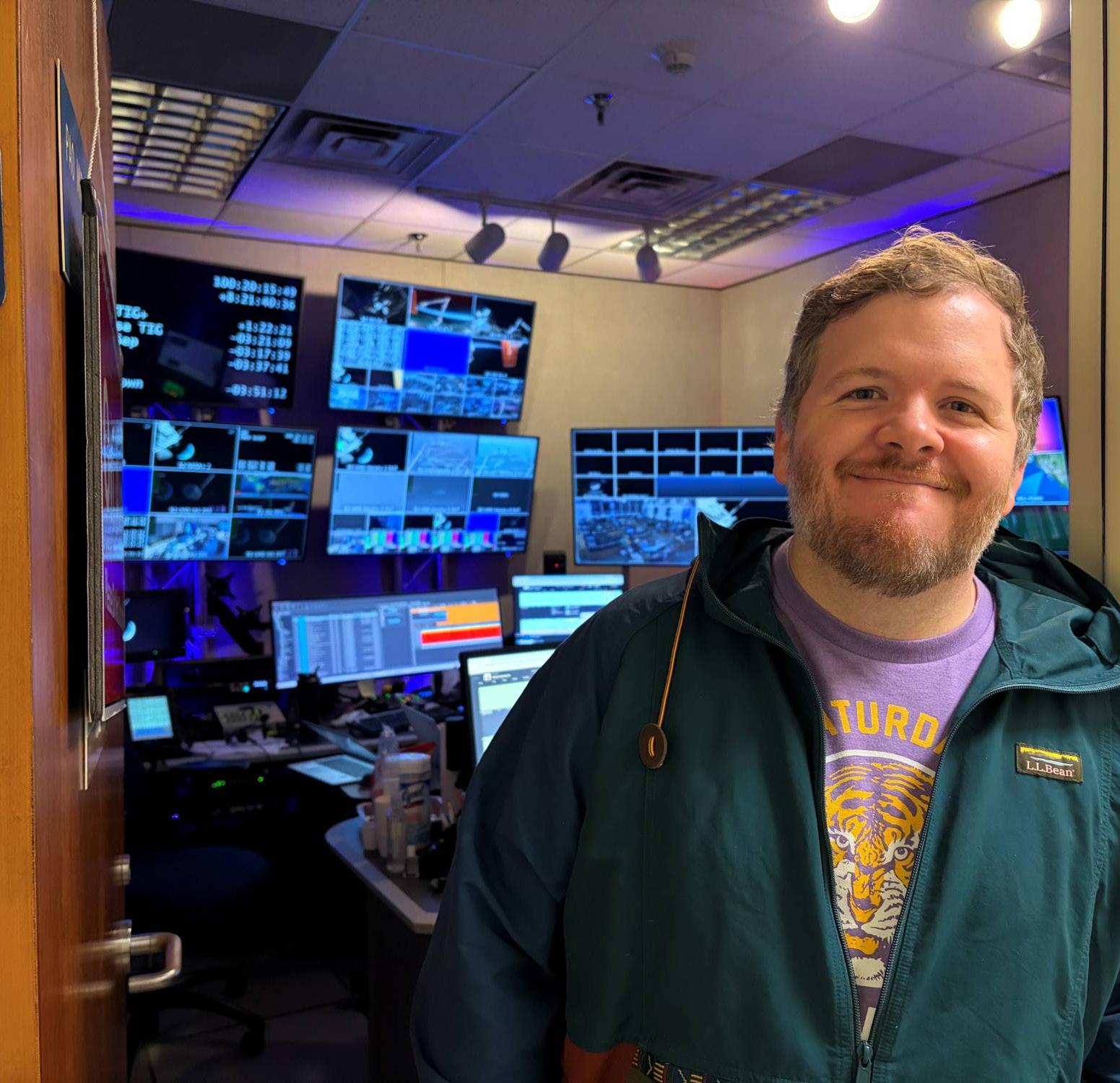
Nearly 60 years removed from Armstrong’s “giant leap for mankind,” Artemis II — NASA’s first crewed lunar flyby in over half a century — showcased how far the agency’s ability to visually document space travel has progressed since Apollo 11. One LSU graduate student played a significant role in documenting Artemis II’s journey.
Film and video librarian for NASA John Hughes is currently pursuing a dual degree in library and information science and archival studies at LSU’s Pinkie Gordon Lane Graduate School. When asked why he chose to study at LSU, Hughes said he wanted to attend a school in the South to reinvest money into the same economy that invested in him.
“I believe there are good things happening in the South,” he said. “There are so many people who need to be reminded that they have the opportunity to do any number of things.”
As a librarian, Hughes and his team were responsible for archiving the information they received from the Artemis II crew as it traveled around the moon.
“While Artemis is on its 10-

day mission, we receive thousands of photos and videos every day,” Hughes said. “All of that imagery eventually makes its way to the moving and still imagery repositories where myself and others go through all of it, making sure that each clip and photo is accurately cataloged.”
When asked why archiving space flight is so important, Hughes said that his team’s

work helps to form the visual basis for future scientific discoveries.
“You can only learn from your past experiences if you have them,” he explained. “You can’t learn from anything you threw away.”
Because Artemis II was the first mission to go around the far side of the moon, NASA was able to discover craters and lunar features previously unexplored by scientists. Scientists in Houston can later analyze and research the photos but they are also available to the American public.
“[NASA] is not a business; we’re a government entity. And so these photos are paid for with taxpayer money,” Hughes said. “So we want to make sure to keep these images and videos publicly available because they belong to the public.”
Hughes also noted that NASA’s ability to accurately catalogue space travel has advanced considerably since the 1960s. Not only has NASA moved away from fragile, light-sensitive photography, it can also sort information much more quickly than its Cold War-era predecessors.
“We had four active downlinks from Orion at all times,” Hughes explained. “There was a spaceship on the other side of the moon, and we had a live feed inside of it actively getting backed up in real time at all times.”
Hughes does archival work because he aspires to be a good steward of the work of past generations. He said that in the early days of cinema, film would catch on fire, causing entire warehouses to erupt in flames and hundreds of movies to be
lost. He said it was a shame that carelessness resulted in the destination of so much information.
“On the human side of it, I think we all like having something tangible that sort of reminds us that the past wasn’t all that different?” Hughes said.
Petroleum engineering freshman Blake Samson agreed that he’d rather deal with physical media over digital media. He said that avoiding it helps to safeguard against government censorship.
“Anti-archiving laws and lawsuits targeting archival sites, like for example the Wayback Machine, are absolutely disgusting,” Samson said. “I am appalled to see our government more obsessed with saving its arm from getting stabbed than saving the bodies of its people from getting torn apart.”
While Samson did not directly have experience with the Artemis II mission, he said it was important to archive the mission as evidence against dissenters who could potentially distort the mission or pretend it never happened.
Despite this, Hughes said that the overall support the Artemis II crew got from national observers boosted its members’ morale, despite the grueling, around-the-clock communication and monitoring.
“Seeing elementary school teachers put Artemis II stuff for their kids during school is like one of the coolest things I’ve ever seen,” Hughes said. “And to know I’m a very, very, very, very small part meant a lot. And I hope that people just keep up with us because we’re here and we’re putting out stuff all the time.”
NEWSROOM (225) 578-4811
Editor-in-Chief
JASON WILLIS
Managing Editor
COURTNEY BELL
Digital Editor ELI LATIOLAIS
News Editor
KALEY MELANCON Deputy News Editor
CADE SAVOY
Sports Editor
AINSLEY FLOOD
Deputy Sports Editor
ROSS ABBOUD
Entertainment Editor LAURA ALLEN
Opinion Editor
GARRETT MCENTEE
Multimedia Editor PAYTON PRICHARD
Production Editor REI ZIMMERMAN
Chief Designer RILEY WHITE
ADVERTISING
(225) 578-6090
Layout/Ad Design ASHLEY KENNEDY
Layout/Ad Design REESE PELLEGRIN
Layout/Ad Design
ALAYNA YOUNG
CORRECTIONS & CLARIFICATIONS
The Reveille holds accuracy and objectivity at the highest priority and wants to reassure its readers the reporting and content of the paper meets these standards. This space is reserved to recognize and correct any mistakes that may have been printed in The Daily Reveille. If you would like something corrected or clarified, please contact the editor at (225) 578-4811 or email editor@lsu.edu.
ABOUT THE REVEILLE
The Reveille is written, edited and produced solely by students of Louisiana State University. The Reveille is an independent entity of the Office of Student Media within the Manship School of Mass Communication. A single issue of The Reveille is free from multiple sites on campus and about 25 sites off campus. To obtain additional copies, please visit the Office of Student Media in B-39 Hodges Hall or email studentmedia@ lsu.edu. The Reveille is published biweekly during the fall, spring and summer semesters, except during holidays and final exams. The Reveille is funded through LSU students’ payments of the Student Media fee.
PHOTO CORTESY OF JOHN HUGHES
CHRIS O’MEARA / AP PHOTO
NASA’s Artemis II moon rocket lifts off from the Kennedy Space Center’s Launch Pad 39-B April 1 in Cape Canaveral, Fla.
B-16 Hodges Hall
NEWS POT PENALTY?
LSU community weighs in on proposed marijuana bill
BY MADELYN LONG Staff Writer
Louisiana lawmakers could soon vote to increase penalties for marijuana-related offenses within 2,000 feet of LSU’s campus. This possibility raises concerns from the LSU community.
Rep. Michael Firment, R-Myrtle Lasyone proposed House Bill 568, which plans to make “smoking, vaping or otherwise abusing” marijuana near campus a felony charge, with penalties including imprisonment for up to a year and a fine up to $1,000.
The current legislation states that drug offenses within a school zone are subject to receive oneand-a-half times longer prison sentences and fines compared to the same offense outside a school zone.
“[This bill] is focused on making Louisiana’s drug-free school zone laws more effective and enforceable in real-world situations,” Firment said. “While current law provides enhanced penalties on paper, it can be difficult to apply consistently — particularly in large, public campus environments like LSU.”
Firment explained that he is sponsoring the bill “in collaboration” with Gov. Jeff Landry’s office, according to The Advocate.
When debating the bill, Fir-
ment was met with pushback from representatives of both parties. Rep. Barbara Freiberg, R-East Baton Rouge, asked if Firment had ever been to an LSU football game.
Rep. Kyle Green, D-Marrero, also brought up that some homes are located within the 2,000-foot radius included in Firment’s bill.
When asked if homeowners smoking marijuana on their own property would be punishable, Firment said that there would be no exceptions to prosecution under this bill.
However, Firment did clarify that his bill would not impact the use of medical marijuana in an interview following the debate.
Rep. Denise Marcelle, D-East Baton Rouge, questioned Firment on why Louisiana would increase penalties for marijuana offenses when many other states have begun to weaken restrictions.
Last Thursday, President Donald Trump reclassified statelicensed medical marijuana as a less dangerous drug.
Firment again backed up his claim by saying that he was not concerned with other states’ legislation and explained that teachers in the Baton Rouge community have expressed that “the smell of marijuana is just overwhelming” as parents pick up their students in carpool, according to The Ad-
vocate.
“For LSU specifically, where large numbers of students, families and visitors gather for events, this bill helps reinforce a safe and family-friendly environment by discouraging visible drug use and supporting campus enforcement efforts,” Firment said.
Political science freshman Jenna Eaton said she disagrees with Firment and that there are bigger issues taking place on campus besides marijuana usage, such as underage drinking.
“If they are going to check for weed, then they are going to have to check for alcohol as well, which creates a bigger problem for LSU because more people drink than smoke in my opinion,” Eaton said.
She believes the bill will not deter students or the LSU community from smoking on campus, as students already disregard consequences for illegal substance use.
Jasmine Gladman, a psychology freshman, agrees with Eaton. Gladman said that students will find ways around the issue and get more people in unnecessary trouble.
“I think there should definitely be consequences, but a felony charge is very harsh,” Gladman said. “Compared to other drugs, weed is not really something that is harmful.”
Architecture student makes magnetic notebook for improved organization
BY DREW SARHAN Staff Writer
It can be quite difficult to carry all your class materials in one go, especially at a university as large as LSU.
Architecture student Max Salvant created a solution: SketchStak, a brand of magnetic notebooks that interconnect with one another like Lego bricks.
After the success of his initial version of SketchStak, he created a second version made from neodymium magnets.
Now, instead of having to connect the inside of the notebook to the inside of the other, version two is going to have the magnets embedded into the front covers of the notebook.
“The idea is with magnets on these notebooks and sketchbooks, whether through your school work or your outside of school stuff, grocery lists, notes, whatever you do, you can easily organize them with
these magnetic covers,” Salvant said.
Salvant said this project started last semester, when he started posting content on TikTok and Instagram with version one, which was made from fridge magnets bound to paper.
“We sold out of those in January,” Salvant said. “We did about 200 orders of [that] version.”
It took Salvant a long time to develop the second version of the product because the manufacturing process involves shipping the magnets from up north to Louisiana. Salvant said that this product is based and designed in Louisiana, and all elements of SketchStak are made in the United States.
The new version not only allows for the notebooks to attach, like with the initial product, but also for accessories to attach to the new covers. Salvant said that it can connect to anything with metal like pens, for instance.
Professor explains Ted Bundy’s allure in book
BY MADELYN LONG Staff Writer
In his new book, this LSU professor connected the dots on how culture shaped Ted Bundy’s murderous rampage. Bryan McCann, professor and chair of the Department of Communication Studies, released “The Bundy Archive: Genealogies of White Masculinity” this year. The book delves into how the allure Bundy had on

the public may be tied to his familiarity to American culture.
“The surprising thing about Ted Bundy was ac-
tually not how strange he was, but was how ordinary he was,” McCann said.
McCann first became interested in the intersection of culture, politics, crime and society while studying in Illinois for his master’s degree. He noted the effect that 9/11 and the decision by former Illinois Gov. George Ryan to commute all death sentences in the state at the time had on his studies.
“I found myself fascinated with the emotional intensity of those topics that tended to limit the public’s capacity for critical engagement with them,” McCann said.
Six years after becoming a professor at LSU, McCann began working on his Bundy project after noticing the excitement serial killer topics would bring to his classes.
He continued his critical
and interpretive work for seven years before publishing. By applying conceptual frameworks to cultural artifacts, such as the trending movies or top songs at the time of Bundy’s murders, McCann began to understand why Bundy is so compelling in American culture.
“At a base level, we have this guy who is obsessed with violently processing and controlling women; and unfortunately, that is not that weird or out of the ordinary in our culture,” McCann said.
McCann also took a different approach to his recent publication by understanding how his personal experiences relate to bigger concepts related to Bundy.
As McCann’s arguments on culture and community grew, the book began to take shape.
“The critical sensibility of white masculinity became a good way to make sense of Ted

“It even is compatible with [Apple’s] MagSafe,” Salvant said. “Anything that has some sort of metallic element can be attached.”
Many of Salvant’s orders for version one came from TikTok Shop. He said that he had somebody from almost every state order one. The product would not be on the second iteration if the algorithm had not pushed his videos to users’ feeds.
“You can just post organic content and get people to see if it’s interesting,” Salvant said. “That’s how I did all of it. I haven’t paid for any marketing. It’s all been free content that I’ve recorded and posted — all the content I filmed was here in Louisiana.”
Salvant said that his product can help users of all professions, from electricians to artists. He said that his primary market for version two of SketchStak is students, with
This professor mixes history with witchcraft
BY DREW SARHAN Staff Writer
Leslie Tuttle is an associate professor of history at LSU. Her research in European religious history has led her to teach several popular history classes, including one course focusing on witchcraft.
Tuttle is originally from Kansas City, Missouri, where she said her
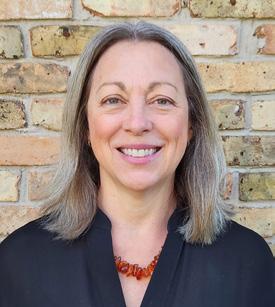
TUTTLE family has lived since the 1850s. She attended Tulane University for her undergraduate degree, where she earned a bachelor’s in history
and graduated summa cum laude. “That [opportunity] changed my
life,” Tuttle said. “Not only did my French language skills get better … but it made me decide that I wanted to study the history of France.”
After completing her undergraduate studies at Tulane, Tuttle attended Princeton University in New Jersey. At Princeton, she attained her doctoral degree in European History, studying under the tutelage of well-renowned professors with her classmates, some of the best historians in the world, she said.
After earning her doctorate, Tuttle taught at the University of Kansas for almost four years. However, in 2014, she moved to Baton Rouge when her husband,
PHOTO COURTESY OF BRYAN MCCANN Cover of Bryan McCann’s book.
FACULTY
MCCANN
FACULTY
STUDENT ORGANIZATIONS
LSU Mock Trial team allows students to practice legal skills while forming meaningful connections
BY GAVIN MCMANUS Staff Writer
Picture this: a courthouse is filled with attorneys presenting cases and witnesses testifying and judges fielding objections.
But the case is not real. Instead, teams of students compete against each other as judges score their practiced litigation.
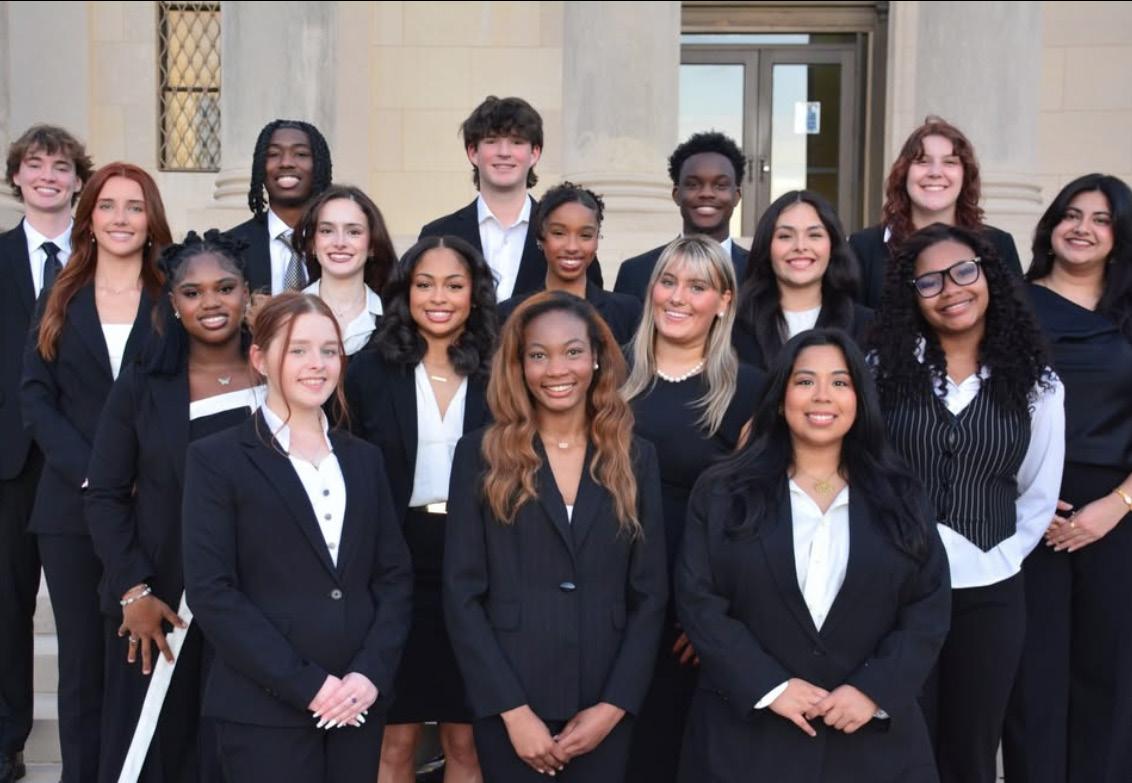
LSU Mock Trial is the university’s American Mock Trial Association-affiliated team. Teams receive a fictional court case to review in the fall then prepare to try the case in the spring. Students present evidence, cross-examine witnesses and file objections.
“The case they send us resembles a real case, but it’s entirely fictional,” said the club’s president Charlotte Waltermire. “But it’s still about 300 pages filled with affidavits, exhibits, evidence, etc.”
Team members take on the roles of both attorneys and witnesses. Practices start early in the semester, with the team meeting to rehearse their opening statements, crossexamination questions and possible objections. As competitions draw closer, practice becomes more frequent.
“It’s a lot in the first semester,” Waltermire said. “Then in the second semester, we meet almost every single day.”
The competitions mirror real courtroom proceedings. Teams compete in multiple rounds over the course of a weekend, arguing both sides of the case. Trials typi-
HISTORY, from page 3
Jonathan Earle, landed his position as dean of LSU’s Roger Hadfield Ogden Honors College.
Tuttle has taught dozens of history courses at LSU. This semester, she is teaching HIST 3118: Magic and Witchcraft in Europe.
Tuttle became interested in the phenomenon of witchcraft because of its significance throughout Christian European culture and history.
She said public scandals involving witches are directly tied to fundamental religious questions about good and evil, leading to changes in religious doctrine
BUNDY, from page 3
Bundy as a cultural phenomenon,” McCann said. “But, Ted Bundy also became a good way to make sense of white masculinity and my own experiences with it.”
McCann acknowledges that he is not the first person to write a book on a serial killer, but that’s the point.
“The idea is that multiple people can bring unique insights into something to in turn help us better understand us as a culture,” said McCann.
McCann encourages students
cally last two to three hours and are judged by attorneys, law students and even sitting judges.
“It works exactly like a real trial,” said Secretary Carl Dexter. “We go to a real courthouse … All the teams have to pass through the same security.” Performance is evaluated using a point system, with judges scoring each participant on a scale of one to 10. Attorneys are judged on their arguments and questioning, while witnesses are scored on their characterization and responses.
“A lot of it is subjective,” said Vice President Christian Jones. “Different judges can like different styles.”
The subjectivity adds another layer of difficulty, requiring com-
through the Protestant Reformation. In fact, Tuttle went as far as to say that witchcraft played a significant role in the formation of European nation-states.
“I think the most fundamental part of it for me, and for a lot of other students and scholars, is that we’re really interested in a world where magic is real,” she said.
Through teaching this class, Tuttle became more interested in the history of dreams. Like magic, others cannot observe dreams, and different cultures attach different levels of importance to dreams.
According to Tuttle, the way people talked about dreams, mag-
to develop their own insights through the classes he teaches on campus including Crime, Communication and Culture; Serial Killers and U.S. Culture; and Rhetoric of Social Movements.
His classes focused on serial killers have been a campus favorite amongst students of all majors, including Rhys Borders, an anthropology graduate.
“His class was an amazing application of academic study into everyday life and the things we take for granted,” Borders said. “The crux of the class, to me at least, was how the most
cess. Practices and competitions require significant time commitments but also foster close relationships among teammates.
“The best part of the club is the friendship aspect,” Jones said. “Everybody just helps each other … There’s no animosity.”
The organization naturally draws those who are interested in law, though many other majors fill the club roster. Majors such as business, pre-med and the arts are all represented within the team.
Mock Trial also offers other benefits beyond competition. Members develop skills in public speaking, critical thinking and time management, all while gaining exposure to legal processes.
petitors to adapt their strategies mid trial. While a team can rehearse and memorize their own testimonies and examinations, cross-examining and objecting to other teams requires improvisation.
“We know what we’re going to say, but we don’t know what they’re going to say,” Dexter said.
The result is a blend of law and theater. Students must understand the legal process and rules of evidence in order to effectively object and cross-examine, while performing their part well for the judges.
“It’s a lot of performance,” Waltermire said. “About 50% is memorized, and then the other 50% you have to think quickly on your feet.”
Members emphasized that the club’s culture is crucial to its suc-
ic or witchcraft shaped cultural expectations of etiquette and civility, forming the basis of modern concepts of professionalism and ethics. The Church even created handbooks for civil behavior, long before European nation-states developed formal written laws.
“You’re not going to talk about your dreams in public, and the person who does is ruthlessly made fun of in the 17th century,” Tuttle said.
However, other cultures had different ideas of dreams, Tuttle said. She said some tribespeople believed that a dream was an opportunity to see beyond the everyday world. The tribe believed that
vagrant, deviant or monstrous people of our society are a direct reflection of what we consider normativity.”
McCann said that everyone can learn critical thinking skills from the coursework and discussions that take place, as well as enter the many rabbit holes of American culture.
“The majority of my classes go best when people are enthusiastic to just show up twice a week and geek out,” McCann said. “My favorite part of my job is getting to just sit in a room with people and getting kind of weird, talking about big topics
NOTEBOOK, from page 3
a tentative release date of the product before the beginning of the fall semester.
Taylor Hamilton is a digital advertising senior and said she likes the concept behind the product being great for students and faculty members to stay organized.
She said she would be willing to try the product and believes it would be quite beneficial to her field, as organization is key when times get busy.
“It’s thoughtful, practical and definitely has the potential to become something people use consistently,” Hamilton said. “I personally tend to stick with systems I use repeatedly, so I would be curious to see how it could fit into my routine in a consistent manner.”
“This is the best way to learn how to advocate and obtain argumentative skills,” Waltermire said.
The club is especially helpful to law students, as it grants them the opportunity for hands-on experience in a way the classroom cannot.
“This is the only time that you’re going to have … to actually play with things and test things out,” Dexter said. “Once you get into law school, you don’t have as much freedom.”
The club provides students a place to learn about a field and work with a team to develop lifelong skills. Students gain valuable knowledge no matter their major, as well as a great experience to look back on.
“It’s the hardest thing that I’ve ever done,” Waltermire said. “But it’s so worth it.”
dreams would also offer knowledge useful to one’s survival. Tuttle likes to study dreams because of their subjective nature: There is no right or wrong answer to what dreams can mean for the individual.
“One of the things that makes dreams really fun to work on is that we still disagree about what, if anything, they may mean,” Tuttle said. “Some scientists think dreams are fairly random images that occur while sleeping, and they’re part of neurons firing, but you can find others who think dreams play some important role in learning and emotional processing.”
in interesting ways.”
Isabel Willems, a communication studies graduate, explained that she got the most out of McCann’s serial killer course by engaging in student discussions. She said that these conversations allowed her to develop her own ideas on topics and get feedback from her peers.
“If we understand the communicative devices integral to the mythologizing of criminals, victims and crimes, we can have much more nuanced, helpful discussions about them,” Willems said.
Another field where SketchStak can be helpful is landscape architecture. Golden Richard, a first-year student in the landscape architecture program, said being able to click the notebook and sketchbook together to use both is very useful. He said it seems like a cool and convenient product.
“While I’m unsure if I’d buy it, I know where I’d go to get it,” Richard said. “I could see it being useful on-site, as being able to take notes and sketches while standing and having it not feel clunky would be useful.”
However, some students like Connor Wootan, a bioengineering freshman think the invention is too much. While he thinks the product itself is creative, he feels like it does not offer any advantage over to a regular paper notebook.
“I felt like it was trying to reinvent the wheel a little bit,” Wootan said. “The magnetic aspect is cool and all, it’s just I don’t see an actual application where you would use it consistently enough. Like I could see if you’re trying to put it up against a wall or such, but with the study rooms and where I study, there’s already whiteboards and stuff around to use.”
Salvant said that anyone interested in creating a product should attempt it as soon as possible, using the assets at their fingertips to gain traction and maintain sales.
“Every failure will lead you to a step closer to the success you’re looking for,” Salvant said.
For someone trying to create a product, Salvant said to post about it on various social media channels to test the market. He said that it is free to post on TikTok to see if the product is even something people would be interested in.
“You don’t need to wait a year to develop it and then post it after. Even if you want to keep the idea private, or if it’s a new concept, just post it,” Salvant said. “Then you’ll gain the traction to go and push even faster to get it made and delivered to the people that are looking for what you need.”
COURTESY OF LSU MOCK TRIAL
LSU Mock Trial Team.


Realize your dreams... the journey starts here. We wish to recognize our newest Shell employees from LSU







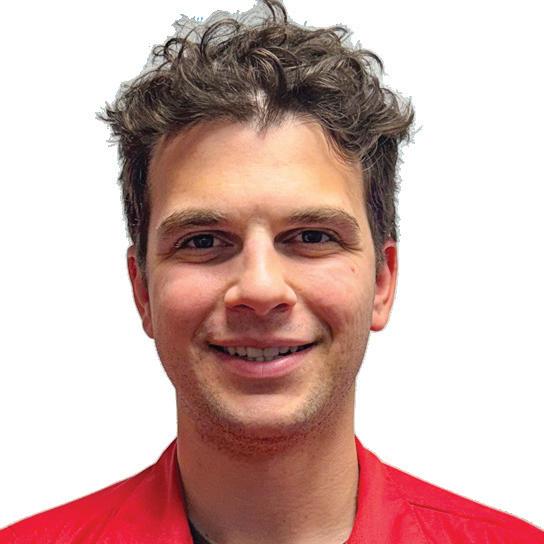
Daniel Wieseneck Production Team Support Engineer Norco, LA
Allie Castillo Process Engineering Intern Geismar, LA
Madeline Doran Process Engineering Intern Norco, LA
Emilee Kennison Process Engineering Intern Norco, LA
Philip Knieper Rotating Equipment Intern Norco, LA
Dylan McDonald Offshore Support Engineer New Orleans, LA
Edward Muhleisen, Jr. Production Team Support Engineer Norco, LA
Sophie Treuting Environmental Engineering Intern Norco, LA


INTERNATIONAL FÊTE




Festival International in Lafayette, Louisiana celebrates its 40 anniversary from April 22 to April 26. This melting pot of cultural and musical performances has become a significant event for the community and visitors alike.





GIVERS’ Teddy Lamson plays the drums on April 25.
Photos by Evan Touchet | Design by Alexandra Gerstner
Natu Camara performs on April 24.
Jordan Thibodeaux plays the violin on April 23.
Nomfusi performs on April 24.
Stephen Marley sings on April 26.
A performer plays the saxophone on the street.
Nomfusi member plays the drums on April 24.
Festival worker cuts meat.
Cimafunk performs April 25.
Stilt-walkers walk around the streets
ENTERTAINMENT
Here are five campus resources to help get you through finals week
BY PAIGE CHERAMIE Staff Writer





in the coming days.
Library Relaxation Room
Located at 241A in the main library, the Relaxation Room is a dedicated space for students to take a break from studying. Here, students can relax on bean bag chairs or interact with fidget toys, puzzles, sensory items, games and coloring sheets to decompress.
While in the library, you can stop by the front desk on the first or second floor to pick up Scantrons and blue books for free. The Relaxation Room will be available until May 11 at 9 a.m. and is open during the library’s hours adjusted for finals.
Quiet Study Room at Hill Memorial
If you are someone who needs silence to focus, the Hill Memorial Library is the place for you. Open from 9 a.m. to 5 p.m., the Quiet Study Room is a space dedicated to students who need to study and complete assignments with minimal distractions.
Additionally, the library has multiple exhibits on display, giving students the opportunity to stretch their legs during study breaks and enjoy the hard work of the curators and researchers at LSU.
NetTutor is a great resource if you are struggling with a subject late at night or all the tutoring sessions are full. This online service is accessible by all current LSU students through their MyLSU account. Students can use the website 24/7, and appointments are not necessary. Although convenient for studying late at night, there are limited subjects offered. You can get tutoring for certain math, business, world language, science, and computer and technology topics.
If mapping out your finals schedule is proving to be more difficult than you anticipated, the Center for Academic Success’ Final Exam Planner and Master To-Do List may be what you are looking for.
These resources allow students to write down everything they have left to complete for the school year and map out assignments based on deadlines. By doing this, you can streamline your finals planning and be prepared for every submission and exam.
If you are struggling to get information in your classes to stick, you can try using CAS’ handout The Study Cycle. This handout outlines a popular study method that breaks down the work into time blocks. This method can give students a better study plan, increasing their testing performance overall.
On Monday through Friday of finals week, LSU Student Government will be handing out snacks in the CES Study Room of the Energy, Coast, and Environment Building.
Additionally, Student Government will be providing free coffee from 10 a.m. to 12 p.m. on May 5 in Patrick F. Taylor Hall outside of Panera Bread. The coffee will be served on a first-come, first-served basis, so be sure to stop by early on.

Here’s how to celebrate graduation without hurting Mike
BY CHARLOTTE TRENTALANGE Staff Writer
Graduation season is perhaps the most special and celebratory time of the year for senior students. The hard work and hours dedicated to earning a degree is finally recognized and is often commemorated with professional photos.
A moment so special feels almost impossible to ruin, but there is one thing students tend to forget during their celebrations: LSU is home to a live tiger, and his habitat deserves the same respect as the milestone being celebrated.
On April 17, Mike the Tiger’s official Instagram account @mikethetiger_lsu posted a carousel of three photos with confetti and champagne corks found near the habitat. The caption read, “Sigh. Y’all. Please stop. You’re beautiful just the way you are. You don’t need confetti or champagne, at least not on campus. This is my stern face.”
This was the second post this
year, highlighting graduation-related litter with another from April 12.
According to Ginger Guttner, LSU’s assistant director of communications who manages Mike’s Instagram, confetti has been found in and around Mike’s habitat for the last four to five years during each commencement. While Mike is unlikely to intentionally eat the confetti, Guttner said he could accidentally ingest it, and any foreign material in his system could potentially cause harm.
Beyond the habitat, confetti and other litter can create environmental issues. Litter can clog drainage systems, blow into landscaping and waterways and add to campus cleanup efforts. Even biodegradable confetti requires time and moisture to break down, which can still create a short-term litter problem.
Wildlife organizations have warned against celebratory litter for years. A 2015 blog from the U.S. Fish and Wildlife Service details how smaller animals like birds can

SPower pop rock band Weezer was the first concert I ever went to, and as I am seeing it again later this year, I have had the band’s albums on repeat. One standout song I will be playing all summer is “California Kids.” The best way I can describe it is a grungy Beach Boys song, in the best way possible.

If summer is a time of reset and relaxation for you, then you’re probably looking for music that sets a mellow tone. “American Cars,” a song from Noah Kahan’s newest album. It’s great for those evening drives after a day of fun and reflecting on what matters to you most.

become strangled by litter, specifically balloons, or mistake it for food. Researchers at Louisiana Sea Grant also published a fact sheet on marine litter detailing how everyday waste can travel far beyond where it was first dropped, and become a much larger environmental problem.
Students love taking photos at
the tiger’s iconic habitat because it is a tradition and one of LSU’s most recognizable landmarks. The university still encourages students to celebrate here, just in a responsible way.
“Popping champagne is fine, as long as the cork won’t fall into the habitat or end up somewhere that is hard to reach after. If you pop
champagne, please pick up the cork and other trash,” Guttner said.
There are plenty of fun alternatives that keep photos festive without making a mess. Some other fun photography opportunities include tossing your graduation cap for an action shot, holding up signs or banners, bringing a bouquet of your favorite flowers to hold, blowing bubbles, holding colored umbrellas or digitally adding confetti or a sparkle effect in Photoshop afterward.
By taking these precautions, it ensures future students can celebrate at Mike’s habitat for years to come and enjoy the same experiences while keeping LSU’s beloved mascot safe.
Graduation photos capture the biggest milestones in students’ young adult life, and thankfully we have a beautiful campus as a backdrop. By respecting its environment and leaving it better than it was found, students can graduate knowing they made a positive impact at LSU.
Our staff picks the songs they’ll be replaying all summer

Since summer awaits me after finals, the urge to buzz my hair is stronger than ever with this Louisiana heat. My song of the summer, “Buzzcut Season,” perfectly captures why I will not buzz my hair. The song speaks to memories of sitting by the poolside, soda fizzing in my mouth as I reminisce on the year.

Trentalange
Two summers ago, I came across a feature on Apple Music that listed the top 100 songs from countries around the world. I clicked on the Zimbabwe playlist and found “Summer YoMuthi” by Blaq Diamond. From that first listen, it stood out with its energy and rhythm, creating an instant serotonin boost. Two years later it’s still my summer anthem.

This year, I have sought to be a truly outrageous woman. Obnoxious laughs, nonsensical sayings and pure joy have been my goals. As spring turns to summer, there is only one song that captures this: “CRANK” by Slayyyter. With an experimental, high energy track, Slayyyter crafted a song loud enough to drown out all of my troubles.

It is a Mt. Joy summer for me. The band recently performed in New Orleans, which has sparked a Mt. Joy phase for me. Their music reminds me of the calm breeze of hot summer nights. “Bathroom Light,” specifically, is my song of the summer. I believe the song is beautiful and allows one to take a step back while looking at life, which is the perfect way to take in summer.

Every summer, there are always a few artists who have their moment to shine. We all remember Brat Summer, and I predict that this summer will belong to Olivia Rodrigo. No matter what style it’s in, her music becomes a cultural moment. Rodrigo’s new song “Drop Dead” is so perfect for summer and for all the girls with an overactive imagination.
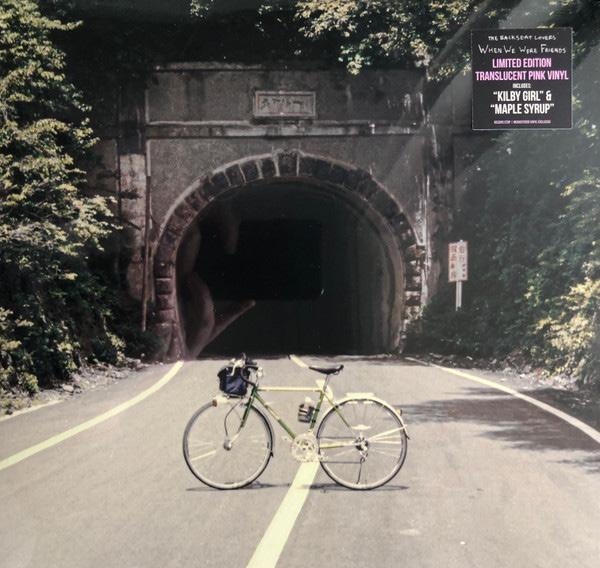
When I’m queuing up a playlist for the summer, I’m looking for laid-back, upbeat songs to soundtrack my drive to work or day at the beach. For me, “Watch Your Mouth” by The Backseat Lovers is the perfect mix of gritty vocals, nostalgic lyricism and chill instrumentals to put me in a warmweather mood.
LUKE RAY / The Reveille
Mike the Tiger looks over his shoulder inside his enclosure at LSU on Nov. 10.
Paul Tibbets ‘California Kids’
Savannah Boynes ‘Buzzcut Season’
Mia Hattaway ‘CRANK’
Sarah Walton ‘Drop Dead’
Paige Cheramie ‘American Cars’
Charlotte
‘Summer YoMuthi’
Lily Centola ‘Bathroom Light’
Laura Allen ‘Watch Your Mouth’
SPORTS LOST TO TIME
As LSU men’s gymnastics watches its history fade, women’s program preserves it
BY GABBY GRAY Staff Writer
With 21 sponsored varsity sports, LSU is a powerhouse of athletics within the NCAA and the SEC.
When Tiger fans think of the ‘Big Three’ sports on LSU’s campus, the programs that come to mind are often football, baseball and women’s basketball.
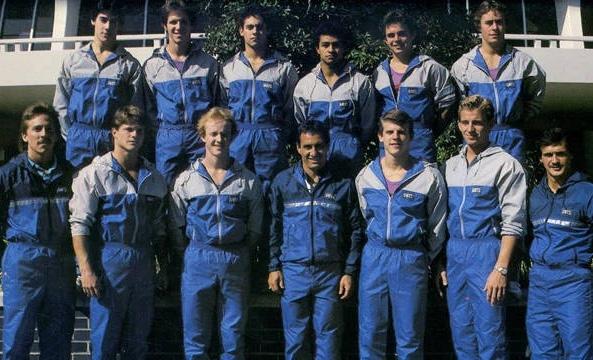
Yet back in the seventies, there was another team that was considered to be a part of this trio. That was the men’s gymnastics team, which reigned for 16 years on the bayou.
“Bill Bankhead started the men’s gymnastics program,” said former gymnast and LSU men’s gymnastics associate coach Caesar Garcia. “He did so many different things and took over the assembly center and brought in any artist who was anybody performing there.”
Bankhead, an LSU Athletics hall of famer, brought in Jerry George to coach the men’s team in 1968, when the program originally started.
George dedicated his life to gymnastics and was ushered out of retirement by Bankhead, or as Garcia would put it, Bankhead “resurrected” the former gymnast after he suffered injury at the NCAA finals while competing at Michigan State University.
In his resurrection, George returned to gymnastics at LSU, where he not only coached the Tigers to their first NCAA Championship ap-
BASEBALL
pearance, but earned a doctorate in kinesiology as well.
If the sport of men’s college gymnastics is new to you, let’s do a quick overview on the sport itself and how it differs from women’s gymnastics.
Male gymnasts compete across six events: floor exercise, the horizontal bar, the vertical bar, vault, rings and pommel horse. Women’s gymnastics overlaps with only two events, floor exercise and the vault. However, the gymnasts’ performances on the floor often greatly differ in terms of aggression.
“Men tumbling on a floor exercise area and women tumbling on a floor exercise are two different beasts,” said former LSU women’s gymnastics head coach D-D Breaux.
As described by Gymnast Gem, women’s floor routines are “part performance, part gymnastics” and men’s routines are rooted in “athletic skill” where gymnasts’ strengths are greatly challenged.
In addition to the difference in events and routines, women’s gymnastics is subject to higher viewership because it is more popular than men’s gymnastics. For example, there are 86 NCAA women’s gymnastics programs across Divisions I, II and III, where there are only 15 men’s programs, with 12 of those being Division I and three of them in Division III.
With LSU’s men’s gymnastics reign coming to close in 1984, an even greater question lies: Why did the program end?
Well, the answer is similar to the reason why there’s only 15 men’s gymnastic teams in the NCAA, the sport isn’t as popular, and that lack of viewership may be the reason that LSU isn’t likely to bring the program back.
“I think LSU is filling the needs of the sports where it needs to,” Breaux said. “Like tennis and golf, we have so many athletes in high school that run track and we have an incredible track program. So I think we’re filling the needs of most of the population of our athletes in secondary school.”
In addition to meeting those needs of incoming student athletes across the nation, another primary consideration is the cost of the program’s facility and equipment.
Breaux reflected on her work to raise money for LSU women’s gymnastics and its facility and fight for its place at the university. But the likeliness of that succeeding for a sport with decreasing viewership remains low.
Yet, even as time passes, it is the sport of gymnastics’ nature, and its fans’ responsibility to keep its history alive.
“We’re [former men’s gymnastics team members] dwindling in numbers,” Garcia said. “And the sadness is that when we’re gone, that’s it.”
Garcia commented on the fact that all of the former team’s existing memorabilia at LSU is now gone. He recounted that the team used to have
photographs of their All-American accolades in the PMAC, photographs that have since disappeared, leading the fading memory of the program.
The only effort that has been made to truly document the program’s history comes from the women’s program, inviting remaining former team members and staff to alumni events and even displaying one of the men’s team’s former trophies in its facility.
“They didn’t have to do that,” Garcia said. “That started a few years back and we are most appreciative.”
Garcia recounted how last year at a gymnastic alumni event, former LSU men’s gymnast Greg Lewis, who suffers from ALS, saw his team’s trophy on the shelf of the women’s facility and remembered everything that he had worked for in the sport of gymnastics at LSU.
“He looked up and saw at the very top of the trophy case one of our trophies,” Garcia said. “And it just melted his heart and he was in tears to finally find a remnant of his past.”
For Garcia, he’s kept his passion for the sport alive by hosting reunions for the team’s remaining members at his own will, and through his business, C.G.’s Gymnastics in Baton Rouge.
But as the sport fades nationally, and on campus, Garcia is working to keep his and his teammates’ story alive.
“There is no future,” Garcia said. “All we have is our history.”
Baseball’s collapsing season marred by injuries across roster
BY TRIPP BUHLER Staff Writer
LSU baseball has caught a contagious set of viruses.
Injuries, poor bullpen performance and transfers not working out have all plagued the team this season, and it’s going to be the reason the team will most likely miss the NCAA tournament for the first time since 2011.
Ten of the 38 players on the roster have missed time with injuries, most of whom were supposed to be major contributors this year.
Cooper Moore was looking like the best starter on the staff until he made an early exit against Oklahoma last month due to injury. He was later announced to be out for the season.
Casan Evans was scratched from his start against Mississippi State on Friday. While head coach Jay Johnson said he is “A-OK,” his status for the weekend is still unsure. If Evans was able to go this past weekend, LSU would have most likely taken at least one game in Starkville.
“Casan and Cooper missing an SEC weekend series on the road against a top five team; you’re at a disadvantage,” Johnson said. “That’s
the first time I’ve ever said that, but we’re at a disadvantage.”
The starting pitching injuries have placed more pressure on the bullpen, who blew leads in all three games this past weekend. It has become a trend of no lead being safe for LSU. Johnson said pitchers start getting exposed once they get stretched too thin.
While some pitchers like Danny Lachenmayer and Marcos Paz are starting to take a big step in their game, they can typically only control two to four innings of the game, which is when issues start to become more apparent.
Even though LSU scored eight runs in each game against Mississippi State, it still wasn’t enough to secure a win. Cooper Williams let up a grand slam in Saturday’s game.
Deven Sheerin and Santiago Garcia were fantastic Friday, but had to pitch again Sunday and each let up a few runs.
The injuries have taken over the offense as well. Though freshmen have stepped up to give LSU a fighting chance in many of these games, it’s all too late.
The outfield was heralded as the best returning group for LSU, but in-
juries have taken over for them. Jake Brown was the biggest loss for the offense, as he was having a season that would have given him a chance at snatching the Golden Spikes Award.
Chris Stanfield missed a month with a hand injury, has been taken out of games after crashing hard into walls and is now sidelined with a hamstring injury. The hamstring is also hampering John Pearson who was looking like a viable third base candidate.
Pearson started seeing time at third after junior transfer Trent Caraway has been playing poorly defensively and with his bat. He has not looked like the same player he did when he was at Oregon State and was named the most outstanding player of last year’s Corvallis Regional.
Caraway has struckout, popped out at inopportune times and was benched. It’s another miss from the portal, and now the injury bug is getting to him after he hurt his foot Tuesday against Southeastern and had to leave the game.
Brayden Simpson has been affected by both injury and illness, losing power since last year at High Point. Last season, he hit 22 home runs in 58 games but only one in 20 games
played this year. He has also dealt with a hand injury that has forced him to miss time.
Garcia and Lachenmayer are really the only transfers who have worked out for LSU and have helped their case to take up even bigger roles next year. Next season has been the focus for everyone. Even Johnson has said a lot of issues aren’t fixable for this year but provide an easier transition into next.
It’s a unique situation for LSU baseball, as the end of April typically brings excitement for the postseason. This year, it’s bringing excitement for next February instead.

COURTESY OF LSU ATHLETICS
SAM BECKER / The Reveille LSU baseball sophomore pitcher Casan Evans (20) pitches the ball during the Tigers’ 7-1 victory versus Oklahoma March 19 at Alex Box Stadium.
OPINION
Gen Z is obsessed with toxic tropes, but real love isn’t
MICHAIAH’S
MINUTES
MICHAIAH
STEPHENS Columnist
In the past decade, romance novels have found a comfortable market. Every day, readers encounter romance featuring friends becoming lovers or fake relationships turning real. But one trope in particular has risen to the top: enemies-to-lovers.
For the uninitiated, enemiesto-lovers is a popular book trope where two characters strongly dislike one another, whether because of a misunderstanding gone wrong or a long history of misdemeanors. Either way, they don’t like each other. Over time, through a shared series of events and getting to know one another,
that dislike changes into love.
It’s a trope full of tension — glances, fighting, kissing, passion and the classic “will they, won’t they,” even though we all know that they will. It’s just a matter of how.
At its core, the trope tells you that your flaws, though someone may not like them right now, could eventually be the reason they never want to live without you.
But this dynamic doesn’t always stay on the page.
In real life, impressionable individuals mimic what they read; thus, they adopt a viewpoint that conflict equates to romance.
I believe that younger generations think that love is this brash, harsh, messy thing. It has to cut deep enough to scar or else it isn’t real love. They want love to hurt and then heal like it does in
novels. Younger generations are flocking to imitate and romanticize the enemies-to-lovers trope. Finding someone who wants a steady love is like trying to find a four-leaf clover.
Social media only adds to this: It’s easier to be cold and aloof than open-hearted and vulnerable. After all, everything has a chance to be put online, and to many of the youth, there is nothing worse than online humiliation.
And if you do find yourself in an enemies-to-lovers relationship, it’s often compared to iconic, tumultuous pairings like Carrie Bradshaw and Mr. Big from Sex and the City.
I’ve seen the sentiment of “until you have your Mr. Big, you don’t understand it” shared among the masses. But if you understand that the relationship
was extremely toxic — which it was — then why would you want to experience it to make sure you don’t want it?
Is Gen Z just attracted to the struggle of love and situationships because they offer the drama and angst seen on page and also allow them to avoid being vulnerable?
The answer often seems to be yes.
But, hey, at least you’re in a relationship. And your non-exclusive, non-committal, unromantic partner-but-not-partner after 5 a.m. might not commit now, but you could change them later — it’s all about the fight before the makeup, right?
That isn’t love. Not healthy love, at least.
Love doesn’t need to hurt all the time for two people to grow.
Sometimes conflict just breeds misery. Putting your feelings out there for someone to possibly
hurt them is worrying, but that doesn’t mean you wall yourself off from emotions altogether and play the hard-to-get, mean-queen or nonchalant-bad-boy.
You also don’t need to stick to a relationship that you know you don’t want just because the other person might prioritize and treat you with the kindness you deserve.
The fact of the matter is that healthy love is boring. It makes you entirely relaxed and fully yourself and happy for the most part. Disagreements are about whether Tweety Bird is a girl or a boy and who’s going to do the dishes. It’s safe, but it’s not fiction.
Love isn’t supposed to be an edgy trope.
Michaiah Stephens is a 22-yearold English major from Durham, N.C.
My freshman year is over. Here’s my advice for the rising class
RILEY’S REVIEW
RILEY SANDERS Columnist
I will never forget the first day of my freshman year at LSU. Late last August, I arrived brighteyed and bushy-tailed for movein day at Evangeline Hall in the Horseshoe with two cars full of books, bedding, my entire closet, a brand-new futon and countless bags full of other necessities.
I remember my parents and brother fighting over who needed to set up what in my new dorm, who got to do the easiest task, taking countless pictures to remember the day and walking my brother, dad and teary-eyed mom back to their car.
And then, for the first time in my life, I was on my own.
I was committed to making this year the best of my life to date, to challenging and opening myself up to all the university and the world at large had to offer. And in that spirit, I put my headphones on and took a walk to explore the campus to the tune of Hayley Williams’ album “Ego Death at a Bachelorette Party”, and cosplayed an adult who had everything figured out.
I didn’t know that the coming months would be some of the most challenging and rewarding of my life. So, to those incoming
EDITORIAL BOARD
Jason Willis Editor in Chief
Managing Editor Courtney Bell
Kaley Melancon News Editor
Sports Editor Ainsley Flood
Garrett McEntee Opinion Editor
freshmen who feel they have it all figured out or perhaps have nothing figured out, I’d like to offer a few lessons I learned this year in hopes that your first year of adulthood is nothing less than stellar:
Call your mom
I know you’re rolling your eyes right now. Keep at it, but you’ll regret not taking my word for it. Freshman year is so exciting in large part because you get to enter into a brand new chapter of your life that is uniquely yours and increasingly separates your life from the collective life of your family at home, especially if you are living on campus. Enjoy that alone time, but refuse to let yourself be lonely, lest you lose yourself in that isolation.
Call your mom. Call your dad, your brother, your sister, aunt, uncle, cousin or anyone else that you love. They miss you, and you’ll probably come to find that you miss them too. While you’re out there figuring out who you want to be, don’t forget the people that helped to make you who you are.
Try new things
We’re two-for-two on the cheesier bits of advice I have for you, but I’m entirely serious. Don’t be afraid to put yourself out there. The summer before freshman year, it occurred to me how little writing I was going to be doing as a STEM major — which devastated me as a very liberal
Laura Allen Entertainment Editor
arts-minded guy — so I sought out ways to keep myself writing even if it made me uncomfortable.
I applied to the Reveille opinion section with little experience in journalistic practice and an uncertainty about what to expect. I am ending the year now with a group of friends I consider family and 30 articles under my belt. So I urge you to do what makes you uncomfortable, those things that keep you awake at night, those that make your throat close up and make your heart race and your head spin. There’s a reason for those feelings: You’re meant to embrace them.
Go to class
Skipping class is genuinely the biggest dopamine hit the first few times you do it. Then, it’s just another Tuesday with an addiction to mediocrity. Go to class, or you’ll regret it. Your grades and self-esteem will be all the better for it, regardless of whether attendance is graded or mandatory.
Be vulnerable
I’m a huge subscriber to the “invisible string theory,” that there are a multitude of people we are destined to find and connect with in our lives. Sometimes, these people come when we wish on stars or dandelions, desperate for some sort of divine connection. Other times, we aren’t expecting them or don’t even feel as though we need them, and at
these unexpected times, they simply appear.
That said, the people that are meant for you won’t find you if you aren’t unabashedly yourself.
Heavily in line with the saying, “don’t chase; attract,” you need to wear your heart on your sleeve even if it’s frightening. Remain open to everything and everyone — while protecting yourself, of course — and remember that you are worthy of good things. Let them come to you. Let them meet you where you are. They’ll know you by your heart.
‘No’ is a full sentence
It’s as simple as that. You need to study for a huge exam and your friends want you to go out? Say no. Is someone asking you to do something that makes you feel uncomfortable or unsafe? Say no. Someone in your class wants you to send them your paper for “reference?”
Say no. Say no. Say no.
It’s not illegal. It may not always be fun, but you have control over the access you give others to yourself at any given moment. Use it when it matters.
Give yourself grace
You’re going to mess up — a lot. You’re going to fail homework assignments, quizzes, exams, maybe even a class or two. Your relationships are going to change and you are going to change. You might lose bits of yourself as you discover new ones. Your schedule
Editorial Policies and Procedures
The Reveille (USPS 145-800) is written, edited and produced solely by students of Louisiana State University. The Reveille is an independent entity of the Office of Student Media within the Manship School of Mass Communication. Signed opinions are those of the author and do not necessarily represent the views of the editor, The Reveille or the university. Letters submitted for publication should be sent via e-mail to editor@lsu.edu or delivered to B-39 Hodges Hall. They must be 400 words or less. Letters must provide a contact phone number for verification purposes, which will not be printed. The Reveille reserves the right to edit letters and guest columns for space consideration while preserving the original intent. The Reveille also reserves the right to reject any letter without notification of the author. Writers must include their full names and phone numbers. The Reveille’s editor in chief, hired every semester by the LSU Student Media Board, has final authority on all editorial decisions.

is going to be all over the place, and you probably will be too. After all, you’re only human.
It’s going to be hard even though it will inevitably be worthwhile. All good things require struggle in some way or another, so don’t forget that the mistakes you make do not make you any less worthy of them, nor do they make you a failure or a lost cause. Learn to give yourself grace, not only because you’re going to need it but because you certainly deserve it.
You have a beautiful life ahead of you — this is the time for you to embrace it.
Riley Sanders is a 19-year-old biology major from Denham Springs, La.
“Don’t try to make me grow up before my time.”
GRAPHIC BY JACOB CHASTANT