
NEXT IN LINE
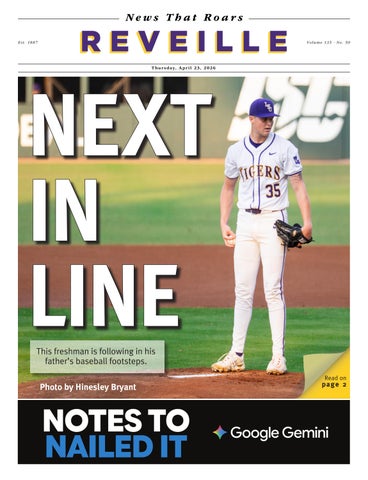
This freshman is following in his father’s baseball footsteps.
Read on page 2

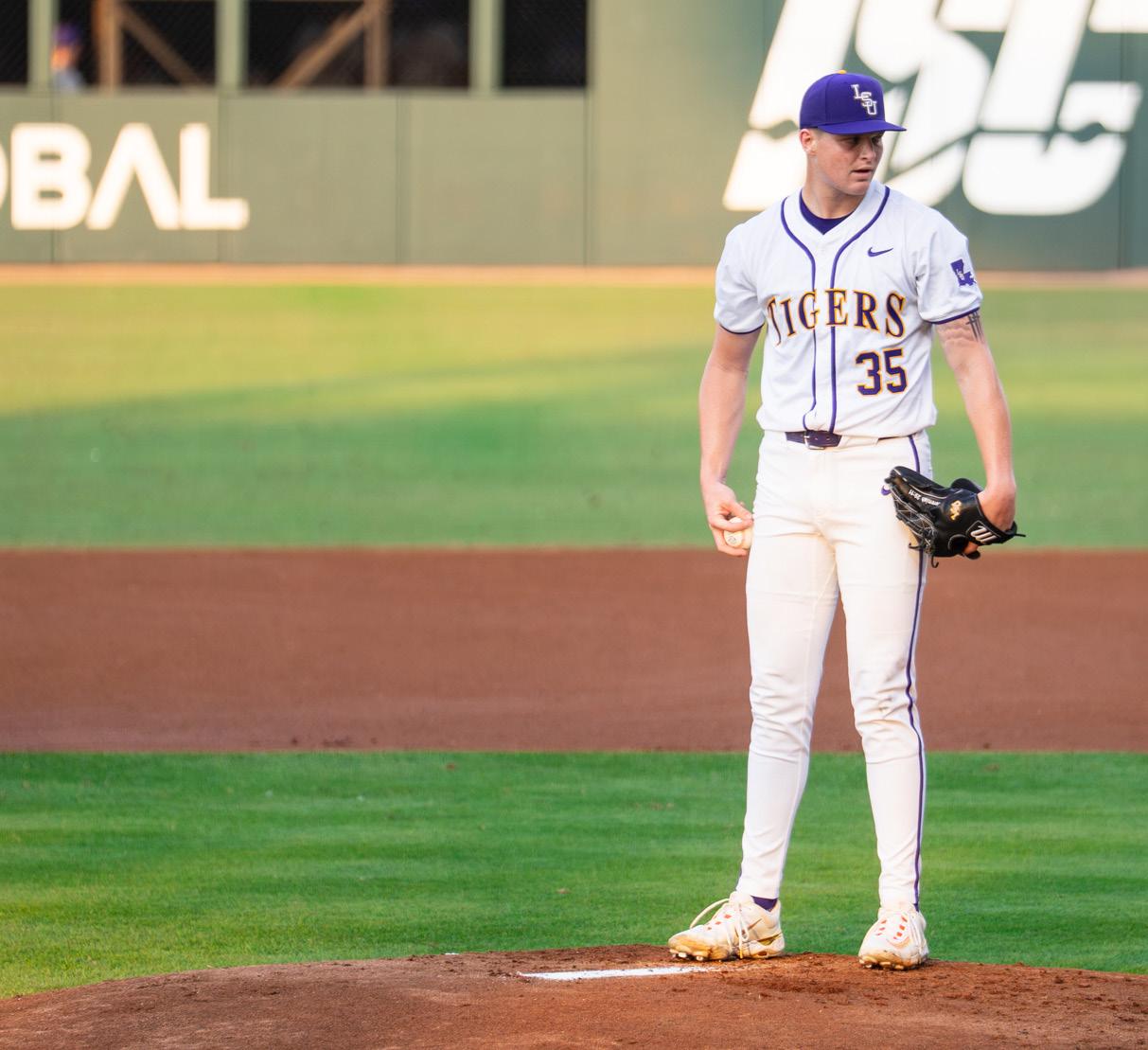

Photo by Hinesley Bryant
IN THE BLOOD
How family pushes baseball’s Reagan Ricken through adversity
BY TRIPP BUHLER Staff Writer
Growing pains come to almost every athlete who moves up to the collegiate level, but the ones faced by SEC baseball players are arguably the most difficult.
“I’ve gone through like four different windups this year,” LSU freshman pitcher Reagan Ricken said.
Fortunately, help is close by. No one around Ricken understands the process of facing top competition quite like his dad, Ray, who played six seasons in the New York Yankees and San Diego Padres minor league systems, as well as three years in independent leagues.
“Right now, he’s just that kid that wants to play baseball every day, and he just wants to play being a freshman at LSU,” his dad said. “That’s hard sometimes because you don’t get to play all the time. So he’s starting to be able to process that a little bit.”
His dad helps give different perspectives on pitching mechanics when needed. It’s a set of fresh eyes that has seen Ricken’s entire athletic upbringing.
A lot of what the two discuss is the mindset of being an athlete at a level that Ray compares to the minor leagues.
“It’s amazing having a baseball dad too, who understands everything,” Ricken said.
The two think similarly about the game. Though the dominant outings aren’t coming as often as they did in Ricken’s hometown of Temecula, California, both agree that he is doing pretty well with the pressure.
“He’s got that similar ‘I hate to lose’ attitude that I used to have when I played,” Ricken’s father said. “He demands perfection.”
Ricken is able to get past the pressure and less-than-ideal outings by just looking to his next opportunity and recognizing the jump in competition he’s facing.

But it’s not always certain when that next opportunity will come.
Ricken has gone from knowing when he’s going to pitch for his whole life to now being ready for each game, unsure if he will get called to the mound. It’s one of the many adjustments he’s had to make this year, balancing it with improving his mechanics and pitch execution.
With the help of coaches like a head coach Jay Johnson, pitching coach Nate Yeskie and Director of Player Development for Pitching Jamie Tutko, Ricken said he has improved his secondary pitches. His slider in particular has seen positive change.
“His movement on all his pitches has increased a ridiculous amount,” his dad said. “And I think that’s probably what makes it harder on him, because he’s got to make that adjustment to be able to control that movement.”
Ricken’s strike percentage is a hair below 60%, with the col-

legiate average being about 60 to 65%. He said that he has seen more favorable results over the last two weeks as he gets more comfortable with his new mechanics.
Ricken has appeared in two SEC games. He allowed a run while striking out two against Vanderbilt, and against Texas A&M, he had a rougher outing where he let up a double and a home run without recording an out.
Adversity was bound to happen as he got to the biggest stage of collegiate baseball.
“You realize that your kid’s playing at the No. 1 college baseball program,” Ricken’s father said. “Which is a crazy thing that you never thought would happen when you have little guys running around the house in diapers.”
Ricken’s twin brother, Ryan, is also a freshman at LSU, which helps bring more of home life in California to Baton Rouge.
Both father and son said that the twins starting school at LSU together has helped them adjust to a new state and lifestyle. They live in the same apartment building, help each other with school and occasionally go fishing.
The twins both played football at Great Oak High School. Ryan played on the offensive line, blocking for Reagan, who threw for nine touchdowns and ran for four more as the team’s starting quarterback.
“I think playing football benefited me a lot,” Ricken said. “Honestly, I think it made me a better athlete. Me and my dad were talking about how we think throwing the football for four years probably made my arm stronger for baseball.”
Ricken’s fastball is sitting around 93 to 96 mph. Some of the pitch development resources


B-16 Hodges Hall Louisiana State University Baton Rouge, La. 70803
that LSU has are new to him and helped him learn more about his game, making improvements come quicker.
“I had a lot of trouble with my slider early in the year, so Trackman helped me with that,” Ricken said. “Just looking at the numbers and seeing how I need to get on top of the ball for it to move which way. It’s been pretty helpful.”
The resources help add to the draw of LSU for Ricken, whom Perfect Game ranked as the No. 13 high school right-hander in the nation in 2025.
“He always thought, ‘Man, this would be a cool place to play,’ but I don’t know if it ever hit him until he got recruited to come here,” Ricken’s father said.
Once recruiting opened for Ricken, he got about 55 phone calls from schools. He mainly caught eyes at Area Code Games, and some schools recruited him as a two-way player because of his skills at catcher.
Ricken also wrestled with the thought of going to the MLB Draft. That thought didn’t last too long, though, with his commitment at LSU looming. On July 11, he withdrew his name from the draft.
“[Johnson and Yeskie] made it super easy for me to come here and leave the draft,” Ricken said. “High school baseball is so much different than pro ball. I guess it’s hard to make that jump … I wanted to come here and develop more for three years.”
Johnson said after Ricken’s first appearance that he will be “in the thick of this thing” for three more years, emphasizing the commitment to his development and longevity with the program.
ADVERTISING (225) 578-6090
Layout/Ad Design ASHLEY KENNEDY
Layout/Ad Design REESE PELLEGRIN
CORRECTIONS & CLARIFICATIONS
The Reveille holds accuracy and objectivity at the highest priority and wants to reassure its readers the reporting and content of the paper meets these standards. This space is reserved to recognize and correct any mistakes that may have been printed in The Daily Reveille. If you would like something corrected or clarified, please contact the editor at (225) 578-4811 or email editor@lsu.edu.
ABOUT THE REVEILLE
The Reveille is written, edited and produced solely by students of Louisiana State University. The Reveille is an independent entity of the Office of Student Media within the Manship School of Mass Communication. A single issue of The Reveille is free from multiple sites on campus and about 25 sites off campus. To obtain additional copies, please visit the Office of Student Media in B-39 Hodges Hall or email studentmedia@ lsu.edu. The Reveille is published biweekly during the fall, spring and summer semesters, except during holidays and final exams. The Reveille is funded through LSU students’ payments of the Student Media fee.
HINESLEY BRYANT / The Reveille
LSU baseball freshman right-handed pitcher Reagan Ricken (35) pitches the ball during the Tigers’ 16-6 win over Southern on March 31 at Alex Box Stadium.
HINESLEY BRYANT / The Reveille LSU baseball freshman right-handed pitcher Reagan Ricken (35) celebrates during the Tigers’ 7-6 loss against McNeese on Feb. 24 at Alex Box Stadium.
NEWS
Faculty Senate president reelected
BY MAIA TYLER Staff Writer
LSU’s Faculty Senate had its final meeting of the year on Tuesday.
At the meeting, the Senate held elections for new seats. Daniel Tirone, a political science professor, was reelected for a third term as president, and Kenneth Lopata, a chemistry professor, was elected vice president.
French studies professor Rosemary Peters was elected secretary, and the two at-large members elected were Kyla Kazuschyk of the School of Theater and Kristen Healy of the entomology department.
Tirone announced the search for the senior vice chancellor and provost is nearing completion. The finalists have visited campus, and a decision is expected by the end of the semester.
During the meeting, Tirone also reported that the Faculty Senate Ad Hoc Generative AI Committee survey was distributed to over 27,000 students. This survey aims to gather data on how students are utilizing AI in their academic work to inform future policies.
“We are not here to ban technology but to provide a framework,” said Faculty Senate Vice President Parampreet Singh. “The goal of the ad hoc committee is to ensure faculty have the autonomy to decide how these tools fit into their pedagogy while maintaining the highest standards of academic honesty.”
A major concern was Grammarly’s generative capabilities, which allow students to use the editing software to create entire paragraphs. The resolution seeks to provide a version of the tool that turns off these specific features, ensuring students receive grammatical help without bypassing the actual writing process.
The purpose of the initiative is to give professors and students explicit foundations for syllabus language and academic integrity.
The Senate also discussed revising PS-104. The policy outlines the formal procedures for the dismissal of faculty members. It is designed to balance the university’s need for professional intervention and accountability with protection of academic freedom and due process.
“We streamlined the process so that every complaint, regardless of nature, administrative
STAFF REPORT
An LSU fraternity member has been accused of raping a woman at a fraternity house earlier this month, according to LSUPD reports obtained by WBRZ.
The suspect, Phoenix Hernandez, 21, is wanted for thirddegree rape, according to the incident report.
On April 9, LSUPD was sent to the LSU Student Health Center in response to a sexual assault in-
vestigation. The incident report says the victim told police she had been assaulted at the Delta Chi fraternity house on April 2. Afterwards, she was transported to the LSUPD station where she pressed charges.
The woman told police she woke up the morning after the alleged assault in the hallway outside Hernandez’s room and could not remember how she got there from a bar, WBRZ reported.
Three days later, she called
Hernandez and asked what happened. He told her they had just kissed but he allegedly admitted later that they had sex, according to an arrest warrant obtained by WBRZ.
According to WBRZ, the woman called Hernandez again on April 14 with an LSUPD officer present. Documents show Hernandez said he could not remember if the two had sex and felt pressured to admit they had when she first asked.
During a search of Hernandez’s phone, LSUPD said an officer found audio messages sent to a friend hours after the woman left his room. In the messages, he allegedly boasted about having sex with her, according to WBRZ.
Hernandez was detained on April 16 and taken in for questioning in which he remained adamant that he did not remember the two having sex, according to WBRZ.
Fraternity member accused of raping a student TESTING TIME
During STI Awareness Month, health providers promote prevention
BY ALAYNA FORD Staff Writer
Each year, health providers across the country recognize April as Sexually Transmitted Infection Awareness Month. Because LSU is a hotspot for STIs, LSU Student Health Center professionals warn students that many cases go unnoticed and untreated.
Louisiana continues to rank among the highest in the country for sexually transmitted infections. Louisiana ranks No. 1 in the nation for chlamydia and No. 2 for gonorrhea, according to recent data. At LSU, providers say those trends are reflected on campus.
“Chlamydia is the most common that we probably treat,” said Callie Pitchford, a women’s health nurse practitioner at the SHC. Pitchford has been working at the SHC for the past two years. “Most of them are asymptomatic … usually they’re caught by routine screens and not symptoms.”
Health professionals say one of the biggest challenges in reducing STI rates is that many infections show little to no symptoms, which allows them to spread rapidly.
“Chlamydia is the one that sneaks up on you,” said Carli DiLorenzo, the wellness coordinator who helps oversee sexual health outreach at LSU. “A lot of people don’t realize they have it.”
Some common symptoms of STIs that are often overlooked include burning during urination, abnormal discharge, swelling or irritation and bleeding between periods or after sexual intercourse.
Providers emphasize that because more chlamydia patients are asymptomatic, routine testing is critical.
“We’re definitely seeing more than one case a week,” Pitchford said. “A lot of infections are
caught before symptoms ever show up.”
Rebecca Breaux has been a women’s health nurse practitioner since 1999 and has been working at the SHC since 2016. She said that students’ lack of awareness about how STIs spread puts them at risk.
Breaux recalled a case involving a student who had never engaged in sexual activity but contracted gential herpes because the student’s roommate used their loofah.
According to Breaux, this case is a prime example of how easily infections can spread and why awareness matters: It demonstrates that some STIs can be transmitted to any place on the body.
She warned that sharing personal items such as towels, razors and drinks can increase the risk of contracting an infection.
Louisiana’s high STI rates are closely tied to insufficient sex education. Breaux lamented that many students go to the SHC and have no clue how STIs are transmitted.
DiLorenzo said that many students in the South receive abstinence-based or fear-based education, leaving them without practical knowledge about prevention and testing.
Student attitudes towards testing also plays a huge role in receiving help.
“The biggest thing is the ‘it won’t happen to me’ mindset,” DiLorenzo said. “Not everyone in college is having sex … But if you think everyone is, you may feel pressure to engage in it — and not safely.”
Additionally, she observed that stigma surrounding STIs often prevents students from seeking treatment.
“I would love if someone could say, ‘Yeah, I had chlamydia last week,’ the same way they say they had COVID,” DiLorenzo said.
Untreated STIs can lead to lasting health issues. Health officials warn students to include STI testing in their monthly routines to prevent irreversible damage.
“It just takes one time of get-
ting chlamydia, and it can make you sterile,” Breaux said.
Some other complications besides infertility and sterilization include pelvic inflammatory disease, chronic pelvic pain and an increased risk of HIV.
LSU offers multiple options for students seeking testing and support. The SHC tests for a variety of STIs in routine screenings, although certain exams must be requested outside of routine screenings.
Wellness-based testing is designed to be quick, accessible and often free. Services typically include rapid HIV testing using a finger prick, with results available in minutes.
At monthly testing events, students can also be screened for HIV, syphilis and hepatitis through the same finger-prick method, while chlamydia and gonorrhea testing is conducted through a urine sample.
“Upstairs in the clinic, it’s more of an exam, but in wellness it’s quick screening like finger
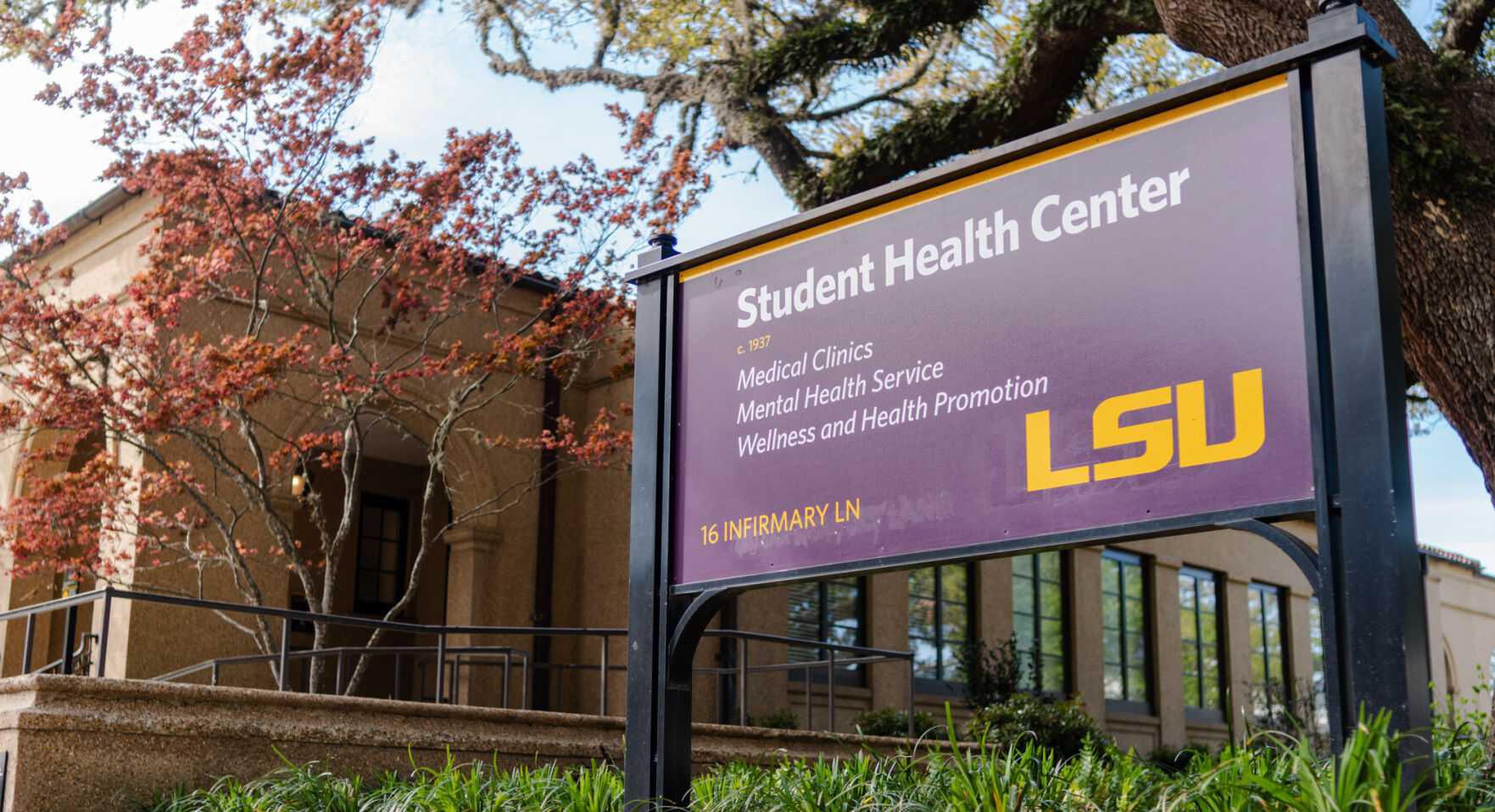
MATTHEW PERSCHALL / The Reveille
The LSU Student Health Center sits March 18, 2024 on Infirmary Road.
Crop specialists explain how weather impacts planting season
BY JORJA ETHRIDGE Staff Writer
Planting season for several major row crops in Louisiana including rice, corn, cotton and soybeans is underway.
Campus crop specialists serve as the main point of contact between the LSU AgCenter and Louisiana crop industries.
Tyler Musgrove, the AgCenter’s rice extension specialist, explained that this year’s warm and dry winter allowed rice farmers to plant early. Musgrove said Louisiana usually experiences more rainfall in February, preventing farmers from getting an early start.
In south Louisiana, rice planting usually takes place from midMarch to mid-April. This year, Musgrove said some farmers started planting as early as the end of February.
He said south Louisiana produces 90% of the state’s rice, but north Louisiana produces some too. Rice planting in the southern part of the state wrapped up last march, but farmers in northern areas are still planting, Musgrove explained.
Musgrove said the cost of producing rice this year is at a record high, so some farmers are avoiding planting it. He predicts that there
ALUMNI
will be about 50,000 less rice acres in the state this year than last year.
HE added that north Louisiana’s farming practices contribute to the variability of rice yield. Unlike farmers in south Louisiana, northern farmers do not rotate rice with crawfish, allowing them a wider variety of crops.
Musgrove said the first rice harvest lasts from July to August. He pointed out that Louisiana is different from other states because farmers here harvest rice twice a year.
He said harvesting the first crop by mid-August allows the crop to regrow. Farmers can harvest again in October or November.
“For a lot of producers, that second crop is what gets them across the finish line financially, especially if they’re not going to crawfish the field that year,” Musgrove said.
The dry weather helped rice farmers, but it did not help cotton farmers. This is because cotton requires good soil moisture.
Shelly Kerns, the AgCenter’s corn and cotton extension specialist, said the cotton planting window started off dry, but should pick up as rain comes in.
Kerns received the earliest reports of cotton planting in the state last week. Most of the cotton harvest will happen in October.

She also explained that corn planting in Louisiana got off to a rough start this year.
Corn farmers usually begin planting in late February or early March. Kerns said some farmers planted before Louisiana experienced a freeze mid-March. Many farmers had to replant their acres.
Kerns said corn planting is finished now but could have been finished one or two weeks earlier if it were not for the replant acres. The
farmers will begin harvesting the corn in August.
Some corn farmers who lost acres to the freeze decided to replant with soybeans instead of corn. Soybeans are also major row crop in Louisiana. According to a report from Craig Gautreaux, the AgCenter’s communication specialist, soybean prices have increased but so have input costs. Therefore, it is important for farmers to maximize yields.
Timely planting maximizes yields. Louisiana soybean farmers are approaching the end of the ideal planting window, and soybeans planted in May will not yield as much.
Jill Trepanier, a professor and chair of the Geography & Anthropology department, said that all major threats for plants regarding cold should be over, but there might be some drought concerns from the recent dry weather.
“Seasonality is changing just a little bit, and it is very much related to when farmers should or shouldn’t plant certain things,” Trepanier said. “And the last date of freezing and when things set in is a little different now than it was 50 years ago.”
Trepanier also has expertise in hurricane climatology. She emphasized that hurricane season is next. She said the latest forecasts are slightly below normal.
Last year, Louisiana experienced almost nothing during the season. She thinks two years of that is unlikely.
“I don’t anticipate a big year, but I still think one year of not getting any might lead to people being like, ‘Oh, we’re okay.’ But no, always be ready for hurricane season,” Trepanier warned.
U-High teacher could be named ‘America’s Favorite Teacher’
BY DREW SARHAN Staff Writer
University High School Teacher Steven Babcock is in the running for “America’s Favorite Teacher Awards,” a national contest of teachers run by Reader’s Digest in collaboration with The Planetary Society and Colossal, a charity organization.
Babcock, a science teacher at U-High for over two decades, is a top 10 finalist for the award. The winner will receive a $25,000 cash prize, a trip to Hawaii and an appearance in Reader’s Digest. Bill Nye will also visit the school of the winning teacher.
Babcock said his journey to UHigh was not a straight line. He first got his undergraduate degree from LSU in history, moved to Oregon and worked for the U.S Forestry Service as a contractor. In that position, he conducted projects and built hiking trails and bridges in wilderness areas.
“I did that for several years
SENATE, from page 3
or academic, goes through the faculty review committee,” Inessa Bazayev said. “It’s a very efficient process, so whoever is filing the complaint will need enough evidence for this process to kick in.”
Faculty do not control this policy, but their endorsement acts as a signal to the chancellor that they support these revisions.

and loved it,” Babcock said. “I got to see a lot of the Pacific Northwest really up close.”
While in Oregon, Babcock’s wife, whom he met at LSU, encouraged him to get a graduate degree. She was in education, and thought it would be a good idea for them both to get into it.
Babcock earned his master’s degree in education from Portland State University and start-
STI, from page 3
pricks and urine tests,” DiLorenzo explained.
In comparison, testing in the SHC medical clinic is more comprehensive. Clinical testing involves a physical exam, including a cervical swab for chlamydia and gonorrhea, for more accurate results. Additional testing for infections such as syphilis and hepatitis is typically done through blood draws.
ed teaching for Portland Public Schools.
“I knew I’d made a good decision because I’m kind of a people-forward person, and I always do a lot of professional development,” Babcock said. “One of my things is, we’re not here to teach science, we’re here to teach people science. And to me, that’s a really big distinction.”
Babcock worked for PPS for a decade until he and his wife made the choice to move back to Louisiana. They both taught in East Baton Rouge Parish for a year, until he saw a job open up at the lab school.
“I was really lucky,” he said. “It’s just been a great experience for me. I can’t speak highly enough of how they’ve allowed me to do research and work.”
Babcock said he was able to pursue another master’s and a publishing scholarship while still focusing on giving his students an enjoyable experience learning science.
These services are usually billed through insurance, but students may choose to pay outof-pocket for privacy.
“If students want everything done through lab work, it can go through insurance, or they can choose to pay privately,” Pitchford said.
The next testing event will take place April 22, from 1 – 4 p.m. in the Women’s Center. While HIV, syphilis and hepatitis testing are free, chlamydia
In December, Babcock was invited to a National Science Foundation event where they match filmmakers with people in the sciences to ensure that their content is scientifically accurate.
“I’m very proud to say I was the first secondary educator that ever got to do this,” Babcock said.
While there, he met some people who encouraged him to apply for the America’s Favorite Teacher Awards, held by the Planetary Society of which Babcock is a member of.
Babcock is planning on retiring at the end of the school year, but he does not plan on leaving U-High behind.
He said he wants to kickstart the U-High sailing club on the LSU Lakes once the project is completed as a way to learn physics in action. If he wins, he plans on using the $25,000 on this venture for the high school.
Ian Chapman is a biology freshman and an alumnus of UHigh. He was in Babcock’s phys -
and gonorrhea testing will cost $35 out of pocket.
Students affected by sexual violence or in need of confidential care can also seek help through LSU’s Lighthouse Program, which works closely with the SHC.
The program provides free and confidential services for survivors of sexual assault, domestic violence and harassment. The program can cover the STI treatment and testing fees and
ics and environmental science class. He remembers learning about the eutrophication of the LSU Lakes, the reason why the lakes are torn up, Chapman said.
“He made it a point to me that whatever I wanted to pursue in my life I could attain it if I worked hard enough at it,” Chapman said. “I understand that this is a very common thing teachers say but Mr. Babcock truly meant it and lived it by example. He has been all over the world and made a career in teaching which he is more passionate about above anything else.”
When asked if he thinks Babcock should win the award, he said yes, because of his unmatched dedication and love for his students, class and school.
“His energy is infectious, and from the classroom to his gardens around campus to an interactive plant lab on campus that he created, his energy can be felt even in the farthest places from his classroom,” Chapman said.
provide emotional support and housing accommodations.
As STI Awareness Month continues, LSU providers hope increased awareness will encourage students to take their health seriously.
“We’re not expecting to fix everything overnight,” DiLorenzo said. “But if we can start chipping away at the stigma and get more students comfortable with testing, that’s a big step forward.”
COURTESY OF STEVEN BABCOCK
COURTESY OF CRAIG GAUTREAUX
A southern Catahoula Parish farmer plants soybeans in a field that was previously corn before the freeze ruined the crops.
ENTERTAINMENT
CAMPUS LIFE
Hill Memorial Library staff displays archival favorites in new collection
BY SAVANNAH BOYNES Staff Writer
LSU Libraries’ Special Collections, with its latest exhibition, showcases materials curated by library staff.
“Unlocking Special Collections: A Selection of Staff Favorites” is the latest exhibition at Hill Memorial Library, featuring an array of archival collections, including poetry, illustrations, photographs and more.
The exhibition opened on the Hill Memorial Library’s first floor on April 6, and it will remain on display until July 31. The exhibition’s hours align with Hill Memorial’s open hours of 9 a.m. to 5 p.m. on weekdays only.
“This is for the public. It’s pretty incredible that we get to be stewards of this material,” said Meredith Contreras, the outreach and events coordinator of Special Collections. “I think that all of the people who participated in this and all of the people in this building really care about the work that they do.”
Contreras said that the concept for the exhibition began as a social media campaign this past summer in an effort to promote the different items Special Collections has to offer. She detailed how the campaign highlighted an LSU Libraries staff member every Friday, along with their favorite item from Special Collections.
Exhibition manager Leah Wood Jewett emphasized how besides those who chose their materials for social media, she opened up the option for all staff members to participate in unveiling other parts of Special Collections.
These different perspectives open up the archives even more to the general audience, showcasing the human hands and minds that make viewing the materials possible at Hill Memorial.
“It’s a long list of people who don’t get their name put out there, but it’s a good thing to remember that it’s a lot of work,” Jewett said. “There’s a lot of love put into it over all these years so that we can all benefit from it.”
Jewett recounted how she and Contreras were trying to find a common thread between the staff selections to find a coherent theme for the exhibition. Ironically, there was no connection. However, that proved even better as the exhibition serves a purpose as a microcosm of Special Collections in its entirety.
One staff member who picked his favorite item to be shown in the exhibition was Operations Coordinator Andrew Loyacano. His responsibilities with Special Collections involve supervising student workers and setting up
for events in the Hill Memorial Library lecture hall.
Loyacano chose to shine a light on a volume from the archives’ Amharic Bible manuscripts for its drawing of St. George slaying the dragon.
He said his choice rested heavily on both his fascination for the illustration itself and his Catholic upbringing. As a child, Loyacano read many books about Catholic saints, and he always loved reading stories about knights slaying dragons.
He also said that reading further into St. George as a figure made him think of the diversity in how the saint is depicted throughout Catholic tradition. He observed that the Ethiopian Orthodox Church had an affinity for the figure that other churches did not.
“It also probably looks so much older than it is, but it’s actually only from the 1800s. It’s still entirely handmade,” Loyacano said. “Every single letter in there was handwritten, every illustration handmade, and so I mostly picked it for that tie to history.”
Loyacano hopes that after seeing this illustration, visitors will be inspired to do further research for themselves. He expressed his own passion about free access to information, and the exhibition reminds individuals that Hill Memorial Library is able to provide that with its resources.
“I hope that objects like this show that religion is extremely diverse. You’ll have no idea what a tradition is until you look at that specific culture,” Loyacano said. “I really hope that it brings people down rabbit holes to learn about places they would have never thought about beforehand.”
Another keyholder is processing archivist Camille Boechler. Her responsibilities involve arranging, describing, preserving and making historical materials accessible to the public and researchers.
Boechler chose the James Coleman Prewitt Papers for her staff pick. She said Prewitt was a writer from Louisiana and LSU alumnus; he also co-founded LSU’s student literary magazine, The Delta, which is now known as The Delta Literary Journal.
Boechler discussed Prewitt’s bad luck in getting his work published, despite writing countless poems and stories. The Prewitt Papers she chose offer visitors a glimpse into a more personal side of the writer’s life, and Boechler believes people can take away insight that will push them to look closer at the literary side of Louisiana history.
“I can’t explain exactly why, but I quickly felt a strong sense
of familiarity toward him when I processed his papers last year, almost as if I knew him personally,” Boechler said. “The overall impression I got of him is that he was a bit of an eccentric; he was somewhat of a misfit and highly obsessive over his craft.”
Boechler also believes that visitors can walk away from the exhibit knowing that the staff members behind the picks are just as unique as the materials themselves.
Brandon Layton, the exhibition’s digital engagement and pedagogy librarian, helps facilitate class visits to Hill Memorial and corresponds with professors to incorporate archive materials in their teachings.
Layton’s choice was a series of World War II comic books from Japan, and visitors can pick out the manga clearly — the cover is President Franklin D. Roosevelt portrayed as Frankenstein’s monster.
Layton said the imagery drew him to the collection, and he has always noticed how students tend to gravitate to the specific type of material. He said it shows a glimpse into a foreign perspective that is usually not as easily accessible in regular research. These comics serve as both an example of foreign politics and a paper trail to what would become a defining literary form of the region.
“This is state propaganda, so it’s not necessarily going to be telling us what an average person was thinking, but at the very least, it gives students a different way to look at World War II,” Layton said. “It’s cool that it is really the first example of the styles that would eventually become manga.”
Layton then said there are different interpretations of the manga cover, as people can look at it from a foreign, political context that revolves around studying how the U.S. was depicted during wartime or from an artistic mindset that focuses more on the drawing and shading methods that go into creating cartoon-like characters.
Layton stressed the amount of material available at Hill Memorial and how these collections are better for understanding, research and even promotional purposes.
“We have 200,000 books, 1.5 million manuscript items. It’s a ton, and oftentimes, as you’re working through this stuff over the years, staff will develop their favorite things that they really like,” Layton said. “We all have these lists in our own minds. These are the things that we think are really awesome, so it’s fun to share that stuff with the public.”

LSU RUGBY


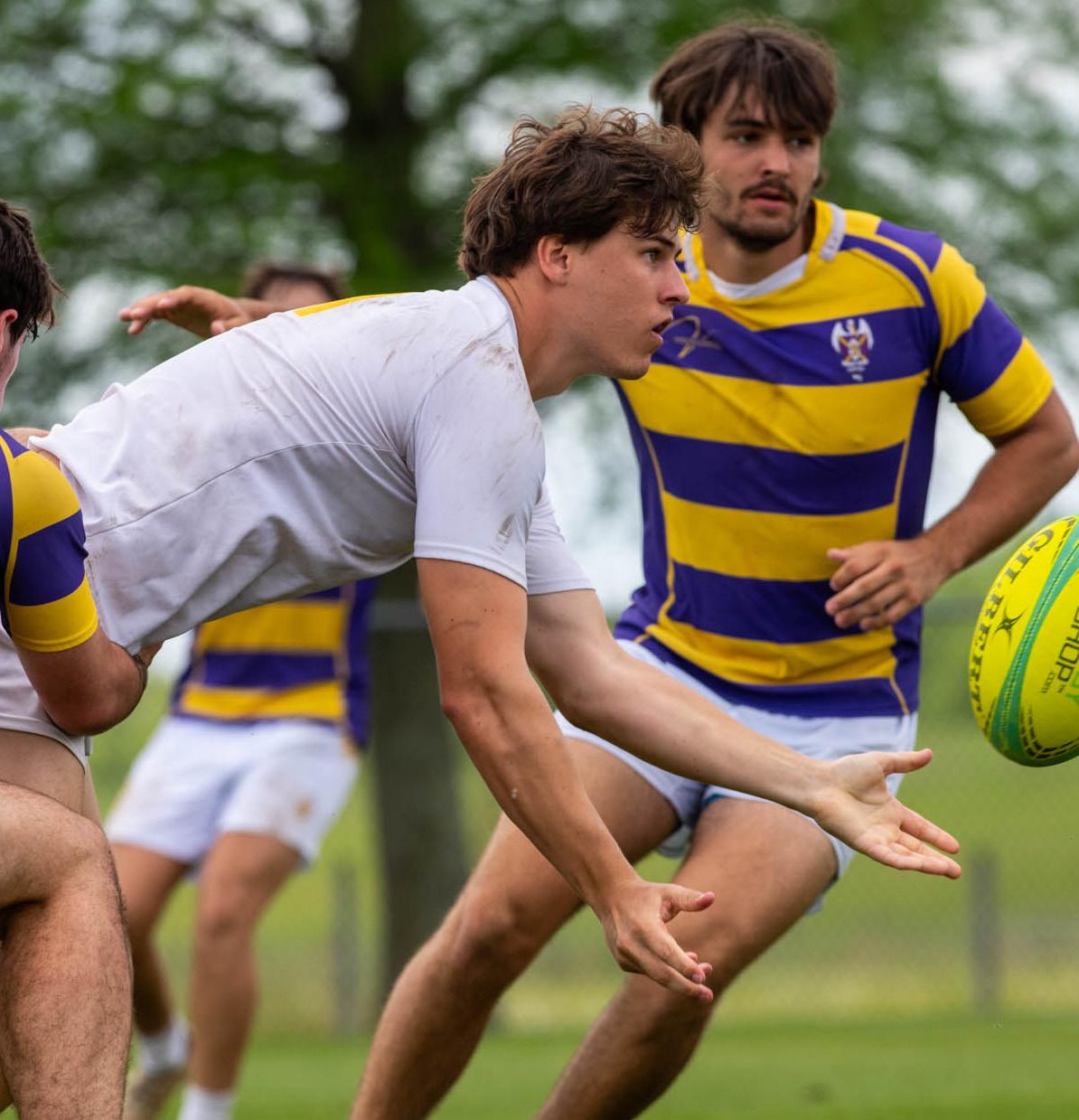
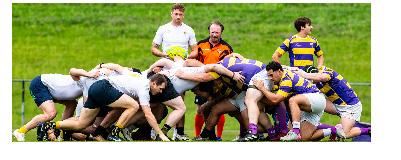
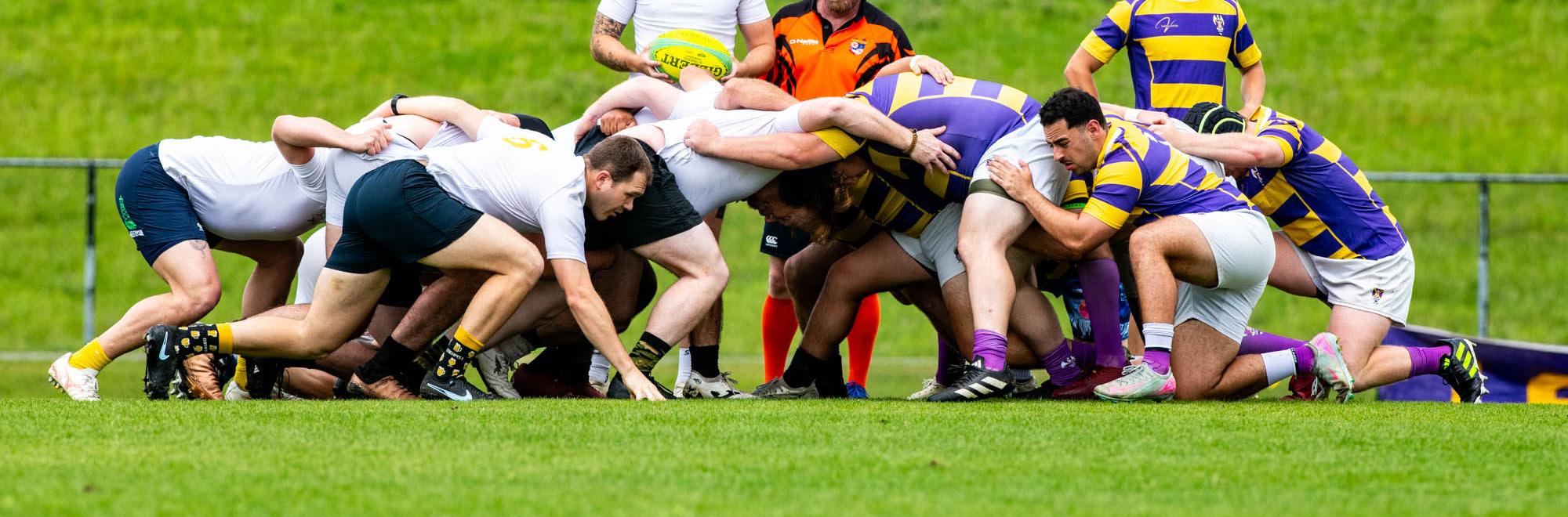

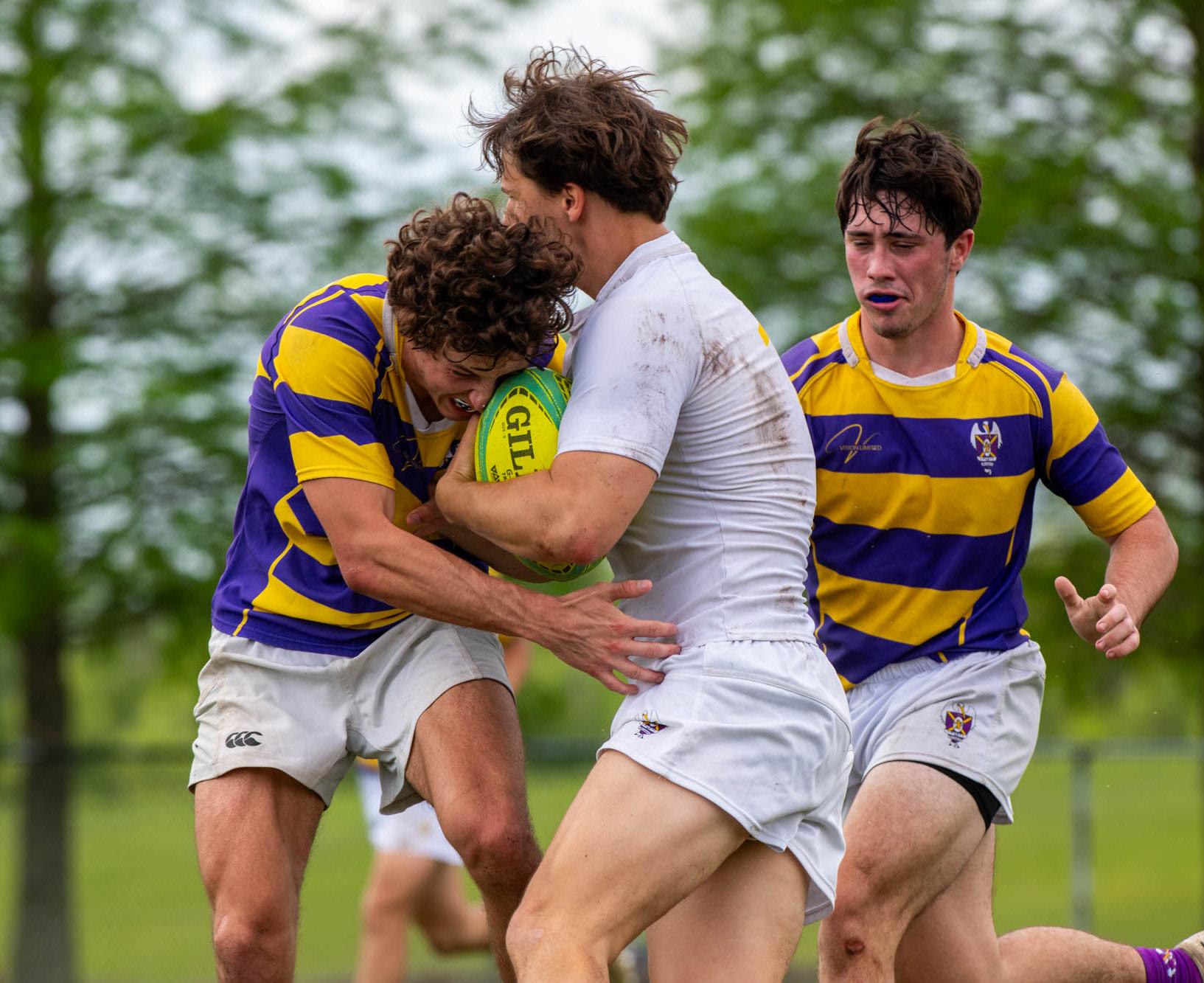


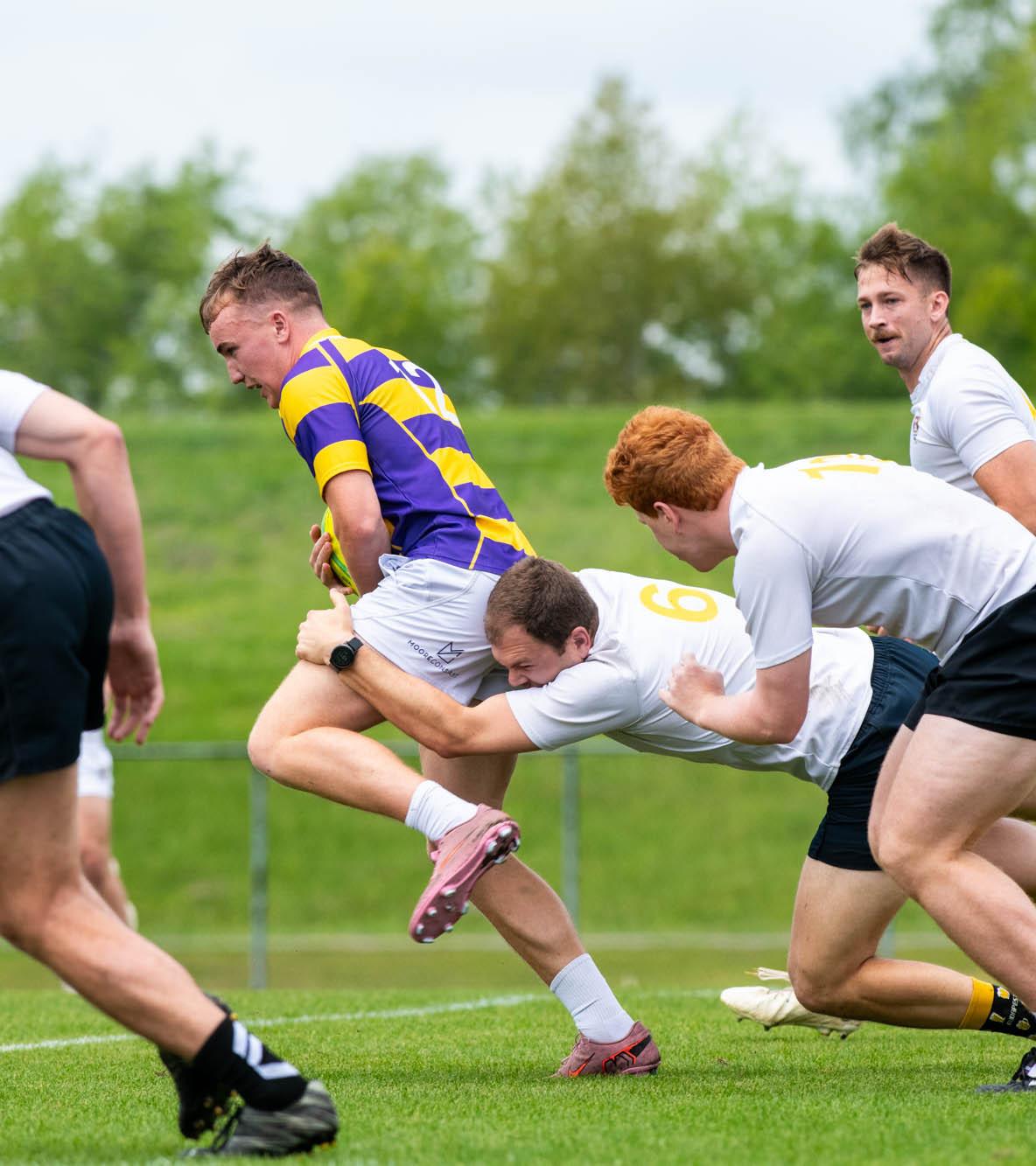


The LSU rugby teams start a scrum.
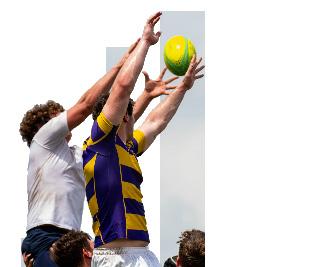
Rugby player and alumnus try to catch the ball.
Rugby alumnus player (21) passes the ball.
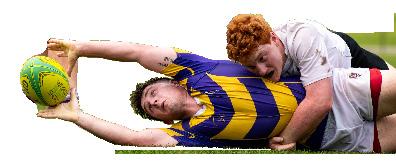
Rugby alumnus player gets tackled.
Rugby alumnus player passes the ball.
Rugby prop Jack Roniger gets tackled.
Rugby alumnus player (20) and flanker/ backrow Matthew Correa (5) lineout.
Rugby player Cole Maestri (9) holds the ball.
Rugby outside center Tim McGoldrick (12) gets tackled.
The LSU rugby team and alumni smile April 18 after the alumni
Photos by Alexis Persicke | Design by Emily Boudreaux
FASHION
SARAH WALTON - STAFF WRITER
it girl summer wardrobe
The days are getting hotter and summer is almost here. With a new season also comes new styles and trends. This summer seems to be the summer of brightness, whimsy, nostalgia and fun. Here are some items that are sure to be popular this season, and ways to create the perfect summer wardrobe.
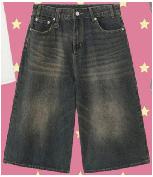
Jean shorts $29.99
At this point, the jorts trend seems like it is not going anywhere. Jorts is a term that refers to the oversized jean shorts that are popping up all over. There are also the classic shorter jean shorts that will always be in style and is a godsend when the temperature creeps more and more to the unbearable.

Thrifting and shopping vintage has been a big trend for the past five years or so, and it will still be prevalent this summer. T-shirts from the ‘80s or early 2000s are still around and working their way into daily fashion for many. Whether they are authentic band shirts or reprinted vintage style, these kinds of tops will always make an outfit much cooler.



Something that is always cute and fun for the summer is hair jewelry. The long-time favorite of claw clips could be the way to go, or adding beads, thread and charms into hairstyles could make things more interesting.

Trends like vintage clothes always come back in style. Corseted everything has become popular and this summer, the emergence of corset dresses is definite. When looking for dresses like these, it is incredibly important to pay attention to the boning or lines of structure, built into the dress that help give the piece its characteristic look.
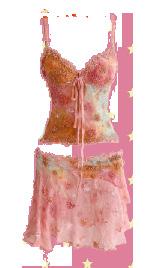


The 2020s have been characterized by certain clothing items, and babydoll dresses are absolutely one of them. From soft and bright colors to simple or frilly silhouettes, this style of dress has become a popular and easy way to look cute and stay cool.
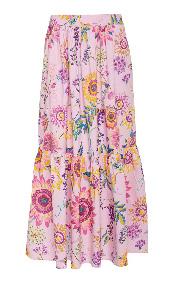
Another evergreen clothing staple is the cotton maxi skirt. Oftentimes white and styled for concerts with cowgirl boots and a bright attitude, these skirts seem like they’re not going away.

One style that has been on the rise in the past couple of months is the Mediterranean and Italian summer style. Illustrations of Italian life are everywhere. From bags and scarves


SPORTS

BY ROSS ABBOUD & ALEX SHEESLEY
Deputy Sports Editor & Staff Writer
In just 24 hours, LSU baseball’s season went from bad to worse when two of its star players were ruled out for the season.
Sitting at 24-18 overall and 6-12 in SEC play, LSU needs all hands on deck.
But now it’s without starting pitcher Cooper Moore, who was sidelined after suffering an arm injury in a game versus Oklahoma.
GYMNASTICS
He was optimistic about making a return in time for LSU’s weekend series against Texas A&M, but he missed his target return.
On Monday night, head coach Jay Johnson confirmed Moore will have season-ending surgery.
Then on Tuesday morning, Johnson confirmed outfielder Jake Brown will also likely miss the rest of his season as he undergoes surgery on his hand.
Brown leads the Tigers’ offense with 16 home runs and 49 RBI, while having a .309 batting aver-
SEASON ENDERS
Two baseball sluggers suffer season-ending injuries
age and a .404 on-base percentage.
It’s likely Brown has played his last game as a Tiger since he is a draft-eligible junior, sitting as the No. 43 draft prospect on ESPN’s rankings.
On the other side of the mound, Moore is already committed to returning to LSU for 2027.
Moore, a right-handed pitcher, established himself as LSU’s second best starting arm in his first year as a Tiger after transferring from Kansas.
The junior logged a 3.38 ERA
across six appearances, throwing 32 innings as LSU’s Saturday starting pitcher.
Moore’s absence has left a significant hole in LSU’s rotation.
The Tigers, whose third starter spot was still up in the air prior to Moore’s injury, have won just one Saturday game in four attempts since he went down.
After Tuesday’s win over New Orleans, LSU will travel to Starkville to take on No. 15 Mississippi State in a weekend series starting on Friday.
Here’s what went wrong for gymnastics in finals
BY GABBY GRAY Staff Writer
After all roads seemed to lead LSU gymnastics to the national championship in Fort Worth, Texas, the Tigers came up short in their efforts to claim another title as they fell to the runner-up spot behind the Oklahoma Sooners.
If you were tuned into the competition, you know that this meet was a close one, with the difference between the winning score and second place coming down to less than a tenth: 198.1625198.0750.
“They got a lot to be proud of,” LSU head coach Jay Clark said. “They fought their you-knowwhat’s off to put themselves in a position to even be in the running, and they got there, and sometimes at the end, stars got to line up.”
With this loss in the rear view, let’s take a closer look at where the stars didn’t exactly line up last weekend.
During the championship competition, the Tigers started the first rotation on the floor exercise, an event where they ranked No. 1 in the regular season. Their performance picked up at the halfway point of the rotation, where they posted three scores in the 9.9000 range, with matching 9.9375s from junior Amari Drayton and sophomore Kaliya Lincoln, and a 9.9000 from sophomore Kailin Chio.
After closing the second half of the rotation on a high note, fans were feeling the momentum as LSU moved onto its second event, the vault, where it ranked No. 2 in the regular season. Yet that momentum wasn’t harnessed by the team as they delivered a series of unstuck vaults, earning nothing higher than a 9.8750 until Chio secured the first and only perfect 10 of the championship.
You could point to this as where things started going wrong for LSU because the Tigers didn’t meet their usual high expectation for their strong vault rotation. Even if the next three highest vault scores behind Chio were 9.9000s, LSU would still have been behind Oklahoma by 0.0250 in the end.
It wasn’t until the Tigers closed out vault that they managed to regain the same momentum as earlier, if not a stronger version of it, as they mounted the uneven bars.
“It was doing really well, but, you know, not setting the world on fire,” Clark said. ”And then she [Chio] lit the match, and things began to take off for us. And so we rode that wave.”
While Clark is undoubtedly proud of his team, things noticeably started to unravel for LSU during the fourth and final rotation on the balance beam.
Senior Kylie Coen kept the heat from the third rotation going with a 9.9125, but the arena fell silent
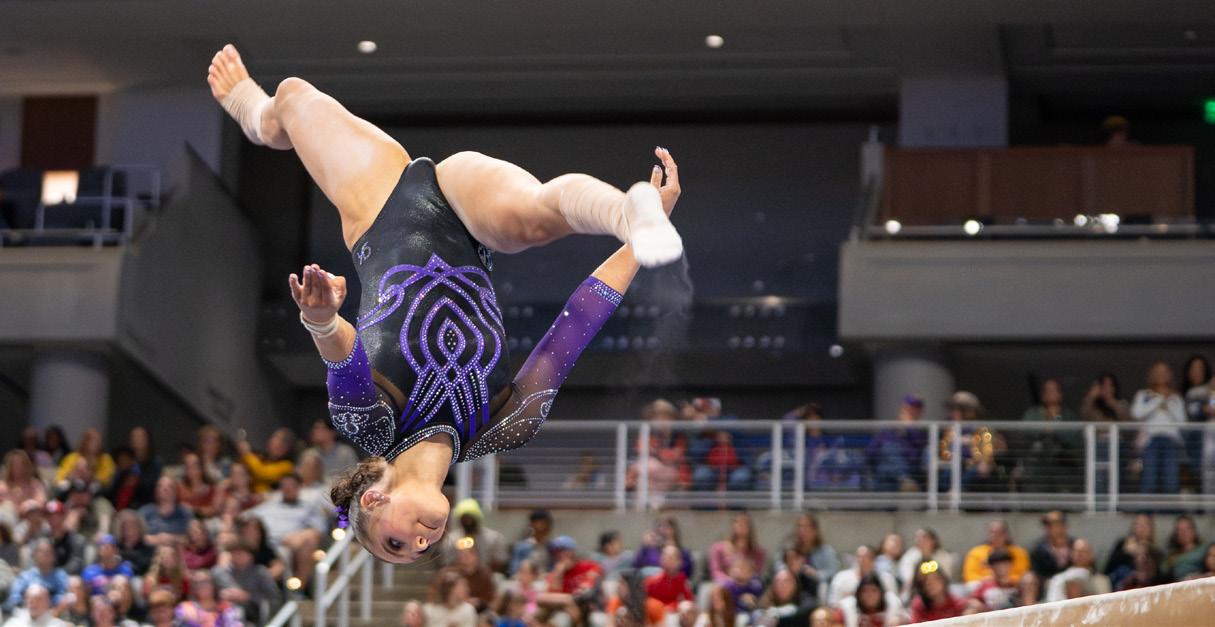
Gymnastics all-around sophomore Lexi Zeiss performs her beam routine during the Tigers’ 198.0750 loss April 18 at the Dickies Arena in Fort Worth, Texas. as sophomore Lexi Zeiss fell from the balance beam following Coen’s routine.
From first glance, many viewers would say a fall from an event counts as an immediate setback, given its low score; however, the lowest score of a rotation is dropped, with judges only counting the top five scores.
On top of that, Oklahoma junior Kiera Wells also fell from the balance beam at the start of the third rotation, and yet the Sooners managed to win the national championship title.
So what was the difference?
The Sooners could build off of Wells’ mistakes and come back stronger, having followed suit with a series of scores above a 9.9000,
SOFTBALL
Softball’s Edwards’ breakout is no surprise
BY MARISSA REISS Staff Writer
LSU softball’s sophomore first baseman Tori Edwards made herself a name across softball networks for the entire duration of Week 11.
But this isn’t the first time Edwards has come in clutch for the Tigers when they needed her the most. Edwards’ big breakout dates back to her freshman season.
Being named the youngest of the three permanent team captains for the 2026 season, Edwards’ accomplishments as a freshman and her leadership earned her the role of leading her team.
“It’s hard to come around people like that — her mentality and just how she works every day,” senior Jalia Lassiter said about Edwards’ freshman season. “To be around her and her mentality, it makes you want to work harder. It makes you want to learn from her, especially the year she had, it was agreat year. I love being around a person like that who pushes people.”
During her redshirt freshman season with the Tigers, Edwards was named the 2025 SEC Freshman of the Year after starting all 58 games of the season at first base.
Edwards’ freshman season would go down as one of the best in LSU softball’s program history when she set a program record for slugging percentage at .802 and for grand slams in one season at four. She also tied a program record for single-season home runs, hitting 18.
with the exception of sophomore Elle Mueller’s 9.8625. They proved that they could bounce back from that kind of error.
Unfortunately for the Tigers, they couldn’t do the same, only adding two scores in the 9.9000s alongside Lincoln’s 9.8375 and junior Amari Drayton’s 9.8750.
While LSU still managed to close the event with a 9.9000 from Chio, it fell short of its recovery from the fall, costing it the national championship title.
“Even in the midst of all of that, you know, she’s [Chio] been able to maintain a mindset of excellence,” Clark said. “She’s hard on herself. She wants that tenth back, that kid has nothing to be ashamed of.”
In addition to the program records she set during her first year, Edwards finished the season with a .375 batting average overall. The then-freshman scored 52 runs and added 73 RBIs on 62 hits during the season. She also drew 37 walks with an on-base percentage of .495.
Heading into her sophomore season this year, Edwards was named one of the two pre season All-Americans alongside senior catcher Maci Bergeron, and also earned accolades as the No. 2 first baseman and No. 18 player in the country.
So far this season, Edwards had a slow start, but quickly eased into a crucial role as the Tigers look to wrap up confersee EDWARDS, page 10
SAM BECKER / The Reveille
LSU baseball junior outfielder Jake Brown (7) throws a bat during the Tigers’ 7-1 victory vs Oklahoma March 19 at Alex Box Stadium.
SAM BECKER / The Reveille
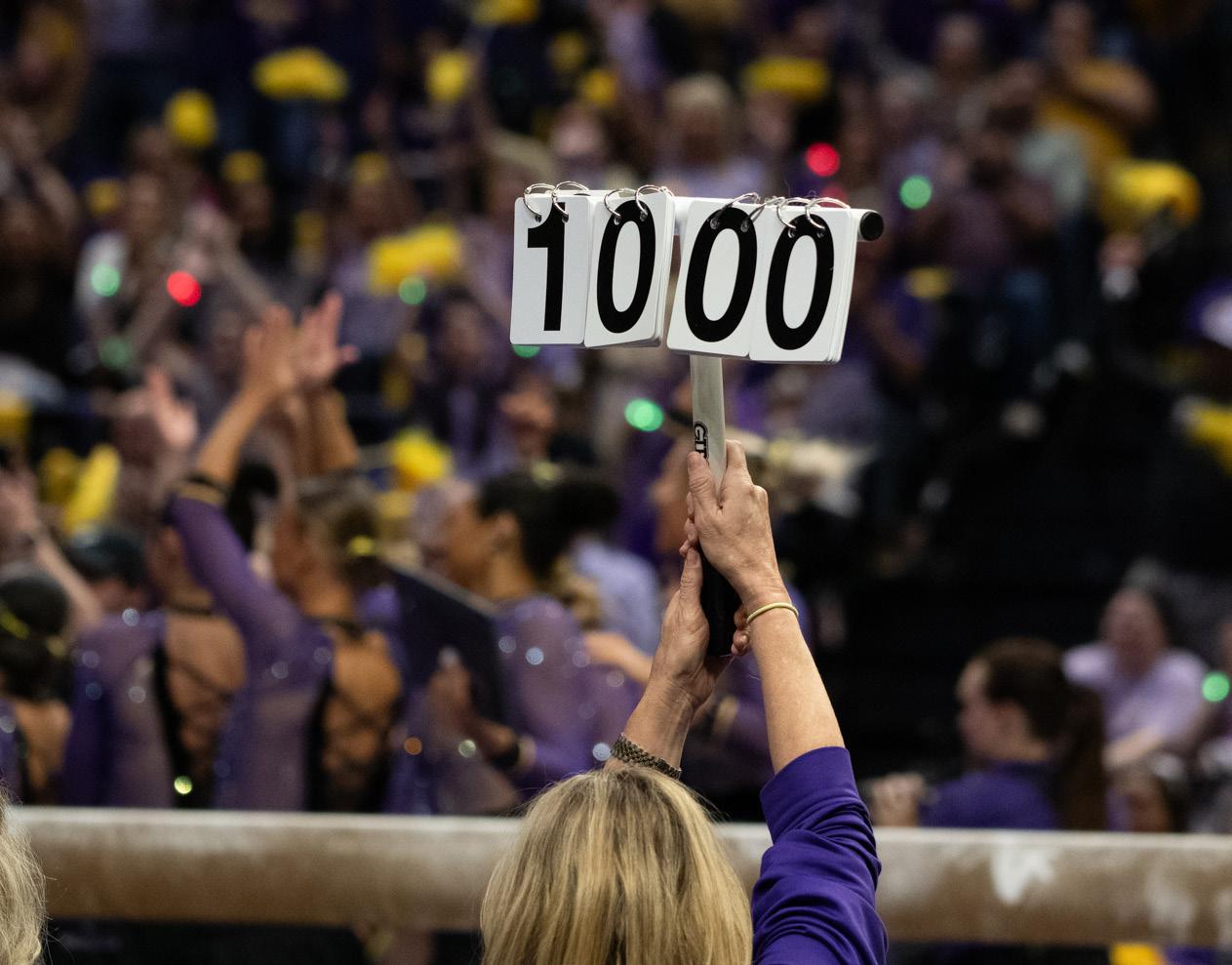
Gymnastics had many perfect scores this season. It had potential for more
BY DELANEY POTTHAST Staff Writer
The 2026 LSU gymnastics’ season was filled with many historic moments for the program, but one of the most notable stats was the perfect 10 total that the team acquired over the year.
This season, LSU saw 10.000 flash across the scoreboard a total of 14 times, 13 of which belonged to Tiger superstar Kailin Chio.
The sophomore came into the year with only a single career 10 earned her freshman season on vault. Now, the gymnast owns 14 perfect career scores, that include five on beam, three on floor and six on vault.
What’s even more impressive is the fact that the last perfect ten Chio earned this year was in the NCAA Championship final round, where her Yurchenko one-and-ahalf earned a 10 from all six judges on the panel. With this, Chio became the first gymnast to earn a 10 in the NCAA championship since 2023 and the first in program history to earn the score in a championship.
“She’s the definition of consistency,” junior Konnor McClain said. “It’s just so amazing to watch and I cannot explain how incredible it is to just know what she’s gonna do every single time on every single event.”
Fellow sophomore Kaliya Lincoln was the season’s other perfect scorer, as she earned the first of her career in the regional final
round, as the last routine of the night.
Controversially, fans argue that the Texas native deserved the score long before that as she has garnered a total of three 9.975s on the floor exercise this year. Even more so, before scoring her 10, Lincoln didn’t see a score below 9.925 on floor since the team’s second meet of the season.
“It’s been a long time coming,” Chio said. “She’s [Lincoln] done so many floor routines that deserved a 10. It was just so great to be able to celebrate her and celebrate all of her hard work.”
It’s a similar story for a couple more Tigers, as the team has come close to gathering more 10s than what’s on record this season.
Amari Drayton and McClain in particular have spurred talk about being robbed of perfect scores this season among fans.
Drayton, who has yet to accomplish the achievement in her collegiate career, seems to come closer and closer every year. This season, her stuck vault at the Podium Challenge was given a 9.950 and in the following week, she received a 9.975 against Florida on the road.
Over on floor it’s a similar story. Part of the reason Drayton having not received her perfect score isn’t due to lack of talent, but simply because she runs near the middle of the lineup in each event.
Because scores haven’t built up by the fourth or fifth routine,
RICKEN, from page 2
Ray and his wife, Aimee, met while both were athletes at Michigan. Both knew the value of college from athletic, academic and growth aspects.
“As parents, we wanted that [college experience] for him,” Ricken’s father said. “But when you’re an 18-year-old kid and people are talking about millions of dollars, your attention kind of perks up a little bit.”
Through conversations with his family and the coaching staff, Ricken followed through on his commitment and made it to campus.
His first appearance came on Feb. 18 against Nicholls where he went three hitless innings. Ricken’s first start came three weeks later.
The first inning of that game featured the quick retiring of three batters. The next saw an error and run allowed, and Ricken was taken out before recording another out. Still, he said he was able to learn from it quickly.
“The next day I’m just looking at the video with Jamie and coach Yeskie, and it’s just about slowing things down, slowing the game,” Ricken said. “This is my year to learn and really get better at things I need to get better at going into next year.”
One teammate that has helped him improve his game and experience at LSU is redshirt junior pitcher Jaden Noot. The Californians share a bullpen and many of the same hobbies. Through golfing at Santa Maria
Drayton’s high scores don’t display the shortcomings of a perfect performance but rather the exceptional talent of her gymnastics as she finds these scores where most gymnasts don’t.
McClain has been on the cusp of a 10 multiple times this season on the bars and beam events. Though the junior found three perfect scores across these events her freshman season, this year has been a bit more difficult.
McClain’s bar sets against Auburn and Florida in particular received 10.000 from judge one, but scores of 9.950 given from the second judge at each meet resulted in a 9.975 for both routines.
On beam, McClain saw a few competitions where the score could have been given. Most notably, the beam set she performed against Alabama, which had also received a 9.975 as the judges average.
“Seeing her go up before and just doing one of the best beam routines of her life,’ Chio said. “She deserved that 10 in my eyes.”
Though some may argue that LSU could’ve had a higher perfect 10 count, it doesn’t discredit the impressive stat that the team does currently hold.
Now at a program total of 116 perfect scores, every gymnast that either added to that stat or came close to it this year is set to return for 2027, marking next January as the start to what will hopefully be another historic season.
Golf Course and University Club and a few fishing trips, the two have grown a strong relationship.
“He’s actually really good at golf, though. It kind of makes me mad,” Ricken said.
Ricken’s focus for his future at LSU is earning a starting spot, something that could be the next step to him eventually becoming a pro baseball player and making the major leagues. If he reaches the pinnacle, he’d be getting a welcome step up on his dad.
“You always want your kids [to] do better than what you did,” Ricken’s father said.
Ricken wasn’t nervous when he played his first game at LSU, but it definitely wasn’t just another day at the yard. Walking out to “Ice Ice Baby” by Vanilla Ice certainly helped keep him focused, and he said he often sings the words in his head while coming out of the bullpen.
A good tune and good performances can help win over a fanbase, which Ricken has started to do. He recognizes how special LSU is.
“[I’m] pretty much just trying to learn deeper into the culture of this program,” Ricken said. “Playing in front of [the fanbase] for the first time was kind of crazy.”
The freshman has been figuring out what it takes to be an LSU pitcher. Johnson, Ricken’s family and the fanbase alike, see a player that has the ability to live up to the championship expectations of LSU as he grows.
EDWARDS, from page 9
ence play and head into the post-season.
This season, Edwards boasts a .281 average in her 121 at-bats. She leads the team with 36 RBIs and 11 home runs, adding 30 runs and 34 hits. Edwards also leads the team in stolen bases with eight.
Across the weekend slate versus Ole Miss, Edwards had herself a performance in all three games. In specific, the sixth inning of all three games were where she shined and where her bat came to life.
In the first game alone, Edwards hit a go-ahead inside-thepark grand slam to hand the Ti-
gers the series opener. She was 2-for-3 in that game, and later went on to go 3-for-3 in the series finale, crushing two solo home runs.
“She is really, really special,” head coach Beth Torina said about Edwards before the season. “Her ability to control the strike zone, to have the mentality to attack this, being the person that people know. As just a freshman, she was already the one that was highlighted and circled on our lineup card.”
Now, in the final few weeks of regular season matchups, it’s even more evident why Edwards’ name was circled on that lineup card last year.
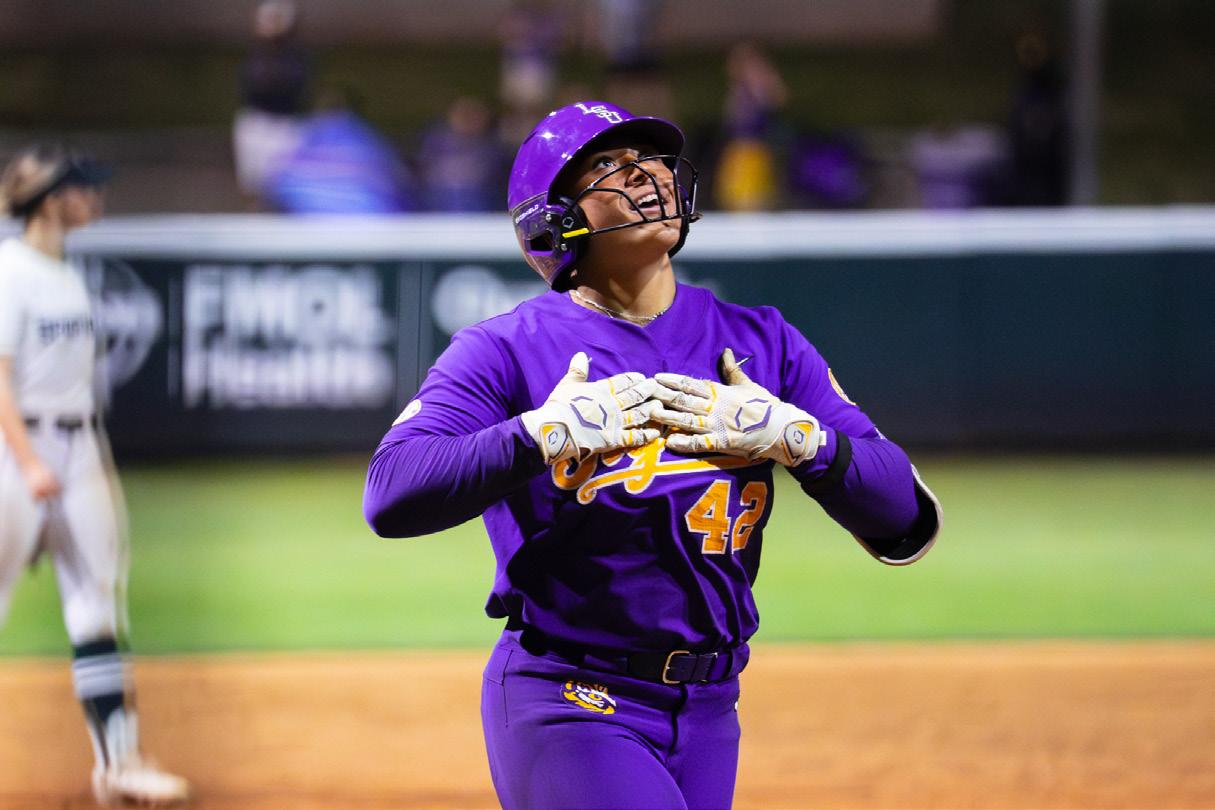
HINESLEY BRYANT / The Reveille
LSU softball redshirt sophomore Tori Edwards (42) looks to the sky during the Tigers’ 5-4 win over Michigan State on Feb. 21 at Tiger Park.
ERIN BARKER / The Reveille
LSU gymnastics all-around sophomore Kailin Chio scores a perfect 10 for her beam routine during LSU’s 197.975-197.600 win against Alabama on Feb. 27 at the PMAC.
OPINION
Weight loss drugs and influencers are ruining fitness culture

WARREN’S WAY
JEANNE WARREN Columnist
Over the past decade, there has been a noticeable shift in fitness culture. Much of this change feels tied to social media and the rise of fitness influencers. This trend is most pronounced with Gen Z, where working out is mostly about appearance, aesthetics and perception rather than health. I would argue that we’re seeing a renewed rise in substance use to achieve unnatural aesthetics.
None of this should be normalized.
We are constantly consuming content made by some of the most physically fit influencers and professional bodybuilders in the world. This introduces a “gold standard” of being highly muscular while extremely lean to the masses. This standard, however,
is actually quite medically unsustainable and can only be maintained for short periods of time.
For many of these people, fitness and looking good are their full-time jobs. They have direct access to coaches, nutritionists, funding and years of structured training that the average person simply doesn’t — let alone a college student.
Most college students don’t have the time, money or lifestyle to replicate this. It’s not realistic for the average Joe.
Additionally, what we’re seeing online from these influencers isn’t even the full picture. It’s the best angles, the best lighting, the best posing and their best moments. It is their peak condition, and it isn’t even their everyday reality. Our brains aren’t meant to process constant exposure to the most physically fit 1%. We’re being exposed to this and then subconsciously deeming it as the general standard because it’s in video after video.
It’s easy for these 15-second highlight reels to distort someone’s perception of themselves. I’ve noticed that instead of putting effort into being consistent, some individuals will turn to anabolic steroids without proper bloodwork, medical supervision or a full understanding of what these substances actually do.
Others turn to newer trends like peptides. While some peptides are FDA approved, many others are not. These unapproved peptides are often significantly cheaper, making them a more appealing option despite the lack of regulation.
Peptides exist as short chains of amino acids that naturally occur in our bodies. This allows for them to be framed online as “safer” alternatives, even though this isn’t always the case. Some peptides are used medically for specific conditions regarding deficiencies and disorders. However, this is a very controlled context involving regulated dosing and phy-
sician oversight.
Scarily, unregulated peptides labeled “for research purposes only” and “not for human consumption” are being bought and carelessly injected. At times, it brings to my mind the movie “The Substance” — more specifically, the aspect of one injecting oneself with, well, substances to reach unrealistic societal expectations, regardless of the consequences. Short-term validation will never outweigh long-term health.
It seems that fitness stopped being about health and started being about aesthetics.
None of this means that wanting to look good is a bad thing. It is a very human desire. The issue is how people go about doing this. When appearance becomes the only goal, everything else gets pushed aside. Mental health, physical health and sustainability are disregarded.
Aside from this, there are still a multitude of ways to look and feel good in healthy, natural ways.
If a better physique is the goal, creatine is a well-studied, natural option supported by decades of research. The fundamentals of strength training haven’t changed. A simple workout split, balanced nutrition and consistency are what truly work. It might not be flashy, and it might not give instant results, but shortcuts come with a cost.
Fitness is supposed to support your life, and make you feel good. It isn’t supposed to make you feel so bad about yourself that you contradict the entire point of fitness as a whole: being healthy. It isn’t supposed to jeopardize your well-being. It isn’t supposed to control your life.
Right now, it feels like a lot of people are chasing an image instead of building a lifestyle. We should work out to feel better, not to look like someone else.
Jeanne Warren is a 20-year-old mass communications major from Baton Rouge, La.
‘It’s all men’ follows the same rhetoric as ‘boys will be boys’
MICHAIAH’S MINUTES
MICHAIAH STEPHENS Columnist
You may have heard the phrase “it’s all men” floating around. The saying is often used to highlight patterns of harmful behavior when men act in misogynistic or predatory ways. This statement, though seemingly progressive, is still spouting the patriarchal leeway of the saying “boys will be boys.”
The traditional male identity is defined by antifemininity, which
encourages men to avoid attitudes, roles and behaviors associated with femininity. Traits like empathy, communication and collaboration are stereotyped as feminine, which places them at odds with the tight definitions of masculinity under patriarchy.
Within a patriarchal society, behaviors are enabled so that men can get away with misogynistic behavior. Most commonly, sayings such as “boys will be boys” when society normalizes and legitimizes the harmful behavior shown by young boys, and chalks it up to them being men. This associates negative behavior to boys whilst

EDITORIAL BOARD
Kaley Melancon News Editor
Flood
Garrett McEntee Opinion Editor
Laura Allen Entertainment Editor
also excusing it.
This creates the notion that because a man is a man, you should understand that he will have tendencies toward aggression and misogyny. Rhetoric like this infantilizes men and normalizes their engagement in condemnable activities whilst also legitimizing men’s privileged status in society. It suggests that men shouldn’t be held fully accountable for their behavior.
In response, many women have pushed back with phrases like “the bare minimum” to point out how men are praised for meeting basic human standards.
Society has declared that women must cater to the men around them and always do a perfect job but never outshine a man who does the same job. This is not to mention the double standard, where a woman could do the same job as a man and be condemned for it. For example, like how single fathers are praised for committing, but single mothers are taboo and irresponsible.
Resentment for these conditions has women passing around a new saying: “It’s all men.”
“It is all men,” reads a Substack article on the saying. “Not because all men are bad. But because all men are potential threats — and because it makes sense for women
to fear all men.”
But inherently, aren’t we still applying the same harmful rhetoric as “boys will be boys”? Both of these sayings are built around the idea that because they are men they are violent, aggressive, predatory and sexist.
You are allowing the patriarchy to label what masculinity is and isn’t.
When you allow yourself to think that because the man is a man, he is dangerous and hates women, you are allowing the behavior to be perpetuated. You are letting the man off the hook because “that’s just who they are.” You are no better than an enabler.
Excuses are made for the behavior because condemning it seems unachievable. But men aren’t inherently violent, just as women aren’t inherently victims. Broad generalizations won’t dismantle the patriarchy. Changing the construct will.
Research on child behavior development shows that children typically understand generalizations in absolutes. So, if you say “boys are good at sports,” the child hears that boys are good at sports and may infer that girls are not good at sports. Generalizing any group, instead of speaking about an individual, reinforces and creates new stereotypes.
If gender itself is a social construct, then masculinity can be — and must be — reconstructed as well. History has shown just how flexible gender is. In 1918, the Ladies Home Journal advised that pink was for boys and blue was for girls.
A century ago, Americans saw these colors and interpreted them completely differently than we do today. Humans are ever-evolving, and boxing people in will never get anyone out of the box. Duh.
Addressing toxic masculinity is a societal responsibility. We have to have open discussions, challenge stereotypes and norms and cultivate an environment that allows all men to fully express themselves. It also requires the inherent privilege of being a man has to be deconstructed.
When we refine what masculinity is, we can pave the way for communities and workplaces that are healthier, inclusive and empowering for everyone, allowing us to be the best version of ourselves.
The next time you think “it’s all men,” remember that generalizing statements don’t do anything but reinforce the patriarchy, not dismantle it.
Michaiah Stephens is a 22-year-old english major from Durham, N.C.
Editorial Policies and Procedures Quote of the Week
The Reveille (USPS 145-800) is written, edited and produced solely by students of Louisiana State University. The Reveille is an independent entity of the Office of Student Media within the Manship School of Mass Communication. Signed opinions are those of the author and do not necessarily represent the views of the editor, The Reveille or the university. Letters submitted for publication should be sent via e-mail to editor@lsu.edu or delivered to B-39 Hodges Hall. They must be 400 words or less. Letters must provide a contact phone number for verification purposes, which will not be printed. The Reveille reserves the right to edit letters and guest columns for space consideration while preserving the original intent. The Reveille also reserves the right to reject any letter without notification of the author. Writers must include their full names and phone numbers. The Reveille’s editor in chief, hired every semester by the LSU Student Media Board, has final authority on all editorial decisions.
“Diets,
like clothes, should be tailored to you.”
Joan Rivers American comedian and actress 1933 — 2014
GRAPHIC BY CARMEN RANDOLPH