PLAN IN ACTION

LSU’s Master Plan promised to transform campus. Here’s where it stands nine years later.


LSU’s Master Plan promised to transform campus. Here’s where it stands nine years later.
BY JASON WILLIS Editor in Chief
As LSU’s enrollment swells, the university has made a conscious push to expand its campus with modern facilities that accommodate its growing student body.
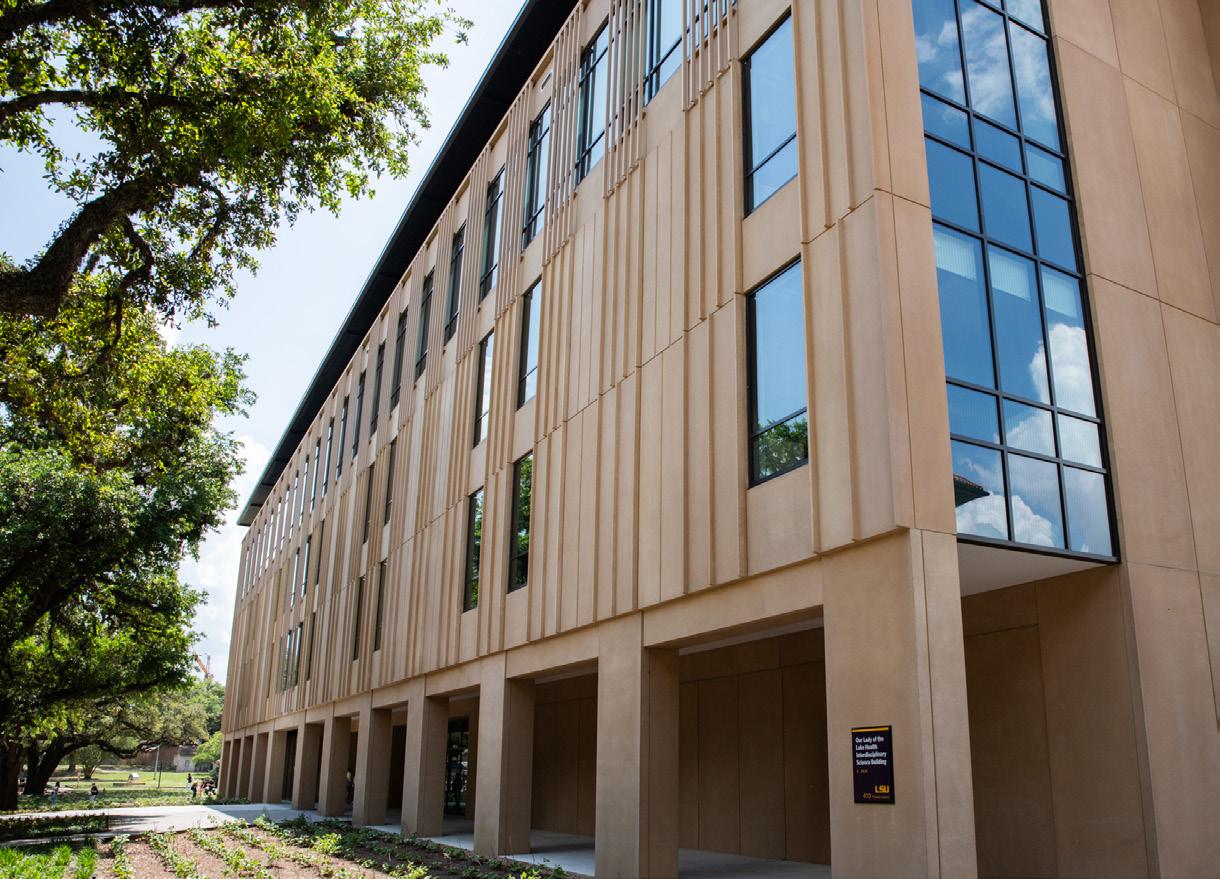
Construction on LSU’s new Interdisciplinary Science Building has concluded, with furniture now moved in and classes beginning in the fall, planning officials said.
In December, LSU broke ground on $215 million South Quad dorms that will house over 1,200 students. A new library to replace the oft-criticized LSU Library, built in 1958, is also coming. The list doesn’t end there.
The expansion is being done with the guiding hand of LSU’s Master Plan, written in 2017. It’s a document that proposed sweeping changes to align LSU’s campus more closely with its academic priorities and make it more pedestrian-friendly.
Among those changes is a phasing out of parking from LSU’s central campus with the goal of eventually making LSU’s core nearly car-free.
Years later, campus planning officials are still progressing on that same plan. Here’s where it stands.
The Master Plan was formulated through a lengthy process of consulting with different stakeholder groups, said Tammy Millican, the executive director of facilities and property oversight.
Millican, who’s worked at LSU since 1997, was the chair of the Master Plan’s facilitation committee and organized town hall meetings and other outreach initiatives.
“It’s never been about one person’s voice,” Millican said.
The result was a 163-page document meant to stand the test of time and chart LSU’s path forward as its campus evolved. Officials call it a “living document.”
“It’s not a snapshot of 10 years ago. It’s current,” Mitchell said. “We are changing, modifying, updating daily this plan.”
A main focus of the Master Plan is creating a secondary Quad to account for the increasingly large segment of the LSU population that spends its day in the southern part of campus.
Patrick F. Taylor Hall and the Business Education Center house students in two of LSU’s most populous senior colleges, and the Interdisciplinary Science Building and the new library will add to the number of students in the area.
The proposed South Quad would be located directly to the west of Patrick F. Taylor Hall between South Stadium and South Quad drives.
The Master Plan will also re -
the 2017 Master Plan.
store the original Quad to its historic state, taking the shape of a cross with the future demolition of the LSU Library.
Tureaud and Lockett halls are also eventually slated to be demolished to make room for Master Plan changes.
Effects on parking
However, what will likely be one of the Master Plan’s most controversial impacts will be its effects on parking. Parking has long been a point of frustration for students on campus, and commuter permits are becoming more scarce. LSU Parking & Transportation told the Reveille in October it anticipated selling around 1,500 fewer commuter passes this year compared to last year.
Campus officials, though, believe there’s plenty of parking — just not close to campus.
“There’s enough parking for everybody on campus,” Mitchell said. “What we don’t have is convenient parking for everyone.”
According to the Master Plan, LSU has significantly more parking spots per affiliate than other universities of similar size.
In 2017, LSU’s numbers indicated that 45% of its parking spots — 14,000 spaces in total — were unused at peak times. Numbers compiled by Parking & Transportation in 2023 indicated that LSU has over 40 parking lots with at least 40% of their spaces available at peak time.
Still, student and faculty parking frustrations remain, and more changes could exacerbate the issue. The Master Plan intends to turn the majority of parking spots within LSU’s gates into green space and plazas and remove some street parking for bike lanes.
Planning officials don’t believe the solution is parking garages, which in theory could add parking spaces without encroaching on more land. Parking garages were included in the original 2017 Master Plan.
However, it costs an estimat-
LSUReveille.com


B-16 Hodges Hall

Louisiana State University
Baton Rouge, La. 70803
ed $5,000 per vehicle to build a parking lot compared to around $25,000 to $30,000 per vehicle to build a parking garage, said former Director of Campus Planning Greg LaCour, who retired in January. That price would likely be passed onto students through more expensive permits, LaCour added, making it an unrealistic solution.
That’s why, according to officials, LSU’s Park & Geaux system is the key to the Master Plan. The shuttle system makes it feasible to park in the readily available parking on the outskirts of campus and “efficiently get to campus,” Mitchell said.
Mitchell said moving parking spaces is a course correction from past mistakes in campus planning.
“What happened in the 1980s is that there was a different philosophy, which was, every green space possible, let’s park every possible space,” Mitchell said. “The planning was not good … The decision was knee jerk.”
Mitchell also said future students will adjust to the parking system once it becomes the norm. The 2005 Master Plan, he said, instituted LSU’s roadway gate entrances to limit the number of cars on central campus. That, too, faced opposition but is now accepted, Mitchell said.
Mitchell also emphasized the focus is on moving and modifying parking, not eliminating it. That was something LSU did for the South Quad Dorms that broke ground in December; though the dorms are being constructed on one of LSU’s largest commuter lots, Mitchell said that after LSU added more parking spots elsewhere, the net loss was just 14 spaces.
What’s coming up
One of the next steps for the Master Plan is the completion of the Mobility Hub in the Park & Geaux lot.
The hub, which will be open in the fall, will provide a central
location for students to comfortably wait for Park & Geaux buses. It will also allow for buses to make just one quick stop instead of driving all through the parking lot.
Many students complain about the wait times between Park & Geaux buses. Mitchell said the amount of buses could increase based on demand.
Another existing issue for the Park & Geaux lots is the lack of shade covering the walk to campus. Officials said they’re looking at how they can make that walk more feasible for pedestrians, whether by adding trees, moving the walkway or another method.
After the hub is completed, the next step would be to convert the Park & Geaux lots to hard surface limestone parking, Mitchell said, which would add some spaces. The new lots would also include trees for shade.
LSU officials estimate construction on the new library and a proposed construction management building would both begin in spring 2027, with the library taking about two years and the construction management building taking about 18 to 24 months.
It’s necessary the process be gradual, Mitchell said, especially because some of the projects must first require the demolition of Tureaud and Lockett halls, which will take time. Those buildings are also two of the most commonly used for classes, meaning LSU must add more classrooms elsewhere before it can move forward.
Campus Architect Danny Mahaffey said LSU is hoping to do another official update on the Master Plan in the next year or so.
The timelines for many of these changes, however, are unsettled.
“We know about when things would happen, but it all depends on money,” Mahaffey said. “When we get funding, then we can take the next step. If we had a billion dollars, we could do a lot of that right now.”
Another complicating factor is shifting university leadership. The Master Plan was formulated under former LSU President F. King Alexander and survived without major changes under President William Tate IV. Now, new President Wade Rousse has taken over.
Rousse had not been named president at the time the Reveille spoke with planning officials. They said the next president would of course have his say on the Master Plan and the university’s priorities but expressed confidence that the Master Plan had staying power.
“The purpose of a master plan is not to have one person’s vision, right?” Mitchell said. “That would fail because that person is going to work for us for a while and then move on to another university, and then we’re stuck with that person’s vision.”
NEWSROOM (225) 578-4811
Editor-in-Chief
JASON WILLIS
Managing Editor
COURTNEY BELL
ADVERTISING (225) 578-6090
Layout/Ad Design ASHLEY KENNEDY
Layout/Ad Design REESE PELLEGRIN
Layout/Ad Design
ALAYNA YOUNG
CORRECTIONS & CLARIFICATIONS
The Reveille holds accuracy and objectivity at the highest priority and wants to reassure its readers the reporting and content of the paper meets these standards. This space is reserved to recognize and correct any mistakes that may have been printed in The Daily Reveille. If you would like something corrected or clarified, please contact the editor at (225) 578-4811 or email editor@lsu.edu.
The Reveille is written, edited and produced solely by students of Louisiana State University. The Reveille is an independent entity of the Office of Student Media within the Manship School of Mass Communication. A single issue of The Reveille is free from multiple sites on campus and about 25 sites off campus. To obtain additional copies, please visit the Office of Student Media in B-39 Hodges Hall or email studentmedia@ lsu.edu. The Reveille is published biweekly during the fall, spring and summer semesters, except during holidays and final exams. The Reveille is funded through LSU students’ payments of the Student Media fee.
BY DREW SARHAN Staff Writer
LSU researchers at the Food Innovation Institute are making upgrades to their facilities to help local businesses commercialize and mass produce their products and handle USDA-regulated food products.
Achyut Adhikari is the interim director of the FOODii lab and a professor at the School of Nutrition and Food Science. He said the precursor to the institute was the Food Incubator Program started in 2013, designed to help people in the Baton Rouge area market, advertise and mass produce their products to see if they are commercially viable.
“Some people have really great ideas, but may not have the resources to commercialize,” Adhikari said. “But they can be an entrepreneur just by spending a couple hundred dollars and getting it produced through our lab. And these days, with internet marketing, they can easily market their food products. So it’s an opportunity for those who have ideas and want to do something with it.”
Adhikari and his team wanted to expand the Incubator Program, and with FOODii, they can not only continue helping small businesses hit store shelves but also work with larger companies
STUDENT LIFE

by renting out space in their production facility.
“Our facilities are international and renowned in several different areas,” he said. “We want to use the resource and have a platform for other industries to use the resources.”
FOODii originally was only able to produce FDA-regulated products. The FDA regulates around 80% of all food products sold in the U.S., with the USDA controlling meat, eggs and, most importantly to Louisiana, seafood.
“We are actually adding more state of the art equipment that the tenants can use, like freeze drying, an extruder, because many different varieties of prod-
ucts are used by extrusion,” Adhikari said. “We will be bringing in big industries like Cargill and Pepsi.”
According to Adhikari, The FOODii lab is a multidisciplinary project with the schools of business, plant and crop science and animal science. The lab also allows for shelf life studies, where the scientists will print on a “sell by” date and determine how likely the product will be grabbed off the shelf.
He said that some major food producers have already used FOODii’s shelf life studies, including the hot sauce company, Tabasco.
One tenant at the production facility is a company called CryLick Creations, owned by Elise and Alex Kreilich. They sell high-protein, vegan-friendly snacks under the label, “Dr. Seitan’s.”
“We recently got into 35 Rouses around the state less than one year after starting at the FOODii kitchen, which would’ve been absolutely impossible without them,” Alex Kreilich said. “Having the capability to scale our production using their commercial sized appliances at a low starting cost helped us grow fast.”
The duo started the company because they said current alternatives don’t taste good and don’t have a good texture. The brand’s
product, Crunchy Puffs are made with plant-based protein and comes in two flavors, Cajun Chili Cheeze and CinnaToast Crunch.
“They also have a fantastic staff of advisers that assist with all the things food entrepreneurs don’t even know, they need to know such as business plan writing, permit approvals and food safety education,” he said.
Colton Coffey, a second-year music education major at LSU, said the institute will have a positive impact on the Baton Rouge community, especially in helping businesses recover after the COVID-19 pandemic.
The upgrades to the facilities were funded through efforts from the state and federal government, LSU and a hodge podge of venture capitalists. Much of the equipment in the lab costs upwards of $600,000. Adhikari is hoping to get donations for this machinery.
Coffey said that the new upgrades can help shine a light on Louisiana seafood in a more national light.
“I know here you always advertise Louisiana shrimp, Louisiana crawfish,” Coffey said. “If we can help bring that to other parts of the country, that could be really neat, especially under the mass production scale. I think mass production also comes with mass distribution, too.”
LSU’s Roger Hadfield Ogden Honors College announced Tuesday that it will be adding a new hybrid college athletics course in the fall.
The course, HNRS 3100: The Future of College Athletics, is a first-of-its-kind initiative that induces honors colleges and programs from 10 universities in the Southeastern Conference.
According to the press release, students will study athletic department budgeting, licensing, sports marketing, sports journalism and the legal implications of recent policy changes in college athletics.
The course will include virtual sessions with athletic leaders and industry experts along with in-person tours of athletic facilities.
“I’m excited for our students to see how different things are at other SEC universities, but how some things are also very similar,” said Joshua Jackson, the assistant professor of sport communication and the HNRS 3100 instructor.
The course is meant to help students make sense of college athletics while it is in its “most disruptive era” with the transfer portal, NIL rights and ongoing legal battles.
BY DREW SARHAN Staff Writer
LSU researchers are finding creative uses for a chemical called Fucoxanithin, a naturally occurring pigment commonly found in plants and algae.
According to the National Institute of Health, Fucoxanthin has often been used in medical research. The study explains that, when Fucoxanithin is metabolized in the body, it becomes Fucoxanithinol — a compound with antioxidant and inflammatory properties that can help to treat eczema, asthma and cancer.
However, Naohiro Kato, an associate professor in the biological sciences department, has used the chemical to bolster agricultural production and sustainability.
During festival season, Kato and a team of LSU researchers developed biodegradable Mardi Gras beads made with 3D-printed bioplastics and filled with okra seeds.
The beads’ bioplastic casings are made with polylactic acid, a compound derived from Fucoxani-
The invention combined Mardi Gras spirit with sustainability. Because the beads contain seeds, people who catch them in parades can plant them when they get home.
While Kato’s previous research used Fucoxanithin to promote sustainability, he has also found ways to help local farmers produce the chemical to turn a profit.
Fucoxanithin is also found in seaweed and diatoms, a type of microalgae that produces 20 to 50 percent of Earth’s oxygen each year.
Because of coastal erosion, Louisiana’s rice farms have become inundated with saltwater. Saltwater intrusion harms rice crops, but it is ideally suited for microalgae.
Kato suggested that Louisiana rice farms begin planting microalgae in their rice farms.
Louisiana farmers have not previously planted microalgae as a cash crop. However, because the plant produces Fucoxanithin, farmers can sell microalgae to reap a profit from the popular chemical.
“The price when it comes to
[plastic] beads is a few cents per gram, but when we talk about medicine, it’s $1 million per gram,” Kato said. “So then, suddenly, investors become interested.”
The microalgae were planted in former rice fields in Vermillion Parish that have been unable to grow rice due to climate change.
Kato and his team have been helping the farmers make an income despite the loss of their rice crops. The hope is that more farmers will see the benefit of microalgae farms so that Louisiana can have more of these farms, similar to states like Hawaii, California and Texas.
Meredith McKinnie is a secondyear landscape architecture major, and while she knew about the biodegradable Mardi Gras beads, she did not know it came from Fucoxanithin or about other uses of the pigment.
“Research like this is important to me because it is actively benefitting society and is also a way for farmers to have a larger income, especially given how unpredictable farming profits can be,” McKinnie said.
The typical Louisiana rice farmer also raises crawfish, which require a large amount of water.
According to Kato, microalgae that contain the compound will reduce the salinity of the water as well, making it safer for the crawfish.
“[Crop recovery] requires a different approach; my approach is to
just adapt with the environmental change,” Kato said. “We cannot convert it back to what it was… so with this saltwater intrusion problem, you can adapt.”
However, the project is at risk of failing. According to Kato, it has been hard to find research grants
BY DREW SARHAN Staff Writer
LSU researchers have linked education levels to poor health in rural communities across the South through a first-of-its-kind study.
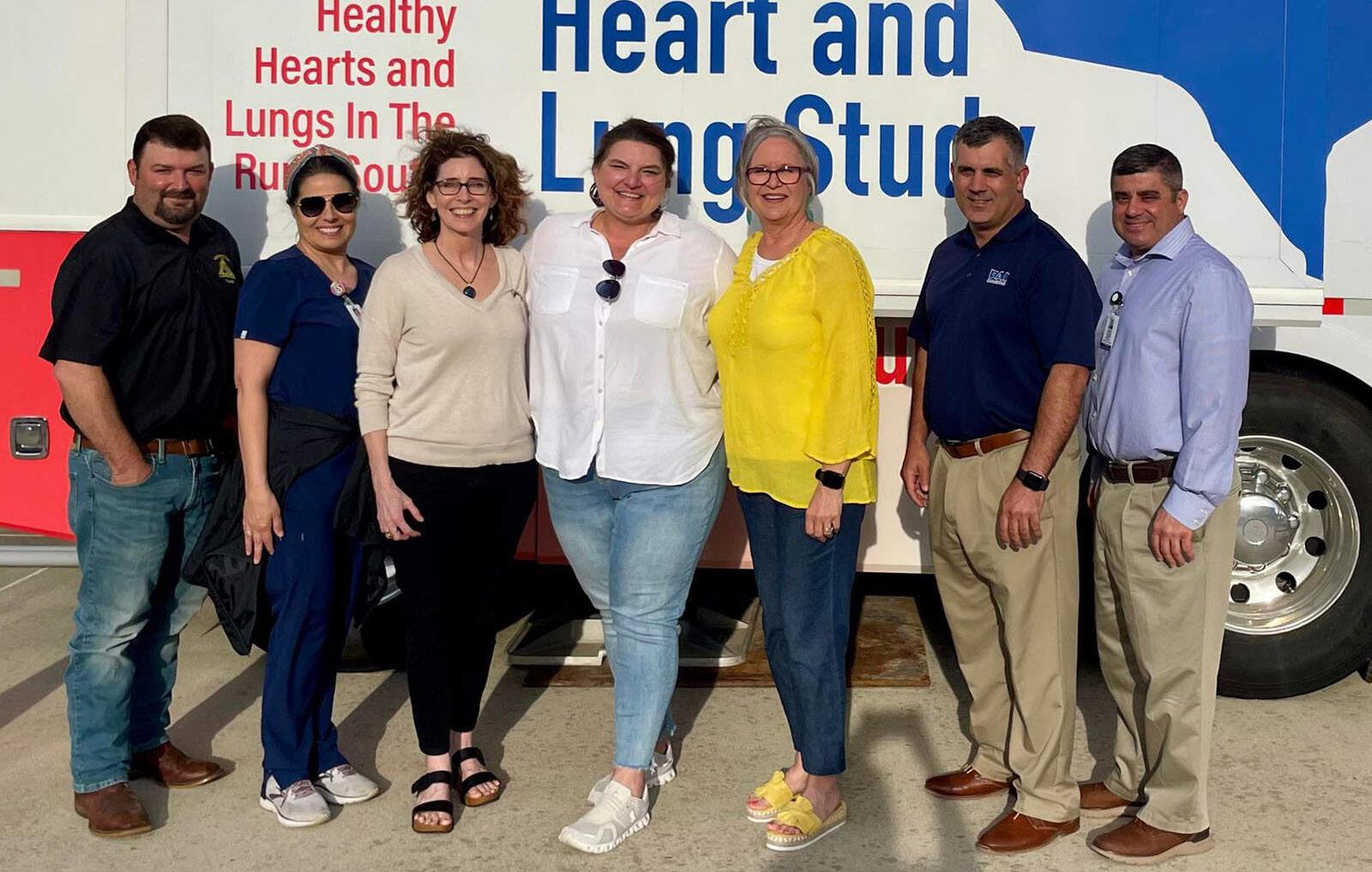
Stephanie Broyles is a professor and the lead investigator of the Risk Underlying Rural Areas Longitudinal Heart & Lung study with Pennington Biomedical Research Center.
Broyles has been working with other researchers nationally to compile a data book with the findings of the research.
The study was started because rural areas have traditionally been ignored by National Institute of Health studies. It is the first of its kind to focus solely on rural communities.
According to the study, people in these areas have higher death rates from heart and lung diseases, stroke, cancer and sleep disorders.
“People in the rural South have some of the shortest life expectancies in the country,” Broyles wrote in the study. “Scientists aren’t sure why these areas are at greater risk, and more research is needed to find out.”
Assumption Parish was the first volume of ten sites in the study. It has a population of around 21,000 people.
The parish seat, Napoleonville, is where the Our Lady of the Lake Assumption Community Hospital is located.
Broyles and her team had a “doctor’s office on wheels” with a CT scanner, blood pressure detector and other medical offices. In the coming weeks, Broyles’ team will conduct a second round of data collection from the same subjects, allowing them to compare their results to the first dataset.
“It’s also so important that the communities feel a benefit for their participation, that it’s not just about data for scientists,” Broyles said.
The researchers specifically looked for factors like highblood pressure, high cholesterol and diabetes. According to the data, 80% of adults in Assumption Parish are overweight or obese, compared to the national adult average of 68%.
The study also indicated that while obesity rates across the parish were high, the education background of the residents was the biggest difference in weight.
The study found that only 4% of Assumption Parish residents who did not graduate high school have less than a 25 BMI while a quarter of college-educated residents were considered “normal” or underweight according to BMI.
The study also found that while blood pressure raters were higher in the parish than the national average, they were on par with the rest of the state.
“The higher levels of undiagnosed [diseases] were more matched to lower education versus lower income,” said Erin Theriot, the community engagement coordinator for the study and a researcher at Pennington.
Theriot has been on the ground in Assumption Parish building relationships in the communities so their health needs can be addressed.
Tsu Wright is a microbiology senior from Effie, Louisiana. The unincorporated community in Avoyelles Parish suffers from education disparities similar to Assumption Parish.
Wright says that while education is a huge factor, the lack of access to care in her parish also contributes to high undiagnosed disease rates.
BY GAVIN MCMANUS Staff Writer
With the rise of artificial intelligence, an LSU student organization is focused on making sure AI integration is handled properly.
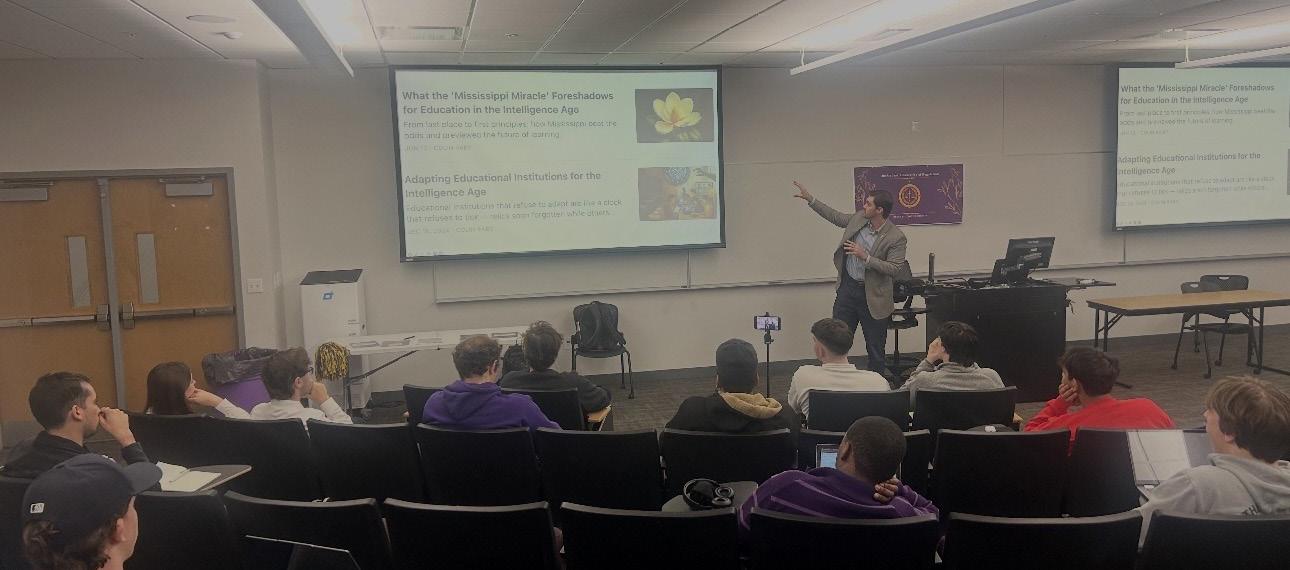
Student Alliance for AI Reform is dedicated to teaching students about the use of AI on college campuses. It plans to work with LSU Student Government on implementing rules and guidelines for AI use.
SAFAR was founded last semester by current club President Jude Terrell and Vice President Aaron Lomastro.
“We wanted to start the organization so that students can lead the way and have their voices heard and help shape what education looks like,” Terrell said.
An issue the club wants to address is false AI use accusations throughout the school. According to Terrell, AI detection sites like Turnitin falsely flag work as AI around 1% to 5% of the time.
“Educational standards in rural areas are weak. Education systems are left to rot and, as such, the residents become unaware of the dangers of the environment,” Wright said. “Rural hospitals are underfunded and understaffed, leading to many folk not willing to visit hospitals.”
The health issues found in rural communities in Louisiana are not unique to the state. Kaiden Potter is a natural resource and ecology major at LSU from Plumas Lake, a small community of around 8,000 residents in northern California. He said he relates to the study because his family suffers from cholesterol issues related to obesity.
“I have lived in both rural and urban areas and transitioned to a large city from a rural community in high school. I could notice a strong difference in the quality of education,” Potter said. “I think it is mostly a wealth or funding issue or a lack of access to any healthcare, since rural areas tend to get far less funding in healthcare, especially healthcare that is affordable.”
Theriot says that since the study is longitudinal, the researchers will do check-ins every so often in the community.
Broyles said that a volume analyzing data for Franklin Parish will come out within the next few weeks. Once this volume is published, the researchers can compare the datasets between the two communities.
“We were briefly cut by DOGE, but there’s recognition now that this is a really important study,” Broyles said. “The RURAL Health & Lung Study collected a huge wealth of information, and we felt like it was important to get information in the hands of communities as soon as possible.”
Since AI technology is so new, rules and regulations regarding its use are scarce. This makes it difficult for professors and students to navigate proper AI usage.
The topic of AI has become very polarizing within the past few years. SAFAR aims to help students understand the nuances of the conversation, as many see the discussion as black and white.
SAFAR hopes to find a happy medium, in which AI can be used as a tool in academia, rather than a replacement for effort.
“If it’s just enhancing your work, that’s good,” Terrell said. “But if it’s replacing your ideas, replacing your thought process, I think that’s bad.”
Terrell argued that once someone is detached from their work to the point of not understanding it themselves, they have strayed into the realm of academic dishonesty.
“That doesn’t seem like a lot, but when you take every student at LSU submitting tens of assignments, then there’s like 30,000 kids,” Terrell said. “There’s gonna be all of these false cases going through.”
SAFAR has started a program to help those who have been falsely accused. The organization offers a form on its website for students who believe they have been wrongly accused of using AI. The club helps these students draft defense plans for their cases.
SAFAR is working with SG to get changes made on the administrative level to reduce the total number of false AI misuse accusations.
“If it’s not your own ideas, I think that’s kind of the point where it becomes irresponsible and it becomes not your own work,” Terrell explained.
SAFAR also works with other organizations to spread information. Recently, it partnered with Geaux Green LSU in order to give a talk about the impact AI usage has on the environment.
Terrell said the club intends to hold a debate sometime in April. The event will be open t the public, with people being able to come in and share their thoughts on AI while discussing a few hot button topics.
“I think people are gonna come away from that debate not only having fun but also having a lot more knowledge on these issues that are gonna be important to them,” Terrell said.
CHEMICAL, from page 3
and funds to continue this project.
Kato stresses the importance of this research to the state of Louisiana and to the environment as a whole.
Kato hopes that the project can continue because of its importance to the state of Louisiana, especially considering how Fucoxanithin can be used in many health applications, including eczema treatment.
“We’re actually the worst state in regards to that situation,” Kato said. “This project… would help people regionally.”
HONORS, from page 3
“Our Ogden Honors students are so fortunate to get a true ‘behind-the-scenes’ look at intercollegiate athletics at the highest level,” said Jonathan Earle, dean of the Honors College.
Along with LSU, Auburn University, Mississippi State University, Texas A&M University, University of Alabama, University of Arkansas, University of Kentucky, University of Missouri, University of Oklahoma and University of South Carolina are a part of the initiative.
BY LAURA ALLEN Entertainment Editor
Every year, the Public Relations Student Society of America, or PRSSA, hosts the national Bateman Case Study Competition, challenging students to create a public relations campaign for a given brand.
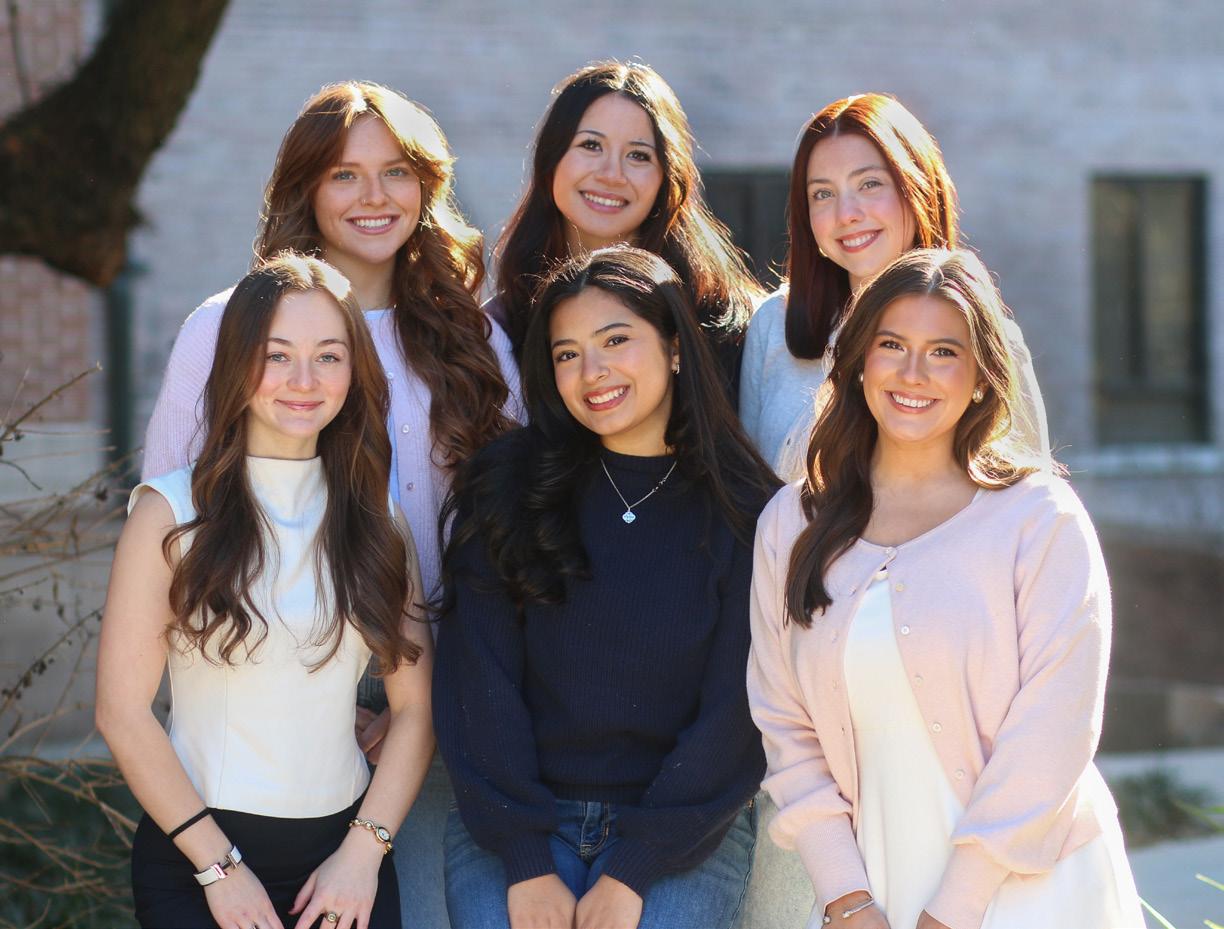
This year, six LSU seniors studying public relations were tasked with developing a campaign for ACCESS Newswire, an educational resource that gives college students and educators free access to press releases.
The team includes account executive Isabella Fuscaldo, social media director Lyla McGuire, event director Emily Poirrier, media relations director Emma Torres, research director Mary-Alice Talbot and creative director Amaris Birmingham. The students came together as part of their capstone project.
“The rest of our class is doing basically the same thing, just on a little bit longer of a [timeline],” said MaryAlice Talbot. “The Bateman team is doing just a little bit faster implementation and stuff since we have to have our book in by the middle of March.”
Talbot is the team’s research director, meaning that she was responsible for gathering research on ACCESS Newswire, creating surveys and distributing consent forms before the Bateman team even officially began meeting.
“I did a lot of my — a big chunk of my work before we started meeting,” Talbot said, “just getting research on what [ACCESS Newswire] is, how they operate, how it’s better or worse than other press release distribution services like it and then also stuff about the other competitors.”
The team had its first meeting in January after most of the research had been completed, but the students still had a lot of work ahead of them.
A key aspect of the campaign is the team’s social media initiative. The group started posting on Instagram on Feb. 2 and has since cultivated a distinct branding — a bold color palette of pink and navy blue and a heart motif that reflects the campaign’s slogan, “With love, ACCESS Newswire.”
This theme of love is not just a line in the campaign’s Instagram
bio, but also a common thread connecting each promotional event and driving the group’s messaging to students and faculty.
Emily Poirrier is the Bateman team’s event director. Her job was to coordinate the group’s two major events: Love on the Wire and Get Wired with ACCESS Newswire.
The first event, Love on the Wire, was held in Free Speech Alley, and the goal was to drive students’ awareness of and engagement with ACCESS Newswire. The team also partnered with Andy’s Frozen Custard, Red Bull and Celsius, handing out free treats and beverages to students who stopped to hear more about the client and followed the Instagram.
Their second event focused on the other half of the team’s target audience. Get Wired with ACCESS Newswire was an informational event for faculty and graduate students to learn about the different applications of the press release resource. By showing educators how to use ACCESS, Poirrier and her teammates hoped that students would then be exposed to the resource in the classroom and learn to apply it in their schoolwork and professional work later on.
“The whole idea is to get students interested in using it,” Poirrier said, “so that whenever they get into the workforce, then they’ll know a little

bit about it and can maybe implement it at wherever they find a job.”
In addition to these events, the Bateman team had to put together a handbook outlining their campaign proposal for ACCESS Newswire, including a situational analysis, a research overview, a list of goals and the strategies the team would implement to achieve these objectives.
The team finds out this week if they are selected as one of the three finalists in the competition. If selected, the LSU Bateman team will present its campaign to the national PRSSA board and ACCESS Newswire representatives on May 7.
For Emma Torres, the team’s media relations director, the most challenging part of the process has been balancing working on the campaign with her other responsibilities.
Torres is currently taking 18 credit hours of coursework this semester on top of an internship and a resident assistant position. Still, her commitment to the Bateman team has been a worthwhile experience.
“Bateman is just so critical to my future as a professional that as busy as it has been, I’m enjoying it so much,” Torres said, “and it’s giving me so much experience to put on my resume and show future employers what I’ve been working on.”
For every student on the team, participating in the 2026 Bateman Case Study Competition has been a long — and often difficult — process, but each member has gained valuable PR experience working with a real-world client.
No matter if the team is selected as a finalist, Torres is grateful for the unique opportunity Bateman gave her to build friendships with her teammates and form connections with people in her industry.
“The community that you build up by doing Bateman is just so special,” Torres said.
Editor’s note: Bateman team member Lyla McGuire is also a Reveille staff member.









LSU baseball extends streak with dominant win over Southern University March 31.




Paul Tibbets - Staff Writer
I am a sucker for a good space adventure. Attaching Phil Lord and Christopher Miller already had my hopes high. They were always putting out some of my favorite films growing up, and it was quite a shame to not see them in the directing chair for so long.
Safe to say, they still got it.
“Project Hail Mary” sees the directors stepping back up to the plate like they never left. Along with screenwriter Drew Goddard, they brought Andy Weir’s book to life in a way I could only have dreamed of.
Ryan Gosling as Ryland Grace is an inspired casting decision. I truly do not think there is another actor working today that could have embodied him as well. Everyone knows he can play a quirky goofball, but at the same time Gosling brings a subtle sadness to the performance.
His relationship with Rocky the alien is beautiful as well. They stellarly play off of each other, which is made all the more impressive since Gosling is essentially talking to nothing. Rocky provides a cute factor that can be a hook for general audiences; however, I would be lying if I said their relationship did not make me tear up many times.
My only criticisms come down to the writing not always being on point. The humor can get a little grating at times. It suffers from a similar trend in many films leaning into ironic humor. Many emotional or impactful scenes cannot help but be undercut by a joke similar to a lot of those in the Marvel Cinematic Universe.
Not to mention the film is not paced all that well. While a good chunk of it has a decent flow, the first and last 30 minutes can be quite a drag. Every 10 minutes of the last third feels like they are setting the film up to end, and it honestly could have ended on any of those moments and it would have felt earned.
Still, this movie excels with flying colors in its cinematography.
In several moments of this film, I sat up in my seat in awe of what I was looking at. Any moment to do with Adrian is a feast for the eyes with vibrant colors and seamlessly integrated special effects.
I really appreciate the commitment to shooting on film and desperately wish I could have seen it in that format. Even on a digital projector, the texture of the images is so rich. Moments in space have this sense of realism to them, with intricate lighting and a constant subtle shaky cam.
Overall, “Project Hail Mary” is an early strong outing for film this year. It has a lot of heart, is flat out gorgeous and features many great performances.
Sarah Walton - Staff Writer
It is only March and I can say with almost full confidence that “Project Hail Mary” is going to be the most visually stunning film of the year. With its immense and fully realized design elements, mixed with Ryan Gosling’s natural charm, the film is definitely one of the best of the year.
Instead of going with a classic and easily predictable space movie score, a fun and sonically new form was created for this film. Daniel Pemberton is no stranger to stylized film, as he worked on the iconic “Spider-Man: Into the Spider-Verse” movies and brought the same talent and inventiveness to this project.
Pemberton and his team used many unique techniques to create the distinct auditory worlds of Earth and outer space. For example, they created drum machines based off of human voices, squeaky taps and all kinds of odd instruments, including something called a Cristal Baschet.
The set design and visuals within this film are nothing like anything I have seen recently. The detailing and depth on the spaceship sets alone are worth fawning over. During filming, there was a heavy emphasis on practical sets, and it completely pays off.
If there is the choice between seeing this film in digital, IMAX or Dolby, pick Dolby. Not only did the film sound amazing, but it looked incredible. In the 21st century, especially after living in the decade that popularized galaxy leggings, seeing replications of space may seem unappealing, but “Project Hail Mary” does it right.
There is such an awe this film creates for the natural world. Not just for space and all of the stars, particles and planets that exist, but for Earth’s land as well.
As someone in the sciences, I can’t help but also love this film on a narrative level. Grace reminds me so much of my middle school teacher — kind, goofy and wants the best for others, even if it is sometimes hard.
Grace is funny, and his millennial humor was an absolute gem to watch, especially the moments in the lab on earth. Personally, I need the cool scientist who loves their work to become a film trend.
What I loved about this movie was Grace’s emotional journey, especially through his relationship with Rocky. They are so cute together, and the connection between these characters is hard to match. In the way of criticism, there aren’t many. For me, there are moments where the plot lags and lacks tension, especially near the beginning.
Who will gymnastics encounter in home regional on the path to a title?
BY DELANEY POTTHAST Staff Writer
No. 2 LSU gymnastics will begin its journey to Fort Worth, Texas, on Thursday, when it hosts one of the four regional rounds of the NCAA Championships.
Though statistically having an edge over their second-round opponents, the Tigers will still have to fight to move on and compete in the regional final.
“We know what they’re capable of, and I’m just excited for them,” assistant coach Haleigh Bryant said. “They have a lot of fight and a lot of grit, and they’re not going to give up. They’re just going to keep fighting all the way through. I wanna see that all come together in one night.”
Taking to the arena in Session II of Thursday’s second round, LSU finds itself competing against No. 15 Clemson, No. 17 Auburn and Nebraska, who claimed its spot in the session with a 195.575-194.475 win over Air Force on Wednesday.
For LSU, the most familiar opponent returning to Baton Rouge is the Auburn Tigers. The last time these two teams met, LSU came out on top with its season-high score of 198.325. Since then, both teams have seen consistency in
their gymnastics.
The Clemson Tigers will also be a threat for LSU to overcome.
After winning its first-ever ACC Championship, Clemson will be riding into Baton Rouge on a wave of confidence and momentum.
While the orange and purple team hasn’t seen an overall score above 197.175 all season, it’s imperative that LSU doesn’t rest on its laurels against them come Thursday night.
“[The PMAC] should make for
a more comfortable environment, but we can’t just take it for granted,” Clark said. “We can’t walk in here thinking we can just walk through this thing. It’s just not the reality of it.”
If the LSU Tigers make it through the second round as one of the top two teams from Session II, then they’ll find themselves back on the competition floor just 72 hours later for the regional final.
This is where the tournament

really starts to heat up. LSU could find itself up against No. 7 seed Stanford, No. 10 seed Michigan, North Carolina or Utah State.
Stanford has a preceding reputation as the top-ranked team in the ACC. While it is the closestseeded team to LSU, this doesn’t denote the Michigan Wolverines that follow just behind.
Both teams have found seasonhigh scores of 197.475 and above, and are led by staple gymnasts such as Anna Roberts and Carly Bauman, who pose threatening parallels against some of LSU’s top scorers, like Kaliya Lincoln or Kailin Chio.
If the Tigers can navigate their way to a top-two finish by the end of Saturday’s competition, they’ll punch their ticket on a plane to Fort Worth.
After last year’s semi-final upset as the defending national champions, a return for the Tigers will be a chance to reclaim the crown and solidify an already historical season.
“Right now, less is more from a physical standpoint,” Clark said. “I just want them to believe in their capability and be the team they’ve been all year long. If they do that, well, they’re gonna be pleased with the results.”
BY ALEX SHEESLEY Staff Writer
After picking up its first SEC series win against Kentucky, LSU baseball is looking to string together a second-straight win in conference over the weekend and start a new month on the right foot.
The Tigers will head to the Volunteer State for the second time this season, traveling this time to Knoxville, where they will face off against Tennessee. The three-game series kicks off on Friday night and has relatively early starts for each game; the series opener is set for 4:30 p.m., Game 2 for 5 p.m. and Game 3 at noon.
LSU’s opponents in Tennessee have also seen a slow start to conference play.
Led by first-year head coach Josh Elander, who took over after previous coach Tony Vitello took a job in the MLB, the Volunteers are just 3-6 after three SEC weekends.
They took two to win the series against Missouri two weekends ago and avoided a sweep against Georgia in the opening weekend of conference play.
What limited success has been found for Tennessee in the SEC
was not on display in its latest series, though. It got swept out of Nashville by its cross-state rival Vanderbilt in a series that was tight throughout but never seemed to go Tennessee’s way.
Each game was decided by a run: the first two games went to extra innings, and the rubber match saw 31 combined runs.
The brutal weekend dropped Tennessee out of the top-25 polls, but it still sits at 42nd in RPI rankings.
The Vols bounced back on Tuesday night to dispatch their midweek foe, Austin Peay State University, and are now hoping to turn the corner on their SEC fate.
Tennessee and LSU share similar profiles on both sides of the ball.
The Tennessee offense is powered by home runs, backed by a hitter-friendly environment at Lindsay Nelson Stadium that will host this weekend’s set.
In no game was this more evident than on its March 10 drubbing of Tennessee Tech. The Volunteers hit five home runs en route to posting 20 runs, both season highs for the team.
Leading that offensive charge for Tennessee is Henry Ford. The Virginia transfer is the team lead-
er in a truckful of offensive categories: slugging percentage, RBI, home runs and hits. In addition, he is just two points behind the team lead in batting average.
On the pitching side of things, strikeouts will be Tennessee’s bread and butter. The Volunteers have posted 16 strikeouts twice this season, albeit once in a 16-inning game. They did it in nine innings during a loss to Kent State in February.
The starting rotation shifted in last week’s series against Vanderbilt. Elander turned to lefty Brandon Arvidson to start on Friday night, replacing Tegan Kuhns. Arvidson threw five innings of tworun baseball last weekend, and while it’s not certain, that showing was probably good enough to earn him another start.
Game 2 starter Landon Mack enters as a transfer from Rutgers and leads the team in ERA at 3.89. He got hit around in his last start, allowing five runs, one of which was unearned, in five innings against Vanderbilt. Still, he ended with nine strikeouts.
Lefty Evan Blanco will get the ball on Sunday. He’s looking to bounce back after a rough outing last weekend, where he let up nine runs, six of which were
BY BROOKE BENEDICT Columnist
From the moment she stepped on campus to the last second of her final game in an LSU jersey, Flau’jae Johnson gave her all to LSU women’s basketball.
The senior guard from Georgia played her final game with the Tigers on Friday night in the Sweet 16 after a buzzer-beater 3-pointer would see No. 3 Duke top No. 2 LSU.
Looking back on her collegiate career, Johnson can be easily recognized for her impact on the program and the legend she will leave on campus.
Upon graduating from high school, Johnson was torn between LSU and Texas for where she’d continue her basketball career.
During her recruitment visit to LSU, head coach Kim Mulkey and her staff made Johnson feel welcome as a basketball player and rapper — her other claim to fame.
earned, in just three innings.
What’s bigger than this matchup on paper is the potential it has to alter the trajectory of the season for two sides that have slumped in the first half.
Last year, Tennessee came to Baton Rouge in late April. The Tigers won that series on Sunday, with great offensive output and in an emotional, come-from-behind Game 1 where Jared Jones walked off after a lengthy weather delay and a ninth-inning rally.
That game followed up a rough patch for the Tigers in that season. They had gotten swept earlier that month by Auburn and were coming off an embarrassing run-rule defeat to Northwestern State.
While there were still a few bumps in the road after LSU and Tennessee crossed paths last year, the Tigers’ success in that series reestablished confidence, that carried them to a national championship two months later.
With the offense taking a step forward as of late, LSU is hoping another good weekend against Tennessee in April can spark similar results.
“We’re going there to win,” LSU shortstop Steven Milam said about the series on Tuesday. “That’s the ultimatum, we’ve got to win.”
Johnson’s commitment to LSU is recognized on multiple levels. During her recruitment, Mulkey was still in her first year at LSU, building a team that would become national champions the following season. Johnson saw that, realized the staff would accept her professional rapping career and was all in.
She never looked back.
It’s rare to see a college athlete stay at the same school for four years now, but Johnson did.
She started all 36 games during her freshman season. She earned SEC Freshman of the Year honors with averages of 11 points and 5.9 rebounds per game and became a national champion.
In her sophomore season, she played all 36 games and started 34, averaging 14.9 points per game and 5.5 rebounds. Those numbers earned her a spot on the All-SEC Second Team. Although LSU’s season ended in a loss against Iowa in the Elite Eight, Johnson scored over 20 points in six of the final eight games of the season.
Johnson continued to make history in her third year, passing the 1,000 career points milestone in a defeat over Charleston Southern. Her numbers that season continued to grow, with an average of 18.6 points and 5.6 rebounds per game.
Once again, Johnson showed
BY TRIPP BUHLER Staff Writer
Light the lanterns, arm the militias and make it known that the General has returned.
New LSU men’s basketball head coach Will Wade’s amped up attitude at his introductory press conference had the crowd ready to go to war for him. His confidence, growth and obvious excitement about being back at LSU shone through.
“I came here to win, and we’re gonna win immediately,” Wade said. “LSU and Louisiana deserve a winner, and that’s what we’re going to deliver. And we’re going to deliver that in short order.”
At each of his last two stops, Wade made it to the NCAA Tournament in his first year. He made it clear that it’s going to be the same now that he’s back at LSU, and he’s learned from his time at McNeese and NC State.
“You’re not getting the same
coach you had four years ago,” Wade said. “These last four years have humbled and changed me. You’re getting a better coach, a better leader this time around.”
There was a clear excitement and eagerness about Wade on Monday. He spoke loudly, in a manner similar to a campaign speech as he energized the crowd with his vision.
There were a few hundred people in the PMAC to listen to his address. The press conference was open to the public, and fans showed up and loudly voiced support.
“I feel like we left the book open a little bit,” Wade said. “We left some chapters out there.”
The decision to come back to LSU was essentially made on March 25, Wade said, when he first had official talks of a return. It didn’t take him long to make a decision.
“This is home,” Wade said. “I wasn’t born in Louisiana, but Louisiana is home for me.”
While Wade touched on the past and the memories he had previously made on the PMAC, the future was still the focus.
“That highly competitive, winning program, I know what that looks like,” Wade said. “I’ve seen it, I’ve lived it and I know how to build it the right way.
Building it the right way starts with a roster, which Wade said will consist of “15 players that are willing to lay it on the line for us every night.” He said he met with five or six players from this past year’s team who still have eligibility left.
Some players without eligibility, like Jaden Bobbett and Marquel Sutton, were in attendance. Freshman Jalen Reece and redshirt junior Jalen Reed were also there. Reed is planning on entering the transfer portal, but is reportedly open to returning.
Wade called on his time at McNeese and how that will be useful to him in rebuilding
LSU’s program.
“What we had at McNeese, we did it on a regional scale,” Wade said. “We can take the same formula with more resources and more support. We can take that and move that to LSU, and we can make us a national force.”
The buy-in and commitment from the university and administration helped bring Wade back home, he said. The university has him and the team ready to compete in the SEC and in the NCAA Tournament.
“I feel like we have a greater purpose with this program than anywhere I’ve ever been,” Wade said. “At the end of the day, that’s why I came back.”
With Wade’s hiring, LSU men’s basketball looks to take its place back as a top team in the SEC.
“We’re going to make history one way or the other,” Wade said. “[We’re going to] win a national championship, or I’m
going to be the first coach fired from the same school twice. But one way or another, we’re going to make history.”

BY ALEX SHEESLEY Staff Writer
It’s been less than six months since Athletic Direc-
tor Verge Ausberry took the reins of LSU’s sports programs.
In that time, it can be argued that no brand in college athletics has made more headlines than LSU with the hirings of Lane Kiffin and Will Wade.
However, these headlines have framed LSU sports in mixed light.
As a first impression, Ausberry managed to peel Kiffin away from Ole Miss to become LSU football’s next head coach.
Kiffin left Ole Miss in the middle of a season where it was bound for the College Football Playoff. The Rebels’ program had been experiencing unprecedented highs since Kiffin came into town. An extended speculation period that brought the media circus to Oxford made the divorce between the two even messier.
The reputation that Kiffin carried, even prior to leaving for Baton Rouge, framed him as a villain. His hasty departure from Tennessee after just one season in 2010 sparked riots in Knoxville,
JOHNSON, from page 9
out till the end, scoring a careerhigh 28 points, with 24 coming in the second half, in LSU’s final game of the season, a loss to UCLA in the Elite Eight.
In her final season with the Tigers, Johnson earned first team All-SEC and third team AllAmerican honors. She started all 35 games of the season, averaging 14.2 points and 4.2 rebounds per
placing him in infamy on Rocky Top that Kiffin seems to revel in.
After an Ole Miss beat reporter used a metaphor that implied Kiffin was a “ho” for considering going to LSU, Kiffin confronted him over the description following a Rebel win in the Egg Bowl. When he jumped ship to Baton Rouge anyway, it validated the narrative that Kiffin lacked loyalty and made LSU out to be a coachpoacher.
With that in mind, it came as no surprise when Ole Miss was adopted as playoff darlings during its run to the national semifinal that postseason under Kiffin’s replacement.
Now, it’s March, and Kiffin has established himself at LSU. He’s brought his first signing class in and is getting them up to speed in spring camp. Right as the wake of Kiffin’s hire seemed to be calming in Baton Rouge, another splash hit the waters.
LSU managed to get Wade to return for a second tenure as its men’s basketball head coach. Wade departed his previous job at NC State for the job in Baton Rouge after just one season in Raleigh.
Immediately after the move, a lot of the same talking points that circulated in discussing Kif-
game. In seven of those 35, she scored over 20 points. Losing to Duke in the Sweet 16 wasn’t her ideal end to her collegiate career, but she still put up 13 points and five rebounds on the night.
In her No. 4 jersey, Johnson scored 2,063 points and recorded 750 rebounds in 141 games. The numbers tell the story themselves; she truly gave her all to the Tigers. Her impressive stats and
fin surfaced for Wade.
Wade’s departure from McNeese a year prior carried a similarly speculative nature, one that sullied the Cowboys’ spotlight, who delivered an upset in the opening round of March Madness that season.
His exit to NC State yielded underwhelming results. In what ended up being his lone season at the head of the Wolfpack, Wade posted a 20-14 record. In ACC play, his team went 10-8. Wade’s side would have to play into the 11th seed of March Madness, a task they failed to live up to, taking a season-ending defeat against Texas in the First Four.
Within the month, Wade was Baton Rouge-bound.
Wade defended his move by calling it “deeply personal” and “a chance to go home” in a statement released on X on Thursday.
The Appalachia native became the head coach at LSU in 2017, leading it to the best success it had seen in a decade. That all came crashing down when Wade was fired in 2022 after years of alleged recruiting fouls resulted in a formal notice of allegations.
LSU found itself stuck in the mud after his firing and now has decided that enough time had passed and enough change had
awards earned during her time as a Tiger not only demonstrate her skills as a player, they also show the growth of the program during that time. Johnson has redefined women’s basketball at LSU, showing how a loyal player grows and laying out a path that other players strive to follow.
She took over the stage of the PMAC for four years, not just trying to win games and bring more banners to the arena,
happened in the college sports landscape that a return was appropriate.
Wade’s introductory press conference on Monday was an event that drew more fans to the Pete Maravich Center than many men’s basketball games did this winter. Enthusiasm for the program is the highest it’s been since his departure.
Juxtapose that with the national narrative on Wade’s move, which, once more, has casted him as a snake and LSU as a poacher, and some of those slimy feelings that surrounded Kiffin’s hire return.
In some ways, it seems that LSU has forgotten why it initiated this hiring frenzy in the first place.
Brian Kelly’s firing last fall played out as a fall from grace in three and a half years, which started with a packed PMAC greeting him and ended with “Fire B.K.” chants echoing from Tiger Stadium.
It can certainly go the other way, too. The nuances surrounding women’s basketball head coach Kim Mulkey’s complex relationship with Brittney Griner, who played under Mulkey and did not get support from her when Griner was imprisoned in Russia in 2022, have been set aside. Right or wrong, it’s clear that Mulkey’s success has granted her some form of immunity.
It’s hard to say which way Kiffin and Wade’s tenures will go. What is clear, though, is that though the hires carry an incredible amount of excitement to Tiger fans, they also rake in equal amounts of baggage to their respective program.
Winning can cure everything, but when coaches like Kiffin and Wade experience struggle, the vast majority of onlookers will revel in schadenfreude. Which is why it feels more imperative than ever that these two can hit the ground running on their respective side of North Stadium Drive.
If they don’t, the reputations of Kiffin and Wade put the athletics program that drew the most ire of any in the college sports world this winter at risk of being its biggest lolcow.
Towards the end of his tenure, Kelly and the media developed a hostile relationship, with Kelly referring to one Baton Rouge journalist as “spoiled” for asking about offensive inefficiencies after a win. Headlines surfaced of Kelly’s failures as a leader and mentor at LSU in the weeks leading up to his firing.
but building a legacy that can continue to grow when she’s gone.
Just as Johnson once looked up to older teammates like Angel Reese, she has become her own role model for her current teammates — a cycle she witnessed, embraced and ultimately created.
Johnson’s impact will live at LSU for a long time. The victory and longevity she brought to the
program are noticed by recruits, forever elevating the women’s basketball team.
Her next step is continuing her basketball career, with a side of rapping in the professional leagues. In the upcoming WNBA Draft, Johnson is projected to be picked in the top 10, with potential to be chosen by the Chicago Sky as the No. 5 overall pick and reunite with Reese in hopes of more success.
MICHAIAH’S MINUTES
MICHAIAH STEPHENS Columnist
We live in a world where it’s not what you know but who you know, and there are certain people who are born knowing the who’s who.
These individuals have taken over the arts, academia and business industries for decades, whether you knew them or not. Now, with the power of technology and the worldwide web, you do know them.
Nepo Babies, or more formally, the descendants of famous actors and actresses, business moguls and executives.
Every week a new one is unveiled, bad actors that keep getting casted, industry-plant singers that somehow create albums with top producers, the rich and famous youth that have connections you can only dream of.
A common theme has emerged: new celebs getting outed or accused of being a nepo baby. For the accusations

that ring true, they commonly deny their connection as if their blood is something that needs to be washed out before it stains their image.
But why would you want to deny your birthright?
Though there are perks, the mere suggestion of industry ties raises eyebrows. The public begins to ask questions: Did you get your job because you earned it, or because your family helped you? Are you actually talented?
In an interview with The Cut magazine, actress Emma Roberts, the niece of actress Ju-
lia Roberts and the daughter of actor Eric Roberts, said that if you’re not “the girl from the middle of nowhere that broke into Hollywood,” people tend to dismiss you.
I will even add, if you join the same industry as your successful parents, then expectations will be higher. If you are worse than your parents or relatives, then getting The golden ticket is seen as a waste. There is no opportunity to be average. When your last name rolls out the red carpet, you’re stuck on a single path paved by your
parents. To stray or branch out would be seen as willfully disregarding all that your parents have done to set up a future for you. When you walk the path, you have to be perfect or the media rips you to shreds.
Nepo babies aren’t even allowed to speak about the way they are treated because people choose to not see the human through all their privileges.
I’m not saying nepo babies have it harder than everyone else. Rather, I am saying there are understandable reasons for denying such ties. Lily-Rose Depp, the daughter of actor Johnny Depp, said that while connections may open doors, staying in the room still requires work.
Even so, nepotism comes with a built-in safety net. When things go wrong, there is often a cushion to fall back on.
The general consensus is that no one cares if you are a nepo baby, they care if you are good at your job — so long as you don’t deny it. But everyone cares if the person with no connections is good at their job.
This is the gripe many have
with these star-born children denying the privileges of their blood. Many people have to scrap to just get their foot in the door of any industry these days, and to deny that your connections helped you get inside the door is insulting and downright untrue.
Regular people know the hurdles they have to jump over to get a shot.
Someone trying to prove their dad owning the hurdling track and removing all the hurdles for their child didn’t help them win the race is a lie.
You may have worked hard for your spot, but your situation was not harder than someone’s without help. There is nothing wrong with needing help. There is something wrong with clearly getting help and acting as if you didn’t.
It doesn’t take away from your skill to acknowledge the ways in which others have helped you. In actuality, people will like you more if you do.
Michaiah Stephens is a 22-yearold English major from Durham, N.C.
CRAWFORD’S CORNER
GORDON
CRAWFORD Columnist
On Saturday, popular country artist Zach Bryan performed at Tiger Stadium. The event proved to be a major success, with about 70,000 attendees and a solid jolt to the local economy.
However, one of the night’s biggest successes was the incredible student turnout and energy it brought to campus. While specific stats on student turnout haven’t been published, I’ve seen dozens of clips showing that the atmosphere was truly electric for all involved.
This shows something that I think is an incredibly significant part of culture at LSU, an aspect that often goes underappreciated and one that I’m glad the university is taking a deeper interest in: music.
Music is the lifeblood of Louisiana. Almost every popular music genre has a root in Louisiana in one way or another.

The university, no doubt appreciating this fact, maintains a premier music department. However, music hasn’t always been as integrated into student life at LSU as I believe it should be.
Recently, I happened to be in the library, killing some time between my classes. Spontaneously, I heard an orchestra spring up, and it played a short suite of classical pieces. It was a small event, but it certainly stuck with me and brightened my day. This pop-up concept should be expanded around campus. Maybe once a week in the center of the Quad or Free Speech
Alley, there can be a small jazz performance, like the street concerts dotted all over New Orleans.
Of course, when discussing campus music, discussion must come back around to the legendary glory days of the PMAC. The PMAC used to be one of the prime concert venues in the city, with some of the most famous performers in the world gracing its stage. While it may not be
able to support the blockbuster tour of a megastar, it’s comparable in size to the Cajundome in Lafayette, which has maintained its status as a primary concert site in the region.
Beyond even supporting shows from nationally touring performers, the PMAC could eventually become a core music hub for the city. Local acts would be massively aided with the exposure to a college crowd
the PMAC provides. As most of the major sporting events held in the PMAC are gradually transitioned to the planned new stadium, the PMAC has the opportunity to gracefully age into a historic venue central to the music scene of Baton Rouge.
Even just a few more flyers or emails would go a long way toward bringing music closer to the hearts and everyday experiences of LSU students. There is a thriving world of music on campus already, but unless you make an effort to really seek it, it’s easy to miss.
I regularly check the lampposts to see what’s going on in local music, and a couple of flyers placed around high traffic areas would do much to inform the public. Furthermore, a monthly newsletter sent out to all students giving a basic outline of events on campus would also significantly boost all arts programs.
I appreciate the effort LSU is making towards enhancing public attention towards and support for its music programs. Hopefully one day music can be as much a part of the campus as its stately oaks.
Gordon Crawford is a 20-yearold political science major from Gonzales, La.

RILEY’S REVIEW
RILEY SANDERS Columnist
Amidst the chaotic, polarized cultural climate that has ripped our country apart over the last few years, some of Gen Z have latched on to a growing trend of apathy in regard to political advocacy. It’s not hard to understand why; after all, we’ve had a slew of terrible scandals rack our nation, each with an increasing disinterest by our elected officials in resolving or answering them.
The shortlist is as follows: Russian interference in the American government, Trump’s impeachment trial and acquittal, the Jan. 6 riots at the U.S. Capitol, Trump’s second impeachment trial and acquittal, the Hunter Biden laptop ordeal, Biden’s failing health and quasipuppet candidacy, his botched withdrawal from Afghanistan, inter-administration border re -
striction infighting, Trump’s Immigration and Customs Enforcement crackdown and subsequent scandals, the recent beginning of an unofficial war with Iran and …
Need I go on?
There is a list quadruple the size of the above, filled with countless things and people to be disappointed in for the destruction of American values from within. There are plenty of reasons to be upset and want to disconnect from the American political scene, even if for no reason other than to protect one’s sanity. I must confess that there have been times over the last few years where I’ve avoided the news for this exact reason.
Discomfort and dissatisfaction, however, are not sufficient reasons for encouraging deliberate ignorance. I cannot count the number of times on one hand that I’ve heard in the last few months: “It just doesn’t affect me,” or “It’s nothing to do with me,” or “I just don’t like to get into all of that stuff,” or
“It just makes me too uncomfortable” and even sometimes “I don’t vote. Why would I vote when I don’t support anyone right now?”
These sentiments should frighten us. It has not been, nor will it ever be, comfortable to be an American because our country is founded on the idea that we ought to be able to fight for our beliefs to be represented in our government. None of us share the exact same set of beliefs. It is extremely important, however, to recognize that while we aren’t always comfortable being Americans, we live in the most comfortable and free country in the world.
Generations upon generations of Americans before us fought for our freedom politically, culturally, religiously, militarily and in a multitude of other ways. Giving up your vote because of a lack of comfort is disgraceful and disrespectful to those who came before us as much as it is to ourselves and our neighbors.
Reveille (USPS 145-800)
nication.
When we have the power to change and better our country, to prove to the world that we will remain the land of the free, why would we shy away from that gift and responsibility? It would be quite a shame to give up advocating for ourselves and
each other, especially now in an era when our votes and voices matter more than ever. Don’t give up on America. Not now.