




BY MADDY SYNDER Staff Writer
Many students are expressing frustration over LSU’s decision to comply with a law requiring it to display the Ten Commandments in its classrooms.
In June 2024, Louisiana Gov. Jeff Landry signed a bill requiring all public educational institutions, including state-funded college campuses like LSU, to post the Ten Commandments in classrooms.
On Friday, LSU President Wade Rousse confirmed to reporters that the university will comply with the law as soon as it receives posters from donations and private contributors.
“We’re going to move as quickly as we need to stay in compliance with the law,” Rousse told reporters, according to the Louisiana Illuminator.
The law was originally deemed “plainly unconstitutional” by a three-judge panel of the 5th Circuit of Appeals that blocked the enforcement of the law, in June 2025.
However, a federal appellate court reversed the decision on Feb. 20, allowing the state to mandate the display.
Though the law requires the Ten Commandments to be displayed, it does not penalize schools that do not comply with the statute.
Some students believe the law violates the First Amendment of the Constitution, which guarantees the separation of church and state.
Sofia Even, a freshman biology major and a devoted Christian, said she thinks the decision goes against everything America represents by forcing Christianity onto students.
“I believe in the Ten Commandments and everything in the Bible, but I’m not going to force my religion onto other people,” Even said. “I think that’s not separating church and state, and I don’t think that’s what America stands for.”
Other students echoed Even’s beliefs, saying that a public institution like LSU is no place for reli-
gious messaging.
Bri Real, a freshman music therapy major and Catholic student, says she has always attended public school and believes that religion should be confined to private spaces. Because LSU is public and state-funded, she feels it’s unconstitutional for the university to advertise Christian ideals on campus.
“If someone wanted that in their classrooms, they would go to Loyola or another Christian university,” Real said.
Gov. Landry’s supporters have countered the charge that displaying the Ten Commandments in public school classrooms is unconstitutional by arguing that American law is based on JudeoChristian values. Rather than an unlawful religious imposition, they claim that displaying the Commandments acknowledges the Hebrew prophet Moses as the “original lawmaker.”
Students also feel that the law illustrates a clear disregard for other religions and pressures students to conform to Christianity.
“It kind of puts one religion over another,” said Nathaniel Lemon, an electrical engineering sophomore.
Lemon said he was strongly against the law because he felt like it favored Christianity and ignored all other religious beliefs. His friend, Taiwan Lofton, a junior computer engineering major, agreed.
“You say freedom of religion, but then I kind of feel like it’s trying to impose [Christianity] on other people,” said Lofton.
Many worry about how the law could make non-Christian students feel on campus.
Alyssa Mancuso, a junior animal science major, said the posters could create an exclusionary environment, where non-Christian students may feel uncomfortable or even unwelcome.
“It could make them feel a little left out, a little separated from everybody else because it’s like you’re trying to push something that they don’t believe,” Mancuso

Ethan Roberts, a junior mechanical engineering major, said he thought non-Christian students may even feel frustrated by the posters. Seeing other student’s religious beliefs displayed and overwhelmingly supported while their own beliefs are ignored could upset some students.
“I could imagine if you [practiced] another religion, Muslim or Buddhism or anything, and you see someone else’s beliefs plastered all over the wall but not yours, you probably wouldn’t feel great,” Roberts said.
Despite the overwhelming opposition to the law, some students expressed indifference when asked about their thoughts on the decision.
Jania St. Philip, a freshman biology major, said she feels like Landry’s bill is not a significant issue and that students should focus on their studies rather than the religious messages around them.
“People focus too much on it rather than what they should be focusing on in the classroom,” St. Philip said.
Whitney Reed, a freshman bi-
ology major, agreed with St. Philip that the issue is receiving too much attention.
“I honestly don’t notice the signs [around campus] to begin with,” Reed said. “I feel like the focus should be what’s on the board rather than what’s around you.”
Theron Tonguis, a freshman mechanical engineering major, says he feels like students are overreacting to the issue.
“I mean, if it does make you mad, then I feel like that’s more of a problem on your part,” Tonguis said. “It’s a piece of paper. You could just ignore it.”
The law provides specific guidelines for the display, including a specific translation of the Ten Commandments popular among evangelical denominations. It also clarifies the posters must be 11-inches by 14-inches at minimum.
Gov. Landry praised Rousse’s decision to display the Commandments in LSU classrooms in a social media post last Friday.
“Refreshing to see this sentiment on a college campus,” the Governor wrote. “LSU is in good hands!”
BY CADE SAVOY Deputy News Editor
On Monday, dozens of demonstrators took to LSU’s Free Speech Alley to voice their opinions on President Donald Trump and Israeli Prime Minister Benjamin Netanyahu’s military intervention in Iran.
The demonstrators organized into two groups — one in support of the president’s strikes and one opposed.
Early Saturday morning, U.S.
and Israeli forces “delivered synchronized and layered effects designed to disrupt, degrade, deny and destroy Iran’s ability to conduct and sustain combat operations on the U.S. side,” U.S. Joint Chiefs of Staff Chairman Dan Caine told reporters at a press briefing on Monday.
The campaign sank 10 Iranian warships, struck more than 1,000 targets and killed 175 Iranian civilians and Iranian Supreme Leader Ayatollah Ali Khamanei — an au-
thoritarian leader who had recently come under scrutiny for violently suppressing anti-government protests.
While Trump initially framed the strikes as necessary to thwart Iran’s long-range missile program, in the days since, the president has at times insinuated that he may pursue full-scale regime change in the country. His official stance, however, remains unclear.
The group expressing support for American and Israeli interven-
tion in Iran was composed primarily of Iranian faculty members and graduate students. Their tone was celebratory: they shouted chants like “God bless Israel,” “God save American soldiers” and “Donald Trump, thank you.” One participant even played Village People’s “Y.M.C.A.” from a loudspeaker — a song Trump frequently danced to at his campaign rallies.
see PROTEST, page 4

BY MADELYN LONG Staff Writer
Since the beginning of the spring semester, LSU’s campus has seen an influx of elevator-related incidents. Whether in academic buildings, dormitories or campus apartments, elevators have been causing problems for students and staff alike.
LSUPD has responded to 17 calls that involved “elevator entrapments” during the first two months of this semester, according to the 2026 Crime Log. One of the areas with the highest number of entrapments is the Nicholson Gateway Apartments, with six incidents over the past several months.
William Speyrer, the director of architectural systems with Facility Services, explained why there may be a concentration of elevator-related issues in these areas.
“A majority of elevator entrapments occur in the residential halls and classroom buildings,” Speyrer said. “This is largely attributed to high usage volumes in these facilities, particularly during peak periods such as student move-in, class change intervals, special events, etc.”
Although an increase in elevator entrapment issues may be alarming for those on campus, Speyrer explained that they are a natural consequence of the high volume of students, faculty and staff that use elevators every day.
“When you factor in the more than three million elevator trips completed campus-wide annually, elevator entrapments are rare occurrences, well below 1% of the total annual runs,” Speyrer said. “On average, Facility Services responds to approximately 40 entrapment

calls annually, and this number has been trending downward.”
He added that many elevator issues are the result of user error rather than a machine malfunction.
He says things like holding the doors open with hands and feet, jumping inside the cab or having heavier loads can cause disruptions in the elevator’s mechanical system.
But elevator maintenance is still a top priority for Facility Services.
The university holds an elevator maintenance contract with Integrity Elevator Solutions, which performs all maintenance activities in accordance with the American Society of Mechanical Engineers’ standards.
Speyrer also said that LSU’s maintenance procedures comply with the National Fire Protection Association’s requirements for electrical and wiring components.
Recent upgrades have also been made to ensure the university keeps elevators up-to-date around campus. During the past year, LSU modernized three elevators at the Student Union, two in Renewable Natural Resources and four in East Stadium.
Speyrer also noted that Facility Services is currently seeking funding to modernize elevators in Howe Russell, the LSU Law building and the Life Sciences building.
Even with proper use and refurbishments, elevator entrapments are still possible on campus. Speyrer warned against holding doors open manually, overloading the elevator and being reckless during severe weather, as power surges may increase the risk of temporary malfunctions.
If students do encounter an is-
sue with elevators, they are advised to contact the LSU Facility Services Customer Service Center (225578-3186 or facilityservices@lsu. edu), the building’s coordinator or Environmental Health and Safety promptly.
On the off chance that students do get trapped inside an elevator cab, LSUPD and firefighters are well-equipped to assist in these situations.
LSUPD Sgt. Marlon Hawkins said that many LSUPD dispatchers are crisis-trained and will be able to help maintain peace during stressful situations.
“We know that people being trapped in the elevator can cause some type of alarm,” Hawkins said. “So, we just keep them calm at that moment and let them know that we’re getting services there.”
LSU named six of its faculty members as Rainmakers in Research on Wednesday for their outstanding work in their respective ranks and disciplines.
The rainmakers include associate professors Kevin Smiley, Eric Burns, Juliet Brophy and Bhuvnesh Bharti, and professors Kristine DeLong and Fabio Del Piero.
“The researchers and scholars we recognize with these Rainmaker awards are among the very best within each of their disciplines, driving science and humanity forward,” said Robert Twilley, the LSU vice chancellor of the Office of Research & Economic Development.
According to the press release, the researchers have succeeded in securing research funding, publishing in high-impact journals and garnering both national and international recognition.
Some of their work include Smiley’s research on the relationship between environmental change and social inequality and DeLong’s study of past climate systems.
“This is a kind and special recognition,” Smiley said. “Many thanks to LSU and to Campus Federal for their support of this work. I am profoundly grateful.”
The researchers are selected by the LSU Council on Research and are presented in partnership with Campus Federal Credit Union with a one-time $1,000 stipend.
On March 19, the winners will be celebrated with a reception at the South Stadium Club in Tiger Stadium.
BY JORJA ETHRIDGE Staff Writer
AI data centers and the energy required to power them are growing concerns for Louisiana residents as large companies like Meta and Amazon continue expanding in the state.
The Louisiana Public Service Commission approved a new initiative in December that could cause utility ratepayers in the state to pay for much of the cost of powering these data centers.
The Lightning Amendment speeds up the process for utility companies looking to build power plants for large, energy-intensive customers. The Lens, a non profit newsrooom in New Orleans, says that many of these customers are
AI data centers. Meta began building of its Hyperion AI data center in Richland Parish, which totaled 2,500 acres, in late 2024. Fortune reported last month that Meta purchased 1,400 more acres adjacent to the existing plot. These plots of land combined are more than twice the size of Louis Armstrong New Orleans International Airport.
Louisiana Economic Development announced in late last year that a $10 billion Hut 8 AI data center will go in West Feliciana Parish. The Shreveport Times reported last month that Amazon selected Caddo and Bossier Parishes to build $12 billion data centers.
Brian Snyder, a professor of
environmental sciences at LSU, voiced his concerns with AI data centers in Louisiana.
“How much energy are they using? Where are they getting the energy? How is it going to affect consumers?” Snyder asked.
Some residents of Richland Parish do not use AI at all, yet they might have to pay some of the costs for the data centers, Snyder continued. He added that companies like Meta often put data centers in rural, low-income parts of the country.
“Some of those places might want the jobs that come from that, but the people should get a say, in my opinion, about whether they want the economic development that comes with this,” Snyder said.
While the growth of AI and data centers poses threats to communities and the environment, many researchers and scientists also use AI for good.
LSU professor of petroleum engineering Mayank Tyagi uses AI to address problems in the petroleum and clean energy industries.
Tyagi said he has been interested in data-driven modeling for the last few years. He said he is currently analyzing data for carbon capture and storage projects.
He is looking at data from the field and trying to reconstruct seismic image data using generative AI. Seismic image data helps researchers locate and monitor sites for carbon capture and stor-
age.
Tyagi explained that he also incorporates AI into challenges with offshore drilling operations. He said that one risk of drilling is gas kicks. Tyagi developed a gas kick detection machine, which is learning techniques known as sequence predictors.
Tyagi also uses AI to create algorithms that help optimize drilling.
“Basically, when you do the drilling, not only do you want to drill safely, but you want to do it efficiently, so it can save some money for the company and things like that,” Tyagi said.
Supratik Mukhopadhyay is
INTELLIGENCE
BY DREW SARHAN Staff Writer
A group of researchers at LSU have developed a disaster management instrument called “DeepFire,” a tool that uses artificial intelligence to predict when and where wildfires can start before ignition.
DeepFire is an AI-based system that can predict wildfires in particular regions so that emergency managers can allocate resources ahead of time to prevent disasters.
The project first started in 2019 when undergraduate researchers pitched this idea to Supratik Mukhopadhyay, a professor from the Department of Environmental Science.
Mukhopadhyay said that DeepFire is unique in that it will be the first tool that can detect wildfires before they start.
“The way you do it currently,
PROTEST, from page 2
“We are here to celebrate our country, Iran,” said Sahar Javalvandi, a doctoral student in LSU’s Department of Environmental Science. “Now, we are here to support the military help that President Trump gave the people of Iran.”
After a few minutes of cheering and dancing, the pro-intervention group began to call for Reza Pahlavi, the self-proclaimed leader of the Iranian opposition movement, to take power in the country. They held signs lauding Pahlavi as “King of Iran” and chanted, “Who’s the next leader of Iran? Pahlavi.”
Pahlavi is also the son of the late Shah of Iran, an American-installed dictator who came to power after American and British intelligence agencies launched a coup d’etat against Iranian Prime Minister Mohammad Mosaddegh in 1952 to protect Western oil interests. The Shah was later deposed in the 1979 Iranian Revolution.
“Iranians support Pahlavi,” said Ali Azandariani, a doctoral student in LSU’s kinesiology department. “He’s the only way to get rid of the radical Islamic regime in the Middle East by getting this relationship with the U.S. and Israel the way we used to 47 years ago [prior to the Iranian Revolution].”
Amin Kargarian, an associate professor of electrical and computer engineering at LSU and a co-organizer of a demonstration against the now-deceased Ayatollah’s regime in Free Speech Alley last month, praised the U.S. and Israel’s intervention as vital for the liberation of the Iranian people.
“We received many promises from many leaders, many of whom didn’t actually stay with the Iranian people … The only ones who stood with Iran were President Trump and Benjamin Netanyahu,” he said. “This is not a war. This is a rescue mission.”
The group of students who gathered in protest of the military campaign, however, were less optimistic about Trump and Netan-
it’s all of a sudden — destructive wildfires don’t inform you before it starts,” Mukhopadhyay said. “The fire department is taken, with its limited resources, by surprise.”
The research helps mean helping disaster managers triage the most important fires in different timescales, such as four, seven, 15, 28 and 35 days. According to Mukhopadhyay, DeepFire’s predictions are accurate about 90% of the time.
“If I say that there’ll be [a fire] in 15 days at a particular place, then there is a 90% chance that it will happen, establishing the team of responders to put their resources at the right place and be ready,” Mukhopadhyay said.
The team has emerged as a global leader in wildfire innovations and was named a finalist for the XPRIZE Wildfire competition held in Australia in an attempt to win $11 million. The team of four
has already won $85,000.
Mukhopadhyay works with three other researchers: Rubayet bin Mostafitz, an assistant research professor with the LSU AgCenter; Saiful Sajol, a doctoral student and graduate research assistant for the Department of Environmental Science and Thomas Douthat, an assistant professor of environmental science.
Mukhopadhyay said that he does not think other teams have the same communication framework and prediction detection speed that they have, but sometimes they have a slower satellite refresh rate.
He said one day the predictions might take half an hour, but it might take longer other days depending on variables such as cloud coverage and interference.
Another issue the team faces is that different climates require different types of prevention and response.
While Australia has an arid and dry climate with less nutrient dense soil, places like Alberta, Canada or California — two places in North America where DeepFire has been tested–the soil has more nutrients and requires a different type of response.
The team is hoping to expand its research to other types of natural hazards, like hurricanes, flooding, tornadoes, droughts and other disasters that require assistance from emergency managers.
Bin Mostafiz used Hurricane Katrina and the historic Baton Rouge floods in 2016 as examples of cases where a prediction tool would have been useful.
“We are trying to use the same technology for different hazards,” Bin Mostafiz said. “We are applying for a proposal from the National Science Foundation to study not only the detection system but also how people behave in evacuation-based disasters.”

yahu’s intentions in Iran.
Led by LSU’s chapter of Students for a Democratic Society, a progressive student group that has previously organized against Immigration and Customs Enforcement raids and Israel’s genocide in Gaza, the protesters charged that America’s intervention was an extension of Trump’s imperial agenda.
SDS President Margo Wilson instructed the group not to engage with the pro-intervention protesters. Instead, they stood on a bench and led the crowd in a series of chants, including “No justice, no peace. U.S. out of the Middle East” and “Not another nickel, not another dime. No more money for Israel’s crimes.”
For Ziad Eissa, SDS’ vice president and a film and television major, American intervention is both unnecessarily violent and patently illegal.
“We’ve seen Trump unleash a horrific bombing campaign in Iran, assassinating Iran’s leader, bombing schools,” he said, referring to an American strike on an Iranian girl’s school that killed 165 people, including children and teachers. “This will not stand. We cannot sit
by while our government commits these crimes.”
Eissa also expressed doubt that Trump’s long-term ambitions in Iran are compatible with the interests of the Iranian people.
“When we’ve seen the U.S. get involved in other countries, it has primarily been to extract resources and set up dictatorial governments, and we saw that in Iran itself when Iran was under control of the Shah,” he said. “I don’t think that killing Iranians and killing Iranian children does anything to liberate the Iranian people. In fact, it does the exact opposite.”
Other anti-intervention protesters framed the U.S. and Israel’s military action in Iran as part and parcel of a broader Western imperial agenda.
“What we’re seeing is the final gasp of a dying empire,” said political science junior and SDS member Gabriela Juarez. “I think what we’re seeing is desperation by the U.S. ruling class to maintain the empire by exploiting large areas of the Global South.”
She was also skeptical that Reza Pahlavi will lead the Iranian people to prosperity.
AI USAGE, from page 3 another LSU professor who uses AI in his work. Mukhopadhyay, a professor of environmental sciences, incorporates AI into drug discovery and wildfire prevention.
Tyagi and Mukhopadhyay both have joint appointments in the LSU Center for Computation & Technology. Both professors recognize the benefits of AI as well as the downsides.
Mukhopadhyay said he used AI to help develop treatments for COVID-19, and he used AI in his work with antibiotic resistance. Mukhopadhyay added that he has also began using AI to discover drugs to treat ALS.
“AI is a transformative technology. It is changing the way our civilization operates,” he said.
Mukhopadhyay mentioned that humans have been trying to find a cure for diseases like ALS and cancer for decades.
“Even today, if you have one of these diseases, it’s a death sentence,” Mukhopadhyay said. “So since we haven’t found anything with our current techniques, there is a chance we have to use something better. That better thing is probably AI.”
However, Mukhopadhyay said there are some risks that come with using AI. It might make mistakes or provide biased results if the data it is using is biased. AI also has negative environmental impacts because of the energy and water consumption of data centers.
Tyagi elaborated on power generation for AI data centers. He said data centers need a highly reliable power source with no downtime.
At first, there was a push for renewables like solar and wind to power data centers, but those are intermittent energy sources, Tyagi explained. Solar only works for half of the day, and wind only works when there is wind.
“Look, I don’t have any love for any kind of strongman or regime abroad. But any attempt at regime change with the U.S empire breathing down its necks will not do anything for the Iranian people,” Juarez continued. “I think it’s disgusting the number of people cheering for a wannabe dictator to replace another dictator.”
Both groups of demonstrators remained in Free Speech Alley for hours, with SDS officers leading chants and miniature marching circles and the pro-intervention group blaring “Y.M.C.A.” and waving posters well into the afternoon.
At one point, a group of confused onlookers began lining up along the edges of Free Speech Alley in a desperate attempt to make sense of the fray.
But as the pro-intervention demonstrators began to dissipate, SDS promised to continue to oppose the Trump administration — on campus and beyond.
“We’re hoping to raise awareness of what the U.S. is doing in Iran,” Eissa explained. “We’re gonna get as many students as possible involved in resistance to Trump’s agenda.”
Tyagi said AI data centers mainly use natural gas because it is currently the most reliable electricity generation source in the United States.
He explained that some states have strict regulations on emissions or not enough natural gas resources. The oil and gas industry and state policies in Louisiana are favorable for these large data centers.
Tyagi thinks communities that house data centers, which might not benefit from the data center at all, should have a say in decisions.
“So should they be on the main utility grid versus their own micro grid? That’s a very good question,” Tyagi said.
Tyagi educates his students on how to properly use AI. He believes individuals can incorporate AI into their work and thrive.
However, he said these large data centers should make sure they are solving more problems than they are creating.
“My message here that remains is all these deep-pocket companies like the AI data centers have a social responsibility. They have huge environmental responsibilities,” Tyagi said.
BY SARAH WALTON Staff Writer
Jeremy Woolsey is an art director known for working on films and TV shows like “The Holdovers,” “Judas and the Black Messiah” and “The White Lotus.” Woolsey is art directing the new Viola Davis film, “Ally Clark,” which is set to film here in his hometown of Baton Rouge.
Though the life of a filmmaker is busy, Woolsey found time to come visit LSU film students last week. LSU and the city of Baton Rouge was Woolsey’s home for so long, and he now gets to return, not just working around town, but getting to see who came after him.
Woolsey visited the College of Music & Dramatic Arts to talk to students about his work, journey and how to grow as creatives, especially in film. For almost two hours, he spoke to a classroom full of student filmmakers, actors and designers excited to hear from someone who has brought some of their favorite films to life.
Some students asked how to break into the industry on the production side, how the production team for “The Holdovers” sourced cars and set decorations, and what work went into creating the “Hidden Figures” control room and “The White Lotus” hotel rooms. These students got a peak behind the curtain.
Woolsey said being home in Baton Rouge has been a full-circle opportunity, and he is grateful for the chance to take a look back at his old home.
“Just to be able to give back to a place that helped me, you know?” Woolsey said. “I’m happy to see that these kinds of programs are happening.”
Woolsey graduated from the Manship School of Mass Communication over 20 years ago, eventually finding his way into film. Learning about the film department and all it has to offer

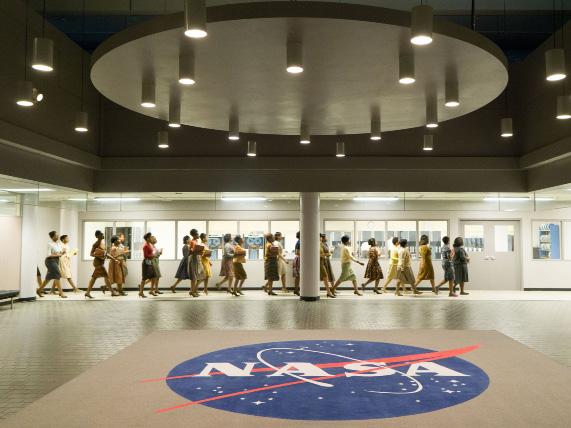
was really exciting to him. The students talked with him about the Geaux Film program where the university helps fund and organize student-run short films.
Fifteen years ago, the beloved “Pitch Perfect” franchise started on this campus, and Woolsey returned home to art direct it. He said he loved coming back to campus to see LSU so similar to the last time he saw it.
His mom used to work at Hill Memorial Library, so he decided to have the actors placed in front of the library for one of the scenes. For many of the LSU students who love “Pitch Perfect” they know the location of the club fair scene well.
“I don’t know how many opportunities I’ll get to make a movie in my hometown,” Woolsey said. “This is a real unique opportunity, so I’m embracing it both personally and professionally.”
Woolsey didn’t join the industry having a specific style or genre, but over time he began excelling in a specific area of storytelling. Woolsey has especially loved working on period pieces that highlight Black history and the experiences that came with existing in the U.S. during the Civil Rights Movement.
Many of these Black films Woolsey has worked on have become beloved and popular.
“It’s a very nice history to be a part of,” he said, “and I owe a lot of it to Wynn Thomas because he started me on this path.”
Thomas is famous for his production design and his long history of working with Spike Lee throughout the years.
“Hidden Figures,” “Judas and the Black Messiah” and “Devotion” are, to Woolsey, his trilogy of Black historical films that he’s proud of working on.
“I get paid to make a movie, or get to be a part of it outside of
just the money,” Woolsey said. “I feel very fortunate because I know how hard it is. I know that … not everyone gets to do it.”
Woolsey talked about how it felt to work with Wynn Thomas and the doors that it opened for him as a creative. During his time talking to students, Woolsey expressed how proud he was to work on “Hidden Figures” and “Judas and the Black Messiah.” He told the story of how they recreated the room Fred Hampton was murdered in to scale, and they had Hampton’s wife come to see it. The attention to detail and handling these stories with respect was something that stood out as important to Woolsey.
“I feel grateful every day and I take none of it for granted,” Woolsey said. “I know that it’s not an easy dream or passion to fulfill professionally to make money, but once you do it, you get to share it with other people. Because if you kind of hold it and gatekeep it, what’s the point?”
Talking to students and helping them on their film journey are some of the things Woolsey hopes to do while he is here, but he also is excited to see old faces and live in his hometown. Woolsey got the chance to spend some time going to Mardi Gras, but he is really excited to eat some crawfish and hopefully catch a baseball game at Alex Box Stadium.
LSU film and theatre students got to talk to and learn from someone who was in their place not so long ago. Seeing how someone from Baton Rouge has helped create some of their favorite films has made their hopes for the future that much brighter.
“At the end of the day … it’s just an honor to be able to come to [my] alma mater and speak to students,” Woolsey said.




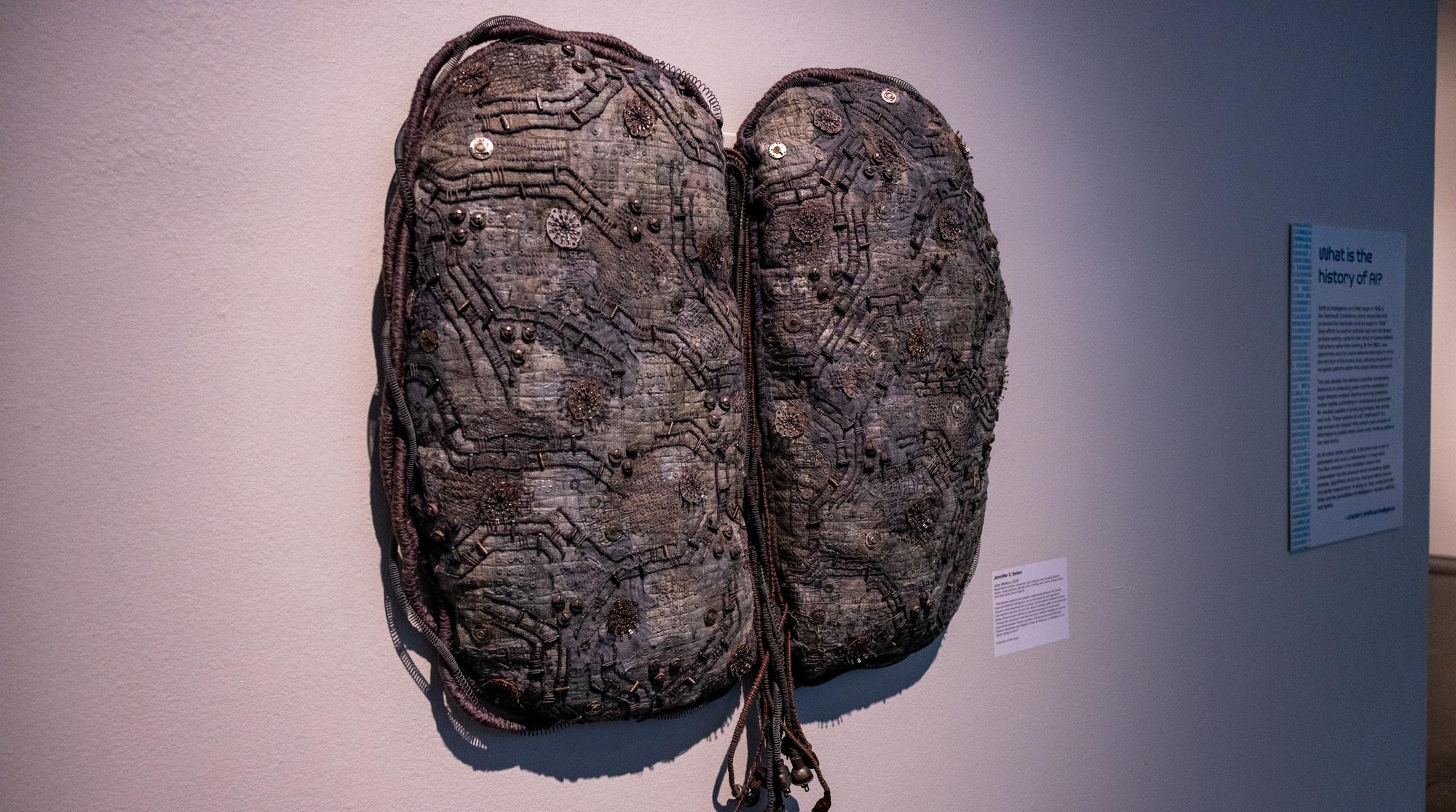


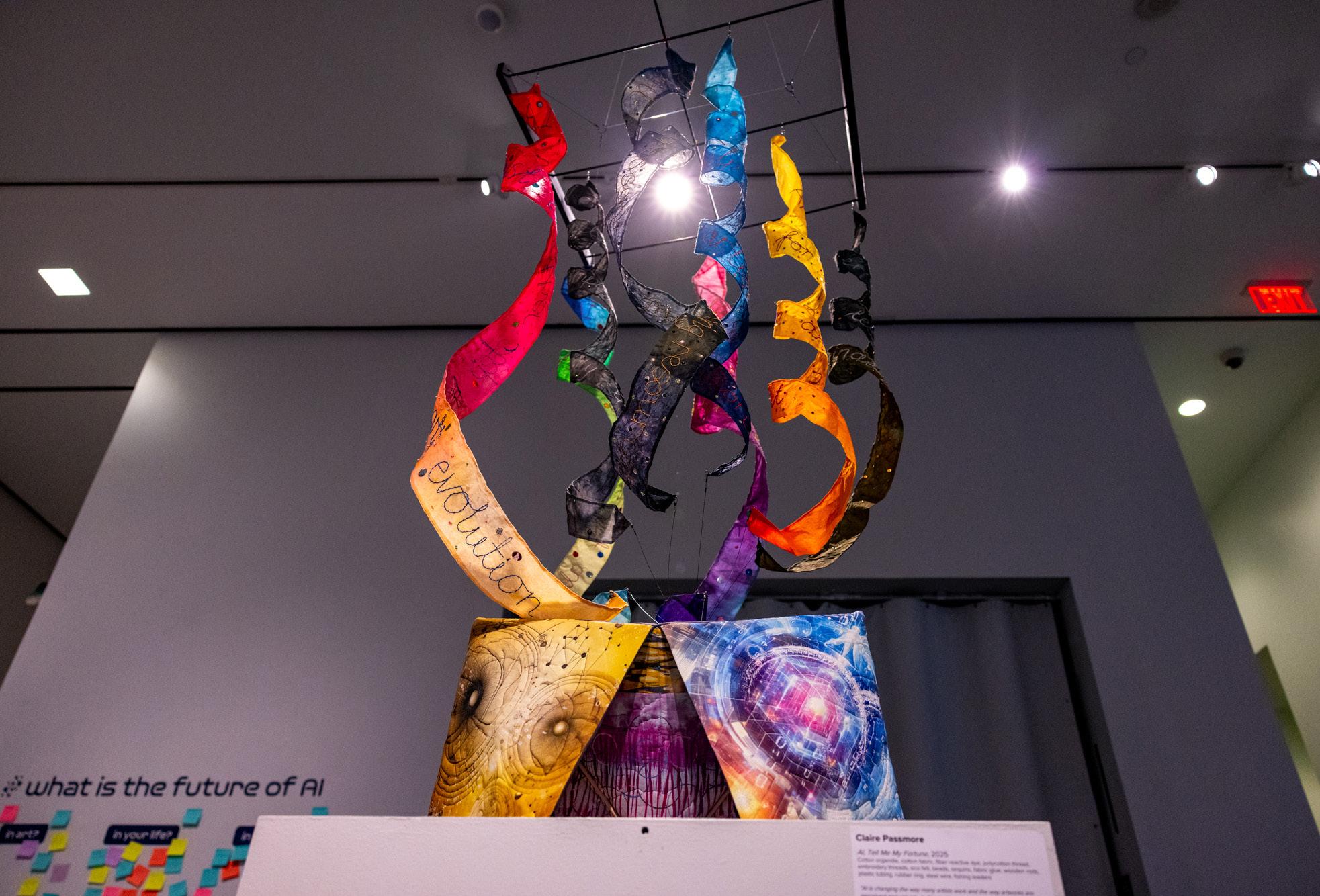
LSU Museum of Art is showcasing quilts made by artists with differing viewpoints on the use of AI in the creation of art. It features quilts from around the world — as close as Alabama and as far as the island of Mauritius. The exhibition will be available for viewing until May 10 at 100 Lafayette St. in Baton Rouge.

BY SAVANNAH BOYNES Staff Writer
Nostalgia, which continues to nip at the public’s heels, was on full display as vendors and patrons gathered to attend Brickyard’s Thrift-Yard. With fashion and media forever evolving, some are still drawn to the magic of what once was.
Amidst the hustle and bustle of downtown Baton Rouge, Brickyard South Bar + Patio hosted its own spin on a classic thrift market on Saturday. An endless list of vintage vendors, live music and a satisfying selection of food rendered a scene of community underneath the Horace Wilkinson Bridge.
Starting at 6 p.m. and lasting until midnight, the event’s attendees could begin the night by stopping by a few vendors directly in front of the bar itself. From VHS tapes to decades-old first edition books, the market’s first few vendors reeled guests in with their items of the past.
Past Brickyard’s entrance and toward gleaming fairy lights, market-goers saw a Nova Bus parked right off the grass next to the bar. An unusual sight as there is not a designated bus stop at the exact location, people discovered it was a mobile streetwear store.
The public-transportationturned-thrift-store is called
Transit, and 17-year-old New Orleans native Valen Purvis is the founder of the thrifts-onwheels. Purvis came up with the business while on vacation with his family in Alabama when they saw the transit bus parked on the side of a road with a “for sale” sign.
“We’re curious people, so we stopped,” Purvis said. “I was looking in the bus, and I was like, ‘The front and the back. People can come from the front, exit the back, streetwear store.’ So that’s how I got the idea.”
When Purvis and his family met with the owner to buy the bus, he pitched his idea, and the owner decided to lower the selling price from $3,500 down to $2,000, he said. They found the bus in September 2024, and Purvis opened his shuttle doors on May 17.
With eight months of prep work and help from his parents, he had the business driving up thrift sales in no time while traveling the lower U.S. Purvis finds his store’s products through his connections within the New Orleans and Texas vintage scene. He explained how picking what pieces to sell all comes down to his own taste. He decides what’s in and what’s out.
He said this is what makes thrifting so special.
“It’s the hunt,” Purvis said.
“You never know what you’re gonna find, or when you’re gonna find or how long it takes you to find a special piece.”
Purvis, a high school junior, describes himself as a student entrepreneur.
After happy buyers got off at their stop and stepped into the belly of the market, they were met with rows of canopies, all filled with vintage clothing and trinkets guaranteed to fill up one’s tote bag.
As patrons walked past racks of halter tops and low-rise jeans, some would have found none other than LaBelleThreads residing under a pink canopy.
Founded by tax accountant and LSU alumna Lillian Nguyen, LaBelleThreads is a Y2K vintage brand that carries a variety of Coach bags and all-size types of women’s clothing. She started her business in October.
Based in Lafayette, Nguyen said she has been thrifting since middle school and has always been into fashion. Nguyen started her business because she wanted to make thrifting more fun and sustainable rather than overstimulating, as she said the Goodwill bins to be.
Nguyen curates her pieces through highly-detailed research of popular thrifting trends while assessing the piece’s value.
“I’m scrolling through Pin-
terest, TikTok. I’m gathering what’s in, what’s going to be in, and that’s how I base off what I’m going to buy from the thrift store,” Nguyen said. “And I also look at the material content as well. If it’s stained, I’m not scared of stains. I’m a laundry queen; I also upcycle, I mend the clothes, I do it all.”
Nguyen’s business is not just fueled by her personal hobby, but it is also fueled by the opportunities it provides for family bonding. She runs her business with the help of her two sisters, a friend and her boyfriend. Nguyen emphasized how her business would not have been able to grow as big as it is if not for the love and support from her family.
Her family also helps her locate one market after the next to advertise her shop. With popups done in Lafayette and Baton Rouge markets, Nguyen is nothing short of occupied with expanding her vintage venture.
Nguyen highlighted the best part of running her niche enterprise.
“I love seeing everyone’s outfits. Here, everyone expresses themselves in fashion and with fashion. I really feel like it’s part of your confidence and it makes you who you are,” Nguyen said. “When you look your best, you feel your best. That’s what I like.”
Besides the various kinds of vendors, Thrift-Yard was made up of a wide range of customers, most of whom were already sporting vintage outfits, searching for pieces to add to their closets. Hands were seen frantically searching through $5 bins, and eyes were caught perusing racks filled with years-old LSU merch.
While most came to shop till they dropped, others came to check out the social scene altogether. Junior broadcast journalism major Katharine Sherrett decided to check out the pop-up when she and her friends saw advertisements on social media for the event.
Sherrett isn’t a typical thrifter, but she mentioned that her favorite booths were the ones with sufficient lighting and labeled clothing sizes. Since the event was held at late hours of the night, it was difficult for buyers to see all of what the vendors had to offer.
Sherrett shared her thoughts on the community aspect of the event, leaving something to think about for all looking to get more involved in the city of Baton Rouge.
“I think events like this could really bring out the creative people, people who make their own clothes or like to upcycle; just bringing out the creative community,” Sherrett said.
BY CHARLOTTE TRENTALAGE Staff Writer
225 Theatre Collective debuted its 24-Hour Theatre Festival this weekend, drawing in creatives from around the Baton Rouge arts community.
The race against the clock started Friday at 6:15 p.m., when four playwrights received a prompt and were given the daunting task of writing a 10-minute play by 5 a.m. the next morning.
The 225 Theatre Collective, a community based on arts, inclusion and theater, has never held an event like this. However, 24-hour theater festivals are common within the community nationwide, popping up in cities and providing a fast-paced experience for creatives to sharpen their skills.
Actor Isaiah Smith has done three 24-hour shows dating back to his time as a student at Southeastern Louisiana University in Hammond. As he just recently moved to the Baton Rouge area, he said he was excited to try again.
“It seemed like a great opportunity, and I get to hang out with other artists and theater people too,” Smith said.
For other actors like Jonathan Ruppel, this is a first-time expe -
rience. Ruppel learned about the festival after seeing it on social media and signed up with excitement and nerves. He said he is feeling nervous but is preparing using methods he learned from high school to get his lines down.
“As soon as I get the script, it’s repetition. My approach is divide and conquer,” he said.
The youngest actor in the event, 12-year-old Kate Norsworthy — who has been acting since the age of 3 — said nothing has compared to the pressure of learning a script so fast. Normally, theater productions allow for months of preparation and perfecting.
“With theater, there’s no doovers,” she said.
Kate’s strategy is memorization the best way she knows how: Quizlet flashcards.
Each actor will receive their script at the 8:30 a.m. call time, and they have less than a day to become the characters the writers imagined. In the meantime, they go home in anticipation while the writers get to work.
Naya Black, a master’s student at LSU studying environmental sciences, said this festival is her first attempt at playwriting. She made the impulsive decision to sign up after seeing the festival on Instagram and feeling excited about the concept. She said she’s
always written, but nothing like this.
Minutes after Black received her assignment prompt, “This was definitely not the plan,” her mind instinctively went to tragedy.
“I always write horror,” Black said. “Tragically beautiful, grotesque things.”
Black’s idea is to write about her experience as a student. The night before the show, her biggest fear isn’t if she finishes on time — it’s whether or not the actors will like it.
Saturday morning
Black submitted her script at midnight, six hours early. She said if she spent any longer on it, she would just try to perfect it too much.
“I was nervous,” she said. “The second I clicked submit, I felt relief. Then I thought, ‘Oh my God, what if they hate it?’”
Black’s plan to write about her student experience was thrown out the window, and she ended up creating a script about two homeless people.
“I knew I wanted to keep it within the horror scope,” Black said, “but I started typing out the story and just added on piece by piece.”
She said in a sociology of education course, she learned about a concept called the correspondence principle — the idea that
the structure of what we learn in school becomes an unspoken curriculum for the structure of society. She got so much inspiration from this concept that at one point while writing, she opened up her sociology notebook and started typing in some of her notes.
While her team rehearsed, she waited at home until 7 p.m. She hoped they would be able to implement everything she had in her script, especially the ending.
Saturday afternoon
For the actors, the day-long rehearsals consisted of quickly learning their lines, blocking, figuring out costumes and working with any props.
Smith said his biggest challenge was memorization.
“I learn by beats, rhythm” he said. “Almost like learning a song.”
Ruppel said he tries to find himself within a script and studies his lines on an app he has on his phone.
“It’s not just memorizing,” Ruppel said. “It’s figuring out who your character is based on what the writer made and what the director wants.”
The actors, writers, directors and audience gather at the Arts Council of Greater Baton Rouge at 7 p.m. in the Virginia & John Noland Black Box Studio.
Artistic director and founder of 225 Theatre Collective Stephanie Calero, along with co-founder and head of the costume department Victoria Brown, introduced the show and explained the concept.
For the third performance, Ruppel walked out alongside another actress while Black leans over a chair in the back row, watching her creation come to life. Her piece follows two homeless people collecting their daily earnings from jars. The 10-minute play is a commentary on social structures, with Ruppel’s character echoing the economic structure they didn’t want to be a part of.
“We’re of something greater than schools and workplaces,” his character said.
The play ended in a dramatic death scene of the other character as she covers the stage in blood.
The quick turn-around of performances leads directly into the final performance, with blood still on the floor from seconds prior. A quick mop-up and Smith and Kate, along with another actress, fell into character on stage.
During the final curtain call, writers, actors and directors stand together, with one last chance to thank each other after bonding for an intense and exhausting day of theater.


BY DELANEY POTTHAST Staff Writer
The currently ranked No. 2 LSU gymnastics is set to take on the No. 4 Florida Gators in a Gainesville showdown that will be one final road test for the Tigers ahead of the postseason’s start.
With an all-time record of 4778 against the Gators, the Tigers’ team-driven motivation ahead of the competition has set the matchup to be a gritty one following the stellar weekend LSU recently walked away from.
“You go to Oklahoma, you come home for Alabama and see them twice in a weekend and then go to Florida,” head coach Jay Clark said. “I mean, my gosh, that’s probably the most stacked roster in the nation.”
It was just last season that the Tigers defeated Florida, but that hasn’t always been the story. With an all-time record of 8-29 against Florida in Gainesville, LSU has lost
four of the last seven regular season matchups against the team, almost all of which were in Gainesville.
“Going up against a higherranked team, I think that is a little bit more motivating because we want to do our best and you want to show up to have a good matchup between teams,” Kailin Chio said.
“But I think at the end of the day, it’s just how we are as a team and what our standard is for us to get to where we want to go in April.”
This year’s matchup holds a similar story to the recent meetings between both programs, but confidence formed by the Tigers each week could reshape the meet.
Currently, the Gators hold the No. 1 and 2 spots on bars and beam, respectively, with the Tigers following suit at No. 2 and 3.
Vault and floor are a much different story, however, and those events could be the game changers come Sunday night. Florida finds itself ranked No. 7 and No. 12 on
those rotations, respectively.
Big scores on these leg events could hand LSU the competitive edge needed to come out on top.
After the Tiger’s Podium Challenge finish, standards are set high for the performances they’ll put out on the floor in Gainesville. Still, it will take more than rankings to win the meet on enemy turf.
“I do think our kids compete better in those environments against those teams than they do against what others might deem as a lesser opponent,” Clark said. “It’s a grind, but it also tends to bring out the best in probably all of our teams.”
As much of the team has emphasized all year, mindset and trust in one another have been the true victories each week, especially in high-pressure environments.
Strong outings against teams like Oklahoma, Alabama and Missouri have reinforced LSU’s confidence regardless of the final result, while also proving its ability to rise
to the occasion behind the oneunit mentality.
“I think each meet that we’ve done, we’ve taken a step forward, and now the meet that we just completed is the next standard that we have to keep progressing from,” Amari Drayton said. “I think going into this next meet, we’re just gonna put our heads down, get to work and keep locking in so that we can keep taking steps forward in the right direction.”
Having topped Florida’s weekly overall in five of the eight weeks that both teams have competed this season, LSU enters the final stretch of the regular season behind steady progression. Florida marks a third consecutive top-three matchup to test the Tigers one last time.
“You know, it’s a part of being in the SEC,” Clark said. “I don’t think it’s any different, and you probably have other coaches on this campus that would say the same thing. It’s just part of the gig, and we enjoy it.”
BY RAMI BURKS Staff Writer
It’s no secret that LSU men’s basketball has struggled on the defensive front throughout this season, but on Tuesday night, that side of the ball sold the contest against Auburn.
An electric offense showed off, putting up 74 points to Auburn’s 88. The defense was detrimental.
In a season where LSU has routinely been trounced by opponents, this defensive collapse ruined what could have been an exciting nightcap on the SEC Network.
The game began close as both teams battled it out, but it slowly crept into Auburn’s favor.
The biggest issue was LSU’s inability to possess the ball without turning it over. LSU had seven steals, two blocks and 16 turnovers. Auburn had 13 steals, five blocks and nine turnovers of its own. Even senior Max Mackinnon, who shone in LSU’s most recent victory against Ole Miss just one week prior, could not seem to maintain control.
The lack of defensive proficiency has been confusing for LSU fans all season. Head coach Matt McMahon has pushed the physical game all season, and it showed early on.
BY MARISSA REISS Staff Writer
No. 16 LSU softball begins conference play in Knoxville this weekend against an undefeated No. 1 Tennessee.
The Tigers sit at 17-4 after finishing their final tournament of the regular season and the majority of their nonconference matchups. LSU is 15-0 at home, 1-0 away and 1-4 in neutral sites. It also holds a 10game win streak.
In terms of the Tigers’ offense, fans have seen nothing but brilliance from firepower at-bats to patience at the plate.
Second baseman Sierra Daniel leads the Tigers offense with a .414 batting average and has started all 21 games that the Tigers have
played. Daniel has scored 16 runs in 24 hits, tying with centerfielder Jalia Lassiter to lead the team in doubles at four. Daniel leads the team in walks with 17 and ranks No. 2 in the SEC in triples.
Lassiter, a senior captain, boasts a .377 batting average with 23 runs scored and 23 hits in 61 plate appearances. Following Lassiter on the stat sheet is sophomore utility Char Lorenz, holding a .286 average with 14 hits and 12 runs.
First baseman Tori Edwards started off her season a little slow, but she’s heated up to her usual performance nonetheless. The sophomore captain leads the team in home runs, clobbering four in her 56 plate appearances. Edwards also leads the team with 17 RBIs.
Sophomore Alix Franklin has
had a breakout this season, showcasing the growing impact of LSU’s underclassmen in the lineup. Franklin boasts a .259 average with 12 RBIs in 14 hits. Franklin also leads the SEC with four triples.
LSU’s pitching rotation has been solid right behind its offense.
Sophomore Jayden Heavener has a 2.4 ERA with a 6-2 record. Heavener has made seven starts in 10 appearances, dealing 42 strikeouts to opponents. In the SEC, Heavener comes in the ranks No. 10 out of all conference pitchers for innings pitched.
Following Heavener, fifth-year senior Tatum Clopton holds a 5-1 record with a 1.09 ERA. Senior Paytn Monticelli is 2-1 with a 3.35 ERA.

PREVIEW, from page 9
The Tigers also have solid arms in freshman Ashlin Mowery and Cali Deal.
Tennessee, the No. 1 team in the nation, is 20-0. The Lady Vols have won six games at home, one away and 13 at neutral sites.
Tennessee heads into the matchup with arguably the most dominant pitching staff in college softball.
Sophomore Erin Nuwer, 9-0, has a 0.19 ERA in 10 appearances with 48 strikeouts. Nuwer has only allowed one run and eight hits in 37.2 innings pitched. Nuwer ranks No. 1 in the SEC in opponent batting average, limiting batters to hit just .067.
Senior Karlyn Pickens is 6-0 with a 0.6 ERA, leading the staff in strikeouts with 68 in nine appearances. Pickens ranks at No. 9 amongst conference pitchers and No. 4 in strikeouts.
However, Pickens was just recently taken out of the game as the Lady Vols faced Belmont with some concern for her right arm. After being evaluated Tuesday and Wednesday, Tennessee released an update on Pickens and said that she suffered an arm strain. Pickens remains day-to-day.
Even with Pickens potentially out, the Lady Vols still have exceptional arms in Sage Mardjetko and Maddi Rutan. Mardjetko has four wins and a 0.67 ERA and Rutan claims one win with a 1.11 ERA.
Junior outfielder Sophia Knight leads the Vols’ offense with a .556 batting average, having started all 20 games that the team has played thus far. Knight has scored 26 runs on 35 hits in her 63 at-bats for the team.
In the SEC, Knight is ranked No. 3 in batting average, No. 2 in walks, No. 5 in hits and No. 4 in on-base percentage.
Behind Knight is junior outfielder Gabby Leach with a .393 batting average in 19 starts. Redshirt sophomore infielder Ella Dodge holds a .367 batting average and leads Tennessee with 30 RBIs in 49 at-bats.
The first weekend of conference play between these two teams is going to be a thriller regardless of who wins. For Tennessee, the undefeated team looks to remain that way. For the Tigers, a chance to upend the No. 1 team in the nation is motivation.
BY ALEX SHEESLEY Sports Columnist
When attending a baseball game, certain experiences are assured.
The smell of freshly manicured grass and popcorn wafts through the stands, riding a warm, inviting breeze that feels incredible. The taste of a pretzel or a hot dog. The sight of truly incredible feats of strength and athleticism. The sounds of players’ walk-up songs set the mood for their moment.
These experiences are universal in this great sport. They are all sensations unique to the human experience because they are produced naturally. It’s part of what makes going to the ballpark so special.
Now, that experience is in doubt, threatening to unravel the ballpark-going experience.
Ahead of the season, LSU released its players’ walk-up music selections. On that list, next to Brayden Simpson’s name, sits “Walk My Walk” by Breaking Rust.
It sounds the part in the stadium. An unassuming, red dirt country track, in which the narrator proclaims that he is a freespirited type who is unbothered by the perception of others. The bass-forward speakers at Alex Box Stadium hide his tinny inflection that sits in the uncanny valley.
Only when examining online, listening in higher quality and viewing the song’s cover and artist’s branding is the song’s dirty secret revealed: it is entirely AI-generated.
Breaking Rust is a project that was created by Aubierre Rivaldo Taylor. Taylor prompted AI to generate country music that would be released under the Breaking Rust alias, represented by an AI-generated image of a chiseled-jaw cowboy.
This project and the song in question made headlines when it broke through to the top spot of a Billboard digital sales chart. That feat was potentially artificial, and certainly not im-


pressive; with digital sales being a bygone way of consuming music, artists can spend a few thousand dollars buying their own song to get enough sales to top the charts.
Still, it served as relatively easy press for the song and was, perhaps, a factor in it becoming a hit big enough to become a walk-up song at Alex Box Stadium.
It’s probably too late for Simpson’s walk-up music to change, meaning this song, and AI in the ballpark, is here to stay. The question now, as it always is surrounding AI, is where does it go from here?
Has Pandora’s box been opened in the sporting realm?
That answer is hard to determine currently, but it’s imperative that it’s ultimately no. Unfortunately, developments seem to be inching in the wrong direction.
Electronic Arts, the studio behind the massively popular “EA FC” franchise of soccer video games, started developing an AI version of commentator Guy Mowbray earlier this year. Mowbray’s AI clone will be able to pronounce north of 20,000 players’ names.
The staggering number, EA says, will make the game more immersive. It will not be au-
DEFENSE, from page 9
In that game, the Tigers found the free-throw line 34 times. On Tuesday versus Auburn, LSU went 19-for-26.
Against FIU, Dedan Thomas Jr., who is now out for the season, said McMahon expects the free throws to be through the roof.
“[McMahon] expects us to get to the line that much,” Thomas said in September. “That’s actually what’s on the board pre-game. He wants us to make more free throws than the other teams attempted. So we just gotta keep pushing the ball in transition and getting to the basket, getting fouls, just staying aggressive.”
The player who led the
thentic.
What would happen if the late Bob Sheppard were to pass away today?
The legendary Yankees public address announcer recorded announcements for franchise players like Derek Jeter and Mariano Rivera during the time between his retirement and passing, which they played whenever they entered the game.
If that situation were to unfold 20 years later, would Sheppard’s voice be fed into an AI voice tool to make his voice forever the one of Yankee Stadium? If so, would Carl Yazstremski’s comment about not having made it to the MLB until Sheppard announces your name hold the same weight if it wasn’t really him doing it?
Yazstremski’s quote wouldn’t be entirely accurate if that were to happen. “You haven’t made the MLB until an AI-reconstruction of Bob Sheppard spits out your name” would probably be more truthful, but certainly less appealing.
AI-enhanced volumetric capturing is in the works already, attempting to build on limitedrange volumetric capturing that was demonstrated during Major League Baseball’s Tokyo Series in 2025. 3D player tracking soft-
physicality in Auburn was junior forward Mike Nwoko. Of those shots from the free-throw line, four were his. The true defensive MVP for LSU once again was forward Pablo Tamba.
Tamba typically runs the game from the defensive side for LSU, but with the struggles this team has experienced this season, he has been overshadowed. He singlehandedly ran the LSU defense in the 202526 season, and while the rest of the team hasn’t been up to standard, he’s the reason LSU has remained in several games this season.
He just didn’t have enough help on Tuesday.
It wasn’t going to be possible for LSU to out-shoot Auburn, not at the pace these two
ware is already available in the MLB app.
Will these technologies combine to enhance the suspension of disbelief that makes baseball so magical? Or will it be a peek behind the curtain, taking away the wonder that made so many fall in love with this sport?
Regardless of the answers, one thing is evident: In a time where third places and interpersonal interactions are going the way of the dodo, the world needs spaces to reconnect with its humanity. Under no circumstances do these places need the presence of AI-generated content.
Nobody will sing in unison if a song with origins like “Walk My Walk” comes on at a karaoke night. People don’t gather to worship an AI deity. Libraries don’t house mechanical literature. The same should be said for a day at the ballpark.
There needs to be an extreme effort to preserve how we experience the game of baseball in person, maintaining it for the decades to come. Otherwise, the story of going to a baseball game runs the risk of becoming a tragedy, losing what made it so special, giving up its label as a bastion for human expression and becoming just another thing.
teams were netting shots.
When the momentum turned in favor of the home team, it hurt big time as the lead grew from six to 13 points.
Nwoko stepped up, but Jalen Reece, Marquel Sutton and Tamba all put up double digits in points. Those Tigers combined for 53 of LSU’s 74 points.
Tamba, who rarely reached double-digit points, only missed a double-double by one rebound.
This loss segues to the final game of the regular season: against Texas A&M for an SEC play rematch.
The game will also serve as senior night for LSU. Tip-off will take place at 5 p.m. on Saturday in the PMAC.
CRAWFORD’S CORNER
GORDON CRAWFORD Columnist
So far, the public narrative put forth by the Trump administration surrounding this new Iranian conflict has been nighunintelligible gibberish. Trump says he forced Israel’s hand, and Marco Rubio says later that the administration did not know about the Israeli action. We call for the Iranians to take their country, yet we keep a list of favorable leadership candidates, most of whom we also killed.
In it all, one administration official’s public performance has been notably vigorous: Secretary of War for the “peace” administration, Pete Hegseth. As other officials have wavered on the specific details of the operation, he has remained firm: this war isn’t like America’s other bad wars. This is a good operation, one with clear goals, laser-focused on taking out recently developed Iranian
missile capabilities.
The point he mainly tried to hammer home was that this war “wasn’t endless,” unlike Iraq.
Once again, the most shocking thing about this shambolic operation is just how little effort is put into the facade. Give Dubya and Cheney this: they cooked up a story and stuck with it.
They never promised a timeline. As long as it would take to end terrorism, they said.
What do you do with an administration that doesn’t even have the boldness to lie confidently? One minute it’s a four-week timeline, then that becomes a “fake news gotcha question.”
It’s like the excuses were quickly scribbled onto a napkin, and then that napkin got rained on before the press conference.
It’s okay though because this one’s not “endless.”
They couldn’t even be bothered to come up with a new script. We’re off to war for the exact same reason as last time: they totally have nukes,
trust us, guys.
Never mind the fact that we told you months ago that their nuclear capabilities were effectively the same as Fred Flintstone’s. Ignore all that. We’re just going to be in and out in a couple of weeks, okay?
What do we meaningfully hope to accomplish with this action?
Hegseth said we accomplished regime change. That hasn’t even been determined yet, as the institutions of the Iranian state remain functional and broadly in control of the nation’s sovereignty.
Say that administration collapses in the coming weeks or months, a very likely possibility at this point. What then? The administration has stated its opposition to nation-building and avoided even stating that the goal of this war was regime change, so who collects the rubble of Iran once the bombs cease falling?
Ah, yes, the heir to the throne, son of the old Shah. Sound geopolitics. Everyone knows once American forces
pulled out of Libya after Gaddafi was killed that the Senussis peacefully returned to power and led the country to many years of stability and peace.
Well, I wish that were the case. Instead, we live in the brutal reality where if you blow up a state with no plan or intention of direction, you get chaos and civil war.
Some kind of liberation that is. I’m all for helping the Iranian people take back their nation. Work with aid groups, coordinate with resistance groups for operations, do something to push a movement from the ground up that can create a viable Iranian state that can effectively assert sovereignty over the country.
There we go again with that pesky nation-building. I suppose none of that flowery stuff is our job. Nope, just aim where Israel points and fire.
The cavalier attitude towards it all is what is really most disgusting.
But hey, this war isn’t “endless,” so that makes it alright.
Six American troops have
died in this conflict as of Wednesday. Capt. Cody A. Khork, Sgt. First Class Noah L. Tietjens, Sgt. First Class Nicole M. Amor and Spc. Declan J. Coady have been identified so far, while the other two remain unidentified as of writing.
Along with them, almost 800 people just like you, people who woke up, went to work, shared a drink with a spouse, told a story to their child, were removed from this planet. You will never know their names, and the administration and the media cycle will do everything they can to ensure they are simply compressed into cold, black digits in a Wikipedia infobox.
Hundreds more will die as well. We’ve been told as much. How high must the blood pool and the bodies pile? How many schoolgirls roasted alive in fiery graves? Look into the eyes of their mothers and tell them that this war isn’t “endless.”
Gordon Crawford is a 20-yearold political science major from Gonzales, La.


THOMAS BERGERON Columnist
In this life, nothing is truly binary. It is neither black nor white, but instead varying shades of gray. Many things can be true at the same time: fire can be both beautiful and destructive, wind can be refreshing and deadly and water can sustain life just as easily as it can take it away. These are fundamental truths about the relationships between our world and its mechanics, illustrating a world in which good and evil can coexist.
Yet when we analyze human activity, this nuance is often lost. Good and evil become two finite categories, where heroes and villains are crafted through the coarse lenses of ideology and opinion.
In the recent United States raid to detain former Venezuelan President Nicolás Maduro and the present Israeli-American bombing campaign in Iran, much has been revealed about the state of partisanship in this nation.
Amidst the pushback and protests surrounding these military actions, some have taken some rather extreme positions to defend tyrants on the basis of political polarity. As a reminder: many things can be true at the same time.
The Trump administration has demonstrated a troubling disregard for the domestic and international rules-based norms that have guided global order for decades. President Trump has frequently forgone the traditional checks and balances through a flurry of executive orders and unilateral military actions abroad.
His administration has also been accused of violating the constitutional due process rights of noncitizens through sprawling Immigration and Customs Enforcement raids, straining long-standing NATO alliances through threats toward European partners and demonstrating a total disinterest in ushering peace, despite campaigning under the promises of “no new wars.”
Similarly, Prime Minister of Israel Benjamin Netanyahu has committed his own series of atrocities over his years in power. Netanyahu has long worked to undermine the
integrity of Israeli courts while attempting to consolidate power within the executive branch. He has expelled dissidents from government and removed key domestic administrators pivotal to enforcing Israeli law.
His government has also overseen conflicts across the Gaza Strip, Lebanon, Syria and Iran. The war in Gaza alone has killed at least 70,000 Palestinians, while Israeli strikes across the region have killed thousands more. Israel maintains these operations target militant groups like Hamas, Hezbollah and the Houthi movement (Ansar Allah) that have previously attacked Israel, but many of these strikes have also killed innocent civilians. Several United Nations committees have indicated that Israel’s conduct in the Gaza Strip constitutes genocide.
These actions by Trump and Netanyahu constitute great harm to global stability. Protesting these events, which threaten the global commonwealth, is entirely reasonable and ought to happen — rarely do events on this planet occur in a vacuum.
However, trading one tyrant for another is hardly a win for the collective good.
Following the American raid in Venezuela and bombings in Iran, some protesters have decidedly framed former President Nicolás Maduro and Iran’s former Supreme Leader Ali Khamenei as heroes of some noble resistance against “Western, imperialist aggression.”
While it is true these nations exist as opposition to the United States and the collective “West,” and history has proven they may have reason to do so, Venezuela and Iran have committed many grave sins of their own.
Following the death of Venezuelan socialist revolutionary Hugo Chávez, former bus driver Maduro assumed the presidency of Venezuela in 2013. While Chávez’s legacy is deeply polarizing, his successor presided over one of the most dramatic national declines in Latin American history. Maduro’s government has widely been accused by numerous international organizations of suppressing dissent, restricting freedom of the press and manipulating elections to maintain power.
Venezuelan security forces have also perpetrated multiple human rights violations.
International investigations
Jason Willis Editor in Chief
Managing Editor Courtney Bell
Kaley Melancon News Editor
Ainsley Flood
Sports Editor
Garrett McEntee Opinion Editor
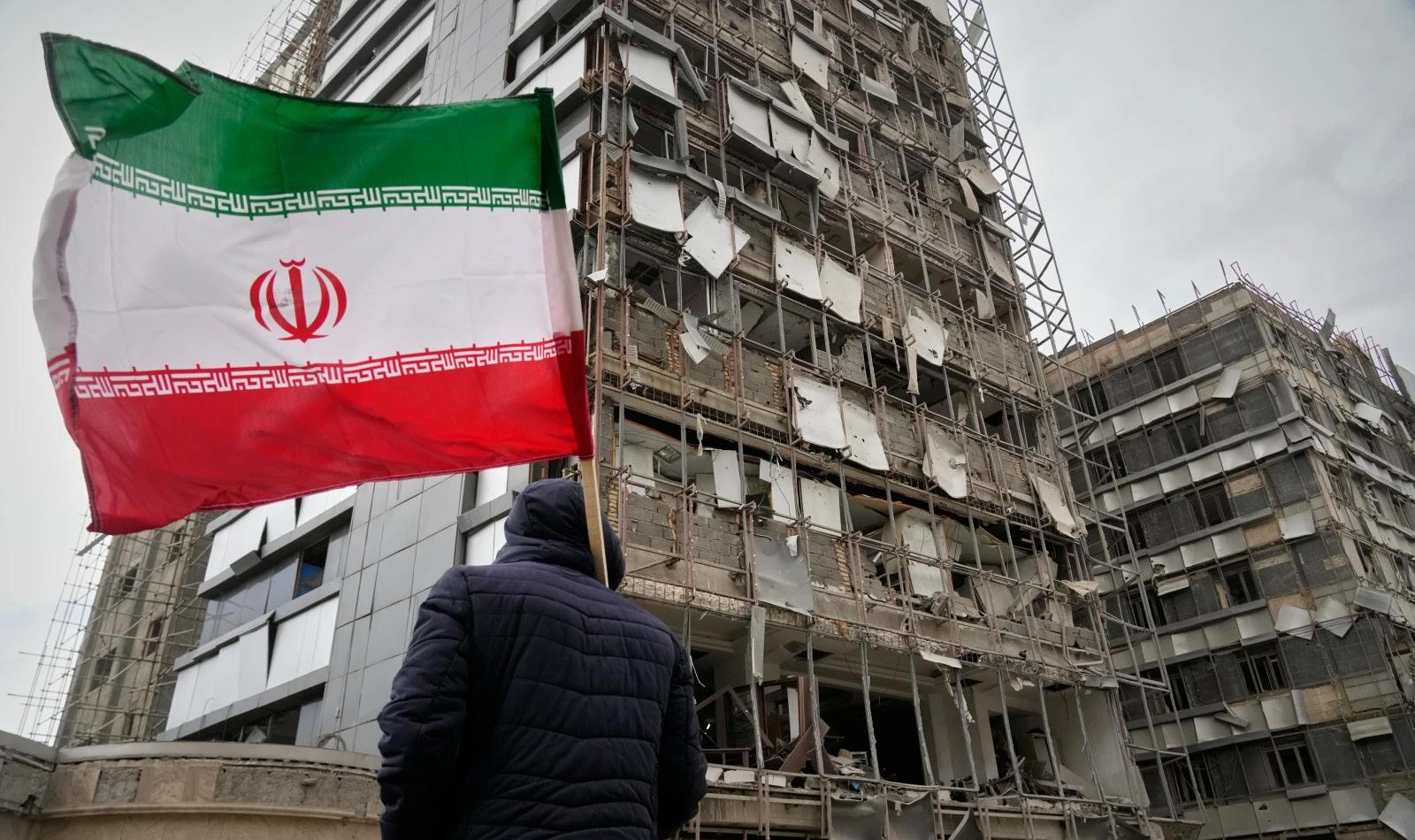
A man holds an Iranian flag as he looks at the damaged façade of Gandhi Hospital during the ongoing joint U.S.–Israeli military campaign in Tehran, Iran, on March 2.
report upwards of 19,000 extrajudicial killings carried out by security forces and paramilitaries between 2016 and 2019, along with the detention of many more thousands of political prisoners.
Maduro’s regime also contributed to one of the worst economic collapses in modern times. Hyperinflation, corruption and mismanagement of the country’s state oil industry forced more than 80% of Venezuelans into abject poverty and triggered a mass migration crisis. As of 2024, up to 7.7 million Venezuelans have fled their homeland to seek safety and stability elsewhere.
Sanctions or not, Maduro destroyed his nation and ruled in stark contrast to his supposed egalitarian, socialist values he claimed to represent. He is not a man to be defended.
Ali Khamenei assumed the office of the Supreme Leader of Iran in 1989, 10 years after the Islamic Revolution, and remained the most powerful authority until his death in 2026. Under Iran’s doctrine of Wilayat al-Faqih, all decisions of state and society must be directed by one supreme religious jurist, placing total political, military and judicial control into the head of state.
The Iranian regime has long been accused of committing many crimes against humanity, including widespread, censorship and severe restrictions on political freedoms. The government
maintains extreme control over media and internet access through a powerful state censorship apparatus, and dissent is often met with imprisonment or intimidation.
Iran also enforces strict social codes through institutions like the “Guidance Patrol,” a “morality police” designed to enforce mandatory hijab and ensure women adhere to other patriarchal religious regulations. In 2022, enforcement of these regulations drew massive protests across Iran following the killing of Mahsa Amini while in police custody, resulting in the “Woman, Life, Freedom” movement.
In response to the protests, Iranian authorities killed at minimum 500 protesters and arrested many more.
The killing of citizens exercising their human right to protest is not unique to 2022, with recent massive antigovernment demonstrations resulting in state security forces reportedly killing at least 30,000 protesters in a matter of two months.
Beyond its domestic oppressions, Iran has long supported militant terrorist groups across the Middle East, including Hezbollah in Lebanon, Kata’ib Hezbollah in Iraq and Syria, Ansar Allah (Houthi movement) in Yemen and many more armed movements aligned against Israel and Western influence. Through this network, Iran has positioned itself as the leader of the so-called “Axis of
Resistance.” Yet opposition to Western hegemony does not erase the regime or its proxies’ own histories of oppression and violence.
So what exactly about Khamenei’s regime is worth defending? Is it the slaughtering of protesting civilians? Is it the strict social control and violence committed on women, LGBTQ+ individuals or ethnic and religious minorities in Iran? Or perhaps the long record of statesponsored militant violence across the region?
This is not an exercise in whataboutism intended to justify the bombing of these nations or the suffering of their people. Instead, it is a call to examine the broader context behind the causes many may feel compelled to champion in this present moment of geopolitical crisis.
If one truly opposes authoritarianism and advocates for human rights around the world, then one cannot simply trade one tyrant for another.
Supporting Adolf Hitler in World War II simply because one opposed the injustices present in the U.S. at the time would hardly have made a more just world.
Many things can be true at the same time. If we find ourselves convinced that one side can do no wrong, perhaps it is worth questioning the propaganda loop appealing to our good intentions.
Thomas Bergeron is a 26-yearold graduate student from Baton Rouge, La.
The Reveille (USPS 145-800) is written, edited and produced solely by students of Louisiana State University. The Reveille is an independent entity of the Office of Student Media within the Manship School of Mass Communication. Signed opinions are those of the author and do not necessarily represent the views of the editor, The Reveille or the university. Letters submitted for publication should be sent via e-mail to editor@lsu.edu or delivered to B-39 Hodges Hall. They must be 400 words or less. Letters must provide a contact phone number for verification purposes, which will not be printed. The Reveille reserves the right to edit letters and guest columns for space consideration while preserving the original intent. The Reveille also reserves the right to reject any letter without notification of the author. Writers must include their full names and phone numbers. The Reveille’s editor in chief, hired every semester by the LSU Student Media Board, has final authority on all editorial decisions.
“Forgiveness is the key to action and freedom.”