



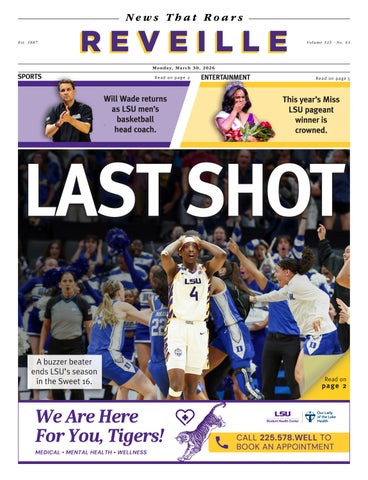
BY TRE ALLEN Staff Writer
Not many people expected LSU’s season to end like this. It’s not about how early the Tigers lost, but the way it happened.
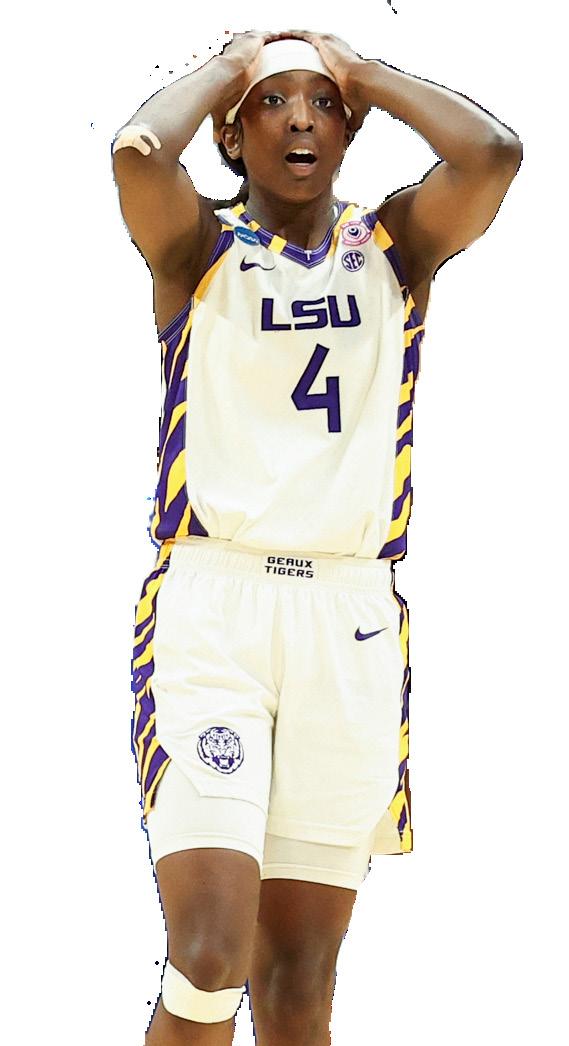
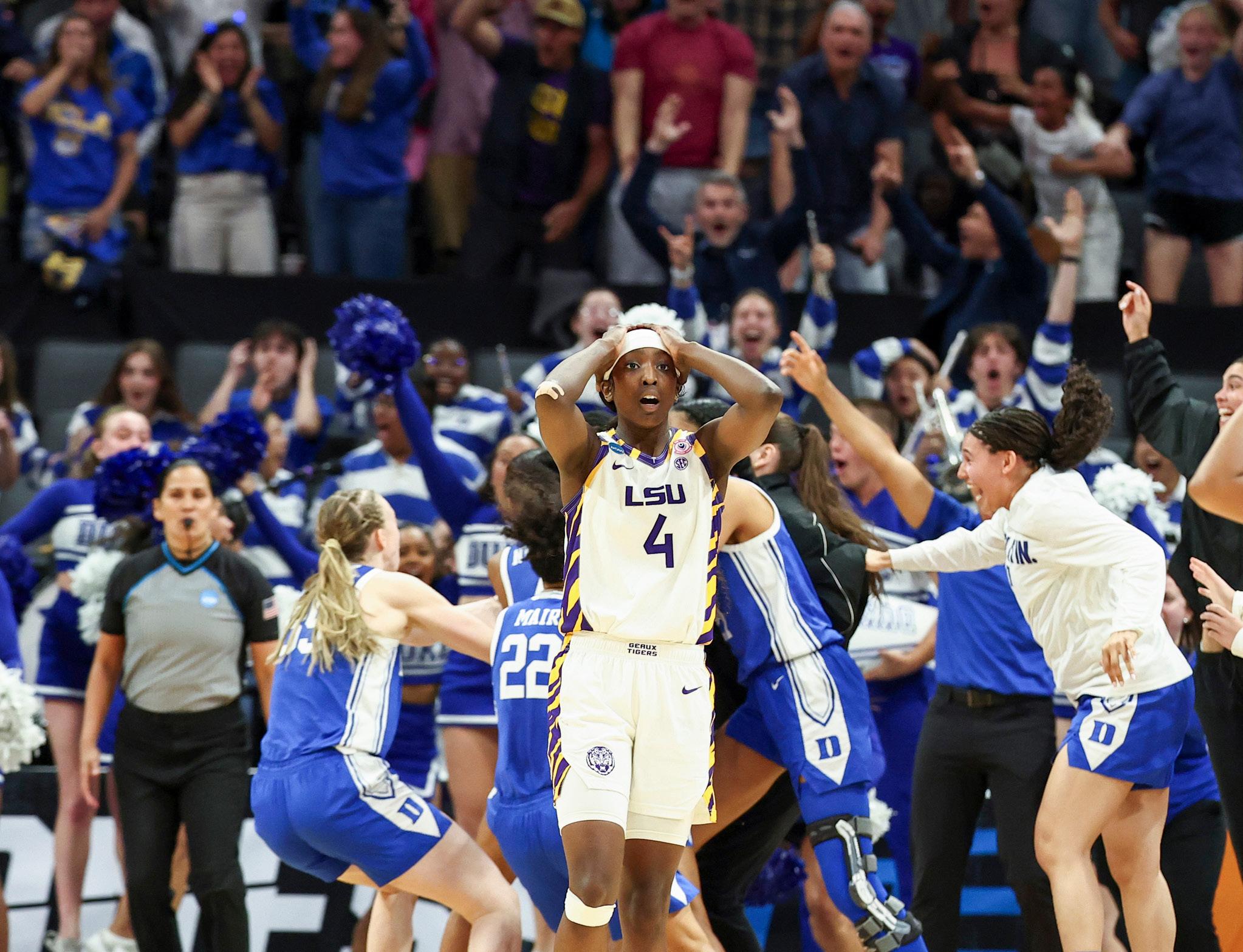
LSU came up short on Friday, falling to Duke 87-85 on a game-winning three by Ashlon Jackson as the buzzer sounded. Dramatically, the ball rolled around the rim before falling, and the 11-point comeback that almost surged the Tigers to victory was all for naught.
Going into the game, LSU was coming off back-to-back 100-point victories during the first two rounds of the tournament and was favored against Duke.
The Tigers beat the Blue Devils earlier in the season, 93-77, in a game where six Tigers ended with doubledigit points, including an 18-point performance from guard Flau’jae Johnson.
However, while the Tigers were just one shot away from making the Elite Eight, the same success they had a couple of months ago against Duke couldn’t be found. So what went wrong?
In the sports world, everyone knows how hard it is to beat the same team twice in the same season. Opponents recognize game plans and strategies, adjustments are made and motivation is higher for the losing side entering the game.
Volume 1 of the series between Duke and LSU saw the Blue Devils
get out to a 14-point lead in the first quarter. The Tigers made adjustments and figured out how to get back into the game, taking the lead less than two minutes into the second quarter.
This time, both teams came out sleepwalking, but LSU couldn’t figure things out on either side of the court. The Tigers led for 25 minutes and controlled the game in the first matchup, but on Friday, they led for just two minutes, with their largest lead being two points.
Outside of guard MiLaysia Fulwiley, the team started 2-for-14 (14.2%)


B-16 Hodges Hall
from the field and Fulwiley scored 10 of the team’s 19 points in the first quarter.
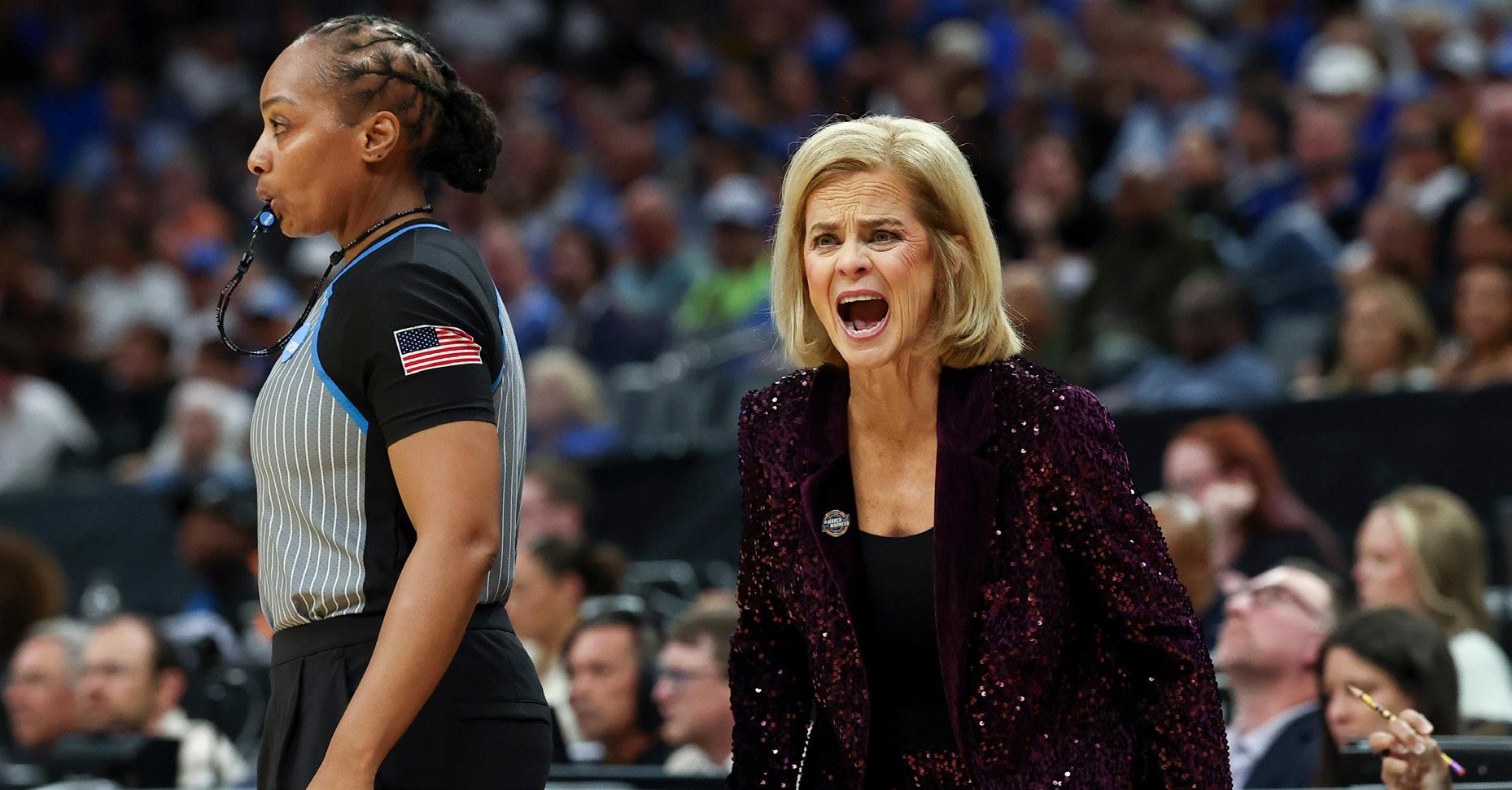
“She gave us a spark when we just started real lethargic,” head coach Kim Mulkey said. “For whatever reason, we didn’t play with a sense of urgency or energy until it was about five minutes to go in the game, and we were down eight, and then we turned it up.”
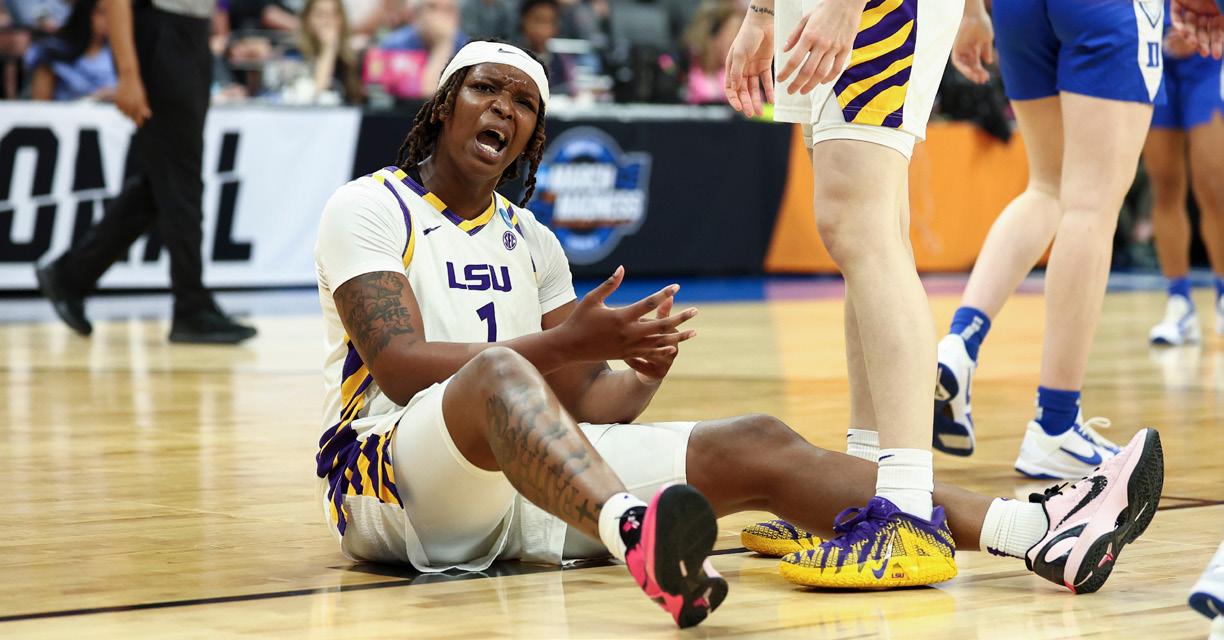
Mikaylah Williams was the second-best player offensively, scoring 22 points, while Johnson chipped in 13. However, the two shot an inefficient 12-for-30 (40%) from the field.
The all-around team performance LSU had in the first matchup was nonexistent, as only three players finished the game with double digits.
The lack of urgency was seen especially on the defensive end.
Though the box score showed even rebounding numbers, rebounding seemed to be rocket science for the Tigers. Mulkey said it was the real reason the team lost, not the gamewinner.
“Crazy shot like [the game-winner] beat you, but rebounding and second-chance points really beat you,” Mulkey said.
LSU outrebounded Duke the first time out, 34-25, and limited the
Blue Devils to only eight offensive rebounds and six second-chance points.
This time, the rebounding margin was tied at 41, while Duke grabbed 20 offensive rebounds and had 19 second-chance points.
Rebounds were a problem earlier in the season, and the team even wore “Mebounds” T-shirts trademarked by former LSU Tiger Angel Reese to emphasize the importance of rebounding.
“We couldn’t grab a rebound,” Mulkey said. “And you look at the stats, and we had the same number of rebounds, but that’s misleading. We couldn’t rebound the ball so that we could take off and transition. And it was just kind of like we were moving in mud.”
The slow start dragged LSU down and forced the team to play catch-up for the entire game. It wasn’t just that the Tigers weren’t scoring well; it was the fact that there was no energy to begin the game.
“I would say [there are] certain things the defense and the opponent do, but your energy and your excitement are not something that the other team keeps you from doing,” Mulkey said. “We got back in the game doing what we normally do.”
BY TRIPP BUHLER Staff Writer
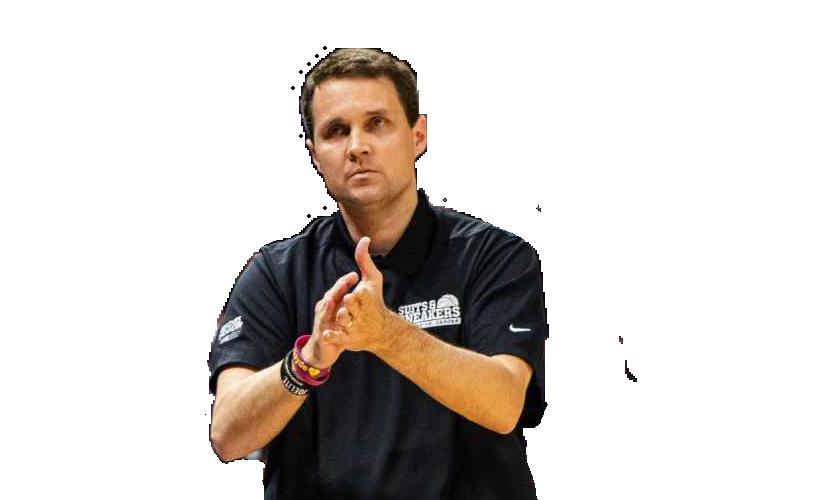
Former LSU men’s basketball head coach Will Wade will return to replace Matt McMahon after just one year at NC State.
He signed a seven-year deal, said Jon Rothstein at CBS Sports.
McMahon was fired Thursday morning without cause, triggering an $8 million buyout, according to Shea Dixon at On3.
McMahon was named head coach after Wade was terminated
in 2022 for offering student-athletes impermissible benefits.
Wade went a combined 10551 overall and 56-33 in the SEC in his four seasons, including an SEC regular season championship in the 2018-19 season. His teams also made three NCAA Tournament appearances, including a Sweet 16 appearance in that 2019 tournament.
Since being let go from LSU in 2022, Wade has coached at McNeese and NC State, bringing each school to the NCAA tournament at least once.
McMahon led the LSU men’s basketball program for four years. In his first, he saw the team win two SEC games and finish last in the conference. Despite the next year’s strong SEC play, non-conferences losses kept LSU out of the big dance.
The decision from Athletic Director Verge Ausberry comes after LSU finished last in the SEC this season and was eliminated in the first round of the SEC tournament, losing 87-82. It’s the second time LSU finished last in the conference under McMahon.
LSU was also one of two teams from the conference to not make the NCAA tournament. McMahon and LSU finished the season 15-17, with a 3-15 mark in SEC play. A lowly 17-55 conference record takes the spotlight of the McMahon era. Nine of those were in the 2023-24 season alone. He went 60-70 overall.
LSU has never been ranked with McMahon as head coach. His postseason record, and gen-
see WILL WADE, page 9
Louisiana State University Baton Rouge, La. 70803 LSUReveille.com

ADVERTISING (225) 578-6090
Layout/Ad Design ASHLEY KENNEDY
Layout/Ad Design REESE PELLEGRIN
&
The Reveille holds accuracy and objectivity at the highest priority and wants to reassure its readers the reporting and content of the paper meets these standards. This space is reserved to recognize and correct any mistakes that may have been printed in The Daily Reveille. If you would like something corrected or clarified, please contact the editor at (225) 578-4811 or email editor@lsu.edu.
The Reveille is written, edited and produced solely by students of Louisiana State University. The Reveille is an independent entity of the Office of Student Media within the Manship School of Mass Communication. A single issue of The Reveille is free from multiple sites on campus and about 25 sites off campus. To obtain additional copies, please visit the Office of Student Media in B-39 Hodges Hall or email studentmedia@ lsu.edu. The Reveille is published biweekly during the fall, spring and summer semesters, except during holidays and final exams. The Reveille is funded through LSU students’ payments of the Student Media fee.

JORJA ETHRIDGE / The Reveille LSU students pick up trash near LSU Lakes as a part of the Geaux Big Week of Service on March 28.
BY JORJA ETHRIDGE Staff Writer
Last week, LSU departments and student organizations hosted Geaux Big Baton Rouge, LSU’s largest annual service event.
Geaux Big used to be a oneday event; now, it lasts a week. Students can participate in different activities that give back to the Baton Rouge community.
Many events this year were aimed at conserving the environment. For example, on Monday, Campus Sustainability invited volunteers to help sort recyclables.
Makenna Todd, a student worker for campus Sustainability and a wildlife ecology senior, said Tiger Stadium donated ex-
pired soda bottles.
Bottles cannot be recycled unless they are empty. The volunteers used crawfish tables and buckets to empty the bottles before putting them in a dumpster where they will be processed and recycled.
Todd said that campus Sustainability does all the sorting and recycling on campus. The department has large dumpsters for different types of plastics, aluminum and metals.
Todd said that sorting recyclables makes the process easier and more efficient, leading to more materials actually getting recycled.
She explained that sorting is especially important for plastics. They have to separate plastic film from other plastics because
it can get stuck in the machines.
Criminology senior Noemi Duran helped empty the soda bottles. She said she volunteers often, whether it is for her sorority or on campus at places like the Food Pantry.
She participated in campus Sustainability’s game day cleanup in the fall, so she thought it would be fun to help with this recycling event for Geaux Big.
“People can make an impact, and just one person doing it alone isn’t enough,” Duran said. “As you can see today, we’ve gone through a bunch of packs of Cokes. We can get more work done together than alone.”
On Tuesday, Student Government cleaned purple signs on
BY JORJA ETHRIDGE Staff Writer
LSU professors are working to predict the future of the Lower Birdsfoot Delta, where the Mississippi River flows into the Gulf.
Oceanography and coastal sciences professors, Tracy Quirk and Matthew Hiatt, and geology and geophysics professor Carol Wilson are conducting this research for the Mississippi River Delta Transition Initiative, or MissDelta.
The Birdsfoot Delta is vulnerable to land loss due to factors like subsidence, sea level rise and levees.
Quirk explained that MissDelta aims to forecast the future of the landscape over the next 50 to 100 years and determine the best practices to manage and protect it.
“It’s an area of incredible socioeconomic importance,”
Quirk said. “It’s a major trade route. It’s very important that the marshes there are protecting the channel.”
Quirk said the Army Corps of Engineers and the Louisiana Department of Wildlife and Fisheries are concerned with maintaining these wetlands because of the habitat they provide. This landscape also has many recreational and commercial fisheries.
The National Academies of Sciences, Engineering and Medicine fund MissDelta. It is a fiveyear project that began in 2023 and includes 14 institutions. LSU and Tulane are leading the initiative.
The LSU team is focused on researching marsh land building. However, each member of the team performs a different role.
Quirk studies marsh plants. She is investigating how environmental conditions influence
STUDENT GOV
BY MORGAN VANNOSDALL Staff Writer
LSU’s Student Government has introduced a new AI Taskforce, designed to reduce the number of students falsely reported to the Student Advocacy and Accountability office for AI misuse.
Student Body President Lavar Henderson launched the Taskforce earlier this semester after LSU began facing backlash about the number of AI-related reports the SAA office was receiving. This semester alone, SAA fielded over 1,000 AIrelated student misconduct cases.
Henderson appointed two cochairs to lead the committee: James Williams III, a music performance junior and chair of the Student Senate’s Academic Affairs Committee, and Jude Terrell, a political science junior and the president and cofounder of the Student Alliance for AI reform at LSU.
“As someone who has focused so much on academic affairs in my time at LSU, AI is a major contributing factor to the decline in public
STUDENT LIFE
the composition and well-being of marsh vegetation.
“If the marshes disappear, the channel’s going to disappear,” Quirk said.
Quirk conducts field work in the wetlands of the Lower Birdsfoot Delta. Undergraduate and graduate students in her Wetland Plant Ecology Lab help her conduct surveys in the field.
Quirk said some of her work overlaps with Wilson’s. Wilson and her students also study landscape elevation.
“She’s looking at sediment deposition, and I’m looking at the role that plants play in that process,” Quirk said.
Hiatt said his role involves determining how much water and sediment flow through the channels to the deltaic wetlands and how much it flows into the Gulf.
His team goes in a boat and
see MISSISSIPPI
trust of higher education institutions,” Williams said. “To me, that is a problem at the national level.”
Williams stated that the goal of the taskforce is to work with the SAA office to clarify the guidelines for AI use. They hope to find ways to minimize the number of false AI misuse allegations while maintaining the university’s standards for academic integrity.
The Taskforce is currently working with SAA to establish what qualifies as valid evidence in a case for AI misuse — and how AI detection technologies like Turnitin should factor into misuse cases.
“There’s no official policy statement regarding how Turnitin is used in the case review process, and there’s no real specific policy on cheating or misrepresentation,” Terrell said.
The taskforce is particularly concerned with how SAA frames the burden of proof in misuse cases.
Currently, professors can esca-
see AI, page 4
BY MADDY SNYDER Staff Writer
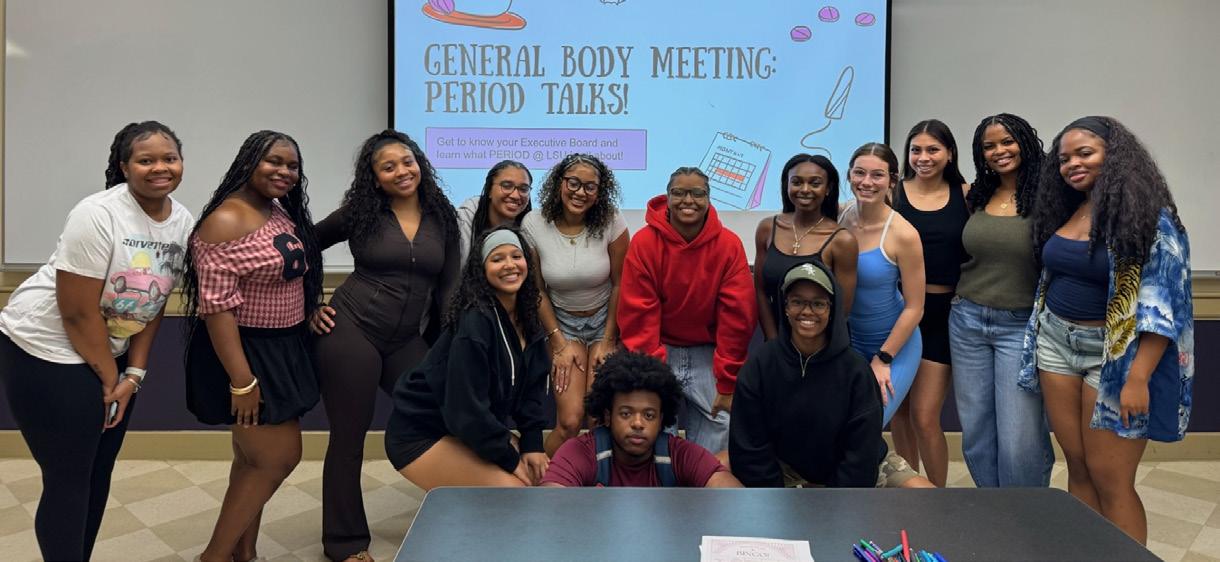
Period at LSU is working to eradicate period poverty and menstrual stigma on campus and in the Baton Rouge area.
The club is a chapter of a global organization that advocates for affordable, untaxed and publicly accessible menstrual products. The group has also created an educational curriculum about menstrual cycles and distributes thousands of period products to communities in need.
Ava McCombs, a coastal environment sophomore, founded the LSU chapter of the club because she wanted to create a safe space for students to share their experiences dealing with a period and learn from others around them.
McCombs herself has dealt with painful periods all her life and was diagnosed with endome -
triosis in January. She believed that by sharing her experience with others, she could encourage women on campus to seek medical help sooner if they have similar symptoms.
“If you’re going into a space where you hear somebody has a similar experience to you… I hope that the talks… encourage you to get the help that you may need,” McCombs said.
She emphasized how important it is for women to learn from each other because symptoms that go unchecked can develop into something more serious.
“I’ve heard many stories of women… like they just waited too long [to get help], or they were told they were fine when they really weren’t,” McCombs said. “If women aren’t allowed to have those spaces to talk about it, things could… de -
see PERIOD, page 4
CAMPUS LIFE
BY MADELYN LONG Staff Writer
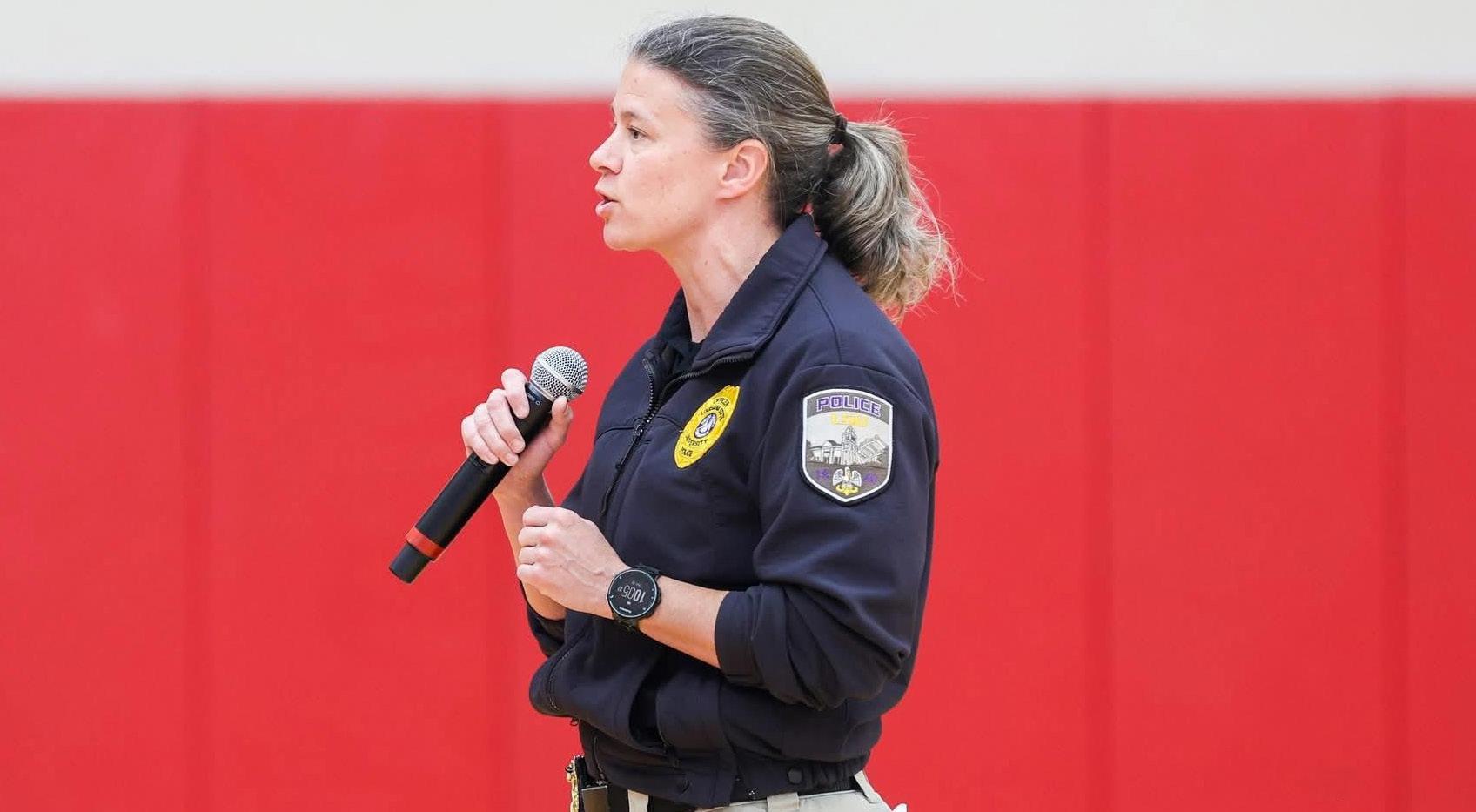
LSUPD officers and LSU faculty commented on the growing impact of women in the law enforcement field during Women’s History Month.
Currently, 12% of police officers in the U.S. are women, making them a considerably underrepresented group in the law enforcement field.
There are many reasons why women might pursue a career in law enforcement, including a family history in the field or simply job availability.
Sgt. Sarah Drake took on a job with LSUPD after being recruited by the department. Although it was not her first career choice, she quickly felt it was where she belonged.
Her first role in the department was as a patrol officer, mainly working night shifts. This role allowed her to find a unique niche when working in the community.
She said she was able to provide a different outlook on crimes that involved women.
“When we were dealing with females, oftentimes I might be the person to speak with female victims or witnesses of those crimes,” Drake said. “It just makes some other females feel more comfortable, and we were able to get a good interview or be able to make a difference there.”
Sarah Becker, director of LSU’s program in women’s, gender and sexuality studies, said that from an academic perspective, women in law enforcement are beneficial to the job as a whole.
“Women entering law enforcement means police depart-
“One of my favorite things about it was I got a small community feel. I felt like I was making a difference, but with some big city actions,” Drake said. “So, it met both criteria of what I was looking for.”
late misuse allegations with nothing more than a Turnitin percentage. If Turnitin flags a student’s assignment as AI-generated, a professor can report that student to SAA without ever meeting with that student or attempting to resolve the misuse dispute informally.
The Taskforce aims to raise the evidentiary standard for reporting students to SAA for AI misuse, requiring professors to provide more evidence than just a Turnitin receipt.
They also hope to find ways to de-escalate AI misuse allegations before students are reported to SAA.
“The goal of the taskforce is to resolve that issue before the recommendation, with student body interest in mind, to correct the issue, basically stemming the tide of new cases being brought up,” Terell said.
They also hope to make it easier for students to discuss AI use with their professors before turning in assignments.
“We’re trying to make it less
campus. Gabreyela Gonzalez, coordinator of campus affairs and sustainability and a candidate for Student Body Vice President, said that her sector has focused on beautifying campus this year. She said volunteers tackled signs around the parking garage.
Student Government held a Keep LSU Beautiful cleanup Saturday morning to end the week of service.
Volunteers picked up trash around the campus lakes and Milford Wampold Memorial Park.
Gonzalez, a chemical engineering junior, noticed a significant increase in participation for
ments gain access to the talent and skills of a larger segment of the population,” she said. “This benefits everyone, because we get more high achievers in law enforcement roles.”
Dina Moreau, Communications Supervisor with LSUPD, also elaborated on the role women play in law enforcement.
“We have unique and diverse ways of looking at things. That is always going to make for a better agency and better officers, benefiting both sides of the coin,” Moreau said.
But serving in this role has not always been easy for women in the LSU community.
“While it has been difficult at times, there have been very hard calls. I use those as an opportunity to grow and share my experience,” Moreau said.
Becker added that research on women in male-dominated fields often document the challenges they face.
However, she explained that
departments that engage with those challenges and prepare their teams to be adaptive have a greater success in creating a positive, effective work environment.
While March marks a month of celebration for Women’s History in all fields, women in law enforcement continue to pro -
mote their special role in the field to young girls who may be interested in pursuing a career in law enforcement.
“If that is your passion, do it. Don’t let people put you down or be a negative influence,” Moreau said. Get out and do what you want to do, continue to follow that passion.”
scary for the student to approach the teacher, which means embracing transparency,” said Aaron Lomastro, a construction management junior who serves on the Taskforce. “From the student side and the teacher side, we’re just really emphasizing and facilitating more conversations between teachers and students when it comes to how AI is used in the classroom because every teacher teaches differently.”
The taskforce hopes that these preventative measures can reduce the number of AI misuse cases reported to SAA.
They also hope to give students resources to advocate for themselves if they are reported to SAA.
The taskforce encourages students to familiarize themselves with AI policies and how they are implemented. They also recommend that students draft their writing assignments in Google Docs as a safeguard against false misuse allegations.
“A Google Docs version history of your writing process is the best evidence you can provide for yourself,” Williams continued. “It’s an extremely strong piece of evidence.”
this Geaux Big event compared to past cleanups, which already had plenty of volunteers.
She said that Student Government is a part of Campus Life, and Campus Life helped with outreach for this event. Gonzalez also said Student Government has made a point to post volunteer events on TigerLink two weeks earlier than they normally would, which she said has boosted student engagement.
All students were invited to participate in Geaux Big, and many student organizations turned out to contribute to the week of service.
Kennedy Wakefield, a prenursing sophomore and a member of the National Council of Negro Women, picked up trash
The taskforce has also worked closely with LSU Communication Across the Curriculum to help faculty members redesign or rethink aspects of their courses in a postAI world. They have also worked alongside the Faculty Senate, the Office of Academic Affairs and the communication studies department.
Williams said that the taskforce had met with the director of SAA, Jonathan Sanders, where they discussed how the Taskforce can help communicate the office’s expectations for AI use to the student body.
Each member of the taskforce is currently doing research on AI usage in order to broaden the scope of information and inform policy changes at LSU.
There are currently around 13 members of the Taskforce. In the future, they hope to expand to incorporate perspectives from a variety of students across campus — including graduate students and law students.
The taskforce is open to hearing student concerns and recommends that students with any questions reach out to the members directly and are open to hearing student concerns.
around the lakes from 9-11 a.m. She said it was easy for her to participate in Geaux Big.
“Stuff like that is basically what I surround my whole life around, volunteering,” Wakefield said.
She enjoyed building relationships with other students who like volunteering.
Nathali Guevara Reyes is an interdisciplinary studies senior and also Student Government’s assistant coordinator for campus affairs and sustainability. She helped lead the cleanup.
She said Geaux Big has been impactful.
“I’m so excited to be a part of this amazing initiative and to see how it constantly grows every year,” Guevara Reyes said.
PERIOD, from page 3
velop worse and worse.”
Jayden Thomas, vice president of Period at LSU and a sophomore marketing major, also suffers from endometriosis. She pointed out that negative stigmas around menstruation have contributed to a lack of education surrounding women’s health.
“I think periods have such a negative stigma, so not many people are as educated on them… a lot of women go years or never get diagnosed with [endometriosis], and they just think they have a really bad period,” Thomas explained.
Black women, especially, are hesitant to seek medical help because their concerns are often ignored, which can lead to an overall sense of distrust and frustration with the health care system. McCombs hopes that the organization will encourage Black students to seek medical care despite these hesitations.
“Black women often especially are systematically more ignored than our white counterparts and therefore may not be willing to
MISSISSIPPI, from page 3
measures water velocities and amounts of sand and mud in the water column.
Hiatt also has a lab that undergraduate and graduate students participate in. It is called the Coastal Hydrology, Hydrodynamics and Oceanography Lab.
Quirk said the LSU team will finish its research soon.
“We probably have one more summer of doing field work and then we’re going to wrap it up,” she said. “We are starting to produce interesting results now.
The modelers will continue to work on the models.”
Hiatt said they developed a new method for tracking veloc-
even go in and see what may be wrong,” McCombs said.
In addition to creating a safe space for students to learn from each other, Period at LSU is also working to address period poverty in the Baton Rouge area.
“Period poverty actually affects the Baton Rouge community more [than LSU students],” McCombs said. “Many people live below the poverty line in Louisiana as a whole, [limiting] women and children who are menstruating to have access to the period products that they need.”
Menstruating is not only a physical tax on the body but a financial burden for many women living in the United States.
The club plans to help women struggling to afford menstrual products by making packages full of period products and distributing them at women’s shelters in Baton Rouge.
“One thing that we’re going to start doing is making packages for women’s shelters… because not only do you get your period, and it’s like a lot on your body, but also it’s a lot when it comes to money,” Thomas said.
ity around vegetation patches using drones. He added that they are working with many other members of MissDelta to quantify the future of sediment through the Mississippi River Delta.
Once the LSU team finishes investigations, they will give the information to the MissDelta modeling team. Models will create simulations of future scenarios of the Birdsfoot Delta to determine how to manage the region.
“The delta is extremely important for the security of the coastal ecosystem and communities and is a major driver of U.S. economics,” Hiatt said. “Its resiliency in the face of sea level rise and climate change is vital.”
BY CHARLOTTE TRENTALANGE Staff Writer
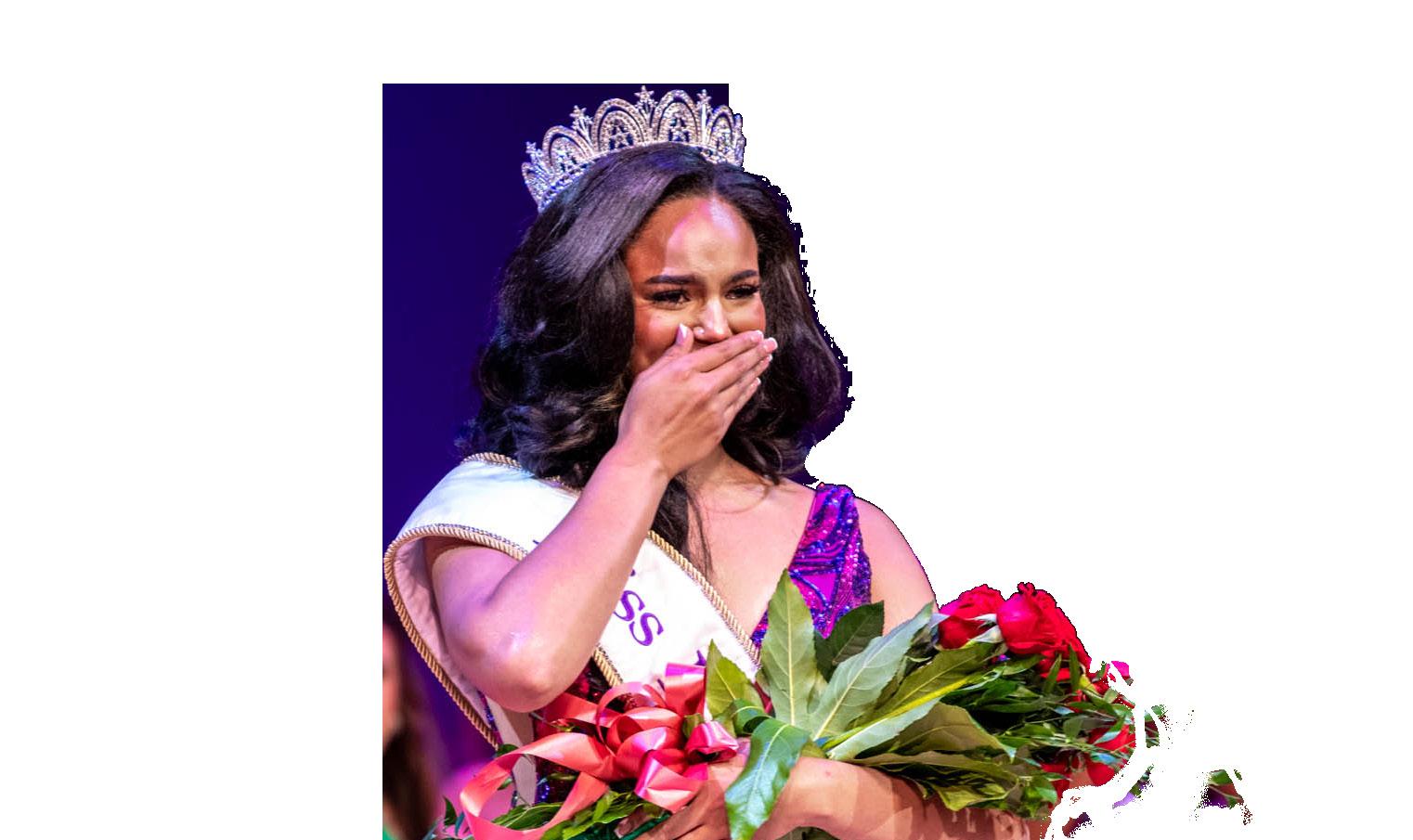
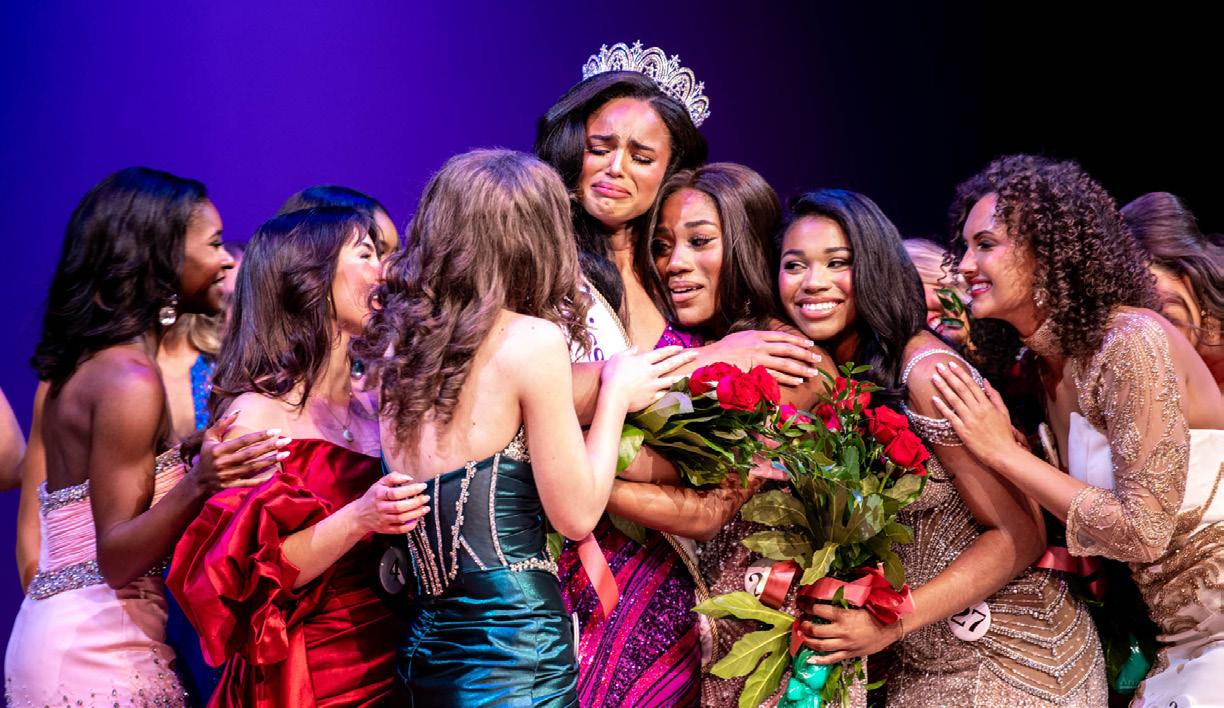
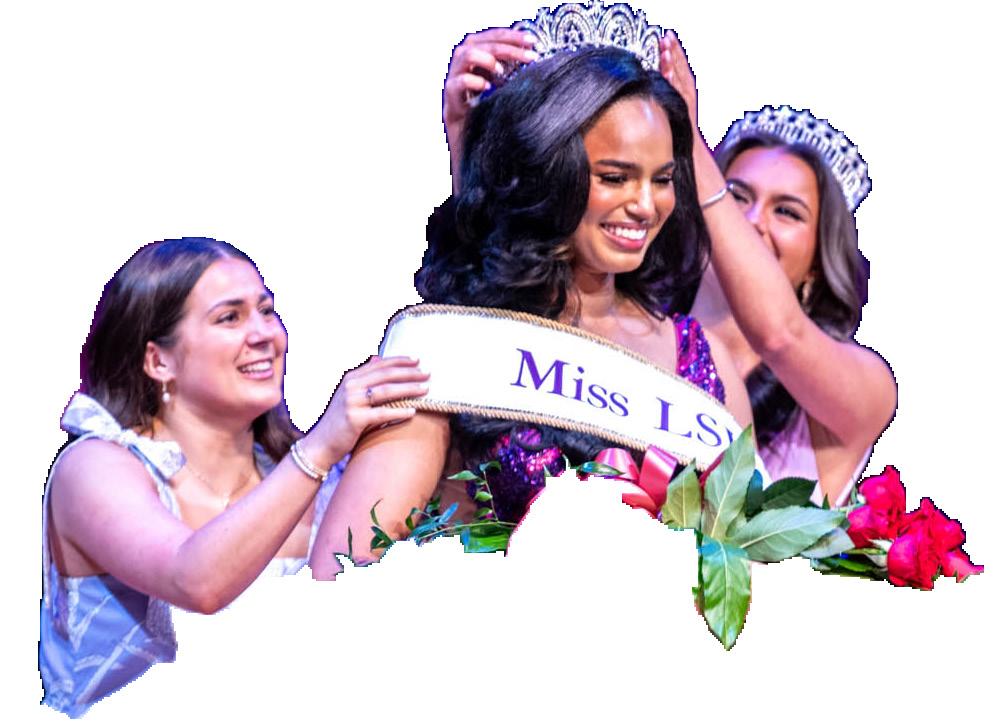
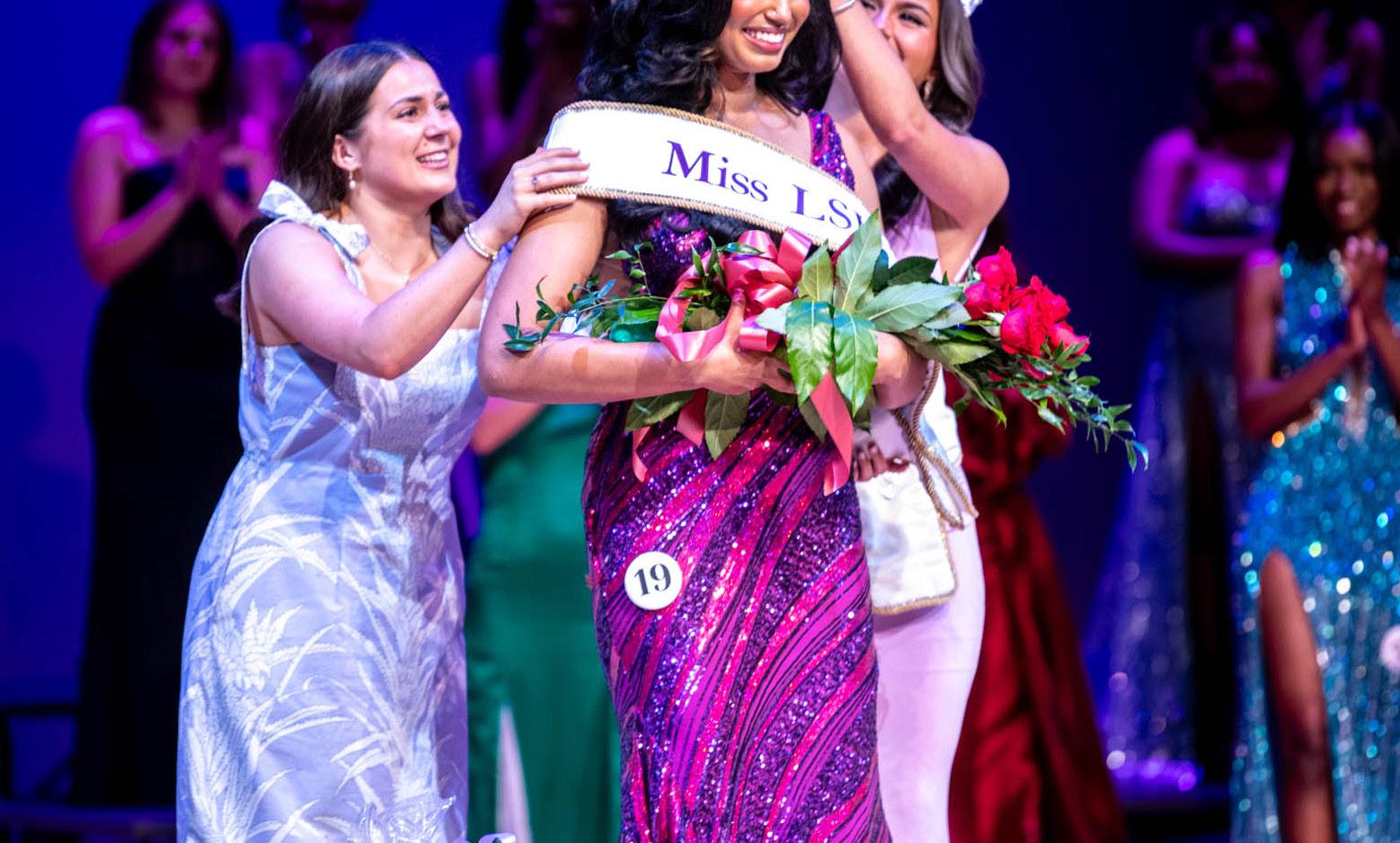
Kira Ekukpe, a junior business administration major, was crowned Miss LSU 2026 on Sunday night. Standing alongside runner-up Charleigh Travis and the 35 other women who competed in the pageant, she graciously accepted her title, beginning her year-long reign.
The 20-year-old from Dallas also took home Best Swimsuit and was entered into a community of women who have held the title since Delta Zeta took over the pageant in 1998. Celebrating her win were almost a thousand fans cheering her on, including a group wearing “Kira’s Crew” T-shirts.
The top six contestants were Carigan Carr from Shreveport, Louisiana; Ava Wierzbicki from Las Vegas; Laura Henley from West Monroe, Louisiana; Charleigh Travis from Leesville, Louisiana; and Rachel Kennedy from Baton Rouge, Louisiana.
Among the titles, six other women were recognized. Averi Blyss Crawford won Most Photogenic, Laura Lynn Rabalais won Miss Congeniality, Zoe Alesandra Kudlas won the fan favorite My Miss LSU award, Charleigh Travis won Best Interview and Larsen Melton won Best Evening Gown.
The 12 semi-finalists were asked the same question in the interview portion: “What is one quality you believe every effective leader must have, and how would you carry it into your role as Miss LSU?”
Ekukpe, who answered eighth after standing with noise-canceling headphones for fairness, said, “The confidence and ability to let things roll off your back … Being a leader is not about being perfect. It’s about letting mistakes happen. We’re all human. It’s OK to make a mistake — it’s how you recover from that mistake.”
Outgoing Miss LSU, Remi Landry, said the experience of passing on her title is bittersweet. Landry, who entered the pageant last year as a freshman with no prior experi ence, said it was far more than she initially expected and it
deeply shaped her college experience.
Her advice to the winner was simple: “Sit with it and be truly in the moment. You won this for a reason, and it’s your job to find that reason throughout your reign.”
Landry said the former Miss LSUs are a sisterhood, and she is excited for someone new to join their family.
“What you do with the title is up to you,” Landry said. “I can’t wait to see what [the winner] does with it and advocates for. One of the things that makes the title so unique is that my reign was different from [2024 winner Nikhia Sims’], which was different from [2023 winner Ivy Robichaux’s],” she said.
Throughout the year, Landry represented LSU at a wide range of events, from throwing the first pitches at recent baseball and softball games, to participating in campus traditions like the Ring Ceremony and visiting children at local hospitals. During her reign, she promoted personal growth and self-advocacy.
“I had to coordinate all my own appearances and my schedule,”
Landry said. “It was all on me, which was good because it taught me a lot about the real world.”
Beyond the crown, the Miss LSU title opens doors for involvement on campus and in the Baton Rouge community.
The event is
hosted by LSU’s Delta Zeta chapter in support of national philanthropies including the Starkey Hearing Foundation, American Society for Deaf Children and SeriousFUN Children’s Network.
Local philanthropies the event supports include St. Lillian Academy, a full-time school for individuals with social and learning disabilities; the Emerge Center, a local treatment center for children diagnosed with autism who are falling behind on speech and language development; and the Louisiana Schools for the Deaf and Visually Impaired. Delta Zeta’s national president, Cathy Irvin Painter, supported the event from the audience.
Rachel Fontenot, the executive director of Miss LSU, said the organizers set a goal of raising $100,000 this year, with funds going toward these organizations.
Contestants began preparing in late January, spending weeks perfecting stage presence and confidence.
“They are all incredible,” Fontenot said on Thursday. “They have all shown up consistently, and it’s been beautiful to see them grow.”
For many, Miss LSU is their first experience with pageant competition.
“We try to make it as easy and smooth for our contestants so they can have their moment to shine on stage,” she said.
Some aspects of pageantry, such as the swimsuit portion, draw questions about the importance it places on physical appearance and why they’re included.
“Judges aren’t looking at physique at all. It’s about confidence and how you carry yourself even in those uncomfortable situations,” Fontenot said.
Overall, she says the pageant is a celebration of girlhood and women empowerment — the beauty, brains and all else they have to offer.
From start to finish, Miss LSU is a student-driven initiative. With a committee and directors that begin planning nearly a year in advance, students, many of whom have never worked in pageantry before, coordinate logistics and fundraising events.



‘ALL-NIGHT
Zach Bryan headlines Tiger Stadium with opening performances from jR Carroll and Caamp on March 28.



Photos by Alexis Persicke | Design by Jillian Norman




BY LILY CENTOLA Staff Writer
It was a night to remember in Tiger Stadium on Saturday. Death Valley was alive with excitement as the crowd eagerly waited for Zach Bryan to step onto the stage.
Bryan was the first artist to perform at Tiger Stadium as part of LSU’s “Death Valley Live” series, and the concert was part of Bryan’s 2026 “With Heaven on Tour.”
Caamp and J.R. Carroll opened for Bryan. Both artists are known for their soft, wistful sounds, a great accompaniment to Bryan’s lively show that followed.
Shortly after the openers, a film appeared on the big screen of a Baton Rouge family who talked about their connection to the city, and another interview of a man who was bitten by an alligator. Through these stories, Bryan tied in this leg of the tour with its audience.

guitars and drums, among others — created a special sound for viewers in the stadium. The rich quality that live instrumentals added to Bryan’s music cannot be replicated on the radio with his recorded songs.
The song that Bryan credits for his rise in fame, “Burn, Burn, Burn,” created a special atmosphere in Death Valley. The lights were completely out, but fans lit up the stadium with their flashlights while singing about the impermanence of life. After the song, Bryan expressed how special he thought that moment was.
Throughout the concert, Bryan mentioned how grateful he was to be in Louisiana. He even talked about his Louisiana roots, saying that his grandfather was from Tioga.
“Louisiana is a different breed of people,” Bryan said.
He made sure to incorporate Baton Rouge and Louisiana throughout his concert by changing locations mentioned in his lyrics to places in this state.
For example, Bryan tweaked his song “Oklahoma Smokeshow,” singing “Louisiana Smokeshow” instead.
The bassist was also wearing an LSU T-shirt and hat.
The lights went off and Bryan appeared on the stage, opening with “Quittin’ Time.” Though the the singer-songwriter’s vocals were enough to hold the crowd’s attention, many of his songs were accompanied by music video-style
Once the films ended, people knew Bryan was about to come on and the sound of cheers filled the air.
film, which included lots of Southern nature scenes and videos highlighting diverse communities of people in the region.
Bryan’s band was truly remarkable, with 20 people accompanying him on the stage. The variety of instruments — including violins, trumpets, saxophones,
He played another one of his early songs, “Something in the Orange,” toward the beginning of the show.
“I don’t want to depress anyone on this Saturday night, but if I didn’t play this song, you guys might kill me,” Bryan joked. He may not have been totally wrong because almost everyone in the stadium knew every word to the song.
Bryan finished his concert with one of his hit songs, “Revival,” bringing out Mike the Tiger himself to dance with him while he sang. The concert ended with a fireworks show that lit up Tiger Stadium.
The energy in the crowd during the final song was just as bright as the fireworks.
BY SAVANNAH BOYNES Staff Writer
Through unwavering dedication and immense respect for the craft, the Fashion Association at LSU’s Spring Show challenges the notion that students are incapable of thorough event arrangement, proving quite the opposite with foundational dream chasing and fashion-styled rebirth.
FALSU’s annual fashion show for the spring 2026 season will occur on May 3 at the Crowne Plaza Hotel, with its cocktail hour starting at 5 p.m. and the show itself following. Tickets will be available for purchase on Wednesday 1 at noon, and the theme is “A Century in Style.”
The audience will get to see finalized designs, stylings and model walks, but there is much left to do in preparation for the event. Take a peek behind the curtains of what it takes for students to put on such an occasion.
Senior apparel design major JM Maleszewski is the senior show chair for the event. She started out as a member of FALSU for two years and moved up in her position once she applied for fashion show chair. After starting as an assistant show chair as a junior, she was then promoted to senior show chair for her final year at LSU.
Maleszewski is a supervisor for the entirety of the show. From overseeing the venue, ticketing and invitations to mentoring the junior show chair in her responsibilities, teaching the assistant chairs how to direct participants and tracking show progress, she is an orchestrator of both vocation and vogue.
“I always loved fashion from a young age, but I never wanted to just be an artist. I think a lot of people have that misconception that fashion is just art,” Maleszewski said. “When it is absolutely an art form, it’s also a business. It’s a psychology and it’s science.”
Maleszewski and the junior show chair, Amelia Kraus, began preparations in the fall by choosing a venue and determining the assistant chair lineup. Once February rolled around, they opened up designer, stylist and model applications and started planning the venue’s layout.
Venue selection calls for a calculation of the number of designers and stylists, as well as how many looks these chic engineers create. The Spring Show has sold out over the past two years at 600 tickets with a combined number of 45 designers and stylists, plus the models needed to show off the designs.
This number requires the fashion show’s chairs to work around the participant’s schedules, and chairs and participants alike have to stay on top of their responsibilities outside of the show.
“This is fully a labor of love. I spend almost all of my days in the lobby, doing homework and going to the museum and getting to hang out with all of my fashion friends and answering questions if people need me,” Maleszewski said. “Something about me is that I do a lot, I say a lot and I feel a lot because I care a lot.”
Sophomore public relations major Nila Guhasarkar is one of the two assistant show chairs, and she has been a member of the Fashion Association for two years now. Earlier in the school year, she was presented with the opportunity to apply for her chair position, and she jumped at the chance.
“I love fashion. I have loved fashion forever. I’m not a fashion major, but I’ve been sewing since I was eight years old,” Guhasarkar said.
Guhasarkar recounted how she was nine years old when she was first involved with a fashion show. It was at the Ogden Museum of Southern Art in New Orleans, and she fell in love with the show scene almost in-
stantly.
Guhasarkar said her and her cochair’s responsibilities fall mostly on the communication aspect of planning. They correspond with the event’s vendors and VIP guests and handle group chats involving the designers and stylists. They also manage the model casting calls and the pre-show photoshoot sessions.
Guhasarkar emphasized how communication is synonymous to clarification, and without this proper consistency, it would not allow opportunity for outside collaboration. This means involvement in loaning pieces from Time Warp Boutique, a Baton Rouge vintage clothing store, would not have been possible. Luckily, communication is all with the show’s organization.
Guhasarkar’s correspondence with show participants allowed her to open up her own interpretation for what the theme, “A Century in Style,” means to her.
“‘A Century in Style’ to me means showcasing fashion throughout time in a way that’s personal to each designer. That’s obviously our theme, but everyone has a different view of how that theme is translated to their personal style,” Guhasarkar said. “I think it’s really subjective, which is why I love this year’s theme, because it gives everyone a chance to put their own spin on it.”
In order to build excitement for the show, a glimpse behind the scenes on the chairs’ part is a must. Junior merchandising major Destyni Johnson is FALSU’s social media chair.
Johnson documents virtual glimpses into what goes into the creative processes, typically posting on the group’s Instagram. She explained how she has a lot of freedom over her content.
A specific aspect Johnson posts are the show’s styleboards. They show what a designer’s model will
be wearing, along with what specific garments will be used. It helps in monitoring participants as they stay on theme, and the boards are also used in the lookbook photoshoots.
In being a part of this portion of the show, Johnson witnesses a completely different side of what goes into fashion through the lens of “A Century in Style.”
“It means evolution and repetition, just seeing overall creativeness,” Johnson said. “That’s what fashion means to me: reinventing. The continuous changing and elevating of stuff from the past and then creating your own things from the future.”
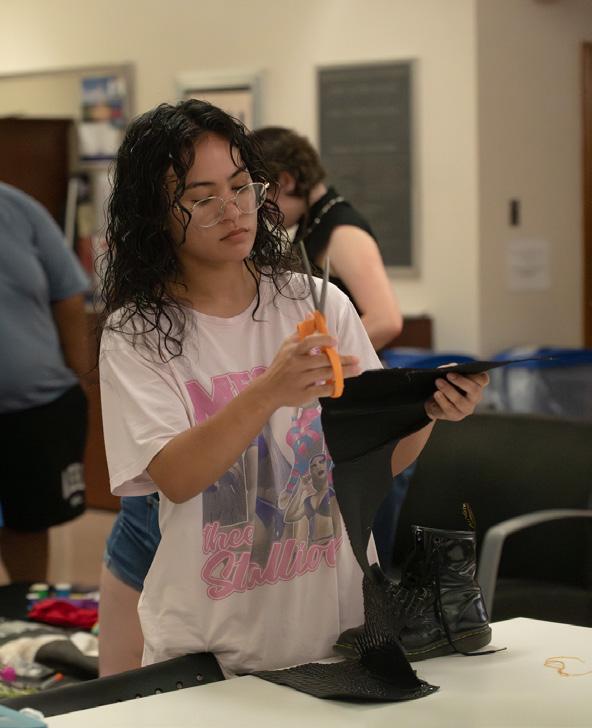
Naturally, there would not be a fashion show without its fashion designers. Senior apparel design major Martha Rigney is a senior designer for the Spring Show. She has created eight looks for the event, involving meticulous conceptualizing, workshopping and physical labor to allow her ideas to come to life.
Rigney discussed how inspiration for her looks is drawn from vintage fashion. This meant hours of whimsical reinterpretation of designs from
the ‘50s and ‘60s. She stressed how she was able to teach herself textile print design, allowing her to design all of her prints herself. For this year’s show, she decided to focus on the novelty of food-themed clothing, and she described one of her favorite looks that will be exhibited during the show.
Rigney explained how she created a drop-waisted dress that she paired with a corset-like, boned bodice. She even added a fabric belt as a nice vintage touch and finished the piece with a bubble skirt.
“I took some of the modern trends I’ve been seeing and fused them with this more vintage look,” Rigney said. “I think it creates something that a woman today would wear. I’m not just trying to make 1950s costumes; it’s all about walking that balance. Some of my looks are a little more modern, and some of them are a little more on the vintage side.”
Rigney said that designing for the Spring Show has been extremely gratifying because she has been able to put all of her skills to work, from sewing to beading. The culmination of stressful late nights working on these pieces has led to an exceptional, personal milestone for the designer.
FALSU’s preparational process has proven that despite the hardships surrounding time management and the balance of student extracurriculars and a social life, the students themselves are the moving parts of this large-scale project. The students’ unique personalities and preferences allow the show to be as fashionably abundant as it can be.
“People have this idea that students are somehow less than people in the real world, and while maybe their skills, tactics and strategies aren’t as refined, our designers create masterpieces,” Maleszewski said. “I always like to say that the fashion show is a great reminder for what can be rather than what is.”
BY TRE ALLEN Staff Writer
It comes down to one possession. 2.6 seconds left. When one advances to the Elite Eight, the other will be left heartbroken.
After trading timeouts, the Blue Devils get one last chance to potentially win the game.
The ball lands in the hands of Duke’s Ashlon Jackson, who had just missed two free throws to make it a three-point game.
She lets it fly. The ball caresses every ounce of the rim and falls. Jackson redeems herself with a game-winning 3-pointer.
Divided by the colors of blue and white and purple and gold, the Golden 1 Center was home to two teams trying to inch one step closer to the ultimate goal.
Flying over 2,000 miles to Sacramento, it’s a regular-season rematch from three months ago, where Duke and LSU meet once again in the Sweet 16. This time, it was the Blue Devils who got their revenge, winning and eliminating the Tigers 87-85.
By no means did it come easy. Both teams started the game slowly, combining for 2-for-10 from the field, but it was Duke that took advantage first.
The Blue Devils walked into the locker rooms at halftime leading 47-40, but it felt like it was a double-digit deficit.
Everything was going wrong for the Tigers as they trailed by 11 at one point in the first half. LSU had eight turnovers, three players with two fouls and shot
WILL WADE, from page 2
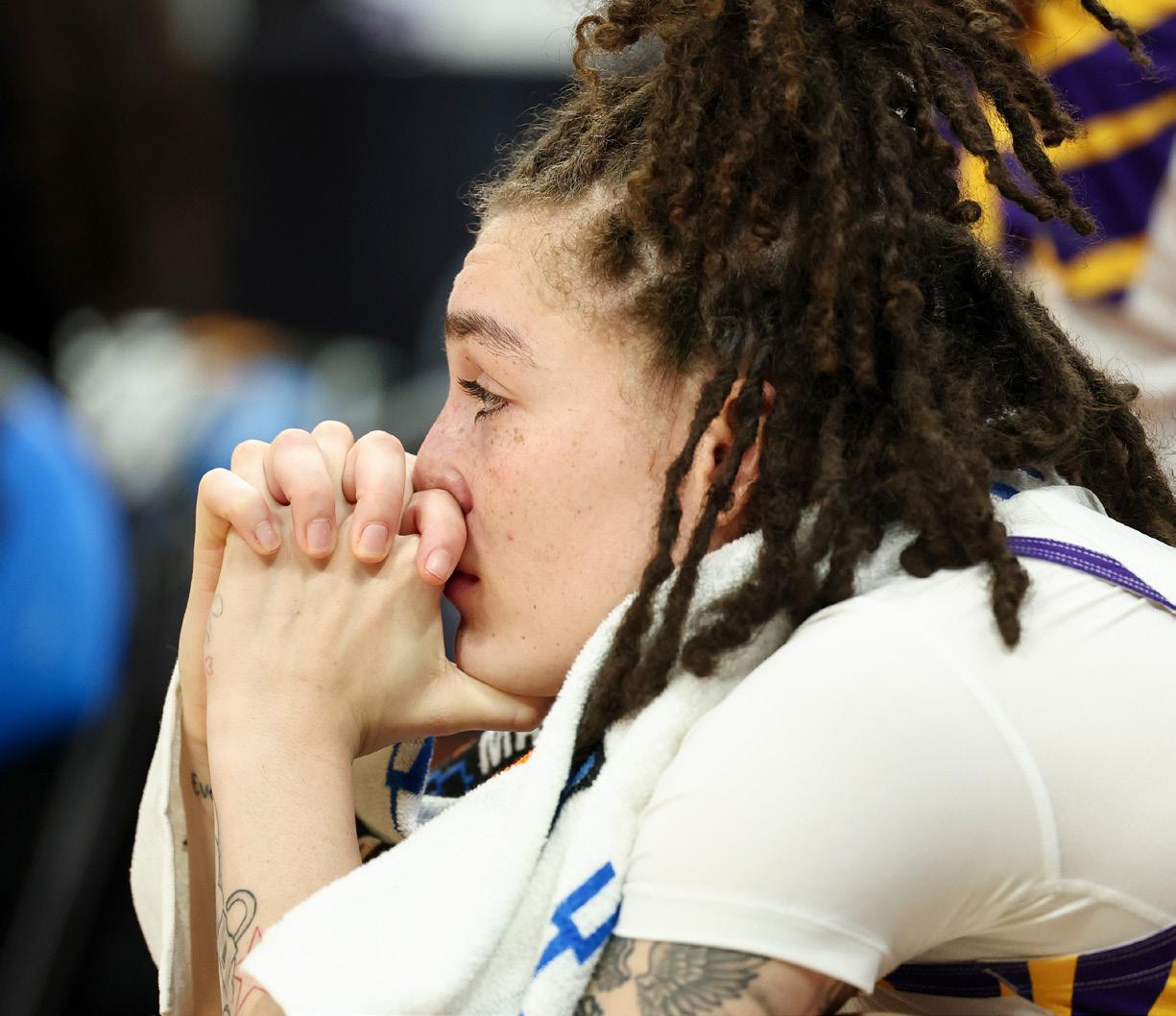
14-for-37 (37.8%) from the field. Even layups, the easiest shot on the court, seemed to be a challenge.
The Blue Devils dominated the paint, scoring 26 of their 47 points inside the restricted area. Mulkey searched high and low for someone to box out, play defense and limit second-chance points.
Duke’s Toby Fournier lived inside, getting hook shots and layups to fall, scoring 14 points.
Offensively, there wasn’t much movement with multiple stagnant possessions and poor
shot selections dragging LSU down. Stars Mikaylah Williams and Flau’jae Johnson were a combined 3-for-14 (21.4%) from the field.
Through the dark, stormy cloud where the Tigers looked out of sorts, MiLaysia Fulwiley was shining through it all.
Fulwiley led both teams at intermission with 18 points and was the sole reason why LSU wasn’t down by more. She finished the game with 28 points, four rebounds and four assists.
Attacking the basket, knocking down threes, finding the
open teammate and blocking shots on defense, she impacted the game in a variety of ways.
“She’s just had spectacular moves and quickness, and she did the same thing against Duke last time,” Mulkey said. “She’s just hard to guard and she gave us a spark when we just started real lethargic.”
Now that Fulwiley has kept the team’s head above water, it was time for someone else to join the party.
That first half, where Johnson and Williams had a combined 12 points, flipped in the second half.
Not settling for contested jumpshots, Johnson attacked downhill, getting to the basket and finishing around the rim.
In the third quarter alone, Johnson scored 10 points while shooting 5-for-7 (71.4%) from the field. She finished the game with 13 points and five rebounds, while Williams, who also had success going to the basket and using her body, finished with 22 points and five rebounds.
Fighting back, LSU regained the lead for the first time since the 9:45 mark in the first quarter. Basketball is a game of runs, and every time the Tigers showed signs of life, the Blue Devils took it away, having a run of their own.
The lead that once looked like a spark to potentially carry them to victory was starting to vanish as Duke brought the lead back to 11.
see LOSS, page 9
Wade’s return seemed possible se, the president at McNeese during LSU without Schroyer.
BY DELANEY POTTHAST Staff Writer
LSU gymnastics’ Kailin Chio has once again written her name in the history books as she takes home the title of SEC Gymnast of the Year.
The No. 1 gymnast in the nation has defied the “sophomore slump” stereotype on the road to her accomplishment. She earned six weekly conference awards this season.
Teammate and fellow sophomore Kaliya Lincoln also earned SEC Co-Specialist of the Year honors for her individual standout performances, especially on floor.
Throughout her career, Chio has collected 14 SEC Gymnast of the Week awards, five of which were earned this year, as well as her first SEC Specialist of the Week award following her performance against Arkansas, where she made history.
At that meet, she earned three 10s in a row, and became the first gymnast in NCAA history to complete a perfect meet when competing on three events and the fifth gymnast in NCAA history to score three 10s in a single meet.
With this, the Nevada native has collected an impressive 10 career perfect scores, nine of which she earned in the 2026 regular season.
Both Rousse and Schroyer brought Wade to McNeese in 2023
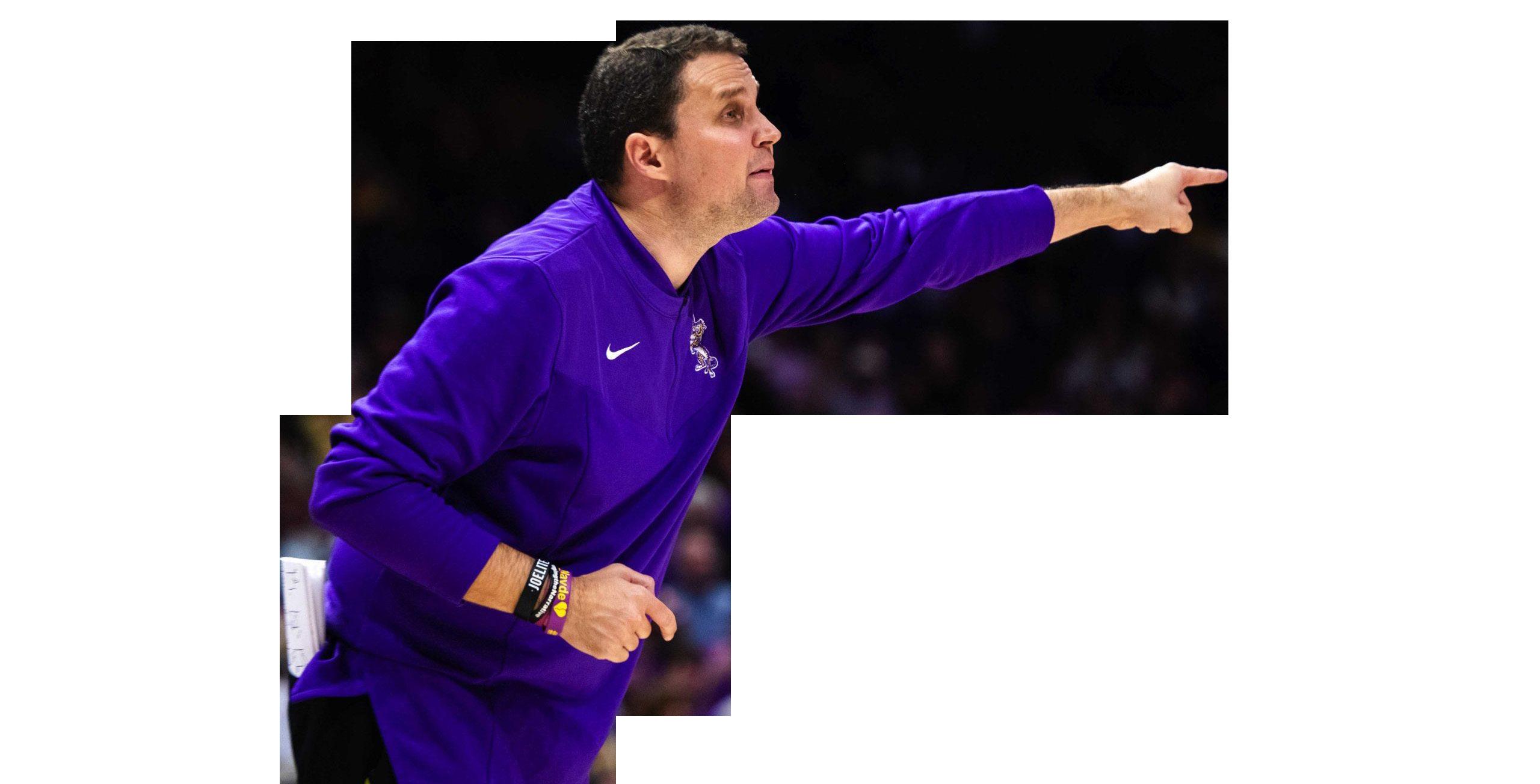
He will be another polarizing ing the spotlight with Kim Mulkey, Will Wade will speak at his first press conference back
After being named the 2025 SEC Freshman of the Year and now the 2026 SEC Gymnast of the Year, Chio holds 16 SEC honors to her name in just two years with the program.

BY TRIPP BUHLER Staff Writer
The final game of LSU’s weekend series versus Kentucky included drama, long bombs and long innings, but LSU topped the series with Sunday’s 17-10 win.
It’s a new season for the Tigers as they’re about halfway through the 2026 campaign. After a rough start to the year, LSU has found its stride.
“We have to have a turning point in our season at some point, and we decided this is gonna be the week,” centerfielder Derek Curiel said. “That’s how we’re playing from now on. It’s a new half of the season … It’s a new era.”
Seth Dardar gave the Tigers the spark it needed with a moonshot home run that hit the roof of the Marucci Performance Center beyond the right field bleachers. His bat went about 40 feet up in the air after his home run, drawing exception from Kentucky coach Nick Mingione.
Curiel recalled that he was saying a prayer for Dardar during that at-bat, and right before he finished, the ball was launched out of Alex Box.
Head coach Jay Johnson
SOFTBALL

SAM BECKER / The Reveille
LSU baseball 5th-year senior infielder Seth Dardar (24) celebrates during the Tigers’ 17-10 victory vs Kentucy March 29 at Alex Box Stadium.
thought that Dardar was going to get thrown out for the celebration, so he told him to flip his bat lower next time.
Dardar went to talk to the umpires, which drew Johnson out from his dugout to defend himself and his team. Zach Yorke also had to be held back from charging out of the LSU dugout.
“Just another weekend in the SEC,” Johnson said.
The two biggest parts of that play were a constant theme
throughout the game. It was an emotive and animated afternoon for Johnson and the Tigers, who were digging the long ball.
But Johnson had been agitated all game long. When the Wildcats clawed out to a 7-0 lead in their first three offensive frames, he was visibly frustrated and moved through multiple pitchers quickly.
His unhappiness was apparent in the fifth inning when Mason Braun was out by a mile trying to advance to third, despite receiving the stop sign from Josh Jordan at third base.
But things started to change when a new mindset and the long ball saved LSU.
“It was an attitude thing,” Curiel said. “I think everyone in that dugout today knew that you just felt it. You felt the attitude change, and you felt the mind shift.”
Dardar blasted a home run, and John Pearson hit a grand slam, which was the highlight of a six-run third inning to bring the Tigers within one. Curiel added a solo home run in the sixth inning as well.
“There’s no one else you’d want up [to bat] besides John,” Curiel said. “John’s been smashing the ball,” Curiel said. “It was
kind of the momentum and the energy we needed.”
Johnson said Dardar and Pearson’s home runs were the biggest swings of the year so far.
“We recruited John because I thought he would be a hitter, and in the games he’s impacted, he’s really been a hitter,” Johnson said.
The Tigers also had three doubles to go with the home runs and help open this game up. All of those extra base hits changed the trajectory of the game, where it seemed like LSU continuously tried to shoot itself in the foot.
But in the other halves of the innings, walks were killing the pitching staff. Through the first 18 batters of the game, LSU allowed seven to reach without issue, walking six and hitting one with a pitch. Through five innings, LSU walked 10 batters, with three of those walks starting as 0-2 counts.
LSU didn’t walk anyone else after that, however.
But the damage had already been done to the bullpen, with Kentucky and LSU combining to use 18 pitchers in the game.
Gavin Guidry got the start but only lasted 1.1 innings be -
fore being taken out after allowing six runs. Four more pitchers came in quick succession to get just enough outs. Cooper Williams threw 1.1 innings and could have stayed in longer, but Mavrick Rizy relieved him and let a few runs cross.
Deven Sheerin had to come in and finish the fifth, where he had the Wildcats down to their last strike, but two straight hits broke the game open again as Kentucky went back up by four.
Sheerin was visibly upset with himself after the second hit and almost forgot to back up the catcher on the throw home.
Danny Lachenmayer and Grant Fontenot helped move the game to the ninth inning, where the Tigers entered up seven after they added a few more runs in the eighth from wild pitches and errors.
Fontenot closed out the ninth inning to end the marathon.
After taking the final two games of the series from Kentucky LSU earned its first SEC series win. The Tigers are now 19-10 and 4-5 in SEC play.
The Tigers face Southern at home on Tuesday at 6:30 p.m. before traveling to Knoxville on Easter weekend for a threegame series with Tennessee.
BY MARISSA REISS Staff Writer
In the final game of a highly anticipated series, LSU softball’s pitching just couldn’t hold down No. 3 Oklahoma, suffering an 8-4 loss on Sunday and dropping the series.
The Tigers’ bullpen, which had been phenomenal all weekend despite a loss to open the series, just couldn’t shut down a fierce Oklahoma offense. A massive four-run first and fifth inning for the No. 3 team haunted the Tigers’ mound.
Junior LSU pitcher Cece Cellura started her second game of the series in the circle but immediately looked unlike herself as she got into a pitching jam early that she couldn’t find her way out of.
Cellura’s pitch count only reached 11 in this game.
Kai Minor started the Sooners’ hitting on the third pitch Cellura threw with a leadoff double. Sooners’ freshman catcher Kendall Wells clobbered her first pitch from the junior pitcher to knock in a two-run home run for Oklahoma
LOSS, from page 9
But not all hope was lost. The Tigers once again punched back. After trailing, 78-67, LSU narrowed the deficit. Plays like Johnson pursuing a loose ball and ending up over the scorer’s table showed how bad the team wanted it. Battling back, the Tigers got
and get on the board.
The onslaught only continued for Oklahoma from there, a team clearly ready for revenge after the Tigers handed the program its first conference loss of the season Saturday.
Gabbie Garcia drove in her 16th home run of the year to advance the Sooners’ lead to three. LSU head coach Beth Torina decided to relieve Cellura’s day very early with Jayden Heavener.
Heavener found herself in trouble, too.
She hit Isabela Emerling with a pitch before Abby Agbayani singled up the middle, which allowed Emerling to round the bases and score. Heavener hit Sydney Barker with a pitch as well, but a final foul-out to third ended the lengthy inning with four Sooner runs.
In addition to Oklahoma’s offensive power, the pitching efforts stood solid.
Sophomore right-hander Miali Guachino started in Game 3, facing Jalia Lassiter, a known leadoff threat. Guachino recorded huge strikeouts on Lassiter, Tori Ed-
it all down to one. Jackson is sent to the free-throw line with a chance to make it a three-point game. The first one misses; the second one also misses.
A chance to win the game, Johnson drives off the curl but gets blocked, falling into the hands of Williams, who gets fouled and has a chance to take the lead.
wards and Alix Franklin, leaving the Tigers scoreless.
Kylee Edwards changed that in the second inning to put the Tigers on the board.
Edwards just got under a rise ball from Guachino for her second home run of the weekend, her first being a two-run bomb on Saturday that aided in LSU’s win. On the very next pitch, Char Lorenz hit her own home run. Both she and Edwards recorded their fifth home runs of the season back to back.
Daniel and Edwards had themselves a busy day on defense at first and second against the Sooners. LSU used its challenges wisely to overturn two safe calls at first and ensure one less Sooner reached base as it aimed for a comeback.
“I think it’s Sunday in the SEC, you know it’s gonna be all bets off,” Torina said to ESPN about her team’s ability to come back from a 4-0 setback. “You’ve got to throw everything you’ve got at them. You know it’s going to be a fight no matter who you’re playing. They call us the ‘Fighting Tigers,’ that’s what we came to do.”
We’ve seen this story before against South Carolina, but this time it’s Williams on the freethrow line. Both shots fall, and the Tigers lead by one.
With momentum all on the Tigers’ side, after trailing the majority of the game, LSU needed one stop with two seconds left to advance.
Jackson flared out to the
A rocky fifth inning for Heavener drove a gap in the Tigers’ comeback effort with only one out. Emerling hit her 12th home run of the season on a 69 mph pitch to drive in three runs for Oklahoma, now up 7-2. Ella Parker hit her own solo shot to add another run to the Sooners’ lead in the sixth. In retaliation at the bottom of the inning, Edwards hit her second ball out of Tiger Park on the day to cut the Sooners’ lead back down to five. The rest of the inning was quiet as Guachino induced two strikeouts on Lorenz and Maci Bergeron before a groundout moved the ballgame into the seventh.
Former Sooner Paytn Monticelli received a loud standing ovation from Tiger fans as she came in to shut down the final inning and relieve Heavener. She forced two quick outs before her third and final batter stepped into the box.
Monticelli struck out Lexi McDaniel swinging to record the final out, fired up as she headed off the field, and the Tigers received one more chance to come back.
wing by Duke’s bench, faking, Johnson left her feet and the ball left Jackson’s hand for a three. Thousands held their breath waiting for the result. The ball rolled around the rim not once but twice and eventually fell through the net to give the Blue Devils the win.
“I felt like I was in a dream,” Jackson said. “I’m very blessed
Two aboard and only one out in the seventh gave LSU the hope that it had looked for all game. Guachino walked Lassiter, and Daniel singled with Tori Edwards up at the plate. Edwards struck out for the fourth time in the game, but Franklin singled up the middle to cut Oklahoma’s lead to four.
The game came down to one final out and a full count for Kylee Edwards. After fighting numerous fouls, Edwards hit a ball to the right that curved away from Ella Parker, but to the Tigers’ disadvantage, the Sooners’ right fielder was fast enough to make the grab.
Guachino finished a complete ballgame, striking out 11 Tiger batters in her win. She only allowed four runs on seven hits to earn her 10th win of the season after earning her ninth in Game 1 of the series.
The Tigers now sit at 23-12 overall and fall 4-8 in conference play, but they’ll receive a muchneeded break before traveling to Columbia, Missouri, to take on Mizzou in a series that begins on April 2.
to have that moment. It’s such a great feeling, like I told my teammates, it really doesn’t feel real right now. Feel like I’m on cloud nine.”
A shot that’ll live in the mind of Duke fans forever, the Blue Devils advanced to the Elite Eight to face UCLA, while LSU’s season ended in a not-so-sweet way.

Since the COVID-19 pandemic, social media has been flooded with hygiene content. Influencers make videos on how to best sterilize your home and live a cleaner life. It’s even given rise to a “Clean Girl” aesthetic, which seeks to promote a unique brand of cleanliness through personal presentation.
The outpouring of hygienerelated content has led to some pretty outlandish claims about what makes someone hygienic. Many of the practices you’ll see online are not only unnecessary, but may also cause health problems long-term.
Many people have taken to washing their chicken before cooking it, much like you would vegetables. The idea is to rinse off any germs before preparing it. In reality, the water makes it easier for bacteria to spread from the poultry onto other surfaces.
It’s also been suggested by
some scientists that the rise in allergies and weakened immune systems in wealthy countries can be attributed to oversterilization. When we disinfect every surface in our home, we kill more than just disease-causing bacteria or viruses. We also cull the germs which build up immune systems.
Engaging in pseudoscientific cleaning practices and being overzealous on hygiene can have harmful effects on one’s health.
This mentality can be even more destructive when applied on a grander scale.
Take LSU classrooms, for example. Walk into any lecture and you’re likely to see an air purifier sitting at the front of the room.
The university installed these in every classroom as part of the effort to safely reopen campus during the pandemic.
The idea is simple: COVID-19 is an airborne virus and, by filtering the air in a classroom, you can prevent illness. The data backs this up; studies show that high-grade filters can remove the virus from the air with proper ventilation.
But one has to question how effective this method is on a
campus of 30,000 students, especially when other prevention methods have been totally abandoned.
LSU no longer requires masking in its classrooms and students aren’t required to get vaccinated for COVID-19. There is no way to socially distance in a lecture hall with hundreds of other students. In our rush to end lockdowns after only a few months, we replaced these triedand-tested methods of prevention with less effective but evervisible air filters.
At the start of every semester, respiratory viruses rip through the student body. Sometimes called the freshman flu or the frat flu, the mass spread of a virus can cause serious disruption to one’s academics. Missing the first week or two of class to recover can make it extremely difficult to start the semester off strong, not to mention the effects on one’s long-term health.
But where does this extreme drive to be clean come from? It certainly has roots in the religious character of our country. The Protestant proverb “cleanliness is next to godliness” argues
that personal hygiene can be equated with morality. Maintaining your hygiene and that of your home is a sign that someone is respectable and good. As a result, many people feel the need to prove their worth through extreme cleaning.
It likely also has roots in America’s stark class division. Working-class Americans are seen as being dirty due to the often blue-collar nature of their work. The rich, by contrast, are not forced to work outdoors or in plants and can afford to pay others to do their cleaning for them. This popular perception of the upper classes being cleaner leads people to be overzealous in their cleaning as a way of making themselves seem welloff.
Whether it stems from a desire to be rid of germs or to raise one’s social status, it’s important to reject these notions and focus on real hygiene. Pseudoscience must give way to data-driven methods of keeping people clean and healthy.
Wash your hands, wipe down your counters, mask in public, and stay home if you’re
sick. But don’t let yourself be pushed into false practices by people who don’t actually know what’s best for you or judge you for not meeting their arbitrary standards. Being clean is about hygiene, not trying to convince others that you’re hygienic.
Miriam Evelyn Reeson is a 27-year-old political theory student from Baton Rouge, La.

The stats are increasingly clear: millions of Americans are desperate for a third option in politics. A 2025 Gallup poll found that 62% of respondents believed a third party is needed, while a Pew poll found that roughly half of respondents were angered at both the Democratic and Republican parties.
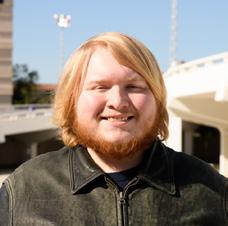
Now, out of nationally obscure Adams County, Ohio, a new folk hero has emerged: a poet, satirist, presidential candidate, and newly-minted fighter for American rights. This is, of course, Joseph Foreman, better known as Afroman.
Foreman originally rose to prominence off the back of his classic hit “Because I Got High,” using the success of that single to build himself a small but successful niche within the rap industry, quietly settling in small Adams County.
However, he returned to prominence in the aftermath of a police raid on his home in 2022. The raid uncovered no criminal evidence and Foreman was not charged, but the raid still left damage on his property. In response, he created a number of songs lambasting the officers, including the now- viral “Will You Help Me Repair My Door” and “Lemon Pound Cake.”
Foreman was then sued by the deputies for defamation in a trial which too made national headlines for his fiery testimony and unique attire, with a jury ultimately finding in his favor.
In the aftermath of this court case, one which will certainly enter the canon of sensational trials which briefly attracted the passions of the nation, it is worth taking a look at a lesser known aspect of Foreman’s career: his political aspirations.
While he has always been a vocal advocate for his number one issue, expanded marijuana rights, the rapper largely avoided politics until he launched a campaign for President in 2024. In the bleakest parts of that difficult campaign
season, between the destructive forces of the GOP and the ideologically malleable Democrats, I was drawn to this campaign for a time.
While I knew he could never win, it was refreshing to be able to have some fun with politics for the first time in a good while, and to find an outsider candidate who had actually cut his teeth on conflict with malicious authorities.
However, his campaign ultimately never really took off, and I found no evidence that he made the ballot in any states.
Yet, since that election, partisanship has only deepened, and the Trump administration has tightened its grip on the rights and safety of American citizens. Citizens have been dragged out of their homes by ICE, press freedom is under constant threat, and day by day the elites in power prove that they are no more competent in managing this country than the layman.
That’s on the side of the party in power. Who is on the opposition bench? The same cavalcade of uninspired, neoliberal centrists as usual, with maybe a progressive
or two here who will ultimately flame out in the primaries.
Every day I sympathize more and more with the late Jack Gargan, pioneer of the Reform movement in the 1990s. Gargan, a Tampa financial consultant, took out a national ad campaign under the iconic headline “I’M MAD AS HELL AND I CAN’T TAKE IT ANYMORE!” In the piece, he sought to build a national movement in favor of removing all incumbent politicians from office, holding that the priority of all elected officials is re-election, with them spending a minimal amount of time actually governing.
While I don’t hold quite as radical a position as Gargan, a total reset in government is increasingly appealing. Who better to turn to than someone who now has a solid, staked- out claim as a bona fide fighter for American rights?
Afroman may not seem like a serious candidate, but what do we even consider serious in these uncertain times? Across the country, political newcomers are riding in on a party line, displacing senior
Editorial Policies and Procedures
The Reveille (USPS 145-800) is written, edited and produced solely by students of Louisiana State University. The Reveille is an independent entity of the Office of Student Media within the Manship School of Mass Communication. Signed opinions are those of the author and do not necessarily represent the views of the editor, The Reveille or the university. Letters submitted for publication should be sent via e-mail to editor@lsu.edu or delivered to B-39 Hodges Hall. They must be 400 words or less. Letters must provide a contact phone number for verification purposes, which will not be printed. The Reveille reserves the right to edit letters and guest columns for space consideration while preserving the original intent. The Reveille also reserves the right to reject any letter without notification of the author. Writers must include their full names and phone numbers. The Reveille’s editor in chief, hired every semester by the LSU Student Media Board, has final authority on all editorial decisions.
leaders who have decades of experience on them. Why not an iconoclast like Foreman?
His program would certainly help Louisiana citizens if elected. Full marijuana legalization would open our markets immensely, massively contributing to our local economy as Louisiana’s tropical climate suits the growing of that crop well. Criminal justice reform could too serve the state which has consistently struggled with police injustice through the decades.
Is Afroman ever likely to be able to mount a serious campaign for President? Unlikely. But we, the American people, deserve to have the option to uplift our fellow citizens like Afroman. Difficult ballot access requirements mean candidates like him are mainly frozen out of the system, contributing to the calcification of party dominance. It’s high time we give the true outsider a proper chance.
Crawford is a 20-yearold political science major from Gonzales, La.
RILEY SANDERS
Columnist
It’s no secret that President Donald Trump tends to be quite brash and careless with his words, and more often than not, his remarks make our great nation look foolish on the global scale. As grating as his ego can be, there’s no doubt that he can be quite laughable at times, though often at times when nothing is funny.
So, amidst reckless Immigration and Customs Enforcement escapades, his self-glorifying renaming of the now-named Trump Kennedy Center and a war with Iran that no one in particular asked for, I thought there’d be no better time than the present to recap some of our president’s greatest hits in context and have “the biggest, the best” laugh:
“We support gays, but they throw gays off the buildings!”

of a conversation about the military campaign in Iran earlier this month with Youtuber and boxer Jake Paul, who fun fact, also moonlights as a racist and alleged assaulter.
The president isn’t wrong, either — Iran’s regime is absolutely brutal and inhumane to anyone who is even remotely thought to be queer; that said, are we going to tout being supportive of our youth and then categorize their existences as “inappropriate” too? It’s not exactly a good look for the leader of the free world.
Big stoner, eh? There are only so many reasons one could rant about grass, and I can’t imagine this or any of
“We’re going to redo the grass with the finest grasses. I know a lot about grass.”
them apply to the president of the U.S., but I digress. Trump made these strange remarks while announcing the Kennedy Center hon-

orees IN August, seemingly in reference to metaphorically
fixing up the D.C., but somewhere along the way he seemingly got lost, probably daydreaming about frolicking across the 15 golf courses he owns internationally. He, after all, does have a tendency to get lost in himself — why else would he rename the historic Kennedy Center as the Trump Kennedy Center, a venue he has famously despised throughout his time as POTUS?

America’s CEO isn’t a big windmill guy. In 2023, while
still on the campaign trail for what would be
“The windmills are driving the whales crazy, obviously!”
come his second term in office, Trump ranted against wind energy, remarking
that the whales living near the Massachusetts coast must absolutely hate windmills.

I’d imagine that we shouldn’t give much consideration to whales when it comes to one of the most cost-effective and fastest-growing energy derivatives considering whales are already avoiding the New England marine bases and underwater ethernet cables.

There’s not much else to do here except to marvel at the absurdity of this remark Trump made last year about the Trump Kennedy Center. Why can’t we let

“Very inappropriate shows, I mean they had dance parties for queer and trans youth … and lesbian only Shakespeare.”
the gays dance? Why can’t the lesbians put on a Shakespeare performance? The American dream is just as much for LGBTQ+ theatre kids as it is for the straight-as-can-be faux Christians idol-worshipping Charlie Kirk at the Turning Point USA halftime show. It’s just frankly nothing to do with anyone if the Kennedy Center wants to create safe spaces for LGBTQ+ youth.

“They call me the president of Europe.” Do they? Do they really? Trump is barely able to function as the President of the U.S., and I don’t get the feeling Europe is hiring right now.
“The Biden administration spent $8 million making mice transgender.” We have to stop letting our public figures indoctrinate our youth. What do you mean Biden funded
surgeries to turn American mice transgender … Wait, did Trump mean “transgenic”? Is he actually complaining about the well-studied and miraculous process by which human cells are implanted in mice to study incurable diseases in efforts to find cures for the American people?
“I’M
This now-deleted tweet is from 2017, but I’m just checking back in — did anyone ever find out what this actually means?

“Why didn’t you tell me about Pearl Harbor?” In a recent interview, this
“Despite the constant negative press, covfefe” was the query Trump directed at a reporter who had asked why he did not inform Eurasian allies about war with Iran ahead of time — a query posed while sitting right next to the Prime Minister of Japan.


“Our country has never been so disrespected as it is right now. It’s a laughing stock all over the world.”
Well it’s a good thing you don’t get paid for thinking …

“I know a lot of tough people that are very stupid.”
oh wait. Trump is not usually known for his selfawareness, but at least he’s circling around it.
This quote is from December 2021, right after former President Joe Biden was elected,
but in light of the above quotes from the last few years, Trump was certainly ahead of his time with this lightbulb moment.

“I want to get to heaven if possible. I hear I’m not doing well. I hear I’m really at the bottom of the totem pole.”
Well, this one isn’t so unlikely, but it is certainly sad to hear from a public official who so heavily ran his campaign with Christian voters in mind. I hope for his sake, he’s wrong, but I suppose we’ll find out.
The aforementioned quotes are hardly presidential, and yet they have all strangely come from the mouth of our president. In times like these, the Saturday Night Live and South Park scripts are writing themselves just as Trump is clearly writing his own, and I can’t be the only one wondering where the White House public relations team is, right?
Riley Sanders is a 19-year-old biology major from Denham Springs, La.