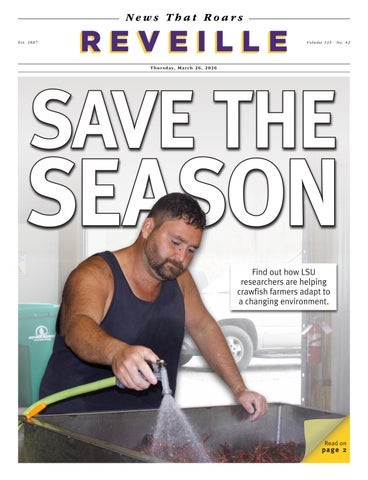

SAVE THE SEASON
Find out how LSU researchers are helping crawfish farmers adapt to a changing environment.
Read on page 2

LSUReveille.com
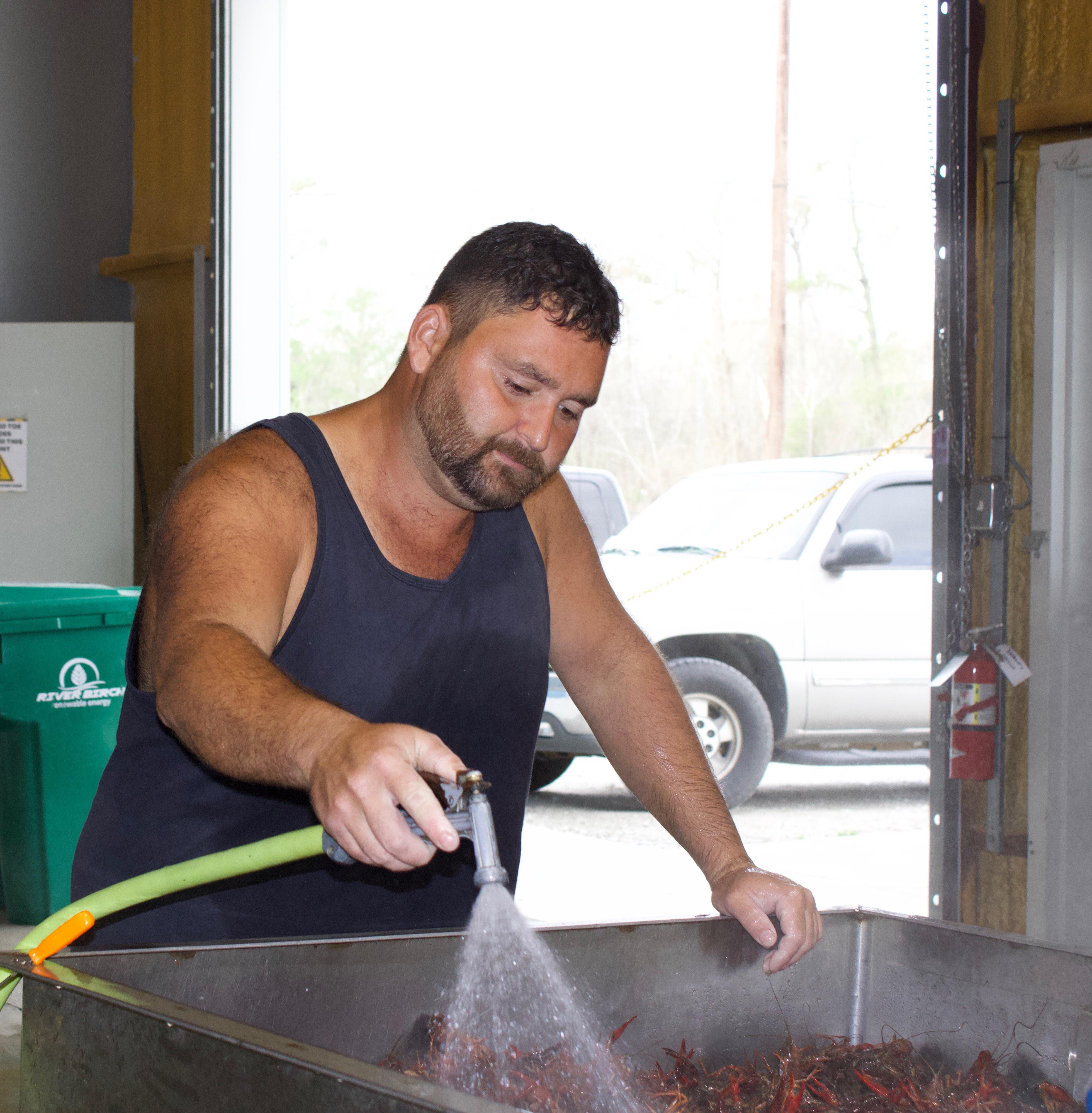
CRAWFISH CRISIS
A look at crawfish farming and the research to protect the species
BY PAIGE CHERAMIE Staff Writer
When we sit down to eat crawfish, we hardly ever think about the process of getting these crustaceans from wetlands onto our plates. By learning about this process, we can better appreciate the time and efforts crawfish farmers and catchers put in to ensure we can enjoy this Louisiana staple.
The crawfish that we eat is called the red swamp crayfish, one of 39 species in Louisiana. The reason we in Louisiana call them crawfish is simply cultural, built upon generations of people saying it.
Todd Fontenot, the LSU AgCenter crawfish extension agent, explained how red swamp crayfish can be sourced in many places.
“The majority of the acres I deal with are in this rice-crawfish rotation, meaning the farmers plant a rice crop to harvest as a crop, and then in the winter time, they’ll start crawfish production,” Fontenot said. “We do have some that are just permanent ponds, where they fish the same pond every year. And then you have the basin production, or wild caught crawfish. That’s a whole different kind of industry.”
Rice-crawfish rotation is very common in Louisiana. The reason it works so well is because crawfish are able to feed on rice stubble and debris, turning it into nutrient rich waste, fertilizing the soil for next year’s rice crops.
This process is also beneficial to farmers because rice and crawfish grow in similar living conditions. Both products thrive in shallow, warm pond water, meaning farmers can maintain one environment year round.
“The reason crawfish has grown so fast in this rice growing area is that we see all the infrastructure is already there,” Fontenot said. “The fields are designed to hold water for the rice crops, so it matches perfectly for crawfish ponds. We have irrigation systems that are designed to pump water efficiently for the rice crop and the crawfish crop.”
Permanent ponds are humanstabilized wetland areas that are used only for crawfish production, or monocropping. They are solely focused on the production of crawfish, meaning that if any environmental factors were to affect the crawfish, the farmers would be majorly impacted.
Catching crawfish in the wild, which is often referred to as basin production, is most common in southern Louisiana. This is because it naturally has shallow swampy areas, perfect for crawfish to naturally thrive. However, these crawfish are most susceptible to environmental changes, as there is little human interference to stabilize their ecosystem.
With crawfish being so reliant
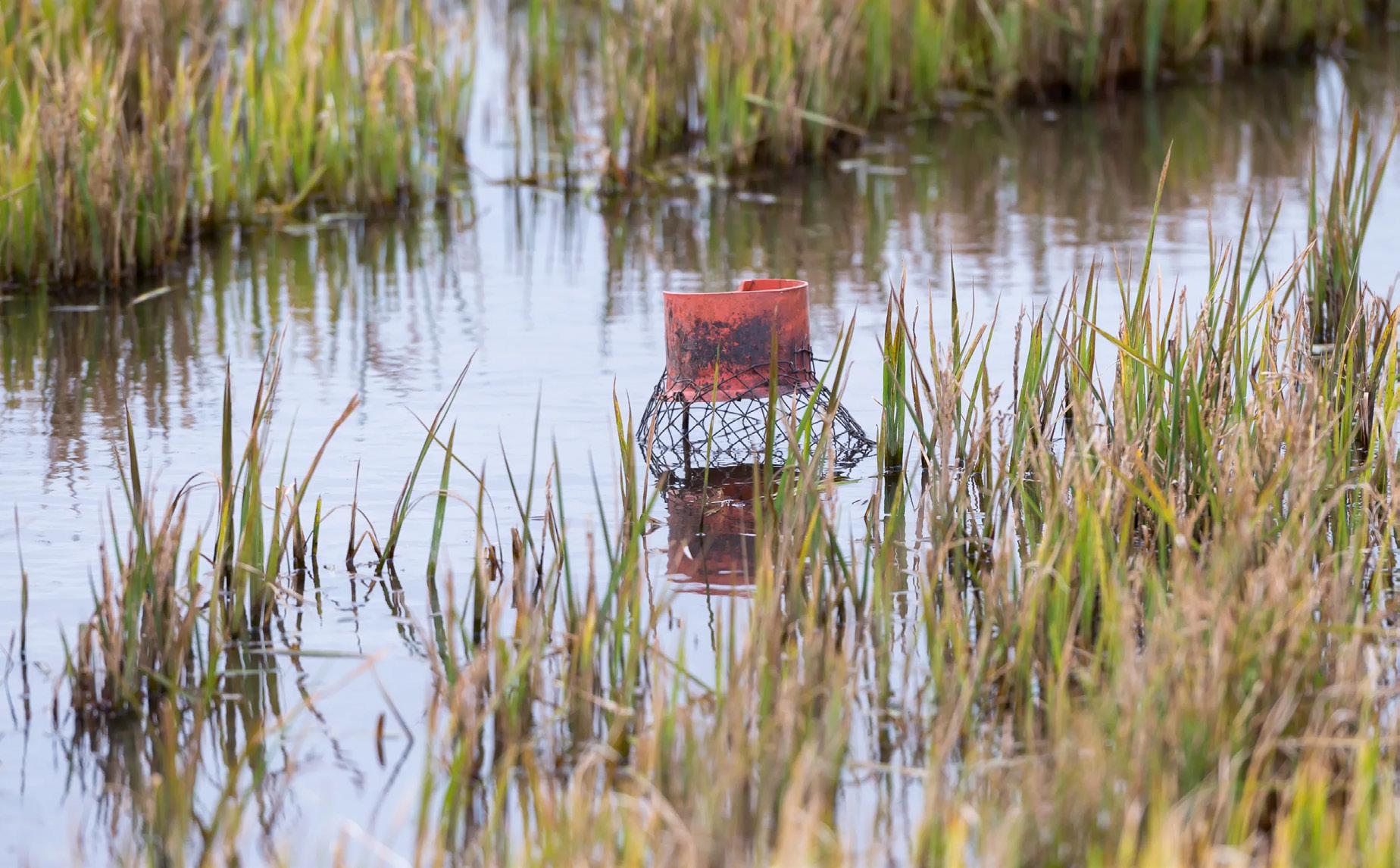
on environmental factors, changes in the weather like sudden cold fronts or droughts can cause major issues for crawfish production. This affects everyone because when crawfish experience ecosystem disruptions, they don’t grow as quickly, delaying them from making it to restaurants and stores.
Since crawfish growth is sensitive to environmental changes, “crawfish season” is not actually a set time frame every year. Fisheries and aquaculture graduate student Jordan Holcomb explained that crawfish are simply in season once they’ve fully grown.
“Crawfish season is based on their natural life cycle,” Holcomb said. “In late spring and early summer, crawfish burrow down to reach wet, saturated soil below the surface and seal their burrows from the inside, where they lay eggs and the young hatch in early fall.”
The crawfish will remain in their burrow until there is enough moisture to soften the mud sealing them in. This creates major implications when considering droughts, which can prevent crawfish from emerging and delay the season.
“Ponds and rice fields are flooded in the fall, which softens the plugs on the burrows and allows the females to emerge, often with juveniles already attached to them,” Holcomb said. “These juveniles grow up over the fall and winter and are harvested in the spring, hence crawfish season, which peaks around Easter. Then the whole cycle repeats itself for the next season.”
The environment is ever-changing, and there is little humans can do to stop this. However, researchers and farmers can take preventative measures to adapt their ponds and fields to the environment, giving crawfish the best chance to grow quickly and healthily.
Assistant Professor Kaelyn Fogelman, with a specialty in aquaculture, is currently working on a research project that can help farmers handle the rising heat we’ve experienced in recent years in Louisiana.
“Our initial project here, looking at the red swamp crawfish for the aquaculture industry, is looking at hypoxia, which is low [dissolved oxygen],” Fogelman said. “DO and temperature are really closely related in aquatic systems. The warmer the water gets, the less gas that it’s able to hold. So, as you get higher temperatures, your dissolved oxygen in the water gets lower.”
This temperature rise is incredibly impactful for crawfish because they often live in shallow water that can heat up quicker than larger bodies of water. Since the rise in temperature causes a decrease in dissolved oxygen levels in the water, the crawfish are left struggling to get adequate amounts of oxygen, causing them to grow slower or even die.
“If we think about us, as we get hot, we have higher respiration rates,” Fogelman said. “We need more oxygen to carry out our metabolic function. It’s the same for crawfish. The hotter they get, the higher their metabolic rate and the more oxygen demand they have. But, due to relations, there’s less oxygen available in the water.”
To combat this issue, Fogelman is working on a project to determine if adding oxygen back into the water, also known as aeration, is beneficial to crawfish growth. The project will especially focus on the oxygen level in juvenile tanks.
“We’re doing some where we don’t aerate their tanks that they’re in and some where we put an aerator in that has oxygen gas, or it has air gas, bubbling all the time,” Fogelman said. “They stay at 100%


B-16 Hodges Hall

Louisiana State University
Baton Rouge, La. 70803
NEWSROOM (225) 578-4811
Editor-in-Chief
JASON WILLIS
Managing Editor
COURTNEY BELL
DO saturation, and then the other tanks are just whatever the environment makes the DO drop down to as they warm.”
Fogelman and graduate students like Holcomb are monitoring the survival and growth rate of the crawfish in each tank to determine if aeration is something farmers may want to begin implementing on their farms.
Research projects such as this one are important because any alteration of the ponds means more costs for the farmer. If aeration, or other methods of intervention, were to have no benefit to crawfish growth, farmers would be wasting money.
When farmers have to spend more on production, it cuts further into their profits, causing the cost of crawfish to increase and impacting consumers. However, if the intervention is beneficial, it creates more abundance for the farmer, possibly canceling out the cost of the intervention and even decreasing the cost of crawfish in the long run.
Fogelman also emphasized that research on crawfish isn’t just beneficial for farmers. Research like hers can help determine what environmental factors are impacting species across the world and improve work done to conserve dying species.
“The stressors that these red swamp [crayfish] have on farms are the same stressors native crayfishes across the world are also experiencing,” Fogelman said. “The tools that we use in our lab can help the farms and it can help the native ecosystems.”
This is especially important in Louisiana, where many crawfish species are struggling with recent environmental pressures.
“Half of our crayfishes in the state are considered species of see CRAWFISH, page 8
ADVERTISING
(225) 578-6090
Layout/Ad Design ASHLEY KENNEDY
Layout/Ad Design REESE PELLEGRIN
Layout/Ad Design
ALAYNA YOUNG
CORRECTIONS & CLARIFICATIONS
The Reveille holds accuracy and objectivity at the highest priority and wants to reassure its readers the reporting and content of the paper meets these standards. This space is reserved to recognize and correct any mistakes that may have been printed in The Daily Reveille. If you would like something corrected or clarified, please contact the editor at (225) 578-4811 or email editor@lsu.edu.
ABOUT THE REVEILLE
The Reveille is written, edited and produced solely by students of Louisiana State University. The Reveille is an independent entity of the Office of Student Media within the Manship School of Mass Communication. A single issue of The Reveille is free from multiple sites on campus and about 25 sites off campus. To obtain additional copies, please visit the Office of Student Media in B-39 Hodges Hall or email studentmedia@ lsu.edu. The Reveille is published biweekly during the fall, spring and summer semesters, except during holidays and final exams. The Reveille is funded through LSU students’ payments of the Student Media fee.
COURTESY OF TODD FONTENOT
FACULTY
NEWS CASE CLOSED?
Students to be sent attendance, AI surveys
BY MAIA TYLER Staff Writer
LSU’s Faculty Senate met Monday to discuss several key administrative updates and policy changes after canceling its meeting last month.
The Senate discussed the upcoming distribution of AI and attendance surveys to students, which are expected to be available by early April.
The attendance survey is a follow-up of a survey sent to faculty on their view of student attendance last spring. The AI survey will ask students questions about their use of AI.
Both surveys will be anonymous and open only to LSU students. The Senate has met with Student Government members to help publicize the survey and get more responses.
The Senate also approved the proposal regarding LSU faculty eligibility to pursue advanced degrees at the university.
Previously, faculty members not classified as instructors were not able to pursue graduate degrees at LSU. This proposal allows faculty, with conditions and oversight, to obtain those degrees.
These conditions include having a faculty member, their supervisor and the chair of the department
ACADEMICS
LSU Clery Act investigation remains unresolved after 5 years
BY DREW SARHAN Staff Writer
The Department of Education has yet to issue an update to LSU on a 2021 Clery Act investigation regarding a search on the university’s compliance with safety legislation.
On Feb. 2, 2021 the Department of Education sent a letter to LSU requesting that the school provide records of all incidents of crime, including sexual assault and other Title IX offenses, between 2016-2019, as well as its annual security and fire safety reports from 2017-2020 and organizational charts for LSU Greek Life, LSU Athletics and LSU Residential Life.
According to the letter sent to former Interim-President of LSU Thomas Galligan, the Department of Education received complaints that alleged “the University engaged in a pattern of conduct that resulted in serious violations of the Clery Act.”
The Clery Act is named after Jeanne Clery, a 19-year old who was killed in her residence hall at Lehigh University in 1986. It is a federal statute requiring all colleges and universities to track and disclose information about crimes that occur on campus to maintain federal funding.
President of SAFE Campuses and Clery Act advocate S. Daniel Carter said some provisions of the Clery Act include requiring universities to post records of security reports and crime logs, notify students and employees when there are threats to safety and security and publish campus crime statistics from each year.
“The institutions must issue an
emergency notification,” Carter said. “It doesn’t have to be a Clery crime. It can be a fire, a terrorist attack, it can be a tornado. It has to be issued.”
According to the letter, part of the investigation deals with LSU’s handling of sexual assault cases and if it was transparent in reporting crime and abuse on campus.
Though the investigation is apparently unresolved, a 2020 investigation from USA Today found that, in three separate cases, “rather than expelling or suspending male students found responsible for sexual assault, LSU al-
lowed them to stay on campus.” In some cases, the university allowed the men to stay in the same class as the people they assaulted.
USA Today reported that multiple LSU officials knew what was happening and willfully ignored the accusations or swept them under the rug. The reporting also found that “at least nine LSU football players have been reported to police for sexual misconduct and dating violence since coach Ed Orgeron took over the team.”
LSU hired a law firm to investigate the attention Title IX reports received
AI degree coming to LSU, higher ed board decides
BY MORGAN VANNOSDALL Staff Writer
The Louisiana Board of Regents approved the addition of an AI degree at LSU and the renaming of the College of Music & Dramatic Arts at a meeting Tuesday.
The AI degree was approved by the LSU Board of Supervisors and then submitted to the Regents for consideration.
The degree will feature a more hands-on and industry-related learning approach. This will include internships, research programs and a capstone project.
The program will help provide technical, ethical and professional skills which will help improve LSU’s position in AI education.
“It aligns with state and national workforce priorities and addresses a talent gap within the state. The proposed program ‘strengthens Louisiana’s competitiveness in attracting investment, research funding, and top talent.’ It also aligns with one of the five Pentagon Priorities and responds

to a pressing national security need,” according to the staff summary.
Chief academic officers throughout the state were in favor of this program statewide, and it is now listed in LSU’s 2025–2026 Academic Plan. The proposed degree in artificial intelligence will allow for more experts in an already rapidly growing field.
The program will be offered in person, but they have plans to transition to a hybrid system over time.
The Board expressed that approving this degree will allow LSU to offer more educational opportunities and improve economic development.
The Board also approved a request to rename LSU College of Music & Dramatic Arts to the LSU School of
Theatre & Film.
“The name School of Theatre and Film more accurately reflects both the depth of this partnership and its significance within the broader vision of the CMDA,” said Vanessa Uhlig, head of the film program in a press release.
The college stated in a press release that the official change in its title will acknowledge the school’s “dual commitment” to the stage and the screen.
At the meeting, Chris Herring, the associate commissioner for facilities planning and emergency management, gave an update on the Consent Agenda’s Small Capital Projects report.
In the report, there were 14 projects approved by staff. Some of the LSU projects listed included $858,000 allocated to the Dodson Hall Auditorium renovation, $350,000 allocated to the improvement of School of Veterinary Medicine Small Animal Hospital Intensive Care Unit Modular Building and other projects around campus.
The Consent Agenda was presented by Tristan Denley, Deputy Commissioner for Academic Affairs and Innovation. Denley presented a list of routine items which were passed unanimously.
Denley also presented a proposed master’s degree in architecture. He noted it would be different than the already existing degree at LSU and would be a “36-hour, thesis-based degree that would build a pathway for students with a bachelor’s degree in architecture to build toward the doctor of design degree.” This was passed unanimously.
The next Board of Regents meeting will be held April 29 at 9 a.m. All Board meetings are open to the public.
on campus. The Husch-Blackwell report, issued in 2021, concluded that LSU’s athletic department continuously decided not to alert the police and the Title IX Office of reports of sexual misconduct.
In 2024, LSU agreed to pay almost $2 million to settle a case brought by 10 former LSU students over the university’s handling of potential Title IX violations.
Though LSU reached that settlement with former students, the Department of Education has not announced findings from its investigation publicly.
Along with the alleged Clery Act violations, the Department of Education’s investigation aimed to evaluate the university’s compliance with Higher Education Opportunity Act fire safety provisions and the DrugFree Schools and Communities Act.
The document stated that the university had to provide records by March of 2021.
Chief Communication Officer of the LSU System Meg Sunstrom said that LSU has not received an update from the Department of Education on the case since the initial request was made in 2021.
“LSU complied and cooperated with all of the requests made by the federal government and have met our obligations to date,” Sunstrom said.
According to a Freedom of Information Act request Carter filed on July 24, the Department of Education said that no update could be provided as the investigation was still ongoing.
Student Government campaigns facing lawsuits
BY KALEY MELANCON News Editor
Four LSU Student Government lawsuits have been filed against different campaigns since elections closed on Friday.
Since then, four of the five campaigns have been involved in lawsuits for violating the Election Code.
On Tuesday, Tyhlar Holliway and Gabreyela Gonzalez of the Heart ticket filed two suits against Benjamin Barousse and Anna Katherine Harrell of the Home ticket.
see CAMPAIGNS, page 4
STUDENT GOV
see FACULTY SENATE, page 4
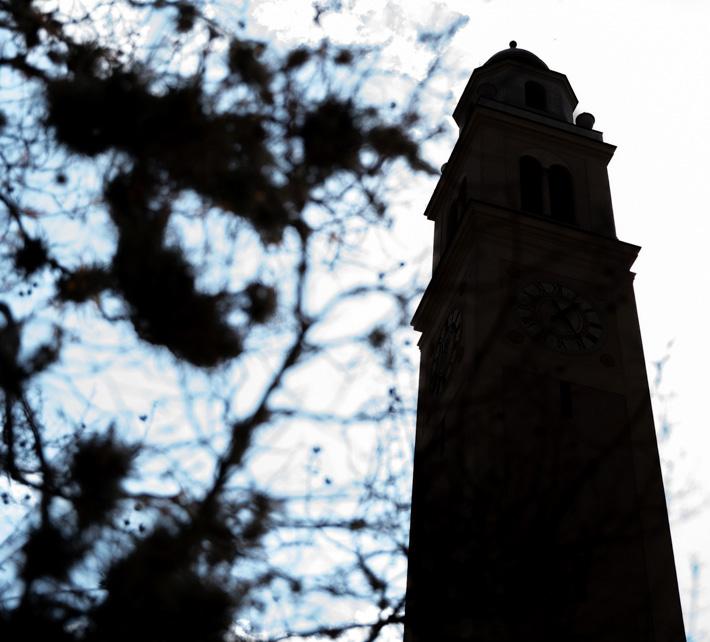
SAM BECKER / The Reveille Memorial Tower sits Feb. 27 on LSU campus in Baton Rouge, La.
MATTHEW PERSCHALL / The Reveille
An LSU sign sits March 6, 2024 near East Parker Boulevard.
CAMPAIGNS
, from page 3
One suit involved a claim that the Home campaign went over the food and drink spending limit allowed for campaigns. It also claims the ticket submitted inaccurate spending and donation reports.
Each campaign is required to submit a spending report that includes all goods and services used by a campaign that would impact how a voter casts a ballot. The donation report must list the name of each donor, the amount of money they donated and the date of donation.
According to the suit, Holliway and Gonzalez alleged that the Home ticket reported a total of $621.55 spent on food and drink items listed as perishable, which is under the set limit.
However, the suit claims the ticket did not include the “PJ’s Coffee Package” from the donation report in that cost and listed this item as nonperishable.
Holliway and Gonzalez submitted photos and vidoes of Benjamin Barousse and Anna Harrell campaigning in Free Speech Alley on March 16 with “at least 7 gallons of iced coffee, 2 four-gallon carafes of hot coffee, and 2 large pump bottles of syrup (one vanilla and one caramel)” along with various creamers and sweetening packets.
Photos and videos of the scene were posted to the Home campaign’s Instagram as well as Barousse’s personal Instagram.
The Heart ticket says the total cost of these items is $450.50 based on the catering prices for PJ’s Coffee in Baton Rouge, which the campaign argues is still a “conservative estimate” that does not account for tax, cups, creamers or sweeteners.
This would bring the BarousseHarrell ticket’s expenditures on food and drink to $1,022.05, perishable items to $1,227.19 and total expenditure cost to $2,775.62. Each of these totals violate the spending limits set in the Election Code.
The suit claims that the alleged excessive campaign expenditures gave the Home ticket an unfair advantage over the Heart ticket. It also argues failing to accurately list the cost of donated items constitutes a separate violation under the Election Code.
Holliway and Gonzalez are requesting a total of 26 penalties against
FACULTY SENATE, from page 3 associated with the degree submit a statement outlining how the advanced degree will benefit the faculty member’s current department at LSU.
Also, while getting their degree, the faculty member cannot teach or advise graduate students in the department associated with their degree. Any conflicts of interest must be addressed between the faculty and both department chairs.
Another primary focus was the Faculty Senate Executive Committee elections scheduled for April 21. Currently, there are no new nominees from the floor for the positions of president, vice president, secretary and members-at-large.
The confirmed candidates include Daniel Tirone from Humanities & Social Sciences for president, Michelle Osborn from Veterinary Medicine for vice president and
Barousse-Harrell.
Henry Hanks, chair of the election committee, told the Reveille that an SG campaign would need to receive eight penalties in order to be disqualified.
If that number was met, Hanks said it would be up to the University Court whether the entire campaign would be disqualified or only those involved in the suit.
If that number was met, Hanks said it would be up to the University Court whether the entire campaign would be disqualified or only those involved in the suit.
The second suit the Heart campaign filed involves a member of the Home ticket’s legal team, Jackson Hardman, who allegedly threatened James William III of the Heart ticket to prevent the campaign from filing a financial suit.
On Tuesday, Hardman reached out to Ava Ryder, the campaign manager for the Heart ticket, to talk about “some election stuff,” according to submitted evidence.
Ryder then referred Hardman to Williams and the two met in the SG Legislative office. Williams recorded the conversation without Hardman’s consent, which is legal in Louisiana, until Hardman asked them to stop.
According to the suit, the conversation revolved around the “virtues and outcomes” of the Heart campaign filing a suit.
In this conversation, Hardman allegedly brought up a case from last year’s election involving twice-disqualified presidential candidate Alex Foret, which prompted intervention from three Louisiana state politicians.
The Heart campaign felt that Hardman’s comments were insinuating that similar results would happen if it filed a suit. Allegedly, Williams asked Hardman if he was planning on involving state senators or other politicians and Hardman responded affirmatively.
Hardman allegedly went on to say that he would bring in politicians from his time working in Washington, D.C. and from the state Legislature.
Hardman also allegedly pointed to the fact that a similar case would “kneecap” SG’s credibility and that, if a ticket was disqualified, it would take the vote out of students’ hands and into the Court’s.
In a later conversation, Holliway,

Williams, Barousse, Harrell and others from the two campaigns met to discuss the conversation between Williams and Hardman. This conversation was recorded by one of the parties.
“It felt very much like we were getting threatened to not file anything,” Williams said in the recording.
According to the recording, Barousse stated that Hardman did not represent the Home ticket during the conversation and that the campaign did not know what Hardman planned to tell Williams prior to their meeting.
“That is completely embarrassing to us and our ticket cause we have no intention of doing that,” Barousse said in the recording. “That’s not what we’re about and that’s not what we stand for.”
Holliway and Gonzalez claim that the discussion between Hardman and Williams constitutes a threat to persuade the Heart ticket to not file a suit. They argue that Hardman was acting as an authorized agent of the Home ticket. If substantiated, this action would violate the election code.
Because Hardman is not currently a member of SG or a candidate for an SG position, the Heart campaign is requesting that the court issue a public reprimand of the Home ticket.
A public reprimand by the Court includes a formal declaration that required standards were not met.
On Wednesday, a third suit was filed by Jack Miller and Sydney He-
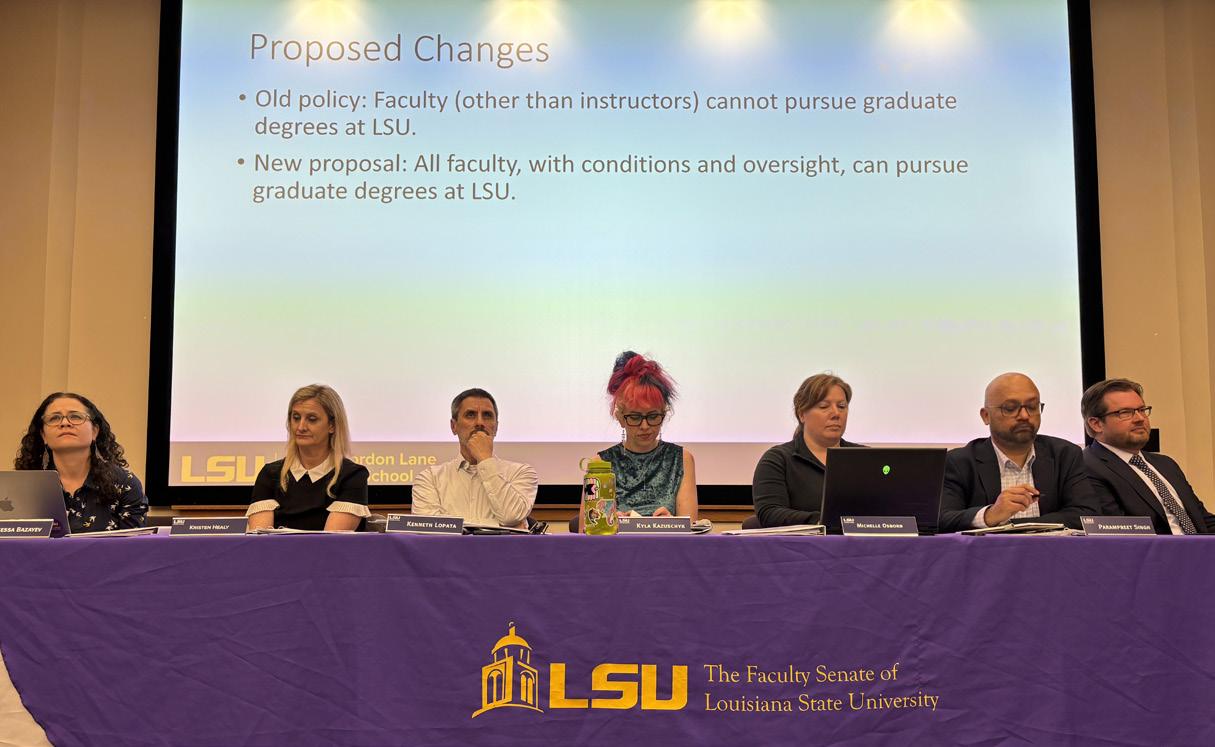
Kenneth Lopata from Science for secretary.
Additionally, the candidates for members-at-large are Mehdi Farasat from Engineering, Kristen Healy from Agriculture and Kyla Kazus-
chyk from the College of Music & Dramatic Arts.
Faculty were also reminded of the mandatory Research Security Training renewals. In accordance with federal requirements, faculty
CLERY ACT, from page 3
However, Carter sent another request on Feb. 26, and it did not specify if the case was still ongoing. Carter believes that the investigation is still open.
“[Sunstrom]’s statement effectively confirms that the investigation remains open, which I know was an outstanding question based on the last FOIA response I received,” Carter said.
In a Clery case with Liberty University in 2024, the Department of Education concluded the investigation in two years. It issued a fine of $14 million for failing to maintain a crime log, issue timely warrants and comply with sexual violence prevention and response requirements.
bert of the Rooted ticket against Darion Frazier and Bellamia Miceli of the Together ticket.
The suit claimed the Together ticket failed to report the purchase of jambalaya by their ticket on the campaign’s spending and donation reports.
According to the suit, on March 17 Frazier and Miceli gave away jambalaya to potential voters in Free Speech Alley, which was not submitted on their financial reports on Tuesday.
The suit claims that if the jambalaya were included in the financial reports, the total cost would violate the amount a campaign is allowed to spend on food and drink items.
Failure to report the jambalaya, surpassing allowed costs and inaccurately reporting items on the spending report would violate three different election codes.
Miller-Hebert is requesting that the court levy 16 total penalties against the Together ticket. If applied, the campaign could face disqualification from the Court.
In a now-dismissed suit, the Together ticket filed a suit against the Rooted ticket on Saturday for allegedly beginning to campaign before active campaign week. This suit was voluntarily withdrawn by the Together ticket on Sunday.
A hearing for these suits is scheduled for Monday with rulings from the University Court expected by April 3.
must complete a one-hour online training session every 12 months to ensure the university remains eligible for grant approvals.
The meeting concluded with discussions regarding the ongoing Flagship Transformation Initiative.
The initiative was launched in its first phase earlier this year by Chancellor James Dalton.
The initiative aims to unite five key institutions in the LSU system, including the Baton Rouge campus, LSU Health Sciences in New Orleans and Shreveport, LSU AgCenter and Pennington Biomedical.
On March 9, the university submitted a prospect to its accrediting body, the Southern Association of Colleges and Schools Commission on Colleges. The request was a proposal for approval to merge the campuses.
The Senate will meet again April 21 at 3 p.m. in the Dalton Woods Auditorium.
Higher profile cases, such as the Penn State sexual abuse scandal, the Department of Education’s investigation took upwards of five to six years to conclude.
“Speculating, but I don’t think it’s fair to the parties that complained that led to this investigation, or to LSU or to the LSU community that this investigation was intended to protect for this to be hanging over everyone’s head for five to six years,” Carter said.
If the investigation found that LSU violated the Clery Act, the university could have lost Title IV funding, which affects federal financial aid for students.
In 2016 it was ruled that the Department of Education must issue a civil penalty for violations of the Clery Act within five years, meaning the deadline for the Department of Education to issue a fine to LSU expired last month.
“The Department of Education can still issue a finding that the violation occurred, but they cannot impose a civil penalty for it,” Carter said.
The Trump administration is working to dismantle the Department of Education after terminating almost half of its employees last year, which the Department of Education’s Sec. Linda McMahon said was part of the administration’s “final mission.” The administration would need the support of Congress to abolish the department.
Shannon Larkin, a junior mass communication student, said it is important for the Clery Act to exist, and it is critical for LSU to get the results of the investigation back in a timely manner.
“I think they should be a bit quicker with how long they take to give out certain information, especially if it involves the student’s safety on campus,” Larkin said.
Another student, Jake O’Brien, a mass communication senior, said that it is important for the school to be held accountable and for students who were involved to get justice.
Carter reiterated the importance of the Clery Act, not because of any monetary benefit for the Department of Education, but for a safer campus where student safety is the priority.
“I think LSU is owed a faster resolution than they have received,” Carter said. “Whenever this comes out, there invariably [is] going to be some critical press coverage. I don’t think deferring it forever will change that.”
The Department of Education did not respond to the Reveille request for comment or update.
MAIA TYLER / The Reveille
LSU Faculty Senate meets March 24 in the Dalton Woods Auditorium.
MATTHEW PERSCHALL / The Reveille
The LSU Student Government office sits open on May 3, 2022 inside the Student Union.
ENTERTAINMENT
Lab show ‘Two Sisters and a Piano’ follows siblings amid political unrest
BY SARAH WALTON Staff writer
Producing a play isn’t easy, especially while being in school and dealing with the everyday responsibilities of college. But every year, the LSU School of Theatre students produce plays that hold the attention of the LSU population and the wider Baton Rouge area. The last Lab show of the year is “Two Sisters and a Piano.”
The Pulitzer Prize-winning play, written by Nilo Cruz, is set in 1991 and follows two sisters under house arrest during the Pan American Games. In their home of Havana, Cuba, sisters Maria Celia and Sofia, a novelist and pianist, struggle with life, love and politics inside and outside of their home.

Kyrin Hardnett, a freshman double majoring in theatre performance and film and television, is not new to performing at LSU, but this is his first Lab show. He was in “The Totality of All Things” earlier this year on the LSU Mainstage, and he is now playing one of the male leads in the production.
“It’s been a different kind of process this time as far as how much time you have for a Lab show and how much time you have for a Mainstage Show,” Hardnett said. “It’s just been way less time compared to ‘The Totality of All Things.’”
Hardnett said that at its core, this play is about love, support and the importance of family. This time around, Hardnett is playing two characters: a militia guard and a man named Victor Manuel. Playing the guard has posed somewhat of a challenge for Hardnett.
He said that it was difficult to play a mean character who yells and is so different from Hardnett’s own personality. The second character he plays, Victor Manuel, is someone Hardnett relates to a lot, as Victor is a sweet character who likes to laugh.
Hardnett has worked on Mainstage, the Geaux Film “Tick” and now has entered the
world of Lab shows. Something different Hardnett noticed is the heavily collaborative nature of the Lab shows and all of the work that goes into bringing these stories to life.
Blair Bernard is a senior theatre performance major and the director of “Two Sisters and a Piano.” The cast and crew of the show have been working on this play for the past six weeks, and Bernard admitted that the rehearsal process has been draining.
“Kudos to all the directors who have done Lab shows and have done it twice,” Bernard said. “I feel like I’m really excited for people to see it because a lot of hands-on work went into it and a lot of hours.”
Bernard, with her face and arms covered in paint, talked about the days of work she and three others did painting, designing and building the set. One of the painters on the small team even created stamps to add designs and mosaic tiling to the walls.
The play is set during Fidel Castro’s reign in Cuba, with politics and danger swarming around the characters.
“I think ultimately what was most important to me with the script was the relationship of having a sister throughout everything,” Bernard said.
Bernard’s relationship with her own sister is important to her, and she said that she doesn’t know where she’d be without her. The theme of family has made itself prominent during the process.
Creating a world on stage takes a lot of work and forethought. Though she took a directing class and has a lot of experience working on a film set, Bernard said nothing could’ve prepared her for both the amount of effort and freedom that came with directing a show.
“I think that when you read

a script, you don’t understand how much freedom you actually have when creating the life of the play,” she said. “It’s been really rewarding to kind of know that, in a way, I’ve fabricated these characters personally. I had a vision for them and I have aspirations for them, and I hope they inspire people and entertain people.”
From hand-painting wallpaper to building walls and a set, the entire process has been very intentional.
“It’s more tedious than I could have ever imagined,” Bernard said. “I can only imagine how the actors and the directors feel on a Mainstage.”
At the end of the day, Bernard hopes that audiences will recognize the time and effort the entire cast and crew has put into this play.
“We all are trying new things before big changes in our lives,” she said. “Trying your best is really a lost art [because] what else can you do?”
“Two Sisters and a Piano” will run until Sunday. For tickets and more information, visit the LSU Theatre website.
Editor’s note: Blair Bernard is an opinion columnist at the Reveille.


COURTESY OF LSU THEATRE
COURTESY OF LSU THEATRE
COURTESY OF LSU THEATRE

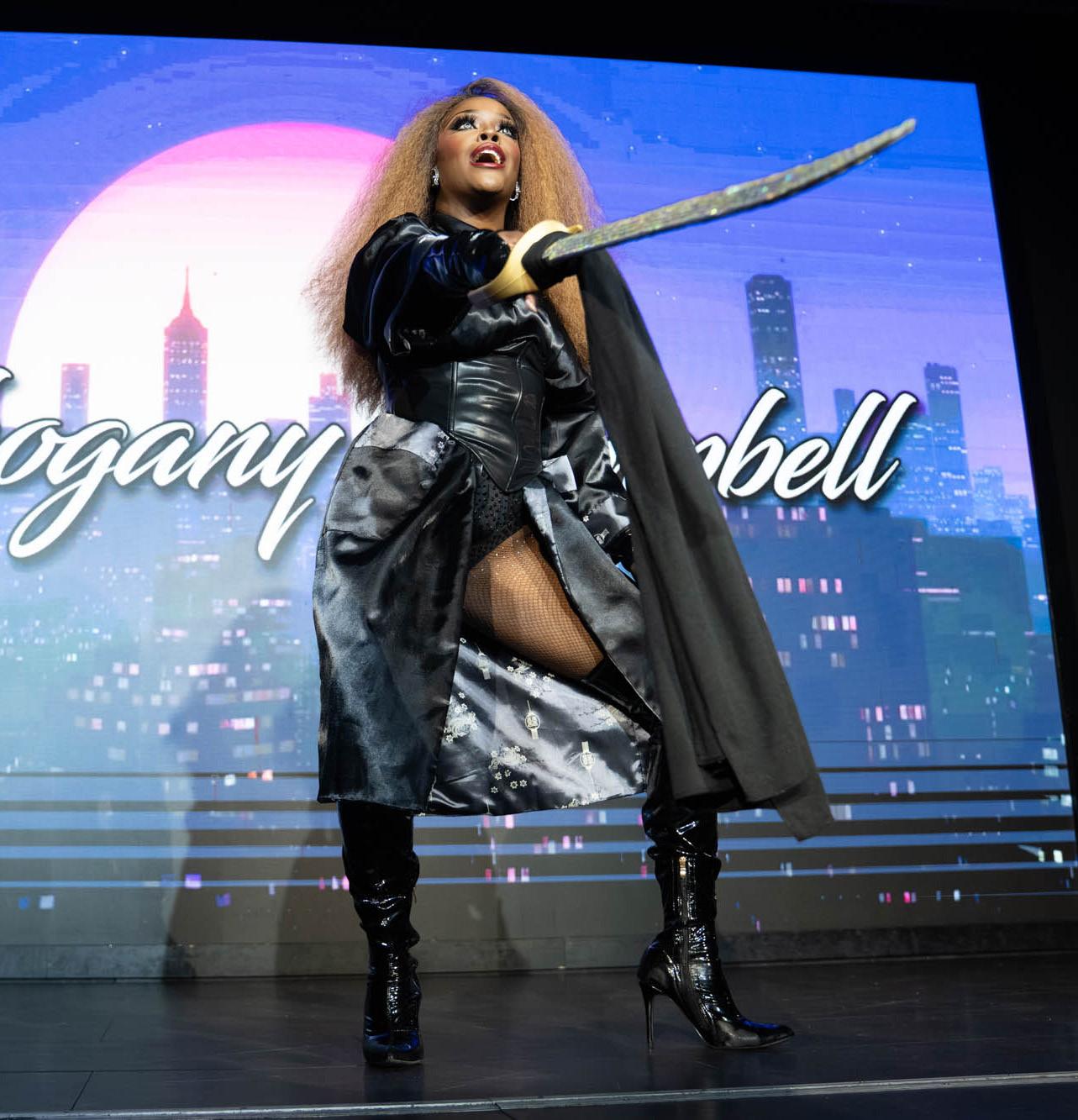




MAKING A ‘SPLASH’


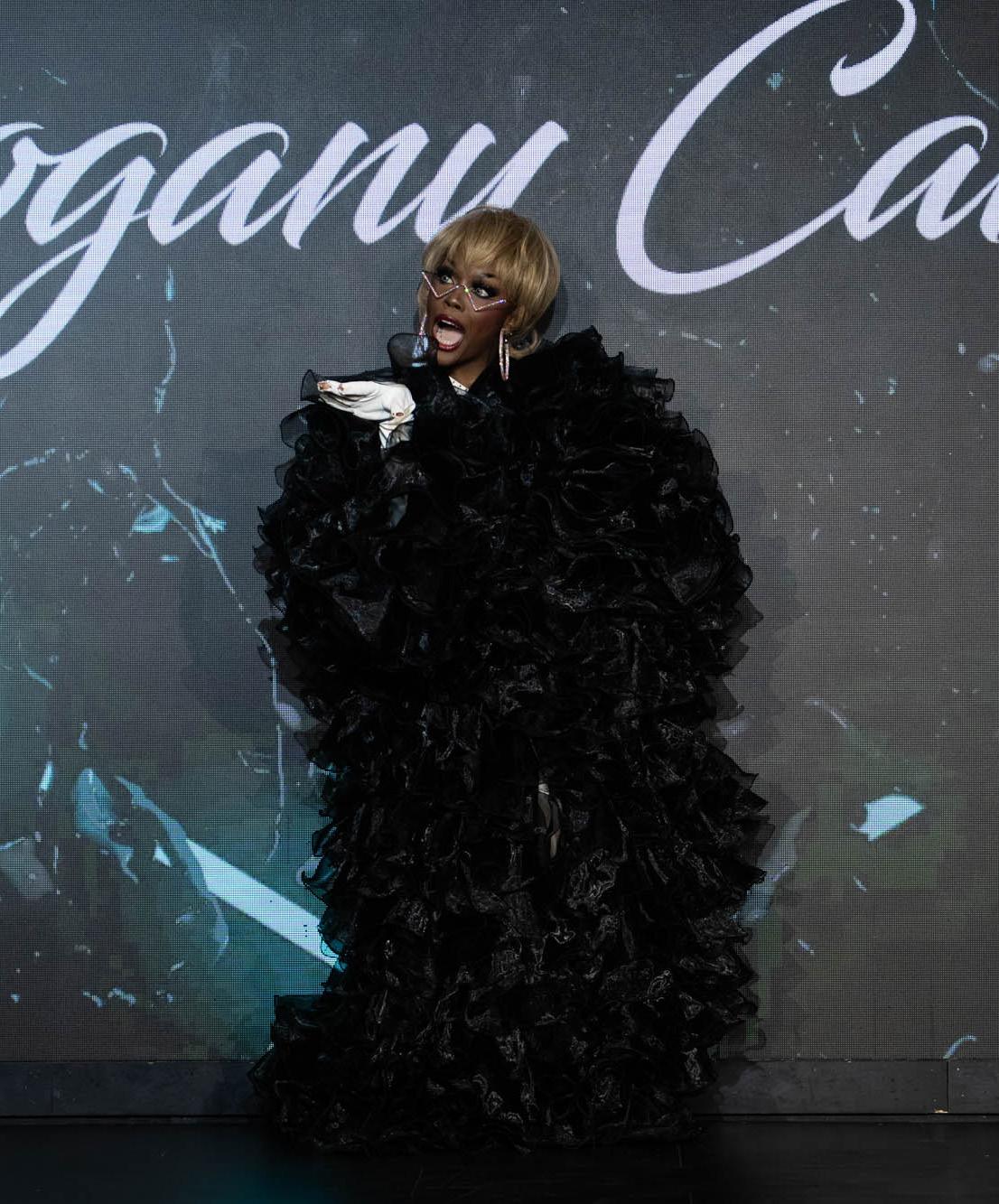

Athena Dion and Baton Rouge Bombshells put on a show at local nightclub on March 21.
London Manchester performs on stage.
Athena Dion and London Manchester banter on stage.
Mahogany Campbell performs on stage.
Clubgoers party awaiting drag performances.
Baton Rouge Bombshells’ London Manchester performs on stage.
Baton Rouge Bombshells’ Mahogany Campbell performs on stage.
Athena Dion whips her cape on stage.
Photos by Evan Touchet | Design by James Miller
Rupaul’s Drag Race queen Athena Dion speaks to fans.
London Manchester performs on stage.
Geaux Big service week encourages students to give back
BY CHARLOTTE TRENTALANGE Staff Writer
Before she was helping lead one of LSU’s largest service events, junior Paris Ally was volunteering in senior living homes, sitting with residents and calling bingo.
“It wasn’t anything big, but you could tell how much the simple things meant to them,” she said.
Now as student director of volunteer at LSU, Ally wants other people to experience that same joy of helping others through Geaux Big Baton Rouge, a weeklong service initiative connecting hundreds of students with volunteer opportunities through Saturday.
From packing meals to making dog toys and cleaning up campus spaces, students are given over 150 opportunities across Baton Rouge to give back to the community. The week ends with a block party filled with food, inflatables and music, and it is open for anyone who volunteered as a way to celebrate the work accomplished.
Originally founded in 2013 as a one-day event, Geaux Big expanded into a weeklong event in 2025 under Brianna
McManus, assistant director for student leadership and civic engagement, to create more opportunities and accommodate more participants. In the second year operating on this scale, the coordinator said success is measured by the impact it has on people, not just the numbers.
Leadership and Civic Engagement Coordinator for Campus Life, Ifágbémisólá BámigbálàArèsà said the program continues to grow in the number of events, student leadership roles and partnerships. She said college is a time for students to develop as whole individuals, and volunteering is one of the best ways to do that.
“If you go to college and the only thing you leave with is a degree, you did yourself a disservice,” she said.
Bámigbálà-Arèsà also said that partnerships stem from personal desires and campus necessities. Geaux Big’s partnership with the food pantry formed because it is under Campus Life, and its mission of tackling food insecurity resonates deeply with students. Another student desire to have a cleaner and more visually appealing campus led to more cleanups. Organizers try to provide as
many diverse experiences to appeal to a wide range of students as possible.
“[Organizations] love working with LSU volunteers because they say they’re ready to work,” Bámigbálà-Arèsà said.
Beyond the impact, junior finance student Sydnee Ragas said the personal fulfillment and emotional affect makes the event special. This is Ragas’ first year assisting in the planning of Geaux Big, but in previous years she’s volunteered and worked as a site coordinator.
“This experience has opened my eyes to more of the Baton Rouge community than I had known before,” she said.
As a New Orleans native, Ragas enjoys learning about different philanthropic organizations and businesses she wouldn’t have known otherwise.
In the future, Ragas hopes Geaux Big can expand beyond LSU and continue to grow across Louisiana and other schools. Ally said she hopes the event expands to more partnerships within campus like athletics and other organizations.
“Expanding to everyone who needs help would be great,” Ally said.
This year, Ally is especial-
ly excited for the Zippity Zoo event at the Baton Rouge Zoo on Saturday, since volunteers requested more animal events. Volunteers will assist in the celebration of the zoo’s 56th birthday.
All volunteer shifts are posted on TigerLink and are color coordinated by day. With a variety of events throughout the day, students can come in between classes or if they have free time after.

This club gives women space to bond over rugby
BY LILY CENTOLA Staff Writer
Did you know that the LSU women’s rugby football club was the first women’s team to play in the NOLA Gold rugby stadium? This is just part of what makes the club so special.
Chaise Arpkey is a senior psychology major and the club’s secretary. She appreciates the connections the sport has given her and the diversity it brings. Almost every semester she’s been a member, the team has had an exchange student come play with them.
“I think about how amazing and blossoming the sport is. You literally make connections that go across continents,” Arpkey said. “Some of my closest friends are oceans away.”
Barbara Sipp, a junior human resources major, is currently the
match secretary of the team. She and Arpkey joined at the same time last year and fell in love with the sport.
Sipp also expressed how great the connections the team makes are, whether they be with people from other teams, the LSU Men’s Rugby Club or the greater LSU area.
On top of that, Sipp recognizes the way rugby has impacted women over the years and the confidence they are able to gain from the sport.
“Seeing girls who are not so confident — maybe they’re coming in as a freshman and they’re a little scared to play a fully tackle sport,” Sipp said. “It’s really cool to see those girls really blossom and take on more leadership roles.”

Both Sipp and Arpkey consider last spring’s game against Tulane in the NOLA Gold stadium to be one of the highlights of their rugby careers. It was the 15th game of the season, and they had just gained many new players.

“At that game, it just absolutely felt like we were all in union,” Sipp said. “It was the first time that I actually felt like, ‘Wow, we all are understanding each other here.’ It just felt so powerful.”
Alicia Stanga, a senior architecture major and club president, highlighted how special away games are for the team.
“One of my memories that always stands out is when my sophomore year, it was our first year in the Texas Union, and we made it all the way to regionals where we were in the top 10 teams in the country, and we traveled all the way to St. Louis,” Stanga said.
The team got second place in the St. Louis tournament, and Stanga lit up when talking about all the memories she and her
teammates made together on that trip.
“Playing for the past four years, I’ve definitely had the privilege to see our club grow from just playing against Tulane or just doing one tournament a semester to where now we have four to six tournaments a semester,” said Stanga. “We’re traveling to Texas. We are traveling all over, we’ve even been invited to tournaments in Georgia.” Stanga, Sipp and Arpkey all value the community women’s rugby creates and how special the women truly are.
“I think the friendships and camaraderie and connections are definitely what make this club,” Stanga said. “I consider everybody such a close, great friend, and I definitely think the friendships and the connections that we make definitely make the club what it is.”
, from page 2
greatest conservation need, where they’re imperiled to some degree,” Fogelman said. “We even have a species here that’s a candidate for federal listing under the Endangered Species Act, the Kisatchie painted crayfish.”
With so many crawfish species experiencing declining populations, you may be wondering why red swamp crayfish are so abundant. Fogelman explained that this particular species is incredibly hardy, surviving in conditions many other species would die out in.
However, even the red swamp crayfish have their limits.
Blake Baudoin, the owner of Baudoin’s Seafood in Cut Off, Louisiana, relies on crawfish to make money and support his family. He relies on both pond-produced and wild-caught crawfish. However, recent low water levels have caused a decrease in production in basin areas.
“The water being low in the spillway, it’s a lot on the ponds right now,” Baudoin said. “It’s pretty much pond crawfish or nothing. That’s why the pricing is still a little high right now.”
Pressure such as this can heavily impact small businesses like Baudoin’s Seafood. Without enough production, the business can drown in costs and be forced to close.
Because of this, it’s important to support local businesses, even when it’s tempting to go with cheaper options. Supporting local seafood supports both the economy of Louisiana and the research efforts that can benefit crawfish around the world.
“Eat local,” Fontenot said. “Support our local industry.”
ALEXIS PERSICKE / The Reveille Geaux Big staff and a volunteer take food bank boxes out of the closet to decorate March 11, 2025 in the Campus Life Office.
COURTESY OF LSU WOMEN’S RUGBY FOOTBALL CLUB
CRAWFISH
COURTESY OF LSU WOMEN’S RUGBY FOOTBALL CLUB
SPORTS
Softball head coach Torina earns 600th win
BY MARISSA REISS Staff Writer
LSU softball’s run-rule win over Louisiana Tech on Tuesday night marked a monumental milestone for the program.
Head coach Beth Torina earned her 600th career win in what became a memorable 9-0 shutout victory for her team over the in-state foe.
Torina is now just the third head coach in LSU history to reach 600 or more career wins in their tenure, joining Paul Mainieri, who had 641 wins, and Skip Bertman, who had 870. She is currently the only active head coach at LSU who’s achieved that milestone.
In Torina’s 15 seasons with the Tigers, she has led her team to the national stage numerous times. She is the only head coach in LSU history who has led the softball program to the Women’s College World Series in consecutive seasons.
Under Torina’s leadership, the Tigers have boasted two 50win seasons and eight 40-win seasons. Additionally, Torina has led the Tigers to the WCWS four times during her tenure. Her outstanding record has also earned her the distinction of being the all-time wins leader.
In terms of rankings, Torina has used efficient recruiting efforts to stack her roster year after year and maintain a top-25 ranking for her program each season. The most notable stretch of her career was from 2014 to 2022, when LSU saw its name in the polls for 123 weeks straight.
Although the postseason outcome might not always be what fans have wanted to see each season, Torina knows her way around the diamond and has proven her coaching ability at LSU.
While Torina reached a personal milestone in this game, she gave credit to her team, not herself.
The effort wasn’t just Torina’s alone, she said, but the team that has stood behind her this season.
“I’ve said all along that this team is getting better all the time,” Torina said. “They are growing all the time. I can’t recall a team that has had this much growth as the season continues. I am confident that we will continue to improve.”
ONE TO WATCH
How freshman Bella Hines is carving a role of her own
BY TRE ALLEN Staff Writer
If there was one moment that could define who Bella Hines is as a player, it would be during a huddle against South Carolina.
At the 5:44 mark in the third quarter of LSU women’s basketball’s Valentine’s Day matchup, Hines checked into the game for the first time.
She had been solid all year, producing with the minutes she’s been given, but she wasn’t expected to play much against the No. 3 team in the country.
ESPN’s Holly Rowe, sitting behind the Tigers’ bench, explained how animated head coach Kim Mulkey was during a timeout.
LSU trailed by eight. Calling a timeout, Mulkey knew how quickly momentum could change the game if adjustments weren’t made.
Up to this point, South Carolina’s Tessa Johnson has been giving the Tigers problems. Leading her team, she had 16 points in the first half, shooting 6-for-9 (67%) from the field and 4-for-5 (80%) from three.
In the huddle and looking at her players who were out on the court, Mulkey yelled, “Who can guard Tessa!” A hand raised almost instantly. It’s Hines.
Out of the timeout, she knocked down a mid-range jumper shot on the inbounds play. On the defensive end, she was face-guarding Johnson, not giving her an inch of breathing room.
Johnson was visibly frustrated and annoyed by Hines’ defense, swatting her hand away and getting tangled up with her.
During the six minutes Hines played, she scored six points, limited Johnson on the offensive end and was a plus-six when on the court.
After the loss, Mulkey was asked about what she saw from Hines after bringing her off the bench as a potential spark.
“I saw a kid I need to play more,” Mulkey said. “She needs to take away some of the minutes of some because she got out there and guarded Tessa. She wasn’t afraid to bow up to her. She made shots. She had a lot of energy and effort, and she has my respect.”
When LSU landed the No. 32 prospect in the class of 2025, according to ESPN, her defensive ability didn’t pop off paper.
“She was something different, at least from my standpoint,” associate head coach Bob Starkey said. “When I watched her play at AAU, I didn’t think she was necessarily that good defensively. You could tell she was a shooter. She was a scorer. She played hard.”
The Albuquerque native scored

CHANDLER TROTTER / The Reveille
LSU women’s basketball freshman guard Bella Hines (3) dribbles the ball Nov. 20 during LSU’s 112-49 win against Alcorn at the PMAC.
more than 2,000 points in her high school career and was named Player of the Year in New Mexico for two consecutive years, but if you know Mulkey, scoring is the least of her concerns; it’s defense.
When Mulkey made it an emphasis, so did Hines. Putting in the effort to carve a role for herself hasn’t gone unnoticed by the coaching staff.
“But to her credit, when she got here, and coach Mulkey said, ‘You can’t play unless you guard,’ she poured herself into it,” Starkey said. “Developed some really good habits of practice, watched film, knows her scout; she’s been really good for us, coming off the bench as a stopper.”
You can be one of the best scorers in the country, but if there’s no effort on defense, you will not play. Hines took that knowledge and molded her game around it to make an impact for her team.
“Honestly, defense is such a momentum swing,” Hines said. “It’s a thing that not a lot of people want to do, and I know Mulkey harps on it a lot, so just being able to stand out in that aspect elevates my game.”
Her scoring ability is present; it’s just not needed. With players such as Mikaylah Williams, Flau’jae Johnson and MiLaysia Fulwiley, it’s
See who stood out at annual pro day
BY ISABELLE CALLAHAN Staff Writer
LSU’s annual Pro Day served as a final audition for NFL hopefuls Monday, as dozens of scouts and team personnel gathered inside the Tigers’ indoor football facility to evaluate one of college football’s most talent-rich rosters.
From early-morning measurements to afternoon position drills, the day unfolded as a full showcase of LSU’s speed, strength and polish. For some players, it confirmed what scouts already knew.
For others, it was a last chance to raise draft stocks for one final push.
With a strong start at weigh-ins, the day began with official measurements and check-ins, where teams verified height, weight and wingspan. While this portion lacks the flair of on-field drills, it remains critical for front offices looking to match players to positional prototypes.
LSU’s group passed the initial test. The Tigers once again presented a roster filled with NFL-ready frames, particularly linebacker, defensive line and wide receiver; positions that drew heavy attention throughout the day.
going to be some time until she has to step up to the plate.
But in her freshman campaign, she’s shown she can score when given the opportunity. She’s scored double digits four times this season, including a season-high of 14 points in her second collegiate game against Southeastern Louisiana.
Between the moment against the Gamecocks when she wasn’t afraid to guard one of the team’s best players and being a disruptive presence on defense by taking charges, she has found her role as a freshman.
One part of Hines’ freshman experience has been participating in March Madness.
After the regular season and conference tournament, the Tigers finished with a record of 27-5 and earned the No. 2 seed in the Sacramento 2 Region.
Not many freshmen in women’s college basketball get to experience hosting a tournament game on campus, but that was the reality for Hines.
“It’s going to be amazing,” Hines said before the game against No. 15 Jacksonville. “I’m just soaking it all in my freshman year being around some of the seniors, just them al-
As testing began, all eyes shifted to the 40-yard dash, one of the most anticipated events of the predraft process, and LSU players did not disappoint.
Wide receiver Chris Hilton Jr., already known for his explosiveness, used the day to build a reputation as one of the better athletes in his class. After posting a 4.41-second 40-yard dash at pro day, Hilton focused less on chasing a faster time and more on consistency in his movement.
His acceleration off the line and ability to maintain speed through the finish stood out, even among a fast receiver group.
In addition to the 40, players rotated through the vertical and broad jumps, highlighting the focus for lower-body explosiveness, and Hilton took that as his time to shine, jumping four inches taller than he did at the NFL Combine, recording at 38.5-inch vertical. These drills provided measurable proof of the athletic traits LSU players have displayed on Saturdays.
While testing numbers matter, the most telling part of Pro Day came during position drills.
Quarterback Garrett Nussmeier led scripted throwing sessions, allowing receivers to run a full route and display his ability to connect at all levels of the field. This portion,
BASEBALL

LSU baseball junior infielder Steven Milam (4) hits the ball during the Tigers’ 15-5 victory over Louisiana Tech March 24 at Alex Box Stadium.
Two-out hitting excellence helps baseball handle Louisiana Tech
BY ALEX SHEESLEY Staff Writer
After dropping the last two games to lose the series against Oklahoma last weekend, LSU baseball rebounded in its midweek clash against Louisiana Tech to land back in the win column and inspire some offensive confidence.
LSU defeated Louisiana Tech 15-5 in eight innings on Tuesday, by way of run rule. The Tigers were backed by excellent results from their two-out hitting approach, plating 11 of their 15 runs with no outs left to give in the inning. The other four runs came off the bat of Zach Yorke, who popped a pair of home runs in the game.
“Two-out hitting is going to win or lose games,” head coach Jay Johnson said after the game. “We were on the right side of it tonight.”
The contest got off to a hairy start for the Tigers. LSU starter Reagan Ricken couldn’t get out of the first, only retiring two of the five batters he would face in his start. Those woes allowed two runs to score in the Louisiana Tech first inning.
Louisiana Tech right fielder Cade Patterson would score to get the game underway when a single from third baseman Colby Lunsford was thrown errantly by LSU right fielder Jake Brown. Brown’s throw ended up in the third base camera well, scoring Patterson and advancing Lunsford to third. He would score when the next batter grounded out.
Ethan Plog came in and settled down the Louisiana Tech offense, starting a great run of form from
HINES, from page 9
ready knowing what’s coming in March and just being able to soak it all in and take it day by day.”
In the 116-58 victory over the Dolphins, Hines finished with nine points, 10 rebounds, two steals and two blocks in her tournament debut. Her next game against Texas Tech finished with six points.
She’s a player that everyone wants on their team. Someone will-
the LSU bullpen, which rolled out a staggering eight arms after Ricken. The Bulldogs would be held hitless after the first until the fifth, and had to wait until the sixth to tally in the run column again.
“Two and a third [innings], seven outs, that’s a big deal right there,” Johnson said about Plog slowing the Louisiana Tech offense.
With the opposing bats silenced and displaying a new-look batting order, the Tigers’ offense got to work.
Third baseman John Pearson got LSU back to level in the first with two outs. He roped a single up the middle that scored outfielders Chris Stanfield and Brown to log LSU into both the hit and run columns.
The theme of productive twoout hitting continued an inning later. Brown pushed a single through the infield going the opposite way to bring in second baseman Trent Caraway and shortstop Steven Milam, giving the Tigers an edge that they’d hold on to for the rest of the night.
“Two-out, two-RBI singles, we get two of those,” Johnson said. “I think, really helped.”
After Brown’s knock, the twoout party would continue in the inning. Catcher Omar Serna Jr. put a ball in play that Louisiana Tech second baseman Casey McCoy couldn’t pick, scoring Brown. Serna would come in to score later in the inning, getting pushed home when a pinchhitting Mason Braun walked with the bases full of Tigers.
Center fielder Derek Curiel, who reached on a walk, burst home on a wild pitch during the next at-bat to
ing to sacrifice their scoring for the greater good, she’s an intricate piece to this LSU team.
“Bella is doing exactly what you hope freshmen do,” Mulkey said. “Bella will guard you. She’s not afraid of contact. She’s not afraid to guard the great players, and it’s good for our team because it’s allowed Flau’jae and Mikaylah and the rotation to get some rest all year, and then she can score the ball. She’s playing very good right
WOMENS BASKETBALL
LSU women’s basketball to face Duke in Sweet 16
BY ISABELLE CALLAHAN Staff Writer
The stage is set for a highstakes Sweet 16 face-off as LSU women’s basketball clashes with Duke for the second time this season on Friday night.
The matchup will showcase a No. 2 seed LSU team that has dominated the courts early in the tournament, playing the No. 3 seed Duke squad, riding momentum after strong defensive performances.
Both programs are entering with contrasting playstyles and postseason lineage, creating a compelling matchup that will turn heads across the nation for this regional round.
punctuate a five-run inning for LSU.
Following a Yorke long ball to lead off the fifth inning, LSU again found itself red-hot with two outs. Curiel cashed in this time, just missing an opposite-field home run and doubling off the top of the fence. The double drove in Brown, and the Tigers’ lead swelled to 9-2.
Yorke had been the object of some ridicule for poor play entering tonight’s game, and his big output in Tuesday’s game brought him some much-needed relief.
“Little bit of a sigh of relief,” Yorke said.
In the eighth inning, Yorke mashed his second homer of the night, a three-run shot that moved LSU to 12 runs in the game.
“I’m happy for him. I’m proud of him,” Johnson said about Yorke’s showing. “For persevering and sticking through it with failure. He hasn’t stopped working.”
Then, once more, two-out hitting took center stage.
First, Serna drove in two on a flare that found the grass in right field to make the LSU lead nine runs. Then, Derek Curiel smacked one off the wall to dead center to push Serna, the run-rule tally, home.
“I think they just were in control of themselves,” Johnson said about his hitters’ approach tonight. “They’re good hitters, they just need to commit to it.”
The Tigers will try to be committed to their approach in a similar fashion this weekend. LSU will host Kentucky in Baton Rouge for a three-game set that starts on Friday night.
PRO DAY, from page 9
especially important for NFL scouts coming far and wide, honed in on Nussmeier’s return to full health after being out for the latter half of the season with an abdominal injury.
One player in particular, Hilton, made the most of these opportunities.
He showed sharp route-running ability, particularly on intermedi-
December.
After what looked like a close first half, the Tigers came back in the second half with a vengeance and ran the court until the final buzzer. But that was not without some smack-talking and heated flare from each team, but as the Tigers walk into this Friday’s showdown, there is a psychological edge.
This matchup presents a contrast in strength. LSU enters with one of the most potent offenses remaining in the field, powered by a dynamic backcourt and depth that allows the Tigers to push tempo.
LSU advanced after a dominant 101-47 victory over Texas Tech, marking the Tigers’ fourth consecutive Sweet 16 appearance, while Duke reached this round by defeating Baylor, the school head coach Kim Mulkey left for LSU, with a score of 69-46.
As both head coaches step into the limelight of the Sweet 16, the pair have an interesting connection: both own Olympic gold medals for basketball.
LSU has developed into one of the premier teams in women’s college basketball, highlighted by a national championship win in 2023 and consistent deep tournament runs in recent seasons.
During Mulkey’s tenure, the Tigers have built an identity around high-scoring offense and physical defense, regularly ranking among the nation’s best teams. LSU’s recent dominance includes multiple 100-point games this season, cementing the history books with this season’s team’s name and showing the ability to overwhelm opponents.
Duke’s basketball program also carries a strong tournament tradition. The Blue Devils have reached multiple Final Fours and have consistently appeared in the Sweet 16 over the decades, establishing themselves as a consistent ACC contender.
The historical success includes numerous Elite Eight runs and sustained postseason consistency, emphasizing defense and disciplined half-court play.
Although these programs have met sporadically, there is already a share of history this season.
LSU took a road trip to Duke, defeating the Blue Devils 93-77 in
ate cuts, and demonstrated reliable hands through the session. His ability to track deep passes over his shoulder, a key trait for a vertical threat receiver, was consistently on display.
LSU’s Pro Day once again reinforced the program’s reputation as a pipeline to the NFL. With talent spread across multiple position groups, the Tigers gave scouts plenty to evaluate ahead of the draft.
For players on the cusp of se -
The ability to score in transition and rely on players like Amiya Joyner and Grace Knox in the post, with ZaKiyah Johnson and Jada Richard on the outside, has produced blowout victories that were most notable in the nearly 60-point win that sent the Tigers to the Sweet 16.
Duke, meanwhile, has leaned on defense and balance. The Blue Devils held Baylor to just 46 points in the second-round showing win.
This defensive discipline and rebounding presence will be crucial in slowing LSU’s fastpaced attack. While LSU has gone through a challenging schedule so far this season, the matchups of these players is going to resemble a WNBA game like no other.
Although the storylines for this intense matchup runs deep, one thing that sticks out is the confidence LSU carries after already seeing Duke this season. But, as Mulkey has highlighted before, it’s hard to beat the same team twice.
While LSU took the win the first time around, the Blue Devils have gotten better and have shown they can get the job done in post season basketball, where the best brand of basketball shines under the blaring lights.
As LSU and Duke look to face off, the stage is set and the expectations are high. Will this red-hot Duke team be able to pull away in the last second like LSU has done before, or will LSU be able to bring back the physicality and wholeness that was seen against Texas Tech?
As LSU gets ready to showdown, and after a March Madness run was cut short in the Elite Eight last season, there is a vengeance to make it past this weekend.
lection, the day offered a critical opportunity to leave a lasting impression. For others, it confirmed standings already set. As the predraft process winds down, performances like Hilton’s serve as a reminder that even in a class full of talent, a strong Pro Day can still make a difference.
For LSU, it was another successful showing. For its players, it may have been the moment that turned potential into opportunity.
HINESLEY BRYANT / The Reveille
OPINION
The kids are not alright. Put down the phone and go outside

MICHAIAH’S MINUTES
MICHAIAH STEPHENS Columnist
Freedom for our forefathers and parents looked very different than what it looks like for children now. Our parents would run outside with their bikes and scooters and spend the day exploring their street or their neighborhood with nary a parental figure in sight.
They spoke about test scores, their favorite things at the time, music, movies and if they could come play outside tomorrow. Children were told to go outside because parents were tired of hearing the ruckus inside.
Parenting styles were relaxed when you knew who was who in the cul-de-sac and everyone lived by the code of getting to know your neighbors and borrowing sugar.
Kids now are faced with something much darker. The neighborhoods are quiet. You now have to fully wonder if there are even children on your street because you never hear them outside anymore.
What was once, “Get home before the street lights come on,” has become “Get off the phone and go outside.”
Parenting styles are more restrictive with allowing their children free rein. A friend your child met in your neighborhood and their parents now have to be thoroughly background checked before which generation can ever see them again.
I am not advocating for your child having the best childhood. Members of each will say that theirs was the best, and there’s no
point in putting a chasm between generations with an already rickety, nostalgia-deprived, dogmatic bridge between each other.
I want to know how we got here.
The more relaxed parenting styles of the early days found themselves to be safety hazards for children later on. During the 1980s in the U.S., after a number of abductions of children and the sweeping public awareness campaign of dairy companies printing children’s faces on milk cartons, the policy soon became: if you aren’t watching your child, then you are a negligent parent.
In the 1980s, Ronald Regean and Reaganomics were brought to the forefront of American culture.
The upper class and big businesses saw fewer taxes, and working class families saw the wealth gap grow. These families then had to turn from play and focus on more academic achievement for their children to find a way out of poverty.
Schoolwork then became the primary focus for children being pressured to be successful. Children mimicked their parent’s relentless work ethic.
When the No Child Left Behind Act was implemented in 2002, this experience was only further reaffirmed.
School systems and educators were pushed to focus more on standardized test scores. The school year was elongated by several weeks. More schoolwork and homework was given out. And as a result, children had less time to play.
All of these factors have played a part in squeezing the intrigue out of young people and making freedom not something that they
look for but something convenient.
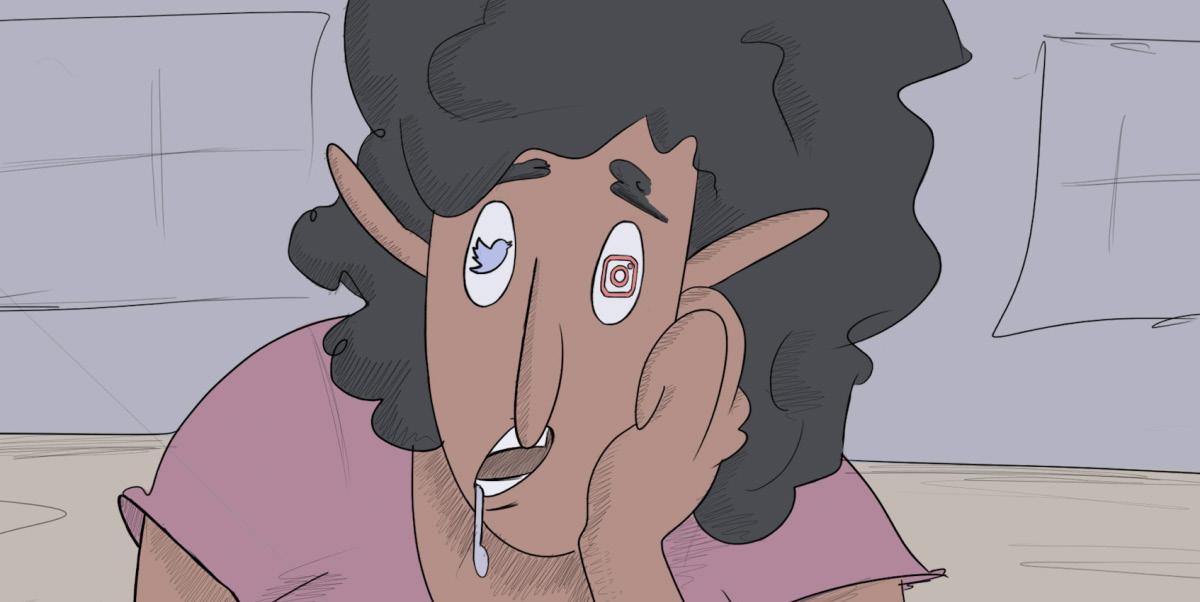
With the integration of the internet into every aspect of our lives, we have seen online communities find their way into the spotlight. Social media apps are how most young people communicate with their friends, family and even their future employers.
The human brain was built for in-person interaction. Miscommunications and misfires happen much more often than you’d think, and echo chambers bock out from any form of differing opinion or stance on any topic that is not the exact one that you have.
That’s not how the real world works.
Most importantly for the development of children, the rampant social media usage comes with the possibilities of your shortcomings or embarrassing moments being remembered by not only you and your peers but also strangers on
the internet forever.
It’s already affecting how adults show up to public spaces. They don’t fully enjoy themselves because they could be recorded and posted online at any moment. The behavior is also encouraged online, with most users not seeing an issue with a population of people scared to be themselves for fear of ridicule.
When you turn off your phone, there are supposed to be other activities that you can partake in to fully unplug and ground yourself with reality. Today’s kids aren’t fully granted that luxury; their third spaces are turning into other apps on their phones.
Third spaces are losing funding left and right. Parks, libraries, movie theaters, cafés and general places where people can just be people and commune or just relax are losing their place in society, and locations for these places are either too expensive or
just hard to find.
However, there is hope.
In more recent developments, neighborhoods have started to make streets more play-friendly for children, while the CDC and SHAPE America have seen the effects that a lack of recess can have on younger children and have started to implement policies nationally for mandatory daily recess time K-12.
Changes are being made to find alternatives to being fully online and isolated, and these beliefs and values are being placed in the home with parents monitoring kids’ activities online and putting more emphasis on outside and school activities.
All is not lost for the younger generations, so take part in these changes and block out the internet for a few minutes.
Michaiah Stephens is a 22-yearold English major from Durham,
Trump may be promising peace to buy time for ground invasion

BERGERON’S BRIEFINGS
THOMAS BERGERON Columnist
As of March 24, the Pentagon has authorized the deployment of 3,000 soldiers from the 82nd Airborne Division’s Immediate Response Force, a brigade-sized combat element designed to mobilize anywhere in the world within 18 hours. This follows a series of deployment orders in recent weeks of the 31st and 11th Marine Expeditionary Units to the region. If joined together, U.S. ground forces could total approximately 8,000 soldiers and Marines positioned to threaten Iran.
EDITORIAL BOARD
Jason Willis
McEntee
At the same time, President Donald Trump has signaled a possible shift toward de-escalation. In an all-caps Monday morning post on Truth Social, Trump declared that American and Iranian officials had begun peace talks, adding that planned U.S. strikes against Iranian energy infrastructure have been temporarily suspended.
Yet these claims remain contested. An unnamed Israeli source told Axios that a U.S. delegation — reportedly comprised of special envoys Steve Witkoff, Jared Kushner and possibly Vice President JD Vance — is expected to meet an Iranian delegation in Islamabad, Pakistan, later in the week.
However, Iranian Parliament Speaker Mohammad Ghalibaf denied such coordination had occurred, stating on X that, “No negotiations have been held with the U.S..”
As of now, no independent me -
dia outlet has been able to verify these claims.
Despite talks of peace, the USS Tripoli and USS Boxer Amphibious Ready Groups remain in transit, while strikes from multiple actors persist theater-wide. Meanwhile, recent Pentagon discussions regarding potential ground operations on Kharg Island or near the Strait of Hormuz suggest planning beyond simple deterrence or coercion.
Given Witkoff and Kushner’s failure to deliver peaceful outcomes in Ukraine or a new nuclear
Editorial Policies and Procedures
The Reveille (USPS 145-800) is written, edited and produced solely by students of Louisiana State University. The Reveille is an independent entity of the Office of Student Media within the Manship School of Mass Communication. Signed opinions are those of the author and do not necessarily represent the views of the editor, The Reveille or the university. Letters submitted for publication should be sent via e-mail to editor@lsu.edu or delivered to B-39 Hodges Hall. They must be 400 words or less. Letters must provide a contact phone number for verification purposes, which will not be printed. The Reveille reserves the right to edit letters and guest columns for space consideration while preserving the original intent. The Reveille also reserves the right to reject any letter without notification of the author. Writers must include their full names and phone numbers. The Reveille’s editor in chief, hired every semester by the LSU Student Media Board, has final
deal with Iran, paired with continued mixed messaging from the White House, there is real reason to suspect that current calls for deescalation may not reflect a genuine intent for peace. Instead, they may again be an attempt to strategically obfuscate a rather large military buildup that carries real potential for ground combat, rather than provide any meaningful offramp for Washington.
Thomas Bergeron is a 26-yearold graduate student from Baton Rouge.
GRAPHIC BY ETHAN GILBERTI
Louisiana legislative session is the same
old, same old so far

CRAWFORD’S CORNER
GORDON CRAWFORD
Columnist
Sweatpants are giving way to shorts, mosquitoes are slowly coming back and crawfish is back on the menu. It’s springtime in Louisiana, and that means it’s time again for the regular session of the Louisiana Legislature.
Going into the session, much attention has been on the quiet tension between Gov. Jeff Landry, the populist firebrand, and Senate President Cameron Henry, more of a measured, fiscally-conscious type. The latter has steadily emerged as one of the few foils for a governor who has largely been otherwise able to impose his will upon his supermajority party.
This rare relationship between a legislative leader and governor from the same party was quickly seen when Henry flatly shut down any movement on Landry’s attempt to abolish the state income tax, though he didn’t rule out further reductions in the rate.
Henry also expressed significant reservations about proposed expansions to Landry’s LA GATOR program, which established savings accounts for parents that allowed

state funds to be put toward private education.
I am genuinely grateful that there are still Cameron Henrys left within the Louisiana GOP. In an era of dominant demagogues, it is increasingly comforting to know that there are still sensible people with at least one hand on a lever of power.
However, this session is looking like it will ultimately, yet again, be much of the same: legislation that further harms the worst-off in the state whilst helping only a select few.
The aforementioned tax debate is the clearest example of this. Last year, Landry already secured a major personal victory through the
passage of his tax reform, which replaced the previous bracket system with a flat 3% income tax and a 5.5% corporate tax.
This ultimately amounted to a tax increase on the poorest and a tax cut on the rich, along with further choking the public by increasing the already high sales tax.
Now, Landry wants to go even further, abolishing the income tax entirely, a move which will leave a gaping hole in the budget that will inevitably be filled by either further rocketing up the price at the cash register or astronomically raising property taxes like our western neighbors.
While Henry pushes back on that, he still has expressed interest
in a smaller tax cut this year, which would still exacerbate budgetary issues facing the state.
Even with a smaller tax cut, with how much the state income tax provides for services, tax increases in other areas may not be enough to patch up the budget without cuts.
As the state deficit balloons, it makes little sense to toss out effective revenue generation sources.
Well, it makes little sense if you actually care about delivering functional services to your people.
The debate over Landry’s flagship education policy, the LA GATOR program, is similarly a distraction from the fundamental fact that the Louisiana GOP is continuing to abandon public schools in favor of a program which mostly supports religious private schools.
The program is an expansion of the voucher program, started under former Gov. Bobby Jindal, which provides parents with a state savings account to pursue education outside of the public system. While designed to be a quick fix to Louisiana’s failing school system, often ranked amongst the worst in the nation, the program has largely failed to significantly improve educational outcomes for students.
Even when students aren’t being funneled into schools which may be worse than the public schools they are coming from, they are still
forced to choose between failing schools or subjecting themselves to a religious education, as essentially all significant private secondary education is in Baton Rouge.
Advocates of this program hail it as giving choice back to parents. However, choice requires that multiple viable, distinct options be available. Under current Louisiana policy, public schools cannot logistically compete with many top private school options in resources. Instead of making them a viable option, Landry just wants to keep ballooning LA GATOR, funneling money and children into religious education under the guise of secular policy.
Yet, all debate on this has been centered on how much it will affect the deficit. Nobody within the GOP has proposed any action toward supporting the public school system, only desires to scale back LA GATOR because it’s “unsustainable financially.”
So it goes in the Legislature. Half populist sycophancy, half stuffy penny-pinching conservatives. While I hope that eventually a true fighter for policies that serve the worst-off in society emerges, that day seems far in the future.
Gordon Crawford is a 20-yearold political science major from Gonzales, La.
Women are revitalizing the struggling country music scene

RILEY’S REVIEW
RILEY SANDERS
Columnist
Over the course of the last decade or so, country music has largely regressed from the forefront of popular culture — less charting and radio impact, fewer breakout hits and breakthrough artists and the least critical acclaim perhaps in all of its history. The lack of critical success in country music over the last few years is not for lack of people listening; rather, it is due to a lack of evolution in the genre.
As a lover of both classic country hits like “Smoky Mountain Rain,” “Big Iron” and “High Sierra” and the few and far between contemporary country hits like “7 Summers” and “Choosin’ Texas,” I find that the country music industry has largely transitioned its focus from perfecting studio music to perfecting live performance, and as a result, the genre has become stagnant.
Take, for example, two of the most recently successful male number one country albums on the Billboard 200: Morgan Wallen’s “I’m the Problem” and “One Thing at a Time.” Both albums reached No. 1 on the chart, and “I’m the Problem” has captured and recaptured the No. 1 slot many times since May.
Both albums, however, failed to produce any long-lasting
hits, with only Wallen’s “What I Want” hitting the No. 1 chart slot on the Hot 100 for a mere week, in large part because of his featuring pop artist Tate McRae. “What I Want” was the fifth single from a set of eight and the only one in the album cycle to breach the top ten upon its release as a single.
Though the albums have been relatively successful commercially, the singles have not been commercially or critically successful. The music, after all, is not particularly innovative sonically or lyrically — it is more or less the same regurgitated, tired country theme of drinking and despair that has been in almost every male country record since 2000.
While drinking and despair are certainly essential to the culture and history of country music, they are not all the genre has to offer, and the male country artists of the 21st century have largely failed to capture the human experience like the music of country past has — think “Whiskey Lullabye,” and other classic male country hits.
Modern country hits like Wallen’s “Last Night” pale in comparison to spectacular tunes like these.
And while male country artists have failed to continue the country legacy in a meaningful, culture-capturing way, save for Zach Bryan, who is performing in Tiger Stadium this coming weekend, female artists are providing the blueprint to resurrect
country music from its tired existence.
For example, Kacey Musgraves, the first woman and country music artist since 2010 to win a Grammy for Album of the Year with 2019’s “Golden Hour.” Musgraves is an artist who, since the beginning of her career, has experimented with her lyricism and sonic landscape in revolutionary ways.
In 2010, her breakout hit “Follow Your Arrow” received much critical acclaim while also simultaneously getting her blacklisted from some country radio stations for her references to weed and gay marriage.
In 2018, with the release of “Golden Hour,” Musgraves began expanding her classic country music palate by infusing typical string and piano country with psychedelic pop; moreover, she latched on to those lyrical themes that otherwise would not appear in modern country music — mushroom trips and appreciating nature on “Oh, What a World,” combatting the divisive rhetoric of society expecting women to be both weak and strong via a superhero metaphor on “Wonder Woman,” and self-acceptance on “Rainbow.”
Musgraves continued to challenge country music with her experimental pop and electronica-infused country record, star-crossed, and her barebones singer-songwriter album “Deeper Well.” Now, she’s returned with a western-style pop country song entitled “Dry Spell,” a
song about a wry lament about a lack of dating opportunity.
Yet another phenomenal example of women carrying on and expanding upon country music’s legacy of shining a light on the human experience is Kelsea Ballerini. She’s a country singer who has been around since 2015 but has only recently come to reach critical acclaim with her landmark E.P. “Rolling Up the Welcome Mat,” a country record encapsulating the struggle with divorce in the limelight.
On this E.P., Ballerini, combats the “make me a sandwich” narrative often forced upon women in marriage in “Just Married” and uses an R&B flow, as close as a white country artist can get to one, about internet hate amidst her public separation. Ballerini received a Grammy nod for Country Album of the Year in 2024 for this record as well.
On the E.P. entitled “Mount Pleasant” following her Grammy-nominated record “Patterns,” Ballerini yet again embraced uncomfortable subject matter for country music by grappling with her exchange of motherhood for a career in music on “I Sit in Parks” and her struggles with depression on “Check on Your Friends.”
Finally, a newcomer to innovation in country, Ella Langley is a breakout artist that has achieved massive success with her song “Choosin’ Texas,” a song that reached No. 1 on the
Hot 100 and made history by tying Taylor Swift’s “We Are Never Getting Back Together” as the female country hits with the longest claim to the number one spot while also holding the top spot on the Hot Country chart. “Choosin’ Texas” is a wonderful blend of Fleetwood Mac-esque strings and pop guitar with a classic country storyline about losing a partner to someone else.
Of the aforementioned artists, who have you heard discussed in critical circles in the last five to 10 years? Women are the clear frontrunners in the conversation around expanding the genre’s legacy, as men continue holding down the traditional country front.
Traditional country music is wonderful, but it is failing to grasp the attention of popular culture in the way pre-2010 hits like “Need You Now” did due to a lack of innovation, so much so that the Grammy’s no longer plan to include a male-dominated field of old-style country records in the main country category, which has recently been populated by the above female artists and even Beyoncé.
Country music has a long way to go if it wants to continue to thrive, and to quote the popular saying, the future — of country music — is very clearly female.
Riley Sanders is a 19-year-old biology major from Denham Springs, La.
GABRIELLA GUILLORY / The Reveille
Louisiana Governor Jeff Landry speaks on an executive order about free speech to a crowd on Oct. 1, 2024 outside of the LSU Memorial Tower.