Monday, March 23, 2026

Monday, March 23, 2026
Women’s basketball is heading to the Sweet 16 after record-breaking PMAC finale.
Read on page 2



BY ISABELLE CALLAHAN Staff Writer
Advancing to the Sweet 16 in Sacramento, California, LSU women’s basketball defeated Texas Tech 101-47 and broke the national record for the most 100-point games in a single season. The defensive shutout was the final dance in the PMAC for the seniors.
“That’s what you hope happens when they play their last game in a home arena,” head coach Kim Mulkey said.
LSU took the court on Sunday afternoon in Round 2 of March Madness against the Texas Tech Raiders, and this game held a little bit more weight for senior Flau’jae Johnson.
The stands were packed in purple and gold, and an energy was brewing among the fans that something special would happen in the PMAC. Almost every fan was given a simple piece of paper that read “4 Feaux,” and Johnson had no problem shining bright for an almost sold-out crowd.
She delivered yet another standout performance with 24 points, going 4-for-5 on the free throw line and grabbing four rebounds. As Johnson stepped off the court toward the end of the game, tears streamed down her face and an entire fan base felt not only her impact on the team but also on the community. She’s leaving a legacy behind as she checked out for one last time.
“It was like a roar I heard in that PMAC, and I was like ‘wow,’” Johnson said. “It was the most beautiful thing I’ve been a part of. I will remember it forever. Just so thankful for the fans, thankful for Coach Mulkey, the whole program, it’s unimaginable.”
From the jump, the Raiders were a physically demand -

ing team, the type that LSU had seen only a handful of times so far this season, but the Tigers had no problem meeting those demands.
The noise was deafening, and with every play, good or bad, a very animated Mulkey was there to ensure that her team battled against an on-par Raiders defense. It took over four minutes for Texas Tech to get on the board, and it was a dog fight on that end for the duration of the game.
LSU took the lead early, but faced some trouble from Texas Tech’s Bailey Maupin, who landed three 3-pointers in the game.
The Red Raiders were more aggressive from three, with 36 attempts compared to LSU’s 18 attempts.
Some questionable calls by the game officials seemed to only amplify the Tigers’ determination to keep dancing into the Sweet 16.
At the start of the second, the crowd was louder than ever before, and the Tigers were on the prowl to put the game out of reach after ending the first half with a 45-27 score.
LSU came together under the pressure of a very physically demanding team, using it to its advantage. The Tigers took the chance to get to the free-throw line.
Any offensive struggles LSU might’ve had against the physical defense were negated by its effectiveness at the stripe, where it ended the game with an efficient 92.3% free throw



B-16 Hodges Hall

rate.
The capitalized on the Raiders’ offensive fouls to take the lead and run up the score, grabbing yet another win by over 50 points.
Electric was the only word to describe not only the atmosphere but also the Tigers’ play.
“Well, there are a lot of good teams left,” Mulkey said. “We did play well these two games, but the deeper you go in the tournament, the tougher it gets.”
LSU is slated to face threeseed Duke in the Sweet 16 after the Blue Devils won their game against Baylor on Saturday.
“It’s hard to beat people twice,” Mulkey said. “They’re better, I’m sure, and I think we are better. And so many moments right now are to make sure everyone in Baton Rouge and this state understands that, and at LSU, don’t take that stuff for granted.”
A team that was already on its A-game became unstoppable with the added contributions of several freshmen in Grace Knox, Bella Hines and Zakiyah Johnson, mixed with what the veterans did.
LSU practically snatched every rebound available, stacking on nearly double the rebounds the Raiders had. LSU also applied immense defensive pressure, led by Amiya Joyner, who made an impact from the second she stepped on the court.
There was no doubt LSU would win the game before the final buzzer sounded.
As the final seconds of the clock ticked down, the Tigers said goodbye to Baton Rouge and hello to the Sweet 16 in Sacramento.
NEWSROOM (225) 578-4811
Editor-in-Chief
JASON WILLIS
Managing Editor
COURTNEY BELL
Digital Editor ELI LATIOLAIS
News Editor
KAYLEY MELANCON Deputy News Editor
CADE SAVOY
Sports Editor
AINSLEY FLOOD
Deputy Sports Editor ROSS ABBOUD
Entertainment Editor LAURA ALLEN
Opinion Editor
GARRETT MCENTEE
Multimedia Editor
PAYTON PRICHARD
Production Editor REI ZIMMERMAN
Chief Designer RILEY WHITE
(225) 578-6090
Layout/Ad Design ASHLEY KENNEDY
Layout/Ad Design REESE PELLEGRIN
Layout/Ad Design ALAYNA YOUNG
The Reveille holds accuracy and objectivity at the highest priority and wants to reassure its readers the reporting and content of the paper meets these standards. This space is reserved to recognize and correct any mistakes that may have been printed in The Daily Reveille. If you would like something corrected or clarified, please contact the editor at (225) 578-4811 or email editor@lsu.edu.
The Reveille is written, edited and produced solely by students of Louisiana State University. The Reveille is an independent entity of the Office of Student Media within the Manship School of Mass Communication. A single issue of The Reveille is free from multiple sites on campus and about 25 sites off campus. To obtain additional copies, please visit the Office of Student Media in B-39 Hodges Hall or email studentmedia@ lsu.edu. The Reveille is published biweekly during the fall, spring and summer semesters, except during holidays and final exams. The Reveille is funded through LSU students’ payments of the Student Media fee.
BY DREW SARHAN Staff Writer
Elaine Nkwocha has had many influential women in her life, from her mother and her grandmother to her advisors; her work at LSU is a testament to those who shaped her.
Nkwocha is from the state of Imo in southeast Nigeria. She graduated from Madonna University in Elele, Nigeria in 2010 with a bachelor’s degree in microbiology.
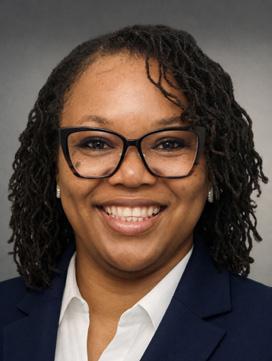
She then graduated from the University of Lagos with her master’s degree in public health in 2015 and the Imperial College of London for a master’s degree in molecular biology in 2016.
She first came to LSU in 2020 to start her doctoral studies in biological sciences, and while she is here, she is also obtaining her master’s degree in science education.
Nkwocha’s grandmother was a midwife, and she used the shorter length of her L-shaped house as the clinic in her community. Nkwocha first became interested in microbiology when she was living with her grandma in her at-home clinic.
She noticed patients would come back even after being prescribed antibiotics, which prompted her desire to study antibiotic resistance.
“Initially, my dad wanted me to be a doctor,” Nkwocha said. “He wanted me to study medicine, but I was really drawn to learning about microbes, bacteria and how they interact with the environment, but also looking into things like antibiotic resistance.”
The clinic is also where Nkwocha got her first taste of teaching. She would teach the younger children at the clinic English and math, which is how she found her love and passion for education.
Nkwocha now teaches an introductory biology lab at LSU, which she said is not a traditional biology lab class, but rather a course-based undergraduate research experience lab, or a CURE lab.
“They are different from the traditional [labs] in that they bring in authentic research into the teaching labs for undergraduates,” Nkwocha said. “For instance, I came into the program with a part of my research, and so other instructors do the same.
Student Body President reflects on his term as it comes to a close
BY MORGAN VANNOSDALL Staff Writer
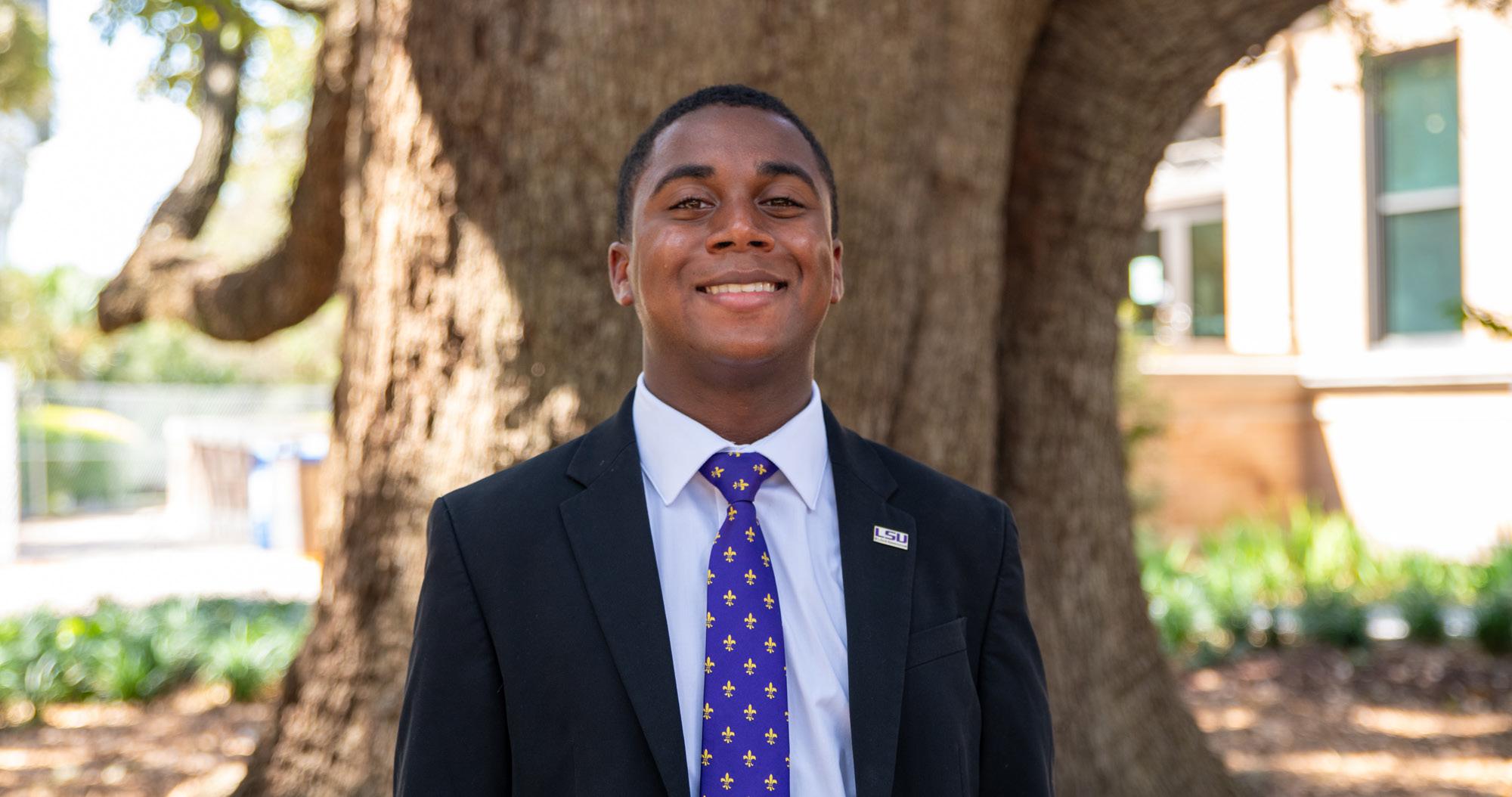
As his term comes to an end, Student Body President Lavar Henderson is taking a look back on his accomplishments and outlining goals for the rest of his term.
Henderson was elected last spring. Over his time, he has worked with members of administration to improve student life on campus.
“I am most proud of being able to be a part and an outside voice in bringing the new president and the new chancellor to LSU and helping
reshape the LSU system,” Henderson said. “I was a firm believer that when we were going through that process, that our main campus and our main campus students deserved a chancellor.”
The main goals Henderson emphasized focusing on in the end of his term are all in regards to more safety measures on campus for students. He is working on getting more cameras installed around campus and more officers patrolling at night.
Another pressing issue Henderson is working on is the current accusations being made of students
misusing AI and the backlog within Student Advocacy & Accountability.
Currently, when students’ work is flagged as having used AI it’s automatically reported to SAA. This has been an ongoing issue students have brought to the administration’s attention.
With this, Henderson recently introduced an AI student taskforce.
The AI Taskforce is made up of students to help address the ongoing changes in the education system regarding AI, with the hopes of bridging the gap between AI and education.
The taskforce is made up of members of the Student Senate, the executive branch and members of various technology clubs, such as Student Alliance for AI reform.
Henderson also noted that he and his team were able to secure a space on the second floor of the Student Union to expand the Student Government free printing services. There will be a full computer lab printing space.
When discussing challenges he faced over his term, he noted having to navigate trying to appease as many people while also putting the student body first.
“You know, some groups and some individuals are going to have to be told no and you know, you got to make the best decision for the student body at large,” Henderson said.
Throughout the fall semester, there were some disagreements between Henderson and some members of the Student Senate.
Alicia Cerquone, an active member of the Senate, had multiple pieces of legislation not signed nor vetoed by Henderson. Cerquone shared her perspective on Henderson’s lack of signing legislation.
Cerquone said much of her disappointment in the administration had to do with the fact that she felt Henderson was trying to be neutral in situations because of his role with the LSU Board of Supervisors.
see HENDERSON, page 4
BY ALAYNA FORD Staff Writer
On a Sunday afternoon in Baton Rouge, LSU students gathered around to play bingo and share stories with senior citizens, who look forward to their monthly visits.
Project 225 at LSU lets student volunteers dedicate time to building relationships with senior residents, creating moments of connection that bridge generations.
The program began in 2017 as a student-led initiative sponsored by the LSU Ogden Honors College. It aims to connect students with community organizations across Baton Rouge.
One of its longest branches, the Senior Citizen Outreach Program, partners with Volunteers of America to host monthly activities at Oak Park Plaza, a senior living community.
Cindy Seghers, the director of career development in the Honors College and the faculty advisor for Project 225, said the program was created to give students opportunities for long-term service in the Ba-
ton Rouge community.
“As our cohort expanded, we realized we were doing a lot about leadership, but not as much about long-term service,” Seghers said. “[The program] is a great way for people to cultivate leadership and understand volunteer management, not just volunteering.”
There are currently six different branches under the Project 225 umbrella: SCOP, Volunteers in Public Schools, Upward Bound, Companion Animal Alliance, Adelante and the Food Recovery Network. Each branch allows students to volunteer based on their interest.
Honors students can learn about the branches and sign up to serve during the honors involvement fair. The fair is usually hosted on the first floor of the Honors college and the branches will have tables and answer any questions students may have.
“I met Emily Demps there, who was running the branch at the time,” said Madelyn Phillips, program director of SCOP. “Freshman year, I started volunteering at a Service Saturday and I loved it so much I told
her, ‘Whatever you need help with, I want to do.’”
Students take center stage when it comes to how leadership is structured. Each program has a director. With student managers serving directly under them. Managers are in charge of recruiting, training and retaining volunteers.
“Most of our branch managers have started as volunteers,” Seghers said. “They begin by volunteering in a program, then become co-director and eventually move into the branch manager role.”
That was the case for Phillips, who began volunteering as a freshman before stepping into leadership within Project 225. Including being one of the co-founders of the Food Recovery Network.
SCOP focuses on building relationships with the residents at Oak Park Plaza, a subsidized housing community for senior citizens that is owned and operated by Volunteers of America.
Sophia Gutierrez, a current SCOP officer, said the organization aims to create a welcoming and relaxed
environment for both students and residents.
“What I like about it is that it’s very relaxed and casual,” Gutierrez said. “That’s really good for college students, especially Honors students who are often involved in a lot of different activities.”
Volunteers organize events roughly once a month, ranging from bingo nights and card games to seasonal celebrations. A crowd favorite is the Super Bowl watch parties, which the program looks forward to throwing every year.
“We bring food, watch the game and just hang out together,” Gutierrez said. “Before the Super Bowl event, we actually explain football to some of our volunteers so they know what’s going on when we watch the game with the residents.”
While some programs focus on providing resources, Gutierrez said the outreach program prioritizes social connection.
“We’re more about emotional needs, social needs and the need for community,” Gutierrez said. “It’s about making those connections.”
LAB, from page 3
The unique thing about the class is that we bring in questions that we don’t have answers to yet.”
The class is once a week for three hours and is split up into different sections based on the semester. The first few weeks, students get to know their model organisms, then they start experimental set-up, before finally working in groups for data analysis of their organisms and putting their final projects on a poster for a presentation.
According to the World Health Organization, antimicrobial resistance is one of the top global public health and developmental threats. It is estimated that 1.27 million deaths can be correlated to AMR in 2019 alone.
Nkwocha says millions more are projected to die from AMR. Her research can help the Baton Rouge area build awareness of this phenomenon in the broader community.
Nkwocha hopes she can help students learn skills they can use outside the classroom, emphasizing the real world impact of their research.
“They’re building collaborative skills and engaging in analytical and critical thinking, all skills we need for the 21st century,” Nkwocha said. “So it’s really not just limited to the science [lab], but they take it to their everyday lives, and they also get to the higher level of thinking in
the class, becoming co-creators of knowledge.”
Nkwocha said that she hopes that her class is able to provide an environment conducive to learning, using teaching methods to help best facilitate learning with her students, including relating topics to their local community.
“It’s kind of a full-circle moment for me,” Nkwocha said. “My love for education, love for science, and I’m bringing those together now [by] doing education, because I really want to continue to be able to support my students to learn. I think enrolling in that program has been so helpful and eye-opening on how I can best teach my students and how they learn.”
For her education master’s thesis, she is using her own class as a case study.
“I’m looking at what elements of what components of the CURE labs actually help students understand biological concepts, but also what elements in the structure of the CURE labs help increase their interest and motivation to continue in STEM,” Nkwocha said.
Nkwocha referred to her situation as a double-edged sword. As much as she loves being the teacher of the class, she also wants to continue studying how students learn and how she can improve the classroom experience.
One of her students is Mary Leddy, a biochemistry freshman
from Alexandria, Louisiana. She said she has learned more with Nkwocha’s teaching style compared to her other classes.
Leddy said Nkwocha was very reassuring and supportive of her students, even if they make mistakes, which allows Leddy to not be afraid to think outside the box.
“Her kindness, love, patience and never-ending support have helped me as a student thrive and feel comfortable in the class,” Leddy said in an email. “She has become a professor I can go to for anything and everything even if it is a simple conversation about our day or catching up on what is going on in our lives.”
Nkwocha has a lot of inspirations in her life, but she can be seen as an inspiration to others, as she has held cross-disciplinary leadership both at LSU and the broader Baton Rouge community.
She is on the Board of Directors of the Women’s Council of Greater Baton Rouge and is an American Society of Microbiology ambassador to Louisiana. She plans on starting an ASM chapter through LSU and other universities in the state.
She is also the founder of her own education research foundation, known as the Elaine Education Foundation, where she is trying to provide equal access to education to everyone regardless of their circumstances internationally.
Nkwocha said that LSU has
HENDERSON, from page 3
She noted how he was put in place there because of his position as student body president, and she felt it was “disingenuous” to try to be neutral in both roles.
Cerquone felt that Henderson’s lack of decision making on legislation when there were events taking place such as the Senate’s bill calling for there to be no discriminatory statues or memorials constructed on campus was upsetting as there was a lot going on in the world.
“I’d like to see something more in place that allows student voices to be heard, and things aren’t on fire this semester, so there’s not anything happening, like, in that way yet,” Cerquone said.
Henderson worked closely with Abry Layrisson, his vice president, throughout his term. Layrisson spoke about how their mutual goal in achieving the full potential of the LSU student body made their partnership work well.
She said she appreciated Henderson’s tenacity to accomplish
been instrumental in their support for her and her research at large. It has allowed her to study all of her most important disciplines, like research, science and education. She thanks the community she has fostered at LSU, which has helped her build her own team that wins.
“LSU has been a bridge help -
positive goals and to ensure resources, support and opportunities were made available to address everyday challenges in student life in a practical way.
“It is my hope and belief that the legacy he leaves is his honest attempt to make LSU its best for students and his encouragement that every student be all in,” Layrisson said.
Henderson said that he has considered this the biggest honor and success of his four years at LSU, to be able to serve such a large and diverse student body.
In regard to those wanting to get involved and serve the student body, Henderson wanted to emphasize that “it is much bigger than yourself.” He said the position should be about the student body, not personal beliefs.
“It should be about making sure that every student — no matter who they are, what they believe, where they come from — feels that their student leadership is really listening to them and really representing them to the best of their ability,” Henderson said.
ing me really become who I am today,” Nkwocha said. “As a professor in biology with different areas of expression, teaching, learning, mentoring and advocacy as well. I do a lot of advocacy for STEM education, but I could go on and on. LSU has been a thriving ground and has molded me into who I am to become.”

BY CHARLOTTE TRENTALANGE Staff Writer
One thing LSU knows how to do is dress well for events, proving the real headliner at Tiger Stadium next weekend may be the fashion.
As Zach Bryan is set to take the stage, in Tiger Stadium Saturday, students are busy finding the perfect outfit.
While it can feel impossible to find the right balance between comfort and style, don’t let the stress ruin your fun. By leaning into classic country staples and incorporating spring 2026 trends, you can create countless outfits from pieces you probably already own.
First, no spring wardrobe is complete without a warm and cozy, yet cute and trendy concert outfit. Country music is unique since it’s a timeless genre rooted in tradition and American culture. Leaning into that influence when it comes to what to wear will be essential for a stylish outfit.
For example, denim, denim and more denim. The quintessentially country fabric traces back to the early days of cowboys, farmers and miners and is prized for its durability in rugged conditions. Today, it’s less functional and is used more as a closet staple. Denim skirts, jeans and jackets will be seen everywhere throughout the concert, styled with anything from fringe to corset tops. Denim - on - denim,
revived from its ‘90s heyday, is a perfect concert look, but if you attempt the execution, make sure to match or closely coordinate washes to create a cohesive visual.
Embroidery and eyelet pieces, whether tops, skirts or dresses, have been having a moment all season. With whimsical, girly elements, they bring a soft texture that feels perfect for the season, and with unique patterns, it’s perfect for standing out in the crowd of 100,000.
Brands like Altar’d State are known for feminine looks like these, and they craft pieces with a romantic, polished interpretation of the style. Free People offers a relaxed, slightly undone version that feels more effortless and lived in.
Lace is having its main character moment, popping up on runways across New York Fashion Week and everyday boutiques in Baton Rouge. The once old-fashioned material one might associate with their grandma is having a major resurgence — or should I say revival — this season.
Like eyelets and embroidery, lace is girly and flowy, but what makes it popular is that it’s incredibly versatile. Paired with denim, it creates a high-low contrast, with brands like Levi’s, Free People and Revolve hopping on the trend.
Its semi-sheer quality also adds dimension by interacting with each person who wears it; against skin tone, lace creates a look that feels



individualized rather than mass produced, and the lack of structure gives each person a different silhouette.
On the other end of the spectrum is the rise of monochromatic, all-black country concert looks. It’s sleek, slightly edgy and very practical. A black dress, boots and a hat creates a streamlined outfit that looks expensive and intentional and can be recreated with clothes already in your closet. If black isn’t your default, browns carried over from fall’s color palette is another choice.
For accessories, follow the golden rule: the bolder the better. Statement belts, particularly ones with oversized buckles, are functional and eye-catching, and you can go as simple as you like with the rest of the outfit. Western boots and hats are the finishing pieces that pull everything together. For bags, make sure to review Tiger Stadium’s clear bag policy on what can be brought inside the venue.
The best guideline when dressing for any event is to choose what feels authentic. Luckily for die-hard music fans, it won’t matter what you’re wearing too much as long as you enjoy a perfect spring evening with Zach Bryan. That being said, engaging with your personal style and feeling confident in what you wear can elevate an entire experience. Lean into what you’re comfortable with, but don’t be afraid to try out a new trend.





Sophomore Kaliya Lincoln performs her floor exercise routine.

Sophomore Kailin Chio performs her floor exercise routine.

Sophomore Lexi Zeiss salutes the judges.

Gymnastics takes third at the SEC Championships on March 21 at the Bank of Oklahoma Center in Tulsa, Oklahoma

Junior Konnor McClain performs her beam routine.


Sophomore Kailin Chio performs her floor exercise routine.
BY PAIGE CHERAMIE Staff Writer
With AI data centers making their way into Louisiana, there are many concerns being raised by LSU students on the ethics of AI usage and its impact on the environment.
To discuss some of these issues, the Student Alliance for AI Reform partnered with Geaux Green to host a talk titled “AI’s Environmental Impact in Louisiana: Where Are We Headed?” The talk was given by Supratik Mukhopadhyay, a professor and researcher at LSU, in the Greek Theater.
Mukhopadhyay used the talk as an opportunity to show students AI is neither flawless nor unsalvageable. There are many applications for AI programs in the improvement of research, but he said, there are also many harms that come with the use of AI.
“It’s important to be aware of AI and how to use it to your benefit, and how to not to abuse it,” Mukhopadhyay said. “AI today has an impact on the world.”
Throughout the course of the talk, Mukhopadhyay spoke about many of his research projects that utilized AI, emphasizing how these programs created major advancements for the field of environmental science.
One research project he spoke about was an AI program trained to identify and classify certain formations into categories from satellite images. The purpose of this project was to map above ground biomass, with a focus on tree coverage, across the nation.
“This is basically related to how much carbon is getting captured in the ground,” Mukhopadhyay said. “It’s very important for environmental scientists, because people want to know how much carbon is there.”
This research provided valuable information to environmental scientists, and allowed them to more accurately determine the carbon consumption of plant life in the U.S.
“We mapped the entire land cover using AI, using the satellite images of tree cover,” Mukhopadhyay said. “That today is part of what is called DeepSat.”
This research improved the field of environmental science, since the AI program was not implemented until it was trained to near perfect accuracy. Before this program, scientists would have to piece together satellite images, which are incredibly vast with some formations appearing as mere pixels. It created a quicker but still accurate solution to a daunting task.
Mukhopadhyay also spoke about a research project he worked on to help with the prediction and detection of wildfires called DeepFire. The aim is to prevent mass devastation for the communities in high - risk areas.
“We built a prediction tool that can predict wildfires with more than 90% accuracy,” Mukhopadhyay said.
To predict wildfires, Mukhopadhyay, alongside other researchers, created an AI program that uses surrounding weather data such as the type of vegetation in the area, wind speeds and storm conditions, which was then used to determine the chances of a wildfire occurring.
The AI program was also designed to track lightning strikes in high - risk areas, a major contributor to wildfire outbreaks.
“We made it so it can predict where the lightning strike is going to hit,” Mukhopadhyay said. “That’s one of the most powerful tools that predicts wildfires, but prediction itself is not enough.”
Mukhopadhyay reminded the audience that predictions are just
that. There is no guarantee that the program will be correct 100% of the time, but it gives people in the community time to prepare and gather resources to combat wildfires and help prevent a major catastrophe.
By talking about these advancements through AI, Mukhopadhyay was able to show that the use of AI in research is not inherently a bad thing. AI programs specifically trained for research accomplish tasks faster than humans can, leading to quicker developments and more advanced research that was previously impossible with time and resource constraints.
However, Mukhopadhyay also touched on the negative impacts of AI application, specifically when it comes to generative AI programs.
One of these impacts he touched on were the “hallucinations” AI tends to have, where it incorrectly answers questions with confidence that convinces users it is correct information.
He gave an example, where a hypothetical AI was trained to only identify giraffes and horses.
“If you give it a giraffe, it’ll say giraffe,” Mukhopadhyay explained. “If you give it a horse, it’ll say horse. It’s very good at that. It’s better than humans at that. We have already achieved a level where it’s better than humans. But now, what I do is I feed it an elephant.”
The introduction of the elephant seems harmless, but it leads to the program making a major error because it lacks the insight humans do.
“Normally, when a human sees the elephant, it’s like, ‘Oh, it’s not a giraffe or a horse,’” Mukhopadhyay said. “But, it’s different for AI. The AI has been trained on giraffes and horses, right? It doesn’t know anything other than giraffes and horses. So, it will see if the elephant is more similar to a giraffe or a horse, and
depending on that, it will say it is a horse or giraffe.”
This mistake seems minor, but in other contexts such as cancer cell identification research, it can lead to major issues, especially when these mistakes go unnoticed.
“The problem with that is it does that without giving you a warning, so you don’t even know that it received something that it has never seen before and should not have received, like an elephant,” Mukhopadhyay explained. “And then it made a mistake, and it made that mistake silently.”
He also pointed out that the data centers used for many generative AI programs pull huge amounts of energy and water, taking away from crucial resources needed for survival.
“There’s so much heat getting emitted that unless you cool the system, the system can get damaged,” Mukhopadhyay said. “So you need huge amounts of fresh water, not salt water.”
These concerns are major for residents of Louisiana, as AI data centers are headed straight for the Boot.
“AI is coming to Louisiana — one of the world’s largest data centers is coming to Louisiana,” Mukhopadhyay said. “We need to be aware of how AI impacts our lives, especially in the environment, because if the environment is adversely affected, it will adversely affect our health.”
For SAFAR, this talk was not just a meeting. It was an opportunity to share its goals as an organization and present information to students about AI uses beyond the language learning models that students typically interact with.
SAFAR event planner Anderson Krupala, a freshman international studies and honors tract double major, explained SAFAR’s mission in hosting these talks and advocating
for AI reform on LSU’s campus.
“We know that AI is here to stay,” Krupala said. “Especially in the academic environment, we want to help facilitate that understanding between students and faculty and have it implemented in the proper ways in the school.”
Although Krupala doesn’t believe AI should be completely removed from the academic setting, he draws a hard line on when he believes AI should not be used.
“When AI starts making your decisions for you,” Krupala said. “When you don’t listen to your own intuition, like when you go to submit a paper and you ask AI if it’s okay to submit first rather than yourself, or you go to write a paper and you let AI fill in your thoughts for you.”
SAFAR President Jude Terrell, a junior political science major, expressed that he enjoyed this event because it showed attendees the purpose of SAFAR.
“I think that this event ties in with our central philosophy,” Terrell said. “First and foremost, we want to educate people on AI issues, that way, when they make their choices regarding AI, they have the most information possible at their disposal.”
For Ian Frick, the president of Geaux Green and a junior coastal environmental science major, the talk broadened his perspective on the use of AI in research and better equipped him to talk with others about its benefits and harms.
“I feel that I can now counter large claims that are made on both sides of the argument that ‘AI is necessary,’ ‘AI is not that bad,’ or people who say ‘there are no benefits to AI, there’s no reason we should be using it,’” Frick said. “I feel much more informed to contribute to that conversation and correct people’s biases and misconceptions than I did before this event.”
BY MIA HATTAWAY Staff Writer
To some, unwinding at the end of the week ends up being a recipe for disaster — made up mostly of alcohol. Rad Dad, a store with hemp-derived products, functional beverages and more, might just be the answer some Baton Rougians may be looking for as it comes to alcohol alternatives.
Co-owner Margaret Wilkinson opened the store with her husband Paul Claxton after their youngest daughter started kindergarten. As Wilkinson looked toward reentering the workforce, she saw a good opportunity to fill a gap in the market caused by a lack of alternatives to alcohol.
“We noticed our friends were just drinking less and trying to find ways to manage stress and kids,” Claxton said. “These products provided a really good avenue; the more I talked to people, the more people were using it, and we thought, ‘Well, I could certainly do a good job of bringing a space to market.’”
With over three decades of retail experience under Claxton’s belt, the couple decided to dive into the world of plant-based wellness products, including hemp, mushrooms and kava.
At Rad Dads, customers can shop from an assortment of items, such as beverages, gummies and tinctures. Cannabinoids include THC, which often creates a high, and CBD, which is not intoxicating. Functional mushrooms are usually used to create focus, generate energy or ease stress, while kava is typically used for relaxation.
When consuming such products, it’s important to be aware of legal age restrictions. In Louisiana, hemp-derived THC products are restricted to those 21 and older. Though kava and functional mushrooms are not regulated in the same way, products in stores are marketed toward adult consumers.
A 2024 study found that Americans have been consuming cannabis at higher daily rates than alcohol. Claxton feels that the ebb and
flow between alcohol and other substances doesn’t demand any outsider influence.
“It’s not like we’re battling the drinking culture,” Claxton said. “I think the drinking culture is pushing people to us because they’re tired of it — it’s expensive and it’s bad for you.”
Claxton shared that most customers come in for one of four reasons: sleep assistance, anxiety relief, ache or pain support and cutting back on alcohol consumption. Rad Dad was intentionally built to be learning-centered, with highly experienced staff ready to help customers find the right product for them.
“We lead with education,” Claxton said. “Most of our staff is either certified by the Louisiana cannabis program or have worked in the industry.”
Though expertise is an important requirement for the staff, Rad Dad is not meant to feel like a sterile pharmacy or like a grungy liquor store. Instead, each location takes on a unique aesthetic to help
make customers feel welcome and comfortable.
The original Mid City location on Government Street was the first to open in November 2023, with a retro dreamscape vibe. Conversely, the Jefferson Highway location, which opened in January of this year, carries a more refined vintage feel, which Claxton described as being reminiscent of Don Draper from “Mad Men.”
Though the latter location opened just two months ago, the future of Rad Dad, and other cannabinoid retailers in Louisiana, is currently up in the air.
Hemp has been a hot topic in recent years, with Louisiana’s dosage caps and packaging rules having been tightened in 2024. Originally, the restriction was intended to ban all THC products.
“Anybody that I can think of [in the industry] wants reasonable rules,” Claxton said. “They want testing, not selling to children — all these things that make sense.”
At the federal level, potential changes to hemp regulations could
impact the industry further, with a bill set to take effect on Nov. 12 this year that would ban products with more than 0.4% THC. Industry groups like the U.S. Hemp Roundtable have advocated for more consistent and clear regulations instead of total bans.
For now, though, Rad Dad is focusing on what is in their control.
As beverages with hemp and mushrooms become more mainstream, businesses like grocery stores have slowly become direct competitors.
“We just have to find different ways to provide value to customers — to get them to come back and shop with us,” Claxton said. “You can buy every can as a single in there and bundle them for four packs and six packs. You can’t really get that experience at a Rouses.”
As the industry continues to evolve, Claxton believes consumer curiosity will only grow alongside it. For the time being, Rad Dad remains committed to their mission of being both a storefront and educational space.
BY DELANEY POTTHAST Staff Writer
Saturday night capped off an exciting night for collegiate gymnastics as the nation’s top four teams gathered in a pinnacle matchup for the SEC championship.
Though many LSU gymnasts fought hard to help the team finish third with a high score of 197.950, sophomore Kaliya Lincoln’s performance on the night particularly demonstrated perseverance.
Competing in the vault, floor and beam events, Lincoln battled through a minor elbow injury to help keep LSU close to its competitors as the night went on.
“I just am really proud of Kaliya Lincoln,” head coach Jay Clark said. “In fact, I got a text this morning from the trainer saying she didn’t think she was going to let her compete.”
Lincoln’s night began on the balance beam, where she holds an average score of 9.865. Tonight, she would defy that with a 9.900 and pave the way for teammates Konnor McClain and Kailin Chio to find even higher scores.
When LSU moved to the floor rotation, things only looked up for Lincoln as she looked to put up another high score in the anchor spot she’s held almost every meet this season. She collected her third 9.950 of the season.
“We were back and forth during warm-ups,” Clark said. “We didn’t even warm her up in the 15-minute warm-up on floor, and she just took the touch.”
Watching her explosive double-layout, overextended switch leaps and stunning front-layout directly into a front full, it would be impossible to guess that the gymnast didn’t get more than four minutes to practice her tumbling.
Her ability to step in and perform at a high level when she was needed only continued to prove why she’s tied as the fourth-best floor performer in the nation as she faced adversity like a true “fighting tiger.”
“I was really proud of her, and I thought Lexi Zeiss did a great job starting us off on bars the way she did and getting the momentum going,” Clark said. “There are so many great moments that happened.”
Lincoln last competed on vault with a powerful Yurchenko oneand-a-half. Though she couldn’t fully harness her power for the stuck landing, a final score of 9.850 would be enough to help keep her team third in the competition by the end of the night.
While the sophomore didn’t receive any new season highs during the competition, she set new expectations for the program and continued to model how valuable of an asset she is in every lineup for LSU.
She took home her first SEC championship title in a threeway tie on the floor exercise and is only pushing the boundaries of her career with every meet that passes. As both the postseason and her time in Baton Rouge progress, it’s clear that Tiger fans have performances to look forward to from the young gymnast.


BY GABBY GRAY & DELANEY POTTHAST Staff Writers
As No. 2 LSU gymnastics traveled from Baton Rouge to Tulsa, Oklahoma, it found itself in the most decorated meet of the year amongst the nation’s top four teams, looking to defend its conference championship title.
Yet for the two-time defending champions, the competition didn’t land where the Tiger fans expected. LSU found itself in third place with a final score of 197.950, falling behind Oklahoma’s 198.150 and Florida’s first-place score of 198.175.
“I thought the kids fought hard, which is what they’ve done all year long when things like that have occurred,” head coach Jay
Clark said. “So, [I’m] proud of the fight because that has to be there if you’re going to be a championship-caliber team. But we know we left some things out there, and we’re disappointed, but not defeated.”
While the Tigers were ultimately dethroned as the reigning conference champions, their fans showed them nothing but support as Chio secured the all-around title with a 39.775.
The meet started strong for the Tigers as sophomore Lexi Zeiss swung into action, taking the reins in the leadoff spot for her eleventh time this season with a solid 9.900.
As senior Ashley Cowan and junior Madison Ulrich followed suit with their solid mid-lineup scores, Kailin Chio capitalized on
her bar set, matching her seasonhigh of 9.950 and putting the Tigers on the prowl.
Closing off the first rotation for LSU was sophomore Konnor McClain, and while the gymnast is tied in the national standings as the fifth-best bar worker in the country, her score of 9.750 would be dropped as the Tigers held onto second place at the end of Rotation 1 with a 49.475.
LSU held a 0.050 lead over the Sooners and a deficit of the same value behind Florida. Heading into beam, Zeiss moved down to second in the lineup as junior Kylie Coen preceded her with a score of 9.850 to give the rotation a solid foundation.
Scores began to stack up as
see DETHRONED, page 10

BY TRIPP BUHLER Staff Writer
LSU Baseball’s offense fell flat while its defense didn’t bail it out, and the Tigers dropped the final two games of the series to Oklahoma, losing the final game 4-3 Saturday.
The Tigers took the lead in the bottom of the first inning and didn’t give it back until two errors scored three Sooners in the top of the eighth.
It all changed when Jack Ruckert entered as a defensive replacement in the middle to late innings, and muffed a grounder that could have ended the eighth inning before anyone came around. Instead, his third error of the year allowed one to score on the play and the inning to continue, with the lead-taking run scoring a play later.
“You want to make that play,” head coach Jay Johnson said. “It’s going to be a type of play that is going to tip the scale in a game like this.”
LSU was out-hit eight to four and didn’t show much fight offensively outside of a pair of home runs.
Omar Serna Jr. got the start at first base for the first time this year as Zach Yorke took a seat on the bench after a four-strikeout Friday.
“He’s not coming out of the lineup,” Johnson said. “You have to be creative a little bit to do that, and that was our way today.”
Serna’s bat started the scoring for LSU with a two-run home run that continued his hot streak.
All three catchers were in the lineup with Serna at first, Cade Arrambide behind the plate and Eddie Yamin IV at the DH spot
got his first start of the year.
The power hitters weren’t the only ones who were enjoying the breeze pushing balls out of the park. Chris Stanfield got a hold of one to open the fifth inning and dropped his first home run of the year in the left field seats.
“I wasn’t going up there trying to homer [but] just put a good swing on the ball,” Stanfield said. “I’ve been swinging at some lower pitches, and I think that’s why I was hitting grounders. So getting the pitch at the right height was key to that.”
But Oklahoma wanted to get in on the home runs.
William Schmidt gave up a solo shot in the first inning. He found trouble again in the third inning, where the bases were loaded with one out, but two huge strikeouts
BY ADAM KIRSCHMAN Staff Writer
No. 22 LSU softball got its first conference series win of the season on Sunday, beating No. 21 South Carolina 2-1 after a one-run comeback through the final two innings.
This marks a second straight conference win for LSU and the third of the season, making this two-win series a strong rebound after the team lost its first two series.
Despite a rough start at the plate for LSU, the Tigers were able to claw themselves back into the contest with a two-run sixth inning. LSU finished with only two hits, both of which came in the last two innings.
LSU’s Jayden Heavener and South Carolina’s Jori Heard both had big games on the mound.
Heavener finished her day with only two hits given up while recording five strikeouts. Despite a loss, Heard had another great day, letting up only one hit while striking out seven batters.
Both defenses started strong in the first inning, holding each other scoreless after a nice display of pitching. Heavener and Heard held opponents hitless while combining for three strikeouts to start the day.
The contest got intense at the top of the second after the home plate umpire called a strike on a close decision, which LSU assistant coach Bryce Neal responded to with heated protests that the call was wrong. Neal was ejected for leaving his dugout and arguing, which was quickly followed by two more strikeouts by Heard to end that half of the inning.
DETHRONED, from page 9
junior Amari Drayton put up a 9.850, which proved to be a disappointing score.
“It was just the dismount — you gotta land the dismount and not straighten up,” Clark said. “You’ve got to be able to hold that finish longer than she was able to hold it,” Clark said. “She was falling out and never really showed control there at the end, and I believe that’s what they took.”
After Drayton’s 9.850, sophomore Kaliya Lincoln followed suit with a stuck 9.900.
Looking to catch the lead, LSU’s dynamic beam duo of McClain and Chio prepared to anchor the second rotation. A connected beam series and a stuck gainer-full earned McClain a 9.950 before Chio stepped onto the podium.
With all eyes on the nation’s No. 1 gymnast, she stuck a matching 9.950, helping the Tigers stake a claim to the lead at the halfway point by 0.025.
From there, it was the Tigers’ time to shine on their No. 1 event, the floor.
Senior Emily Innes led off with

LSU softball sophomore utility player Alix Franklin (20) celebrates as she runs into home plate during LSU’s 7-2 win against Texas A&M on March 16 at Tiger Park.
Pitchers stayed almost perfect in the bottom of the second and top of the third inning after Heavener dealt three straight outs, followed by another hitless inning by Heard. The Gamecocks got the first hit of the contest with a single in the bottom of the third, but again came out of the inning scoreless.
South Carolina kept LSU hitless through the fourth and fifth innings, where the Tigers went down 1-2-3 and looked hopeless at the plate.
The Gamecocks’ offense capitalized on the strong fielding by getting on the scoreboard first, after designated hitter Jamie Mackay smashed a solo home run down the infield line.
The contest picked up at
a statement 9.900 — a score she put up twice in the regular season — followed by a 9.875 from freshman Nina Ballou. While Coen matched Innes’ score, Drayton landed a 9.825, which was later dropped at the end of the rotation.
Before Chio took over the floor, Zeiss was at her side. In fact, the sophomores hardly left each other’s presence throughout the night, cheering one another on before and during every one of their performances.
After Zeiss watched Chio secure her score of 9.900 on the floor, the Bok Center Arena went wild as Oklahoma senior Faith Torrez secured the first perfect score of the day on the balance beam.
While Sooners fans leaped from their seats, LSU drowned out the noise and helped cheer Lincoln to her 9.950, which rounded the Tigers out to the No. 2 spot with an overall score of 148.500 behind Oklahoma’s 148.550.
Finally, it was time for the Tigers to paint the vault purple and gold as Zeiss led off with a 9.875, followed by a 9.850 from McClain.
LSU looked to sophomore Vic-
the top of the sixth, after LSU’s Destiny Harris picked up the Tigers’ first hit with a bunt. A sacrifice bunt by Avery Hodge got Harris to second, before a sacrifice fly by Jaila Lassiter advanced Harris to third, sparking a big scoring opportunity while on two outs.
Sierra Daniel then walked, getting another runner on first with Tori Edwards up to try to send a runner home.
Edwards would do just that, hitting a ball deep into rightcenter field for a two-run double. LSU quickly turned the tide of the game and took the lead at 2-1 with that hit.
Heavener and company again were clutch, forcing another quick three outs at the bottom of the sixth.
LSU tried to raise its lead
toria Roberts, who topped her teammates’ scores with a 9.900 following a front pike half on the table.
The last two performances were then punched into LSU’s scorecard before Chio anchored the event. With a 9.850 from Lincoln and a 9.800 from Drayton, the crowd looked towards Chio for one final time on Saturday night.
Just as she saluted at the start of the runway in front of 6,278 fans to spring off the vault table, Florida senior Selena Harris-Miranda earned the meet’s second perfect 10 on the uneven bars. Still, that wasn’t enough to rattle the sophomore as Chio stuck a 9.975.
This rounded LSU’s score to 197.950, securing third place in the championship competition.
“We’ve still got a month of this thing, and I believe in this team,” Clark said. “I believe this is a championship-quality team, and we’ll bounce back.”
In a meet where the Tigers were looking for the magic number of three straight SEC titles, a still-strong performance ended with the team just 0.225 points
BASEBALL, from page 9 capped a 33-pitch inning to not allow any Sooners to cross home.
The strikeout was his best friend and got him out of another jam with two on in the fourth. He fanned seven batters over his four innings on the mound.
All of the hits against him were singles except the home run. He then allowed two more singles in the fifth inning, which chased him from the game after 90 pitches.
Gavin Guidry, a pitcher Johnson says he trusts with his life, came in to neutralize the threat. He got three huge outs with the assistance of sharp defense from Steven Milam.
Oklahoma kept making pitch counts high for LSU and drawing walks. The Tiger staff walked eight over the course of the game. The 8-9-1-2 hole hitters in the Sooners’ lineup drew four themselves, putting the pressure on while innings typically ended with the middle of Oklahoma’s lineup.
with one inning to go and came close to a third run at the top of the seventh after getting a runner on third base. That great positioning would not be enough to get another run, though, after the Gamecocks’ relief pitcher Nealy Lamb forced a fly-out.
LSU now only needed three outs to earn its first conference series win of the season, and Heavener continued to look unfazed by the pressure. She dealt a flyout and lineout in her first two pitches before ending the contest with her fifth strikeout of the day.
LSU will want to build on this win next week when it returns to Tiger Park to face Louisiana Tech on Tuesday.
short of keeping the crown. With the start of the postseason under its belt, LSU will return to the PMAC to host the regional round of the NCAA champion-
Camden Johnson, who was batting second and hit the home run in the first inning, got on base three more times by reaching on an error, a walk and a single. Guidry was kept on the mound for an extended outing. He came back out in the eighth inning after throwing 56 pitches over the previous three and issued a four-pitch walk and a couple more singles. That brought the game within one.
Deven Sheerin came in to clean up the eighth and pitch the ninth, where he wasn’t charged with any runs.
LSU is now 2-4 in SEC play, having taken only one game away from both Vanderbilt and Oklahoma. The Tigers’ next game is Tuesday at home against Louisiana Tech. First pitch is at 6:30 p.m. CT.
ship, where it’ll be on the hunt for redemption.
“The idea is to get in a good rhythm and get ourselves back to Fort Worth,” Clark said. “But take


CRAWFORD’S CORNER
GORDON CRAWFORD Columnist
Amongst the wave of trendy restaurants hitting Baton Rouge in the past few years, an incipient market has emerged: hot pot and Korean BBQ.
That specific corner of the local culinary scene was previously the sole territory of Volcano Korean BBQ and Hot Pot, which closed in 2024 and replaced with Ombu Buffet.
The first new arrival was KPOT, which opened on Aug. 28, and Legend Pot followed just a few months later.
That begs the question: which restaurant does it best?
The first big difference between the two is the overall atmosphere and decor. Both restaurants aim for a sleek, modern design.
KPOT feels a bit like a space station the first time you walk in, with neon and mood lights littering the restaurant.
Legend Pot, on the other hand, takes a much lighter approach. While still very fresh and modern, the lighting is a bit warmer, and the color scheme incorporates more gold, giving the restaurant a warmer feel.
While your personal preference with the ambiance may vary, one area where Legend Pot definitely has a leg up is its overall arrangement.
The sauce bar at Legend Pot is in the center of the room, whereas the KPOT sauce bar is at the back.
Who’s doing hot pot cuisine best?

Legend Pot’s sauce bar’s central location makes it more readily accessible for a greater number of tables than KPOT’s.
The sauce bars themselves are fairly comparable, though Legend Pot’s has red chilis whereas KPOT’s has jalapenos. I find the red chilis generally pair better with the variety of sauces, so at least having them as an option at KPOT would be a welcome addition. Both could also implement signs containing basic sauce recipes, which I’ve seen in other Korean BBQ and hot pot places but is strangely absent at either Baton Rouge location.
The food on the bars are essentially the same, though KPOT’s fried chicken was surprisingly good for a buffet dish that usually just tastes like the restaurant felt they were obliged to do it. However, Legend Pot has a smorgasbord
of the little cakes that many Chinese buffets order in bulk, and I am a sucker for those.
Service at both restaurants has been consistently excellent every time I’ve been. The first time I went to KPOT, being new to the entire concept, my waiter happily answered all of my questions and even prepared his own custom sauce from the bar, which was excellent. Furthermore, KPOT has an iPad at each table which allows you to place new orders at any time without flagging down a waiter, which is handy and easy for the customer.
When I went to Legend Pot for the first time, I was concerned about the lack of an on-demand ordering system. I had previously eaten at a similar restaurant out of state where the waiter only came two or three times to our table and
I walked out feeling scammed.
That’s not an issue at Legend Pot, however. The wait staff has always been incredibly attentive, and I never had to wait more than five to ten minutes for a waiter to come check on us.
Last, but not least, the food itself. Both are excellent, but they excel in different ways.
Legend Pot slightly edges out KPOT in the hot pot game. Their Szechuan spice had a fuller, more complex flavor, and also fewer peppercorns, which, while delicious and necessary for any authentic Szechuan cuisine, do get a bit annoying to deal with in bulk after your soup has steamed off. I also like the additional kick in Legend Pot’s Thai Tom Yum, which isn’t that spicy at KPOT.
However, KPOT outperforms Legend Pot with their Korean

BBQ. The steak options are more diverse, and the hangar steak is simply exquisite. The bulgogi sauces are generally also a bit saltier and less sweet than at Legend Pot as well, which I prefer. However, most of the art of Korean BBQ comes down to your skill, and both restaurants provide quality ingredients to work with.
Also, just a tip, bring spices with you. While they do provide salt and pepper, most seasoning on the meat is expected to come from the sauce you make, which you may not want on every single bite.
One option that Legend Pot has that KPOT can’t compare to is their sushi. This has been somewhat inconsistent in the two times I’ve been. One was closer to the restaurant’s opening, and the sushi that night was quite bad, with poor portioning and a slight stale flavor. However, the last time I went, it had improved significantly, tasting much fresher, and I really enjoyed my Philadelphia and Spider rolls.
The prices at both restaurants are pretty comparable, although when considering the sheer amount of additional options provided by the sushi at Legend Pot, it still is the better overall value despite being two dollars more expensive.
In all, both restaurants are fantastic, but they do each have unique strengths. Ultimately, it’s up to you to determine which one suits your tastes best. However, wherever you decide to go, you won’t be making a bad choice.
Gordon Crawford is a 20-yearold political science major from Gonzales, La.
BERGERON’S BRIEFINGS
THOMAS BERGERON Columnist
Recently on Instagram, a wave of new accounts has appeared with innocuous usernames such as “@ channel8newslouisiana,” “@channel_4_virginia” or “@channel6kentucky,” appearing with all the graphics and formatting of a local
Jason Willis Editor in Chief
Managing Editor Courtney Bell
Kaley Melancon News Editor
Sports Editor Ainsley Flood
Garrett McEntee Opinion Editor
news station. However, the “news” they report appears as if it is from an alternate universe.
Headlines read: “LATech launches hood missile on Lane Kiffin and LSU,” “Louisiana mobilizes for war with Alabama as tensions rise” and “MS and LA troops are advancing towards Memphis.”
These stories, paired with a compilation of comedic internet clips, bizarre AI-generated videos and even real footage of combat operations create a newscast that feels both hilarious and surreal.
At face value, this brand of content provides a good comedic break in the typical Instagram timeline with its over-the-top, absurdist humor. However, underlying the joke is a pointed satirical edge, holding a mirror to the traditional 24-hour news cycle and the idea of American exceptionalism itself.
American exceptionalism rests on the notion that the United States is “the shining city upon a hill,” positing that our lives as Americans are unique, where our wins are from an inherent ability to suc-
ceed, while our losses are unlike the problems faced by all other civilizations around the world. It’s a worldview that positions American life as wholly separate from the instability and conflict associated with “less fortunate” regions.
Channel 8, however, challenges this idea, constructing a world in which the United States is plagued by violent internal conflict and instability, often characteristics of nations labeled as “developing” or “third world.” These fictitious news reels resemble the kinds of
Policies and Procedures
The Reveille (USPS 145-800) is written, edited and produced solely by students of Louisiana State University. The Reveille is an independent entity of the Office of Student Media within the Manship School of Mass Communication. Signed opinions are those of the author and do not necessarily represent the views of the editor, The Reveille or the university. Letters submitted for publication should be sent via e-mail to editor@lsu.edu or delivered to B-39 Hodges Hall. They must be 400 words or less. Letters must provide a contact phone number for verification purposes, which will not be printed. The Reveille reserves the right to edit letters and guest columns for space consideration while preserving the original intent. The Reveille also reserves the right to reject any letter without notification of the author. Writers must include their full names and phone numbers. The Reveille’s editor in chief, hired every semester by the LSU Student Media Board, has final authority on all editorial decisions.
headlines that Americans are used to seeing about far away places and could never imagine happening within the homeland.
By doing so, these parody accounts push the viewer to feel at least a little uncomfortable with the possibility that it could indeed “happen here.” The humor works because it feels implausible, but not impossible.
Thomas Bergeron is a 26-yearold graduate student from Baton Rouge, La.
MICHAIAH’S MINUTES
MICHAIAH STEPHENS Columnist
The 1%. You may have heard of them. But who actually makes up the 1%? And why do the masses adore them?
The top earners in the U.S. who also hold 20.4% of total wealth in this country, according to Princeton Economics. Who are these top earners, you may be wondering?
You may think it’s top executives, financial professionals, entrepreneurs, investors, athletes and celebrities, when in actuality, the 1% is being driven by “owner-managers, mostly of small and medium-sized companies — specifically S corporations, partnerships, and limited liability companies.”
These companies are mostly financed by hedge funds and private equity, as shown in the Chicago Booth Review.
How were these companies able to make so much money, you may be asking?
Well, since the 1980s, income growth has favored upper-income households. Meanwhile, the U.S. middle class growth, which originally was considered the majority, shrunk. Now, most of the nation’s income goes to upper-income households.
One household in particular started me on a class crisis escapade. An influencer by the name of Becca Bloom, known by some as the queen of #RichTok
— a hashtag for all things luxury and gauche — said, “Given that everyone on the East Coast right now is iced out by snow, I thought I would get myself some ice too” whilst showing off diamonds she purchased.
I couldn’t help but gawk at the audacity to even utter the words as if anyone under her tax bracket would find that funny or even charming. Then, I remembered they most likely wouldn’t even care and instead would flood her comment section with “I love when rich people rich right.”
What is “riching right?” According to The Billionaire Playbook: India’s Elite Who Are ‘Riching Right’,” it is an internet term “dedicated to the ultrawealthy who don’t just hoard their billions but spend them with taste, purpose, and flair.”
The spending is more on luxury items that display sophistication, style, purpose, and philanthropy rather than loud, flamboyant and flashy items that show how much you really care.
I couldn’t help but be reminded of “quiet luxury” and the ongoing battle between old money versus new money. There is intrigue in individuals consuming goods in an inconspicuous manner without logos or symbols to communicate status in a more understated manner.
As the topic started to bridge a gap, I ended up in the old moneyversus new money debate. Old money chooses to convey status horizontally, amongst peers, and new money needs to
signal their status. All of these terms bring me to a question. No matter whether it’s new or old money, why do we praise the wealthy?
Writer and editor Lewis Lapham once said, “What’s valued is wealth. And what we pretend to value is virtue. The more heavily we value wealth, the more ostentatiously we pretend to virtue.”
I believe this, among other traits, is why the rich are seen as an aspiration and an inspiration. If they worked for it, then they are hardworking Americans, the examples of why the “American Dream” can and still works, and they are going to reach back and pull us all out. If they were born with it, they have access to clubs, schools, luck and handshakes you will never see, and we have to get in those rooms.
Then, with this attitude, you would assume the poor would be seen as individuals who were less lucky or had the odds stacked against them and shouldn’t be condemned because they couldn’t “make it.”
No. In reality, we “other” them. As Arthur C. Brooks and John A. Powell state in “America Can’t Fix Poverty Until It Stops Hating Poor People,” “Othering uses bonds of shared identity to deny empathy and a sense of belonging to others. It gives elites and dominant groups an excuse to see social problems as distant.”
We give rich people outs for why poor people are where they are. It’s common to come across comments and think pieces say-
ing, “It’s not the rich buying twelve collectibles, it’s us” and “overconsumption core,” but wouldn’t having 15 rooms in a house be the exact same thing?
The rich then are able to turn this around on the less fortunate because we allow them to. They say “They just haven’t worked hard enough” or “they just need to stop buying coffees.”
If most entrepreneurs are a part of the 1% and instead it was made from hedge-funded companies, wouldn’t that mean they found loopholes in the system, not hard work?
Is this the goal? You’re not rich if you aren’t cheating and running people over to grow what you have?
This is how the wealthy keep others stuck, and most Americans are fine with the system being this way because of exceptionalism and a commitment to capitalism. It was once a belief that communism wouldn’t be able to take root in America because of how hard we hold on to capitalism.
As Matt Stoller states in “When American Capitalism Meant Equality,” “the conventional wisdom of American markets as a force for equality and against aristocracy represents a long-standing trend, not necessarily of economic equality but of the self-perception that economic equality among citizens was foundational to the American experiment.”
This is why Americans are so committed to it; they believe that though the beliefs have changed for the worse, and have placed
corporations in the driver’s seat, to want change would be going against the foundation of America. And it’s just not true, it may have been a priority before, but it’s just not now.
American Exceptionalism, according to Johannes Thimm, in “American Exceptionalism –Conceptual Thoughts and Empirical Evidence,” “is the widely held belief in the U.S. that its values and institutions are the best yet devised, the conviction that the world needs to adapt itself to American ways rather than vice versa.”
It tries to cover up anything wrong you may think about this country by reminding you that this is the best it could ever be, because no other nation is better than this one. You may have seen firsthand that this is not the truth, and with ideologies like this one, you keep people from thinking for themselves, therefore wanting change.
We won’t fix the wealth gap in the United States by praising the wealthy for giving poor people scraps, and we won’t get it by aspiring to be them. We have to realize the amount of money they have is too much, and they won’t even out the playing fields if they don’t have to. We have to do our part to destroy the “American Dream” mindset and forge a new path for wealth equality for everyone, because we won’t get it with what we’re doing now.
Michaiah Stephens is a 22-yearold English major from Durham, N.C.

MIRIAM EVELYN
REESON Columnist
In the age of the internet, few things can remain niche for long. With the whole wealth of human knowledge at our fingertips, one can learn about any culture or subculture in minutes. Similarly, people with niche interests are able to find each other with greater ease than ever and communicate in ways they never could before.
But the internet isn’t a private space.
While certain corners may remain hidden for a time, all of it is ultimately open to the public eye. Anyone can look in and make judgements on a group. Outsiders will come upon these subcultures and make a determination: admiration, condemnation or neutrality.
When outsiders come across a subculture, they may seek to emulate what they see without really understanding the scene.
Cultures are ultimately built on norms. All cultures have customs and values which unite the group.
Take goth culture: a scene built on alternative dress, a DIY ethos and listening to a particular style of music. First emerging in the 80’s, the goth scene has had decades to establish its norms.
As goths find each other online, they create spaces centered around their values and interests which are also open to the public. They share new music and DIY tips with one another. They might try to find people to go to goth or industrial concerts with. With so many TikToks, Reddit posts and tweets, it’s inevitable that others will be exposed to the scene.
Many newcomers will come across a goth’s online presence and be enamored with what they see. The bold white makeup and alternative dress can make quite the first impression. They may seek to replicate these looks but don’t know where to start. Luckily for them, there’s a whole industry ready to help them out.
Anyone can buy goth clothing online for a premium. You might spend a few 100 bucks on boots or 60 dollars on a white foundation. You can buy a ready-made gothic wardrobe if you’re just willing to shell out the cash.
In doing so, many newcomers to the scene are able to get the
right look. But in doing so, they run contrary to the DIY mindset which dominates goth culture. It’s not about how much money you can spend. It’s all about how creative you can get while spending as little as possible. Why buy expensive jewelry online when you can go to a Home Depot and make yourself a chain?
Gatekeeping is usually seen as something of a sin. It comes off as elitist, a way to keep the plebs away from your interest.
However, it serves an important function in maintaining a group’s cohesion. Enforcing norms and values helps to uphold the integrity of the scene and make sure it stays true to what the culture is all about.
That’s not to say there should never be evolution. Cultures, by their nature, aren’t a static thing. In the case of goth, change in the scene is to be expected as fashion trends shift and new music comes out. Innovation can keep a scene fresh and lively.
But it’s important that any such innovation stays true to the guiding principles of the subculture. When newcomers are allowed to come in and adopt the scene without actually showing interest in what led to it, it corrupts. The cul-
ture becomes flooded with disinterested people who don’t contribute to any meaningful evolution. After all, how can someone who dresses goth but doesn’t listen to the music create new goth music? How can they innovate in DIY techniques if their entire wardrobe is purchased readymade?
Perhaps it’s okay to say that not every person needs to be let into a certain scene. It’s okay to have certain expectations of people engaging with a subculture. It’s not elitist to have those expectations if the goal is to ensure the culture’s longevity. It only becomes elitist when nobody can be let in, when
nothing is ever good enough. Done effectively, gatekeeping can keep a subculture grounded without shutting out new members. If you want to become involved in a new scene, try to understand the history and perspective of the people already in it. If you’re already in a subculture, try to be welcoming and guide newcomers so that they can learn. Doing so ensures that any subculture can last long enough for new people to come in and carry it forward.
Miriam Evelyn Reeson is a 27-yearold political theory student from Baton Rouge, La.