

HANDS
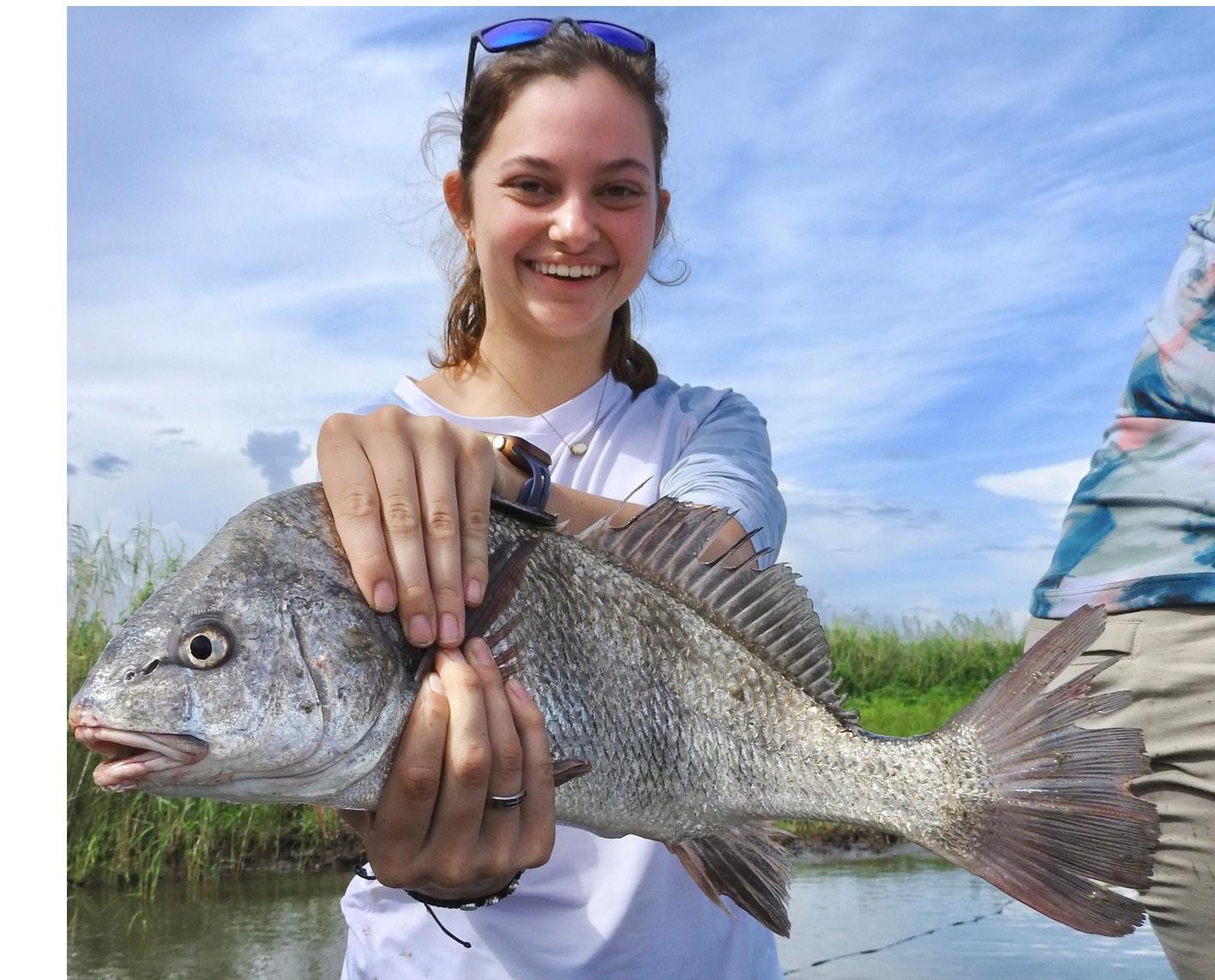
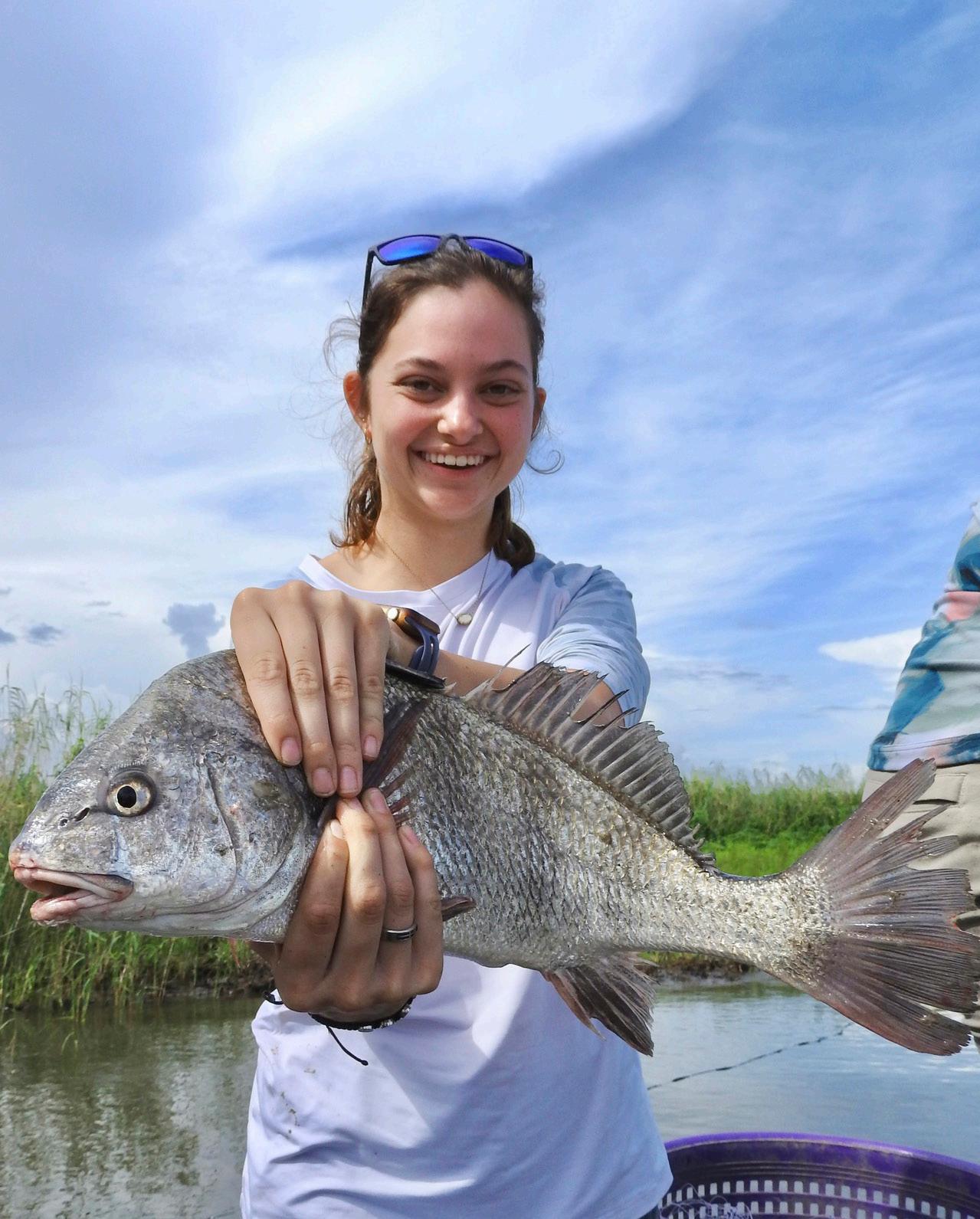
Here’s how a group of LSU students supports environmental protection through research.



‘ONCE IN A LIFETIME’
LSU research program empowers students to support Gulf Coast
BY JORJA ETHRIDGE Staff Writer
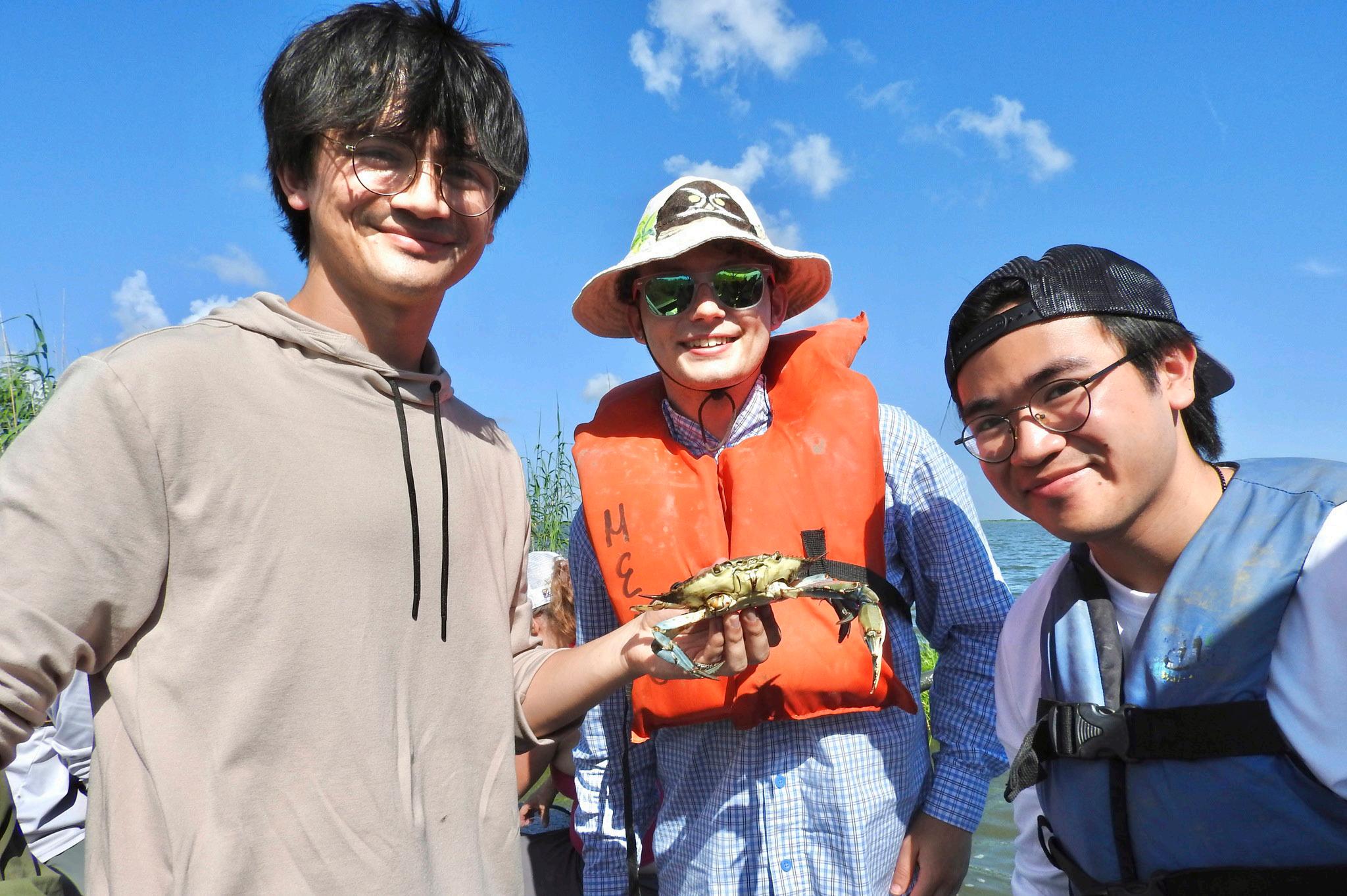
LSU’s Gulf Scholars Program provides opportunities for undergraduate students of any major to participate in projects that support communities and ecosystems along the Gulf Coast.
LSU launched its program in 2023 and is one of 30 universities across the five Gulf Coast states that has a Gulf Scholars Program.
This year’s scholars are the fourth cohort. They applied in the fall and are now choosing their projects. In the spring, scholars will plan their research and then conduct hands-on ork and excursions in the summer
Each year, the scholars partner with faculty mentors and pick projects that align with their interests. Many students that complete the program are not science majors but combine their fields with coastal initiatives.
One such student is Roan Guidry, a senior pursuing a dual degree in political science and philosophy. He completed the program in 2024, before his junior year.
Guidry said he mapped out Louisiana’s early conservation efforts for his project. His faculty mentor was Dr. John Andrew Nyman, a renewable natural resources professor.
“Since I’m a humanities major, I didn’t know too much about in-lab research. I’d never done field work, but Dr. Nyman had,” Guidry said.
Guidry and Nyman explored the origins of conservation in Louisiana and the origins of the state’s current efforts.
“What made mine unique to the humanities that I loved

was a lot of digging through resources,” Guidry said. “It was a lot of work in the library, a lot of dating back theses, a lot of reading primary source documents.”
Guidry said his favorite part was going into the field and doing research. Regardless of the scholars’ individual projects, they go on boat excursions in the summer and see the wetlands firsthand.
Guidry also explained how the scholars get paid for their work. Each scholar has access to a $6,000 fund. The National Academies of Sciences, Engineering and Medicine provide the funds for the program.
Over the summer, the students log their hours and can get paid for up to 40 hours of work a week. Guidry added that students can use their fund for any research materials they need.
The program is open to all undergraduate students, but freshmen and sophomores are especially encouraged to apply.
Ella Magerl is the program manager for the Gulf Coast Scholars Program. She said the best candidates for the program are passionate and committed students.
“I truly mean this, that all of the student projects have been really cool and impactful in their own individual ways,” Magerl said.
Although this program is ideal for underclassmen, upperclassmen can still apply. Lily Breaux is a junior art major who enjoys painting and animation. She is a part of this year’s cohort.
She is still working on getting paired with a faculty mentor, but she plans to combine her love for art with how infrastructure in Louisiana affects
ecology and culture. She said she hopes to make a short film.
Completing the program as underclassmen allows students to carry on their research for the rest of their college journey or opens doors for other opportunities.
Guidry explained that he continued his work with Dr. Nyman after he completed the program and turned his project into an honors thesis. He is also pursuing the graduation distinction for the Gulf Scholars Program.
“The graduation distinction is built for people who really want to utilize and maximize their time in the program,” Guidry said.
Jace Jordan is another member of this year’s cohort. They are a freshman double majoring in anthropology and English, and are interested in folklore.
Jordan said that their entire
family line traces back to Louisiana and the Gulf South.
“It’s very important to me to be able to study the Gulf South in both a folkloric and environmental context,” Jordan said.
Jordan explained that scholars can either propose their own project or choose one from the list of ideas that the faculty mentors proposed.
Thankfully, Jordan said, there was a folkloric project on the list. They mentioned that the Gulf Scholars Program emphasizes team work.
“I’m really excited to build connections with more passionate people,” Jordan said.
Breaux and Jordan’s plans are examples of unique, creative projects that still apply to the Gulf Coast.
“This is such an interesting, one-of-a-kind, once-in-a-lifetime opportunity to be able to spend this much time on something you care so much about, and it’s worth all the trouble,” Breaux said.
ADVERTISING (225) 578-6090
Layout/Ad Design ASHLEY KENNEDY
Layout/Ad Design REESE PELLEGRIN
The Reveille holds accuracy and objectivity at the highest priority and wants to reassure its readers the reporting and content of the paper meets these standards. This space is reserved to recognize and correct any mistakes that may have been printed in The Daily Reveille. If you would like something corrected or clarified, please contact the editor at (225) 578-4811 or email editor@lsu.edu.
CORRECTIONS & CLARIFICATIONS ABOUT THE REVEILLE
The Reveille is written, edited and produced solely by students of Louisiana State University. The Reveille is an independent entity of the Office of Student Media within the Manship School of Mass Communication. A single issue of The Reveille is free from multiple sites on campus and about 25 sites off campus. To obtain additional copies, please visit the Office of Student Media in B-39 Hodges Hall or email studentmedia@ lsu.edu. The Reveille is published biweekly during the fall, spring and summer semesters, except during holidays and final exams. The Reveille is funded through LSU students’ payments of the Student Media fee.
COURTESY OF ELLA MAGERL
COURTESY OF ELLA MAGERL
CAMPUS LIFE
NEWS HEALTH GRANT U-High student plants trees along LSU lakes
LSU researcher awarded $2 million to study addiction
BY DREW SARHAN Staff Witer
A researcher at the LSU School of Veterinary Medicine received a $2 million grant through the National Institute on Alcohol Abuse and Alcoholism to study new treatment methods for alcoholuse and substance-use disorders.
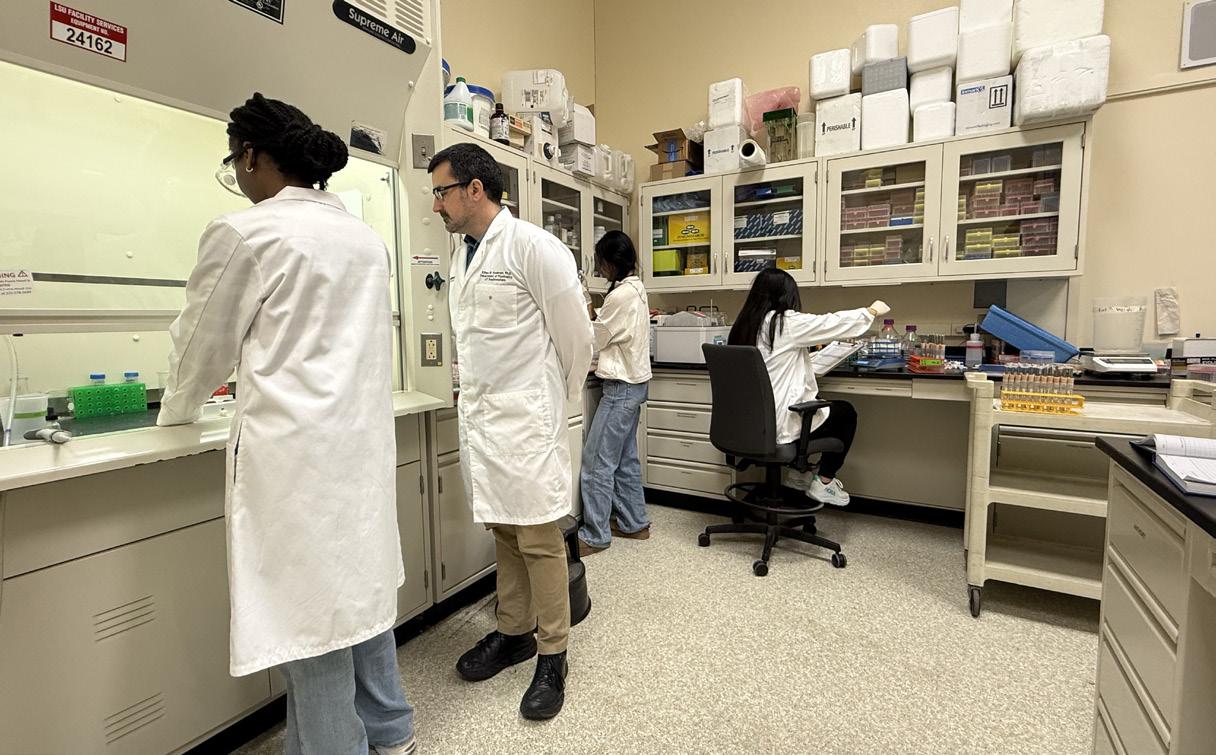
Ethan Anderson is a translational neuroscientist, which means that he develops research
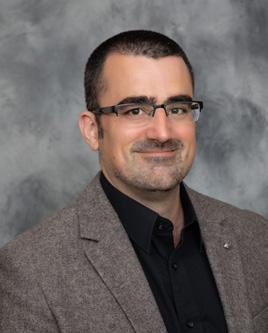
methods in the lab that can be used clinically for nervous system disorders. Anderson said that the grant is an R01 grant from the National Institute of Health, which funds the study over the course of five years.
Every year of the study, Anderson’s lab gets $400,000 from the NIAAA. Around a third of that goes to LSU and sustain operations to pay its researchers, but the rest is used on the pre -
RESEARCH
Scientists’ diet named best for the heart
BY TORI BONIN Staff Writer
A diet LSU researchers helped develop has been recognized as the best heart-healthy diet and second-best diet overall for the second year in a row by the U.S. News and World Report.
The nationally recognized diet coined its name, Dietary Approaches to Stop Hypertension, in 1997. The diet has been federally recognized as the best diet for eight years. LSU’s Pennington Biomedical Research Center played a part in getting the diet developed almost 30 years ago.
Catherine Champagne, a research professor studying nutritional epidemiology, has been working at Pennington for almost 36 years. She was very involved in the development of the diet and was a major contributor to creating the food plans that make up the DASH diet.
“It was a consortium between
clinical addiction research.
Using live mice models of alcohol-use disorder, Anderson’s lab will try to better understand how lifestyle and environmental changes can impact a person’s gene to study addiction expression without altering DNA by studying the area of the brain known as the nucleus accumbens — the part of the brain that controls your limbic system and processes dopamine during times of stress.
“The idea is to try and find novel targets and novel mechanisms of action of how alcohol becomes addictive, or how the brain interprets alcohol and becomes addicted to it,” Anderson said. “More importantly, we’ll try and find ways to potentially treat those using cutting-edge methods.”
According to Anderson, the brain helps us understand the world around us using the limbic system, which is activated by both extremely positive and extremely negative experiences.
“Anything that’s good for you, something like good food, com-
ENVIRONMENT
panionship, sex, things like that can activate your limbic system,” Anderson said. “It helps us learn to go do these behaviors that are helpful. At the same time, the limbic system also says if something’s bad for you, making you anxious or stressful. It helps you learn those are bad things, so we shouldn’t do that.”
However, certain substances, like alcohol and cocaine, rewrite the limbic system and activate dopamine receptors despite also having negative effects on the body.
“By a little trick of nature, they activate these little things called receptors that are found in [the limbic system] and tell you, ‘I really like this. I should keep doing this,’” Anderson said. “In some people, those signals also probably appear to be stronger than others and make somebody more likely to become addicted.”
While Anderson believes that there is a genetic component to these disorders, he also said that there is a really strong environ-
BY DREW SARHAN Staff Writer
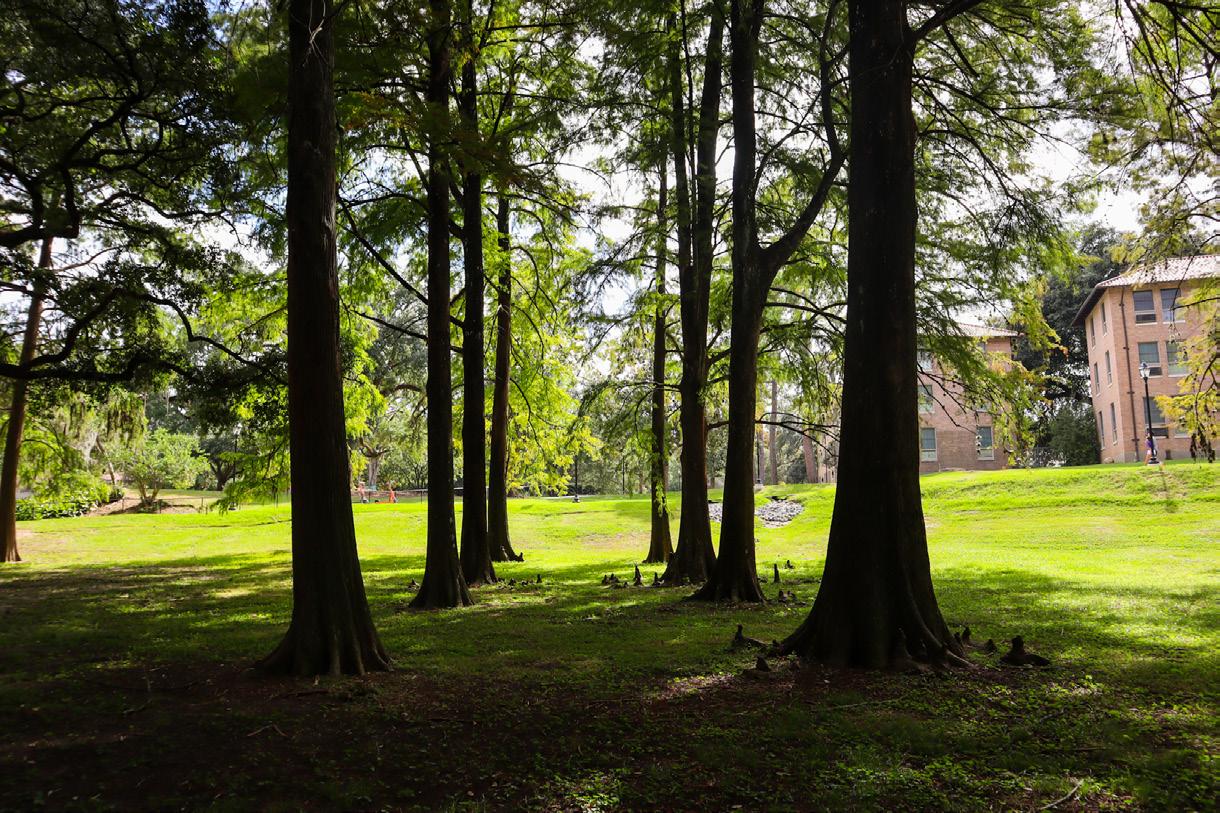
A University High School student is leaving his legacy on LSU’s campus by planting cypress trees along the west coast of University Lake.
Vaughn Meiners is a junior at U-High and a member of the International Baccalaureate program — an alternative, advanced curriculum that develops students’ critical thinking skills.
Students enrolled in the IB program are required to complete Creativity, Activity and Service, or CAS, projects. The projects are meant to challenge students to find creative ways to serve their communities.
At the beginning of the school year, Meiners heard about a past IB student’s CAS project involving the planting of cypress trees at U-High.
“They were cypress trees from our very own campus,” Meiners said. “They started off as seeds from cypress trees already planted here. It’s been a couple of years since they were planted, though, so they’ve had time to develop and get ready for the actual planting stage.”
That’s when Meiners had the idea to plant them along the University Lakes. He contacted Sage
Foley, an alumna of U-High and the executive director of Baton Rouge Green, and collaborated with environmental science teacher Steve Babcock to plant the trees at the lakes
“Using the environmental [science] classes, we were able to get 80 students out there to plant, I believe, 16 cypress trees,” Meiners said. “It’s looking really good. It was awesome. It was a great, great opportunity.”
The cypress planting was only one of Meiners’ CAS projects this year, but he had to wait until November to plant the trees.
“I’d say that it’s one of the best decisions I’ve ever made,” Meiners said. “It’s really good for overall developing you as a person, because without it, I probably wouldn’t be challenged as much, and I think I’ve really grown from it.”
According to IB instructor Karen Holden, the CAS projects consist of seven learning objectives, and throughout the year, students have to incorporate 150 service hours in order to maintain IB status.
“The creativity aspect, they have to come up with some kind of creative idea to help people in
Here’s how campus groups are making Mardi Gras more sustainable to protect environment
BY JORJA ETHRIDGE Staff Writer
As Mardi Gras celebrations come to a close, organizations like LSU’s Geaux Green and Campus Sustainability encourage recycling and environmental sustainability.
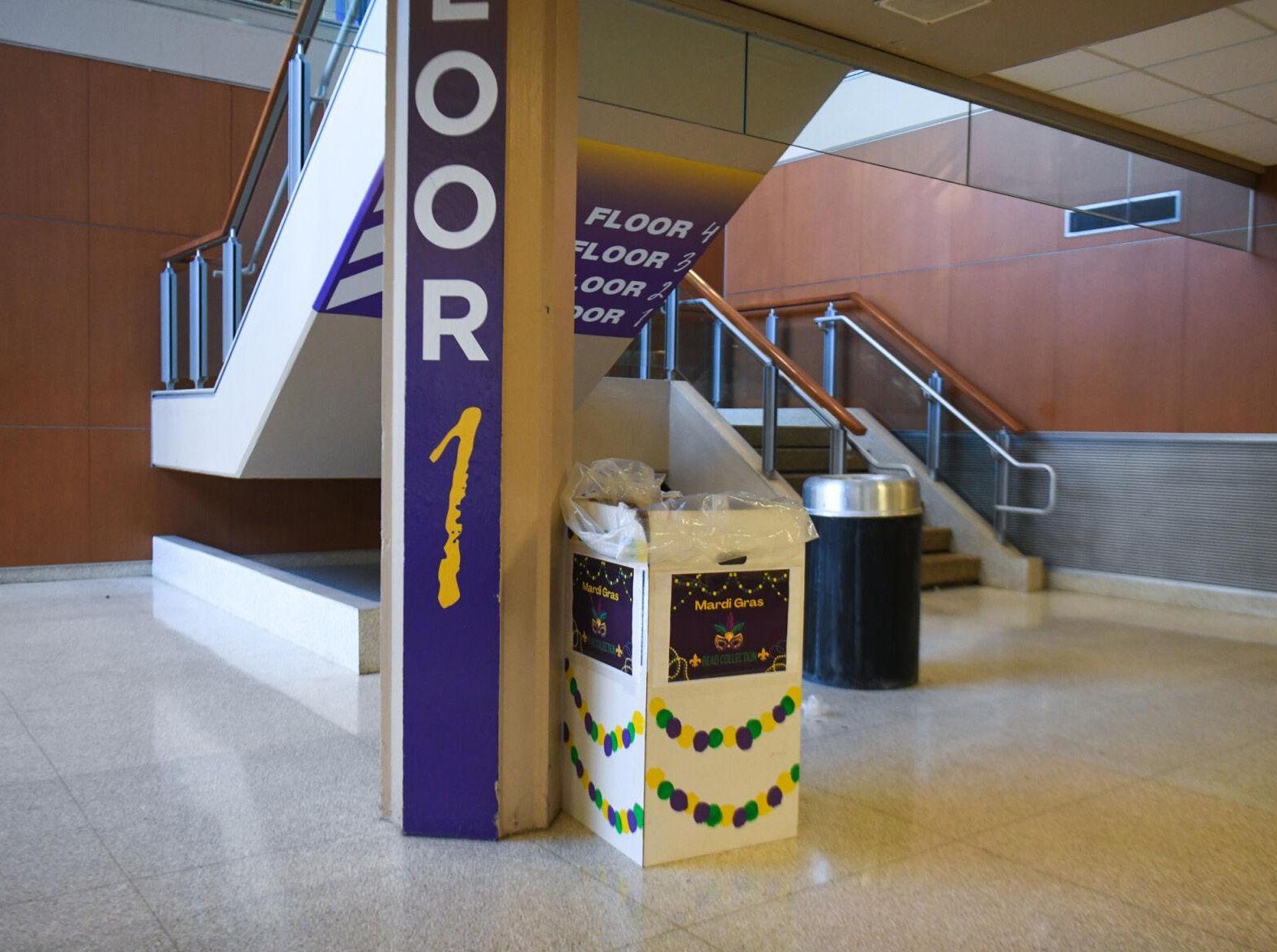
Campus Sustainability is having a beads and throws drive for the third year in a row. Students can find collection bins in any of the residential halls or the Student Union up until March 5.
Caroline Clifford is a senior history major and a student worker for Campus Sustainability. She explained that her first year at LSU, she held onto beads and did not know where to dispose of them.
Clifford assumed many other students had the same problem. When she began working for Campus Sustainability, she asked if beads could be recycled anywhere. Her interest inspired Campus Sustainability to install collection bins on campus.
Lisa Mahoney, LSU’s Campus Sustainability manager, explained that her department gives all of the donated beads and throws to The Arc of Louisiana, an organization that em -
powers individuals with disabilities through employment and advocacy work.
Mahoney emphasized that students should donate all Mardi Gras paraphernalia — not just beads. She said that The Arc resells any usable items at its stores for discounted prices. Krewes buy them and reuse them.
“It’s repurposing beads and giving jobs to people that normally wouldn’t have an opportunity,” Mahoney said.
Mahoney also mentioned that Campus Sustainability partners with Glass Half Full, a sustainability-focused nonprofit based out of New Orleans. She said that organization tackles much of the recycling in New Orleans during Mardi Gras including beads, cans and bottles.
“They have recycle stations staged all across St. Charles. They recycle, and they’re doing it in real time,” Mahoney said. “You could go to the tent and see them sorting materials. Students can certainly get engaged with that. They actually do pay you to help out.”
The student organization Geaux Green also encouraged students to act sustainably this Mardi Gras season.
The club held an event Feb. 11 for students to make miniature floats out of repurposed materials. Ian Frick is a coastal environmental sciences junior and the president of Geaux Green. He said they reused arts and crafts supplies that he bought for another event in the past. Members also brought cardboard and oth-
er materials they wanted to upcycle.
While they crafted floats, club members discussed sustainable initiatives different places in Louisiana are doing for Mardi Gras.
For example, Frick said Lafayette has a krewe that only does sustainable throws, whether it’s
see GRANT, page 4
see LEGACY, page 4
see DIET, page 4
ETHAN ANDERSON
ERIN BARKER / The Reveille A donation box for Mardi Gras beads sits on the first floor of the LSU Student Union Feb. 20, 2024, in Baton Rouge, La.
mental component to addiction. Because alcohol is so accessible in Louisiana, people here may be more likely than those in places with less alcohol to get addicted.
“For instance, let’s say you’re born on a small island, and there’s no opium poppies that grow on that island, and you’re never exposed to them. Guess what?
There’s no way you’re going to develop an opioid-use disorder,” Anderson said. “That being said, we do live in a society where it’s around, everybody’s probably going to experiment with drinking, at a minimum, or smoking, and probably some type of illicit drug during high school or college.”
Anderson’s lab is currently studying a specific protein in the brain that looks like it can be regulated with a medicine to reduce alcohol consumption in mice.
“I have a couple of inhibitor compounds that have never been given to a human ever before,” Anderson said. “And in mice, it makes it look like they can reduce the drinking during times of stress and possibly during times of alcohol dependence as well. That’s very exciting, but I hope that over the next 10 years or so, we move into preclinical testing and clinical trials.”
Anderson said that this compound can help with any substance-use disorder, including cannabis-use disorder, as it manipulates the nucleus accumbens and the limbic system to alter be -
four different sites in the U.S. and the four sites had dietitians that worked there in the kitchens and they came up with some menus,” Champagne said. “My job was to take the menus they came up with and make them better, meaning they contain the foods that would contain the nutrient targets we were looking for.”
Lindsay Barleycorn, an instructor at LSU’s School of Nutrition and Food Sciences, ex-
BEADS, from page 3
second-hand or wooden paraphernalia.
Geaux Green members expressed that although communities should still get more involved, they have noticed sustainable efforts increased this year.
Recycling and repurposing are not the only ways LSU students have attempted to make Mardi Gras more sustainable.
Naohiro Kato is a biological sciences professor, and he led the team of undergraduate and graduate students that created the PlantMe Beads last year.
Petroleum-based plastic beads take decades to degrade, and they release toxins. Kato’s team developed biodegradable beads containing seeds that can sprout into flowers.
Jennifer Cagnolatti is a biological sciences senior, and she
havior through viral vectors — a modified virus created to bring genetic material into cells. During the COVID-19 Pandemic, viral vector vaccines were given to billions of people.
“Anything we find that works there preclinically in the mice is something that theoretically could translate over to humans as well,” Anderson said. “Brain site-specific gene therapy is happening all the time for things like Parkinson’s disorder and Huntington’s disease and things like that. It’s not being used in psychiatric disorders or behavioral disorders or things like addiction yet.”
With the funding from this grant, Anderson is able to directly pay two of his researchers, and it indirectly funds many other research projects at the vet school.
plained that the diet is meant to help people get larger amounts of potassium, magnesium and calcium and lower amounts of fat and sodium.
As a result, it helps to regulate blood pressure. High blood pressure, which puts people at risk for heart disease and strokes, is prevalent in Americans. According to the CDC, nearly half of Americans have high blood pressure.
Barleycorn, who is also a registered dietitian, said that she believes the DASH diet can help
was a part of the PlantMe Beads team.
Cagnolatti said her team used 3D printers and polylactic acid to produce the beads. She said they would stop the printing in the middle of the process, insert the seeds and then finish printing.
She said beads that students planted last year did successfully sprout flowers. The seeds also speed up the degradation process of the beads.
She added that her team was able to give some PlantMe Beads out to a few krewes this year to throw in parades. However, the team hopes to mass produce beads and give them out to even more krewes in the future.
“The whole reason behind this project was that we’re just trying to make Mardi Gras a little more sustainable,” Cagnolatti said. “We want people to enjoy Mardi Gras but also save the earth a little bit.”
LEGACY, from page 3
the community,” Holden said. “The A stands for activity, to keep you healthy and to keep your body in good shape. Then S is service, and their projects consist of doing anything that’s of service to the community, or really anything that’s of service.”
While waiting for the right planting season, Meiners completed a second CAS project that gave back to his local park.
“At my local park, I noticed that these elderly people would come, and they wouldn’t have anywhere to sit. So I built a bench for them, and now it’s at the park for them to use,” Meiners said.
Anderson said Louisiana isn’t known for getting a huge amount of NIH funding, so every little bit helps.
While not the main reason for the research, the information released from Anderson’s study can mean billions of dollars down the line if a blockbuster addiction drug was brought to market in the next 15 years.
“Eventually, I’ll publish this research, and that will increase the visibility of LSU and help people see the great research we’re doing here,” Anderson said. “Additionally, there’s always a chance that you’ll find something really helpful, and then you’ll want to patent technology in order to try to make a new pharmaceutical drug. That would be huge levels of revenue for LSU.”
people slowly incorporate whole foods into their diet.
“Anybody can do it and it’s really not that much different from any of the recommendations we make for just general eating habits,” Barleycorn said. “It’s also something that most people can slowly implement into their daily life and it’s pretty easy to follow.”
Ava Heath, a nutrition and food science senior, believes the DASH diet is a great way to address the hypertension epidemic in America.
Another of his projects, meant to fulfill the “activity” component
of CAS, involved running 40 miles over the course of several months and preparing a meal plan for the venture.
Meiners’ next project is recording an oral history of his family to relay to his descendants. He and other IB candidates will share their histories to better understand, learn and compare where everyone has come from.
While Meiners is undecided on his choice of university, his tree project will leave a lasting legacy on LSU and Baton Rouge at large.
“These trees will be here and represent my class and me in the future,” Meiners said. “Why not do it in the best way possible, by making our community prettier, our campus prettier and our air cleaner?”
“DASH is a dietary pattern that people can realistically sustain in everyday life, making it applicable across communities, cultures and life stages as a prevention focused approach on long term health,” Heath said.
“Its realism and educational value makes DASH one of our best chances to address the hypertension epidemic.”
Even after nearly three decades, the diet continues to make its impact on the food scene in America. This year, the diet appeared in the top five of 15
different categories.
Champagne explained that in her nearly four decades of work at the Pennington, her work on the DASH diet is what makes her most proud.
“With all of the work that I have done in all of these years at Pennington, I think this is the one that makes me most proud because I knew I was very very involved in it,” Champagne said. “I just feel good that my work in helping to finalize those diets was a really successful part of the research.”

DIET, from page 3
DREW SARHAN / The Reveille
Researchers working in a lab at the LSU School of Veterinary Medicine in Baton Rouge, La.
PILAR FRANKLIN / The Reveille Trees form a leading line on Oct. 6 outside Cypress Hall in Baton Rouge, La.
EVAN TOUCHET / The Reveille
Parade-goer holds up beads during the Spanish Town parade on Feb. 14, in downtown Baton Rouge, La.
ENTERTAINMENT
Local band Karma and the Killjoys uses music to forge their own path
BY SARAH WALTON Staff Writer
The world of music is not an easy place to navigate, but the Baton Rouge-born band Karma and the Killjoys has thrived as an independent, self-made band. Karma and the Killjoys has gone from playing in the theaters and practice rooms of LSU to playing crowds of hundreds all across the state.
Karma and the Killjoys has four members: Rain Scott-Catoire, Sydni Myers, Thomas Vercher and Tim Marchand — all talented in their own rights and all lending their talents to the machine that is their band.
They have two albums: “Hellscape,” the debut album, and “Synthetic.” Both are in a genre ScottCatoire and Myers like to call piano rock. The music of Karma and the Killjoys goes further than fun moments and love ballads. A lot of their work contends with ideas around capitalism and organized religion.
In 2019, LSU Theatre brought the play “Our Town” to the Shaver Theatre, and behind the curtains, something that would last much longer than the show was developing. Freshmen Scott-Catoire and Myers were both in the cast and bonded over their work and their love of music.
Scott-Catoire and Myers both went to LSU for theater. Through their years in the halls of the Music and Dramatic Arts building, they grew not only in the classroom, but together.
“When we first started writing, I had never considered myself to be someone who had a lot to say until I started, with Rain’s encouragement, saying it,” Myers said. “And then I realized I had a lot of stuff inside me.”
The band has become a way for Myers to be creative, creating control in a positive and productive way by using branding and design to build the aesthetic of Karma and the Killjoys. The independent aspect of the band pertains to every part, and one of Myers’ greatest passions is creating the visual concepts for not only the marketing, but the music videos.
“It keeps me sane. It gives me something to put all of myself into all the parts of myself that I don’t have the money to get a therapist,” said Myers.
Independent artistry in the music industry is a hard road to forage, but as Karma and the Killjoys have grown as artists, they have also made a name for themselves.
“We’ve tried to do it the ways that we had read about, and then we tried to forge our own path,” said Scott-Catoire. “Right now, we’re kind of somewhere in between that.”
Karma and the Killjoys’ independence also extends to the studio. The band mixes and masters

all its own music; that part of the process is spearheaded by Vercher, the drummer, and Marchand, the guitarist.
“We’re really fortunate to be able to produce all of our own music pretty much ourselves,” ScottCatoire said. “We have a DIY home studio situation in my house, and we meet there twice a week, if not more, to record everything ourselves.”
The band has a new song dropping on Friday called “This Song Was Stolen by Pirates.” Myers described the group’s creative strategy as a dynamic duo way of releasing new music.
“Especially when it’s Rain’s songs, she writes songs and then I get prophetic visions of what the video needs to be,” Myers said.
“This Song Was Stolen by Pirates” is not just a rock song, but a metaphor for the evils of generative AI, sung to a sea shanty tune. Scott-Catoire talked about the plight of the modern day artist, having to not only create in an oversaturated market, but also protect themselves from machines that use their original content for profit.
Once Myers heard the new song and understood the idea behind it, she started working on ideas for the music video. This time around, the band worked with the production company Blue Cassette and producer Chris Johnson to make Myers’ vision come to life.
Through the music video, Myers wanted to raise questions about the “legality of the fact Adobe and all these big, major companies are creating their own AI programs by stealing artwork,” she said.
This year is already looking exciting for the band. They are performing at Jazz Fest in May once again after being invited last year, and they are going on tour across the Southeast U.S. Scott-Catoire said the band’s excited, but also knows a lot of work goes into making a tour happen, especially as independent artists.
“The hard part is how do we fit all this gear into one van? Then fit all of ourselves in it as well and get across the state lines,” ScottCatoire said. “The music part is the
PUZZLES
reward. Sending emails is the annoying hard part.”
Myers talked about her excitement for Jazz Fest and why she loves performing there so much.
“[Jazz Fest is] one of the only festivals I think in the country that really champions diversity and inclusivity and really shows the culture of the city,” Myers said. “It isn’t just taking out from all over the world and putting a cute little headline on it. They’re actually giving you a reflection of New Orleans and Louisiana culture there, which is just—it’s awesome.”
Art doesn’t exist in a vacuum, and like all artists, the members of Karma and the Killjoys are inspired by those who came before them. Myers happens to be a big Courtney Love fan.
“I’m pretty sure I would probably slaughter things at an altar for her,” said Myers.
Love is not only a writer whom Myers looks up to, but the air and style she is known for fuels the way Myers creates her art. The mix of edge and femininity is something that Myers gravitates to.
Scott-Catoire talked about her favorite parts of being in the band.
“We found this flow of working,” Scott-Catoire said. “Bouncing ideas off of each other and really coming to a place we’re all happy with, but the live show is where it’s at for me. I think it’s the kid in my heart that just kind of loves the magic of being on a stage in a room with people that are all there to celebrate art.”
Myers is a little bit more introverted. She has grown to love performing, but her favorite part about the job is the recording aspect, the moments when the band is working through the music, coming up with ideas and trying new things.
“I love the collaboration aspect, but I also do really love performing. It is really sick when you have a really good show with a reciprocal audience who are just like in it with you. Like there isn’t much that can top that feeling,” said Myers.
Karma and the Killjoys’ newest song, “This Song Was Stolen by Pirates,” drops Friday, Feb. 20. Their next show is at Chelsea’s Live on March 14 as part of their tour.

PHOTO COURTESY OF KARMA AND THE KILLJOYS
STARTING STRONG
LSU baseball remains undefeated after 5 games at home versus Milwaukee, Kent State and Nicholls State. The Tigers outscored their opponents 63-23.





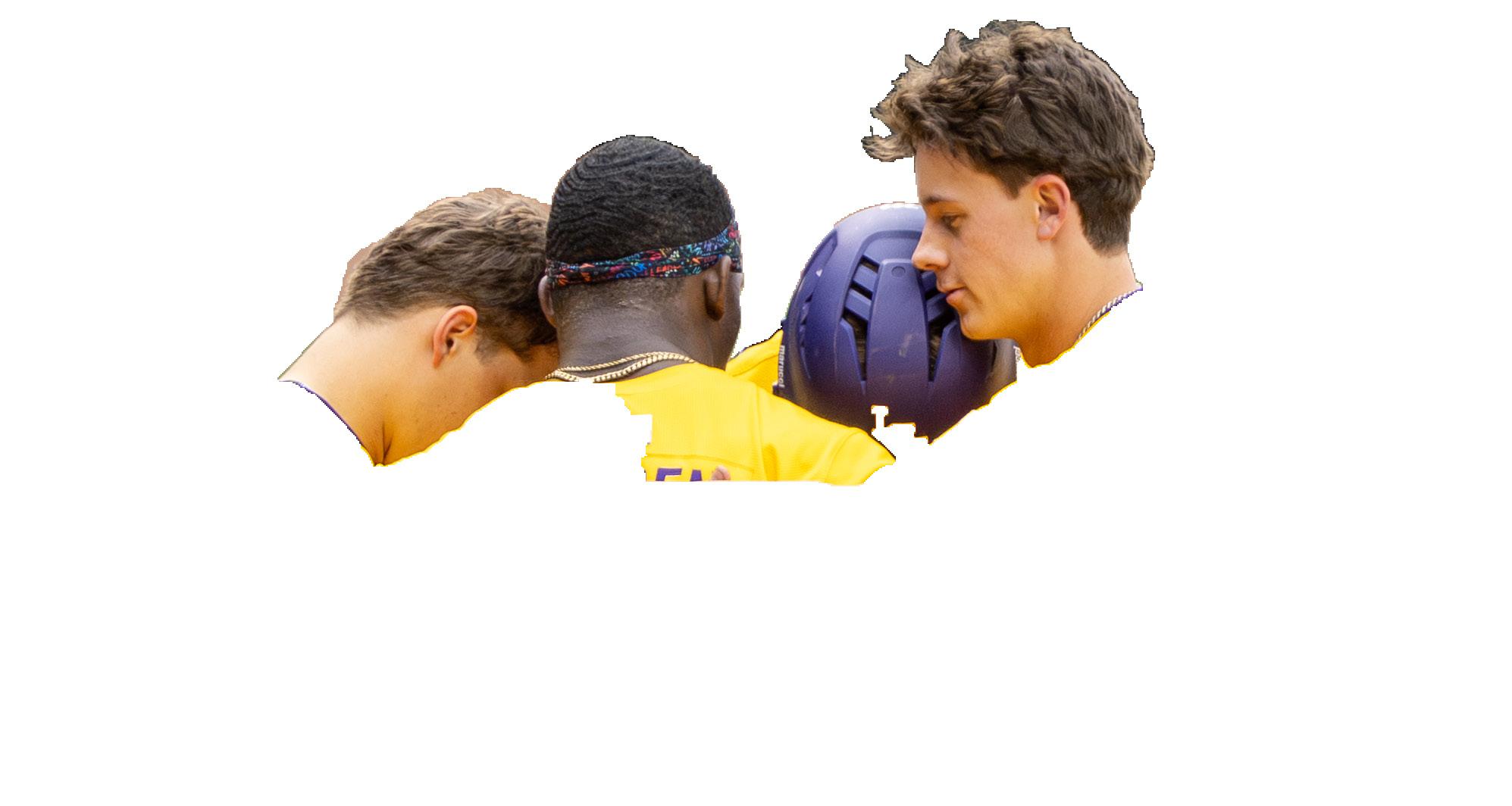






LSU baseball fifth-year senior infielder Seth Dardar (24) celebrates during the Tigers’ 15-5 victory over Milwaukee Feb. 13.
Design by Riley White | Photos by Sam Becker & Hinesley Bryant
LSU baseball sophomore catcher Cade Arrambide (0) dives during the Tigers’ 15-5 victory over Milwaukee Feb. 13.
LSU baseball sophomore catcher Cade Arrambide (0) throws the ball during the Tigers’ 15-5 victory over Milwaukee Feb. 13.
LSU baseball players run during the Tigers’ 5-3 win over Milwaukee Feb. 14.
LSU’s art museum explores AI as a tool, threat in new exhibit
BY PAIGE CHERAMIE Staff Writer
For a glimpse into the effects of artificial intelligence on the creation of art, visit the LSU Museum of Art’s new exhibit, “AI: Artistic Interpretations.”
In partnership with the Studio Art Quilt Association, an international nonprofit organization that works to promote quilt artistry, LSUMOA is showcasing quilts made by artists with differing viewpoints on the use of AI in the creation of art. It features quilts from around the world — as close as Alabama and as far as the island of Mauritius.
The exhibit was juried by Michelle Sculte, the chief curator of exhibitions and collections; Golden G. Richard III, an LSU professor of computer science and engineering; and Brendan Harmon, an LSU associate professor of landscape architecture.
The many artworks on display show how the perception of artists has influenced some of the featured pieces. Those who believe AI is a beneficial tool created quilts with the aid of AI, while those who reject the use of AI created quilts that reflected their belief.
The artworks take on many forms. Some feature geometric shapes and repeating patterns, while others are abstract with
irregular shapes. Some of the pieces lie flat against the wall, while others protrude out into space. Each piece symbolizes AI, whether that be its ability to create geometric patterns or its effects on humans.
Susan Polansky, an artist from Lexington, Massachusetts, created her piece “Self Portrait” with the help of AI. According to her artwork description provided by SAQA, she used AI to generate a portrait of herself. She then had it printed, and she stitched over it with free motion longarm stitches. This enhanced the details, defining the lines.
“Only two years ago, I was impressed by awkward AI images,” Polansky said in her artwork description. “Since then, the technology has raced ahead, with developments both thrilling and unsettling. There is no going back, and I can only hope that responsible usage will support a reasonable evolution of this new multi-tool.”
In contrast, Kathy Nida, an artist from El Cajon, California, created her quilt “AI is Not My Friend” without the use of AI. According to her artwork description provided by SAQA, she doesn’t want AI to take away the fulfillment art brings her, and she does not believe AI should exist in the realm of art.
“Don’t get me wrong — I use AI for work all the time,” Nida
said in her artwork description. “But I don’t want it to take the place of my creativity. I don’t want it to replace the weird contortions my brain gets into trying to figure out how to make the next piece of art. That’s my joy. That’s what makes life amazing.”
The exhibit featured multiple displays that were interactive. Rather than showing a quilt, it instead asked for viewers’ perception of AI use. One interactive station asked the exhibit visitors to pick a stance: Is AI a tool or a threat?
Some of the anonymous notes on the “tool” side stated: “Can process tons of data fast!,” “AI: it’s a tool that requires discernment, your voice, your eyes, your talents, your skills. That requires you!” and “I see it as a tool because for many things we don’t know it can tell us.”
Others anonymously wrote these notes on the “threat” side: “It destroys the creativeness in people and the world,” “AI threatens the nature of art and creative creations. Art is not art without lived experience and a soul” and “It’s making life too simple!”
This display shows how human perception of AI differs from person to person, but most agree that AI should be used as a tool rather than a replacement for humans. Even those who en-
joy AI recognize it is dangerous without human input.
Jennifer Solon, an artist from Weston, Connecticut, explores this in her piece “Grey Matters.”
BY CHARLOTTE TRENTALANGE
Staff Writer
What began as a handful of self-taught musicians learning instruments in their dorms and garages is now Frontier, the fast-growing band playing LSU’s bars and nightlife every weekend.
The ensemble is made up of LSU juniors Nico Sciullo, Jake Maples, Noah Adams, Doug Ricalde and Zach Montz, and their majors vary from construction management to industrial engineering.
Sciullo, the band’s lead singer, started singing his senior
year of high school in a band called S.O.L. He said on top of singing, he aims to be a true entertainer and always get the crowd excited.
Frontier played its debut show in December of 2025 at
The House in Tigerland under its original name, River Would. Since then, the band has stayed booked with events, bars and fraternity parties.
While they may have gone through a name change, everything else is constant as they steadily progress their way through the LSU music scene.
The band recently played at JL’s, marking the first live perfor-

mance at the bar in seven years, and Frontier got hired back immediately after.
College cover bands aren’t an anomaly, but the members of Frontier try to set themselves apart by focusing on their own enjoyment when playing as much as the audience’s.
Maples and Ricalde both grew up with a paternal musical influence, as both their dads played guitar and encouraged them to take up the art. Maples, one of the band’s guitarists, said that though his dad wanted him to explore music, he was never interested until he got older.
“Our whole house is full of guitars,” Maples said. “I hated hearing him play all the time until I understood it myself.”
Guitarist and backup vocalist Ricalde said he was always interested in music. Along with guitar, he learned other instruments like drums, bass and keyboard; he started playing when he was 12.
“My dad used to play in his room,” Ricalde said. “One day, I picked it up and started strumming. I didn’t know what I was doing, but he told me he thought I had good rhythm and told me I should play.”
As of now, the group only plays covers, but Sciullo said the next step is writing original music. Ricalde currently works on writing songs on his laptop and shares them with the group
The “AI: Artistic Interpretations” exhibit opened on Feb. 5 and will be available for viewing until May 10. LSUMOA is located at the Shaw Center for the Arts at 100 Lafayette St. in Baton Rouge.
The museum is free to enter with a valid student ID, with varying hours. For more information on visiting the gallery and its events, visit the LSU Museum of Art website.
“Our natural thinking patterns are gradually being influenced and altered by machine learning and automation,” Solon explained in her artwork description. “Through this merging of machine and mind, artificial intelligence has the potential to reshape human cognition. Will innovation and efficiency replace imagination and intuition? Does AI enhance our abilities, or is it slowly taking control?”

Student band Frontier is lighting up Baton Rouge’s nightlife
for feedback. Inspiration for the writing comes from other bands like The Strokes, Kings of Leon, Red Hot Chili Peppers and sometimes Metallica.
When the band plays live, its setlist is made up of crowd favorites mixed with each musician’s preferred song. They said they fight about what to play at every practice.
“We argue a lot about it,” said Maples. “Everyone wants to play what they want because there are certain parts of songs that are cooler for one instrument.”
From classic staples like “Free Bird” to “Sex on Fire,” the band works to make sure everyone in the crowd has a good time.
Frontier has been trying to cater to the crowd more, playing songs like “Iris” and “Don’t Look Back in Anger.”
Sciullio said the priority isn’t always the setlist and more the songs themselves. Longer songs like “Purple Rain” need to be trimmed to keep the crowd entertained, while other songs might be extended with solos. Montz said some songs are heavier or more energetic, and they rarely play solos exactly like the originals.
“We’re all musicians that are together as a band, so however we play a song is going to be different than whoever played it first,” Maples said.
Adams, the bass player, said Ricalde got him into playing
during their freshman year at LSU when they lived together. Adams has played piano and drums since he was little, so he already knew some music theory, but Ricalde helped him read a fretboard and got him started with the new instrument.
“It was a lot of learning on YouTube,” Adams said. “I’d find a song and then find another song that’s harder and keep going.”
The two of them practiced in LSU’s dorms without the amp plugged in to avoid any noise complaints.
Montz on the drums started playing when he was 9 years old. He likes that the instrument is naturally eccentric and joked that sometimes it’s a way to get his anger or stress out.
Being a student band unleashes a different set of challenges for the men of Frontier. The members said their schedules rarely align, and balancing class, practice times, gigs and studying can get difficult. They often practice the same amount as some students work.
Beyond shows, the group thrives on rituals and their brotherhood. They go to Waffle House after a show and alternate speeches in a huddle before a performance.
“We’re all friends who just happen to play music together,” said Sciullo. “It’s a lot of fun and we all appreciate each other.”
PAIGE CHERAMIE / The Reveille
Susan Polansky’s “Self Portrait” quilt.
PHOTO COURTESY OF FRONTIER
SPORTS RUNAWAY WIN
Baseball executes mid-week run rule with walk off home run
BY ALEX SHEESLEY
Staff Writer
LSU baseball continued its success to close out its first home stand of the year unbeaten, winning by way of a run-rule against Nicholls State, 12-1, in eight innings on Wednesday.
The Tigers took advantage of poor location from Nicholls starting pitcher Will Mabry to establish control early, and leaned on a tremendous showing from four relievers to take the victory.
Shortstop Steven Milam scored from third on a wild pitch from Mabry to tie the game at one in the first inning. Mabry issued a pair of free passes to load the bases later that inning, which third baseman Trent Caraway punished him for with a grand slam to put the game firmly in LSU’s favor.
“Trent got a mistake and he hammered it,” head coach Jay Johnson said. “That’s a big swing.”
“I was thinking everyone is hitting homers, so I need to hit a homer,” Caraway said. “It felt good, especially having the bases loaded.”
The trend continued in the second. Mabry let the first two Tigers reach on balls to open the inning, which ended his day. LSU wouldn’t need a hit to score one of those runners, as Mason Braun was pushed home thanks to a couple of productive groundouts.
The LSU offense stalled for the next three innings, but made Nicholls pay once more for poor pitching in the sixth.
A two-out walk to Milam exGYMNASTICS

tended the inning, letting Jake Brown hit. Brown was able to capitalize with an RBI single to score Tanner Reaves, who singled to lead off the inning. Milam then scored off of a wild pitch to Cade Arrambide that bounced out of play, allowing Brown to advance to third.
An inning later, Daniel Harden reached on an error and was able to advance to second after a wild pitch. The free 90 feet allowed him to score off a ball in play one batter later.
Omar Serna Jr. represented the mercy-rule enabling run when he walked in the bottom of the eighth.
He’d come home on a walk-off, three-run home run by a pinch-
hitting John Pearson.
Senior pitcher Zac Cowan got the start for LSU. The senior allowed three hits and a run in just over an inning of unsteady work in his second appearance of the year. Colonel batters were able to pick up on Cowan’s fastball, which he used overwhelmingly, and attacked early in the count.
Johnson said that the short start from Cowan was a part of the script for LSU.
“The most he was going to go was two innings either way today,” Johnson said. “So I like that we kept the first inning at one.”
Nicholls right fielder Nico RijoBerger was able to capitalize and
take Cowan deep in the second at-bat of the game to give an early lead to the road team.
After Cowan, a number of arms out of the LSU bullpen were featured. They collectively executed brilliantly.
Dax Dathe was called upon in relief of Cowan with two on and one out in the top of the second.
The righty stranded both runners in the second, ending the inning by striking out Caston Thompson looking.
Dathe took the mound and continued to look strong in the third, retiring the first two batters in the
see UNDEFEATED, page 10
Star gymnast leans on team against nation’s No. 1
BY GABBY GRAY Staff Writer
LSU’s all-around sophomore Kailin Chio has recorded three perfect scores in her collegiate career, and she’s not stopping there.
The 2025 NCAA Vault Champion has managed two perfect 10s ahead of her team’s matchup against No. 1 Oklahoma on Friday, qualifying her as one of the Tigers’ strongest assets against the Sooners.
Yet, Chio’s accomplishments with LSU haven’t been reached on her own, but rather through the support and competition driven by her teammates.
“People want her to be the topic of conversation,” head coach Jay Clark said. “But I think she’d be the first to tell you that — and you heard it in some of what one of her teammates said up here — she’s relying a lot on her team-
mates, too, and has opened up to that whole ‘we-versus-me’ thing in a big way this year that I think is making [her gymnastics] so much more enjoyable for her.”
While Chio might be serving as the vault, balance beam and floor leading scorer for LSU, with a 9.975 and two perfect scores, she’s expressed that reveling in her team’s victory is far more important to her.
This was seen last Friday night, after she stuck her season high on floor, which started at 9.975 but was later corrected to a 10.
“I didn’t really know what the score was until everybody started jumping up and down,” Chio said.
“I didn’t even see anything flash. So I think that being with the team and celebrating that with the team was way more special than that floor routine.”
Whether you’re a casual view-
er or a diehard gymnastics fan, the familial-like values and support LSU gymnasts have for one another as a team is undeniable both on and off the mat.
“We’ve done a really good job of just seeing to the needs of everybody on the team,” senior Ashley Cowan said. “And I think that’s something really special that took a lot of effort in the fall to get to this point. And it’s been really cool to see how our competitors can thrive and how we as a team can grow because of that support that we have.”
That support is, of course, what Tiger fans are counting on to fuel Chio in this No. 1 versus No. 2 competition during this week’s edition of Friday Night Heights in Norman, Oklahoma.
Yes, LSU bested Oklahoma last year in a fiery 198.050-197.675 victory, but Clark said that his team focuses only on the present
BY MARISSA REISS Staff Writer SOFTBALL
Softball run rules South Alabama
After going 1-4 on the road at the Shriners Clearwater Invitational, LSU softball traveled back home to Baton Rouge and executed a commanding run-rule victory Tuesday night over South Alabama.
The fans at Tiger Park celebrated their Mardi Gras watching LSU dominate the Jaguars 10-2 to enforce the run-rule win after five innings.
The Tigers sat at 7-4 overall ahead of the mid-week matchup, following a three-game losing streak that haunted the team as it left Florida. Tuesday night’s game would add another win to the record.
“We talked as a team about just staying together and having fun,” sophomore Alix Franklin said about bouncing back from Clearwater. “We showed each other baby pictures of us playing softball in Florida, and it was really cool cause I feel like it was just those little girls playing softball today.”
Against the Jaguars, the Tigers were 15-1 all-time and held a 10-game win streak. In LSU’s last matchup against the Jaguars, an 18-4 run-rule win would bring home a purple and gold victory. LSU added another game to keep the run-rule win streak alive.
Fifth-year senior Tatum Clopton earned the start on the mound for the Tigers. Clopton’s first inning began with three quick outs as the first two batters she faced quickly popped up, with the last out being a groundout to third.
and not the past.
And when it comes to the present of this week, LSU’s gymnasts are treating this competition like business as usual, including Chio, who’s truly embraced how talented she is this year, her teammates said.
“She goes in and just does not have a doubt in her mind, and she relies on us,” junior Kylie Coen said.
So long as her team continues to foster her growth, the 2025 SEC Freshman of the Year will likely continue to deliver smashing performances this weekend, and for Tiger fans, Chio will hopefully lead her team to a back-to-back regular season victory over the Sooners.
“She relies on herself. She looks like she’s having more fun with the team this year. She looks like she enjoys every second,” Cohen said.
The dominant pitching performance to begin the game paved the way for senior outfielder Jalia Lassiter to leadoff the bottom of the first inning. Lassiter’s patience at the plate has validated head coach Beth Torina’s choice to have her in the leadoff spot. Lassiter drew a walk to kickstart the Tigers’ offense.
Lassiter had a batting average of .455 to lead the Tigers’ offense ahead of the game with a sevengame hitting streak and .558 onbase percentage.
A stolen base would move Lassiter to second, then two batters later, a wild pitch would move her to third. Sophomore Tori Edwards was walked by South Alabama pitcher Ryley Harrison, which allowed LSU to have runners on the corners early in the game.
HINESLEY BRYANT / The Reveille
LSU baseball sophomore third basemen and outfielder John Pearson (11) hits a home run during the Tigers’ 12-1 win over Nicholls State on Feb. 18 at Alex Box Stadium.
BASEBALL
Baseball’s bat girls power game day. Here’s what goes into it
BY BROOKE BENEDICT Columnist
Everybody knows the magic of an LSU baseball game at Alex Box — but not everyone knows who brings it to life.
Founded by former head coach Skip Bertman in the ‘80s, the bat girls are a squad of LSU female students that assist the team and stadium staff during a home game.
This year, the 27 chosen bat girls are preparing for another season of baseball, coming off a victorious national championship season.
Captain Caroline Covington who is heading into her fifth year as a bat girl and her second term as captain, took time to reflect on the opening weekend of the 2026 season at Alex Box.
“I missed it so much. Coming off a national championship, everyone was so excited, that made us so excited,” said Covington.
Covington’s mother was a bat girl in 1994 and ‘45, and she followed in her footsteps, becoming a bat girl during her freshman year in 2022.
After the official list of the bat girls gets announced, the prepa-
UNDEFEATED, from page 9
inning before hitting the next batter, ending his day.
Freshman pitcher Zion Theophilus struggled to locate in his first collegiate outing but worked through the traffic cleanly. The freshman walked three over one and a third innings, but stranded every runner he allowed on and kept Nicholls hitless.
Santiago Garcia threw a full
RUN RULE, from page 9
Sophomore Alix Franklin came to the plate first pitch swinging, knocking a ball through the right side to score Lassiter for the first run of the game.
Bases quickly loaded when an error by South Alabama’s shortstop allowed Char Lorenz to safely get to first as runners advanced. The Tigers would take a 2-0 advantage with an Ally Hutchins walk to knock in the second run.
To start the bottom of the second, Lassiter came home to tally one more run on an RBI single to left by Edwards that continued the night for the Tigers’ offense, leading 3-1.
Senior third baseman Avery Hodge was hit by a pitch and loaded the bases in the third inning for the Tigers again. Next up at the plate was none other than leadoff hitter Lassiter.
Lassiter batted in every single inning as the Tigers’ rotation kept going. With defensive errors from the Jaguars’ outfielders, Lassiter clobbered an in-thepark home run on Jaguar errors to allow all three runners on
ration begins with placing uniform orders, coordinating with the stadium staff and holding meetings.
“It’s a very exciting process,” sophomore Eva Frye said.
Frye joined the bat girls as a freshman last season. She said she still wanted to continue her passion for the diamond sports and stay connected to the game after quitting softball in high school.
Now heading into her second year, she has rediscovered her love of the sport, now that she’s able to watch games and be a part of LSU’s program.
Hustle behind home plate
Beyond their LSU-branded skirts and tennis shoes, the bat girls are working from the moment the gates open until after the final pitch.
“We typically get to the stadium two hours before game time in order to pass out programs to fans, directing fans, planning our rotations and getting content for our social media,” Frye said.
The bat girls shuffle through a rotation for games, where one captain and seven to nine girls are spread across the stadiums in stations, including home dugout,
inning and worked into a second inning, but a leadoff walk is what ended his day. The senior struck a pair of batters out looking during his appearance.
“I was happy to see [him] bounce back the way he did after Saturday,” Johnson said. “He’s going to be a huge part of this team.”
Reagan Ricken was the second freshman to debut on Wednesday. He inherited the runner Garcia walked, but got all three batters he
base to score, along with herself, to advance the LSU lead to 7-1 in only the bottom of the third.
“I don’t know if I’ve ever seen something like that, honestly,” Torina said about the at-bat. “It was pretty cool. Jalia told us all that she felt extremely fast tonight. She was running all over the place.”
The third inning didn’t stop there.
An RBI triple by Franklin kept the Tigers’ momentum going. Three more runs were driven in to advance the Tigers’ lead to 10-1.
The third finally came to an end when Kylee Edwards flew out to right, but LSU scored seven runs on four hits to have a comfortable lead for Clopton entering the fourth.
In the bottom of the fourth, sophomore pitcher Jayden Heavener got a leadoff at-bat to continue the fun before a hit-bypitch and two walks would load the bases for LSU once more in this distant game.
In the fifth, Paytn Monticelli stepped into the circle, looking to close out South Alabama in five innings and force a run rule.
“I’ve been a closer basically
visitor dugout, left and right field and guest services.
During the game, members are responsible for collecting the bats of the home and visiting team and any foul balls. The girls are required to wear helmets when picking up bats and any time they are on the field.
Covington explains that they must be watching for pitchers warming up and batters on deck when grabbing a foul ball, and they have to be mindful about not missing something during play time.
“We also have to be mindful about the visiting team — sometimes they rather pick up their own bats, and that’s okay,” Covington said.
Anytime during play time, the girls are expected to move quickly, safely and pay attention to any miscommunications or updates coming from stadium managers and captains.
Becoming a bat girl
Any LSU female student can apply through the LSU baseball website. The girls are then picked for an interview held by student managers and stadium managers to answer personality questions and reasoning for wanting to be
faced in the sixth to post a zero. He then made it six straight outs in the seventh, retiring Nicholls in order.
In the eighth, he logged his first two collegiate strikeouts en route to posting another clean inning, only allowing a batter to reach by way of a hit by pitch.
Johnson was thouroughly impressed by Ricken’s outing and views the freshman’s outing as an indicator of what he could be at LSU and a testament to the Tigers’
my entire career, so I like the vibe of coming in and being able to slam the door on the team, especially when it’s heated,” Monticelli said.
The first Jaguar batter she faced struck out swinging, but the second and third batters gave her a bit of trouble as the Jaguars had put runners on first and second.
After a lengthy at-bat, Monticelli would strike out South Alabama’s Reganied Franka, an out away from ending the game. The next batter drove in a single that gave the Jaguars one more run.
Nonetheless, Torina made the confident decision to let Monticelli record the last out. On a 1-2 count, Jaguars outfielder Kara Wine grounded out to second to hand the Tigers the run-rule victory and allow Monticelli to get out of the inning safely.
“We played much more like ourselves tonight,” Torina said. “It was nice to be back at Tiger Park in front of our fans.”
Tigers softball will continue this weekend when the team hosts the Purple & Gold Challenge, beginning with Michigan State at 6:30 p.m. Friday at Tiger Park.
a bat girl, followed by a general and LSU-specific baseball knowledge test.
“Anybody could really make it, having a passion for sports is a big deal for making it,” Covington said.
During Frye’s interview, she was asked what restaurant she would recommend an umpire to visit after the game.
“It’s a competitive application process, but one that is so rewarding and special,” Frye said.
After being accepted into the program, the girls are sized for uniforms, given a tour of their rotation spots and informed where to be during rotations. They then take advantage of the scrimmages the week before opening weekend to allow new girls to get used to the game day expectations.
Covington and her two other captains, Hayley Wall and Kate Favalora, inform the girls to always keep a professional manner, be approachable and keep a smile on your face during game time.
“Especially now that LSU is growing so much in baseball we have to be on our A-game,” Covington said. “You want to try to make the biggest difference you can.”
depth.
“We’re running out Reagan Ricken for the last three innings,” Johnson said. “That guy can probably pitch on Fridays.”
Cowan’s three hits were the only ones allowed by LSU’s pitching staff on Wednesday. The Colonels’ final hit of the game came with two out in the first inning.
“I thought it was our best game from the mound this year,” Johnson said. “I think everybody did a
Perks of the program
Whether you come from a softball background, have a love of sports or are continuing the family legacy, there is so much to gain from the experience, members said.
Frye said that professionally, she has learned time management skills and staying focused in a fast-paced environment.
“Working with one another and the other LSU baseball staff has really helped me develop my communication skills,” Frye said.
Frye appreciates her job and the fan interactions that come with it, saying, “the LSU baseball fanbase is unlike any in college sports.”
Covington said that her favorite part of the program was the friendships made along the way.
“It’s so special, some of them are going to be my bridesmaids.” Covington said.
She also said the experience of being a part of LSU’s journey to winning the 2023 national championship was unforgettable.
“I would recommend it to everyone, especially if you love LSU baseball because it is the ultimate experience,” Covington said.
great job executing.”
The victory keeps the Tigers undefeated through their first five games of what is a busy opening stretch to start the season. Wednesday’s game against Nicholls was the Tigers’ fifth game in a six-day span.
LSU will hit the road to face three power conference opponents, Indiana, Notre Dame and UCF, over three days in Jacksonville starting on Friday.

LUKE RAY / The Reveille
LSU softball fifth-year senior pitcher Tatum Clopton (18) pitches the ball during LSU’s 7-5 win against NC State on Feb. 6 at Tiger Park in Baton Rouge, La.
OPINION
Identity is built by your community. You cannot live life alone
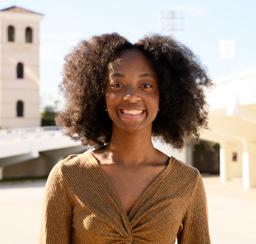
MICHAIAH’S MINUTES
MICHAIAH STEPHENS Columnist
The Cambridge Dictionary defines commitment as “something you must do or deal with that takes your time.”
We commit to friendships, relationships and ourselves because we want to show reliability and trust. I have found this certain aspect of humanity to be the hardest to deal with: fully committing to myself but especially to other people.
For me, not only was it hard finding a community, but I actually had to hold myself accountable to keep the relationships afloat. It was much easier to not have trust, so that when the trust is inevitably broken, then no one is at fault because I never had full faith to begin with.
In the 22 years I have been alive, I have also found that existence to be extremely pitiful.
Now, I’m not saying change your life around immediately if you find that some of these
words heavily relate to you. We have to be aware that the world isn’t black and white, and the current climate of said world isn’t helping.
Why would I help someone next to me knowing that at any second they could turn around and hurt me? And even if I were open to the community, how would I know who to trust? All valid points. Allow me to retort.
You can’t.
As extremely scary as that sounds, that’s the beauty of not knowing everyone in the world.
The person next to you could be a jerk or your new best friend, but you would never get to that conclusion if you never interacted with anyone.
We as humans need connection. Yes, introverts, even you.
Okay, cool. How do I do that? Little by little. I’m not an expert either, but the small interactions I have with strangers have made me realize I’m actually not as introverted as I think I am.
Start small. Compliment someone. Raise your hand if you don’t know something when you’re in class. Support a discussion. Or just a plain “I like that
too.” It sounds elementary, but it really works.
Not only is it building your communication skills, but you’re really able to weed out certain people you may or may not like in the future.
The internet may have you fooled into thinking that adding people into your life should be transactional. They do something nice for you to get something in return. But you won’t drop your friend off at their job or expect a “money-back guarantee” on every investment; that’s not how healthy relationships are built.
You have to get to know the person 100% if you expect 100% back, and if you give 100% and they only give 50%, then that’s not the person for you.
Now you may also be asking, “Why do I need to interact with other people if I have myself?”
Self-love and self-care are some of the best things for you to have to help you grow internally as a person, but without real-world experience, you are just bouncing right back onto yourself.
Focusing solely on yourself
for too many days at a time can turn into isolation, and being anchored to others, whether we like them or not, is much better than blowing in the wind. How will you ever understand different viewpoints and thought processes? And yes, you do need to know these things so that you can understand even more things
you like and don’t like. All of this ties back into you and your identity. We all need other people, the people we consider good and the people we consider bad. They make us, us.



Michaiah Stephens is a 22-yearold english major from Durham, N.C.
JACOB CHASTANT / The Reveille
Slavery continues with Angola’s brutal farming positions
CRAWFORD’S CORNER
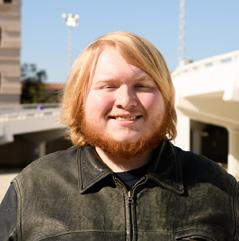
GORDON
CRAWFORD Columnist
On Feb. 10, lawyers representing thousands of Louisiana State Penitentiary inmates argued before a federal judge as part of a class-action lawsuit seeking to end the forced labor practiced on the prison’s “Farm Line.”
The testimonies given by the men who worked the Line at the prison, which is commonly known as Angola, paint a harrowing picture: hours of working under the oppressive Louisiana sun with minimal access to water, modern tools or protective clothing, all under the watchful eye of armed guards on horseback.
One inmate stated his skin began to bubble from the intensity of the heat. When considering that roughly 80% of the Angola population is Black, the intentional design of the system becomes clear.
The Farm Line is merely a con-
tinuation of a long and ugly history of perpetual chattel slavery in the state of Louisiana, and its existence remains an archaic stain on our justice system.
Angola has its roots in the consolidation of a number of plantation properties by Confederate Maj. Samuel James, who possessed the lease for the convicts of Louisiana State Penitentiary.
In the decades following the Civil War, convict leasing had become an industrial system of re-enslavement, and James took full advantage, working men in the fields for long hours, often to death.
The scheme began with local magistrates who would snatch free Black men off the streets on spurious charges like vagrancy, which usually was merely failure to provide proof of employment, and quickly lease them off to landowners who usually had prior agreements with local authorities.
This provided lessees like James with an essentially endless stream of free slave labor. Eventually, conditions at Angola grew so barbaric that public outcry led
to a ban on convict leasing in Louisiana, the practice dying with James.
However, when the state purchased the land in 1901, it maintained the system with relatively minimal changes. Over the following century, numerous reform efforts and protests from prisoners would seek significant changes in prison operations, and while they were at times able to achieve measured progress, the essential foundation of the prison remained back-breaking labor with few tools for almost no pay.
Many will excuse the practice by pointing out the fact that Angola is primarily populated by those either serving a life sentence or on death row.
While this is true, a review of the prison population by the American Civil Liberties Union in 2013 showed that a significant portion of that population was sentenced under mandatory-minimum laws, meaning that crimes like stealing a couple of jerseys or possessing a single rock of crack cocaine netted life-without-parole sentences.
Now, to be clear, the case before the courts determining the legality of the Farm Line is unfortunately unlikely to succeed, at least in its attempt to entirely abolish it. The Constitution is fairly clear: slavery is acceptable if it’s for prisoners.
However, Louisiana still has an obligation to move forward here and adopt a prison model which builds valuable skills, contributes to the community, and respects the human dignity of the prison population.
Lawyers defending Angola in the class-action case argued that maintaining the Farm Line is essential to prison operations, providing food for the entire prison.
This isn’t an entirely unfair argument. The Farm Line does provide a great service to the prison, and one that would be hard to replace.
However, the Farm Line operates less like a commercial farm and more like an industrial torture machine.
The problem with the Farm Line lies less in the nature of the work and more with the imple -
mentation.
If Louisiana were to operate a model where workers were given the opportunity to learn how to operate machinery and provided the necessary water and shade to maintain their health, farm outputs would likely increase, improving the quality of life in the prison as a whole.
Furthermore, providing a reasonable wage, or at least the state minimum, would incentivize hard work among prisoners by providing a realistic way to improve their quality of life.
There could even be a system by which inmates would receive bonuses or incentives for reaching certain output quotas, developing work ethic among the population. Regardless of what option the state pursues, the current system cannot stand.
The Farm Line is a barbaric, antiquated system which strips prisoners of their dignity and humanity. It must come to an end.
Gordon Crawford is a 20-yearold political science major from Gonzales, La.
LSU needs more than just hazing training to protect students
MIRIAM’S MUSINGS
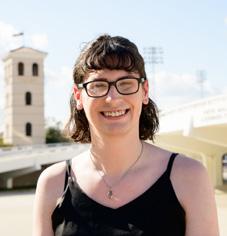
MIRIAM EVELYN REESON
Columnist
In September 2017, Max Gruver died in a hazing incident which occurred as part of his initiation into the Phi Delta Theta fraternity. Forced to drink dangerous amounts of alcohol, Gruver died as a result of alcohol poisoning and inhalation of vomit into his lungs.
Gruver’s death is a well-known flashpoint in modern LSU history. Despite only being enrolled for a single month, his loss sent shockwaves through the campus community and led to major debates about how to best approach the issue of hazing.
Following Gruver’s death, the Louisiana Board of Regents adopted new policies designed to increase transparency and tamp down on hazing. All Louisiana universities are required to publicly publish data on the number of hazing reports they get each year. However, only four of the 22 schools covered by this policy actually comply.
On top of this, LSU only reports hazing incidents in Greek life, not those that occur on sports teams or in registered student organiza-
EDITORIAL BOARD
Jason Willis Editor in Chief
Managing Editor Courtney Bell
Kaley Melancon News Editor
Sports Editor Ainsley Flood
Garrett McEntee Opinion Editor
tions. With such an incomplete picture of what hazing in Louisiana looks like, it’s hard to say exactly how prevalent the problem is and whether or not implemented solutions are working.
Even without exact data, it is clear there are systemic issues with LSU’s anti-hazing initiatives which prevent them from being effective.
Current anti-hazing training at LSU usually consists of two hours of an online presentation which students do on their own time.
Every member of a student organization must complete this training in order to be a member of any group. The presentation gives statistics on the prevalence of hazing, what hazing looks like, and how students can report it.
While this is all pertinent information, the presentation makes it easy for students to skip through the training without gaining any of this knowledge. Students tend to put the presentation on in the background, clicking through slides as quickly as possible while watching TV or doing homework.
Officers of student orgs, meanwhile, are required to certify that every member of their group has completed this training. This operates largely as an honor system, with organization leaders attesting to their members’ completion of
this training without any verification from the university. Such a setup means there is no guarantee that students are actually being trained on how to prevent hazing; officers can simply say they are in order to complete their obligation.
Even well-intentioned officers may struggle to get all of their members to complete anti-hazing training. I can say from my own experience as an organization’s president, not every member will complete this training, and the university offers little to no guidance on how to handle this.
All things considered, it is hard to believe LSU is taking the issue of hazing as seriously as it should. There seems to be a very laissez-faire attitude in which student organizations are largely left to supervise themselves and little to no effort is made to actually ensure students are being educated on the dangers of hazing or how to report it.
This attitude is made especially clear by this fall’s early reinstatement of Delta Kappa Epsilon which had been suspended for hazing until 2029. Even when offending organizations are punished, they are quickly forgiven and get to go back to business as usual.
Gruver’s own fraternity had been suspended for hazing for the five semesters before his enroll-
ment. Outside of the university, things looked more promising.
Following Gruver’s death, the state Legislature passed four bills into law which, like the Board of Regents’ policies, were designed to increase transparency and create harsher punishments for hazing.
The Max Gruver Act, passed in 2018, elevated hazing which results in bodily harm or death to a felony, punishable by up to five years in prison. This matches the penalty for a typical negligent homicide case and will certainly help to punish those who hurt others through hazing.
But such criminal punishments are purely reaction-based, it does little to actually deter people from committing the act in the first place. This can only be done through a fundamental shift in the culture of Greek life and student organizations, something university training and state law are failing to do.
This is perhaps best exemplified by the case of Caleb Wilson.
A 20-year-old student at Southern University, Wilson died last year when his fraternity brothers punched him multiple times in the chest and triggered a seizure during an initiation ritual. Seven years after these laws were passed, another hazing death occurred at a Louisiana university.
After all the outrage, rallies, legislation and a new anti-hazing training program, another student was failed by school administrators and legislators.
This is a direct result of the failure by these figures to address the root causes of hazing: power imbalances, a culture of abuse and protection of abusive groups from those who share ties to them.
It is not enough to say you’re committed to ending hazing; it’s not even enough to punish offenders. University administrators must make victims and witnesses feel safe when reporting hazing. Their anonymity must be protected at all costs.
There should be no leniency for organizations which engage in hazing. Any group which violates hazing policies should be permanently banned from campus with no chance of ever returning, and individual offenders need to be expelled.
A truly aggressive push must be made to educate people on the dangers and penalties associated with hazing and root out those individuals and organizations which put students in danger.
Miriam Evelyn Reeson is 27-yearold political theory student from Baton Rouge, La.
Editorial Policies and Procedures Quote of the Week
The Reveille (USPS 145-800) is written, edited and produced solely by students of Louisiana State University. The Reveille is an independent entity of the Office of Student Media within the Manship School of Mass Communication. Signed opinions are those of the author and do not necessarily represent the views of the editor, The Reveille or the university. Letters submitted for publication should be sent via e-mail to editor@lsu.edu or delivered to B-39 Hodges Hall. They must be 400 words or less. Letters must provide a contact phone number for verification purposes, which will not be printed. The Reveille reserves the right to edit letters and guest columns for space consideration while preserving the original intent. The Reveille also reserves the right to reject any letter without notification of the author. Writers must include their full names and phone numbers. The Reveille’s editor in chief, hired every semester by the LSU Student Media Board, has final authority on all editorial decisions.
“A flower earns its honor in the dirt.”
and entrepreneur 1982 — present
Matshona Dhilwayo Author