
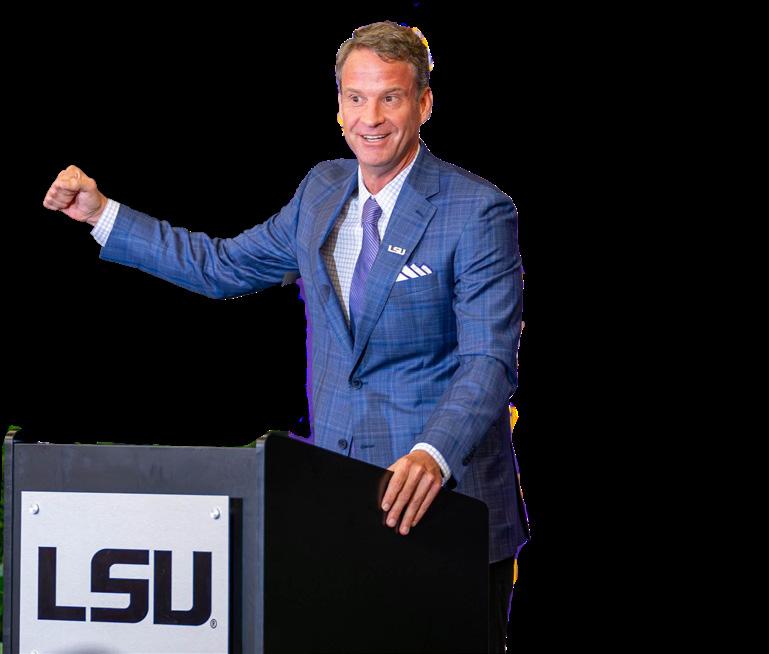
LSU football head coach Lane Kiffin speaks on recruitment, conference schedule and hopes for the season at SEC Media Days.

LSUReveille.com
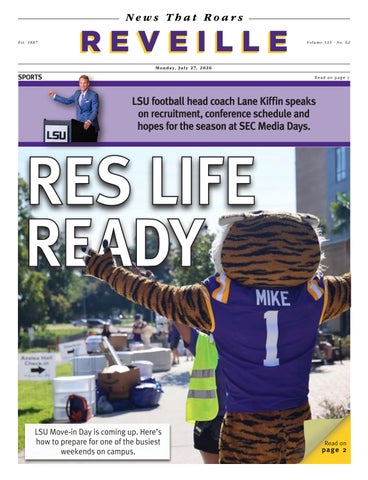
LSU football head coach Lane Kiffin speaks on recruitment, conference schedule and hopes for the season at SEC Media Days.
LSUReveille.com
BY MADELYN LONG Staff Writer
As LSU’s class of 2030 prepares for Move-in Day, LSU Residential Life and upperclassman parents share advice on how to make sure the exciting day runs as smoothly as possible.
From perfectly-timed arrivals to efficient packing methods, preparation can save families time and stress on one of campus’ busiest weekends. LSU’s ResLife office has many tips on how students can prepare before even arriving on campus, like reviewing the Living on Campus Handbook and their building information.
Dakota Laszlo, communications and engagement coordinator with ResLife, explained that many students miss important guidelines on which appliances and electronics are allowed. Some of the most commonly brought items that are not allowed in residential halls, according to Laszlo, include ice machines, air fryers and candles.
When packing, Laszlo suggests using easy-to-carry totes and boxes to avoid delays when unloading and moving items into the building.
“Carts will be available, but families are encouraged to bring a hand truck, dolly or wagon because students and their guests are responsible for moving belongings into the room,” Laszlo said.
Mary Lucy Thompson, LSU upperclassman parent, added that bringing her own wagon to use when moving her daughter in made her day much easier.
“We were able to unload and move all of my daughter’s heavy items promptly to make sure we were not holding up anyone else in the drop-off area,” Thompson said. “I would highly recommend any parent to bring their own so they are not waiting on a cart to become available.”

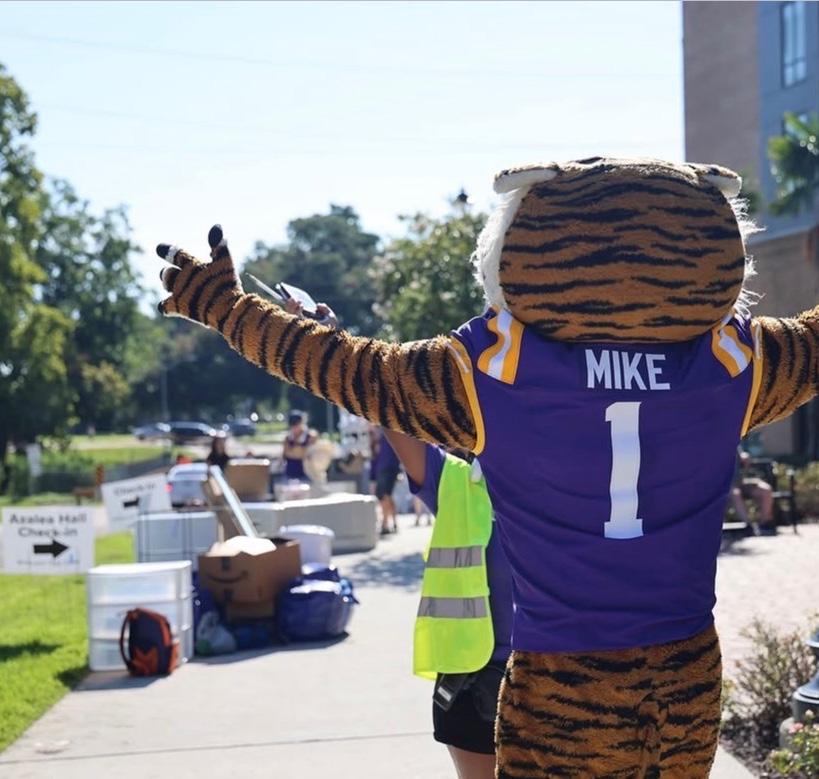
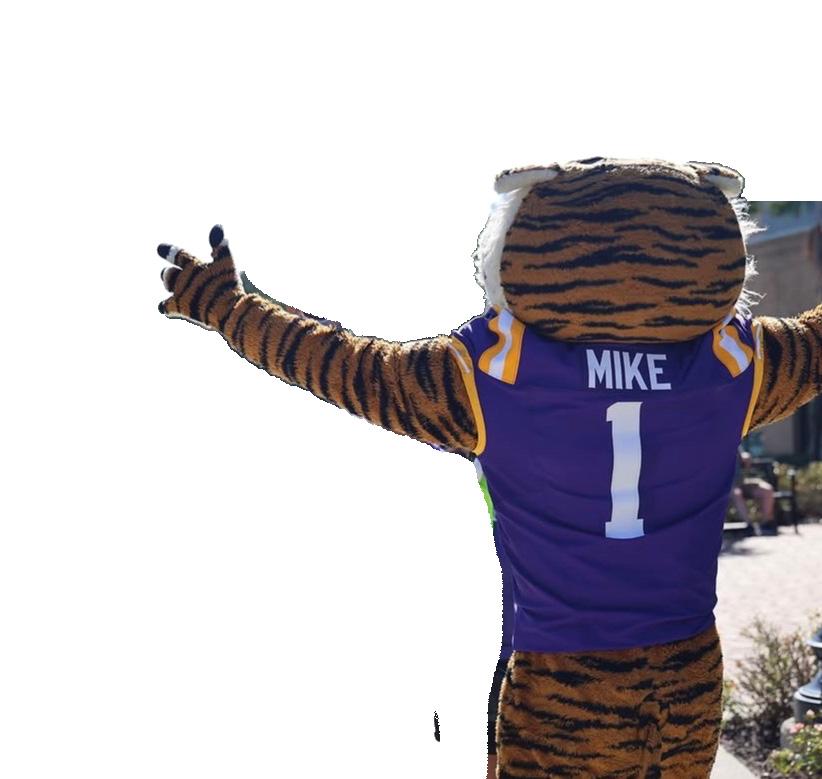
Mike the Tiger sits in the back of a family vehicle during move-in day on August 16.
Students will also be responsible for printing their temporary car tags to use during the move-in process. Tags can be found in the student’s LSU email during the first week of August. Each student is allowed to bring two vehicles into the staging and unloading area, with a vehicle towing a U-Haul or trailer counting as two vehicles.
When Move-in Day arrives, ResLife asks that students and visitors follow the guidelines from its office, LSU Parking and LSU Police to keep things as organized as possible.
New this year, families will enter the first-year move-in staging area from Gourrier Avenue instead of River Road like previous years. Arriving more than five minutes early is not suggested, as ResLife staff will direct early birds to the exit lane to wait for their scheduled checkin times.
“Because that may differ
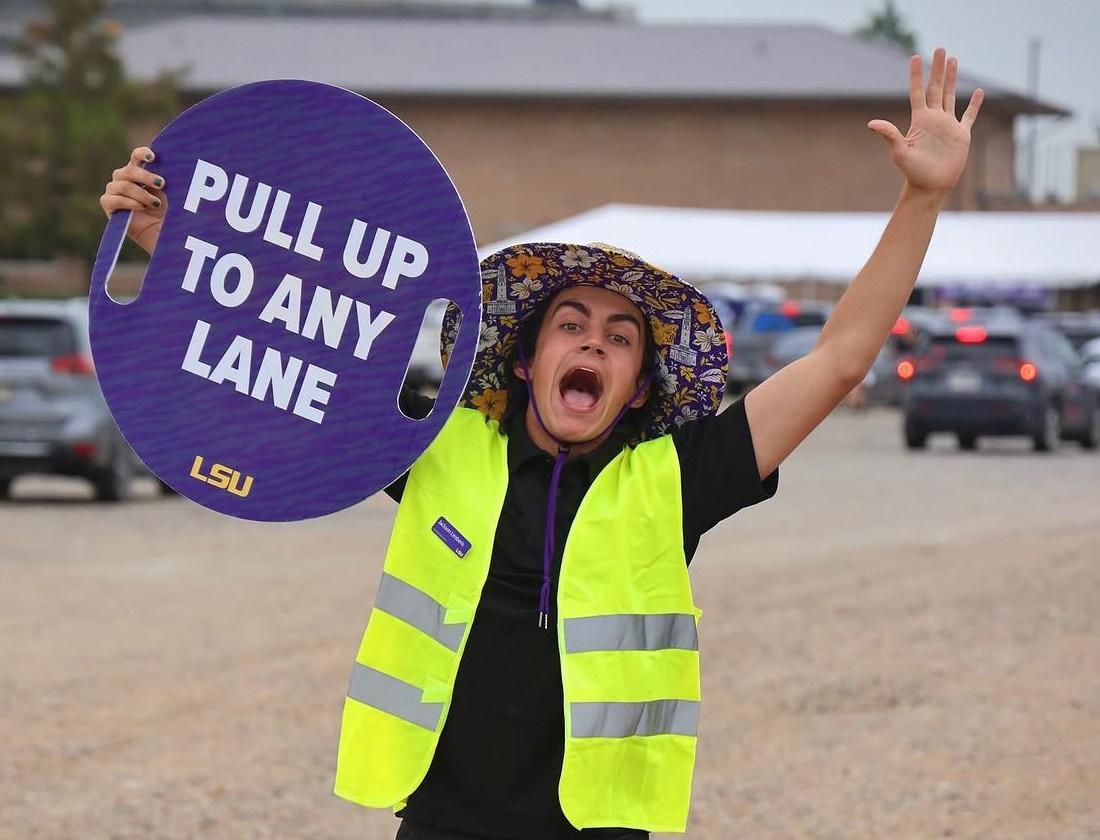
from routes used in previous years, families should review the current move-in map rather than relying on memory or their navigation app,” said Laszlo. “The printed hang tag, directional signs and move-in staff will guide each vehicle through the correct route.”
Once in the staging area, students will exchange their temporary tag for a building-specific tag, then follow the signs and staff directions to their residence hall’s unloading zone. While guests begin unloading their vehicles, students go inside to check in and receive access to their room. Once each family is done unloading, vehicles should be moved out of the unloading area and into the designated parking zone so the next family can unload, said Laszlo.
Laszlo advises that students and families should not go against the flow of traffic or the unloading setup created for efficiency.
“Trying to create a shortcut or use a familiar campus entrance can actually cause a longer delay because move-in traffic follows specially designed routes,” Laszlo said. “Families should also be prepared for heavier traffic if they leave campus and try to return later in the day while other students are still moving in.”
Junior human development and family science major Mollie Thompson agreed that following the directions of ResLife staff is the best way to go about the stressful time between arriving on campus and getting settled in the dorm.
“Although it may seem tedious to visit the staging area before getting to the dorm or wait in the unloading zone line before getting out of the car, it all helps everything run smooth-


B-16 Hodges Hall

Louisiana State University
Baton Rouge, La. 70803
ly,” said Thompson. “I could not imagine what campus would look like without the established organization or help from amazing ResLife staff.”
Throughout Move-in Day, students and families will encounter many LSU Residential staff members stationed to assist them. There are many different routes students can go for receiving answers to any questions they may have, like their residence front desk or their RA in the hall.
“We also encourage families to let students take the lead: checking in, meeting their RA, asking questions and beginning to make the space their own are important first steps toward independence,” said Laszlo.
She also emphasized the importance of having patience when handling the crowds and chaos of Move-in Day.
“Pack your patience, be flexible and enjoy the moment. Movein is a major milestone, and it does not have to be perfect to be meaningful,” Laszlo said.
Oftentimes, students do not end Move-in Day with their room fully decorated or having everything they need to start the school year. ResLife staff encourage students to bring the essentials, get settled and then decide what else is needed. Sarah Connelly, LSU upperclassman parent, also agreed.
Connelly said, “Everything will get done, eventually. If you forget anything, just know that the Target on Siegen Lane is stocked full. Not just with things you may have forgotten, but with parents and students who are all in the same boat.”
More information on Movein Day can be found at the LSU Residential Life office website or ResLife’s social media pages.
ADVERTISING (225) 578-6090
Layout/Ad Design ASHLEY KENNEDY
Layout/Ad Design REESE PELLEGRIN Layout/Ad
CORRECTIONS & CLARIFICATIONS
The Reveille holds accuracy and objectivity at the highest priority and wants to reassure its readers the reporting and content of the paper meets these standards. This space is reserved to recognize and correct any mistakes that may have been printed in The Daily Reveille. If you would like something corrected or clarified, please contact the editor at (225) 578-4811 or email editor@lsu.edu.
ABOUT THE REVEILLE
The Reveille is written, edited and produced solely by students of Louisiana State University. The Reveille is an independent entity of the Office of Student Media within the Manship School of Mass Communication. A single issue of The Reveille is free from multiple sites on campus and about 25 sites off campus. To obtain additional copies, please visit the Office of Student Media in B-39 Hodges Hall or email studentmedia@ lsu.edu. The Reveille is published biweekly during the fall, spring and summer semesters, except during holidays and final exams. The Reveille is funded through LSU students’ payments of the Student Media fee.
BY MADELYN LONG Staff Writer
LSU researchers are looking into how to easily and efficiently detect brain damage in concussed LSU football players. With a grant of over $200,000 from Our Lady of the Lake Regional Medical Center and LSU, the team behind this research aims to improve the health of competitive and tactical athletes.
This project, led by kinesiology associate professor Guillaume Spielmann, aims to gather data on which biomarkers in athletes’ saliva are accurate signs of a concussion or brain injury. Spielmann also works with a range of LSU staff across the Shreveport, New Orleans and Pennington Biomedical Research campuses.
By collecting specimens over the course of a full practice and competitive season, Spielmann and his team are hoping to develop less invasive and more effective ways to determine if athletes have been injured.
The need for a consistent and realistic way to test for brain injuries in athletes is long overdue, said Spielmann. Current ways of
evaluating athletes, like measuring symptoms and cognitive assessments, often lack reliability.
Spielmann and other LSU research teams have been working to combat these issues for upwards of 10 years with the help of Our Lady of the Lake staff and facilities.
“Our partnership with Our Lady of the Lake shows what’s possible when world-class researchers focus their talents on the health challenges facing Louisiana,” LSU
Chancellor Jim Dalton said in a statement.
“As LSU pursues its goal of becoming a Top 50 research university, partnerships like this one are how we’ll get there — by turning discovery into real impact for the people of our state.”
Studies over previous years have involved MRIs and blood tests to detect concussions and brain injuries, but Spielmann explained that these types of detection are often hard to replicate in the field.
“Taking blood is not practical, so what we’ve really wanted to do is identify a way to use a tissue that’s more readily available,” Spielmann said.
Using saliva specimens to determine active biomarkers that are present is much easier than poking players after a day of practice or a long game, and it makes for easier implementation of recreational use in fields other than college sports.
To implement this research plan on campus, Spielmann’s team partnered with Dalis Boyette, senior associate athletic trainer at LSU Athletics, to decide which group of athletes would be best to track over their competitive season.
“We are really focusing on LSU football right now, and that’s really because we do know they are at great risk of concussion, that great risk of impact,” said Spielmann.
Spielmann’s team began collecting specimens from 60 LSU football players on June 1 and will continue to collect specimens throughout the season.
“We’re really trying to figure out what protein is stable … in the unlikely event that one player does get concussed,” Spielmann said. “But at least we would also like to collect a sample and see if we actually see a jump in those proteins and what the best protein is to really pick as a biomarker.”
While following players during the season and tracking contact injuries, Spielmann’s team will compare the proteins found in their saliva to blood and symptom tests to find a correlation between protein levels and brain injuries.
Spielmann explained that his team hopes to have the results of their experiment published within 12 months, so the LSU Athletics department and the Louisiana community can learn more about how LSU is working to take care of its athletes and make a difference.
Spielmann hopes to use his team’s findings to be useful in more tactical athletic fields as well, like first responders, warfighters and astronauts.
“We wanted to translate what we are interested in — athletes, tactical athletes and other populations and just really kind of help all our champions across the state,” said Spielmann.
Spielmann’s research is part of LSU’s Institute for the Health and Performance of Champions initiative, an extension of LSU’s partnership with Our Lady of the Lake facilities to enhance the level of care student-athletes receive.
“A lot of the public sees the
front-facing side of LSU athletics with athletes winning games and it’s great,” said Spielmann. “But athletes who come to LSU are really part of a family; we care about those LSU Tigers a lot more than just points on the scoreboard.”
Through the IHCP, Spielmann’s team was able to access $238,073 from LSU and Our Lady of the Lake’s Collaboration in Action Program. The program, a strategic research initiative, recently awarded $1.6 million to seven research teams across the state that are tackling some of Louisiana’s biggest health issues.
“The Collaboration in Action Program is a great example of the innovative and transformative work FMOL Health | Our Lady of the Lake and LSU are accomplishing together through our Championship Health Partnership,” E.J. Kuiper, president and CEO of FMOL Health, said in a statement.
“By bringing together our collective expertise and resources, we’re creating opportunities for discoveries that will improve lives, strengthen our communities, and deliver solutions tailored to the unique healthcare needs of Louisiana and the Gulf South.”








BY PAUL TIBBETS Staff Writer
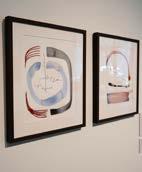
At LSU’s Glassell Gallery, graduate students past and present adopt slowness into the underlying meaning of their art and the process of making it.
For the past few summers, the Glassell Gallery has introduced a new theme for its contemporary showcases. In 2024, it began with “Wild,” continuing into 2025’s “Felt” and this summer’s “SLOW.”
In a press release from the LSU School of Art, the gallery explained how this theme showcases artists whose pieces represent the word “slow,” whether the art itself conveys a slow feeling or the creation of the art was a slow process.
“The gallery sought work that lingers in drifts and delays; work that dwells in states
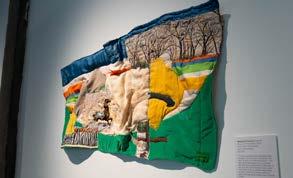
of stillness and attunement,” the press release reads.
Each of the selected artists depicts these ideas in their own distinctive ways, such as family, personal growth or even as a call to action. A common theme strings its way through some of these pieces: build up.
Farzana Akhtar, a graduate student studying fine arts, specializes in experimental photography. She uses her photography as a means to express social and cultural issues women face in the modern day. Hailing from Bangladesh, Akhtar believes that despite the specific differences in what women go through in Asia versus North America, many of the problems stay the same.
“When I’m talking about women, it’s quite universal,” Akhtar said. “I don’t need to change that feeling when I’m making art somewhere, but I have to consider the visuals.”
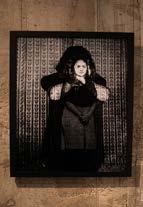
Her “SLOW” piece, “Interwoven Lineages,” shows Akhtar with an archival photo of her mother projected onto her. This photo explores how expectations of gender roles are passed down generation by generation. Akhtar said that these traditions and requirements are built up slowly over time.
“This generation didn’t come just suddenly, and the feeling didn’t come just suddenly — it grew up slowly after observation,” said Akhtar.
Samantha Combs, who graduated from LSU’s fine arts graduate program in 2020, approaches the build up in a bit of a different way. Coming into the LSU program from New York, she was initially creating abstract expressionist paintings akin to Joan Mitchell. However, this did not quite satisfy her creative expression.
“I wanted to find different types of materials, but use them in a painterly way that spoke to the interests I had, which were based on psychology, thought, cognition, emotion — what that kind of stuff looks like in a variety of formats,” Combs said.
In her exploration of mediums, Combs came across performance art piece “Lick and Lather” by Janine Antoni, in which one of two busts of Antoni was made with soap.
Combs’ “SLOW” piece, “Subterranean Shower Excavation: All of Your Unspoken Rehearsals Fermenting in the Corners,” uses a mixture of soap and cut up self-help book pages covered in epoxy resin.
She said that the slow theme is emblematic of the time and effort that went into making this piece, as she had to make the box it sits in and calculate the best way to arrange all the parts.
Additionally, there is a slowness that fits into the story of the work. The pieces represent how people often try to wash away bad feelings or aspects of themselves, but they take on a
new form that builds up and eventually resurfaces.
“The kind of emotional burdens and whatever else that we carry, the process of understanding and coming to terms with those things is also a slow process, especially as you get older and age,” said Combs. “As you mature, it’s just a slow process of being like, ‘Okay, this is what this is, and this is how I am here.’”
Sometimes, the build up is in the literal process of making the art itself, as it is with 2022 graduate student Miles Kinney. His “SLOW” selection, “Ducks in a Row,” is part of a series of works that has been built upon for years at a time.
Each piece in this series is an amalgamation of nostalgic images, modern pixelated figures and more traditional items or styles of painting. With so much going on in his creation, Kinney hopes that people will take a slower approach in observing the art.
“I want people to get up close to it. I want people to see that surface, not see the surface they expect to see,” said Kinney.
The “SLOW” exhibition will be on display from now until Aug. 22. For information on the Glassell Gallery and its hours, visit its website.

BY ALEX SHEESLEY Staff Writer
LSU football head coach Lane Kiffin has been at the center of conversation during this year’s SEC Football Media Days. After several questions about him were fielded by other coaches, his turn to speak came on Thursday, July 23, facing a press pool for the first time since his introductory press conference in December 2025.
Kiffin was very measured during the 30-minute conference. He began with a lengthy opening statement that took up nearly two-thirds of his time. It emphasized his excitement for the opportunity.
During his opening statement, Kiffin reemphasized his satisfaction in Baton Rouge. He pointed out the harmony that exists between himself, LSU President Wade Rousse and Athletic Director Verge Ausberry. All three were appointed to their respective positions in the past year.
“These seven months at LSU have been awesome,” Kiffin said. “One of the things that has really stuck out to me has been the alignment at LSU. From top down, from President Rousse, to Verge Ausberry, athletic director, to our Board of Supervisors.”
As changes to the transfer portal system loom with the potential passing of the Protect College Sports Act, Kiffin took time to discuss the importance of the portal for LSU.
“A lot of times you sign a portal player, they may have two [or] three years of eligibility left,” Kiffin said. “All the portal players aren’t top players. You build your depth through

that.”
Kiffin was also asked about the “Lane Kiffin Rule,” legislation that would prevent in-season coaching moves like Kiffin’s to LSU. He supported the rule change, saying it benefits programs and players by preventing distracting changes to programs and coaching staffs while a season is ongoing.
“I do hope for future people that’s fixed, so that you’re not in that same predicament for players, for coaches, which really was a player issue too,” Kiffin said.
Coming off the turnaround that he provided to the football program at Ole Miss, expectations out of the gate could not be higher for Kiffin at LSU. He discussed that pressure and said he viewed it more as an opportunity rather than a source of anxiety.
“Expectations make you uncomfortable, they make you not able to go through motions in any aspect of your program,” Kiffin said. “That’s been awesome, and I really just can’t wait to get on the field.”
Kiffin criticized the SEC’s move to a nine-game conference schedule. He said that a ninth game against SECcaliber teams won’t be rewarded by the College Football Playoff’s selection committee. He also said losing a non-conference game limits chances for SEC teams to prove their skill against the rest of the country.
“If we keep playing each other, we don’t really prove that we’re better than anyone else,” Kiffin said.
Kiffin’s time at the podium was also used to clarify comments he has made between press conferences.
In an interview with Vanity Fair
in May, Kiffin said that he occasionally struggled to recruit at Ole Miss because of the university’s reluctance to let go of symbolism that called back to the Confederacy. He also said that the attitudes toward diversity in Oxford, Mississippi, put recruits off.
He was asked about those comments on Thursday, specifically about whether Ole Miss’ already historic success in recruiting under Kiffin could’ve been better if Oxford was more diverse. Kiffin stumbled in response, mentioning how the passing of his father and professional wrestler Hulk Hogan changed his thoughts on his own mortality and decision-making process.
“You got to make decisions and you got to go with them,” Kiffin said. “That was a poor usage of a term that I believe, just like many coaches that
7
had been there before, was factual, but over the course of a long interview it was bad timing and bad usage of the word.”
Kiffin did not touch on negative remarks made by other SEC coaches about him during this year’s press conferences.
Set to host LSU in 2026, Tennessee head coach Josh Heupel made comments on Monday referring to Knoxville’s former head coach’s drama-filled return to the city in 2021.
“Whether it’s the grocery stores being fully stocked with mustard or our sports stores, making sure that they’ve got reinforcements on the golf balls, hopefully Knoxville’s ready for [Kiffin’s] arrival,” Heupel said.
Jon Sumrall, taking up the job as Florida’s head coach this season after leading Tulane to a College Football Playoff berth in 2025, was empathetic to Kiffin but shut down the notion that Kiffin’s departure from a CFP team for a new opportunity was similar to his own.
“If you leave, you’re leaving an SEC school to go to an SEC school. It’s a little different,” Sumrall said, recalling a conversation with Kiffin. “I’m leaving Tulane.”
Ole Miss head coach Pete Golding said that the relationship between him and Kiffin is “great,” but said that the uneasy dynamic between Ole Miss and Kiffin will never be settled.
“If you do get married, right, and you have an ex that your wife knows about, she doesn’t ever age, she’s never dead — she’s always going to be brought up,” Golding said. “That’s kind of where it is right now.”
BY RAMI BURKS Sports Editor SOFTBALL
Softball is one of the fastestgrowing women’s sports, and as a result, pitchers have been overlooked in rule changes and game advancements. However, collegiate pitchers are open to trying new rules that work in their favor, especially leaping.
Since 2020, both the top five batting averages per season and earned run averages have risen according to the NCAA Statistics sheet. With the exception of the shortened 2020 season, batting averages have risen from the lower-to-mid .300s to the mid-to-upper .300s. From the other side of the ball, ERA has risen from the 1.0-1.5 range to the 1.5-2.0 range, which means that pitchers are performing worse than in previous seasons.
There has been such a focus on growing the offensive side of the
game that pitchers have suffered in response, including a strike zone that feels smaller each season.
“We want this sport to become as big as it possibly can, and it has expanded rapidly in the past five to 10 years,” LSU softball pitcher Tatum Clopton said. “But it is going in the direction of the hitters, leaving a lot of pitchers at a disadvantage with all the technology that’s come out. I think any rule change that benefits a pitcher right now is going to be very well received in the pitching community.”
The NCAA has changed a few rules over the past decade to favor pitchers in college softball. The three major changes have been the addition of the start-back rule, the addition of PitchCom and the leaping rule.
The most controversial rule change has been leaping due to its similarity to crow-hopping, a mechanic that is still illegal. By defini-
tion, leaping allows pitchers to leave the ground, while crow-hopping involves leaving the ground and pushing off a second time.
Leaping became legal for the 2024 season and has theoretically lowered the number of illegal pitches called in NCAA softball. However, the NCAA doesn’t publicly record how often illegal pitches are called.
Since this rule has been changed, there is now a bigger focus on what a crow hop actually is. According to Clopton, it’s especially hard to explain for women’s softball.
“There’s a pretty fine line between leaping and crow-hopping,” Clopton said. “It is not as different as I think everyone may think it is. It’s like a split-second difference.”
However, there is one space where crow-hopping is legal: men’s fastpitch softball. Clopton said there is a clear advantage of a replant in men’s fastpitch, but in women’s softball, crow-hopping is a disadvantage
because it is illegal.
Since it is still illegal, pitchers who crow-hop have learned to make the differences as small as possible, making crow-hopping harder to catch. However, it also limits the advantage that comes along with it.
As a pitcher, Clopton said she hopes to see crow-hopping implemented in the women’s side of the game to give pitchers a more wellrounded advantage as the technology has advanced to support offense.
“I think pitchers deserve to have a chance to compete just as much as hitters, but I think if the [crow-hopping] rule were to pass, we would see a more aggressive turn in favor of [it],” Clopton said. “I think [men’s fastpitch] would pave the way for what crow-hopping would look like in women’s softball, and I think that would be exciting to see.”
LSU’s Tiger Park has been known to be a pitcher’s park, so it makes sense for the pitching staff to want
to further its advantage in hopes of returning to Oklahoma City for the first time since 2017.
Clopton said head coach Beth Torina has supported the pitchers in trying the new rules, but ultimately wants them to feel the most comfortable and safe within the regulations.
“[Torina] has done an incredible job navigating all of these changes while continuing to allow us to be ourselves,” Clopton said. “She’s not trying to push us towards the rule changes or away from them. She’s allowing us to embrace who we are as pitchers and our own identity.”
Although LSU pitchers are slow to adopt the new rules, eventually the pitchers may find themselves falling naturally into the new mechanics.
“I hope to see more people growing with the game and kind of playing around and taking advantage of the rules that they’re gifting us,” Clopton said.

JEANNE
WARREN Columnist
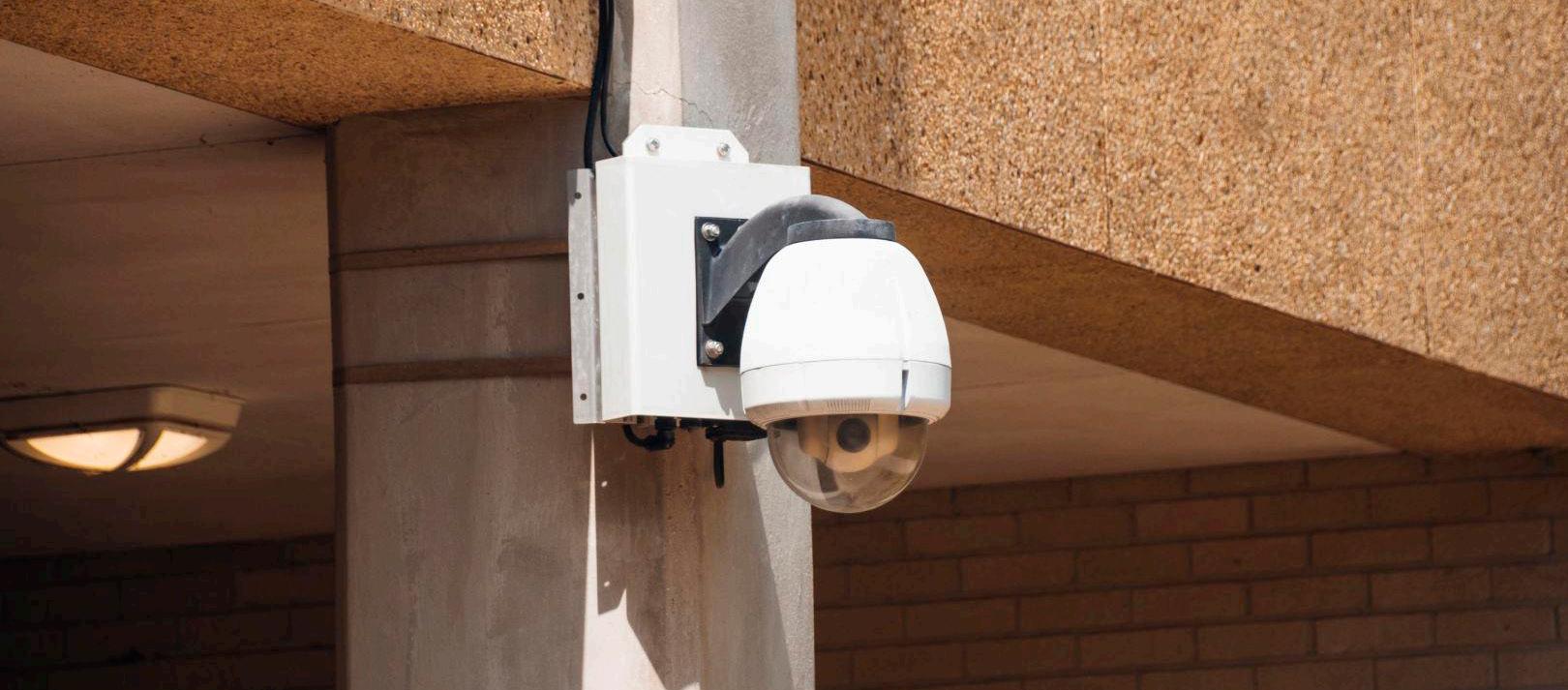
Privacy is a privilege long gone. Your car knows when you’re distracted, your phone knows where you are, your doorbell knows who visited your house and your smartwatch knows nearly everything about you, down to your heart rate. These features are all conveniences of luxury — until they aren’t.
The biggest threat to privacy isn’t someone hacking into your phone; it’s the fact that we’ve willingly invited the stranger that is surveillance into every crevice of our lives.
Smartphones, the most persistent monitors of all, may even know more about you than you do — location history, app usage, when you turn your phone off, when you turn your phone on and behavior patterns precise enough to predict what you’ll want to buy, watch or read before you really even know it yourself.
In 2018, Facebook became the center of one of the biggest privacy scandals in history when
political consulting firm Cambridge Analytica had improperly obtained data from nearly 87 million Facebook users. This was done through a Facebook personality quiz. Due to Facebook’s privacy policies, the quiz was able to collect data from the unconsenting Facebook friends of the participants.
As a result, copious amounts of data were harvested even though the vast majority of users had never interacted with this quiz or consented to data collection. The incident sparked widespread public outrage, congressional hearings and a $5 billion fine against Facebook. It made millions of people realize how easily personal data can become a profitable tool for billion-dollar companies.
Other incidents followed, such as Equifax in 2017, when Social Security numbers, addresses and birth dates, among other personal information being exposed for 147 million Americans. Unlike social media and the Facebook scandal, consumers never even chose to share this information. It was exploited by a company entrusted with it.
Car insurance companies have quietly joined the same
list, tracking speed, braking patterns, acceleration, and a plethora of other data points. Companies frame this as safety innovation, and insurance companies present it as a way to reward good drivers with lower premiums. The tradeoff is simple: You get money off and your car monitors you constantly and reports to parties who have a financial interest in your behavior.
General Motors faced seven class action lawsuits alleging that the manufacturer shared driving data without proper consent and sold it to insurers.
One Florida driver, Romeo Chicco, said his premium doubled.
Home devices aren’t any better, with Amazon’s Ring and Alexa following a similar pattern. The Federal Trade Commission found that the company gave contractors access to customers’ private videos without basic security safeguards. As a result, hackers were given access to footage from thousands of cameras.
Amazon later paid over $30 million to settle separate allegations that Alexa and Ring retained children’s voice recordings despite parents’ requests to have these recordings deleted.
This flawed history is part of why Ring’s Super Bowl LX ad in February was so alarming.
The commercial showed a lost dog being reunited with its owner after Ring’s artificial intelligence scanned footage from neighborhood cameras to spot a match. Viewers immediately noticed the ad’s visual of blue circles radiating outward from homes on a map. It looks less like a community and more like a surveillance grid.
Ring issued a statement insisting that the feature was dogspecific, but people couldn’t help but wonder if it could be repurposed to track a person or license plates. These suspicions are valid considering Ring has previously partnered with law enforcement to request footage from users.
The biggest issue with this isn’t that surveillance exists or that people were against finding lost dogs. People bought Ring because they wanted surveillance, whether it was to watch their porch, deter thieves or feel safer.
The controversy was that for many Ring camera owners, the advertisement was the first time they realized their cameras were enrolled in the feature, which
was enabled by default on eligible devices. They had to opt out rather than opt in. The controversy has somewhat faded, but it’s clear that public trust in technology has also faded.
With new and emerging technology, you have a growing list: license plate readers on toll roads and in parking lots, facial recognition systems in nearly every business, the implementation of finger print identification in public transit systems. Anonymity in public spaces is close to extinct. You no longer need to be a suspect to be recorded and cataloged — you just have to exist.
Every convenience has a cost. A lower insurance rate, a warmer house that anticipates your schedule, a lost dog found faster and ads curated to your interests come aggregated with a small transfer of information about your life to someone else’s database.
So, next time you glance at your phone or ask Alexa a question, ask yourself this: Are they watching out for you, or watching you?
Jeanne Warren is a 20-year-old communications major from Baton Rouge.
EDITORIAL BOARD
Laura Allen Editor-in-Chief
Managing Editor Garrett McEntee Sports Editor
Rami Burks
Emily Boudreaux Production Editor