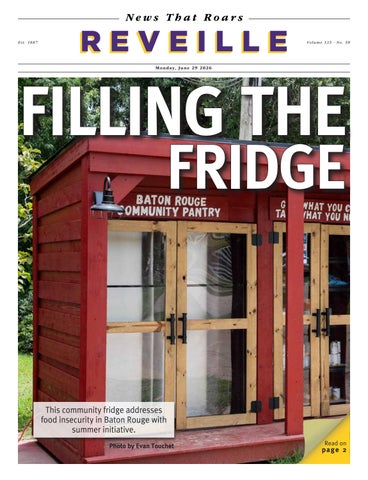

FILLING THE
This community fridge addresses food insecurity in Baton Rouge with summer initiative.
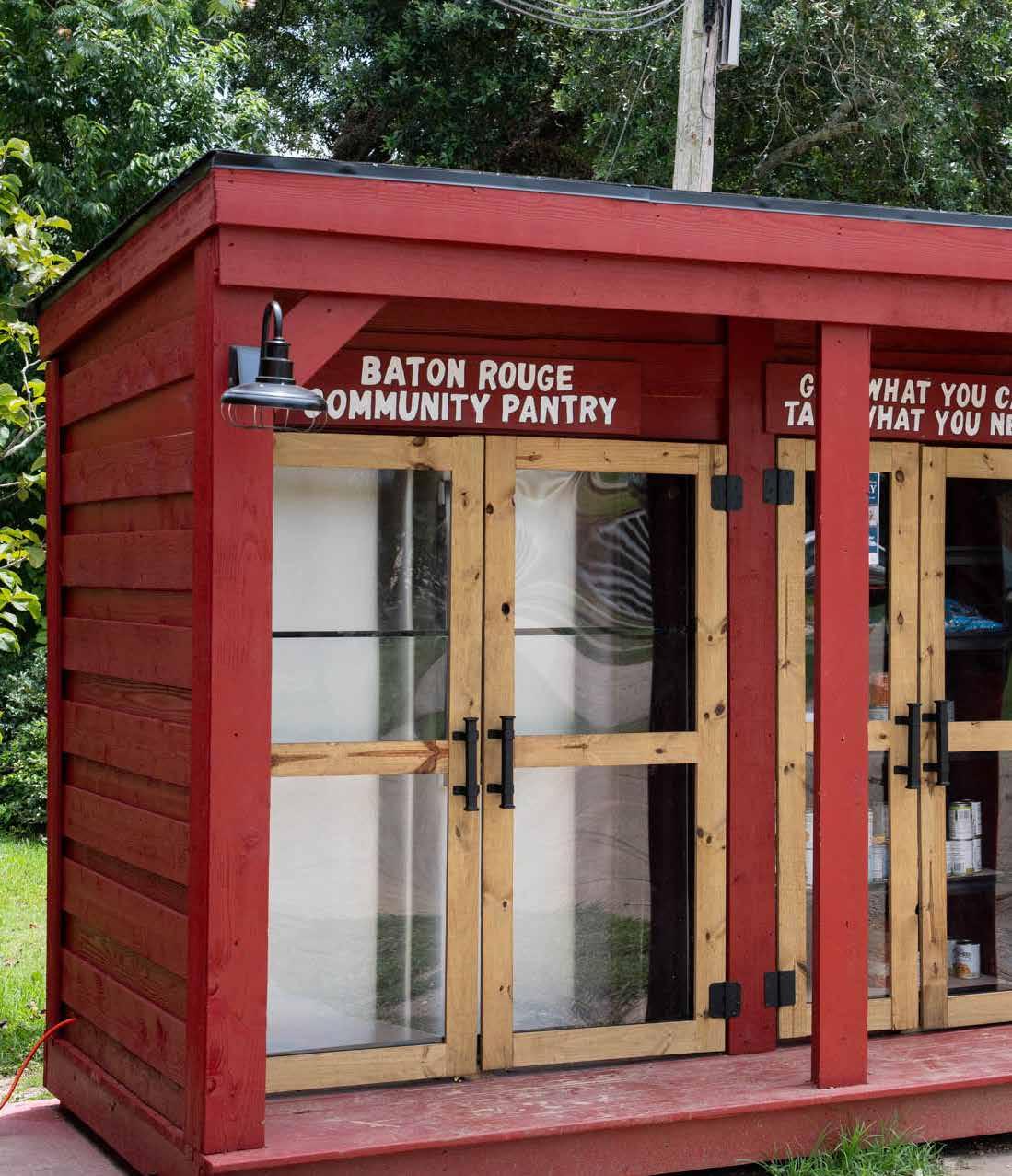

Photo by Evan Touchet

‘WE SHARE FOOD’
The Red Shoes is making food more accessible with Fill the Fridge July
BY MADELYN LONG Staff Writer
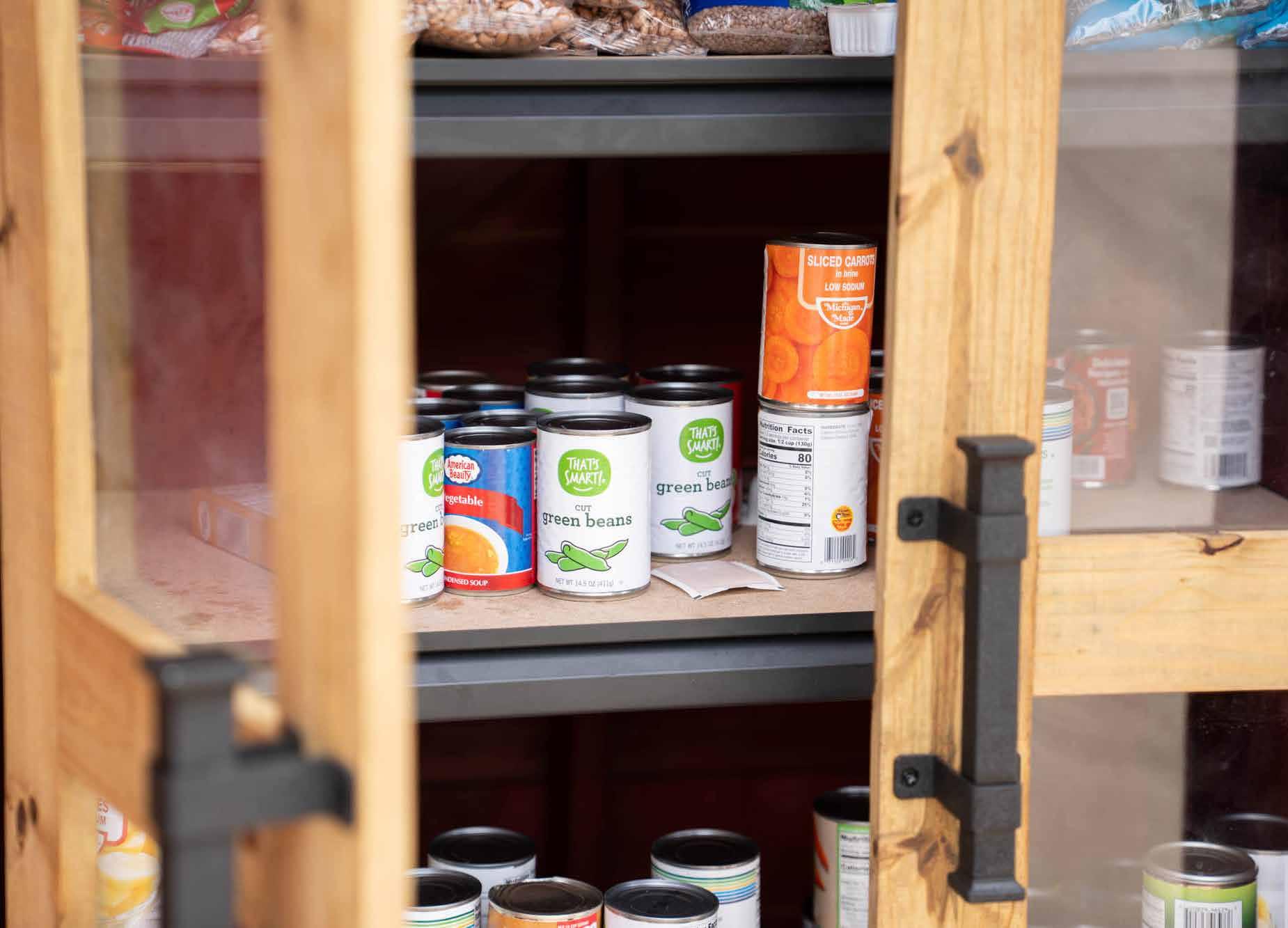
The Red Shoes’ Fill the Fridge July initiative aims to keep the Baton Rouge community fridge fully stocked and accessible for anyone in need.
Located on Government Street in Downtown Baton Rouge, the community fridge has sat near The Red Shoes’ office since 2021. Work to keep the fridge operating, clean and stocked has looked different each year until Dorcas Brandon, associate director of The Red Shoes, began managing the project in 2023.
Brandon explained that she saw the need for a community fridge during Louisiana’s hot summer months while working in Baton Rouge. This sparked her idea to create the Fill the Fridge campaign.
For the past three years, Brandon has worked to keep the fridge stocked for anyone who requires food. The Red Shoes is proud of its “no questions asked” policy, meaning that they never ask why someone is taking food from the fridge or question their circumstances.
“I think sometimes people have a preconceived notion of who benefits from the fridge, but what people don’t understand or maybe realize is the person sitting next to you may have some sort of financial strain at that moment,” Brandon said. “It’s 2026. We see prices going up consistently, and food insecurity is a real thing, particularly in Louisiana.”
Brandon added that she has witnessed people from all walks

of life, not just the unhoused, who benefit from the fridge, adding to its importance in the Baton Rouge community.
“I’ve seen people drive across town for multiple families to pick up food from the fridge, and I’ve seen people come on behalf of the elderly to pick up food from the fridge,” said Brandon.
Brandon works with many businesses that are willing to sponsor the fridge by “pledging” to fill the fridge for a specific day. She explained that business -
es often want to get involved to be part of a humanitarian effort that directly benefits the community they serve.
Manning Bergeron, founder of Baton Rouge’s House Brew coffee shop, has been supporting the fridge throughout the year. He compared the fridge to community insurance, which he supports by sponsoring it through his business.
“So it’s kind of like making a claim with a policy that never denies you, because the
food fridge is for everybody,” Bergeron said. “You don’t need to sign up or do anything to get food out of the fridge. You just show up, look inside and see what you can get.”
Many businesses that sponsor the fridge keep it full by hosting sandwich-making parties and getting their customers involved. The Red Stick Reads is one of them, using its event as a way to assist The Red Shoes’s mission.
“We thought it would be fun to invite our Red Stick Reader community to join us in making PB & J sandwiches together, and once a month, usually on the last Friday of the month, we invite our readers to help us fill the fridge,” said store owner Tere Hyfield.
The camaraderie built around Fill the Fridge July is something that truly embodies the humanitarian spirit of Louisiana, said Brandon. She added that everyone deserves the right to eat, and when people can give, humanity can thrive in abundance.
“That is the beauty of what Louisiana is: We share food. We share food when it comes to a new neighbor coming into the neighborhood, or we share food when there’s a crawfish boil or a barbecue,” Brandon said.
She urged the Baton Rouge community to think of the fridge, located at 2303 Government St., when cooking and set aside food to help someone in need.

B-16 Hodges Hall

Louisiana State University Baton Rouge, La. 70803
ADVERTISING (225) 578-6090
Layout/Ad Design ASHLEY KENNEDY
Layout/Ad Design REESE PELLEGRIN
CORRECTIONS
&
CLARIFICATIONS
The Reveille holds accuracy and objectivity at the highest priority and wants to reassure its readers the reporting and content of the paper meets these standards. This space is reserved to recognize and correct any mistakes that may have been printed in The Daily Reveille. If you would like something corrected or clarified, please contact the editor at (225) 578-4811 or email editor@lsu.edu.
ABOUT THE REVEILLE
Brandon said, “That’s just the nature of humanity, human-tohuman, and what it truly turns into is a community fridge. You think about your
human.”
The Reveille is written, edited and produced solely by students of Louisiana State University. The Reveille is an independent entity of the Office of Student Media within the Manship School of Mass Communication. A single issue of The Reveille is free from multiple sites on campus and about 25 sites off campus. To obtain additional copies, please visit the Office of Student Media in B-39 Hodges Hall or email studentmedia@ lsu.edu. The Reveille is published biweekly during the fall, spring and summer semesters, except during holidays and final exams. The Reveille is funded through LSU students’ payments of the Student Media fee.
fellow
EVAN TOUCHET/ The Reveille
Food sits in the pantry June 24 on Government street in Baton Rouge, La.
EVAN TOUCHET/ The Reveille
Food sits in the pantry June 24 on Government street in Baton Rouge, La.
RURAL FOCUS
LSU professor to lead society for sociological studies
BY MADELYN LONG Staff Writer
LSU sociology professor Tim Slack has been elected president of the Rural Sociological Society, a national organization that works to promote social science research and enhance the quality of rural life across America.
As a long-standing member and leader in the society, Slack’s research and professional development prompted his peers to elect him as president.
“It’s a really nice recognition because it suggests that people think that I have the capacity to help set a vision and a path for society and represent it in public venues, so that’s really an honor and privilege,” Slack said.
Slack’s research at LSU focuses on labor force issues, informal employment, population and environmental change, and the social impacts of disasters. Much of this work involves Louisiana communities and challenging common misconceptions about rural communities.
Slack explained the importance of understanding and applying research on the ground to create public policy that mitigates some of the problems rural Americans face and elevates opportunities in these areas.
“If we don’t know what the kind of contours and dynamics of issues are on the ground, we can’t really do that,” said Slack.
Slack plans on using his position as president of the Rural Sociological Society to expand the society’s reach beyond academic audiences and make stronger impacts within rural American communities.
Slack believes that one way the society can increase its impact on rural Americans is by involving more than just rural sociologists in research and projects. Slack explained that working with nonprofit organizations, government officials and other assisting agencies makes
SAFETY

COURTESY OF TIM SLACK
Tim Slack and Shannon Monnat stand with former RSS President Ken Robinson to accept the 2025 Frederick H. Buttel Outstanding Scholarly Achievement Award for their book Rural and Small-Town America: Context, Composition, and Complexities.
a larger impact when society is faced with community and economic development issues.
One way the Rural Sociological Society plans to impact nonacademic audiences is by addressing misconceptions about rural communities and promoting fact-based perspectives.
“There’s just the misunderstandings about rural America run so deep,” Slack said. “We have a responsibility to elevate the knowledge that we have to help people sort through those misconceptions and get to a clearer, more fact-based position.”
Slack noted that one of the most prominent misconceptions that he has faced in his career is that rural communities are the same across all of the country.
People often believe that agriculture is the sole reason rural areas exist, but Slack explained that this is simply not true in an article he wrote, published by The Conversation.
“Only about 5% of rural Americans are employed directly in agriculture; the flip side of that is [that] about 95% are doing other kinds of work,” Slack said. “So if we think about rural as being synonymous with farming, we’re missing the way that most rural Americans make a living.”
Slack’s election marked a significant moment for sociologists focused on challenging rural misunderstandings and advancing research to support the many diverse rural communities across America.
Judge finds teen guilty of attempted murder near LSU homecoming game
BY MADELYN LONG Staff Writer
Baton Rouge’s Juvenile Court found a teenager, Kyiveon Keller, guilty of attempted murder after the LSU homecoming game shooting in 2025.
Keller, who was 16 at the time of the shooting, appeared
in court on Tuesday, June 23.
Judge Adam J. Haney convicted Keller on two counts of attempted second-degree murder, illegal carrying of a firearm on school property and illegal possession of a firearm by a juvenile.
The shooting, which took place near the intersection of Highland Road and Dalrymple
PUZZLES
Drive, injured an 18-year-old and a 19-year-old. The shooting marked the second gun violence incident on an LSU game day during the 2025 season.
Keller will be sentenced on Aug. 4, facing up to four years in prison with the possibility of parole because of his juvenile status.



CAPITAL CITY PRIDE
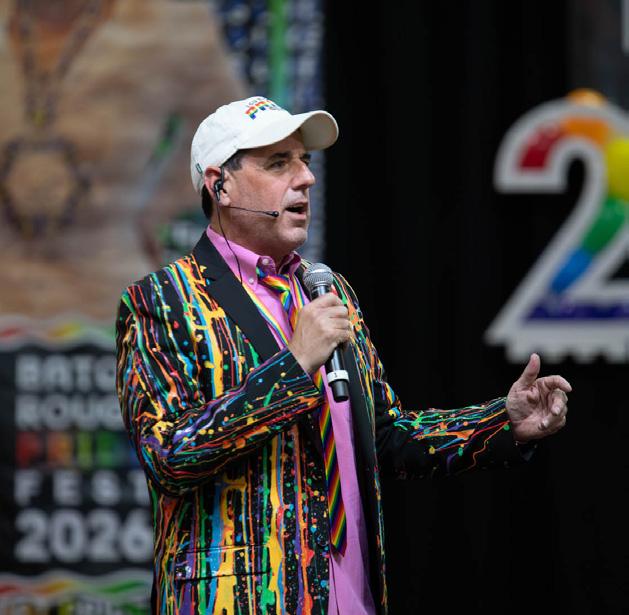
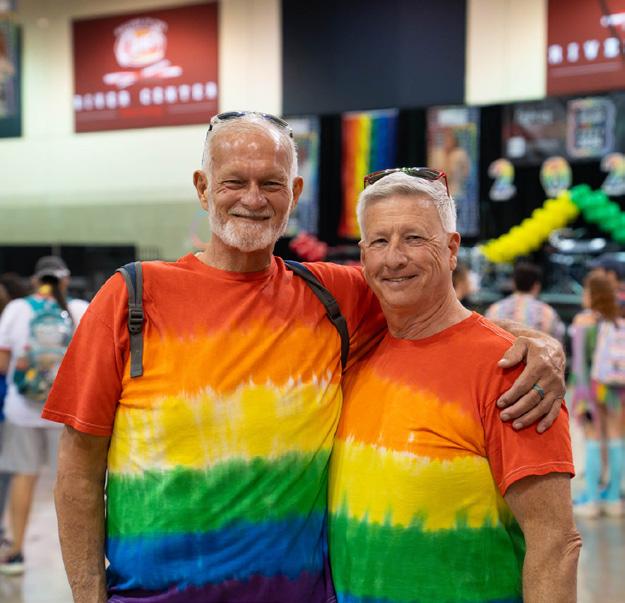


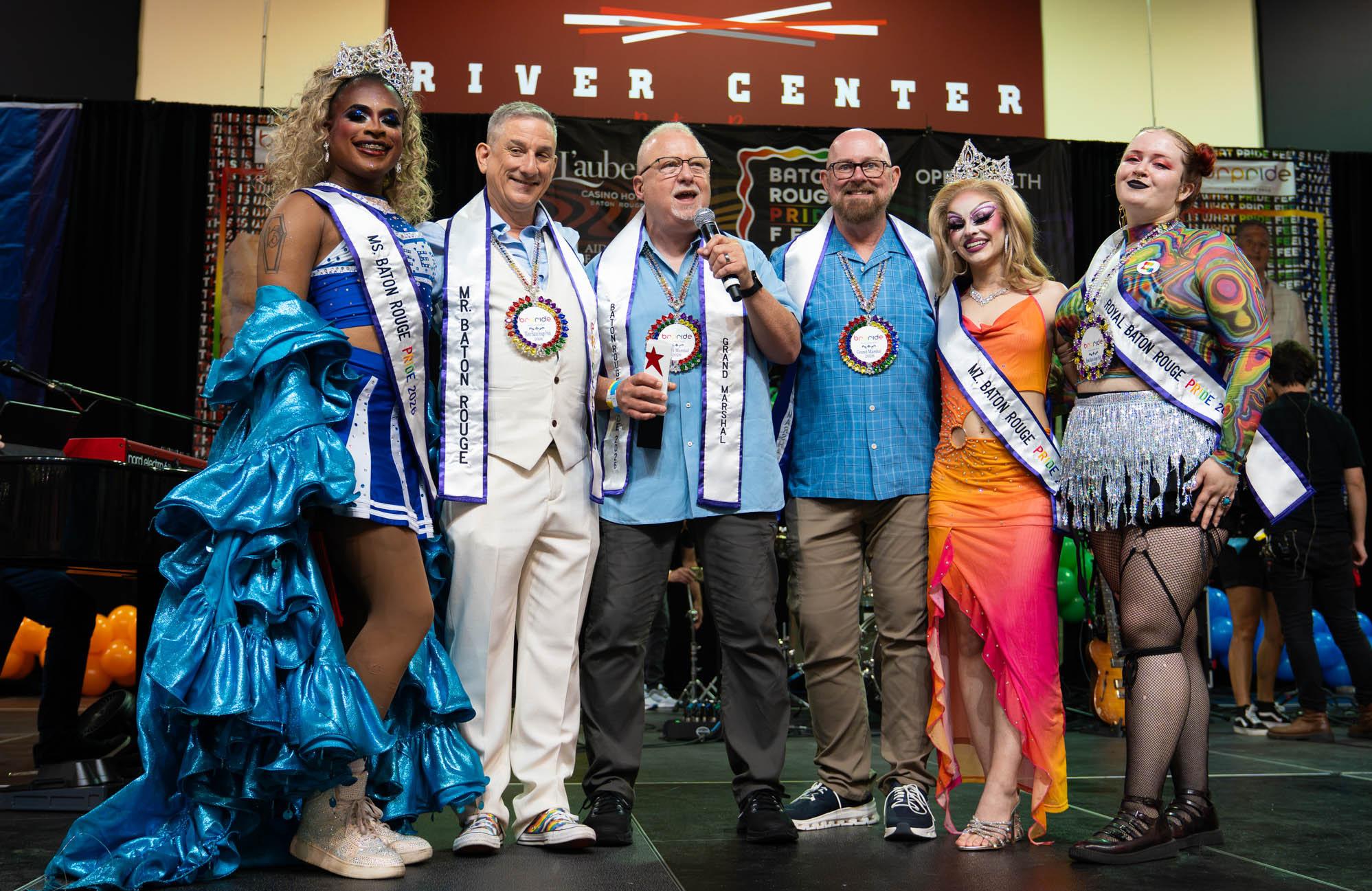
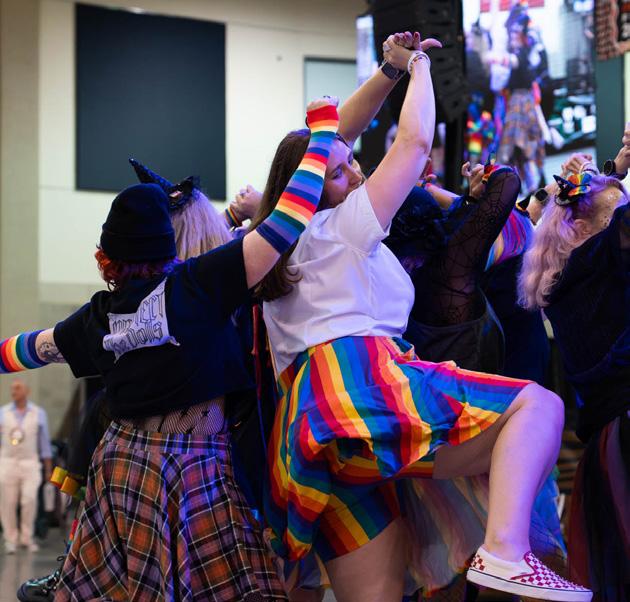
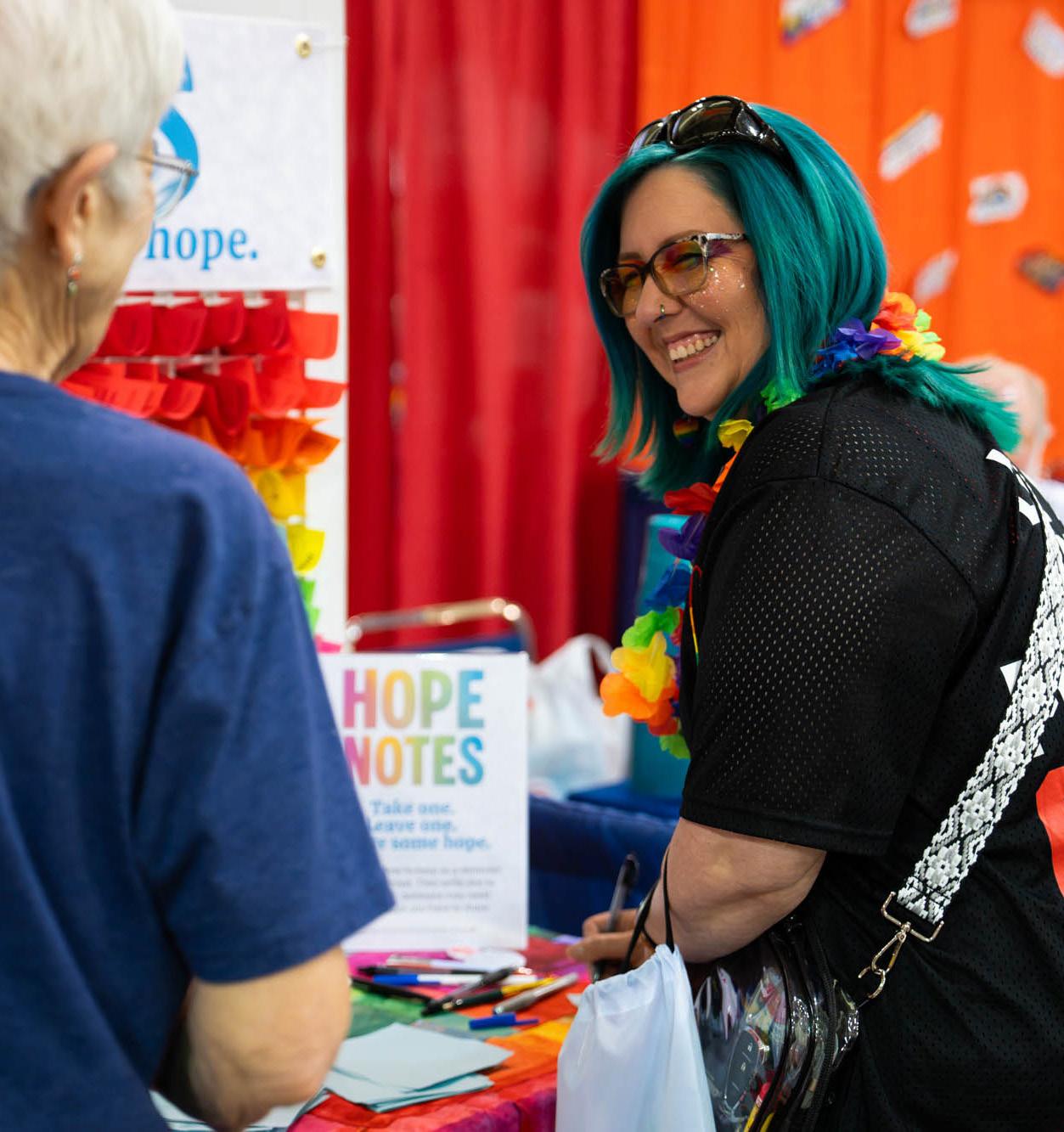
The 17th annual Baton Rouge Pride Fest hosts performers, vendors and attendees at the Raising Cane’s River Center in Baton Rouge, La. on June 27.





Drag queen Champagne Pop reads a book to children.
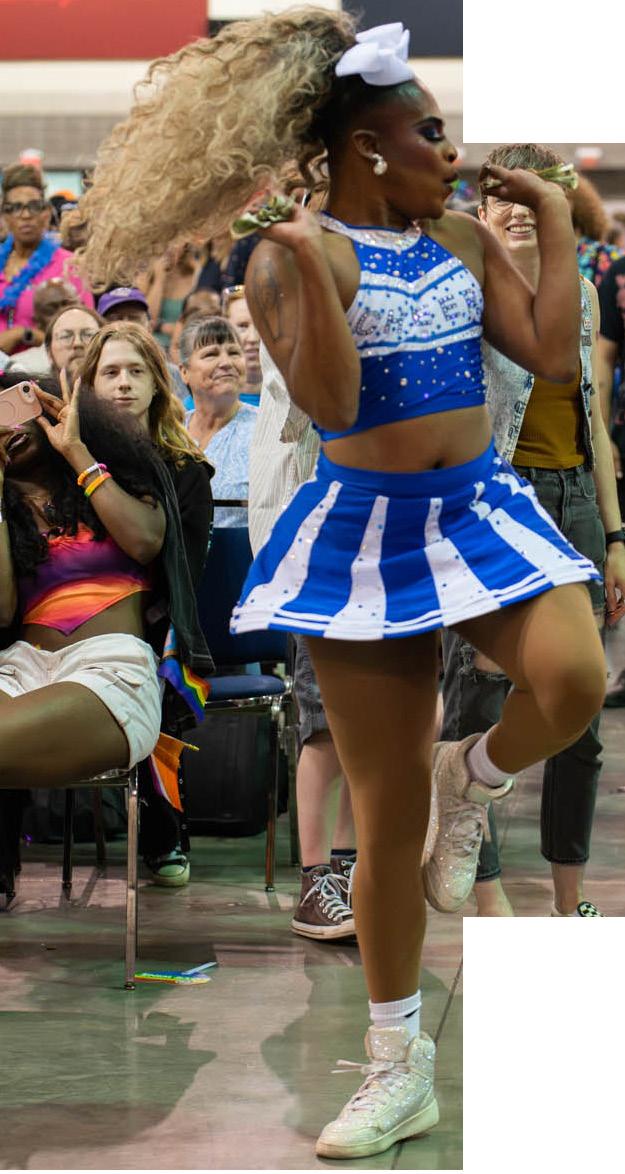
Mz. Baton Rouge Odessa Savage does a split.
Baton Rouge pride court 2026 poses for a picture.
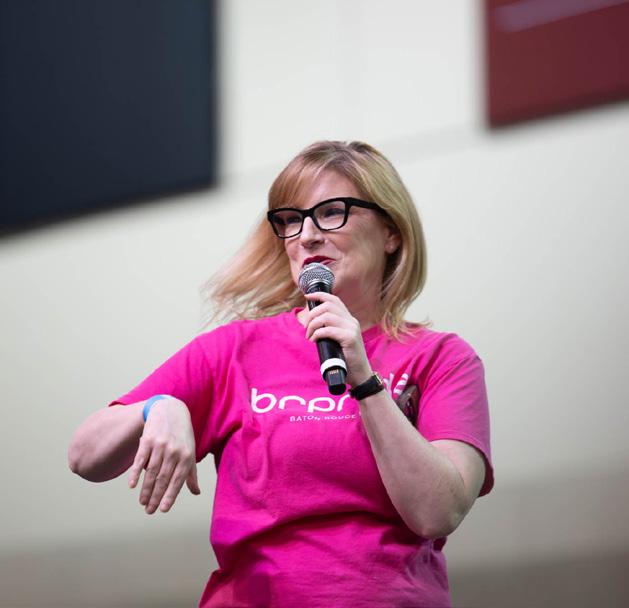
The host London Manchester speaks.
Festival goer writes a hope note.
Mahogany Campbell and her wife Tam Leger smile for a photo.
Mz. Baton Rouge Odessa Savage performs.
Ms. Baton Rouge Sa’Riyah FoXx Alexander dances.
Headliner David Archuleta sings.
Baton Rouge Pride Director Bobbi Foxx speaks.
The Golden Guys perform.
Ms. Baton Rouge Sa’Riyah FoXx Alexander lip-syncs.
Couple Lynn Prestide and Ricky Brasher pose for a photo.
The Ruby Slipper booth.
Councilman Aaron Moak speaks.
Ogden Park Coven perform.
ENTERTAINMENT
Baton Rouge Pride Fest celebrates local LGBTQ+ community
BY PAUL TIBBETS Staff Writer
The 17th Annual Baton Rouge Pride Fest opened its doors at the Raising Cane’s River Center this Saturday from noon to 5 p.m. with vendors, entertainment, health services, drag performances and a headlining act by David Archuleta.
Ever since its return from hiatus in 2022, Co-Director Melinda Robinson has seen a steady increase in attendance and sponsorship over the years. Vendors and performers from all over the country have been coming out to show their support more and more.
Robinson is excited to see this growth. Hailing from Monroe, Louisiana, she had never quite seen a pride event like this growing up, as the town was quite hush-hush about the queer community at the time, she said.
Making Baton Rouge Pride a free event relies on local sponsors to help put these functions together, and Robinson sees it as a big deal that they show their support.
“It’s important for those area businesses to step up and say, you know, ‘Hey, we’d like to be a part of it so we can show support to our employees and to the [LGBTQ+] community,’ right?” Robinson said.
The event sported sponsorships from at least 46 Baton Rouge businesses and organizations, including health organizations like AIDS Healthcare Foundation, restaurants and bars like Mestizo or Mother’s Lounge, and even religious organizations like the United

Methodist LSU Wesley Foundation.
Despite protestors outside holding signs of Bible verses and shouting at those who entered the event, pastor at the Wesley Foundation Mary Rachel Moore said that her organization is there to push back against this idea that Christianity cannot support the queer community.
“I was 14 years old when I had friends start coming out to me. And the way that I understand the Gospel of Jesus Christ is that it is not limited by

gender or sexuality or racial or any of the divides that divide us,” said Moore. “I grew up in the 90s, and it was a real sticking point for me as an adolescent. I thought, ‘I don’t want to be a part of a church where my friends can’t be fully included.’”
It has now been two years since the United Methodist church lifted its ban on LGBTQ+ clergy members and officiating same-sex marriages. The Wesley Foundation booth at Baton Rouge Pride 2026 showcased a hope wall with messages from the church to show the people there that they are never alone.
This booth and message resonated with both attendees and performers. Los Angelesbased drag king Space Kadett was pleasantly surprised to see them and other faith-based organizations at a pride event. Kadett became emotional recounting his journey growing up navigating being queer and how joyous it is to be here now.
“I spent many years in the closet as a young person. I had a negative coming out experience when I was a teenager, and to be here today with so many beautiful people is so amazing,” Kadett said. “I flew in from L.A., and I feel so blessed that I get to go around the country and connect with communities all over the place and be out and proud.”
Drag kings are a new addition to this year’s pride event with their Drag King Takeover hour.
Much like their queen counterparts, drag kings dress up in extravagant costumes and dance to pop hits sung by men. New York-based drag king Ste -
shared his coming out story halfway through the set. Archuleta came out publicly in June of 2021, which complicated his personal life as a member of the Church of Jesus Christ of Latter-day Saints. He received much scrutiny from his peers, but most impactfully his mother.
He formally left the church in 2022, and not long after, his mother came around and told her son that despite her faith, she saw their relationship as more important. Archuleta told this story in the lead up to his song about the experience titled “Hell Together.”
“‘I don’t [want to] be somewhere where my children don’t feel loved and welcome. If you’re going to hell, we’re going along with you,’” Archuleta passed on his mother’s words.
fon Royce said the event was a huge hit. He believes that it is a positive step for both drag kings and queens to have this form of expression.
“We get to express who we are, and we get to tell our stories and help others,” Royce said. “Drag kind of helps people heal. I feel like if we don’t do it, then people will probably be stuck. People probably won’t be able to express themselves. They probably see it through us and get so empowered to do it.”
On top of the Drag King Takeover and the Louisiana’s Finest Drag Queen Show, there was a plethora of local and national queer talent to behold. One after another, there was a new exciting performance to watch for the full five hours.
Local bands such as the Michael Foster Project or newcomers The Specs played covers of classic queer songs, whether in brass styling or rock ‘n’ roll. One could hear anything from Elton John’s “Bennie And The Jets” to Katy Perry’s “I Kissed A Girl.”
The main event, however, was the headlining act at the tail end of the day with American Idol popstar David Archuleta. From the moment they brought him out the crowd kept growing around the mainstage, with the cheers constantly getting louder.
The crowd’s excitement was unmatched when Archuleta performed his songs that put him on the map, such as “A Little Too Not Over You” and his Billboard No. 2 hit “Crush.”
A moment that truly highlighted the purpose of Baton Rouge Pride was when he

EVAN TOUCHET / The Reveille
Baton Rouge drag queen Miss Thing poses with fans for a photo June 27 during Baton Rouge Pride Fest at The Raising Cane’s River Center in Baton Rouge, La.
EVAN TOUCHET / The Reveille Festival goers take a picture at the photo booth June 27 during Baton Rouge Pride Fest at The Raising Cane’s River Center in Baton Rouge, La.
EVAN TOUCHET / The Reveille Princess Buttercup gets ready for a picture June 27 during Baton Rouge Pride Fest at The Raising Cane’s River Center in Baton Rouge, La
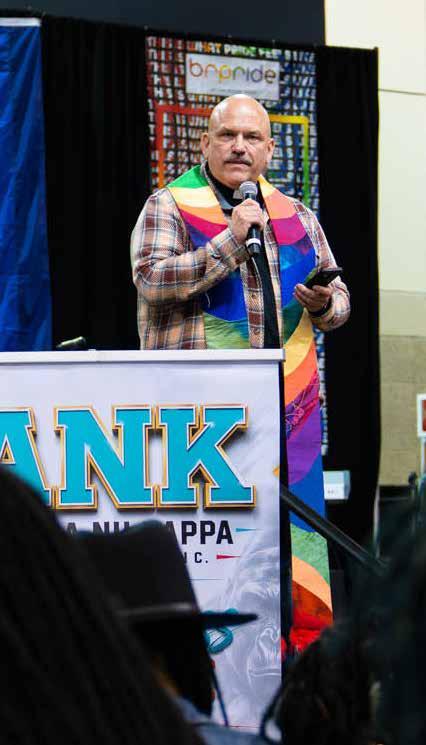
EVAN TOUCHET / The Reveille A pastor blesses relationships June 27 during Baton Rouge Pride Fest at The Raising Cane’s River Center in Baton Rouge, La.
SPORTS
REDSHIRT RULE CHANGE
NCAA approves new five-for-five rule. Here’s how it could impact LSU baseball
BY ALEX SHEESLEY Staff Writer
The NCAA Division I Cabinet approved a new, age-based eligibility rule for its studentathletes on Tuesday. It marks a seismic shift in college athletics, especially for LSU. Several highcaliber athletes in one of Baton Rouge’s marquee programs have had their future outlooks change because of these new guidelines.
The new system, dubbed as “five-for-five,” now runs on a fiveyear clock that starts at 19 years old or when the athlete enrolls to college, whichever happens first. Though exemptions exist to stop the timer for athletes on missions, serving in the military or who are pregnant, there are no conventional pathways to freezing or extending the time on that clock.
The concept of redshirting is a thing of the past with the new rules. Athletes no longer will have to sit out a season in order to stay eligible after four years, and can play up to five seasons without restrictions if they choose to do so.
These rules seek to end the age of athletes who hang around in college athletics well into their 20s by exploiting medical redshirts and eligibility waivers. It serves to simplify what has become the notoriously complex arena of eligibility.
Athletes who ran out of eli-

gibility this spring are unable to regain eligibility, regardless of their standing in the 5-for-5 system.
One part of the system’s rollout, which will become mandatory for athletes who land on campus in the fall of 2027, allows athletes and programs set to return next fall to choose which eligibility system they’d like to use. This opens the door for LSU, specifically LSU baseball, to retain some of its biggest stars.
Under the new system, players like shortstop Steven Milam and outfielder Jake Brown gain
an extra year of eligibility. Coming off of their third year, their 2027 season now is the second to last season that they could play in college baseball, whereas it’d be their final under the rules in place when they entered college baseball.
This is incredibly consequential for the professional futures of draft-eligible players like Milam and Brown. Collegiate players can only be drafted after their junior year or after turning 21. Oftentimes, drafted players with eligibility remaining will use their remaining season of college
eligibility as a bargaining chip to get a better contract.
As such, it was widely assumed that Brown and Milam would take the contract offered to them this summer at the draft. The new rules change everything.
Milam, carrying a bit lower draft stock than Brown, announced his return earlier this month. Speculation of the 5-for-5 rule being approved existed then, and it could have been a motivating factor in retrospect. His return brings back LSU’s middle infield stalwart for the last three
seasons, and is a massive win for head coach Jay Johnson’s roster for 2027.
Brown, who is projected to be selected in the early rounds, has not made any announcement on his intentions for this summer and beyond. The Louisiana native now gets an extra year tacked onto his eligibility with the new rules. The idea of a mulligan year could tempt him to run it back in and try to push his name into the first round of picks in 2027’s MLB Draft.
The new rules will also weigh on the scales of outfielder Derek Curiel’s decision to turn pro or not. Curiel is coming off of his second season but is draft eligible as a 21-year-old. He is mocked to be in the first round of this year’s draft, but floated the idea of a return to LSU in 2027.
While the impact on his professional career has less upside by staying another year than Milam or Brown does, it gives LSU’s everyday outfielder in 2026 something new to think about.
Other schools around the country are experiencing similar windfalls with eligibility as the NCAA’s new rule comes into effect. LSU baseball, though, has players gaining time that could carry more impact than most. Their level of talent parlayed with the positions they play being at a premium could make this decision a huge win for the Tigers in 2027.
How these proposed MLB draft changes could benefit LSU
BY ALEX SHEESLEY Staff Writer
As a part of its proposal for the next collective bargaining agreement, Major League Baseball has proposed an overhaul to the MLB Draft, the system of entry for amateur players into the league. These changes will benefit college teams, and powerhouses like LSU will be especially favored.
At its most important level, MLB’s proposal calls for the elimination of high school draftees. Under the new system, Americanborn players would need to turn 20 years old no later than Sept. 1 and be out of high school for two years in order to be eligible for that year’s draft. Another important wrinkle in the proposal is the reduction of rounds in the draft from 20 to 12.
These changes, if approved, would bring an unprecedented influx of elite talent into college baseball. The league says that new earning pathways with the
academic opportunities in college baseball have transformed the sport and how prospects develop.
“College baseball [has become] an increasingly important pathway that is producing Major Leagueready talent at an accelerated rate,” MLB said in a statement. “Today’s top programs provide players with resources, competition and national exposure that were unimaginable a decade ago.”
Additionally, the overhaul would lighten the annual influx of new players, many of whom enter without any chance of making it to the top level of professional baseball, and ensure that those who do enter receive at least some postsecondary education.
“More players will benefit from both a college education and an elite development environment while reaching professional baseball — and ultimately the Major Leagues — more quickly,” the statement continues.
A system like this gives top college teams like LSU an edge. Cur-
rently, many high school draftees get recruited, and even commit, to colleges in the spring leading up to their draft. Depending on when they go and what the offer from the professional club that drafts them looks like, they end up backing out of their commitment to turn pro.
Such was the case for Konnor Griffin. Griffin was committed to play college ball at LSU, but after he hit a remarkable .559 in his senior year of high school, he was picked ninth in the 2024 draft by the Pittsburgh Pirates.
Griffin took the Pirates’ offer and turned pro before he ever donned the purple and gold. He ascended through the minors; it took him just one full season in the minor league ranks before he found himself at the top of prospect boards across baseball. He earned a call-up to Pittsburgh ahead of the 2026 season.
If he were to replicate his minor league production — a .339 average and .966 OPS — at the
collegiate level, Griffin would’ve brought Golden Spikes-level production in the infield for LSU.
The Tigers wouldn’t necessarily have needed it in what would’ve been his freshman year in 2025, as middle infielders Steven Milam and Daniel Dickinson were exceptional. Last season, the presence of a Griffin-type at second base would’ve been outstanding news for LSU.
The downside for college teams is that players now gain draft-eligible status a season earlier. In this hypothetical, LSU wouldn’t get a third season of Griffin as they did for players like Dylan Crews or Kade Anderson. Griffin turned 20 in April and will be well past two years removed from high school when the MLB Draft rolls around.
Still, the influx of more players like Griffin into colleges like LSU across the country would create a whole new landscape for the sport at the collegiate level.
The Tigers certainly have the program history and development
tools to attract top high school talent, but that new talent might steepen the NIL bill for LSU more. Head coach Jay Johnson has been outspoken in his frustration with the university’s funding of the baseball team, and it will be interesting to see how the school responds if this system is implemented.
There is a big chance that the negotiations for the new CBA will stall between the parties. A delayed entry into baseball may rub some MLB Players Association advocates the wrong way, like 2010 high school draftee Bryce Harper. Official player representatives Lance McCullers Jr. and Jack Flaherty also entered pro ball directly from high school.
In any event, the recognition of college baseball’s advancement by MLB serves as a push for top high school talent to further consider college as a stepping stone to their professional aspirations. That serves to benefit LSU, if it plays its cards right.
HINESLEY BRYANT/ The Reveille
LSU baseball junior outfielder Jake Brown (7) looks into the bleachers during the Tigers’ 5-3 win over Milwaukee Feb. 14 at Alex Box Stadium in Baton Rouge, La.
BASEBALL
OPINION
Baton Rouge is a food swamp, but healthy meals are a right

WARREN’S WAY
JEANNE WARREN Columnist
Everyone, everywhere is hungry for relief from soaring grocery prices. This hunger has seemingly fueled something far more concerning: a fast-food epidemic.
As groceries become increasingly expensive, more Americans are relying on cheap, convenient meals from chain restaurants that are chock-full of unhealthy ingredients. What has long been marketed as an occasional treat or indulgence has become a widely available, daily necessity for many Louisiana residents.
College students are especially vulnerable to this trend. A packed school schedule, a job and a small budget make grabbing a quick and filling meal all the more appealing. It’s all too easy to slip into unhealthy eating habits.
On LSU’s campus alone, it’s almost impossible to avoid fast food. Chick-fil-A, Panda Express, Sonic and Popeyes are all on campus, while Raising Cane’s looms overhead the moment you step off campus.
In Louisiana, these habits have statewide consequences. Nearly 39.2% of Louisiana adults are obese, placing our state among the worst in the nation for obesity rates.
While our rich food culture is often celebrated, the larger underlying issue is that unhealthy food has become the easiest and most affordable option.
While healthy choices do exist, they are often less convenient, more expensive or both.
But this issue extends far beyond just convenience. Food insecurity has become a growing crisis nationwide.
Students who are food insecure frequently skip meals or settle for inexpensive foods with little to no nutritional value and often worry about where their next meal will come from.
Students should be worrying about academics, not when they’ll get a basic necessity like healthy, clean food.
Many people may attribute this issue to simply a lack of
EDITORIAL BOARD
Laura Allen Editor-in-Chief
Managing Editor Garrett McEntee
Sports Editor Rami Burks
Emily Boudreaux Production Editor
grocery stores. The reality is, however, far more complex.
Louisiana struggles with food deserts as much as it struggles with food swamps. These two terms are often used interchangeably even though they describe entirely different problems. A food desert is an area where residents may have limited accessibility to supermarkets or stores that sell fresh and healthy food.
Contrarily, a food swamp presents a different dilemma. Food swamps are characterized by a seeming-abundance of food options, but the vast majority of them are unhealthy.
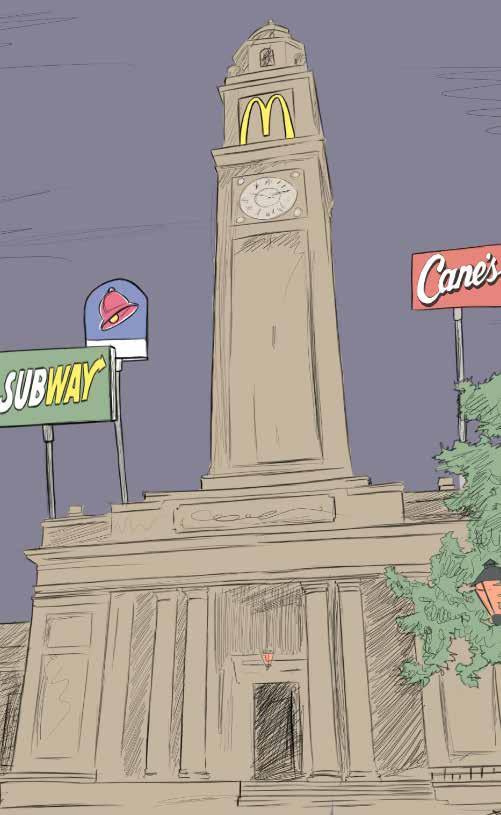
Much of Louisiana represents a food swamp rather than a food desert. Take a drive down any major road and you’ll pass every chain imaginable, from burger chains to fried chicken joints.
When unhealthy meals are the quickest option on every commute to and from campus, as well as on campus, choosing healthier alternatives that are farther away costs more money, effectively stripping the option from student choice.
To be exact, there are 23 McDonald’s restaurants, 10 Taco Bell restaurants, 10 Popeyes restaurants, and 10 of just about every major chain. This makes Baton Rouge home to over 125 locations of major fast food chains. Even fast food prices have risen wildly, around a 60% increase from 2014 to 2024 at the average chain.
It seems that now you cannot have both healthy or affordable — it’s one or the other. It shouldn’t be easier to find a drive-thru than a nutritious meal.
America’s obesity crisis will continue to grow until healthy eating becomes financially realistic, not just personally desirable.
This crisis is not a result of poor self control; it’s the result of an environment where unhealthy meals are aggressively marketed more than their fresh, nutritious competitors.
No one should have to choose between feeding themselves or feeding themselves well.
Jeanne Warren is a 20-year-old mass communications major from Baton Rouge, La.
Editorial Policies and Procedures
GRAPHIC BY ETHAN GILBERTI