

RECONSTRUCTION CAMPUS
Relocating the library could restore the Quad to its original state


Photo by Evan Touchet Read
ORIGINAL VISION
Library demolition may revive historical campus blueprint
BY HANNAH GARCIA Contributing Writer
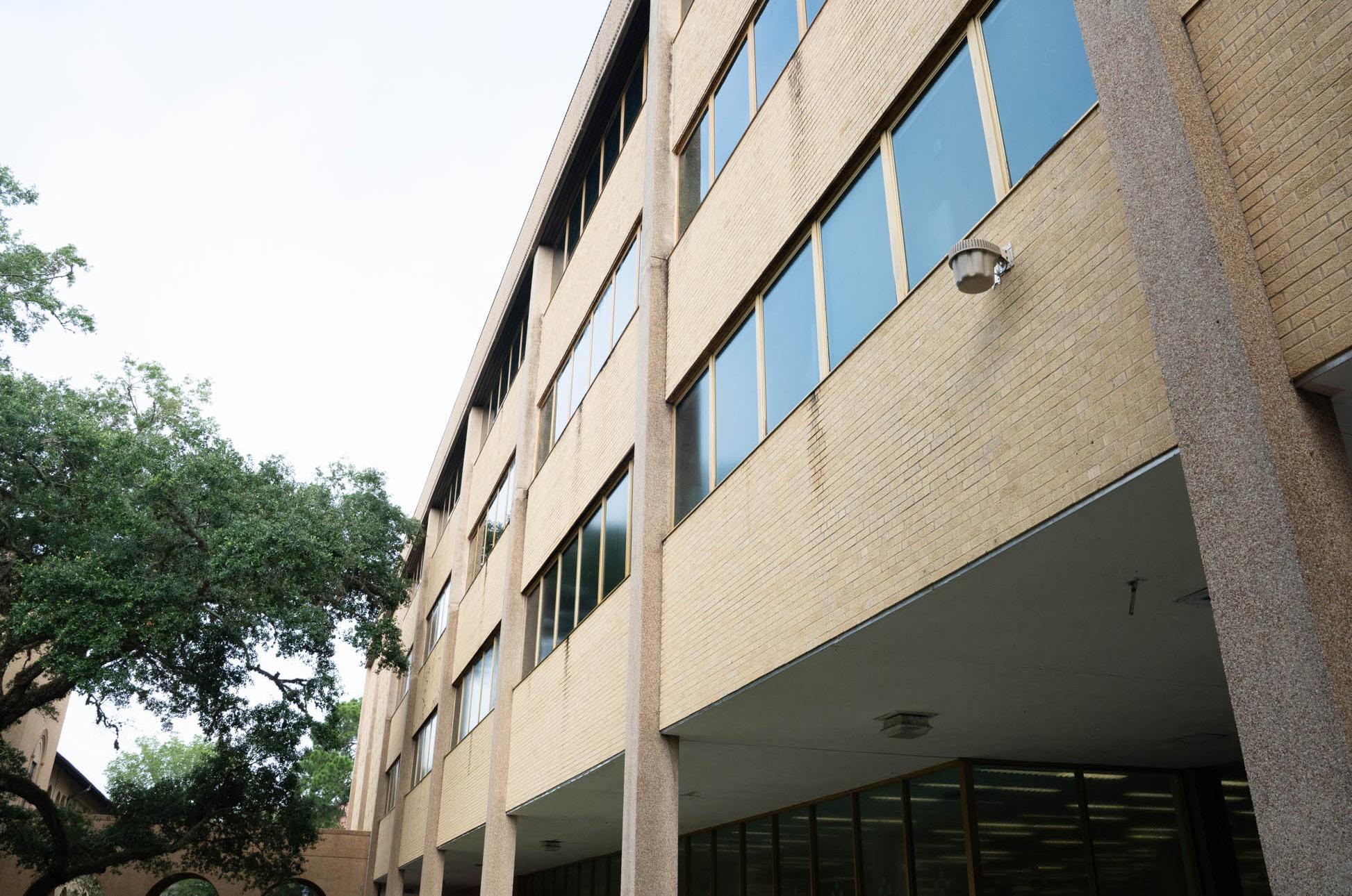
Standing at the north end of the Quad, the LSU Library is impossible to miss. In fact, it was designed to be that way when built nearly 30 years after the completion of the original campus.
Now big changes are coming — changes that will lead to the demolition of the library building and restoration of the Quad to its original cross shape.
“The building that I’m sitting in right now, it cannot be preserved long term,” Stanley Wilder, dean of libraries, said, “because it’s crumbling in ways that can’t be fixed.”
In the book “Under Stately Oaks: A Pictorial History of LSU,” Thomas F. Ruffin wrote that the land where LSU’s Baton Rouge campus sits was bought in 1918 from the Gartness Plantation. The university couldn’t purchase the land on its own, so a group of Baton Rouge businessmen fronted the cost, Ruffin wrote.
The university originally contracted the Olmsted Brothers to draw up the plan for the campus. The group was known for designing Audubon Park in New Orleans and the campuses of Stanford and Cornell universities.
Rick Olmsted Jr. designed a plan modeled after the University of Virginia campus. It included two large quadrangles designed around the land’s natural features, John Michael Desmond wrote in “The Architecture of LSU.” Olmsted’s design never came to fruition, as officials decided to move on due to cost, Desmond wrote.
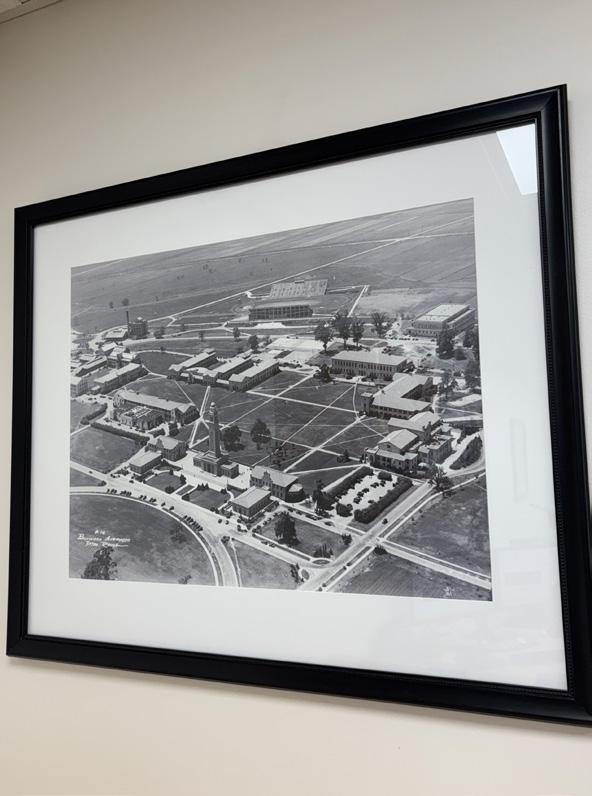
Theodore Link, known for designing Union Station in St. Louis, Missouri, and the Mississippi State Capitol, took over the project. He combined Olmsted’s original two separate quadrangles into an overlapping cruciform shape. One ran from the War Memorial Tower in the east to the Hill Memorial Library in the west, the other from Foster Hall in the north to Atkinson Hall in the south.
The Quad was completed in 1926 and served as the academic center of campus. Declining tax money led to a delay in construction of some buildings around the Quad, Ruffin wrote. Those buildings would later be added throughout the 1930s.
Link’s design lacked a plan for construction beyond the original Quad, which led to the haphazard growth of campus throughout the years. This included the construction of the LSU Library in the middle of the Quad in the late 1950s.
Hill Memorial Library served as the university’s original li-
brary. By the 1940s, the collection had outgrown the space, Wilder said. The LSU Library was conceived by then-President Troy H. Middleton, who wanted the new library to be central to campus.
“He wanted the library to be in a place where LSU students would have to trip over it,” Wilder said. “He wanted them to use the library, and he thought that by putting it in their laps was going to be the best way forward.”
Middleton’s vision is not shared by Wilder. The library’s placement at the intersection of the cruciform interrupted the flow of the original Quad, he said, and it also disregarded the architecture of the Quad buildings.
“It’s all about who you select as the architect and who is overseeing what they do,” University Architect Danny Mahaffey said. “And they just tried to go modern in the 1950s. They were ignoring the Italian Renaissance architecture.”
Construction began in 1956. After its completion in 1958, the LSU Library served as the academic center of campus. In addition to housing literary works, the building served as a study space for students during midterms and finals.
Nicole Bayard Cowart, a 1997 alumna, visited the library frequently. Students were not allowed to have personal computers on campus, which meant that the only place where she could go to check her email was the library, Cowart said.
“Email was only in the male dorms,” Cowart said, “which kind of ticked me off. So my last year I was at the library a lot,
you know, waiting in line.”
The library building’s architecture was not the only thing that made it stand out. Since opening, the LSU Library faced constant flooding and a need for upgrades, Wilder said. When Wilder was hired in 2014, the university planned to completely gut the LSU Library building. However, it became clear that the cost to fix the infrastructure alone would be too expensive, Wilder said.
Mahaffey and other planning officials decided while drafting the university’s 2017 Master Plan that the time had come to move on from the LSU Library. Serving as a roadmap for future construction on campus, the plan made it official: LSU would build a new library south of the Quad and demolish the old library building and Lockett Hall. A timeline was not provided for the completion of these projects.
Construction began on the new library on South Quad Drive in January. The project is scheduled to be completed in time for a grand opening in the fall of 2029. However, the timing of the existing library’s demolition depends on receiving funding for the project, Mahaffey said.
The library construction and demolition are not the only impending projects on campus. The university has received funds to gut and renovate the historic Quad buildings, Director of Campus Planning Danielle Breaux said. This will require the temporary relocation of the classrooms and offices in those buildings for the duration of the renovations.
Other officials suggested us -


B-16 Hodges Hall
ing the empty library space as swing-space during the Quad reconstruction. Mahaffey said he opposes using the library for that purpose.
“The danger is if we start doing that, people say, ‘Well, let’s keep it as a swing space building,’” Mahaffey said, “and we don’t want that to happen. So, we’re working on options to be able to tear it down and have other options for swing space.”
Anderson Krupala, a Baton Rouge native and freshman, said he looks forward to the demolition of the LSU Library. During his time in the building, he said, he has faced challenges with the inconsistent Wi-Fi and lack of charging outlets.
“It’s supposed to be the sort of, like, center of knowledge in the campus,” Krupala said. “A place where people can go to focus on their studies. And I think that the current conditions that the library is in make it so that people tend to avoid it.”
Baton Rouge, La. 70803 LSUReveille.com

Louisiana State University
Editor-in-Chief
ADVERTISING (225) 578-6090
Layout/Ad Design ASHLEY KENNEDY
Layout/Ad Design REESE PELLEGRIN
Layout/Ad
CORRECTIONS & CLARIFICATIONS
The Reveille holds accuracy and objectivity at the highest priority and wants to reassure its readers the reporting and content of the paper meets these standards. This space is reserved to recognize and correct any mistakes that may have been printed in The Daily Reveille. If you would like something corrected or clarified, please contact the editor at (225) 578-4811 or email editor@lsu.edu.
ABOUT THE REVEILLE
The Reveille is written, edited and produced solely by students of Louisiana State University. The Reveille is an independent entity of the Office of Student Media within the Manship School of Mass Communication. A single issue of The Reveille is free from multiple sites on campus and about 25 sites off campus. To obtain additional copies, please visit the Office of Student Media in B-39 Hodges Hall or email studentmedia@ lsu.edu. The Reveille is published biweekly during the fall, spring and summer semesters, except during holidays and final exams. The Reveille is funded through LSU students’ payments of the Student Media fee.
EVAN TOUCHET / The Reveille
The outside of the LSU Main Library June 7 in Baton Rouge, La.
PHOTO COURTESY OF HANNAH GARCIA
An aerial photograph of the Quad in its original cruciform shape.
NEWS
CHANGE ENACTED
Louisiana Legislature passes restrictions on hazing, marijuana and more
BY MADELYN LONG Staff Writer
As the 2026 Louisiana Legislative Session wraps up, LSU will see many changes. From new authority to punish those associated with hazing events, possible accreditation changes and fewer tuition restrictions, here are a few of the notable acts passed.
Caleb Wilson Hazing Prevention Act
Following the death of Caleb Wilson in a hazing incident that took place on Southern University’s campus in 2025, Louisiana lawmakers made it known that they would work to fight against unlawful hazing culture. The act, proposed by Rep. Vanessa LaFleur, D-Baton Rouge, would endeavor to prevent deaths like Wilson’s and ensure that these incidents no longer go unpunished.
“For too long, campus hazing accountability stopped at the individual level while the organizations that created and protected that culture walked away untouched,” LaFleur said “The Caleb Wilson Hazing Prevention Act closes that gap.”
The bipartisan bill, effective in the 2027-28 academic year, will require increased institutional reporting, group training and Board of Regents oversight on the issue. Permanent campus bans would be imposed on groups that repeatedly break the law, as included in the act.
“No student should have to risk their life to belong,” said LaFleur. “No family should have to
AGRICULTURE
turn their grief into legislation just to be heard, but the Wilson family did, and Louisiana answered.”
Student disciplinary proceedings
House Bill 738, proposed by Rep. Dixon McMakin, R-Baton Rouge, redefines the processes involved with punishing students for misconduct on college campuses.
The law, effective Aug. 1, 2026, allows students to have an advocate or attorney if accused of violating misconduct codes and requires a higher burden of proof to be punished, unless bodily harm or death occurred in the incident. If so, “the institution shall establish responsibility by a preponderance of the evidence,” according to the act.
Under the law, universities will have fewer constraints when gathering evidence and punishing students involved in hazing events that resulted in bodily harm or death when compared to proving beyond a reasonable doubt in other cases.
Penalty enhancements for drug-free zones
House Bill 568 by Rep. Michael Firment, R-Pollock, now makes the use of marijuana within 2,000 feet of campus a felony charge. If convicted, offenders could face imprisonment for up to a year and a fine of up to $1,000.
Deepfakes punishable
In a bill proposed by Sen. Regina Barrow, D-Baton Rouge, LSU will now be able to punish students and employees for harassment using deepfakes.
Senate Bill 347 added deepfakes to the list of power-based violent offenses, which are now punishable on campus through LSU’s Title IX and Civil Rights Office.
The law comes after an increased use of harassment with deepfakes among young adults as artificial intelligence becomes more popular.
Accreditation
Senate Bill 304, proposed by Sen. Rick Edmonds, R-Baton Rouge, will now give the Board of Regents more authority over college accreditation by establishing statewide policies.
The law allows for colleges to change accreditors as long as they are recognized by the U.S. Department of Education, subject to the approval of the board. Current law requires Louisiana colleges to be accredited by the Southern Association of Colleges and Schools Commission on Colleges.
The move to give this power to the Board of Regents was suggested by Gov. Landry’s higher education task force, assembled in November 2025, which recommended that Louisiana colleges join the more conservative accreditor group, the Commission for Public Higher Education.
Public funding of athletes
House Bill 608 by Rep. Tehmi Chassion, D-Lafayette, would allow for Louisiana’s public records law to conceal exactly how much of public funding goes toward athletes that LSU participates in “revenue sharing” with.
LSU’s Athletic Department
directly supported the bill, with Executive Deputy Athletics Director Julie Cromer and Senior Deputy AD Heath Schroyer appearing at committee hearings to advocate for the proposal.
The bill was met with disapproval as it entered the Senate floor by lawmakers who felt a double standard was being created.
“These are now professional athletes getting paid more than many actual professional athletes,” said Sen. Greg Miller, R-Norco, according to the Louisiana Illuminator. “We have lost sight of our priorities. We have jumped the shark on this, and I think it’s time that we just say, ‘Enough is enough.’”
Gov. Landry has yet to sign the bill into law, but if he does not veto the bill within the week, it will become law without his signature.
Tuition and fees
Rep. Chris Turner, R-Ruston, proposed House Bill 1084, allowing colleges to increase tuition costs by no more than 10% each year and charge more for certain, more intensive programs.
The bill states that institutions must take into account “tuition and fee amounts of peer institutions, median household income in Louisiana and in states where peer institutions are located, affordability and total cost of attendance.”
The bill was sent to Gov. Landry for executive approval but has yet to be signed. If no action is taken, the bill will become law within the week, and schools can begin raising costs by January.
Botanic gardens connect community with nature
BY MADELYN LONG Staff Writer
Just a few minutes from LSU’s campus, the LSU AgCenter Botanic Gardens sits waiting for community members to visit its collection of specialty gardens blooming this summer.
The 440 acres of green space has been maintained by LSU since 1966 after the Burden family donated the land, becoming a space for extensive agriculture research and community enjoyment.
“Throughout the summer, the LSU AgCenter Botanic Gardens offers a variety of recurring programs and unique experiences for the community,” said Malorey Uzee, communications coordinator for the gardens.
These events include Birding at Burden, a bird-watching tour, and Reflections in the Garden, a lunch and learn event with lo -
cal specialists. Taking place each month, these events allow community members to connect with nature and learn from experts.
This summer also marks the opening of the garden’s new welcome center, which will enhance the visitor experience and expand opportunities for gatherings and programs, said Uzee.
For those looking to explore on their own, the Trees and Trails section of the gardens provides three miles of trails for visitors to experience the garden at their own pace.
These events, combined with the availability of self-guided visits and exploration, create the space to step away from the noise of life and feel grounded, according to Saniya Johnson, a student worker at the gardens.
Johnson, a junior animal science major, said, “For students, it’s a peaceful place to walk, de -
compress or study with nature at your fingertips. For the community, it’s a space to enjoy trails, wildlife, open green areas and to host events.”
The gardens are also filled with staff-favorite hidden gems.
“One thing I wish everyone knew is that Botanic Gardens isn’t just a pretty place — it’s a working landscape full of research, wildlife and even honeybees,” Johnson said. “Most visitors are amazed that we sell honey from the bees on the back of the property.”
Uzee also has her favorite spot on the property: the Windrush Gardens. Featuring live oaks and creeping myrtles, this section offers a more intimate and serene setting that many people don’t realize is part of the larger property.
But the LSU Botanic Gardens are more than just a place for vis -
LSU names senior vice chancellor and provost
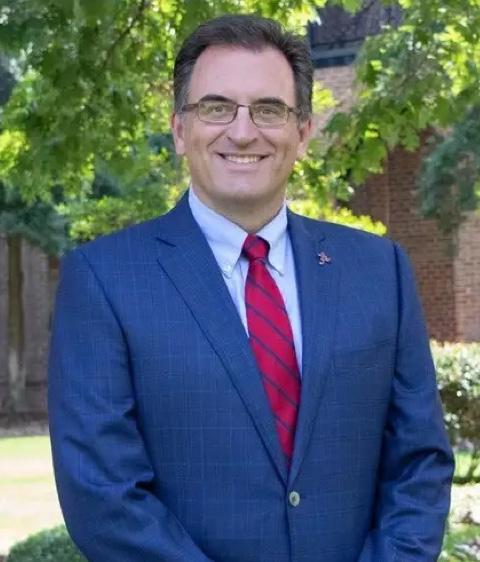
LSU announced Wednesday that it has named Joseph Messina as its next senior vice chancellor and provost.
This decision comes after a months-long national search, and the new provost will begin his role on Aug. 3, pending approval from the LSU Board of Supervisors.
As senior vice chancellor and provost, Messina will serve as chief academic officer and oversee all academic affairs, faculty development and research partnerships to help support LSU’s students and goal of becoming a top research institution.
“Messina emerged from an exceptionally strong national search as a leader uniquely equipped to help LSU build on its momentum and achieve its bold ambitions,” said LSU Chancellor James Dalton.
itors to relax and learn.
“The LSU AgCenter Botanic Gardens supports LSU’s research mission by serving as a living laboratory for plant evaluation, landscape sustainability and environmental resilience,” Uzee said.
Currently, researchers at the gardens are focused on plants that perform well in Louisiana’s climate, as well as on stormwater management, native species and horticultural best practices.
“The site also provides valuable hands-on learning opportunities for students and supports outreach through extension programming,” said Uzee, “bridging research with real-world application for the public.
The LSU Botanic Gardens, located at 4560 Essen Ln, Baton Rouge, LA 70809, is open 8-5 everyday for community members to enjoy without admissions fees.
Messina is currently dean of the J. Frank Barefield College of Arts and Sciences at the University of Alabama, a position he has held since 2019.
Before becoming dean at Alabama, Messina held a variety of positions at Michigan State University over his 20 years at the college, including assistant vice president for research and innovation, senior associate dean for faculty affairs, associate dean for research and associate dean for graduate studies.
“LSU is one of the country’s great flagship institutions, and the opportunities ahead are extraordinary,” Messina said. “The university has demonstrated remarkable momentum in research growth, academic excellence, student success and statewide impact. I am honored by the opportunity to join the LSU community and work alongside its outstanding faculty, staff, students, alumni and supporters as we continue building upon that momentum.”
FACULTY
STAFF REPORT
PHOTO COURTESY OF LSU
Dr Joseph P. Messina.
Summer in full bloom






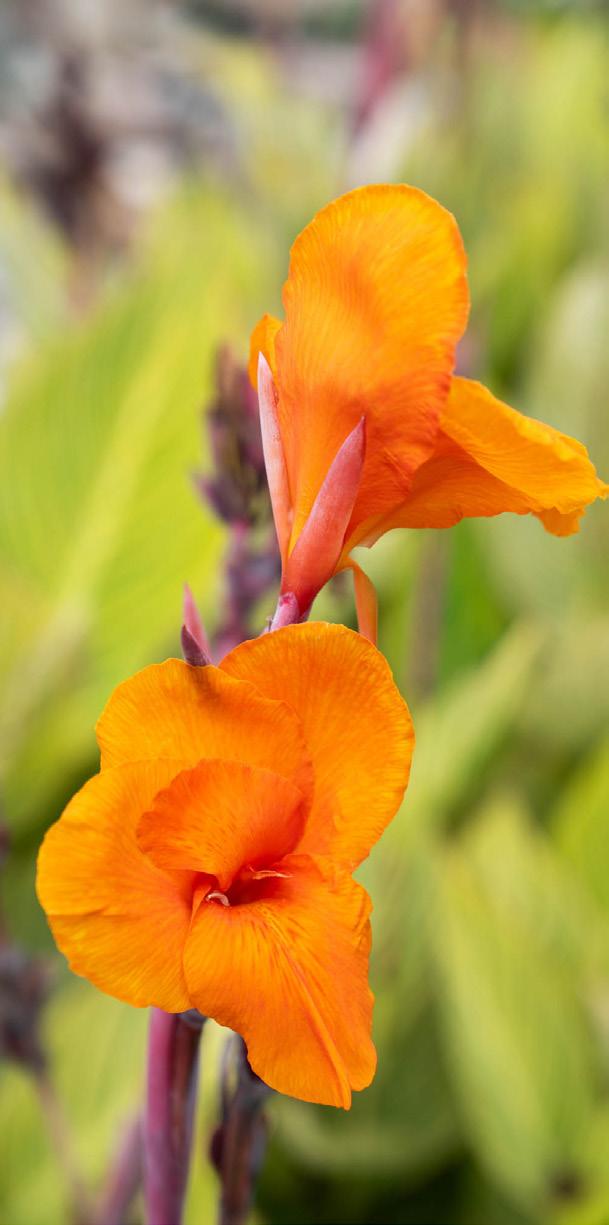




A closer look at the flowers and other sights on June 5 at the









Photos by Evan Touchet | Design by Emily Boudreaux
LSU AgCenter Botanic Gardens in Baton Rouge.
Bee flies toward a sunflower Honeysuckle
A bird sits on a sunflower
Stokesia flowers
A variety of zinnias
A variety of zinnias
Madagascar periwinkle
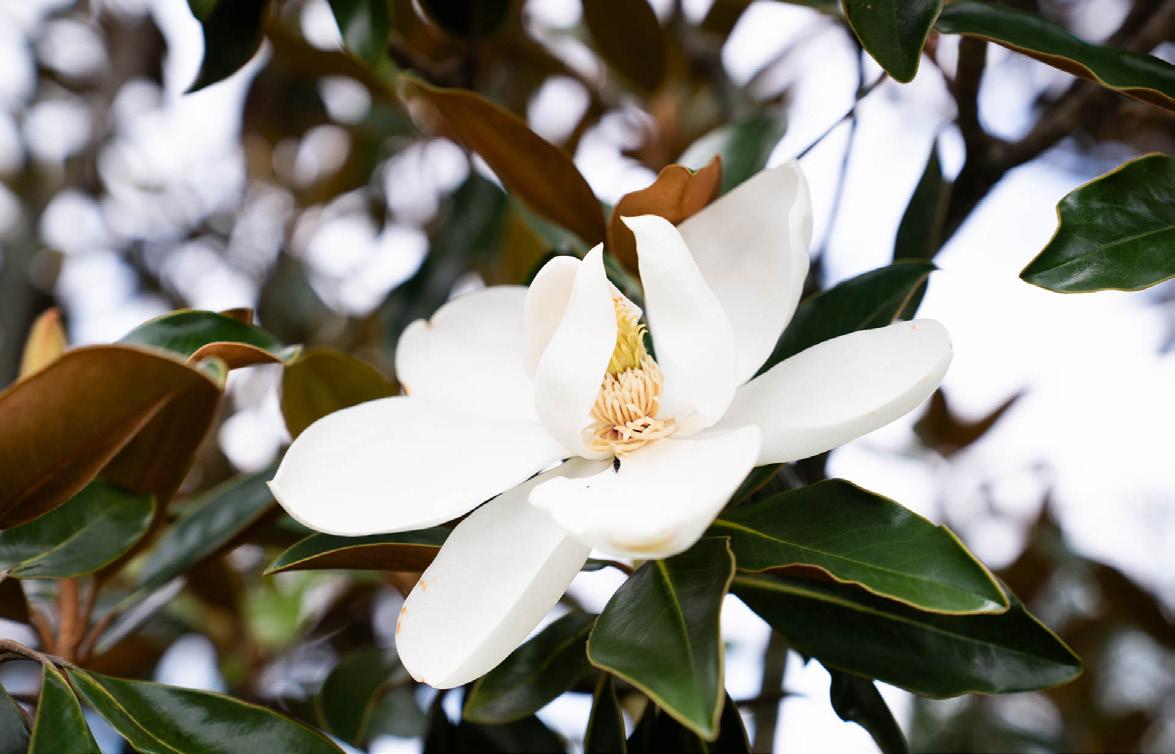
Magnolia flower
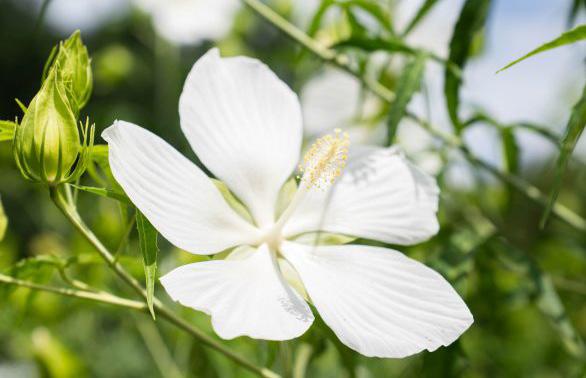
Scarlet rosemallow
Sunflower
Aztec marigold
Bouquet of roses
Thalia dealbata
Indian shot flower
Oyster mushroom
A bee sits on a hibiscus flower
ENTERTAINMENT
Food Truck Round Up brings people together for night of food and music
BY PAUL TIBBETS
The Food Truck Round Up at Perkins Rowe returned this weekend, giving the Baton Rouge community local food, live music and even learning opportunities.
On Friday, Perkins Rowe’s annual event presented guests with 17 unique local food trucks to choose from. It ran from 6 p.m. to 9 p.m., serving everything from classic Southern food and wings to Cuban cuisine and sweet treats, all at the disposal of the attendees.
Trucks of all shapes, sizes and colors dotted the blocked off street of Perkins Rowe, stretching two blocks from Caroline’s Cookies all the way to Kendra Scott.
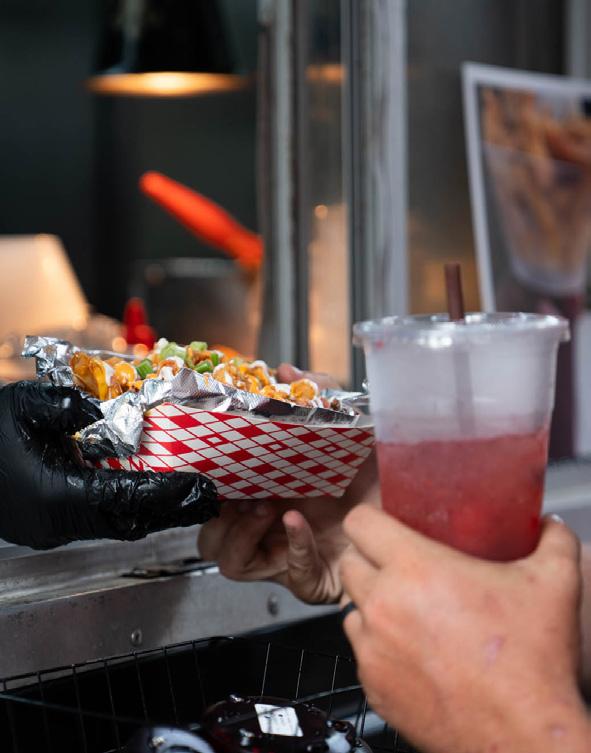
Food trucks like Down Home Creole Cooking, Fat Elbows and Capitol Seafood provided Southern staples like fried catfish and shrimp. For less familiar flavors, Caribbean Express put a Cuban twist on nachos and quesadillas. To round out all of these savory dishes, Ninja Snowballs and Jeremiah’s Italian Ice offered sweet treats in the form of snowballs and shaved ice, respectively.
People were packed shoulder to shoulder whether they were waiting in lines, scanning the menus or just passing through to one of the shops. Even before the event officially started, lines were stacking up. Trinity Johnson, daughter of the owner of Vel’s Mobile Cafe, predicted that this was just the beginning.
“In about an hour, the line’s going to be wrapped,” Johnson said.
And wrapped it was. At the peak of the night, lines for Vel’s and other trucks reached adjacent trucks and wrapped back around onto the sidewalk.
One such customer who had the pleasure of waiting in these lines was recent LSU graduate and incoming master’s student Makaya Spears. Spears believes that events such as the Food Truck Round Up are important for the community for a few reasons, one being supporting local businesses compared to chains.
Spears also feels that local events like this provide a safe space for the community to congregate. With so many usual community spots such as the mall dying out or becoming unsafe, Spears is happy that there are still fun and affordable spaces for people to get together.
“Everybody here is good. You can tell they care. That’s the biggest thing– that they care,” Spears said.
Once guests got their food, they could take it to any number of tables set up in the
town square.
Here, families and friend groups small and large could enjoy their food. Many people were so excited to dig into their food that the boxes were open before they even sat down. Mother and son shared a bite, old friends laughed heartily and children danced around to the live music being played just a few feet away.
Among the buzz of lively conversation and generators running, local artist Caitlyn Renée’s acoustic musical stylings floated through the air. On a stage in the town square, Renée performed covers of timeless songs, such as “Linger” by The Cranberries and “Fast Car” by Tracy Chapman.
Directly in front of the Cinemark, the East Baton Rouge Parish Library Bookmobile was parked among this sea of food trucks. The way Bookmobile manager Tameka Roby describes the role of the bus harkens back to Spears’ belief in bringing the community together.
“Bookmobiles exist to provide equitable access to library resources, material and information,” Roby said.
Roby said there are a variety of reasons why a person may not be able to make it to a library, so it is especially important to make the library experience more accessible for all people through ideas like the Bookmobile.
“Be they unhoused, be they elderly, be they the young child,” Roby said. “From the cradle to the grave, we are here to make sure that those patrons’ needs are being met.”
EBRPL was the lead sponsor of this past Food Truck Round
Up event. The library has come to many events at Perkins Rowe before, but bringing the whole Bookmobile was only possible thanks to the street being blocked off.
The people at EBRPL are happy to be a part of Food Truck Round Up because they believe in their community. Roby wants people to know that the library is more than just a warehouse for books — it is a place that will reach out and provide for the community.
“We’re a community culture center,” Roby said. “So, anything that appeals to a patron, be it you’re interested in photography, or you’re interested in learning more about engineering or science or astronomy. We go to all types of events to provide equitable access and information.”
For updates on future events at Perkins Rowe, you can follow the development’s Instagram or visit its website.


EVAN TOUCHET / The Reveille
The crowd during the Food Truck Round Up on June 5 on Perkins Rowe.
Staff writer
Daily
SPORTS
TIGERS TRANSER
The transfer portal is now open. Here are some of the players leaving LSU baseball
BY ALEX SHEESLEY Staff writer
The transfer portal, college sports’ version of free agency, opened for baseball players on Monday. LSU baseball’s early elimination means head coach Jay Johnson is able to hit the recruiting trail early, but not before some of his players opt for a new team.
Five players from LSU’s 2026 roster have entered the portal: Mavrick Rizy, DJ Primeaux, Jaden Noot, Trent Caraway and Daniel Harden.
None of the five are considered surprises, and more names are likely to follow. A throughline is that no player who is departing was a consistent, everyday option on Johnson’s squad last year. Still, each of their departures leaves holes in the roster that will be interesting to see how they are replaced.
RHP Mavrick Rizy
The first to announce his transfer from LSU, Rizy failed to build on a solid freshman season in his 2026 campaign.
While his usage stayed similar — making 20 appearances, just four less across significantly fewer games than in 2025 — his numbers also stagnated and brought doubts to if he could be a sure-thing, lateinning or closer-type arm.
The righty improved on his ERA from 2025, bringing it down over a half of a run in 2026 to a 4.22 mark. His six-foot, nine-inch frame always brought power, and he was able to reach back to find a better strikeout rate, bringing his strikeouts per nine innings up to 11.94 from 10.79 in 2025.
Unfortunately, he lacked the control needed to bring reliability in high-leverage situations, an area that regressed in 2026. He walked

the same number of batters, 19, in three and a third less innings than he threw in 2025. Rizy also had eight wild pitches and hit seven batters, both dramatic increases from a year ago.
LHP DJ Primeaux
Primeaux departs the program after four years in Baton Rouge. He spent his first year on campus as a redshirt and showed promise in 2024 before breaking through in his redshirt sophomore season in 2025. He pitched 14 innings across 22 games in 2025 to the tune of a 3.86 ERA.
Success did not follow the lefty in 2026 during his junior season.
Several new lefty arms excelled while Primeaux stumbled out of the gate, letting two runs score and getting only one out in his first appearance of the season against Kent State.
From there, Johnson shuffled
him out of the frequent arms that the Tigers utilized. He’d only get three more opportunities and pitched just two more innings for the rest of the season.
Of the departures, Primeaux leaving likely carries the least impact. Several left-handed pitchers brought to the team in 2026 showed their value, and the Tigers will retain a number of them after the draft.
RHP Jaden Noot
Noot transfers from LSU after his fourth year as a part of the program and his third season playing. He redshirted his first year in 2023 and was limited through his redshirt freshman season in 2024 as he recovered from Tommy John surgery.
His regression in his redshirt sophomore season came as a shock. The former top righty prospect from California had shown
promise in 2025, earning five starts across 20 appearances. His showings there put him in the consideration for LSU’s third starting spot in the weekend rotation.
Though he didn’t earn the starting role to open the season, he was given the first midweek opportunity of the season. He only pitched three innings in it and allowed three runs, slowing his campaign.
From there it was limited-length relief appearances and one more start — a shelling for three runs across four outs against Southern — that made up his 2026 ledger of nine innings at a 6.75 ERA. He’ll hope a change of scenery can get him to put together a senior season that was more in line with his 2025 results.
INF Trent Caraway
Caraway leaves the Tigers after just one season. The California native transferred into LSU for his
junior season after two at Oregon State.
He opened the season as LSU’s starting third baseman after being one of the country’s top transfer targets in the winter leading up. His production fit the billing in the early season, with big games in the non-conference slate.
Over time, though, his output began to dry up. Parlayed with an assortment of ailments in the conference-play portion of the season and the breakthrough of John Pearson at third base, Caraway’s opportunities began to dry up.
His move comes as Pearson, a member of a family of LSU lifers, is set to return to his post in 2027. OF Daniel Harden Harden also leaves after just one season in the purple and gold. He transferred in from junior college side McLennan Community College in time for his junior season at LSU. Harden had the collegiate equivalent of a cup of coffee with LSU. Behind the trio of returning, national championship winning, outfielders, Harden only got 22 atbats in his time with the Tigers. Almost all of his playing time came in pinch hit opportunities. Harden was often the lone lefthanded batter on the bench prior to the benching of Zach Yorke. In those chances, he didn’t do much. He hit to a paltry .105 batting average.
The poor offensive production led to him being effectively nonconsidered as replacement for Jake Brown after his injury in the stretch run of the season, further limiting his playing time. His finest hour at LSU was a pinch-hit home run, his only long ball as a Tiger, to bring LSU back within one run in a late and ultimately failed rally against Sacramento State.
These two dance groups are easy to mix up. Here’s the difference
BY RAMI BURKS Sports Editor
At a university full of titlewinning athletic teams, one of the lesser-known sports gains traction every year around its national championship competition: the LSU Tiger Girls, but there are many common misconceptions about their band counterparts, the Golden Girls.
To the untrained eye, the two organizations appear similar in the sense that they are both dance teams, but there are key differences between the two organizations. The two largest differences are the types of dance the two teams compete in and their status as athletes.
The Tiger Girls is the LSU dance team that competes in the Univer-
sal Dance Association national collegiate competition each season. They also perform their routines at LSU sporting events like baseball, basketball and football games.
However, the LSU dance team often gets confused with the Golden Girls, which are a dance line extension of the Golden Band from Tigerland. The Golden Girls don’t compete in dance competitions, but they perform at football games as a part of the Tiger Band. Golden Girls also walk in the parade down Victory Hill on home game days, and even attend away games if the entire band goes.
Outside of the differences in practice, these two teams function differently, while being recognized by the public in a more similar fashion. The Tiger Girls are
recruited as athletes, which means that they can benefit from NIL, whereas the Golden Girls cannot.
Since the Tiger Girls compete in a national dance competition, they are considered an extension of LSU athletics. On the other hand, the Golden Girls are considered an extension of the band, which means they are not university-recognized athletes. Because of these key differences, the members of each organization have different rules regarding NIL.
NIL is reserved for varsity athletes at universities, which does not include the Golden Band or the Golden Girls. However, the first Tiger Girl NIL deal was signed in 2024 by Darah Haidet. This is what will create the clearest difference to LSU fans, and it only
proved how UDA Dance is recognized as a varsity sport at the university level.
“As a Tiger Girl, I’ve gotten just as many NIL opportunities as I could have ever imagined,” Haidet said in 2024. “We’ve gotten opportunities as a team, and I’ve also gotten deals individually that I think shocked people — even myself.”
Haidet signed her deal with Gordon McKernan Injury Attorneys, which is one of the leading contributors to LSU NIL. McKernan usually donates upward of $750,000 each year among LSU athletics.
With the addition of Haidet to the “G-Team,” the Tiger Girls were officially showcased as athletes to the fans in one of the most di-
rect ways possible. However, this leaves the Golden Girls behind in the athletic comparison.
Similarly to the Tiger Girls and other athletes, the Golden Girls attend class for a full-time course load in addition to the practices and games that go into being a part of the Tiger Band. The key difference is the Tiger Band, and therefore the Golden Girls, aren’t considered a varsity sport and cannot benefit from NIL as studentathletes.
So what appears as two similar organizations is actually very different at their core. To most fans, the two outlets appear similar in the way that they are dance teams, but the differences in the types of dance and financial opportunities separate them significantly.
HINESLEY BRYANT / The Reveille
LSU baseball redshirt junior DJ Primeaux (41) pitches the ball on October 16, 2025, at Alex Box Stadium.
What to expect from LSU track and field at championships
BY ALEX SHEESLEY Staff writer

LSU track and field redshirt junior sprinter Mats Swanson runs the 800 meter during LSU’s Opener Invitational on March 21 at
The NCAA Outdoor Track and Field Championships are just around the corner, and LSU track and field will be well represented in Eugene, Oregon. The Tigers punched their tickets to 22 events at the championships, split evenly between men’s and
women’s events. The action begins on Wednesday, June 10, and will run through that Saturday.
The LSU men’s team enters ranked No. 6 in the country, and it will be represented as such. Eleven athletes will take part in nine individual events and two team events. Men’s preliminary rounds take place on Wednesday June 10, and medals will be awarded on Friday June 12.
They will feature most heavily in the 400-meter event, being represented by Malachi Austin, Grant Buckmiller and Amal Glasgow. The semi-final round is scheduled for 8:41 p.m. on Wednesday. If any Tiger advances to the final, expect them to run at 8:02 p.m on the medal day.
Jaiden Reid is the only double-booked Tiger in individual events on the men’s side. He will run in the 100 and 200-meter events. Reid will take part in the 100-meter first at 8:25 p.m., then run double that distance about an hour later. If he advances to the finals in both events, he’d have even less time — only about 45 minutes — between events.
The LSU men’s team will take part in a pair of team events, the 4x400 relay and the 4x100 relay.
Austin, Buckmiller and Glasgow will be joined by Shakeem McKay to make up the event’s 1600 meter total length. They will be the first event of the championships, hitting the track at 7:05 p.m. If they make it
through to Friday, they’ll run at a similar time.
McKay and Reid are half of the 4x100 team; the other slots are filled by Joshua Caleb and Jeremiah Walker. Opposite of the 4x400 team, they will run at the very tail end of the day, at 10:36 p.m. Caleb and Walker will run at 9:21 p.m. two days later if they make it to the final.
The other LSU men’s track and field representatives are Chad Hendricks, Jack Larriviere, Matthew Sophia and Jordan Turner. They’ll be in the discus throw, javelin throw, 110 meter hurdles and long jump, respectively.
The women’s team sends 12 athletes and will take part in 11 events. Women’s events in Eugene run on the same timetable as the men but will take place a day later. They start with preliminary rounds on Thursday June 11 and continue with the finals for events two days later on Saturday June 13.
Continuing a strong lineage of producing elite 100 meter runners, LSU has three runners on the blocks vying to become college’s fastest woman: Tima Godbless, Athaleyha Hinckson and Shawnti Jackson. Jackson is the only LSU woman to be in multiple individual events. Just like Reid on the men’s side, she’ll also run the 200 meter.
The women will also bring teams to the 4x100 and 4x400 relays. Hinckson, Godbless and
Jackson will run with Aniyah Bigam in the 4x100. In the 4x400, Skyler Franklin is the lone representative competing in the individual 400 meter event, and she will be joined by Nasya Williams, Kennedi Burks and Keliza Smith. Additionally, the women have a pair of runners competing in distance events. Edna Chepkemoi will take part in the 5,000 meter on Saturday at 8:55 p.m., and Abigael Chemnagei in the 10,000
meter — a little bit under six and a quarter miles — on Thursday at 9:56 p.m.
Both of these events have no semi-final, meaning they won’t need to qualify into a final round to earn a medal, but they’ll need to be sharp in the only opportunity they have.
Events will be streamed on ESPN+ and televised on ESPN and ESPN2 throughout the championships.

Catch these former Tigers playing pro softball for the AUSL
BY RAMI BURKS Sports Editor
LSU softball ended its season in Tuscaloosa, Alabama, after falling to the Crimson Tide in the NCAA Super Regional round of the NCAA Tournament. However, there will be Tigers playing softball throughout the remainder of the summer for the Athletes Unlimited Softball League.
Joining teams across the AUSL, six former LSU softball players will play in the second season in league history.
Sahvanna Jaquish
Sahvanna Jaquish is LSU’s only four-time NFCA All-American in school history, and she is also a part of the first AUSL championship team from the 2025 season. In 2026, she will rejoin the Talons for their first season in Utah while defending their title.
While at LSU, Jaquish made her career as a utility player, and she has done the same professionally by catching and playing both the corner infield and outfield in the 2025 season. During her time at LSU, she led the career RBI total on the bayou with 262.
Aliyah Andrews
Aliyah Andrews will join Jaquish with the Talons after playing for the Carolina Blaze in 2025. Andrews is known for her speed and diving catches in cen-
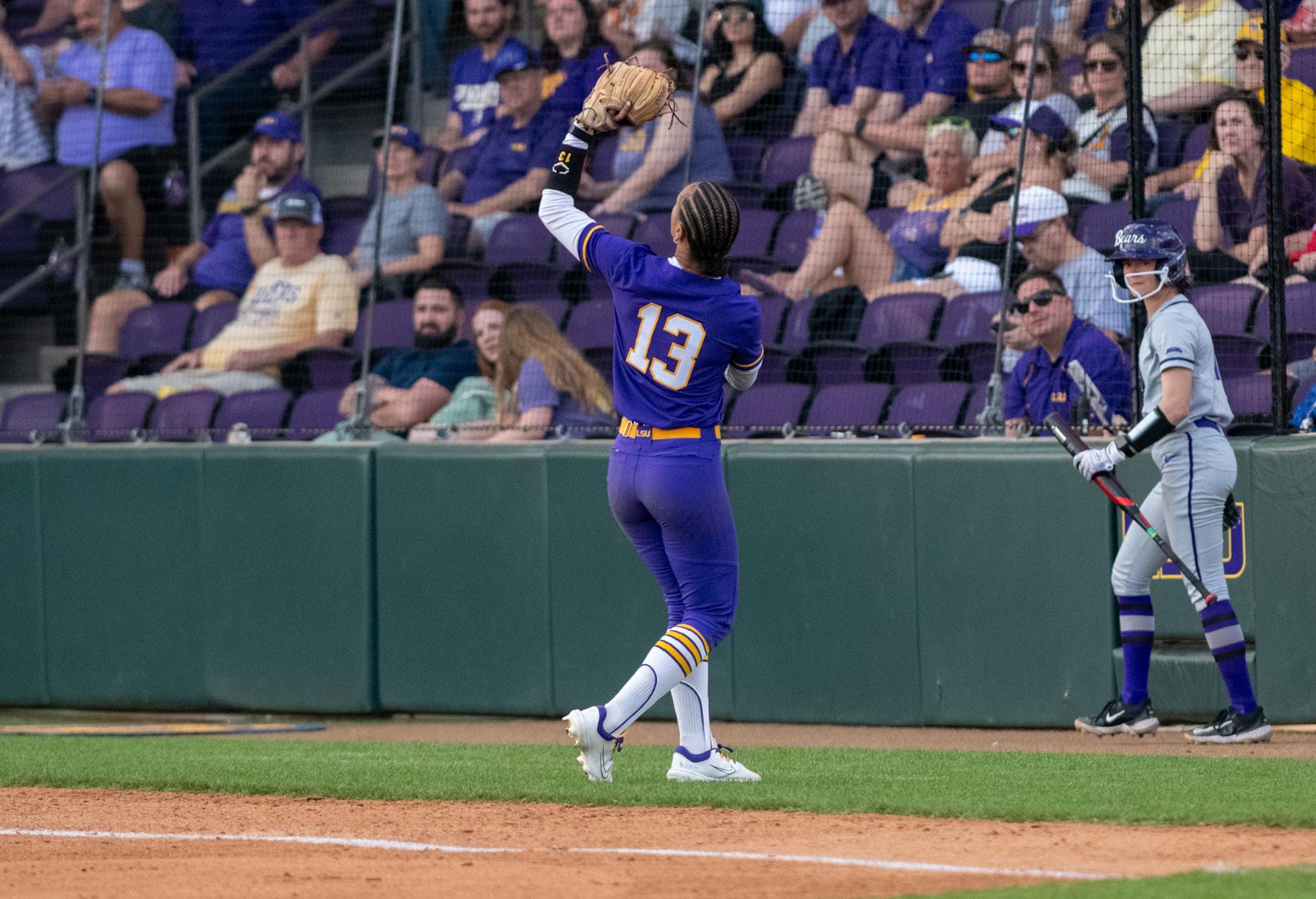
the ball Feb. 8, 2025, during LSU’s 6-0 win against Central Arkansas at Tiger Park.
ter field. While at LSU, she got the nickname “Air Aliyah” from fans and media alike for her outstanding catches in the outfield. Andrews also got it done from the other side of the ball as well, getting on base so often that she racked up 145 career steals on the base paths. After graduating from LSU in 2021, she made softball her career and is now playing professionally alongside another big name in the Tiger history book.
Ciara Briggs
Ciara Briggs returns to the Texas Volts after playing her rookie season with both the
Volts and the Blaze. Briggs was a part of the first ever AUSL trade when she was traded for McKenzie Clark.
She broke softball history at LSU by becoming the first backto-back softball Rawlings Gold Glove recipient. She only made five errors in her collegiate career and ended up starting almost every game over her four years as a Tiger.
Her offense was immaculate as well. She secured a solid position as the two-hole in the Tiger lineup her junior and senior seasons, and she became known as a prominent figure at setting
the table for whoever followed her in the lineup.
Danieca Coffey
In the 2026 AUSL season, Danieca Coffey will remain with the Volts after playing her rookie season for the team. At LSU, she played second and third base, and she batted primarily in the leadoff spot.
Coffey was hot during her entire time at LSU, even starting at second base in one of the most well-established Tiger lineups her freshman year. She pursued challenges throughout her entire career, even battling through a torn ACL her senior year.
However, it all paid off for the infielder because it allowed her to graduate in time for the first AUSL Golden Ticket class.
In her rookie season, she played the infield and outfield for the Volts and continued her hot streak of making history by being named the Player of the Series for the first series in 2025.
Carley Hoover
Another former Blaze player who has been redrafted is Carley Hoover. Hoover became known as one of the best Tiger pitchers in LSU history with her duo with Allie Walljasper. Hoover dominated from the circle with her speed and spin, boasting a career ERA of 2.03.
She and Walljasper led LSU to three straight WCWS appearances from 2015-2018. Since then,
she has played professionally in Japan, even being named the 2022 Diamond League player of the year.
In the 2025 AUSL season, she made one appearance but was later pulled for an injury. In 2026, she will join the Portland Cascade to play her second season with the AUSL.
Ali Newland
The most recent LSU alumna to be drafted into the AUSL was Ali Newland. Newland graduated from LSU in 2024, and she made herself at home in the Sports Center Top 10 list for most of her college career.
She played outfield and caught as needed, but she spent most of her time in left field for the Tigers. She also became known for her clutch-gene while at LSU because the bat always seemed to land in her hands when it needed to.
In 2025, Newland played out of the reserve pool for the AUSL, and she participated in the AUSL Allstar Cup as well. She was drafted for 2026 and will play for the Portland Cascade.
The second AUSL season will begin on Tuesday with three series for each of the six teams. The varying Tigers will play in either Durham, North Carolina, or Oklahoma City, Oklahoma, depending on each team’s assigned series.
EVAN TOUCHET / The Reveille
Bernie Moore Track Stadium.
ERIN BARKER / The Reveille
LSU track and field sprints sophomore Amal Glasgow competes in the men’s 400 meter dash at the LSU Alumni Gold meet on April 25 at Bernie Moore Track Stadium.
ALEXIS PERSICKE / The Reveille LSU softball former third baseman Danieca Coffey catches
OPINION
LSU needs more structure in same classes across professors

JOHNSON’S JOURNAL
LAUREN
JOHNSON Columnist
When your class has you drowning under piles and piles of demanding homework, the last thing you want to hear is, “I’m in that class, and it’s so easy.”
Being in ENGL 2000 this past semester has made me want to pull my hair out. My course has been treated as a 4000-level class rather than a prerequisite. From day one, I was flooded with assignments that are unnecessarily complex for a class where all of the students are required to take it.
You can imagine my surprise when I found out from several
people that ENGL 2000 is their easiest class.
“We literally did nothing.”
“My professor was the best.”
“Why did y’all do all of that?”
I wish I knew. It’s upsetting to hear that other students enrolled in the same class had it so easy while I had to suffer through an excruciating course.
There needs to be a conversation over the fairness of how courses are administered at LSU.
All professors teach differently. They have different styles, and that’s ok. I’m not saying we need to strip educators of their free will and authority in the workspace. Making every professor teach the exact same material in the exact same way would be just as unfair as the work disparity among students taking the same course.
However, we do need some
structure to how professors format their courses. We need an outline, even if it’s loose, that ensures the same students in the same class aren’t doing drastically different things.
Admittedly, LSU has tried to integrate margins. It requires each instructor’s syllabus to contain the same minimal topics, with the layout and exact content being up to the professor.
Is “minimal” precisely defined? Are there restrictions placed on the “layout and exact content” professors are allowed to include?
For ENGL 2000 specifically, we can assume these minimal topics mean the requirements every ENGL 2000 section must meet: at least three major writing projects, with standards attached to these essays; at least one oral presentation and technological
component; and students working collaboratively on at least one project.
On paper, it reads as enough to ensure fairness among courses.
Student reality is different, and isn’t that what matters most?
I’ve heard from other ENGL 2000 students that their course was even more difficult than mine, while others say that their course expected absolutely no heavy lifting whatsoever.
Too much here is subjective.
All of these professors who teach differently also have different interpretations of how much effort their students should be putting in to meet their requirements.
If workload and project complexity vary this drastically in courses, then that foundation isn’t actually equal. It’s not about wanting an easy A. It’s a call for
consistency.
There should be clearer guidelines tackling the scope of assignments. What constitutes a major project? How many additional assignments are reasonable? What is considered an appropriate workload for a 2000-level course?
The answers should be defined enough that students don’t feel punished for ending up in the “wrong” section of a required course.
Education is already demanding enough without adding unpredictability into the mix. If one student is describing their experience in a course as drowning, and another as nothing, then something clearly isn’t working.

Editorial Policies and Procedures
EDITORIAL BOARD
Laura Allen Editor in Chief
Managing Editor Garrett McEntee
Sports Editor Rami Burks
Emily Boudreaux Production Editor
The Reveille (USPS 145-800) is written, edited and produced solely by students of Louisiana State University. The Reveille is an independent entity of the Office of Student Media within the Manship School of Mass Communication. Signed opinions are those of the author and do not necessarily represent the views of the editor, The Reveille or the university. Letters submitted for publication should be sent via e-mail to editor@lsu.edu or delivered to B-39 Hodges Hall. They must be 400 words or less. Letters must provide a contact phone number for verification purposes, which will not be printed. The Reveille reserves the right to edit letters and guest columns for space consideration while preserving the original intent. The Reveille also reserves the right to reject any letter without notification of the author. Writers must include their full names and phone numbers. The Reveille’s editor in chief, hired every semester by the LSU Student Media Board, has final authority on all editorial decisions.
“Kindness is always fashionable, and always welcome.”
Lauren Johnson is a 19-yearold mass communication major from New Orleans.
CARMEN RANDOLPH / The Reveille