
Sex Dating & Guide

THE DAILY ILLINI
1001 S. Wright St., Champaign, IL 61820 || 217-337-8300
The Daily Illini is the independent student newspaper at the University of Illinois UrbanaChampaign. The newspaper is published by the Illini Media Company. The Daily Illini does not necessarily represent, in whole or in part, the views of the University of Illinois’ administration, faculty, staff or students.
All Illini Media Company and The Daily Illini’s articles, photos and graphics are the property of Illini Media Company and may not be reproduced or published without written permission from the publisher.
Editorial Team Contact us
Visit us in the basement of the University YMCA at 1001 S. Wright St. from 9 a.m. to 5 p.m., Monday through Friday.
Front Desk: 217-337-8300
Advertising: 217-337-8382 Newsroom: 217-337-8345
Newsroom
Reporting: If you have a question about a story or notice an error, email our Managing Editor at reporting@dailyillini.com
Visuals: For questions about photos, graphics or The DI’s social media, email our Visual Director at visuals@dailyillini.com
Employment: The DI’s staff are current students at the University of Illinois. Visit dailyillini.com/applyto-the-di/ to learn more about our hiring process.
Tips: To submit a tip, email our News Editor at news@dailyillini.com or submit a confidential tip online at dailyillini.com/contact/
Corrections: When we make a mistake, we will acknowledge it with a correction. We strive for accuracy, so if you notice an error, please email our Editorin-Chief, Sam Gregerman, at editor@dailyillini.com
Letters to the editor: Letters are limited to 800 words. Contributions must include the author’s name, address and phone number. University students must include their year in school and college. The DI reserves the right to edit or reject any contributions. To submit a letter, email opinions@dailyillini.com with the subject line: “Letter to the Editor.”
Advertising
Placing an ad: If you would like to place an ad in our next print edition or on our website, call our advertising department at 217-337-8382 or email advertise@illinimedia.com.
Editor’s note

EDITOR-IN-CHIEF
SAM GREGERMAN editor@dailyillini.com
Editor-in-Chief: Sam Gregerman editor@dailyillini.com
Managing Editor: Maaike Niekerk reporting@dailyillini.com
Visual Director: Josh Fine visuals@dailyillini.com
Special Sections Editor: Chloe Barbarise specialsections@dailyillini.com
News Editor: Qaasim Jatoi news@dailyillini.com
Arts & Entertainment Editor: Annisyn Krebs-Carr entertainment@dailyillini.com
Sports Editor: Brendan Gallian sports@dailyillini.com
Copy Chief: Helen Maurer copy@dailyillini.com
Photo Editor: Sam Rink photo@dailyillini.com
Graphics Editor: Rikkie Gunawan graphics@dailyillini.com
Design Editor: Shannon Moser design@dailyillini.com
Audience Director: Audrey Lutz social@dailyillini.com

@thedailyillini @thedailyillinisports

The Daily Illini @TheDailyIllini @DI_Sports

No matter what period of human history you study, sex and dating play some sort of role in society’s functions and advancements.
The rudimentary need for sex to procreate has developed into the more fluid world we live in now — a world where the definition of “sex and dating” has expanded to include dialogue about personal identity and pleasure.
The beauty of The Daily Illini’s “Sex & Dating Guide” lies in its reflection of the cultural and political zeitgeist driving us forward. This edition looks different every time it goes to print, and it is a personal favorite of mine because of how widely the content varies in diversity from year to year.
In 2026, The DI Editorial Board chose to take a
look inward. We asked ourselves: How can we explore pleasure, in all its forms, through the lens of a college student?
This edition of “Sex & Dating Guide” aims to tackle that question and more within these 28 pages.
Pages 13 and 19 address that question in a more literal sense. On page 13, University students discuss what “good sex” means to them, and page 19 works to debunk the stigma surrounding masturbation.
Pages 8 and 9 provide a variety of visualized data points from recent Task Force on Campus Sexual Misconduct Climate Surveys distributed to universities across Illinois.
If you’re looking for some inclusive reading recommendations, page 25 offers a collection of The DI staff’s favorite LGBTQ+ books.
In a time where American politics are pushing modesty and Christian purity, we hope that “Sex & Dating Guide” can offer some respite. In this edition, nothing is too taboo.

ON THE
COVER
SAM RINK & MATT STEPP THE DAILY ILLINI
A bouquet of flowers sprouts from a pair of boxers, alluding to themes of personal pleasure, identity and sexual health. This edition works to tell stories surrounding topics of sexual politics and culture at the University and within the Champaign-Urbana community.
Josh Fine
Shannon Moser
Hadyn Nuttall
Matt Stepp


Birth rates are down in the US: UI discusses national trends
UI Health expands reproductive care
Illinois campus climate survey, visualized
Purity culture meets a new generation
What counts as cheating anymore?
UI students establish meaning of good sex
Gallery | Students dive deeper into personal style and gender
Pickup lines for U and I
Smutty romance turns stigma into the new norm
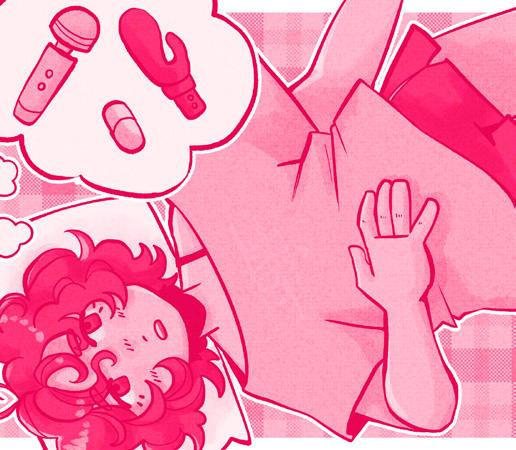
Challenging the taboo, embracing benefits of masturbation
Beyond labels: Personal gender identity, expression
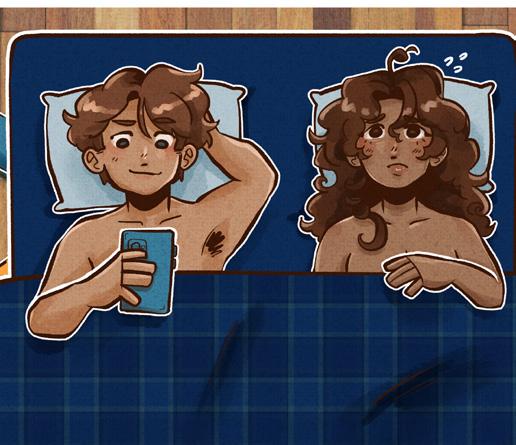
Sex and the CU | No ring, no romance, no regrets
Opinion | Queer men must curb ‘gay guy’ stereotypes
Opinion | When dating became an economic problem
Birth rates are down in the US: UI discusses national trends
SENIOR NEWS REPORTER
AVERY PATERSON
averyep2@dailyillini.com
In July 2025, new Centers for Disease Control and Prevention
data revealed a low national birth rate and total fertility rate, sparking mixed reactions about the future of the United States’ population.
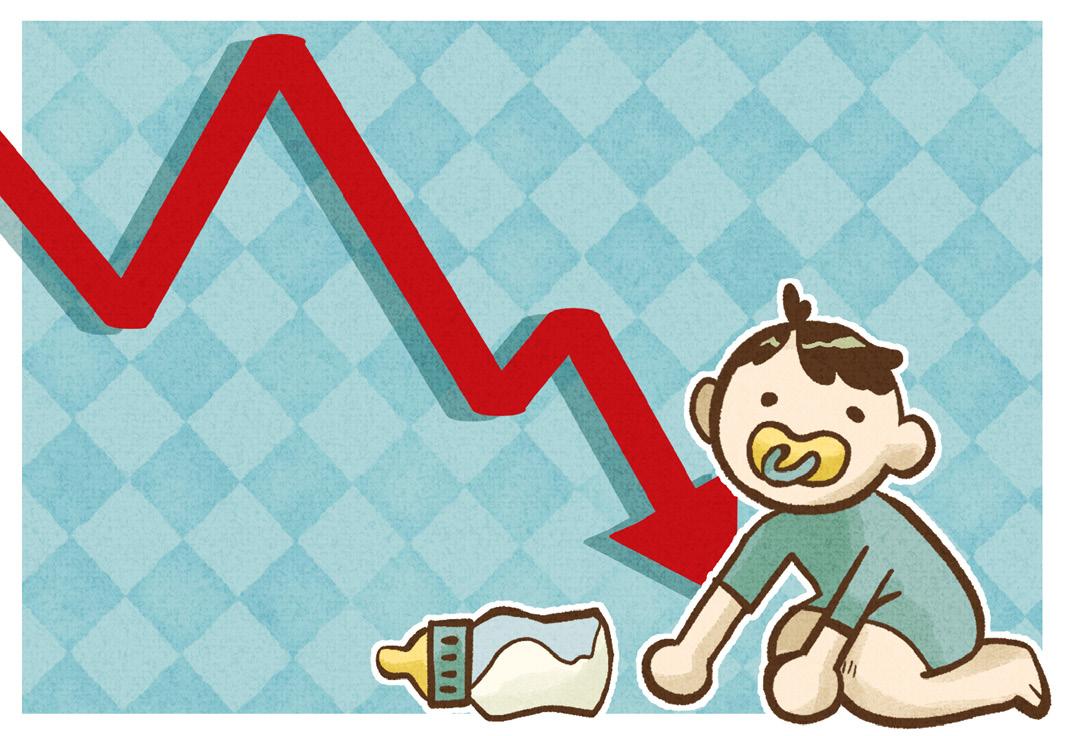
Though the number of births in 2024 technically increased 1% from the year before, the annual number of births has decreased 16% since 2007. The total fertility rate — or the number of children a woman has on average in her lifetime — is at a record low of 1.6.
A number of factors may be behind the trend, but some Americans are pointing fingers at high costs of living, increased contraceptive accessibility and shifting attitudes around childbirth.
IS THIS A PROBLEM?
Some blame the decline on growing feminist movements and the expansion of career opportunities for women. One is Finn McIntosh, president of Illini Republicans and sophomore in LAS.
“One word: feminism,” McIntosh said when asked what factors are behind the drop in births. “I think that feminism, and otherwise the empowerment of women … has moved women to go to college, get a job and enter the workforce, and that is heavily constricting their abilities to be mothers.”
McIntosh’s views are shared by those in the pronatalist movement, made popular in recent years by conservative figures like Tucker Carlson, Elon Musk and the late Charlie Kirk. Supporters say families should have more children than they can afford and encourage women to prioritize childbearing.
“A birth rate is critical to the continuation of a nation,” McIntosh said. “If you are not able to reproduce your population, that leads (to) a variety of problems.”
McIntosh said he was concerned
about the stability of social security, as well as immigration influxes, which he thinks might be used to supplement declines in American-born children. Others don’t see the declining rates as a threat to the nation but rather a promising marker of reproductive freedom and changing social dynamics.
FINDING SOLUTIONS
“I don’t think it’s inherently a bad thing,” said Amanda Quealy, co-president of Planned Parenthood Generation Action at the University and junior in LAS. “You have to look at the conditions that are causing it. And right now, the conditions that are causing it are more freedom of choice, more access to birth control and other contraceptives.”
Bianca O’Shea, PPGA’s special events coordinator and sophomore in LAS, agreed that improved contraceptive access and reproductive education may be some of the factors influencing birth rates.
“More than ever, women and other people who want to have the ability to have children have the option to choose whether or not to,” O’Shea said. “There (are) so many different options like adoption or abortion or contraceptives … which we haven’t seen at such a broad range before.”
Regarding the pronatalist movement, Quealy said she thinks the viewpoint is misguided.
“I think we see those opinions a lot in people who don’t just really want more children in the world,” Quealy said. “They don’t want a population boom. It’s about reproductive control.”
President Donald Trump has been a vocal supporter of pronatalism and began introducing incentives for having children in his second term. His “One Big Beautiful Bill Act” included baby bonuses — $1,000 accounts given to American children at birth.
Natalie Lira, professor in LAS who studies reproductive justice, is skeptical that incentives like these will be effective.
“I think incentives like more money at the end of the year don’t always address the full scope of reasons why people have decided to not have children or have fewer children,” Lira said.
Lira, whose research focuses on sterilization and the history of reproductive control in the U.S., rejects any government involvement that infringes on reproductive justice.
“Any kind of government program that would try to force or coerce people to have children would go against the principles of reproductive justice,” Lira said.
As a mother herself, Lira said she has witnessed firsthand how costly childcare is. But rising expenses go far beyond early childhood care and may be deterring families from having children.
RIKKIE GUNAWAN THE DAILY ILLINI
A 2025 SmartAsset study found that the annual cost of raising a child ranges from $19,000 in the cheapest state to $44,000 in the most expensive. Most estimates say families can expect to spend around $300,000 to raise a child through age 18.
Quealy said the country is not heading in the right direction, specifically how it supports families who desire to have children.
“Right now, under the current administration, we’ve seen some steps back,” Quealy said. “Recently, SNAP benefits were reduced, and we’ve also seen a reduction in Medicare and all those sorts of benefits that are supporting people to have healthy, fed, happy families. I think it’s not an environment that would be safe for an increase in birth rates right now.”
Both Quealy and Lira said adequate maternity and paternity leave is necessary to support parents. But McIntosh has a different idea — one that involves making workplaces less accommodating for women, leading them to stay home and rear children instead of working.
“If we were able to change the workplace structure in itself and how we treat employees, I think that would be very beneficial in reverting to what I would see as the solution, which is a traditional environment for both women and men,” McIntosh said.
’WHAT KIND OF WORLD?’
Beyond workplace dynamics and contraceptive access, some potential parents are considering the existential aspect of having children.
“I think folks might choose not to have children or have fewer children because they’re concerned about the environment,” Lira said. “Even the political climate … What kind of world are people bringing their children into? Broadly, if economic and political outlooks were better for groups of people, then they might choose to have more children.”
Birth trends also seem to reflect a growing cultural acceptance of parenthood later in life. The CDC’s report detailed that, from 2023 to 2024, birth rates declined for women aged 15-34 but increased for women aged 40-44.
Scientists have greatly advanced the efficacy and accessibility of in vitro fertilization in the last four decades, allowing women to freeze their eggs and extend their fertility windows.
“It’s not as urgent, I think, as people once thought it was,” Quealy said. “We all have these conceptions about your fertility clock … I think we’ve changed that mentality and made medicine so that people can wait and can have healthy children at older ages.”
Illinois has been consistent with the national trend of declining birth rates in recent decades. In 2000, Illinois recorded 185,003 live births, but the number has fallen steadily since. In 2022, only 128,493 live births were recorded by the state.
Champaign County recorded 2,260 births in 2000, and the number rose to above 2,400 in the 2010s. In 2022, the number dipped below 2,000, marking 1,995 live births.
These falling numbers read differently from one American to the next. Whether alarming or empowering, the data suggest that the ancient childbirth question is in for a big cultural shakeup.

UI Health expands reproductive care
ASSISTANT NEWS EDITOR
ANNA CEJA aceja4@dailyillini.com
After years of campaigning for expanded reproductive rights in Illinois, state advocacy groups watched Gov. JB Pritzker sign House Bill 3709 in August 2025. It mandated that public Illinois universities and colleges provide access to medication abortion and contraception through student health services.
The law, which took effect at the start of the 2025-26 academic year, is comparable to laws in California, Massachusetts and New York implemented in recent years. HB 3709 is the first of its kind in a Midwestern state.
By partnering with Planned Parenthood of Illinois, McKinley Health Center now facilitates access to medication abortion. Students begin by attending a telehealth appointment, in which a health care provider may prescribe mifepristone and misoprostol — sent by mail to the student’s campus address.
“As reproductive rights are restricted elsewhere, Illinois is setting a national example,” wrote Garth Reynolds, executive director of the Illinois Pharmacists Association, in an August 2025 press release. “These laws expand access to critical reproductive health services and safeguard the pharmacists and healthcare providers patients rely on for their care.”
Kylea Liese, associate professor at the University of Illinois Chicago and expert in reproductive health equity, told The Daily Illini that despite the new law, stigma and inaccessibility remain barriers to reproductive care.
“Even though Illinois has been a state with really supportive policies to promote access, sometimes, on the ground, it’s a lot more restrictive than some of the policymakers realize,” Liese said.
According to Illinois law, medication abortion and contraception are required
at campus pharmacies. But after calling over two dozen pharmacies in the Chicagoland area, Liese discovered most do not carry the medication.
These limitations in accessibility can pose an even greater challenge for college students, who may lack the time or resources to receive off-campus care.
Intersecting identities like ethnicity, religion, primary language and immigration status also play a role in how individuals approach family planning, Liese said.
“All of these issues of reproductive justice, they’re all part of how we make our decisions about whether to have a child, whether to not have a child and the ability to raise children,” Liese said. “I think it’s really about creating campuses that support all of the different intersections of reproductive justice.”
After surveying prospective and current college students, researchers at Gallup concluded that over 70% of college students took reproductive care accessibility into consideration when choosing which university to attend.
“When you’re talking about young people, I think there are additional barriers, because (college students) might have more apprehension getting into a bigger clinic, or Planned Parenthood, and there aren’t (that) many services all over the place,” Liese said. “Being able to do something through University Health Services with their insurance is really, really important.”
While the law is intended to expand on-campus access, implementation varies by institution.
UI Health, the UI System’s health care provider, offers a range of services related to reproductive health care in addition to abortion care. Birth control consultations, emergency contraception and pregnancy loss counseling are just some of the services it provides.
“I think what I would want (students) to know is that they have ultimate
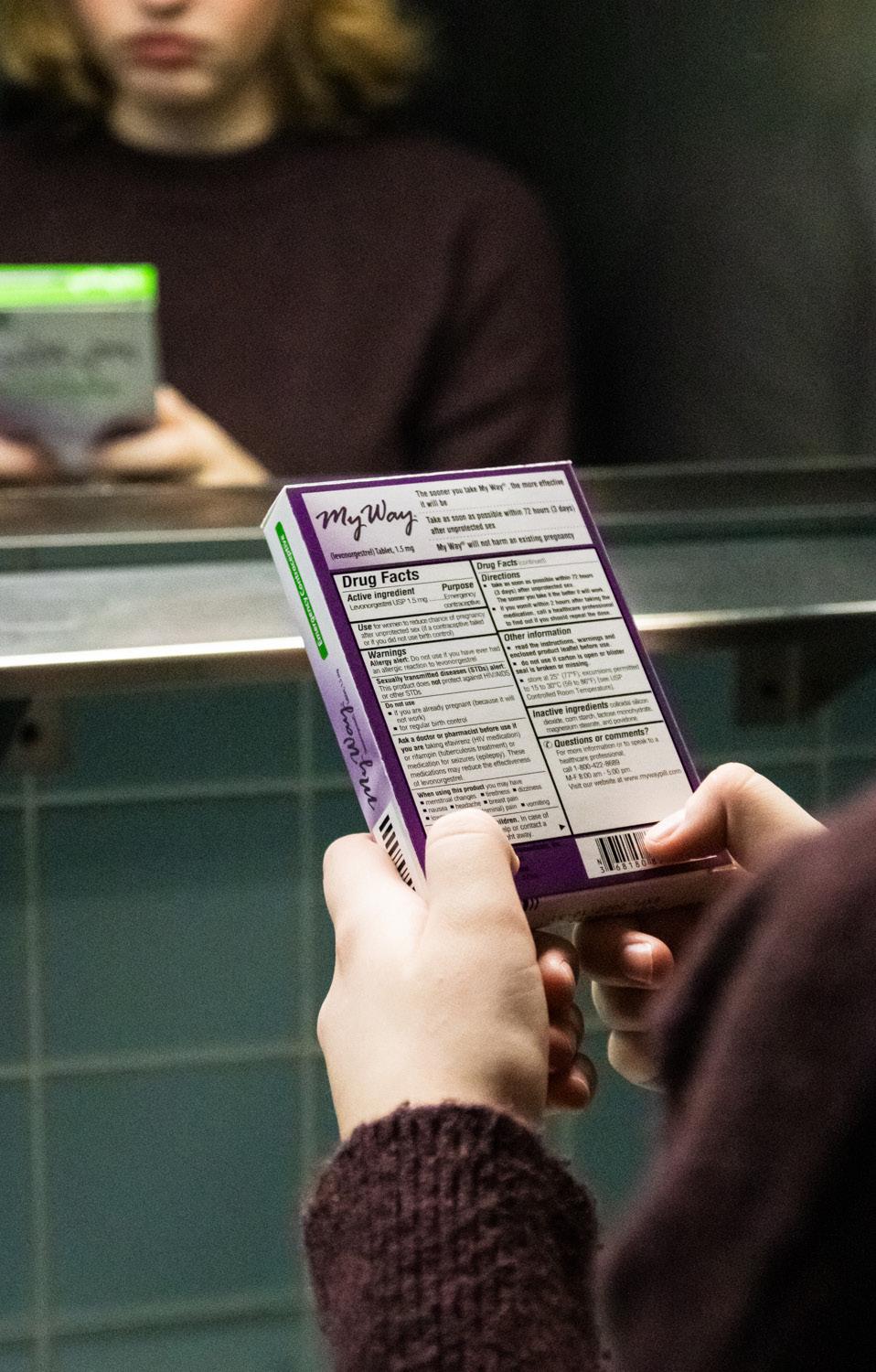
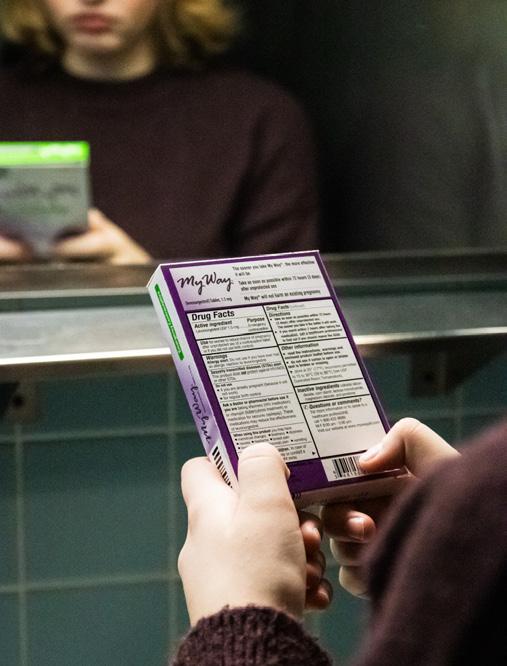
A young woman reads the label on a box of emergency contraception pills, or “morning-after pills,” in a bathroom. The medication is available at vending machines in the Illini Union and at McKinley Health Center.
autonomy about their body and this process,” Liese said. “Things that should be available to them, first of all, are really patient-centered care. They should have someone who’s able to really talk to them about their options and their support systems and what the process of abortion care is like.”
Students seeking medication abortion and other reproductive care can still access off-campus services through UI Health and other community-based providers.
Nationally, abortion remains a common outcome of unintended pregnancy. Data from the World Health Organization found that 6 out of 10 unintended pregnancies end in induced abortion.
“I have a lot of faith in young adults and students for actually knowing their bodies and their choices and their lives,” Liese said.
SAM RINK THE DAILY ILLINI
Illinois campus climate survey, visualized
SENIOR NEWS REPORTER
RYAN PEARLMAN rp36@dailyillini.com
In August 2021, the Preventing Sexual Violence in Higher Education Act was amended. The amendment required all Illinois higher education institutions to conduct an anonymous sexual misconduct climate survey.
The survey, created by the Task Force on Campus Sexual Misconduct Climate Surveys, is given to students every two years.
The most recent Spring 2025 data from 62 institutions are publicly available on the Illinois Board of Higher Education’s website. This article will visualize a few of the 90 total survey questions and the responses from the 10 four-year institutions with the highest number of respondents.
Only answers with over 20 responses are reported. General guidance provided alongside the survey stated the
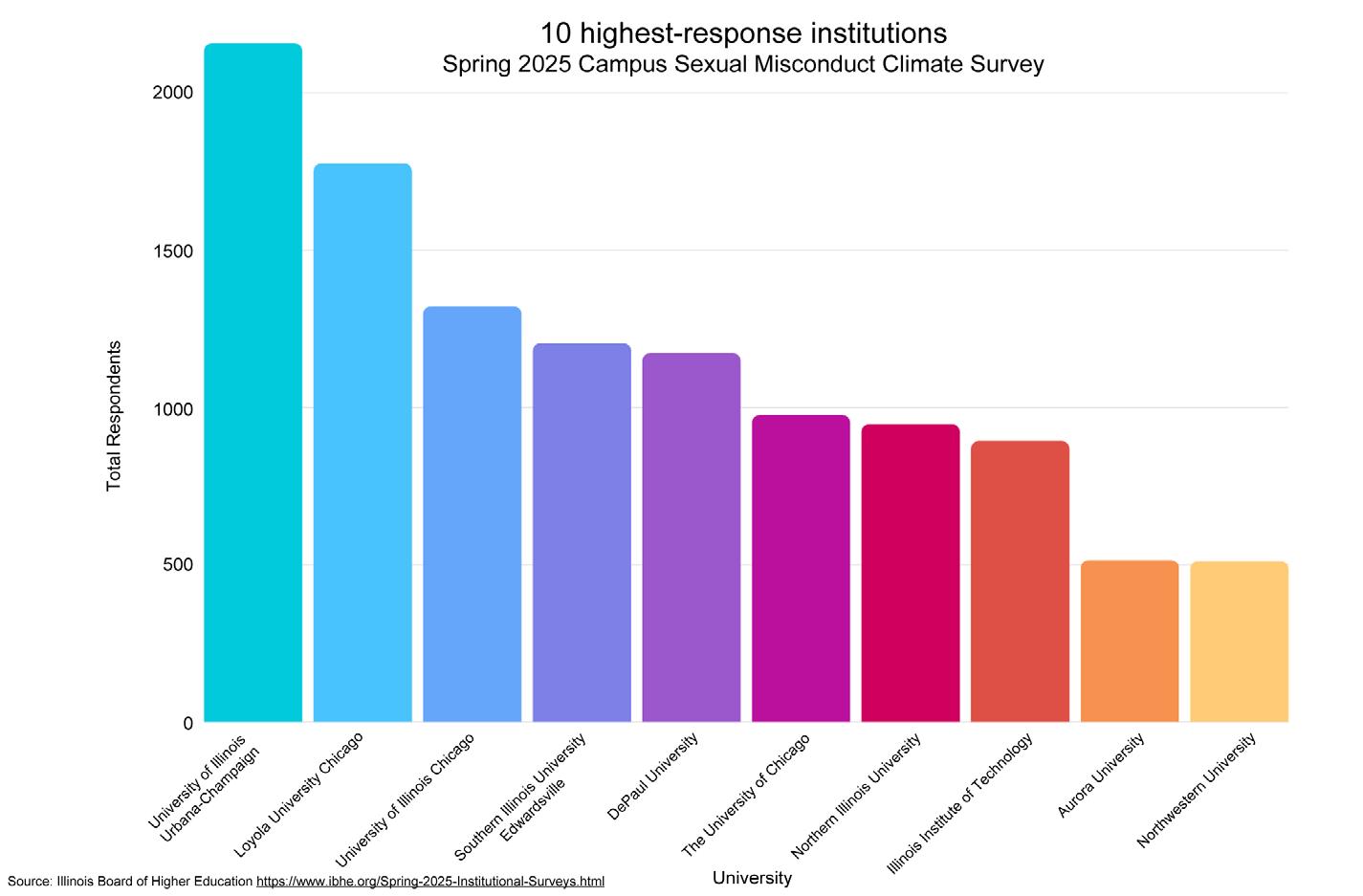
20-response minimum exists to “protect student privacy and anonymity.” This resulted in some smaller universities having little to no reported data for many questions.
SEXUAL ORIENTATION
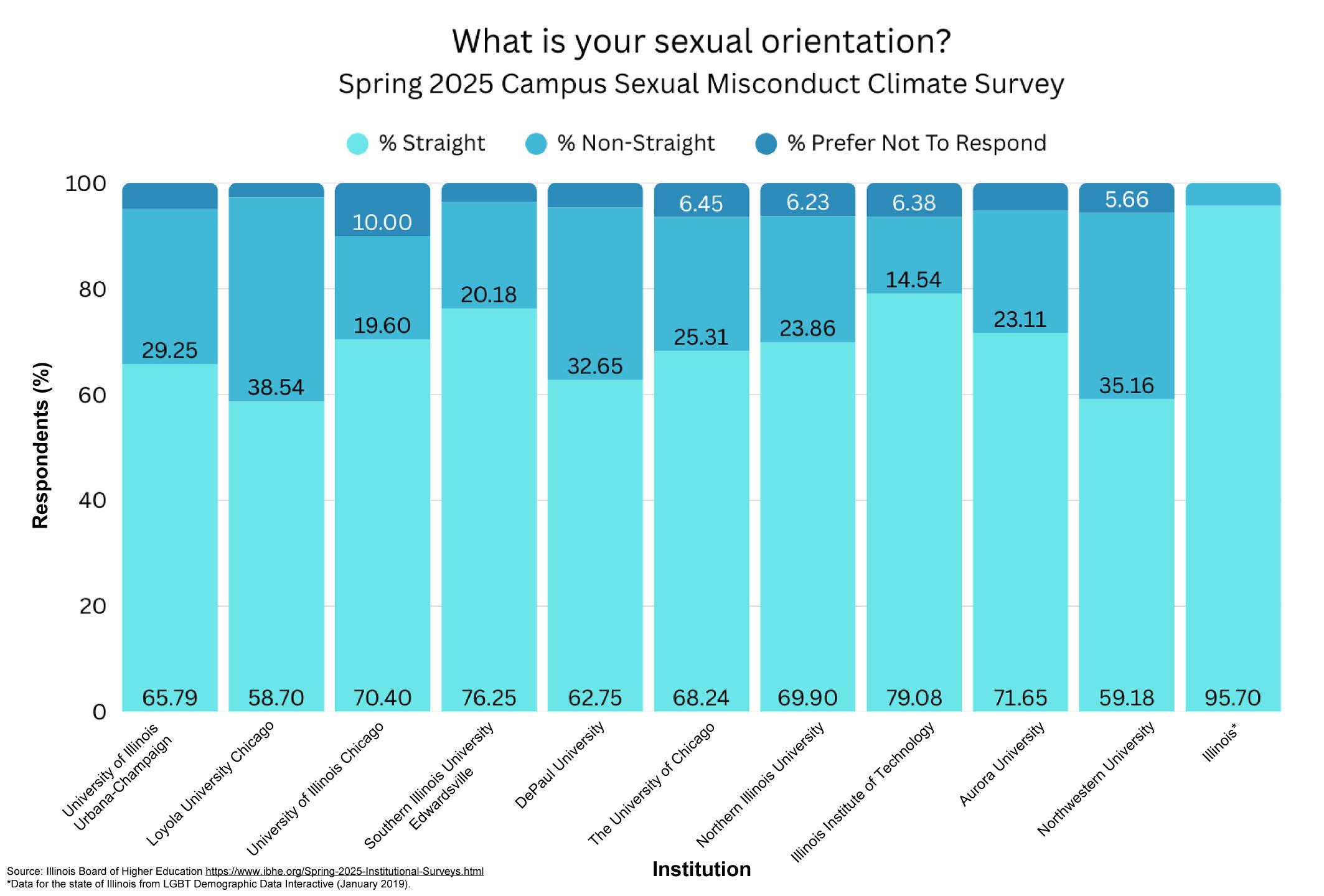
The graphic to the left shows results from the sixth question, “What is your sexual orientation?” and compares the results to data gathered separately for the entire state of Illinois.
Results were calculated by extracting the number of straight participants and those who preferred not to answer from the total number of participants for the question. Because this was a multiselect question, the listed percentages may be inaccurate if students selected both straight and another category in their response.
Loyola University Chicago saw the highest percentage of nonstraight students at 38.54% of respondents, while the Illinois Institute of Technology saw the lowest percentage of nonstraight students at 14.54% of respondents.
RIKKIE GUNAWAN THE DAILY ILLINI
SAFETY FROM HARASSMENT ON CAMPUS
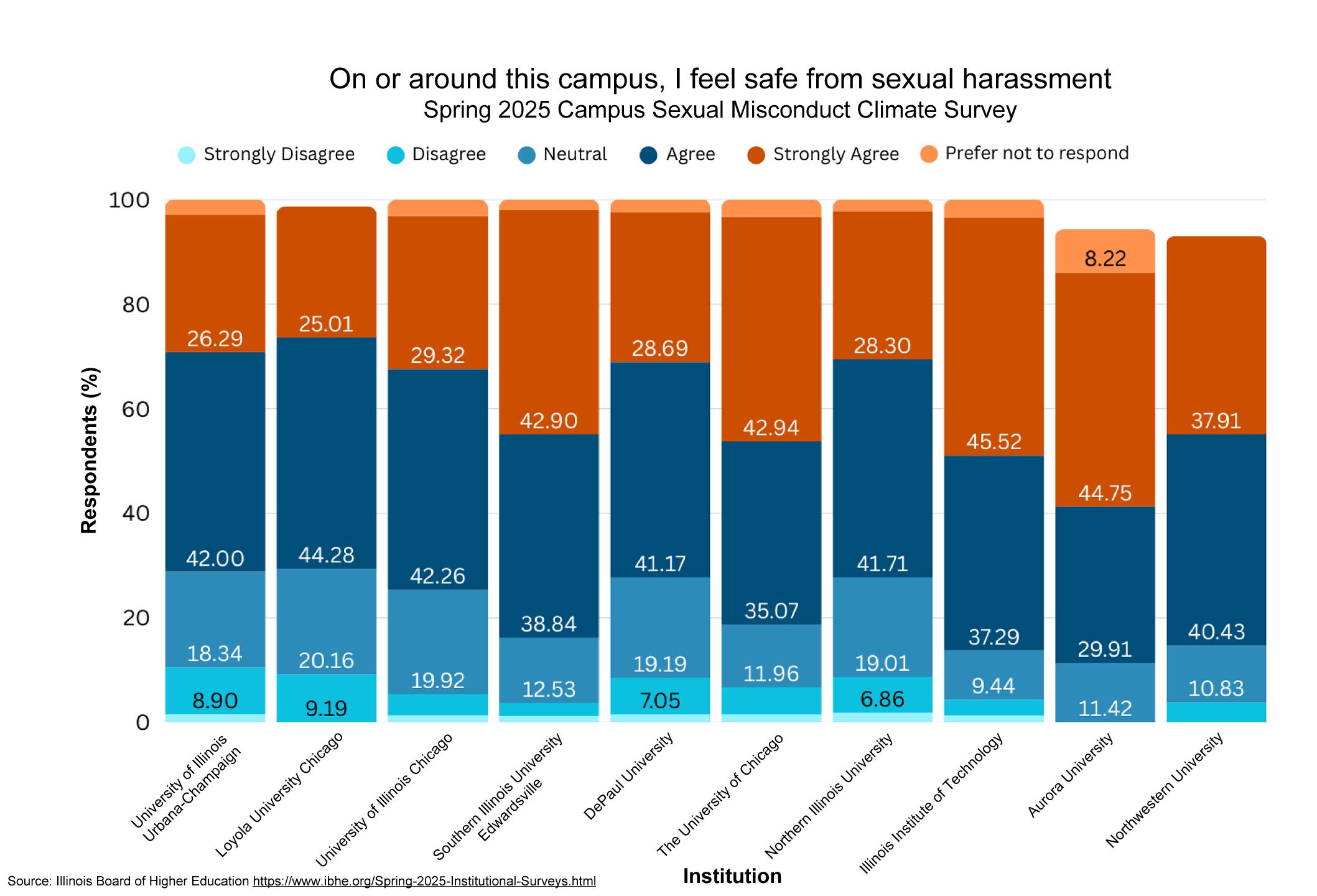
Question 15a of the survey reads, “On or around this campus, I feel safe from sexual harassment.”
Due to the 20-response rule, not all data was available to add to the graphic. Because of this, not all institutions had a combined total of 100% responses.
The University saw the highest percentage of students who selected “disagree” or “strongly disagree” of the 10 listed universities at 10.49% of respondents.
Alternatively, only 3.73% of respondents at Southern Illinois University Edwardsville expressed disagreement with the statement, and roughly 82% of students at both SIUE and IIT answered the statement positively.
WHERE TO GET HELP ON CAMPUS
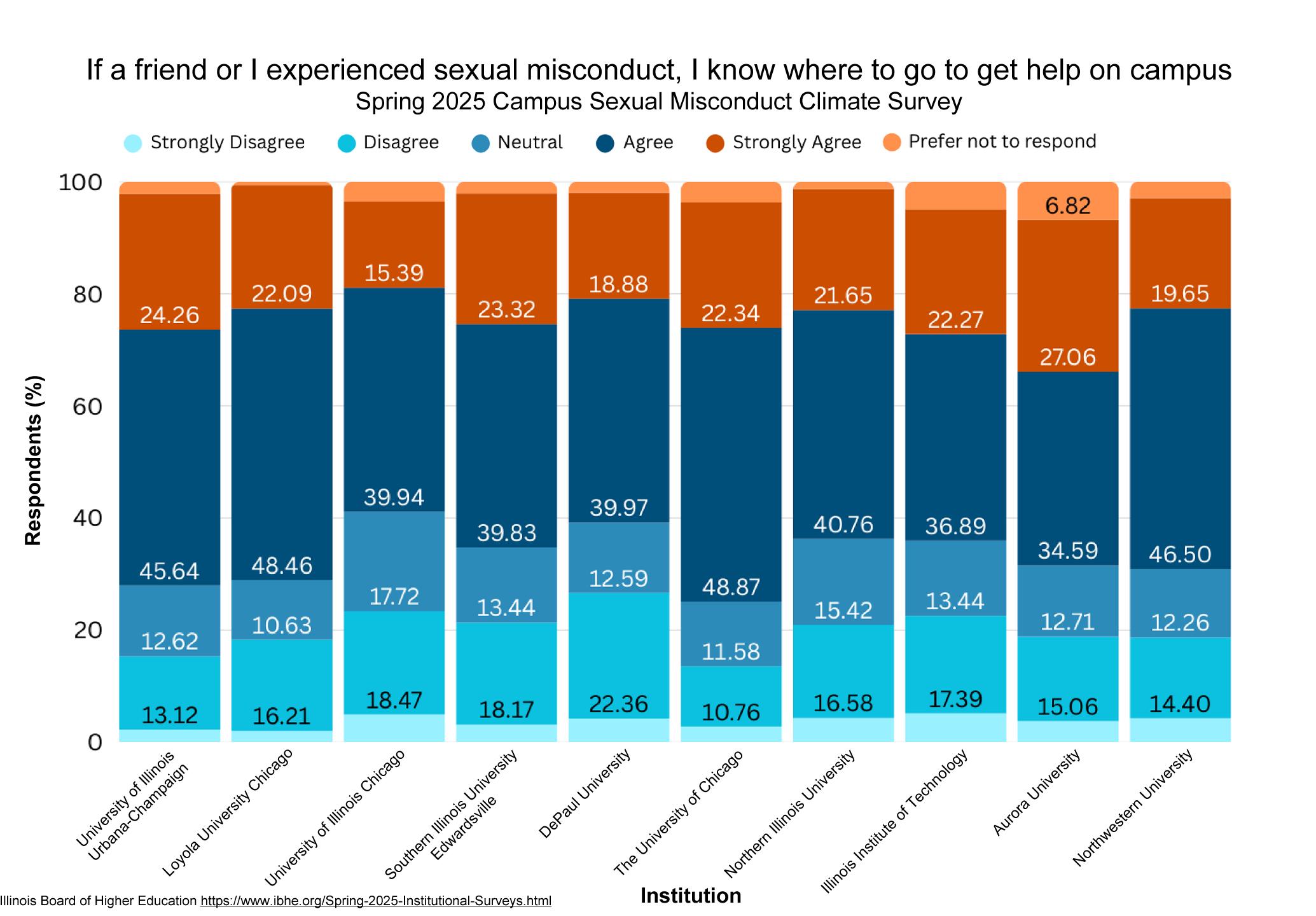
Survey question 17a reads, “If a friend or I experienced sexual misconduct, I know where to go to get help on campus.”
Most students answered the survey question positively, including over 50% of respondents choosing “agree” or “strongly agree” at all 10 universities. Specifically, The University of Chicago and Loyala each saw over 70% of students choosing one of the two options.
Universities in Illinois offer many ways for students to receive help on campus, as required in the Preventing Sexual Violence in Higher Education Act. At the University, some examples of available resources include advisers, a counseling center and the Title IX Office, among many others.
The next campus sexual misconduct climate survey will be administered in Spring 2027.
Purity culture meets a new generation
CONTRIBUTING WRITER
ZAHRA GHADEER zghad@dailyillini.com
You can see it in YouTube video essays, TikTok comments and social media trends. Purity culture is back. Waves of tradwife influencers like Nara Smith and Ballerina Farm, rising numbers of religious content creators and trends like “staying inside on Halloween for my future husband” have prompted online creators to question whether purity culture is resurfacing again.
According to a literature review published in the journal Theology & Sexuality, purity culture refers to a set of beliefs that frame sexual abstinence as the ideal characteristic for women. Purity culture became popular in the 1990s, with its ideals enforced through practices like virginity pledges and purity balls. While these rituals are not as common anymore, some students have said that purity norms are still prevalent but in more subtle ways.
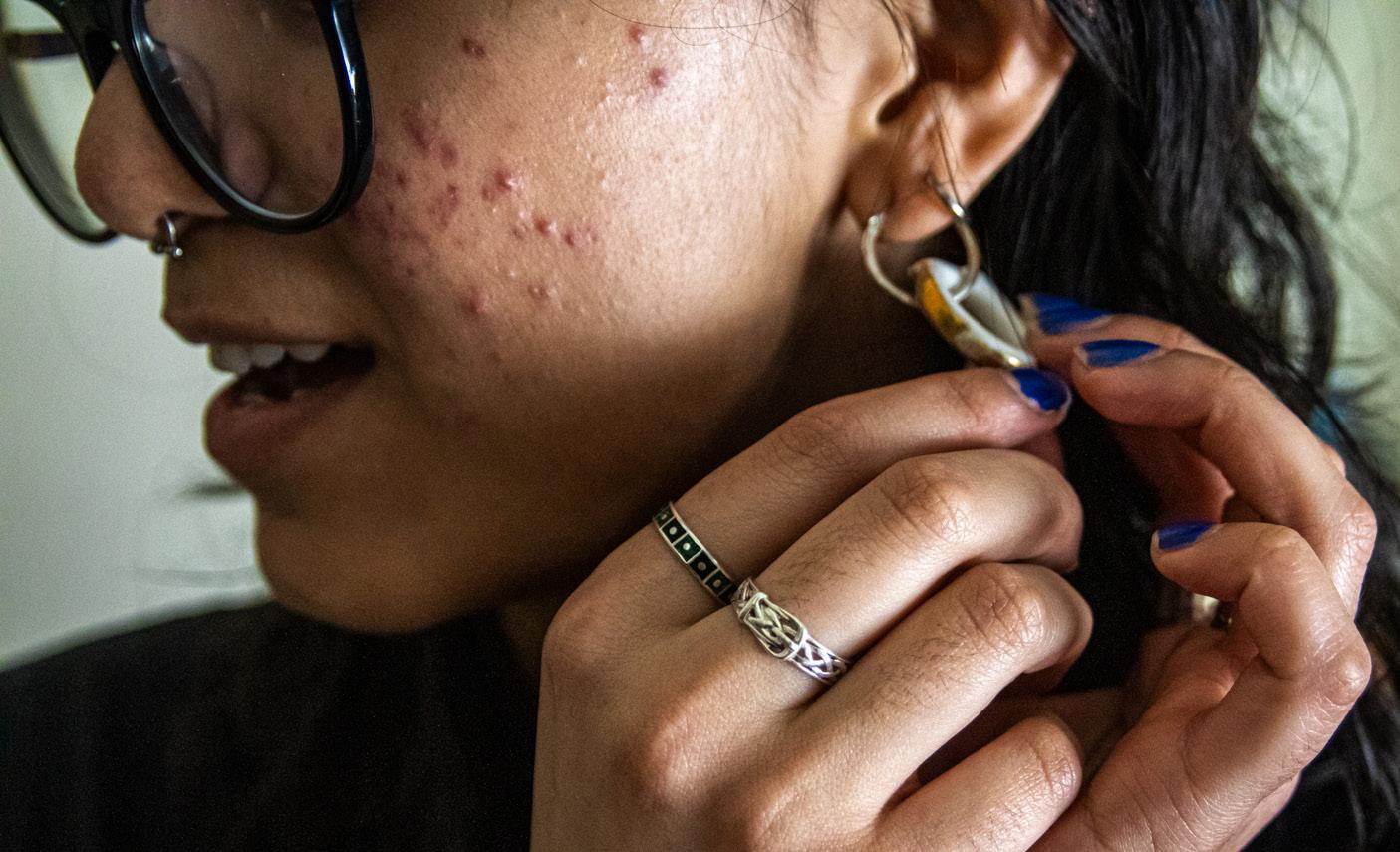
One example is the “clean girl” trend. The “clean girl” trend stresses a minimalistic look, accompanied by slickedback hair, matching sets, gold hoops and smooth, acne-free skin.
“The clean makeup trend … subtly promotes certain ideas of femininity and simplicity,” said Yichen Wang, senior in LAS. “It’s interesting to see how they overlap with some of the traditional purity culture ideals.”
Some attribute the reemergence of purity culture to recent social and political crises.
“Purity culture is providing a script for a reclamation of a power that feels to be sliding away,” said Shelby King, visiting lecturer in LAS. “In terms of strictly religious rhetoric, we can see that certain figures within the purity culture movement have figured America as a nation in decline but one that can be saved by the … reinstitution of traditional normative structures.”
One core pillar of purity culture is abstinence-only education. The Reagan administration enacted the first federal
abstinence-only education program with the Adolescent Family Life Act, and the following administrations have continued to enact similar legislation.
These policies have had long-term consequences for how adolescents view sex, health and relationships, according to Stefan Vogler, professor in LAS.
“Coming from this background can leave people uninformed about what healthy sexual practices look like,” Vogler said. “People who have abstinence-only education are more likely to get pregnant out of wedlock. They’re more likely to engage in unsafe sexual practices because you’re not taught how to use contraception.”
Growing up with an abstinence-only education also shapes how students view their own sexual experiences.
“I grew up with abstinence-only sex education, but in reality, we didn’t even get much education on sex at all,” Wang said. “I was raised in a misogynistic culture where terms like ‘slut’ were shamed, not empowered, and heterosexuality was treated like the default. It wasn’t until college that I started to explore my own sexuality and challenge these narrow views.”
A 2025 study published in The Counseling Psychologist found that individuals who grow up with purity culture may also have difficulty understanding the right to give and withdraw consent. This sentiment is something that Wang has observed in many students.
“I have been a … (First Year Consent and Relationship Education) facilitator for three years,” Wang said. “I notice that people often assume certain things, like if you do something once, it means you want to do it again, or that you are always interested in sex. This kind of idea can make people ignore the importance of asking for consent and respecting boundaries.”
Students said purity culture also manifests in online spaces frequented by students.
“I feel like things that contribute to … the negative perpetuation of (purity culture) stems from toxic masculinity bred
from media like the ‘manosphere’ and Andrew Tate-like media,” said Anumitha Suresh, freshman in Engineering.
Purity culture ideals can negatively affect students navigating their own identities, impacting their perceptions of sexuality, according to Wang.
“Purity norms create a lot of shame and confusion about what is normal and healthy in terms of sexual behavior,” Wang said. “Heterosexual, monogamous and longer-term committed relationships are the default. It can make it harder for students to navigate their own desires or boundaries, as they may feel pressured to conform to a very narrow definition of what is acceptable.”
While many students emphasize the harms associated with purity culture, others stress that the issue lies more with how these values are enforced.
“I cannot say whether purity culture is positive or negative, but it is just the way that certain groups of people have shown it in a light of either sexism, infantilization or condescension,” Suresh said.
As purity culture continues to evolve, its presence in media, religion and cultural norms will continue to shape how students navigate their identity.
“(In the future), I hope that purity culture will shift away from the binary definition of ‘pure’ or ‘impure’ and more toward a healthier focus on consent, communication or personal agency,” Wang said.

LILY BLODGETT THE DAILY ILLINI
A couple wearing rings stands in front of The Chapel of Saint John the Divine on South Wright Street. Relationships and purity culture are often deeply tied with religion.


What counts as cheating anymore?
FSENIOR ARTS & ENTERTAINMENT REPORTER
BRYANA PEREZ bkperez2@dailyillini.com
or generations, the answer felt simple: Cheating meant physical intimacy with someone who wasn’t your partner. But for today’s University students — navigating dating apps, social media and increasingly blurred relationship labels — the definition has become far less clear.
Is liking a thirst trap on TikTok cheating? What about venting to someone else about your relationship? Seeking emotional intimacy from an AI chatbot?
For some, the line between harmless behavior and betrayal no longer sits in one obvious place. Instead, it lives in gray areas shaped by communication, expectations and trust.
“Cheating” today is less about a single act and more about whether someone crossed a boundary and violated their relationship agreements.
Emily Mendelson, graduate student studying communication and co-managing editor for the “Sex and Psychology” blog and podcast, said modern dating has added more layers to the act of cheating.
“Cheating has always been something that has been complicated, but, of course, we hear about it more often now,” Mendelson said. “But I think that the other part of it is that there have been developments in how people can cheat.”
Infidelity no longer starts and ends with physical intimacy. It can show up

in private messages, flirty replies or even hiding apps on one’s phone.
Emotional cheating — confiding in someone else, building intimacy outside the relationship or hiding conversations with another romantic interest — has become one of the most debated gray areas.
Social media adds fuel to the confusion, turning likes, story replies and streaks into signals that are easy to dismiss but hard to ignore.
In many relationships, it isn’t one action that crosses the line, but the secrecy behind it.
For Paolo Spica, junior in LAS, boundaries come down to transparency.
“I would not do or say anything that, if my partner was right there … they would be upset about,” Spica said. “But I have recently learned that people’s relationship experience, and expectations vary a lot (more) than you would think.”
Despite how central boundaries are to modern relationships, dating culture on college campuses can make those conversations even harder.
Situationships, long-distance relationships and the blurred transition from talking to dating can leave students unsure of when commitment and its expectations officially begin.
Mendelson said situationships, in particular, create confusion around cheating.
“We have seen things like the rise of situationships, which is especially messy territory when it comes to cheating,” Mendelson said. “A situationship means two people are in disagreement about the status of their
relationship. And when that happens, there are a lot more behaviors that are going to be interpreted as cheating because of that mismatch.”
Still, some may argue that campus culture is slowly creating space for more honesty.
“(The University) is a more progressive campus,” Spica said. “Because things like hookup culture and polyamory and stuff like that are starting to be seen as OK, people are more open to being truthful about what they want in a relationship.”
As conversations around hookup culture, open relationships and polyamory become more visible, students may feel less pressure to conform to a single definition of commitment.
That openness, however, does not eliminate the emotional weight cheating can carry. For some students like Spica, cheating is not always an automatic dealbreaker, but context is key.
“Some relationships are open, and cheating isn’t even a thing,” Spica said. “I think, though, that (cheating) often is a dealbreaker because that is such a profound violation of trust, but nothing can’t be worked around.”
For students navigating modern dating, the question may no longer be “Is this cheating?” but rather “Have we agreed on what this means?”
As definitions of cheating continue to evolve, one thing remains consistent: There is no single rulebook. In a world of constant connection and endless gray areas, the line isn’t crystal clear — it’s something students have to figure out for themselves.
SAM RINK THE DAILY ILLINI
UI students establish meaning of good sex
ARTS & ENTERTAINMENT EDITOR
ANNISYN KREBS-CARR annisyn2@dailyillini.com
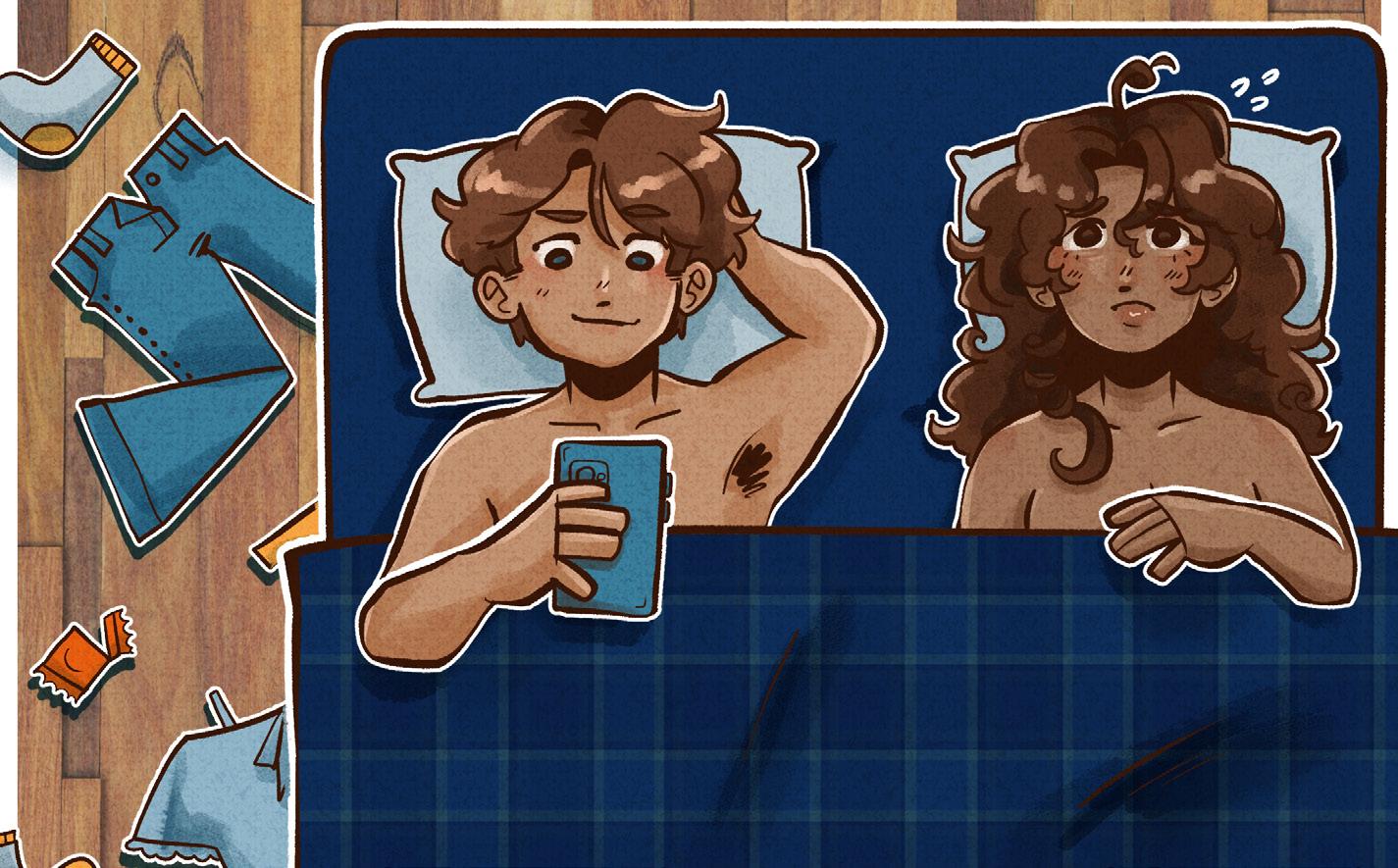
Sex is often a formative part of the college experience. Stepping foot onto a campus with newfound freedom and thousands of people can be a complicated journey of figuring out who you like, what you like and what makes sex “good.”
Good sex looks different for most people. Whether it be an emotional connection or physical attraction, numerous components can play into a positive sexual experience.
For Jaezl Bata, senior in LAS, consent plays the largest role.
“I feel like consent is equivalent to respect, and if neither of those things (is) established, then it’s not going to be good,” Bata said. “Right off the bat, you’re off to a terrible start.”
While safety and comfort are two of the more obvious sexual green flags, other factors can play into the satisfaction of a sexual experience. According to Stella Youse, junior in FAA, sexual compatibility is one of the most important parts of having a positive sexual experience.
Youse said that compatibility often comes from trust and having candid communication about sex.
“Even though sometimes having open conversations about sex is the least sexy thing you can do, it’s really important,” Youse said. “Even though it might be awkward at times, I feel like it always ends up making for better sex.”
Youse goes into sexual situations with low expectations and the knowledge that sex likely isn’t going to be perfect — in fact, it rarely ever is. Sometimes you simply aren’t compatible with a person. Other times, your performance isn’t what you were hoping, and sometimes it’s just bad.
Most of the time, Youse said, people are just trying to figure things out. And even when getting with someone sexually experienced, things can still be
awkward and messy.
“We are all learning and doing these things for the first time,” Youse said. “Maybe someone has way more experience than you do, but they’re experiencing you for the first time, right? Never thinking of yourself as knowing it all is important.”


dents who participate in hookup culture, Rosa Maurello, senior in LAS, notices a negative connotation associated with sex, specifically in conversations with men.
Physical pleasure and emotional satisfaction are two things that often contribute to the positivity of a sexual experience. Although it’s possible to have good sex with just one and not the other, Bata sees the emotional part of the sexual experience as the most gratifying.
“When you get to know the person more, I feel like the sex becomes better because it feels more intimate,” Bata said. “I can’t really enjoy it unless I have a connection with the person.”
Things like transparency, foreplay and aftercare can directly contribute to the experience, both physically and emotionally. Bata sees aftercare as an important part of sex, and the ability to get to know someone after an intimate act can make things more vulnerable.
However, vulnerability isn’t always the goal. For some people, the goal can be forming that emotional connection, but other times, it’s just to feel good and have fun.
Hookup culture is prevalent on college campuses, with between 60% and
“I just think it’s crazy, the amount of times … where guys will ask me, ‘Oh, what’s your body count?’” Maurello said. “You just see all (that) social media stuff that’s like, ‘I don’t want a girl that’s ran through.’ But all the guys are ran through, and that’s not a problem … Let people do whatever they want to do.”
For Youse, part of what makes sex good is creating a nonjudgmental space where people can openly share their sexual wants and experiences, not only in the broader conversation about sex but also in the moment of engaging in sexual acts.
Recognizing the vulnerability of sexual experiences, from committed relationships to off-and-on hookups, is what can make sex so unique.
“Ultimately, our bodies are doing something that’s totally vulnerable, and there’s going to be weird sounds and smells and everything in between, and allowing those things to be what they are is important,” Youse said. “Sometimes it’s going to be fun, and sometimes it’s going to suck, and that’s part of what sex is.”
RIKKIE GUNAWAN THE DAILY ILLINI
Students dive deeper into personal style and gender
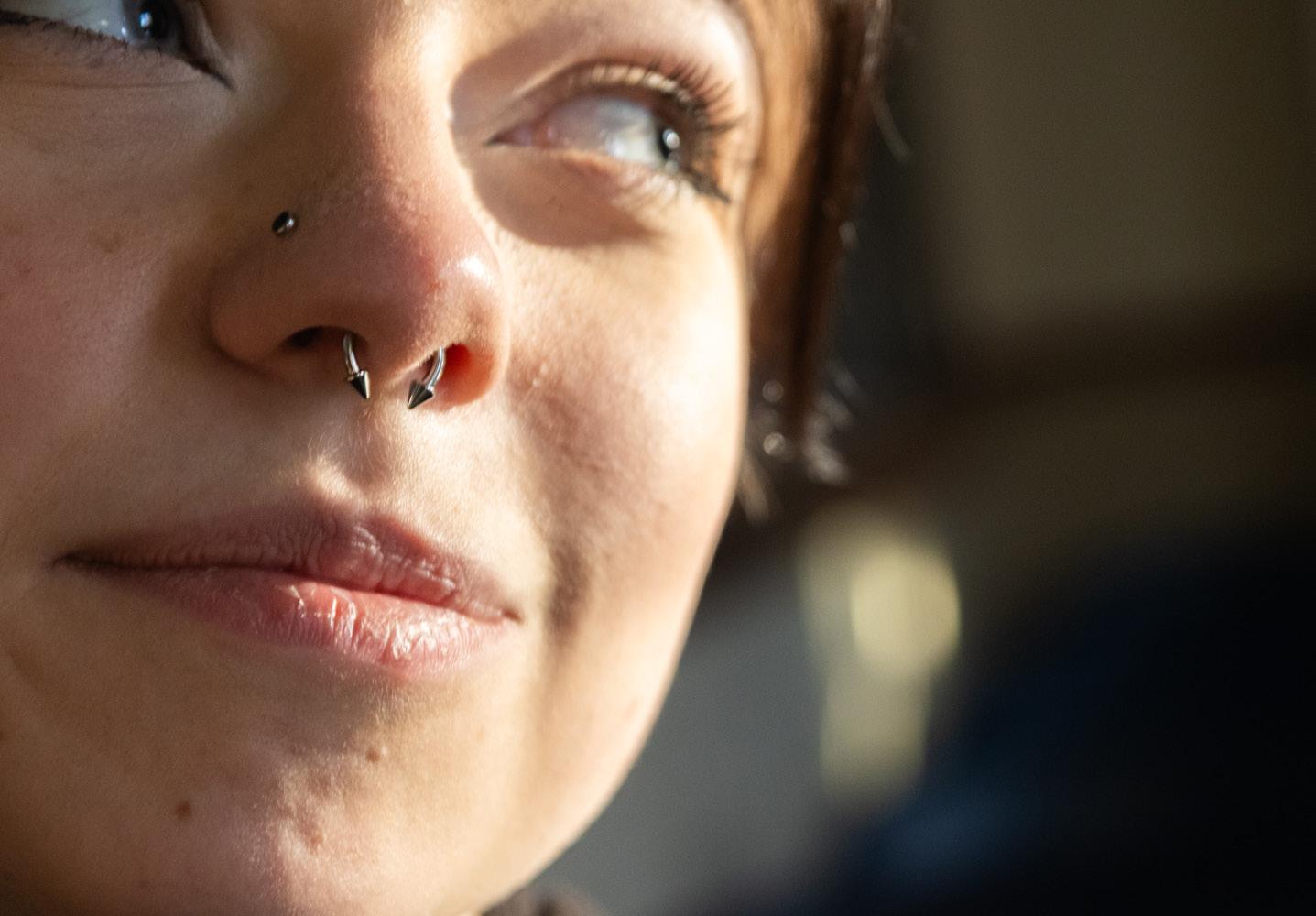
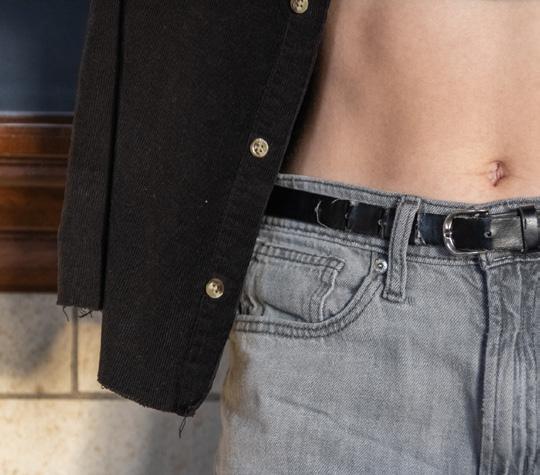
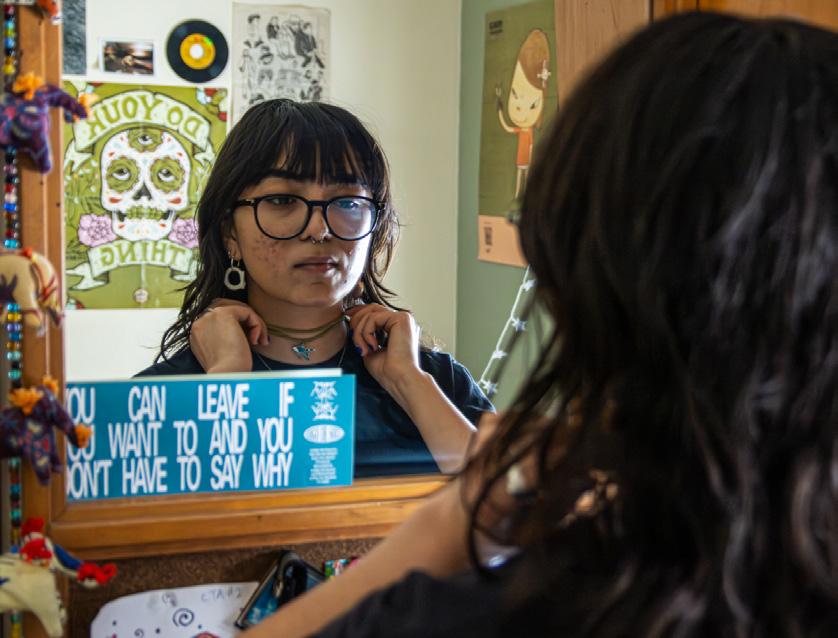
“I think the modification of clothing to be exactly what we would like is also something that’s very important to how I present,” Keene said.
Bee Keene, senior in FAA, is nonbinary. They said they began experimenting with their gender expression in middle school when they first cut their hair short. Now, they use clothing, makeup, jewelry and hair to express their personal style and gender identity.

PHOTO EDITOR SAM RINK serink2@dailyillini.com
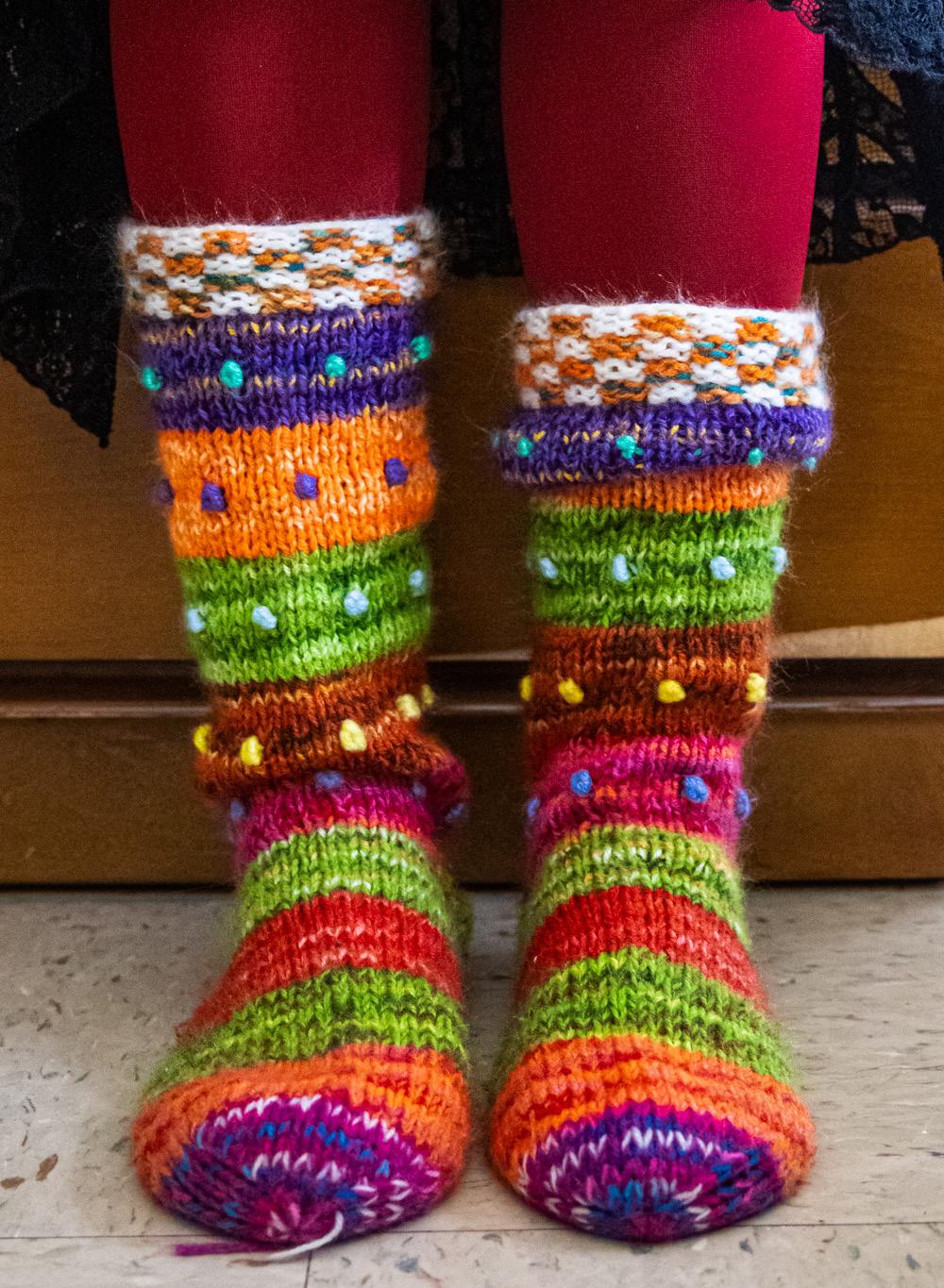
Emma Martinez, senior in FAA, is a queer woman. But she says her personal style isn’t restricted to her gender identity. She layers accessories, scarves and thrifted staple pieces to create her outfits.

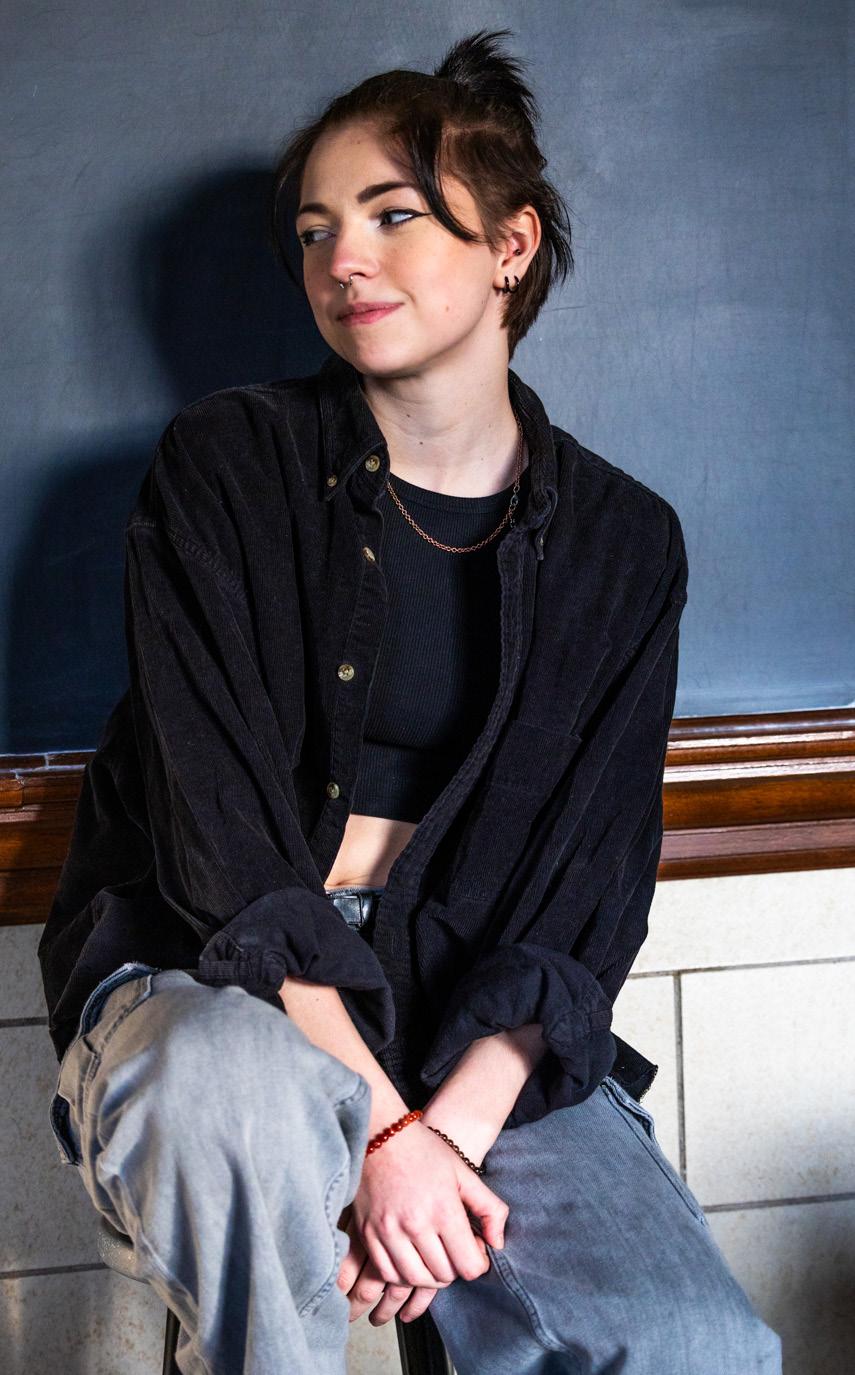

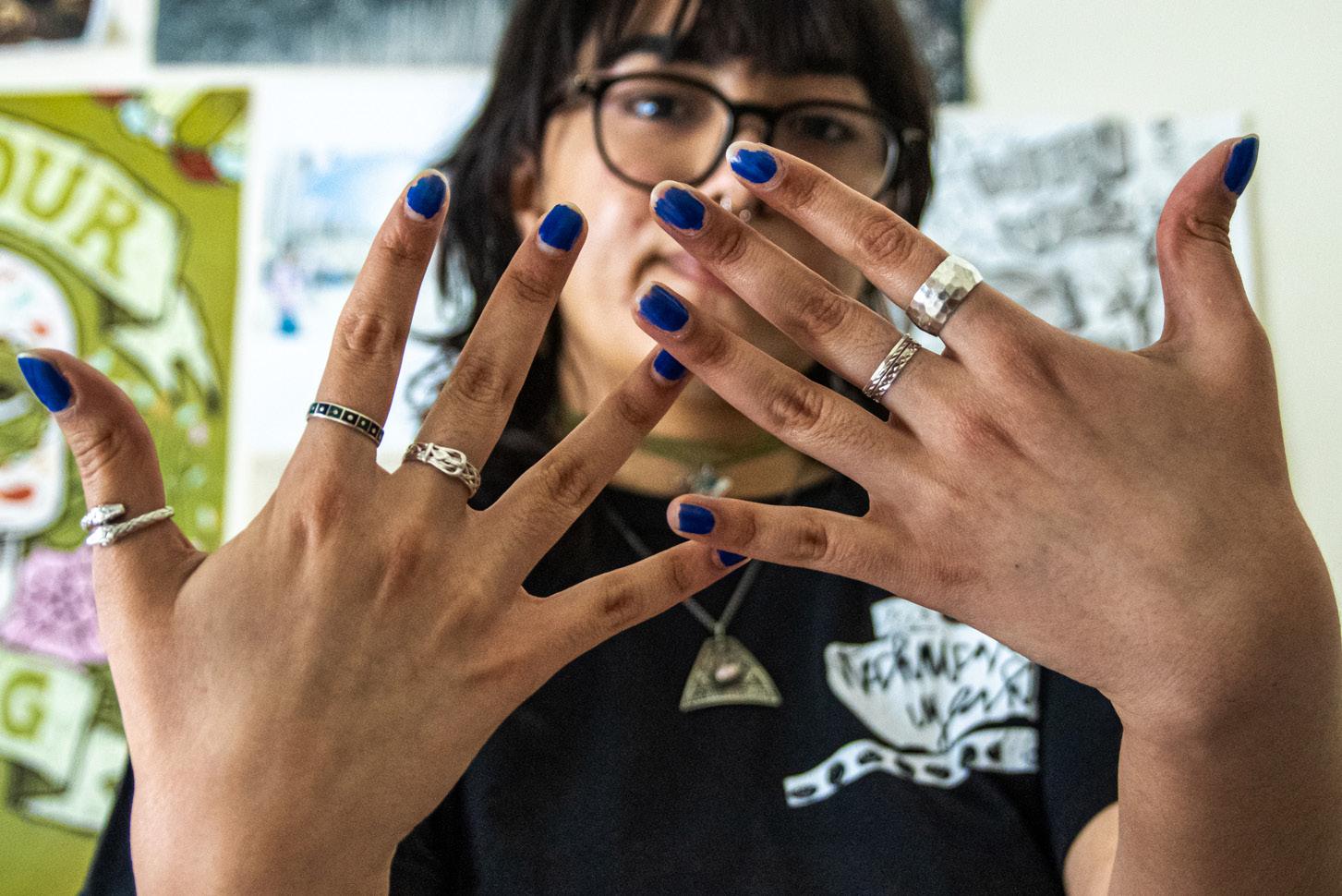
“How I dress now is a note to my childhood self and kind of exploring (and) still allowing myself space to explore who I am,” Martinez said.
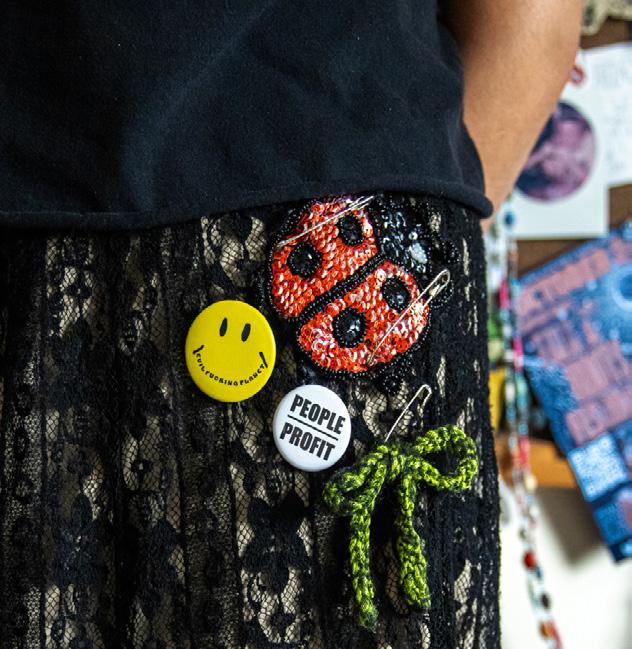
Martinez has a collection of pins that feature in her outfits. She said they put her inner thoughts into words. “I’m not the most out loud person, but I feel like my style is, and that kind of speaks for me,” Martinez said.
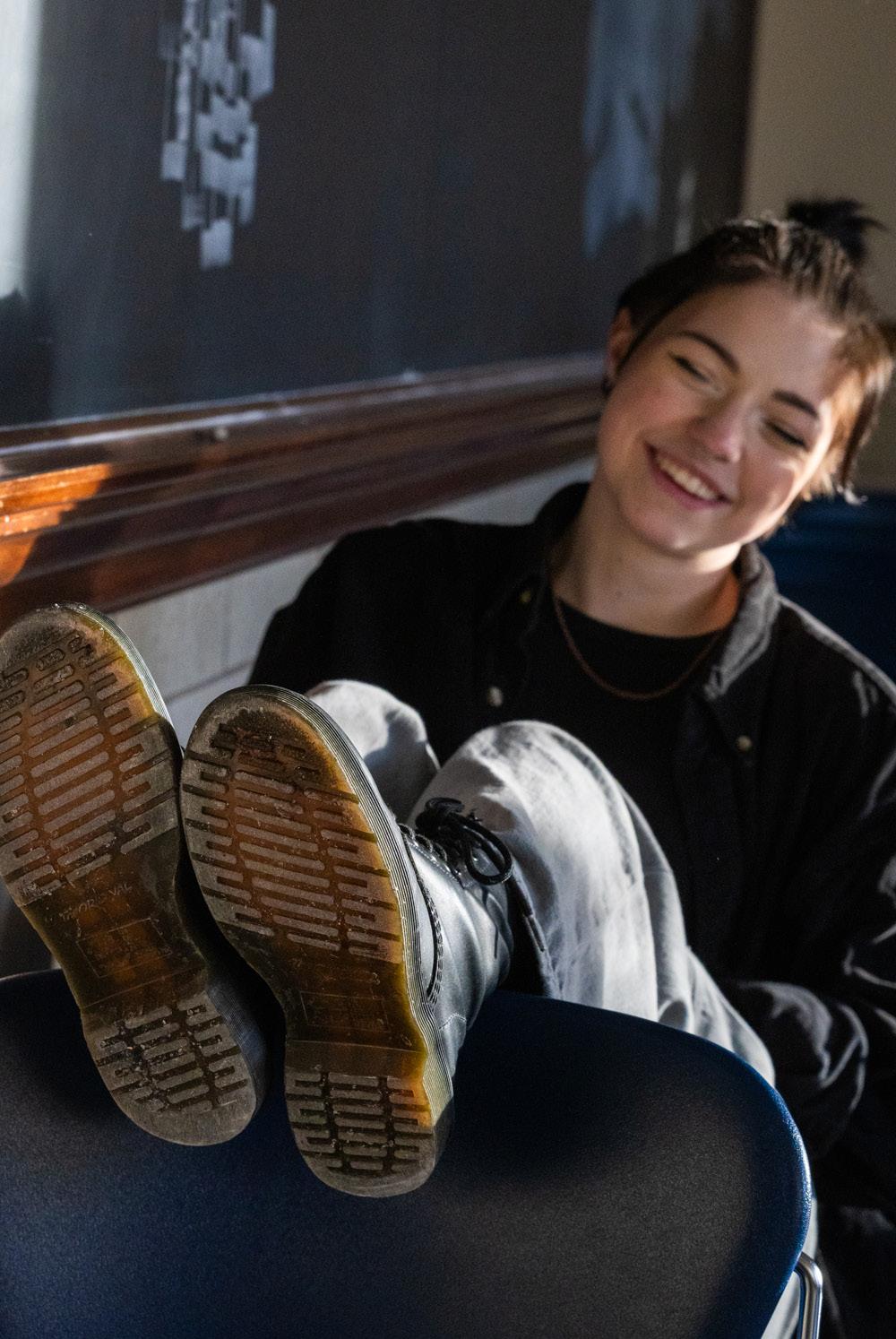
I like to exist in a very androgynous state, but I like using femininity in a performative way — kind of like drag.
Bee Keene, senior in FAA
Pickup lines for U and I
SENIOR COPY EDITOR
ANNA WILLIAMS akw5@dailyillini.com
Have you been searching for that special someone on campus? Hinge, Tinder and other assorted dating apps are all drawing blanks? Are the cold Champaign-Urbana nights starting to erode any possible hope of future romance? Do you ever wish you had some dubiously crafted, bad pun-filled, University-themed pickup lines to finally make that college sweetheart connection? Well, look no further!
Each pickup line is carefully curated for a specific situation or person, so be sure to choose one that works well in the
moment. For best results, try to wear your most school-spirited outfit for the occasion, just so they really know you mean business.
For the statue fanatic: “I’d love to spend Alma time with you.”
For the local wildlife enthusiast: “I must be a squirrel on the Main Quad the way I’m nuts about you!”
For those few days when every single sidewalk is a 3-inch sheet of ice: “Do you believe in love at first sight, or should I slide past you again?”
For the landmark connoisseur: “Are you the Altgeld Hall chimes? Because you should give me a ring sometime!”
For the townies: “I wish I could C-U around here more often!”
For the gym rat: “I think this is the beginning of our relationship ARC.”
For when you find yourself inexplicably standing near the second-oldest experimental crop field in the world: “Can I see you again to-Morrow?”
COMICS
For the bar frequenter: “I’d be Lion if I said I didn’t find you cute!”
For the mascot admirer: “I’m just a Kingfisher looking for my Queenfisher.”
For the commuter: “Are you an MTD bus? Because you showed up at just the right time.”
For exam season: “You must be the CBTF, the way it would be nearly impossible to cheat on you!”
For a night at Twarp: “If we didn’t end up together, I’d be one Blue Guy.”
For the Tomislav Ivišić devotee: “Are you the Music City Madness trophy? Because let’s just say I’d like to do to you what Ivišić did to the trophy.”
Hopefully, the object of your affection responds positively to at least one of these, and you can begin your fantastical collegiate love story. If they don’t, however, please write me a letter detailing the entire story of your getting rejected. I promise to take it very seriously.
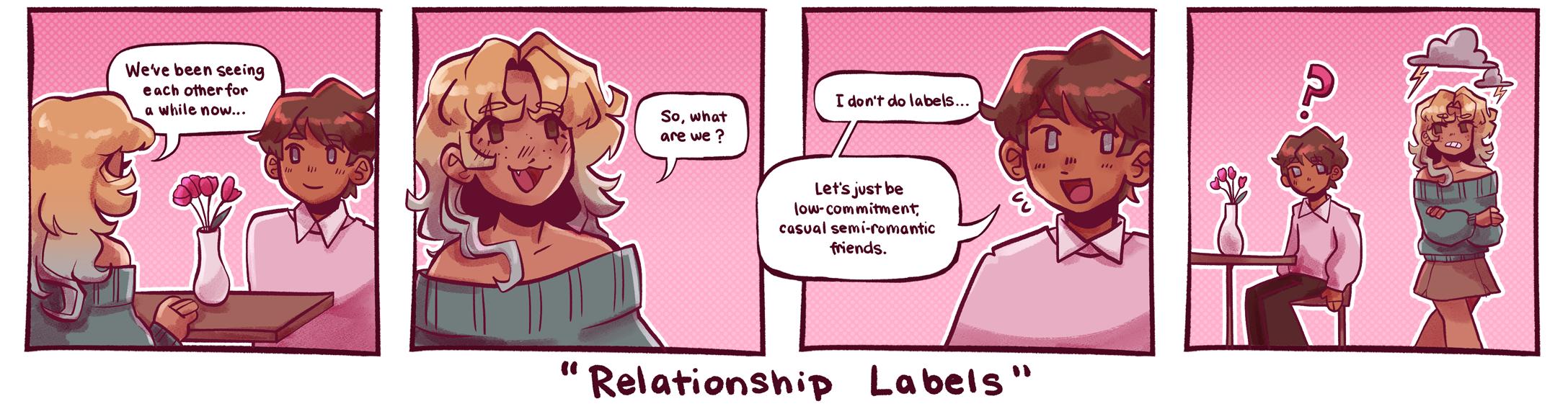
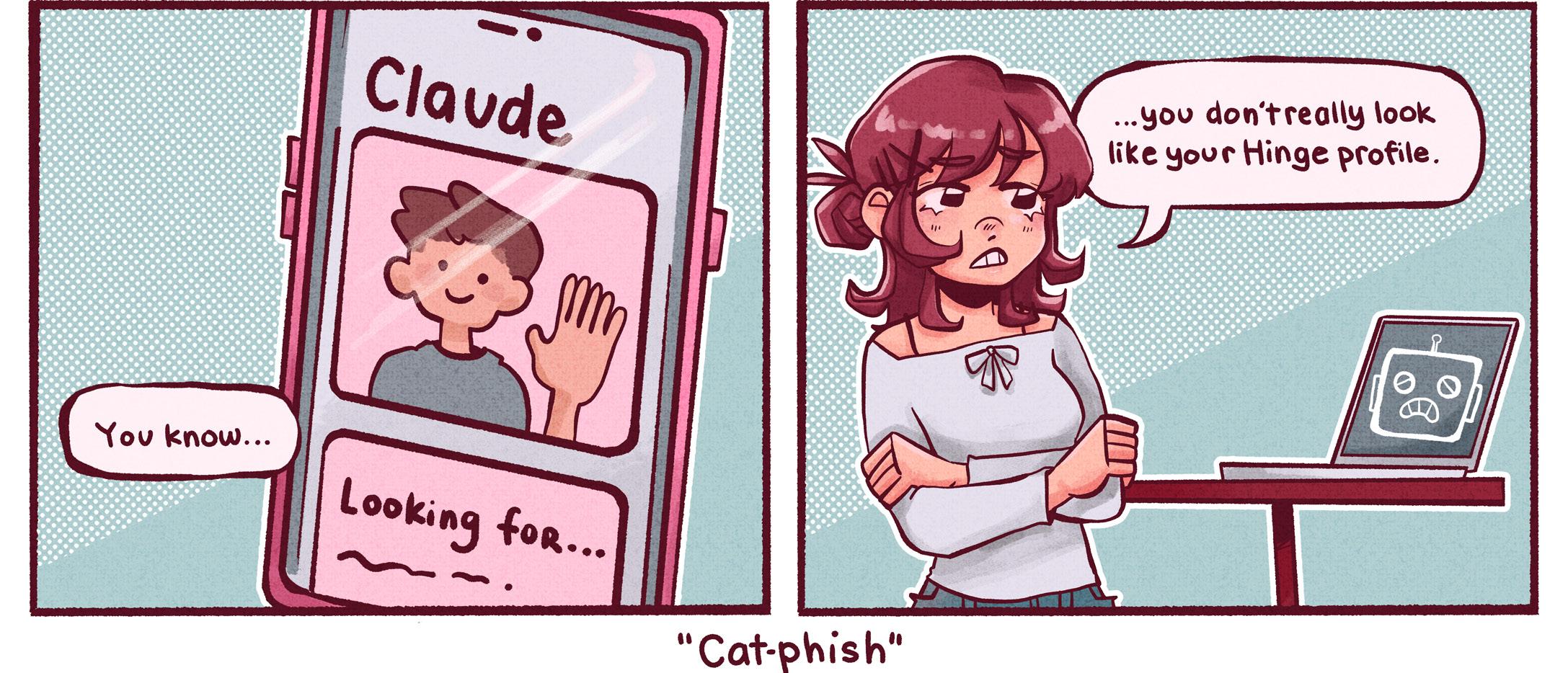

Smutty romance turns stigma into the new norm
SENIOR COPY EDITOR HAILEY WALKER hwalker4@dailyillini.com
From Ancient Greek laments and bodice rippers to romantasy — romance and fantasy combined — shadow daddies and yearning rom-com men, the romance genre has reigned supreme for eons.
“The romance genre has always been huge,” said Lilly Vanderbunt, sophomore in Media. “‘Pride and Prejudice’ flew off the shelves in 1813; it’s always been huge, but it’s easy to forget that.”
The romance genre’s popularity prompted a modern transformation: The characters in romance novels shifted away from stereotypically rich or noble men and submissive women. Contemporary romance novels often star ethnically and sexually diverse characters that readers can identify with and have more engaging, realistic plots.
In the past, the public attempted to restrict the consumption of romance’s black sheep — smut. Smutty books feature “spicy,” explicit scenes that are more graphically and openly described on-page than those typically found in romance novels. Readers had to purchase them at grocery stores as small mass-market copies with conspicuously placed sensual titles.
Some modern romance and smut enjoyers started their journeys on sites like Wattpad and Archive of Our Own.
“When I was probably around 14 or so, I was definitely on Wattpad,” Vanderbunt said. “We all got our start with romance in the same place.”
Recent trends on Instagram and TikTok — or Bookstagram and BookTok — have brought smut to the lime-
light. Book-focused content creators recommend their favorite steamy reads and lead smut into mainstream book culture, as well as new romance readers into the fold.
“You literally look up a romance book you want, you look up an ending or tropes, fan art — anything you could possibly want on TikTok, and you’re able to get it,” said Natalia Kowalewska, junior in LAS.
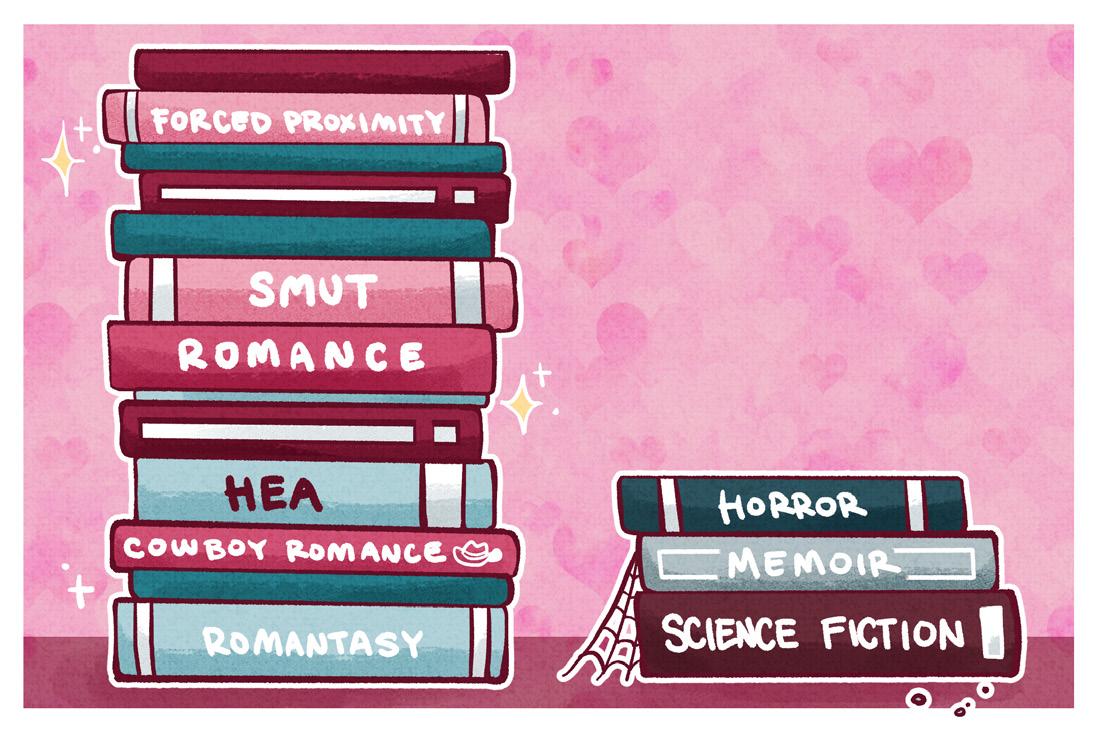
Romance novels can exist without any smut at all. However, authors like Ali Hazelwood, Jasmine Mas and Emily Henry use passionate, romantic plots as devices to further their storylines and worldbuilding, blending spicy romance with legitimate genre fiction.
Smut and romance interact with several subgenres, including historical fiction, gothic, contemporary and romantasy. The highly popular romantasy subgenre is anything but a publishing fad or passing craze, amassing an estimated $610 million in sales in 2024.
“I’d say the majority of the population doesn’t read books,” said Michael Cantore, Kowalewska’s boyfriend and junior in Business. “I think that the books coming out that (Kowalewska) and others are so interested in keep literature alive.”
Romantasy is by no means new — consider Diana Gabaldon’s “Outlander” series that began in 1991 — but its popularity definitely is. Hype over series like Rebecca Yarros’ “Empyrean” and Sarah J. Maas’ “A Court of Thorns and Roses” helped bring the subgenre to the spotlight.
Social media has been a breeding ground for generating excitement about smut and romance books and has
destigmatized the genres by emphasizing their approachability. BookTok and Bookstagram offer modern readers platforms to share their love of smutty romance with pride.
“Romantasy, fantasy, fiction, smut — I feel like those used to be very taboo topics, but BookTok turned it into this common thing and has been very loud about it,” Kowalewska said.
While BookTok and Bookstagram might have led the charge with popularizing smutty romance, in-person discussions are fueling its fire.
“It really gives me (a) connection to my family and friends — being able to talk about topics I used to be afraid of, or even showing book recommendations or talking about characters we relate to and like,” Kowalewska said. “It motivates me to read novels I never would have touched before.”
From book release parties to vibrant social media recommendations and communities, smut and romance novels connect a wide number of readers. Talking about spicy romance novels freely might just be the new norm for readers like Vanderbunt and Kowalewska.
“My mom has always been a reader, but she’s recently gotten really big back into reading,” Vanderbunt said. “She keeps coming into my room and stealing all my books, and she’s like, ‘Which one should I read next?’”
RIKKIE GUNAWAN THE DAILY ILLINI
Challenging the taboo, embracing benefits of masturbation
STAFF WRITER
MARIANA QUEZADA mquez3@dailyillini.com
In Season 1 of “Sex and the City,” sweet, conventional Charlotte York is interrogated by her more sexually liberated friends about her apparent obsession with a vibrator called the Rabbit.
“It’s a vibrator, it’s not like it’s crack!” York argues fruitlessly as her friends confiscate it, saving her from “settling for herself.”
The scene, while humorous, frames masturbation as something to outgrow — a consolation prize until sex arrives.
Two decades later, that attitude feels dated, at least on screen. Masturbation is now often framed as self-care, empowerment and even wellness.
Among younger generations, talk of sexual health is more open, less hushed. On more progressive college campuses like the University’s, the conversation is practically institutionalized.
At the University, students are front and center of this shift. Paige van Meter, event coordinator for the Sexual Health Peers program at McKinley Health Center and junior in LAS, has participated in tabling events to promote open dialogue about sex.
“You’re talking to strangers about something pretty personal,” van Meter said. “So we’re moving towards figuring out ways to make it a more comfortable space and less stigmatized.”
As part of the program, McKinley offers everything from testing for sexually transmitted infections to safe sex supplies, hosting a space where they “meet you where you’re at.”
“I think the peers are really great at not being scary and making the topics be very open,” van Meter said. “Ask whatever you need.”
While efforts to normalize this dialogue are evident, to assume masturbation is casual coffee-shop talk for everyone would be naive. Stigma persists, shaped by religion, culture and gender
expectations.
Yet there are voices in the community that are trying to push through these stigmas or taboos.
An example is the “Sex Positive God Pod,” a podcast co-hosted by Rev. Leah Robberts-Mosser, who pastors Community United Church of Christ in Champaign, and Rev. Jennifer Aull from Brooklyn, New York. In their first episode, aptly titled “What About Masturbation?,” they discuss self-pleasure within religion.
“The negativity about this comes from the idea that sex is only for procreation and that masturbation is a sin because pleasure is bad,” Robberts-Mosser said. “But that’s not what all Christian traditions believe.”
Guilt over the act, specialists argue, serves little purpose. Shame, whether due to considering masturbation “sinful” or “unhealthy,” only harms the individual.
The case for self-pleasure, from both a mental and physical standpoint, is stronger now more than ever.
Jenn Aardsma, a specialist in sex therapy in the Champaign area, considers masturbation essential.
“It’s part of an overall selfcare package,” Aardsma said. “Relating well with your body, with your sexuality, also caring for your body in other ways as well, like exercise and a healthy diet. It’s all part of that combination of things that supports well-being.”
From a psychological perspective, masturbation can reduce stress, ease anxiety and improve sleep. Endorphins released during orgasm act as natural mood regulators.
It can also foster a sense of autonomy. Knowing one’s body builds confidence that carries into partnered
relationships, Aardsma said.
Medically, the benefits are equally straightforward. According to Planned Parenthood, masturbation is the safest sexual act, posing no risk of pregnancy or STIs.
It’s also linked to muscle relaxation, tension release and improved sexual health over time.
And then there’s the benefit rarely defended in academic language: It feels good.
So, while masturbation may be a solo activity for many, it’s important to remember that in the pursuit of pleasure, you are not alone.
“It’s understandable why people would still wonder, ‘Am I normal? Is this healthy for me?’” Aardsma said. “There (are) still doubts and fears of whether the way we experience our sexuality is like someone else’s, and the answer is: It’s going to be yours. It’s going to be personally yours.”

RIKKIE GUNAWAN THE DAILY ILLINI
Beyond labels: Personal gender identity, expression
SENIOR ARTS & ENTERTAINMENT REPORTER OLIVIA DVORAK odvor2@dailyillini.com
Identity can be expressed in many small ways.
It’s changing your hair color on a whim, throwing on a cute outfit just to walk around the house or putting together an intricate outfit to go to a house show. These personal choices often become quiet ways that people explore their own gender identities, with or without any outside influence.
For many students, gender exploration doesn’t happen all at once. It’s shaped gradually by the community around them, instead of being one single moment of realization.
Cayleigh Kissinger, senior in LAS and Media, started thinking intentionally about her gender in high school. Being part of queer spaces surrounded her with people of all identities, which prompted her to experiment with her own pronouns. That questioning resurfaced more clearly during her junior year of col -
eral, stem from this idea that I felt like I was stuck in a specific label,” Kissinger said. “I realized I could loosen the grip on that because there doesn’t have to be one way to be anything, and I don’t have to just be what I’m born as.”
Rather than rejecting femininity, Kissinger thinks of it as something she simply gravitates toward, not
feminine styles, she notices a change in the way she carries herself when she wears different types of clothing.
“When I’m wearing a skirt, I notice the crossed legs, and I notice the more feminine attributes coming out,” Kissinger said. “If I’m in a muscle tee, even the way I sit will change, and the way that I speak and my hands and voice will change.”


“I realized that a lot of my fears about how I present, and a lot of my anxieties around it in gen -
something she owes to her womanhood. Adopting she/they pronouns helped her loosen some of that pressure and comfortably accept her own ideas of gender.
She shows this shift in how she expresses herself. Kissinger has dyed her hair for years in different shades of red, pink and even pastel green as a playful way to experiment with her gender identity.
Clothing also offers a similar freedom. As a lover of both masculine and
While some students experienced gender exploration as letting go of social expectations, others have to balance the internal and external restrictions that come with it.
Ximena Munoz, senior in FAA, identifies as a transgender woman. She first explored the idea of being gender-fluid but settled into identifying as female during her junior year.
While Munoz found a supportive community among friends at the Uni-
RIKKIE GUNAWAN THE DAILY ILLINI
versity, her parents don’t carry the same acceptance. Since she hasn’t told them about her transition, she tries to limit her visits home and avoids wearing feminine clothing around her family.
Instead, she expresses her femininity in quieter ways, by shaving her facial and body hair, painting her nails or doing her makeup.
“I kind of just try to be myself,” Munoz said. “I don’t feel like I have to portray certain things, even in private.”
House shows in Champaign-Urbana have been especially important for Munoz. In those settings, she’s allowed to dress and exist however she wants without fear of judgment.
Still, she doesn’t see femininity with a narrow mind. Munoz enjoys both masculine and feminine interests and learned that the two can coexist with womanhood.
“It’s not like I have to wear (feminine clothes) to feel like that, but it definitely does help kind of express it, and I think it helps me feel like other people can see (my identity) a little bit more,” Munoz said.
Even with that freedom of expression, growing up in a religious Mexican household has left some internal struggles. Instead of facing judgment from others, Munoz finds herself having to unlearn beliefs that were instilled in her early on.
“Even when you leave home, and you are able to really express yourself, there is still a mental block that’s really difficult to get through, and that often is there for a long time,” Munoz said. “(Even though) I have been able to start more freely expressing myself, there is still always something nagging at the back of my mind of, like, ‘You’ve been taught that this is wrong.’”
At times, gender expression can be about avoiding labels altogether. Rat King Crow, a local musician, identifies as gender-fluid. Crow said some days they feel feminine, some days they feel masculine and some days they “don’t want to be anything at all.”
After going to high school in a small town, returning to C-U allowed them to explore their gender more openly. Crow enjoys expressing them-
self through “weird” clothing, often dipping into both feminine and masculine themes. Their favorite piece resists gender altogether: a hospital gown.
“In my head, I don’t really think of gender when I look at a hospital gown,” Crow said. “It just raises the question of, ‘Why are you wearing a hospital gown?’ instead of, ‘Why are you wearing a dress?’ So it makes you not think about what gender I am.”
Through layering and experimentation, Crow tries to redirect the attention from their gender onto their creativity. For them, feeling comfortable in their own skin often comes before worrying about how others label them.
“Easier said than done, but stop caring what people think,” Crow said. “Be kind to yourself; don’t stare into the mirror too long.”



SEX& THE CU No ring, no romance, no regrets
STAFF WRITER
LILLIE SALAS lmsalas2@dailyillini.com
College seemed like the start of everything, and for the most part, being on campus catalyzed exactly that.
Yet, I am preparing to leave without the one thing I thought I would find: The Great College Love.
This isn’t a colloquially used term, but it’s something I made up to define a meaningful connection.
This Great College Love is deeply personal and impactful. It could’ve been six weeks or two years, but this connection was so palpable you know the other party will occupy your mind palace indefinitely.
I’d like to sit and tell you about my Great College Love — except it never happened.
I’ve compared my four years at the University to writing a book. The early stages are full of storyboarding, finding the characters and unlocking new aspects you didn’t know existed.
By senior year, all the aspects of the world you’ve built are familiar, and a natural stopping point arrives.
While I was mentally rereading my own experience, I realized it lacked a real romantic plotline.
Starting on campus, this University seemed vast and limitless. By senior year, I found I had maybe three eligible people on my love roster.
I started worrying I had set my standards too high. As most people do, I came into college with expectations.
In terms of romance, I expected someone to walk into my life and reimagine the way I approached relationships.
In some ways, my romantic college connections did shape me, but I just don’t feel super passionate about them. There isn’t one face that pops into my head when people discuss groundbreaking romantic partners.
For some time, I felt like I had missed out. If all other aspects of my life are in order, why does this nonexistent Great College Love feel so huge?
Yet, as I comb through romantic memories and experiences, I can see I made decisions that prioritized other aspects of my time here, and I’m actually happy that’s the case.
I’ve reimagined situationships, flings and short-term partners, and I’ve tried to lay out alternate endings for myself, but I can’t find happier endings than where I am currently.
My story is filled with cherished moments from my friends telling me I deserved better and then showing me what pure, wholesome love looks like.
I’ve come to realize that my Great College Love isn’t a romantic one but a platonic one, and this form of genuine affection has shaped me into the person I am today.
Maybe I would have gotten into a relationship if I had spent more nights prioritizing it, but I chose differently. I chose the friends in my life who made me feel valued, and I spent time with people who consistently showed up for me, no strings attached.
This means I didn’t — and now probably won’t — have a Great College

Love that I will mourn for the rest of my life, but I did have deep and meaningful connections with those who really cared for me.
This might not be the case for everyone, but if you resonate with this idea, then there’s no shame in that.
I’ve built a strong foundation of support and comfort, which maximized my confidence and my perspective on self-worth.
And outside of my friends, I’ve been able to grow into an adult by myself. I am now rooted in who I am, who my friends are and the things I choose to value.
I got to learn to live according to me. I believe that, in turn, will make my future relationships stronger. I feel more capable of opening my heart to another person knowing what I can bring to the table on my own.
It’s scary to know you’re closing a book to open a new one. Still, I’d like to keep in mind that preexisting notions of what you’re supposed to have accomplished are void.
I’ve learned you create the reality you want to live, and when I think back to all the decisions I made, I wouldn’t change a single one.

RIKKIE GUNAWAN THE DAILY ILLINI
Queer men must curb ‘gay guy’ stereotypes

SENIOR COLUMNIST
ALEXANDER FAKO afako2@dailyillini.com

**Gay, bisexual and queer men will primarily be referred to as “queer men” in this article.**
Earrings. Tight shirts and skinny jeans. Instagram posts surrounded by girls. Lorde concerts. “Like yeah-uhh.”
Ah, yes. The “gay guy.” No matter what kind of batteries your gaydar runs on, there’s the once-in-a-while-gay you can pick out of a crowd like an orange ping pong ball on a white piece of paper. You don’t ask, they don’t need to tell.
Stereotyping is innate to human decision-making. As Paul Bloom, the Brooks and Suzanne Ragen professor emeritus of psychology, said, “You don’t ask a toddler for directions, you don’t ask a very old person to help you move a sofa, and that’s because you stereotype.”
You don’t assume the skinny guy wearing fairy wings at a Halloween party is the modern-day Casanova.
Queer men already struggle to find potential partners — only 6% of men in the United States identify as LGBTQ+. To combat this, they have developed physical characteristics to signal their interest in same-sex relationships. For example, a red necktie used to signal interest in queer encounters.


to find a partner than others. Therefore, more queer men adopt traits to make themselves easily identifiable.
If a queer man wants others at the bar to know his sexual identity, he will likely perform as the “gay guy.” Some only do this to ensure their intentions are met with successful recognition.
But it isn’t working. Sixty-two percent of queer men have reported being single, compared to 32% of all American men. Many just aren’t comfortable being the “gay guy.”
“It’s not necessarily a stereotype, more so an expectation, but ‘being one of the girls’ gets annoying,” wrote one user on Reddit.
Queer men must curb these stereotypes by being less “gay.”
The media presents homosexuality in a heteronormative frame. Male same-

models of identity presented as reality by the media and think, “Oh, that’s what I should act like.”
Granted, there are more accurate, challenging depictions of homosexuality in films and TV shows like “Moonlight,” “Sex Education” and even “Brooklyn Nine-Nine.” However, these are few in number and usually target more niche audiences or are not the focus of the narrative.
Then there are representations of queer men in porn and on platforms like OnlyFans and Grindr. In fact, 57% of queer men have used a dating app. These outlets promote labels like “DL,” “Twink” and “Bear,” funneling queer men into rigidly defined, promiscuous cliches.

As a result, public vernacular reg ularly associates queer men with ho mophobic narratives like sexual and romantic desperation, polygamy and being carriers of disease, a residual from the 1980s HIV/AIDS epidemic.
“Such heuristics can be useful when decisions must be made quickly, or when information is lacking,” according to Alexander Stewart, honorary professor at the University of St. Andrews School of Mathematics and Statistics, and Nichola Raihani, professor of evolution and behavior at the University of Auckland School of Psychology.
It’s social Darwinism: A queer man easy to pick from a crowd is more likely
sex relationships frequently consist of distinct dominant and effeminate-male binaries to create clear character divisions and appeal to mass audiences.
There is the “almost straight,” masculine top and the skinny, clean-shaven bottom: Will and Jack in “Will & Grace” and Nick and Charlie in “Heartstopper,” for example.
These archetypes “hail” queer men. French philosopher Louis Althusser’s theory of interpellation suggests behavioral ideologies “hail” people like a cop saying, “Hey, you!” — queer men see
It’s social osmosis: As more gay men choose one of these models to mirror, the stereotypes exit the screen and enter their surroundings.
“Stereotypes can therefore be self-fulfilling prophecies, and are not only opinions we have about others, but opinions we come to believe about ourselves,” according to author Dan Pilat and decision scientist Sekoul Krastev.
It comes as no surprise that, in 2022, 58% of LGBTQ+ youth reported experiencing symptoms of depression, and 45% seriously considered attempting suicide. Seventy-seven percent of users reported feeling regret after using Grindr in 2018.
While the media and online platforms capitalize on gay cliches, it is on queer men themselves to overhaul the exoticization of male homosexuality.
Researchers at the University of Am sterdam conducted a study of possible

RIKKIE GUNAWAN THE DAILY ILLINI

interventions to reduce gay stereotypes. They found that presenting media of queer characters in difficult situations to heterosexual men was the most effective.
A prime example is Jack and Ennis in “Brokeback Mountain.” Both men are hypermasculine. They struggle with their attraction to each other, and a presumable act of homophobic violence affects one primary character in the end.
As gay as Jack and Ennis may be, they retain their masculinity and make their homosexuality “nobody’s business but (theirs).” This generates more hetero-societal empathy for their relationship. Unfortunately, it also promotes the notion that queer men who aren’t expressive about their sexuality must remain closeted.
The lesson for queer men to take from this isn’t that they should appeal to ideals of masculinity for approval. It’s that queer men who don’t naturally desire to perform in more expressive ways shouldn’t.

Instead, they should be open about their sexuality while retaining their individual qualities.
Some may see this as “straightwashing.” Queer groups have criticized politician Pete Buttigieg for this. Conservative political commentator Tucker Carlson went so far as to theorize that Buttigieg is secretly straight.
Only 13 members of the 119th U.S. Congress openly identify as LGBTQ+ (not including George Santos). Buttigieg, the first openly gay presidential cabinet member, has already transcended boundaries for the queer community, reaching a platform few ever do.
And now you’re telling him he has to be gay in a certain way?
The very fact that Carlson is so scared of Buttigieg that he thinks he’s straight is a sign of progress. It reflects Sigmund Freud’s concept of “the uncanny,” suggesting people repel shocking material when it evokes subconscious thoughts or desires.
Carlson repelling Buttigieg’s homosexuality proves people are terrified of the truth: Queer men are everywhere and not so different from their straight counterparts.

This is not suggesting that more expressive ways of challenging sexual norms are ineffective. Dyeing hair helps individuals embrace their queer identity.
Emphasis on pronouns has also proven to help affirm gender identities for those who may challenge gender norms.
The reality is, there are more queer men out there than the few dressed as hunky firefighters. Many simply don’t feel comfortable outwardly expressing their sexuality because they don’t want to perform common gay paradigms or homophobic narratives.
It’s going to take some “balls” to reduce “gay guy” stereotypes. Queer men need to show that effeminacy, outfit choices and drinking vodka crans are unique to the individual rather than their sexuality.
This means blurring expected dress codes for hetero and homosexual males. It also means being equally open to having male and female friends or partners, veering away from stereotype-enforcing outlets, like Grindr, and occupying more traditionally “straight” spaces — all while being openly gay, bi or queer.
Hopefully, the media will represent these individual trends, in turn leading to fewer queer men mirroring exoticized models of sexuality.
Curbing overtly gay expression is not conforming to or infiltrating heteronormative standards. Society benefits from openness about orientation and authentic expressions of sexuality.
By refusing to perform as caricatures, queer men will reach platforms where they can promote and be models for change. They can then develop a social climate more open to all forms of sexual expression, helping a wrongfully marginalized and stereotyped group become happier and healthier.
Moving away from practices that closet many queer men will also force homosexuality to become more present in social settings. When gay men aren’t on Grindr, they have less of a choice to avoid flirting with men in bars.
Sexual expression is not something to be “hailed” by. A queer man can wear quarter zips just as they can skinny jeans and listen to Creedence Clearwater Revival just as they can to Mitski.
It doesn’t have to be in their faces, but it is people’s business to know that they are living in a world where they’re surrounded by homosexuality in all forms, fairy wings or not.
Alex is a sophomore in LAS.
LGBTQ+ BOOKS
“DETRANSITION, BABY”
Torrey Peters
“ON EARTH WE’RE BRIEFLY GORGEOUS”
Ocean Vuong
“STONE BUTCH BLUES”
Leslie Feinberg
“FELLOW TRAVELERS”
Thomas Mallon
“SUNBURN”
Chloe Michelle Howarth
“FUN HOME: A FAMILY TRAGICOMIC“
Alison Bechdel
“ANGELS IN AMERICA”
Tony Kushner
“FINGERSMITH”
Sarah Waters
“NEVADA” Imogen Binnie
“THE DEATH OF VIVEK OJI”
Akwaeke Emezi
“THE
PRICE OF SALT”
Patricia Highsmith
When dating became an economic problem
SENIOR
COLUMNIST
RAPHAEL RANOLA rrano2@dailyillini.com
“ Dating is hard” — that’s how a lot of great columns start. But this isn’t “Sex and the CU,” this is me, which means we’re going to have to talk about economics.
I’ll relent and say that, vibes-wise, dating sucks. Structurally, it’s an imperfect market. There isn’t necessarily a match for everyone, and your odds scale almost entirely with the number of people in your immediate orbit — tough luck if you’ve already exhausted the dating app pool. The apps themselves are an imperfect solution to a problem created by suburban sprawl, car dependency and the disappearance of third places where people used to meet each other by chance.
Those are just the barriers to getting dates. Now — excuse me while I get up on the soapbox — let’s say you clear them. You’re no longer swiping, you’re no longer strategizing, you’re officially “dating.” This is the part that’s supposed to be fun.
AND YET, WHERE IS THE JOY?
Somewhere along the way, we’ve gotten away from dating as a lowstakes endeavor. It’s expensive, and it seems like even the most lowkey of plans demand a budget, a reservation and a triple-check of your bank account — as if intimacy itself requires authorization.
There’s an economic model that can help formalize this under the umbrella of “leisure” — defined simply as any hour not spent working, treated as interchangeable with any other. It’s a useful abstraction, yet wildly insufficient.
That assumption breaks down almost immediately in real life. Dating doesn’t just require free time; it
requires unstructured time. I’m not usually this precious about semantics, but the distinction matters. Leisure, in economic terms, is not the same thing as unstructured time. An exhausted hour wedged between obligations may count as leisure on paper, but it’s functionally useless for intimacy.
More importantly, many people don’t get that kind of time at all. Hourly workers, gig workers and caretakers live with schedules that shift week to week — or day to day — leaving little room for spontaneity. The same goes for salaried

“time poverty,” a simple lack of unstructured time. Not because people don’t want connection, but because connection is one of the few things that still demands inefficiency. You just can’t optimize it, squeezing it neatly between obligations.
Romance doesn’t survive in the margins of your Outlook calendar — and yet, structurally, that’s exactly where we’ve tried to put it.
Time isn’t the only constraint. The baseline cost of a “normal” date has gone up as the cost of everyday life has
Nothing fundamental has changed. People still want connection and intimacy. What has changed are the institutions around dating: labor markets that consume time, housing markets that erode privacy, cities that price out unstructured space and cultural norms that treat inefficiency as failure.
Raphael Ranola, senior in
young professionals: They over-optimize their calendars, prebook their evenings and treat weekends as recovery periods instead of opportunities for connection. When everyone’s busy, no one gets to capitalize on the joy of connection.
From an economic perspective, this isn’t accidental. Americans work more hours, on average, than workers in most other rich countries. At the same time, “nonstandard work” — like gig labor, irregular schedules or multiple jobs — has expanded, reinforced by a cultural moment that treats constant productivity as a virtue. Side hustles monetize hobbies, downtime becomes suspect and free time starts to feel indulgent.
Dating, then, runs headfirst into
ACES
risen faster than young people’s incomes. The Institute for Youth in Policy has documented how, even as inflation has cooled, essential costs like housing, transportation and food have remained structurally higher, while real wage growth for young workers has been uneven and volatile.
Persistent rent pressure and housing shortages have pushed many young adults into extended roommate living, limiting access to private space and quietly shifting intimacy into public settings — whether it’s cafes, bars, restaurants or rideshares — that charge for time, whether spending is the point or not. Dating becomes more expensive not because of higher expec-
tations, but because the material conditions of young adulthood leave few genuinely low-cost alternatives.
None of this is happening in a vacuum. It maps neatly onto a broader pattern of spatial hollowing-out. As expected, the third places that once made casual connection possible — the spaces between home and work where you could exist without a transaction — have steadily disappeared. What remains increasingly operates on a payto-exist model.
That explains why a request for dating advice now turns into a scavenger hunt for the last remaining places where you can simply “be.” In Champaign-Urbana, that list is getting shorter, but it still exists: connecting over coffee at Caffe Paradiso, walking the paths around Japan House, browsing the shelves at Jane Addams Book Shop or simply existing together
on the Main Quad when the weather allows it.
I came up with these off the top of my head, and I’m confident you’re more creative than I, dear reader. The world is your oyster. The problem is that oysters are getting harder to find when nearly every space asks for a credit card. If every place requires a purchase, intimacy becomes a luxury good.
It’s worth noting that the norms around dating — what counts as effort, what counts as acceptable and what reads as thoughtful versus cheap — are increasingly set by people with disposable income and time. Deviating from those norms carries real embarrassment risk.
But don’t let that deter you — in equilibrium, nothing fundamental has changed. People still want connection and intimacy. What has changed are the institutions around dating: labor
markets that consume time, housing markets that erode privacy, cities that price out unstructured space and cultural norms that treat inefficiency as failure.
The problem is misdiagnosis. When dating is framed as a personal failure rather than a structural one, the conditions making connection more difficult become opaque. The sooner we understand this as an institutional failure rather than an individual one, the sooner we can stop wallowing in material conditions and start rebuilding the spaces and norms that make connection possible.
Raphael is a senior in ACES and unfortunately did download Hinge — don’t bring it up with him.