

WHERE CREATIVITY MEETS IMPACT




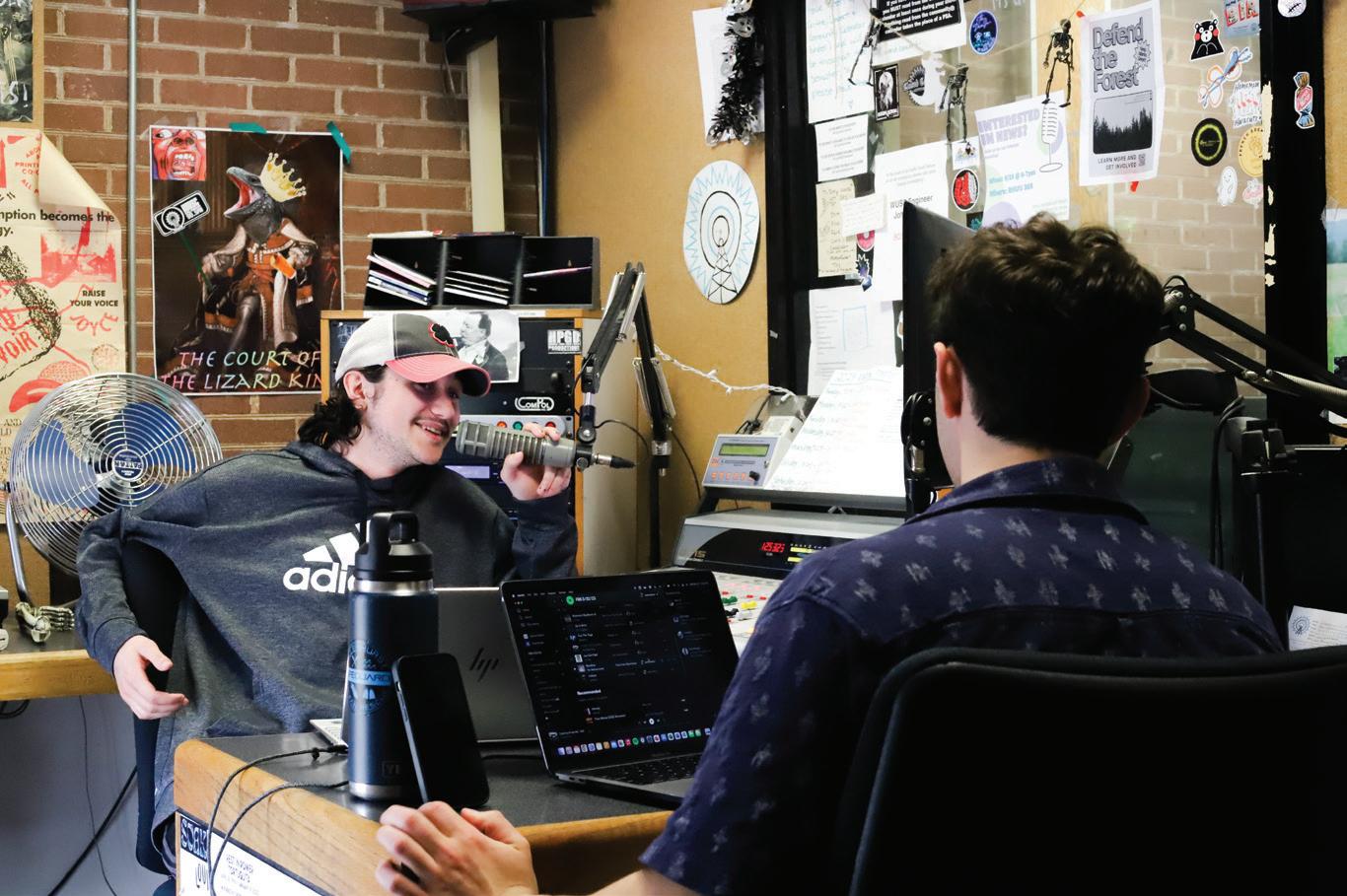
TABLE OF CONTENTS
03 CONSTANTLY CHANGING
A first letter from the new editor-in-chief about her personal experiences and growth with The Daily Gamecock.
04 ICE PROTEST
USC students and other organizations took part in a nationwide U.S. Immigration and Customs Enforcement protest.

05
HAPPY BLACK HISTORY MONTH
A measles outbreak has been confirmed in Spartanburg, South Carolina. There have been over 920 confirmed cases statewide since the outbreak was declared.

14 BASEBALL AND SOFTBALL SEASON EXPECTATIONS
South Carolina baseball and softball begin their 2026 seasons with high expectations despite contrasting 2025 campaigns.
24
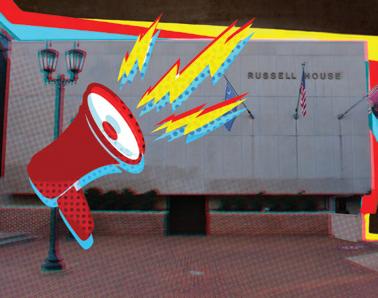
FREE SPEECH IN EDUCATION
Conservative organizations on college campuses have been preaching free speech despite silencing others at these same universities.
From Martin Luther King Jr. to Rosa Parks, here are five notable activists to remember during Black History Month.
09 USC NEXT RENOVATIONS
Thomas Cooper Library, McKissick Museum and Barnwell College will be renovated and updated as part of the USC Next master plan. 16 USC
Follow these recipes to create the perfect Filipino breakfast featuring garlic fried rice, fried eggs and longanisa sausage.
AKSHARA
A new Bollywood fusion dance team, USC Akshara, spent months preparing for its first performance.
Can you spot the six differences between these two pictures?
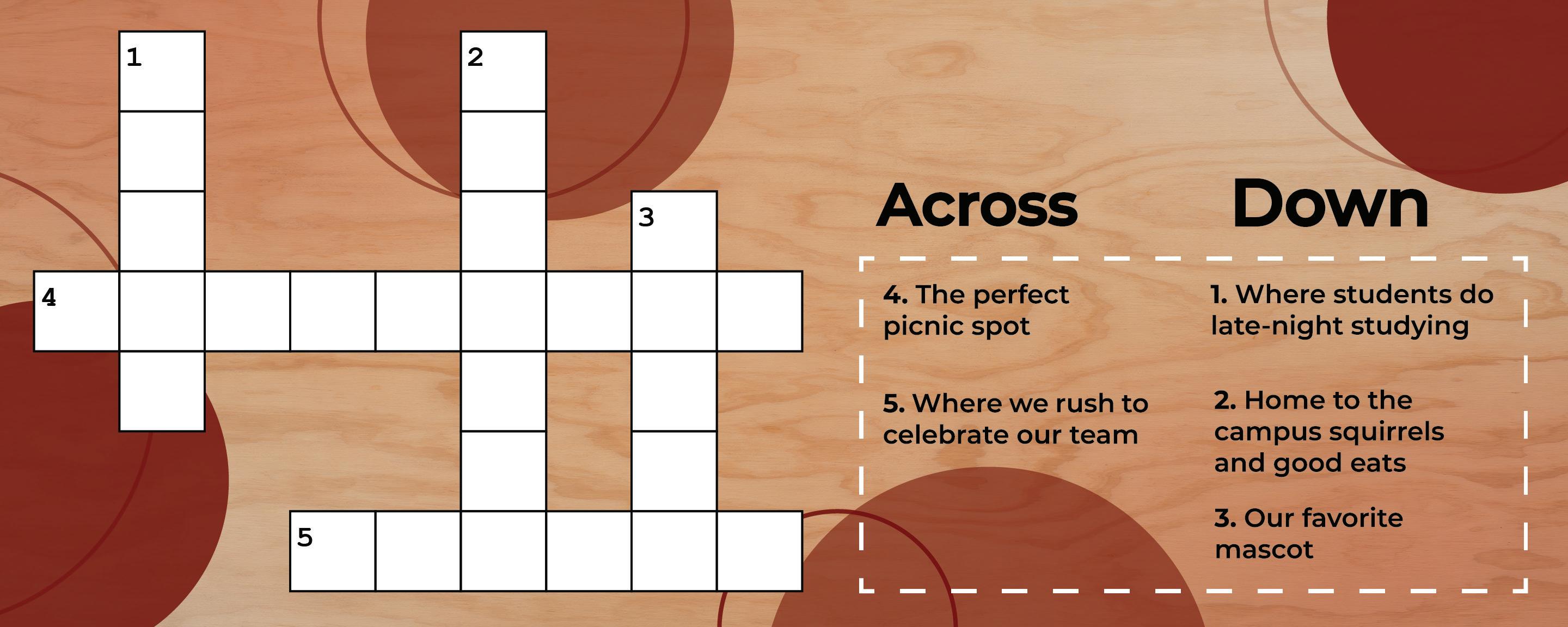
Solve this USC-inspired crossword puzzle.
GOVERNMENT SHUTDOWNS FAIL AS A TACTIC
U.S. government shutdowns accomplish nothing. Why is it acceptable to make citizens suffer because of lawmakers’ actions?
South Carolina women’s basketball signed freshman forward Alicia Tournebize over the winter break.
South Carolina baseball brought in 12 new pitchers from the transfer portal for the upcoming 2026 season.
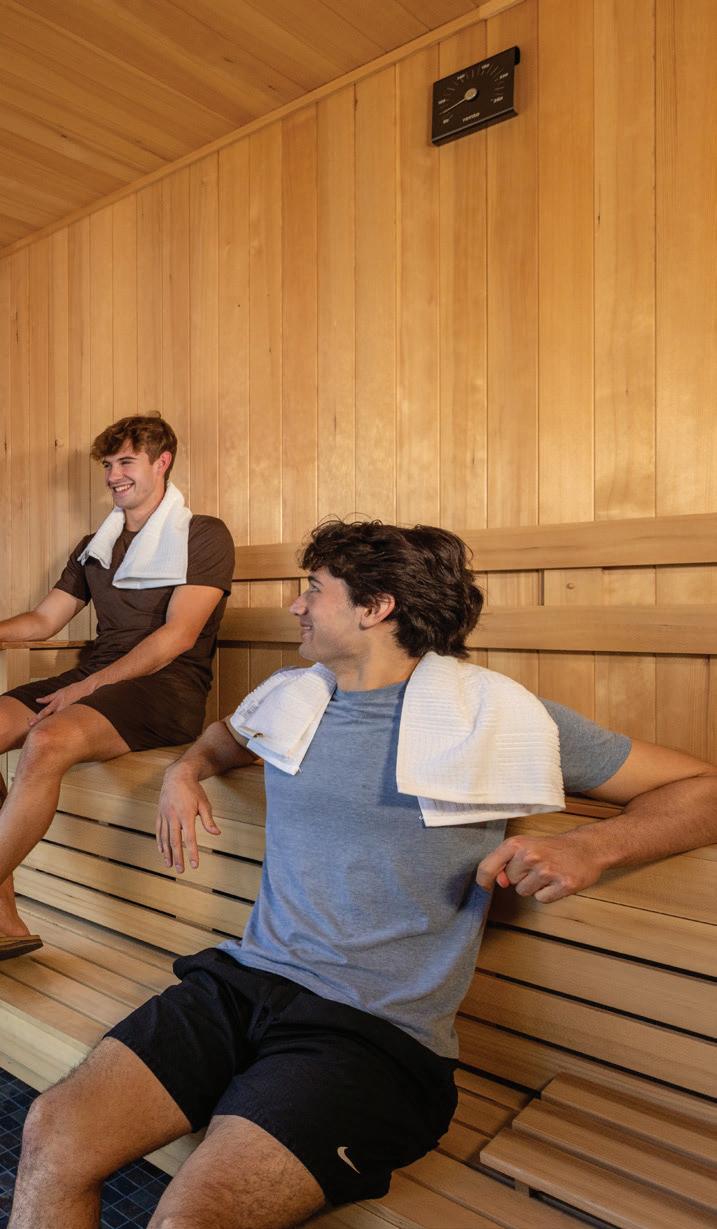
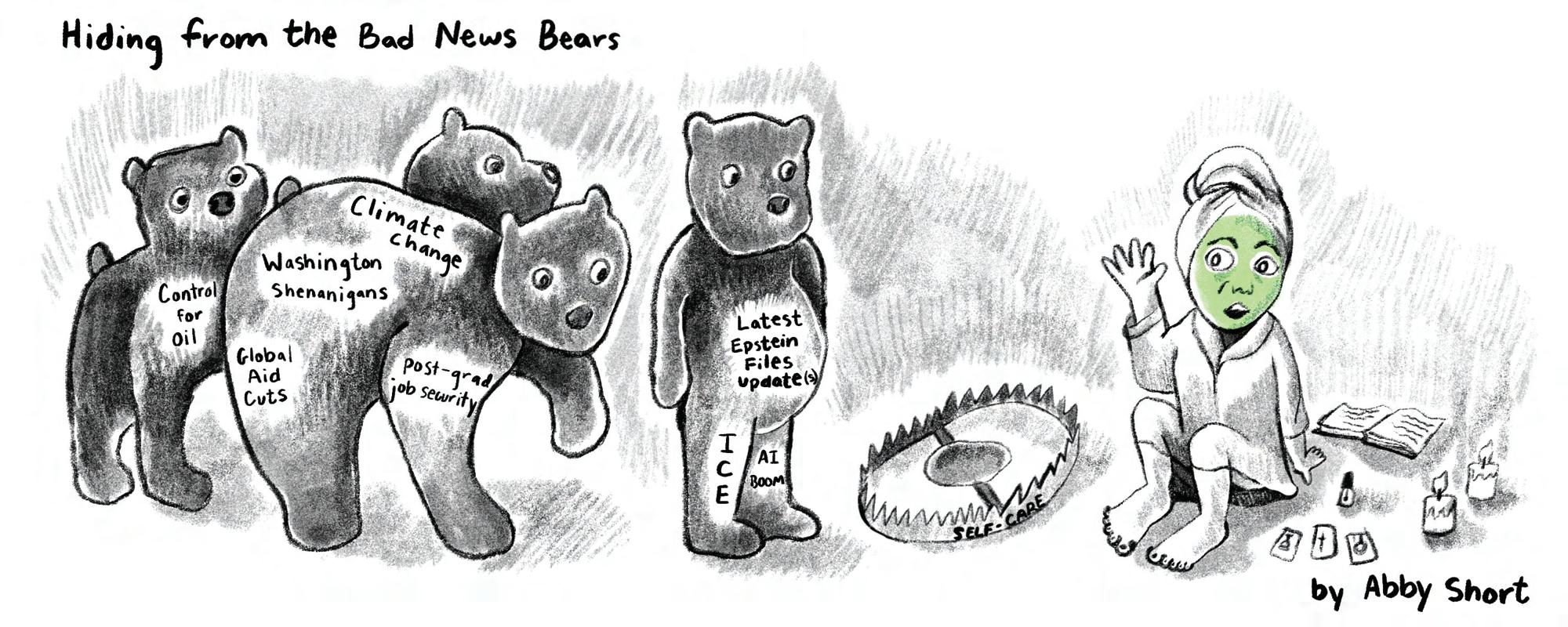
With everything happening in the world, a little self-care is the perfect way to hide from those bad news bears.

20 UPCOMING USC THEATRE AND DANCE PERFORMANCES
Five USC clubs may have different goals and practices, but they all share one thing: a love for the outdoors.
USC’s Department of Theatre and Dance has five performances for the spring 2026 semester.

COVER PHOTO BY: Kiley Wagner




I’ve become so much more aware of what’s going on at USC because of The Daily Gamecock. When I first joined my freshman year, I knew almost nothing about South Carolina sports or what local events we had on campus.
In my first semester as an arts & culture staff writer, I felt unqualified to pitch stories because I had no idea what was going on around campus.
In my first semester as an assistant news editor, I was so intimidated by the older members on our senior staff. Everyone seemed like they had it figured out, and I felt like I knew so little in comparison.
In each senior staff meeting, I would listen as every section went through its content for the week. Just from hearing sports editors talk about player features or season recaps, I felt more aware of things outside of the sections I was familiar with. It was last semester as a managing editor when I started to feel familiar with each section. I went from rarely reading sports articles and columns to editing several each week.
I’m still constantly learning. Even while editing the features this month, I read more about measles than I ever thought I would.
As I start my term as editor-in-chief, I hope The Daily Gamecock can do the same thing for every student. Our writers, photographers, designers and editors all work toward the same goal: to provide the USC community with a well-reported, wide range of stories.
So I encourage you to take some time to read through this edition and get caught up as we start this semester. Whether you’re a big fan of baseball and softball, or you’re interested in reading about free speech on college campuses, I hope you learn something new from The Daily Gamecock. That’s what we’re here for. Forever to thee,

USC students join protest against ICE at statehouse
Morgan Cook | ASSISTANT NEWS EDITOR & Morgan Dunn | NEWS WRITER

students at the University of South Carolina participated in a nationwide protest against U.S. Immigration and Customs Enforcement at the statehouse on Jan. 20. Many protestors said showing up to the events meant showing unity with others who are fighting for the same cause as them.
“We have to show solidarity,” Ethan Alexander, USC alumnus and communication administrator for the National Ground Game, said at the walkout.
NGG is a counter group of Turning Point USA that has a chapter on USC’s campus.
Party for Socialism and Liberation member Enid Campbell said a coalition to other organizations such as Midlands SC Defensa, an ICE watch hotline, and community members were also in attendance of the protest. PSL was one of the main organizers of this protest.
Demonstrators at the events throughout the day chanted and held up signs reading
phrases such as “Abolish ICE” and “Students against ICE.”
Statehouse protest
The protest resonated with firstyear public health student Sydney Arriaga, whose family friend was recently deported back to Nicaragua.
Arriaga’s family friend was questioned by the police about a neighbor being robbed.
“They asked him for documentation ... and they took him in ... and he was eventually in ICE detainment for a couple of weeks,” Arriaga said. “He’s away from his family ... He was the one that maintained them.”
She hopes that with the protest, people will see that there are individuals looking out for the immigrant community and that they are not alone.
Anson Foster, a member of PSL, said this protest started when grassroots organizations, or community-driven groups, started a call for a nationwide walkout. As ICE activity increases in cities around
the country, such as Minneapolis, Minnesota, he feels it becomes urgent “for us to be out here today.”
Renee Good, a 37-year-old American citizen, was fatally shot by an ICE agent in Minneapolis on Jan. 7, according to the Associated Press.
Third-year advertising student Kenny Evers, from Minneapolis, said he showed up to the protest because of its ties to his hometown.
“I came out here to show support for my hometown,” Evers said. “I feel like I’m not doing my part because I’m not there to help everyone who is being affected.”
Third-year social work student Lily Gillam and third-year history student Lucy Strasburg said they came to the protest together to show that they support the immigrant community.
Gillam said because of the proximity of campus to the statehouse, USC students have better opportunities to make a difference.
“If you’re already positioned so close to where you can get visibility,
then it can’t hurt to just contribute and help the cause,” Gillam said.
Student walkout
Prior to the protest, USC students held a walkout on Greene Street, where they held signs and chanted before walking to the statehouse together.
Second-year social work student Quinnie Mustian said the purpose of both the walkout and protest was in response to recent Trump administration actions and events in Minneapolis.
“What’s happening in Minneapolis could very easily come to South Carolina, and we don’t want to stand with that; we support our immigrant neighbors and won’t accept violence in our state,” Mustian said.
Alexander said the goal of the walkout was to inspire students who were not participating in the protests that it’s OK to have their voices heard.
“There are people who agree with us, but they may be scared to show that,” Alexander said.
Alexander said the walkout represents “civil disobedience” and solidarity with people who feel the same way about the current administration.
Second-year retail management student Joshua Alvertazzi said it’s important to take action and speak up at student-run events.
“Even if this doesn’t physically stop anything, I feel like it’s at least good to start raising awareness and help people band together to at least oppose what’s been going on,” Alvertazzi said.
Campbell said the community has had an overwhelming amount of support leading up to the protest.
“We’re out here and we already have so many people that have shown up on a cold day to raise their voice,” Campbell said. “As these cars are passing by, people are honking, people are showing their support.”
Protesters, including USC students, hold up anti-ICE signs outside the statehouse on Jan. 20, 2026. USC students staged a walkout to protest the actions of U.S. Immigration and Customs Enforcement.
PHOTO: Lilly Oppelt
Happy Black History Month

WHY JOIN SCU ?

As a not-for-profit credit union, we return value to our members through:
Lower fees
Competitive rates on loans
Higher dividends on deposits
Personal, member-first service
Discounts on insurance and tax software


*This image was created using AI*
LEARN MORE AND JOIN TODAY LEARN MORE AND JOIN TODAY
Choosing where to bank matters, and joining State Credit Union means choosing a place that puts YOU first.

DESIGN: GRACE DE PEÑA

Measles cases continue to rise in Upstate South Carolina
Morgan Cook & CONNOR BOGAN | Assistant News Editors
With a measles outbreak confirmed in the Upstate of South Carolina, third-year biology student Leah Chandler said it’s becoming more nerve-wracking as cases continue to spread.
As of Feb. 6, confirmed cases have risen to 920 in the Upstate, and the outbreak is centered around Spartanburg County, where Chandler is from.
“Spartanburg is a very tight community,” Chandler said. “Seeing it spread so rapidly ... it makes you not want to go out to stores or out in public just because if someone there has it, you’re kind of screwed.”
Third-year political science and cello performance student John Koontz said he’s become more
aware of the outbreak when he visits back home to Spartanburg.
“There’s definitely been growing concerns, I would say, for me,” Koontz said.
South Carolina’s first measles case was reported in the Upstate on July 9, 2025. An outbreak was confirmed by the South Carolina Department of Public Health, or DPH, on Oct. 2, with eight cases reported then.
Outbreak in the state
The July 9 case was the first confirmed case in the state since September 2024, according to The Post and Courier.
Before then, the state had six confirmed cases in 2018, and the last detection before that was
in 1997. In 2000, measles was declared eliminated in the United States because there had been no continuous spread for over 12 months, according to the Centers for Disease Control and Prevention.
On Feb. 3, a case in Sumter County was confirmed. According to a press release from DPH, it is unclear whether this case is linked to the Upstate outbreak.
An Oct. 2 press release from the DPH said that an outbreak is defined as three or more cases that are epidemiologically linked, meaning there was some kind of connection between the cases.
Spartanburg is the South Carolina county with the largest number of people who are either unvaccinated or under-vaccinated, according to Dr. Melissa Nolan, an epidemiology and biostatistics professor at the Arnold School of Public Health, whose research focuses on infectious diseases.

According to a Feb. 6 press release from the DPH, 277 people are currently in quarantine, and eight are in isolation. The end date for those in quarantine is March 2. Isolation is for individuals who suspect they may have symptoms, are already experiencing symptoms or those who have been confirmed to have measles. Individuals in quarantine have been exposed to measles. Both of these are meant to slow the spread of measles or prevent it, according to Public Health Communications. Since the outbreak in October, 18 people have been hospitalized due to complications relating to measles, Dr. Linda Bell, South Carolina’s state epidemiologist, said in a media briefing on Jan. 28. There has been a mix of children and adults hospitalized, Bell said. A Jan. 30 press release from DPH stated one more person was hospitalized due to complications of the disease.
As of Feb. 5, there have been 733 confirmed cases of measles in the U.S. since 2026 began, and a total of six cases were reported among international visitors as well. While this outbreak has mostly been centered around the Spartanburg area, it has also now spread to adjacent counties, Bell said. Cases have been reported in Greenville, Anderson and Cherokee counties.
Clemson University confirmed a case of measles on Jan. 17 in an individual affiliated with the main campus, the university reported.
DESIGN: RANSLEIGH BALDAS
PHOTO: KILEY WAGNER
What is measles?
Measles is a highly contagious disease that is spread when an infected person breathes, coughs or sneezes, according to DPH. Initial symptoms include fever, coughing, a runny nose and red eyes. After two to four days, these symptoms will then turn into a rash that lasts five to six days. The rash starts on the face and then spreads to the remainder of the body.
However, symptoms can also begin anywhere from seven to 12 days, and even up to three weeks after exposure.
Measles is contagious four days before and after the rash begins. Someone can spread measles before they know they are infected, according to the DPH.
The measles virus can also linger in the air for two hours even if the infected person has already left the area. It can also stay alive on surfaces for two hours, according to the DPH.
“It literally hangs out in this kind of cloud of air, and so anyone that’s walking through can become infected with it that way,” Nolan said. Measles is still common in other parts of the world, including Asia, Europe and Africa, and can be brought back into the U.S. by international travelers, the DPH reported.
The majority of the cases are close-contact-known cases, or cases contracted by people within the same air space as an infected individual, leading them to be exposed to measles. Public exposure sites around the Spartanburg area serve as an indicator that measles is circulating in the community, according to DPH. This circulation increases the risk of exposure and infection for those not immune due to not receiving the vaccination.
The DPH has listed public exposure sites with dates and times of potential measles exposure on its website. If someone was at a location where measles was exposed, symptoms should be monitored, especially if unvaccinated, according to the DPH.
According to a 2025 report by the CDC, 97% of people who contracted
measles were unvaccinated. Nolan said 2% of cases are from those who are fully vaccinated. These are called breakthrough cases.
“I know I’m vaccinated, so I should be, in theory, all right,” Chandler said. “But it is kind of always on your mind.”
Vaccination rates
South Carolina measles vaccination coverage for kindergarteners falls short of the target 95%, with only 91% of the state’s population vaccinated, according to Johns Hopkins University.
A chart from the DPH also shows that 840 of the cases are from unvaccinated individuals. Twenty of the cases have been from individuals who were partially vaccinated, and 24 have been fully vaccinated. There are 36 cases where the vaccination status is unknown, according to the chart.
A lower proportion of kindergarteners completed the measles, mumps and rubella vaccine in South Carolina in 2024 than the previous year, according to Johns Hopkins. Only 91% of kindergarteners got the vaccine from 2024-25, down from 92% in 2023-24.
Out of the 920 confirmed cases in South Carolina, the highest number of cases has been ages 5 to 11 with 412 cases, according to the DPH chart. Cases among children ages zero to 4 total 240. Ages 12 - 17 have totaled 172 cases as well.
Approximately 286,000 kindergarteners were at risk of becoming infected with measles during the 2024-25 school year because the vaccination coverage nationwide amongst this age group decreased by 2.7% since the 2019-20 school year, according to the CDC.
“If an unvaccinated student is exposed to the measles, they must quarantine for 21 days,” Bell said. “That’s a lot of time to miss from school activities and time away from friends.”
These lower vaccination rates among children are a result of rising anti-vaccine sentiments among
U.S. citizens and those in South Carolina, Nolan said. She said the movement has been growing over the past 10 years.
“There’s been more and more education that’s been put out there and propagated through social media, educating parents on how they can circumnavigate those requirements,” Nolan said.
The growth of the anti-vaccination movement has been a concern for Koontz as both a USC student and a resident of Spartanburg.
“I think just anti-vax sentiment growing and becoming so popular has been pretty scary,” Koontz said. “You don’t know who could be unvaxxed, who could potentially be contaminating you.”
According to the CDC, it is recommended that children receive two doses of the MMR vaccine. The first dose is administered between 12 and 15 months, and the second dose between 4 and 6 years old.
“An interesting trend that we’ve seen over the last couple of years is that we’re seeing more and more kids that did not get that second booster,” Nolan said. “So I anticipate, 13 years from now, when we have more college kids that didn’t get that second vaccine, we’re going to see more and more.”
Bell said that, while no vaccine is 100 percent effective, the MMR vaccine is one of the most effective when it comes to preventing infection. Those who receive the first dose are 93% protected, according to the DPH. Having the second dose also increases one’s protection.
“It’s been shown to provide lifelong protection against measles in about 97% of the people who receive the recommended two-dose series,” Bell said.
Columbia
On Jan. 2, an infected individual visited the South Carolina State Museum, making this the first exposure for Columbia, reported by The Post and Courier. The individual did not know they were infected at the time of the visitation, according to a DPH press release.
USC’s Center for Student Health and Well-Being has produced frequently asked questions
with general information about measles, immunizations, quarantines and more.
To attend USC, students must provide proof of immunization of two doses of the MMR vaccination after age 1, according to the FAQ. A blood test showing immunity is also accepted. Exemptions for documented medical and religious reasons are made as well.
According to Nolan, if you are exposed to a known case of measles, you must provide documentation that you are fully vaccinated or have antibody protection. If you do not provide these, you are legally required to quarantine for 21 days.
On Jan. 16, USC’s human resources department sent an email to all faculty and staff regarding spikes in statewide measles cases. If a faculty or staff member is exposed to measles and is unable to provide proof of immunity through vaccination, they will be instructed by the DPH to quarantine for 21 days, the email said. They were also given instructions on how to submit their immunization records.
Personal impact
Koontz said that, back in Spartanburg, his parents are schoolteachers, which worries him, as the elementary age has had a large number of cases.
“I have been a little worried about getting it from them, just because they’re interacting with 80 kids a day,” Koontz said.
There are 335 students in quarantine and three more schools identified as public exposures across the 20 K-12 schools in the Upstate as of Jan. 28, according to the briefing. This has created a sense of unease for Chandler, as her brother is a senior attending Spartanburg High School. She said that one of their rival high schools recently had confirmed cases, leaving her nervous.
Dorman High School, the rival school of Spartanburg High, was one of the schools identified as a new place of public exposure, according to Bell.
“It just seems to be spreading so rapidly,” Chandler said.
GAMECOCKS TAKE CARE OF THEIR HEALTH. GAMECOCKS TAKE CARE OF THEIR HEALTH.


STAY INFORMED. STAY EMPOWERED. STAY INFORMED. STAY EMPOWERED.

CAN Community Health offers 100% FREE HIV, STI, and Hep C testing services, easy to access, made for your schedule, and always inclusive.
USC Next brings renovations to Thomas Cooper Library, McKissick, Barnwell
Connor Bogan | Assistant News Editor
The University of South Carolina Board of Trustees has approved renovations for Thomas Cooper Library, McKissick Museum and Barnwell College.
These renovations are part of USC Next, a 10-year master plan that aims to meet the needs of students through four major goals. These goals include reinvigorating USC’s historic campus core, improving the student-life experience, enhancing research capacity and creating a new health sciences campus according to the plan’s website.
Thomas Cooper Library
The renovations to Thomas Cooper Library aim to reconfigure it to prioritize additional study spaces, according to a presentation provided by the university. Thomas Cooper Library was built in 1959 and has not been renovated since its expansion in 1976.
According to university architect Derek Gruner, the mechanical systems in the library are 50 years old and need to be replaced. There are aspects of the building that would not pass building codes if it were built today, he said.
“It has also been important to (USC President Michael Amiridis) and to all of us that the library really looked refreshed and looked like the kind of library that students expect in the 21st century,” Gruner said.
Books will be moved from the main level and concentrated on the lower levels. This will give students more space to use on the main level where bookshelves currently are, according to the presentation. “Students are studying and researching things differently than they did 50 years ago,” Gruner said. “They’re not so dependent
now on printed media.”
In addition to books moving to lower levels of the library, the bathrooms will be modernized for better compliance with the Americans with Disabilities Act, according to the presentation. Interior HVAC and electrical systems in the building will be getting updates as well, along with the addition of fire safety sprinkler systems, the presentation wrote.
The library will remain open to students while it is being renovated, and there will be zones where contractors will be working, according to Gruner. To divide the spaces on each floor where the contractors will work, there will be temporary walls put up to section off noise and dust, Gruner said.
McKissick Museum
McKissick Museum will receive several updates including the addition of classrooms, study spaces, a cafe and an improved visitor center, according to the presentation. There will also be a patio added to the museum, which Gruner said he hopes will bring more life to the surrounding Gibbes Green area.
Gibbes Green is the area next to the Horseshoe on campus that encompasses buildings like McKissick, Barnwell, Hamilton College, Sloan College and Davis College.
Along with these updates, HVAC and electrical systems in the building will be modernized with the addition of fire safety sprinklers, according to the presentation.
Parts of the museum, which are currently used to store art, will be converted into classroom spaces and study spaces on the upper levels, as well as a cafe on
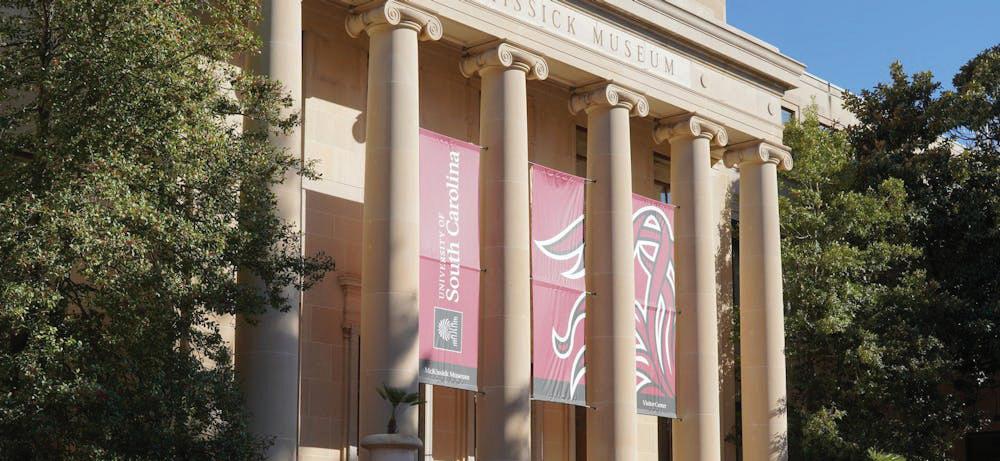
the lower levels, Gruner said. He hopes that McKissick’s renovations will turn a quiet building into a focal point on campus.
“What happens typically is students come to the visitor center when they’re high school seniors, and they come to USC, and they never go back into McKissick for the next four years,” Gruner said. “We’re going to change that and make it a really special, modern classroom building.”
The visitor center will also be renovated, with all-new audio and video technology, according to Gruner. It will continue to occupy the lower two floors of the fourfloor building.
One major goal of the project is to preserve the sense of McKissick being a museum, Gruner said. He said he hopes that the art currently in exhibition spaces will be put throughout the building so more students can experience the collection held there.
Barnwell College
Like McKissick, Barnwell will be renovated on the inside and have all mechanical systems replaced,
along with the addition of a sprinkler system. Barnwell is the last building in Gibbes Green that has not been renovated in the last 15 to 20 years, according to the presentation.
“We’ll really be closing the book on a significant campaign of capital renewal that the university has been doing in that area,” Gruner said. “It’s really a wonderful thing.”
Barnwell will also see the addition of numerous classrooms, meeting rooms, faculty offices, psychology research labs and offices, the presentation said.
These added classrooms will be what Gruner calls “general classrooms,” which means any major could have a class scheduled there. Barnwell will remain a building for the College of Arts and Sciences and the psychology department.
Gruner said the university’s goal is to make these buildings modern and work like new buildings. He said he hopes students will look forward to the results of these renovations.
“I deeply believe that the students are going to love these buildings when they open up in their renovated state,” Gruner said.
The McKissick Museum on Bull Street on Jan. 11, 2026. The renovation project includes replacing aged building infrastructure, reconfiguring existing areas to include several new classrooms, and many more upgrades, all scheduled for completion in 2028.
PHOTO: J’marion Dickerson

DESIGN: RANSLEIGH BALDAS

Gamecock women’s basketball welcomes towering new presence to roster
South Carolina welcomed students back in January as classes resumed for the spring semester, and one new student in particular would have been hard to miss. Gamecock women’s basketball welcomed Alicia Tournebize to the team, a 6-foot-7 native of France.
The 18-year-old forward signed a financial-aid agreement to attend the school and join the team for the remainder of the season this past December. She hails from the city of Vichy and began her career playing for the Tango Bourges Basket of the Ligue Féminine de Basketball on its U15 team. She earned a spot on the team’s professional roster for the 2025-26 season.
Tournebize went on to earn a spot on the All-Star 5 at the 2025 FIBA U18 EuroBasket, where she led her team in both scoring and rebounding at 12.1 points and 8.9 rebounds per game. Both marks ranked top 10 among all players in the tournament.
Her long, towering frame sets her up to complement 6-foot-6 senior center Madina Okot in the paint. Pair that with the length of South Carolina’s leading scorer, sophomore forward Joyce Edwards at 6 feet, 3 inches, and size emerges as a major strength for the Gamecocks’ roster.
“Once we can see how she fits in with us, we’ll start running some specialized plays for her,” head coach Dawn Staley said.
Okot has provided the Gamecocks with an immovable presence in the paint this season, with her 11.3 rebounds per game being the secondmost by any player in the SEC this season. Enter Tournebize, standing at an inch taller and bringing close-out speed that aids a premiere ability to protect the rim.
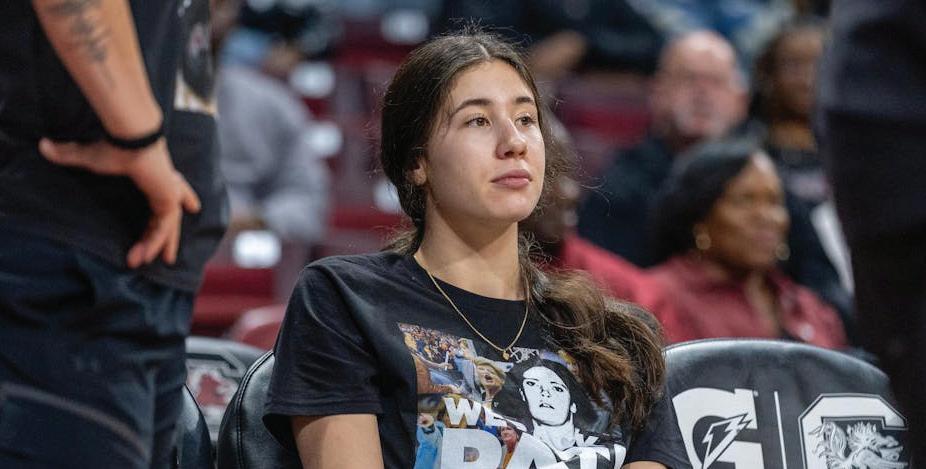
Tournebize’s mother, Isabelle Fijalkowski, played basketball at the University of Colorado in 1994 and helped the team win a Big 8 Conference championship. She’d later get selected by the WNBA’s Cleveland Rockers in the 1997 draft. Her 6-foot-5 frame helped her win two Euroleague championships and five French League championships.
Fijalkowski played on the French women’s team in the 2000 Olympic Games and was a EuroBasket gold medalist in 2001, earning her inductions into the French Basketball Academy Hall of Fame in 2011 and the FIBA Hall of Fame in 2020.
In 2024, at just 17 years old, Tournebize became the first French woman ever to dunk in a game,
eventually performing a two-handed slam in the third-place game of the FIBA U18 EuroBasket in 2025.
South Carolina women’s basketball fans basketball wouldn’t be unfamiliar with seeing the Gamecock dunk in-game; forward Ashlyn Watkins had thrown down a dunk in each of her first three seasons on the team. Watkins opted to sit out the 2025-26 season to deal with personal matters.
Tournebize arrived in Columbia on Jan. 1 and joined the team’s trip to Gainesville where it defeated Florida. She has since played in three games of South Carolina, highlighted by a 9-point performance against Oklahoma on Jan. 22.
“She’s been having to do orientations,” Staley said. “We want
to get her some more practice time... There’s only school and classes in front of her, which will be her normal.”
The Gamecocks had won three straight games and sat at 22-2 atop the SEC with the conference tournament looming. Staley talked about Tournebize before she made her debut against No. 4 Texas on Jan. 15.
“She looked good,” Staley said. “She’ll play. She’ll definitely play.”
The addition of Tournebize will lift South Carolina to 11 active players for the first time all season, and the Gamecocks will need as much help as they can get with the SEC Tournament beginning on March 4 at Bon Secours Wellness Arena in Greenville, South Carolina.
JOHN DAVIS | Women’s Basketball Beat Writer
PHOTO: JACK BRADSHAW
Freshman forward Alicia Tournebize sits on the bench during the game against Georgia on Jan. 11, 2026. Tournebize transferred from France, having previously played in the Ligue Féminine de Basketball.
South Carolina baseball brings in twelve new pitchers from transfer portal for upcoming 2026 season
Anaston Bell | Baseball Beat Writer
The South Carolina baseball pitching staff struggled heavily during the 2025 season under head coach Paul Mainieri. In his first year at South Carolina, the team had a combined ERA of 6.41, which ranked second-to-last in the SEC.
After the season ended in the first round of the SEC Tournament, Mainieri and staff, including pitching coach and recruiting coordinator Terry Rooney, immediately went to work in the portal.
“We felt like on the mound, we had to get some ‘stuff,’ so to speak,” Rooney said on the “On The Clock” podcast. “Some power type stuff that will allow us to finish games, allow us to get some strikeouts, and we feel like we’ve done that.”
Top transfer arms
Junior right-hander Amp Phillips enters his first season with the Gamecocks after spending his past three years at Spartanburg Methodist College and USC Upstate. The 2025 Big South Newcomer of the Year winner has quickly emerged as one of the potential weekend starter roles.
Phillips recorded a 7-2 record with a 3.64 ERA last season, striking out 81 batters in 84 innings of work. Phillips pitched six innings in the NCAA Regional against Clemson, striking out nine in the Spartans’ loss.
Hailing from SEC opponent Florida, junior right-handed pitcher Alex Philpott comes in with plenty of conference experience. During his two seasons in Gainesville, Philpott struck out 72 batters in 67 innings. Philpott pitched during the NCAA Conway Regional and made an appearance in the 2024 College World Series in an elimination game against Kentucky.
Sophomore left-hander Bryce Navarre joins the Gamecocks after
spending one season with the Texas Longhorns. Navarre saw limited action at Texas his freshman year and battled some minor injuries before he arrived on campus in the fall. Now fully healed, Navarre could be one of the dominant arms the staff needs in the spring.
“I think when you talk about Bryce, you know, coming out of high school, that was one of the things: He always won,” Rooney said on the “On the Clock” podcast. “He was always a competitor. He always has that breaking ball that he could throw with his eyes closed.”
Potential bullpen impacts
Four additional arms transferred in from the ACC, including juniors Bradley Hodges, Josh Gunther and Hudson Lee, as well as sophomore Connor Chicoli.
“Bradley Hodges is already kind of asserting himself with some guys when he doesn’t see some guys doing things with discipline or doing them the right way,” Mainieri said back in the fall. “He seems to be a kid that’s not afraid to speak up.”
Hodges spent the last three seasons at Virginia and made eight starts in 2025 with a 4.88 ERA. Gunther, a transfer from Wake Forest, held opponents to a .194 batting average in 2025 paired with a 3.41 ERA.
Lee, who transferred from Clemson, made 15 appearances and held opponents to a .192 batting average with the Tigers. As a freshman, Chicoli made 14 appearances at Georgia Tech and had 18 strikeouts.
Elijah Foster, who transferred from Sacred Heart, joins the program as a junior. During his sophomore campaign, Foster boasted a 5-3 record with 15 starts, along with 76 strikeouts. Josh Gregoire, a junior from University of Louisiana at

Monroe, did not pitch in the fall due to injury but is another name to keep an eye on for a bullpen role. Gregoire went 3-2 with five saves from the bullpen and boasted a 2.38 ERA last season.
During the fall, junior left-hander Alex Valentin emerged as one of the potential impact transfers for the Gamecocks. Valentin has a similar style and energy to former 2024 Gamecock pitcher and
fan-favorite Garrett Gainey, which could be just the passion and energy the staff was missing. Valentin made 16 appearances last season, with 58 strikeouts in 67.2 innings.
Sophomore left-hander Logan Prisco, a JUCO transfer from Florence-Darlington Tech, comes to campus following a solid freshman season. Prisco had 82 strikeouts in 69.2 innings, helping lead the team to the 2025 JUCO World Series.
FILE — Junior pitcher Alex Philpott throws the ball from the mound during the game against Charlotte on Nov. 2, 2025. Philpott is a Tampa, FL native and previously pitched for University of Florida.
PHOTO: Augusta Lewis






Expectations are high for South Carolina’s baseball, softball teams in 2026
Anaston Bell | Baseball Beat Writer
As the baseball and softball seasons ramp up, both programs are facing some of the highest expectations in their respective histories.
After baseball head coach Paul Mainieri and softball head coach Ashley Chastain Woodard were both hired by the school prior to last offseason, their respective programs are entering pivotal second seasons at the University of South Carolina.
During their debut seasons with their South Carolina programs, Mainieri and Chastain Woodard produced results on opposite sides of the success spectrum.
South Carolina baseball is coming off one of the worst seasons in program history. The Gamecocks’ 6-24 record in the SEC is the fewest conference wins that a South Carolina baseball team has recorded since the program joined the SEC in 1992.
The ladies are coming off one of the greatest seasons in program history for South Carolina softball. In 2025, its trip to the NCAA Super Regionals was just the third time the Gamecocks have advanced that far in the postseason this century.
The coaches themselves pose contrasting careers. The University of South Carolina was Chastain Woodard’s first gig at a Power 4 school in her six-year coaching tenure. Mainieri is entering his 40th season as a head coach. He came out of retirement as a proven manager that has accumulated six College World Series appearances, six SEC Tournament championships and 1,533 career wins in Division I.
Tanyon Ziolkowski | Assistant Sports Editor
Mainieri had high praise for colleague Chastain Woodard and her program.
“Ashley is a very inspiring person for me to see what she did with the program,” Mainieri said. “I’m sure the pressure is not going to get to her, and it’s not going to get to her players because she’s an outstanding leader, and she’s going to prepare her team the same way I am going to prepare my team.”
The baseball and softball programs have arrived at similarly high expectations, each shaped by unique circumstances. Newcomer Chastain Woodard has a chance to cement South Carolina softball as a legitimate program, while veteran Mainieri has the chance to rewrite his South Carolina legacy.
Mainieri and the baseball team will look to get things back on track in order to revive the winning culture that South Carolina baseball once endured. Conversely, pressure has built on the softball team with hopes that Chastain Woodard will sustain success for her alma mater.
Softball looks to build off past success
The new era of Gamecock softball under Chastain Woodard looks to keep things heading in the right direction this season after reaching the NCAA Super Regionals for the first time since 2018. The teams’ 44 wins last year is the most since that same 2018 season. She discussed the importance of building off of last year’s success at media day.
“The 2025 team and the season was definitely a year of legacy,” Chastain Woodard said.
“And we’re working really hard every day to continue to build on what we did last year.”
Chastain Woodard joined the program after spending five seasons as UNC Charlotte’s head coach. Her 44-17 record in her debut year with South Carolina was the most successful season of her six-year head coaching career.
The second-year Gamecock coach talked about the satisfaction from the 2025 season and the importance of implementing belief going forward in order to generate a winning culture.
“Success is not guaranteed. You have to go earn it every day,” Chastain Woodard said. “So everything that we instilled in last year’s team, we’ve done the best to instill in this year’s team.”
The Gamecocks retained nine players from the 2025 roster, seven of whom were typical starters: senior infielder Arianna Rodi, senior pitcher Jori Heard, junior infielder Karley Shelton, senior catcher Lexi Winters, redshirt senior infielder Natalie Heath, junior pitcher Nealy Lamb and redshirt senior outfielder Quincee Lilio.
Rodi, who transferred to South Carolina from UNC Charlotte last season, talked about the unity and culture within the softball program.
“We like to say that the culture is more about the people and less about the words and the writing on the wall,” Rodi said. “So, if we bring in the right group of people, then everything’s going to pan out and take care of itself … We’re pushing for something even more special this year.”
The softball program has brought in 10 new players this offseason, consisting of four freshmen and six transfers. Notably, sophomore infielder Tate Davis and junior pitcher Emma Friedel highlight the newcomers. Last season at Kennesaw State, Friedel tossed nine complete games in her 127 innings of work.
The impact that the coaching change and transfer portal made for South Carolina’s program was evident last year, as the squad opened its season with a perfect 20-0 record. The 20 consecutive wins to begin the season were the first time that had been achieved since the 1976 season.
South Carolina won a handful of impressive series last year against No. 3 LSU, No. 12 Texas Tech and a series sweep against No. 8 Duke. South Carolina even turned heads in its series loss to No. 2 Oklahoma, when it lost all three games by a singular run against the thendefending national champions.
“I think holistically, we learned what it felt like to really believe that our program is just as good as anyone in the country,” Chastain Woodard said. “So I think you saw that on display at the Super Regional against a historic program.”
Last season, the Gamecocks fell short in the NCAA Super Regional series after dropping two consecutive games to the UCLA Bruins.
After experiencing so much success in 2025, Winters talked about how the athletes will go about handling the pressure that comes with
having high expectations.
“We talk a lot about staying neutral in situations. I think that’s kind of helped us perceive what’s happening,” Winters said. “So understanding how to prepare for it now, so when it does happen, we’re not almost shell-shocked by it.”
With all the success that came in 2025, the expectation for competing at such a high level had built in an extra layer of pressure.
Chastain Woodard said the team has embraced the pressure that comes after recording a successful year and has had internal conversations about how to handle those pressures.
“The pressure is what you make it. The expectations are high for sure, and we want to have a lot of success,” Chastain Woodard said. “We would rather it be this way than how it was previously of lower pressure and lower expectations.”
Baseball hopes to get back to winning ways
Over his four decades of coaching, Paul Mainieri is no stranger to success. Coaching at St. Thomas University, Air Force, Notre Dame, LSU and now South Carolina, he is a leader among current college managers in Division I career wins with 1,533.
South Carolina started the 2025 season with nine straight wins, but the first sign of trouble was against in-state rival Clemson, which was ranked No. 13 during the series.
The Gamecocks were swept in all three games, marking the second sweep in a row for the Tigers in the series.
South Carolina was able to get back on track and picked up a few more wins before conference play, but following a close loss against thenNo. 12 Oklahoma in extra innings, the team would go on to finish with a 12-24 record after the series.
In SEC rankings, South Carolina found itself at the bottom of almost every team statistic out of the 16 teams. The Gamecocks were 13th overall in batting average, 15th in ERA and 10th in fielding percentage.
“There’s a lot that goes into coaching. I feel very, very confident
that we’re going to be a lot better this year, but we have to prove ourselves,” Mainieri said. “What happened last year is not acceptable here at the University of South Carolina. I know what the standards are. I know what the fans expect, and if I was a fan of the South Carolina baseball program, I would expect an awful lot as well.”
Last season with the Gamecocks marked his worst winning percentage (.491) since 1990 at Air Force Academy (.433). Now entering his 41st year in coaching, Mainieri said this is his most anticipated season yet.
In this day and age of college athletics, roster turnover and transfer portal additions are new factors that programs must face following seasons of underperformance and high expectations.
“I feel like we recruited a really outstanding ball club,” Mainieri said. “Then of course, you know, on the heels of a very disappointing season from last year, we want to get back out there on the field
and make our South Carolina Gamecock fans proud.”
The SEC is the most dominant conference in the country, winning the last six College World Series titles in Omaha, Nebraska. In the 2025 MLB Draft, the SEC had 107 players drafted was the most out of any conference. This type of talent in the SEC forces any team that wants to compete to have talent that can make an immediate impact.
Following the exit meetings between last year’s players and coaching staff, only 10 players returned.
Key figures who have been on the roster for multiple years, such as fifth-year catcher Talmadge LeCroy and junior left-handed pitcher Jake McCoy, stayed loyal to the program where they began their careers.
LeCroy has spent the last five seasons at South Carolina and has played multiple roles during his time as a Gamecock. In past seasons, LeCroy has spent a majority of his time at third base and shortstop, but he made
the move back to catcher in 2025 before injury.
It was announced on Jan. 28 that McCoy would miss the entire 2026 season after suffering a ulnar collateral ligament tear in his arm, just weeks before his highly anticipated junior season. This is now the second straight year Mainieri has lost one of his projected starting pitchers to injury with pitcher Eli Jerzembeck going down just before the 2025 season.
During the offseason, the staff brought in 27 new players both from the transfer portal and incoming freshmen. Some of the top names recruited were junior pitcher Alex Philpott from Florida, junior catcher Reese Moore from Iowa, and fifth year infielder Logan Sutter from Purdue.
“I really, really like this team so far,” McCoy said. “I think we’re going to be really good. I think the coaches did a great job bringing in guys from the portal, and yeah, I’m really confident in the guys.”

dESIGN: JACK BRADSHAW

USC Akshara builds community, showcases culture
Miles Shea | ARTS & CULTURE EDITOR
Having performed at family functions since she was young, dance is nothing new for firstyear public health student Devi Patel, but she didn’t know Bhangra. She said it was the excitement of that new challenge that truly made her feel like she belonged in USC Akshara.
“Having to learn something that I haven’t (done) at all, it was a gamechanger,” Devi Patel said. “That was what really made me decide to stay on the team.”
Bhangra, an energetic form of dance that traces its roots back to the Indian state of Punjab, is only one of several styles that Akshara, a Bollywood fusion competitive dance team, practices. Much like how the American entertainment industry is broadly referred to as Hollywood, Bollywood serves as an umbrella term for India’s industry.
Along with Bhangra, the team is influenced by contemporary hip-hop, South Indian Tollywood and various forms of classical Indian dance such as Kathak and Bharatnatyam. Devi Patel said the team’s routines blend those diverse styles of music and dance to create an identity that’s distinctly and proudly Indian American.
“In our sets we’re dancing to The Weekend, and then we’re dancing to an Indian song the next 30 seconds,” Devi Patel said. “Everything is mixed together.”
After starting in the fall semester, Akshara is a new beginning for Bollywood fusion dance at USC. However, there’s a much longer history behind the discipline at USC.
A previous group, USC Moksha, began in 2006 and competed for the last 18 years before leaders chose to close it down last spring, with several going on to found Akshara. Third-year interdisciplinary studies and medical student Prisha
Patel serves as one of Akshara’s choreography captains, having previously been a captain for USC Moksha. She said things had become stagnant, and the decision to rebrand and start fresh was the right one.
”I’ve seen so much progress already,” Prisha Patel said. “So many talented dancers came to us. We were able to put so much more effort in and bond as a team than we had in the past.”
Though many Akshara members have been dancing since childhood, second-year exercise science student Lauren Vallabhaneni said it’s by no means required.
“You can come on, and we can teach you,” Vallabhaneni said. “That’s one of the best things about it.”
Akshara has been preparing for its first season of competition within Desi Dance Network, an organization that operates circuits for teams across the country to compete in.
On Jan. 24, Akshara hosted one of the first competitions of the year at the Koger Center for the Arts.
The event, called Aag Ki Raat, brought together eight schools, from as close as Georgia and as far as California. As hosts, Akshara did not compete in the event, but it did have its debut live performance as a team.
Prisha Patel said the practice process leading up to the season is intense but rewarding.
“You really come together as a team,” Prisha Patel said. “I’ve met a lot of my best friends, my roommates, all of them on the dance team.”
Vallabhaneni, who is of mixed race, said joining the team gave her both a strong support system on campus and a newfound connection to her family’s culture.
“I feel like I have a lot of exposure to my Irish side, but not so much my Indian side,” Vallabhaneni said.
“Now I have a community that ... understands that other part of me.”
Prisha Patel said leading and watching the team come together and improve has been a joyful and gratifying experience.
“It means a lot, not just to me, but also the dancers,” Prisha Patel said.
“They know that all this time they’re putting in is worth it.”
Devi Patel said it was nervewracking but also thrilling to lay the foundation of the new team’s legacy.
“When they search up Akshara, that is the first video they’re going to see,” Devi Patel said. “Our family and friends are coming, and being able to perform in front of a crowd for the first time with a new team, I feel like that’s the thing I’m most excited about.”
Second-year interdisciplinary studies and medical student Sanjana Tripuraneni, who serves as the team’s logistics captain, said the debut lived up to the high expectations they set for themselves.
“It was honestly everything to us,” Tripuraneni said. “We were able to start off strong and set USC up for success following this performance, and we’re really proud.”
Third-year political science student and co-choreography captain Vidya Mehta said performing in front of the other Bollywood fusion teams that had traveled to Columbia for Aag Ki Raat was a perfect and powerful atmosphere for USC Akshara’s launch.
“We’ve all put in so many hours and work in practice time, and we’re all passionate about it, and it’s beautiful to see that,” Mehta said. “Dance can bring a community together and bring our culture together too.”
More information on USC Akshara, which is co-ed, is available through its Instagram and Garnet Gate pages.

Photo: Molly Stover
This year’s Aag Ki Raat Night of Fire was held on Jan. 24, 2026, at the Koger Center for the Arts. USC Akshara performed an exhibition routine based on Escape Room.
Rock climbing: Find the difference!


DESIGN: ISABELLA HUFFINES
1. Streak in hair, 2. Chalk bag, 3. Squirrel, 4. Green tree, 5. Flower, 6. Sole of shoe Key:
Think that’s scary?
Sharks can be terrifying.
But what’s really scary, and even deadly, is distracted driving.

Eyes forward. Don’t drive distracted.


‘People need to touch grass’: Students find solace outdoors
Simone Meyer | ASSISTANT ARTS & CULTURE EDITOR
When academics get stressful, fourth-year environmental science student Madeline Bond knows there’s somewhere she can go to find peace of mind.
“It’s good for your stress, it’s good for your sleep and it’s good for your relationships,” Bond said. “I find that the place where that happens for me the most, where my brain is a little bit more peaceful and not going crazy is when I’m doing things outside.”
Many clubs and organizations use the outdoors to foster connection to nature. Bond gets her weekly dosage through the Carolina Mountaineering and White Water Club, where students organize weekly day trips and overnights, which often include backpacking.
Other students may look for something different in their time outside. The South Carolina Gamecocks Clay Target Team and the Carolina Eventing Club seek out the outdoors for sport, Carolina Girls Who Walk encourages connection and the Sustainable Carolina Garden focuses on environmental activism.
However, all agree the outdoors are essential for bettering mental health. According to the American Psychology Association, connection to nature has a positive correlation to cognitive benefits and emotional well-being.
“You don’t need to go far away, three hours into the mountains, to get that kind of release,” Bond said. “You can just walk outside.”
into the mountains
Disappearing into the mountains can be a great way to find peace. For Bond, being in the mountaineering club helped her find other people who want to feel that connection to nature.
Carolina Mountaineering and White Water Club members are a lively group of students who enjoy being
outside, Bond said.
Thirteen officers lead the club, which meets weekly to plan trips throughout the semester. Bond is the club’s branding and fundraising officer, and she sets up events to raise money for the club. Joining the club changed Bond’s university trajectory after struggling to find her place freshman year, she said.
“Since my sophomore year, many weekends out of the semester, I get to go to the mountains and go hiking and backpacking and be around people that are lusting for life,” Bond said. “And that’s what I needed to find in college.”
When Bond leads a trip, she knows that she may be leading students in an experience they’ve never had before. Bond said, to her, that is valuable. Her favorite trip is one she took to her summer place of work, Wildwater, which is a whitewater rafting outfitter.
“I met one of my best friends on that trip,” Bond said. “I remember sitting around the campfire and just talking about whitewater rafting and whitewater kayaking and it just being super exciting and fun.”
Bond said she enjoys the excitement of being on the water, but her enjoyment of the sport always comes back to finding peace of mind.
“When you’re just on the water, you’re focused on that and only that, and you’re not thinking about all these other things in your life,” Bond said. “I wouldn’t even say it is a distraction. It’s just a healthy, peaceful state of mind that kayaking brings me into.”
On the hunt for community
Bond isn’t the only one who found her niche in the outdoors. Secondyear mechanical engineering student Mason Sheleby grew up hunting with his father — a hobby that led him to explore clay target shooting.
Clay target shooting is a game that revolves around shooting clay pigeons thrown from various heights and consistencies at multiple stations. The club meets once a week at a shooting range to practice.
“It’s supposed to imitate (that) you’re actually walking through the woods, and a pheasant will jump out in front of you, or dove or something, because
it’s completely random,” Sheleby said.
Sheleby said having access to the sport was a key factor in deciding where he wanted to attend college.
Sheleby is trying to grow the club so that they may compete against other schools. His main goal with the club is to bring people together through camaraderie and an appreciation for the outdoors.
“I’ve always enjoyed being outside,” Sheleby said. “I feel like if you’re taking an interest in the club, you also like being outside, and then they’re getting the aspect of being on a team and sportsmanship.”
Disconnecting
If hunting guarantees anything, it’s a lower screen time, Sheleby said. He said he is fully immersed in nature because he usually doesn’t have service.
When Bond is on trips with Carolina Mountaineering and White Water Club, she will often lose service for the entire weekend. Bond said people aren’t able to truly enjoy the outdoors if

they’re on their phones. She makes it a point to stay off hers as much as possible, and the benefits are notable.
“I find that my relationships are healthier because I’m actually thinking about other people and paying attention to conversations,” Bond said.
alone, so everybody’s always meeting new people.”
Carolina Girls Who Walk often meet in the evenings, after most students are done with their classes. They create routes on and off campus that usually take about 45 minutes to walk.
“Wheel up a chair, if you’re in a wheelchair, and just be out here, be one with nature and enjoy the kind of zen calm that you get from gardening,” Amico said. “It’s so good for your mental health to be out here, even just five minutes.”
make sure that you’re getting that time outside because people need to touch grass these days.”
Amico’s favorite part of being outside is feeling grounded and connected to the planet, he said.
Third-year environmental science student Matthew Amico said being in nature helps him to keep his cool and remember the importance of sure nobody’s standing
“It does wonders for your mental health because it’s just a dedicated time to yourself,” Silvestri said. “I feel like what we’re doing right now, as
He said the garden is everyone on campus’ backyard. The garden is part of Sustainable Carolina, the studentled branch of the Office of
“A lot of times, people like to think of humans and nature as two separate entities,” Amico said. “Humans are a part of nature. We came from nature. Everything we’ve made is

ground to be wheelchair-accessible.
“And you also are really taking care to
DESIGNS: ISABELLA HUFFINES
PHOTOs: KILEY WAGNER
Five USC Theatre and Dance performances coming in spring 2026
Emily Beckman | LOCAL ENTERTAINMENT BEAT WRITER

From pony-fan dark comedies to student showcases, the USC Theatre and Dance season has a wide variety of sights, characters and twists to offer this semester. The USC Department of Theatre and Dance will have new student productions beginning in February 2026. The season features five performances, all under $20 for USC students.
Orpheus
“Orpheus,” adapted from Ovid’s “Metamorphoses” by USC history professor Andrew Berns, tells the life and afterlife of Orpheus. With dancing, live music and spoken word, the play explores grief, creativity and the cost of love. The story is a dialogue between Orpheus and the writer, Ovid, as they tell Orpheus’ story of love and loss.
Other myths featured in “Orpheus” explore floods, transformation, flying too close to the sun and proving ancestry. Each myth relates back to the tragedy and possibility of forgiveness in Orpheus’ life.
Within an ever-changing world, “Orpheus” meditates on the possibility of reconciliation. The play will show Feb. 12-14 at Drayton Hall.
Orlando
“Orlando,” adapted by Sarah Ruhl from Virginia Woolf’s novel of the same name, explores time and gender. Orlando is a charismatic nobleman poet, stealing the hearts of many women. After a nighttime run-in with a gypsy, Orlando wakes up to find that he has become a woman. This transformation reveals that Orlando is now immortal, too.
Over the course of three centuries, Orlando changes from a courtier to Queen Elizabeth into a 20th-century woman. Orlando must adapt to the changing world around her as she comes to understand herself.
The original novel was written as a love letter to Woolf’s lover, Vita Sackville-West. Ruhl’s adaptation highlights the queerness of the story in a fluorescent light for modern audiences. “Orlando” is a tale of transformation. The play will run from Feb. 26 to March 1 at Benson Theatre.
The Antelope Party Inspired by “bronies” (male fans of the children’s show “My Little Pony”), “The Antelope Party” by Eric John Meyer tells the story of a peaceful, outcast friend group, “The Rust Belt
Ponies Meet-Up Group for Adult Fans of My Little Pony: Friendship is Magic.” They devote their lives to acceptance, magic and ponies, but their community becomes torn apart by a neighborhood watch.
Their numbers begin to dwindle when members of their party join the neighborhood watch. As the world around them grows darker, the friends must remember their principles or lose what makes them special.
The dark comedy covers how paranoia and fear-mongering can cause safety to become total authoritarian control. It will run from April 3-12 at Drayton Hall.
Limón Dance Company
The Limón Dance Company is celebrating its 80th anniversary this season. Acclaimed for its dramatic expression, technical mastery and nuanced movement, the company was founded by José Limón and Doris Humphrey in 1946 and helped the growth of modern dance. Limón will be in-residence with USC’s Betsy Blackmon Dance and perform alongside artists from the Joffrey Ballet.
The Betsy Blackmon Dance program is made up of student performers, blending dance classrooms with a studio environment. Students take ballet and contemporary dance classes and can participate in supplementary options such as pointe, jazz and West African dance.
The groups will perform together at the Koger Center for the Arts on April 11 at 6:30 p.m. A gala fundraiser will accompany the performance.
Student Choreography Showcase
To cap off the season, Betsy Blackmon Dance Program students will present original works at the second showcase of the 2025-26 school year, following its fall 2025 showcase. Students create their choreography throughout the semester to find their preferred dance style.
The showcase will be April 2526 at the Drayton Hall Theatre. Ticket information for all performances can be found on the department’s website.
Photo: Jack Bradshaw
The exterior of Drayton Hall at USC on Jan. 22, 2026. The auditorium hosts performances by the Department of Theatre and Dance.


Column: Free speech has become ‘my speech’ in education
JC VAUGHT | OPINION EDITOR
On Sept. 18, 2024, right-wing activists Gavin McInnes and Milo Yiannopoulos spoke to a room with empty chairs at the Russell House. Metal barricades caged the stage and South Carolina Law Enforcement Division officers stood guard — some even say there were roof snipers surveilling the event.
Uncensored America, the organization hosting the event, called it a free-speech victory. After all, why wouldn’t it? It had sued and generated headlines that gave it more attention. When the student senate voted to deny funding, conservative media called it censorship. The Foundation for Individual Rights and Expression called the denial “in clear violation of the First Amendment.”
But after the dust settled, nobody seemed to connect the dots. The funding denial was not a setback. It was the strategy. The lawsuit generated headlines. The headlines generated pressure. The pressure generated a spectacle — barricades, snipers and empty chairs — that would play on loop as evidence of persecution.
The free-speech movement had learned what the student senate never did. Sometimes losing the vote is how you win the war. But the movement’s commitment to open discourse ends where its own critics begin. When criticized, the same men demanding platforms rush to sue their detractors into silence.
In 2019, long before coming to USC, McInnes filed a defamation suit against the Southern Poverty Law Center for labeling the Proud Boys a hate group. He invoked the First Amendment to preach violence, yet when others used their speech to represent him accurately, he sued.
The attack on education
Conservative think tank Turning Point USA claims to champion free speech. Yet it maintains a Professor Watchlist targeting hundreds of academics across the country.
Charlie Kirk, late founder of Turning Point USA, said the site “gives parents and students a way to decide if they need to look deeper and learn more.” But PEN America, a nonprofit organization focused on free expression and academic freedom, saw it for what it was — “noxious purveyor of precisely what it claims to deride: the intimidation and ostracization of those who express controversial views on campus.”
What does that look like in practice? At Diablo Valley College, a far-right organization edited professor Albert Ponce’s lecture on white supremacy into a two-minute clip.
“It ended up on Fox and Breitbart,” Ponce said. “Once it hit that ecosystem, it was gone.”
Hate mail turned into death threats against him and his family.
People began posting photos of his family online, including his then-9year-old daughter. He told a public radio show that he stopped letting her even touch the mail. College administrators were flooded with demands that he be fired.
“For anyone who touches these issues now, it’s open season,” Ponce said.
At Arizona State, Turning Point’s Professor Watchlist targeted writing instructor David Boyles for his advocacy of a drag queen reading program. In October 2023, two Turning Point USA employees waited for Boyles outside his classroom, followed him across campus, and demanded he answer questions about his sexuality, while filming.
Boyles was slammed to the ground, his head cracking against the concrete plaza. He was left bloodied, with scrapes and bruising across his face. Both employees later admitted guilt in court.
“This is the kind of outrageous conduct that you would expect to see from bullies in a high school cafeteria,” Arizona State University President Michael Crow said.
An organization cannot demand that universities platform speakers while running a database designed to intimidate professors into silence. That is not a free-speech position. That is a “my-speech” position.
Legislating ‘wrong’ speech away
Simply attacking people you disagree with is not enough — after all, you still have to face the courts. So the movement wrote laws instead.
In 2025, conservative state legislators introduced more than 70 bills restricting what professors can teach, which books students can read and which perspectives universities can value in hiring — and seven have become law. In 2025 alone, 21 censorship bills became law in 15 states — the highest single-year total on record. Every single one of those legislatures was Republican-controlled.
At Texas A&M, a student filmed a professor teaching that there are more than two sexes — a scientific fact — in a children’s literature class.
A Republican state lawmaker posted the video online. Gov. Greg Abbott publicly called for the professor’s dismissal. Days later, the professor was fired and two administrators were demoted from their leadership roles.
PEN America documented 6,870 book bans in the 2024-25 school year across 23 states and 87 public school districts. Over 80% came from just
three states — Florida, Texas and Tennessee. The American Library Association reported that 72% of censorship demands came from pressure groups and government entities — including elected officials, board members and administrators.
Utah made it law. Under HB29, if three school districts pull a book, every public school in the state must follow. The rule treats books more strictly than guns — adults with concealed carry permits can legally bring firearms into Utah schools, but students cannot bring their own copies of banned books. A Utah State Board of Education member, when asked what should be done with the books, said he did not care if they were shredded or burned.
Chilling speech in the classroom
The Foundation for Individual Rights and Expression’s 2024 faculty survey of 6,269 professors found that 27% feel unable to speak freely. One professor said they almost did not fill out the survey itself.
“(I) waited about two weeks before getting the courage to take the risk,” they said.
That fear is not just an isolated example; that same survey found 35% of professors report selfcensoring in writing — softening or avoiding contentious points to prevent backlash — about four times the rate during the McCarthy era.
At USC, we already have an official policy for this. In 2021, Gov. Henry McMaster signed the Reinforcing College Education on America’s Constitutional Heritage Act, mandating what aspects of American history universities must teach. The South Carolina Commission on Higher Education then began collecting syllabi and auditing a sample of course sections
each year for compliance. Kirk Randazzo, graduate placement director of USC’s Department of Political Science, said people “may just avoid discussing controversial subjects out of fear” and “that’s really part of what a university is supposed to do.”
Then the congressional delegation made it personal. An open letter signed by six South Carolina Republicans — including Ralph Norman and Nancy Mace — called on university presidents to “eradicate” critical race theory. The letter named USC education professor Allison Anders directly.
Faculty called for the administration to defend academic freedom, but the university that brands itself a freespeech leader couldn’t find the words. The 2025-26 state legislature session brought H. 3184, banning Diversity, Equity and Inclusion in admissions and employment, and Bill 368, prohibiting Diversity, Equity and Inclusion offices statewide.
Distracting the kids
How has USC responded to all of this? With bouncy houses.
During Uncensored America’s event, over 1,000 students gathered on Blatt Field for Blatt Bonanza — free food, bouncy castles, Spikeball and a rage room.
The student body president at the time told WACH, “This is the event on our campus. It’s not an alternative or counter event.”
At the time of the event, Kristen Issa, a graphic design and illustration student, told The Daily Gamecock that she went because she “didn’t feel safe protesting and didn’t feel like there was anything that would actually come out of it.” Criminology and criminal justice student Jarissa Adams said at the time of the event, she went to Blatt Bonanza so she “would be safe and not in the presence of bad vibes.”
University President Michael Amiridis condemned the speakers’ “vile and juvenile rhetoric” at the time of the event and quoted Supreme Court Justice Louis Brandeis on the value of more speech over enforced silence. The president
claimed neutrality then showed up at Blatt Bonanza for selfies. Bouncy houses are not a free-speech policy. They are an admission that the university knows exactly what it is platforming and would rather distract than confront.
Act wise, get a surprise
One year later, the U.S. Department of Justice sent a letter to the university and the South Carolina Attorney General after Kirk’s assassination at a Utah university. USC administrators had told Turning Point USA and Uncensored America that “controversial speakers and activities will no longer happen outside for the rest of the semester.”
It labeled Kirk a “known disrupter to a population” — without defining either term. South Carolina Attorney General Alan Wilson spoke to Amiridis directly. Assistant Attorney General Harmeet Dhillon closed the DOJ letter: “U of SC—act unwise, get a surprise!” The administration that hosted bouncy houses folded once again instead of standing its ground.
Then came the firings. At Clemson, a professor was fired for sharing a post that criticized Kirk’s gun positions and explicitly condemned violence; a Republican legislator threatened to defund the university. In Tennessee, a professor shared Kirk’s own words about gun deaths being the price of the Second Amendment.
Sen. Marsha Blackburn posted his photo and contact
the university admitted it hadn’t followed its own termination procedures. Nationwide, at least 350 educators faced discipline for commenting on Kirk’s death. Free speech for the provocateur but termination for the professor.
And once you see the pattern, the slogans stop sounding like principles.
Conservatives sued for $3,577 and called it a First Amendment victory.


DESIGN: GRACE DE PEÑA
Gamecock Crossword








DESIGN: GRACE DE PEÑA
1. TCOOP 2. RUSSELL 3. COCKY 4. HORSESHOE 5. WILLYB
Column: Government shutdowns are a failed tactic that only America uses
SOFIE KURZAWA | OPINION WRITER
After 43 grueling days last fall, the longest government shutdown in U.S. history finally ended on Nov. 12, 2025. And just like every shutdown prior to this one, it concluded in the same way: After weeks of disruption, the side that lit the match didn’t get what it claimed was non-negotiable.
For Congress Democrats, it was non-negotiable for the 2026 Fiscal Year Budget to include an extension of the soon-to-expire Affordable Care Act and to reverse Medicaid cuts. Naturally, Congress Republicans wouldn’t stand for this and pushed to pass the budget without adopting these demands. Because the two parties couldn’t come to an agreement on how the money should be allocated, the government shut down.
But after failure to distribute monthly Supplemental Nutrition Assistance Program payments to millions of Americans and chaos over cancelled flights, pressure increased for Congress to reopen the government. On Nov. 10, seven Democratic senators and one independent caved, settling with a deal to fund the government through Jan. 30 and hold a Senate floor vote in December on extending tax credits. Two days later, the House approved the temporary funding bill, which passed with a 222-209 vote. President Donald Trump signed it into law, signaling the end of the shutdown.
So what was the point of holding federal workers hostage for 43 days and disrupting the lives of everyone else? The shutdown’s primary demand to protect the ACA’s enhanced tax credits didn’t make it into the reopening deal. Instead, Democrats got a promise of a December vote.
That promise has now been tested and found worthless. The Senate held the vote on Dec. 11, 2025, and it failed. The enhanced tax credits expired on Jan. 1, and families are now confronting

steep premium increases because Congress chose gridlock over governance. Continuing to allow government shutdowns to happen is preposterous. Time after time, shutdowns have proved to be useless as bargaining tools and devastating as public policy.
In 2013, a 16-day shutdown occurred after Republicans demanded the repeal of the Affordable Care Act. Obamacare wasn’t paused or rolled back, only adjusted to add stricter eligibility checks. In 2018, Democrats forced a shutdown to implement protections of illegal immigrants who came to the U.S. as minors. After three days, they compromised for a vote on a protection bill. Four votes were held, and all of them failed to pass such a bill.
The longest shutdown prior to 2025 happened during President Trump’s first term in 2019. A 35day government closure resulted from Trump’s demand for $5.7 billion to build a border wall between the U.S and Mexico. He received $1.38 billion.
As time marches on, shutdowns are lasting longer and longer and at the expense of the American people.
Almost 42 million Americans
rely on SNAP for access to food. With the government closed, the program’s distribution stopped on Nov. 1, sparking chaos for citizens. Twenty U.S. states attempted to issue full SNAP benefits, but the Trump administration ordered states to rescind their actions. After plenty of back-and-forth between the U.S. District Courts and the Trump administration, states were told they would be responsible for the consequences that come with issuing full monthly SNAP payments.
It seems the protocol for government shutdowns is to punish the American people and then punish the states for trying to help them. How patriotic.
Federal workers bear much of the burden of government shutdowns.
Air traffic controllers and health center workers at the Centers for Disease Control and Prevention and the National Institute of Health are just a few of the many federal jobs deemed “essential” in the shutdown. These workers are required to continue doing their jobs but won’t receive regular paychecks. Although they’ll receive back pay when the shutdown ends, having to go more than a month with no cash flow makes it hard to pay the bills and demoralizing to go to work.
Over the duration of the shutdown, nearly 900,000 federal employees were furloughed, and about 700,000 had to work with the promise of back pay. The irony of the matter is, the congresspeople who made this happen didn’t have to miss a paycheck. If lawmakers suffered the same consequences as other federal workers, it’s indisputable that shutdowns wouldn’t be happening. And they shouldn’t be. The U.S. is the only country where government shutdowns frequently occur, an embarrassing indicator of our inability to cooperate. It’s likely this trait of American politics will continue to be displayed for the world to see over the next few months, with the FY 2026 budget still up in the air and temporary funding holding the country together. What this shutdown proved, like all the ones that came before it, is the people who lose the most aren’t the ones seated in the Senate. Families who depend on government assistance for food and federal workers trying to make ends meet did not choose this, but still have to endure the struggles they weren’t prepared for.
Shutdowns have become a symbol of petty party drama, shoving U.S. citizens into the middle of a catfight.
DESIGN: RANSLEIGH BALDAS




WHERE GAMECOCKS FIND THEIR ROOST
UofSC students post for free when using their UofSC email address.