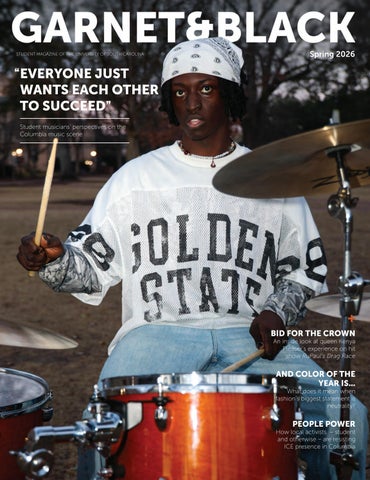
Student musicians’ perspectives on the Columbia music scene
BID FOR THE CROWN
An inside look at queen Kenya Pleaser’s experience on hit show RuPaul’s Drag Race AND COLOR OF THE YEAR IS... What does it mean when fashion’s biggest statement is neutrality?
How local activists – student and otherwise – are resisting ICE presence in Columbia
STUDENT MAGAZINE OF THE UNIVERSITY OF SOUTH CAROLINA
Patrick Chea, Calvin Landreth, Valentine Peracchi, Basil Roquemore, Ha Trinh, Aydann Turner
STYLISTS
Hunar Gill, Anna Le, Olivia Neal, Rezzie Omoigui, Marissa Roach, Asia Spigner
ENGAGEMENT
SOCIAL MEDIA DIRECTOR Ava Wojtczak
ASSISTANT SOCIAL MEDIA DIRECTOR Cat Lahr
PUBLIC RELATIONS DIRECTOR Jess Tilton
ASSISTANT PUBLIC RELATIONS DIRECTOR Ciara Purday
SOCIAL MEDIA MANAGERS
Alondra Escudero Chimal, Taylor Manwaring
PUBLIC RELATIONS MANAGERS
Jack Aicher, Mairead Ledwith, Kiley Seaver
GARNET MEDIA GROUP
ADVERTISING TEAM
Julia Austin, Sara Frasson, Ryan Gentile, Morgan Guynn, Juliana Marie Ordonio, Isabella Sepe
DIRECTOR OF STUDENT MEDIA
ASSISTANT DIRECTOR OF STUDENT MEDIA
ART DIRECTOR OF STUDENT MEDIA
ADVERTISING ADVISOR
FACULTY ADVISOR
CREATIVE SERVICES
Fabian Bellamy, Grace De Pena, Kathy Do, Abbie Lucas, CJ Rosenberger, Abby Short, Aidan Wokurka
Advertising: (803) 777-3018
To contact G&B, email sagandbe@mailbox.sc.edu or visit www. gandbmagazine.com. Garnet & Black Magazine is printed twice a year by students of the University of South Carolina and is distributed for free to members of the university community. All editors can be reached via email on our website. The office is located in Russell House University Union Room 339.
Sarah Scarborough Sydney Cranmer
Krista Larson
John Burbage
Tara Mortensen
The importance of small-town cinema and the students that run it.
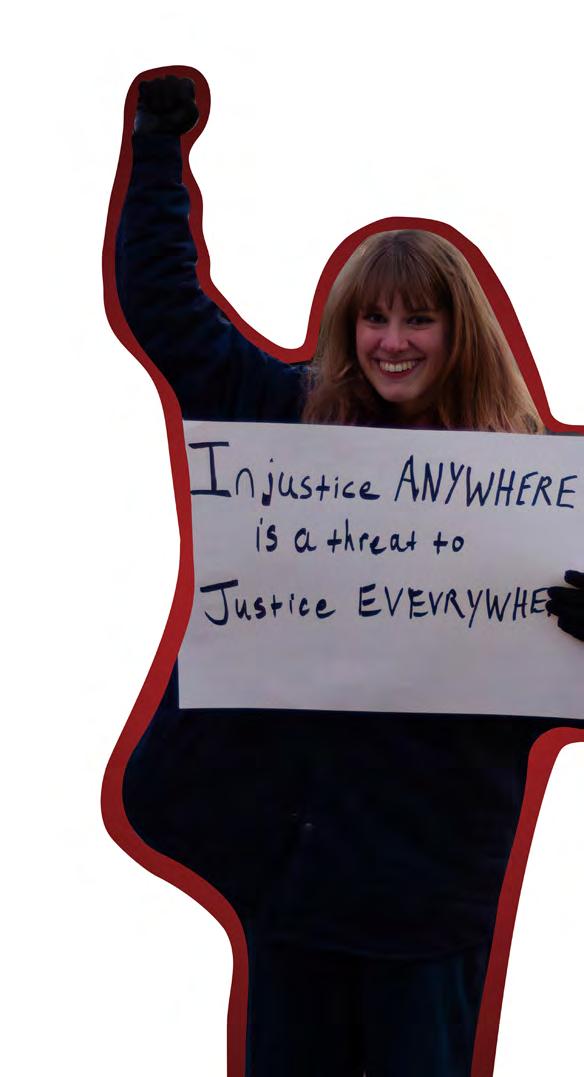
Despite working in a deep red state, Columbia’s left-wing activist groups speak out against ICE.
Nearly one million college students rely on SNAP benefits. What happens when these benefits run out?
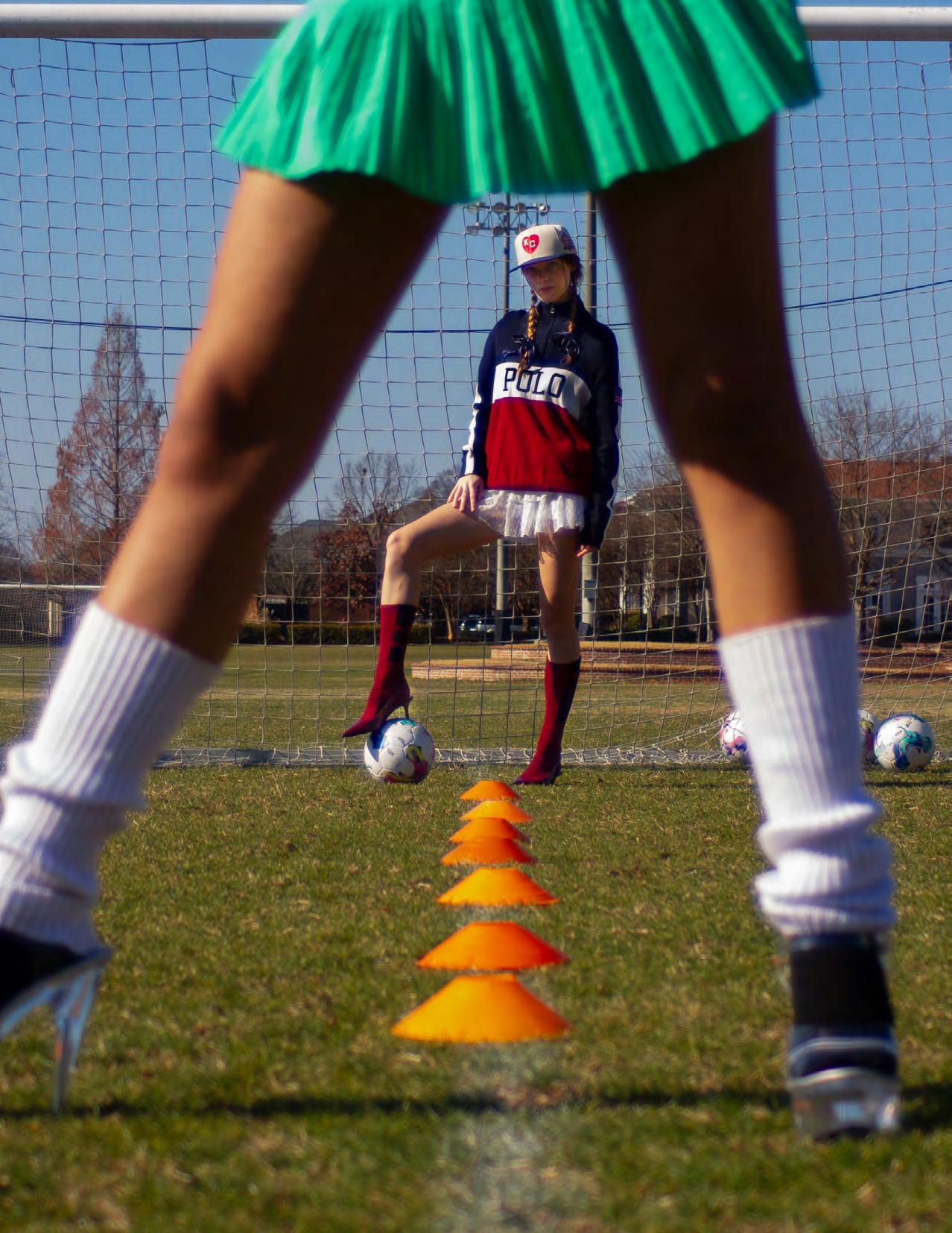
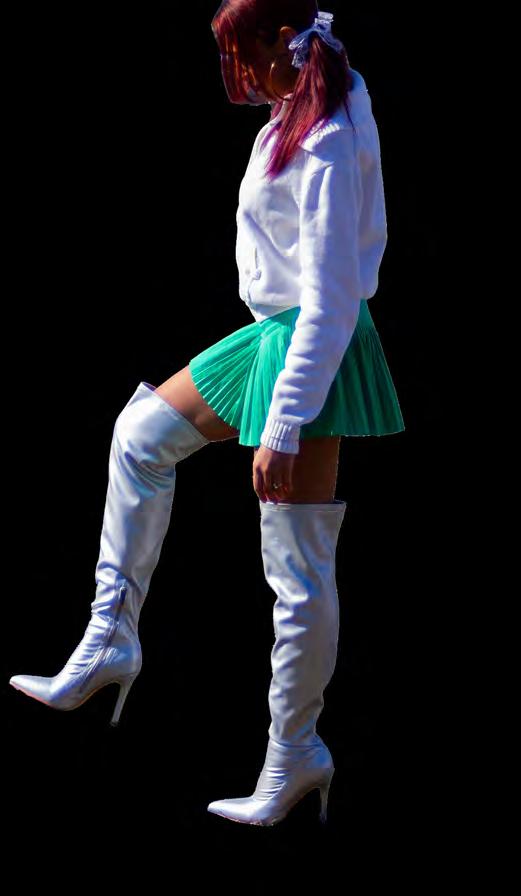
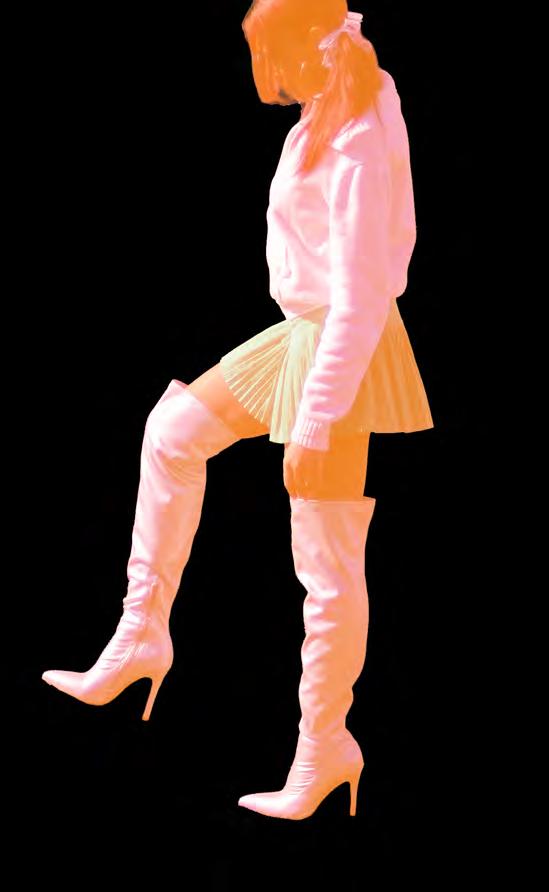
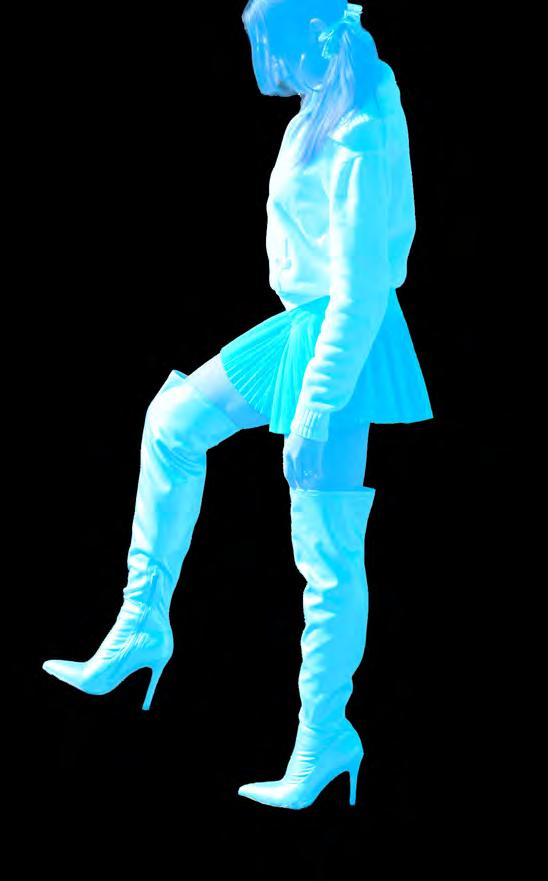
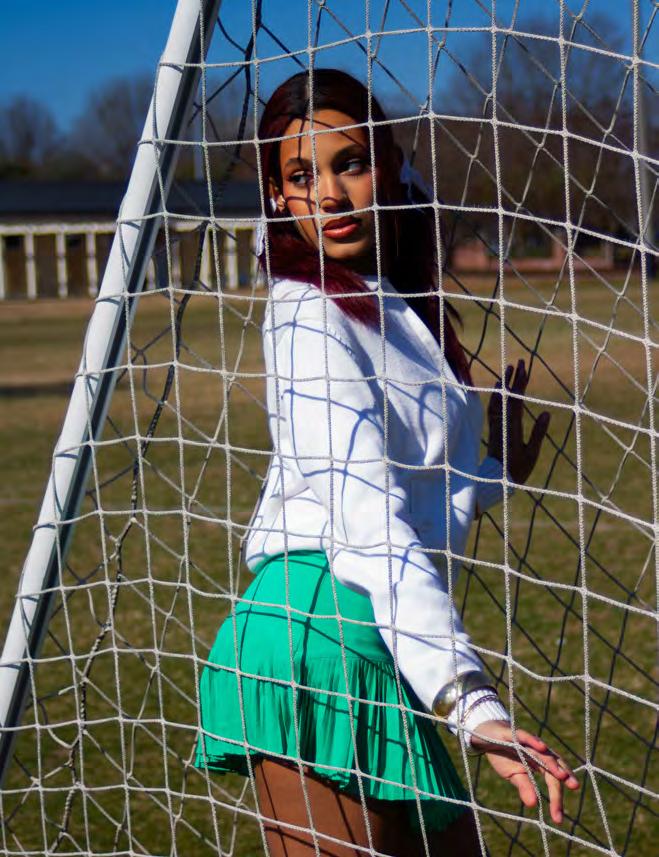
Soccer and stilettos are our new favorite pairing.
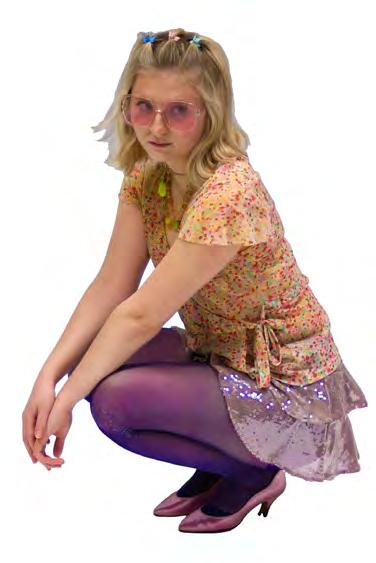
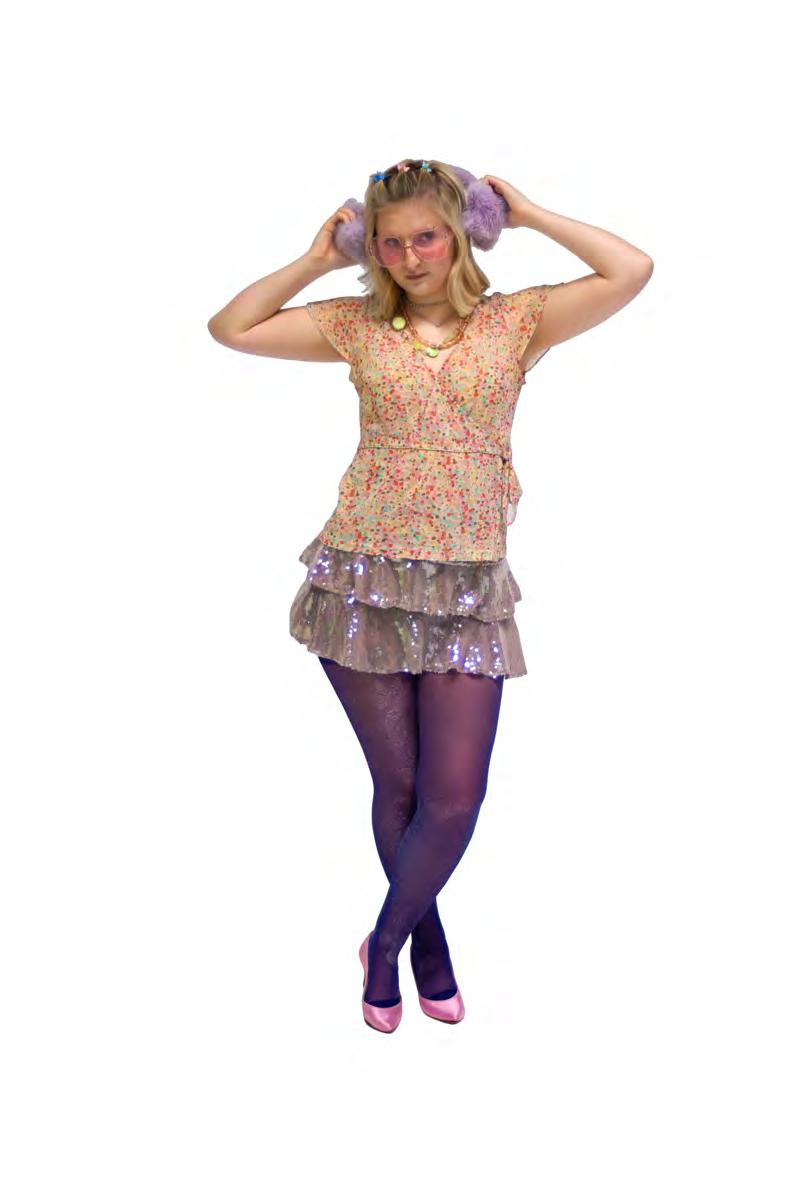
How to look your cutest during the seventh zodiac.
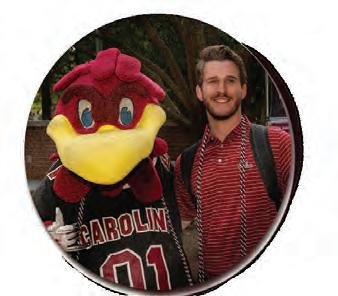
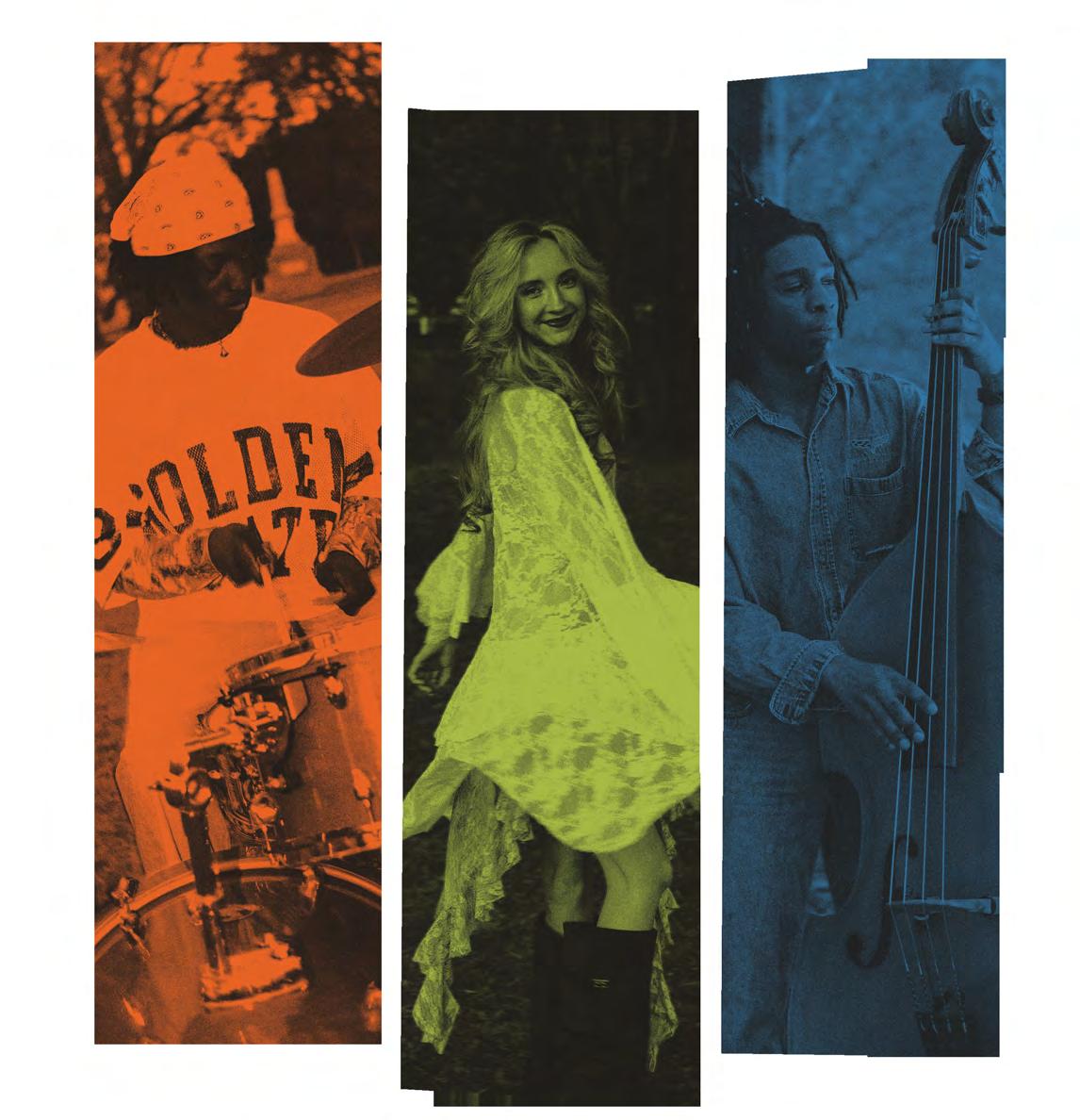
Columbia’s student musicians discuss the city’s music scene.
Tasked with caring for the record-breaking incoming class, these RAs face a blurring line between work and home.
What are the consequences when journalists enter the culture wars?
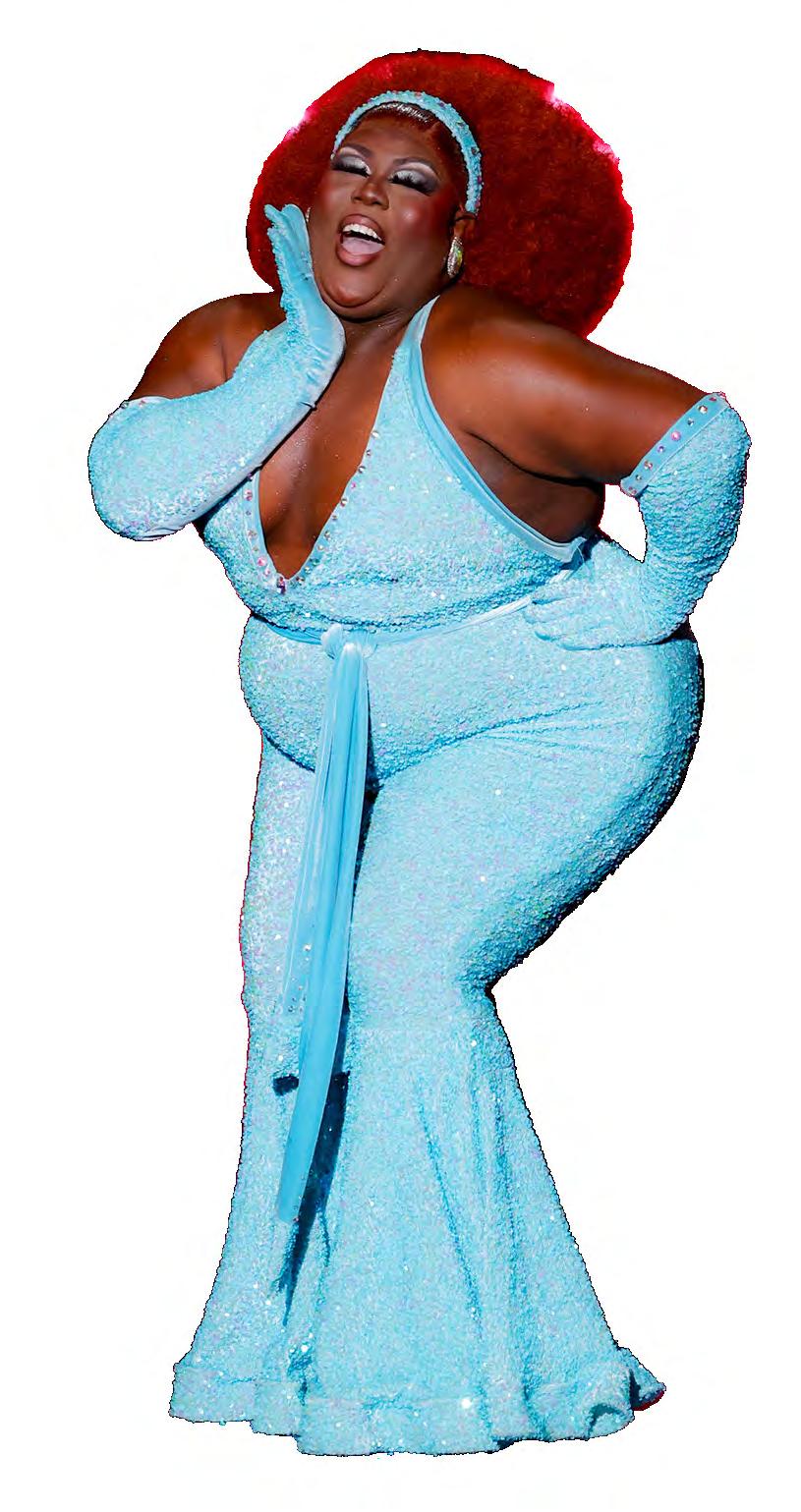
The Columbia-grown queen and Manning native shares her journey from Capital Club performer to RuPaul’s Drag Race contestant.
The sinister history behind the name of Sims Quad.
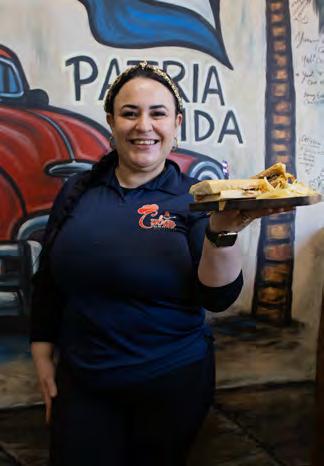
The story of Cuban Corner and how the Galguera family found a new home in Columbia, SC.
A short poem by managing editor and poet Audrey Miller.
Pantone’s 2026 Color of the Year, Cloud Dancer, is a quiet shade of white. The fashion industry’s reaction to it has been anything but muted.
How
LETTER FROM THE EDITOR
AUTHOR AND PHOTO SYDNEY LEWIS DESIGN SOFIA MILLINER
SSpring semester always makes me a little bit sappy. College years tend to hurtle by at the speed of light – one second it seems as if you’re never going to finish that one paper and the next, you’re making summer plans to see the people you now find it hard to live without.
And we’ve certainly seen an interesting semester this year. From snow and ice storms (both imagined and real) to the re-opening of Finlay Park to another enthralling basketball season for the USC women’s team, this semester has been a lot of fun. But, if you’re anything like me, it’s also brought quite a bit of fear – fear for our democracy, fear for our immigrant communities and fear for our right to speak up.
As Bad Bunny alluded to in his Super Bowl halftime show, “the only thing more powerful than hate is love,” and, similarly, the best antidote to that fear may be showing up for our Columbia community in all its beautiful diversity. Because that’s what truly makes this city (and this country) great.
In this issue of our magazine, we have endeavored to bring you the stories that matter to USC and Columbia in all their variety –whether that be local drag queen Kenya Pleaser’s meteoric rise to RuPaul’s Drag Race fame, the heartfelt story of the Galguera family’s Cuban Corner restaurant, or what Pantone’s color of the year really means for fashion.
It’s been the honor of my college career getting to lead the fantastic team at Garnet & Black this year, and this organization and these people have — and will continue to — inspire me every day. I want to give huge thanks to everyone who made this issue possible; I am absolutely blown away by this staff’s work ethic, compassion and creativity.
I hope that you’ll remember to seek out new people and new experiences in our fair city and campus, as well as to cherish the time you spend here. In between the hustle and the homework, don’t miss out on life.
Best of luck,
Sydney Lewis
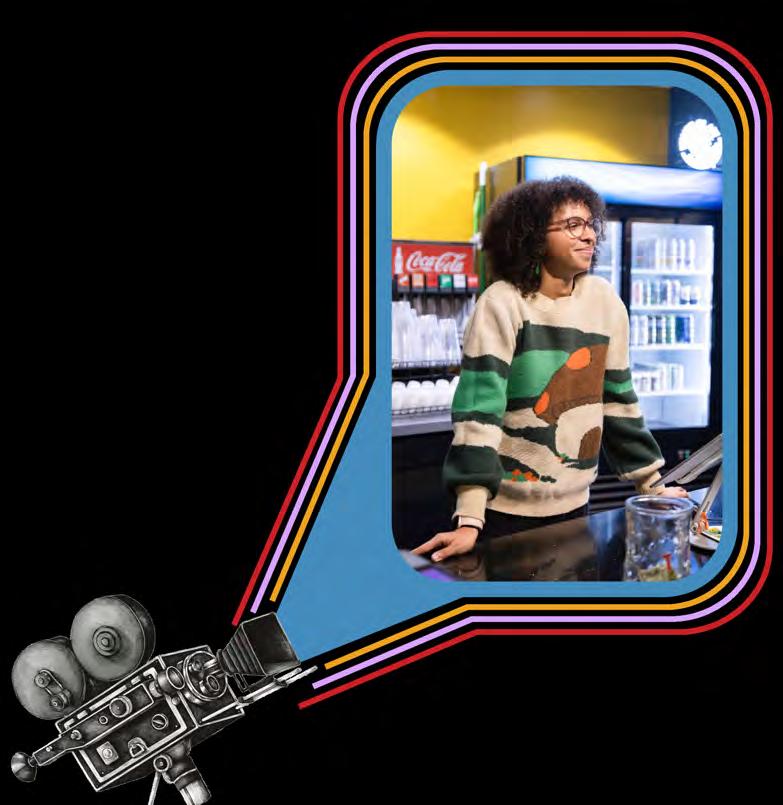
KEEPING THE MARQUEE LIGHTS ON
How the Nickelodeon represents the importance of small-town cinema and the students that are its future.
AUTHOR TARA MCGEE PHOTO JAMES HENDRICK DESIGN ISABEL SCHREIER
For many, there is no better feeling than going to the movies. Those dimming lights can kickstart careers, establish relationships and even save lives.
But conditions have changed; now guests are sitting in a decades-old recliner, eating stale popcorn and halfmelted candy, watching trailers and ads that last just as long as the film itself and paying the price of a five-star meal for a
These massive chain multiplexes decline in quality and rack up
and was originally an arthouse cinema created by two USC Media Arts students, Linda O’ Connor and Carl Davis. The original location was a rented storefront near campus, equipped with a 16 mm projector and a dream of keeping classic movies circulating in the state capital. Dale Campbell became the theater manager in 1980 and has kept the Nick going for students and moviegoers alike. Glenn German, a media arts professor and USC alumnus, was a moviegoer at the original location, even when he had to stretch every last dollar.
“You could put in your ATM card and get out coins,” he said. “But the lowest bill you could get was $5. I would get $5 and five would have to last me a week, so the Nick was a special treat.”
For many students, like German, the Nick was a feeling they had never experienced before. It was an introduction to an entire world of film, right beside their classroom doors. But those a-ha moments were halted in 1988, when the emergence of new technology, which at the time was the VCR, made business decline. The future of the Nick was up in the air until municipal bodies banded together to bring it back.
Now, with the help of partner funding and major renovations, the Nick is an established theater in the middle of Main Street, housed in what used to be known as the State Theater from 1936 to 1961 and the Fox Theater until 1987. The space draws hundreds of visitors each week, yet the original message of O’Connor and Davis remains: to keep the art of film alive in Columbia.
USC students have always been a common thread between the future of cinema and the Nick. Students have created work that has been projected in that theater, but many are also frequent moviegoers who maintain business. The theater frequently supports student projects and short films, giving young creatives the opportunity to have their work seen not only by friends and family, but also by audiences across the area seeking something new. It has hosted countless film festivals and premieres
Olivia Wamai greets customers from behind the counter at the Nickelodeon. Wamai, a recent graduate of USC Theater, loves to see the Nick extend opportunities to young filmmakers and enjoys watching people she knows perform on the big screen.
featuring local work from across the city and state, and it also screens independent films from around the world. The Nick offers young artists real-world engagement with their work, providing insight into potential future audiences and the importance of accessibility.
Olivia Wamai, an employee at the Nick and a recent graduate of USC’s theater program, has seen that effect firsthand.
“Any other movie theater, you’re just seeing ‘big’ movies. And nothing against big movies, I love a big movie, but coming here was the first time I saw people I knew on screen or people I know doing talkbacks,” she said. “This is how it starts. This is how people get their start in movies, and I’m watching it, and I’m there for the first time it’s on a big screen.”
Most recently, the Nick supported the premiere of the film “The Grand Strand,”
AUTHOR ROBIN ADAMS DESIGN ISABEL SCHREIER
FOOD FOR THOUGHT
WWhen you walk down Greene Street at 10 a.m., you’ll see hundreds of students brushing past, each heading to one of a number of dining halls or food trucks, and all with the same goal in mind: breakfast. But look closer and you’ll notice something’s missing— or someone.
Food insecurity is defined by the U.S. Department of Health and Human Services as an “economic and social condition of limited or uncertain access to adequate food,” influenced by factors such as income, employment, race and ethnicity and disability. This pervasive issue affects people across many demographics and states, including college students. South Carolina is no exception.
When the 2025 government shutdown occurred, millions of food-insecure college students relying on SNAP benefits underwent a crisis.
According to the U.S. Department of Agriculture, 14.5% of South Carolina’s population was food insecure between 2020 and 2022, more than three percentage points above the national average and the seventh highest rate in the country.
Harvest Hope, a South Carolina food pantry organization with locations in the Midlands, Pee Dee and Upstate regions, is dedicated to addressing this problem. Its mission? Providing meals to people across twenty counties–27 million per year.
Erica Cheeks, the equitable access advocate for Harvest Hope, says the issue extends beyond unequal access to food and reflects a longstanding structural problem that requires deeper confrontation.
Now, we’ve been operating since 1981. Hunger is here; hunger is going to stay here.
“Now, we’ve been operating since 1981. Hunger is here; hunger is going to stay here,” she said.
Cheeks emphasizes that as a community, it’s necessary to advocate for this crisis to South Carolina elected officials. She states that one of her responsibilities is spearheading this effort.
“Providing the data that we need to show them that, here
what we need, because food insecurity is not just food,” she said. “There’s so many things that contribute to it. And so, you have to holistically address all of those in order to basically decrease or eliminate food insecurity.”
When it comes to governmental programs, one of the most recognizable is the Supplemental Nutrition Assistance Program (SNAP), which helps provide benefits to those experiencing hunger. According to the USDA, in the 2024 fiscal year, an average of over 41 million Americans (1 in 8) received SNAP benefits each month. In the 2022 fiscal year, over 600,000 South Carolinians received SNAP benefits.
Although SNAP is crucial to millions
of Americans, it isn’t always reliable or widely accessible. The program itself relies on government funding, and when political gridlock or natural disasters occur, recipients suffer. This was recently seen during the longest government shutdown in American history, from Oct. 1 through Nov. 12, 2025. Concerns emerged about the defunding of SNAP, and recipients scrambled to find alternatives. Harvest Hope was among the many organizations strained by this event.
“When that hit, it was kind of a shock to us because the legislators, even the governor, were like, ‘Go to the food bank.’ And it’s like, we don’t have the resources to all of a sudden turn on this switch,” Cheeks said. “People don’t understand that the food bank; we rely on donations. We don’t receive money from the state. We’re not in the state budget.”
As a flood of food-insecure Americans struggled to find alternatives, and food banks took on the brunt of the influx, college students experienced significant anxiety as well. Yet, this population is often underrepresented or misjudged because of dated assumptions. A 2022 study from Front Public Health corroborates this phenomenon.
programs, it really did not take into consideration young adults or college students. So they’re still trying to figure this out as well,” she said.
Still, in 2020, 1.1 million college students relied on SNAP benefits.
that requires both recognition of surrounding stigmas and boots-on-theground volunteerism. To those who have never come into contact with food anxiety before, she suggests several
“Today, instead of the entitled persona often portrayed of college students, the reality is many college students are skipping meals or going hungry due to the inability to afford food in conjunction with all the other necessary college expenses (rent, textbooks, lab fees, tuition, etc.) and limited financial assistance.”
Cheeks confirms this fact. Harvest Hope often sees college students undergo food insecurity, which she says goes against a common prejudice.
“The misconception is that, you’re going to college, so you’ve got to have some money, and if you’re in college, why would you be food insecure?” According to her, the SNAP program also had little positive effect on this demographic.
“The application for SNAP and these
More than four times that suffered from severe food insecurity. This reliance carries on today. When the Trump administration announced that it would delay SNAP benefits indefinitely during the shutdown starting Nov. 1st, college SNAP recipients panicked. Additionally, The 19th reports that marginalized and non-traditional college students experienced the most severe mental effects of the shutdown.
The reality is many college students are skipping meals or going hungry due to the inability to afford food.
“Do your due diligence in research, but also, take the time out to go volunteer and learn about local programs, not just the food bank, any local programs.” Resources like Harvest Hope are making strong efforts to attack systemic food insecurity at its source while providing meals to its surrounding areas. On campus, there are options for those experiencing this crisis. Gamecock CommUnity Shop is a pantry located in the Carolina Coliseum available to students that supplies food, clothes and other critical resources.
The shutdown created a crisis for the mental health and physical well-being of thousands of Columbia residents, according to Cheeks. For college students in the area, the consequences of sudden lapses in support like this can be formative.
“How do you make sure that, you know, college students who are trying to further themselves and become productive people in society get the jobs that are going to help them be able to sustain their families as well as contribute to their economy?” asked Cheeks. “Because if you don’t have that, what do you have?”
She believes that food insecurity among college students is an issue
Though the shutdown has ended, it’s crucial to recognize that programs relying on government funding can be volatile when unexpected emergencies surface. For millions of students nationwide, SNAP and other nutrition resources are means of survival and relief, not leisure. Anyone around you could be experiencing food insecurity, so it’s important to know that you’re not alone and to advocate for the stability of your peers.
YEAR OF THE HORSE
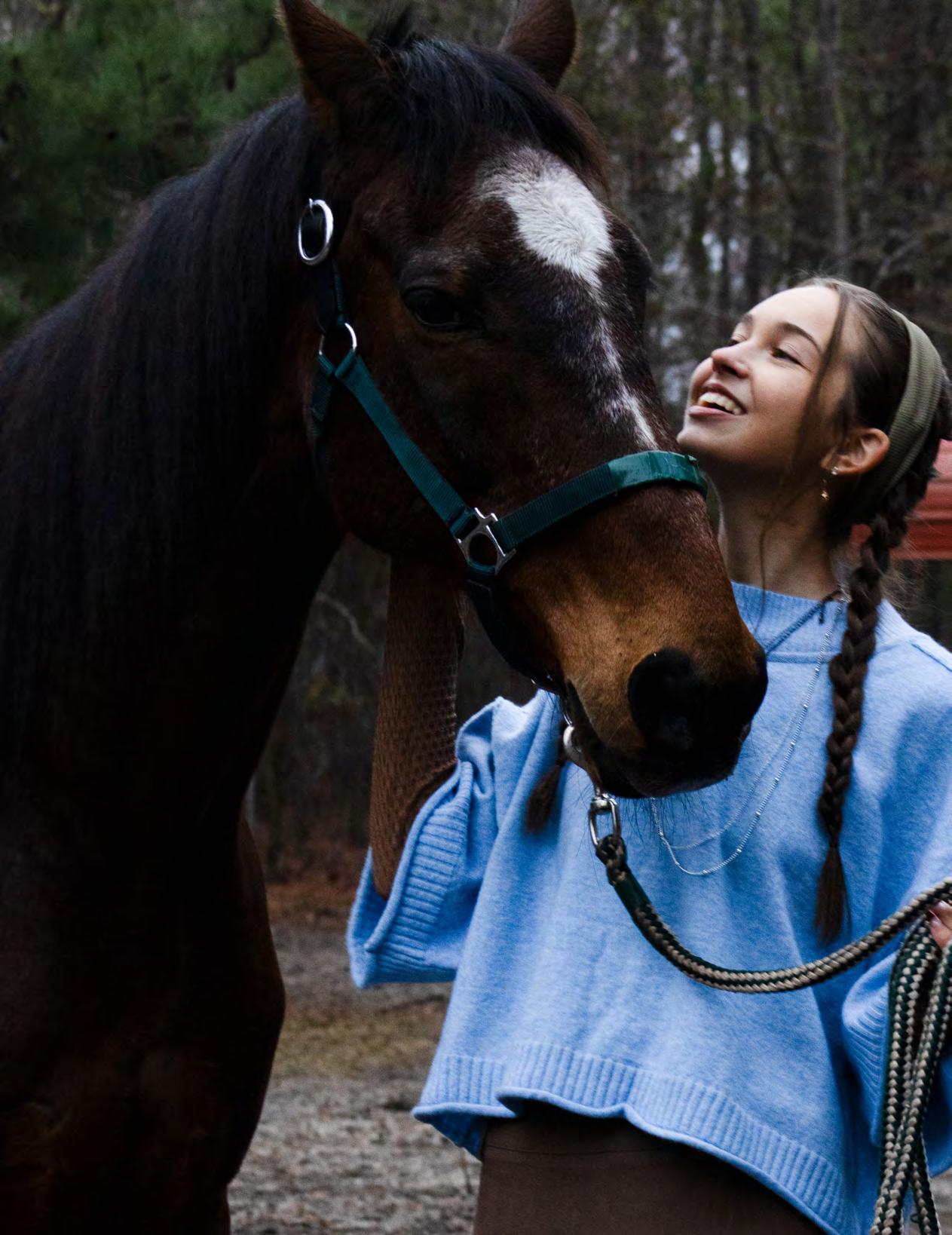
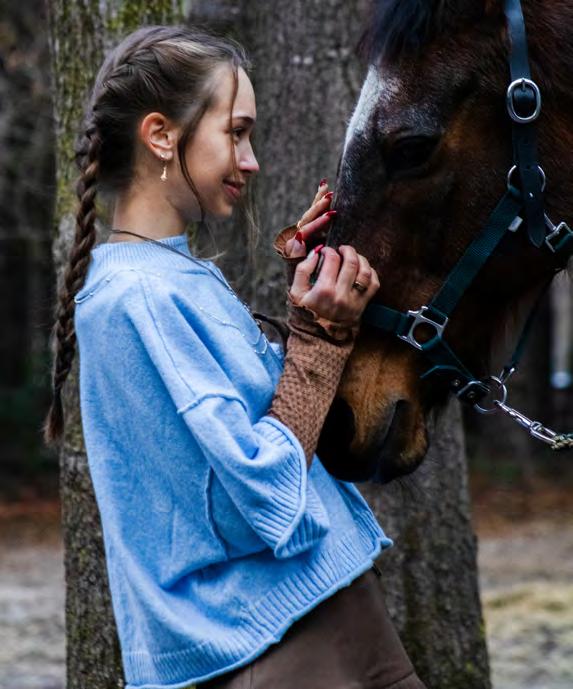
This year, give an effortless energy that is grounded yet free.
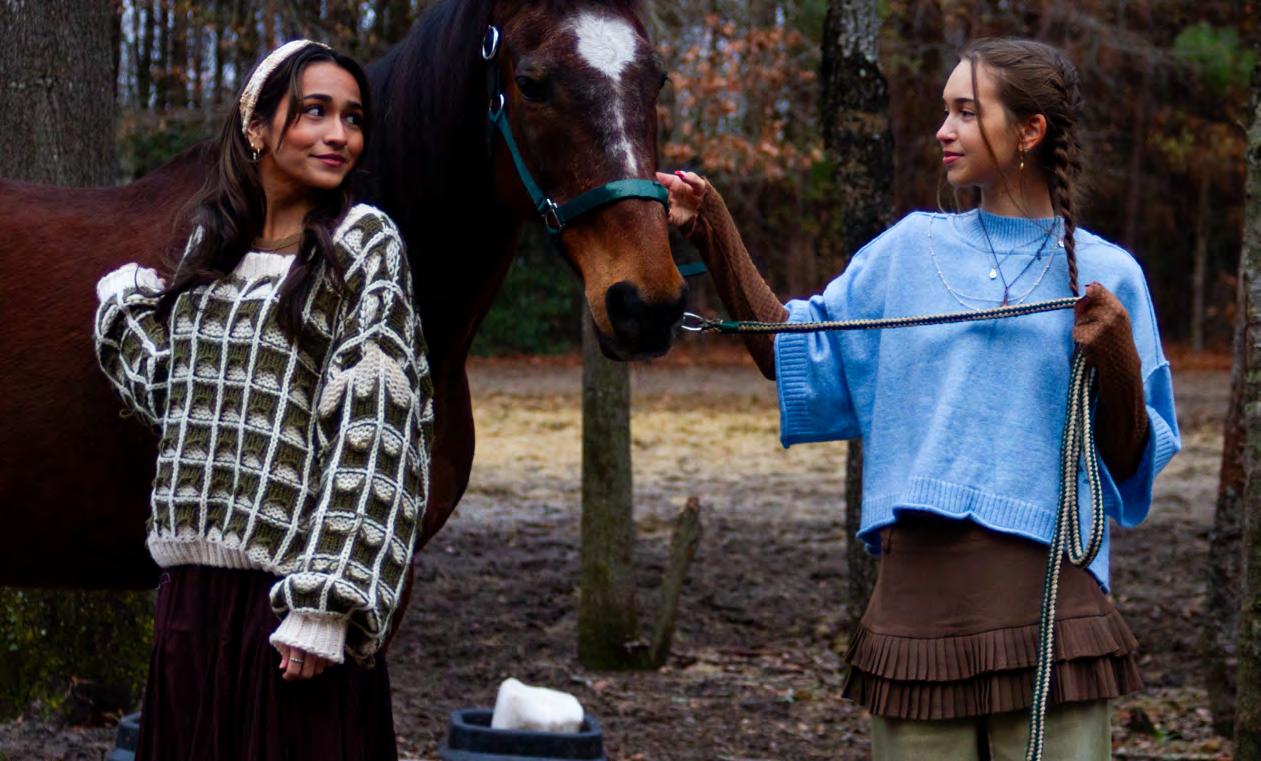
Each year is defined by one of the 12 Chinese zodiacs. This year marks the seventh zodiac, which is the Horse. Those born in the Year of the Horse are said to be confident, energetic and intelligent, traits that feel deeply inspiring. Confidence in oneself is an incredible feat once achieved.
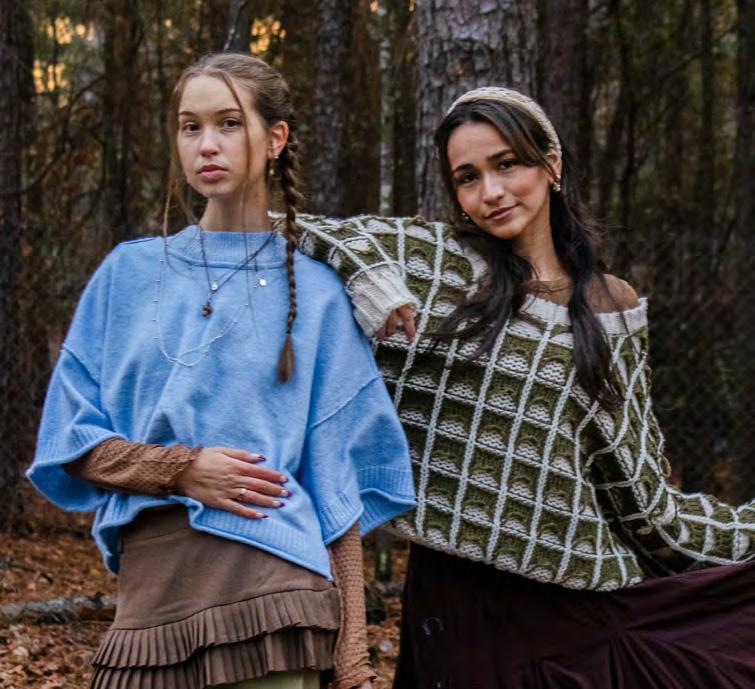
This style shoot reflects that spirit; it has an effortless energy that immediately draws you in. A quiet confidence that says, ‘I can persevere through whatever comes my way.’ Moving only for yourself, not for the approval of others.
Shot on a farm, the earthy tones paired with a soft sky blue, feel grounded yet free. The colors are gentle and subtle, but captivating through the energy they’re being worn with. The layered looks express an effortless “I just threw this on” aesthetic, while still feeling intentional, put together and undeniably chic.
AUTHOR ERIN KELLY
PHOTO SARAH ROMERO AND TARA O’TOOLE
DESIGN CAROLINE SMITH
STYLIST ERIN KELLY
MODEL : LEXI BENNETT
Vestique, Blue oversized knit t-shirt, $48
Vestique, Brown ruffled button down, $42
Vestique, Green denim jeans, $54
Vestique, Brown ruffled skirt from, $42
Birkenstock, Brown boston soft Footbed, $169
“Without GLD, I do not know if I would be able to articulate the depth of ways I've grown over these 4 years.” - Spring graduate2025
WHY MENTORING MATTERS MORE THAN YOU THINK
How USC Students Are Using Mentorship to Shape Their Careers
Not sure what you want to do after graduation? Wondering whether your major actually connects to real jobs? Or how to even start building a network?
Looking for guidance can feel overwhelming — especially if you’re not sure who to ask or where to start. The USC Mentorship Hub makes that first step easier by connecting you with trusted mentors who’ve been where you are.
Imagine messaging an alum in your dream industry or discovering a career path you didn’t know existed. “My mentorship experience was a great blend of classroom learning and real-world insight,” said Drayden Young, a USC student. “My mentor helped me identify the key skill sets needed in today’s job market and guided me on how to develop them strategically.”
What the Mentorship Hub Offers
Start with one question and leave with clear next steps. Here’s what you can actually DO inside the Mentorship Hub:
• Search by industry, job title, graduation year, or skills.
• Schedule one-time or ongoing conversations.
• Request résumé & portfolio feedback.
• Ask for informational interviews or industry insight.
• Expand your network through mentor introductions.
Jotie Yadav, a USC student, shared that a mentor introduction clarified professional next steps.
A Different Kind of Networking (aka Why This Isn’t Just LinkedIn)
• Every profile is part of the USC community — no cold messaging strangers.
• Built for students, with guided prompts and filters.
• Real outcomes: internships, job leads, project collaborations — not just “nice to meet you.”
Start Strong
1. Polish your profile
Share your major, interests, and what you’re exploring.
2. Send a focused message
Include 2-3 thoughtful questions so mentors know how to help.
3. Show appreciation
A brief thank-you message goes a long way.
4. Take action
Mention one next step you plan to follow through on.
Best Practices
• Lead with curiosity, not a job request. Opportunities will come naturally.
• Specific, personal messages perform better.
• Never share sensitive personal information. Mentors should not ask for private identifying data. If you have concerns, contact the Career Center.
• Look for shared experience (field of study, major, industry, student orgs, etc.) and mentors who clearly outline their goals and interests.
Ready to Begin?
Mentoring is mutually rewarding. You gain perspective, confidence, and connections, while mentors gain fresh ideas and the satisfaction of supporting the next generation.
“You never stop learning through your career and life,” one USC mentor reflected. “Connecting with others is always a learning experience and a chance for growth.”
This is your chance to build meaningful, lasting personal and professional relationships.
Log in to Mentorship Hub today using your USC ID, and send one message. You don’t need a perfect plan — just curiosity and a question. One conversation could clarify your direction or open a door you didn’t know existed.
DOUBLE BOOKED THE RA PERSPECTIVE ON USC’S HOUSING STRAIN
As USC celebrates record-breaking enrollment numbers, resident assistants find themselves being asked to share rooms with their residents. Tasked with caring for the incoming class, these RAs face a blurring line between work and home.
DESIGN NA’HALEY WILEY AND SOFIA MILLINER
esident assistants are expected to be accessible figures for freshmen experiencing the chaos of first-year life here on campus. They answer calls to mediate conflicts at 2 a.m. and try to create a close-knit community out of a hallway of strangers. When an RA goes back to their room for the day, it is often the only boundary they have where they can escape the pandemonium. However, for many RAs at USC this year, that quiet retreat is no longer theirs alone.
With 7,829 new freshmen enrolled for the fall 2025 semester, the largest class in university history, USC is celebrating a boom it has worked years to achieve. The student body has climbed past 40,000, but numbers don’t always tell the full story. This growth is reflected in parking garage signups that fill up the second they open and in RAs who have to share their rooms with the very students they are responsible for overseeing.
Charlie*, a returning RA, remembers when his freshman class was considered the “biggest yet.” Back then, it simply felt like an exciting sign of momentum. Now, it seems that this momentum has outpaced USC’s infrastructure.
“It hasn’t really affected me much until this year, when they truly overadmitted, and now RAs have freshman roommates,” he said. “So, as a senior, I have a freshman roommate who shares a space with me.”
When the notice arrived over the summer, Charlie described it as a “slap in the face.”
This can also affect the freshman with whom he shares a room, who never signed up for the emotional burden of living next to someone responsible for handling student crises.
In the past, Charlie was the only one awakened by emergencies, but this year, sharing the space has meant sharing the late-night disruptions and emotional toll that comes with the job.
“Now, my roommate has been affected, which isn’t really fair to them,” he said.
University Housing compensated student staff members who received roommates, and Charlie acknowledged that effort.
“It’s just, when I received the email that we had roommates, they were like,
The closing of residential buildings makes the decision to admit nearly 8,000 freshmen seem even more confusing to student staff who are navigating the consequences.
“I thought RAs were supposed to have their own space to compartmentalize from the stressors of the job,” he added. Charlie had always felt that his room was the only place he could relax, especially after days spent holding a duty phone from 6 p.m. to 8 a.m. that can ring at any hour.
“I thought RAs were supposed to have their own space to compartmentalize from the stressors of the job.”
‘RAs aren’t usually receiving monetary compensation, but we fought for you to have this,’ which is all well and good, but it kind of just felt like they were covering themselves,” Charlie said.
One of his fellow RAs even quit over the situation.
The growing student population doesn’t only stretch housing. Charlie shared stories from residents who couldn’t get into classes they needed because seats were filled too fast. He also talked about waiting for a parking garage signup to open at midnight only to find that every spot had disappeared moments later.
“What’s truly grievous, I think, in regards to the over-admittance of students, is the fact that this year, we have a recordbreaking number of incoming freshmen; however, we’re closing McBryde in the spring and then...some building on the Horseshoe is closed, so why admit all these new people when we don’t have the facilities to accommodate all of these people?” he asked.
Evelyn Wiggins, another RA, raised a similar concern. From her perspective, the transition into college is supposed to be liberating, since it’s a first taste of independence for many students. Instead, some freshmen are sharing a room with a mandatory reporter.
“You just left your parents’ household,” she said. “You don’t want someone watching over your back.”
She believes the arrangement risks making freshmen feel like they are still under surveillance and that their ability to settle into college life could be compromised before it even begins.
These living situations have also complicated conflict resolution. Housing has fewer open beds available, so students stuck in uncomfortable roommate pairings often have nowhere to go.
“This year, we don’t have a lot of flexibility for that,” Wiggins said. “It’s not just the students we have to deal with, it’s also the pissed parents, because now the parents are like, ‘Well, we’re spending all this money on not just tuition but also housing, and you’re telling me I can’t move my kid?’”
Despite the challenges, both RAs insist there are bright spots. Larger communities have led to more resident engagement, and Wiggins reflected on the “bonus” of having additional students in the facility.
“I’m very lucky with my residents that actually do come to my events even
though there’s so many of them,” she said. “They’re very cool and they all have their own personalities, which I enjoy, and having that community area makes it easier to get to know our residents.”
Wiggins also talked about receiving support from her supervisors, who are trying to adapt in real time alongside their student staff. Charlie added that his own roommate has been respectful and understanding, which shows that not every pairing is a disaster waiting to happen, but the tension lies in uncertainty.
RAs sign a contract months in advance, believing they know what they’re agreeing to. When the expectations shift after those agreements are made, it becomes harder to trust the promises associated with the role.
Wiggins put it plainly: “We signed a contract, and then out of nowhere, everything changed.”
In a statement to Garnet & Black, university spokesperson Collyn Taylor defended USC’s decision to admit more freshmen this year.
“USC is in high demand with more and more students who are admitted choosing to attend,” he said. “We are careful to keep our growth projections within our capacity to house freshmen and achieved that goal this year.”
Taylor also discussed the university’s policy on assigning freshman roommates to RAs.
“Having incoming students room with resident assistants is something we do
only when absolutely necessary,” he said. “Because of this, we’re awarding additional stipends at various points throughout the semester for RAs with a roommate.”
The university reiterated that communication has been ongoing and that flexibility is appreciated during this period of growth. However, flexibility has an emotional cost absorbed by students who are asked to be both caretakers and college kids.
While the university celebrates booming enrollment numbers, RAs are the ones actually ushering those students through the doors and building a sense of belonging in a campus that is stretching to its limits.
The RAs Garnet & Black spoke to remain proud of their role. They deeply care about the freshmen adjusting to life away from home and reflect on how much these relationships matter in the long run. They just hope that, as USC continues to grow, the wellbeing of student staff will not become an afterthought.
“We have our responsibilities, and it’s an important role,” Wiggins said. “We should have an opinion about it. We shouldn’t be the last group who finds out.”
*Name changed for anonymity
INSIDE KENYA PLEASER’S BID FOR THE CROWN
AUTHOR SYDNEY LEWIS PHOTO PROVIDED
BY MTV DESIGN
AVERY MALONE
The queens of RuPaul’s Drag Race line up to hear the judges’ criticism in the first episode of Season 18. Kenya struggled to design an outfit made of unconventional materials but was saved by RuPaul’s decision to have the week’s top queens lip sync for the win rather than eliminate any competitors.
Kenya Pleaser first got the call at her day job, frantically typing door codes at the Shaw Air Force Base Spratt Education Center to get to the parking lot and answer her phone. When a casting offer for RuPaul’s Drag Race is on the other end of the line, it’s best not to keep anyone waiting.
“It felt so surreal,” Pleaser said. “I was scared, I was nervous, I was excited, I was terrified again and then wrapped right back around to excited. It was a lot.”
A regular performer at Columbia hotspots like the Capital Club, Pleaser was publicly announced as a contestant on the 18th season of reality television phenomenon “RuPaul’s Drag Race” in early December. The season premiered on MTV about a month later to recordbreaking viewership. Each year, a group of 14 queens compete for the title of “America’s Next Drag Superstar” in challenges designed to test their comedic chops and fashion campy couture.
Queens are sworn to secrecy about their casting on the show until the official announcement and stay in a hotel without outside communication with friends or family for the duration of filming. Other contestants have discussed the pressure’s impact after the show, and Pleaser was no exception to the strain, balancing the competition’s demands for emotional vulnerability and professional excellence.
“No other reality TV show requires you to be as vulnerable as Rupaul’s Drag Race,” Pleaser said. “You can tell all your business about what you go through as a child, but then you have to turn around and compete in a comedy challenge.”
“On the first episode, I wear this shirt in the work room — when I was having that breakdown — it said, ‘the mindset [i]s everything.’ My mom actually bought me that shirt to wear on the first day of Drag Race,” Pleaser said. “That was probably the best piece of advice that anyone has ever given me in life.”
Even before filming began, Pleaser’s life was thrown into chaos by preparation for the show. Drag Race contestants have upped the ante on the show as its popularity skyrocketed, setting the
gather the skills and costumes she’d need to take with her. Pleaser worked up until a week before she left, but she wasn’t going to let the price tag shake her confidence.
“Girl, I was pinching pennies, nickels, dimes and quarters. I’m just working my butt off to make this happen,” Pleaser said. “I know I’m going to be around people, they have all this money, they have all this access, they have all these things, and one thing I knew that they did not have over me was a personality.”
“ One thing they did not have over me was a personality.
Though Pleaser had a shaky start in the competition’s first main challenge, she held on to advice from her mother in her lowest moments.
Pleaser struts down the catwalk in a Caribbean inspired look for the “Not Today, Satin” runway in Episode 5.
la “The Kardashians” — made for many a quippy transition. “Kenya Pleaser is one of the best things to happen to #rupaulsdragrace — she exudes star quality,” wrote X user @wondisims.
The high-energy lip sync in episode four to “Lights, Camera, Action” by Kylie Minogue drew even more attention to her abilities. “Kenya Pleaser is a PERFORMER!!!!!!! What a star wow!!! #DragRace” posted X user @ aboynamedpierre following her matchup with fellow queen Briar Blush.
But, according to her, the “Pleaser Experience” isn’t only about the performance and glamour. Raised in Manning, South Carolina — a town with a population of fewer than 4,000 people — Pleaser understands drag as an art that carries impact far beyond the stage. Her persona itself is a way for her to deconstruct internalized homophobia and toxic masculinity — topics she feels are particularly underdiscussed within the Black community.
“I think we have to deconstruct what politics and what being political truly is,” Pleaser said.
And going from being the only
openly gay student at a high school of 600 to competing for the Drag Race crown is breaking the mold even further — now on a national scale and at the highest level of drag.
“I’m a plus-size Black gay man from the South. Me getting up in drag is already a statement in itself, and then me being good at it, it’s like, ‘oh my goodness,’” Pleaser said. “Me stepping out of the norm and doing what I am ... that is political, and that is something that I should be proud of.”
Pleaser poses for the camera as she walks into the “Werk Room” in her Drag Race debut. “I have one thing to say,” she cheekily announced upon arrival. “Kenya Pleaser?”
BUILDING A DREAM: CUBAN CORNER AND THE GALGUERA FAMILY
The story of Cuban Corner and how the Galguera family found a new home in Columbia, S.C.
AND SARAH ROMERO DESIGN HANAA JATOI
Tucked just off Main Street is a new addition to the diverse gastronomy of Columbia, one that locals and visitors alike may recognize from its presence at Soda City Market. Cuban Corner officially opened its doors Oct. 3, 2025, establishing a permanent home at 1212 Hampton St.
This opening marks an incredible feat for the owner, Yaema Galguera, and her family, who emigrated from Cuba three years ago seeking political asylum. The Galguera family—including Yaema, her husband, her two daughters and her mother—immediately noticed a lack of Cuban cuisine in the Midlands and sought to meet that demand.
“We noticed it here, we can’t find Cuban food,” Galguera said. “And a lot of people love Cuban food, not only because they are from Cuba—a lot of people came from Miami, from Florida, and moving here they can’t find typical Cuban food. And that is my passion all the time. I love to cook and my mom loves to cook too, and I said, ‘Okay, we can do something like Cuban food.’”
The Galguera family immediately began working towards their goal, putting in long hours to establish Cuban Corner in Columbia. Soda City Market proved to be the best starting place for the business, allowing them to overcome many early obstacles.
“The problem was like, we don’t have food trucks, we don’t have a restaurant, how we can sell our food?” Galguera said. “Because, you know, there are permits, you need money and you need to do more than you want.”
Desite early challenges, opening at Soda City proved to be a great choice for the family. Their brand became popular at the market, amassing new customers every Saturday. Being one of the few authentic Cuban food vendors in the Southeast, they drew in visitors from neighboring states, with some driving hours to get their weekend fix.
While success at Soda City helped establish a
local presence, the family still faced several challenges. Because Soda City is an outdoor market, there were limits on what dishes could be prepared and served based on space, time and ease of consumption. There was also the factor of opening hours, with the market only being run on Saturday mornings. Outside of Soda City, Cuban Corner was only available through their catering services.
possible.”
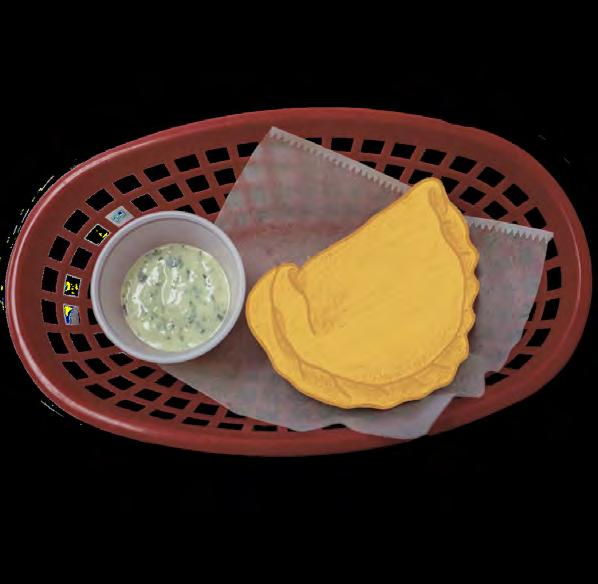
And possible it was, because Cuban Corner has quickly become a mealtime staple in Columbia. Whether it’s customers stopping in for their morning cafecito (sweet Cuban espresso) or coworkers bonding over medianoche sandwiches, the store remains bustling with people craving authentic Cuban food.
“This restaurant is not only my restaurant. It’s my restaurant, my family’s restaurant, my customer’s restaurant,” Galguera added. “So, I’m very grateful every single day.”
It quickly became clear that Cuban Corner needed a storefront, so Galguera’s entire family pitched in. From her daughters balancing school and work to her husband working overnight shifts, each of them played a role in establishing their brick-and-mortar restaurant.
“My husband worked at Amazon overnight, and we were housekeeping, and we worked at Publix too all day,” Galguera said. “So it’s like
Customer support and the Galguera family’s determination helped build Cuban Corner from the ground up. After arriving from Cuba with little and starting over in Columbia, the family worked to create both a business and a home. Today, they describe their life in Columbia as one filled with warmth, love and acceptance. As they settle into this new chapter, Galguera encourages others to keep working toward their goals, even when they seem out of reach.
“It doesn’t matter if you are an immigrant, whatever you are— at one point if you have to start from zero, don’t feel like your life is ending or you’re never going to have a good life again,” she said. “Keep going. If God put it in your mind, that is because you can do it.”
Yaema Galguera holds up a Cuban sandwich, one of the restaurant’s most popular items. She and her family emigrated from Cuba three years ago seeking political asylum.
THE COLOR OF THE YEAR IS... WHITE?
AUTHOR CALEB HARGROVE
TARA O’TOOLE, ASIA SPIGNER, DESTON CEDILLO
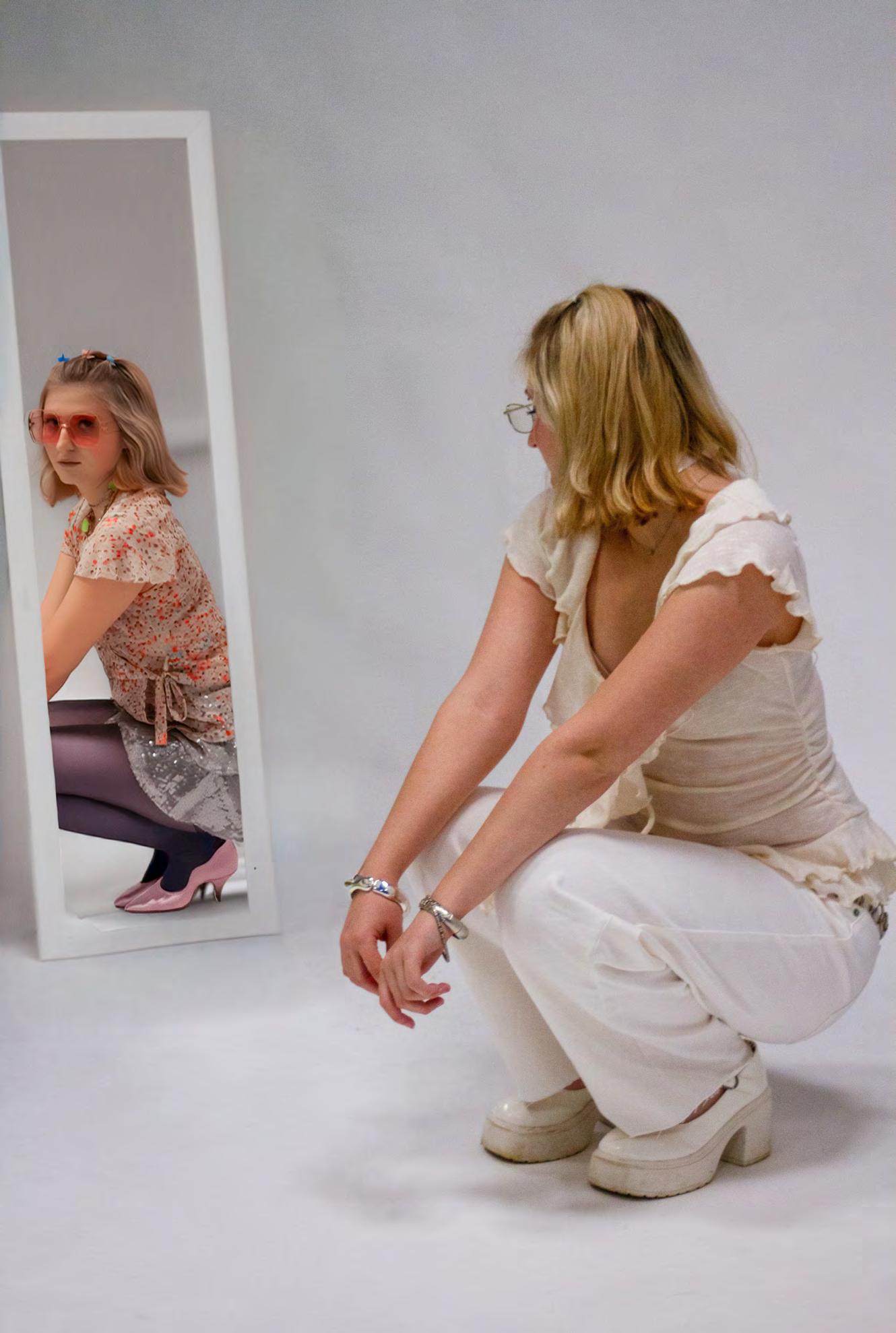
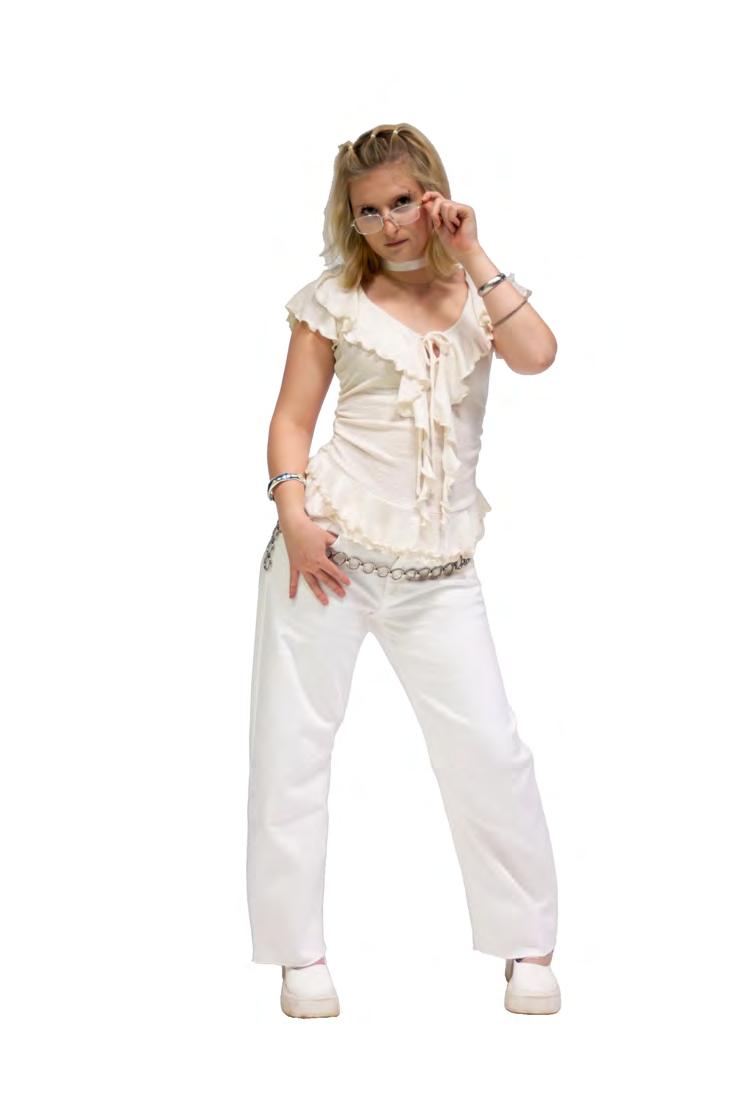
Pantone’s 2026 Color of the Year, Cloud Dancer, marks the first time a shade of white has been given the title, sparking conversation across the fashion world. While marketed as calming and neutral, the color raises deeper questions about creativity, cultural mood and self-expression in a time defined by political tension and emotional fatigue. Through conversations with students and local fashion designers, this article explores what the shift toward neutrality reveals about the fashion industry and why many creatives see color not as something to abandon, but as a form of resistance.
PHOTO
DESIGN MADISON GISSENDANNER
STYLE ERIN KELLY
This year, Pantone made its announcement that the color of the year is… white. Or, more specifically, Cloud Dancer, a shade so subtle it may or may not already be on your walls, sneakers and laptop charger. For the first time in its history, Pantone has crowned a near-absence of color as its defining hue, raising an interesting question: what does it mean when fashion’s biggest statement is neutrality? As runways, wardrobes and trends shift toward softer, quieter palettes, the shift away from bold color may signal more than a passing aesthetic. It might reflect a change in how fashion and the people who wear it want to be seen.
Although Cloud Dancer was presented as a calming color of quiet reflection, many stylists and designers in the fashion world reacted to it with skepticism rather than relief. For some, the decision felt disconnected from forming trends and the emotional reality of the current cultural moment.
Coco Farrell, a fashion merchandising major and member of the USC Fashion Board, who has aspirations of styling in film and television, said her first reaction to the announcement was surprise. With trend predictions leading towards a bright, vibrant color, the pivot to white felt sudden and restrictive.
“It was marketed as a relaxing type of color, or like a break for your brain, but it kind of feels like a padded room,” Farrell said. “Very restrained.”
To Farrell, the color reflects a broader emotional fatigue. While neutrality can be framed as peaceful, she questions whether muting expression is the right response to a moment defined by political tension, constant news cycles and cultural uncertainty.
That sense of restraint raises larger questions about creativity in fashion. If color is removed from the equation, designers are forced to find meaning elsewhere or push back against it entirely.
“At first, I saw it as a limit to creativity,” Farrell said. “But I kind of want to use it as a blank canvas… There’s so much that you can do with it.”
le Farrell acknowledged the potential for innovation through the texture and structure of clothing, she also admitted the trend has caused her to intentionally explore color in her own styling choices as a way to resist conformity.
“I definitely push against conformity,” Farrell said. “So now I’m kind of pushed toward exploring a colorful side, just to go against the grain, and to go against what I was given.”
Local fashion designer Diko PekdemirLewis, founder of the Columbia-based brand Anton & Maxine, offered a more critical perspective. From her design background, she emphasized that white is often not considered a color at all, making its selection as the color of the year especially troubling.
“From a design point of view, white is not a color,” Pekdemir-Lewis said. “So for Pantone to choose white as the color of the year, I would expect something more vibrant, more alive.”
“I kind of hope that people will choose to pursue color and break themselves out of that habit of conformity or suppressed emotion.” - Coco Farrell
Beyond aesthetics, Pekdemir-Lewis expressed concern about the cultural implications of the choice. In the current political climate, she argued, white carries unavoidable associations with white nationalism and supremacy that make its rise feel poorly timed.
“Even if you don’t want it, you automatically associate it politically,” she said. “Why? Why that color? What are they trying to tell us?”
Pantone framed Cloud Dancer as a color meant to soothe and calm, but for Pekdemir-Lewis, that message feels out of touch with reality.
“We don’t live in a calm time,” she said. “And we don’t want to be calm because what’s going on is not OK… Don’t calm us down. We don’t need that.”
Despite the fashion industry’s attention to the color of the year, many designers do not believe the trend will significantly alter how they approach their work. Pekdemir-Lewis, whose brand is known for its commitment to black garments,
said trends do not dictate creative identity.
“What you create is not for everyone,” she said. “People who love all black, they will find you… I will not change it just because some people decide that the color of the year will be white.”
Farrell sees the trend less as a rule to follow and more as something to push against. Rather than muting expression, she believes neutrality may encourage intentional color choices, even in small ways. To Farrell, color becomes a form of visual communication, a way to express emotion in a cultural moment of exhaustion and overstimulation.
“There’s always something in the news, always something that you can be stressed about,” she said. “But I kind of hope that people will choose to pursue color and break themselves out of that habit of conformity or suppressed emotion.”
Pekdemir-Lewis echoed that sense of agency, emphasizing that trends really only hold power if people allow them to. She pointed out that recent color-of-theyear choices have leaned increasingly pale, a pattern she hopes will provoke a shift toward something bolder.
“If not everybody follows, they will shift,” Pekdemir-Lewis said. “It’s all on us — consumers and designers — what we do.”
When asked by Garnet & Black what color should define the year instead, both creatives independently gravitated toward green, a shade they associated with hope, growth and forward movement.
“Green kind of represents abundance and happiness,” Farrell said. “It’s a really good color for positivity and attracting positive things into your life.”
Pekdemir-Lewis, despite loving all things black, shared a similar sentiment, pointing to green’s connection to nature and its symbolic meaning across cultures.
“Green is a positive color,” she said. “It’s the color of hope in many different cultures.”
While Cloud Dancer may dominate trends and marketing campaigns, fashion’s future is unlikely to be defined by a single shade, especially one so close to neutrality. Instead, those influencing fashion often see color as a choice, a statement and, in some cases, a quiet form of rebellion.
Despite working in a deep red state, Columbia’s left-wing activist groups speak out against ICE. The Party for Socialism and Liberation, Midlands SC Defensa and 5051 SC have banded together to organize and build towards a general strike.
Community members and students join at the South Carolina State House on Jan. 20 to protest ICE. Columbia’s Party for Socialism and Liberation organized a walk-out and protest of ICE’s crackdown in Minneapolis and other parts of the country.
The stamping of feet on the pavement in front of the Statehouse, the blare of traffic and rumble of chanting voices calling for freedom surrounded her on all sides. Amidst the chaos of the protest, Skyler Smith had never felt more at home.
For as long as she could remember, she had felt alone. Growing up in the South, she felt isolated in her political beliefs, in her sexuality and in who she was fundamentally. She found her voice among political movements and engaging with the community in meaningful ways. As a result, she began to find her place as she got older.
When Smith, a junior at USC, heard that the Party for Socialism and Liberation was holding a community meeting to organize a shutdown in Columbia, she knew she had to get involved. The meeting and protest were coordinated by the PSL, Midlands SC Defensa and 50501 SC.
“What really struck me at the PSL meeting was the amount of people there who were like me—from the same place as me, with accents like mine—advocating for a cause that I tend to assume my community doesn’t support,” Smith said.
Protestors gathered at the State House on Jan. 20 to show opposition to the Trump Administration and its use of U.S. Immigration and Customs Enforcement, more commonly referred to as ICE.
As political tensions mount and instances of violence occur all across the country, the PSL is emphasizing the importance of community organization, civil engagement and awareness of available resources in the community. Following recent political unrest in the U.S., Smith understands the instinct towards fear but believes in persevering.
“If I’m honest, what scares me more than an unsympathetic acquaintance recognizing me at a picket line is being the only person at that picket line,” Smith said.
Even as a college student, she understands the importance of mobilizing to fight for one’s beliefs in the face of opposition, fear and violence.
“We have access to information and resources that the majority of people do not have access to, and we have a duty to use our privilege for good,” Smith said of college students’ responsibility
to community engagement. “At the end of the day, college is four years of your life. This is going to be affecting us for decades after. So if we’re quiet now and just let it happen, we’re gonna regret a lot
“We’re gonna regret a lot more than missing class in a couple of decades.”
more than missing class in a couple of decades.”
Samantha Rainwater, a USC alum nus, is an organizer with the PSL and became involved following the 2024 presidential election. She voted socialist after feeling frustrated with the Republican and Democratic candidates. Rainwater believes that working-class people should be in charge of the economy because they are an essential mechanism in society.
“The people know that what we need to exist is food, shel ter, education and healthcare,” Rainwater said. “I trust myself, and I trust the people, the working people of the United States, to know that everyone deserves that.”
She says that feeling disconnected from people in one’s community— especially during times of intense political polarization—is understandable but believes that people with differ ent identities and backgrounds have more in common than they realize. She believes that the PSL is beneficial towards this goal.
“I absolutely think that the PSL and socialism in general is a way forward because it represents actual democracy, everyone getting to participate, everyone being involved in the political process,” Rainwater said. “Not just during voting season, but in stuff like this, in community meetings.”
people to unite around a shared goal and participate in political activism.
“We know that the most powerful actions are mass actions. And over
Skylar Smith, a junior at the University of South Carolina, joins protesters on Jan.20 at the South Carolina Statehouse to protest ICE. Smith became involved in the protest after hearing about it from Columbia’s Party for Socialism and Liberation.
Rainwater and others involved with the PSL believe that protesting against ICE is crucial following racially motivated hostility towards U.S. citizens by the organization and continued detention of more than 50,000 people, about 44% of whom have no criminal record or pending charges, according to data compiled by The Guardian. Despite increased political tensions, she urges people to continue standing up for what they believe in.
“I don’t think we should be naive about the fact that there are real
“We have to stand in solidarity or we’re all going to lose.”
dangers right now. But the way we are choosing to respond to those dangers is by visibility and numbers,” Rainwater said. “We have to stand in solidarity, or we’re all going to lose.”
In a country dominated by the two-party system and increasing partisanship, she advocates for socialism as an alternative for people who may be frustrated by the lack of options — specifically, young people who feel like their voices go unheard in the current political landscape. While socialism may seem like an abstract or extreme concept to some, she wants to focus on the people at the heart of the movement.
“The PSL is powered by the people,” Rainwater said. “I believe it was Fred Hampton who said, ‘if you’re afraid of socialism, you’re afraid of yourself.’ The people know what they need.”
The emphasis on the power of the people seems to stem from a belief in the failure of institutions who claim to serve the people of the United States but act otherwise. With this lapse in responsibility, engaging with one’s local community and taking initiative has become crucial for many.
“What is the point of the government if it is not going to take care of its people and the people know how to take care of each other,” Rainwater said.
Community member Rae Daetwyler
attended the protest to speak out against ICE and the terrorization of immigrant populations. Daetwyler was gratified by the outpouring of support from the local community.
“It’s amazing. I see people I know, people I don’t know, people who I wouldn’t expect to be out here,” Daetwyler said. “I see backpacks, people came from school for this, and it’s just amazing to see people who care enough to be here.”
Hunter Johnston is a junior who also attended the protest. He participated in a more subdued kind of activism up until this point but felt called to join the protest amidst the current contentious political climate.
Johnston believes that the simple act of conversation is a powerful tool for beginning to break down political barriers. He advocates staying away from buzzwords in political conversations and urges everyone to “be a human being” — to act with empathy as opposed to staunch ideology. In his personal life, he tries to remain open to having difficult conversations while staying true to what he believes in politically.
“I just keep talking to people. Just keep chipping away,” Johnston said. “Your words are powerful even if you don’t think they are.”
Smith understands that a single protest may not change the minds of those in power overnight, but she believes in the importance of using one’s voice to stand up for what they believe in and show solidarity within their community.
“For me, it’s more that if there are people out there who are afraid right now or they’re afraid that they’re alone,
Scan
to get
this QR code
the latest information about the immigration crackdown from Garnet Media Group.
Community members Ollie Bobinac (left) and Rae Daetwyler (right) attended a protest at the South Carolina State House on Jan. 20.
Protestor holds the Mexican flag aloft at a Jan. 20 protest organized by the PSL alongside other activist groups.
QUIZ
Can’t jet off to Paris this May? Take this quiz to discover your dream destination off the beaten path.
Your go-to food after a night out is...?
A. Cookout
B. Village Idiot
C. Sonic
D. The Hoot
Your ideal first date is...?
A. Lunch at the Gourmet Shop
B. Papa Jazz visit + thrifting
C. Grab a coffee at Cool Beans
D. A hike through Congaree National Park
Favorite summer blockbuster
A. Barbie
B. Shrek
C. Mamma Mia
D. Jurassic Park
Vacation’s not vacation without...?
A. A barcrawl
B. Live music!
C. Surf, sun and sand
D. Museums
A: 1 point B: 2 points C: 3 points D: 4 points
4-7pts Savannah, GA
Try ghost or trolley tours in this beautiful historic city! But don’t do so much that you forget to visit the city’s bustling nightlife in the famous River District. If you’re not opposed to a little drive, Tybee Island and its idyllic beaches lie right outside the city.
8-10 pts Folly Beach, SC
Soak up the sun and surf your heart out in this relaxed coastal town! Stop by Rita’s Seaside Grille for a bite between the pool and beach or eat a heaty breakfast at the Lost Dog Cafe.
11-13 pts Asheville, NC
Visit the Folk Art Center or one of many unique shops – like Malaprop’s Bookstore or Lexington Glassworks – to dig into this eclectic city in the heart of Appalachia. Close by are wonderful hiking spots in the Pisgah National Forest and enthralling attractions like the grand Biltmore Estate.
14-16 pts Dolly Sods, WV
For the woodsier types, the Dolly Sods Wilderness is the perfect intersection of different kinds of natural beauty. You can rent a cabin or an AirBnB, or camp in scenic places like Red Creek Campground. Explore the wilderness and wildlife off the Bear Rocks or Raven Ridge trails, dotted with waterfalls and sprawling hills
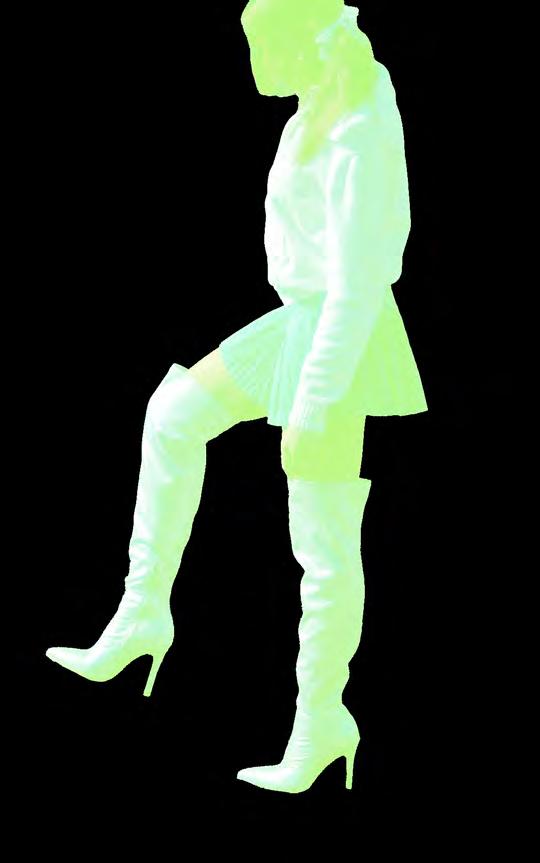
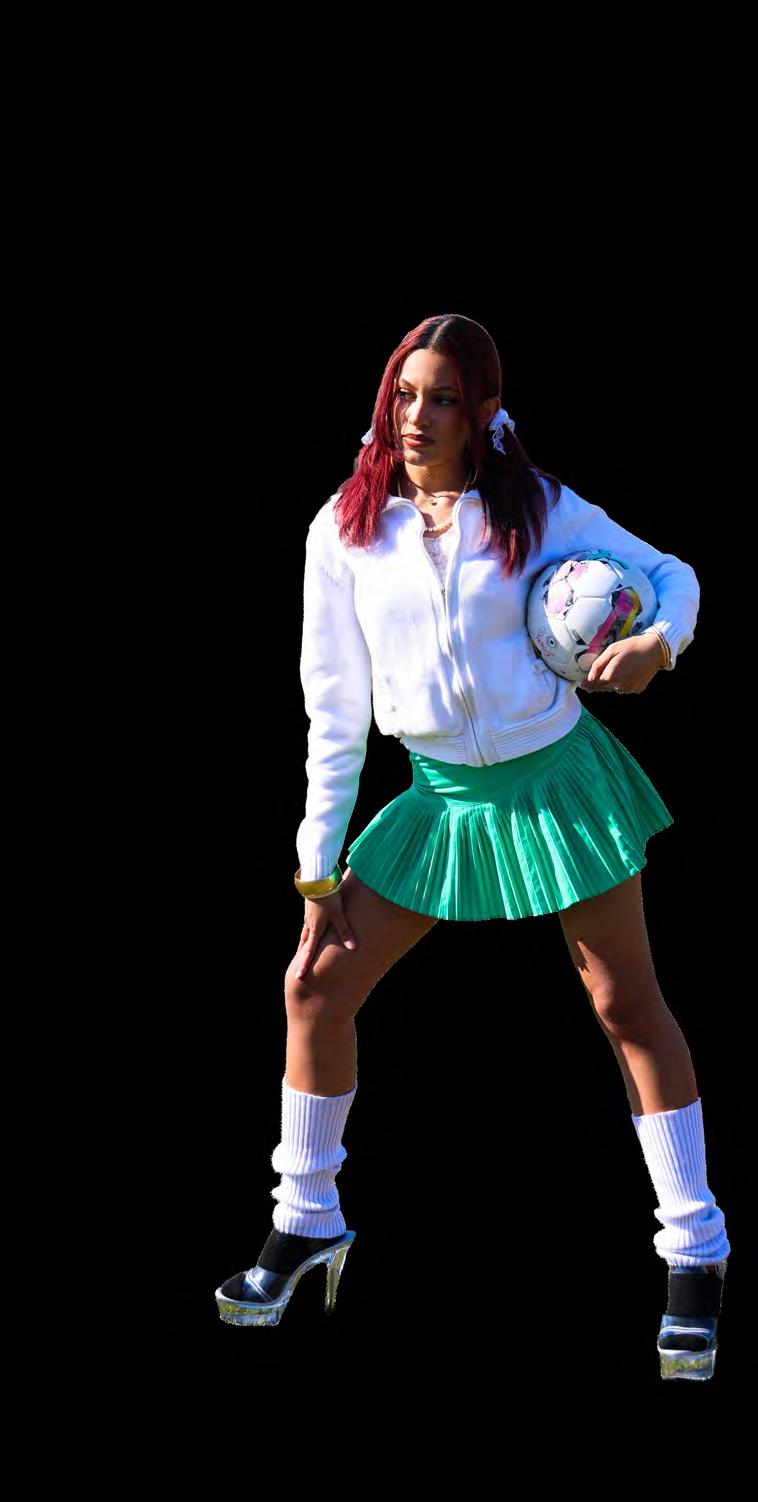
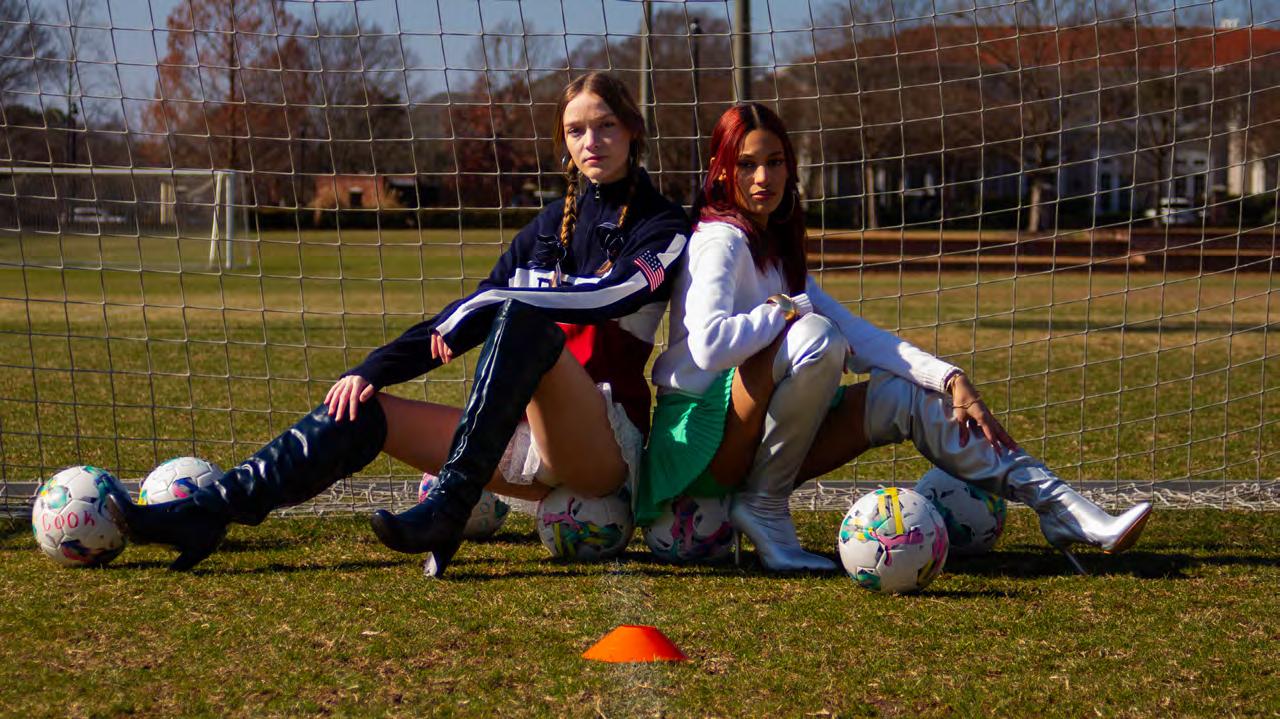
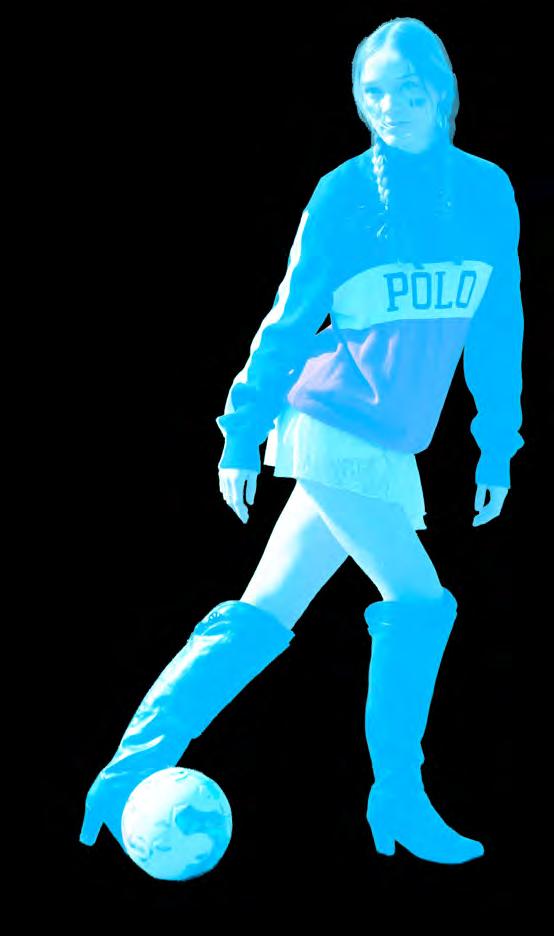
FASHION TAKES THE FIELD
FASHION TAKES THE FIELD FASHION TAKES THE FIELD
Soccer and stilettos are our new favorite pairing.
AUTHOR TARA O’TOOLE AND LUCY DIXON PHOTO TARA O’TOOLE AND EVELYN ESQUIVEL
DESIGN HANAA JATOI AND NA’HALEY WILEY STYLIST TARA O’TOOLE AND LUCY DIXON
In an open field and between drills, athleticism collides with attitude. Pleated skirts and bold socks stand out less like a uniform and more like a statement. Performance and personality, athlete and muse, kicks and catwalks–they can coexist, believe it or not. By reclaiming the traditional uniform, the turf becomes one of fashion’s most unexpected runways. And let’s be honest, what’s more badass than stilettos on a soccer ball? If you can look glamorous through the sweat, grime, and high pressure of the playing field, you can look glamorous anywhere.
heels and silver boots
Plato’s Closet, White lace skirt, $8
Sid & Nancy, Blue and white baseball cap, $12
Under Armour, Garnet socks, $13
Nine West, Garnet slingback heels, $99
Model’s personal collection, Cleats and navy boots
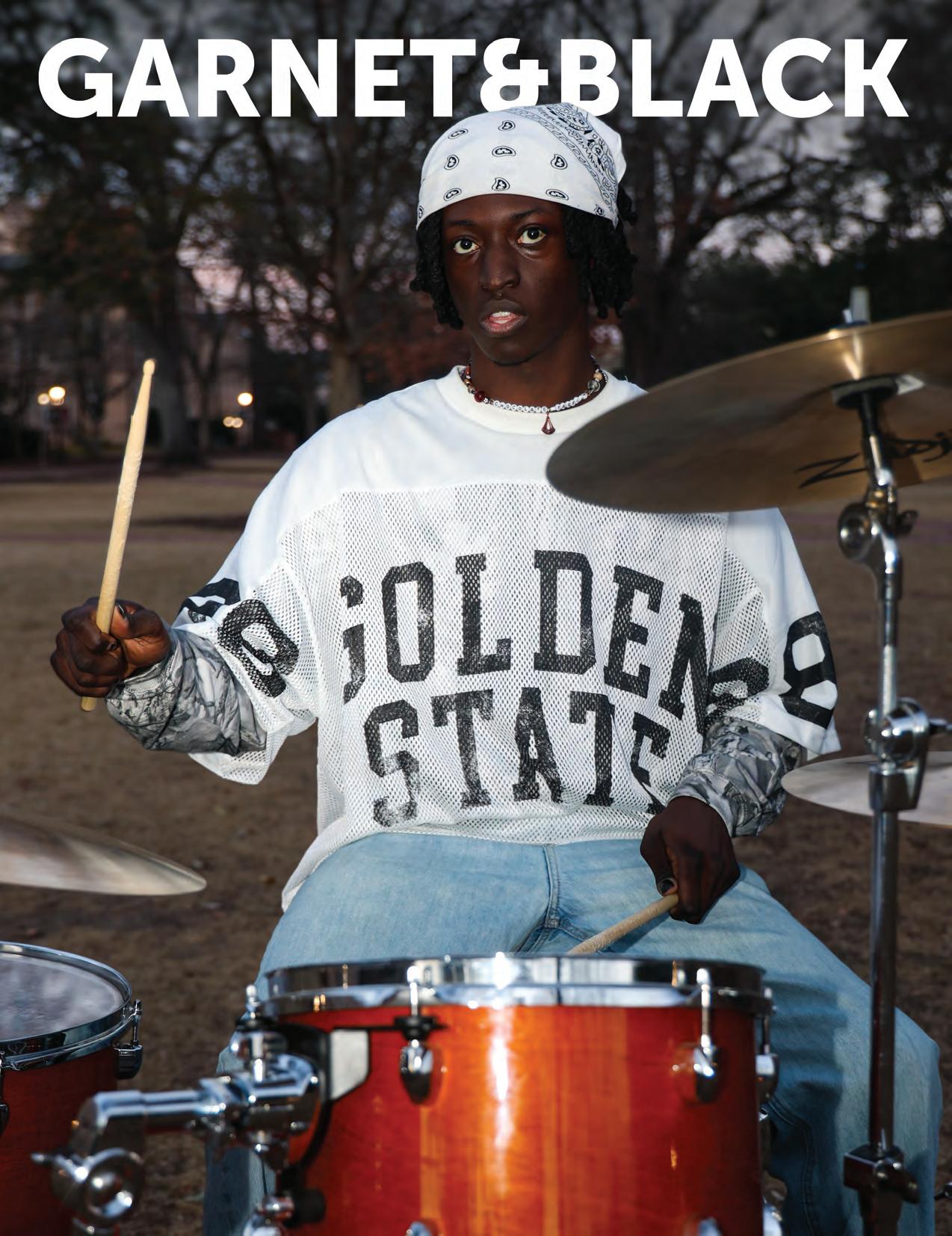
EVERYONE JUST WANTS EACH OTHER TO SUCCEED
AUTHOR GUS VARALLO PHOTO EVELYN ESQUIVEL DESIGN SOFIA MILLINER
Student musicians give their takes on the Columbia music scene.
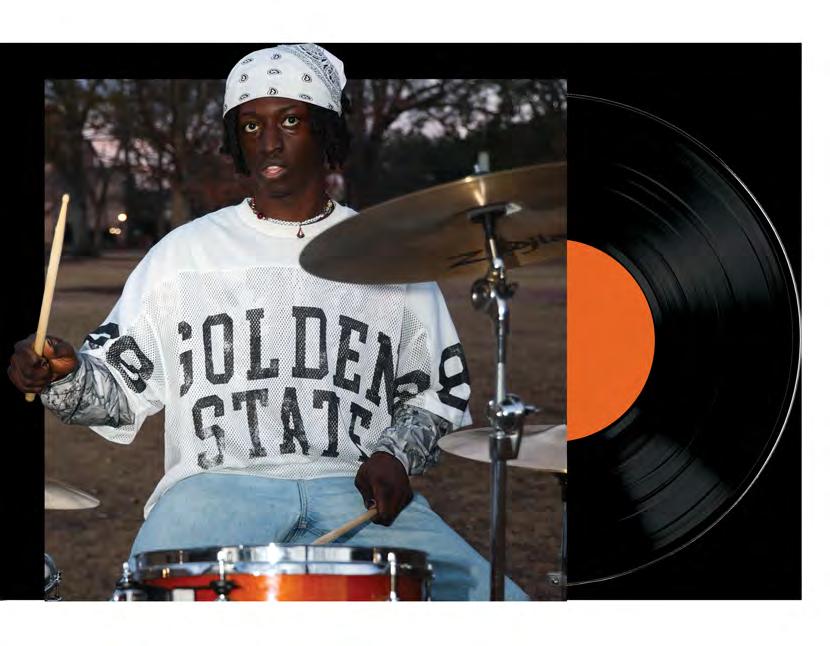
M MALACHI “KHAMANI” SMALLS
Malachi “Khamani” Smalls wears many hats in the Columbia music scene. He’s proficient in guitar, drums and bass, making him one of the city’s foremost multi-instrumentalists. He performs in multiple local bands, putting him at the forefront of the scene. This musical multitasking, however, has always been a constant in Smalls’ life.
Smalls started playing the drums when he was twelve, and just two years later he began to learn guitar. From here he began to write songs, which led to him making his first recorded work in 2022. This was some of the first work Smalls shared online, and as the years passed, he began to share even more music from a variety of musical projects.
Each of Smalls’ musical projects produces a different style and sound. He’s the drummer in Hell’s Maid, a Columbia-based stoner metal band in the vein of Queens of the Stone Age and Chevelle, and in Pulse, a rock cover band. Recently, Smalls formed Khamani and the Runaways, where he plays guitar
and sings lead on his original songs. Smalls has also released genre-bending solo material on Spotify, ranging from pop-punk to hip-hop.
Through these projects, Smalls is more than active in Columbia’s music scene. He describes the scene as being close-knit, which he says encourages companionship, even if it sometimes generates conflict.
“There are times where there are people that are out for each other, like they don’t like each other or something like that,” he said. “But there’s a lot of times where it’s a lot of companionship and community.
Smalls is also proud of the diversity of bands and musical styles that find audiences within Columbia.
“[There’s] so many different sectors to the Columbia music scene. It just feels amazing to be in different sectors of it,” he said.
Smalls is also known for frequently playing shows across South Carolina, particularly on USC’s campus. His
bands have headlined multiple shows at the Russell House’s “Live at the Underground” concert series, as well as Bustle at the Russell events hosted on campus. Smalls’ musical projects also have fostered growth statewide, such as when Hell’s Maid performed a fundraiser concert for musical education programs at Hampton’s Palmetto Theater. Such events provide the foundation for future musicians to get their start within South Carolina.
One of Smalls’ favorite shows was a concert he played with Hell’s Maid at a small DIY venue. The band kept a high-energy atmosphere throughout the show, and during their cover of Rob Zombie’s “Dragula,” a spectator grabbed the mic to sing along. For Smalls, this moment represented the mutual love between bands and fans that keeps the Columbia scene going.
“I thought that was the best thing in the world to see people come together to play it, to sing a song back to us,” he said.
Scan for a custom G&B playlist of Khamani’s music and related tunes.
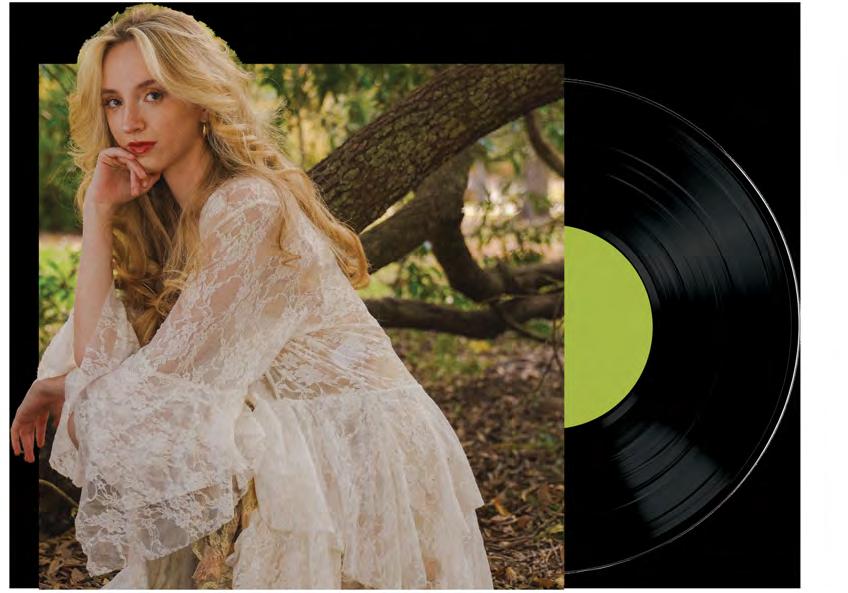
ALENA MARIE
AAlena Marie was proficient in two instruments by the time she came to Columbia. As a child, she learned classical piano, a musical form that eventually felt too constrained and strict for her liking. After moving to Aiken and taking a break from piano, she started to sing and teach herself guitar, which eventually led her to start writing songs. Songwriting allowed her to write piano sections with less conventional musical structures, and the music she makes now often blends ambient guitar and piano parts.
“I place a very heavy emphasis on dreamy, romantic sounds,” Marie said. “I usually start every song in the guitar, and from there I’ll try to incorporate just a myriad of different sounds.”
Attending USC and being part of the Columbia music scene has provided Marie with a bevy of new musical
opportunities. USC’s music school and music industries studies program has helped promote her music, eventually landing her concerts at local venues. One such concert was an opening slot for Freddie McClendon at New Brookland Tavern.
“That was so, just beyond words, unforgettable,” she said. “I opened alongside two other female singers and it was such a great introduction to, because they’re both in the music industry studies here at USC, just what USC aims to do through their music programs.”
Moreover, Marie loves how Columbia’s music scene encourages originality. She found that the city’s acceptance of musical experimentation creates a culture of artistic innovation.
“It’s very fulfilling to just be around so many people that are in this constant
outlook where they are trying to create new things and think outside the box because naturally you will grow when you’re around them,” Marie said.
Such innovation is particularly important for young artists like Marie, who often feel a pressure to imitate the styles of other popular musicians.
Columbia’s love of originality, however, gives artists the creative freedom to establish their own musical style, which has been immensely valuable to Marie’s music career.
“Something to consider is to take yourself outside of that frame of view and just exist as you are, and let people be attracted to that rather than trying to mimic the sounds of other people,” she said.
Scan for a custom
G&B playlist of Alena Marie’s music and related tunes.
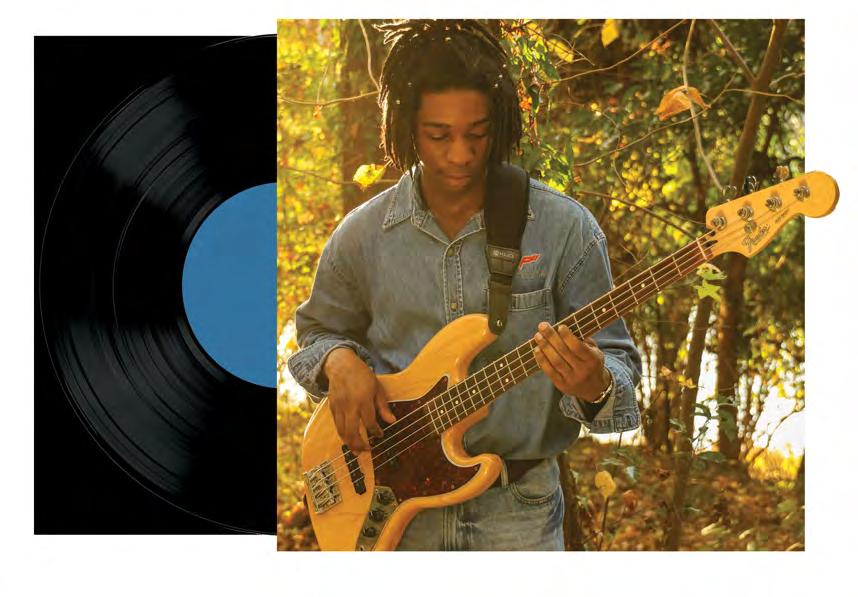
THOMAS “TJ” JOHNSON
FFor Thomas “TJ” Johnson, a multi-year career in music started in sixth grade with the help of “Glee.” Johnson remembers watching the show’s pilot episode and being inspired by Finn Hudson, the fictional high school quarterback turned a cappella singer.
“I was big into sports, and it was an eye-opening experience to see that there could be an athlete who also has this musical background,” Johnson said.
From then on, Johnson dedicated himself to a path in music. He joined his middle school and high school choirs, and he spent the COVID-19 pandemic learning how to play guitar. For his 20th birthday, he bought himself a bass, which led him to joining his current band, the Podunk Ramblers. The Ramblers play a traditional form of bluegrass music that,
according to Johnson, has resonated with a variety of audiences in Columbia.
“I feel like traditional bluegrass is more of an older crowd, but I think we’re able to combine that older crowd and introduce it [bluegrass] to more of the younger crowd that might not be as familiar with bluegrass,” Johnson said.
Johnson also described how Columbia’s welcoming music community helps artists thrive in the city.
He remembers a concert hosted by Local Mojo South Carolina, an organization dedicated to promoting local music, as being indicative of the scene’s support of its musicians. Local Mojo booked a slate of Columbia bands, including the Podunk Ramblers, to play a show within the city. The concert was packed, and Johnson stated that the audience’s warm
reception to the Ramblers was especially rewarding.
“Just seeing everyone having fun from our craft, our art, was just an eye-opening experience,” he said.
Experiences like these reinforced Johnson’s faith in the scene, and he feels grateful for Columbia’s continued support of its bands.
“I feel like everyone just wants to see each other succeed, which is actually a really nice feeling,” he said.
Scan for a custom G&B playlist of TJ’s music and related tunes.
POLITICAL JOURNALISM
Journalists have officially entered the culture wars, and are sometimes even encouraged to weigh in. Where is the line between reporting and commentary?
AUTHOR AUDREY MILLER DESIGN SOFIA MILLINER
I became a reporter at the tail end of fifth grade. My place of work? Bizbee News. My breaking news? An exclusive with the mayor of JA Biztown. My story? Front page.
While “star-reporter for a simulated, educational city” might not look impressive on my resume, it was still an integral first step in my future as a journalist. At 11 years old, there’s not a lot you know about the dreams you chase–just an amorphous idea of desire. What exactly a journalist is doesn’t solidify until you’ve grown a little taller.
One thing I did know for sure was this journalistic duty of impartiality.
Fairness is supposedly the essence of a democratic government, and with the press considered its unofficial fourth branch, bias is often frowned upon. But in an increasingly polarizing political climate, this image of impartiality is slipping, sullying the public’s perception of what a “journalist” is. With podcasters and social media influencers riding the new digital wave into journalistic spaces, the consumption of news in America is shifting dramatically. Political reporting has a new look, blurring the lines between “journalist” and “political commentator.”
But, I’m only one person, and this issue is too complex to dissect alone. A closer look requires some additional assistance.
Scott Parrott currently teaches in USC’s journalism department but previously wrote for newspapers in Alabama and North Carolina. He began his career at 18, investing early in political reporting before exploring special projects on mental health, substance use and crime.
His formative years as a journalist taught him to never insert his opinion.
“ I was not necessarily concerned at all about political parties and opinions and commentary or interpretation,” Parrott said. “It was mostly you try to collect the information, present it in a way that anyone can read and help them to make informed decisions about who to elect or what to do. You give them the information, they make the decision. That’s democracy.”
YOU GIVE THEM THE INFORMATION, THEY MAKE THE DECISION. THAT’S DEMOCRACY.
While Parrott aligns himself with what he calls “straight journalism,” he does find value in opinion journalism. There’s room for both, but the challenge lies in audience understanding, which can sometimes generalize publications or news networks.
Ther e were times when readers would get mad at me because they assumed that since I worked for the same organization, that whatever the editorial board published was my opinion as well,” Parrott said. “And I think when people understand how the news operates they can differentiate, but I don’t think a lot of people can.”
For some reporters, political journalists and political commentators are not mutually exclusive titles. Jackson Gosnell is a senior at USC studying mass communications, but he has a surprisingly hefty portfolio for someone so young. With 175,000 followers on TikTok, Gosnell has established himself as a political influencer across multiple platforms, though he identifies as both an independent journalist and a political commentator.
Statistics according to Pew Research Center still have a deep interest and respect for journalism,” Gosnell said. “However, I enjoy politics much more. And since the two mesh so closely together, that’s why I keep my roots in both of those things.”
Gosnell views political commentary as a defense or debate of the factual information and analysis imperative to journalism. But he claimed that the pervasiveness of politics in the press is what brings those two together.
And he’s not wrong. This relationship between politics and the press goes back farther than we may think.
The news landscape after the American Revolution was not shy about its subsidized connection with warring political factions—the Federalists had the “Gazette of the United States” and the Democratic-Republicans had the “National Gazette.” It’s uncannily similar to the current moment, when Republicans and Democrats rely largely on different sources for news.
After World War II, journalism became more standardized, creating policies like the Fairness Doctrine. Introduced in 1949, this doctrine was the conception of perceived impartiality - broadcast networks were required to offer contrasting perspectives regarding matters of public importance. But when the Federal Communications Commission abolished the Fairness Doctrine in 1987, American broadcast started reverting to its journalistic roots. Radio was hit first, then it spread to cable news networks.
“And then of course, the internet hits, and now you can really just go to whatever corner you want, right?”
Andy Burns, a USC professor and accomplished broadcaster well-versed in SC politics, said. “Then podcasting hits, so now you don’t have to worry about the radio anymore. You can just spew whatever you wanna spew. And then in order to get ratings, the cable networks have to play that same game, right? And so we’re kind of right where we were at the founding of the country with the political commentary.”
It’s clear journalism and politics aren’t mutually exclusive, but journalists aren’t embodiments of their practice. The
56% OF AMERICANS
say it’s rarely or never acceptable for journalists to express their political views when they report on an issue or event
42% OF AMERICANS
say journalists can’t express political views when they post publicly on social media
audience expects a degree of plausible deniability in order to establish trust in your reporting, according to Parrott.
“ One of the most important things as a journalist is to nurture trust with your sources and your readers or your audience,” Parrott said.
Even the perception of bias could threaten this trust. Parrott finds that any gesture, big or small, can cause misinterpretations.
According to the Pew Research Center, 56% of Americans say it’s rarely or never acceptable for journalists to express their political views in their reporting, and 42% say journalists should not express political views on social media. For many Americans, impartiality remains central to credibility.
Gosnell argues that, due to the current politically tense atmosphere, impartiality is almost a luxury.
“That is what we have been taught, and I think that is good,” Gosnell said. “But
the problem is that where things stand politically in today’s day and age, it is very, very difficult to have no bias.”
Burns echoed this sentiment, claiming this argument of objectivity is a false one. He says you can’t be completely objective, especially in the name of injustice. When the facts are all laid out, opinion is practically imminent.
“If you verify the claims that are being made and you’re fully contextual and everything you say you prove is true, it’s okay if you have your bias,” Burns said.
Gosnell finds trust in authenticity, proudly proclaiming his political affiliations. Bias is less of a product or appearance and more of an identity, which allows him to garner trust.
“I am openly admitting to people that I do have a right-leaning bias in the stories,” Gosnell said. “I think that allows people to trust you more than pretending that you have no opinion and really trying to underscore it in your work.”
And Gosnell isn’t the only one.
The Pew Research Center found that almost half of those who get their information from news influencers believe their authenticity is what makes them trustworthy. Gosnell is upfront about his willingness to call out “BS” from the right regardless of party loyalty, which plays into this promise of authenticity between audience and reporter. Still, reporters are just as human as the rest of us. What you may consider genuine is subjective.
”Ther e are a lot of people who aren’t trained journalists who are calling themselves journalists, and maybe they’re not behaving up to the norms of the profession,” Parrott said. “So it reflects poorly upon the profession. And another thing is a talking head on television at night, like a commentator, is not necessarily a journalist.”
In a world where 22% of Republicans use the podcast “The Joe Rogan Experience” as a source of reliable news, it’s unsurprising how audiences are unable to distinguish between objectivity and subjectivity. But these political podcasts aren’t anything new.
Burns blames the shift to 24-hour news networks, which CNN launched in the 80s. Suddenly, story roundups went from a 30-minute block to around-theclock commentary.
“You have to comment on the news because you got to fill the time, right?” Burns said. “I can tell you the news in two minutes, but now what am I gonna do for the next 58 minutes? Well, I guess
they better comment on it, so let’s bring people in to talk about it.”
And here we are now, in an era of polarization dictated by a network’s perceived level of bias, creating pockets of information founded on familiarity.
Democrats pull their news from a larger net of sources, while Republicans are more concentrated, according to the Pew Research Center. Fox News is most common among Republicans, with 57% tuning in to the network, which is at least double the share who check other sources. For Democrats, just below half sticks to networks like ABC, NBC and CBS. Burns also found that audiences are more loyal to conservative networks than to liberal ones.
“Liberal radio shows don’t do as well; liberal podcasts don’t do as well,” Burns said. “What Fox does beautifully, they turn their viewers into friends, right? Their viewers are loyal. Their viewers view Fox as a family member.”
But not everyone sticks to what’s comfortable. Gosnell leans towards conservatism, but he does tune into more liberal news outlets for a “wellrounded approach.”
“I read left-leaning work,” Gosnell admitted. “I read from Atlas, that I know hates the president, and I read that to be a well-informed person and form my own conclusion. So I think if you’re a good consumer of information, it doesn’t necessarily matter if you only use one source that claims to be unbiased that’s not.”
Parrott found that political polarity in the news has always been an issue, but it has specifically been heightened due to social platforms’ access to larger audiences. Parrott has published a handful of journals dissecting how mass media impacts mental health. From his understanding, the virality of news succeeds in making an audience feel worse.
“There have been studies that look at what makes a tweet viral, what makes a news story viral,” Parrott explained. “You know what it is? Anger. Sadness. And so you have to be cognizant of what you’re exposing yourself to.”
The Pew Research Center found that
Statistics according to Pew Research Center
Americans are more likely to say news makes them feel negative emotions rather than positive ones. While a majority of people say the news keeps them informed, anger and sadness are close
— political or otherwise — is based on their own idea of what bias looks like, when and where it is acceptable, and how it may be wielded. Authenticity, neutrality and trust are abstractions that distract
WHERE GAMECOCKS FIND THEIR ROOST
The Sims Building (pictured) stands in the Women’s Quad at the University of South Carolina. Named for Marion J. Sims, a 19th-century physician criticized for unethical experiments on enslaved women, the building has sparked ongoing debate and calls for a name change.
WHAT’S IN A NAME? THE CONTROVERSY BEHIND MEMORIALIZATION
What history lies behind the famous names of local landmarks, and how do their legacies influence our perceptions of the past?
AAcross the USC campus, virtually every building or monument shares a name with a person of the past. From DeSaussure to Darla Moore, the landscape is filled with buildings named after wealthy donors and historical figures that few think twice about. Students hear orientation leaders tell the histories behind some names before immediately forgetting them. But what would happen if people stopped and took time to reflect on those names? What did those people accomplish that got them forever memorialized on campus?
Professor Thomas Brown, specialist on the Civil War and Reconstruction eras at USC, provided insight.
“I think the landscape kind of comes alive when you know more about it,” he said. “You just get a sense when you walk around the statehouse grounds or the campus, it just has sort of a heightened clarity and vividness.”
Women’s Quad is a piece of history that is hard to miss, characterized by its
exterior courtyard and pillars. Located on Greene Street, hundreds of students pass the building daily. The Quad is broken into three wings – McClintock, Sims and Wade Hampton – that are referred to by either their full names or their initials on the USC signage. This small detail may seem innocuous, but there is intent behind the use of the initials. Take J. Marion Sims, for example, the namesake of “S-Quad”:
James Marion Sims, a 19th-century physician, is often referred to as the “Father of Modern Gynecology” due to his development of medicine. He created the Sims speculum, a medical device still used today, and developed treatment for repairing vesicovaginal fistulas, a condition that causes extreme pain in women after childbirth, as well as many other commonly used devices and techniques.
He first gained recognition in Alabama, where he worked as a plantation physician. Eventually, this
AUTHOR ALYSSA CULVER-DRAPER
led to him operating on women with fistulas. There were many of these cases on the plantation, as the condition often resulted from women being forced to have children without consent and/ or at young ages, which gave Sims the opportunity to perform a number of experimental surgeries.
These procedures were done without anesthesia, as it was a new, dangerous practice, and Sims subscribed to the belief that Black women felt less pain. There are also debates surrounding the women’s consent to the procedures, as the patients were mostly enslaved women and informed consent was not yet a widespread practice in the medical community. It was during his time in Alabama that he developed his famed repair technique and speculum.
Later, in 1855, he founded the first hospital dedicated to the treatment of female illnesses in New York. He left a lasting impact on the practice of medicine, retaining recognition
PHOTO ALDEN ZERKLE
DESIGN MADISON GISSENDANNER
throughout medical and academic communities. Whether walking on the side of the State House building past his memorial, driving down Sims Avenue or strolling along Greene Street to the Sims Quad, South Carolina bears many tributes to the late doctor.
However, despite positive ties remaining to his name and legacy, there is significant pushback against the memorialization of Sims across the country. This movement was spearheaded in 2018 by New York City when a statue of Sims was removed from Central Park. Similar motions have been advocated for in South Carolina, but most have proven unsuccessful, which comes as a surprise to many once they learn of Sims’ procedures.
generations, it could not be written in a textbook due to financial, racial and gender barriers. Delay, who has done extensive research on reproductive healthcare, said this is a common phenomenon.
“As soon as students find out about Sims, they want to do something about it.”
— Cara Delay
“What we see as historians is that what happens in the 19th Century is these doctors come in – these male, trained doctors – and they actually appropriate the knowledge that women have accumulated across generations,” she said. “This experiential knowledge that, for Sims, for example, he uses – he not only experiments on the bodies of enslaved women, but he also uses enslaved women, as his so-called ‘nurses’.”
“It suggests women as sort of the beneficiaries of his solicitude and professional expertise,” stated Brown, thesis director of Chandonnet’s project. “And Sims is kind of a proto-eugenicist by helping the ‘right’ women reproduce.”
With ties to the eugenics movement, chattel slavery and the Confederacy, many consider J. Marion Sims to be far from honorable. In opposition to Sims’ memorialized legacy, “The Mothers of Gynecology Monument” was unveiled in Alabama back in 2021. The statue depicts Anarcha Westcott, Lucy and Betsy – three of Sims’ enslaved experimental subjects that made his work possible.
Professor Delay believes the current and future generations will continue leaving an impact on the future of Sims’ memorial.
Immediately after learning of Sims’ history, S-Quad resident and USC student
Sims also appropriated the bodily autonomy of women when performing his experiments. There are many debates over his patients’ consent to his trials and the practices of the time, but there was
“I have such faith because I teach you all, and I’m always like, ‘If the future is in the hands of my students, I think we’re going to be OK,’ because they know exactly what’s going on,” Delay said. “As soon as students find out about Sims, they want to do something about it.”
A statue of Marion J. Sims stands in downtown Columbia, South Carolina. Once celebrated as a pioneer in gynecology, Sims’ legacy has become controversial due to his unethical medical experiments on enslaved women.
GAMECOCKS TAKE CARE OF THEIR HEALTH.
CAN Community Health offers 100% FREE HIV, STI, and Hep C testing services, easy to access, made for your schedule, and always inclusive.
SANDPAPER
AUTHOR AUDREY MILLER DESIGN HANAA JATOI
I hate how the burn of boardwalk wood sears the bottom of my foot, tinting it this awful, raw red. I hate how sand sediment sticks to skin, kissing the strip of unshaved hair on the back of my calf. I hate how my stomach rolls against my one-piece swimsuit, the outline of my bellybutton bulging past my breasts, which sweat under sun. In fact, every part of me feels wet with sweat, soaking the hair hidden under bikini lining, folded beneath my arm and falling from my scalp. The salty sea breeze cuts through it all, thinning it down to pickled straw, mockingly dancing with its dead, withered body. My fate is peppered with pimples, pulsating pours stained by the spray of the Atlantic. I feel the fair skin of my back burn the same raw red as the souls of my feet, soaking under seafoam. This raw red will spread the length of my spine, curling around both arms and legs, before settling just above the heart in the form of fingers squeezing and clawing at the skin until it starts to peel and pucker, puss pushing through each fold of flesh until there’s nothing left to do but let the sea lap at your body, drag you off the shore, and shove you to the bottom. Then, twelve thousand feet underwater, I choke on my own vanity.
WHEN DORM LIFE GETS MESSY
What do RAs and students say about handling roommate conflict?
AUTHOR LIBBIE BROWNLOW DESIGN CAROLINE SMITH
The soundtrack of college housing is familiar: the rattle of microwave popcorn, music slipping through closed doors and the occasional shuffle of someone avoiding eye contact. For many students, sharing a living space with a stranger or a friend is one of the most unpredictable parts of college life. Some pairings turn into lifelong friendships. Others end in exploding group chats, blurred boundaries and the kind of stories people tell for years.
Roommate conflict is more common than most students admit, and the reasons behind it tend to repeat themselves. Interviews with residents and an experienced resident assistant point to the same pattern: communication,
expectations and timing matter more than anything else.
For some students, conflict is awkward but manageable. For others, it becomes consuming.
Lilly Thompson, a junior theatre major, moved into an off-campus apartment during her sophomore year with three people she considered friends. Within weeks, the dynamic shifted.
“They continually had interventions for me about things that I did that they didn’t like,” Thompson said. “They would have multiple meetings by themselves without me just to discuss me. They had me questioning my entire reality.”
What began as tension quickly escalated into isolation and emotional
manipulation. By November, Thompson was forced to take a break from the university and accept incompletes to stay on track academically.
The only red flag she noticed had happened months earlier, at the end of freshman year, when her future roommates abruptly stopped speaking to her for a week.
“If I had gone back to the end of freshman year, I just wouldn’t have roomed with them,” she said.
Her experience now shapes how she approaches housing. Thompson lives alone with her dog and doesn’t plan on having roommates again. For students in comparable situations, her advice is simple: stay in your own space when needed, lean on supportive friends, and step away from the environment when possible.
Most conflicts aren’t explosive. They simmer quietly, creating a tension that’s hard to name until it suddenly feels like the walls are closing in.
Sara Brown, a sophomore, experienced a freshman-year conflict defined not by fighting, but by silence. She and her roommate met on Instagram, but once the semester began communication stalled.
“Whenever we would be in the same room at the same time, we just didn’t say anything to each other,” Brown said. “It kind of built up this animosity because we never confronted each other about stuff.”
The discomfort pushed her out of her own space. She studied in common rooms, stayed in friends’ dorms and arranged her schedule around avoiding the room.
“I wish I spoke to her more in the beginning,” Brown said. “I thought it would gradually happen, but I should’ve asked her about her day or her classes right away.”
“It kind of built up this animosity because we never confronted each other about stuff.”
- SARA BROWN
Brown now lives in an apartmentstyle dorm with a more compatible roommate. Her biggest takeaway for first-years students: communicate early, even casually, and don’t feel guilty about requesting a room change if the situation isn’t working.
RAs see the full range of conflicts, from minor annoyances to near-breakdowns.
Joshua Cook, a senior computer science major and RA of three years, said most problems fall into three categories: cleanliness, noise and visitors.
“Primarily, we start with roommate agreements,” Cook said. “If the roommates have completed the agreement, it makes our job a whole lot easier. They’ve agreed to certain standards. We can say, ‘Hey, you signed a contract.’”
When students skip the agreement or fill it out halfheartedly, small frustrations escalate faster.
Cook approaches each situation as a mediator, with the goal of diffusing emotions. “When you get into anger and frustration, it’s harder to make compromises,” he said.
In one case, a resident tried to move out because of a roommate’s constant visitors and noise, but housing had no available space. Cook focused on clarifying expectations, explaining policies and giving the disruptive roommate a chance to correct the behavior.
His practical advice includes:
• Complete the roommate agreement.
• “It can stop a lot of problems before they even begin.”
• Use constructive criticism.
• Start sentences with “I feel” rather than “you always.”
• Loop in your RA early.
• They’re there to be a mediator so things don’t spiral out of control.
• Be open.
Cook said the hardest conflicts are those where residents refuse to talk. “I’ve seen issues that were easy to fix but got worse because of emotions,” he said.
Across all interviews, one theme appears again and again: students underestimate how difficult it is to share space. Some conflicts develop because roommates skip the early step of setting expectations. Some happen because students are afraid to communicate. Others occur when friendships formed during freshman year don’t translate into compatible living styles.
Freshman year, especially, is full of transitions. “It’s really important to understand what it means to actually live with a person. That’s what threw me off,” Brown noted.
Creating a calm living environment often comes down to a few simple habits. Keeping shared spaces tidy, dividing chores fairly and being upfront about noise expectations can prevent most simmering frustrations. Respecting personal space doesn’t have to be formal or complicated. It’s really about paying attention to how the people you live with unwind and adjusting when you can. When roommates stay communicative and considerate, shared spaces feel less
like battlegrounds and more like a place everyone can actually relax.
Based on the experiences of RAs and students, the strongest advice for navigating conflict includes:
• Talk early and often. Even small checkins can prevent tension.
• Set clear expectations for chores, guests, volume, and shared items.
• Address concerns before resentment builds.
• Lean on support systems.
When tension finally boils over and the room feels smaller than ever, it’s easy to panic. But conflict doesn’t have to end a workable roommate dynamic. With communication, boundaries and support, even messy situations can be defused long before someone ends up avoiding their own space or wondering whether they chose the wrong roommate in the first place.
While Garnet & Black’s management and senior members agree that AI can be useful in a narrowly defined set of scenarios, we consider the preservation of the following to be of the utmost importance: thorough verification, the education of our members in industry skills and the promotion of human creativity in our magazine. These principles will guide our policy as we attempt to outline a standard of transparency, efficiency and integrity which will hold up in years to come.
• AI tools embedded in browsers (Co-pilot, Gemini, etc.) may be used to further research and development for a story, but manual verification of sources is required. If a credible source cannot be found which supports the original claim suggested by the AI model, it cannot be used in any content creation.
• RAG models may be used with for lengthy legal documents or large caches of public records, but only with manual verification of citations in the original document (Notebook LM provides these).
• Just because an AI suggested an image, song or other content as copyright free does not mean it is so. Attempt to verify individually and, if not possible, reach out to management.
• Staff use Large Language Models to generate content for a story or to outline a story. Staff are prohibited from copying and pasting any assertion made by the model into publishable content.
• Generating pitches or story ideas using AI is prohibited.
• Transcription functions on AdobeSuite, as well as Otter.ai and similar services are allowed for field interviews. Do not put a recording of an anonymous or “on background” source’s name or identifiable information into a transcription model. Verification by listening back to the recording is required. The AI summary of a transcription may not be used to inform content.
• AI tools in PremierePro may be used to clean up background noise to a point. However, it is prohibited to use any enhancement features to change the character or factual nature of an interviewee, their voice or accent, or their claims. Adding backpad or generating frames of content is prohibited.
• Clone stamping tool in Photoshop is allowed as long as it does not alter the photo’s character or meaning within the context of a story. If the shoot is considered photojournalism and a candid representation of events, clone stamping nor AI additions/removals are permitted.
• While tools like spell check are allowed, no content generation or syntax suggested by AI is to be used in a final product. AI should not be used to correct for AP Style.
• Staff may not alter an image, graphic, video, interview or publishable written materials using AI-generated content. Additionally, it is grounds for suspension to misrepresent AI’s work as your own.