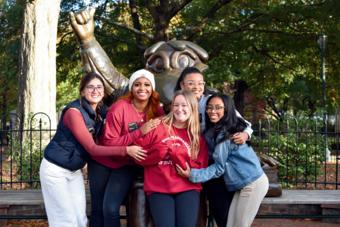
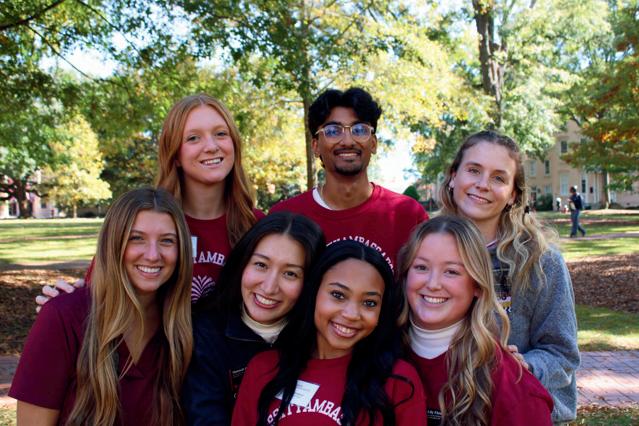
Flowers /Cocky Hand: CJ Rosenberger Maxcy Monument: Jada Mack
CJ Rosenberger
Jada Mack Squirrel: CJ Rosenberger
Welcome, Gamecocks!
As president of the University of South Carolina, I often get to meet students who are considering coming to Carolina for their college studies. I love to talk to these prospective Gamecocks and ask them what attracted them to USC.
Many people recognize USC for its highly ranked academic programs, abundant opportunities for research, service learning, and study-abroad, and wide array of extracurricular programs, student organizations, and fellowship options – many of which you can read about in these pages.
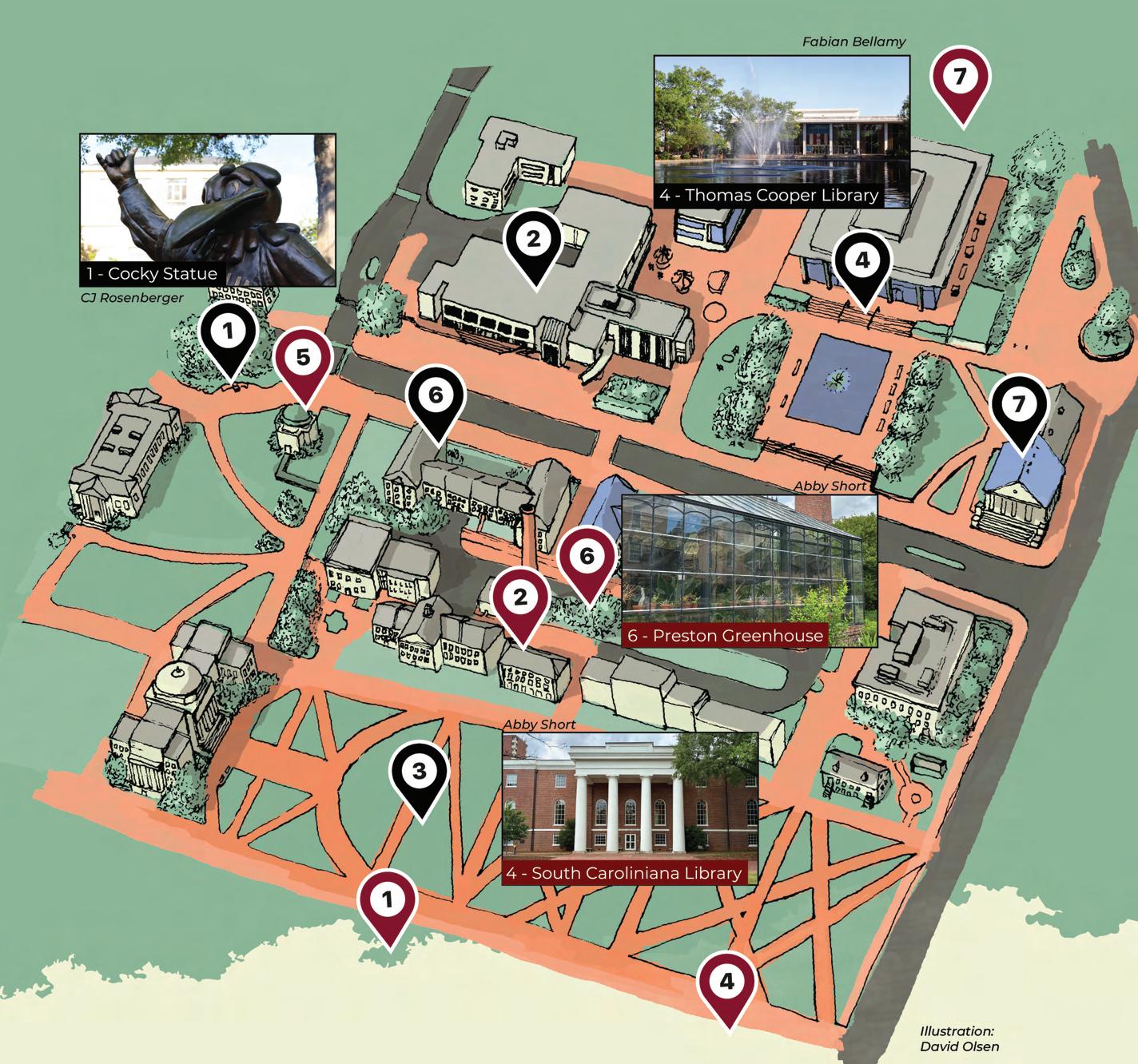
USC also offers a beautiful and historic campus, full of ideal spots to study, relax or meet up with friends. Our state and city are rich in Southern hospitality and plenty of cultural and natural attractions for entertainment and exploration.
And probably you will not be surprised to hear that many of these prospective students are women’s basketball fans! The successes of Coach Dawn Staley and her talented players have earned USC many new followers. And students from across our state and country want to experience the excitement of college football season at an SEC campus. So, as you can see, there are many reasons students want to be part of life at Carolina.
Courtesy of Office of the President
UNIVERSITY OF SOUTH CAROLINA
INSPIRE. SERVE. LEAD.
LEADERSHIP & SERVICE CENTER
Want to get involved, grow as a leader, and make your mark at Carolina? The Leadership and Service Center empowers Gamecocks to lead boldly and serve passionately through opportunities to join organizations, engage in meaningful service, build leadership skills, and find your community. Discover new connections, explore life beyond campus, and start your journey at the LSC today!
WHAT WE OFFER:
Leadership Development
Whether you’re an emerging or experienced leader, the LSC has programs, workshops, and retreats to meet all leadership needs.
Service & Volunteerism
Give back and serve local and regional communities through Service Saturdays, alternative breaks, and The Big Event.
Student Organizations
With over 750+ recognized student organizations, you’ll be sure to find your place at USC! Visit garnetgate.sa.sc.edu for a full list.
Off-Campus & Neighborhood Relations
We’re here to help you navigate off-campus living, from finding housing to resolving neighborhood concerns.
Pillars for Carolina is a student-led program for incoming first year students that creates a foundation of community and confidence through activities centered around school spirit and traditions to inspire students to leave their mark at USC.
Students who participate in the Pillars for Carolina program start their first year feeling more confident about life in the classroom with a greater knowledge of campus while gaining new relationships with student mentors and staff members.
By Olivia Ireland
leaders offer real-world advice, share their own experiences and help students feel connected to the broader USC community.
“Having a peer leader in the class was very helpful, and it was easy to connect with them because we are close in age, and when they shared stories and advice, it was relatable,” Mahoney said.
The U101 course is filled with engaging assignments and activities that promote personal growth and academic success. From reflective journals to student presentations, students have the opportunity to develop their strengths and other valuable skills. Collaborative assignments with other students in the class help encourage teamwork and foster meaningful connections with peers. Tasks like the Academic Success Strategies assignment provide practical tools to navigate college life.
Beyond the classroom, U101 helps students think big about their college experience and future goals. Whether that is crafting a four-year plan, exploring career interests or learning about leadership opportunities, the U101 course encourages students to take charge of their journey. The experience of U101 doesn’t just end when the semester does- the course equips students with tools and connections that continue to serve them throughout their time at USC and beyond.
At its core, U101 is more than just a class; it’s an introduction to what being a student at USC is all about. It’s a chance to embrace the challenges and opportunities of college with confidence and support. Whether you’re stressed about an upcoming exam and trying to figure out the best way to approach it, navigating campus life, or figuring out your passions, U101 is your guide to making the most of your first year at USC.
CJ Rosenberger
Interfraternity Council
Registration open May 15-Sept. 4 $60 fee
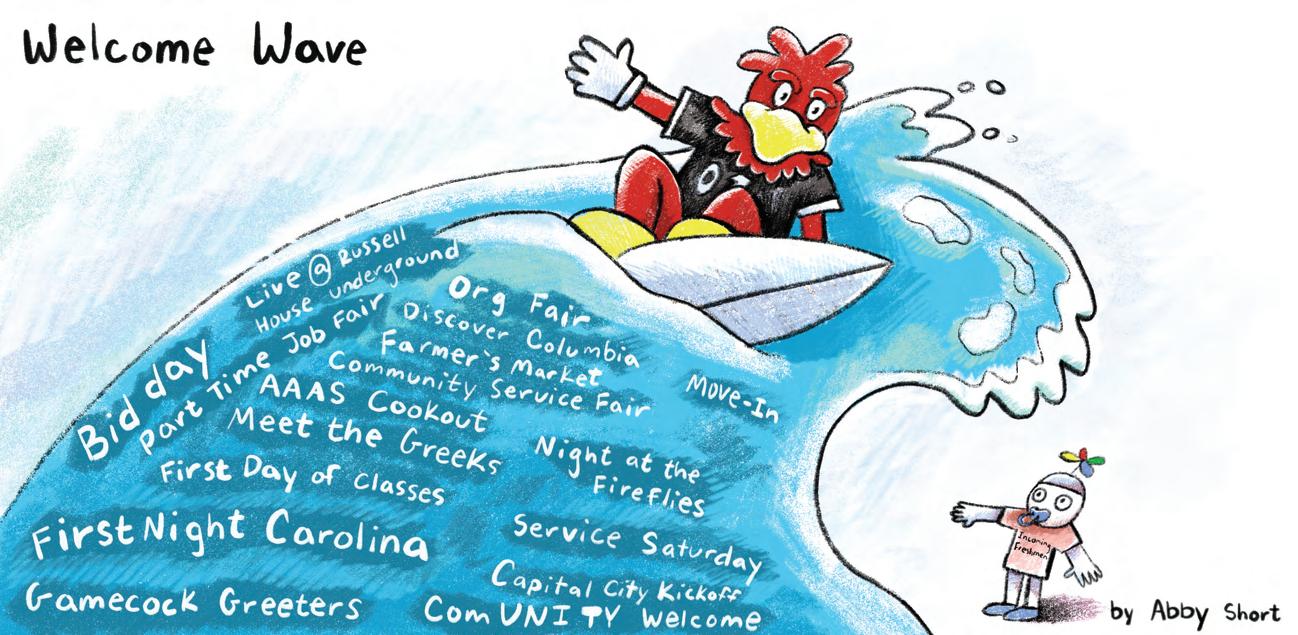
IFC on Greene Aug. 23
IFC Orientation Aug. 30
Bid Day Aug. 7
Cultural Greek Council
Recruitment Kick-Off Aug.19
Showcase Aug. 26
Intake Orientations Aug. 30 and Sept. 2
College Panhellenic Association
Registration open May 1-July 15 $175 fee
Recruitment dates Aug. 8-16
National Pan-Hellenic Council
Meet the Greeks Aug. 20
Intake Orientations Sept. 1 and 9
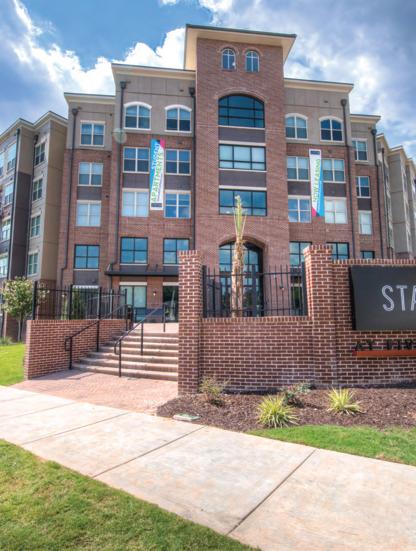
Pre-leasing for 2026–2027 at Rivers Edge at Carolina Stadium — don’t miss your chance to live just minutes from the University of South Carolina! Spaces are filling fast — secure yours today!
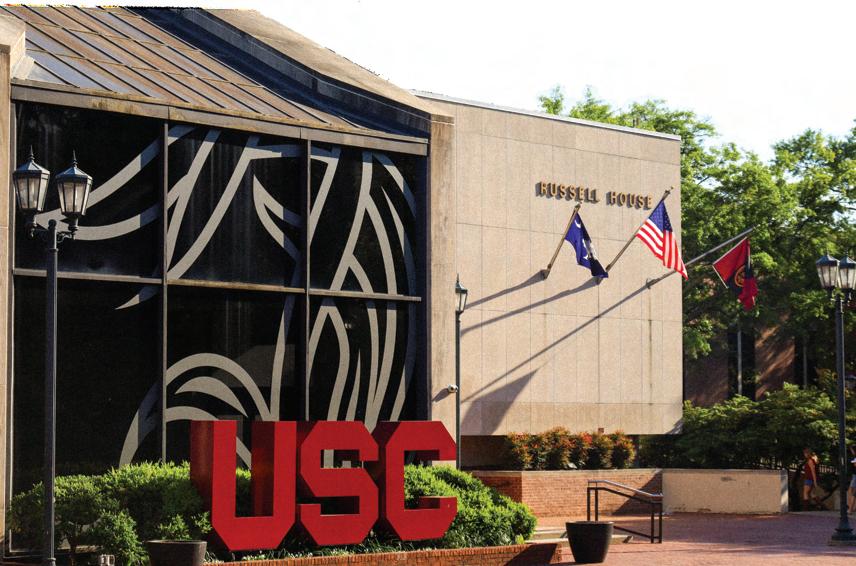
There is never a dull moment at the Russell House University Union, especially during class hours. From meetings to celebrations, this building is home to spaces for any occasion and serves as an engagement hub and resource center for all students.
The building features four vibrant levels, each offering something unique. On the ground floor, you’ll find a variety of popular dining options, including the newest all-you-care-to-eat dining hall, Garnet Station; Panera Bread; Chickfil-A and Qdoba — perfect for a quick bite or a casual meal with friends as well as the campus spirit store, which offers Gamecock gear and apparel. Also found on the ground floor is the Office for Student Advocacy, the Dean of Students Office and the CarolinaCard Concierge (next to Qdoba).
The second floor is home to Gamecock Park and Fresh Greene’s, two more of USC’s spacious dining halls, as well as auditoriums, ballrooms and flexible event spaces that host everything from conferences to social gatherings. It also hosts the Leadership and Service Center and Russell House Theater.
On the third floor, you’ll discover the offices of Garnet Media Group, Gamecock Entertainment, and the Center for Student Engagement. The third floor is also filled with various meeting spaces and lounging areas.
First-year student Cydney Smith comes to Russell House multiple times a day by herself and with friends and finds that she can utilize it to fit any need. “I come to Russell House to relax my mind, study and then also get some good food,” Smith said. “I would describe it as peaceful, fun sometimes.”
In the basement, students can visit
By Isabella Augostino
Russell Underground. The dynamic space hosts up to 150 people for any event, fully equipped with sound systems, microphones, live streaming services and stages. The Russell Underground hosts a weekly music series and also features a pool table, along with a variety of board games and video games.
Some recent events at the Russell House include a dating show hosted by “Love Island” celebrity Kaylor Martin, Carolina’s Got Talent and open mic night.
While many students come here to relax, Russell House is also a center for learning. Students can use the information center on the second floor at any time. The center is equipped with staff to assist students directly and quickly. Clubs and organizations use the meeting rooms to grow their knowledge on a wide variety of topics.
The ballrooms are used for career seminars and synopses for all majors. Students are encouraged to use this resource to catapult their professional skills while still earning an education.
Recent graduate and former student employee Allie Ray believes that besides the entertaining events, Russell House has more to offer than students realize. “(It’s) definitely a big melting pot for all of the organizations,” Ray said. “Without the Russell House, I don’t think there would be a place that would work well enough for that. So, it’s more, it’s definitely more than just food.”
Every floor has lounging areas for students to meet up with tutors, study groups or teammates on projects. Russell House operates every day until 11 p.m. While the USC campus is vast, the Russell House serves as a center for students to connect, study, eat, gather and have their best Gamecock experience.
Fabian Bellamy
Imagine a room filled with professional recruiters, students and peers alike, and an immediately accessible round of tables representing your dream companies. Now, imagine the work that it takes to make that room a possibility. The Career Center is the place that makes it happen.
As a college student, there are constantly new to-do lists and tasks to keep up with. On top of those day-to-day experiences, there is also the long-term goal that brings students to universities in the first place: a post-graduate career. The future can be daunting, especially on your own. Luckily, USC has a place that specializes in helping students feel less alone in that challenge.
The Career Center is the central hub on campus for all things employment. Their staff’s sole purpose is to support and advise students on the steps toward an even brighter future.
Whether it’s peer advising from other students, professional development sessions or even a headshot, the Career Center is filled with resources for students — free of charge!
One of the many career peer educators on staff urges students to stop by, no matter what stage of life they’re in.
“It is never too soon for students to begin prepping for their lives after college. One of our most beneficial and empowering free resources for students at USC is the Career Center.”
Not only do they offer one-on-one advising, but they also sponsor a plethora of networking events, career fairs and financial assistance through internship programs and grants to pay for professional development.
Thinking about long-term goals and the future can be extremely overwhelming, especially in college. But the Career Center is there to take students through
By Tara McGee
Anna Turner, a journalism major, wants other students to know that career conversations aren’t as scary as they seem.
“I felt anxious at the fact that the person I was going to meet with was going to tell me I was way behind where I should be. I could not have been more wrong about that appointment! From that moment on, I understood that the Career Center only wants to help you and is going to meet you exactly where you are, no matter how far along that may be.”
The Career Center also prioritizes modern technology and keeping up with what is new in the professional world. They use online platforms like Gradstats to help students fully understand the big picture of employment.
Fabian Bellamy Flowers: CJ Rosenberger
By Marin Cogan Illustration by Daniel Zender
By Parmy Olson
By Loren Grush, Bruce Einhorn and Kate Duffy
The University of South Carolina’s Leadership and Service Center (LSC) is the driving force behind student engagement and leadership development on campus.
The Leadership and Service Center oversees over 760+ student organizations while also managing community development and civic engagement projects and programs for students.
Joshua Cauble, the center’s associate director, assists with development and programming throughout the office. Cauble says the LSC helps students develop their leadership styles by giving them service-based opportunities. “We really work closely with students to give
The Leadership and Service Center helps students develop skills that fit into any professional career path, including teamwork, communication and timemanagement. “It also builds the skills that employers are looking for,” Cauble said. “(It) provides you the opportunities that when you do those internships, you have some of that leadership experience that they’re looking for.”
Fourth-year student Evey Konstantopoulos began her journey with the center without any prior experience in student-led organizations. “I didn’t do any leadership in high school,” Konstantopoulos said. “I wasn’t a part of any clubs. I wasn’t president of anything, nothing in student government. My whole life was dance, so there was no room for anything else.”
Konstantopoulos first joined
By Sam Stroup & Isabella Sepe
Pillars for Carolina, a multi-day student-led program that aims to create a foundation of community and confidence that students will build upon throughout their years at USC. Konstantopoulos later became a codirector of the program, leading her to become an ambassador with the center. “Getting to interact with all these different organizations and student government has really given me a bigger picture of what’s really happening in school,” Konstantopoulos said.
The LSC also hosts trips during breaks for students focusing on community service. Konstantopoulos said her experience during a break trip helped her realize her passion for service and civic engagement. “I went on our alternative breaks program to New Orleans that winter break of my sophomore year,” Konstantopoulos said. “That was an amazing experience that really changed my perspective on service.” If you want to stay local but still serve the community, the LSC holds monthly opportunities called Service Saturdays. Volunteers can choose from various service sites and activities to help support the Columbia community. Participants check in on Davis Field, participate in their service on or off campus and return to campus for a free lunch. Registration is required to participate and can be done on the LSC website.
In addition to being involved within an organization or participating
CJ Rosenberger
in community service, students can continue developing their leadership skills, such as participating in the Close Family Emerging Leaders Program. This in-person, eight-week program is for students who want to build their leadership skills and bring change to the USC community. Upper-level students can serve as mentors in this program. The LSC also connects students with resources and support for offcampus living, helping them navigate housing options, legal assistance, lease considerations, and neighborhood information to ensure a smooth transition and positive living experience outside campus.
Cauble believes that keeping students engaged is the core mission of the center. This engagement leads to more success by students in the classroom. “We know that higher engagement provides higher retention for students,” Cauble said. “If one student finds their niche on campus, finds new friends, new interests, they then are able to be more
engaged on campus.” Students in the center get a head start on building their professional network, helping them find internships and jobs during college and after graduation. Cauble, who’s worked with the center since 2021, said watching students develop professional skills is the most rewarding part of his job. He said he enjoys “just seeing the students come in as first-year students, not really acclimated to campus, not really sure of themselves or their leadership styles, and then gradually start gaining new experiences, joining organizations, really developing their own leadership.”
Konstantopoulos believes her time in the Leadership and Service Center has helped her develop leadership skills that
will translate to her professional career after college. “The people in the LSC and getting to watch them, ask them questions, have them help me with things, has really been life-changing for me,” Konstantopoulos said. “They introduced me to different types of leadership. They showed me what good leadership looks like.”
Students interested in leadership, service,
CJ Rosenberger
With more than 700 student organizations active on campus, the University of South Carolina offers organizations for almost anything: careers, academics, sports, volunteering, games and other niches. Garnet Gate is the university’s online platform for involvement outside the classroom. It serves as a hub of information to help students find and join the organizations they’re looking for.
Users can use Garnet Gate to see a complete list of all student organizations or to search and filter organizations by name, keyword, subject or category. Logging into the platform will allow you to see full details about each group, including the officers’ contact information, regular meeting times and important documents. Garnet Gate also features information about campus events, including events open to the entire campus community, and allows users to RSVP and track their attendance on the platform. Once a student officially joins an organization, they are listed on that group’s roster. The university formally notes their participation on the My USC Experience transcript that lists extra-curricular activities.
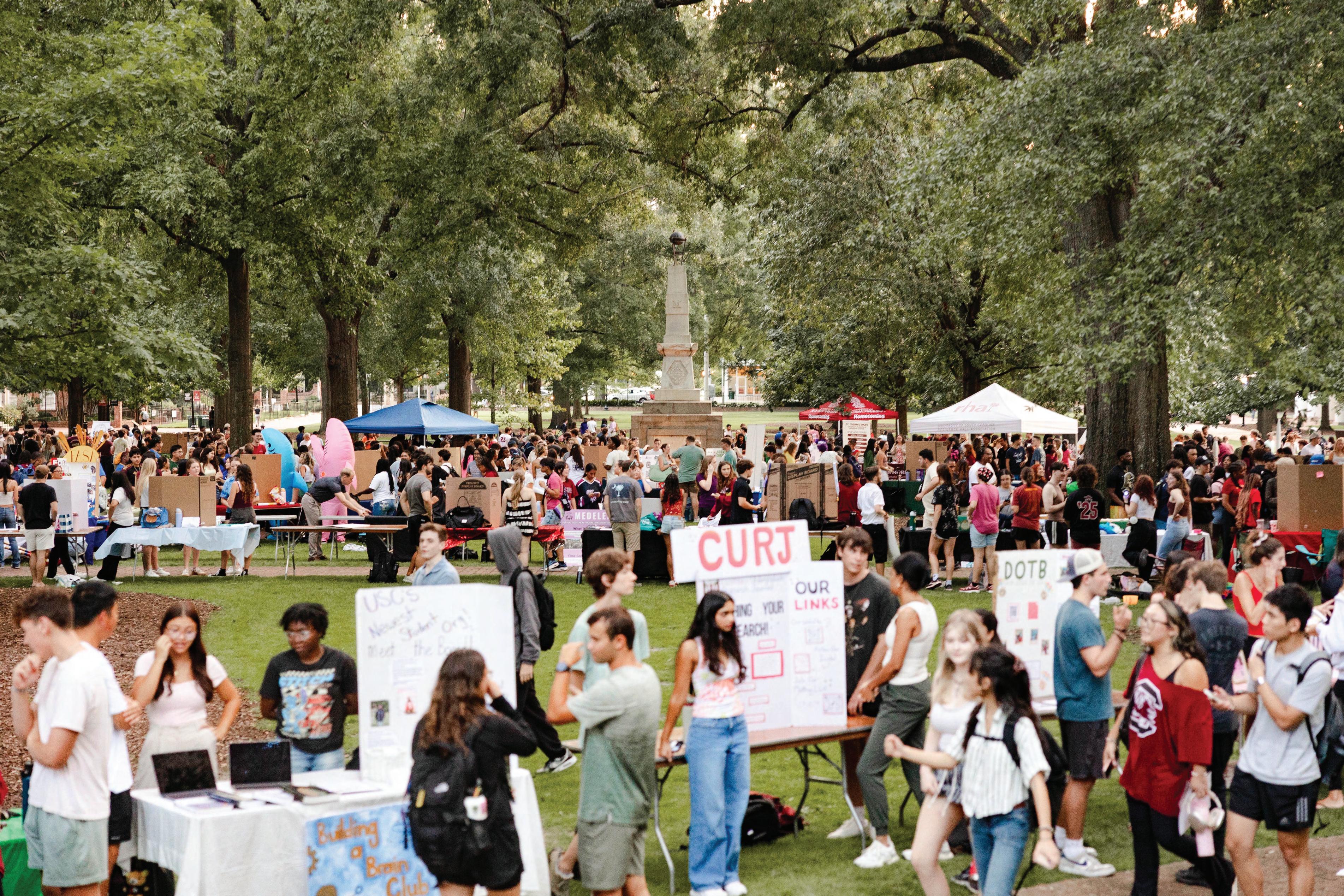
You can also find many of these organizations at the student organization fair hosted by the Leadership and Service Center (LSC) at the beginning of each semester. This event is held in the heart of campus on the Horseshoe. Tables line the area, with participating student organizations staffing tables with organization representatives ready to answer questions and give out information.
Jamie Howelle, assistant director of the Leadership and Service Center, helps students and student leaders use Garnet Gate effectively to find opportunities, plan events, communicate with members and share highlights and organizational news throughout the year. The LSC also hosts a multitude of workshops during the academic year to help student leaders run their organizations effectively. “These workshops are really casual conversations about topics that student organization leaders and members are curious about,” Howelle said. “These topics could include event planning, time management, goal setting, self-care and transitioning roles to the next group of leaders.”
If a particular organization doesn’t exist on USC’s campus, the Leadership and Service Center has a process for creating a new one. Founding members just need support from seven other members to begin the process. “If you look for things you have an interest in, you’ll find opportunities that speak to your passions and interests,” Howelle said. “Start with one or two organizations. Get a feel for those, and see what the time commitment is. And, of course, if you don’t find what you’re looking for, come see me, and we can talk about how to create it.”
You can learn all about student organizations and how to join or create your own at sc.edu/ leadershipandservicecenter under the Student Organizations tab. To find your next student organization experience, visit Garnet Gate at garnetgate.sa.sc.edu
Fabian Bellamy
MAPPING YOUR FUTURE FROM DAY ONE
From your rst semester to your rst job, the University of South Carolina Career Center helps you navigate the road from curiosity to career.
DISCOVER WHO YOU
ARE
• Meet your Career Coach & complete career assessments
• Explore majors & career paths early
GAIN CAREER EXPERIENCES
• Get a part-time job, volunteer, or pursue an early internship
• Participate in job shadowing or conduct an informational interview
PREPARE FOR YOUR FUTURE
• Create a résumé with the Career Center
• Practice interviewing to build con dence
• Develop your elevator pitch
sc.edu/career
• Visit Gamecock GradStats at sc.edu/gradstats — discover career paths, must-have skills, & earning potential
BUILD YOUR USC NETWORK
• Join a student organization to build community & develop leadership skills.
• Attend career-related events to start forming professional connections
• Participate in a mentorship program to learn from a professional in your eld
LAUNCH YOUR CAREER
• Activate & complete your Handshake pro le
• Attend a career or internship fair
• Apply for experiential learning opportunities
The Center for Student Engagement is here for everyone. Everyone can increase community on campus through the willingness to learn, discuss and participate in campus events, initiatives, workshops and programs. CSE’s resources and offerings can be briefly summarized into three main areas: events, programs and education.
Being a first-year student at a university can be hard to navigate at first. Through the Multicultural Assistance Peer Program (MAPP), students transitioning into university for their first year can get guidance. First-year students are paired with older, experienced students who
CJ Rosenberger
Compiled by Staff
MAPP holds meetings and social events to establish relationships between mentors and their mentees, as well as academic and professional development workshops.
Director of the Center for Student Engagement Dr. Will Sheppard believes the program’s resources have helped students determine how to make the best of their college experience and prepare themselves for an engaging career.
“Some very prominent figures have [gone] through that program and went on to be great figureheads in their field,” said Sheppard.
CSE also hosts social events for students to create connections within the university community. Hip Hop Wednesday, a monthly event held on Greene Street, allows student organizations and university departments to promote their resources and initiatives while a DJ spins the latest and greatest hip hop selections.
The Center for Student Engagement also hosts EmpowerMENt and Q’afe, initiatives designed to support all students, undergraduate and graduate, in finding community at USC. The Intersection Student Lounge, located on the third floor of Russell House, serves as a physical space for conversations and connections for students, faculty and staff. Students can hold meetings, work on group projects or just hang out in the multipurpose space. The lounge is open Monday through Thursday from 8:30 a.m. to 8 p.m. and Friday from 8:30 a.m. to 5 p.m.
Sheppard believes these events are integral to community involvement and connection, but that no one knows
the student experience better than the students. “I think the students have a better perspective of saying ‘Hey, I think our students or campus community would love for us to host this. Let’s do that,” Sheppard said. “And so, our office, what we do is want to support them in a way to help them make that come into fruition, whether that’s financially, whether that’s advertising, helping getting things completed, connecting to the right person to make things work.”
To encourage improvement in the campus community and celebrate students, CSE hosts the Student Life Legacy Awards in collaboration with the Leadership and Service Center, where students are recognized for their active contribution to community service and outstanding leadership. Other celebrations include the Celebration of Excellence, which commemorates those that will complete their undergraduate degree and acknowledges the unique experiences of students at USC.
Students can also take advantage of the discussions, presentations and workshops offered by CSE. These resources include Carolina Conversations and other presentations to assist in the skill development of intentional positive interactions. This helps students navigate and advocate for topics they are passionate about. Students can also become CSE Peer Leaders or trained facilitators who lead discussions and explore the different areas of community building.
Students can learn more about the many opportunities to get involved by visiting CSE’s website at sc.edu/about/offices_and_divisions/ student-engagement/ or their Instagram @cse_usc.
CJ Rosenberger
By Kaylen Pritchard & Isabella Sepe
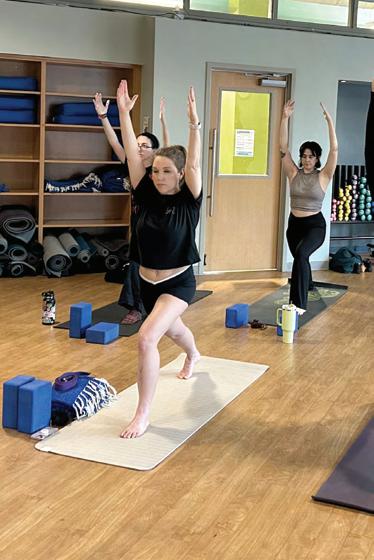
Whether you are looking for an exciting outdoor adventure, a pilates class or a way to build some cardio into your week, Campus Recreation has offerings for all skill and thrill levels.
The Wellness and Fitness Center (WFC) is open daily and has three floors of recreational offerings. During the warmer months, students can often be found congregating at the outdoor pool, and the indoor pool and adjacent sauna are great options all year round. The 52-foot climbing wall is available for everything from bouldering to beginner clinics, and student memberships to participate are free. There are also indoor soccer and basketball courts, as well as group fitness classes.
The Blatt PE Center, which is located closer to the east side of campus, has basketball courts, tennis courts and a softball field. Do you and your friends want to take a weekend camping trip but none of you have a tent? Blatt is also home to the ORec Hub, which offers all kinds of affordable rentals for your outdoor escapades. Outdoor
up paddleboarding and more. Transportation, equipment and instruction are included with all trip registrations.
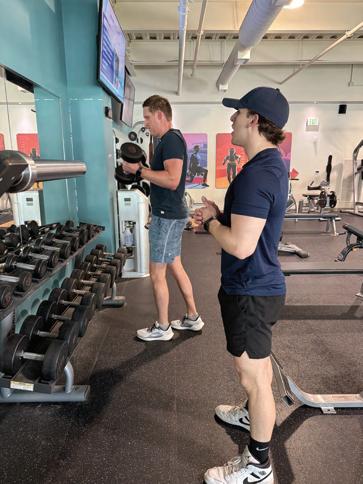
Both the WFC and the Blatt have fully outfitted weight floors. If you are unsure how to make use of the equipment, both gyms offer equipment orientation sessions that cover everything from proper use to which exercises target which muscle groups. Operational schedules for all facilities can be found on the USC Campus Recreation website.
Justin Furlough, assistant director of facilities and risk management, said that it is essential for students to have access to campus recreation programs as they provide a focus on holistic wellness. “We are a safe space on campus where students can come in and they can figure out what makes them feel best that day,” Furlough said. “Nobody needs to come in here and solely focus on working out. (Students) may come in to do some rehab on some injuries.”
Athletic training services through the
competitive activity in a low-stress environment.
Sport clubs are organizations created and led by students, and they are often described as the level between intramural and traditional collegiate sports. While the majority of teams fall under the category of traditional sports, like basketball, hockey and rugby, you also have the option to get involved in water sports, outdoor activities and special interest sport groups. These include everything from rowing to ballroom dancing to equestrian sports.
If your skills are better suited to a game controller, esports are a completely free option for getting involved in campus competition. Part of the intramural sport family, esports feature both leagues and tournament-style competition that let you compete against fellow gamers. There are currently four games to choose from: EA Sports FC, NBA2k, Mario Kart and Pokemon Showdown.
The Wellness and Fitness Center is open daily, and Blatt is open Monday through Friday during select hours to anyone with a CarolinaCard. To learn more about Campus Recreation, visit sc.edu/campusrec
Fabian Bellamy
Fabian Bellamy
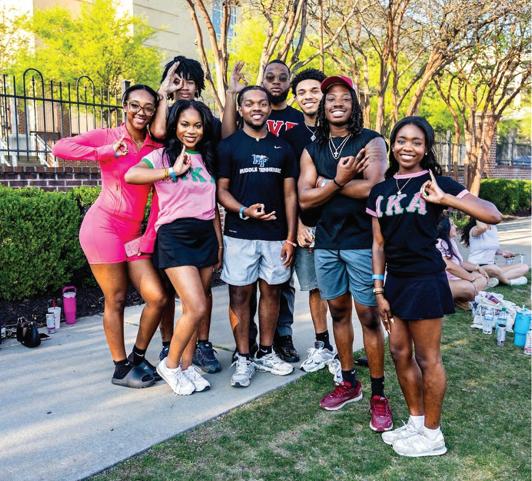
Fraternity and Sorority Life (FSL) serves as a way to foster a sense of inclusion and identity on USC’s campus. With almost 10,000 members in over 50 organizations across four different councils, students can build a tight network of brothers and sisters through retreats, social events and chapter activities.
Victoria Kibbee, a member of Pi Beta Phi, feels that joining the organization pushes students outside their comfort zones and offers opportunities to develop new abilities. “I would describe Greek Life at the University of South Carolina as one large community that offers long-lasting friendships, support and
skills,” Kibbee said. Members may also participate in service opportunities to give back to their community. Through these initiatives, FSL partners with 65 community establishments and 40 service institutions. This allows all students, no matter where they’re from, to connect with local groups and feel more at home.
Former Pi Chi and out-of-state student Sofia Raymond says FSL is an immediate way to make connections. “Greek Life gives students a sense of belonging,” Raymond said. “It is important to
@RoundaboutsConsignments
Design That Feels Like Home
Courtesy of Fraternity and Sorority Life
get involved in any community you are in, big or small.” If students want to take their involvement to the next level, they could also be a part of leadership efforts. Each FSL organization allows students to hold several officer positions. In these roles, they delegate tasks, plan events, control finances, connect with fellow members and inspire new members.
At the University of South Carolina, there are 21 sororities and 32 fraternities on campus and three different recruitment/intake processes that students could explore: Panhellenic Sorority recruitment, Interfraternity Council recruitment, Cultural Greek Council (CGC) membership intake and National Pan-Hellenic Council (NPHC) membership intake. All recruitment and intake processes are held to the same community standards, ensuring a positive experience for interested members.
College Panhellenic Sorority Recruitment welcomes its potential members at the beginning of August. The sororities that contribute to the National Panhellenic Conference and the College Panhellenic Association have a structured schedule of events. The process lasts about a week, during which each student will participate in primary recruitment. Recruitment is open to all women willing to put themselves out there and get involved in a new community. Each round consists of meeting with the existing chapters, ranking groups,
watching videos and finding a new home.
Fraternities are a part of the North American Interfraternity Conference (IFC) and participate in a separate recruitment process. Students can complete IFC recruitment in the fall or spring semesters. Orientation on Greene Street will introduce future brothers to the members and teach them the process and policies. After registering, students will attend IFC recruitment events at the beginning of September.
The Cultural Greek Council (CGC) and the National Pan-Hellenic Council (NPHC) serve to unify multicultural organizations and promote unity throughout the community. The CGC and NPHC were created to foster cooperative actions among its members, provide leadership, promote diversity and foster a community of support through their chapters. Instead of recruitment, these chapters do individual intake. If you meet specific membership qualifications, such as academic achievement, GPA, community service and good character, you have a chance of being admitted into one of these groups. Interested
candidates should research each chapter and attend various events. The CGC and NPHC Intake Orientation sessions will be held in late August and early September for students interested in joining.
Interested students can also live in fraternity and sorority housing on campus during their second year of membership. The USC’s Greek Village features 20 facilities. Students should also anticipate membership expectations such as holding a minimum GPA, attending chapter meetings, completing service hours, supporting philanthropic events and maintaining a financially good standing.
Any students interested in joining a fraternity or sorority should make sure to research each organization and their specific recruitment and intake requirements and deadlines. To learn
Courtesy of Fraternity and Sorority Life
Fabian Bellamy
WEDNESDAY| LACTATION ROOM| LEADERSHIP AND SERVICE CENTER| LUNES LATINO| MEDITATION PRAYER ROOM| NEW STUDENT ORIENTATION| OFFICEOF STUDENT ADVOCACY| PRINTINGAT RUSSELL HOUSE|RH EVENT SERVICES|RH PATIO|RH THEATER| RUSSELL UNDERGROUND| SERVICE&
CENTERFOR STUDENT ENGAGEMENT| CLAP |DANCE MARATHON| DAVIS FIELD| DEANOF STUDENTS| DEPARTMENTOF STUDENTLIFE| FIRST NIGHT CAROLINA| FREE SPEECH| FRESH GREENE’S| GAMECOCK ENTERTAINMENT| GARNET AND BLACK MAGAZINE |GAMECOCK PARK| GARNET MEDIA GROUP| GARNET STATION| GREENE STREET|HIP HOP
CENTERFOR CLAP CIRCLE| DANCE MARATHON| DAVIS FIELD| DEANOF STUDENTS| DEPARTMENT LIFE| FIRST NIGHTC UDENT CARE AND OUTREACH| STUDENT GOVERNMENT| STUDENT ORGANIZATIONS| STUDENT POSTAL SERVICES|THE DAILY GAMECOCK
NEWSPAPER| WUSC-FM|ATTHE
CAREAND
CAROLINA
If a student has ever participated in a fun event at the University of South Carolina, it was likely hosted by Gamecock Entertainment or one of its student-led areas like Carolina Productions.
Gamecock Entertainment serves as the university’s top source for oncampus programming and activities, including events like First Night Carolina, Homecoming and Cockstock. Courtney Buzan, the Associate Director for Student Events and Traditions, said Gamecock Entertainment aims to give students a balance between schoolwork and life. “We create a lot of the entertainment and core student experiences that happen outside the classroom,” Buzan said. “We’re home to a lot of the traditions at Carolina in the form of events.”
Branden Miller, Carolina Productions’ 2025-2026 president, said his favorite part of working with GE is the impact he’s able to have on campus. “Being able to create events for tens of thousands of students has been one of the most meaningful things I have done in my USC career and truly helped me find my passion of bringing joy and experiences to others,” Miller said. “Whether that be from smaller events like Bob Ross Paint Nights or mega events like Cockstock, being the memory-maker is one of the most rewarding feelings you will experience during your time at the University of South Carolina. You never know who needed to go to an event that night because they were having a bad day and never know the true impact that you are leaving on others by just helping create these events and opportunities!”
Buzan believes Gamecock Entertainment and other student-led organizations give
By Sam Stroup & Isabella Sepe
students a sense of belonging.“It makes you love being a Gamecock, love being at Carolina,” Buzan said. “It makes you want to come back despite maybe the course load that stresses you out. We’re the break that you can look forward to.”
One of Gamecock Entertainment’s iconic events is its annual Tiger Burn before the football game against rival Clemson University. Last year’s Tiger Burn was moved to a more central location on campus, the Blatt Fields, resulting in 8,000 students attending the event.
Gamecock Entertainment also hosted a takeover at the Riverbank Zoo in late March, giving students a break from their daily schoolwork. The event allowed many students to tour the zoo, which was open only for USC students that evening. “Students came out in droves for that,” Buzan said. “That was a really neat win for Gamecock Entertainment and a great partnership with our friends at the zoo.”
The department’s students are the backbone of these events, as they use their time away from the classroom to create memorable experiences for other students. “For our students in our office, it’s a great way for them to have fun,” Buzan said. “Yes, they take ownership and are working hard to deliver these events, but we know the payoff for them is also quite rewarding.” Gamecock Entertainment’s student leaders serve as the lifeblood for so many memorable on-campus events. It’s a perfect fit for students who are passionate about making college an unforgettable experience. Visit Gamecock Entertainment on GarnetGate to learn more.
Courtesy of Gamecock Entertainment Fireworks: Fabian Bellamy
By Tara McGee
Within Russell House’s expansive walls is a small, third-floor hallway dedicated to creative collaboration. On any given day, you can hear local bands playing, brainstorming sessions, or interviews with important campus leaders — all led by talented students.
Garnet Media Group is home to many of the creative minds on campus. It’s a partnership between USC’s four student-run organizations: The Daily Gamecock, Garnet & Black magazine, SGTV, and WUSC-FM. Almost any media format imaginable is most likely found somewhere in these four media outlets. Working in GMG is a great opportunity for students to find their passions and even future career paths while they’re at USC. There is also no limit to what you can be involved in. If you’re interested in writing, filmmaking, broadcast journalism and so much more, there is something (or multiple things) for you.
These groups are fully student-run with minor assistance from a few professionals that work in GMG. Sydney Cranmer, the assistant director of student media, is one of the staffers tasked with supporting these students however she can. “I talk through staffing concerns, I give feedback on editorial content, I help students work through issues they’re having,” Cranmer said. “If they’re unable to get sources or need help finding resources, then that’s part of my role as well.”
Garnet Media Group was officially organized in 2017, but its organizations have been providing news and entertainment to the USC community for decades — in some cases, over 100 years. Garnet & Black, which switched
formats from yearbook to lifestyle magazine in 1994, started publishing in 1898 and has been printing studentdriven stories centered around the interests of the student body since. The Daily Gamecock, the school’s official newspaper, started publishing in 1908. TDG is updated online daily and publishes three monthly print issues each semester. WUSC-FM is another historically significant organization, with the non-top-40, noncommercial radio station beginning to broadcast in 1947. The station plays a multitude of genres and bands, with a special focus on the Columbia music scene and unknown or underappreciated artists. The youngest organization, Student Gamecock Television (SGTV), was officially founded in 2006 and focuses on student-run broadcasts and programs airing on their website, YouTube, and social media platforms.
GMG brings students together while also allowing them to get hands-on experience in many different mediarelated fields. Sydney Lewis, the 20252026 editor-in-chief of Garnet & Black as well as a DJ for WUSC-FM, knows firsthand how the connections that GMG provides can change your perspective and college experience for the better. “It
kind of solidifies this atmosphere of community, friendliness and trusting other people to have your back on campus,” Lewis said. “Even if you don’t know them super well, GMG is something that ties us all together.”
GMG also has branches dedicated to helping other organizations on campus with their creative, multimedia needs. There are advertising, marketing, graphic design and other opportunities that open up throughout the year. If you are struggling to find an opportunity that is right for you, GMG is always open to new ideas. Cranmer encourages students to reach out if they are looking for something that isn’t already there. “If somebody has an interest in some form of media that we don’t currently produce, or we don’t have a home for, then we’d love to hear from them because we’re always looking to innovate and bring new options in for people.”
Garnet Media Group is a place for passionate, creative students to learn more about the media industry as well as themselves. Who knows, your future career may be waiting for you on the third floor of Russell House.
Fabian Bellamy
SUMMER SEMESTER
Summer tuition is charged at the same per-credit rate as fall and spring, making it a flexible option to stay on track or get ahead. Finish the year strong with 30+ credits—and still have time to enjoy your summer.
Summer courses can be a good option for challenging subjects, with flexible formats—including many online offerings.
USC offers eight summer sessions, with options as short as three weeks. Whether you want to lighten your fall course load, start an Interdisciplinary Certificate, or graduate sooner, summer is a flexible and efficient way to earn credits.
By Marley Bassett & Isabella Sepe
Founded in 1908, Student Government is at the heart of the university and has wide-reaching impacts on every corner of USC and beyond to the greater Columbia community. Student Government is composed of three branches: legislative, executive and judicial, and there are four executive positions: president, vice president, speaker of the student senate and treasurer.
In addition to the four executive positions, Student Government is composed of the president’s cabinet, student senate, freshman council, constitutional council, elections commission, communications team, and federal, state and local lobbying agencies. There are many different ways to begin for newly enrolled students or
program, where students can donate unused meal swipes to some of their peers in need, and providing a shuttle to the Columbia airport over the major breaks during the school year. The organization also partnered with the athletics department to put portable chargers in Williams-Brice Stadium for students to access during football games in the fall. They also partnered with Parking and Transportation to provide an Uber discount for students to use on gamedays.
Past executive officers have worked with Parking and Transportation Services to help make parking on and around campus more accessible to the student body, and they’ve helped to implement a survey for students to provide feedback
individual colleges meet to discuss and pass legislation. Each senator is a member of multiple committees that discuss various campus issues and how best to fix them. During the past senate term, they passed legislation to have the Thomas Cooper Library open 24 hours during finals, increasing lighting on the Horseshoe, creating a late-night shuttle that runs on certain days to make traveling safer for students and providing more space in Close-Hipp for the Student Disability Resource Center.
“Student Government’s goal for this year is to leave USC better than we found it,” said Cole Rotundo, the university’s newly elected student body president. “USC is an amazing place, but even the best places can be improved. We want to invest in the safety, infrastructure and student experience at USC. These priorities were communicated to us directly by the student body as we have had continuous conversations around campus.”
Rotundo said his involvement in Student Government has significantly impacted his life. “Getting involved in Student Government has helped me grow as a person and a leader,” he said. “I want students to see that the work we do is for them and the more input students provide us, the better we can serve. I would encourage anyone who loves the Carolina community to come join us and see how you can make
Those interested in joining Student Government can be on the lookout for applications to open during the first week of June, and interviews will take place at the beginning of the fall semester. More information can be found on the Leadership & Service Center’s website.
Lily Oppelt / The Daily Gamecock
By Kaylen Pritchard
For many students, sporting events are at the heart of the Gamecock experience. The way the stands rattle beneath your feet during a football game sandstorm is pure magic, and witnessing the basketball team sink that final winning shot is nothing short of exhilarating. Games are an awesome place to make friends and jumpstart your school spirit. Whether your favorite sport takes you to Williams-Brice Stadium, Colonial Life Arena or Founders Park, we have good news for students: your tickets are completely free.
Points system
When requesting tickets for football games, USC operates on a points system. Each year, you will start off with a set number of points based on your class standing. These points are based on the number of completed credit hours you have at the start of the academic year, not on the number of years you have been at the university. Freshmen start off with 3 points, sophomores start with 4,
juniors start with 6 and seniors start with 8. Throughout the year, you will receive points for every sporting event you attend. The higher the number of points you have accumulated, the greater your chances are of receiving tickets to the most popular games of the season. For a specific breakdown of how many points each game yields, visit gamecocksonline. com/cockpit-points/.
The Cockpit Rewards App is the onestop-shop for all your ticketing needs. When creating an account, make sure you use your USC email address to ensure a smooth process. This is how you will request your football tickets and grab tickets for basketball and baseball games. Your tickets for all games will be loaded to the app. Students do not need to have a ticket to attend all sports except football, basketball, and baseball. If the game you’re attending doesn’t require a ticket, you will scan in using your Cockpit QR Code ID. Scanning your ticket or QR code is how you earn points.
If you are especially passionate about getting the most out of your athletics experience, consider joining the Student Gamecock Club. Offering one-year and four-year memberships, both options include additional points and other benefits such as an official Cockpit Student Section T-shirt.
Football Tickets
On Friday at 10 a.m. the week before a game, students can begin requesting tickets to that game. The window will remain open until the following Tuesday at 3 p.m. Requesting a ticket does not guarantee you will receive one, and the number of points required varies for each game and is determined once all
Sebastian Godun / The Daily Gamecock Cheerleaders: Fabian Bellamy
On Wednesdays at 10 a.m., tickets will be loaded into the accounts of students who requested and qualified for a ticket. Students will be emailed information on what ticket they received. Lower-level tickets will be awarded based on reward points and seniority until all tickets are distributed. After all lower-level tickets have been distributed, the remaining requests will be given upper-level tickets based on reward point priority as well. There will also be an on-demand period offering a limited number of tickets for students who did not initially request one. Make sure you download your ticket to make gameday as simple as possible.
GAMECOCKS TAKE CARE OF THE R HEALTH. GAMECOCKS CARE OF THEIR HEALTH.
Basketball and Baseball Tickets
The process works a bit differently for basketball and baseball games. Students will need to claim a ticket through the Cockpit Rewards App to attend. Tickets are made available on a month-bymonth basis and are available first-come, first-served. Guest tickets, which are non-refundable, will also be available on a game-by-game basis.
If you are no longer able to attend a game, you must make sure to cancel your ticket. Students who have a ticket on their accounts and fail to cancel their ticket and do not attend the game will receive a penalty strike for each no-show. Once a student receives three penalty strikes, they will lose their ticketing privileges for the season. Canceling is simple and can be done through the app.
Fabian Bellamy
Starting college can be an overwhelming and exciting new adventure, between managing upcoming assignments and exams and figuring out how to balance social life. But don’t worry, the University of South Carolina understands the challenges that students face. That’s why the Student Success Center exists: to make your transitions smoother and your college experience a little less stressful, no matter where you may be in your journey. With free services for students,
resources tailored to your specific needs, the center is here to help Gamecocks soar.
When looking for academic support, the Student Success Center is your one-stop shop for all your needs. “The Student Success Center is an essential resource for students because it is a place where they can get the support that they might need for free,
C Courtesy of Student
Suc Succcess C ess Cententer er
what their professors or TAs might be able to provide,” said Austin Fayssoux, a peer assistant mentor and consultant at the SSC. Whether you are looking for one-on-one tutoring with a peer leader or Supplemental Instruction (SI) sessions led by students who’ve taken the same course, these resources are designed to help you succeed in even the most challenging classes.
The Peer Leadership Program offers students the opportunity to guide and inspire others along the way. Jake Brezner, a peer assistant mentor at the SSC, believes this is one of the center’s best attributes. “We are able to help students who may learn in different ways take their own customized approach to learning the material,” said Brezner.
If writing isn’t your strong suit, the center offers consultants who can help you strengthen your papers and research projects. For those who want to improve their study methods or study smarter,
are all USC students, and a lot of us have had some of the professors that students currently have,” said Fayssoux. “We have a better understanding of what their teaching style is and what they’re covering.”
The SSC also helps students connect and network with professors through their Coffee Convos program. The center will provide a preloaded dining card that works at most coffee locations on campus, covering the cost, so you can focus on speaking with your professor and gaining a personal perspective on your course, major, or even what lies beyond your time at USC.
In addition to academics, the Student Success Center offers the “Money Smart” program to help ensuring that finances don’t add unnecessary stress to your college journey. With money management consultations, students can create budgets, learn how to save and gain confidence in their financial
center offers. They provide one-on-one peer graduate success consultations that can help you plan for your future goals, manage your time in grad school and “relearn how to learn.” Additionally, the department has accountability groups that provide a collaborative space where graduate students can connect with others, share their progress, set goals and maintain motivation throughout their semester.
In addition to these core programs, the center hosts workshops and events on topics that many students struggle with during their college years, such as time management, test-taking strategies and stress management. Drop-in services are also available for quick help without an appointment.
“Drop-in services enhance the student’s ability to learn because it is open to any student at almost any time, and not having to make an appointment is easier for some students, so they can just swing
College is about more than just surviving;
Compiled by Staff
Healthy Carolina is the newly formed health promotion unit of Student Health and Well-Being, which also includes Student Health, Counseling and Psychology Services, and Campus Recreation. After a program review in 2024-2025, Substance Abuse Prevention & Education (SAPE), Healthy Campus Initiatives, Employee Well-Being and Strategic Initiatives were combined into Healthy Carolina.
Healthy Carolina provides services, programs, policies and practices which reduce high-risk health behaviors and related consequences, build a healthpromoting campus culture, and improve health and academic outcomes. With a focus on substance use and recovery, bystander intervention, interpersonal violence, healthy relationships, sexual
building a comprehensive wellness program based on needs identified in campus data.
One of the most common Healthy Carolina initiatives that students recognize is required community education. All undergraduates must complete these modules, including AlcoholEdu, Sexual Assault Prevention, and Mental Well-Being before their first semester at USC. These highly interactive and engaging trainings educate students on creating a safe and healthy campus environment and common situations they might encounter in college. According to the surveys embedded in these modules, students learn how to help someone experiencing an overdose, change their perceptions of other students’
behaviors, and identify campus resources to support their well-being.
Healthy Carolina also conducts programs and events to assist students in learning healthier habits and how to help their friends. These include Grocery Store Bingo, Healthy Carolina Farmers Markets, tailgates before home football games, and events recognizing national celebrations such as National Nutrition Month, Sexual Assault Awareness Month, and Collegiate Recovery Day. Their undergraduate peer educators can be found in U101 classes throughout the fall and at tables across campus year-round.
Students looking for individual support for their health and well-being can schedule a coaching appointment focused on balanced eating, sexual health, sleep, stress management, or substance use. Trained coaches help you identify your priorities, create an action plan, and build new skills and motivation to achieve your goals. For students looking for more support for changing their substance use, Gamecock Recovery provides peer support meetings, sober social events, and a caring community for students in recovery, seeking recovery, or impacted by addiction in their relationships.
Healthy Carolina offices are located in the Center for Health & WellBeing and the Carolina Coliseum. For more information, visit the website at sc.edu/wellbeing or schedule your coaching appointment on MyHealthSpace. They are always looking for students to get involved in enhancing the well-being of the USC community and building a healthier campus for everyone to live, learn, work and play.
Fabian Bellamy
Compiled by Staff
Higher education opens doors to a brighter future. Yet, navigating the college landscape can present unique challenges for many students from historically underrepresented backgrounds. The University of South Carolina recognizes this disparity and offers support through TRIO Student Support Services. This program equips first-generation and incomeeligible students with the resources and guidance necessary to thrive academically and personally.
TRIO at USC is a comprehensive program encompassing various initiatives that empower students from diverse backgrounds. It uses four programs — Educational Talent Search, Upward Bound, Opportunity Scholars and Ronald E. McNair Program — to help students enter college and complete their studies with greater success. The program aims to increase access to college for first-generation students from lowsocioeconomic backgrounds and retain and graduate students by providing support throughout their time at the university.
The Educational Talent Search program begins in the seventh grade for students at select Richland County schools. Its goal is to identify and encourage promising students to pursue higher education by providing academic coaching, college planning assistance and cultural enrichment activities.
Upward Bound is another pre-college program that helps high school students prepare for college success. Through Saturday Academy sessions and an intensive summer program, students participate in academic workshops, college visits and personal counseling. These resources equip them with the knowledge and confidence necessary to successfully navigate the college application process.
TRIO offers two programs for college students: the Opportunity Scholars Program and the Ronald E. McNair Program. The Opportunity Scholars Program provides many different resources for students once they are on campus. These include tutoring assistance, academic advising, undergraduate research guidance, study abroad opportunities and more. First-year students taking three or more OSP-specific courses can even receive significant tuition reductions. The OSP also includes the Gamecock Guarantee program, a need-based financial and academic support program.
“Since my freshman year, I’ve really enjoyed my TRIO section classes because of their smaller class sizes,” said Mary Feko, a second-year OSP Scholar. “Being in a traditional classroom environment felt much more comfortable and supportive compared to being in a lecture hall with hundreds of students. Being in TRIO classes has also made me feel more at home on campus. I’ve been very appreciative of the affordability of TRIO section classes, as they have helped make financing my college experience more manageable.”
The Ronald E. McNair Program supports TRIO-eligible undergraduates by preparing them for graduate-level education through scholarly activities. With extended faculty mentoring, research experience and other academic opportunities, the program aims to increase the number of Ph.D recipients who are first-generation students and/or students from lowsocioeconomic backgrounds.
While these four programs heavily emphasize academics, TRIO understands that success goes beyond academics. The program also offers
workshops on time management, stress management and navigating campus resources. Additionally, TRIO fosters community through social events and peer mentoring programs, helping students build a strong support network on campus. Mentors get paired with one to three students yearly, building a network of first-generation students and helping each other reach the highest level of success. “My mentor has helped me feel like I belong at the university,” said Jayden Griffin, first-year OSP
Fabian Bellamy
Living with a disability, whether visible or hidden, does not have to be the reason someone misses out on any aspect of campus life. Through the Student Disability Resource Center (SDRC), students can receive help in the classroom, with housing, at athletic events and more. The SDRC collaborates with other departments on campus to meet the needs of students in multiple aspects of their lives, making it accessible and comfortable.
The SDRC provides accommodations on a per-person basis. Sonia Badesha, the director of the Student Disability Resource Center, explains that this is because even if two people have the same disability, it doesn’t mean their experiences will be the same. This individualized method helps students have a better university experience, providing additional services that meet their current needs.
“Sometimes life can happen, and what was a non-barrier before could be a barrier now, and that’s okay,” Badesha said. “So as long as we know what is going on, we want to be able to approach it on that one-on-one, individualistic basis to make sure we are addressing those needs and making sure that we are accommodating appropriately.”
The SDRC aims to help faculty and staff become more inclusive and accommodating through educational training and presentations. To encourage and further facilitate this training, outstanding faculty and staff members are recognized and celebrated through the Two Thumbs Up Program. Students can nominate faculty and staff who have gone above and beyond in helping students with disabilities.
“Through those nominations and those recognitions, we’ve been able to establish really close partnerships, not just for those faculty members but with those departments taking it a step beyond to really bring awareness to our students and our office,” Badesha said. “I think it’s been great to offer a new perspective and really show those faculty staff members who are recognized your work is not going unnoticed.”
By Noah Jones Fabian Bellamy
The SDRC provides accommodations for transportation to class and using technology for assistance during class. Regarding exams, the department accommodates students who need more time to get tests done or have a classroom environment that hinders their performance.
Additionally, the SDRC caters to students’ needs regarding food and housing. Collaborating with University Housing, the SDRC can recommend and find accommodations that provide housing for students with physical and psychological disabilities. The university’s meal plan offers options that can be modified based on dietary restrictions. There is also the option to consult with a registered dietitian who works with Carolina Food Co., which provides meals for the university. To obtain these accommodations, you must complete a request form on the department’s website.
The SDRC helps other campus departments to ensure everyone’s experience is worthwhile. From experiences hosted on campus, such as speaker events and student organization gatherings, to presenting on the department’s functions and resources,
“When we look at accommodations and disabilities in our office, it’s more outsideof-the-box thinking. What is a way to get from point A to point B and just because it hasn’t been done doesn’t mean it can’t be done… if you need a little assistance to demonstrate and show your knowledge, your preparedness, then we want to be able to help with that,” Badesha said.
To formally get the accommodations the SDRC provides, one must complete the online application. Through the application on their website, students can inform the department about their disabilities and any accommodations they require. Then, once the documentation is filed, a oneon-one meeting will be conducted with an SRDC coordinator to review their policies and procedures, discuss their disability further and learn about which accommodations will be approved.
They also work closely with the health center, as well as counseling and psychiatric services, in case traditional accommodations may not meet a student’s needs. Students in graduate school, med school, law school or other programs at USC can also benefit from accommodations with the SDRC.
To learn more or get accommodated by the university, visit the Student Disability Resource Center page on sc.edu
Fabian Bellamy
individualized support. The assistance line allows parents to speak to someone in the office to ask more complicated questions or get help navigating resources.
Besides sharing information, the office provides a memorable experience through Family Weekend, a signature event that takes place over a weekend during the fall semester. For the occasion, students invite family members and parents to see the campus and experience what it’s like to call USC home. In addition to reuniting with their students, families can connect with others who also have loved ones attending the university.
This upcoming Family Weekend will be held Sept. 17–20, featuring signature events, such as the president’s meet-and-greet with President Michael Amiridis and First Lady Ero
for that weekend’s football game against Mississippi State.
“My favorite parts of Family Weekend are the events tailored for family bonding,” Tatro said. “The family tailgate party prior to the football game on that Saturday is a great time for students to share their love
Saturday in Columbia, South Carolina. There is food, music and space to enjoy the time together. It is a truly special day when a parent gets to experience their first ‘Sandstorm’ with their student.”
Information about online registration for Family Weekend 2026 will be shared in
Fabian Bellamy
Welcome to your new home. 21 Oaks is built for the big moments—from high-stakes study sessions to game day celebrations. Live just minutes from USC and WilliamsBrice with the convenience of a private shuttle, so you never have to worry about the campus parking shuffle.
Our spacious, fully furnished 3- and 4-bedroom layouts offer the perfect balance of private sanctuary and social hub. With premium amenities and a student-first vibe, you get all the perks of off-campus freedom with none of the hassle. PROPERTY FEATURES
By Jenna Swenson & Tyler Sprague
Nearly all students will experience offcampus living at the University of South Carolina, and luckily for them, there are many different options to fulfill their offcampus housing needs.
The university provides resources for students to help them choose a place to live and some advice for venturing off-campus within the Leadership and Service Center (LSC). Students should consider the different housing types and evaluate their lifestyles to find housing that will accommodate them accordingly.
First, students should be careful to find a residence within their budget, accounting for rent and utilities. Some apartment complexes include utilities in the monthly rent, but some don’t. Others have a monthly cap. A monthly rent is also probably new to first-year students who pay their housing expenses all at once. That is why it is vital for students to assess their spending habits accurately to find housing that will fit their financial lifestyle.
Commuting is also a factor for students to consider, especially since many living options are too far away to walk to campus. Many apartment complexes offer shuttles to and from campus, but students must adjust to those schedules. And if they are bringing their own form of transportation, such as their car, they must consider how much parking will be and factor in the cost of gas as well.
Food is also a considerable expense to budget and plan for. While students can still have a meal plan regardless of their living situation, off-campus housing will bring kitchens and a range of appliances, allowing students to now make their own meals.
However, one of the most essential parts of living off-campus is making a conscious effort to keep the space clean for everyone sharing it. This is a concept students should be familiar with from their first-year dorm experience, but apartments and houses have more areas that must be kept clean, especially the kitchen. Elena Keller, an alumna, lived in an off-campus house. She said she and her roommate typically picked up the slack and tried to help each other out with household chores. “It’s hard to keep the house clean because it’s so much more space than an apartment. Mowing the lawn is the hardest — that’s the only struggle,” Keller said.
While all of these tasks may seem daunting, students don’t need to worry. The university has another webpage that goes more in-depth on the offcampus living experience, detailing common concerns and providing tips for being a wellrounded roommate. Tips include maintaining the property — inside and out — and being mindful of neighbors. Another tip details common expectations of pet owners, such as making sure dogs are leashed and picking up after them during walks. Additionally, the webpage has a unique feature that allows students to simulate living offcampus through a
20-minute educational module. It details how to party smart, move in and out and live safely.
Ultimately, the university provides many great resources students should utilize
Fabian Bellamy
Scan to join
TAKE WHAT YOU NEED
Connect with students Network with alumni
Attend exclusive events Mentorship match Member swag