Still Angry Over 2013 School Closures, Austin Residents Hear Two Proposals To Revive Shuttered Armstrong
Residents packed BUILD Chicago Nov. 10 to hear two Black-women-led plans to redevelop Louis Armstrong Elementary —one as a cosmetology college, the other as a sports and wellness center
By MICHAEL ROMAIN The Culture
More than 60 people packed a meeting room at BUILD Chicago, 5100 W. Harrison St., on Nov. 10 to hear plans to redevelop the shuttered Louis Armstrong Elementary School, 5345 W. Congress Pkwy. in Austin, while venting frustration at Chicago Public Schools (CPS) officials for years of neglect.
The community heard two proposals—one to turn the former school into a cosmetology college and the other to transform it into a comprehensive sports and wellness center.
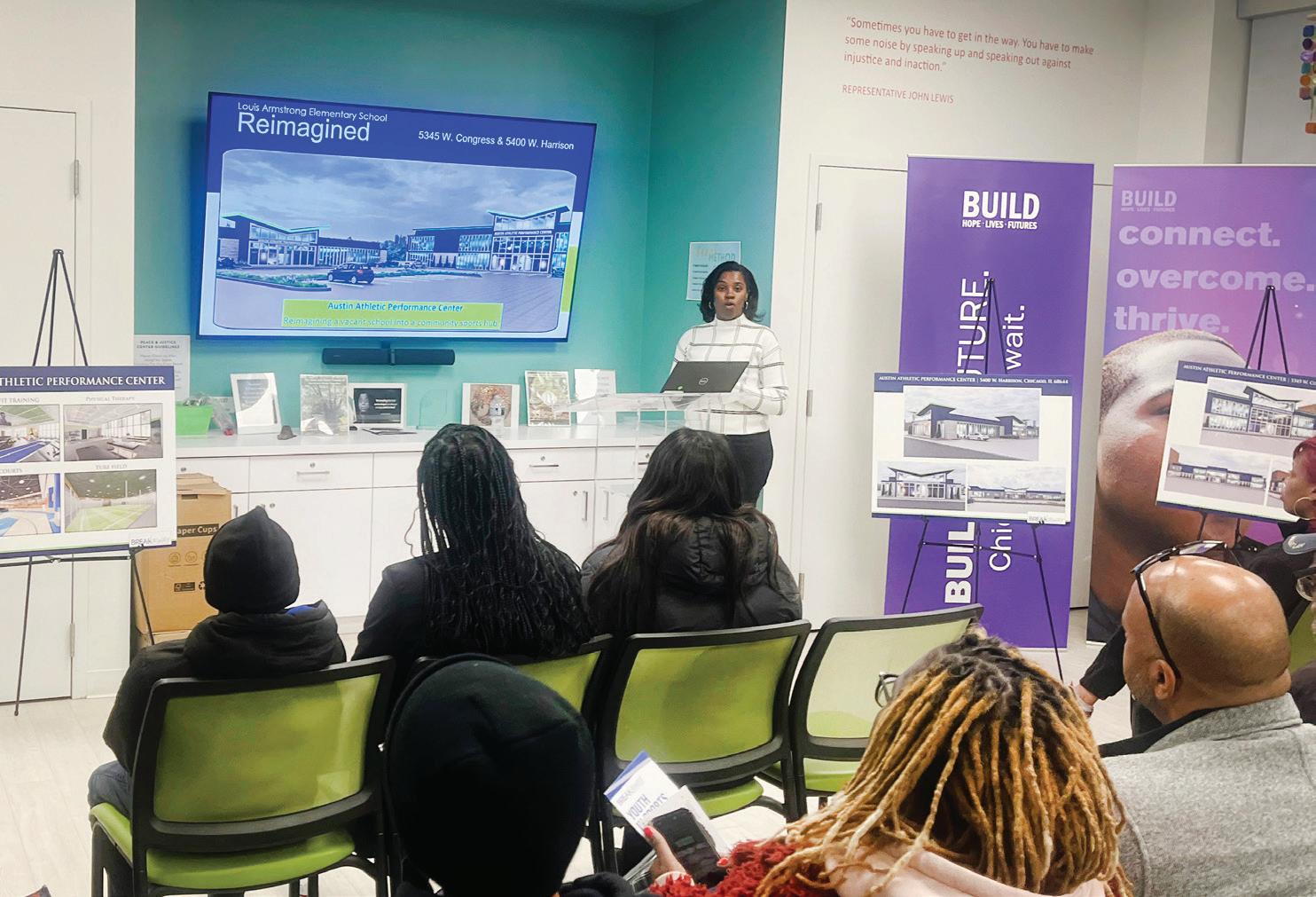
Khalilah Johnson and Kesha Forrest, both leaders with the nonprofit Breakaway Community Development Corp., presented an $11.4 million proposal to turn the school into the Austin Athletic Performance Center. The facility would feature karate and dance suites, meeting rooms, spaces for CrossFit training, physical therapy and chiropractic services, indoor golf simulators, basketball courts, an indoor baseball facility, and a multipurpose turf field, among other amenities.
“My daughter tore her ACL in her senior year and was devastated—her life was over,” Johnson said. “Having a place where she can rehab and train in the community is key. I had to drive her to Downers Grove to find those services. They should be in our own community.”
The Breakaway proposal has the backing of several local athletic organizations, including After The Game, a nonprofit focused on youth physical and mental wellness; the Windy City Dolphins Youth Football League; and T&C Fitness Club, a Black-owned gym at 5910 W. Chicago Ave., among others.
Johnson estimated construction costs at about $9.4 million, with equipment costs around $2 million. She said the redevelopment team, which includes a consultant, has already secured $3 million in capital funding and that the project could take about 18 months to
complete once the site is secured.
Johnson said the state-of-the-art athletic facility would help address the need for professional-grade training and athletic development that’s missing on the West Side, particularly as the number of Black youth participating in sports declines.
Aaliyah Phillips, founder and owner of the Chaste Hair Institute at 3 S. Austin Blvd., wants to turn Armstrong into a cosmetology school offering an expanded range of state-licensed programs in hair-braiding, cosmetology, barbering, esthetics, and nail technology. Her proposal also includes retail space to sell culturally responsive hair products and lab space.
Phillips estimated renovation costs between $600,000 and $1.5 million, backed by Huntington Bank financing and private capital. Certified as a woman- and minority-owned business, she said she hopes to complete the first classrooms and salon floor within 18 to 24 months.
Phillips said expanding her school from a hair-braiding school to a full cosmetology program would help fill the need for more licensed hair professionals on the West Side.
“Unlicensed people practicing in a licensed profession cause a lot of issues,” she said, before showing photos of people who were physically harmed by unlicensed hairdressers.
Phillips said she has been trying to acquire the school building since April 2023. Ald. Chris Taliaferro (29th) said he offered his support to Phillips two years ago and will continue to back her bid.
Ultimately, the decision on who will acquire the school rests with the 21-member Chicago Board of Education. The winning bid will need 14 votes to be approved. Armstrong was offered for sale in 2017 as part of the district’s post-closure portfolio. In May 2025, CPS re-bid 20 properties, Armstrong among them. Read the full story at ourculture.us.
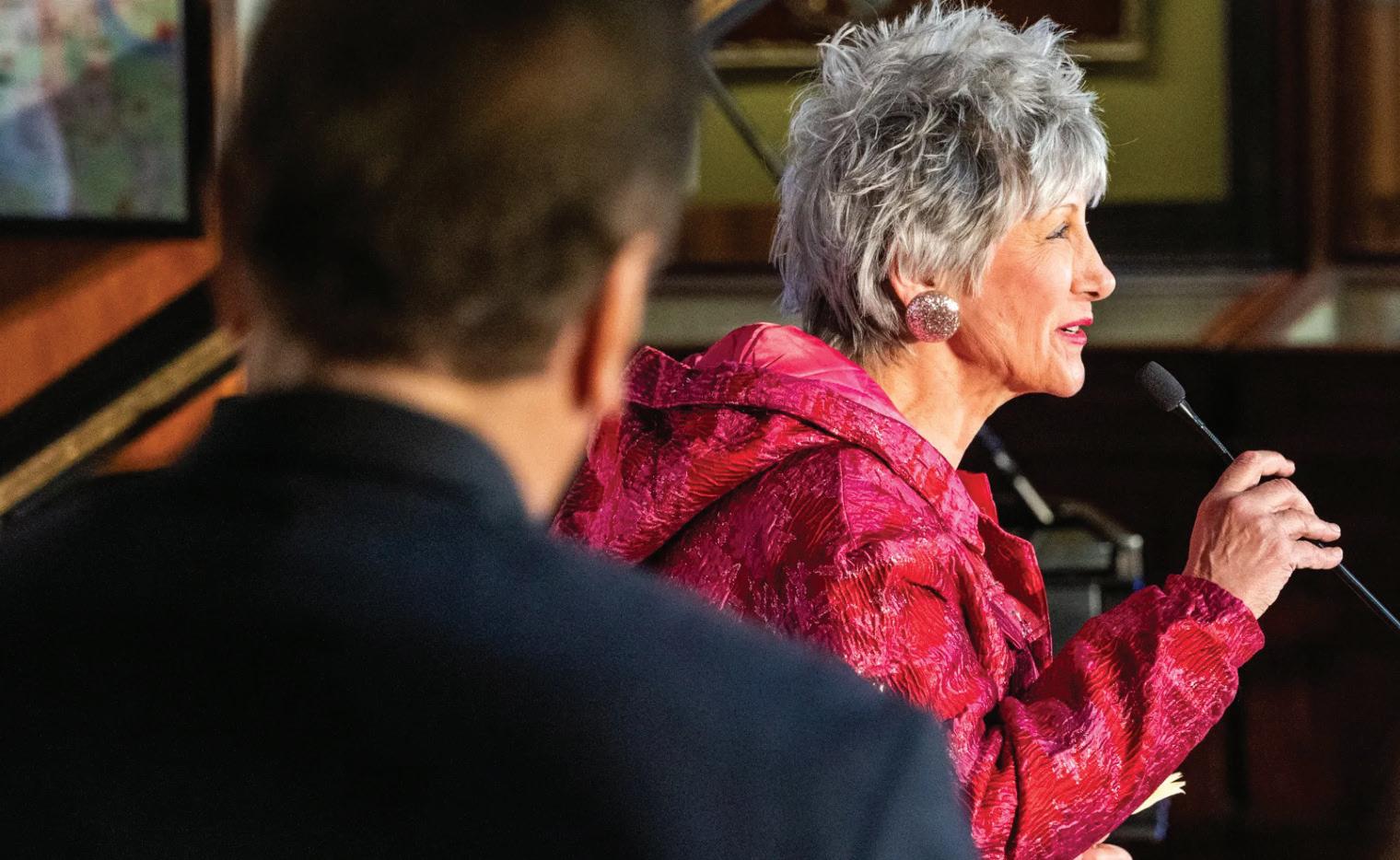
Khalilah Johnson, the executive director of Breakaway Community Development Corp., presents her proposal at BUILD Chicago on Nov. 10. | MICHAEL ROMAIN
OBy MICHAEL ROMAIN
The Culture
n Nov. 15, in front of a $1.5 million, next-generation LED screen — the only one of its kind in North America — Columbia College Chicago graduate Sam Koehler, 23, called out: “Quiet on the set! Roll sound! Roll camera!”
He wasn’t at Paramount. He wasn’t on a lot in Burbank.
He was on the West Side, inside CineCity Studios, 2429 W. 14th St., on the border of Pilsen and North Lawndale — the center of Chicago’s burgeoning entertainment landscape.
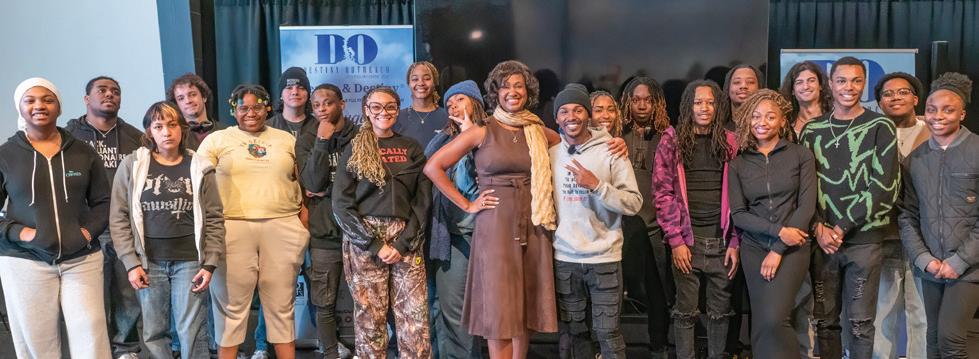
Koehler is part of a film and TV apprenticeship program run by Destiny Outreach, the nonprofit founded by Hollywood producer and Chicago native Danita E. Patterson, who built her career working on shows like The Fresh Prince of Bel-Air and Thea.
Patterson’s mission is to turn Chicago into a place where a new generation of industry professionals doesn’t have to leave for New York or Los Angeles to succeed. She’s so focused on the effort, she’s taken to calling her home city “Midwest Hollywood.”
“When you graduate, the number one thing on your mind is where you’ll go,” Koehler said. “To make my career happen without uprooting my life — that’s a message I can get behind.”
The apprentices trained in front of a 4D LED virtual production wall with a refresh rate and contrast ratio that outpace anything currently in Hollywood.
“I put them under pressure,” Patterson said. “They had to create a short film in 30 minutes — concept, blocking, lighting — all in front of a dynamic backdrop. Few young people get this experience.”
The wall was manufactured by Global LED RGB, whose chairman and CEO, Bill Curtis, has worked on more than 800 feature films.
“This has never been seen in North America,” Curtis said. “We’ve had independents, features, and TV shows utilize it — and we’re building larger projects all over the world. It pays for itself in a year.”
Curtis and Josephine Lee Gothong, president of Global LED RGB, said they brought the technology to Chicago because of their relationship with CineCity’s managing partner, Stan Wozniak.
“I knew Stan was in this business, and I knew we could trust him in this location because we travel all over the world,” Curtis said.
Film Producer Wants to Build ‘Midwest Hollywood’ by Cultivating a Local Workforce
A hands-on apprenticeship program, new LED screen technology, and expanded tax credits are helping young creators stay in Chicago instead of moving to the coasts
A NEW TRAINING GROUND FOR A NEW FILM ECONOMY
Patterson’s program combines technical training with leadership development, character, ethics, and networking.
Her nonprofit, which dates back to 1998, is rooted in a belief that personal development is as critical as production skills. The Dreams & Destiny Entertainment Industry Apprenticeship Program is funded by the Illinois Dept. of Human Services and the Illinois Youth Investment Program. Patterson has partnered with the International Alliance of Theatrical Stage Employees (IATSE) to help place apprentices in below-the-line film crafts, including lighting, camera, grip, costuming, makeup, and sound.
“We’re training them for Tier 1 union jobs
space Studios, Wozniak said.
“Not everybody has all the equipment at one time,” he said. “So we communicate with each other. For instance, CineCity doesn’t have a traditional soundstage like Cinespace. We’re more like an amenity space. Tyler Perry came in and shot Netflix’s Mea Culpa here. We’re kind of a hybrid space that’s geared for TV shows.”
Patterson said the city’s growing filmmaking capacity and the new tax credits will make Chicago a much more dynamic competitor in the industry.
“This tax credit will take work from LA, Atlanta, and Toronto,” she said. “And what I’m building feeds right into that — especially for Black and Brown young people who’ve had less access to this industry.”
And for Wozniak, preparation to work in the industry doesn’t necessarily require a college degree. The CineCity head envisions cultivating an environment where programs like Patterson’s — intensive experiences that fully immerse aspiring creatives in the day-to-day grind of film and TV production — supplement or even replace the conventional college model.
Patterson — a South Side native who got her start in theater and TV production before moving to Los Angeles for major Hollywood work — said if she had access to a program like Dreams & Destiny, she likely would never have left. She returned to Chicago to care for her father, who died in 2019.
and Tier 2 major productions,” Patterson said. “I’m exposing them to everything I’ve learned in 33 years. I’m giving them what I didn’t have.”
The timing could not be better.
New state legislation passed Oct. 31 increases existing tax credits for labor when film and TV productions hire Illinois residents from 30% to 35%. The credit for hiring Illinois vendors is also rising from 30% to 35%, among other features of the bill, which awaits Gov. JB Pritzker’s signature.
Patterson said the expanded tax credits will bring new work — and new companies — to Chicago, which holds most of the state’s roughly one million square feet of stage space. CineCity’s 150,000 to 200,000 square feet works synergistically with larger facilities like Cine-
“I’m teaching them by being the message that I bring,” she said. “I would not have left when I was 22 or 23 if I could have done narrative film and TV here. I had reached a ceiling and couldn’t do any more because I had done so much in high school and college. Los Angeles equipped me and allowed me to be in the major leagues, so I could bring back what I learned and help build what I call Midwest Hollywood.”
In addition to producing the short film, the apprentices also met with industry professionals like film writer Sylvia Jones — whose credits include The Clark Sisters: First Ladies of Gospel and The Chi — and SAG-AFTRA Chicago local president and actor Charles Andrew Gardner. Ultimately, Patterson said, the immersive training is designed to give apprentices the experience they need to seamlessly transition into industry careers right here at home.
“I want to make sure graduates from colleges like Northwestern, DePaul, and Loyola can work in their hometowns and where their families are,” she said. “That’s why it’s important for me to pay it forward and to help them go forward faster.”
Hollywood producer and Destiny Outreach founder Danita E. Patterson takes a selfie with Lataryion “LT” Perry during a short break in Patterson’s Dreams & Destiny Entertainment Industry Apprenticeship Program at CineCity Studios on Nov. 15. Hollywood producer and Destiny Outreach founder Danita E. Patterson takes a selfie with Lataryion “LT” Perry during a short break in Patterson’s Dreams & Destiny Entertainment Industry Apprenticeship Program at CineCity Studios on Nov. 15. | SHANEL ROMAIN
IN PHOTOS
Documenting a Caravan of Care
Photographer Kenn Cook Jr. documented a Nov. 8 caravan that followed Border Patrol agents throughout the West Side
PHOTOS AND ESSAY BY KENN COOK JR. The Culture/Magnum Foundation
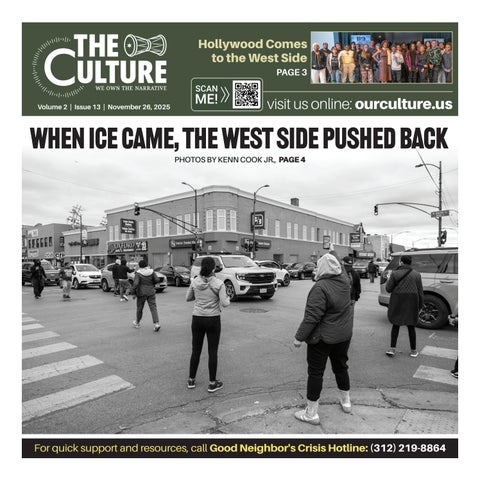
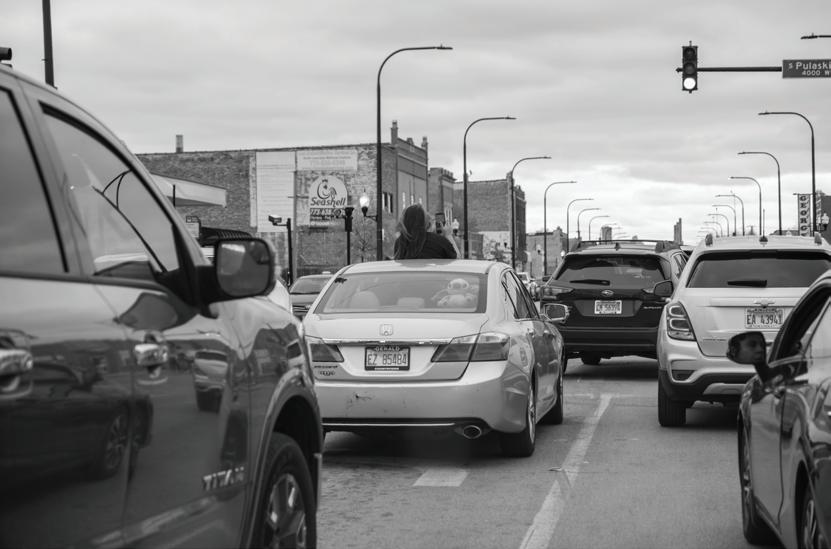
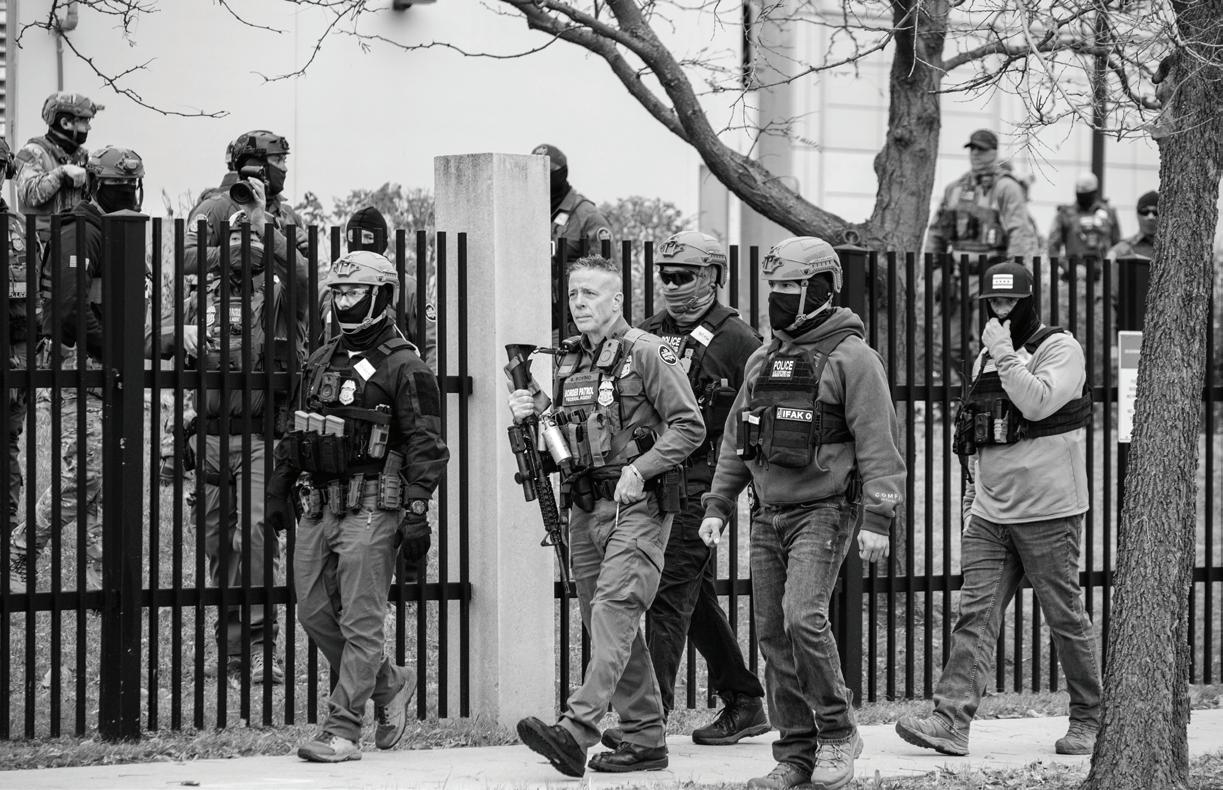
On Nov. 8, The Culture staff photographer Kenn Cook Jr. photographed a car caravan as it trailed Customs and Border Patrol agents throughout the West Side. This is the story of what he experienced, in his own words and photos. This was produced with support from the Magnum Foundation.
There were about 60 to 70 cars full of civilians chasing the agents through the city—following them, honking their horns, blowing whistles, alerting the public that ICE [U.S. Immigration and Customs Enforcement] was out. The caravan followed them from the FBI field offices [2111 W. Roosevelt Rd. on the Near West Side] to Little Village and into areas like North Lawndale.
ICE claimed that they were shot at that day, but people in the caravan told me that federal agents made that up. I didn’t see a shooting, but I saw agents in the street with guns and heard flash bangs go off in Little Village.
Greg Bovino [U.S. Border Patrol boss] was in Little Village threatening to tear gas people. I saw an agent—bald-headed, with a mask over his face—walking around with tear gas in his hand. They’re not supposed to
throw tear gas at protesters, but they use it to intimidate people.
You know, I try to stay objective, but it was so inspiring to see these community members come together and fight to take back their neighborhood. These were civilians— organizers, activists, rapid-response people, the community.
These people have been living in fear, but you see them come together and push back. They were like, “This is our community. You’re not going to do this.”
Their goal was to make sure ICE didn’t take anybody. Following the agents was the community’s way of sounding the alarm.
Community members take cell phone footage of federal agents on the West Side.
U.S Border Patrol boss
Gregory Bovino (unmasked) walks outside of the FBI field offices on Roosevelt Road on Nov. 8. Photographer Kenn Cook Jr. saw Bovino threatening protestors with tear gas, despite a federal court order indefinitely restricting such actions..
Border Patrol agents stopping a vehicle on the West Side on Nov. 8.
A car window smashed by federal agents on the West Side.
COMMUNITY FRAME [ [
Winners of the Freedom Defense Center of Austin's Nov. 13 Chili Cook-off: First-place winner Emmanuel; second-place winner Landon Williams; and third-place winner Robert. | PROVIDED
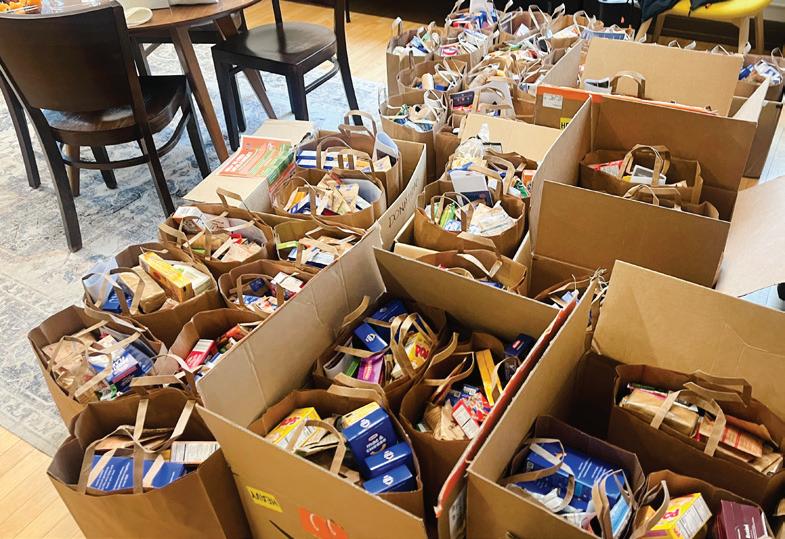
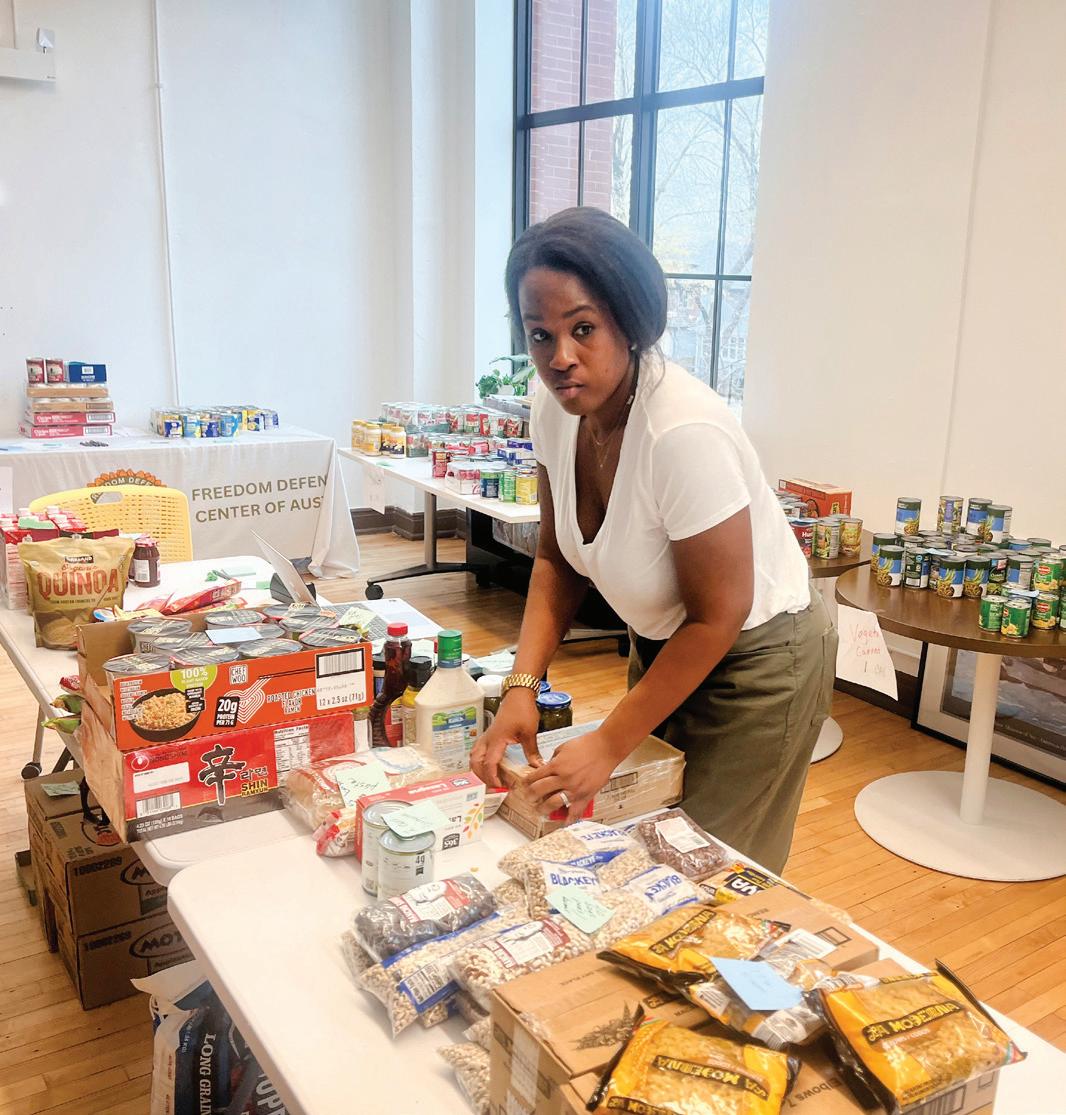
Dr. Brittany Wells, associate director of client support services at the Freedom Defense Center of Austin, prepares food bags (seen above middle) on Nov. 19 to give away to hundreds of families on the West and South sides on Nov. 22. | MICHAEL ROMAIN
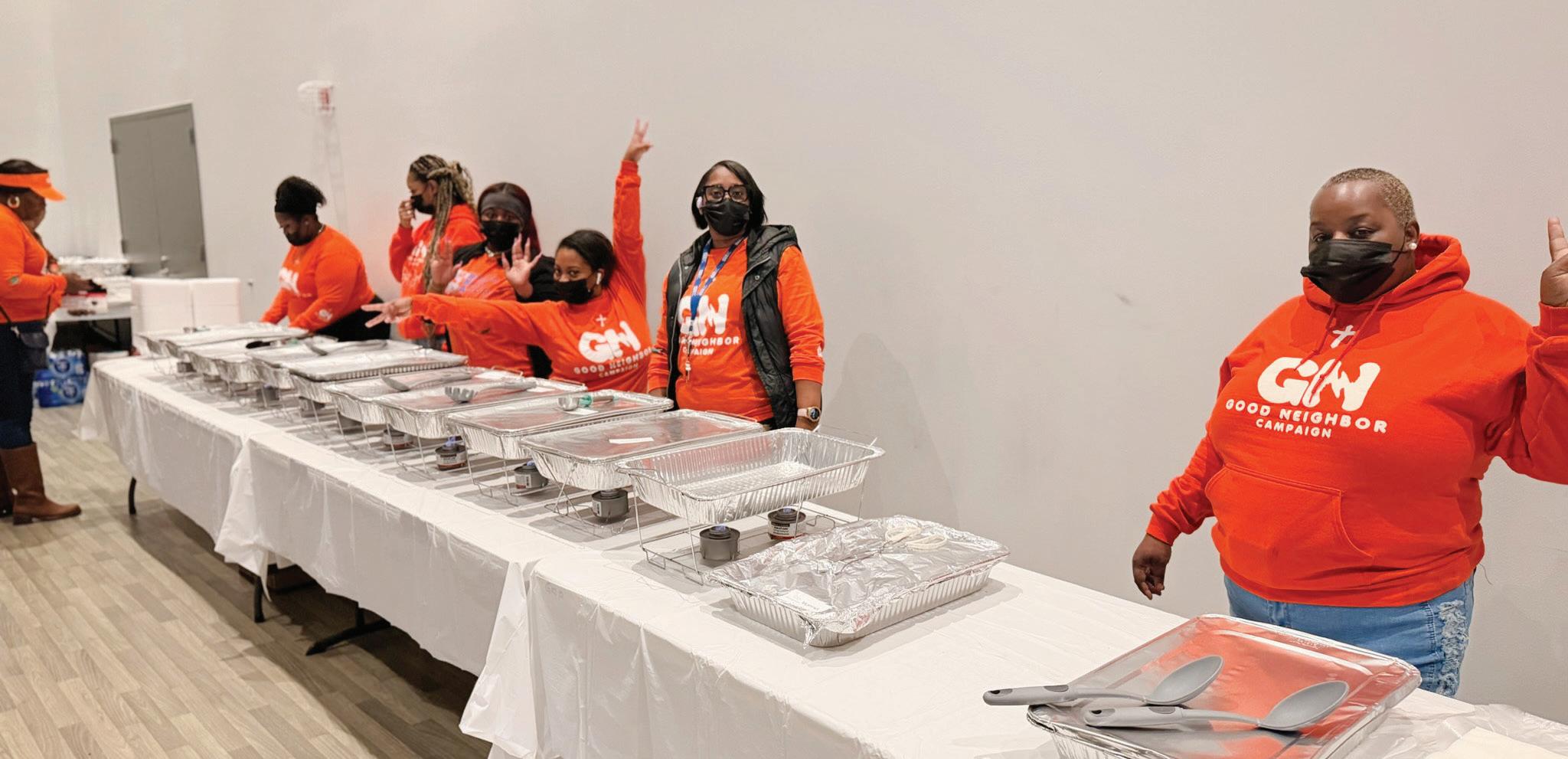
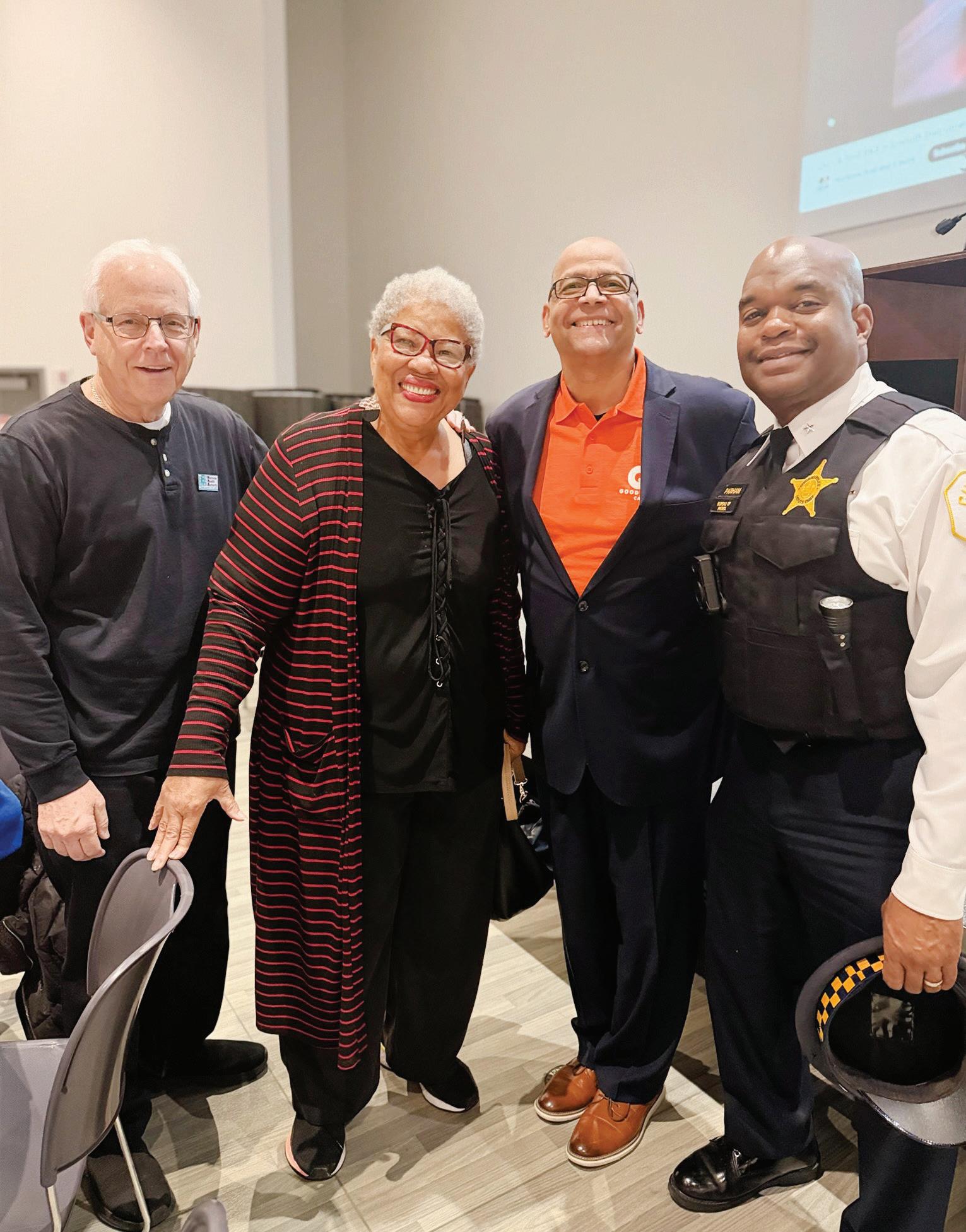
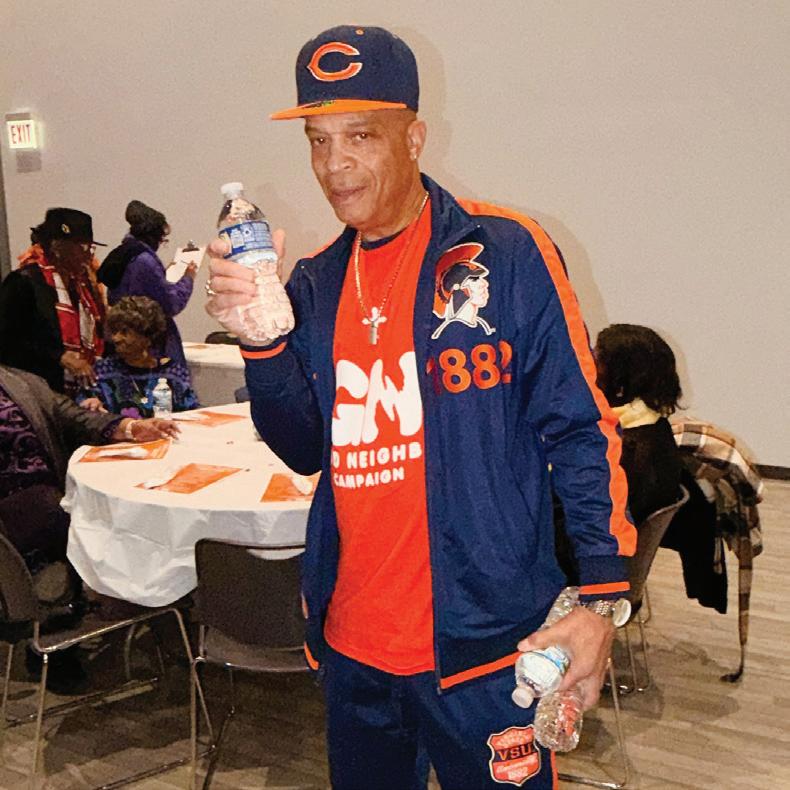
On Nov. 20, 37th Ward. Ald. Emma Mitts, Westside Health Authority, and Good Neighbor Campaign hosted a free community Thanksgiving celebration at Intentional Sports in Austin. | GOOD NEIGHBOR CAMPAIGN
South, West Sides Hit Hardest by Massive Property Tax Bill Spikes, New Report Shows
A report last week from Cook County Treasurer Maria Pappas’ office found the median residential tax bill in Chicago rose 16.7 percent. The Downtown economy still rebounding from the pandemic is to blame, officials said.
BY QUINN MYERS Block Club Chicago
Some Chicago homeowners are seeing a major increase in their property tax bills this year as Downtown commercial real estate continues to suffer, according to a recent report from the Cook County Treasurer’s Office.
Overall, the median residential tax bill in Chicago rose 16.7 percent to $4,457, the largest percentage increase in the city in 30 years, according to Cook County Treasurer Maria Pappas’ office.
The report, published Monday, shows predominantly Black and Latino communities on the South and West sides are being hit particularly hard.
The median homeowner tax bill in West Garfield Park increased by nearly $2,000 — a 133 percent spike, according to the report. The median bill in North Lawndale rose almost as much, and Englewood on the South Side saw an increase of more than $600, or 82.5 percent.
The surges come as Mayor Brandon Johnson has vowed to not support a property tax hike in his 2026 budget proposal, which suffered a major setback Monday after his revenue proposal — which includes a corporate head tax — was rejected by the City Council’s finance committee.
The mayor and his council opponents this week cited the tax bill increases in their respective rationale to either support or reject the proposed head tax, which in its latest form would require companies with more than 100 employees to pay $21 per person each month to the city.
The city of Chicago has not raised its property tax levy since 2022, but Chicago Public Schools has regularly raised its levy by the maximum amount allowed under state law, Illinois Answers Project and the Tribune reported this week. Overall taxes in the city grew by $528.6 million, or 6.3 percent.
A major driver behind the higher neighborhood tax bills is a Downtown economy
still struggling to rebound from the COVID-19 pandemic.
Commercial properties in the Loop will pay almost $130 million less this year in property taxes, a decrease of about 11.5 percent, according to the report.
“When the Loop gets a cold, the rest of the city gets pneumonia,” Pappas said in a press release.
Meanwhile, the city’s residential real estate market is going in the other direction, including in areas on the South and West sides that “have regained the value they lost in the wake of the Great Recession,” leading to higher assessments and tax bills, according to the report.
Not everyone saw increases. The report found that across Cook County, 1.2 million homeowners saw higher bills, while 362,000 saw decreases. Forty-nine of 50 wards in Chicago did see overall residential tax increases — with the exception of the 2nd Ward, which includes Streeterville and the Gold Coast, which saw an 0.8 percent reduction.
The 24th Ward on the West Side saw a 69
29th Ward to Host Property Tax Assessment Workshop on Dec. 4
Ald. Chris Taliaferro (29th) will host a Property Tax Assessment Workshop on Thursday, Dec. 4, from 6 to 7 p.m. at 6871 W. Belden Ave. in Rutherford-Sayre Park.
The session will feature an informational presentation by attorneys Perry and Chris Abbasi on how homeowners can appeal their property tax assessments in Jefferson Township. Although the current appeal period is specific to Jefferson Township—open from Nov. 20 to Dec. 19—residents from other areas are encouraged to attend to learn how to prepare for their own township’s appeal window.
The workshop is free and open to the public. For more information, contact the 29th Ward service office at 773-237-6460 or ward29@cityofchicago.org
Kaegi is advocating for a bill in Springfield that would provide relief to homeowners who experience a spike of 25 percent or more in their property tax bills.
Pappas said much of the problem lies with local taxing bodies “spending like drunken sailors” and raising taxes to match.
percent bump, while the 16th Ward on the South Side saw a 67 percent increase.
“Englewood is appreciating more quickly than Water Tower Place,” Pappas told Block Club on Wednesday.
Pappas’ director of research, Hal Dardick, likened the impact of declining Downtown values on the property tax system to a water balloon being squeezed on one side.
“If the commercial side of that balloon is being squeezed, the water flows to the side that isn’t being squeezed,” Dardick said.
In a press release last week, Cook County Assessor Fritz Kaegi, whose office oversaw the initial 2024 assessments, blamed the increases on what he called an “inherently unfair” property tax system where Downtown properties appeal their assessments through the Cook County Board of Review to save millions — ultimately shifting the burden to homeowners.
In general, homeowners appeal their property assessments at lower rates than commercial property owners do, especially in “Chicago’s poorer, minority communities,” according to the report from the treasurer’s office.
“The levy amount last year went up by almost $600 million,” said Pappas, who is planning to run for mayor in 2027. “You can’t have $1,000 and spend $5,000 or you’re going to have this situation.”
Christopher Berry is a professor at University of Chicago, where he directs the Mansueto Institute for Urban Innovation and researches property taxes in Chicago and elsewhere. He’s also a creator of the Property Tax Explainer dashboard, where property owners can compare recent bills and see where their money is going.
Berry agreed with Pappas that depressed Downtown property values and rising home values are contributing to this year’s bills in Chicago — as are increased tax levies to back more spending.
“A lot of people incorrectly associate their tax increase with the assessment when, generally, it’s about the levy going up,” Berry said. “CPS in particular, but lots of other jurisdictions just keep asking for more and more money and spending more and more money at a rate that is much faster than inflation.”
Cook County Treasurer Maria Pappas speaks during the celebration Casimir Pulaski Day at the Polish Museum of America on March 6, 2023. | CREDIT: COLIN BOYLE/BLOCK CLUB CHICAGO
51 Affordable Apartments to Be Built Next to Green Line in East Garfield Park, 65-Unit Grace Manor Opens
The City Council approved the East Garfield Park development earlier this month, alongside the landmarking of a historical home in Austin while Grace Manor opened on Nov. 13
By MICHAEL LIPTROT Block Club Chicago
A51-unit affordable housing development is slated to be built near the Kedzie Green Line stop in East Garfield Park, one of two West Side housing-related measures passed by the City Council earlier this month.
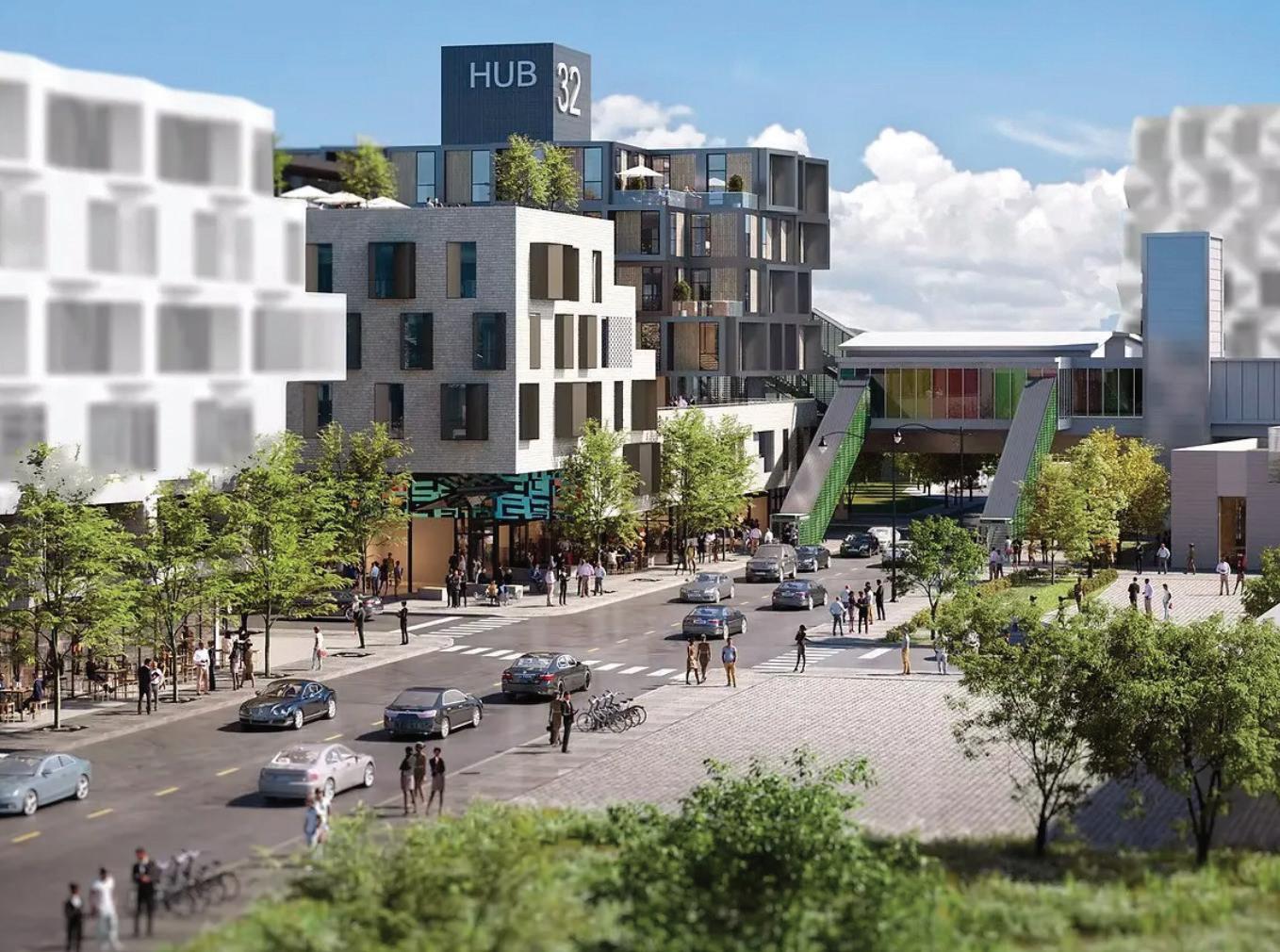
Known as Hub32, the development will bring apartments and commercial space to a vacant, city-owned lot at 136 N. Kedzie Ave. The five-story building will hold 51 apart-
nounced as the winner of the request for proposals process in March 2023.
The City Council on Nov. 14 gave final approval to the Hub32 project. There is no timeline yet for the project’s construction, according to city officials.
AUSTIN HOME LANDMARKED
The City Council on Nov. 14 also approved landmarking of an Austin home by Chicago architect Frederick Schock.
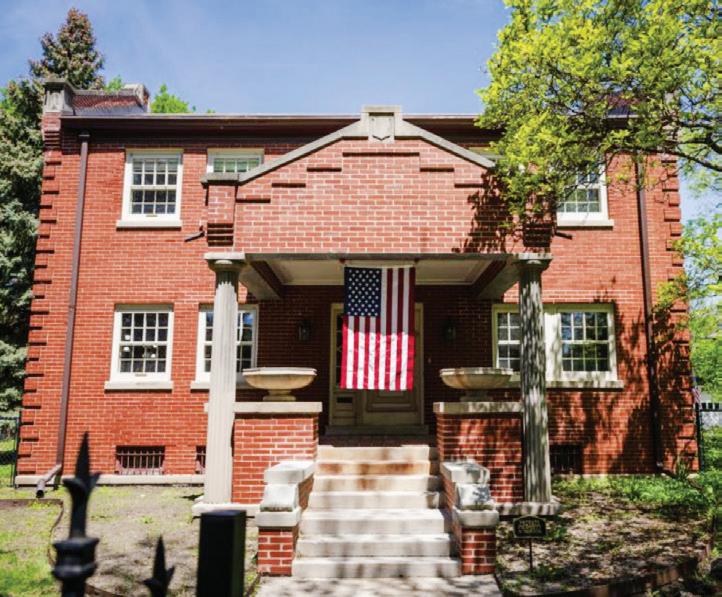
Known as the Fred C. Beeson House No. 4, the colonial revival-style house at 5830 W. Midway Place is one of several designed by Schock in the neighborhood — and one of dozens designed by Schock in the area, according to a landmark report. The landmarking serves to preserve the exterior of the home and garage.
“This work shaped the visual character of Austin during its period of greatest growth from the late 19th through the early 20th centuries, during which it was annexed to the City of Chicago,” according to the report.
GRACE MANOR OPENS
An affordable housing development opened on Nov. 13, on the former site of a police parking lot in North Lawndale, a moment that represents a turning point for affordable homes in the area, leaders said.
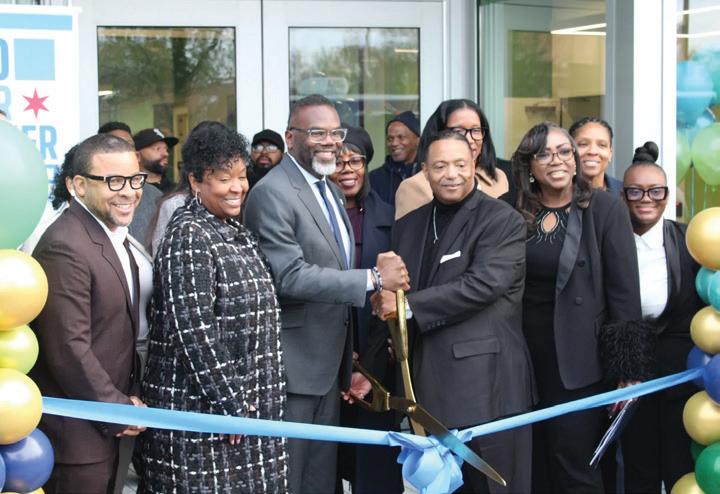
The team behind Grace Manor Apartments, 3201-3423 W. Ogden Ave., held a ribbon-cutting ceremony Thursday. The $40 million project includes 65 affordable apartments alongside community and commercial space near the Central Park and Kedzie Pink Line stations. The development was largely led by a local pastor at Grace Memorial Baptist Church.
“I didn’t want to just build affordable housing. I wanted to build housing that people could be proud of, and they could dream beyond what they see. And so we built luxury affordable housing,” pastor Marvin Hunter said.
Grace Manor is the product of Hunter working alongside Jerusalem Community Development Corporation and East Lake Management Corporation in what he described as a decades-long mission to provide food, housing and education to North Lawndale neighbors.
ments, nearly 4,000 square feet of commercial space, 12 car parking spaces, and 26 bike parking spaces, according to city documents.
Apartments will be rented out to people earning up to 60 percent of the area median income, which is $50,400 for a one-person household, according to the city.
The breakdown in apartment makeup is unclear; an earlier, 63-unit plan called for 14 one, 34 two- and 15 three-bedroom apartments.
The development was selected through a request for proposals for projects that could take over the city-owned lot. Hub32 was an-
Built in 1920 and listed at the time for $30,000, the home features a red brick veneer with stone trim, according to the landmarking report. The house still has its original wood, double-hung windows.
Beeson, a construction company executive and wood importer, hired Shock to build the house, the fourth house the architect built for the businessman and his family. Shock also built a warehouse for Beeson that is now a part of the Fulton Market landmark district.
The house features the colonial revival style, based on 17th- through early 19th-century architecture of American colonists and other historical styles.
Grace Manor Apartments broke ground in 2023 as a project under Invest South/West, a city initiative to spur development in areas often overlooked by builders.
The complex’s 65 units are available to households making up to 60 percent of the area median income, which is just under $72,000 for a household of four. It includes 31 one-bedroom units and 34 two-bedroom units. The Chicago Housing Authority is providing subsidies for 19 of the units.
East Garfield Park’s Hub32 Apartments at 136 N. Kedzie was approved by the City Council on Friday, Nov. 14, 2025. | CREDIT: KMW COMMUNITIES
The Fred C. Beeson House #4 at 5830 W. Midway Place in Austin is approved to become a Chicago landmark. | PROVIDED
Grace Manor Apartments at 3201-3423 W. Ogden Ave. opened Thursday November 11 in North Lawndale. | MICHAEL LIPTROT/BLOCK CLUB CHICAGO
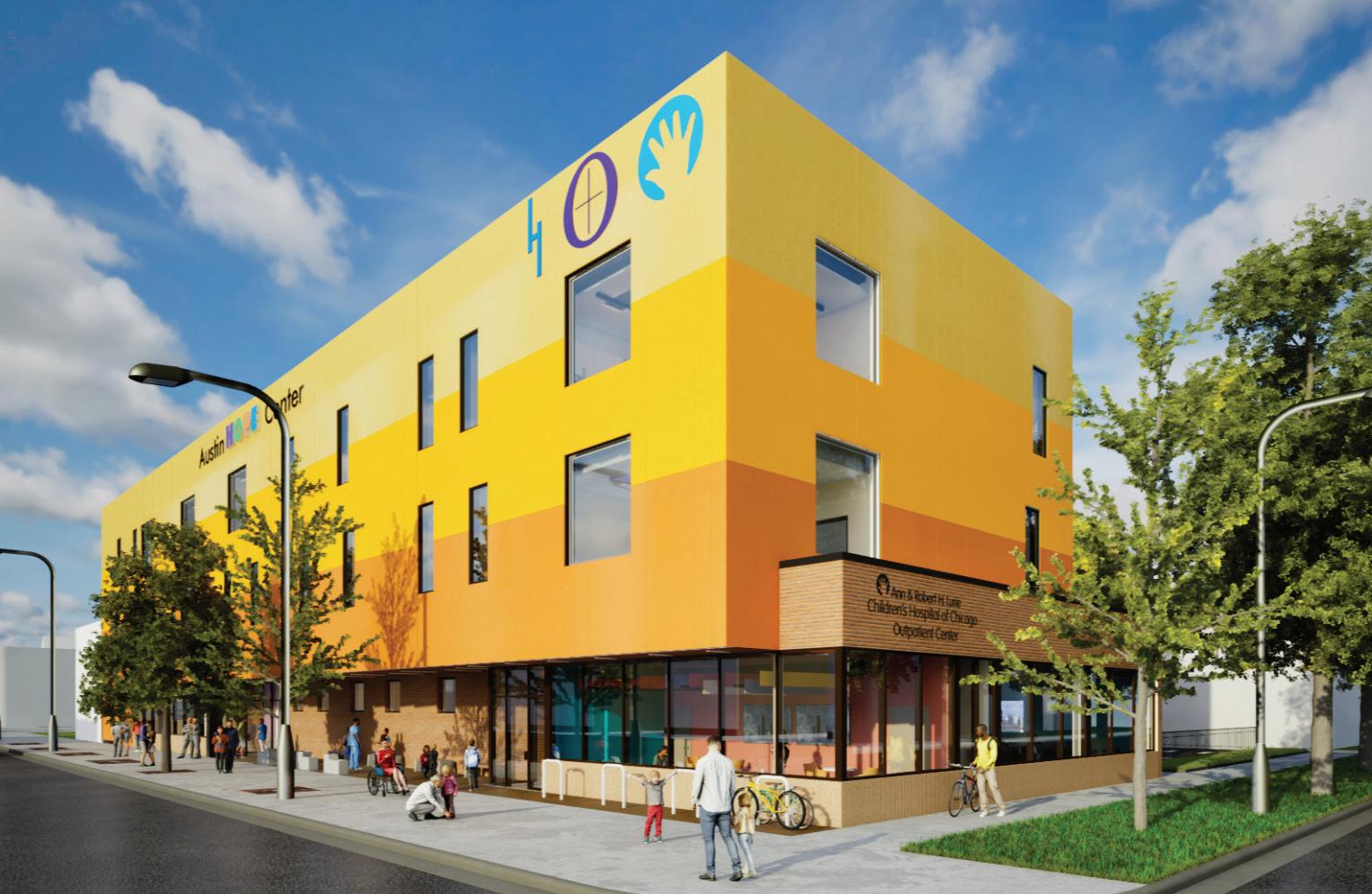
Austin HOPE Center First of Its Kind, Bringing Pediatric Health Services to West Side Children
The center, set to open next summer, is a partnership between Lurie Children’s Hospital, the nonprofit Chicago Neighborhood Initiatives and other organizations to address the West Side’s life expectancy gap
By MICHAEL LIPTROT Block Club Chicago
Ahealth and wellness facility under construction in Austin aims to provide high-quality medical care for neighborhood children as the first pediatric specialty and behavioral health facility on the West Side.
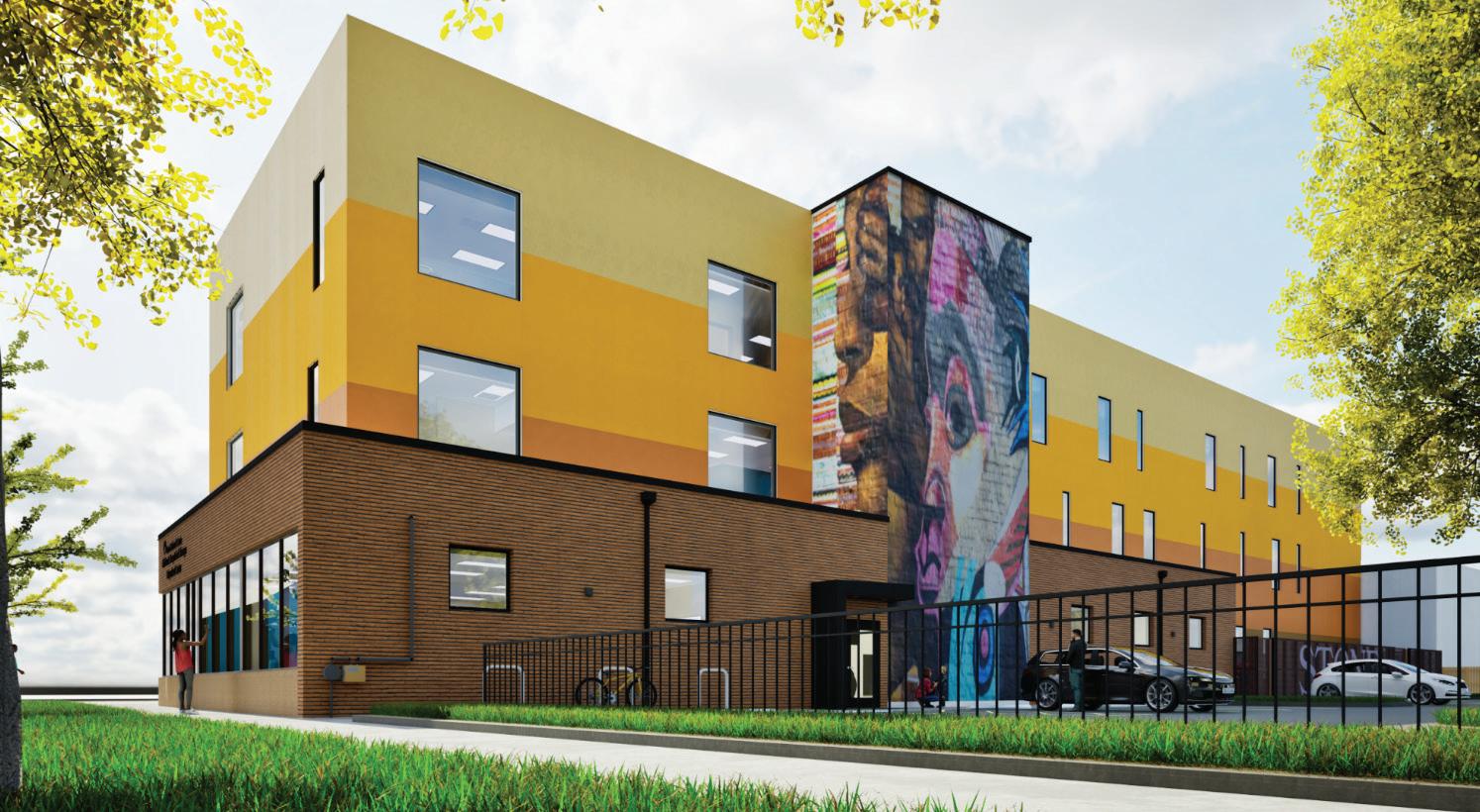
The Austin HOPE Center is set to open in summer 2026 at 5036 W. Chicago Ave. The 25,000-square-foot center is a partnership between Lurie Children’s Hospital, the nonprofit Chicago Neighborhood Initiatives, a local church nonprofit and other city organizations.
The development, located in Austin’s Soul City Corridor, is the latest effort to curb the life expectancy gap between the West Side and other areas of the city.
“Today we are raising more than steel — we are raising hope,” said Contrell Jenkins, CEO of Stone Community Development Corporation and pastor at Lively Stone Missionary Baptist Church, 4938 W. Chicago Ave.
“The Austin HOPE Center will stand as an anchor of possibility, proving that when faith, partnership, and purpose come together, transformation can happen right where it’s needed most,” he said.
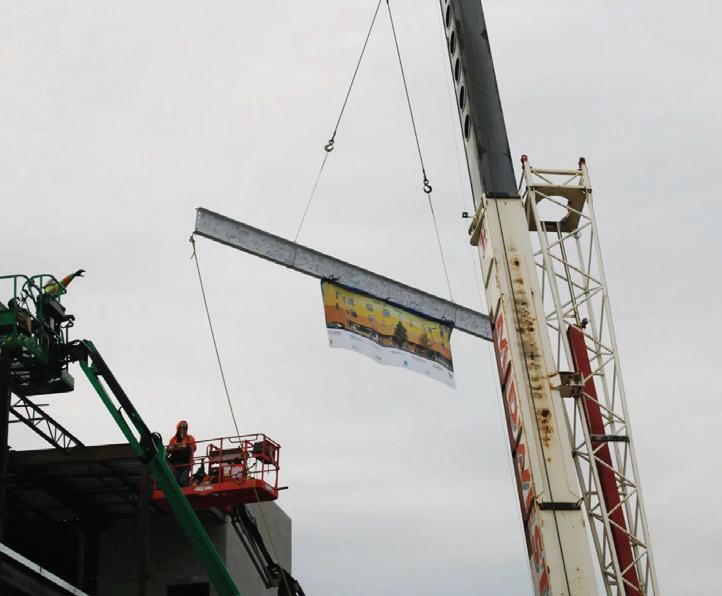
Jenkins was among the leaders and officials who gathered at the center on Nov. 17 for a beam-raising ceremony.
In addition to specialty pediatric care from Lurie’s, the center will offer adolescent medicine services, behavior health programs and care for chronic conditions including asthma, high blood pressure, sickle cell disease, fatty liver disease and weight management.
The center will house administrative offices for mental health and substance use provider
Thresholds. Community wellness spaces and family resources will also be offered on-site.
The center broke ground in June 2024, initially named the Austin Community Health Hub. The ground floor of the three-story facility will have dedicated offices, program space, a cafe, and multiple community areas, according to Austin Weekly News reporting.
The second floor will include Lurie Children’s clinics and specialty care for pediatric behavioral and physical health. Third-floor space will be administrative offices for Thresholds.
Funding for the $22 million project includes $5 million from Mayor Brandon Johnson’s Housing and Economic Development Bond, the first project built with bond funds, according to Ciere Boatright, Department of Planning and Development commissioner. New Market Tax Credits and philanthropic contributions will provide additional funding, and fundraising for the center is ongoing, organizers said.
Austin HOPE Center’s mission of promoting health equity and improving the lives of West Siders is the latest of several ongoing efforts
in the area. The Sankofa Wellness Village is a sprawling development project in West Garfield Park that will include a health center and business incubator. The Collaborative Bridges Wellness Center is a Garfield Park facility that brings together eight West Side organizations offering behavioral health services.
A 2021 city study showed the life expectancy gap is growing between Black and nonBlack Chicagoans. Black people in Chicago live an estimated 9.2 years fewer than non-Black people as they struggle with higher death rates from diabetes-related issues, homicides, HIV, and opioids, the report found.
And on the West Side, the “death gap” is even more stark. A 2015 study by Virginia Commonwealth University that calculated life expectancies reported that residents of the
Loop lived on average until 85. But residents of Garfield Park, just 15 minutes away, lived 15 fewer years, to only until 69 on average.
“We have to get to the point where the zip code is not the more important determinant of your health and well-being,” said Dr. Tom Shanley, Lurie Children’s president and CEO.
“That’s what this project is going to make sure that we do.”
Read More
Read more Block Club Chicago stories at blockclubchicago.org
Contact reporter Michael Liptrot at michael@blockclubchi.org.
The Austin HOPE Center is set to open in summer 2026 at 5036 W. Chicago Ave. | CREDIT: GREGORY RAMÓN DESIGN STUDIO, INC.
CREDIT: MICHAEL LIPTROT/BLOCK CLUB CHICAGO
Stand Up for Veterans Event Celebrates Service and Community Impact
Davis recognizes three standout veterans, while the Arthur Lockhart Resource Institute named the congressman an honorary veteran
By MICHAEL ROMAIN
The Culture
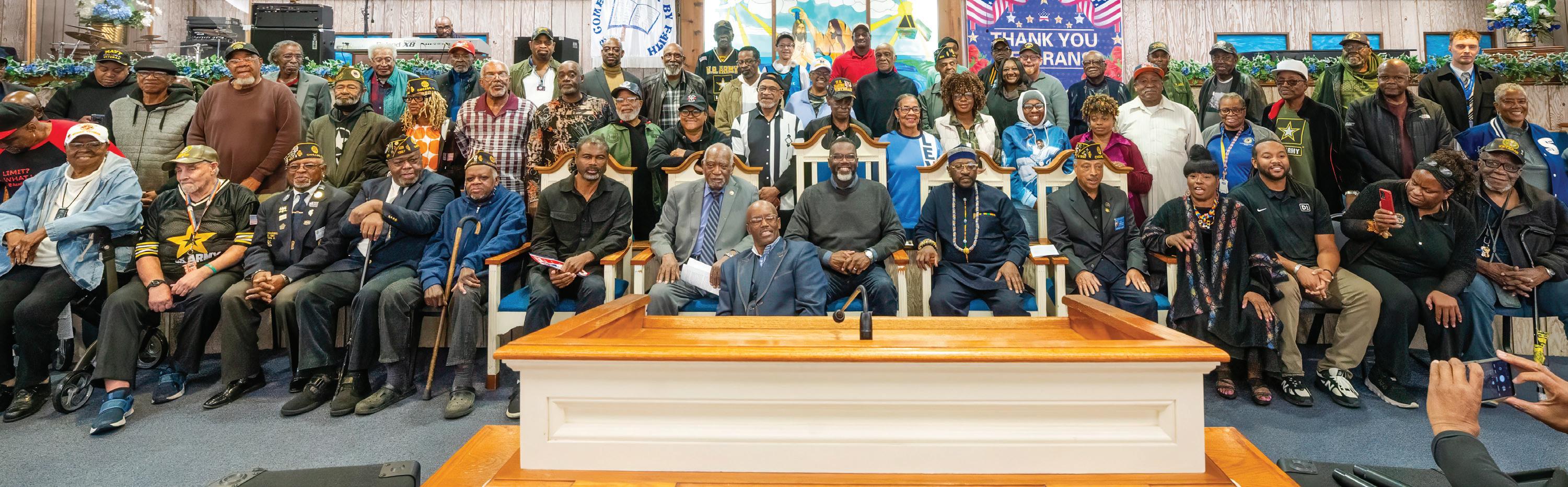
U.S. Rep. Danny K. Davis (D-7th) and the Arthur Lockhart Resource Institute honored three veterans for their service and community leadership during a Veterans Day Musical and Award Luncheon held Nov. 15 at Healing Temple Church, 4941 W. Chicago Ave. in Austin.
The event, held the weekend after Veterans Day (Nov. 11), was part of the Institute’s Stand Up for Veterans initiative.
During the event, Davis recognized legendary radio host Cliffard Kelly, businessman and West Point graduate Kenneth Safford, and Vietnam veteran Sgt. Anthony Bingham III. Davis presented each honoree with an award acknowledging both their military service and their continued work on behalf of
the community.
Davis was also honored. Dr. Elizabeth Lockhart, the Institute’s executive director, presented the congressman with a plaque naming him an honorary veteran and praised his legislative support for veterans.
Lockhart cited Davis’ involvement in a range of bills benefiting veterans, including the Protect Veterans Jobs Act — which supports veterans returning to the workforce — and the Dental Care for Veterans Act, which would expand dental services through the U.S. Department of Veterans Affairs.
“For your time in service that you have given unselfishly, we want to say thank you,” Lockhart told Davis.
Davis spoke personally about his lifelong admiration for veterans, recalling how three of his uncles served in World War II and sent home military allotment checks that helped
support the family.
“I loved veterans because my three uncles were in World War II,” Davis said. “Every time my grandmother got her check, she’d go to the store and get chocolate candy. I was her favorite grandchild, so I had chocolate candy, and I knew where it came from.”
Davis praised Cliffard Kelly, a former serviceman turned Chicago alderman, radio personality, and public affairs host known for giving voice to issues affecting Black Chicagoans.
“He became an outstanding member of the City Council,” Davis said. “He’d be the lead person on things others didn’t want to go along with … and ultimately those issues became the ones that defined the city.”
Kelly thanked the crowd and said he was “fortunate to work with good people to accomplish good things.”
Safford, a decorated U.S. Army veteran, has held leadership roles in logistics, talent management, youth development, and entrepreneurship. He is a graduate of West Point and earned an MBA from Georgia Tech.
Bingham, a Vietnam veteran who served from 1969 to 1971, was recognized for remaining deeply involved in service work after his military career. Davis noted seeing him regularly at events across the city — handing out food, supporting veterans and working with American Legion posts.
“He came back with a spirit of engagement and determination,” Davis said. “He’s always working to help others.”
Lockhart described the Stand Up for Veter-
ans initiative as an ongoing resource hub offering housing referrals, financial information, mental health programs, first-aid training, and free meals.
The initiative meets every third Friday from 3 p.m. to 5 p.m. at Healing Temple Church.
Ald. Emma Mitts (37th) urged residents to show appreciation to veterans not only in November, but year-round.
“When you’re out and see soldiers, start thanking them for their service,” she said.
Lockhart also thanked state Rep. La Shawn K. Ford (D-8th) for his support of the initiative over the years. Ford, who gave up another chance to serve in the Illinois House to run for Davis’s seat in Congress, is the longtime incumbent’s preferred successor.
In remarks delivered during the program, Mayor Brandon Johnson called Chicago a proud home to veterans and tied their service to expanded freedoms won over time.
“There are things our generation can say that generations before us would have been lynched or hanged for,” Johnson said. “Congressman Davis and others had to dodge bullets while out collecting petitions to get on the ballot. We don’t get a Congressman Davis, or Rep. La Shawn K. Ford, or a Mayor Johnson without the brave men and women who serve this country to protect our democracy and our right to live freely under the Constitution that is meant to protect everyone.”
Congressman Danny K. Davis, state Rep. La Shawn K. Ford, Mayor Brandon Johnson, and Healing Temple Church Pastor Larry Lockhart, and Dr. Elizabeth Lockhart, among others, pose for a photo with veterans on Nov. 15. | SHANEL ROMAIN
New Sound Café Revives Spirit of Long-Vacant Gospel Record Shop in Austin
The family-owned space blends micro-roasted coffee, gospel roots, and preserved 1970s history inside a building once home to New Sound Gospel Records and Tapes
By MICHAEL ROMAIN
The Culture
Along-abandoned former record store in Austin has been reborn as a neighborhood café and gathering space, thanks to a local couple who felt called to put their spin on a rich aspect of West Side culture.
New Sound Café, 5958 W Lake St., which held its soft opening earlier this month and celebrated its grand opening on Nov. 22, occupies a building on Race Avenue that once housed New Sound Gospel Records and Tapes — a gospel shop run in the 1970s by South Side resident Lee Johnson. The building had sat empty for roughly 20 years.
“You’d never know it used to be a record shop,” said co-owner Andrew Follett, who runs the café with his wife, Hannah. “We wanted to bring some of that history back.”
While Johnson sold or gave away the store’s
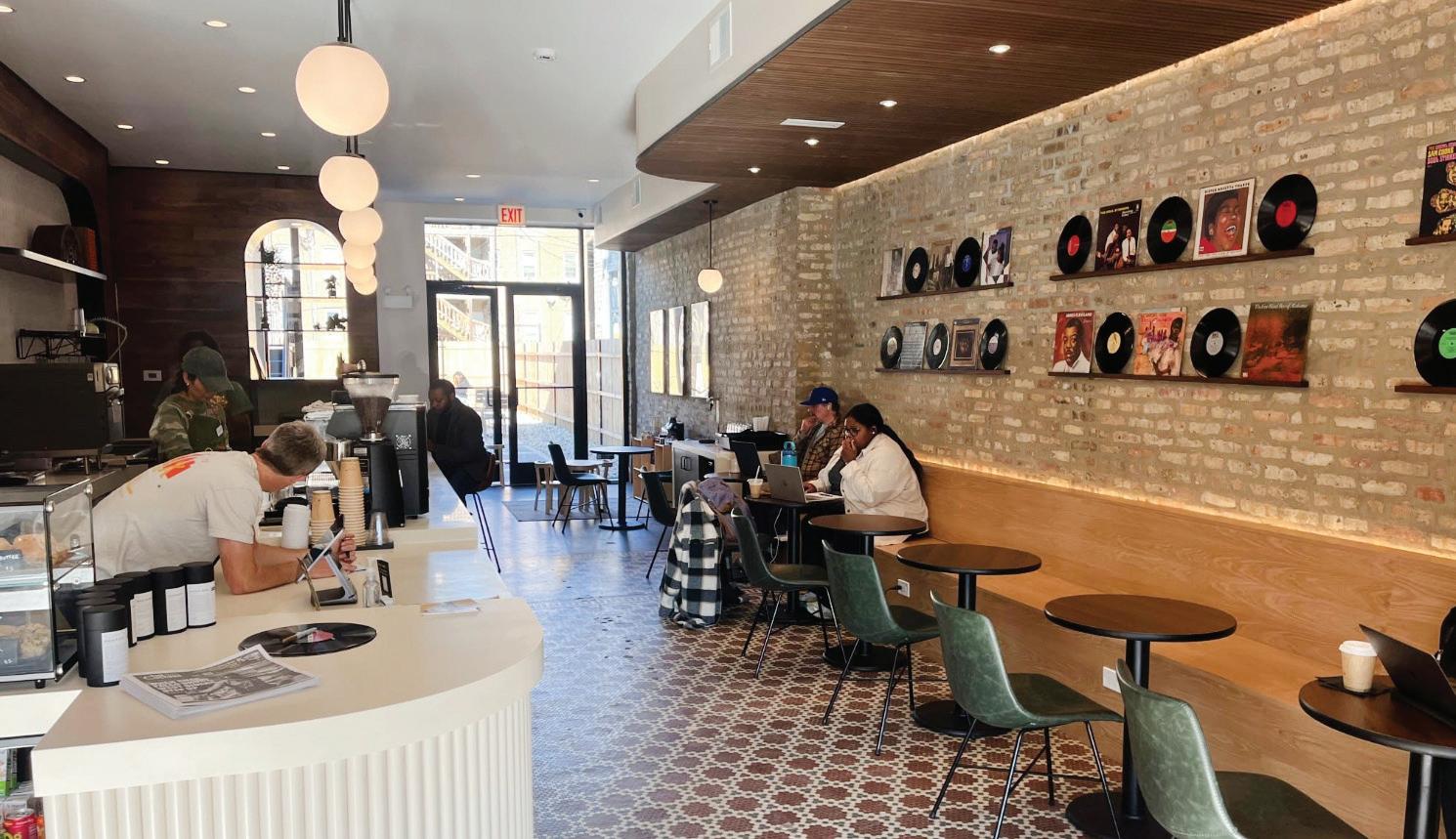
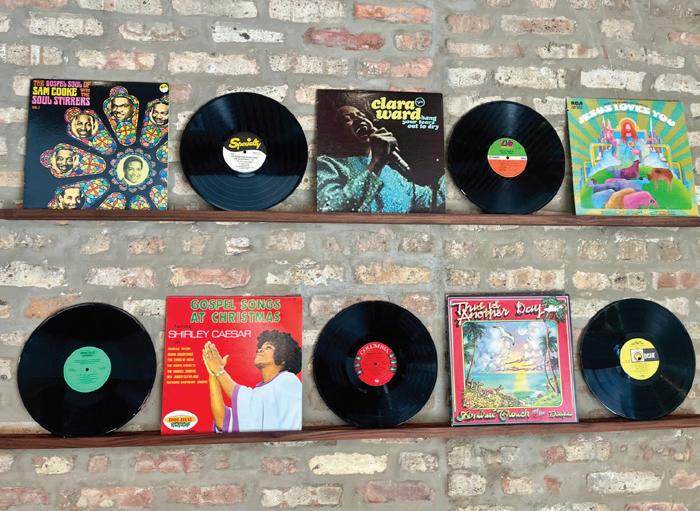
original vinyl long ago, the New Sound owners sourced vintage albums, signage, and a retro record player to honor the building’s past. Some historic elements — including the original tile floor — remain intact.
A painting of the record shop from decades ago greets visitors at the entrance, and an original New Sound Gospel Records and Tapes sign now hangs on the café’s second floor.
“We wanted to weave as much of the old shop through the space as we could,” Follett said.
The couple lives in Austin with their four children and bought the building about four years ago, initially intending to renovate it for another tenant. When the tenant search stalled, they felt pulled toward opening something themselves.
“We have no back-
ground in restaurants or running a shop,” Follett said. “But we kept feeling like maybe God was calling us to do it ourselves.”
They spent two years clearing the property — which included a crumbling garage and an overgrown backyard — before hiring an architect who lives in the neighborhood. Construction began this spring and wrapped up in about six to seven months.
The result is an expansive café designed for people to linger. An upstairs loft, once a separate apartment, now offers additional seating and a rentable room for community meetings or small events. A patio in the back will open in the spring, with string lights and plantings planned.
“We wanted a place where people can connect and create community,” Follett said. “I didn’t even drink coffee until last year. The coffee is really a vehicle for the space.”
The Folletts are members of Chicago West Bible Church, 5916 W. Lake St., Follett plays bass in the church’s worship band, and the café’s soundtrack leans heavily on classic gospel and contemporary Christian music.
“We’re gospel music fans — it’s part of the
vibe,” he said. “Somebody walked in and said it felt like a café in the West Loop. But this neighborhood deserves excellent spaces too.”
New Sound Café uses a countertop micro-roaster that processes beans in threepound batches. For now, the café sources beans through Bellwether Coffee, with blends from Ethiopia, Brazil, and Peru. Follett said he hopes to eventually import coffee directly from Uganda.
“We’re still figuring out how that will work, but that’s the goal,” he said.
The café is open Monday through Saturday, 7 a.m. to 3 p.m., with extended hours until 7 p.m. on Thursdays and Fridays. It is closed on Sundays to give the family time to rest.
The upstairs meeting room is available for neighborhood groups, birthday gatherings, and small events. For $19 a month, customers can join the Gold Record Club, the café’s membership program that offers a range of credits, including one premium drink a month and 10% off each purchase. And the café’s philanthropic arm, New Sound Cares, pours 100% of the café’s profits into local nonprofits.
“People see the building from the bus stop and wander in, wondering what’s happening,” Goodee said. “They’re excited something new is here.”
For the owners, that enthusiasm makes the years of work worth it.
“There have been sweat and tears,” he said. “But we love this neighborhood, and we wanted to build something beautiful for it.”
Andrew and Hannah Follett, the co-owners of New Sound Café, 5958 W Lake St. in Austin. | MICHAEL ROMAIN
The interior of New Sound Café in Austin. Visitors can see the record shop’s original flooring. Examples of the gospel albums the shop once sold hang on the exposed brick wall. | MICHAEL ROMAIN
WHAT’S HAPPENING
Nov. 26 - Dec. 10
Nov. 27, 11:30 a.m.–1:30 p.m., New Bereans Baptist Fellowship Church, 5110 W. Chicago Ave. | Free Hot Thanksgiving Meal | Free hot meals served on Thanksgiving Day for neighbors. Hosted by Pastor Craig & First Lady Valerie Lee.
Nov. 29, 11 a.m.–5 p.m., Austin Town Hall Park, 5610 W. Lake St. | Winter Market & Mural Celebration | Art in Motion’s Made in Austin initiative culminates with a community mural, creative stations, live music, food, and vendor/resource tables hosted by Austinbased groups. | thechildrensgallerychicago. org/the-austin-initiative
Dec. 2, 3–5 p.m., Columbus Park Refectory, 5701 W. Jackson Blvd. | Honoring Veterans Event | A public celebration featuring an all-veteran band, catered food, and gifts for veterans. All military branches represented. | Organizer: Cassandra Norman
Dec. 5, 5–8 p.m., 5701 W. Madison St. (15th District Police Station) + The Aspire Center, 5500 W. Madison St. | Austin Chamber Christmas Tree Lighting & Parade | Tree lighting at 5 p.m. followed by a family parade to The Aspire Center. Free food, toys, hot cocoa, Santa Rosetta, live music, games, and holiday entertainment. | Info: (312) 813-6047
Dec. 6, 11 a.m.–7 p.m.; Dec. 7, 11 a.m.–6 p.m., Film Row Cinema (Dec. 6), Chicago Cultural Center (Dec. 7) | Robert Townsend’s Pop-Up Film Festival & Fundraiser | Two-day film festival, celebrity Q&As, screenings of The Spook Who Sat by the Door, The Five Heartbeats, The Meteor Man, and a Power Book IV: Force episode
directed by Townsend. Bid whist tournament, live music, and community panels. Benefits The Answer Inc. Autism Awareness & Support Agency and the Chicago Westside Branch NAACP. | Tickets: eventnoire.com
Dec. 6–7, 1–3:30 p.m., A House in Austin, 533 N. Pine Ave. | Winter Cookie Party | A festive family event with hands-on baking stations, cookie decorating, craft activities, photo stations, and a cozy hot cocoa bar. $25 per family; pay-what-you-can available. | Tickets: secure.givelively.org/event/a-housein-austin-nfp/winter-cookie-party | Info: ahouseinaustin.org
Dec. 6, 2–5 p.m., Douglass Park, 1401 S. Sacramento Dr. | Candy Cane Lane (Day 1) | Winter Lawndaleland includes free food, ice skating rink, CTA holiday bus, kids’ activities, and community holiday celebration. | Organizer: Light Up Lawndale | Info: lightuplawndale.org
Dec. 7, 11 a.m.–7 p.m., Douglass Park, 1401 S. Sacramento Dr. | Candy Cane Lane (Day 2 – Christmas on the Blvd) | Christmas tree lighting, ice skating, live music/ caroling, bounce houses, pictures with Santa, holiday workshops, and free hot chocolate. | Organizer: Light Up Lawndale & Ald. Monique Scott | Info: lightuplawndale.org
Dec. 7, 11 a.m.–6 p.m., Douglass Blvd. & Independence Blvd. | Christmas on the Boulevard | A full-day holiday activation with a tree-lighting ceremony, ice skating, bounce houses, caroling, Santa photos, workshops, food, and hot cocoa. | Presented by: Ald. Monique Scott, Light Up Lawndale, Riot Fest
LOOK AHEAD
The Aspire Center is inviting West Side residents and artists to loan artwork from their homes for its month-long Aspire Black History: Community Art Show & Auction this February. Community members, local artists, and anyone with meaningful pieces to share are encouraged to participate; the building is fully insured for display, and contributors may choose to loan art for exhibition only or make it available for a paddle-auction on the final day
of February, with all auction proceeds supporting the Aspire Center. “People need to understand they have art in their homes that is valuable to the community,” Rosie Dawson, Westside Health Authority’s director of property. “Everyday people are collectors of art.” Those interested should submit by 5 p.m. Jan. 14 and plan to bring their work to the Aspire Center. Contact Rosie Dawson at rdawson@healthauthority. org or at (773) 573-6920 for more details.
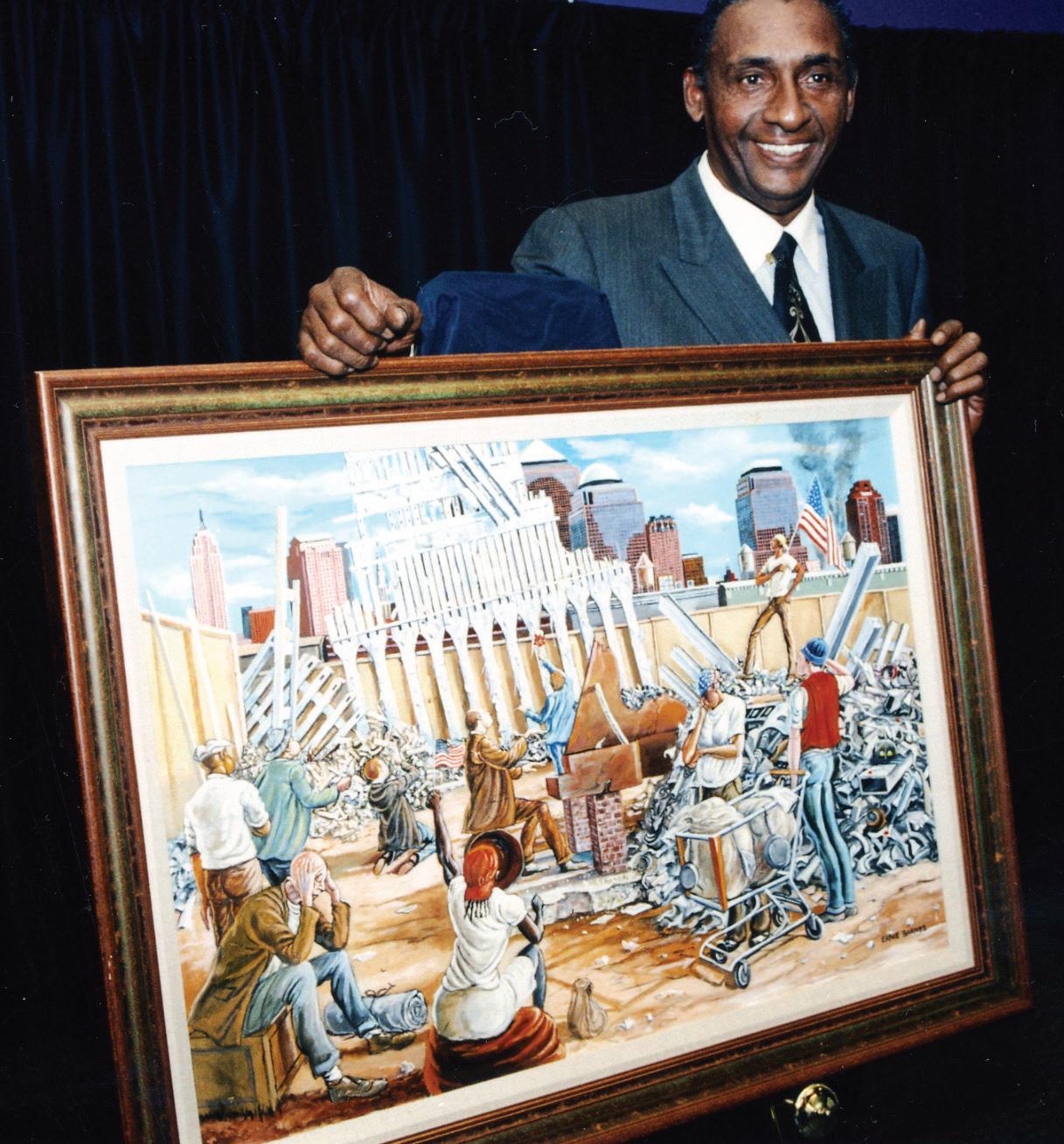
The late African American painter Ernie Barnes with one of his paintings, “In Remembrance.” | COURTESY OF THE ERNIE BARNES FAMILY TRUST/CREATIVE COMMONS