Lillian Drummond, Tireless Austin Advocate Who Took On Presidents to Protect Low-Income Seniors, Dies at 104
Known affectionately as “Mama Lill,” the West Side matriarch helped win landmark utility protections for low-income families
By MICHAEL ROMAIN The Culture
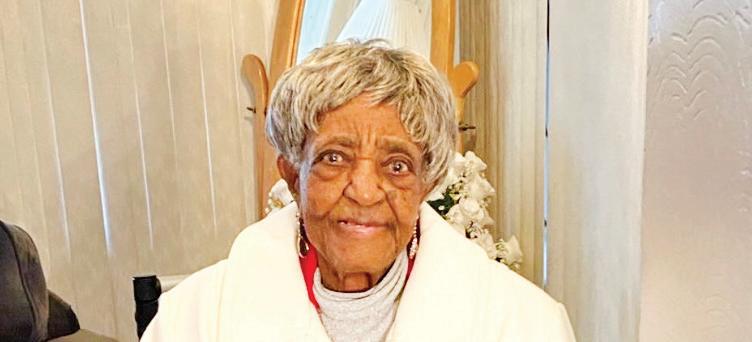
Lillian Drummond, a West Side community organizer whose quiet persistence and moral authority helped secure utility protections for low-income families and seniors across Illinois, died on Jan. 10. She was 104. A celebration of life service for Drummomnd was held on Feb. 12 at Friendship M.B. Church, 5200 Jackson Blvd. in Austin.
Born Oct. 13, 1921, Drummond lived through more than a century of upheaval and progress, becoming, to those who knew her, a living archive of civic memory and an unassuming force for change.
A longtime Austin resident, Drummond was instrumental in the creation of the Austin Senior Satellite Center, 5071 W. Congress Pkwy., which was right across the street from her house. She was also a founding member of the South Austin Coalition Community Council, a grassroots organization that pressed city, county, state, and federal officials on issues ranging from housing and healthcare to education, public safety, and the environment. Her most enduring work, however, centered on energy affordability — a basic necessity she believed should never be denied to the poor or elderly.
In 1985, she helped organize the Affordable Budget Coalition, which successfully pushed for a 12% Energy Assistance Plan to keep heat and light available to low-income households. Decades later, her advocacy helped lead to the passage of the Percentage of Income Payment Plan, enacted in 2009. The measure allowed qualifying residents to pay only a fixed share of income toward energy bills and remain connected as long as they did so. She also worked to ensure the program’s oversight by the Community and Economic Development Association. Drummond’s activism was often direct.
During a 1994 appearance by President Bill Clinton at Wilbur Wright College, where he promoted an economic plan that included proposed cuts to the Low-Income Home Energy Assistance Program, Ms. Drummond, then 73, pressed to the front after the speech and demanded the president listen.
“I am Lillian Drummond, the lady who keeps writing to you,” she told him, according to contemporaneous reporting, before making the case for preserving aid for households facing shutoffs.
Those who worked alongside her said she combined gentleness with resolve. She did not raise her voice often; she did not need to. Her presence conveyed both comfort and authority, and her example taught endurance, forgiveness, and faith in what she
called God’s timing.
Public officials repeatedly recognized her work. She received the Edward Bailey Lifetime Community Service Award in 2006, was inducted into the Illinois Senior Citizen Hall of Fame, and was honored with an honorary street designation by the City of Chicago. The Cook County Board of Commissioners passed resolutions praising her as “a beacon of light” whose advocacy reached far beyond her Congress Parkway home and whose relationships across all levels of government helped turn citizen demands into policy.
To her family, Drummond, affectionately known as Mama Lill, was the matriarch and the glue, a legacy in the flesh whose stories, prayers, and laughter shaped generations.
“Her life spoke for her,” relatives said.
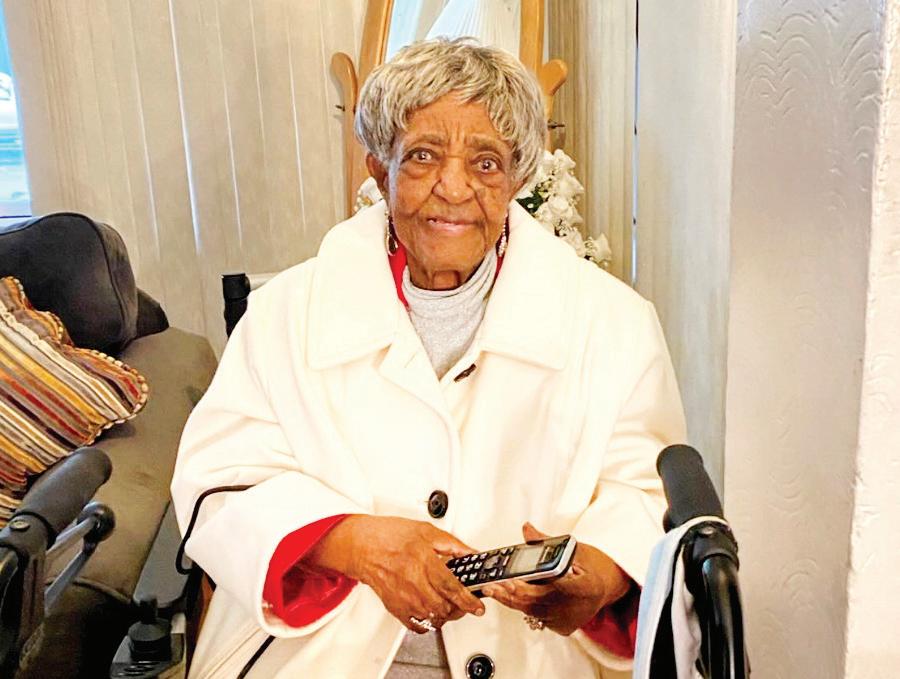
Lillian Drummond, the tireless Austin activist who confronted presidents to protect low-income families in need of assistance, died at 104. | COURTESY SHAKIRA MARSHALL/FACEBOOK
Austin Resident Stands Alone at Cook County Board President Forum
Libertarian Michael Murphy, 32, was the only candidate to show up at the Feb. 5 candidates forum in North Lawndale
By MICHAEL ROMAIN
The
Culture
Austin resident and Libertarian candidate Michael Murphy, 32, was the sole participant at a candidate forum for Cook County Board President on Feb. 5 at Collins Academy High School, 1313 S. Sacramento Dr. in North Lawndale, after his two Democratic opponents were absent. The Culture co-sponsored the forum alongside the West Side Branch NAACP and other neighborhood organizations. Murphy, a systems engineer and technol-
ogist running under the Libertarian banner, addressed a modest audience about county government reform, civil liberties, and fiscal accountability. He also stressed transparency in county operations. Murphy, who previously ran for Cook County Circuit Court Clerk, cited inefficiencies and bureaucracy that he says hinder service delivery in county departments. Incumbent Toni Preckwinkle, a Democrat who has led the Cook County Board of Commissioners since 2010 and also chairs the Cook County Democratic Party, and Ald. Brendan Reilly (42nd), a Democrat contesting
her in the March 17 primary, were both invited but did not appear.
Preckwinkle, 78, and Reilly, 54, have been campaigning across the county in the competitive Democratic primary, which pits Preckwinkle’s long record in county government against Reilly’s call for reform and fiscal restraint.
The Cook County Board President oversees one of the nation’s largest county governments, with responsibility for a roughly $10 billion budget, public health system, jail, and court operations.
You can watch parts of the forum on the Westside Branch NAACP’s Facebook page at facebook.com/CWSNAACP
County Assessor Candidates Clash Over Campaign Cash, Assessment Data, and Tax Fairness at West Side Forum
The event at Collins High in North Lawndale highlighted sharp divides between incumbent Fritz Kaegi and his Democratic challenger Pat Hynes over ethics rules and how to fix an inequitable property tax system
By MICHAEL ROMAIN The Culture
A Feb. 11 candidates forum at Collins High School, 1313 S. Sacramento Dr. in North Lawndale, laid bare some of the central dividing lines shaping the race for Cook County assessor, mainly where the candidates are getting their money and contrasting proposals for correcting the inequitable property tax system. The Culture cosponsored the forum alongside the Westside Branch NAACP and other community organizations.
Incumbent Democrat Fritz Kaegi, Democratic challenger Pat Hynes, and Libertarian candidate Nico Tsatsoulis debated issues ranging from regressive tax burdens in Black neighborhoods to the role of property tax appeal lawyers, but campaign finance and political alliances hovered over the hour-long exchange.
The Cook County assessor’s office determines the market value of roughly 1.8 million parcels, which shapes each property owner’s share of the tax burden, a process that has drawn intense scrutiny as residential bills have climbed fastest in many South and West Side neighborhoods.
Money has become one of the clearest contrasts between the candidates.
Kaegi has raised more than $2.5 million for his campaign, compared with just over $1 million raised by Hynes, according to recent reporting and campaign finance filings.
Much of Kaegi’s fundraising advantage comes from his own wealth and individual donors rather than industry groups. Hynes, by contrast, has built a coalition fueled by labor organizations, real estate professionals, and property tax industry figures — a dynamic that has turned campaign finance into a defining
issue in the race.
According to reporting by the Chicago Tribune, Hynes has accepted nearly $90,000 from property tax law firms and attorneys and roughly $13,000 from property tax appraisers since June. Kaegi has repeatedly framed those contributions as a return to the “pay-to-play” culture he ran against in 2018, saying the county inspector general previously warned such donations posed ethical risks.
Kaegi touted an ethics order barring his office from accepting donations from attorneys who handle appeals, saying the practice once fueled inequities that favored large commercial properties over homeowners.
Hynes countered that the real problem is inaccurate data and unpredictable assessments,
COUNTY ASSESSOR on page 7
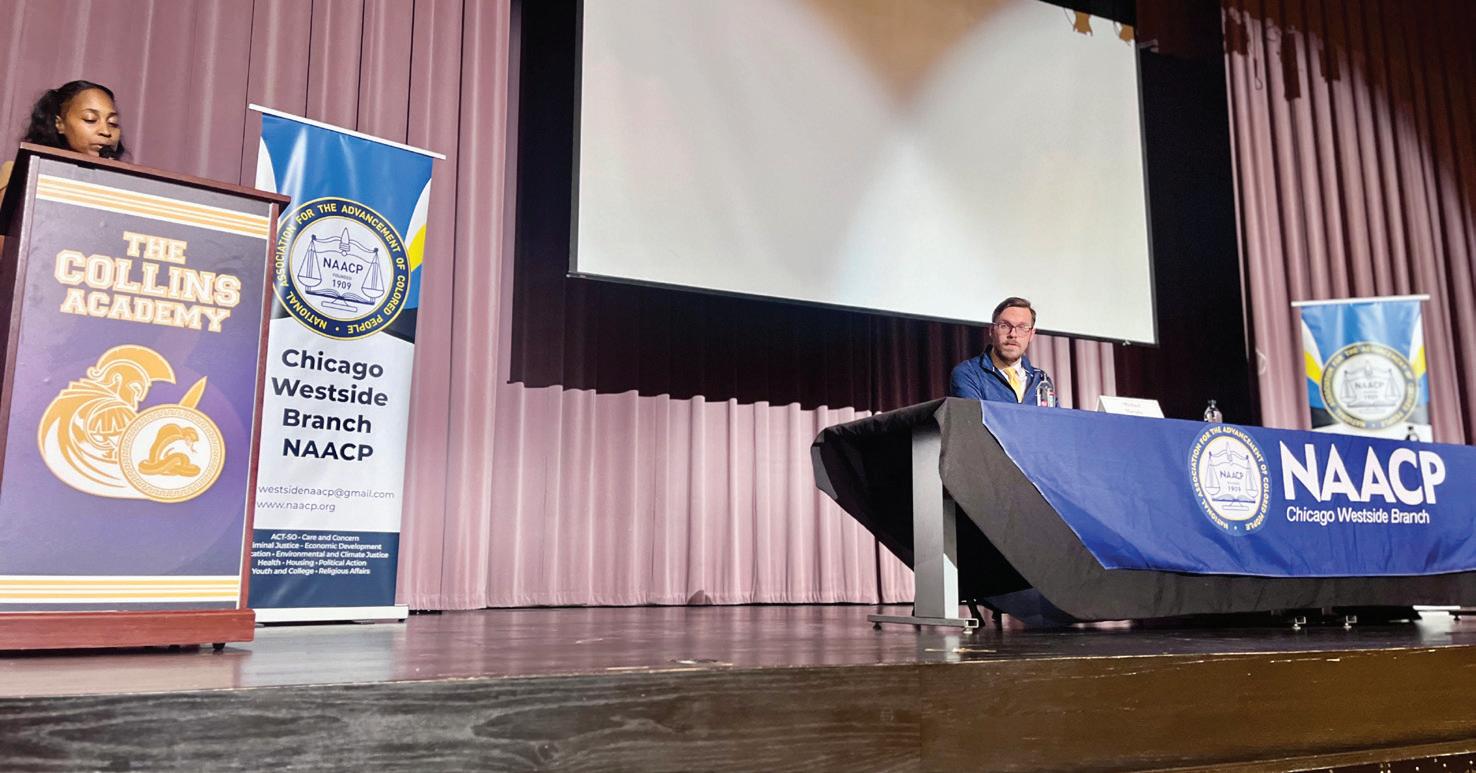
Moderator Remell Terry, the president of the Westside Branch NAACP, asks Michael Murphy a question during the Feb. 5 forum at Collins High School in North Lawndale. | MICHAEL ROMAIN
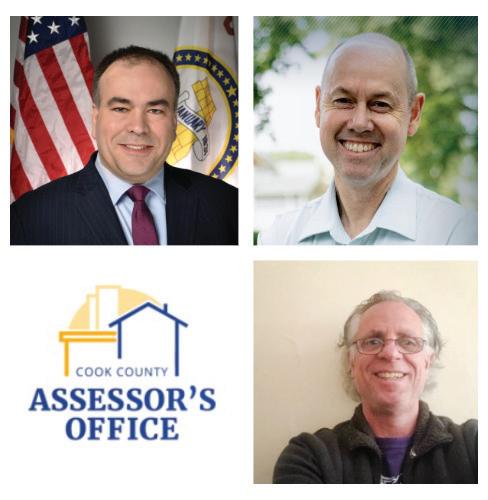
Clockwise from top left: Cook County Assessor Fritz Kaegi, Pat Hynes, and Nico Tsatsoulis squared off at a Feb. 11 candidates forum at Collins High School in North Lawndale. | PROVIDED
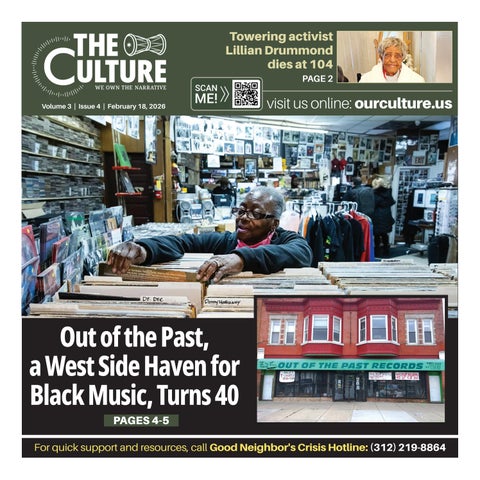
For 40 Years, Black-Owned Out of the Past Records Has Survived and Thrived on the West Side
Founded by Marie and Charlie Joe Henderson, the shop has endured for four decades on Madison Street
By MICHAEL LIPTROT
Block Club Chicago
Lloyd Johnson has been a regular customer at Out Of The Past Records for the past 20 years.
The Near West Side native loves all types of music, but at his favorite record shop in West Garfield Park, he scours the record bins for “dusties” — timeless “oldies but goodies” from ‘70s R&B groups such as The Whispers, Dramatics, and Blue Magic, Johnson said.
On a recent Friday, Johnson visited Out Of The Past not to buy a physical record but rather to purchase a digital download. He waited patiently at the front as Marie Henderson, the shop’s semi-retired owner, moved “Gina” and “Betcha Don’t Know,” jazz tracks by saxophonist Najee, to Johnson’s flash drive of slow jams labeled “Quiet Storm.”
“Music drives us. Music drives our culture — Black people in general,” Johnson said. “So if it’s songs that you can’t get, you can always count on coming to Out Of The Past to get it.”
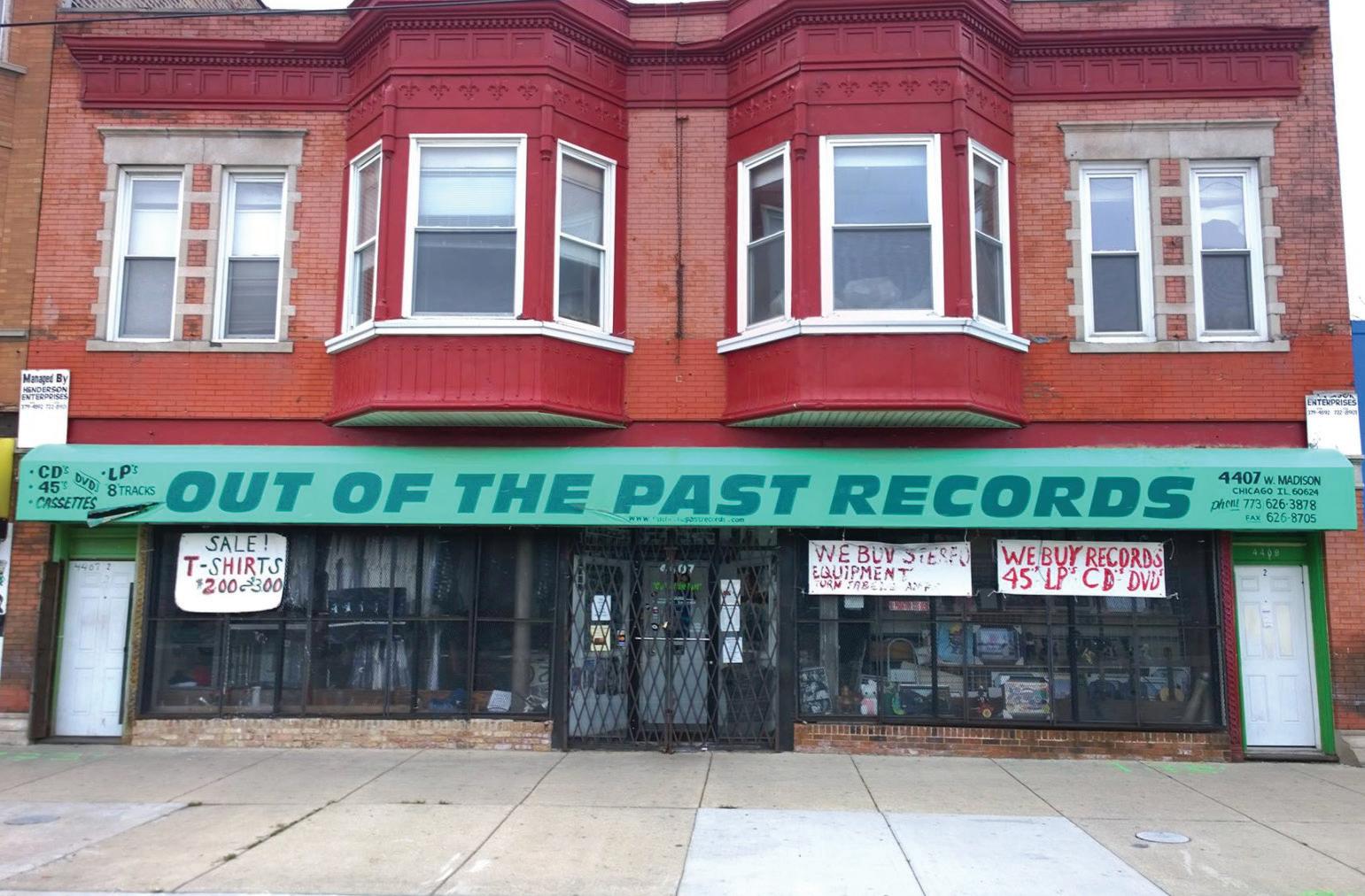
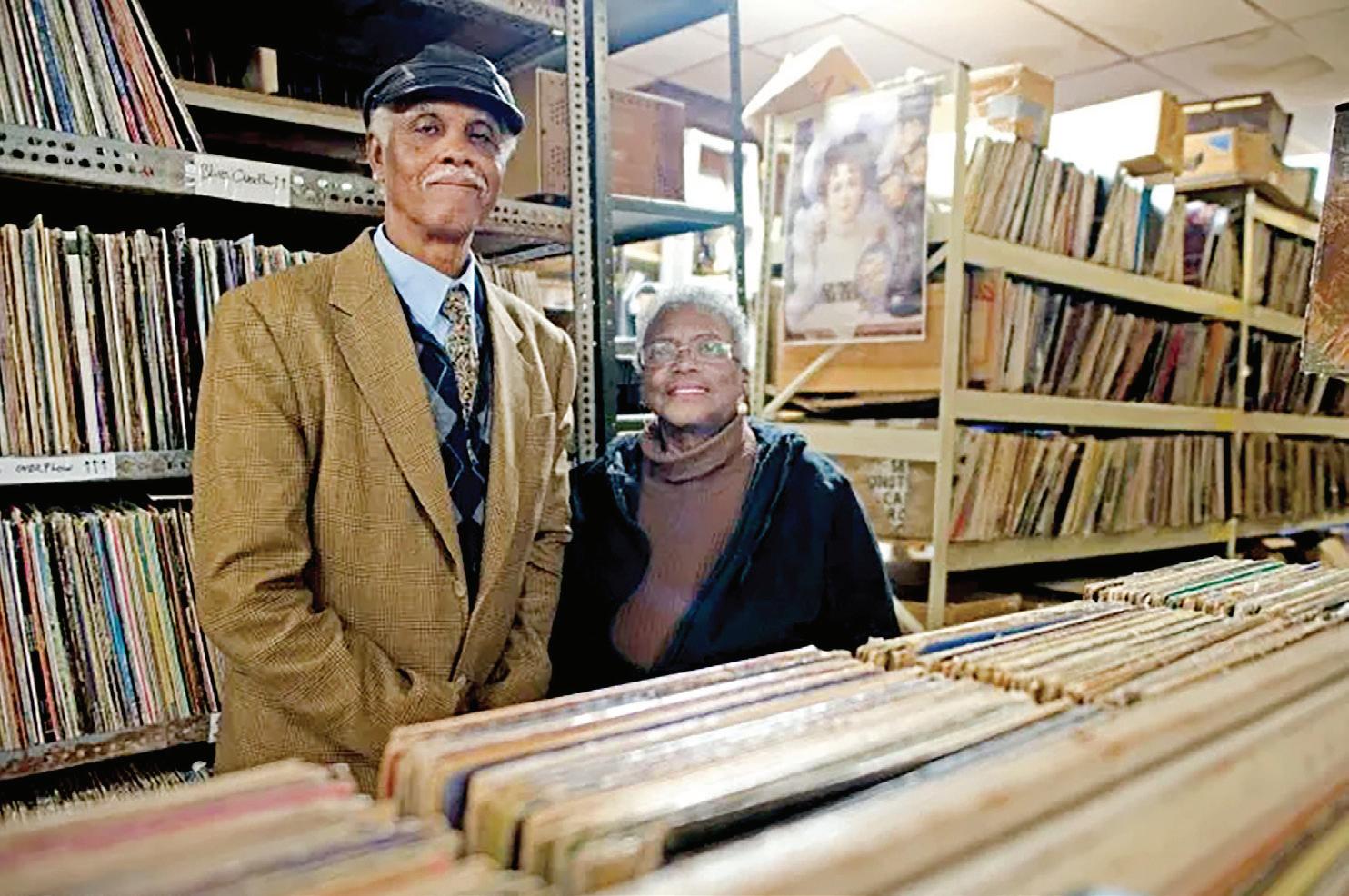
Out Of The Past Records, 4407 W. Madison St., has been a staple in West Side music culture for 40 years. Opened in 1986, the shop was one of many West Side businesses run by Marie and her late husband, Charlie Joe Henderson, who was nicknamed “the Mayor of Maxwell Street” for his years spent as a vendor at the iconic open-air market.
Today, Out Of The Past is the family’s last remaining business, which is now led by Marie Henderson’s granddaughter, Annisa Gooden. It’s believed to be the oldest record shop on the West Side, and it is one of the few Blackowned businesses on the once-thriving Madison Street business corridor, the family said. While the city looks to revitalize Madison Street after years of disinvestment, Gooden is working to reintroduce her grandparents’
labor of love to her Garfield Park neighbors — and keep the legacy Black-owned business around for years to come.
“We can show people in our community, by me being Black and a woman, that we have Black-owned businesses around here,” Gooden said. “[There’s] maybe two or three Black people that own businesses on Madison, period. So it’s very important to me.”
The Hendersons had been running businesses on the West Side for about 20 years by the time they opened Out Of The Past.
Their intention with the record shop was to honor and preserve Black history, allowing neighbors to see themselves represented in the music and on the walls, which double as a photo gallery, Marie Henderson said.
“We had small ma-and-pop stores all
Marie Henderson, 84, remembers each photo and its story vividly.
“That’s my cousin and my brother-in-law up there. They were a singing group,” she said, gesturing to a black-and-white photo of men posing in suits and pompadours. “They were The Majors, but then they went to the Vows. They changed names so many times.”
“This is when we had the wig store here,” she continued, jumping from photo to photo. “That’s my grandmother, with the white dress on, sitting in the chair. She died at 112.”
Henderson was born in Mississippi in 1941 and moved to Chicago in 1955, when she was 14. She attended Harrison Technical High School, now known as the Maria Saucedo Scholastic Academy, at 2850 W. 24th St. Blvd. in South Lawndale. It was there that Henderson was introduced to R&B and started growing her love of music, she said.
She and Charlie Joe Henderson met in 1959 after both graduated from high school — he attended Crane Tech High School — and they married in 1961.
After a series of what Charlie Joe described as “dead-end jobs” and layoffs that each experienced at different times, he told Marie he was ready to go into business for himself, Marie Henderson said.
So in 1963, the couple started their first business, a photography studio named Henderson Studios at 8 S. Pulaski Rd. near their home. The venture was built on Charlie Joe’s interests as a hobby photographer, Marie Henderson said. Three years later, they sectioned off a portion of the photography studio and launched their first of several record shops, which they later named Tiki Alley.
around, but this store here, basically, it meant to me putting back into the neighborhood. That’s what my husband wanted to do,” she said.
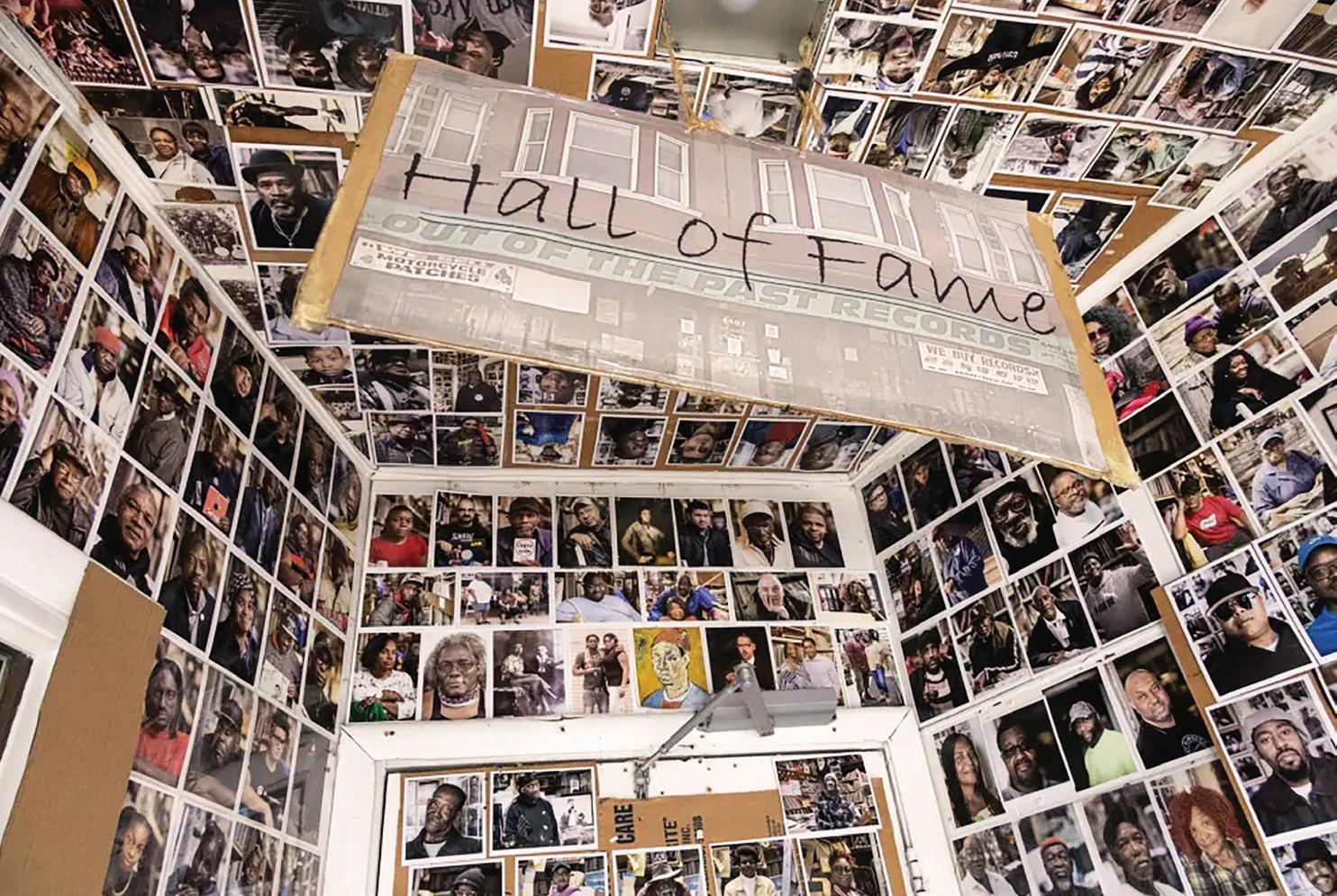
Upon entering Out Of The Past Records, customers walk into the “Hall of Fame,” an entryway covered wall-to-wall with photos of customers throughout the years, each representing a point in time in the person’s musical journey, Marie Henderson said.
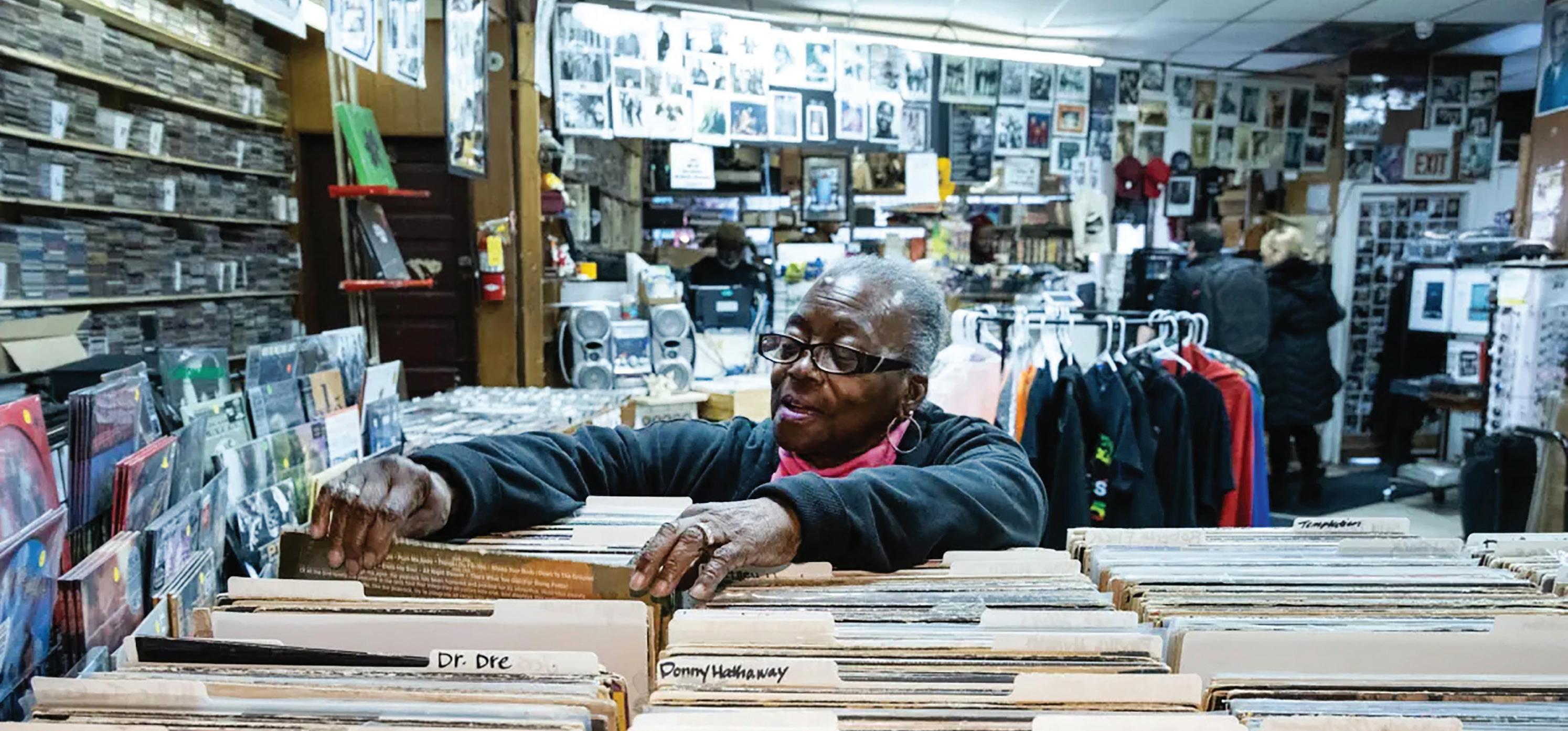
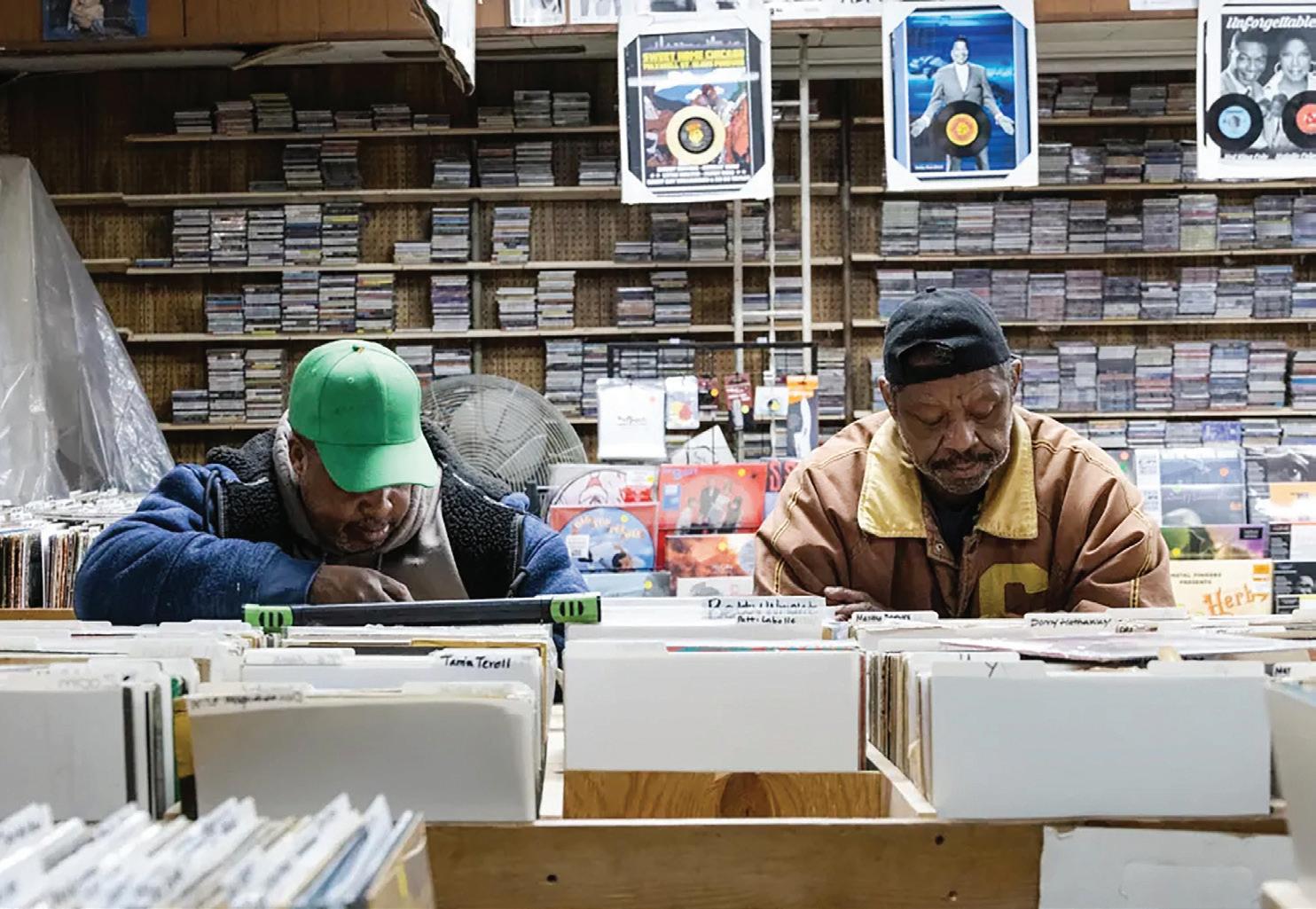
Inside the store, a sea of records — over a million, according to Marie Henderson — is spread across tables, shelves, and racks.
On the walls hang photos of prominent Black figures in music, art, and the Civil Rights era, such as Angela Davis, Duke Ellington, Frederick Douglass, and Coretta Scott King, as well as Henderson family portraits.
At their peak between the ‘60s and the ‘80s, the Hendersons owned 10 businesses: a wig store, a hat store, a restaurant, and seven record stores — five of them on the West Side, one on the South Side, and another in Old Town, Marie Henderson said. Their kids started helping out at the shops when they were around 8 to 10 years old, sweeping and learning how to use the cash register, she said.
The Hendersons opened Out Of The Past Records during the height of house music in Chicago, when venues like The Warehouse in the West Loop hosted genre mainstays like DJ Frankie Knuckles.
Charlie Joe Henderson did freelance photography at several local house clubs, including the Keyman’s Club at 4711 W. Madison St., his wife said. She remembers him coming back from club sets to tell her the records they needed at Out Of The Past.
“He said, ‘You got to get that for the store,
Charlie Joe and Marie Henderson at Out of the Past Records. Charlie passed away in 2022. | PROVIDED
because somebody can ask us for it.’ So we were always a step ahead of what was going on,” Marie Henderson said.
Charlie Joe Henderson was also well known at the original Maxwell Street Market, where he began selling 8-tracks and LPs in the ‘70s. In the ‘80s, he rented tables to other vendors, sometimes settling disputes between them, his son Charles Henderson previously told Block Club.
Charlie Joe Henderson died in 2022 at the age of 81.
MADISON STREET’S BOOM AND BUST
Madison Street was booming during the Hendersons’ early years as entrepreneurs, with theaters, department stores, and restaurants giving neighbors good reason to stay on the West Side rather than go Downtown, Marie Henderson said.
The thriving corridor running through East and West Garfield Park was known as the “heart of the West Side,” according to a 2025 corridor study by the city’s Department of Planning and Development that’s aimed at developing a community-oriented plan to overhaul the area.
A shift occurred in the wake of Rev. Martin Luther King Jr.’s assassination in 1968 and the riots that followed, Marie Henderson said.
“You could just leave out your house and go anywhere you want to go [on Madison Street], but then as the years went by, after Martin Luther King got killed and they started riot-
ing, it tore up a lot of our areas,” she said. “We used to shop from Roosevelt Road to Madison Street … but as everything progressed after that rioting and stuff, it just killed the area. The area has been dead ever since then.”
A 2020 ProPublica investigation chronicling the timeline of disinvestment in the neighborhood found that lack of government support, widespread demolition of blighted buildings, and lack of action from private outside investors fueled Madison Street’s decline.
The Hendersons’ businesses weren’t damaged during the 1968 riots, which Marie Henderson attributed to Charlie Joe placing a Black-owned business sign in the windows of their storefronts. But in the early ‘70s, they did lose Henderson Studios, their wig store, and one of their record stores on Madison Street, all to unrelated fires, Charles Henderson, the couple’s son, said.
As it grew increasingly challenging to maintain their businesses, Charlie Joe Henderson decided to focus on the ones closest to their West Garfield Park home, his wife said. Eventually, only Out Of The Past Records remained. Decades later, during the COVID-19 pandemic and social unrest stemming from the death of George Floyd, Marie and Charlie Joe Henderson were again spared from the looting that took place that summer. But they struggled with a drop in business at Out Of The Past Records as they shifted to curbside pickup, the pair told Austin Weekly News in August 2020.
A rise in street violence and drug sales along the corridor that year amid the devastation of
the pandemic caused many businesses to stay boarded up for months, with at least 10 stores closing permanently, Block Club previously reported.
INTO THE FUTURE
One challenge for Marie Henderson in recent years has been keeping up with what’s new and popular in music while maintaining the shop’s current collection, she said. She recalls adjusting to meet customer demand during rap music’s heyday in the late ‘80s and early ‘90s as the music industry was transitioning to CDs.
Today, Out Of The Past stocks a healthy mix of music from contemporary artists, of which Gooden is in charge. Sabrina Carpenter’s album “Man’s Best Friend” sits across from the latest from Cardi B and Karol G.
Gooden, 36, took over Out Of The Past following her grandmother’s soft retirement about five years ago, but she practically grew up in the shop. She started helping out at the shop when she was 14, she said.
Working primarily at Out Of The Past’s then-second location at 3948 W. Madison St., Gooden left to attend college at Southern Illinois University for two years before returning to Chicago and transferring to Malcolm X College, from which she graduated.
Gooden had a career in retail before coming back to the family business. She lives a few blocks away from the record store.
Gooden has introduced several services and
practices at Out Of The Past to expand the customer base and bring the shop into the future. She created a website and online store, which brings in as much in sales as in-person purchases, she said. She also runs a TikTok shop and the business’s social media — with the help of her 10-year-old daughter, Aria. Gooden’s current focus is on raising Out Of The Past’s profile in Garfield Park. With a few exceptions like Johnson, many of the shop’s regulars are no longer around, having moved out of the West Side and to the suburbs, though some do come back to shop or purchase albums online to be shipped, she said. Gooden remains rooted in the dedication her grandparents had for the neighborhood where they lived, worked, and raised their family, she said.
“My grandparents worked hard, so I would never give this up,” Gooden said.
Though Marie Henderson no longer manages the day-to-day business, customers may still find her in the store with Gooden, listening to music and enjoying the day.
Seeing her granddaughter carry on the family business brings her joy, she said.
“Most people leave [their family] money, status, and all that stuff, but I’d just like to leave my history of what we went through, how we had to start from humble beginnings and came up to this,” Marie Henderson said. “This is the last of the Henderson legacy, and it means a lot to me because now I have another generation. … I would like to leave [the store] to them so they can enjoy what I’ve enjoyed out of it.”
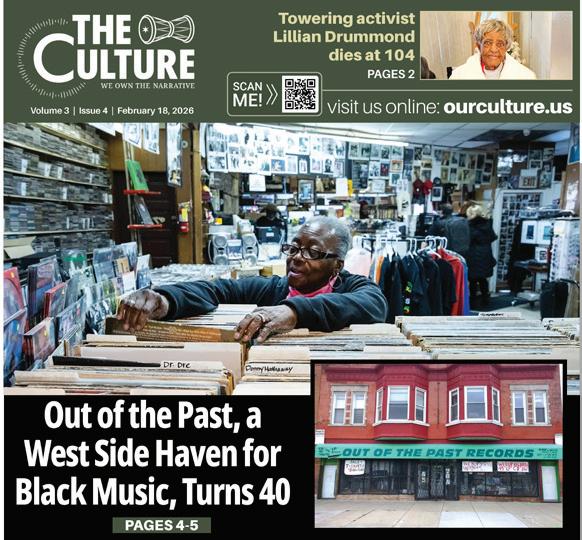
Staff look through records at Out of the Past Records at 4407 W Madison St., on Wednesday, Jan. 21, 2026. | JEREMY BATTLE/BLOCK CLUB CHICAGO
The customer hall of fame sits in the entrance of Out of the Past Records at 4407 W. Madison St., on Wednesday, Jan. 14, 2026. | JEREMY BATTLE/BLOCK CLUB CHICAGO
WEST SIDE LIVES [ [
‘Let Me Share a Poem About a Brotha We All Know’
Jason Ferguson, Marshall High’s Last Track-And-Field Medalist, Fuses Sports and Black History
By MICHAEL ROMAIN
The Culture
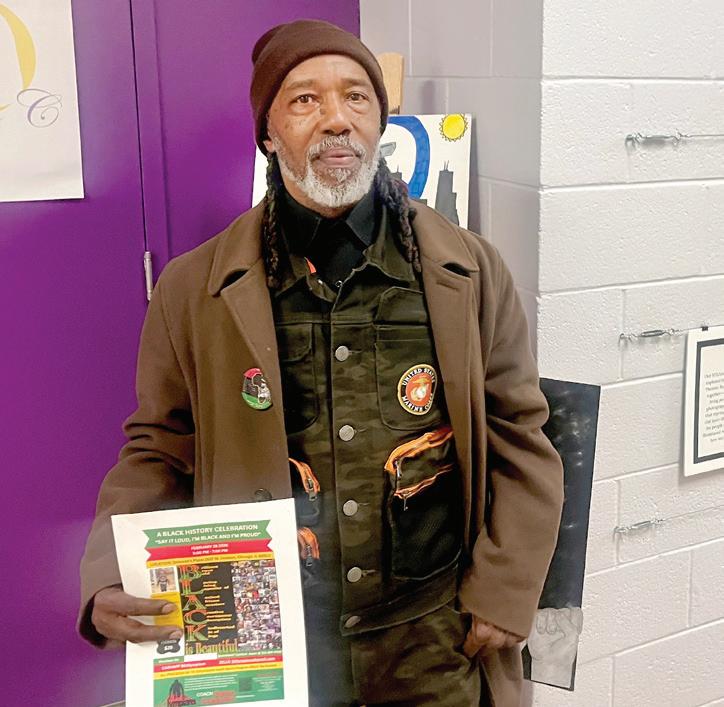
Jason Ferguson, 60, of East Garfield Park, was handing out flyers at a candidate forum at Collins Academy High School in North Lawndale on Jan. 27. The flyers promoted an upcoming fundraiser—A Black History Celebration: “Say It Loud, I’m Black and I’m Proud”—that he’s hosting for his GOlympians Track Team he founded in 2011.
Ferguson—an Illinois Senior Olympics gold medalist, poet, historian, coach, Marine Corps veteran, and mentor—said he’s also Marshall High School’s last track-and-field state medalist, winning a medal in long jump in 1982. In fact, he brags, he’s the fastest man in Chicago that everyone he knows knows. But he also knows a thing or two about Black history, using poetry as a device to spread its rich lessons to the young people he mentors.
The fundraiser will help us get revenue to run the program from May through September. I do track-and-field every summer, but I want to start exposing them to other sports
COUNTY ASSESSOR
Continued from page 3
arguing that better information about property conditions and sales would reduce the need for appeals altogether. According to Tribune reporting, he’s dismissed the criticism about his donations as political spin, arguing that attorneys risk more by backing a challenger than an incumbent.
Public filings show little comparable campaign-finance activity from Tsatsoulis, reflecting the Libertarian candidate’s smaller campaign operation. Tsatsoulis said the inflated assessments generate business for lawyers.
LABOR AND POLITICAL ENDORSEMENTS RESHAPE THE FIELD
like archery, tennis, ping pong, and badminton. If they catch on to them, they can get scholarships in those sports, too. We just don’t know about that.
Going forward, the average kid who comes from Marshall will probably start veering to other stuff, because the NBA isn’t what it used
Endorsements have further clarified the candidates’ bases of support.
Hynes has secured backing from several major labor organizations — including electricians and building trades groups — and has appeared alongside union leaders at campaign events, including a rally at IBEW Local 134. He has also won support from a coalition of Black clergy and South and West Side elected officials, with Ald. Jason Ervin (28th) pledging to help mobilize voters in West Side communities.
Hynes told the Tribune that sharp assessment increases were a “breaking point” for many elected officials, arguing that rising bills are forcing residents out of their homes.
Kaegi, meanwhile, has assembled a different political coalition, emphasizing endorsements from prominent Black elected leaders and progressive allies. His campaign highlights support from U.S. Reps. Danny Davis, Robin Kelly, and Jonathan Jackson, along with Chicago alderpersons Maria Hadden, Antho-
to be. It’s a business. It’s not changing lives. They’re giving contracts to NBA players’ kids. It’s getting to where if your daddy’s not in the league, you don’t stand much of a chance of making it. So, I think kids will start turning to other sports.
At the fundraiser, I’ll have two kids who are competing nationally in robotics demonstrate what they accomplished in the field. I don’t talk about Malcolm, Martin, Rosa. I talk about people and events who y’all probably have never heard of and have been buried in history and are only known to people like me, who have spent most of our lives studying this topic.
As a matter of fact, let me share something right quick. It’s a poem about a brotha we all know. This is kind of my style with a lot of things I do.
When this brotha rose from the Digital Underground, I knew right then and there, this brotha was down. His lyrics angered and put some people in shock. That brotha, Mr. Shakur, was better known as Tupac.
You can say this, or you can say that, even though his rhymes were controversial, his
ny Beale, and Chris Taliaferro, among others.
The incumbent’s campaign has also leaned heavily on its outreach record, noting that the assessor’s office held over 240 community outreach events and processed 1.5 million homeowner exemptions last year, an effort Kaegi argues demonstrates a focus on protecting residents in historically overtaxed neighborhoods.
COMPETING VISIONS FOR FIXING REGRESSIVE TAXES
Despite broad agreement that Cook County’s tax system often disadvantages lower-value homes, the candidates offered sharply different solutions.
Kaegi emphasized structural reforms, including improving commercial property assessments and pushing for a state “circuit breaker” program to limit tax increases.
Hynes argued the county’s data is funda-
rhymes were fact.
Was Tupac sure his life would be a sample for us to see? Thug Life ain’t all it’s cracked up to be. He was shot five times in New York, and in Vegas, he was shot four, each shot representing one of his nine lives, of which he has no more.
But he has left a legacy for us to know, which is the wrong and the right way to go. So, if his life wasn’t enough to make you do right, I ain’t mad at you. I’ma say a prayer for you tonight. That’s that brotha. And I have 50, 60 more of those about others if you want them.
Learn More
A Black History Celebration: “Say It Loud, I’m Black and I’m Proud” | Feb. 28 | 3–7 p.m. | Deborah’s Place, 2822 W. Jackson Blvd. | Tickets: $25 | CashApp: $GOlympians | Zelle: GOlympians@ gmail.com | All proceeds benefit the GOlympians Track Team
mentally flawed, calling for more accurate parcel information and consistent valuation methods.
Tsatsoulis advocated a smaller-government approach, proposing caps on property taxes and assessments based strictly on recent market sales.
The debate highlighted a deeper political question for voters, particularly on the South and West sides, where rising tax bills have become a defining issue.
Kaegi is asking voters to continue a reform agenda centered on ethics rules, new data models, and outreach to historically underserved homeowners.
Hynes is positioning himself as an experienced insider backed by labor, clergy, and local elected officials who say the system has reached a breaking point.
You can watch it in full on the Westside Branch NAACP’s Facebook page at facebook. com/CWSNAACP
Jason Ferguson at Collins Academy High School in North Lawndale on Jan. 27. | MICHAEL ROMAIN