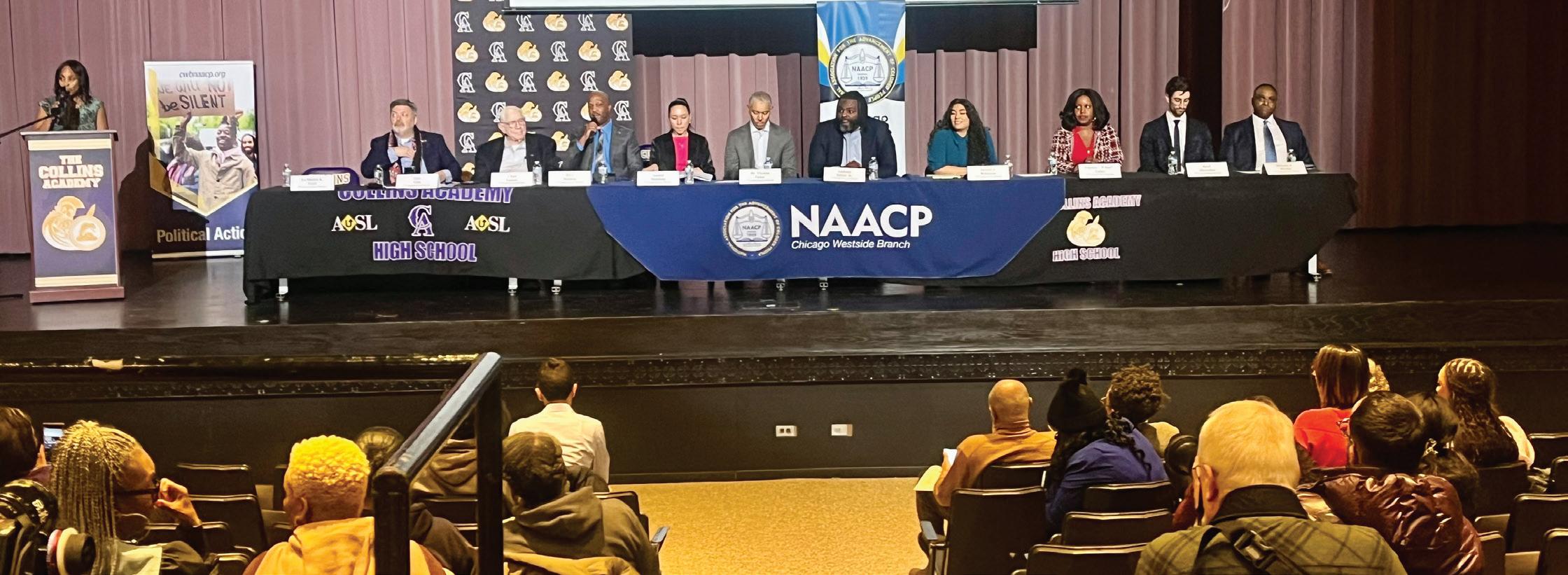
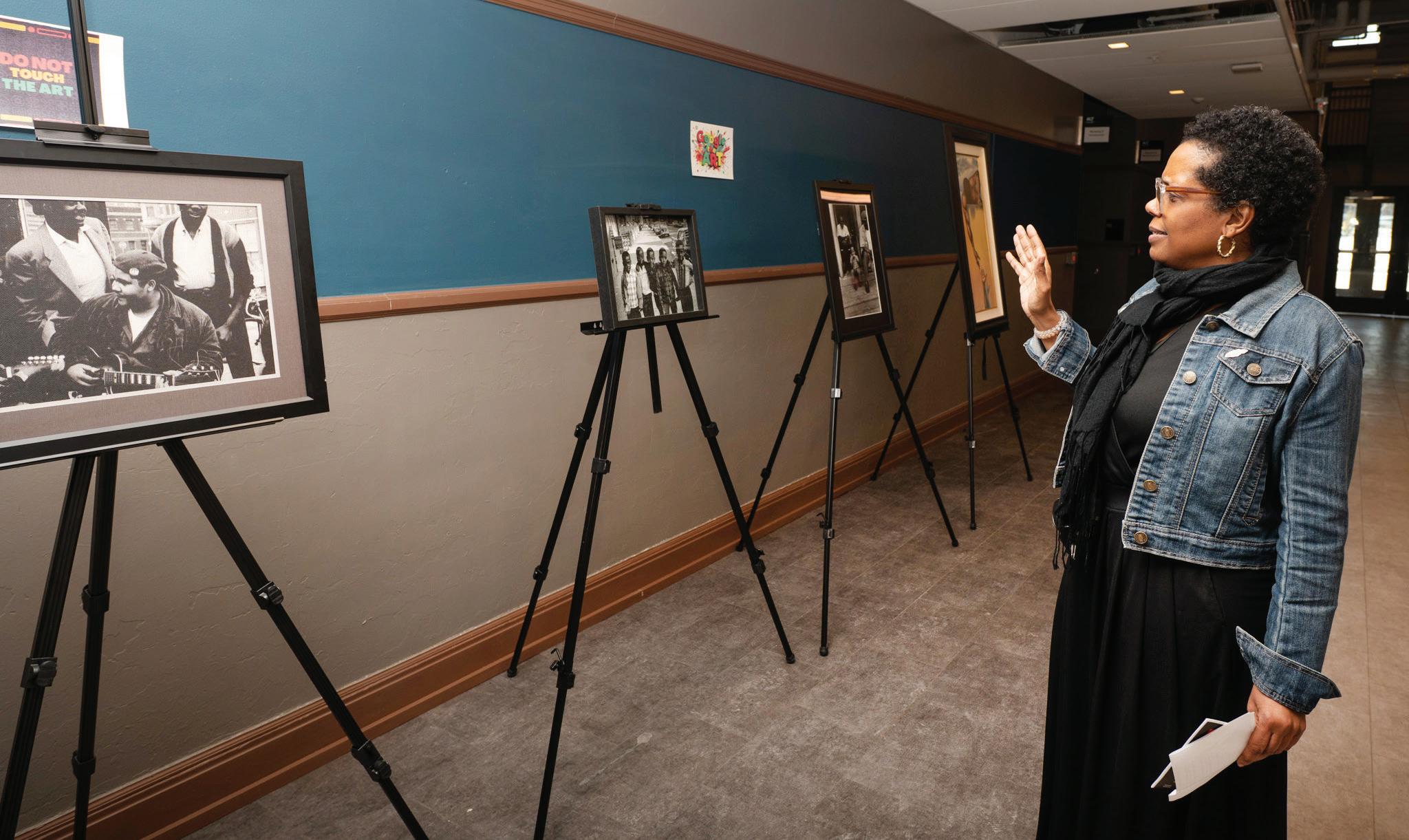
Acandidates’ forum held Jan. 27 at Collins Academy High School, 1313 S. Sacramento in North Lawndale—featuring 12 of the 15 people running to succeed 30-year incumbent Rep. Danny K. Davis in the 7th Congressional District—was a confusing and surreal event, one that mirrored a confusing and surreal political era.
One moment, in particular, captured the strangeness of the present more vividly than anything I’ve witnessed in 13 years of covering local politics.
Asked what specific federal policies he would champion to address the racial wealth and income gap in the 7th District, Chad Koppie—an 87-year-old retired farmer and jet pilot who acknowledged in his opening remarks that he does not live in the district—abandoned his prepared comments and launched into a free-ranging history lesson that drew audible gasps from the audience.
“What I have to say is altogether different than what that paper says,” he began.
“I am well aware of the crisis in the Black community that’s gone on for what—hundreds of years? I’m fully aware of how people were stolen from their homes in Africa and brought here on slave ships that were so overloaded and so crowded with feces, etc., that ships passing within miles could smell the rot coming off those slave ships as they came here. So there were 10 million
slaves who came here.
“Now, there’s another issue, the abortion issue, that is very much akin to the slavery issue. They were both approved by the Supreme Court of the United States. The slavery issue was resolved with the Civil War, which was an awesome situation. We all know about that. Six hundred thousand people were killed. Well, since the abortion thing became legal in the United States, there’s something like 75 to 100 million dead Americans. And, of course, the ratio of abortion in the Black community is much higher than it is in the white community.
“What I’m trying to say is, I was employed in the Jim Crow South. When I went to work for Delta Airlines, everybody was segregated. In other words, there was a place to drink—the drinking fountains—where the Blacks, or the Colored, and the whites … a friend of mine, a white pilot, went into these Colored lavatories, and when he came out, a Delta official was waiting for him and said, ‘Do that one more time and you’re fired.’”
Forum moderator Remel Terry, president of the Westside Branch NAACP, noted that Koppie’s two-and-a-half minutes were up. Koppie had one final thought.
“We need reparations,” he said.
With that, Koppie and most of the candidates on stage found themselves—somehow—in agreement. The Democratic candidates also largely aligned around the need for universal health insurance, medical debt forgiveness, student loan forgiveness, and a higher federal minimum wage. Several went further, arguing that the United States now functions as an oligarchy and that representa-
tive democracy itself is under threat.
That kind of rhetorical consensus around left-leaning programs and ideas would have been unthinkable at a similar forum even a decade ago. And yet, the likelihood of any of the proposals becoming law or the existential problems facing this country being resolved— even under Democratic control of Congress— feels vanishingly small.
It would have been nice to see those very ideas and proposals implemented when Democrats last held a supermajority, or when they still controlled the institutional levers necessary to govern. Instead, these candidates are running in a moment when a sitting president has openly and illegally usurped core congressional powers, from control of the federal budget to basic oversight and accountability. The most minimal responsibilities of representative government are now treated as optional.
This is what passes for democratic deliberation in 2026: a shared diagnosis without power, a widening gap between rhetoric and reality, and political theater that veers between earnestness and absurdity.
These are, indeed, confusing and surreal times.
Watch the Forum
A full recording of the event is available on the Westside Branch NAACP’s Facebook page at facebook.com/watch/CWSNAACP/
Candidates on stage during the 7th Congressional District forum in North Lawndale on Jan. 27. | MICHAEL ROMAIN
CPS Approves Buyer for Shuttered Armstrong School in Austin
Breakaway Community Development plans to turn the elementary school into an athletic training and youth sports facility
By MICHAEL ROMAIN The Culture
More than a decade after Louis Armstrong Elementary School was closed as part of Chicago Public Schools’ controversial 2013 mass shutdown, the long-vacant Austin building is one step closer to redevelopment.
In late January, the Chicago Board of Education approved a buyer for the former school, awarding the property to Breakaway Community Development, an Austin-based nonprofit that plans to convert the building into an athletic training and youth sports facility, according to reporting by the Chicago Sun-Times.
The decision follows a tense community meeting last fall, when residents — many still angry about the 2013 closures — heard competing proposals for the site. As The Culture previously reported, Breakaway’s sports-focused plan was weighed against a proposal to establish a cosmetology college at the shuttered school. Residents expressed skepticism shaped by years of stalled redevelopment efforts and broken promises tied to the closure of CPS buildings.
The board’s unanimous vote resolves that competition, clearing the way for Breakaway to
move forward.
Founded in 2017, Breakaway Community Development runs youth basketball programs and training camps on the West Side but has lacked a permanent facility. The Armstrong building would give the organization a yearround home capable of supporting multiple sports, not just indoor programs, Breakaway leaders told the Sun-Times.
The Armstrong sale was approved alongside another major transaction involving a school closed in 2013 — the former Ignace Paderewski Elementary School in Little Village. That property is slated for redevelopment into affordable housing and a community center offering child care and youth services, according to the Sun-Times.
Together, the deals reflect CPS’s continued efforts to offload long-vacant school buildings and return them to productive use, a process that has stretched on for more than a decade and drawn repeated criticism for its slow pace and uneven results.
In Austin, the approval represents a notable shift from years of inertia. Residents at the November meeting described the shuttered Armstrong building as both a physical and emotional reminder of disinvestment following the 2013 closures, which dispro-
portionately affected Black and Latino neighborhoods.
While the board’s vote marks progress, significant hurdles remain. Breakaway must still secure more financing, navigate permitting,
and rehabilitate a building that has sat empty and deteriorating for years.
Still, community advocates say the plan aligns with long-standing calls for youth-centered investment on the West Side.
Chicago School Board To Reopen Applications for Black Student Achievement Committee
The new Feb. 9 application deadline is designed to give key stakeholders a fair opportunity to apply
By REEMA AMIN Chalkbeat Chicago
The Chicago Board of Education is reopening its application for joining the district’s Black Student Achievement Committee, the board office announced Jan. 28.
The board had originally opened applications in late November, with a Dec. 15, 2025, deadline.
The application will be reopened Feb. 2 with a deadline of Feb. 9 “to ensure that all key
stakeholder groups have a fair and accessible opportunity to apply following the holiday season,” said Shelia Pegues-Porter, board communications manager, in an email. Chicago residents, including students, parents, and CPS employees, can apply to serve a 1-year term on the committee.
The new application window comes as advocates have expressed concern about the delay in establishing the committee, which was officially launched last April and is required by state law.
The board office did not say how many appli-
cations it has received so far.
The Black Student Achievement Committee is supposed to help the district implement its Black Student Success Plan, which focuses on boosting the share of Black teachers, reducing Black student suspensions, and implementing more culturally relevant lessons in schools.
The plan, released last February, faced an immediate legal challenge and investigation from the Trump administration, which has opposed diversity, equity, and inclusion efforts. Trump officials say CPS’s efforts to fo-
cus on Black students violate other students’ civil rights, which CPS has denied. The Trump administration has also said it will withhold millions of dollars in magnet school grants if the district forges ahead with the plan. CPS has defended its efforts and says it will not shelve the plan.
The committee will have 14 seats. As of last month, the board had sent about 500 applications to people interested in joining the committee, according to elected school board member Jitu Brown, who will chair the committee.
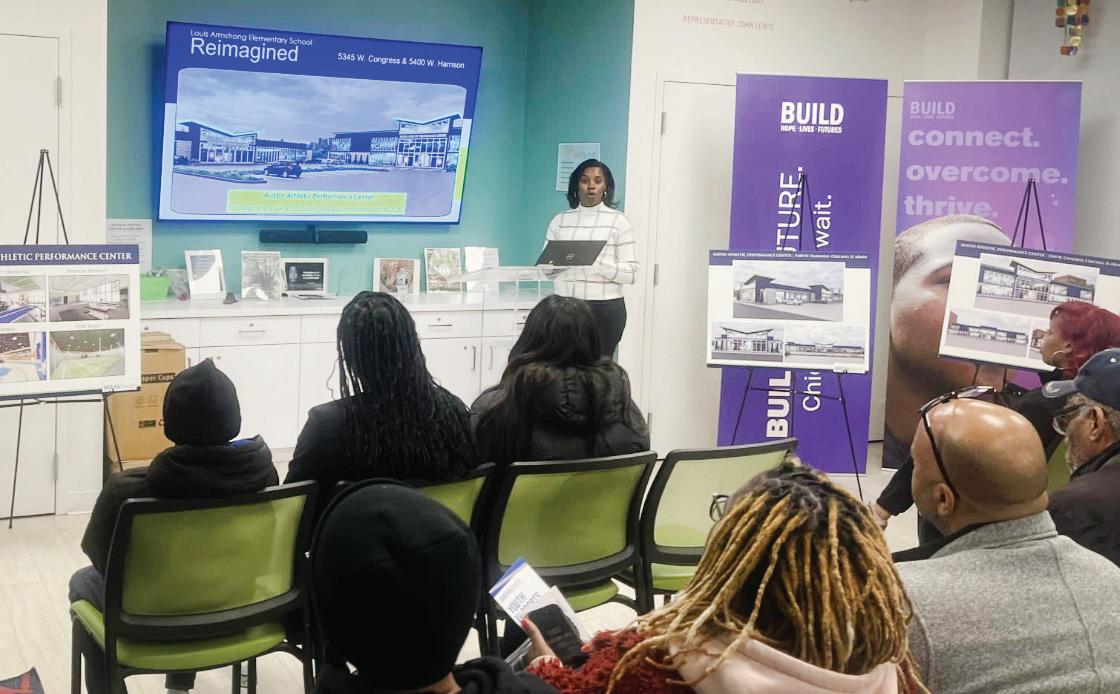
Khalilah Johnson, the executive director of Breakaway Community Development Corp., presents the nonprofit's proposal for redeveloping Armstrong Elementary at BUILD Chicago in Austin in November. | FILE
BY MICHAEL ROMAIN The Culture
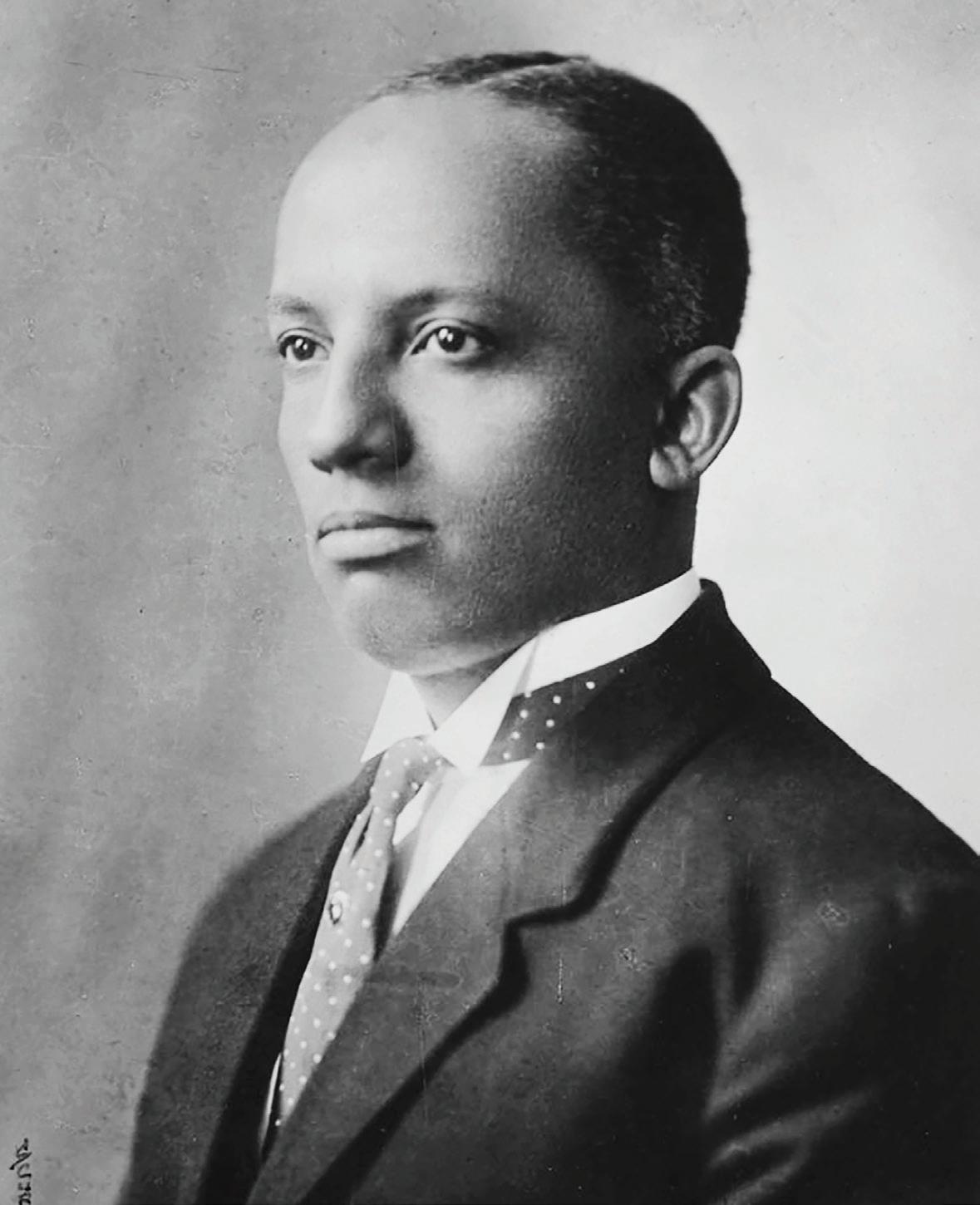
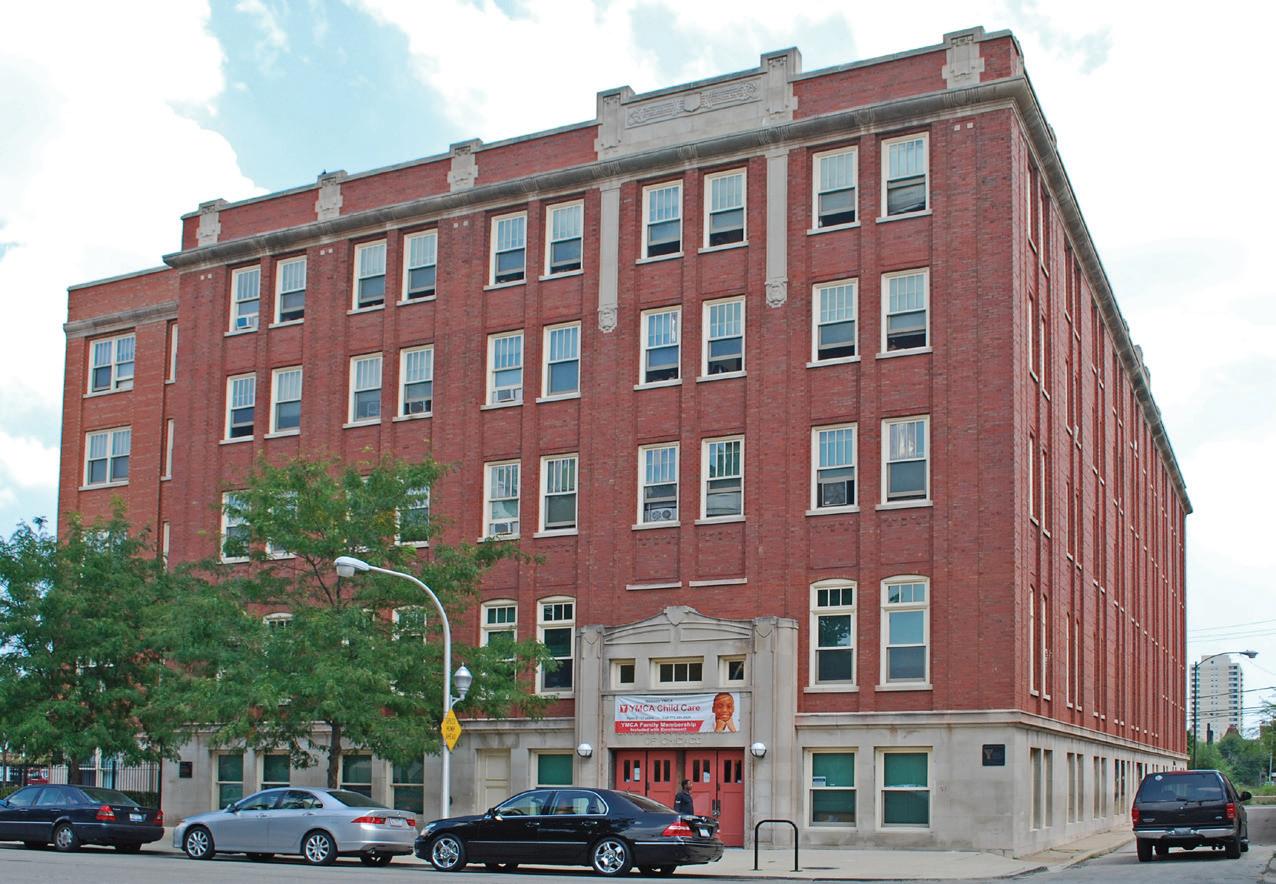
This year marks a century of national commemorations of Black history. The milestone has its roots in the Association for the Study of Negro Life and History (ASNLH), an organization formed at the Wabash YMCA in Chicago on Sept. 9, 1915, by Dr. Carter Godwin Woodson, George Cleveland Hall, William B. Hartgrove, Jesse E. Moorland, Alexander L. Jackson, and James E. Stamps.
The ASNLH was later renamed the Association for the Study of African American Life and History (ASALH) and still exists, making it the oldest and largest historical society designed to research, preserve, and promote Black culture.
Perhaps the single best way you can mark this 100th national Black history commemoration is by joining the ASALH, which gives you access to a rich trove of information on Black life. The membership fee is $95 a year ($55 for seniors and students). Visit asalh.org to learn more.
Another great way to celebrate is by joining Knarrative, home to the “largest Africana studies classroom in the world.” Visit knarrative.com for more info.
Meanwhile, on the West Side and in the west suburbs, there are plenty of events commemorating Black History Month. We’ve provided some of them below. If you know about others and want to add them to the list, email the event details to stories@ourculture.us.
WEST SUBURBAN HAPPENINGS
Crowns of Excellence:
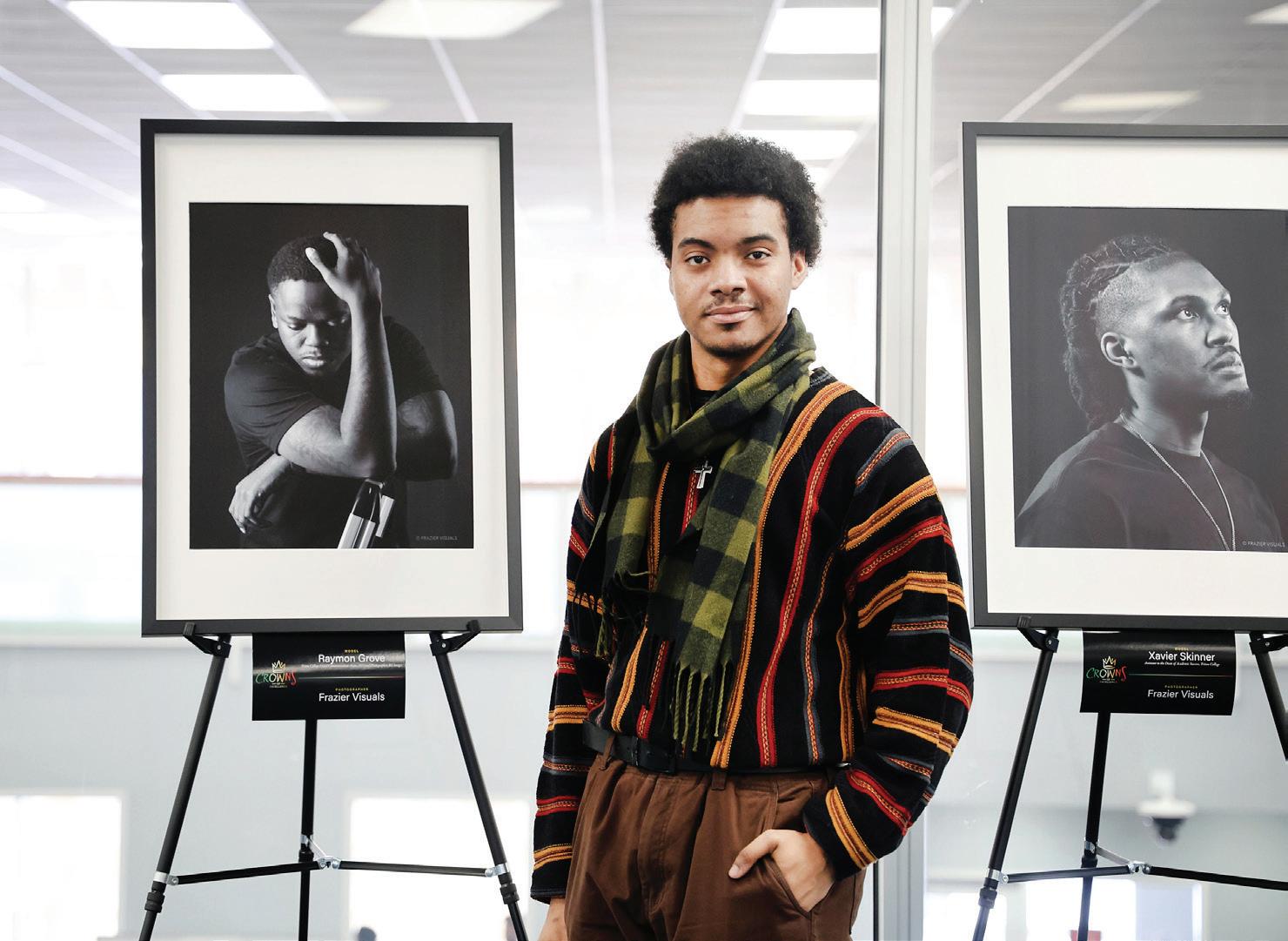
Black Hair Photo Exhibit Feb. 2-28 | Triton College Library (Upper Level, A-321), River Grove
Triton College presents Crowns of Excellence, a Black History Month photo exhibit celebrating the artistry, cultural pride, and traditions of Black hairstyles. Featuring photographs of Triton students, alumni, staff, and faculty, the exhibit highlights beauty, identity, and self-expression. Free and open to the community during library hours. Click here for more info. Visit triton.edu for more info.
BLACK HISTORY MONTH GUIDE
Explore Some of the Best Ways to Commemorate Black History Month’s
100th Year Out West
Rapbrarian: Reading Came First Documentary Screening
Wednesday, Feb. 11 | 6–7:30 p.m.
Village Hall Council Chambers (Room 201), 123 Madison St., Oak Park
A special screening of Rapbrarian: Reading Came First, documenting Roy Kinsey’s journey as a rapper and librarian and the creation of Rapbrary as an act of cultural preservation. Free to attend. Visit oakpark.us for more info.
Black History Month Celebration
Saturday, Feb. 28 | 11 a.m.–2 p.m.
Nineteenth Century Charitable Association, 178 Forest Ave., Oak Park
The Village of Oak Park will host its annual Black History Month Celebration honoring A Century of Black History. The family-friendly program features music, dance, storytelling, and historical reflection, with a keynote by author and speaker Maggie Anderson. Free to attend; registration required. Visit oakpark.us for more info.
The Village of Bellwood and Mayor André F. Harvey invite the community to a Black History Month Celebration marking 100 years since the first Black History Week (which would later become Black History Month). The event features shopping, networking, entertainment, and food, with local small businesses and youth entrepreneurs. Free and open to the public. Visit vil.bellwood.il.us/ for more info.
Black Business Expo 2026
Saturday, Feb. 21 | 1–6 p.m. | Broadview Park District, 2600 S. 13th Ave., Broadview
The Broadview Park District invites vendors and community members to the Black Business Expo 2026, a showcase for Blackowned businesses to connect with customers, network with fellow entrepreneurs, and grow their brand. Vendor space is limited. Registration is required for vendors. Visit broadviewparkdistrict.net for more info.
Stunna Steppaz Black History Month Dance Showcase
Saturday, Feb. 28 | Beverly Center, 3031 S. 25th Ave., Broadview
A two-day Black History Month expo highlighting Black-owned businesses and entrepreneurs, youth oratorical and business pitch competitions, and workshops focused on building Black generational wealth. Open to the public. Visit maywood-il.gov for more info.
Stunna Steppaz will host a Black History Month dance showcase featuring step teams, dance crews, cheer teams, and more. Teams, performers, and vendors are invited to participate. Registration required. Call (708) 882-7874 or email stunnasteppaz675@ gmail.com for more info.
Black Excellence Recognition Ceremony
Thursday, Feb. 26, 2026 | 6:30 p.m. Village Hall Board Room, 10300 W. Roosevelt Rd., Westchester
The Village of Westchester will host a Black History Month recognition ceremony honoring outstanding Black residents, business owners, and community leaders. A brief program will be followed by a casual dinner. Free community event; registration required. Visit westchester-il.org for more info.
A Taste of Black History | Sip & Paint
Saturday, Feb. 21, 2026 | Saturday, Feb. 28 Maywood Park District, 921 S. 9th Ave., Maywood
The Maywood Park District will host a Black History Month celebration highlighting the flavors, music, and cultural heritage of the African diaspora, featuring food vendors, music, and community activities. The Sip & Paint event the following week will include art, music, and culture led by a local Black artist. Visit maywoodparkdistrict.org for more info.
Forest Park Celebrates Black History Month
Feb. 1-28 | Forest Park Public Library, 7555 Jackson Blvd., Forest Park
The Forest Park Library has planned a range of events and programs to commemorate Black History Month—from a Beloved Community Quilt on display all month long to a children’s book fair to an art gallery. Visit fppl.org for more info.
Connecting You to Black History, Then and Now
Feb. 1-28 | Oak Park Public Library, 834 Lake St., Oak Park
The Oak Park Public Library has book and film recommendations, an art exhibit, an Idea Box installation, and a series of events designed to commemorate Black History Month. Visit oppl.org for more info.
WEST SIDE HAPPENINGS
Malcolm X: Vibe Out — Black History Month Kickoff
Monday, Feb. 2 | 11 a.m.–1:30 p.m.
Malcolm X College, Grand Stairs, 1900 W. Jackson Blvd., Near West Side
Kick off Black History Month with a high-energy celebration featuring live music, food, giveaways, and space to connect and celebrate community. Free and open to the public.
BLACK HISTORY MONTH GUIDE
Westside Assembly: Black Futures Month
Saturday, Feb. 7 | 10 a.m.
Garfield Park Golden Dome Field House, 100 N. Central Ave., East Garfield Park
Westside Assembly kicks off Black Futures Month with a community gathering focused on imagination, culture, and collective possibility on the West Side. Registration and event details are available online at Eventbrite.
Black History Month Museum: Black Art Collectors— Preserving Our Legacy Feb. 1–28 | Aspire Center, 5500 W. Madison St., Austin
A monthlong Black History Month exhibition highlighting the role of Black art collectors in preserving cultural legacy. Registration and details available online at Eventbrite.
Black History Month at Garfield Park Conservatory Feb. 1–28 | Garfield Park Conservatory, 300 N. Central Ave., West Garfield Park
The Garfield Park Conservatory hosts a monthlong series of Black History Month programs connecting plants, culture, and Black botanical knowledge. Events include art activities, plant sales, education stations,
wellness walks, weaving and cooking demos, and live music. Select events require registration; many are drop-in. Visit garfieldconservatory.org for more info.
For the Love of Black History in Business
Saturday, Feb. 21 | 1:30–4:30 p.m. Douglass Branch Library 3353 W. 13th St., North Lawndale
A Black History Month brunch and business social celebrating Black legacy, ownership, and economic power. The event includes brunch, a short film on Black business history, and intentional networking rooted in community. Hosted by the Chi North Lawndale Chamber of Commerce. Email lawndalechamberofcommerce2324@gmail.com for more info.
Explore North Lawndale: A Historic Bus Tour
Sunday, Feb. 22 | Departs from DuSable Museum of African American History, 740 E. 56th Pl., Chicago
Celebrate Black History Month with a guided bus tour of North Lawndale led by Chicago historian Dilla. The two-hour tour explores the neighborhood’s history, culture, and legacy. Ticketed event; advance registration required.
UMOJA Black History Celebration
Saturday, Feb. 21 | 10 a.m.–3 p.m. Homan Square Community Center Park, 3559 W. Arthington St., North Lawndale
A free, all-ages Black History Month celebration featuring cultural arts performances, music, and local vendors. Hosted at Homan Square Community Center Park. Visit chicagoparkdistrict.com for more info.
Black History Month With Dilla
Thursday, Feb. 26 | 6–7:30 p.m. | Austin Town Hall Park, 5610 W. Lake St., Austin
Celebrate Black History Month with Emmy Award–winning Chicago historian Shermann “Dilla” Thomas, who will explore Black history in Chicago and the city’s parks. Free and open to the public. Visit chicagoparkdistrict. com for more info.
A Black History Celebration
Saturday, Feb. 28 | Deborah’s Place 2822 W. Jackson Blvd., Austin
Join Jason S. Ferguson, founder of the GOlympians Youth Sports Program, for a special Black History event designed to raise funds for the organization. Call (312) 8870344 or email Jasonfergy@yahoo.com for more info.
CITYWIDE HAPPENINGS
From Archives to Innovation: The Power of Black Librarianship Feb. 1-28 | Libraries across the city
This February, the African American Heritage Committee of the Chicago Public Library invites the public to celebrate Black History Month with a unique theme: “From Archives to Innovation: The Power of Black Librarianship” in which they highlight the social, critical, and cultural impact of Black librarians. The month will feature quilt projects, poetry workshops, trivia challenges, film screenings, and more. Visit chipublib.org for more info.
Choose Chicago’s Black History Recommendations
Feb. 1-28 | Locations across the city
The city’s official tourism bureau has provided a list of rich cultural offerings to commemorate Black History Month in Chicago with exhibits, performances, concerts, plays, tours, and events. Visit choosechicago.com for more info. Click here for more info.
Triton College Visual Communications student Ethan Frazier stands between two portraits he photographed for Triton College’s “Crowns of Excellence” exhibit. | COURTESY TRITON COLLEGE
BLACK HISTORY MONTH GUIDE
This year marks the 100th national commemoration of Black history. Below, we’ve compiled some key dates in the annual celebration’s evolution. This timeline is based heavily on information contained within an article written by Daryl Michael Scott, professor of history at Howard University and a former president of the Association for the Study of African-American Life and History (ASALH).
Dec. 19, 1875 | Dr. Carter Godwin Woodson is born in New Canton, Va., to Anna Eliza (Riddle) and James Henry Woodson—both formerly enslaved. Woodson’s first teachers were his maternal uncles, John and James Riddle, who, as Woodson writes, “availed themselves of the first opportunities to study in the schools for freedmen after the general emancipation.” Woodson’s youth learning from and teaching the formerly enslaved, often in intimate home environments and in groups, would inform his future emphasis on education as a communal, collective endeavor.
1897-1912 | At 17, Woodson follows his older brother to West Virginia, where he graduates from Douglass High School. Between 1897 and 1900, he works as a teacher in Winona, West Virginia. He becomes the principal of his alma mater, Douglass High, in 1900. From 1901 to 1903, he takes classes at Berea College in Kentucky, earning his bachelor’s degree in literature in 1903. Eventually,
A CENTURY OF BLACK HISTORY MONTH
From Negro History Week to Black History Month and how Carter G. Woodson intended it to be commemorated
BY EDITORS The Culture
Woodson attends the University of Chicago before completing his PhD in history at Harvard University in 1912, where he was the second African American (after W. E. B. Du Bois) to earn a doctorate. Woodson is the only person whose parents were enslaved in the United States to obtain a PhD in history.
Sept. 9, 1915 | Dr. Carter Godwin Woodson, George Cleveland Hall, William B. Hartgrove, Jesse E. Moorland, Alexander L. Jackson, and James E. Stamps institutionalize the teaching, study, dissemination, and commemoration of Black history when they founded the Association for the Study of Negro Life and History (ASNLH) at the Wabash YMCA, 3763 S. Wabash Ave., in Bronzeville. The ASNLH is renamed the Association for the Study of Afro-American Life and History (ASALH) in 1973, eventually becoming the Association for the Study of African-American Life and History to reflect the language of the times.
January 1916 | Woodson publishes the Journal of African American History (formally The Journal of Negro History), one of the first scholarly journals to cover African American history. The journal, a publication of the ASALH, still exists.
February 1926 | Woodson launches the first Negro History Week during the second week of February to coincide with the birthdays of President Abraham Lincoln (Feb 12) and Frederick Douglass (Feb 14). According to Daryl Michael Scott, a Howard University his-
A photo of Carter G. Woodson taken in 1915. | PUBLIC DOMAIN
The historic Wabash YMCA at 3763 S. Wabash Ave. in Bronzeville, where Woodson and other Black scholars founded the Association for the Study of Negro Life and History in 1915. | CREATIVE COMMONS
tory professor, Woodson chose the birthdays of the two great men not “For reasons of tradition. Since Lincoln’s assassination in 1865, the Black community, along with other Republicans, had been celebrating the fallen president’s birthday. And since the late 1890s, Black communities across the country had been celebrating Douglass’. Well aware of the pre-existing celebrations, Woodson built Negro History Week around traditional days of commemorating the Black past. He was asking the public to extend their study of Black history, not to create a new tradition. In doing so, he increased his chances for success.” Importantly, Woodson “believed that history was made by the people, not simply or primarily by great men. He envisioned the study and celebration of the Negro as a race, not simply as the producers of a great man.”
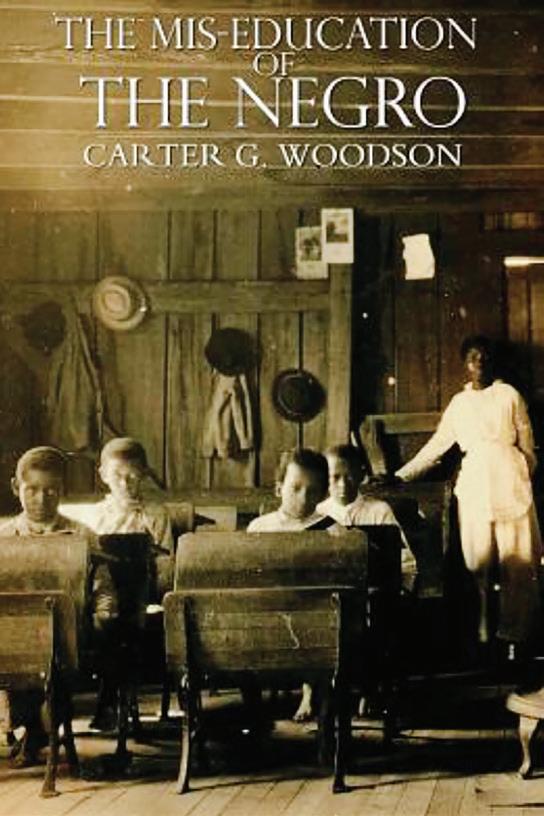
1933 | Woodson publishes The Mis-Education of the Negro, in which he criticizes how Blacks are mis-educated in American schools. “When you control a man’s thinking you do not have to worry about his actions,” he famously writes. “You do not have to tell him not to stand here or go yonder. He will find his ‘proper place’ and will stay in it. You do not need to send him to the back door. He will go without being told. In fact, if there is no back door, he will cut one for his special benefit. His education makes it necessary.”
October 1937 | In response to Negro History Week’s growing national popularity in the 1920s and 1930s and at the urg-
BLACK HISTORY MONTH GUIDE
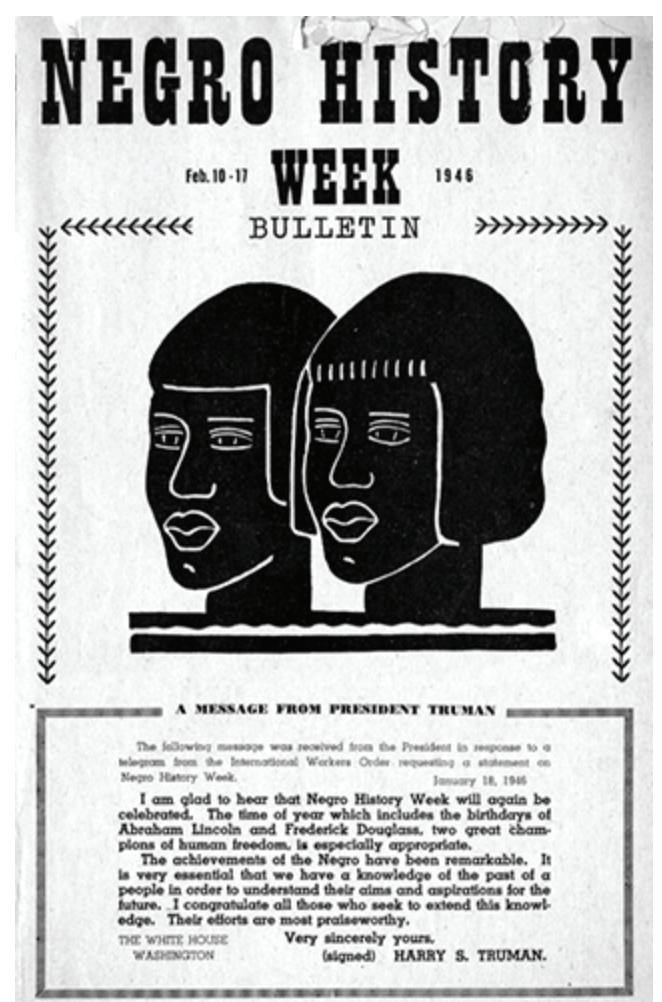
ing of iconic Black educator Mary McCleod Bethune, Woodson establishes the Negro History Bulletin, which focuses on the annual theme of each annual celebration. Before that point, the ASALH provided study materials that included “pictures, lessons for teachers, plays for historical performances, and posters of important dates and people” to schools (both Black and white). And high schools across the country formed Negro History Clubs. As Black populations and political power grew, “mayors issued Negro History Week proclamations, and in cities like Syracuse, progressive whites joined Negro History Week with National Brotherhood Week,” Scott writes.
1940s | As early as the 1940s, Blacks in West Virginia, Woodson’s home state where he often spoke, begin to celebrate February as Negro History Month. In Chicago, a now forgotten cultural activist, Fredrick H. Hammaurabi, starts celebrating Negro History Month in the mid-1960s. Having taken an African name in the 1930s, Hammaurabi uses his cultural center, the House of Knowledge, to fuse African consciousness with the study of the Black past.
April 3, 1950 | Woodson dies suddenly from a heart attack in his home office in Washington, D.C., at the age of 74. He is buried at Lincoln Memorial Cemetery in Suitland, Md. Well before he died, Woodson believed that the weekly celebrations
CELEBRATE THE WAY WOODSON WANTED— THROUGH STUDY
And if you’re looking for somewhere to start, we’ve got you. Here’s a list of books we’re reading that we hope will also enrich your study of Black life and history.
■ The Mis-Education of the Negro, Carter G. Woodson (1933)
■ The Education of the Negro, Carter G. Woodson (1919)
■ Black Reconstruction in America: 1860-1880, W.E.B. DuBois (1935)
■ Born in Blackness: Africa, Africans and the Making of the Modern World, 1471 to the Second World War, Howard W. French (2021)
■ The Second Emancipation: Nkrumah, Pan-Africanism, and Global Blackness at High Tide, Howard W. French (2025)
■ Before the Movement: The Hidden History of Black Civil Rights, Dylan C. Penningroth (2023)
■ The Trees: A Novel, Percival Everett (2021)
■ The Panthers Can’t Save Us Now: Debating Left Politics and Black Lives Matter, Cedric Johnson (2022)
■ Fugitive Pedagogy: Carter G. Woodson and the Art of Black Teaching, Jarvis R. Givens (2021)
— not the study or celebration of Black history — would eventually come to an end. In fact, he never viewed Black history as a one-week affair. He pressed for schools to use Negro History Week to demonstrate what students learned all year. He established a Black studies extension program to reach adults throughout the year. It was in this sense that Blacks would learn of their past daily that he looked forward to the time when an annual celebration would no longer be necessary.
1960s | As young Blacks on college campuses [become] increasingly conscious of links with Africa, Black History Month replaces Negro History Week at a quickening pace. Within ASALH, younger intellectuals, part of the awakening, prod Woodson’s organization to change with the times. They succeed.
■ Parable of the Sower, Octavia Butler (1993)
■ Black on Black: On Our Resilience and Brilliance in America, Daniel Black (2023)
■ The Black Utopians: Searching for Paradise and the Promised Land in America, Aaron Robertson (2024) )
■ Ours: A Novel, Phillip B. Williams (2024)
February 1970 | Kent State University in Ohio holds the first Black History Month celebration. Proposed by Black students and faculty in 1969, the initiative expands from a week to a month.
Feb. 10, 1976 | During the United States Bicentennial, President Gerald R. Ford becomes the first president to issue a message recognizing Black History Month.
Feb. 11, 1986 | Congress passes Public Law 99-244, officially designating February 1986 as “National Black (Afro-American) History Month”. That same year, President Ronald Reagan signs Proclamation 5443, calling on the public and organizations to observe the month.
Cover of the Negro History Week Bulletin published by the Association for the Study of Negro Life and History in 1946. | MORRIS PAPERS/CHICAGO
BLACK HISTORY MONTH GUIDE
Black History Lives in the Details at Austin Pop-Up Museum
The temporary exhibit at the Aspire Center for Workforce Innovation draws on family collections to connect Black history to real lives
By MICHAEL ROMAIN The Culture
The Pullman Porters no longer ride the rails, but on the West Side, their legacy is being carried forward in wool caps, blankets, and stories that once lived quietly inside family homes.
to receive a charter from the American Federation of Labor and played a pivotal role in building the Black middle class.
Though the profession no longer exists, its material culture endures.
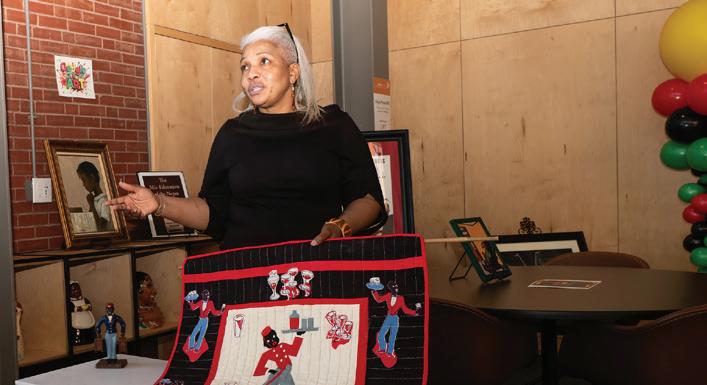
A Pullman porter’s uniform cap — similar to one preserved in the Smithsonian’s National Museum of African American History and Culture in Washington, D.C. — now sits on display inside a temporary Black History Museum at the Aspire Center for Workforce Innovation, 5500 W. Madison St. in Austin. Dozens of community members attended the museum’s opening reception on Feb. 1 to kick off Black History Month.
The pop-up museum transforms everyday Black family artifacts into historical testimony, connecting local memory to Black history through labor, art, entrepreneurship, and preservation.
Pullman Porters were thousands of African American men — many of them formerly enslaved — hired by industrialist George M. Pullman in the late 19th and early 20th centuries to serve white passengers traveling across the country in luxury railroad sleeping cars. For generations of Black Americans, the job represented rare economic stability and respectability in a segregated labor market.
The porters’ union, the Brotherhood of Sleeping Car Porters, founded by civil rights leader A. Philip Randolph, became the first predominantly Black labor union
“These hats sell for $800 and more,” said Rosie Dawson, property manager for Westside Health Authority, one of Aspire Center’s anchor tenants and the organizer of the museum. “A lot of people in Chicago have artifacts like this in their homes because their fathers, grandfathers, and great-grandfathers were Pullman Porters. We have to know what’s in our homes.”
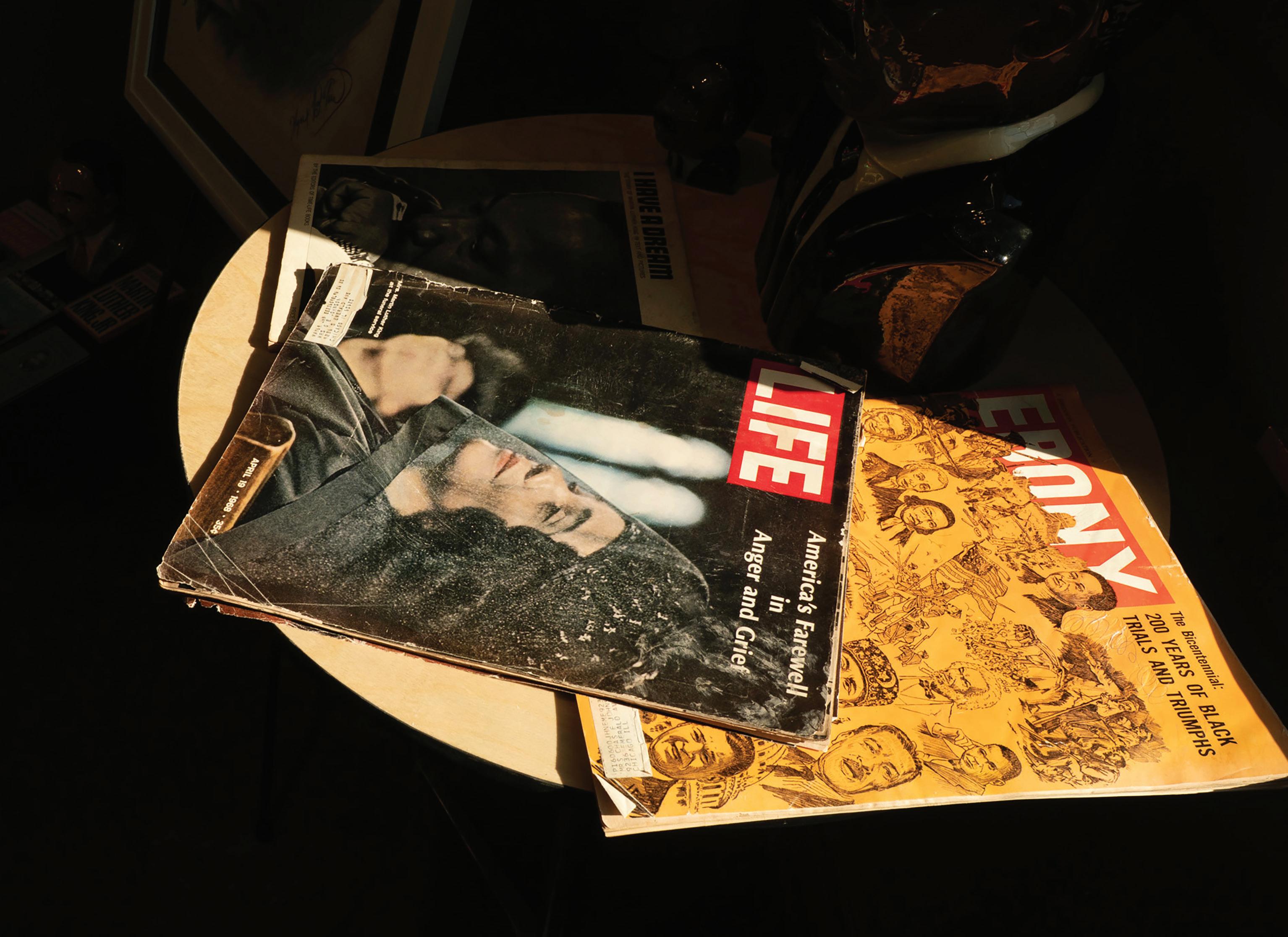
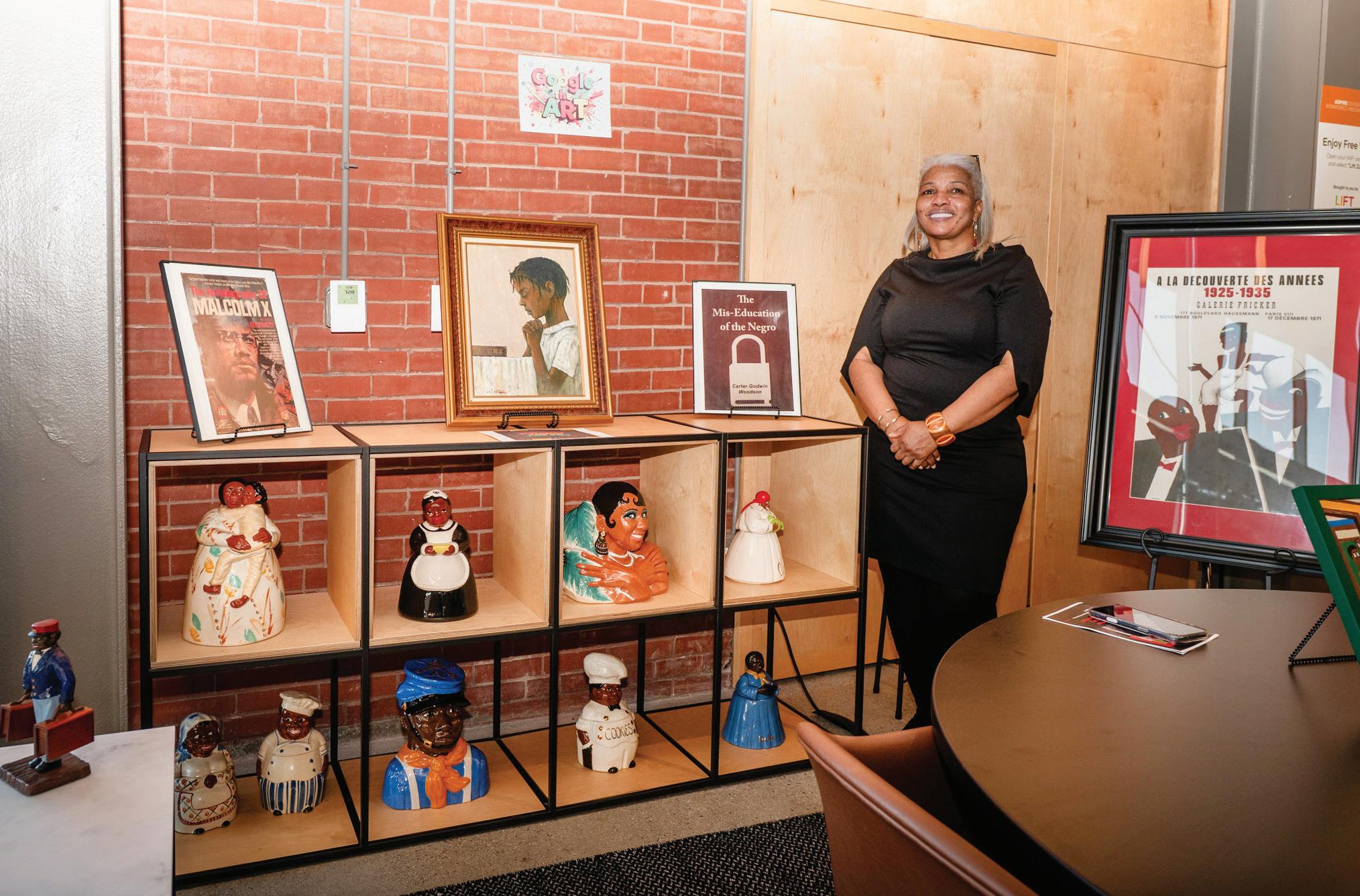
In addition to the Pullman porter’s hat, the museum includes a Pullman blanket and Pullman chair, along with original artwork, vintage magazines from the 1960s and 1970s, and dozens of cookie jars depicting Black figures, including Martin Luther King Jr. Most of the items come from Dawson’s personal collection, built over decades.
“I’m trying to teach our next generation to save what we have,” Dawson said during the opening reception. “Because they are trying to erase our images.”
For Dawson, the work is personal.
“My grandmother had this cookie jar,” she said. “When she passed, they were going to toss it, so I grabbed it, wrapped it up, and put it away. Later, I learned the value of these things and how important it is to keep our own image.”
That idea—preservation as resistance—runs throughout the museum.
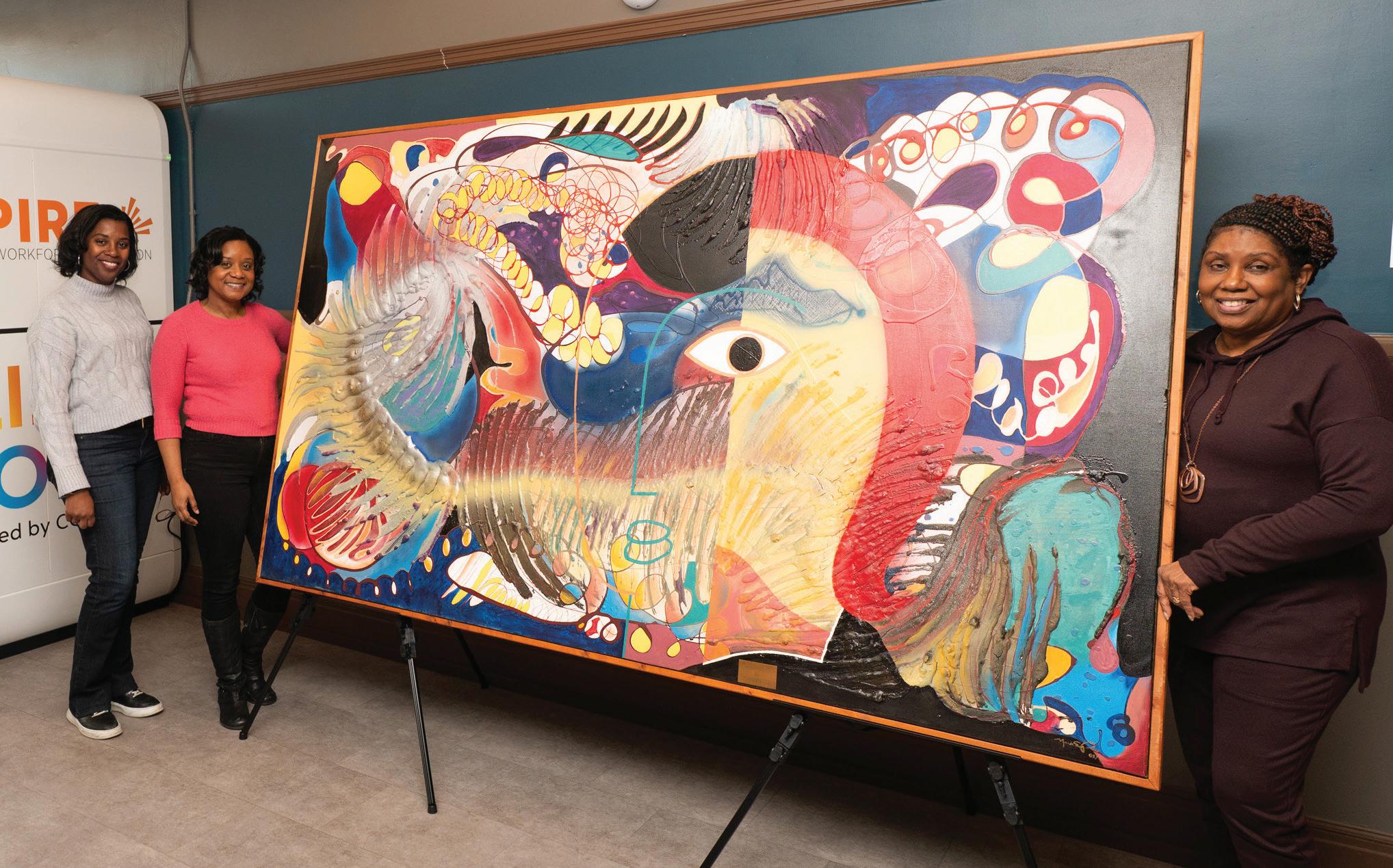
Khalilah Johnson, Kesha Forest, and Vernita Johnson stand next to "She Wanted Colors," a painting their relative, artist Chawanya Hayes, commissioned Chicago artist Mark Pressley to paint for her new business. | SHANEL ROMAIN
An original Pullman Porter's uniform cap sits on a Pullman chair, which is next to a Pullman Porter cookie jar. The display is at the Aspire Center in Austin through February. | SHANEL ROMAIN
BLACK HISTORY MONTH GUIDE
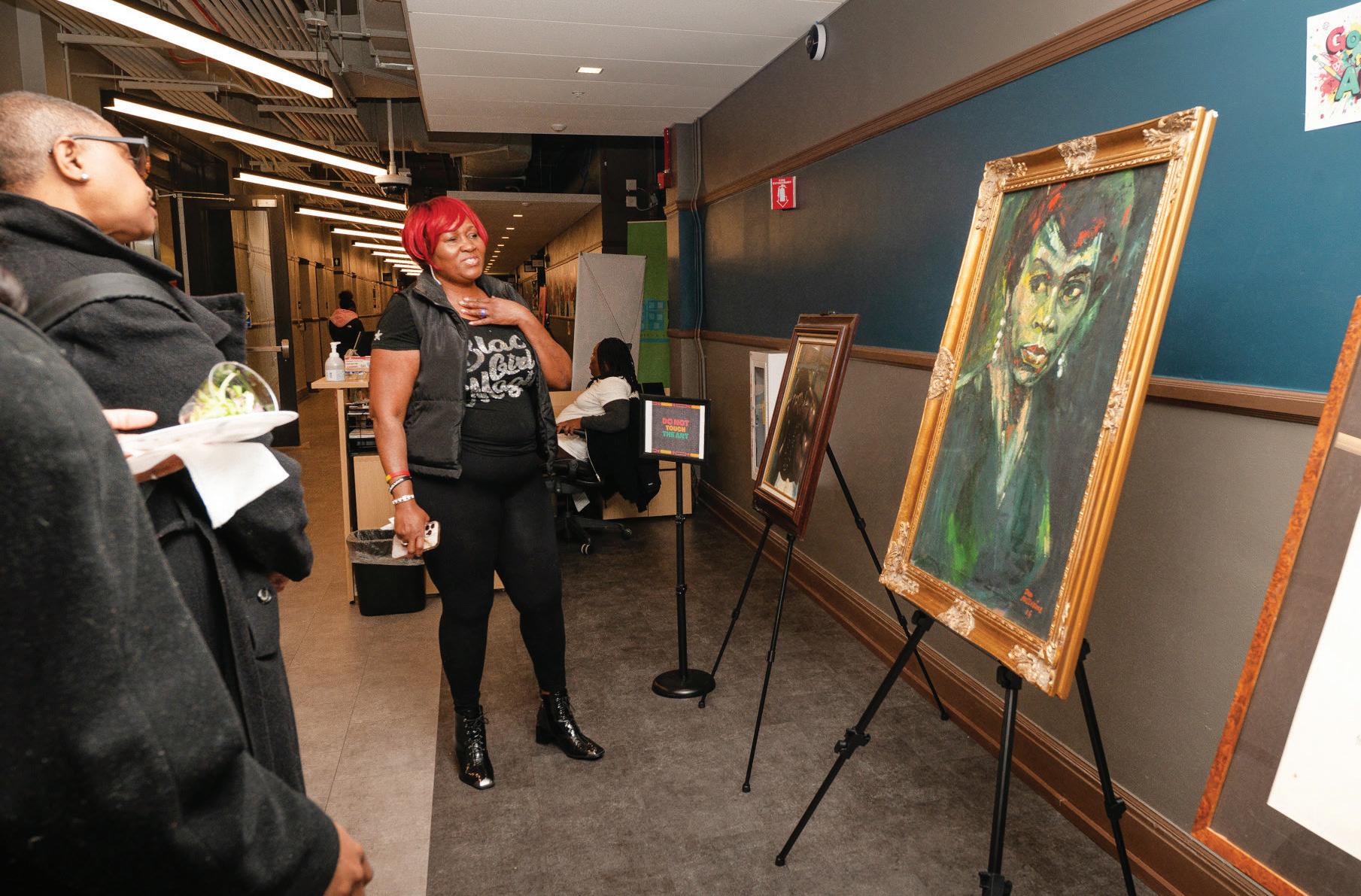
Rachel Clark loaned a portrait painted in 1971 by artist Don McIlvaine, created when Clark was 8 years old and her mother, Eunice, was 33. The painting, named after her mother, once hung above the fireplace in the family’s home for decades.
“My mother owned the Pick and Pay store on Madison Street,” Clark said. “She commissioned McIlvaine to do the piece. He took photos of her, and this is what he came up with. We’re not in that house anymore, but we still have the history.”
McIlvaine, a largely underrecognized figure in Chicago’s Black arts history, directed the North Lawndale-based Art & Soul art center from 1969 to 1972, a collaborative project between the Museum of Contemporary Art and the Conservative Vice Lords street gang that also did work in community development.
“People decorate the street because that’s where their life is,” McIlvaine told Time magazine in 1970.
Other pieces in the exhibit explore Black interior life as much as public triumph.
David McCaskill loaned a painting he purchased from his sister, depicting a Black man in chains.
“I love Black art because it depicts our beauty, struggle, and triumph,” McCaskill said. “But in this painting, you see despair. That’s what touches me most. This is an African man in America.”
Another work, “She Wanted Colors,” by art-
"Each artifact is a witness, and it is evidence. These are story keepers, reminding us of memories from our upbringing and a history that is distant but very much alive."
ist Mark Pressley, was commissioned by Chawanya Hayes as she prepared to open her first business. Hayes later moved to Dubai, leaving the painting in the care of family members.
“She was opening up her first business, and she wanted something colorful,” Hayes’ cousin, Kesha Forest, explained. “That’s where the title came from. She’s an artist, too.”
Vanessa Stokes, who lent photographs taken by her father, the late West Side photographer Dorrell Creightney, said the museum reframes everyday objects as historical evidence.
“Each artifact is a witness, and it is evidence,” Stokes said. “These are story keepers, reminding us of memories from our
upbringing and a history that is distant but very much alive. They tell stories of creativity, resilience, and everyday life.”
U.S. Rep. Danny K. Davis, whose 7th Congressional District includes the Aspire Center, attended the opening reception and said his appreciation for Black art began early.
“I’ve always been intrigued by artistic stuff, intellectual stuff,” Davis said. “I’ve always been a heavy reader, trying to understand these artists — what they did and how they did it — even as a child.”
Unlike traditional museums, the Aspire Center exhibit intentionally blurs the line between the personal and the historical, challenging visitors to rethink what qualifies as an artifact.
“These are not just decorations,” Dawson said. “They are proof. They tell us who we were and who we still are.”
The temporary Black History Museum will remain open throughout February during the Aspire Center’s regular hours, Monday through Friday from 8 a.m. to 5 p.m.
Rachel Clark talks about the 1971 portrait of her mother, Eunice, which was painted by North Lawndale artist Don McIlvaine, a pioneering muralist. | SHANEL ROMAIN
Rosie Dawson, the temporary museum's lead organizer, stands next to her collection of Black art and cookie jars that's on display at the Aspire Center throughout Black History Month. | SHANEL ROMAIN
Vanessa Stokes, who helped organize the temporary museum, looks at the photos of her father, the late West Side photographer Dorrel Creightney. | SHANEL ROMAIN
BY MICHAEL ROMAIN
The Culture
Sharif Walker, 55, was inducted into the Chicago 16-Inch Softball Hall of Fame during a ceremony at Drury Lane in Oak Brook on Oct. 25. Earlier this month, Walker, the president and CEO of the Austin nonprofit Bethel New Life, was interviewed by local media personality and 16-inch softball enthusiast John Conenna about his passion for and introduction to the sport. You can view the full interview on YouTube at youtube. com/watch?v=vO_coFWG0FE. Read Walker in his own words (with slight modifications for flow) below.
My grandfather lived in Dallas, Texas, and I would go down every summer and visit him. I used to sit on his knee and watch the Cubs on WGN. So I already had a love for the game. When my father put that baseball glove on my hand for the first time, my face lit up. I was hooked from day one.
Pottawattomie Park on the Northwest Side was home to my Little League, but I ended up playing 16-inch softball there as well. We did everything in that park. They even had an ice skating rink in the winter.
That was the day before cell phones. You’d leave the house on your bike at dawn, and you wouldn’t come home until dusk.
My dad and mom divorced when I was seven, but they remarried when I was 18. They’re still married and together today.
In that interim period, there was a guy who was like a father to me. James Jackson, or Dr. J, was a CTA train conductor. He founded a softball team called the Flames when I was seven years old, and he started dating my mom.
My dad had moved away, and it was a household of my sister, my aunt, and my mom. Dr. J would take me to parks in Evanston and on the North Side. I’d see these men conversing and playing softball.
These guys would pound the ball 200,
WEST SIDE LIVES [ [
‘It Was a Chess Match For Me’: Sharif Walker, A New Inductee Into The 16’’ Softball Hall of Fame, Dissects His
Passion
300, 350 feet and catch it without a glove. People didn’t use gloves back then. They’d be making catches with their bare hands. I’d go out and try it.
Dr. J was always afraid I’d get hurt in the infield, so I’d go to the outfield and run down balls. I think I was hooked on 16-inch by the time I was seven. I was still playing
baseball every day, too.
Dr. J still plays softball. He’s in his 80s. He’s in good health. I see him often. We were on the same bowling team for many years. He and my father are both still alive and kicking.
In baseball, my dad taught me to play every position. In Little League, I could play
“That was the day before cell phones. You’d leave the house on your bike at dawn, and you wouldn’t come home until dusk."
anywhere, but I mostly played catcher because nobody else wanted to do it and nobody else could do it well.
I started playing organized baseball at six. You had to be seven, but they took me out there and asked, ‘Can he catch?’ Of course, I could catch and hit a ball already, so they signed me up and put me at catcher. In high school, I probably played every position. In college, I wanted to be a shortstop, but I played catcher for three or four years.
I officially started playing 16-inch at 17years old. I started in the outfield. I was a right fielder. That’s where they stick everybody when you start. Then they moved me to center field.
I played center for just about every team I played for until I was about 46 or 47 — over 30 years in center field. Then I came in and played shortstop for the next eight years. Then I started pitching.
I never batted lower than the top four hitters on any team I was on. I was a great baserunner. I wasn’t the fastest guy, but I was smart. I was wise. I took advantage of mistakes.
But the outfield — that was a chess match for me. We outfielders really communicated. We knew those batters. We would try to trick them into doing something they didn’t want to do, knowing we could cover it. We would leave the entire right-field line open for guys who couldn’t hit the rightfield line. We talked about the short ball and the long ball. We made sure we hit the cutoff man so he could make the next throw.
It was always about the mechanics of the game for me. Applying those mechanics to the skills we had — that’s what made us better.
Sharif Walker, 55, was inducted into the Chicago 16-Inch Softball Hall of Fame last year.” | PROVIDED
This Bellwood Restaurant Could Be the Best Place to Watch the Super Bowl in the West Suburbs
Elements Restaurant brings a cinematic sports setup and fine dining to the viewing experience
By EDITORS The Culture
Acavernous dining room, a wall-sized screen worthy of a sports bar in Las Vegas, and a soundtrack of live music on Sundays have helped turn a once-quiet corner of Bellwood into a new gathering spot for food, football, and fellowship.
Elements Restaurant, 466 25th Ave. in Bellwood, opened on Labor Day weekend last year in the same space long occupied by Donnie’s Place, the bar and restaurant owned by Grammy-nominated gospel singer Dante Hall, who died in a car crash in 2024. Months later, the room has a new look, a new menu, and a clear ambition to be a destination.
That ambition will be on full display when Elements hosts a Super Bowl watch party on
Super Bowl Sunday, Feb. 8, offering what may be the most cinematic game-day setup in the west suburbs.
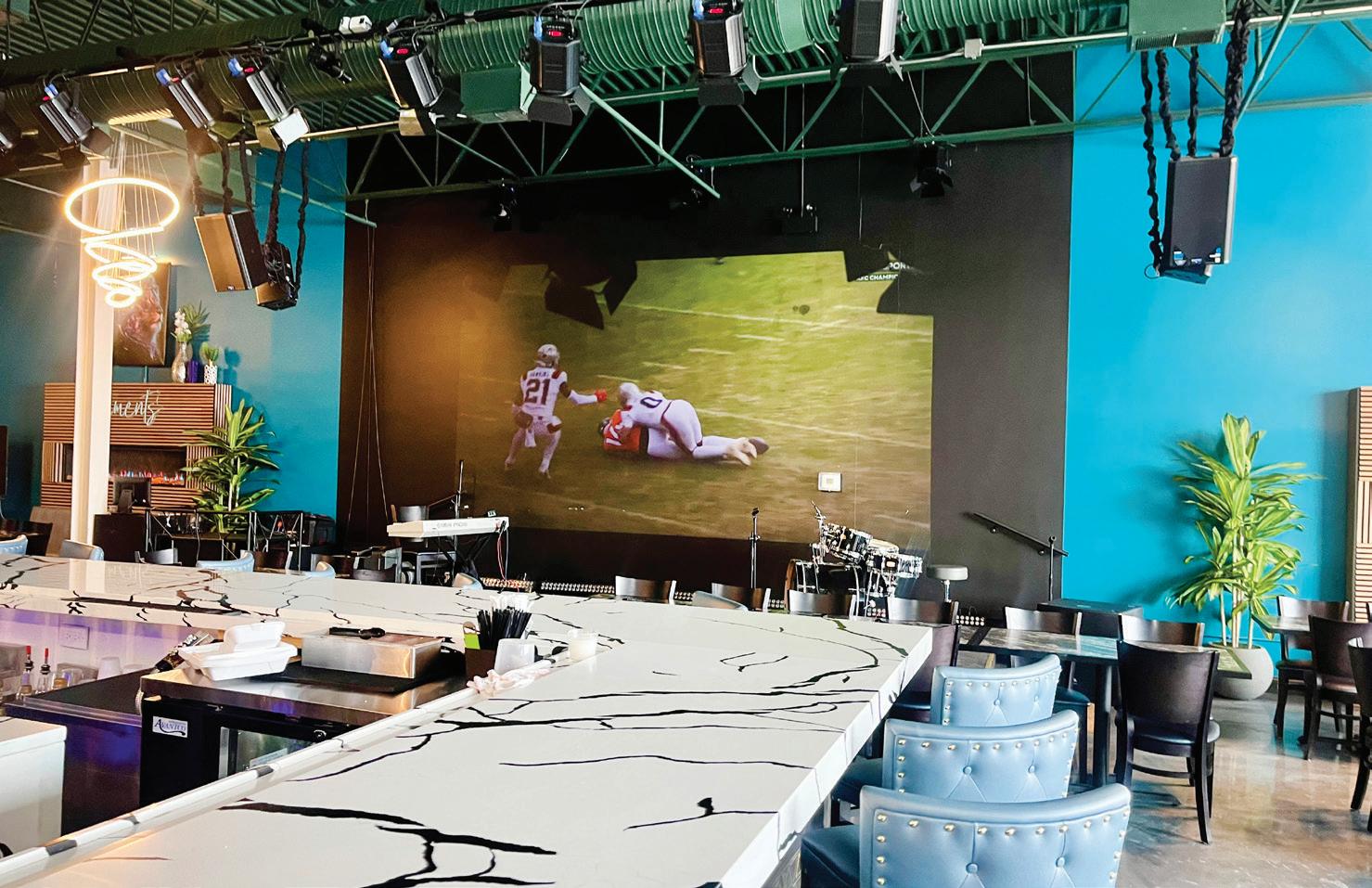
A massive wall screen anchors the room, supplemented by flat-screen TVs hovering above a sleek bar, another set near a faux fireplace, and sightlines that make it hard to miss a single replay.
The space itself is expansive but inviting, with wraparound seating areas that feel intimate rather than cavernous, plush blue chairs lining a long marble-patterned bar, and a stage at the front of the room that comes alive on Sundays with live entertainment.
That mix of sports bar energy and supper-club polish carries over to the menu, which leans upscale without abandoning comfort food.
Starters include a lobster martini — chilled lobster layered with crisp vegetables and a cit-
rus-herb vinaigrette — along with pan-seared Maryland crab cakes, jumbo shrimp cocktail, and lightly breaded fried calamari. For gameday traditionalists, six-piece party wings come plain, Buffalo or smoky BBQ. Sandwiches range from the Remy Roll, a crispy catfish fillet dressed with remoulade on a toasted French roll, to the Elemental, which swaps catfish for shrimp. Salads include a fully loaded Cobb and a classic Caesar, while heartier options stretch into Cajun rigatoni tossed with andouille sausage, blackened chicken, and shrimp.
From the grill, the menu runs confidently upscale: filet mignon, ribeye, lamb chops, surf-and-turf combinations, and a lobster tail boil finished in Cajun butter. Sides include loaded mac and cheese, asparagus, mashed potatoes, and dirty rice, while desserts like red velvet cake and bread pudding round out the experience.
For west suburban fans weighing their Super Bowl options, that combination may prove hard to beat.
More information, including hours and menus, is available at elements466.com.
New Austin Soul Food Eatery Has the Internet’s Stamp of Approval
Tee’s Soul Food Kitchen has garnered wild praise from online influencers for its top-notch jerked meats and flavorful eggrolls
By EDITORS The Culture
What began as a West Side food truck known for its boldly seasoned jerk meats has found a permanent home — and an eager audience — on Madison Street in Austin.
Tee’s Soul Food Kitchen, which opened its brick-and-mortar location late last year at 5623 W. Madison St., has quickly emerged as one
of the community’s most popular new dining spots. A steady stream of positive reviews on social media attests to the buzz that followed the restaurant indoors after years of food truck success.
The popular Chicago food influencer who goes by Shanikky said she traveled to the West Side to order the jerk chicken, a small rib tip meal, and an ox tail dinner.
“[The ox tails] were worth every dollar and
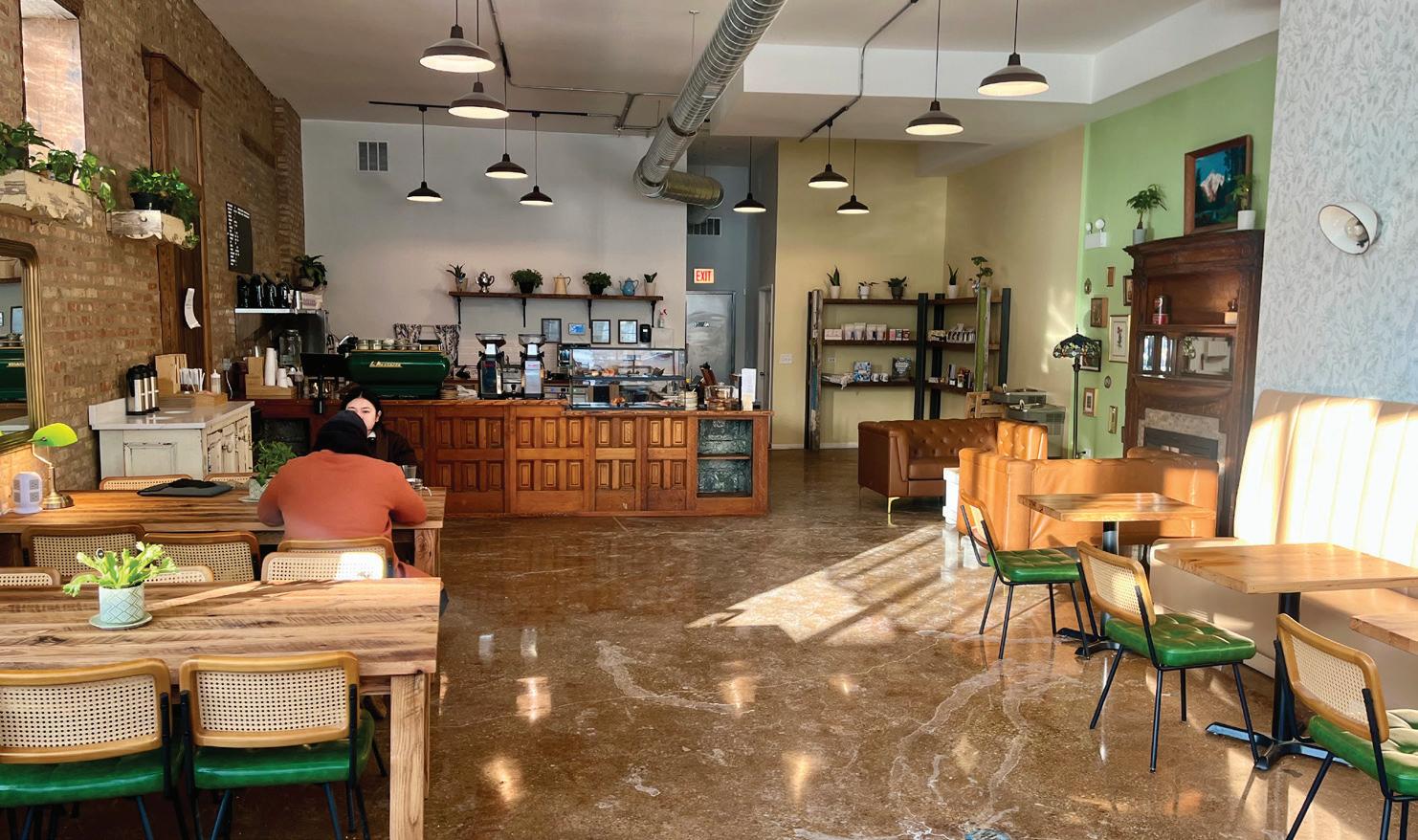
Elements Restaurant in Bellwood features a sprawling bar, wraparound seating and a wall-sized screen designed for live music and major sporting events, including a Super Bowl watch party on Feb. 8.
| MICHAEL ROMAIN
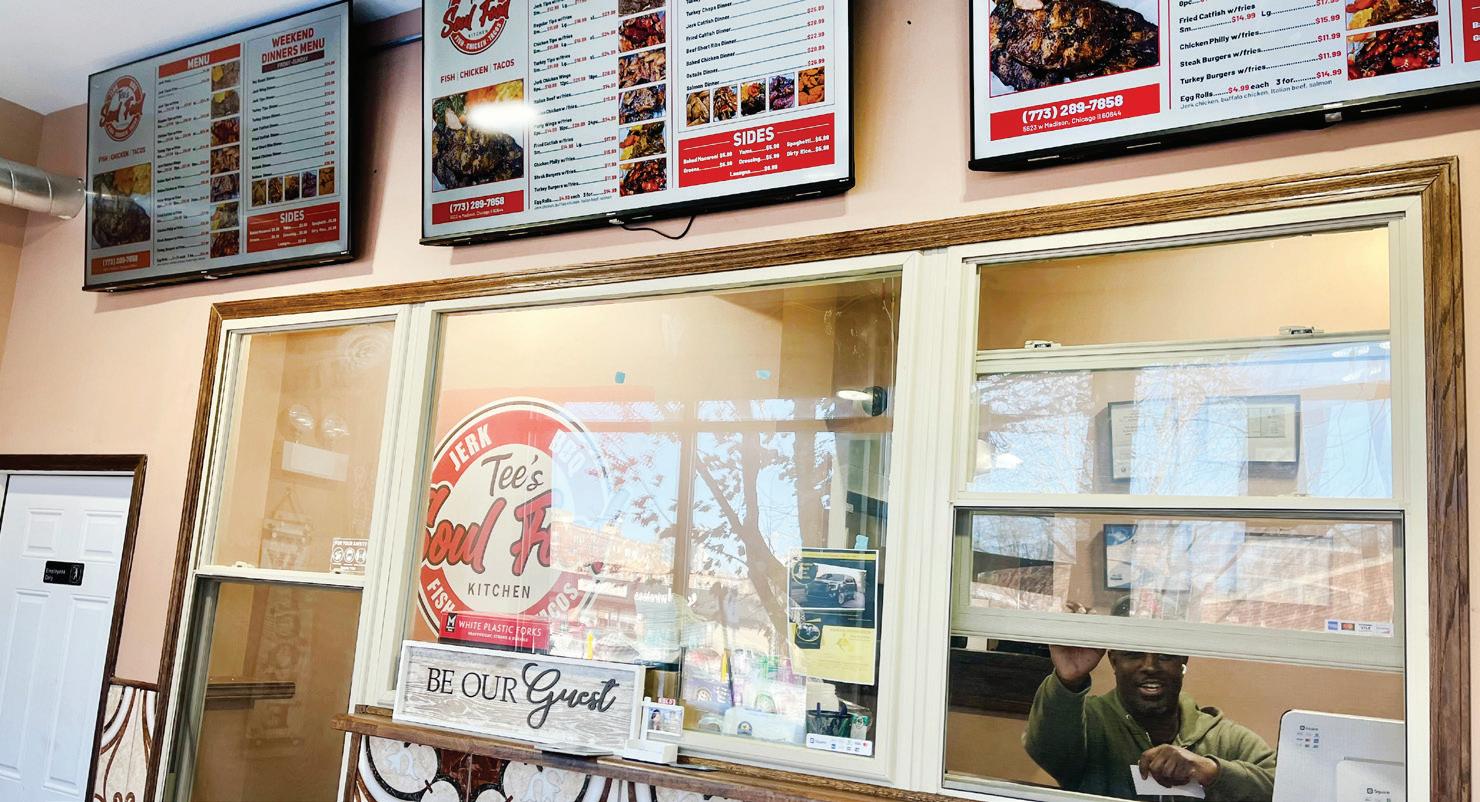
The inside of Tee’s Soul Food Kitchen, 5623 W. Madison St. in Austin. The new restaurant, the brick-andmortar evolution from what began as a popular food truck, has garnered a stream of positive reviews online for its tasty jerked meats. | PROVIDED
New Lake Street Cafe Opens in East Garfield Park, Bringing With It a Community Living Room Vibe
Semaphore Cafe blends historic architecture, Conservatory-inspired design, and a community-first mission in a long-vacant corner storefront
BY MICHAEL ROMAIN
Avacant corner storefront in a historic, more than century-old building steps from the Garfield Park Conservatory has a new life and purpose.
Owner Richard Weber opened Semaphore Cafe on Jan. 5 at 3458 W. Lake St., bringing coffee, brunch, and a sunlit gathering space to East Garfield Park.
The space previously housed AMER Food, a small bodega-style corner store. Today, the interior has been carefully refurbished, balancing warmth and restraint. Salvaged wood tables, forest-green accents, and an espresso machine in a matching hue echo the Conservatory’s lush palette. Antique-style lamps, framed botanical prints, and potted plants soften the high-ceilinged room, while south-facing windows flood the cafe with sunlight.
The cafe’s name references the semaphore flags that were once used to signal “stop” or “go” to train operators, preventing collisions.
minute I waited. They were meaty, juicy, flavorful throughout, and they didn’t skip on the actual tail,” she said in a praiseworthy review on YouTube.
Online foodie Roc Child raved about the fried catfish, calling it “seasoned, crunchy, flaky,” before adding that he didn’t even need any hot sauce.
The kitchen built its reputation on jerked proteins, particularly rib tips and chicken,
Weber, who moved to East Garfield Park about a year ago, told WTTW that the idea for Semaphore grew out of a simple absence. After visiting the Conservatory, he searched for a nearby place to sit with a coffee, but he didn’t find one. With Semaphore, he said, the goal is less about attracting destination traffic and more about giving neighbors a place of their own.
Semaphore is open seven days a week from 8 a.m. to 4 p.m., according to cafe manager Chris, who said the full food menu is available until about 3 p.m. The cafe serves coffee from Sparrow Coffee and pastries from local bakeries, and offers a rotating menu with daily specials. Merchandise is also available for purchase, reinforcing the cafe’s role as both a social and retail space.
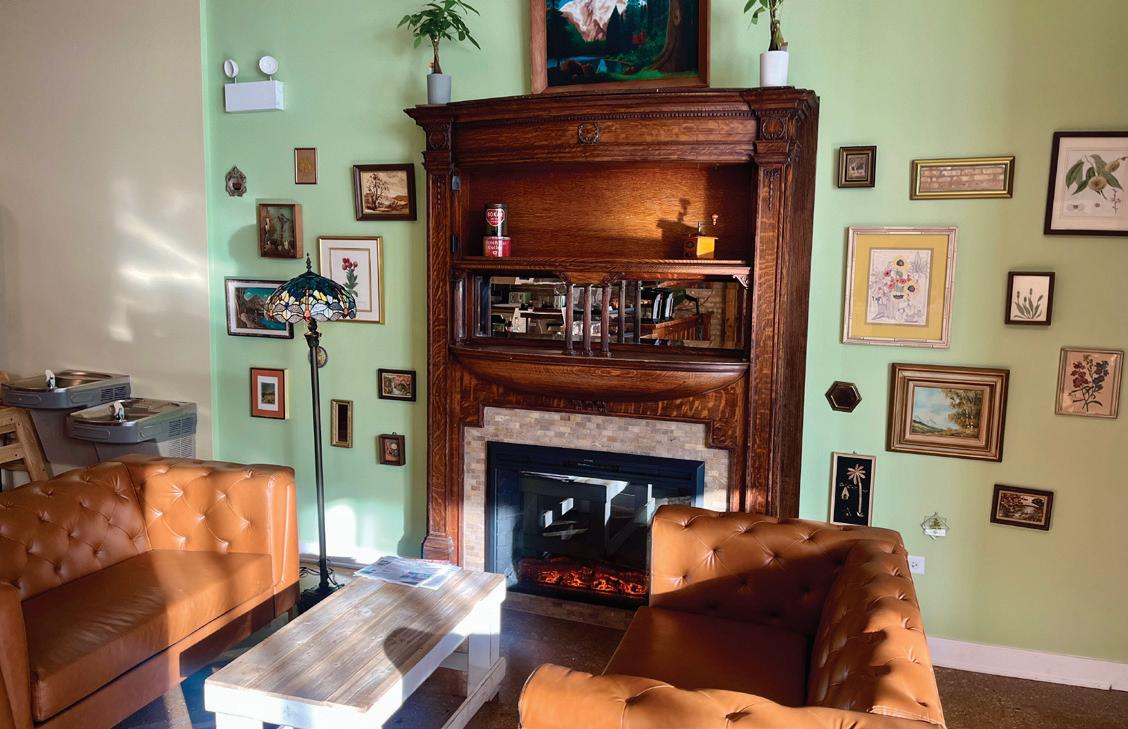
The cafe’s layout encourages lingering. Leather armchairs cluster around a fireplace feature along one wall, creating a cozy living-room atmosphere. A small retail shelf displays packaged goods and gifts, while the counter area maintains clear sightlines across the room, an intentional openness that mirrors the cafe’s mission.
Weber, who has a background in urban planning and previously owned the Albany Park cocktail bar Bokeh, has acknowledged the tensions that can accompany new businesses in historically marginalized neighborhoods. In his interview with WTTW, he emphasized that Semaphore is meant to
A seating area inside Semaphore Cafe includes leather armchairs, a fireplace feature, and walls decorated with botanical prints and vintage frames, design elements that nod
and those remain the stars of the menu. On a recent visit, the pork jerk rib tips lived up to their reputation. Ordered with fries generously covered in sauce, the dish delivered a deeply satisfying balance of smoke, spice, and sweetness. The bark on the rib tips was especially notable. Dark, well-seasoned, and intensely flavorful, they evoked the kind of slow-smoked backyard barbecue during summer cook-
outs. In the middle of winter, the effect felt almost transportive. The meat itself was tender and pulled easily from the bone, though some pieces leaned on the fattier side. Even so, the overall experience remained indulgent rather than off-putting. The fries, softened slightly under the sauce, served more as a vessel than a side, soaking up flavor and reinforcing the unapologetically hearty nature of the meal.
be additive rather than transformative, a place for existing residents to gather, not a signal flare for rapid change.
“I’ve never felt more welcome anywhere in the city,” Weber told WTTW. “I think within a week, I knew everybody on my block. [...] We deserve nice things too.”
While it may still be early in its brick-andmortar life, Tee’s Soul Food Kitchen has already established a clear identity of soulful, assertively seasoned comfort food rooted in barbecue tradition and neighborhood energy.
For diners craving something that feels familiar yet exciting — and for those nostalgic for the taste of a summer cookout — Tee’s delivers.
For more information, call (773) 289-7858.
The Culture
The interior of Semaphore Cafe at 3458 W. Lake St. in East Garfield Park features high ceilings, salvagedwood tables, leather seating, and abundant natural light from south-facing windows overlooking Lake Street. The cafe opened Jan. 5 near the Garfield Park Conservatory. | MICHAEL ROMAIN
to the nearby Garfield Park Conservatory. | MICHAEL ROMAIN
West Siders Are Canceling TikTok Due to New Privacy Concerns, Fears of ‘Shadow-Banning’
After the app’s U.S. operations split from its Chinese parent, creators reported sudden drops in reach and raised concerns about privacy, data use, and political speech
By MICHAEL ROMAIN
The
Culture
West Side TikTok users are taking steps to protect their privacy after TikTok introduced changes to its terms of service and privacy policy on Jan. 22.
According to BBC reporting, TikTok’s U.S. division was formally split from its Chinese parent company, ByteDance, in a deal concluded last week, creating a newly structured American entity to operate the app in the United States. Just days after the separation, the BBC reported, thousands of American users began reporting problems, including posts receiving “zero views” and sudden drops in reach.
The timing has raised alarms among creators who rely on TikTok to distribute art, activism, and community information.
Aisha Oliver, a West Side influencer and youth advocate with nearly 180,000 TikTok followers, said she deleted her account after reviewing the updated privacy terms.
“Well I just deleted my TikTok at almost 180K followers,” Oliver wrote in a Jan. 27 Facebook post. “The US got control and changed the privacy terms. So nope I’m out. Read those terms. One thing I’m not is stupid. Time to start over.”
The updated documents say TikTok’s services in the U.S. are operated by TikTok USDS Joint Venture LLC and detail the types of information the platform may collect and how it may use it — including language that stands out to privacy-minded users: collection of “AI interactions,” technical signals such as “keystroke patterns or rhythms,” and analysis of user content that may include identifying faces and voices.
For many younger adults, TikTok is not just entertainment — it’s an archive, a resume and, increasingly, a search engine for music, art, news, and everyday advice.
“I’m very much in the generation that lives on our phones,” said Zoe Nellum, 24, an Aus-
and confusion among users. | SOLEN FOYISSA ON UNSPLASH
tin resident. “The virtual world became the real world to us at a young age.”
Nellum said she and her friends have been trying to avoid clicking “agree” when the updated policy appears.
“A lot of us who are socially conscious about this have been trying to bypass that,” she said. “By downloading the app, it pops up right away, but what you do is go into airplane mode, and you come out of it to make sure you don’t agree. So, there’s a way to bypass it for now.”
On Oliver’s post, other creators and viewers raised concerns that go beyond privacy — including whether the platform is pushing certain content less aggressively.
“Is this why my views just took a major decrease?” wrote Kobey Lofton in a comment. “I just built momentum and hit almost 10k views then my recent videos are barely reaching 1K or even 500+… Let’s plans this, I’m all over it.”
Oliver replied: “That’s absolutely why your views are low. They’re not pushing our videos out to the [audiences,] it’s like being [shadow-banned].”
TikTok’s updated privacy policy and terms do not say the platform is reducing distribution based on users’ political views. But they
TikTok’s new reality — what changed and what users can do
In plain language, here’s what’s happening and how to respond.
• TikTok’s U.S. operations are now separate
What changed: TikTok’s U.S. division has been split from ByteDance, its Chinese parent, following prolonged pressure from U.S. lawmakers.
Why it matters: New ownership and infrastructure often mean new data pipelines, new moderation systems, and technical instability during transition.
• Users are reporting sudden drops in views
What people are seeing: “Zero views,” stalled reach, and sudden audience loss.
What TikTok says: These are technical glitches related to rebuilding U.S. infrastructure, not content suppression (per BBC reporting).
What users fear: Algorithmic suppression tied to political speech or new controls.
• The new privacy policy is broader
TikTok says it may collect: Draft videos (even if you don’t post them), AI prompts and interactions, technical signals like device IDs and typing patterns, facial and voice data derived from videos (where allowed by law).
do outline expansive collection and use of data for features, safety, advertising, and the development of new technology — including training and improving machine-learning systems — which, privacy experts often note, can deepen the amount of profiling and inference platforms can do even without users explicitly sharing sensitive details.
In plain language, the new documents emphasize that TikTok may collect information in three broad ways: what users provide, what is automatically collected through usage and devices, and what comes from advertisers and other partners. They also describe how content may be analyzed for features like recommendations and effects — and, in certain cases, may involve biometric identifiers derived from user content.
TikTok has denied claims that its newly restructured U.S. operations are deliberately controlling or suppressing user content. In a statement to the BBC, a spokesperson for TikTok US said the issues stem from technical challenges following the corporate transition.
• Deleting doesn’t erase everything
If someone saved, reposted, or remixed your content, it may still exist even after you delete your account.
• Many users are backing up now: If you’re considering leaving or pausing TikTok:
Save important videos to your camera roll; request your TikTok data through settings; screenshot analytics, collaborations, or brand deals; add your email, website, or other platforms to your bio first.
• Workarounds aren’t permanent
Tactics like airplane mode may delay agreement prompts, but continued use generally requires accepting updated terms.
• The bigger picture
TikTok’s transition reflects a global shift. Social media platforms are now sites of geopolitical power, not just entertainment. For young users — especially politically engaged Black youth — that raises fears about surveillance, control, and whose voices travel farthest.
“We’ve made significant progress in recovering our US infrastructure with our US data center partner,” the spokesperson said, according to the BBC. “However, the US user experience may still have some technical issues, including when posting new content.”
Nellum said she’s anxious about losing access to the creative and informational library she’s built over time.
“I have two TikTok accounts. It’s common to have alters,” Nellum said. “This is the sad part. There’s no easy way to save all the TikToks you have … There’s so much good art and talent and information. It’s become an informational source for a lot of people, so I’m saving everything to my camera roll, and I plan to eventually delete both my accounts.”
Nellum tied her decision to broader political concerns, including distrust of government involvement and the fear of silencing.
“Because of the U.S. and its involvement with Israel, it’s such a big picture thing,” she said. “They’re going to try to start suppressing voices.”
TikTok recently split its U.S. operations from its Chinese parent company, ByteDance, and rolled out updated privacy terms that have prompted concern
Leadership Successions Announced at Organizations
Founded by Prominent West Suburban Bishop
Bishop
Claude Porter’s PLCCA and Interfaith Illinois Inc. both got new leadership this month, weeks after his death in December
By MICHAEL ROMAIN
The Culture
Weeks after the death of Bishop Dr. Claude Porter, one of the Greater West Side’s most influential clergymen and civic leaders, two major organizations he founded have announced leadership successions, formally transitioning into a new chapter following his passing.
Porter, who died Dec. 30 at age 88, founded the Proviso Leyden Council for Community Action in Maywood and later co-founded Interfaith Illinois Inc., building institutions that became deeply embedded in the region’s faithbased social service and civic infrastructure.
The Proviso Leyden Council for Community Action, known as PLCCA, announced new executive leadership on Jan. 23 after the organization’s board adopted a resolution implementing its succession plan.
day-to-day operations. The board said both appointees bring experience, leadership, and institutional knowledge to their roles.
Founded in 1975, PLCCA grew into a major regional provider of social services, workforce development programs, housing assistance, youth programming, and energy assistance across Proviso Township and surrounding communities. Porter served as the organization’s founder, president, and CEO for decades.
Interfaith Illinois Inc., another nonprofit co-founded by Porter, also announced leadership changes in January.
Illinois said Saffo will support the organization’s governance and strategic direction in partnership with fellow board members and executive leadership.
Additional board officers of Interfaith include Bishop Joseph Jones as First Vice Chairman, Bishop James Springfield Jr. as Treasurer, and Bishop William Teague as Secretary. All appointments were made effective Jan. 23. Porter, born Jan. 21, 1937, in Memphis, Tenn., moved to Chicago in the early 1960s and was ordained in 1965. In 1972, he founded Proviso Missionary Baptist Church in Maywood, where he later served as bishop.
Claudette Harrell was appointed President and Chief Executive Officer, and Beverly P. Smith was appointed Chief Operating Officer, both effective immediately. The board cited the organization’s existing succession plan and the need to ensure continuity of leadership and operations following Porter’s death.
The faith-based organization named Bishop Dr. Reginald J. Saffo, as Chairman of the Board, alongside several new board officers. Saffo, the pastor of United Faith Missionary Baptist Church in Maywood and chairman of the Proviso Township Ministerial Alliance Network (PTMAN). Porter was PTMAN’s longtime chairman before he passed the baton to Saffo in 2015.
Harrell was appointed with full executive authority as provided under the organization’s bylaws, while Smith was named to oversee
Interfaith Illinois was co-founded by Porter and the late Rev. Dr. Clay Evans, a nationally known Chicago pastor who died several years ago and previously served as chairman.
In announcing the appointments, Interfaith
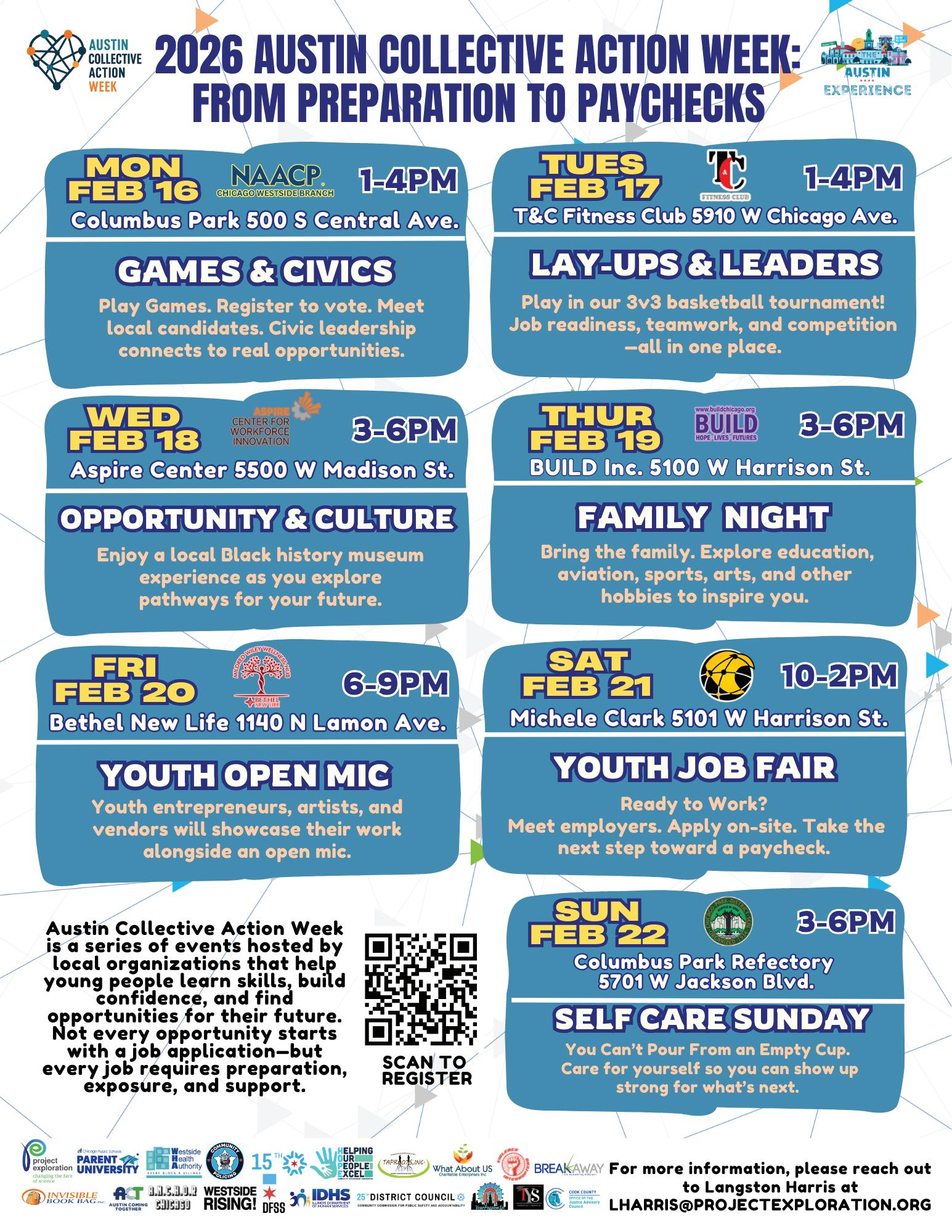
Austin Collective Action Week to Connect Youth With Civic Engagement, Jobs, and Wellness
A weeklong series of free events, Feb. 16–22, blends civic engagement, career readiness, culture, and wellness for Austinarea youth and families
By MICHAEL ROMAIN The Culture
Residents across Austin will have a full week of opportunities to build skills, explore careers, and connect with local organizations during Austin Collective Action Week, a seven-day series of free youth-focused events running Feb. 16–22.
Organized by a coalition of Austin-based community groups, the weeklong initiative is designed to help young people move “from preparation to paychecks” by combining civic engagement, job readiness, cultural exploration, entrepreneurship, and self-care.
The week kicks off Monday, Feb. 16, with Games and Civics at Columbus Park, 500 S. Central Ave., hosted by the NAACP Chicago Westside Branch. From 1 to 4 p.m., participants can play games, register to vote, meet local candidates, and learn how civic leadership connects to real-world opportunities.
On Tuesday, Feb. 17, youth will take the court at Lay-Ups & Leaders, a 3-on-3 basketball tournament at T&C Fitness Club, 5910 W. Chicago Ave. The event blends competition with lessons in teamwork, job readiness, and
leadership.
Career exploration continues Wednesday, Feb. 18, with Opportunity & Culture at the Aspire Center for Workforce Innovation, 5500 W. Madison St. From 3 to 6 p.m., attendees can engage with a local Black history museum experience while learning about education and career pathways.
Thursday, Feb. 19, brings Family Night at BUILD Inc. 5100 W. Harrison St, where families can explore programs related to education, aviation, sports, arts, and other hobbies aimed at inspiring young people.
Creative expression takes center stage Friday, Feb. 20, during a Youth Open Mic at Bethel New Life, 1140 N. Lamon Ave. From 6 to 9 p.m., young entrepreneurs, artists, and vendors will showcase their work alongside live
Over more than half a century, Porter operated at the intersection of faith, politics, and social service, helping establish organizations that connected church networks with government programs and community-based initiatives across the Greater West Side and suburban Cook County.
With new leadership now formally in place at PLCCA and Interfaith Illinois, the organizations Porter founded are continuing operations under successors selected through board action and established governance processes.
performances.
The workforce focus peaks Saturday, Feb. 21, 5100 W. Harrison St., with a Youth Job Fair at Michele Clark, where participants can meet employers, apply on site, and take concrete steps toward employment.
The week concludes Sunday, Feb. 22, with Self-Care Sunday at Columbus Park Refectory, 5701 W. Jackson Blvd. The event emphasizes mental, physical, and emotional wellness, encouraging participants to care for themselves as they prepare for what comes next.
Organizers say Austin Collective Action Week reflects a broader understanding that workforce success does not begin with a job application alone.
“Not every opportunity starts with a job application—but every job requires preparation, exposure, and support,” the flyer notes. All events are free, and advance registration is encouraged.
For more information, residents can contact Langston Harris at lharris@projectexploration.org.
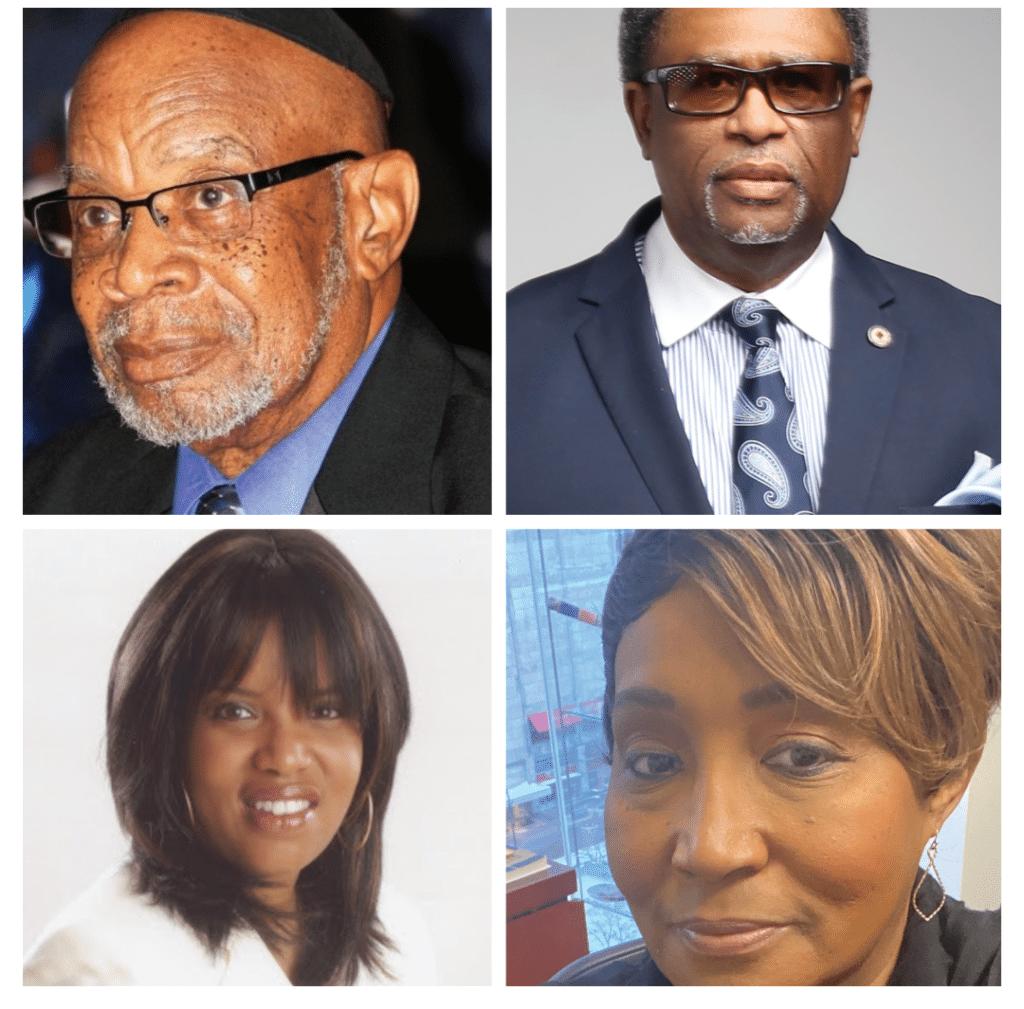
Clockwise from top left: Bishop Claude Porter, Bishop Reginald J. Saffo, Beverly P. Smith, and Claudette Harrell. | PROVIDED
By KELLY BAUER Block Club Chicago
The former Loretto Hospital executive who is accused of embezzling millions from the hospital — and defrauding the federal government of nearly $300 million — has been arrested in Serbia.
Anosh Ahmed was taken into custody in Serbia on Nov. 30. Last month, the U.S. government requested his extradition, according to a court filing.
Ahmed remains in custody in Serbia — though he requested on Dec. 30 that the Serbian courts release him to a hotel in Belgrade, which was denied. His attorney did not immediately respond to a request for comment.
Ahmed had been living abroad — with federal prosecutors calling him a “fugitive” — since shortly before prosecutors brought charges against him in the Loretto Hospital case.
Prosecutors have said Ahmed and Sameer Suhail worked together to embezzle $15 million from Loretto, a taxpayer-funded hospital, and steered another $19 million worth of hospital contracts to Suhail through “corrupt” means, including bribery. Suhail was Ahmed’s friend, business partner, and nextdoor neighbor in Chicago’s Trump Tower.
Ahmed is also charged in a separate COVID-19 testing scheme that defrauded the government of about $300 million.
The charges came after a series of Block Club Chicago investigations put the spotlight on Ahmed and Suhail.
Block Club has reported extensively on Ahmed’s troubling conduct at Loretto Hospital, from letting well-connected people access COVID-19 vaccines early — and even bragging he vaccinated Eric Trump — to contracting with companies owned by Suhail.
Separately, Block Club also revealed in 2021 and 2022 that various COVID-19 testing companies were providing questionable and sometimes fake results while appearing to wrongfully seek federal reimbursements worth hundreds of millions of dollars. One of the labs highlighted by Block Club Chicago for problematic work was O’Hare Clinical Lab.
Those stories converged this summer when prosecutors said Ahmed, Mohamed “Siraj” Sirajudeen, and Mahmood Sami Khan used O’Hare Clinical Lab, among others, to submit false COVID-19 testing claims to the government. They sought about $900 million
Fugitive Ex-Loretto Leader at Center of $300 Million COVID Scandal
Arrested in Serbia
Anosh Ahmed had been living abroad — with federal prosecutors calling him a “fugitive” — since shortly before prosecutors brought charges against him in the Loretto Hospital case
to Dubai — noted in court records that she was aware of the investigation by 2022.
But shortly before the charges came, Suhail moved to the United Arab Emirates, where he has opened a luxury plastic surgery clinic and has posted photos of himself in designer clothing and watches worth thousands on social media.
In a January Instagram “story” post, Suhail shared an image that said, “These days, you need a job, a side hustle, and a little fraud on the side.”
Ahmed also left the United States and began posting to social media and putting out press releases, making increasingly overt appeals to President Donald Trump in what appears to be a bid for clemency.
The case has been delayed due to Ahmed and Suhail’s fugitive status, according to court records.
APPEALS TO TRUMP
Ahmed resigned from Loretto in March 2021 amid intense public scrutiny after Block Club reported on him providing Loretto’s COVID-19 vaccines to well-connected people. Ahmed returned to Houston, where he’d previously lived and operated nightclubs, and soon married, according to county records. He bought and sold several multimillion-dollar properties — including one described as a “miniature Daddy Warbucks mansion” — and started another business, Anosh Inc., which bills itself as an investment and consulting firm. He was planning to open an office in Dubai, according to court records.
Ahmed and his wife, who is from France, also registered several real estate-related companies there in 2023, records show.
During the same period, Ahmed orchestrated a conspiracy to defraud the government using his ties to Loretto Hospital, prosecutors have said.
in reimbursements, of which they received about $300 million.
Ahmed has been charged with 14 counts of fraud, as well as conspiracy to defraud the U.S. government, two counts of wrongful remuneration involving federal health care programs, wrongful disclosure of individually identifiable health information, and five
counts of money laundering, according to an indictment in the COVID-19 testing case.
Ahmed knew about the investigations swirling around him before the charges came, according to court records. It’s likely Suhail also knew. One of their co-defendants in the Loretto case — whom prosecutors say they stopped on a plane as she tried to flee
Shortly after Ahmed resigned from Loretto Hospital, he used personal information stolen from Loretto’s patients to submit fake COVID-19 testing reimbursement claims to the government, prosecutors have said. Ahmed partnered with Chicago-based O’Hare Clinical Lab — which Block Club highlighted as problematic in 2022 — as part of the scheme, and he instructed workers to lie to government officials while feigning that his fake tests were being done through Loretto Hospital, prosecutors have said.
Ahmed, with others, also took control of several non-operational labs in Texas and continued the scheme, submitting fake claims to the government for COVID-19 tests
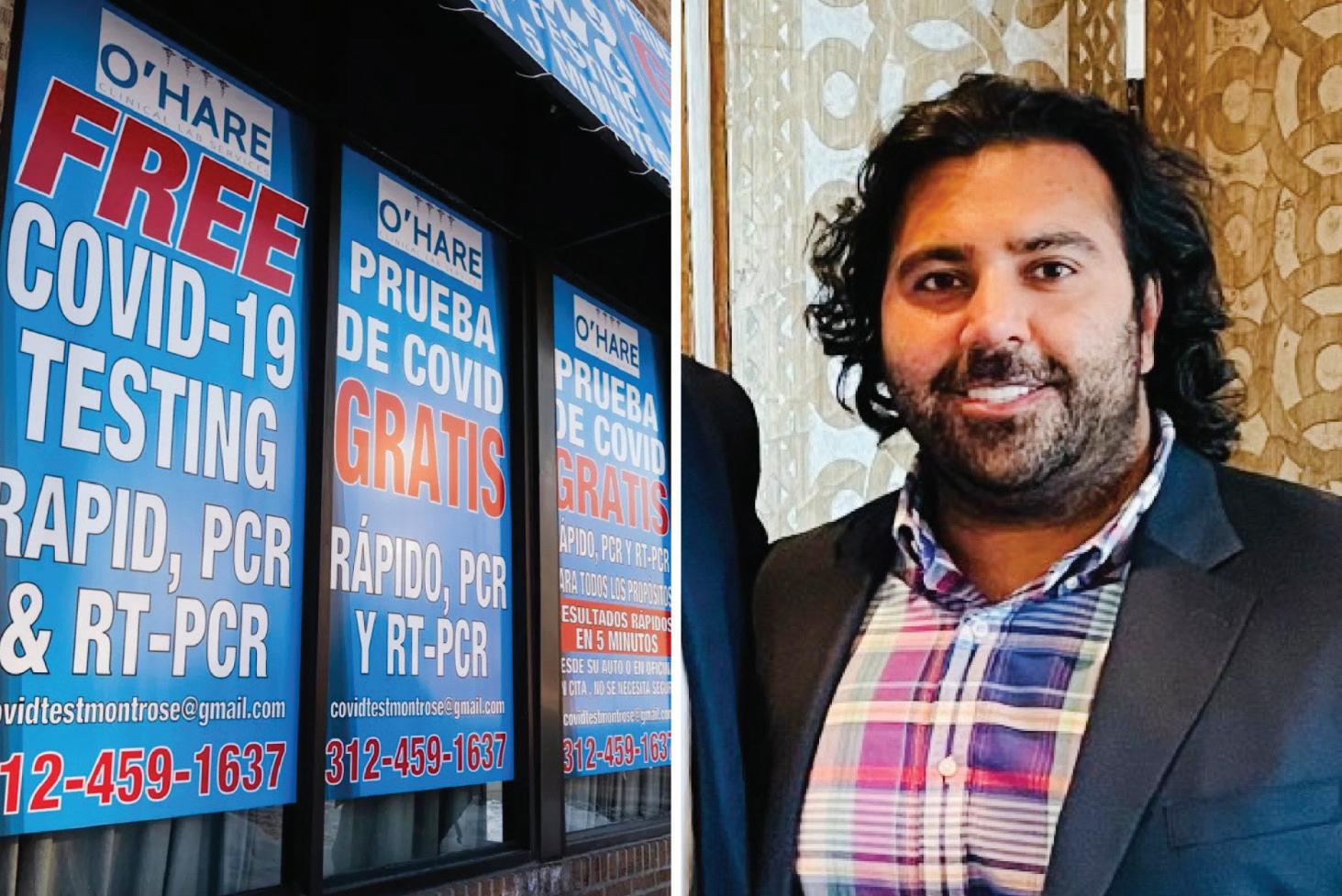
Left: An O’Hare Clinical Lab Services COVID-19 testing center at 3101 W. Montrose Ave. in Albany Park on Jan. 25, 2022. Right: Dr. Anosh Ahmed on March 10, 2021 at Trump Tower. | COLIN BOYLE/BLOCK CLUB CHICAGO; PROVIDED
that weren’t done, prosecutors have said.
Those involved in the conspiracy sought reimbursements of about $900 million from the federal government — and got about $300 million, prosecutors have said.
Ahmed fled to Dubai by August 2023, according to court records.
Federal officials want to seize $50.5 million in a bank account Ahmed had, as well as another $42.3 million in securities and interests, according to court records. They also seized a 2020 Rolls-Royce Phantom, a 2022
Rolls-Royce Ghost, a 2021 Mercedes-Benz G-Class, a 2020 Lamborghini Huracan and four properties in Houston.
Ahmed claims to manage $1.5 billion in assets through his latest venture, the Private Family Office of Anosh Ahmed, which bills itself online as a wealth management firm.
The business — which has an online history going back to 2024 — claims to have offices in Dubai, London, Saudi Arabia, Pakistan and the United States, with another opening “soon” in Singapore. It does not appear to be registered in the Emirates, Texas or Illinois. On its website, the company claims to stand for “honesty” and “openness,” among other values.
In the United States, Ahmed left behind bills: Court records show American Express is suing Ahmed in Texas, alleging he racked up about $120,000 on a credit card before canceling it in July 2024 without paying off the balance.
Cintas, a uniform and supply company, is separately suing Ahmed for about $171,000, alleging he didn’t pay for services it provided at Sekai, a Houston nightclub he owns. While living abroad, Ahmed has released dozens of news releases making questionable claims about charitable and entrepreneurial work.
One news release claimed an unnamed “UN-affiliated health organization” is working with Ahmed to “develop COVID-19 testing and vaccination protocols” in north Africa. Another one from July 7 claimed Ahmed is expanding “his COVID-19 testing services” throughout the world — just weeks after prosecutors announced the $300 million fake COVID-19 testing case.
Another release says Ahmed is setting up an Illinois-based PAC that will “raise awareness around policy issues.” An Illinois State Board of Elections spokesperson said the agency has no record of a PAC associated with Ahmed. The Federal Election Commission also does not appear to have any recently created PACs associated with Ahmed. And Ahmed has targeted Chicago in these efforts, claiming in a June 22 news release that he’s setting up a cryptocurrency hub in a massive, vacant warehouse in the city. In a news release, Ahmed announced a supposed
AI data center on the West Side. A spokesperson for the city’s planning department previously said the city has no information about the purported crypto project.
The news releases frequently include edited photos of Ahmed, using the same, yearsold image of his head pasted onto different bodies. They don’t mention the charges he’s facing or the scandals he’s tied to. They list an array of spokespeople reporters can contact, but no one has ever picked up when Block Club has called, and no record of the various spokespeople can be found online.
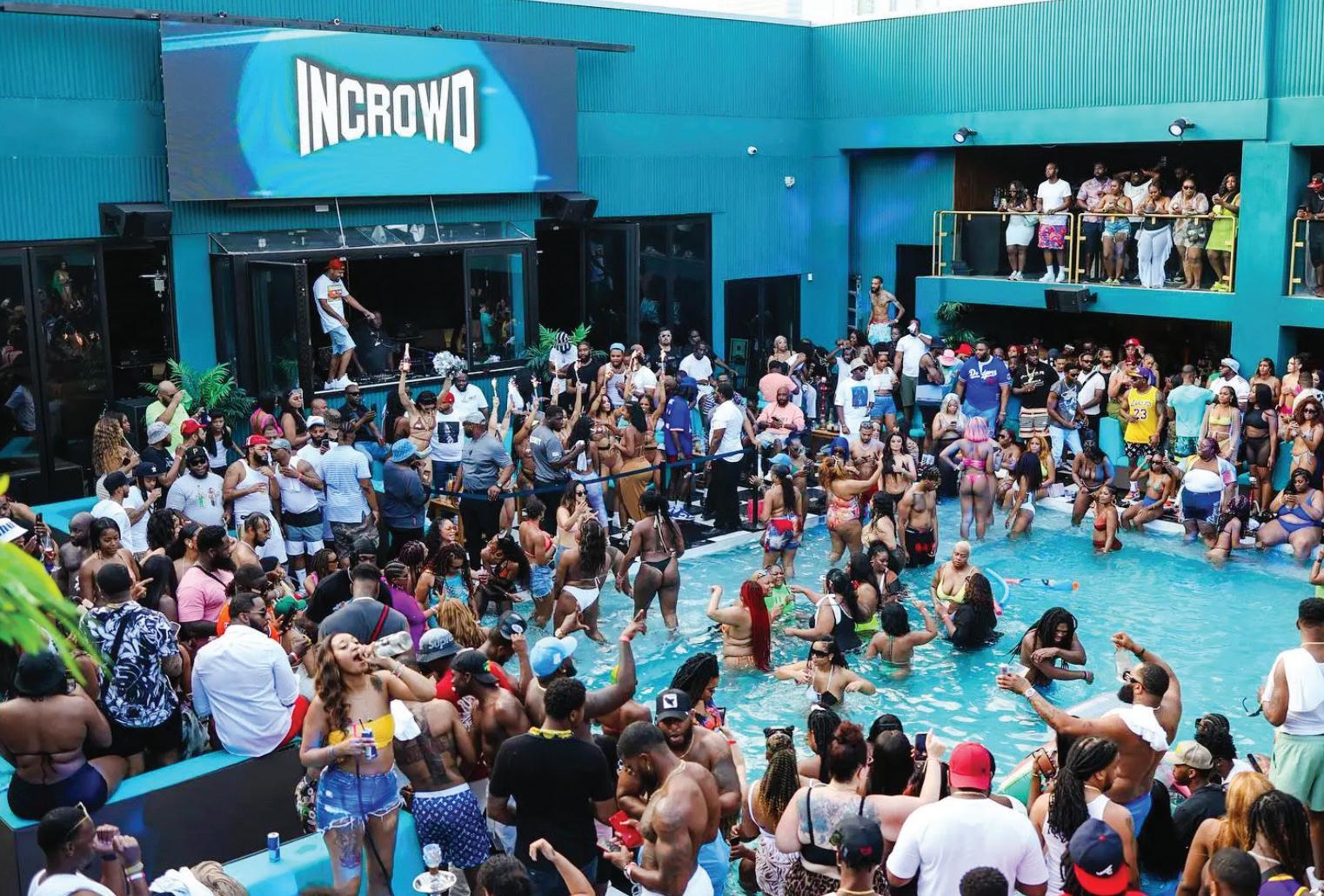
Sekai, a Houston day and nightclub, was part of Anosh Ahmed’s collection of businesses in Houston. | FACEBOOK
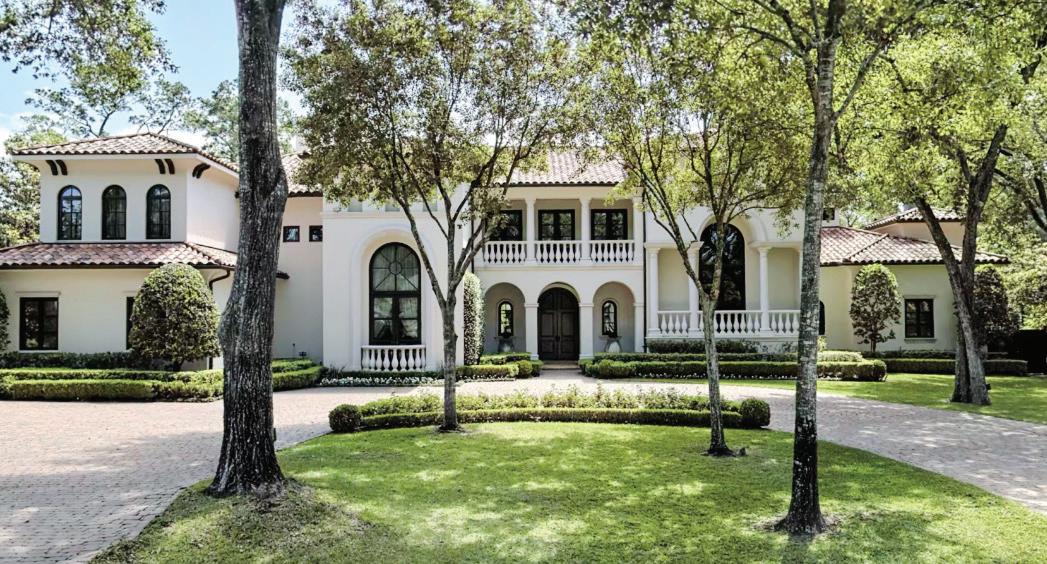
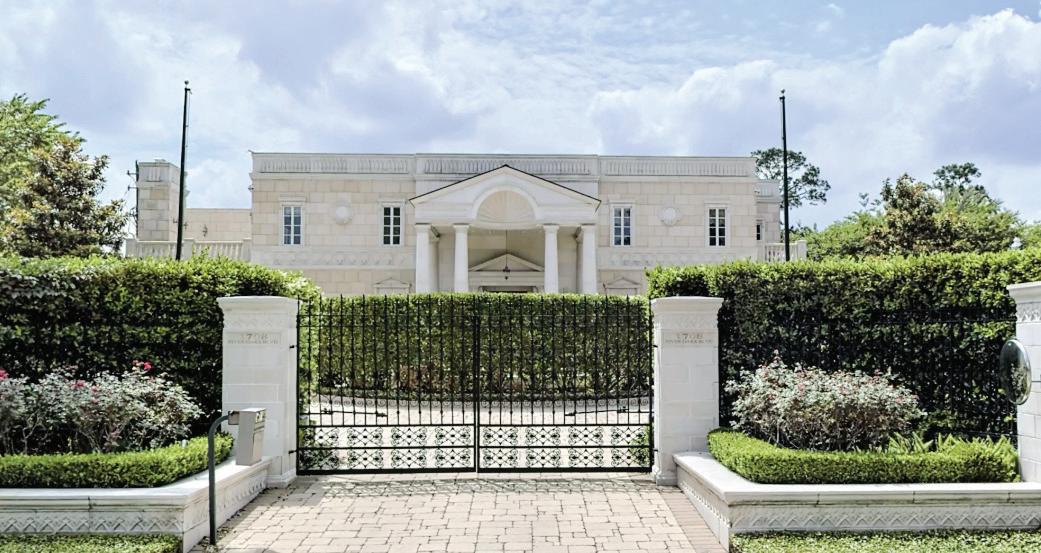
Federal prosecutors seek to seize this home in Houston as part of their case against Anosh Ahmed. Records show Ahmed’s company granted it to a relative. | APPLE MAPS
Records showed Anosh Ahmed lived at this Houston mansion, which had six bedrooms, an indoor pool, a wine cellar, sauna and gym. | GOOGLE MAPS
Anosh Ahmed has begun using edited photos that put his head on someone else’s body — such as this one — as he’s worked to rebuild his reputation using press releases. | PROVIDED
New SNAP Work Requirements Threaten Recipient Eligibility
The requirements change, which took effect Feb. ,1 requires recipients to work or volunteer
By JENNA SCHWEIKERT & UIS PUBLIC AFFAIRS REPORTING (PAR) Capitol News Illinois
New work requirements for the Supplemental Nutrition Assistance Program went into effect Feb. 1, threatening benefits for hundreds of thousands of Illinoisians.
Adults aged 18 to 64 without dependents under age 14 are now required to work, participate in SNAP Employment and Training programs, or volunteer for at least 80 hours per month to receive benefits. Previously, only adults aged 18 to 54 without dependents under age 18 had to meet those requirements.
H.R. 1, known as the “One Big Beautiful Bill
Act,” set these new SNAP requirements and made changes to many other federal programs when it was signed into law in July 2025.
Up to 340,000 Illinoisians are at risk of losing their benefits with the new requirements, according to the Illinois Department of Human Services. Adults who do not meet the requirements can only receive SNAP benefits for up to three months in a three-year period.
As of September 2025, nearly two million Illinois residents were using SNAP benefits, according to the U.S. Department of Agriculture.
Most SNAP recipients must meet general work requirements by applying for and accepting available work, participating in SNAP Employment and Training, and not voluntarily quitting or reducing work hours below
30hours a week without good reason.
Some recipients are automatically exempt from this requirement based on factors like age, while others must submit exemption forms if they meet other criteria like homelessness or certain health conditions.
A smaller group of SNAP recipients known as ABAWDs, or able-bodied adults without dependents, must meet further requirements if they are not exempt.
H.R. 1 made two major changes by modifying the definition of ABAWDS and implementing more work requirements for the newly defined population, ending Illinois’ long-term work requirement waiver for existing ABAWDs, according to IDHS.
“Trump’s budget bill is designed to deliber-
ately prevent Americans and Illinoisans from receiving assistance through the SNAP program by implementing new requirements that burden states and individuals who rely on this 100 percent federally funded benefits resource,” Summer Griffith, a spokesperson for IDHS, said in a statement.
SNAP recipients must also continue to update their income and household information to ensure they are receiving the correct benefits and meeting the applicable requirements.
“The Illinois Department of Human Services is communicating with SNAP participants regarding upcoming changes to SNAP and continues to provide support as people navigate new processes and changes imposed by the Trump Administration,” Griffiths said.
Sean Grayson Receives Maximum Sentence for Murder of Sonya Massey
By DEAN OLSEN Illinois Times
A Sangamon County judge last month gave former Sangamon County Sheriff’s Deputy Sean Grayson the maximum sentence — 20 years in prison — for the July 2024 murder of Sonya Massey, culminating a nationally publicized case that led to ongoing discussions and action locally to bridge racial divides.
A cheer went up in the courtroom, and Donna Massey, Sonya’s mother, said, “Thank you God, thank you God,” as the hearing concluded.
Members of Massey’s family, who were calling for the maximum sentence possible and were disappointed with the jury’s second-degree murder verdict, said they considered the 20-year sentence a victory.
Cliff Jones, an investigator for the Ben Crump civil rights law firm, which represents the Massey family, said the sentence “represents another meaningful step towards justice for this family.”
He added, “This outcome confirms a critical principle, that no one is above the law, and unlawful use of force will carry meaningful consequences.”
The Crump law firm previously negotiated a $10 million settlement for the Massey family from Sangamon County government to avoid a wrongful death lawsuit against the county.
Sonya Massey’s 16-year-old daughter, Summer, told the news media after the sentencing hearing that she was grateful for the sentence
and grateful to prosecutors and others who sought justice for her late mother.
“Twenty years is not enough, but they did what they could do,” she said.
James Wilburn, Sonya Massey’s father, said he wants to see the Illinois General Assembly lengthen the maximum sentence for second-degree murder.
“But right now,” he said, “I’m just overwhelmed with joy. We prayed that this would happen.”
Family members of Grayson declined comment after the sentencing.
But after the decision by Circuit Judge Ryan Cadagin, Sean Grayson could end up serving less than half of that time in prison. That’s because a Peoria County jury on Oct. 29 found the 31-year-old Riverton resident, originally charged with first-degree murder after the shooting death of Massey, 36, in her Woodside Township home, guilty of the lesser offense of second-degree murder.
Grayson, who is white, killed Massey, a Black, unarmed single mother of two teenagers, in a rapidly progressing confrontation over Grayson’s fear that Massey would harm him with a pot of hot water from the stove of her kitchen.
Grayson’s profanity-laced comments toward Massey, her soft-spoken yet firm comment, “I rebuke you in the name of Jesus,” and Grayson’s fatal shot to Massey’s head were all captured on police-worn body camera video footage of the exchange. The footage went viral on the in-
ternet and was played to the jury at trial.
Grayson would have been ensured a prison sentence of 45 years to life if convicted of first-degree murder because of enhancements related to the use of a gun and state law requiring that defendants serve 100% of a sentence for certain crimes.
The jury decided that Grayson’s actions met the legal standard for first-degree murder but that his belief he was acting in self-defense – even though that belief was unreasonable – was a mitigating factor justifying a finding of second-degree murder.
With time already served behind bars and because the second-degree charge allows the sentence to be reduced by half for good behavior, Grayson could be released in about 8½ years.
Grayson’s lawyers, who recommended the judge give Grayson a six-year sentence, indicated they will appeal the sentence to a higher court.
One of the arguments for leniency made by Grayson attorney, Mark Wykoff, before sentencing was that a long incarceration would worsen Grayson’s medical conditions.
Wykoff said Grayson was diagnosed with advanced colon cancer in 2023 and that since then, the cancer has spread to his liver and lungs. Wykoff said Grayson also has been diagnosed with rectal cancer.
But Judge Ryan Cadagin rejected Wykoff’s argument. Cadagin said no evidence was presented that the medical care Grayson would
receive from the Illinois Department of Corrections would be less than he has been receiving while being held at the Sangamon County Jail.
Dressed in a black-and-white striped jail uniform, Grayson told Cadigan before sentencing was announced that he was sorry for his actions and for the trauma he caused the Massey family.
“I understand that they’re angry,” Grayson said. “I hope one day they can be forgiving.”
Harkening back to the early morning hours of July 6, 2024, inside Massey’s home, Grayson told the judge, “I was very unprofessional that night.”
Grayson said Massey didn’t deserve to be addressed in the way he spoke to her.
“I made a lot of mistakes that night,” he said. “I made terrible decisions. I’m very sorry.”
Cadagin denied Grayson’s request for a new trial after Grayson’s lawyers, Dan Fultz and Mark Wykoff, argued, among other things, that the judge erred in allowing the jury of nine women and three men to hear Grayson’s disparaging remarks about Massey after the shooting.
Grayson’s lawyers have the option of filing an appeal with a higher court in the coming weeks. Massey’s death and the ensuing protests in Springfield and in other cities led to the formation locally of the Massey Commission.
The citizen group recently finalized a range of recommendations for improving relations with the public and the police, boosting services for people with mental illnesses, and reducing economic disparities between Blacks and whites.