Two Upcoming Austin Art Projects to Showcase Black Culture, Local Artists
A Black History Month Museum at the Aspire Center and “Winter Florals” exhibition at Third City Studio to kick off the new year
BY MICHAEL ROMAIN The Culture
Apair of art events scheduled for this winter and early spring invite Chicagoans to explore both contemporary creation and the rich history of art collecting within the Black community.
On Jan. 30, Third City Studio in Austin will open “Winter Florals,” a seasonal art exhibition featuring floral-inspired works from a group of local artists. The show, running through March 7 at 5538 W. North Ave., opens with a reception from 4 to 7 p.m., including live music and refreshments. Featured artists include Jessica DuPreez, Aquarius Ester, Naomi Johnson, and others. The event also highlights a musical performance scheduled for 5:30 p.m., part of the gallery’s ongoing efforts to make arts experiences accessible on Chicago’s West Side.
Third City Studio pioneered its creative hub model when it opened in 2025 as part of a broader plan to help transform North Avenue into a community arts district. In addition to rotating exhibitions, the nonprofit arts space supports workshops, youth programs, and exhibitions designed to bridge professional art practice with neighborhood engagement.
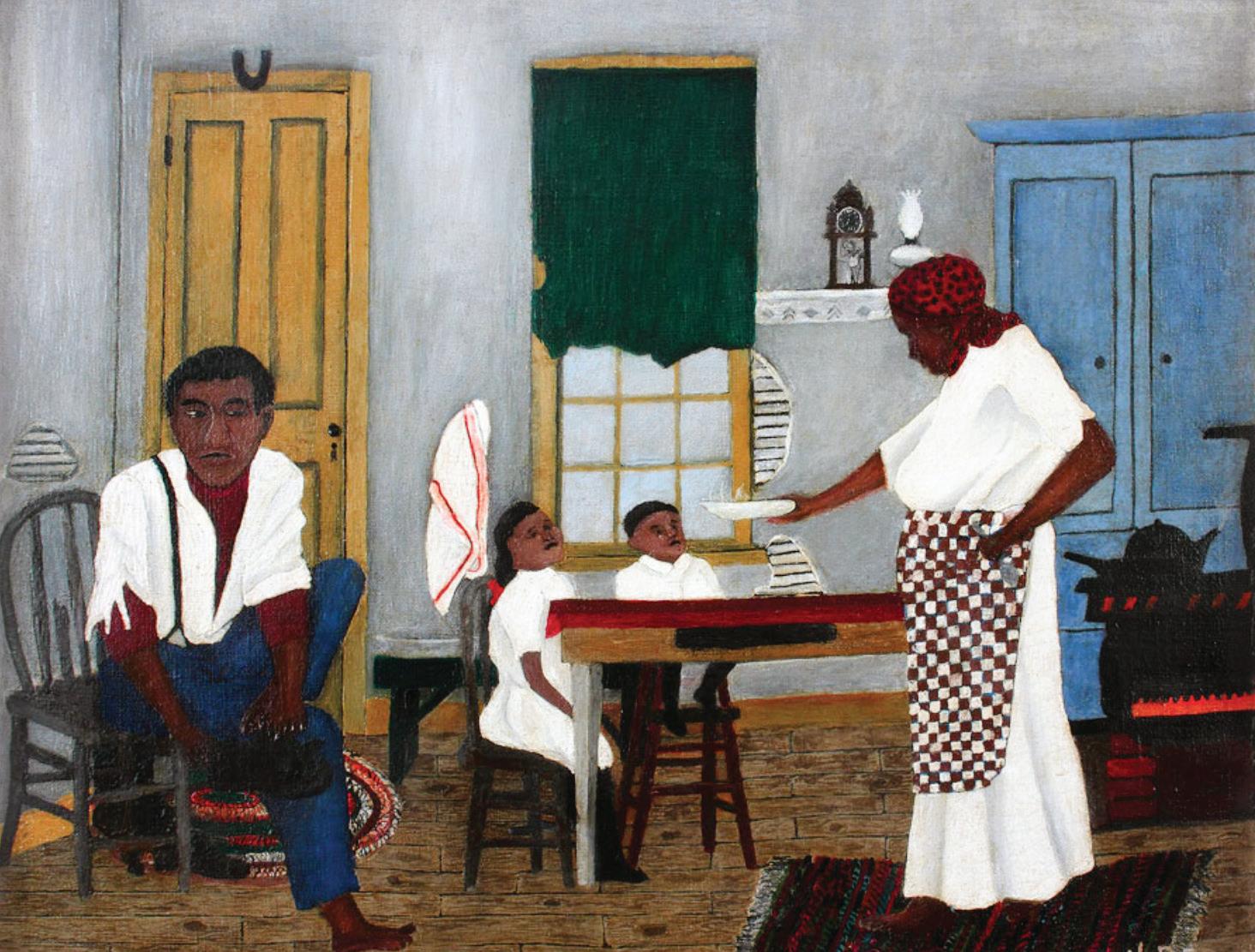
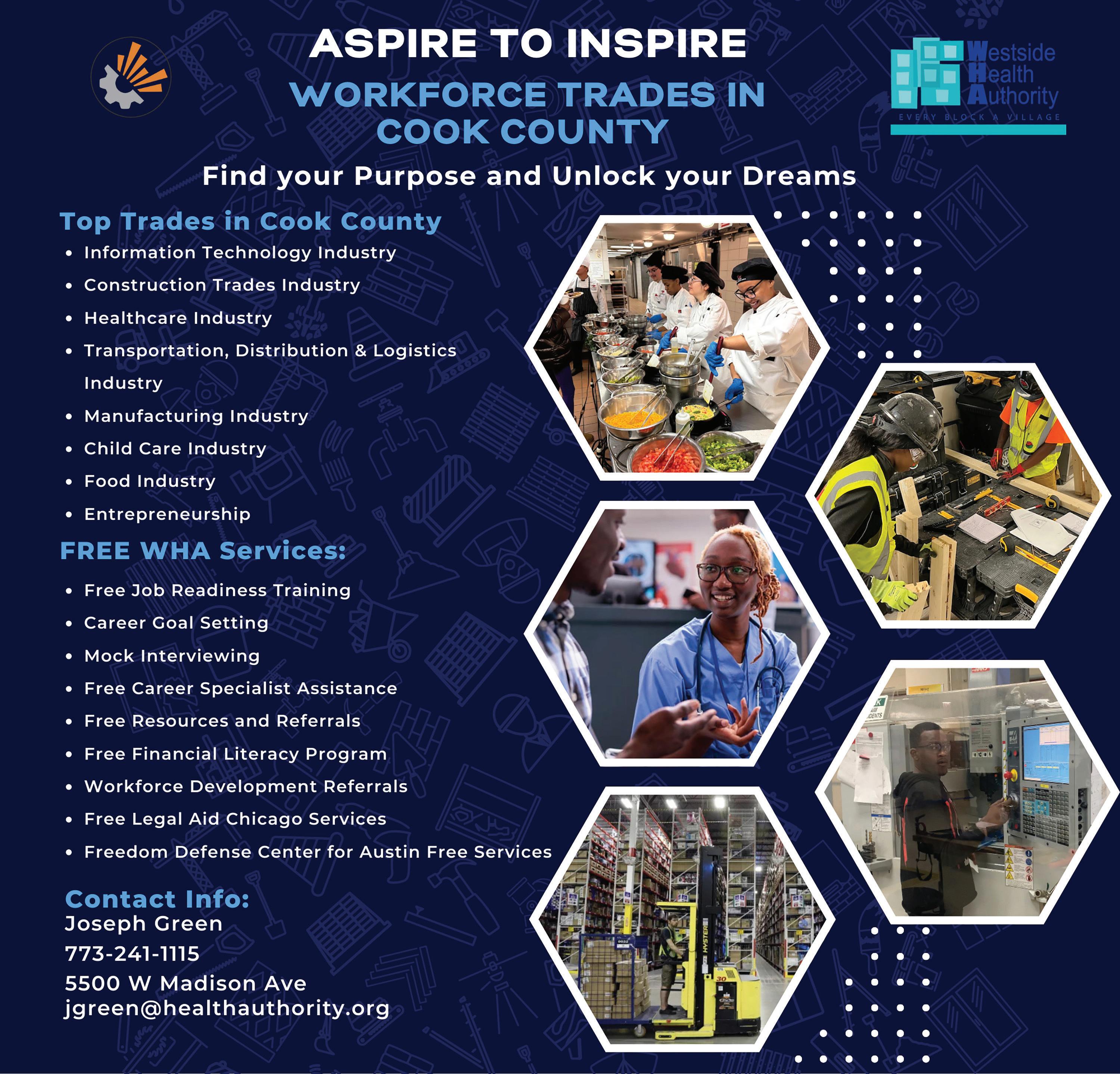
Meanwhile, on Feb. 1, Westside Health Authority will open the Black History Month Museum inside the Aspire Center for Workforce Innovation, 5500 W. Madison St. The Museum, centered on the theme “Black Art Collectors: Preserving Our Legacy,” will be an immersive exhibition that highlights the contributions of Black art collectors who play a vital role in preserving, protecting and passing down works by Black artists.
Organizers will launch the initiative with an opening reception on Feb 1, and the exhibition will run throughout Black History Month. The exhibition will be free and open to the public, offering attendees a chance to learn about the individuals and organizations behind the artwork.
Additional programming, conversations, and gatherings will be announced throughout the month. Meanwhile, community
members who collect art are invited to consider participating in the exhibition by loaning artwork to be exhibited for the month, donating artwork to become part of the Aspire Center’s permanent display, and/or offering artwork for sale, with 100% of proceeds donated to support the Aspire Center.
Learn More
Details on submission guidelines, timelines, and artwork-handling for the Black History Month Museum, contact Rosie Dawson at (773) 573-6920. Learn more about the exhibition at Eventbrite. Learn more about the “Winter Florals” exhibition by visiting thirdcitystudio. org/events, by emailing (773) 850-0111, and/or info@thirdcitystudio.org.
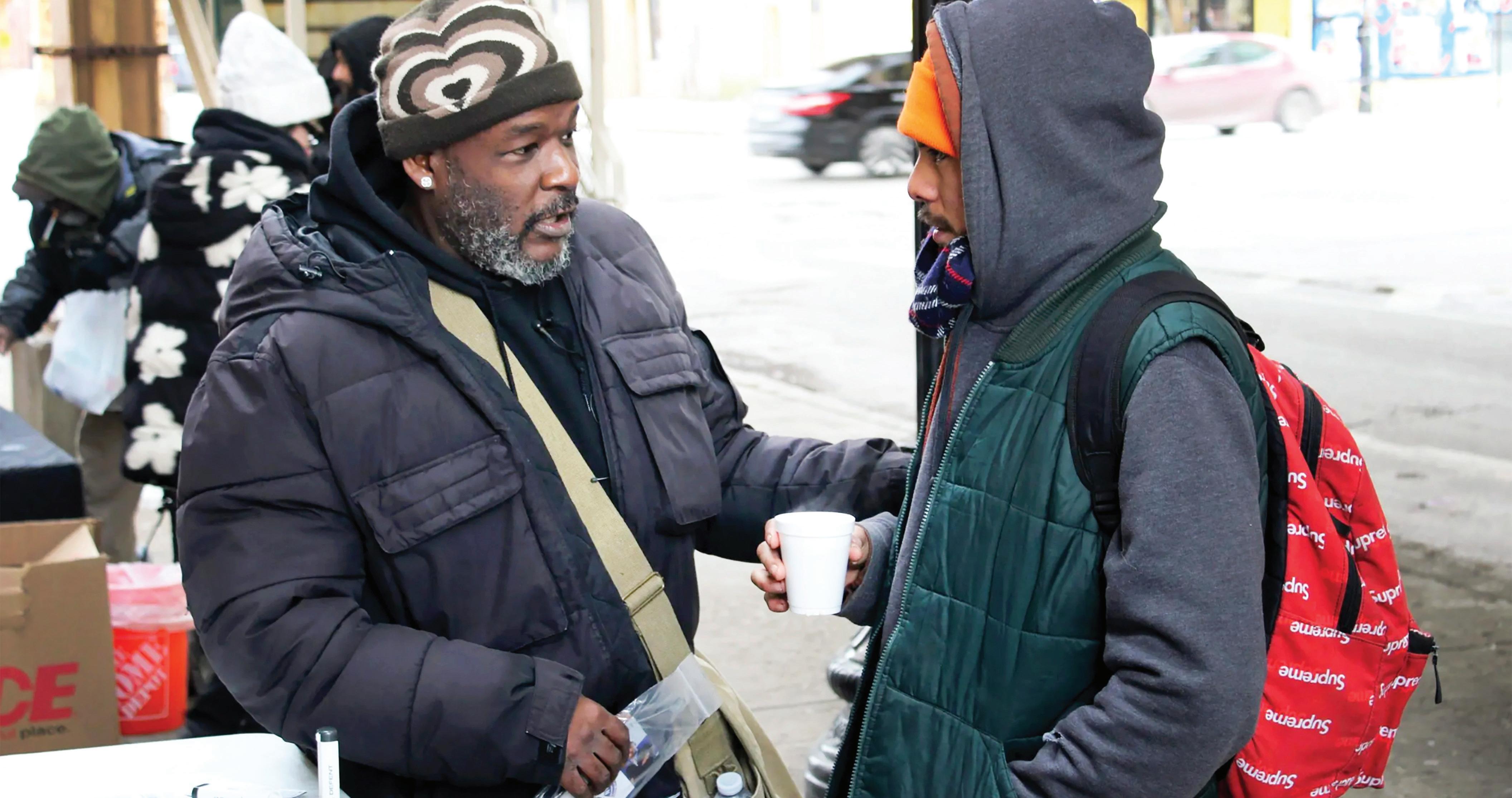
On The Cover Members of the West Side Heroin/Opioid Task Force underneath the Pulaski Green Line stop steps away from their headquarters at 310 N. Pulaski Rd. | MICHAEL LIPTROT/BLOCK CLUB
Carnival masks created from papier-mache and acrylic paint by artist Juan Roman on display at Third City Studio's grand opening celebration in 2025. | FILE
Sunday Morning Breakfast by Horace Pippin, 1943, oil on fabric, 16 x 20 inches. Saint Louis Art Museum. Westside Health Authority will host a Black History Month Museum throughout February to honor the rich history of Black art collecting. | PUBLIC DOMAIN
Madison Street Athletic and Cultural Complex Planned for East Garfield Park
The $42 million redevelopment of vacant city lots will include an indoor baseball diamond, a music studio, a cafe, and an academic center
BY MICHAEL LIPTROT Block Club Chicago
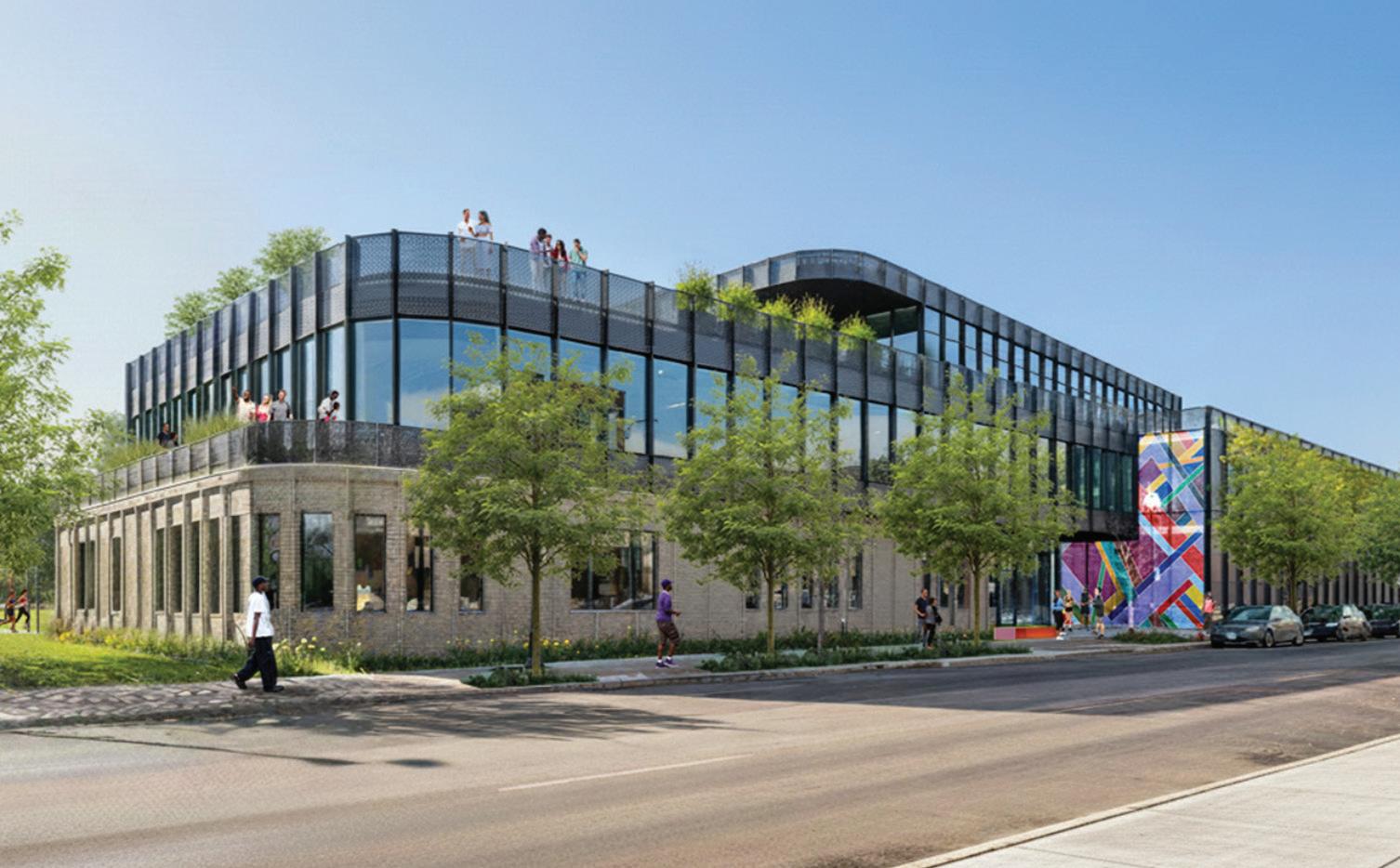
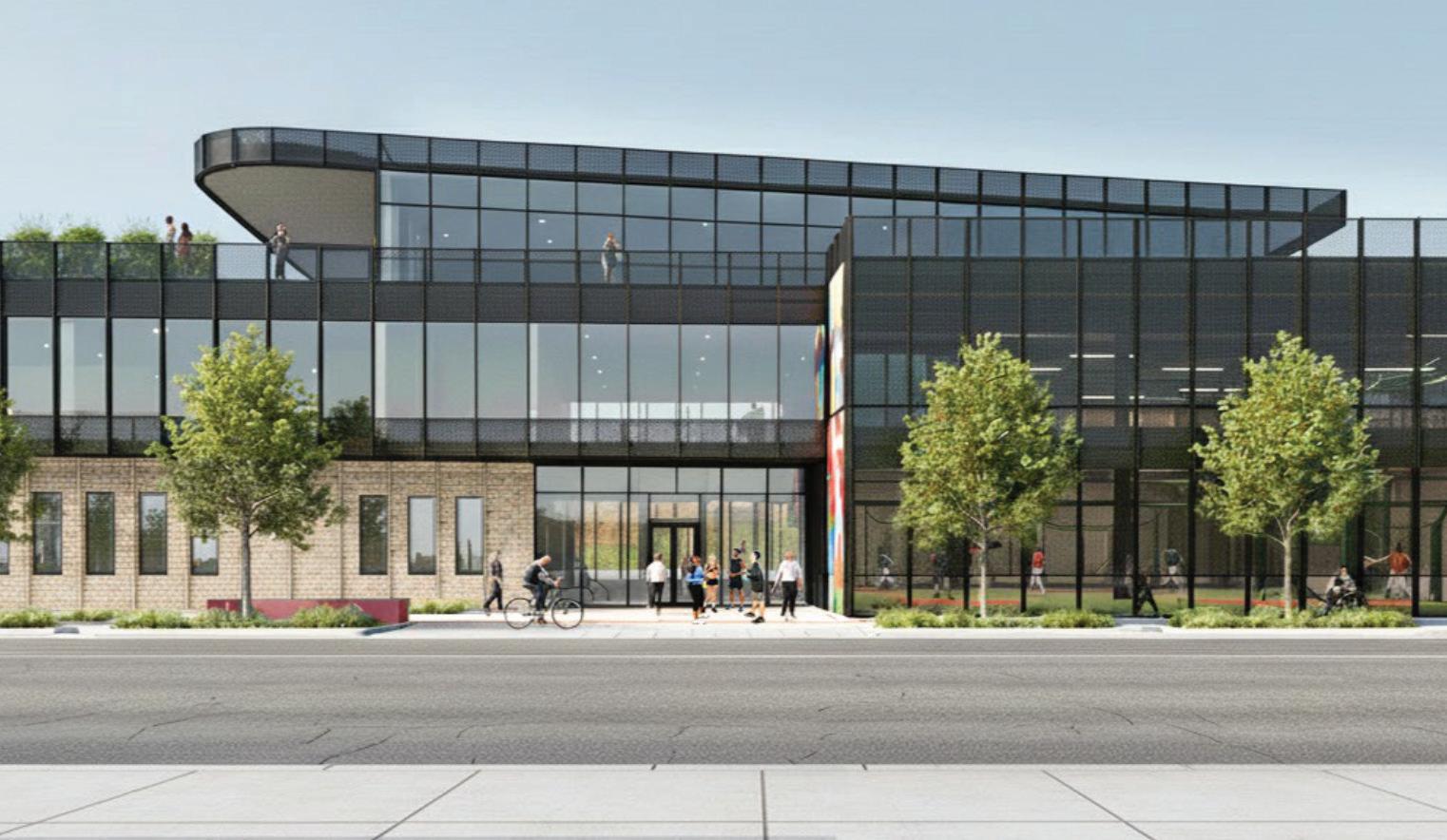
EAST GARFIELD PARK — A new athletic and cultural center is coming to East Garfield Park as the latest major development on the Madison Street corridor.
The Madison Street Athletic & Cultural Complex will be built on vacant lots in the 2900 block of West Madison Street and will include sports facilities, an academic learning center, and an arts and culture hall, the Department of Planning and Development announced Jan. 14.
The center will also include a music and media studio, a cafe, a teaching kitchen, an indoor
baseball diamond, event space, parking, and outdoor space, development Commissioner Ciere Boatright said in the announcement.
The $42 million project was selected by the city through a request for proposals launched last fall to “create new neighborhood amenities, and employment and residential opportunities,” according to the request. It will be built on city-owned lots that will be sold for roughly $996,000, its appraised value, according to the Department of Planning and Development. Developers of the project want to build on the growth slated for the Madison Street corridor and greater West Side in the wake of the $7 billion 1901 Project, which will redevelop land around the United Center to bring music venues, retail, hotels, green space, and afford-
able housing to the area.
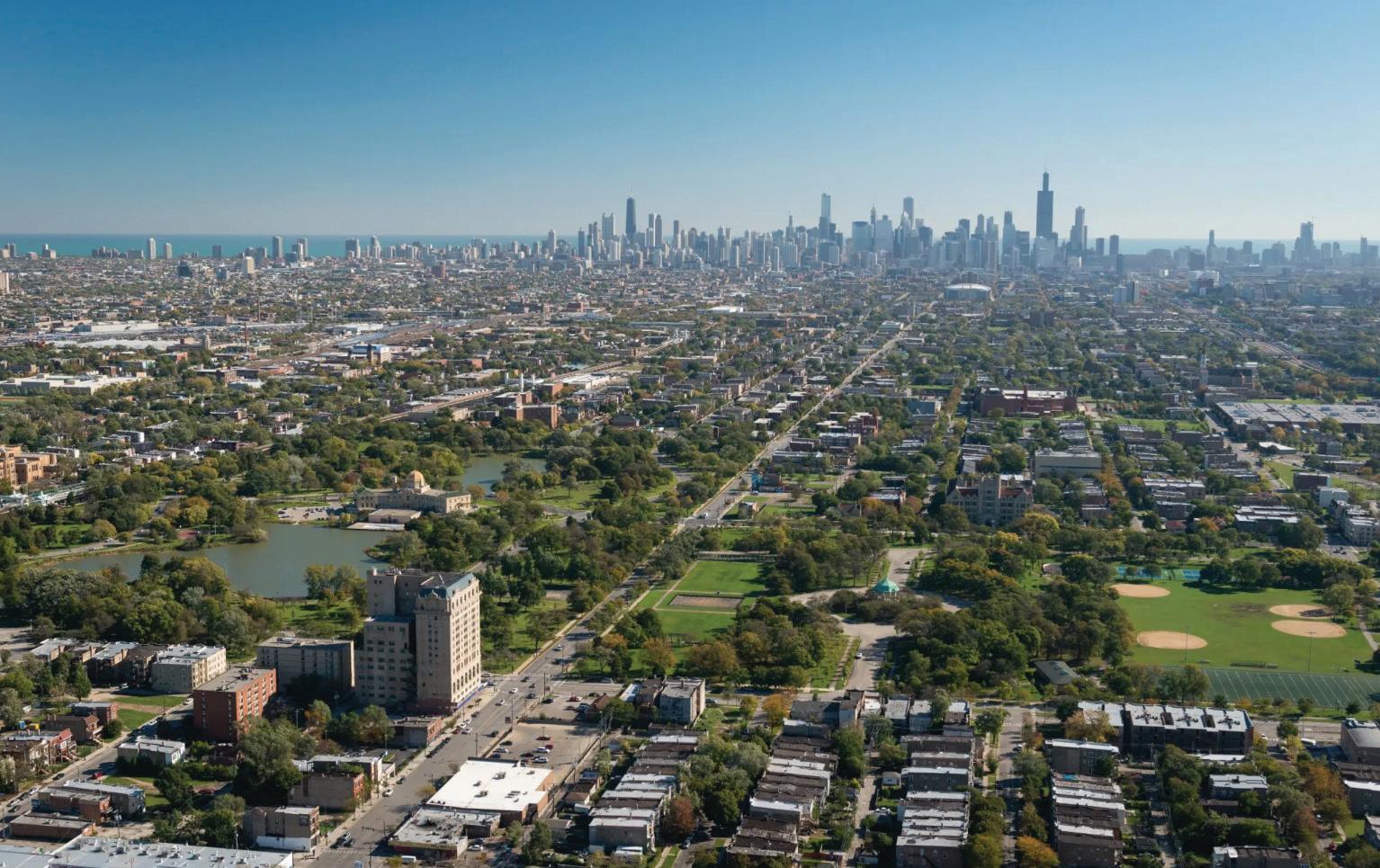
The development site also resides within the Madison Street Corridor Study, also from the Department of Planning and Development, which seeks to bring similar long-term investments to revitalize the corridor and the Greater West Side. The study is focused on a 3-mile stretch of the street from Hoyne Avenue to Kenton Avenue.
“The project’s strategic mix of uses and high-quality design will contribute to Madison Street’s ongoing revitalization while supporting community health and well-being, especially for area youth,” Boatright said in
a news release.
The team behind the project is minority-led and West Side-based, including Black-owned construction company BOWA as general contractor, according to the city. The Brim Foundation and P3 Markets, the local firm behind projects including Bronzeville’s 43 Green, are teaming up to develop the center.
The project could receive up to $10 million in city grants to help with its buildout, pending City Council approval. Next steps for the project include a community meeting with 27th Ward leaders to discuss the development, according to city officials.
The Madison Street Athletic & Cultural Complex was announced Wednesday as the winning proposal of the Department of Planning and Development’s effort to redevelop Madison Street in East Garfield Park at 2905-29 W. Madison St. and 2900-14 W. Fifth Ave. | PROVIDED, BKL ARCHITECTURE LLC
The Madison Street Athletic & Cultural Complex was announced Wednesday as the winning proposal of the Department of Planning and Development’s effort to redevelop Madison Street in East Garfield Park. | PROVIDED, BKL ARCHITECTURE LLC
An aerial view of Madison Street. | PATRICK L.PYSZKA, SAMUEL SOTELO-AVILA, CITY OF CHICAGO
Content Warning
This story contains descriptions of domestic violence and abuse. If you or someone you know needs help, contact the Illinois Domestic Violence Hotline at 877-863-6338.
BY MINA BLOOM Block Club Chicago
It was the first day of a new year and the last day of Martina Mosby’s life.
Mosby, 43, was ringing in 2025 with her 18-year-old daughter and her longtime boyfriend, Reginald Freeman, in their North Lawndale home when she and Freeman began arguing. Mosby’s daughter stood between them and tried to break up the argument, but tensions escalated. Freeman then shot Mosby several times, and after she fell to the ground, he shot her again several more times, police said. Investigators recovered 11 shell casings from the scene, according to prosecutors.
Mosby, a home care nurse and mother of three, was taken to the hospital, where she died from her wounds. Freeman was charged with first-degree murder and is now awaiting trial. He has pleaded not guilty.
“I know I’m not supposed to hate people, but I think I hate [Freeman] because he took my best friend from me,” Mosby’s longtime friend Val Stevens told Block Club Chicago through tears.
Mosby was the first of at least 63 Chicagoans killed in a domestic homicide in 2025.
While homicide totals and most other violent crime figures dropped in Chicago last year, homicides that resulted from domestic violence increased by 15 percent, according to the city’s violence reduction dashboard.
The dashboard tallied 52 domestic violence homicides in 2025, which doesn’t count 11 people included in police data Block Club obtained through a public records request. The dashboard, run by the Mayor’s Office, categorizes domestic crimes differently than the Chicago Police Department. Dashboard data also shows domestic fatal shootings alone spiked by more than 50 percent, the highest single-year increase since 2020.
In addition, a “record-breaking” number of calls were made to the Illinois Domestic Violence hotline last year, according to Madeleine Behr with The Network: Advocating Against Domestic Violence, a coalition of lo-
CHICAGO’S DOMESTIC HOMICIDES SURGED
LAST YEAR EVEN AS OVERALL VIOLENT
CRIME DROPPED
Experts
say the increase is in part due to federal funding cuts to victim services
programs
and resources that we haven’t really been able to provide the way we want to,” Kuipers said.
“To see people in really severe danger, and then not being able to meet their needs and their resources. … It has felt very hopeless and frantic.”
‘STRAINED’ RESOURCES FOR SURVIVORS
Alex Hernandez, site coordinator at Family Rescue, grew up witnessing domestic abuse in her East Side household “very, very often,” which ultimately motivated her to work in domestic violence advocacy.
Finding stable housing is one of the ways Hernandez and other advocates try to help survivors get out of abusive situations. But Hernandez said she’s found that, in recent years, matching survivors with emergency housing has been “next to impossible.”
One mother enduring domestic violence recently turned to Family Rescue after she lost her job and couldn’t make rent. Case managers tried to connect the woman with court-based rental assistance and legal aid, but she was denied, in part because the program didn’t have capacity. Now the woman and her children are facing eviction, according to Kuipers.
Generally, when they’re denied services, survivors become more reliant on their abusers for shelter and other immediate needs like food and medical care, increasing their risk of further abuse, advocates said.
“There’s not enough shelter beds. When you have a survivor who has four children and one is a toddler or an infant … I’m not looking for one bed, I’m looking for five beds and a crib,” Hernandez said.
In many situations, relocating would make a survivor safer but “you just can’t do it because [the shelter and low-income housing system] doesn’t move fast enough,” she said.
cal organizations. The Network will release exact figures in a report this spring.
Advocates say the surge in violent abuse is due to “a tornado of risk factors,” including longstanding issues exacerbated by the COVID-19 pandemic and its aftermath, such as unstable employment, food insecurity, and homelessness.
At the same time, the need for services has increased, and many community orga-
nizations and nonprofits are facing budget cuts and restricted federal funds. Some have had to stop accepting new clients because wait lists are too long, Behr said.
Tessa Kuipers, program director and policy advisor for Family Rescue, a South Side-based community service provider, described the current climate as “helpless.”
“‘Helpless’ is a really sad word to use, but it has felt like there’s just a level of services
Last year, more than 80 percent of domestic homicides happened on the South and West sides, according to police data that includes domestic homicides through Dec. 11. The records show the victims were a mix of men and women, the majority of them Black.
Chicago has long struggled with elevated gun violence, which has led to significant financial investment in violence prevention. In 2024, city and state officials reached a fundraising milestone, allocating $100 million to community violence intervention with the goal of reducing shootings and homicides by 75 percent over the next decade.
But advocates say not enough funding and
Val Stevens (left) and Martina Mosby were practically inseparable growing up together in Chicago Lawn. Stevens said they remained close for years and only drifted apart as Mosby’s relationship with her longtime boyfriend Reginald Freeman progressed. | PROVIDED
attention has gone specifically to domestic violence prevention, which may be one reason why homicides have increased.
ADAPTING TO SERVE THOSE LEFT BEHIND
Domestic homicides involve people who know each other, sometimes intimately. Perpetrators often attack or shoot at a shorter range, increasing the likelihood of fatal injuries, Behr said.
Mosby and Freeman dated for more than a decade. As the years went on, Mosby became more secretive and even refused to share their home address with her closest friends, Stevens said. Eventually, Mosby only spent time with Freeman.
“Not being able to tell her address isn’t Tina. That definitely wasn’t her, especially when it came to me,” Stevens said. The two had grown up together on the South Side and were so close that people referred to them as the “Doublemint twins.”
In an emailed statement, Matthew Hendrickson, spokesperson for the Cook County Public Defender’s Office, said Freeman pleaded not guilty to charges, “which are only allegations and have not been proven in a court of law.”
In lieu of investment in preventative resources, many survivors turn to the legal system for help. Still, according to police data, many domestic homicides went unsolved last year. In eight of the 63 domestic homicides recorded through mid-December, police said they identified the killers, but prosecutors didn’t approve charges. And in the remaining 55 cases, 45 per-
cent were unsolved as of mid-December.
Family Rescue helps run a multi-disciplinary program dedicated to identifying high-risk survivors — people who are at greater risk of getting injured or killed by their abusers. The program is a partnership between several community organizations and city agencies, including the Chicago Police Department and the Cook County State’s Attorney’s Office.
Through the program, which launched back in 2014, police officers give survivors a domestic violence assessment at the scene of an incident. That report is then shared with Family Rescue and other community organizations for further evaluation.
On average, those “risk scores” have been markedly higher the past few years, Kuipers said.
Yet community organizations can’t keep up with the overwhelming demand for services, advocates said. Some have shifted focus to help serve those left behind after a domestic homicide.
Life Span, a local nonprofit, has for decades provided legal representation and court advocacy to survivors and victims of domestic violence, sexual assault, and human trafficking across Cook County.
But last year, with domestic fatal shootings on the rise, the organization began regularly offering an additional set of legal services: guardianship and power-of-attorney authorization. The effort started with a guardianship case in 2024, when an elementary-age child was left alone after their mother was killed in a domestic attack and their father was incarcerated pending a murder trial.
funding and supports making “ongoing” investments to shelters and other community organizations that provide services to survivors.
Yet many nonprofits across Cook County have seen their budgets slashed due to cuts to federal grant programs during the Trump presidency.
These legal arrangements help survivors establish caregivers who can make personal or financial decisions for their children or themselves if they die or are incapacitated.
Life Span went on to handle more than 100 guardianship and power-of-attorney cases last year, a massive increase from previous years when the organization handled roughly 15 cases a year, said Amy Fox, the organization’s executive director.
“No one wants to think about the fact that your abuser might murder you, but it is a real truth, and you can be prepared for it,” Fox said.
The large increase was also driven significantly by Life Span’s efforts to help immigrant domestic violence survivors and their families if someone in the family is arrested or deported during the federal immigration roundups, Fox said.
FEDERAL FUNDING WOES
Even as advocacy organizations aim to adapt to the increased need, they fear resources may become even harder to come by, as the Trump administration continues to target Illinois with federal cuts to essential services. The administration recently attempted to freeze approximately $1 billion for child care and social services in the state, but a federal judge temporarily halted the move.
Mayor Brandon Johnson’s initial budget slashed city funding for gender-based violence services by more than 40 percent. But after fierce pushback from organization leaders and survivors, Johnson put forth a proposal that restored $9 million in funding for gender-based violence services such as rapid re-housing and counseling. That was part of the final budget passed by the City Council last month.
In an interview with Block Club, Johnson said he “fought hard” to replenish the city’s
Resilience, a rape and sexual assault crisis center, had to terminate six full-time positions after losing half a million dollars from the Victims of Crime Act (VOCA) program, organization leader Sarah Layden told Block Club in September. Funding for the federal program, supported by fines and penalties collected through federal criminal cases, is at an alltime low, in part because the Justice Department is reaching more settlements.
Many other organizations are bracing themselves for additional funding restrictions under the Trump administration.
Family Rescue runs a 36-bed shelter that is funded by the U.S. Department of Housing and Urban Development. Kuipers said
the federal government has threatened to change funding requirements for such projects, which has left them in a financially precarious position until the department releases its final budget in the spring.
Meanwhile, incidents of domestic violence haven’t slowed, advocates said.
Stevens herself escaped domestic violence a few years ago. She left the relationship after getting therapy at Family Rescue.
“I was so close to wanting to go back, but I was going to those meetings, I kept firm and strong, and I didn’t go back to this particular situation. It very much helped me,” she said.
Stevens said she wishes her friend had done the same.
Martina Mosby (left) and Val Stevens were friends since childhood. Stevens was crushed when she learned Mosby had been killed. | COURTESY OF VAL STEVENS
Tessa Kuipers speaks outside the Circuit Court of Cook County, 555 W. Harrison St. on the Near West Side, on Sept. 3, 2025. | COLIN BOYLE/BLOCK CLUB CHICAGO
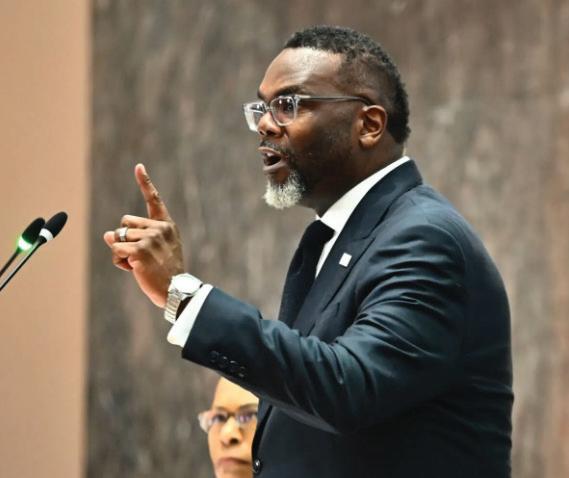
Mayor Brandon Johnson delivers his 2026 budget address to City Council on Oct. 16, 2025. | BLOCK CLUB CHICAGO
Chicago Public Schools to Borrow
More as It Faces Property Tax Revenue Delays
The board is expected to boost the amount borrowed by $400 million to $1.65 billion
BY MILA KOUMPILOVA
Chalkbeat Chicago
The Chicago school board is poised to increase the amount the district is borrowing to make payroll amid delays in receiving property tax revenue.
The board is expected to boost that amount by $400 million, to $1.65 billion — a change that district officials estimate will set the deficit-plagued Chicago Public Schools back about $6.6 million in added short-term borrowing costs.
District officials told the board earlier this month that they estimate that delays in receiving property tax revenue from Cook County have cost the district more than $70 million over the past eight years. This school year, they are costing CPS about $220,000 in interest costs a month — “a lot of money and definitely more than the cost of one teacher,” as school board member Carlos Rivas put it at a Wednesday meeting to review the board’s monthly agenda.
“All of these delays cumulatively have really been a pain point for us,” said Wally Stock, the district’s acting chief financial officer. In recent years, the delays have been caused by massive issues with the county’s efforts to update its computer system. The board will vote on the midyear increase in its short-term borrowing, which allows the district to keep paying its staff and vendors, at
its regular meeting in late January.
After the latest round of property tax delays, county tax bills went out in November, with a due date in mid-December. The district is in the process of receiving its revenue, almost eight months into the fiscal year, Stock told the board.
“I am optimistic and hopeful that with the new computer system, they will get back on the rails and get the bills out on time,” he said. But he added, “It’s hard to say.”
Cook County is helping some smaller suburban taxing districts weather the delays with a bridge loan program, but CPS does not qualify. Still, Rivas and other members suggested CPS officials should speak with county officials about the possibility of chipping in for the district’s swelling borrowing costs. Rivas said he worries the district will find itself once again navigating property tax revenue delays later this year.
“We need to keep putting pressure on our county folks to help us out,” he said.
Some fiscal experts have said that CPS should build up the kind of cash reserve that school districts with healthy finances set aside to weather unforeseen expenses or revenue delays without having to borrow in the short term. The district also has hefty long-term debt related to maintaining its portfolio of aging buildings, and the costs of servicing it are a significant drain on its budget.
At a special meeting during the district’s
CHICAGO PUBLIC SCHOOLS UNVEILS CALENDARS FOR THE COMING TWO
Chicago Public Schools is looking to start the 2026-27 school year on Aug. 24 and wrap it up on June 11, based on a proposed calendar the district unveiled Monday.
A tentative calendar for the following school year is also out, with an Aug. 23 start date and June 9 end date.
As in the current school year, both calendars include 176 student attendance days, four professional development days, four Teacher Institute days, four school improvement days, and two parent-teacher conference days. Also in line with this year’s calendar, students and staff will be off for the entire week of Thanksgiving. They will get a
winter recess, the board approved a modest property tax levy increase by a 15-to-5 vote, with board members arguing that CPS should tap any possible influx of dollars at a time of increasingly tight finances and looming deficits. That increase, which will cost the owner of a $250,000 home an additional $8 a year, will bring in an extra $40 million for CPS this fiscal year. It bumped up the levy amount to the maximum the district can set, which officials had slightly underestimated when they determined it back in the summer.
SCHOOL YEARS
two-week winter recess and a week off for spring break in late March.
The school board will review the calendars at a meeting this week and is expected to approve them at its regular meeting on Jan. 29.
The Chicago Teachers Union’s most recent contract, approved earlier this month, increased the number of teacher-led professional development days from three to six and decreased those directed by principals from nine to six.
Under the proposed calendar, the pre-K school year will once again start a day after the year for older students and will end a day earlier.
A Cook County spokeswoman said she couldn’t comment on the board members’ interest in redress for the added borrowing costs because that has not been communicated to the county. But she noted that as of earlier this week, nearly all taxing districts in the county have received 80% of their property tax distributions, and the remainder are being processed.
Mila Koumpilova is Chalkbeat Chicago’s senior reporter covering Chicago Public Schools. Contact Mila at mkoumpilova@chalkbeat.org.
The first day of school commences at Ombudsman Chicago South, an alternative high school. The district has unveiled its proposed calendars for the 2026-27 and 2027-28 school years. | LAUREN MILLER/ CHALKBEAT
Opioid Task Force Moves Office to West Side Corner That’s ‘Epicenter of Fentanyl Crisis’
The West Side Heroin/Opioid Task Force office is based at Lake and Pulaski, which it considers ground zero for the city’s opioid problem
ABY MICHAEL LIPTROT
Block Club Chicago
group working to prevent drug overdoses moved its offices to a West Side corner that it considers ground zero for the city’s fentanyl and opioid crisis.
The West Side Heroin/Opioid Task Force in October moved to a new office at 310 N. Pulaski Road, adjacent to the Pulaski Green Line stop. In making the move, the group is looking to build on previous successes in reducing overdose deaths — while also tackling the problem at its “epicenter,” officials said.
“We’re right here on Lake and Pulaski, which is the epicenter of the fentanyl crisis, or the overdose crisis,” said Fanya Burford-Berry, director of the task force. “We can just step right on outside to our work, and we can bring people back in, and then we can process and debrief what is going on on the West Side, when it comes to the drug issue.”
Last year, there were 15 opioid overdose deaths within a half mile of the Lake Street and Pulaski Road intersection, according to the Cook County Medical Examiner’s dashboard mapping opioid-related cases. The greater West Side also sees a disproportionate number of opioid deaths.
The areas near CTA stops have become hotspots for drug use, with the trains and their stations often providing shelter for people suffering from drug problems, task force members said. Narcan vending machines
have been added to several CTA stations across the city through a 2023 city pilot program, which last year expanded to include the nearby Harlem/Lake station.
Task force leaders said the new headquarters’ proximity to drug-use hotspots gives them an advantage when it comes to making inroads on the overdose epidemic.
Task force members and volunteers are in the community regularly, setting up on street corners and in community centers. People who encounter task force street teams can sign up to receive an overdose reversal kit, be trained on how to use the overdose reversal agent Naloxone, or be referred to drug treatment programs such as a methadone or suboxone clinic.
Last week, the task force partnered with medical device company Defense Diagnostics Inc. to distribute fentanyl detection devices underneath the Pulaski Green Line stop. The devices, of which 400 were donated to the task force, can help users detect if there is fentanyl in their drugs. Fentanyl, a synthetic opioid, is often added to illicit drugs and is a leading cause of overdose deaths.
The task force says partnerships like this and broader harm reduction efforts are largely driving the decrease in opioid overdose deaths by destigmatizing drug use and educating people on how to be safe. The group also partners with the state health department to provide Narcan, which can reverse overdoses.
“We have not seen a decrease in [drug]
usage for us, but rather an increase in people saying ‘We know we can go get Narcan … safe-use supplies … help and treatment,” Burford-Berry said.
Fewest Overdose Deaths In A Decade
The work of groups like the West Side Heroin/Opioid Task Force has helped reverse the trend in overdose deaths in Cook County.
Cook County saw the fewest opioid overdose deaths in a decade in 2025, according to preliminary data released by the Cook County Medical Examiner’s Office. This news comes following years of ramped-up outreach work, Narcan access, and harm reduction programs across the county.
Cook County saw opioid overdose deaths fall more than 41 percent last year, according to a county report. The 687 overdose deaths last year are the lowest in the county since 2015, which saw 676 deaths, according to the county. Last year’s overdose deaths are nearly a third of the pandemic-era peak of 2,001 reported in 2022.
Opioid overdoses in Cook County continue to be overwhelmingly male, with men accounting for 73 percent of overdose death cases in 2025, according to the report. African Americans make up the majority of overdose deaths in Cook County at 50 percent,
with whites and Latinos making up 32 and 17 percent of deaths, respectively. The age group most affected continues to be 50- to 59-year-olds, who made up 27 percent of last year’s cases, according to the report.
The youngest person to overdose in the county last year was a 2-year-old girl from Chicago. The oldest was an 85-year-old woman from Harwood Heights, according to the report. No further details were provided on the girl’s death.
Fentanyl was involved in 82 percent of overdose deaths last year, according to the report.
Burford-Berry said the task force plans to continue its boots-on-the-ground work to prevent overdoses. This year, the group will have an increased focus on behavioral and mental health, as well as reaching Black men over 50, a particularly vulnerable group to opioid use.
More
more Block Club Chicago stories at blockclubchicago.org. Contact reporter Michael Liptrot at michael@blockclubchi.org.
The West Side Heroin/Opioid Task Force partnered with medical device company Defense Diagnostics Inc. to distribute fentanyl detection devices underneath the Pulaski Green Line stop steps away from their headquarters at 310 N. Pulaski Rd. Credit: Michael Liptrot/Block Club Chicago. | MICHAEL LIPTROT/ BLOCK CLUB CHICAGO
A‘Missing Middle’ Housing Program Breaks Ground in North Lawndale
BY MICHAEL LIPTROT
Block Club Chicago
city initiative aimed at rebuilding middle-class housing in North Lawndale and other South and West side neighborhoods has broken ground less than a year after selecting development partners.
The Missing Middle Infill Housing Initiative began work on Jan. 6 on the first set of homes in the program: a series of two-flats being built on formerly vacant lots in the 3300 block of West Douglas Boulevard in North Lawndale. The first portion of the program will build seven two-flats on Douglas Boulevard, as well as on the 1400 and 1500 blocks of Trumbull and Homan avenues. The two flats are the first of a planned 115 market-rate housing units being built.
The Missing Middle initiative looks to revitalize and repopulate neighborhoods by building new, for-sale housing attainable to families looking to own in areas where such housing stock has been hollowed out. The initiative sells city-owned lots in the program to developers for $1, with the city subsidizing up to $150,000 per unit to develop forsale housing.
The city’s Department of Planning and Development chose Austin developer Citizens Building a Better Community last year for the first series of projects now underway. Homes built on these lots will be designed for homebuyers making less than 140 percent of the area’s median income, which is $134,400 for a two-person household, according to the city.
The city initiative to rebuild middle-class housing on the South and West sides kicked off with the construction of seven two-flats on formerly vacant lots Read More Read more Block Club Chicago stories at blockclubchicago.org. Contact reporter Michael Liptrot at michael@blockclubchi.org.
According to the program, two-flats are estimated to sell for $450,000-$550,000, and the project is expected to cost $5.4 million to transform the seven formerly vacant city lots.
Funding for subsidies comes from Mayor Brandon Johnson’s $1.25 billion housing and economic development bond. The mayor said Tuesday the bond is “intentionally designed to support the capacity for minority-led development teams” to build structures not supported in today’s housing market.
“As we continue to confront the housing crisis head-on, initiatives like Missing Middle address the critical disparities that exist in access to homeownership,” Johnson said. “With each project, we demonstrate what’s possible when government and community come together to lay the foundation for a more equitable and thriving city.”
Ald. Monique Scott (24th) praised the program as “an investment that strengthens the neighborhoods without pushing people out” at the groundbreaking.
“We’re providing development,” Scott said. “That does not have to mean displacement.”
Four additional projects are expected to break ground early this year as part of the Missing Middle program by minority-led developers Alteza Group, Westside Community Group, Beauty for Ashes, and Sunshine Management, according to the city. The five projects will collectively include 40 multi-unit buildings valued at over $37 million.
Since the initial round of developers in North Lawndale were chosen, the Missing Middle program expanded to select proposals from developers in Chatham, South
Chicago and Morgan Park to construct 31 multi-unit buildings, valued at $38.8 million, according to the city.
The Department of Planning and Development is currently reviewing a third round of developers for Missing Middle projects in McKinley Park, West Garfield Park, and East Garfield Park, with selections expected by this spring.
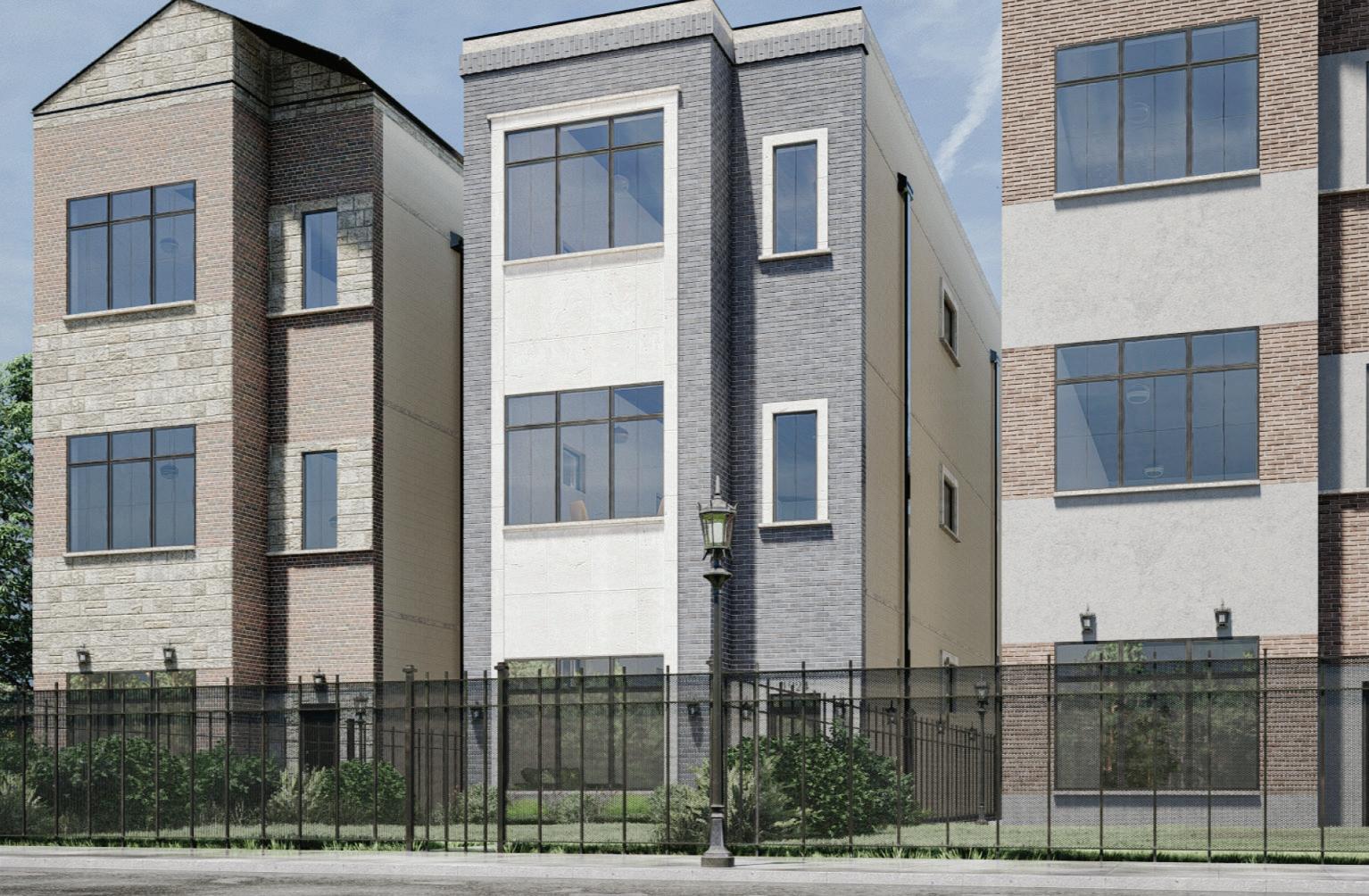
A rendering of a three-flat design by the Alteza Group LLC., who proposes receiving eight lots totaling 27,570 square-feet across Springfield Ave., Independence Blvd., Avers. Ave., Hamlin Ave. and 19th St. The project aims to build two-, three- and four-flats in these sites for an estimated project cost of $6.4 million. | PROVIDED
The Missing Middle Infill Housing Initiative broke ground on seven two-flats, the first set of homes in the program, on Tuesday afternoon at the 3300 block of W. Douglas Blvd. in North Lawndale with Austin developer Citizens Building a Better Community. | MICHAEL LIPTROT/BLOCK CLUB CHICAGO
Date: Tuesday, January 27, 2026
Time: Doors open at 5:30 p.m.
Forum begins at 6:00 p.m.
Location: Collins Academy STEAM High School, 1313 S. Sacramento Dr.
Chad
Anabel Mendoza
Jazmin J. Robinson
Felix Tello
Jason Friedman
David Ehrlichs
Thomas Fisher La Shawn K. Ford
Rory Hoskins
Anthony Driver, Jr.
Richard R. Boykin
Kina Collins
Melissa Conyears-Ervin
Patricia "P Rae" Easley
West Side and Suburban Forums Give Voters Early Look at 2026 Candidates
Events in Austin and Forest Park featured contenders for state and federal offices
BY MICHAEL ROMAIN
The
Culture
Two candidate forums held on the West Side and in the west suburbs offered voters an opportunity to engage with those seeking elected office.
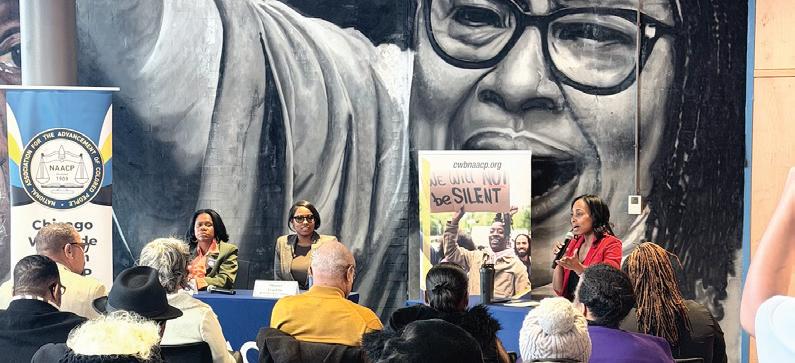
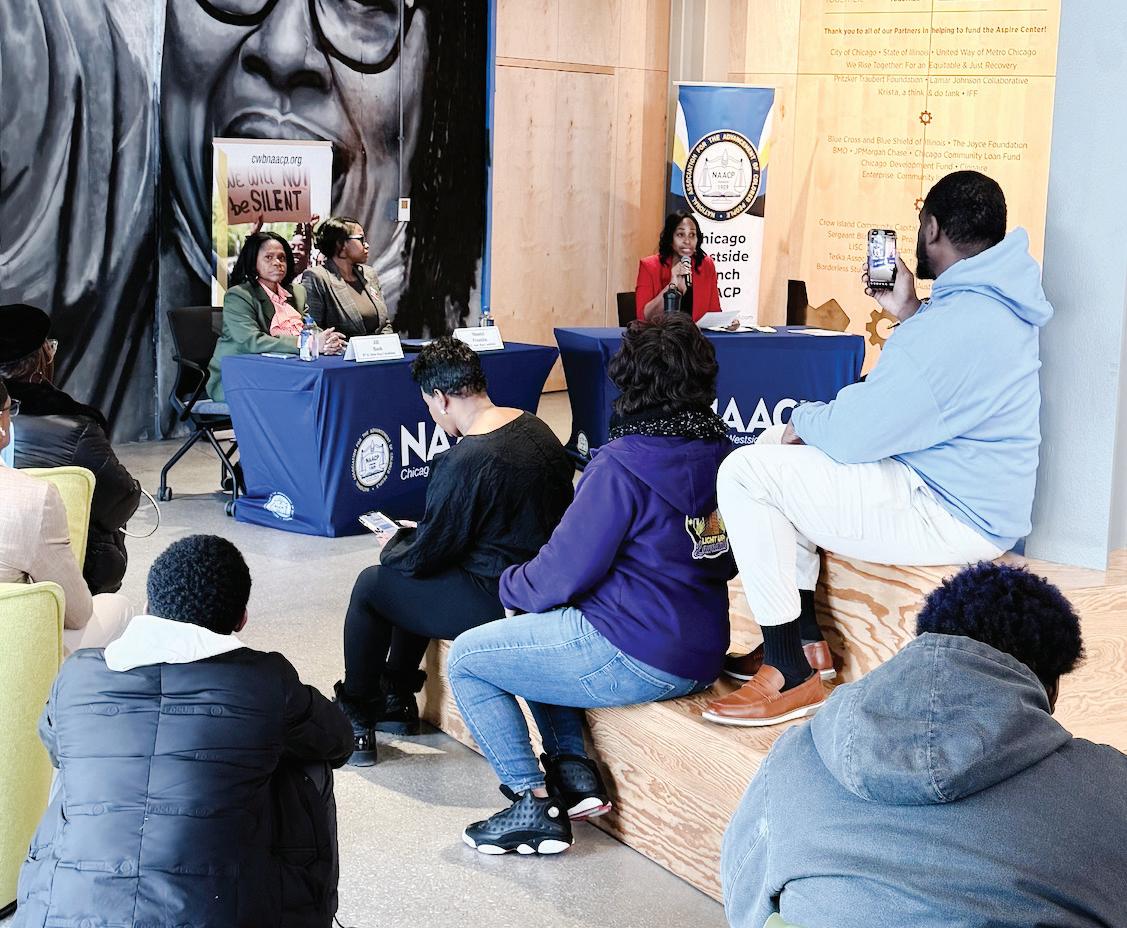
The Westside Branch NAACP hosted a forum on Jan. 17 at the Aspire Center for Workforce Innovation, 5500 W. Madison St. in Austin, for candidates running to succeed longtime 8th district state Rep. La Shawn K. Ford in the General Assembly.
Among the four candidates running— LaToya Mitts, Shantel Franklin, John Harrell, and Jill Bush—Franklin and Bush participated in the Saturday forum.
Bush is a small business owner and Director of Community Engagement for Alderman Chris Taliaferro in the 29th Ward Franklin has worked in real estate and as a legislative liaison for the Illinois Attorney General’s Office
Meanwhile, the Proviso Township Ministerial Alliance Network (PTMAN), Interfaith, and the Proviso Township branch of the NAACP, hosted a candidate forum on Jan. 17 at Proviso Math and Science Academy (PMSA) in Forest Park for anyone running for an elected office in Illinois.
Eleven candidates registered, six of whom are running to succeed 7th district Rep. Danny K. Davis in Congress. Democrats La Shawn K. Ford, Rory Hoskins, Anthony Driver Jr., Richard R. Boykin, and Republican Patricia “P Rae” Easley attended the PMSA forum.
Five candidates running in other Democratic Primary races registered, including Illinois Comptroller candidate Stephanie Kifowit, a state representative (84th); Cook County Assessor Fritz Kaegi; Tim Thomas and Mary “May” Larry, both of whom are running for 7th State Central Committeeperson; and Judge Michael Cabonargi, who is running for a judicial seat on the Cook County Circuit Court. The Forest Park forum was the first forum PTMAN and Interfaith have hosted without Bishop Claude Porter, the towering pastor
Westside Branch NAACP President Remel Terry, right, moderates a forum on Jan. 17 that featured Jill Bush and Shantel Franklin, seated left, who are running for the 8th District state representative seat. | COURTESY ROSIE DAWSON
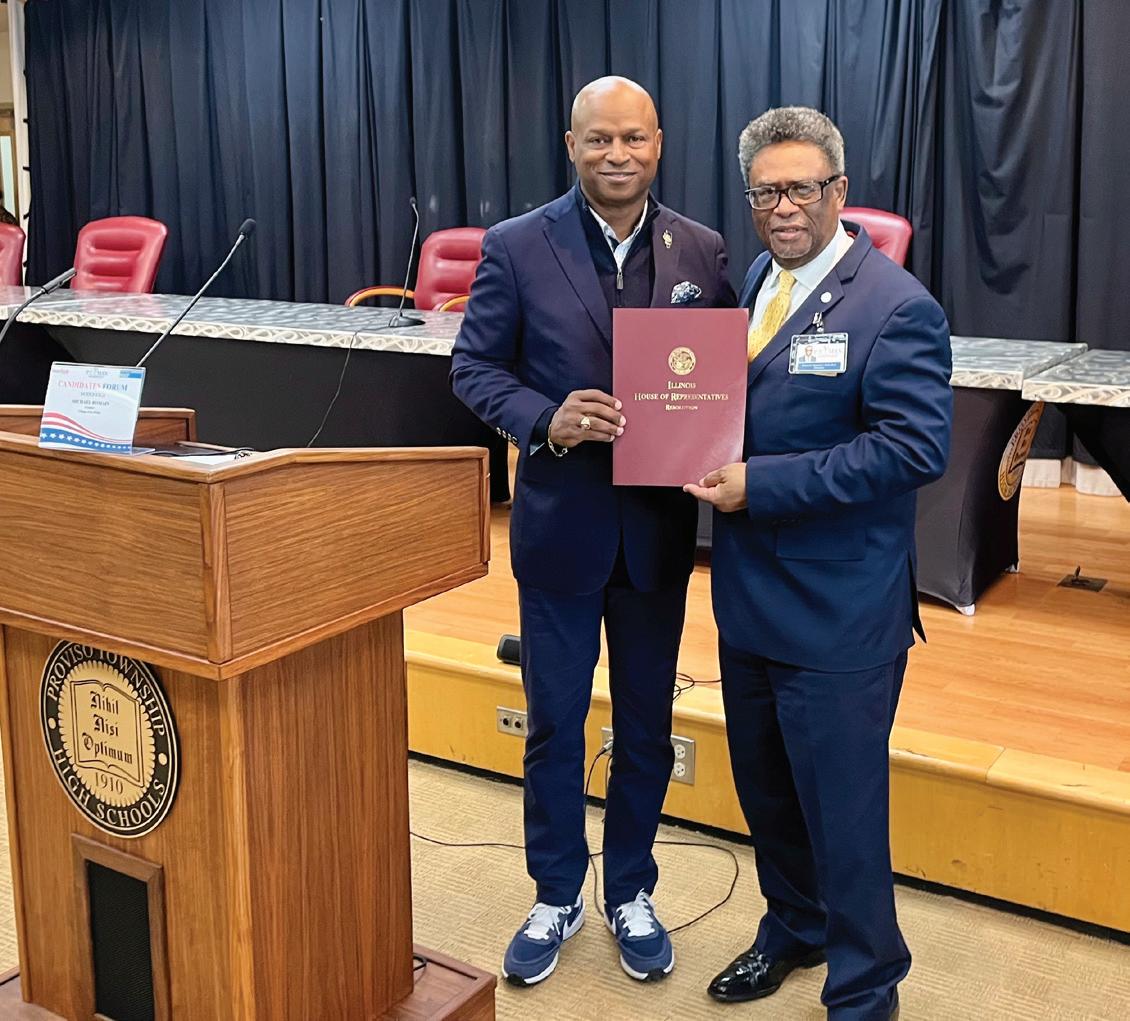
and social organizer who founded the organizations. Before the forum started, Illinois House Speaker Emanuel “Chris” Welch presented Bishop Reginald Saffo, PTMAN’s chairman, with a resolution from the Illinois House of Representatives honoring Porter’s life.
HOW TO WATCH THE FORUMS
• You can watch the PTMAN forums in full at facebook.com/ ptman.bishop.saffo
• You can watch the full forum at facebook.com/CWSNAACP
Important Dates
• Feb. 5 | Board of Elections begins to send out Vote by Mail ballots
• Feb. 12 | Early Voting & Registration opens at downtown Supersite (137 S State St) and Board of Elections Office (69 W Washington)
• Feb. 17 | Last day to submit paper voter registration forms (online and in-person registration remains available)
• March 1 | Last day for online voter registration (in-person registration is available through Election Day)
• March 2 | Early Voting & Registration opens in all 50 wards
• March 12 | Last day to apply for a Vote By Mail ballot
• March 17 | General Election Day (6 am–7 pm)
City voters can get more election information at chicagoelections.gov, while suburban voters can get more election information at cookcountyclerkil.gov/elections.
Illinois House Speaker Emanuel "Chris" Welch presents PTMAN Chairman Bishop Dr. Reginald Saffo with a House resolution honoring the life of the late Bishop Claude Porter before a forum on Jan. 17 in Forest Park. | MICHAEL ROMAIN