Sport Science Vision
Develop theoretical knowledge and understanding of the factors that underpin physical activity and sport; preparing them for higher education and allowing students to flourish within the vast opportunities available in the sports industry. Understand the physiological and psychological effects of exercise, encouraging students to analyse, evaluate and apply their knowledge to practical performances. Alongside gaining a deep understanding of the key socio-cultural factors that influence people’s involvement in physical activity and sport. Improve as effective & independent learners and as critical and reflective thinkers with curious & enquiring minds.
GCSE PE POS Overview
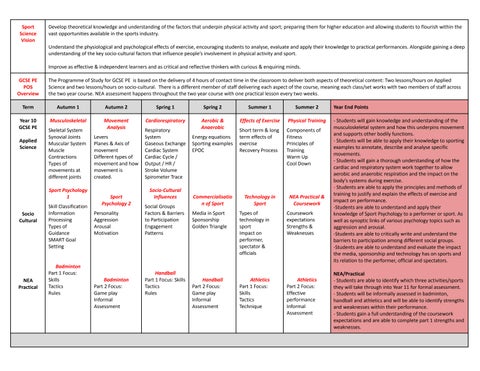
The Programme of Study for GCSE PE is based on the delivery of 4 hours of contact time in the classroom to deliver both aspects of theoretical content: Two lessons/hours on Applied Science and two lessons/hours on socio-cultural. There is a different member of staff delivering each aspect of the course, meaning each class/set works with two members of staff across the two year course. NEA assessment happens throughout the two year course with one practical lesson every two weeks.
Term
Autumn 1
Autumn 2
Spring 1
Spring 2
Summer 1
Summer 2
Year 10 GCSE PE
Musculoskeletal
Movement Analysis
Cardiorespiratory
Aerobic & Anaerobic
Effects of Exercise
Physical Training
Energy equations Sporting examples EPOC
Short term & long term effects of exercise Recovery Process
Components of Fitness Principles of Training Warm Up Cool Down
Commercialisatio n of Sport
Technology in Sport
NEA Practical & Coursework
Applied Science
Skeletal System Synovial Joints Muscular System Muscle Contractions Types of movements at different joints Sport Psychology 1
Socio Cultural
NEA Practical
Skill Classification Information Processing Types of Guidance SMART Goal Setting
Badminton Part 1 Focus: Skills Tactics Rules
Levers Planes & Axis of movement Different types of movement and how movement is created.
Sport Psychology 2 Personality Aggression Arousal Motivation
Badminton Part 2 Focus: Game play Informal Assessment
Respiratory System Gaseous Exchange Cardiac System Cardiac Cycle / Output / HR / Stroke Volume Spirometer Trace Socio-Cultural Influences Social Groups Factors & Barriers to Participation Engagement Patterns
Handball Part 1 Focus: Skills Tactics Rules
Media in Sport Sponsorship Golden Triangle
Types of technology in sport Impact on performer, spectator & officials
Coursework expectations Strengths & Weaknesses
Handball Part 2 Focus: Game play Informal Assessment
Athletics Part 1 Focus: Skills Tactics Technique
Athletics Part 2 Focus: Effective performance Informal Assessment
Year End Points - Students will gain knowledge and understanding of the musculoskeletal system and how this underpins movement and supports other bodily functions. - Students will be able to apply their knowledge to sporting examples to annotate, describe and analyse specific movements. - Students will gain a thorough understanding of how the cardiac and respiratory system work together to allow aerobic and anaerobic respiration and the impact on the body's systems during exercise. - Students are able to apply the principles and methods of training to justify and explain the effects of exercise and impact on performance. -Students are able to understand and apply their knowledge of Sport Psychology to a performer or sport. As well as synoptic links of various psychology topics such as aggression and arousal. -Students are able to critically write and understand the barriers to participation among different social groups. -Students are able to understand and evaluate the impact the media, sponsorship and technology has on sports and its relation to the performer, official and spectators. NEA/Practical - Students are able to identify which three activities/sports they will take through into Year 11 for formal assessment. - Students will be informally assessed in badminton, handball and athletics and will be able to identify strengths and weaknesses within their performance. - Students gain a full understanding of the coursework expectations and are able to complete part 1 strengths and weaknesses.