

Hello and welcome to this month’s issue of THE CRUST. Last month I had the privilege to visit Guayaquil, Ecuador for the International Aquaculture Conference, and I believe it left a few honest reflections worth sharing.
Ecuador’s scale was impressive; there is no denying that. The technology, the infrastructure, the sheer size of operations there is something to see in person. But what actually stayed with me was not the scale; it was the restraint.
Ecuador’s farmers are not chasing the numbers many of us assume define success. They are not stocking 200+ PL per square meter or pushing for 80 tons per hectare per year. Their standard sits closer to 22 PL per square meter, producing around 40 tons per hectare annually. And yet, with that approach, they have become the largest shrimp producer in the world. This confirmed something believed for a while now. One of the biggest challenges in this industry is not technical: it is greed.
Of course, Ecuador’s restraint also means there is room to grow. If they can increase density successfully, production could climb even higher. But a few conversations on the ground there made one thing clear: more production is not automatically a good thing. The global shrimp market is not infinite. Push more supply into a market that is already tight, and the pressure does not disappear, it just moves somewhere else in the chain.
This trip also raised a question I feel worth sitting on. In Ecuador’s situation, who is actually winning? The feedmiller, the farmer, or the processors? From conversations with farmers there, it seems they are often the ones absorbing the squeeze, working within thin margins even in a country considered the
gold standard of this industry.
Looking back at Indonesia, copying Ecuador’s model wholesale does not feel like the answer. There is likely room for both paths here, depending on the infrastructure and conditions of each farm. Lower density with more stable, predictable production in some areas. Intensive, higher risk systems in others, where the conditions support it.
Maybe the lesson from Guayaquil is not about choosing one system over another. It is about choosing deliberately, instead of chasing numbers simply because they look good on paper.
Rizky Darmawan Chief Editor

The global aquaculture industry is facing increasingly complex challenges. Rising feed ingredient costs, market uncertainty, disease outbreaks, and growing pressure to adopt more sustainable farming practices have become common issues across major producing countries. Against this backdrop, Aquacumbre 2026, held recently in Guayaquil, Ecuador, brought
together industry stakeholders from around the world to exchange experiences and explore solutions.
Organized by the U.S. Grains & BioProducts Council (USGBC) through its Latin America regional office, the second edition of Aquacumbre expanded its international reach by welcoming participants and speakers from Southeast Asia, Mexico, the Middle East, India, and other regions.
Beyond serving as a platform for discussing the latest developments in aquaculture, the conference brought together shrimp producers, feed manufacturers, researchers, buyers, and other industry players to address topics ranging from market trends, nutrition, farming management, genetics, and feed ingredient logistics to long-term sustainability.
According to USGBC, the conference program also included technical visits to shrimp farms, processing facilities, and packing plants in Ecuador. These field visits provided participants with firsthand insights into how the country has developed one of the world’s largest and most competitive shrimp industries.
Representing Indonesia, Rizky Darmawan, Chairman of the Indonesian Young Shrimp Farmers Association (PMI) and CEO of Delta Marine Group, presented a SWOT (Strengths, Weaknesses, Opportunities, and Threats) analysis of the country’s shrimp industry, comparing its competitive position with that of other leading shrimp-producing nations.
According to Rizky, discussions throughout the conference extended well beyond production techniques, focusing instead on how the industry can remain resilient amid changing global conditions.
“The main theme of the conference was strengthening the resilience of the aquaculture industry, particularly through the use of alternative feed ingredients such as DDGS and sorghum, which were key priorities for the organizers. The conference also explored developments in global markets and the supply of conventional feed ingredients such as fishmeal,” he said.
Various sessions also covered the outlook for the global shrimp industries, advances in feed nutrition, genetics, farm management, and feed supply chain dynamics. Collective-
ly, these discussions highlighted that production efficiency increasingly depends on the industry’s ability to control costs while maintaining productivity.
One of the conference’s most discussed topics was the contrast between shrimp farming models in Indonesia and Ecuador. For years, Indonesia has pursued intensive


shrimp farming with high stocking densities to maximize production. Ecuador, however, has taken a different approach by developing low-density farming systems that are considered more stable and carry lower production risks.
According to Rizky, the success of Ecuador’s model is not solely attributable to its farming practices but also to shrimp genetics that have been specifically developed for local farming conditions.
“Ecuador adopts a low-density farming system that is considerably safer than the intensive systems widely practiced in Asia. They have successfully developed shrimp genetics that match this production model, known as APE (All Pathogen Exposed),” he explained.
Despite operating at lower stocking densities, Ecuador continues to achieve high productivity. Average production reaches around 6 tons per hectare per production cycle. By utilizing nursery systems before transferring shrimp to grow-out ponds, farmers are able to complete five to six production cycles each year.
This approach has enabled the country to steadily increase national production without relying on extremely high stocking densities.
Alongside increasing production, Ecuador has also continued to strengthen its marketing strategy. While China remains the primary destination for Ecuadorian shrimp exports, both the government and industry have been actively diversifying into new international markets to reduce dependence on a few export destinations.
Further down the value chain, Ecuador’s shrimp processing industry is moving beyond its traditional reliance on head-on shell-on (HOSO) exports by expanding the production of higher-value, value-added products. Meanwhile, labor shortages are accelerating the adoption of
automation technologies, helping processors improve efficiency and reduce dependence on manual labor.
According to Rizky, one of Ecuador’s greatest strengths lies in its ability to build a unified industry brand.
“In terms of marketing, Ecuador is well ahead of many other shrimp-producing countries. Organizations such as the Sustainable Shrimp Partnership (SSP) play a key role in establishing industry standards while promoting Ecuadorian shrimp through campaigns like First Class Shrimp,” he said.
This strategy has successfully elevated Ecuadorian shrimp in the global marketplace—not merely as a commodity but as a premium product backed by a strong identity and recognized quality standards.
Rizky also outlined the major challenges currently facing Indonesia’s shrimp industry. In addition to disease outbreaks and climate change, the country continues to grapple with logistical constraints and the lingering impact of the cesium residue issue, which affected export competitiveness last year.
At the same time, Ecuador is confronting its own challenges. The country’s shrimp sector has been hit by rising production costs driven by higher feed ingredient prices, increasing energy costs linked to geopolitical conflicts, and shrimp prices that remain relatively low.
Nevertheless, Rizky believes Indonesia can draw valuable lessons from Ecuador’s experience, particularly in selecting farming systems that are best suited to local conditions.
“If Indonesia wants to compete with Ecuador, we need to adopt more sustainable farming systems. In areas that are no longer suitable for intensive farming, a carefully managed low-density approach offers lower risks and higher chances of success,” he said.
He added that intensive farming will continue to play an important role in regions with adequate infrastructure and favorable environmental conditions. However, in areas where disease has become endemic or environmental carrying capacity is limited, a more adaptive production strategy could ultimately improve Indonesia’s overall productivity.
Over the past two issues, we’ve covered the ENSO cycle and El Niño. In this final installment, we turn to La Niña, the cooler, wetter counterpart that brings a very different set of challenges to ponds across Indonesia.
La Niña occurs when trade winds strengthen, pushing warm Pacific water toward the western Pacific. For Indonesia and much of Southeast Asia, this typically means above average rainfall, increased cloud cover, and unpredictable weather throughout the wet season. The risks here are very different from El Niño’s heat and drought, but no less serious.
Heavy, prolonged rainfall is the defining feature of La Niña. As freshwater pours into ponds, salinity can drop quickly, sometimes within a single day. Sudden swings put significant osmotic stress on shrimp, weakening immune response and slowing growth, especially for farms relying on brackish water sources in low lying coastal areas.
Intense rainfall raises the risk of pond overflow, dike erosion, and unwanted water exchange between adjacent ponds, allowing pathogens to move freely between systems. Poorly maintained embankments are especially vulnerable, and a single heavy storm can undo months of preparation.
Increased cloud cover and rainfall typically bring cooler water temperatures than dry season conditions. This slows shrimp metabolism and feeding activity, which can extend culture periods if not managed carefully.
Warning: this cooling effect is one of the most important disease risks of the entire La Niña period. White spot syndrome virus becomes signifi-

cantly more active as pond temperatures drop, with outbreaks far more likely once water cools into the high twenties Celsius and below. Combined with the stress shrimp are already under from shifting salinity, this is the window where white spot risk climbs fastest. Treat any sustained temperature drop during the wet season as a trigger to tighten monitoring, not just a seasonal inconvenience.
Runoff carries organic matter, sediment, and agricultural residue into ponds, raising turbidity and organic load while diluted water disrupts plankton and bacterial balance, often triggering crashes. Heavy rain can also cause sudden pH swings. Combined with shifting salinity and cooler temperatures, this leaves shrimp considerably more vulnerable to white spot and other opportunistic pathogens, making strict biosecurity essential through the wet season.
Good preparation is essential during La Niña periods. Farmers should:
• Strengthen and regularly inspect pond dikes and embankments before the wet season begins
• Monitor salinity and temperature closely, especially after heavy rainfall
• Improve drainage systems to prevent pond overflow
• Reduce feeding during sudden weather changes to limit waste accumulation
• Apply lime or other buffering agents to help stabilize pH after rain events
• Maintain strict biosecurity to reduce cross contamination between ponds
Across these three issues, the ENSO cycle has shown two very different faces: one of heat and scarcity, the other of excess water and instability. What ties them together is not the specific risk each brings, but the same lesson: ponds are never isolated from the climate around them, and the farms that weather these cycles best are the ones that prepare before the season turns, not after. Watch your water closely, protect your biosecurity, and never assume this season will behave like the last one did.

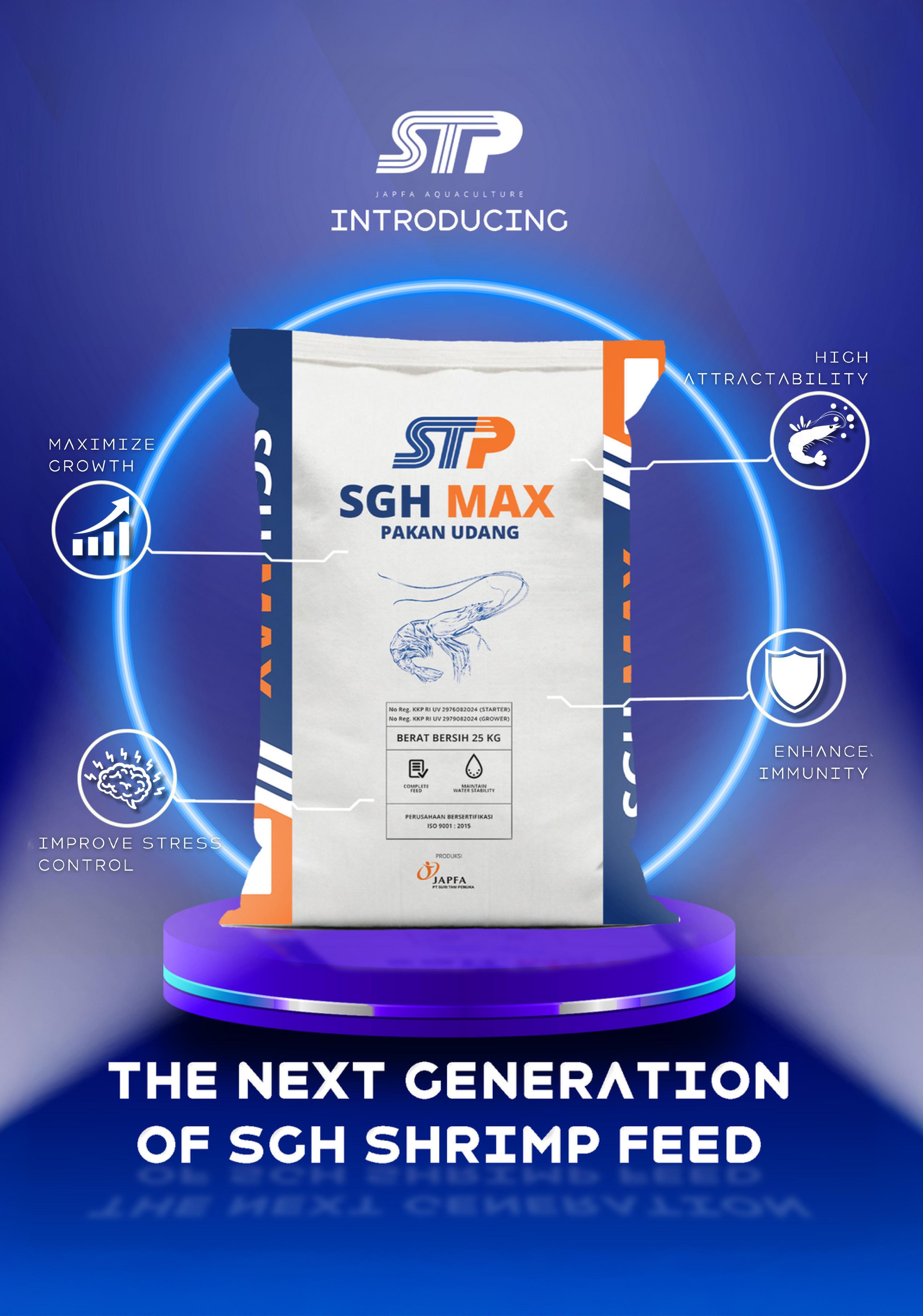

Indonesia’s aquafeed industry is facing mounting pressure as feed ingredient costs continue to climb. Two key factors are driving the latest price surge: escalating geopolitical tensions and the weakening of the Indonesian Rupiah (IDR) against the US Dollar (USD). The situation has become increasingly challenging because higher raw material costs have inevitably led to feed price adjustments, adding further financial strain on farmers who have already been forced to improve efficiency amid persistently low and volatile shrimp prices.
Speaking to The Crust, Romi Novriadi, a lecturer at the Jakarta Polytechnic of Fisheries (AUP) and a fish nutrition specialist, explains that ongoing geopolitical conflicts do not directly increase feed ingredient costs. Instead, the impact is felt further upstream through disruptions to global fertilizer supply chains, which have driven up fertilizer prices for soybean and corn. Since soybeans and corn are two of the primary ingredients in aquafeed—and Indonesia still relies heavily on
imports of both commodities—higher production costs inevitably ripple through the global supply chain.
According to him, South American countries, particularly Brazil, remain heavily dependent on imported fertilizers. When fertilizer supplies are disrupted by geopolitical conflicts or international logistics bottlenecks, production costs for soybeans and corn inevitably increase.
The situation has become even more difficult for Indonesia as the Rupiah continues to weaken against the US Dollar, significantly increasing import costs. As a result, any disruption in the global commodity market is eventually reflected in domestic feed production costs.
Pressure on the aquafeed industry is particularly severe because soybean meal and corn account for a substantial portion of feed formulations. In shrimp feed, these two ingredients typically represent around 50–55% of the total formulation, while their proportion is even higher in herbivorous fish diets. At the same time, the price of another key ingredient, fishmeal, has continued to rise due to tightening global supplies, particularly following fishing quota restrictions in Peru.
According to Romi, these developments demonstrate that Indonesia’s feed industry can no longer afford to depend heavily on imported ingredients. Although transitioning away from imports will not be easy, he believes the current situation should serve as a catalyst for accelerating the adoption of locally available feed ingredients supported by technological innovation,
“Feed manufacturers need to start looking more seriously at local raw materials. Through technologies such as fermentation and enzymatic hydrolysis, the nutritional quality of local ingredients can be significantly improved, allowing them to partially replace imported ingredients,” he says..
Indonesia possesses abundant agricultural and plantation by-products that remain underutilized, including palm kernel meal, rice bran, and copra meal. Historically, these materials have seen limited use because of their relatively low nutritional value. However, fermentation and enzymatic hydrolysis can substantially enhance their nutritional profile, making them viable alternatives for feed production.
Romi’s research has shown that fermented palm kernel meal can partially replace soybean meal without compromising the growth performance of farmed aquatic species.
However, this approach also comes with its own challenges. Beyond improving nutritional quality, ensuring a consistent and
reliable supply of locally sourced feed ingredients remains a major hurdle. Feed manufacturers require raw materials that are nutritionally consistent, competitively priced, and available in sufficient quantities year-round to ensure sustainable and uninterrupted production.
Beyond ingredient diversification, Romi believes the industry must also rethink how feed formulations are developed. Many formulations are still based primarily on crude protein content, whereas fish and shrimp performance depends more on digestible protein and balanced amino acid profiles.
“Future feed formulations should follow the ideal protein concept. Rather than supplying excess protein, feeds should provide digestible protein and amino acids that precisely match the nutritional requirements of the cultured species,” he says.
Excessive dietary protein, he explains, forces aquatic animals to use part of the feed’s energy for protein metabolism instead of growth. This reduces nutrient utilization efficiency while increasing organic waste in the culture environment. By adopting the ideal protein concept, feed manufacturers can improve feed efficiency while simultaneously reducing formulation costs without sacrificing production performance.
Beyond formulation, Romi also highlights logistics as another major factor contributing to Indonesia’s relatively high feed production costs compared to regional competitors such as Vietnam. As an archipelagic country, Indonesia faces significantly higher transportation and distribution costs because feed mills are spread across numerous islands, while most imported raw materials enter through only a handful of major ports.
Improving industry competitiveness, therefore, requires more than just better feed formulations. It also depends on simplifying supply chains and improving logistics efficiency throughout the country.
As feed prices continue to rise, Romi emphasizes that farmers also play a crucial role in improving overall production efficiency. Rather than simply searching for the cheapest feed, producers should focus on ensuring that every kilogram of feed is utilized as efficiently as possible.
One practice he believes should gradually be abandoned is blind feeding during the early stages of shrimp culture. Traditionally, this feeding strategy has been widely used during the first 30 days of production, not only to nourish shrimp but also to stimulate the growth of natural food organisms in the pond. However, in practice, Romi argues that excessive blind feeding
often leads to the accumulation of organic matter on the pond bottom, deteriorating water quality and creating favorable conditions for disease-causing pathogens.
“What farmers should focus on is proper feed management. We can no longer rely excessively on blind feeding because, besides being inefficient, it also creates opportunities for pathogen development,” he says..
Instead, farmers should adopt data-driven feeding strategies by using feeding rates, feeding index, and regular adjustments based on actual shrimp populations. Romi also notes that feeding frequency has become increasingly important. Providing smaller portions more frequently allows shrimp to obtain sufficient nutrition while minimizing feed waste and reducing organic pollution.
He emphasizes that better feeding management has a direct impact on feed conversion ratio (FCR), one of the most important indicators of production efficiency. According to Romi, even an improvement of just 0.1 in FCR can generate substantial cost savings over a single production cycle.
Looking ahead, he hopes the government, researchers, and industry stakeholders can collaborate to develop national guidelines for more efficient feeding practices to replace conventional blind feeding, providing shrimp farmers with a standardized and science-based reference.
At the same time, Indonesia’s aquafeed industry must continue accelerating innovation through greater utilization of local feed ingredients, broader adoption of the ideal protein concept, and the development of feed formulations better suited to the country’s unique production conditions.
Ultimately, geopolitical tensions and currency depreciation remain factors beyond the industry’s control. However, how stakeholders respond to these external pressures will determine the sector’s long-term competitiveness. Reducing dependence on imported raw materials, strengthening formulation innovation, and improving farm-level efficiency represent three critical strategies that will enable Indonesia’s aquafeed industry not only to withstand global challenges but also to become more resilient, self-reliant, efficient, and globally competitive.


Indonesia is a major player in the global seafood market. But for local shrimp exporters, success isn’t just about what happens in their breeding and growing ponds, it’s heavily tied to the country’s budget. The Indonesian Rupiah (IDR) is seeing some big, longterm changes, mostly triggered by some debated government spending choices. These shifts affect the industry and completely change how much money exporters actually make.
The Rupiah has weakened significantly against the US Dollar, driven not only by global economic pressures but also by growing concerns over Indonesia’s fiscal management. Economists argue that the government’s ambitious growth agenda, supported by large state-funded programs such as the Free Nutritious Meals (MBG) initiative and major investments in Danantara, has increased pressure on public finances and weighed on investor confidence.
By prioritizing these politically motivated projects over deep economic reforms, the government watched its first-quarter budget deficit shoot up to IDR 240.1 trillion. This heavy spending has international credit rating agencies on edge, raising red flags about financial stability and leading experts to expect a steady decline for the Rupiah heading toward the 2030s.
In the seafood trade, a weaker local currency is usually seen as a massive win for exporters. Because global shrimp contracts, especially those heading to high-paying markets like the US, Japan, and the EU, are priced in US Dollars, a dropping Indonesian Rupiah means exporters pull in way more local cash for every ton of goods they ship out.
The Revenue Advantage: When international buyers shop for Indonesian shrimp, the weaker Rupiah automatically makes these products incredibly price-competitive against global giants like Ecuador and India. The best part? Indonesian exporters get to keep their prices attractive without having to aggressively cut their wholesale dollar rates.
Inefficient public spending can turn a favorable currency situation into a complex challenge. Without targeted state investment, critical infrastructure remains underfunded, making it harder for exporters to keep pace with rising costs.
• Neglected Logistics: Government focus on short-term spending leaves crucial long-term needs, like rural roads, local feed research, and energy-efficient cold storage, completely behind.
• Skyrocketing Feed Costs: Because high-quality shrimp feed relies heavily on imported ingredients like fishmeal and soybean meal, a weak Rupiah has driven basic feed costs through the roof.
• Pricey Breeding Stock: Importing disease-free breeding shrimp from top international suppliers now requires massive upfront costs, while government subsidies for farming innovation remain practically nonexistent.
To hit Indonesia’s $1.5 billion shrimp export target amid tight budgets, exporters must be proactive rather than relying solely on a weak currency.
• Adopt Lower-Risk Models: Shift to lower-density cultivation to reduce disease, improve survival rates, and better control rising feed costs.
• Prioritize Efficiency Over Scale: Focus on farm management, biosecurity, and consistent harvests instead of expanding pond areas.
• Maximize Value Recovery: Protect margins by improving grading, processing yields, and developing higher-value shrimp products.
• Maintain Financial Discipline: Use current cash flow to strengthen balance sheets and prepare for future market volatility.
In the end, the question for exporters is therefore not how long the Rupiah can remain weak, but how quickly they can build businesses that no longer depend on it. In the years ahead, the industry’s success will be determined less by exchange-rate movements and more by its ability to create value beyond them.
The Indonesian government’s policy requiring exporters of natural resource-based products to retain 100% of their Export Proceeds from Natural Resources (DHE SDA) in the domestic financial system for 12 months continues to draw concern from the seafood industry. For a sector that depends heavily on rapid cash flow and daily working capital, restrictions on converting export earnings into Indonesian Rupiah are expected to have consequences that extend well beyond corporate liquidity.
According to Hendra Sugandhi, Head of Fisheries and Livestock Division at APINDO (the Indonesian Employers Association) and the author of the book Quo Vadis Laut Masa Depan Bangsa (Quo Vadis: The Sea, the Nation’s Future), the government’s objectives behind the policy are understandable and broadly supported by
the business community. These include strengthening Indonesia’s foreign exchange reserves, maintaining the stability of the Rupiah, and deepening the domestic financial market. However, he emphasizes that the policy’s implementation should take into account the unique characteristics and operational realities of each industry.
“In principle, APINDO supports the government’s objective of strengthening Indonesia’s external resilience, increasing foreign exchange reserves, deepening the domestic financial market, and maintaining the stability of the Rupiah. The business community fully understands the importance of these goals,” he tells The Crust.
Hendra notes that the fisheries industry differs significantly from other natural resource sectors such as mining and plantations. It is a labor-intensive industry that supports millions of fishermen, aquaculture farmers, seafood processing workers, and logistics providers. Moreover, seafood is highly perishable, requiring fast-moving supply chains and rapid capital turnover.
Most raw materials purchased from fishermen and fish farmers are paid for in cash, with many companies even providing advance payments before harvesting or fishing activities take place. As a result, seafood exporters require substantially higher liquidity than many other industries.
According to Hendra, the industry’s main concern is not the 12-month retention requirement itself, but rather the restriction that allows exporters to convert only up to 50% of their retained foreign currency into Rupiah.
“Limiting foreign exchange conversion to 50% not only puts pressure on the liquidity of seafood exporters, but could also trigger a domino effect, including the loss of millions of jobs, declining exports, lower utilization of processing facilities, reduced incomes for fishermen and aquaculture farmers, and ultimately weaker national food security,” he says.
APINDO also argues that the fisheries sector contributes only a relatively small share of the government’s overall DHE retention target. Seafood exports generate approximately USD 6.27 billion in foreign exchange, accounting for only about 7.83% of the national target of USD 80 billion. Therefore, providing special treatment for the fisheries sector would have little impact on the government’s broader macroeconomic objectives while helping sustain an industry that employs a large workforce.

Hendra explains that the policy’s impact extends well beyond exporting companies. Reduced working capital would limit processors’ ability to purchase raw materials from fishermen and aquaculture producers, while cash flow constraints could also delay payments to suppliers. Together, these pressures would reduce demand at the farm and landing site, putting further downward pressure on seafood prices.
Most operating expenses in Indonesia’s seafood industry are paid in Rupiah, including purchases of fish and shrimp, labor costs, ice production, cold storage, electricity, domestic transportation, and logistics.
If half of export earnings cannot be converted into Rupiah for an entire year, companies will inevitably face reduced purchasing power. This, in turn, would lead to lower procurement from fishermen and fish farmers, declining utilization rates at seafood processing plants, and ultimately lower export volumes.
He says that the timing is particularly concerning as Indonesia’s seafood industry is already facing multiple challenges. During the first quarter of 2026, the country’s net seafood export value declined by approximately 10.45%, while net export volume fell by an even steeper 35.37%. With export markets already under pressure, additional domestic constraints could further erode the competitiveness of Indonesian seafood products.
The impact would also be felt directly by coastal communities. As processors reduce purchases, prices for both wildcaught and farmed seafood are likely to come under pressure due to weaker industrial demand despite continued supply.
“What everyone needs to understand is that the greatest impact of the DHE retention policy is not only on downstream processors, but also on upstream coastal communities whose livelihoods depend on selling fish and aquaculture products,” Hendra explains.
In response to these concerns, APINDO and nine fisheries associations have held discussions with various ministries and government agencies to present the industry’s current challenges.
During these meetings, industry representatives emphasized that seafood exporters are already facing mounting pressures, including rising fuel prices, higher international shipping costs, non-tax state revenue (PNBP) charges, growing non-tariff barriers in export markets, and the U.S. Food and Drug Administration’s Import Alert policy, which often delays payments from overseas buyers while shipments undergo inspection.
Exporters are also burdened by Certificate of Admissibility (COA) requirements and the possibility of additional tariffs in the U.S. market, which is the key export destination for Indonesia.
Given these challenges, APINDO has urged the government to maintain the overall objectives of the DHE policy while adopting a more proportionate approach for the fisheries sector.
Hendra explains that several policy alternatives have been discussed with the government. The first option would be to fully exempt the fisheries sector from the DHE retention requirement. In his view, this would be the most appropriate solution because it reflects the industry’s unique operational characteristics.
A second option would allow seafood exporters to convert up to 100% of their retained foreign exchange into Rupiah specifically for purchasing raw materials from fishermen and aquaculture farmers. However, both options would require revisions to existing government regulations, making them difficult to implement in the short term.
As a result, APINDO believes the most practical solution would be to grant limited exemptions for selected seafood products through a revision of a Minister of Finance Decree.
“The Ministry of Marine Affairs and Fisheries (KKP) has proposed around 267 HS codes covering Indonesia’s major seafood export products, particularly value-added and downstream processed seafood products. This approach is more targeted and can be implemented more quickly than revising a government regulation,” Hendra says.
According to Hendra, such a policy could provide a balanced solution that supports the government’s efforts to strengthen Indonesia’s foreign exchange reserves while preserving the competitiveness of the country’s seafood export industry.
Hello and welcome to a country where the banana refuses to wait around to get sweet.
If you grew up thinking of the banana as a yellow afterthought tossed into a lunchbox, Ecuador will rearrange that thinking fast. This is the green kind, the plantain, starchy rather than sweet, treated less like fruit and more like a vegetable that happens to grow on a tree. And it shows up everywhere.
Take bolon de verde. Green plantains mashed and packed around cheese or pork, then fried into a dense, fist sized ball that shows up at breakfast tables across the coast the way bread shows up everywhere else. Order it with a fried egg and black coffee and you will not need lunch.
Then there are patacones, twice fried plantain slices smashed flat between fryings until they turn into something between a chip and a small plate. Order seafood almost anywhere on the coast and patacones arrive without you asking, the way rice does elsewhere.
The chips deserve their own name too. Locals call them chifles, thin, salted, golden, sold from carts and corner stores, the kind of snack that disappears from the bag before you notice you opened it. Even the packaged snack aisle in an Ecuadorian supermarket leans heavily on banana, chifles bagged like chips, sweet plantain crisps, banana flour crackers. It is less a fruit and more a whole shelf.
What strikes you, eating your way through Ecuador, is how unbothered the banana is about being the star. Nobody is writing odes to it. It just sits there, green and quietly load bearing, doing the work that rice does in Indonesia or potatoes do in parts of Europe. No ceremony, no price tag to match the hype, just there every single day, doing its job. Maybe that is the real lesson from Ecuador’s kitchens. The most important things on the plate are rarely the ones shouting the loudest.
THE CRUST - RIZKY


Cover : Aladam
Design : Aladam


Rizky Darmawan
Veni Vidi Fishy
Gemilang Lim
My secret to joy in life is in finding balance Balance in family, sweating, and making decisions
M. Syafi
Al-Adam
Shrimp’n Arts
Asep Bulkini
My shrimp My adventure