
LACASADARGILLA & TEATRO VASCELLO

The Coronet Theatre is a reimagined architectural and design jewel, originally built as a grand Victorian Playhouse, now a pioneering home for international, cross-disciplinary arts. Curated by Artistic Director Anda Winters, over the past decade it has become a significant cultural landmark.
Known for world and UK premieres, its mission is to bring artists and art forms from around the world, championing work that would not otherwise be seen. The programme enables access for diverse audiences to world-class theatre, dance, music, film and visual arts through co-productions, commissions, and invited works.
Centrally situated in London’s Notting Hill, The Coronet has two main spaces: The Auditorium and The Print Room Studio. With the additional performances and exhibitions in the bar, the atmospheric upper rooms, and basements, the whole building is a living global showcase.
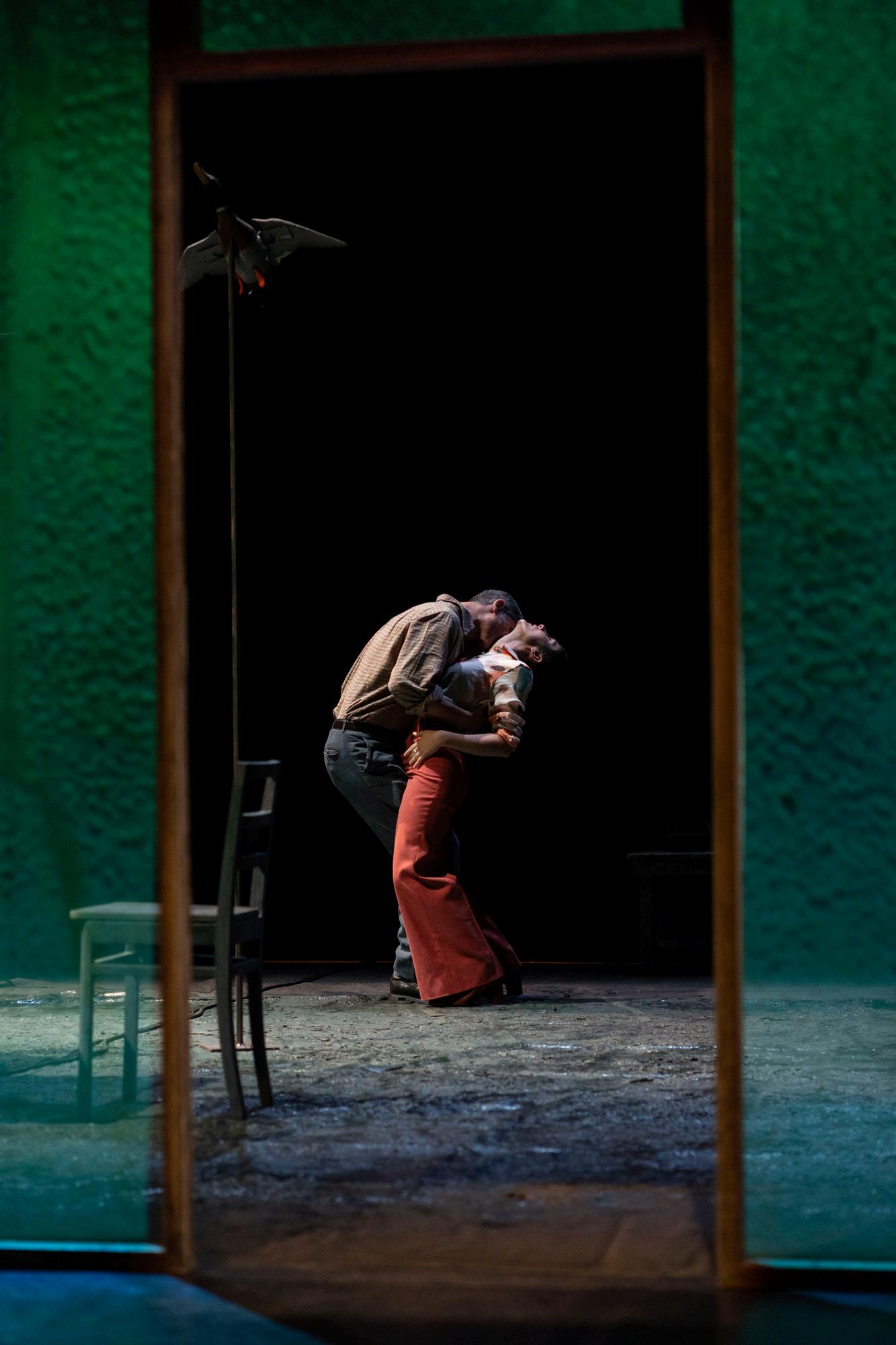
Photo: Claudia Pajewski
UCCELLINI (LITTLE BIRDS)
LACASADARGILLA & TEATRO VASCELLO
By Rosalinda Conti
Directed by Lisa Ferlazzo Natoli and Alessandro Ferroni
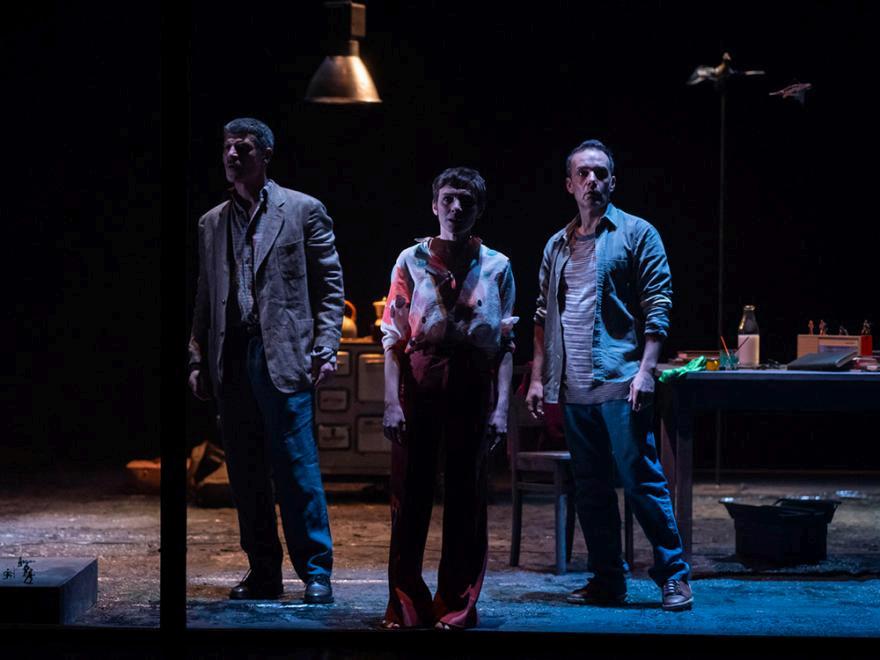
In a house deep in the forest, surrounded by trees and the ceaseless chirping of birds, an unexpected and accidental reunion takes place: two brothers, a sister who died prematurely, and a guest.
Blending a rich landscape of sound, image, and movement, Uccellini is the story of making sense of the world, of humans and animals (alive and dead) and of ghosts, presented by one of Italy’s leading experimental theatre companies.
Luka brings his girlfriend to his family home to celebrate her birthday, only to find the house occupied by his brother Theo, and Theo’s twin Matilda, who mysteriously disappeared. Uccellini conjures a world of
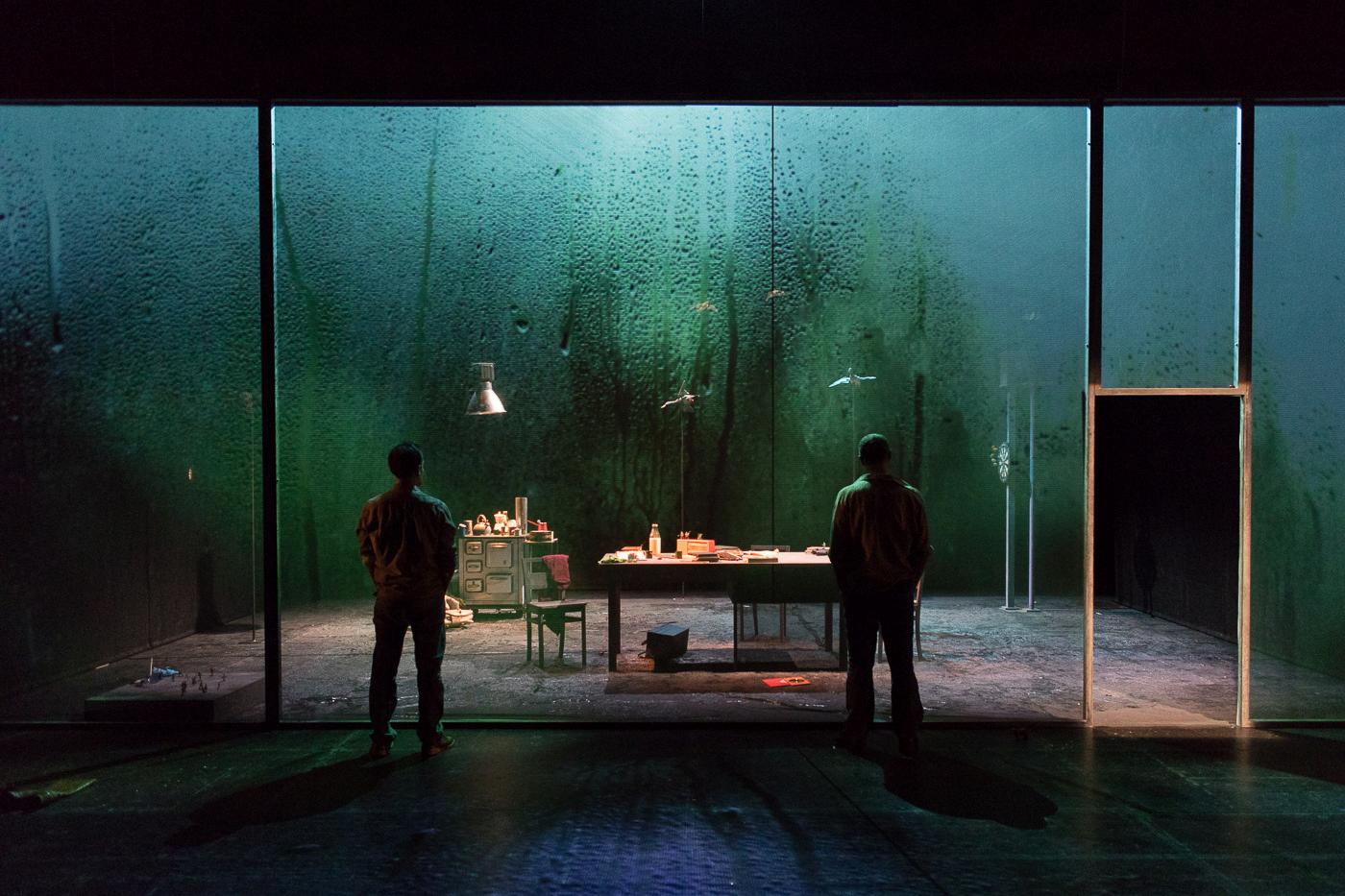

Photo: Claudia Pajewski
CAST & CREATIVE TEAM
Written by
A project by
Directed by Cast
Soundscapes and scenic concept
Visual environment
Set design
Lighting design
Costumes
Sound design
Artistic coordination for the project
Assistant director
Translator
Rosalinda Conti
lacasadargilla
Lisa Ferlazzo Natoli and Alessandro Ferroni
Emiliano Masala, Petra Valentini, Francesco Villano
Alessandro Ferroni
Maddalena Parise
Marco Rossi and Francesca Sgariboldi
Omar Scala
Anna Missaglia
Pasquale Citera
Alice Palazzi
Angelica Azzellini
Margherita Mauro
Shadow projection in collaboration with Malombra
Production photographs
Claudia Pajewski
In co-production with Romaeuropa Festival, Piccolo Teatro di Milano –Teatro d’Europa
In collaboration with AMAT & City of Pesaro, lacasadargilla, PAV Fabulamundi, Playwriting Europe, RAM – Residenze Artistiche Marchigiane
With the support of
The Italian Institute of Culture in London, ATCL / Spazio Rossellini, Italian Ministry of Foreign Affairs and International Cooperation and of Idra Teatro / Wonderland Festival
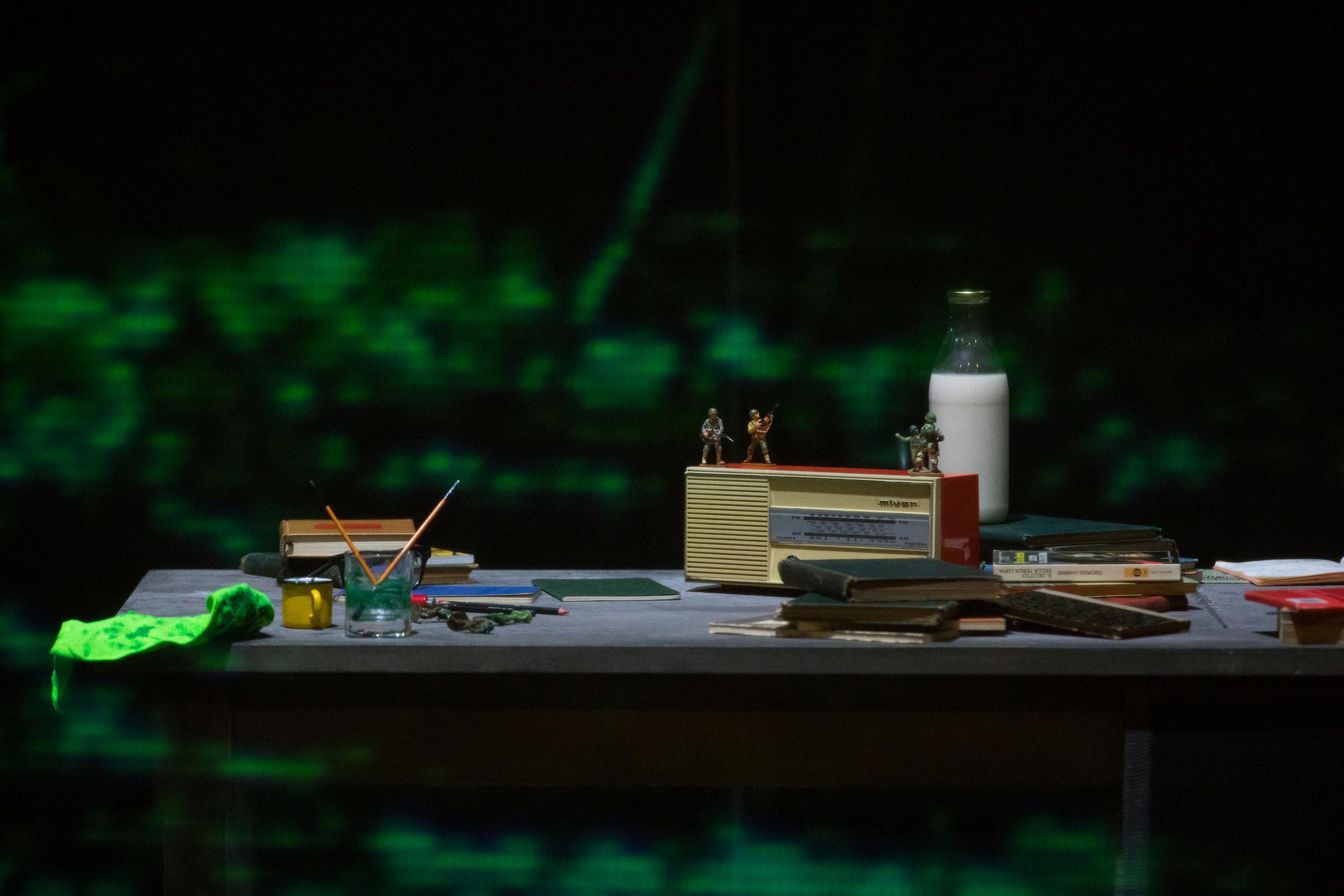
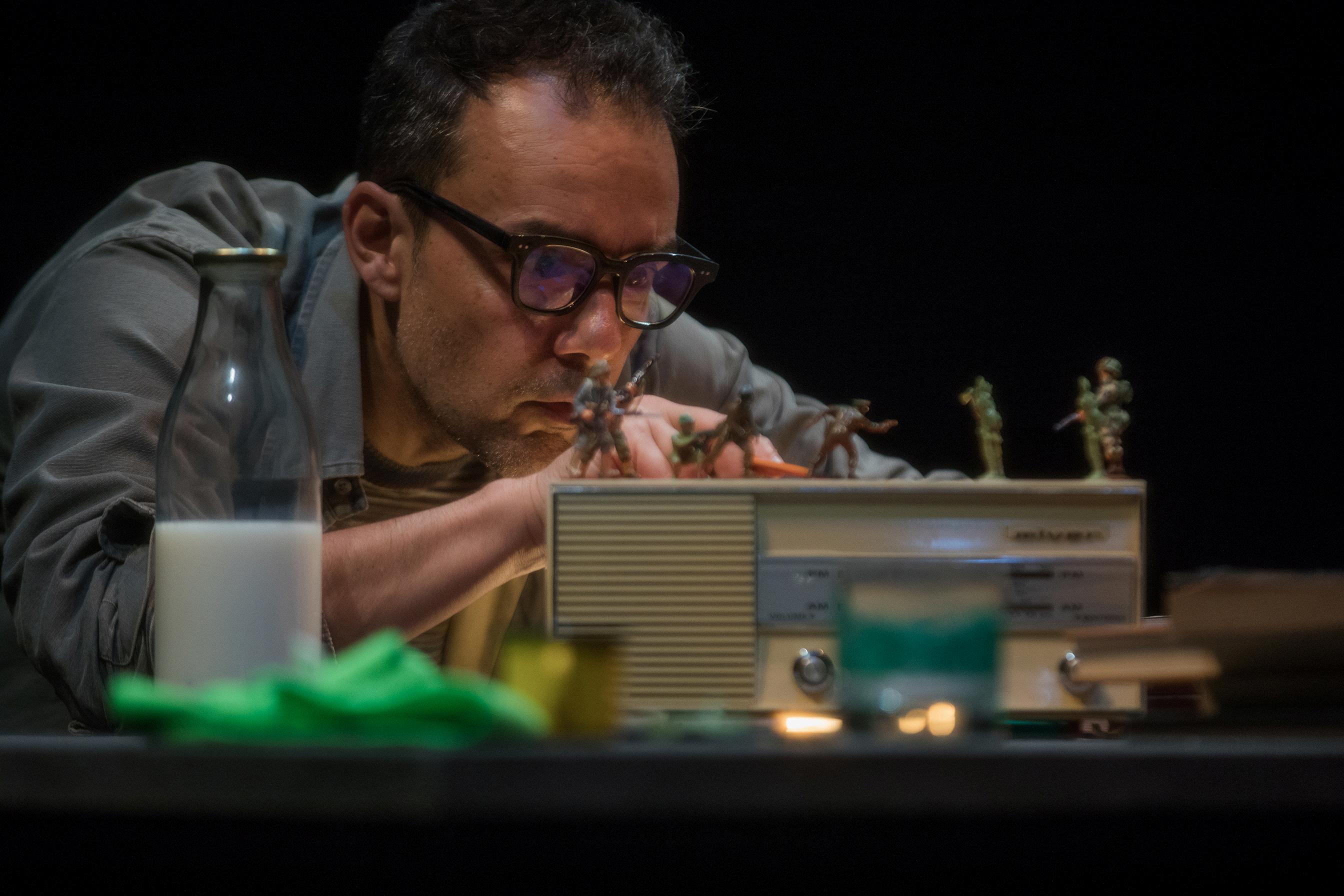
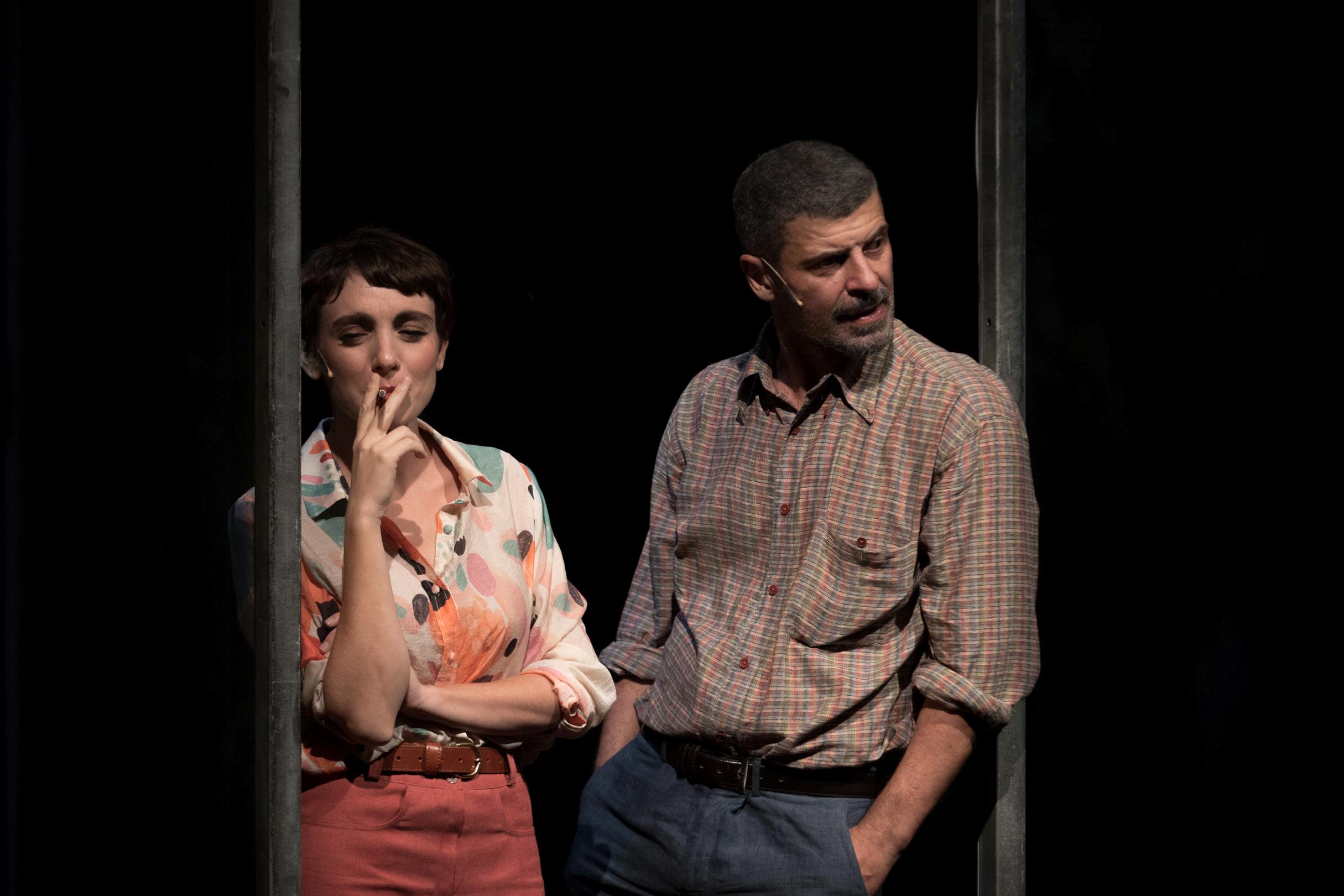
Photos: Claudia Pajewski
ABOUT LACASADARGILLA
For over fifteen years, lacasadargilla – founded by Alessandro Ferroni, Lisa Ferlazzo Natoli, Alice Palazzi, and Maddalena Parise –has been exploring the human condition through avant-garde theatre, merging psychoanalysis, philosophy, and science.
lacasadargilla is well known in Italy for its productions of original texts, literary adaptations and contemporary plays.The ensemble builds its projects on the concepts of time and mythographies, as well as on the linguistic, psychic and personal legacies that bind us to our past and to our future. All performances have an architectural approach, with a focus on linguistic and cinematic devices as well as on physical precision.
ROSALINDA CONTI
Rosalinda Conti graduated in Dramaturgy and Screenwriting from the Academy Silvio d’Amico in Rome, studying with Roberto Cavosi, Dacia Maraini, and Lucia Calamaro. Her works Quando vai via and Le cose che abbiamo perso nel fuoco were published by Editoria & Spettacolo. She received a special mention for Best Monologue at the Offanengo Film Festival (2013), a Fersen Drama Award nomination (2015), and two Hystrio Prize mentions (2019, 2021). Her recent collaborations include projects with Illoco Teatro and Sky Arte.
POST-SHOW TALK
We will be hosting a post-show discussion with writer Rosalinda Conti after the performance on Friday 01 May.The event will be moderated by Dr Margherita Laera, theatre translator and Deputy Head of the School of Arts and Architecture, University of Kent, Canterbury. Free for ticket holders.
DIRECTORS’ NOTE
Lisa Ferlazzo Natoli, Alessandro Ferroni
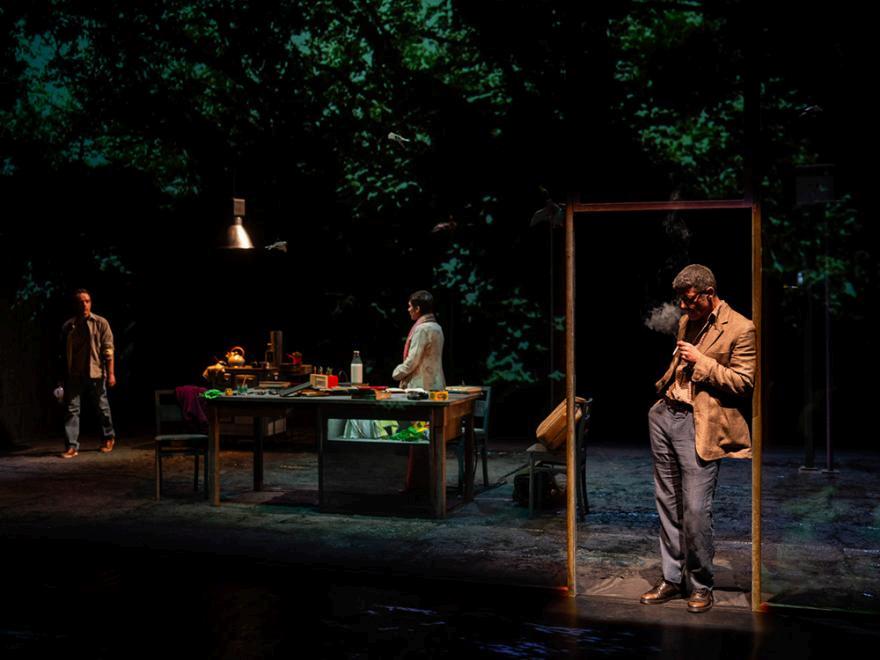
A house in the woods, a wood that simultaneously exists and doesn't exist, not exactly. And how could it be otherwise? It's surrounded by vegetation, shadows, and creatures, the house. It is certainly the real place where the story takes place. A place, however, affected by a curious, chirping uneasiness, whose transparent walls reflect the extraordinary nature of every circumstance.
Uccellini has a classical structure, one might say. A plot and a trauma underpin it. A family inhabits it. A family reunion (unexpected and accidental) occurs there. And how could it be otherwise? Everything, then, is connected and clings - apparently - to events to release something in non-ordinary elements that slowly enter the environment and the fabric of the writing itself.
The characters in the plot are two brothers, a sister who died prematurely, and a guest. But who is the real protagonist? The brothers? The dead sister, a bird expert, with whom the house teems? The young ornithophobic girlfriend of one of them? Or the birds? Or someone else?
The reason why Luka - apparently pragmatic and surprisingly frightened - decides to celebrate his girlfriend's birthday in a house full of stuffed birds and home to more dead than living people is, for the moment, unclear even to him.The reasons why Theo decided to live in a house full of stuffed birds and home to more dead than living people, shortly after his twin's disappearance, are manifold, and for the moment unclear even to him.
Matilde is there, and not there, who, in one way or another, wild and sorrowful, still inhabits the cool and adventurous summers of her childhood home. And Anna? Anna is a little bird, but perhaps also the tree in whose branches the little bird hides, and whose birthday is the next day. Among them are the animals - hidden and invisible - like the repressed, the secrets, the desires, and the memories.
Uccellini speaks of presences and absences, of humans (dead and alive) and animals (alive and dead). It speaks of couples; pairs of siblings, pairs of twins, engaged couples. Of two women - a couple, you might say - who find an unconventional way to communicate. It speaks, therefore, of double and ambiguous things, of the consequences of believing in ghosts and of not believing in anything that cannot be touched. It speaks of discordant perspectives in making sense of the world, of relationships and losses. And above all, of what lies in between, on the thin line. A third (fourth, fifth, sixth, infinite) horizon, neither in conflict nor in harmony, neither so distant nor so close An unpredictable and not too reassuring feminine
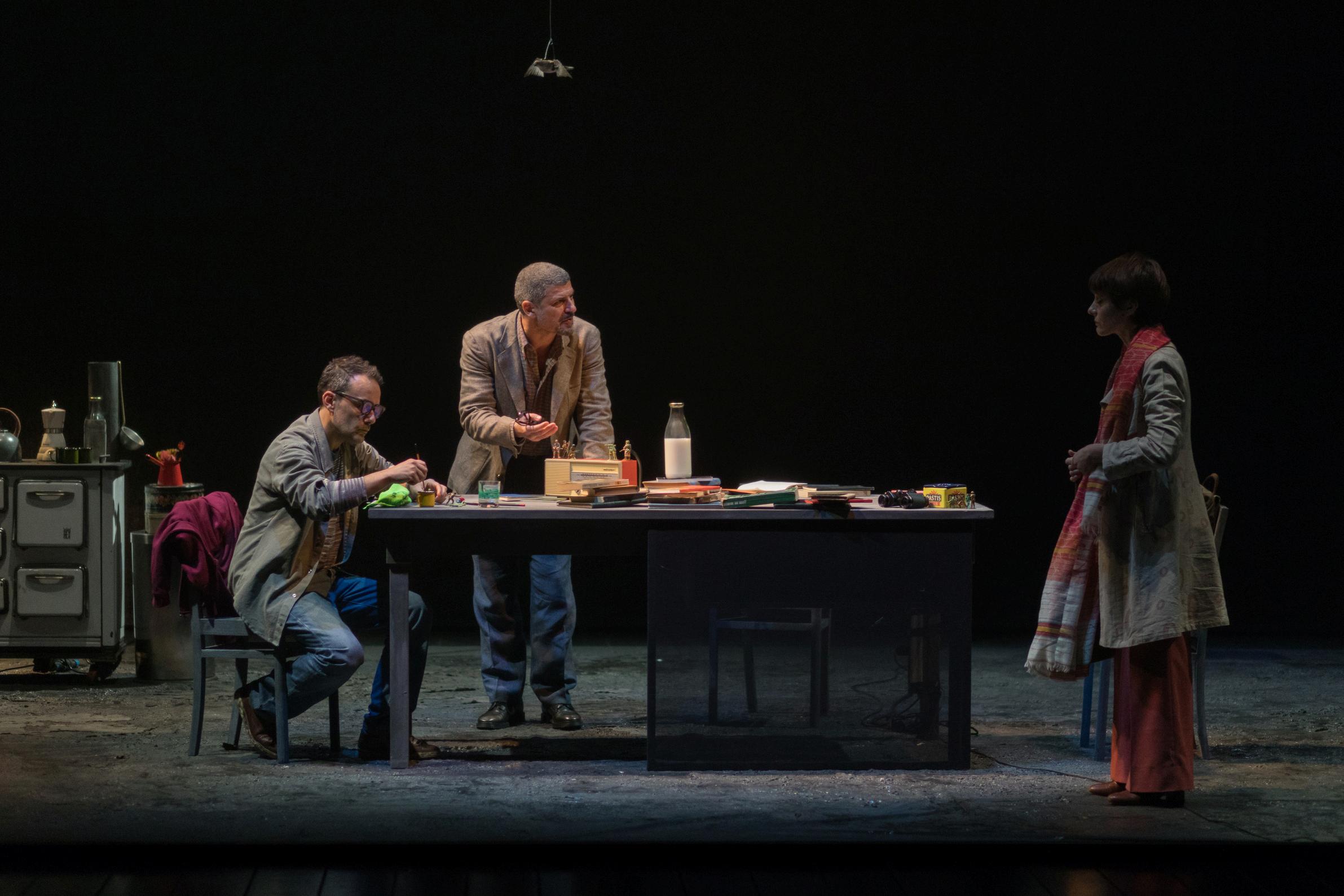
Photo: Claudia Pajewski
In this singular nocturnal exercise among the ghosts and fears that constitute us, there is someone (else) who seems to be writing the story, hidden in the woods.Try to describe the setting in which the story takes place. Or imagine it, listening intently. Because this someone lives in the setting, more than among people. Or rather, he sees people through lights, moods, materials, and sounds. And alongside the (nocturnal) animals that inhabit it.
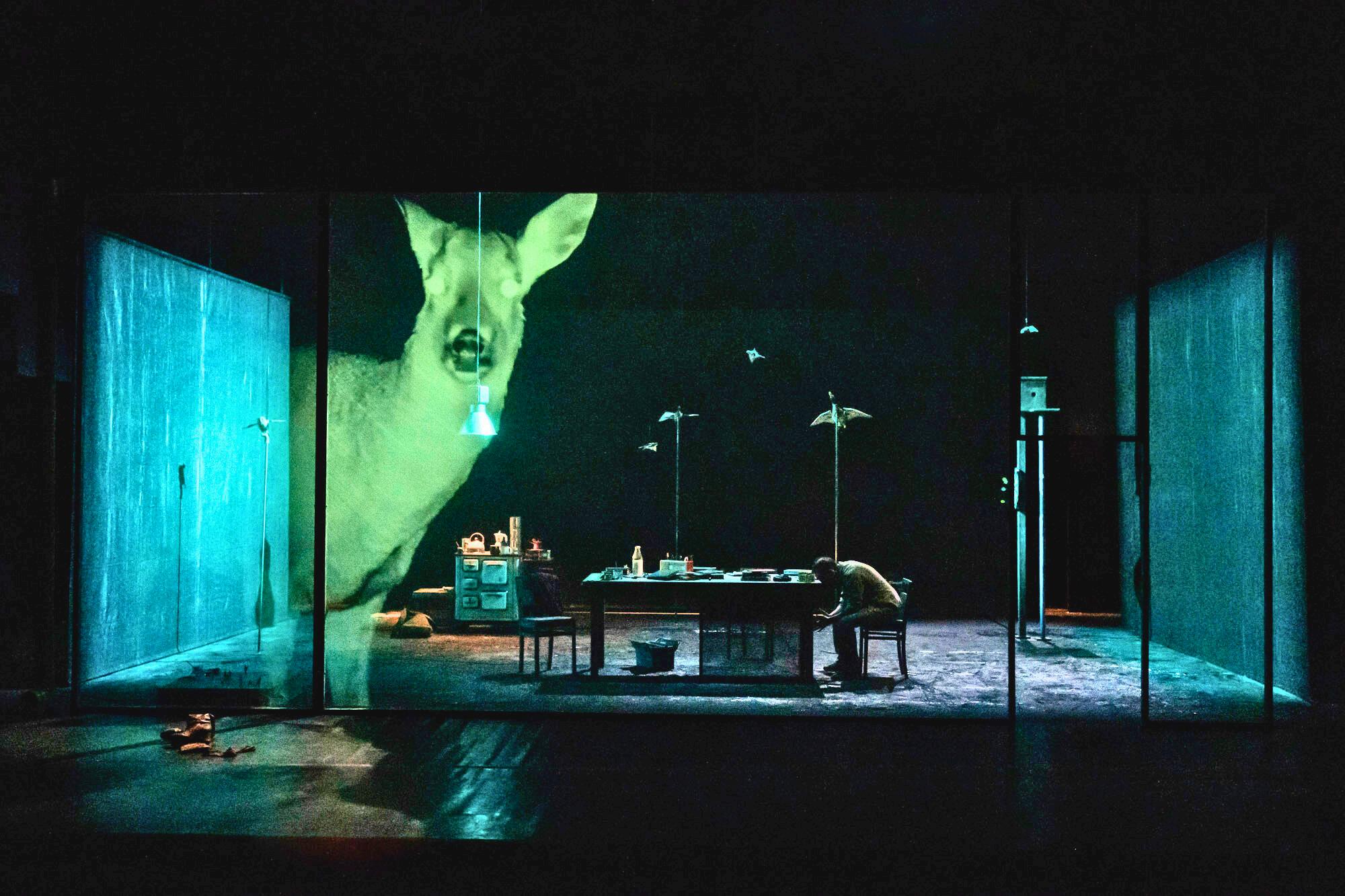
The house itself is thus an environment; it does not declare its architectural structure (of iron, mud, and brick), but rather manifests the nature (familiar and foreign) in which it is immersed. An organic house that has retained few remnants: a section of rusted window, the whitish frame of a door, a gutter; a long walnut table filled with preserves and books.
The house creaks, at times it speaks, it is made of intrigues and traps. And even the stuffed birds that fill it seem to chirp: the yellow-billed blackbird, the blue chaffinch, the orange chaffinch, the red-faced goldfinch.The scops owl, a nocturnal bird of prey. The glass window - solid and transparent - when still reveals only condensation vapor and dewdrops. When the surface comes to life, it allows the bodies of moving birds to peek out, like ghosts among the bodies of the actors. And with them, other creatures. Swooping flights, claws spreading, beetles, maple bushes, a large Scots pine.Two little foxes? A bear, perhaps. Holograms projected with the illusion of 3D, figures of which - apparently - only the verses remain in the text. The light also flickers from the membrane, tilting as time passes over the shady, damp forest, while nocturnal animals pass by to rest, outside of history, on our shoulders.
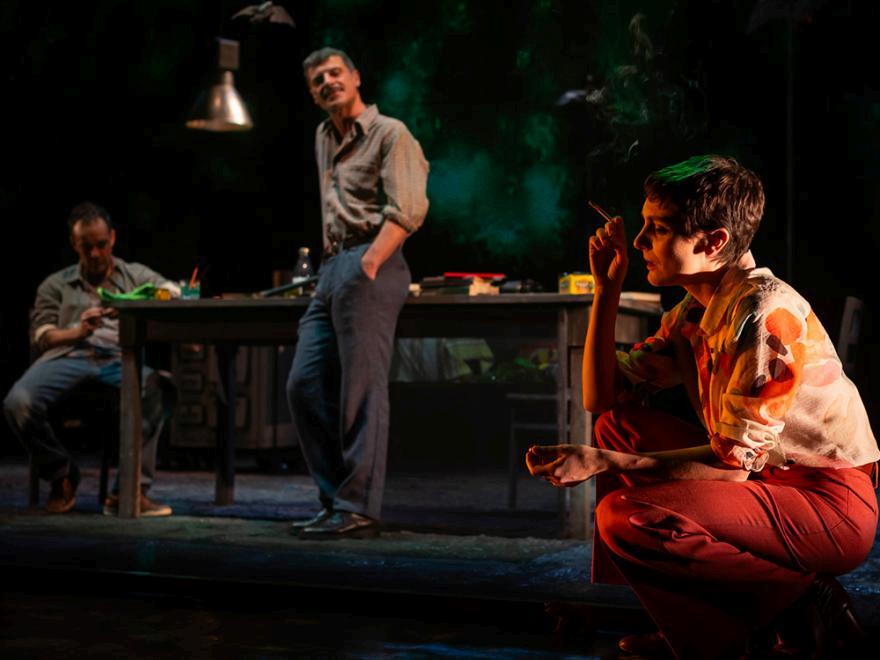
Photo: Claudia Pajewski
UCCELLINI: THE PLACE OF THE LIVING
Italian playwright, poet and literary critic Fabrizio Sinisi reflects on the role theatres play in nurturing new writing and sustaining contemporary voices. Drawing on the development of Uccellini, he explores the conditions that allow emerging playwrights to take risks, and the importance of institutions that champion experimentation, collaboration and long-term artistic growth.
Uccellini by Rosalinda Conti is a brand new work by a living Italian author. While in other theatre traditions this might be nothing out of the ordinary, here it’s a rare event: audiences are experiencing these words for the very first time. Uccellini is, in the truest sense of the word, something never before heard.
Its freshness carries a message: from those who create it, those who host it, and especially those who bring it to life on stage. For years, the lacasadargilla company has stayed true to its unwavering passion for contemporary writing: and even if it hadn’t already achieved the critical and public acclaim it enjoys today, this commitment alone would give it a unique cultural edge.The collective – Lisa Ferlazzo Natoli, Alessandro Ferroni, Alice Palazzi, and Maddalena Parise –isn’t just a troupe working on theatre projects and cultural programming; it also serves – quite often – as a platform and incubator for contemporary dramaturgy. From Edward Bond to Roberto Scarpetti, from the twenty-six under-35 authors of Abbecedario per il mondo nuovo to Andrew Bovell, from Olivia Laing to Alice Birch and Caryl Churchill – including, at times, myself.
You won’t find classic staples in lacasadargilla’s repertoire: they’re always restlessly exploring the works of living writers, the voices of today, convinced that writing – in its broadest sense – isn’t just about interpretation, but also about discovery, encounter, observation, research, discussion, and experimentation. It’s a space made for risks and connections, for bold moves and down payments and taking chances.
Anyone who’s collaborated with lacasadargilla knows there’s no such thing as The Script: the dramatic material is always seen as a messy, collaborative process -never something sacred. Each performance is a checkpoint in a shared journey, a moment when the group hands over the results of their ongoing search through that wild, tricky, and by nature always uncertain and unresolved terrain we call the present. History, as Walter Benjamin wrote, in its rawest, most unrefined form, before it’s polished and organized by those who come after us.
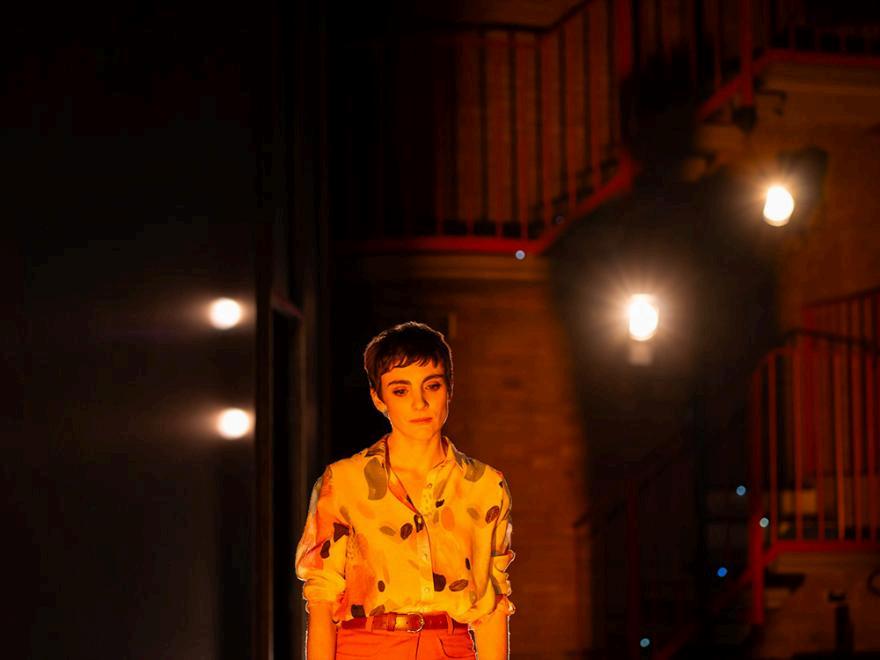
Photo: Claudia Pajewski
Photo: Claudia Pajewski
Theatre understands the nature of time. No other art form has such an immediate connection with the present: the stage is where here and now come to life.There’s a certain mystery in a script meeting its audience for the very first time, something magical and almost tribal that can’t be predicted or measured. It’s a gamble – a continual leap toward what’s alive, literally all that lives, all that’s present in its moment, and dares to inhabit it through language. With all the risks and uncertainty that brings. As poet Mark Strand wrote: “The present is always dark. / Its maps are black. ”
Original work is a risk.The language of an era, as it’s being created –before anyone can define it – is always a bit cryptic, a bit obscure: it has to be sought out, tested, discovered. We move forward like diviners.The present doesn’t have the safety nets that the past enjoys: it hasn’t been filtered by tradition, hasn’t been reviewed by critics, doesn’t have big names to defend its legitimacy before the court of History.The contemporary text stands alone, fighting for its own survival in a Darwinian struggle.
Unlike film, playwrights are constantly locked in a battle with the past – where the dead, far from resting quietly and basking in centennial celebrations, compete with the living for market space and the audience’s attention.This is what makes the present feel permanently out of sync. Not every writer is immortal, and not every play ages the same way. Some may fade into oblivion, while others might enter the cycle of revival that we call tradition. Still, in recent years, many European theatre cultures have managed to produce true contemporary classics: Elfriede Jelinek and Peter Handke in Austria; Joël Pommerat and Pascal Rambert in France; Falk Richter, Roland Schimmelpfennig, and Marius von Mayenburg in Germany; Caryl Churchill, Martin Crimp, and Dennis Kelly in Britain; Juan Mayorga and Helena Tornero in Spain, and the list could go on – all the way to Norway’s Jon Fosse, who received the Nobel Prize in Literature for his plays.These are living authors, celebrated and institutionalized at home and abroad – while in Italy, the conversation still rarely moves beyond Eduardo De Filippo, Annibale Ruccello, and Giovanni Testori: all of whom passed away in 1984, 1986, and 1993, respectively. Is it really possible that in over thirty years, not a single new generation of playwrights has emerged with enough impact to be recognized as part of the canon?
Read more on our Conversations page.
Playwright Rosalinda Conti shares the films, books, music, and fears that found their way into Uccellini (Little Birds), in no particular order.
In no particular order, here are a few things that helped birds take flight.
Bær, a cello piece by Icelandic composer Hildur Guðnadóttir, echoing a haunting sense of the past.
Without a doubt, the crystal-clear voice of Rosemary Standley singing Birds on a Wire.
Summer Day, a play by Jon Fosse I saw ages ago, directed by Valerio Binasco – what stuck with me was how everyone kept gazing out the window
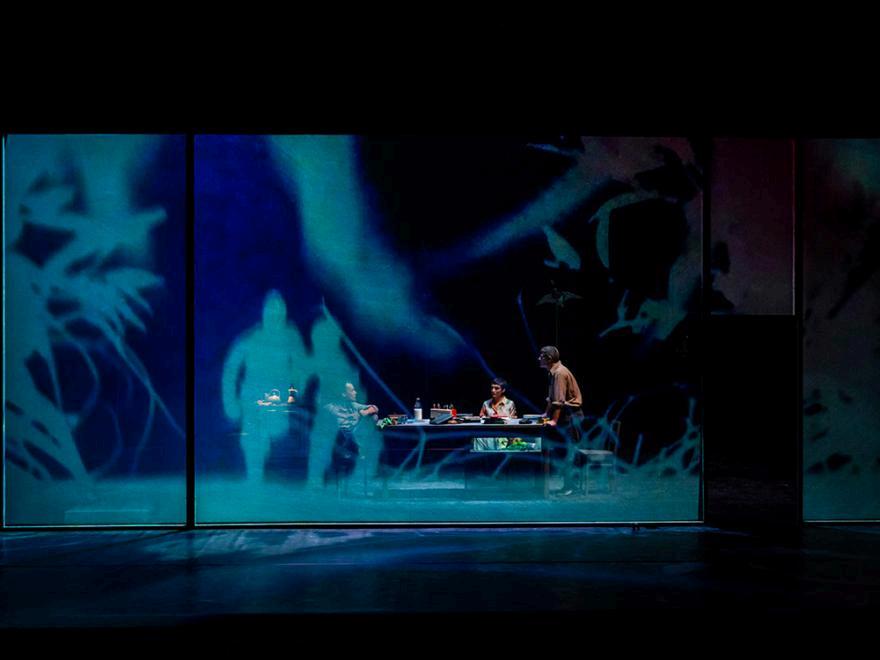
Photo: Claudia Pajewski
The French series Les Revenants, for its take on living side by side with ghosts.
For a bit of bird wisdom, The Genius of Birds by Jennifer Ackerman.
A story by Margaret Atwood, Death by Landscape.
The works and silences of Harold Pinter and Raymond Carver.
And all the stories I’ve forgotten (family ones included) – stories of brothers drifting apart, coming close, sharing without really sharing, loving without loving.
The fairy tales collected by the Brothers Grimm, and the way they haunt us because they’re part of who we are.
Photo: Claudia Pajewski
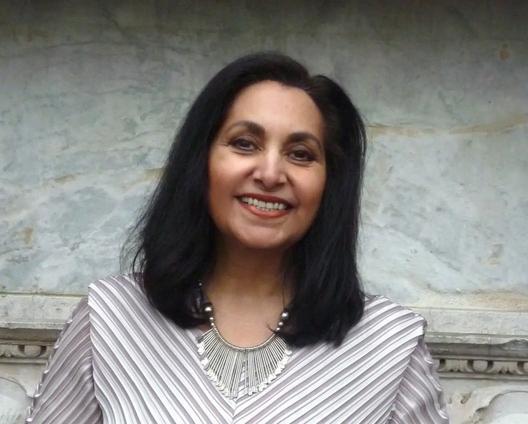
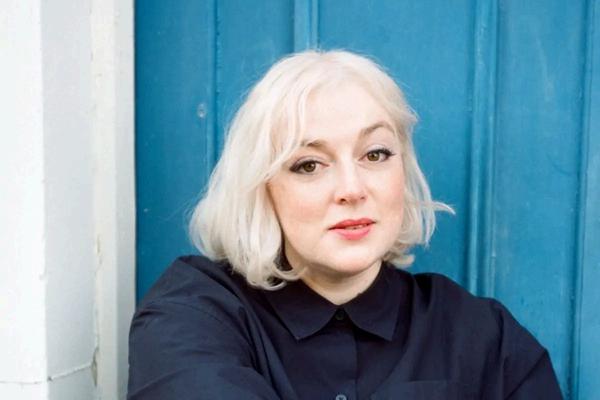
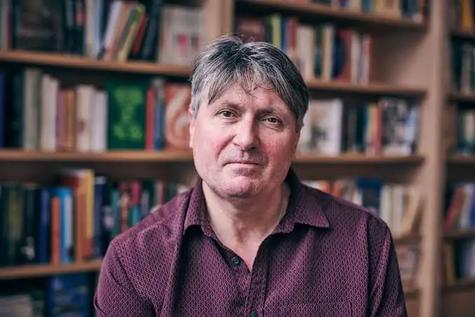
LEADING POETS, INTIMATE READINGS
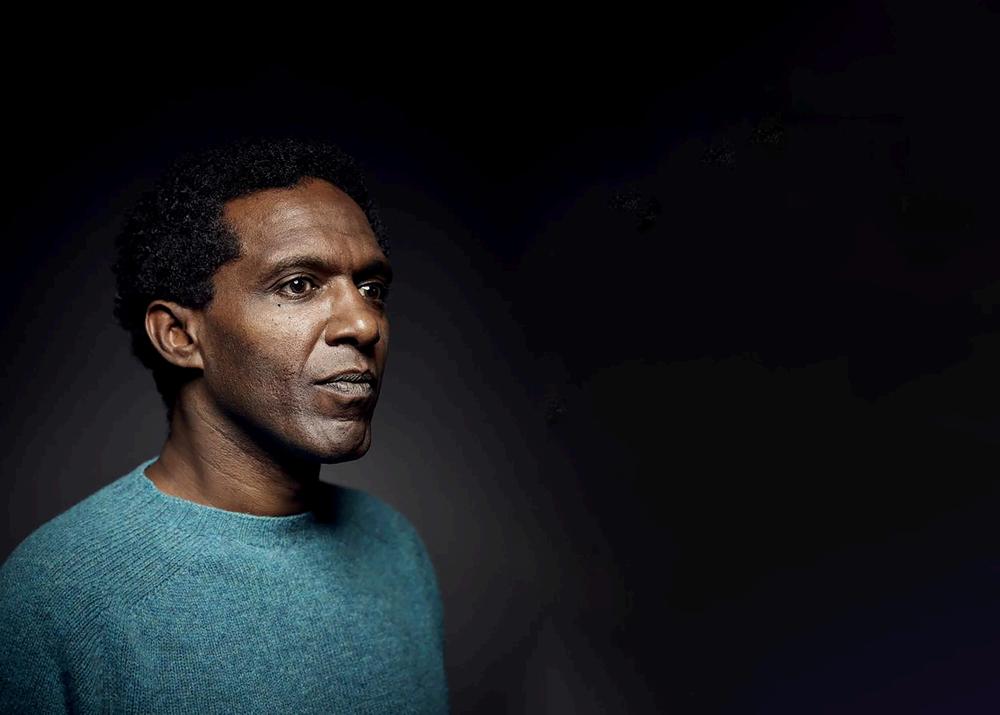
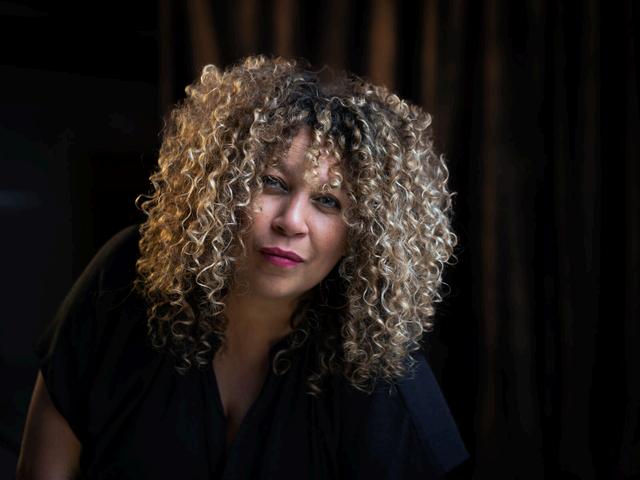
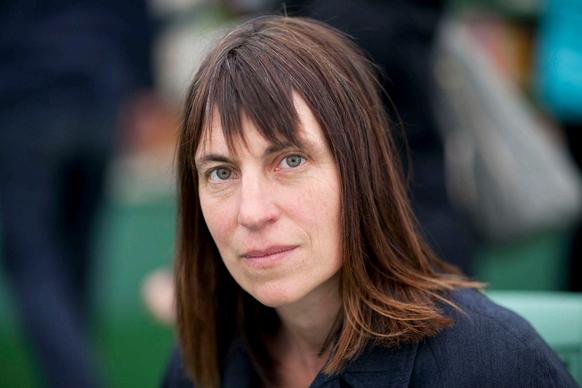
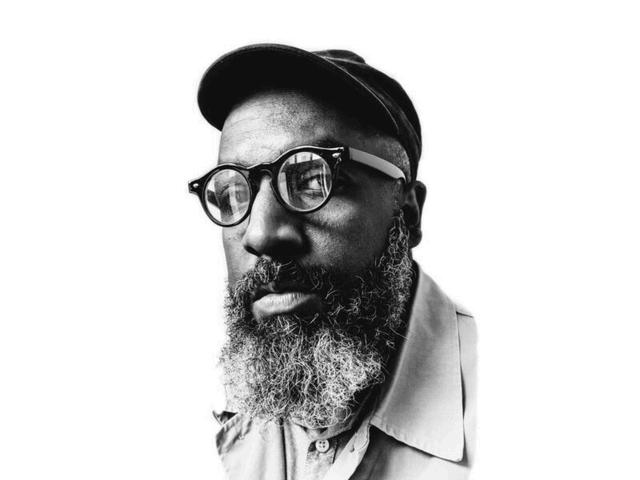
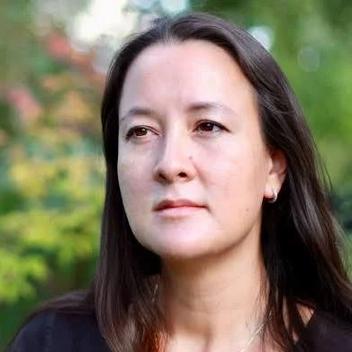
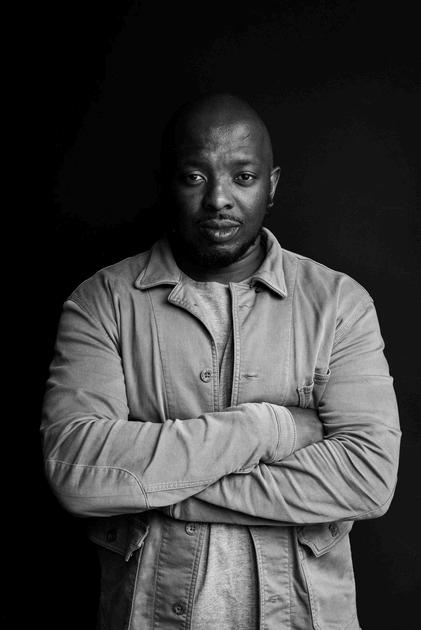
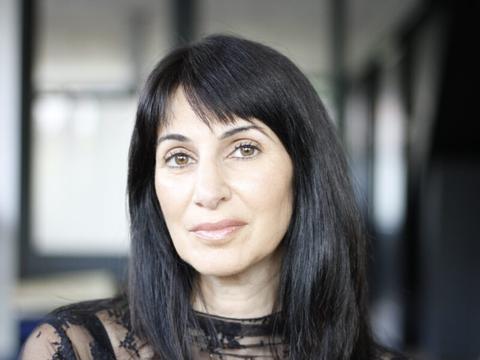
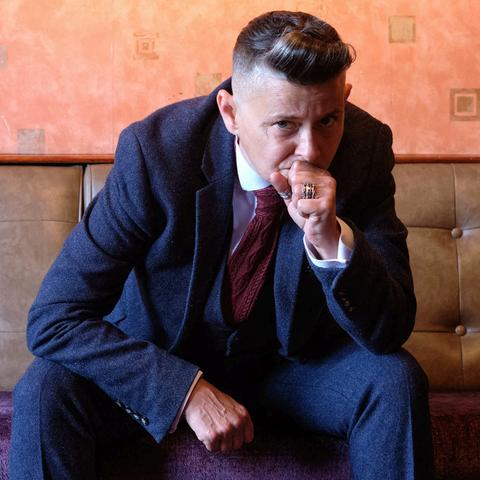

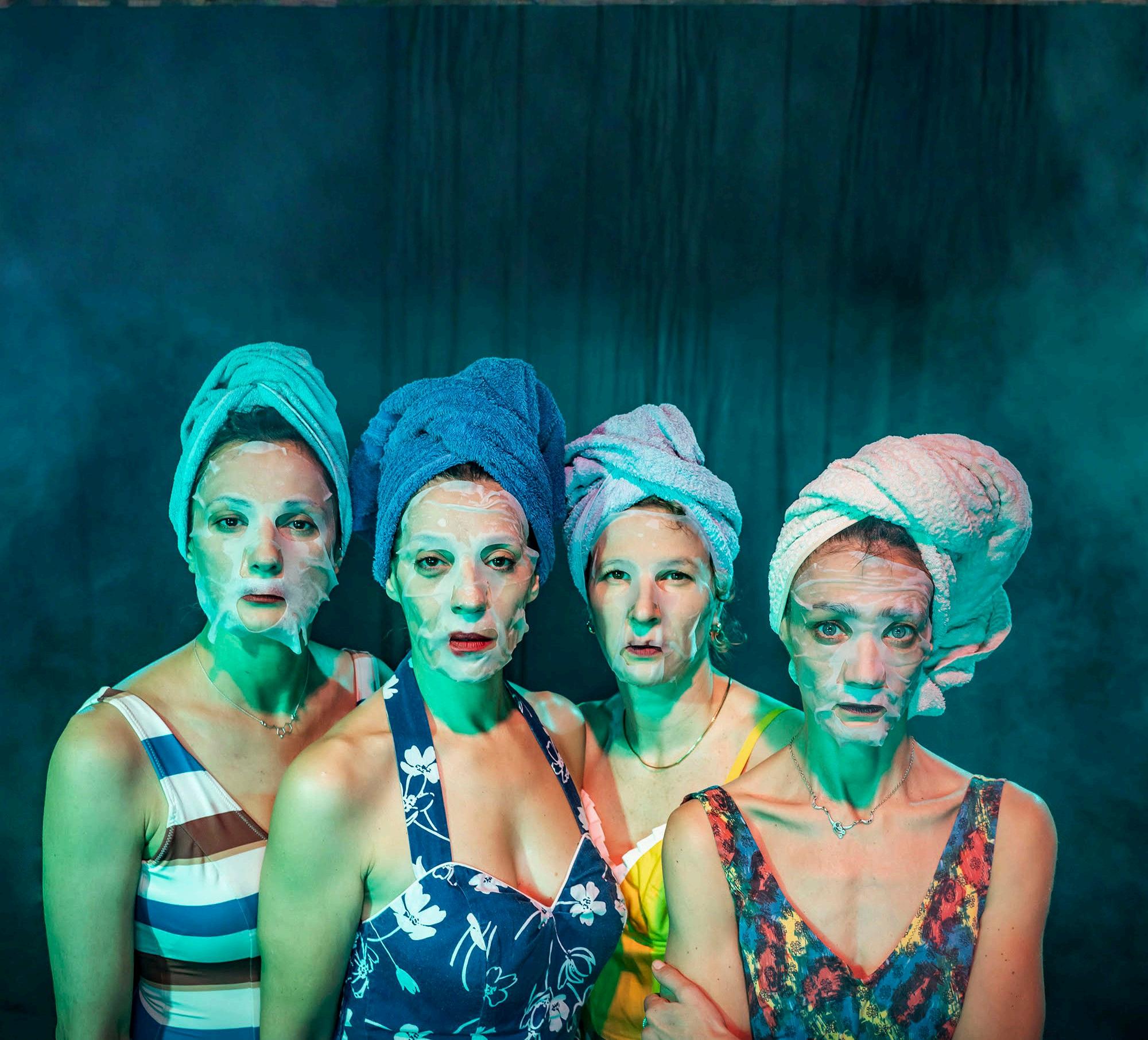
BY CARYL CHURCHILL
Praise for the original production of Escaped Alone: 06 - 09 May
“Caryl Churchill’s magnificent play unleashes an intricate, elliptical, acutely female view of the apocalypse. Revolutionary. ”

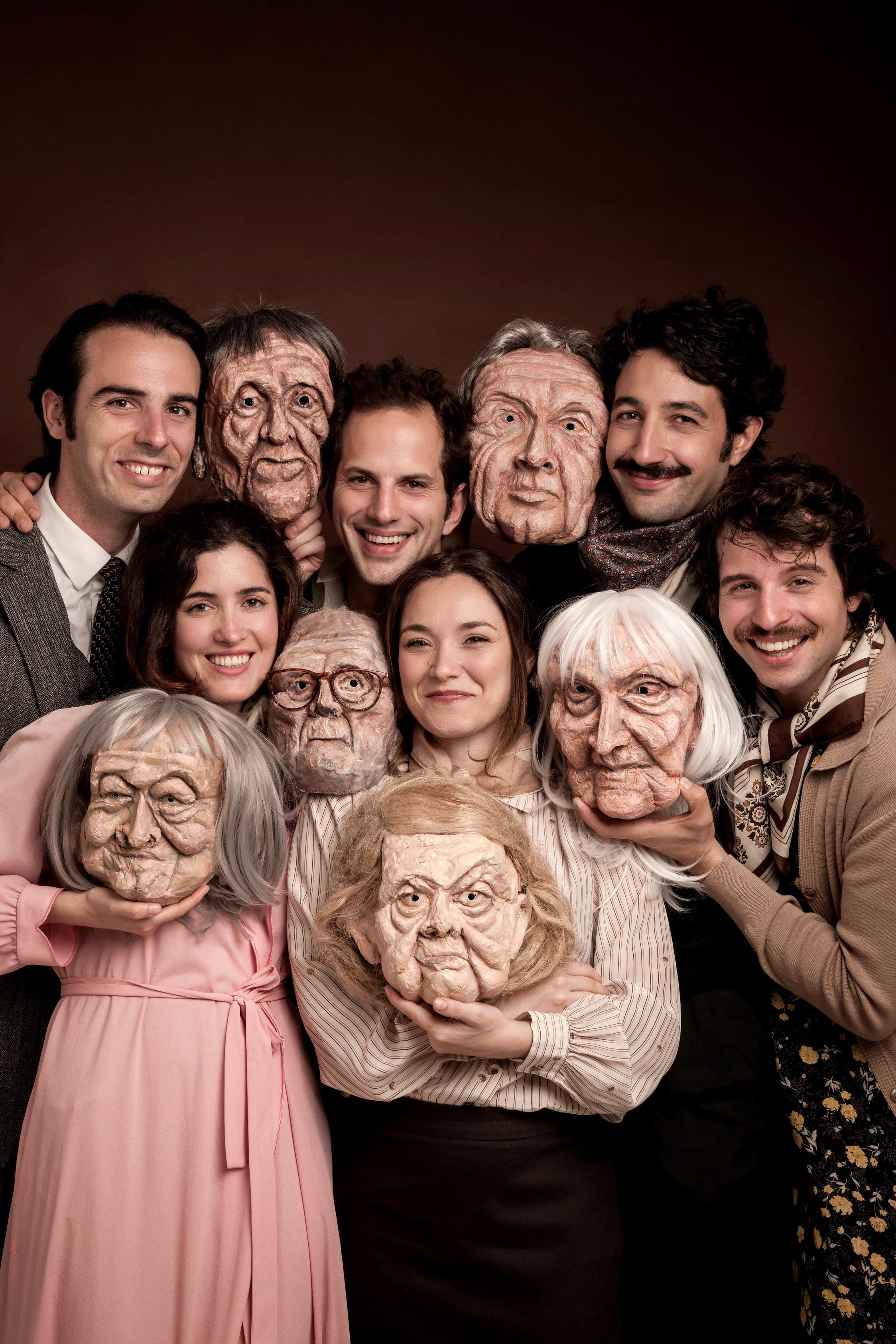
13 – 16 May
‘‘A prodigiously daring & imaginative artistic collective.” Lost in Theatreland
THE CORONET THEATRE TEAM
Artistic Director & CEO
Anda Winters
Audience Experience Manager
Giudi Di Gesaro
Company & Production Coordinator
Emma Smith
Consultant Producer
Hetty Shand
Finance Manager
Andrew Michel
General Manager
Andy McDonald
Lead Technician
Louis Williams
Marketing Manager (Freelance)
Elliot Hall
Poetry Coordinator
Marion Manning
PR Consultant
Sharon Kean
Producer
Daphne Seale
Producing & Marketing Assistant
Esme Bishop
Theatre Administrator / PA to the
Artistic Director
Vihaan Chandy
Box Office Assistant
Ivana Dieli
Duty Managers
Francesca Battinieri, Annabelle Gardner, Joanna Papanastassiou, Aylin Rodoplu, Hazel Townsend
Front of House Staff
Matilda Badziak, Eugénie Bakker, Samya Bose-Rosling, Theo Chen, Stephanie Christodoulidou, Marcello Crisci, Merilee Ettia-Russell, Cheryl Fairon, Katrina Foster, Trey Francis, Thea Gavanski, Alessandra Gonnella, Hugo Gregg, Li Ikoku-Smith, Dane Kostic, Emma Laird-Craig, Maria Lisberg-Jonasson, Aija Miranda, Hamza Mullick, Andreane Rellou, Robert Veng, Kajsa Wiberg-Norquist
Trustees
Linda Bernhardt, Mike Fisher, Mimi Gilligan, Jane Quinn, Anda Winters, Bill Winters (Chair)
Thank you to our patrons for their generous support:
Honorary Trustee
Mimi Gilligan
Cupola
Mike Fisher and T. S. Eliot
Foundation
Club Room
Tom and Maarit Glocer, Julia and Scott Rochester, and Jane Quinn