Honoring Veda: Forever an Elf of Lotholorien by Christian Vega
It’s Happening Here: Berkeley in the Trump Era by Cam Lippincott
BSC or Die: A Feature on BSC president Cyn Macias-Gomez by Margaux Bauerlein
Community
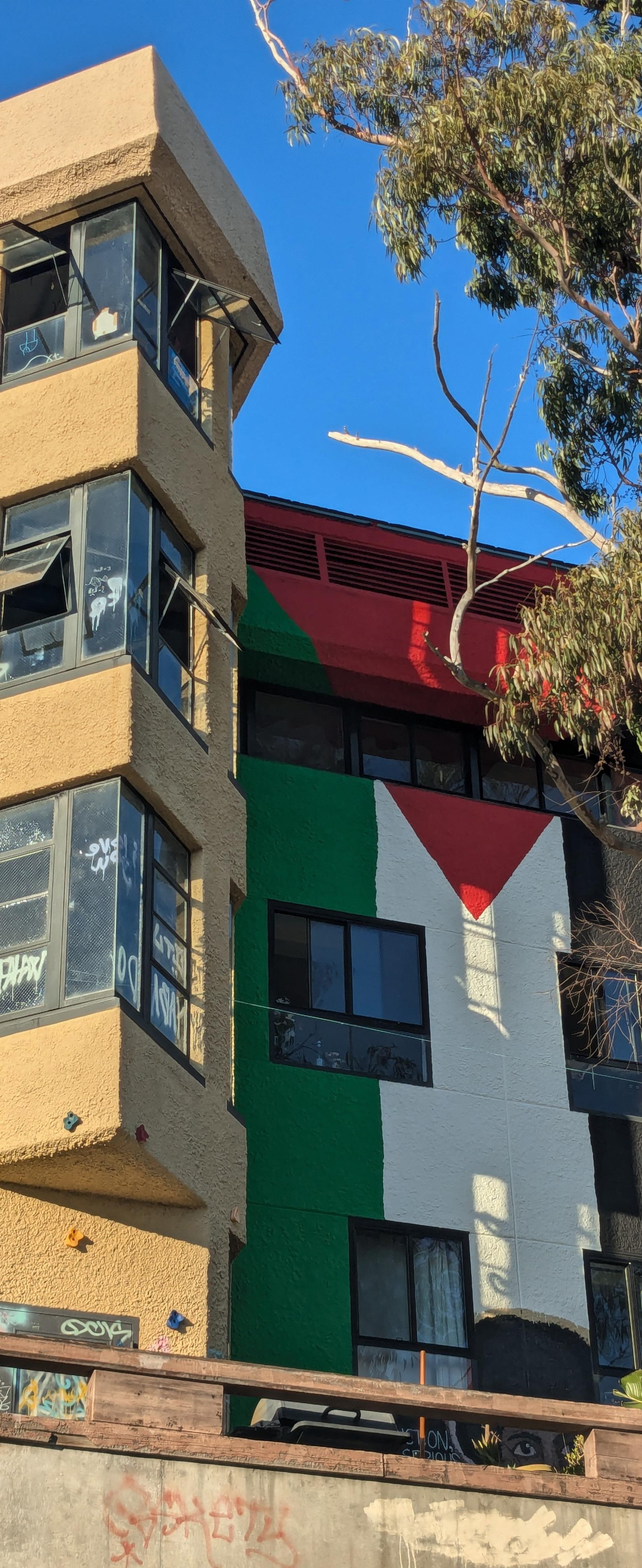
A protest amidst the hills: CZ’s Palestine mural by Mathilde Requier
BSC-Scopes by Cam Lippincott
Transfeminity & Gendered Housing by Jackie Abells
Cookshift Reviews by Deemah A.
Houscest: a(n ethical and) cooperative dilemma by Mathilde Requier
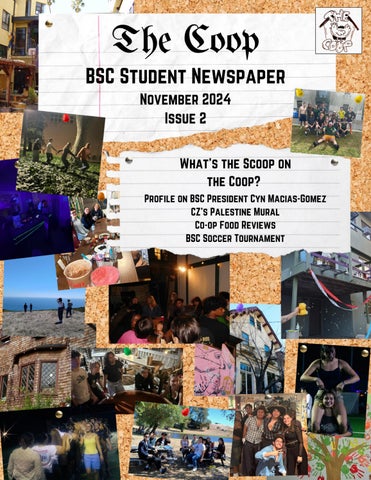
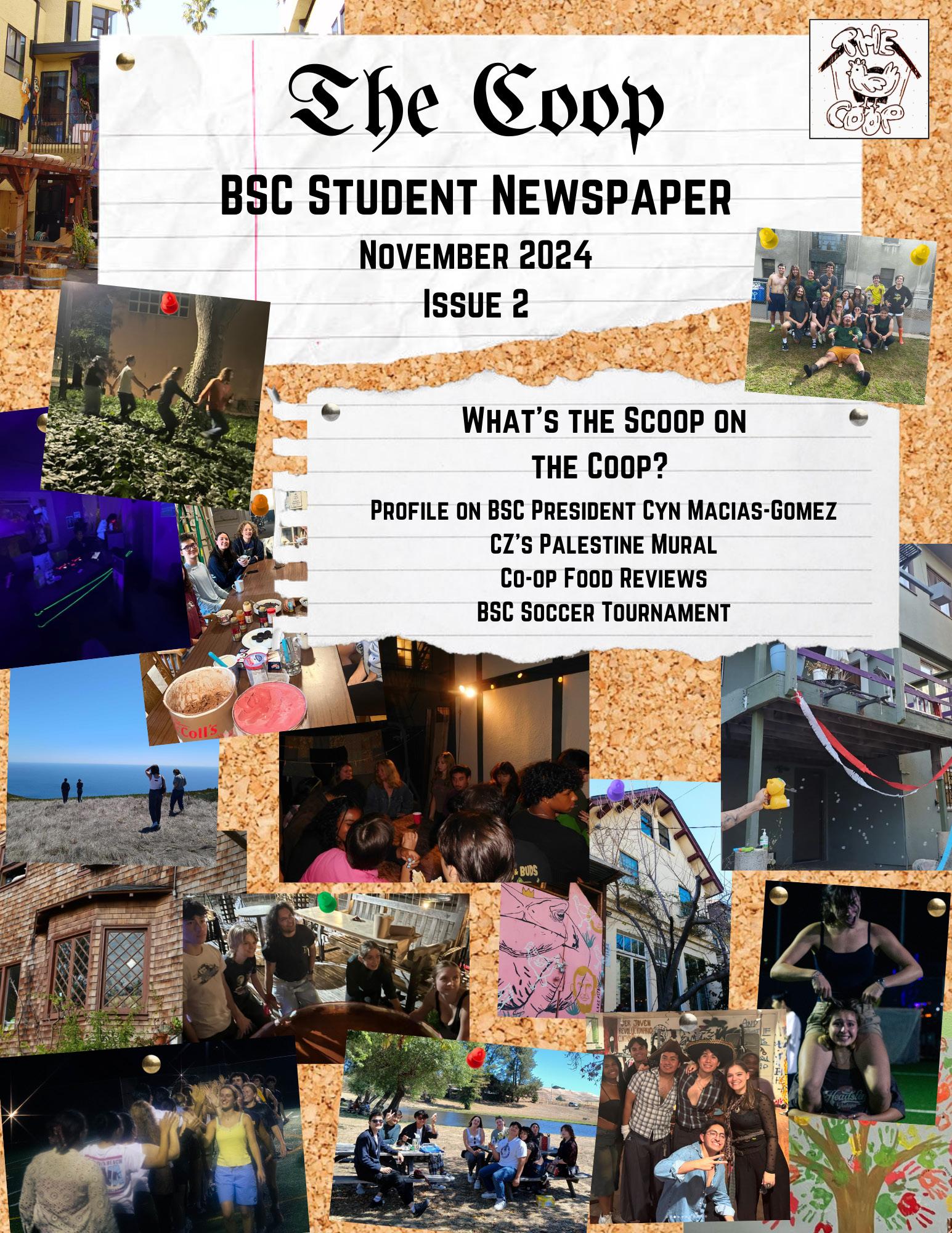
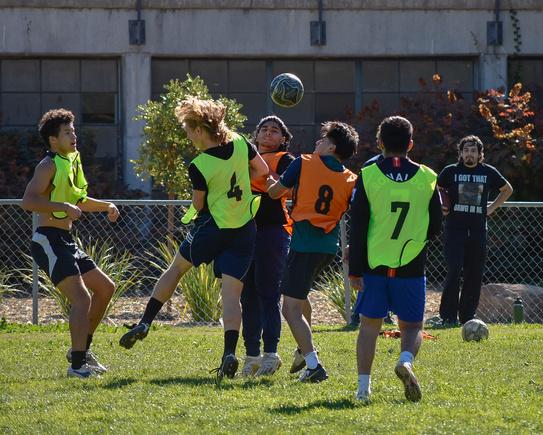
Photos from the BSC Soccer Tournament by Annette Brecko
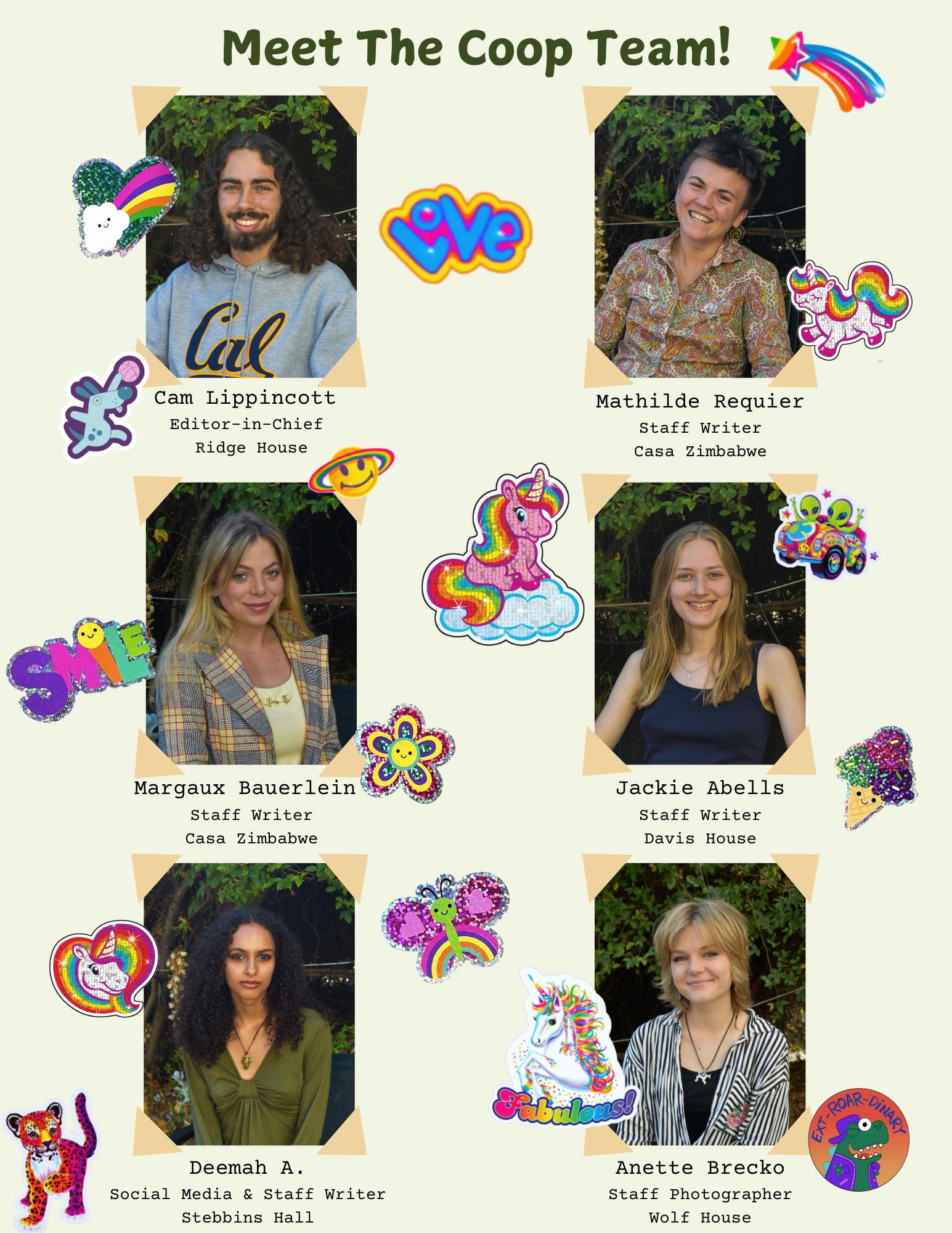
and Staff Page by Anette Brecko, Wolf House
Honoring Veda: Forever an Elf of Lothlorien
Written by Christian Vega, Lothlorien
As a Co-op, all 17 houses and 3 apartments uphold an unspoken duty to support, love, and care for one another, especially in times of need. In this time of grief, Lothlorien illuminates: Be there for your fellow housemates. Whether in the form of patience, kindness, or even a simple hug, community and love helps all of us heal.
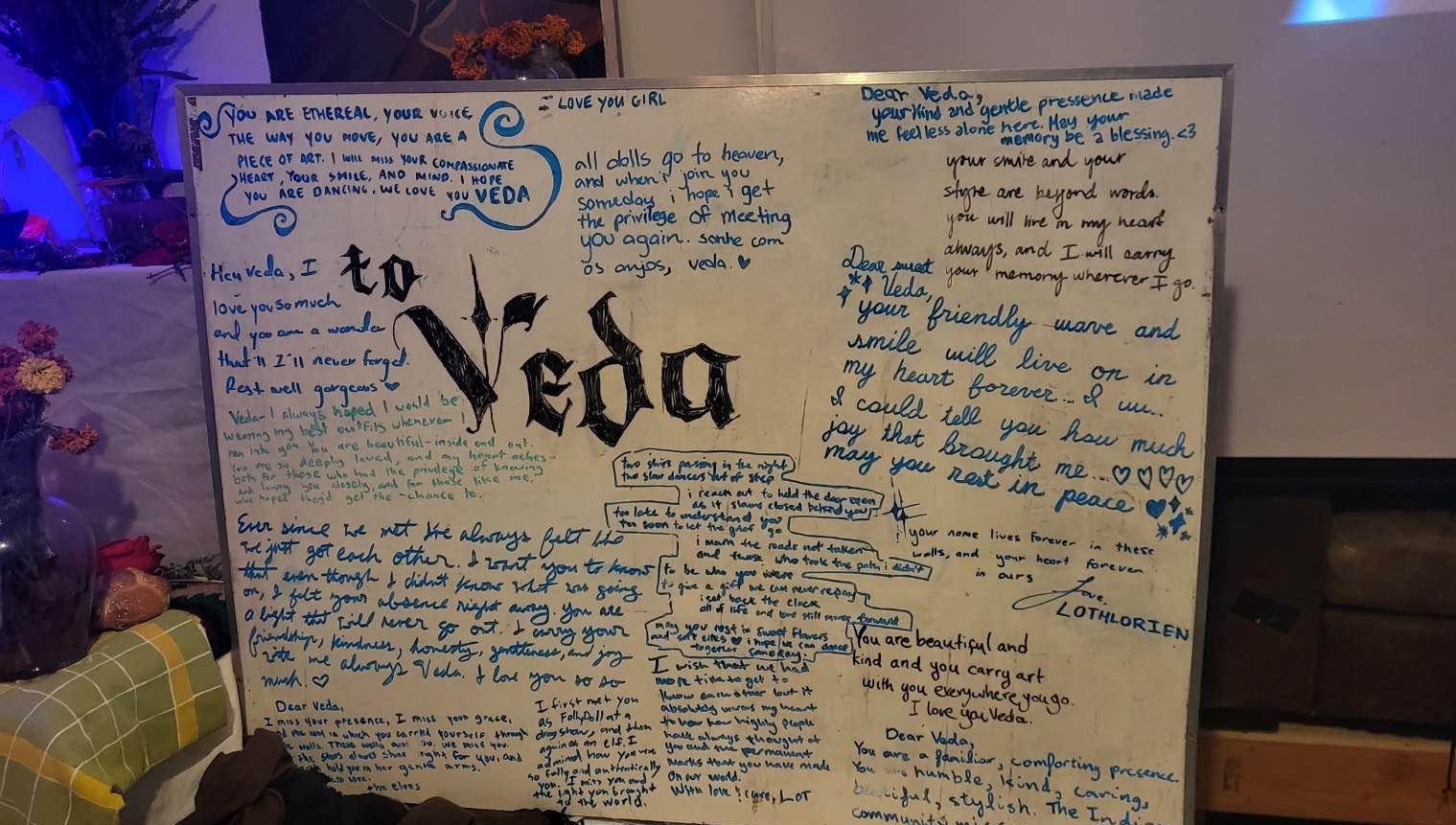
Lothlorien has lost an elf, Veda Jethani. She was a new Elf at Loth who moved in this Fall. Her presence is undeniably stoic, graceful, and full of warmth. The following are messages from friends, housemates, and loved ones of Veda to let our community know who she is:
“Veda is beautiful, she had such an ethereal style and calming presence. She made you feel comfortable and safe being yourself. Veda is a dancer, specifically breaking, and created art wherever she went.
When you spoke to her you knew she was listening with kindness and love.”
here, a snippet of laughter there. These moments of connection and understanding are special and precious to us, especially to those who share multiple intersecting identities with her.”
The way the BSC handled this situation was deeply upsetting and disappointing to several house members, reminding several of us of our own struggles with mental health— whether they be firsthand or experiences of friends— that coincide with the degradation of the authentic self that trans people often experience. We hope the harm the institutional practice of misusing pronouns and respecting gender identity during this tragedy gives the BSC prompt to reflect on their policies and implement processes to protect the privacy and dignity of trans co-opers. The role of systemic transphobia — and specifically, transmisogyny — cannot be ignored in discussions of trans issues and trans housemates.
“Your smile and your style are beyond words. You will live in my heart always, and I will carry your memory wherever we go.”
“You are a familiar, comforting presence. You are humble, kind, caring, beautiful, stylish. The Indian community misses you.”
“In a space with few trans people, especially transfem people, her presence was felt and cherished by those who are still here. Veda’s authenticity in the way she carried and presented herself, ending their first group introduction with “just, any pronouns but he”, was resonant to many of our experiences having to assert who we are— and who we aren’t— in a society that seeks to erase us. We remember Veda in ephemeral vignettes of kinship; complimenting one another’s makeup and fashion, sharing small smiles between work shifts, inviting one another to go first when grabbing a serving of BIPOC food, a knowing glance
Out of respect for Veda and her loved ones, Lothlorien appreciates any form of support in these times of need. This includes gifts such as candles for Veda’s altar, forms of labour such as food, or visiting and paying respects to Lothlorien’s altar dedicated to Veda. Please contact Lothlorien lotbr@bsc.coop and allow us to set aside times and days for every guest that would like to honor Veda. Any other requests, questions, or concerns can be sent to this email address as well.
Veda and Lothlorien have the utmost honor to acknowledge the support of fellow houses and house residents. We’d like to thank Oscar Wilde, Davis, Hoyt, and Cloyne House for their support these past couple weeks - your actions do not go unnoticed. Lothlorien would also like to thank Veda’s parents and family for their support, respect, and love they have shared in our house.
We carry your name in our walls and in our hearts. Our house has strengthened and come together to celebrate and bring love to each other, and ultimately, to you. We hope that soon, the community within the BSC can carry this love as well - and for that, we cannot thank you enough Veda.
It’s Happening Here: Berkeley in the Trump Era
Written by Cam Lippincott, Ridge House
Living in the Bay Area my entire life I have never had a connection with the rest of the country. The realities of the people who live in the midwest, the south, and the east coast honestly feel like an entirely different world to me. Living in a liberal area – which still has its multitudes of problems – makes me often forget how different the rest of the country is.
I can not say I was entirely surprised at the results of the election. Trusting America to do the right thing is a fool’s errand. But what was truly awakening was the totality of the victory, with every single voting demographic turning hard to the right – especially my demographic, Gen Z men.
The writing was on the wall, the behavior of young men on the internet and the rise of the new ‘bro culture’ should have been signs, but I had the innocent belief that the internet is not real life. But for our generation – especially the overwhelming number of people who spend more time and connection online than interacting with actual human beings – the internet is real life. I do not think this is a case of exclusively online radicalization – obviously that is happening, but it does show how the passive feelings of most young men our age have shifted into increasingly anti-social ideals. They do not actively try to hate people who do not look like them, but they do not react to hate the same way you and I might, because of the way they have been socialized by their families, friends – and the internet of course –someone like Donald Trump is someone they can strangely relate to. And of course let’s not forget that the Democrats offered nothing to these people.
injustice when they see it, and it is everywhere. Irregardless if you posted that Kamala is brat or if you did not vote because of Gaza, there was a certain sense of anger, fear, but more so acceptance that was in the air after the Wednesday after the election. No protests, no teachins, no nothing. A drastic shift from 2016 when campus was flipping itself over.
I understand why though. In 2016 Trump came out of nowhere to most people. To the millennial generation who gave themselves the comfort of Obama, Trump represented the far-right apparatus they were not used to. Gen Z knows nothing but Trump, but more than that, we understand that the liberal establishment will not do anything to stop him. This is all we could ever expect of this country. What could we possibly do?
I will not pretend to know all the answers, there are few people in history you could argue that did, but I do propose we as a collective group of young people decide to figure
In Berkeley, the Co-ops are obviously very separate from this world – to an extent. I am not saying Berkeley is the progressive Mecca we all thought it was when we were 16, or that there is not a culture of sexism. But there is a true movement for people to form affinity groups and call out
out what our next step forward is. Gen Z likes to talk a lot about the oppressive systems of the world except for one, the meritocratic class system that all UC Berkeley students benefit from. There is no better predictor of future success than if you attend an elite university, no matter what hardships you may face. We are winners of this lottery, and a lot of us would actually personally benefit from Trump’s tax cuts to the rich, now or in our future careers. The people that are not going to college, the working class, swung heavily to Trump. Campus organizing needs to be focused less on campus itself and more broadly working with the Bay Area working class. If you want to actually convince people of your cause, you need to talk with them, and not with Instagram infographics. A multiracial progressive working class will not come together unless they put aside their minute differences and focus on their common goals for common benefit.
BSC or Die: A Sit Down with BSC President Cyn Macias-Gomez
Written by Margaux Bauerlein, Casa Zimbabwe
Photo by Anette Brecko, Wolf House
“Before you answer that question, I have to go. I was making a cake.” In the middle of my conversation with Cyn Macias-Gomez, Wolf Haus’s Board Representative and the Berkeley Student Cooperative’s President, it dawned upon me that I had left a tres leches cake in one of Casa Zimbabwe’s decrepit ovens. I scuttled from CZ’s balcony into its semi-monstrous kitchen to rescue a very dense, very wet cake. When I returned, Gomez greeted me with a warm smile. Their lavender sweatshirt illuminated by the fluorescent lights of CZ’s “common womb” gave them a serene aura–their cherubic face assured me everything was okay. To Gomez, kindness is more than polite social behavior, it is their guiding ethos. As BSC President, Gomez “really just wants to make sure people are okay.” That concern for others is reflected in what he studies: he graduated from UC Berkeley in 2024 with a degree in Social Welfare and is currently pursuing certificates in American Sign Language and Peer Support at Berkeley Community College before applying for a master’s degree in Social Work. As BSC President, Gomez puts their degree into practice. What first attracted him to the Co-ops was not the opportunity to engage in a radical experiment of communal living and collective care but a far more practicalconsideration: affordability.
Starting at Berkeley in Fall 2020, Gomez stayed home in Southern California for the fall semester, but felt ready to move to the Bay Area come the spring. Ap -
When Gomez told his parents about their offer, “They literally laughed.” Thanks to an Instagram post and a friend in their Spanish class, Gomez found the Co-ops. “The only way I got my parents to let me do it was from the angle that I was going to be at Cloyne.”
From Cloyne to Rochdale to Wolf, Gomez found himself getting involved in house leadership early. At Cloyne, Gomez served as House President but felt empowered to run for the BSC Board upon moving to Rochdale and engaging with the Save Rochdale Movement, a campaign to get the University of California, the former property owner, to transfer the land to the BSC. He served on BSC’s board for three years and witnessed previous Presidents make ties with other co-operatives and guide the Co-ops through the COVID-19 pandemic.
plying for housing far away from Berkeley can be a challenge, especially as a first generation student. Gomez explained, “I didn’t really know what options were on the table. Dorms obviously seemed like an option, but the only offer I got was at Blackwell for $18,000 a year.”
“Right now, the short game is finalizing the land transfer cause the state gave us the O.K. and now we have to go back to the U.C.” In August 2024, the state of California approved SB 56, a law that would exempt the U.C. from the requirement of selling real property valued over $1 million dollars through a process of competitive bidding and allow it to transfer the land to the BSC, requiring that the BSC continues to operate the facility for low cost student housing. Now that the BSC is in the process of acquiring the land, it also faces the $18 million cost of seismic retrofitting and renovations the property needs to be accessible to students with disabilities. This a “big expense, a big money item” and Gomez seeks to “hold being open and optimistic with consensus building.” Most of the properties in the BSC need money. One of the BSC’s properties, Barrington Hall is non-operational.
The ovens at Casa Zimbabwe are broken. The ovens at Ridge are broken. The ovens at Lothlorien are broken. Allocating which houses get money will entail “a lot of hard conversations.” Gomez stressed “we’re going to need to be okay with being uncomfortable and know the end goal is a decision that we came to together.”
The financial welfare of the BSC is a precarious thing. The BSC is $2.5 million in debt. Although the Co-ops are intended as affordable housing for low-income students, collecting unpaid rent, and serving members eviction notices, is “helpful in terms of planning what needs to happen now” to keep the BSC afloat. The contrast between being the face of the BSC, the person Co-opers most readily view as being responsible for their wellbeing, and the President, the person who is responsible for the wellbeing of the institution, does not sit easily with Gomez. They want to avoid giving members an impersonal eviction experience, like a landlord washing their hands of a tenant, by supplementing the harsh reality with resources and connections to non-profit partners, like the East Bay Community Law Center, for support. “Housing when it comes to this part is so dehumanizing…” I pressed further—what do you mean by “this part?” “The capitalist part! This is not what we are meant to do!”
When talking about asking for help from the community, I could sense Gomez’s frustration, “We’ve been here ninety years…We’ve been in the community, we’ve been here, we’ve been doing this,” and Gomez paused for a moment, revealing a ripple in his placid composure, “Petty me wants to say why didn’t you help us earlier? We’ve been here 90years providing essential services for students in your community.” It is a scary question to consider: what would happen to Berkeley’s housing market if the Co-ops, housing 1200 students, ceased to exist?
Despite the essential services the Co-ops provide to Berkeley, it is undeniable that their reputation has taken a bit of a beating–the pandemic, the conditions of the BSC’s units, and tragic member deaths have resulted in once coveted spots for housing being left unfilled. Gomez conceded, “Word of mouth is not strong enough. There’s not enough good morale...” What to do next, then? Give up? Certainly not. Gomez gave me a list of ideas in rapid succession about how to revive the spirit (and numbers) of the Coops: reach out to the Peralta Community College system for a new pool of students, buy advertisements on Telegraph Avenue, make new allies with the ASUC Undergraduate and Graduate Senate, get on Cal Rentals–UC Berkeley’s official off-campus housing database, and reach out to alumni for donations. Through “good will and transparency” the Co-ops will resurrect according to Gomez. I certainly felt skeptical about the viability of the Co-ops at the start of our conversation. It’s a nebulous organization responsible for the housing and socialization of 1200 students run by a board of twenty-eight. It’s a fertile ground
for chaos–especially when the President thinks the coolest thing about the governing structure is that “people can literally vote to remove the chair [of the board]” at any time. Thankfully, the board is constrained by the Rochdale Principles so Co-opers need not judiciously police their representatives. Established in 1844 by the Rochdale Equitable Pioneers Society, the seven principles are a set of ideals for how co-operatives should run. Gomez makes all decisions in reference to these values: “They are my co-op north star.” See principle seven: “concern for community.” Gomez wants to make these principles known to all members of the BSC. In the coming months, they plan on offering visits to the BSC’s units and offering Co-op orientations, outlining the Rochdale Principles. Gomez believes that this time, when rent is due, members will think it’s “not just some landlord knocking on your door,” but will have the understanding that “this is your community saying we need each other to show up to take care of each other.” The Rochdale Principles are supplemented by Gomez’s adherence to a loving work ethic, developed by the critical theorist and feminist scholar bell hooks. “It’s pretty much that you can’t exist in good work without doing it from the heart.” Gomez is motivated by the “relationality” baked into being president: It’s “not in a negative way [that] other people are counting on me…we need each other to show up and do things with intention.”
Gomez’s capacity to show up for others is evident when he discussed his plans to improve access to mental health resources in the BSC. “Me starting in any advocacy or organizing started with mental health…it’s always been top of mind for me.” During their tenure as Vice President of External Affairs last year, following the deaths of three Co-op community members, Gomez asked the question again of “who can help us?” The Peer-to-Peer Counseling Service at UC Berkeley’s Tang Center seemed to be an obvious solution. However, Tang’s counseling services were only available to UC Berkeley students, or students that lived in UC owned co-ops, Rochdale and Cloyne. Now, Gomez is working on expanding peer counseling services to all Co-opers, regardless of whether they are UC Berkeley students.
The BSC’s Evaluative Committee will be conducting an assessment of Gomez’s performance as President in the spring but I’ll put in my two cents early: Cyn Gomez is a wonderful person and president. Not only do they possess incredible knowledge about the governance of the BSC, having served as Board Representative and Vice President of External Affairs prior to their presidency, they have an immense capacity for compassion that few individuals in positions of power possess. We ended our conversation discussing our birthdays, we’re both Scorpios, and I when I looked into Cyn’s eyes, I couldn’t help but feel assured that the co-ops will have another ninety years of success.
A symbol of protest on Northside: Casa Zimbabwe’s Palestine mural
Written by Mathilde Requier, Casa Zimbabwe
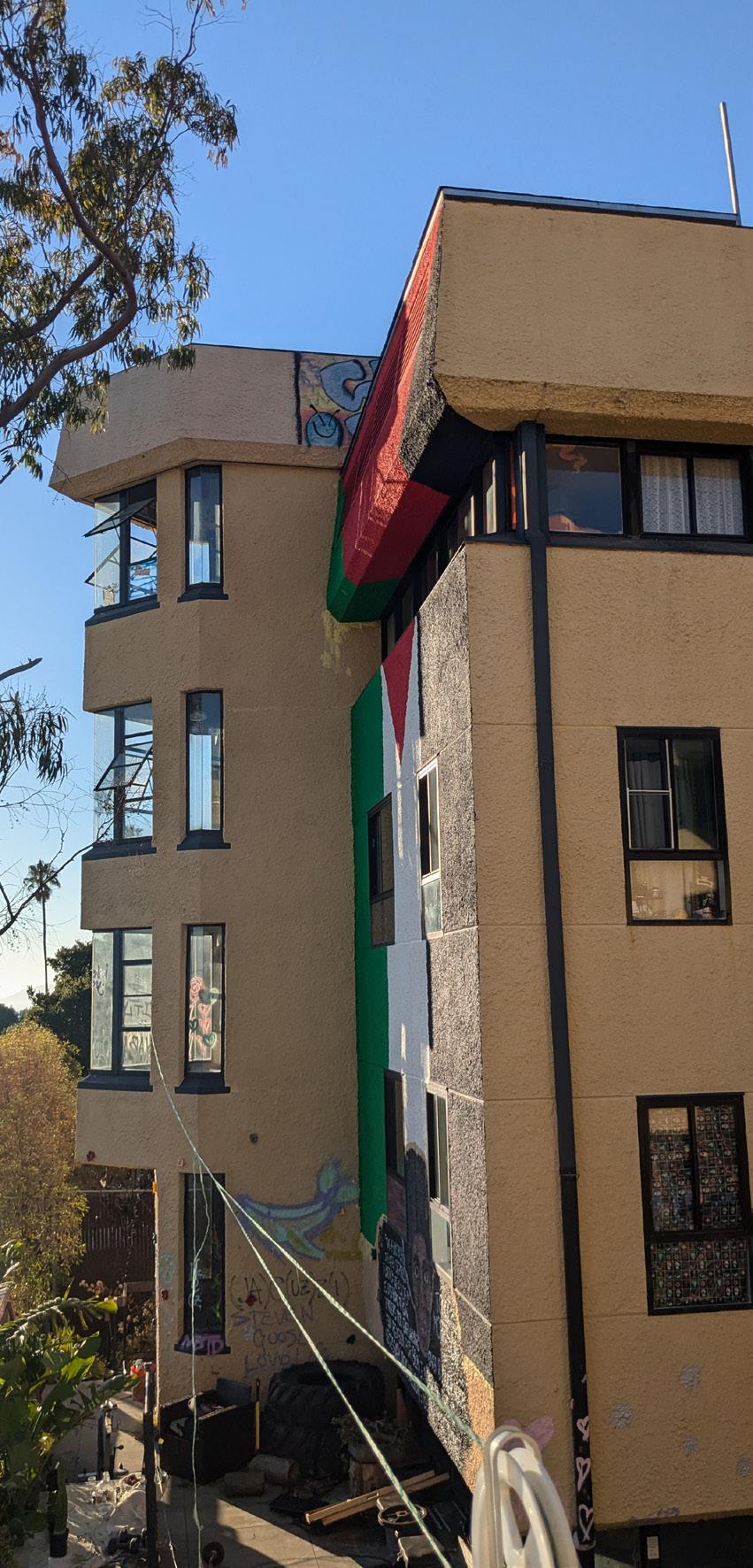
Peering over the UC Berkeley campus lies a mural of the Palestinian flag, a totem of resistance amidst the oppressive multi-million dollar mansions of the Berkeley Hills and the nuclear weapon storage of the Lawrence Livermore National Laboratory.
Painted on the yellow castle Casa Zimbabwe, the mural came into existence this past summer, due to the work of Czars Jordan Locke and Josiah Naiburg. Talks of it, however, started way back in April, when the UC Berkeley Divestment Coalition initiated the “Free Palestine” encampment on Sproul Hall. “The talks started around the same time as the encampments were, making the issue very prevalent in our daily lives. And so it was like, “Let’s get involved. If we can’t be a part of that, let’s at least do something,” said Wyner Sirof, a Czar who had been involved in the discussions surrounding the flag. The original plan had been to have a fabric banner of the Palestinian flag, alongside text stating ‘UC Divest.’ Little debate about the actual location of the flag was had. It was quickly decided to be on the side of the building, as a message to the UC Berkeley campus. Yet, by mid-summer, talks of the flag were still ongoing and fruitless. Debates surrounding the flag dimensions, the fabric, and weather conditions stalled the discussion. Nori Quist, a Czar who had been present during the first mentions of the flag idea and then left CZ for over a month, remembers coming back to CZ in July, and there being no progress on the project.
“People were worried that [the flag] was going to get gross if it gets wet, or of the environmental impacts of microplastics. So I was joking and was like “You guys are so concerned about the fucking fabric. Why don’t you guys just paint it?” Nori Quist said. “And Jordan replied, “Oh yeah, we can paint it.””
What started as a joke became the actual project. Even though not passed at council, two weeks later, on July 22nd, Locke and Naiburg started painting the Palestinian flag, a project which took them two days.
“Once they brought up the idea of painting, I was like yeah, I specialize in accessing things on ropes, so it was very easy,”
Locke said. “Josiah and I had always talked about painting more using ropes, and I always thought it was a shame I had always done it for the industry and not
for something I believed in personally.”
Despite the surprise of the mural’s appearance for many Czars and members of the community, the feedback has been overwhelmingly positive. The mural has even been posted by Professor Ussama Makdisi, Department Head of the newly established Palestinian studies program at Cal, with the caption “Just one block away from campus!”
In addition to the political motivations of such a piece, Locke has also seen this as an opportunity for greater involvement within the Co-ops to pursue such projects. He points to the unique character of the Coops as member-led, free from management contractors, giving it the freedom to interact with the community through its spaces.
“We extend our offers to help. If there’s people in other coops who want help painting something, I’m down,” Locke concluded.
BSC-SCOPES
Aries
March 21 – April 19
The moon isn’t sure what to say about you Aries. You’re either the most productive person in the room or spend the entire day on Instagram reels. And the reels you send aren’t even that funny. It would be best if you threw your phone in the ocean.
Cancer
June 22 – July 22
You try your best Cancer, you really do. The effort is appreciated. But eventually you have to realize that your best is not good enough. At some point you need to understand that your imposter syndrome has some good points.
Taurus
April 20 – May 20
Your good fortunes near their demise. You’ve coasted through the school year so far, but be warned, your past is coming back to haunt you. Did you really think they wouldn’t find out? Get ready to explain yourself.
Leo
July 23 – August 22
The whole point of the Co-ops is that you don’t need to buy yourself dinner. Yet you average $500 on eating out every week. Maybe you should reconsider your spending habits.
May 21 - June 21
Look Gemini, personally, I think your time in class would be better spent listening to the lecture then on dating apps, but hey what do I know, you only bombed three out of your four midterms.
Virgo
August 23 – September 22
Every Co-op needs that one person who is loved by all. The one who has no enemies, gets along with everyone, and is someone anyone can go to when there is trouble. You, Virgo, are not that person.
21 –
Gemini
Written by Cam Lippincott, Ridge House Graphics by Deemah A., Stebbins Hall
Libra
September 23 – October 23
The stars are tired of you Libra. All you do is complain about how no one laughs at your jokes or wants to hang out with you. Maybe you should take a hint? And how is it even possible to be 50 lectures behind in all of your classes?
Capricorn
December 22 – January 19
Unlike most people Capricorn, your hard work is about to pay off big time. Those all nighters and study sessions made you miss a few nights with friends, but soon you will reap the rewards of your hard work.
Scorpio
October 24 – November 21
You promised yourself this school year would be free from situation ships. How did that turn out? You don’t need to answer because we both already know. Honestly I am not even disappointed anymore because I just expect this from you at this point. Do better.
Aquarius
January 20 – February 18
21 – JuneSagittarius
November 22 – December 21
Everyone knows it was you.
Aquarius, you put effort in your classes, you’re friendly to everyone in the house, and a a shoulder to cry on. Overall an excellent person. Unfortunately your future will be fighting for the manager position at Panda Express because you’re a humanities major.
Pisces
February 19 – March 20
Pisces it’s time to start focusing on yourself. I know “self-care” is all the rage these days, but you definitely need to consider. Especially concerning what’s going to happen on March 11th, 2025.
Transfeminity and Gendered Housing
Written by Jackie Abells, Davis House
When I was applying to the Co-ops, there were two houses I quickly decided not to put on my list. They were Sherman and Hoyt Hall, the two all-female houses. This was a personal decision, made primarily for my own comfort and safety.
I am transfeminine. While Sherman Hall does describe itself as, “very LGBTQ friendly with many LGBTQ identified members each semester,” on the BSC website, and both houses using the phrase “women identifying” implies that they accept transgender women, I did not feel very reassured by that. On paper, I could apply to either and potentially get in without any resistance from the houses themselves, given that my BSC account marks my gender as female. But that would not guarantee how any given housemate would feel about my presence.
Would they be uncomfortable with me or passive aggressive? Would their acceptance of me be conditional on me performing femininity to their standards?
All of these thoughts were just my concerns as an outsider. To understand more about trans experiences in these houses, I spoke to Hoyt Hall’s board representative, Skylar Kasey. Kasey is also a trans woman, and has been living in Hoyt since the second half of summer. She referred to gendered housing as, “both dysphoria inducing and euphoria inducing.” For her, it can be euphoria inducing to be grouped in with women and share that identity. But she adds, “It’s very clear sometimes that there’s this disconnect.”
Kasey told me of one specific uncomfortable experience she had during Hoyt’s “disorientation” party: “Everybody was welcomed to grab hand paint and to paint their butt and boobs onto the walls in a specific area of the house. I didn’t participate. And I want to make it clear that there was no active transphobia… Everyone at the house has
been more than accepting.” Kasey elaborated on this, saying the activity implied something about “how our bodies are intertwined with our identities… I’m very confident in myself, but I also don’t know if there are any other trans women in the house, and I don’t know how that may have affected somebody who was participating [and] less confident in themselves.”
To hear more perspectives, I also spoke to Dani S., another transfem who lives in the Co-ops. Dani currently lives in Euclid, but first resided in Casa Zimbabwe when she first entered the BSC. When I asked her thoughts on gendered housing, she said, “As a trans something-or-another, I would never feel comfortable going and living in Hoyt or Sherman, just because I don’t even want to open the bottle of worms.”
Dani did not consider moving into either of these houses because of a negative experience she had years ago at Casa Zimbabwe. She told me of how someone at Casa Zimbabwe actively excluded her from a non-men circle: “I’m a little hairier or whatever. I don’t pass as well. So they were very insistent on me not having a space there.” According to Dani, this other person would talk about her behind her back and argue with her about this exclusion the entire time she was living at Casa Zimbabwe.
As we were talking I noticed that Dani was expressing a similar fear I had when it came to finding housing. We were both worried that if we make people uncomfortable that will threaten our housing and potentially force us to move.
I’ve found that the way housing categorizes gender can be intimidating as a trans person. I have become accustomed to the assumption that when someone says “women and nonbinary,” they do not really mean people like me. The connotation of the “woman and nonbinary” category is that nonbinary is treated as woman-adjacent, and only
that term. For me personally, I did want to risk my comfort and safety on my housemates’ acceptance of me into their identity.
consider with any communal housing. Gendered hous ing, even when it is inclusive of trans people of certain genders, is often inherently problematic for trans peo ple. It forces trans people to fit themselves into narrow
While the co-ops are accepting of trans people in words, it can be difficult to feel assured the 30 or 100 people you live with will accept you. When asked if the BSC is doing enough, Dani said, “I would love if marginalized communities and queer people and people of color were prioritized a lot more materially, rather than in just words and statements and stuff like that. But I don’t know how much capacity [the BSC has] or how much
I cannot pretend to know what these houses should do for themselves, nor can I say that there is an answer to any of these problems. But I do believe that more cisgen der people should consider the diversity and broadness of trans identity in housing, and that the BSC should be protective of trans residents.
The goal of women identifying housing is not to exclude others, but to protect marginalized gender identities. That must include both women and all trans people.
So when someone says “women and nonbinary,” even if they’re well-intentioned, I cannot know that they will actually welcome me and be comfortable with my presence.
During our conversation Kasey made a distinction between “identity-based” houses and “identity-themed” houses. Houses like African American Theme House and Oscar Wilde are themed around African American and queer identity respectively, without exclusively housing people of those identities. Meanwhile Sherman and Hoyt are based on female identity, and are restrictive in that way. Kasey said that in identity-based housing, “There is definitely this idea of camaraderie around one’s own identity, and when someone is not meeting in that identity, they are immediately seen as an outsider, as someone who does not belong there.”
This potential othering distracts from what Kasey considers the main focus of cooperative living. When expressing her main criticism with identity-based housing, she said “The current form of class society, being capitalism, kind of pushes people into identity boxes and focuses on them as individuals versus solidarity based on class.”
None of these concerns are especially unique to the BSC. These are issues that trans residents must unfortunately
Cookshift Food Reviews
Casa Zimbabwe:
Written by Deemah A., Stebbins Hall
Davis:
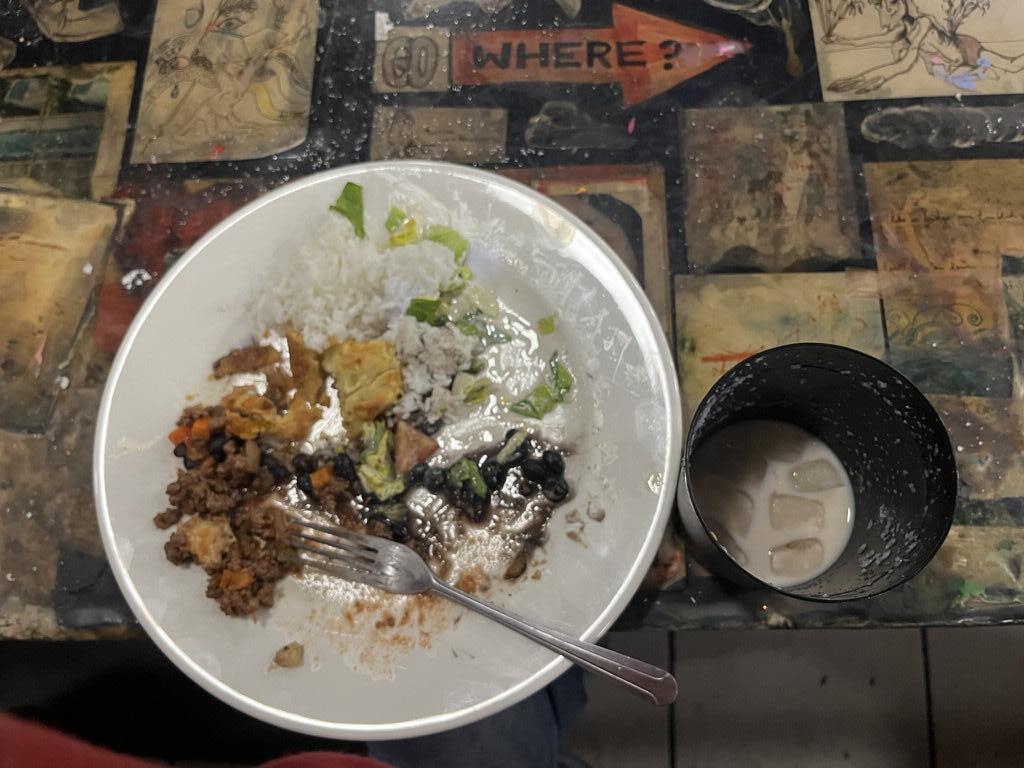
Initially, being at Casa Zimbabwe outside a party context was strange. I only remember seeing the roof, a few stairwells, and that one bathroom with glory hole stalls covered in Yugio cards in the dead of night. Once I walked up to the dining room, my eyes were assaulted by the colorful atmosphere and harsh lights. The first thing I registered was a Dance Dance Revolution machine, which apparently works and is jailbroken to play thousands of songs. As I waited for dinner to be placed on the table, I continued scanning the exotic room. Considering the large housing capacity of CZ, the dining room was deserted. Maybe it was because of the non-men circle that night, but I doubt it. I sat with the few remaining people and listened to complaints about the lack of life in UC Berkeley students, Orange County yearning, and past journalism work
of an Iranian graduate student. Wednesday’s cook shift treated us to beef and veggie empanadas, black beans, butter lettuce salad, and white rice. We were spoiled even more with horchata. Most dishes were teetering between being delicious or just alright, except for the firm and clumpy rice. The unevenness and roughness of the grains disappointed me because the formula is too simple; 2 cups of water to 1 cup of rice. Someone mentioned it might have been leftovers, but I’m unsure if that alleviates the situation.
Rating: 3.5/5
Designed by the late architect Julia Morgan, Davis Hall most certainly does not disappoint when it comes down to aesthetics or food. I felt the same anticipation I usually do about dinner at Stebbins, which I have yet to experience in any other house. I also found the dining culture similar, as people gathered together, albeit the dining room was a bit empty compared to ours. It was slightly amusing to hear people share their disdain for everything Stanford and how one of their house members (accidentally?) made it on UC Berkeley’s Turning Point USA Instagram page. I had the perfect combination of socialization and good food, making a delightful dinner. I cannot express enough how much I loved the chicken lasagna. It had a creamy consistency that one could only dream of. I admit I am a little jealous of everyone who got leftovers. Ignoring my complicated relationship with raw salads, I thought the garden salad complemented the meal appropriately with the avocado balsamic dressing and sesame seeds. The only problem I had outside my regular salad disapprovals was the carrots being cut too thick, which reminded me of my unresolved locked jaw. The dessert, however, alleviated the pain. Coincidentally, we had white chocolate lemon mousse, and a day or two beforehand, Stebbins made a fruit-flavored mousse. I am not a fan of white chocolate, nor am I much of a mousse lover, but I was still charmed by this dish. The lemon flavor subtly overpowered the white chocolate, which tasted more like honey to me, and the half-melted pieces of chocolate were a satisfying surprise. I had a wonderful time at Davis and would come back to admire the beautiful, intricate designs of the house and eat dinner in a heartbeat.
Rating: 4.5/5
Stebbins:
Lothlorien:
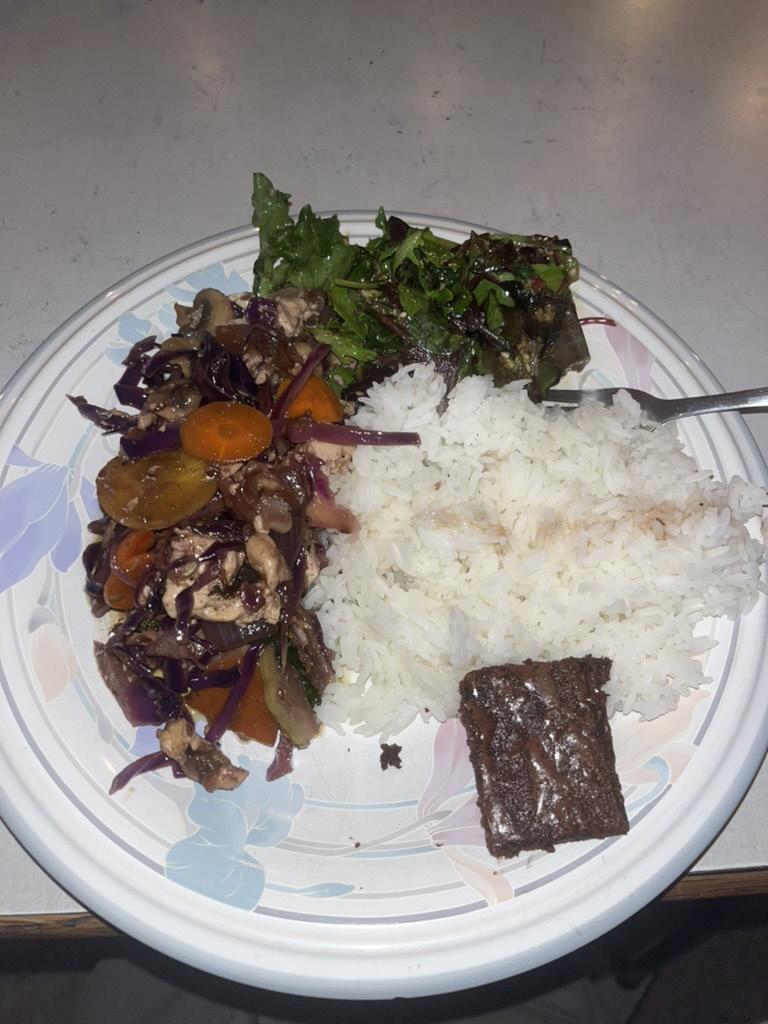
The meals at Stebbins have been heavenly, and we have yet to have a dull night. So far, we have had many stir-fry and curry dinners, and today was no different. Once the cook shift announced that we could serve ourselves, I realized that there was no curry but instead, a dragon stir-fry awaiting me, accompanied by plain white rice, Anahit’s – one of our talented head cooks –sesame salad, and thin fudge brownies. While all of our regular commotion occurred, I examined the food. The salad was composed of plain leaves (spring mix #3 for the CFS heads) drowned in sesame seeds and oil, saving the side with its toasty, nutty bliss. I opted for the non-vegetarian stirfry option, consisting of chicken, potatoes, mushrooms, broccoli, carrots, purple cabbage, and onions with notes of ginger, soy sauce, and cumin. Frankly, I had my hopes set on curry, but I still adored the multicolor dish. I enjoyed every aspect, from the vegetable selection to the consistency. Finally, after eating the main courses, my brain permits me to indulge in dessert. I appreciate the extra effort our chefs put into making our dinners intimate and memorable, so it pains me to confess I was not crazy about the brownie. Overall, I feel satisfied with the dinner and am grateful to live with such passionate cooks.
Rating: 4/5
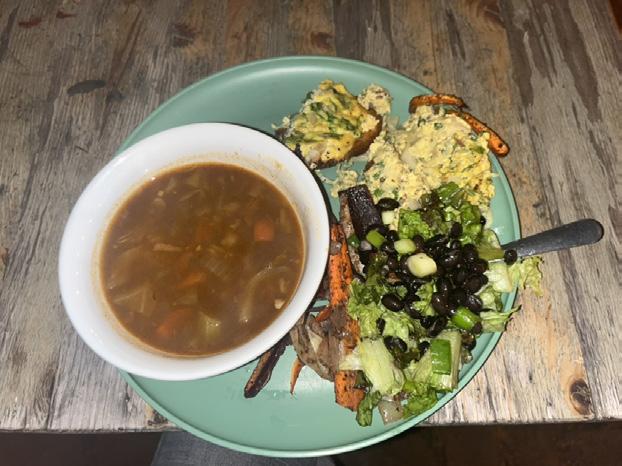
Based on the vegetarian customs, I assumed I would be feasting on a tofu dish of some sort, or as CFS would call it, tofu from hell. However, I was surprised with bean soup, bean salad, egg soufflé, scrambled eggs, and roasted carrots. I started with the bean soup and was met with robust flavors of tomato, garlic, and hints of chili powder. Cumin powder might be in the mix, but I can’t be too certain. The soft chunks of carrots, celery, and red kidney beans were delightful and brought a nourishing, hearty feeling to the meal. I wish I could say the same about its matching counterpart, the bean salad. It felt almost like a conflict between the black beans and lettuce, and I was getting caught in the crossfire. I continued to fight through my elf dinner. The cheesy, lukewarm eggs with additions of onions and green leaves were tolerable enough to finish, but I could not ingest my one bite of the egg soufflé. The baked edge had transitioned, if not the initial form, into a simultaneously soggy and somewhat firm state, similar to an overwhelmingly moist sandwich. The texture upset me deeply to the point of respectfully rejecting my food. I’m unsure whether this was due to the time I put off eating, but it was unpleasant nonetheless.
Considering the past kitchen dilemma, I will exclude this dining experience from the measure of Loth’s cooking proficiency. While multiple dishes left me unamused and a bit disturbed, they were balanced out by the few normal-tasting dishes and my time watching my dear friend play Crusader Kings until 1:00 am.
Rating 2/5
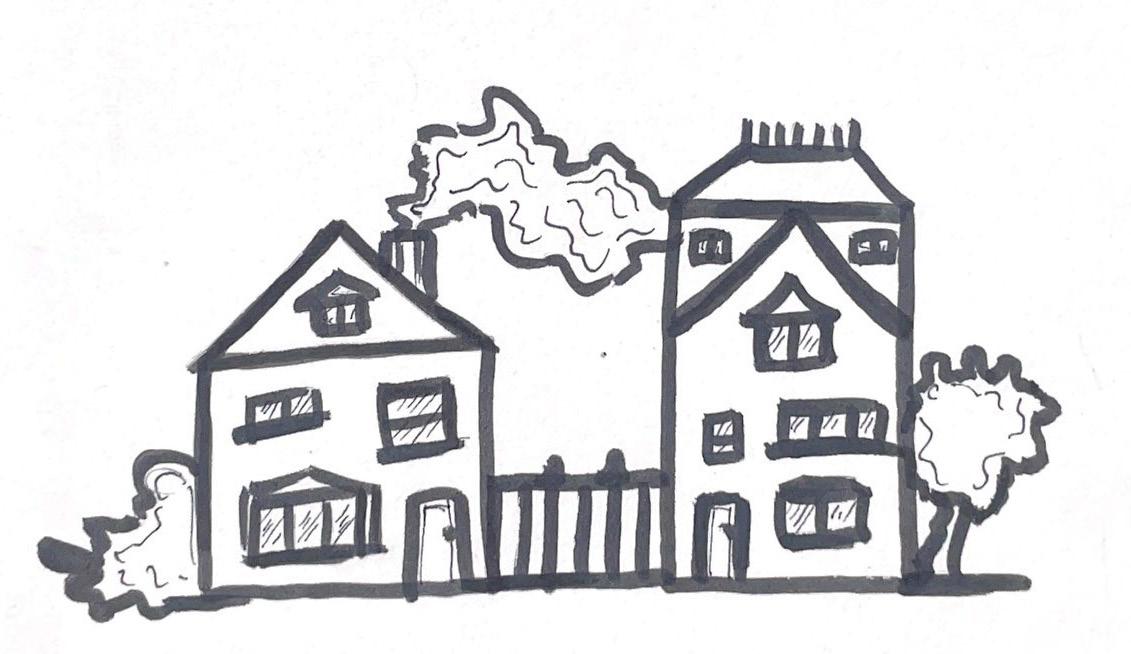
Housecest: a(n ethical and) cooperative dilemma
Written by Mathilde Requier, Casa Zimbabwe
As I laid on my bed pondering about my failed midterm, I received a notification sound from my best friend, a text message saying, “He is ignoring me in the kitchen right now.” She had been seeing her housemate, a man of little interest except for simply living in the same space she did, with questionable hygiene habits and the banter of a three-year-old. But she had fallen for him, fallen for him even against the proverbial, “Don’t shit where you eat.” This left me pondering - why do we fall for our housemates? And if we do, can it actually work out? I remember when I first started hooking up with my housemate. What started off as simply hitching a ride home for Thanksgiving with them ended up as an impromptu sleepover after heading home. And then some kisses hidden in between rooftops – I felt like I was a teenager all over again, hiding in the shadows with a forbidden love, the shadows being the slightly damp (I don’t even want to know from what) study roof couches and the forbidden love of an unemployed Film major. It wasn’t like a typical friend with benefits, and very much its own brand of Co-op housecest. It meant figuring out time to see each other privately in a space where everything is a common space, and where we both lived in triples or doubles. It meant walks of shame before your 8 a.m. through the back staircase, hoping nobody runs into
you in your pajamas on a floor you obviously did not live on. To act like everything is nonchalant as if eating breakfast alongside the same person who was eating you out two hours prior was super casual and chill. I know I am not alone in this experience. Housecest is one of the most universal experiences of the Co-ops. Like in Alabama, it is almost biological and natural for you to fall for the other members of your Co-op family. But for some reason, living with other people and seeing them at their best – and worst – breeds attraction. You don’t have to go through that weird process of getting close enough to the person to legitimize a hangout with them - they’re just there. The topics of conversation are easy and discernible, an easy, “Man cook shift was disgusting yesterday” or even easier “Do you know where the milk is? I swear if we ran out again.” And as the conversations start, the hangouts become easier - a simple Discord message asking to study together, a simple group outing to another Co-op party, and boom you’re in. Even with that initial attraction and ease, we ignore the consequences we know will come with moving this forward. We ignore the awkwardness that will happen if we get rejected, the way our feelings will hurt when we see them bring somebody else home, we ignore the tensions it may create with other members of the house.
I don’t know why despite these possible consequences, we still
go forth. A crush on a housemate and then a painfully awkward hookup with them, and then boom, you’re heading cookshift together. And the most agonizing moment of all, when you fall in love with a housemate, but they don’t feel the same back, and every day you have to see them, see your friends talk to them, ask them questions if they are managers, and see them move on. That being said, housecest is a rite of passage. One cannot claim they have lived in the Co-ops if they have not experienced housecest, or at the bare minimum a dying crush for another housemate. But frankly, to truly imagine housecest as a happy ever-after story is to be stupid. It is doomed from the start, either edging on the lines of convenience or forced lust, or if romantic, pure love bombing. And maybe that is the whole point, to hold onto the delusion like a proverbial cigarette break our miserable lives, and finally live out the tragic love plot from the rom-coms. And if so, the least we
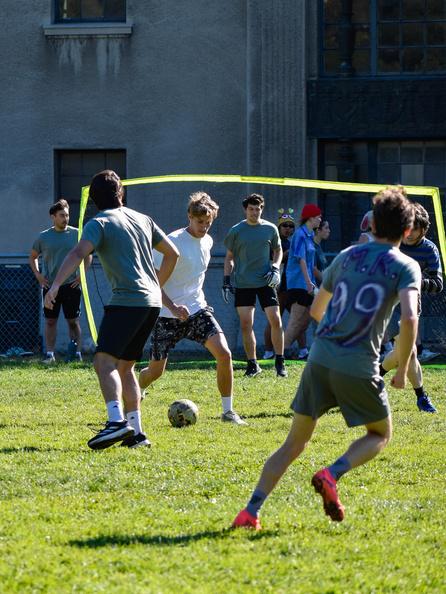
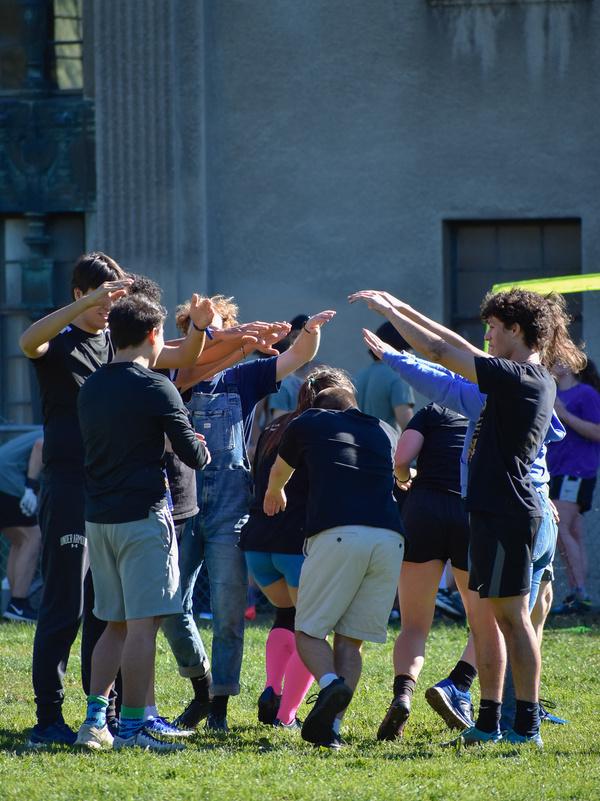
BSC SOCCER TOURNAMENT
ROCHDALE RAMPAGE EMERGED VICTORIOUS
MEMBERS-AT-LARGE AND THE DAVIS DAVISAURS TOOK SECOND AND THIRD PLACE