2024


Unit 1: Principles and Applications of Science I (external exam)
Unit 2: Practical Scientific Procedures and Techniques (internal course work)
Unit 3: Science Investigation Skills. (external exam)
Unit 8: Physiology of Human Body Systems (internal coursework)
Biology- Cells, Specialised Cells and Tissues.
Chemistry- Structure and Bonding, Production and uses of substances.
Physics- Waves.
Assignment 1- Titration and Colorimetry
Assignment 2- Cooling Curves and Calorimetry
Assignment 3- Chromatography
Assignment 4- Reflective Journal
Planning Skills, Statistical tests, Enzymes in action, Diffusion of molecules, Plants and their environment, Fuels, Electrical Circuits.
Assignment 1-Musculoskeletal system
Assignment 2-Lymphatic system
Assignment 3- Digestive system
Unit 1: Principles and Applications of Science I
Written examination set and marked by Pearson.
•Three 30min exams for each science
•30 marks for each (90 marks total)
Unit 3: Science Investigation Skills
A task set and marked by Pearson and completed under supervised conditions.
•The supervised assessment is arranged over two sessions in a three-week period timetabled by Pearson.
•The supervised assessment sessions are 3 hours for Part A and 1.5 hours for Part B.
•Practical investigation and written submission.
•60 marks.
The BTEC qualification has been developed in the science sector:
• To give learners the opportunity to acquire
• technical and employability skills, knowledge and understanding which are transferable;
• To provide education and training for science employees to develop their underpinning knowledge and scientific skills;
• To provide opportunities to achieve a nationally recognised Level 3 vocationally specific qualification leading to university entrance or employment in the science sector;
• To increase understanding of the role of the science technician, their relationship with the scientific community and their responsibilities towards the community and the environment.
• To give learners the opportunity to develop a range of skills and techniques, personal skills and attributes essential for successful performance in university and work.
Units within the qualification cover areas of laboratory science, biological, chemical and physical science to provide a route to employment in the science industry or within organisations that use science. These can include roles such as:
Working in Quality Control, Technician/Analyst, working in a Research Laboratory in the development of new drugs, working in the Chemical Industry, involved with testing materials , working for a scientific magazine or journal, working in a Biotechnology Laboratory carrying out fermentation and purification
Contact Mrs Merrett
BTEC National Applied Science Student Book 1
Component 1: 60% of qualification- 120 marks
Component 2: Externally set assignment- 40% of qualification- 80 marks.
This is a broad- based course that provides flexibility in content and approach. This course encourages creativity, sustained investigation and analysis, experimentation and design and making as a means of developing technical and expressive skills. A self-drive and student motivation to explore techniques and processes are a basis to succeed in this subject. Many processes are introduced and explored, including drawing, painting, printmaking, digital media, 3D and photography.
Personal Investigation, 60% of qualification, internally assessed, externally moderated. Breadth study with interpretations (40% A level). This component consists of a major, in-depth, practical, critical and theoretical investigation project/ themebased portfolio and outcomes with an integrated extended written critical and contextual analysis (1000 words minimum).
Externally set assignment, 40% of qualification, internally assessed, externally moderated. Depth study with sources (40% A level). This component represents the culmination of learners creative learning. Learners will develop their response over a preparatory study period. Responses must take the form of critical, practical, practical and theoretical preparatory work and/ or supporting studies, which will inform the resolution of these ideas in a 15-hour sustained focus study.
Development of ideas that are informed by investigative contextual study of historical and contemporary art, craft and design and other sources relevant to the selected area of study. An awareness of the wide variety of work produced by artists, craftspeople and designers.
Selection of and purposeful experimentation with a sufficient and appropriate breadth of media and processes, mixed media and combinations of media exercising suitable control of these to maximise creative potential.
Gathering, selecting, organising and communicating relevant information in undertaking research into visual and other source of reference, showing personal interests and judgments. Recording by drawing and other suitable means, such as colour, tonal and textural notes, photographs and annotation in sketchbooks and on study sheets.
Presentation of truly personal, imaginative final outcomes that, together with selective evidence of the processes by which they were produced, effectively realise stated intentions. Explicit connections made, where appropriate, between the different elements of the submission.
Students can progress from this qualification into higher education via courses in Fine Art, Illustration, Graphic Design, 3D design, Art Practice- Foundation Diploma.
The creative industries expand throughout many sectors. Working in freelance, graphic design, art therapy, museum curation, illustrator and areas including media, film and theatre. The skills learnt are extremely transferrable.
Mr L Ashmore - Head of Art and Photography
This is the study of living things and can therefore be considered as one of the broadest scientific disciplines. Biology ranges in scale from the molecular, through cells and whole organisms to ecosystems and the whole biosphere. While studying Biology you will have the chance to cover topics such as Ecology, Physiology, Evolution and Genetics. Scientists within this field work with physicists and chemists on new technologies and experimental techniques such as genetic modification and bio imaging. These discoveries and many more in recent months have given us extraordinary new tools for understanding how the living world works. The study of Biology gives students the opportunity to develop a wide range of skills applicable to a great variety of future careers.
Over the 2 year course students will be encouraged to:
•Develop an understanding of biological concepts and practical methods
•Be aware of advances in technology relevant to Biology
•Recognise the value and responsible use of Biology in society
•Sustain and develop their enjoyment of and interest in Biology
The topics that will be covered are:
Topic 1: Lifestyle, health and risk (AS)
Topic 2: Genes and health (AS)
Topic 3: Voice of the genome (AS)
Topic 4: Biodiversity and natural resources (AS)
Topic 5: On the wild side (A level)
Topic 6: Immunity, infection and forensics (A level)
Topic 7: Run for your life (A level)
Topic 8: Grey matter (A level)
Practical skills will no longer be assessed through separate coursework; core practicals will be completed throughout the year and can be examined in the summer through the exams. For AS Biology all material taught in the first year will be assessed through two examinations, each 1 hour 30 minutes and worth 50% of the final grade.
Topic 5 (On the Wild side)
Topic 6 (Immunity, infection and forensics)
Any questions from Topics 1 – 4 (AS) 2 hours. 33% of A level
: Topic 7 (Run for your Life)
Topic 8 (Grey Matter)
Any questions from Topics 1 – 4 (AS) 2 hours. 33% of A level
: General paper assessing topics across the AS and A level qualifications 2 hours. 33% of A level
This course acts as an excellent starting point for students considering degrees in all forms of biology, medicine, forensics, veterinary, sports science, psychology along with many others Past students have gone on to study a wide range of courses from medicine at Imperial College London to Biochemistry and Physiotherapy at a variety of different Universities.
Salters-Nuffield AS/ A level Book – Published by Pearsons (ISBN number 978-1-4479-9100-7)
Through studying Biology students have the opportunity to develop a wide range of sought after skills for both University and other careers. These range from problem solving skills, excellent practical skills, analytical thinking and problem solving and many more
Mrs. Smee – Head of Biology
Business ALevel
ExamBoard:AQA
EntryRequirements:GCSEGrade6inBusinessand in English( LanguageorLiterature)and Mathematics
Subject Content
The course allows students to understand how businesses operate in practice through applying theoretical and mathematical calculations to case studies. Students cover topics on business operations, marketing,finance, HRandtactics through to globalisation and business strategy in the context of the external and internal environment. The course aims to develop students’ ability to analyse and evaluate business scenariosand asks them to provide real life solutions forthem. The course is assessed entirely by examination.Students will develop the knowledge and skills needed to analyse data, think critically about issues andmake informed decisions – all skills that are needed for further study at higher education and employment.
Content:
1.What is business?
2.Managers, leadership and decision making
3.Decision making to improve marketing performance
4.Decision making to improve operationalperformance
5.Decision making to improve financial performance
6.Decision making to improve human resourceperformance
7.Analysing the strategic position of a business
8.Choosing strategic direction
9.Strategic methods: how to pursue strategies
10.Managing strategic change
Paper 1 :
Three compulsory sections:Section A has 15 multiple choice questions (MCQs)
Section B has shortanswer questions worth 35 marks.Sections C and D havetwo essay questions (choice of one from twoand one from two) worth 25marks each.
Paper 2:
Three data response compulsory questions worth approximately 33 marks each and made up of three or four part questions.
Paper 3:
One compulsory case study followed by approximately six questions.
Assessments
Paper1: Written Exam: 2hours
100 Marks
33.33 of the A Level
Paper 2: Written Exam: 2 hours
100 Marks
33.33 of the A Level
Paper 3: Written Exam: 2hours
100 marks in total
33.3% of A-level
Non-Examined Assessment : N/A
SkillsGainedandEnrichment
Opportunities:
Studentscanpr ogress fromthis qualification to higher education cour ses, suchas degrees in Business,or in related subjectssuchas Accountancy and Finance , Marketing, Human Resources, Economics and Management. Paststudentshavetakendegreecourses at theLSE, ExeterUniversity,Sussex University, Westminster, Manchester University, Southampton University, & King’s University, London.
Further Reading:
AS and A-Level Business: AQA Complete Revision & Practice (with Online Edition)
Textbooks:
AQA A-level Business (Surridge and Gillespie) Malcolm Surridge (Author), Andrew Gillespie (Author)
Progression/career opportunities: Awiderange of careersinall industries in public, private and not for profit sectors in areassuchas management, accountancy, management consultancy, marketing, human resources. public relations,business administration,internal communications, strategy, journalism,education, nationaland local government, andthecivil service.
Further information: Mrs T Patel -HeadofBusiness and Economics
Business -CTEC
Extended Certificate
ExamBoard:OCR
EntryRequirements:GCSEGrade5English and GCSE grade 5in BusinessStudies (orMerit level 2 Business)
Subject Content
The course of study for the level 3 Cambridge Technical Extended Certificate in Business comprises of 5 unitsof study. 3 of which are mandatory and 2that are optional. Students will have the opportunity to studya wide range of topics as described below:
Unit 1 The Business Environment: In this unit students will develop an understanding of how and why businesses operate in the way they do. They will look at a range of different business structures and business types and explore how the ownership of a business and its objectives are interrelated. They will learn about the importance of different functions within a business and how they work together.
Unit 2 Working in Business: This unit includes arranging meetings, working with business documents, making payments, prioritising business activities and communicating with stakeholders. The way that these activities are dealt with will vary according to the specific business protocols in place. Some of these will be specific to a functional area; however, many are common to almost all job roles.
Unit 4 Customers and Communication: In this unit students will learn the purpose, methodsand importance of communication in business and the appropriateness of different forms of communication for different situations. They will develop the skills that will help them create a rapport with customers and have the opportunity to practice and develop their business communication skills.
Unit 5 Marketing and Market Research: Students will gain an in-depth understanding of primary and secondary market research methods used to inform marketing decisionmaking and any constraints on marketing activities. They will develop an understanding of the importance of selecting appropriatemethods for market research proposals and they will be able to carry out market research, analyseand present the findings
Unit 8 Introduction to human resources: Students will gain an overview of the HR function and learn about factors affecting human resources planning.They will understand the Importance of motivating and training employees, how to assess the effectiveness of training and developmentas well asthe significant role of confidentiality in HR. Students will learn how to measure employee performance.
Assessments
Unit 1: The business environment – externally assessed unit (120guidedhours). Exam duration: 2 hours
Unit 2:working in business -externally assessed unit (60 guided hours). Exam duration:1.5 hours
Unit 4: Customers and communication -internally assessed and externally moderated (60 guided hours)
Optional Unit5: Marketing and market research -internally assessed and externally moderated (60 guided hours)
Optional Unit8: Introduction to human resources -internally assessed and externally moderated (60 guided hours)
SkillsGainedandEnrichmentopportunities: Student will develop transferable skills that are valued by HE and employers such as communication, planning, teamwork, research and analysis.
Further Reading Textbooks:
Cambridge Technicals Level 3 Business
Authors:Tess Bayley, Karen Tullett, Leanna Oliver, Dianne Wainwright
Progression/careeropportunities:
The qualification provides opportunities for students to progress to Higher Education coursesand apprenticeships,in areas such asbusinessand managementor in related subjects such as accounting, marketingandhuman resources A wide range of careers are available to students with a business backgroundincluding areas such as business administration, Accounting,Law, national and local government.
Further information: Ms T Patel-Head of Business and Economics
Unit 1: Media Products and Audiences
Unit 2: Pre-Production and Planning
Non-Examined Assessment (Coursework):
Media Products and Audiences
This unit focuses on examining a wide range of media products and how they are created. The techniques used to create meaning for audiences is also studied in depth alongside well known media theorists such as Strauss, Todorov, Mulvey and Barthes. The gathering of data by organisations such as RAJAR, NRS/PAMCo and BARB and how it is used by media companies is analysed.
Pre-production and planning
This unit will look at how media products are regulated and how they must comply with the law. You will examine how some products can be ethically and morally diverse and form an argument to evaluate a product in terms of how it could offend members of the public. We will study a wide variety of proproduction documents where you will need to bring your creative skills to the fore by creating visualization diagrams, storyboards, wire frames etc, each product will need to be thoroughly evaluated to prepare you for the 20 mark question which forms part of the examined paper.
There are four coursework units which must complete, these will centre around a central theme that form the basis for three out of the four coursework units.
Unit 3 – Create a Media Product
Unit 20 – Advertising Media
Unit 21 – Plan and deliver a pitch for a media product
Unit 24 – Cross Media Industry Awareness
A photoshoot is planned whereby you will source images for units 3, 20 and 21. This is a vital part of the course as you will be using Adobe Photoshop to create a product using the photos which take. You will need to demonstrate your creative and practical skills by editing images, creating products and using post production techniques to improve the products based on feedback.
90GLH
Media Products and Audiences
2 hours
One 20 mark essay question
One 12-15 mark question
A combination of short and mid length questions
80 marks
: Pre-production and planning
90GLH
2 hours;
Section A: Questions based on an unseen case study
Section B: Two practical questions and one essay question
80 marks :
Each unit is equally weighted Assessed as pass, merit and distinction
Students can progress from this qualification to higher education courses, such as degrees in Media Studies, Game development and Photography. Students can also progress to media related apprenticeships.
Cambridge Technicals Level 3 Digital Media by Victoria Allen, Karl Davis, Richard Howe, Ian Marshall, Kevin Wells
A wide range of careers in areas such as journalism, media, game development, photography, publishing etc
Miss L Dwarka - Head of Media
Paper 1: Periodic table, elements, and physical chemistry
Paper 2: Synthesis and analytical techniques
Paper 3: Unified Chemistry
Periodic table, elements, and physical chemistry (37% A Level)
To prepare for this paper, students will study the types bonding, chemical calculations, periodicity as well as energy changes during reactions. This builds on the content covered at GCSE and lays the foundations for further study in Chemistry. Students will carry out investigations and experiments to embed and apply this knowledge. Students will delve deeper into the curiosities of the transition metals, their reactivities and coloured complexes as well as a unit looking at electrochemistry.
Synthesis and analytical techniques (37% A Level).
For this paper, students will study one of the three main branches in Chemistry, Organic Chemistry. Students have met some of the concepts that underpin this area of Chemistry but will now expand and develop their breadth and depth of understanding. Students will become competent and drawing reaction mechanisms, designing synthetic routes, and predicting products of several different reactions. Students will gain an appreciation for the complexities of designing syntheses of drugs, and the dangers that this can pose to communities when not thoroughly considered.
Unified Chemistry (26% A Level)
This paper draws on all content and concepts covered during the A Level. By being assessed on all content in one paper, students will become more competent young Chemists and prepare them more thoroughly for further study in the field of Chemistry. Students will begin to see Chemistry as a discipline, rather than as separate strands. By drawing on all their knowledge and applying it to unfamiliar scenarios, students can see how the A Level curriculum has developed their understanding and confidence.
Periodic table, elements, and physical chemistry (37% A Ievel)
2 hours 15 min utes:
100 marks
Written paper
: Synthesis and analytical techniques (37% A Level)
2 hours 15 min utes:
100 marks
Written paper
: Unified Chemistry (26% A Level)
1 hour 30 min utes:
70 marks
Written paper
Students can progress from this qualification to higher education cour ses, such as degrees in Chemistry or in related subjects such as medicine, Biochemistry and Physics
Past students have taken degree courses at Birmingham City University, Exeter University, Southampton University & King’s University, London.
The Disappearing Spoon...and other true tales from the Periodic Table – Sam Kean
OCR AS/A level Chemistry A Student Book 1 & 2
A range of career opportunities including chemical, manufacturing and pharmaceutical industries and in areas such as forensics, environmental protection and healthcare. The problem-solving skills are useful for many other areas, too, such as law and finance.
Mr Daniel Ojjeh, Head of Chemistry
: Computer Systems Algorithms and Programming Programming Project
Computer Systems (40% A level).
This component of the course comprises of theoretical study of the internal workings of computer systems. Topics covered include the central processing unit, the exchange of data and software development lifecycles. Students also encounter a variety of different data structures and data types used in programming as well as exploring the different legal and ethical issues that arise from the use of computer systems.
Algorithms and Programming (40% A level).
This component of the course incorporates and builds on the topics covered in Component 1. Students develop their ability to solve problems through computational thinking and being able to understand and use a variety of programming techniques. Students will explore object orientated programming, modularity and recursion. A number of computational methods are studied and students will encounter a number of existing approaches to solving problems through the creation of complex algorithms.
Non-Exam Assessment: Programming Project (20% A level)
This component enables students to develop their analysis, design and development skills tackling a sizeable project. The programming solution they develop must be complex and solve a real-life problem. Students are requirement to interview and investigate an existing system in order to develop their own solution. Student will be expected to analyse a problem, design a solution, develop a solution, test their solution and evaluate and document their work. The purpose of this coursework is to enable students to develop skills in problem solving and programming which supports their ability to tackle the second A-level examination on Algorithms and Programming .
Computer Systems
40% A Ievel
2 hours 30 min utes:
: Algorithms and Programming 40% A level
2 hours 30 minutes;
: Programming Project and
Investigation into Business Area of candidates choice.
20% A level
3 000-4000 (max) word essay
Students can progress from this qualification to higher education degrees courses in Computer Science or in related subjects such as Information Technology, Website Development, Game Design, Engineering and Mathematics.
The current year 13 students have applied for degrees at the UCL, Imperial, Kings, Queen Mary and Manchester.
OCR A-Level Computer Science (George Rouse, Jason Pit, Sean O’Bryne)
Computer Science qualifications can lead to a wide range of careers in areas such as software development, web development, application development, system analysis, system development and system testing.
Mr A Tollworthy - Head of Compute Science
The course has elements of Psychology, Law and Sociology that compliments studies in Humanities.
An understanding of Criminology is useful to many job roles within the criminal justice sector, including police officers and social workers. Studying Criminology develops critical thinking skills, a deep knowledge of relevant issues applied to the crime context and skills that are relevant in careers working with and supporting people such as politics, probation work and law.Four units studied, including:
Changing Awareness of Crime Criminological Theories
Crime Scene to Court Room Crime & Punishment
Unit 1 and 2:
Changing Awareness of Crime Criminological Theories
Units 3 and 4
Crime Scene to Court Room Crime & Punishment
The following units are internally assessed:
•Unit 1: Changing Awareness of Crime
•Unit 3: Crime Scene to Courtroom
The following principles apply to the assessment of each internally assessed unit:
•Units are assessed through summative controlled assessment (available electronically).
•Controls for assessment of each internally assessed unit are provided in a model assignment.
•Each internally assessed unit must be assessed independently. Learners may produce a piece of evidence that contributes to the assessment criteria for more thanone unit. This is acceptable provided it can be clearly attributed to a specified assessment criterion and has been produced under the appropriate controlled conditions for each unit.
•All grades are awarded based on the number of marks attained in each assessment.
Grade descriptors are provided for Grades A, C and E.
The following units will be externally assessed: Criminological Theories Crime and Punishment
Details of the external assessment are as follows:
•90-minute examination
•total of 75 marks
•three questions on each paper
•short and extended answer questions, based on stimulus material and applied contexts
•each question will have an applied problem-solving scenario
•each paper will assess all learning outcomes and assessment criteria will be sampled in each series
•electronically assessed (e-assessment)
•available in June of each year
•learners are allowed two re-sit opportunities; the highest grade will contribute towards the overall grade for the qualification
•WJEC will produce a mark scheme which will be used as the basis for marking the examination papers
•graded: on a scale of A to E
Studentscanprogress fromthis qualification to higher education cour ses, suchas degreesDegree courses such as:
BA/BSc Criminology
BSC (Hons) Criminology and Psychology
BSc (Hons) Law with Criminology
BA (Hons) Criminology and Sociology
WJEC Level 3 Applied Criminology -Carole Henderson
Criminology Books 1 & 2 -Robb Webb and Annie Townsend
Awiderange of careersinareassuchas journalismand media, education, Libraries, nationaland local government,andtheci vil ser vice.
Mr Abiona, Teacher of Sociology & Criminology
Technical Principles
This section of the course Tests students understanding of technical principles, students will explore Properties, materials, manufacturing techniques, modern and smart materials, the environment, future manufacturing technologies and more.
Designing and Making principles
This section of the course explores the design process from an initial brief through to a final design. Students will explore a variety of design techniques, design movements and delve deeper into existing designers and design work.
The coursework element of the course makes up 50% of the final grade and is a substantial design and making task. Students will set their own design brief and follow this through from research, ideas development to a final design. Students will build a final product or concept prototype of their design. This could include a range of materials and could involve elements of graphics, textiles and systems.
The subject has clear links between aspects of the content and other subject areas such as Computer Science ‘The use of computer systems’ and ‘Digital design and manufacture’); Business Studies ‘Enterprise and marketing in the development of products; Art and Design ‘Design communication’ and History ‘Design Theory’. This is not an exhaustive list, and there are other opportunities within the specification for students to integrate and apply their wider learning and understanding from other subject areas studied during Key Stage 4, as well as those subjects that they are studying alongside A-level Design and Technology. Students must also demonstrate maths and science skills in the context of design and technology throughout the course.
2 hours 30 minutes
30% of A Level
Mixture of short and extended response questions.
1 hours 30 minutes
20% of A Level
Mixture of short and extended response questions.
Product analysis – 30 marks. Up to 6 short answer questions based of visual stimulus of a product.
Commercial Manufacture – 50 marks. Mixture of short and extended response questions. :
Practical Application of technical principles and designing and making principles.
A substantial design and build task.
100 marks – 50% of A Level
Written or digital portfolio and photographic evidence of final prototype.
Students can progress from this qualification to higher education cour ses, such as degrees and technical qualifications in Product Design, engineering, Architecture, interior design, 3D design and other related design courses.
AQA Design & Technology: Product Design AS/A2 (Paperback)
A wide range of careers in areas such as Graphic design, Product Design, Interior design, Architecture, Engineering courses.
Mr M Mangan - Head of Design and Technology
Drama and Theatre ALevel
ExamBoard:Edexcel
EntryRequirements:GCSEGrade6inDramaand a GCSE Grade 5 in English is recommended
Subject Content
Component 1-Devising 40% of the qualification
Component 2-Text in Performance 20% of the qualification Component 3-Theatre Makers in Practice 40% of the qualification
Component 1:
A practical exploration of an extract from a published play text which will lead to students gaining inspiration for their own devised group performance. The students will gain an indepth understanding of a chosen practitioner’s style and form which they will incorporateinto their group devised performance.
Students will document their process of creating in a portfolio (coursework) of 3000 words. This is set in 6 questions which allow the evaluation and analysis of the process of devising from initial ideas to final performance.
Group Performance= 20 marks Portfolio= 60 marks
Component 2:
Students will explore two published plays which they will perform from.
A group performance of one key extract from a performance text, and a monologue performance from a different performance text.
Group Performance= 36 marks Monologue Performance= 24 marks
Component 3:
A 2 hour 30 minutes written paper.
Section A of the paper will entail an evaluation of a live piece of theatre that students will attend as an audience member
Section B and C will involve students studying 2 set texts. These will contrast in era, one being a modern text and the other an Ancient Greek play. Both of these plays will be practically explored for students to gain understanding of the characters and plot as well as the context and directors’ intentions. Students will apply their creativity to form their own intention of performance.
Assessments
Component 1:
Internally assessed and Externally moderated. A group performance and a written portfolio of 3000 words
Component 2:
Externally assessed with a visiting examiner. A group performance and a monologue performance
Component 3:
2 hour 30 minute written exam paper
SkillsGainedandEnrichment
Opportunities:
Studentscanpr ogress fromthis qualification to higher education cour ses, suchas degrees in Performing Arts, Drama and Theatre, or in related subjectssuchas Psychology, English Literature as well as being a steppingstone to Theatre school. The course will provide students with analytical and evaluative skills as well asgaining confidence in presenting and communication skills.which will transfer to any workplaceor career path.
Further Reading: Theatre in Practice-A student handbook
Textbooks: Edexcel A Level Drama and Theatre Student Book
Progression/careeropportunities:
Awiderange of careersinareassuchas theatre makers, actor, director, stage design, broadcaster, teacher, drama therapistas well as any career that involves creativity, expression and presenting skills.
Further information: Ms Huggings -Head of Drama
The basic Economic problem addresses how we can solve the world’s desire for unlimited needs and wants with the scarce resources available. The A Level Economics course explores how governments, firms and individuals tackle this problem. Economics will give students the analytical and evaluative skills required to deal with a range of questions and issues that affect the world today.
A level Economics is broken down into four Themes.
Theme 1: How Markets Work and Market Failure
Theme 2: UK Economy – Performance and Policies
Theme 3: Business Behaviour and Labour Markets
Theme 4: A Global Perspective
Issues the course will address:
Why does the price of petrol fluctuate?
What is the true cost of rising CO2 emissions and how can we solve the problem of global warming?
What will be the impact of Brexit? What is austerity?
Why do footballers receive such high wages? Why is education the solution to solving income inequality?
Mathematics, Physics, Politics, History, Geography, Sociology and Psychology
Economics A Level students have the opportunity to take part in a variety of course related experiences. These might include: Shares4Schools: an eight-month national competition in which students invest real money on the London Stock Market. Royal Economic Society Young Economist of the Year competition: A Level students have the opportunity to enter this national essay writing competition with a prize of £800.
Themes 1 and 3 [2 hours] : Themes 2 and 4 [2 hours] All four Themes [2 hours]
There is no coursework, this subject is assessed 100% by written examinations. The exam board for this A Level is Pearson EDEXCEL; Specification A.
Students can progress from this qualification to higher education cour ses, such as degrees in Economics or in related subjects such as Psychology, Mathematics, Sociology, Politics or Law.
Pearson EDEXCEL A Level Economics A Hodder Education
Pearson EDEXCEL A Level Economics A Student Guide: Theme 1 Introduction to Markets and Market Failure
Pearson EDEXCEL A Level Economics A Student Guide: Theme 2 The UK Economy – Performance and Policies
Pearson EDEXCEL A Level Economics A Student Guide: Theme 3 Business Behaviour and Labour Markets
Pearson EDEXCEL A Level Economics A Student Guide: Theme 4 A Global Perspective
A wide range of careers in areas such as Accountancy, Computing, Economics, Management, Law, or Teaching
Mr B. Ogunyinka – Teacher of Economics
Paper 1: Views and Voices
Paper 2: People and Places
The aim of this part of the subject content is to learn about how and why views and perspectives of different kinds are shaped and used in narratives. Students learn how language choices help to shape the representations of different worlds and perspectives in literary fiction. They apply their knowledge to the following:
•prose fiction that constructs imaginary worlds
•poetry that constructs a strong sense of personal perspective.
Paper
1:Telling Stories
Paper 2: Exploring Conflict
Students learn about the ways in which writers and speakers present narratives about places, beginning with a general focus on broad questions such as:
•why do people tell stories about places?
•how do writers and speakers present places, societies, people and events?
Drawing both on their everyday experiences of storytelling in different modes, and on published texts, students learn how language choices help to shape the representations of a place and different perspectives. Students:
•analyse narratives that construct different views of a particular place
•produce re-creative work that seeks to find an absent or underplayed perspective in the original text
•write a critical reflection on the processes and outcomes involved in re-creative work.
Making connections. A personal investigation that explores a specific technique or theme in both literary and non-literary discourse.
Paper 1: Views and Voices 50% of AS 1 hour 30 minutes
Paper 2: People and Places 50% of AS 1 hour 30 minutes
Paper 1: Telling Stories 40% of AS 3 hours
Paper 2: Exploring Conflict 40% of AS 2 hours 30 minutes
: Themes i n br eadth with aspect s in d epth
20% A level
2,500-3,000 (max) word essay
Skills gained range from: research skills; critical thinking; essay writing; analytical skills; crafting arguments; communication skills.
Reading a range of literary heritage, dystopian and classics. For example: Handmaid’s Tale, Lovely Bones, 1984, Frankenstein.
Studied text list published for purchase
A wide range of careers in areas such as journalism and media, education, publishing, events, novelist, drama.
Miss H Cox – Head of English
This course involved the study of British, American and European cinema and considers the importance of significant film movements and directors in its historical development.
You will cover over the two years;
Hollywood 1930-1990
American Independent Film
British film
European Film
Film Production
Global Film
Documentary
Silent Film
Experimental Film
Short Film
You will study the key elements of film form including cinematography, mise en scène, editing, sound and performance. You will also study the contexts of your chosen films and what was happening when the film was made. What can the film tell us about history and society at that time?
You will study the films in terms of the representations they present or challenge. In the first year, students study the specialist film areas of Spectatorship & Narrative. In the second year, you will engage in the study of Ideology, the Auteur and Critical Debates surrounding Film.
Similarly, at A Level there are 2 exams, each worth 35%, and a 30% assessment of production work. The exams at A Level are 150 minutes long and consist of answering 3 extended response questions on Component 1 and 4 extended response questions on Component 2. :
There is a creative production element which allows you to showcase the film-making or screenwriting skills you have developed during the course:
A Level:
Short Film (video)
Short Film Screenplay (with storyboard) Evaluative Analysis
Studying Film enables you to see the world in a different light and develop a wide range of transferable skills for further education, work and life: Creative Thinking; Critical Thinking; Emotional Intelligence; Film Analysis; Textual Analysis; Communication; Research skills; Literacy; Technical competencies (i.e. film editing)
-‘Cinema Journal’ https://www.cmstudies.org/page/cinema_journal? A range of interesting essays and articles about all aspects of film.
WJEC Eduqas Film Studies for A Level and AS
Film is one of the most relevant subjects today. This course if perfect for film, media, TV industries or careers in Journalism.
Miss H Cox – Head of English and Film Studies
3.1 Social issues and trends
3.2 Political and artistic culture
3.3 Grammar
3.4 Works: Literary texts and films
3.5 Individual research project
Aspects of French-speaking society: current trends
Aspects of French-speaking society: current issues
Artistic culture in the French-speaking world
Aspects of political life in the French-speaking world Grammar
One text and one film or two texts from the list set in the specification
Grammar
Written exam: 2 hours 30 minutes
100 marks
50% of A-level : Written exam: 2 hours
80 marks in total
20% of A-level
Oral exam: 21–23 minutes (including 5 minutes preparation time)
60 marks in total
30% of A-level
Individual research project
One of four themes (Aspects of French-speaking society: current trends, Aspects of French-speaking society: current issues, Artistic culture in the Frenchspeaking world, Aspects of political life in the Frenchspeaking world)
Students can progress from this qualification to higher education cour ses, such as degrees in French and many take up an additional language alongside French.
Past students have taken degree courses at St Mary’s, Exeter University, Southampton Uni versity & King’s University, London.
Antéchrista by Amélie Nothomb
Monsieur Ibrahim et les fleurs du Koran by EricEmmanuel Schmitt
La femme sans sépulture by Assia Djebar
L'enfant de sable by Tahar Ben Jelloun
AQA French AS/Year 1 and AQA French A Level Year 2
A wide range of careers in areas such as interpreting, journalism, public relations, translation, teaching, management accountant, solicitor, investment analyst, marketing manager, logistics and distribution manager, charities administrator and human resources manager.
Mrs H French
Paper 1: Physical Geography
Paper 2: Human Geography
Non-Examined Assessment (Coursework): Fieldwork
Investigation
Section A: Water and Carbon cycles
Section B: either Hot desert systems and landscapes or Coastal systems and landscapes or Glacial systems and landscapes
Section C: either Hazards or Ecosystems under stress
Section A: Global systems and global governance
Section B: Changing places
Section C: either Contemporary urban environments or Population and the environment or Resource security
20% A level
The purpose of this coursework is for students complete an individual investigation which must include data collected in the field. The individual investigation must be based on a question or issue defined and developed by the student relating to any part of the specification content.
40% A Ievel – 120 marks
2 hours 30 min utes:
Section A: answer all questions (36 marks)
Section B: answer either question 2 or question 3 or question 4 (36 marks)
Section C: answer either question 5 or question 6 (48 marks)
Question types: short answer, levels of response and extended prose
40% A level - 120 marks
2 hours 30 minutes;
Section A: answer all questions (36 marks)
Section B: answer all questions (36 marks)
Section C: answer either question 3 or question 4 or question 5 (48 marks)
Question types: short answer, levels of response, extended prose
: Geography Fieldwork
Investigation
20% A level
3 000-4000 (max) word essay (60 marks)
Geography provides students with many transferable skills in demand by employers such as communication skills such as presentation, writing, and debating along with teamwork, problem solving and IT skills
Doreen Massey ‘A Global Sense of Place’, WideWorld Magazine, National Geographic
AQA A Level Geography Fifth Edition – Hodder Education
A wide range of careers including: Cartographer, Commercial/residential surveyor, Environmental consultant, Geographical information systems officer, Planning and development surveyor, Secondary school teacher, Town planner.
Miss B. Taylor- Head of Geography
Government & Politics ALevel
ExamBoard:AQA
EntryRequirements:GCSEGrade6inHumanities Subjector5 in English LanguageorLiterature
Subject Content
Paper 1: Government & Politics of the UK
Paper 2: Government & Politics of the US
Paper 3: Political Ideas
Paper 1 :
33.3% A level
Government and Politics of the UK is divided into ten sections. Each has a particular focus but their interrelationships must be understood to appreciate the complexities of the system. Students will study topics such as the nature & sources of the BritishConstitution, the Structure & role of Parliament, the PM & Cabinet, the Judiciary & Devolution. Also included topics are: Democracy & participation, elections & referendums, political parties & pressure groups & the role of EU
Paper 2:
33.3% A level
Depthstudywith sources(40%Alevel).
Government & Politics of the US Constitutionis divided into 5 main sections, including: Bill of Rights,separation of powers, checks and balancesandfederalism.It also focuses on the nature and significance of the US Constitution,the significance of constitutional principles,framework of government laid down in the US Constitution, federal system of government,federal state relations,amendment process,debates concerning the importance of theUS Constitution to the working of contemporary US government,protection of civil liberties and rights under the US Constitution, Bill of Rights, and Supreme Court rulings and compares with the UK’s system of government.
Paper 3:
33.3% A level
Thepurpose of unit is to look at the ideas behind political parties, their ideologies. We will focus on: Liberalism, Conservatism, Socialism and Nationalism as they are the main political ideologies for political parties in the UK and USA.
Assessments
Paper1: Government & Politics of the UK
33.3%AIevel/ 77 marks
2 hours:
A mixture of medium length ‘explain’ and essay style questions.
Paper 2: Government & Politics of the US
33.3%A level
2hours;
A mixture of medium length ‘explain’ and essay style questions.
Paper 3: Political Ideas
33.3%Alevel
2 hours
A mixture of medium length ‘explain’ and essay style questions.
SkillsGainedandEnrichment
Opportunities:
Studentscanpr ogress fromthis qualification to higher education cour ses, suchas degrees inpolitics, International relationsor in related subjectssuchas history, English literature, law, philosophy, economicsorgeography.
Further Reading:
If Only They Didn’t Speak English: Notes from Trump’s America, Jon Sopel British Politics: A Very Short Introduction (Very Short Introductions), Tony Wright.
Textbooks:
UK Government & Politics for A Level, Philip Lynch; US Government & Politics for A Level, Anthony J. Bennett; Political ideas for A Level: Liberalism, Conservatism, Socialism, Nationalism, Feminism & Anarchism, Richard Kelly, Maria Egan & Neil McNaughton
Progression/careeropportunities: Awiderange of careersinareassuchaspolitics, journalismand media, education, Libraries, nationaland local government,andtheci vil service.
Further information: Mr J Russell -HeadofHistory, Politics & Citizenship
BTEC Health and Social Care
ExamBoard:Edexcel
EntryRequirements:GCSEGrade5in English & Mathematics or Science
Subject Content
Paper 1: Human lifespan development
Paper 2: Working in health and social care
Non-Examined Assessment (Coursework): Meeting individual care and support needs & option module
Unit 1:Human lifespan development
This unit will develop yourknowledge and understanding of patterns of human growth and development. You will explore the key aspects of growth and development, and the experience of health and wellbeing. You will learn about factors that can influence human growth, development and human health. Some of these are inherited and some are acquired through environmental, social or financial factors during our lifespan. You will learn about a number of theories and models to explain and interpret behaviour through the human lifespan. In this unit, you will explore the impact of both predictable and unpredictable life events, and recognise how they impact on individuals. You will study the interaction between the physical and psychological factors of the ageing process, and how this affects confidence and self-esteem, which in turn may determine how individuals will view their remaining years.
Unit 2: Working in health and social care
This unit will help you to understand what it is like to work in thehealth and social care sector. When working for an organisation in this sector, you will have important responsibilities that youneed to understand and carry out. These include maintaining the safety of and safeguarding individuals with health and socialcare needs, making sure that you properly handle their personalinformation and preventing discrimination towards them. You will need to understand how you willbe accountable both to these individuals and the regulatory bodies that represent people who workin the health and social care sector.
Unit 3: Meeting individual care and support needs
In this unit, you will learn about the values and principles of meeting care and support needs and look at some of the ethical issues that arise when personalising care. You will examine factors that can impact the professionals who provide the care and support, and the challenges that must beovercome to allow access to good quality care and health services.You will explore the different methods used by professionals across all care services. You will reflect on these methods when you consider the importance of multiagency working in providing a package of care and support thatmeets all the needs of individuals. To complete the assessment task withinthis unit, you will need to draw on your learning from across your programme.
Assessments
Paper1: Human lifespan development
25%BTEC
1 hours 30 min utes; 90 marks
Paper 2: Working in health and social care
33%BTEC
1 hours 30 min utes; 80 marks
Non-Examined Assessment :
Internal assessment on meeting individual care and support needs.
25 % BTEC
2 assignments in the form of reports of case studies.
Option module:
Physiological disorders and their care
Internal assessment
17% BTEC
2assignments in the form of reports of case studies.
SkillsGainedandEnrichment
Opportunities:
This qualification is designed primarily to support progression to employment via higher education. It also supports students choosing to progress directly to employment as the transferable knowledge, understanding and skills will give successful students an advantage in applying for a range of entry level roles, industry training programmes and Higher Apprenticeships; for example, the Adult Social Care Apprenticeship or the Allied Health Profession Support Apprenticeship.
Progression/career opportunities:
Students are able to progress into work in the sector through degree programmes in nursing, midwifery, social work, physiotherapy, occupational therapy and pharmacy, for example. There are more than 300 distinct career paths in this sector.
Further information: MrsBhogal
Paper 1: Tsarist & Communist Russia, 1855-1964
Paper 2: The English Revolution, 1625-1660
Non-Examined Assessment (Coursework): Germany, 1871-1971
Breadth study with interpretations (40% A level).
This option comprises a study in breadth, in which students will learn about the extent to which Russia was transformed politically, socially, economically and culturally in the years 1855-1964.
They wiII consider responses to the challenges of war, fluctuations in the economy, technological advancement, any advances in social equality & the impact of the revolutions not just internally in Russia, but also the impact on the wider world.
Covering the reigns of the last 3 Tsars, the two revolutions of 1917 through to the reigns of Stalin & Khrushchev, this is fascinating Russian history.
Depth study with sources (40% A level).
This option provides for the study in depth of the challenges faced by those in authority in the years before, during and after the English Civil War. It explores concepts such as the Divine Right ; arbitrary government, Arminianism, and political and religious radicalism. It also encourages an in-depth understanding of how government works, arbitrary government and consensus, authority and opposition issues of settlement.
20%
A level
The purpose of this coursework is to enable students to develop skills in the study and analysis of 100 years of German history, understanding the broad themes & questions, whilst evaluating the period through sources & interpretations of history. This is an independently researched assignment. The focus on Germany is to give the student an element of the familiar whilst learning new skills as students will be specifically required to analyse, explain and evaluate two historical interpretations and at least three primary sources
.
Breadth study with inter p r etations
40% A Ievel
2 hours 30 min utes:
Section A: One extracts essay
Section B: Two br eadth essays
: Depth study 40% A level
2 hours 30 minutes;
Section A: One source question
Section B: Two depth essays
: Themes i n br eadth with aspect s in d epth
20% A level
3 000-4000 (max) word essay
Students can progress from this qualification to higher education cour ses, such as degrees in his tory or in related subjects such as politics, English literature, law, philosophy, economics or geography.
Past students have taken degree courses at the LSE, Exeter University, Southampton University & King’s University, London.
Olando Figes, A People’s Tragedy
Tsarist & Communist Russia, 1855-1964, Chris Corin & Terry Fiehn
The English Revolution, 1625-1660, J Daniels & Sally Waller
A wide range of careers in areas such as journalism and media, education, Libraries, national and local government, and the ci vil ser vice.
Mr J Russell - Head of History
Mathematics ALevel
ExamBoard:EDEXCEL
EntryRequirements:GCSEGrade7inMathematics
Subject Content
Year 1: Students study Pure Mathematics, Mechanics and Statistics Year 2: These topics/concepts are developed further.
Pure Mathematics includes Algebra, Calculus,Series, Graphs,Numerical Methodsand Trigonometry. Mechanics is the study of moving objects.Students will be introduced to Modelling in Mechanics, Newton’s Laws of Motion, Forces , Kinematics and Vectors.Statistics is the study of data. Students will be introduced to Sampling, Data representation, Probability, Probability Distribution Functions and Hypothesis Testing.
Overview :
At A Levels, students will study both Pure and Applied Mathematics. Pure Mathematics develops the ideas introduced at GCSE, such as Algebra, Graphs and Trigonometry. The Applied Mathematics content is drawn from Statistics and Mechanics.
Studying Mathematics gives studentstechniques for understandingand solvingproblemsand it encourages the developmentof a logical and enquiring mind.
Mathematics goes well with every subjectand it is probably the most marketable A level in terms of acceptability. There are good economic reasons for studying Mathematics and it is difficult to think ofany further education course or career where it would not be welcomed in combination with othersubjects, i.e., a grade A at A Level Mathematicswill open practically any door moving onwards from A Levels.
Educational Experiences :
Course Specific Trips, Visits & Experiences
Mathematics A Levelstudents have the opportunity totake part in a variety of course related experience.Thismight include: Taking part in the UKMT Senior Mathematics Challenge. Visits to Mathematics Inspiration Lectures at the Instituteof Education, London.
Assessments
Paper1: Pure Maths[2 hours]
Paper 2: Pure Maths [2 hours]
Paper 3: AppliedPureMaths[2 hours]
There is no coursework, this subject is assessed 100%by written examinations.
The exam board for this A Level is Pearson EDEXCEL.
SkillsGainedandEnrichment Opportunities: Studentscanpr ogress fromthis qualification to higher education cour ses, suchas degrees in Mathematicsor in related subjectssuchasEconomics, Engineering, Biochemistry orPhysics. Paststudentshavetakendegreecourses atImperial, Loughborough & King’s University, London.
Textbooks:
EDEXCEL AS and A Level MathematicsPure Mathematics Year 1/AS Textbook
EDEXCEL A Level Mathematics Pure Mathematics Year 2 Textbook
EDEXCEL AS and A Level Mathematics Statistics & Mechanics Year 1/AS Textbook
EDEXCEL A Level Mathematics Statistics & Mechanics Year 2 Textbook
Progression/careeropportunities: Awiderange of careersinareassuchas Engineering, Accountancy, Computing, Economics, Management, Law, or Teaching
Further information: MsH Ferdous -HeadofMaths
Music ALevel
ExamBoard:AQA
EntryRequirements:Grade6inGCSE Musicas well as being able to play on an instrument to at least Grade 5 external exam. Knowledge of music theory is also a pre-requisite.
Subject Content
1.Appraising Music
2.Performance
3.Composition
1. Appraising Music
The areas of study provide an appropriate focus for students toappraise,developanddemonstrate an indepth knowledge and understanding of musical elements, musical contexts and musical language. The areas of study can also provide a rich source of material for your students to work with when developing performance and composition skills. There are seven areas of study:
1.Western classical tradition 1650–1910 (compulsory)
2.Pop music
3.Music for media
4.Music for theatre
5.Jazz
6.Contemporary traditional music
7.Art music since 1910.
Students must study Area of study 1: Western classical tradition 1650–1910 andchoose two from Areas of study 2–7.
2. Performance
Students must be able to perform music using one or both of the following ways: instrumental/vocal: as a soloist, and/or as part of an ensemble production: via music technology. Students must perform for a minimum of ten minutes.
3. Composition
Students must learn how to develop musical ideas, including extending and manipulating musical ideas, and compose music that is musically convincing through two compositions. One must be in response to an externally set brief (Composition 1) and the other a free composition (Composition 2).
Assessments
Appraising Music: listening and written exam in three sections, lasting 2 hours and 30 minutes
Performance: performance of solo and or ensemble works of at least 10 minutes duration
Composition: 2 compositions (one free choice and one set by the exam board) lasting at least 4 and a half minutes in duration.
SkillsGainedandEnrichment
Opportunities:
Studentscanpr ogress fromthis qualification to higher education cour ses, suchas degrees in music, music technology and the arts.
Further Reading: AQA Website
Textbooks: Music: An Appreciate – Roger Kamien A History of Music – Donald J Grout
Progression/careeropportunities:
Awiderange of careersinareassuchas musical performer, teacher, lecturer, music librarian, music administrator, radio programmer, orchestral manager, music therapist, television production assistant, program researcher, editorial assistant, marketing assistant, musicologist, composer, sound engineer.
Further information: Mr Harrow -HeadofMusic
Music Performance Session Styles
Ensemble Music Performance
Practical Music Theory and Harmony
Professional Practice in The Music Industry
This unit explores the different genres of popular music from 1950 to the present day. Students learn about the development of different genres of popular music including Jazz, Reggae, Funk, Rock, Folk and Pop. Students will learn a variety of performance techniques associated with the many genres of popular music and will experience the demands of a session musician.
In this unit students will prepare a performance as an ensemble. Students will learn about arranging music to suit a group of instruments, rehearsing music with attention to stylistic detail, and performing with confidence and conviction.
Students will learn about all aspects of music theory to a high standard. Students will put harmonic and melodic analysis to practice to create their own melodies and chord sequences in various styles. Students will use their knowledge of musical notation to create an arrangement of a piece of music.
The music industry is a large and wide ranging area with many different skills and jobs. Students will learn about how the music industry works and what is required of somebody working in the music industry. Students will plan a music event using the knowledge that has been gained in the unit.
Internal Assessment 1/6 of BTEC
Assignment 1 – A presentation about the different styles of popular music from 1950 onwards.
Assignment 2 – A range of performances in different styles.
: External Assessment 1/3 of BTEC
Externally assessed task in 5 parts covering rehearsal, performance and evaluation.
Internal Assessment 1/4 of BTEC
Assignment 1 – A presentation explaining the different aspects of music theory.
Assignment 2 – Practical demonstration of music theory through harmonic analysis, melodic analysis, and notated arrangement.
External Assessment 1/4 of BTEC
Externally assessed task involving the planning of a music event.
Students can progress from this qualification to higher education cour ses, such as degrees in popular music and music business.
Past students have gone on to study at specialist popular music institutions such as ACM and BIMM.
Frank W. Hoffman – History of Popular Music from Edison to the 21st Century
Roy Shuker – Popular Music: The Key Concepts
Keith Negus – Popular Music in Theory
A vocational music course can lead to a variety of careers both within the music industry and in other areas. Students will be equipped to pursue careers in the areas of performance, music business, and education.
Mr D Harrow – Music Teacher
Philosophy & Ethics
Religion & Dialogues
Philosophy of religion
Arguments for the existence of God
Evil and suffering
Religious experience
Religious language
Miracles
Self and life after death.
Ethics and religion
Ethical theories
Issues of human life and death
Issues of animal life and death
Introduction to meta ethics
Free will and moral responsibility
Conscience
Bentham and Kant.
Christianity
Sources of wisdom and authority
God/gods/ultimate reality
Self, death and the afterlife
Good conduct and key moral principles
Expression of religious identity
Religion, gender and sexuality
Religion and science
Religion and secularisation
Religion and religious pluralism
The dialogue between philosophy of religion and religion.
How religion is influenced by and has an influence on philosophy of religion in relation to the issues studied.
The dialogue between ethical studies and religion.
How religion is influenced by, and has an influence on ethical studies in relation to the issues studied
Philosophy & Ethics
Written exam: 3 hours
100 marks
50% of A-level
: Christianity & Dialogues
Written exam: 3 hours
100 marks
50% of A-level
Philosophy & Ethics has highly transferable skills that are valuable to employers. The skills learned on a philosophy course including:
Clear and analytical thinking
Persuasive writing and speaking
Innovative questioning
Effective reasoning
https://plato.stanford.edu/
https://www.aqa.org.uk/resources/religious-studies/asand-a-level/teach/textbooks
It gives a solid foundation for entering the workforce and can be very beneficial in careers that require problem-solving and assessing information from various angles.
Miss C. Brown – Head of Religious Studies
: 60% of qualification- 96 marks- no time limit.
Externally set assignment- 40% of qualification- 96 marks- preparatory period+ 15 hours supervised time.
A series of assignments that we help you develop your technical understanding and workings of a camera. Students are required to work in one or more areas of Photography, such as portraiture, landscape, still life, fashion, experimental, multimedia or documentary photography
Students are required to work in one or more areas of Photography, such as portraiture, landscape, still life, fashion, experimental, multimedia or documentary photography. Students should use sketchbooks/ workbooks/ journals to underpin their work where appropriate.
Students must show an understanding of relevant materials, processes, technologies and resources. They must demonstrate an understanding of how ideas, feelings and meanings can be conveyed and interpreted in images in the area of Photography. An appreciation of viewpoint, composition, aperture, depth of field, shutter speed and movement.
Personal investigation, 60% of qualification. Students develop work based on an idea, issue, concept or theme leading to a finished outcome or series of related finished outcomes. Practical elements should make connection with some aspect of contemporary or past photographer. An assignment with a minimum of 1000 words will accompany the personal investigation.
Externally set assignment, 40% of qualification. Students have a preparation period from February in response to a starting theme they choose which is provided by AQA. This will build towards a culmination of a 15-hour supervised time to create a final outcome/ response.
Develop ideas through sustained and focused investigations informed by contextual and other sources, demonstrating analytical and critical understanding.
Explore and select appropriate resources, media, materials, techniques and processes, reviewing and refining ideas as work develops.
Record ideas, observations and insights relevant to intentions, reflecting critically on work and progress.
Present a personal and meaningful response that realises intentions and, where appropriate, makes connections between visual and other elements.
Students can progress from this qualification into higher education with an emphasis on creativity and courses including Fine Art, Photography courses, Illustration, Fashion, 3D design, Graphic Design Art Practice- Foundation Diploma.
The creative industries expand throughout many sectors. Using an A Level in Photography can be transferred to advertisement, film and video editing, graphic design, magazine editing, press photography, visual mechanising, web designer, multimedia specialist and many more areas.
Mr L Ashmore - Head of Art and Photography
or 7-6 in Combined Science and 6 in Maths
Year 1: Units 1-5 and 6.1
Unit 1: Measurements and their errors
Unit 2: Particles and Radiation
Unit 3: Waves
Unit 4: Mechanics and Materials
Unit 5 Electricity
Unit 6.1 Periodic Motion
Year 2: Units 6.2, 7 and 8
Unit 6.2: Thermal Physics
Unit 7: Fields
Unit 8: Nuclear Physics
plus optional unit from:
Unit 9: Astrophysics
Unit 10: Medical physics
Unit 11: Engineering physics
Unit 12: Turning points in physics
Unit 13: Electronics
The optional unit is chosen by the teacher and all pupils in the school will complete the same optional unit.
Non-Examined Assessment: Practical Assessment
Throughout the 2-year course pupils carry out at least 12 core practicals which are teacher assessed. Pupils are given a Pass or Fail in this part of the course. Practical skills and data analysis are examined within the exam papers.
34% A Ievel
2 hours
85 marks. 60 marks from a combination of short and long answer questions and 25 marks of Multiple-Choice assessing content from units 1-5 and 6.1 (Year 1 content).
34% A level
2 hours
85 marks. 60 marks from a combination of short and long answer questions and 25 marks of Multiple-Choice assessing content from units 6.2, 7 and 8 IYear 2 content). There is assumed knowledge of paper 1 content.
32% A level
2 hours
Section A: 45 marks on practical skills and data analysis from all units
Section B: 35 marks on optional Units 9-13
: Pass or Fail from practical assessment
You will already be familiar with many of the topics that you will study, including forces, waves, radioactivity, electricity and magnetism.
At A-level, you’ll look at these areas in more detail and find out how they are interconnected. You will also learn how to apply maths to real-world problems and explore new areas such as particle physics, cosmology and medical physics. Perhaps more importantly, you will develop skills that can be transferred to just about any other area of work, from setting up a business to saving the planet. Even if you don’t go on to become a physicist, learning to think like one will help you get to the root of any problem and draw connections that aren’t obvious to others. Physics won’t give you all the answers, but it will teach you how to ask the right questions.
Carlo Rovelli, Seven brief lessons on Physics
CGPRevision: Head Start to A level Physics
Richard P Feynman: Six Easy Pieces
AQA Physics, Jim Breithaupt, Oxford University Press (ISBN 978-0-19-835186-3
Physics AQA A Level, Dave Kelly, Collins (ISBN: 978-0-00759022-3)
Many including Engineering, Medicine, Research, Finance, Accounting, Teaching, Architecture, Product Design, Computing and IT, Law. The possibilities are endless with a facilitating science background.
Mrs J Williamson – Head of Physics
ExamBoard:AQA
EntryRequirements:GCSEGrade6inPhysical Education and compete at highlevel in one selected sport
Subject Content
Paper 1: Factors Affecting Participation in Physical Activity andSport
Paper 2: Factors Affecting Optimal Performance in Physical Activity and Sport
Paper 1:
Section A: Applied Anatomy & Physiology
Students should develop knowledge and understanding of the changes within the body systems prior to exercise, during exercise of differing intensities and during recovery. Students should be able to interpret data and graphs relating to changes within the musculoskeletal, cardio-respiratory, and neuro-muscular systems and the use of energy systems during differenttypes of physical activity and sport, and the recovery process.
Section B: Skill Acquisition
This section focuses on how skill is acquired and the impact of psychological factors on performance. Students should develop knowledge and understanding of the principles required to optimise learning of new, and the development of existing, skills in a range of physical activities. Students should be able to understand and interpret graphical representations associated with skill acquisition theories.
Section C: Sport and Society
Students should develop knowledge and understanding of the interaction between, and the evolution of, sport and society. Students should be able to understand, interpret and analysedata and graphs relating to participation in physical activity and sport.
Paper 1:
Section A: Exercise Physiology and Biomechanics
Students should understand the adaptations to the body systems through training or lifestyle, and how these changes affect the efficiency of those systems.
Section B: Sport Psychology
In this section students will develop knowledge and understanding of the role of sport psychology in optimising performance in physical activity and sport. Students should be able to understand and interpret graphical representations associated with sport psychology theories.
Section C: Sport and Society and the Role of Technology in Physical Activity and Sport
Students should develop knowledge and understanding of the interaction between, and the evolution of, sport and society and the technological developments in physical activity and sport.
Assessments
Paper 1 (35% of A-Level)105 marks – 2 hours
Section A: Applied Anatomy & Physiology
Section B: Skill Acquisition
Section C: Sport and Society
Paper 2 (35% of A-Level)105 marks – 2 hours
Section A: Exercise Physiology and Biomechanics
Section B: Sport Psychology
Section C: Sport and Society and Technology in Sport
Non-Examined Assessment(30% of A-Level) 90 marks
Students assessed as a performer or coach in the full sided version of one activity.
Plus: Written/Verbal analysis of performance.
Internal assessment, external moderation
SkillsGainedandEnrichment Opportunities:
Studentscanpr ogress fromthis qualification to higher education cour ses, suchas degrees in Sport Science or in related subjectssuchasSports Coaching, Strength & Conditioning, Physiotherapy and Biology
Paststudentshavetakendegreecourses at theSt Mary’s , Bath, Reading and Bournemouth.
Textbooks:
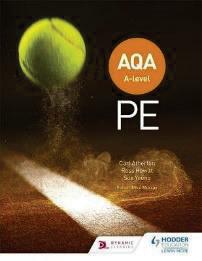
AQA A-Level PE (Year 1 and Year 2) Carl Atherton, Sue Young & Ross Howitt £39.99
https://www.hoddereducation.co.uk/s ubjects/sport -pe/products/1618/aqa-a-level-pe-(year-1-and-year2)
Progression/careeropportunities:
Sport Scientist, Physiotherapy, Sports Coach, PE Teacher, Strength & Conditioning or Sports Lecturer
Further information:
MrA Smith – Acting Head of Physical Education
Cambridge Technical Ext. Certificate SportandPhysical Activity
ExamBoard:OCR
EntryRequirements:GCSEGrade5inPhysical Education or Merit in BTEC Sport, Cambridge National OR Technical(if no PE, Grade 5 5 in Science)
Subject Content
Course consists of 3 mandatory units followed by 2 optional units.
3 mandatory units are as follows:
Unit 1 – Body Systems and Effects of Physical Activity
Students will gain an understanding of the structures and functions of the key body systems, how these support and impact performance in sport and physical activity, and the effects that physical activity, training, and lifestyle can have on them.
Unit 2 – Sports Coaching and Activity Leadership
Students an understanding behind the theory of what makes good sports coaches and activity leaders and methods that can be employed to improve the performance of sports participants. They will explore the roles and responsibilities of coaches and leaders and how these differ from each other and be involved in delivering and teaching sport and physical activity.
Unit 3 – Sports Organisation and Development
Students will gain an understanding of the organisations involved in sport in theUK, their roles and responsibilities and how they work together. They will also gain an understanding of sports development including the organisations involved, who sports development is targeted at, why sports development is carried out and how the success of sports development initiatives can be measured.
2 optional units of study can be selected based on individual cohort;units available are as follows:
Unit 5 – Performance Analysis in Sport and Exercise
Unit 8 – Organisation of Sports Events
Unit 10 – Biomechanics and Movement Analysis
Unit 11 – Physical Activity for Specific Groups
Unit 12 – Nutrition and Diet for Sport and Exercise
Unit 17 – Sports Injuries and Rehabilitation
Unit 18 – Practical Skills in Sport and Physical Activities
Unit 19 – Sport and Exercise Psychology
Unit 20 – Sport and Exercise Sociology
Assessments
All units of study have different Guided Learning Hours (GLH) associated with them, therefore units with higher GLH are weighted more, the overall course consists of 360 GLH.
Mandatory Units
Unit 1 – Body Systems and Effects of Physical Activity – 90 GLH
Unit 2 – Sports Coaching and Activity Leadership – 90 GLH
Unit 3 – Sports Organisation and Development – 60 GLH
Optional Units
Unit 5 – Performance Analysis in Sport and Exercise – 60 GLH
Unit 8 – Organisation of Sports Events – 60 GLH
Unit 10 – Biomechanics and Movement Analysis – 60 GLH
Unit 11 – Physical Activity for Specific Groups – 30 GLH
Unit 12 – Nutrition and Diet for Sport and Exercise – 30 GLH
Unit 17 – Sports Injuries and Rehabilitation – 60 GLH
Unit 18 – Practical Skills in Sport and Physical Activities – 60 GLH
Unit 19 – Sport and Exercise Psychology – 60 GLH
Unit 20 – Sport and Exercise Sociology – 60 GLH
SkillsGainedandEnrichment Opportunities:
Studentscanpr ogress fromthis qualification to higher education cour ses, suchas degrees in Sport Science or in related subjectssuchasSports Coaching, Strength & Conditioning, Physiotherapy etc.
Paststudentsthat have opted for a vocational route at Woodcotehavetakendegreecourses at theSt Mary’s , Bath, Reading and Bournemouth and America.
Textbooks:
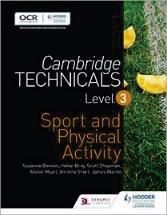
Cambridge Technicals Level 3 Sport and Physical Acitivity
£26.99
Progression/careeropportunities:
Sport Scientist, Physiotherapy, Sports Coach, PE Teacher, Strength & Conditioning or Sports Lecturer
Further information: Mr N Ayles – Head of Physical Education https://www.hoddereducation.co.uk/subjec ts/sport-pe/products/level-3/cambridgetechnicals-level-3-sport-and-physical-ac
Psychology ALevel
ExamBoard:AQA
EntryRequirements:GCSEGrade6in English (Language or Literature), Maths and Science
Subject Content
Paper 1: Social influence, Memory, Attachment & Psychopathology
Paper 2: Approaches in psychology, Biopsychology, Research Methods
Paper 3:Issues and debates Schizophrenia, Cognition and development, Forensic Psychology
Paper 1 :
33.3% of A level
Students will learn about social influence. The role of attachment on behavior and how attachment types can influence relationships later in life. They will also learn about various models of memory and explanations of forgetting. They will also explore different types of psychopathology such as depression, anxiety and OCD.
Paper 2:
33.3% of A level
Students will look at different approaches in psychology. They will also look at biopsychology, how the nervous system and the brain works in response to stimulus. They will also look at brain plasticity and various brain scanning techniques. In the module on research methods, they will understand how psychologist design experiments and the issues they consider in that design process.
Paper 3:
33.3%of A level
Students will learn about Schizophrenia the cause and the treatments available. They will also explore the cognition and development of children. In this module students will also learn about forensic psychology, offender profiling and biological/psychological explanations of offending behavior. They will also learn about issues and debates in psychology.
Assessments
Paper 1: Introductory topics in Psychology
33.3% A-level
Written exam: 2 hours
SectionsA-D: Multiple choice, short answer and extended writing, 24 marks
Assessments
Paper 2: Psychology in Context
33.3% A-level
Written exam: 2 hours
Sections A-B: Multiple choice, short answer and extended writing, 24 marks
Section C: Multiple choice, short answer and extended writing, 48 marks
Paper 3: Issues and Options in Psychology
33.3% A-level
Written exam: 2 hours
Sections A-B: Multiple choice, short answer and extended writing, 24 marks
Section C: Multiple choice, short answer and extended writing, 48 marks
SkillsGainedandEnrichment
Opportunities:
Studentscanpr ogress fromthis qualification to higher education cour ses, suchas degrees in Psychologyor in related
Paststudentshavetakendegreecourses at theLSE, Royal Holloway, Portsmouth, Newcastle and Exeter University.
Further Reading:
Psychology Express: research methods in Psychology. Conformity: The power of social influences
Textbooks:
AS and A-level: AQA complete revision& practice with online edition (CGP A-Level Psychology)
AQA A-level Psychology (Year 1 & Year 2) (Jean-Marc Lawton and Eleanor Willard)
Progression/career opportunities:
Awiderange of careersinareassuchjobs directly relatedto the subjectdegree include: Clinical psychologist. Counselling psychologist. Educational psychologist. Forensic psychologist. Further education teacher. Health psychologist. High intensity therapist. Occupational psychologist.
Further information:
Ms.JDelafosse-TeacherofPsychology
Sociology ALevel
ExamBoard:AQA
EntryRequirements:GCSEGrade6in in English( LanguageorLiterature) or 6 in Humanities subject & 5 in English
Subject Content
Paper 1: Education with Methods in Context
Paper 2: Topics in Sociology(Families & Mass Media)
Paper 3: Crime and Deviance with Theory and Methods
Paper 1 :
Students are expected to be familiar with sociological explanations of the role and functions of the education system, Policiesandthe impact of globalisation on educational policy.
Students mustalsoexamine the quantitative and qualitative methods of research, research design,sources of data, andthe distinction between primary and secondary data, and between quantitative and qualitative data. They will also study the relationship between positivism, interpretivism and sociological methods; the nature of ‘social facts’ the theoretical, practical, and ethical considerations influencing choice of topic, choice of method(s) and the conduct of research.
Paper 2:
Students are expected to be familiar with sociological explanations of the relationship of the family to the social structure and social change, including the sociology of personal life, and the diversity of contemporary family and household structures.
In Year 2, students are alsoexpected to be familiar with sociological explanations ofthe new media and their significance for an understanding of the role of the media in contemporary society,the relationship between ownership and control of the media.
Paper3 :
Students are expected to be familiar with sociological explanations of the following content:Crime, deviance, social order, and social control. The social distribution of crime and deviance by ethnicity, gender, and social class, including recent patterns and trends in crimeglobalisation and crime in contemporary society.
. Students must also examine the quantitative and qualitative methods of research; research designsources of data, and study the relationship between positivism, interpretivism and sociological methods; including the concepts of modernity and post-modernity in relation to sociological theory,the nature of science and the extent to which Sociology can be regarded as scientific.
Assessments
Paper1: Depth Study 33.33%ALevel| 2 hours
Section A: Sociology of Education
SectionB:Methods in Context
Paper 2: Depth study33.33 %A level|2hours
Section A: Families & Households
SectionB:Mass Media
Paper 3: Depth study33.33 %A level | 2hours
Section A: Crime and Deviance
SectionB:Theory & Methods
SkillsGainedandEnrichment Opportunities:
Studentscanpr ogress fromthis qualification to higher education cour ses, suchas degrees in Sociologyor in related subjectssuchas Politics, law,Journalism, philosophy, Geography or Economics.
Paststudentshavetakendegreecourses at the Universities of Kent, Sussex, Southampton, Portsmouth and Brighton.
Further Reading:
Chavs: The Demonization of the Working Class
Invisible Women: Exposing Data Bias in a World Designed for Men
Textbooks:
AQA A Level Sociology Themes and Perspectives: Year 1 and 2(Haralambos and Holborn AQA)by Michael Haralambos et al.
Progression/career Opportunities:
Awiderange of careersinareassuchas Social work, Human resources,Advertising,Policing,Marketing, Journalism,Law,Teaching, TelevisionBroadcasting, Childhood and Youth Studies with Criminology e.t.c
FurtherI nformation:
Ms S Golledge or Mr.A. Abiona – Sociology Leads
3.1 Social issues and trends
3.2 Political and artistic culture
3.3 Grammar
3.4 Works: Literary texts and films
3.5 Individual research project
Aspects of Hispanic society
Artistic culture in the Hispanic world
Multiculturalism in Hispanic society
Aspects of political life in Hispanic society
Grammar
One text and one film or two texts from the list set in the specification
Grammar
Written exam: 2 hours 30 minutes
100 marks
50% of A-level
: Written exam: 2 hours
80 marks in total 20% of A-level
Individual research project
One of four themes (ie Aspects of Hispanic society or Artistic culture in the Hispanic world or Multiculturalism in Hispanic society or Aspects of political life in Hispanic society)
Oral exam: 21–23 minutes (including 5 minutes preparation time)
60 marks in total 30% of A-level
Students can progress from this qualification to higher education cour ses, such as degrees in Spanish/Spanish and Latin American Studies and many take up an additional language alongside Spanish.
Past students have taken degree courses at St Mary’s, Exeter University, Southampton Uni versity & King’s University, London.
Spanish Short Stories: Cuentos En Español edited by John R. King
AQA Spanish AS/Year 1 and AQA Spanish A Level Year 2
Novel: Como agua para chocolate
A wide range of careers in areas such as interpreting, journalism, public relations, translation, teaching, management accountant, solicitor, investment analyst, marketing manager, logistics and distribution manager, charities administrator and human resources manager.
Mrs R López