
COLLEGIAT ETIMES
HOKIESPA SCHEDULED TO BE REPLACED IN MAY
Jacob Luckenbaugh | News Writer
An information session will be held to help students with the platform transition.
After almost 30 years of service, HokieSPA will be replaced by a new cloud-based platform called My Virginia Tech, accessible online starting in May.
HokieSPA, short for “student personal access,” is the university’s centralized information site and hosts a wide range of academic planning, business and financial services for faculty, staff and students. Over its three decades of use, the system has been modified numerous times to fit with changing business needs.
“HokieSPA has served us well, but the way students interact with technology and what they expect from it has changed dramatically,” said Rick Sparks,
OUR CORE VALUES
Impartiality means reporting, editing and delivering the news honestly, fairly, objectively and without opinion or bias.
Credibility is the greatest asset of any news medium, and impartiality is the greatest source of credibility.
To provide the most complete report, a news organization must not just cover the news, but uncover it. It must follow the story wherever it leads, regardless of any preconceived ideas on what might be most newsworthy.
The pursuit of truth is a noble goal of journalism. But the truth is not always apparent or known immediately. Journalists’ role is therefore not to determine what they believe at that time to be the truth and reveal only
associate vice provost and university registrar at Virginia Tech. “Moving to My Virginia Tech means we can keep pace with those expectations and spend less time working around the limitations of an aging system and more time focused on supporting student success.”
With this new platform, the university hopes to provide a more user-friendly platform that will modernize workflows for staff and offer a stronger student experience for advising and academic planning, according to Virginia Tech News.
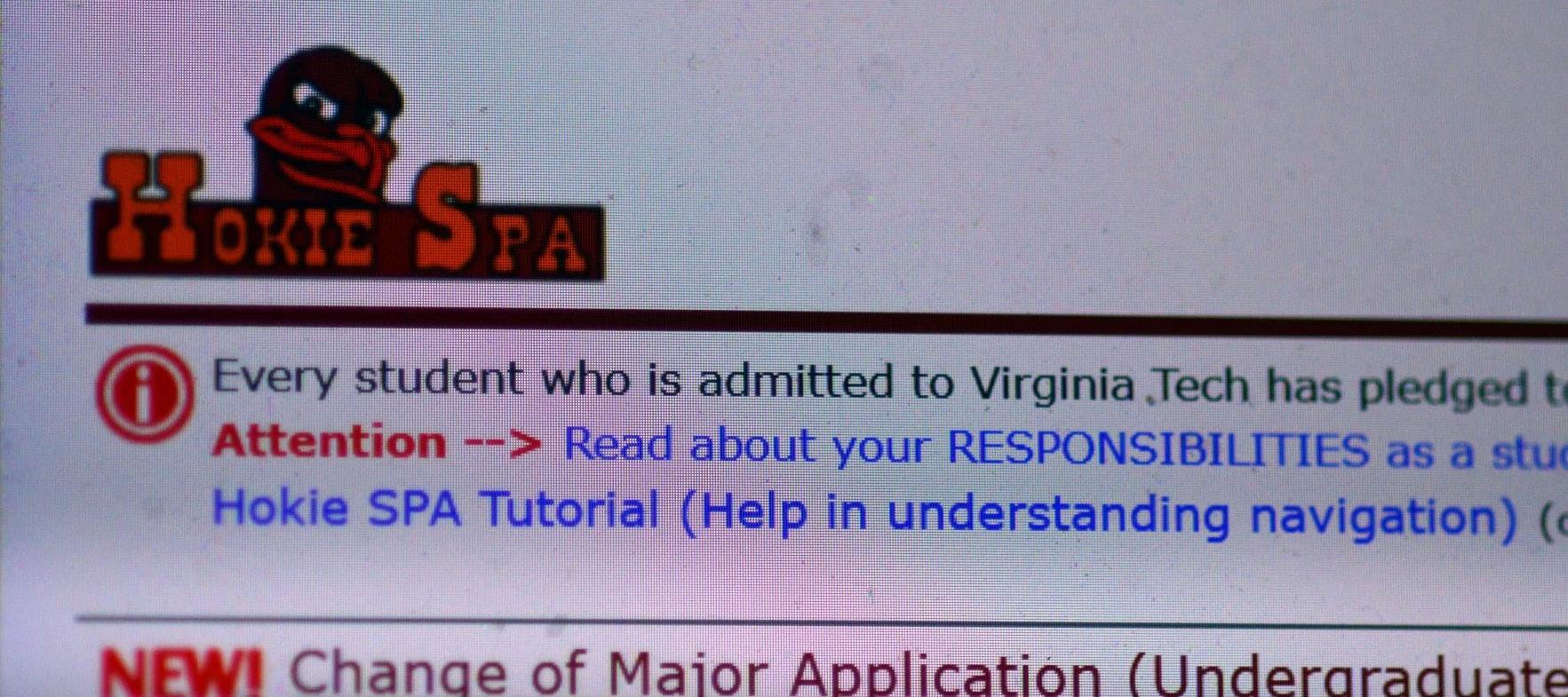
The transition from HokieSPA to My Virginia Tech is set to begin Thursday, May 21, at 5 p.m. and continue until Tuesday, May 26, at 8 a.m.
The HokieSpa site has been an essential webpage for students.
that to their readers, but rather to report as completely and impartially as possible all verifiable facts so that readers can, based on their own knowledge and experience, determine what they believe to be the truth.
When a news organization delivers both news and opinions, the impartiality and credibility of the news organization can be questioned. To minimize this as much as possible there needs to be a sharp and clear distinction between news and opinion, both to those providing and consuming the news.
Voice your opinion. Send letters to the Collegiate Times. 365 Squires Student Center
Blacksburg, VA, 24061 opinionseditor@collegiatetimes.com
All letters must include a name and phone number. Students must include year and major. Faculty and staff must include position and department. Other submissions must include city of residence and relationship to Virginia Tech (i.e., alumni, parent, etc.). We reserve the right to edit for any reason. Anonymous letters will not be printed.
Letters, commentaries and editorial cartoons do not reflect the views of the Collegiate Times. Editorials are written by the Collegiate Times editorial board, which is composed of the opinions editors, editor in chief and managing editors.
Members of the new platform project team will host an information session for faculty and staff on Tuesday, March 3, at 2:30 p.m. in 310 Kelly Hall and over Zoom.
An information session will also be
held for students later in the semester, along with other opportunities to learn about the platform.

@COLLEGIATETIMES
COLLEGIAT ETIMES
NEWSROOM 231-9865
Editor-in-Chief: Michaela Scott (editor@collegiatetimes.com)
Managing editor: Ayisha Surani
Design editor: Annmarie Leake
Assistant Design editors: Caroline Rogers, Sarah Jordan, Mx Zaleski, and Alana Vernon
Copy editors: Emily Southern, Olivia Guy and Amanda Donndelinger
News editors: Erin Bailey and Ava Garrison
Assistant News editor: Max Painchaud
Lifestyles editor: Emma Duncan
Assistant Lifestyles editors: Cat Pizzarello and Ella Winterling
Sports editors: Sam Mostow, Thomas Bray and Dylan
Opinions editor: Jenna Mason
Assistant Opinions editor: Mohib Amjad
Photo editor: Hamad Alhendi
Assistant Photo editor: Riley Thompson
Have a news tip? newstips@collegiatetimes.com
BUSINESS STAFF 231-9860
Business manager: Greg Patterson (business@collegemedia.com)
MEDIAMATE
888-897-7711 collegiatetimes.com/media_kit/ orders@mymediamate.com
The Collegiate Times, a division of the Educational Media Company at Virginia Tech, was established in 1903 by and for the students of Virginia Polytechnic Institute and State University. The Collegiate Times is published every Tuesday of the academic year except during exams and vacations. To order a reprint of a photograph printed in the Collegiate Times, visit reprints.collegemedia.com. The Collegiate Times is a division of the Educational Media Company at Virginia Tech, Inc., a 501(c)3 nonprofit with a mission to provide educational experience in business and production of mass media for Virginia Tech students. © Collegiate Times, 2020. All rights reserved. Material published in the Collegiate Times is the property thereof, and may not be reprinted without the express written consent of the Collegiate Times.
Advertisements do not necessarily reflect the opinions of the Collegiate Times. Read about our organization’s Core Values online at collegiatetimes.com.
Tefft
MATT JONES / COLLEGIATE TIMES
HOKIE WELLNESS HOSTS A BEACH PAR-TEE TO PREPARE STUDENTS FOR A SAFE SPRING BREAK
Aliza Baliff | News Writer
The information tables helped students learn about physical and mental health.
On Feb. 26, 2026, Hokie Wellness hosted a Beach Par-Tee in the Graduate Life Center multipurpose room from 5-8 p.m.
The event was complete with free mini golf, pizza, mocktails, a photobooth and craft tables. The event also featured information stations offering tips on staying safe while still having fun over spring break.
Digital Well-being created a welcoming space where students could unplug for the evening by putting their phones away and participating in a mindful activity. Attendees decorated paper flowers and wrote encouraging notes promoting positivity.
Venture Out had a table explaining its mission and upcoming activities with free stickers and information sheets. The Cook Counseling Center provided a hands-on stress-relief activity, guiding students in
making DIY stress balls and colorful sand jars.
Additionally, the Recovery Community table featured Hostess cupcakes and engaged students in conversations about hosting safe and respectful events. A Hokie Wellness table focused on sexual health education, with staff members available to answer questions and provide resources in a supportive environment.
The information tables included activities to help students learn about mental and physical health. For example, to get a mocktail, participants poured what they believed was a standard drink using water, then measured their accuracy while learning about safe drinking from Hokie Wellness staff. One table also had journals and inspirational quotes promoting positive body image.
“This event taught me valuable information while also being a fun experience,” said Abigail Chaffin, a freshman majoring in international relations with a minor in Japanese. “My favorite station was ‘Sea Your Goals,’ where I wrote a goal on a seashell and chose an affirmation animal to take with me. It serves as a reminder to my roommates and me to stay positive and remember this event.”
Hokie Wellness holds an annual event two weeks before the start of Virginia Tech’s spring break.
“We always have a safe and fun spring break event because we know students are leaving campus to go home or go places with their friends, and we want to give them safe and fun strategies to enjoy spring break,” said Deena Hines, assistant director for residential well-being, education and prevention at
Hokie Wellness. “The mini golf is our main attraction because it encourages students to come and bring their friends. While they’re waiting for their turn, they can explore tables around the edge of the room and make crafts or participate in informative activities.”
“I had such a great time at the Beach Par-Tee,” said Victoria Cothran, a freshman majoring in sports media and analytics. “I’ll be sure to stop by some more Hokie Wellness events in the future.”
VIETNAMESE STUDENT ASSOCIATION CELEBRATES LUNAR NEW YEAR WITH CULTURE, FOOD AND TRADITION
On Feb. 17, the Virginia Tech community welcomed the Lunar New Year with celebrations organized by the Vietnamese Student Association.
The Lunar New Year event, held in Owens Ballroom, invited students to celebrate the beginning of the Year of the Fire Horse through traditional activities, performances, food and cultural exhibitions.
“I really enjoy our (Lunar New Year) event,” said Ethan Huynh, a senior majoring in economics. “It also marks the beginning of a busy and exciting month for VSA, with preparations for the culture show and many other activities that bring the community together.”
The culture show serves as a continuation
For information about Hokie Wellness and future events, visit their official page on Gobbler Connect. A continuation of festivities will take place in Burruss Hall on March 28.
Sarah Soltani | News Writer
of festivities and is set to take place in Burruss Hall March 28 from 4-8:45 p.m.
“A majority of club members’ family and friends visit from their hometowns or nearby colleges to attend (the culture show),” Huynh said. “Some of the activities at the performance include the main skit that is broken into parts throughout the show, fashion shows, traditional lion dancing, fan dancing, umbrella dancing and modern dancing like hip-hop and K-pop.”
The Lunar New Year event also featured a variety of interactive games, prizes and raffles, including the chance to receive lì xì, or lucky money, a long-standing Vietnamese tradition that represents good fortune. Participants also enjoyed traditional dishes
such as pho and chè, creating a sense of familiarity for many students far from home.
“The event has always been very highenergy, welcoming and fun. It really encapsulates the energy of a time for family and new beginnings,” Huynh said. “Overall, there is a strong sense of excitement and hype among everyone involved.”
The Lunar New Year marks a time of renewal and reflection for many students. However, organizers noted that the event is not solely marked by celebration. It creates a space where the significance of cultural identity can be highlighted while welcoming students from all backgrounds. For many, the event served as an opportunity to learn about Vietnamese traditions and build
connections across cultures.
“Events like these bridge the gap between different student groups,” Huynh said. “It’s not just for Vietnamese students; it’s also an open invitation for anyone in the Virginia Tech community to learn and celebrate together.”
For more information on getting involved with VSA at Virginia Tech, students can refer to the organization’s Instagram page and website.
BLACKSBURG VINTAGE COLLECTIVE EXPANDS IN DOWNTOWN BLACKSBURG LIFESTYLES
Brooke Tinder | Lifestyles Contributor
A curated clothing shop shaping student self-expression opens downtown.
In October 2025, Blacksburg Vintage Collective opened its doors with a simple idea: give students clothing with history and create a space where identity feels welcomed.
Owner and founder Daylon Head spent five years selling clothes directly to Virginia Tech students before deciding it was time to expand his operation.
“I decided to branch out, open my own place and involve a lot of my friends who do the same thing,” Head said. “I felt like bringing everybody under the same roof and getting a space close to campus would be beneficial.”
Students enter Blacksburg Vintage Collective with the same anticipation people feel when they open a treasure chest. The vintage shop sits on Main Street across from Joe’s Diner, and its energy spills out onto the sidewalk. Wheeled racks crowd the storefront on busy days, each stocked with patterned sweaters, faded denim and jackets that demand a second look.
Inside, the faint scent of worn cotton and fabric softener settles into the room — an aroma that reminds some students of childhood closets and others of weekend estate sales.
Nothing in the store feels accidental; every piece comes from hours of sorting, research and conversation.
“What do people buy and what do they want to pay?” Head said. “We want to provide an eclectic array of clothing that appeals to a wide array of a massive customer base.”
Curation shapes the collective’s identity. Instead of digging through unpredictable bins, customers browse a neat selection of items handpicked with intention.
That attention shows. Students pause over the denim rack, touching frayed hems and distressed knees softened by decades of wear. They run their fingers over leather jackets with creases that
reveal someone else’s habits, someone else’s life.
Emily Lam, a junior majoring in exercise and health sciences who frequents Blacksburg Vintage Collective, described the store as “shopping without the stress.” She noted that curation allows her to focus on styling rather than digging through piles.
The curiosity of these items itself carries meaning. According to AllThingsInsight, vintage pieces feel lived-in and hold personality, history and individual qualities that students can struggle to find.
“Students want an environment where they can be themselves,” Head said. “Clothing can help differentiate from everyone else, and that’s a massive goal of ours is to get people one-of-a-kind clothing and statement pieces.”
Even with intention, Head wondered how students would respond to his shop, and how quickly news would spread in a town filled with thrift options and fastfashion conveniences.
“I think the hardest thing since opening this store is getting the word out,” Head said. “As time goes on, we really do want to grow the business organically.”
He also faced the unglamorous side of entrepreneurship: balancing budgets, buying smart and making sure the store stays stocked with pieces students love.
“What makes sense financially?” Head asked. “Being able to provide the community with a place they know they can come and find cool clothing at competitive prices matters to us.”
Competitive pricing shaped his model from day one.
“Students can come in here and get a T-shirt and a pair of jeans for $25 or $30,” Head said.
Despite the challenges, he never lost confidence in the store’s potential.
“The dedication that all the vendors put in daily is what gave me the confidence to open this place,” Head said.
Within a few months, Blacksburg Vintage Collective developed an Instagram following that grew through word-of-mouth, photos of new drops and student reposts. The shop gained regular customers who return weekly to see what new items arrive.
“The customers I see the most are creative and very friendly,” said Liv Hammond, Blacksburg Vintage Collective manager.
Customers often share compliments across the mirror, swap styling tips and celebrate when shoppers find an item they’ve been searching for all semester. These moments build a sense of belonging inside the shop.
“It’s a community inside the store,” Head said.
Blacksburg Vintage Collective also collaborates with local designers and creators. Head has worked for three years with the Vêtement De Rue Show, providing materials in exchange for custom pieces, which he deemed “a very mutually beneficial relationship.”
These collaborations connect students to sustainable fashion through experience rather than lectures.
“We really work on sustainability here,” Hammond said. “Customers can walk out of this store with a new piece knowing they are positively contributing to the environment.”
According to McKinsey & Company, Generation Z grew tired of fast-fashion, the rapid trend cycle and environmental strain documented in sustainable fashion research and the lack of individuality in mass-produced clothing.
“When people come here, they grab something off the rack and they literally hug it,” Head said, smiling. These moments remind him of why he opened the store.
Research from McKinsey & Company shows that students want quality over quantity, showing that young consumers seek authenticity and long-lasting pieces. Vintage fashion offers something fast fashion cannot: authenticity.
“We work very hard at pricing and quality assurance,” Hammond said. “We pick pieces that are either vintage or very well-made. When people come in, they see new pieces that someone else created or someone found. Students are becoming loyal to us, and they’re always happy to see new things come in.”
As students rediscover previously loved pieces in the store, they learn more about their individual style and decompress from a long day of classes.
“This was something that Blacksburg was missing,” Hammond said. “We want to continue to fill the gaps. We want people to come in here and feel like they’re escaping from their lives for a second.”
Hammond also noted that customers value those choices because every purchase aligns with their ethics, creativity and individuality.
As long as Virginia Tech students chase originality and self-expression, they can revel in the items on the curated racks at Blacksburg Vintage Collective, which stay full. Every piece waits for someone who will carry its story forward.
“I think it’s really important for college students to express themselves. It’s the main reason I’ve always found passion in this,” Head said, “It’s been a great opportunity to serve the Blacksburg community and Virginia Tech students. We’re here to stay.”
THE PAKALACHIAN: VIRGINIA TECH ALUMNI BRING CULTURE, COMMUNITY AND NEW CUISINE TO SOUTHWEST VIRGINIA
An hour and a half southwest of Virginia Tech, alumni Katlin and Mohsin Kazmi own and operate The Pakalachian, a restaurant serving a fusion of Pakistani and Appalachian cuisine. Having opened in January 2026, the restaurant is settling into its new brickand-mortar home at Abingdon Commons, a market in Abingdon, Virginia.
While Katlin and Mohsin have built their restaurant in Abingdon, their path started here in Blacksburg at Virginia Tech. The pair met through the university, both majoring in human development. They graduated from Virginia Tech in 2012, got married and began their respective careers: Katlin as an educator and Mohsin as a conservation photographer. Neither had a professional background in cooking, but they were soon influenced to start their business by their experience cooking together.
“He was making Pakistani dishes. ... I was making Appalachian food and then we combined the leftovers at the end and that created the Pakalachian, really,” Katlin said. “That’s how it started.”
“The coolest part about our food is how many things it has in common with each culture,” Mohsin said. “We didn’t have a ton of cooking experience. We just really liked the idea and really liked sharing our cultures with each other.”
Ella Winterling | Lifestyles Editor
Alumni fuse Pakistani and Appalachian culture in the town of Abingdon
The menu features dishes like “Curry Me Down South,” a Pakistani chicken curry loaded on top of mashed potatoes, “Tikka My Senses,” a fried chicken tikka breast sandwich and more. Weekly specials are also added each month, such as samosa pot pies and seekh beef kebab corn dogs, providing even more options for customers to try.
Originally started as a food truck in 2018, The Pakalachian would offer their menu three to four times a month at various gigs throughout the community. However, as the business grew, Katlin and Mohsin wanted to expand their reach and offerings.
“We were only able to operate the food truck a couple times a month,” Katlin said. “As a result, we feel like a lot of people couldn’t find us, and we weren’t able to provide to the masses like what we were wanting. We were approached with an opportunity that we decided to jump on. It’s either we continue doing what we’re doing and this be a part-time thing, or we jump in full throttle and give it a go. So that’s what we’ve done.”
The Pakalachian also emphasizes sustainability, making sure to avoid waste, from food to packaging. The restaurant gets their cutlery and mugs from estate sales and thrift stores, offers plastic bags from other stores in
the area, and composts every organic ingredient they use.
“There’s no sense in buying new stuff,” said Mohsin. “There’s no culture to that. So we’re following the lead of our immigrant parents and Appalachian ancestors.”
“This is how we grew up,” Katlin said. “To say that we have a focus on sustainability is a really fancy way of saying we do it like how we do it at our house, how we did it when we were kids. It’s something that is inherent in both mine and Mohsin’s cultures and our natures.”
Being able to share their cultures in Southwest Virginia was and continues to be a key foundation to their business. Their brickand-mortar features an open kitchen so patrons can view the cooking process. They also offer small samples of most dishes, so customers unfamiliar with the food have an opportunity to try it before ordering.
Even since the inception of the idea as a food truck in 2018, the pair was confident their region of Virginia was the place to be, despite others suggesting a bigger city would be a better location for the restaurant.
“If you want people to see why you live in a certain place or give them a reason to come and see where half of this culture exists, put it there and have them come to us,” Mohsin
said.
“We wanted to do it here, because we value this culture and the work ethic that this culture creates,” Katlin said. “We only want to brighten that.”
The community of the area has been both an inspiration to The Pakalachian and a large supporter of their success. Even their respective family members, many of whom are Virginia Tech alumni, helped them develop their restaurant into what it is today.
“It’s one of those things where if we did not have the family and community support that we’ve had, we wouldn’t have gotten this far,” Katlin said.
When asked about next steps in The Pakalachian’s future, both Katlin and Mohsin are open to whatever may come next.
“We haven’t run out of ideas yet,” Mohsin said. “Ideas get more and more exciting. The people that we’re working with here are so solid that we just want to create a family, internally and then send that out to the rest of the community.”
“We’ve always said that as long as we’re enjoying it, as long as it’s building community, as long as it’s creating something in this area that we think is valuable, we will keep doing it,” Katlin said.
@COLLEGIATETIMES
IS 2026 THE NEW 2016? VIRGINIA TECH EDITION
Abby Davis and Dani Ingle | Lifestyles Contributors
From Drillfield walks to downtown favorites, 2016’s spirit still resonates in Blacksburg.
Most New Year’s resolutions focus on the possibilities of the upcoming year, ranging from adopting the latest healthy habits to letting go of old ones. In 2026, though, the younger generation is looking toward the past for annual inspiration.
It could be the childhood and teenage nostalgia, or just the feel-good vibes that have been assigned to it, but the trend “2026 is the new 2016” has swept across social media, sparking a movement of reclamation for the year of Snapchat filters and internet challenges.
Why the sudden draw back to nostalgic pop culture? Are chokers truly coming back into style? The cultural mystery remains unsolved, but maybe some clarity (and good memories) can be found whilst visiting Virginia Tech — the 2016 version.
Back to Blacksburg
In 2026, Blacksburg is the beloved home of Virginia Tech. 2016 was a year no different, bringing new businesses, local entertainment and vibrant festivities to further connect the community.
Everything was about the environment during the warmer seasons. The town hosted events such as Earth Week and Sustainability Week, which brought together the community to educate and celebrate sustainable efforts. It may remind some of the famous Big Event that fosters the same goals, solidifying Blacksburg as a timeless advocate for eco-friendliness.
Students and townies are familiar with the variety of Blacksburg’s bars and restaurants, but can past ones say the same? Luckily, popular gathering spots such as Top of the
Stairs and The Milk Parlor were still in their prime during 2016. Many of these businesses continue to thrive as bustling hot spots during the weekend.
Downtown delivers everything from entertainment to delicious cuisine. However, a medley of dining options is just steps away for students and residents. Known for exceptional campus dining, it’s no surprise that Virginia Tech made some new additions during 2016.
Food trucks such as The Grillfield and its lesser-known companion, Periodic Table, made their first appearance that fall. They alternate operations around campus during the fall semester, rounding out the variety that both Blacksburg and the university have to offer.
Cyclical pop culture
The small talk of pop culture murmured around the Virginia Tech campus, both in 2016 and 2026, may be more similar than one would initially expect. Many aspects of popular media and entertainment have shifted to change questions like “Have you seen ‘Stranger Things?” into “Did you see the final season of ‘Stranger Things?” While the characters in our favorite shows and movies have grown throughout the last 10 years, so have viewers. This is a testament to how pop culture reflects our changing identities over time.
Additionally, if one conducted a 2026-style “What are you listening to?” street interview on Main Street, it may yield similar statistics to one done in 2016. Breakthrough artists like Zara Larsson and Bad Bunny were continued on page 6
continued from page 5
just becoming familiar to Virginia Tech students 10 years ago, and students still listen to them now.
Following a massively successful rebrand using the viral “Lush Life” dance and the “I just want to be part of your symphony” dolphin meme, Swedish pop star Larsson has hit a career milestone 10 years after her initial rise to stardom. Larsson hit 60 million monthly listeners on Spotify in mid-February 2026. Similarly, while Bad Bunny first gained attention on SoundCloud in 2016, 10 years later, he is now a Super Bowl performance alumnus and global phenomenon following a historical Grammy win for Album of the Year.
A student listening to one of these artists through wired Apple earbuds as they walk across the drill field would not be a strange sight in 2016 or 2026.
Maturing media
Virginia Tech has had an Instagram presence since the early 2010s, when most users were still posting single filtered photos. The current popular story format would be introduced in the latter half of the year. During this time, many still used the StarRez portal to find a suitable roommate, and might be shocked to see prospective students posting on Instagram 10 years later to connect.
A decade ago, social media was a fun
pastime and a matter of personal expression. Those aspects still exist today, but by more ambitious users. Virginia Tech’s presence on these platforms, along with content creators, celebrities and even the typical student, has transformed since 2016 and serves a much greater purpose in society today.
Steady school spirit
From trends to people, everything will have its moment and soon pass, but Virginia Tech holds strong in values and spirit. Students from all over continue to make their way to the little hole-in-the-mountain that’s Blacksburg for this exact reason, no matter the year or current fad.
Looking to the past doesn’t only serve
a nostalgic purpose. As a university and a community, the call back to 2016 can help reshape how we move into the future. Whether that’s improving on what has happened or bringing back things that worked, the trend “2026 is the new 2016” is not just a trend, but a way to satisfy the innate inclination for fun and community.
Don’t let 2016 be remembered through a saturated camera roll. Bring this amazing year back to life with meaningful memories, ensuring 2026 can be looked back on fondly in another 10 years.
@COLLEGIATETIMES
GROUP EXERCISE DESERVES MORE RESPECT THAN IT GETS OPINIONS
Caroline Kobin | Opinions Columnist
Before you call it easy, step into the studio and feel it for yourself.
Group fitness is one of the most misunderstood parts of campus life. Even at Virginia Tech, where studios are packed from sunrise to late at night, someone will still look at a studio and say, “That seems easy.” The people saying it almost always have one thing in common — they’ve never actually taken a class.
What they’re missing is that group fitness isn’t designed to look intimidating. It’s designed to be welcoming. And somewhere along the way, welcoming got confused with weak. That misconception collapses the moment someone actually steps into a BODYPUMP class, a barre studio or a cycling room and realizes that the people around them, both men and women, are strong, disciplined and pushing themselves through some of the most demanding training formats out there.
The environment is upbeat, the instructors are encouraging and the choreography is structured so people of all levels can participate. None of that makes the work less demanding. In fact, the structure is what makes these classes so effective. You don’t wander around deciding what to do next; you’re guided through a full, intentional workout that challenges strength, endurance and mental grit. Unlike solo training, you’re surrounded by people pushing through the same burn, which naturally raises
your own effort.
The benefits go far beyond the physical. Group exercise builds consistency because the schedule holds you accountable. It builds confidence because instructors are trained to coach form, offer progressions and help you push safely past your comfort zone. The classes build community because everyone in the room is working toward the same goal, whether they’re lifting heavy, modifying movements or trying a class for the first time. At Virginia Tech, especially, the atmosphere is extremely supportive — no judgment and no ego, just people showing up for themselves and for each other.
BODYPUMP, in particular, has a way of humbling anyone who walks in assuming it’s easy — usually within the first five minutes. BODYPUMP is built on high-rep, endurance-based strength training. A single track can include 100 reps for one muscle group, performed at a controlled tempo with almost no rest. Compare that to the classic three - sets - of- ten routine, and the difference becomes obvious. The challenge isn’t just the weight on the bar; it’s the time under tension, the precision of the movements and the stamina required to keep going long after your muscles start shaking.
What people also don’t see is the training behind the scenes. When you become a BODYPUMP instructor, you
learn from genuinely strong people. They’re not just fit; they’re technically skilled, disciplined and capable of maintaining perfect form through hundreds of reps. The idea that this format is “easy” goes away the moment you watch an instructor demo a squat track or a clean-and-press sequence without breaking tempo. And because BODYPUMP offers endless options for weight plates and progressions, the class scales infinitely. It is truly as hard as you make it.
Teaching BODYPUMP has changed my own strength in ways I didn’t expect. The combination of repetition, tempo and consistency builds a kind of resilience that sneaks up on you. You start noticing that everyday movements feel easier, that your posture is better and even that your endurance lasts longer. You feel stronger not just in the gym, but in your daily life. And the community that forms around these classes is something special. People cheer each other on. They celebrate progress. They show up even on the days they don’t feel like it, because they know the room will lift them.
So when someone dismisses group fitness as easy, the simplest response is this: try it. Pick up a barbell in BODYPUMP. Hold a plank in pilates. Survive a hill climb in cycle. Stay with the pulses on the barre. Go at your own pace, choose your own weights and see how
you feel afterward. Chances are, you’ll walk out with a new respect for the very thing you once underestimated.
@COLLEGIATETIMES
STRICT HIGH SCHOOL POLICIES DO NOT PREPARE STUDENTS FOR COLLEGE
Olivia Santiago | Opinions Contributor
Engaging high school experiences allow students to be more prepared for higher education.
Transitioning from high school to college is a pivotal moment in every student’s academic career. Since college graduates earn roughly 68% more than high school graduates, the college experience has often been portrayed as a professional “launchpad” or ticket for success. Students may gain hands-on experience through related coursework, network with peers and educators on campus, and demonstrate leadership and collaboration through a range of enrichment opportunities.
Still, college students are expected to manage so much more than their rigorous class schedules.
Studying as a full-time university student introduces additional financial strains when applying for student loans and signing leases as an upperclassman.
Social spheres also have the potential to shift dramatically as students begin to live alongside their peers in tight-knit residential communities and join extracurricular activities that match their interests. Between juggling their academics, finances and relationships, students seldom have time to take care
of themselves. Good time management skills become an invaluable trait for former high school students aiming to structure this newfound autonomy.
Though little research has been conducted on personal autonomy in higher education, one research paper titled “Choosing to learn: The importance of student autonomy in higher education,” written by Simon Cullen and Daniel Oppenheimer, presents how existing research in psychology concludes that autonomy is fundamental to intrinsic motivation. College students choose how to allocate their time between classes, clubs and cooking meals, which distinguishes them greatly from the more determined high school experience.
Some argue that strict high school policies may present assistance for this transition as it establishes responsible practices earlier on, such as how phone bans may teach students to further engage with lectures through active listening, note-taking and asking questions. However, these policies dramatize the transition into college
by forcing responsible practices rather than allowing students the flexibility to uncover their passion for learning.
Tess Cathey, a 2024 Albemarle High School graduate and a current sophomore majoring in design studies at North Carolina State University, wishes that her high school had taken a more individualized approach to her education. She described how the faults of a few students could result in schoolwide privileges being stripped, and voiced her environmental concerns with the multitude of printed hall passes left discarded on the floor. Tess compared these experiences to an alternative school she attended every other day, which focused on specific career paths, known as Center 1.
“The teachers trusted the students there,” Tess said.
Tess described how her willingness to learn and participate in her classes surged at the smaller, design-focused school. Located in Charlottesville, Virginia, Center 1 offered numerous courses in graphic and video game design. High school students in
SPORTS
Albemarle County were required to apply to attend.
Cullen and Oppenheimer’s research paper explains how “students given greater autonomy invested more effort into their assignments and attained greater proficiency with the material.”
Through applying to Center 1, attending courses that interested her and feeling independent from her teachers, Tess could further engage with her studies in a way that she struggled to at Albemarle High School.
“I liked Center 1 because it was much smaller and the teachers had a closer relationship with students,” Tess said. “In turn, they trusted us to get our work done in common spaces outside of the classrooms, allowing for the students to be more productive.”
Opportunities to exercise personal autonomy in localized programs like Center 1 are a great benefit to former high school students being thrown into the challenging — and yet, considerably liberating experience that is college.
DEFENSE FUELS WOMEN’S BASKETBALL TO SENIOR DAY WIN OVER GEORGIA TECH
Brody Bryan | Sports Staff Writer
The Hokies honored Kilah Freelon and Mel Daley.
Virginia Tech leaned on its defense and a decisive late scoring run on Sunday to defeat Georgia Tech, 62-51, in Cassell Coliseum.
Junior guard Samyha Suffren paced the Hokies (21-8, 11-6 ACC) with 16 points, adding five rebounds. Suffren was a perfect 8-of-8 at the free-throw line.
“We have time on the line,” Suffren said. “We don’t need to rush it. Just remember our preparation, even the littlest things. … Just make sure we take a
deep breath and knock those free throws down.”
The game was a physical, defensive battle throughout, especially in the first half, when the two teams combined to go 21-of-60 from the field.
“I think we started a little bit slow in the first half,” said Hokies guard Carleigh Wenzel. “Letting the defense fuel us and get us going on offense, I think we talked about keeping (Georgia Tech) under 50 points, and so we were right there at it.
Being able to really lock in that second half and get to the goal we were looking for.”
The third quarter brought the game to a near offensive standstill. The Yellow Jackets (12-16, 7-9 ACC) converted one field goal out of the 11 they attempted in the frame, and the Hokies shot 3-of-18. However, the teams were a combined 12-of-13 at the foul line in the quarter.
Neither side found much rhythm, but the Hokies eventually turned
their defensive stops into offensive momentum. They went on a 22-2 run spanning the end of the third quarter and much of the fourth quarter,
continued on page 8
@COLLEGIATETIMES
continued from page 7
transforming from a defensive struggle into an 11-point win.
“We just have to come out here and play as hard as we can, even though we didn’t play our best in the first half,” Suffren said. “Just remembering the preparation, what Coach Duffy says, that we have to lock in, do the little things and just feel the offense.”
Wenzel, who has been in the program since 2022, eclipsed the 1,000-point mark on a three-pointer with 5:56 to play in the game.
“I’m not going to lie, I think I’ve had a lot of amazing teammates in my past years,” Wenzel said. “Obviously, you have Liz Kitley and Georgia Amoore, so being able to come in and understand what it takes and things like that, and I think people just know how to give me the ball where I’m successful. … It means a lot. It’s a lot of hard work.”
The Hokies’ defense forced 24 turnovers by the Yellow Jackets and held them to a 15-of-52 mark from the field.
“(Our defense) has driven us all year,” said Virginia Tech head coach Megan Duffy. “When you’re driven on those
things you can control — your defense and your rebounding and the way you communicate with each other — it can take such a load off your offense. … You’re going to have a game where it looks really pretty, and then the next day you can’t make a shot, so (the team has) really bought into that.”
The afternoon also marked senior day, and seniors Kilah Freelon and Mel Daley were honored before the game.
“Just thrilled for our two seniors today,” Duffy said. “Just a special day for them. Parents and families were in the building. In just a short amount of time,
they’ve meant a lot to our program.”
“I think it’s really hard to come into a team and build chemistry right away,” Wenzel said. “I think (Freelon and Daley) have fit what we do perfectly. I think they work really hard on the court, but they’re great people off the court.”
“They just did such a good job of being able to adapt,” Suffren said. “Coming from two different schools who play two different ways. Just having the trust in us, as well as Coach Duffy, makes the team better off and on the court.”
The Hokies will close their regular season on March 1 at noon ET at Virginia.
MEN’S BASKETBALL FALLS ON THE ROAD AT NO. 18 NORTH CAROLINA
Brody Bryan | Sports Writer
The Tar Heels pulled away in the second half.
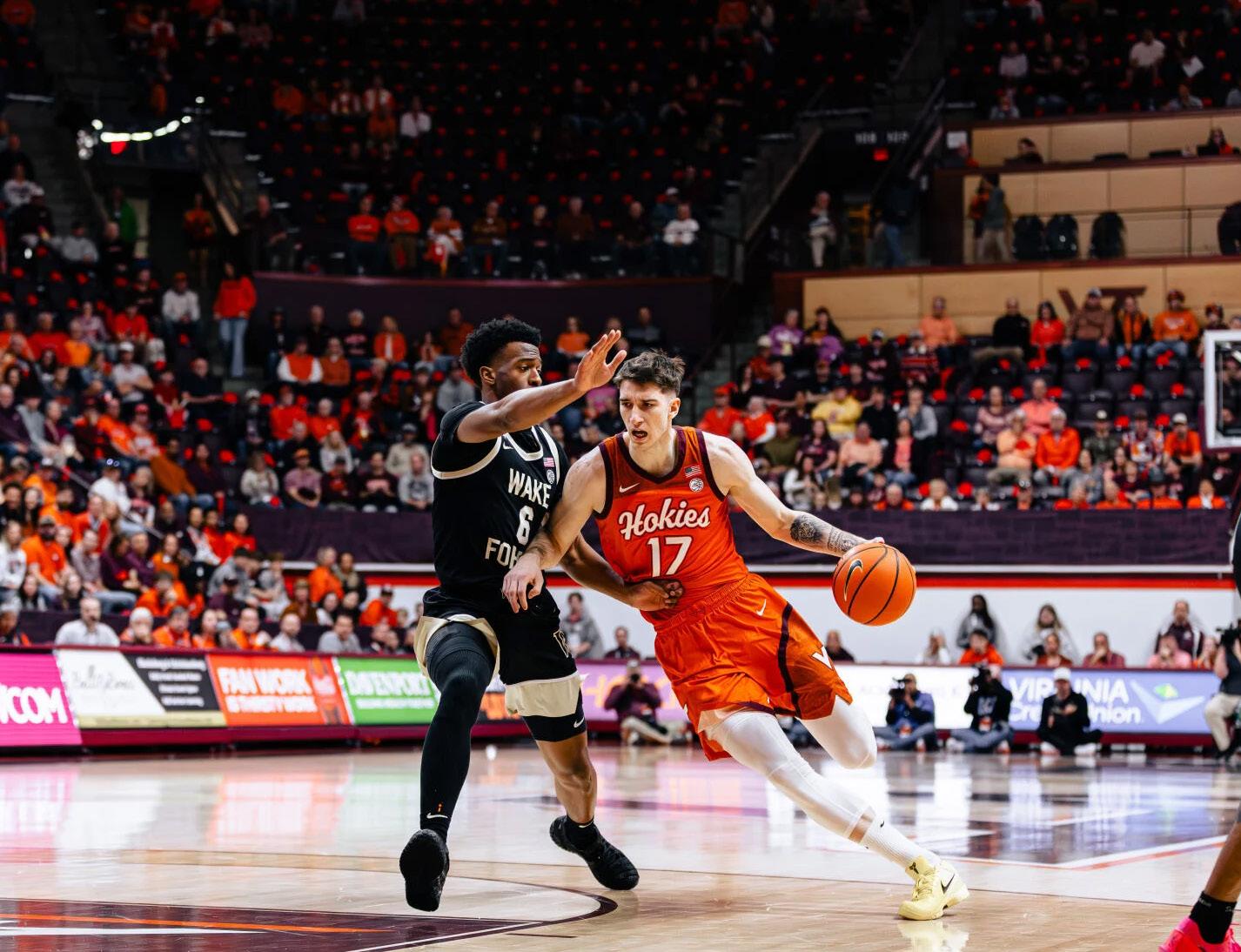
Virginia Tech came close, but never quite got over the hump in an 89-82 loss to No. 18 North Carolina on Saturday night in Chapel Hill.
Freshman Neoklis Avdalas paced the Hokies (18-11, 7-9 ACC) with 19 points and five assists. It was his first time leading the team in points since Jan. 7 against Stanford.
Senior Tobi Lawal and sophomore Ben Hammond scored 16 points apiece.
For the Tar Heels (23-6, 11-5 ACC), junior center Henri Veesaar tied his career high with 26 points on an 11-of-20
shooting clip. Veesaar added seven rebounds, two assists, one block and a steal.
“(Veesaar is) as big as a house,” said Hokies head coach Mike Young. “He’s got really long arms, great touch around the basket. … He’s a great player.”
Eighteen of Veesaar’s points came in the second half as North Carolina began to separate and build a lead.
“(Veesaar) worked harder to catch the ball where he wanted it (in the second half),” said Tar Heels head coach Hubert Davis. “I felt like in the first half, he was
letting Virginia Tech dictate where he was catching the ball, which was too far out. I felt like he worked extremely hard to catch the ball closer to the basket.”
The Tar Heels as a whole scored 45 points and shot 60.9% from the field in the second half.
“Thought we lost our composure some in the second half, which you can’t do,” Young said. “We were good in the first half, should’ve been up. … (The team is) fighting. They’re trying.”
After the teams went into halftime tied, the Tar Heels led by as many as 11 with 6:22 to play in the second half. Tech whittled that down to as few as five with 2:45 remaining, but never got any closer. North Carolina scored the game’s next four points. An Avdalas three cut the deficit back down to six, but it was back up to 10 just 30 seconds later, and the Hokies ultimately fell by seven.
In addition to Veesaar’s career night, senior guard Seth Trimble put up 20 points for the Tar Heels. Sophomores Jonathan Powell and Zayden High came off the bench and tallied 15 and 12 points, respectively.
The Hokies shot 50% from the field in the contest and were a perfect 11-of-11 at the free-throw line.
“Virginia Tech’s offense has a lot of moving parts,” Davis said. “What is required is to get over, get through screens, guard dribble drive, defend without fouling and finish it with a rebound. … Unbelievably talented Virginia Tech team.”
Hokies sophomore Tyler Johnson returned to the lineup for the first time since Tech’s overtime victory over Elon on Dec. 20. Johnson came off the bench and played just two minutes, but Young said he expects to see more of him in the Hokies’ final two regular-season games.
“It was good to see (Johnson) on the floor,” Young said. “He’s such a critical part of our team. He’s been on the shelf for a long time, and happy to be able to insert him. Thought he was good, thought he competed, as I knew he would do. But that game just wasn’t comfortable enough.”
Hokies top scorer Amani Hansberry was also limited, playing just 19 minutes after getting into early foul trouble. Hansberry logged 11 points and shot 5-of-7 from the field. Christian Gurdak and Antonio Dorn played a combined 24 minutes in relief of Hansberry.
“It’s just not the same,” Young said. “(Gurdak and Dorn) are giving everything in their tank, but Hansberry plays six minutes in the first half. … Come on, man. (Veesaar), No. 13 needs to be on the floor. Seven, Trimble, needs to be on the floor. 13 from Virginia Tech needs to be on the floor.”
The Hokies will return to Cassell Coliseum for their final home game of the season on March 3 to face Boston College at 9:00 p.m. ET.
@COLLEGIATETIMES