
COLLEGIAT ETIMES Arts Appreciation
SKYDIVER CRASHES INTO SCOREBOARD AT VIRGINIA TECH SPRING GAME NEWS
Ava Garrison | News Editor
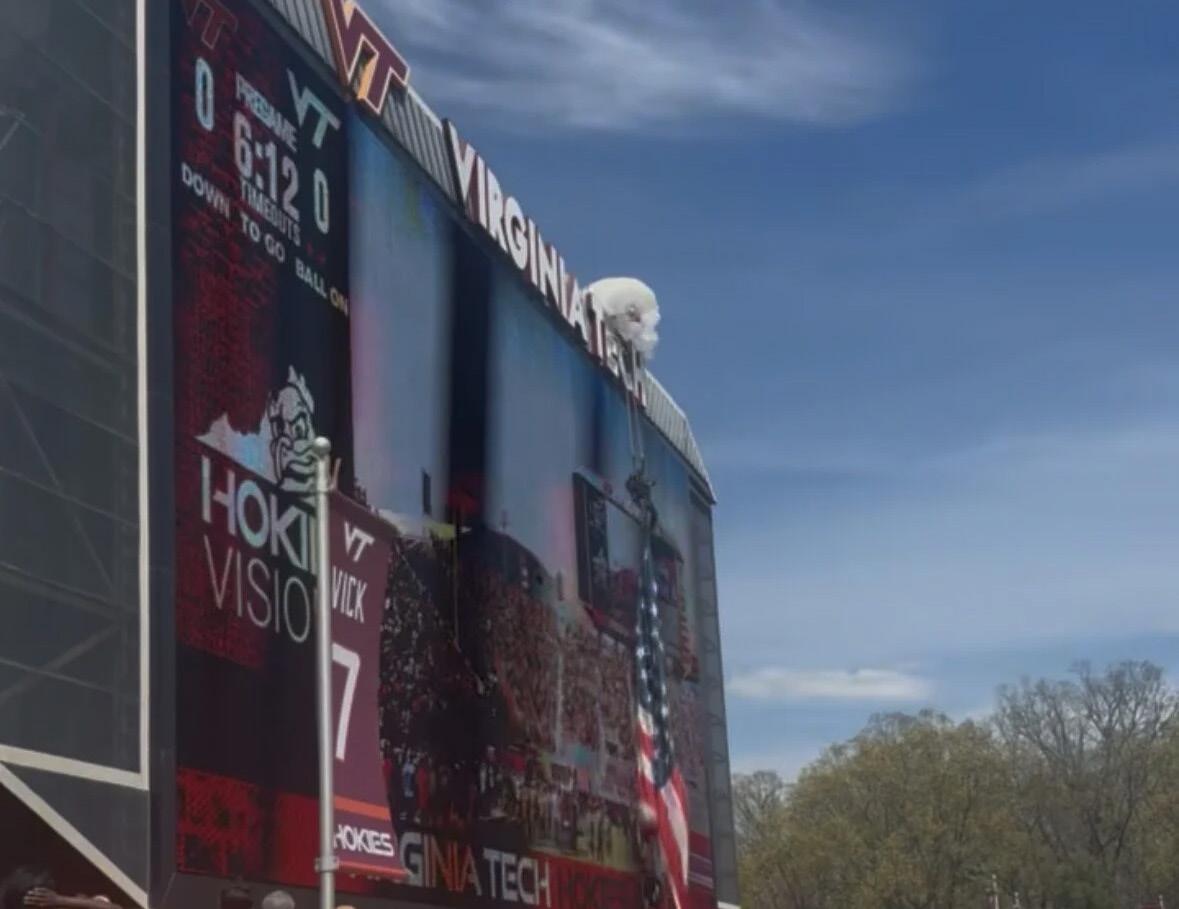
Skydiver who crashed on Virginia Tech’s scoreboard was safely rescued after the collision.
BLACKSBURG, Va. — At the start of the 2026 Spring Game, a skydiver dove into the scoreboard.
The skydiver dove into the letters reading “Virginia Tech” on the scoreboard and was safely rescued after colliding.
The skydiver is named Pasha Palanker and is a retired U.S. Army Special Ops Master Sergeant.
According to his website, Palanker has received two Purple Hearts and is credited with saving the lives of 15 soldiers by stopping a suicide bomber. Today, he is a corporate trainer and motivational speaker on topics of emotional resilience, mental health,
OUR CORE VALUES
Impartiality means reporting, editing and delivering the news honestly, fairly, objectively and without opinion or bias.
Credibility is the greatest asset of any news medium, and impartiality is the greatest source of credibility.
To provide the most complete report, a news organization must not just cover the news, but uncover it. It must follow the story wherever it leads, regardless of any preconceived ideas on what might be most newsworthy.
The pursuit of truth is a noble goal of journalism. But the truth is not always apparent or known immediately. Journalists’ role is therefore not to determine what they believe at that time to be the truth and reveal only
overcoming obstacles and staying calm under pressure. Virginia Tech released a statement about the collision:
“Our primary focus remains on their well-being,” Virginia Tech officials said in a statement. “We extend our sincere appreciation to the first responders, event staff, and medical personnel for their swift, coordinated and professional response.”
The skydiver dropped smaller parachutes and an American flag while hanging there for more than 20 minutes before an aerial ladder rescued him.
The Spring Game was the first game under new coach James Franklin.

@COLLEGIATETIMES
that to their readers, but rather to report as completely and impartially as possible all verifiable facts so that readers can, based on their own knowledge and experience, determine what they believe to be the truth.
When a news organization delivers both news and opinions, the impartiality and credibility of the news organization can be questioned. To minimize this as much as possible there needs to be a sharp and clear distinction between news and opinion, both to those providing and consuming the news.
Voice your opinion. Send letters to the Collegiate Times. 365 Squires Student Center Blacksburg, VA, 24061 opinionseditor@collegiatetimes.com
All letters must include a name and phone number. Students must include year and major. Faculty and staff must include position and department. Other submissions must include city of residence and relationship to Virginia Tech (i.e., alumni, parent, etc.). We reserve the right to edit for any reason. Anonymous letters will not be printed.
Letters, commentaries and editorial cartoons do not reflect the views of the Collegiate Times. Editorials are written by the Collegiate Times editorial board, which is composed of the opinions editors, editor in chief and managing editors.
COLLEGIAT ETIMES
NEWSROOM 231-9865
Editor-in-Chief: Michaela Scott (editor@collegiatetimes.com)
Managing editor: Ayisha Surani
Design editor: Annmarie Leake
Assistant Design editors: Caroline Rogers, Sarah Jordan, Mx Zaleski, and Alana Vernon
Copy editors: Emily Southern, Olivia Guy and Amanda Donndelinger
News editors: Erin Bailey and Ava Garrison
Assistant News Editor: Max Painchaud
Lifestyles editors: Emma Duncan
Assistant Lifestyles editors: Cat Pizzarello and Ella Winterling
Sports editors: Sam Mostow, Thomas Bray and Dylan
Tefft
Opinions editor: Jenna Mason
Assistant Opinions Editor: Mohib Amjad
Photo editor: Hamad Alhendi
Assistant Photo editor: Riley Thompson
Have a news tip? newstips@collegiatetimes.com
BUSINESS STAFF 231-9860
Business manager: Greg Patterson (business@collegemedia.com)
MEDIAMATE 888-897-7711 collegiatetimes.com/media_kit/ orders@mymediamate.com
The Collegiate Times, a division of the Educational Media Company at Virginia Tech, was established in 1903 by and for the students of Virginia Polytechnic Institute and State University. The Collegiate Times is published every Tuesday of the academic year except during exams and vacations. To order a reprint of a photograph printed in the Collegiate Times, visit reprints.collegemedia.com. The Collegiate Times is a division of the Educational Media Company at Virginia Tech, Inc., a 501(c)3 nonprofit with a mission to provide educational experience in business and production of mass media for Virginia Tech students. © Collegiate Times, 2020. All rights reserved. Material published in the Collegiate Times is the property thereof, and may not be reprinted without the express written consent of the Collegiate Times.
Advertisements do not necessarily reflect the opinions of the Collegiate Times. Read about our organization’s Core Values online at collegiatetimes.com.
MICHAELA SCOTT / COLLEGIATE TIMES
Skydiver collides with Virginia Tech scoreboard at Spring Game 2026.
VIRGINIA TECH HOSTS GREEKS GIVING BACK COMMUNITY SERVICE EVENT
Sarah Lindauer | News Writer
Virginia Tech will host the Greeks Giving Back event to support Blacksburg community members.
Virginia Tech’s Fraternity and Sorority Life will host its next Greeks Giving Back event on April 25, 2026, from 9:30 a.m. to noon.
Greeks Giving Back is held one to two times each semester, with its most recent event on March 28. The event also took place in the fall.
The event allows members of Greek life to give back to Blacksburg residents by completing service projects around the community.
Blacksburg residents may request
students through a form and describe what they wish to have completed. Requests often include yard work or cleaning and organizing in the resident’s home.
Greeks Giving Back is largely similar to the Big Event, which also encompasses service projects around Blacksburg. The key difference between the two events is that the Big Event features various campus organizations and students, while Greeks Giving Back highlights only members of Fraternity and Sorority Life.
However, both events share the same goal of helping Virginia Tech students give back to Blacksburg residents.
The event has allowed Greek members to give back for the last 10 years. The projects have included mulching, window cleaning, raking leaves, digging up weeds, painting fences and power washing. These projects not only help the residents, but also it helps participating students grow as individuals.
In the fall, Greeks Giving Back served more than 150 households.
Virginia Tech’s motto is known as Ut Prosim (That I May Serve), emphasizing the university’s prioritization of its students giving back to the greater community through events like these. Students embody the university’s motto by completing service projects across the New River Valley.
BLACK VOICES BOOK FAIR CONNECTS STUDENTS WITH DIVERSE PERSPECTIVES LIFESTYLES
Cat Pizzarello | Lifestyles Editor
The
On April 1, Newman Library held its annual book fair in collaboration with one of Virginia Tech’s cultural community centers. This year, they collaborated with the Black Cultural Center to bring the Black Voices Book Fair to students and staff.
“We work with a different center every time; we’ve worked with the Pride Center,” said Katlyn Griffin, teaching & learning engagement librarian. “We have worked with the APIDA+, Latinx and Indigenous centers, and then we’re kind of just working through a partnership.”
Griffin worked alongside Tanya Rogers, assistant director of the Black Cultural Center, to create the book fair. Together, they curated a selection of books that represent the Black community and their perspectives.
“The library has been amazing,” Rogers said. “They curated this. We told them what we wanted — they created
Black Cultural Center brings voices of color to light in an exclusive book fair.
all this amazing, beautiful swag. They pulled their books. We sat together and talked about different authors, and then they went to work and just pulled books because they’re excited about books too.”
The book fair had a wide range of topics, such as fiction, nonfiction, history, philosophy, sci-fi, fantasy, romance, memoir, film and even cookbooks. Each book, selected from Newman’s own collection, was chosen to highlight a different perspective.
“We wanted to choose from a lot of different types of genres to let people see authors are speaking on many different topics,” Rogers said. “There are a lot of people who have a perspective on life that other people don’t have; it’s really helpful to hear stories and to hear about life from their viewpoints and perspectives.”
Griffin explained that the fairs are also
meant to show students that Newman has popular fiction, not just academic books. Newman’s wide range of media often goes unseen, but Griffin expressed the importance of getting word out to students about the vast options available to them.
“These events are open to everyone,” Griffin said. “(We are) trying to hit a balance in our books; they’re educational, but also we really want students to start reading for fun. We know it’s hard for students to make time for reading with packed schedules.”
To showcase these popular books, much like that of a traditional book fair, Newman went all out in creating the atmosphere students might miss from their elementary school days. Books were wrapped with their published covers, further creating the atmosphere of the beloved Scholastic book fairs.
“It was really important for us to have
a Scholastic-style experience; everyone has these nostalgic feelings about their book fair days,” Griffin said. “We wanted to recreate some of those feelings, but also for the books to be free and to represent people who didn’t see that representation at a classic book fair. That’s why it’s really important for us to be highlighting voices that are really under dismissal and attack right now; we were happy to partner with the BCC to do that.”
In the 2023-2024 general school year, PEN America recorded roughly 10,046 occurrences of book bans throughout schools in America. Griffin says now more than ever, while censorship is on the rise, it is important to highlight these voices that may be underrepresented or attacked.
“I think it’s just a time in which we’re
continued on page 4 @COLLEGIATETIMES
thinking about book bans and the demographics of book bans,” Griffin said. “We know that the books that are targeted for book bans are books by people of color and books by and about queer people.”
Griffin reported that these fairs have roughly 50 to 100 visitors, with 30 to 60 of those visitors checking out books. In the future, the organizers hope to see even more participation from students.
“Coming from a young adult perspective, I want to try to branch out and read more books and everything, but I also want to see more books by people who kind of look like me, Black authors, or POC authors,” said Desirae Gilmore, a graduate student in public health. “Books are so important for learning new perspectives. That’s why
events like this are so important, especially as students, where we’re absorbing so many different things in college, it’s important to remember our perspective is not the only one.”
From Toni Morrison to Zora Neale Hurston, the fair captured numerous famous Black voices that students might not have had the chance to explore. Rogers expanded on Gilmore’s sentiments, expressing the importance of hearing and absorbing different perspectives.
“I’m basically a firm believer that books just create an entirely different world out there. The amount of imagination and creativity that people can have when reading books; it’s just out of this world,” Rogers said. “I think it’s important to host events like this, so that
people can be exposed to things that they never even knew were out there.”
Intermixed into the vast selection of books, the fair also offered handmade stickers, pins and bookmarks to promote the event and the importance of the Black voices in a small feat of activism. The organizers also curated an arts and crafts section, and visitors had the opportunity to create affirmation cards, empowering students who visited the fair, allowing them to leave with more than just books.
“I hope students leave here finding books by Black voices that inspire them, challenge them, and open up a reality to them that there are people who are Black,” Rogers said. “Now, more than ever, it’s really important to hear the voice of the people whose perspectives
aren’t well-known by the majority. All of the different perspectives together create a much stronger hold. When you don’t have that perspective, or have access to it, you’re missing something.”
Continuing the annual tradition, the lineage of cultural book fairs will proceed into spring 2027. Organizers said they aim to continue connecting students with a range of books and perspectives.
“We know the educational power of fiction and the power of stories,” Griffin said. “I really just hope that people are exploring experiences similar to and also different from them.”
HARVEY STREET ROCKS DOWNTOWN BLACKSBURG
Dani Ingle | Lifestyles Writer
Harvey Street brought indie rock to the Milk Parlor, Thursday, April 16.
While students may make the most of their Thursdays any other week with assignments and late-night study sessions, this week they were able to escape their desks and head to the Milk Parlor for a night of live music with Harvey Street.
As townies and students alike descend the unassuming staircase entrance, friends stay in comfortable groups and talk about their weeks. Soon, though, a lively performance by supporting act Coral Bank Hollow, a local band of Blacksburg students, begins to loosen those comfortable groups.
Cult classics from bands such as Sublime and Lit unite bar-goers to scream the iconic lyrics of their songs. Strangers become friends, swaying back and forth as sounds of live music ascend from the venue’s staircase onto the street.
However, in honor of Harvey Street’s genre, Coral Bank Hollow covers some of indie rock’s most recognizable songs as the night continues, to set the stage for the main act. By the time Coral Bank Hollow finishes their set, a hum from the crowd can be heard in anticipation of the main event.
Hailing from Raleigh, North Carolina, the band takes their name from the street where they first began recording songs. Having been a supporting act for
many notable indie artists, Blacksburg is one stop on their fifth headline tour, the Down and Out Tour. Known for their exciting live performances, the Milk Parlor show was sold out before Thursday night.
Beginning with an electrifying guitar solo and erupting into a song that does the recent warmer weather justice, the crowd couldn’t help but feed off the band’s energy. Harvey Street clearly enjoys what they do, and the crowd knows it.
While the usual DJs and playlists can be good background music for a night downtown, the energy of a live performance from such a dynamic band makes the music the main attraction.
One exhilarating moment occurred when the band performed a cover of the viral song “Pool House” by The Backseat Lovers. The crowd roared, even after the first adlibs of the songs were uttered by the band’s vocalist. The vocals, combined with the rest of the band members’ instruments, sent the audience into a frenzy.
A devastatingly good execution of the song had the whole crowd holding onto each other and screaming the lyrics for all of Main Street to hear. Although the band did not need covers to exhilarate the Milk Parlor to its full potential.
Original songs of the band equally
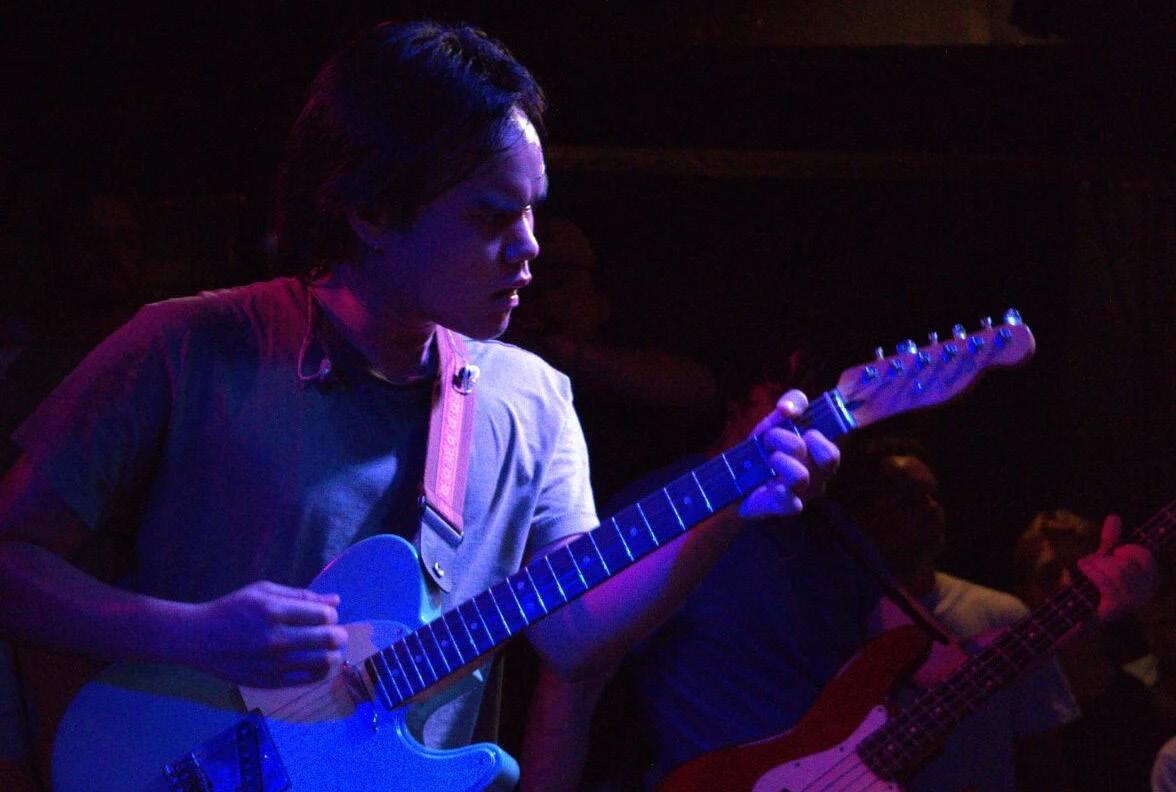
Harvey Street band member Jerome Bermudez performs for Milk Parlor audience.
aroused attendees and rocked the room. Harvey Street had perfect timing for a good show, with the week leading up to sunny and warm days and the semester’s stress levels ramping up. The show was the perfect excuse to let loose and enjoy a performance by those who respect the craft.
At a time when it’s easy to stay trapped in a music cycle of the same genres with on-demand streaming, Harvey Street
reminded those in the crowd of how good it can feel to discover new music. The band’s thrilling instrumentals and vocalists alike gave a testament to the fact that indie rock is still a thriving genre.
CHANDLER MADISON / COLLEGIATE TIMES
MUSIC AS A GIFT: HOKIE STRING SYMPHONY
Grace Belcher | Lifestyles Writer
Music minors are making an impact at Virginia Tech with an unforgettable orchestra experience.
The Hokie String Symphony (HSS) held its spring performance at the Creativity and Innovation District performance hall on Sunday, April 12, at 7 p.m. The symphony played four arrangements: Andante Festivo by Jean Sibelius, Fidelio Overture by L.V Beethoven and Todd Parish, Adagio for Strings by Samuel Barber and Finale (The Dargason) by Gustav Holst.
The HSS consists of musicians playing violin, viola, cello and one upright bass. The director and founder of the HSS, senior biological sciences student Darnell Leon, conducted the performance.
Leon is a music minor and has been playing cello since the fifth grade. He pivoted from a pre-med career and decided to pursue his passion for music instead. He intends to return to school for a bachelor’s degree in music and a master’s degree in conducting.
“I just really developed a passion for music over the years,” Leon said. “I remember in high school seeing my director conduct, which is mainly my passion. She was a mentor to me as well.”
Leon founded the HSS in the fall of 2024, with the ensemble beginning as just a means of fulfilling his student leader requirements.
“I was just trying to get my events as an SL done,” Leon said. “As an SL, we need a certain amount of events per person,
so I thought I should put my passion for music towards something.”
The HSS began as a chamber ensemble, which is an ensemble playing without a director.
“We had our first performance in the Main Eggleston lounge,” Leon said. “There were just ten of us. In the spring, I realized that residents really loved this, and I love it because it allowed me to get out of my comfort zone.”
In spring 2025, there were 24 members, and now, a year later, it has expanded to 32 members. Leon said his ultimate goal was to create a community where everyone felt welcome and was able to exude their passion for music.
“There are so many different majors, backgrounds and experience levels,” Leon said. “Other musicians come in and have an inclusive space without having to commit to a full ensemble. They come in when they can and are able to make music and grow musically.”
Leon has also found that the HSS has grown his passions for conducting and music direction.
“My other favorite aspect is being able to direct them,” Leon said. “I don’t have a degree in conducting, but it’s so fun going through the motions and practicing musical gestures. I’m always thinking about how I want to convey the story from the composers to the musicians.”
As Leon makes his departure from both the HSS and Virginia Tech upon graduation, his role as director will be filled by Alec Martin, a freshman aerospace engineering student. He made his conductorial debut in the spring performance. Martin is also a music minor and has been playing violin since middle school, eventually playing in competitions and solo pieces. However, he had very little exposure to conducting prior to joining the HSS.
“I didn’t really explore anything about conducting until quite recently. In high school, I would sometimes conduct my orchestra, so I thought it’d be fun to get into it more,” Martin said. “When he (Leon) was talking about his ensemble and how they need a replacement when he graduates, I said I was very interested in conducting. I had very little experience, but I’d be willing to learn.”
Martin says the HSS has been a learning experience for him as both a musician and a conductor.
“So far, my favorite part is just developing my own skills as a conductor,” Martin said. “Having an outlet to interpret music and have people play it in the way I envision it should be played.”
Martin’s vision for the future of the HSS is to find a passionate ensemble that is ready to put in their best effort.
“My goal isn’t to have the biggest ensemble possible, but it’s to have
OPINIONS
an ensemble full of people that are passionate about their craft,” Martin said. “We already have an ensemble of passionate people, but to continue that on as I’m the conductor.”
Martin also highlights the importance of Leon’s hard work and dedication to the HSS and wants to preserve that.
“The most important thing is maintaining the ensemble and not having the ensemble Darnell created fall apart,” Martin said. “Then eventually, when it’s time for me to graduate, I would hopefully find a new conductor to mentor as (Leon) mentored me this semester.”
Leon finds that his role as a musician is to convey the stories of composers to an audience.
“In my eyes, having the opportunity to share music with other people, and then being able to relive the stories of what each individual composer has written into their music, and then we’re playing it,” Leon said. “So being able to relive the moments the composer was writing about, and then being able to share that same passion and love for it.”
Likewise, Martin’s musicianship is defined by sharing music with others.
“It’s mainly the feeling of being able to give a gift of music to an audience,”
@COLLEGIATETIMES
AI WILL PHASE OUT
Grace Belcher | Opinions Columnist
Artificial intelligence will not “take over” like many believe it will.
It is certainly not a new or profound statement to say that AI is everywhere. From search engines like Google and Bing to even social media like Instagram, Twitter and Snapchat, AI is inescapable in our lives these days. It is the current hot technological advancement, where there has been a mass outcry that AI is coming to take our jobs. From creative
fields to computer science, multiple industries are being affected by the use of artificial intelligence.
A 2025 article by National University found that up to 30% of current jobs in the U.S. could be automated by 2030, with 60% being significantly modified by AI. Likewise, a study by the University of Pittsburgh found that in 2022, the
year that ChatGPT was released, recent college grads saw a 16% salary decrease. With all this data at the forefront of our minds, it is easy, especially as college students, to go on a downward spiral of anxiety surrounding post-grad careers. For example, I know that my friends and colleagues are certainly facing some true obstacles in their future jobs, but
I think AI and its sensationalism will phase out of the mainstream in the coming years.
In the context of AI affecting the job market, the biggest constant throughout my research for this article is that AI is not directly replacing our jobs, but rather changing them; in fact, a 2025 continued on page 6
article by Michigan Tech found that AI can potentially create jobs across various industries like cybersecurity, marketing and legal.
The claim of this article is not just that AI is not a threat to our careers, but my thought is that AI is going to become so ubiquitous (it already has) to the point that no one will bat an eye at its usage. There have been multiple technological advancements made over the past decade or so alone, as a progressive society does, that were once the hot new thing that was going to take the world by storm. The first thing that comes to mind for me is the self-driving car craze that sprang up some 10 years ago. The self-driving car always leads me back to
one man: Elon Musk. He certainly did not invent this concept, but Musk and Tesla contributed to the rise of self-driving cars in popular culture.
self-driving cars.
Personally, I do not think AI is going to go away, but I also don’t think it’s going to take over completely. To me, it is an example of human nature: we learn more, so we advance. We learned more about AI, so it has advanced, and now it’s available to anyone. The purpose of AI is to serve us, not the other way around. I know that there may be a lot of disagreement with my thoughts here. I’m sure there are plenty of people who believe that AI is going to take over our jobs, our livelihoods and maybe even the world. Just know that technology is a lot less powerful than you might think. It certainly does not compare to the human mind’s emotions and skills. continued from page 5
The concept of Tesla Autopilot came about in October 2015, when all new Tesla vehicles included Autopilot. About eight months later, Tesla Autopilot reported its first death. Dusting itself back off, Tesla chugged along, testing self-driving demonstrations for the public, but another death set them back. This led to more claims from Musk, a common theme throughout the peak of Autopilot. Musk made continuous claims about the product that may or may not happen. There is an entire Wikipedia page dedicated to statements Musk made over the years about Tesla’s
So what am I getting at here? Tesla has promised self-driving cars for over a decade now, and they have produced results (with some sacrifices, of course), but now what? Now, in 2026, no one thinks about a self-driving car anymore. Teslas are a dime a dozen in wealthy suburbs, and Waymo is an old hat in cities like San Francisco and Austin.
A self-driving car would have had a person’s eyes go wide and their mouth drop open 50 years ago. This all goes to show that technological advancements eventually become just technology when the general public decides it’s old news. I think the same thing is going to happen with AI. I could argue that it’s already happening.
THE ‘GIFTED ARTIST’ IS JUST A GIFTED TITLE
Emelia
Crump | Opinions Columnist
Labeling individuals as gifted, in fact, diminishes hard work and can have counterintuitive
Picture this: You’ve been working on a landscape of the Drillfield. It’s detailed, with Burruss Hall as the center point surrounded by expertly painted lawnstripped grass. You even had the heart to include McBryde Hall. You’ve put in endless hours, dealing with strained eyes, back pain and an abundance of paint-smudged clothes. It’s become like your child, in the way some special artwork tends to become. And then some goober comes in and says something that makes you cringe slightly: “Nice painting! You’re really talented.” On the surface, this seems like a nice compliment. The intent was probably sunny. The tone was kindhearted. But you’re left feeling robbed — almost like the oil-painting equivalent of getting your Grubhub order stolen. You can’t place why, until it finally dawns on you. The label of “gifted” or “talented,” or even “you’ve got a real knack for that,” strips away the years of hard work you’ve devoted to improving your craft. In the most unintentional way, it puts talent at the forefront of a skill-based reality. And for the diligent artist, that’s harmful. Take perfectionism, for example. There’s the common trope of a painter who puts a little too much time into their work and ends up messing something up. Or there’s also the writer who puts off a project in fear of the final piece not being perfect (I’m calling myself out, here). There can be many causes of
perfectionism, but a big one is external pressure to perform in order to uphold the unrealistic title of being “gifted.” There are some positive benefits to being labeled talented, like increased motivation and heightened self-esteem. But where do we draw the line in our compliments toward others? This is where our wording really matters.
Angela Duckworth, an American psychologist and academic, has studied how our phrasing impacts our overall work ethic. Her research found that to be successful and skilled in any profession, we must rely on developing due diligence and dedication, not our innate level of talent.
She admits some people are more talented than others in certain fields; however, that doesn’t matter as much as we’re inclined to think. It’s more about how hard they work and the passion they have toward achieving their goals. Look a little closer at any successful artist, and you’ll see that their proficiency likely stems from years of hard work. Calling a detailed sketcher “gifted” completely subverts that effort.
There’s a psychological reasoning for why we’re more prone to labeling people as “talented” rather than “hardworking.” It’s because people have a subconscious preference for the idea that success is innate and not earned. It’s essentially hard-wiring in our minds that protects us from risk-taking. But it isn’t
really protecting us from jealousy; it’s predisposing us to harmful rationalizations. And it’s these rationalizations that cause us to abstain from taking action and working toward something we’re enthusiastic about … like art.
So when we use these labels, we’re reinforcing that cycle of thinking. There are many ways this can be detrimental — one of them being that it cultivates a fixed mindset, or the idea that people’s strengths and abilities remain static over time. A fixed mindset also perpetuates the belief that opportunities are limited to both other people and in quantity, which is what’s called a scarcity mindset.
Calling one artist “talented” while another is in definitive earshot can externalize the suggestion that being artistically skilled is something that’s inherent, which can escalate feelings of jealousy, low self-esteem and resentment. Artistic communities are meant to be uplifting and supportive outlets, but using gifted language subtly toxicates them, even if unintentionally.
Titling someone with the phrase “talented” also raises the stakes of the creator if it becomes identity-based. Let’s admit it, we’d all love to be known as brilliant at whatever it is we’re doing. Who wouldn’t? Being recognized as accomplished is affirmative, but if we’re repeatedly called “gifted” for our craft, we start to internalize that nickname. And that internalization leads to us
consequences.
performing giftedness to maintain that identity. No pressure, right?
It’s clear that labeling someone as a “natural” can be harmful and place stress on an artist. Not only is it harmful, but it’s a self-reinforcing practice. The more we use these labels, the more others normalize them … and the more the dedication and hard work of diligent artists is undermined. So, the next time someone comments on your innate ability to paint the beautiful landscape that is Virginia Tech, be sure to tell them, “Thanks, but it was actually my hard work that got me here.”
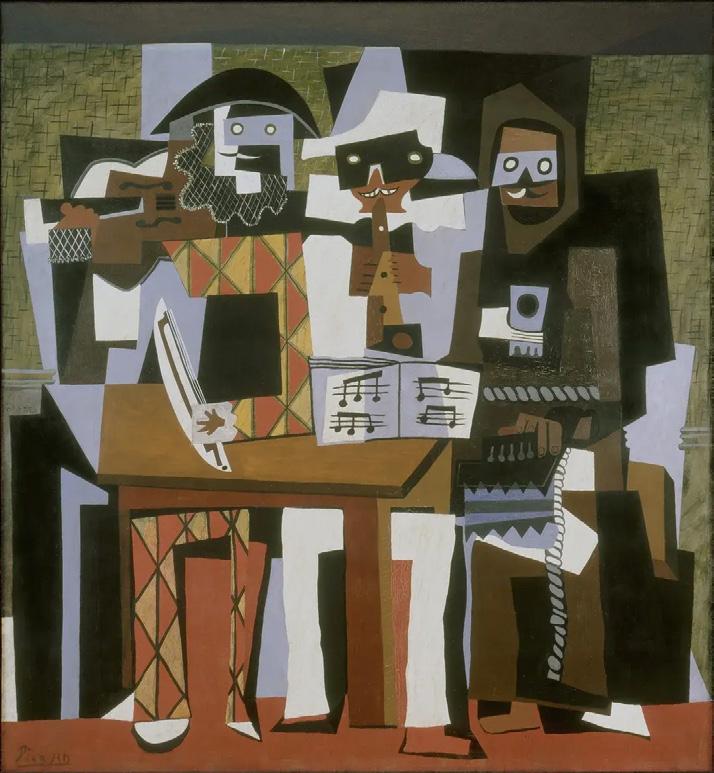
THREE MUSICIANS, PICASSO 1921
“WE’RE GOING TO SHOCK THE WORLD TOGETHER.”
Brody Bryan | Sports Writer
Virginia Tech’s tight end room accounted for 205 yards of the 428 total receiving yards on Saturday.
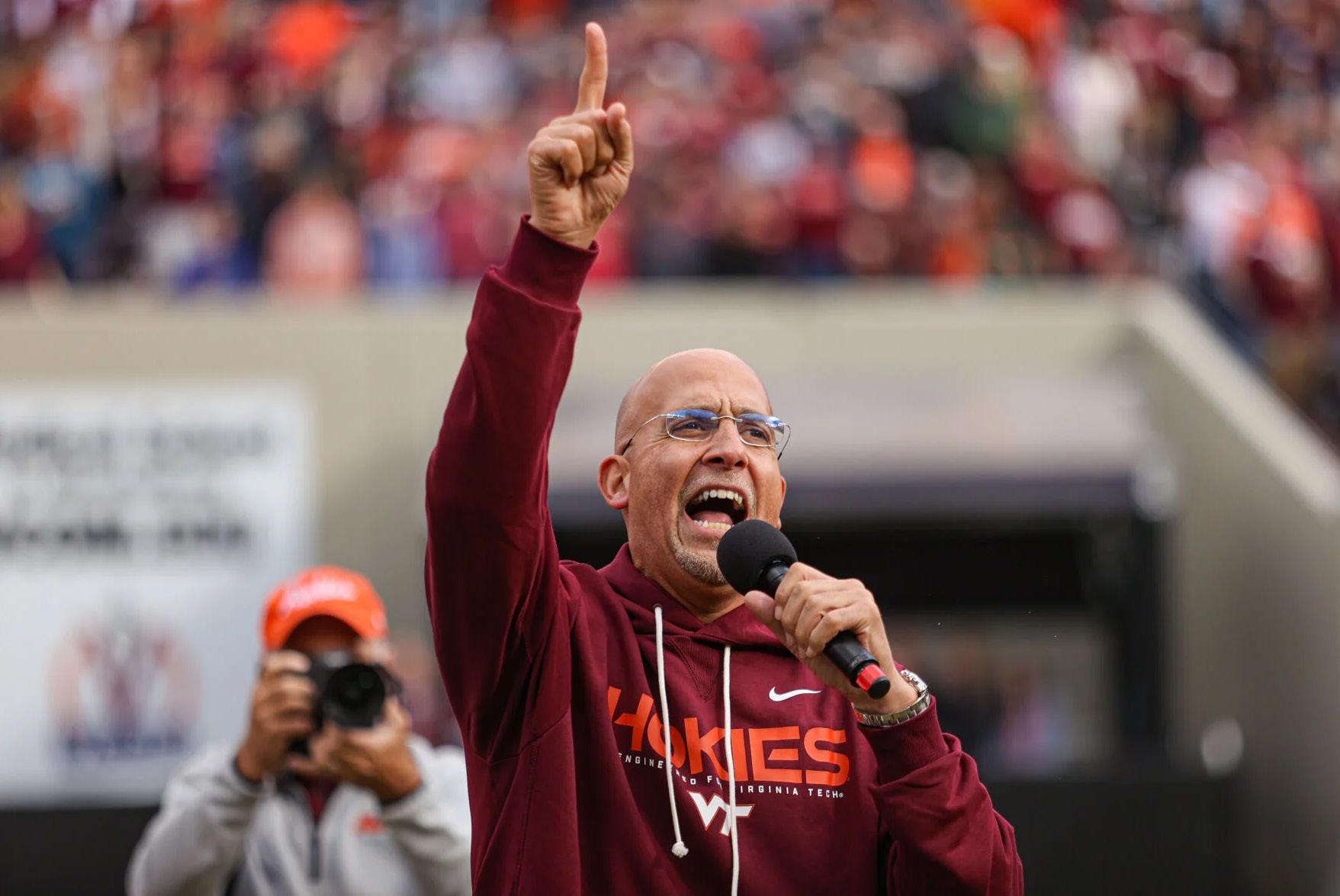
At the end of the first quarter at Virginia Tech’s Maroon vs. White spring game Saturday, James Franklin took a microphone to address what he called a program-record spring game crowd.
After thanking the university, the Hokies’ head coach didn’t mince words: “We’re going to shock the world together.”
Although it isn’t necessarily possible to shock the world in a spring game, Saturday offered a glimpse of what that could look like this fall, as Team White defeated Team Maroon, 30-21, at Lane Stadium.
“There’s an excitement right now,” Franklin said. “We want to keep that excitement going. We have been fortunate to be a part of two turnarounds in two different conferences, and we plan on doing that again. This place knows what it looks like. They’ve done it before. … We’ve got a chance to do something very special here. We’re not going to hide from that.”
The contest was delayed for an hour and two minutes after a parachutist collided with the scoreboard during pregame festivities. The individual was rescued and is secure and stable, according to Virginia Tech Athletics.
“For us in the locker room, it was an opportunity, to be honest,” Franklin said. “I’ve been a part of a three-and-ahalf-hour weather delay. You focus on the things that you can control. (The situation) wasn’t one of them. To be honest with you, it was an opportunity for us to practice something like that.”
Once the game got underway, Maroon wasted no time making its way down the field.
Quarterback Ethan Grunkemeyer was five-for-five on his opening drive, with his fifth completion going 14 yards to Duke transfer Que’Sean Brown for the score to cap off an eight-play, 75-yard march. Tight end Luke Reynolds hauled in three catches for 47 yards from Grunkemeyer on the drive. The two were teammates at Penn State for two years before following Franklin to Blacksburg.
“I think (Grunkemeyer) and I just have
a good sense of each other’s timing,” Reynolds said. “Just overall feel. Just one of those football feels that you have with someone.”
Tight ends accounted for 205 of the two teams’ combined 428 passing yards.
“We were having success with the naked (bootleg) all spring,” Franklin said. “We had success with the naked today. And with that, typically our tight ends are going to be the primary targets.”
“Obviously, we threw some nakeds in there,” said offensive coordinator Ty Howle. “Maybe get some balls in the flat and help our whole (offensive) line out. But it was not designed to just be a ton of balls to (tight ends). It was more that they were open and quarterbacks took what they were given.”
The White team struggled offensively throughout much of the first quarter. Running back Bill Davis’ rush on third down was stuffed by defensive end Deric Dandy to force an opening-series punt, and the team’s next drive ended in another punt after a pair of incompletions from redshirt freshman Kelden Ryan.
North Carolina transfer Bryce Baker led the white team to a pair of field goals in the second quarter, and the halftime score was 10-6 in favor of Maroon. Points were granted during the halftime punting competition to make the score 12-7.
White reached paydirt on its first drive of the second half, as Ryan tossed a 20-yard touchdown to a wide-open Chanz Wiggins streaking down the left side of the field. Ryan finished the afternoon 9-for-14 with 88 yards and a score. He added four carries for five yards on the ground.
“(Ryan) is a very, very strong player,” Baker said. “Before he went out there today, we were just like, ‘We’re in this together. What I see, I’m going to tell you. What you see, I want you to tell me.’”
Baker finished 15-for-27 with 140 yards and a touchdown, leading all quarterbacks. He rushed for 32 yards on seven carries, leading the white team.
Grunkemeyer was 13-for-17 with 136 yards, a score and an interception.
“Just miscommunication,” Grunkemeyer said of his turnover. “Got all (of) fall camp to kind of clean that stuff up, so we’ll get there. By the time the season comes around, we’ll definitely be on the same page and ready to roll.”
“We talked about, at every position on the team, creating a competition,” Franklin said. “I think we’ve definitely done that at the quarterback position.”
Freshman Troy Huhn also saw reps, finishing 5-for-8 with 64 yards, and was sacked six times — the defenses combined for 10 total against the quarterbacks.
“For our defense, obviously, you love 10 sacks,” Franklin said. “For our offense, we’ve got to get that cleaned up.”
Baker had arguably his best drive between quarters three and four. He threaded the needle on a 32-yard gain to tight end Ja’Ricous Hairston, then converted in the red zone, completing a two-yard out route to receiver Cam Sparks for the touchdown.
The two teams scored points each of
the four times they reached the red zone, three of which were touchdowns. Both were also perfect on fourth down, going a combined 4-for-4.
“It’s been huge,” Howle said of the team’s focus on situational football. “I was happy to see that show today. We’ve got to keep getting better on third downs and all of those things, but that’s a lot of times where the games are won.”
“We do (situational football) every day,” Reynolds said. “Whether it’s tempo, two-minute, red zone. … We know how important it is to be good on third and fourth downs, fourth down especially. And then, how important it is to get points in the red zone.”
The game offered an early look at a new era still taking shape. Transfers, recruits and returning players all meshed together in a game environment for the first time. For Franklin, it marked growth.
“We have made tremendous progress in a short period of time,” Franklin said. “But we still have to improve.”
STEPHEN ARTHUR / COLLEGIATE TIMES
New Virginia Tech head coach James Franklin addresses the crowd during halftime of the Hokies’ game against Miami on Nov. 22, 2025, in Blacksburg, Va.
NO. 10 SOFTBALL PLATES DOUBLE-DIGIT RUNS IN SIX-INNING WIN OVER GEORGIA TECH
Kaden Reinhard | Sports Writer
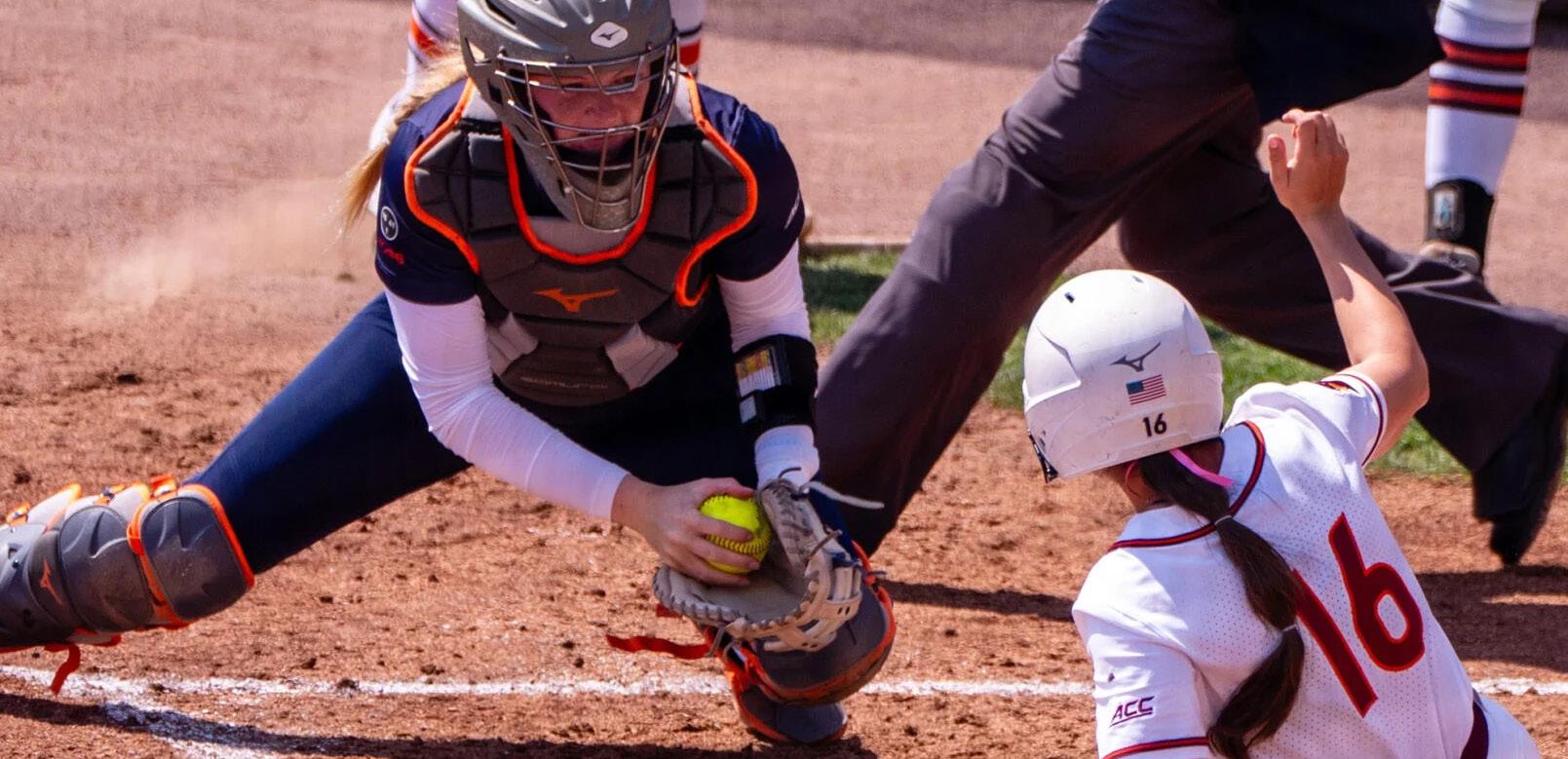
Six batters for No. 10 Virginia Tech tabbed at least one RBI in the 10-2, six-inning victory over Georgia Tech.
“You see the nine that hit in games, but we’re 15 deep,” said Hokies head coach Pete D’Amour.
Friday’s contest kick-started a seven-game home stand for Virginia Tech (38-6, 12-4 ACC) on the best note possible: a run-rule victory, which was the 15th time in 2026 (and fourth at home) that the Hokies ended a contest early.
The final blow in the Yellow Jackets’ (27-23, 8-11) slim comeback chance came off the bat of sophomore third baseman Jordan Lynch, who lifted a two-run, walk-off homer to left center in the bottom of the sixth.
Lynch stepped up to the dish against relief pitcher Makayla Coffield, who forced Lynch to roll over into a fielder’s choice in the fourth; however, Lynch only needed one pitch in the second meeting to end the contest.
“Right before I went up, Coach Pete was like, ‘Hit a line drive to left center’ — and I saw the ball going to left center,”
Lynch said. “If I pick a location in the field of where I want to hit it, that’s usually when I will hit a pitch that I can drive that way.”
Lynch’s blast was the second home run that Virginia Tech clobbered against Georgia Tech, with the first serving as a go-ahead homer in the first frame.
Hokies starting pitcher Emma Mazzarone — who tossed a complete game in the victory — struggled early in the first with her command. Through 21 deliveries, Mazzarone faced two 3-0 counts and walked both Holly Medina and Gracyn Tucker to load the bases with no outs.
“I think I just got sped up,” Mazzarone said. “I had to bring it back to square one, and just try to start over.”
While the 6-4-3 double play rolled over by Addison Leschber snatched an early lead against Virginia Tech, Mazzarone got out of the jam with just one run allowed as she turned the contest over to her offense in the circle.
Senior Kylie Aldridge dug into the left-handed batter’s box in the cleanup spot for the Hokies in the bottom of the
first with one out, using that position to its intended use, slapping a go-ahead three-run home run into the pine trees beyond right field.
For Aldridge, her first-inning blast was her seventh of the season, tying her season-high with nine games remaining in regular season action.
“(Aldridge is) working her tail off to be the best version she could be as a senior,” D’Amour said. “She’s probably in here for an hour before the game hitting, so that’s the way she is.”
Georgia Tech starter Madalyn Johnson (3.28 ERA) is a three-time ACC Pitcher of the Week in 2026, but Virginia Tech was able to pounce on the right-handed sophomore, once more in the bottom of the third.
Nine-hole batter Annika Rohs ended the second frame, so the top of the lineup was due up in the third with center fielder Addison Foster, who drew a fivepitch walk. Lynch picked up her first hit in the contest after Foster’s walk, pulling the ball to left field.
With two outs, Virginia Tech catcher Zoe Yaeger danced the ball down the left
field line for a two-RBI double, before Michelle Chatfield nearly ended the frame, rolling over Johnson’s delivery to third for a two-base E5 as Tucker couldn’t drop her mitt in time to the dirt, extending the inning and swapping Yaeger and Chatfield’s position, making the contest 6-1.
Fifth-year senior Rachel Castine missed out on her RBI opportunity as she led off the bottom of the second by launching a ball to dead center, which would have left if it wasn’t for Medina in center, who only stands 5-foot-3, but was able to scale the six-foot wall at Tech Softball Park and bring the softball back into play.
“You hit the crap out of it, and keep doing it,” D’Amour said about the unfortunate outs. “We value how hard we hit balls more than we do hits.”
Castine did get her RBI a frame later in the third.
Both of the Yellow Jackets’ RBIs failed to come in off base knocks, as in the fifth, after shortstop Emma Simon singled, a passed ball and wild pitch placed her on third. With one out, leadoff batter Alyssa Willer collected her 48th RBI of the year on a routine groundball to Rohs at short. Mazzarone even got into the action at the dish, pinch-hitting for Rohs in the sixth as she lofted a liner to center, deep enough for pinch runner Lyla Blackwell to score from third, bringing the Hokies’ lead back to six and setting up Lynch for the walkoff.
“I love hitting,” Mazzarone said. “Anytime I get to hit, I’m just grateful.”
Virginia Tech can capture the series against Georgia Tech on Saturday, April 18, after a busy day in Blacksburg that’s full of activities, including the Run for Remembrance and the spring football game.
Virginia Tech moved to 6-1 at Tech Softball Park on Friday.
IMAGE COURTESY OF VIRGINIA TECH ATHLETICS
Virginia Tech third baseman Jordan Lynch (#16) slides into home plate ahead of a tag at Palmer Mark on April 11, 2026.