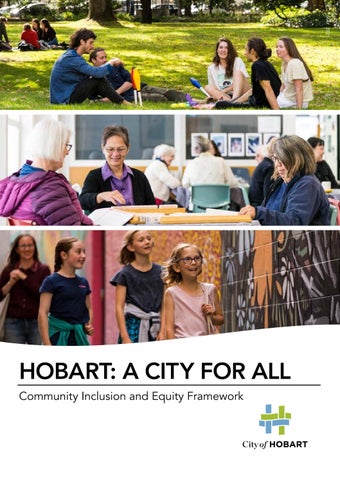
HOBART: A CITY FOR ALL
Community Inclusion and Equity Framework
HOBART: A CITY FOR ALL
Community Inclusion and Equity Framework
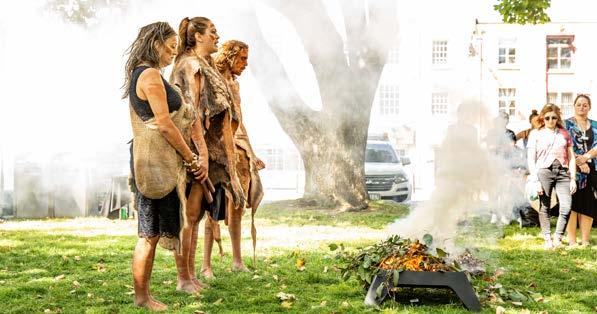
We acknowledge the Muwinina people as the traditional custodians of nipaluna (Hobart). The Muwinina people were part of the South East nation. They lived on and cared for this land for more than 40 000 years and had a deep understanding of the land and the seasons. They had access to both fresh water and salt water resources and used fire to manage their land. The landscape still bears the mark of the Muwinina people, with significant middens found all along timtumili minanya (the Derwent River).
As a direct result of invasion and war, there are no Muwinina people left alive today. In their absence we acknowledge Tasmanian Aboriginal people, the Palawa people, as the ongoing custodians of this land. Palawa people are the survivors, continuing the culture and stories of their old people and striving for rights and recognition. We acknowledge their incredible determination and resilience.
We recognise that we have much to learn from Aboriginal people, whose culture and identity have been intertwined with this land and sea for millennia. We pay our deepest respects to Elders past and present and to all Aboriginal people living in and around Hobart today.
THE FOLLOWING POLICY STATEMENT WAS FORMALLY ADOPTED BY COUNCIL IN OCTOBER 2020
In alignment with the Universal Declaration of Human Rights, the Council recognises the fundamental right of every individual to participate socially, culturally, economically, physically, spiritually and politically in society.
The Council acknowledges that each member of the community has their own set of strengths, skills and resources and that the contribution of these is of benefit to the whole community.
The Council recognises that not everyone’s experience of our community is the same.
We acknowledge the systemic barriers within the built, social and information environment that prevent people from thriving and contributing to society. Barriers include lack of employment opportunities, poverty, low literacy and numeracy, ill health, intimate and family violence, inadequate support services, stigma and discrimination and lack of housing affordability. These are challenges which the Council is committed to addressing through advocacy, partnership and direct action.
Council commits to building social inclusion and actively reducing discrimination on the ground of any attribute listed under section 16 of the Anti-Discrimination Act 1998. The Council commits to social inclusion and compliance with relevant anti-discrimination legislation in all aspects of council operations including strategic planning, service delivery, communications and design and delivery of public spaces.
THE CITY OF HOBART MISSION:
Working together to make Hobart a better place for the community
To truly become a city for all, we must work towards inclusion and equity for all who live, work or play in Hobart. We recognise systemic exclusion, discrimination and inequity in our city and understand that this demands systemic and structural solutions.
We acknowledge that everyone’s experience of our community is different. We work closely with those who face additional barriers to participation, including Aboriginal people, children and young people, people experiencing homelessness, LGBTIQ+ communities, multicultural communities, older people and people with disability.
It is a complex task to build a city for all. We all have a role to play. Local government is the level of government with the closest and most direct connection with the community. We are caretakers of the environments in which people live, work and recreate and, as such, we have a responsibility to ensure that these environments benefit the whole community.
We cannot do this work alone. We rely on our partners in the community sector, business, government and the wider community to play their part.
In direct response to all that we have heard from our community, we see the following eight factors as important as we work towards a city for all:
TRUTH We acknowledge the truth of our history in this place.
RECONCILIATION We walk together with Aboriginal people toward shared goals.
PARTICIPATION Everyone feels welcome, valued and heard and has opportunities to participate.
ACCESS Everyone can get where they want to go with ease and can access the information they need.
WELLBEING Spaces, services and communities support physical and mental wellbeing.
KNOWLEDGE Everyone has opportunities to engage in learning and has the capacity and skills to influence change.
SAFETY Everyone feels safe and secure and can meet their basic needs.
RESILIENCE Everyone supports each other and is prepared for crises.
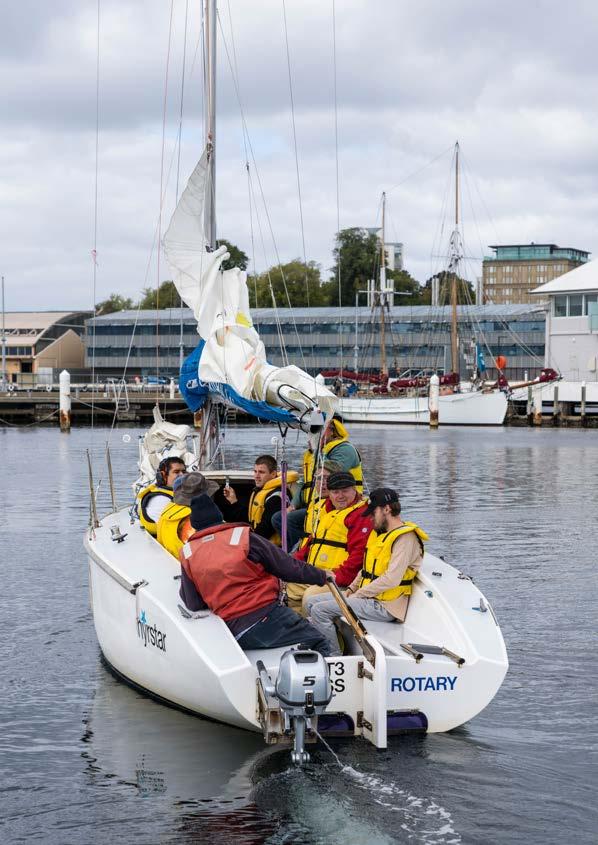
The City of Hobart commits to building strong and healthy communities through promoting diversity, participation and empathy, and achieving good quality development and urban management through good governance at a regional and community level. Our work is guided by our community through Hobart: A community vision for our island capital and the Capital City Strategic Plan 2019-29.
Hobart: A community vision for our island capital was developed in collaboration with Hobart communities and stakeholders and outlines what people value about Hobart today and what they would like for Hobart’s future.
The vision has eight pillars that represent aspects of city life:
• Pillar 1: Sense of place
• Pillar 2: Community inclusion, participation and belonging
• Pillar 3: Creativity and culture
• Pillar 4: City economies
• Pillar 5: Movement and connectivity
• Pillar 6: Natural environment
• Pillar 7: Built environment
• Pillar 8: Governance and civic involvement
The strategic plan is the City of Hobart’s primary planning document and responds directly to the community vision. The strategic plan outlines the outcomes the City aims to achieve over a 10-year period with strategies that relate to the eight pillars listed above.
The Social Inclusion Policy was first adopted by the Council on 12 October 2020. It provides formal guidance for the organisation in supporting social inclusion and reducing the risk of discrimination and exclusion. The policy outlines the City’s legal and social responsibilities and informs this framwork through the policy statement (page 5) and guiding principles (page 16).
The Community Inclusion and Equity Framework (the framework) has been designed to:
• support and enhance the delivery of community outcomes across the organisation
• provide context about the role the City plays in creating a city for all
• provide background information on the challenges our community face
• outline our approach and tools for delivering outcomes.
The framework flows directly from the community vision and strategic plan with a focus on the outcomes under Pillar 2: Community inclusion, participation and belonging. These outcomes can be summarised as:
• Truth and Reconciliation
• Participation and Access
• Wellbeing and Knowledge
• Safety and Resilience.
DELIVERING ON THE FRAMEWORK:
Creating a city for all is a long-term and complex task. We rely on our community partners, other levels of government and the general public to work together with us.
At the City of Hobart, creating an equitable and inclusive community is a core part of our work. We deliver on these priorities through a variety of projects, initiatives and partnerships. This work is outlined in a range of strategies and plans across the organisation, for example:
• Creative Hobart includes strategies to support expressions of diversity and of Aboriginal cultural identity.
• The Connected Hobart Smart City Action Plan includes projects on Crime Prevention Through Environmental Design (CPTED), technology ethics and citizen science
• The City’s Street Tree Strategy outlines the mental health, physical health and social benefits of urban tree cover.
The City’s Community Life Division, in particular the Community and Culture Unit, specifically works on inclusion and equity. This work is supported by several community plans that provide specific direction and actions for program areas. The following documents provide detailed action plans to support the delivery of the Community Inclusion and Equity Framework. We revise these plans regularly to ensure they are responsive to community challenges and aspirations:
• Aboriginal Commitment and Action Plan
• Multicultural Commitment
• LGBTIQ+ Commitment
• Equal Access Commitment
• Positive Ageing Commitment
• Youth Commitment
• Community Safety Commitment
• Affordable Housing and Homelessness Commitment (under development).
The Community Inclusion and Equity Framework has been developed in direct response to the aspirations of our community as told through more than 1100 community contributions into Hobart: A community vision for our island capital. More detailed and specific engagement was undertaken to inform the approach, format and content within this document. All that we heard has directly informed this framework and will go on to inform the delivery of the strategies and underpinning community commitments. We acknowledge the following groups for their participation and input into the development of the framework.
The City of Hobart Community Sector Reference Group has 26 members from a wide range of community organisations and peak bodies. This group collaborated on the development of the framework through workshops, email feedback and one-on-one interviews.
Ongoing advice and feedback from the following groups (all convened by the City of Hobart) has informed the development of the framework.
• Networking for Harmony Multicultural Advisory Group
• Access Advisory Committee
• Hobart Older Persons Reference Group
• Housing with Dignity Reference Group
• Youth Advisory Squad
• Youth Action Priorities Network
• Children and Families Network
• Late Night Precinct Stakeholders
• Hobart Retailers Safety and Security Group
CITY OF HOBART STAFF
• Internal Working Group with 23 members
• 57 staff participated in workshops
• Representation from diverse staff across all divisions
ELECTED MEMBERS
• Workshop
• Individual meetings
BROAD COMMUNITY ENGAGEMENT
• Online survey through Your Say Hobart
• Social media engagement
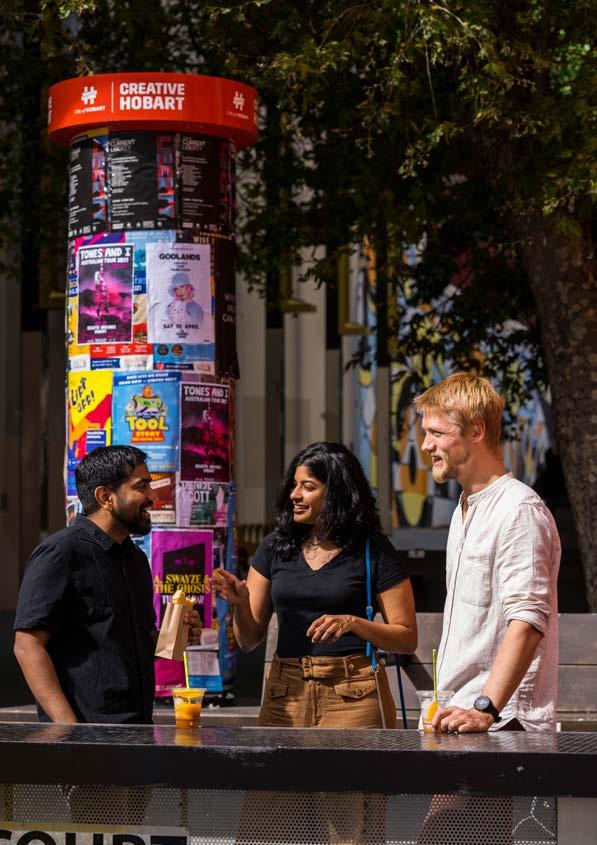
The City of Hobart is guided by the following statements from Hobart: A community vision for our island capital in the delivery of this framework. These principles have been set out in the City’s Social Inclusion Policy and provide an ongoing organisational commitment to creating a city for all.
Diversity in culture, nationality, ethnicity, race, gender, sexuality, ability, age, body, family, recreation, profession, personal strengths, income level, language, education, life experiences and more make up each of us and, together, make up our city. We recognise and embrace the rich complexity diversity brings to our lives - we are all part of creating Hobart’s identity. (Pillar 2.2.3)
SOCIAL JUSTICE
We recognise and face inequalities, poverty and disadvantage in our communities… We support each other to have our needs met and flourish. We all have opportunities to access and contribute to Hobart life. (Pillars 2.2.7 and 2.2.8)
CAPACITY BUILDING
We develop the capacity of our human, social and cultural capital, knowledge and networks. (Pillar 2.4.5)
We have a holistic view of health that involves all aspects of our lives. Mental, physical, emotional, spiritual, cultural and social health are at the core of our decision making. (Pillar 2.5.1)
EQUAL ACCESS
Our natural and built spaces and facilities enable activity and support and enhance our health and wellbeing… Our infrastructure, services and other aspects of our built environment support equal access for all. (Pillars 2.5.3 and 7.3.2)
Hobart’s isolation and scale have required resilience. We know that future challenges will demand that we work hard and work together. But we are our best selves in times of adversity and vulnerability. We are caring, helpful and supportive of everyone at all times but especially when things get tough. We flourish in times of hardship. (Pillar 2.6.1)
COMMUNITY SAFETY
We are a safe city, where everyone feels safe and is safe, including in public spaces. We look after each other. (Pillar 2.6.3)
Engagement with our communities is proactive and inclusive, so we know about and can participate in decisions and outcomes that affect us… We learn from our communities about important local issues. (Pillars 6.6.2 and 8.5.3)
We use our connections and networks to enable participation in civic life. Our strong partnerships support collaboration across councils, community organisations, businesses and other levels of government. (Pillar 8.2.3)
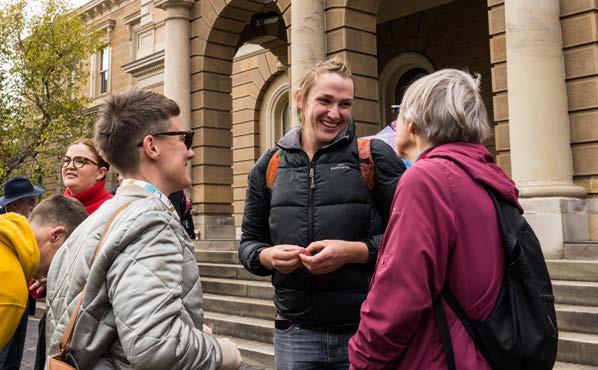
Hobart has a unique role in Tasmania as the capital city and regional hub. Every day, we welcome large numbers of visitors from surrounding areas, and further afield, to work, learn, recreate and access services. Many look to the City of Hobart as a key driver in addressing social issues in the region. We take an active leadership role in creating a city for all, working with local, regional and national partners to drive positive change through innovative, communitybased initiatives.
The City of Hobart uses the following activities, tools and methods to build inclusion and equity and reduce discrimination in Hobart. We have developed these methods collaboratively with our community. Our teams continue to refine our approach to maintain relevance and align with best practice.
PUBLIC EDUCATION: We work to promote understanding, respect and social connection in our community by sharing stories, creating opportunities for dialogue and by speaking out publicly on issues of importance to our diverse communities. Social issues are often highlighted through activities such as Homelessness Week and Harmony Week. We use a range of communication tools including public forums, events and visual, print and digital communications.
ADVOCACY: We draw upon our close connections and expertise in community development to support Hobart communities to have a voice on issues of importance to them. We directly advocate for their needs, both within the organisation and externally to the Tasmanian and Australian Governments, the community sector and businesses.
DIVERSE ENGAGEMENT: We seek out and support input from diverse voices into City plans and projects. We facilitate a number of advisory and reference groups representing priority population groups. We use a range of accessible engagement methods and continually refine our approach to improve the level of participation.
COMMUNITY-CENTRED DESIGN: As the custodians of the majority of public space within Hobart, from sporting grounds to streetscapes, retail precincts to playgrounds, we are responsible for ensuring that our city is liveable, safe and accessible for all. Our employees maintain a broad understanding of the needs of our diverse communities and keep up to date with best practice to support inclusive design and delivery of public spaces.
COMMUNITY PROGRAMS: We work closely with our community partners to identify gaps in service delivery for our community. Where there is a clear need and a lack of capacity in the community to provide a service, we consider opportunities to fill the gaps. We currently deliver a range of targeted, accessible community programs to support skill development, social connection, creativity, lifelong learning and physical and mental wellbeing. A number of these programs are delivered through our community facilities. Our programs also provide a range of volunteer opportunities to support participation and employment pathways.
FACILITY MANAGEMENT: We own and manage a wide range of community facilities and venues that support people to gather, recreate, exercise and learn. We work with our community to maximise usage of these facilities to support community wellbeing. Many facilities are managed by community volunteers and our role is to provide support and build capacity. In other instances, such as with the Doone Kennedy Hobart Aquatic Centre, Mathers House, Criterion
House and the Youth Arts and Recreation Centre, we directly manage the facility with dedicated staff and tailored programming. We conduct regular audits to improve the accessibility of these facilities and work to ensure that they are welcoming spaces for all.
We host a number of sector networking groups to support connections and information sharing between relevant peak bodies, community organisations, businesses, education providers and Tasmanian and Australian Government representatives. We work collaboratively with these groups to respond to community issues as they arise and build community capacity.
INCLUSIVE EVENTS: We deliver a wide range of inclusive events that support community expression, participation and connection and bring life to the city. These range from children’s activities and cultural celebrations to public lectures, sports and fitness activities and arts showcases. The majority of our events are delivered in close partnership with our community and provide opportunities participate and volunteer.
SUPPORTING CREATIVITY: We recognise the importance of arts and creativity and develop opportunities for people to create and exhibit their work publicly through a range of creative platforms. Creativity enhances the liveability of the city by reducing the incidence of graffiti, increasing public art and bringing live music to our streets. We prioritise cultural development and ensure diverse expressions and stories are featured in our creative programs.
BUILDING RESILIENCE: We understand the potential for an emergency or crisis in Hobart. We work closely with emergency services, Tasmanian and Australian Governments and other councils to be as prepared as possible. Our preparations include fuel reduction burns,
stormwater engineering, long-term land management plans and pandemic. Our staff are well trained to deal with emergency events when they occur, supporting our community during and after impact. We work with our communities to build their capacity to bounce back after crises and support community recovery.
SUPPORTING WELLBEING: We work to ensure that our facilities, spaces and programs support healthy movement, prevent disease, minimise harm and increase access to food. We actively work to reduce the risk of harm from alcohol, tobacco and other drugs within Hobart, provide accessible immunisation programs, and offer a range of health and wellbeing activities to the public in our parks and community facilities such as the Doone Kennedy Hobart Aquatic Centre.
ENHANCING COMMUNITY SAFETY:
We recognise that not everyone’s experience of safety is the same and that some community members require specific responses for issues such as racism, elder abuse and family violence. We work in collaboration and convene several networks with businesses, government agencies, emergency services and support organisations to provide a consolidated response to the challenges presented, particularly with late night precincts.
RESOURCING COMMUNITY INITIATIVES:
We support our community to deliver initiatives, projects and events through the provision of advice, financial resources, venues and logistics support. We often work in partnership for the delivery of strategic initiatives with our community grant program delivering diverse, innovative and community led solutions.
Hobart is a place that recognises and celebrates Tasmanian Aboriginal people, history and culture, working together towards shared goals.
Tasmanian Aboriginal people, also known as Palawa people, represent the southernmost, oldest continuous culture in the world. They have cared for the land upon which Hobart was built for more than 40 000 years. We recognise and value the strong spiritual connection that Tasmanian Aboriginal people have to this place.
Aboriginal people were a sovereign people in this Country. This sovereignty was never ceded. Despite massacre, dispossession and oppression, Tasmanian Aboriginal people remain strong and resilient.
We believe that this is our shared history as Tasmanians and we have a responsibility to learn and share it with all who live, work or visit our city.
A city for all is one in which we acknowledge the truth of our history in this place.
Nationally, Aboriginal people show disadvantage on nearly all health and wellbeing measures. Aboriginal people are nearly twice as likely to be unemployed than non-Aboriginal Australians and Aboriginal children are 10 times more likely to be in out-of-home care. More than 1 in 4 children in out-of-home care in Tasmania identify as Aboriginal.
We recognise that Hobart is a hub for activism, protest and positive change for Aboriginal people. We commit to walking alongside Aboriginal people as equal partners.
A city for all is one in which we walk together with Aboriginal people toward shared goals.
Years of Aboriginal custodianship:
40 000+
Percentage of land in Tasmania that is Aboriginal owned: 0.5 Per cent
First state in Australia to provide compensation for the stolen generations: Tasmania Palawa kani name for Hobart: nipaluna
2.1.1 Demonstrate leadership in Aboriginal social justice in partnership with Aboriginal people.
2.1.2 Highlight Tasmanian Aboriginal history and culture, including acknowledgement of the darkness of our shared experience, through interpretation, naming, arts and events.
2.1.3 Engage with Aboriginal people on how they want the City to work with them.
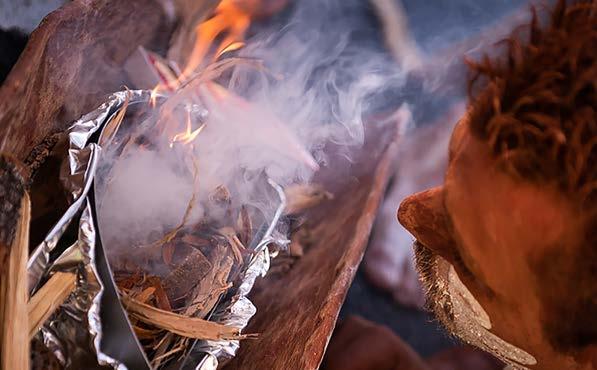
Hobart is a place where diversity is celebrated and everyone can belong, and where people have opportunities to learn about one another and participate in city life.
Everyone’s experience of our community is different. Hobart has a reputation as a liveable city with connected communities, and some of us feel right at home here. But the reality is different for those in Hobart who experience inequality, poverty and disadvantage. Some of us struggle to feel like we belong or are welcome in this place. Stigma, discrimination, racism and prejudice can have a profound impact on what it feels like to live in Hobart. These barriers to participating and connecting with others not only affect community safety, but they can lead to social isolation, with flow-on effects to mental and physical health.
We believe that everyone has the right to participate fully in Hobart life. Regardless of background, gender, identity or life situation, our community should provide opportunities to connect, share and express one’s identity. We should all be able to thrive in Hobart and have the chance to belong.
A city for all is one in which everyone feels welcome, valued and heard and has opportunities to participate.
It is difficult to connect with other people and participate in city life if we have no way of getting around. Affordable, timely and appropriate transport and accessible public spaces are critical to making sure everyone can access work, study, recreation, services, entertainment and other opportunities. People should not need to own a car to get where they need to go. Access to information is also vital to participation in the community. It influences how we perceive and understand the world around us, including how we make decisions and advocate for our needs. Disability, language, income levels, literacy skills and age all influence how we access information. We know that more needs to be done to ensure that our mobility options, public spaces, facilities, communications, events and programs are universally accessible.
A city for all is one in which everyone can get where they want to go with ease and can access the information they need.
Hobart households where a language other than English is spoken: 16 per cent
Hobart households that do not own a car: 10.7 per cent
Residents of Greater Hobart needing help in their day-to-day lives due to disability: 6 per cent
Year in which marriage equality was enacted into law: 2017
2.2.1 Support people from all backgrounds and life experiences to participate in Hobart life.
2.2.2 Support and advocate for all people and communities to celebrate their histories and identities and encourage mutual understanding.
2.2.3 Provide and support activities and programs that celebrate diversity to reduce social isolation and build social cohesion.
2.2.4 Review and implement cross-cultural, diversity, equal access and other awareness and learning opportunities for staff.
2.2.5 Acknowledge and celebrate the value of volunteering and support further development of volunteer programs.
2.2.6 Identify those people in the community who are most disadvantaged, excluded and vulnerable and develop appropriate initiatives to address their issues, in partnership with stakeholders.
2.2.7 Ensure all community members have the opportunity and capacity to access City of Hobart information, services and programs.

STRATEGIC PLAN OUTCOME 2.3
Hobart communities are active, healthy and engaged in lifelong learning.
The conditions in which we are born, grow, live, learn, work and play all have an impact our health and wellbeing. In Hobart, population trends are affecting the kinds of support people need. Hobart has an increasing older population, as well as an increasing prevalence of disability. Lifestyle factors such as physical activity levels and nutrition have major impacts on health and quality of life. Rates of mental illness are growing in our community, with increasingly complex presentations. We recognise the impacts of gambling, tobacco, alcohol and other drugs on individual and community wellbeing.
As a destination city, it is important for us to balance the provision of vibrant opportunities to connect and celebrate, whilst helping our community make healthy choices and reduce potential harm to themselves and others.
Wellbeing is not just about healthcare, but about access to education, housing, transport, food, recreation and more. We also need health ‘literacy’ to understand how to look after our health and engage with the services we need. Service integration and coordination, along with a community that actively looks out for each other, are vital to preventing our community’s most vulnerable people from ‘falling through the cracks’.
We believe in creating social and physical environments that support everyone to have a healthy life. We believe everyone should be able to access appropriate, timely and affordable services.
A city for all is one in which spaces, services and communities support physical and mental wellbeing.
Learning and applying skills and knowledge is a fundamental part of being human. The skills and knowledge we develop help shape who we are and guide how we contribute to society. A love of learning helps us to grow and adapt to changing environments and supports a healthy brain as we age. Fundamental skills, like literacy and numeracy, are core to getting stable employment and participating in education. For those with low-level skills, routine tasks can be a challenge. Digital literacy and access are increasingly integral to participation in society. Digital exclusion occurs when people are unable to access or use appropriate technologies, making it harder for them to participate in education, work or social opportunities.
Hobart is growing as a learning destination for students across the world and increasing numbers of these students are living and studying within the CBD. We know that learning, education, knowledge and skills are critical contributors to individual and community wellbeing. The more people are able to flourish in their learning, the better we will be able to meet the challenges of our shared future.
A city for all is one in which everyone has opportunities to engage in learning and has the capacity and skills to influence change.
Hobart residents engaged in formal education:
33.8 per cent
Dwellings in Hobart located within 400 metres of public open space: 99 per cent
8.4% of Hobartians don’t do enough moderate to vigorous physical activity, and 55.5% do not do enough muscle building activity
Number of community initiatives supported through the City of Hobart Grants Program in 2020: 75
2.3.1 Provide and progressively enhance a range of quality places and facilities where people can enjoy education, recreation, socialising, healthy living and other activities and events.
2.3.2 Progressively enhance the City’s sporting and recreational infrastructure, including the Doone Kennedy Hobart Aquatic Centre.
2.3.3 Ensure the provision of quality play spaces offering a range of imaginative play alternatives.
2.3.4 Ensure neighborhoods, streets and public spaces help all people to be healthy and physically active.
2.3.5 Consider mental, physical and social health and wellbeing in the development of strategies, policies, projects and initiatives.
2.3.6 Celebrate Hobart’s food culture and encourage an ecologically sustainable, resilient, healthy, equitable and economically viable food system.
2.3.7 Support accessible learning opportunities for people at all ages and stages of life.
2.3.8 Enhance relationships with educational institutions and community-based organisations.
2.3.9 Support citizen science and other community contributions to knowledge and innovation.
STRATEGIC PLAN OUTCOME 2.4
Hobart communities are safe and resilient, ensuring people can support one another and flourish in times of hardship.
As people, we need to feel a certain amount of safety in our lives in order to learn, grow, take healthy risks and participate in community life. Fears and concerns about safety can stop us from engaging at home, at work, in public spaces, in social groups and online. Fear can create social isolation and sow division between groups of people.
Part of feeling and being safe is having life’s basic needs met. Needs such as food, water, shelter, employment, education, transport and free time are all part of creating a safe platform from which to respond to life’s opportunities and challenges. The cost of living is growing faster than social security benefits and wage growth for low-income workers. This means that many struggle to cover the costs of housing, health, education, food, electricity and transport. This disparity can significantly impact the capacity of many people to participate in society.
Poverty and inequality are made worse by the rising cost of housing in Hobart. We know that communities need diverse housing types within local areas to provide homes for people of all ages and differing needs.
A city for all is one in which everyone feels safe and secure and can meet their basic needs.
Resilience is the ability to respond to shocks and stresses and recover from them. It requires a strong foundation at individual, family and community levels. Resilience comes from having mental, social, financial and other resources to draw upon in a crisis. Resilience in the natural environment is just as important.
The threat and occurrence of natural disasters, pandemics and other major crises is rising, with compounding effects on our community’s wellbeing. We can prepare for crises, but we can’t predict them. As such, having our basic, day-to-day needs met is a major contributor to whether we are able to bounce back during and after a crisis.
A city for all is one in which everyone supports each other and is prepared for crises.
Unemployment rate in Hobart: 3.8 per cent
Average household percentage of income spent on rent in Greater Hobart: 31 Per cent (least affordable capital city in Australia)
Percentage of people in Southern Tasmania who report feeling safe alone, in public, after dark: 59 per cent
Disaster resilience rating for Hobart: Moderate
2.4.1 Develop and, when necessary, activate the City of Hobart Municipal Emergency Plan and Community Recovery Plan.
2.4.2 Support and implement initiatives to build resilience to emergencies, with a focus on those most vulnerable.
2.4.3 Protect and improve public and environmental health.
2.4.4 Prepare for and respond to pandemics by implementing the Public Health Emergency Management Plan.
2.4.5 Ensure that Hobart is a safe and liveable city by enhancing community and public safety and security, working in partnership with key stakeholders.
2.4.6 Deliver and support initiatives, activities and programs that build community resilience, wellbeing and safety.
We are committed to being transparent and accountable in the delivery of the Community Inclusion and Equity Framework. We look to our community to guide us and provide feedback to strengthen our approach and delivery over time. To support this, we have two key accountability mechanisms to guide the delivery of the framework.
INTERNAL MECHANISMS: The City for All Working Group is made up of relevant staff from across all Divisions within the City of Hobart. This group monitors the organisation’s compliance with the Social Inclusion Policy and progress against the Community Inclusion and Equity Framework.
EXTERNAL MECHANISMS: The Community Sector Reference Group includes people from all major community organisations in Hobart and community sector peak bodies.This group meets with City of Hobart staff quarterly to provide advice and input into the City’s work in creating a city for all, including identifying emerging issues and appropriate responses. The group also provides feedback on the City’s performance in relation to the framework and monitors progress against the strategies.
• Data Sources
• Australian Bureau of Statistics 2016 Census
• Australian Disaster Resilience Index January 2021
• City of Hobart
• Department of Police, Fire and Emergency Management Corporate Performance Report November 2020
• Rental Affordability Index December 2020
• State Growth Tasmania Economic Profile, June 2020
• Tasmanian Aboriginal Centre
• The State of Public Health Tasmania 2018