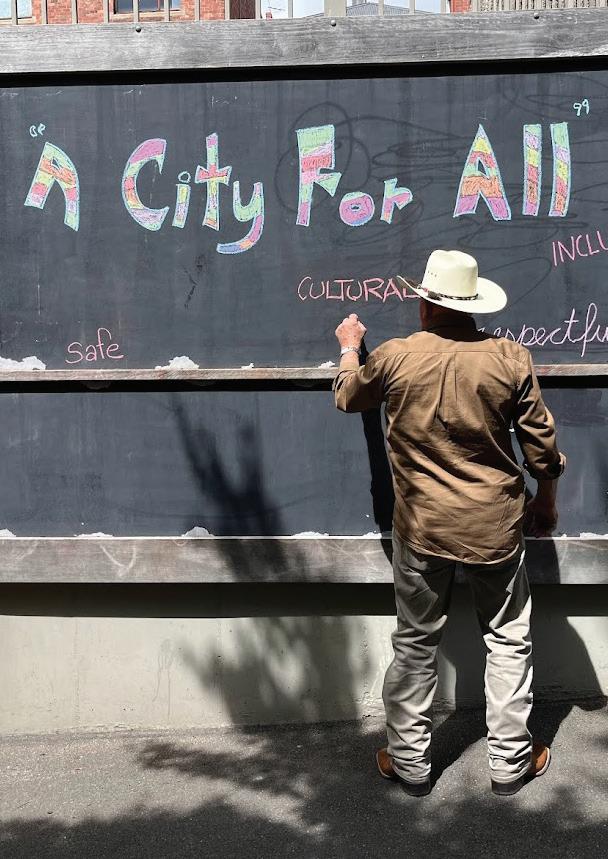
To truly become a city for all, the City of Hobart must work towards inclusion and equity for all who live, work or play in Hobart. We must recognise systemic exclusion, discrimination and inequity and understand this demands systemic and structural solutions.
The actions detailed in our Hobart: A City for All – Action Plan 2026-29 are arranged by community program areas. These program areas help us focus our resources and guide our work with different members of the community to achieve their goals and address their concerns.
As well as helping to identify resources for specific areas of the community, this also allows community members, relevant organisations, and all levels of government to easily identify where the City of Hobart allocates community resources.
The reality is that our community is diverse. Each of us can identify with more than one aspect of our life, whether that is our age, culture, gender, housing situation or our skills and abilities.
With that in mind some actions have been listed separately. This is because they have the potential to impact many different community members, they lend themselves
If you need this document in an alternative format, such as an easy read version or summary, please phone the Accessibility Coordinator on 03 6238 2711 or email coh@hobartcity.com.au
to greater collaboration or because they currently don’t align directly with one specific program area. These actions include the significant work our teams undertake in the areas of disaster resilience and social recovery.
Some of the actions listed in this plan have been carried forward or evolved from previous commitments and strategies. Most of these strategies and commitments have guided our work for several years, and some are relatively new. Some actions therefore have been delivered by the City of Hobart on an ongoing basis for some time, and some are new and have emerged from recently identified community aspirations and priorities.
All of the following actions have been refined and developed in collaboration and discussion with people with a lived experience, with community organisations that work with specific areas of the community and with other local government staff.
By including all of the actions for each program area under the Hobart: A City for All – Action Plan 2026-29 we are developing a stronger sense of how they all contribute to addressing the full range of community priorities.
You can also contact the National Relay Service to communicate with the City of Hobart for further information:
Voice 1800 555 660 (free from landlines)
TTY 1800 555 630 (free)
Fax 1800 555 690 (free) SMS 0416 001 350.
The City of Hobart takes on several different roles when working with and for our community.
There are times when we can directly deliver opportunities and programs, provide facilities and run events. There are also times when we work with other agencies or levels of government and support them to achieve outcomes. Often the City’s role is to gather ideas, information and resources and communicate this more broadly, to raise community awareness and capacity.
There are also times when the City does not have the necessary resources or the responsibility to directly act on a particular issue, in which case we advocate with and on behalf of our community to other agencies or levels of government.
Many of our actions and responses do not sit in one single area of the organisation.
Regardless of which role the City of Hobart takes on to achieve a community goal or address a particular issue, our focus is to bring about positive change by supporting the community to identify, discuss and address local, regional and national issues relevant to them.
The City of Hobart will work closely with the community, relevant sectors and all levels of government to advocate for action and positive change.
We will collaborate internally to engage multiple areas of the City of Hobart to work together on shared actions.
We will identify, collect, analyse and share relevant information and resources, with and for the community, relevant sectors and all levels of government.
The City of Hobart will create, maintain and strengthen relationships by connecting community members, relevant sectors and all levels of government to meet the community’s aspirations and needs.
We will deliver, facilitate, collaborate and lead opportunities that help our community celebrate success, achieve their goals and address issues important to them.
It is a complex task to build a city for all. Everyone has a role to play. Local government is the level of government with the closest and most direct connection with the community. The City of Hobart is a caretaker of the environments in which people live, work and recreate. As such, we have a responsibility to ensure these environments benefit the entire community.
Local government has a defined role under the Local Government Act to ‘Provide for the health, safety and welfare of the community’ (section 20).
In direct response to all that was heard from our community when developing the Hobart: City for All – Community Inclusion and Equity Framework, the following priority areas are seen as vital to working towards a city for all. Each action in the following pages sits under one or more of the following priority areas, all of which align with the implementation of the City’s strategic documents.




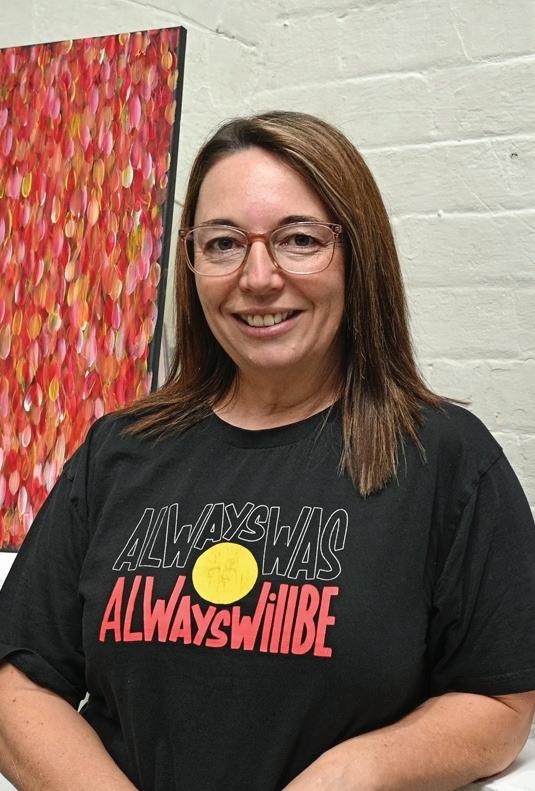
We acknowledge the truth of our history in this place. We walk together with Tasmanian Aboriginal people toward shared goals.
Everyone feels welcome, valued and heard and has opportunities to participate. Everyone can get where they want to go with ease and can access the information they need.
Spaces, services and communities support physical and mental wellbeing. Everyone has opportunities to engage in learning and has the capacity and skills to influence change.
Everyone feels safe and secure and can meet their basic needs. Everyone supports each other and is prepared for crises.
The following actions are listed here as they either involve opportunities that sit across several community program areas, or they sit outside the individual action plans. Some of these areas of responsibility include: the management of community halls and facilities; social recovery following disaster (including establishment of evacuation centres); building community resilience to disasters; and volunteer support and management.
It is noted that the Hobart Respects All campaign is relevant across all action plans. The City has endorsed the Country, Culture, People 2025–28, Building Cultural Safety within the City of Hobart with Aboriginal People that sits alongside this document.
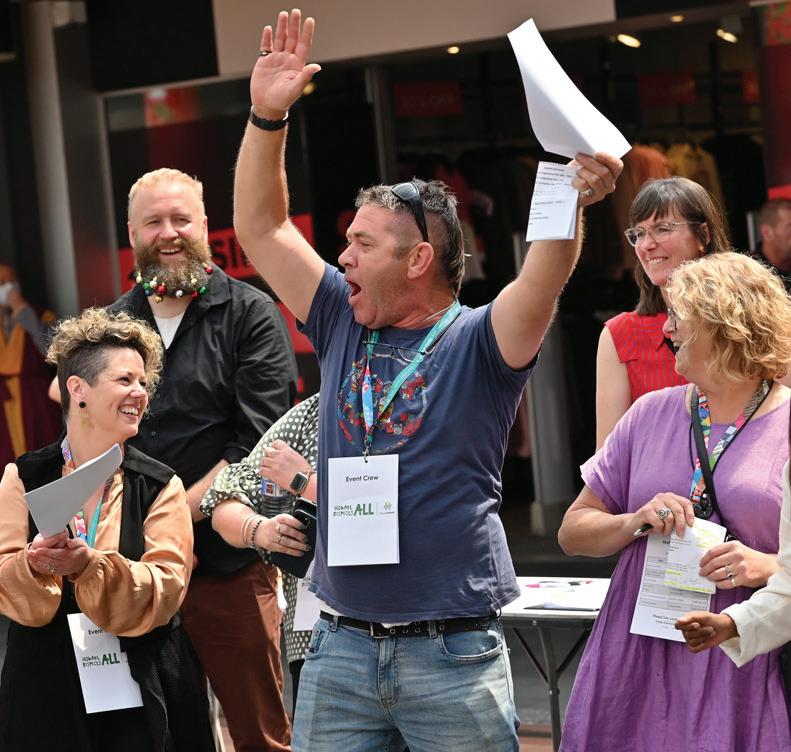
Deliver the Hobart Respects All campaign with community partners to celebrate diversity, increase inclusion and promote respect.
Deliver an annual City of Hobart Volunteer Recognition event to celebrate the contribution of volunteers to City of Hobart programs.
Deliver Resilient Hobart Program to support greater Hobart community members to be more resilient and prepared for emergencies.
Facilitate community hall use to ensure these facilities provide health and wellbeing opportunities and maximise community benefit.
Deliver the Children’s Mayor program, to increase young people’s engagement with the civic life of the city.
Develop and maintain processes and procedures for the operation of the City of Hobart’s designated evacuation centres.
Number of promotions undertaken.
Number of activities delivered/ participated in. Human rights week event delivered in December each year.
Volunteer event delivered in December each year.
Number of volunteers engaged in Community Programs each year.
Number of suburban areas engaged with annually.
Number of community forums and street meetings each year.
Number of residents engaged with.
Number of community custodians engaged with.
Number of annual usage reports received showing health and wellbeing opportunities.
Number of schools involved in the program and manifestos received. Number of opportunities provided to Children’s Mayor.
ANNUALLY
ONGOING
ONGOING
ANNUALLY
Number of procedures reviewed and exercises undertaken. ONGOING
Work with other areas of the organisation to advocate for upgrades that improve accessibility and useability of City of Hobart facilities.
Maintain and coordinate the City’s social recovery responsibilities as details in the Community Recovery Plan including participating on regional recovery networks.
Manage and maintain the Emergency Response Team (ERTs) including the coordination of induction sessions and relevant training opportunities.
Work with all City of Hobart areas to deliver the actions within the Country, Culture, People 2025-28.
Advocate for the development of an Extreme Weather Protocol through the working group that includes representatives such as UTAS, SES, DPAC, DOH, LGAT and community organisations.
Number of cross organisational projects/working group meetings attended. QUARTERLY
Number of Southern Regional Social Recovery Committee meetings and working group meetings attended. QUARTERLY
Annual call out for new ERTs delivered.
Number of inductions, training sessions provided to ERTs.
Number of actions delivered from Country, Culture, People 2025-28. ONGOING
Number of advocacy actions undertaken. ONGOING
We are committed to being transparent and accountable in the delivery of this action plan. We look to our community to guide us and provide feedback to strengthen our approach and delivery over time. To support this, we have mechanisms to guide the delivery and review of this document and to measure the effectiveness of the action plan.
Progress against the action plan will be reviewed regularly by our reference and advisory groups with input from across the organisation. The commitment will be updated every three years, to respond to community input and ensure currency, with an annual report provided to the community throughout this period.
By improving access to facilities, services, programs, activities, events and information we limit social barriers that exclude people from full participation in community life. Through the development of this action plan we consulted with people with disability as identifiers of community need and aspirations, as well as participants in the responses and solutions. It is important to recognise that all people, regardless of age or disability, come from different backgrounds, have different abilities, interests, life and work experiences, and different opinions and stories to share.
We heard from a range of people within disability and community networks who want to work with the City of Hobart to ensure we continue to apply an equal access lens to everything we do across council areas. It was identified that for the City to work towards a fair and inclusive community it requires shared values, attitude, behaviour and practices that uphold the principles of access and inclusion. The consultation group identified the importance of shared learnings and the role the City plays in celebrating and sharing the success of inclusive actions to bring about meaningful change.
Providing equal access enhances everyone’s participation in community life, regardless of their age or support needs. People with disability have the same fundamental rights as all members of the community.
Making it easier for people with a disability, an older person, or parent with a pram to move around freely benefits all community members. While this action plan focuses on disability access, there are many opportunities for the City of Hobart to improve accessibility by prioritising a mix of transport modes.
There was a strong collective preference in favour of retaining focus areas from the previous Equal Access Commitment (2021–23).
The following issues were identified as still being important to people with disability within Hobart:
• Supporting opportunities for community participation and social inclusion.
• Supporting access to buildings, streetscapes and parks.
• Supporting accessible parking and reliable transport options.
• Supporting access to infor mation.
• Increasing community awareness of access and disability issues and taking action.
There were also several key projects identified through the consultation process that were requested to be carried over from the Equal Access Commitment (2021–23) into the new action plan.
The equal access actions have been developed in response to aspirations of our community, targeted engagement, consultation and research. This resulted in the development of detailed actions that will help the City of Hobart build an equitable and inclusive community.
The City uses our connections and networks to enable participation in civic life. Our strong partnerships support collaboration across councils, community organisations, businesses and other levels of government. The City of Hobart draws on our reference and advisory groups to guide program planning and delivery. These groups are integral to our work, providing advice and perspective and partnering actively on projects.
The role of the Hobart Access Advisory Committee (AAC) is to provide advice and assistance to the City of Hobart on matters related to access, in particular the implementation of the City of Hobart’s Community Inclusion and Equity Framework and the Equal Access Action Plan. The committee plays a vital role in setting priorities each year for works to improve access in parks and streetscapes; recommends solutions to access issues across relevant council projects, events, new council works or upgrades to council facilities or services; and identifies,
supports and helps deliver equal access initiatives that focus on access and inclusion.
The Access Advisory Committee comprises representatives of disability organisations, City of Hobart employees, elected members and community members who have an interest in access issues in Hobart. The group consists of a diverse range of representatives with a wide range of life and professional experience. The committee provides the City of Hobart with an ongoing consultative group that guides, questions and suggests ways of addressing issues for people with disability.
The City of Hobart continues to build on existing partnerships while creating new strategic partnerships to enable cohesive, collaborative responses to our local challenges.
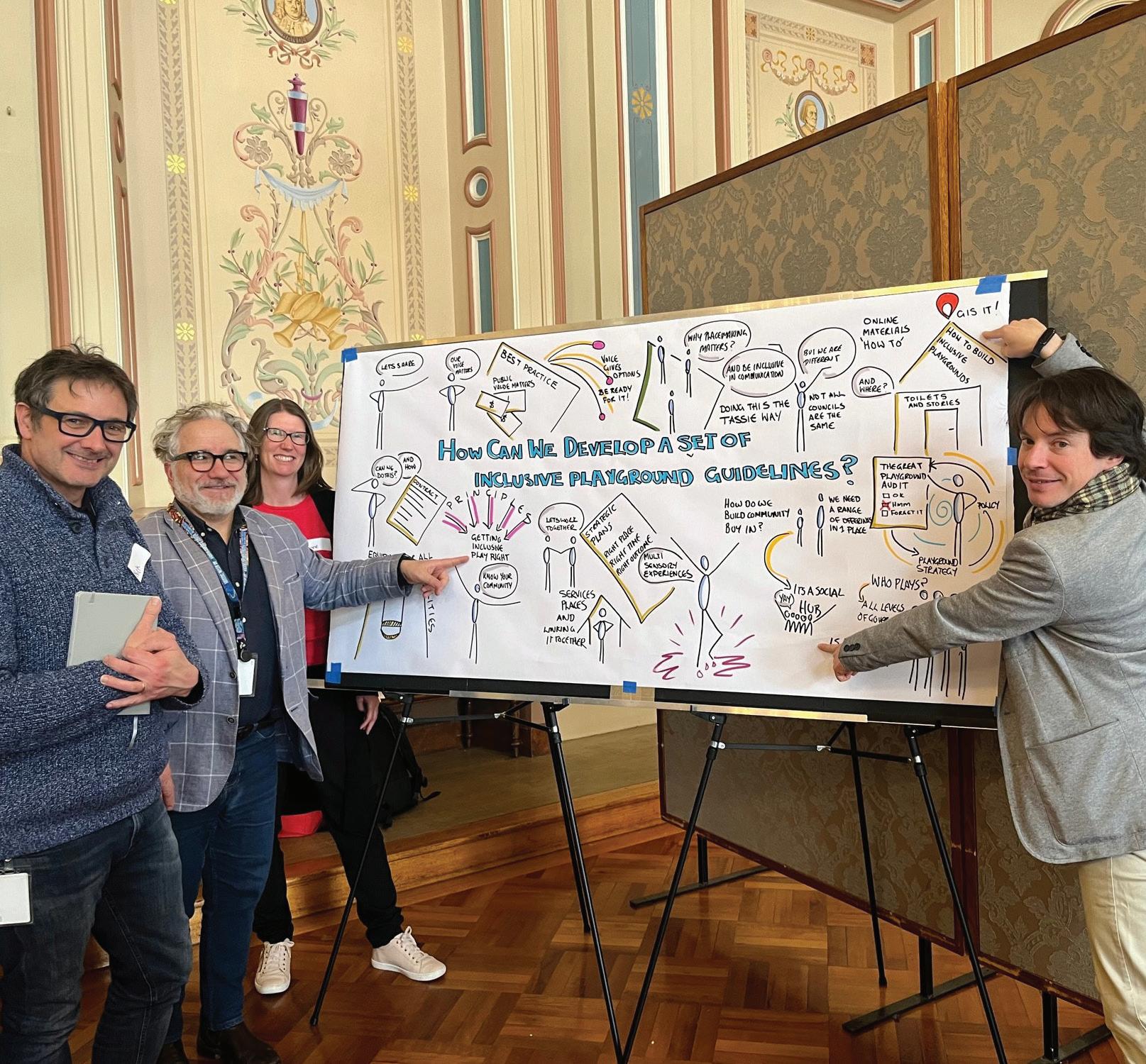
Engagement was undertaken with a range of community members and agencies. Key groups included community groups, advocacy organisations and peak bodies, government agencies, City of Hobart employees and the Access Advisory Committee and what we heard during the consultation process is reflected in this document.
During the review process, the context for discussions included the current level of resourcing, current financial constraints, the activities currently being undertaken by the City of Hobart and our social inclusion role. The City will deliver on these priorities through a variety of projects, initiatives and partnerships outlined in the actions on the following pages.
Maintain Hobart Access Advisory Committee (AAC) ensuring ongoing consultation – quarterly meetings and subcommittees held to discuss access issues, updates, project planning and delivery.
Celebrate and widely promote International Day of People with Disability and other relevant events on the Equal Access calendar.
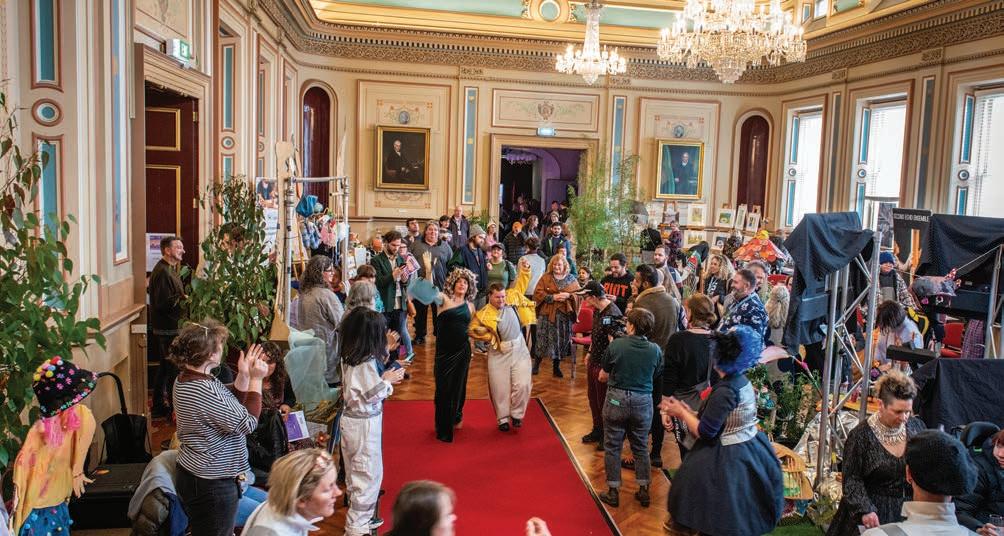
Host a collaborative community celebration of all-ability artists through the biennial Ability to Create exhibition.
Through the AAC, monitor City of Hobart developments (including parks, playgrounds, bushlands, streetscapes, facilities, toilets and buildings) and upgrades at design stage to advocate for accessibility improvements.
Improve accessibility and inclusion at City of Hobart funded events, using the Inclusive Accessible Event Guide.
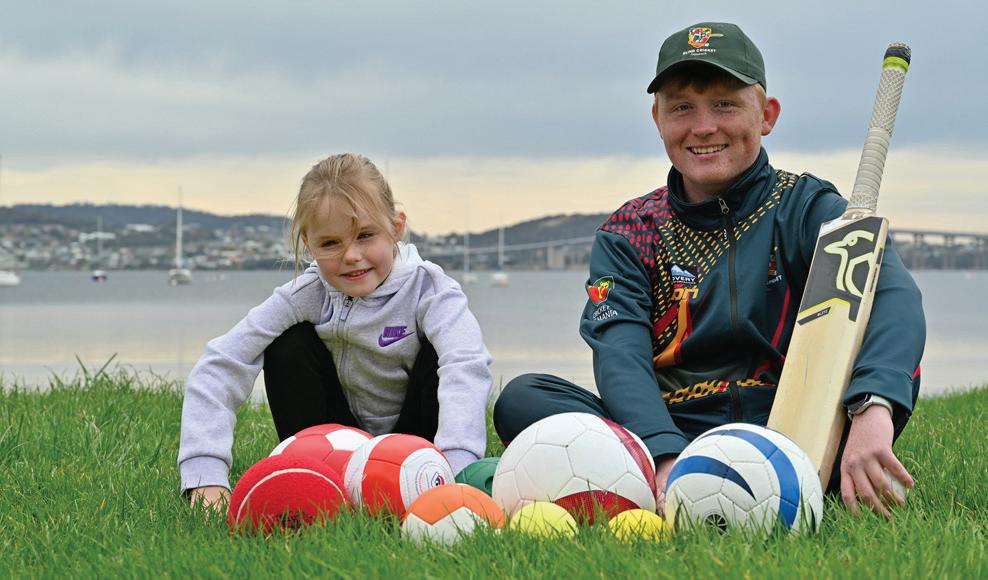
Work with community sports providers and clubs to continue to support accessible and inclusive recreation programs, playgrounds and initiatives held in City of Hobart facilities.
Work with local businesses, and tourism operators to develop a guide to improve access to local businesses, shop fronts and information.
Promote the access map on our website and work with Elefent to identify additional information to be added to improve access within Hobart for everyone.
Improve community awareness of equal access issues, events, information, resources through regular Access E news.
Update the equal access website page on the City of Hobart website and brochure.
Number of meetings per year, type of meeting, number and diversity of AAC members. ONGOING
Number of events held or supported.
Number of people who attended or engaged online.
Number of workshops held and artists involved.
Number of attendees at the exhibition or engaged online.
Number of projects consulted on by the committee.
Number of suggestions implemented.
Number of presentations delivered to AAC.
ANNUALLY
JULY 2027
QUARTERLY
Number of events supported by the City of Hobart with accessible features. ANNUALLY
Number of accessible sports programs or clubs supported through programs, grants and upgrades. ANNUALLY
Number of businesses reached through education campaign.
Number of businesses using the toolkit.
Number of visits to the website to use or print the map.
Number of people who have engaged online.
DECEMBER 2026
ANNUALLY
Number of Access E news sent and opened. ANNUALLY
Number of visits to access website page and number of brochures distributed. ANNUALLY
Continue to involve the AAC in advocating for the implementation of the draft Outdoor Dining Guidelines, with a particular focus on improved compliance.
Work with members of the Hobart AAC to continue to advocate for a diversity and inclusion plan for the City of Hobart to improve employment and volunteer opportunities.
Number of consultations with AAC.
Number of businesses compliant.
Number of positions promoted.
Number of consultations with the AAC to identify barriers for new plan.
Number of managers briefed on new plan.
ONGOING
ONGOING
Provide regular access updates and education to City of Hobart employees.
Work closely with Metro to advocate for accessible bus stops and bus shelters as well as improved accessibility of bus timetables and information.
Advocate for improving website accessibility, accessible documents, communication and engagement within the City of Hobart.
Support the AAC to deliver an education campaign on the importance of access on footpaths with a focus on bin placement, A-frames signage, outdoor dining furniture and e-scooters.
Work with the Hobart Access Advisory Committee to educate community about invisible/hidden disability.
Advocate for access improvements in public spaces and footpaths (including elements such as shade, ramps, seating and plants blocking footpaths).
Install additional accessible parking spaces in the Argyle Street car park in the vicinity of the overhead walkway across to the Royal Hobart Hospital.
Number of education sessions held and updates provided to employees.
Number of employees attending education sessions.
Number of consultations with AAC for new upgrades. Number of responses to requests sent to Metro.
Number of consultations with the AAC seeking user feedback.
Number of accessibility requests responded to.
Number of people reached through the campaign.
Number of complaints received and notices issued.
Number of people reached. Number of people who attended information sessions.
Number and type of upgrade delivered.
QUARTERLY
ONGOING
ONGOING
ONGOING
Number of accessible spaces installed. DECEMBER 2026
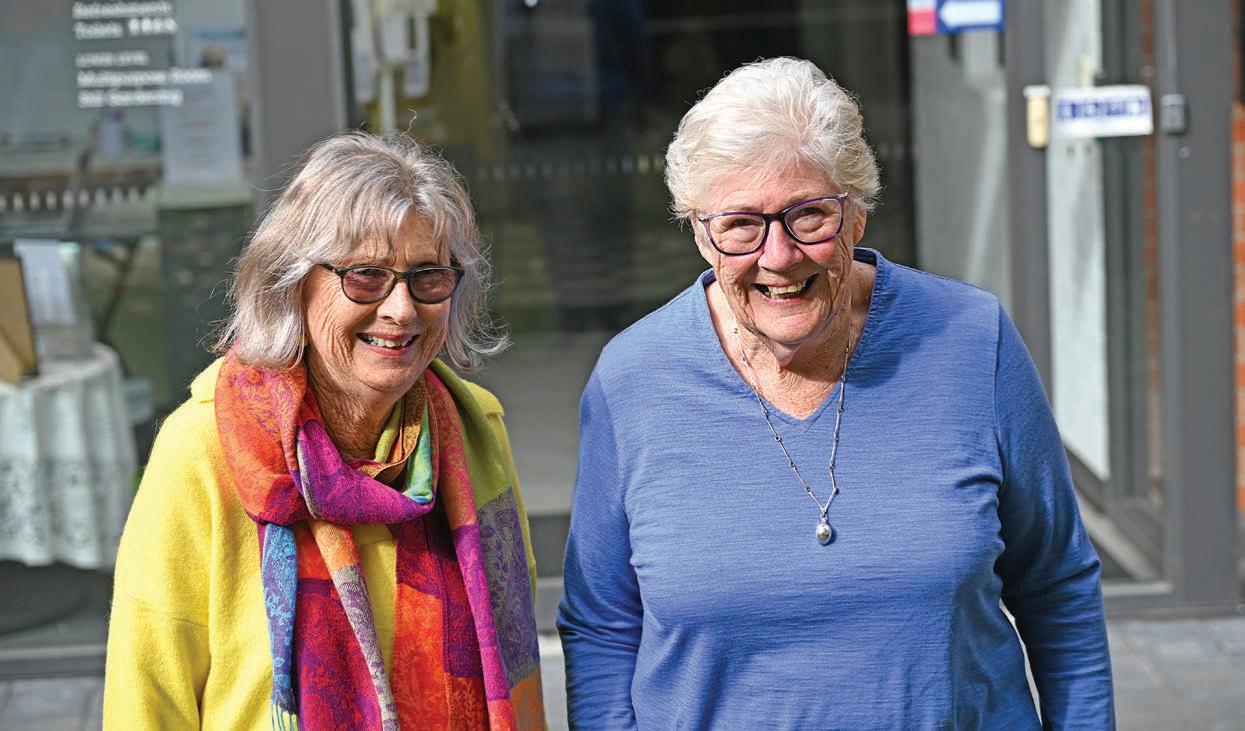
Every moment, each and every one of us is ageing. How well we navigate that process is influenced by our economic, cultural, family, health and social circumstances.
The ageing process brings with it opportunities as well as limitations throughout our lifetime. As we get towards the end of this process, opportunities can include greater understanding and wisdom, a diversity of skills and life experience, as well as social connections, recreational interests and learning opportunities.
Some of the limitations that may come with ageing can be a loss of career or income, loss of social connection, decreased physical or mental capacity as well as a loss of friends and family. While very real for each of us, many of these opportunities and limitations are socially influenced, and can be increased or decreased depending on the context within which we find ourselves.
With this in mind the Positive Ageing actions within this document focus on what the City of Hobart can do, in collaboration with other organisations and the community, to maximise the opportunities and minimise the limitations of ageing.
The key issues identified by the local sector and older community members in the development of these actions are consistent with the work of other organisations working with and for older people, as well as being consistent with those previously identified by the City of Hobart.
The key issues identified by our local sector and community members were:
• Strengthening the social inclusion of older people – the community wants us to work with other agencies and the community to address the social isolation of people as they age.
• Celebrating older people’s diversity – the community wants us to acknowledge, celebrate and support the full diversity of older people within all aspects of the City of Hobart’s work.
• Valuing, listening to, and empowering older people – the community wants us to engage with older people, utilise their experience and wisdom and include them in decision making.
• Increasing access to positive ageing opportunities – the community wants us to ensure council facilities, programs and events remain inclusive and accessible to people as they age.
• Increasing the knowledge of what is available for older people – the community wants us to share resources, information and opportunities to remain active, connected and safe.
While the City of Hobart will continue to work on a range of positive ageing projects and programs, the bulk of our positive ageing resources are focused on activities, events and programs at Mathers House.
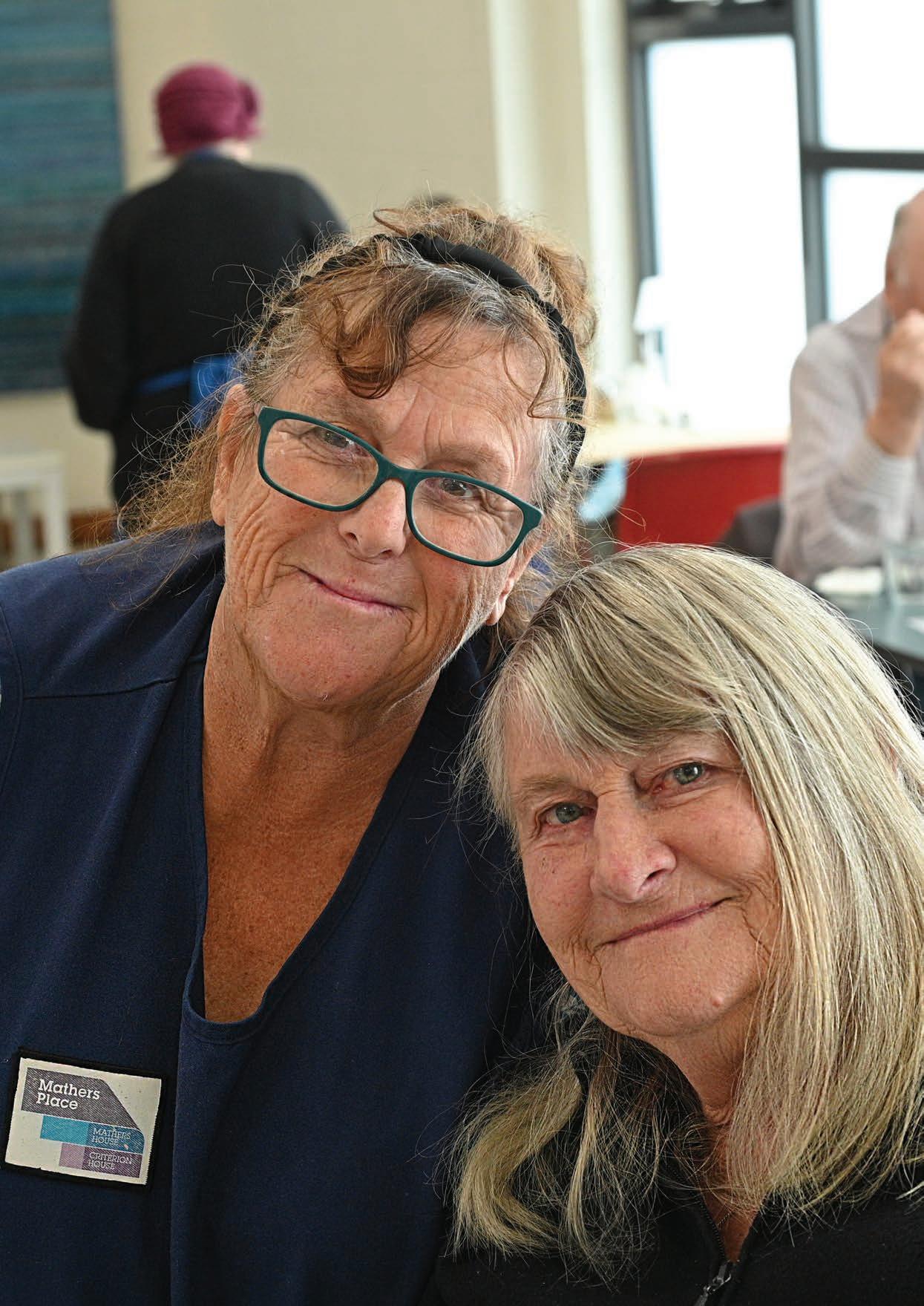
Mathers House provides a focal point, a platform and a hub for age inclusive creation, celebration and participation. The social inclusion focus of Mathers House includes a dynamic and diverse volunteer base, all of whom contribute to creating a welcoming and safe space for the full diversity of older people within our community.
This inner-city venue is not only the focus of the work the City of Hobart is engaged in, but is also utilised by other agencies, community organisations and individuals that are working to increase social inclusion within our community, particularly for older people.
The Positive Ageing actions have been developed in response to aspirations of our community, based on engagement and targeted consultation with the local sector, older community members and volunteers as well as staff working in the positive ageing area.
The City of Hobart will continue to utilise connections and networks to increase participation in community life. This will include working with other councils, community organisations, businesses, and other levels of government.
The City of Hobart will also continue to draw upon the lived experience and skills of our reference and advisory groups to guide program planning and delivery. These groups are integral to our work, providing advice and perspective and partnering actively on projects.
Since its inception the Hobart Older Persons’ Reference Group (HOPRG) has focused on identifying, supporting and helping deliver positive ageing initiatives that focus on social inclusion. Consisting of a diverse range of older people with a wide range of life and professional experience, HOPRG provides the City of Hobart with an ongoing consultative group that guides, questions and suggests ways of addressing issues for older people.
HOPRG, which meets bi-monthly, will provide ongoing feedback on the delivery of the Positive Ageing actions, sharing advice and input into our Positive Ageing work, including identifying emerging issues and appropriate responses as required.
Action Measure
Deliver a menu of affordable, healthy and nutritious meals at Mathers House.
Deliver and support activities, programs and resources that promote healthy eating, nutrition, and age-appropriate diets.
Deliver and support activities, programs and resources focused on exercise, fitness, health and wellbeing for older people.
Deliver and support activities, programs and resources focused on arts, creative, entertainment and social inclusion for older people.
Deliver and support activities, programs and resources focused on lifelong learning for older people.
Deliver and support activities, programs and resources focused on increasing the digital access and literacy of older people.
Maintain a diverse and skilled pool of volunteers to support the Mathers House dining room, ‘Meet & Greet’, and cultural, health and social event and program delivery.
Proactively publicise City of Hobart Positive Ageing opportunities through a seasonal What’s On in collaboration with positive ageing, health and community venues, organisations and networks.
Celebrate and promote Adult Learner’s Week, Seniors Week, Mental Health Week and other relevant events on the positive ageing calendar.
Numbers of meals served.ONGOING
Number and diversity of activities, programs and resources. ONGOING
Number and diversity of activities, programs and resources. ONGOING
Number and diversity of activities, programs and resources. ONGOING
Number and diversity of activities, programs and resources. ONGOING
Number and diversity of activities, programs and resources. ONGOING
Number and diversity of volunteers. Length of service of volunteers. ONGOING
Seasonal What’s On produced and number and diversity of distribution outlets. SEASONALLY
Number and diversity of workshops, programs and events delivered. ANNUALLY
Deliver the federally funded Still Gardening program, supporting volunteers to help older people to live independently through gardening and social support opportunities.
Maintain the Hobart Older Person’s Reference Group to ensure ongoing consultation, strategic direction and project planning and delivery, and proactively publicise City of Hobart Positive Ageing opportunities within the community.
Connect the Hobart Older Persons’ Reference Group with other positive ageing reference groups, networks and committees to identify and act on shared goals and issues.
Work with the Council on the Ageing (COTA) and other organisations to increase the community’s awareness of Elder Abuse through events, information, resources, and links.
Participate in networks such as the Healthy Ageing Network, Older Persons Advocacy Network and maintain links with Council on the Ageing (COTA), and other relevant Positive Ageing organisations and bodies.
Provide a diversity of programs that deliver across the ranges and needs of older people (ages 50-100+).
Encourage opportunities for mentoring, school volunteering and intergenerational activities.
Through the What’s On and networks, promote the Back on your Bike program.
Meeting of all contractual targets.
Number of meetings per year, number and diversity of HOPRG members.
Contracted delivery 2025-2027
Number of opportunities to connect HOPRG with other older persons reference groups and/or networks.
Support provided for delivery of Walk Against Elder Abuse and events that support increased community awareness.
BI-MONTHLY
ANNUALLY
ANNUALLY
Number of networks/ meetings participated in. ONGOING
Number of programs delivered catering to different ages. ONGOING
Number of opportunites provided. ONGOING
Included in What’s On guide and social media. ANNUALLY
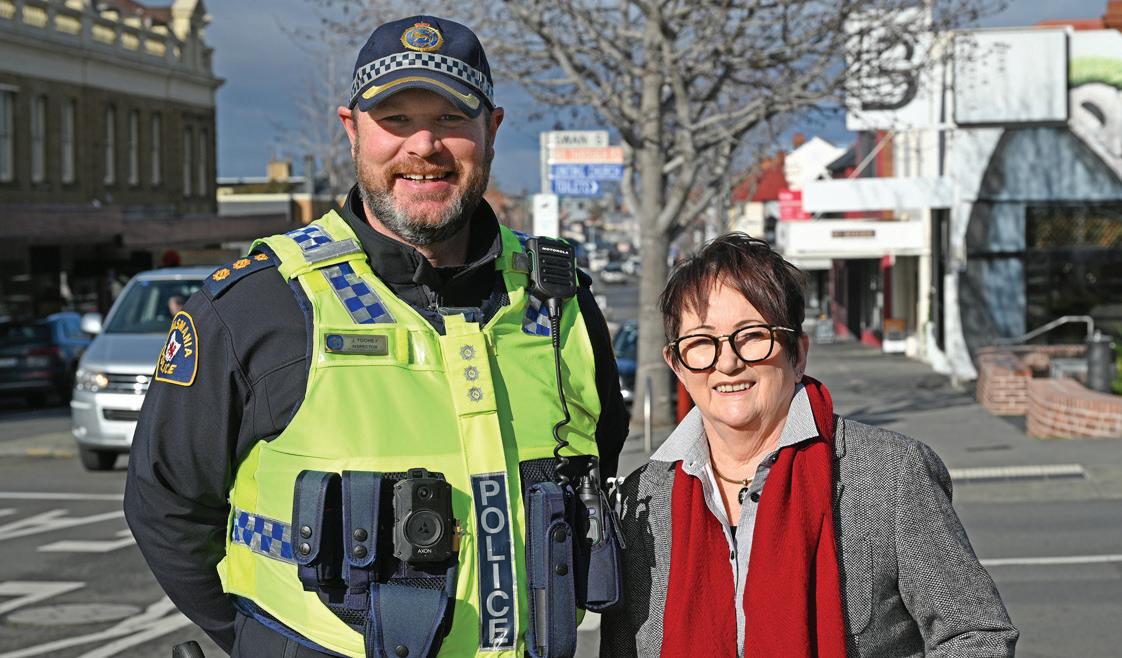
Crime prevention is a multifaceted approach that seeks to minimise the chances of criminal activities and mitigate their impact on society. It encompasses a variety of strategies designed to reduce not only the fear of crime among community members but also the actual risk of crimes taking place.
The City of Hobart has an active role in working with community, businesses, Tasmania Police and service providers to improve safety and perceptions of safety within our city. Community safety priorities and actions have been developed over many years in conjunction with our community safety partners and will continue to be reviewed and developed.
The City works closely with Tasmania Police to identify and solve problems, considers environmental design that makes public spaces less conducive to anti-social and criminal behaviour, and implements education programs that cover safety measures and the importance of safety being everyone’s responsibility. Such initiatives work towards creating a safer community, ultimately aiming to enhance quality of life and foster a sense of security and trust.
The City of Hobart has contracts with several security providers to deliver safety and security monitoring across the city. Closed-circuit television (CCTV) systems are a critical component in the safety infrastructure of public spaces managed by the City of Hobart. By providing real-time surveillance and recording capabilities, CCTV cameras act as a deterrent to potential offenders, knowing their actions are being monitored as well as assisting the City of Hobart and Tasmania Police to investigate incidents.
This surveillance technology also aids Tasmania Police in the identification and prosecution of individuals involved in criminal or anti-social behaviour. The presence of CCTV contributes to a heightened sense of security among the public, reassuring community members that measures are in place to safeguard the city.
When people consider their personal safety, they typically think about local issues that have a direct impact on their daily lives. Lawful responses are often provided as community safety solutions. In some instances, these types of solutions are the best option, but often responding to social drivers of crime is the most effective way to improve the safety of the community.
We advocate and support service providers to raise awareness and advocate on issues such as domestic and family violence, elder abuse, suicide prevention and sexually motivated crime. The City of Hobart also has a role to understand (and when required) raise awareness on issues relating to tobacco, alcohol and other drugs.
The City of Hobart will continue to take a leadership role in community safety, however, when it comes to safety, everyone has a role to play. We are committed to being innovative in our approach with the intention to drive optimal safety outcomes for the Hobart community.
The community safety and crime prevention actions have been developed in consultation with representatives from the various safety networks, individual stakeholders and staff who all directly and indirectly associate with community safety.
We heard that things have not changed dramatically within the safety space and that only a few changes should be made to update the current actions. Informed by stakeholder insights, Tasmania Police crime data and research, we have formulated targeted actions to address principal concerns within our action plan. This includes a continuation of certain actions from the City of Hobart’s prior Community Safety Commitment (2021–23), which align with the fundamental expectations of community safety. Our action plan also
outlines several innovative and forthcoming initiatives designed to enhance the wellbeing and security of Hobart’s residents.
We will continue to strengthen existing partnerships and seek to build new collaborations with key government agencies and other community stakeholders through the Safer Hobart Alliance.
These actions continue to build on the work already undertaken by the City of Hobart during the development and implementation of the previous Community Safety Commitments. Network groups such as the City’s Late Night Precinct Stakeholder Group, Hobart Youth Outreach and Diversionary Alliance, Prejudice Related Hate Crime Group and the Hobart
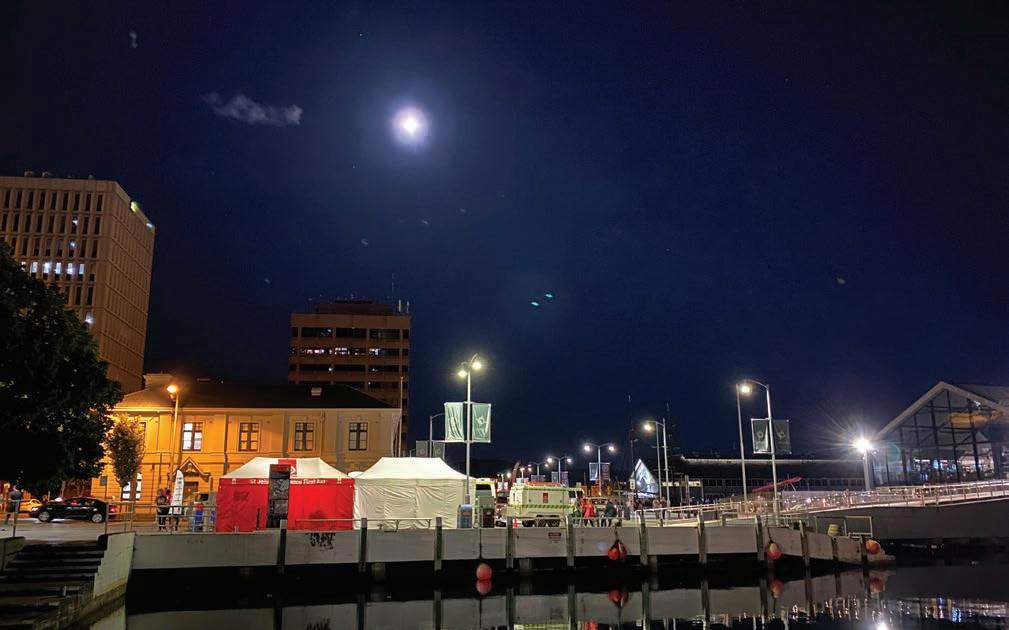
Retailers Safety and Security Group have provided opportunities for us to trial and evaluate community safety initiatives.
During the consultation period we were encouraged to continue to provide opportunities that bring together diverse groups to work together on various issues that impact community safety. Our community networks voiced to us issues relating to discrimination and prejudice, the anti-social behaviours in the CBD and the harm this does to the community. Our partners in the late night entertainment precincts encouraged us to continue to work with them in harm reduction programs, such as the Safer Nights Partnership, which helps people at risk to themselves or others through the use of alcohol and other drugs.
Our retail community continues to experience a range of challenges driven by complex social issues, encouraging the City of Hobart to continue to work with business owners, Tasmania Police, Crime Stoppers, Neighbourhood Watch and other stakeholders to respond to these issues. The establishment of the Safer Hobart Alliance further supports collaboration.
It was highlighted that when we work in partnership with others we achieve the best outcomes for our community, this includes partnering on initiatives that support the prevention of violence against women and children, elder abuse, alcohol and other drug awareness and crime prevention that provide outlets to promote awareness of support programs and initiatives available to the Hobart community.
Continue to contribute to the Late Night Partnership through funding the security presence in the Salamanca area and Salamanca Square toilets on Friday and Saturday nights.
Convene quarterly meetings of the Safer Hobart Alliance and implement resulting actions.
Hold quarterly meetings of the Hobart Youth Outreach and Diversionary Alliance and Late Night Partnership groups and provide quarterly updates through to the Safe Hobart Alliance.
Provide community groups and organisations the opportunity to promote community health and safety messages/ campaigns through the City of Hobart’s public toilet awareness frames.
Participate as an active member of the CCCLM Safe Cities Network; increase our knowledge and learn from other cities to apply a best practice approach to community safety.
Where required, develop programs relating to community safety and prevention in response to emerging issues, maximising use of the Hobart Respects All campaign.
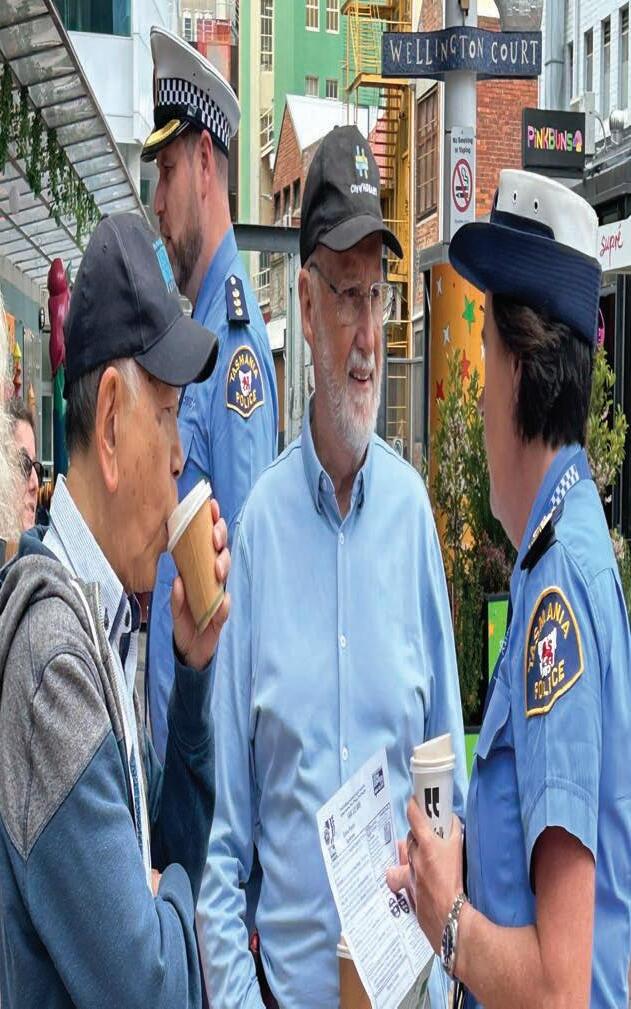
Recognise and promote specific initiatives that increase public awareness and knowledge such as Vaping Information Sessions, Cuppa with a Cop etc.
Partner, support and advocate for the delivery of youth outreach programs that engage disadvantaged youth in a positive way.
Security contract maintained and funded. ONGOING
Number of meetings held. Number of resulting actions delivered. QUARTERLY
Number of meetings held and updates provided. QUARTERLY
Number of opportunities to promote community health and safety messages. TWICE YEARLY
Participation in CCCLM network and opportunities to incorporate into safety program. QUARTERLY
Number of programs developed. ONGOING
Number of initiatives and sessions/programs delivered. ANNUALLY
Number of youth outreach activities delivered. ONGOING
Provide education to businesses on how youth intervention programs reduce antisocial behaviours and seek their potential investment in such initiatives.
Deliver, support or promote initiatives during Community Safety Month in September each year.
Raise awareness of elder abuse and safety concerns for older people including participating in the Walk Against Elder Abuse in June each year.
Collaborate with youth programs to support the provision of programming at Youth ARC to engage meaningfully with at risk young people with the goal of reducing antisocial behaviours and increasing wellbeing.
Promote the reporting and recording of prejudice related crime and graffiti in partnership with the Office of the Anti-Discrimination Commissioner and community organisations.
Develop an asset management plan relative to CCTV systems, ensuring new cameras are added where needed. Incorporating a phased lifecycle plan to ensure existing and new security installations are prioritised based on a collaborative risk assessment.
Consider providing specialised training in Crime Prevention Through Environmental Design (CPTED) for City of Hobart staff and note the safety benefits of upgraded streetscapes.
Continue to advocate for the establishment and recognition of Community Safety officers within the City of Hobart to ensure effective management and stewardship of public spaces.
Review the community safety and crime prevention pages of our website.
Develop community safety and crime prevention fact sheets to clearly articulate the City of Hobart’s role in this work.
Number of workshops and initiatives delivered on retail safety. ANNUALLY
Number of initiatives delivered and supported. ANNUALLY
Attendance and promotion of the event and other safety initiatives for older people. ANNUALLY
Opportunities provided to engage with at risk young people. ONGOING
Opportunities to promote and engage community to report graffiti. Support businesses in the removal of graffiti where possible. ONGOING
Plan developed. ONGOING
Number of streetscapes upgraded and CPTED training delivered. AS REQUIRED
Advocacy for positions undertaken. Officers engaged. ONGOING
Website reviewed and updated. ANNUALLY
Safety fact sheets developed and distributed to community. ONGOING
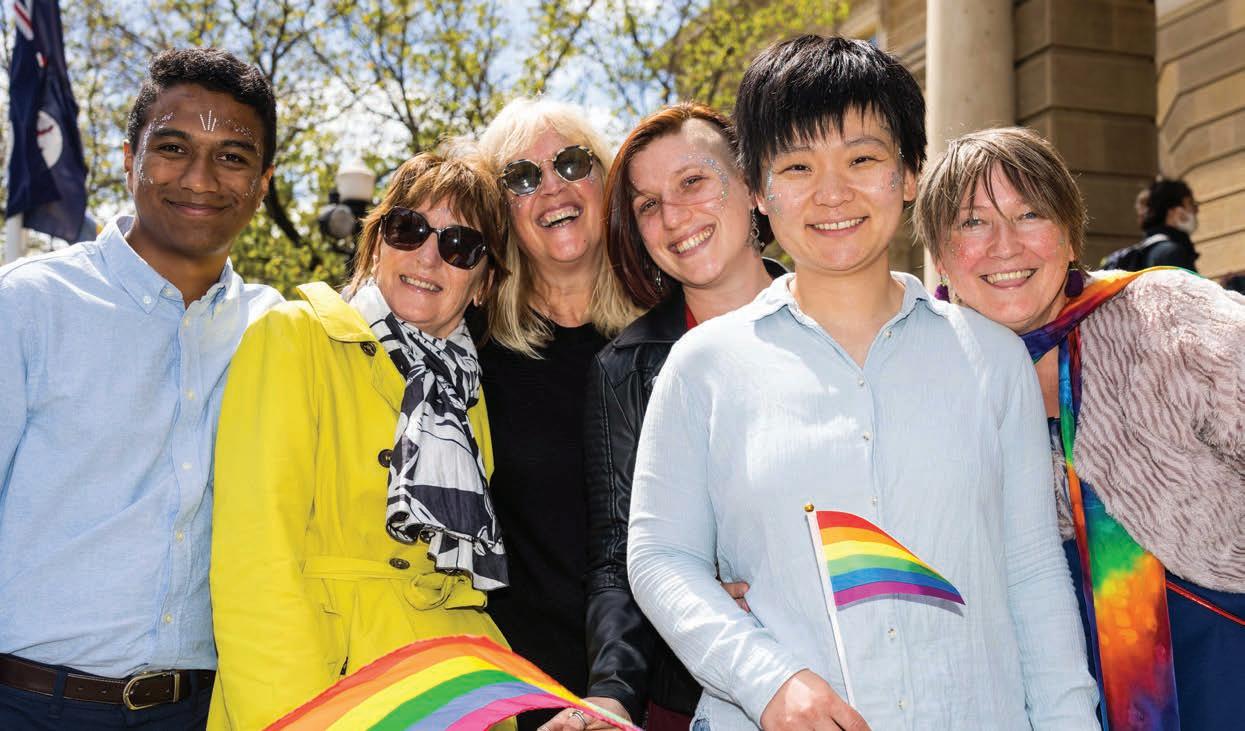
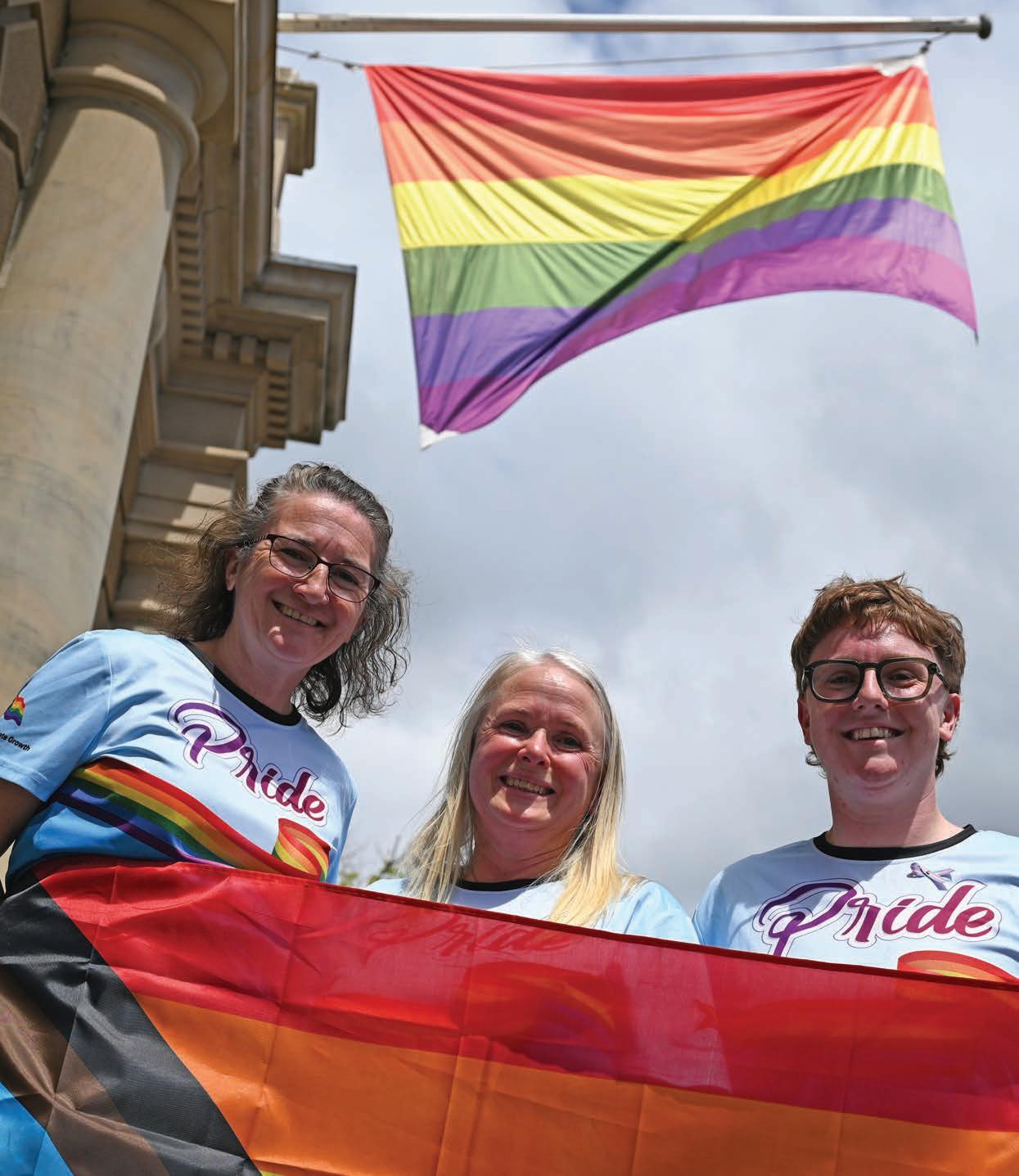
Everyone – without exception – deserves to be safe, supported and equal. Hobartians identifying as Lesbian, Gay, Bisexual, Transgender, Intersex, Queer or Asexual (LGBTIQA+) are valued members of our community. Recognising, celebrating and protecting our community’s gender and sexual diversity helps make the Greater Hobart area a better place to live for everyone.
While LGBTIQA+ communities take strength in shared pride, people identifying as LGBTIQA+ have their own unique experiences, practices and culture. As a result the City of Hobart’s understanding of, support for and celebration of our LGBTIQA+ communities has changed and will continue to evolve as our community changes and evolves.
In the past few years, involvement from the margins of rainbow communities in mainstream culture has increased. But while the visibility, presence and voices of LGBTIQA+ communities have increased, unfortunately in many instances this has resulted in increased experiences of discrimination.
It is important to recognise the diversity of LGBTIQA+ experiences. Being LGBTIQA+ is only one part of any person’s identity. As well as being diverse in their sexuality, gender identity or sexual characteristics, LGBTIQA+ people are diverse in other ways. This might include their Aboriginality, ethnicity, colour, nationality, refugee or asylum seeker background, migration or visa status, language, faith, ability, age, mental health, socioeconomic status, housing status or geographic location.
In delivering the LGBTIQA+ Action Plan, it is important that our actions recognise the vastly different experiences of people within LGBTIQA+ communities. The City of Hobart’s actions within this area must not only contribute to increasing the broader community’s understanding of LGBTIQA+ life, aspirations and needs, but must have a direct and real impact on the quality of people’s lived experience.
The emphasis on collaboration with other organisations and community members supports a comprehensive approach to implementing the City of Hobart LGBTIQA+ Action Plan, and the action and strategic plans of other organisations. By involving voices from marginalised segments like LGBTIQA+ people of colour, and trans and gender diverse individuals, we aim to enhance visibility and representation while addressing the discrimination these groups may face.
Moreover, the commitment to minimising discrimination and maximising opportunities underscores a proactive stance in creating a supportive environment for all LGBTIQA+ residents. This approach not only aims to improve the quality of life for LGBTIQA+ individuals, but to also contribute to a more inclusive and diverse community overall.
The LGBTIQA+ actions have been developed in consultation with representatives from the various LGBTIQA+ and allies’ networks, individual stakeholders and staff who all directly and indirectly associate with the LGBTIQA+ communities.
The City of Hobart will continue to strengthen existing partnerships and seek to build new collaborations with key government agencies and other community stakeholders toward the aspiration of everyone in our community feeling welcomed, respected, included and most importantly, safe.
The City of Hobart will continue to draw on the lived experience and skills of our reference groups to help guide program planning and delivery of projects. The input of lived experience and community groups is integral to our work, providing unique advice and perspective to support action delivery and strategic focus.
With this in mind the City of Hobart LGBTIQA+ Reference Group will focus on identifying, supporting and helping to deliver initiatives that focus on social inclusion, assist with community engagement as well as providing insights and recognising opportunities on issues such as:
• Discrimination and stigma.
• Resilience and pride.
• Empower ment and voice.
Consisting of a diverse range of community members with diverse life and professional experience, the LGBTIQA+ Reference Group will provide the City of Hobart with an ongoing consultative group that guides, questions and suggests ways of addressing issues for the queer communities.
The City of Hobart will deliver on these priorities through a variety of projects, initiatives and partnerships, as identified in the following actions. This work aligns with a range of strategies, commitments and plans across the organisation.
We are proud the City of Hobart celebrates the contributions that LGBTQIA+ individuals and communities make to the life of our city. The actions we have identified within this document aim to demonstrate how we will continue to support these communities to be proud, visible and responsive to challenges.
Monitor trends and maintain a broad understanding of the concerns of LGBTIQA+ people and their communities, proactively addressing issues
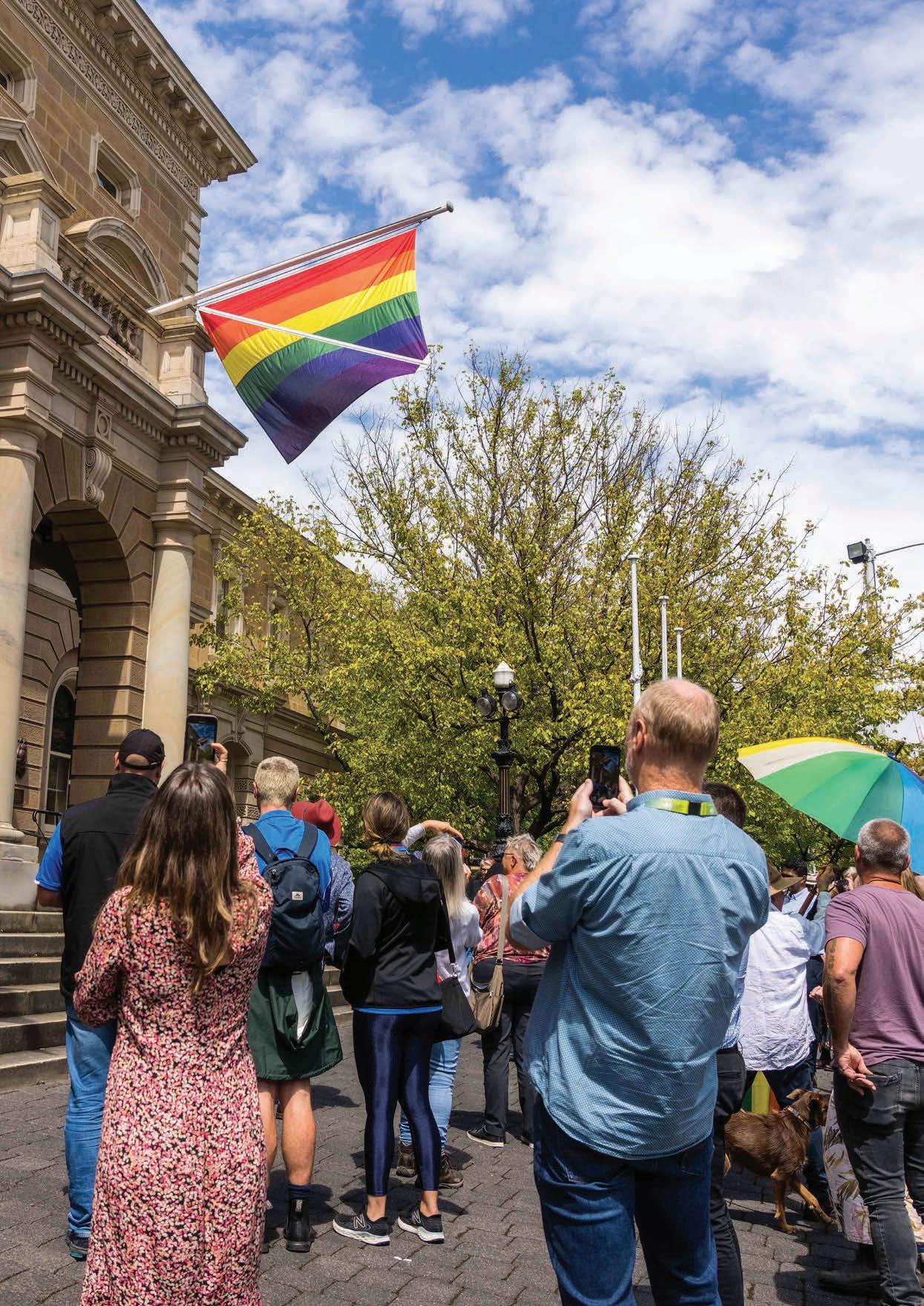
Celebrate and support the TasPride Festival each year through community promotion, delivering and supporting public events.
Foster and promote the Youth Arts and Recreation Centre (Youth ARC) as a proudly inclusive venue for young LGBTIQA+ people by creating opportunities to highlight their skills and talents.
Promote and provide opportunities for LGBTIQA+ artists to exhibit their creative practice, celebrate community pride and highlight concerns through public art.
Recognise and celebrate specific LGBTIQA+ local, national and international days in collaboration with communities and the sector and support and deliver events, forums, workshops, information sessions or other awareness raising projects.
Facilitate the City of Hobart LGBTIQA+ Reference Group to oversee the implementation of the LGBTIQA+ actions, support the delivery of projects and advise Council on the aspirations and concerns of LGBTIQA+ communities.
Coordinate City of Hobart participation of staff and elected members in the TasPride Parade and other LGBTIQA+ events and programs.
Include LGBTIQA+ communities in the Hobart Respects All initiative to celebrate achievement and diversity as well as raising awareness of harassment, discrimination and violence towards LGBTIQA+ community members.
Number and diversity of workshops, forums and events that increase social connection and communication.
Delivery of the TasPride launch at Town Hall. Elements of support provided to the festival.
Number of youth led opportunities provided.
Opportunities to exhibit and promote work by LGBTIQA+ artists and creative producers.
Opportunities to display relevant community flags outside council buildings.
Number and diversity of workshops, forums and events.
Number of meetings per year, number and diversity of LGBTIQA+ members and organisations involved.
Number of staff, elected members and volunteers attending the parade.
Number of opportunities to connect LGBTIQA+ Reference Group to HRH activities.
Number of opportunities to promote research on LGBTIQA+ harassment.
ONGOING
ONGOING
ONGOING
ONGOING
ONGOING
QUARTERLY
ANNUALLY
ANNUALLY
Explore opportunities to highlight and celebrate the history, diversity and lived experience of LGBTIQA+ community members.
Review and monitor consistent improvements to City of Hobart publications and online platforms, to promote inclusive and equitable gender diversity and pronoun recognition.
Work with LGBTIQA+ communities, Tasmania Police and Office of the Anti-Discrimination Commissioner to promote existing reporting mechanisms and identify and address barriers to the reporting of hate crimes experienced by LGBTIQA+ people.
Ensure Mathers House and the Still Gardening program actively encourage and offer participation opportunities for LGBTIQA+ community members and volunteers aged 50+.
Working with the local sector, provide inclusion and equity training for City of Hobart employees and elected members that highlights the lived experience of trans and gender diverse community.
Identify and address barriers to LGBTIQA+ people participating fully in community life and the use of public spaces and City of Hobart venues, with the aim of reducing social isolation.
Coordinate the City of Hobart LGBTIQA+ and allies employee network to enhance workplace inclusion to strengthen the City of Hobart as an employer of choice.
Acknowledge and support LGBTIQA+ Domestic Violence Awareness Day, identifying opportunities to promote awareness of, and advocate support for, LGBTIQA+ people experiencing intimate partner violence.
Number of opportunities to connect LGBTIQA+ history groups, including in collaboration with State Government. LGBTIQA+ history included in broader history projects.
Monitor and report on improvements to City of Hobart forms and communications.
Number and diversity of workshops, forums, events, and publications promoting reporting mechanisms.
ONGOING
ONGOING
ONGOING
Number of promotions undertaken offering opportunities to connect HOPRG and LGBTIQA+ groups with other older persons reference groups and/or networks. ANNUALLY
Number of staff and elected members that participated in training.
Number of City of Hobart venues reviewed and barriers removed.
Numbers of meetings, number and diversity of membership and opportunities to improve workplace culture.
Opportunities to promote awareness and increase community understanding internally and externally.
ONGOING
ONGOING
ONGOING
ONGOING
The City of Hobart is committed to providing young people from a diverse range of backgrounds and experiences with opportunities to thrive, participate, develop, connect and reach their aspirations.
Adolescence and the transition to adulthood can be a challenging time for young people, their families and their community. This plan celebrates the role young people play in a healthy and thriving community and keeps future generations at the heart of our thinking.
Safe, Social Spaces - Young people regularly remind us of the importance of having safe and engaging spaces in the city to hang out and relax with friends, and to make social connections with young people outside their existing social groups and networks. These spaces need to continue to offer access to empowering activities, food and accessible, supportive mentors. Young people also identify the need for more known and accessible recreational, arts and cultural activities in Hobart.
Employment, Education and Work Experience - Work is an important way for young people to achieve a number of important milestones, including financial and emotional independence. Many young people are seeking alternative educational opportunities, such as apprenticeships and traineeships, with the hope of becoming job-ready and able to transition into adulthood and independence. Young people are also seeking relevant volunteering experiences to develop employment skills and real world exposure to workplaces.
Support for Diverse Young PeopleHobart is a diverse city with young people hyper-aware of diversity, the variety of ways of being and expressing oneself and how diversity leads to differing support needs.
Young people who are new to Hobart need opportunities and support to increase their networks and make connections with other young people. Our Youth Arts and Recreation Centre (Youth ARC) provides opportunities to engage in the community in a safe, meaningful way, and to have their identity respected and celebrated. The need to have separate activities within the youth age group was identified as they are not a homogenous group and they see great differences in need and support requirements between those aged 12-14, 15-18 and those over 18.
Voice and Participation - Young people and the sector emphasised the importance of ongoing, meaningful engagement at all levels of decision making processes. Young people are incredible advocates, with innovative ways of seeing the world. To maintain strong engagement, they need to see their words being reflected back to them in action. Young people want to be involved in identifying key challenges and opportunities for positive action and change.
Advocacy on Key Issues - The key challenges for young people today were identified as: mental health, public transport, sustainability, employment and education. There is a rise in young people facing mental illness and concern about the lack of appropriate services to support them. Although these challenges extend outside the City of Hobart’s scope of influence, it was noted they are key areas for advocating for more reliable and accessible services.
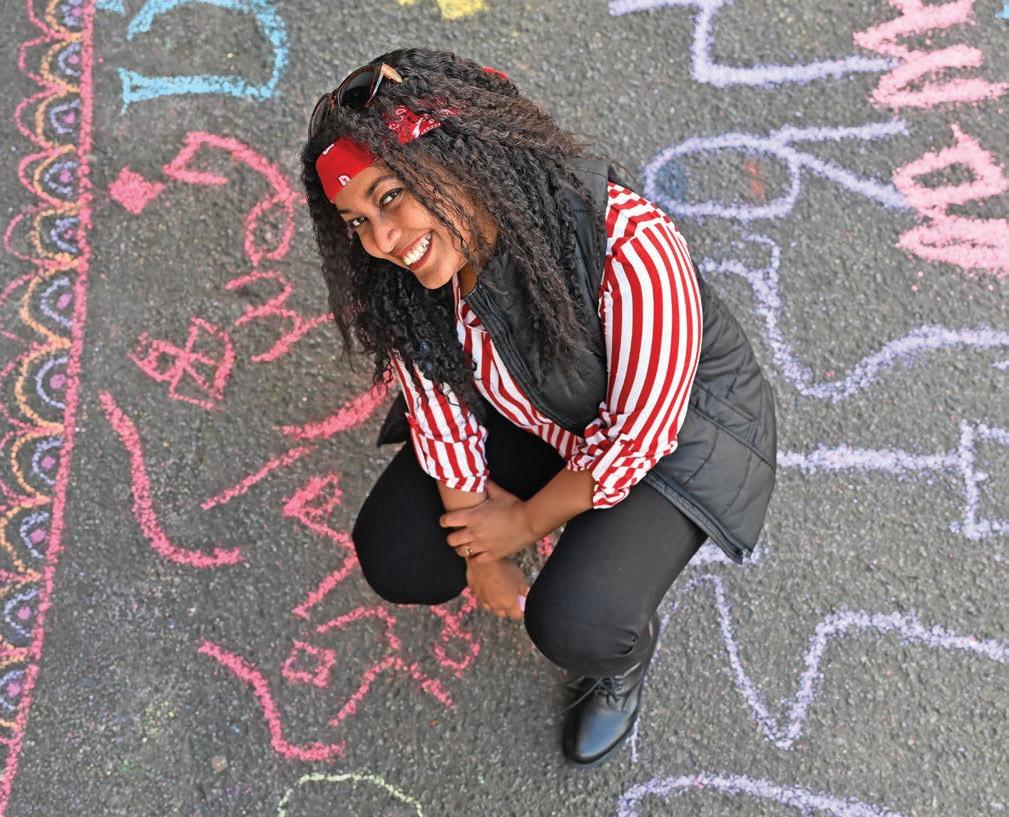
The youth program actions have been developed in response to aspirations of young people, our community and targeted consultation and research. This resulted in the development of detailed actions that help us build an equitable and inclusive community.
Youth Advisory Squad (YAS) is a diverse group of young people who meet regularly to provide input into the delivery of the action plan and highlight key trends and concerns for young people more broadly. The squad was highly involved in the development of the Action Plan and will provide oversight of reporting and review.
Youth Action Priorities (YAP) Network is comprised of a number of southern youth sector representatives. The network provides advice and guidance to the City of Hobart on a range of issues relating to young people, giving direct input into the delivery and review of the Youth Commitment and supporting employees to track progress. Customer feedback and project specific consultation is drawn upon by youth program employees to understand the experiences and needs of Youth ARC users and young people in public space. Employees also ensure regular communication with key stakeholders to review progress and hear feedback.
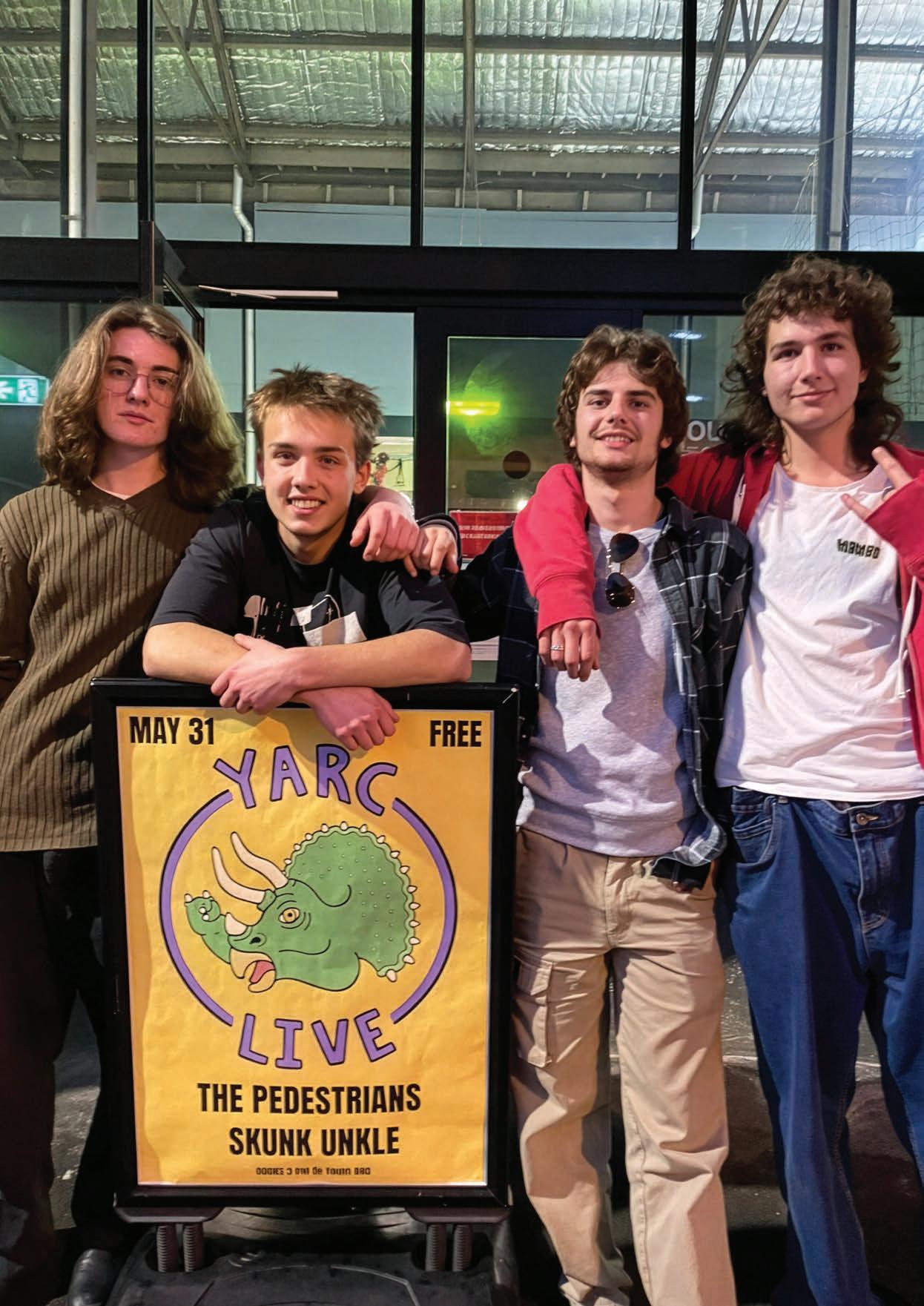
Continue to improve and maintain the Youth Arts and Recreation Centre (YouthARC) as a safe, social and vibrant place for young people through the Open Access Program.
Support creative and community programs by enabling the hire of facilities at the Youth ARC to business, community organisations and individuals.
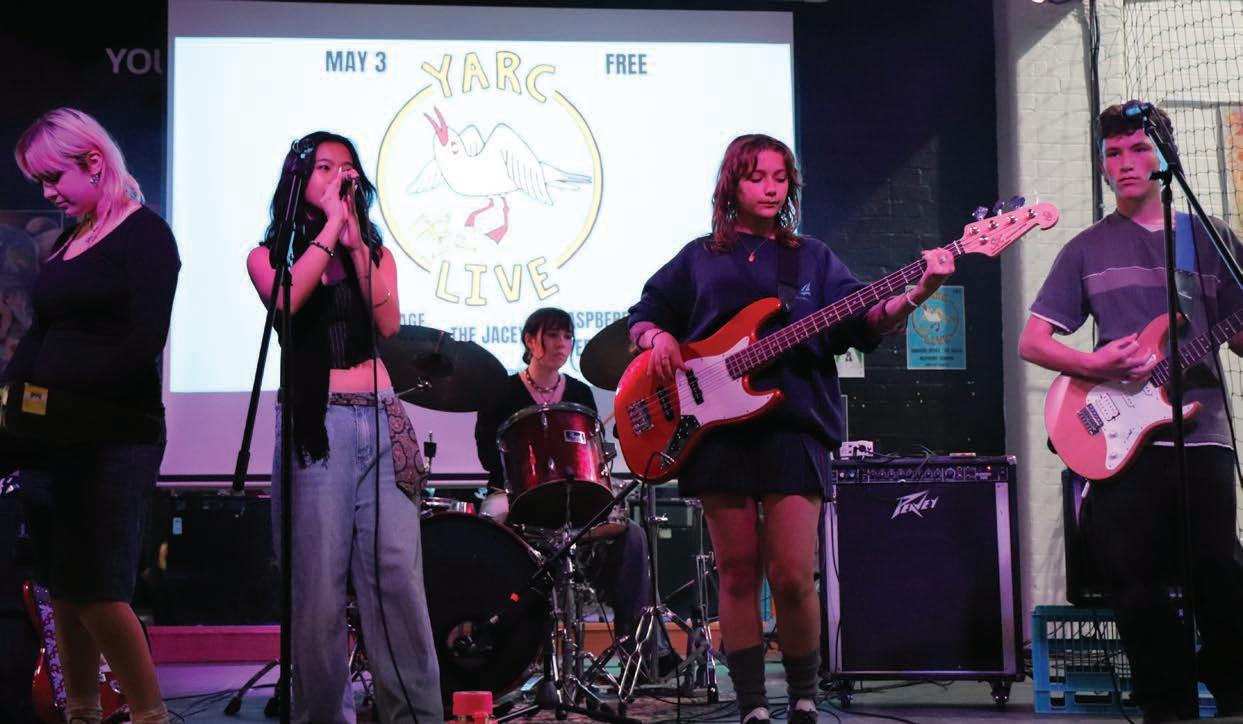
Provide opportunities for young people to get involved in events and activities that develop and showcase their skills and talents – opportunities such as Platform youth culture magazine, podcast series, art exhibitions, music performances (YARC Live) and events.
Engage regularly with young people in public spaces and through local services to understand their needs and aspirations and support their positive engagement in the life of the city.
Proactively outreach with schools to showcase YouthARC and invite youth to engage with and participate in Open Access and programs.
Facilitate networking opportunities for the southern youth sector to connect, share issues, ideas and collaborate on activities. Support the youth sector and youth workers to advocate for and take action on issues relating to young people in Hobart.
Maintain a broad understanding of the needs and issues for families, children and young people in Hobart. Ensure these needs are taken into account when developing strategies to enhance Hobart as an inclusive and equitable city for young people.
Number of youth participants with demographics. ONGOING
Number of external hires.ONGOING
Number and diversity of events, projects and forums showcasing skills and talents. ONGOING
Number and diversity of young people engaged. ONGOING
Number of schools connected with. ONGOING
Number of Youth Action Priorities (YAP) meetings. QUARTERLY
Documentation of needs and issues for families, children and young people in Hobart.
ONGOING
Provide leadership and development opportunities for young people through the Youth Advisory Squad and support collaboration with other regional youth reference groups.
Develop and deliver a variety of skill development programs and projects to encourage young people to test, try and learn creative, cultural, employability and life skills.
Build partnerships with young Palawa community members to create a culturally safe Youth ARC for Aboriginal young people and provide opportunities for non aboriginal young people to learn more about Aboriginal culture.
Advocate for the needs and aspirations of children and young people at other levels of government and the community service sector. Include advocacy on key issues such as transport, mental health, sustainability and education.
Design and trial tailored programs and partnerships to increase participation of and support for the diversity of young people, including new Australians, young people with disabilities and LGBTIQA+ young people to reduce the impacts of isolation, discrimination and harassment.
Deliver recreational programs outside that nurture young people’s connection with the natural environment, sky, land and waterways.
Deliver free and low cost events and participation opportunities outside of YouthARC including twilight events.
Number, ages and diversity of Youth Advisory Squad participants. Opportunities to engage with other regional youth reference groups.
ONGOING
Number and diversity of skill development programs offered. ONGOING
Number of partnerships created. Number of non aboriginal young people provided opportunities to learn more about Aboriginal culture.
ONGOING
Documentation of advocacy at other levels of government. ONGOING
Number of programs and partnerships developed with young new Australians, young people with disabilities and LGBTIQA+ young people.
ONGOING
Number and diversity of outside recreational programs. ANNUALLY
Number and diversity of external events and activations delivered. ANNUALLY
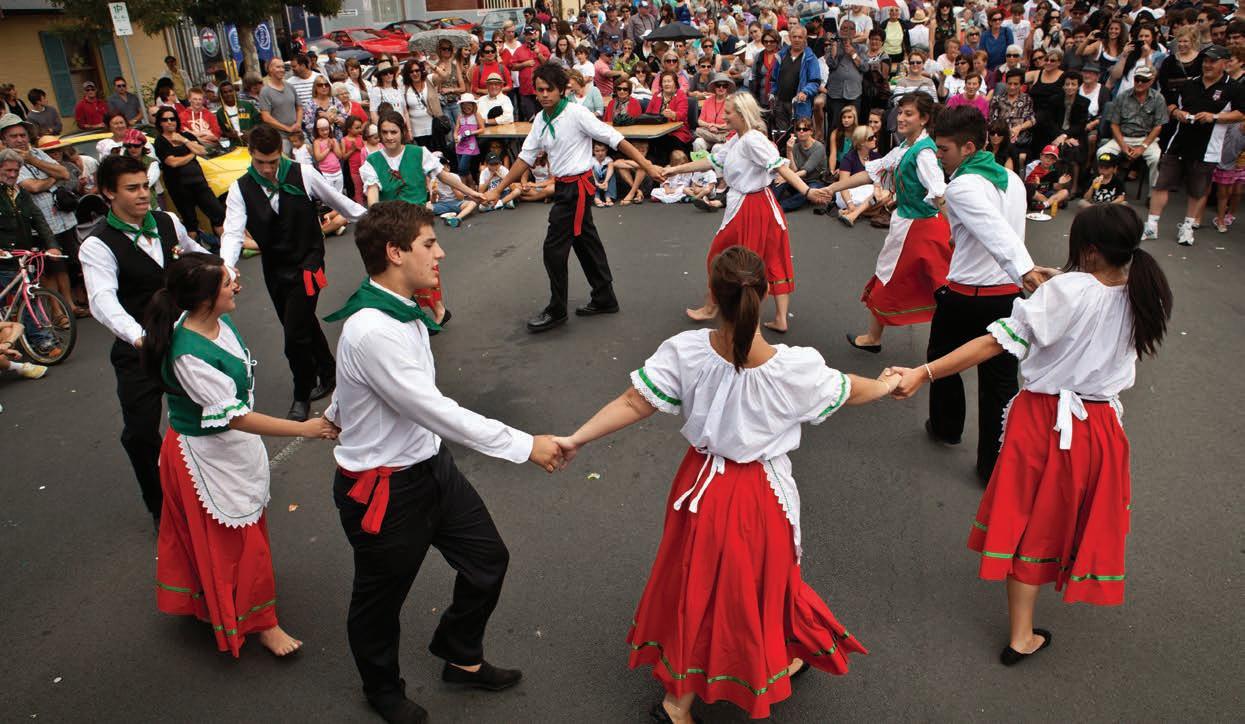
Hobart has a rich, diverse history stretching back more than 40 000 years. Tasmanian Aboriginal People were the first to care for this place, Nipaluna. Today, more than onequarter of people in Hobart were born overseas, almost half of us have at least one parent born overseas and one in six of us speak a language other than English at home.
The cultural diversity of Hobart has changed significantly in recent times, particularly through migration, humanitarian settlement and international education. These changes bring opportunity, growth, insight and vibrancy to our city. This requires us to adapt and respond to ensure no one is left behind. The City of Hobart continually strives to improve the wider community’s awareness and understanding of the educational, social, economic and cultural benefits of cultural diversity and to mitigate the effects of racism and cultural isolation for multicultural communities in Hobart.
The following themes were identified as needing attention to allow greater inclusion and equity for multicultural community members and groups living in, studying in, working in or visiting the City of Hobart. Many people from a culturally and/or linguistically diverse background have shared their love for the city, the helpfulness they have experienced from others and the sense of welcome they feel. Despite the many positives, there remain a number of challenges that multicultural communities in Hobart face.
Social Cohesion and Inclusion – Challenges to social cohesion include social isolation, perceived cultural differences and a lack of broader community appreciation and understanding of people from diverse backgrounds. These challenges can be overcome through culturally safe, responsive and accessible events that allow different groups to come together.
Accessibility to Information – There was repeated feedback that information targeting multicultural community members is not always accessible and those who need the information most often do not receive it. Barriers to access include lack of English proficiency, low general literacy in any language and low digital literacy.
Empowerment - Community members look to the City of Hobart to support multicultural people and groups to take charge of their own development in accordance with a vision they set for themselves. Key factors seen to support this include the provision of opportunities to participate – be it through employment, work experience, access to grant funding, volunteering, or social interaction.
It was seen as critical to provide tailored support for participation such as: transport assistance; friendly reminders; personalised grant information; and having activity organisers from target communities.
Additionally, community members identified the need for more physical and social spaces for multicultural people to interact with their own communities and other cultural groups. Participants wanted to see decentralised spaces to maximise participation and collaboration in the planning of activities between Greater Hobart councils.
Racism and Discrimination – Racism and discrimination continue to negatively impact multicultural communities in various ways and to various degrees. Racism and discrimination can be tackled through facilitating courageous conversations –raising awareness about direct and indirect forms of racism in the community and their impacts; developing organisational policies to prevent the more subtle and structural forms of racism; and educating community about their rights with regards to antidiscrimination law. Community members
also highlighted the need for authorities to be educated about the prevalence and impacts of racism and how to appropriately and compassionately engage with victims of racism.
This group has a long history of supporting the City of Hobart’s work in multicultural inclusion, having provided advice and perspective and partnering actively on projects for decades. The Networking for Harmony Multicultural Advisory Group comprises representatives from: Australian, Tasmanian and local government; multicultural and humanitarian sectors; various cultural groups and associations; City of Hobart International Student Ambassadors and any individual interested in working to promote harmony across cultural groups.

Facilitate the Networking for Harmony Multicultural Advisory Group, and working groups, for information sharing, networking, feedback to the City of Hobart and safe community conversations.
Deliver annually the City’s International Student Ambassador Program to provide participation, leadership and access opportunities for international students.
Deliver citizenship ceremonies for members of the Hobart community, including inviting International Student Ambassadors to take part in the event and sharing information and resources.
Partner and directly deliver community and cross-cultural events that celebrate diversity and provide an opportunity for community groups to connect and share.
Continue to develop and enhance content available on the City’s website for multicultural programs and promote culturally significant dates to raise awareness and knowledge.
Monitor trends and foster local networks to maintain a broad understanding of the needs of multicultural communities in Hobart, responding to issues as they arise, advocating for needs and working to build a more inclusive city.
Collect and analyse demographic data to determine the cultural, religious and linguistic composition of the local community.
Continue to provide support to increase diverse representation in publications and communications produced by the City including considering the inclusion of QR codes on signage to support language translation.
Number of meetings per year, number and diversity of Networking for Harmony members. ONGOING
Number of Student Ambassadors and projects undertaken. ONGOING
Number of ceremonies held.
Number of new citizens conferred. ONGOING
Number and diversity of events that celebrate diversity. ONGOING
Number and diversity of events and significant dates promoted. ONGOING
Documentation of needs of multicultural communities and number of local contacts. ONGOING
Documentation of demographic data. ONGOING
Opportunities to increase diverse representation within our publications, communications and signage. ONGOING
Advocate for and support community messaging about racism. Continue to promote Hobart Respects All and antiracism campaigns such as WeSTAR.
In partnership with the Office of the AntiDiscrimination Commissioner, continue to deliver tailored information sessions about anti-discrimination law and the importance of reporting racism, for Hobart’s cultural groups.
Encourage continuous improvement across the organisation, using the Social Inclusion Policy to reduce the risk of discrimination within our scope of influence.
Continue to participate in the Welcoming Cities network and progress against the National Standard, including applying for accreditation as an established level Welcoming City.
Actively participate in the We Stand Against Racism multi-council anti-racism campaign and activities.
Facilitate working groups that are formed through the Networking for Harmony Multicultural Advisory Group.
Deliver an event/project in conjunction with Networking for Harmony to acknowledge International Day for the Elimination of Racial Discrimination.
Opportunities to advocate and support anti-racism projects and Hobart Respects All.
Number of tailored information sessions delivered in partnership with Office of the Anti-Discrimination Commissioner.
Monitoring and documentation of continuous improvement in addressing discrimination issues internally.
Number of network activities participated in. Application for Establishment Level submitted. ONGOING
Number of meetings and events attended and supported ONGOING
Number of working groups formed and meetings held. ONGOING
Number of people attending event/ program. ANNUALLY

The actions identified for this area follow on from the work undertaken by the City of Hobart through the implementation of the Housing and Homelessness Strategy 20162019 and the Affordable Housing and Homelessness Commitment 2021-2023.
The affordable housing actions contained within previous documents have been included in the Hobart Housing Action Plan.
With that in mind, the feedback received when developing our homelessness actions was overwhelmingly that we should continue to build on the success of our previous work. The City of Hobart will continue to play a significant role in identifying and responding to relevant issues in close collaboration with the specialist homelessness sector and people with a lived experience of homelessness and housing stress.
The engagement process identified ongoing and emerging issues within these areas and resulted in short and long-term actions for us to deliver, with consideration given to our roles and resources. Opportunities for collaboration with other sectors, government agencies and peak bodies were seen as a high priority, as were actions that had a direct impact on the wellbeing and accommodation options for people experiencing homelessness
Key issues identified by the sector and community include:
• The City of Hobart focusing resources on promoting and supporting specialist homelessness organisations and services to address the increase in all levels of homelessness within Hobart.
• The City coordinating and increasing resourcing to maximise the impact of identified actions on homelessness and housing stress within Hobart.
• The City working with peak bodies and the specialist homelessness sector to increase communication and collaboration, maximise shared resources to deliver identified actions.
• The City raising the community’s awareness of the complexity of issues impacting on people experiencing homelessness and increasing support for the full range of programs to address these.
The homelessness sector and people with a lived experience of homelessness acknowledge that the City of Hobart is not involved in the delivery of services to directly address homelessness. It does play a vital role, however, in connecting with other cities locally and interstate, sharing information and resources, advocating for positive change at all levels of government, networking and connecting the local sector as well as supporting grassroots groups to meet their goals in addressing homelessness.
The City’s biggest resource in this area is our people, with the impacts of homelessness on our community being addressed by different areas of the organisation in many ways. This impact involves staff working in compliance, community programs, cleansing, open space management and communications. To this end one of the key focus areas for the organisation in the delivery of all of the actions identified within this area will be internal coordination and more thorough and systematic documentation of relevant issues and responses.
The City of Hobart continues to build on existing partnerships while creating new strategic partnerships to enable cohesive, collaborative responses to local challenges. We are committed to being transparent and accountable in the delivery of the homelessness actions. We look to our community to guide us and provide feedback to strengthen our approach and delivery over time.
The actions within this program area have the potential to include a number of marginalised communities, and many will have relevance to a number of our other community reference groups. This may include the Access Advisory Committee, the Hobart Older Person’s Reference Group, the Youth Advisory Squad, LQBTIQA+ Reference Group and the Networking for Harmony Multicultural Reference Group.
With the above in mind, the governance and review of the action plan will directly involve the following specific reference groups:
The Greater Hobart Homelessness Alliance is chaired by an elected member of the Hobart City Council, the Greater Hobart Homelessness Alliance (GHHA) provides a forum for collaboration, information sharing and partnership between Greater Hobart housing and homelessness sector stakeholders. While the alliance is focused on improving policy, practice and service delivery to achieve better long-term outcomes for people who are homeless or at risk of homelessness, it also has a role in ensuring any local work the City of Hobart is involved in supports and value adds to work being undertaken at a regional level.
The Housing with Dignity reference group is made up of people with a lived experience of housing stress and/or homelessness that are passionate about making a change. Members meet bimonthly to discuss homelessness issues in and around Hobart. The group includes City of Hobart employees and Hobart City Council elected members. Members are also involved in assisting staff with the delivery of projects that help raise community awareness and that have a practical outcome for people experiencing homelessness.

Coordinate the Housing With Dignity Reference Group (HWDRG) to provide lived expertise to the Council on policy and strategy and helps identify and progress initiatives that address homelessness issues within Hobart.
Deliver and support projects, workshops, exhibitions, forums or events, such as I Am Somebody and Songs from the Street, within Homelessness Week or Anti-Poverty Week.
Provide free venue use at Mathers House and Criterion House to community-initiated services, such as: Food Not Bombs; Dining with Friends; Pets in the Park; Circle of Love and Care; and Mutual Aid Kitchen, which support community members in need.
Provide resources or training to support City of Hobart staff interacting or working with people experiencing all forms of homelessness or housing stress.
Advocate for funding to continue the delivery of the Health with Dignity project, in partnership with The Salvation Army and local general practice, to provide free medical appointments to people in extreme need.
Provide information to individuals in need, the broader community and the sector about local homelessness, health and social support services within Hobart through the provision of the Hobart Helps Card.
Maintain a dedicated homeless initiative budget to support ‘on the ground’ homelessness initiatives and projects such as emergency back packs, recharge stations, or lockers etc.
Participate in Specialist Homelessness Services Southern Forum to collect and compare data, network, share information and develop initiatives that address homelessness within southern Tasmania.
Number of meetings per year, number and diversity of HWDRG members.
Number and diversity workshops, programs and events delivered and supported as part of Homelessness Week.
BI-MONTLY
Number of grassroots organisations supported. ONGOING
Number of our staff participating in training or provided with resources. ONGOING
Advocacy undertaken. ONGOING
Number of cards distributed; diversity of service provider information included in the card.
Number and diversity of initiatives supported.
ONGOING
ANNUALLY
Participation in relevant networks. ONGOING
Provide and promote appropriate public infrastructure that supports all community members, particularly those in need, such as showers, water bubblers/refill stations, power points and Wi-Fi hot spots, and identify opportunities for inclusion of additional facilities in any new City of Hobart development.
Actively participate on the Council of Capital City Lord Mayors (CCCLM) Housing and Homelessness Working Group to raise awareness and address homelessness issues identified across other capital cities.
Promote and support community services, programs and venues managed and delivered by the community sector that support individuals experiencing homelessness, such as Street to Home and Safe Space.
Engage with Southern Tasmanian councils, the Tasmanian Government and sector representatives through the Greater Hobart Homelessness Alliance (GHHA) to share resources, coordinate responses and address homelessness issues across Greater Hobart.
Increase community awareness of actions that can assist with lowering the cost of accommodation such as measures to reduce energy consumption and/or increase energy efficiency.
Work with local and national educational and research institutions and organisations to participate in and promote research and awareness raising that has a positive impact on the delivery of local services, increasing the community’s understanding of homelessness.
Establish an internal City of Hobart Homelessness Working Group to ensure effective and supportive management of homelessness issues within the organisation.
Develop a homelessness protocol document to guide our response to people without a home sleeping rough in public spaces.
Number of facilities provided. ONGOING
Participation in number of meetings per year.
Opportunities to promote and support identified Homelessness services.
Number of meetings per year, number and diversity of GHHA members.
Opportunities to increase community awareness and ability to act.
Opportunities to participate in and support research.
Establishment of working group and number of cross divisional meetings.
Development and implementation of homelessness protocol.
QUARTERLY
ONGOING
QUARTERLY
ONGOING
ONGOING