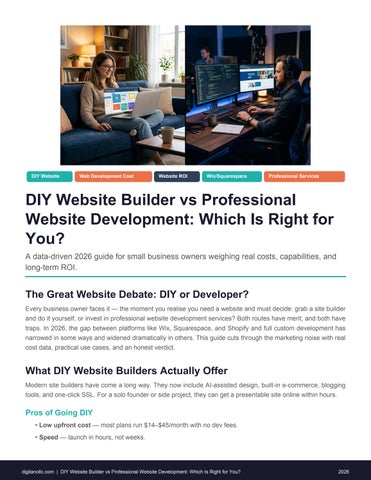
DIY Website Builder vs Professional Website Development: Which
Is Right for You?
A data-driven 2026 guide for small business owners weighing real costs, capabilities, and long-term ROI.
The Great Website Debate: DIY or Developer?
Every business owner faces it — the moment you realise you need a website and must decide: grab a site builder and do it yourself, or invest in professional website development services? Both routes have merit, and both have traps. In 2026, the gap between platforms like Wix, Squarespace, and Shopify and full custom development has narrowed in some ways and widened dramatically in others. This guide cuts through the marketing noise with real cost data, practical use cases, and an honest verdict.
What DIY Website Builders Actually Offer
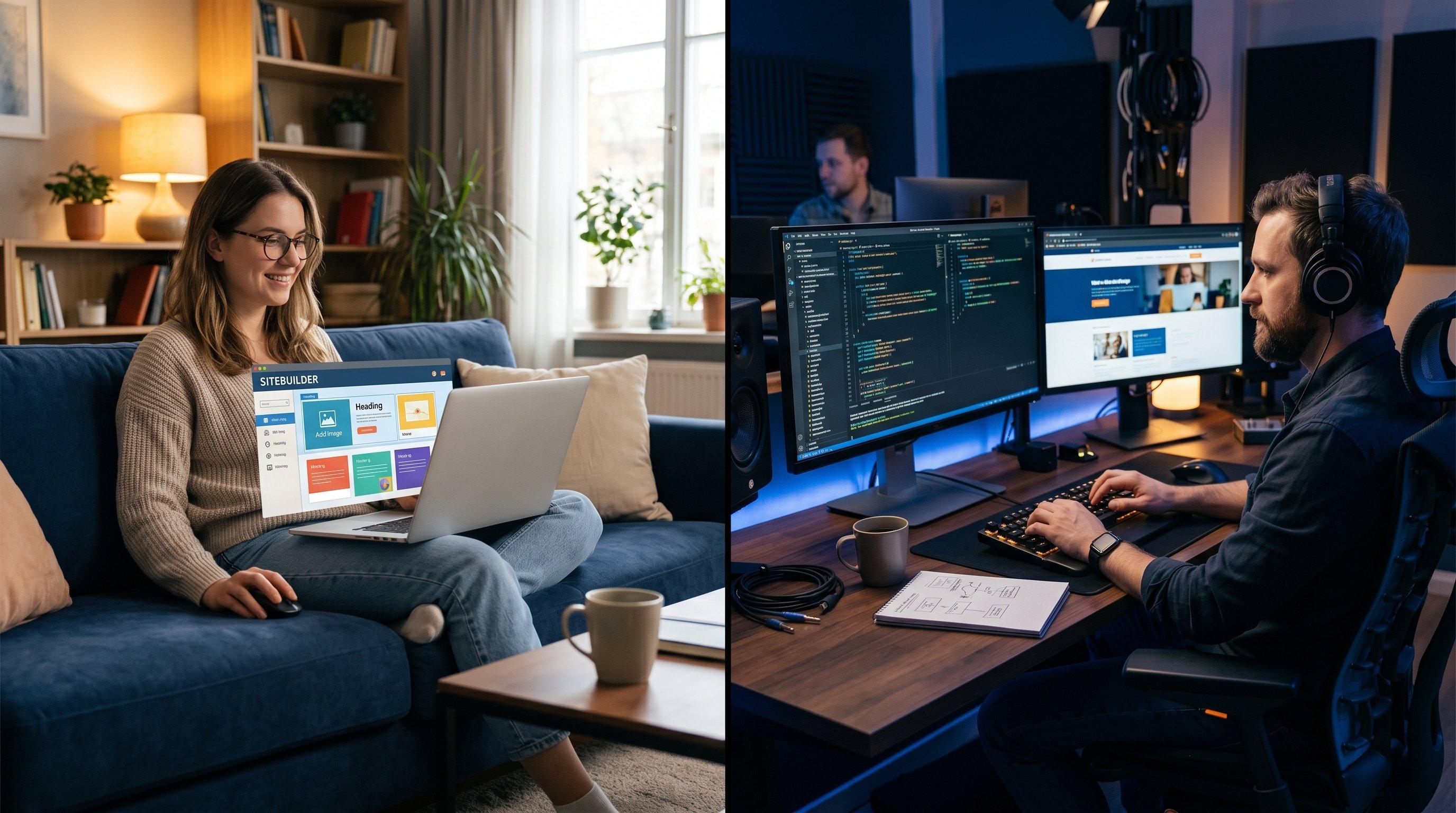
Modern site builders have come a long way. They now include AI-assisted design, built-in e-commerce, blogging tools, and one-click SSL. For a solo founder or side project, they can get a presentable site online within hours.
Pros of Going DIY
• Low upfront cost — most plans run $14–$45/month with no dev fees.
• Speed — launch in hours, not weeks.
• No technical knowledge required — drag-and-drop editors handle layout.
• Bundled hosting and security — no server management needed.
• Built-in templates — hundreds of industry-specific starting points.
Hidden Limitations of DIY Platforms
• Template lock-in — switching templates often means rebuilding from scratch.
• SEO ceiling — limited control over page speed, schema markup, and crawl structure.
• Branding constraints — your site looks like thousands of others.
• Vendor dependency — pricing, features, and even platform survival are out of your control.
• Cumulative cost creep — add-ons for email marketing, booking tools, and e-commerce stack up fast.
• No true custom functionality — anything beyond pre-built widgets requires costly workarounds.
What Professional Website Development Services Deliver
Hiring a professional web development agency or freelance team means getting a site built specifically for your business goals — not constrained by a platform's template library or plugin ecosystem.
Custom Design and Brand Identity
A professionally designed website reflects your brand at every pixel. Typography, colour palette, spacing, micro-interactions, and content hierarchy are crafted from your brand guidelines — not borrowed from a theme used by 50,000 other businesses. This matters enormously for trust, first impressions, and conversion rates.
Technical SEO from Day One
Professional developers implement Core Web Vitals optimisation, proper semantic HTML, structured data (schema.org), canonical URLs, XML sitemaps, and crawl-budget management before your site ever goes live. DIY platforms often bolt SEO on as an afterthought — and the technical debt shows in rankings.
Scalability and Security
A custom-built site on a managed or cloud infrastructure scales with your traffic — whether you're handling 50 visitors a day or 50,000. Professional setups include regular security audits, managed updates, staging environments, and backup protocols that no monthly SaaS plan truly replicates.
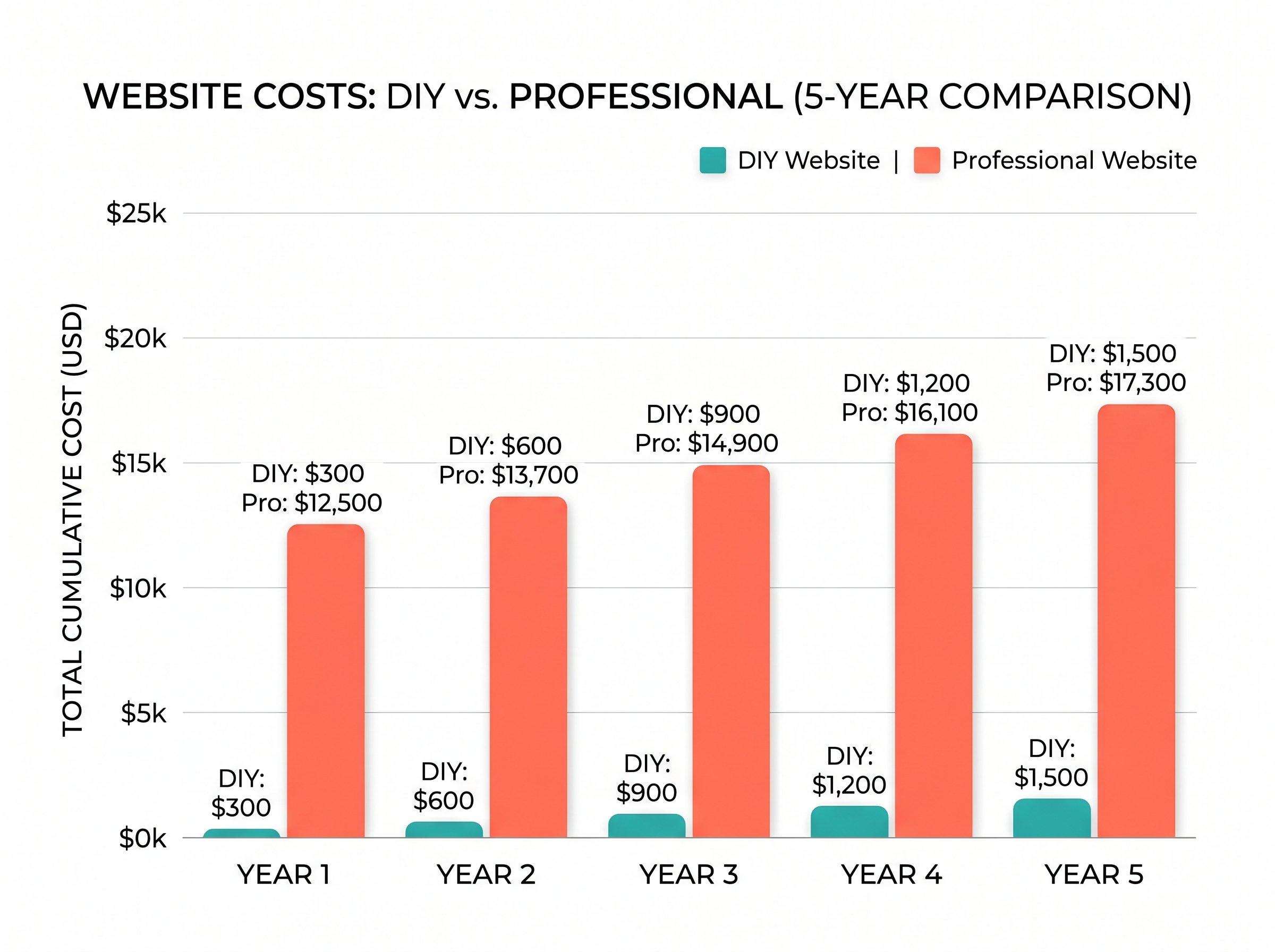
Real Cost Comparison: Year 1, Year 3, Year 5
The chart above makes the financial picture clear. A DIY site typically costs around $300 in Year 1, rising to just $1,500 by Year 5. A professionally built site averages $12,500 in Year 1 (including design, development, and initial SEO setup), reaching $17,300 cumulatively by Year 5 when ongoing maintenance and enhancement retainers are included.
The real ROI question isn't just spend — it's revenue generated per dollar invested. A professionally built site that converts even 0.5% better at scale can recover its cost in months.
When DIY Makes Sense (and When It Doesn't)
DIY is a reasonable choice when:
✓ You're a solopreneur or early-stage startup testing a concept.
✓ Your website is primarily a brochure with low traffic goals.
✓ Budget is genuinely tight and growth is uncertain.
✓ You have time to manage the platform, content, and plugins yourself.
Invest in professional website development services when:
✓ Your website is a primary sales or lead generation channel.
✓ You operate in a competitive industry where first impressions close deals.
✓ You need custom integrations (CRM, booking, payments, APIs).
✓ You've outgrown a DIY platform and need to migrate.
✓ Technical SEO, site speed, and Core Web Vitals are business priorities.
Not sure which path is right for your business?
Frequently Asked Questions
Is it worth paying for professional website development services?
For businesses that depend on their website for leads or sales, professional development delivers better ROI through higher performance, stronger SEO, and custom functionality that DIY platforms simply cannot replicate. If your site directly influences revenue, the investment pays for itself.
Can I start with a DIY site and upgrade later?
Yes — many businesses start with Wix or Squarespace and migrate to a professionally built site as they grow. However, migration carries SEO risks (URL structure changes, lost backlinks, indexing delays), so plan the transition carefully with a developer who understands SEO migration protocol.
How long does professional website development take?
A basic custom site typically takes 4–8 weeks from kick-off to launch, including discovery, design, development, and QA. Complex builds with custom functionality or e-commerce integrations can take 3–6 months.
What's the real SEO difference between DIY and professional sites?
Professional sites give developers full control over page speed, server configuration, schema markup, JavaScript rendering, and crawl architecture — all factors that search engines weigh heavily. DIY platforms abstract these away, often limiting what's achievable.