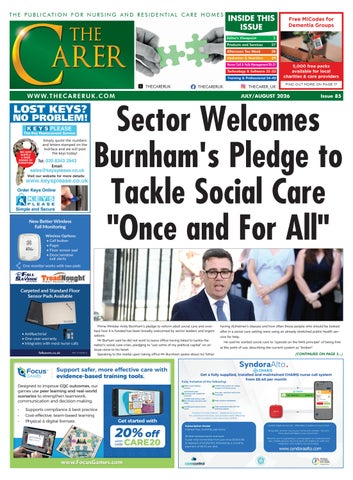
Our new Prime Minister has made a good first impression. His pledge to reform social care — and to find a sustainable way of paying for it — is a bold one, and it has been broadly welcomed across the sector
Mr Burnham is right in what he says. Reform of social care, and of how we pay for it, has been ducked by government after government for a generation, while the human cost has simply been left to accumulate.
As he put it himself, too many older people have lost their homes and their savings paying for care they should have been entitled to as a matter of course.
It is to Mr Burnham's credit that he said so plainly, rather than reaching for the usual language of "challenges" and "pressures" that ministers tend to hide behind : "I think the country needs to step back here and say, 'How have we let a situation kind of just roll on, where we know it's a major issue, and yet no one's got the courage to fix it?' I just think that's quite damning ... of my generation of politicians."
That is an unusually honest thing for a sitting Prime Minister to say about his own political class, and it deserves to be taken at face value.
But here is where I think the real work will happen — and it will not happen in Downing Street. To my mind, it will be Baroness Casey's commission which ultimately defines how social care is funded in this country, not any single Prime Minister, however well-intentioned.
Politicians are not magicians. Electing them and expecting them to resolve an issue as complex and as personal as social care funding, without first building genuine public consensus, has not worked in the past and I do not believe it will work now. We have watched this exact cycle play out before — a bold announcement, a wall of good intentions, and then a retreat once the political cost of the honest answer becomes clear.
Baroness Casey herself has stressed that sustainable funding depends on an honest national dialogue about who pays for what. That is the lesson of every failed reform attempt of the last thirty years: they have stalled not for lack of good policy ideas, but for lack of public and political agreement to see them through.
That, I suspect, is the task now facing Mr Burnham. Not simply to announce reform, but to bring the public — of all ages, not just those currently drawing on care or paying for it — into an honest dialogue about what we are prepared to fund collectively, and what we expect of families and individuals in return. It is a harder, slower, less headline-friendly job than a Downing Street pledge. But it is the only version of reform that has any chance of outlasting the government that introduces it.
And on that point, I would make one plea of my own: this must become a cross-party issue, not a political football. Social care has been kicked between opposing benches for three decades, with each new proposal weaponised by whichever side is in opposition at the time. If Mr Burnham is serious about fixing this "once and for all," as our lead story puts it, he will need the Opposition — and indeed his own backbenches — to resist the temptation to treat the Casey Commission's conclusions as another battleground. The sector has waited long enough. It cannot afford to watch this reform collapse under the weight of party politics for a fourth decade running.
Mr Burnham has made a good start. Whether it becomes anything more than that is now largely out of his hands.
I can always be contacted at editor@thecareruk.com
Published by
Sector Welcomes Burnham's Pledge to Tackle Social Care "Once and For All"
(CONTINUED FROM FRONT COVER)
Mr Burnham, a long-standing champion of a National Care Service and the architect of Labour's 2010 proposals for one, has reopened the funding debate that has stalled successive governments for over a decade.
He told reporters that new taxation may be unavoidable if reform is to match the scale that campaigners, providers and families have been demanding.
The Prime Minister said the failure to fix social care was "not defensible", adding that governments had allowed the problem to drift for so long that too many people had lost their homes and life savings paying for care.
SCALE OF THE CHALLENGE
The scale of what Mr Burnham is proposing is significant. Independent analysis by the Health Foundation puts the cost of bringing social care up to an NHS-style, free-at-the-point-of-use standard at close to £18.7 billion a year by 2035.
Treasury figures show inheritance tax currently raises around £9 billion a year, while social care spending is on course to reach £39 billion by the end of the decade — a gap that has renewed interest in alternative funding models, including the estate levy Mr Burnham has championed in the past.
ESTATE LEVY
As Health Secretary under Gordon Brown, Mr Burnham previously proposed scrapping inheritance tax altogether in favour of a flat 10 per cent levy on all estates at death — a plan shelved in 2009 after being branded a "death tax" by opponents.
Asked whether the idea remained on the table, Mr Burnham indicated his thinking had evolved since then. He stressed that the financial burden the current system places on the NHS — through delayed discharges and unnecessarily long hospital stays — now runs into billions of pounds and cannot be ignored in any future funding settlement. Despite the 2009 setback, Mr Burnham has continued to float some form of estate levy. During the recent Makerfield by-election campaign, he said he was prepared to look again at how such a levy might interact with inheritance tax and existing care charging rules, previously suggesting a model weighted so wealthier estates contribute proportionally more, in place of inheritance tax as it currently stands.
CASEY COMMISSION
Mr Burnham has inherited the independent care funding commission led by Baroness Louise Casey, established under the Starmer government, and has asked for her final recommendations to be brought forward to this year, rather than 2028 as originally planned.
Alongside that work, Baroness Casey is launching a nationwide "Big Conversation" listening exercise to gather public views on four key
questions: who should be entitled to care; what families should reasonably expect of one another; what support the state should guarantee; and what contribution individuals should be expected to make.
CLEAR MANDATE
Health leaders and think tanks have welcomed Mr Burnham's pledge to make social care reform an early priority of his government.
Sarah Woolnough, Chief Executive of The King's Fund, said: ‘Unlike many of her predecessors, Yvette Cooper has been given a very clear mandate. The new Prime Minister, Andy Burnham, has said that his government must have the courage to fix the big things that politics has neglected, including social care.
‘Given this new focus, long overdue need for action and the Prime Minister’s personal commitment to fix social care, social care reform should be at the top of Yvette Cooper’s in-tray. The new Prime Minister has already spoken about his desire for social care to operate on an ‘NHS principle’ and pointed to the billions, as our recent work highlights, that delayed discharges cost to the health service a year. To deliver this, the new Secretary of State will have to move at speed.
‘The new Prime Minister has also stated that a driving focus of his government will be an expansion of devolution as part of a broad change over how the country is run. This will affect health and care even if the ambition is much larger. It implies a greater focus on the wider determinants of health, from housing to employment, which could be transformational in improving the nation’s health if implemented effectively by preventing illness and reducing demand.
‘The King’s Fund’s previous work looked at Greater Manchester’s approach to population health and this could be a model that Andy Burnham and Yvette Cooper take forward in other parts of the country.”
“REFRESHING TO HEAR”
Nuffield Trust Chief Executive Thea Stein said: “It is refreshing to hear a Prime Minister talk about social care with this level of ambition. After 30 years of false starts, it is absolutely right that we move social care from being a neglected and incoherent public service to one that sits at the centre of government’s plans for a more prosperous, dignified and functional society.
“Enacting Burnham’s proposal to “operate on the NHS principle” of being free at the point of use would mean overhauling our social care offer from being one of the most threadbare in the developed world to one of the most generous, as our recent analysis shows. One of the first tests for this reform will be about clearly defining what is in and what is out of any public offer. Even countries like Denmark, often seen as one of the most generous social care systems in the world, charge people for accommodation costs.
“Burnham is spot on about the need for more money for social care –and his honesty about this point is refreshing after years of obfuscation.
But his hints that some of this funding will come from releasing savings from speeding up hospital discharges deserve close scrutiny. This is an important ambition – too many people are stuck needlessly in hospital and it’s vital to rebalance power away from the acute sector in the NHS.
“But not all delayed discharges are caused by social care, and freeing up hospital capacity may allow the NHS to treat more people rather than release cash that can simply be moved elsewhere . So, all roads point to national taxation for a meaningful source of cash for these reforms."
“TOO DIFFICULT” PILE
Melanie Weatherley MBE, Co-Chair of the Care Association Alliance, said: "I congratulate Andy Burnham on becoming Prime Minister. He has argued for a National Care Service since his time as Health Secretary, and now has the office to act on it. When he was first spoken of for this job, I said social care could not be left on the 'too difficult' pile a moment longer, and that he needed to stand by his word. That test starts now.
"What matters is not the structure sitting above the system, but the funding settlement sitting beneath it. We cannot wait for the Casey Commission's 2028 timetable while councils pay £24.10 an hour for home care against a £32.14 sustainable rate.
“I am urging the Prime Minister to bring that timetable forward and implement a national funding settlement, including a national care grant, a national tariff, and an independent National Care Assessment Body, within this Parliament. The people we support cannot wait."
RIGHTFUL HOPE
National Care Forum (NCF) CEO Professor Vic Rayner OBE said “It is fantastic to hear our future Prime Minister place social care front and centre of his plans and give it such a prominent place in the political landscape. Andy Burnham is absolutely right to prioritise social care. It will give rightful hope to the millions of people that draw on care and support, unpaid carers and those who provide social care that we have a leader who sees and hears the pressures they have been facing each and every day. The courage and conviction he has called for provide a clarion call for a commitment across government and political parties to deliver meaningful reform.
“Not-for-profit providers are embedded in communities deliver support that is rooted in local relationships, accountability and social purpose. As government considers greater devolution and the development of a National Care Service, the not-for-profit sector is uniquely placed to help deliver reform that combines national ambition with strong local leadership and community connection. NCF stands ready to work with Andy Burnham and his government to help make a National Care Service with not-for-profit care at its heart a reality.”
Beyond the Stigma: Why Care Homes Are Places of Joy, Connection and New Beginnings
It makes me deeply sad when people default to the stereotype that care homes are lonely, bleak or institutional places. Too often, care homes are spoken about as a last resort, rather than recognised for what they truly are: vital community resources filled with warmth, compassion, friendship and skilled care.
Negative portrayals do not just damage the reputation of care homes; they deepen the guilt felt by families who are already making some of the hardest decisions of their lives. Families who are exhausted. Families who have tried everything. Families who love their relatives deeply, but simply do not have the time, strength, specialist knowledge or emotional capacity to provide complex care safely at home.
For me, this is not just about my profession. It is deeply personal. In 2022, my family lost my father at the age of 71 after a devastating battle with dementia. Dementia is a cruel illness. It does not simply make someone physically unwell; it slowly takes away the person you love piece by piece. Watching someone you love disappear while they are still physically in front of you is heartbreaking beyond words. When my dad was 69, caring for him at home became impossible for my mum. He needed complex nursing care, he was a big man, and he was prone to severe falls. I remember one occasion where he lay on the floor for hours waiting for an ambulance because my mum physically could not lift him. He barely slept through the night, leaving her utterly exhausted, emotionally drained and running on empty every single day.
NOT GIVING UP
Like so many families, we battled with guilt before making the decision to move him into care. Society often makes families feel they should somehow be able to cope with everything alone, no matter how complex the situation becomes. But choosing a care home was not giving up on my dad. It was the only way to keep both of my parents safe. Did I regret putting my dad into care? No. Was he lonely? Never. In fact, the care home gave us something precious back: the chance to simply be a family again instead of exhausted carers trying to survive each day. Because my mum finally got her sleep back, she was able to visit him rested and spend true, quality time with him. Our final years together were filled with jokes, conversation, singing and love instead of constant crisis and exhaustion.
The care team did not just look after my dad. They wrapped their arms around my mum too. They hugged her when she cried, made sure she ate, sat with us during difficult moments and laughed with us during the good ones. They became part of our family, and those acts of kindness are things I will never forget.
Being the Chief Operating Officer at Excelcare, overseeing 30 care homes across London, Essex, Cambridge and Milton Keynes, I see that same life-affirming reality every single day.
Care homes are not places where life stops. They are places where people make new beginnings.
New King’s
By Sam Manning, Chief Operating Officer (COO) at
We see residents forming deep, lasting friendships with one another. We see visitors becoming part of the home community. We see relatives whose loved ones passed away years ago still returning for a cup of tea and cake, to chat with friends, or to volunteer with meals and activities because they still feel they belong.
That is what care homes can be at their very best: places of belonging, friendship and love.
MEANINGFUL
LIVES
We work tirelessly to ensure our residents continue living full and meaningful lives. Mealtimes are meaningful social moments in the day, with fresh, homemade meals served to restaurant standards. Our homes are filled with music, laughter, conversation and celebration. There are parties, quizzes, bingo sessions, singing afternoons, visits from local nurseries and animals, and countless outings that help residents continue enjoying life and feeling connected to the world around them. Residents enjoy beach trips, shopping days, walks in local parks, museum visits, festivals and theatre trips. We have supported residents to go swimming and ice-skating, proving that age or care needs should never mean the end of adventure, joy or fun. These are just some examples of the many experiences and opportunities our teams work hard to create every single day.
Within our homes, we hold BBQs, sports days, summer fetes, fireworks displays and Christmas light switch-on events, regularly inviting the wider community to join us. We also proudly organise fundraising events to support charities and local causes because care homes should not only care for their own residents, but also play an active role in giving back to the communities around them. Families, neighbours, schools, local groups and volunteers all become part of the life of our
homes because care homes should never be hidden away from society — they should sit proudly at the heart of it.
These moments matter deeply. They are not small things. They are the moments that bring dignity, identity, confidence, joy and human connection back into people’s lives.
Of course, caring for vulnerable people is incredibly complex, and there are times when residents may still experience falls, accidents or medical incidents despite everyone’s best efforts. Frailty, dementia and complex health conditions can sadly make these risks part of later life, whether someone is living at home or in a care setting. When incidents happen, families are understandably upset and emotional because they love their relatives deeply.
IMPORTANT DIFFERENCE
But there is an important difference in a care home environment: trained teams are there to respond immediately, provide the right care and medical support, monitor residents closely and put plans in place to reduce future risks wherever possible. At Excelcare, we use detailed risk assessments, safeguarding procedures, audits and trend analysis to continually review how we can improve safety while still allowing residents to live meaningful and independent lives with dignity. What I wish more people understood is this: without care homes and without the extraordinary people who work in them, many vulnerable people would be left at home lonely, unsafe or isolated. Many families would be pushed beyond breaking point, trying to provide care they are not trained for while already exhausted by work, family responsibilities and everyday life.
The people who choose to work in care homes are truly special. They do not do this work because it is easy. They do it because they genuinely care about people. They provide comfort, dignity, patience, reassurance, laughter and love every single day, often while quietly carrying emotional burdens of their own. They deserve respect, gratitude and recognition for the incredible work they do.
It is time we stopped tarnishing care homes with outdated stereotypes and started embracing them as essential parts of our communities.
HEART OF THE COMMUNITY
Care homes should not sit on the edge of society. They should be welcomed into the heart of it.
They are places where children can visit and learn from older generations. Places where volunteers can make a difference. Places where families can find support. Places where older people and those living with complex needs can be safe, valued, loved and included.
Our care homes create beautiful memories and smiles every single day. So I challenge those who judge from the sidelines to walk a day in our shoes. Come inside. Share a meal. Join an activity. Speak to our residents. Listen to our teams. See the friendships, the laughter, the dignity and the love for yourself.
Because care homes are not places to fear.
They are places to embrace, support and celebrate.
Fund Analysis Shows Delayed Discharges Cost NHS £2.7bn
The financial cost of delayed discharges has risen to £2.7bn in 2025/26, up 7.5% in just one-year, new King’s Fund analysis has found. It comes as the NHS is expected to release the latest figures for the number of people who experienced corridor care in the month of June and the latest delayed discharge figures. In May, the number of instances of corridor care was close to 70,000.
A delayed discharge is when a patient remains in a hospital bed despite being clinically fit enough to leave. This occurs for several reasons including stretched capacity in NHS community services and the social care system for the patient to be transferred into, and administrative bottlenecks such as coordination with care transfer hubs.
Last year there were nearly 13,000 delayed discharges daily, up 300 on the 2024/25 daily average. This means close to one in 10 of all hospital beds at any given point in time are being taken up by someone who was fit enough to be discharged. The latest NHS figures show that the cost of a bed day has now hit £562. That is up from an estimated £536 last year and 10% on 2022/23’s figure of £512. The result is that delayed discharges are now costing the NHS £2.7 billion a year.
These delays cause frustrations for patients who are stuck in hospital beds, unable to leave and get back to their friends and family whilst knowing sicker patients need your bed. The impacts also trickle down into the rest of the system with A&Es becoming backed-up, unable to admit people into hospital and leading to awful cases of corridor care, with almost 70,000 instances reported last month. The physical, emotional and mental impact of both issues cannot be overstated. Healthwatch describes emotional toll on patients waiting corridors, as people often experience a mix of fear, anxiety and embarrassment. The Royal College of Emergency Medicine has previously drawn a link between corridor care and excess deaths. Recent work of theirs also found that long A&E waits could be responsible for 300 deaths a week last year.
in 2025/26
These issues also have an impact on staff. The Royal College of Nursing describes how staff feel frustrated and demoralised by corridor care. Delayed discharges can leave staff feeling disillusioned about their roles as the pressure to discharge patients can sometimes feel dehumanising.
The government has previously pledged to end corridor care and part of the solution to that will be reducing delayed discharges through steps included in the Urgent and Emergency Care plan for 2025/26. To meet this target the government must also tackle reducing incoming demand for care, something hospitals have less direct control over, by effectively implementing the shift to community care, reforming social care and being bolder on primary prevention through action like tackling obesity.
Danielle Jefferies, Senior Analyst at The King’s Fund, said:
‘The rising costs of delayed discharges will put even more pressure on already stretched NHS budgets alongside contributing to longer waits in A&E and more harrowing cases of corridor care.
‘Patients are being left stranded in hospital beds, frustrated at being unable to leave despite being well enough to do so, knowing that sicker patients need their bed with little they can do about it.
‘A range of issues cause this backlog, including stretched adult social care and NHS community services, to administrative quagmires, all which trickles down into A&E waiting rooms and the consequences are felt acutely by patients.
‘Solving these issues will of course be key to reaching the government’s goal of ending corridor care by 2029 and reducing the financial and human burden of delayed discharge but it is not just within hospitals and the care system that government should be looking to for solutions.
‘Ultimately, these problems can only be addressed sustainably by reducing incoming demand on hospitals. That means the government must be much bolder in tackling wider issues like obesity or moving care out of hospitals by effectively implementing greater community care.’
New Survey Highlights Improving Morale Across Adult Social Care Workforce – But Pressures Persist
A major government survey has found signs of improving wellbeing and job satisfaction among England’s adult social care workforce, although persistent concerns around stress, staffing pressures and career development continue to affect many care professionals.
The findings come from the second wave of the Department of Health and Social Care’s Adult Social Care Workforce Survey, which gathered responses from more than 3,000 care workers between August and October 2025. The research provides one of the most comprehensive pictures yet of the workforce’s experiences since the COVID19 pandemic.
Conducted by Ipsos in partnership with Skills for Care, the University of Kent and King’s College London, the survey measured wellbeing, work-related quality of life and changes since the first national survey undertaken in 2023.
The report paints a cautiously optimistic picture, with overall work-related quality of life improving across several measures compared with the previous survey.
Workers reported higher levels of job and career satisfaction, improved perceptions of working conditions and stronger feelings of control over their work. Relationships with colleagues and managers also remained a significant strength across the sector, with many respondents describing supportive workplace cultures that contributed positively to their wellbeing.
However, despite these improvements, work-related stress remains one of the weakest areas measured. High workloads, staffing shortages and the emotional demands of providing care continue to place considerable pressure on many frontline workers.
The survey also lays bare the scale of violence and abuse faced by care staff. Two in five workers (41%) said they had experienced physical violence from those they support at least once in the past year — nearly three times the rate reported by NHS staff (14%). Over one in five of those affected (22%) had experienced it three or more times.
Registered nurses, nursing associates and allied health professionals (54%), senior care workers (53%) and care workers (47%) were most likely to report physical violence.
One of the report’s most significant findings is the strong relationship between employees’ quality of working life and their intention to remain in the sector.
Staff who experienced higher levels of wellbeing, greater autonomy, supportive management and opportunities for development were substantially more likely to say they intended to stay in adult social care. Conversely, poorer experiences were closely associated with thoughts of leaving.
Researchers conclude that improving day-to-day working conditions could play an important role in addressing the sector’s long-standing recruitment and retention challenges.
As in the first survey, registered managers reported some of the highest levels of work-related quality of life, alongside personal assistants and occupational therapists.
Meanwhile, direct care workers, particularly those delivering frontline care in residential, nursing and domiciliary settings, continued to report comparatively lower wellbeing scores, reflecting the intensity and demands of their roles.
The research highlights the importance of feeling valued and recognised.
Workers who believed their contribution was appreciated by employers, colleagues and the wider public consistently reported better wellbeing and stronger commitment to remaining in the profession.
Training opportunities, supportive supervision and access to career development also emerged as important drivers of positive workplace experiences.
The Department of Health and Social Care says the findings will help shape future workforce policy, including plans for the first Fair Pay Agreement for adult social care and the government’s longer-term ambition to build a National Care Service.
The survey is intended to provide policymakers and employers with evidence on how best to improve recruitment, retention, workforce capacity and employment conditions across the sector.
With more than three million responses collected across the two survey waves, researchers believe the findings provide valuable insight into both the progress being made and the continuing challenges facing England’s adult social care workforce.
While the report suggests the sector is moving in a positive direction following the extraordinary pressures experienced during and after the pandemic, it also reinforces that reducing workplace stress, improving staffing levels and investing in career progression remain essential if providers are to retain the skilled workforce needed to meet growing demand for care.
DoLS Assessments and What The Changes Mean For The Care Sector
By Katie Mayes, Senior Associate in the Court of Protection team at
Deprivation of Liberty Safeguards (DoLS) is a legal framework set out under the Mental Capacity Act 2005, designed to protect individuals who lack mental capacity to make decisions about their care, and who are receiving care in a place where they are not free to leave and are under constant supervision. Where it is concluded that an incapacitous individual is being deprived of their liberty, then a DoLS assessment must be completed to ascertain whether the deprivation is lawful and justified.
Previously under the test set out in the case of P v Cheshire West and Chester Council [2014], the Supreme Court created a simple rule commonly referred to as the ‘acid test’, which was used to establish whether an individual was being deprived of their liberty. The ‘acid test’ set out a clear framework, confirming that a person is deprived of their liberty if: they are under continuous supervision and control
they are not free to leave they lack the requisite mental capacity to consent to the arrangements.
THE NEW MULTIFACTORIAL TEST
Following a referral made by the Attorney General of Northern Ireland, the Supreme Court has overturned the test set out in the case of Cheshire West and has established a new multifactorial assessment. No single factor is now determinative in DoLS assessments. Following the judgment on 2 June 2026, this dismantling of the universal ‘acid test’ created by Cheshire West is likely to have a substantial impact on the health and social care sector, further to what amounts to a major legal shift from a simple rule to a complex judgment.
The Supreme Court has confirmed that the Cheshire West judgment incorrectly assumed that if an individual is not capacitous to consent to arrangements by reference to the Mental Capacity Act 2005, they cannot give valid consent. It is now clear by the 2026 judgment that a person’s expression of their thoughts, wishes and feelings relating to the arrangements, is significant. By the new judgment, a person is now able to express valid consent to care arrangements, if they are aware of their environment, have a basic level of understanding and are able to express with sufficient clarity to confirm their position. The government has, however, commented that no conclusion of valid consent should be proceeded upon in cases of serious doubt.
The new multifactorial assessment is the starting point in completing the assessment. It directs that you must look at the whole situation and weigh multiple factors. The new assessment considers the type of restrictions in place and the duration of those restrictions, the effects of the restrictions on the person in care, and the manner of implementation of the restrictions and whether the person objects. In addition, consideration should be given to how different the detention is from being detained in a prison cell, the relative normality of the arrangements and the purpose of the arrangements in place.
WHAT DOES THIS MEAN FOR THE CARE SECTOR?
The changes to the definition of what constitutes a deprivation of liberty apply with immediate effect to:
deprivation of liberty in hospitals and cares home for people 18 years and over and where the DoLs process applies
deprivation of liberty in the community for people aged 18 and over, and for children where it is authorised through the Court of Protection or the High Court’s inherent jurisdiction.
In the short term, it is likely that fewer people will be considered as being deprived of their liberty under the new assessment model and that many current DoLS authorisations may no longer be needed. It will be necessary to review all existing cases with a standard authorisation already in place. For registered care home providers or managers and supervisory bodies, they should look to share the details of the 2026 ruling throughout their organisation as soon as possible. Clearly, there will be additional tasks centred around the change in the assessment model, including the need to actively evidence a resident’s wishes and feelings regarding their care placement, and whether they object or comply. A clear record will also need to be kept in respect of any restrictions in place, why they are necessary and the degree of the restrictions in practice.
While the Supreme Court’s objective was to reduce the number of DoLS assessments and to move towards a more flexible, contextbased approach, the new framework fails to highlight a standout rule as was previously the case. The legal uncertainty that is likely to follow because of this, may well result in an increase in the need for professional judgement in DoLS assessments, which in turn will likely result in the need for decisions to be litigated at the Court of Protection. In practical terms practitioners/managers will need to be alert to hidden coercion and vulnerability where a resident is particularly compliant, or unable to express objection clearly. In the months to follow, existing DoLS cases will need to be reviewed, as well as policies, assessment templates and training in care organisations.
Connell Court Care Home Celebrates 50 Years of Caring for the Southport Community
Connell Court Care Home in Southport, one of the UK’s oldest purpose-built residential care homes, has celebrated its 50th anniversary with a Summer Garden Party bringing together residents, families, staff and friends.
The special event at the Weld Road home featured live music, games, stalls, homemade cakes and a fish and chip van, creating a memorable day of celebration. Special guests included Merseyside Deputy Lieutenant Billy Hui BEM and his consort Kerry, along with Dr Garth Dallas, Chair of the Liverpool Commonwealth Association.
The celebrations also raised £768.28 through a raffle and fundraising stalls, with proceeds helping to support future resident activities.
Adding to the celebrations, Connell Court has also been named one of the Top 20 Care Homes in the North West in the carehome.co.uk Top 20 Care Home Awards. Based on reviews from residents and their families, the award recognises the home’s commitment to delivering exceptional, person-centred care.
The anniversary was also an opportunity to thank the dedicated team, past and present, whose compassion and commitment have helped make Connell Court a valued part of the Southport community for the past 50 years.
CQC Commits to Shared Anti-Racism Principles
The Care Quality Commission (CQC) has joined 8 other national health and social care regulators in signing up to the NHS Race and Health Observatory’s shared principles for advancing workforce race equity in health and social care.
These shared principles represent a collective commitment by regulators to tackle the longstanding racism and race inequalities experienced by many people working across the health and social care sector. They build on the Observatory’s Seven Principles of Anti-Racism and on discussions between regulators about how we can act in a more consistent, transparent and effective way.
Racism is a significant cause of inequality in health and social care. It affects people’s wellbeing, opportunities and experiences at work, and can undermine the quality and safety of care. As a regulator, we recognise our responsibility not only to hold others to account, but also to lead by example.
The NHS Race and Health Observatory (RHO) has published Advancing Workforce Race Equity in Health and Social Care: Shared principles across regulators.
This builds on discussions at a roundtable event led by CQC, the General Medical Council (GMC) and Nursing and Midwifery Council (NMC), and chaired by the RHO. The event explored how regulators can take more co-ordinated action to address racism.
Signatories also include the Health and Care Professions Council,
Social Work England, General Optical Council, General Pharmaceutical Council, General Chiropractic Council and the General Osteopathic Council.
Alongside the principles, NHS Race and Health Observatory has also published other resources including:
• a report of a regulators’ roundtable in 2025, that we organised with other bodies
• good practice case studies about workforce race equity in regulation, which includes a CQC case study as part of its Workforce programme.
PRINCIPLES FOR LASTING CHANGE
The 9 shared principles set out a framework for collective accountability across the regulatory sector. They include:
• naming and addressing racism, including where it is systemic or structural
• valuing lived experience and ensuring it informs our work and decisions
• showing leadership and accountability for advancing race equity
• working collaboratively with partners
• using data and insight to better understand and address inequalities
• empowering leaders, providers and the workforce to create inclusive environments and drive continuous improvement
• using our regulatory powers to set clear expectations and embed race equity in standards, policy and decision-making
• influencing progress through our collective voice to shape national pol-
icy and wider system change
• being transparent about progress and where further change is needed, holding ourselves and others to account
This commitment is part of our ongoing work to promote equality, fairness and respect across health and social care. It is not a one-off statement, but a foundation for continued action and improvement.
Professor Bola Owolabi CBE (MRCGP, MFPH Hon, FRSPH), Chief Inspector of Primary Care and Community Services, Care Quality Commission, said:
• Racism is one of the most significant factors that has a negative impact on people’s health and wellbeing, and tackling it is central to our mission to ensure safe, fair and effective care for everyone.
• Signing up to these principles reflects our commitment not just to holding others to account, but to leading by example within our own organisation.
• Fair care cannot exist where racism goes unchallenged, and through these shared principles we are taking deliberate steps to drive real and lasting change across health and social care.
We will continue to reflect on how these principles are embedded in our work and how, alongside others, we can contribute to a health and social care system where everyone is treated with dignity, fairness and respect.
Funding Crisis Deepens as Councils Overspend
Councils across the country recorded an overspend of £715 million on adult social care last year, according to the latest annual survey from the Association of Directors of Adult Social Services (ADASS), as the number of people approaching their local authority for support rose once again and care costs increased for the fourth consecutive year.
The findings come amid speculation over a potential change of Prime Minister, with councils likely to be watching closely whether Andy Burnham — should he take office — follows through on his public commitment to reforming adult social care, a sector now grappling with the highest levels of need and cost it has ever faced.
The survey reveals that councils are supporting an increasing number of adults who have complex care needs. This includes people with health-related needs whose care has previously been the responsibility of NHS Continuing Healthcare. There has been a significant increase in safeguarding concerns. There are also growing pressures supporting young people entering adulthood with mental health needs.
Owing to this growing complexity, the overall council overspend on adult social care budgets last year was three-quarters of a billion pounds.
Phil Holmes, President of ADASS, said: “ADASS’ latest survey highlights the disconnect between government ambitions for adult social care and the funding provided to deliver them. Councils continue to be placed under huge financial pressure, with no signs of this abating. Behind every number there is person needing support, a family struggling or an unpaid carer taking on huge responsibility.
“There are areas that need particularly urgent attention. The ongoing reduction in the number of people receiving NHS Continuing Healthcare flies in the face of our ageing population. Increasingly frequent funding disputes are leaving people and families facing uncer-
tainty about whether they will get the care they need, or whether their existing care will continue to be possible. This year’s ADASS survey provides even more evidence that NHS Continuing Healthcare urgently needs national reform.
“This must be just the start. A new Prime Minister is about to take the helm and Baroness Casey is saying that adult social care needs fundamental reform and sustainable investment with no more ‘sticking plasters’. We must make sure that our government uses this momentum so that next year’s ADASS national survey signals positive change rather than more of the same”.
Other key findings from the report include:
• Continuing Healthcare: Directors are concerned that increasing numbers of people, often with the most complex needs, whose care and support was previously covered by the NHS Continuing Healthcare (CHC), are now having to seek support from their local council or pay for it themselves. Three-quarters of Directors report an increase in the number people presenting to adult social care who were or would have previously been eligible for CHC. The focus on which organisation is responsible for paying distracts from focusing on the person and care they need.
• Integrated Care Boards (ICBs): Despite growing needs, councils are reporting that ICBs are failing to invest in services vital for supporting people in the community, including CHC, section 117 funding for mental health (S117) and joint funding packages.
• Mental health needs increasing: Some 86% of Directors reported an increase in mental health needs in their local areas from 2025 to 2026. Despite growing need, shortfalls in NHS funding are impacting councils’ ability to meet that need, whereas mental health services and supporting should be planned and funded in a joined-up way. And 77% of Directors reported either an increase or a significant increase in
younger people presenting with mental health needs from the community.
• Young people costs: The number of young people (18-24) that adult social care supports is increasing. Their needs are more complex –such as complex mental health issues like acute trauma, and profound physical or learning disabilities – meaning their care packages can be high cost. Many of these young people have SEND (Special Educational Needs and Disabilities) as children or are previously cared for, which represents a challenge whereby children’s services and adult’s services need thorough, integrated planning to ensure a smooth transition when those young people turn 18.
• Waiting times: More than 400,000 people are waiting for an assessment, care and support, a direct payment, or a review. Each person waiting could have an unmet, under met or wrongly met need, potentially impacting their independence and wellbeing.
• Safeguarding impact: Over half of Directors have only partial or no confidence in meeting their legal duties for safeguarding. Safeguarding is multi-agency, and while we welcome the National Safeguarding Board being established, we are concerned that most key partners (councils, ICBs, police forces) are undergoing re-organisation, which may disrupt relationships and systems leading to people falling between the gaps.
• Carers: For the second year running, the proportion of councils positively investing a rising proportion of their budget in unpaid carers has fallen. Some 39% of councils had a positive investment strategy in 2025/26, while only 35% are looking to spend more in this area in 2026/27. This is even though 73% of Directors report an increase in the number of unpaid carers needing support, and the number of people waiting for a carers assessment (including young carers and parent carers) has increased significantly.
Rose Court Care Home Celebrates African Culture with Community Event
Residents, families and colleagues at Rose Court Care Home in Radcliffe, Manchester came together for a vibrant African Day celebration, as part of the Year of Culture alongside Napa, celebrating diversity, heritage and the different cultures that make the home community so special.
The event was inspired and led by members of the Rose Court team who originate from different parts of Africa. They worked together to create a meaningful celebration, sharing their traditions, food, music and personal experiences with residents and colleagues.
The home was filled with the sounds, flavours and traditions of Africa, with the kitchen team preparing a delicious traditional meal of jollof rice and chicken for residents and colleagues to enjoy. The authentic flavours provided a great opportunity for everyone to try something new while sharing conversa-
tions and memories together.
Colleagues embraced the celebration by wearing traditional African clothing, while one team member delighted everyone with a traditional African dance performance. Residents, families and staff joined in by clapping, singing and dancing along, creating a wonderful atmosphere of togetherness.
Leanne Batten-Smith, Home Manager at Rose Court Care Home said: “African Day was a wonderful opportunity for our residents, families and colleagues to come together and celebrate the rich cultural backgrounds within our Rose Court family. We are incredibly proud of the team members who shared their heritage with us and helped create such a memorable day filled with music, laughter and connection.”
• We specialise in the sale and purchase of quality used wheelchair accessible vehicles and ambulances.
• They can be bought as seen or refurbished and sign-written to your own requirements.
• Fully serviced, new mot & warranty
• Engineers inspection supplied if required.
How To Avoid Burn-Out And Protect Your Wellbeing As A Carer
Working as a carer, whether that be as a paid carer or un-paid carer for a family member, can be challenging for some people’s mental wellbeing. It has been reported that many of those who work in the care sector are experiencing burn out and other negative emotions whilst working in the profession.
But how can you take steps to negate these feelings and look after yourself and the person you are caring for?
Michael Berkley-Blezard at the Elmfield care group home Old Sarum Manor shares his tips for protecting your wellbeing when working in care.
THE SIGNS OF BURN-OUT
Michael says: “Becoming burnt-out is something that happens over time, and the signs can include anxiety or depression. These can show up at work and at home and symptoms include severe exhaustion, feeling cut off from others, having no hope, energy, or reason for things to change.
Burnout can also look less obvious, for instance being unusually forgetful, catching more colds than usual, struggling to make simple decisions, or even feeling guilty for taking breaks. Sometimes carers don’t realise they’re burnt out because they don’t recognise the less common signs.”
1. TAKE TIME
FOR YOURSELF
Michael shares: “Taking time for self-care is essential in preventing burn-out. This can look different for different people but simply taking time to exercise, focusing on proper nutrition and establishing a sleep routine will all help to make you feel more regulated.
“Trying to spend time doing hobbies is also a great way to practice self-care. Whether it be reading or playing 5-a-side with your friends, it can help you feel more like yourself. Even if you can only do it for a couple of hours a week, it is important to carve out that time for yourself.”
2. SPEAK UP
Michael explains: “Whilst it may feel difficult, sometimes the best thing you can do is talk. Whether it be to your friends and family or you seek out additional support. Charities such as The Care Workers charity, Carers trust and Carers UK are accessible for all carers across the UK.
“If there is a serious issue or matter that is affecting your mental health and needs to be resolved, this is when you need to take things higher up to your manager or wider management. This will allow for any sig-
nificant and drastic issues to be dealt with in a professional way, which will also take some of the pressure and stress off yourself. Whilst it may be tough to do this, it is always the route to take to ensure that problems are solved properly and stops them from impacting on your personal wellbeing.”
3. KEEP LEARNING
Michael says: “Knowledge is power, sometimes learning and developing is a great way to support your mental wellbeing and reduce the likelihood of burn-out. This is for multiple reasons, one being that attending training courses may help you understand why situations are dealt with in a certain way. This will help you learn best practices which as a result, can lessen the stress associated with trying to make the right decision. A second reason being that continuously learning and widening your scope helps to keep your days varied and more exciting.
“You can also join support groups and learn from other people’s experiences, and share your knowledge with others. Connecting with other people in the same industry or position as you also creates a sense of community, which is seen to be beneficial in supporting mental wellbeing.”
4. REFLECTION TIME
“Taking time to reflect on your day or week, or maybe month if you struggle to find time for it, is a great way to be able to check in with yourself and identify how you are feeling before you reach the point of burnout,” Michael explains. “Journaling and writing down your thoughts, feelings and things that have happened allows you to process and understand them more.
“Whether you're an unpaid carer or working within a care home, remembering the importance of what you do and how you care for and support the people you look after also helps to put feelings into perspective.”
5. SET BOUNDARIES
Michael says: “Whilst it can be difficult, it is essential to advocate for yourself and your mental wellbeing and know your limits before you do become burnt-out. If you are consistently working more hours than you are supposed to or you are not taking any time to do activities that you enjoy, you need to be able to recognise this and try and put a stop to it.
“The simple act of only working your set hours and trying to not think about work or talk to people from work when not there, will contribute greatly to finding a work-life balance which ultimately leads to better mental-wellbeing and prevents burn-out. If you are an un-paid carer, respite care could be something that may benefit you and the person you care for.”
Karolina Gerlich, CEO of The Care Workers’ Charity, shares: “Looking after your wellbeing as a care worker is vital, not just for your own health, but for the people you support every day. The emotional and physical demands of care work can be overwhelming, and without proper support, burnout becomes a real risk. At The Care Workers’ Charity, we’re here to ensure no care worker faces those challenges alone. Whether it's through mental health support, financial grants, or simply a listening ear, we are committed to helping carers take care of themselves, too.”
Care Home Residents Discover Their Artistic Streak
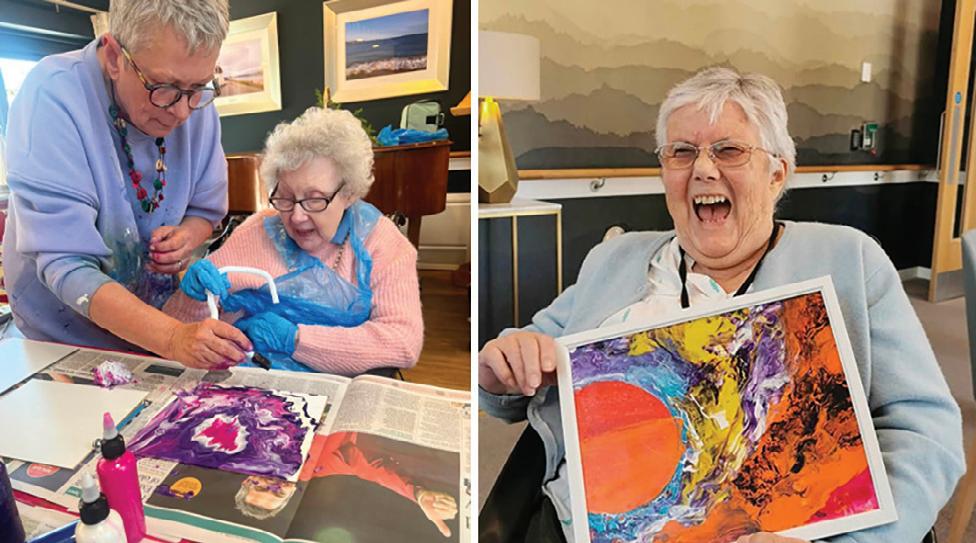
Residents at a Highland care home have been discovering their artistic streak with the help of local artist Liz Peck.
Liz, whose mother Helena is a resident at Eilean Dubh in Fortrose, has been leading a series of art sessions with residents in partnership with the home’s wellbeing team, helping them create a striking collection of abstract paintings.
Several framed pieces have been hung in residents’ rooms, while a collection of colourful designs will be transformed into placemats and coasters to raise funds for the residents’ comfort fund.
The group’s next project is an eye-catching artwork inspired by the famous Chanonry Point dolphins. Residents have handcrafted a pod of dolphins, each individually decorated, which will be mounted on a paint-
ed backdrop of the Black Isle.
Liz has a longstanding relationship with Eilean Dubh. Last year, she worked alongside residents and staff to create the home’s sculpture for the Highland HeArt Trail in support of Highland Hospice.
Liz said: “The art club is one of the most satisfying experiences of my life. Every minute is a joy. It’s been amazing to see how engaged everyone has been. Every piece is unique and made with such determination.”
Fiona Stoddart, Wellbeing Coordinator at Eilean Dubh, said: “The art club has been a wonderful addition to life at Eilean Dubh. Some of the artwork has been absolutely stunning and it’s been wonderful to see residents explore their creative side.”
Adult Social Care “Must be Priority” for New Secretary of State for Health and Social Care
Yvette Cooper has replaced James Murray as Secretary of State for Health and Social Care. The new health secretary was previously foreign secretary and home secretary under Sir Keir Starmer’s Government.
Following her appointment Cooper posted on social media that she was looking forward to ‘working urgently to improve maternity services, to take forward plans for social care and to once again play a part in supporting our National Health Service’. Cooper added: ‘Most of all I’m looking forward to working with the dedicated NHS staff, carers, healthcare professionals and volunteers on whom we all depend.’
Reaction from across the health and care sector has focused on the scale of the challenge facing the new health secretary, with leading figures urging a sustained focus on prevention and long-term reform rather than short-term fixes.
Welcoming the appointment Chair of the Health and Social Care Committee, Layla Moran MP said: “We welcome Yvette Cooper to this incredibly important role and urge this government to prioritise adult social care. We have long argued that kicking this issue into the long grass itself has a great cost to the economy, carers and families. “You cannot achieve reform of the NHS while sidelining social care. Patients cannot be discharged from hospital beds if the right care isn’t
available, and that means treatments are postponed and longer waits in A&E.
“We stand ready to work with the government and Baroness Casey, as soon as her proposals are presented, to make reform a reality. And we look forward to discussing these issues with the new Secretary of State at an early stage.”
The cross-party Committee recently published a report stating that the government had “no excuse” not to press on with reforming social care before the next general election.
Sarah Woolnough, chief executive of The King’s Fund, said the new secretary of state had been given a clear instruction to tackle social care reform without delay. She called for renewed momentum behind prevention work that had lost pace in recent years, encouraging a cross-government approach where health considerations are built into decisions on housing, employment and other areas of policy.
Woolnough suggested that plans to extend devolution could support this shift, arguing that addressing these wider factors could meaningfully improve public health by heading off illness before it develops and easing pressure on services.
She noted that the previous government had recognised the urgency of improving access to and experience of health and care services, but that its attention to cutting elective waiting times had left little
room to address deeper, structural problems. In her view, the current administration now has a chance to take the difficult decisions needed to put social care — and the health service more broadly — on a sustainable footing for the future.
Sir Ciarán Devane, chief executive of The NHS Alliance, said:”On behalf of our members, we welcome Yvette Cooper’s appointment as the new secretary of state for health and social care.
“The most important thing the NHS needs now is clarity and continuity as it is already going through a major reorganisation and there is much support for the government’s 10-Year Health Plan.
“Local NHS leaders are making progress in reducing elective waiting lists, boosting productivity and working closely with local public sector partners to improve health outcomes. We call on the new secretary of state for health and social care to continue with the current direction of travel as any changes now risk slowing progress and diverting attention away from the delivery of better care for patients.
“Improving health outcomes also requires action to support social care, which is long overdue. We therefore welcome the new Prime Minister’s plan to bring about reform of social care, helping to ensure that adult social care services are funded properly and meet the needs of people across the country.”
LGA Urges Locally Led Approach to Adult Social Care Reform
The Local Government Association (LGA) has called for councils to remain at the heart of adult social care reform, arguing that lasting change should be nationally backed but designed and delivered at a local level with a strong emphasis on prevention and person-centred support.
In a report submitted to the Casey Commission, the LGA says there is broad agreement across political parties and the adult social care sector that future reforms should be rooted in local communities, prioritise early intervention, and reflect the experiences of people who rely on care and support.
The organisation believes national government should set the overall direction while councils retain responsibility for shaping services around local needs. It argues that clearer roles between national and local government would help reduce duplication, improve consistency and create a more effective care system.
According to the report, the success of any future reforms should ultimately be judged by whether people receiving care are able to live independently, maintain their dignity and remain connected to their communities and the people who matter most to them.
The report was released as the LGA’s Annual Conference opened in Bournemouth, where Baroness Casey is expected to address more than 1,700 delegates, including council leaders, elected members, senior officers and representatives from across local government and the wider public sector. Its recommendations are based on feedback gathered from councils, people with lived experience of care, care workers, providers and other organisations involved in adult social care.
The LGA warns that council funding has failed to keep pace with increasing demand driven by population growth, an ageing population and more complex care needs. It highlights growing financial pressures on local authorities, noting that a significant number of councils with adult social care responsibilities are expected to require Exceptional Financial Support from the Government during the 2026/27 financial year in order to balance their budgets.
The report also argues that, after years of delayed decisions on social care funding, the Government should begin building public support for a long-term national funding settlement.
The LGA says that reliable, long-term investment will be essential if councils are to meet rising demand, fulfil their legal responsibilities under the Care Act and ensure people receive the support they need to live independent and fulfilling lives.
Among a series of recommendations drawing on engagement with the sector, the LGA is calling for government and the Casey Commission to:
• Lead a national public campaign to change how the public thinks about social care. Reform will fail unless the public narrative changes.
• Make prevention a core national infrastructure, funded like the NHS with a dedicated national prevention
and transformation fund focused on early intervention, housing, community support and independence.
• Ensure a National Care Service strengthens consistency and entitlement, not replace local democratic leadership of social care.
• Explore how greater consistency can be delivered within assessment processes and frameworks, and whether elements of assessment or financial assessment could be undertaken nationally if it makes the system faster and more efficient.
• Return oversight of integration and place-based delivery to local government.
• Establish a national programme of work to improve transitions from children’s to adult services.
• Explore the role of council tax in funding adult social care, with all options on the table including how reforms might lessen the reliance on it and whether it remains a suitable mechanism for funding adult social care in the future.
• Recognise housing as a core component of care, prevention and independence and develop a National Care, Wellbeing and Housing Plan for England.
• Develop a new national approach to recognising, identifying and supporting unpaid carers and develop a package of practical support measures.
• Review whether CQC’s market oversight powers should extend to a wider range of medium and large providers to improve transparency around provider ownership, financing, and the role of private equity within adult social care.
Cllr Louise Gittins, Chair of the Local Government Association, said:
“Adult social care is vital national infrastructure that touches all of our lives – it must be built around people, not services.
“Structural reform alone will not deliver better outcomes without greater public understanding of adult social care’s value, the way we talk about it, and changes to commissioning, market shaping and workforce policy.
“Success will require a new partnership between national government, local government and citizens. It will ultimately be judged by whether people are better able to remain connected to the people, places and passions that matter most in their lives.
“Our report reflects the views from our sector-wide engagement and sets out a clear, evidence based case for long term reform built on prevention, stronger rights and entitlements, and a sustainable national funding settlement. This is the starting point of further exploration of key areas by the LGA.
“Local government and its convening powers are essential to making adult social care reform work and stick. We look forward to working closely with government and the Casey Commission exploring all options for system reform and helping to co-design and lead this change.
“This is an opportunity for successful lasting reform that we don’t want to miss.”
Why Bereavement Support Must Be Part Of Good End Of Life Care
The loss of a relative or beloved friend can be one of the hardest moments in anyone’s life, yet every year too many people are left to navigate grief without any support. Good end of life care is not only vital for those in their final months or days - it must also include helping those left behind.
As a bereavement counsellor at end-of-life charity Marie Curie, with more than 35 years of experience, I still feel privileged that people entrust me with their grief, one of the most painful and personal experiences a person can endure. Bereavement counselling cannot simply wave away the pain of losing someone, but it can transform the lives of people who are grieving. It offers a safe place to speak openly about the person who has died and the often complicated emotions that follow.
Grief is rarely linear. It ebbs and flows, and while there may be common responses to death, no two people live through loss in quite the same way. Some people cry often, while others may feel a sense of numbness. Some want to talk, while others need silence. Some feel relief after a long illness, especially if the person they loved had been in pain. Many come to counselling unable to imagine life without the person they have lost, and over time I see them slowly reconnect with life again.
Sometimes it feels almost bearable, before returning with force at a birthday, an anniversary, or in an ordinary moment no one else would notice. I often hear how difficult it is, in a new year, to say someone died “last year” rather than “this year”. People can fear they are going backwards, when in fact this uncertainty is a very common part of grief.
For many people, grief begins before death itself. From the moment someone is told their illness is incurable, families and carers can experience anticipatory grief, looking ahead with bewilderment as the future they had imagined changes beyond their control. One thing I have learned from patients living with terminal diagnoses is that their greatest fears are often not for themselves: many are emotionally prepared for death, but deeply worried about those they will leave behind.
This is why high-quality care before and after a death is so important. Across Marie Curie’s services, including our hospices, we care for both the person who is dying and those close to them. As a trained nurse, I know that pain relief, medication and help with practical or financial worries are essential to good end of life care. But I also know that compassion and emotional support are vital for people facing bereave-
ment. Helping a dying patient to understand that their family will not be abandoned after their death can bring real peace, easing worries as they die.
There are also simple things that can help people who are grieving. Be gentle with yourself. Accept practical help if it is offered. And if someone you know is bereaved, do not worry about finding the perfect words. A simple “I’m sorry” or “I’m thinking of you” can make a real difference. Keep checking in after the funeral, when others may have returned to their everyday lives, but grief is still very present.
At our West Midlands hospice, where I work, we offer a range of services including family groups, men-only and women-only groups, and coffee mornings. I only wish such that the UK Government could guarantee access to this kind of bereavement support for anyone who needs it, because grief support should not be a postcode lottery.
My professional experience has made it clear to me that politicians and healthcare leaders must also address the wider problems in endof-life care. Recent research funded by Marie Curie found that nearly one in three people in the UK die without the care and support they need – around 200,000 people every year.
Behind these figures are families struggling to get help at 3am or watching someone they love experience pain that could have been avoided with timely care and consistent access to medication. That is why compassionate support, before death and afterwards, is so important. I have seen and heard how, when palliative care is not available, the effects can last long after a death. Families can be left with guilt, and with the feeling that someone’s final days should have been more peaceful and dignified. That is why I strongly support Marie Curie’s Fix End of Life Care campaign, which is calling for urgent action so everyone can get the care they need, wherever they live, backed by proper government funding.
Grief is a normal part of loving someone. But no one should have to face it unsupported. With proper bereavement support, and with compassionate, well-funded palliative care, we can make a lasting difference - both to how people die, and to how those who love them find their way back to life.
Marie Curie’s free support line (0800 090 2309) and online resources are available to anyone across the county requiring information and support relating to terminal illness, dying, death and bereavement. For more information, visit: https://www.mariecurie.org.uk/services
Excelcare Team Members Take Part in ‘Pretty Muddy’ Charity Run
Thirty-five members of the Excelcare family laced up their running shoes last weekend to take part in Cancer Research UK’s ‘Race for Life Pretty Muddy 5K’ at Beckenham Place Park.
After celebrating her birthday by taking part in the event last year, Chief Operating Officer Sam Manning was inspired by the teamwork and camaraderie she experienced, making her eager to return this year.
Team members from Excelcare’s Support Office in Bromley and care homes across the group joined Sam for this year’s challenge, putting their fitness to the test while raising funds for two important causes: Cancer Research UK and The Excelcare Foundation.
Before the race began, the team gathered at the starting line in their charity T-shirts for a group warm-up led by the Pretty Muddy event team. During this, participants heard powerful stories from people affected by cancer, who shared their personal reasons for taking part. It was a moving moment that encouraged everyone to reflect on the loved ones and colleagues in their own lives who have been impacted by Cancer. Over the 5K course, the team jogged, walked, crawled and slid their way through a series of muddy
obstacles. Their determination was matched only by their support for one another, with plenty of memorable moments along the way. Sonnie helped teammates by holding up the netting at one obstacle to make it easier for everyone to pass through, while Maddie and Sam crossed the finish line hand in hand in a heartwarming display of teamwork.
The bright pink tops they started the race in were barely recognisable by the end. Despite the mess, every participant crossed the finish line smiling, proud of what they had achieved together and the memories they had made along the way.
After collecting their medals and posing for a group photo, the team celebrated with a well-earned picnic in the park and some time to relax after their achievement.
To top it all off, the team raised an incredible £2,500. In an inspiring show of support, Excelcare’s CEO Osman ‘Ozzie’ Ertosun generously matched the total, meaning more than £2,000 was donated to each charity, helping
Excelcare Foundation continue their vital work.
Beaufort Grange Honours Armed Forces Day
Live Music and Shared Memories
Residents, relatives and staff at Beaufort Grange Care Home came together to celebrate Armed Forces Day with a memorable community BBQ, live entertainment and heartfelt conversations honouring those who have served their country.
The home welcomed local band The Revivals, who kept everyone entertained with a fantastic selection of live music, creating a wonderful atmosphere as residents, families and staff enjoyed a delicious BBQ in the summer sunshine. Throughout the afternoon, residents reflected on their personal memories of the Second World War, sharing stories of resilience, community spirit and life on the Home Front. Others spoke proudly about family members who had served in the Armed Forces, sparking meaningful conversations across generations and reminding everyone of the
sacrifices made by so many.
Armed Forces Day provides an opportunity to recognise the dedication and bravery of serving personnel, veterans, reservists and military families. At Beaufort Grange, the event was a chance to celebrate these contributions while ensuring residents’ own experiences and memories remained at the heart of the day. Cristina, General Manager at Beaufort Grange Care Home, said: “Armed Forces Day is an important opportunity to honour those who have served our country. It was incredibly moving to hear our residents share their wartime memories and stories of loved ones who served in the Armed Forces. Combined with a fantastic BBQ and brilliant live music from The Revivals, it was a truly special day that brought our whole community together.”
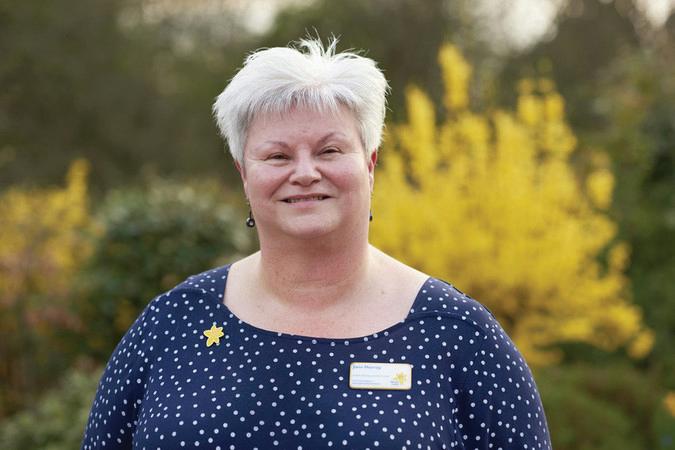
By Jane Murray, bereavement counsellor, Marie Curie Hospice, West Midlands
The UK Requires 139,000 New Care Home Beds
By 2036, Increasing Current Supply By C. 30%
New research from Savills shows that the UK care home development market is entering a new phase of demand-led growth, as demographic pressures intensify and the need for new beds becomes increasingly acute.
The international real estate advisor has identified a requirement for around 139,000 additional care home beds over the next decade, equivalent to approximately 30% of existing supply. To meet this demand, annual delivery rates would need to more than double from recent levels.
According to Savills, net supply growth has been limited over the past five years, as whilst over 30,000 new care home beds were delivered between 2020 and 2025, this was almost entirely offset by approximately 29,000 beds being decommissioned in the same period. As a result, the market is entering a period of increasing supply-demand imbalance, with demand growth outpacing net new supply and occupancy now exceeding pre-Covid levels.
The current development pipeline provides a positive near-term base, with around 20,000 beds either under construction or with detailed planning consent. However, Savills says further scale will be required to close the emerging supply gap.
Development remains concentrated in areas where fundamentals are most supportive. Southern England accounted for more than one third of care home completions between 2020 and 2025 and represents around 40% of the current pipeline, demonstrating the stronger viability of schemes in more affluent privatepay markets. However, this also highlights the significant need in lower-fee and more local authority-reliant regions, where demand is high but development economics are more challenging.
Savills says market conditions are becoming more supportive for future development. General building cost inflation has moderated to around 3.8% annually as of early 2026, down from a peak of 15.5% in June 2022, while debt appetite has strengthened and both traditional banks and alternative lenders are increasingly active in the sector. At the same time, private weekly fees have grown faster than inflation over the past five years, supporting operator margins and improving development viability despite a structurally higher cost base. The strength of the UK’s private-pay market has been a key factor in attracting international capital to the sector in recent years.
Tom Atherton, Strategy and Market Intelligence Manager, Savills Operational Capital Markets, says, “The UK care home market is entering a period where quality, rather than simply quantity, will become increasingly important. Residents are entering care later in life, with higher acuity needs and greater expectations around the environment in which they live. This is creating a growing requirement for modern, purpose-built facilities that are capable of delivering high-quality care efficiently and sustainably over the long term.”
Rick Savage, Director, Savills Operational Capital Markets, adds, “Improving financing conditions, moderating cost inflation and resilient operator performance provide a more positive backdrop for development than at any point in the past three years. However, planning delays, contractor constraints and regional viability challenges remain key barriers. A more efficient and consistent planning system, faster progression from consent to construction and greater contractor capacity will be critical to bringing forward new supply, particularly in underserved markets where demographic need is greatest.”
Talented Teens Wow Chichester Care Home Residents with Music and Dance Show
Talented teenagers staged a vibrant showcase of music, song and dance to delight residents at a Chichester care home.
Ten students from Chichester High School along with two of their teachers visited Colten Care’s Wellington Grange in Broyle Road to perform live before an audience gathered in the home’s Market Cross Sitting Room.
The end-of-term visit was designed to promote community engagement for students and residents alike.
While one young visitor played guitar and sang, others performed songs from popular musicals including Wicked and Cabaret.
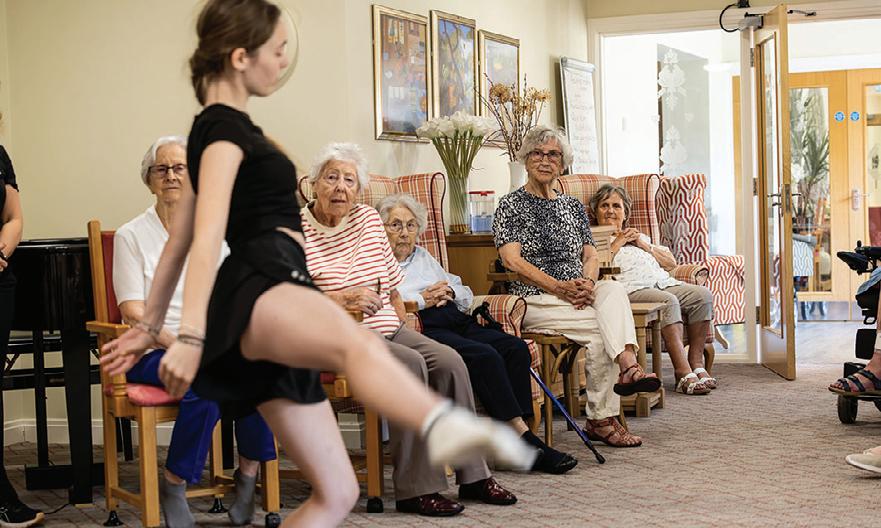
And residents loved watching the school’s student dancers perform solo and group-choreographed pieces.
After the show, organised by teacher Emily Wells and Companionship Team members at Wellington Grange, visitors and hosts engaged in conversation with each other.
The afternoon proved a hit with both parties.
“It was quite extraordinary,” said Wellington Grange resident Gillian Allen, while one of the students said: “It was so lovely to perform here.” Wellington Grange Home Manager Hayley Geddes said: “Our residents always enjoy a visit by young people, especially a group as talented as this one. It was an ideal opportunity to enjoy some first-class entertainment and foster links with the local community. The school have already expressed interest in returning with extracts from their next show, Mary Poppins.”
Third Party Harassment In The Care Sector
By Paul Ball, employment partner
While the vast majority of people that employees working in the care sector come into contact with on a day-to-day basis behave respectfully, there are unfortunately occasions when this isn’t the case and care workers may be victims of harassment.
‘Harassment’ as a type of behaviour that people working in the care sector can potentially be subjected to, and which employers are potentially liable for under the Equality Act 2010, can take several different forms. All involve conduct which is ‘unwanted’ and which has the purpose or effect of violating the person’s dignity or creating an intimidating, hostile, degrading, humiliating or offensive environment conduct for them. This can be unwanted conduct:
related to certain 'protected characteristics' (i.e. age, disability, gender reassignment, race, religion or belief, sex or sexual orientation), of a sexual nature’ or • of a sexual nature or related to gender reassignment or sex where ’the victim’ has been treated less favourably as a result of their rejection of or submission to the unwanted conduct concerned.
Currently, employers are liable for acts of harassment which are committed by a colleague, but are not liable for acts of harassment which are carried out by third parties, such as the person receiving care, their family or friends, or independent contractors or service providers who are engaged by the employer, such as external caterers, events companies and so on.
This however is about to change as a result of provisions in the Employment Rights Act 2025, From October 2026, employers will become liable for acts of harassment that their employees are subjected to by third parties, unless they can show that they have taken ‘all reasonable steps’ to prevent such harassment from happening.
Once this change comes into effect it will mean that if an employee is subjected to harassment by a third party and successfully pursues an Employment Tribunal (ET) claim about it against their employer, the employer will be faced with potentially serious consequences if it is unable to show that it had taken all rea-
sonable steps to prevent the harassment occurring.
There is already no limit on the amount of compensation that the ET can award for harassment , but if the employer has failed to adequately prevent the third party harassment from happening once the ET has decided the amount of compensation the employee is entitled to, the ET will also consider increasing that compensation amount by up to 25%.
So, what steps can employers in the care sector take now to ensure they are reducing the risk of third party harassment taking place?
Firstly, there are a number of key measures that will form part of an employer being able to show they have taken ‘all reasonable steps’ including:
Carry out a risk assessment – Identify where employees are at particular risk of harassment by third parties and implement measures to ensure their safety.
Policies – Update relevant policies to make it clear that third party harassment will not be tolerated and provide guidance about what it is and what employees are expected to do if it occurs to ensure it becomes an organisational standard that everyone is expected to uphold.
Training – Train employees on how to spot third party harassment and equip them with the knowledge to defuse and report inappropriate behaviour.
Clear reporting procedure – Ensure everyone is clear about who and where they can report any concerns to, making the process as simple as possible.
Amend contracts with all third party service providers – Any third party that provides a service for your care facility should sign an updated contract which includes reference to the zero-tolerance approach that will be taken to any harassment of employees by anyone working for the supplier.
Acceptable behaviour policy statement – clearly set out in all communications to care receivers and all visitors (family or friends) about what behaviour towards your employees is or is not acceptable, making it clear that you reserve the right to ask people to leave and will support your employees (including through legal action if needs be) if they are subjected to harassment.
For the above approaches to really have a positive impact on reducing third party harassment occurring within a care setting, employers should also place emphasis on reviewing and improving their workplace culture. This would involve, for instance, empowering employees to call out acts of harassment by third parties without the fear of repercussions, through to avoiding working with independent contractors whose values do not align with the organisation even if they are a cheaper option than competitors.
The legal requirements should be the bare minimum for businesses in the care sector to adhere to, and by implementing a robust cultural review as well employers will be well set to avoid the risk of third party harassment happening in their workplace.
Hendon Hall Residents Meet Sir Geoff Hurst
Residents from Signature at Hendon Hall enjoyed a once-in-a-lifetime evening meeting England football legend Sir Geoff Hurst at a special retro World Cup-themed event in London.
Peter Lawrence and Edward Cohen, who both live at Signature at Hendon Hall, were invited to attend the event at The Palm House in Westminster, hosted by Budweiser Brewing Group and AB InBev to celebrate British pubs, bars and the hospitality sector.
The evening provided residents with the opportunity to meet Sir Geoff, one of the heroes of England’s 1966 World Cup-winning team and share their own memories of the historic tournament.
Signature at Hendon Hall has a unique connection to the 1966 World Cup, with the historic venue having previously hosted the England squad during the tournament. For residents who remember the final and the celebrations that followed, the evening was a particularly special opportunity to reflect on one of the country’s most iconic sporting moments.
The residents were accompanied by team members from Signature at Hendon Hall, who supported them throughout the evening.
Orla Green, General Manager at Signature at Hendon Hall, said: “It was a real privilege to see Peter and Edward spend time with Sir Geoff Hurst. Both gentlemen vividly remember England’s incredible 1966 World Cup victory and, for Edward, who was at Wembley Stadium that day, the evening brought back
unforgettable memories.
“At Signature, we’re always looking for ways to create meaningful experiences for our residents, whether that’s through everyday activities in the home or unique opportunities like this. Seeing Peter and Edward reminisce about such an important moment in sporting history was wonderful.”
The event brought together guests from across media, politics, business and hospitality, with a retro World Cup theme running throughout the evening.
For the residents, the highlight was a more personal moment with Sir Geoff, giving them the chance to speak with him directly and reminisce about the match that made football history.
Orla added: “These experiences mean a great deal to our residents and their families. They help bring back memories, spark conversations and create new moments to treasure.”
Edward Cohen, resident of Signature at Hendon Hall said:
“It was a great pleasure to meet Sir Geoff Hurst with my friend and fellow resident, Peter. He was incredibly knowledgeable and treated Peter and me with the utmost courtesy, as though we were the only people at the event. I was also impressed by his health and fitness.
“It was amazing to meet someone who is such an important part of English sporting history and to hear his views on the game, both then and now. It’s an experience I will remember for many years.”
TauRx Welcomes Summit with UK’s Top Patient Advocacy Groups
Leading Scottish life sciences firm TauRx Therapeutics Management Ltd. has hailed the influence of patient advocacy groups on the Alzheimer’s disease community after bringing together top organisations from across the UK and beyond at a summit in London.
The meeting, which outlined the impact TauRx’s potential oral treatment for Alzheimer’s disease could have, helped agree shared priorities for improving outcomes for those living with Alzheimer's, as well as patient access and the challenge of ensuring innovation reaches those who could benefit.
The Aberdeen-based company is currently awaiting the outcome of a marketing authorisation application to the UK’s Medicines and Healthcare products Regulatory Agency (MHRA) in relation to its lead drug, an oral tablet which could target early Alzheimer’s disease.
Senior figures from TauRx welcomed representatives from groups including Alzheimer Europe, Alzheimer Scotland and Alzheimer's Disease International to Scotland House in London to discuss the Alzheimer’s treatment landscape.
Professor Claude Wischik, TauRx CoFounder and Chairman, said: “We are grateful for everyone sharing their time to discuss this important topic. The opportunity to gather leading patient advocacy groups in one place is rare, and it is an excellent illustration of the dedication that exists in trying to solve the global healthcare crisis that is Alzheimer’s disease.
affected by Alzheimer’s and other dementias and serve as key bridge between patients, caregivers, healthcare providers, researchers, policymakers and industry.
Dr Glenn Corr, TauRx’s Chief Operations Officer and Chief Business Officer, added:
“Improving outcomes for people living with Alzheimer's will require collaboration across all sectors. This excellent meeting was a real opportunity for us to do just that, and we are committed to continuing to work with all stakeholders.
“The importance of patient advocacy groups like those who joined us in London cannot be understated. For many people affected by dementia, these groups are the first place they turn to for guidance, and they do a wonderful and compassionate job assisting those who seek their help.
“We are committed to facilitating ongoing dialogue across the Alzheimer's community to help shape a future where scientific progress can be translated into real-world patient benefit.”
Peer-reviewed publications report that TauRx’s existing drug targeting the tau protein – a key hallmark of Alzheimer’s disease – halted progression of neurodegeneration, and that participants with Mild Cognitive Impairment (MCI) who received 16 mg/day experienced statistically significant cognitive improvement over 18 months.
“The conversation around our potential oral treatment was robust, as it should be, given the potential impact we believe it could have. Everyone present is working towards fulfilling the hope of slowing the decline of those impacted by Alzheimer’s.”
The groups present at the event represent the interests of people
Participants also displayed no evidence of statistically significant cognitive or functional decline over a period of two years. Trials also confirmed the drug has a benign safety profile, with headache (1.5%) and diarrhoea (1.2%) reported as the most frequent adverse effects at the 16 mg/day dose.
A decision on the company’s MHRA application is expected this year.
For more information, visit www.taurx.com
Adult Social Care Vacancy Rate Falls to Lowest Level in a Decade as Workforce Grows
The vacancy rate in England’s adult social care sector has fallen to its lowest level in a decade, according to new data published by Skills for Care – the national charity that works to strengthen England’s adult social care workforce.
The latest Size and structure of the adult social care sector and workforce in England report shows that the workforce continued to grow in 2025/26, marking the fourth consecutive year of expansion. There were 22,000 more filled posts than the previous year- an increase of 1.4% although this is the slowest growth rate in four years.
The report also highlights a significant drop in vacancies. The vacancy rate fell to 6.2% in 2025/26, the lowest since 2015/16. This equates to around 96,000 vacancies on any given day, down 10.5% on the previous year.
Despite this progress, vacancy levels in adult social care remain around three times higher than the wider economy, underlining the continued challenge of recruitment and retention within the sector.
The number of posts filled by people with a British nationality fell by 40,000 over the past year and by 130,000 since 2020/21.
While the number of non-British workers has increased, the removal of a dedicated international visa route means that the number of new international recruits recruited directly from abroad fell to 30,000 in 2025/26, the lowest level in four years.
Looking ahead, the data point to ongoing long-term challenges. To meet the needs of an ageing population, the sector is projected to require a further 410,000 posts by 2040.
Oonagh Smyth, CEO of Skills for Care, said:
“It’s encouraging to see vacancies fall to their lowest level in 10 years and the workforce continuing to grow. This reflects the hard work and commitment of employers across the sector to attract and retain staff in a challenging environment.
“However, the longer-term picture remains difficult. Vacancy rates are still significantly higher than the wider economy, domestic workforce numbers are falling and there is no dedicated visa route for international recruitment – all of which highlight the scale of the challenge ahead.
“We need a long-term, collective approach. Skills for Care is bringing partners together to develop a 10-year plan to attract more people into adult social care and support them to build rewarding careers. This work is central to delivering the Workforce Strategy for Adult Social Care in England and ensuring the sector has the workforce it needs for the future.”
The findings are based on data from Skills for Care’s Adult Social Care Workforce Data Set (ASCWDS), which contains information on more than 750,000 people across over 21,000 care-providing locations. This data helps build a detailed national picture of the workforce and supports planning, policy development and decision-making across the sector.
The full Size and structure of the adult social care sector and workforce in England report is available now on the Skills for Care website: www.skillsforcare.org.uk/sizeandstructure
Sector leaders have broadly welcomed the report.
Lucinda Allen, Senior Policy Fellow at the Health Foundation, said:
‘The report is a tale of two halves. The social care vacancy rate has fallen to the lowest level in a decade. But workforce growth is slowing as numbers of both British staff and new international recruits fall.
These trends highlight the long-term fragility of the care sector.
‘Care work is rewarding but has long been underpaid and undervalued. The government’s plan for new fair pay agreements to improve pay, terms and conditions in social care has the potential to be transformative. Success relies on funding to fuel the system and incentives, including for providers to comply with new rules and for staff to stay and progress in the sector. International evidence suggests pay policies work better as part of a comprehensive strategy for recruiting and retaining enough staff to care for older people and disabled people.
‘Alongside a workforce strategy, social care needs wider reform and investment, including to improve people’s care and protect against high care costs. Whoever becomes the new Labour leader must make this an early priority, accelerating the work of the Casey Commission. The problems in social care are well known – as are options for funding reform. Currently, many people go without the care they need, and reliance on unpaid carers is high. After decades of political failure, the next prime minister has an opportunity to show decisive leadership and finally deliver the reforms needed to improve millions of people’s lives.’
Karolina Gerlich, Chief Executive of The Care Workers’ Charity, said:
“This report is good news, and we should say so. A vacancy rate at its lowest in a decade is the result of hundreds of thousands of people choosing this work, often for far less than it is worth. But Skills for Care are right to be honest about what holds that progress up. We have grown the workforce from overseas while the number of British care workers has fallen by 130,000 in five years, and the visa route that made that possible has now closed. At the same time, we are asking the international care workers already here to wait 15 years for indefinite leave to remain, which is a long time to ask someone to hold their life in place. The way to build a stable workforce is to make care a job people can afford to do, and to give the people already doing it a fair route to settle. We are ready to work with Government, employers and commissioners to turn this progress into something that lasts, and to bring care workers into shaping the plan that does it, through our Care Worker Advisory Board.”
Care Association Alliance Unveils National Funding Plan for Social Care
A new CAA report proposes pooling the financial risk of an ageing population nationally, rather than leaving it with 153 individual councils.
The core of the model: ring-fenced national funding shared on a needs-based formula, a national tariff for care, and an independent body to keep it honest.
Individuals keep a means-tested contribution, but with a lifetime cap and a raised capital threshold, so no one faces unlimited costs or has to sell their home.
Councils keep assessment, planning, safeguarding and oversight, but are relieved of carrying a national demographic risk on a local budget.
Backed by the Rt Hon Damian Green, Chair of the Social Care Foundation and former Deputy Prime Minister responsible for social care policy.
The Care Association Alliance (CAA) has published a proposal for how England should fund adult social care for older people. Its report, Adult Social Care Funding Reform, describes a national funding settlement built on a straightforward idea: the cost of growing old and needing care is a national risk, and it should be met nationally, while care itself continues to be arranged and delivered locally.
At present, primary responsibility for adult social care sits with 153 local authorities under the Care Act 2014. They assess need, commission services and manage local provider markets. They also carry the full financial weight of demographic change, a pressure that is national in scale and rising quickly.
The number of people aged 85 and over is projected to double within twenty years, and the Office for Budget Responsibility estimates that simply maintaining today’s system will require public spending on social care to grow by 3.1 per cent a year over the next decade, compared with the 0.7 per cent average delivered between 2009/10 and 2022/23.
That pressure shows up directly in the price of care. On average, councils pay £24.10 an hour for home care, while the Homecare Association puts the minimum sustainable rate at £32.14.
The National Audit Office found in 2021 that authorities were commissioning care at below the sustainable cost of care, and the King’s Fund reports that in 2025/26, council fee increases of around 5 per cent were outpaced by provider cost increases of 8 to 10 per cent.
This is not a matter of councils choosing to underpay. It is what happens when local budgets are asked to absorb a national cost. Providers take the strain through thinner margins and deferred investment, and families often meet it through the higher fees paid by those who fund their own care, on average 41 per cent more than the council-funded rate.
The CAA argues that these are symptoms of a single structural mismatch, and that they need to be fixed together. Its proposed national funding settlement rests on three principles: pooling the financial risk of demographic change nationally, a statutory entitlement to support triggered by assessed need, and continued local delivery within a national framework.
In practice, the settlement has five main components:
• A ring-fenced national care grant, distributed to councils on a needs-adjusted formula, so that funding follows need rather than local fiscal capacity.
• A reformed means test, with a raised capital threshold, frozen at £23,250 since 2010/11, and a lifetime cap on what any individual can be asked to pay.
• A national tariff for residential and home care, set at the independently assessed cost of sustainable provision, which councils commission at or above.
• A bundled funding model for residential care, with assessed packages that are portable when people move.
• A reformed Deferred Payment Agreement scheme, so that no one is required to sell their home to pay for residential care.
Underpinning the settlement is an independent National Care Assessment Body, sitting outside both the NHS and local government, which would verify the cost evidence, review the tariff and report where provision falls short.
Local authorities retain their role as commissioners and delivery leaders, close to their communities and provider markets, but are relieved of being the sole bearer of national financial risk.
The report is explicit about what it does not propose. This is not a free care service on the model of the NHS, and it does not absorb social care into the health service.
Individuals who can contribute to the cost of their care will continue to do so, within a reformed means test and a lifetime cap. The word national describes the funding architecture, not the way care is provided.
The proposal is offered as a contribution to the Casey Commission, which is beginning to test public views on who should receive care, what the state should guarantee and what individuals should contribute. The CAA says funding reform is the necessary first step, and Adult Social Care Funding Reform is the first in a programme of papers it will publish over the coming months.
Melanie Weatherley MBE, Co-Chair of the Care Association Alliance, said:
“No family should receive worse care because of where they happen to live, and no provider should have to choose between keeping a contract and delivering care safely. These are not failings of the people running the system. They are what happens when a national risk is carried on local budgets.
If we fund care nationally, price it honestly through a national tariff, and ask an independent body to keep it that way, we can give families certainty, providers stability, and councils the resources to do the job they are asked to do.
“This paper is not a criticism of local authorities, who are doing a demanding job under real pressure. It is a practical plan to put the whole system on a sustainable footing, and we hope it is useful to Baroness Casey’s commission as it begins its work.”
The Rt Hon Damian Green, Chair of the Social Care Foundation and former Deputy Prime Minister responsible for social care, said: “The case for reform is widely accepted. What has been missing is a workable, affordable plan that a government of any colour could adopt. This paper offers exactly that, and a cross-party route to deliver it.”
End of Life Care: Guidance for Supporting Someone to Die Well
By Hannah Kelly, Dom Care Specialist,
Supporting someone to die well is, for some of us working in the industry, a part of the work to which we must become well accustomed. Death is an expected, and at times, anticipated part of life. It is a sensitive topic and one that is not always easy to cope with.
The experiences that people have with death are completely individual, and coping strategies will present differently for everyone. Someone who is aware that they are dying is likely to experience various emotions and sometimes worries about the process.
As potential providers of support, there are ways that we can offer both physical and emotional support to the individual, their loved ones and our own staff.
At QCS we have compiled some guidance to support someone to die well and to also support the staff providing their care or support during this time.
TRAIN STAFF IN END OF LIFE CARE
Providing staff with specific end of life care training will give them the knowledge and confidence to care for someone well at the end of their life. Check out your local hospice as sometimes they offer courses on the topic. An in-person training session in this area is far more valuable than e-learning (where this is possible).
Staff training goes beyond the classroom. Supporting staff by ensuring that they work alongside an experienced staff member in the area will build assurance and give them faith in their abilities. Good training for staff in end of life care should cover:
• Having a gentle touch
• Being respectful
• Continuing to explain to the person what is happening even if you do not receive a verbal response
• Sufficient pain relief
• The correct number of staff and equipment for what is required
• To ensure the person’s comfort and making sure they appear in a comfortable position
• Regular turning to relieve areas of pressure
• Signs that someone may no longer eat or drink
• Oral care
• Creating a soothing environment, soothing music, window ajar for example
• Consider using calming scents; aromatherapy is known for its therapeutic qualities
• The importance of collaborating effectively with other professionals to ensure well organised and efficient care and support
• Some people may enjoy meditation and visualisation techniques
ADVANCE CARE PLANNING
The importance of advance care planning, liaising, and coproducing with the service user and their family where desired to discuss these elements of care provision prior to the event are paramount.
Some aspects to be mindful of are:
The individual may be reluctant to discuss an advance care plan; they may be experiencing overwhelming feelings relating to the situation that they need time to process.
These could include feelings of:
• Shock
• Worry
• Guilt
• Disbelief
• Anxiety
• Any financial burden they could leave behind There are many thoughts and emotions that could be circling inside.
• If this is the case, respect their wishes – it does not have to be completed today
• If appropriate, you can gently explain that without the advance care plan they may not receive the support or care in their preferred way
and perhaps if they feel they wish to, they could reschedule
More people are opting to use a Death Doula (someone who supports people at the end of their life), particularly those who wish to die in their own home. Consider if this is an option that you could highlight to the individual and their family that you are supporting.
Remember, advance care planning should include information that relates to what the person perceives as a good environment. Discuss music, aromatherapy, whether they like the feeling of breeze on their face. These are some of the elements that can contribute to a calm, relaxing space.
WORKING IN PARTNERSHIP
Working as part of a multidisciplinary team is essential in providing high-quality, person-centred end of life care.
Above all, the most central factor to consider is good communication and especially listening. The ability to listen patiently, considerately and without judgement to the individual being supported is key. Someone’s wishes, needs, and wants may completely change during the dying process and this is ok. Having a caring, supportive, respectful team listening to them is crucial to a positive dying experience.
As a provider, by following this guidance, you will save both time and effort, as guidance for staff will be clear and easy to follow.
Residents At Local Care Home Strum Sing and Smile Ukulele Style
Residents and guests at The Cedars care home in Bourne enjoyed an uplifting afternoon in their stunning gardens with the12 piece Ukulele Orchestra of Spalding.
The super talented group gave a wonderfully interactive performance to the residents including “The Wild Rover” by the Dubliners, “Those Were The Days “ by Mary Hopkin, “King of The Swingers” from the Jungle Book and a catchy medley of “5ft 2”, “Aint She Sweet” and “Yes Sir! That’s My Baby”. The whole group played together with harmonies and a full layered sound and delivered the set with such fun. The singing and the laughter was contagious and culminated in the residents grinning from ear to ear as a visitor to the home exited the beautifully manicured grounds to “Bring Me Sunshine” in true
Morecambe style.
Senior General Manager, Rebecca Aldred said, “Our residents and guests had a wonderful day alongside such wonderful performers. We do our best to provide a wide range of activities and entertainment at The Cedars as part of the lifestyle enrichment programme for residents, and this one will be a stand out memory for us all!”
Resident, Peter Baker, a true music lover, was thrilled when asked if he would like to “have a go” on the ukulele, he said “That was such a kind a gesture, and it made my day!” The Activity team at the Cedars said, “We can’t thank this fun, musical bunch enough for taking the time to share the instruments they love with our residents too, it meant the world!”
NHS Partnership Sees Fairlie Healthcare Launch
UK’s First Haemodialysis Service in Care Home
The first haemodialysis service to be offered in a care home setting has been established in London, thanks to a provider partnership with the NHS.
Fairlie Healthcare, which provides specialist nursing care to people living with complex neurological conditions, spent more than 12 months working closely with the renal team at King’s College Hospital NHS Foundation Trust to set up the service at Fairlie House, its 45-bed home in West Norwood specialising in tracheostomy and NIV care.
The initiative has been spearheaded by Fairlie Healthcare’s Director of Clinical Services, Ben Payne, and Kunaal Kharbanda, Consultant Nephrologist at King’s with support from Bromley SEL ICB. The project represents a major step forward in delivering advanced hospital-level clinical care within a community environment.
“This exemplifies what can be achieved when organisations work together towards a shared goal — providing truly person-centred, safe, and specialist care in the community,” said Ben. “We’re incredibly proud to be part of a UK-first initiative that is improving lives and redefining what’s possible in complex care.”
The service was orchestrated following more than a year of collaborative planning and innovation to enable a safe and effective discharge for David Prescod who had been living on the intensive care ward at King’s. David has end-stage renal failure and lives with long-term tracheostomy and ventilation support following a stroke.
Kunaal Kharbanda said; “Haemodialysis treatment is a huge undertaking for patients. For most, travelling to hospital 2-3 times a week is timeconsuming and associated with a poor patient experience. We are seeing rising complexity in the patients we treat and for this group, transport poses an even greater challenge. David’s case highlights what joined-up working can achieve – he now receives his dialysis treatment at home, in an environment that delivers excellent care, with a team he trusts and without the need for travel.
“The NHS needs to continue driving innovation in how care is delivered, with a further shift from the hospital to the community. David’s story shows just how successful that shift can be.”
Eliminating the need to transfer David to hospital for dialysis twice a week with a specialist doctor and nurse lessens the impact on resources and also means that David can spend more time focused on his progress.
The home has recently taken possession of a second haemodialysis machine, doubling its capacity to facilitate discharges, improve patient wellbeing and reduce integrated care costs.
“As a provider caring for those with some of the most complex needs, we continue to drive innovation and collaborate with the sector to develop new clinical admission pathways to support complex discharges,” added Ben. “We have a slow stream rehabilitation pathway for step down and longer term placements and we are looking to develop new pathways spinal injuries, brain injuries and complex enteral feeding.”
MiCode Launches Free Dementia Programme for Overlooked Local Organisations
The health-tech company, MiCode, is giving 5,000 free emergency information codes to small dementia charities, care providers, and community organisations across the UK.
One hundred organisations will each receive 50 MiCodes to distribute to people living with dementia and their families, together with posters and leaflets explaining how the system works.
The programme is deliberately focused on smaller, local organisations that are often overlooked. They know their communities, understand local needs and provide the everyday help that enables people to remain independent and connected.
Professor James Ohene-Djan, founder of MiCode, said: “Small local organisations often do extraordinary work with very limited resources. They are frequently the first place families turn to, yet they can easily be missed when funding, new technology and national campaigns are distributed.
“We want this programme to recognise their importance and give them something practical to offer directly to their communities.”
The initiative builds on successful work with Dementia Jersey and trials involving NHS services, where accessible information proved valuable when people became confused, distressed or unwell.
WHAT IS MICODE?
MiCode is a QR code carried on a keyring, wallet card, wristband, badge, pendant or sticker. It can be scanned using any ordinary smartphone, with no app to download and no special equipment required.
When scanned, the code opens an information page containing details selected by the person, their family or carer. This can include emergency contacts, medical conditions, allergies, medication, communication preferences and advice about how best to offer reassurance.
For someone living with dementia, the information might explain that they need more time to answer questions, become anxious in unfamiliar surroundings or respond well to a particular form of reassurance. It can also identify who should be contacted and help others understand the person’s needs.
Information can be updated when circumstances change and displayed in different languages.
“MiCode is not designed to replace professional care or human judgement,” Professor Ohene-Djan said. “It is simply a way of making the right information available at the right time.”
MORE THAN EMERGENCY INFORMATION
Each free MiCode will also be pre-loaded with useful advice about living with dementia and supporting someone with the condition. This may include guidance for families and carers, communication advice and links to relevant sources of help.
Participating organisations will be able to include details of their own services and other support available locally.
MiCode can therefore act not only as an emergency information tool, but also as a gateway to ongoing support. A person or family scanning the code may be directed towards a local dementia café, carers’ group, advice service, helpline or community organisation.
“People often do not know what support is available until they reach a crisis,” Professor Ohene-Djan said. “By including dementia advice and links to local services, MiCode can help people find support earlier.”
SUPPORTING FAMILIES AND CARERS
Much of the knowledge needed to support a person living with dementia is held by those closest to them.
But carers cannot always be present. MiCode allows some of that knowledge to travel with the person.
“MiCode may reduce one fear,” Professor Ohene-Djan said: “that the person you care about will become lost, confused or unwell and nobody will know who they are, what they need or who should be called.”
WHY I CREATED MICODE
The idea for MiCode grew from Professor Ohene-Djan’s experience of supporting his brother Anthony, who lived with multiple sclerosis.
“My brother was never simply an MS patient to me,” he said. “He was my brother, with his own personality, humour, frustrations and hopes. But there was always a quiet worry about what might happen if he became unwell when we were not there.”
Professor Ohene-Djan’s own experience of cancer also shaped MiCode.
“When you are well, a medication list or emergency contact number can feel like paperwork,” he said. “When you are ill, those details become part of your safety.”
APPLYING FOR A FREE PACK
Dementia charities, local community groups and care providers can now get in touch to receive 50 free MiCodes pre-loaded with dementia information and advice. With 100 local groups being supported across the UK, we are giving away 5,000 free codes in total, complete with printed posters and leaflets.
MiCode is particularly keen to hear from small and locally based organisations that are often overlooked by larger initiatives.
To apply, visit www.micode.uk/dementia or email dementia@micode.uk
“This programme is about helping people living with dementia remain safer, better understood and more connected to the support around them,” Professor Ohene-Djan said. “It is also about recognising the small local organisations that quietly hold communities together and making sure they are not left behind.”
Professor James Ohene-Djan is Professor of Computer Science at Goldsmiths, University of London, and founder of MiCode.
Care Home Residents Enjoy Open-Air Performance of Romeo & Juliet
Residents, families and members of the wider community gathered in the beautiful grounds of The Dower House in Winchester to enjoy a wonderful open-air performance of Shakespeare’s timeless classic, Romeo & Juliet.
The performance was brought to The Dower House by The Open Bar Theatre and The Dot Collective, who are touring the South of England this summer as part of celebrations marking ten years of bringing accessible outdoor theatre to communities far and wide.
Set against the backdrop of the home’s stunning gardens, residents and guests were immersed in a vibrant production filled with music, colour, drama and theatrical magic as Shakespeare’s iconic tale unfolded before them.
Chris Golding, Chief Operating Officer at The Dower House, said: “Whilst some residents still enjoy trips to the theatre, others are no longer able to attend performances in the traditional way, so it is a real pleasure to bring the theatre to them. The cast truly embraced the spirit of the day – Romeo and Juliet even sang a duet for
one of our residents in their room, creating a very special moment that will be remembered for a long time.”
The cast’s enthusiasm and engagement extended beyond the stage, with residents and staff encouraged to dance, sing and become part of the performance itself.
Christine Farmery, Activities Co-ordinator at The Dower House, said: “The cast were absolutely wonderful. Seeing our residents and staff encouraged to get up, dance and become part of the production was fabulous. The two residents who received personal visits from the cast in their rooms were especially touched by the experience. It brought such joy to everyone involved.”
With a smile on her face, Resident Mrs Read, recalled the experience, saying, “This young, good-looking man came into my room, took hold of my hand and sang to me. I was so thrilled! I’ve never had anyone sing like that to me before. He had a powerful and a beautiful voice!”
Care About Care Launches New Campaign
Tools to Hold New Prime Minister To Account
The Care About Care campaign, run by the grassroots coalition Providers Unite, has launched two new campaign tools to help maintain political pressure on new Prime Minister, Andy Burnham, to honour his promises to reform social care.
A new ‘Provider Pack’ will help care organisations engage their employees, the people they support, families and their local communities in the campaign, making it easier than ever for more people to contact their MP, the new Prime Minister, and to engage friends and family members. https://careaboutcare.org/support-the-campaign/ The new Provider Pack contains practical resources to help care providers support the campaign and encourage others to take part. The pack includes:
• A local media guide and template press release
• Ready-to-use social media content
• A template letter to local councillors and MPs
• Key evidence and campaign messages
• Posters for communal and staff areas
• A digital campaign leaflet
• A printable pledge board graphic
• A template email for employees
The materials can be used across all care settings, regardless of business model, funding arrangements or the type of care provided. They can be displayed in care settings, shared with employees and families, included in newsletters or circulated digitally through email,
WhatsApp and social media.
Meanwhile, a new care stories’ feature will enable people to record a short video of themselves speaking about their experience of the care system and why it needs reform, with the video then automatically edited, posted on the campaign group’s social media channels, and sent to Andy Burnham. Videos will also be hosted on a new ‘care stories’ map on the campaign website. https://careaboutcare.org/support-the-campaign/
Care About Care brings together care providers, care workers, people who draw on care, families and the public to change how the
Government understands and prioritises social care. The campaign is calling for immediate action to stabilise the care sector, including:
• An immediate £625-a-year pay rise for every care worker by exempting care providers from the Employer National Insurance increase and ringfencing the resulting £1 billion saving for frontline pay.
• A fair cost of care that is independently calculated, properly funded and paid to providers on time.
• A new ‘British Care Fund’ to help local care providers invest in technology, facilities and the future of care.
Kat Hall, founder of Providers Unite, said: “We’ve already had thousands of people engage with the campaign so far, but with a new Prime Minister in post – and one who has long promised care reform –now is the time to keep up the pressure. This new Provider Pack gives care organisations all the practical tools they need to engage their communities and build support for reform. The new care stories feature will supercharge the emotional element of the campaign and bring the voices of the people working in and drawing on care directly to the public.
“By bringing together care providers, care workers, people who draw on care and their families, we can help ensure social care urgently receives the recognition, respect and investment it deserves.”
Care providers can download the Provider Pack and join the campaign at www.careaboutcare.org
When Care Ratings Fall Behind Reality
By Kevin Groombridge – Chief Executive,
A credible regulator must identify poor care quickly and recognise improvement promptly. When either function slows, the consequences extend beyond the regulatory process. They affect residents, families, staff, commissioners and the viability of care services.
The Care Quality Commission has acknowledged operational difficulties following changes to its assessment approach, technology and structure. Its 2024/25 annual report records 3,825 published assessment reports, compared with 6,230 in 2023/24 and 10,356 in 2022/23. CQC attributed the reduction to technology problems, framework changes and restructuring.
These figures matter because a published rating has practical force. Families use it when choosing a service. Commissioners consider it when making placements. Banks, investors, insurers and purchasers may rely on it when judging risk. Where a service has improved but has not been reassessed, the public record may no longer describe the care being delivered.
For a care home carrying a Requires Improvement or Inadequate rating, delayed reassessment can be damaging. Enquiries may fall, admissions may reduce, and occupancy may decline. Local authorities and Integrated Care Boards may restrict placements or require additional assurance. The provider can remain under pressure after corrective work.
HIGH FIXED COSTS
Care homes have high fixed costs, including buildings, leadership, core staffing, insurance and clinical oversight. These do not fall in direct proportion to occupancy. Reduced income may constrain investment in staff, premises and equipment, weakening the resources needed to sustain improvement.
Staff can also be affected. Teams may have strengthened practice and completed a demanding improvement programme, yet the public rating remains unchanged. This can damage morale, complicate recruitment and contribute to turnover. Managers may focus on historic
failings rather than further development.
Most importantly, delay can affect residents. Slow regulatory responsiveness creates risk in two directions. Services that remain poor may not receive timely scrutiny, while services that have genuinely improved may continue to experience restrictions and financial pressure. Neither outcome supports safe, stable and person-centred care.
The answer is not to reduce regulatory expectations. Nor should independent assurance replace statutory regulation. CQC has unique legal powers, national oversight and responsibility for public ratings. However, the current difficulties show that quality assurance cannot depend entirely on periodic regulatory inspection.
A stronger model begins with providers accepting direct responsibility for understanding and improving quality. This is not self-certification. It requires boards and senior leaders to maintain reliable evidence, listen to residents and staff, monitor outcomes, test systems and commission independent challenge where appropriate.
INTERNATIONAL PRACTICE
International practice illustrates this approach. In the Netherlands, care providers measure outcomes against agreed quality standards, with specified information made publicly transparent. The emphasis is on continuously understanding quality, involving people who use services, and using evidence to improve care.
Australia has similarly placed responsibility on providers and governing bodies. Its aged care quality framework expects leaders to monitor improvement using feedback, incident and complaint data, quality indicators and other performance information. Providers are expected to operate quality systems that support continuous improvement.
These systems differ from the English context. Their central principle is nevertheless valuable. Regulation works best when it sits above a mature provider-led assurance system, rather than attempting to function as the provider’s quality department.
PROVIDER-LED ASSURANCE
Provider-led assurance can improve care by identifying risks closer to the point of delivery. Trends in falls, medication errors, pressure damage, infections, safeguarding, weight loss, complaints, staff turnover and hospital admissions can be reviewed as they emerge. Resident and relative experience can be considered alongside operational and clinical evidence, allowing leaders to intervene before isolated concerns become established failures.
This approach also enables continuous performance management. A regulatory inspection provides an important external judgement, but it remains a snapshot. Boards need a moving picture. They must know whether improvements are sustained, whether a service is becoming an outlier and whether actions have achieved the intended result.
There is also a direct relationship between quality assurance and commercial robustness. Reliable information supports better investment decisions, stronger workforce planning and earlier management of operational risk. It can provide credible assurance to commissioners, lenders and purchasers. Quality, reputation, occupancy and workforce stability are closely connected, so organisations that understand performance are generally more resilient.
Independent inspection can strengthen this provider-led model, provided it is rigorous. A useful inspection should examine care practice, medicines, safeguarding, staffing, governance, safety, infection prevention, resident experience and measurable outcomes. Evidence should be triangulated across observation, documentation, interviews and data. Conclusions should be explainable and defensible.
ACCREDITATION MATTERS
Accreditation matters. Inspection bodies accredited to ISO/IEC 17020 are independently assessed for competence, impartiality, consistency and the operation of their inspection processes. Accreditation does not confer statutory powers or permit an organisation to alter a CQC rating. It does provide external assurance absent from many unaccredited mock inspections. UKAS assesses and accredits organisations that provide inspection and other conformity assessment services.
Mock inspections are inconsistent; their methods and depth vary considerably. Some amount to a brief rehearsal of likely regulatory questions and depend heavily on the judgement of one consultant. Where missed risk can lead to resident harm, placement restrictions, lost income or closure, providers need more than a prediction of how they might perform during a future visit.
ISO 25557:2026, the international standard on care quality for older persons at home and in care facilities, reinforces this direction. It brings individual needs, participation, safety, service quality and organisational responsibility within a coherent framework applicable across different care settings and funding models.
The future should combine effective statutory regulation with continuous provider governance, transparent quality data, commissioner oversight and competent independent inspection. Each has a role. Together, they can provide a more current and reliable picture of quality than any single mechanism can achieve on its own.
The purpose of inspection is not simply to produce a rating. It is to protect people, identify risks, recognise opportunities for improvement and promote better care and care outcomes. When regulatory delays mean a rating no longer reflects reality, providers must demonstrate current performance with robust evidence. Residents deserve protection from poor care, but they also deserve stable, improving services whose progress can be recognised with confidence.
Ayr Care Home Creates A Buzz For Bees
A Doonfoot care home has celebrated the humble bee with a themed activity day. Residents, family members and colleagues came together for the special event at Meallmore-operated Greenan Manor Care Home, which culminated in the safe observation of over 12,000 bees.
Residents were joined by beekeeping expert, Phil McAnespie from Ayr who brought his bees along for the event. Former president of the Scottish Beekeepers Association, Phil shared his specialist knowledge and insight while allowing residents to see the bees up close.
Organised by activities coordinator, Clara MacKinnon, what started as a bee observation activity turned into a full Bee Day, which also involved the Greenan Manor housekeeping and catering teams.
The home was covered with decorations; the kitchen chef baked bee cupcakes and residents were invited to take part in quizzes, wordsearches and puzzles centered around these important, winged insects. Colleagues even dressed as bees for the occasion, while residents joined in the fun with quirky headwear.
The favourite activity of the day was seeing the thousands of bees and hearing about the bee life cycle.
Resident, Ella, said: “The bees were amazing. I thoroughly enjoyed the session and would like him to come back again.”
Resident, Sheila added: “It was an interesting day, and I would love to see the Phil and the bees come back.”
Joe Janikowski, Care Home Manager at Greenan Manor Care Home said: “Clara did a fantastic job of turning what was an interesting activity into an entire day of fun and learning. Our residents loved taking part in it all – along with the novelty of seeing so many of the Greenan Manor colleagues dressed up as bees! Phil and his 12,000 bees were undoubtedly the highlight of the day. We were all fascinated to be able to get so close to them without fear of being stung, and we learnt so much from him. Thanks to Phil for coming in to share his passion with us, and to Clara and the full team for making the day so special.”
Black Swan Extends Regional Management Team
Norwich-based Black Swan Care Group has extended its Regional Management team with the appointment of Laura Campbell. Ms Campbell has stepped up from her Operational Support Officer role at the Group and will support 3 homes in the Group: Chiswick House, Laurel Lodge and The Beeches, providing guidance, oversight and corporate level management. Her role is essential for providing support to the homes' registered managers and staff teams.
In an interview for the home’s website, she answered questions about her career to date and her new role:
HOW LONG HAVE YOU WORKED IN CARE?
I have been working in care for over 25 years, dipping my toes in all sorts of care, including managing domiciliary services and live in care services. I have also spent time in recruitment and delivered training to new candidates. I’ve been with Black Swan for 3 and a half years, starting as the Operations Support Officer, working alongside the Regional Managers, covering their homes in their absence and supporting the Operations Director.
WHY DO YOU LOVE WORKING IN CARE?
I find it rewarding to support people, making a positive difference in their daily lives.
I like building relationships with those we care for and helping them maintain their independence, dignity and wellbeing. Knowing that my work can contribute to brightening someone's day or provide comfort during difficult times gives me a real sense of purpose. I also enjoy the variety the role offers and the opportunity to keep learning and developing my skills while working as part of a caring team.
IF YOU'RE NOT WORKING, WHAT DO YOU LIKE TO DO?
I enjoy listening to live music, whether it be an intimate gig in a small venue or a stadium visit or festival. I have 2 beautiful children, who also enjoy live music. We venture outside as much as we can and enjoy swimming.
WHAT ADVICE WOULD YOU GIVE TO SOMEONE WORKING IN CARE?
I would advise them to always treat people with kindness, dignity and respect, and to take the time to listen to their needs and preferences. It's important to communicate clearly, follow care plans and safety procedures and never be afraid to ask for help or guidance when unsure. I would also encourage them to keep learning, work well as part of a team, and look after their own wellbeing, because providing good care is easier when you're healthy and supported yourself.
Why Relationships Deserve A Place In Every Care Plan – Stella & Lynn’s Story
What one mother and daughter’s story can teach us about truly person-centred care
Social care has become exceptionally good at assessing risk.
We record mobility, nutrition, falls risk, medication, hydration, cognition and clinical need in meticulous detail. We strive for excellence in governance, quality assurance and regulatory compliance – and rightly so/ These are the foundations of safe, effective care.
But there is a question that deserves equal attention.
Are we giving enough weight to the relationships that give people’s lives meaning?
At the Healthcare Management Trust, our philosophy – MAGIC: Making a Greater Impact in Care, encourages us to look beyond diagnosis and dependency. It challenges us to see the whole person, understanding not only the care they need today, but the life they’ve lived and the life they still want to lead.
That philosophy came into sharp focus recently when two new residents joined our West Sussex care home, Norden House. Not just two residents, a mother and daughter.
For Stella, 91, and Lynn, 77, life has always been shared. Through decades of family celebrations, holidays, bereavements and life’s inevitable challenges, they’ve remained each other’s constant.
When both women reached a stage where residential care became the right decision, their family’s greatest concern wasn’t simply finding the right care home. It was whether they could remain together. That question fundamentally changed the way we approached their care.
Rather than viewing Stella and Lynn as two separate admissions, we recognised that their relationship was one of the most significant contributors to both women’s emotional wellbeing. Their bond wasn’t an additional consideration – it became an essential part of understanding who they were.
And that’s where person centred care begins. Not with a diagnosis, not with a risk assessment, but with a conversation.
THE DIFFERENCE BETWEEN KNOWING SOMEONE’S NEEDS AND KNOWING SOMEONE
Every resident arrives with a lifetime of experiences that shape who they are. It may be the music they love, the places they’ve travelled, the people they’ll miss, the routines that bring comfort or the relationships that define them.
For Stella and Lynn, learning their story helped us understand far more than their clinical needs ever could.
We discovered memories of Caribbean cruises, watching dolphins swimming alongside the ship and a lifetime of supporting one another through joy and adversity. We learned about the music that still makes them smile – Tom Jones and Englebert Humperdink for Stella; The Beatles and ABBA for Lynn. We under-
stood that sharing everyday moments wasn’t simply a preference – it was fundamental to their sense of security, identity and belonging.
Those insights didn’t sit in a life history folder, they shaped care.
Their personalised care plans reflected not only their individual health needs but also the importance of preserving their relationship, enabling them to spend meaningful time together each day while continuing to enjoy activities, music and experiences that reflect who they are.
Because outstanding care isn’t about fitting people into routines, it’s about creating routines that fit around people.
RELATIONSHIPS ARE NOT JUST NICE TO HAVE
As a sector, we often talk about person-centred care, but too frequently our conversations focus on choice, preferences and activities. Those things matter, but person-centred care goes deeper than offering options on an activity timetable. It asks us to consider what gives someone purpose, who gives them strength, and what parts of their identity need protecting. Increasingly, research highlights the impact of social connection on wellbeing, confidence and quality of life. Yet relationships are still too often viewed as an emotional benefit rather than a core component of holistic care. Perhaps it’s time we changed that, supporting meaningful relationships isn’t separate from delivering high quality care. It is high quality care.
Our MAGIC philosophy challenges every member of the team to ask one question: How can we make a greater impact today? Sometimes that’s through excellent clinical care or helping someone regain confidence through meaningful activities. Other times its encouraging community connections or welcoming families as true partners in care. And in this case, it was recognising that the most important thing we can do is protect a relationship that has taken a lifetime to build.
For Stella and Lynn, the greatest outcome wasn’t simply moving into a care home. It was discovering they could continue living life together.
A CHALLENGE FOR THE SECTOR
As social care continues to evolve, embracing innovation, digital transformation and new models of care, we should continue asking ourselves – are our care plans capturing what matters most?
Not just the support people require, but the relationships that sustain them. Not just the risks we need to manage, but the lives we’re helping people continue to live. Because when we truly understand people in our care, we don’t simply preserve independence, we preserve identity, and perhaps that’s the greatest impact we can make.
Making people independent, maximising independency – but were truly interindepedent – what matters to the person – it’s not what’s the matter with you – what matters to you. Inner emotional life and social connection.
Caring Trio Signed for Three-Week Course –
A Decade Later They’re Still Changing Lives
A three-week training course transformed the lives of three Gwynedd women who have celebrated a decade of caring for people with dementia.
Roxanne Aston, Nicole Davies and Sioned Jones all joined the same Step into Care programme on the same day before securing jobs at Pendine Park’s Bryn Seiont Newydd care home in Caernarfon.
Ten years later all three have built successful careers after admitting they had little or no idea what they wanted to do when they left college.
The initiative run by Pendine Park in partnership with the King’s Trust, previously known as the Prince’s Trust, included classroom training and work experience at Bryn Seiont Newydd.
They loved it so much that each of them applied for a permanent role at the home which specialises in providing dementia care.
Looking back the trio said signing up for the programme was a lifechanging decision that gave them confidence, direction and great careers they never expected to find in the social care sector.
They are the latest in a long line of success stories as a result of the long-standing partnership between Pendine and the King’s Trust.
Bryn Seiont Newydd manager Sandra Evans said the trio had “slotted perfectly” into the day-to-day life of the care home from the day they started.
“We take very proud of all three of them and the residents of Bryn Seiont Newydd have benefitted significantly from the commitment Sioned, Roxanne and Nicole have shown in advancing their professional development.
“They are exemplary members of staff who, over time, have truly flourished and demonstrated the dedication required to attain the positions they hold today.”
Pendine Park owner Mario Kreft MBE added the company are committed to supporting people of all ages coming to work in care and support the Prince’s Trust and the ‘truth about youth’ project.
He said: “Of those taking part in the Prince’s Trust scheme we have conversion rate of more than 50 per cent into employment and Roxanne, Nicole and Sioned are shining examples of what you can achieve. They’re great role models.
“We are very proud of the training and personal development programmes we have created. It is something we have been doing for many years so we can provide high quality care, with the emphasis on the long-term wellbeing of our residents and staff.
“The King’s Trust does a truly brilliant job of giving young people hope, belief in themselves and the opportunity to build brighter futures, and we are immensely proud to play our part in that journey by helping them discover rewarding careers in care.”
Dale Park Raises Hundreds for Queenscourt Hospice
Colleagues, residents and visitors at Dale Park Care Home in Southport, Merseyside, have come together to raise hundreds of pounds for Queenscourt Hospice, helping to support the charity as it continues to provide vital care for people across the local community.
Queenscourt Hospice, based in Southport, is an independent charity that relies on the generosity of local people and organisations to continue delivering compassionate end-of-life care and support for patients and their families.
Wanting to make a difference, Clinical Lead Jack Whitehead organised a coffee morning and cake sale at Dale Park, with colleagues, residents and visitors all getting behind the fundraising effort. Together, they raised an impressive £349.50.
The fundraising efforts continued when Care Colleague Ellie Mardon took part in the Queenscourt STAR TREKK walk alongside friends, raising a further £125 for the hospice. In total, Dale Park raised £474.50 to support the invaluable work of Queenscourt Hospice.
Andrea Ekuruemu, Home Manager at Dale Park, said: “I am incredibly proud of our team for coming together to support such an important cause. Their enthusiasm, generosity and willingness to help have been truly inspiring. I’d also like to say a huge thank you to our residents, relatives and everyone who supported our fundraising activities.
“Your kindness and generosity will make a real difference to Queenscourt Hospice and the vital care it provides within our local community.”
CQC Finds Too Much Variation In People’s Experiences Of Adult Social Care In National Assessment Programme
The Care Quality Commission (CQC) has published a report titled Local Authority Assessments 2023–2026: Emerging Themes and Findings drawing together findings from the first-ever national programme of assessments of local authorities in England.
The programme, which began in December 2023, assessed how local authorities are delivering their adult social care duties under Part 1 of the Care Act. The report provides the most comprehensive picture of how local authorities are managing the needs of people who use adult social care services across England.
The report, based on 143 of local authority assessments already published, finds that local authorities are broadly performing well in the face of significant challenges, with 60% rated as good, 35% rated as requires improvement, 3% rated as outstanding and 2% rated as inadequate.
However, CQC cautions that many authorities rated as good sit at the lower end of that threshold, suggesting there is room for improvement and within those rated as requires improvement some local authorities are on the cusp of good, while others are closer to inadequate.
The report identifies a number of key themes:
• Strong leadership within a local authority is the single most important factor when it comes to determining the quality someone’s experience of care, from first contact to receiving help or using a service.
• We found some examples of systemic weaknesses in governance, oversight and assurance of safeguarding.
• Prevention and supporting people to maintain their health, wellbeing and independence, has emerged as critical. In authorities without an effective prevention strategy the gaps show up everywhere.
• Assessing needs was found to be a significant area of weakness in some areas, with delays in care assessments and reviews affecting both people using services and their unpaid carers.
• Local authorities that were managing equalities well, understood their communities and had well-resourced co-produced strategies and action plans on how they could tackle inequality.
• Uneven identification of carers, and inconsistent access to support emerged as a persistent and systemic issue. Identification was highlighted as the biggest issue, as carers are often only seen in crisis.
• Transitions from children’s to adult services were identified as one of the most persistent areas of risk, with
unwarranted variation in people’s experience during this period.
• We saw stark variation in co-production and commissioning and a lack of nationally consistent standards.
• Co-production was most effective when people with lived experience clearly inform what is commissioned, how resources are allocated and how services are delivered.
• There is no statistically significant relationship between the average Index of Multiple Deprivation scores for local authorities and their overall ratings.
Chris Badger, Chief Inspector of Adult Social Care and Integrated Care, CQC said: “This report represents a significant milestone – for the first time, we have a comprehensive national picture of how local authorities are delivering adult social care across England.
“What we’ve found is that, overall, local authorities are rising to meet some very real and very complex challenges, and there is much to celebrate in the commitment and skill we’ve seen from staff and leaders across the country. However, we found too much variation in the delivery of the key foundations of adult social care provision, highlighting a gap in national standards about what people, providers and partners can expect.
“One of the more striking findings is that we did not find a statistically significant relationship between deprivation and performance. That doesn’t mean deprivation doesn’t matter – it absolutely does. But it tells us that strong leadership, effective commissioning and prevention strategies, as well as a genuine commitment to co-production can make a real difference regardless of local circumstances, and that good outcomes are possible in every context.
“Prevention also stood out as a critical theme. Where it’s working well it runs through everything – from how carers are identified, to how transitions are managed, to how safeguarding concerns are picked up early. The authorities that get prevention right tend to get a lot of other things right too.”
“The findings in this report are not just a measure of where the sector is today – they are a roadmap for where it needs to go. We hope local authorities, their partners and national decision-makers will use these insights to drive the improvements that people relying on adult social care so urgently need.”
Armed Forces Charity Reveals Ambitious National Strategy To Support Veterans
Royal Star & Garter has announced plans to transform how it supports the Armed Forces community over the next decade, extending its reach across the country.
Building on its history of specialist residential care for veterans, the charity’s long-term ambitions involve substantial investment in national support programmes with the intention of increasing its impact tenfold.
In ‘Transforming care: our strategy from 2026’, Royal Star & Garter has drawn on its expertise in nursing and dementia care, flexing its approach to provide veterans and their families with help appropriate to their needs. Community-based services will reach people at home or in local hubs, including home-based support, rehabilitation therapies, end-of-life care and help in navigating the care sector.
The charity will share its expertise more widely within the sector by building relationships with partners to enable a more effective and efficient offer to the Armed Forces community. Significantly, it will invest in research into veterans’ care and health needs to better inform the sector and to raise standards of care nationally.
Chief Executive Andy Cole OBE explained the motivation behind this new approach: “Our strategy is about more than expanding our reach, it’s about leading change. We want many more veterans and their families to be able to live well, with the care and support they deserve, now and in the future.
“We asked veterans and their families what matters to them. They tell us they want early support, they
want to stay independent for longer, they want to access the right information, and they want to receive care that reflects their lives. We have listened and our strategy is built around these emerging needs, keeping veterans at the heart of everything we do.”
Royal Star & Garter Chair Richard Williams MC said: “We know that many veterans are proud, capable and often fiercely independent members of communities up and down the country.
“But that sometimes means that when they face challenges – whether that’s loneliness, declining health, or difficulty living independently – they often don’t access the right support when they need it. Our new strategy is about getting out into communities and recognising the commitment our Armed Forces have made to this country by ensuring our specialist care is there on their doorstep and before they need to come into one of our amazing Homes.
“By investing in these new services and growing our reach, Royal Star & Garter can ensure more veterans live healthier, more connected and more fulfilling lives long after their service has ended.”
Michael served in the RAF and lives at a Royal Star & Garter Home. He said: “As a veteran, I know how easy it can be to not ask for help. Royal Star & Garter understands that. By reaching more veterans and their partners at home and in the local community, more people will get support before they reach crisis point. That’s good for veterans, good for families and good for the whole Armed Forces community.”
Care England Publishes Landmark Report and Toolkit on Choking Prevention for People with Learning Disabilities
Care England has published Preventing Choking Deaths Among People with Learning Disabilities, a major new report and its accompanying toolkit at a Parliamentary event hosted by Gregory Stafford MP in the House of Commons. Due to the increase of choking related deaths in working age adults with learning disabilities and or autism, Care England is proud to have collaborated with sector partners on this report and toolkit with the aim of reducing these preventable deaths. The publication brings together evidence, practical guidance and sector insight to support providers to identify choking risks earlier, strengthen care planning, improve staff awareness and act before avoidable harm occurs.
Choking is a serious and often preventable cause of death for people with learning disabilities. Where swallowing difficulties, eating and drinking support needs, medication, communication barriers, or gaps in care planning are not fully understood or acted upon, the risk of harm increases significantly. The report documents how those risks arise, where current practice falls short, and what a consistent, proactive and person-centred approach to choking prevention looks like in practice. You can access the report here.
Professor Martin Green OBE, Chief Executive of Care England, said: “Every choking death that could have been prevented is a tragedy, and too many of them are preventable. People with learning disabilities must be supported to live full, ordinary and enjoyable lives, including around food and drink, in the place they call home and in the wider
community. Underpinning that is proper assessment, good care planning, staff confidence and clear systems for managing risk. These are not optional extras. They are the foundation of safe care.
This report and toolkit move beyond identifying the problem. They give providers the practical resources to strengthen everyday practice, support staff, involve families and reduce avoidable harm. Care England is proud to have played a central role in this work. The collaboration it reflects, between providers, people with lived experience, regulators, legal experts and sector partners, is exactly what good looks like. Choking prevention must be embedded into care culture, not treated as a one-off training exercise.”
The report identifies a consistent pattern across care settings where choking risks are frequently identified, but the actions needed to address them are not always consistently understood, recorded, communicated or followed through. Risk assessments are not always updated when a person’s condition changes. Communication between professionals involved in a person’s care is not always adequate. Staff confidence in managing choking risks varies significantly between services and between individuals within the same team.
Peter Kinsey, Chair of Iris Care Group, said:
“This work has been driven by a straightforward but urgent concern. Choking risks among people with learning disabilities are often known, but the actions needed to address them are not always consistently understood, recorded, communicated or followed through. That gap
between knowing and doing is where preventable harm happens, and it is a gap we can close.
The aim of this report and toolkit is to give providers something practical, not theoretical. It is designed to support frontline teams, managers and organisations to ask the right questions, spot the risks earlier and make choking prevention part of everyday care. I am grateful to everyone who contributed, and most of all to the people with lived experience whose voices shaped this work. This is about dignity and safety and about making sure that deaths which could have been prevented are never accepted as inevitable.”
The report calls for choking prevention to be treated as a standing priority within care culture, not something addressed through one-off training that fades from practice. It sets out what good looks like across risk assessment, care planning, staff development, multi-professional communication and the meaningful involvement of families and people with lived experience.
The toolkit provides downloadable resources in editable Word and PDF formats, alongside an easy-read version and supporting materials for use across frontline teams. It is designed to help providers take stock of their own systems, strengthen how risks are identified, escalated, recorded and communicated, and build the kind of everyday practice that makes choking prevention sustainable rather than reactive.
The full report is available to download at https://tinyurl.com/5n72sc5u
Rising Summer Temperatures and What This Means For Care
By Bethan Evans, CEO of My Choice Healthcare
Cold, wet summers seem to be a thing of the past in the UK, and over the last few years we have consistently seen longer heatwaves and rising temperatures.
This might be welcome news for some, but for others there are real risks associated with higher summer temperatures. Statistics from the Met Office show that there were 2,700 excess deaths estimated in England and Wales during the May and June heatwaves of this year alone.
And back in July 2022. when temperatures hit 40ºC for the first time in the UK, nursing home deaths increased by 34.1 per cent, while residential care home deaths rose by 13 per cent. Adding to this, of the almost 3,000 heatwave-related deaths that occurred during England throughout this period, over 95 per cent of these individuals were aged 65 and over.
The figures paint a clear picture: summer heatwaves are no longer simply an inconvenience, but a serious and growing health risk. As the Met Office notes, a warming climate means the UK is expected to experience higher temperatures and more frequent weather extremes, including heatwaves, by 2050.
For older people, these changing conditions are particularly concerning. Age, frailty, underlying health conditions and even the effects of some medications can all make it harder to cope with extreme heat. That means those responsible for their care, especially care homes, need to prepare for warmer days ahead and take proactive steps to keep residents safe.
KEEPING AN EYE ON THE SIGNS
The main causes of illness and death during hot weather are generally respiratory and cardiovascular disease, according to Government records, however heat exhaustion and heatstroke are also a risk for vulnerable groups. These are crucial issues care home teams need to keep a close eye on.
Heat exhaustion occurs when a person has lost too much water, and leads to symptoms such as tiredness, weakness, feeling faint, muscle cramps, headaches, nausea, heavy sweating and intense thirst.
Care home teams must act quickly if a resident is experiencing heat exhaustion, and should take steps to reverse the effects by moving them to a cooler area, encouraging them to drink more fluids, and applying cold water to their skin. If action isn’t taken this can quickly lead to heatstroke, which is far more serious.
Heatstroke happens when the body is no longer able to cool down and its core temperature exceeds 40ºC for more than 45 minutes. Common symptoms include an increased heartbeat, shortness of breath,
confusion, a lack of co-ordination and, in the most serious cases, a loss of consciousness.
This is a very serious risk for residents in care homes, and it’s vital that care teams monitor them closely for any warning signs of heat related illness or dehydration. Keeping track of their body temperature, pulse rate, blood pressure and fluid intake is non-negotiable in hot weather.
THE IMPORTANCE OF HYDRATION
Dehydration is another serious issue for older adults and can contribute to the risk of falls or cause further complications for conditions such as diabetes.
Those with cognitive conditions such as dementia – which equates to around 70 per cent of care home residents according to the Alzheimer’s Society – are not necessarily aware of their body’s needs and can easily forget to drink adequate amounts of fluids. Care home teams must ensure every resident is drinking enough throughout the day, and this can be tracked through specific monitoring systems and regular checks.
Equally, it’s important to offer multiple hydration options to encourage residents to increase their fluid intake. Some residents don’t enjoy drinking water, so care homes should offer a variety of juices, soft drinks, refreshing fruits and ice lollies as an alternative. Having different options can help encourage those residents who are struggling to meet their hydration targets and will also keep them cool.
MAKING ADJUSTMENTS TO THE HOME
Care homes are generally designed to retain heat during the winter to protect against the risks of cold weather, but with summer temperatures rising every year, this has now become an issue.
Ultimately, we need wide-scale improvements and adaptations in care homes across the nation to combat the effects of heatwaves, such as high-quality air conditioning to keep rooms cool. But this is not necessarily financially realistic, therefore care teams need to be diligent in ensuring they’re keeping the environment as comfortable as possible. The Government recommends having plans in place ahead of time to prepare for any early heatwaves, ideally before 1st June each year.
All fans and air conditioning units should be checked to ensure they’re clean and functional, temporary internal or external shading should be added to any windows that do not have blinds or curtains, and outdoor shading should be maximised where possible.
THE HEAT
FACING
Dealing with rising temperatures in the summer is something care homes can’t ignore. We’ve seen temperatures continue to increase in recent years, and as the heat claims more lives each summer, it’s a real worry.
Staying educated about the symptoms of heat-related illness, how to keep residents cool, and how to adapt care homes where possible are all vital ways care teams can deal with the heat, and providing adequate staff training is vital.
It’s likely that temperatures are going to continue to soar each summer, and care homes must be prepared.
Care Sector Shows “Exceptional Resilience” As Demand Continues To Outstrip Supply, New Report Finds
The UK’s residential and nursing care sector has continued to demonstrate resilience through the first half of 2026, despite mounting cost pressures, ongoing workforce challenges and a shifting regulatory landscape, according to the latest Sector Pulse Report from specialist lender OakNorth.
The report, published this month, finds that demand for care remains structurally strong, driven by the UK’s ageing population, rising clinical acuity among residents and continued pressure on NHS services. Occupancy levels across elderly care homes are said to be broadly in line with, or slightly above, prepandemic levels, with demand increasingly weighted towards nursing, dementia and complex-care provision.
According to figures from the Association of Directors of Adult Social Services (ADASS) cited in the report, 94% of directors say NHS pressures are causing adult social care to take on responsibilities previously delivered by the health service, underlining the growing importance of higher-acuity care. Funded Nursing Care rates rose by 5.4% for 2026/27, offering some relief to providers, though operators with significant local authority exposure continue to face pressure where fee uplifts fail to keep pace with cost inflation.
Supply remains the sector’s biggest challenge
use across 83.7% of CQC-registered provider locations, covering 92% of people receiving care. Beyond improving day-to-day efficiency, digital tools are said to be strengthening medicines management, audit trails and inspection readiness, with providers also investing in telecare and remote monitoring ahead of the UK’s analogue telephone network switch-off in January 2027.
RETIREMENT LIVING ON THE RISE
Demand for retirement living and Integrated Retirement Communities is also gaining momentum, the report notes, as more older people seek housing that supports independent living for longer. Operators are increasingly exploring rental and mixed-tenure models to widen access, and institutional investors continue to be drawn to the sub-sector’s long-term demographic fundamentals, even as planning constraints and development costs limit new supply.
RECENT LENDING ACTIVITY
The report also details several recent OakNorth financing deals supporting expansion across the sector, including a £28.5m loan to D2 PropCo to grow its supportive housing portfolio across Wales and England, a £15m loan to developer Aspire LPP for a new 74-bed care home in Surrey, a £10.8m loan to Chatham Waters Care Home Limited to open a 75-bed home in Kent, and an £8.3m loan to Chrysalis Homes for a retirement development in Renfrewshire, Scotland.
The report highlights that supply continues to lag far behind demand. UK care-home bed numbers have grown by just 2.4% over the past decade, well short of growth in the older population. Around 79% of homes are now more than 20 years old, 38% are converted properties, and almost a third of beds still lack en-suite facilities — a gap the report says is widening the performance divide between modern, purposebuilt homes and older stock in need of significant investment.
Planning constraints, high construction costs and regulatory complexity continue to restrict new development, reinforcing the value of modern, purpose-built care homes for both operators and investors.
WORKFORCE COSTS CONTINUE TO BITE
Labour remains providers’ largest operating cost. The National Living Wage rose to £12.71 per hour from April 2026, while higher employer National Insurance contributions continue to weigh on margins. Vacancy rates have improved to around 7.0%, but tighter immigration rules have significantly reduced international recruitment, shifting the focus firmly onto domestic recruitment, staff retention and productivity rather than simply filling posts.
The
LOOKING AHEAD
The report’s outlook for the next six months points to continued long-term demand growth, with the UK’s pensionable-age population projected to rise from 12.4 million to 15.3 million by mid-2049, and the over-85 population expected to more than double over the same period. Fee recovery is expected to remain the key profitability challenge for operators with heavy local authority exposure, while larger M&A transactions are likely to face closer scrutiny following recent Competition and Markets Authority reviews. Workforce reform, including the proposed Fair Pay Agreement, is also expected to remain a major focus for providers as they weigh up its long-term implications for recruitment, retention and operating costs. Commenting on the findings, Ben Barbanel, Chief Lending Officer at OakNorth, said the sector’s longterm fundamentals “have rarely been stronger,” adding that demand continues to outpace supply and is creating significant opportunities for operators investing in modern facilities, specialist care and operational excellence.
He said OakNorth remained committed to backing experienced management teams investing in new care homes, retirement communities and specialist accommodation, and confirmed the lender’s continued confidence in the sector’s long-term outlook.
Public Backs Urgent Action on Dementia as Alzheimer’s Society Outlines Five Priorities for New PM
New polling published by Alzheimer’s Society reveals strong public backing for urgent government action on dementia, with concern over whether the country is prepared for the number of people affected. The survey of more than 1,000 adults across England highlights a clear gap between public expectation and current delivery, with strong support for improvements to diagnosis, treatment and care.
The charity is calling on Prime Minister Andy Burnham to make dementia a national priority by delivering five urgent commitments:
• Put dementia at the heart of government policy, recognising it as the UK’s greatest health and care challenge.
• Guarantee a maximum 18-week wait from referral to diagnosis, ensuring people can access an early and accurate diagnosis. This call is backed by strong public support, with 87% of people saying access to an early and accurate diagnosis must improve.
• Use the upcoming Modern Service Framework for Dementia and Frailty as an opportunity to set out a national plan to prepare for new treatments, support people post diagnosis and, ultimately, reduce deaths from dementia, with clear targets and accountability across health and care services.
• Appoint a dedicated Dementia Tsar, reporting directly to ministers and driving innovation, cross-government action and implementation of reforms. This mirrors recommendations made by Baroness Casey in her commission on Adult Social Care.
• Meet with the leaders of the UK’s three leading dementia charities within the first 60 days, to establish a part-
nership focussed on transforming diagnosis, treatment, care and support for people affected by dementia.
On the eve of his confirmation as the UK’s next Prime Minister, Andy Burnham spoke of his dad’s diagnosis with Alzheimer’s disease and his commitment to ‘expending quite a lot of political capital’ on social care. This is timely, as public confidence in social care is low, with just 16% of respondents saying it meets people’s needs.
With over half of voters (52%) saying they would be more likely to support a party that commits to dementia funding, the findings point to a clear political and practical opportunity. Alzheimer’s Society says the first 100 days of the Prime Minister’s leadership is a critical moment to reset ambition and make dementia a national priority.
Michelle Dyson CB, Chief Executive Officer at Alzheimer’s Society, said: “Dementia is the UK’s biggest killer, but time and time again successive governments have failed to make it the priority it needs to be.
“This polling sends a very clear message to our new Prime Minister. People expect action on dementia and need a leader who will deliver it.
“Hope is on the horizon, with new treatments and blood tests for diagnosis already a reality. But without decisive action, too many risk missing out.
“This is a turning point. We know that our new Prime Minister understands the reality of living with dementia and has made early commitments to making social care a priority. He must seize this moment and set out a bold and ambitious plan that will leave a lasting legacy for everyone affected by dementia.”
GMTV Icon Mr Motivator Brings His Famous Workout to Huddersfield Care Home
Residents and staff at a care home in Huddersfield took part in a live group exercise session led by daytime TV fitness legend, Mr Motivator (Derrick Evans).
Many of the residents who live at Lindley Park remembered watching Mr Motivator’s energetic workouts back in the 90s on GMTV.
Still inspiring people across the country to stay active, Mr Motivator continues to champion healthy ageing and active living. At 73, he remains a passionate advocate for movement at every stage of life, making him the perfect person to lead the session.
His visit on Tuesday 21st July was organised by Bailey Greetham-Clark, founder of Be Great Fitness. As part of the home’s commitment to health and wellbeing, Bailey and his team visit Lindley Park on a weekly basis, running a variety of exercises that are accessible to all ages and abilities.
79-year-old resident, Yvonne Noble attended the session with Mr Motivator and said, “You have got to think positive when you do these things, you have got to put your heart into it.
“I think Mr Motivator is marvellous, I always did as I think he can motivate people.” Bailey’s mission is to bring fun, inclusive exercise sessions into care homes and help older people enjoy the physical and mental benefits of staying active.
23-year-old Bailey said, “Whilst Derrick is 73 and I am 23, our vision of helping older people stay active is completely aligned. I’ve got to know the residents at Lindley Park really well and it was wonderful to
see how engaged and upbeat they were during the session.”
Mr Motivator added, “Movement is one of the greatest gifts we can give ourselves at any age. You don’t have to run marathons or spend hours in the gym – it’s simply about finding ways to move that bring joy, confidence and connection.
“Exercise isn’t just good for our bodies; it lifts our spirits, brings people together and reminds us that it’s never too late to feel good. I really enjoyed meeting everyone at Lindley Park and sharing some smiles, laughter and movement together.”
Anna Chan, home manager at Lindley Park Care Home, said, “Our residents had a wonderful time meeting and working out with the famous Mr Motivator. Many of them remember watching him on television for years, so having him visit the home was incredibly exciting and there were definitely a few star-struck faces.
“At Lindley Park, we know that staying active plays a huge part in living well. Exercise isn’t just about physical health – it helps boost confidence, improves mood, encourages social interaction and supports independence. Having someone as inspirational as Mr Motivator join us really brings that message to life.
“We’re also incredibly grateful to Bailey at Be Great Fitness for making this happen. It’s wonderful to see someone so young dedicating their career to improving the lives of older people – today was an experience they’ll be talking about for a long time.”
First Studies Funded Under Initiative to Decarbonise Health and Social Care
The National Institute for Health and Care Excellence( NIHR) has announced the first studies to be chosen as part of a multi-year funding opportunity which aims to help the health and social care system decarbonise, reduce waste, improve efficiency and deliver better value for patients and the public.
5 studies have been selected for funding. The studies will help to identify vital knowledge and evidence, enabling the system to reduce costs and support sustainable health and care systems through innovation. NIHR has invested £5 million in the 5 studies, underlining its role in driving economic growth, improving productivity and delivering highquality care more efficiently.
CREATIVE SOLUTIONS
In late 2024, the NIHR launched a major £25 million funding opportunity to boost the sustainability and efficiency of the UK’s health and social care sectors. The cross-programme initiative aims to attract and fund research that urgently addresses knowledge gaps. Running annually for 5 years, it forms part of the NIHR’s work to build a more future-ready health and care system. It aims to identify innovative and creative solutions to support decarbonisation, reduce waste, improve efficient use of resources and support long-term resilience across the health and social care system.
The 5 studies awarded funding during the first year are:
• Childbirth, choice and climate change – led by Lancaster University, the project will develop national guidelines and create a ‘how-to’ guide for hospitals to reduce supply leaks and clinical waste. In December 2025 alone, the emissions from gas and air in the NHS in England were equivalent to 12,622 tonnes of carbon dioxide. By investigating supply leaks and clinical waste, the team plans to work together with those involved in maternity services to reduce waste from gas and air without compromising access to effective pain relief.
• Including carbon emissions in cost-effectiveness assessment to reduce the carbon impact of medicines – led by the University of Sheffield, this project will explore how the National Institute for Health and Care Excellence can incorporate environmental impact into its evaluation of new medicines. The project aims to
create a framework that encourages pharmaceutical companies to reduce waste and boost value for money.
• PharmaBag: A Sustainable Packaging System to Reduce Pharmaceutical Waste – led by The Clatterbridge Cancer Centre NHS Foundation Trust, the PharmaBag project is developing eco-friendly medicine bags to ensure unopened, high-cost treatments like cancer drugs remain safe for reuse. It aims to cut avoidable waste, prevent medicine shortages and improve the management of medicines.
• Assessing the Impact of Virtual Wards on Decarbonising Acute Care: A Mixed Methods Evaluation – led by Lancaster University, this project aims to evaluate the benefits of virtual wards which use digital technology to treat acute conditions at home. It will design sustainable care pathways that improve productivity, reduce pressure on hospitals and make better use of available resources without compromising patient recovery.
• Social-Decarbon: Identifying and modelling more efficient social care services – led by London School of Hygiene and Tropical Medicine, this study aims to improve energy efficiency in the UK’s adult social care sector. It will identify care models that shift support from hospitals to homes and communities, helping managers to test the cost and impact of different care options.
Reducing environmental impact
Dr Sophia Lentzos, NIHR Head of Climate, Health and Sustainability, said: “To see the first studies we’ve funded as part of this initiative getting underway marks a hugely important milestone. Our 5-year programme will fund the research and innovation needed to deliver resource-efficient, equitable healthcare that improves the health and wellbeing of patients.
“Reducing the environmental impacts of the health and social care system, through cutting waste and using resources wisely, is not only one of our top priorities, it represents a significant opportunity as the NIHR reaches its 20th year. Through targeted investment we can improve services and support long-term economic growth. We are determined to play a key role in building the evidence, partnerships and momentum needed to go further in the years ahead.”
No One Should Be Left Alone In A Room Full Of Care
By Kari Gerstheimer, CEO and Founder of Access Social Care
There is a folder on the desk. Inside it is a care plan, neatly printed, properly dated and probably initialled in several places. Meals arrive, medication is administered, staff come and go – everything appears to be in order. But there is one glaring problem: nobody in the building can communicate with the person whose care has been so meticulously organised. This is how somebody can be surrounded by care and still be entirely alone. Language, culture, faith or disability-related needs have been treated as secondary considerations – desirable, perhaps, but less pressing than locating an available bed. On paper, the person is “settled”. That does not mean they have been heard.
EQUALITY AND DIVERSITY
Equality and diversity in social care are too often discussed at the altitude of policy statements and training modules. Both have their place. But for the people and families Access Social Care supports, equality is not an abstract principle. It is practical, immediate and sometimes frighteningly urgent.
It is the difference between being able to say that you are in pain and being described as “challenging” because nobody understands how you communicate. It is the difference between receiving care that recognises who you are and being expected to squeeze yourself into whatever provision happens to be available. It is the difference between a decision made with you and a decision made about you because the latter fits more conveniently into somebody’s spreadsheet.
The obvious objection is that social care is under immense pressure. Placements are scarce and budgets are stretched. Providers struggle to recruit and retain staff, and it is not as if commissioners can conjure specialist services out of a hat. While true, this argument rests on a dangerous assumption: that legal rights are luxuries to be honoured when the system is feeling flush.
Equality in social care must therefore be treated as a question of legal entitlement rather than a matter of enlightened vocabulary or institutional good manners. Disabled people, older people and unpaid
carers are asking for the assessments, reasonable adjustments, advocacy and support that the law already says should be available.
Yet obtaining those rights can depend heavily on who is doing the asking. Language, disability, age, ethnicity, poverty and caring responsibilities can all affect a person’s ability to navigate the system – as can confidence. Some families know which questions to ask, which phrases to use and when to challenge a decision. Others are exhausted, isolated or unaware that a decision presented as final may be nothing of the sort. Even those who know a decision may be unlawful can be frightened to challenge it, fearing that the council will punish them by reducing the little support their family already receives.
OBSTACLE COURSE
A lawful care system cannot operate like an obstacle course in which rights are awarded to those with the sharpest elbows. Communication provides one of the starkest examples of how care can go brilliantly right or terribly wrong.
One of the most moving moments of my career involved a young non-verbal man who began hitting himself on the head after moving into a new care home. A care worker took the time to understand that this was not simply “distressed behaviour”. It was his own distinctive way of saying that he wanted to put on his swimming hat and go for a swim. Once staff understood him and took him to the pool, the selfharming behaviour disappeared almost overnight.
That is what can happen when somebody looks beyond behaviour and searches for meaning. But the opposite is also true. We have supported people with dual sensory impairments and complex communication needs who were at risk of being moved into older people’s care settings where not one member of staff had the skills to communicate with them.
They would not have been physically alone. There would have been voices in the corridors, chairs around the television and people passing through their rooms. But had the moves gone ahead, nobody would have been able to understand their pain, fear, preferences or consent. Their care would have been recorded in the folder while the person slowly disappeared behind it. Our legal intervention prevented those moves, but the disturbing point is that they were contemplated at all.
CULTURALLY APPROPRIATE CARE
The same is true of culturally appropriate care. Appropriate support may involve language, food, faith, gender-sensitive care, family relationships or continued links with a community. It may require an understanding of trauma, discrimination, sexuality, disability or the person’s wider history. None of this means that every preference can always be met exactly. But scarcity cannot be permitted to perform that familiar piece of administrative magic whereby an unfulfilled duty gradually becomes no duty at all.
Assessments must remain lawful, individual and genuinely person-
centred. They must involve and consider the human being in front of the assessor, not merely the nearest vacancy. Assessments should establish how the person communicates, what matters to them, what outcomes they want and what support will allow them to participate in the decision. Where somebody has substantial difficulty being involved, independent advocacy cannot be treated as another box requiring a brisk tick – it may be the only means by which that person’s wishes and feelings enter the room.
DEPRIVATION OF LIBERTY
The Supreme Court’s recent judgment has changed the law on deprivation of liberty, replacing the old single “acid test” with a broader assessment of the person’s circumstances, restrictions, wishes and feelings. It also held that someone may, in some cases, validly consent to their confinement even if they lack legal capacity to decide about their care and residence. There is real concern about the implications of this new concept of “non-capacitous consent”, but it is nevertheless worth remembering that compliance must not be mistaken for consent: professionals must still establish what the person understands, what they want and whether they can communicate happiness or distress about the arrangements.
A person may seem content because no alternative has been explained. They may appear not to object because nobody has asked them in a form they can understand or answer. Some people communicate differently. Some have learned that protest achieves nothing. Quietness can signify peace, but it can also signify resignation. Professionals must take the trouble to discover which.
THE SUBSTANCE OF GOOD CARE
For providers, this is the substance of good care, not merely risk management. Inclusive practice means involving advocates and specialists where appropriate. It also means commissioners and providers being prepared to accept that a placement cannot meet somebody’s communication, cultural or disability-related needs, however conveniently vacant the bed may be.
Equality and diversity must not be allowed to dissolve into slogans. In social care, equality means being recognised as an individual. Inclusion means constructing support around that individual rather than requiring them to vanish politely into the system.
The folder may be complete. The medicine may have been given. Dinner may be on its way. But unless the person at the centre of the room can be heard, understood and involved, we should not congratulate ourselves that care has been provided.
No one should be left alone in a room full of care.
Social Care Needs Funding, Not Fixing
The National Care Association (NCA) has renewed its call for urgent, funded reform of adult social care, warning that repeated commitments from politicians – including new Prime Minister Andy Burnham – will count for little unless backed by genuine investment.
The intervention comes in response to the Health and Social Care Committee’s second report on the Independent Commission on Adult Social Care, published on 3rd July, and follows a letter from the Secretary of State to the NCA on the same date. The Committee had called on the Government to publish full reform proposals before 2028, rather than delaying action until after the next General Election.
Nadra Ahmed CBE, Executive Co-Chairman of the National Care Association, said the report confirmed what providers had been warning for decades.
“Adult social care remains under unsustainable pressure,” she said. “We welcome the report and its call for the Government to publish full proposals for reform before 2028, rather than delaying action until after the next General Election.”
According to the Committee’s findings, two million people over the age of 65 and 1.5 million workingage adults are currently going without the care they need. Care workers remain among the lowest paid in the economy, and are twice as likely as the wider workforce to claim benefits, while 1.5 million unpaid carers continue to fill gaps in provision at significant personal cost.
Ms Ahmed argued there was “no reason to delay reform,” noting that Baroness Casey has indicated her review of adult social care could report earlier than the original 2028 target, a timeline the Minister of State for Care has accepted. The NCA is calling for reform to be delivered within this Parliament and underpinned by a funded settlement in the 2027 Spending Review.
The statement raised particular concern over the Government’s proposed Fair Pay Agreement, describing the £500 million allocated as insufficient for a workforce of 1.6 million people.
“It will not deliver pay comparable with NHS Band 3 or maintain the pay differentials needed to reward skills, experience and responsibility,” Ms Ahmed said. “Without adequate funding, it will do little to resolve the recruitment and retention crisis.”
The sector continues to face more than 120,000 vacancies, alongside a shrinking domestic workforce and tighter restrictions on international recruitment. The NCA warned that reducing access to overseas workers before pay and domestic recruitment issues are resolved risks “making an already difficult situation worse,” and argued that investment through the commissioning process remains the most effective route to a stable workforce.
“IT DOES NOT NEED FIXING”
Ms Ahmed was firm in her assessment of the sector’s resilience despite years of financial strain.
“Social care does not need fixing – it has continued to innovate and deliver despite years of financial pressure,” she said. “What it needs is sustainable funding and recognition as a public service with parity of esteem alongside the NHS.”
The NCA represents small and medium-sized independent providers, who deliver more than 80% of registered adult social care in England across care homes, home care, and learning disability and mental health services. Ms Ahmed insisted these providers “must be genuine partners in designing reform.”
A MESSAGE TO THE NEW PRIME MINISTER
The statement closed with a direct appeal to Andy Burnham, who has spoken publicly on social care reform on numerous occasions over the years, from proposing a National Health & Care Service in 2016 to describing social care reform as a “top priority” in 2025.
“In welcoming Andy Burnham, we strongly urge the new Prime Minister to bring forward reform during this Parliament, provide the investment the sector needs, and work with providers to build a sustainable social care system,” Ms Ahmed said. “Our members stand ready to help turn that ambition into reality.”
The Secretary of State, the Rt Hon James Murray MP, gave evidence to the Health and Social Care Committee on the work of the Department on Wednesday 8th July 2026.
Care Workers to be Represented in Fair Pay Agreements
Millions of care workers in England will be represented in upcoming negotiations on pay and working conditions through a new body established to deliver the first ever Fair Pay Agreement for adult social care.
The new Adult Social Care Negotiating Body will be set up by the end of the year, bringing together trade unions and employers to negotiate on behalf of the sector.
Through the Body, care providers and workers will have voting rights on key issues including pay, terms and conditions, and wider employment matters through a regular negotiation process.
The Body will also have an independent chair to oversee the negotiations between employer and worker representatives, who will be appointed in early 2027.
The first ever adult social care Fair Pay Agreement is a landmark reform that will turn the page on decades of low pay and insecurity for the 1.5 million people working in the sector.
It is backed by £500 million for the first agreement in 2028-29, boosting domestic recruitment and retention of carers while growing the economy, raising living standards and creating opportunities for all.
Minister of State for Care Stephen Kinnock said: “Our 1.5 million compassionate, dedicated and hard-working carers deliver a vital service – making people’s lives better, giving them dignity, joy and independence.
“For too long this workforce – equal in size to our NHS – has been overlooked and forgotten, with care workers exploited by low pay and poor working conditions.
This government is turning a page. We are giving care workers a voice and a fair deal, we are giving them better rights, proper training and opportunities for progression – and bolstering the workforce while making caring a more attractive career.”
Oonagh Smyth, CEO, Skills for Care, said: “The 1.5 million adult social care workers deserve rewards that support recruitment and career progression. The Fair Pay Agreement is a crucial step toward improving care roles and securing skilled staffing.
“To succeed, this process must be backed by reliable data to support the UK’s 19,000 care providers. Aligning the Fair Pay Agreement with the newly expanded Care Workforce Pathway roles will directly link fair pay to career development. Together, they make adult social care a rewarding, structured profession.”
The first round of negotiations will commence in April 2027, and the first settlement will be introduced by April 2028.
Alongside the Fair Pay Agreement, the government continues to build on the first ever universal career structure in adult social care and professionalise the workforce, by introducing part 3 of the Care Workforce Pathway, including 10 new role categories such as care technologists and activity co-ordinators.
The pathway sets out clear roles, responsibilities and development opportunities, showing people how they can move into more specialist or leadership positions. It also now includes all adult social care roles –even those that are not health or social work, such as catering or maintenance positions.
The changes are part of the government’s mission to create a National Care Service and follows over £4.6 billion additional funding that has been made available for adult social care in 2028-29.
The government has increased the Carer’s Allowance by £2,750 for unpaid carers, the largest increase since the 1970s, and this week launched the first ever Unpaid Carers Action Plan setting out commitments to recognise carers earlier, refer them to the right services and help them reach their potential in education or employment while caring.
To support tens of thousands of people with disabilities, the government has provided £723 million to adapt their homes to their needs, at the same time as increasing the Minimum Income Guarantee so 150,000 people with disabilities get £400 back in their pockets to help with the cost of living.
Baroness Casey has made early recommendations which the government is progressing swiftly including:
Establishing a new National Safeguarding Board, chaired by the
Chief Social Worker which will focus on the protection on vulnerable adults and safe and effective services, alongside an urgent review of adult safeguarding statutory duties and powers.
Creating a new dementia leadership role to drive forward action, alongside our Dementia and Frailty Modern Service Framework, and accelerate work to transform dementia care and research.
Making sure those affected by motor neurone disease have rapid access to the care and support they need by creating a fast-track process and speed up assessments.
The Commission’s phase 1 recommendations for delivering a National Care Service will be published later this year, setting out the next steps for a system that is sustainable, joined-up and works better for those who rely on it.
Melanie Weatherley MBE, Co-Chair of the Care Association Alliance, said: “The Care Association Alliance welcomes the creation of the Adult Social Care Negotiating Body and the first Fair Pay Agreement for care workers. For too long, the people who provide hands-on care to some of the most vulnerable in our society have not been paid or recognised in line with the skill and responsibility the job demands.
“A national framework for negotiating pay and conditions, alongside the expansion of the Care Workforce Pathway, is a step toward the professionalisation of the sector that our members have been calling for.
“We now need to secure the funding to match the ambition, so that providers can deliver on this agreement sustainably. We look forward to working with government on the detail as it is implemented.”
Nadra Ahmed CBE, Exec Co-Chairman, National Care Association, said:
“This is an important step forward in realising a manifesto promise made by this government. The recognition of the social care workforce will sit central to the success of this first step towards a National Care Service.
“There are still important decisions needed to create a sustainable pathway to the success of this body which will inevitably have to consider how their recommendations are fully funded through the public purse to limit any additional burdens it may put on the viability of an already fragile sector.
“We have been happy to be part of the conversation with decision makers as the voice of SME’s and will continue to watch the evolution with interest.”
Wembley Home Receives Roses Courtesy of Pop Star Harry Styles
A Wembley home received a very generous donation of over 50 roses on behalf of British pop star Harry Styles.
Harry recently completed a very successful Together Together Tour, where he performed for 12 nights at the Wembley Stadium.
The reason behind the roses delivery was a thank you to the local community and the support shown to Harry during his tour.
Administration manager Bernadette Riley took the phone call from Hayley Marchant, who works for Sony Music who made the call on behalf of Harry Styles.
Bernadette told Hayley the number of residents they have at the home and was told to expect a delivery on the weekend, which was the case.
MHA Kenbrook provides 24-hour specialist nursing and dementia care for up to 51 older people.
Speaking after the delivery Bernadette said: “ The phone call was very off the
cuff and when Hayley explained to me what they wanted to do, I was quite impressed.
“I wasn’t here when the roses were delivered, but other staff who were working were very happy and took the roses to all the residents.
“The roses put a huge smile on the faces of our residents and they really appreciated the gesture.
“Harry wanted to say thank you to the local area which I think is a great gesture and one that was appreciated by us all at MHA Kenbrook.
“Other providers in the area as well as the local hospital also received some roses, and I am sure it would have the same reception as it did here.
“I put a post up on our Facebook page just to say thank you and show what we had received, and the post has done really well, with some lovely comments.
“On behalf of everyone at the home, I want to say a huge thank you to Harry and his team, it really made our residents day.”
Care Homes Warned as Workplace Stress Becomes a Growing Source of Discrimination and Dismissal Claims
UK care employers are being warned that unmanaged workplace stress isn’t just a HR concern — it can quickly become a serious legal liability. Employment law experts at Citation are urging care homes to act before stress escalates into costly tribunal claims. Workplace stress is a growing problem in the care sector, with 29% of long-term absences in the industry caused by mental health issues.
The duty of care around workplace stress runs deeper than most employers realise and failing to act on the warning signs can expose businesses to allegations of constructive dismissal or disability discrimination.
What begins as an employee struggling with workload or an unresolved conflict can, if left unaddressed, result in unfair dismissal compensation awards of up to £123,543 or 52 weeks’ gross pay, or unlimited exposure where discrimination is involved. For small care homes without dedicated HR support, the risks are even more significant. The line between a performance issue and a mental health concern is rarely obvious, but the legal consequences of misreading it can be substantial.
Gill McAteer, Director of Employment Law at Citation, is warning businesses on what to look out for and how to manage these delicate situations: “Stress doesn’t always announce itself. What looks like a dip in performance or a short-term timekeeping issue could be a sign of something deeper, and if an employer penalises an employee without recognising that, they could unknowingly be crossing into discrimination territory.
“Constructive dismissal claims often arise not because an employer acted badly in one moment, but because concerns were repeatedly raised and repeatedly ignored. The businesses most at risk are the ones that aren’t paying attention.
“The good news is that managing this doesn’t require expensive wellbeing programmes. It requires consistent, vigilant management practices — and knowing what to look for before it becomes a problem.” Stress itself is not classified as a disability under the Equality Act 2010, but it is frequently a symptom of
conditions that are. Where stress is long-term and substantially affects an employee’s day-to-day activities, the legal protections that apply to disabled employees — including the right to reasonable adjustments — will apply. Gill adds: “Employers who miss escalating stress in a disabled employee or fail to review whether existing adjustments are still working risk a discrimination claim. Penalising someone for irritability, reduced concentration, or a drop in output — without first exploring the underlying cause — can amount to exactly that.”
When stress reaches a breaking point, some employees conclude that resignation is the only option. If that resignation is deemed to be the result of an employer’s serious failings — persistent inaction, inadequate support, or a failure to provide a safe working environment — it can give rise to a constructive dismissal claim.
A successful claim can leave employers facing a basic award of up to £22,530, plus a compensatory award of up to £123,543 or 52 weeks’ gross pay — whichever is lower — with unlimited exposure where discrimination is involved.
Citation is advising SME care owners to put the following practices in place now:
Hold a return-to-work interview after every absence — even a single day off. Document what you hear. Patterns across a team often point to a structural problem, not an individual one.
Don’t wait for a concern to be raised twice. Repeated, unaddressed stress is where constructive dismissal claims are built. Log what was raised, what action was taken, and when.
If a disabled employee’s stress is rising, revisit their reasonable adjustments. Escalating stress is often a signal that current adjustments are no longer working — act before the employee has to ask again.
Put mental health first aiders across departments, not just in HR. Early signs surface weeks before a manager notices. Broad coverage makes the difference.
Schedule regular, low-stakes wellbeing check-ins. These build the trust and familiarity that make it easier to spot subtle changes in behaviour before they escalate.
The Role of Colour and Finish in Creating Calmer Care Home Interiors
By Kathryn Lloyd, Colour Specialist, Crown Paints (www.crownpaintsprofessional.com
)
Care home design is about more than how a space looks. Interiors need to feel familiar for residents, reassuring for families and practical for the staff using them every day.
Colour plays a key role in setting that tone, helping spaces feel welcoming, homely and considered. In busy nursing and residential settings, the finish matters just as much. The right paint specification ensures carefully-chosen schemes can withstand daily use, regular cleaning and ongoing maintenance.
Moving away from clinical spaces
Care homes are working environments, but they are also people’s homes. A considered colour scheme can soften spaces that might otherwise feel clinical or institutional.
Soft off-whites, gentle greens, muted blues and earthy shades can all bring a more domestic feel to bedrooms, lounges and communal dining areas. Crown Paints’ Victoria White, for example, offers a gentler alternative to stark white, and [insert warm, earthy shade] could add depth without making a space feel heavy.
The aim is not to make every room look the same. A successful scheme should feel connected, with enough variation to give each area its own purpose and identity.
DESIGNING WITH RESIDENTS IN MIND
In care environments, colour choices should be shaped around the people using the space. Light, contrast and familiarity all influence how a room feels and how easily residents can navigate it.
Very bright whites can feel harsh, particularly under strong artificial lighting. Softer tinted whites and muted tones can still look clean and fresh but create a gentler backdrop for daily life.
Colour can also help define different areas. A shift in tone between
corridors, lounges and dining spaces can support a clearer sense of place. Carefully chosen contrast can make key destinations easier to recognise.
This can be particularly valuable in dementia-friendly design, where residents may benefit from clear, consistent visual cues. Bedroom doors, bathroom entrances or dining room doorways can be picked out in a shade that contrasts with surrounding walls, helping residents identify the spaces they use most often. The key is to use colour with purpose: avoiding overly busy schemes but still providing familiar cues that support confidence and independence.
Bedrooms need particular care. These are personal spaces, so palettes should feel restful rather than overly stimulating, especially when paired with familiar furnishings and good natural light.
SUPPORTING STAFF AND VISITORS TOO
A well-designed care home must work for everyone. Staff spend long shifts in these environments, and families or visitors may arrive feeling anxious or emotional.
Reception areas, family rooms and quiet lounges can benefit from composed palettes that make the building feel approachable from the moment someone enters. Muted greens such as Crown Paints’ Glass Green can bring a grounded, restorative feel. A gentle yellow such as Narrative can create a more uplifting atmosphere in spaces that need a little warmth or energy.
Staff areas should not be overlooked. A well-finished break area can provide a welcome contrast to busy operational spaces, using warmer shades or deeper accents to create a clearer sense of separation from high-traffic areas.
BALANCING APPEARANCE WITH PERFORMANCE
In care homes, a successful scheme is not just about choosing the right colours. It is about choosing products that can keep those spaces looking good.
Corridors, lounges, dining rooms and bedrooms all experience regular wear, from knocks and scuffs to frequent cleaning. Durable, washable finishes can help maintain a fresh appearance for longer and support the maintenance programme.
Crown Trade Clean Extreme Scrubbable Matt is designed for demanding interiors where walls need to withstand repeated cleaning and retain a high-quality matt finish. It is well suited to busy communal areas where durability and appearance both matters.
In bathrooms, ensuites, kitchens and laundry areas, moisture and humidity also need to be considered. Crown Trade Clean Extreme Mould Inhibiting Scrubbable Matt combines a durable, washable finish with mould-inhibiting properties, making it a practical option for these more challenging spaces.
Woodwork and trim are just as important. Door frames, skirting
boards, handrails and other high-contact surfaces need a finish that can cope with everyday use. Crown Trade Fastflow Quick Dry Satin and Crown Trade Fastflow Quick Dry Gloss provide durable options for interior woodwork. Their quick-drying formulations can also help reduce disruption during refurbishment works.
For areas where hygiene is a particular priority, such as treatment rooms or specialist spaces, Crown Trade Steracryl Anti-Bacterial Scrubbable Matt may also form part of the specification.
A CONSIDERED APPROACH
The same principles apply across many care and healthcare environments: people respond better to spaces that feel human, considered and easy to spend time in. That does not mean making interiors overly decorative, but it does mean moving away from finishes and palettes that feel cold, clinical or impersonal.
Crown Trade’s work with Cygnet Kenney House in Oldham, a mental health hospital for women, reflects this approach. Colour was used as part of the wider design to create a more therapeutic, welcoming and non-clinical environment. The specification also needed to meet the practical demands of a busy healthcare setting.
For care homes, the lesson is clear. Colour, finish and durability should be considered together from the outset, so spaces not only look calmer and more inviting on day one but continue to feel well cared for over time.
When chosen carefully, tested in the space and paired with the right Crown Trade product specification, colour can help shape how a care home feels, functions and performs – supporting residents, reassuring visitors and making everyday maintenance easier for staff.
For more information about Crown Trade’s colour and specification support, visit: www.crownpaintsprofessional.com
Pioneering Heat Pump Installation Helps UK Hospice Cut
A large-scale renewable heating project at The Myton Hospices in Coventry is delivering significant benefits - and offering a replicable model for hospices across the UK.
When The Myton Hospices began exploring ways to reduce their energy costs and carbon footprint, the scale of what needed to be achieved was immense. The result of that project is now being hailed as a UK first: a ten-unit air source heat pump cascade installation in an adult hospice setting, delivered by renewable heating specialists Go Geothermal in partnership with Neutral Hospice Network.
The project, completed in October 2025 at The Myton Hospice's distinctive triangular building in Coventry, has already produced results that exceed expectations. Since implementation, gas consumption has been reduced by 86%, carbon savings against the previous system stand at 77%, and target cost savings of 40% have been recorded. For a charity that receives less than 20% of its funding from the NHS and must raise more than £12 million each year through voluntary income, those figures are impressive and inspire hope for the sector.
THE CHALLENGE
Built in 2009 Coventry Myton Hospice presented a complex brief. With 190 rooms to heat and patients requiring uninterrupted comfort and tranquillity, any heating solution had to be robust, reliable and quiet in operation. At the same time, the organisation faced the financial pressures familiar to hospices nationwide: rising operational costs, increased demand for services and a funding model heavily dependent on charitable income.
Ruth Freeman, CEO of The Myton Hospices, explains the stakes clearly:
"The reduction in our energy costs so far has been incredible. As a
charity, with less than 20% of our funding coming from the NHS, we rely heavily on the support of our local community to ensure people can access our specialist end of life care when they need it most. It costs more than £15 million each year to provide our services free of charge to patients and their families, and over £12 million of that must be raised through voluntary income. We have a responsibility to make every pound count, and this project focuses on our long-term sustainability. At a time when many hospices are facing difficult decisions and having to reduce services and cut staff, this investment is helping us to protect patient care and ensure we can continue to be here for people living with life-limiting illnesses and their families now and in the future. We are incredibly proud to be the first hospice in the UK to implement this on such a scale."
THE TECHNOLOGY
SUPPORTING THE FUNDRAISING CASE
Beyond the immediate operational savings, the project is also strengthening The Myton Hospices' position with trusts and grant funders. Across the sector, sustainability credentials are becoming an increasingly important factor in funding decisions, and the measurable performance data generated by the installation provides concrete evidence of responsible stewardship.
Jason Levy, Director of Fundraising and Supporter Development, The Myton Hospices, adds further insights:
Neutral Hospice Network approached Go Geothermal in 2024 seeking expertise in large-scale renewable heating. Following detailed consultation and system design, the team specified ten CTC EcoAir 720m air source heat pumps operating in a cascade configuration: a system that intelligently distributes heating demand across multiple units, providing built-in redundancy, extended equipment lifespan and precise capacity matching to the building's requirements.
The CTC EcoAir 720m units, part of CTC's powerful 700 series, were selected for their high output capacity, low noise operation and advanced inverter technology, which maintains high coefficients of performance even in larger installations. Swedish-engineered and purpose-designed for multi-unit configurations, they proved well suited to the demanding requirements of a healthcare environment.
The installation, which also involved Hinckley Plumbing and Heating, Rob Berridge Heating Design Consultants and London Electrical, was completed with minimal disruption to hospice operations. The system now provides both heating and domestic hot water across the full 190-room building, maintaining average room temperatures of 23 degrees Celsius and delivering an average coefficient of performance of 4.86 against the 2022/23 baseline year.
"We are increasingly seeing trusts and grant funders prioritise organisations that can demonstrate a genuine commitment to sustainability. Projects like this not only reduce our carbon footprint and operating costs, but also show funders that we are taking a proactive approach to securing Myton's future. As a result, trusts and grant funders may be more inclined to support Myton, knowing their investment will be used responsibly and deliver long-term benefits for both the charity and the communities we serve. By becoming more sustainable and efficient, we can focus even more on providing the best possible care for our patients and their families who rely on us."
A MODEL FOR THE SECTOR
Go Geothermal, which has been working across commercial and domestic renewable heating installations for two decades, believes The Myton Hospices project establishes a new benchmark for the sector. The combination of a pioneering cascade configuration, measurable performance outcomes and the particular context of a hospice charity makes this installation a compelling case study for any similar organisation weighing up the transition to low-carbon heating. Total energy consumption at the site has fallen by 50% compared to the 2022/23 baseline. As the system moves through its first full year of operation, ongoing performance monitoring will continue to build the evidence base for large-scale air source heat pump adoption in healthcare environments.
For more information about large-scale heat pump installations, contact Go Geothermal on 01388 720228 or sales@gogeothermal.co.uk
PRODUCTS AND SERVICES
Waste Management Specialist Appointed To Help Care Homes Save Thousands Of Pounds A Year
Anenta, the leading independent healthcare waste management specialist, has appointed waste expert Jonathan Sandford as Business Development Manager dedicated to the care home sector.
Brought on board to boost Anenta’s growing care home client base, Jonathan brings more than 35 years of waste industry experience – from running his own document shredding business to leading nationwide sales teams at a plc level. His appointment comes as Anenta accelerates its mission to help care homes eliminate unnecessary costs that can run into thousands of pounds a year.
In his new role, Jonathan will oversee the management of Anenta’s existing waste contracts, ensuring that care home waste logistics, service delivery, and waste disposal performance levels are industry leading. He will also be responsible for delivering bespoke, affordable and professional end-to-end waste management solutions to the care and nursing home sector.
Commenting on his new role, Jonathan said: “Our research shows that individual care homes are wasting up to £8,000 a year through poor waste management process and procurement. Across multiple sites, that adds up fast — and it's largely avoidable.
“My role is to help care homes put a stop to that by changing poor waste disposal habits and practices, so that we can deliver a better service that saves them time and money.
“I’ll be working with care homes to identify overbilling, reform waste disposal habits, deliver better staff training, and provide guidance on conducting complex pre-acceptance audits – all designed to take the
CareZips® Classic Adaptive Pants
CareZips® Classic are patented, easy dressing unisex adaptive pants designed for older and disabled people suffering with problems associated with continence, mobility, mental function and cognition. Suitable for persons living in care institutions, receiving care at home or living independently at home, CareZips® Classic enable people to dress themselves or with assistance from carers.
CareZips® Classic feature patented 3-zipper system, which opens the front of the pants from the waist to the knees for quicker access during toileting, continence pads changes and personal hygiene. The forward positioning of the two side zippers lessens pressure on sensitive hip areas, helping to eliminate discomfort. The third zipper facilitates simple full frontal opening for faster more dignified diaper changes, catheter adjustments, personal cleansing and hygiene routines.
CareZips® Classic have many benefits for the older and disabled users and their carers:
• People dressing themselves enjoy the practical functionality and versatility of the CareZips® Classic, all day comfort and easy garment care.
administrative burden off care home teams so they can focus on what matters: resident care.”
Using Anenta's real-time smart technology, care homes, their waste collection providers, and other stakeholders are brought together onto a single, unified management platform that provides full transparency. This allows efficiencies to be identified, implemented and measured, delivering significant and meaningful cost savings year after year.
Commenting on Jonathan’s appointment, Graham Flynn, Managing Director of Anenta, said: "Jonathan has the perfect combination of sector knowledge, commercial expertise, and an unwavering commitment to delivering added value to our customers.
“Alongside his expertise in waste management, Jonathan is perfectly placed to help care homes streamline their processes saving time, hassle and money."
As part of its service, Anenta offers care homes a free healthcare waste audit designed to identify areas for improvement that could save care home groups many thousands of pounds a year. These can be booked by calling 0330 122 2143.
Anenta supports customers across more than 20,000 locations nationwide, including individual care homes and large care home groups. Over the past five years, the company has saved its clients more than £13 million through smarter, more efficient waste management.
For more information about Anenta, visit www.anentawaste.com or call
• People dependent on assisted dressing appreciate quick easy dressing process with less stress, embarrassment and greater dignity offered by CareZips® Classic.
• CareZips® Classic offer practical gains to the carers, helping them to provide better care, whilst reducing physical efforts and saving valuable time.
CareZips® Classic are unisex, available in 6 sizes and 3 practical colours (i.e. black, charcoal and navy).
Tapered fit at the ankles gives a tidy appearance. Made from breathable moisture-wicking 4-way stretchy crease-free and easy-care durable fabric, CareZips® Classic are comfortable, practical and conveniently functional.
For more information, contact Win Health Medical Ltd - 01835 864866www.win-health.com
See the advert on page 3 for further information on Win Health’s product range.
Dinan Way - Professional Laundry and Linen Support for Care Homes and Local Businesses
Laundry and linen management are essential parts of running a professional care setting or hospitality business. From fresh bed linen and towels to uniforms and regular textile care, standards must be maintained every day. Dinan Way offers a dependable laundry and linen service designed to support organisations that need consistency, quality and a practical approach.
Based in Exmouth, Dinan Way operates from a location that has been associated with laundry services for more than 20 years. This local background is matched by a service that continues to grow as more businesses look for reliable support with their laundry and linen needs.
The company provides commercial laundry services, linen care, towel laundry, uniform washing, textile support and linen rental. Its linen rental service is particularly useful for care homes, nursing homes, guest accommodation, serviced apartments, hotels, restaurants, cafés, salons and gyms, helping them accessfresh, well-presented linen without the need to purchase, store or manage large quanti-
ties themselves.
For nursing homes and care homes, reliable laundry support is especially important. Clean linen, fresh towels and well-maintained textiles help protect hygiene standards, support resident comfort and make day-to-day operations easier for staff. Dinan Way understands that these services are not just about presentation; they are part of the smooth running of a professional environment.
Collection and return are also available, making the process straightforward for organisations with regular requirements. By taking care of linen and laundry needs, Dinan Way helps businesses save time, reduce pressure on staff and maintain the standards their customers, residents and clients expect.
Although its main focus is commercial laundry and linen support, Dinan Way also assists private customers with household laundry, bedding, towels and everyday clothing.
More information can be found at www.dinanway.com
Angloplas Dispensers Help Reduce the Risk of Cross Infection
Angloplas are a UK manufacturer who specialise in producing dispensers for the health and hygiene industry. Although these are designed to keep the workplace tidy and uncluttered they are, more importantly, built knowing the control of healthcare-associated infections (HCAIs) are a priority for healthcare providers, and who are employing a combination of infection prevention and control strategies, including hand hygiene, cleaning, training and the adoption of new technologies to tackle the problem. As a result, a wide range of infection control products and technologies are emerging on the market, including antimicrobial technology. Angloplas’ range of dispensers are produced in the world’s first proven Antimicrobial PVC with silver ion technology and which is exclusive to Angloplas. This helps reduce the risk of cross infection by stopping the growth of bacteria and mould and works continuously for the lifetime of the product, reducing levels of bacteria such as MRSA, E Coli, Legionella, Salmonella and mould by up to 99.99%.
For non-clinical environments Angloplas has recently launched its new Budget Range of products which are made to the same exacting standards as the antimicrobial protected ones but with lower price tags.
You can order Angloplas products directly from its website at www.angloplas.co.uk
See the advert on page 6.
A Toast to Tradition:
Celebrating Afternoon Tea Week in Care Homes Across the UK
From 10th to 16th August 2026, care homes up and down the country will once again be reaching for their finest china, plumping up their scones, and polishing their teapots in celebration of Afternoon Tea Week — one of the most delightfully British traditions in the residential and nursing care calendar.
For many, Afternoon Tea Week is simply an excuse for cucumber sandwiches and a slice of Victoria sponge. But for the care sector, it has become something far more meaningful: a week dedicated to connection, comfort, and the simple joys that make such a difference to the lives of residents.
A Tradition Steeped in History
Afternoon tea itself dates back to the 1840s, when Anna, the 7th Duchess of Bedford, is widely credited with popularising the custom. Feeling the pangs of hunger in the long gap between lunch and a fashionably late dinner, she began requesting a tray of tea, bread and but-
ter, and cake be brought to her room each afternoon. The idea soon caught on among her social circle, and before long, afternoon tea had become a cherished ritual of English high society — complete with dainty sandwiches, delicate pastries, and, of course, a proper pot of tea.
Afternoon Tea Week itself is a more recent invention, established to celebrate this enduring institution and encourage people across the country to enjoy the ritual together, whether at home, in tearooms, or in care settings. Over the years, it has become a firm favourite in the care sector calendar, with many homes marking the occasion with as much enthusiasm — if not more — than the tearooms of London and Bath. Why It Matters So Much in Care Settings
It is easy to underestimate the value of a cup of tea and a slice of cake. But within care homes, Afternoon Tea Week taps into something far deeper than nostalgia for a bygone era.
Celebration and joy. A beautifully laid table, fine china, and a spread of sandwiches and cakes transform an ordinary afternoon into an occasion. For residents, particularly those living with dementia, such sensory and visual cues can spark cherished memories and conversation, offering moments of genuine delight in the day-to-day rhythm of care home life.
Well-being. Food has long been recognised as more than mere sustenance — it is comfort, familiarity, and pleasure. A well-planned afternoon tea can lift spirits, provide something to look forward to, and offer residents a sense of normality and dignity that goes beyond clinical care.
Socialising. Loneliness and isolation remain among the most pressing concerns in elderly care, and events like Afternoon Tea Week provide a natural, low-pressure setting for residents, staff, and visiting families to come together. Sharing a table over tea encourages conversation, laughter, and connection — vital ingredients for emotional and mental well-being.
Hydration. Encouraging older adults to drink enough fluids can be a
genuine challenge, with dehydration a common and serious risk in later life. A tea party, with its focus on encouraging "just one more cup", offers a gentle and enjoyable way to support residents' hydration needs without it ever feeling like a chore or a health directive.
Value to the care sector. Beyond the individual benefits to residents, events such as this offer real value to care providers themselves. They provide an opportunity to showcase the quality of catering and activities on offer, to involve families and the wider community, and to demonstrate the person-centred approach that lies at the heart of good care. Many homes use the week to raise funds for charity, to welcome local schools and community groups, or simply to say thank you to the staff and volunteers who make such moments possible.
A Week Loved by Residents and Staff Alike
Care homes have long embraced Afternoon Tea Week with real creativity — vintage-themed tea parties, garden fetes, "bake-offs" between residents and staff, visits from local musicians, and even 1940s and 1950s dress-up days to accompany the sandwiches and scones. It is not uncommon to see homes go all out with bunting, live music, and themed menus that reflect the tastes and memories of their residents.
For staff, it is also a wonderful opportunity to slow down, sit with residents, and share in the occasion — a reminder that care is not just about tasks and routines, but about relationships, warmth, and shared humanity.
Share Your Celebrations With Us
Here at THE CARER, we know just how much thought, love, and effort goes into these celebrations across the country, and we want to celebrate it with you. We are inviting care homes around the UK to share photographs and stories of their Afternoon Tea Week festivities — whether it's a grand garden party, a themed dress-up day, or simply a beautifully laid table shared between residents and staff. Whatever form your celebrations take, we would love to hear from you and share your stories with our readers, helping to showcase the wonderful work happening in care homes up and down the country.
HYDRATION AND NUTRITION
One Plate Fits All? Why Specialist
Menus Are So Important In Care Settings
By Abi Brumpton, Nutritionist at AVE (www.a-v-e.com)
Each meal time in a residential care setting, the catering team have around 30 people who require food preparing, cooking and serving for them. With an average of three staff members to do all of this, and three meals needed every single day, the simplest solution would be to offer a set menu for everyone.
But in reality, mealtimes are about so much more than putting something on a plate. Individualised diets are, in fact, so crucial to the health and wellbeing of those living in the setting that the additional time and effort should be factored in to ensure everyone has something to eat and drink which suits their exact requirements.
There are many reasons why – but let’s look at five key considerations:
1. TEXTURE REQUIREMENTS
A review of research into the prevalence of dysphagia among the care home population in 2024 found approximately 60% of residents had some degree of difficulty swallowing. The IDSSI framework sets out eight texture stages for food and drink, meaning careful consideration – in partnership with nutritionists and speech and language therapists –must be given to each person’s needs, with ongoing reviews given the likelihood of changes over time. People with a range of conditions from Parkinson’s to dementia, as well as those who have experienced a stroke, are most likely to be impacted; and the consequences if their food is not appropriately prepared can be severe: malnutrition, dehydration and weight loss can all occur if they are unable to ingest meals, while aspiration pneumonia (which has a mortality rate of up to 70%) can occur if food and drink enters the lungs.
2. ALLERGEN RISKS
Around 6% of adults have a diagnosed food allergy, as reported by Anaphylaxis UK, with Imperial College London finding rates rose from a 0.4% prevalence to 1.1% in the decade between 2008 and 2018. This increase can be attributed to a number of factors, such as better diagnosis rates, as well as environmental factors, lifestyle and stress.
With catering teams likely therefore to have at least one resident in their care with an allergy – not forgetting those who have intolerances to certain ingredients – it is essential to personalise meals. Not only should staff ensure menus are tailored to avoid allergens, but cross contamination is also an important consideration. This is especially true in the case of severe allergies where anaphylaxis can be triggered through a very small amount being ingested, or where symptoms also occur through touching the allergen.
3.
CULTURAL SENSITIVITY
While not everyone strictly follows the dietary requirements associated with their religion, there are a significant proportion of people within the UK for whom avoiding certain foods is an integral part of their culture.
With 3.9 million people identifying as Muslim and one million as Hindu in the last Census, every care setting must take into consideration the religious rules that individuals follow – such as the halal diet of Muslims, who avoid pork and alcohol, and the avoidance of beef for Hindus, many of whom are vegetarians. Even where faith is not a factor, there are other cultural considerations to bear in mind: those from different ethnic backgrounds may have grown up eating specific diets, so offering meals they are familiar helps encourage residents to eat enough. Particularly for those with dementia, serving favourite foods can help support their wellbeing by evoking happy memories of mealtimes from their past.
VEGANS AND VEGETARIANS
4.
The number of people who follow vegan or vegetarian diets has skyrocketed in recent years, meaning care home staff must be more cognisant of offering plant-based and meat-free alternatives than ever. The Vegetarian Society estimates there are now 3 million UK residents who follow either a meat-free or animalproduct free diet.
Others may choose to limit the amount of meat and animal produce they eat, meaning a selection of options should be available to cater for everyone’s preferences. With the market responding to the sharp rise in numbers, the variety of ingredients now on offer makes ensuring vegan and vegetarian diets are varied, appetising and high-quality easier than ever.
5. EMPOWERING CHOICE
Particularly for care home residents who have previously lived independently, the move into a residential setting represents the stripping away of many of their choices. Becoming reliant on others around the clock and adapting to a new, unfamiliar routine can be unsettling –particularly for those with dementia, adding to the confusion they may feel about their surroundings and circumstances.
So, empowering individuals to choose their meals where feasible, or at least offering them food and drink which replicates what they would have chosen for themselves, is vital in many ways. Eating familiar foods or following ‘normal’ routines can support that transition into care home living, and mealtimes can be promoted as a time for socialising, reminiscing, and positivity – all of which not only boosts wellbeing, but helps encourage people to eat what’s on their plates.
Food heavily influences our health and wellbeing, meaning the link between individual meal plans and resident outcomes is undeniable in care settings. Offering familiar, culturally appropriate, allergen-free meals which align with the person’s preferences and health needs is truly a measure of a care home providing the very highest standards of support for its residents. It’s about seeing mealtimes as so much more than a simple ‘one plate fits all’ affair, instead as an opportunity to boost the quality of life for everyone in the setting.
A Tale From The Manor
The beginnings of Tea From The Manor is a delightfully simple story. The proprietor, James Green was in the 3rd Royal Horse Artillery in the Army where he spent many years in active service.
Spending time in Northern Ireland, Cyprus and Hong Kong. It was while in Hong Kong, stationed with the Ghurkhas, he learnt all about tea. A passion that has stayed with him for many years.
James began Tea From The Manor in 2011 when, along with his daughter Charlotte, they took a few different flavoured teas to a farmer's market.
Over a decade later we have grown as a company, bringing you the finest full leaf teas from the best tea gardens around the world. We provide loose leaf, tea bags and tea envelopes along with accessories such as tea presentation boxes and tea pots.
We supply the finest restaurants, cafes, garden centres and care homes all across the UK.
Recently Tea From The Manor was awarded the Best Initiative in Care Award at the 2025 Caring UK Awards for its development of tea specially created for people who have dysphagia.
Four different flavours have been produced to provide a wide range of flavours for residents with dysphagia. Green Tea and Mint, Red Berry, English Breakfast and Earl Grey are all on the menu, giving residents of care homes a diverse selection. With the herbal and fruit tea options being decaffeinated, this further adds to a varied choice for residents.
Although making a drink which would be safe and nutritious for residents with dysphagia was vital, making sure that it tasted nice and would be a drink that could be enjoyed was of equal importance.
With decades of experience in tasting and developing the finest teas, James was able to bring his knowledge and passion to the process.
"I was particularly excited by this project in terms of finding flavours that would work well with the thickening agents used in drinks. We tried a lot of combinations to get every blend just right. Residents each have their own taste memory so we wanted to make sure we could represent as many of them as we could."
We are a proud family run business that cares for our customers and our environment, all of our silky tea bags are biodegradable. We are Green by name and Green by nature. Call 01477 771 811 or visit www.teafromthemanor.co.uk for more information.
NURSE CALL AND FALLS MONITORING
From Analogue to Action: Rethinking Digital Nurse Call for Better Care
The analogue-to-digital transition in health and social care is not simply a technology refresh. It is a chance to rethink how help is requested, how staff respond, and how care is coordinated across a home.
Too often, procurement still begins with a like-for-like mindset: replace the old panel, keep the old workflow, and hope for a better result. But digital nurse call should not be bought as a newer version of an old problem. It should be purchased as part of a wider care model that improves visibility, response, accountability, and resident experience.
START WITH THE OUTCOME
Before comparing systems, providers should define the problem they are trying to solve. Is the issue slow response times, poor escalation, noisy environments, duplicated paperwork, or a lack of oversight? The right solution should be judged against those outcomes, not against a checklist of features.
This matters because modern nurse call is no longer just about a resident pressing a button and a sounder going off. In better-designed systems, alerts can be routed directly to staff mobile devices, calls can be prioritised, and managers can see patterns in demand and response. That creates a more responsive and less fragmented way of working.
TEST IT IN REAL LIFE
A presentation is not a demonstration. A brochure cannot show how a system behaves during a busy morning shift, when several alerts happen at once and staff are moving across different parts of the home. That is why live testing in a real care environment is essential. Staff should be able to use the system, question it, and pressure-test it before any decision is made. If the workflow is clunky in practice, the promise of digital efficiency disappears very quickly.
INTEGRATION IS THE REAL VALUE
One of the biggest mistakes in purchasing technology is treating integration as a nice-to-have. In reality, it is central to whether the system adds value.
When nurse call works alongside care records, mobility devices, alarm management, and internal communi-
By Stuart Barclay, healthcare technology specialist at Syndora Alto
cation tools, the result is less duplication and faster decision-making. When systems do not connect, staff are left repeating tasks, chasing information, and working around the technology rather than with it.
For care providers, that means the question should not be, “What does this system do on its own?” The better question is, “How well does it fit into everything else we already use?”
BUY SUPPORT, NOT JUST HARDWARE
Digital systems do not end at installation. They begin there. Any provider selecting a nurse call platform should think carefully about what happens after go-live: training, maintenance, updates, fault resolution, and ongoing optimisation.
Care homes need suppliers who understand the realities of the sector, not just the technology. A strong supplier relationship should include responsive support, practical training, and a willingness to adapt as the home’s needs change. In digital care, support is not an extra service; it is part of the product.
CHOOSE FLEXIBILITY OVER LOCK-IN
The biggest risk in this transition is buying something that cannot evolve. Care homes are operating in a fastchanging environment, and technology that cannot scale or adapt soon becomes a constraint rather than an asset.
Future-ready systems should be designed to expand, integrate, and respond to changing needs without requiring a complete replacement every few years. That flexibility is especially important in a sector facing pressure to modernise ahead of the 2027 digital switchover.
A BETTER QUESTION TO ASK
The analogue era encouraged a narrow question: does the system work?
The digital era demands a better one: does the system help us deliver safer, smarter, more person-centred care?
That shift in mindset changes everything. It moves procurement away from hardware replacement and towards care improvement. It encourages providers to look for visibility, integration, responsiveness, and longterm support rather than simply ticking a technical box.
The homes that get this right will not just be compliant with the digital transition. They will be better equipped to use technology as part of everyday care, supporting staff and improving the experience of residents.
Fall Savers - Affordable Fall Monitoring Solutions
Fall Savers®, are an experienced market leading healthcare provider of resident safety solutions for over 15 years.
FALL SAVERS ® WIRELESS MONITOR
Eliminate all cables with our new generation falls management solutions!
Upgrade your falls programme with the latest technology from Fall Savers®. The NEW Fall Savers® Wireless eliminates the cord between the monitor and sensor pad. This results in less work for nursing staff, improved safety for patients and reduced wear and tear on sensor pads. Wireless advantages include the ability to use one monitor with two sensor pads simultaneously and support for many new wireless devices. BENEFITS INCLUDE:
Safer for patients; less work for staff
Bed and chair pads available
One monitor works with two sensor pads
Integrates with most nurse call systems
A variety of options, including: Call button
Pager
Floor sensor mat
Wireless door/window exit alerts
TREADNOUGHT ®FLOOR SENSOR PAD
The TreadNought® Floor Sensor Pad is built to last with a durable con-
struction that far out lasts the competition. Our anti-bacterial floor sensor pad is compatible with most nurse call systems or can be used with a portable pager to sound an alert when a person steps on to the sensor pad. Caregivers typically place the sensor pad at the bedside, in a doorway or other locations to monitor persons at risk for falls or wandering. An optional anti-slip mesh reduces the potential for slippage on hard surface floors.
FEATURES INCLUDE:
Connects directly to most nurse call systems
High Quality anti-bacterial Floor Sensor Pad
Large Size Pad: Measures (L) 91cm x (H) 61cm
Options (sold separately):
Anti-slip mesh for hard surface floors
See the advert on this page for further details or visit www.fallsavers.co.uk.
NURSE CALL AND FALLS MONITORING
Courtney Thorne Leads the Way in Wireless Nurse Call Technology for UK Care Homes
In today’s complex care environment, we understand that choosing the right technology is about far more than functionality alone. For care providers, reliability, sustainability, and supply chain resilience are critical factors—especially when it comes to nurse call systems that play such a vital role in resident safety and day-to-day operations.
At Courtney Thorne, we are proud to champion the “Made in Britain” mark. For us, this is not simply about where our systems are manufactured; it reflects our commitment to quality, accountability, and supporting the UK care sector. By designing and building our nurse call systems here in Britain, we can ensure they are developed with a deep understanding of the real challenges faced by care homes, resulting in solutions that are practical, reliable, and easy to use.
Manufacturing in the UK also allows us to maintain close control over our supply chain—something that has become increasingly important in recent years. Global disruptions have highlighted the risks of relying on complex, overseas supply networks. By keeping our production local, we are able to offer greater consistency, shorter lead times, and improved access to parts and upgrades. This means our customers can rely on continuity, even in uncertain times, with minimal risk of disruption to their services.
Sustainability is another area where we believe local manufacturing makes a meaningful difference. By reducing the need for long-distance transportation and focusing on robust, long-lasting system design, we help care providers lower their environmental impact. We are committed to creating solutions that not only meet today’s needs but are built to last—reducing waste and supporting more sustainable care environments over the long term.
Of course, delivering high-quality technology is only part of the picture. We know that ongoing support is essential. That’s why our UK-based technical team is on hand to provide expert assistance, from installation and training through to maintenance and rapid response when it matters most. Our proximity allows us to respond quickly and effectively, giving our customers the confidence that support is always within reach.
At Courtney Thorne, we believe that care homes deserve technology they can depend on—both now and in the future. By combining British manufacturing, sustainable practices, a resilient supply chain, and dedicated local support, we are proud to deliver nurse call systems that underpin safe, effective, and reliable care every day.
For more information or to book a free demo, visit www.c-t.co.uk or contact info@c-t.co.uk.
Innovative Fall Prevention Solutions by Medpage: A Comprehensive Look
Falls are a significant concern for vulnerable individuals, especially seniors and patients at risk. Medpage, a leader in assistive technology, offers a range of cutting-edge products designed to enhance safety and provide peace of mind for caregivers and families. Here’s an in-depth look at some of their standout solutions: MPRCG1 (2023) BED LEAVING DETECTION ALARM WITH CAREGIVER RADIO PAGER
The MPRCG1 is a comprehensive system tailored for fall prevention in domestic, commercial, and NHS care settings. This all-inclusive kit includes a bed pressure mat sensor, a BTX21-MP alarm sensor transmitter, and an MP-PAG31 radio pager. The system is designed to alert caregivers when a patient leaves their bed, reducing the risk of falls. HDKMB2 HOSPITAL DISCHARGE KIT FOR FALLS RISK PATIENTS
The HDKMB2 is a thoughtfully curated kit aimed at supporting patients transitioning from hospital to home care. It includes essential tools to mitigate fall risks and promote recovery. This kit is ideal for caregivers seeking a comprehensive solution to enhance patient safety during the critical post-discharge period.
CMEX-21 MULTI-PORT WIRELESS SENSOR INPUT EXPANDER FOR NURSE CALL CONNECTION
The CMEX-21 is Medpage’s latest innovation, designed to integrate seamlessly with existing nurse call systems. This multi-port expander allows for the connection of multiple wireless sensors, enhancing the monitoring capabilities of healthcare facilities. Its versatility makes it a valuable addition to any care environment, ensuring timely responses to patient needs.
The RON-WC2 is a robust solution for disabled individuals requiring immediate assistance. This waterproof pull cord alarm is ideal for use in bathrooms and other high-risk areas. Paired with a wireless alarm receiver, it ensures that help is just a pull away. For more information, visit Medpage’s official website or contact their team to explore these products further. Safety starts with the right tools, and Medpage delivers just that. www.easylinkuk.co.uk or T: 01536 264 869 See the advert on page 2 for more information.
TECHNOLOGY AND SOFTWARE
The Changing Face of Telephony in the UK: A Survival Guide for Care Providers
Almost 10 years ago, Openreach announced a definitive shift: the UK telecoms industry would transition entirely to digital VoIP (Voice over Internet Protocol) telephony. This is not merely an upgrade; it is a total replacement of all traditional analogue and ISDN lines. With the official "switch-off" of traditional telephony planned for January 2027, every business in the UK— especially those in the care sector—must now treat digital transformation as an immediate operational priority.
For care homes, this is not just about technology; it is about resilience, safety, and continuity.
MORE THAN JUST INTERNET CALLS
UNDERSTANDING VOIP:
At its core, VoIP is simple: your voice is converted into digital data packets and sent across the internet to your provider, who then routes it to the receiver. It is efficient, cost-effective, and flexible. However, unlike traditional landlines that draw power from the exchange, VoIP relies entirely on your local internet connection. When you disconnect from the old copper network, you disconnect from the traditional safety net of "always-on" power. This is where resilience planning moves from an IT concern to a safeguarding necessity.
RESILIENCE PLANNING:
SAFEGUARDING YOUR HOME
Reliable communication is the heartbeat of a care home. If your internet fails, your phones should continue to work. When planning for this transition to VoIP, you must prepare for the unexpected: total loss of your main Internet connection, power outages and maybe even router or switch failures.
1. Prioritise Physical Stability: Avoid relying on Wi-Fi for your desk phones. Wi-Fi can introduce unnecessary problems and failure points. Use physical Ethernet cabling to connect handsets directly to your network.
2. The Gold Standard of Internet Connectivity: Ideally, you should secure a dedicated "Leased Line" with auto failover to Fibre-To-The-Premises (FTTP) backup. While Leased Lines are a premium service, consider the cost against the daily operational risk—it often amounts to a modest
daily investment to ensure your home remains connected.
3. Redundancy is Key: Avoid providers offering "dual FTTP" services, as they usually share the same fibre route back to the exchange. If that optic fails, both lines go down simultaneously. Instead, combine FTTP with a secondary technology, like a 4G/5G mobile SIM backup or StarLink satellite service.
4.Hardware Matters: Consider Resilience VoIP handsets with integral SIM cards. These devices can be switched to mobile data if the wired internet drops. Furthermore, install mini-UPS (Uninterruptible Power Supply) on all critical desk phones and Internet equipment to ensure your phones remain operational in the event of a power outage.
CLOUD VS. ON-PREMISES: THE GREAT SHIFT
The last decade has seen a seismic movement away from traditional On-Premises PABX systems. With industry giants like Panasonic, Samsung, and NEC exiting the marketplace, these outdated systems are becoming increasingly unsupported and difficult to maintain. For the vast majority of care providers, Cloud Telephony is now regarded as the superior solution. It offers seamless integration across any number of locations—perfect for care groups managing several homes—and allows staff to use mobile Apps as extensions, ensuring
By Eric Toll, MD, 123Telecom
they are reachable whether they are at the nurses' station, in the garden, or on the move.
On-Premises systems can carry heavy upfront equipment and setup costs, ongoing support fees, and rigid licensing. Conversely, Cloud solutions operate on a simple "per-user" model, typically including unlimited calls, analytics, and CRM integration. Because the "system" lives in the cloud, it is inherently easier to update and maintain. Your telephony system should work wherever you have an internet connection, allowing you to manage communications across an entire care group from a single dashboard.
BUYER BEWARE: NAVIGATING THE MARKET
As the 2027 deadline approaches, you may encounter aggressive sales tactics. Here are a few golden rules to protect your business: Avoid Long Contracts: There is no industry justification for a five-year or seven-year contract. Two or three years is becoming the new standard. Be wary of providers using high-pressure tactics or offering "extra discounts" to sign immediately on the spot.
• Clarify Ownership: Ensure the contract explicitly states who owns the equipment. Avoid lease contracts if possible; if the suåpplier stops trading, the lease company will still expect payment in full. Ideally, buy the equipment outright or arrange credit terms with a defined ownership outcome.
Look for All-In Packages: Avoid hidden management fees or extra costs for features like call recording or analytics, as many providers offer them included within a transparent, inclusive price.
Do Your Due Diligence: Always check the provider’s reputation on independent sites like Google Reviews and consult the Ofcom website to ensure you are dealing with a regulated, reputable entity.
CONCLUSION
The transition to digital telephony is inevitable, but it does not have to be painful. By treating this transition as a strategic opportunity to build resilience and improve mobile working, care providers can ensure their homes are better connected and safer than ever before. Take the time to audit your infrastructure now, avoid long-term traps, and ensure that your care home remains the reliable, communicative environment your residents and their families depend on. Find a service provider who offers both phones and connectivity with an established reputation in the industry.
See the advert on page 11.
Smarter Workforce Management: Supporting Better Care Every Day
Care providers across the UK and Ireland are facing increasing pressure. Rising costs, recruitment challenges, changing workforce expectations and growing compliance requirements all make it harder to deliver high quality care while maintaining efficient day to day operations. As these challenges continue, more organisations are investing in workforce management technology to reduce manual administration, improve workforce visibility and give managers the tools they need to make informed decisions.
Today’s workforce management solutions do far more than record hours worked. They help care providers simplify scheduling, manage absence, support compliance and improve communication across the organisation, freeing up valuable time for managers to focus on their people and residents.
SMARTER SCHEDULING
Creating and maintaining rotas is one of the most time consuming responsibilities for care managers. Balancing staffing levels, employee availability, skills and compliance while responding to last minute changes can quickly become a daily challenge.
Modern workforce management systems simplify the process through intelligent scheduling, automated rostering and real time visibility of staffing levels. Employee self service also allows staff to view their schedules, request leave and swap shifts, reducing the administrative burden on managers while giving employees greater flexibility.
BETTER VISIBILITY OF YOUR WORKFORCE
Managing absence is about more than filling shifts. Without clear insight into workforce trends, organisations often find themselves reacting to issues rather than preventing them.
With accurate workforce data and reporting, managers can monitor absence patterns, identify recurring issues and make better workforce planning decisions. This proactive approach helps reduce disruption, control costs and support continuity of care.
LESS ADMINISTRATION, MORE TIME FOR CARE
Administrative tasks are an essential part of running a care organisation, but they shouldn’t take time away from supporting staff and residents. By bringing time and attendance, scheduling, leave management and workforce reporting together in one system, providers can reduce manual processes, improve payroll accuracy and maintain the records needed for compliance with confidence.
The result is a more efficient operation where managers spend less time on paperwork and more time supporting their teams.
TECHNOLOGY THAT SUPPORTS PEOPLE
Technology will never replace the people who deliver care. Its role is to remove unnecessary administration, provide better visibility and make everyday workforce management simpler.
As the care sector continues to evolve, organisations need solutions that are flexible enough to adapt to changing demands while helping them maintain the highest standards of care.
For more than 35 years, Softworks has worked with organisations across the UK and Ireland to simplify workforce management, improve operational efficiency and support better outcomes for employees, managers and the people they care for.
To find out how Softworks can support your organisation, visit www.softworks.com, email hello@softworks.com or speak to our team on +44 (0)1527 888 060.
Cyber Security In Social Care: Progress Is Real, But So Is The Threat
REAL PROGRESS, RISING RISK
There is a positive story to tell about cyber security in adult social care. Across England, more providers than ever are engaging with data protection and cyber resilience. By the 30 June 2026 deadline, almost 76.5% of CQC-registered adult social care services had an up-to-date Data Security and Protection Toolkit (DSPT) in place. That includes 22,429 services, with almost 14,500 publishing for at least three years in a row.
At Digital Care Hub, we believe that record completion rate reflects genuine awareness and engagement. More providers are reviewing policies, training staff and improving systems. But the DSPT is a foundation, not a finish line. Cyber security depends on everyday habits: spotting suspicious emails, removing old accounts, installing updates, checking backups and reporting problems quickly.
INCIDENTS ARE CHANGING
The threat is changing too. Not every cyber incident is a deliberate attack. Many begin with an ordinary mistake, such as information being sent to the wrong person, a weak password, a lost device or access left open after someone changes role.
At the same time, criminal attacks are becoming more convincing. The UK Government’s Cyber Security Breaches Survey 2025/2026 found that 43% of UK businesses had experienced a cyber breach or attack in the previous 12 months, with phishing still the most common type. AI is accelerating the problem. Scam emails, fake invoices, cloned voices and impersonation attempts are becoming easier to produce and harder to spot.
We recently warned care providers about a fake Home Office email designed to steal login details for the UK Visas and Immigration Sponsor Management System. It looked official, used urgent compliance language and directed providers to log in. In some cases, a provider’s certificates were assigned to workers in return for large payments.
The consequences can be serious: disrupted care, exposed confidential information, financial loss, identity fraud and problems with staffing or sponsorship. A ransomware attack can also block access to care plans, medication records or rotas when staff need them most.
By Daniel O’Shaughnessy, Head of Programme Delivery, Digital Care Hub
WHY THE SUPPLY CHAIN MATTERS
Supply chain risk is particularly important in social care. Providers increasingly rely on digital care records, eMAR systems, rostering tools, finance platforms, NHSmail, shared care records and data sharing with NHS and local authority partners. These links support safer, faster and more joined-up care, but they also make providers part of a much larger digital network.
You may not be the target, but you may still be the victim. If a supplier, shared system or partner organisation is compromised, your service may be disrupted. Providers need to know who they rely on, what access those organisations have, what data they hold and how quickly they would notify you if something went wrong.
EVERYDAY CARE
BUILD CYBER SECURITY INTO
Good cyber security protects people’s privacy and dignity, supports safer care and reduces disruption. It also builds confidence with families, commissioners, regulators and NHS partners.
The basics need to become routine. Keep the DSPT up to date. Train staff regularly. Use strong passwords and multi-factor authentication. Remove access when people leave. Update devices and software. Back up important information and test that it can be restored.
Access to digital data must also be part of every business continuity plan. If care planning, medication records, rotas, payroll, email or the internet went down, how would you continue safely? Where are emergency contacts kept? How would staff access the information they need?
Some risks are easy to overlook. Shared tablets, old accounts, personal devices, printer trays, paper files and supplier remote access can all create weaknesses. Managers do not need to become technical experts, but they do need to ask practical questions and make it easy for staff to report mistakes quickly.
FREE SUPPORT FOR PROVIDERS
We are expanding our free support through Digital Health Checks, helping adult social care providers test whether their data protection and cyber security arrangements are working in practice. After a successful pilot in early 2026, the service is being rolled out across England through 32 local support organisations. The checks are practical and judgement-free, with clear recommendations to help providers improve.
Record DSPT completion is a brilliant achievement, but the next step is turning those commitments into everyday practice. Cyber security is strongest when it becomes part of how care services work every day –protecting people, supporting staff and building trust.
The sector should be proud of its progress. The next challenge is consistency: making sure safe habits are built into every service, every supplier relationship and every continuity plan.
Visit www.digitalcarehub.co.uk/cybersecurity
Employment Law and Settling Disputes In The Care Sector
By Edward Pearce, Senior Associate at Markel Law LLP
(https://uk.markel.com/law)
As a solicitor advising the care sector, I see every day the challenges employers have in managing their employment procedures. The main procedure which regulates conduct and performance is that related to disciplinary. The focus of any employer’s disciplinary procedure is to encourage improvement within a formal framework, but it can also be used to dismiss employees in serious cases.
Often the same tricky themes relating to the disciplinary procedure can arise:
1. Finding suitable staff can be challenging so applying the procedure pragmatically can help retain staff. However, this approach risks inconsistency and the potential undermining of a zero-tolerance approach. For example, the same accusation might be levelled at two employees, but you choose to keep one (because they do a good job will be difficult to replace) and dismiss the other another.
2. Demonstrating good care practice may involve staff accountability for mistakes but it is often hard to evidence what has happened and demonstrate that accountability. For example, if staff work overnight or at weekends there may not be a manager or other relevant witness present to evidence what went wrong. Without witness evidence it is difficult to conduct a fair disciplinary procedure, but even in this situation the gravity of the mistake may still demand accountability.
3. A manager or carer who is good at the day-to-day aspects of their work won’t necessarily be able to manage a robust disciplinary procedure. This means the procedure may be followed without the rigour required to make it strong and reliable.
4. The care environment is continuous. It involves many complex procedures such as safeguarding, hoisting residents, managing medication, private care needs and food safety. In such a procedure-driven environ-
ment, failures can often occur leading to serious issues that need to be managed.
5. In an environment where employees have to work together for long shifts, personality clashes or inappropriate comments between colleagues are common.
IMPACT OF THE EMPLOYMENT RIGHTS BILL
The introduction of the Employment Rights Bill will make these issues more challenging. In particular from January 2027, employees will only need six months continuous employment service to claim unfair dismissal rights. This means dismissing employees with six months to two years continuous employment service will become more complicated as there will need to be a fair reason for any dismissal and a procedure will need to be followed.
HOW EMPLOYMENT CONTRACTS INTERACT WITH THE DISCIPLINARY PROCEDURE
If employees do not have a contract of employment, then common law duties will apply and regulate what happens. However, common law may make it harder for the employer because it doesn’t account for the complexities of the care sector.
Specific contracts of employment and procedures adapted for care sector work are therefore important. If a disciplinary procedure sets out that abuse of a resident is a zero-tolerance dismissal offence, then it will be easier to be robust on this issue. Additional contractual clauses such as not being allowed a mobile phone on shift or not leaving the shift until the handover employee arrives can also be useful in enforcing certain behaviours. Contract restrictions for senior employees can stop them leaving and going to a nearby establishment and potentially taking staff with them.
THE IMPORTANCE OF INDUCTIONS, PROBATIONARY PERIODS AND TRAINING
Having a well organised induction, probationary period and training is essential for meeting health and safety requirements and encouraging a constructive employment experience. If employees feel safe and positive about the terms of their engagement and duties, it helps to create a settled environment and retention.
Giving staff training opportunities will provide extra skills. If the training is external and involves a fee, this can be reflected in an upfront training undertaking, such that they will need to pay back the cost of the training if they leave within, say, a 12-month period on the terms agreed. This encourages more skills and retention whilst reducing risk for the employer.
These are some of the ingredients needed to create stable employers in a volatile sector.
TRAINING AND PROFESSIONAL
Why Care Home Training Needs to Move Beyond Tick-Box Learning
Care home staff today face increasingly complex responsibilities. Supporting residents with dementia, autism, frailty, safeguarding concerns, and communication difficulties requires far more than theoretical knowledge. Staff need confidence, judgement, teamwork, and the ability to respond compassionately in challenging situations.
However, much care home training still relies heavily on passive e-learning and compliance-focused approaches. While online modules may meet mandatory requirements, they often do little to improve reflective practice, communication, or real-world decision-making. Care home managers are increasingly recognising the need for more engaging and practical approaches to workforce development.
Gamification, game-based learning, and facilitated group activities offer an important opportunity to improve staff learning and engagement. Instead of simply completing quizzes or reading policies, staff work together through realistic scenarios, discussion exercises, and collaborative problem-solving activities. This encourages active participation and helps teams apply learning directly to everyday care situations.
Research increasingly supports these methods. Studies examining simulation-based learning in nursing homes have shown improvements in staff confidence, communication skills, leadership, and reflective practice. Dementia care simulations, for example, have helped staff develop more person-centred approaches
and greater confidence in responding to distressed behaviours.
These approaches also strengthen teamwork and workplace culture. Much mandatory training is completed individually, often in isolation. Group-based learning encourages discussion, peer learning, and shared reflection, helping teams develop more consistent approaches to care. This aligns closely with the growing emphasis from the Care Quality Commission on learning cultures, staff understanding, and continuous improvement.
Importantly, game-based learning is not about replacing professional standards or mandatory training. It is about making learning more meaningful, memorable, and practical.
As pressures on the care sector continue to grow, providers need training approaches that build confidence, communication, and real-world capability — not simply certificate completion.
To explore practical, evidence-based training tools designed specifically for care teams, see the Focus Games advertisement on the front page of this issue, including a special reader discount offer for physical and digital team-learning resources that support communication, teamwork, decision-making, and improved CQC outcomes.
See the advert on the front cover or visit www.FocusGames.com
Coproducing Digital Change: Start With People, Not Products
Transforming your care home’s digital technology? Before you choose a system, listen to the people who will live with it every day: residents, families and care workers.
Digital transformation can sound like it starts with a supplier demo, a new system or a cyber security policy. In reality, the most useful starting point is simpler: what are people trying to do, what gets in the way, and what would make life easier?
ASK BEFORE YOU BUY
Before investing in a digital care record, monitoring technology or AI tool, ask what problem you are trying to solve. Are staff recording information twice? Are relatives unsure how updates are shared? Are residents worried about who can see their information?
The people who live and work in your service know where systems feel helpful, confusing or intrusive. Care workers can spot what fits into a busy shift. Residents and families can explain what helps them feel informed and in control.
START WITH A BLANK PAGE
Paula Sardinha, from the National Co-production Advisory Group, gave a simple starting point: “If you want to co-produce properly, then start with what is going to work for us, what is going to work for the individual. Start with that blank piece of paper.”
That means asking people what they need before choosing the product, process or supplier. Amanda Jayne, from the Care Workers’ Charity, made the same point from a frontline perspective: “Bringing frontline workers into the procedure before they start having short systems and also not being afraid to say, this one isn’t for us.”
MAKE INVOLVEMENT PRACTICAL
Co-production does not have to start with a large project. Try:
• setting up a small working group with residents, relatives and staff
asking people to describe the problem before discussing products
inviting residents or care workers onto supplier panels testing ideas during handover, resident meetings or family updates
• showing people how digital tech will be used.
Jo-Anne Wilson, registered manager at Royal British Legion’s Galanos House, showed how residents can co-produce technology around their own interests. “A lot of our residents had lived abroad, they’d served abroad… and they started to think actually, the world is a much smaller place now. We’ve got all this technology. We can go and explore places.”
Residents used iPads, Google Earth and cycling technology to revisit places they had lived, worked or served, including virtual trips to battlefields in France. They also researched ideas for meetings and are moving resident-led dining audits from paper to tablets, using larger text, smiley-face feedback and simple graphs.
For care homes, the aim is better choices: fewer workarounds, clearer records, safer data practice, more confident staff and technology that genuinely supports care.
Find out more about Digital Care in Focus: https://www.digitalcarehub.co.uk/digital-care-in-focus/coproduction-data-and-digital-tech/
Making A Difference Through Partnership, Not Provision
The UK adult social care sector is facing a severe workforce development crisis driven by outdated, ‘transactional’ training models, a national sector specialist has warned.
Speaking at the Care Management Show in Birmingham, Lesley O’Connor, Head of Strategic Development for Health and Social Care at training provider Realise, said that treating staff development as an administrative, box-ticking exercise is directly damaging staff retention and leaving workers unprepared for increasingly complex care demands.
She said: “A lot of training is still transactional: standard programmes, short-term focus, and limited alignment to actual job roles. And despite completely different workforce demands, we’re still seeing exactly the same training delivered across residential care, domiciliary care, mental health services and community-based care.”
Lesley revealed that a demographic cliff-edge is compounding the problem, with 50% of adult social care registered managers now aged 50 or older.
With 31% to 32% of these leaders projected to retire within the next 10 to 15 years, she issued a stark warning that providers expose themselves to ‘massive succession risks’ unless standard, off-the-shelf training provision is abandoned in favour of deep, co-designed employer partnerships
The major flaw in the current system, she pointed out, is the systemic failure to connect educational delivery with actual workplace performance.
She said: “Training is still treated as a process, something that is merely delivered and evidenced. But if that training doesn’t change outcomes in the workplace, then it doesn’t add any real value. “Are we really developing the health and social care workforce of the future, or are we merely getting better at delivering training?”
While the industry frequently attributes its operational stress to external market pressures, the internal
strategy requires immediate scrutiny.
“We all recognise the pressures of hard to fill vacancies and staff retention, with the added factor of increasingly complex care needs,” Lesley added
“But what we’re hearing from the employers we work with is that this isn’t just a recruitment crisis, it’s a workforce development crisis.”
To break the cycle of high turnover, Realise - which works nationally supporting workforce development across the adult social care sector - advocates for a structural pivot away from generic ‘programme delivery’ towards deep operational collaboration.
In practice, this means giving staff a visible, clear future which in turn can transform retention.
“Because,” says Lesley, “when care workers see an explicit pathway for career progression, their likelihood of remaining with an employer increases dramatically.”
The sector can no longer afford to rely on incremental changes.
“If we continue to treat training as provision, we will continue to see the exact same challenges,” said Lesley.
“But if we move to true partnership, where providers and employers work together to build workforces rather than just deliver programmes, we have an opportunity to significantly change the future approach to workforce. Not incrementally, but meaningfully.”
The Care Management Show, held at the NEC, is the largest event for care management and senior leadership and featured more than 60 sector experts including CEOs, directors and managers across residential care, home care and complex.
Realise is a leading national training provider in UK, delivering specialised workforce development, accredited diplomas and apprenticeships across the health and social care sectors.
For more information, visit www.realisetraining.com
Westgate Healthcare Qualified to Deliver Specialist Dementia Dining Training
Westgate Healthcare has strengthened its dementia care training programme after becoming one of only three UK care providers authorised to deliver Dining Immersive Experiential Training (DIET) in-house.
The milestone follows the qualification of Westgate Healthcare’s Group Training Manager, Maria Fagen, as a facilitator for the DIET programme, developed by Training2Care.
The training helps care teams better understand the challenges people living with dementia can experience during mealtimes, including changes in perception, sensory processing, coordination and cognition. Using specialist sensory equipment, colleagues are guided through a simulated dining experience to help them experience first-hand how eating and drinking can become confusing, frustrating or overwhelming for residents living with dementia.
Westgate Healthcare has now embedded DIET training into its threeday induction programme, alongside the Virtual Dementia Experience, another immersive Training2Care programme completed by Maria earlier
this year.
Maria said: “Delivering outstanding dementia care starts with understanding the person behind the diagnosis. By introducing this training into our programme, every colleague begins their journey with greater empathy, confidence and understanding.
“I’m incredibly proud that Westgate Healthcare is one of only three organisations able to deliver this training internally, allowing us to continually develop our teams and ultimately improve the lives of our residents.”
Maintaining good nutrition and hydration can be one of the greatest challenges for people living with dementia. Westgate Healthcare says the training is designed to help colleagues make meaningful changes to mealtime support, with the aim of improving residents’ nutritional intake, wellbeing and overall quality of care.
Tel: 0208 953 7600
Email: info@westgatehc.co.uk
Website: www.westgatehealthcare.co.uk
External Compliance Audits – Are They Worth It?
Working in social care is demanding. It is one of the most heavily regulated yet underfunded sectors, with providers expected to comply with regulations, meet Quality Statements, follow good practice guidance, respond to local authority monitoring, and operate under constant scrutiny. Regulation itself isn’t the problem — it protects people and improves standards. The challenge is capacity. Larger organisations may have in-house quality assurance teams, but smaller providers rarely have the time or budget to review compliance in depth. Many owners and managers tell us they feel overwhelmed and unsure how well their service is really performing, especially since the introduction of the Single Assessment Framework.
For many, confidence in compliance is the number one concern — not because standards are poor, but because there simply isn’t time to step back and take a full, objective view.
CAN AN EXTERNAL AUDIT HELP?
In short, yes — when it’s done properly. A high-quality external audit provides:
• A clear snapshot of current performance
• Identification of good practice and priority risks
• Practical advice on how to improve
• Evidence to support action plans and improvement journeys
• Demonstration of good governance and continuous improvement — a key CQC focus
• Reassurance for owners, directors, and managers
HOW W&P CAN HELP
W&P have supported health and social care providers for nearly 25 years, completing hundreds of audits across a wide range of services. This experience gives us deep insight into what regulators look for — and what genuinely improves outcomes.
Our audits are supportive, non-judgmental, and practical. They typically include around six hours on-site, followed by a detailed report that links evidence to regulations and Quality Statements. Reports also include clear guidance, tips, and sources to help you respond confidently.
Every audit is tailored to your needs — whether that’s safeguarding, medication management, or overall governance — ensuring it is truly fit for purpose.
TRAINING AND PROFESSIONAL
Advance Care Planning
Advance Care Planning is a very simple process. However, the term Advance Care Planning itself can often be misunderstood. Recently, the phrase “What Matters to You?” has become more commonly used and is certainly the way we, at The Gold Standards Framework (GSF), encourage health and social care teams to open conversations about the future wishes and preferences of every individual they care for.
Truly getting to the heart of what is most important to people helps us deliver the best care possible. This ensures that when people reach the end of their own journey, their experience reflects what was important to them, and as care professionals, we get to experience what we term to be “a good death”. For us, a good death is a good outcome.
Starting the conversation and giving people the time and a safe space to explore what is important to them is the first step. For care staff, engaging in conversations about the future and the prospect of dying may seem a daunting undertaking. However, you may be surprised by the reception you receive.
It is important to recognise that some people will not want to discuss the future or openly talk about death, and this must be respected. Advance Care Planning is a voluntary process that we cannot impose upon people. However, we do need to initiate these difficult conversations and document that this has been done. It is then essential that we continue to seek opportunities for engagement so that everyone involved in supporting the individual’s care journey is aware of their wishes and can work towards ensuring their needs, preferences, and priorities are met. As health needs change, people often become more receptive to Advance Care Planning discussions, and care staff should seize any opportunity to encourage individuals to participate in these significant conversations.
There are others who will openly engage in the process and freely discuss their funeral plans, including their chosen funeral director, where important documents are kept, whether the funeral has been paid for in
advance, and whether they wish to be buried or cremated. The initial focus is often on care after death. The peace of mind that comes from knowing these arrangements have been made, and that they will not create a personal or financial burden for their family, enables many people to speak candidly about these aspects associated with their death.
However, the actual dying phase often gets overlooked, and that is what is most important. In the final weeks, days, and hours of our lives, individuals need to consider what matters most to them. They may have a fear of dying or of being alone at the time of death, and simple reassurance from care staff can help alleviate these fears and concerns. Some people have complex family dynamics and wish to reconnect with relatives they have not spoken to for many years. Others may simply want to be read to from a favourite book, spend time outdoors, listen to treasured pieces of music, or have a beloved pet by their side to provide a sense of peace and comfort.
Whatever the wishes of the individual, ensuring that these are documented in an Advance Care Plan helps make certain that their values, preferences, and priorities are understood and respected. This supports personalised, coordinated care and leads to better outcomes for the individual, their loved ones, and those providing their care.
SUPPORTING BETTER ADVANCE CARE PLANNING
The Gold Standards Framework (GSF) offers a range of free Advance Care Planning resources to help health and social care providers build confidence in having meaningful conversations, support person-centred care, and improve the recording and sharing of people’s wishes and preferences. Explore the free resources and tools available to support your organisation and the people you care for:
Eden Alternative - It’s Time to Change the Way We Care
23 years, operating 4 Devon Nursing homes, has been pretty tough, as anyone in social care, knows, only too well. And if it was hard already, after 2024 budget, it's just got harder.
Anyway, at heart, I am just customer of Eden Alternative, and it was a stroke of luck to come across this whilst on holiday in New Zealand in 2009. It started in USA in 1994 and now runs in 22 countries.
The fact that I am now involved with this not-for-profit organisation (in the UK area) came about when one of the 2 main UK directors died suddenly just before Covid. But it's something I have run with for 11 years to help make 'vision' a reality, not a struggle. So, being both a customer and helping the admin seems quite natural.
It is a modern philosophy of care, but moreover, it's a programme that is straight
forward, tried and tested for 30 years and really works.
Its member care organisations generally become trainers for their own teams, and run it themselves.
The programme is run in person over 2-3 days or online 1 hr a wk for 7 weeks. You choose.
It addresses loneliness, helplessness and boredom and operates through 10 principles to underpin 7 critical domains of wellbeing.
Moreover, it's effective, transformational and really works. As residents, and team members wellbeing, matter so much , it's a must, in my opinion.
How to Help Your Health and Care Business Grow in 2026
Health and care businesses are critical to support UK communities. They help provide a safe place for some of the most vulnerable people in society. But this safety relies heavily on the cash in the bank, as without this, there would be no way to provide this vital support.
WHAT STEPS SHOULD HEALTH AND CARE BUSINESSES TAKE TO ENSURE THEIR BUSINESS GROWTH?
Health and care businesses face constant cash flow pressures, whether it’s staffing requirements, rising costs or complying with regulatory requirements, they all put pressure on the books. But don’t worry, there are practical methods you can manage these risks, while building a stronger, more resilient business.
There are 5 key things you should identify and action to build a resilient health and care business:
1. Know where the growth will come from – look at your current operation and assess where investment or improvement will help increase profits
2. Strengthen cash flow before you need it – it’s a well-known fact that growth consumes cash, that’s why it’s important to have access to working capital or speedy funding so you can jump on these growth opportunities
3. Invest in areas that create competitive advantage – There are many ways to invest in a business, but the ones that make you stand out are where you should invest first
4.Build resilience into the business – the strongest businesses aren’t the ones with the highest growth, they’re the ones who can make it through tough economic climates
5. Make sure the funding supports the strategy – having a good strategy is key, but without the funding to support it, it’s useless
HOW CAN HEALTH AND CARE BUSINESSES IDENTIFY THE OPPORTUNITIES?
The above information may be insightful to you, but without practical step-by-step advice , it’s hard to
take actionable steps to implement this into your business. That’s where Capify’s Health & Care Growth Blueprint 2026 comes in. It’s full of practical and actionable information and advice for small and medium health and care businesses across the UK.
What’s even better is it’s completely free! All you need to do is pop in your email and a copy will be sent straight to your inbox. Download the Growth Blueprint.
HOW CAN HEALTH AND CARE BUSINESSES ACCESS THE FUNDING THEY NEED TO SUPPORT THEIR GROWTH?
The most obvious and cost-effective way to access funding is by utilising the working capital you already have, but if you’re struggling with cash flow, this may no longer be possible.
The next best thing is looking for a business loan, but who do you choose as the provider? This depends on your personal circumstances; things such as speed, credit score, trading history, and turnover can all affect which provider will be best for you. If you have an immediate need for cash, or your credit score is less than perfect, then the traditional banking route may not be for you. But don’t worry, alternative finance providers such as Capify are here to provide funding at the speed the growth demands.
Since 2008, Capify has been supporting health and care businesses across the UK access the funding they need to grow. We understand the day-to-day pressures of running a business and know that a poor credit score does not mean you have a poor business. We are proud to have a human-led underwriting process, and we look at more than just the numbers to give you the funding that is best suited to your business needs.
If you would like to see if you could unlock up to £3M in funding, all you need to do is take 30 seconds out of your day to complete Capify’s Eligibility Check at https://tinyurl.com/navpx9mu or see the advert on the back cover.
Care Home Finance from Global Business Finance
Global assists clients throughout the U.K. who specialise in the healthcare sector to achieve their objectives of purchase, development and refinance.
We have organised over £1.8bn for clients in the past 30 years, providing clients with competitively priced funding to refinance existing debt, ease cashflow and develop businesses further.
From helping clients make their first purchase through to allowing groups to grow significantly in size we assist at every stage of your business expansion. Every proposal is individual and deserves to be treated that way, so we hope you will allow us to be of assistance to you and call us to chat through your plans and requirements, I am sure we will be able to tailor a facility to your requirements. Call us on 01242 227172 or e-mail us at enquiries@globalbusinessfinance.net