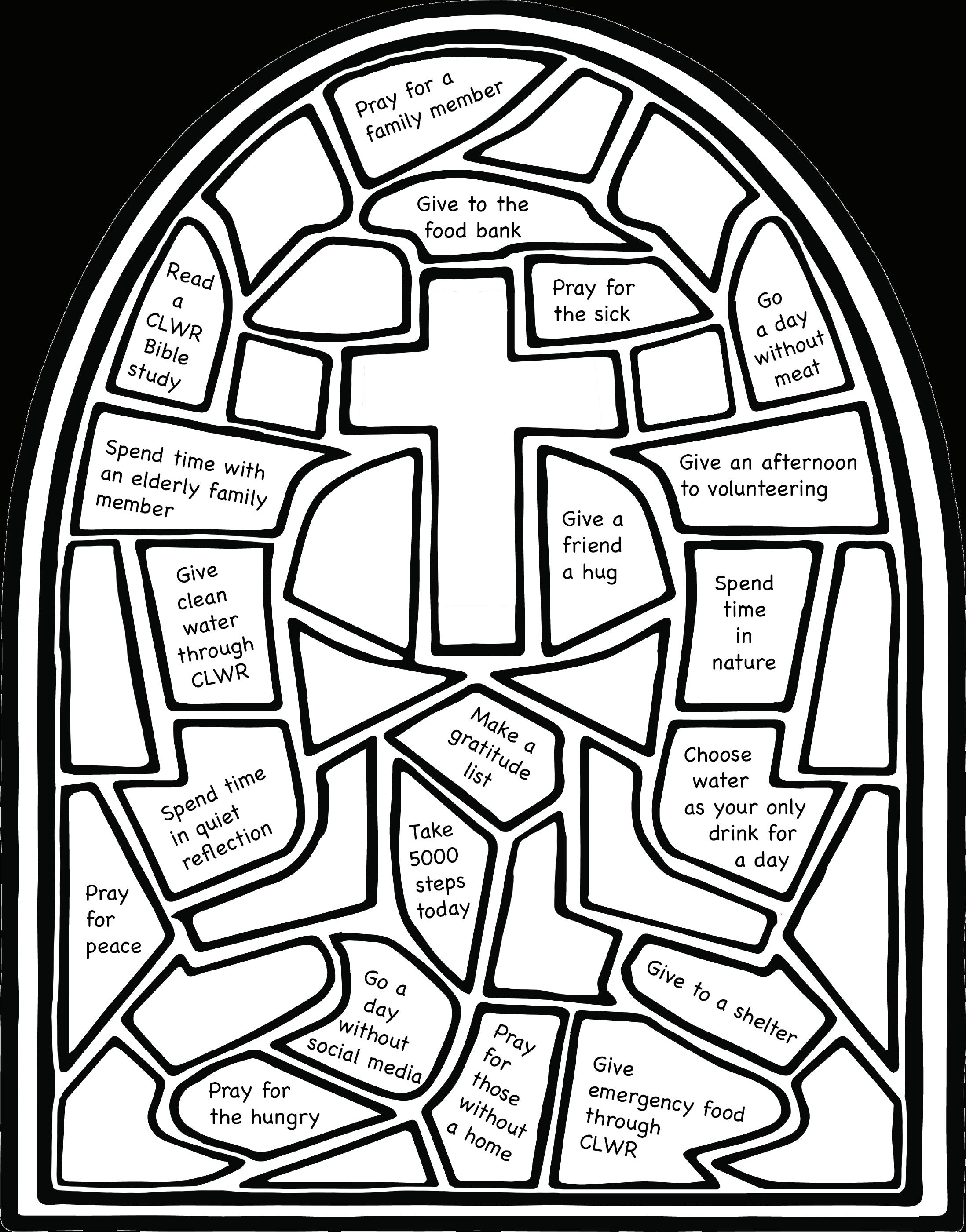
Track your journey through Lent by colouring in each space on the stained glass window as you complete the corresponding activity Feel free to add your own activities in the empty spaces
Track your journey through Lent by colouring in each space on the stained glass window as you complete the corresponding activity. Feel free to add your own activities in the empty spaces.
The Canadian Lutheran is the national publication of Lutheran Church–Canada, published in Winnipeg six times per year: January/ February, March/April, May/June, July/August, September/October, November/December under the auspices of the Board of Directors (Communications and Technology Committee).
ISSN #0383-4247
Member: Canadian Christian Communicators Association
Editor: Mathew Block
Designer: Alex Steinke
Advertising: Angela Honey
Subscriptions: $30/yr
Or Buy-One-Gift-One: $50/yr
Email: a.honey@lutheranchurch.ca
All material and advertising should be in the office of The Canadian Lutheran five weeks prior to publication date. Advertising rate card available upon request.
The Canadian Lutheran 3074 Portage Ave. Winnipeg, MB R3K 0Y2 Telephone: 204-895-3433 FAX: 204-897-4319
Email: editor@lutheranchurch.ca
Materials published in The Canadian Lutheran, with the exception of Letters to the Editor, news reports, and advertising, receive doctrinal review and approval before publication. Contents of supplements are the responsibility of the organization purchasing the space.
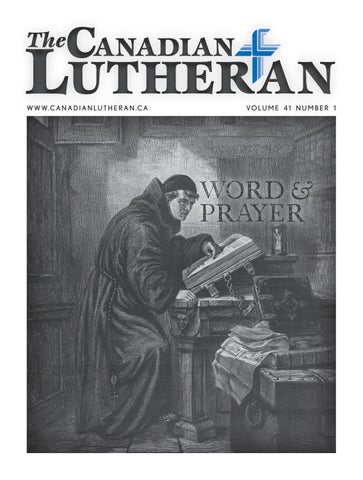
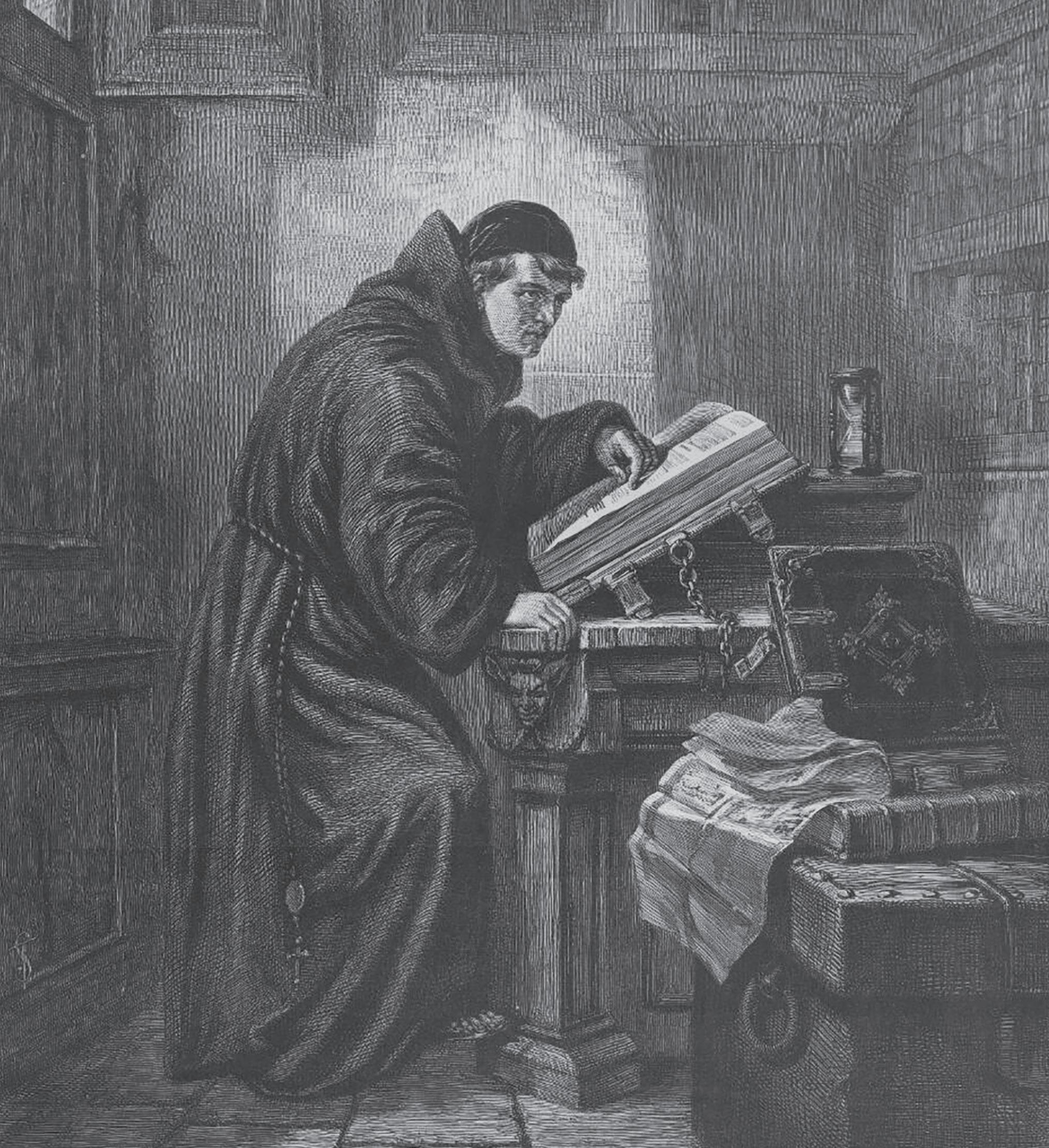
The Christian’s home devotional life revolves around Scripture and prayer. Like congregational worship— where we gather to receive God’s gifts in Word and Sacrament, and then respond to Him with prayer and praise—so too in our personal lives we should take time to meditate upon His Word and offer up our own prayers to Him in response.
Pursuing just one of these devotional practices—Bible reading or prayer—while neglecting the other leads us into dangerous territory. The Bible is not to be approached without a prayerful attitude, as if it were just a book of facts that we can master with enough study. No, God’s Word is “living and active,” and must instead master us (Hebrews 4:12). Mere knowledge of doctrine is not enough. After all, even the demons have that (James 2:19)!
At the same time, a prayer life which is not shaped by the Bible can quickly go off the rails. Jesus Himself rebukes the Samaritans—who did not accept the full Scriptures—for their worship of “what you do not know” (John 4:22). A faithful prayer life must be grounded in both Spirit and in truth (John 4:23-24)— namely, the truth of God’s revealed Word. It is Scripture, after all, that reveals the good news of the Gospel to us.
As we meditate on Scripture, the Holy Spirit forms in us the mind of Christ. For Christ is Himself the Word of God. And as His mind is formed in us, we learn to desire the things that He desires—to will what He wills. Our prayer life is thereby also transformed. We learn to pray as He would have us pray. Word and prayer are intrinsically connected.
The relationship between Word and prayer is especially clear in the Psalms, for they are both Scripture and prayer at the same time. The Psalms model for us the appropriate response to God’s Word, and we seek to make the psalmists’ words our own: “I will meditate on Your precepts and fix my eyes on Your ways,” we say. “I will delight in Your statutes; I will not forget Your Word” (Psalm 119:15-16). The psalms also model for us the importance of prayer, and we seek to make these words our own as well: “Give ear to my words, O Lord; consider my groaning. Give attention to the sound of my cry, my King and my God, for to You do I pray” (Psalm 5:1-2).
These are words written by others; and yet, as we learn to pray them, they become our words also. Our prayers. And yet, as Scripture, they are also God’s Words. As we pray the Psalms then, we pray with other believers and with Christ Himself, His Word mingling with our own words.
This is the kind of prayer to which we aspire as Christians. For when we pray in this way—in words which are steeped in God’s Word and with a will that seeks what God Himself wills—we are promised that we shall indeed receive that for which we pray. “Ask, and it will be given to you,” Jesus promises. “For everyone who asks receives” (Matthew 7:7,8).
As sinners, of course, we do not always or even often pray in this kind of way. We do not perfectly understand God’s Word, and so we often fail to pray in accordance with it. We ask for what we think is best, but it is not always the good which God Himself desires. Our motivations are frequently mixed and impure—and so we do not receive (James 4:3). We need mercy, therefore, in our prayer life as much as we need it in everything else.
We do well, then, to pray as our Saviour Jesus Himself prayed, saying to God: “Nevertheless, not my will, but Yours, be done” (Luke 22:42). When we pray in this way, we recognize that however God answers our prayers will be good—even if we do not always recognize His answer as good this side of heaven. We know we are imperfect. And so we rely on the Holy Spirit to pray in our stead when we do not know what or even how we ought to pray (Romans 8:26-27).
Our features this issue explore the devotional life, focusing especially on the relationship between Word and prayer. Rev. Dr. Richard Beinert explores the ancient Christian practice of lectio divina—that is, learning to read Scripture in a prayerful, contemplative way (page six). Rev. Cameron Schnarr, meanwhile, focuses on Martin Luther’s emphasis on prayer, meditation, and testing (page nine). Finally, President Timothy Teuscher reflects on what it means to live a life of repentance—not only in Lent but throughout the entire Christian life (page 38).
Devotional practices, we know, do not save us. But they are not for that reason unimportant; they direct our attention ever back to the One who has saved us: Jesus Christ, God’s Son, our Lord. Through His death, He has rescued us from sin and death. And through His resurrection, He gives us new life and a new will that seeks to follow where He leads. We willingly hear His Word, therefore, and respond to Him in prayer.
Heavenly Father, awaken in us a love for Your Word and for prayer. For Your Son has promised us: “If you abide in Me, and My Words abide in you, ask whatever you wish, and it will be done for you” (John 15:7). Help us to abide in Christ and His Word in us, dear Lord, that we might learn to will and to pray as we ought. We ask this in Jesus’ name. Amen.
Scripture & Prayer
The Art of Lectio Divina
How is your Bible reading? How about your prayer life? These are important questions to wrestle through because, if we are honest, the vast majority of us have plenty of room to grow. And, if you’re anything like me, linking these two together—Scripture reading and prayer—becomes an extra challenge because, culturally,
by Richard A. Beinert
these two swim in different streams. Yet, when we look at the practice of the ancient Church, as well as Martin Luther and the Reformers who followed him, we see that reading and prayer fit together like hand and glove.
The ancient description of the prayerful reading of Scripture is captured by the Latin name lectio divina—that
is, a “divine reading” of the biblical text through which we read, see, and learn but also are raised into prayerful conversation with our Triune God Himself throughout our daily lives.
Today, reading is often associated with fantasy, entertainment, or deep academic study. Many of us tend to put Scripture reading somewhere in this last category. I’m not suggesting that reading Scripture to deepen our understanding of the Bible is somehow wrong; but if we’re not careful, lectio divina can become side-tracked into a chiefly academic pursuit, rather than allowing the Holy Spirit to use His Word to wash deeply over, in, and through us—to draw us more deeply into that holy conversation of prayer where we become increasingly transformed by the Word of Christ. Reconnecting our lives of prayer to the Words of Scripture, then, should not be just a side-pursuit for us in our day and age, where prayer is too easily forgotten, but a return to our roots—our Christian roots—in Jesus Christ Himself.
St. Jerome, an important Bible scholar of the early Church, insisted that “ignorance of the Scriptures is ignorance of Christ.” We really don’t come to know Jesus without the Bible in our eyes, ears, and hearts. He goes on to elaborate that “reading invites application. Constant application produces familiarity. Familiarity produces faith and makes it grow.” For Jerome, it was important the Scripture not be used just ‘every now and then,’ but rather, as an as another ancient writer St. John Cassian encourages, regularly and intentionally. Cassian urges us to apply ourselves with all our strength to the reading of the Bible—to slow down and spend time in the Scriptures—until continual meditation fills our minds and draws us into its own likeness.
of the early Church, St. John Chrysostom, admonished his hearers to mark the words of Scripture as they are read and preached in church, and then to bring them home, discuss them, and repeat them together. He even suggested that the home meal should include a healthy helping of Scripture as our spiritual food. All these ideas would be echoed 1,300 years later by Christian Scriver, a Lutheran pastor and devotional writer, as he sought to reawaken a lively concern for attentiveness to the sermon and the devotional use of the Scriptures in the aftermath of the Thirty Year’s War in Germany.
We really don’t come to know Jesus without the Bible in our eyes, ears, and hearts.
You might be familiar with Luther’s own trio of prayer (oratio), meditation (meditatio), and trials (tentatio) as a model for the study of Scripture. Luther suggested that following this pattern of prayer helps to form us into great theologians like the sainted heroes of the ancient Church. Learning facts and details from Scripture is certainly part of this, but the process of meditation goes much deeper than speed-reading and memorization. Luther compares meditation to the slow process of a cow chewing its cud, where we take what we have read or heard and then “ruminate” on it— that is, intentionally turning it over in our memories, even repeating the words in order to hear them again and taste them in our mouths, so that we slow down and allow them to sink more deeply into the depths of our awareness.
Both Jerome and Cassian remind us that God’s Word is busy and active, something Luther also echoed, the Word working like leaven in the lump of our lives, putting our Old Adam to death and raising us up renewed in Christ. Scripture fills us and transforms us as we linger over the words of the text. This is why Jerome described the hearing and reading of the Scriptures as an “opening [of] our sails to the Holy Spirit without knowing on what shores we will land.” As Isaiah once put it, God’s Word accomplishes that for which it is sent (55:11). For this reason, another giant
This is where tentatio (trials) likewise come in. It is that feeling of struggle when the Holy Spirit, in and through the Word, works to reshape us, reform us, and renew us through His own activity. He leads us to become aware of our own particular knots of sin (we all have them), to unravel and break them, leading us always back to Jesus who feeds and nourishes us with His own life-blood at the Altar. That experience of having our Old-Adam-sinfulness challenged is always felt as a trial, as our old sinful self tries to keep its head above water. And yet, it is here, through the Word, that our Heavenly Father continues to pour out His Holy Spirit into our lives, in order to crush our sinful self and raise us to Gospelnewness of life in Christ. This is why prayer without Scripture as our anchor can so easily lead us astray; rather than building on Jesus whom we meet in the Word, we
Prayer without Scripture as our anchor can so easily lead us astray.
build upon our own inner impulses and ‘whatever seems best’ in our own eyes.
How do we do all this in daily life? Going to church and being actively attentive throughout the worship service is the best place to start. This is the original practice of lectio divina which arises out of the Scriptures. It forces us to get ‘out of our own space’—not just physically, but emotionally and intellectually. We we set aside our own head-space in order that Christ might fill us. Another thing we can do is to slow down deliberately when we are reading and praying. Too often, we look at devotional times as ‘just another thing I gotta do,’ and we don’t actually allow time or space for our Heavenly Father to speak His peace into our hearts. Luther, in writing to his barber, once suggested that we rush too much in our prayers; it is better, he said, to slow down and tarry—to linger—over words, phrases, expressions that catch our interest, surprise us, or challenge our way of thinking. These are teachable moments that the Holy Spirit gives us, in order to knock us out of our sinfulself ruts so that we can be renewed by Christ.
Christian Scriver also liked the image of a family chest where money is stored. He reminded his readers that in the same way we store up coins for our future—for our children’s future—we should likewise make a point to encourage our children to store up (i.e., to memorize) Scripture as our treasure for eternal life. Scriver even recommended the practice of searching the Bible for verses that start with each letter of our names, so that we begin to see God’s Word inscribed even within our own identity in the world.
Luther and later writers also used lectio divina as a way to encourage people to see their own lives through the lens of God’s Word. One example is learning to think of reading Scripture as if you were putting on your trousers. You have four pockets to fill with what you need for the day: two for the Law and two for the Gospel. One to curb your sin (Law) and one to treasure words of grace and forgiveness for your sins (Gospel). One pocket to remind you of your obligations towards your neighbours (Law) and the other to remind you to live in love and grace (Gospel).
Another excellent example comes in the hymn “Speak, O Lord, Your Servant Listens” (LSB 589), written by Anna Sophia von HessenDarmstadt, abbess of a Lutheran sister-house in Quedlinberg in 17 th -century Germany. Here she puts into words the innermotion of lectio divina in a musical form. Her hymn is a beautiful reflection on the sweetness of the Scriptures, depicting a deep desire to be fed, formed, and filled by Jesus. Anna Sophia connects the life of Scripture and prayer in one beautiful motion that carries us throughout our lives. Her hymn is likewise a reminder that the hymnody and liturgy of the church is itself a way for us to chew on God’s Word as a model of meditative prayer!
Retraining our hearts and minds to this kind of attentiveness is perhaps the tentatio of our time. May the Holy Spirit help us to rise up to meet this challenge in faith!
REV. DR. RICHARD A. BEINERT is pastor of Saint James Lutheran Church in Winnipeg.
Iwant to grow. I want to learn. I don’t want my spiritual life to remain stagnant or slowly fade. But spiritual growth is not the same as worldly learning. In the world, growth often comes by accumulation—knowing more, understanding more, controlling more. But spiritual life does not mature that way.
Spiritual growth is not merely a matter of facts, as though knowing the right things automatically makes us whole. The spirit does not grow by information alone. To learn spiritually is to learn a way of being. It is to receive a new posture toward God, toward ourselves, and toward the world.
And the only way that life grows is through repentance. Not repentance as a single moment, but repentance as a way of life. Turning and trusting. Dying and rising. Repenting and believing—different names for the same movement of surrender and renewal. Growth requires death; new life requires release. There is no maturity of spirit without this continual turning toward God in humble faith.
Of course, this is not new. All faithful preaching delivers this God-given pattern. We have heard the call to repentance repeatedly. But the question remains: what does this look like from the inside? What are the inner workings of a life shaped by repentance? What is the concrete how of what the Holy Spirit actually does in us?
Scripture points us to three things: prayer, meditation, and testing. This cycle—this rhythm—is the way the Spirit forms us over time. It is the path by which repentance
PRAYER, MEDITATION, AND TESTING
by Cameron Schnarr
becomes not just something we believe in our mind, but a life we grow into and live.
Martin Luther wrote about this cycle of spiritual growth:
Here, then, I will give you my own experience and method, which I myself have followed and still follow, so you know how to study God’s Word. First, Prayer: You should pray diligently. Kneel down or stand, lift your hands and eyes to heaven, and with few or many words pray something like this from the bottom of your heart: “O Lord God, dear Father in heaven, I am indeed unworthy that I should lift up my eyes or hands to You in prayer, but since You have commanded us all to pray and have promised to hear us, and through Your dear Son Jesus Christ have taught us both how and what to pray, I come to You in obedience to Your Word, trusting in Your gracious promise. I pray in the name of my Lord Jesus Christ, together with all Your saints and Christians on earth, that You would daily increase faith, love, and hope in me and in all of us, and especially grant me and all who study Your Word wisdom and understanding, that we may learn and know Your holy will rightly and truly…” You must always keep your heart fervent in prayer, and not just rattle off the words.
Secondly, Meditation: You must meditate, not only in your heart, but also externally, by actually repeating
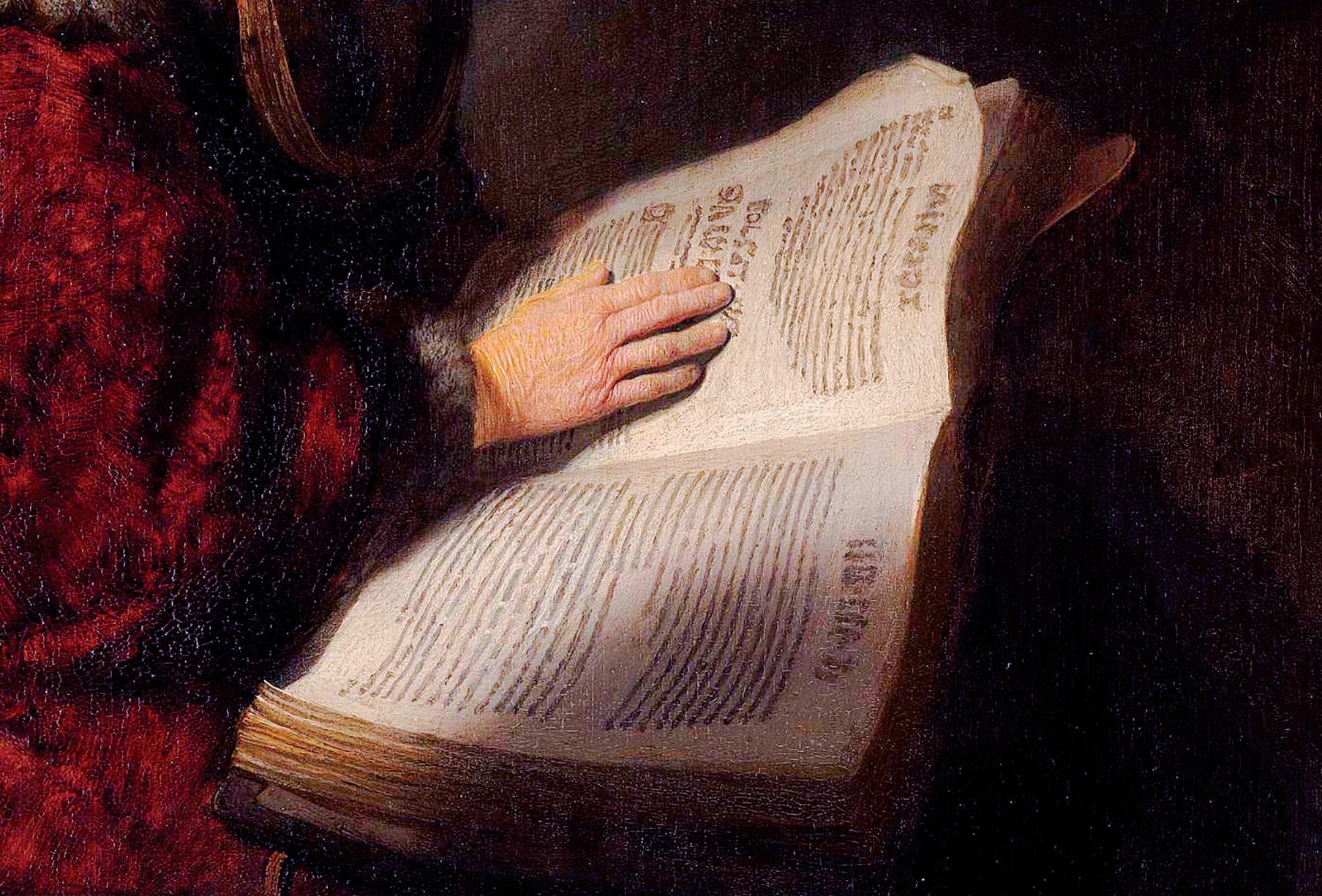
Photo: Dee karen, Adobe Stock.
and comparing the oral speech and literal words of the book, reading and rereading them with diligent attention and reflection, so that you may see what the Holy Spirit means by them. And take care that you do not grow weary or think that you have already done enough. For example, take the Ten Commandments or the Lord’s Prayer or the Psalms or whatever you wish, and work with them until you have thoroughly grasped them. [ Luther himself did this daily. He never stopped meditating on the Ten Commandments and the Lord’s Prayer, even after compiling the Catechism. No, he taught us to say them out loud to start every day. ]
Thirdly, there must be Testing, that is, Anfechtung [ i.e., spiritual trial, affliction, temptation ]. This is the touchstone. It teaches you not only to know and understand, but also to experience how right, how true, how sweet, how lovely, how mighty, how comforting God’s Word is: it is wisdom supreme. That is why you see that in the Psalms David so often complains about all kinds of enemies… He does this so that we may learn that a true Christian is not made by reading, hearing, or speculating, but by living—no, by dying and being damned—not by understanding, reading, or speculating. [ Here is the repentance I was talking about!]
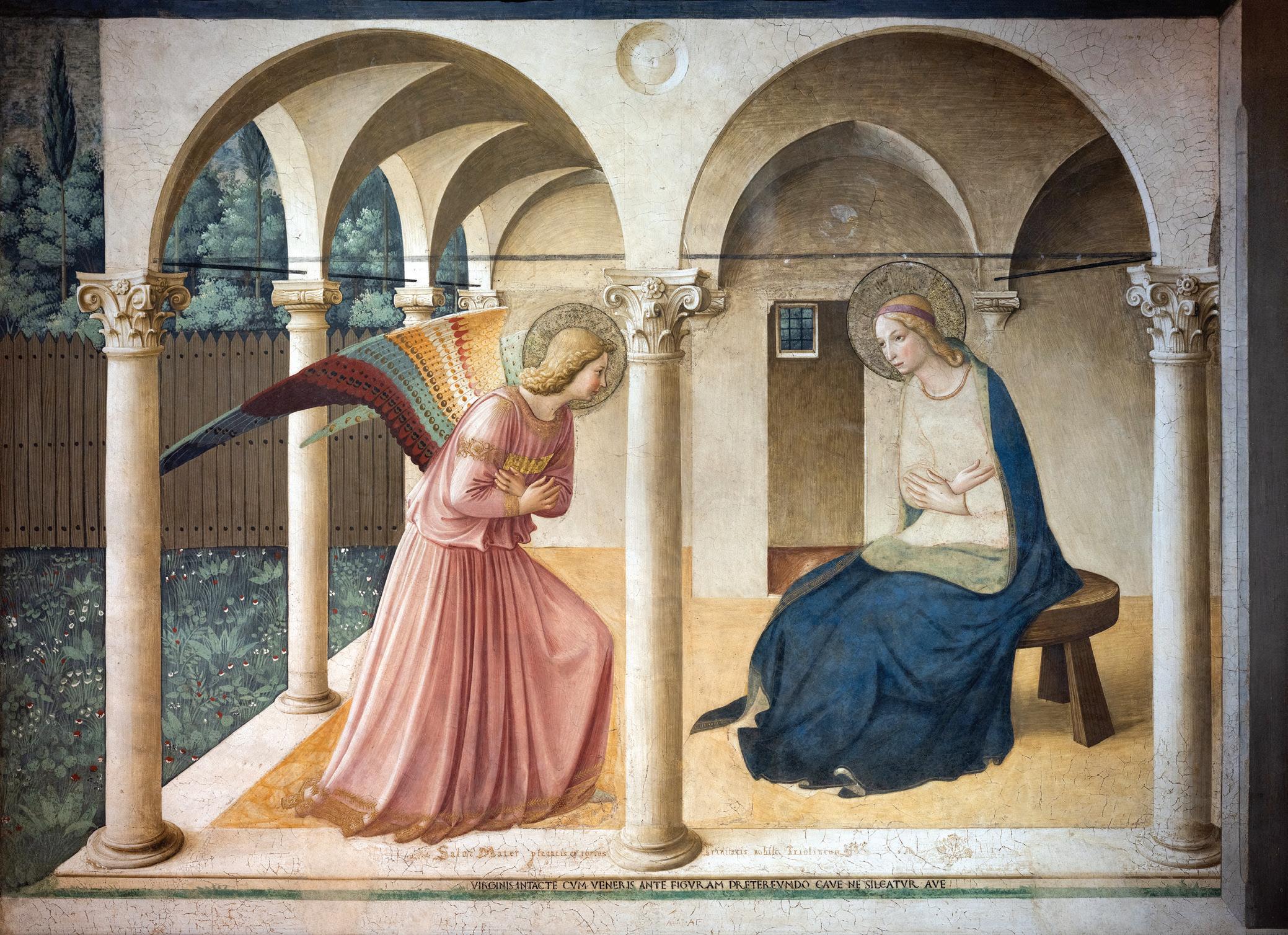
It was a lot to take in. What would her parents think? What would Joseph think? Every person in her life would look at her differently. But Mary was receptive. She had faith. And she trusted that God knows best; whatever His good and gracious purposes were, she wanted them to happen. And so she responds: “Behold, I am the servant of the Lord; let it be to me according to your word” (1:38).
There’s the prayer. “Let it be to me according to your word.” That’s how faith prays. I want Your Word to happen. Let what You’ve said be true for me too. And Mary models the other patterns of faith too. She meditated on the Word of the angel, treasuring up all these things and pondering them in her heart. And certainly, she was also greatly tested. The cost and confusion of being a virgin mother brought shame, misunderstanding, and repeated testing of her faith. But hear her prayer again: “Let it be to me according to your word.”
Do you want to grow? Then pray the Word. That’s what Mary did. She asked God to fulfill His Word in her. Her request was that the Word would happen. Mary prayed the Word. And that’s what you need to do too.
“Prayer, meditation, and testing: this is the cycle the Holy Spirit uses to make your spirit grow.
What does it mean to “pray the Word”? It means that you pray the Word of God that specifically speaks to your situation. For Mary, it was the Word of the angel that she would bear God’s Son. What is it for you? Which Word of God would the Holy Spirit have you pray?
Prayer, meditation, and testing: this is the cycle the Holy Spirit uses to make your spirit grow. Take Mary as an example. The angel Gabriel visited her, but his greeting troubled her. Her sins must have appeared before her eyes. “Do not be afraid Mary,” Gabriel said to her, “for you have found favour with God... You will conceive in your womb and bear a Son, and you shall call His name Jesus. He will be great and will be called the Son of the Most High. And the Lord God will give to Him the throne of His father David, and He will reign over the house of Jacob forever, and of His kingdom there will be no end.... The Holy Spirit will come upon you, and the power of the Most High will overshadow you; therefore the Child to be born will be called holy—the Son of God” (Luke 1:30-33, 35).
• Are you content? At peace? Full of joy? Or do you suffer from jealousy, bitterness or envy?
• Does your heart totally rest in God, or is it always wanting and reaching for more?
• Are you tempted by sex and lust, in images or thoughts or desires?
• Are you patient, or do you find yourself bothered by the rudeness of others?
• Are you stubborn and rebellious, bothered when others have a claim on you?
• Do you find your heart resisting God? Though He would work to make you grow, do you hold back, perhaps in fear?
• Are you careless with His Word, not holding it very high, or merely as high as anything else in your life?
• Is your first thought for your own pleasure, and what pleases you, rather that what pleases God? And not out of obligation, but out of pure love?
These questions might look random, but they are actually a meditation on the Ten Commandments. They start from the bottom and go all the way up. Asking myself questions like this help me know what I need to pray about. I know where I need to turn to God and ask for help. I know where I need His Word on the matter. Consider where you need help from God. Pick one. Then, don’t just pray the commandment; go and find every Word God says about the matter. Search, locate, gather His Word, and receive it all. Believe what it says and ask God for it. This is what it means to “pray the Word.” Ask God to make His Word happen. Imitate Mary and say: “Let it be to me according to Your Word.” Write it down. Keep a prayer journal. Use it every day. Pray the Word. When you step into this way of life, you know what to expect. Testing. Yes, testing. When you ask God to make good on His Word, you must be ready to face the test, because it will come. God is faithful to His promises, and faithfulness means He will give you the opportunity to trust what He has spoken.
He will place you in a moment where His Word must be your strength—not merely something you believe, but something you lean on. And in that moment, you grow. You learn to trust. You share in Christ’s victory. This is how the Holy Spirit leads us in repentance and growth: prayer, meditation, and testing.
The more you live in this rhythm, the more insight, clarity, and understanding your faith will gain. Not because the struggle disappears—it does not—but because your faith deepens within it. Like Mary, when we receive the Word in faith, we receive both grace and struggle. The promise carries a cost.
This is what it means to be a servant of the Lord. It means saying, “Thy will be done.” It means praying, “Not what I want, but what You want, Father.” It means surrendering with trust and saying, “Let it be to me according to Your Word.”
REV. CAMERON SCHNARR is pastor of Beautiful Savior Lutheran Church in Winnipeg.
The Annunciation: Fra Angelico, c. 1450.
ELCE installs new chairman
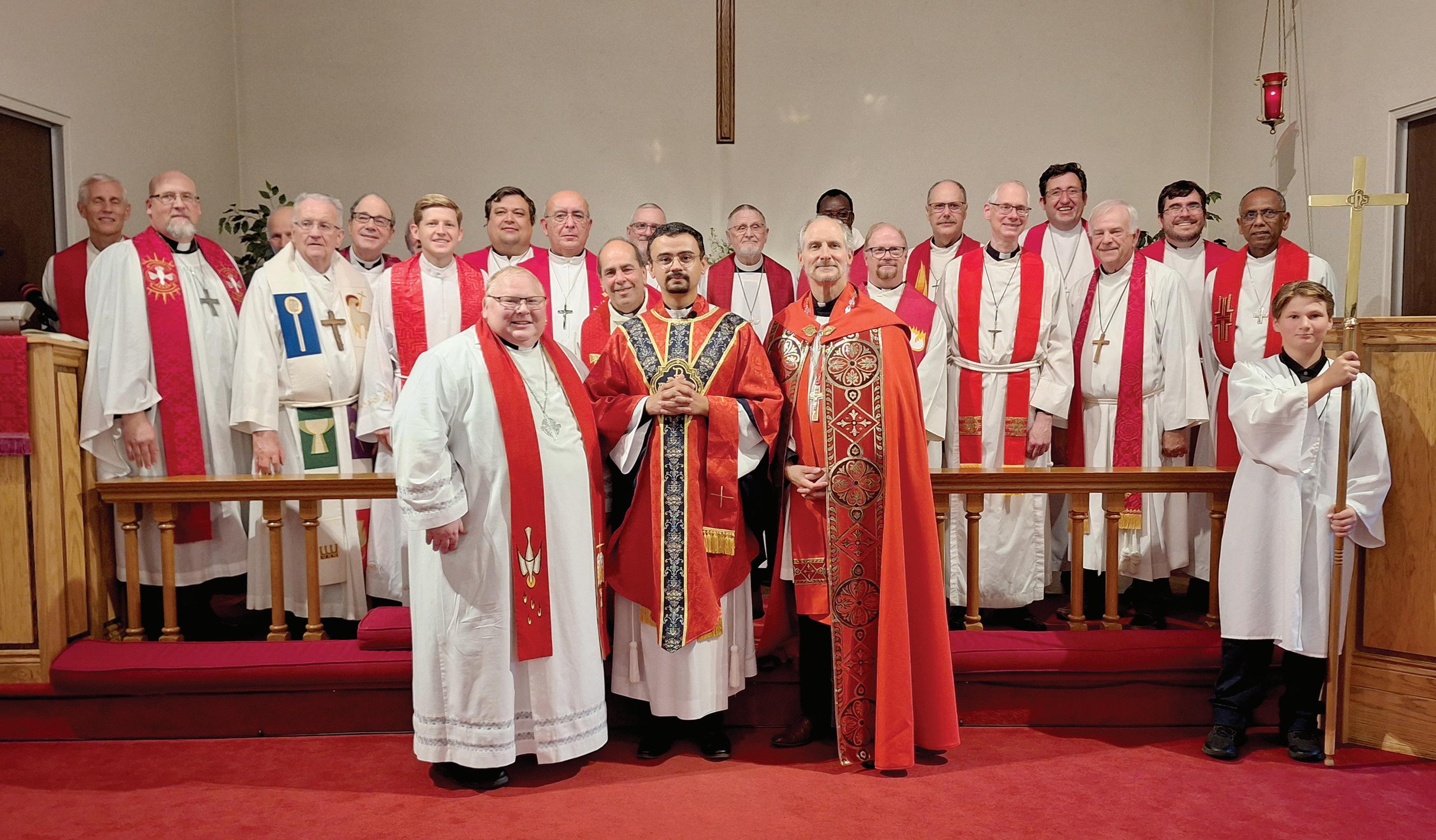
UNITED KINGDOM – The Evangelical Lutheran Church of England (ELCE) held its 71st Annual Synod from November 14-15, 2025, in Tottenham, north London, England, during which time Rev. Tapani Simojoki was installed as Chairman and the church body continued work towards a new structure and name change. The synod theme was “The Joy of the Lord is Our Strength” (Nehemiah 8:10).
Chairman Simojoki was elected during the ECLE’s 2024 Annual Synod, but the church practices a year of overlap between outgoing and incoming Chairmen—hence his installation at the 2025 Annual Synod. Chairman Simojoki succeeds Rev. George Samiec, who had declined to stand for another term at 2024’s synod. Rev. Samiec was first elected Chairman in 2019, and further served world Lutheranism as the European Region’s representative on the International Lutheran Council’s (ILC) board of directors from 2019-2025.
The ELCE’s Annual Synod ended with a Divine Service, during which Rev. Samiec installed Rev. Simojoki as Chairman. Rev. Samiec served as celebrant, and Rev. Simojoki preached for the event. “It’s easier to say than to feel that the joy of the Lord is our strength,” he said. “The good news for the ELCE and for all Christians is that this joy does not describe our
own cheerful feelings, but rather the unquenchable joy that we have in the Lord at all times: the joy of Christ’s death for our sins and the gift of eternal life by His resurrection. Since Jesus is Lord, we have this joy always, and no one can take it away from us.”
Following his installation, Chairman Simojoki installed other ELCE officials who were elected during the synod, including the church body’s treasurer, Dr. Cynthia Lumley, as well as others elected to serve on various committees.
Among other business, the Annual Synod saw the ELCE’s Executive Council report on work towards a name change for the church body, which will better reflect its presence in more regions than just England. To that end, the church is taking steps to become the Evangelical Lutheran Church in the United Kingdom (ELCUK). Following the synod, the ELCE
reported that the Charity Commission has approved the constitution of the ELC-UK. Continued work towards the transition to the new structure will continue in 2026.
This year’s synod also reaffirmed an earlier decision which will see the title of the church body’s leader change from “Chairman” to “Bishop” under the new structure.
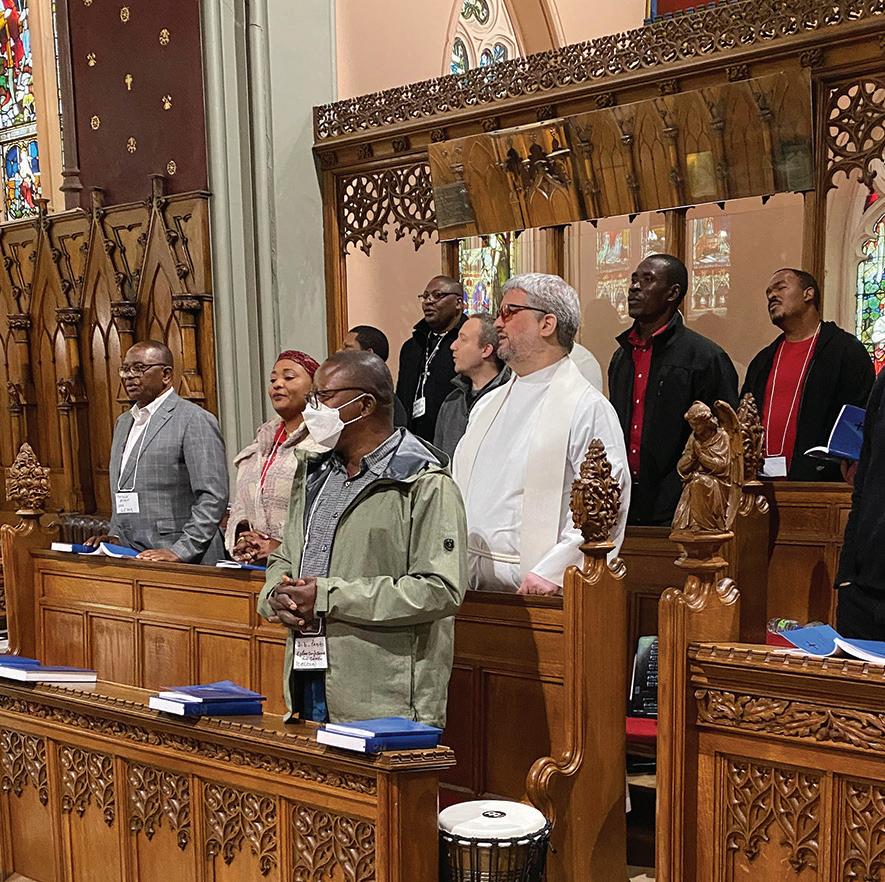
In addition to written greetings from sister churches across the world and from the ILC, the ELCE also welcomed several church representatives in person. These included General Secretary Patrice Legbanon from the Lutheran Church in Africa – Benin Synod ( Église Luthérienne en Afrique—Synode du Bénin – ELA-SBe), as well as Rev. John Fiene and his wife, Solvej, of The Lutheran Church—Missouri Synod (LCMS). The latter were present to report on the Lutheran Mission in Ireland, an ELCE project supported by the LCMS. The mission in Ireland is currently served by ELCE Chairman Simojoki, and has mission sites in Belfast, Northern Ireland, and Cork, Ireland.
In light of his new responsibilities as Chairman, Rev. Simojoki is stepping down as editor of the ELCE’s magazine The British Lutheran. This year’s Annual Synod therefore saw the announcement of Hanna Mitchell as the magazine’s new editor.
ILC News
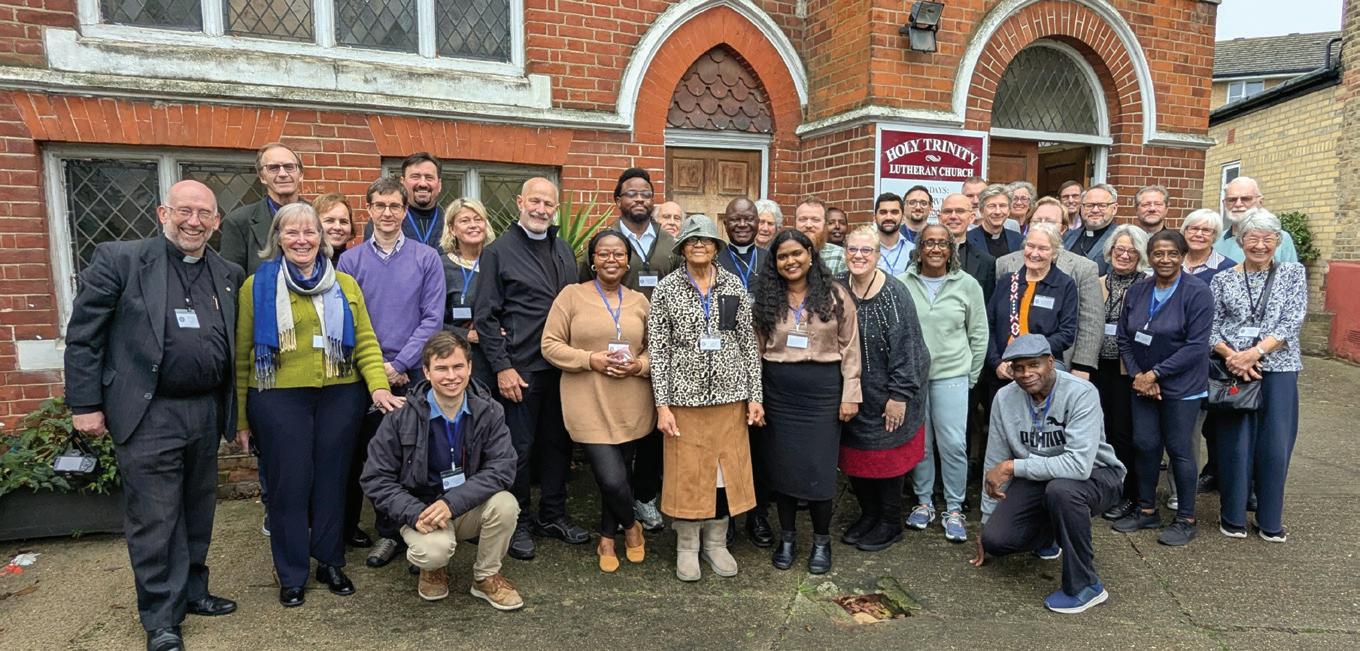
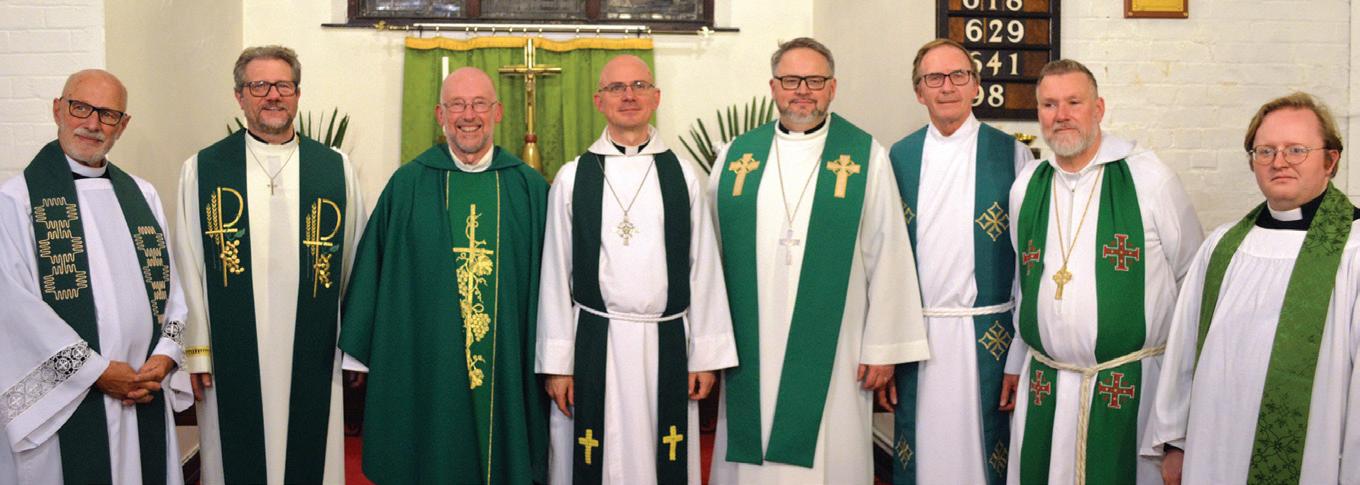
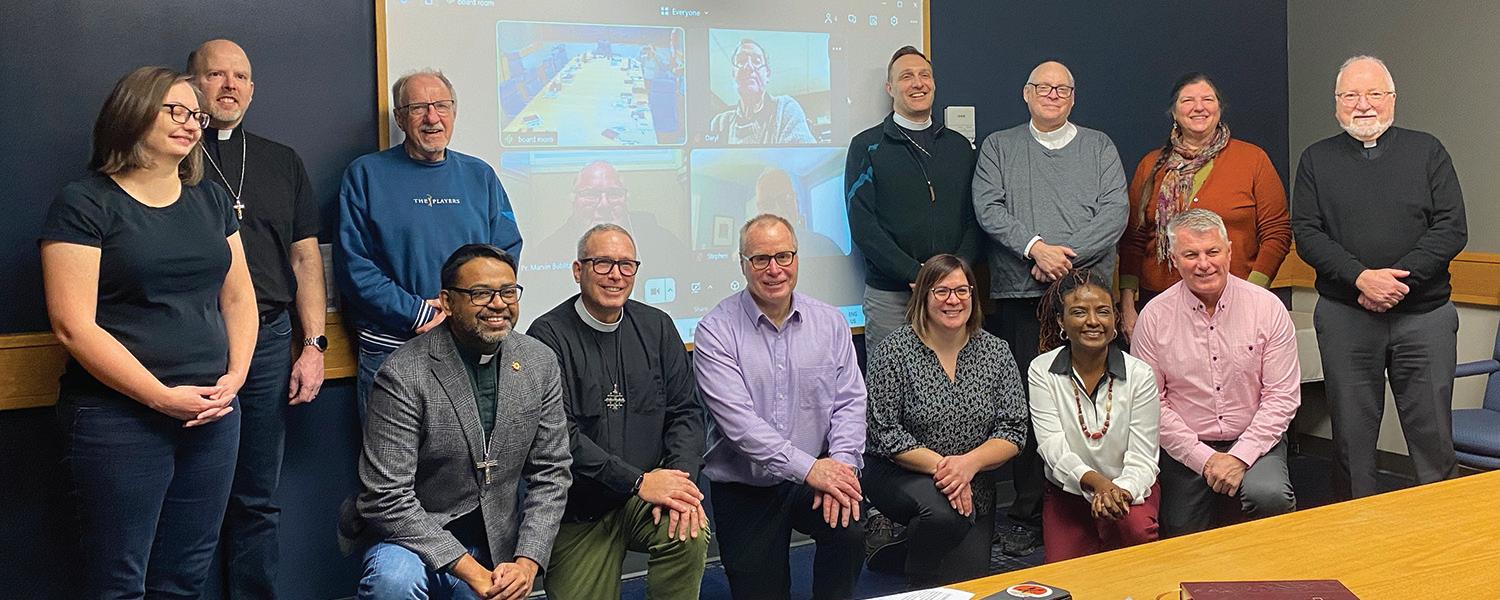
Participants in the ELCE’s 71st Annual Synod.
Outgoing ELCE Chairman Samiec (third from left) and new Chairman Tapani Simojoki (fourth from left) along with other pastors who participated in the installation.
New president for Ethiopian Lutherans
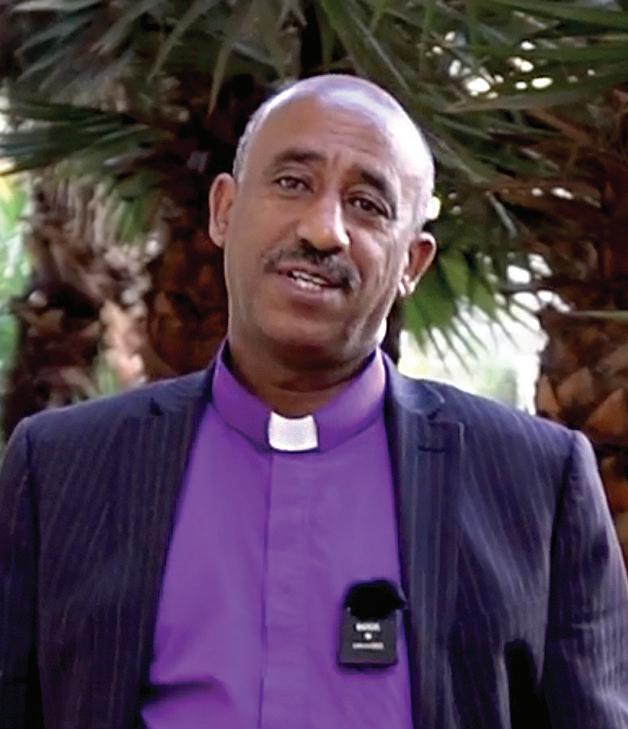
ETHIOPIA – The Ethiopian Evangelical Lutheran Church (EELC) held its Annual General Assembly from August 21-22, 2025, and has elected a new president: Rev. Awoke Chefa.
At the time of his election, President Chefa had served 28 years as head pastor of the EELC’s congregation in Asella; 14 years as President of the Arsi District; ten years as an Executive Committee Member; and two years as the EELC’s Vice President.
“In every capacity of church service, he has been dedicated to God and the church,” the EELC said in announcing President Chefa’s election. “We, the EELC, are delighted to present him as the church’s new president.”
Elected to serve alongside President Chefa as Vice President is Rev. Getu Taye.
Among other business, the EELC’s Annual General Assembly saw the church resolve to issue a clear statement rejecting samesex marriage and related issues as
incompatible with the Word of God. That statement was subsequently released publicly on September 8, and took pains to underscore the EELC’s commitment to not cooperate with overseas organizations that promote unbiblical teaching on human sexuality.
President Chefa succeeds Rev. Mussie Alazar, who had served the church as president for two terms— the maximum allowed under the EELC’s constitution. “Thank you so much, Rev. Mussie Alazar, for your service as president of EELC for two terms,” the church wrote in announcing the completion of his final term. “May God bless you and your service in His Kingdom!”
President Alazar’s tenure saw the Ethiopian Evangelical Lutheran Church join the International Lutheran Council (ILC) as an observer member in 2023.
ILC News
The International Lutheran Council (ILC) is a global association of confessional Lutheran church bodies dedicated to the proclamation of the Gospel of Jesus Christ, grounded in the authority of Scripture and the Lutheran Confessions.
EELC leaders issue a public statement addressing same-sex marriage and related issues.
EELC President Awoke Chefa.
EELC President Emeritus Mussie Alazar.
CONVENTION NEWS
2026 Slate of Nominees
Board of Directors (BOD):
To be elected: 5 lay persons; 3 pastors; and 1 deacon (with at least 1 individual from each region)
James Frey (Central)
David Patrick (Central)
Lois Griffin (East)
Darryll Holland (East)
Reg Tiegs (East)
Delton Zehr (East)
d’Arcy Gamble (West)
Doug Petersen (West)
Shann Visser (West)
Rev. Arron Gust (Central)
CNE Releases Initial Slate for 2026 Convention
NATIONAL – Following a synod-wide nomination process conducted over the past nine months by the Commission on Nominations and Elections (CNE) for Lutheran Church–Canada (LCC)’s 2026 Convention, the CNE has announced the initial slate of nominees for LCC boards and commissions, as well as for the boards of regents of both seminaries.
At this time, the recommended slates for some boards or commissions remain incomplete, with an insufficient number of nominees in certain lay or rostered worker categories, or a lack of representation from specific circuits.
To address these gaps, the CNE will be contacting some individuals who have allowed their names to stand for boards or commissions where there is an excess of nominations, to ask whether they would be willing to be considered for service on a different board or commission.
The CNE also notes that nominations will continue to be accepted up to the time of convention, in order to present a complete slate of nominees for all boards and commissions.
Nominations may also be made from the floor during the convention. Delegates wishing to make a nomination from the floor are reminded that all prerequisites must be met, including written consent of the nominee, submission of biographical and other information relevant to the position, and confirmation that appropriate vetting has been completed. The CNE must be notified in advance of any floor nominations. Intentions to nominate should be forwarded to convention@lutheranchurch.ca.
Additional information regarding the 2026 Synod Convention will be shared through Lutheran Church–Canada communication channels, including the Convention Webpage and InfoDigest.
Rev. Alex Klages (Central)
Rev. Aaron Astley (East)
Rev. Kurt Lantz (East)
Rev. David Dressler (West)
Rev. Mark Hennig (West)
Rev. Tom Kruesel (West)
Dcn. Amanda Hastings (Central)
Dcn. Lenora Simpson (East)
Commission on Nominations and Elections (CNE):
To be elected: 4 rostered workers, at least 3 of whom shall be pastors and 1 may be a deacon; and 3 laypersons (each region is to be represented, if possible, by at least 1 member)
Rod Johnson (Central)
Wendy Chant (East)
Rhonda Abando (West)
Josh Bentley (West)
Karen Hildebrandt (West)
A. Elizabeth Schieman (West)
Rev. Dr. Richard Beinert (Central)
Rev. Aaron Gust (Central)
Dcn. Amanda Hastings (Central)
Rev. Alex Klages (Central)
Rev. Glenn Worcester (Central)
Rev. Kurt Lantz (East)
Rev. Kurt Reinhardt (East)
Rev. Scott Brayall (West)
Rev. Phillip Washeim (West)
CONVENTION NEWS
Commission
on
Theology and Church Relations (CTCR):
To be elected: 2 rostered workers serving congregations, at least 1 of whom must be a pastor or pastor emeriti; and 2 lay persons
Mathew Block (Central)
Shane Kelly (East)
Daniel Smilek (East)
Archie Richardson (West)
Rev. Theodore Giese (Central)
Rev. Jack Hetzel (East)
Rev. Joel Kuhl (East)
Rev. Mike Keith (West)
Commission on Adjudication (COA):
To be elected: 2 rostered workers (the other members of the COA are 3 lay persons appointed by each regional pastor, at least 1 of whom must be a lawyer)
Timothy Lach (lawyer) (Central)
Howard Slater (Central)
Wendy Chant (East)
Valerie Edward (East)
Delton Zehr (East)
Dennis Woolsey (West)
Rev. Aarron Gust (Central)
Rev. Murray Keith (Central)
Rev. Adrian Kramer (Central)
Rev. Dr. Kevin Fast (East)
Rev. John Rapp (East)
Rev. Paul Roggow (East)
Rev. Don Hennig (West)
Rev. Vincent Moore (West)
Rev. Darren Siegle (West)
Commission on Constitution Matters and Structure (CCMS):
To be elected: 3 rostered workers, 1 of whom may be a deacon; and 3 laypersons, 1 of whom must be a lawyer
Timothy Lach (lawyer) (Central)
Cam Pelzer (Central)
Valerie Edward (East)
Lois Griffin (East)
Delton Zehr (East)
Barbara Darrah (West)
Ronald Faulkner (West)
Rev. Theodore Giese (Central)
Rev. Aaron Gust (Central)
Rev. Alex Klages (Central)
Rev. Daryl Solie (Central)
Rev. Aaron Astley (East)
Rev. Joel Kuhl (East)
Rev. Ken Maher (East)
Rev. Kurt Reinhardt (East)
Rev. Jeffery Dul (West)
Rev. Brian Falkenholt (West)
Rev. Andrew McDonald (West)
Regional Mission and Ministry Council (RMMC):
To be elected: 1 lay person from each circuit (the RMMC consists of a lay person and the circuit counsellor from each circuit in the region)
CENTRAL REGION
James Frey (Assiniboine Circuit)
Gloria Rathgeber (Assiniboine Circuit)
Larry Durand (Northland Circuit)
Kirsten Guggenmos (Northland Circuit)
Howard Fiskar (Ontario Circuit)
Gelane Bahiru (Red River Circuit)
Denise Timm (Saskatoon Circuit)
Barb Schentag (Wascana Circuit)
EAST REGION
Mark Rohfrietsch (Stratford Circuit)
Kim Kuhl (Hanover Circuit)
Anna Fierling (Kitchener Circuit)
Peter Dobias (Ottawa Circuit)
David Chant (Toronto Circuit)
Matthew Zvric (Windsor Circuit)
Scott Allan (Niagara Circuit)
WEST REGION
Tiffany Playter (Stony Plain Circuit)
Josh Bentley (Edmonton Circuit)
Darla Hennig (Edmonton Circuit)
Rick Slater (Peace River Circuit)
Hope Mendes (Okanagan Circuit)
Michael Gillingham (Greater Vancouver Circuit)
Braydan Pastucha (Greater Vancouver Circuit)
Sonja Bland (Vancouver Island Circuit)
Charles von Hahn (Cariboo Circuit)
Board of Directors (Concordia Lutheran Theological Seminary, St. Catharines):
To be selected: 1 pastor; and 1 lay person from each region
Jamie Muir (Central)
Peter Dobias (East)
Philip Prozenko (East)
Daniel Smilek (East)
Reg Tiegs (East)
Ivan Boles (West)
Rev. Kai Buck (Central)
Rev. Timothy Schneider (Central)
Rev. Paul Williams (East)
Rev. Jeffery Dul (West)
Rev. Kenneth Eifert (West)
Rev. Brian Falkenholt (West)
Board of Regents (Concordia Lutheran Seminary, Edmonton):
To be selected: 1 pastor; and 1 lay person from each region
Jamie Muir (Central)
Sandra Timm (Central)
Barry Walter (Central)
Peter Dobias (East)
Rev. Clint Magnus (Central)
Rev. Chris McLean (Central)
Rev. Aaron Astley (East)
Rev. Paul Williams (East)
Rev. Kenneth Eifert (West)
Rev. Mark Hennig (West)
CONVENTION
WEBPAGE
THE STANDARD Stand Firm in the Faith
REPORT ON ACTIVITY SINCE LCC'S 2022 CONVENTION | JANUARY/FEBRUARY 2026
LCC Board of Directors (BOD): 2025 in Review
Throughout 2025, the Board of Directors (BOD) of Lutheran Church–Canada (LCC) engaged in work that strengthened our mission and ministry as a synod, while preparing for significant decisions leading into the 2026 Synod Convention.
In response to a resolution adopted at the 2022 Synod Convention, the BOD applied to the Board of Assignments for a Candidate Deacon to serve as Associate Director - Family Ministries. This position was created to enhance synodical support for families and congregations across Canada. Subsequently, Dcn. Samantha Neeb was placed into this role (see The Canadian Lutheran, May/ June 2025, p. 16).
As part of the continued expansion of the Pastors with Alternate Training (PAT) program, Rev. Kevin Walrath was appointed PAT Coordinator. In this role, he works closely with the student cohort as they progress through program courses and requirements, providing guidance and support (see The Canadian Lutheran, March/ April 2025, p. 21).
These appointments reflect the synod office’s commitment to supporting congregations and developing leaders for ministry.
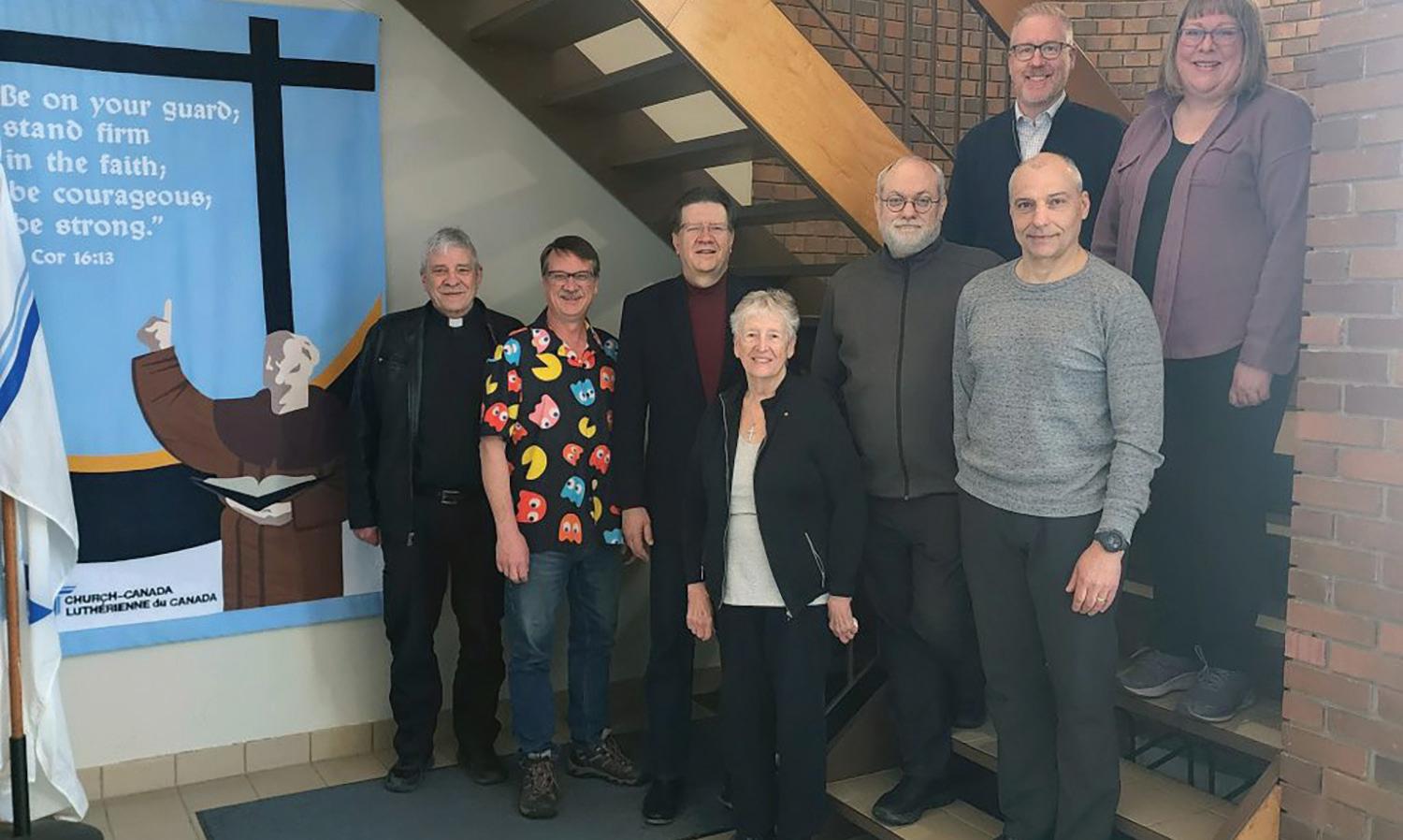
The BOD meets in March 2025. Pictured: President Timothy Teuscher; Rev. Tom Kruesel; Arnold Drung (Chairman); Lois Griffin; Rev. Ted Giese; Rev. Mark Hennig; Vice-President Michael Schutz; Grace Henderson (Secretary). Online: Dcn. Amanda Hastings, Doug Petersen (Vice-Chair); Kirsten Guggenmos.
SUMMARIES
TO SHARE WITH YOUR
(For Convention Delegates & beyond!) CONGREGATION OR PARISH!
Committees
PERSONNEL
The Personnel Committee continued updating job descriptions and the synodical staffing plan in keeping with the Organizational Effectiveness strategic initiatives (see The Canadian Lutheran, Jan/Feb 2025, pp. 16-17). The committee also developed the job description for the new Assistant Regional Pastor role and completed research for the 2026 Compensation Guidelines.
GOVERNANCE
Updates to the Governance Manual for the Board of Directors continued throughout the year. Revisions included updates to the BOD travel and expense policy and additional guidance regarding electronic voting procedures.
FINANCE
The Finance Committee worked closely with Chief Administrative Officer, Dwayne Cleave, to review the proposed 2025-26 budget and audit planning report. Following the completion of the audit in June, the committee reported a clean audit and reviewed all auditor findings.
ARCHIVES
With guidance from the Archives Committee, LCC entered into an agreement with the East District Corporation to assume responsibility for the Malinsky Memorial Archives as part of the district’s winding-up process. The archives are housed at Concordia Lutheran Theological Seminary, St. Catharines.
Commissions
COMMISSION ON CONSTITUTIONAL MATTERS & STRUCTURE
The BOD appointed Timothy Lach of Winnipeg to fill the vacancy on the Commission on Constitutional Matters and Structure (CCMS). The commission continues its work reviewing proposed changes to the LCC Handbook, which will be presented to the 2026 Synod Convention.
COMMISSION ON THEOLOGY & CHURCH RELATIONS
At its October 2025 meeting, the Commission on Theology and Church Relations (CTCR) reviewed LCC’s relationships with various church bodies. These included fellowship discussions with the Lutheran Church in the Philippines (LCP), whose president, Rev. Antonio del Rio Reyes, recently met with LCC President Rev. Dr. Timothy Teuscher and two members of our CTCR – Rev. Dr. Thomas Winger and Mathew Block. This is particularly significant in light of ministry opportunities among Filipino immigrants in Canada. The CTCR also had dialogue with Lutheran Mission–Australia (LM-A) representatives and will be recommending that LCC recognize that a state of fellowship exists between our two church bodies.
LCC maintains a close relationship with The Lutheran Church—Missouri Synod, and with other confessional Lutheran churches through the International Lutheran Council (ILC). Together with the LCMS, we continue dialogues with the North American Lutheran Church (NALC) and the Anglican Church in North America (ACNA).
The commission also reviewed two documents from the President’s Ministry Council—Lay Service Guidelines and Ministry Models. CTCR overtures for the 2026 Synod Convention will be published in the Convention Workbook, scheduled for release on April 3, 2026.
COMMISSION ON NOMINATIONS & ELECTIONS (CNE)
The CNE is presently working to populate the nomination slates for the commissions and boards for the 2026 Synod Convention (see details in this issue of The Canadian Lutheran, pp. 14-15).
Other Updates
RMMC WORK
At their spring meetings, the East and West RMMCs worked with Synod Vice-President, Rev. Michael Schutz, to complete SWOT analyses to evaluate their functioning and to create operating guidelines for future RMMCs, in their function of assisting Regional Pastors. Since the fall, all three RMMCs have worked closely with CAO Dwayne Cleave and Director of Domestic Missions, Rev. Jacob Quast, to develop the 2027-2030 Quadrennial Work Program. Joint meetings in October 2025 and January 2026 encouraged a synod-wide perspective on mission priorities and financial assistance (see details of the January meeting in this issue of The Canadian Lutheran, p. 18 ).
The work of the RMMCs continues to evolve as they support Regional Pastors and strengthen mission across the synod.
BOARD LEADERSHIP
SUMMARIES
TO SHARE WITH YOUR (For Convention Delegates & beyond!)
CONGREGATION OR PARISH!
REGIONAL PASTORS & STRUCTURAL DEVELOPMENT
The BOD received a report from the Regional Pastors (RPs) reflecting on seven years of service since the RP role was established as part of LCC’s restructuring. The report identified areas of progress in implementing the new structure, as well as challenges related to the scope and size of the regions.
One challenge highlighted was the geographic breadth of the regions, particularly the West Region. In response, the BOD established the position of Assistant Regional Pastor for the West Region at its August 2025 meeting. This position will be filled for the first time following the election of the West Regional Pastor at the 2026 Synod Convention (see The Canadian Lutheran, Sept/Oct 2025).
SCHOLARSHIPS
Several applications for Alive in Christ Scholarships were approved in 2025. These scholarships support pastors pursuing graduate studies beyond the Master of Divinity degree.
MEMORANDA OF UNDERSTANDING
Rev. Nolan Astley, LCC’s Memorandum of Understanding consultant, worked with three Listed Service Organizations during 2025 to complete updated MOUs. Agreements with Philoxenia/Hospitality Ministry, Malabar Mission Society, and Haiti Lutheran Mission Society were approved by the BOD, helping clarify relationships within the synod.
SYNOD GOVERNANCE
LCC’s Annual General Meeting (AGM) was held online on June 26, 2025. The 2025 LCC Annual Report was presented during the meeting and is available for download in the ‘Who We Are’ section of the LCC website. The 2026 Synod Convention will also serve as the Synod’s Annual Meeting.
In June 2025, BOD Chair Arnold Drung accepted the position of Chair of LCC’s National Campaign Council in anticipation of the Together One Campaign. To accommodate this expanded responsibility, BOD ViceChair Doug Petersen agreed to assume the duties of BOD Chair until elections at the 2026 Synod Convention.
CONGREGATIONAL MEMBERSHIP
In October, the BOD approved the constitution of St. Matthew’s Evangelical Lutheran Church, Cornwall, formally welcoming the congregation into LCC membership. That same month, St. Matthew’s pastor, Rev. Connor Longaphie, was certified by the LCC Colloquy Committee as eligible to receive a call and was added to the LCC clergy roster (see The Canadian Lutheran, Nov/ Dec 2025, p. 28).
QUADRENNIAL PLANNING & FUTURE DIRECTION
Planning began in March for the quadrennial work program planning conference, which was held in October. Representatives from the Regional Mission and Ministry Councils (RMMCs), the BOD, seminary presidents, and LCC executive staff participated in discussions aimed at setting priorities within the synodical mission plan. This work will result in a focused draft Quadrennial Work Program (QWP), to be presented to the 2026 Synod Convention.
The quadrennial planning process helps ensure that our shared resources are aligned with mission priorities across the synod.
Together for the Sake of the Gospel: Domestic Mission Discernment in LCC
by Tasheney Francis
CANADA – Leaders from across Lutheran Church–Canada gathered in early January with a shared purpose: to discern together how best to steward resources for domestic mission and congregational support in the years ahead. The meeting, convened by the Regional Mission and Ministry Councils (RMMCs) and synodical leadership, reflected not only the complexity of funding decisions, but also a deeper commitment to the Together One vision—that the church in Canada moves forward not as isolated regions, but as one body in Christ.
“This gathering is not about issuing directives from Winnipeg,” said Rev. Jacob Quast, Director of Domestic Missions, in his opening remarks. “It is about coming together so that all voices are heard, priorities are discerned collectively, and we move forward within those shared priorities.”
A Shared Task, A Shared Responsibility
The immediate objective of the two-day meeting was practical and necessary: to allocate funding
for domestic mission work in the upcoming LCC budget and to establish clearer quantitative and qualitative metrics to guide present and future decisions. Yet beneath those objectives lay a more foundational question: how does Lutheran Church–Canada faithfully care for existing congregations while also making room for new mission opportunities?
From the outset, participants were reminded to keep the bigger picture in view. While congregational support remains essential, there was broad agreement that domestic mission cannot be reduced to sustaining what already exists. One of the clearest areas of shared conviction was Indigenous ministry. Participants were careful to emphasize that this work is not a short-term initiative, but a long-term commitment rooted in invitation, presence, and trust.
“We are not going where we have not been asked,” leaders stressed. Relationships, particularly in parts of British Columbia and the Northwest, have developed over time, and communities have invited deeper pastoral presence and care. The
ministry envisioned is focused not on rapid expansion, but on faithful accompaniment, grief support, and spiritual care—one of the emerging ministry opportunities, which along with new mission starts and outreach initiatives must also be part of the Church’s shared imagination.
Financial realities framed the discussion. Between 2022 and 2025, domestic missions funding totaled just over $3.4 million. Looking ahead, a best-case scenario tied to a successful campaign could see $5 million available over the next quadrennium, or approximately $1.25 million per year. For now, budgeting is being built around a mid-range projection of $1.1 million annually, with intentional space left for new opportunities that may arise.
Metrics That Tell the Whole Story
A significant portion of the meeting focused on refining how funding requests are evaluated. Participants acknowledged the value of quantitative measures— such as offerings, attendance, and
financial sustainability—while also recognizing their limitations.
“Numbers alone don’t tell the whole story,” several speakers noted. Congregations with low income but high volunteer engagement, strong community presence, or ministry among newcomers may appear less viable on paper while remaining vibrant in lived reality. This tension led to robust discussion about balancing viability with vitality, and about how qualitative information can help tell the story behind the numbers.
Qualitative criteria—such as unique hardships, motivation and effort, and future prospects for selfsufficiency—were widely affirmed as essential. In many cases, these factors significantly reshaped prioritization. Participants emphasized that this kind of insight often comes not from forms alone, but through relationships: circuit counsellors,
WHAT ARE RMMCs?
Regional Mission and Ministry Councils
• Regional pastor-and-lay teams within Lutheran Church–Canada
• Discern mission priorities and congregational support needs
• Allocate domestic mission and ministry funding
• Identify and encourage new outreach opportunities
• Act as a communication bridge between congregations and the synod
Why they matter:
RMMCs bring local insight to national discernment, helping LCC live out the Together
One vision—serving diverse communities while moving forward as one Church.
NATIONAL NEWS
lay representatives, regional pastors, and RMMC members who know local contexts well. So, forms must be revised so the core of these stories can be captured.
The discussion highlighted a desire for greater structure without creating unnecessary burden. Ideas included guided narrative questions, opportunities for local presentations at the circuit level, and clearer links between qualitative and quantitative data. The goal is not bureaucracy, but transparency, consistency, and shared understanding.
Regional Voices, One Conversation
Regional presentations formed the heart of the gathering, offering concrete examples of how these principles play out on the ground.
In the West, requests reflected congregations that are often the sole Lutheran presence in vast or rural areas—places where losing a congregation would mean losing Word and Sacrament ministry across an entire region. From rural farming communities to language-specific ministries and outreach to the Deaf community, presenters stressed that these congregations are “irreplaceable,” even when small in number.
Eastern presentations highlighted long-standing needs across a geographically and culturally diverse region. Challenges ranged from pastoral vacancies and language ministries to sustaining presence in the Maritimes and Quebec. Speakers underscored the importance of communication, reconciliation in ministry relationships, and the need to support congregations not only financially but also through connection and collaboration.
Central Region presenters reflected on how quantitative and qualitative assessments sometimes led to different conclusions, reinforcing the need for both. Stories included multi-point parishes stretched thin,
Indigenous outreach opportunities, partnerships across borders, and the pastoral and emotional care of those who have faithfully sustained congregations for decades.
Across all regions, difficult questions surfaced repeatedly: How do we plan for long-term sustainability? What does success look like in ministry without reducing it to metrics alone? How do we care for ‘grandmas and grandpas’ who have carried congregations faithfully, while also reaching the next generation and those who have drifted away?
Intention to Be Together
Throughout the meeting, one theme returned again and again: the importance of being together. There was strong consensus that transparency, shared narrative, and collective discernment are the solution. It was recognized that, after all, while we meet to divide funds across regions, domestic mission is one interconnected story across the synod.
The meeting concluded not with final answers, but with renewed clarity of purpose. Lutheran Church–Canada is seeking to steward resources responsibly, to communicate openly, and to act together—supporting existing congregations, cultivating new mission opportunities, and bearing witness to Christ across Canada.
As the Together One vision reminds us, the work in one place ripples outward—to neighbouring communities, across regions, and even beyond our borders. This gathering was one step in continuing that shared journey.
Dr. Tasheney Francis is Director of Communications of Lutheran Church–Canada.
Staff transitions at LCC National Office
CANADA – Lutheran Church–Canada (LCC) is pleased to welcome Henry Drewlow as Accounting Supervisor and Cousby Fernandez as Digital Content and Communications Coordinator during a season of transition.
Drewlow, raised on a dairy farm near Beausejour, Manitoba, has worked in accounting since 1995, most recently with MNP LLP— Accounting, Business Consulting and Tax Services in Winnipeg, serving agricultural businesses and farm corporations. A member of Holy Cross Lutheran Church, where he serves as treasurer, Drewlow now brings his decades of experience to the national office accounting team in Winnipeg.
With similar glowing recommendations, Fernandez now serves as interim Digital Content and Communications Coordinator while Digital Content and Communications Manager Alex Steinke is on maternity leave. A member of a LCMS congregation, Fernandez is responsible for managing the congregation’s media
platforms and for developing Christcentred, engaging content. Along with experience in graphic design, Fernandez brings her talent and passion to LCC’s Communications.
We thank God for their service and pray His blessing upon their work.
LCC Contact Detail Changes
In light of these and other changes, we have released an updated Synod Contact Guide to direct inquiries to the right place. The revised contact guide provides a breakdown of who to contact, when to contact them, and for what purpose. Each section outlines the primary contact for specific needs, helping LCC members connect with synod staff more easily. The updated Contact Guide can be accessed at: lutheranchurch.ca > Contact
Significant personnel changes are reflected in the new guide:
• Dr. Tasheney Francis is now serving as Director of Communications
• Alex Steinke has transitioned into the new role of Digital
Communications and Content Manager, which she will resume upon returning from maternity leave
As part of these updates, communications-related emails will now be monitored by Dr. Francis for general communications matters at communications@lutheranchurch. ca. National news submissions for The Canadian Lutheran can also be directed to Dr. Francis.
A new, separate email address will be used to contact Steinke (asteinke@lutheranchurch.ca) for matters pertaining to the website, InfoDigest, and social media; mission and education news submissions for T he Canadian Lutheran ; and inquiries about LCC’s congregational site toolkit. As Steinke is on leave, this email will be monitored by Fernandez in the interim.
These changes aim to streamline communication, reduce response delays, and better support the needs of our synodical family. We encourage congregations and leaders to review the updated guide and update their records accordingly.
Thank you for your voice in Synod Communications
CANADA – In January 2026, Lutheran Church–Canada launched a synod-wide communication survey, and you responded. We extend our heartfelt thanks to everyone across the synod who took the time to complete it. Participation came from every region and across all age groups—a clear sign of our shared commitment to staying connected as the body of Christ.
While participation among those aged 18-25 was limited, we were especially encouraged by the strong response from members aged 65 and over. We note with particular gratitude that one respondent, aged 88, also took the time to complete the survey. This is a meaningful
reminder that faithful engagement spans generations. The willingness of so many to offer thoughtful feedback is deeply appreciated, and we are grateful for the time and care given by all respondents—sharing your insights, experiences, and hopes.
As we move forward, we ask for your patience as current communication systems are prayerfully reviewed. Survey feedback will guide necessary adjustments and improvements, always with attention to the needs of our synod brothers and sisters and in service to the Church’s mission.
You are also invited to prayerfully consider opportunities for voluntary service in communications. Such
service may include participation as a lay delegate for your congregation, becoming an active member on the communications sub-committee within your region, volunteering at the upcoming Synod Convention, or offering your communication expertise to LCC Communications by serving on the Communications and Technology Committee (with video-editing skills and expertise in other related fields for example). We ask that you consider becoming a volunteer. Through these avenues, and by God’s grace, many of the survey’s recommendations may be thoughtfully implemented.
Thank you again for your engagement, your counsel, and your continued faithfulness.
Family Resources: New LCC material and expanded resource pages
CANADA – Lutheran Church–Canada (LCC) has expanded its Family Resource pages, adding dozens of new resources and several new categories to support faith formation in the home and beyond.
As families enter a new year, these resources offer timely encouragement for establishing and renewing faithful habits at home—especially regular prayer, Scripture reading, and establishing a devotional practice as a household.
Among the additions is a new LCC resource entitled A Brief Guide to Home Devotions: Using the Lutheran Service Book . This onepage guide introduces families and individuals to the rich devotional material found in the Lutheran Service Book (LSB) and offers practical help for incorporating the hymnal into daily prayer.
The guide highlights the hymnal as a treasured resource for home devotions, noting that it includes brief services that can be used for individuals and families, Psalms, Scripture reading plans, prayers, Luther’s Small Catechism, and hymns. It also encourages families to set aside a regular time for daily devotions and suggests speaking with a local pastor about borrowing a hymnal if one is not available at home.
To assist users in navigating the Lutheran Service Book , the guide points to key sections especially helpful for daily devotional use.
Building on the recent release of two print-at-home Advent Devotional Calendars designed with families in mind, these new materials reflect LCC’s ongoing commitment to equipping households for faithful living and prayer centred on God’s Word.
TURNING AND RETURNING
Lenten Journey of Repentance and Renewal
M.L. Smith
We pray that these resources will be a blessing to the many young families across our synod and will support regular devotion and prayer in homes throughout Lutheran Church–Canada.
You can find this guide on LCC’s website under Family Resources > Home Use > Devotions and printed on the back cover of this magazine.
LCC unveiled new 2026 Lenten resources
ONLINE – Lutheran Church–Canada (LCC) has released two new resources for the season of Lent in 2026: a Lenten devotional for individual and congregational use, and a print-athome family devotional calendar.
A New Lenten Devotional: Turning and Returning
The devotional, Turning and Returning: A Lenten Journey of Repentance and Renewal, is written by Rev. M.L. Smith and beautifully complemented by original artwork from LCC member Harrison Avery Prozenko.
“Lent is not merely a season of self-denial or somber reflection,” notes the introduction. “It is the sacred journey of the baptized, from ashes to Easter, from death to life, from
wandering hearts to the welcoming arms of Christ. At the heart of this journey is a call as old as the prophets and as urgent as today: ‘Return to the Lord your God, for He is gracious and merciful’ (Joel 2:13).”
Structured around the penitential rhythm of the season, the devotional guides readers through weekly themes of turning: from the world, from idols, from pride, from fear, from guilt, from self-sufficiency. These movements are not presented as superficial moral adjustments but, as the devotional emphasizes, “movements of the heart back to the Cross, where grace flows freely and new life begins.”
Each day’s devotion includes Scripture, prayer, and sacred hymnody—centred on Christ, who calls His people to repentance and receives them with mercy.
A Family Devotional Calendar for Lent
Following the success of LCC’s Advent Devotional Calendars, a family-focused Lenten calendar has also been released, designed to help households observe the season together through daily Scripture reading, prayer, and reflection.
“[Lent] is a penitential season of preparation as we look ahead to Christ’s death on Good Friday and His resurrection on Easter Sunday!” the resource notes. “During this time, we remember what Christ has done for us, by His death and resurrection, paying the price for our sins and accomplishing our salvation.”
Building on this understanding of the season, the calendars invite families to reflect on Christ’s sermon on the mount and on the plain.
The family calendar is available in both English and French and includes tips for beginning a daily devotional practice, additional guidance and support for families with children of varying ages, as well as links and resource options for those seeking other relevant materials this Lenten season.
We pray that these new resources will be a blessing to individuals and families across our synod, serving as a supplement to attendance at your local congregation’s midweek and Divine Services and encouraging readers to fix their eyes on the crucified and risen Lord.
Where to Find Them!
Both of these resources are available as free digital downloads on LCC’s website under Family Resources > Church Year > Lent for personal or congregational printing. Those interested in obtaining a paperback copy of Turning and Returning: A Lenten Journey of Repentance and Renewal can do so through Amazon.ca.
Vicarage Placement Fund: Helping
Congregations,
Supporting Vicars
NATIONAL – Is your congregation considering hosting a vicar in the coming year? Have you ever considered whether your congregation provides the kind of training the next vicar needs? Vicars need mentors. Congregations need well-trained pastors. Lutheran Church–Canada is committed to both.
Supporting Congregations in Formation and Ministry
Vicarage placements continue to play a vital role in the formation of future pastors and in supporting congregational ministry across Lutheran Church–Canada. Through well-structured vicarage placements, vicars are formed into capable, well-trained pastors, equipped to lead Christ’s Church.
Many congregations are able to provide the training and mentorship vicars need but may not have the financial capacity to cover all associated costs. Traditionally, congregations requesting a vicar have been responsible for providing vicarage housing, moving costs, travel expenses and a monthly salary. What if Lutheran Church–Canada covered the salary?
Recognizing the commitment host congregations make, LCC has decided to partner more intentionally with congregations that provide vicars training, by introducing an important update to the Vicarage Placement Fund beginning in 2026. This information was sent out to congregations and made available online in January 2026.
NEW FOR 2026: Vicarage Placement Fund Update
Beginning in 2026, the LCC Vicarage Placement Fund will provide funding to the host congregation to:
• Cover the full twelve-month salary for vicars
• Pay the employer portion of CPP and EI
The host congregation will now only cover vicarage housing, moving costs, and travel expenses. These changes are intended to reduce the financial burden on host congregations and encourage continued participation in vicarage formation.
For full details, please refer to the updated Vicarage Agreement (2026).
Lutheran Church–Canada encourages congregations to begin planning now and to take note of important updates to the vicarage placement process for 2026.
All requests from congregations for Candidates and Vicars must be submitted to their Regional Pastor by February 23, 2026. Timely submission ensures that placements can be processed efficiently and with appropriate pastoral support.
Request forms are available on the LCC website under Resources > Congregational Resources. Congregations are asked to carefully review the subtitles on each form to confirm they are using the correct documentation for either calling a candidate or requesting a vicar.
To assist with clarity and processing, congregations are strongly encouraged to use the fillable online forms. Scanned or handwritten forms can be difficult to read and may result in delays.
Contact your Regional Pastor with any questions or for further assistance as you discern your next steps in calling or hosting.
Ihave heard it said in our day, “what the world needs most today are more heroes.” And if you track the message of media in our world, it would have us focus our attention on heroes and put our hope in such heroes and their works. They would have us aspire to be a hero.
The Scriptures point us in an opposite direction. They point us to servanthood. In the Gospel of Mark, Jesus called people to Himself, saying: “You know that those who are considered rulers of the Gentiles lord it over them, and their great ones exercise authority over them. But it shall not be so among you. But whoever would be great among you must be your servant, and whoever would be first among you must be slave of all. For even the Son of Man came not to be served but to serve, and to give His life as a ransom for many” (Mark 10:42-45).
I want to raise up before you those who have followed Jesus’ bidding and whom He has called into service in the Office of Holy Ministry, and also those whom He has called to serve as deacons and deaconesses in the church. Theirs is a noble task, the Scriptures say (1 Timothy 3:1). Such service is rendered under the cross under constant attack by sin, death, and devil, both from outside and from within. In our days, pastors and church workers have physically suffered horrific torture and the pangs of death for the sake of faithful service to their Lord, and much of the time their faithful toiling, suffering, and death remain unknown to us.
The season of last things begins with the great festival of All Saints,
WEST REGION NEWS
ALBERTA AND BRITISH COLUMBIA
GOD’S GOODNESS AND THE FAITHFUL SERVICE OF CHURCH WORKERS
FROM THE REGIONAL PASTOR | REV. ROBERT MOHNS
the remembering of all those who have gone before us in the faith and have been gathered up into the awaiting of that awesome day of His return. Among that great crowd, including cherubim and seraphim, stand the prophets and apostles and the noble army of martyrs, as we sing in the order of Matins.
I find it interesting that the festival days of Christmas are interspersed with so many remembrances of apostles, theologians, pastors, and deacons of the church who have faithfully pointed us to Christ. It is good for the members of Lutheran Church–Canada to continue to remember her servants and to set aside time to reflect upon their faithful work providing God’s people with His saving gifts and to give thanks to God for them. I entreat you to join me in remembering them not as heroes, but as faithful servants who received from the Lord what they also passed on to us.
A profitable earthly image to help us might be that of a bucket brigade, where water to put out a fire is passed along a line of firefighters. So, the Lord’s saving Gospel was poured into our pastor, to be poured into us and into the next generation of church workers.
In the past year, the following Lutheran Church–Canada workers have been called to glory: Rev. Paul DeBlock, Rev. Paul Eifert, Dcn. Katherine Enders, Rev. Lowell Guebert, Rev. Richard Klein, Rev. Dr. Edwin Lehman, Rev. Michael Montague, Rev. Louis Natzke, Rev. Dr. Harold Ruf, Rev. Sanford Schelp, and Rev. Dr. John Wilch.
Our pastors and church workers did not come down from heaven, but
were born and raised by parents. Many married and bore children. As we give thanks to God for our workers, so we also give thanks to God for the families who supported their ministry. We remember especially the widowed spouses of our workers, lifting them up in our prayers. I encourage all of us to look in on these beloved spouses and provide for their care.
In the West Region, one out of every three congregations is experiencing a vacancy in the Office of Holy Ministry. The Lord’s prayer for more workers for the harvest continues to be raised up among us all.
Consider those who have gone before us, their example of selfless service and faithfulness by which our lives have been enriched. Consider the noble task of servanthood and sacrificial service to the Lord of the Church, which has eternal significance for the people in our communities and around the world. Consider their example, their faithful preparation and study of God’s Word and service in the church, and their continual prayers for God’s guidance and encouragement. Be open to God’s calling for service in the Office of Holy Ministry and as rostered deacons and trained church workers.
LCC’s Strategic Priorities have set this as one of its highest priorities for the church. As we enter this new year, we do so under the grace and mercy of God, giving thanks to Him for His faithful provision of workers, and praying earnestly for His continued provision of workers. God is good always. In His goodness, He hears and answers the prayers of His people, including for faithful workers for His Church.
WEST REGION NEWS
Hamburger club features fellowship and food
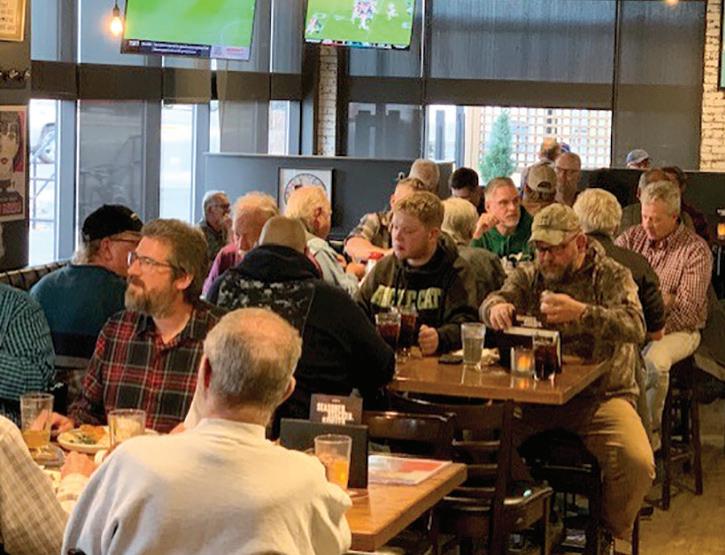
STONY PLAIN, Alta. – On the first Monday of every month, the “Guy’s Hamburger Club” meets. The club sees men from Stony Plain’s St. Matthew Lutheran Church gather to enjoy a hamburger together
and watch hockey and football. A large group of hungry and thirsty Christian Men showing up to a restaurant on a Monday night is a welcome sight to restaurant owners in Stony Plain.
“We welcome all men to join our celebration, where the only thing on the agenda is eating a good hamburger and having fun with your St. Matt’s Brothers,” stated Chris Robertson, the Coordinator of the Guy’s Hamburger Club.
Rotating through the different restaurants throughout Stony Plain, the Guy’s Hamburger
LWMLC Parkland Zone’s Fall Retreat
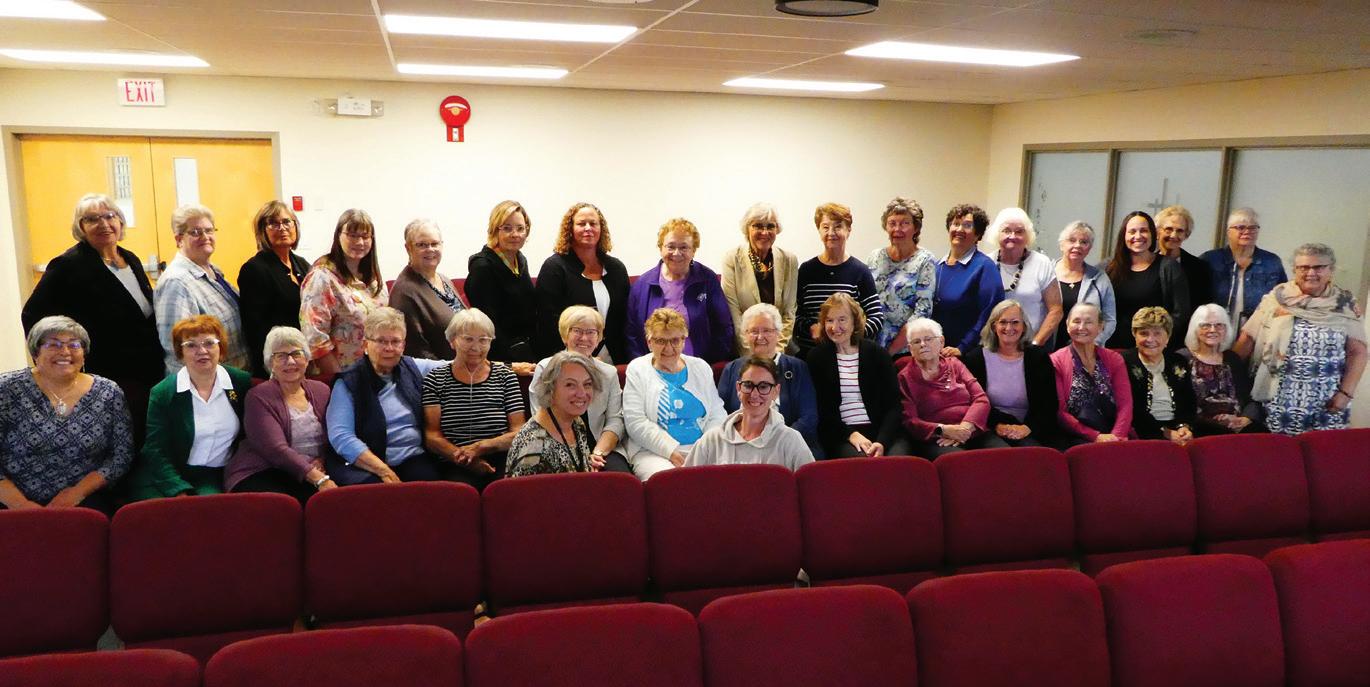
RED DEER, Alta. – More than thirty ladies met September 27, 2025, at Mount Calvary Lutheran Church for the LWMLC Parkland Zone’s annual Fall Rally.
Guest speaker for the event was Sherry Folkmann, who spoke about her time on Mercy Ships and the valuable service Mercy Ships provide. Sherry has volunteered three times on Mercy Ships and is planning a fourth trip in the new year. She shared her experiences with the volunteers, patients, and workers of Mercy Ships, as well as about celebrating holidays like Christmas and Easter on board.
In 1978, founders Don and Deyon Stephens started Mercy Ships with
the goal of bringing hope and healing to those who need it most through hospital ships. Mercy Ships are crewed by hundreds of volunteer professionals from more than 60 countries. These fully equipped hospitals perform lifesaving and life-changing surgeries, and also offer medical training for the next generation of African surgeons.
Sherry Folkman offered her artwork for sale at the Parkland Zone rally, helping to raise funds for her next trip with Mercy Ships. Rev. Don Hennig led a Bible Study for the event, discussing the mission statements of Mercy Ships on providing hope and healing. Key passage considered
Club is boosting the economy. And of course, men who do not want to eat a hamburger are also welcome. “Seventy percent of all the Guy’s order hamburgers, but if you are vegan or have special dietary requirements, you can order anything you want off the menu. You are always welcome to enjoy our Christian fellowship. We are not the Burger Police,” Robertson noted.
The most recent meeting for the Guy’s Hamburger Club was scheduled for January 5 at the Power Plant Grill Restaurant.
Chris Robertson
included Matthew 28:20, Joshua 1:9, and Romans 8:28.
Meghan (Zone President) led the business meeting in the morning. Each LWMLC Society shared news from their societies. Parkland Zone LWMLC ladies are taking turns hosting meetings at their homes, holding Bible studies, sponsoring a student at Concordia Lutheran Seminary, being “Secret Sister” with a confirmation student, hosting dinners/ suppers, collecting items for various organizations, making donations to various charities, collecting Mites, and meeting for fellowship.
Participants in the Fall Rally took time to remember sisters in Christ who had passed away this past year, including Janice Quinton, Alvina Wolf, Elsie Bonkowski, and Lillian Albrecht.
A Mite Collection was taken, with more than $400 collected. Everyone who donated had a chance to win one of two beautiful wall hangings made by Fay.
Lunch was provided, which included lasagna (meat and vegetarian), garlic bread, salad and goodies for dessert.
The Parkland Zone’s 2026 Spring Retreat will take place during the last weekend of April at the 4-H Centre in Westerose.
WEST REGION NEWS
Rev. Jonathan Asmus retires
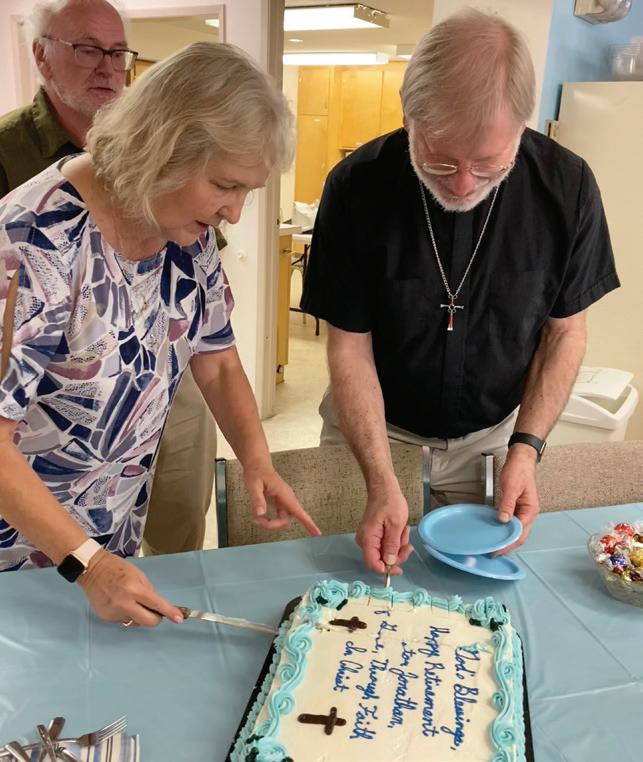
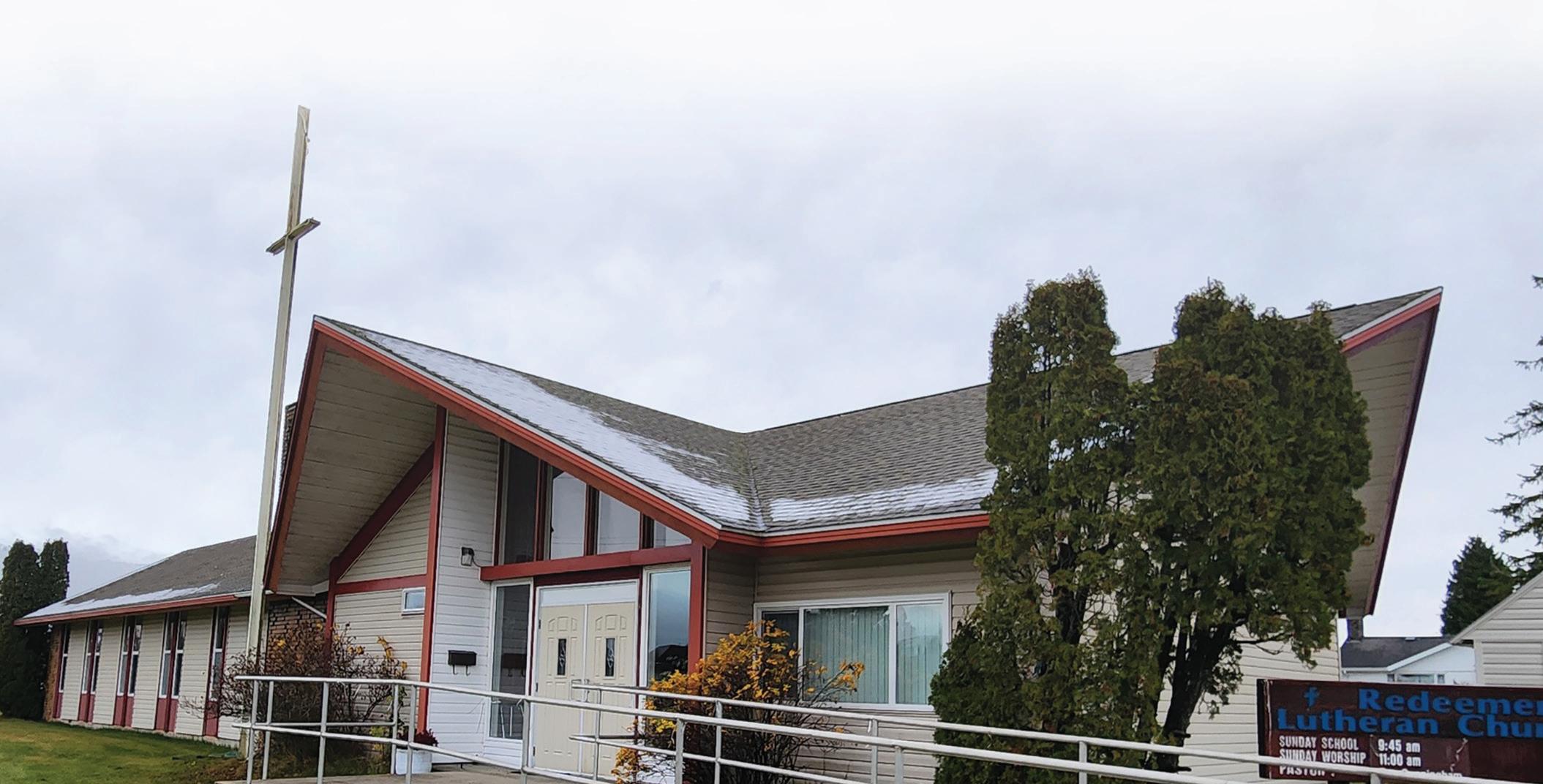
WEST KELOWNA, B.C. – On June 29, 2025, Redeemer Lutheran Church hosted an afternoon worship celebration to mark the retirement of Rev. Jonathan Asmus.
Lutheran Church–Canada’s (LCC) West Regional Pastor Robert Mohns preached for the event, with a sermon entitled “Hold Fast!” based on Acts 15:11. Also joining the event alongside the congregation was Circuit Counsellor Andrew McDonald and Okanagan Circuit pastors: Rev. Dr. Norm Threinen, Rev. Jef Koenig, Rev. Scott Gamble, and Rev. James Wood.
Rev. Asmus began serving Redeemer in April 2008, when he re-entered pastoral ministry after a hiatus of 19 years, during which time he worked various jobs, including almost ten years with IBM. He served Redeemer first as a full-time pastoral assistant, under the guidance of Rev. Dr. Norm Threinen. In June 2009, he
was called to serve full time as pastor of Redeemer. Looking back, Rev. Asmus reflects on the growth of faith and ministry through regular worship, Bible Study, visits to homebound members; on community outreach through West Kelowna’s yearly Canada Day Parade; and, more recently, on the congregation’s outreach through the Light Up event in early December.
Rev. Asmus (Concordia Seminary, St. Louis, 1984) received his first call, which brought him to Canada, to serve as Missionary-at-Large at the Lutheran Mission in Kincardine, Ontario. His father, Rev. Gary Asmus, preached at the afternoon service when he was ordained and installed there on March 24, 1985, into the Ontario District of the LCMS. He served two years, two months in that position.
From January to August 1988, he served a vacancy at Grace Lutheran in Oshawa, Ontario. He was in
attendance at the founding convention of LCC in Winnipeg in June 1988. Shortly afterward, he accepted a call to Trinity Lutheran Church in Algona, Iowa, as Assistant Pastor, where he served from September 1988 until the end of 1990. His son, Simon, was born there in 1989.
From 1991 to Spring 2008, Jonathan was a member at Grace Lutheran in Oshawa. There he enjoyed volunteer work with the Sunday School, VBS, and many years as a tenor in the choir and several years also as choir director.
Rev. Jonathan’s last message as the full-time pastor of Redeemer Lutheran, West Kelowna, was entitled “Jesus’ Everlasting Impression” (Luke 9:5162). Video of that service, as well as the retirement service, can be seen online via the Worship Videos link at www. RedeemerWKelowna.org.
Rev. Jonathan Asmus, Emeritus West Kelowna, BC.
CENTRAL REGION NEWS
Camp Aurora drills new well
THUNDER BAY, Ont. – Have you ever wondered how deep the well in Sychar was the day Jesus spoke to the Samaritan woman? It was called Jacob’s well. There Jesus rested from His journey and spoke to the woman. This story is a rich example of love, truth, redemption, and acceptance of a social outcast—a message we also share with one another as we speak of the Gospel and grace of God, our loving Father.
Sharing this message is the main mission of Aurora Lutheran Bible Camp, where what is needed is not only the living water that Jesus speaks of to the Samaritan woman, but also earthly running, filtered water from a well. “Jesus said to her, ‘Give Me a drink…’ Jesus answered her, ‘If you knew the gift of God, and who it is that is saying to you, “give Me a drink,” you would have asked Him, and He would have given you living water’” (John 4:7b, 4:10).
Aurora is located minutes away from Thunder Bay on beautiful Warnica Lake. Over the past two years, the Board of Directors has been raising funds to drill a new well to meet the water consumption needs for the camp’s summer programs.
On June 18, 2025, Aurora celebrated its 70 th anniversary
with a barbecue and fellowship with more than 80 people in attendance. Thanks be to God, the freewill offering supplied the remaining funds needed to pay for the first portion of the 600-foot well (the deepest well in northern Ontario), which was twice the cost of the original estimated price. Organizers thank everyone who contributed to this project with their prayers and finances. The next phase of the project is to connect the new, drilled well to the existing water system.
Aurora thanks all those who have supported and donated their time, finances, and talents to the to the mission of the camp over seven decades. In the past 70 years of ministry, Camp Aurora has shared the Gospel with thousands of His children, and it hopes to teach another thousand or more in the years to come. Fundraising is ongoing, so readers are asked to please keep the camp mission in their prayers.
“Everyone who drinks of this water will be thirsty again, but whoever drinks of the water that I will give him, will never thirst again. The water that I will give him will become in him a spring of water welling up to eternal life” (John 4:13-14).
Lynda Wdowiak
Closing a church and vacating the property is a lot like selling your mom and dad’s home after they die.
Recently, I assisted the former members of Immanuel Winnipeg in moving out of their church home. In the last while, I’ve re-homed 50 Lutheran Service Books to Aurora Lutheran Bible Camp, 50 to Beautiful Saviour Lutheran School, and another 60 to other parishes and people. I’ve helped Redeemer Winnipeg move collapsable tables and chairs to their facility. And Matt Honey and my son James and I moved leaded glass windows, furniture, font, candles, paraments, Bibles, bookshelves, and anything else we could make use of to Lutheran Church–Canada’s (LCC) synodical office, our house, Beautiful Saviour School, and other places, on top of what the parishioners have done.
Seeing all the things accrued in a church over a lifetime of ministry is overwhelming. It all needs to be sifted, sorted, moved, repurposed, donated, and sometimes thrown away or abandoned. Like going through your parents’ home, there are so many memories, feelings, and emotions—about how dad built this, or mom made that, the gatherings the family shared, and a desire to honour your parents. Or, in this case, your spiritual parents.
Even though every other congregation has an altar and other essential furnishings, I wanted to save the beautiful wooden altar, pulpit, and lectern that were from Immanuel’s earlier building that burnt in 1984. They were installed (along with the
CENTRAL REGION NEWS
HONOURING YOUR SPIRITUAL FATHER
AND MOTHER
FROM THE REGIONAL PASTOR | REV. DAVID HABERSTOCK
font) in their 1985 building. Around 2005, they were lovingly painted by artist Roman Pastucha (brother of Revs. Rudy and Jan Pastucha) to have a marble and gold finish. However, the items were so large, heavy, and, well, attached to the physical building that trying to move them would have damaged them (especially the painted surface). It was beyond my abilities, tools, and time to remove. So, sadly they stayed in the building. (Though the font is currently sitting in LCC’s office looking for a useful home!)
Many have noted that dealing with your parents’ belongings is overwhelming. But a year or so later, after the boxes are moved, the property sold, the estate settled, you have the emotional and mental wherewithal to deal with things that were put into storage. This is the nature of grief. But those decisions are still difficult. Needs and values (regarding physical things) change over time and generations. All of the beautiful china and silver wedding gifts of times past are now no longer used by present generations. Some precious possessions can not be handed on or gifted to anyone else. And sometimes we children hang on to furniture or items that have no earthly use to us, and clutter our homes, simply because of who made it, or who used it for years.
My home is filled with things from my parents. Not all of it serves our lives well, but we are loath to get rid of them because they were made by my dad, used by my mom, or came from my grandparents. They are part of my identity and a link to my past.
Though these belongings may clutter my home—and life is certainly
more than food and drink, house and furniture (Matthew 6:25)—on some level, these items serve as a way of remembering and honouring those forebears who gave me physical life and placed the Holy Scriptures in my hands. All people are commanded to honour their father and mother, especially so when they are the primary persons used by God to bring us to the waters of salvation and teach about His Son Jesus Christ.
There were many items at Immanuel that were hard to know what to do with. For instance, tattered old Bibles and hymnals in German. Well loved. Well used. A piece of our collective history, but not useful anymore as the language is inaccessible to most of us, whereas English hymnals and Bibles, and stained-glass windows are of ongoing use.
Such items are a piece of our story. They help define who we are. For all who have faith have been bequeathed faith from someone else, through physical persons, by physical means—water, Word, bread and wine. To be respectful with and to wrestle with what to do with our loved ones’ things is more than to be a good steward of the wealth God has given. It is to honour those whom the Lord has given us blessings through.
So we thank God that much from Immanuel will bless other congregations and future generations, and we honour our forebears who brought the faith to us in Word and deed. Buildings, books, and furniture are a testimony of that. As long as they serve that purpose, they are a heritage worth hanging on to.
CENTRAL REGION NEWS
Apologetics seminar in Saskatoon
50th anniversary in Atikokan
SASKATOON, Sask. – On November 15, 2025, St. Paul’s Lutheran Church hosted a seminar on the topic of Christian apologetics. Dr. Adam Francisco was the guest speaker on this important subject, and over four sessions he provided an introduction to apologetics, presenting on how philosophy, science, and history connect with defending the Christian faith.
In addition to the seminar sessions, those attending enjoyed refreshment breaks and lunch, which provided time for fellowship among the attendees, who came from Saskatoon and other parts of Saskatchewan, as well as from Manitoba and Alberta.
One of the younger attendees shared that “as a younger Christian it can sometimes be difficult to explain or defend certain parts of our faith to others who challenge the Christian faith or want to know why Christians believe what the Bible says is true. Dr. Francisco presented wonderful points on how a person can go about doing this that I found very helpful.”
St. Paul’s Lutheran Church’s Board of Christian Education
ATIKOKAN, Ont. – Faith Lutheran Church celebrated its 50th anniversary on November 8, 2025, with 50 people attending. The first service of the amalgamated congregation of Calvary and Zion took place on September 7, 1975, with Rev. Dennis Paap as the officiant. Rev. Paap has since passed away, but his wife Inez sent greetings to the congregation, as did other former members and pastors. The congregation was honoured to have Rev. Dan Repo in attendance, sharing his memories as Faith’s longest serving resident pastor. An article featured in the local newspaper, The Atikokan Progress, depicted the years of the church’s historical events in the community. It was a wonderful celebration! Sharon Beyak
Photo: On behalf of St. Paul’s Lutheran Church, Rev. Murray Keith presented Dr. Francisco with a gift of artwork from a local artist, which depicts the wheat fields and living skies of Saskatchewan
Like many of you, I was able to gather with some family and friends over the Christmas season. It seems that special occasions like Christmas, Easter, Thanksgiving, anniversaries, and birthdays always find people gathering around a table feast.
But for some, myself included, there was an empty chair around the table. I do not mean those who could not join because of schedules, circumstances, or weather; I mean those who will no longer join again this side of heaven. Some of you had one or more fewer place settings. Those losses cut a little deeper at times when we gather with family. Though we may not set an empty place setting, we still know that someone is missing. We recognize the absence left at the table by missing loved ones. Often, we take time to remember them and talk about celebrations gone by when they were there.
For some of you, this might have been the first Christmas without a loved one. Your new reality was no doubt overwhelming. It is easy to focus on that one empty place setting. It is easy to focus on what we have lost. But I encourage you to redirect your focus. Gaze not on that empty place setting. Rather consider that while there is one fewer place setting here, one more was set in heaven. While it is hard not to reflect on our loss, the Lord refocuses us in His
EAST REGION NEWS
EMPTY PLACE SETTINGS
FROM THE REGIONAL PASTOR | REV. MARVIN BUBLITZ
Word to what His saints now enjoy. Jesus said: “Let not your hearts be troubled. Believe in God; believe also in Me. In my Father’s house are many rooms. If it were not so, would I have told you that I go to prepare a place for you? And if I go and prepare a place for you, I will come again and will take you to Myself, that where I am you may be also” (John 14:1-3).
Dwell not on the empty chair. Rather rejoice that our Good Shepherd kept His promise for your loved one. See death from His side: “Write this: ‘Blessed are the dead who die in the Lord from now on’” (Revelation 14:13). Also, “precious in the sight of the Lord is the death of his saints” (Psalm 116:15). It is the Lord taking His lamb home. He bestows the everlasting life He won on Calvary. They wait there for the resurrection of all flesh on the Last Day. In that day, all believers will be joined together as one chorus around His throne to sing His praise eternal: “And I heard a loud voice from the throne saying, ‘Behold, the dwelling place of God is with man. He will dwell with them, and they will be His people, and God Himself will be with them as their God. He will wipe away every tear from their eyes, and death shall be no more, neither shall there be mourning, nor crying, nor pain anymore, for the former things have passed away.’ And He who was seated on the throne said, ‘Behold, I am making all things new’” (Revelation 21:3-5).
For those of us left behind though, the pain can be unbearable at times like Christmas celebrations. This is especially true if all we see is the extra place setting here and not the new place setting there. At those times it is even more important to turn to Jesus for care and comfort.
It is then that we need to return to His table and His feast. For it is there we are reminded we join with “angels and archangels and with all the company of heaven.” We can remember those who have gone before us while we gaze at the empty place or linger at the cemetery. However, we are closest to them when we kneel at the altar and with all the company of heaven feast at our Lord’s table.
Marvel that the Son of God comes down not in a manger this time but in a chalice. Marvel how the Lord and Creator of all gives Himself as the life-saving feast of heaven. He prepares a feast of His Body and Blood for us. Marvel how He joins us with angels and archangels and with all the company of heaven at His table. That is your peace in those difficult days.
The Lord Christ bestows such peace upon you.
EAST REGION NEWS
SOUL celebrates 25 years of ministry and community
ST. CATHARINES, Ont. – This past fall, Christ Lutheran Church celebrated a remarkable milestone: the 25th anniversary of SOUL Ministry (Spiritual Outreach Uplifting Lives). Since its founding in 2000, SOUL has been a Christ-centred outreach dedicated to serving people with disabilities through faith, friendship, and creative expression.
SOUL’s story began in 1998, when a community member whose children attended Christ Lutheran’s Vacation Bible School realized the individuals she supported at Bethesda Services would love a similar experience. The following summer, the church hosted its first week-long VBS designed especially for people with disabilities, and the response was overwhelming.
Supported by a grant from Lutheran Church–Canada’s East District and by the congregation, SOUL officially launched in August 2000. With three dedicated staff, the ministry offered Bible study, music, art, and drama programs three days a week, a vibrant schedule that quickly became a highlight for many.
On September 19, 2025, the church hosted a heartwarming anniversary celebration attended by 92 guests, including SOUL participants, their support staff, volunteers, and past and present ministry team members.
The day began in the sanctuary with a time of reunion and worship. Former SOUL music leaders Lori Schultz, Kathy Moulds, Trinda Rensen, and Louise Gondosch led the singing. Rev. Todd Hoeffs shared an inspiring object lesson and led everyone in prayer and thanksgiving for God’s faithfulness over the past quarter century.
Following worship, guests enjoyed lunch and a festive SOUL birthday cake. Paul Mason, representing the Board of Directors, expressed heartfelt gratitude to the many volunteers who have faithfully supported the ministry through the years.
The celebration continued with creative activity stations, where guests decorated special 25 th-anniversary T-shirts, added colourful handprints to a commemorative banner, and posed for photos. Two beautifully arranged
displays showcased awards, photos, and cherished memories from the past 25 years.
The festivities carried into Sunday worship on October 19, where the congregation joined in singing favorite songs from SOUL’s music sessions. After the service, everyone gathered for a delicious potluck lunch featuring another cake and decorated cross-shaped cookies, a fitting finale of gratitude and celebration.
During the pandemic, SOUL transitioned to an online format to continue ministering in new ways. When in-person gatherings resumed, programming returned to just one day per week. Looking ahead, Christ Lutheran is exploring opportunities to restore SOUL’s pre-pandemic rhythm of three days each week. Local agencies have expressed strong interest and support, suggesting that the demand for programming remains as vibrant as ever.
As SOUL looks to the future, its mission remains clear: to uplift lives through the love of Christ, one song, one smile, and one shared moment at a time.
Kathy Kuhl
SOUL in 2025 (Photo: Kim Zacharak) SOUL banner (Photo: K. Kuhl).
EAST REGION NEWS
Installation at LCC-LCMS dual parish
CHATHAM, Ont. – On September 21, 2025, Rev. Jeffrey Miskus, Bishop of the LCMS English District, and Rev. Marvin Bublitz, Regional Pastor of LCC’s East Region, installed Rev. Dionatan Ferreira in a service at Our Saviour’s Lutheran Church. Our Saviour’s in Chatham is an English District congregation that has joined with LCC’s Good Shepherd Lutheran Church in Amherstburg, Ontario, to form a cross-synod dual parish.
Rev. Saulo Bledoff of St. John’s (Snyder) Lutheran Church preached, remarking that “it hasn’t been long
since he arrived in Canada, yet I heard from Pastor Dionatan how many proofs the people of Chatham and Amherstburg have already given of the famous Canadian kindness. And how overjoyed he is to serve such generous, loving people.”
Rev. Ferreira was born in Espírito Santo, Brazil, in 1997, and was received into the Kingdom of God through Holy Baptism in February 1998. He pursued theological studies at Universidade Luterana do Brasil, receiving his Bachelor of Theology in 2018, and went on to complete
his pastoral formation at Seminário Concórdia in São Leopoldo in 2020. From 2021-2025, he served as pastor of Paróquia Cristo para Todos , a dual parish in Bonito, Mato Grosso do Sul, where he carried out his first years of ministry in preaching, catechesis, and the sacramental life of the Church.
In 2025, Rev. Ferreira accepted the call to serve the dual parish of Good Shepherd Lutheran Church, Amherstburg, and Our Saviour’s Evangelical Lutheran Church, Chatham.
LCC Launches Dedicated French-Language Contact Email and Support Resources
ONLINE – Lutheran Church–Canada (LCC) is pleased to announce the launch of a dedicated email address and a new online resource page to better serve French-speaking individuals and communities.
The new email ( info@egliselutherienne.ca ) is available for inquiries in French or related to LCC’s French ministries, including:
• questions about French-language resources
• LCC’s hymnals, Liturgies et cantiques luthériens and
Liturgies et cantiques luthériens – Édition africaine
• the work of LCC’s Institut liturgique luthérien francophone (ILLF)
• assistance in connecting with a French-speaking LCC congregation or pastor
Alongside the new email, LCC has also launched a French-language “Où trouver… ?” (“Where to find… ?”) webpage on egliselutherienne.ca. This page is designed to help visitors quickly locate key information related to LCC’s French ministries, available resources, and opportunities to connect with local French-speaking Lutheran communities.
A supporting English version of the “Where to find… ?” page is also available online and has been shared internally with LCC leadership and staff to help ensure consistent, accurate, and timely responses to French-language inquiries across the synod.
These new tools complement the ongoing expansion and improvement of LCC’s French website as LCC continues to strengthen its digital presence in service to a bilingual country and beyond. The new email address has also been updated in LCC’s Contact Guide (2026 edition), available through the contact page on LCC’s website.
From Montreal to Burundi: Teaching Lutheran Liturgy in a Francophone Context
BURUNDI – Lutheran Church–Canada (LCC)’s Institut liturgique luthérien francophone (ILLF) is sponsoring a liturgy workshop in Burundi—the second prong of a workshop first held in Montreal in May 2023.
From March 15-21, Cantor Phillip Magness will present the newly
published Liturgies et cantiques luthériens – Édition africaine (ÉA, 2023). Cantor Magness has previously led three LCC workshops in Canada, as well as others throughout Africa.
Church leaders and musicians from Congo-East and three Lutheran church bodies in Burundi are invited to attend the five-day event. Burundi was selected in response to a request from Bishop Emile Nkurunziza of the Église évangélique luthérienne de l’espérance (ÉÉLEB) for teaching in Lutheran liturgy. The relationship between LCC French Ministries and the ÉÉLEB was first established five years ago, when Rev. Matt Anker (now President of Lutheran Mission–Australia), who has supported the ÉÉLEB since the church’s founding in Burundi, requested French-language theological resources.
The Lutheran Church—Missouri Synod (LCMS) and the ÉÉLEB are contributing toward the expenses of the workshop.
LCC’s first French-language hymnal, Liturgies et cantiques luthériens , was first printed in the fall of 2009. Support for the hymnal project came from the Marvin A. Schwan Foundation, Concordia Publishing House, a generous anonymous donor, the work of LCC pastors Rev. Dr. David Somers and Rev. Dr. David Saar, and dedicated volunteer revisers and proofreaders. Revenue from the first printing enabled a second printing in 2010.
The hymnal gained traction globally leading to the development of ÉA in partnership with the LCMS Africa Team as well as African churches.
FROM LIGHT TO LIGHT
DIRECTOR OF INTERNATIONAL MISSIONS | REV. M.L. SMITH
“For God, who said, ‘Let light shine out of darkness,’ has shone in our hearts to give the light of the knowledge of the glory of God in the face of Jesus Christ.” —2 Corinthians 4:6
There is a Light that no shadow can overcome. It is the same Light that pierced the primordial darkness at the beginning of time. The same Word that shattered the void with the words, “Let there be light.” It is not the glow of stars nor the blaze of the sun, but a light far brighter and more enduring—a Light from Light, revealing the glory of God.
This is the Light that finds us in the darkness of our sin and speaks a new creation into existence. It does not merely illuminate; it creates. It is the Light by which we live and, therefore, the Light which we cannot help but reflect.
FROM DARKNESS TO GLORY
“God… has shone in our hearts.” This is not the flicker of human awakening, nor the gradual rise of moral reform. It is the piercing dawn of divine light. Light where once there was only darkness. Sight where once there was blindness. Glory where once there was only guilt. The glory of God is found in the face of Jesus. In the scars that show His mercy. In the eyes that wept over sinners. In the voice that calls the dead to life.
This is the Light of the Gospel we carry: not an abstract truth, but a living face. Not a philosophy, but a Person. Not mere moralism, but mercy and truth. Evangelism’s aim is revealing that face—through the Word, in the
Sacraments—and declaring that this glory is for all.
BEARING THE LIGHT, NOT OURSELVES
Evangelism is never about showcasing ourselves. St. Paul writes, “What we proclaim is not ourselves, but Jesus Christ as Lord” (2 Corinthians 4:5). We are not the message. We are the lamps.
And even those lamps are fragile— “jars of clay,” Paul calls them. Cracked, weak, unimpressive vessels. But through them, the Light of Christ shines. And perhaps that is how God means it to be, so that we never confuse the vessel with the treasure.
Your words may stammer. Your courage may falter. Your witness may feel small. But the Light is not dimmed by your weakness; it is made perfect in it (2 Corinthians 12:9). When you speak the Gospel—however simply— you shine with a glory not your own. Like Moses descending the mountain, like the apostles on Pentecost, we go out reflecting the Light of God’s glory. And the very face of Jesus Christ is made known through your voice.
THE FACE WE LONG FOR
The world is hungry for beauty. It longs for what is real. Yet sin blinds the eyes with false lights and the heart with distractions. Some search for beauty in success. Others in pleasure. Still others in power. But only the face
of Jesus truly satisfies, since every heart was made to behold the glory of God in Christ Jesus. Only He can say, “Let there be light,” and cause dead hearts to beat alive with grace.
When we share the Gospel, we are not selling a story; we are unveiling a face. We are saying, “Come and see the One who sees you. Come and behold the One who has borne your griefs and carried your sorrows. Come and know the One who gave Himself for you.”
This is not coercion. It is invitation. Not pressure, but promise. It is saying: there is Light. It has a name, a face. And it shines for you.
LET THERE BE LIGHT
Evangelism is not reserved for the gifted or bold. It belongs to every Christian who has been called out of darkness and into His marvelous light (1 Peter 2:9). And so we speak—not because we are worthy, but because Christ Jesus is. Not because we are strong, but because He has shown us His glory. We point the world to Jesus Christ, the Light who entered our darkness, bore our sin upon the cross, and rose again to bring forgiveness, life, and salvation to all who believe.
In your home and at your workplace, through your suffering and your joy, let His light shine brightly, so that others may see and know the glory of God in Him. For the world is dark. But the Light of Christ still shines in the darkness, and the darkness cannot overcome it.
Exploring New Opportunities for Gospel Outreach in Northwest British Columbia
KITIMAT, B.C. – Toward the end of 2025, Rev. Jacob Quast, Lutheran Church–Canada (LCC)’s Director of Domestic Missions, travelled to Kitimat, B.C., to meet with Rev. Daniel Cunningham of Redeemer Lutheran Church, whose parish is actively seeking new ways to reach surrounding communities with the Gospel of Jesus Christ.
The visit focused on understanding the mission work already underway in Northwest British Columbia and discerning opportunities for expanded outreach, particularly among First Nations communities.
Terrace, a regional hub in Northwest B.C. and a local mission of the Kitimat congregation, provides a strong foundation for outreach in the wider community and serves as a key platform for further mission efforts, including First Nations ministry.
“The opportunity in Northwest B.C. is significant,” Rev. Quast shared. “There is both an openness and a desire for long-term pastoral presence and support, and the congregation in Kitimat is uniquely positioned to serve in that role.”
Building and sustaining relationships is central to this work.
organizations such as LAMP (Lutheran Association of Missionaries and Pilots), along with previous pastors and vicars in Kitimat, have served and supported these communities for years. Rev. Cunningham is continuing this work through:
• Community outreach, identifying needs and providing support;
• Fellowship and Bible study, offering many opportunities for gathering and the study of God’s Word;
• Pastoral care, especially among First Nations communities.
A particularly encouraging development is Rev. Cunningham’s close relationship with a local First Nations man who shares a strong desire to see sound Christian teaching brought into Indigenous communities. He functions in many ways as a local evangelist and partner in mission. Together, he and Rev. Cunningham are working to provide introductions and opportunities for the Gospel to be shared more broadly across the region.
This mission work is already taking shape in tangible ways. Rev. Cunningham has expressed a strong commitment to expanding pastoral care throughout the region.
“Pastor Cunningham and his congregation are an integral part
of Lutheran Church–Canada’s growing First Nations missions and ministries,” Rev. Quast noted. “We pray that this work will bear much fruit as the Gospel continues to be shared in Northwest B.C.”
Lutheran Church–Canada gives thanks for the relationships already established and for the faithful work being done to bring Christ’s saving Word to the people of Northwest British Columbia.
Lutheran
Rev.
Daniel Cunningham and Redeemer
Lutheran Church in Kitimat, B.C.
Third and fourth panels added to CLTS catechetical baptismal font
ST. CATHARINES, ONT. –
Concordia Lutheran Theological Seminary (CLTS) has installed the third and fourth panels in its ongoing catechetical baptismal font project, continuing a vision first realized with the font’s consecration in May 2021.
Modelled after catechetical fonts in mediaeval England, the project adds small works of art depicting the
Christian Church’s ministry in Word and Sacrament. The first two panels— the central crucifixion scene and the Baptism of Our Lord—were installed in 2021 and 2023 respectively. Over the past year, CLTS has now added two further panels.
“The third panel represents Confession and Absolution by depicting the story of Jesus forgiving
the sinful woman who expressed her repentance and faith by washing Jesus’ feet with her tears, drying them with her hair, and anointing them (Luke 7:36-50),” shared CLTS in a release.
“The fourth panel depicts Jesus preaching and teaching crowds of people, including men, women, and children. In His hand He holds a scroll of Scripture. In the seminary chapel this panel faces towards the pulpit and represents the task of preaching.”
Both new panels are the work of Lutheran artist Harrison Avery Prozenko, a member of St. Andrew’s Lutheran Church (Halifax, Nova Scotia). Prozenko has contributed extensively to the visual identity of Lutheran Church–Canada over the years. His previous work includes the design of Lutheran Church–Canada’s Badge, emblazoning Luther’s Rose on a Canadian maple leaf, as well as, most recently, a new international missions badge for the synod. Two devotionals are scheduled to be released by LCC in the coming year, also featuring his artwork.
CLS Quest Course on Cross-Cultural Ministry Tools
ONLINE – Concordia Lutheran Seminary (CLS – Edmonton) held its Spring 2026 Quest course beginning in January, on the theme “Cross-
Cultural Ministry Tools.” Rev. Dr. Mike Kuhn taught the free course, which was offered online as well as in-person.
Each week featured a different topic:
Week 1 – Avenues for Accessing Vernacular Scriptures
Week 2 – Creating Culturally Inspired Art Forms Using Mother Tongue Scriptures
Week 3 – Trauma Healing Groups and Resources
Week 4 – Translating the Bible into Action: A Scripture Engagement guide
As with every Quest course, interested parties can attend in-person or live online. Stay up-to-date on upcoming courses by visiting CLS’ website Concordiasem.ab.ca or via their Facebook Page.
Those who missed the Spring course can also watch videos of all sessions on CLS’ YouTube Channel.
TRANSITIONS
Rev. Rodney Parker, Candidate (Saskatoon, SK), has Resigned from Roster.
Rev. Mark Ruf, serving Grace (Calgary, AB), to Emeritus (Calgary, AB).
Rev. Richard Kruesel, Emeritus (Winnipeg, MB), was Called to Glory.
Rev. Jonathan Asmus, serving Redeemer (West Kelowna, BC) to Emeritus (West Kelowna, BC).
Rev. Paul DeBlock, Emeritus (Edmonton, AB), was Called to Glory.
Rev. Tyler Moore, serving Immanuel (Hood River, OR – LCMS), accepted a call to The Sanctuary (Kelowna, BC).
Rev. Keith Haberstock, serving Trinity (Fort McMurray, AB) accepted a call to St. Paul’s (Chilliwack, BC).
Rev. Carl Thiele, serving Nhill Lutheran Parish (Victoria, Australia), accepted a call to Our Saviour/St. Mark (Dryden/Vermillion Bay, ON).
HPRESIDENT'S PONDERINGS
HOW TO SHRIVE YOURSELF
SYNOD PRESIDENT | REV. DR. TIMOTHY TEUSCHER
ow do you shrive yourself? It’s a fitting topic to consider during Lent. But what does the word ‘shrive’ even mean? It comes from an Old English word derived from the Latin scribere—that is, ‘to write.’ It refers to the writing down of our sins—if not on paper, then in heart and mind—especially on the day prior to Ash Wednesday, which is thus called “Shrove Tuesday.”
In today’s society, even those who couldn’t care less about penitence and Lent might still “shrive” by eating pancakes and sausages the day before Ash Wednesday. Some shrive by receiving ashes on their foreheads in accordance with the words of Job of old who lamented: “I despise myself and repent in dust and ashes” (42:6). And a few will even shrive by fasting and giving something up for Lent.
All this can indeed be beneficial. As the catechism puts it, “Fasting and bodily preparation are certainly fine outward training” (SC VI). Fasting reminds us that our spiritual hunger and thirst needs to be satisfied and quenched with God’s Word and the Holy Supper of Jesus’ body and blood.
At the same time, however, fasting can be a dangerous thing. So Jesus says in the Gospel reading for Ash Wednesday: “When you fast, do not look gloomy like the hypocrites, for they disfigure their faces that their fasting may be seen by others” (Matthew 6:16). Or as God says through the prophet Joel: “Rend your hearts and not your garments” (2:13).
Why the warning? Well, it can be easy to shrive by merely showing an outward expression of repentance—a black mark on your forehead, perhaps—rather than confessing the black mark on your heart. It’s easier to shrive by giving up desserts during Lent than by giving up this or that sin which lurks deep in our hearts, rearing its ugly head time and time again.
It’s even more dangerous to think that shriving in this outward manner—by giving alms to the poor, putting ashes on our foreheads, or eating pancakes on Shrove Tuesday— somehow makes us upright before God. It’s easy to compare our “righteousness” to all those people around us who are oblivious to Lent, who could care less about such spiritual disciplines, and who, to use the words of the Lenten hymn, “pass the cross unheeding, breathing no repentant vow” (LSB 423.2).
Martin Luther gives us better advice in a little pamphlet on what it truly means to shrive ourselves (LW 53.119-121).
“What is confession?” he asks. And the answer? “Confession consists of two parts: one is that we confess our sins.” And “what sins ought we to confess?” He answers: “Here consider your calling according to the Ten Commandments… if you have been disobedient, unfaithful, slothful, angry, unchaste, or quarrelsome, if you have injured anyone by words or deeds, if you have stolen, neglected, or wasted aught, or done any other evil.”
For some people that’s as far as it goes (if it even goes that far anymore!). Others say that all you need to do is acknowledge that you are a sinner, pray a version of the Fifth Petition of the Lord’s Prayer (“Forgive us our trespasses”), and then God forgives you. But I could pray that prayer in private and frequently, and yet wait in vain to hear an answer from God.
No, this is only the first part of shriving, Luther says. The next goes like this: “Then the father confessor shall say: I, by the command of Jesus Christ our Lord, forgive thee all thy sins… Go in peace.” So the apostle Paul puts it in the epistle reading for Ash Wednesday: “We are ambassadors for Christ, God making His appeal through us. We implore you on behalf of Christ, be reconciled to God” (2 Corinthians 5:20). Yes, God makes His appeal to you and absolves you of sin—answering that Fifth Petition prayer of yours— through His ambassadors of Christ. In other words, through pastors. And this can happen in Private Confession, in the Absolution at the beginning of a Divine Service, or in those beautiful and comforting words he speaks when you kneel at the altar: “Take, drink; this is the true blood of our Lord and Saviour Jesus Christ, shed for the forgiveness of your sins” (LSB 199).
That is what it means to shrive properly. It’s not about pancakes or alms or fasting, as valuable as those things might be. Instead, shriving is about repentance and forgiveness— confession and absolution. And this is central not only to Lent but to our entire Christian faith and life. That’s why Luther, a few years after writing the Small Catechism, inserted this little tract on shriving yourself into the Catechism (between the sacraments of baptism and the altar). As Luther says at the very beginning of the 95 Theses: “When our Lord and Master Jesus Christ said, ‘Repent,’ He willed the entire life of believers to be one of repentance.” Or, as we might say, “one of shriving.”
TURNING AND RETURNING
LENT is not merely a season of self-denial or somber reflection. It is the sacred journey of the baptized, from ashes to Easter, from death to life, from wandering hearts to the welcoming arms of Christ. At the heart of this journey is a call as old as the prophets and as urgent as today: “ Return to the Lord your God, for He is gracious and merciful” (Joel 2:13).
The dust of Lent leads not to despair but to the empty tomb—and to the joy of belonging to the One who makes all things new.
A BRIEF GUIDE TO HOME DEVOTIONS
USING THE LUTHERAN SERVICE BOOK
INTRODUCTION
The Lutheran Service Book hymnal is a great treasure, rich with resources for personal and family devotions. Within its pages are brief services, Psalms, a Bible reading plan, prayers, Luther’s Small Catechism, and, of course, hymns. Learning how to use the hymnal for daily devotion is a practice well worth cultivating. If you do not have a hymnal at home, consider asking your pastor if you may borrow one from your congregation.
USING THE HYMNAL
To help you make the best use of your hymnal, Lutheran Church–Canada has developed this brief guide to assist you in quickly finding the resources within the Lutheran Service Book. Be sure to set aside a regular time each day for devotions, as establishing a routine is one of the most helpful ways to sustain new devotional practices.
Orders of Daily Prayer for Individuals and Families
Pages 294-298
These brief, one-page services provide a simple structure for daily prayer, suitable for use by individuals and families in home devotions.
Daily Lectionary Pages 299-304
This lectionary suggests short readings from the Old and New Testaments each day for personal study. A table of suggested Psalms for daily prayer is also included.
Prayers Pages 305-318
The hymnal includes a collection of suggested prayers that may be used during daily devotions.
Hymns
If you are looking for a particular hymn, an alphabetical index of first lines begins on page 1017. A topical index of hymns by subject or church season may be found beginning on page 993.
Luther’s Small Catechism Pages 321-330
Study anew the basics of the Christian faith with Martin Luther’s brief guide. Luther’s Small Catechism also includes brief sections on daily prayer, the Table of Duties, and Christian questions and answers.
Scripture Readings
If you do not have a Bible, ask your local congregation if one can be provided. You can also read the Bible online at biblegateway.com.