

























Dear Readers,
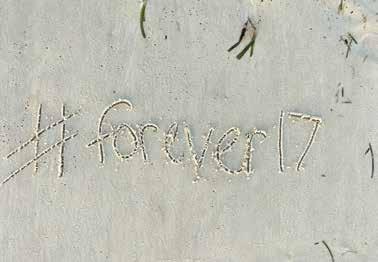
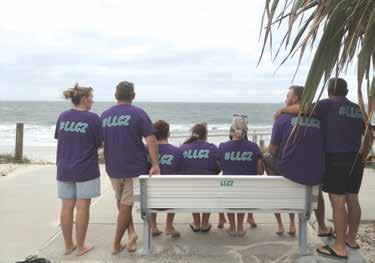
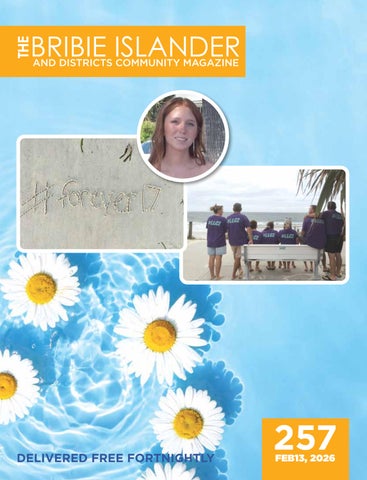
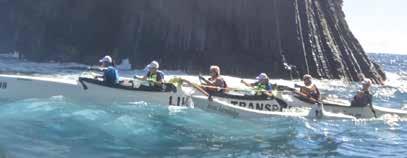
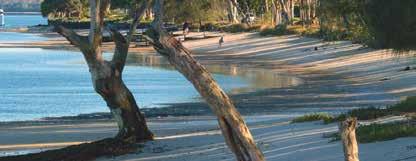
This front cover is a tribute dedicated to Charlize Zmuda. A year ago, we lost Charlize – a bright, caring young woman taken too soon in a tragic shark attack off Bribie Island. Her absence is something we all feel, and her memory lives on in the hearts of everyone who knew her.
Since that day, Charlize's family has worked hard to honour her legacy and the kindness she always showed in all she did especially as a volunteer lifesaver. The photos here, taken by photographer Ali Croning at 'Charlize Place', 5th Avenue, Woorim Beach on 3-02-26, are a simple tribute to her spirit and the love that still surrounds her.
Words from Renee Zumuda

What an incredible day of love and support! Bribie you sure did make an extremely tough day a little more bearable. What an absolute testament to an incredible life well lived and well loved. What a legacy our gorgeous girl has left. Forever Loved. Forever Remembered. Forever 17.
Words from Ali Croning
5.22am. As the sun rose behind the clouds, we shared a beautiful, heartfelt moment. With our feet in the ocean and torch lights shining, we stood together in love and remembrance of Charlize. The ocean turned and an eagle circled above, Frangipani flowers placed into the ocean.
I hope Charlize’s memory inspires you to cherish your loved ones and value every moment.
Take care, Stay safe,
Anne Matthews
Al Finegan
Barry Clark
Elaine Lutton
Joie Scheinpflug
John Traill
Kathy Vincent
Maria Christina
Peter Schinkel
Peter Dallimore
Philip Arlidge
Robyn- B.I.
Boat Charters
Sue Wighton

Tracey Blinco
R3 Roofing
Paul Popham
Ivory T - fabric & wallpaper
Yawk Yawk
Disclaimer for Contributions to The Bribie Islander Magazine
The views and opinions expressed in contributions to The Bribie Islander Magazine are those of the individual authors and do not necessarily reflect the official policy or position of the magazine or its editorial team. Contributions are welcome, but the magazine reserves the right to edit, modify, or reject submissions that do not align with our publishing standards or guidelines. By submitting your work, you acknowledge that you have the necessary rights to share the content and grant The Bribie Islander Magazine permission to reproduce it in print and online formats. The Bribie Islander Magazine is not responsible for any copyright infringement that may arise from the publication of submitted materials.
We encourage respectful and constructive dialogue, and contributions that violate community guidelines or promote hate speech, discrimination, or illegal activities will not be accepted. Thank you for your understanding and support in maintaining a positive and inclusive community publication.


February 17, 2026 marks the beginning of the Year of the Fire Horse—a year charged with dynamic energy, independence, and bold forward motion. Fire Horse years are known for encouraging change, creative self-expression, and a stronger pull toward personal freedom. They ask us to step into who we are, not who we think we should be.
In a world increasingly shaped by social media influence, it’s easy to lose sight of our own lives while watching curated versions of everyone else’s.
We scroll, compare, and sometimes forget that fulfillment doesn’t always announce itself loudly. Often, it’s already present—quietly woven into the life we’re living.
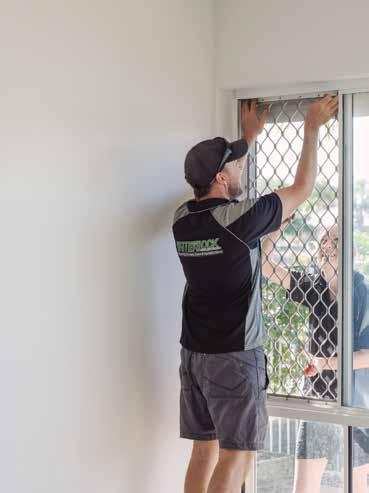
True success can look like contentment. It can look like having a home you feel at ease in, a space that reflects who you are and supports your well-being.
When your surroundings feel harmonious, they become more than just a place to live—they become part of your identity. A home that nurtures creativity, calm, and comfort enrich not only you, but everything that flows from you.
The Fire Horse reminds us that independence doesn’t mean isolation. We are all individuals, each with our own goals and aspirations, yet we thrive most when we’re grounded in environments—physical and emotional—that support growth.
Creating space for harmony and creativity is one of life’s greatest enrichments. This year is an invitation to stay connected to yourself. Journaling, creating, and reflecting are not small acts; they are tools for clarity and wellness.
Your mind is powerful, and how you engage with it shapes how you experience the world. When you give yourself room to think, imagine, and express, you strengthen that connection.

Clinically proven* to help these conditions
• Heel pain (plantar fasciitis and Achilles tendinopathy)
• Tennis and golfers elbow
• Patella tendinopathy
• Frozen shoulder
HIGH POWERED LASER IDEAL FOR RECENT INJURIES < 6 WEEKS

• Rotator cuff tendinopathy +/- calcification
• Hip bursitis and tendinopathy
• Shin splints; Heel spurs
• Lower back & Knee arthritis

Movement matters too. Staying active—physically and mentally—keeps energy flowing and helps us move forward, even when progress feels subtle.
The Fire Horse isn’t about standing still; it’s about momentum, intention, and trusting your direction.
So, what does your year look like?
Keep journaling. Keep creating. Keep moving. Live your best life—not the loudest one, not the most visible one, but the one that feels aligned, fulfilling, and truly yours.
The Fire Horse doesn’t ask for perfection. It asks for presence, courage, and forward motion.
And sometimes, that’s more than enough.
Yours in Health and Wellness, Tracey Blinco
Volunteer:
Law and Access Consultant
Human Rights Advocate
NDIS Psychosocial Recovery Coach
Writer for the Bribie Islander Magazine
NDIS Support Coordinator
Support Professional Health Coach














Dr. Natasha Conciom & Dr. Nabin Hamal to our Banksia Beach and Woorim clinics.
Dr Natasha is relocating from a busy GP Practice at Kilcoy to Bribie Island. She did her basic training in Malaysia and has been working in the Australian Health System in various roles in Rural/ Remote and urban locations.
She has additional qualifications in Child health and has vast experience working with Children. She has special In-terest in Skin Cancer Assessment /Management/ Procedures and Chronic Disease management.
She has presented in various International and National Medical conferences and has actively volunteered with various Charitable organisations over the last many years.
She strongly believes in treating every single patient holistically to improve the quality of each patient’s lives in line with what is important to them. She would strongly like to support and contribute her skills and experience that she has gathered to the community.
Dr Nabin Hamal has shifted his workplace from Sunshine Coast to Bribie Island. He has vast experience in Gen-eral Medicine, Mental health issues, Emergency medicine, Paediatrics and Orthopaedics.
He is a compassionate and empathetic doctor with sound clinical knowledge and diagnostic skills. His initial medical training was in Nepal.
He has lived and worked in NSW before calling the Moreton Bay region his home. He has special interest in Chronic Disease management.
We welcome him to Bribie Doctors group


















Advanced aesthetics. Natural results.
Medical-grade skin and injectable treatments designed to enhance — never mask — your natural features.
Every treatment is personally tailored by an experienced cosmetic nurse, with a focus on skin health and long-term results.
Treatments
Wrinkle Relaxing
Facial Volume Restoration
Face & Neck Rejuvenation
Advanced Skin
Skin Needling
RF Microneedling
Medical-Grade Facials & Peels
Proud MURAD Stockist
Afterpay & Zip available Memberships & flexible options offered
Open Tuesday–Friday & Saturdays 0411 268 100
alanna@amaraskinclinic.com.au Instagram @_nurse_alanna_amaraskinclinic



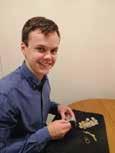
Mike and Nate Cornish will be travelling to Bribie Island for 2 days only on Friday, 20th, and Saturday, 21st February. We want to buy your unwanted items listed below. Please visit us at the Bribie Island RSL Club as shown below, for an ‘on the spot’ appraisal.
If you live outside the area, have too many items to bring in, or would like a home visit, phone Nate on 0426 820 646 NOW to arrange a time.
These events are often compared to the ‘Antiques Roadshow’ on TV, but without the long queues. Don’t miss this opportunity!
Fully Licensed Antique, Numismatic, and Precious Metal Buyers with over 45 years Industry Experience. Security Supplied by Security International Limited.






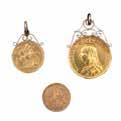
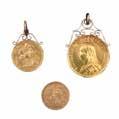
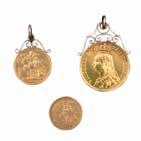
















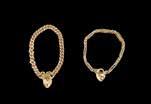


Bribie
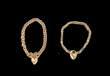


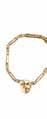

In today's trend of downsizing and decluttering our homes, it's the perfect time to go through those drawers and cupboards and turn those unwanted items into cash.
Antique Buyers, and father-son duo, Mike and Nate, will be at Bribie Island RSL Club on Friday, 20th and Saturday, 21st of February, from 9am to 1pm both days. See page __ for full details.
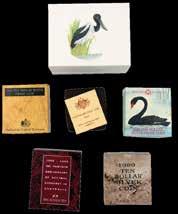
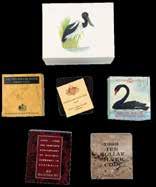
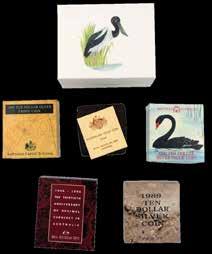
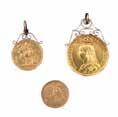
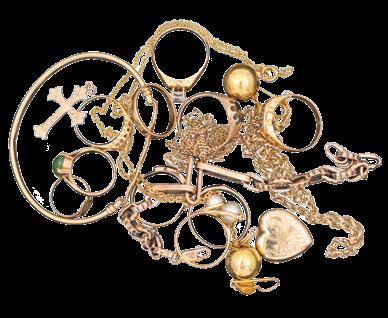
"We are enthusiastic buyers, particularly interested in gold jewellery, whether broken or intact, antique jewellery, gold and silver coins, collectibles including military medals, and banknotes, as well as mechanical watches.”
“Everyone has something we want to buy, and nothing is too small for our consideration. We are just as happy to buy one item, as we are buying 10,000!" says Mike Cornish, the company's chief buyer. If you are in doubt about any items you wish to sell, take them in for an instant appraisal. No appointment is needed.
With the gold price still at higher than traditional levels, right now is an opportune time to explore your jewellery box and dig out those old gold chains, rings, and brooches, to turn them into cash.
Mike emphasizes, "This is an ideal time to sell. We will buy anything made of gold – old jewellery, coins, virtually anything, even gold teeth! We also need silver in any form, including coins, and bars of any size."
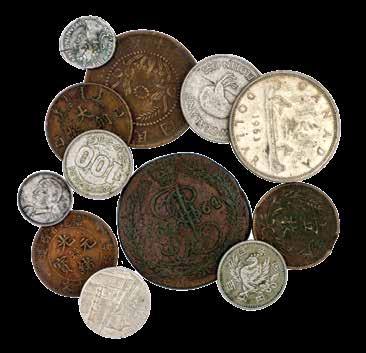
Check those drawers and cupboards, you may have a rarity lurking amongst your coins. “We want to see any old foreign coin accumulations. Bags, tins, folders, however they come, we will be quite happy to go through your coins on the spot and give you an idea of what we can pay. You just never know what can turn up!”
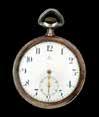
Mechanical watches are needed urgently by the buyers.
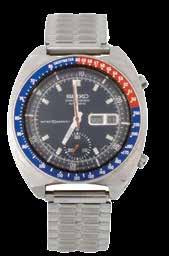
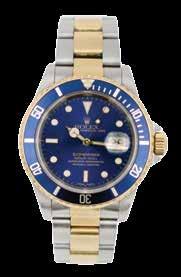
“Collectors at this stage want brands such as Rolex, Omega, Patek Philippe, Longines, and Seiko, just to mention some.
These brands can command good prices depending on the model and condition.” Mike explains. "If you are unsure, bring your watches in for an appraisal."
Home visits are offered for those unable to make it to a venue, or those with too much to carry.
For more details, please see the advertisement on opposite page, and for the full schedule, please see www.heritageint.nz.

Tattoos have been around for thousands of years, globally, several female Egyptian mummies from about 2000 B.C.E. were found to have tattoos.
The Iceman, found between Austria and Italy in 1991, also had tattoos and was about 5,200 years old, according to Smithsonian magazine.
People in modern times get tattoos for a variety of personal and practical reasons.
These can include marking significant life events, expressing individuality, creating decorative body art, or even serving functional purposes such as conveying medical information.
Each reason comes with its own set of advantages and disadvantages.
For example, tattoos can provide a sense of identity or help commemorate important moments, but they may also pose challenges such as permanence or potential misunderstandings.
This piece will discuss both the general and medical uses of tattoos, outlining key pros and cons associated with their application.
Replacing Medical ID Bracelets
People with medical conditions often wear medical ID bracelets to give first responders quick health information in emergencies.

First responders check a patient’s wrists and neck for these bracelets, which list essential details such as allergies, medications, and conditions like diabetes or Alzheimer's.
A medical tattoo is another option for people who want a permanent way to share health information. Still, many paramedics and doctors advise caution.
The permanence of tattoos can be beneficial for medical purposes, ensuring that critical information, such as advance directives, remains with the patient at all times, even when other documents may not be readily available.
Tattoos intended to convey medical information can be unreliable, and if placed in less visible locations or hidden within designs, medical staff may overlook them, thereby reducing their effectiveness.
Tattoos are also hard to update if medical information changes. In emergencies, paramedics may look for any helpful information, and a tattoo could assist them.
Reconstructive Procedures
Medical tattoos are also becoming popular for cosmetic reasons. They are used in plastic and reconstructive surgery to cover scars, burns, or severe cuts, and to treat skin conditions such as vitiligo or baldness.
For example, after a mastectomy, the nipples are often removed. Some patients have surgery to rebuild the nipples and then get the areolas tattooed to look darker around the new nipples.
According to Breastcancer.org, skilled tattoo
artists can now create very realistic 3D nipple tattoos that look raised but are actually flat. Many women choose this option instead of more surgery because it heals faster and does not cause more scarring.
Some patients who do not have reconstructive surgery choose to get large tattoos on their chests. These tattoos can give them a new body image and help cover both the physical and emotional scars left by surgery and cancer.
A study in Plastic and Reconstructive Surgery found that medical tattooing for plastic and reconstructive surgery yielded excellent results for patients.
However, the authors said there should be standard training and a set curriculum for medical tattoo artists to "protect the public and to ensure the highest quality service." Pros and Cons of Medical Tattoos
1. Permanent Medical Information: Medical tattoos can display critical health information (e.g., allergies, diabetes, blood type) directly on a person’s skin, making sure it is always available in emergencies.
2. Visibility in Emergencies: Unlike medical alert bracelets or cards, tattoos cannot be lost or forgotten, keeping them accessible to first responders.
3. Cost-Effective: Once done, medical tattoos don’t require ongoing replacement like jewellery or wearable devices might.
4. Customisation: Tattoos can be designed
to be both explanatory and discreet, meeting personal preferences.
5. Decreased Stigma: For some, tattoos offer a less stigmatising alternative to visible medical jewellery, blending with personal body art. Cons:
1. Permanence: Medical information may change (e.g., medication, conditions), and tattoos are difficult and costly to update or remove.
2. Recognition Issues: Not all healthcare professionals are trained to identify or recognise medical tattoos, especially if the design is non-standard.
3. Danger of Misinterpretation: Ambiguous or decorative medical tattoos may be misinterpreted, leading to confusion in emergencies.
4. Possible Allergic Reactions: Tattoo inks can cause allergic reactions or infection, especially in people with sensitive skin or certain health conditions.
5. Social and Professional Stigma: Visible tattoos may not be socially acceptable in all cultures or workplaces and may lead to discrimination.
Medical tattoos offer a permanent and potentially life-saving way to communicate important health information, but they also bring challenges related to permanence, recognition, and social acceptance.



Katherine (left) and Acupuncturists Jessica
ACUPUNCTURE FOR SCIATICA
Though acupuncture is well known for its effectiveness in treating pain conditions, what often prompts people to come to see us at Bribie Acupuncture for treatment is not the pain itself but the impact the pain has on their quality of life.
Pain can stop you from enjoying your morning walks, keep you off the golf course, or prevent you from running your best time in the next race.
One of the main nerves in our legs is called the sciatic nerve which traverses from the lower back, through the buttock and down the leg. When the nerve is inflamed, pain, numbness, and/or weakness is often felt in the buttock and upper leg - in some cases the pain can travel down to the feet, down the back or side of the leg. Sciatica can literally be a big pain in the butt!
It is estimated that up to 40% of people experience sciatica at some point during their lives, most commonly in people in their 40’s or 50’s, and more commonly in men than women.
Sciatic pain may be constant or it may be felt as a sudden pinching sensation. Oftentimes sciatica cannot be blamed on a specific trauma - sometimes simply bending, lifting, or straining may aggravate it.
Even sitting for extended periods, such as during long car rides, may be the culprit. Pain is triggered when pressure is put on the sciatic nerve such as from the spinal discs or tight muscles, or more seriously spinal disc herniation, when a portion of the spinal disc bulges out of the spinal column and pushes on the sciatic nerve, or spinal stenosis, a narrowing of the spinal canal.
Often the root cause is a tight piriformis muscle in the buttocks, but other muscles in the lower back and pelvic region often contribute to sciatic pain.
Though the source of pain can sometimes be obvious, often more subtle dysfunctions in the nervous system result in neuropathic pain (nerve pain) which cannot be seen on x-rays or ultrasound scans.
Oftentimes this pain involves the nerve to muscle connection where affected muscles that have become shortened/ tightened or overstretched/ loosened, physically compounds the pain due to reduced blood flow.
A classic example is someone who suffers back pain after long periods of sitting: though their back muscles may of course be affected, often the muscles in their buttocks become overstretched and the muscles at the top of their thigh become overly tight (simply due to the body position while seated), and the muscles become inhibited or “switch off”, causing pain to refer to the back. Or, in the case of sciatica, the tight muscles could be pushing on the sciatic nerve.
When muscles are inhibited, matters can become more complex as these muscles can feel weak and we often compensate by altering our posture, creating more dysfunction in other areas of the body, creating a domino effect.
We likely all know someone who has injured their knee, then started walking with a tilted posture, and wound up also having back pain.

Fortunately tight muscles or spasms are the most common cause of sciatica, which can be treated more easily.
The first step to treatment with acupuncture is an assessment of which muscles may be contributing to the condition.
Once this is determined, we are able to find the points in which nerves meet those muscles, known as motor points.
When an acupuncture needle is used on a motor point with an electric impulse, it creates a contraction and relaxation phase releasing tight contracted bands of muscle or tightens overstretched bands of muscle. This is

like hitting a reset button. The results are immediate pain relief and improved muscle contractibility and mobility.
Acupuncture has been shown to be an effective treatment for sciatica, eliminating or significantly decreasing pain and increasing quality of life.
Research has shown acupuncture to be successful in treating back pain and sciatica through the following mechanisms:
• Stimulating nerves located in muscles and other tissues, leading to the release of endorphins which relieves stress and pain
• Reducing inflammation and muscle stiffness and increasing joint mobility by increasing blood circulation in the affected area
• Promoting regeneration of the sciatic nerve.
Acupuncture is a popular and effective treatment for sciatica which is without the side effects of prescription pain medications like NSAIDs and muscle relaxers.
Clinical guidelines for low back pain in the United States are now almost universally recommending acupuncture for low back pain over previously-favoured pharmaceutical and surgical options.
The American College of Physicians, Medicare/Medicaid and the Joint Commission (which establishes criteria for hospital accreditation) have all recommended acupuncture for low back pain.
If you’d like to make a booking or if you’d like to discuss whether acupuncture and Chinese medicine is right for you, please contact us - Jessica, Wendy, and Katherine - via our website www.bribieacupuncture com.au or call 0423 160 228
You can also find us on Facebook and Instagram @bribieacupuncture. HICAPS is available onsite. Pensioner discounts available.
Bribie Acupuncture
4/29 Benabrow Avenue, Bellara (behind the James Moore law office).

Dreams are not just visual experiences; they also involve a wide range of emotions. It helps to remember that dreams aren’t just about what we see—they’re also full of feelings. The emotions we experience in dreams can help us understand what they might mean.
Let’s look at some common dream emotions and what they could tell us. These emotions can show up in dreams where you’re being chased, falling, or facing a threatening situation.
These dreams might mean you have fears or worries you haven’t dealt with yet, or that you need to face and overcome challenges in your daily life. If these dreams bother you, try to think about what’s causing them and consider talking to someone for support.
Some dreams make us feel happy, joyful, or content. These dreams might show good experiences, hopes, or a sense of satisfaction in your life.
It’s helpful to know that dreaming about joyful moments can sometimes reflect your positive memories or your hopes for the future.
These dreams can give you a much-needed break from daily stress, boost your mood, and remind you of the things, people, or activities that bring you happiness in real life.
If you wake up feeling happy after a dream, try to remember what happened and notice how it connects to the good things in your waking life. This can help you appreciate those moments more and even inspire you to seek out similar experiences.
Dreams that make you feel confused or unsure often show that something in your life isn’t clear or settled. it’s important to remember that confusion in dreams doesn’t always mean something is wrong—it can simply reflect questions or uncertainties you have in your daily life.
These dreams might mean you want answers or need more clarity, or that you’re facing a decision and don’t know which way to go. Paying attention to the symbols or people in confusing dreams can help you figure out what’s bothering you. Sometimes, writing down your dreams and talking them over with someone you trust can make it easier to find solutions and feel less overwhelmed.
Dreams that make you feel sad or full of grief might mean you have emotions you haven’t worked through yet or need to deal with past events. It’s comforting to know that sadness in dreams is common and often your mind’s way of helping you process hard feelings.
These dreams can actually help you heal and let go of old emotions by giving you a safe space to feel them. If you wake up feeling upset, it can be helpful to talk about your dream with someone you trust, write about it, or take some quiet time to reflect.
If sad dreams keep coming back or feel overwhelming, consider reaching out to a counsellor or support group. Remember, dreams can give you clues about what you need to work through to feel better in your waking life.
Lucid dreams, a phenomenon in which the dreamer becomes aware that they are dreaming, offer a unique opportunity for self-exploration and control within the dream world. During lucid dreams, the dreamer can actively influence the dream's course and engage in conscious decision-making.
Lucid dreaming can be a powerful tool for personal growth and selfdiscovery. By harnessing the ability to control and direct the dream narrative, you can explore unresolved thoughts, fears, and desires. Lucid dreaming techniques, such as reality checks and dream journaling, can help you cultivate this skill and unlock the potential of your dream world.
Next issue…..The Cultural Significance of Dreams


Asociety we know today. Still, many older Australians face indignity, neglect, and loneliness as they age.
Now is the time for us to renew our pledge to honour and care for our elders, not just with words but with real action.
The Royal Commission into Aged Care Quality and Safety revealed serious problems in how we care for older Australians. Many stories described understaffed facilities, poor care, and even abuse.
These outcomes call for more than just anger—they show we need a real change in attitude.
We should stop seeing aged care as a burden and start treating it as an important social responsibility.
Preserving dignity is about more than just keeping elders safe and healthy. It also means giving them the power to make choices, respecting their independence, and ensuring their voices are heard in decisions that affect them.
Good care should meet not only physical needs, but also emotional, social, and spiritual needs. Simple acts of care and inclusion, such as
Policy changes and more funding are important, but it’s just as important for everyone to recognize that ageism should not exist in Australia.
Teaching people about the value of older adults, creating programs that connect different generations, and supporting carers are all key steps toward a kinder future.
Our elders cared for us when we were young. Now it’s our turn to make sure they are treated with the dignity, respect, and love they deserve.
By doing this, we honour their contribution and strengthen the values that bring us together as a nation.
If you suspect an older person is experiencing abuse, neglect, or mistreatment, help is available.
You can contact the national Elder Abuse Helpline by calling 1800 ELDERHelp (1800 353 374).
This free and confidential service provides advice, support, and guidance on reporting concerns and protecting the well-being of elders.
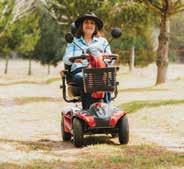













Many of us have learned to keep going, even when we are tired. We push through fatigue, override our bodies, and tell ourselves we will rest later, when things are calmer, easier, or finally under control. Yet for many, that moment never seems to arrive. Instead, exhaustion becomes a constant companion, quietly woven into everyday life.
From a holistic perspective, rest is not simply about stopping. It is about allowing the body and nervous system to feel safe enough to soften. When life involves prolonged stress, emotional upheaval, trauma, or ongoing responsibility, the body adapts by staying alert.
This survival state may look like tension, shallow breathing, poor sleep, overwhelm, or a sense of disconnection from oneself. Over time, the body grows tired, not because it is failing, but because it has been carrying too much for too long.
Rest, in its truest sense, is an invitation back into a relationship with ourselves. It is the quiet moment where we listen rather than demand. It may be found in slowing the breath, placing a hand on the heart, stepping outside into fresh air, or allowing silence without filling it.
For some, rest can initially feel uncomfortable, even unsettling, as stillness brings awareness to what has been ignored. This is where compassion is essential.
Healing does not begin with effort or discipline. It begins with permission. When the body is given space to rest, the nervous system can begin to recalibrate. Muscles release, thoughts settle, emotions move more freely. Gradually, energy returns, not as a force to be spent, though as something to be honoured.
Rest does not mean withdrawing from life or abandoning purpose. Rather, it allows us to meet life from a place of presence instead of depletion. It helps us respond rather than react, choose rather than endure. In the rest, we remember who we are beneath the roles we carry.
If your body is asking you to slow down, it is not asking for less of you; it is asking for care. Listening may feel unfamiliar at first, though within that pause lies a quiet medicine. One that restores, reconnects, and gently reminds us that we are already enough.
If your body is asking for rest and you are unsure how to begin, gentle support can help you find your way back to balance. You do not have to navigate this alone; you are warmly invited to reach out.
Always with love,
Maria Christina x
Holistic Counsellor, Life and Wellness Guide 0405 361 882
February has already kicked off as another exciting month in Pumicestone. With school back for the year, familiar routines returning, and some welcome relief as the weather slowly cools, our community is well and truly settling into 2026.
January was a full and rewarding month right across the electorate. I’ve greatly enjoyed spending time out in the community, speaking with locals and listening to what matters most to you.
These conversations continue to shape my work and advocacy on your behalf. Parliament resumes for the first time this year, and I am looking forward to another productive year of standing up for Pumicestone and working alongside the many dedicated community organisations that make our region such a great place to call home.
I also want to sincerely thank everyone for the very kind birthday wishes I received over the recent weeks.
Keeping our community safe remains a priority. Jack’s Law is already making a difference, with police seizing hundreds of weapons and laying thousands of charges across Queensland.
This is being strengthened locally through a $22.8 million investment to deliver permanent POLAIR capability across the Sunshine Coast
and Moreton Bay, supporting frontline police and improving community safety.
We’re also taking action to protect our environment, with councils now able to access funding under the Zero Litter to the Bay by 2030 program.
This initiative will prevent thousands of wheelie bins’ worth of plastic from entering Moreton Bay each year and help protect our marine life.
Support for families and community groups continues through programs such as the Backto-School Boost and Play On! Sports Vouchers, my Bright Future Grants, and Round 126 of the Gambling Community Benefit Fund, which is now open.
These initiatives are about backing local people, easing cost pressures and investing in the future of our community.
As always, if you need assistance or would like to get in touch, my office is here to help. I look forward to continuing to work with you throughout the year ahead.








Celebrate the incredible impact of volunteers across Queensland this year by nominating a volunteer, manager, or organisation for the Queensland Volunteering Awards
Proudly sponsored by the Queensland Government, the Queensland Volunteering Awards celebrate Queensland’s volunteers and organisations and the immense impact they make on individuals, communities and the state.
Minister for Volunteers Ann Leahy said Queensland’s volunteers are at the heart of what makes our communities strong, resilient and connected.
“The Queensland Volunteering Awards are an important opportunity to recognise and celebrate the extraordinary contribution volunteers and volunteer organisations make across our state.
“I encourage all Queenslanders to nominate the people and organisations who inspire them, because their efforts deserve to be acknowledged and celebrated.”
“The Queensland Volunteering Awards is the most significant event of the year in the state's volunteering calendar and has been since its inception in 2016,” says Volunteering Queensland CEO Jane Hedger.
“It’s an important opportunity for us to come together and meaningfully acknowledge and celebrate the people and organisations that hold our communities together.
“As the International Year of Volunteers for Sustainable Development, 2026 is your year to recognise the value of volunteers in your community. I encourage everyone to nominate an individual or organisation that inspires them for an award.”
The Awards ceremony, held on Friday 15 May 2026, is echoed by National Volunteer Week from 18th-24th May 2026




Nominations
Volunteering Awards close 5pm, 31 March 2026.
Start your nomination online here: https://awards.volunteeringqld.org.au/



Nominations to be received by 3.00pm Thursday, 12 March 2026 Forms available on website www.u3abribie.org.au




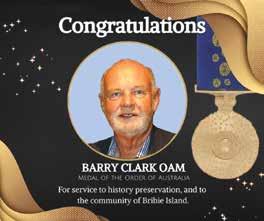
Few honours capture the heart of community commitment and devotion to heritage quite like the Order of Australia Medal (OAM). This year, Barry Clarke joins the distinguished ranks of recipients — and for those who know his work, there could be no more fitting tribute.
For the past ten years, Barry has graced the pages of the Bribie Islander as a columnist, delighting readers with his knowledge of local history. His enthusiasm for uncovering and recounting the stories, characters, and events that define Bribie Island has made his column a much-anticipated monthly feature.
As an avid historian, Barry’s devotion to recording, preserving, and sharing our island’s unique heritage has ensured that new generations grasp and appreciate the rich network of our community’s past.
Barry’s OAM is more than a personal accolade; it represents a celebration of the many hours he has devoted to community groups, historical societies, and storytelling. His career accomplishments as an engineer and adventurer are remarkable, but his role as a chronicler of Bribie Island life has earned him a special place in our hearts.
We congratulate Barry Clarke, OAM, and thank him for his constant loyalty to the Bribie Islander and to the preservation of our mutual history. His story is, in truth, the story of Bribie Island itself: vibrant, enduring, and deeply cherished.
A bit about Barry Clarke, a down-to-earth Aussie whose inquisitiveness and determination have touched lives near and far. From the Institute of Civil Engineers (MICE) to the Institution of Engineers Australia (MIE Aust.), Barry’s journey has been truly anything but typical. His story is packed with adventure, kindness, and achievements that inspire the everyday dreamer.
Barry’s hard work and big heart have seen him nominated for the Longman Award by a Federal MP and recognised as the Queensland Premier's Citizen of the Year. His love for helping others shines through in the Rotary Australia World Community Service and Pride

Scandinavia. Barry’s passport is as full as his life.
Barry at Work:

of Workmanship awards he’s picked up along the way.
Barry’s service to others has been celebrated even further, awarding him Rotary International’s Paul Harris Fellowship Sapphire and Ruby Pin awards and when the Shire Mayor nominated Barry for the Moreton Citizen of the Year award, it was yet another nod to his generosity and spirit.
Barry’s a lifelong learner at heart—just ask the University of the Third Age and the Bribie Island Historical Society, where he’s a life member and a friendly face.
But Barry’s life isn’t only about work. His personal adventures are not to be missed. Here are just a few of them…
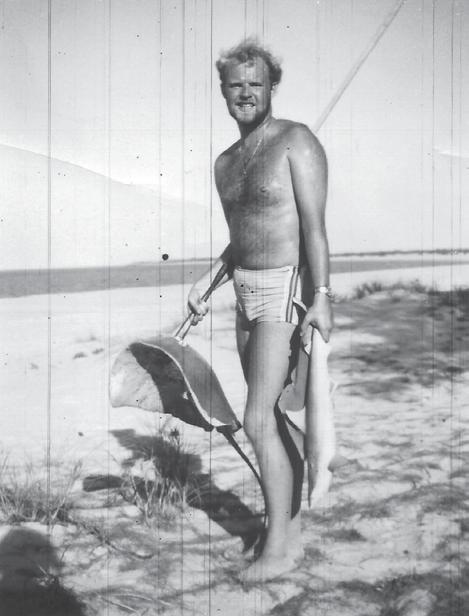
Over two years, Barry made his way from London to Nepal, then hopped on a motorbike through India and eventually to Australia. Not your average commute! He climbed a 22,500foot Himalayan peak near Everest—without oxygen, at the Great Endeavour Car Rally, Barry took on 4,500 kilometres to the Gulf and back in just ten days, he even made it into the Guinness Book of Records—travelling 760 kilometres down the Murrumbidgee River in New South Wales… in a bathtub!
His fondness for exploring the world has taken him everywhere—from South and Central America to Europe, Asia, the Middle East, and even
Barry worked as a Planning Engineer on an oil pipeline project in the remote centre of Libya’s Sahara Desert, he was the Engineer at the Nhulunbuy Bauxite Treatment Plant in Arnhem Land Northern Territory, then Barry lent his skills to the World Bank’s Sugar Industry Rehabilitation Project in Surabaya, Java, Indonesia, he managed contracts for a Danish offshore oil and gas field in Copenhagen, Denmark, was the Contract Management for Engineering Advancement Association of Japan, Tokyo and let’s not forget he built the world’s second-largest hotel in Beijing—a massive project built in Singapore and floated all the way to China!
Back home, Barry’s worked with some of Australia’s biggest names—BHP, Telstra, Pioneer, Sydney Water, Mt. Isa Mines, and Woodside. In Sydney, Barry took on the role of Senior Partner at PA International Management Consulting Group.
As Program Manager, Barry was at the heart of preparing Sydney for the 2000 Olympic Games, He also managed the big move of the Sydney Royal Easter Show to its new Olympic venue—a huge job!
Finally, Barry's ability for program management helped bring the New Zealand America's Cup defence to life in Auckland, proving that teamwork and passion can make anything happen.
As Barry sets his sights on new horizons, he remains dedicated to advancing innovation and inspiring others to embark on their own adventures. With a mindset fixed on future possibilities, who knows what boundaries Barry will break next?
A word from Barry On Australia Day I was surprised and honoured to be awarded the MEDAL of the Order of Australia by the Governor General for service to local history preservation, and the community of Bribie Island.
BARRY C. CLARK OAM, Services to promote and document the HISTORY OF BRIBIE ISLAND. UNIVERSITY of THIRD AGE local history Tutor and Life member.
Founding President and life member BRIBIE HISTORICAL SOCIETY.
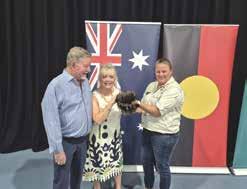


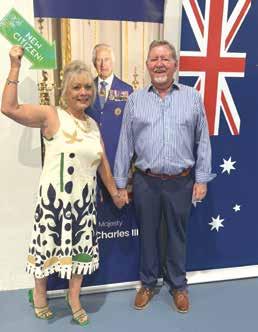
ames arrived in Australia in 1969 as a tenpound pom from Northern Ireland, the eldest of ten siblings raised on a farm. He built a new life here, marrying and raising three children, working tirelessly in sales and management, and eventually running his own business.
Ann’s journey to Australia began much later, in January 2012, when she came on holiday to visit siblings and relatives in New South Wales. Like James, Ann was born in the UK and spent much of her life in sales.
She lived and worked in mainland Spain for a decade with her late husband, before setting sail for Mallorca, the beautiful island off Spain, where they enjoyed another ten years together until his passing in 2004.
It was during that trip that fate intervened. Ann’s sister and her husband took her to the Gold Coast casino while she was visiting them in Grafton. While they played the pokies, Ann wandered over to the Atrium bar—where she met James.
What began as a chance encounter quickly blossomed: James came down to Grafton to see Ann again, then whisked her off to Brisbane for what was meant to be her final week in Australia.
She never caught her flight home. Instead, Ann stayed with James, resigned from her job in Mallorca, and within three weeks, they were engaged.
Five months later, in August 2012, they married. Ann’s children, Emma and Daniel, back in the UK, thought she was mad—but at this stage of life, who can afford not to take a chance on love?
James, ever the gentleman, made it all worthwhile. Ann’s children have since visited Australia, and they’ve enjoyed holidays together in both countries.
Why did Ann and James choose Bribie Island?
When Ann and James both retired in 2017, they set off as Grey Nomads, spending ten months exploring Australia in their caravan.
Upon returning to Brisbane, they thought they’d settle in Redcliffe, but a spontaneous lunch on Bribie Island changed everything.
After viewing a few homes with a local agent, they made an offer that very day—though ultimately, they purchased a different house in Bongaree.
For Ann, Bribie felt like home from the start. As a self-confessed water baby, she was instantly drawn to the island's easy charm and coastal lifestyle. They’ve never looked back.
James often remarks on the tranquillity he feels stepping outside their home—no bustle, no traffic jams, only the peaceful rhythm of island life.
The couple has forged deep friendships, thanks in part to Ann’s involvement with U3A, where she runs an art group, and the BICAS local art gallery, where she volunteers with the hanging team.
Ann has cycled with the local BUGS group, but now her passion is with the Bribie Mahalo outrigger canoe club—back on the water, racing with the team for the last two years.
James likes to say that the best part of Bribie is, "Happy wife, happy life!" Their social calendar is full; thanks to the wonderful community groups they’re part of.
James even became the roadie for Retro Revival, the singing group Ann joined—which, despite disbanding after two years, remains a cherished part of their weekly lives.
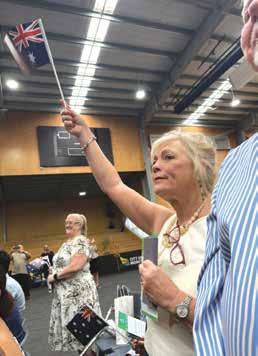
It’s clear why Bribie means so much to Ann and James. Even at 75, the island keeps them young. Becoming citizens together on Australia Day last week was truly the icing on the cake.
After 57 years, James has finally decided: Australia is home—for both of them.
Sailing is one of those simple pleasures that anyone can enjoy. Whether you’re on a small lake or out on the ocean, there’s nothing quite like feeling the wind push your boat forward.
In a world where everything moves so fast, sailing lets us slow down, breathe, and enjoy the moment. The sound of water against the boat and the open sky above can help anyone find a sense of calm.
Sailing isn’t just for experts or thrill-seekers—it’s for anyone willing to give it a try. You don’t need fancy gear or years of experience. With a little patience and willingness to learn, anyone can get started.
Every trip out, whether it’s smooth sailing or a little bumpy, is a chance to build confidence and learn something new. It’s about taking things as they come and enjoying the ride.
Sailing also teaches us to go with the flow. The wind might change, or you might get caught in a sudden rain. But that’s part of the adventure.
Each outing is different, and every little challenge helps us grow and become more adaptable.
There’s also a great sense of community among sailors. People help each other out, share tips, and swap stories at the dock.
It’s easy to make friends when you share a love of being on the water. Skill and teamwork matter more than anything else.
Sailing also reminds us to respect nature. Sailors see up close how important it is to keep our lakes and oceans clean.
Taking care of the water means we all get to keep enjoying it for years to come.
In the end, sailing is about enjoying life and finding freedom—even if it’s just for an afternoon.
Anyone can try it, and everyone can find something to love out on the water.
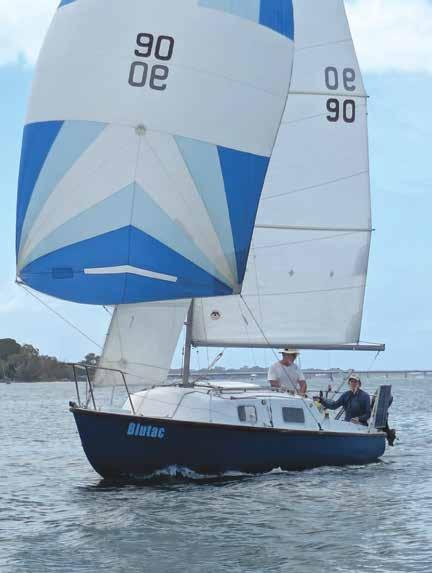
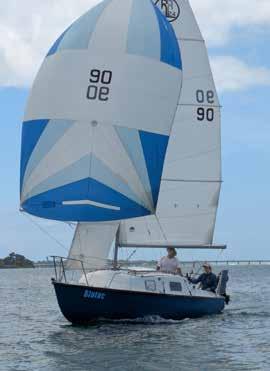
BISC held its second race of the year on Sunday, 1 February, and conditions proved challenging at the start with a flood tide carrying the boats northward toward the turning mark just north of Dux Creek.
The early leaders here were unable to make much headway south until the fleet brought up a fickle southerly wind, so a bunched fleet sailed south to the next mark at the Bribie Bridge.
This completed the first of three laps, with better breeze and beautiful sailing conditions on the passage, two boats had to pull out due to conflicting commitments later in the day.
Wildling, sailed by Grant Kirby, took out line honours, but Blutac, an RL 24 trailable yacht sailed by Clar Thomson, took out first on handicap, followed closely by Tokolosh, Wildling and Flick.
Sailing brings together skill, strategy, and a strong sense of the wind and water. Events like BISC’s race challenge both the speed of the boats and the abilities of their crews.
With changing breezes and tides, sailors have to adjust quickly, making each race different and enjoyable for everyone involved.
Pumice Stone Passage Probus certainly knows how to have fun ‘och ie the noo, sorry about that, not a spelling I know!!
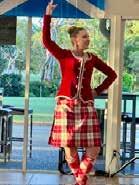
On January 23rd, a group of fun-loving Probians headed to Woorim Golf Club for a night of laughter and fun. It was Burns Night, celebrating the life of the famous Robert Burns.
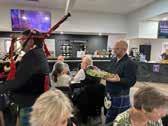
Robert, known as Rabbie Burns, was a Scottish poet and lyricist widely regarded as the National poet of Scotland.
He was born in 1759 and died in 1796. His most famous poem was ‘Tam O’Shanter’, but he was more widely known for ‘Auld Lang Syne’, which we all know.
Well, there were pipers playing bagpipes; they piped in the haggis. There were Scottish dancers and readings of Burns poems.
There was coquie leakie soup, Haggis neeps and tatties all washed down with whisky.
But that’s what Pumicestone Passage Probus likes to do. Come and join us on the second Tuesday of the month in the garden room at the RSL 9 for 9.30.
See you there!

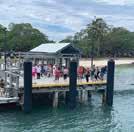





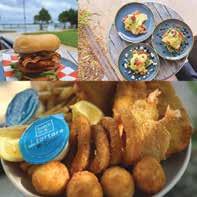
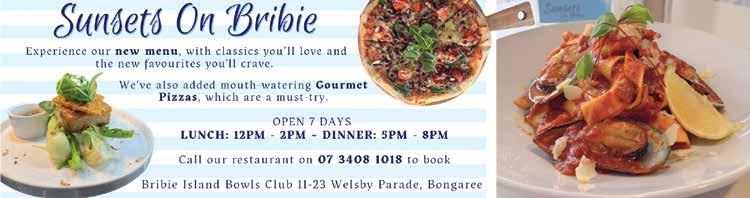
For delicious pizza, pasta, contorni salads and more, all crafted with love, come and enjoy our waterfront pizzeria. With live music every Sunday and the beautiful Pumicestone
Passage right beside you, we offer you a taste you’ll love
For deliveries or bookings, please visit us at www.steakoutpizzeria.au
9/11 Spinnaker Drive, Sandstone Point - 07 5360 1094
LUNCH Thu to Sun 11:30 - 2:30
DINNER Tue to Sun 4:30 - 8:30




Located by the jetty on beautiful Bribie Island, Scoopy’s Family Cafe is all about the family vibes, great food and coffee, fantastic service and all the ice cream you can eat!
Enjoy our friendly hospitality with barista-made coffee, amazing burgers, and a tempting array of ice cream choices to impress the pickiest connoisseurs.
Our massive range of cakes and famous fish and chips make it well worth the hour’s drive north of Brisbane.
Shop 2/2 Toorbul Street, Bongaree 07 3410 1791
With its spacious, relaxed ambiance, The Deck Restaurant offers casual dining indoors or alfresco on the deck overlooking the golf course, lake and lush gardens. Enjoy modern cuisine with locally sourced ingredients, open 7 days a week for breakfast and lunch, and dinner on Friday and Saturdays. Perfect for any occasion!
Pacific Harbour Golf & Country Club, 141-159 Avon Avenue, Banksia Beach 07 3410 4024
Scan The QR Code To Book Now!



IIn Vino Veritas In wine there is truth Le vin est le sang de la terre. Wine is the blood of the earth
- French quotations
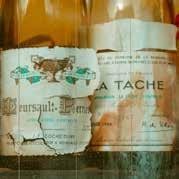
hope your new year has got off to a merry start and that you may have found a new wine variety to spice up your life, our year finished in a positive note last November and December, we visited my daughter who currently lives near Bordeaux, an area that has always been on my hit list and even in retirement I looked forward to spending time with her and it certainly didn’t disappoint.
Within days of catching up we were off in the car heading towards the Rioja Valley in the Basque area of Northern Spain via San Sebastian and Bilbao to a delightful town called Haro a typical large Spanish town which produces some of the best Tempranillo grapes in Spain, the grape variety of Rioja.
All around the town centre were wineries and the one we picked for a personal tour was the Muga winery, a winery that in June 2025 Wine Spectator gave the Muga Reserva 2021 vintage the title of Best Wine of the Year, this was one of many accolades this winery has won in recent times.
The winery which was founded by Isaac Muga and Aurora Cano in 1932 and has an area of 25,000 square metres continues today making wines in the most traditional of ways whilst being open to new techniques that provide greater quality and which include making their own barrels, the only winery in Spain the now does so and employs three coopers and a ‘Cubero’ who specializes in big casks, there isn’t one stainless steel tank used in any of the wines made, everything is produces using oak barrels of varying sizes, something I have never seen before, they make around 2,000 barrels a year and has a stock of around 14,000 barrels.
Upon the grapes arriving in the winery they are assessed for quality involving acidity, colour, degree of alcohol and physical condition the fruit that doesn’t reach the desired level are rejected. After going through the destemming process the grapes are put into fermentation vessels where
the grape sugar is converted to ethanol. Contact between the juice and the skin is essential for colour extraction and aroma. Bodegas Muga has four fermentation rooms containing 90 wooden casks, their capacities range from three thousand to fifteen thousand kilos, which gives Bodega Muga the opportunity to make different wines depending on the fruit quality and the vineyards they come from.
Once the fermentation takes place the wine will naturally carry out the secondary fermentation which is known as malolactic fermentation a method used in Australia by some winemakers in the making of Chardonnay. After this fermentation the wines start ageing in large wooden containers which can last from 24 to 36 months depending on the wine category.
Every four months wine has to be moved from the barrels where it has been sitting to new empty barrels, a process known as racking and helps clear the wine from the settled sediment or lees that have precipitated during the ageing process, racking also provides aeration.
Once the red wine is aged, but before bottling, fining is done in the Bodegas using the traditional method using egg whites which is a method here in Australia. Two or three egg whites are enough for 100 litres of red wine. The egg whites drag any remaining sediments and also absorb any harsh or bitter tannins leaving behind softer tannins. Finning is again done in oak containers with a capacity of 17,500 litres, once this is completed the wine is extracted from the container and bottles. The egg whites and the lees at the bottom of the container will be used to produce high quality compost, which will then fertilize the soil in a natural biological process.
After bottling the wine remains in the winery for a further 9 months to 36 months (The Grand Reserva) to ensure the final release gives maximum pleasure to the consumer. I have to be honest the wines I was fortunate to taste were some of the finest ever.
Muga makes Cava in both red and white (A Spanish sparkling wine) a house white which is a barrel fermented Viura blended with some Malvasia and Garnacha Blanca and a traditional rose. In 2025 the sparkling range was expanded with two ageing wines, the Blanc de Blanc Millesime made from Chardonnay and the Millesime Gran Reserva which also includes the grape variety Viura in the blend and is aged for 12 months.
When we travelled back to Bordeaux we spent a day visiting the region of Cognac and the impressive House of Hennessy, a house created in 1765 by Richard Hennessy and Irishman who served as an officer in the army of Louis XV. The tour was incredible seeing all the aged stocks of Cognac in the barrels and the most amazing room where you don these glasses and are transported into another world, so realistic that you are warned if you suffer from vertigo just lift the glasses to see you are still in the room and not where you are led to believe you are, the guides must get a real laugh out of thirty souls walking around in a circle avoiding imaginary doors and other hazards.
Finally, a visit to St-Emilion in Bordeaux, where we stayed in a Chateau on the outskirts of this remarkable town in an area that produces many of the world’s finest red wines. We had an appointment at a winery called Chateau le Puy, a winery that featured in a series on Apple TV called ‘Drops of God’ this is a series I can really recommend to anyone remotely interested in wine, or not, it isn’t what you think!
The Bordeaux region is divided basically into two wine growing regions by the river Gironde, the Right Bank and the Left Bank and both area have a combined number of wineries totalling around 7,000. The Left Bank is an area famous for wines produced using mainly Cabernet Sauvignon, Merlot and Cabernet Franc. Also famous for a white wine called Sauternes using Semillon, Sauvignon Blanc and Muscadelle grapes.
The Right Bank is famous for wines made with Merlot as the main grape variety, but forget the scene in the film ‘Sideways’ which belittled Merlot, these wines are serious and command prices up to several thousand dollars a bottle and are nothing like the wines produced here in Australia, apart from Yarra Yering established by Dr Bailey Carrodus in 1969 that set about creating a Merlot that matched the French and in 1992 his Merlot outpriced Grange and was snapped up by excited wine drinkers from around Melbourne within hours of being released.
Another chapter next month.
Cheers Philip Arlidge.
arlidge@ bigpond.com.au

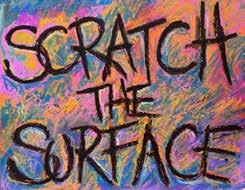
Featuring work by
Glenda Charles,
Scratching beneath the surface is always a tantalising theme for art exhibitions. The notion of exposing what lies beneath for a meaning that’s not readily apparent on first viewing has a provocative charm.
It’s present again in this year’s Scratch exhibition at Bribie Island Community Arts Centre Matthew Flinders Gallery. Surfaces can be physically scratched into with a tool and the meaning beyond an idea can be revealed to expose something very different.
Artists in the exhibition this year have created a range of amazing works along this theme.
You look once, twice and more to see what they’re saying...
Bribie Island Community Arts Centre 191 Sunderland Drive Banksia Beach - Open Tuesday to Saturday, 9am to 4pm; Sundays 9am – 1pm.
Cafe 191 on site - Open 7 days; Tuesday to Saturday 9 – 2; Sundays & Mondays 9 – 1.
The three-monthly painting changeover at the Bribie Arts Centre gift gallery on February 17 is a siren call to revisit..
All the works are fresh and unseen in this space. Every one of them is by Bribie Isand Community Arts Centre (BICAS) members and, competition for wall space being tough at the Centre, they are the artists’ prime offerings.
Landscapes, portraits, abstracts, impressionism, art deco, traditional and modern styles are there for the viewing with pleasure.
Allow plenty of time so you can circulate around the gift gallery, down the hallway into the back gallery and pop out to the Seasoned Garden display space.
For the entire month of February we can enjoy the bright and cheerful artworks created by Helen Macdonald and Suzie Dennis.
For Helen, art is where everyday moments transform into something quietly magical.
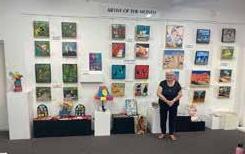

She’s inspired by what she sees around her, unexpected colour combinations, lingering visual moments like light falling across a room.
For Suzie, painting is reimagining memories though paint. These can be stories that caught her eye or touched her heart, like the beauty of her Bribie Island garden, playful encounters with magpies, or treasures found riding her bike.
At Studio Alice, creativity is nurtured with passion, patience and purpose. Under the gentle guidance of artist and educator Sabine Von Graz, young artists are encouraged to explore their imagination, build confidence and work towards their creative dreams in a space where learning — and a little bit of magic — meet.
Having grown up with an art teacher as her mother, Sabine witnessed from an early age the power of an individual approach to teaching. She saw how personalised guidance could help students flourish not only artistically, but emotionally — a philosophy that now sits at the heart of Studio Alice.
“I aspire to support and guide the next generation, one brushstroke at a time,” Sabine says.
Sabine’s creative career spans fashion design and manufacturing, graphic design, applied design and multimedia, giving her a broad
and practical foundation that she brings into every lesson. More recently, her studies in Art Therapy have deepened her belief in creativity as a powerful tool for wellbeing.
“I believe creativity sits right alongside meditation and mindfulness when it comes to helping with stress, loneliness, anxiety and boredom,” she explains. “My lessons encourage an alternative focus for thoughts, and in turn, a greater sense of balance and wellbeing.”
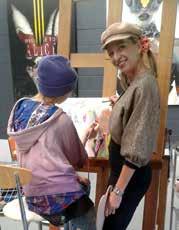
Studio Alice welcomes children who love to draw, paint and explore their creativity — whether they are complete beginners or already enjoy making art.
Classes and private lessons are designed to be relaxed, supportive and fun,
helping students feel at home while developing strong foundational skills guided by their own interests.

To welcome new students from local schools, Studio Alice is currently offering a special introductory opportunity. The first ten children to register will receive a free 30-minute private lesson, giving families the chance to meet Sabine, explore the studio and enjoy creating art together.
Alternatively, new students can take advantage of a one-hour private lesson for just $20, offering a gentle and confidence-building introduction to the Studio Alice experience.
Private lessons are also available for students wishing to focus on specific areas such as drawing objects or people, oil painting, or exploring different mediums.

Each lesson is thoughtfully customised to suit the student’s goals while allowing their individual creativity to lead the way.
Sessions are held at Studio Alice in Woorim, or at the Bribie Island Community Arts Centre. At Studio Alice, art is more than a skill — it’s a journey of self-expression, confidence and care.
For more information, visit www.welcometoalice.com.au or contact Sabine on 0414 872 118.
Alice is welcoming new students from local schools!
To celebrate, I’m offering a special introductory opportunity for students to experience art in a relaxed, supportive, and fun studio environment.
Introductory Offers for New Students: FREE 30-minute private lesson
Available to the first 10 children who register. A chance to meet me, explore the studio, and enjoy creating art together.
Or one-hour private lesson for any new student
Valued at $60 — now just $20
Designed to help students feel at home and gain confidence and inspiration in creating art
that reflects their world at Studio Alice or at the convenient location of our local Bribie Art Centre!
These sessions are perfect for children who love to draw, paint, and explore their creativity — whether they are beginners or already enjoy making art.
Love to see you! Sabine xx

For more information please go to the website or contact Sabine on: sabine@welcometoalice.com.au Mob: 0414872118 www.welcometoalice.com.au
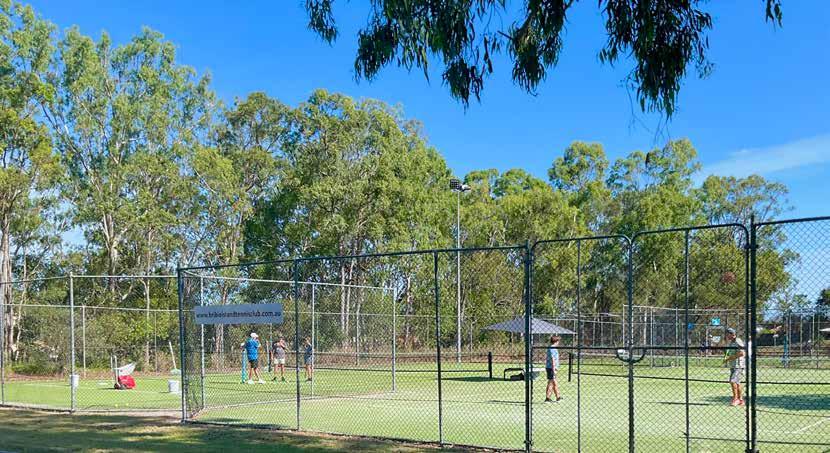
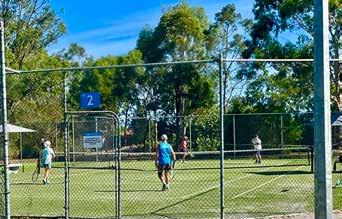
On Saturday 31 January the Bribie Island Tennis Club conducted an Aussie Open Free Social afternoon. Terry Young MP (Federal Member for Longman) and Councillor Brooke Savige (City of Moreton Bay) dropped in and helped out on the courts.
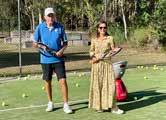
The weather was glorious. With young and old attending, the afternoon consisted of people who had never played before, others taking up tennis again, and also our regular players. The ball machine available free to all members, was a huge hit.
Many sausages were devoured and our random prize draw began. It was great to see so many new faces at the courts. Over the next four years the Club is undertaking a complete facility upgrade. This includes installation of LED lighting to courts 1 to 4; full fence replacement in 2026; court surface replacement over a two-year period commencing mid to late 2027.
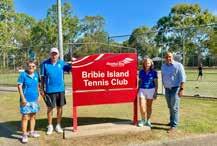
These upgrades ensure that our club provides members and the community with a first-class tennis facility to be enjoyed for many years to come.
We would also like to recognise the support from City of Moreton Bay in supporting the LED light project with a $30,000 grant.
Some important information regarding membership fees, playing times and social events:
• Senior $40 (18 years and over)
• Junior $5 (under 18 years)
• Family $80 2 adults (18 yrs and over) plus children under 18 yrs old
All members get discounted court hire fees and free use of our ball machine….
Throughout the year the Club also holds social events, including 4 social doubles afternoons, State of Origin (Qld V NSW) tennis evening, Australia V Rest of the World Tennis Battle arvo, President’s Day and Senior Club Championships, all concluding with either BBQ, Pizza, nibbles.

Our offsite events include Barefoot Bowls and Annual Presentation Evening/Christmas Party.
For more information about our Club or to join our active tennis community, phone 0447 122 328 or become a member today online at www.bribieislandtennisclub.com.au
$40 senior / $5 junior / $80 family


MONDAY
EUCHRE
Bribie Bowls Club 12.00pm
Contact Annette on 0414622490
TRIVA
Bribie Island Hotel 6.30pm
Bribie Island R.S.L 7.00pm
TUESDAY
BINGO
Bribie Island R.S.L 10.00am POKER
Bribie Island Hotel 6.30pm
WEDNESDAY MUSIC BINGO
Bribie Island Hotel 6.30pm
Bribie Island R.S.L 7.00pm RAFFLES
Solander Lakes Bowls Club - 6.30pm (tickets on sale from 5:30pm)
THURSDAY
BINGO
Bribie Island R.S.L 7.30pm RAFFLES
Bribie Island R.S.L Fishing Club 4.30pm
Every Thursday at the RSL prizes are Meat Vouchers from Avondale Meats and Seafood Vouchers from Saviges.
FRIDAY
MEAT TRAY RAFFLES
Bribie Island Bowls Club 4.30pm
Bribie Island Golf Club 5.30
Blue Pacific Hotel (from) 3.00pm
Solander Lakes Bowls Club - 6.30pm (tickets on sale from 5:30pm)
Enjoy playing 500 Cards?
Join a like-minded group who meet on Monday afternoons at the RSL Anzac Room from 1-4pm. $5 which includes raffle prize.
Please arrive 10mins before play starts at 1pm Further information please ring Carole 0438 713 663
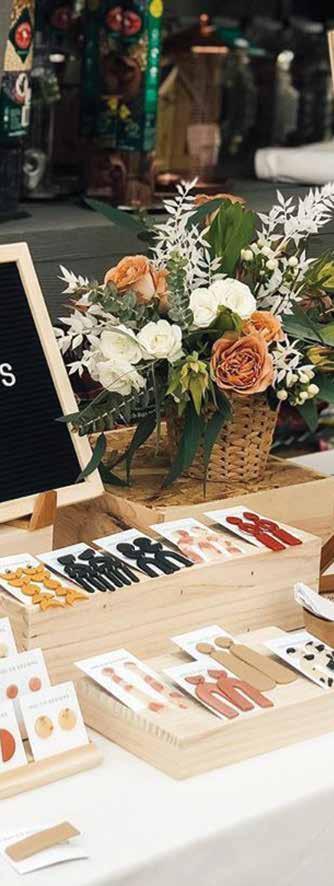
The B.D.M.S. Community Markets are held at the Men's Shed 53 Rogers Street Beachmere, every 1st Saturday of the month 7.30am - 12pm
Bribie Island BIDCA Markets
The Bribie Island BICA Markets are held at Brennan Park, Bongaree, the 3rd Sunday of each month from 6am -12pm
Bribie Rotary Markets
The Rotary Markets are held at Brennan Park, Bongaree on the second Sunday of each month from 6.30am – 12 noon
Queensland Cancer Council
The Cancer Council Markets are held at Brennan Park, Bongaree on the first Sunday of each month from 7am to 12 noon.
LUNCH MARKETS - Sylvan Beach (Farmers Market)
First Saturday of each month from 8am to 1pm held in the park opposite the Bribie Island Hotel. Funds raised to E.P.C.S, Ass, 0417629957
Banksia Beach Market
Bribie Harbour Shopping VIllage is held on the last Saturday of each month 8am to 12pm
The Bribie Island Lions Market
2nd Sat of the month at Tintookie Park Woorim 7am - 1pm.
Bribie Woodcrafters & Bribie Island Gem Club
Open day, Demonstrations & Sales - last Sunday of each month
8am to 12noon Held at Bribie Art Centre
191 Sunderland Dr, Banksia Beach
Mystic Journey Markets change of location
Saturday November 15th ~ 9am ~ 2pm Saturday December 6th ~ 9am ~ 2 pm Saturday December 20th ~ 9am ~ 2m 4pm ~ 8pm
There is also an outdoor market to run alongside indoor market called This ‘n’ That
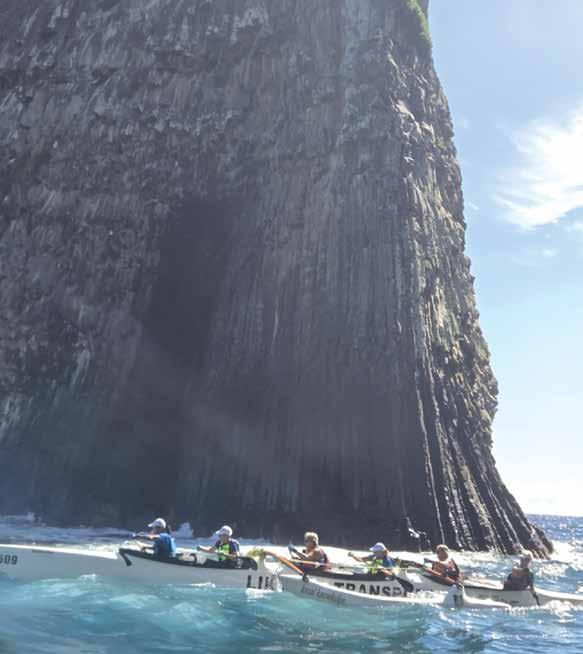
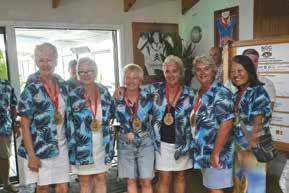
Acouple of paddlers from Bribie Island Mahalo Outrigger Canoe Club had visited Norfolk Island in 2020 to witness the Norfolk Ocean Challenge (NOC the Rock) and vowed if they ever returned, it would be to compete in this amazing event.
In July 2025, this dream started to become a reality when interest was gathered, crews were formed and training began.
We were preparing for a 26km circumnavigation of Norfolk Island, a tiny dot in the Pacific Ocean - vastly different from a paddle up and down Pumicestone Passage!
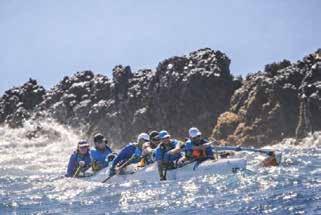
MONDAY’S NORFOLK OCEAN MARATHON 26KM
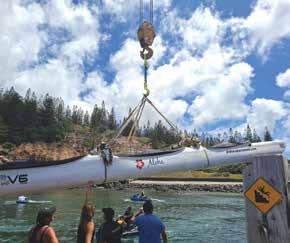
All boats on Norfolk have to be craned into the water from the pier and the canoes were no exception. Paddlers had to board the canoes from a platform and head off to wait on the start line.
Bribie Golden Master Women (60 years+) were first on the water and had about a 40-minute wait for the start. This gave us time to get used to the canoe, get comfortable and calm our nerves.
Bribie Senior Master Men (50 years+) were 4th on the water and before we knew it, we were off. The conditions for the week were better than we could have ever hoped for but still provided challenges.
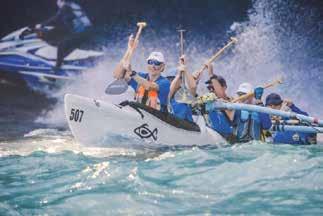
Our long training sessions (20-30km) would take us round to Woorim and beyond in any weather, trying to get experience of the conditions we were likely to face, and regularly clocking up 60-70km per week.
Fast forward to January 2026 and 2 crews plus supporters (18 people) arrived on Norfolk Island - quite a presence!
The week began with a moving opening ceremony at Emily Bay with the blessing of the canoes. Blessings were delivered in Old Tahitian, Norf’k and English followed by performances from the Baunti Beauties and the Paapahaia drummers showcasing traditional Tahitian dance and rhythms.

As we battled unpredictable water over bommies, head wind, currents and negotiated the 2m swell, it was hard not to notice the stunning coastline, incredible birdlife, shoals of fish leaping from the waves - just magical.
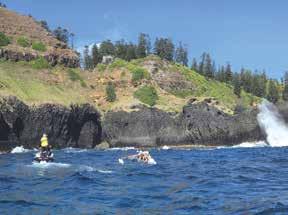
However, the best part of the course was going through the famous 9m wide basalt arch in the cliffs about halfway round! Boy was it choppy heading into it, with waves peeling back from the rock walls. The jet ski support guys were amazing, yelling instructions over the wind and giving us the final go-ahead.
Waves tossed our canoe around, but we stayed on course, all paddling on the ‘ama’ side to ensure we didn’t huli (flip)!
A huge rock column met us on our exit, and we had to make a quick right turn as the waves pushed us through - what an adrenaline rush!! After a few
‘whoops’ we refocused and settled in for the next 13km to the finish line. Our Bribie Men’s crew took line honours in 2 hours 51 mins and therefore first in their category too. Our Bribie Women’s crew was 2nd in their category in 3 hours 18 mins. What a fantastic achievement!
After a night of celebrations and a day of rest/sightseeing, the next race, advertised as a 12km mid distance - turned out to be 19km!! We had a couple of paddlers pull out due - one due to illness, one due to injury. Luckily 2 of our supporters jumped at the chance to step in - this was not an opportunity to be missed!
this day with large swell coming sideways as we crossed to the uninhabited island.
The dramatic and sheer cliffs were breathtaking - if we took the time to look up as we navigated through channels between bommies and rock stacks!
The course was from Kingston Pier to Red Stone behind neighbouring Phillip Island and back. It was slightly rougher
After another day of rest (and more sightseeing) we had fun sprints on Emily Bay on Friday - both OC6 (6-man) and V1 (singles). By this time, we had got to know lots of the other paddlers from clubs all over Australia and Hong Kong and everyone was feeling very relaxed. Once again Bribie Men came 1st and fastest overall, Bribie Women 2nd in category.
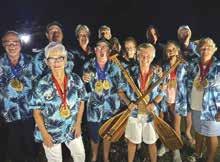
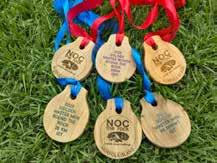
The final awards night was at Puppy’s Point, high on the cliff on the west coast - an open air ‘fish fry’ buffet as we watched the sunset. Medals crafted from Norfolk Island Pine were presented to winning crews.
Bribie Men were also awarded a perpetual trophy for the fastest men’s team and Bribie Women were awarded a hand-crafted paddle to keep for the most consistent crew! Such a fun evening: so much camaraderie among all paddlers, shared experiences, stories and laughter.
We are extremely grateful to the Norfolk Island Outrigger Canoe Club for hosting this event. It is backed by the whole Norfolk Island Community who really appreciate the business it brings to the island.
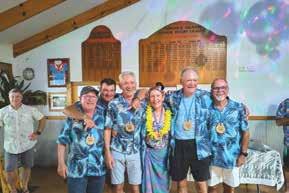
Not many people get to witness this stunning scenery, and we felt truly blessed that the weather allowed us to paddle this course. It was a slog back to the finish line, with the Bribie Men coming second across the line and 1st in category in 1 hr 54 min! Our Bribie Women were again 2nd in category in 2 hr 15 min. Woo Hoo!
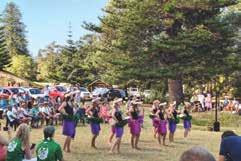

We were all made to feel very welcome and our enthusiastic cheer squad made sure that Bribie Island Outrigger Canoe Club will not be forgotten in a hurry!! If you haven’t been to Norfolk Island, it is highly recommended - just a 2-hour flight from Brisbane.
If you are interested in trying outrigger canoeing, just email us at bribieoutriggers@ gmail.com or contact us via Facebookwho knows where it might take you!
There was a presentation evening that night at the Leagues Club for the 19km event - a fun evening with lovely buffet dinner and music/dancing.

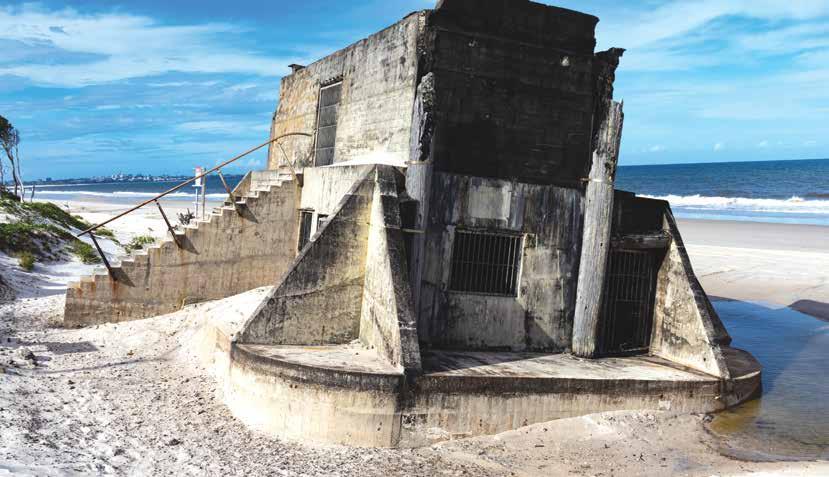
By Al Finegan
Today,Bribie is a calm, peaceful place to live. It is also a popular destination for visitors to come to enjoy our Pumicestone Passage calm waters, or the surf at Woorim. But if you dig a little deeper into our past, you will discover that for a brief and anxious period during the Second World War, our beautiful island was reshaped in ways few residents could now imagine. The dunes once held artillery, secret navy equipment, searchlight stations, radar huts, and hundreds of Australian and American servicemen whose presence changed the island forever.
Many remnants of their wartime occupation still remain. Concrete gun pits, crumbling bunkers half-swallowed by sand and sea, bare slabs of foundations where soldiers once lived and worked are scattered about the Island, particularly on the ocean side. But behind these physical reminders lies an even richer story - a story of fear, preparation, ingenuity, and the strange mix of isolation and importance that Bribie experienced when the world was at war.
In 1939 when war broke out in Europe, Brisbane was already a significant port. It did have one valuable defence line - Moreton Bay, a shallow bay with many sandbars to restrict movement. Ships travelling to the Brisbane River had to travel by a narrow, twisting stretch of deep water that runs close to Bribie and Moreton Islands. For years it had been understood that any hostile vessel approaching Brisbane would have to pass within reach of any guns mounted on Bribie’s long ocean shore. This advantage in the defence of Brisbane was recognised.
Military Command understood that Brisbane’s safety depended on establishing coastal artillery where the shipping lanes came closest to land. Bribie Island, which had previously been seen as a holiday destination was suddenly designated a strategic outpost. This decision transformed the island almost overnight. Soldiers began to arrive in increasing numbers. Survey teams tramped through the dunes, and engineers began clearing areas that had never before seen a vehicle. Bribie’s quiet days were over, at least for a while. The Australian High Command selected the northern end of Bribie Island for the main
fortification. It had sweeping views of the sea, a clear line across the shipping channels and dunes, and it was high enough for defensive works. In 1940 and early 1941, two enormous 6-inch Mark XI naval guns were transported by barge across Pumicestone Passage and hauled into position. These guns, originally built for naval use, were capable of firing shells over 14 kilometres, far enough to cause serious damage to any hostile cruiser trying to slip into Moreton Bay.
Once the guns arrived, the rest of the fort quickly took shape. What emerged was more than a pair of gun pits. It was a self-contained military village hidden among the banksias and wattles. Named “Fort Bribie”, it grew to include underground magazines linked by tunnels, observation and command posts, and plotting rooms. Barracks and beach searchlight positions were established. These defences were supported by networks of trenches, barbed wire, and camouflage netting.
Storage depots were built, spaced along the ocean scrub to avoid detection from enemy
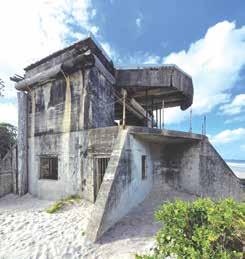
aircraft. Workshops, kitchens, mess halls, the Royal Australian Navy’s RAN4 indicator loop and a minefield control station were built. Its Loop Control Hut and two power huts were located in the dunes at the end of North Street, with the southern power hut now standing in the middle of today’s Rotary Park. What is now the centre of Woorim became the main supply depot for Fort Bribie. This was lifechanging for many of the permanent residents as their homes were requisitioned, while other families were relocated when their properties were judged too close to new restricted zones. Bribie, long seen as a sleepy retreat, was now firmly in the military’s hands.
For the gunners at Fort Bribie, life became one long routine. Crews drilled daily. They practised loading and traversing the massive guns, simulating an attack on enemy vessels attempting to breach the bay’s defences. Observation posts were manned day and night, with soldiers peering through binoculars for anything unusual. Soldiers recalled long evenings sitting on the dunes, staring out to sea and wondering what might come over the horizon. They spoke of fierce summer heat, the occasional strong wind making fine white sand blow into every crevice of equipment, clothing and food.
Bribie’s swampy areas were ideal breeding grounds for mosquitoes. Dengue fever swept through the garrison so frequently that it became a serious operational problem. Many soldiers were bedridden with fever, shaking chills and bone aches so severe the illness became known as “breakbone fever.” Some evidence suggests that a small temporary hospital or convalescent facility was built somewhere south of the fort, its exact location is still debated today.
In December 1941, the Japanese attacked Pearl Harbour, then Singapore surrendered with the loss of thousands of Australian soldiers. Darwin and Broome were bombed. The Japanese forces swept through the islands to our north. Australians now lived in fear of invasion.
Things moved rapidly. Brisbane became the
headquarters for US General Douglas MacArthur, and with him came thousands of American troops, engineers, naval units and supply depots. Queensland, and especially the coastal region north of Brisbane, turned into a staging ground for campaigns across the South-West Pacific. It wasn’t long before Bribie Island became a vital part of the rapid transformations.
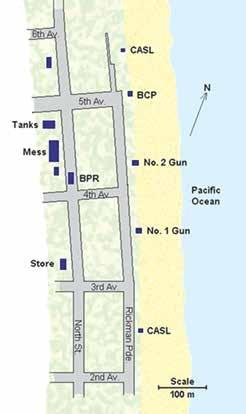
In 1942, the southern end of Bribie witnessed its own transformation. Two American 155mm guns were installed on circular concrete platforms known as Panama mounts. Though the weapons had been supplied by the United States, they were operated by Australian gunners trained in coastal defence. It was named “Skirmish Battery” to serve as a companion to Fort Bribie. While Fort Bribie guarded the northern channel, Fort Skirmish was located on the ocean side at Woorim, with the two main gun emplacements on the dune line on the beach end of Fourth Avenue. Its support buildings were strung out along North Street between 4th and 6th Avenues. This building complex comprised barracks, cookhouses, stores, workshops, and a plotting room. Observation posts were sited on the beach dunes just above the surf, and searchlights were built into the dunes.
American troops also crossed regularly from Toorbul Point to train on Bribie. Their presence added a new flavour to island life. Their uniforms, accents, music and well-stocked supplies (especially cigarettes and chocolate) made a strong impression on both locals and Australian troops. Many long-time residents recall stories passed down of dances, picnics, shared meals and occasional jealousies between young Australian soldiers and the confident American servicemen.
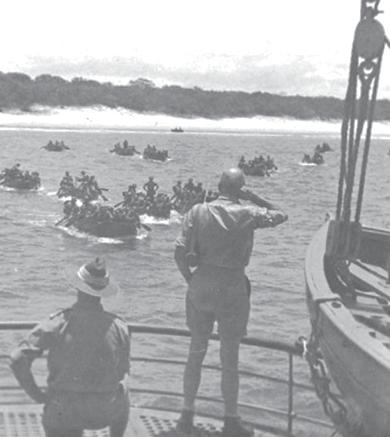
While Bribie hosted the gun batteries, nearby Toorbul Point became one of the most significant Allied amphibious training centres in Australia. From mid-1942 onward, Australian and American troops trained there in preparation for the islandhopping campaigns in New Guinea and beyond.
Large numbers of landing craft operated out of Toorbul Point, and Bribie’s ocean beaches
served as their practice landing zones. The sight of landing craft pushing through the surf and disgorging soldiers onto the sand became common. These exercises sometimes took place at night, making the combination of surf, darkness and unfamiliar equipment particularly hazardous.
The Americans had their own nickname for Toorbul Point, “Terrible Point”, a reflection of the mud, heat, mosquitoes and difficult conditions. But this training proved vital. Many of the men who later fought in New Guinea, and Pacific islands first learned their beach-landing skills on Bribie’s shores.
While the gun batteries provided the most visible signs of Bribie’s wartime role, the island also held some of the most secret. North of Woorim, concealed behind the dunes, the Royal Australian Navy ran a control station for an intricate network of underwater sensors and mines.
Long magnetic cables known as indicator loops were laid across Moreton Bay. When a ship or submarine passed overhead, it caused a faint electrical disturbance that registered on instruments inside a small analysis hut on the island. These readings helped naval staff track every vessel moving into or out of the bay.
Alongside these loops were controlled minefields, rows of underwater mines anchored deep beneath the surface. If an enemy ship attempted to run through the channels, the mines could be detonated remotely. Friendly vessels were provided with strict instructions about which route to use, and at what time, to avoid tragic mistakes.
The sophistication of this system is often overlooked in local history, but at the time it represented some of the most advanced harbour-defence technology used anywhere in the world. Bribie’s wartime soldier population was not limited to men. From 1943 onward, the Australian Women’s Army Service (AWAS) played a crucial role on the island. Women served in communications, plotting, driving, clerical roles and searchlight operations. They worked long hours, often in cramped rooms lit by dim lamps, tracking imaginary enemy vessels on plotting boards .
For local civilians, these years brought mixed experiences. Areas of the island were restricted. Permits were required to cross certain zones, and nighttime blackouts were enforced. Yet the presence of troops also brought social events, dances, concerts, picture shows, and a sense that the island was playing an important part in a much larger struggle.
The guns at Fort Bribie and Skirmish Batteries carried out countless training exercises, firing at towed targets far offshore, but no confirmed
enemy vessel ever came within range of the guns. Some see this as evidence that the guns were unnecessary. But military planners know deterrence often works precisely because the weapons exist. Any Japanese commander considering an attack on Brisbane would have known that the approach to Moreton Bay was heavily defended, by guns, mines, aircraft and naval patrols. Bribie’s coastal batteries were an essential part of that defensive shield.
War breeds rumours, and isolated posts breed more than most. Over the years, stories have circulated on Bribie about vast underground tunnels running the length of the island, enormous subterranean bunkers capable of holding hundreds of troops, or secret hospitals where high-ranking American officers were treated in complete secrecy. Some of these tales are exaggerated, and most are simply imaginative embellishments that grew in the telling.
By late 1944, as Allied forces advanced through the Pacific and the threat to Australia diminished, Bribie’s wartime role wound down. The batteries were placed on care-andmaintenance status, their crews reduced, and equipment gradually removed.
When peace finally returned in 1945, the army no longer required the island’s defences. The guns were dismantled and scrapped. Timber huts were removed and sold, often to become cheap housing in nearby towns. Much of the equipment was hauled away, but the heavy concrete structures were left behind.
The Island slowly settled back into its natural rhythm. But the traces of that intense period remain. At Skirmish Battery, coastal erosion was relentless. In the decades after the war, waves undercut the gun emplacements until they collapsed onto the beach. Most were demolished in the 1970s for safety reasons. Only the famous concrete “Toaster” observation post remains today, lying on its side, just an abandoned relic.
Fort Bribie, protected somewhat by its remote location and deeper dunes, survived better. Its bunkers still stand, weathered and partially buried. Those remains are under serious threat from coastal erosion and breakthrough events, especially given the recent 2022/25 breaches at the northern tip.
Today, interest in Bribie’s war years remain in the minds of locals. Bribie’s historians, heritage organisations, and community volunteers have worked to document the surviving structures and preserve their stories. Interpretive signs, guided walks, and heritage listings now help visitors understand what remains of this once-secret military world.
Our peaceful island now welcomes visitors seeking quiet family holidays. But we should never forget that Bribie once helped guard a nation during one of the most uncertain chapters in our modern history.
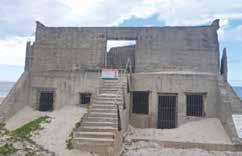
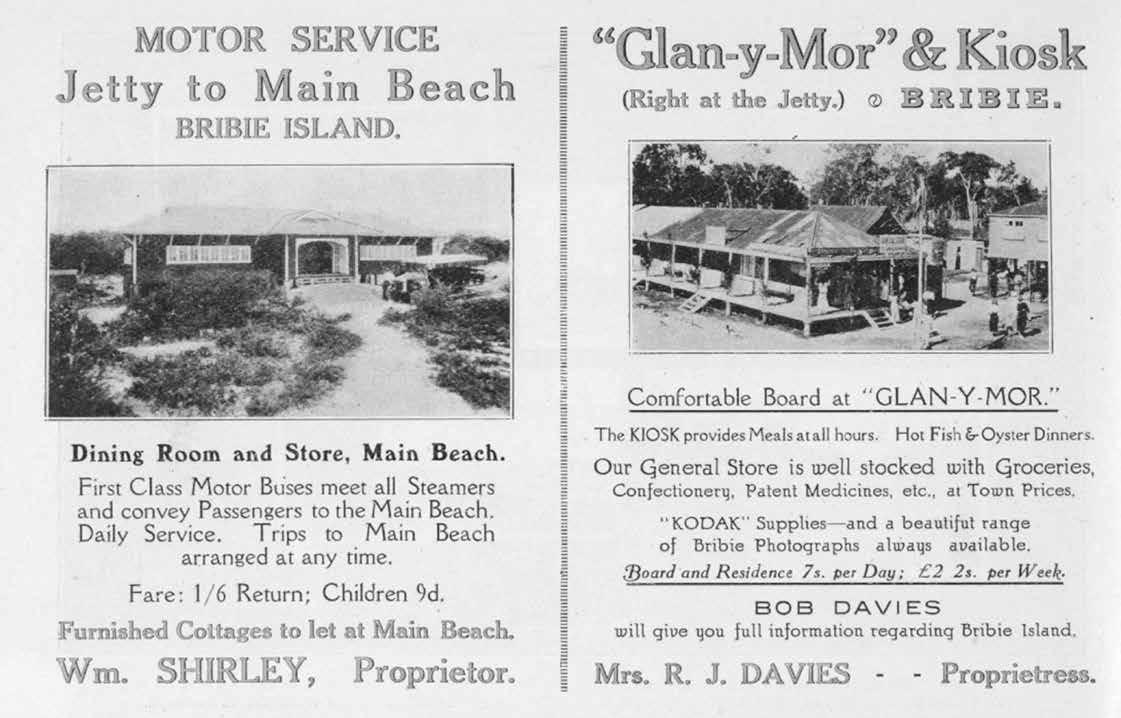
The title header image above shows two 1925 tourist adverts for Bribie Island. By 1925 Bribie was attracting many thousands of regular visitors, when the resident population was less than 100 people.
The above adverts make interesting reading of holiday attractions on Bribie 100 years ago. A return Bus ride to Ocean Beach was 16 cents and a week’s Board and Residence in a Banya Street guesthouse was $2 .20.
Everyone had to come by Steamship, a three-hour trip from Brisbane. Most people on holiday camped in canvas tents, some stayed in the limited accommodation or basic beach huts, but many came just on a day trip and returned to Brisbane later that day.
Life was primitive and the first road from Bongaree to Ocean beach has only been cleared in 1923. People came because it was cheap and cheerful and the fishing, wildflowers, wildlife and bush tracks were most enjoyable.
The first people to come to Bribie were three Sydney castaway convicts who were washed ashore in Moreton Bay by chance 100 years earlier in 1823 and very lucky to survive with the help of the native people. When Sydney surveyor John Oxley found them, it led to the establishment of a new Penal Colony at Redcliffe and the subsequent development of Brisbane.
With just a few indigenous people on the island in 1880 the Government surveyed and planned to establish a settlement, they named Bribie Town, at what is now White patch. It did not eventuate because the Brisbane Tug Company built a Jetty at Bongaree in 1912 and developed the Company Town of Bongaree which they regularly serviced with Steamships.
When I retired to Bribie in 2004, after a career living and working in 47 countries around the world, I did not know Bribie at all and had no interest in History. However, I have been researching, documenting and promoting Bribie History for the last 20 years, and was surprised and honored on Australia Day to be awarded the Medal of the Order of Australia by the Governor General.
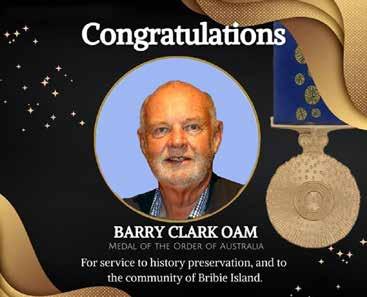
I have written regular History Page articles for the Bribie Islander magazine for more than 10 years, given presentations to many local Clubs and Groups, conducted Heritage Walks and installed numerous heritage plaques.
I was founding President of the Bribie Historical Society in 2008 and a Tutor in different aspects local history at the University of the Third Age every week for nearly 20 years.
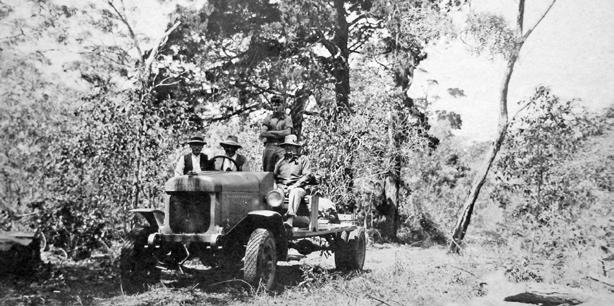
There seems to be no end to the fascinating history of this small island that is more significant than just about any other place. Explorer Mathew Flinders landed here from Sydney in 1799 with indigenous guide Bongaree, before being first to circumnavigate and establish this was one big continent, to which he gave the name Australia.
That links Bribie to the foundation stone of all our national history. Here below are 3 photos that capture the early days of Bribie Island, at a time when having a camera to take a basic photograph was quite unusual.
The first motor car was floated to Bribie from Godwin beach in 1918, 5 years before the first road was built, and 40 years before the Bribie Bridge was built in 1963.
You can contact me at bribiehistoricalsociety@gmail.co if you have any questions or interesting pictures or stories to share, or would like to buy a copy of my book of 40 previous articles for $25
Bribie Historical Society meets on second Wednesday of each month at 6;30pm at RSL Club We have great guest speakers and visitors are always welcome. Come and see what we do.
See much more on Web site bribiehistoricalsociety.org.au and Blog site http//bribieislandhistory.blogspot.com or contact us on bribiehistoricalsociety@gmail.co
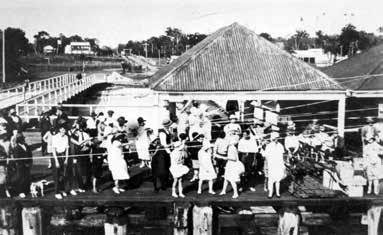
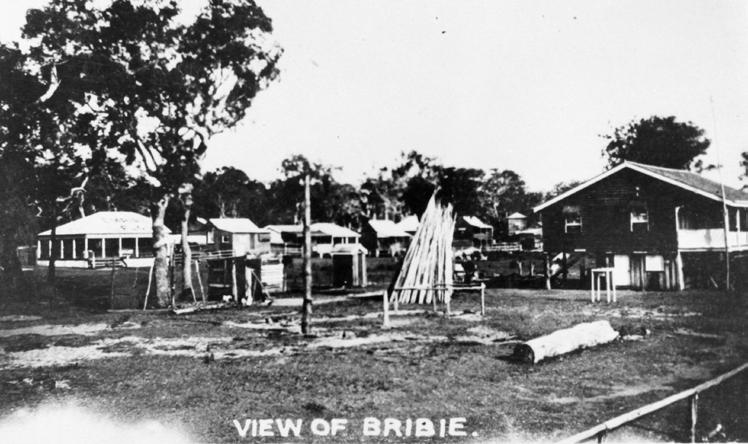
Self Select Pairs Results
Friday PM 16 January 2026
Winners: M Andrews, M Prewett
Runners up: R Black, C Smith
Winning draw: J Cullen, W McDougal
Winning draw: N Kelly, C Olson
Winning draw: C Chidgey, B Pritchard
Encouragement: P Campbel, R Ferguson
Random Select Fours Results
Saturday 17 January 2026
Winners: D Neumann, P Neumann, D Riseham, I Teakle
Runners up: J Teakle, M Cole, L Mather
Winning draw: T Comacchio, G Hutchison, J Herbert, M Bonollo
Winning draw: D Cherry, A Russell, M Bunning, C Bunning
Winning draw: L Beaven, K Muller, A Whalley, C Hamilton
Winning draw: P Gee, L Hackwood, P Bennett
Scroungers Results Monday 19 January 2026
1st R Eaton
2nd: L Stanford
3rd: BJ Adams
4th: J Herbert
Self Select Triples Results
Tuesday 20 January 2026
Winners: W Baker, J Warwick, K Kajewski
Runners up: R Ghest, R Williams, L Kurtz
Winning draw: C Wilkies, C Brayley, T Phillips
Winning draw: W McDougall, L Wright, D McDougall
Winning draw: J Bell, C McMillan, D Dixon
Self Select Pairs Results
Wednesday AM 21 January 2026
Winners: L Murphy, F Ferguson Smith
Runners up: C Dann, M James
Winning Draw: B Kinnear, D Handcock
Encouragement: A Wells, K Brown
Self Select Pairs Results
Wednesday PM 21 January 2026
Winners: C Perkins, K Perkins
Runners up: N Kelly, G Olson
Lucky draw: D Bishop, T Bishop
Lucky draw: S Cook, B Hosie
Lucky draw: M Andrews, A Heaton
Encouragement: C Thornton, K Thornton
Random Select Triples
Results Thursday 22 January 2026
Winners: C Christiansen, J Teakle, C Hamilton
Runners up: C Brayley, L Hackwood, G Mellors
Winning draw: I Gillard, M Wright, C Cross
Winning draw: D Charlwood, D Riseham, J Dunn
Encouragement: L Stone, D Davis, G Hull
Self Select Pairs Results
Friday AM 23 January 2026
Winners: J Falvey, G Jackson
Runners up: M Thompson, Wallaby
Winning draw: N Gray, M
James
Winning draw: D Merrett, T
Ridley
Encouragement: J Coleman, S O’Neil
Self Select Pairs Results
Friday PM 23 January 2026
Winners: C Chidgey, B Kinnear
Runners up: K Taylor, C Perkins
Winning draw: K Thornton, B Meek
Winning draw: M Durham, K
Smith
Winning draw: M Andrews, P Adams, M Prewitt
Encouragement: C Hayles, T Smith
Random Select Open Fours
Results Saturday 24 January 2026
Winners: R Bickerton, E Thean, C Bennett
Runners up: W Manson, W Gunders, K Langford, M Brown
Winning draw: P Gee, W Ogrodniczek, J Brown, M Bonollo
Winning draw: G Low, J Wallis, J Herbert, J De Ruyter
Winning draw: G Coleman, A Mann, J Dunn, M Cole
Winning draw: M O’Neill, S Muller, K Rush
Self Select Triples Results
Tuesday 27 January 2026
Winners: D Bowers, A Mann, B Castle
Runner up: R Horne, G Pitts, R Black
Winning draw: D Dixon, C McMillan, R Warwick
Winning draw: L Godfrey, M
Gittens, L Gilmore
Winning draw: R Ghest, R Wilkins, L Kurtz
Encouragement: H Taylor, T Paekau, B Stuart
Self Select Pairs Results
Wednesday AM 28 January 2026
Winners: D Handcock, B Kinnear
Runners up: S Preist, G Jackson
Lucky draw: M Lowe, S Chandler
Encouragement: D Gibson, K Muller
Self Select Pairs Results
Wednesday PM 28 January 2026
Winners: G Olson, W Kelly
Runners up: F Crockett, D Heath
Winning draw: G Reily, G Teakel
Winning draw: K Burton, R Dickson
Winning draw: T Paekau, M Andrews
Encouragement: N Holzberger, J Mercer
Random Select Triples
Results Thursday 29 January 2026
Winners: P Cook, S Muller, C Draper
Runners up: D Charlwood, K Mulpeter, J Laidlaw
Winning draw: P Conn, K Brown. R Cross
Winning draw: G Frew, P Neumann, J Dunn
Tuesday 20 January 2026Club Select Triples:
Winners: Ted Fairman, John Dann, Janet Green
Second: Bill Dobe, Debbie Jackson, Merv Adams
Third: Mike Jones, Jacki Player, Bruce Crawford
Wednesday 21 January 2026
- Self Select Pairs: Winners: John Sly, Tony Grimmond
Second: Ian James, Nathan Wrice
Third: Deb Hill, Pat Samuelson
Thursday 22 January 2026Self Select Triples: Winners: Jim McKenzie, Margaret McKenzie, Stan Hillen
Second: Carmel Sorrenson, Ralph Chaplin, Anthony McGregor
Third: Ted Fairman, Michael Whiteside, Merv Adams
Jackpot $600 Winners: Jacki Player, Leonie Schmidt, Wally Schmidt
Friday 23 January 2026Self Select Pairs:
Pool A Winners: Krys Henshaw and Rob Henshaw
Pool A Second: Marieke Moore and Neil Feazey
Pool B Winners: Chris Avenell and Robert Stumbles
Pool B Second: Debbie Hill and Maggie Zahl
Saturday 24 January 2026Club Select Triples: Winners: Paul Bottger, Daryl Stone, Bob Edwards
Second: Debbie Jackson, Darren Jones, Michael Whiteside
Tuesday 27 January 2026Club Select Triples: Winners: Ron Ryan, Cheryl Crawford, Judy Pursehouse

Second: Gavin Dunlop, Ian Jackson, Merv Adams
Wednesday 28 January 2026
- Self Select Pairs:
Winners: Steve Ross, Peter Hodgson
Second: Gerry Dieben, Alex Kinnear
Third: Krys Henshaw, Peter Nixon
Thursday 29 January 2026Self Select Triples:
Winners: Carmel Sorrensen, Ralph Chaplin, Anthony
McGregor
Second: Jacki Player, Leonie Schmidt, Wally Schmidt
Third: Jeff Farmer, Ray Griffin, Vicki Mitchell
Friday 30 January 2026Self Select Pairs:
Pool A Winners: Steve Ross, Ian James
Pool A Second: Fred Tarry, Peter Hodgson
Pool B Winners: Tony McGuill, Andy Dehaney
Pool B Second: Peter Nixon, Brad Lawler
Saturday 31 January 2026Club Select Triples/Pairs:
Winners: Doug Hogan, Beryl Cowperthwaite, Trevor Smith
Second: Mitch Magnussen, Grant Riley
Club Championship FoursLadies:
Winners: Krys Henshaw, Terri Curtis, Debbie Hill, Margaret McKenzie
Runners-up: Jacki Player, Marieke Moore, Janelle Day, Maggie Zahl
Club Championship FoursMen:
Winners: Alan Thorp, Ian James, Matt Dickson, Rob Dickson
Runners-up: Wayne Stuart, Ted Dean (substitute for Pete Neilson), Tony Grimmond, Glenn McCarthy
Photos of the club championship finalists are attached. Names are:
Ladies - front row left to right - Debbie Hill, Krys Henshaw, Maggie Zahl, Jacki Player Back row left to right - Terri Curtis, Margaret McKenzie, Janelle Day, Marieke Moore
Men - front row left to right - Matt, Dickson, Alan Thorp, Ted Dean, Glenn McCarthy Back row left to right - Ian James, Rob Dickson, Tony Grimmond, Wayne Stuart
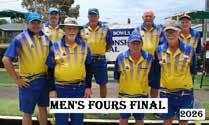
Results 16/1/2026 to 29/1/2026
Results of Friday 2-4-2 16/1/2026
Winners: Alan Simonic, John Bell
R/up: Maureen Ferguson, Marg McGarry
Results of Saturday Scroungers 17/1/2026
1st: Imelda Valentine. 2nd: Tony Jericevich. 3rd: Jim Warrick. 4th: Col Valentine
Results of Tuesday Paddle Pop Triples Draw 20/1/2026
Winners: Ian Paterson, Maureen Ferguson, Frank Levey
R/UP: Ron Wilson, Col Hodges, Laine Paterson Jackpot Draw: Jackpot
Results of Wednesday 4’s 21/1/2026
Winners: Gordon Heap, Col Valentine, Frank Levey, Ian Paterson
R/Up: Brian Reed, Marty Hall, Noni Jordan, Dave Dixon
Results of Thursday Jackpot Pairs 22/1/2026
Winners: Peter McQueen, Gary Pincott
R/Up: Chris McMillan, Margaret O’Keefe
Results of Friday Paddle Pop Draw 23/1/2026
Winners: Dave Dixon, Peter Caruso
R/Up: John O’Donohue, Peter Rasmussen
Results of Saturday Scroungers 24/1/2026
1st: Peter Blake. 2nd: Peter Szepes. 3rd: Christine Nathan. 4th: Yuki King
Results of Tuesday Paddle Pop Triples Draw 27/1/2026
Winners: Diana Stowers, Tracey Pugliano, Brenda Hutchinson
R/Up: Pat Spice, Robert Pender, Graham Symonds
Bonus Draw: Jackpot
Results of Wednesday 4’s 28/1/2026
Winners: Sandra Scott, Janice Mason, Jen Hadley, Di Drew
R/Up: Ann Clarke, Anita
Broughton, Ron Wilson, Ray Broughton
Results of Thursday Jackpot Pairs 29/1/2026
Winners: Judy Hansen, Mike Hansen
R/Up: Tim Carlton, Jaarpung Blundell
BRIBIE ISLAND WOMEN’S GOLF
RESULTS FOR BRIBIE ISLAND WOMEN’S GOLF 27 JAN - 5 FEB 2026
27/01/26 SINGLE STROKE
DIV 1 WINNER
Maureen Bailey 66. 2nd Jo McCowan 70. 3rd Pauline Grooby 71 c/b
DIV 2 WINNER Penny Brittain
71. 2nd Jude Dorhauer 72. 3rd
Jan Jennings 73. NTP. Hole 4 Kate Wilson.
Hole 7 Gill Lee. Hole 14 Robyn
Harper. Hole 16 2nd shot Jule Bell. Hole 14 (Div 3 2nd shot)
Charmaine Price
29/01/26 4BBB STABLEFORD
OVERALL WINNERS
Kerryn Keys & Sue Lee 47. 2nd
Vicki Jones & Carole Watson
45. 3rd Ann Squires & Kate Wesener 44 c/b
NTP. Hole 4 Linda Urquhart. Hole 7 Vicki Jones. Hole 14
Ann Squires. Hole 16 2nd shot
Ann Rogers. Hole 14 (Div 3 2nd shot) Margaret McDonald
03/02/26 SINGLE STABLEFORD
DIV 1 Winner Gwen

Clutterbuck 40. 2nd Julie Bell
39. 3rd Kate Wilson 36 c/b
DIV 2 Winner Sue Lee 43. 2nd Jennifer McKay 39. 3rd Angela Roberts 37 c/b
NTP Hole 4 Debbie McCowan. Hole 4 (Div 3 2nd shot) Jenny Williams. Hole 7 Julie Bell. Hole 14 Lorna Burns. Hole 16 2nd shot Linda Urquhart.
Our first invitation day of the year. We were very happy to welcome guests from Caloundra, Caboolture, Kilcoy, Virginia and Nudgee Golf Clubs.
DIV 1 Winner Gwen with Kate DIV 2 Winner Sue with Kate
05/02/26 SINGLE STROKE –MONTHLY MEDAL
DIV 1 WINNER - WHITE Di Benghamy 73. 2nd Vicki Cronan 75 c/b. 3rd Linda Urquhart 75.
NTP Hole 4 Maureen Bailey. Hole 7 Ann Squires. Hole 14 Linda Urquhart. Hole 16 2nd shot Ros Gardiner.
BEST GROSS Di Benghamy 77
DIV 2 WINNER - RED Joanne McCoombes 73 c/b. 2nd Debra Dunn 73. 3rd Ailsa Lauchlan 75 c/b.
NTP Hole 7 Paula McKenzie. Hole 14 Lyn Cockerell. Hole 16 2nd shot Charmaine Price. BEST GROSS Debra Dunn 98
DIV 3 WINNER - YELLOW
Nadia Aylott 72. 2nd Judith L’Estrange 75 c/b. 3rd Jody Bedson 75.
NTP Hole 4 Nadia Aylott. Hole 14 Judy Bedson. Hole 16 2nd shot Roz Crossley
BEST GROSS Judith L’Estrange 105
Div 1 WINNER Di with Lyn Div 2 WINNER Joanne with
Lyn Div 3 WINNER Nadia
An amazing opportunity has arisen for a new sponsor for our Women's Monthly Medal. Please contact the Club if this is something you’d like to explore further.
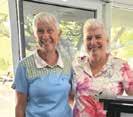
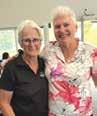
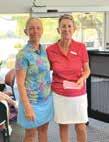
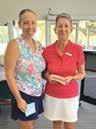


Across
CRYPTIC SOLUTION
Down
1 Holiday in overseas territory (6)
4 Cut of lamb unsuitable for sweet rolls (4)
Across
8 Confirm taking on English Iron Man, among others (7)
1 Holiday in overseas territory (6)
9 Popular starters of halloumi or tapas (3)
1 Modern technology found in cinema illegally (5)
2 Witness letter being dictated (3)
Down
4 Cut of lamb unsuitable for sweet rolls (4)
3 Elon’s getting grief seemingly, principally issues from Tweeters (4)
8 Confirm taking on English Iron Man, among others (7)
10 The French nurses provided vitality (4)
TODAY’S TRICKS Clues begin or end with a definition of the answer.
The rest is one of these: Hidden word Answer is hidden in the clue’s words
1 Modern technology found in cinema illegally (5)
5 Cunha’s typically running around taking his time (7)
9 Popular starters of halloumi or tapas (3)
12 Dried fruit is squashed by fall (6)
10 The French nurses provided vitality (4)
14 Followed flawless broadcast (6)
12 Dried fruit is squashed by fall (6)
14 Followed flawless broadcast (6)
15 Coloured section of Dandy edition (4)
2 Witness letter being dictated (3)
‘Some have altered meat (4)’ gives VEAL Soundalike Something that sounds like the answer
3 Elon’s getting grief seemingly, principally issues from Tweeters (4)
6 The enemy personifies a tangerine, to some extent (5)
5 Cunha’s typically running around taking his time (7)
7 Money brought up in audition (5)
15 Coloured section of Dandy edition (4)
18 Tips from overtly unscrupulous touts exposed (3)
18 Tips from overtly unscrupulous touts exposed (3)
6 The enemy personifies a tangerine, to some extent (5)
11 European aboard hadn’t eaten, ate everything (7)
19 Fine roses expire easily – shelter is advantageous at first flower (7)
‘Excited as Oscar’s announced (4)’ gives WILD Acrostic The first letters of the answer
7 Money brought up in audition (5)
13 Hefty bouncers endure education for years to begin with (5)
11 European aboard hadn’t eaten, ate everything (7)
‘Initially get a good joke (3)’ gives GAG Insertion One thing inside another makes the answer
13 Hefty bouncers endure education for years to begin with (5)
19 Fine roses expire easily –shelter is advantageous at first flower (7)
21 Team moaned audibly (4)
22 A number in school stink (6)
21 Team moaned audibly (4)
22 A number in school stink (6)
14 Primarily comprises rum, orange syrup, soda mixture (5)
14 Primarily comprises rum, orange syrup, soda mixture (5)
‘In favour of republican entering Post Office (3)’ gives PRO
16 Demise sealed by ineptitude at Harrods (5)
16 Demise sealed by ineptitude at Harrods (5)
1 President to grab a rum baba at last (5)
5 Regressive argument involves bird (3)
7 Rooms with chair tactfully withdrawn inside (5)
2 Buccaneers traipse around (7)
Down
1 Propane exploded (theoretically) (2,5)
8 Award rejected in Marylebone (5)
3 Fish’s location announced (6)
5 Regressive argument involves bird (3)
7 Rooms with chair tactfully withdrawn inside (5)
9 Static discharged in storage spaces? (6)
10 Portion of patna rice sent back with diatribe (4)
8 Award rejected in Marylebone (5)
TODAY’S TRICKS Clues begin or end with a definition of the answer.
1 President to grab a rum baba at last (5)
4 Four of honeymooners returning to see Nevada city (4)
2 Buccaneers traipse around (7)
3 Fish’s loc ation announced (6)
4 Four of honeymooners returning to see Nevada city (4)
5 Go out with the dumb yob in the end (3)
9 Static discharged in storage spaces? (6)
13 Oars, did you say? An iconic one is red (4)
10 Portion of patna rice sent back with diatribe (4)
14 Part of corset repaired (6)
6 You can reveal safari suit, finally: it’s not bright (5)
5 Go out with the dumb yob in the end (3)
6 You can reveal safari suit, finally: it’s not bright (5)
13 Oars, did you say? An iconic one is red (4)
14 Part of corset repaired (6)
17 Alert showing quantity of terawatts when backfiring (5)
19 In the auditorium, studies grasses (5)
11 Red coat tailored in 20s style (3,4)
11 Red coat tailored in 20s style (3,4)
12 Remade? Remade? Gosh! (4,2)
12 Remade? Remade? Gosh! (4,2)
17 Alert showing quantity of terawatts when backfiring (5)
20 Drunkard elects to shout, ultimately (3)
19 In the auditorium, studies grasses (5)
13 Thoroughfares in Greek Island spoken of (5)
20 Drunkard elects to shout, ultimately (3)
21 We’re told crossword setter noticed blot on landscape (7)
21 We’re told crossword setter noticed blot on landscape (7)
13 Thoroughfares in Greek Island spoken of (5)
15 Girl taking last drops of cider to repress ennui, Laurie (5)
15 Girl taking last drops of cider to repress ennui, Laurie (5)
16 Give up, Pip escaping from trap (4)
16 Give up, Pip escaping from trap (4)
The rest is one of these: Anagram Anagram of answer and hint that there’s an anagram ‘Senator arranged crime (7)’ gives TREASON Soundalike Something that sounds like answer ‘Excited, Oscar’s announced (4)’ gives WILD Last letters Final letters give answer ‘Finally pull the rug showing limb (3)’ gives LEG Hidden reversal Answer defined and hidden backwards ‘Insect returns in Vietnam (3)’ gives ANT

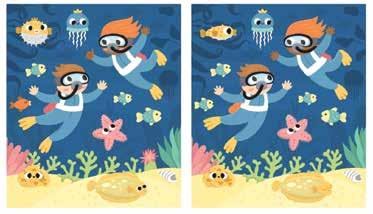
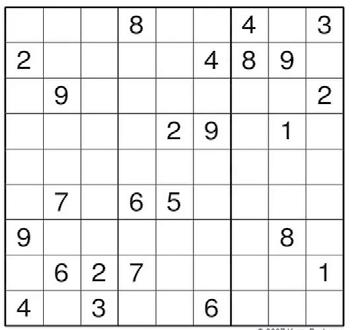
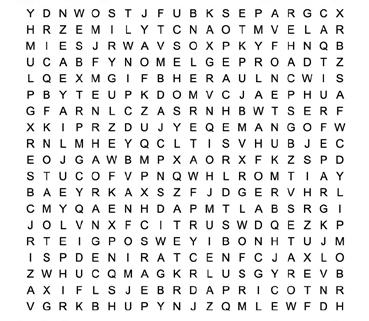













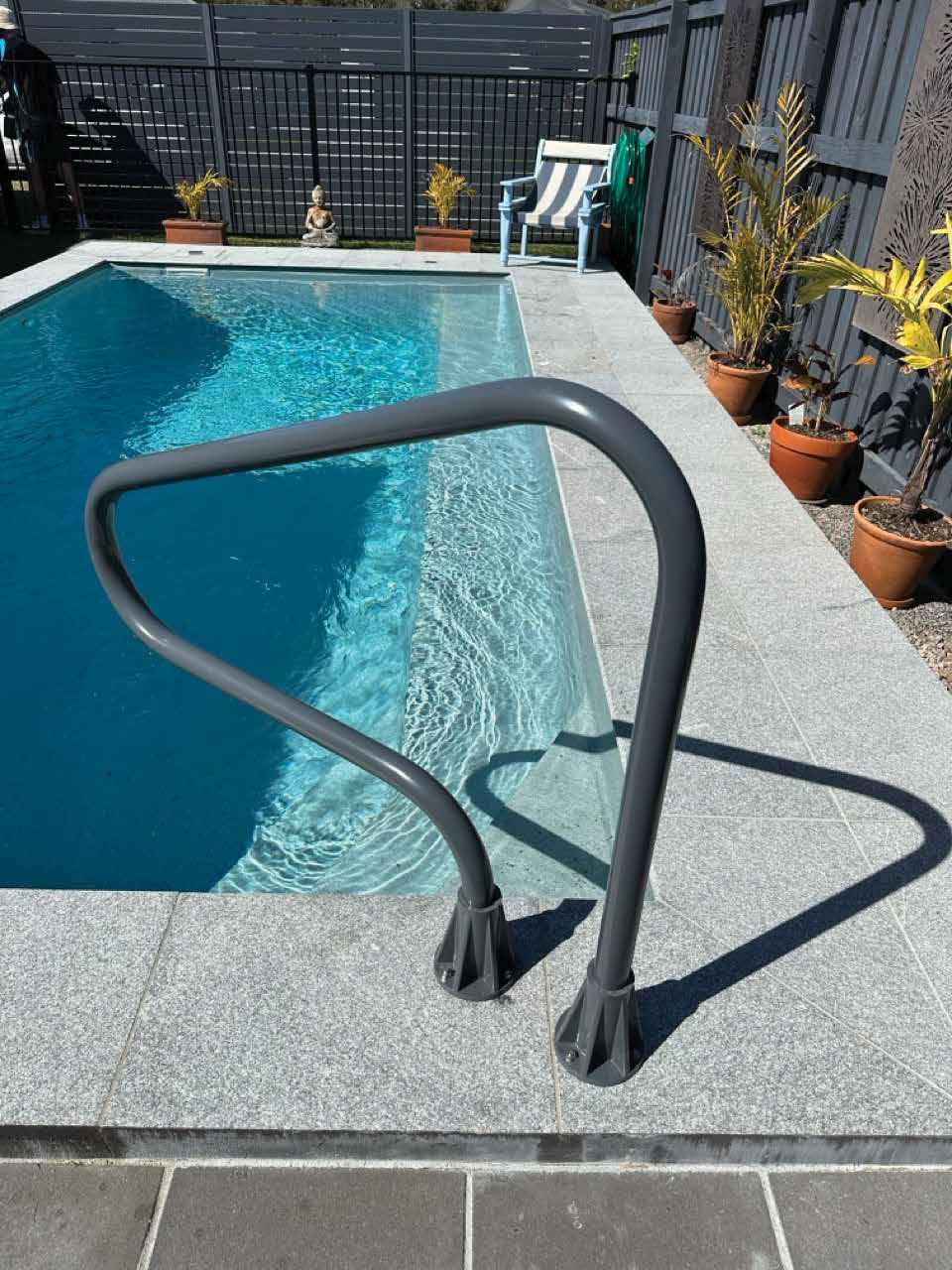







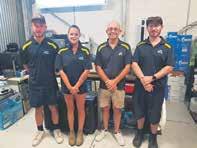




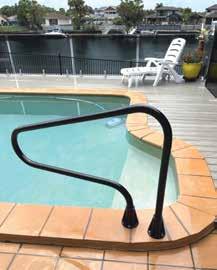








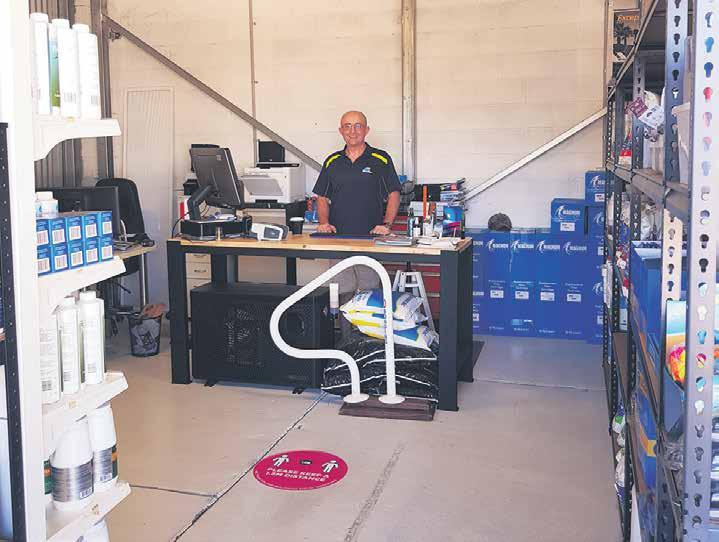











Stenson’s Floor Sanding & Polishing offers the best quality floor sanding and polishing possible!
We are a Family owned and operated business
We sand and coat all internal timber floors and stairs, as well as timber decks and steps.
Our services include:
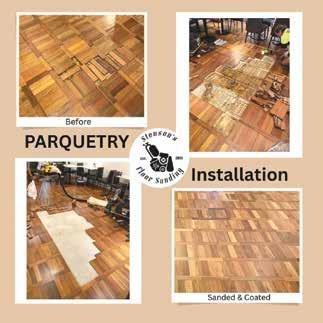
While not every hardwood floor can be refinished, most quality hardwood can be sanded down and restored. Our crew can rejuvenate dull and worn-out timber floor boards and make them look brand new again.
Depending upon the type of wooden flooring and the look you are trying to achieve, our crew will use a variety of finishes such as natural oils, modified oils, varnish and water-based or oil-based polyurethanes.
We are also experts at applying stain or limewash to flooring to achieve the desired effect and look you are after. In addition to existing timber flooring, our crew will also sand and finish new timber flooring.
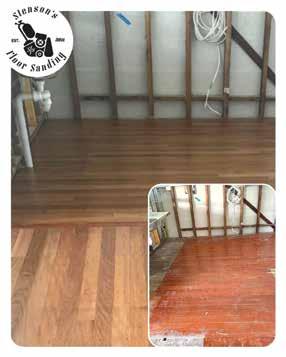
























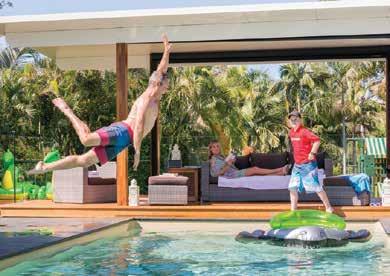




































Illegal dumping is at concerning levels in City of Moreton Bay, with Council investigating and prosecuting individuals in relation to 2,056 significant illegal dumping sites since 2023.
People have illegally dumped everything from garden waste and household rubbish to hazardous items such as asbestos and livestock carcasses.
City of Moreton Bay is urging residents to correctly dispose of waste, including using their annual entitlement to dump three tonnes of waste or make 26 trips at Council waste facilities for free What do dead cattle, old boats, tyres, green
waste and asbestos have in common? They are among a long list of items that have been illegally dumped in City of Moreton Bay over the past three years.
Council has investigated and prosecuted individuals in relation to at least 2,056 significant illegal dumping sites since 2023 – an average of 13 a week. The volume of items illegally dumped at these sites added up to 3,405,227 litres of waste, enough to fill more than 14,000 wheelie bins.
City of Moreton Bay Mayor Peter Flannery said the staggering statistics show people need to be more responsible when it comes
to waste disposal. “Illegal dumping is just not on – it impacts the enjoyment of public spaces and poses a danger to people, wildlife and our environment,” he said.
“Illegally dumped items such as asbestos, chemical drums and cattle carcasses create serious health hazards, while green waste can introduce invasive pests and increase the risk of wildfires.
“It’s a costly problem for ratepayers too, with Council spending millions of dollars each year cleaning up illegal dump sites – money that could be better spent on community amenities and services.”




In Queensland, illegal dumping is the unlawful disposal of any type of waste material that is 200 litres, about the volume of a wheelie bin, or more.
Hotspots for illegal dumping in City of Moreton Bay include high density areas such as unit complexes, new development areas, parks and reserves, and on state land such as national parks, forest plantations and habitat reserves.
Items commonly dumped include household rubbish, furniture, appliances, mattresses, tyres, green waste, building waste, chemical drums, paint tins and even asbestos. Some of the more unusual items illegally dumped include livestock carcasses in state forests and old boats in car parks.
Many people don’t realise that illegal dumping includes the dumping of green waste, such as grass clippings and tree branches, dumping of household waste in public bins, and kerbside dumping.
Council has the jurisdiction to investigate and
prosecute illegal dumping offences within City of Moreton Bay and has issued 282 infringements over the past three years.
For individuals, fines in excess of $2,670 can be issued and, if prosecuted in court, a magistrate can issue fines up to $66,760. For
corporations, these amounts are $8,345 and $333,800 respectively.
“Council takes illegal dumping seriously and we encourage anyone with information, imagery or CCTV footage of illegal dumping occurring to report the matter to us,” Mayor Flannery said.
“We have a state-funded dedicated illegal dumping officer, who is backed up by additional investigators and our rangers, to help stamp out this issue.
“Council is doing its bit to combat illegal dumping, but we need residents and commercial operators to do the right thing and dispose of their waste correctly.
This means correctly disposing of waste in Council bins and using their annual entitlement to dump three tonnes of waste or make 26 trips at Council waste facilities for free.”
Members of the public can report illegal dumping by downloading the Snap Send Solve app or report online.
For more information about waste disposal, visit Waste, recycling and organics - City of Moreton Bay.
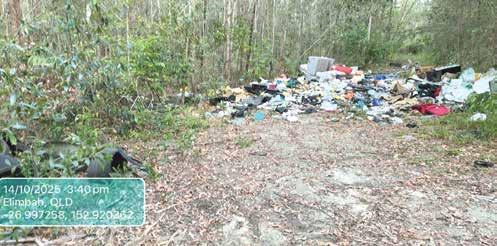



Queensland’s wild orchids are more than just interesting plants; they are tough survivors. These
five orchid subfamilies.
Although people often think of orchids as delicate and hard to care for, many native types have developed impressive ways to survive the state’s challenging climate.







Ihear this often when travelling around the local orchid shows that pop up during the year. The next most common statement I hear is "I couldn't grow them".
My response to this is to grow what grows well in your location. There are over 35000 different wild species of orchids. They can be found on every continent except Antarctica and from most climatic regions.
The Queensland International Orchid Fair is an event that has been running annually now for many years. We are at present operating from the Belmont Shooting Complex which is located just off the Gateway expressway at 1485 Old Cleveland Road at Belmont.
This venue allows us to fit 19 of Australia's leading Orchid nurseries as well as 2 International Orchid Nurseries and an Orchid supplies company.
There will be a vast variety of orchids to satisfy all from the very beginner to the most experienced orchid grower.
The best day for beginners is Saturday as the nurserymen and woman have more time to help with your enquiries.
On Saturday we will be running a spot prize on the hour for 5 hours starting from 9.00AM. Prizes will be orchid plants to get you going. So, what's the difference between this event and other orchid shows that occur around town during the year?
The major difference is that at our event the plants are all on sale unlike the local shows where the members place their orchids up for display and compete with each other on display and growing ability.
The only plants not for sale at our event maybe some demonstration plants to show off younger plants.
Just a little about our venue. The Brisbane Holland Park Lions will be selling their excellent refreshments throughout the 2 days. There is plenty of FREE parking.
The Belmont Shooting Complex is also Wheelchair accessible with full accessible facilities as well. We have left plenty of room to be able to move around as well. The venue has a no pet’s rule.
This is a FREE ADMISSION EVENT so feel free to come and go as much as you like. We would love to see you all there.



The Asbestos Disease Support Society (ADSS) is pleased to announce the return of its popular Morning Tea Seminar series across Queensland in 2026 – with Bribie Island being the next stop.
ADSS warmly invites Bribie Island residents and those from surrounding communities to attend this free community event, designed to increase awareness about the risks of asbestos
and hazardous dust exposure, while enjoying a complimentary morning tea in a relaxed and welcoming environment.
Asbestos and dust diseases continue to impact communities, often many years after exposure. This is an opportunity to learn how exposure occurs, who may be at risk, and what support is available for anyone affected by these serious illnesses.
Founded in 1992, the Asbestos Disease Support Society is a registered charity that has supported Queenslanders for more than 34 years by providing vital support for those affected by asbestos, silica and dust diseases.
ADSS also raises awareness of the dangers of exposure through community education campaigns, and partners with health professionals to improve our understanding



of these incurable diseases. ADSS offers a range of free support services for members, including access to a qualified social worker, a Medical Aids Loan Scheme, occupational therapy assessments, dietetics and nutrition consultations, local morning teas and
support groups, and access to experienced lawyers specialising in asbestos disease compensation.
This free Morning Tea Seminar will be co hosted with Turner Freeman Lawyers, who have extensive experience supporting people affected by asbestos and dust related diseases.

Date: Friday 6th March
Time: 10.00am – 12.00 pm
Venue: Bribie RSL, 99
Toorbul Street, Bongaree QLD 4507
Attendance is free, and all community members are welcome – whether you are seeking information, have concerns about past exposure, or simply want to learn more about how to keep yourself and others safe.
To RSVP or request further information, please contact ADSS on 1800 776 412 or email inquiries@adss.org.au




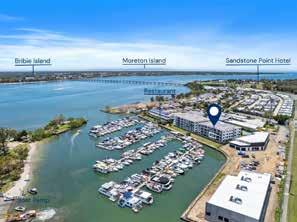

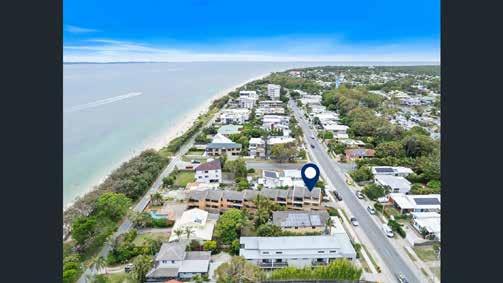



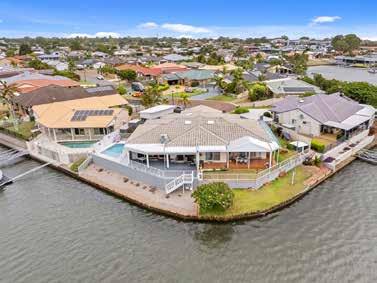






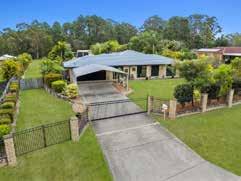

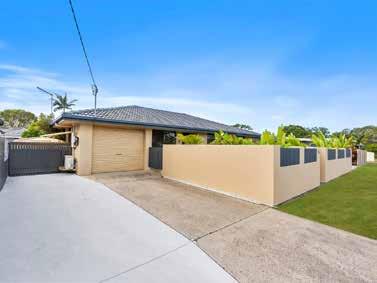






How to Manipulate a Room’s Size and Shape
Painting a wall is an effective method for altering a room’s perceived dimensions, proportions, and ambiance. In addition to providing a refreshed appearance, strategic application of paint can serve as an optical technique to adjust the visual placement of walls and ceilings without physical renovation.
Paint has traditionally been used to change a room's appearance, but now wallpaper is also a popular option.
Keys Points to Help Guide You
Minimize a room
If you want to make a large room, feel cozier, try painting all the walls and ceiling in a single dark colour. Letting in plenty of natural sunlight will help balance bold, dark paint choices and makes the space inviting.
Enlarge a Room
Selecting white, light, or pale hues can consistently create the impression of a more spacious room. For maximum effect, it is recommended to paint all the walls and ceiling in the same colour. This will help to reflect light and make the space feel airy as well.
Expand the Height of a Room
To enhance the perceived height of a room, consider painting all walls in a bold hue while selecting white or a light shade for the ceiling. This approach can make a low ceiling appear higher by creating a vertical lift.
Reduce the Width of a Room
If a room feels too spacious, you can make it appear narrower by painting the two longer opposite walls in a bold colour.
This technique draws the eye along the length of the room, creating the illusion of a longer and more visually interesting space—especially useful for smaller rooms. It's an effective way to make a strong statement with paint or wallpaper while also changing how the room is perceived.
Lower the Walls and Extend them
Horizontally
One method to visually extend the horizontal dimension of a room is to paint the upper half of all the walls in a bold or dark colour, while either leaving the lower half white or installing white wainscoting and or wallpaper.
This technique can make long walls appear less expansive and, simultaneously, give the impression of increased room length.
Use an Accent Wall to Make a Room Appear Shorter
Applying a dark colour to an accent wall can serve two primary purposes: it visually shortens the appearance of an elongated room and introduces a bold, distinctive colour element that enhances the wall's prominence. Creating an immediate focal point and highlighting interior features.
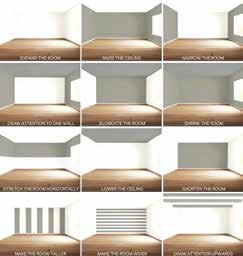
Reduce the Height of the Ceiling
Painting the ceiling of a room in a bold or deep colour can visually lower the ceiling height, which is ideal for creating a more intimate atmosphere in spacious areas. Maintaining white or light-toned walls further accentuates the ceiling, resulting in a distinctive and impactful interior design.
Paint and Wallpaper can manipulate space
and reshape a room. But Colour choices can also redefine a room's dimensions. There is a psychological and atmospheric impact with your colour choice.
Warm Tones (Reds, Oranges, Yellows) creates warmth and energises. Whilst Cool Tones (Blues, Greens) promotes a sense of calmness and relaxation.
Finishes also plays a factor.
Matte Finishes absorbs light for a softer feel and creates a sense of moodiness. And Gloss Finishes are great for reflecting light for brightness and adds a sense of luxe.
Final note.
Always test paint samples in the room you are working on. Artificial light and natural light changes throughout the different times of the day and into night.
This will lead to changes in the appearance of your colour choice.
And selecting a wall to paint can give a room an entirely new feel. Remember to take into account the proportions of the space and use lighting to influence the atmosphere. An effective accent wall becomes the highlight of the room adding dimension.
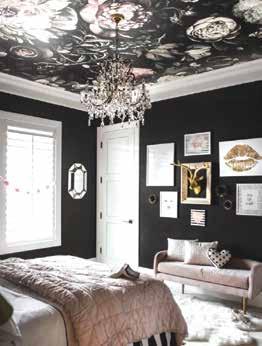

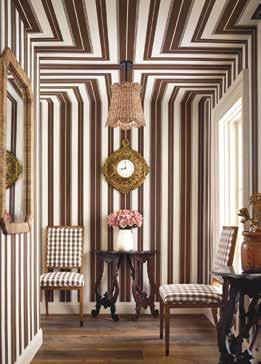
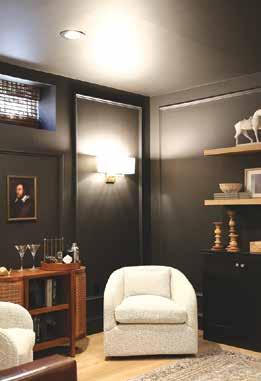
Wally, of Moreton Fish, took one of his crews out wide to Shallow Tempest and they got lucky, using pilchards and squid – moses perch and mackerel tuna.
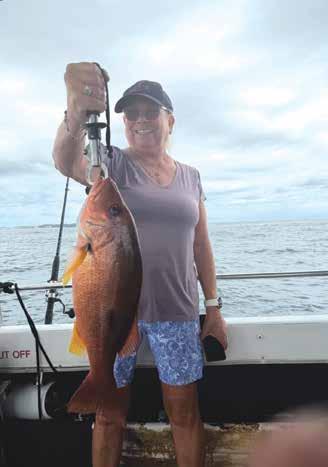
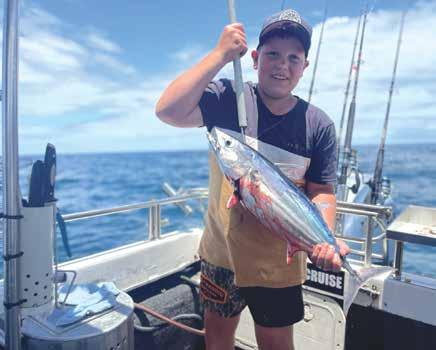
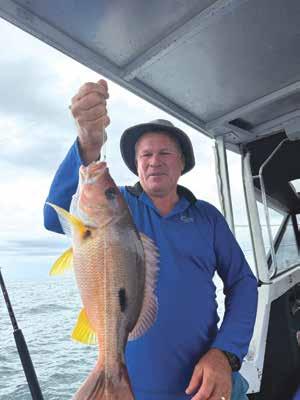
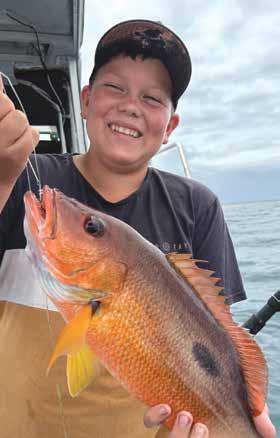
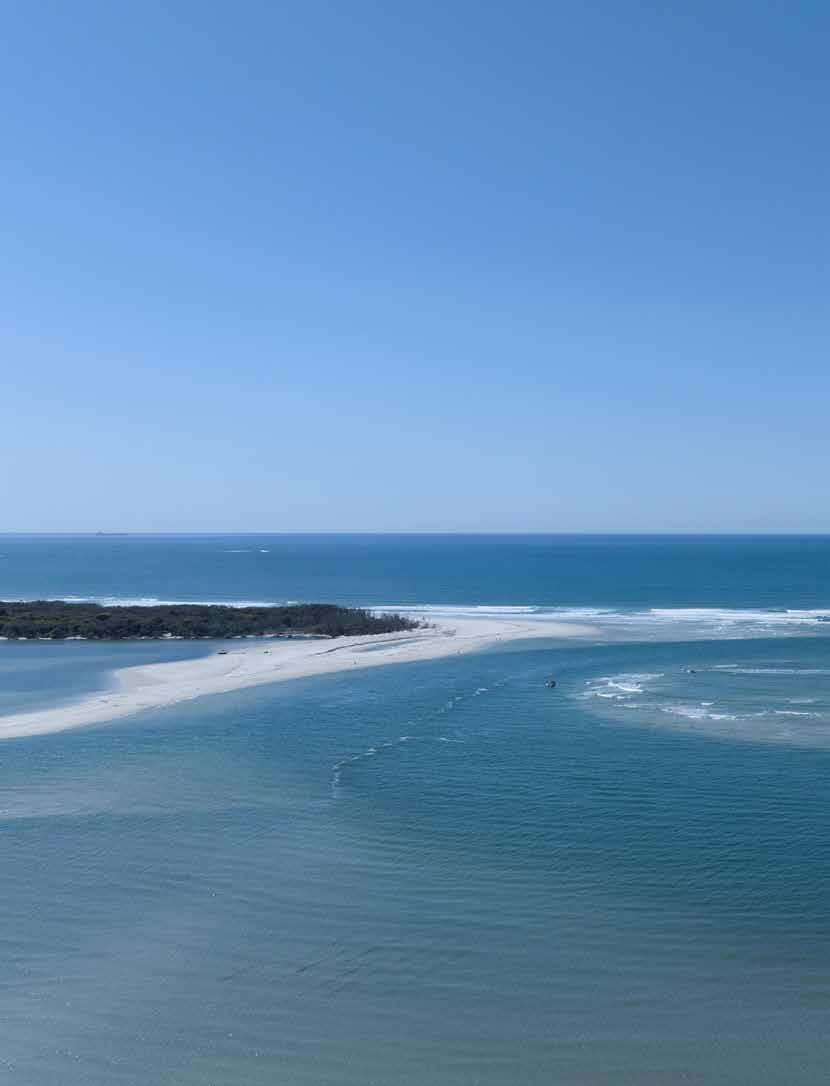
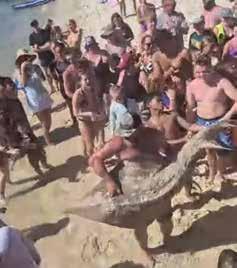
They don’t have to be keepers for Locky and Jack to have a great time fishing – neither the two snapper, nor the cod, were big enough but still made their day!
Brendan and Harry got two nice Australia Day catches, both using prawns.
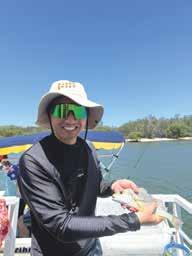

John, from Pumicestone Passage Pirates, sent in sone great pics!!
Terrible photo, but a big shovelnose, caught off Bongaree jetty on Australia Day.
Ricky James had a double hook-up on the bridge. He had both rods going at once, so needed a bit of a hand!
Shane Fixo with an impressive catch of muddies! Not all catching – this is a photo of some of the fun at the Australia Day Sylvan Beach Mullet Throw, hosted by Bribie Island Fishing Supplies.
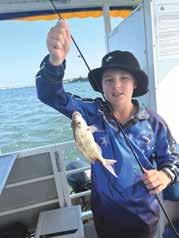
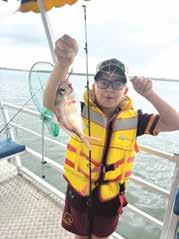
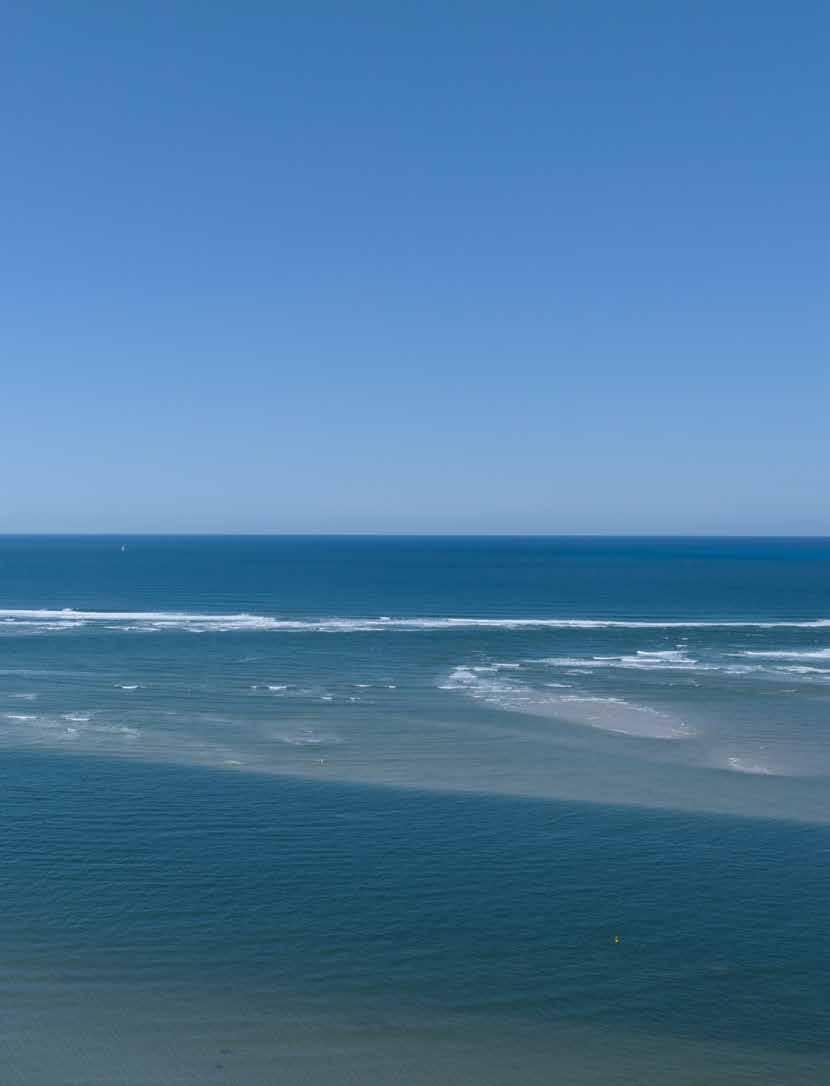

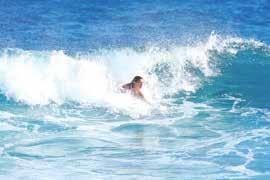
People have always been fascinated and inspired by the ocean. Surfing and bodyboarding are two of the most wellknown ways to connect with its rhythms. Both sports use the power of the sea, but each brings its own experiences, culture, and community.
Looking at what makes them similar and different helps explain why wave riding is more than just a hobby for many—it’s a way of life.
Surfing began centuries ago in Polynesian and Hawaiian cultures and has since become popular around the world.
Seeing a surfer move smoothly across a wave often brings to mind freedom, adventure, and a close connection with nature.
Today, surfing is about expressing yourself as much as it is about skill. Surfers get to know the ocean well, learning to understand its changes and surprises.
Catching a wave, balancing on a narrow board with only water and gravity to move you, is both exciting and calming.
Bodyboarding is sometimes thought of as surfing’s younger sibling, but it has its own history and loyal fans. The sport began in
the 1970s when Tom Morey invented the modern bodyboard.
It became popular quickly because it’s easy to start and offers exciting rides. Bodyboarders lie on their boards, which lets them turn more easily and ride steeper parts of waves.
This style allows for moves like spins, rolls, and deep tube rides that surfers often can’t do.

For beginners, bodyboarding is often an easier way to start riding waves. The boards are shorter, wider, and float better, so catching waves is simpler.
This has helped create a welcoming community with people of all ages and skill levels. Surfing, on the other hand, is harder to learn and takes patience and practice.
Standing up on a surfboard for the first time is a big moment that can be tough to achieve but feels great when it happens.
The challenge is part of what makes surfing rewarding, as every session is a chance to learn and grow.
Both surfing and bodyboarding have built strong communities beyond just riding waves. Surfers are often seen as relaxed and a bit rebellious, a vibe that shows up in music, movies, and fashion.
Bodyboarders, though sometimes less noticed, have formed close groups who love testing what can be done on a wave.
Both groups care deeply about the ocean and work to protect it. Problems like pollution,
building along the coast, and climate change affect everyone who loves the sea, inspiring many wave riders to take action and look after the environment.
At their heart, surfing and bodyboarding are about more than just finding the best wave. They are about connecting with nature, with other people, and with yourself.
The ocean treats everyone the same, no matter who you are or how skilled you might be, and it gives both proud and humbling moments.
Whether you’re standing on a surfboard or lying on a bodyboard, the feeling of being moved by the sea is something everyone can share.
In today’s busy, digital world, surfing and bodyboarding stay popular because they are simple. They help us slow down, pay attention, and enjoy nature.
As long as there are waves, people will keep coming back, boards in hand, ready to enjoy the ocean again.
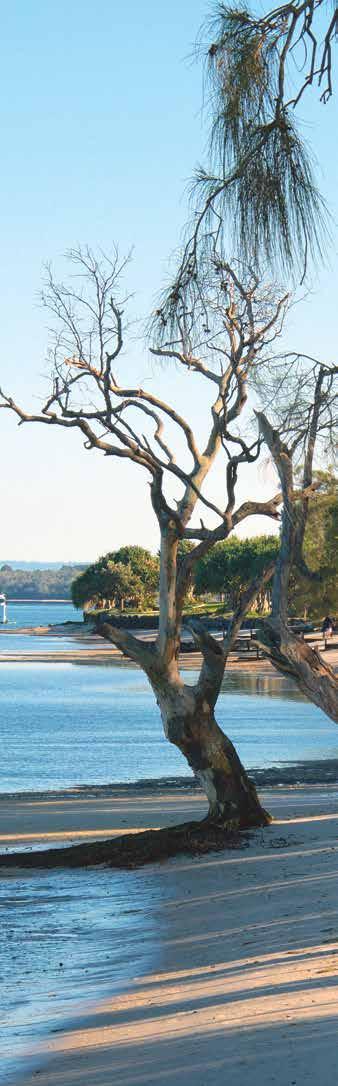
Bribie Island isn’t just where we live — it’s a living meeting point of bush, wetlands, beaches and waterways that support an abundance of life. But this extraordinary place is under increasing pressure and its future depends on how well we protect it now.
This is where BIEPA comes in.
The Bribie Island Environmental Protection Association (BIEPA) - a local, volunteer-run organisation - exists to ensure this unique island remains a sanctuary where all life can flourish, now and into the future.
BIEPA’s mission is simple but vital: to protect, restore and care for Bribie Island’s natural environment while empowering the local community to be active stewards of this special place.
Bribie Island’s environment is under pressure from many directions at once. Poorly planned development clears vegetation fills wetlands and fragments habitat — permanently reducing space for wildlife.
Growing traffic and human activity bring pollution, roadkill and disturbance, especially to fragile dunes and shorebird nesting areas. Runoff from roads and urban areas degrades water quality in the Pumicestone Passage, threatening seagrass, fish, turtles and dugongs.
Invasive species such as cane toads and weeds disrupt natural balance, while rubbish and plastics harm marine life. Climate change adds further stress through rising seas, stronger storms and extreme heat.
Bribie’s nature protects our coastline, wildlife and way of life — and it needs care now.
BIEPA turns concern into action through practical, hands-on projects informed by science and local knowledge. It’s also social and members have a lot of fun.
Current activities include:
• Securing shorebirds: Working, advocating and collaborating to secure a future for the threatened shorebirds of Bribie Island and surrounds
• Restoring Buckley’s Hole: Removing invasive weeds from the Buckleys Hole Conservation Park near Red Beach
• Protecting turtles: Raising community awareness and advocating for best-practice protection of nesting beaches and marine habitats
• Running BioBlitz events: Recording as many species as possible in a set location over a short period
• Reducing cane toads: Humanely lowering cane toad numbers to protect native wildlife
• Dugong diaries: Developing a picture of how dugongs utilise Bribie Island's waterways, promoting community stewardship of dugongs and advocating for better protections of their seagrass habitat
• Fighting damaging development: Engaging with government planning systems and challenging development applications that will have a detrimental impact on native habitat and wildlife
• Marine debris clean-ups: Removing rubbish that collects along the coastline and surrounding areas and contributing data that will lead to reducing marine debris
How are funds raised to support this work?
BIEPA members organise various fundraising activities to cover such costs as employing expert consultants, purchasing specialised equipment, producing publications or marketing community education programs.
Current fundraising activities include:
• a ‘Lunch for Bribie’s Nature’ to be held on Sunday 19 April. Tickets can be purchased from www.biepa.online/events
• a ‘Raffle for Bribie’s Nature’ where exciting prizes are on offer and tickets can be purchased from https://rafflelink.com.au/ biepa2026
Every ticket bought or raffle entry purchased directly supports on-ground protection work — and makes a real difference.
I’m convinced. How do I join?
Joining BIEPA is about more than volunteering - it’s about belonging to a community that cares deeply for Bribie Island and takes practical action to protect it.
It gives you opportunities to protect Bribie’s wildlife, beaches and bushland, connect with like-minded locals and help keep our island a sanctuary for nature and future generations.
Many of our members start by coming along to one activity… and quickly find themselves part of a friendly, passionate group of people. You don’t need special skills or lots of free time - just an interest in Bribie and a willingness to help in whatever way suits you.
Whether you’re a long-time resident, new to the island, a nature-lover or just someone who cares, there’s a place for you at BIEPA. Membership is $30.00 per year.
You can join at https://www.biepa.online/plans
Bribie Island’s future depends on informed, active care. By supporting BIEPA, you help ensure this island remains a place where nature, wildlife and community can flourish — today and for generations to come.
At its heart, BIEPA is about people caring for place. Everyone is welcome — and the future of Bribie Island is in our hands.
Radio Officer Peter McNamara visited Ross Jones on Sunday 18th January to present Ross Jones with his 15-Year Service Badge. Ross is the Unit Resource Coordinator and has the after-hours phone to callout crew and radio operators for all after-hours assists
Ross joined VMR BRIBIE in April 2008
• served as a radio operator until 09/2022
• was also a duty officer 2013 to Jan 2017
• served on the management committee from Oct 2013 to Oct 2015
• callout radio operator 2009 to 12/2022
• URC October 2013 – November 2018.
• URC from December 2022 to present. Thanks Ross, for your dedicated, continuous, and remarkable service.
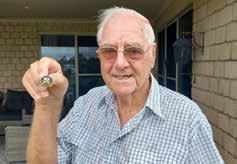
Ross Jones with his 15-Year Service Badge. NAVIGATIONAL HAZARD REMOVED
Monday afternoon 19th January 2026
Bribie 2 with Senior Coxswain Liz Radajewski at the helm and crewed by Coxswain Doug Lythgo and Senior Crew Mark Paterson towed an old air dock that had broken loose some time ago and had been drifting around the passage constituting a potential navigational hazard. MSQ were advised and it was subsequentially removed from the water Tuesday morning.
The following morning Tuesday, the air dock had drifted with its anchor and was removed from the water at the entrance to Sandstone Point Marina (formerly Spinnaker Sound Marina).
Monday evening at 5pm, Marine Rescue QLD volunteers from across the state came together for the first “Connect Forum” for 2026 hosted by MRQ Chief Officer Tony Wulff in person at MRQ Bribie Island and was broadcast online for those not able to make it in person.
These forums are a great opportunity to connect, share news, updates and developments from across Queensland, and keep our volunteers informed on a range of important topics.
Attendees spent the first hour networking and discussions with the broad range of RQ staff available. MRQ provided a very healthy “Subway selection” along with tea, coffee, and soft drink.
Presentations from MRQ Bribie Island included: -
• Unit Commander Gary Voss gave a brief history of MRQ BI (and its former entities) over 50+ years and thanked Tony and MRQ for the respectful and supportive manner in addressing our concerns prior to transition and continuing to act and listen.
• Unit Finance Coordinator & President of the Supporters Association Kelly Langworthy outlined the importance of maintaining an inclusive culture for all our volunteers. providing tips for achieving a retentive volunteer for our approx. 140 volunteers ranging in age up to 91.
• Peer Support Officer Phil Hagen sharing an update on the PSO program, and how volunteers can find additional support.
Chief Officer Wulff extended a big thank you to the crew at Marine Rescue Bribie Island 445 for hosting the evening, encouraging all present to look out and participate, if possible, in the next Monthly Connect Forum.
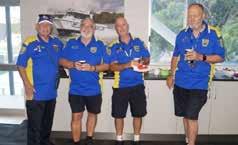
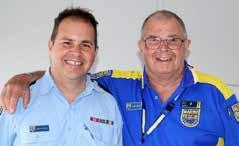
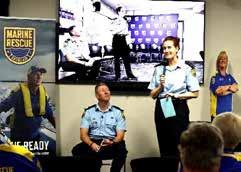
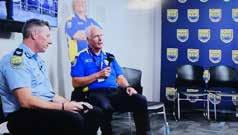
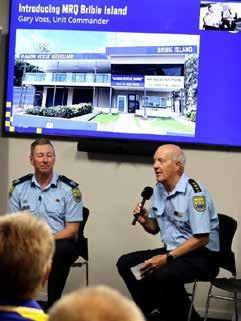
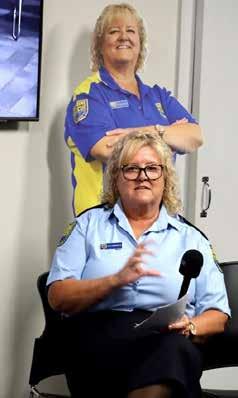
Let’s talk about vessel lights! First – the white light. Lots of people call the all-around white light on a small vessel the ‘anchor light’. This is incorrect. This white light must be on at all times at night –whether anchored, moving, whatever. This light is essential because without it, nobody can see your boat from the back! Remember the all-around white light has to be visible from “all-around”, so it must be higher than your bimini.
Next – the navigation lights – green and red. These lights must be on when you are “under way” – which means motoring or drifting. You don’t need these lights on when anchored. Remember the green and red lights can ONLY be seen from the front and sides of a boat – not the back – that is why you need the ‘all around white light!”
Turning briefly to lifejackets - I don’t mean to be repetitive, but:
We are still seeing lots of boaties out there who may need a refresh on the new lifejacket rules.
You MUST WEAR a lifejacket:
• when boating alone (or alone with kids under 12) in an open boat less than 4.8m long while underway.
• when boating at night in an open boat less than 4.8m long and underway.
• when crossing a bar in an open boat (or on the open deck of any boat).
• if you are a child under 12 (and over 1yo) on an open boat (or on the open deck of any boat) while underway
THU 22/01 0723AM – 5.4m Half Cabin 2POB swamped by wave at Tangalooma Wrecks required a tow to Bellara boat ramp.
THU 22/01 1720PM - Tasked by QAS to transport a Paramedic to Tangalooma and medevac a patient back to their waiting ambulance at MRQ Bribie base.
SAT 24/01 1210PM - Tasked by QAS to transport 2 Paramedics to Tangalooma and medevac a patient back to their waiting ambulance at MRQ Bribie base.
SUN 25/01 1305PM – 9m Cruiser 4POB required a jump start at Tangalooma.
SUN 25/01 1742PM - Tasked by QAS to transport 2 Paramedics to Tangalooma and medevac a patient back to their waiting ambulance at MRQ Bribie base.
MON 26/01 1603PM – 4.5m Tinny 4POB out of fuel near Toorbul, required a tow to Bellara boat ramp.
TUE 27/01 0820AM – 4.5m Tinny 1POB broken down in Pacific Harbour required a tow to Bellara boat ramp.
FRI 30/01 0938AM – MOP reported Yacht adrift near Seaside Museum – investigate.
FRI 30/01 1144AM – 5.4m Cuddy Cabin 1POB with engine issues required a tow from Avon Wreck to Pacific Harbour.
SUN 01/02 1011AM – Tasked by QAS to transport 2 Paramedics to Tangalooma and medevac a patient back to their waiting ambulance at MRQ Bribie base.
MON 02/02 1332PM – MOP reported an unmanned Tinny afloat near Kakadu Bird Sanctuary – investigated all okay.
MON 02/02 1710PM – 3m Dinghy 1POB, motor will not start and no oars drifting towards Bridge, investigated and he had made it to shore.
TUE 03/02 1006AM – Bribie Police reported a 6M Trawler aground on Parrot Island. Checked vessel has a dinghy attached and fishing gear, too rough to get close.
TUE 03/02 1633PM – Owner of vessel that had broken anchor and drifted from Turner’s Camp and drifted toward Toorbul. Investigated nothing found, check South to beyond bridge. Established it was the vessel stuck at Parrot Island NFA.
WED 04/02 0927AM – Tasked by Water Police to investigate vessel stuck at Parrot Island. Secured Vessel by rope to shore.
YTD RADIO ROOM STATISTICS
“BUT importantly – Always remember if you are heading out on the water LOG ON with your local MRQ. VMR or Coast Guard, it’s a free service for everyone, so why wouldn't you! It just may save your life!”
By definition, these are newer technologies that enable the creation, sharing and networking of content. The most popular are Facebook, You Tube, Instagram, WhatsApp and TicTok.
It is called “social media” because it allows communal activity. Every month, billions of people around the world communicate through these channels.
Not only have they replaced family dinner table discussions, they have – for many people – become almost their exclusive means of communicating.
There are some disadvantages. Firstly, it should be remembered that anything you post – even if you only tick a “like” box – stays there forever.
We have all seen examples where someone aspiring to public office has had an unfortunate post from twenty years previous, dredged up and used against them. Deletion does not mean forever!
You don’t have to be a computer whizz to search back on any of these apps. With AI it can pretty well be done in an instant!
Secondly, users of most platforms are tracked. In terms of what that means, you can be deluged with advertising material that has some connection to the content you have posted. If you do not want to be tracked, use an app which does not do this. Just do a search – there are many of them.
Thirdly, there is much that can be found out about you from your posts – personal details, photographs, social and business contacts, even passwords and correspondence.
Some people post without thinking. They will put up a silly comment, something risque or worse. And with their name to it as well! A look at any open community page or public person’s page, will reveal a lot of rubbish comments.
Protection against this activity can be initiated by making your page “private”. That is, people
wishing to access your content must be an approved member of the group, not just open slather!
The conclusion from all this is “Please think before you post. If in doubt, don’t!”
There are lots of them around the island, and many of them are quite large and powerful. Bigger and heavier than a Post Office motor bike! There are regulations about the dimensions and power of these machines.
There are also regulations about safety gear – such as helmets – and traffic regulations about locations for use, speed and general conduct whilst using them.
One I noted during the week was videoing the sunset whilst travelling along the foreshore dual use pathway! Riding two abreast is also common – and very frightening to walkers at night!
I was going to include gophers in the PMDs – but a couple of irresponsible users have already been fined for speeding, so I am assuming that good sense has taken over for the older group!
Whilst on the subject, trailers for all these devices seem to be coming common. For offspring, pets, shopping and the like. While we haven’t got to the “B double” size as yet, some tandems and duals are really very long, and large!
To be held on Tuesday, 17th at 9.30 in the ANZAC Room of the RSL. We will be trialling a “virtual meeting” with SEQWA – they can provide a speaker, but it will be via video, hence the talk will start at 9.30, followed by questions, and then we will have our regular meeting with the Bribie Police Report, etc
Please access the NHW Queensland website, or ring Co-ordinator Peter, on 0408 841 306.


Dear Editor, As the Tangerine Toddler continues to distract us with the most abominable behaviour the planet has ever seen, it’s also interesting to see the way our own orange-tinged billionairess has jumped sideways (like most of the Coalition base) to encourage, support and groom an ex-con and her boozy side-kick while they try to influence mainstream Australia in far-right, Heritage Foundation, Charlie Kirk extremism. Birds of a feather, I suppose …
Along with other fringe-dwellers eager to latch on for the sake of an argument, the desperation as each struggle to stay relevant and canvas their pursuit of more, more, more is getting to the point of just being plain funny, if it wasn’t so sad.
What I find most revealing is that they’ve already scuttled one ship, are moving to another, only to pour the same oil on a different vessel. What don’t they get? Even Albo has pointed out the bleeding obvious to help them. And he’s deemed the ‘enemy’. Maybe it’s better we just let them burn ... can’t lead a horse to water, I guess.
P Robinson
Dear Editor, A community that watches its people suffer through a lens isn’t a community — it’s a moral failure. Right now, families are being crushed by the cost of living while those in power pose for cameras, offer hollow sympathy, and tell people to “tighten their belts,” as if that magically puts food on the table.
People aren’t stealing because they’ve suddenly become criminals. They’re stealing because groceries are priced like luxury items, rents are predatory, power bills are suffocating, and wages have been left to rot. Parents are skipping meals so their kids can eat. Pensioners are cutting pills in half. Workers are drowning despite doing everything right. And instead of fixing the crisis, leaders point the finger at the very people they’ve abandoned.
Hard times don’t create desperation — political choices do. Choices that leave families hungry, services gutted, and entire communities written off as collateral damage.
What should enrage every one of us is how quickly this suffering has been normalised. Today’s outrage becomes tomorrow’s background noise. Leaders call it “pressure.” Households call it survival. And far too many have been conditioned to look away.
This is not normal. It is not inevitable. And any government or community that tolerates this level of hardship is failing the people it claims to represent.
R. Hansen Bongaree
To the Editor, Queensland has a simple choice about electricity.
We can keep depending on old coal stations and expensive gas, or we can put more effort into solar, wind and batteries. Some people worry that renewable energy will make power bills go up. But the truth is the opposite. Renewables are now the cheapest way to make electricity. Once solar panels and wind turbines are built, the fuel is free. The sun and wind don’t send us a bill.
Coal and gas prices do. They jump around because of overseas markets we can’t control. When gas prices rise overseas, Queensland families and small businesses feel it straight away. More renewables mean less exposure to those price shocks and more stable power bills.
We can already see this happening. When there is lots of solar in the system, wholesale power prices drop. Over time, that helps keep electricity affordable.
Renewables also make the system more reliable. Many of our coal power stations are old and break down more often, especially during heatwaves when we need power most. A mix of renewables and batteries helps keep the lights on.
Regional Queensland benefits too, with jobs, farm income and new industries.
Renewable energy means cheaper power, secure jobs and a stronger future for Queensland. That’s a choice worth making. All statements made in this letter have been researched through reputable sources.
Name withheld
Dear Editor
We are deeply concerned about some of the decisions made recently about our environment. We have recently witnessed the Deputy Premier overrule the advice of the State Assessment and Referral Agency (SARA), and ride roughshod over the views of Environmental Protection Agencies in the vicinity plus The Sunshine Coast Council, regarding commercial developments at Coochin Creek.
Less known is the state Environment Minister's decision, late in 2025, to backflip on a decision to ban the shooting of Flying Foxes which was due to come into force at the end of June this year. Yes, we know that Flying Foxes aren't going to win popularity contests, but they are a vital part of our whole ecosystem and do the heavy lifting regarding pollination of our bushland and even our cultivated plants.
Despite the fact that the LNP Government promised Transparency when they came to office, so far, they have shown only arrogance and a complete disregard for the views of the public.
As the great American Politician Thomas Jefferson put it; "The Liberties of a people never were, nor never will be, secure, when the transactions of their rulers may be concealed from them".
Perhaps Juliam Assange put it more simply when he said, "Transparency in Government leads to reduced corruption".
Chris & Annette Schnack.
Dear Editor,
Proposed Bill to Fight Antisemitism
I support elements of the LNP Government’s proposed bill that target genuine threats — incitement to violence, intimidation and support for terrorist organisations.
Australians are entitled to feel safe, and the law should act firmly where speech becomes criminal conduct.
But banning the phrase 'from the river to the sea' goes too far. Words are not inherently criminal, intent and context matter.
The phrase has long appeared in political and human-rights debate and even in mainstream Australian culture, including From the River to the Sea by John Farnham. Criminalising a slogan rather than violent behaviour risks suppressing lawful protest and sets a dangerous precedent for policing political language.
Lyn Rushby

The comments and opinions on these pages are not those of The Bribie Islander, but those of our residents.