

The Breeze






NEWS
EDITORS Emma Notarnicola & Charlie Bodenstein EMAIL breezenews@gmail.com
‘The fear is real’ How Harrisonburg public schools are addressing ICE
By CHARLIE BODENSTEIN The Breeze
Since Trump took office for his second term last January, ICE has increasingly been deployed across the country, targeting immigrant communities. While ICE’s presence in Harrisonburg hasn’t garnered the same national attention as cities like Los Angeles and Minneapolis have, it has still sent shock waves throughout the community, including in public schools.
Due to Harrisonburg’s high population of immigrants, especially those who are not naturalized citizens, many community members have been staunch critics of ICE’s presence in the Friendly City.
During the past few months, several local protests have popped up condemning ICE and the Trump administration.
While ICE primarily focuses on adult immigrants, according to The New York Times, there have still been reported cases of children being detained or threatened by ICE agents. Their presence can make students fearful on their walk to school.
“[They] are so afraid to leave their home because they don’t know when they get back home if some of their family members will be gone,” HCPS Chief of Staff Sal Romero said. “The fear is real.”
Though no current HCPS students have been detained or deported by ICE, Romero said there could be situations he’s unaware of. Regardless, the fear looms for many. He added that some HCPS students have been detained in the past and it’s been confirmed that current students’ family members have been deported by ICE.
“When a family of a U.S. citizen child is deported, it creates all kinds of complications for that child’s wellbeing,” career and technical education (CTE) coordinator Jeremy Aldrich said. “People look over their shoulders instead of walking in confidence.”
Over 54% of HCPS students identify as Latino — one of the primary groups ICE targets — according to the Virginia Department of Education.
HCPS is one of the most diverse school systems in the region, with over half its students being Latino. This is partly due to Harrisonburg serving as a refugee resettlement area, which brings hundreds of migrants to the Friendly City each year.
Romero, who’s a naturalized citizen, immigrated to Harrisonburg from Mexico in 1981. Even though his children have birthright citizenship, he still worries for their safety since the Trump administration has mused about revoking birthright citizenship, according to NBC News.
However, Romero isn’t the only person who has voiced his fears. Just this month, multiple schools in the area — Rocktown High School, Harrisonburg High School and Turner Ashby High School — held anti-ICE protests and walkouts.
Although ICE has been present in Harrisonburg for many years, its tactics have changed since Trump took office in 2024. Now,
ICE’s actions are more aggressive and violent, Aldrich said, adding that many people’s “worst fears are coming to reality.”
Aldrich said he’s heard many verified stories of ICE agents that have “torn sick fathers from their families, that have torn mothers from their young children on their way to a doctor’s appointment, that have terrorized people at night and early in the morning.”
Now more than ever, children are scared for themselves and their families’ well-being every day, affecting their home and school lives.
“In February 2026, a lot more students have personal stories to tell than they would have in February 2024 of how immigration enforcement … has impacted them personally or people that they know,” Aldrich said.
With this, for many students and their families, even their temporary citizenship has seemingly been “ripped away” due to the Trump administration ending certain Temporary Protected Status (TPS) programs, Aldrich said.
This — along with ICE agents shooting and killing two Minneapolis residents earlier this year — has created a growing sense of fear in Harrisonburg, Aldrich said. He added that, regardless of immigration status, every student in the community is experiencing the effects.
What happens when a family member is deported ?
Oftentimes, when a student’s family member has been deported, the students will inform their teacher, Aldrich said. From
there, the teacher will notify their school’s administrative staff, and the appropriate action will be taken afterwards.
In a situation where a student’s family member is deported, the school system can typically locate another relative who can take custody of the child, Aldrich said.
He continued that HCPS supports these families by addressing financial, food and mental health needs, ensuring students have a safe space to live and conducting home visits if needed.
HCPS also connects these families with community resources, such as legal assistance, churches, counseling and transportation.
During these times, Romero said teachers aim to create “safe spaces” for students to feel comfortable and share anything that could be going on.
ICE agents can’t enter schools without a warrant
By law, ICE agents can only enter a school building if they have a warrant signed by a judge. Even with this, Romero said HCPS has notified families that protocols are in place to protect students.
In a situation where an ICE agent appears at a school, Romero, Aldrich or another administrative staff member will come and verify the warrant. If unverifiable, the ICE agent can’t enter the school property on legal grounds.
If a student or family member feels ICE is threatening them, the best course of action is to go to a private place where they can invoke their Fourth Amendment rights, carry identification
and document everything, both Romero and Aldrich said.
Aldrich added that video documentation is important because sometimes “the accounts of what has happened differ from what video evidence shows.”
Despite this, Romero said it can be difficult to follow this advice when a student or family member is being harassed or attacked by ICE agents.
“It’s hard to do any of those when you’re being literally just assaulted and not given a whole lot of time to respond,” Romero added.
How HCPS supports student voices
The rise in nationwide student protests has left many to question the role of children in the country’s political landscape. While some believe students shouldn’t have a say, HCPS encourages its students to speak up for what they believe in.
“We encourage our students not to stay quiet and to voice their concerns, and to exercise their freedom of speech,” Romero said.
HCPS doesn’t directly encourage student walkouts and protests; however, Aldrich said the school system works to “make space” for their students to freely express themselves and listen to a myriad of community viewpoints. Read more online at breezejmu.org
CONTACT Charlie Bodenstein at breezenews@gmail.com. For more coverage of JMU and Harrisonburg news, follow the news desk on X @TheBreezeJMU and on Instagram @BreezeJMU.
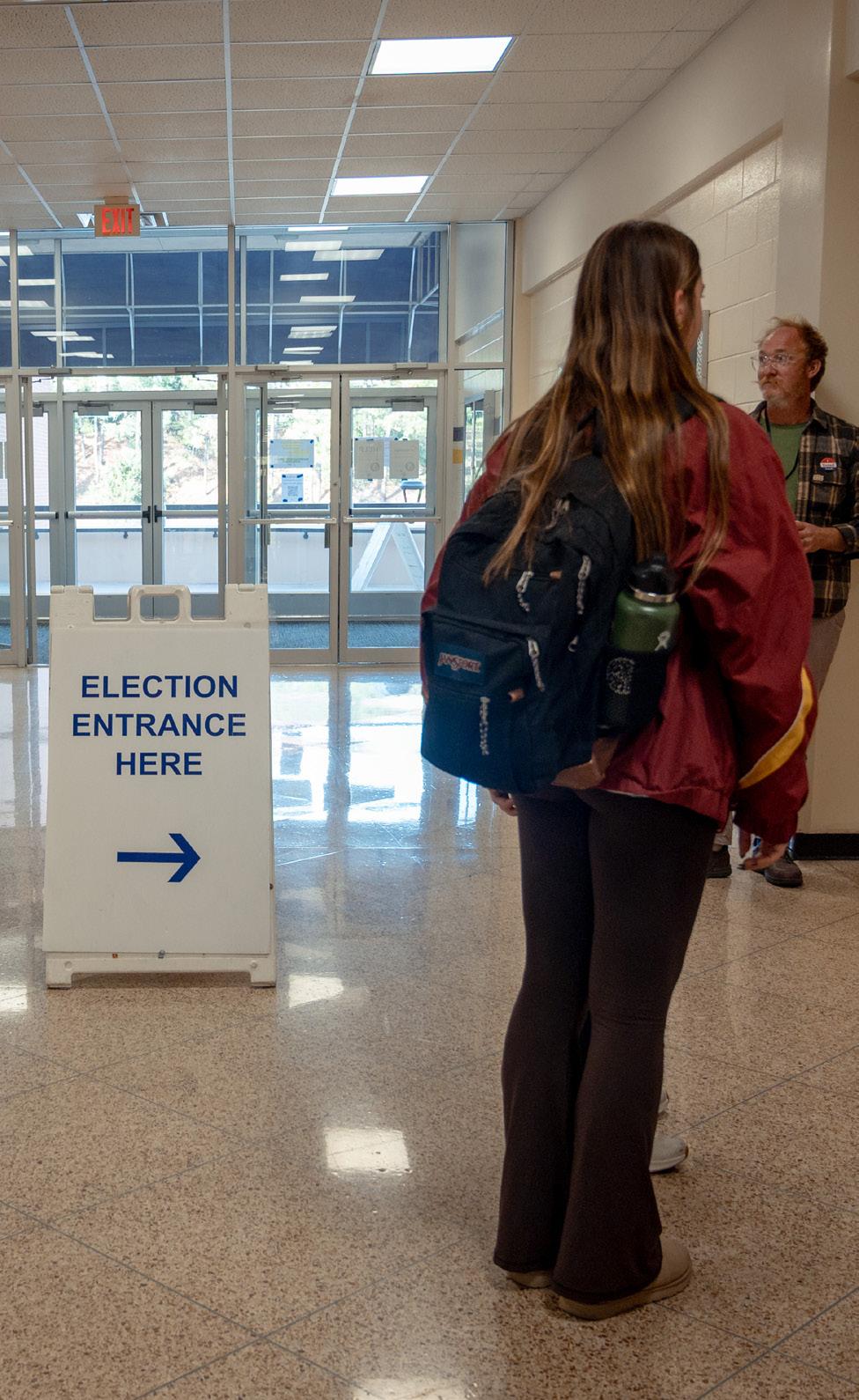
Many students throughout Harrisonburg City Public Schools are worried about ICE’s effect on their community. Jack Baeur / The Breeze
JMU increases online accessibility
By EMMA NOTARNICOLA The Breeze
JMU faculty and staff are making strides toward greater accessibility in and outside of the classroom through a campus-wide initiative making all university digital content meet the minimum accessibility standards required under Title II of the American Disabilities Act (ADA).
About Title II
In 2024, the federal government added Title II to the ADA to encompass greater accessibility to online documentation for people with visual disabilities, according to a Forbes article.
The update requires federal, state and local government entities as well as the third-party online providers that service them, like Canvas, to provide accessibility opportunities for people by April 26 of this year.
For JMU faculty and staff, this means all course content and non-instructional digital content — including videos, images and webaccessible documents like Microsoft Word and PDF files — must meet Title II’s minimum accessibility standards by April 24.
The standard also applies to third-party instructional content. For example, a YouTube video embedded in the course content must include captions or a transcript with audio description.
“The deeper purpose of these changes are to make it possible for people with disabilities to access public information,” said Bethany Nowviskie — dean of libraries, chief academic technology officer and English professor. “This applies to entities that receive federal funding or that serve the public to make it possible for people with disabilities to access that information without having to ask for special accommodation.”
Public universities across the country, including JMU, have worked to update their documents and policies to ensure that all students have fair and equal access to resources as their peers.
Before, the ADA had requirements for digital content, but Title II makes these requirements more comprehensive and expands them to password-protected sites, which were previously exempt from these rules.
These new regulations stretch across a wide breadth of digital content throughout the university, including social media content for university-sponsored student organizations, but one of the biggest frontiers in this effort is faculty updating their course materials on Canvas, Nowviskie said.
“There’s so much inaccessible media that depends on your ability to see it in order to use it as part of your learning experience,” Nowviskie said.
Faculty have taken on this responsibility headfirst, acknowledging the importance of accessibility and dedicating time and energy into ensuring documents are available for all students.
“It’s good for us as faculty to recognize that students are going to access documents in different ways, and that we should do our best and due diligence to provide resources that are accessible to them,” said Thomas Newman, assistant professor and Clinical Education Coordinator in the Master of Science in Athletic Training program.
About the transition
A large part of this transition falls on faculty and staff, particularly the instructors who have been working to guarantee all the course materials they offer align with the new federal standards.
“We’ve been encouraging faculty to recognize that this is an addition to their workload,”
Nowviskie said. “It’s more unpaid labor. It’s not like they got more hours added in their day to take this on and it’s not like we’ve been able to compensate them for the extra time that they may be spending here.”
She said including resources like audio versions, image and graph descriptions are all part of this change, as well as mindfulness about how color grading and other stylistic elements could impact document accessibility.
The biggest challenge faculty is facing is the time requirement to ensure these documents are all properly converted.
“It’s kind of a lot of work,” political science professor John Hulsey said. “Some of my classes I’ve taught almost every semester since I’ve been here in 2010, so the classes kind of accumulate a lot of documents that even you’re not using anymore. And so most of my time has been spent just cleaning out documents.”
Across a variety of departments — including learning technology services, student life, instructional design, JMU libraries and more — JMU has been making efforts to educate and provide resources and tips to help faculty and staff make this transition, Nowviskie said.
Overall, Nowviskie said, JMU Libraries is encouraging professors to know this is going to be a slow and imperfect process, and to work on it with a system of prioritization, guaranteeing required documents are made accessible first
“We’ve encouraged them to prioritize and to really think through what content will have the biggest impact first,” Nowviskie said.
“Faculty across the board are considering, ‘Is this a very large course that I’m teaching, that is gonna impact a lot of students,’ versus ‘Here, I’ve got a very small course. I’m probably gonna work on my content in the large course first.’”
JMU is offering helpful materials in converting documents and pinpointing problems within documents so assist the faculty with the transition.
For example, resources like online app Anthology Ally provide a tool that converts documents to electronic braille or become more accessible for screen readers, Associate Dean for Learning Innovation and Design Andrea Adams said. She added Jthat MU also offers resources like Microsoft Office, Sensus Access, and educational guides and recommendations as well as mechanisms to check how far along they are in converting their documents.
Faculty said that while they recognize the support, the transition can be difficult in practice, with one instructor in the School of Nursing, outreach coordinator Victoria Heim, saying that the resources can occasionally be unreliable.
“I know every department has people in place to help with it, but I think that those people are probably overwhelmed because we’re all having to do it at the same time, and it can just be a lot,” Heim said.
Additionally, JMU has created the Digital Accessibility Ambassador Program (DAAP), where a faculty ambassador is chosen from
each college to connect the colleges and the different departments working toward this change, Nowviskie said.
“It’s been a really good program, and I think these tips can help faculty build upon their videos, their images and the other content that they offer in their courses,” Adams said.
Though the university has sent out information and resources regarding the transition, Nowviskie said each college can take different approaches to conveying this information and ensuring faculty is in compliance with the new policies.
“There are different cultures across campus, and because the content is so different across fields, some disciplines [don’t] yet have tools and guides available to fully meet the requirements,” Nowviskie said.
Not complying with the policy could open the university up to potential lawsuits, financial penalties and poor reputation, according to the JMU website. Additionally, instructors who don’t comply will be subject to disciplinary action from their supervisors.
While they appreciate JMU providing workshops, some faculty said that some of their course materials are more difficult to convert than others.
“[There are] some fairly strict rules about tables, and sometimes the tables that I make don’t fit those rules, and there’s frankly no way for me to fix it,” chemistry lecturer Kristen Funck said. “I hope that if I have a student that needs that help, they will come to me and let me help describe [the tables], but I’m not sure the words will ever do the picture of justice.”
Overall Funck said she hopes students will be patient in understanding that faculty are working toward accessibility, but it’s a slow, deliberate process.
The future of accessible media
The beginning of the transition is the most challenging, Nowviskie said, adding that as the requirements take effect for third-party websites like Canvas, these accommodations will become ingrained in system practices.
“It’s a big system change issue, nationally and internationally,” Nowviskie said. “So companies that want to sell to us, they know that we are going to follow Title II and that they need to build this into their products more,” Nowviskie said. “Then over time, it’ll just become second nature for all of us.”
Nowviskie said JMU is encouraging professors to take their time in converting these documents, while staying within federal guidelines and not feeling like they have to reduce the amount of resources they offer to students to fit these requirements faster.
“It will continue to improve as a campus over time, but we have emphasized that nonperfectionist approach deliberately because we didn’t want to see people tossing out good practices and good content,” Nowviskie said.
Faculty across various departments shared this sentiment, saying they’ll continue to offer all the materials they offered before.
“I think the goal, at least for me, is to make sure that everything meets those standards,” Heim said. “So not to take away, but just to kind of have the same resources available.”
JMU is continuing to make strides toward accessibility across campus, beyond Title II. Nowviskie said students should know this change does not replace Office of Disability Services (ODS) accommodations, but rather aims to increase a broader campus accessibility.
“Overall, the changes to Title II are meant to help us all learn and do better over time,” Nowviskie said “There’s a recognition that it won’t be perfect, and it’s really about moving the needle for campus to greater and greater accessibility over time.”
CONTACT Emma Notarnicola at breezenews@gmail. com. For more coverage of JMU and Harrisonburg news, follow the news desk on X @ TheBreezeJMU and on Instagram @ BreezeJMU

Alya Giavis / The Breeze
JMU supports Dukes during Ramadan
By SIMONE DYSTANT
The Breeze
Muslim Dukes began observing Ramadan on Feb. 17, prompting JMU Dining and student organizations to provide the necessary resources as students navigate daily fasting and prayer alongside academic demands.
According to the Cultural Observation Calendar, Ramadan is one of the most important Muslim holidays. Ramadan lasts 29 to 30 days and focuses on strengthening faith through fasting and prayer.
How JMU supports practicing students
Senior and Muslim Student Association (MSA) member Hana Mahyoub said the dining halls open late for Iftar, the evening meal at sunset when Muslims break their fast during Ramadan.
According to JMU Dining, students can sign up for a reusable container that they can bring to E-Hall or D-Hall for a take-out meal and still make use of their meal plan.
“I love how they have dates,” freshman Arab Student Association member Nada Al Saeed said, “We break our fast with dates, and the dining hall has started offering them.”
Mahyoub said she looks forward to having her Iftar at D-Hall, because she can break her fast with her friends and community.
“All of the Muslims on campus are breaking our fast at the same time, so we get to see everyone as a community,” Mahyoub said. Mahyoub said she doesn’t typically wake up for Suhoor, the early morning breakfast, but many students do.
The main struggle during Ramadan, Mahyoub said, is fatigue, but she takes it as a symbol of slowing down her life for reflection.
“I’m fatigued in a good way, it calms you, it slows you down, give[s] you more time to think and reflect,” Mahyoub said.
“Halal options are available in the dining hall, but some of the staff are not trained to understand what Halal food is, and it can make asking an uncomfortable task, especially for freshmen,” Mahyoub said.
Senior and MSA member Dima Salih said that JMU has more resources for Muslim students during Ramadan than it did
when she first came as a freshman in 2022, but that doesn’t mean there’s no room for improvement.
Salih said the Center for Multicultural Student Services (CMSS) helps bridge the gap between the Muslim community at JMU and other students.
“CMSS has done an incredible job supporting us in our endeavors to create community and break down the barrier between JMU as a PWI and the broader refugee town of Harrisonburg,” Salih said.
According to JMU statistics, about 70% of the student population is white and 27% of students are people of color, multiracial or international.
Salih said that CMSS has provided support for the annual Grand Iftar, a large community banquet that brings together students,
alumni, faculty and much of the Harrisonburg community, which was last held Feb. 28.
Muslims make up a crucial part of the JMU community, and the community would love to see the university president interact with them, Mahyoub said.
As of right now, most of the support for the MSA comes from CMSS, but Salih said she would like the community to get more support from JMU as a whole.
Read more online at breezejmu.org
CONTACT Simone Dystant at dystansl@dukes.jmu.edu.
For more coverage of JMU and Harrisonburg news, follow the news desk on X @TheBreezeJMU and on Instagram @BreezeJMU.



Many Dukes partake in Ramadan each year, fasting between sunrise and sunset. Landon Shackelford / The Breeze
Early voting begins for new Virginia redistricting amendment
By EMMA BROWN The Breeze
Early voting for the proposed Virginia redistricting amendments special election begins Friday and lasts until April 18, with election day on April 21.
The election will determine whether the proposed redistricting amendment is added to the Virginia Constitution.
This redistricting effort was arranged by the Virginia General Assembly’s democratic
wing, freshman Democracy Fellow Brady Dunn said.
“It’s really important to vote and participate in special elections, because they are often for more local issues,” Associate Director at the Madison Center for Civic Engagement Angelina Clapp said.
“Redistricting impacts all of us, and a special election is a good way to make sure [our] voices are heard in that matter.”
Harrisonburg will continue voting in District 34; however, the proposed changes would likely

lead to a change in representation in the area, Clapp added.
“That could impact policies, legislation, the general political makeup of this area and the district that this area would then fall under,” Clapp said.
What the amendment proposes
The redistricting amendment proposes to “temporarily adopt new congressional districts to restore fairness in the upcoming elections, while ensuring Virginia’s standard redistricting process resumes for all future redistricting after the 2030 census,” according to the proposal.
The new map has sparked controversy amongst Republicans due to changes in some of the proposed districts. For example, Rockingham and Augusta counties would be split three ways into Congressional Districts 6, 7 and 11.
Such efforts have led Republican delegates to claim the proposed map is “hypergerrymandered,” District 35 Delegate Chris Runion (R) said.
“You know, it just silences the citizens’ voices,” Runion added.
Virginia has a long history of gerrymandering from both political parties, District 34 Delegate Tony Wilt (R) said. About six years ago, the Virginia General Assembly passed a Constitutional Amendment establishing a redistricting commission to create an unbiased and fair district map.
“The districts need to be contiguous and compact, and above all, they [can’t] favor one party or the other,” Wilt said. “What we’re seeing is an effort to undo that, to put it all back into politicians’ hands, and specifically into one party’s hands.”
Currently, Virginia courts are determining if the amendment will “restore fair elections” as it proposes.
The outcome of the court cases may determine whether the amendment will go to a vote in the special election. Delegates Runion, Wilt and District 33 Delegate Justin Pence (R) said Virginians should plan on the election moving forward despite the court cases.
“Don’t wait on a court case, get folks out to vote,” Wilt said.
Gov. Abigail Spanberger recently signed the bill enabling the referendum, according to a Cardinal News article.
“This is the work of the legislature, it’s recognizing that Virginia has the opportunity and the responsibility to be responsive in the face of efforts across the country to change maps,” Spanberger was quoted as saying in the article.
Read more online at breezejmu.org
CONTACT Emma Brown at brown9eg@ dukes.jmu.edu. For more coverage of JMU and Harrisonburg news, follow the news desk on X @TheBreezeJMU and on Instagram @BreezeJMU




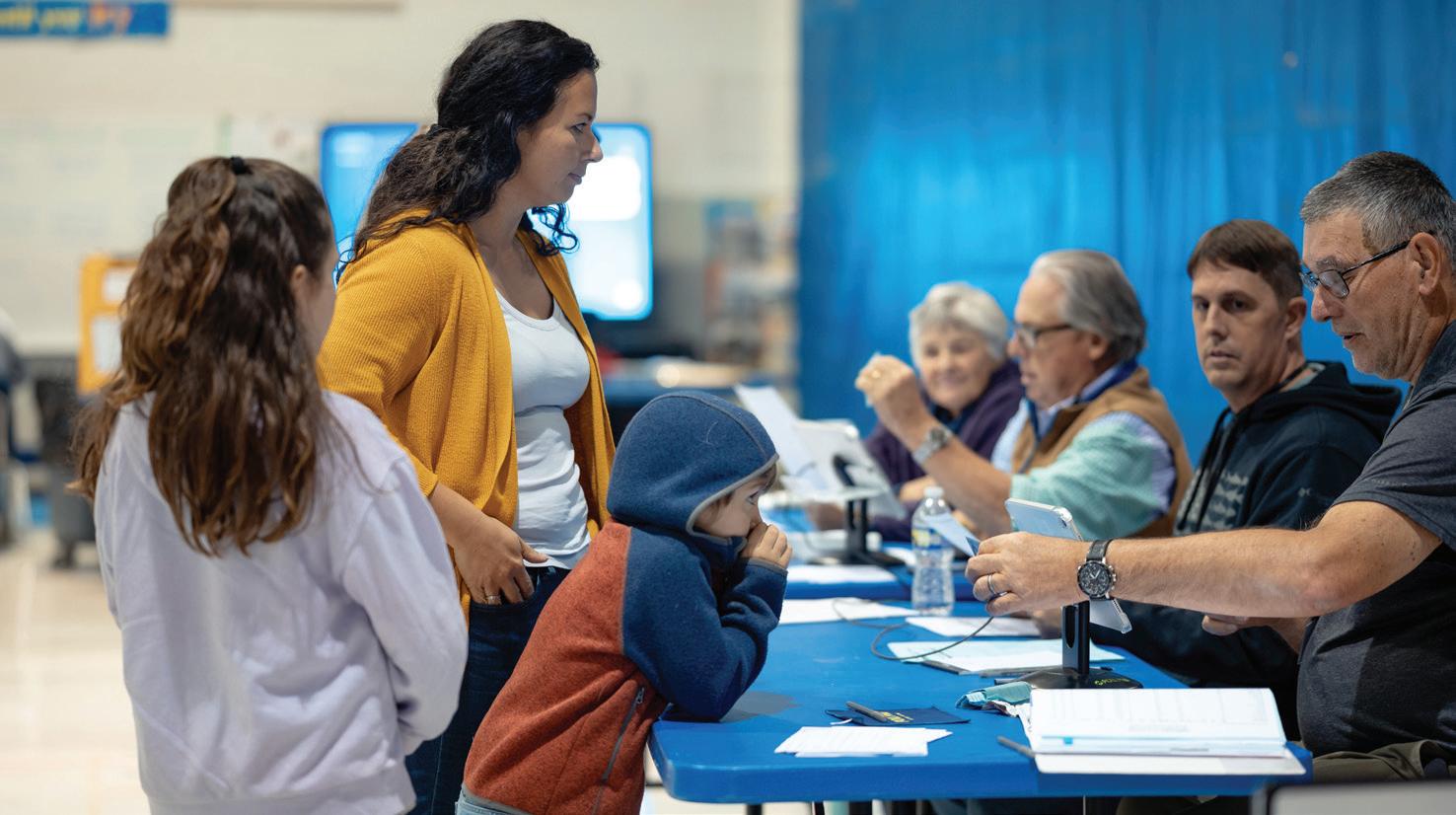
Early voting for the special election in Virginia begins March 6. Landon Shackelford / The Breeze
Madison Center hosts VA250 week
By JAMYA RIBBON The Breeze
JMU is hosting a series of curated events this week for VA250, the general celebration of the 250th anniversary of the founding of both the United States and Virginia.
JMU’s celebration coincides with National Civic Education Week and the 275th birthday of James Madison, who’s also celebrated in the week’s events, Madison Center for Civic Engagement Associate Director Angelina Clapp said.
“We wanted to pair VA250 and Civic Education Week together, because we felt like they were very naturally aligned … especially in the context of VA250,” Clapp said.
The week started with a select screening of director Ken Burns’ documentary “The American Revolution,” with a panel discussion featuring a representative from Montpelier.
Tuesday’s Student Government Association’s (SGA) town hall featured a panel of professionals discussing civic duties and engagement. Wednesday, the Madison Center for Civic Engagement held a deliberative forum on the topic of “What’s next [for] America?” Clapp said.
The Madison Center will also table in the Warner Commons on Thursday to promote student civic engagement in collaboration with the VA250 Mobile Museum Experience — an expandable trailer traveling throughout Virginia.
According to JMU’s website, Harrisonburg High School students will be shuttled to and from Godwin Hall to experience Virginia’s history with a “museum on wheels” titled “Out of Many, One.”
Freshman Madison Center Democracy Fellow Brady Dunn said this will “offer students a very unique outlook on Virginia history” with further insight into its founding.
“When we think of the American Revolution, we generally think of white wigs in wood-boarded rooms drafting up a declaration of independence, but it was a lot more brutal than people know,” Dunn said. “VA250 is truly a celebration of what we did right and a ponderance of where we can go from where we went wrong.”


JMU also worked with local Mennonite groups and other religious experts to offer “Religious Communities During the Revolutionary Era an event which will discuss the presence of religion in the Shenandoah Valley during the Revolution, Clapp said.
Closing out the week, D-Hall and E-Hall will celebrate James Madison’s birthday with
historical food, including Madison’s bread pudding, cake, trivia and prizes.
With this, the Madison Historians — a club dedicated to historical experiences and fellowship — will host “James Madison’s Birthday Bash” in Festival’s Highlands Room, which will have cake, games, trivia and a cappella.
There will also be a screening of the film “The American Constitution” by its director, David Garrigus, and an art gallery with the Madison Art Collection at the artWorks gallery.
“While America will also be celebrating its 250th, [Virginia is] also having our 250th, so we’re really trying to hone in on that ‘what makes Virginia special?’” Dunn said.
Clapp said the celebrations will give Harrisonburg community members, students and staff the opportunity to learn about different histories both nationwide and specific to the Shenandoah Valley, so they can “celebrate and learn more together as a larger community.”
The event’s focus is to appeal to students and emphasize the importance of being civically involved, Dunn said. Not only will these events hold historical and political value, but they’ll also prompt students to think more critically about America’s past, future and its values, Dunn said. He added that while these discussions will be tough, they will also be enlightening.
“We as a community should be able to grapple with and debate those ideas in a meaningful way, without turning against each other,” Clapp said. “For people who might disagree with us, that’s okay, because people have been doing that for the last 250 years ”
CONTACT JaMya Ribbon at ribbonjm@ dukes.jmu.edu. For more coverage of JMU and Harrisonburg news, follow the news desk on X @TheBreezeJMU and on Instagram @BreezeJMU.

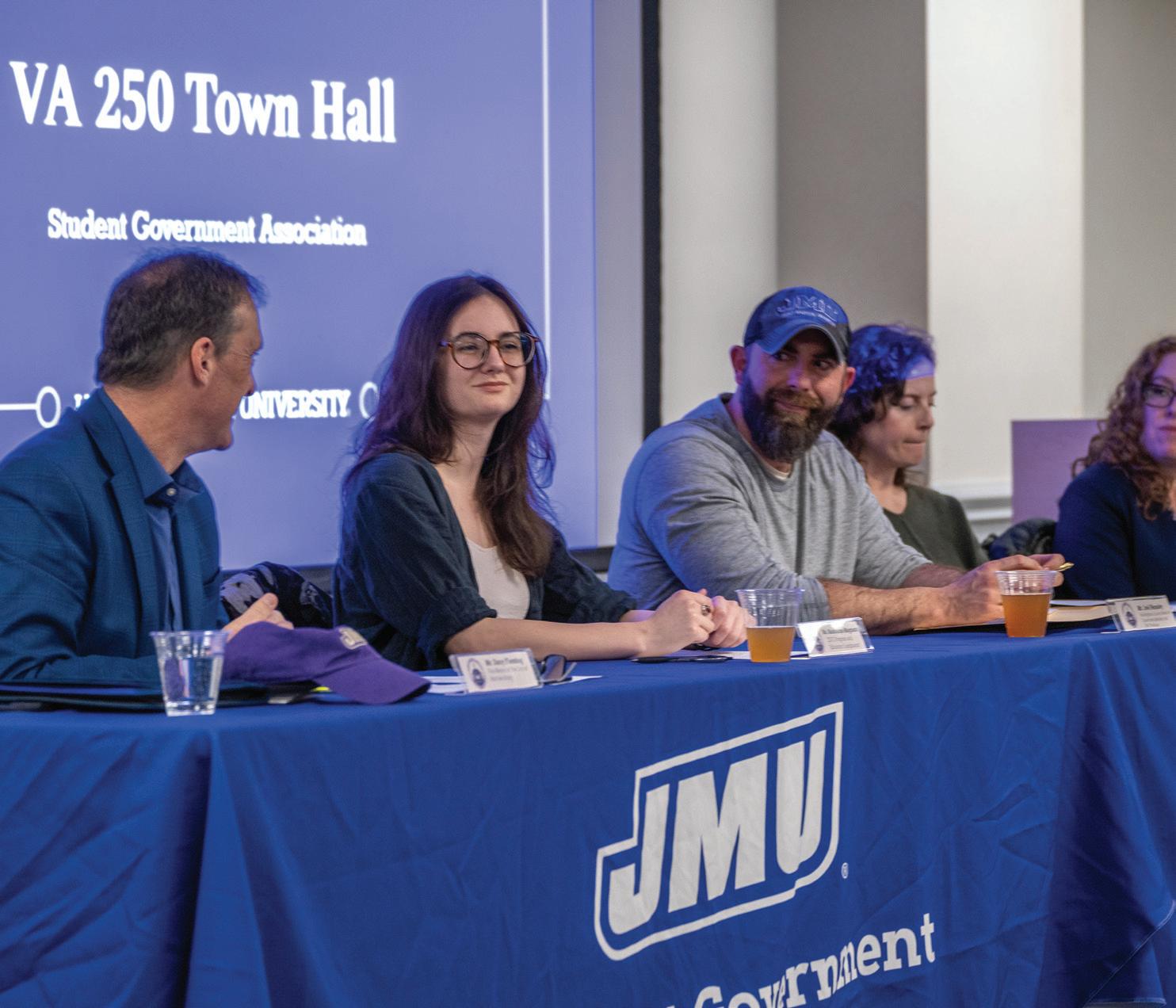
SGA hosted a town hall where members in the community discussed civic engagement. Jack O’Dea / The Breeze


O r d e r t o d a y

b r e a k f a s t b u r r i t o
E g g s a n d c h o r i z o c o l d b r e w - c h ata c h a m p u r r a d o h u e v o f r i t o
N o w s e r v i n g b r e a k f a s t 7 a m - 1 0 a m


CULTURE
Isabel Lewis & Bella Arist
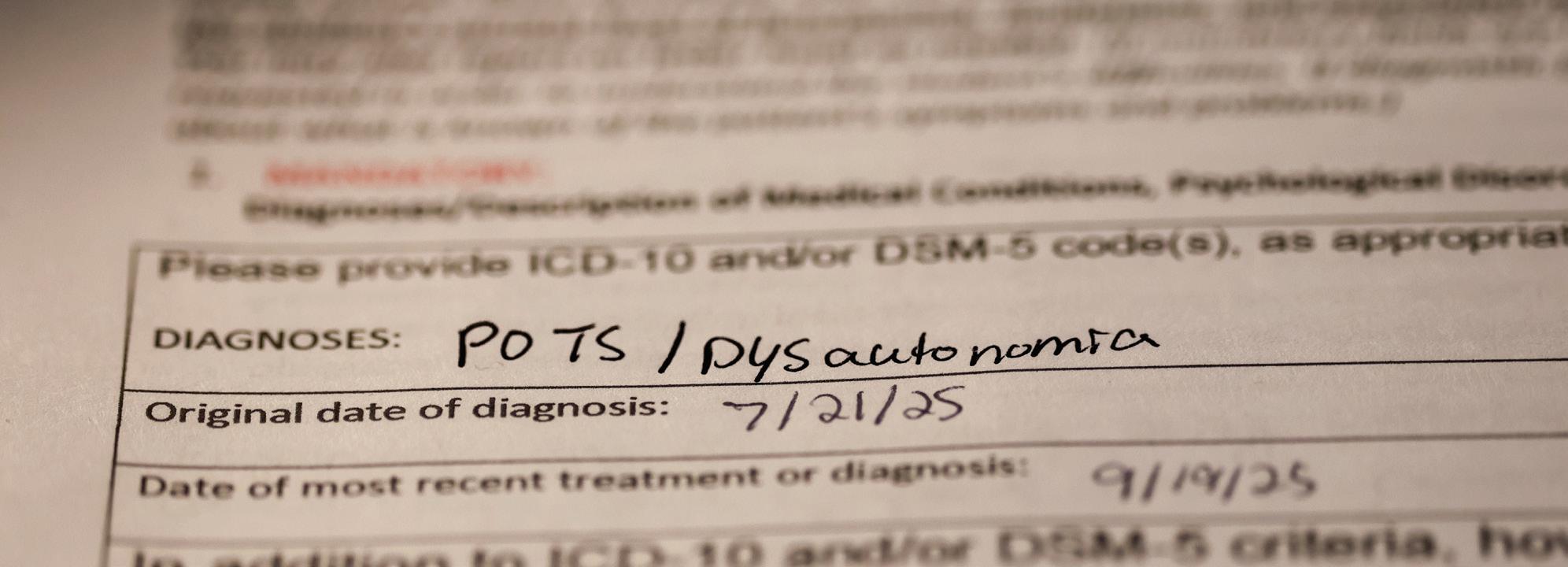
POTS: an invisible illness
Symptoms most commonly present themselves in college-aged women
By ANNABEL DEWEY
The Breeze
In March 2025, I ran my first half-marathon. In April, I stood at the summit of Old Rag, one of the most physically demanding hikes in Virginia. By May, I was bedbound, in and out of the hospital, with a resting heart rate that was higher than when I was running up mountains.
I couldn’t stand without almost passing out. I had no control over my body temperature and had to crawl up my staircase because my legs were too tired to support me. My hair began to fall out, my brain wasn’t as sharp as it used to be, and no one could tell me why.
For me and a growing number of college students, this is what living with Postural Orthostatic Tachycardia Syndrome (POTS) can look like.
What is POTS?
POTS is a form of dysautonomia, or dysfunction of the autonomic nervous system. The autonomic nervous system is responsible for the bodily functions that we do not consciously control, such as breathing, heart rate, digestion and body temperature.
When a person without POTS stands up, the autonomic nervous system causes blood vessels in the legs to tighten, allowing blood to flow back to the upper body and brain. In individuals with POTS, those blood vessels struggle to tighten, meaning blood pools in the lower limbs.
This causes less blood to flow back to the brain, making people with POTS feel lightheaded and tired. The heart, in response, beats faster in an attempt to pump blood back up to the brain, which can cause a rapid heart rate, a rise or drop in blood pressure and chest pain.
Due to a lack of research on and knowledge of POTS, receiving a diagnosis from a medical professional can be difficult. Many doctors have never treated patients with POTS before and often misdiagnose it as anxiety.

“Just work out, drink water, eat more salt and it’ll go away,” is what junior health sciences major Stella Dulan was told when first bringing her symptoms to a healthcare professional after having COVID-19. “But it never went away,” she said.
Nursing associate professor Christina Lam, an expert in chronic illness self-management in the School of Nursing, uses case patients as a method to help students explore chronic conditions.
“When my student groups started exploring the selfmanagement of POTS, we found there were a lot of gaps in the literature,” Lam said.
The current diagnostic criteria include a heart rate increase of 30 or more beats per minute within the first ten minutes of standing. A healthy person can expect a heart rate increase of 10 to 15 beats within the first few minutes of standing. This can be observed using a Tilt Table Test or an active stand test. These tests can only assess what happens to the patient’s vitals, though, and they can give false negatives.
“I would go to the doctor’s office and sit there while they told me that all my test results came back normal and my heart was structurally fine. But I knew that I wasn’t fine,” said senior kinesiology major Ever Goddard, who’s had POTS for eight years.
POTS affects everyone’s body differently, meaning symptoms vary, making it that much harder to diagnose.
“Fatigue is a pretty constant thing for me,” Dulan said. “I have to be careful every day about how much I do. Otherwise, at the end of the day, I feel really nauseous and weak.”
Other common symptoms include:
• Dizziness
• Fast/irregular heart rate
• Fainting
• Nausea
• Brain fog
• Confusion
• Temperature dysregulation
• Chest pain
• Trouble sleeping
• Gastrointestinal issues
• Tinnitus (ringing in the ears)
• Shakiness
• Spotty or blurred vision
Read more online at breezejmu.org
CONTACT Annabel Dewey at breezephotography@gmail. com. For more on the culture, arts, and lifestyle of the JMU and Harrisonburg communities, follow the culture desk on X @TheBreezeJMU and on Instagram @BreezeJMU.


How gut science can inform everyday health
By GRACE SAWYER The Breeze
Many people have become familiar with the term “gut health” through social media and the quickly growing trend of products and people aiming to help others improve their gut health. Despite widespread usage, there is actually no commonly accepted scientific definition. Many brands and products refer to the health of the gut microbiome, or digestive system, when referring to gut health and that is what is commonly discussed online.
Your gut is commonly considered your entire gastrointestinal system and includes your stomach, intestines and colon. Many different bacterial strains and types live within this system, aiding in the absorption and digestion of food. The 100 trillion different bacteria, viruses and fungi that live in your digestive system are widely considered the gut microbiome, and this community has been developing since the day you were born.
Many of these microorganisms are beneficial to the organisms they inhabit, but some can be detrimental, and that is part of what determines a “healthy” or “unhealthy” biome. A healthy gut, measured in diversity, can contribute to a healthy immune system, heart and central nervous system.
An unhealthy gut biome can manifest both physically and mentally. Some of the most common issues professionals urge you to look out for include digestive issues like bloating, gas, constipation, diarrhea and heartburn; trouble sleeping or extreme fatigue; high stress, a low mood or increased anxiety; and a high frequency of illnesses.
Bad gut health has been tied to issues like Clostridium Difficile infections, irritable bowel syndrome, inflammatory bowel disease, heart disease, diabetes, poor brain health and weight gain.
People with POTS are encouraged to increase their daily salt and electrolyte intake to help increase blood volume.
It often takes two or more years for individuals with POTS to receive a diagnosis. Photos by Annabel Dewey / The Breeze
Game of tones: The exciting battle for Purple Reign’s coveted opening spots
By CALEB BICKMORE
contributing writer
The competition that could change the trajectory of any participating band: Battle of the Bands.
JMU’s University Program Board (UPB) held the event at Taylor Down Under (TDU) on Friday, Feb. 27, to a crowd that rocked the building so hard that it could’ve been seen on a seismograph. Fans voted: Vessira (indie rock) and Chakra (experimental rock) will perform as the openers for the indie-rock sensation Flipturn at JMU’s Purple Reign concert.
Starting at 6 p.m. Friday, five bands competed for the opportunity to perform as the openers for JMU’s most popular music festival of the year, Purple Reign, on Apr. 18. Those five bands were: Chakra, Her Majesty, DMH, Vessira and WYRM. All five bands were ready to put on a show for an audience who would decide their fates, as at any moment, the crowd watching could vote for who they wanted to see perform at Purple Reign.
As showtime approached, TDU filled with students and anyone looking for a good time. By the time the show began even the Billiards Club, which was hosting a tournament across from the stageroom, put down their cues and took a break to watch the university’s best bands perform.
“This is nerve-racking, but in the best way possible,” DMH bassist senior Owen Barbeau said to the crowd swarming into TDU. The crowd was loud, and after an extensive sound check, it was showtime.
Chakra has performed at parties and other special venues throughout the semester. It’s most well known for its blend of funk and soft rock that elevates the audience into a different stratosphere. Band members Luc Aristhene and Matt Cella said their inspirations spanned from popular bands like the Red Hot Chili Peppers and Led Zeppelin.
“When I transferred here, I knew I wanted to start a band,” Aristhene said. “I posted on the JMU Snapchat page, looking for a group of guys to play music; two hours later, a guy named Charlie Cheek swiped up.”
Aristhene and Cheek came together with the help of friends, and they now comprise one of JMU’s hottest bands.
During Chakras’ first song, Her Majesty band member Felix Byler walked to the dance floor and started boogeying. Soon after, all the other bands competing in the night stepped onto the floor as well.
The energy was electric during Chakra’s full set, and at the end, when the final note of its cover of “Call Me The Breeze” by Lynyrd Skynyrd hit, all competing bands applauded and gave praise to Chakra for a wonderful time.
The next band on stage was the faith-based alt-rock collective Vessira. Lead singer junior Olivia Dewan brought the energy, starting the set with Vessira’s original song, “Easier.” The most notable aspect of this set was the stage presence of all its members.
Not a single beat was missed as the band then transitioned to its second song, a cover of “My Own Summer (Shove it)” by Deftones. Being a well-known alt-grunge rock track, the audience screamed in sync with the lead singer. During its last song, “I’m So Sick” by Flyleaf, the lead singer jumped off the stage and into the crowd. At the end of its set, the audience was gasping for air, in need of more Vessira.
Her Majesty took the stage next, and after a tiny bit of audio technical difficulties, it was ready to go. Starting with the song “9 to 5” by Dolly Parton. After its cover, its lead singer, Byler, told the audience, “It’s all originals now.” Both of its original songs were grounded, featuring nasty grunge bangers with nasty guitar riffs, stunningly evil-sounding vocals and hard-hitting drums.
At the end of its set, Her Majesty announced that its self-titled album would drop at midnight
on all streaming platforms, urging the audience that if they loved its sound, they should check out the album.
The band after Her Majesty was WYRM. WYRM is a band with influences of the early ’90s alt-rock era, with a mix of 2010s pop-rock. It played two original tracks to start. While all bandmates performed with great enthusiasm and character, the speakers were having trouble picking up certain sections of their songs, especially in the guitar solos.
WYRM’s last song was a cover of “Sex on Fire” by Kings of Leon. It was an absolute barn-burner.
Just as Vessira had the audience screaming in sync with the lyrics, the crowd was yelling the lyrics and dancing around with WYRM. All band members were ecstatic, notably, the drummer’s electric playing and hair whipping around like a helicopter wing.
The final band to take the stage was the fun, experimental and hard-hitting DMH.
“We just want to have a good time, that’s all. Winning would be cool, don’t get me wrong, but we’re here for the experience, and also, an opportunity to showcase ourselves,” sophomore Luke Brooks said.
DMH took the stage in a very memorable look, wearing black suits with colorful shirts underneath their jackets.
“The suits are just cool, but we decided to wear black pants in case we pee ourselves,” DMH lead guitarist Trip Pate said.
Read more online at breezejmu.org
CONTACT Caleb Bickmore at yw4jkx@ gmail.com . For more on the culture, arts, and lifestyle of the JMU and Harrisonburg communities, follow the culture desk on X @TheBreezeJMU and on Instagram @BreezeJMU.
Preview | Harlem Globetrotters’ 100-year tour

By EDISON VRANIAN The Breeze
This Friday, the Harlem Globetrotters head to the Atlantic Union Bank Center (AUBC) to show off their flashy slam dunks and trick shots.
This isn’t its first visit to JMU. The Globetrotters last made an appearance at the AUBC on April 9, 2025. This week, it’s coming to the Valley for its 100-year anniversary as a team.
Tickets are on sale on the JMU Website, with prices starting at $32.50.
Fans can expect to enjoy seeing athletic basketball players shoot shots from the iconic four-point line, “incredible ball handling wizardry,” wild trick shots, “rim-rattling dunks,” comedic acts and fan interactions that have entertained millions of fans including presidents, kings, queens and popes across the world, according to the the website.
According to the website, the Globetrotters were founded by its earliest coach, Abe Saperstein, in 1926. Saperstein was the face of Black baseball and basketball from the 1920 through 1950s. The original team played their first away game on Jan. 7, 1927 in Hinckley, Illinois.
Throughout the 1940s, the Globetrotters gained recognition as the “world’s best basketball team” and broke barriers, showing that Black people have the ability to play professional basketball. Through winning the 1940 World Basketball Championship and defeating the 1948-1949 World Basketball Champions Minneapolis Lakers of the National Basketball Association (NBA) twice the barriers were broken.
In the 1970s and 1980s, its popularity continued to grow with television appearances, such as CBS’ “Harlem Globetrotters” cartoon show, earning the highest ratings on Saturday morning television as well as a live action show “The Harlem Globetrotters Popcorn Machine,” which appeared on ABC.
Throughout history, the Globetrotters have featured greats like Nathaniel “Sweetwater” Clifton, the first Black player to sign an NBA contract; Lynette Woodard, the Olympic gold medalist and first female to play on the team; Michael “Wild Thing” Wilson set one of 35 Globetrotters’ world records, dunking on a 12-foot basketball hoop; and Wilt Chamberlain, an eventual NBA great and Hall of Famer.
Currently, the Globetrotters play in over 25 countries and play at least 400 games each year. This Friday, the Globetrotters will play against its rival, the Washington Generals, according to its online website.
Good news for Globetrotters fans: according to a 2025 New York Times article, the Generals have won only three games out of over 18,000 losses. The Generals are seeking their first win since 1971, according to The Harlem Globetrotters’ website. Despite the Generals’ long losing streak, upsets have happened in sports.
Could the Generals upset the Globetrotters on its 100year tour at the AUBC, or will the Globetrotters prevail?
CONTACT Edison Vranian at vraniawe@dukes.jmu.edu For more on the culture, arts, and lifestyle of the JMU and Harrisonburg communities, follow the culture desk on X @TheBreezeJMU and on Instagram @BreezeJMU.
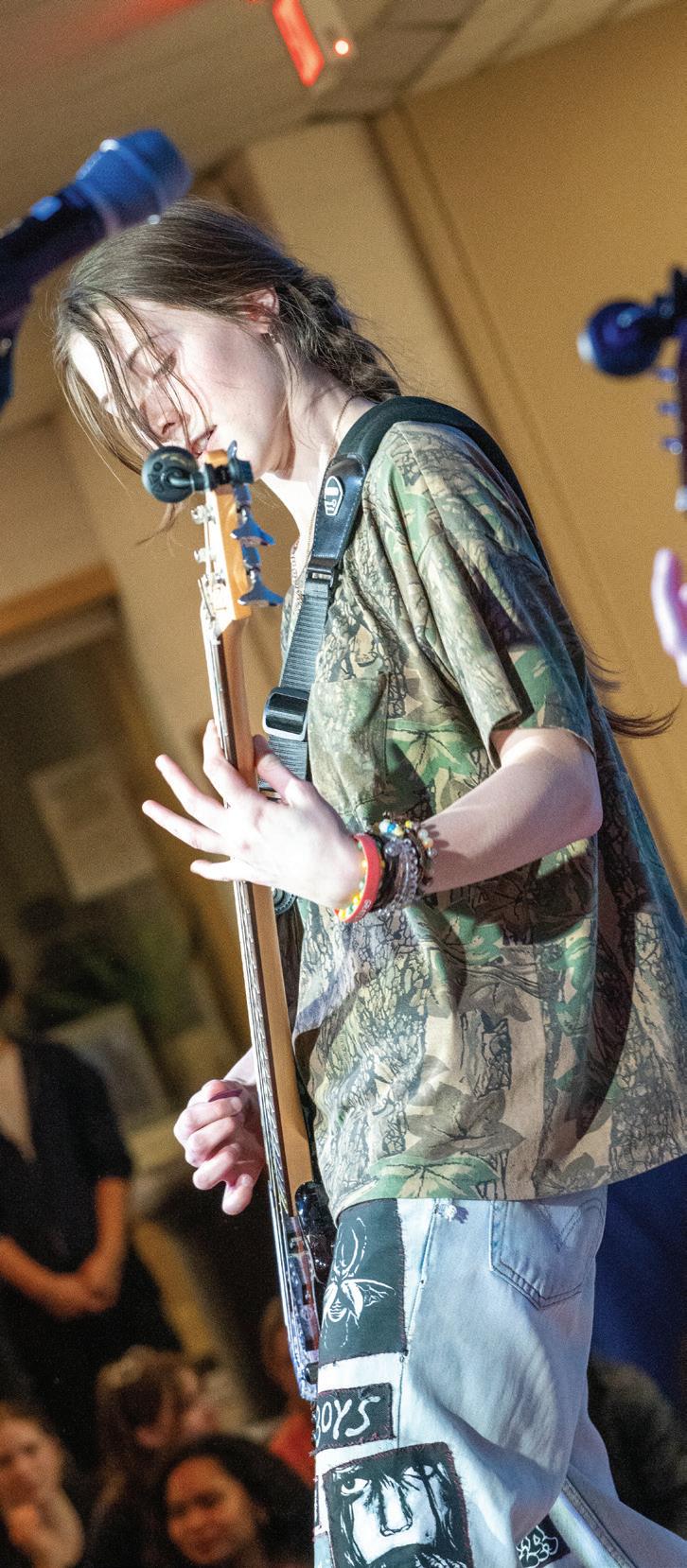
Whether it was singing a song or jumping off the stage, competitors played to the rhythm of their passions. Jack O’Dea / The Breeze
Summer Solis / The Breeze
A new way to Münch in Downtown
By LACEY SIRBAUGH The Breeze
After Lola’s closed this summer, Downtown Harrisonburg was left without a neighborhood deli. Eight months later, Münch opened its doors, blending a fine dining experience with a community-centered atmosphere.
Co-owners Emily Imgram and Doug Weiler developed the idea over a year. As a JMU alumna and former teacher, Imgram wanted to become more involved in the Harrisonburg community, while Weiler wanted to share his 20 years of culinary experience with the Shenandoah Valley. Though they had only known each other for about a year, Weiler is a longtime friend of Imgram’s husband.
Employee Sydney Hole said the partnership works seamlessly.
“They balance each other out so well. You can tell they love what they are doing,” Hole said.
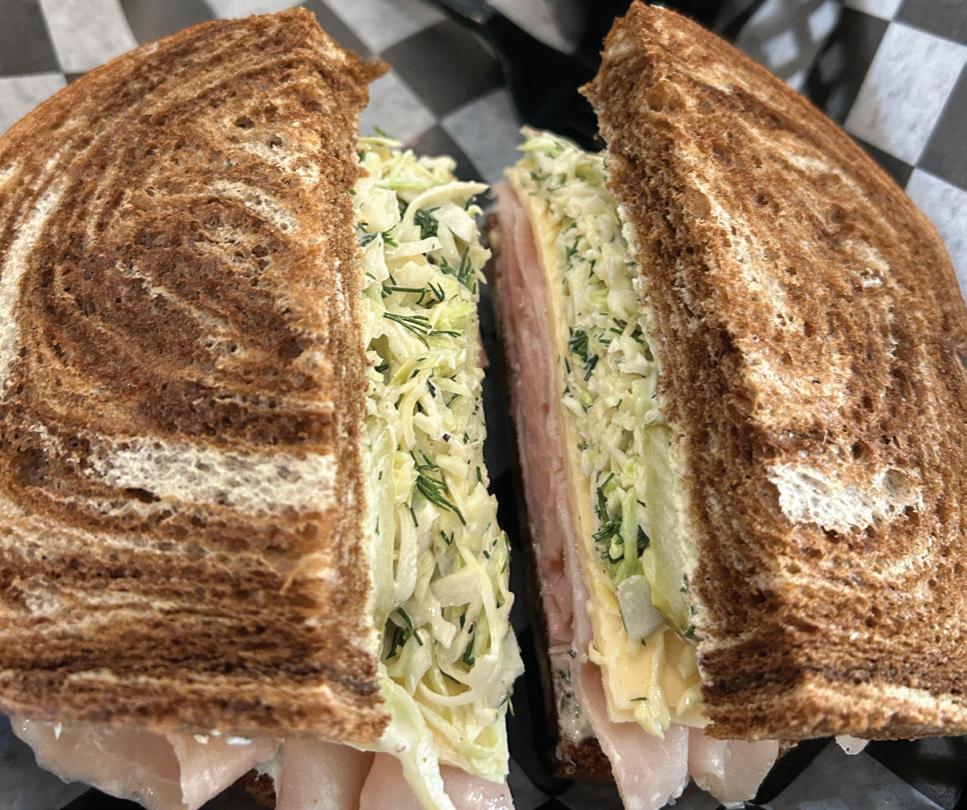
Weiler always knew he wanted to open his own restaurant, but it wasn’t until Lola’s closed that he and Imgram finalized their concept.
Weiler wanted to bring his fine dining experience and apply it to sandwiches, adding unique twists not usually found with sandwiches.
After six years at Willow, an intimate, reservation-only restaurant in Portland, Oregon, Weiler said he wanted to maintain that same level of quality while creating something more accessible. Instead of traditional fine dining and multicourse meals, Münch serves sandwiches that feel familiar at first glance, but surprise customers with layered, unexpected flavors.
“We want it to be approachable, but we also want people to take a bite and be like, ‘Wow, that’s really different. What am I tasting right now?’” Imgram said.
The deli’s current best-seller, the Dill Turkey, comes with Havarti cheese, dill mayo, dill pickles and a crunchy dill slaw on a marble rye.
“We want to build trust,” Imgram said. “We want you to come in here and try something that might be a little bit different from what you’re used to, but have it be the best buffalo chicken sandwich you’ve ever had. Then, you won’t be as scared to try something new the next time.”
For Weiler, every menu item must pass a simple test:
“When I was making menus throughout my career, the last question I would ask myself was, ‘Would my mom eat this?’” Weiler said. “Even if it’s a weird ingredient, is the language on the menu inviting enough?”
The menu rotates seasonally to highlight fresh, quality ingredients, Weiler said.
With squash currently in season, Münch is featuring a delicata squash sandwich and a carrot-ginger soup as vegetarian options.

The restaurant plans always to include at least one meat-free
For guests with dietary restrictions, every sandwich except the meatball sub can be made on gluten-free bread from BMC Bakes. Additional BMC Bakes treats can be purchased at the counter.
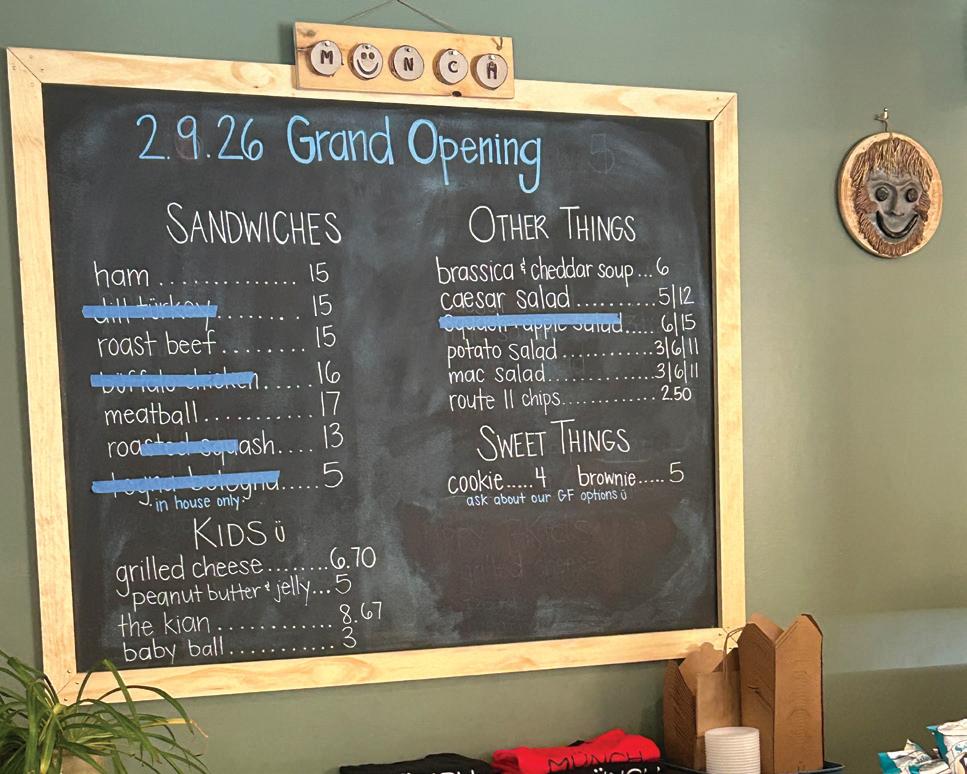
When asked if they had a favorite sandwich, Weiler and Imgram praised each one.
“I’ve always believed that if you make something that you like and you’re really into, the flavors will translate because you’re excited about it,” Weiler said.
Münch is defined not only by its food, but also by its atmosphere. Weiler and Imgram have intentionally included specific elements throughout the restaurant that reflect their personalities and lives.
Inside, the blues, greens and unique decorations on the shelves all carry personal meaning. A chicken figuire represents Imgram’s love for animals, and the wallpaper featuring a sasquatch and alien nods to Weiler’s time in Oregon.
Read more online at breezejmu.org
CONTACT Lacey Sirbaugh at sirbaula@dukes.jmu.edu . For more on the culture, arts, and lifestyle of the JMU and Harrisonburg communities, follow the culture desk on X @TheBreezeJMU and on Instagram @BreezeJMU.



The menu rotates with in-season ingredients.

EAT DOMINO’S DUKES DUKES


EDITORS Preston Comer & Tommy Gurganous EMAIL breezesports@gmail.com
Tyler Lutz takes command as freshman southpaw for JMU
By TOMMY GURGANOUS The Breeze
Freshman pitcher Tyler Lutz’s first taste of collegiate baseball came in JMU baseball’s season-opening matchup at then-No. 16 ranked Florida State. With JMU down 2-0 in the fourth inning, Lutz came in for the Dukes and pitched 3.2 innings, allowed no runs and struck out three batters.
“The fans were chirping, but then when I stepped on that field, I kind of just zoned in,” Lutz said of the game, “I couldn’t really hear any outside noises when I stepped on that mound. It was just me and my catcher.”
Lutz further added that he’s faced plenty of Division I commits growing up, and that he doesn’t care “who steps in the box.” Regardless of the batter, Lutz said it’s “always kind of been [his] way” to pound the strike zone against his opponents.
The season opener in Tallahassee, Florida hasn’t been a one-off — in the weeks since then, Lutz has kept opposing teams off balance. The freshman southpaw has tallied a 1.32 earned run average and struck out 17 batters through 13.2 innings this season.
After serving in a long-reliever role, Lutz was called upon to make his first start on Sunday at the First Pitch Invitational against Michigan State, and held the Spartans to one hit and one unearned run over five innings.
“I saw my name that I was gonna be the Sunday starter, I knew that the team would have my back,” Lutz said. “I think it was [that] I had all the trust in the world with them and I think all the coaches had the trust with me.”
Like in college, Lutz worked his way up from a reliever role to a starting pitcher his junior and senior year of high school. Lutz attended Souderton Area High School in Montgomery County, Pennsylvania — the same high school of 25-season MLB pitcher Jamie Moyer.
“The community [Lutz] comes from is a pretty rich, driven community as far as talented baseball players, so he’s played against good competition his entire life,” baseball head coach Marlin Ikenberry said.
Ikenberry added that Lutz competed against JMU sophomore infielder Reece Moody, with them being in the same district area.
Moody’s high school, Central Bucks
“It really just came down to where I liked it the most and when I came down to visit JMU, I kind of figured this should be home,” Lutz said. “The people here are great, coaches are great, meeting some of the team back then, they were awesome, so it just kind of sold me on this place.”
Lutz’s high school career finished with a senior season that included a 4-1 record, 73 strikeouts in 43 innings and 22 hits allowed, according to the Bucks County Courier Times.
“That was my thing, I always competed,” Lutz said, “I always wanted to. I just went out there and did my thing.”
Though he had already committed prior to that season, Lutz added that he watched “a lot” of JMU’s 2024 games, which saw them make the Raleigh Regional. After watching JMU’s play style and how Ikenberry coached, Lutz said it “boosted his confidence” about JMU.
Senior left-handed pitcher Max Kuhle said Lutz has always been among the first guys to enter and leave the facility for practice since he got to campus. Ikenberry added that Lutz works “extremely hard” and echoed Lutz’s thoughts in that he “likes to compete.”
Lutz said his fastball is now up to around 90 to 91 miles per hour, and he also features a slider and changeup. Kuhle doesn’t think Lutz is “out of the ordinary” in what pitches he throws at a given moment, but he says Lutz’s slider is a “plusplus pitch.”
“He’s able to kind of put those pitches where he wants them, and then get them out of the zone for swing and miss when he needs to,” Kuhle said.
Ikenberry noted Lutz’s changeup as a pitch that has offset his slider well, and his delivery of the pitches make it hard for hitters to determine which is which.
“Then, all of sudden, he’ll locate a fastball at 89, 90 miles an hour, which looks like it’s 100 because he’s pitched off his changeup and slider,” Ikenberry said.
Lutz has largely kept those pitches in the strike zone too; he’s surrendered three walks to his 17 strikeouts.

East, is about a 40-minute car ride from Lutz’s.
Lutz said he was a closing pitcher his sophomore year with his high school team, and he topped out at 88 miles per hour on his fastball. College coaches couldn’t talk to Lutz until the summer going into his junior season, and JMU was his first call.
Lutz said he had interest from Pitt, Delaware and Penn State amongst others but decided on JMU. Ikenberry said Lutz’s family liked the school and thought Lutz was sold on the pitch that he would be able to pitch for JMU early on in his college career.
“There’s a reason hitting is one of the hardest things to do in sports,” Kuhle said, “and he is kind of bought into that and just challenged guys to hit the ball hard rather than giving them free passes.”
Lutz has gotten to pitch to freshman catcher Ryan Gocio at times this season, most recently in the game against Michigan State. Lutz said he “loves” to watch Gocio catch and says he is “so smooth” behind the plate.
“[Gocio] tells me honestly, not what I want to hear, but he tells me honestly about how pitches are, or how I’m doing, which I like,” Lutz said.
Ikenberry also described Lutz as a “really good hitter in high school” and he’d give Lutz that opportunity as a “twoway player” if the staff felt so, but Ikenberry has opted for the freshman to focus on pitching for now.
“We need him on the mound to be successful,” Ikenberry said.
Kuhle thinks Lutz will need to maintain the “level head” he’s shown despite his early successes, and continue to be humble. As to why he thinks Lutz can continue that, Kuhle noted the freshman’s intent in everything he does.
“Other people that have had this much success early on may get complacent and think they don’t have anything to work on, but [Lutz] continues to work every day,” Kuhle said, adding that he thinks Lutz will be able to physically sustain the rest of the season due to the work he’s done leading up to and during the season.
Lutz said remaining humble will also be important and that he’ll take advice from the older guys who “have more experience” and “know better” than he does.
“Then obviously, just keep doing my thing, keep going in early, keep working hard,” Lutz said.


TOP: Tyler Lutz leads JMU baseball with a 1.32 ERA. BOTTOM: Lutz has struck out 17 batters and walked just three. Photos courtesy of JMU Athletics
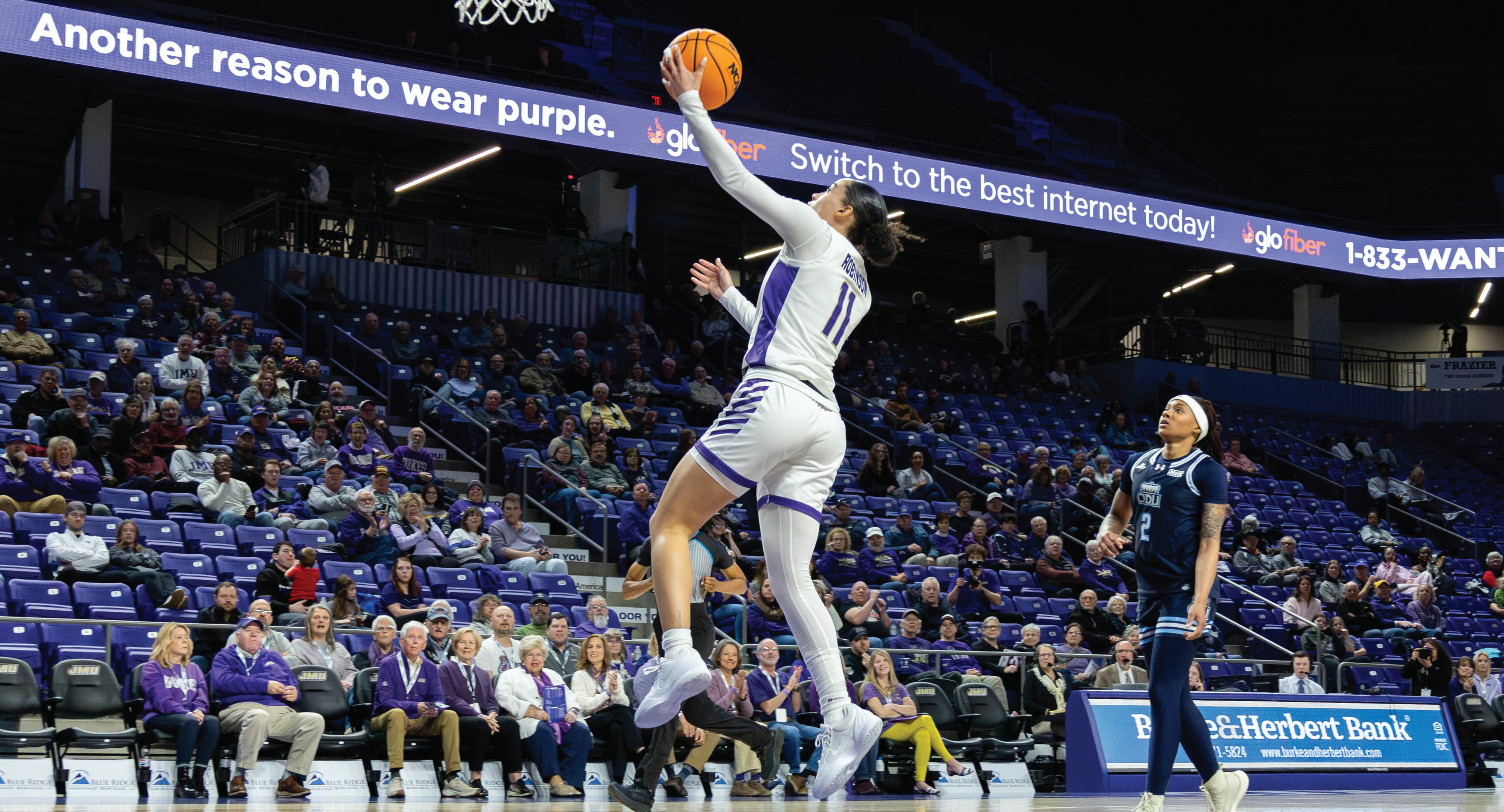
JMU women’s hoops prepares for Sun Belt Conference quarterfinals The Dukes enter postseason tournament as No. 4 seed
By PRESTON COMER
The Breeze
JMU women’s basketball finished the regular season 23-8 (14-4 Sun Belt), earning the No. 4 seed in the Sun Belt Conference tournament. But, the Dukes won’t learn their opponents until the conclusion of Game 5 on Friday, when Marshall will play a team yet to be determined.
The Dukes ended their season on a ninegame win streak, which head coach Sean O’Regan attributed to their “commitment to defensive end.”
“What I really try to get every group to understand is how you play defense whether you win or lose,” O’Regan said, “and your offense will determine how much you win by.”
The final two games were blowout wins over Coastal Carolina and Old Dominion. Graduate forward Ashanti Barnes took over during the two-game stretch, winning Sun Belt Player of the Week.
Barnes scored 19 points and grabbed 14 rebounds against ODU; however, her performance against Coastal Carolina was a career night — she scored 29 points, corralled 16 rebounds and tallied three steals.
“I’m just being confident and trying to take my team to a championship,” Barnes said. “But it’s not just going to take me, it’s going to take everybody.”
O’Regan said Barnes performance peaking is “what you want” at this point of the season,
and is giving her all since this is her final collegiate season.
“I think she’s really seeing the light at the end of the tunnel,” O’Regan said. “I’ve seen seniors really realize that this is coming to an end and ‘I’m going to give it everything I’ve got.’”
Redshirt senior guard Peyton McDaniel is also suiting up for her final conference tournament. McDaniel, the 2025 Sun Belt Player of the Year, made it to this season’s All-Conference First team after averaging 18.2 points and 7.5 rebounds per game.
McDaniel said her preparation is consistent despite it being her last season, but there’s always a chip on her shoulder to win a championship.
JMU faced Marshall twice this season. The Dukes lost in overtime in December but beat the Thundering Herd 80-43 in a statement win on Jan. 15.
O’Regan said his team has practiced like they’ll face Marshall since that’s the “most probable” outcome, but they’ve prepared for the other top seeds as well.
“[We’re] trying to simulate the mental piece of having to turn the page and pay attention to different details,” O’Regan said, “but [we have] to understand the style and the pace.”
Marshall, the tournament’s No. 5 seed, primarily plays in a 2-3 zone on defense. Its defense held opponents to an average 63.7 points per game.
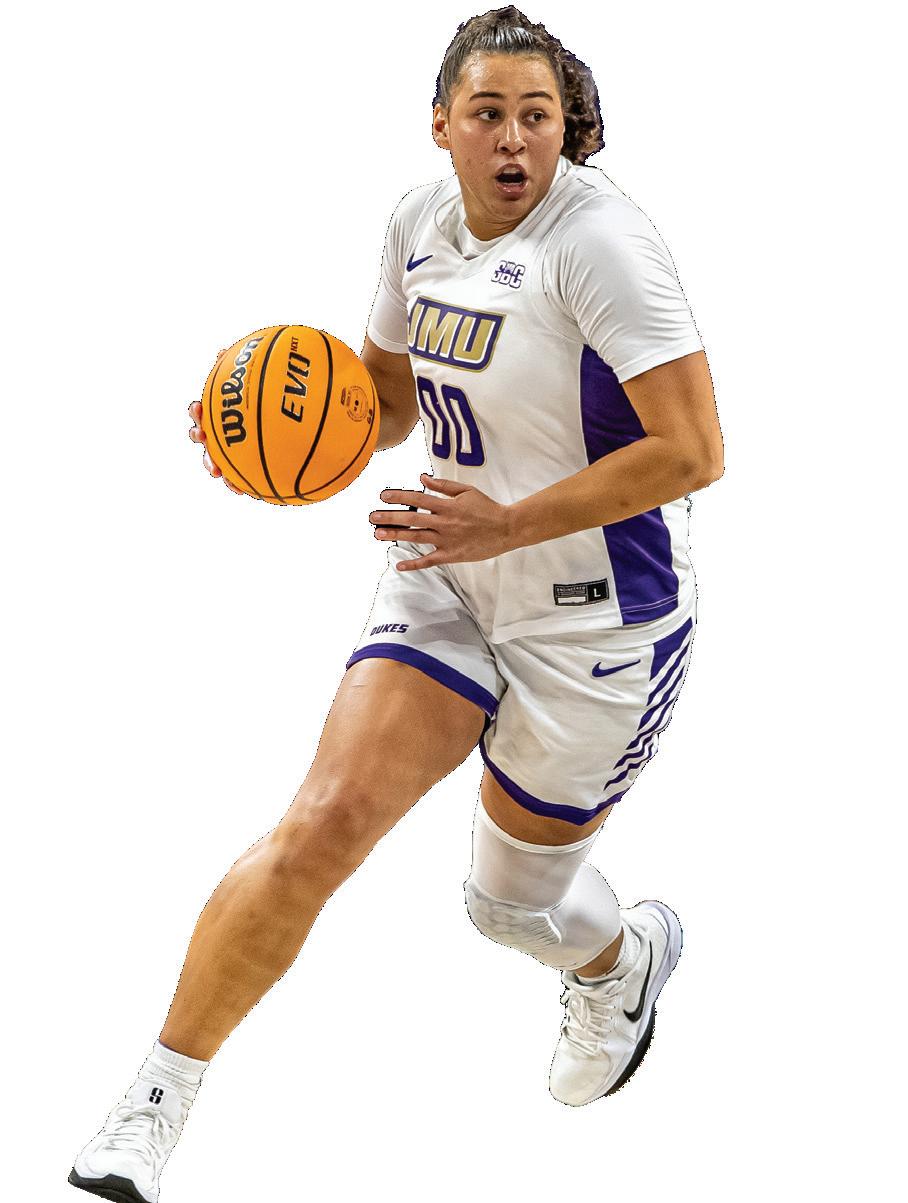
O’Regan said playing against a 2-3 zone “challenges your depth and your playbook.”
“Most people have 50-75 man sets but they’ve got 10 zone sets,” O’Regan said.
The Thundering Herd are led by senior guard Timaya Lewis-Eutsey, who won Sun Belt Newcomer of the Year and made All-Conference First Team. Lewis-Eutsey averaged 19.4 points per game on 49.2% shooting from
Lewis-Eutsey also made the All-Sun Belt Defensive Team after averaging 3.6 steals
O’Regan said the Dukes have to contain her in a hypothetical quarterfinals matchup, but they succeeded in that during the two teams’ last matchup in January. JMU held Lewis-Eutsey to 8 points on 3 of 9 shooting from the field
and 2 of 10 shooting from the free throw line. She also didn’t tally a steal.
JMU’s second matchup against the Thundering Herd was more one sided than the first, O’Regan attributed the success to the Dukes’ improved defense.
If JMU beats the winner of Game 5, it moves onto the semifinals to face No. 1 seed Georgia Southern. The Eagles finished 23-6 (16-2) and split their series against the Dukes.
Georgia Southern won the first matchup 78-70 on Jan. 7, but JMU redeemed itself with a 67-60 win on Jan. 17. O’Regan said the difference from the first game to the second was once again defense.
“We made some very good adjustments with those two, and they had drastically different outcomes,” O’Regan said. “It’s all on the defensive end for me.”
The Eagles are led by the Sun Belt Player of the Year in senior guard/forward Kishyah Anderson. She averaged 14.5 points per game on 52.1% shooting and grabbed five rebounds per game.
The Dukes will face the Game 5 winner in the quarterfinals on Saturday at 1 p.m. EST.
CONTACT Preston Comer at breezesports@ gmail.com. For more women’s basketball coverage, follow the sports desk on X and Instagram @TheBreezeSports.
JMU women’s basketball will face the winner of Game 5, which will be Marshall against a team that’s yet to be determined. Rowan Potts / The Breeze
Annabel Dewey / The Breeze
JMU scoreboard

JMU baseball loses to George Mason, 11-2
JMU baseball fell to 5-6 after losing to George Mason on Tuesday. The Dukes were down 6-2 going into the ninth inning before allowing five runs.
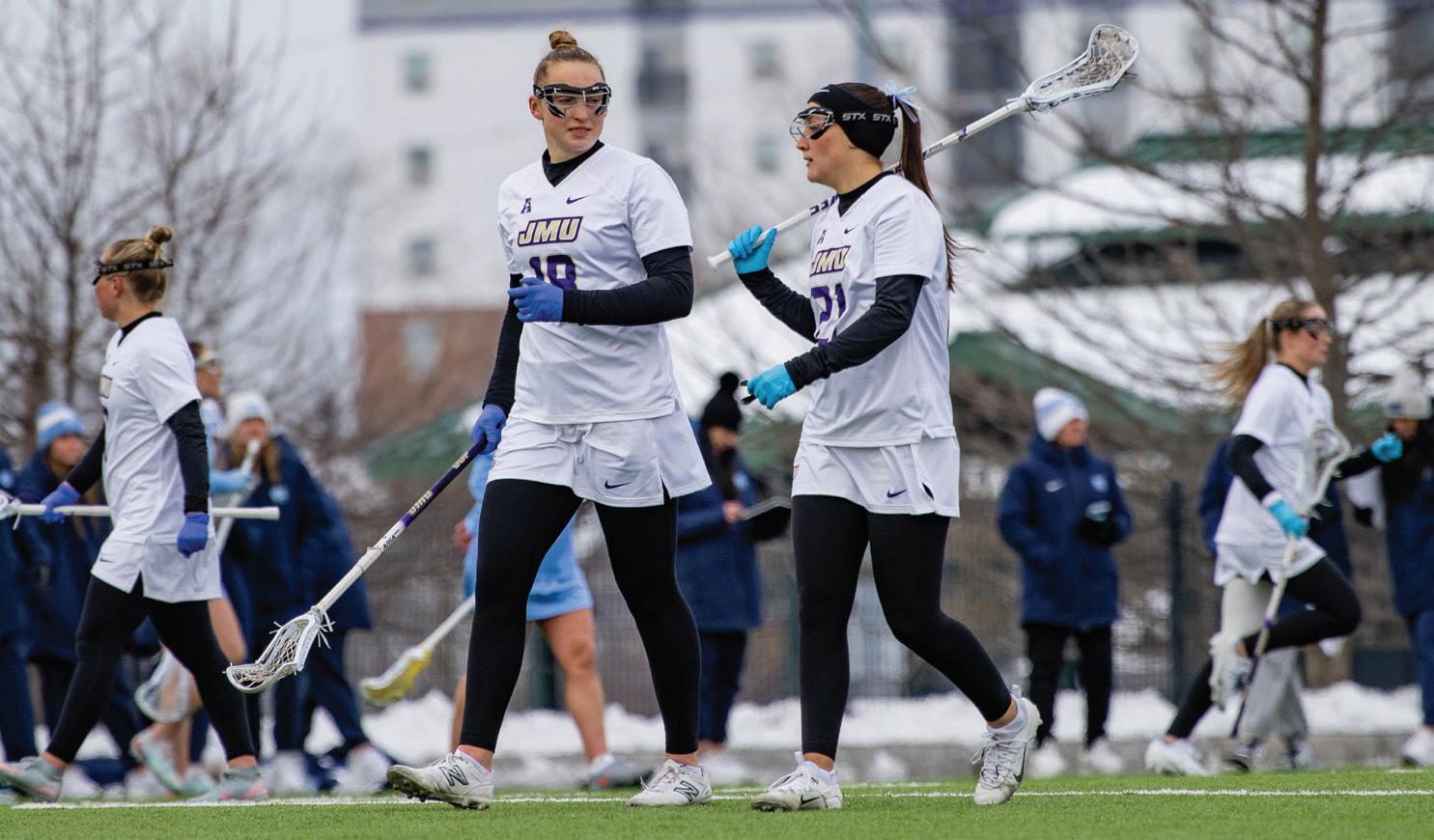
JMU lacrosse falls to Johns Hopkins, 12-10
JMU lacrosse lost its second game in a row after coming up short against Johns Hopkins. Senior attacker Jordan Peterson led the Dukes with three goals.
JMU men’s hoops defeats Cajuns in SBC tournament
By SPORTS DESK The Breeze
JMU men’s basketball beat Louisiana in the second round of the Sun Belt Conference Tournament on Wednesday night.
The Dukes 87-72 victory will advance them to the third round, where they'll face Southern Miss on Thursday.
Fifth-year guard Cliff Davis led JMU with 21 points and snatched two steals.
Junior forward Justin McBride scored 20 points, shot 8 of 11 from the field and tallied eight rebounds.
Fifth-year guard Bradley Douglas scored 18 points and dished three assists.
Sophomore guard Jaxon Olvera led Louisiana with 28 points and eight rebounds, shooting 10 of 21 from the field.
Junior guard Dorian Finister supplmented the Ragin’ Cajuns with 27 points and shot 9 of 13 from the field.
JMU got off to a hot start with a 23-12 lead at the 6:31 mark of the second quarter.
Louisiana was able to respond offensively and cut the lead to 10 — 37-27 at halftime.
The Dukes shot 58.3% (14-24) during the first half to Louisiana’s 37.9% in the first half, and the two teams combined combined to shoot just 3 of 15 from 3-point range.
Louisiana cut JMU’s lead to 53-48 at the 11:25 mark of the second half, but Davis and McBride helped the Dukes to get back to a double-digit lead with just over six minutes left. Then with 2:21 in the second half, McBride elevated for an and-1 slam dunk to give JMU a 75-65 lead.
Despite a 21-point second half surge from Finister, JMU closed the game out with free throws from Davis and McBride to bring JMU a 87-72 win.
The win marks JMU’s first victory in the Sun Belt Conference tournament under head coach Preston Spradlin, and the Dukes also improved to an 18-14 record.
Read the full recap at breezejmu.org
CONTACT the sports desk at breezesports@ gmail.com. For more men’s basketball coverage, follow the sports desk on X and Instagram @TheBreezeSports.






























Jack O’Dea / The Breeze
Annabel Dewey / The Breeze




OPINION
EDITOR EMAIL breezeopinion@gmail.com Cali Gilmer

Want to praise someone or get something off your chest? Darts & Pats is the place to do it. Submit your own at breezejmu.org.
A “why-even?” dart to the ‘CHOICES’ name being changed to ‘Admitted Students Open House.’
From a student who wants to keep things the same.
A “hello-freedom” pat to spring break almost arriving.
From a student who’s ready for relaxation.
The high cost of a major commitment

Declaring a major shouldn’t feel like placing a high-stakes four-year wager. Yet for many JMU students, that’s exactly what it becomes.
The expectation to pick a path follows a student from their first orientation, usually originating from general intrigue rather than reflection, simply because the conditions to sample a major don’t exist yet.
Appreciating a 100-level course doesn’t necessarily translate to liking what a major entails long-term. Under the current system, students encounter a jarring reality check after discovering the true workflow and focus of their major. Frequently, this realization occurs after committing.
Someone might love an introductory psychology lecture, inspired by theories of human behavior. Semesters later, they realize that the “gatekeeper” to the major is a heavy emphasis on statistics and rigorous research design. Similarly, a student might enjoy a theoretical discussion in a justice studies Gen Ed, yet find themself completely unprepared and distasteful toward applying it to a dense policy job.

A “can-you-just-choose?” dart to the weather sending snow after a 65-degree day.
From someone who wants spring to come sooner.
Intro courses pique interests but can’t replicate the day-to-day sustained analytical rigor of a career. By the time these students realize the fit isn’t right, they’ve already invested in numerous three-credit, otherwise inapplicable prerequisites that directly affect their GPA and timeline.
Often, these credits don’t transfer easily to other fields, putting students at an inhibiting crossroads.
A scheduling bottleneck exacerbates this. For many students, freshman and sophomore years are nearly filled with unrelated Gen Ed courses. Students will spend two years fulfilling university mandates, taking only one or two major-related classes.
Even so, the timeline for deciding a major turns over rapidly. By the third semester, students are expected to make a decision. Many do so successfully. Others use limited exposure, choosing based on a positive class, feeling comfortable with a particular professor, general interest or perceived career stability.
This push causes both Exploratory students and those who initially declared majors to avoid the frightening “undeclared” label and to end up in degrees they later abandon.
A report from the National Center for Education Statistics (NCES) suggests that the pressure to commit early is increasingly costly. Approximately 30% of undergraduates change their major at least once within three years of enrollment.
Alarmingly, for those pursuing a bachelor’s degree, one in nine students will change their major twice or more.
forced to make high-impact decisions with incomplete information.
To solve this, JMU could implement lowstakes, low-credit discovery electives. These courses would act as the necessary plunge that 100-level classes can’t provide.
They wouldn’t repeat “how-to” material as an introductory course does, but give a handson short hand experience into completing the kinds of tasks required in the major.
For example, in a business discovery course, students could analyze a business case under time pressure. In a media arts and design (SMAD) discovery course, a student might complete and produce an audio or video project within a compressed timeframe.
A “consistently-pullingthrough” pat to JMU SafeRides for helping me save money on weekends.
From a student who loves to know how they’re getting home after a night out.
In a school as large as JMU, these Gen Eds are notoriously difficult to get into; students will spend their registration periods trying to get a spot in a philosophy or science lab just to “check a box.” By the time they’ve satisfied these mandates and finally get to the bulk of their major coursework as juniors, their options and timelines are largely set.
However, JMU does let undecided students enter as “Exploratory,” taking Gen Eds and non-major specific classes until they reach 30 credit hours. In this pathway, specific academic advisors guide students in a temporary harbor. They help pick classes (based on predisposed areas of interest and self-evaluation), ensuring they’re making progress toward graduation while searching for a track.
While changing majors isn’t necessarily a negative, this natural, late-stage pivot adds effort and dollars to an already hefty education. When a student realizes their major is a poor fit in their junior year, they face what experts call the “excess credit” trap. Because credits don’t often transfer, a late-stage change frequently adds one to two years to a student’s education.
Financially, this can clearly be debilitating. In 2026, the estimated cost of attendance for JMU is roughly $35,142 per year for Virginia residents. At this current rate, two additional years of study can add well over $60,000 to the total cost of a degree, excluding the opportunity cost of delayed entry into the workforce.
Without a mechanism to test-drive a department’s undertakings, students are
The goal of these classes would be to give students an idea of what upper-division work looks like, not to perfect a specific skill or assignment. Students would still be able to decide whether they like a subject, but they would also see what performing in that field actually requires.
Commitment is a significant part of the JMU experience. But before making a jump, having the chance to walk through the door first would make that commitment much more confident.
CONTACT Elana Leichty at leichtek@ dukes.jmu.edu. For more editorials regarding the JMU and Harrisonburg communities, follow the opinion desk on X @TheBreezeJMU and on Instagram @ BreezeJMU.
Policies
ELANA LEICHTY contributing columnist
Summer Solis / The Breeze
With the world on fire, why watch the news?
CHARLES-NICOLAS OWEN Breeze columnist
In an interview on the “Getting To Yes, And” podcast from The Second City in 2024, neurologist Richard Cytowic first put the idea forward that we are Stone Age brains in a “Screen Age,” bombarded by systems and technologies that vie for our attention.
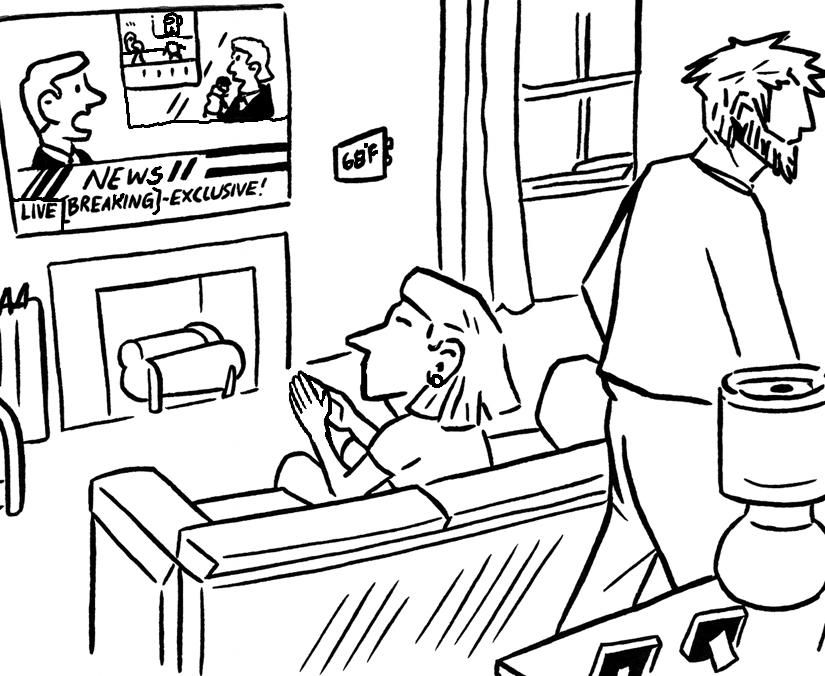
For Cytowic, screens “are like secondhand smoke. They insist on being looked at … trying not to look at the screen takes more energy … than paying attention to something.” What makes tearing our eyes away from high-speed digital media, both social and mainstream, more difficult? Becoming the dreaded “uninformed citizen” should you neglect the news.
We’re told that responsible citizenship requires constant awareness of global events. News arrives in a continuous stream of wars, elections, economic crises, disasters, diplomatic conflicts, so on and so forth. The individual is expected to follow these developments closely, as if attentiveness itself were a civic duty. For most, this information produces no corresponding ability to act. Knowledge accumulates without agency, creating a strange condition in which one is aware of distant crises while remaining powerless to influence them.
Take the strikes on Iran this past weekend. The distance between the scale of world events and the scale of ordinary life is made apparent in decisions made far beyond the reach of the individual citizen. How ever intensely one follows these developments, the practical ability to influence them remains nearly nonexistent, turning geopolitical upheaval into another spectacle to be consumed rather than a responsibility to be exercised. What are regime-change politics like these if not reminders that attention should be grounded primarily in the places where action is possible, rather than in the shifting ambitions of distant states?
So why watch the news?
The question isn’t a matter of if the news is true or biased (mostly no and largely yes), but rather what
following the news allows a person to actually do. For the ordinary citizen, the honest answer is very little. One may vote on occasion, donate money or even take to debates online, but none of these actions meaningfully alter the course of distant geopolitical events. It’s all hot air in a balloon that’s already rising closer and closer to the sun. The individual then becomes a spectator to history rather than a participant, absorbing narratives about earth-shattering conflicts and regime changes as if they were serialized dramas.
The result is a widening gap between the scale of events we observe and the scale at which we live. A person might spend an hour reading about conflicts in Afghanistan, Venezuela or Iran and then return to a life shaped almost entirely by local relationships and obligations. The news creates the illusion that one’s real world exists on the level of nations and empires, when in practice, one’s true sphere of influence remains limited to family, neighbors and immediate community. Time spent analyzing international politics is time not spent cultivating relationships, learning practical skills or participating in local institutions. The news — and social media by extension — trains individuals to orient themselves toward distant centers of power rather than the environments they actually inhabit. In doing so, it subtly undermines the habits and habitats that sustain stable communities.
Read more online at breezejmu.org
CONTACT Charles-Nicolas Owen at owen2cn@dukes. jmu.edu. For more editorials regarding the JMU and Harrisonburg communities, follow the opinion desk on X @TheBreezeJMU and on Instagram @BreezeJMU.
It’s important to avoid anti-intellectualism

When a circus or magician comes to town, a common phrase is, “kids, don’t try this at home.”
It’s easy to roll your eyes and disregard caution in many cases outside of these playful, childlike ones. Certain risks are, however, worth taking. Others — such as multiple years of dereliction of intellectual integrity in favor of conspiracy theories, strongman themes to feed on one’s insecurities and treating the satirical as intellectual — don’t quite meet the criteria for any risk worth taking.
That being said, many take the opposite path. They don’t heed this warning. They don’t pay attention to how their words affect the broader public sphere of debate, nor do they exercise regard for how their words affect their reputation down the line. In a way, we become like the Gnostic Demiurge Yaldabaoth who’s depicted in mythology as an ignorant false creator, we as humans often sow our own seeds of the sense of false creators. We forge falsities and market them as common sense.
However, what’s especially intriguing is that the opportunity for intellectual honesty is at everyone’s fingertips. Yet many choose to abandon that opportunity even when it’s presented to them. Conspiratorial thinking rooted in anti-intellectualism is deception meant to enrage the masses against imaginary threats to suppress more productive discourse — including class consciousness and community development.
The irony is that just one year ago, when I had a poorly formed understanding of this, I threw out the reality of intersectionality — a concept which accounts for the experiences of people from different backgrounds and experiences, and how they all interact with each other — while making assertions about property and the state.
Several intellectuals — including Emma Goldman and
W.E.B. Du Bois — have increased our understanding of intersectionality. That being said, every piece of writing is to be analyzed and compared using different viewpoints, as is the way of intellectual curiosity. That means entertaining counterarguments in each case.
What truly allows authentic discussions that foster intellectual understanding to be suppressed in the 21st century, however, is a less eloquent regurgitation of 20thcentury strongman idealism, repurposed as “masculinism.”
The combination of paternalistic idealism and rugged individualism has driven a significant amount of content online framing left-wing arguments as “effeminate” in nature, and are therefore less desirable.
I was heavily influenced by masculinist tropes, which, to their own ends, are as much of an outrage to common sense. This is seen on social media, where a lot of this content is emerging today.
The fact that it’s being disseminated on social media platforms such as Instagram — especially in easily-consumable short-form content — is extremely concerning. Scrolling on Instagram mimics the effects of cocaine on the brain. When one is in such a state, one’s judgment to differentiate fact from fiction is significantly impaired. So if comments akin to “do the libs even lift” are used to downplay arguments about intersectionality or class consciousness, or if one sees a “wojak” meme about modern Marxists being “sociopathic, lazy and gay” as I saw once, they are significantly more likely to allow it to influence them than in other circumstances.
Personally, I can attest that this, with deep regret, seriously impacted my train of thought and communication in a very negative way. It led me to omit intersectionality and allowed me to entertain impulses of sexism that, from an outside perspective, made me look hypocritical and reactionary.

My personal attempt to conflate class consciousness and masculinism manifested in sympathies for authoritarian-left regimes. The idea, however, that these reactionary left regimes embody goals of class solidarity, while partially correct, is only true to the extent they stem from an irregular development. Read more online @breezejmu.org
CONTACT Patrick Hanover at hanovepv@dukes. jmu.edu. For more editorials regarding the JMU and Harrisonburg communities, follow the opinion desk on X @TheBreezeJMU and on Instagram @BreezeJMU.
PATRICK HANOVER Breeze columnist
Charles-Nicolas Owen / The Breeze



The Breeze
Editorial Staff
EDITOR-IN-CHIEF Eleanor Shaw breezeeditor@gmail.com
NEWS EDITORS Emma Notarnicola & Charlie Bodenstein breezenews@gmail.com
COPY EDITORS Kayla Katounas & Joelle McKenzie breezecopy@gmail.com
PRINT MANAGING EDITOR Hannah Kennedy breezepress@gmail.com
CULTURE EDITORS Isabel Lewis & Bella Arist thebreezeculture@gmail.com
PHOTO EDITORS Landon Shackelford & Annabel Dewey breezephotography@gmail.com
ONLINE MANAGING EDITOR Sixuan Wu thebreezeweb@gmail.com
SPORTS EDITORS Preston Comer & Tommy Gurganous breezesports@gmail.com
AUDIENCE EDITORS Ella Warren & Madeline Buynak thebreezesocials@gmail.com

“Cha Cha Cha” by Bruno Mars

“FE!N” by Travis Scott
“John the Fisherman” by Primus
“butterflies.” by Brent Faiyaz
“Sweetest Chill” by Siouxsie and the Banshees
“You Are Every Girl To Me” by MJ Lenderman

“You Know Me Too Well” by Nothing but Thieves
“Made in Japan” by Buck Owens
“Reunion” by The xx
“Where Dragons Dwell” by Gojira

“Master of None” by Beach House
OPINION EDITOR Cali Gilmer breezeopinion@gmail.com
ART DIRECTOR Julia Tanner thebreezeartdirector@gmail.com
TV NEWS DIRECTOR Alexa Bonilla jmubreezetv@gmail.com 1598 S. Main St. Harrisonburg, VA 22801 PHONE: (540) 568-6127 FAX: (540) 568-7889

Corrections
(2/27/26): A previous version of the article “Community members hold memorial for JMU senior outside King Hall” misidentified Gibbs’ organization affiliations. The story has since been updated online with the correct information.
Los Angeles Times Daily Crossword Puzzle Edited by
Patti Varol
By Renee Thomason



MADISON MARKETPLACE
Madison Marketplace is open for business, and all text-only listings are FREE ! Post job listings, announcements, rentals and more using our online placement tool. Ads run two weeks online and in two print editions.
HOUSING SERVICES
Space for Rent in Home
Private entrance, one bedroom, private bathroom, living room, dinette area and galley kitchen (refrigerator included). $850 per month that includes utilities. $850 deposit. No pets and no smoking. Text: (540)705-7578
Rent This 4 Bedroom 2 Bathroom
Adorable Cottage Just Two Blocks from JMU campus
Cute Cottage for Rent Just Two Blocks from JMU Campus and Bridgeforth Stadium - $1999/month. 6 month lease or month to month lease available.
Counseling Services Available!
Arcadia Apartment Available NOW
Dec. Grad needs to rent Arcadia Apartment room that is available immediately until July 31, 2026. Great roomates! Base rent is $599 with utilities included. Please email Kailey.garner0804@gmail.com
JOBS
Career Opportunity - Software
Portfolio Specialist
Are you ready to be the driving force behind cutting-edge public safety technology? Join the Harrisonburg-Rockingham Emergency Communications Center’s team as a Software Portfolio Specialist and help shape the future of emergency communications in a high-impact, mission-driven environment. Find out more/apply online: https://www.harrisonburgva. gov/employment.EOE.


Cross Keys Equine Therapy is taking new clients! Struggling with depression, anxiety, or just need someone to talk to? We offer equine assisted therapy sessions, nature based therapy, or traditional talk therapy. Only 15 minutes from campus! Give us a call today at 540-607-6910.
New Services For Women
Discover your own beauty and improve it naturally—inside and out. Build lasting confidence, feel empowered to be your best self, and experience greater happiness while living a richer, more fulfilling life. Ask about membership. Please reply to: winstonempowers@gmail.com
Transportation Services Airport transfers, wine tours, special events Motorcoach trip to Liberty football game Sept 20 Contact Adventures-N-Travel.com Call or text 540-810-1196 mikepackett@aol.com
Car Wash Express and Laundromat Express!
Car Wash Express and Laundromat Express! Now accepting credit cards for car wash and laundromat! 3 Minutes from campus! Self-serve and automatic options. 48 Kenmore Street, Harrisonburg, VA.540810-1196 mikepackett@aol.com
Internship Opportunity - City Manager’s Office (Harrisonburg, VA)
Are you a student seeking real-world experience in public administration with a locality recognized both regionally and nationally for a variety of achievements? If so, apply to the City of Harrisonburg’s City Manager’s Office Internship Opportunity! Find out more/apply online: https://www. harrisonburgva.gov/employment. EOE.
Part-time Opportunity - VFW Bartender
Part-time bartender no experience necessary will train must be 21. Apply in person at VFW 450 Waterman Dr Harrisonburg Va 22802 .

Work from home
Serious inquiries only
Data entry clerk needed $15 per hour, no experience needed We train, bonuses, full benefits 5 days work per week, if interested Contact: elevancehealth533@gmail. com
ITEMS FOR SALE
Game room
Large folding ping pong table with accessories. Foosball table with extras. Both in good condition. Must pick up, cash only $75 each. 540-578-2362
Property for Sale in Staunton Building for Sale. Three store fronts. Two Apartments. Needs Total Renovation. 300 Central Ave., Staunton, VA 24401 $310,000 or best offer. Call 540-290-0375

HIRING! HIRING!! HIRING!!!