
The Breeze
TODAY IS

THURSDAY, MARCH 26 24 HOURS — 12AM-MIDNIGHT
JUMP INTO THE FUN ON CAMPUS!




Students, community gather for minority injustice protest

By EMMA BROWN & CHARLIE BODENSTEIN The Breeze
Gathered in front of Harrisonburg City Hall, roughly 50 students and community members joined together on Tuesday to protest how immigrants and other minority groups are being treated under the Trump administration on Tuesday.
Organized by JMU students and city representatives, the event featured speeches given by Harrisonburg City Mayor Deanna Reed, former District 34 Democratic candidate Andrew Payton, congressional candidate Tom Perriello, Councilwoman Monica Robinson and Harrisonburg-Rockingham NAACP Vice President David Evans, alongside several JMU and EMU students.
Reed began the protest with opening remarks about the importance of the protest’s mission.
“Today, we are standing up for Harrisonburg, and we are standing up for our community,” Reed said.
Though the central focus of the protest was to resist ICE, some speakers emphasized providing justice for all minority groups, not solely those most affected by ICE.
“What people call recent events are not recent to the Black community,” Robinson said. “The system that criminalized Black bodies is the same system that criminalizes brown bodies.”
During his speech, Evans encouraged attendees to demand more of the government and of themselves. He also urged listeners to educate themselves, vote and politicize all areas of their lives.
“This is what it means to stay woke,” Evans said. “This structural knowledge and building is the foundation of our freedom, so stay woke.”
Payton described his run for office in his speech, focusing on his goals and reasons behind his run.
“I did it because I felt like, in a time like this, with our democracy and so much at stake, that we needed to be fighting for every seat,” Payton said. “It’s a long road, but I believe in us. We see each other’s humanity, and that’s what makes us the biggest threat to a fascist administration.”
Additionally, throughout the speeches, many speakers emphasized the importance of community and connection through protest, especially in joining together to uplift one another.
“This was something that was needed for the community and the city of Harrisonburg,” Reed said. “It’s been a tough, tough year.”
Reed added that it was impactful to see JMU students coming out to protest and support those who are hurting.
Even from her position as the city’s mayor, Reed said, there’s only so much she can do on a local level when many of President Trump’s policies are beyond her control.
“That’s why I’m so supportive of the protesting,” Reed said, “because protestors and advocates can do things that we can’t.”
Freshman and main protest organizer Madeline Barbee Doerfler said she feels many students do not use their voices as much as they should. She added that this is especially because they will vote in federal elections but overlook local and state elections.
"If you don’t utilize your voice, no one will,” Doerfler said. “You’re the only person who can speak for yourself.”
CONTACT Emma Brown at brown9eg@dukes.jmu.edu & Charlie Bodenstein at breezenews@gmail.com. For more coverage of JMU and Harrisonburg news, follow the news desk on X @TheBreezeJMU and on Instagram @BreezeJMU.

Bill passed to change BoV term limits
By EMMA BROWN The Breeze
The Virginia House of Delegates recently passed a new policy increasing term limits for Board of Visitors (BoV) members statewide to no longer serve more than two consecutive terms and changing the process for the selection of BoV student representatives.
Each public university in Virginia has a BoV that creates policies for the school, sets the schools’ tuition costs and handles term limits, among other responsibilities. Appointed
by the governor, the board members can currently serve up to four years with two consecutive terms.
This policy will change the term limits to six years with two consecutive terms; however, members must wait at least six years since their last term.
Starting July 1, the policy will affect all public higher education institutions offering a baccalaureate degree in Virginia, according to the policy.
State Sen. Creigh Deeds (D), who represents Virginia’s 11th district, said he submitted the bill
to separate higher education and partisanship.
The six-year terms will ensure that no more than 50% of a BoV is appointed by one governor, Deeds said.
“You’ll always have a board focused on the school itself, and that’s what the boards are appointed for,” Deeds said.
The bill also calls for increased faculty and student representation on BoVs by selection from a list of individuals nominated by an institution’s faculty or staff senate.
“I think the inclusion of faculty, staff and students is going to be good for the Board of
Visitors and higher education in general,” Deeds said. “Those groups have more involvement at the school than anyone else; they ought to have a voice at the table.”
The policy will impact how JMU selects the student representative to the BoV. Read more online at breezejmu.org
CONTACT Emma Brown at brown9eg@ dukes.jmu.edu . For more coverage of JMU and Harrisonburg news, follow the news desk on X @TheBreezeJMU and on Instagram @BreezeJMU.
The bill mandates that Board of Visitors (BoV) members can't serve two consecutive terms. They must wait at least six years since their last term before being reelected. Rowan Potts / The Breeze
JMU and EMU students attended the Tuesday protest. Landon Shackelford / The Breeze
Inside look at Carrier Library


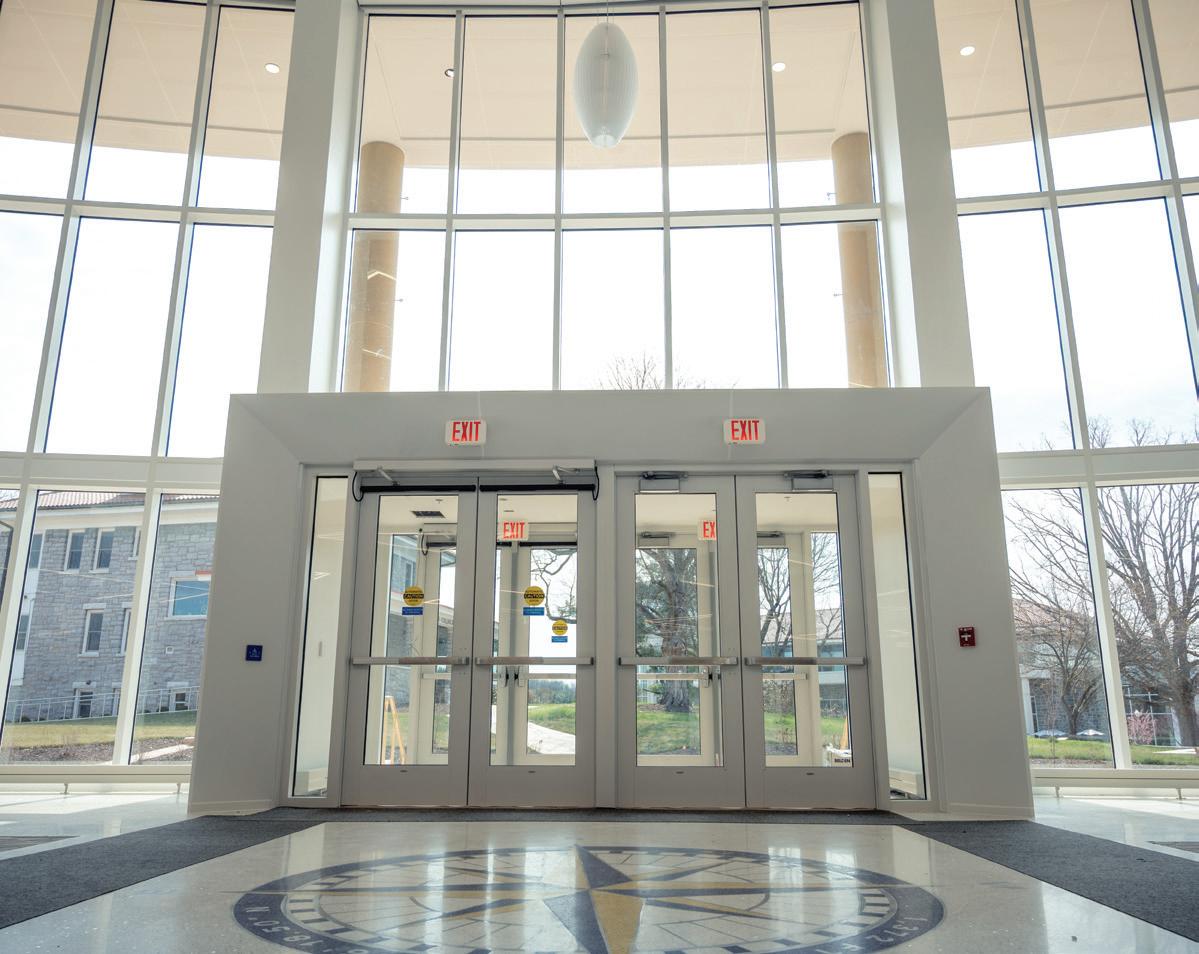



Carrier Library is set to open in August 2026 after four years of construction. Photos By Landon Shackelford / The Breeze
CCC completes final Gen Ed proposal
By EMMA NOTARNICOLA The Breeze
The Ad Hoc Core Curriculum Committee (CCC) unanimously approved the final proposal of the Gen Ed revamp after deliberation and another round of university feedback. The final proposal will now go to the Faculty Senate for a vote, the first step in the approval process.
Throughout weekly meetings, the CCC discussed university feedback on the first proposal — derived from the original three proposals drafted over the summer — revising them into the final draft, CCC co-chair and geology and environmental science associate professor R. Shane McGary said.
“The Curriculum Committee was committed to reflecting the desires of the constituents who reported in [with feedback],” McGary said. “I think we really stayed faithful to that, and it’s probably the best committee I’ve ever worked on.”
The CCC has 31 total members representing perspectives throughout the university. Twenty-one of those members are voting members — selected by the faculty senate speaker and provost — and a core committee of five members who played the primary role in drafting and revising the proposal, McGary said.
Additionally, the committee had nonvoting student representatives from the Student Government Association (SGA), who represented the students’ voices throughout the revision process.
“[The CCC] was fairly representative of all the different parts of our university, students included,” junior and SGA CCC representative Caden VanValkenburg said.
McGary said the analyzed feedback was collected through forums, surveys and more, with the CCC outlining how it utilized feedback in its transparency document.
“We were able to get a lot more specific feedback because we had a proposal,” he said.
“We were asking a lot of specific questions about what the faculty in other groups would like about our proposal and didn’t like about our proposal.”
The main change from the first drafted proposal was the dissolution of the one-credit Power Skills course, McGary said, which is now combined with the original two-credit Information Literacy and Critical Thinking course into an Information Literacy and Critical Thinking three-credit course.
“It’s now what we call an embedded theme,” McGary said. “It’s just something that we anticipate will be incorporated into courses throughout the program.”
He added that the CCC revised the Engaged Citizenship and Democracy program with a specific focus on encouraging a broader global perspective.
“[In the feedback from the university], they felt like it was possible to get through the program without stepping out of a United States kind of worldview,” McGary said.
Now, he said, global perspectives are identified as an overlay requirement. Though this does not require students to take a specific class, it does require they take a global perspectives course throughout the Gen Ed experience that overlaps with a course needed for one of the required categories.
“One of the things that I do wish [the CCC] could have done better is we were talking about a global perspective class and ultimately … we have this overlay/tagging requirement,” VanValkenburg said.
Outside of those two major changes, McGary said, the CCC focused on clarity for the proposal while maintaining course flexibility.
“[The CCC] didn’t want to do learning objectives on a granular level because we didn’t feel like we really had the expertise,” he said. “We did try to make sure that each of the components of our curriculum … were clear enough.”
Next, McGary said, this proposal will go to the Faculty Senate to be voted on from March
23 to 27. After the Senate makes its decision, the Provost will make a recommendation to the university president. Ultimately, the president will decide on the structure of the program and inform the Board of Visitors (BoV) during its April 24 meeting.
If the proposal passes, the next stage will be developing on the current basis of learning objectives, followed by faculty submitting proposals for courses, matching them to proposed programs and, ultimately, implementing the new program in fall 2028, McGary said.
“Students who are applying [to JMU] for, who knows how long — decades, maybe — are going to be going through the Gen Ed program,” VanValkenburg said. “You want to make sure that future generations are getting the best education they can ”
CONTACT Emma Notarnicola at breezenews@gmail.com. For more coverage of JMU and Harrisonburg news, follow the news desk on X @TheBreezeJMU and on Instagram @BreezeJMU.

JMU adapts to Artificial Intelligence
By JACIN GARNICA
The Breeze
Throughout the 2020s, the world has seen an explosion in generative AI affecting college campuses across the United States — many of these institutions are trying to understand and navigate it, and JMU is no exception.
Integrated science and technology (ISAT) professor Raafat Zaini co-taught a class called “AI for Global Impact” last fall alongside philosophy professor Christian Early and Cidewalk — a digital advertisement company — CEO Venkat Kolluri.

“We taught a class for the students to leverage the use of AI as a collaborator and also to tackle big topics, not just productivity improvement,” Zaini said. “They can use it to do research, think about solutions, critique work and make presentations.”
Zaini said he views AI as a resource that universities should work with rather than reject.
“I think students need to be aware of it and know how to use it productively, effectively and ethically, because it’s not just about the workforce or the jobs; it’s going to be a tool that will live with us,” Zaini said.
JMU educators’ personal views
JMU educators across departments hold differing views on AI and its use.
“It is something that should be avoided in the classroom, in terms of my courses … because I want to hear their thoughts,” writing, rhetoric and technical communication (WRTC) professor Susan Ghiaciuc said. “I also see the necessity of understanding how to utilize it for job prospects … There are courses [and] assignments where it is useful, but for my purposes, not so much.”
Alternatively, WRTC associate professor Elisabeth Gumnior said, “I use ChatGPT a lot to organize my thinking … your brain is going a million miles an hour,” referencing how AI was useful in combating her ADHD.
“In one’s personal life, it can be really useful … But for school purposes, like learning how to read a research article, I find and understand information, and then write about it and summarize that information,” communication studies professor Sharlene Richards said “You need to be able to do those things yourself to learn that skill; AI shouldn’t be doing it for you.”
Biology assistant professor Morgan Steffen says she never uses AI because she thinks it hinders creativity and critical
thinking skills. Steffen explained she has also had to take steps to ensure students don’t use AI to cheat on assignments by limiting virtual work and using Lockdown Browser.
“We have to move beyond ‘AI is bad' and think about how AI can be used in a good way, and when it shouldn’t be used,” Genomics Research Director and Education Coordinator Karen Barnard-Kubow said.
He added that AI is already being utilized in certain areas of academia to search for sources and to answer specific questions.
“You can ask AI to synthesize papers and give you the main points. You can ask AI questions, and it will actually find pertinent papers for you related to those questions. So there are ways we’re already using it in research, and I think that there should be ways that it can be used in the classroom, too.”
“It’s like calculators 50 years ago, so many people thought calculators would be the end of mathematics. You adapt,” physics associate professor Mark Mattson said. He found that AI is a tool that can be abused, but can also advance technology.
Mattson shared how he approaches AI with his students. He encourages students to use AI to help them learn and understand concepts, but warns that AI frequently gets things wrong and emphasizes cross-verifying the AI.
ISAT assistant professor Tobias Gerken said AI can be useful in areas already known by the user. He found AI to be useful in making tasks you are familiar with more efficient; however, he believes that it should not be used to avoid learning in class.
Read more online at breezejmu.org
CONTACT Jacin Garnica at garnicja@dukes.jmu.edu. For more coverage of JMU and Harrisonburg news, follow the news desk on X @TheBreezeJMU and on Instagram @BreezeJMU.
Josie Satterfield / The Breeze





















Bid at Warner Commons 3/ 26
SGA approves frontend budgets for clubs
By SARA PAGET The Breeze
The Student Government Association approved the Front-End Budgeting (FEB) for the 26-27 Fiscal Year Budget resolution and endorsed the newly developed core curriculum plan during its regular Tuesday meeting. The SGA also discussed its upcoming elections for its President, Vice President and executive treasurer, to be held on Tuesday, March 31, from 7 a.m. to 7 p.m.
FEB budget resolution
Executive Treasurer Jahnavi Muthyala presented the SGA Budget Senate, approving all budget resolutions previously approved by the FEB Advisory Committee’s budget hearing.
FEB groups are student organizations considered important enough to JMU to receive large, front-end budgets in order to properly execute their missions.
There are currently nine FEB groups, all of whose budgets were presented at Tuesday’s meeting and detailed below.
All the requested budgets were approved by the SGA, with a change made to the ResQED budget request of $23,884 to remove the prohibited budget section of graduation cords.
The ResQED request of $23,884 is an increase of $3,099.50 from the previous fiscal year budget, allocating new funds to REVIVE! training materials, the addition of a Save a Life Day and promotion of safety training across campus.
The University Program Board (UPB) requested $331,603.25, with no total increase
or decrease, only reallocation of funds to different parts of its budget plan.
The budget plan increases its comedy show budget, stipends, community engagement program materials and more, while decreasing their movies budget allocation.
Justin Braunstein contributed to this report
Read more online at breezejmu.org
CONTACT Sara Paget at pagetsh@ dukes.jmu.edu. For more coverage of JMU and Harrisonburg news, follow the news desk on X @TheBreezeJMU and on Instagram @BreezeJMU.
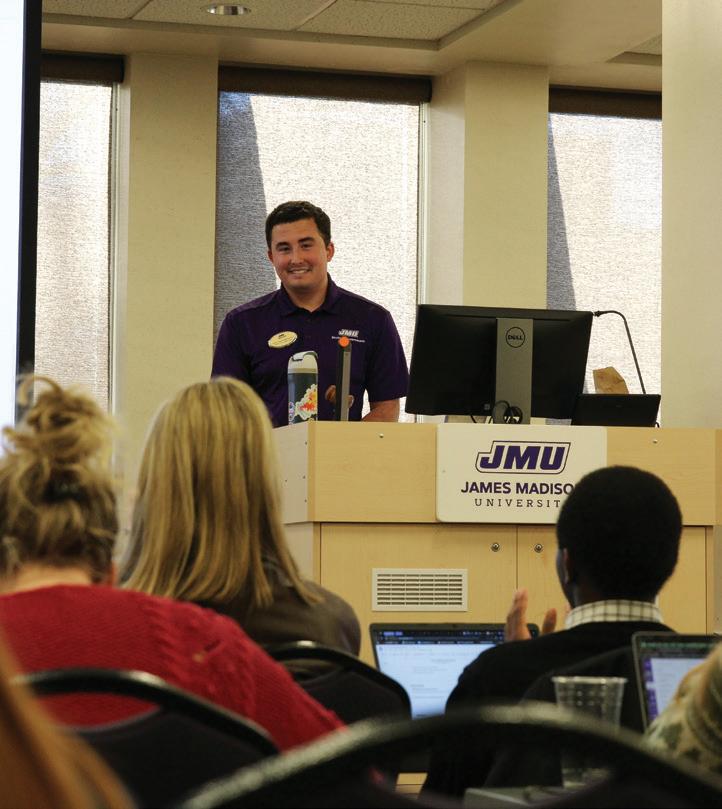
SGA elections are through March 31. Jack Barbour / The Breeze

STUDENT DAY






O r d e r t o d a y

r e
r r i t
N o w s e r v i n g b r e a k f a s t 7 a m - 1 0 a m


EDITORS EMAIL
Isabel Lewis & Bella Arist

Roots Natural Kitchen opens in Harrisonburg
By SHISHIRA NAKKA
The Breeze
Harrisonburg added a new restaurant to its collection. Roots Natural Kitchen — a restaurant focused on making natural, nutritious food accessible and fun to all — celebrated its grand opening this month.
“This will feel like a hometown Harrisonburg restaurant,” Roots CEO Henry Borgeson said.
“It’s Harrisonburg’s Roots, and I’m [hyped] for it to become that,” Borgeson said.
Its mission is “to empower people through radical accessibility to natural food,” according to its website.
“Roots is for everyone, whether you’re watching a Netflix marathon or running a real one,” according to its website.
Its menu is diverse, catering to a wide range of palettes. Its popular items include “El Jefe,” Spanish for “the boss,” the Pesto Caesar and the Balboa — all customizable bowls.
Customers who attended the ribboncutting received free Roots sweatshirts and were encouraged to advertise the opportunity to secure merchandise to various classes on campus.
After spring break, Roots Natural Kitchen plans to hand out merchandise all week.
The Harrisonburg location on East Market Street is its first drive-thru. Roots also offers dine-in, take-out and delivery.
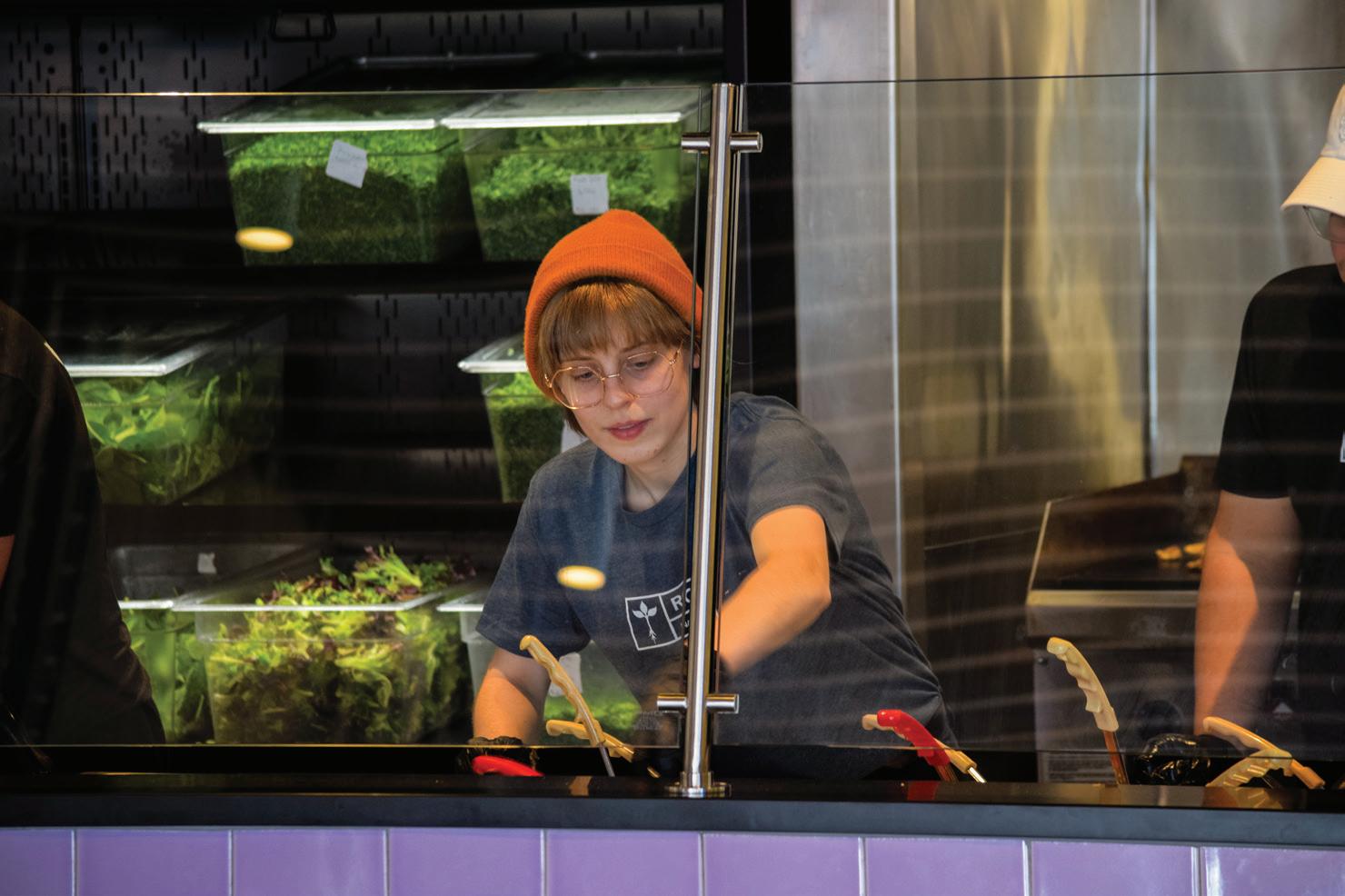
“We’re not trying to create some new pattern,” Larissa Caballero, the director of marketing and advertising for Roots, said. “You’re already driving by [Roots] to and from all your activities, and this fits right in.”
JMU isn’t the first college campus it has established a presence on. Schools such as UVA, VCU and Virginia Tech are home to various Roots locations, so students can enjoy bowls in several parts of Virginia.
Roots opened its first storefront in Charlottesville in 2015. Two UVA alumni founded the company, so it felt fitting for them to start something new in the place where they began. In 2016, they opened another location on the University of Delaware’s Newark campus. 2018 was a
year of significant accomplishments for the company — it launched an app to simplify ordering and a catering system.
Roots aims to do one thing: make a “natural lifestyle easy and supportable.” By offering healthy, fresh options for college students, you can make taking better care of your body more convenient and enjoyable. Lauren Keller contributed to this report.
CONTACT Shishira Nakka at nakkasl@ dukes.jmu.edu. For more coverage of JMU and Harrisonburg news, follow the news desk on X @TheBreezeJMU and on Instagram @BreezeJMU.

The original store was opened by two UVA alumni.
Roots Natural Kitchen opened a Harrisonburg location in early March, with others primarily in college towns like Charlottesville and Blacksburg. Photos by Ellie Campbell / The Breeze
Roots menu consists of unique “bowls” featuring greens, grains and proteins.




Roots Natural Kitchen has been an increasingly popular addition to the ‘Burg, with lines often going out the door.
“El Toro” is a limited-time menu item, featuring steak asada and chipotle lime dressing.
It’s located on East Market Street in Spotswood Valley Square.
Reviews praise the restaurant for a friendly, personable staff.
Review | ‘The Bride!’ movie starring Jessie Buckley and Christian Bale as monsters

By RYAN TIBBS contributing writer
Maggie Gyllenhaal’s new film, “The Bride!” reimagines the classic film monster as a feminist revolutionary. Played by recent Oscar-winner Jessie Buckley, The Bride is born when Frank (Christian Bale), a lonely and desperate Frankenstein’s monster, asks a scientist to help create him a partner.
Buckley and Bale’s performances were the film’s strongest and central parts. The two have a crazy and entertaining energy that pairs well, drawing the audience in and holding its attention.
The look of both characters is very memorable and eye-catching. Frank wears makeup that shows a broken nose, staples and scars across his face, making his skin look stretched. He wears an inside-out suit jacket that looks abnormal but fits his character very well.
The Bride has black ink covering the side of her face from a mishap during her reanimation. This, combined with her bright white hair and orange dress, makes the character stand out from all of the side characters and places her at the clear focal point of any shot that she’s in.
The film uses the line, “I would prefer not to,” which The Bride and other characters repeat throughout the film to highlight its themes of feminism and consent. This initially comes up in a scene where she and Frank go to a movie theater and witness a woman being assaulted. She tells her the line as advice on what to say to get the man to back off, which comes across as strange, given that she had already made her disinterest in him clear.
This wasn’t the only time the film placed emphasis on a piece of dialogue, and not the only time it came off a little clunky. During a scene where police
surround The Bride and Frank, The Bride, appearing to be caught, begins to rattle off words and phrases that begin with “brain.” Most of them at least sound like normal phrases until she says, “brain attack.” It was the only line in her screaming that sounded out of place. In the following scene, it becomes clear that this phrase was put into the script to
serve as a catchphrase for her rebellion. The unnatural sound of some of the dialogue like this took me out of the film at times. Instead of becoming more invested in the characters and story, I was questioning the filmmaker’s decision.



Reading impacts student health
By ALYSSA MILLER The Breeze
Have you ever considered how your brain needs a workout too? Reading can be a powerful way to exercise your mind. While most college students aim to succeed academically, reading outside of assigned coursework can improve academic performance and reduce stress.
Taylor Hicks of Grand Valley State University says that reading helps students perform better in school by expanding their vocabulary, improving their writing skills and sharpening their critical thinking.
Think about how much time you spend on your phone each day, or even pull up your screen time. Social media and phones can shorten attention spans, but reading helps counteract this by requiring sustained attention and concentration. Additionally, reading also increases your engagement with the long, assigned readings often required of your courses.
An article published in SAGE Journals argues that both fiction and nonfiction broaden the mind and encourage critical thinking. Fiction can provide a deeper insight into the world, and nonfiction is valued for its credibility and clarity. Reading can also improve emotional intelligence by exposing you to different experiences, strengthening your ability to connect with others.
According to Psychology Today, reading is a healthy way to reduce stress and anxiety because it provides an immersive distraction that promotes relaxation. Immersing yourself in a story can provide a mental break from academic stress.
If you think of reading as a stress-inducing activity, you may only associate reading with difficult required schoolwork. However, it’s important to not neglect the variety of genres you can explore that can help change your mindset surrounding reading.
Finding the time to sit down and read can be hard, but audiobooks may be a great alternative. They allow you to experience books while completing daily tasks, and still provide cognitive benefits and relaxation.
see THE BRIDE!, page 14
Julia Tanner / The Breeze
Summer Solis / The Breeze


The rest of the film contains similarly confusing elements that didn’t feel fully thought out. The inclusion of Mary Shelley as a character within the film could’ve led to a more substantive plotline or theme about creation, both in terms of creating life and fictional stories. Instead, this only serves to throw in some black-and-white shots of Buckley talking to the camera.
A similarly unnecessary storyline follows Detective Wiles (Peter Sarsgaard) and Myrna Malloy (Penélope Cruz) as they track the two monsters across various cities. This storyline serves two purposes: It attempts to add more to The Bride’s backstory and builds upon the themes of feminism with Cruz’s character
becoming a female detective in a maledominated field.
The issues with this storyline start because the feminist theme is already fully built into the story through The Bride and her journey. Additionally, the Wiles and Malloy scenes don’t add much to The Bride’s backstory in a way that was interesting or adds depth to her character. They talk about Wiles having a connection to her in her past life, but this never develops into anything in The Bride’s character or even Wiles’s own character and doesn’t help her to remember her past life at a deeper level.
Jake Gyllenhaal, Maggie Gyllenhaal’s younger brother, also plays the role of celebrity Ronnie Reed in the film. He’s a matinee idol that Frank feels a special
connection to, inspiring him to pick specific destinations along the characters’ trip. Gyllenhaal’s performance didn’t stand out enough to make the audience feel anything for him. The way he was incorporated into the plot feels easily replaceable and unnecessary to the main points of the story.
The most confusing moment in the film’s script comes at a point where Frank and The Bride perform “Puttin’ on the Ritz.” This is done as an homage to the 1974 movie “Young Frankenstein.” The scene plays out strangely once you realize what the film is doing. “The Bride!” is meant to be a punk feminist film, but why is there an homage to a 52-year-old Mel Brooks parody film?
The film concludes with a shootout at the lab where The Bride was created. The entire
sequence feels very anticlimactic given how the film was built up. It left me expecting something more that never came.
Overall, “The Bride!” is a messy story carried by its intriguing and attention-grabbing performances. While I’m not going to recommend anyone rush to theaters to see it, I would say it’s worth the time, if it interests you.
CONTACT Ryan Tibbs at tibbsra@ dukes.jmu.edu. For more on the culture, arts and lifestyle of the JMU and Harrisonburg communities, follow the culture desk on X @TheBreezeJMU and Instagram @BreezeJMU.

From THE BRIDE! , page 12
Julia Tanner / The Breeze
Review | ‘Scream 7’ released, mixed reviews from audience
By AUDREY FLETCHER
The Breeze
Editor’s note: This review contains spoilers. Read at your own risk.
The stakes for the newest sequel in one of horror’s most beloved franchises were impossibly high — dealing with behind-thescenes drama, yet another change in main characters and a fractured timeline.
There are few franchises in the horror movie industry that remain relevant after three decades. With the release of the latest installment in the series, “Scream 7,” the question is not wheather the infamous killer Ghostface continues to scare audiences, but if the franchise has continued to subvert their expectations and push the boundaries of horror films.
In short, what should’ve felt like a strong continuation with the return of actor Neve Campbell as legacy character Sidney Prescott feels more like a hollow, “nostalgia bait” imitation of the original that lacks the originality which made the franchise popular in the first place.
Going into the theatre, theatergoers’ expectations were relatively high, coming off the moderate success of the previous installment, “Scream VI,” which was released in 2023, hoping it would continue the momentum of its popularity that’s kept it in mainstream media the past few years.
However, some were more skeptical, and for good reason, as the main characters from the past two installments didn’t return. The lack of Melissa Barrera and Jenna Ortega’s sister dynamic of Samantha and Tara Carpenter left a major gap, especially since it was clear they were setting up Barrera’s character as the franchise’s future, framing her as the next Sidney.
Rather than addressing the Carpenter sisters’ lack of presence, the film awkwardly skates around their absence and instead focuses its attention on the true main character of the entire series, Sidney. While Campbell’s return was meant to be a notable comeback that brought the series full circle, it seemed more like a forced attempt to “unretire” by bringing in familiar faces.
The plot itself focuses heavily on the use of modern technology, such as AI and deepfakes, in an attempt to create commentary. However, it fell flat, seeming more like a gimmick and leaving the viewers with no real payoff.
Read more online at breezejmu.org
CONTACT Audrey Fletcher at fletc2am@ dukes.jmu.edu. For more on the culture, arts, and lifestyle of the JMU and Harrisonburg communities, follow the culture desk on X @TheBreezeJMU and on Instagram @BreezeJMU.

Scream 7
•
2026 SPRING HARNESS RACING







Julia Tanner / The Breeze
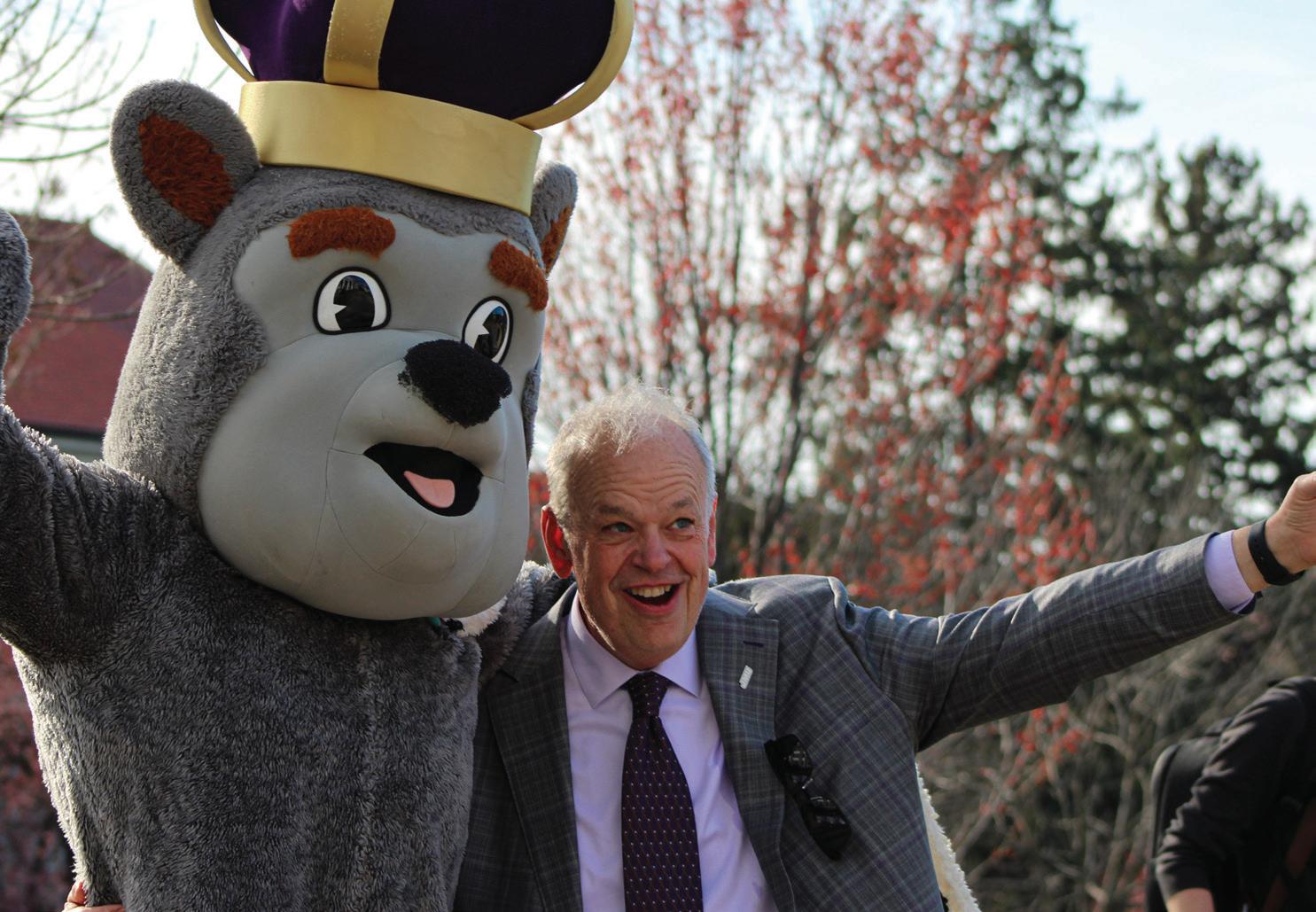
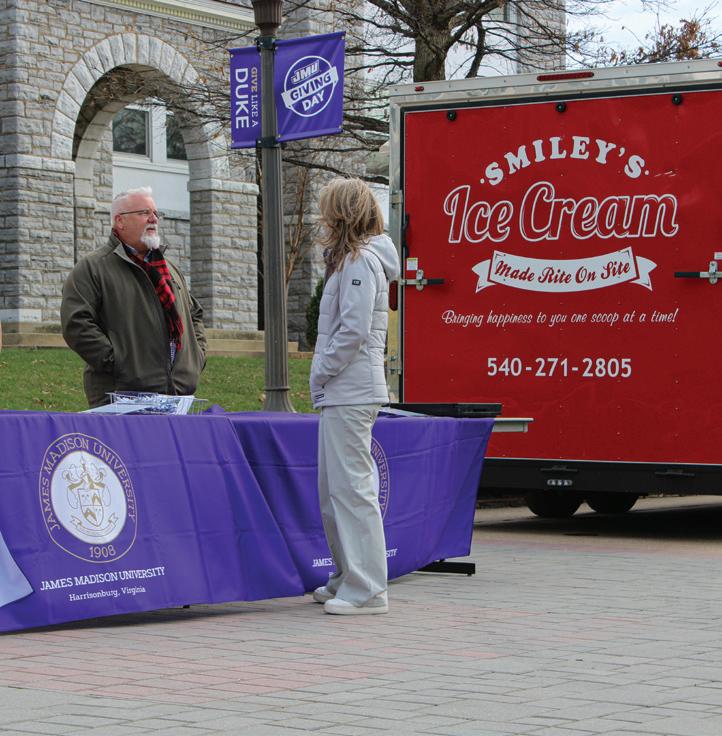
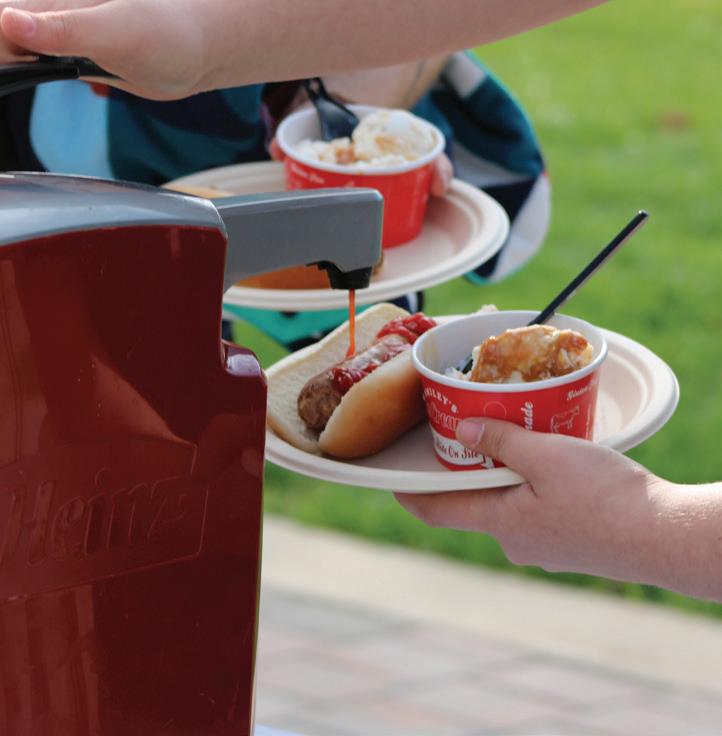
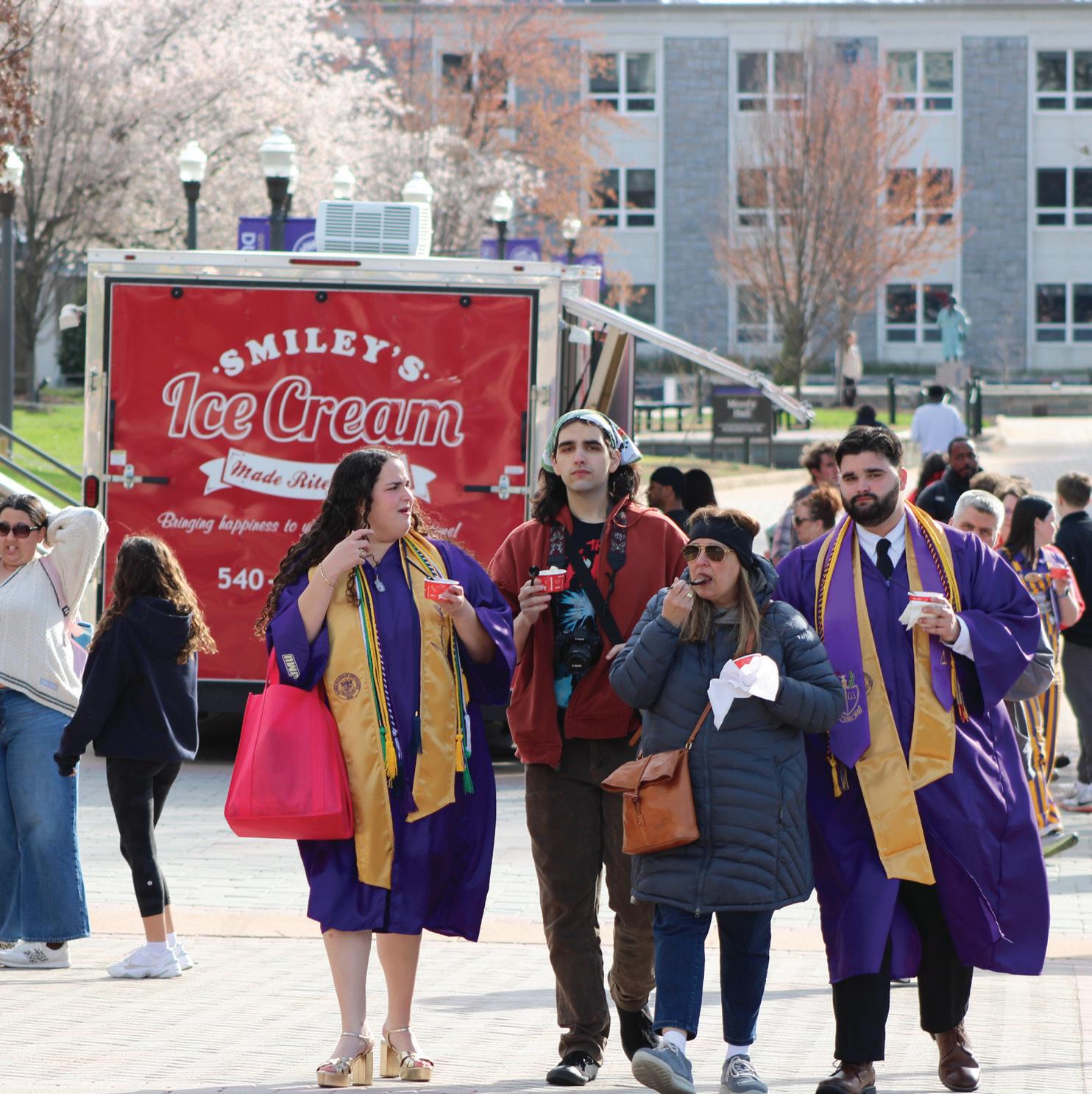
Dukes Spring Forward
Office of the President and SGA host Quad gathering to celebrate upcoming SGA election and JMU



INTERESTED IN BUSINESS AND SALES? TURN YOUR DRIVE INTO SUCCESS.
MASSANUTTEN IS LOOKING FOR ENERGETIC, GOAL-ORIENTED INDIVIDUALS PASSIONATE ABOUT MAKING AN IMPACT.

University President Jim Schmidt celebrates ahead of his inauguration next week.
Photos by Derrick Echols
COLLEGE IS HARD COACHING WORKS


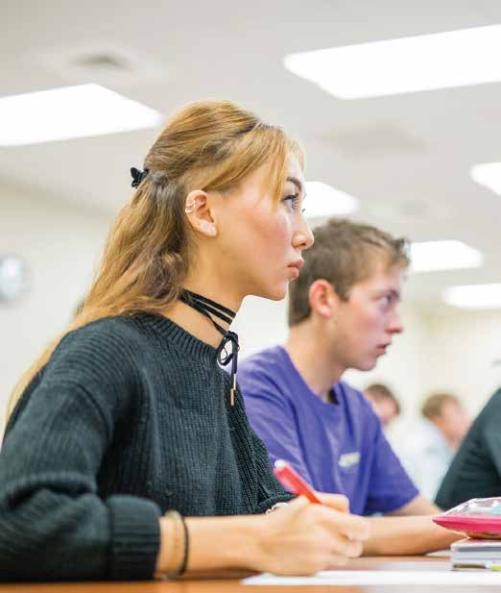
At JMU’s Learning Centers, Peer Academic Coaching helps students turn goals into reality. Just like elite athletes work with coaches to level up, JMU students partner with trained peer coaches to sharpen their focus, build powerful habits, and stay on track academically and personally
Coaching works! Students keep coming back because they feel seen, supported, and equipped to succeed not just in class, but in life
With your gift, you’re investing in students becoming their best selves.
Please visit the JMU Learning Centers website for more information and to make a donation. Give back to the learning center today!



EDITORS Preston Comer & Tommy Gurganous EMAIL breezesports@gmail.com
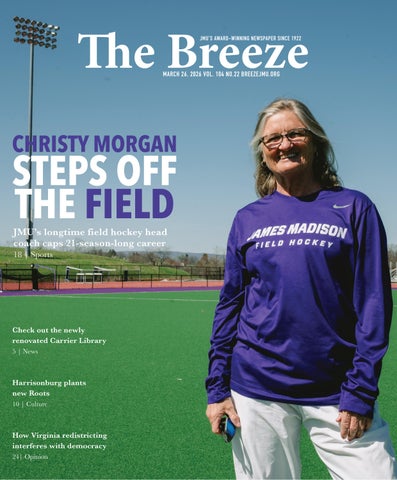
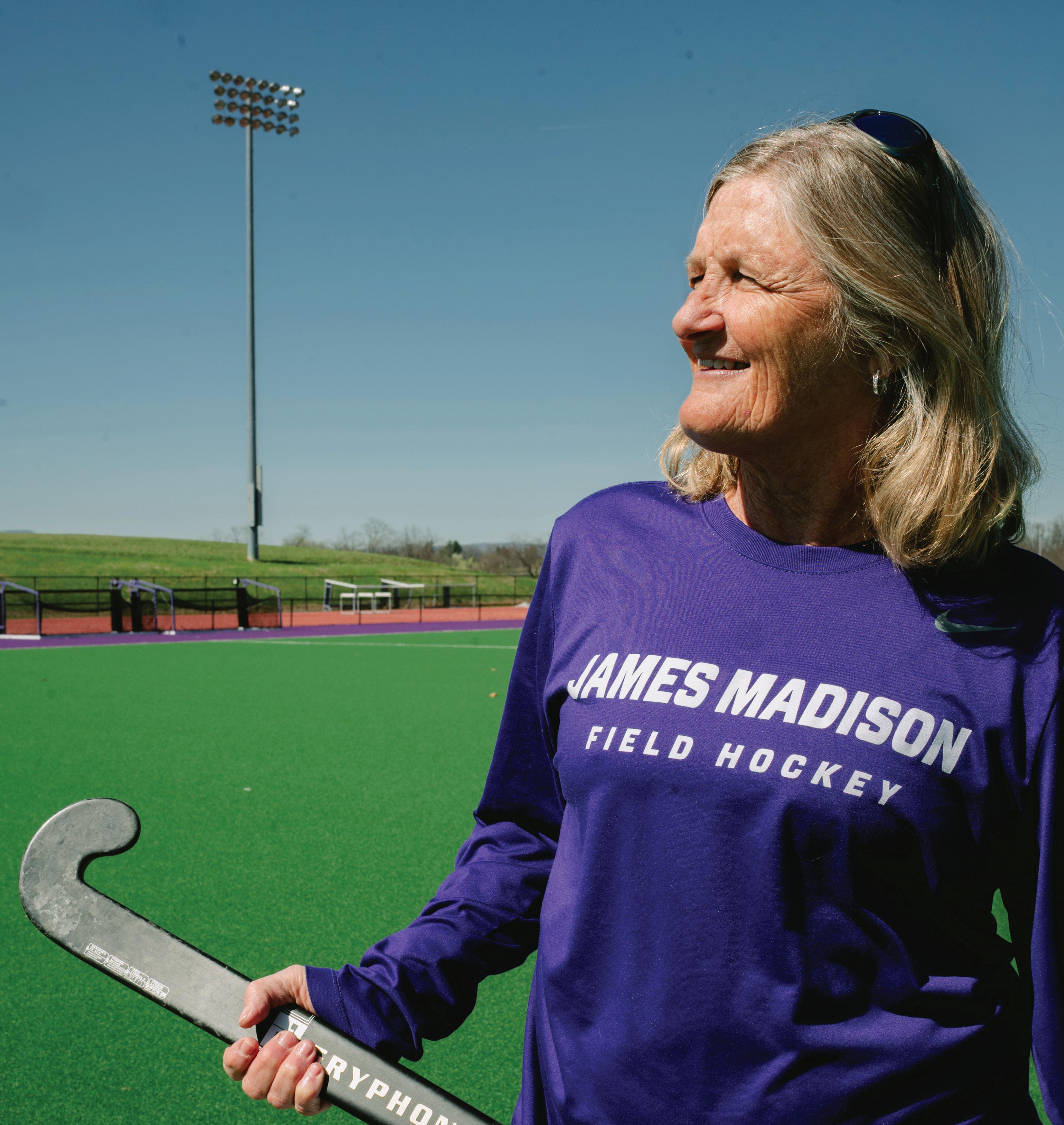
‘She’s an awesome human being’ JMU field hockey head coach Christy Morgan steps down after 21 seasons
By LIBBY MERCER The Breeze
Now-retired JMU field hockey head coach Christy Morgan had a saying that “you don’t just put culture on the shelf,” a statement that represents the legacy she leaves JMU with after 21 seasons.
“Coach did a great job with [creating] culture, so she is someone who really appreciates humans and characteristics, and not just about hockey or just about results,” JMU assistant coach Ethan Larsen said. “It’s people who really enjoy having interpersonal connections with people and figuring out stuff together and being a little bit more collaborative.”
Culture was at the heart of her coaching philosophy, where she focused most on the process of becoming great.
“The process every day of really seeing the changes of character in the people that you’re coaching and seeing the connections that are made because of the work that you do to create an amazing culture, that’s probably the greatest blessing in my career,” Morgan said.
Morgan is stepping down after breaking her back last year, and is now deciding it’s time to take care of herself.
“I was always putting the team first and the experience for them first,” Morgan said. “I really didn’t really take the time that I needed to heal my body so that I could give them everything I could give them. So it was time.”
Before joining the Dukes as head coach in 1991, Morgan spent two years as an assistant coach at the University of Maryland. When the job opened up, she wanted to “give it a go,” calling herself “really fortunate” for receiving the offer.
Prior to those jobs, Morgan amassed a career as a three-time All-American athlete winning consecutive field hockey championships with ODU. She earned a spot on the 1988 Olympic team, which translated to her goal of becoming a head coach.
“Once I made the Olympic team in 1988, I was clear that I had such a love
for the sport and such a love for growing people,” Morgan said. “Coaching fit with the things that I was good at and the things that I was passionate about.”
Three seasons into her tenure, Morgan led JMU to its first and only national title.
Eileen Sutton — formerly Eileen Arnaldo — was a senior forward on the 1994 title team and attributed the team’s success to Morgan’s motivation and belief.
“We never ever thought that was something we could be a part of,” Sutton said. “It really comes from [Morgan] being so motivating and really digging into us as players and helping build our confidence.”
Sutton said Morgan is an “amazing motivator,” which can be seen in Morgan’s legacy.
“She cared and she gave everything she had to JMU field hockey,” Sutton said. “I think that the athletes who really knew Christy and really believed in her philosophy left JMU knowing that they got way more out of that than winning.”
After the 1999 season, Morgan left JMU due to a health issue but returned in 2014 after recovering.
“I wanted my baby back because I just believed in this program so much,” Morgan said. “I was really fortunate to get the job back in 2014 and then live my dream again for the second time at JMU.”
Many of Morgan’s colleagues and alumni reached out after her retirement announcement, which Morgan called an “outpouring of greatness and appreciation and gratitude.”
“I had to check myself to make sure I had a pulse, because I felt like I died,” Morgan said. “Everybody [said] all these great things, thank god I didn’t die. I got to appreciate the fact that people really do care.”
Among these messages was a statement from JMU women’s basketball head coach Sean O’Regan during his press conference on Feb. 21 about Morgan’s impact on the entire community, reaching far beyond just the field hockey team.
see MORGAN, page 19
Landon Shackelford / The Breeze
from MORGAN, page 18
“When I finally got the head coach job, she was so warm to me, so inviting,” O’Regan said. “I think we all hope for that as coaches when it’s all said and done. Impacting your immediate players, your coaching staff, all that stuff, but [Morgan reached] the whole community — she’s an awesome human being.”
The coaches are “good friends,” Morgan said, and she noted that it’s nice to have someone in a similar role supporting you.
“We go through the same thing as coaches,” Morgan said. “You’re challenged in different ways, and it’s just nice to know that other people who have been through that challenge and are going through different challenges and are there for you. Sometimes, as a coach, you feel like you’re on an island, and I think we have a good relationship. And that was just really nice of him to give me a shout-out, and I feel the same about him.”
Morgan also maintains relationships with her alumnae, which allows the players to have a lasting connection to JMU, Larsen said.
“I know for a fact that since I’ve been here, [she’s] probably been to about four or five weddings from past players,” he said. “She not only performed very well on the field, but is still in touch with a lot of these people, and a lot of these [alumnae] are still in touch with the school because of her.”
Morgan plans on supporting the team even after retiring and letting another head coach take the reins.
“I’m going to support my old team and support JMU, but from afar,” Morgan said. “I think it’s somebody else’s turn to take over the program, and I will support all my players and all my past players, but it’ll just look different. I will continue to be in their lives in a positive way.”
As the program looks to fill the coaching spot Morgan leaves, she hopes someone will look out for the players she recruited.
“My prayer is that they bring someone in here who could be an amazing role model for the amazing people that we have,” Morgan said. “The people that I bring into JMU have big hearts, and they work really, really hard, and those big hearts need to be cared for.”
CONTACT Libby Mercer at mercerlm@dukes.jmu.edu. For more field hockey coverage, follow the sports desk on X and Instagram @TheBreezeSports.
Alumnus and former athlete Kevin Morley makes his mark on the 2026 Winter Olympics
By PRESTON COMER
The Breeze
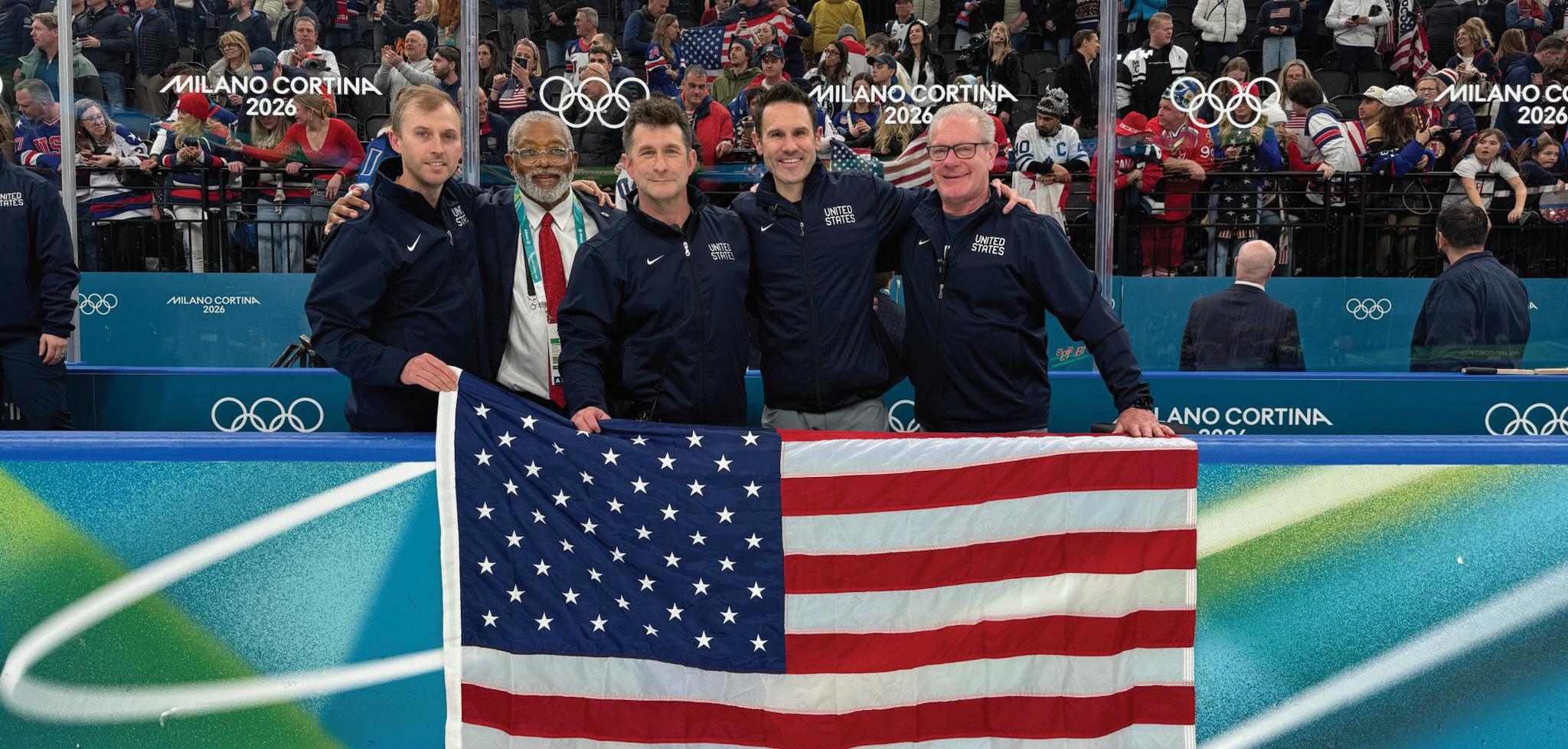
The United States and Canada were tied 1-1 in overtime of the men’s hockey gold-medal game on Feb. 22. One of the staff members for the U.S. was Kevin Morley (’99), a former JMU swimmer.
With a gold medal on the line, the New Jersey Devils’ center Jack Hughes shot the U.S.’s game-winning goal. The gold medal is the team’s second in history, winning its last in 1980’s “Miracle on Ice” over the Soviet Union. Morley said watching the win was “surreal.”
“I’m generally not at a loss for words,” Morley said, “this is one time when I don’t have a great way to encapsulate what it meant and what it felt like.”
Morley was on the U.S. hockey team’s staff during the Four Nations Tournament in 2025. The general manager for the team, Bill Guerin, put together the staff to see if it’d also work for the Olympics.
Guerin kept the same staff for the Olympics, and Morley was on his way to Italy.
Morley never played hockey growing up in Connecticut, instead he swam. He was scouted by Division I and II schools to swim, but he also wanted to look for an education path in sports medicine.
“I just wanted to get out of New England,” Morley said. “I wanted a change, JMU was perfect.”
Morley said both the sports medicine and swimming programs at JMU were “really strong,” which made it the “perfect fit.”
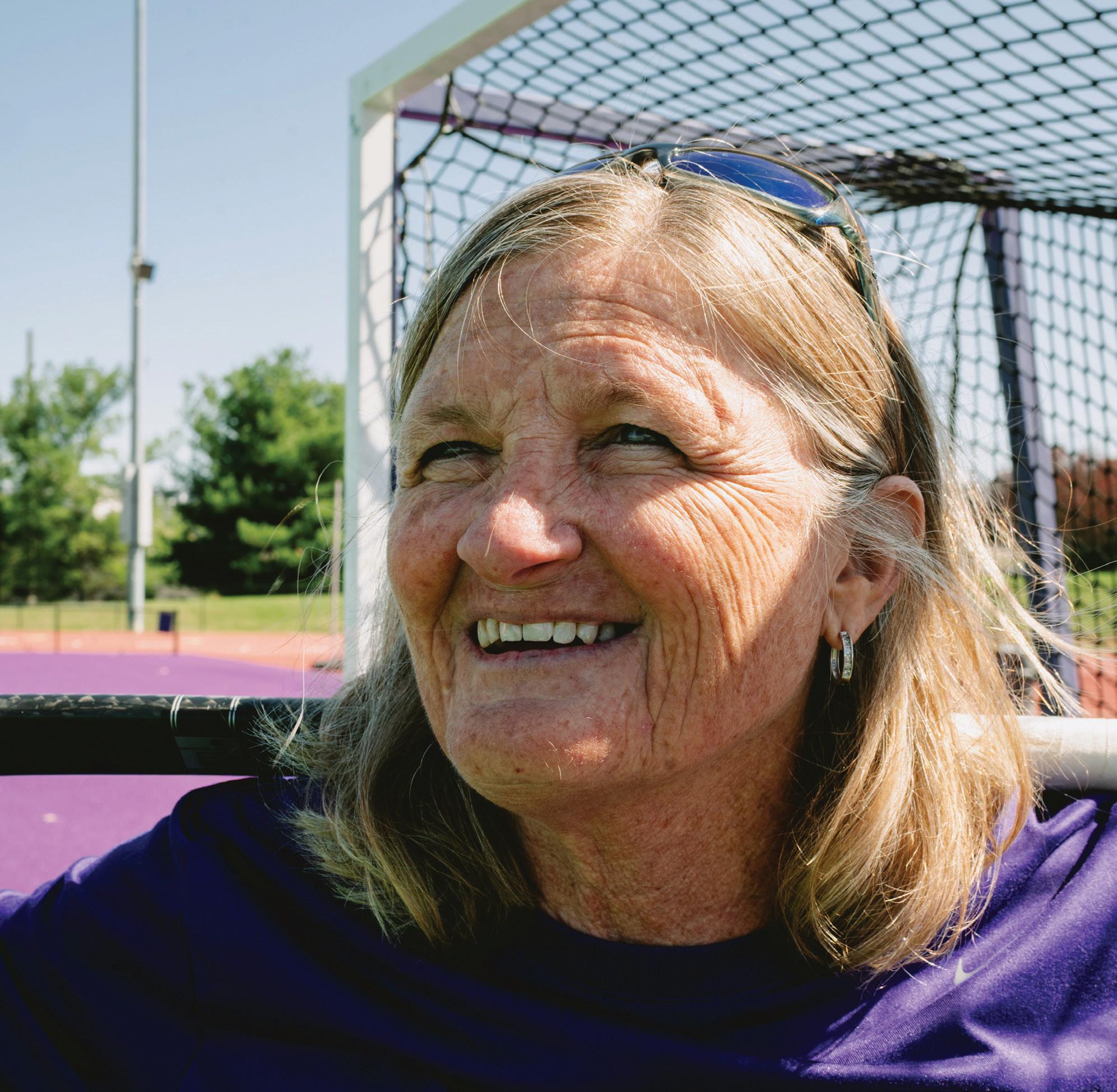
Field hockey head coach Christy Morgan led the Dukes to their only NCAA title in 1994. Landon Shackelford / The Breeze
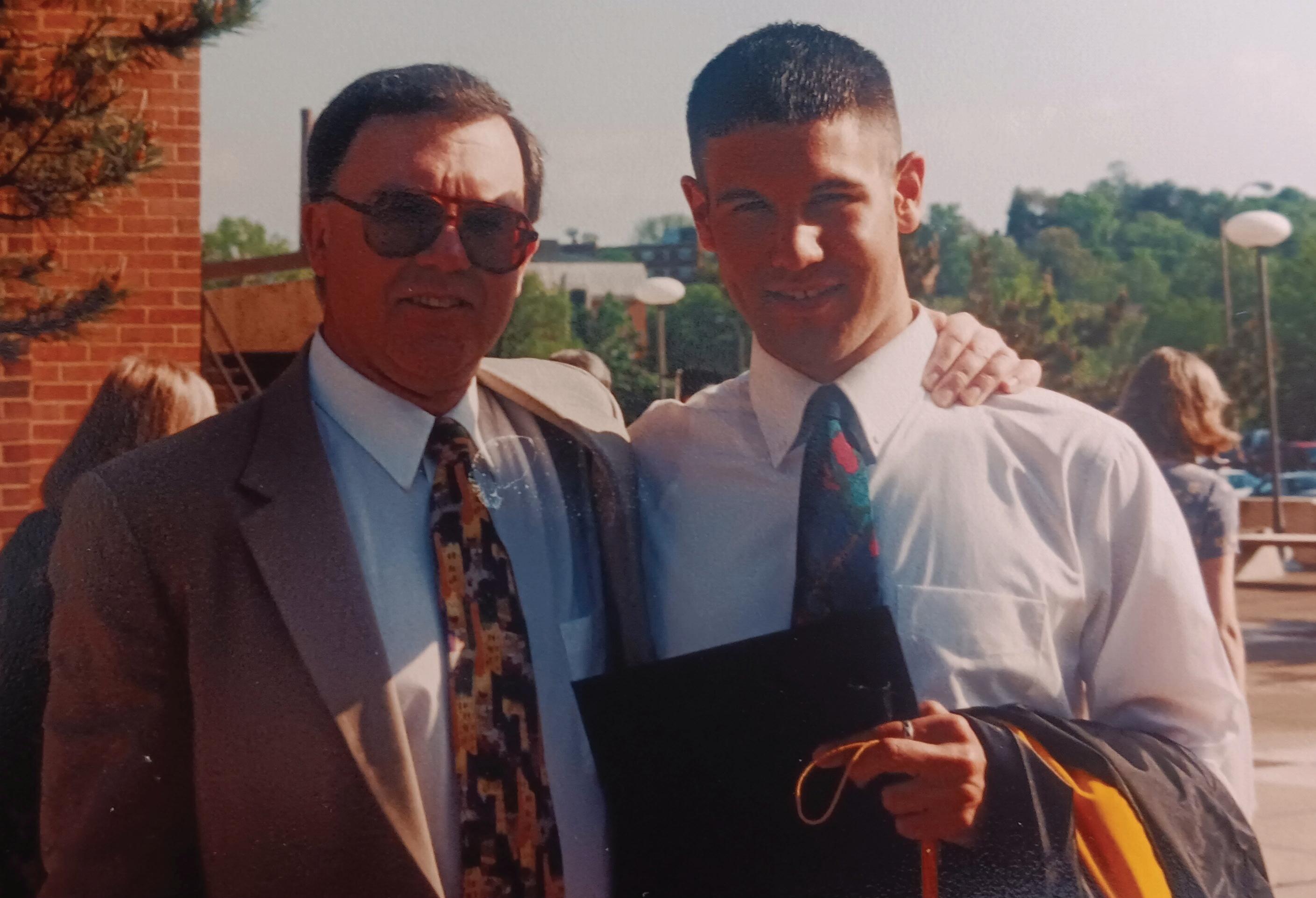
Kevin Morley graduated from JMU in 1999 from the athletic training program. Courtesy of Sherry Summers
from MORLEY, page 19
“I wasn’t Michael Phelps, I wasn’t going to swim forever, so I wanted the opportunity,” Morley said. “I was getting recruited to do it, so I knew I could do it.”
But, Morley knew he wouldn’t be able to swim for his entire college career. He said the clinical side of his academics needed “heavy commitment,” so he decided to focus on that full-time after two years.
Morley said many people enter his profession because they went through a sports injury. Morley didn’t, and sports medicine “was something that always interested” him, he said.
“I was involved in sports, I was interested in the anatomy and science and biomechanics side,” Morley said.
Morley was a student of former JMU associate athletic trainer Sherry Summers. Her path was similar to Morley’s — she was a former student athletic trainer for the university.
Summers said seeing one of her former students working for the Olympics was “exciting” and a “big honor.”
“That could excite present students and people in the field,” Summers said. “If you have a dream, go for it. You never know what opportunities might come your way.”
Summers said she knew doors would be open for Morley because of his “drive and willingness” in the athletic training program.
After graduating from JMU in 1999, Morley accepted a graduate assistantship at the University of Florida before earning his doctorate at Florida International University.
When Morley finished his education, he said he wanted something to do with his summer to make money. He started working camps for different sports “just to pay the bills.”
Morley eventually landed his first job with the University of Miami (Ohio)’s hockey team.
“The hockey thing just kind of happened, it wasn’t on purpose,” Morley said. “I never went to bed saying ‘I need to get to the NHL.’”
Morley broke into the NHL with the New Jersey Devils, which he spent 14 years with. His career in New Jersey overlapped with Hughes, who won the gold medal for U.S. men’s hockey.
Morley said he didn’t get too see much of Hughes until they reunited at Four Nations and the Olympics.
“Being able to spend some time together again was pretty awesome,” Morley said. “I’ve seen him grow up in that capacity, at least as an NHL player.”
Morley is now in his fifth season as the Nashville Predators’ head athletic trainer.
Read more online at breezejmu.org
CONTACT Preston Comer at breezesports@gmail.com. For more athletics coverage, follow the sports desk on X and Instagram @TheBreezeSports.
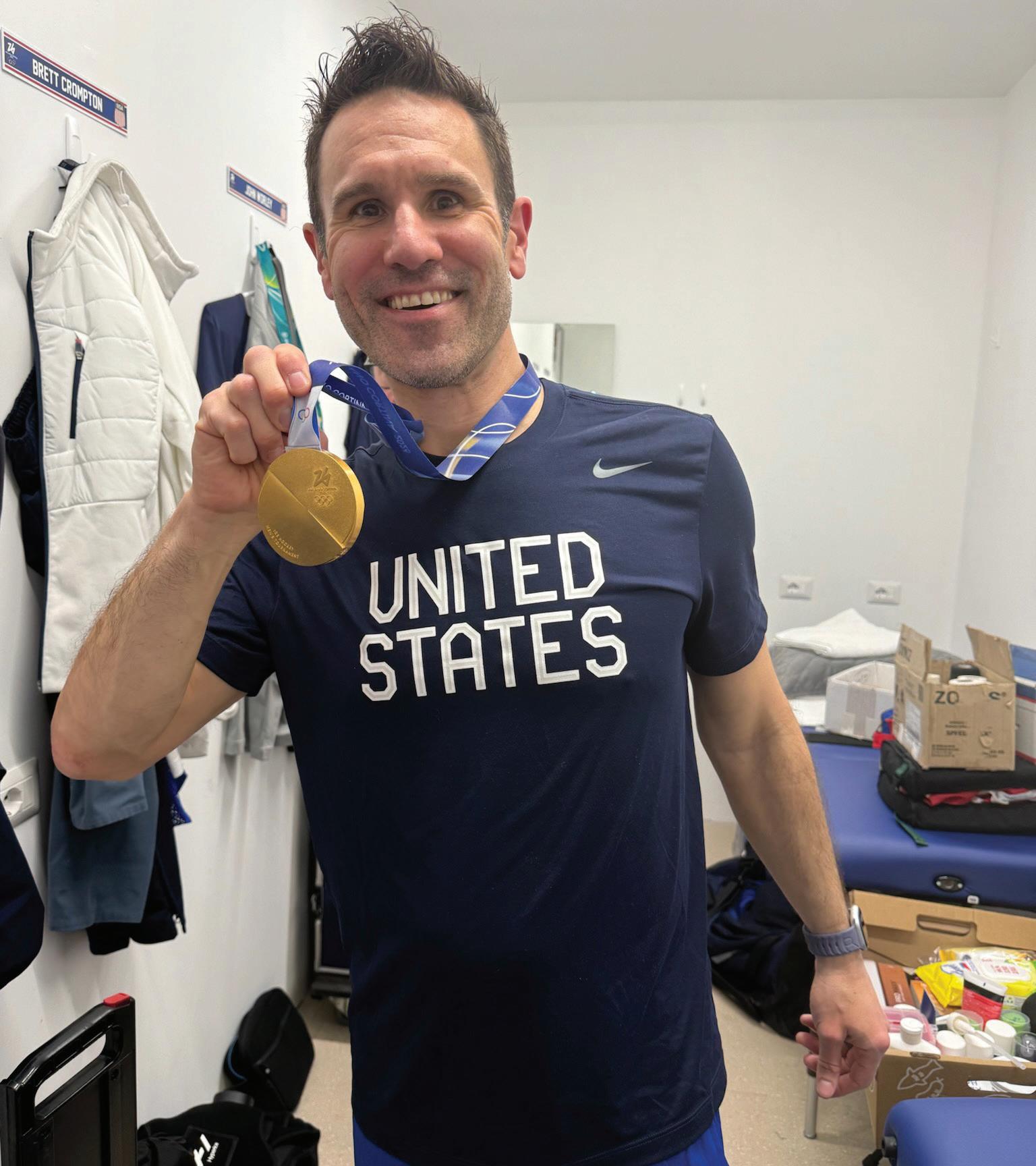
Morley posing with a gold medal at the 2026 Winter Olympics. Photos courtesy of Kevin Morley
Morley and other staff members of the U.S. men’s hockey team posing with the American flag at the 2026 Winter Olympics.
Infielder Kendra Lewis breaks out during first season with JMU softball
By MADI PERINI The Breeze
Within her first hour sitting with JMU softball’s coaches, infielder Kendra Lewis felt she had found exactly where she wanted to spend her junior season — it wasn’t the stereotypical statistics-based conversation she expected.
“It wasn’t about my season, [it] wasn’t about where I came from,” Lewis said. “[JMU head coach Loren LaPorte] asked about my family.”
The Iowa native began her collegiate career at Morehead State University in Kentucky. During her time as an Eagle, Lewis put up a .293 batting average, supported by 75 hits, 30 RBIs and nine home runs.
During her time thus far as a Duke, Lewis has produced at the plate. In just 27 games played, she’s recorded 26 hits and brought in 20 runs — seven of which were home runs — while maintaining a .464 batting average.
“Kendra is playing very confidently,” LaPorte said. “She just understands the game and doesn’t really let her emotions really dictate the next at bat — she learns.”
Lewis started the 2026 season playing third base, but she has been utilized at shortstop. LaPorte expressed that coaches “have to make sure” she’s a player who’s always in the lineup, which sometimes involves the switch between defensive positions.
“It’s just knowing the job and the position that you’re in,” Lewis said. “I’ve been playing this sport for so long, and you play these positions for so long — it kind of comes naturally.”
Before even committing to JMU out of the portal, Lewis had surgery last June to repair her knee, leaving her limited in fall practice.
“The coaches took a chance on me, and I think they understood the surgery I was getting, and knew I would be back in the spring,” Lewis said.
Even though Lewis said it was hard to “build new friendships” while dealing with her recovery, she found a friend in redshirt junior catcher Bella Henzler.
Henzler missed the 2025 season with an ACL tear and made her return to the field this spring, batting in the middle of the lineup alongside Lewis.
“Bella was a big impact,” Lewis said. “We didn’t have the same [injury] … but the mindset she was in during her whole recovery helped me.”
Though Lewis is new to JMU’s roster, LaPorte said she believes Lewis is someone other players can learn from.
“When she strikes out, she has a very mature conversation on what she feels like she could do better,” LaPorte said. “I wish [for] our team to adopt that, all 22 players, and learn from the mistakes.”
Lewis said she tries “not to overcomplicate everything,” and keeps her spirits high. This is something she looks to stress to her teammates.
“You can’t get too low on yourself in this sport,” Lewis said. “You are going to fail, and that’s just a given. You just have to learn from what you did before and take those adjustments to your next at-bat.”
Looking forward to the rest of the season and being kneedeep in Sun Belt play, Lewis wants her team to focus on their relationships.
“As a team, I want to have more of a bond," Lewis said. “Being able to support each other and [whoever’s] name gets called."
On the personal side, Lewis wants to stay consistent and “keep competing," she said.
“I feel great,” Lewis said. “It’s awesome.”
CONTACT Madi Perini at perinimr@dukes.jmu.edu. For more softball coverage, follow the sports desk on X and Instagram @TheBreezeSports.

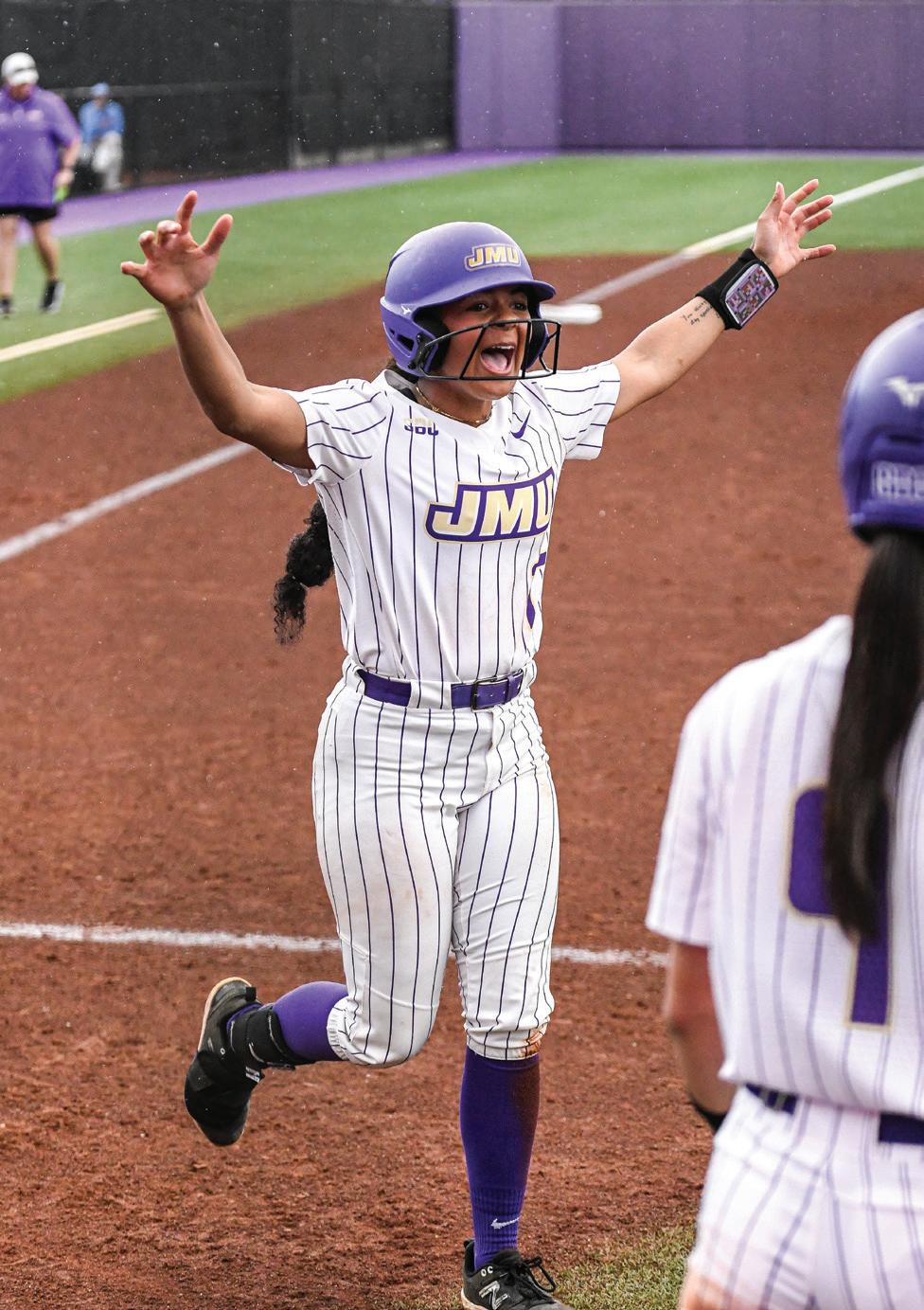

Lewis celebrates one of her seven home runs this season. Courtesy of JMU Athletics
The Breeze Sports’ weekly scoreboard
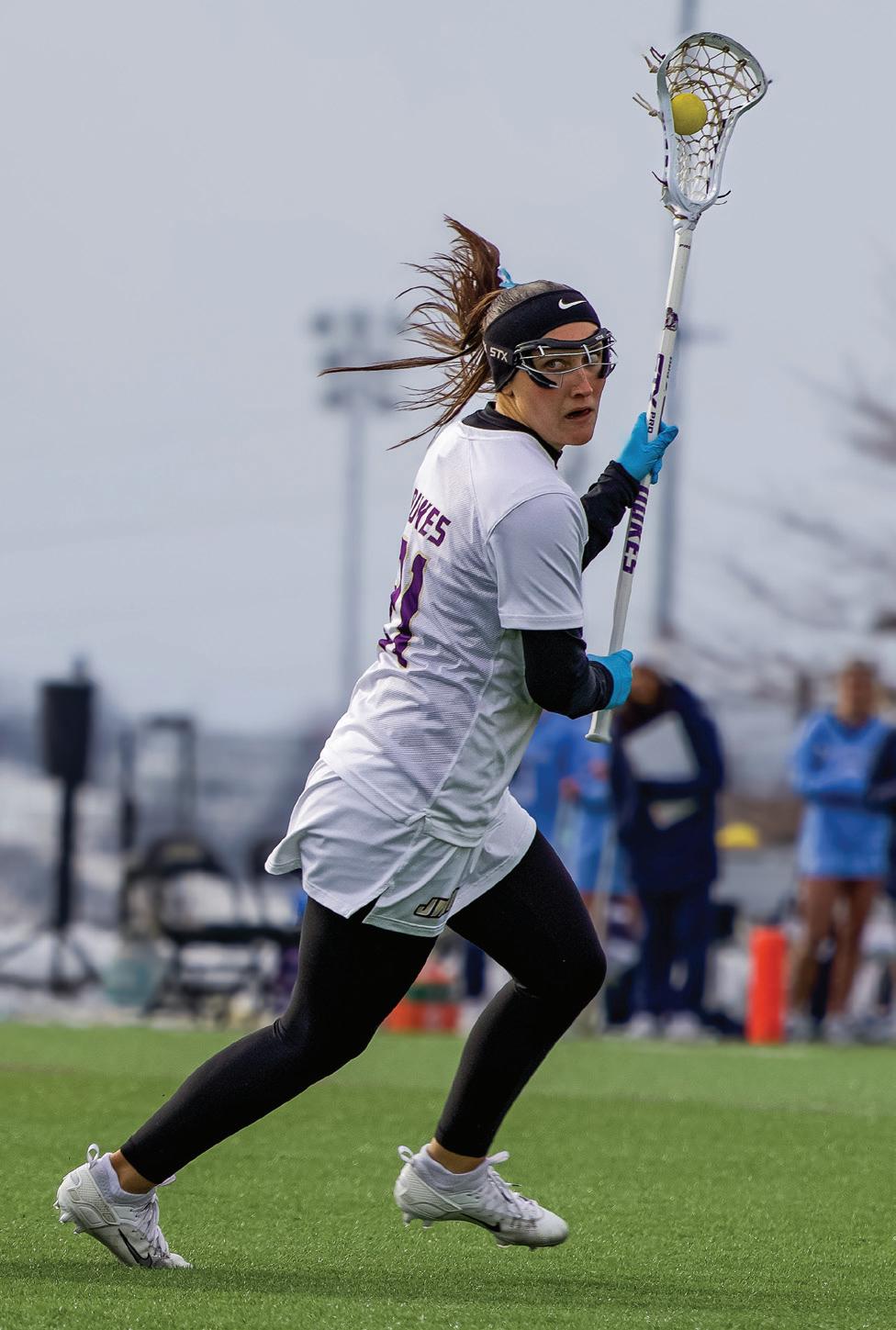


JMU lacrosse defeats No. 19 UVA, 11-10
JMU lacrosse beat in-state rival UVA. Eight Dukes scored a goal, and three scored two goals. The win marks JMU’s first victory over a ranked opponent this


season.
JMU softball drops to George Mason, 5-3
JMU softball lost its midweek matchup to in-state foe George Mason. Junior infielder Kendra Lewis hit two for two for the Dukes, with two doubles and a walk.
JMU baseball loses to Radford, 10-6
JMU baseball drops to 11-12 on the season after losing to the Highlanders. Senior infielder Jack Guerrero went one for four, with two RBIs for the Dukes.
Annabel Dewey / The Breeze
Jack O’Dea / The Breeze
Jack O’Dea / The Breeze

EAT DOMINO’S EAT DOMINO’S DUKES DUKES


Cali Gilmer EDITOR

Want to praise someone or get something off your chest? Darts & Pats is the place to do it. Submit your own at breezejmu.org.
A “thank-you-opinioneditor” pat for your story that led me to finding the love of my life a year ago.
From someone in love.
A “have-some-mercy” dart to professors who assigned work over spring break.
From a student who needed to relax at home.
Virginia’s plan to redistrict is immoral
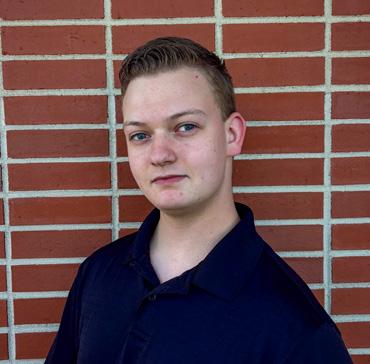
COLLIN EYLER contributing columnist
When I was younger and I emulated something a friend or older sibling did, my mom would say to me, “if so-and-so jumped off a bridge, would you also jump off a bridge?” While a bit extreme, it made an impression on 6-year-old me and taught a fundamental lesson in morality and choices: Every choice we make is an action that we choose to do independent of others; therefore, the correctness of our actions is entirely ours to bear. In this way, actions are inherently linked to justice. Because justice is something that appears most on an individual level, I will be arguing against Virginia Democrats’ push to gerrymander our beloved Commonwealth of Virginia.
The primary motivation behind state Democrats’ push to redistrict the Commonwealth is the idea that because other states are redistricting for partisan reasons, Virginia ought to gerrymander herself.
The long chain of events, beginning with the perceived gerrymandering in California
that caused a push in Texas — which led to redistricting within Virginia — is motivated by national partisan interests that trample on individual rights.
Fundamentally, drawing congressional lines such that a political party receives more votes than another is censorship, because it blatantly and intentionally denies the voice of one party’s people in Congress. This is a direct attack democracy, freedom and fairness within Virginia, no matter the justification.
Even while the U.S. Supreme Court has declined to make a ruling against gerrymandering for partisan gains (citing it as a legislative, not judicial, issue), Chief Justice John Roberts wrote in the majority opinion in Rucho et al. v. Common Cause et al. (2018) that, “Excessive partisanship in districting leads to results that reasonably seem unjust ... such gerrymandering is ‘incompatible with democratic principles.’”

choice in accordance with general ideas of right and wrong, independent from outside influence. To be clear, frustration on the part of Democrats in Virginia is understandable to an extent.
Read more online at breezejmu.org
Aside from this, the fact remains that the Commonwealth has a duty to make a
A “love-my-pets” pat to all the animal snuggles that healed me over spring break.
From someone who is emotionally bonded to their pets at home.
A “my-poor-car” dart to the the woman who ran into my car and lied about being at fault.
From a student who doesn’t have the money for a new car.
CONTACT Collin Eyler at eylercj@dukes. jmu.edu. For more editorials regarding the JMU and Harrisonburg communities, follow the opinion desk on X @TheBreezeJMU and on Instagram @BreezeJMU.
Artificial intelligence can be a force for good, but not under capitalism
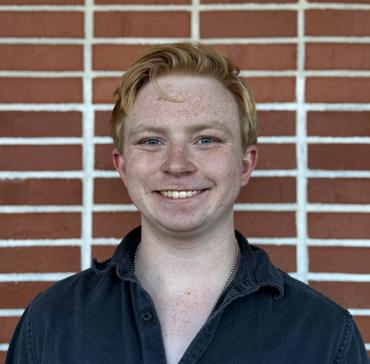
MATT GOWEL | contributing columnist
In March 1811, a group of skilled artisans — the Luddites — stormed factories and smashed knitting frames to pieces. They did this because the rising capitalist class — the people who owned the factories — had justified job cuts and pay decreases with appeals to the increased productive capacity that these new machines

provided. Then as now, these innovations in technology have only served to benefit a small and already wealthy minority, rather than lifting up society as a whole.
In the present day, technological advancements in artificial intelligence (AI) are leading to the same conclusions. People across all walks of life rightfully fear for their livelihoods. AI — a tool with the capacity to render whole sections of the workforce obsolete — is developing at a breakneck pace. Equally concerning, experts in AI have repeatedly sounded the alarm over unsafe practices that top AI firms employ.
People are right to fear for their jobs. While predictions regarding who exactly AI will replace vary wildly, the structure of our society ensures that it will be the maximum number of people possible. AI is an incredible tool; it has the capacity to solve some of humanity’s greatest problems. However, the economic interests of those who own it dictate that these benefits will stay squarely in their hands. Given this, it’s hard not to have sympathy for the Luddites.
How can we be sure that history will repeat itself? Simply put, the wealthy’s desire for more wealth persists. The most basic truth of capitalism is that each person will seek
to maximize their own wealth. There are obviously exceptions to this rule, but overall, it’s a universal truth.
Defenders of this system will swear up and down that human nature is greed. Why shouldn’t we believe them? Under capitalism, the wealthy have consistently ensured that more and more of the system’s productive outputs fall into their own hands. Wealth disparities between the rich and poor only increase. At the very least, some act as if concentrating wealth is inherent to their nature.
However, human nature isn’t universal. Rather, it’s defined by the social conditions of each individual’s life. A person who works for a living will do everything possible to raise their wages, while a person who owns productive forces will do everything possible to keep those same wages low, as doing so will ensure their own profits.
Read more online at breezejmu.org
CONTACT Matt Gowel at goweljm@dukes. jmu.edu. For more editorials regarding the JMU and Harrisonburg communities, follow the opinion desk on X @TheBreezeJMU and on Instagram @BreezeJMU.
Alya Giavis / The Breeze
Alya Giavis / The Breeze
Class of 2026 bids adieu
Graduating staff says goodbye to The Breeze

ELEANOR
SHAW Editor-in-Chief
Since joining The Breeze in 2022, I have long pondered how to start this. If you couldn’t tell, I never figured it out. This newspaper is the cornerstone of my college experience, and saying goodbye won’t feel real until I’m walking across that stage with a diploma.
For those who don’t know me, I’m a 21-year-old media arts and design major with a concentration in journalism plus a political communications minor. I attended my first Breeze pitch meeting for the news section a few hours after moving into Paul Jennings Hall my freshman year. I’ve now been involved for close to four years. I started as a news writer, switched to news editor, then finished my time as a Breezer with a two-year stint as editor-in-chief.
Four years is a good chunk of a 21-year-old’s life, and I’ve made good use of it. This organization has awarded me and several others valuable experience and priceless relationships. Its newsroom has seen so many different iterations of me, and I wouldn’t trade it for the world. I better know journalism, leadership and most importantly, myself. Now, here comes the traditionally long list of people I want to acknowledge for their help along this journey.
There’s no one more qualified to lead The Breeze than Hannah Kennedy. She has ample technical skill, of course. But I believe her best asset is her simultaneously gentle and assertive leadership. Hannah, I’m confident your time as editor-in-chief will be a renaissance. You have two incredible managing editors in Emma Notarnicola and Preston Comer. Make sure to lean on them and lead with them.
To Emma and Preston: Keep your foot on the gas. You’re a duo with dynamic ideas and were put in this position for a reason. Stay confident.
This past year, Hannah acted as managing editor alongside Sixuan Wu. Sixuan, you’re a secret spitfire, and an incredibly competent writer. I’ll always treasure our lunchtimes, long drives and snack swaps. I look forward to seeing you conquer London.
I’m so lucky to have led the most competent staff I could’ve ever asked for. Each of its members — Julia, Isa, Charlie, Kailey, Landon, Annabel, Tommy, Bella, Cali, Kayla, Joelle, Ella, Caroline and Gavin — made meaningful, lasting contributions. I could go into specifics about how much each of y’all mean to me, but I promised this column would be between 500 and 1,000 words. I promise I’ll give you plenty of hugs to make up for it.
Next year’s staff has a lot to live up to, but knowing who’s on it, I’m sure that won’t be much of an issue.
As a writer, section editor and editor-in-chief, I have seen many people contribute to The Breeze. I can’t overstate the importance of those people who consistently show up. My favorite moments as editor-in-chief came when writers showed improvement after months of hard work or when a contributor earned the rank of “staff writer.” It’s such a precious moment, and I’m so proud of each one of you. During the next few months, if you ever need a ride to stories, you know who to call!
The Breeze wouldn’t be itself without our guardian angels and unofficial/official faculty advisers: Brad Jenkins, Ryan Alessi, Roger Soenksen, Joe Hinshaw, Blake Shepherd, Ryan Parkhurst, Traci Zimmerman and Gwyneth Mellinger. You all rallied around me and the newsroom when we needed it
most. Your continued guidance has gotten us through a lot of bonkers situations.
Also, a special shoutout to Soenksen and Mellinger! Congratulations on finally graduating. I’m proud to be a fellow Class of 2026 member.
Thank you to my outside-of-work friends (especially Lizzie, Joey and Dodge) and my parents. You listened to hours upon hours of rambling about journalism and leadership. That in itself is a feat. You guys kept me sane and held me accountable. Last but not least, thank you to my first-ever news editor, Kasey Trapuzzano. You held down the news section by yourself. You believed in me. You taught me everything I know, and your influence has stuck with me all these years (I’m still using the InDesign hacks you taught me!). I can’t begin to articulate how much you meant to me as a young writer.
There are so many more people I’ve probably forgotten or ran out of space to thank, so if you’re reading this and thinking “hey, she didn’t mention me,” thank you!
I’ll close things out with a bit of advice for current and future Breezers: Find a cafe you love and do all your work in it. Ask your non-Breeze friends for advice on stories. Call your parents after a long day. Enforce your boundaries — “student” comes before “journalist” for a reason. Forgive and forget. Trust me, it’s never that deep.
Thank you for reading this and for reading The Breeze. You (as in the person reading this) make it possible for us to do what we do. I hope you pick up our next edition, out on stands every Thursday. Follow us on social media, while you’re at it. The Breeze and I have changed a lot together, and I’m so thrilled for our next chapters.
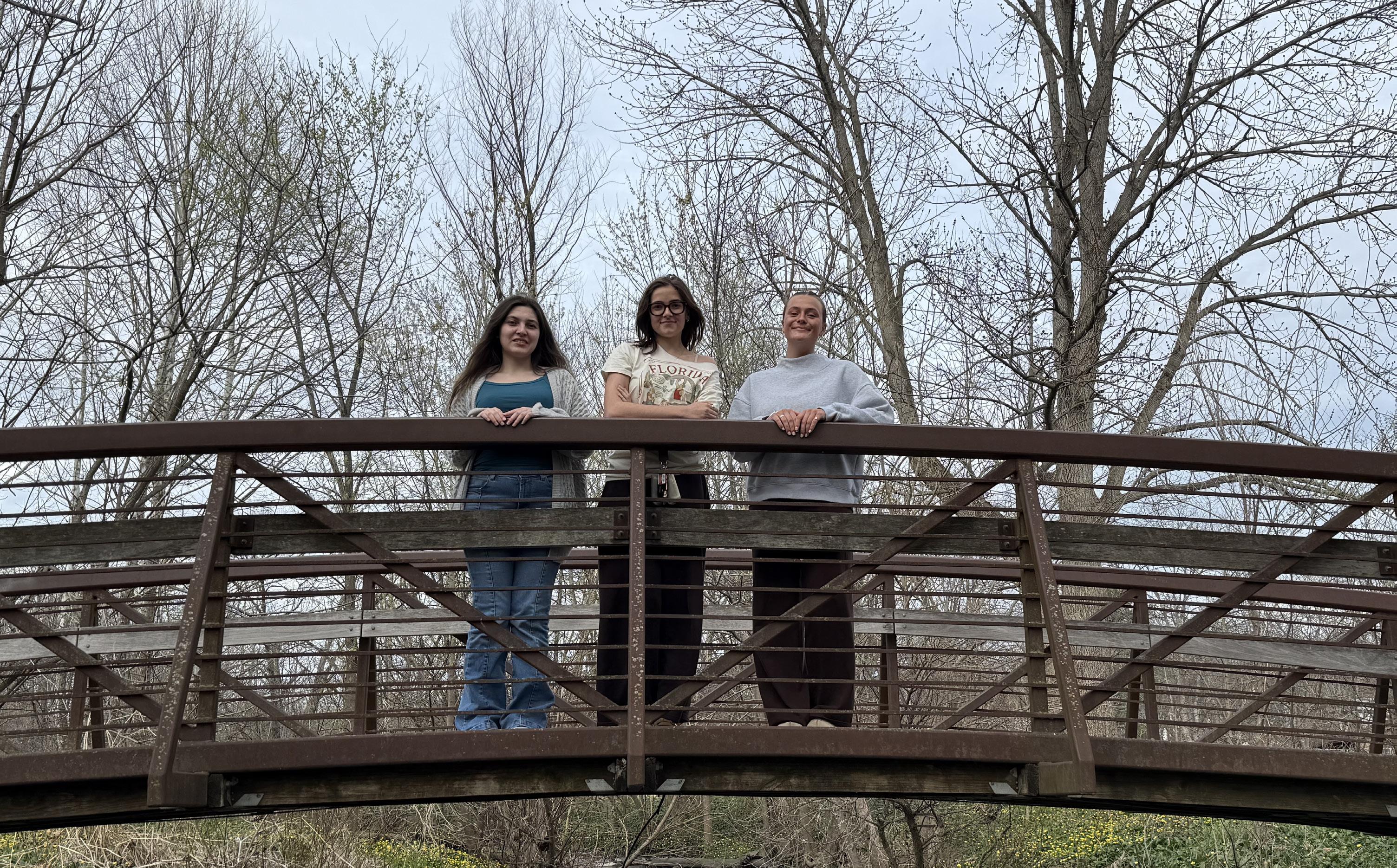
Pictured above (from left to right): Joelle McKenzie, Eleanor Shaw and Julia Tanner. Blake Shepherd / The Breeze

In my short Breeze career, I’ve written many articles. Some were a tear-inducing struggle to write. Some were short and easy. Some were long and passionate film reviews. Some were quick-turnaround event coverage articles. But through this collection of articles, I learned many useful skills, such as writing and interviewing.
When I first started working for The Breeze, I was only a news writer who had ambitions to become an editor for The Breeze and pursue journalism. Eventually, I made my way up to the position of copy editor. This role opened doors to ideas of potential career paths to pursue besides journalism. It has given me a passion for editing.
I didn’t even get the copy editor job the first time I applied. After this rejection, I continued writing for The Breeze and hoped someone on the editorial staff would either study
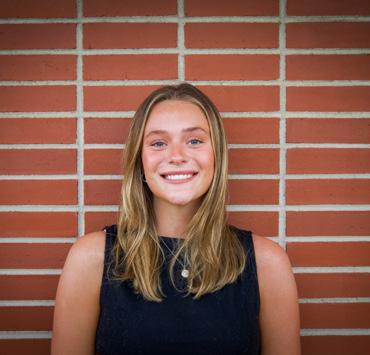
During my years here at JMU, I came in a completely different person than I will be leaving. I had no idea what I wanted or who I was when I got here. Starting as a biology major, I would say I have switched it up quite a lot since then.
Joining The Breeze was a decision that came to me later. I joined junior year looking for a way to expand my portfolio. Originally, I went to apply to The Breeze as a staff writer. When I discovered the graphical arts component, I was immediately intrigued. I drew graphics for a few months, then felt the urge for something more. That was when I made the decision to apply for Art Director. Thankfully, after receiving the job, I felt I knew exactly what I
abroad or quit. Coincidentally, this ended up happening, and two editors — a news editor and a copy editor — would be studying abroad that following spring semester. At the suggestion and recommendation of my then-news editor, Kat Mauser, I applied for the copy editor position a second time. The second time was, indeed, the charm; I got the job!
In my time being a copy editor for The Breeze, I’ve learned many things about copy editing. One thing’s for sure, it’s not always good to blindly follow the edits of others. A good copy editor thinks critically about the edits they’re making. It’s our job to fact-check information and think critically about our edits, after all. This is what will forever and always make copy editing, and editing in general, a human endeavor.
This reminds me of the fact that AP style doesn’t use Oxford commas — also called the serial comma, but there are some exceptions, which are when it could be confusing without one. This is one example in which human judgment is required in editing. It’s all about making copy make sense for the readers.
I’m going to miss these long Wednesdays in The Breeze
wanted and how I wanted to achieve it throughout the next year. Looking back to the start of my Breeze career, I’m so happy to see where I have grown. I’m way more confident as a creator, leader and visionary.
My absolute favorite part of this experience has been creating covers for the papers each week. Every week I’m given a task, concept or idea, and I take it and run with it. I feel that with the support from my teammates, I have made better versions of covers than what I could have done alone. For that, I’m proud.
This experience has been wonderful. Since joining as a graphic designer, it has truly made me realize my passion for life. Although I’m not a graphic design major, I have dedicated the past two years here at JMU towards advancing my skills in that area.

office, editing each story on paper and marking my edits with an erasable pen. I will definitely miss the inside jokes around the office between everyone. I will miss hearing all of the question of the day answers during our Monday Budget meetings, — which is where we plan out the paper for the week — and I would take notes, alternating weekly with my co-copy editor.
To Kayla and Luke:
I know you both will do great things as copy editors for The Breeze. I know firsthand that this job can get stressful or even overwhelming at times, but the work you’re doing is essential for the quality of this paper. My advice is to be on the lookout for those dumb quotation marks, besides fact-checking and editing for grammar, style and punctuation. And don’t forget about those en dashes pretending to be em dashes that writers may occasionally place in their articles. While the work of a copy editor may seem more behind the scenes compared to the other positions here, always remember that it never goes unnoticed.
To the ‘25-‘26 staff: Thank you all for being extremely welcoming, warm, funny people. All of you have great personalities, and I can’t wait to see what you do in the future! Thank you for this great year, you are all wonderful!
To Brad Jenkins: Thank you immensely for being such a great mentor and pushing me to be the best I can be. You have been such a supporting figure to me in the past two years, and I couldn’t be more grateful. I have been given multiple opportunities to expand my creative design experience since connecting myself with you as a mentor and professor. Thank you for helping me out, always!
And lastly, thank you to The Breeze itself. This has been a fantastic growth year for myself academically, creatively and socially. I’m much more confident leaving JMU now with this experience than I was when I first arrived here. Finding my passion for a career has helped me find who I am.
Read more farewells at breezejmu.org


JOELLE MCKENZIE Copy Editor
JULIA TANNER | Art Director
fan FAVORITEs



































The Breeze
Editorial Staff
EDITOR-IN-CHIEF Eleanor Shaw breezeeditor@gmail.com
NEWS EDITORS Emma Notarnicola & Charlie Bodenstein breezenews@gmail.com
COPY EDITORS Kayla Katounas & Joelle McKenzie breezecopy@gmail.com
PRINT MANAGING EDITOR Hannah Kennedy breezepress@gmail.com
CULTURE EDITORS Isabel Lewis & Bella Arist thebreezeculture@gmail.com
PHOTO EDITORS Landon Shackelford & Annabel Dewey breezephotography@gmail.com
ONLINE MANAGING EDITOR Sixuan Wu thebreezeweb@gmail.com
SPORTS EDITORS Preston Comer & Tommy Gurganous breezesports@gmail.com
AUDIENCE EDITORS Ella Warren & Madeline Buynak thebreezesocials@gmail.com

S.
St. Harrisonburg, VA 22801 PHONE: (540) 568-6127 FAX: (540) 568-7889
OPINION EDITOR Cali Gilmer breezeopinion@gmail.com
ART DIRECTOR Julia Tanner thebreezeartdirector@gmail.com
TV NEWS DIRECTOR Alexa Bonilla jmubreezetv@gmail.com

“Potion” by Djo
“SOS” by Rihanna
“Bright as Yellow” by The Innocence Mission
“Fly As Me.” by Silk Sonic
“Slide Away” by The Verve
“Cross Your Mind” by Shelly

“We Are Charlie Kirk” by Spalexma
“Paralyzer” by Finger Eleven

If you have any corrections, please contact the section editors via their designated email or the editor-in-chief at breezeeditor@gmail.com.

By Caroline Hand



MADISON MARKETPLACE
Madison Marketplace is open for business, and all text-only listings are FREE ! Post job listings, announcements, rentals and more using our online placement tool. Ads run two weeks online and in two print editions.
NOTICES
PT Professional
Wanted: P/T by Project. Professional Assistant. Critical Thinker. Familiar with para-legal or related, court filings, start up Llc, research & record keeping. Advertising our performance, Attend Local / County meetings and establish contacts within VA. Positive Energy Required ....... will not be boring assignments - promise! 767 645-6868 540 456-2668

Career Opportunity - Police Recruit - $10,000 HIRING INCENTIVE AVAILABLE TO NEW OFFICERS
The City of Harrisonburg is currently accepting applications for non-certified individuals interested in joining HPD, which offers a rewarding career plus an excellent benefits package, including enhanced hazardous duty through the Virginia Retirement System (VRS). $10,000 HIRING INCENTIVE AVAILABLE TO NEW OFFICERS* ... *Find out more/apply online: https:// www.harrisonburgva.gov/employment. EOE.
Join our team of compassionate therapists!
Planning a career in speech language therapy or behavior therapy? Join The Speech and Language Center as a behavior tech/RBT, BCBA, SLP, or SLPA. Now hiring half/full day RBTs (undergrads welcome to apply!), school/clinic SLP, and school SLPAs for the 2026-2027 year. Contact Kristin Wenger: kristin@slccares.com.
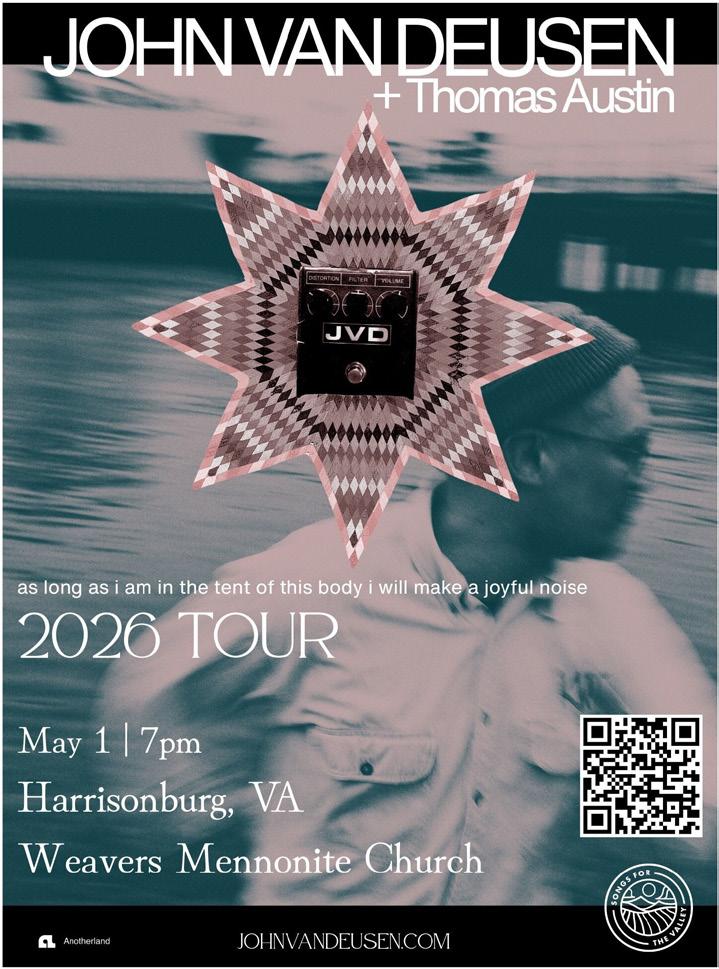
John Van Deusen - 2026 Tour
https://www.songsforvalley.org/


JOBS SERVICE
Career
Opportunity
- Public Works Planning Manager
Are you searching for your next career move with an organization that values your subject-matter expertise while leading strategic transportation planning efforts? If so, consider applying to become the Public Works Planning Manager with the City of Harrisonburg! Find out more/apply online: https:// www.harrisonburgva.gov/employment. EOE.





Storage Services
SUMMER STUDENT STORAGE SERVICES. Going home for the summer? Leave your belongings in storage We will pick them up, store them and deliver them to your new place in August. Call 540-810-1196, email MikePackett@aol. com or check out www.Adventures-NTravel.com for details. Local business and competitive.
SwiftHaul: Your Affordable Moving Solution for JMU Students!
Hey JMU Students! SwiftHaul Moving Services makes your move easy and affordable! From dorms to storage, apartments, or home, we’ve got you covered with the best prices and friendly, reliable service.
Contact us today at 434-665-1259 or maceevan03@gmail.com for a stressfree experience!

Abortion is at risk in Virginia if Donald Trump rigs the midterm elections.
MAKE YOUR PLAN TO VOTE AND DEFEND YOUR RIGHT TO ABORTION.
VOTE YES BY APRIL 21 ST
YOU CAN REGISTER AND VOTE ON ELECTION DAY WITH YOUR CAMPUS ADDRESS.
Remember to bring an acceptable form of ID with you (including student ID!) Paid for by Virginians for Fair Elections