





EDITORS Emma Notarnicola & Charlie Bodenstein EMAIL breezenews@gmail.com

EDITORS Emma Notarnicola & Charlie Bodenstein EMAIL breezenews@gmail.com
By CHARLIE BODENSTEIN The Breeze
When looking back at November’s election, political rookie Andrew Payton (D) said although he was disappointed by his loss, he’s appreciative of those who voted for him. Now, Payton is reflecting on his campaign and considering his future in Virginia politics.
“I always thought this was a race that a Democrat could win — not a lot of people believed me when I said that,” Payton said. “But I think we proved that it’s actually true.”
Payton ran against longtime incumbent Tony Wilt (R) in Virginia’s District 34 election.
While Payton clinched Harrisonburg with just over 70%, his performance in the surrounding Rockingham County — where Wilt won nearly 68% of the votes — ultimately resulted in Payton losing the election by 257 votes.
The close race against Tony Wilt
Payton said one of his biggest challenges was running as a Democrat in a historically Republican district. Incumbent
Tony Wilt has held his seat as the District 34 delegate since 2023 after being redistricted from District 26.
Before that, Wilt served as District 26’s delegate since 2011, during which he won a special election. Wilt has served as a Virginia delegate for nearly 15 consecutive years.
“This was not considered a very competitive district when I decided to run,” Payton said, “it can be hard for candidates getting into a less competitive district to get any sort of institutional support.”
While Payton faced an opponent with a legacy in Wilt, he delivered Wilt the closest delegate race of his career, falling short by 5%.
“When you’re up against that sort of entrenched incumbency, it can be hard to get folks to believe that things can change and that another vision can be elected,” Payton said.
Payton said even before receiving the results, he knew the election would be tight.
Following historical local trends, Payton, a Democrat, dominated the Harrisonburg part of District 34, but didn’t yield favorable results in Rockingham, which has a large Republican constituency. Even with this, Payton noted JMU saw a drastic increase in voter turnout compared to previous election cycles.
“Every reason that I got into the race is still true,” he said. “I still believe that people deserve representation that is responsive and that cares about the vast majority over the interests of the few.”
Despite the close loss to Wilt, Payton described the race as “validating” because it was much closer than many expected it to be.
“I think a lot of folks want someone to represent them that they can trust and that will listen, that is just going to work hard to improve their lives,” he said, “people prefer that over any sort of ideological fixation or purity.”
One of Payton’s main reasons for running for delegate, he said, was his involvement in environmental activism.
He said seeing what he called “big, legislative wins” like the Clean Economy Act and Inflation Reduction Act being rolled back by the Trump administration propelled him to take action and run for office.
Up until early 2025, Payton said a campaign wasn’t on his mind. But one day, he received an out-of-the-blue call asking if he considered running for the District 34 seat.
After weeks of contemplation, Payton announced his decision to run for delegate in April — a moment he called “fortuitous.”
Payton said one of his campaign’s biggest strengths was the strong work ethic that he and his team possessed. He compared building a political campaign to “spinning up a small business overnight.” Payton said it was an introspective experience where he learned about community, public policy and other aspects of running a political campaign.

“We believed in the message that life can and should be better for normal, working people, and that there are things we can do to address that in government.”
Payton’s campaign focused on lowering healthcare costs, protecting the environment, increasing funding for public education and raising wages, according to his campaign website.
“I believed in what I was doing,” Payton said. “I was having fun while I was doing it.”
One of Payton’s key campaign platforms was his advocacy for working-class communities. Payton said when he visited JMU’s campus in September that his campaign aimed to “stand up for working people” and oppose “corporate-backed” millionaires.
However, some voters may not have known that Payton was working a full-time job as a remote online curriculum designer while operating his campaign — something Payton said was a valuable learning experience.
Because the Virginia legislature is not a full-time career, Payton said if he were elected, he would have maintained his job while still serving as a delegate.
Payton’s take on controversial ad
Payton ran a controversial advertisement during the election cycle, which claimed Wilt pocketed $700,000 in taxpayer funds and funded projects that would personally benefit Wilt’s own business.
An October Cardinal News report questioned Payton’s claims in the ad and disproved many of them. In November, when Payton attended a Candidate Conversations event at JMU, he defended his advertisement and said that he aimed to hold Wilt accountable for his actions.
In a political landscape where controversies can sink a campaign, Payton still proved to be a threatening opponent to Wilt. Now, after the election, Payton maintains his previous statements about the ad.
“I think it’s impossible to say whether [the ad] hurt or helped,” Payton said. “We haven’t seen, in this district, a challenger with the resources to have an advertising campaign at all.”
Payton said he employed many JMU students to help his campaign — some of whom were volunteers, while others were paid fellows.
He added that many of these students were vital in securing votes — especially getting people to register to vote in Harrisonburg. Payton also said he worked with JMU Democrats and the Alpha Delta Pi sorority.
“It was a blast. We had so many students who worked so hard,” he said.
The short answer is, it’s uncertain. Payton said he’s currently solely focused on recovering and reflecting on his campaign, and that a decision on his plans in politics hasn’t been made yet.
“There’s some time before I have to make a decision on that,” he said.
He said that if he were to run again, he would start his campaign earlier and clear out more time to meet voters.
“I just didn’t have the time … we can do better if we can reach more people,” he said.
While neither Payton nor his constituents can see the future, he said a future campaign would hinge on the current political context and the needs of District 34. But he maintained his message would be the same: “Working people deserve to be represented.”
Read more online at breezejmu.org
CONTACT Charlie Bodenstein at breezenews@gmail. com. For more coverage of JMU and Harrisonburg news, follow the news desk on X @TheBreezeJMU and on Instagram @BreezeJMU.

By EMMA NOTARNICOLA The Breeze
In the weeks following November’s election, District 34 Delegate Tony Wilt (R) said he will focus on distilling renewable energy efforts and following through with his campaign promises — managing cost of living and protecting resources and energy — during his 10th term.
Wilt reflects on his campaign
As the incumbent, Wilt won against Democratic candidate Andrew Payton with 52% of the vote — a margin of around 1,000 votes.
“The race was closer than I’d anticipated, but I was reelected, and I’m certainly grateful for the voters in the 34th district that trusted me to send me back to work for them in Richmond,” Wilt said.
With this election came an increase in JMU student turnout, garnering a record number of votes. Wilt said he doesn’t think this record turnout solely caused democrat numbers to increase, adding that he believes students made educated decisions based on their own beliefs, regardless of party.
“I don’t view students as just a monolithic Democrat voting block,” Wilt said. “You’re a different generation as far as looking for the truth, really trying to dig deeper and don’t just take campaign talking points.”
Another reason for this increase, Wilt said, was that historically Virginia votes for the opposition political party of its sitting state executive representative, which in this case was former Gov. Glenn Youngkin.
Wilt added that his campaign staff had anticipated this difference and were not surprised.
However, Wilt said what was surprising was Payton’s approach throughout his campaign — referring to a campaign advertisement Payton released which claimed Wilt spent taxpayer dollars on projects to benefit his own company and was later disproved by Cardinal News.
“I was taken aback a bit about the type of campaign that was run,” Wilt said, “we saw a campaign from my opponent that we hadn’t been used to ... a lot of personal attacks and misinformation put out there from his campaign efforts and that was pretty disappointing.”
Wilt said he plans to run the next election cycle and is hopeful for the next few years, during which he’ll work with his team to make adjustments that evaluate the effectiveness of his previous 2025 campaign.
What’s next for Wilt?
As District 34’s delegate, Wilt said he plans to advocate for a lower adoption of renewable energy, while encouraging Virginia’s economy and stimulating job growth.
As per his campaign promises, Wilt said he plans to advocate for a reliance on nonrenewable energy because of Virginia’s dependence on energy companies. Although eventually moving to renewable energy could be beneficial, Wilt said it’s not realistic for Virginia currently.
“The threats of brownouts, blackouts, limiting electric usage on purpose, those are realities we’ve seen in other states and countries,” Wilt said. “We can learn from that if we’re willing to … really look into it and see what the facts are and develop policies that’ll work for Virginia.”
As for redistricting, Wilt said he wants Virginia to continue using an outside, unbiased entity rather than politicians deciding districts’ boundaries. This goes in opposition of the proposed
amendment passed by the Virginia legislature. If approved by voters, this amendment would allow state legislators to bypass this bipartisan plan to redraw congressional districts before midterm elections, according to NBC.
“To see that effort now to unwind that [amendment]. That’s very disappointing,” Wilt said. “We’ve always been a leader and set our own course and let other folks play catch-up to us.”
Wilt said he hopes to maintain economic development initiated by Youngkin with an emphasis on supporting businesses to create job growth. He said this would also help JMU.
For JMU specifically, Wilt said he hopes to continue funding for the nursing program. In the past, he supported programs that give nurses and health and behavioral studies students access to necessary, up-to-date equipment. Coupled with this, Wilt said he wants to provide JMU with resources needed to continue producing strong nurses.
“JMU nurses are second to none. We all know … that we are in dire need of nurses,” Wilt said.
However, he said, as the new governor rolls in and people continue worrying about the economy, he doesn’t know if funding will be available, but he said he will continue to advocate for it.
“[The economy] has kind of been painted as a picture that it’s nothing but doom and gloom, and there may be some challenges,” Wilt said. “But if we stay strong in economic development and try to bring companies in to set up shop here in Virginia, I think we will be just fine.”
Read more online at breezejmu.org
CONTACT Emma Notarnicola at breezenews@gmail. com. For more coverage of JMU and Harrisonburg news, follow the news desk on X @TheBreezeJMU and on Instagram @BreezeJMU.
By EMMA NOTARNICOLA The Breeze
The Ad Hoc Core Curriculum Committee (CCC) released its first draft proposal for the 2027-28 General Education curriculum last November. It will accept university feedback until Jan. 28, after which the committee will analyze and compile feedback for the final proposal.
After preliminary assessments throughout 2022-23, the Gen Ed program underwent the initial phases of its revamp, drafting three initial proposals and collecting university feedback. Combining the strengths from the three proposals and current Gen Ed program with the feedback the committee drafted the first proposal.
“[The committee] generated about 400 pages of text from the open-ended responses, so we had quite a bit to sift through,” committee co-chair and associate professor of geology and thermoscience Shane McGary said. “Some patterns started to develop pretty quickly; that made it pretty easy for us to understand what was generally important.”
The proposal maintains certain structures from the current Gen Ed program, including some core requirements and a staggered requirement system, which guarantee certain classes are taken in early years. However, it incorporates a few fresh elements, like more class flexibility and a democracyfocused category, which requires six credit hours of the new curriculum.
“The current Gen Ed program has a lot of really good things going for it, but one of the problems is that it’s inflexible,” McGary said. “There’s not really a mechanism for the program to evolve.”
He added that one of the draft’s main goals was to create a curriculum where professors would have a greater discretion in choosing classes to teach, inevitably giving students more class options.
This new program allows professors to indulge in their interests, offering a “breadth” of classes for students to pick, McGary said, instead of each department being responsible for all classes in each category.
“All of the pathways in our proposed curriculum are pretty open-ended … it opens up a lot more possibilities for faculty
to be able to go into places where they haven’t really gone before,” McGary said.
Committee co-chair and Honors College Dean Bethany Blackstone said she hopes these new classes will give students a more enriched experience and understanding of the importance of the Gen Ed curriculum and enhance their performance in their jobs and their roles in society.
“There are real efforts to make sure that students encounter the same important themes repeatedly across the curriculum so students can understand their general education experience as
more than a list of individual requirements … that collectively provides a cohesive, educational experience,” Blackstone said.
Partnered with this experience, the proposal has a lower total number of credit hours — 38 credit hours compared to the current 41 required credits — allowing students to explore more classes outside of Gen Ed.
The proposal also introduces entirely new pathways, which will focus on teaching students how to effectively engage in a democratic society.



“Helping students understand how democratic systems work and how they can use their expertise and interests to pursue policies that are important to them,” Blackstone said, “I think it is just a really important skill set for students to have,” Blackstone said.
Overexerting resources and personnel was one concern throughout the process, McGary said. With the flexibility of the pathways and the availability for teachers from different departments to teach a variety of classes, responsibility will be effectively distributed while still facilitating students’ needs McGary said.
“The flexibility of the program that allows courses to come in and go out means that instead of being structurally driven, it’ll be driven almost by supply and demand … we don’t anticipate large changes in resources, but over time, that’s something that might be more adaptable,” McGary said.
Blackstone said feedback will be open to the university community until Jan. 28, with responses encouraged through the online form, open forums listed on the committee’s website and through the Student Government Association. Blackstone added that the committee is hoping to get more student feedback throughout this process.
“It is a big project, a big lift. It touches so many students, all students, and so many departments,” Blackstone said.
After Jan. 28, the committee will evaluate the responses and incorporate them into the final proposal which will then go to different departments within the university for approval across a variety of fields including governance and further administration, Blackstone said.
Although nothing is finalized, Blackstone said, if everything goes smoothly and is approved, the new curriculum should be completed by the end of 2026 with official implementation in course catalogs in the 2027-28 school year.
For current students, Blackstone said, this new program won’t affect their requirements, with a hybrid program being offered that would create the easiest pathway toward completion of credits while preventing students from falling behind.
“I would say the shortest version is that it should affect current students minimally and to the extent that it affects them, hopefully, it’s just opening up some new classes for the new program that’ll be able to count in the current program,” Blackstone said
CONTACT Emma Notarnicola at breezenews@gmail.com. For more coverage of JMU and Harrisonburg news, follow the news desk on X @TheBreezeJMU and on Instagram @BreezeJMU.



By ISABEL LEWIS The Breeze
Harrisonburg Public Works officials plan to add a bike lane, improved sidewalks and more along Liberty Street and Noll Drive to make Downtown Harrisonburg more accessible by spring 2028.
The project, still in the design phase, was first announced in the summer of 2023, and it will transform the street from a two-lane road to a one-way road with a median strip, utilizing one lane to create a two-way bike lane, Transportation Planner James Polhamus said.
“We believe that this project is going to make it easier to walk and bike in that area and make it more enticing for people to visit that side of downtown,” Harrisonburg Director of Communications and Public Engagement Michael Parks said.
Parks added he expects this new accessibility to increase visitation within the western side of downtown, particularly from those without cars.
“It’s not even so much a bike project as it is a connectivity project,” Shenandoah Valley Bicycle Coalition Executive Director Kyle Lawrence said. “There will be lots of folks on all kinds of wheeled devices in this new protected space.”
Additionally, intersections will be modified to have ADAcompliant curb-ramps, pedestrian signals and enhanced crosswalks, according to a Nov. 19 Public Works press release.
The project will also replace water lines and upgrade select sewer lines, tasks which Polhamus said are needed, regardless.
The changes to the water and sewer lines are mainly funded by the city, while the transportation aspects are funded through a $14.3 million federal grant received for this project in June 2023.
With construction expected to last until fall 2029, some business owners are concerned that the length of construction and traffic could impact or cause irreparable damage to their businesses.
Mashita restaurant owner Mikey Reisenberg, who was initially part of the Downtown Planning Committee for the project, said small businesses like his own may not be able to weather the storm.
“I think, initially, it’s going to have a negative impact on the business, because this is a driving town,” Reisenberg said. “We
already feel the sensation that we are just far enough away from any of the public parking areas that we have lower business volume because of it.”
Instead, Reisenberg said, he wants to see other enhancements to Liberty Street, such as more retail businesses and better lighting along the street.
Though there may be downsides, the project also offers safety enhancements that will reduce the amount of merging-related incidents in the area, Parks said.
“We feel that this will support our businesses by making it more easily accessible for people to come downtown,” Parks said. “The fewer cars on our streets, improves traffic as an environmental impact and improves parking in downtown.”
While there are some traffic concerns, many residents expressed excitement toward the potential safety and community bonding the change could bring.
“I think about taking my 6- and 8-year-olds downtown right now. It’ll be a space where they can safely bike in,” Lawrence said.
This project was originally identified in Harrisonburg’s 2040 Plan, which promotes walkability and bikeability for downtown, Polhamus said.
“I think ... this has an opportunity to really just be a great asset to the city,” Polhamus said.
The city urges residents to share their input on this project, emphasizing that it’s willing to listen to residents’ ideas and concerns, Polhamus said.
Residents may share their thoughts through a public feedback questionnaire about the project or by contacting city officials.
“We want to make sure that the ultimate design is something that reflects the desires of residents and businesses and is a winwin for everybody,” Polhamus said
CONTACT Isabel Lewis at thebreezeculture@gmail.com.
For more coverage of JMU and Harrisonburg news, follow the news desk on X @TheBreezeJMU and on Instagram @BreezeJMU.









c h a n e l l o s p i z z a . c o m
c h a n e l l o s p i z z a . c o m 5 4 0 - 5 7 4 - 4 7 0 0 5 4 0 - 5 7 4 - 4 7 0 0

20% 20% O F F O F F E N T I R E
R D E R E N T I R E
R D E R
By SIXUAN WU
The Breeze
Another year, another reading journey is beginning. This year, I’m looking forward to slow mornings and long walks to campus to help this reader keep up with one of her favorite pastimes. Oh, and those awkward hour-long breaks between classes that are just a tad too short for doing schoolwork but perfect for lounging in the hallways with a book.
As we welcome in 2026, here are some of my favorite books I ticked off the reading list last year:
Those familiar with my book taste know I’m a sucker (pun intended) for vampire gothic horrors, and Kat Dunn’s “Hungerstone” is another bloody, brilliant tale I devoured.
Published in 2024, this novel follows the journey of Lenore — a lonely, childless woman who grows estranged from her industrialist husband. One stormy night, a carriage crash at their country estate brings a mysterious woman named Carmilla into Lenore’s life, whose arrival stirs longoppressed feelings within Lenore.
Around the same time, a strange hunger begins to plague the girls in the local village, and Lenore’s health too unravels. Caught between her husband’s scraps of affection and the cravings Carmilla has kindled within her, Lenore must face a darkness that threatens her life.
As a feminist retelling of Joseph Sheridan Le Fanu’s 1872 vampire classic, “Carmilla,” “Hungerstone” masterfully balances gothic horror’s signature atmospheric language to themes of feminine rage. Lenore’s voice is prominent and deeply human throughout the novel, and the wilderness moorland setting adds a wildly exhilarating touch that mirrors her transformation. Carmilla, on the other hand, is wonderfully unburdened — and almost shameless — in her desires for life. She’s the devil that whispers over Lenore’s shoulder, and I loved the palpable tension between the two as Lenore grew into her own character.
Hauntingly delicious and compulsively grotesque, “Hungerstone” fed into my every
craving for the dark and the mysterious. I adored every minute with this book, and lovers of character-driven narratives with a gothic twist will not want to miss this one.
“Still Alice” by Lisa Genova
While not the flashiest in terms of writing techniques, “Still Alice” will forever be on my favorites list for the sheer number of times it has brought me to the brink of tears.
This 2007 novel follows Alice Howland, a renowned Harvard psychology professor who suffers from early-onset Alzheimer’s disease. As Alice becomes increasingly disoriented and forgetful, she struggles to navigate her relationship with her equally successful husband, her three grown children, her academic career and herself.
The story is heartbreakingly authentic as we watch Alice spiral deeper into her disease through her eyes. Throughout the novel, Lisa Genova did a remarkable job capturing how an early-onset Alzheimer’s patient perceives reality, and with Alice’s every thought and quiet observation — even when her mind has become too muddled to fully interpret the reality around her — we see Alice’s struggles and her resilience.
I love reading books that feature unreliable narrators, but I don’t think I’ve ever read a book quite like this. While Alice gradually loses her grip on reality, we still remember her struggles. As readers, we don’t often get to see through the eyes of an unreliable narrator while not being kept in the dark with them, and I found the experience incredibly powerful in terms of moving the story along and connecting with the character.
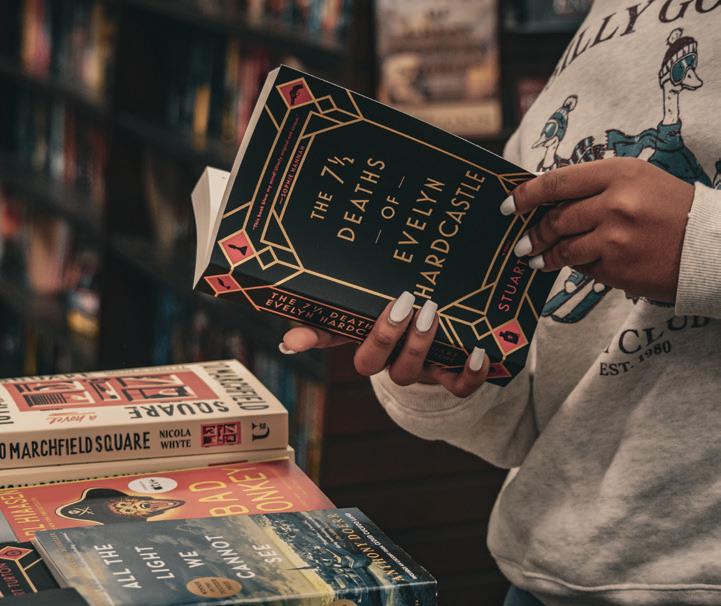
“The 7 ½ Deaths of Evelyn Hardcastle” by Stuart Turton
Not the highest-rated book on my reading list — a little too mind-blowing for my liking, in fact — but this book deserves a shoutout for the author’s ingenuity alone.
Originally published in 2018, “The 7 ½ Deaths of Evelyn Hardcastle” is a “Groundhog Day”-style murder mystery in which the protagonist, Aiden Bishop, is given eight days to solve the murder of Evelyn Hardcastle, which occurs every night.
Each day, Aiden wakes up in the body of a different character and must use the clues


gathered from his eight hosts to find the killer and break the cycle.
This book is so unique in its concept and so masterfully planned that it’s unlike any mystery I’ve ever read before. The setting of Blackheath country estate — where the murder takes place — and the rules behind solving the case are fascinating, and I was constantly in awe of the author’s planning skills and attention to detail.
Through the eyes of a slew of narrators — each unreliable in their own way — we piece the puzzle together along with the protagonist, with every detail baiting us toward the final revelation. From Evelyn Hardcastle’s mysterious death, the intricacies of each of the eight hosts and finally to Aiden’s true identity and backstory, the author spins an intricate web that quickly escalates into an impossibly complicated scheme. Mystery lovers, be warned: have a pencil and notebook in hand before diving into this book’s eddies.
Most “wowed:” “All the Light We Cannot See” by Anthony Doerr
This World War II historical novel has been on my to-read list forever, and every moment has been worth the wait.
Published in 2014, this Pulitzer Prize winner revolves around Marie-Laure LeBlanc, a blind French girl who takes refuge with her uncle in Saint-Malo after Paris is invaded by Nazi Germany, and Werner Pfennig, a German boy who’s been accepted into a Nazi military school for his skills in radio technology. The story alternates between the two characters’ perspectives and spans over a decade, with the two plot lines colliding when Werner encounters Marie-Laure during the Battle of Saint-Malo in 1944.
“All the Light We Cannot See” is a hauntingly beautiful read, and Anthony Doerr’s writing is like no other. Each page is infused with so much light, color, sound and feel that makes reading this book truly an immersive experience.
The slow-burning, non-linear structure of the book made the story feel slow at first, but the interwoven lines of the present and the past also added more suspense to the story that compelled me to read on. I loved how Doerr left just enough clues throughout the book for me to figure out the ending myself without explicitly spelling everything out, and this only made the ending even more impactful. As masterfully crafted as it’s stunning heartfelt, “All the Light We Cannot See” is a book that I’m likely to re-read over and over again.
Hidden gem: “The Girls at 17 Swann Street” by Yara Zgheib
A poignant issue beautifully written, Yara Zgheib’s 2019 debut paints an intimate portrait of a young woman’s struggles with anorexia and her journey toward recovery.
From the other girls at the recovery center on 17 Swann Street to the protagonist’s father and husband, each character in this novel is crafted with care. Zgheib’s use of flashbacks and sensory details effectively connected me to Anna, the protagonist, making her inner demons so much more human, and the technical language in the clinical reports serves as an intriguing juxtaposition to Anna’s narrative.
Anorexia is a difficult topic to write about, but I loved how the author used a unique and poetic style to make the story digestible. My favorite part of the book is how Anna’s journey toward recovery is equally gut-wrenching and heartfelt. I think Zgheib really demonstrates why we say recovery is not linear — there are good days and bad days, but all that matters in the end is that we are moving forward.
From character studies to writing style, “The Girls at 17 Swann Street” is both a stunning work of art and an absolute page-turner. It’s another one of those books that I will be thinking about (and trying to imitate in style) for a long time to come.
Sixuan Wu originally published some parts of this column on Goodreads.
CONTACT Sixuan Wu at thebreezeweb@ gmail.com. For more bookish content, stay tuned for the “Bibliomania” column and follow the culture desk on X @TheBreezeJMU and on Instagram @BreezeJMU.
By NICOLAS ISAZA SERPA The Breeze
Every student signs the Honor Code Pledge upon arriving at JMU, but few fully understand how the Honor Council operates — behind the scenes is a structured, often misunderstood process involving student members, trained investigators and council representatives.
For students facing an Honor Code violation, the process can feel overwhelming. When they receive notice that the process has begun, many instinctively want to avoid attending court.
What many students don’t realize is that the system is designed to ensure each case is heard fairly and
thoroughly, senior and Honor Council President William Papa said.
“We’re the megaphone for the students’ voice,” Papa said. “We regulate the university’s systems to make sure that nothing’s getting lost, nothing’s getting rigged and no power is being abused.”
The Honor Council is made up of 17 members, including faculty representatives, who are selected and reappointed each semester to oversee the integrity of the process.
The process begins when a faculty member files a formal report. An investigator is then assigned to collect information from both the accused student and the reporting party. That information is compiled and presented to the Honor Council’s executive board.

“Investigators are completely impartial with the evidence,” student investigator and senior Alex Hall said. “We don’t analyze the evidence or give our opinion. We’re basically just the collectors and presenters.”
If a case is accepted, it proceeds to a hearing during which students and faculty present their perspectives. A panel composed of student representatives, executive board members and faculty determines the outcome.
Papa said students must attend hearings and maintain professionalism throughout the process.
“A lot of times, students come in, and they’re upset,” Papa said. “Rather than voicing their opinion maturely and professionally, they implode. The best thing to do is to argue your case, understanding that everyone is there for you.”
Sanctions vary depending on the violation’s severity.
“The lowest punishment would be an F in any criterion of the course or an F in the class,” Papa said. “There’s failing the course without the ability to retake it and a transcript notation. Then there’s also suspension and expulsion.”
Papa said the council aims to match sanctions to severity, therefore emphasizing fairness and education over punishment when possible.
Despite the structured process and clear consequences, many students misunderstand the council’s role, viewing it less as an impartial body and more as an executioner, delivering punishment rather than listening to a student’s individual situation. Senior and Honor Council Vice President Kathryn Taliaferro said the misconception is common.
“When I first started telling people I joined the Honor Council, they said, ‘Oh, you’re a snitch,’” Taliaferro said. “My role is to sit in deliberations with the student representatives, and anyone who’s sat [in] on a hearing can tell you that I’m the students’ biggest ally in the room.”
Papa and Taliaferro said that ensuring students uphold academic honesty is essential to maintaining the authenticity and value of work produced at the university.
While some violations are traditional — such as copying homework or exams — artificial intelligence has become increasingly prevalent in student culture. Tools such as Grammarly and ChatGPT have created opportunities for students to unintentionally or deliberately violate the Honor Code.
Papa said the Honor Council uses internal AI-detection tools whenever a student is accused of cheating. In 2023, roughly 10% to 20% of Honor Council cases involved AIrelated violations. That figure has jumped significantly, with approximately 50% to 60% of cases tied to AI use this year.
AI violations can take many forms, but any use that violates a course syllabus is considered a violation, according to the university. This could include using Grammarly to alter a paper or directly quoting content from ChatGPT, depending on an instructor’s guidelines.
As technology continues to evolve, Papa said the challenge ahead is not only helping students understand the rules but also the responsibilities that come with being part of an academic community.
“I think everyone in their life makes mistakes in some regard, but the whole process is about learning and growth,” student investigator and senior Sam Hubard said.
Senior and student investigator Anna Oehler offered advice for students navigating academic and personal decisions:
“Make sure you are as honest as you can be in all areas of your life,” Oehler said. “You never know when it can come back and be a problem for you later.”
At its core, the council’s mission is not just accountability, but also shaping a community built on trust. Taliaferro summed it up simply:
“Honor is doing the right thing when nobody’s watching,” Taliaferro said.
CONTACT Nicolas Isaza Serpa at isazasnn@dukes.jmu.edu. For more on the culture, arts, and lifestyle of the JMU and Harrisonburg communities, follow the culture desk on X @ TheBreezeJMU and on Instagram @BreezeJMU.
By SHISHIRA NAKKA
The Breeze
2025 was a year full of pop culture wins: “Heated Rivalry,” Olivia Dean’s album “The Art of Loving,” “K-Pop Demon Hunters,” Taylor and Travis getting engaged — the list could go on forever. And the bar is definitely set sky high for 2026, especially if we’re starting with a Harry Styles return — a fullblown renaissance, if you will. To make the year even better (despite it just beginning), the lineup for movie releases is nothing short of spectacular. I thought I’d share a few that I’m particularly antsy about to give us both something to look forward to.
‘Wuthering Heights,’ out Feb. 13

This adaptation of the classic by the same name, written by Emily Brontë, is headed by director Emerald Fennell. This movie features Margot Robbie, Jacob Elordi and probably every single one of my dreams. As if the trailer featuring a Charli XCX track wasn’t convincing enough, the pure aesthetics alone are enough to leave you wanting more — at least I know I am. There is a lot of discourse currently about the title and the quotations around it on the poster, suggesting this isn’t actually the “Wuthering Heights,” but an interpretation solely from Fennell’s brain. I think it will cut like acid through the sickly-sweet adaptations that have been variations of the same thing. Needless to say, I’m excited. I do wonder if
there will be “Saltburn” undertones to this film, which can be done as long as it’s tasteful — I don’t need another bathtub scene, thanks.
‘The Hunger Games: Sunrise on the Reaping,’ out Nov. 20
Confession: I actually have yet to read the book, but I adored the original movies. Despite its arguably unnecessary length, I enjoyed “A Ballad of Songbirds and Snakes.” I appreciated the cast, music and sense of authenticity — it connected well with the original films, and I have hopes I will be able to say the same about the upcoming release.
Haymitch is one of my all-time favorite characters in the series. His character and Effie are my favorite things on this planet. I’m really excited to get a chance to dive deeper into his

story and hopefully gain more insight into what District 12 was like.
And the fact that Jennifer Lawrence and whistle-meme originator, Josh Hutcherson, are in this one? As a fan and movie lover, I don’t think I could ask for more.
‘The Odyssey,’ out July 17
Disclaimer: I’m a huge Christopher Nolan fan. I watched the “Oppenheimer” premiere with my mom. I have seen every Nolan film and, yes, I did lie and say I understood “Tenet.” All that to say, there is very little this movie
and Zendaya. I am in my seat, practically buckled in. In my opinion, this will revolutionize what a page-to-screen adaptation can be, much like “Wuthering Heights.” This paves the way for a great year of literature and CapCut edits. Better make a folder on TikTok for them now.
‘Disclosure Day,’ out on June 12
Emily Blunt, Josh O’Connor and Colin Firth walk into a room. They decide to A) be the hottest people on planet Earth and B) make one of the coolest Spielberg movies ever. The concept is based on a Steven Spielberg story about aliens and their first contact with humankind. When I first saw the trailer in the movie theater, I was scared — but in a good way. Like, on edge but in a brave way — like in a thirst for more kind of way.
The trailer had eerie music, and the glimpse of Josh O’Connor convinced me. I was entranced to say the least. I think sci-fi films have taken an interesting route recently, with plot lines focusing on the “worst-case scenario” or another “Scream” reboot. I think this will revive the community, and if it’s a Spielberg movie, it’s hard for it to not be a masterpiece.
CONTACT Shishira Nakka at nakkasl@ dukes.jmu.edu. For more on the culture, arts, and lifestyle of the JMU and Harrisonburg communities, follow the culture desk on X @TheBreezeJMU and



EDITORS Preston Comer & Tommy Gurganous EMAIL breezesports@gmail.com

By TOMMY GURGANOUS The Breeze
As of Jan. 10, JMU women’s basketball had three Sun Belt Conference losses in six games. Those were an 83-74 road overtime loss to Marshall, and back-to-back losses in a 78-70 loss to Georgia Southern and a 72-70 loss to Georgia State, which JMU beat 84-64 nine days earlier.
“I don’t think it was necessarily anything that they did,” JMU redshirt senior guard Peyton McDaniel said of the Dukes’ loss to Georgia Southern, “We just really weren’t being us.”
JMU hosted Marshall, the Sun Belt leader, at home on Thursday and established early on that it would not be like the previous matchup.
Marshall didn’t have freshman guard Olivia Olson, who had scored 26 points against JMU last time, and the Dukes used a 27-2 firstquarter lead to roll to an 80-43 win.
JMU continued its redemption run on Saturday with a 67-60 home win over Georgia Southern and led by 19 points at the 2:43 mark of the fourth quarter.
Georgia Southern senior guard Kishyah Anderson made 12 of 14 shots for 26 points against JMU in the first game but managed 7 points on Saturday. Leading scorer Destiny Garrett scored 10 points, shot 3 for 11 from the field and had five turnovers on Saturday.
JMU head coach Sean O’Regan said he came into last week with the focus of “togetherness and discipline.” After the back-to-back wins, he cited a “very controllable trait” for the success: effort on the defensive end.
“Making baskets, you can never control that,” O’Regan said at Monday’s media availability, “but the defensive end and your effort and your knowledge and all that stuff, that can be a constant.”
After making 13 of 30 3-pointers against JMU in the first matchup, Marshall made 5 of 22 such shots on Thursday. Georgia Southern shot 37.7 percent from the field on Saturday as opposed to 55.2 percent in its first game against the Dukes this season.
In the two games, there were also changes to JMU’s minutes, how the Dukes took care of the ball and the play of its leading scorers.
O’Regan
Senior guard Regina Walton played 30 minutes and scored five points over the Dukes’ two wins last week. Walton hadn’t played since Jan. 3 and played 24 total minutes in her prior six game appearances.
O’Regan said he doesn’t expect Walton to “score 30 points in a game” but he said she is a “really solid decision-maker” who “does her job.” He also thinks Walton coming in early in the game for junior starters Zakiya Stephenson and Bree Robinson alleviates each’s playing load.
McDaniel, who also plays guard, echoed O’Regan’s praise of Walton’s decision-making.
“We trust [Walton] just as much as we trust [Stephenson], just as much as we trust [Robinson],” McDaniel said.
While sophomore forward Angela Williams has been out since Jan. 7, O’Regan considered Walton’s minutes to be “totally separate” from Williams being out of the rotation. O’Regan added that Williams was to be back “full go” for JMU’s Tuesday practice.
Taking better care of the ball
JMU turned over the ball 30 times over its losses to Georgia Southern and Georgia State. The Dukes had 17 turnovers in their wins over Marshall and Georgia Southern last week, with
just six coming from the Marshall game. The 8.5 turnover average per game last week is close to half of its season average of 15.6.
Stephenson had 29 turnovers to 17 assists in the six games leading up to last week, but had 11 assists to three turnovers in the past two games. She averaged 27.5 minutes over the two games — just under her season average of 29.
Stephenson has tallied games of 22, 18 and 16 points so far in Sun Belt play, and O’Regan thinks teams focusing more effort on Stephenson can further open things up for his offense. But he wants Stephenson to be both an efficient passer and scorer; the junior guard shot 1 of 14 from the field last week.
“[Stephenson] was great as a distributor, but I want both,” O’Regan said. “It’s good. Winning is the whole key, but I think when she’s on and [McDaniel] is on, and I’m not losing my mind, I think we’re pretty good.”
The turnover improvements went beyond Stephenson last week, though. Robinson surrendered one turnover to six assists in the two games while collecting three steals on defense. Walton didn’t turn the ball over at all over in that stretch, and while McDaniel had four turnovers against Georgia Southern on Saturday, she had five steals and scored 20 points in the win.
JMU’s stars finding success
After shooting 19.0 percent from 3-point range in non-conference play, Robinson has shot 38.5% (10-26) from that distance in Sun Belt play. She was four of six from 3-point range last week and shot 52.2% from the field.
Defensively, O’Regan considers Robinson to be “the best defender” both on JMU’s team and in the Sun Belt. And offensively, he said that her confidence has been “earned.”
“When the coach is like, ‘She’s a driver,’ it’s like, ‘I can shoot too,’” O’Regan said of Robinson’s mentality. “I know you can shoot, too, so shoot it and make it. She’s just, ‘It’s one of those ones I’m not going to get caught not appreciating it well enough until it’s gone, right?’”
McDaniel’s shooting numbers in Sun Belt play (40.6 percent from the field, 25.5 percent from 3-pt.) are below her season averages. But she scored 18 points in JMU’s 37-point win on Thursday and tallied a team-high 22 points and 12 rebounds in Saturday’s win. She continues to lead the Dukes in scoring and is second in rebounds per game this season.
Graduate forward Ashanti Barnes scored 18 points with 15 rebounds on Thursday against Marshall before scoring 13 points on Saturday. Barnes averages 14.3 points and 9.4 rebounds per game this season, and JMU is second in the Sun Belt for rebounding margin in conference games this season.
“I just think her confidence is just growing and growing and growing, and it’s been really fun to watch for me,” O’Regan said of Barnes.
With Barnes’ rebounding, O’Regan has had Barnes play center at times this season and likes the versatility it offers when facing a team with shorter players. McDaniel also offers some size to pair at 6-feet tall, and she averages 7.5 rebounds per game.
“If we need to go small, we have a lineup, we’re very, very comfortable going small,” O’Regan said, “If we have to go big, we get very comfortable going big".
Stats accurate as of Jan. 21.
CONTACT Tommy Gurganous at breezesports@gmail.com. For more women's basketball coverage, follow the sports desk on X and Instagram @TheBreezeSports.











By TOMMY GURGANOUS & PRESTON COMER The Breeze
With the regular season over, JMU football (12-2, 8-0 Sun Belt) is now in transfer portal season.
New head coach Billy Napier has added 37 players through the portal. Here’s a look into some of the additions:
Arrington Maiden, quarterback
On3 reported on X that Maiden committed to JMU. Maiden completed five of 10 passes for 59 yards and rushed for 79 yards on 13 carries in 2025 with Memphis. His touchdown that year came on a 21-yard rush on Nov. 7 against Tulane. Maiden has three years of eligibility remaining.
Davi Belfort, quarterback
Belfort posted on X that he committed to JMU. Belfort joins the Dukes from the University of Central Florida (UCF) after his redshirt freshman year. In 2025, Belfort was 4 of 6 passing for 53 yards with one interception and rushed the ball 16 times for 94 yards and a touchdown. The 5-foot-11, 196-pound quarterback has three years of eligibility remaining.
Nick Herman, running back
247Sports Transfer Portal posted on X that Herman has committed to JMU. Herman rushed for 1,034 yards and six touchdowns as a freshman with Drake in 2025. He added 13 receptions for 120 yards. Herman stands at 5-foot-11 and 190 pounds and has three more years of eligibility.
Kylan Billiot, wide receiver
On3’s Hayes Fawcett reported on X that Billiot is committing to JMU. The 6-foot-3 receiver was the 13th ranked wide receiver in the 2024 class as a four-star commit to LSU. Billiot appeared in one game as a Tiger but didn’t record any statistics. He has three years of eligibility remaining.
Terrence Jones, defensive back
Jones posted on X that he committed to JMU. Jones recorded 54 total tackles as a sophomore in 2025 with 3.5 tackles for loss
and nine deflections. The 6-foot-1, 195 pound defensive back has two years of eligibility remaining.
DJ Kelly, defensive back
Kelly posted on Instagram that he committed to JMU. Kelly played in all 13 games for Toledo as a freshman in 2025 and recorded ten total tackles, one sack and one interception. The 6-foot-1, 185 pound cornerback has three more years of eligibility.
Damier Minkah, defensive back
Minkah posted on Instagram that he committed to JMU. Minkah recorded 27 total tackles and 10 pass deflections with Shepherd in 2025 as a redshirt sophomore. The 6-foot-1, 183 pound cornerback has two more years of eligibility.
Tyler Brown, offensive lineman
Brown posted on Instagram that he committed to JMU. Brown played under Napier from 2019-21 while the latter coached at Louisiana, and Brown has also spent time at Jackson State and Colorado. Despite various injury issues in his college career, the 6-foot-3, 325 pound offensive lineman has played in 38 career games.
Lathan Croley, linebacker
247Sports Transfer Portal posted on X that Croley has committed to JMU. Croley amassed 80 total tackles, 2.5 tackles for loss and 1.5 sacks with Holy Cross in 2025. The 6-foot, 210 -pound linebacker has two years of eligibility remaining.
Seth Cromwell, running back
247Sports Transfer Portal reported that Cromwell committed to JMU. Cromwell has played his last two seasons at Northern Arizona. He has played 24 games in that time while rushing for 1,327 yards on 275 carries and 18 touchdowns.
CONTACT Tommy Gurganous and Preston Comer at breezesports@gmail.com. For more football coverage, follow the sports desk on X and Instagram @TheBreezeSports.





EDITOR EMAIL breezeopinion@gmail.com Cali Gilmer

Want to praise someone or get something off your chest? Darts & Pats is the place to do it. Submit your own at breezejmu.org.
An “I’m-already-tired” dart to the first day of classes already draining me.
From someone who doesn’t want to lock in after break.

CHARLES-NICOLAS OWEN contributing columnist
A “thank-you-weather” pat to the hopeful chance of snow this weekend.
From someone who wants to build a snowman.
The West has long distinguished itself as modern through its expansion of wealth, technology and influence. Since the economic boom of the 1950s, growth has become not merely a goal but a compulsion, particularly so in America, where we work under duress from a structural addiction that shapes our politics, economics and culture alike. The seizure of Venezuelan oil, the strategic maneuverings witnessed over Greenland and the proxy-war-style struggles over Ukraine’s critical minerals are the imperatives of accumulation manifest. Yet partisan narratives, amplified by legacy media spectacle, obscure the continuity underlying these interventions. Both parties act within the same machine or ‘megamachine’ — as coined by the historian, sociologist and philosopher of technology Lewis Mumford — bound by the logic of capital, resource control and technological dominance. The West’s obsession with growth drives global conflict, commodifies human labor and cognition and pressures societies to participate in an unsustainable, self-consuming trajectory. Such a thought would be idle without the most urgent question of all: How then should we live?

the bounties of liberal democracy as they are about commodifying people, labor and land. Venezuela’s oil, Greenland’s own bounty and Ukraine’s rare earths aren’t peripheral considerations but rather the latest course in the long, gluttonous meal of the West. We need our smartphones. We need our gas. We can’t do without our self-driving cars, chatbots, batteries and anything else to go faster, communicate more, work harder and connect less.
A “my-apartment-isgross” dart to roommates who won’t clean.
From someone who came home to fruit flies all over their apartment.
The economic boom after WWII in the West was unprecedented. Populations surged, manufacturing doubled then tripled, labor markets expanded and the Machine accelerated at a pace no civilization had ever seen. This explosion created not only material abundance but a cultural intoxication with growth itself. Growth became a virtue, a moral imperative. Never before had economic growth been so tied to national identity and interest. The American society learned to equate success with expansion, and from that moment, a structural addiction was born. Such addiction is inherently selfdestructive. It demands more than the Earth can give, more than laborers can produce and more than societies can ethically justify. Yet the West continues, chasing exponential returns as if the laws of physics or biology were negotiable.
Nations with energy, mineral wealth or technological criticality become battlegrounds, not because of the politics of their people but because their raw materials feed the global growth engine. Every conflict can be read as a node in a larger mechanism designed to perpetuate consumption and secure the supply chains necessary for the American appetite.
Take the deal from April 2025, where the U.S. secured rare earth minerals from Ukraine. Such rare earths and other minerals now feed smartphones (an addiction in its own right, with daily averages for all adults around eight to nine hours, with mobile apps and streaming services being major contributors), artificial intelligence data centers and global technological infrastructure.
The West, in this manner, has separated the worker from their labor, their land and now, their mind. Our labor is measured in productivity metrics, and now, our minds have become raw material for the attention economy. AI data sets and behavioral surveillance exist as “psychological nudging,” working us in whatever direction the stimulus is designed to: “buy this, buy that, don’t do this, say this instead,” until the lights dim and the last ton of coal is burned to ash.
Social media, targeted advertising and AIdriven personalization turn cognition into a tradeable asset. The human mind is both producer and product, subject to the same growth imperatives that drive the extraction of oil, minerals or other strategic resources. The commodification of the human spirit is the end of the totalizing reach of the capitalist mega-machine, and we near it every day; the ouroboros threatens to consume itself.
How then should we live?
A “miss-my-pups” pat to my dogs, who I had to leave at my parents’ house.
From someone who is emotionally attached to all of their pets.
The consequences of this growth addiction manifest in both the extraordinary and the banal. Vast energy consumption drives climate collapse. Corporate consolidation concentrates wealth into the hands of a gluttonous few. Geopolitical interventions, such as the seizure of Venezuelan oil or the pursuit of Greenlandic acquisition, are justified as strategic necessities, yet their underlying logic remains the same. Growth addiction is the melody by which all modern Western songs can be sung.
The wars and interventions of the 21st century are only so much about spreading
The West’s interest in Ukraine is more about ensuring an uninterrupted supply for our technocratic class than it is about territorial integrity. If it were concerned equally with the latter, the war would not continue. For the West, such wars are proxies for capital. Media and politicians highlight narratives of freedom and security, yet the economic undercurrent of resource acquisition, technological advantage and corporate profit is the engine driving the Machine. Parties and politicians appear to choose, but their choices are pre-structured by the West’s addiction to growth.
Recognizing the West’s structural addiction to growth, resource extraction and technological domination demands a reckoning with how we live. Some may retreat to the hills, cutting themselves loose from the Machine where they can; others may remain in the cities, embedded within the system yet inwardly separate from its values. Both are honorable ends. To live well means refusing to let every action, every hour and every thought be conscripted into the service of growth.
Read more online at breezejmu.org
CONTACT Charles-Nicolas Owen at wen2cn@dukes.jmu.edu. For more editorials regarding the JMU and Harrisonburg communities, follow the opinion desk on X @TheBreezeJMU and on Instagram @BreezeJMU.
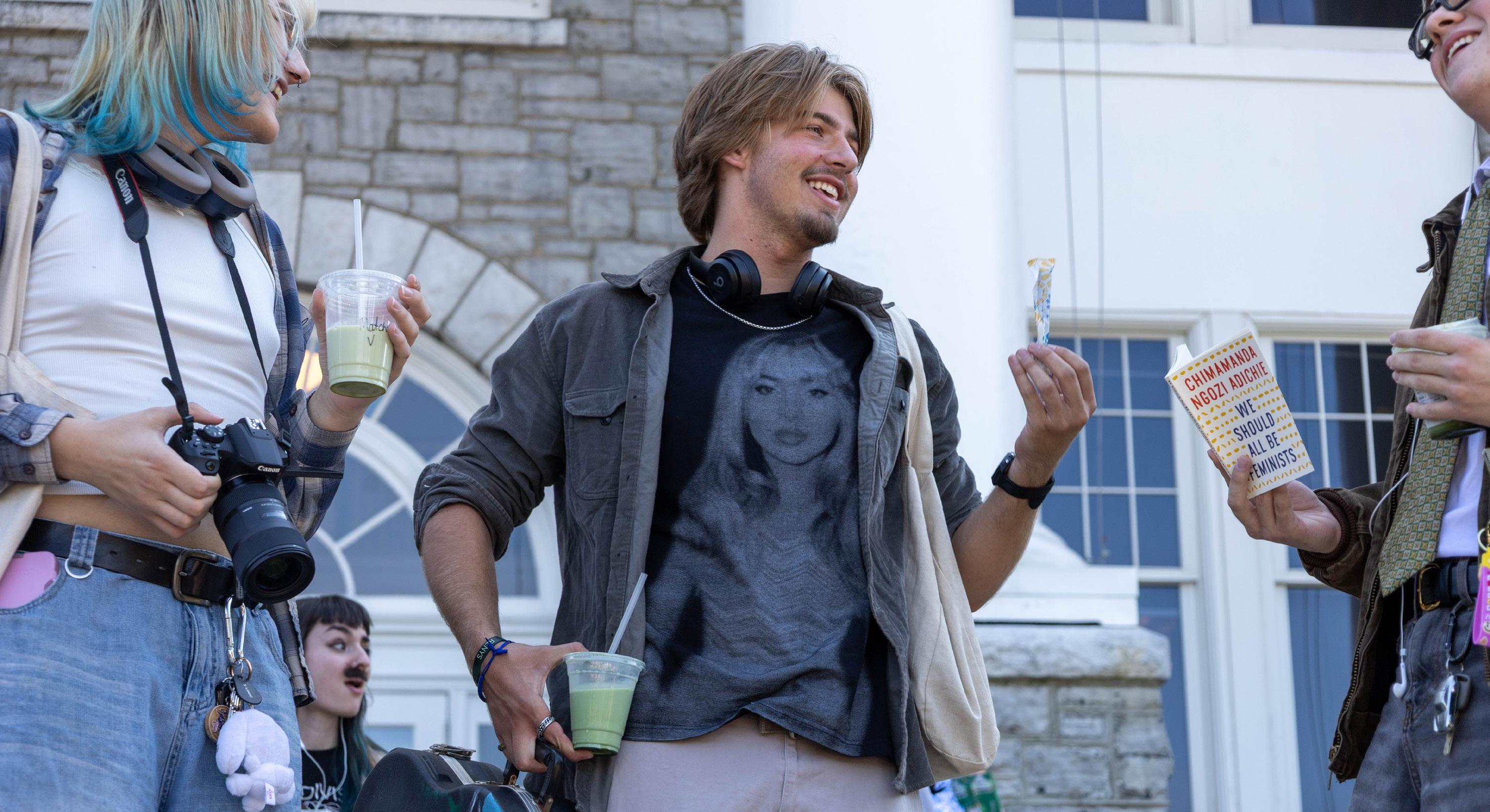

The image of a performative male is instantly recognizable among younger generations: a man carrying a canvas tote bag filled with feminist literature, sipping a matcha latte and wrapped in an oversized cardigan. He listens more than he speaks, uses the language of social justice fluently and presents himself as emotionally literate and politically conscious. This is a figure who appears to reject the idea of traditional or toxic masculinity, yet it is met with suspicion and mockery.
While this stereotype seems like a step away from openly toxic masculinity, the way society responds to these men reveals something more troubling. The backlash against the performative male does not dismantle patriarchy; it quietly reinforces it.
The performative male stereotype is built on the assumption of dishonesty. The tote bag, the cardigan, the feminism and the softness are framed not as genuine expressions of selfhood, but as a costume worn for romantic gain. He’s accused of “doing it for attention” or “pretending to be woke.” The label itself suggests that a man who embraces feminine aesthetics or progressive politics cannot be authentic and that he must be acting. In this way, the stereotype becomes a form of cultural policing, quietly reminding men that stepping too far outside traditional masculinity will be met with ridicule.
Of course, performative behavior does exist. Some men adopt feminist language or progressive aesthetics for romantic leverage or moral credibility without committing to the values behind them. This hollow performance shouldn’t be celebrated. The problem arises when that behavior becomes inseparable from softness itself. When every man who embraces feminine self-expression is assumed to be acting, we stop criticizing dishonesty and start policing identity.
In recent years, younger generations have claimed to be drifting away from praising toxic masculinity. We insist on rejecting emotional repression, dominance and aggression as defining features of masculinity. However, the treatment of the performative male reveals that while we may critique toxic masculinity in theory, we haven’t expanded our understanding of what masculinity is allowed to look like in practice.
Public reactions to performative men tend to fall somewhere between humor, curiosity and judgment. Some treat the stereotype as a joke — a caricature of the overly-sensitive man who has replaced beer with oat milk. Others express suspicion, questioning whether these men are sincere or simply adopting feminism as a personality trait. Still, others respond with outright disdain, framing performative men as manipulative or embarrassing. The similarity of these reactions is the assumption that masculinity expressed through softness, care and femininity must be fake.
This mockery serves a powerful social function: It keeps men within the narrow confines of socially acceptable masculinity. When men see that stepping outside traditional gender norms leads to ridicule, they learn to self-police. They learn that emotional openness is risky, that vulnerability invites judgment and that femininity is something to avoid.
In this way, mockery becomes a tool of gender enforcement. It quietly reinforces the idea that there is a “right” way to be a man and that deviation will be punished socially. Even when the punishment comes in the form of jokes and memes, the message is clear: Masculinity must remain dominant, controlled and emotionally restrained. Anything else is performance.
This raises a crucial question: Why is male self-expression through femininity automatically seen as inauthentic? Why is softness in men treated as a disguise rather than a genuine identity? The answer lies in how deeply femininity itself is
devalued in patriarchal culture. Femininity is associated with weakness and emotionality — traits that patriarchy has long positioned as inferior. When a man embraces these qualities, he threatens the hierarchy that places masculinity above femininity. To preserve that hierarchy, his expression must be discredited.
By framing soft masculinity as fake, society protects the idea that “real” men must remain dominant and emotionally contained. Emotions, care and vulnerability are treated as accessories rather than legitimate parts of male identity.
Ironically, in our eagerness to critique gender roles, we often end up reinforcing them. We claim to oppose rigid definitions of manhood, yet we ridicule men who challenge those definitions. We say we want men to be more emotionally open, empathetic and engaged in social justice, but when they are, we question their sincerity. The result is a cultural double bind: Men are told to abandon toxic masculinity yet punished for embodying its alternatives.
This contradiction keeps patriarchy firmly in place. By labeling softer masculinity as inauthentic, we preserve the idea that “boys will be boys” and that real men must remain unchanged. We protect the very system we claim to oppose by refusing to let masculinity evolve.
The performative male stereotype reveals how uncomfortable society still is with the men who refuse to conform. If we truly want to dismantle patriarchy, we must stop treating softness in men as a costume and start recognizing it as a legitimate form of self-expression.
CONTACT Cali Gilmer at breeezeopinion@gmail. com. For more editorials regarding the JMU and Harrisonburg communities, follow the opinion desk on X @TheBreezeJMU and on Instagram @BreezeJMU.



EDITOR-IN-CHIEF Eleanor Shaw breezeeditor@gmail.com
NEWS EDITORS Emma Notarnicola & Charlie Bodenstein breezenews@gmail.com
COPY EDITORS Kayla Katounas & Joelle McKenzie breezecopy@gmail.com
PRINT MANAGING EDITOR Hannah Kennedy breezepress@gmail.com
CULTURE EDITORS Isabel Lewis & Bella Arist thebreezeculture@gmail.com
PHOTO EDITORS Landon Shackelford & Annabel Dewey breezephotography@gmail.com
ONLINE MANAGING EDITOR Sixuan Wu thebreezeweb@gmail.com
SPORTS EDITORS Preston Comer & Tommy Gurganous breezesports@gmail.com
AUDIENCE EDITORS Ella Warren & Madeline Buynak thebreezesocials@gmail.com


OPINION EDITOR Cali Gilmer breezeopinion@gmail.com
ART DIRECTOR Julia Tanner thebreezeartdirector@gmail.com
TV NEWS DIRECTOR Alexa Bonilla jmubreezetv@gmail.com
SUNDAY - THURSDAY 11:00 AM TO 9:00 PM FRIDAY & SATURDAY 11:00 AM TO 10:00 PM

Los Angeles Times Daily Crossword Puzzle
Edited by
Patti Varol
ACROSS 1 Golf scorecard number 4 Prefix with task or vitamin 9 Pt. of LLC
“Look __ this way ... ”
Sci-fi author Asimov
“The __ the merrier!”
*Statistical measure of certainty
“Yum Yum Bedlam” rap duo __ Clown Posse
Try to chomp on
Calgary’s province
NFL distances: Abbr.
Air pressure fig.
Nasty mutt 27 Method: Abbr. 28 Lucked out at last
Entice
Mother’s Day month 35 Sorts (through) 39 Marine mammal feared by sharks
Turnpike charges 42 Sound from a leaky tap
“Hard pass”
Mark left by a swimsuit 46 “__ questions?” 47 Grammy, for one
Insurance case 51 Like most races 53 __ Antonio Spurs 55 “Will __”: ABC police drama starring Ramón Rodríguez 58 Italy’s capital 59 Rib-eye, for one
Not quite closed
Blown away
Collectible trinket 64 Chore list heading
The red planet
By Agnes Davidson & Zhouqin Burnikel

Cool tone on a palette
Romeo and Juliet, e.g.
Goal of a peace summit, perhaps
Triangular river formations
Nonstick cookware brand
Ration (out)
Cool place to hang
Most October babies
*Earlobe sparkler
*Fashion accessory attached at a salon
Academic transcript no.
Masquerade event
Freight weight
Period of history


37 Ceiling metal 38 Undercover agent
Roofing goo 41 Sketch show that inspired “30 Rock,” for short
*“U Can’t Touch This” rapper 36 Scapegoating scheme, or what the ends of the answers to the starred clues may be part of?
Small amount
“Iliad”
Madison Marketplace is open for business, and all text-only listings are FREE ! Post job listings, announcements, rentals and more using our online placement tool. Ads run two weeks online and in two print editions.
1 Bedroom 1 Bath Apartment
1 bedroom 1 bath Apartment located at Sherwood Apartments on Robbin Hood Ct in Harrisonburg. Rent $950, W/S/T included. Washer and Dryer in the unit along with a full kitchen and all appliances. Available December 2025. Inquiries please email klinemaint@comcast. net or by phone 540-833-6104
Arcadia Aprtament Available NOW
Dec. Grad needs to rent Arcadia Apartment room that is available immediately until July 31, 2026. Great roomates! Base rent is $599 with utilities included. Please email Kailey.garner0804@gmail.com
Career Opportunity - Software
Portfolio Specialist
Are you ready to be the driving force behind cutting-edge public safety technology? Join the Harrisonburg-Rockingham Emergency Communications Center’s team as a Software Portfolio Specialist and help shape the future of emergency communications in a high-impact, mission-driven environment. Find out more/apply online: https://www.harrisonburgva. gov/employment.EOE.

Rent This 4 Bedroom 2 Bathroom
Adorable Cottage Just Two Blocks from JMU campus
Cute Cottage for Rent Just Two Blocks from JMU Campus and Bridgeforth Stadium - $1999/month. 6 month lease or month to month lease available.

Counseling Services Available!
Cross Keys Equine Therapy is taking new clients! Struggling with depression, anxiety, or just need someone to talk to? We offer equine assisted therapy sessions, nature based therapy, or traditional talk therapy. Only 15 minutes from campus! Give us a call today at 540-607-6910.
Services For Women
Discover your own beauty and improve it naturally—inside and out. Build lasting confidence, feel empowered to be your best self, and experience greater happiness while living a richer, more fulfilling life. Ask about membership. Please reply to: winstonempowers@gmail.com
Transportation Services Airport transfers, wine tours, special events Motorcoach trip to Liberty football game Sept 20 Contact Adventures-N-Travel.com Call or text 540-810-1196 mikepackett@aol.com
Car Wash Express and Laundromat Express! Car Wash Express and Laundromat Express! Now accepting credit cards for car wash and laundromat! 3 Minutes from campus! Self-serve and automatic options. 48 Kenmore Street, Harrisonburg, VA.540810-1196 mikepackett@aol.com
Career Opportunity - Police Recruit
The City of Harrisonburg is currently accepting applications for noncertified individuals interested in joining the Harrisonburg Police Department, which offers a rewarding career plus an excellent benefits package, including enhanced hazardous duty through the Virginia Retirement System (VRS). Find out more/apply online: https://www.harrisonburgva.gov/ employment. EOE.

Part-time Opportunity - VFW Bartender
Part-time bartender no experience necessary will train must be 21. Apply in person at VFW 450 Waterman Dr Harrisonburg Va 22802 .
Internship Opportunity - City Manager’s Office (Harrisonburg, VA)
Are you a student seeking real-world experience in public administration with a locality recognized both regionally and nationally for a variety of achievements? If so, apply to the City of Harrisonburg’s City Manager’s Office Internship Opportunity! Find out more/apply online: https://www. harrisonburgva.gov/employment. EOE.

ITEMS FOR SALE
Game room
Large folding ping pong table with accessories. Foosball table with extras. Both in good condition. Must pick up, cash only $75 each. 540-578-2362
REAL ESTATE
Property for Sale in Staunton Building for Sale. Three store fronts. Two Apartments. Needs Total Renovation. 300 Central Ave., Staunton, VA 24401 $310,000 or best offer. Call 540-290-0375

O rd e r t o d a y a n d e n j o y !