


Welcome to our 2026 New Hampshire Market Outlook, where we reflect on the adjustments of 2025 and look ahead to what’s next. At The Boulos Company, we remain committed to providing clear, reliable market insight that helps our clients and industry partners navigate change with confidence.
Across the New Hampshire office and industrial markets, 2025 was a year of purposeful adjustment that sets the stage for a more balanced market. Office users continued to right-size, favoring smaller, high-quality spaces, while property owners responded with upgrades, amenities, and creative repositioning. Industrial activity normalized after several years of rapid growth, with demand focused on efficient, well-located facilities and modern specifications. Together, these trends point to a market entering 2026 with greater clarity, stability, and opportunity.
This report provides a focused look at how these dynamics are shaping the office and industrial sectors. From tenant preferences and property availability to development activity and investment sentiment, we examine what defined 2025 and what it signals for the year ahead, offering insight designed to help you plan strategically and move forward with confidence.
We extend our sincere thanks to our clients for the trust you place in us and the relationships we continue to build together. Your confidence in our team is something we value deeply, and we are grateful for the opportunity to support your real estate goals. As we look ahead, we are excited about the partnerships that will continue to grow and the new collaborations that lie ahead in the coming year.
Our commitment remains unchanged: to provide the insight, guidance, and market intelligence you need to navigate New Hampshire’s commercial real estate landscape with clarity and confidence. We are optimistic about what’s ahead and look forward to working alongside you as we move into 2026 and beyond.

Kent White

Roger Dieker Principal Broker, Partner Managing Broker, Partner

Turning back the clock and reviewing the year behind us, New Hampshire’s Seacoast commercial real estate market is showing a clear rhythm of deal making and opportunity. Strong local fundamentals, steady investor interest, and easing interest rates are supporting transactions across industrial, office, retail, and multifamily sectors. Buyers are pursuing well-positioned assets, while sellers are responding to strong market demand. As we enter the new year, the market is in excellent shape for continued momentum. Opportunities are emerging across all major property types, driven by the enduring appeal of New Hampshire’s business environment. Let’s take a closer look at some of the key transactions our team put together this year:
Katherine Gemmecke and Christian Stallkamp represented the seller, York Storage Solutions, LLC, in the sale of a 12,000± square-foot, twelve unit industrial/flex property. Prior to marketing the asset for sale, vacant units were leased and existing tenants were brought to market rents, drastically improving the NOI. The property was delivered fully leased at closing and sold for $2,350,000, reflecting an approximate 9% Cap Rate. The transaction underscores the continued investor confidence and demand for well-located, stabilized industrial/flex properties and the value created through strategic leasing and asset positioning.
The 26,818± square-foot industrial property sold for $2,000,000, reflecting continued demand for well-located industrial assets for owner-users on the Seacoast. Christian Stallkamp and Katherine Gemmecke represented the buyer, Crosby 180, LLC, in the transaction. The buyer, who also owns 14 Jannell Court in Epping, also engaged Stallkamp and Gemmecke to lease surplus space after outgrowing that facility. The acquisition of the Dover property allowed the buyer to expand operations into a larger, more functional building to support continued growth.
The fully leased retail plaza at 7 Lafayette Road sold for $2,695,000. Kent White and Caitlin Burke represented the seller, 9 Lafayette Realty LLC, in the transaction. Located along Route 1, one of the Seacoast’s primary commercial corridors, the property offers strong visibility and a diversified tenant mix. The sale reflects continued investor interest in well-positioned retail assets with stable cash flow and limited new supply.
Our team successfully facilitated a key lease at one of Portsmouth’s premier Class A office buildings, perfectly
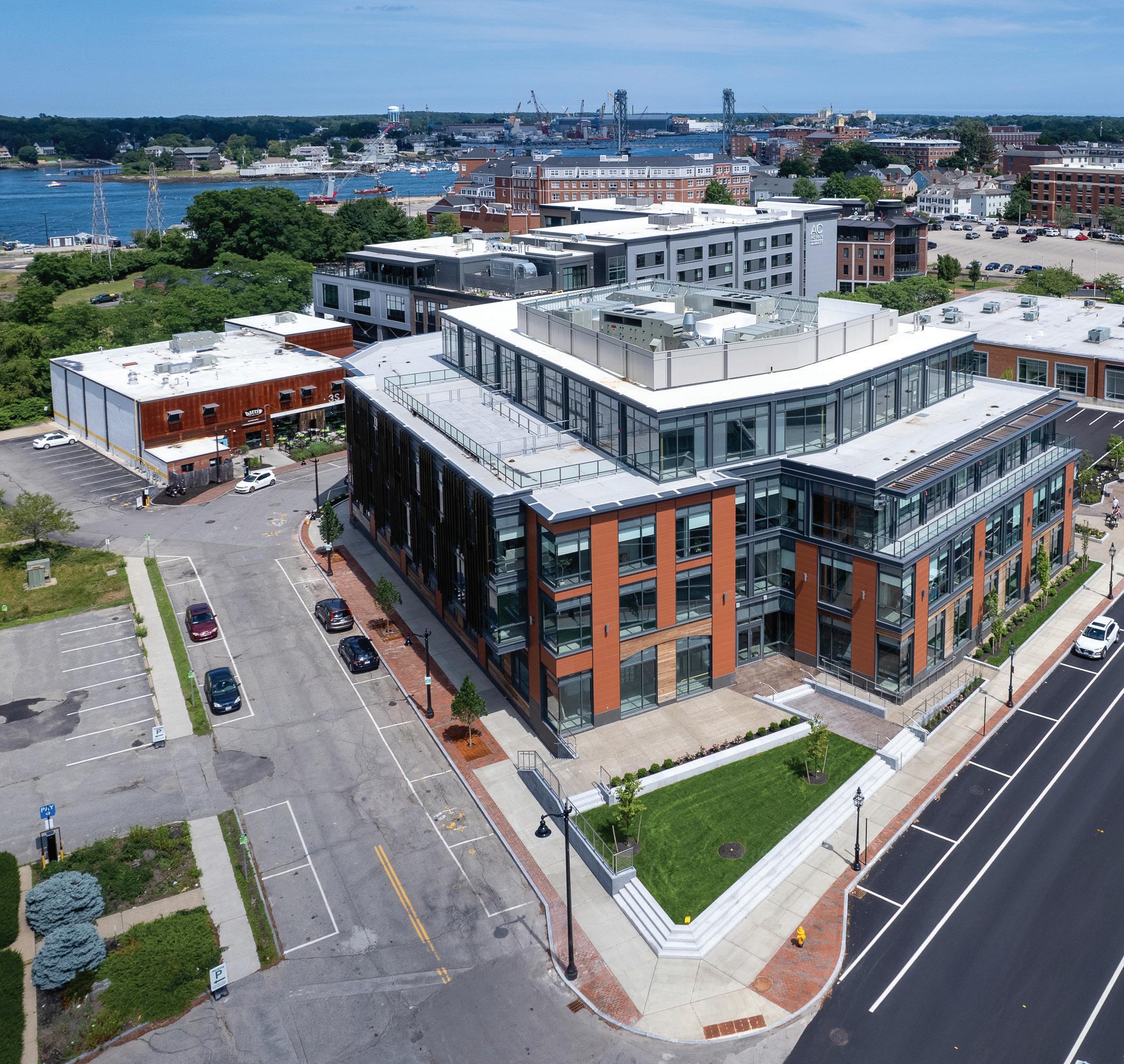
positioned in the ever-growing, vibrant North End of downtown. Sheehan Phinney is relocating across town to 7,696± square-feet of prime ground-level office space, gaining a highly visible, amenity-rich location at the heart of Portsmouth’s thriving business, dining, and cultural corridor. Caitlin Burke and Austin Stebbins represented the landlord, 145 Maplewood Avenue LLC, in this transaction.
Kent White represented the buyer, Wenberry Associates, LLC, in the acquisition of 100 New Hampshire Avenue, a newly constructed 102,059± square-foot Class A industrial facility, at the Pease Tradeport. Built in 2024 and fully leased to two established tenants, the property reflects strong demand for modern, high-bay industrial space in strategically located markets. The $24,500,000 transaction highlights continued investor confidence in New Hampshire’s industrial sector, particularly for newly built, institutional-quality assets.
Christian Stallkamp and Katherine Gemmecke represented the seller, The Maureen D. Zeff 1990 Trust, in the sale of 137 Portsmouth Avenue. The 7,607± square-foot medical office building was purchased for continued medical use, with the buyer planning to operate an emergency veterinary clinic. Well-positioned on Portsmouth Avenue with strong access to Route 101, the property offers excellent visibility and a layout suited to specialized healthcare users. The $2,200,000 sale underscores the strong market demand for medical office properties that can accommodate specialized healthcare operations in the Seacoast region.
In 2025 the I-93/Route 3 corridor in New Hampshire saw the completion of a few developments in its commercial real estate sector, particularly in industrial.
Leading into 2025, the region saw a surge in speculative industrial development and permitting, indicating strong confidence in market demand. Though some of these projects have slowed and are currently sitting as “shovel-ready” projects, there has still been a number of projects that have been completed in 2025.
85 DOW ROAD, BOW
26,000± square-foot warehouse facility constructed for Alta/ Nitco.
83 DOW ROAD, BOW
40,000± square-foot high-bay warehouse distribution facility constructed for Red Bull and ELD electric.
89 DOW ROAD, BOW
40,000± square-foot warehouse facility built for Temco Logistics.
269 LOWELL ROAD, HUDSON
1.4 million± square-foot distribution facility for Target Corp. The project has been completed to shell condition and put on hold until 2028 for occupancy.
63 LONDONDERRY TURNPIKE, HOOKSETT
93,400± square-foot warehouse distribution facility being constructed on-spec and can be subdivided for multi-tenancy.
26 JACKS BRIDGE ROAD, LONDONDERRY
100,000± square-foot facility, with 50% of the building preleased, and the remainder of the space still available.
10 HOWE DRIVE, AMHERST
18,000± square-foot warehouse facility developed and constructed for an end user.
These projects reflect a continuing trend of traditional end-user-focused construction while some of the speculative builds planned for 2025 have slowed, allowing time for existing vacancies to fill.
Looking forward to 2026, there are a few projects that are under construction for both end users as well as on spec with leasing efforts underway. These projects include:
87 DOW ROAD, BOW
25,600± square-foot warehouse facility for Pepperidge Farms.
91 DOW ROAD, BOW
25,600± square-foot warehouse facility for SRS Distribution.
41 ASHLIEGH DRIVE, DERRY
370,000± square-foot warehouse/distribution facility.
TECHNOLOGY VILLAGE (OFF AKIRA WAY), LONDONDERRY
A mixed-use project with a 150,000± square-foot flex/ manufacturing facility as well as a 20,000± square-foot manufacturing facility.
7 CROW’S NEST CIRCLE, MERRIMACK
100,000± square-foot addition for Sullivan Tire. Set to be delivered late summer 2026.
Overall, 2025 marked a dynamic period for southern New Hampshire’s commercial real estate market, characterized by substantial industrial developments positioning the region for continued growth and adaptation to evolving market demands.

CHRISTIAN STALLKAMP | SENIOR BROKER, PARTNER
KATHERNE GEMMECKE | SENIOR ASSOCIATE
The Seacoast office inventory remains diverse. Following several years of adjustment in the wake of COVID, the Seacoast office market continues to evolve into a more segmented and intentional landscape. While overall vacancy remains elevated compared to historic norms, 2025 revealed signs of stabilization driven by user behavior rather than broad-based recovery. Demand has become increasingly selective, reinforcing a continued bifurcation within the office sector.
Office users are no longer absorbing space simply for growth’s sake. Leasing activity is concentrated in welllocated buildings offering smaller footprints, efficient layouts, and limited tenant improvement requirements. Spaces delivered in move-in-ready condition are outperforming the broader market and generating stronger tenant interest.
The Seacoast office inventory remains diverse, spanning downtown cores, suburban office parks, and mixeduse environments. Larger blocks of space continue to face longer marketing timelines, particularly those requiring significant capital investment or with outdated configurations. In contrast, suites under several thousand square feet, especially those with existing finishes, are seeing steady absorption across multiple submarkets.
This has created a clear divide between commodity office space and best-in-class offerings. Tenants with near-term occupancy needs are prioritizing certainty of cost and speed to occupancy, placing a premium on buildings that minimize upfront capital expenditures and construction timelines.
A defining theme of the current office cycle is “rightsizing.” Many higher-end office users are using lease expirations to recalibrate space needs, often reducing square footage while upgrading overall quality.
Rather than dense bench-style seating, users are shifting back toward more traditional layouts. Single offices, flexible meeting rooms, and thoughtfully designed collaborative areas are now preferred, paired with higher-end finishes and intentional design that supports productivity, retention, and in-office engagement.
Smaller office suites requiring little to no tenant improvements continue to lead market activity. Landlords investing in spec suites or refreshed spaces are benefiting from shorter vacancy periods, particularly among professional services, medical-adjacent users, and small corporate offices seeking functional, polished environments without construction risk.
Co-working and flexible office models remain a viable component of the Seacoast ecosystem, especially in walkable downtown locations where flexibility and shared amenities align with evolving work patterns.
Adaptive reuse is expected to play a growing role in reshaping office inventory. One example is the potential partial office-to-residential conversion at Liberty Lane, Dover by Brady Sullivan, reflecting a broader trend of repositioning underutilized assets for alternative uses.
Entering 2026, the Seacoast office market is defined less by macro recovery and more by strategic repositioning. Buildings offering flexibility, quality finishes, and efficient footprints are expected to outperform, while owners of obsolete space will face increasing pressure to reinvest or repurpose.
Ultimately, the office market is not disappearing—it is refining. The coming year will reward those who adapt to how office space is used today, rather than how it was used five years ago.
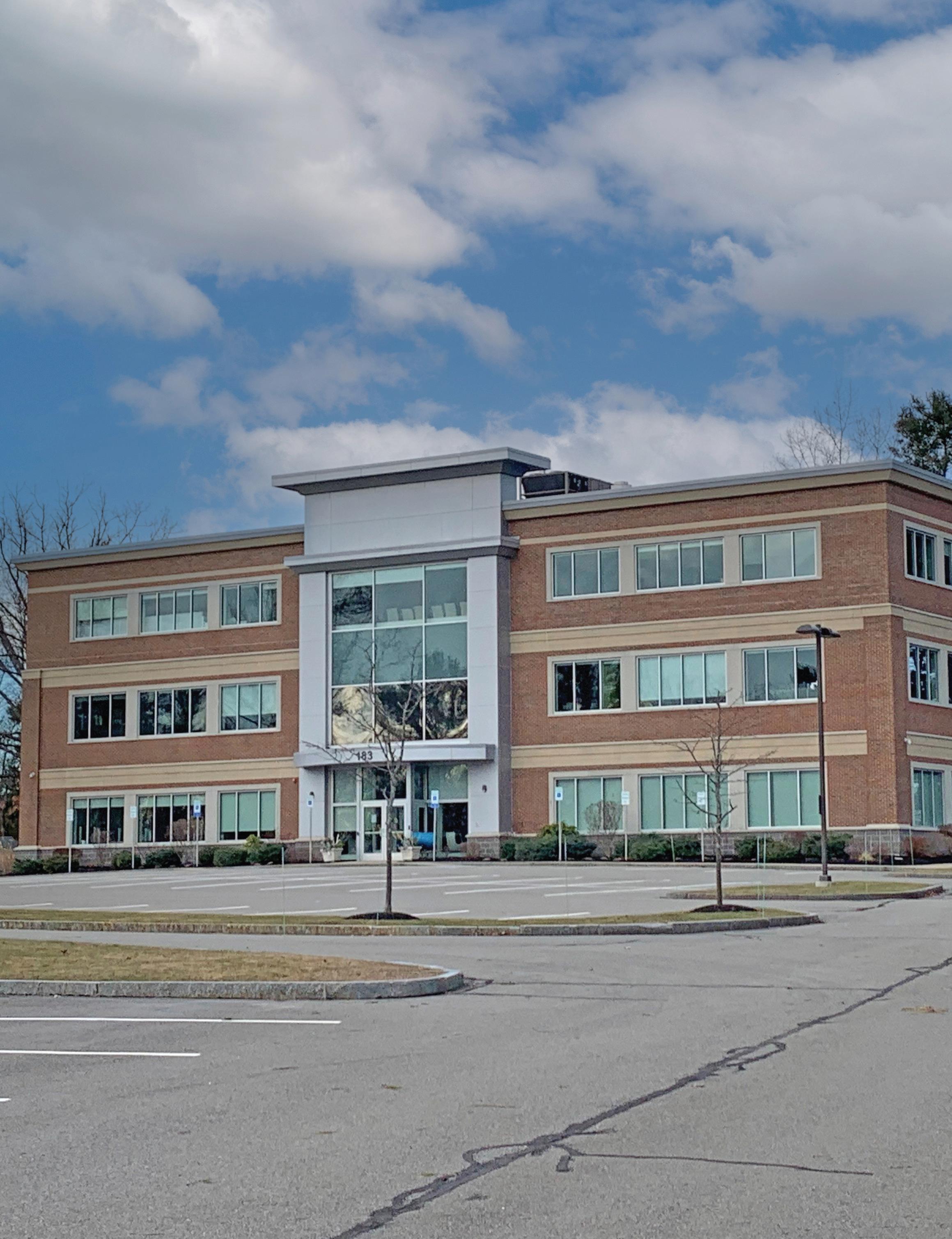
The office market space in 2025 remained consistent with key major trends observed in 2024. Market data indicates that office vacancy decreased from 8.8% to 7.9% during this period reflecting proactive efforts by property owners, rather than a passive wait for demand to rebound. Asking rental rates also adjusted downward, decreasing from $14.98/SF NNN to $12.98/SF NNN. In response to tenant preferences, owners have increasingly focused on delivering higher-quality buildouts and enhanced building amenities aimed at supporting company culture and improving in-office experience. One example is Tuscan Village, in Salem, a combination of modern office design and extensive on-site amenities contributed to the full leasing of The Mercantile Building.
Smaller tenants continued to drive leasing activity, with spaces under 5,000± square-feet experiencing the strongest demand. This trend reflects ongoing efforts by many organizations to optimize space utilization rather than expand footprints tied to headcount growth. With the larger office users remaining limited in the market, landlord’s demonstrated increased flexibility by subdividing larger floor plates to accommodate smaller tenants. A notable example is the former Concord Monitor building that was acquired in late 2024, with plans to subdivide the 48,440± square-feet of existing office into multiple smaller suites to meet demand of professional services, medical users and local businesses.
The decline in Manchester’s office vacancy rate during this period was also influenced by the on-going conversion of office properties into residential use. Approximately 300,000 square-feet of office space has been removed from the market in recent years as part of broader efforts
to address the city’s housing shortage. This trend remains active, as demonstrated by the planned conversion of 43,000± square-feet at 1555 Elm Street, which is expected to deliver 40 residential units in 2026. Additional applications for office-to-residential and mixed-use developments are anticipated as this adaptive reuse trend continues.
New Hampshire’s tax structure, regulatory environment, and skilled workforce have positioned the state as an attractive alternative for companies facing rising costs in neighboring states, particularly Massachusetts. Several notable relocations and owner-user transactions illustrate this trend. Analogic Corp, a healthcare and security technology company previously headquartered in Peabody, Massachusetts for nearly 50 years, executed a lease for approximately 200,000 square-feet in Salem, with strong emphasis on their research and manufacturing operations. In another example Hooke Labs, a contract research organization, acquired the former ADP building in Salem building in early 2026, relocating their operations from Lawrence, Massachusetts.
Looking ahead in 2026, the I-93/Route 3 office market is expected to remain structurally softer than pre-pandemic levels, while maintaining overall stability with modest improvement in select submarkets and asset classes. Strategic growth initiatives are likely to continue shaping the corridor’s office environment, with an emphasis on quality over quantity, flexible space configurations, adaptive reuses and localized growth.

$14.33
The Seacoast industrial real estate market remains characterized by limited activity, cautious occupiers, and constrained development. Tenant demand is notably soft, with few active requirements across the size spectrum, from smaller users seeking approximately 1,000 squarefeet to larger companies requiring 100,000 squarefeet or more. Most industrial and warehouse users are maintaining their current footprints rather than expanding or downsizing, resulting in reduced overall market velocity.
As a result, industrial spaces are, in some cases, taking six months or longer to lease, a significant shift from prior years when availabilities were absorbed within days of coming to market. While opportunities to purchase remain scarce, leasing inventory, though still relatively tight, has begun to increase.
While 2025 saw the second consecutive year of rising vacancy, the market remains fundamentally healthy. The increase is driven not by tenant contraction, but by a modest rise in available space combined with muted demand.
Asking rents have seen little movement, largely due to limited overall inventory and a lack of high-quality options that would support meaningful repricing. Transaction volume has also remained light, prompting landlords to proceed cautiously with rent reductions. Instead, owners are demonstrating increased flexibility through concessions, including higher tenant improvement allowances, free rent periods, and the payment of full
commission fees for tenant-representation brokers, terms that historically have been uncommon practice in the Seacoast industrial market.
• High-bay warehouse space shows strongest resilience despite broader market softness.
• Modern specifications drive demand, particularly facilities with 30’+ clear heights, efficient layouts, and ample loading capacity.
• Tenant preference is shifting toward newer construction that supports operational efficiency and scalability.
• The Pease Tradeport demonstrates this trend, attracting major occupiers into recently built facilities: Two large, creditworthy users expanded in 2025, HCA (d/b/a Portsmouth Hospital) and Georgia-Pacific, reinforcing demand for institutional quality industrial space.
Looking ahead, the market is expected to experience another year without new speculative industrial construction. Elevated construction costs, combined with rent levels that do not support development economics, continue to deter new projects unless they are build-tosuit for specific users. Until demand strengthens materially, the Seacoast industrial market is likely to remain stable but slow, favoring well-located, high-quality assets while affording tenants increased negotiating leverage.

The Southern New Hampshire industrial market enters 2025 in a period of normalization following several years of exceptional growth. After record-low vacancy and rapid rental rate escalation from 2020 through 2023, conditions have recalibrated as new supply has delivered, tenant behavior has become more selective, and economic uncertainty has moderated expansion plans. While fundamentals have softened modestly, long-term demand drivers remain firmly in place.
Overall industrial vacancy in Southern New Hampshire stands at approximately 5.1% in 2025, up slightly yearover-year. This increase is largely attributable to recent construction deliveries and slower absorption among medium and large users. Even with this uptick, vacancy remains low by historical standards and reflects a more balanced market rather than oversupply.
Average asking lease rates have adjusted downward, over the past year to $9.58/SF NNN. This follows several years of sharp rent growth driven by severe supply constraints and elevated construction costs. Despite the correction, current rents remain well above pre-pandemic levels, underscoring the lasting repricing that has occurred across the market.
Leasing activity in 2025 was led primarily by smaller tenants. Businesses are increasingly favoring right-sized spaces that support efficiency and flexibility, resulting in strong demand for buildings under approximately 30,000 square feet. These smaller blocks continue to lease quickly, particularly those located near the I-93 and Route 3 corridors.
Conversely, demand for larger industrial spaces has softened. Medium and large-format buildings—especially those with functional limitations such as low clear heights, insufficient loading, or outdated layouts—are taking longer to absorb. This has contributed to negative net absorption in select submarkets and has given tenants greater negotiating leverage compared to prior years.
On the supply side, speculative development has slowed considerably. New construction in 2025 was largely limited to build-to-suit projects and owner-user expansions. With limited new inventory in the pipeline, the market appears positioned to tighten again as existing space is absorbed.
Southern New Hampshire continues to benefit from its strategic location and favorable business climate. Proximity to Greater Boston, combined with the absence of state income and sales taxes, remains a compelling advantage for companies seeking to manage occupancy and labor costs. These factors continue to attract both in-state expansions and inbound businesses from Massachusetts.
Interest rate conditions have also begun to shift. Recent Federal Reserve rate cuts have improved market sentiment and may encourage activity from buyers and tenants who delayed decisions amid uncertainty. While financing costs remain above historic lows, improved clarity around monetary policy has restored a degree of confidence.
Manufacturing and production-oriented users remain key demand drivers, distinguishing New Hampshire from markets more reliant on e-commerce logistics. Contractors, trades, and service-oriented businesses continue to support steady leasing activity.
Industrial sales activity in 2025 remained selective. Pricing for well-located, functional assets with strong tenancy held firm, particularly for owner-user opportunities and multitenant properties. Transaction volume, however, remains below peak levels as buyers and sellers continue to align expectations in a higher-rate environment.
Overall, the current cycle appears less like a downturn and more like a healthy reset. Vacancy and lease rates have normalized from unsustainable highs, while limited new construction and continued demand for smaller spaces support long-term stability. Quality industrial assets along the I-93 and Route 3 corridors remain well-positioned as the market moves into 2026 and beyond.

2025 5.1%
2024 4.8%
2023 4.8% 2022 1.8%
2025 $9.58
2024 $10.89
2023 $11.42
2022 $10.08
*As of 12/15/2025
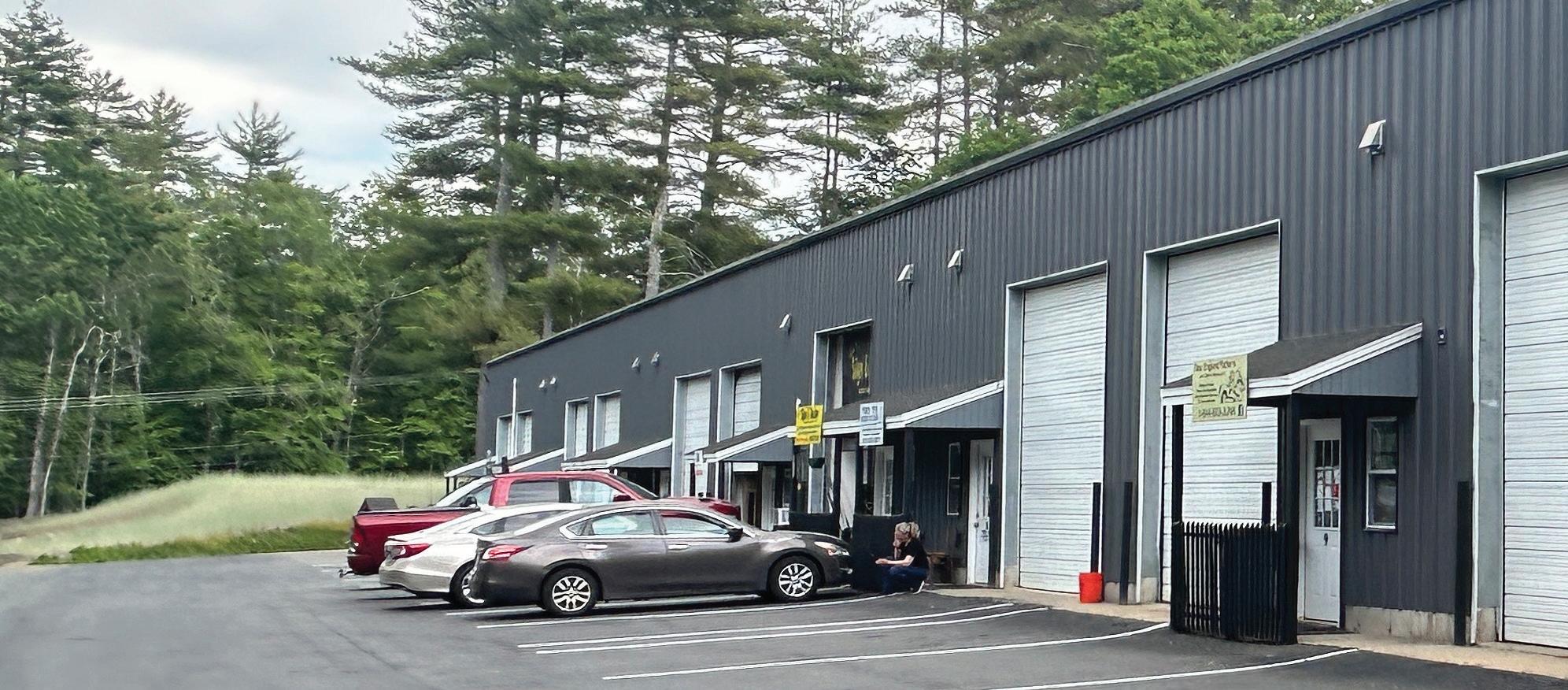
In commercial real estate, outcomes are often shaped by the quality of guidance behind a deal. Effective representation goes beyond completing transactions; it involves helping owners make informed decisions throughout the ownership cycle.
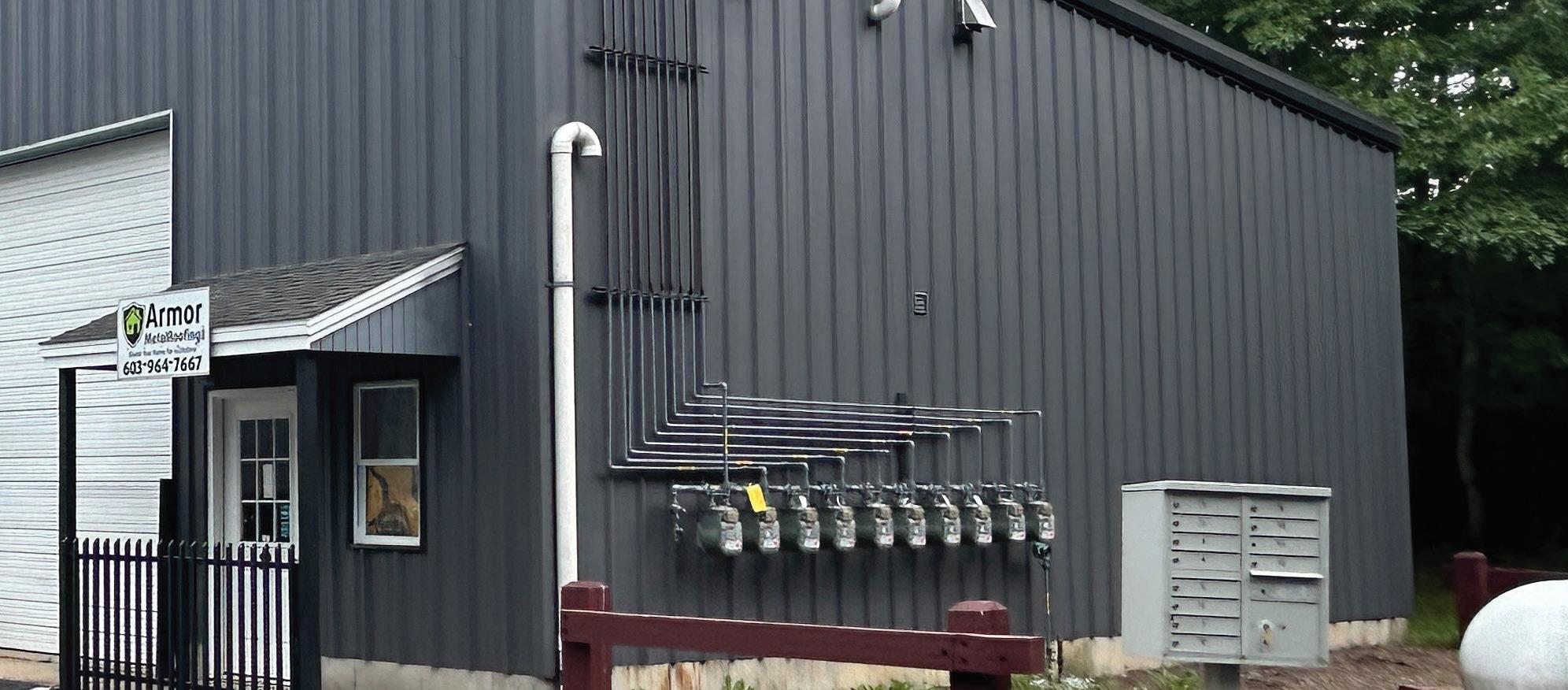
This approach was reflected in the experience of the new ownership at 232 Calef Highway, Barrington, New Hampshire. After completing an off-market, direct acquisition, the owners sought our support not only with leasing and a future sale, but with evaluating ways to improve the property’s overall performance over time.
At the time of purchase, the asset was leased at rates below prevailing market levels. In collaboration with ownership, a measured repositioning strategy was put in place. As leases expired, rental rates were adjusted to better reflect market conditions, space was released
thoughtfully, and leasing efforts were focused on improving tenant mix and occupancy. Over time, the property reached full occupancy and achieved a more stable operating profile. In advance of the sale, additional capital improvements were undertaken to enhance the property’s overall appeal, including updating units, repainting the exterior, resurfacing parking lot pavement, and completing roof repairs. These efforts further improved the asset’s attractiveness and marketability.
When the owners decided to sell, the groundwork laid during the hold period helped position the asset competitively. The property attracted strong interest and sold at a cap rate and pricing level consistent with well-performing assets in the market, illustrating how disciplined planning and market awareness can influence results from acquisition through disposition.
This case highlights why experienced commercial real estate guidance is particularly important in today’s competitive commercial real estate market. Demand for well-located, income-producing properties remains strong, and decisions related to leasing, tenant management, and sale timing can have lasting implications. Access to local market insight, pricing data, and transaction experience helps owners navigate these decisions more confidently.
Broader market conditions further underscore this need. Rental rates continue to trend upward amid sustained demand, while cap rates remain competitive due to the limited availability of fully leased, high-quality assets. In the Seacoast market specifically, demand is supported by a deep and diverse base of flex-space users, including contractors, electricians, tradespeople, and other service-oriented businesses. This wide variety of bluecollar and flex users creates durable demand for this product type, helping to position the asset favorably and providing a degree of insulation against broader market
risk. Investors who take a proactive, informed approach are often better positioned to identify opportunities and align their strategies with current market conditions.
Selecting the right commercial real estate professional is less about bold promises and more about steady guidance and thoughtful execution and clear communication. The experience at 232 Calef Highway reflects how a collaborative, disciplined approach, grounded in clearly defined goals, can improve property performance and support successful outcomes. Identifying objectives early allows both the owner and broker to align on next steps, whether the strategy is to hold the asset long term or position it for a near-term sale.
At The Boulos Company, we focus on working closely with owners and investors to apply local market knowledge in practical ways. In a complex and evolving commercial real estate environment, having a trusted advisor can help bring clarity and direction to each stage of ownership.

Kent White Principal Broker, Partner kwhite@boulos.com

Christian Stallkamp Senior Broker, Partner cstallkamp@boulos.com

Austin Stebbins Associate astebbins@boulos.com

Caitlin Burke Partner cburke@boulos.com

lkurdt@boulos.com

Katherine Gemmecke Senior Associate kgemmecke@boulos.com

cweymouth@boulos.com
To the best of our knowledge, we have included all Class A and Class B office and industrial properties greater than 10,000± square-feet that we consider investment-grade quality in the shown geographical areas. We do not include retail, hotels, car dealers, churches, municipal buildings, or schools in our survey. The total average asking NNN lease rate is the weighted average of the submarket average asking NNN lease rate. We have estimated the average asking lease rate based on our market knowledge when a submarket has no vacancy. Historically, Seacoast office and industrial market vacancy included sublease space; beginning with this report, vacancy reflects only direct, landlord-controlled space, consistent with our I-93/Route 3 Corridor reporting and aligned with industry standards. This survey was completed on December 15, 2025.

Drew Sigfridson, SIOR Managing Director of NH, Senior Partner dsigfridson@boulos.com

Roger Dieker Managing Broker, Partner rdieker@boulos.com

Nick DeNisco Associate ndenisco@boulos.com

Michael Tamposi Partner mtamposi@boulos.com

Transaction Manager kgazzara@boulos.com

Christopher Healey Partner chealey@boulos.com
Portsmouth, NH
1 New Hampshire Avenue Suite 207
Portsmouth, NH 03801
+1 603 427 1333
Manchester, NH
650 Elm Street Suite 102
Manchester, NH 03101
+1 603 333 1333
Portland, ME One Portand Square Suite 400
Portland, ME 04101
+1 207 772 1333
theboulosco
www.boulos.com
This report has been prepared in good faith, based on The Boulos Company’s current anecdotal and evidence-based views of the commercial real estate market. Although The Boulos Company believes its views reflect market condition on the date of this presentation, they are subject to significant uncertainties and contingencies, many of which are beyond The Boulos Company’s control. In addition, many of The Boulos Company’s views are opinions and/or projections based on subjective analyses of current market circumstances. Other firms may have different opinions, projections, and analyses, that are different from The Boulos Company’s current views. The Boulos Company has no obligation to update its views herein if its opinions, projections, analyses, or market circumstances subsequently change.
© 2026, The Boulos Company. All rights reserved. No portion of this document may be reproduced or transmitted without written permission from The Boulos Company.
Photos: Portsmouth cover and 145 Maplewood Avenue on p. 6 by David Murray