As we enter 2026, businesses across the country are navigating an economic landscape defined by uncertainty, but also by forward motion. In 2025, a lack of clarity around the economy, interest rates, workforce availability, technology disruption, and government policy caused many organizations to pause major decisions. While risks remain, companies are now moving ahead, making choices, and positioning themselves for what comes next. Questions persist around recession risk, the real impact of artificial intelligence, employee availability, and the role of government spending, but progress continues.
Here in Maine, many of these same challenges were felt, along with a few of our own. Tariffs, trade tensions with Canada, labor shortages, and housing constraints all influenced business decisionmaking across the state. Despite these headwinds, Maine’s commercial real estate market continued to move forward. Transactions closed, capital stayed active, and collaboration and creativity helped keep projects advancing. This resilience has created positive momentum, with opportunity present across property types and regions.
In this year’s Market Outlook, we highlight several key themes shaping Maine’s commercial real estate landscape: a continued flight to quality in office space; softening demand for large industrial properties alongside limited smaller-scale inventory; strong investment opportunities; and progress in housing development that remains constrained by supply and affordability challenges.
As The Boulos Company enters its 51st year in business, we do so with gratitude for the community that has sustained us and a clear focus on the future. We marked this milestone by giving back last year through our 50 for 50 initiative, while continuing to invest in our team, systems, and client analysis services. Our approach remains collaborative; when you work with Boulos, you benefit from the shared knowledge, experience, and connections of our entire team, all working toward your success.
We invite you to explore the insights and data that follow, where we share our perspective on market direction and where we see opportunity emerging.
Thank you for reading The Boulos Company’s 2026 Market Outlook. We are excited about 2026 and look forward to helping you succeed in the year ahead.
The Greater Portland office market showed signs of stabilization amid shifting dynamics in 2025, with performance varying significantly between Class A and Class B and suburban and downtown properties. The direct vacancy rate (excluding sublease space) increased from 8.1% to 8.84%, once again pushing the rate to its highest point in 12 years. Despite that increase, the market recorded approximately 139,000± SF of positive net absorption. This simply means that new supply outpaced demand, a position Greater Portland hasn’t experienced since pre-2020. Demand was offset by nearly 240,000± SF of new inventory—mostly due to the 200,000± SF Rock Row Medical Campus—resulting in a rise in the direct vacancy rate. While the rise in vacancy may show a difficult office market, it signals that underlying demand was positive. Overall demand was strong throughout 2025, just not enough to fully digest the new supply in a short period of time. In tandem, there were no office buildings removed due to conversions for the first time in eight years.
The sublease vacancy rate decreased for a second consecutive year, an encouraging signal for the market since sublease availability contributed to elevated vacancy levels post-pandemic.
Downtown Portland
The contrast between Class A and Class B properties is most notable in downtown Portland. The Class B market has shown steady improvement over the past four years as vacant office buildings were removed for conversion; however, tenants are increasingly gravitating toward the top tier of the market, leaning into the “flight to quality” trend as they seek higher-quality space, better amenities, and more central locations. Diversified Communications and RM Davis both signed leases in Class A buildings, demonstrating the move into higher quality buildings in premier locations. The flight to quality trend supported absorption and kept Class A supply comparatively tight, with vacancy falling from 5.6% to 4.1%. This resulted in a sharp increase in downtown Class B properties, however, as the vacancy rate increased from a ten-year low of 6% in 2024 to 12.41% at the end of 2025.
The increase in Class B properties pushed the overall downtown market vacancy rate up from 5.8% to 8.22%. The slowdown of conversions in the Class B market combined with tenant flight to quality placed additional pressure on Class B inventory, where older buildings continue to compete against recently renovated or better-amenitized alternatives in higherdemand locations. CONTINUED >
Significant Sale Transactions
Significant Lease Transactions
Suburban Markets
Unlike the downtown market, suburban markets generally experienced a decrease in vacancy rates and a healthy positive net absorption, speaking to both tenant demand and falling inventory. Rates adjusted from 11.36% to 9.99%. Sublease inventory also fell by roughly 30% after increasing dramatically since 2020. Much like downtown Portland, Class A markets outperformed B markets. Class A vacancy fell from 13.24% to 10.92% and all but one suburban submarket had a decrease in rates. Asking lease rates dropped slightly, by roughly 3%, but the flight to quality was another contributing factor in the market. This is promising for suburban properties, especially the Maine Mall submarket which had risen to the highest recorded rate in 20+ years. While Class B vacancy increased (not to the same degree as downtown Portland), the strong Class A suburban improvement carried the market. With an increased market size of 100,000± SF and a 10% drop in Class A vacancy, it’s clear that demand is exceeding new supply.
Vacancy Rates
Medical Office Space
The medical office space market has remained very tight over the last 8 years with limited inventory added despite healthcare market growth. As vacancy rates remained below 3% for several years, it was inevitable that new supply would be added—as previously mentioned, Rock Row in Westbrook added 200,000± SF of new medical space. While there is still vacancy in this new complex, and the Class A medical vacancy increased from 1.5% to 7.11%, there was 135,000± SF of positive net absorption in just the past 12 months and the increase in rates was entirely supply-driven due to historic high demand and low supply. The additional Class A supply may create higher vacancies in the near future for the Class B market as these tenants may prefer newer, modern facilities. How the Class B market responds depends entirely on its demand level moving into 2026.
Overall demand was strong throughout 2025, just not enough to fully digest the new supply in a short period of time.
2026 Outlook
Overall, the Greater Portland office market is becoming more predictable than in recent years, but long-term performance hinges on how effectively owners adapt to shifting tenant expectations and economic conditions. The flight to quality, location, and amenities will continue and may even affect the medical market moving forward. Class A markets are positioned to remain the healthier segment, supported by tenant preferences and limited new supply. Class B properties—particularly older downtown assets— may continue to face headwinds unless repositioned, improved, or repriced. The lack of new conversions last year adversely affected the downtown market which may need more conversions to keep up in 2026. We should expect continued absorption for the market as a whole. Well-priced, high-quality office space should continue to lease but is dependent on new supply staying in check. Despite the increase in rates last year, demand remains strong, showing that the office and medical office sectors are holding up well heading into 2026.
Suburban Medical
2025 Vacancy Rate Summary
Submarket Size
4,342,261
1,943,884
1,647,254
1,123,587
1,001,806
689,509
2025 Total Vacancy Rates
10,964,735 110,835 SF Since 2024 Total SQFT Occupied
Downtown Portland Class A Space & Asking Rates
Capital Markets Outlook
Maine’s capital markets and commercial real estate (CRE) landscape appears cautiously optimistic heading into 2026. Industry participants anticipate macroeconomic stabilization, easing interest-rate pressure, renewed investor appetite, and more realistic pricing expectations to rekindle deal-making and lending activity.
Maine’s CRE markets should emerge as especially appealing for investors. The state continues to see modest but improving population growth, supporting demand for commercial and mixed-use properties. At the same time, momentum in logistics, manufacturing, technology, healthcare, education, and renewable energy is helping diversify the economy and drive demand for asset types more commonly associated with larger metro areas.
On the financing front, many lenders and capital sources appear ready to resume CRE lending, particularly in supplyconstrained markets. If interest rates ease—as some economists anticipate by mid-2026—the cost of capital should improve, supporting new development, strategic acquisitions, and repositioning opportunities.
Challenges remain. National risks such as inflation, global trade uncertainty, and demographic shifts may temper growth in certain sectors. Despite these obstacles, capital seeking stable income and long-term value continues to find opportunity in Maine’s unique blend of economic resilience, lifestyle appeal, and manageable scale.
The attitude ahead is guarded yet positive—and for many, a strategic moment to invest in Maine. Partnering with experienced advisors will be essential in navigating this dynamic environment and aligning investment strategy with emerging trends. The Boulos Company stands ready to guide clients in identifying opportunities and making informed decisions in 2026 and beyond.
CHRIS PASZYC, CCIM, SIOR | MANAGING PARTNER, BROKER
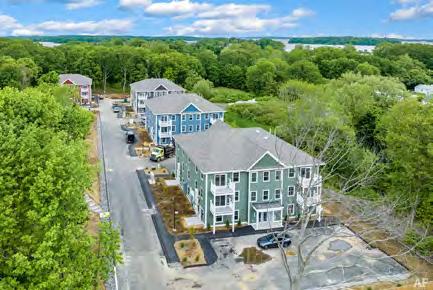
Winchester Woods, Portland
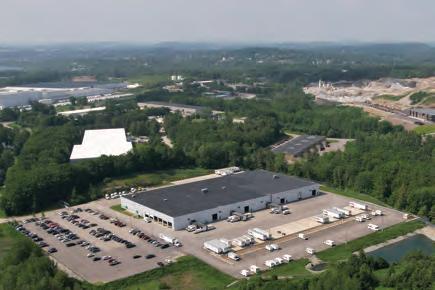
Gendron Drive, Lewiston
1 Market Street, Portland
Top Industrial Transactions
Top Retail Transactions
Top Office Transactions
Top Multifamily Transactions
Industrial Market Outlook
JON RIZZO, SIOR | PARTNER, BROKER
Sales
There were limited industrial investment sales in 2025, primarily due to three factors:
1. Seller complacency – content owning the portfolio with no need for a disposition
2. Low in place cap rates – deals not “penciling”
3. Limited inventory – smaller sized market with limited supply
Despite lower sale volume, continued interest from owner operators helped maintain the sale price per square foot levels we’ve seen over the last few years. The lack of available inventory persists and new construction continues to be an issue from both a cost and timing perspective. This theme extended from 2024 into 2025 and is unlikely to ease in 2026. With stagnancy comes opportunity. The fact that interest rates slightly declined and debt markets remain bullish in the industrial sector translates to stronger buying power. This is a favorable market for industrial real estate owners looking to sell.
There seems to be a recurring thesis for investment groups. Location, location, location—the age-old staple in real estate remains as true now as ever before. Investment groups are chasing sites that are strategically located, easily accessible from major transit routes, and include plenty of land area for either outdoor storage or future development. Building and structure specifications are certainly contemplated during a purchase. However location, infrastructure, and appropriate zoning appear to be higher on the investment criteria checklist than the building itself. The decision to enter a deal ultimately boils down to being at the right cost basis, as there is a ceiling to what a tenant will pay for a site and that balance is needed to keep the market healthy.
Leasing
Industrial leasing in 2025 was very similar to 2024. From a macroeconomic perspective, the industrial market saw negative absorption in the second quarter of 2025, the first negative quarter in over 15 years per Newmark’s Q2 2025 U.S. Industrial Market Conditions & Trends report published in August, 2025. The industrial sector
in Maine has remained somewhat stagnant. Strong demand for smaller flex space persists while larger, older product availabilities have stayed soft. Many of the large vacancies we saw in 2024 carried over to 2025 as well. The patience trend continues as tenants adapt to work with their existing space while evaluating a better longer-term solution—they are not settling for older vintage availabilities.
I see two driving factors for this stagnancy:
1. Market uncertainty, both from a workforce and space needs perspective
2. Desire for flexibility
Companies are working smarter by automating operations (e.g. artificial intelligence and robotics) or optimizing space (i.e. less square footage needs through process efficiency). This type of planning takes time, therefore companies are unwilling to commit to a longterm lease in a build-to-suit until growth and strategic plans are finalized. There is also a lack of infrastructure to support these automations and optimizations. Artificial intelligence requires significant power, which is hard to come by (or extremely cost prohibitive) in the state of Maine. This hurdle leads to the desire for flexibility. Tenants that are out of space, or in an inefficient space, will make do until their plans are solidified. This trend is resulting in increased renewals or short-term renewals, which landlords are willing to accept in a softened market. The lease rates seem to be holding somewhat strong with no significant decreases, but activity has undoubtedly slowed.
Looking ahead to 2026, creativity will be key to capitalize on the right deals. The Boulos Company’s advisors offer insight and ingenuity while navigating this process and identify the right levers to pull to get these deals done.
Significant Sale Transactions
51-67
70
Significant Lease Transactions
Location, location, location— the age-old staple in real estate remains as true now as ever before.
Multifamily Market Outlook
NOAH STEBBINS | PARTNER, BROKER
The 2025 multifamily market in Maine can be characterized by strong price appreciation, moderate rent growth, and a gradual shift toward a more balanced vacancy range as new deliveries come online after years of undersupply. At the same time, higher debt costs and rising operating expenses have compressed investor returns and slowed transaction velocity compared with pre pandemic levels. Despite these headwinds, 2025 has proved to be a fundamentally solid year for Maine’s multifamily sector, with resilient demand and continued investor interest in well-located assets.
On a national level, multifamily remains one of the top asset classes for commercial real estate investors in 2025, driven largely by long-term housing shortages, significant cost to buy premiums versus renting, and strong liquidity as an institutional asset class. As this article is written with about a month remaining in 2025, data from Maine MLS (excluding off market transactions) for 5+ unit multifamily properties show notable fluctuations in year-over-year percentage changes in total sales volume: transactions decreased by 30.77% from 2022 to 2023, then increased by 22.22% from 2023 to 2024, and surged by 618.18% from 2024 to 2025. This outsized rebound in 2025 may indicate a substantial amount of investor capital that has been patiently waiting on the sidelines, ready to deploy when pricing and opportunities align.
Looking ahead to 2026, new multifamily development deliveries are likely to further support a more balanced vacancy environment, which should translate into more modest, sustainable rent growth following the sharp post pandemic surge. At the same time, waves of maturing debt originated at historically low interest rates, combined with continued increases in operating expenses, are expected to put pressure on some owners and lead to a rise in distressed or motivated seller multifamily assets coming to market, potentially contributing to more stabilized pricing. Demand for workforce and value add housing is expected to remain strong, as value-add strategies that focus on operational improvements, better management, and targeted unit upgrades—rather than major capital intensive redevelopment—continue to be a key lever for driving rent growth and enhancing returns.
The Boulos Company is here to guide you through this volatile and dynamic environment, helping you stay on top of market dynamics and opportunities. In 2025, The Boulos Company completed 14 multifamily transactions with a total sales volume of $46,931,966.
Strong fundamentals, resilient demand, and returning capital continue to define Maine’s multifamily market.
Significant Sale Transactions
ADDRESS
2 Conway Street
1 Hudson Street
99 Franklin Street & 1 Longrale Park
2 Oak Street
$57,000,000
$49,300,900
$19,000,000
$18,011,000 Hartley Street & Tall Pines Drive
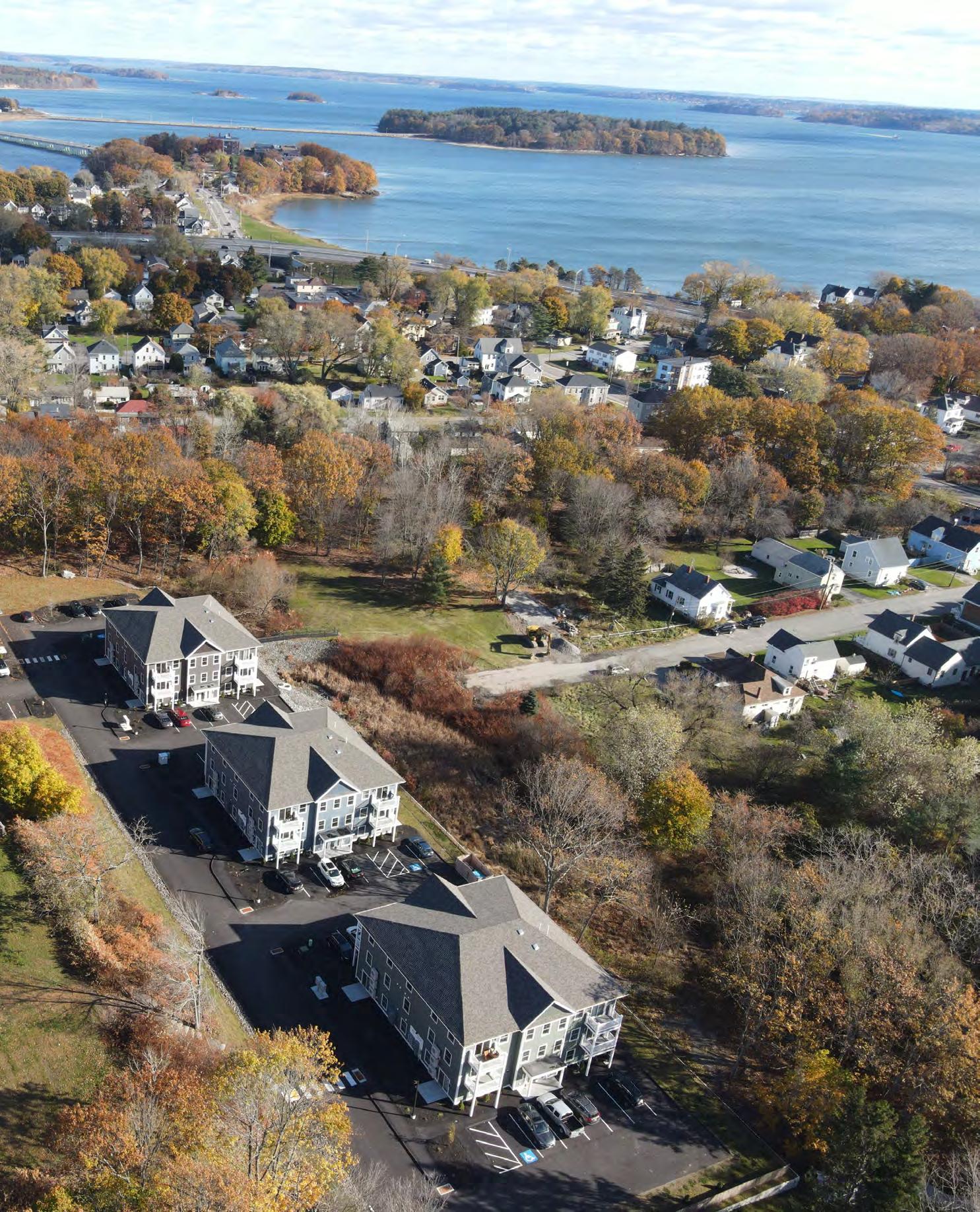
Winchester Woods
12 Windjammer Way
$13,162,000
$12,100,000
$9,925,000 Briarwood Drive
984 Spring Street
13-17 Triangle Drive and 398 Old County Road
25-27 Marston St.
76-86 Spring Street
16 Patriots Lane
106 Granite Street
184 Ranall Road
$9,372,275
$6,000,000
$5,400,000
$5,250,000
$4,850,040
$3,975,000
$3,879,915
$3,850,000
Maine Multifamily Sales 5+ Units
Retail Market Outlook
DEREK MILLER | PARTNER, BROKER
The retail sector continued its run as the most durable and consistent performer among the traditional real estate asset classes in 2025. While office continues to lag below preCOVID occupancy levels (less so in Maine than nationally, I might add) and industrial demand has plateaued, retail has remained remarkably resilient—both in terms of leasing activity and investor appetite. This is welcome news for a sector that has spent the past several years grappling with store consolidations, a wave of bankruptcies and closures (headlined by Joann and Big Lots in 2025), and the ongoing shift toward online shopping and the age of Amazon.
Nationally, retail vacancy rates are at or near their lowest levels since CBRE began tracking the sector in 2005, currently estimated at roughly 4.6%. The market’s resiliency is driven in part by limited new construction and sustained consumer demand for brick-and-mortar shopping. Construction costs have created a bottleneck for new retail development, with new shells often running $300–$500/ SF, meaning only a handful of markets in Maine and New England can justify ground-up projects. This dynamic has kept demand strong for existing centers. And while there are fewer high-quality national retailers in expansion mode—and those that are know the leverage they wield—we continue to see competitive demand for 20,000–40,000 SF vacancies across northern New England, particularly when anchored by grocery or value-driven retailers. Ocean State Job Lot has been very opportunistic in filling the void created by Big Lots’ closure, both in purchasing leases through their bankruptcy and signing new deals. In Maine, we have also seen bargain retailers Renys and Marden’s add locations in the past year. The former Joann’s suite at the Topsham Fair Mall was leased by a local furniture retailer after a very short marketing campaign. I expect this trend to continue and keep upward pressure on retail rents, especially in Southern Maine where demographics are strongest.
In conversations with several large landlords in Maine and New England, a consistent theme that emerged was the continued growth and expansion of “med-tail” businesses and the broader health and wellness sector. This subset includes med spas, dental and veterinary practices, and traditional medical providers that seek to be closer to the patients they serve, such as infusion centers and dialysis clinics. Landlords have welcomed this shift, as these tenants tend to be highly “sticky”—meaning that, due in part to the expense of building out their spaces, once a location is open and profitable, relocation is rare. This trend has also allowed retail landlords to further diversify tenant mixes
within shopping centers, reducing exposure to the more dynamic and sometimes volatile nature of traditional retail. While large-scale conversions of retail to medical can be challenging due to unique infrastructure requirements for larger practices, most of the recent expansion has occurred in smaller suites under 10,000 SF, with the 3,000–6,000 SF range emerging as the sweet spot. Many of these groups are well capitalized, tend to grow through private equity, and are less sensitive to rent per square foot than traditional soft goods tenants.
The grocery sector remains the dominant force in the retail landscape, as centers anchored by daily-needs providers consistently outperform those without them. To that end, we have seen continued expansion from regional powerhouses like Hannaford and Market Basket in Maine—Hannaford with new smaller-format stores in rural locations, and Market Basket with a new-construction flagship planned at The Downs development in Scarborough. A new entrant to the market, Aldi, has gained traction with its smaller, more nimble footprint (typically 10,000–20,000 SF), allowing it to break through traditionally high barriers to entry. Aldi has leased a Portland location and has additional expansion plans underway. In Brunswick, Hobby Lobby has leased a large portion of the former Sears box at the Cooks Corner Shopping Center—anchored by Hannaford—and is slated for a Q2/Q3 2026 opening. In addition to their strong leasing draw, grocery-anchored centers in secondary and tertiary markets have captured disproportionate investment attention, often trading at tighter cap rates than comparable strip centers in the same markets.
Against a backdrop of macro uncertainty, higher interest rates, and shifting consumer behavior, the retail sector has proven once again that it is far more adaptive than many predicted. The narrative of a “retail apocalypse” continues to fade, replaced by a more nuanced and durable model: smaller footprints, diversified tenancy, medical-adjacent uses, and an emphasis on convenience-based shopping. For Maine and New England, the story is less about reinvention and more about refinement. Retail here has never been defined by sprawling mall developments or overbuilt corridors; it has been measured, pragmatic, and anchored in locally tailored demand. As consumer expectations evolve and developers chase yield, our region is well-positioned to continue outperforming—quietly, steadily, and in ways that reward both investors and occupiers willing to engage with the retail landscape here in Maine.
Significant Sale Transactions
Significant Lease Transactions
Retail vacancy rates are at or near their lowest levels since 2005, driven by limited new construction and sustained demand for brick-and-mortar space.
Beyond the Peak Season: Navigating New Realities in Maine Hospitality
ROY DONNELLY | ASSOCIATE BROKER
Hospitality and tourism are cornerstones of Maine’s economy, contributing over $9 billion to the state’s total economic output and providing roughly one in every six jobs in the state. This impact is felt up and down the coast and well into inland parts of the state; striking geography, waterfront, and comfortable summer weather all draw disposable income to Maine and contribute significantly to the state’s tax base.
Post-COVID, Maine’s hotel and lodging establishments, reported strong rebounds. Rates and occupancy jumped statewide with the resurgence of leisure travel in 2021 and 2022. Lodging tax receipts, as a proxy for hospitality sales, nearly doubled from the lows of 2020, far outpacing the swing seen in aggregate sales tax receipts in the state. In fact, for much of the past twenty years, growth in lodging has outpaced growth in other forms of sales tax collected by the state of Maine.
Lodging Tax Reciepts
However, both the growth in lodging tax receipts and its relative position among other forms of sales tax collected have slipped since 2023. Spending on hotel rooms is more discretionary than other forms of consumption. The inflation coming out of COVID’s recovery has proved to be sticky and the pressure on consumers has trickled down into Maine’s hospitality market.
The larger story is how different markets are faring in this re-balancing. Unsurprisingly, Bar Harbor, Portland, and the state’s southern beach towns continue to lead the way in volume:
2024 Lodging Tax Collected
Maine’s largest hospitality markets as ranked by 2024 lodging tax receipts. 2025 data by municipality was not available at the time of the writing of this article. Bar
$150,208,016
South Portland
Midcoast (Belfast, Camden, Rockland)
Augusta
Boothbay Harbor
Freeport
Lewiston-Auburn
Waterville
Ellsworth
$49,334,652
$47,317,204
$30,392,066
$23,876,458
$22,802,456
$20,522,850
$18,020,342
$15,870,138
$12,624,044
More interesting is the re-shuffling of the state’s fastestgrowing hospitality markets. Acadia National Park, which has become more nationally popular post-COVID, continues to outperform and draw crowds. South Portland’s rise is less
Editor’s Note:
This article was developed in conjunction with Migis Hotel Group, a boutique third-party hospitality management company. Special thanks to Phil Kronenthal and Paul Raudonat for their expertise and guidance teasing out key themes in Maine’s hospitality market.
obvious, but Portland, as the state’s other darling market post-COVID, is likely drawing enough attention to increase rates and occupancy by the interstate-serviced and slightly more affordable South Portland and Maine Mall areas.
2024 YoY Growth in Lodging Tax Collected
The fastest growing hospitality markets seem to be centered on Acadia National Park, Portland, and greater consumer resilience in the market for luxury rooms.
cycle. Owners looking to retire, rebalance portfolios, or avoid the headache of major renovation underpin most of the state’s largest hospitality sales to date in 2025:
2025 Largest Hospitality Sales
Consistent with the narrative inflationary pressure felt by consumers, it also appears that markets with a greater share of “luxury” rooms have outperformed markets with more mid-scale or economy rooms. In southern Maine, Kennebunkport, York, and Ogunquit have continued to see growth where Old Orchard Beach and Wells have slipped. Central Maine markets like Augusta and Waterville are benefitting from stable anchors of state government and higher education, while Bangor and Lewiston may be feeling the pinch with reduced international travel and less “spillover” from Acadia and Portland, respectively.
While Maine continues to draw attention and hospitality dollars, there is a gap emerging across individual markets –tracking this re-balancing over time will become increasingly important for owners and investors looking to stay ahead of changing consumer preferences.
2025 Transactions and New Construction Overview
Regardless of shifting individual market growth and consumer preferences, transactions are still largely driven by a particular property’s position in its ownership
Source: Maine RETTD, hospitality sales >$3M, desktop research
New construction and delivery of renovated hotel rooms has slowed from recent highs post-COVID, with new product focused on extended stay and boutique luxury properties:
New and Renovated Hotels
PROPERTY TOWN NEW/ RENOVATION DATE ROOMS LivAway Suites Scarborough New 9/1/25 110 Asticou Hotel Northeast Harbor Renovation 7/15/25
Maine’s natural beauty and proximity to northeast population centers will continue to support the hospitality and tourism industry in the state. However, changing preferences, outsized performance in the luxury segment, and inflationary pressures felt by consumers and operators may widen divides that are starting to emerge.
The fastest growing hospitality markets seem to be centered on Acadia National Park, Portland, and greater consumer resilience in the market for luxury rooms.
Maine Restaurants in Transition
CHRIS GALLAGHER | BROKER
At the best of times, the restaurant industry is not for the faint of heart. It takes hard work, flexibility, and a good bit of luck to achieve success. This past year has exemplified the challenges restaurants face on a day-to-day basis. Micro and macro-economic trends, as well as geopolitical instability, have led to a volatile operating environment for Maine’s restauranteurs. This mirrors the experience of operators nationwide.
On a local level issues such as higher minimum wages and the unknown effects of the recently enacted 2025 Maine Family Paid Leave Act also add to the requirements going into 2026. While these obstacles have continued to cause headaches for 2025, the economy remains strong, unemployment low, and there are many reasons to be optimistic heading into 2026.
The end of 2024 brought a rash of restaurant closures, including stalwarts such as Local 188 (Portland), Salvage BBQ (Portland), and the Muddy Rudder (Yarmouth). It was hoped that 2025 would usher in a better operating environment and a more active consumer. However, many of the challenges of 2024 have remained, along with the addition of several other complicating factors. Tariff wars, seasonal visa restrictions, and economic uncertainty have joined inflation, labor costs, and regulatory uncertainty as obstacles to navigate. These factors have combined to create operational hurdles and margin compression that require creativity and ingenuity to overcome.
New tariffs that were instituted in early 2025, and the subsequent responses to those tariffs have resulted in significant increases in the cost of certain specialty ingredients (Olive Oil, Chocolate/Cocoa, Imported Nuts and Cheeses, Seafood, Coffee, etc.) as well as staple row crops (Soybeans, Corn, and Wheat). The tariffs have also resulted in supply chain disruptions that have made sourcing product unpredictable. Couple this with higher insurance costs, wages, and utility bills putting pressure on the bottom line and the result has been the loss of additional local favorites. Anthony’s Italian Kitchen, Dock Mali Noodle Bar, Paper Tiger, Bake Maine, Anneke Jans, and Henry’s Public House are among those that have closed their doors in 2025.
Inevitably though, cyclicality is to be expected in the restaurant industry, and where doors close, new ones tend to open. Notable additions to the local restaurant scene in 2025 include Ram & Bull (Brunswick), State Line Lobster (Kittery), and Mornings in Paris (Falmouth Location), as well as long awaited Portland additions Douro and Dry Dock, among others. Several others have successfully changed
hands, including The Village Tavern (Kennebunk), Fish Bones (Lewiston), and Warren’s Lobster House (Kittery), now operating as Warren’s Seafood & More.
As far as local outposts of national chains are concerned, 2025 was also a bit of a mixed bag. Though Maine lost its only Cracker Barrel, all three Elevation Burger locations, Ruby Tuesdays in Presque Isle and Brewer, and two planned and approved Wendy’s locations, other chains have expanded their footprint. These include Popeye’s, Chick-fil-A, Playa Bowl, and Oola Bowl. Nationally, despite chains such as Denny’s, TGI Friday’s, Arby’s seeing contraction, many are aggressively expanding, such as Raising Cane’s, Dave’s Hot Chicken, Wingstop, and CAVA.
While overcoming adversity will always remain part of operating a successful restaurant, there are many reasons to be hopeful heading into 2026. GDP growth remains strong, and consumers indicate a pent-up demand for restaurant meals. The National Restaurant Association projects $1.5 trillion in U.S. sales in 2025, a 4% increase over 2024. Increased clarity on tariffs and trade and the potential for slowing inflation should also help operations at the margin. Technology and AI are also beginning to influence the industry and could create increased efficiencies in staffing, planning, and automation. AI forecasting, automated prep systems, inventory optimization, labor scheduling, and kitchen robotics could lead to significant profitability gains. All these factors, coupled with a resilient supply of local restauranteurs and aggressive chain expansion, should keep the restaurant market on solid footing in 2026.
For those restauranteurs with real estate decisions to make in 2026, it will be important to have the best access to availability, both on and off market, as well as the right data for proper analysis. Statistics such as traffic counts, store location rankings, and local demographics are paramount in choosing the right sites, while local knowledge plays a significant role in finding a site that will best satisfy local appetites. Proper consultation throughout this process will be essential in the current economic environment.
Over the past decade, the restaurant industry in Maine has consistently punched above its weight class and should continue to do so. As restaurants close, new ones will take their place and keep the scene fresh and relevant. Consumer preferences have changed, but at the end of the day, it’s a service industry. Those providing the best service and the best experience will continue to flourish. Looking forward to what 2026 will serve up.
Cyclicality is inevitable in this industry—where doors close, new ones almost always open.
Central Maine Outlook
Standing in stark comparison to many of their contemporaries in southern Maine, most cities and towns in Kennebec and Androscoggin counties do not face the same regulatory pressure on business and development. Many investors have taken notice and continue to direct their money to endeavors in the pro-business environment. Local economic developers, particularly Jay Brenchick in Auburn and Keith Luke in Augusta, have done a terrific job driving new business and development in their respective municipalities by removing red tape around business growth and development and supporting new growth with incentives and municipal partnership and support.
Lewiston-Auburn has seen a number of new projects break ground and reach completion. Gendron Realty delivered a 42,000 square foot expansion to the warehouse facility at 115 Logistics Drive in Auburn and a multi-tenant industrial building at 19 Gendron Drive in Lewiston that was entirely pre-leased prior to completion. Great Falls Construction is wrapping up their mixed-use project at 186 Main Street in Auburn, a former city-owned property that will now provide 17 housing units and two commercial units. Pennsylvaniabased A.R. Building Co. has plans for a 160-unit housing campus off Stetson Road and the former Spurwink building and land on Danville Corner Road in Auburn is planned for additional housing by a local developer.
In Waterville, there are two notable projects set for 2026. North River Company is nearing completion on
Phase I of their redevelopment project of the Lockwood Mill. Phase I will deliver 65 units in partnership with Waterville Housing with first-floor commercial space. The Head of Falls Village development led by Renewal Housing Associates, LLC and Northland Enterprises is set to break ground on a large-scale mixed-use project that will feature 63 housing units and commercial space on Temple and Front Streets downtown.
In Augusta, the state capital has a slew of new development and redevelopment projects in the pipeline. Notably, the former K-Mart Plaza on Western Avenue has been demolished and has a new ownership group set to step in. Capitol Heights Center, LLC, a partnership led by George Campbell, has plans that include a mixeduse residential building, a hospitality component, and traditional retail space – joining the brand-new VIP Auto Parts and Popeyes Louisiana Chicken’s second Maine location under construction. Other notable projects include a 40-key hospitality conversion of the Olde Federal Building, a 26-unit residential conversion of two buildings on Water Street by Hemlock House Development, and a multi-phase redevelopment of the former Augusta Police Department site – a 102-unit affordable housing project proposed by Developer’s Collaborative.
Due to growing populations and savvy municipal support, I expect to see continued growth in development and investment in Kennebec and Androscoggin counties.
CHRIS ROMANO | ASSOCIATE
Many investors have taken notice and continue to direct their money to endeavors in the pro-business environment.
Maine Brokerage Team
Andy Gerry Chief Operating Officer
Nate Stevens Managing Partner, Designated Broker
Greg Boulos Managing Partner
Chris Paszyc CCIM, SIOR Managing Partner
Tony McDonald CCIM, SIOR Partner, Broker
Derek Miller Partner, Broker
Jon Rizzo SIOR Partner, Broker
Noah Stebbins Partner, Broker
Joseph Italiaander Broker
Samantha Marinko Broker
Brice O’Connor Broker
Roy Donnelly Associate Broker
Claire Richardson Associate Broker
Chris Romano Associate
Tripp Clark Associate
Emmett Frueh Associate
Sarah Grillo Transaction Coordinator
Gina Margo Marketing Coordinator
Bri Scalzone Executive Assistant
Jason Gomez Operations Specialist
Drew Sigfridson SIOR Senior Partner
Dan Greenstein Partner, Broker
Nick Lucas Partner, Broker
Craig Young CCIM Partner, Broker
Cameron Foster Broker
Chris Gallagher Broker
John Finegan Associate Broker
Reese McFarlane Associate Broker
Sasha Phillips Associate Broker
Nate Roop Associate
Micki Francombe Senior VP of Administrative Operations
Tim Macrae Analyst
Kim Paquette Operations Specialist
Notes & Credits
Information contained herein is researched and provided by our team, analysts, and brokers.
We have included, to the best of our knowledge, all Class A and Class B office buildings in the Greater Portland area. Please feel free to contact us if we have inadvertently missed one.
Survey data collected as of 12/1/2025. Rents are shown as modified gross and defined as all expenses included, except electricity for lights and plugs, tenant’s janitorial, and parking. Rents not quoted as modified gross were converted by the addition of an estimated $1.50 for HVAC and common area maintenance expenses as reported by owner.
Retail space is not included in this survey.
Net absorption measures the total amount of SF leased over a period of time minus space vacated during the same period.
Rental rates outlined in this survey reflect rates for direct lease availabilities. When a range of rental rates
About Us
The Boulos Company is a commercial real estate firm dedicated to serving owners, investors, and tenants, blending Maine and New Hampshire market knowledge with a global network.
We offer a full array of services including leasing and sales; property, facilities, project, and investment management; valuation, appraisal, research, investment strategy, and consulting.
In addition to our depth of services, we also offer a deep bench of qualified, professional agents. Our partners
are available, the prevailing rate is reported. Only direct lease rates are quoted in cases when direct and sublease space is available. When only sublease space is available, no rate is quoted. Subleased spaces that were occupied as of 12/1/2024 were not included as part of this Survey.
Definitions of Class A and B office buildings vary between markets. We define Class A office buildings as those that are investment-grade properties that feature a unique design with immediate access to parking. They must be ADA-compliant and benefit from highly professional property management. Class B office buildings are considered to offer utilitarian space without special amenities, are of ordinary design, except for historic, renovated buildings, and feature good maintenance with all floors handicapped accessible.
Please note that outside the context of this report, the Greater Portland market uses many definitions and thus any building noted herein may, as a matter of opinion, fall into a different category in the open marketplace.
and experienced brokers are seasoned experts in every commercial real estate sector, from office and retail to industrial, investment, and multi-unit property; and our systemized, in-depth training program ensures that their knowledge is shared with each new generation.
All of this reach, experience, expertise, and depth adds up to market leadership, and for clients, that means success. When it comes to New Hampshire and Maine commercial real estate opportunities, Boulos brings you more.
Our Core Values
Our approach remains collaborative; when you work with Boulos, you benefit from the shared knowledge, experience, and connections of our entire team, all working toward your success.
EXCELLENCE
Exceed expectations through diligence, expertise, and exceptional service.
PASSION
Embrace and explore elements of life and work that bring you joy.
RESPECT
Consider all voices. Value all contributions.
COLLABORATION
United in the service of our clients.
INTEGRITY
Do the right thing. Period.
BALANCE
Work hard. Play hard.
CONNECT WITH US
@thebouloscompany @thebouloscompany @theboulosco
A COMMERCIAL REAL ESTATE PODCAST
Explore Maine’s commercial real estate world through in-depth interviews with its movers and shakers. Hosted by Greg Boulos and various guests, this is a must-listen for anyone interested in this industry. Listen on boulos.com/theboulosbeat , Apple Podcasts, Spotify, or Pandora
TRUSTED KNOWLEDGE FROM THE TEAM
These short videos highlight insights from our Boulos team, breaking down common commercial real estate terms and addressing frequently asked questions.
Portland, ME One Portland Square, Suite 400 Portland, ME 04101
+1 207 772 1333
Portsmouth, NH 1 New Hampshire Ave., Suite 207 Portsmouth, NH 03801
+1 603 427 1333
Manchester, NH 650 Elm St., Suite 102 Manchester, NH 03101