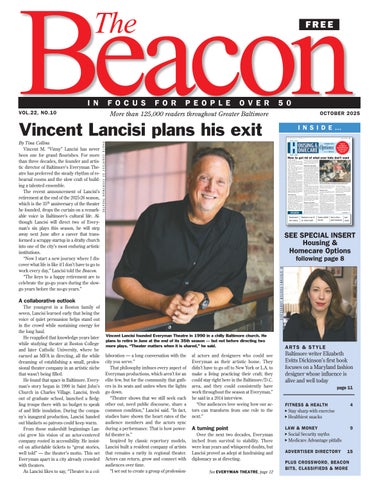

Vincent Lancisi plans his exit
By Tina Collins
Vincent M. “Vinny” Lancisi has never been one for grand flourishes. For more than three decades, the founder and artistic director of Baltimore’s Everyman Theatre has preferred the steady rhythm of rehearsal rooms and the slow craft of building a talented ensemble.
The recent announcement of Lancisi’s retirement at the end of the 2025-26 season, which is the 35th anniversary of the theater he founded, drops the curtain on a remarkable voice in Baltimore’s cultural life. Although Lancisi will direct two of Everyman’s six plays this season, he will step away next June after a career that transformed a scrappy startup in a drafty church into one of the city’s most enduring artistic institutions.
“Now I start a new journey where I discover what life is like if I don’t have to go to work every day,” Lancisi told the Beacon
“The keys to a happy retirement are to celebrate the go-go years during the slowgo years before the no-go years.”
A collaborative outlook
The youngest in a Boston family of seven, Lancisi learned early that being the voice of quiet persuasion helps stand out in the crowd while sustaining energy for the long haul.
He reapplied that knowledge years later while studying theater at Boston College and later Catholic University, where he earned an MFA in directing, all the while dreaming of establishing a small, professional theater company in an artistic niche that wasn’t being filled.
He found that space in Baltimore. Everyman’s story began in 1990 in Saint John’s Church in Charles Village. Lancisi, fresh out of graduate school, launched a fledgling troupe there with no budget to speak of and little insulation. During the company’s inaugural production, Lancisi handed out blankets so patrons could keep warm.
From those makeshift beginnings Lancisi grew his vision of an actor-centered company rooted in accessibility. He insisted on affordable tickets to “great stories, well told” — the theater’s motto. This set Everyman apart in a city already crowded with theaters.
As Lancisi likes to say, “Theater is a col-

laboration — a long conversation with the city you serve.”
That philosophy imbues every aspect of Everyman productions, which aren’t for an elite few, but for the community that gathers in its seats and unites when the lights go down.
“Theater shows that we still seek each other out, need public discourse, share a common condition,” Lancisi said. “In fact, studies have shown the heart rates of the audience members and the actors sync during a performance. That is how powerful theater is.”
Inspired by classic repertory models, Lancisi built a resident company of artists that remains a rarity in regional theater. Actors can return, grow and connect with audiences over time.
“I set out to create a group of profession-
al actors and designers who could see Everyman as their artistic home. They didn’t have to go off to New York or L.A. to make a living practicing their craft; they could stay right here in the Baltimore/D.C. area, and they could consistently have work throughout the season at Everyman,” he said in a 2014 interview.
“Our audiences love seeing how our actors can transform from one role to the next.”
A turning point
Over the next two decades, Everyman inched from survival to stability. There were lean years and whispered doubts, but Lancisi proved as adept at fundraising and diplomacy as at directing.








ARTS & STYLE
Baltimore writer Elizabeth Evitts Dickinson’s first book focuses on a Maryland fashion designer whose influence is alive and well today page 11
Vincent Lancisi founded Everyman Theatre in 1990 in a chilly Baltimore church. He plans to retire in June at the end of its 35th season — but not before directing two more plays. “Theater matters when it is shared,” he said.
Do we really want to know?
It’s a story right out of a disaster movie: A pilot in the cockpit of a civilian airliner suddenly cuts fuel to the engines of a plane in flight, risking the lives of all aboard as well as innocents on the ground.
Unfortunately, it’s not a movie. At least, not yet. It really happened — not once, but twice in the last two years.
In July, an Air India flight headed to London with more than 200 passengers aboard crashed less than a minute after takeoff, killing all but 1 aboard and 19 on the ground.

Alaska Airlines flight jumped up and pulled the emergency fuel cut-off handles. In that case, the flight’s pilots were able to restore power in time and remove the offender from the cockpit.
By Stuart P. Rosenthal
Investigators found that emergency switches — designed to cut power to the engines on the ground in the event of a fire — were suddenly engaged while the plane was just starting to gain altitude, causing the crash.
On the flight recorder, one pilot asks the other why he “cut off” the fuel; the other denied it, but then both switches were moved back into the proper positions within seconds. It was too late.
While we don’t know yet (and may never know) why that pilot acted as he did, in an eerily similar situation in October 2023, we do know why a pilot in a cockpit attempted to cause a plane to crash.
An off-duty pilot riding in the cockpit of an
According to a recent story in the Washington Post, the man told police after the incident that he struggled with depression, had taken psychedelic mushrooms two days prior to the flight (presumably so he would feel better), and hadn’t slept in 40 hours. He said he thought he was dreaming when he pulled the handles.
In a later documentary, according to the Post, he said that he hadn’t sought mental health treatment for his condition because he feared it would cost him his job.
The Federal Aviation Administration says it encourages pilots to seek help if they have a mental health condition. Further, it says the vast majority of those who disclose such conditions are not disqualified from flying as long as they obtain and maintain treatment.
That policy, however, is fairly recent, partly in response to a Germanwings flight in 2015 that was deliberately flown into a mountain by a co-pilot with a concealed history of depression and suicidal tendencies.

The Beacon is a monthly newspaper dedicated to inform, serve, and entertain the citizens of the Greater Baltimore area, and is privately owned. Other editions serve Howard County, Md. and Greater Washington, D.C.
Subscriptions are available via third-class mail ($12), prepaid with order. Maryland residents add 6 percent for sales tax. Send subscription order to the office listed below.
Publication of advertising contained herein does not necessarily constitute endorsement. Signed columns represent the opinions of the writers, and not necessarily the opinion of the publisher.
Publisher/Editor Emeritus – Stuart P. Rosenthal
President/Associate Publisher – Judith K. Rosenthal
Executive Vice President – Gordon Hasenei
Editor – Margaret Foster
Art Director – Kyle Gregory
Vice President of Operations – Roger King
Advertising Representatives
Jill Joseph, Steve Levin, M.K. Phillips, Alan Spiegel
Assistant Editor – Ana Preger Hart
Editorial Assistant – Tori Cleveland
Reportedly, federal authorities are currently investigating thousands of pilots who are suspected of concealing mental health and other conditions that might disqualify them for their jobs.
It’s a tough call for some pilots, I would imagine. It’s probably easier to deny that you are depressed or have another mental health condition than it is to admit you need help for something that could cost you your career.
On the other hand, if you are at risk of harming yourself — and others! — isn’t that more important?
And it’s not just pilots who might want to conceal a condition. Many of us may find ourselves facing a similar quandary.
While some memory loss is normal over time, we are told that Alzheimer’s and other dementias affect a growing percentage of us as we age. How much do we want to know if we are facing something like that, and when do we want to know it, when that knowledge could be a double-edged sword?
The question has become more urgent, due to recent advances in testing for Alzheimer’s disease. In May, the Food and Drug Administration approved the first blood test that can detect amyloid plaques, believed to be a harbinger of the disease.
If it indeed becomes easy and relatively inexpensive to screen for Alzheimer’s, how many of us will want to get that test, when a positive result could cost us our job, health
insurance and possibly keys to the car?
Won’t many prefer not to find out? After all, at this time the condition is not curable. The best treatments we have only delay the speed at which it progresses.
But research continues at a rapid pace, new treatments improve on older ones, and the earlier one starts taking them, the better they appear to work.
Furthermore, a window into even a bleak future has many benefits: We can decide to enjoy the life we have and check off more of our bucket lists, finish longdelayed projects, show our loved ones how much they mean to us, update our wills and financial plans, and tie up loose ends in our relationships.
Apparently, many older adults agree. I was somewhat surprised to see that a recent survey from the Alzheimer’s Association found that 95% of Americans 45+ would want to know if they have Alzheimer’s (despite concerns over having that knowledge), and nearly as many would want to take a blood test for the condition if it were available.
Each of us is the pilot of our own life, and we all face daunting challenges in the course of it. Perhaps the best course of action we can all take is to seek maximum self-knowledge, and to use that knowledge to make our lives — and those of others whom we affect — better.



Copyright 2025 The Beacon Newspapers, Inc.




S Canbean
A ome Care Expert x ert

Solo Agers: How Home nInvaluableSafetyNe e Care et Can be an Invalu
uable Safety Neet
a As the aging popul tion continues w to grow, , so does a lesser-discussed group: solo agers. These are older u i g w adults agin witho tclose family — no spouse, children or nearby n f loved ones — to rely o foor care or decision-makkiing.
t a uniq
This can often presen quue sw a set of challenges. Th t’ whhere etf f home care can be a safeety n foor v a this popul tion, proviiding not just u practical assistance b t also peace of n mind and critical co tinuity of care.
Why Solo Agers Are a Growing Concern
l o AARP
According t P, , 12% of adu ts aged 50 and older are solo agers — a figure expected to increase in the u coming decades. This gro p is more likely to:
cei a
• Experience delayys in re ivving r f timely care o foollow-up.
yp
a t hig ea • B at gher risk of isolattion and related health concerns. aviga glewi • Struggl with navvi atting complicated medical, insurance s w and legal system without a a y ad famil dvvocatte.
et Proffeessionals across care s ttings lexi a may encounter greatter comp ity u w whhen s pporting solo agers, especially during transitions of care or in the absence of a clearly identified emergency contact.
The Home Care A Addvantage
v Home care proviided by ff proffeessional caregivers offeers li solo agers the abi ity to maintain ce w independen whhile receiving reliable, person-centered support. i Benefifitsof caregivver assistance include:
a such as b thing, grooming, a ra meal prepa ation, medicattion a reminders and transportattion.
• Social connection:
l a Companionshiip th the ps u reduce loneliness and s pports emotional well-being.
va ui • Contin ity and obser ation: v Regular visits pro ide uni consistency and opport ities to notice early changes in condiition.
y
• An extra set of eyees and l ears: Hea th concerns can be v escalated to healthcare pro iders sw f or other profeessional whhen needed.
aboration with A Coll Agging Life Care Professionals
s w For solo ager with more complex care needs — or those a u wi witho t family consult tion —
y f if Aging L fe e Care Profeessionals nin can be a nvvaluable resource. y & N Famil Nuursing Care often g i y w collaboraates closel with A ing s, w f Liffe e Care Profeessional whho act as a s, ad a care coordin tor dvvocattes and decision-makkiing partners, to enable tf u seamless s ppor foor solo agers flif across all facets o fee.
What Sets Family & Nursing Care Apart
y & N Famil Nuursing Care is one of the oldest and most well-respected u va ces f resour foor pri ate dutty home id-A care in the M Attlantic region. sa a Whattsets u appart is our deep commitment to connecting clients di to in ivvidualized care, a rigorous a et caregiver v tting and mattching

compassion and respect. For solo agers, this mea a w k knnowiing th teven in the familyy, , they are not alone ans e absence of e.TToolearn more about Care suppor 410-697-820 familyynnursin
y & N how Famil Nuursing
s a rts older adults, call u at ea bsi urw si rv 00 o vi i itto we e it at ngcare.com.


v i t w u
• S ppor with daily liviing:
v i ce w Assistan with activiities
ps w hi process, and partners i with swproffeessional whho share our i u mission to suppport older adults witth

Health Fitness &
Health Fitness &
TAKE THE SMELL TEST
Get a free test in the mail from the Michael J. Fox Foundation that may predict Parkinson’s disease. A Bel Air man participates in its 15-year study to understand the condition
SMART SNACKS
Nuts, yogurt, avocado toast and bananas can keep you feeling full between meals
PREVENT KIDNEY STONES
Kidney stones cause sudden, intense pain. To prevent them, stay hydrated
To stay sharp, challenge your mind and body
By Lauran Neergaard
It’s official: Older Americans worried about cognitive decline can stay sharper for longer by exercising both their bodies and their brains and eating healthier.
That’s according to initial results released in July from a rigorous U.S. study of lifestyle changes in seniors at risk of developing dementia. People following a combination of healthier habits slowed typical age-related cognitive decline — achieving scores on brain tests as if they were a year or two younger, researchers reported in JAMA and at the Alzheimer’s Association International Conference.
It’s not too late to get started — study participants were in their 60s and 70s — and it doesn’t require becoming a pickleball champ or swearing off ice cream.
“It was the first time I felt like I was doing something proactive to protect my brain,” said Phyllis Jones, 66, of Aurora, Illinois, who joined the study after caring for her mother with dementia and struggling with her own health problems.
It’s too soon to know if stalling age-related decline also could reduce the risk of later Alzheimer’s or other forms of dementia. But Jones and other study participants underwent brain scans and blood tests that researchers now are analyzing for clues — such as whether people also saw a reduction in Alzheimer’s-related protein buildup.
“We’re all on a cognitive aging clock, and anything we can do to slow that clock down, to me, that is a significant benefit,” said Laura Baker of Wake Forest University School of Medicine, who led the study.
Good for the heart, good for the brain
Doctors have long encouraged physical activity and a healthy diet for brain fitness. Those steps fight high blood pressure, cholesterol, heart disease and diabetes, factors that increase the risk of dementia.
But until now the strongest evidence that specific lifestyle changes later in life could improve how people perform on brain tests came from a study in Finland.
Would it work for a more sedentary and culturally diverse U.S. population? With funding from the Alzheimer’s Association and the government’s National Institute on Aging, Baker’s team tested the strategy for two years in 2,100 adults ages 60 to 79.
What study participants had to do
Half of participants were randomly assigned to group classes for exercise and dietary changes, plus brain-challenging homework — with peer support and coaches tracking their progress.
They did a half-hour of moderately intense exercise four times a week — plus, twice a week, they added 10 to 15 minutes
of stretching and 15 to 20 minutes of resistance training.
They followed the MIND diet, which stresses lots of leafy greens and berries plus whole grains, poultry and fish. Nothing is banned, but it urges limiting red meat, fried or fast food and sweets, and substituting olive oil for butter and margarine.
They also had to meet someone or try something new weekly and do brain exercises using an online program called Brain HQ.
Other study participants, the control group, received brain-healthy advice and minimal coaching — they chose what steps to follow. Both groups improved, but the first group fared significantly better.
Combining social engagement with exercise and dietary steps may be key, said Jessica Langbaum of the Banner Alzheimer’s Institute, who wasn’t involved with the study.
“Americans want to have that one easy thing — ‘If I just eat my blueberries,’” Langbaum said. “There is no one magic bullet. It is a whole lifestyle.”
How to exercise body, mind on your own
Moderately intense physical activity means raising your heart rate and panting a bit yet still being able to talk, said Baker. She cautioned to pick something safe for your physical capability and start slowly, just 10 minutes at a time, until you can han-
dle more. Make it something you enjoy so you stick with it.
Likewise, there are many options for brain exercise, Baker said — puzzles, joining a book club, learning an instrument or a new language.
Jones, a software engineer-turned-tester, learned she loves blueberry-spinach smoothies. Her favorite exercise uses an at-home virtual-reality program that lets her work up a sweat while appearing to be in another country and communicating with other online users.
Maintaining the lifestyle
Researchers will track study participants’ health for four more years, and the Alzheimer’s Association is preparing to translate the findings into local community programs.
In the meantime, will people in the study stick with their new habits?
Jones lost 30 pounds, saw her heart health improve and feels sharper, especially when multitasking. But she hadn’t realized her diet slipped when study coaching ended until a checkup spotted rising blood sugar. Now she and an 81-year-old friend from the study are helping keep each other on track.
The lifestyle change “did not just affect me physically, it also affected me mentally and emotionally. It brought me to a much better place,” Jones said. —AP
Gratitude can change lives for the better
By Cathy Bussewitz
The first thing Alison Jones does when she wakes up is name three things she’s grateful for. It can be as simple as the breeze from a fan or as meaningful as the way a friend showed up for her emotionally.
Jones, an organizational development consultant, said the daily practice has helped her through hardships and the anxiety and vulnerability of starting her own business as a single mom.
“When you practice gratitude, you train your brain to always look for the positive in anything. It just completely shifts everything you’re going through,” she said. “You start to see the lessons in the pain. You start to see the beauty in the very difficult times because you realize, ‘Hey, I’m growing stronger.’”
Practicing and encouraging gratitude can be a simple way to boost morale at a time when layoffs and economic uncertainty are causing stress and anxiety. Proponents say expressing and receiving appreciation can help reduce stress, as well as improve a person’s mood and outlook.
How to be more grateful
If you’re new to practicing gratitude, you can start at home with a routine such as Jones’ custom of expressing gratitude before getting out of bed.
She made her gratitude practice easy so it would become a sustainable habit. Her one rule is avoiding repetition and stretching her mind to find new things to be grateful for each day.
Jones also recommends finding a “grat-
itude buddy” to share with. A buddy may be a friend from work or your social circles, and ideas can be exchanged in person, by text or email or during a phone call. Many people find it helpful to list what they’re grateful for in a journal.
As humans, we often have a bias toward negativity, but gratitude “just does an enormous amount to shift people’s mindsets and the way they engage with each other,” said Peter Bonanno, a consultant who helps companies design mindfulness-based programs.
“Gratitude is especially powerful in that way. It doesn’t take a long time for people to notice an impact.”
Express thanks to others
Throughout the day, try to find time to
thank the people you encounter. Your words, note or gift could mean a lot to them.
Registered nurse Denise Wittsell remembers how quiet the hospital where she works became during the pandemic. The hallways of Denver Health, typically busy with families and guests, were suddenly empty as visits from outsiders were curtailed and patients battled illnesses alone.
Once in a while, someone from the community would deliver gifts of gratitude: tasty snacks or handmade cards from schoolchildren.
“Those spontaneous recognitions were really sweet,” Wittsell said. “It just felt really kind, and it felt like there was a lot of wrapping around us, a very supportive feeling.”
Smart snacks to tide you over until meals
By Kirsten Nunez
Snacking often gets a bad rap — but it can actually be helpful for staying energized and full throughout the day. The key is to choose foods that are rich in satiating nutrients, such as complex carbohydrates, fiber, lean protein and healthy fats.
Here are eight healthy snacks you can enjoy between meals.
1. Dark chocolate-covered almonds: Satisfy your sweet tooth — and energy levels — with dark chocolate-covered almonds. When made with minimal ingredients (i.e., nothing more than melted dark chocolate and almonds), this snack will keep you full, according to Maddie Pasquariello, MS, RD. That’s because it contains good fats, fiber and plant-based protein, all of which support satiety and provide fuel.
2. Popcorn: If you’re a fan of crunchy snacks, you’ll be glad to know that popcorn is on the list of healthy energy-boosting options. “Popcorn is a whole grain and a source of fiber,” explained Kristen Lorenz, RD. The fibrous carbs in popcorn provide a steady source of energy, along with digestive benefits.
3. Yogurt: Yogurt is a stellar source of protein, which “helps maintain energy
levels and prevents the mid-afternoon energy slump,” Lorenz said. “Full-fat Greek yogurts are extra creamy, yielding a seemingly indulgent snack while packing in protein to keep you full and satisfied,” she added. This snack also offers bone-healthy calcium and gut-friendly probiotics, giving you a nutritious bang for your buck.
4. Trail mix: Of course, all trail mixes are different — but when made at home with whole, minimal ingredients, trail mix can be a nutritious and energizing snack. “Let’s say you made your own with half an ounce each of almonds and walnuts, plus some chocolate candies and dried cranberries,” Pasquariello suggested. This mixture offers a healthy combination of carbohydrates, fiber, good fats and plant-based protein, all of which will keep you satiated and energized.
5. Avocado toast: “Avocado toast contains a balance of healthy fats, vitamin A, potassium, fiber and carbs,” Pasquariello explained. Just mash a ripe avocado on wheat toast to keep you energized and ready to take on the day.
6. Hard-boiled eggs: If you’re looking for a snack that’s nutritious and energizing
See HEALTHY SNACKS, page 7


For free materials about area housing communities, just complete and clip this coupon and mail, or take a picture and email, to the Beacon.
Housing Communities
o Brightview Senior Living (see ad on page B7)
o Caritas House Assisted Living (see ad on page B2)
o Catholic Charities (see ad on page B2)
o Charlestown/Erickson (see ads on pages B3, B6)
o Christ Church Harbor Apts (see ad on page B7)
o Oak Crest/Erickson (see ads on pages B3, B6)
o Park View Laurel (see ad on page 8)
o Park View Towson (see ad on page 8)
o Park View Fullerton (see ad on page 8)
o Park View Rosedale (see ad on page 8)





o Pickersgill (see ad on page B2)
o St. Mary’s Roland View Towers (see ad on page 10)
o Terraces at Park Heights (see ad on page B7)
o Virginia Tower Apartments (see ad on page 12)
o Warren Place Senior Apartments (see ad on page 12)
o Westminster House (see ad on page B3)
o Windsor House Apartments (see ad on page 7)
Clinical Health Studies
o Brain Drug Study (see ad on page 6)
o Exercise & Sleep Study/mPATH (see ad on page 6)
o Fall Prevention Study (see ad on page 7)
o Smell Test Study (see ad and article on page 6)
Check the boxes you’re interested in and return this form to: The Beacon, P.O. Box 2227, Silver Spring, MD 20915 or take a picture and email to
You may return this coupon together with the coupon on page B8.
How smell loss is connected to brain health
By Margaret Foster
As we get older, our sense of smell wanes naturally. However, smell loss may be a red flag, indicating neurological disorders such as Parkinson’s disease.
The Michael J. Fox Foundation has been conducting a study for the past 15 years to determine possible markers for the disease, which has no cure.
“We’re trying to understand how the disease starts and progresses over time,” said Maggie McGuire Kuhl, vice president of research engagement at the Michael J. Fox Foundation.
Improve Your Health with Personalized Exercise.
We are looking for older adults (65+) to participate in a research study on personalized exercise. Learn how a tailored exercise program can help you feel stronger and improve your health and well-being. You will be compensated for your time and participation upon successful completion of the study.
For more information, please scan the QR code, call 443-692-7169 or email mpathstudy@jh.edu

Principal Investigator: Dr. Junxin Li - IRB # 00396390


Approved February 28, 2024
Now the foundation is asking people over 40 to take a smell test that one day may be the first step in detecting the disease.
Local man participates in study
Rick Grant, 61, of Bel Air, Maryland, remembers the day in 2018 that he was diagnosed with Parkinson’s disease.
“The day I was diagnosed, my daughter hopped on her laptop and said, ‘It’s going to be okay. We’re going to reach out to the Michael J. Fox Foundation,’” he said.
After a genetic test revealed a predisposition for Parkinson’s, the foundation enrolled Grant in its signature study. Twice a year, Grant goes to a clinical site of his choice and spends a day or two undergoing tests to help researchers understand the disease.
“If one person can help stop this disease so my grandchildren don’t have to go through this, then great. We’ve done something,” Grant said.
A 15-minute test
Those without a diagnosis can help too. Anyone age 40 or over without Parkinson’s disease can take the smell test.
Once you sign up on the website, you’ll
receive the University of Pennsylvania’s Smell Identification Test in the mail.
The smell test consists of 40 pages of scratch-and-sniff scents, one per page, such as lemon, pizza, gasoline, onion and cinnamon. You enter your answers on the website, and in 15 minutes, you’re done.
A 15-year study
If your results show a poor sense of smell, researchers may invite you to participate in the foundation’s longitudinal study, known as Parkinson’s Progression Markers Initiative (PPMI), which Grant joined six years ago.
So far, Kuhl said, 90,000 people have taken the smell test, and around 13,000 have been eligible for additional testing at one of the study’s 32 U.S. sites, including one at Johns Hopkins in Baltimore, or sites in 12 other countries.
Now the foundation needs another 400 people with Parkinson’s and 1,000 people without it to participate in the clinic portion of the trial.
“We’ve had a lot of folks join us in this effort, but we still need many more,” Kuhl said.
TREAT AGING
Take the
Test Challenge Today
Ongoing smell loss may be one of the most important signals of brain health as we age.
A new study from The Michael J. Fox Foundation for Parkinson’s Research is exploring this link. We’re calling on everyone with and without Parkinson’s to request a simple scratch-and-sniff test and contribute to important research.
Request your test at or scan the QR code.
Request your test at 877-525-PPMI (7764) mysmelltest.org/beacon or scan the QR code.
Johns Hopkins is conducting a research study to determine whether an investigational study drug called AGB101 can improve brain networks in older adults.
You may eligible for this research study if you: Are between 50-80 years old Are able to have an MRI
Participation includes:

• Up to 5 in-person study visits over ~12 weeks
• Tests of memory, thinking, and behavior
• MRI scans of your brain
• Blood samples

• Taking AGB101 and placebo for two weeks each with a 4-week washout period between treatments
• Compensation of up to $500

Interested in participating or have questions?

Healthy snacks
From page 5
to boot, reach for hard-boiled eggs. “They contain protein and healthy fats, which provide sustained energy and keep hunger at bay,” Lorenz said. “Hard-boiled eggs are also a source of complete protein, meaning you’ll
Smell test
Participants in the PPMI study receive travel expenses for them and a companion, plus compensation for their time. In addition, they will receive some of their test results.
The foundations’ researchers are searching for ways to detect Parkinson’s disease before it strikes. They hope to eventually develop a test for Parkinson’s that is similar to blood tests that monitor cholesterol, for instance.
“We really need more markers and tests to understand someone’s specific disease and then know how to treat them,” Kuhl said.
“Our main goal is to prevent Parkinson’s
BEACON BITS
Oct. 25
WELLNESS FAIR
get all nine essential amino acids you need.”
7. Chia pudding: For an energizing make-ahead snack, whip up a simple chia pudding by combining chia seeds and your milk of choice. Chia seeds are rich in three satiating nutrients: fiber, omega-3 fatty acids and plant-based protein. As these nutrients reduce hunger, they’ll quell the fa-
— that’s why we’re looking at so many people without Parkinson’s who perhaps have some of the risk factors,” she explained. “Early detection is key.”
Results of the study so far
The foundation’s landmark PPMI study has been underway for 15 years, and so far it has discovered at least one reliable marker for the disease.
About 10 years ago, researchers developed a new way to detect looming Parkinson’s in spinal fluid.
“Through this study we have had a breakthrough in detecting the biology of the disease,” Kuhl said. “We still have a lot of questions to answer, but we’re on the
Stop by the Community Resources, Health and Wellness Fair for free health screenings and information. The NAACP Baltimore County’s fair takes place on Sat., Oct. 25 from 10 a.m. to 2 p.m. at the Randallstown Community Center, 3505 Resource Dr., Randallstown. For more information, call (410) 580-5777.



tigue and tiredness that comes with it, keeping your energy levels up.
8. Bananas and nut butter: Bananas and peanut or almond butter provide a generous helping of carbs, fiber, fat and protein.
“Together, these nutrients offer a satiating combo in terms of overall energy,” Pasquariello said. “Bananas also provide
right track — and this study is a partnership to bring us to more answers.”
Grant has enjoyed his participation in the study over the years.
micronutrients like potassium, [and] the nut butter will provide B vitamins and minerals like magnesium.”
Real Simple magazine provides smart, realistic solutions to everyday challenges. Online at realsimple.com. © 2025 Harvard University. Distributed by Tribune Content Agency, LLC.
“Parkinson’s isn’t a death sentence by any means,” he said. “The Michael J. Fox Foundation has taken this disease by the horns. They’re making great inroads.” To find out more about the longitudinal study, call 1-877-525-PPMI. To request a smell test, visit mysmelltest.org/beacon or call 1-888-830-6299.
The University of Maryland’s Legacy Leadership Institute on Public Policy, in partnership with the state of Maryland, is looking for volunteers age 50+ to serve as volunteer legislative leaders during the 2025-2026 legislative session of the Maryland General Assembly.
The twelve-week classroom training (two days per week) begins on Tuesday, September 23, 2025 and ends on Wednesday December 3rd, 2025.
Classes will be held at the University of Maryland Extension, 8930 Stanford Blvd, Suite 25, Columbia, MD 21045
The volunteer assignment will be in the legislative offices of members of the Maryland General Assembly in Annapolis.
Participants will serve a minimum of two (2) days per week starting Wednesday, January 14, 2026 and ending on Monday, April 13, 2026
For more information or an application contact Wesley Queen at wqueen@umd.edu ng on April 13, 2026

BENEFITS:*
• Improve Balance
• Reduce Fall Risk

• Maximize Your Independence & Safety
WHAT YOU CAN EXPECT

• Up to 2 months of rehabilitation care/6 months of check-ins
• No experimental drugs
• Costs: standard insurance co-pays and deductibles apply
WHO CAN JOIN THE STUDY?
Are you 65 or older and have fallen at least twice in the past 6 months?Call (443) 898-8160 today to see if you qualify for our fall prevention study and receive 2 FREE balance screenings and a video-based gait analyses — a combined $800 value!
Not eligible? Call to see if you qualify for other studies and get 1 FREE fall risk screening ($250 value).
SPRITe-Falls (Steady Strides, a Physiatry Led Rehabilitation Intervention Targeting Falls) Randomized Controlled Study
What no one tells you about kidney stones
Let me tell you, friends, there’s nothing like a kidney stone to make you rethink
every life choice you’ve ever made. We need to talk about the pain, the symptoms,

SERVICES

when to run to the ER and how to avoid hosting another internal rock concert.
Mine started out of nowhere. I was just grabbing a package from the porch when a stabbing pain shot through my left side under the ribs. Within minutes it wrapped around to my back.
At 60, I wasn’t taking chances, so my husband drove me to the ER. They gave me an IV with Toradol, a pain reliever, and within 10 minutes I could breathe again. The physician assistant said I’d passed a 4.3millimeter stone.

blood in the urine that might be visible or might only show on a urinalysis, an urgency to urinate with little or nothing coming out, burning when it’s in the bladder area, or just a deep sensation like an invisible icepick in your side.
Risk factors
DEAR PHARMACIST
By Suzy Cohen
The symptoms aren’t always the same for everyone. Sometimes it’s sudden, sharp pain in the side or back that can radiate to the groin or belly. For me, it was only flank pain, but it got my attention fast.
Some people have nausea or vomiting,
ENTERPRISE RESIDENTIAL
ANNE ARUNDEL COUNTY
The Greens at Hammonds Lane: 410-636-1141
Park View at Furnace Branch: 410-761-4150
Park View at Severna Park: 410-544-3411
BALTIMORE CITY
Ednor Apartments I: 410-243-0180
Ednor Apartments II: 410-243-4301
The Greens at Irvington Mews: 410-644-4487
Park Heights Place: 410-578-3445
Park View at Ashland Terrace: 410-276-6440
Park View at Coldspring: 410-542-4400
BALTIMORE COUNTY
Cove Point Apartments I: 410-288-2344
Cove Point Apartments II: 410-288-1660
Evergreen Senior Apartments: 410-780-4888
The Greens at English Consul: 410-789-3000
The Greens at Liberty Road: 410-655-1100
The Greens at Logan Field: 410-288-2000
The Greens at Rolling Road: 410-744-9988
Park View at Catonsville: 410-719-9464
Park View at Dundalk: 410-288-5483 • 55 & Better
Park View at Fullerton: 410-663-0665
Park View at Miramar Landing: 410-391-8375
Park View at Randallstown: 410-655-5673
BALTIMORE COUNTY (CONT.)
Park View at Rosedale: 410-866-1886
Park View at Taylor: 410-663-0363
Park View at Towson: 410-828-7185
Park View at Woodlawn: 410-281-1120
EASTERN SHORE
Park View at Easton: 410-770-3070
HARFORD COUNTY
Park View at Bel Air: 410-893-0064
Park View at Box Hill: 410-515-6115
HOWARD COUNTY
Park View at Colonial Landing: 410-796-4399
Park View at Columbia: 410-381-1118
Park View at Ellicott City: 410-203-9501
Park View at Ellicott City II: 410-203-2096
Park View at Emerson: 301-483-3322
Park View at Snowden River: 410-290-0384
PRINCE GEORGE’S COUNTY
Park View at Bladensburg: 301-699-9785 • 55 & Better
Park View at Laurel: 301-490-1526
Park View at Laurel II: 301-490-9730
The most common type is a “calcium oxalate” stone. Risk factors include dehydration, too much sodium, high-oxalate foods like spinach, almonds and beets, and certain medications such as topiramate or high-dose vitamin D.
Your lifestyle may predispose you to kidney stones: your diet, genetics, how well you stay hydrated, your sodium intake and medications.
How to prevent kidney stones
Hydration is everything. Stones hate flowing water. Think of it as a river sweeping them downstream (your ureter, in this case). Don’t get dry. If your lips are dry, or you regularly use lip balm, that’s a signal you’re not drinking enough.
Drink plain water — 2.5 to 3 liters a day. Aso try citrate-rich fluids like lemon water: Citrate binds calcium and reduces stone formation (but don’t drink lemon if you have reflux). Another great beverage is herbal tea: Chamomile, nettle and dandelion can be gentle kidney supports.
Avoid sodas — especially dark sodas with phosphoric acid, which may promote stones. Try not to eat too much spinach, beets or rhubarb, as they are high in oxalates. You should also limit energy drinks and high-dose caffeine drinks, as they’re diuretics and dehydrating.
Don’t take too many vitamin C supplements. If you do, your body can convert high doses of vitamin C into oxalate, which contributes to kidney stone formation (especially the calcium oxalate kind).
Many supplements on the market go overboard with 1,000 mg or more, and while “more” might sound better, in this case, it can actually do more harm than good. I stick to natural vitamin C in my own supplement — just 250 mg.
If you want to read the full, unedited version of this story with all six types of kidney stones, prevention strategies and my personal journey, visit suzycohen.com and sign up for my free weekly newsletter.
This information is opinion only. It is not intended to treat, cure or diagnose your condition. Consult with your doctor before using any new drug or supplement.
Suzy Cohen is a registered pharmacist and author of The 24-Hour Pharmacist and Real Solutions from Head to Toe



By Cameron Huddleston
Charlie Gary’s late wife, Susan, had a passion for restoring old homes. She also loved fine antique furniture and oriental rugs. “Over the years, she accumulated lots of it,” Gary said.
When Gary sold the house, he was forced to face the elephant — or the antiques — in the room: “I said, ‘What are we going to do with this stuff?’”
That’s a question 70 million baby boomers are likely asking themselves as they think about downsizing.
Boomers own the largest share of houses in the U.S. with three or more bedrooms, according to a report by real estate company Redfin. Although most older adults want to age in place, 44% expect to relocate at some point, according to AARP.
The obvious choice for boomers looking to unload belongings is to pass them on to their adult children. But the next generation isn’t necessarily eager to get Mom and Dad’s china, crystal, silver or collectibles.
“These adult children already have their own stuff,” said Amy Wilson, founder of Estate Transitions, a project management company in Louisville that helps people redistribute belongings when downsizing. “They don’t have room for more.”
Talk to family first
That’s why it’s important to have conversations with your children or other family members about which of your items they might want now or in the future. This also gives you an opportunity to let the next generation know what things have sentimental or monetary value.
“Don’t leave your things for your kids to go through. Ask them what they want and go through it together to donate stuff to make a fun process,” said Kathleen Caulfield Meyer of Coakley Realty in Rockville, Maryland, who has created a


How to get rid of what your kids don’t want
program for seniors who are downsizing.
“For most people who have lived in their home for a very long time, the big question is where to start,” Meyer said.
Identify items worth selling
Just because your adult children aren’t interested in your belongings doesn’t mean they’re worthless. The key to cashing in on items that you’re ready to part with is knowing which are worth trying to sell and the best way to sell them for top dollar.
In general, it’s worth trying to sell things that are expensive and in good condition, Wilson said. This includes artwork, antiques, furniture, high-end rugs and jewelry.
Vintage toys, clothing and electronics such as tape decks and turntables are currently selling well among younger generations, said Sarah Hersh, co-owner of Ben Hersh Estate Sales in Cherry Hill, N.J. Musical instruments such as guitars also are popular.
Collectibles are hit or miss. The market for sports memorabilia, comic books and coins is strong compared with the market for stamp collections. Most mass-produced figurines are hard to sell. Crystal, china and silver-plated platters or serveware aren’t popular either, Wilson said.
Upright pianos can be the most difficult to unload.
“If it’s not a pristine Steinway, start looking for a home for it today, even if you’re not moving,” Hersh said. In fact, you’ll likely have to offer to pay the cost of moving a piano to get someone to take it.
Adjust your expectations
Get an idea of what people are willing to pay before you sell anything. Prepare for the amount to be significantly lower than the original purchase price.
If you’ve worked with an interior designer in the past, that person might help you get a sense of what your items are worth. You could contact antique dealers, but they might charge a fee for reviewing your items.

Websites such as eBay, AptDeco.com and Chairish.com can help you see how much items similar to yours are selling for.
Best ways to sell
There are several avenues to sell your stuff, including consignment shops and estate sales.
Furniture and home decor in good condition are relatively easy to sell through a local consignment store. Send pictures of the items you want to sell so the store can vet them. (Some stores will pick up items from your home for a fee.) Typically, consignment stores will keep 50% of the sale price, Wilson said.
With online furniture consignment stores such as AptDeco and Chairish, you can take photos of your items and list them for free on the sites. AptDeco will pick up your items and deliver them to buyers; it keeps 30% of the sale price. Chairish also provides pickup and delivery, but it keeps 40% of sales.
You can also plan an estate sale. They’re no longer just for wealthy families with a
lot of antiques, Hersh said.
“Now it’s an anything-goes marketplace,” she said. “As long as you have enough stuff, almost anyone can qualify for an estate sale.” You can expect highquality items to sell for about one-third of what you paid for them.
Downsizing specialists
Hiring someone to assist you is ideal if you have several high-end items and are willing to pay an expert to create an inventory of them, assess their value and help you get the best price possible. This sort of service can also be a good fit if your age and health will make it difficult to manage the sale of your items on your own.
Ask a real estate agent for a recommendation to find professionals who help with downsizing, Wilson said. Retirement communities may also provide a list of services. In Baltimore, some local downsizing specialists include: No More Piles, Senior

When you’re decluttering, you may find it hard to convince your family members to take your prized possessions. A professional downsizing specialist can help.
PHOTO BY JACQUELINE
Housing News
Broadmead grows
For the first time in its 46-year-history, Broadmead is expanding. The Quakerfounded senior living community in Cockeysville plans to convert former offices, located just three miles from its current 94acre campus, into 80 independent living residences.
“Broadmead was the first retirement community in Maryland. And now, after all these years, having the ability to expand is a major milestone in our history,” said Jay D. Prince, President and CEO of Broadmead, Inc.
BEACON BITS
Nov. 2
Earlier this year, Broadmead purchased a former corporate park in Sparks, Maryland, for $21.4 million, along with adjacent parcels totaling 61 acres.
Although the Maryland Department of Aging must approve the plan, the Baltimore County Council has already re-zoned the property for residential use so that Broadmead can renovate the three buildings into 80 units.
Known as Broadmead at Ridgebrook, the new property will also include common areas, wellness spaces and restaurants. It will be open to those who live at Broadmead as well.
“This will be a concept of two campuses, but one Broadmead,” Prince said. “Residents on the current campus will be able to go to Ridgebrook and enjoy any of the amenities and services there, and vice versa.”
This project was “about a year in the
PHOTOGRAPHY CONTEST
Did you take a good photo of the Patapsco Valley Heritage Area this year? Enter it in the PaSNAPsco Photography contest for a chance to win a cash prize. Amateur and professional photographs welcome. The deadline is Nov. 2. The heritage area includes Catonsville, Relay, Elkridge and Ellicott City and other areas. For rules and to submit up to three photos taken this year, visit patapsco.org/attraction/pasnapsco. For more information, email info@patapsco.org or call (410) 696-1328.
making,” Prince said. “We’re definitely excited…it allows us to be able to really think about the next generation of older adults and aging [and] to be able to once again put a step forward when it comes to innovation.”
To request more information about Broadmead at Ridgebrook, visit Broadmead.org or call (443) 578-8008.
Margaret Foster
Maryland
in top 10 for retiree health
Whether you’re 55 or 105, your healthcare needs will almost always increase as you age. Finding an environment that promotes happiness and health while also providing top-notch healthcare can be a real
Downsizing
From page B-1
Transitions, Maryland Move Managers and The Junkluggers of Maryland.
Donating may lower your tax bill
In some cases, donating items and claiming a tax deduction may produce a better payoff than selling them. Be sure to get a receipt for your donated items. You’ll need a contemporaneous written acknowledgment (CWA) from the charity for


A place of independence
Pickersgill assisted living residents are rarely in l their rooms! Instead, , theyy’re out and about— participating in a community activity or event or dining with friends.
A place of beauty

Living in n this community—ttucked d into a beautiful West Towson neighborhood —you or your loved one beau njoy a warm welcome and daily activities, and they’ll appreciate the will enj paths, beautifully landscaped grounds, lovely gardens and more. walking path
A place of caring

challenge.
Kiplinger pored through data from MedicareGuide and Caring.com to find the best states for overall senior health. It turns out that Maryland ranks in the top 10 for best overall retiree healthcare. By 2030, the U.S. population aged 65 and older is projected to have reached roughly 71.6 million, based on estimates from S&P Global. Most older people will need quality healthcare to meet their most basic needs.
Although every state has access to healthcare (most of which is very good), Caring.com lists these 10 as the best: 1. Utah; 2. Colorado; 3. Vermont; 4. New Hampshire; 5. Minnesota; 6. Hawaii; 7. Washington; 8. Connecticut; 9. Delaware; 10. Maryland —Kathryn Pomroy, © 2025 The Kiplinger Washington Editors, Inc. Distributed by Tribune Content Agency, LLC.
items that are worth between $250 and $5,000. You must have an appraisal for items you donate that are worth more than $5,000.
Margaret Foster contributed to this article. This item first appeared in Kiplinger Personal Finance Magazine, a monthly, trustworthy source of advice and guidance. Subscribe to help you make more money and keep more of the money you make here.
© 2025 The Kiplinger Washington Editors, Inc. Distributed by Tribune Content Agency, LLC.




Each assisted liv g resident enjoys three chef-prepared meals per day, ing re y services, medication administration, help with daily housekeeping and laundry se quest, and all included in a reasonable monthly tasks and more—always by reques o all of the fee. Each h resi s dent also has access to all Pickersgill ameni l ties. private, full bath, and residents are Our assisted living g residences include a priv wish. This is a lifestyle dedicated to encouraged to decorate their homes as they al staff. independence and assured by a caring, professionalfessionalstasttaff.


Call 888-877-9883 today for more information or to schedule your personal tour.







Outside lights are deadly to birds in the fall
By Jessica Damiano
As gardeners, we spend a lot of time observing nature up close. When will my tomatoes turn red? What’s eating my hosta? What’s that white stuff on my peonies? We react as needed to ensure our plants survive and thrive.
But there are other, sometimes overlooked, garden residents that need our help, too: birds.
A recent study jointly conducted by scientists at Fordham University, the NYC Bird Alliance, the American Bird Conservancy and Stony Brook University in New York found that collisions with windows kill more than 1 billion birds annually in the U.S., mostly at homes and other lower buildings.
That number is likely even higher because birds can hit a window, become injured and fly away, then die elsewhere or be taken by a predator, said Connie Sanchez, program manager for bird-friendly buildings at the National Audubon Society.
But small changes by homeowners and renters can make a big difference.
Many of the collisions are the direct result of “light pollution,” the use of artificial lighting, such as from street, building or porch lights.
“Birds are drawn to light, and artificial light is drawing them off of their migratory paths and confusing them as they get closer to the light, so they collide with buildings
and windows,” Sanchez said. “Or they’re led to circle in confusion, call out [in distress] and then land, drained of energy.”
The number of window strikes soars during the seasonal spring and fall periods, when birds migrate to and from their breeding homes. Sanchez said.
That’s because they rely on “celestial cues” — light from the moon and stars — to navigate the night sky. And night-migrating small songbirds, like sparrows, warblers and thrushes, are at the highest risk of collisions.
Light pollution isn’t unique to downtowns with lighted skylines
“Surprisingly, research shows that 56% (of all bird collisions occur) at low-rise buildings just one to two stories (tall), 44% at residences and less than 1% at high-rise buildings,” Sanchez said.
Almost all the bird strikes occur at “homes, schools and places of business outside of downtown areas, where homeowners or renters can make a difference by assessing their own windows and looking at their own lighting.”
Turn off unnecessary lights
The National Audubon Society’s Lights Out Program encourages residents, businesses, building owners and managers “to turn off excess lighting during the months migrating birds are flying overhead…to provide them safe passage between their
nesting and wintering grounds.”
That means turning off landscape lighting and keeping the porch light off overnight between mid-August and midNovember, and especially during October, when fall migration is at its peak here.
Migration in other regions will peak at different times — visit the BirdCast bird migration dashboard at dashboard.birdcast.info to find migration periods windows in your county.
“We can make the skies safer for birds by reducing the amount and intensity of
exterior lighting and using only what’s necessary,” Sanchez said.
She recommends pointing landscape lights downward, using timers and sensors, and shortening their duration.
Put visual markers on windows
Birds don’t perceive glass as a barrier but instead see the reflection of their habitat or the sky.
“We need to help them see there’s a









































What you’ll find at this year’s 50+Expos:

In Virginia:
offering dozens of volunteer opportunities Venture into Volunteering Fair


Screenings at both locations:
Free
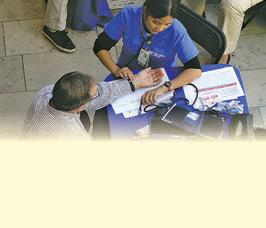
• Blood pressure
• Cholesterol



• Glaucoma*
• Blood glucose
*Springfield, Virginia only
Entertainment

Vaccines

at both locations:
• Regular flu/High-dose flu
• Latest Covid Vaccine and New RSV Vaccine
• Shingrix (shingles) (one of two shots)
• Pneumonia
• Tetanus
Bring your Medicare or insurance card. (Some vaccines may require a co-pay.)



In Maryland: Bruce Thomas will return to sing top hits of the 40s, 50s, 60s and more.


Listening Session
In
Maryland:



Listening Session with Montgomery County Executive Marc Elrich.
Come express your views at 3 p.m.
n with unty lrich. m.



Best ways to find a great handyman
Dear Savvy Senior,
What’s the best way to find a good handyman or tradesman that can help with small jobs around the house?
Dear Almost,
—Almost 75
Great question. Finding a good home repair/handyman can be a bit of a crapshoot. How do you find someone who will return your calls or texts, show up on time, do the job right and finish it, all at a fair price? Here are a few tips and resources that can help you search.
What kind of help

call on for help will depend on what you need done. If, for example, you have an odd job or small home repair project that doesn’t require a lot of technical expertise, a handyperson may be all you need.
But if you have a job that involves electricity, plumbing, or heating or cooling systems, you’re better off going with a licensed tradesman. Bigger jobs like home renovations or remodeling may require a general contractor.
Where to find a pro
While it may seem obvious, whom you
715 Maiden Choice Lane
Catonsville, MD 21228
CharlestownCommunity.com
Whatever type of work you need, the best way to find it is through referrals from people you trust. If your friends or family don’t

The Best of Everything is at Charlestown Experience the finest in maintenance-free senior living at our beautiful 110-acre campus. You’ll enjoy resort-style amenities, clubs and activities, delicious dining, and services that promote your health and well-being, including on-site medical care for every stage of your life. Our stylish apartment homes feature modern finishes and floor plans to suit every need. Our predictable Monthly Service Package takes the guesswork out of managing your expenses. And our 90% Refundable Entrance Fee* means your legacy is protected.
Call 1-800-989-6981 to request your free brochure or schedule a personal tour.
*Carefully read the Residence and Care Agreement for the conditions that must be satisfied before the Provider is required to pay the Entrance Fee Refund.
have any recommendations, turn to professionals in the field like local hardware or home improvement stores, or even real estate agents. Or, if you use social networking sites, you could also post a request for a handyperson on Facebook or Nextdoor (nextdoor.com).
If you don’t have any luck there, there are a number of online resources you can turn to that can quickly connect you to a wide variety of skilled workers in your area.
If you need someone for a home chore or small job, a popular option is Taskrabbit (taskrabbit.com), which lists thousands of freelance workers that have undergone background checks. Here you can get help with things like furniture assembly; lifting or moving heavy items; mounting or hanging TVs, shelves or pictures; minor home repairs; cleaning services; yard work and more. Taskers set their own hourly rates, which are displayed on their website before you book.
Some other good options for locating handypeople are fix-it franchises like Ace Handyman (acehandymanservices.com) and Mr. Handyman (mrhandyman.com). These companies vet and insure their staff, but they may be more expensive than Taskrabbit.
If, however, you’re in the market for specialist like a plumber, electrician, painter, roofer or carpenter as well as a handyper-
son, try Angi (angi.com). They too vet their independent contractors, and will let you request quotes from several candidates.
Thumbtack (thumbtack.com) is another good resource that’s similar to Angi, but it offers more details like average response time, specifics about the work they do, and photos of past projects.
Things to know
Once you’ve located a few candidates, here are some steps you can take to protect your money and ensure you’re satisfied with the results.
First, get a handwritten estimate or digital contract that lists the tasks and the hourly rate or project fee. Also, ask to see their proof of insurance, which covers any damages they may cause while working on your home, and ask for several references from past jobs.
You should also pay after the work is done, not before. But it’s not unusual to be asked for a small deposit for material costs upfront.
And if possible, you should pay with a credit card, because you can dispute the payment if something goes wrong with the job. Checks and electronic payments like PayPal, Venmo and Zelle don’t offer the same level of protection.
Send your questions or comments to questions@savvysenior.org, or to Savvy Senior, P.O. Box 5443, Norman, OK 73070.
8820 Walther Boulevard Parkville, MD 21234
www.OakCrestCommunity.com
Experience Vibrant Living at Oak Crest

A warm, welcoming environment. Modern apartment homes with contemporary finishes. Resort-style amenities. Clubs and activities for engaged living. All of this and more awaits you at Oak Crest, a beautiful 87-acre senior community nestled in northern Baltimore County. You’ll enjoy maintenance-free living with a predictable Monthly Service Package that includes virtually all services. Our 90% Refundable Entrance Fee* provides peace of mind for you and your loved ones. Plus, should you ever need them, advanced care options are available right on campus.
Call 1-888-429-6391 to request your free brochure or schedule a tour.
*Carefully read the Residence and Care Agreement for the conditions that must be satisfied before the Provider is required to pay the Entrance Fee Refund.

















SAVVY SENIOR
By Jim Miller
Birds
From page B-3
barrier [by providing] visual markers as cues,” Sanchez said.
Patterns, for example, can be created on window glass with tape, stickers or washable tempera paint. Perforated vinyl film, which makes the glass appear opaque from the outside, and FeatherFriendly marker-pattern tape are also effective defensive barriers, she said.
“The key is to ensure the patterns or artwork are densely spaced so a small bird, like a hummingbird, won’t try to fly through,” Sanchez said.
Physical barriers, like screens installed outside windows, also provide visual deterrents.
BEACON BITS
Oct. 23
GRIEF SUPPORT GROUP
Indoor lights can be an issue, too Interior lighting that’s visible through windows also poses a threat. Close blinds or shades at night and turn off lights when they’re not needed, Sanchez advised.
Small steps like these can make a big difference to wildlife.
“This is a bigger problem than we realized,” Sanchez said. “We don’t necessarily see birds dying on a regular basis, but it is happening. So, whatever we can do in our own homes, in our own spaces, would really be very helpful.”
Jessica Damiano writes weekly gardening columns for the Associated Press and publishes the award-winning Weekly Dirt Newsletter.
Are you struggling with the loss of a spouse or partner? Sol Levinson & Bros hosts a grief support group that is free and open to the public. Starting Thurs., Oct. 23, eight sessions will be held every Thursday from 5 p.m. to 6:30 p.m. at Sol Levinson & Bros., Inc., 8900 Reisterstown Rd., Pikesville. If you are interested in attending, contact facilitator Donna Kane, MA, CT at dkane@jcsbaltimore.org or (410) 843-7394.
REAL FOOD FARM VOLUNTEERING
Ongoing
Civic Works welcomes volunteers at Real Food Farm to help with weeding, planting, bed preparation, mulching, greenhouse work and more every Tuesday from 9 a.m. to noon at 2801 Saint Lo Dr., Baltimore. Registration required. For more information and to register, visit bit.ly/realfoodfarm or contact volunteer@civicworks.com or (410) 366-8533.






BEACON BITS
FREE CHORALE CONCERT
Oct. 19
The Deer Creek Chorale Chamber Choir will perform an eclectic lineup on Sun., Oct. 19 at 4 p.m., at the Church of The Immaculate Heart of Mary, 8501 Loch Raven Blvd., Towson. The concert is free and open to the public. For more information and a list of other upcoming concerts, see ihmchurchmd.org or call (410) 668-7935.
PET PARADE
Oct. 25
Grab your fluffy pet and head to Patterson Park for the 21st annual BARCStoberfest, a fundraiser for the Baltimore Animal Rescue and Care Shelter (BARCS). The annual festival features a half-mile pet parade, a pet costume contest, food, drinks and more. For more information or to sign up for the 5K Run/Half-Mile Pet Parade, visit barcstoberfest.org or call (410) 396-4695.










FREE HOUSING AND OTHER INFORMATION
For free information from advertisers in this special section, check off those that interest you below and mail, or take a picture of and email, this coupon to the Beacon. All coupons received by Nov. 1 will be entered into a random drawing for tickets. You need not request advertiser information to win.
Adult Day Programs
q St. Ann Adult Day Services . . .B2
Housing
q Brightview Senior Living .
q Catholic Charities
.B7
.B2 q Caritas House
.B2
q Charlestown/Erickson . . . .B3, B6
q Christ Church Harbor Apts . . .B7
q Oak Crest/Erickson . . . . . .B3, B6
q Terraces at Park Heights . . . . .B7
q Pickersgill
.B2
Check the boxes you’re interested in and email a photo of it to housing@thebeaconnewspapers.com or mail this entire coupon to: The Beacon, P.O. Box 2227, Silver Spring, MD 20915-2227.
You may return this coupon together with the coupon on page 5 of this issue. Name
MoneyMoney Law &

Before you take a second job, crunch the numbers. See story on page 18.
Three common Social Security myths in 2025
By Katherine Tierney
Social Security plays an important role in retirement for most Americans. Here’s what you need to know about three common Social Security myths today:
Myth No. 1: Social Security is going bankrupt
Based on current projections, Social Security isn’t going bankrupt. According to the 2025 Social Security Trustees Report, if no changes are made to the program, it will need to reduce benefits in 2033, paying about 77 cents per dollar of the projected benefit.
However, there are several changes Congress can make to strengthen the program and avoid these future cuts, such as removing the earnings ceiling for Social Security payroll taxes, increasing the payroll tax rate or raising the age for eligibility or full retirement.
For example, the Board of Trustees estimates that raising the combined payroll tax from 12.4% to 16.05% would fully fund the program through at least 2099. What you can do:
To navigate the uncertainty, focus on what you can control — how much you save for
retirement and when you claim your benefit.
How much to save: According to a June 2025 analysis from the Social Security Administration, Social Security replaces about 40% of pre-retirement income for a median earner who claims at full retirement age (FRA) and who makes an average of $69,473 a year.
The more you earn, the more you’ll have to replace with your own savings to maintain your lifestyle in retirement. Use a financial calculator or work with a financial adviser to help ensure you’re saving enough to meet your needs.
When to claim: While there might be reasons to claim early, we generally recommend against taking benefits before your FRA based on worries about the program’s health.
Social Security payments can be sharply and permanently reduced by as much as 30% if taken before FRA. This initial reduction also compounds over time, since costof-living adjustments are based on this amount, but retirement could last 25 years or longer.
Additionally, your selections don’t just impact you; they could permanently affect the benefit for your surviving spouse.
Myth No. 2: Layoffs and budget cuts will cause benefits to be delayed or reduced
Budget cuts and staffing reductions won’t reduce your benefit amount. Any changes to how Social Security benefits are calculated would require congressional approval. While service quality could be impacted, we believe widespread delays in benefit checks are unlikely because of the political pressure the government would face. However, wait times to talk to a representative and file benefits could continue to increase.
What you can do:
When you’re ready to file, consider the following:
• Start the application process up to four months ahead of your desired start date
• Use online resources and tools when possible
Myth No. 3: Taxes on Social Security benefits have been eliminated
Contrary to some reports, the One Big Beautiful Bill (OBBB) didn’t eliminate taxes on Social Security benefits, though a new deduction could have an impact
(more on that below).
If your combined income is above a certain threshold, a portion of your benefits will be subject to taxes. Your combined income is equal to the sum of your adjusted gross income (AGI), nontaxable interest and half your annual Social Security benefit.
If your combined income is from $25,000 to $34,000 for single filers ($32,000 and $44,000 for joint filers), up to 50% of your benefit is taxed.
If it’s greater than $34,000 for single filers ($44,000 for joint filers), up to 85% of your benefit is taxed.
While the OBBB didn’t eliminate taxes on benefits, it did include a new temporary deduction for eligible individuals age 65 or older that can help offset taxes on benefits.
To qualify for the full $6,000 deduction (per taxpayer), your modified adjusted gross income must be $75,000 or less for single filers ($150,000 or less for joint filers). It phases down for income above these thresholds and fully phases out at $175,000 for single filers ($250,000 for joint filers).
The deduction is available through 2028, and it’s in addition to the current standard
10
The pitfalls of Medicare Advantage plans
If you watch television, it is hard to avoid the promotions for Medicare Advantage plans, known as Medicare Part C. These commercials suggest that if you are eligible for Medicare, you should be signing up for a Medicare Advantage plan.
It is true that some individuals might benefit from a Medicare Advantage plan. However, you should be aware of the potential disadvantages.

David Bynon has written an informative e-book, “Why Medicare Advantage Plans Are Bad,” which, as the title suggests, discusses the disadvantages in depth. It’s well worth a read before you decide to buy any Medicare Advantage plan. I will cover some of his points below.
sufficient Social Security credits, you will be automatically enrolled in premium-free Part A (hospital insurance), and you will also be eligible to sign up for Part B (outpatient medical insurance); the monthly cost will vary based on your income going back two years.
THE SAVINGS GAME
By Elliot Raphaelson
Once you reach 65, you are eligible to sign up for Original Medicare. If you have
If you sign up for Part B with Original Medicare, you will be covered for 80% of eligible medical costs after you meet your deductible. However, you can buy what is known as Medigap coverage to cover the remaining 20%. This coverage is very important because if you have serious health conditions or you need hospital coverage, 20% of medical costs can be significant. Without Medigap coverage, there is no limit to your possible expenses with Original Medicare.
Once you reach 65 and are enrolled in Part B, you will only have a limited amount of time to enroll in a Medigap plan. If you don’t enroll in that period, or if you enroll in a Medicare Advantage plan instead of Original Medicare, you may not be able to enroll in a Medigap plan later.
This is crucial. If you decide at any time to enroll in a Medicare Advantage plan, you can’t be guaranteed that you can obtain a Medigap plan.
With a Medicare Advantage plan, you may pay the plan’s premium in addition to the monthly Part B premium. Plans may have a zero premium or may help pay all or part of your Part B premiums.
Medicare Advantage downsides
Bynon’s book itemizes some of the disadvantages of Medicare Advantage plans, including:
—Multiple copays: You have a copay with your primary care medical facility.
When you are referred to a specialist, you have another copay. You also have copays for lab tests and diagnostic tests.
—Hospitalization cost: According to Kaiser Family Foundation, 50% of individuals who have Medicare Advantage plans incur higher costs than those with Original Medicare/Medigap. For example, an inpatient event under a Medicare Advantage plan could run you hundreds of dollars for ambulance costs, medications, physicians and specialists, lab tests and diagnosis. A single hospital admission could easily cost more than the annual cost of a Medigap policy.
—Less doctor contact: Because primary care facilities receive a flat fee associated with Medicare Advantage plans, the result is that you are much more likely to receive medical service from a nurse practitioner than a physician.
—Referrals: According to the Kaiser
See SOCIAL SECURITY , page
BEACON BITS
FREE YOGA ON SATURDAYS
Every Saturday from noon to 1 p.m., Baltimore Yoga instructors offer a free class at Creative Alliance’s Creativity Center, 3137 Eastern Ave., Baltimore. All ages are welcome, and mats are available. For more information and a schedule of its free meditation classes, contact info@creativealliance.org or call (410) 276-1651.
FREE DANCE CLASSES
Oct. 10
Take an hour to explore different dance styles set to classic and contemporary music. The Enoch Pratt Free Library and Dance Baltimore offer Let’s Dance, a one-hour dance class on Fri., Oct. 10 at 11 a.m. at 1303 Orleans St., Baltimore. All ages and abilities are welcome, and registration isn’t required. For more information, call (410) 396-0970.

Senior Apartments
• One- and Two-Bedroom as well as Efficiencies
• Rents from $820 for efficiency, $1,015 for 1-bedroom, and $1,285 for 2-bedroom Utilities Included!
• 24/7 on-site Maintenance and Reception Desk
• Beauty/Barber Shop on premises
• Only 2 blocks from Hampden’s ‘The Avenue’ To schedule a personal tour call 410-889-8255
Mary’s
Social Security
From page 9
deduction available to older people. What you can do:
You might be able to further reduce taxes by using some tax-free assets, such as qualified Roth accounts and health savings account (HSA) withdrawals, as these assets don’t count toward your combined income. Make sure you’re withholding an appropriate amount from your monthly Social Security checks to avoid a surprise at tax time. You can file IRS Form W-4V to up-
Medicare Part C
From page 9
Family Foundation, many plans control costs by using referrals, requiring prior authorization to specialists. Specialists require an additional copay.
—Plan changes to benefits/costs: Insurers are allowed to change benefits, costs and provider networks each year. Monitor these changes each year to determine if you should change coverage. However, if you change your plan, you may not be able to be covered by Medigap coverage.
—Budget uncertainty: With Medicare Advantage plans, you can’t predict your yearly medical costs, such as for an unplanned hospital incident. With Original Medicare/Medigap, you know in advance



date your withholdings.
Katherine Tierney, CFA®, CFP®,is a senior strategist at Edward Jones. This content is provided for educational purposes only and should not be interpreted as specific investment, tax or legal advice. Edward Jones, its employees and financial advisors cannot provide tax or legal advice. Consult your attorney or qualified tax advisor regarding your situation. Opinions stated are not intended to predict or guarantee the future of Social Security. © 2025 The Kiplinger Washington Editors, Inc. Distributed by Tribune Content Agency, LLC.
what your yearly medical expenses will be.
—Limited selection of doctors/providers: Your choice of doctors and other providers is limited. Some plans won’t cover providers outside the plan’s network and service area.
Bynon believes that Medicare Advantage plans could be advantageous for individuals who are healthy and expect minimum use of medical support. However, if you have chronic health conditions, he recommends Original Medicare with a Medigap supplement.
If you want more details about Medicare Advantage plans, visit Medicare.gov/ plan-compare.
Elliot Raphaelson welcomes your questions and comments at raphelliot@gmail.com. © 2022 Elliot Raphaelson. Distributed by Tribune Content Agency, LLC.







Publisher:
You’re invited to listen to my original compositions and favorite piano pieces at StuartsMelodies.com
You are also welcome to download the sheet music for my compositions, including:
• Visit to a Museum
• Waltz of Joy
• Pensive Stroll by a Playground
• Idyll Journey




Please share my music videos on social media and with friends. ng: und


Arts & Style

Writer brings fashion designer to light
By Susan Ahearn
How did Claire McCardell, a woman born in 1905 in Frederick, Maryland, grow up to be one of America’s most famous fashion designers?
That’s the question Baltimore writer Elizabeth Evitts Dickinson, 52, tries to answer in her new biography, Claire McCardell: The Woman Who Set Women Free.
Published by Simon & Schuster in June, the book has already made a big splash: it’s been named a New York Times Editors’ Choice, an Amazon Editor’s pick for Best History and an NPR Book of the Day.
McCardell was once a household name, but she has all but been forgotten. Yet her contributions to the fashion world cannot be overestimated, Dickinson said.
“McCardell gave us a new silhouette in fashion. She created what became American fashion, which is American sportswear,” Dickinson explained.
McCardell forever changed women’s clothing with her inventions like mix-andmatch separates and the ballet flat. She was the first woman to create her own ready-towear label and one of the only women in fashion to become a partner in her firm. McCardell’s influence spread when she licensed patterns of her designs in the 1950s, and they’re still popular today.
Years in the making
Dickinson first became aware of Claire McCardell in the late 1990s, when she was working at her first job out of college at
what’s now the Maryland Center for History and Culture in Baltimore and saw an exhibit of McCardell’s clothes.
“I couldn’t believe that the woman who effectively invented or pioneered much of what was in my closet wasn’t a name I knew,” Dickinson said.
In 2018, Dickinson, by then an awardwinning journalist and a contributing writer for The Washington Post Magazine, published an article to mark the anniversary of one of McCardell’s important designs, a pleated, form-fitting dress known as the Monastic.
“I wrote a magazine feature, and at the end of that I thought, ‘My goodness, this is a book,’” Dickinson said.
“Even though this is a history and a biography of a mid-century designer, I [saw] so many echoes with today that I thought her story was very timely,” she said.
Researching a Maryland heroine
Dickinson began her research by visiting archives in Baltimore and New York. She interviewed McCardell’s family members, read her letters and diaries and spoke with the daughter of her close friend.
She learned that when McCardell was growing up in Frederick in the early 1900s, it was a place at the crossroads of culture.
“There was an opera house. There were suffragettes giving speeches. Her parents also took her to D.C. museums and theaters,” Dickinson said.
McCardell’s grandfather owned a candy store, where he invented and patented candy molds. McCardell, therefore, came to understand at a young age that anyone could have an idea, design it, make it real and then sell it.
“This later helped her become one of the first people to really marry high [fashion] design with mass production in order to make ready-to-wear American sportswear,” Dickinson said.
McCardell graduated from
See BOOK , page 13
Elizabeth Evitt Dickinson’s first book, Claire McCardell: The Woman Who Set Women Free, has been named a New York Times Editors’ Choice, an Amazon Editor’s pick for Best History and an NPR Book of the Day. Dickinson teaches graduate-level writing at Towson University.








































Everyman Theatre turns 35 this year. Our cover story continues on page 12.
In 2013, critical support from donors and civic partners helped the company secure a permanent home: a former 1911 vaudeville house on Fayette Street, which was restored into a 253-seat theater. That move marked Everyman’s coming of age.
The Bromo/Westside district has since become Everyman’s neighborhood, and Lancisi its caretaker. He has directed dozens of productions, from intimate chamber plays to sprawling family dramas, always willing to try something new.
“If you are learning, you are living,” he said.
Everyman’s
next season
In Everyman’s current season of celebration and farewell, the lineup promises a distillation of the company’s identity: ensemble work, contemporary voices and local flavor. Its season includes August Wilson’s The Piano Lesson, Jane Austen’s Emma and the Tony Award-winning comedy Vanya and Sonia and Masha and Spike, which Lancisi will direct next spring.
In the meantime, the succession process is underway. Everyman is committed to



Warren Place Senior Apartments in Cockeysville, Maryland, is a 62+ senior community in a convenient location just minutes

preserving the ensemble ethos as new leadership takes the reins.
At the same time, the theater has launched a Founders Circle fundraising campaign, inviting patrons to invest in Everyman’s future.
Director takes a seat
For Lancisi, theater was truly an every day, seven-day-a-week (and some nights) endeavor of love. Next summer, the other loves of his life — his wife, Robin, and two cats — may not know what to do with him.
Lancisi looks forward to enjoying productions as an audience member, although it may take some adjustment to relinquish control and simply be entertained.
“Now it’s my turn to experience catharsis through storytelling without worrying about the logistics of production,” he said.
Lancisi’s departure will be felt throughout the city’s arts ecosystem, perhaps most by Everyman’s actors and staff who stayed during the lean years.
Lancisi’s unique brand of management and magic combines three principles, he said: “continuity, generosity and the belief that theater matters when it is shared.”
He has made theater matter in his adopted city of Baltimore, filled with “distinct neighborhoods and authentic voices just waiting to tell their stories,” he said. “In Baltimore, theater can be a home, a habit and a mirror for the community it serves.”
After his final production in 2026, the applause will be for more than a single man. It will be for the small theater that emerged in this city to tell its stories.
In theater, the art of making an entrance and exit is analogous to learning how to transition through life.
“Nobody teaches the business of theater. And nobody teaches the business of life after theater,” he said.
For the full list of Everyman Theatre’s upcoming plays, see everymantheatre.org/playsevents/2025-2026, email boxoffice@everymantheatre.org or call (410) 752-2208.












From page 11
Parsons School of Design and stayed in New York City, becoming one of several female designers there who were bringing about change.
“The birth of the American fashion industry in New York in the 1930s and ’40s was because of a constellation of extraordinary women. It was a woman-led endeavor. McCardell was arguably at the top of this group, but she wasn’t alone,” Dickinson explained.
All the while, McCardell and her female colleagues faced challenges trying to balance the demands of family life and career.
“That’s part of why Claire’s story was im-
portant to tell now,” Dickinson said. “I think we’re at a time still, and sadly, where a lot of the battles that McCardell and her friends were fighting we’re back fighting again.”
Maryland’s support
Dickinson, who attended Towson High School, studied French literature at SUNY Buffalo and then worked for Architect magazine and other publications. She has won several awards for her writing and was named a National Endowment for the Arts Creative Writing Fellow in 2018. She has taught writing at Johns Hopkins University, Towson University and MICA.
She received grants from the Maryland State Arts Council, the Robert W. Deutsch
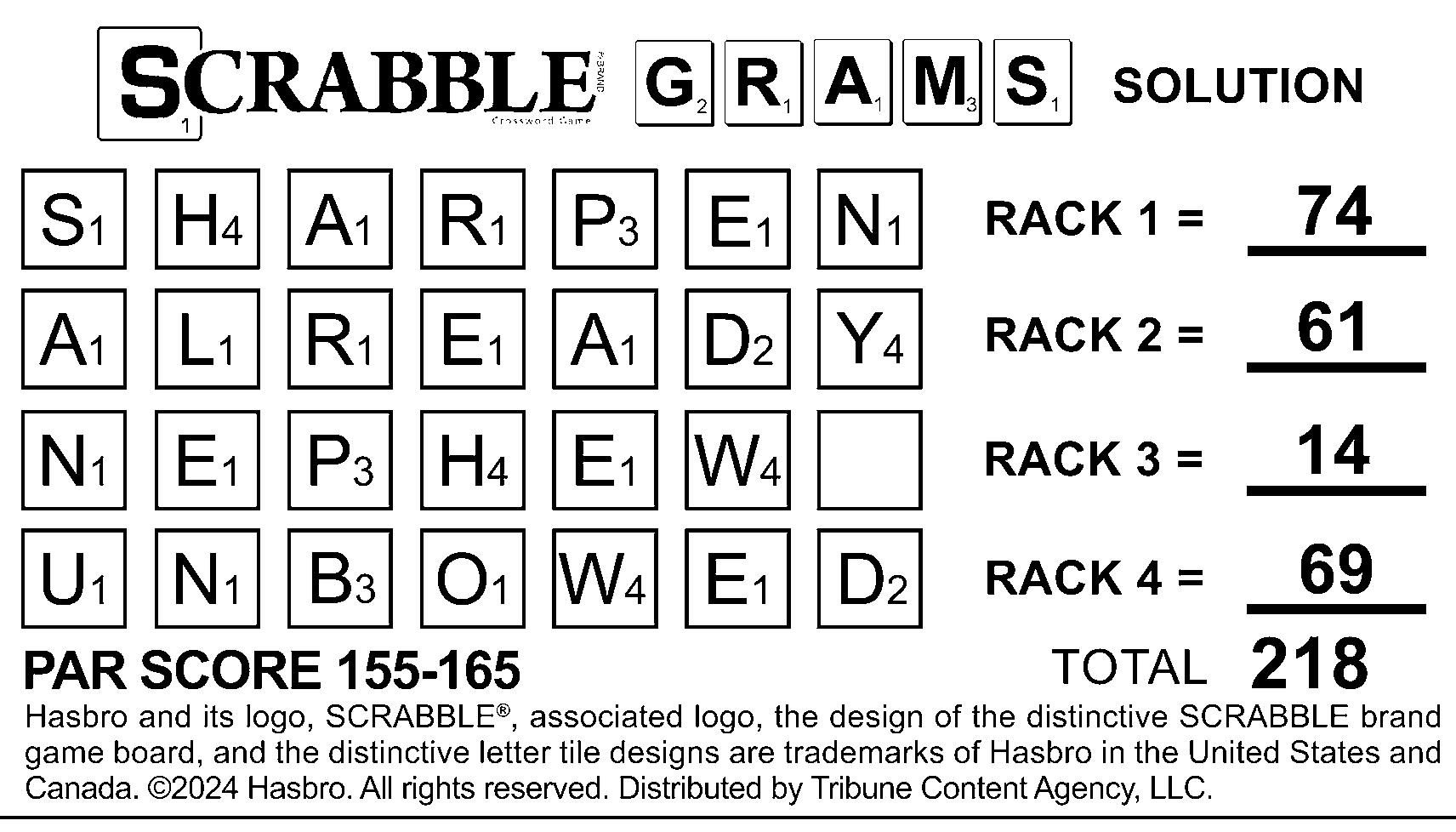
Foundation and the Greater Baltimore Cultural Alliance.
“One of the greatest experiences of working on this book has been the ways in which the booksellers of Baltimore, the fellow writers, have all rallied around me,” Dickinson said. “You need support, and Baltimore has proved incredibly supportive for me, and I wouldn’t be anyplace else.”
Elizabeth Evitts Dickinson will discuss her book at the Ivy Bookshop, 5928 Falls Rd., Baltimore, on Friday, October 10 at 6 p.m.
Peace of Mind is Priceless


When you pre-plan your funeral, you give both yourself and your family a great gix.
Your service will be exactly as you wish, and your family won’t be burdened with arrangements. Pre-planning also fixes the cost at today’s prices. Plus: We offer a price-match guarantee!

Have confidence in every conversation.
Do you find it difficult to use a standard phone? Do people ask you to repeat yourself during telephone conversations? Do you miss important calls because you can’t hear the phone ring? The Maryland Accessible Telecommunications (MAT) program is here to help by giving Maryland residents the opportunity to apply for State-provided telecommunications equipment to independently make and receive calls. Once you qualify, a skilled evaluator meets with you to determine the best device to support your day-to-day communications. The MAT program has a variety of equipment solutions to support clearer communication, including:
• Amplified phones
• Tablets
• Ring signalers
• Phones with large and/or high contrast buttons
• Captioned Telephones
• And more
For more information: 800-552-7724 | 410-767-7253 (Voice/TTY) 410-801-9618 (Video Phone) | MDMAT.org

Scrabble answers on p. 13.
Crossword Puzzle
Too Many Words
By Stephen Sherr
Across
1. Mangy dogs
5. Magician’s word
11. One drafted into the NFL
14. Drive the getaway car
15. Who, what, where, when, why, ___
16. Letters that follow C and D (at a data center)
17. Two many words for teachers
2. Transportation company that is now a verb
3. Disgusting
4. Shorthand taker
5. Off the beaten ___
6. Component of most COVID vaccines
7. Ravens mascot, along with Allan and Poe
8. Rock that is fracking powerful
9. Powder room requirement









19. “Help me ___-Wan Kenobi; you’re my only hope” (Princess Leia)
20. It may include an omelet station
21. More than most
22. Immobilize a car
23. A few items auctioned together
24. Two many words for gameshow winners
26. Netspeak for “original posters”
28. Wellness center
30. Tik ___
31. Not legally binding
33. Brouhahas
36. Like Athena





39. Two many words for budget analysts
43. Blood bank collections
44. Injure one’s toe
45. Move ___ a new house
46. Most common surname in Korea
48. Jade or jasper
50. Fed. property manager
51. Two many words for reporters
56. “Oh; now I get it!”
58. Shout “Fore!”
59. “We will, we will rock___!”
60. Nearsightedness
63. Recede
64. Two many words for biographers
66. League that gave 3 MVP awards to Dr. J
67. Goes through the revolving doors
68. Buffalo’s lake
69. Allies in a family feud
70. Determine a property tax amount
71. “When you win, say nothing; when you lose, say ___” (Paul Brown) Down
1. Rice or pasta, basically
10. Have the deed
11. It is not needed for faith
12. Westworld denizen, probably
13. Yadda yadda yaddas over the boring parts
18. They bookend the intermission
22. Two piece suit
24. Loses vibrancy
25. Cinderella’s turned into tatters at midnight
26. Contents of a fertility clinic’s freezer
27. Single-user spacecraft
29. Ms. ___-Man (arcade sequel)
32. Go back to brunette coloring
34. Make a choice
35. Ones with lazybones
37. Asian nation with the highest English proficiency
38. Hoarse drs.
40. Innocent one
41. Homer Simpson’s dad
42. “We ___ long way back”
47. Builders of stepped pyramids
49. Center fielder in baseball’s “All-Time Team”
51. Make minor adjustments
52. Religious leader
53. Environments for the citified
54. “It ___ a lot of money to look this cheap” (Dolly Parton)
55. SAT prep student
57. Setting for most of The Shining
60. Flail at a curveball
61. Colorful part of an eye
62. Yes votes
64. Princess irritant
65. Most 7-Elevens are open for 24
CLASSIFIEDS
The Beacon prints classified advertising under the following headings: Business & Employment Opportunities; Caregivers; Computer Services; Entertainment, Financial, For Sale; For Sale/Rent: Real Estate; Free; Health; Home/ Handyman Services; Legal Services; Miscellaneous; Personals; Personal Services; Vacation Opportunities; and Wanted. For submission guidelines and deadlines, see the box on the right.
CAVEAT EMPTOR!
The Beacon does not knowingly accept obscene, offensive, harmful, or fraudulent advertising. However, we do not investigate any advertisers or their products and cannot accept responsibility for the integrity of either. Respondents to classified advertising should always use caution and their best judgment.
EMPLOYMENT & REAL ESTATE ADS:
We will not knowingly or intentionally accept advertising in violation of federal, state, and local laws prohibiting discrimination based on race, color, national origin, sex, familial status or handicap in connection with employment or the sale or rental of real estate.
BRINGING HEART TO HOMECARE - 24 Hours - At Loving House Homecare, we believe every smile, every moment matters. Our passionate caregivers go beyond the ordinary to create a nurturing, joyful environment for your loved ones. It’s more than care — it’s a heartfelt commitment to dignity, happiness, and love. Let us transform your home into a place of comfort and trust. Call now and feel the difference! 410-870-7108.
MOBILE HAIR & NAIL SERVICES - WE COME TO YOU. Professional Licensed Hair Stylist. Women and Men’s Services - All Hair Types. Cuts, Styles, Roller Sets, Color, Perms, Men’s Cuts & Facial Grooming, Manicures & more. Call 410-415-1760.
SAVVY SENIOR TECH HUB - Friendly 1:1 tech support designed for seniors! Learn smartphones, tablets & computers at your own pace. Patient instruction, affordable rates. Don’t let technology intimidate you - master it! Call Stefan at 443-281-3638.
PATIENT, PRACTICAL, PERSONAL. I can help you get comfortable and confident using your smartphone, tablet, laptop, printer, TV, Alexa, etc. 20+ years experience with all skill levels, PC, Mac. Julia: 443-436-2612, computercoachbaltimore.weebly.com
THE MARKETS OF CRAFTS GALORE! Shop, Eat, Mingle. Handmade goods, holiday gifts, and food. 9/6, 10/4, 11/1, 12/6. Free public admission 9:30am-2:30pm. Held by Vendor Members Group at Timonium UMC: 2300 Pot Spring Road, Timonium MD. www.VendorMembersGroup.com
UP TO $15,000.00 OF GUARANTEED LIFE
INSURANCE! No medical exam or health questions. Cash to help pay funeral and other final expenses. Call Physicians Life Insurance Company866-212-1092 or visit www.Life55plus.info/beacon WESLEY FINANCIAL GROUP, LLC Timeshare Cancellation Experts. Over $50,000,000 in timeshare debt and fees cancelled in 2019. Get free informational package and learn how to get rid of your timeshare! Free consultations. Over 450 positive reviews. Call 855-626-8703.
GARDEN OF FAITH CEMETERY 2 prime plots, 2 concrete Vaults, 1 companion plaque. Best offer. 410-256-1358.
NEW WINDOWS FROM WINDOW NATION. Special money saving offer - zero down, zero payments, zero interest for TWO years AND buy 2 windows and get 2 FREE! Offer is valid for select models. Labor not included. Other restrictions apply. Call Window Nation today! 855-909-2278.
A SPACIOUS 4 LEVEL SPLIT COLONIAL with 5 beds, an office, 3 1/2 baths, architectural tile roof, hardwood and luxury vinyl floors, sunroom, with total 3050 square feet living space awaits you. Tiered gardens with ample play areas are completely fenced-in with a park-like setting. Swim club, golf course, parks, walking trails, Comcast Center just minutes away. Check out 2702 Muskogee Street, Adelphi, Maryland 20783 on Zillow for full description.
DISCOVER NORTH STAR NAVIGATORS:
Your Trusted Partner in Elder Support Services. At North Star Navigators, we are dedicated to making a positive impact in the lives of our aging population. We understand the challenges that come with aging and are driven by a personal quest to enhance the well-being of seniors. Our telehealth services include: - Comprehensive Assessments & RecommendationsGolden Years Planning - Healthy Ship (Membership). Get Ready to Set Sail with North Star Navigators! Where YOU remain the Captain, and our Stars guide the way. Visit NorthStarNavigators.net or call 833-735-1983 for more information. Your Trusted Team: Anchored in Compassion, Driven by Passion.
DENTAL INSURANCE from Physicians Mutual Insurance Company. Coverage for 400 plus procedures. Real dental insurance - NOT just a discount plan. Do not wait! Call now! Get your FREE Dental Information Kit with all the details! 1-844366-1003 www.dental50plus.com/320 #6258
MOBILEHELP, America’s Premier Mobile Medical Alert System. Whether You’re Home or Away. For Safety and Peace of Mind. No Long Term Contracts! Free Brochure! Call Today! 1-240-650-9189. PORTABLE OXYGEN CONCENTRATOR May Be Covered by Medicare! Reclaim independence and mobility with the compact design and long-lasting battery of Inogen One. Free information kit! Call 855-851-0949.
HOW TO PLACE A CLASSIFIED AD
All classified ads must be submitted and paid for online, via our website, www.thebeaconnewspapers.com/classifieds
Deadlines and Payments: To appear in the next issue, your ad text and payment must be entered by the 5th of the preceding month (for Baltimore and Howard County editions); by the 20th (for Washington edition).
Cost will be based on the number of characters and spaces in your ad: • $25 for 1-250 • $35 for 251-500. • $50 for 501-750 (maximum length). The website will calculate this for you. Note: Maryland contractors must provide a valid MHIC number. Each real estate listing qualifies as one ad. All ads are subject to publisher’s discretion. Payment will be refunded if unacceptable for any reason.
ALL YOUR HOME NEEDS to be repaired & install. Painting walls inside and outside. Installation & repair of floors, windows, doors, gutters, drywall, plumbing, electrical. Over 30 years of experience and I am insured & bonded. Call me 667-344-8379. Thank you! MHIC#436337.
NO MORE CLEANING OUT GUTTERS. Guaranteed! LeafFilter is the most advanced gutter protection for your home, backed by a noclog guarantee and lifetime transferrable warranty. Call today 1-855-977-6078 to schedule a FREE inspection and no obligation estimate. Plus get 20% off! Seniors and military save an additional 10%. Restrictions apply, see representative for warranty and offer details.
THE BATHROOM OF YOUR DREAMS in as little as 1 day. Limited Time Offer - $1000 off or No Payments and No Interest for 18 months for customers who qualify. BCI Bath & Shower. Many options available. Quality materials & professional installation. Senior & Military Discounts Available. Call Today! 1-855-653-0087.
DON’T LET THE STAIRS LIMIT YOUR MOBILITY! Discover the ideal solution for anyone who struggles on the stairs, is concerned about a fall or wants to regain access to their entire home. Call AmeriGlide today! 1866-365-5170.
SAFE STEP. North America’s #1 Walk-In Tub. Comprehensive lifetime warranty. Top-of-theline installation and service. Now featuring our FREE shower package and $1600 Off for a limited time! Call today! Financing available. Call Safe Step 1-866-478-2363.
AMERICAN RESIDENTIAL HEATING & COOLING. As temps outside start to climb, the season for savings is now. $49 cooling or heating system tune up. Save up to $2000 on a new heating and cooling system (restrictions apply.) FREE estimates. Many payment options available. Licensed and insured professionals. Call today 1-877-691-0273.
JACUZZI BATH REMODEL can install a new, custom bath or shower in as little as one day. For a limited time, waiving ALL installation costs! (Additional terms apply. Subject to change and vary by dealer. (Offer ends 9/30/25.) Call 1-833-994-0538.
CONSUMER CELLULAR - the same reliable, nationwide coverage as the largest carriers. No long-term contract, no hidden fees and activation is free. All plans feature unlimited talk and text, starting at just $20/month. For more information, call 1-833-742-1303.
BECOME A PUBLISHED AUTHOR. We want to Read Your Book! Dorrance PublishingTrusted by Authors Since 1920. Book manuscript submissions currently being reviewed. Comprehensive Services: Consultation, Production, Promotion and Distribution. Call for Your Free Author’s Guide 1-833-992-0110 or visit dorranceinfo.com/beacon
DIRECTV - All your entertainment. Nothing on your roof! Sign up for Directv and get your first three months of Max, Paramount+, Showtime, Starz, MGM+ and Cinemax included. Choice package $84.99/mo. Some restrictions apply. Call DIRECTV 1-888-572-4953. GET DISH SATELLITE TV + INTERNET! Free Install, Free HD-DVR Upgrade, 80,000 On-Demand Movies, Plus Limited Time Up To $600 In Gift Cards. Call Today! 1-844-560-5837.
CASH FOR; GOLD JEWELRY, STERLING SILVER, COINS, ETC. GARY ROMAN 301520-0755.
PAYING TOP CASH FOR ANTIQUES AND COLLECTIBLES. House calls made with prompt, courteous service seven days a week and 25 years of experience! Buying toys, trains, militaria, glassware, advertising merchandise, paper items and much more! Contact Mason or Megan at: 443-306-8816.





































ruateF d Ent Live specialt informa exxh and 3 to Up e tainment er s t produc y and tion with ibitors sponsor 00 9 a 2 rebotcO e We s W .m