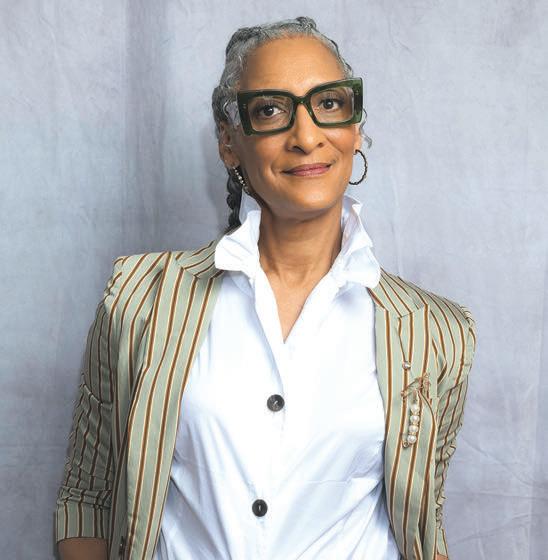


JOSEPH

Aging can be a revelation. All the truths we ran from, the wisdom we didn’t have time for, catches up with us — if we let it.
I stumbled upon abstract painting in late 2011, when I was 61. I still had three children living at home, but the youngest was 15. Suddenly I had some time to myself, so I thought, Why not try something new?
Out of nowhere and with no art background at all, I decided to buy a canvas, paint and brushes and give abstract painting a try.

months after that exhibit, I rented a studio space, had my first business cards made, and created accounts on Facebook and Instagram. The following year I had a website where I could post images of my work.
I never expected to learn so much about technology. In fact, I had made up my mind that I was not going to get into technology.
sense of purpose in our lives can help us live longer. With all of these positive changes in my life, I can’t help but wonder how others might find their passion, too.
Here are some ideas to consider:
1. Identify something you’ve always wanted to do — fly a plane, dance, cook, act, write, sew — and then just get started. Local community centers, libraries and senior centers are great places to begin your search.
and you’re sure to find lots of ideas: hiking clubs, garden clubs or composting groups.
4. Volunteer. If you’re into serviceoriented groups, there are many organizations out there that need volunteers. Search AmeriCorps Seniors Retired and Senior Volunteer Program at americorps. gov. Or get more involved in your church, mosque or synagogue.
I loved it. I had no idea that painting would save my life, but it surely did. Becoming an abstract artist got me creating, thinking, asking questions, learning to find my way as an artist and connecting with people, saving me from stagnation and boredom.
Just a year after trying it out, I was painting daily and had landed an exhibit of my work at a local coffee shop. Six
All that changed when I began to paint and exhibit my artwork. That’s when I got my first smartphone and learned how to text, email and post photos on social media. (While my friends saw me as a tech whiz, the truth is any child can do what I do!) My interest in painting saved me from essentially letting the world pass me by.
Soon I started calling myself an abstract artist. Since 2011, when I first started painting, my enthusiasm for painting and creating has only grown. Longevity experts say that having a
The Beacon is a monthly newspaper dedicated to infor m, serve and enter tain the citizens of the Greater Washington D.C. area, and is privately owned. Other editions serve Greater Baltimore and Howard County, Maryland.
Subscriptions are available via first-class mail ($50) or third-class mail ($20), prepaid with order. D.C. and Maryland residents: add 6% for sales tax. Send subscription order to the office listed below.
Publication of advertising contained herein does not necessarily constitute endorsement. Signed columns represent the opinions of the writers, and not necessarily the opinion of the publisher.
Gordon Hasenei, Publisher, CEO
Steve Gurney, Associate Publisher
Margaret Foster, Editor
Kyle Gregory, Art Director
Roger King, Vice President of Operations
Advertising Representatives:
Jill Joseph, Steve Levin, M.K. Phillips
Ana Preger Hart, Assistant Editor
Tori Cleveland, Editorial Assistant
Stuart & Judy Rosenthal, Founders



The Beacon, 3720 Farragut Ave., Suite 501 Kensington, MD 20895 (301) 949-9766 • Email: info@thebeaconnewspapers.com
Website: www.theBeaconNewspapers.com
Submissions: The Beacon welcomes reader contributions. Deadline for editorial is the 10th of the month preceding the month of publication. Deadline for ads is the 15th of the month preceding the month of publication. See page 39 for classified advertising details. Please mail or email all submissions.
© Copyright 2026 The Beacon Newspapers, Inc.
2. If you have no clear interest in anything, you might consider just picking something and giving it a try. That’s what I did. I have no art training, and yet painting exploded on my scene and totally changed my life.
3. Taking a group class is a great way to open the door to an activity you overlooked in the past and make new friends. Daytime classes will most likely have older people in them. Look for classes on tai chi, chair yoga, water aerobics, etc. Trying Googling senior clubs,
5. If you already have a skill, consider sharing it one way or another. For instance, you could mentor a young business owner or help teenagers write their college essays.
My experiences as an abstract artist have saved me from believing that getting older is the end of anything. Our later years are actually the beginning of a time of amazing clarity, understanding and wisdom.
Carolyn Ellis, a native Washingtonian, now lives outside Dallas, where she continues to paint and write. See her paintings at carolynellisart.com.
Readers are encouraged to share their opinions on any matter addressed in the Beacon as well as on political and social issues of the day. Mail your Letter to the Editor to The Beacon, 3720 Farragut Ave., Suite 501, Kensington, MD 20895, or email to info@thebeaconnewspapers.com.
Please include your name, address and telephone number for verification.
Dear Editor:
I’ve read your monthly newspaper for many years and always get many useful pieces of information.
But I (and I guess many readers from Virginia) feel discriminated against.
The reason? There are very few materials from Arlington and Northern Virginia! But you describe your paper as for the Greater Washington area. Not at all. You are 99% for Maryland.
Please save some space for Virginia, too.
Val Golovskoy Arlington, VA
From the Publisher: You’re in luck! Starting in July, we will publish a Northern Virginia edition of the Beacon. Look for the paper — still free — at your local library, senior center, pharmacy or grocery store.
Dear Editor:
This morning when I stopped at the grocery store, I picked up a copy of the Beacon. As I was thumbing through it,
my eyes were drawn to the story on Robert Friedman, still writing books at age 92. It was his sweatshirt that attracted my attention, since it was a green alumni sweatshirt from my alma mater, Ohio University. I’d recognize it anywhere. Ohio University, in Athens, Ohio, was founded in 1804, 66 years before the larger, better known Ohio State University (Ohio State is better known since it is a Big-10 football power). I couldn’t believe that the writer could make the mistake of saying that Friedman graduated from Ohio State!
I’m sure that if you check with Friedman, he’ll confirm that he graduated as a Bobcat, not a Buckeye. Or else if he did graduate from Ohio State, he decided to play a trick on all of you by wearing the Ohio University sweatshirt. Bruce Goldberg Ohio University alumnus
From the Editor: You are absolutely correct; thank you for pointing that out.
Pepco residential customers in D.C., Montgomery County and Prince George’s County can reserve a free tree through Pepco’s partnership with the Arbor Day Foundation, while supplies last. The trees can help lower energy costs, improve home comfort, and support cleaner air as they mature. Only 700 trees are available on a first-come, first-served basis. Visit arborday. org/pepco to reserve yours, and call 811 before planting.
By Margaret Foster
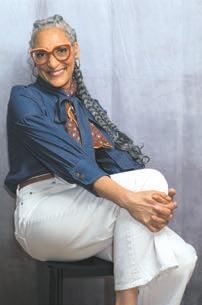
Change, whether internal or external, is one of the gifts of a long life.
So says Carla Hall, who in her six decades has been an accountant, runway model, salesperson, chef, TV personality, author and restaurateur.
Now she’ll step onstage to star in a one-woman show about her life, Please Underestimate Me. She co-wrote the autobiographical play and will perform its world premiere at Olney Theatre Center in Olney, Maryland, on June 3.
“I’m reconnecting with the parts of myself, while I’m also sharing the story,” Hall said in an interview with the Beacon She intends “to live out loud and to really explore why I’m here — to not play it safe,” she said.
Now 61, Hall, who lives in Washington, D.C., says she wouldn’t trade her current life for her earlier years.
“I have no qualms about aging,” Hall said. “I feel the wisdom, and I appreciate the confidence that I have that I didn’t have as a younger person.”
In fact, she said, “I really want people to lean into that wisdom that we have garnered over the years.”
Instead of fighting the passage of time, older adults can show the younger generation how to age well, assuring them that “this age is going to be amazing. You can step into your confidence, and you will own all of the pieces of yourself,” she said.
“We are giving our power away to younger people by saying, ‘I want to look like you, I want to be like you, I want to change my face and my body like yours’ — and I refuse to do it.”
As a child in Nashville, Tennessee, Hall was a self-described “theater kid,” putting on plays and puppet shows at summer camp at Sewanee, the University of the South. Acting ran in the family; one of her uncles was an actor, and she watched him perform on Broadway in the Tony Award-winning musical Bubbling Brown Sugar Hall followed her older sister, Kim, to Howard University, and graduated with a degree in accounting. After two years as a CPA at Price Waterhouse in Tampa, though, she decided to quit and move to Paris to be a model (she’s an inch shy of six feet tall).
“My grandmother said, ‘It is your job to be happy, not to be rich,’ and I truly embody that,” she said.
In fact, it was her grandmother, Freddie Mae Glover, who first taught Hall to cook. Hall discovered her cooking prowess by perfecting her grandmother’s biscuit recipe.
After a few years overseas, where Hall
learned to appreciate fine cuisine, she moved back to D.C. and, with the encouragement of some friends, started a lunch-delivery business “as a fluke,” she said. “I was always doing something. I was always selling something, whether it was water filters or what — girl, I was always doing it. I was always creating a job.”
Glover paid for her to attend culinary school, L’Academie de Cuisine in Bethesda, Maryland, but her memory began to slip, first in her recipes. She died of Alzheimer’s before she could see her granddaughter graduate.
Hall began as a sous chef in D.C. hotels and worked her way up to executive chef. She got her big television break when she was 44, after she had learned how to “work her quirk,” as she puts it. That’s when she landed a spot on Bravo’s “Top Chef” reality show in 2008, becoming an audience favorite, thanks to her humor and authenticity. She later became a judge on that show after cooking live on “Good Morning America,” serving up her granny’s meatloaf and treats like lemon ginger cake in a tin can.
Then she hopped over to Food Network, judging cooking shows on that cable channel. She later co-hosted the Emmy-winning ABC daytime TV show “The Chew” for seven years.
With her easygoing, big-sister advice, Hall appears as comfortable with celebrities as she is with her fans. She has hobnobbed on live television with the likes of Jimmy Fallon, Drew Barrymore and a few Muppets (Cookie Monster and the Swedish Chef, of course).
By the time she opened a restaurant of her own in Brooklyn, New York, in 2016, Hall had made a name for herself. Although that restaurant, Southern Kitchen, closed the following year, some of its dishes are on the brand-new menu at her new one. Bumblebirds opened in D.C. in March with its fried chicken named after her other grandmother, Thelma.
Hall helps out at the new restaurant from time to time, welcoming guests as if they’re family.
After all, she said, they are “the reason I have a job. And I like people. That’s my superpower: I genuinely like people.”
From kitchen to theater
Hall got the idea for the memoir-play during a career pause in 2018, when “The Chew” ended.
“I was looking around for my next project, and I thought, what about a variety show like ‘The Carol Burnett Show’?” she said. As she told WTOP, “I wanted to be the Black Carol Burnett.”
Friends helped her shape that idea into a variety show of vignettes from her life, from summer camp to television. One
friend was all in: Leslie Thomas, showrunner of “The Chew,” surprised Hall by saying she’d help out on the project. Thomas and her partner, Lori Kaye, started working on the script with Hall three years ago.
Last year Hall told an interviewer for the New York Times about the script in progress.
“When I read a profile of her in the New York Times in which she said she was working on a onewoman show, I immediately called her and said, ‘Let’s workshop this right now,’” said Jason Loewith, Olney Theatre Center’s artistic director. Hall and her sister, who lives in Olney, are frequent audience members there.
Behind the scenes, Hall has been practicing for the stage for years. She appeared on “General Hospital” and voiced a few animated shows years ago, and more recently she hired an acting coach and has been honing her skills in any way she can.
“I knew I wanted to do it, but I can’t just walk out and do a play,” she said.
She appeared on “Gossip Girl” and did a few voiceovers for NPR. “I was really in it and trying to change my focus to this [acting]. So it wasn’t, like, just put me in, coach,” she said.
During Please Underestimate Me, Hall will invite volunteers from the audience to join her onstage to deliver a line or two. An audience cameo as a hairstylist, for instance, should get some laughs, she said.
Although she’s mildly worried about forgetting her lines — after all, she’ll be onstage for more than an hour — Hall trusts that her audience will be forgiving.
“Being that I’m menopausal, I have brain farts,” she admitted. “I can work my way through it, but it is a concern.”
When Hall isn’t in all-day rehearsals, she’s likely with her husband, Matt Lyons, or volunteering her time.
“I grew up watching my grandparents give back,” she said. “It has been a part of who I am.”
It may come as no surprise that Hall volunteers for organizations that fight hunger, like Chef José Andrés’ World Central Kitchen Chef Network, DC Central Kitchen and Feeding America. She has helped pack a million meals with AARP Foundation’s Summer of Service to Seniors.
She also prioritizes children (she’s the mother of a stepson) and gives her time to St. Jude Children’s Research Hospital as well as 4-H, GenYouth, Helen Keller International and Beyond Bedtime, a
reading program. Here in D.C., she’s the culinary ambassador for the Smithsonian National Museum for African American History and Culture’s café.
Her other cause is Alzheimer’s (she volunteers for the Alzheimer’s Association), in honor of her grandmother. Hall herself has the gene for late-onset Alzheimer’s. She tries to stave if off by getting brain scans, exercising and eating well.
“You can kick the can down the road if you take care of yourself, right?” she said When she’s helping others, whatever the cause, Hall finds a sense of purpose. Volunteering has been her compass in times of transition.
“When you’re in the doldrums or you feel like you’re lost, [if] you do something for someone else, it sort of heals that part of you that is lacking,” she said. “It just feels good to give back.”
Hall, whose motto is “Say yes. Adventure follows, then growth,” often encourages her viewers to keep an open mind through life. She certainly has.
“I love having new experiences,” she said. “I realize that that’s not everybody, but I think everybody can find a thing that makes them happy and to try new things, even if it’s in your city, going a new route home. Because you’ll find something.”
Carla Hall in Please Underestimate Me runs from June 3 to July 12 at the Mulitz-Gudelsky Theatre Lab at the Olney Theatre Center, 2001 Olney-Sandy Spring Rd., Olney, MD. Those 65 and older get $5 off most weeknight performances. For tickets, go to olneytheatre.org/carlahall or call the box office at (301) 924-3400.
DON’T TRUST FACEBOOK
Social media is filled with health advice from people who aren’t doctors
POWER OF EXERCISE
Studies show physical activity is linked to increased life expectancy after cancer VENTURE OUT
Break the cycle of loneliness with the help of cognitive behavioral therapy
MIGRAINE WITHOUT PAIN
Dizziness, brain fog or balance problems may be a vestibular migraine
By Adithi Ramakrishnan and Shelby Lum
Ballerina Sara Mearns was missing her cues.
She couldn’t hear what her dance partner was saying from across the studio. A New York City Ballet principal dancer, Mearns was late for her entrances because the music sounded too soft.
Without telling anyone, she finally made an appointment to get her hearing checked.
Mearns learned that she had hearing loss. After years of isolation, she got the tools to make sense of a world that had become muffled.
Now, she’s one of the first dancers with the New York City Ballet to wear hearing aids during performances.
“I feel like it’s a whole new chapter of my life,” Mearns, 40, said in an interview with the AP.
While hearing loss is common in older adults, it can happen at any age and can be caused by things like nerve damage, infection or head trauma. For Mearns, it may have been a blend of factors including genetics, medical conditions and exposure to loud noise.
According to the National Institutes of Health, less than a fifth of American
adults aged 20 to 69 who could benefit from wearing hearing aids have ever used them. That’s due to lack of access, shame or embarrassment and just not knowing the symptoms.
“Hearing loss is often not detected by the person because what they can’t hear, they don’t know,” said Dr. Anil Lalwani, a hearing expert with Columbia University Irving Medical Center.
Still, “there are a lot of symptoms of hearing loss that are not hearing less,” said Dr. Maura Cosetti with Mount Sinai’s New York Eye and Ear Infirmary.
One thing to look out for is saying “what” more often, and not being able to hear friends and family in noisy settings like restaurants. Other symptoms include ringing, a sensation like something is stuck in the ears or conversations sounding muffled.
During the Covid-19 pandemic, Mearns couldn’t hear conversations when people were wearing masks.
“I realized that I was reading everybody’s lips to understand what they were saying,” she said.
Experts say to let a doctor know if you think you may be experiencing symptoms of hearing loss. They can help you
connect with an audiologist or an ear, nose and throat specialist to get a hearing test.
Cosetti with Mount Sinai said the Mimi Hearing Test app can be a useful resource to get a sense of your hearing. Seeing a professional is the best way to figure out what’s actually going on — like whether your ears are just plugged up with wax or fluid.
Hearing aids fine-tune the sound signal that enters the brain, enhancing speech while lowering background noise. They can be expensive, but many are now available over the counter. Some Apple AirPods also can be used as hearing aids.
For more severe forms of hearing loss, doctors may recommend a device called a cochlear implant, which converts sounds into electrical signals that are sent to the brain. These include a surgically inserted component and can take months to get used to.
Mearns initially felt embarrassed to step into the booth for her hearing test, knowing she wouldn’t be able to hear all the words. Her audiologist, Dr. Marta Gielarowiec, helped her understand what she was missing and guided her to appropriate hearing aids.
“It’s definitely not a ‘one size fits all.’ There is a lot of adjustment, tuning and calibration involved,” said Gielarowiec, who runs a practice in New York. “Overall, the goal is to maximize the hearing that’s left.”
Addressing hearing loss can help boost mental health, improve communication and slow cognitive decline for people at high risk of dementia.
When Mearns walked out of her audiologist’s office wearing her aids for the first time, she felt overwhelmed. She could hear the pattering of shoes on the ground, the chirping of birds across the street and the billowing of a flag a block behind her. Returning to her dressing room, she cried.
She can now hear the full might of the orchestra when she performs — and take phone calls in her ears.
The life she was living before, she said, was exhausting. At the end of every day she was tired from the strain of asking people to repeat themselves and missing out on conversations and the punchlines of jokes.
“I don’t want people to feel what I felt, where I was embarrassed and I was quiet about it,” she said. “Because now that I’m on the other side, I’m so happy.” AP
By Matthew Perrone
Surging interest in the purported benefits of psychedelic drugs has given rise to books, documentaries and conferences dedicated to the mind-altering substances. Now add one more business to the list: psychedelic retreats.
Hundreds of outfits across the world are offering multiday trips where attendees pay for drug-assisted experiences claiming to promote psychological healing, personal growth and other benefits. Many have safety procedures in place, but they still carry “potential for physical, psychological, and interpersonal harms,” researchers who surveyed dozens of retreats wrote in a recent paper in JAMA Network Open
Currently no psychedelicss have been federally approved in the U.S., although
that may soon change. In April President Donald Trump signed an executive order directing the Food and Drug Administration to accelerate reviews of psychedelics that show potential for conditions like post-traumatic stress disorder (PTSD). The order also directs law enforcement agencies to quickly lower restrictions on any psychedelic approved by the FDA.
The only drug to come before the FDA thus far, MDMA, was rejected as a PTSD treatment in 2024 due to concerns about its safety and effectiveness.
Dr. John Krystal, a Yale School of Medicine psychiatrist who has followed the field, says psychedelics should be approached as “a serious medical procedure that carries risks that must be carefully managed.”
People who work in the field say to-
day’s retreats are far safer than those of prior decades, when psychedelic experiences were almost always conducted underground with few safety precautions.
“The sheer visibility of psychedelics has led to more demand for these retreats,” said Brad Burge, who has worked with psychedelic nonprofits, drugmakers and retreat operators for nearly 20 years.
“That growing market has allowed retreats to expand their services, hire more medical and coaching staff and take safety more seriously than we’ve ever seen in the past.”
Here’s what to know about the trend:
Virtually all the drugs offered at retreats are illegal under U.S. federal law, including magic mushrooms, ayahuasca,
MDMA and LSD.
Retreat companies will not always make that explicit or sometimes claim that they are protected by a rare legal exemption for religious organizations that traditionally use psychedelics.
But only a handful of groups have formally obtained that legal status, including the Native American Church, which uses peyote in its ceremonies.
Some retreats are held in countries that don’t restrict psychedelics, including Peru and Brazil, where ayahuasca — a psychedelic brew of Amazonian plants — has been used for centuries by Indigenous cultures.
Experts say there are no industrywide standards or regulations for how retreat participants are screened, prepared or
From page 4
monitored afterward.
“If there is no regulation, what does that mean about the quality of care you’re going to have?” said Joshua White, founder of the Fireside Project, which runs a hotline for people experiencing distress during psychedelic trips. “I certainly fear that there could be a race to the bottom where there is no liability or accountability.”
Staffing credentials vary
With essentially no oversight, potential attendees are on their own when vetting different options.
“It’s really important that somebody interested in a psychedelic retreat do their research, talk to the organizers or facilitators to get more information about what is being offered and how,” said Amy McGuire, a biomedical ethicist at Baylor College of Medicine and co-author of the JAMA Network Open study.
McGuire and her colleagues documented a wide range of practices, including some companies offering multiple psychedelic drugs during their retreats.
Many retreats have health professionals on site, but their roles and responsibilities are often vague. In some cases, they take psychedelics alongside participants, which could impair their ability to respond in an emergency.
One of the most important safety steps happens before any retreat begins: screening out people with serious medical conditions who shouldn’t take psychedelics.
More than half the retreats surveyed
for the study excluded participants with mental illnesses such as schizophrenia.
“Psychedelic drugs may worsen symptoms of psychotic disorders, such as schizophrenia,” noted Krystal, who was not involved in the research. “It is important that patients are carefully screened to ensure that appropriate patients enter treatment.”
Significantly, all the retreats said they rely on potential customers to truthfully disclose their medical history and health conditions.
That approach carries risks, the authors noted, since people suffering from severe afflictions may withhold information if they think it could stop them from attending.
“When you’re really desperate and hoping to access something that you think could help you, there’s an incentive not to be truthful,” McGuire said.
Another potentially risky practice: Nearly 90% of the surveyed retreats require or recommend that attendees stop taking certain medications, including antidepressants, before using psychedelics. These so-called “washout periods” ranged from one day to six weeks before the psychedelic experience.
Medical experts say safely tapering off antidepressants like Prozac can take six to 12 weeks and requires professional supervision.
“The patient needs to realize that by going off their medicine they’re at greater risk of recurrence or exacerbation of their symptoms,” said Dr. Jeffrey Lieberman, a Columbia University psychiatrist. “They should be monitored regularly to make sure nothing bad happens.” —AP

For free materials about area housing communities, just complete and clip this coupon and mail, or take a picture and email, to the Beacon.
District of Columbia
o Asbury Dwellings (See ad on page 11)
o Chevy Chase House (See ad on page 17)
o Inspīr Embassy Row (See ad on page 40)
o Bethany House (See ad on page 18)
o Brooke Grove (See ad on page 9)
o Churchill Senior Living (See ad on page 34)
o Discovery Village Chevy Chase (See ad on page 15)
o Grandview, The/Erickson (See ad on page 7)
o Homecrest House (See ad on page 10)
o Park View Bladensburg (See ad on page 16)
o Park View Columbia (See ad on page 16)
o Park View Emerson (See ad on page 16)
o Park View Laurel (See ad on page 16)
o Riderwood/Erickson (See ads on pages 1, 7)
o Ring House (See ad on page 13)
Virginia
o Ashby Ponds/Erickson (See ads on pages 1, 7)
o Culpepper Garden (See ad on page 33)
o Greenspring/Erickson (See ads on pages 1, 7)
o Tribute at the Glen (See ad on page 17)
o Vinson Hall (See ad on page 19)
o Woodleigh Chase (See ad on page 7)
o Aphasia Study (See ad and article on page 8)
o Smell Test Study (See ad on page 8) Name
Check the boxes you’re interested in and return this form to: The Beacon, 3720 Farragut Ave., Suite 501 Kensington, MD 20895 or take a picture and email to housing@thebeaconnewspapers.com
By Devi Shastri
Health and wellness advice is available in abundance on social media — from trendy to informative to straight-up disinformation — and you’re far from alone in seeing it.
A new survey by the Pew Research Center finds that about 4 in 10 U.S. adults — and around half of those under 50 — get health information from social media or podcasts.
Researchers also looked at the social media profiles of 6,828 health and wellness influencers with at least 100,000 followers. Only about 4 in 10 list a background as a health professional.
About one-third called themselves coaches, about 3 in 10 described themselves as entrepreneurs and about 1 in 10 cited their own life experience, like being a parent.
Experts say a bit of skepticism is key to interacting with posts about fitness, mental health and personal health. Here are their tips on how to be a smarter consumer.
Experts said the biggest green flag is when an influencer’s credentials are easy to find on their profile. Beware the fill-in-theblank “coach” who can’t prove their training.
“We have to be careful with people who have an experience in one thing and sud-
denly become a ‘coach’ on that,” said Courtney Babilya, a certified medical exercise specialist and personal trainer who has more than 430,000 followers on Instagram.
Working as a coach is a business model, not a sign of training. Babilya shares her own experience dealing with chronic illness but keeps it separate from her professional advice.
“You do have an obligation to make sure that you are not giving someone a false idea or spreading a message that isn’t going to be applicable to everyone,” she said.
If a social media post brings up big emotions, pause.
For people who can’t access care or feel unheard by their doctors, an offbeat opinion could feel like a long-sought answer. The Pew survey found 53% of uninsured people got health information from social media, compared to 38% of those who were insured.
But people who are trying to share good medical information online are not trying to incite fear or surprise, said Dr. Fatima Daoud Yilmaz, an OB-GYN at Stony Brook Medicine in New York, whose popular “Feminine Aisle” video series rates drugstore products.
Remember, people on social media are
making money — for some, it is their livelihood.
“It doesn’t mean that all of the information that they put out is biased, but it should tell consumers of that information to take it with a grain of salt because they do have financial incentive to be pushing information like this,” Daoud said.
Even if the person has expertise, ask yourself: Are they speaking outside the scope of their knowledge? Is what they’re saying in line with scientific consensus?
“All opinions are not created equal when it comes to something such as health or medicine or science,” Daoud said.
Look out for exaggerated or definitive claims, especially in the first few seconds of the video when influencers are trying hard to grab your attention, Babilya added.
Ambivalent wording is a good sign, said Nedra Glover Tawwab, a practicing therapist and author. In her videos on boundaries and mental health, she couches with “maybe,” “sometimes” and “perhaps,” rather than diagnosing her 1.8 million followers on Instagram.
If you feel like you’ve found a diagnosis online, that is your sign to seek out a professional, Tawwab said.
Experts also recommend pausing to

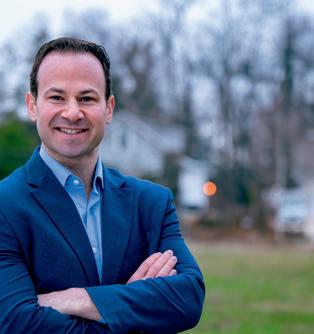

“I’m proud to say Andrew Friedson is a true-blue Democrat who has made progress on key issues, from passing paid parental leave and delivering affordable housing solutions to co-authoring the county’s largest ever climate investment. Andrew shows the kind of leadership our county needs.”
– Congressman Jamie Raskin
check the video’s sources. Some posts are not well fact-checked, Babilya warned, citing studies that have nothing to do with what the influencer says it does.
Use the same standard as when you’re vetting a purchase online. Look at the larger conversation around the advice as you would read product reviews, Tawwab said.
Two-thirds of users said they just happen to come across the content rather than seeking it out, according to the Pew survey. If you want to control your feed, it will take time and ongoing effort, said Ash Milton of the University of Minnesota, who studies how users navigate online mental health information.
“You have to work for it because the algorithm is designed to be passive consumption,” Milton said.
You can “Hide Post” on Facebook, use “Hidden Words” on Instagram or click “Not Interested” on TikTok to filter out certain content.
Confirm with a trusted health professional before acting on anything you see online.
“Ultimately, talk to the medical provider who knows you,” Daoud said. AP


Andrew is committed to ensuring that Montgomery County remains a place where seniors can thrive, age in place and live affordably.
He passed legislation to cut property taxes for seniors on fixed incomes
He has consistently voted against tax increases and has fought to make our county more affordable for families and seniors to live and stay in our communities
State Senator Brian Feldman
State Senator Cheryl Kagan
State Senator Nancy King
State Senator Sara Love
State Senator Jeff Waldstreicher
State Senator Craig Zucker
State’s Attorney John McCarthy


Former Maryland State Attorney General Doug Gansler
Former Maryland State Treasurer Nancy Kopp
Former Maryland State Comptroller Peter Franchot
Former Montgomery County Executive Doug Duncan
Former Montgomery County Councilmember Hans Riemer
Businessman and Philanthropist David Blair
Former Maryland Democratic Party Chair Susan Turnbull


• Ashby Ponds® Ashburn, VA • Greenspring® Springfield, VA
• Riderwood® Silver Spring, MD

By Margaret Foster
If you know someone who had a stroke, you know how difficult it can be to relearn how to walk, talk and write. Now’s your chance to help future generations recover from brain injury more quickly.
The University of Maryland needs healthy volunteers over 45 who have never had a stroke to participate in a new study. With a single visit to its College Park campus and two virtual sessions, you can be part of a research study that aims to streamline speech therapy for stroke patients.
“This study is trying to assess various aspects of language — to see where and how the breakdown is happening, so we can address that particular element in speech
June 20
therapy,” said Yasmeen Faroqi-Shah, Ph.D., a professor in the university’s department of Hearing and Speech Sciences who is the principal investigator of the study.
After a stroke, people can lose the ability to express themselves, a condition known as aphasia.
“If your grammar breaks down, you can’t produce sentences. They talk in fragments,” Faroqi-Shah explained. “The long-term goal is to improve speech therapy for aphasia by better understanding how language breaks down.”
So far, speech therapy is a slow process that can take months, if not years, to help people recover the ability to speak.
“Speech therapy for aphasia has been
Sign up for a men’s or women’s doubles match at the Arlington Open Pickleball Tournament on Sat., June 20 from 8:30 a.m. to 4:40 p.m. This event takes place on indoor courts at the Thomas Jefferson Community Center, 3501 S. 2nd St., Arlington, VA. The entrance fee is $60 per team, and players will be grouped by skill level. For more information and to register, visit bit.ly/ArlingtonOpen or email bjeffers@arlingtonva.us.
around for a long time, and its effectiveness could be improved,” she said.
The study is currently recruiting 30 people 45 to 70 with normal cognitive function.
The study only requires one in-person visit. Participants will go to College Park, Maryland, to undergo two non-invasive scans. Neither scan uses radiation.
The first, an MRI, or magnetic resonance imaging, takes about an hour.
The second, a magnetoencephalography scan, or MEG, takes place in a machine that resembles an MRI machine. It’s a 90-minute, non-invasive test that measures the magnetic field generated by the electrical activity of the brain.
“The MRI is noisy, as many people know. The MEG is perfectly silent,” Faroqi-Shah said. “You just lie down, and it measures the halo of a magnetic field around your head” as you speak.
Faroqi-Shah tried it herself, since MEG scanners are relatively rare; only a few hundred exist in the world.
“I fell asleep,” she admitted. “I did my own experiment to try it out and see how it works, but I dozed off. It’s very quiet,
very comfortable. It’s safe as well; there’s no radiation.”
After the two scans, which can take several hours, participants will complete the study from home. They’ll take cognitive tests on a home computer or laptop (not a tablet). In those tests, they’ll identify nouns and verbs and construct sentences in the past, future or present tense.
If they need help, UMD researchers can guide the way.
“My team is very well trained to walk them through various technology tasks,” Faroqi-Shah said.
University’s registry
In addition, study participants can sign up for notifications of future studies, paid and unpaid, at the university. The volunteer registry, known as Communication across the Lifespan at Maryland, or CALM, is open to those with or without communication problems.
For more information about the registry, visit calm.umd.edu. To volunteer for the current study, email aphasia@umd.edu or call (301) 405-2477.
smell
A new study from The Michael J. Fox Foundation for Parkinson’s Research is exploring this link. We’re calling on everyone with and without Parkinson’s to
contribute
Request your test at
or scan the QR code.
Request your test at 877-525-PPMI (7764) mysmelltest.org/beacon or scan the QR code.
Healthy Adults
45-70 years old, first language is English, and at least a high school education
No history of speech-languagelearning disorders or other neurological or psychiatric diagnoses Home computer and internet access
People with Stroke/Aphasia
Diagnosis of aphasia following a left brain injury
English as a first language Home computer and internet access
You
be asked to speak and listen to
and sentences. Participation is split into 2-3 sessions totaling ~3.5-5 hours *People with aphasia first complete an initial aphasia evaluation in two 2-hour sessions on Zoom
Part 2 Brain:
Participants complete an MRI then speak while in an MEG 2.5 hour session at the Maryland Neuroimaging Center

Thursday, June 18, 2026 10:30 a.m.–12:30 p.m.
THE MEADOWS ASSISTED LIVING • 1635 HICKORY KNOLL ROAD • SANDY SPRING, MD 20860
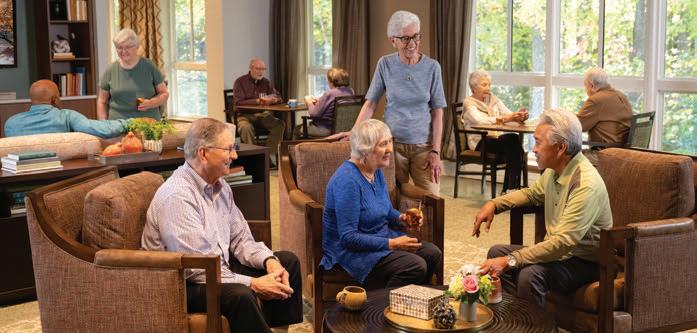
For more than 75 years, Brooke Grove Retirement Village has built a history of excellence in Montgomery County.
EXPLORE our residential-style homes, gardens and secure walking paths. DISCOVER our innovative approach and programs including those designed to stimulate memory. MEET our staff, trained in assisting those with Alzheimer’s and memory loss. ENJOY our 220-acre campus and our live-in pets.
Register by June 17 at bit.ly/ALOHBGRV or contact Toni Davis at 301-388-7209 or tdavis@bgf.org.

By Kaye Sturz
Dear Mayo Clinic: I’ve always been active, but after being diagnosed with breast cancer and starting my treatment, I’m a little worried about getting back into my routine. Is it OK to exercise during cancer treatment?
A: It’s well known that exercise decreases the risk of developing cancer. Studies have shown there is a 30% to 35% reduction in the risk of breast cancer among the most physically active women compared with those who are least active. Exercise plays a protective role in many other cancers, including lung, endometrial, colon, kidney, bladder and esophageal.
However, exercise also can be helpful
during and after cancer treatment. According to the American Cancer Society, research shows exercise during cancer treatment can improve physical functioning and quality of life.
Moderate exercise can:
• Increase strength and endurance
• Strengthen the cardiovascular system
• Reduce depression and anxiety
• Diminish fatigue
• Improve mood and self-esteem
• Lessen pain
• Improve sleep
Of course, there may be certain issues that prevent or affect a person’s ability to exercise due to disease or type of treatment, including:




• Anemia — having a low number of red blood cells or quantity of hemoglobin or protein
• Weak immune system
• Some for ms of radiation treatment
• Some surgeries that limit certain exercises
Some people should use extra care to reduce the risk of injury, including older people and those with bone disease, arthritis or nerve damage, also called peripheral neuropathy.
Exciting studies show that regular physical activity is linked to increased life expectancy after a cancer diagnosis. In many cases, it also decreases the risk of cancer recurrence.
Multiple studies in cancer survivors, with the strongest evidence in breast and colon cancer survivors, have suggested that physically active cancer survivors have a lower risk of cancer recurrence and improved survival compared with those who are inactive.
The American Cancer Society, the American Institute for Cancer Research, the American College of Sports Medicine and the U.S. Department of Health and Human Services all advocate physical activity for cancer patients and survivors.
The American Cancer Society recom-
mends cancer survivors take these actions:
• Par ticipate in regular physical activity
• Avoid inactivity and return to normal daily activities as soon as possible after diagnosis
• Exercise at least 150 minutes per week
• Include strength training exercises at least two days per week
Not everyone is ready to head to the gym during or after cancer therapy. However, reconnecting with an activity you like to do can help you stick with an exercise program. Exercise may include a bike ride with friends or chasing your dog around the park.
Walking is a great activity for almost everyone, and swimming can be a wonderful alternative for those with joint issues. Yoga is fantastic for strengthening, flexibility and balance concerns.
Kaye Sturz, D.N.P., Hematology/Oncology, Mayo Clinic Health System, Eau Claire, Wisconsin
Mayo Clinic Q & A is an educational resource and doesn’t replace regular medical care. This Mayo Clinic Q&A represents inquiries this healthcare expert has received from patients. For more information, visit mayoclinic.org.
© 2026 Mayo Foundation for Medical Education and Research. All Rights Reserved. Distributed by Tribune Content Agency, LLC.
Do you have experience in ceramics, jewelry-making or woodworking? Arlington County is seeking paid instructors for its art camps this summer. Instructors lead hands-on art experiences for children ages 12 to 16. The camps run from June 29 to Aug. 7; hours vary. For more information and to apply, visit bit.ly/artcampinstructor.





By Krishna Kumar
After Jeff, 82, lost his wife, his days grew quiet. He stopped meeting friends at a local diner because sitting there without her felt like a public announcement of his loss.
At home, the silence felt heavy. His loneliness deepened, and his interpretation of social events shifted. A missed callback from a friend, for instance, became proof that he no longer mattered.
Loneliness among older adults often develops from distorted or negative thinking patterns. Many people come to see themselves as burdens due to illness, disability or financial dependence, leading them to withdraw from others.
Many also fear that reaching out will be unwelcome or that they will be ignored, so they avoid social interaction altogether. Over time, loneliness becomes a vicious circle.
The good news is that cognitive behavioral therapy (CBT) has been shown to reduce loneliness by reshaping thought patterns.
The central premise of CBT is that events themselves do not directly determine how people feel or behave. Rather, it is the way individuals interpret those events that shapes their responses.
In other words, people are often dis-
turbed not simply by what happens to them, but by how they think about it. Two individuals may experience the same event yet respond very differently because their interpretations differ.
In CBT, therapists help patients identify negative or distorted thinking and replace it with more realistic views.
For example, a lonely older person may believe that nobody wants to spend time with them. Rather than simply disagreeing, the therapist may ask the patient to examine the evidence for this belief. Research shows this method, which is similar to Socratic questioning, can reduce depression and anxiety.
When Jeff met with a therapist, she didn’t argue with his grief or minimize his loss. Instead, she prepared a plan combining cognitive work with practical reconnection.
First, Jeff learned to separate feelings from facts. “I feel forgotten” was true as a feeling, but not necessarily as a fact.
Second, the therapist and Jeff tried an experiment. He would send a short message to two old friends: “I’ve been thinking of you. Want to grab coffee this week?”
Jeff assumed they would ignore him, but within a day, both replied warmly and
suggested a date to meet. The result didn’t erase his grief, but it showed him that reaching out is easier than he thought.
“Your brain predicted rejection; reality offered something more hopeful,” the therapist said.
Gradually, Jeff built a “connection portfolio:” one weekly breakfast group, one monthly volunteer session at the library, and two short walks with friends.
He also planned social outings for difficult weeks — especially anniversaries, when loneliness tends to surge. The plan included a “minimum dose” of connection: Even on low days, he would send one message and take one short outing.
After all, research shows that increased participation in enjoyable, mean-
ingful activities improves mood. For lonely older adults, even small increases in social interaction can help dissolve feelings of hopelessness and isolation.
CBT helps patients recognize unrealistic or “all-or-nothing” thinking and develop greater emotional flexibility. Therapists often encourage patients to gradually reconnect with meaningful activities — exercise, hobbies, volunteer work, social gatherings or religious involvement. After several months, patients can break the cycle of loneliness.
This article was excerpted from the book Loneliness in Later Life: Causes, Consequences and a Path to Connection, available on Amazon (print $14.99, digital $10). Reprinted with permission.
Get Full Care provides seniors with compassionate home care and a holistic approach, that supports their physical, mental, and social well-being.

FRIENDS CLUB FOR MEMORY LOSS
Friends Club, a nonprofit serving the community for more than 30 years, brings together active men in the early- to mid-stages of memory loss in a



Join the listeners who make WAMU News the DMV’s top morning destination. From Morning Edition to 1A, thoughtful news meets calm, clear reporting. YOUR LOCAL NEWS AND NPR STATION
Listen on air at WAMU 88.5, stream online at wamu.org, or ask your smart speaker to play WAMU.

By Howard LeWine, M.D.
Q: I thought heart attacks are caused by sudden complete blockage in a heart artery. But my father’s happened because his blood pressure suddenly got too low. Are there different types of heart attacks?
A: Yes, there are different types of heart attacks. Most often the underlying problem is the same. One or more of the coronary arteries (the vessels that supply blood to the heart) have some or often a lot of fatty plaque buildup. During a heart attack, not enough oxygen-rich blood — or none at all — gets delivered to an area of the heart.
There are two different mechanisms that cause this compromised blood flow. Doctors define them as type 1 and type 2 heart attacks. The distinction is important because they may be treated differently.
Type 1 heart attacks: With a type 1 heart attack, the cap over a plaque deposit ruptures and releases chemicals that trigger the formation of a blood clot. The clot blocks the artery, interfering with blood flow to part of the heart.
Type 2 heart attacks: A type 2 heart attack does not involve a ruptured plaque. Instead, it happens when there is a mismatch between the amount of blood a portion of the heart muscle needs and
the blood supply in the coronary artery feeding that area of the heart.
The trigger for a type 2 heart attack can be a condition that puts extra stress on the heart, like the flu or pneumonia, an abnormal heart rhythm resulting in an accelerated heart rate, or a sudden drop in blood pressure.
With any concern for a heart attack, the doctor will immediately order an electrocardiogram (ECG) and a blood test to measure levels of troponin, a protein in heart muscle cells that spills into the bloodstream when any type of heart damage occurs.
Doctors look for high troponin levels and certain changes in the electrical pattern on the ECG to make a diagnosis. Both tests are used because either one can be normal or show only minimal changes in the earliest stage of a heart attack.
In fact, even with normal ECG and troponin results, emergency department doctors will begin immediate treatment if your symptoms are highly suggestive of a heart attack, especially if you have multiple heart risk factors.
If you’re diagnosed with a likely type 1 heart attack, the doctor will probably send you to the cardiac catheterization lab for angioplasty and stent placement
to restore blood flow to the injured heart muscle and minimize permanent damage.
For a type 2 diagnosis, the goal is to improve the balance between blood supply and demand. It’s important to address any medical problem that stresses the heart, such as an infection, an abnormally fast heart rhythm, or low blood pressure.
Q: My brother was diagnosed with an aortic aneurysm. Do I need to be tested to see if I have one?
A: The aorta is the thick-walled vessel that carries blood from the heart’s left ventricle to the rest of the body. It curves up and over the heart in a gentle arc, narrowing slightly as it extends down through the center of the body.
As is true for most heart problems, smoking and high blood pressure can heighten the risk of problems with the aorta.
But so can genes and certain medical conditions, which can weaken the wall of the aorta. As a result, the aortic wall may tear (aortic dissection) or bulge outward (aortic aneurysm) and possibly rupture.
About three-quarters of all aortic aneurysms occur in the center of the body, below the kidneys. Known as abdominal aortic aneurysms (AAAs), most grow very slowly and don’t cause any symptoms. But an undiscovered one can expand rapidly and burst with little warning.
Aneurysms in the chest area (thoracic aortic aneurysms, or TAAs) are classified by location.
Those in the descending aorta (the section after the arch of the aorta) are more common in older people who smoke and have high blood pressure.
Aneurysms in the ascending aorta (the section closest to the heart) usually occur in younger people and may be linked to certain genetic conditions, including a bicuspid aortic valve, in which the valve has only two flaps instead of the usual three. About one in every 100 people has a bicuspid aortic valve, and half of them have an enlarged aorta.
You should ask your doctor about getting a screening test to see if you might be developing an aortic aneurysm. But which test you might need depends on the location of your brother’s aneurysm.
Screening for an abdominal aortic aneurysm involves a simple abdominal ultrasound, which the guidelines recommend for people at greatest risk: (1) anyone with a family history of an AAA, and (2) men ages 65 to 75 who have ever smoked.
A heart ultrasound (echocardiogram) or CT scan can be used to screen for a TAA. You should be tested for a thoracic aortic aneurysm if you:
• have a bicuspid aortic valve; have had a bicuspid aortic valve replaced; or have a parent, sibling, or child with one
• have had surgery to replace or repair an aortic valve before age 70
• have a parent, sibling or child who has a thoracic aortic aneurysm or who has experienced a rupture of an aneurysm or an aortic dissection
• have Marfan syndrome, Loeys-Dietz syndrome, vascular Ehlers-Danlos syndrome, Turner syndrome or certain other genetic conditions.
Howard LeWine, M.D., is an internist at Brigham and Women’s Hospital in Boston and assistant professor at Harvard Medical School. For additional consumer health information, see health.harvard.edu.
Activity Center at Bohrer Park
506 S. Frederick Avenue
Gaithersburg, MD 20877
Bauer Drive Community Recreation Center
14625 Bauer Drive
Rockville, MD 20853
Damascus Community Recreation Center
25520 Oak Drive
Damascus, MD 2087
Germantown Community Recreation Center
18905 Kingsview Road
Germantown, MD 20874
Jane E. Lawton Community Recreation Center
4301 Willow Lane
Chevy Chase, MD 20815
Marilyn J. Praisner Community Recreation Center 14906 Old Columbia Pike
Burtonsville, MD 20866
Mid-County Community Recreation Center
2004 Queensguard Road
Silver Spring, MD 20906

By Maureen Salamon
A nationally representative survey found that about one in four adults over age 50 take at least one supplement to improve their brain health with the promise of enhanced memory and sharper attention and focus.
The problem? There’s no solid proof any of them work.
“There’s no evidence to suggest there’s an ingredient in supplements that can improve brain health,” said Dr. Pieter Cohen, an internist with Harvardaffiliated Cambridge Health Alliance, whose research focuses extensively on dietary supplements.
“Nothing legally contained in supplements has been proven to improve your thinking or prevent memory loss.”
The main issue with all over-the-counter products is lack of regulation. The FDA doesn’t oversee product testing or ingredient accuracy; it just monitors for supplements that make health claims related to the treatment of specific diseases.
In the case of brain health, this means a supplement manufacturer can claim a product helps with mental alertness or memory loss — but not that it protects against or improves Alzheimer’s disease or any other form of dementia. Manufacturers don’t have to back up any claim that their brain
health supplements are effective.
Even that level of oversight may diminish: The FDA announced in December 2025 that it is considering a rule change that would relax how often disclaimers must appear on supplement labels. That’s “a very important step in the wrong direction,” Cohen said.
“Consumers already face a slew of misinformation when they purchase supplements,” he said.
Many brain supplements contain omega-3 fatty acids (such as those found in fish oil), vitamin E, various B vitamins or other combinations. Why these?
There’s strong evidence that certain diets — like the Mediterranean diet, the Dietary Approaches to Stop Hypertension (DASH) diet, and the MIND diet (a combination of the two) — may help improve cognitive function. These diets contain foods with large amounts of the aforementioned nutrients.
But what’s not clear is whether it’s the combination of nutrients in these diets that’s beneficial, or whether it’s individual nutrients or certain amounts, or other factors entirely.
Researchers have tried to answer these questions by testing how these individual
nutrients affect cognitive health. So far, the limited studies have found no evidence they help, with a few rare exceptions.
Still, this doesn’t mean that the brain supplements don’t work. It’s just that there isn’t much, if any, evidence from randomized clinical trials — the gold standard for research — on whether isolated vitamins or other nutrients improve brain health.
Here’s a summary of what science has found so far and what it means.
Omega-3 fatty acids help build cell membranes in the brain, and also may have anti-inflammatory and antioxidant effects that could protect brain cells.
There are three types of omega-3s. Eicosapentaenoic acid (EPA) and docosahexaenoic acid (DHA) are found mostly in fatty fish like salmon and mackerel. Alpha-linolenic acid (ALA) is found in


MEDICARE ASSIGNMENT ACCEPTED LENARD H. HAMMER, M.D., F.A.C.S.
GORDON LUI, M.D.
SCOTT B. BECKER, M.D. YIYUN ZHOU, M.D.
from incredible dining, shopping and more, Ring House puts the best of Rockville right at your fingertips.
Sample selections from our in-house culinary team alongside favorite flavors from the restaurants just outside our door. At Ring House, whether you’re dining in or out, a great meal is always within reach.
Sample selections from our in-house culinary team alongside favorite flavors from the restaurants just outside our door. At Ring House, whether you're dining in or out, a great meal is always within reach.
and
what makes our community truly special.
explore our vibrant independent living residence and taste what makes our community truly special.




Elder maltreatment often goes unreported, whether it’s neglect, financial exploitation or even physical or sexual abuse. Perpetrators of elder abuse may include family members, caregivers or those feigning goodwill who seek to take advantage of a vulnerable person.
It’s important to know the warning signs. You can take the first step toward prevention of elder abuse by learning about warning signs and locally available resources. The National Center on Elder Abuse cites some of these as signs:
n Isolation
n Unexplained bruises
n Depression
n Fear or anxiety
n Lack of medical care
n Unusual behavior, wandering or changes in sleep
n Unpaid bills or changes in spending patterns
Social isolation puts a vulnerable older adult at higher risk, whereas remaining socially connected can lead to healthier, betterinformed and safer communities.
An abuser can exacerbate an isolated adult’s vulnerability by taking away their cell phone or preventing loved ones and friends from visiting.
Scammers may attempt to take advantage of someone’s loneliness by offering companionship online or over the phone, when their true goal is to steal the person’s money.
The FBI warns that older adults are more likely to be scammed. According to its Internet Crime Complaint Center, the crimes reported most frequently last year included: phishing/ spoofing, extortion, investment scams, personal data breaches and tech/customer support scams.



WEDNESDAY, JUNE 17
More information on elder abuse warning signs will be presented at the 16th Annual Montgomery County World Elder Abuse Awareness Day, Older Adult Safety Forum on Wednesday, June 17 from 10 - 11:30 a.m. at the Schweinhaut Senior Center, 1000 Forest Glen Rd, Silver Spring, MD (and on Zoom). For more information, call 240-777-8085. You may register for the virtual event on EventBrite at https:// WEAAD2026.eventbrite.com
n Adult Protective Services and Guardianship: 240-777-3000
n Elder/Vulnerable Adult Abuse Section, Montgomery County Department of Police: 240-773-5050
n Crimes Against Seniors and Vulnerable Adults Unit, Montgomery County State’s Attorney’s Office: 240-777-7300
n Montgomery County Family Justice Center: 240-773-0444; montgomerycountymd.gov/fjc
n National Center on Elder Abuse (ELDR): 1-855-500-3537; elderjustice.acl.gov
The Montgomery County Adult Protective Services (APS) program — which investigates elder abuse, neglect and financial exploitation — relies primarily on members of the community, concerned family and neighbors for its case referrals.
APS provides services to vulnerable adults 18 years of age and older who lack the physical or mental capacity to provide for their daily needs. Social workers and nurses will investigate cases of self-neglect, neglect, physical abuse and financial exploitation, while offering county resources to ensure and protect the client’s health, safety and welfare.
Additionally, APS is part of the Montgomery County Elder & Vulnerable Adult Abuse Task Force, a multi-disciplinary team comprised of government agencies that educate, prevent, remedy, investigate and, when needed, prosecute elder abuse to ensure the safety of vulnerable adults.
Other members of the task force include: the Montgomery County State’s Attorney’s Office, Police, Ombudsman, Office of the County Attorney, and the Montgomery County Fire and Rescue Service. It also partners closely with the Office of Consumer Protection.
If You See Something, Say Something.
Call Montgomery County Adult Protective Services locally at 240-777-3000 (Maryland State Hotline for APS/CPS: 1-800-91-PREVENT) or email: ADS@ MontgomeryCountyMD.gov.
If you are concerned about the welfare of a vulnerable adult, please report it anonymously to the Adult Protective Services Intake line at 240-777-3000.
By Novella Lui, RD, M.H.Sc
While all foods affect your blood sugar, those that contain carbohydrates are the ones that will impact it the most.
The bloodstream carries usable energy (blood sugar) to all your body cells to be fueled.
When you have diabetes, being strategic about what you eat, how much you eat and how often you eat can help your body to regulate blood sugar efficiently.
From page 13
leafy green vegetables (Brussels sprouts, spinach), vegetable oils (canola, soybean) and nuts and seeds (walnuts, flaxseeds).
The best way to get high amounts of EPA and DHA is by eating more fish, which is a staple in the Mediterranean and MIND diets, among others.
Studies have found an association between higher intake of fish and a lower risk of cognitive decline.
However, omega-3 supplements made from fish oil haven’t shown the same effect. Any benefit seems to come from a greater intake of fish and not from taking fish oil supplements.
“I’m not aware of any new evidence about omega-3 supplements that indicates they’re brain-boosting,” Cohen said, “and I’m not prescribing or recommending them to patients.”
Ginkgo biloba
The fan-shaped leaves of the ginkgo tree are used in traditional Chinese medicine to treat all kinds of ailments. In the United States, the extract from the leaves is sold as a supplement commonly called
And when choosing fruit with the least impact on your blood sugar levels, here’s what registered dietitians who are also certified diabetes educators recommend.
While all fruits can be enjoyed when living with diabetes, some have fewer carbs and less naturally occurring sugar than others.
When selecting our number-one fruit for diabetes, we chose blueberries — and here’s why.
ginkgo biloba. One of its main selling points is as a memory enhancer. However, as with other brain health supplements, the science doesn’t support the claims.
One of the largest clinical trials that explored the possible link was the Ginkgo Evaluation of Memory (GEM) study. Researchers recruited more than 3,000 older adults (average age 79, 54% men) with normal cognitive function or mild cognitive impairment. Everyone was given either 120 milligrams of ginkgo or a placebo twice a day for almost six years. (This amount was chosen based on previous research.)
The results found that taking ginkgo biloba did not lower the overall rate of developing dementia.
Jocelyne Loran, RD, LDN, CDCES, a clinical dietitian specialist and diabetes educator at the University of Maryland Charles Regional Medical Center, always recommends blueberries to her patients with diabetes. “When compared to some other fruits, you can get a larger serving of blueberries,” she said.
Fresh and frozen blueberries are low in sugar, with 1 cup of blueberries provid-
without any evidence to support it, you really can’t rely on any of the claims made on the bottle,” Cohen said. “If you’re still interested in using one, talk to your clinician and, with their help, look at
ing 22 grams of carbohydrates, with 15 grams of naturally occurring sugars, per USDA data.
Blueberries are packed with fiber, meaning that the naturally occurring sugar in the berries is absorbed slowly into the bloodstream. One cup of blueberries
See BLUEBERRIES, page 17
the evidence together.”
Maureen Salamon is executive editor of Harvard Women’s Health Watch © 2026 Harvard University. Distributed by Tribune Content Agency, LLC.


The question remains: with no evidence, why do people still buy brainhealth supplements? A major reason seems to be that it’s easier to take a pill than to make lasting lifestyle changes.
Instead, invest in doing more exercise and following a plant-based diet. These can help with memory and brain health in the long term more than any supplement.
“Because manufacturers can advertise

Most people think they understand migraines. A pounding headache, sensitivity to light, maybe nausea. The person retreats to a dark room and waits for the storm to pass. But migraines don’t always look like that.
Some people experience migraines without severe head pain at all. Instead, they develop symptoms like dizziness, brain fog, visual disturbances or a strange floating sensation, like they’re on a boat.

plained dizziness and lightheadedness. People with this condition say they feel like they’re intoxicated even though they don’t drink alcohol.
Unfortunately, vestibular migraine can be a difficult diagnosis to make because there isn’t a single test that confirms it. Doctors (ENTs or neurologists) usually arrive at the diagnosis by ruling out other causes first; that’s termed a “diagnosis of exclusion.”
By Suzy Cohen
Because these symptoms don’t match the classic migraine description, they will go unrecognized and undiagnosed for years.
Vestibular migraine is one of the most common neurological causes of unex-
Depending on your symptoms, physicians may evaluate inner-ear conditions such as benign positional vertigo, autonomic disorders like postural orthostatic tachycardia syndrome (POTS), persistent dizziness syn-
dromes such as PPPD, or structural problems in the brain. [Ed. Note: Some doctors now consider Ménière’s disease to be a form of vestibular migraine.]
Migraine is actually more than a headache. It’s a neurological condition that affects nerve signaling and blood vessel behavior in the brain. In vestibular migraine, those changes affect your brain’s balance centers.
Symptoms may include some or all of these: dizziness, lightheadedness, episodes of vertigo, pressure in the ears, motion sensitivity, or difficulty concentrating.
It doesn’t necessarily get better when you lie down, either. The symptoms can wake you up, too.
Some people also experience visual aura, which can involve shimmering lights or temporary vision changes last-
The Greens at Hammonds Lane - 410-421-7223
Park View at Furnace Brance - 227-240-6288
Park View at Severna Park - 443-940-6735
Baltimore City
Ednor Apartments 1 - 443-903-2847
Ednor Apartments 2 - 443-407-8882
The Greens at Irvington Mews 1 - 227-240-8179
The Greens at Irvington Mews 2 - 240-209-4809
Park Heights Place - 410-210-4889
Park View at Ashland Terrace - 443-233-0366
Park View at Coldspring - 443-238-0106
Cove Point Apartments 1 - 227-240-8710
Cove Point Apartments 2 - 240-981-5172
Evergreen Senior Apartments - 443-232-0241
The Greens at English Consul - 443-241-7976
The Greens at Liberty Road - 443-241-5393
The Greens at Logan Field - 844-431-2949
The Greens at Rolling Road - 443-280-9913
Park View at Catonsville - 240-303-8481
Park View at Dundalk* - 443-296-5284
Park View at Fullerton - 240-732-1542
Park View at Miramar Landing - 443-278-2376
Harford County Park View at Bel Air - 240-929-8123
Howard County Park View at Colonial Landing - 443-398-3046 Park View at Columbia - 443-578-3548
Park View at Ellicott City 1 - 240-923-7396
Park View at Ellicott City 2 - 227-997-7416
Park View at Emerson - 443-396-2110
Park View at Snowden River - 443-806-8105
Prince George’s County
Park View at Bladensburg* - 443-960-7019
Park View at Laurel - 443-332-7143
Park View at Laurel 2 - 443-648-9714
ing 20 to 60 minutes. This problem is sometimes called an “ocular migraine.”
One reason migraines can be confusing is that they’re often triggered by several factors at once. I sometimes call this your personal “migrenade.”
For some people, a trigger might be a glass of wine or even a whiff of cologne. For others, the ingredients might include magnesium depletion, dehydration, poor sleep, stress, hormonal shifts, or blood sugar swings. The good news is that addressing those triggers can often make a meaningful difference.
If migraines have been part of your life for a while, my book Headache Free provides practical strategies for identifying triggers and supporting healthy brain function naturally. Following a “migraine diet” helps some people. You can also read many articles about headaches at my website.
If you struggle with unexplained dizziness, brain fog or balance problems, it may be worth discussing vestibular migraine with your doctor. Sometimes the biggest relief comes from finally understanding what your symptoms mean, realizing you’re not alone and that there’s help for you.
If you’d like to learn more about this topic and other natural ways to support your brain and nervous system, sign up for my newsletter at suzycohen.com. This information is opinion only. It is not intended to treat, cure or diagnose your condition. Consult with your doctor before using any new drug or supplement. Suzy Cohen is a registered pharmacist and author of The 24-Hour Pharmacist and Real Solutions from Head to Toe
The Scotland Juneteenth Heritage Festival returns Sat., June 13 through Fri., June 19 with music, food and more throughout Montgomery County, MD. Highlights include Grammy Award-winning gospel singer Hezekiah Walker, an interfaith comedy show, history lectures, a wellness pavilion, family carnival, baseball game and fireworks show. Most activities are free, though some events require a ticket. For more information and the full schedule, visit juneteenthscotland.org.
contains almost 4 grams of fiber. Berries’ high fiber content not only helps prevent sugar spikes but also promotes fullness.
The 2020-2025 Dietary Guidelines for Americans recommend adults consume 22 to 34 grams of fiber per day. To put this recommendation into perspective, 1
cup of blueberries provides 12% to 18% of your daily needs.
Aside from being high in fiber and low in natural sugar, blueberries are a great source of other health-supporting nutrients. Blueberries are rich in polyphenols, a group of nutrients with antioxidant and anti-inflammatory properties that may offer health benefits. Research shows that

blueberries’ polyphenols may help protect against cardiovascular diseases and improve blood pressure, per a 2023 review in Food Production, Processing and Nutrition. Blueberries are also a good source of other essential nutrients like vitamin C, which supports healthy skin and wound healing; vitamin K, which plays a role in blood clotting; and manganese, which helps metabolism and maintains strong bones and the immune system.
You can enjoy blueberries in various ways — fresh, frozen and canned. When fruits are in season, they are more available and probably at a lesser cost than when they aren’t. The great thing about buying fresh blueberries is that you can freeze them to use later.

Canned blueberries are another option for enjoying this delicious fruit. However, they most likely are canned in syrup, which can add to the amount of sugar. “Look for those canned in light syrup, and rinse the berries in a colander under water before consuming…to decrease the added sugar content,” Loran recommended.
Eat blueberries alone or pair them with some lean protein, such as low-fat cheese, Greek yogurt or healthy fats, like nuts, seeds and avocados, to help slow down the release of their natural sugars into the bloodstream.
EatingWell is a magazine and website devoted to healthy eating as a way of life. Online at eatingwell.com.
© 2024 Dotdash Meredith. All rights reserved. Used with permission. Distributed by Tribune Content Agency, LLC.




By Diane Rossen Worthington
When the weather turns warm, I find myself wanting lighter dishes with plenty of color and pizzazz. I have made this salad three times in the last couple of weeks, and each time I am so pleased with how it tastes and looks.
I’ve also slightly changed up the recipe each time I make the dish. Sometimes, for example, I’ll omit the cheese and top the salad with grilled chicken, salmon or shrimp.
Feel free to add your favorite chopped herbs to the salad for a fresh herbal touch. Or add a peeled, diced peach for a fruity flavor.
A few notes: Select thin green beans called haricots verts. The green beans
June 17+
need to be cooked and cooled before you can make the salad, so plan ahead.
Look for very fresh sweet yellow or white corn. I often opt for raw corn, but boiled or grilled are delicious too.
I prefer European cucumbers since the skin does not need to be removed. Multi-colored cherry tomatoes add a burst of sweetness.
Look for ciliegine mozzarella balls (they are about 1 ½ inches wide). They add a creamy contrast to the crisp vegetables.
Serves 4
Ingredients:
¾ pound thin French green beans (haricots verts)
Join Arlington’s other soccer fans at the Arlington Mill Community Center Plaza for free live World Cup match screenings on Wed., June 17, June 24 and July 1. See Ghana take on Panama, Scotland take on Brazil and a Round of 32 match at 909 S. Dinwiddie St., Arlington, VA. For more information, including entry and kick-off times, and to register, visit bit.ly/WorldCupArlington.
2 medium ears sweet corn, husked and shucked, raw, boiled or grilled
1 large European cucumber, cut into 1-inch dice
¾ pound yellow and red cherry tomatoes, halved
1 cup ciliegine mozzarella balls, drained 1 large or 2 medium ripe avocados, peeled, pitted and diced
Salt and pepper
½ cup of Basic Vinaigrette (see recipe below)
2 tablespoons shredded fresh basil, for garnish
Good-quality balsamic vinegar
Directions:
1. Cook green beans in a pot of salted water on medium high for about 5 to 7 minutes or until tender. Drain and pour cold water and ice cubes over the beans to stop them from cooking. When cool, drain, pat dry and cut each bean in half. Reserve.
2. Place corn, cucumber, cherry tomatoes in a large salad bowl. Add the green beans to the vegetables and toss.
3. Just before serving add the mozzarella, diced avocado and salt and pepper. Pour enough dressing on to lightly dress the salad, and toss to evenly distribute and dress the vegetables. Sprinkle on the basil, drizzle the balsamic and serve.
Basic Vinaigrette
Makes ¾ cup
Ingredients:
1 medium shallot, finely chopped
1 medium garlic clove, minced
1 tablespoon finely chopped parsley
1 tablespoon finely chopped chives
1 teaspoon Dijon mustard
1 tablespoon fresh lemon juice
3 tablespoons red wine vinegar
¾ cup extra-virgin olive oil or grapeseed oil
Salt and freshly ground pepper to taste
Directions:
1. Combine the shallots, garlic, parsley, chives, Dijon mustard, lemon juice and red wine vinegar in a medium bowl and whisk until well blended. (Or place in a food processor fitted with the steel blade and process until well blended).
2. Slowly pour the olive oil into the bowl, whisking continuously (or processing) until blended. Add salt and pepper and taste for seasoning.
Diane Rossen Worthington is an authority on new American cooking. She is the author of 18 cookbooks, including Seriously Simple Parties, and a James Beard Award-winning radio show host. Contact her at seriouslysimple.com.
© 2026 Diane Rossen Worthington. Distributed by Tribune Content Agency, LLC.
Our smart studio, one-, and two-bedroom apartment community is thoughtfully designed for adults 62 and better. Bethany House offers comfort, convenience, and connection.
Bethany House is a perfect place to call home in Rockville!
n Laundry Facilities
n Elevator
n Landscaped Courtyard
n On-Site Parking
n Public Transportation
n Spacious Closets
n Large Windows
n Convenient to Grocery and Drug Stores
n
n
n Rooftop Space
n Walk-in Closets*
n Pet-friendly**



By Wendy Rose Gould
Hitting your daily fiber quota is notably difficult, but not getting enough can take a toll on everything from your gut to your heart.
“Research shows that higher fiber intake is linked to a lower risk of serious health conditions, including heart disease, pancreatic cancer and diverticular disease,” said Julie Pace, RDN, a functional dietitian and the founder of Core Nutrition Health & Wellness.
Fiber is also crucial for stabilizing blood-sugar levels; people with diabetes or prediabetes should focus on adding fiber to their diets.
Pace said that women should get 25 grams, and men should get 38 grams of fiber per day. Here are some grab-and-go snacks to boost fiber.
1. Fresh raspberries and blackberries: Juicy and sweet, fresh raspberries and blackberries are surprisingly high in fiber and a delight to snack on. Blackberries “deliver a lot of fiber for very few calories, and they also pair well with nuts for a fiber boost, as well as yogurt and cottage cheese,” said Tracee Yablon Brenner, RDN, a registered dietitian nutritionist at Holy Name Medical Center. A cup of raspberries and/or blackberries has an impressive 8 grams of fiber.
2. Roasted chickpeas: This fancy little snack is delicious and fiber-rich. You can eat them by the handful, or even sprinkle them onto salads or add them to nut mixes. “A half-cup serving provides about 6 to 7 grams of fiber along with plant-based protein,” Pace said.
“Regular chickpea consumption has been shown to support heart health, help manage blood sugar levels and promote healthy gut bacteria, which play an essential role in digestive and cardio-metabolic health.”
3. Raw broccoli and cauliflower: Broccoli and cauliflower are heroes because they taste just as good raw as they do steamed. They also have about 6 grams of fiber per one-cup serving, said Theresa Link, RD, a registered dietitian at Virta Health.
“They’re great with healthy fat dips like guacamole or sour cream, and they’re widely available in grab-and-go sections at the grocery store,” Link said.
4. Apples: The ultimate grab-and-go snack, one apple has up to 5 grams of fiber and can be taken with you practically anywhere. You can either eat it whole or cut it into pieces and enjoy it that way.
To make it more filling, add a little bit of fat and/or protein via brie cheese, a handful of nuts, peanut butter or a
yogurt-type dip.
5. Chia pudding: To make chia pudding, simply combine two tablespoons of chia seeds with ½ cup of milk in a mason jar or bowl (with a lid or cover). You can sprinkle in some fresh fruit and nuts, and even a drizzle of honey if you want some sweetness. Let it sit overnight, and enjoy. The chia seeds alone have 10 grams of fiber.
“Chia seeds are fiber powerhouses and provide omega-3 fats,” Brenner said.
6. Almonds : Almonds are another great grab-and-go high-fiber snack. “A 1-ounce serving provides 3 to 4 grams of fiber along with heart-healthy fats and beneficial plant compounds that support
overall health,” Pace said. “Regularly eating almonds has been shown to help lower ‘bad’ LDL cholesterol, support healthy blood sugar levels, reduce inflammation and promote digestive health.”
7. Prunes: Lots of fruits pack a nice dose of fiber — including the blackberries, raspberries and apples mentioned above. Prunes are another great option: A half-cup packs 6 grams of fiber.
Real Simple magazine provides smart, realistic solutions to everyday challenges. Online at realsimple.com.
© 2026 Dotdash Meredith. All rights reserved. Used with permission. Distributed by Tribune Content Agency, LLC.
The Occoquan Historical Society is looking for volunteer docents for the Mill House Museum and Visitors Center, 413 Mill St., Occoquan, VA. This position requires a commitment of at least one fivehour shift, from 11 a.m. to 4 p.m, one day per week, Thu. to Mon. To apply, complete the volunteer application at bit.ly/Occoquanvolunteer or email millhousemuseum@gmail.com. To learn more about the museum, visit occoquanhistoricalsociety.org.



Imagine a retirement community investing in your future as thoughtfully as you have invested in your life. Introducing Project RISE, the next phase of growth at Vinson Hall. This transformative expansion will bring 126 new independent living residences, expanded amenities, and spaces designed to elevate everyday living.






Dear Seniors,
By Charon P.W. Hines
Happy Pride Month!
As we step into the month of June, I extend warm greetings to each of you and hope you are embracing the energy, joy, and connection that this season brings. June offers us a meaningful opportunity to celebrate community, honor identity, and continue building a District where all older adults can thrive.
As we celebrate Pride, we recognize and honor the strength, resilience, and contributions of our LGBTQ+ seniors. This month is a time to uplift love, affirm inclusion, and recommit ourselves to ensuring that every older adult in the District feels seen, valued, and respected.
While we reach the midpoint of the year, we continue to follow in Mayor Bowser’s footsteps and “Run Through the Tape.” Together, we have advocated for the needs of DC seniors, hosted meaningful celebrations, and expanded programs and resources that support you in living boldly and independently each day.
As we reflect on Older Americans Month in May, it was truly a month to remember. Guided by the 2026 theme, “Champion Your Health,” we hosted several events focused on wellness, connection, and active aging.
One highlight was our inaugural Roll, Stroll, and Run: Older and Bolder Walk, which brought more than 100 seniors together in movement, fellowship, and celebration of aging with strength and pride.
We also extend our gratitude to everyone who attended Mayor Muriel Bowser’s Senior Fest. This annual event is always a fun one to close out Older Americans Month. I know that each of you had an incredible time engaging with our community partners and, most importantly, connecting with one another.
As we move through June, I encourage you to continue what we started by staying active, engaged, and connected through our upcoming events and programs. Your well-being remains at the center of our work, and we remain committed to supporting you every step of the way.
On Sunday, June 14, 2026 at 1:00 p.m., we invite you to the highly anticipated Ms. Senior DC
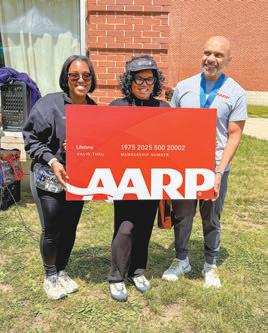



Pageant at the University of the District of Columbia (UDC), Van Ness Campus, Theater of the Arts. Join us as we celebrate elegance, talent, and leadership, and cheer on contestants competing for the title of Ms. Senior DC 2026. Tickets are available at tinyurl.com/msseniordc26tix or by contacting my office at 202-724-5626.
On Saturday, June 20, we invite you to stand with us as we celebrate our LGBTQ+ seniors at the Capital Pride Parade. We are proud to march alongside Mayor Bowser in our signature Senior Pride Trolley, demonstrating unity, visibility, and unwavering support for inclusivity across the District. This is a meaningful opportunity to honor the contributions and legacy of our LGBTQ+ older adults. If you are interested in riding the trolley,


please email us at dacl.communications@dc.gov or call us at 202-724-5626.
During Pride Month, I invite you to engage with your community, learn from one another, and participate in the many events and celebrations taking place across the District. Together, let us remain steadfast in our commitment to equity, dignity, and inclusion for all older adults.
I look forward to seeing each of you this month and throughout the summer.
In Service,
Charon P.W. Hines Director, Department of Aging and
Community Living


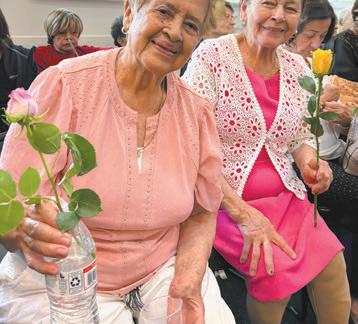
June is Elder Abuse Awareness Month, highlighting the need to safeguard older adults from various forms of abuse. If you or someone you know is experiencing abuse or neglect, reach out to DACL’s Adult Protective Services hotline at (202) 541-3950 for 24/7 support. Elder abuse encompasses financial, emotional and physical mistreatment, as well as neglect and self-neglect. Factors like social isolation, financial strain and
dementia can heighten vulnerability. The consequences are severe, with abused seniors being twice as likely to be hospitalized and four times as likely to enter nursing homes. While family members are often perpetrators, abuse can occur in any setting. According to the National Center for Elder Abuse, between 1 and 2 million Americans over 65 suffer mistreatment annually.





Learn the art of complaining well. See story on page 24.
By Rachael Green
Although the amount insurers pay out on home and car insurance claims has plummeted, the cost of your premiums have soared, according to a recent analysis by the Vanderbilt Policy Accelerator. At a time when insurance companies are warning of the need for further rate hikes amid worsening climate change and the rising cost of home and auto repairs, this study says that they may already be charging most Americans far more than they need to remain solvent. How did the study determine what portion of the premiums Americans pay was excessive? Where is all that extra money going if it’s not going to claims? Most importantly, what can you do to cut your home and auto premiums at a time when all of your other bills are going up as well? Here’s what you need to know.
Rate setting in the insurance industry is a complex and not very transparent process. Every company has its own set of risk factors and its own methodology for rating that it’s reluctant to share with the public. Moreover, every state has its own set of rules around what insurers can and can’t use when setting those rates. Some states even require companies to submit rate proposals to the state insurance commissioner for approval before raising premiums at all.
With that complexity in mind, what exactly did this analysis measure, and how did it determine what portion of premiums constituted an overcharge?
The Vanderbilt study, which was obtained exclusively by the Associated Press, looks specifically at what’s called the loss ratio, or the gap between the
amount insurers charge policyholders in premiums and the amount they pay out in claims every year.
For every dollar earned in premiums in 2024, the study says, companies paid out just 62 cents on claims on average. That’s down nearly 20 cents since the 1990s, when companies averaged about 80 cents per dollar in claim payouts.
If the loss ratio in 2024 had instead been at that 80-cent level from years prior, Americans would have saved a combined $150 billion in that year alone.
According to the study, that $150 billion per year is going toward “corporate perks, corporate jets, stock buybacks, excessive executive compensation, excessive dividends, excessive advertising and excessive agent commissions.”
Insurance companies argue that’s not the case.
“Current loss ratios reflect the impact of enormous financial losses over the last several years and the steps insurers have taken [to] maintain and restore financial strength so funds are available to pay future claims,” Don Griffin, vice president for policy and research at the American Property Casualty Insurance Association, told AP in an email.
The Vanderbilt study proposed a set of federal regulations to enforce a standard loss ratio for insurers nationwide in order to prevent excessive premiums.
Right now, the insurance industry is regulated primarily at the state level, meaning the level of regulatory protections you enjoy depends almost entirely
Dear Savvy Senior,
I keep hearing about AI in the news and how it’s being used in scams. I’m not very tech savvy and find it confusing. What should I know to protect myself?
—Cautious Senior Dear Cautious,
You’re not alone. Many older adults are asking the same question. Artificial intelligence, or AI, is becoming part of everyday life, from smartphones and internet searches to banking and customer service.

ways be accurate. If something seems unusual or too good to be true, take a closer look.
Use it wisely
A good way to get comfortable with AI is to start small. Many smartphones include voice assistants like Siri or Google Assistant that can set reminders, check the weather or answer questions. You can also try tools like ChatGPT or Claude to explain a news story, suggest recipes or help draft an email.
ceive an email that appears to be from your bank or Medicare or a phone call that sounds like a family member. Be especially wary of urgent messages that pressure you to act quickly or warn that your account will be closed.
The most important habit for avoiding scams is to slow down. If you receive a suspicious call, text or email, stop and assess the message. Don’t click links, download attachments or respond right away. Instead, contact the company or person directly using a phone number or website you trust — not the one provided in the message.
It’s also making scams more convincing and harder to spot, which is why a basic understanding helps. The good news is you don’t need to be a tech expert to use AI safely and with confidence.
Know the basics
AI is technology that can create and analyze information in ways that seem human. It can write emails, answer questions, recommend products, generate images and even mimic voices.
While this can be helpful, it also means things you see or hear online may not al-
AI can also be useful for everyday tasks like comparing products, planning trips or organizing a to-do list. Think of it as a helpful assistant, not a decision-maker. Keep in mind that AI isn’t perfect. It can give answers that sound confident but may be outdated or incorrect. For important matters like your health, finances or legal issues, always double-check with a trusted source such as your doctor, bank or government website.
Take time to verify
Scammers are using AI to make their schemes more convincing. You may re-
Scammers now use AI to mimic voices and write convincing messages. Even if something sounds like it’s from a family member, friend or company, verify it another way before taking action.
Never share sensitive information like your Social Security number, bank details or passwords unless you initiated the contact and trust the source.
Remember, banks and government agencies, including Medicare and Social Security, will not ask for this information by phone or email. Urgent requests for payment by gift card, wire transfer or cryptocurrency are also red flags.
For added protection, use two-factor
authentication, and keep your devices updated. You can even consider call-blocking services from your mobile service provider.
If something doesn’t look right, take time to check it or ask a trusted friend or family member before responding.
Technology is always changing, but there are ways to stay informed. Many libraries and senior centers offer free classes on digital skills and online safety. Trusted resources like AARP’s Fraud Watch Network (aarp.org/fraudwatch) and the Federal Trade Commission (consumer.ftc.gov) also provide up-to-date scam alerts and protection tips. In addition, internet and mobile provider Cox Mobile (cox.com/mobilesafety) offers a library of research, tips and online safety tools to keep you informed and secure online.
AI may seem complicated at first, but a little awareness goes a long way. By staying cautious and building a few smart habits, you can protect yourself and make this technology work for you.
Send your questions or comments to questions@savvysenior.org or to Savvy Senior, P.O. Box 5443, Norman, OK 73070. See INSURANCE, page 25
By Maurie Backman
Q: I am 73 and healthy, but my beloved husband has early-stage dementia. His diagnosis was a shock, but on reflection, I realize that he was starting to repeat himself and had forgotten to pay a few bills. He is doing well, yet I know this could jeopardize our $1.6 million in savings. How can I restructure our financial plan and estate and pay for his long-term care?
A: I’m so sorry about your husband’s diagnosis, but you are certainly not alone. More than seven million people in the U.S. are living with Alzheimer’s, and several million more live with vascular dementia, Lewy Body and other forms of dementia or mild cognitive impairment.
If your spouse is starting to show signs of dementia, you may be worried about your future as well as your finances. And it’s important to put protections in place for both of you. Here’s where to start.
Put a power of attorney in place
Even if your husband is functioning fairly well now, you don’t know how quickly he’ll deteriorate. He might end up making reckless financial decisions due to diminished capacity. That’s why it’s important to protect your savings.
Evan Farr, a certified elder law attorney at Farr Law Firm, said that for dementia patients, the dangers lie not just in potentially making poor investment choices but also in being vulnerable to scams and simply forgetting to pay bills. He suggests taking steps to make sure you’re empowered to make financial decisions on your husband’s behalf.
“In this stage, rather than taking away control, the goal is to provide guardrails so that you can intervene should your hus-


band lose more capacity,” Farr explained.
“You will want a comprehensive durable power of attorney that takes effect immediately, allows you to manage all of the bank accounts that either of you owns individually or jointly, changes the beneficiaries on any life insurance policies that you own, and establishes or modifies any trusts appropriately.”
You may have a number of different financial accounts, from retirement plans to brokerage accounts to a checking account.
Shane O’Hara, CFP, principal, executive vice president and COO at ProVise Management Group, said, “Look carefully at how your accounts are titled and who has access to move money.”
As a starting point, O’Hara recommends setting up automated bill payments.
“Your financial adviser can also add a trusted contact designation to your investment accounts, which allows them to flag unusual activity. It is a simple but meaningful guardrail,” he explained.
Farr agrees that restructuring accounts could be critical at this stage of the game.
“Account consolidation and simplification are the best ways to minimize potential vulnerabilities,” he said. “Consider changing to joint ownership or other forms of account ownership where you have express permission to handle transactions.”
Farr also said it’s a good idea to restrict your husband’s direct access to larger amounts of money. But that doesn’t mean you should take it away fully.
“You do not have to completely cut him off financially,” Farr said.
Instead, you may want to give your husband a small checking account for daily expenses but restrict your larger accounts.
You can also phase in these changes rather than implement them all at once.
The key, Farr said, is to “gradually increase your role in controlling his finances so that a single poor decision will not ruin years of savings.”
Make sure your monthly Social Security benefits are deposited into an account you control directly.
You may reach a point where you can’t care for your husband on your own. It’s crucial to plan for long-term care, given the very high costs.
Farr explains that if you expect to become reliant on Medicaid to pay for longterm care, “timing is everything.”
“Any transfers made today could sub-
ject you to a five-year lookback period under the long-term care Medicaid program,” he warned.
Farr also said the time to focus on Medicaid planning is now.
“Medicaid is funded through a meanstested program that has strict transfer rules governing who can qualify for coverage,” Farr explained.
“Unless planning for long-term care takes place proactively, many individuals who are in your situation will find themselves using a significant amount of their lifetime savings prior to qualifying for Medicaid.”
Consult a financial adviser and estate planning attorney to make a plan.
© 2026 The Kiplinger Washington Editors, Inc. Distributed by Tribune Content Agency, LLC
Jobseekers:
Attend morning workshops about jobsearch skills and strategies
Network with employers in the afternoon
Employers:
Find your next experienced and motivated hire
For nonprofit, for-profit, and government employers
Present at least 3 different job openings
Montgomery County Expo


By Kevin Brasler and Jennifer Barger
There’s much to complain about in modern life, from flights that depart five hours late (or not at all) to deliveries that don’t arrive to repair services that fail to fix stuff.
Yet few of us — studies indicate it’s about one in four — complain to the companies that did us wrong.
“If you don’t complain, the company can’t make amends, and the problem will persist for other consumers,” said Robin Kowalski, a psychology professor at Clemson University who has extensively studied complaining.
The trick is to complain effectively and diligently follow up. Here are ways to get what you want:
To get results, let the company’s owner or a manager know you are dissatisfied.
With a large business, start with the customer service team, and remain polite. If that doesn’t work, get the email address or phone number for the company’s CEO or president. Although the company’s big cheese probably won’t handle your complaint personally, their staff will likely find someone who can help.
“It’s usually about sheer persistence — stay on the phone with customer service,
keep asking for the manager’s manager,” Kowalski said.
Succinctly explain the problem
Complain in writing, stating the facts as you view them, why you feel entitled to relief, and how the company can make amends.
Keep your request short — and reasonable. For example, don’t ask for a full refund on a home improvement project if four out of five tasks were performed correctly.
Be firm but polite
Use firm language but avoid threats.
Even if you believe you were intentionally cheated, don’t use words like “crook,” “criminal,” “incompetent” or worse. If you speak rudely or unreasonably, what could have been a calm (and quick) resolution escalates into a feud.
Charly Rok, a New York marketing executive, recently stayed in a hotel where the hot water stopped working. Though she told the front desk, the problem wasn’t fixed quickly enough for her to shower before a big meeting. Later, she asked to speak to a manager.
“I was complimentary of the hotel and the staff and then shared that there was no hot water on the last day of my visit,” Rok said. “The manager apologized, sym-
pathized and added points to my loyalty program equivalent to a single-night stay.”
When complaining in writing, provide copies of relevant documents or photographs.
“Have your ducks in a row before you approach someone — your receipt, your contract, the date you bought that gadget and the date it broke,” Kowalski said. “The more specific you are, the more likely you are to get a favorable response.”
Another option is to post your complaint — and your desired resolution — on social media sites and tag the business. This forces the company to decide whether it wants to attract good or bad publicity from your dispute.
Many companies have staff who monitor social media to resolve complaints quickly and show how responsive they are to customers.
That’s what Lawrence Luk, a photographer in the San Francisco Bay Area, did when his internet service was mysteriously out for two days
“I couldn’t get through to the provider’s customer service,” he said. “So I made an Instagram story and tagged
them, and heard back in a few minutes. Not only did the company give me a discount that month, they explained what was happening.”
If you paid by credit card, you’re in luck. The federal Fair Credit Billing Act and the policies of credit card issuers provide enormous leverage by allowing you to withhold payment for goods and services you believe are defective or not delivered as promised.
After you’ve tried unsuccessfully to resolve the matter with the service provider, contact your credit card bank to dispute the charge (you usually can do this even after you’ve paid the bill).
Once you’ve requested this “chargeback,” your credit card bank will place a hold on the disputed charge and investigate. The service provider can protest the chargeback, but sellers rarely successfully reverse chargebacks if the customer has returned (or tried to return) the goods or can document the service defect.
Another option is to file a complaint with a government consumer agency. See COMPLAINING, page 25


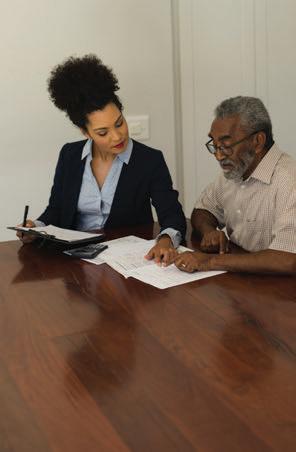
From page 22
on which state you happen to live in.
Aside from waiting for federal regulations or moving to a state with stronger consumer protection laws, what can you do to keep your insurance premiums under control?
The most important step you can take is getting new quotes for your home and car insurance ahead of every renewal.
Loyalty doesn’t pay in insurance anymore. Any loyalty discount you may be earning for sticking around is unlikely to outweigh the incentive pricing insurers offer to woo new customers.
In the worst-case scenario, shopping around for new quotes every year will just confirm that your current price is the best you’re going to find. In the best case, you could save hundreds every year for the exact same coverage.
Aside from switching your insurance every time you find deal, here are a few others effective strategies for lowering premiums without changing your coverage:
• Pay your policy in full up front rather than in monthly installments as many insurers offer a “paid in full” discount. This should work for both car and home insurance.
From page 24
Consumer protection offices have legal authority over many types of businesses. Staff might go beyond resolving your complaint; they might get the merchant to agree to change business practices and/or provide relief to additional aggrieved consumers; or they might force the business to pay penalties.
You can also seek help from a private agency, such as the Better Business Bureau or Call For Action. But government agencies have the force of law behind them and can pursue legal action if evidence shows the merchant has violated the law.
Most states’ small claims courts have advisers to help you prepare your case. Filing fees are around $50 for disputes up to $5,000.
Unfortunately, the fine print of many contracts and the terms and conditions of most online businesses now include a prohibition on lawsuits; instead, you’ll have to seek restitution via the company’s arbitration program, which is often an onerous process.
Excerpted with permission from Washington Consumers’ Checkbook, a nonprofit organization with a mission to help consumers get great service and low prices. It is supported by consumers and takes no money from the service providers it evaluates.
Beacon readers can view Checkbook’s ratings and advice free for 30 days via Checkbook.org/promo/beacon. Also, check out the Consumerpedia podcast for more consumer news you can use at consumerpedia.org.
• Take a quick defensive driving course to save up to 10% on car insurance.
• If you’re getting ready to buy a new car soon, check how much your favorite car models cost to insure first. Some models have far lower average premiums than others.
• Notify your insur er of any home safety upgrades you’ve made or plan to make, like installing a home security system or getting rid of a pool or trampoline.
• Look for membership-r elated discounts from places like AAA, AARP or even Costco.
• Ask your insurer about senior discounts for home insurance if you’re 55 or older.
• Always scr utinize your insurance renewal quotes.
How is your insurer justifying those higher premiums? What discounts are they applying (or not applying)? Have any coverage terms changed?
Remember, it doesn’t hurt to shop around to see what other insurers are willing to charge. Even if you really like your current insurer, you can always use those
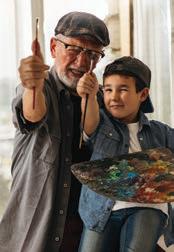
quotes to try to negotiate a better rate. © 2026 The Kiplinger Washington Editors, Inc. Distributed by Tribune Content Agency, LLC
We’ve Built a Legacy Of Trust For 50 Years. Who Better To Trust With Your Legacy?
For estate planning, probate, trust administration, contested estate litigation and so much more, knowing where to turn for the right advice can make all the difference in preserving your legacy. When you need us, we’re here.
Paul Riekhof
P: 240-399-7899
F: 240-553-1744
priekhof@jgllaw.com





By Cynthia Washam
Through three decades of traveling together, my husband and I avoided bus tours. We relished our independence, traveling on our own by train, bus or rental car — until we planned a trip to Peru.
Tourists typically fly from Lima to Cuzco, visit Machu Picchu, then fly home. But Bob and I wanted to see more of the country, so we asked Peruvian friends for advice.
Forget public transportation, they said; train and bus routes rarely extend outside major cities. As for renting a car, our friend Andres warned, “Driving there is anarchy.”
Our salvation was Peru Hop, a tour bus for people who dislike bus tours.
Peru Hop operates like a hop-on, hopoff city bus stretched across 700 miles. Passengers buy a ticket that allows them four to 10 stops. Our eight-stop pass cost us $219 each.
We would start in Lima, then travel along a U-shaped route to Cuzco. At every stop, we could choose where to stay, how long, and what tours we would take. English-speaking guides on the bus could help arrange tours and lodging, if we wanted help.
We took several of the paid tours they recommended but handled our own hotel accommodations. Bob and I also took the five free tours Peru Hop offers along our route.
We liked every destination enough to stay at least two nights. Peru Hop stops at each one daily. We could move on whenever we were ready, as long as we reserved our bus seats at least 12 hours in advance.
Our journey took us first to the seaside town of Paracas, known as the poor man’s Galápagos. We understood why as our tour boat floated thrillingly close to sea lions, Humboldt penguins and Peruvian boobies sunning on small, rocky islands.
Then it was on to the Andes. In Arequipa, we signed up for a day-long tour of Colca Canyon. Our group stood in awe atop a cliff as dozens of Andean condors, wings spanning up to 12 feet, soared endlessly overhead.
Only later, looking up from a hot spring we visited at the bottom, could I appreciate the canyon’s 12,000-foot depth, twice that of the Grand Canyon.
Next we rode the bus more than 10 hours from Arequipa to Puno, the longest leg of Peru Hop’s route. Traveling by land had eased the adjustment to Arequipa’s 7,660-foot altitude. Puno, though, would take us almost 5,000 feet higher.
“Dizziness, nausea and lightheadedness is to be expected,” our guide said as the bus started. “The time to take some-


thing is now.”
Bob and I tried chewing coca leaves but preferred drinking coca tea. The tea might have helped some, though we both felt lightheaded and out of breath during our first couple of days at high altitude.
From lakeside Puno, we traveled to Lake Titicaca, our favorite destination in Peru. There we stayed overnight in a wood-frame bungalow on one of the lake’s 125 floating Uros islands. Floor-toceiling windows gave us a panoramic view of the lake and mountains beyond.
Our English-speaking Airbnb host told us that when local men marry, they make an island and house from reeds for his bride and her family. To keep their homes from sinking, they add new layers of reeds to the island periodically.
Bob and I experienced a different culture two days later, when we joined some 30 others on a tour boat to Amantaní, the lake’s biggest island and home to speakers of the Quechua language. The tour included an overnight stay with a family who treated us to traditional meals and an evening of circle dancing for the entire group.
The next morning, we traveled by boat to nearby Taquile Island. Locals captivated us as they danced in the town plaza dressed in brilliantly colored vests, sashes, capes and feather-topped hats.
Bob and I skipped Machu Picchu and instead explored Inca ruins in the nearby, less crowded Sacred Valley. Peru has hundreds of Inca sites, and about a dozen survive in the valley, including temples and hillside terraces.
Archaeologist guide Wilbert entertained us with his insights on Incan culture.
“You drink 10 soles ($3) worth of corn beer, and you’ll be on another planet,” he said. “But the next day, no hangover.”
Three weeks after starting our Peru Hop tour, I was happy to board a 90minute flight from Cuzco to Lima. But I was happier we could travel between the two cities over land, thanks to a bus tour that beat the heck out of driving in anarchy.
For information and prices on Peru Hop routes, free tours and recommended paid tours, visit the website bushop.com/peru.
Lodgings offering discounts to Peru Hop passengers are listed on the website, too. We made our own reservations through Booking.com. In general, you pay less if you book while you’re in Peru rather than before you leave.
For information and reservations at the Lake Titicaca Airbnb in Puno, Peru, visit Airbnb.com.
By Glenda C. Booth
It may seem like we live in a couplesbased society, or, as Michigander Laura McCort puts it, “a Noah’s Ark world where all are expected to be paired up,” but traveling solo is a growing trend that appeals to many people.
When I travel alone, I have the freedom to choose — my schedule, sites to see, food to eat — without negotiating. I enjoy quiet time to muse and watch the human parade go by. Sure, companionship is nice, but it’s not always possible to have a compatible travel partner. There’s a big world out there, and going it alone should not be an obstacle to exploring it.
One of the most obvious benefits of solo travel is that you don’t have to do things that don’t interest you or drag your companion to places they don’t want to see. “No arguments!” a friend exulted.
“Traveling alone affords you the luxury of adding or subtracting things from your itinerary to suit your preferences at the time without inconveniencing a travel partner,” said Lynn Thompson from Plano, Texas, who went to Portugal solo.
Carmelita McAllister, a Takoma Park retiree, agrees. “I am not a joiner,” she said. The best part of traveling alone? “The versatility. I want the choice. I like to pick and choose what I want to do. I am my own best friend.”
A solo vacation might also prove more restful. After all, when traveling alone you can sleep in and do nothing, if you choose. You can indulge in idleness without guilt, and recharge. When by yourself, you don’t have to courteously gab.
Then again, solo trips are often a way to meet more people, because you’re more apt to talk to fellow travelers or locals.
For instance, on African safaris, singles are incorporated into the larger travel group, according to Vicky Kohler, a Vermonter.
“Most of the safari camps usually have around 14 people, and usually everyone is friendly to a single person. If not, I don’t need to talk when viewing rhinos, giraffes and elephants. More often than not, I get invited to sit with others there or someone from the camp will have meals with me.”
Taking off alone can mean adjusting your mindset, especially if you’ve been accustomed to a long-term partner or traveling companion.
“My advice on traveling alone is to be open and prepared for new adventures and people,” Thompson said, quoting a widower who said, “This upheaval in our lives forces us to reinvent ourselves and to prepare for novel experiences.”
Taking a trip by yourself may reveal resources you didn’t know you have and
Help individuals and families in need find local benefits and services. Apply for the Navigation Academy, a new training program designed to strengthen community-based support and expand access to vital resources across Montgomery County, MD. The program lasts six weeks and begins in August, with sessions held both virtually and in-person. To apply, visit bit.ly/NavigationAcademy. For more information, email navigationacademy@mcgov.onmicrosoft.com.

Solo travelers can have more freedom, flexibility and potential to meet others on a trip. Some organized tours cater to solo travelers.

build confidence. When you navigate a trip on your own, you expand your comfort zone and learn to adapt to — and even enjoy — unfamiliar situations.
“Traveling alone bolsters my selfconfidence,” Thompson said. “I can care for myself, take calculated risks and find that, in conquering them, you gain the motivation to do and be more.”
A solo trip may make you feel young and adventurous again, and that feeling can nourish a bright outlook.
By Ed Warner
Perhaps because we’ve nowhere to be in a hurry or because we truly enjoy seeing the areas we travel through, retirees are notable for being fans of Amtrak and of bicycling.
So, for a vacation, why not combine the two?
Europeans, of course, have done this for years, loading their bikes into baggage cars for a stress-free trip, say, to the Loire Valley. Not so long ago in the United States, however, getting a bike aboard Amtrak involved taking it apart and putting it into a sufficiently big box, on departure and when returning.
Not so much anymore. Amtrak has in recent years been making “bike closets” available on certain routes for $10 extra. That beats bringing a bike on a flight, which can cost $100, packed in an approved case.
Perhaps more crucially, Amtrak stations are typically located in downtown areas, not in the far exurbs typical of airports. This means Amtrak riders can take their bikes right out onto a city’s streets and pedal away, exploring the city via its bike trails.
There are three great ways of putting
that concept into action right here in the DMV. You can, for instance, drive with your bike to Baltimore Washington International Airport and park at the BWI Amtrak station (about $14/day). Alternatively, you could put the bike in an Uber X vehicle, typically a van, and skip the parking fee altogether.
From the BWI Amtrak station, there’s a morning Northeast Regional train to Boston that stops in New York City, arriving in either city while there’s plenty of daylight to bicycle to your hotel.
The next morning, you can check out the city — both are filled with bike lanes — or set out on regional bike trails that are among the best in the country.
For instance, you can ride from the center of Manhattan, or any of the other boroughs, all the way to Albany on the relatively new Empire State Trail.
Should you choose to take Amtrak to Boston, you’ll find a supremely bikeable city. Check out the Charles River Trail from downtown to Watertown — with the option to ride to Cape Cod.
To get to the Cape, start early to catch a morning ferry to Provincetown, at the Cape’s tip. “P-town,” a three-hour drive from Boston, is only about a 90-minute cruise aboard either of the two ferries that take bikes. (One leaves from 1 Long

The Positive Aging Sourcebook has helped thousands of individuals and families find the right answers — whether planning for safe and accessible living at home, exploring communities for the future, or navigating a loved one's health care crisis.
Wharf; the other from 200 Seaport Blvd.)
After you arrive and check into your hotel, you can ride the 5.5 miles of the paved Province Lands bikeway to either Herring Cove Beach, the closest, or Race Point.
Many riders simply use Route 6 to get to Herring Cove, thereby avoiding the $15 entry fee for the National Seashore beaches. (Look for the bikes locked along the roadside, then follow the trail to the water.)
Heartier cyclists will also want to ride the 26-mile Cape Cod Rail Trail, which runs southward from Wellfleet to Dennis. That trip, of course, usually involves reserving a motel in Dennis or beyond, for an overnight stay, and riding to Wellfleet on Route 6, with its constant traffic and narrow shoulders.
Nonetheless, the trip is worth it: You’ll glide along the pine-shaded trail, passing the occasional swimmable pond or beach.
The third Amtrak-enhanced bicycle trip in the DMV is to ride the length of the C&O Canal. For this multiday trip, you can either choose to take your bike by car to Amtrak’s Union Station or get a ride to Rockville, Maryland. In either case, you’d catch the once-a-day afternoon departure of the Floridian west-
bound to Cumberland, Maryland.
You must reserve your Amtrak ticket in advance, as the C&O Canal trip is one of the nation’s premier bike rides, and the bike closets on the Floridian fill quickly, especially on the westbound route. However, the Floridian requires bikes to go into the baggage car. Be sure to book the Cumberland Amtrak Station (CUM), as it’s where the baggage car opens.
Riding the C&O in the autumn usually means dry weather, which is important because the canal trail is paved in crushed gravel. In the spring, sections can flood when the Potomac River crests its banks.
A couple of years ago, when my wife and I rode the canal in the spring, we found a crucial passage, the mile-long Paw Paw tunnel (bring lights or headlamps) closed by a landslide, forcing us to drag our bikes up a muddy hillside detour. Days later, we were routed onto busy country roads, as sections of the canal were closed by high water.
Needless to say, we called a halt to our ride at Harpers Ferry — and luckily scored the last two bike reservations aboard that day’s westbound Floridian. Elated, we met other cyclists on board, including a couple our age who’d flown to

What’s inside:
Complete listings of every senior living community in Maryland
In-depth articles on aging, health, and housing
Practical checklists for planning and decision-making
Real-life stories from people navigating the same journey
Aging in place solutions and home modification resources
Legal and financial guidance and solutions
And much more across 232 information-packed pages




Tuddy
the
Force Cheerleaders.
Cities Night Honoring Community Hero Maryland State Delegate Lily Qi, Spirit of America. Hung Ci Lion Dance Troupe and Taiji dance performance at 6:20 p.m. and fortune cookies sponsored by Montgomery Sister Cities
From page 27
Some downsides
Among the top negatives solo travelers cite are feeling lonely, eating alone and being unable to chat as couples do. You won’t have a partner to help analyze situations, suggest new adventures or make observations.
On occasion, it may be harder to problem-solve on your own. You may be in situations like a train station in another country, unable to speak the language, for instance. You may have to find transportation, a museum or a doctor on your own. Many times, the kindness of strangers may surprise you.
Seasoned solo travelers and travel experts offer these tips:
• To overcome reluctance, take a weekend trip alone not too far away.
• Keep safety and prevention at the top of your mind and in your preparations.
• Stay off the streets at night. For instance, because Johannesburg, South Africa, was reputed to be unsafe, I booked a hotel with an on-site restaurant. To limit my time walking after dark in Auckland, New Zealand, I booked a hotel with a good Japanese restaurant next door.
• Keep your belongings safe using suitcase and backpack locks.
• Be aware. While being safety-minded is important for any traveler, it’s especially important for solo travelers who don’t have a second set of eyes. A person alone can be at a higher risk of petty crimes like pickpocketing. Always be aware of your surroundings and keep an eye on your belongings. In a bar, don’t leave a drink unattended.
• Buy travel insurance, especially for trips abroad.
• Leave your itinerary and contact in-
From page 28
If you take your bike aboard an Amtrak train, first check that the train serving your destination allows on-board bikes. When boarding the train, look for cars that have a bicycle symbol near their doors; these indicate a bike closet.
Once aboard, remove the bike’s front wheel with its quick-release lever and hang the bike by its rear wheel on the closet’s hook. Then put the front wheel and your bags, if any, in the closet, and find a seat (hopefully a nearby one, to keep the bike in view).
When disembarking, it’s best to let the other passengers, who often cluster near the doors, get off first. Also let the conductor know you’re removing a bike, so you’ll have a bit of extra time.
Read more about traveling with a bike on Amtrak at amtrak.com/bring-your-bicycle-onboard.
formation, including hotels, with someone at home.
• Make copies of all important documents and leave a copy at home and another secure in your belongings.
• Research your destination, the logistics and plan ahead. Book reservations ahead of time. Consider buying an international phone plan.
• Pack as lightly as possible so you don’t have to lug heavy luggage.
• If traveling internationally, register for free with the U.S. Department of State’s Smart Traveler Enrollment Program before you go. This allows U.S. embassies to contact you if there’s a natural disaster, civil unrest or family emergency. Visit mytravel.state.gov/s/step.
If you don’t want to venture out alone, consider taking an organized tour with a company like Intrepid, Smithsonian Journeys or G Adventures.
Road Scholar, which specializes in group travel for older adults, has two types of trips for solo travelers. On their Go Solo trips, everyone in the group is single (some are women-only) and everyone has their own room, which is included in the trip’s price.
On their traditional group trips, since hotel room and ship cabin charges are
based on double occupancy, solo travelers typically pay extra for a room alone, but Road Scholar offers a roommate-matching option.
As in all travel, sometimes unexpected things happen, whether you are traveling alone or in a group.
“If things get screwed up, like airlines,” Kohler said, “I just deal with it.”


By Lynda Lantz
The 1961 play Purlie Victorious: A Non-Confederate Romp Through the Cotton Patch skewers racism with humor and a plot that the Marx Brothers would approve. The 2023 Broadway revival was nominated for six Tony Awards.
Every actor in Studio Theatre’s current production, directed by awardwinning director Psalmayene 24, brings their A-game to the table.
The dapper and smooth-talking Purlie Victorious, played with impatient passion by Broadway actor Warner Miller, has returned to Georgia to buy back and reopen his father’s church.
Ordained only by his own melodious voice, Purlie initially meets with skepticism. As his suspicious sister, Missy Judson, D.C. audience favorite Kelli Blackwell brings her consistent warmth and skill to the role, anchoring the play with her good sense.
To win back his church, Purlie brings ingenue Lutiebelle Gussie Mae Jenkins to impersonate a cousin who is owed an inheritance. Danaya Esperanza plays the orphaned Lutiebelle with a dazzled inno-
cence paired with plenty of backbone.
Though her task is short-lived, Lutiebelle makes clear to the young reverend that she’s meant to be a permanent part of his life.
Purlie’s chief obstacle is Ol’ Cap’n Cotchipee (Stephen Patrick Martin), his former enslaver, who keeps his sharecropping farmers under his thumb as he tries to maintain a life as close to antebellum as he can.
But the captain’s control is being thwarted by his son, Charlie. Played by John Sygar, Charlie is another innocent with a backbone, firmly on the side of civil rights. His enlightened views were shaped more by Idella Landy, the housekeeper who raised Charlie after his mother died, “almost before you were born,” as she puts it, than what his father calls the “propaganda” of his northern college education. As Idella, veteran Broadway and television actress Lizan Mitchell steals every scene she’s in with her dry delivery (“I didn’t know he had been thinking lately”) and droll expressions.
Purlie can’t confront Ol’ Cap’n without



the support of his brother-in-law Gitlow Judson, the “trusted Negro.” Gitlow, whose oversized vanity mirrors that of his boss, is proud to be appointed Deputy for the Colored. But Gitlow, skillfully embodied as both foolish and knowing by the versatile Jason Bowen, consciously impersonates a simpleton, speaking with careful omission and singing (beautifully!) to comfort the soppy Ol’ Cap’n.
When Purlie encounters the old Confederate, they are squared off verbally and sartorially (thanks to costume designer Cidney Forkpah). Purlie, splendid
in a dark, fitted tailcoat, faces the older man, pompous in his white three-piece suit that calls to mind Colonel Sanders.
Comedic moments, serious themes
When Purlie, on the spur of the moment, awards Ol’ Cap’n the fictitious “Great White Father of the Year” as a distraction, Martin radiates satisfaction.
The Sheriff (Elliott Bales) and Deputy (Jacob Thompson) do their bit as bumbling





By Timothy Cox
One of the top radio stations in the nation’s capital region is WHUR, 96.3 FM, according to Nielsen ratings during the first quarter of this year.
While the Howard University-owned station has perennially enjoyed high marks as an urban contemporary station, playing secular R&B, jazz and soul music, its gospel programming also manages to earn a significant share of advertising revenue.
That’s thanks to the station’s longtime gospel DJs, Jacquie Gales Webb, 70, and Winston Chaney, 72, who are on the air every Sunday.
“WHUR does very well on Sunday mornings,” said Al Payne, the station’s senior director of programming.
“Those two DJs are killing it. They’re both number one in their time slots. Jacquie is an institution and also does well with folks between ages 25 to 54. And surprisingly, Winston is a hit with listeners between ages 18 to 34, and that’s a very unique audience that loves gospel,” Payne said.
Both Gales Webb and Chaney are D.C. radio veterans, having formerly worked at the Cathy Hughes-owned WYCB radio station, based in D.C., for 40 years.
During her decades-long career, Gales Webb won six local Emmy Awards, a Peabody Award, a DuPont Silver Baton and a Gracie Award. She recently retired from the Corporation for Public Broadcasting, where she was vice president of radio.
Before Gales Webb moved to the nation’s capital in the late 1970s, she lived in suburban Long Island, NY, where she graduated from Westbury High School.
She attended college in Boston at Emerson College, earning a bachelor’s degree in mass communications with a focus on radio and television broadcasting.
While still in college, she worked at WILD in Boston, and after graduation she worked for a TV station there.
Soon after learning that an African American business conglomerate had purchased an AM radio station in D.C., Gales Webb was inspired to relocate to “Chocolate City” in 1978 to join a new group of broadcasters.
“This was important time of life. I wanted to pursue what I’d been trained to do in college — and relocating to D.C. provided me a chance to interact and learn from like-minded individuals who were in a startup mode as African American entrepreneurial media owners,” she explained.
She soon met a young Cathy Liggins (now Hughes), general manager of station WYCB. Gales Webb started on the air and six years later became the station’s program director.
After establishing herself as a viable broadcasting personality in D.C., Gales Webb held positions at Smithsonian Productions, WDVM and WUSA9-TV, where she became a news producer and won six local Emmy Awards for her work.
Now the widowed mother of two adult children, Gales Webb says working part-time on Sunday mornings is quite enough.
“This job is still as rewarding as it was 35 years ago. I still go out into the community and interact with my listeners, and they provide me the feedback I need to incorporate into my future shows,” she said.

Brushes with celebrity Gales Webb is on the air on WHUR’s “Morning Gospel Experience” from 8 to 11 a.m., while radio host Chaney hosts his early-morning show from 5 to 8 a.m. Growing up in Danville, Virginia, Chaney realized radio was in his blood when he was in his teens. He recalls visiting the radio booth of a Black radio station in his hometown when he was 14 years old. Local DJ Doyle Butch Thomas invited him in, Chaney remembered.
“He let me stay his whole shift, and that was very nice of him,” Chaney said.
“He knew even at that age, I had a real interest in the business. Radio was always intriguing to me. The fact that you had control over thousands of listeners — that was real interesting to me, even after all these years,” he said.
Chaney had two loves: basketball and radio. After a successful high school hoop career at George Washington High School, Cheney played briefly at Virginia Commonwealth University, where he graduated with a bachelor’s degree in office administration and landed a job with the Virginia Employment Commission.
After college, Chaney played in semipro summer basketball leagues in D.C. with future NBA players like Adrian
Branch, Joe Pace, Eddie Jordan and Larry Spriggs, he noted.
While still in Richmond, Chaney got his first professional radio gig as an R&B music host.
Chaney moved to D.C. in 1980 not only because “it was the largest major city closest to Richmond,” he said, but because of his experience with the basketball scene there.
Drawn to the local radio scene, Chaney immediately befriended legendary TV and radio host Ralph “Petey” Greene and worked as his board operator at WYCB. Greene, who won two Emmy Awards for his talk shows, was an excellent mentor. More than that, Chaney said, “He was my best friend.”
When Greene died of cancer in 1984, approximately 10,000 mourners lined up outside Union Wesley AME Zion Church in Northeast Washington for the chilly January funeral.
Once again, Chaney was fortunate to be surrounded by greats, he remembered: He was a pallbearer, along with TV announcer James Brown and boxer Sugar Ray Leonard.
“Wake Up With Winston Chaney” and “Gospel Spirit” with Jacquie Gales Webb air on WHUR 96.3 every Sunday beginning at 5 a.m.











By Joshua Z. Rokach
These days, some of us may find ourselves increasingly overwhelmed, trying to keep our families secure, economically and perhaps even physically.
Three recent books — two memoirs and a history — show that with luck, pluck and collective imagination, we can prevail.
Misunderstood: A Memoir, by Allen Iverson and Ray Beauchamp, 352 pages, Gallery/13A, 2025
tunately, Gov. Douglas Wilder granted him clemency.

Local basketball fans remember Allen Iverson’s glory years with the Georgetown Hoyas and his outstanding career in the NBA, mostly in Philadelphia.
A six-foot-tall guard, he revolutionized the position into a mainstay of offense. He introduced tattoos (inadvertently) to the NBA scene and had a tumultuous side.
In the pros, he vociferously refused to attend practice. He clashed with coaches and accused referees of picking on him. He stood out.
Born into squalor in Hampton, Virginia, Iverson experienced a rough childhood, losing friends to drugs and prison. He was incarcerated at 17 for a fight that white supremacists instigated and that occurred after he had left the scene. For-
Iverson’s creative talent allowed him to conceptualize plays in football (his preferred sport) and basketball (as a scorer and playmaker).
That grit and an iron will led legendary coach John Thompson to take a chance on him despite his conviction. Thompson became a mentor, not just a college coach, and “saved his life,” Iverson said, paving the way to his many successes.
Now a peripatetic businessman, Iverson paints a fuller and riveting picture of his life in his memoir. Co-written by Ray Beauchamp, a Philadelphia native who is now a criminal defense attorney in New York, the memoir explores Iverson’s determination to live a decent life and the role of luck, both good and bad, in the journey.
pages, Penguin Random House, 2025
The basics of the tragic history of relations between the United States government and Native American tribes in the 19th and early 20th centuries have become well known. U.S. Supreme Court decisions have acknowledged the government’s deliberate attempt to annihilate Native Americans through broken treaties, land usurpations and death marches to inhospitable territories (the Trail of Tears).

Medicine River: A Story of Survival and the Legacy of Indian Boarding Schools, by Mary Annette Pember, 304

Heaven, souls must recite their Native names.
While her mother never recovered, Pember transcended her legacy of trauma and, after graduating from the University of Wisconsin, won numerous awards for her writing.

In Medicine River, Mary Annette Pember, a member of the Ojibwe (Chippewa) Tribe and correspondent for ICT News, reveals new horrors Indian schools inflicted on Native children.
Pember reviews the history at the flagship Carlisle School, focusing on her mother, Bernice Rabideaux, who attended St. Mary’s Catholic Indian Boarding School in Wisconsin. Although Rabideaux enrolled voluntarily, others were kidnapped and sent to the school.
Administrators severed contact with families, abused the students, forbade Native languages, cut their hair short (verboten for Native Americans) and gave the children Christian names. Pember underscores this particular insult, noting that Ojibwe believe that, to enter
Gotham at War: A History of New York City from 1933 to 1945, by Mike Wallace, 976 pages, Oxford University Press, 2025
This page-turner depicts the crosscurrents that buffeted the city that never sleeps during the Depression and World War II and the colorful characters — FDR and Mayor Fiorello La Guardia — who managed the maelstrom.
Somehow New York always emerged stronger. In Gotham at War , Mike Wallace, a history professor at CUNY, describes how the city creatively adapted to changing economic times. When slums proliferated, the city enabled clothing workers’ unions to build affordable housing to supplement government projects.
When World War II drove industries southward and westward, a city program enticed corporations to build their headquarters in the city, resulting in better-paying jobs. In fact, when the U.N. did not want to establish its headquarters in New York City, John D. Rockefeller Jr. decided otherwise, and the city became the de facto capital of the world.

Q: I’m 66 and have been widowed for five years. I haven’t had much luck with online dating sites and actually had one particularly bad date. But my real question is how to reveal my breast cancer history, which required a mastectomy 12 years ago. I was not a candidate for breast reconstruction.

You can hide the loss of a breast in photos and even when clothed, if you try, but I decided to be upfront about it when I meet someone and they ask me to talk about myself. I think my ability to survive five months of chemo followed by radiation treatments shows my strength and resilience.
Still, some men are immediately turned off, especially if they lost their wife to breast cancer and fear the possibility of going through that again.
How would you suggest I reveal this part of my history?
—Janet, South Carolina
By Laura Stassi
A: When dating at our age, it’s tempting to zip through all the get-to-know-each-other steps so we can land at the finish line: a committed partnership. After all, we want to know before investing precious time if our health and medical issues are a dealbreaker.
But how can we know if the stranger on the other end of the phone line or table is worthy of receiving such
From page 30
law enforcement. At the same time, their presence marks one of two spots where the comic tone of the play takes a pause.
When they are commanded to arrest Purlie, my nervous system focused on the guns in their belts, but fight choreographer Robb Hunter diffused the threat of violence by staging the melee as a slow, flailing swirl of bodies.
Later in the play, Purlie finds a distressed Lutiebelle. When Gitlow scoffs that Old Cap’n has only kissed her, despite how shaken she is, Purlie fires back, “And what do you suppose he’d a-done to me if I’d a-kissed his [girlfriend]?”
The answer is unspoken but shakes us as it must have the playwright, Ossie Davis, who wrote this play six years after the murder of 14-year-old Emmet Till. When
Purlie runs off to defend Lutiebelle’s honor, the audience fears the worst.
One technique that keeps the play fresh are lines that jump over the fourth wall, pulling the audience into the present and diffusing tense scenes.
When Ol’ Cap’n accuses Purlie of theft, for instance, Lutiebelle snaps, “Who kept me in slavery from 1619 to 1863, working me to the bone with no Social Security?”
(Of course, it was FDR who denied Black workers Social Security, but that’s a different story.)
When the play opened in 1961 with playwright Davis and his wife, actress Ruby Dee, in the lead roles, some activists complained it would make their struggle seem less serious or that it would let white audiences laugh their way past a recognition of their own racism.

• Rents based on
• Older Adults 62+
• Utilities included
• Spacious, one-bedroom apartments
• Bathrooms designed with seniors in mind
• On-site community activities and amenities
personal information?
I’m in favor of a slow reveal, but I may be in the minority. I believe first-date conversations should be back-and-forth exchanges instead of your-turn monologues, and lately, when I go on dates, I’ve been riffing on a storytelling card deck.
Asking something like “Tell me about a time in your life where you had to prove your strength and resilience” would be a great way to get to know your date a bit better while offering an opening to reveal your cancer history.
Maybe you could also mention losing a breast — but I wouldn’t. I’d save that detail until you’re at the point where you’re ready to have a conversation about engaging in sexual intimacy.
By the way, it’s likely the men you’ll meet also have health issues that they’re
Whatever their reservations, audiences then, as now, must have felt a burst of emotion when Purlie thunders, “We want our cut of the Constitution, and we want it now. And not with no teaspoon, white folks — throw it at us with a shovel!”
After more than 50 years, the play holds up because the writing is funny, the actors are superb and, most of all, it inspires us with its focus on flawed humans seeking community and freedom.
wondering when to reveal.
To help answer your question, I asked followers of the Dating While Gray Facebook page to offer their thoughts. Rich, 75, met Karen, 72, on a dating app. After a few dates, she told him she’d been diagnosed with lymphoma and was in remission. But her chemotherapy treatments had damaged her immune system, making her susceptible to infections.
“Karen said she told me in case it was important to me,” Rich said. “I appreciated her honesty and openness, so I said, ‘Let’s continue dating and see how it goes.’”
More than three years later, they’re still together. “At my age, health is just a crapshoot,” Rich said. “Who knows what may happen?”
The play runs about 100 minutes with no intermission. Ticket prices are $42$105, with a $5 discount for those over 62 and half off for former federal workers affected by recent layoffs.
Studio Theatre is located at 1501 14th St. NW, Washington, D.C. Parking is available in partnership with the Spot Hero app or at the Washington Plaza Hotel. For tickets, visit studiotheatre.org or call the box office at (202) 332-3300.




There was Doug, at a charity golf event, whacking woods off a practice tee. His shots looked great. He did, too.
He smiled broadly when I shook his hand. He said his business was in fine hands — those of his adult sons. At 65, he told me, his health was excellent, his bank ac count was stuffed and his house was paid for.
And then, the bomb: “I’m seeing someone,” Doug said.

ten does — with the patient’s death. At the funeral, Doug told me two things. He would never recover, and he would never try to replace her. I nodded and gave him a hug.
Now, amid the soaring golf balls, he studied my face for a reaction to his dating news.
I asked if he was happy. “Very,” he said. Which should have closed the books on the
By Bob Levey
Until two years earlier, Doug had been happily married, to his first and only wife. She developed cancer. Doug nominated himself as her daily caretaker.
The playout was agonizing, as it so often is, and it ended the way cancer too of-
From page 33
A 66-year-old man who wants to remain anonymous told me he believes “If someone has a major disability — physical or mental — they should reveal it as soon as possible, before the first date. They don’t have to put it in their profile, and they
But of course, it did not and has not.
Doug’s two sons continue to mourn their mother, understandably. They have both condemned their father for beginning a relationship with a New Someone — too soon, by their reckoning.
The rift is growing.
don’t have to go into detail, but they should provide some indication” of the issue, he said. Of course, your issue isn’t a “major disability.”
Tina, 53, is also on the side of sooner rather than later. “It’s something that comes up pretty quickly for me,” she said. “I’ll say, ‘I’m diabetic. What do you have?’”
Tina prefers to move quickly from an

Doug told me that frost develops every time he sees his sons, whether he’s accompanied by New Someone or not.
The sons think that Doug is disrespecting their mother’s memory. Doug thinks it’s his life, darn it, and he has the right to seek happiness.
“I have maybe 20 good years in front of me,” he said. “Am I just supposed to curl up in a corner somewhere, by myself? Who wants to be lonely?”
And then: “My sons are just being selfish. They want me to live in a time tunnel. They want to live in that tunnel, too, where nothing ever changes, and their Mommy will always be there to kiss their boo-boos and make them better. But life isn’t like that.”
Doug didn’t invite me to comment, so naturally I waded right in.
Is this new relationship serious?
online connection to a telephone conversation before deciding whether to actually meet in person. It’s on the phone when she mentions her diagnosis.
“No one’s ever said they don’t want to date a diabetic,” Tina said. “I’ve met a lot of veterans who told me they have PTSD. That’s a dealbreaker only if they don’t believe in therapy.”
Two readers had poignant responses to the question. One, Amy, admitted that she and her boyfriend, who is three years younger than she is, might not have committed to a relationship if they had known that in the five years they’ve been together, she would have five major surgeries and he would receive a cancer diagnosis.
“We’ve asked each other if we would have continued seeing each other if we knew what lay ahead. We both agree —
Neither party has mentioned marriage or cohabitation. But Doug said he wouldn’t rule out either.
Has the new partner taken over any roles that used to belong to his late wife?
Like remembering family birthdays?
None, he said. She respects his history, and she maintains her own, separate from his.
How did they meet?
No dating apps for this guy, said Doug. The pair has known each other for 30 years, in the business world. When Doug first asked her to dinner six months previously, it felt destined, he said.
Is she single?
Widowed.
Have the sons delivered any ultimatums about any of this?
page 37
we would have thought twice.” Nonetheless, she said, “We laugh every day!”
A widow named Susava shared that her “first husband was the strongest, healthiest person I knew, and he died at 56 of cancer. So the lesson is, you just don’t know.”
Now Susava is remarried to a man with heart and knee issues, but his health doesn’t really get in the way.
“He’s not as active as I had hoped for in a partner, but he’s doing what he needs to do to improve his health. As long as someone is capable of joy and fun to be around, that’s all I care about.”
Laura Stassi is host of the podcast Dating While Gray: The Grown-Up’s Guide to Love, Sex and Relationships and author of Romance Redux: Finding Love in Your Later Years. Send your questions to Laura at newloveafter50@gmail.com.




For many older adults—and for the families who care for them—deciding whether to move is not simply a real estate decision. It is a personal one, shaped by lifestyle, finances, health considerations, and the emotional weight of leaving a home filled with memories.
Whether you are planning ahead as a couple, navigating the future on your own, adjusting after the loss of a spouse, or helping parents sort through complex choices, the process can feel overwhelming. Even knowing where to begin can be difficult.
The encouraging reality is that older adults today have more attractive and thoughtfully designed options than ever before. From independent living and age restricted communities to assisted living and continuing care, there are exceptional choices throughout the Washington region and beyond.
Still, more options can bring more questions.
How do you know when the time is right? What setting is the best fit? And before making any major decision, do you know the current value of the home that may help define what comes next?
That is often one of the most important places to begin.
To help individuals and families move forward with greater clarity, I offer a complimentary Rightsizing Guide along with a free market evaluation. The guide outlines the seven types of senior living, the five options for what to do with the things you own, and practical solutions for many of the downsizing dilemmas families face. A market evaluation provides a clearer understanding of your home’s value, helping you consider your next steps with greater confidence.
To receive your complimentary guide or schedule a free market evaluation, visit EricStewartGroup.com or call 1-800-900-9104.



ACROSS
1. Missile Command missile
5. Peron or Gabor
8. “You are a royal pain in the ___”
11. Some who cross a border into Cambodia
12. Kissers
14. “Who, me?”
15. 2020 movie based on a classic 1903 book (with “The”)
18. One with high step-counts
19. Teacher’s helper
20. Those who work in a labrador laboratory
23. Rows on the back of a baseball card
24. David Lynch’s winner at the 1990 Cannes Film Festival
27. Its top-selling game was Super Mario Bros.
28. Fed. eavesdropping org.
29. Acronym of ERA and EAR
30. ___ and Hare (toon where Bugs Bunny turns into a monster)
33. “Oh no, ___ again!”
36. More like dogs than wolves
38. Billboard’s number one song for 4/28/79
42. Overwhelming assault
43. Feudal estate
44. Best hole cards in Mississippi Stud
48. “I refuse to join any club that would have ___ a member” (Groucho Marx)
50. It usually lets you pick your octane
52. After-dinner cheese accompaniment
56. Sigma Alpha Epsilon frat., briefly
57. Succumb to bacteria
58. Fable
59. “Some people die at 25 and aren’t buried ___ 75” (Ben Franklin)
61. A Redding singer
63. Cruise liner’s refueling location
66. One of the Four Corners states
67. Pillow-case material
68. Son of Zeus and Hera
69. Feline cereal-salesman since 1952
70. “You” in Shakespeare’s time
71. Use a calculator
1. Like an irritating sweater
2. Committee head
3. Hall of Famer Steve Carlton holds the record with 90
4. Frequent flyer point unit, often
5. Santa’s assistant
6. Absolutely essential
7. Sap-sucking pest
8. “Who ___? (amnesiac’s panicked question)
9. Fill in all the white squares
10. Pistol or revolver
13. Car and Driver review category
16. “Either they write our story ___ do”
17. Dampens
21. There is one on Maine’s state flag
22. There is one on Arizona’s state flag
25. “Ignorance of the law ___ excuse”
26. Fashion-tops at the Kentucky Derby
27. Jitters
30. Dept. containing the CDC and NIH
31. Thumbs-up vote
32. Firehouse companion
34. Not quite right
35. ___ Fridays
37. “Stat!”
39. Part of a Waffle House All-Star Special
40. Danish toy company
41. In the distance
45. Donut filling
46. Sent through the interwebs
47. H-E-X-E-S
49. Daytime dramas
51. Double ___ (thicker Oreos)
52. It hardens between tiles
53. Numbers game
54. Mixture of ice cream and root beer
55. Capital of Western Australia
60. Org. that has awarded over 100 trophies to UCLA
62. Bashful
64. Fix a shoelace
65. X/X =
They’ve both said, separately, that their respect for their father has taken a tumble. But no threats to stop seeing each other, or to withhold visits from the grandchildren. Yet.
Isn’t this all still pretty early?
Very early, Doug said. And too early to know whether the romantic relationship is a keeper. But that’s not enough to calm the waters with the sons.
I told Doug that this scenario is littered with clichés.
It’s true that nothing will bring back his sons’ mother. It’s true that Doug has the right to make his own decisions. As long as the new lady friend isn’t a gold digger — Doug was quick to report that she isn’t — the sons cannot claim that their inheritances are being threatened.
And yet …
“My sons keep comparing my girlfriend to their mother, right down to how she dresses and how she wears her hair.
“I tell them that isn’t useful or fair. But nothing about any of this is fair, right?”
Nor is any of it susceptible to one-sizefits-all reasoning. What’s right for Doug in his situation might not be right for anyone else. What ruffles the feathers of his sons might zoom right past other adult children in the same situation.
“Bottom line?” said Doug, as he got a look on his face that said he wanted to turn back to golf.
“It’s my life. It’s my future. I just wish it weren’t so difficult and so painful.”
Bob Levey is a national award-winning columnist
By Rick Detorie







The Beacon prints classified advertising under the following headings: Business & Employment Opportunities; Caregivers; Computer Services; Entertainment; For Sale; For Sale/Rent: Real Estate; Free; Health; Home/ Handyman Services; Miscellaneous; Obituaries; Personals; Personal Services; Vacation Opportunities; and Wanted. For submission guidelines and deadlines, see the box on page 39.
CAVEAT EMPTOR!
The Beacon does not knowingly accept obscene, offensive, harmful, or fraudulent advertising. However, we do not investigate any advertisers or their products and cannot accept responsibility for the integrity of either. Respondents to classified advertising should always use caution and their best judgment.
EMPLOYMENT & REAL ESTATE ADS:
We will not knowingly or intentionally accept advertising in violation of federal, state, and local laws prohibiting discrimination based on race, color, national origin, sex, familial status or handicap in connection with employment or the sale or rental of real estate.
A HOME HEALTHCARE - Experienced nurses, CNA, GNA are available 24/7. Cooking, companionship, personal care, housekeeping, driving. Full/Parttime or livein care. 15 years’ experience. 2405336599.
MOBILE HAIR & NAIL SERVICES - WE COME TO YOU. Professional Licensed Hair Stylist. Women and Men’s Services All Hair Types. Cuts, Styles, Roller Sets, Color, Perms, Men’s Cuts & Facial Grooming, Manicures & more. Call 3013388251.
PRIVATE DUTY CNA II / MED TECH Specializing in dementia, posthospital recovery, and medication management. Discreet, reliable, background checked. Oneonone care (no rotating staff). Travel/livein available. $35–$50+/hr. Call/Text 2024680002.
ELDERLY CARE- FEMALE CARE PROVIDER- I cook, clean, help with ADL’s and take to all appointments. I’m experienced in taking care of people with Alzheimer’s, COPD, cancer and other health issues. Excellent References 3012757283.
COMPUTERS, TELEVISIONS, CELL
PHONE Help For Seniors. We offer patient and thorough help for seniors with all matter of technology. We come to your home. We service MD, VA and DC. Call Senior Tech Pro at 3013370028. Available 24/7 Ask for Philip.
MOST REQUESTED SENIOR CREATIVE Development Artist seeks Pianist, Backup Vocals, For Gospel Soul Music Tributes to Seniors & Several Community Inspiration Organizations...Events. Some Volunteers & Some Events For Hire! Donations Welcome in Advance. A Must Be Supportive of Recorded Multi Use Videos. 2025391955 (Singer/ Song Writer) Contact Portia Reid Smith.
UP TO $15,000.00 OF GUARANTEED
LIFE INSURANCE! No medical exam or health questions. Cash to help pay funeral and other final expenses. Call Physicians Life Insurance Company 8662121092 or visit www. Life55plus.info/beacon
NEW BOOK RELEASE: TWENTY ONE AND BROKEN 3rd edition. By Maryland author Janie M. Zheng. A raw, emotional story about love, heartbreak, and personal growth. Published on Barnes & Noble May 9. Search “Janie M. Zheng” to find the book online. NEW WINDOWS FROM WINDOW NATION. Special money saving offer zero down, zero payments, zero interest for TWO years AND buy 2 windows and get 2 FREE! Offer is valid for select models. Labor not included. Other restrictions apply. Call Window Nation today! 8559092278.
LAKE HOUSE FOR SALE. Three bedroom, three bath. Easy drive for the weekend. Two hours from D.C. Lots of community activities and resident beaches and boating in a gated community. Updated baths and kitchen, screened in porch, deck. New roof, HVAC, and hot water heater. $395.000. Call (703) 6067242.
MEDICAL EXERCISE SPECIALIST- I have over 17 years of successful experience getting fantastic results. Call Anthony at 4107393318 to set up a free fitness evaluation. I look forward to meeting you and helping you reach your goals.
DENTAL INSURANCE from Physicians Mutual Insurance Company. Coverage for 400 plus procedures. Real dental insuranceNOT just a discount plan. Do not wait! Call now! Get your FREE Dental Information Kit with all the details! 18443661003 www.dental50plus.com/320 #6258
MOBILEHELP, America’s Premier Mobile Medical Alert System. Whether You’re Home or Away. For Safety and Peace of Mind. No Long Term Contracts! Free Brochure! Call Today! 12406509189.
PORTABLE OXYGEN CONCENTRATOR
May Be Covered by Medicare! Reclaim independence and mobility with the compact design and longlasting battery of Inogen One. Free information kit! Call 8558510949.
SETTLING AN ESTATE? Downsizing Specialists, LLC can help with the overwhelm. Our proven process helps you thoughtfully decide what to keep, gift, sell, donate, or discard with compassion and clarity at every step. Services include estate liquidation, downsizing, estate sales, storage unit cleanouts, junk removal. We buy estates, vehicles, & houses. Free estimates. Local. Family Owned. Licensed. Insured. Better Business Bureau A+ Certified Call/Text Philip 3012193600 DownsizingSpecialists.com
SLOWING DOWN AFTER 45 YEARS OF CONTRACTING. Small to medium jobs mainly residential but will do some commercial work. Will work all over the entire DC area. $45.00 from arrival on job. Andy 7039065429.
THE BATHROOM OF YOUR DREAMS in as little as 1 day. Limited Time Offer $1000 off or No Payments and No Interest for 18 months for customers who qualify. BCI Bath & Shower. Many options available. Quality materials & professional installation. Senior & Military Discounts Available. Call Today! 18556530087. DON’T LET THE STAIRS LIMIT YOUR MOBILITY! Discover the ideal solution for anyone who struggles on the stairs, is concerned about a fall or wants to regain access to their entire home. Call AmeriGlide today! 18663655170. NO MORE CLEANING OUT GUTTERS. Guaranteed! LeafFilter is the most advanced gutter protection for your home, backed by a noclog guarantee and lifetime transferable warranty. Call today 18559776078 to schedule a FREE inspection and no obligation estimate. Plus get 20% off! Seniors and military save an additional 10%. Restrictions apply, see representative for warranty and offer details.
VIRGINIA NOTARY PUBLIC. Serving Northern Virginia. Mobile notary service at your location. Available 24/7. Fair rates. Call Michael at 7039807560 or email michaelcaho@gmail.com.
THE MEDICAL PRACTICE OF KEVIN M GIL MD located at 15200 Shady Grove Road #207 Rockville, MD, has been transferred to Dr. Phyllis Acquah MD effective 1 June 2026. This is the date of his retirement from the practice of medicine. Patients will continue to access to their medical records and may request copies by contacting Dr. Acquah’s office at the same location, telephone number 3016100500. This notice will run once a month for 3 consecutive months. A copy of this notice will go to the Maryland Board of Physicians.
CONSUMER CELLULAR - the same reliable, nationwide coverage as the largest carriers. No longterm contract, no hidden fees and activation is free. All plans feature unlimited talk and text, starting at just $20/month. For more information, call 18337421303.
BECOME A PUBLISHED AUTHOR. We want to Read Your Book! Dorrance PublishingTrusted by Authors Since 1920. Book manuscript submissions currently being reviewed. Comprehensive Services: Consultation, Production, Promotion and Distribution. Call for Your Free Author’s Guide 18339920110 or visit dorranceinfo.com/beacon
DIRECTV - All your entertainment. Nothing on your roof! Sign up for Directv and get your first three months of Max, Paramount+, Showtime, Starz, MGM+ and Cinemax included. Choice package $84.99/mo. Some restrictions apply. Call DIRECTV 18885724953.
CASH FOR ESTATES; moving, downsizing, single item, or whole estate. I buy a wide range of items. Gary Roman, TheAtticLLC.com. 3015200755.
I BUY GUNS & MILITARY MEMORABILIA (Military/civilian firearms, medals, uniforms & insignia from all wars). Check out MidAtlantic Military Antiques positive reviews on Google. 3012010241. historian1975@gmail.com. www. midatlanticmilitaryantiques.com
June 4+
CASH FOR JEWELRY: Buying jewelry, diamonds, gold, platinum, silver, watches, coins, flatware, etc. Ask for Tom. Call anytime, 3016548678 (Reg. 883).
LADY LOVES PRETTY AND INTERESTING THINGS: art, bricabrac, dishes, figurines, jewelry, pottery and silver. One item or entire estate. Personal favorites include Herend, Royal Copenhagen, Scandinavian pottery and glass and vintage Christmas and Halloween. Call Susan (301) 7851129. MD PML 2753. WILL BUY MILITARY, WWII, WWI, Civil War memorabilia items. Uniforms, weapons, helmets, photos, war souvenirs, medals, photos or any other items associated with U.S., German, Japanese or other military history. Call Dave (2404640958) or email (david.obal63@gmail.com).
WE PURCHASE ESTATES — Large or small. House calls made seven days a week. Buying furniture, art, glassware, pottery, decorative arts, jewelry, silver, coins, etc. Highend vintage preferred. Call Tom, anytime, day or night. All calls returned. 3016548678.
ALWAYS BUYING Comic Books (1930’s to 1990’s), costume jewelry (pre1980’s), old coins & paper money....U.S. & Foreign and stamp collections.....hey.... almost anything before 1980 I can hold in my arms... Call or Text Me Now: Alex at 5714265363.
PAYING TOP CASH FOR ANTIQUES AND COLLECTIBLES. Housecalls made with prompt, courteous service seven days a week and 25 years of experience! Buying toys, trains, militaria, glassware, advertising merchandise, paper items and much more! Contact Mason or Megan at: 4433068816.
COINS, STAMPS, PAPER MONEY, & AUTOGRAPHS WANTED. Paying top prices. Free estimates – Will travel. No collection too large or too small. 50 years of experience. Licensed. Member of major associations. Call Dirk at 3017045453 or email dirkkitchin@earthlink.net.
WANTED: OLDER VIOLINS, GUITARS, BANJOS, MANDOLINS, UKULELES. Musician/collector will pay cash for older string instruments. Jack (240) 7315353, please leave message & phone number.
Thank you for reading the Beacon!
Mosaic Theater Company’s world-premeiere play, Precarious, runs from Thu., June 4 to Sun., 28 at the Atlas Performing Arts Center, 1333 H St. NE, Washington, DC. The play focuses on a retiree’s climate activism. Watch our interview with its actors at bit.ly/precariousplay. For more information and to purchase tickets ($51-$65), call (202) 399-7993 (ext. 501) or visit mosaictheater.org.
June 16+
Join a free, nine-week memoir-writing class at Wheaton Senior Center, 11701 Georgia Ave., Wheaton, MD. The workshop runs June 16 to Aug. 18 on Tuesdays from 10 to 11:30 a.m. (final celebration on Aug. 25). Led by Beacon writer Laura Sturza, the class welcomes all experience levels and explores storytelling through writing exercises, discussion and reading aloud. Space is limited to 12 participants. For more information and to register, visit the senior center in person, visit bit.ly/freememoirworkshop or call (240) 773-4830.
Ongoing
Manna Center Food Bank is seeking volunteers to sort and pack food at its warehouse at 9311 Gaither Rd., Gaithersburg, MD. Apply at mannafood.org/how-to-help/volunteer. For more information, call (301) 424-1130.
Jumbles: KIOSK CLONE MODEST GYRATE
Answer: The number of people buying fireworks for 4th of July celebrations was -- SKYROCKETING
All classified ads must be submitted and paid for online, via our website, www.thebeaconnewspapers.com/classifieds.
Deadlines and Payments: To appear in the next issue, your ad text and payment must be entered by the 5th of the preceding month for Baltimore and Howard County editions; by the 20th for Washington edition.
Cost will be based on the number of characters and spaces in your ad:
• $25 for 1-250 • $35 for 251-500 • $50 for 501-750 (maximum length). The website will calculate this amount for you.
Note: Maryland contractors must provide a valid MHIC number.
• Each real estate listing qualifies as one ad. • All ads are subject to publisher’s discretion. Payment will be refunded if unacceptable for any reason.
To place your classified ad, visit www.thebeaconnewspapers.com/classifieds.


AT INSP Ī R
It’s hard to see your loved ones dealing with memory loss. And supporting them by yourself is even harder. That’s why we created Aura Early Memory Support and Oceana Memory Care, two exclusive programs at Inspīr, thoughtfully designed for evolving needs. Here, your loved ones benefit from an environment of vibrant, intentional living. With every detail designed to provide whole-person wellness. See memory care in a new way at inspirseniorliving.com.