



At The Carnegie at Washingtonian Center, influence is not defined by age, job titles, or life stage; it is defined by presence. It lives in thoughtful conversations, lifelong curiosity, and the way members continue to show up with intention and purpose. Home to artists, engineers, physicians, executives, and creatives – many of whom are still actively working, The Carnegie is a community for people who are far from finished. Peggy is one of those individuals.
At The Carnegie at Washingtonian Center, influence is not defined by age, job titles, or life stage; it is defined by presence. It lives in thoughtful conversations, lifelong curiosity, and the way members continue to show up with intention and purpose. Home to artists, engineers, physicians, executives, and creatives – many of whom are still actively working, The Carnegie is a community for people who are far from finished. Peggy is one of those individuals.
Peggy and Louise moved to The Carnegie in December 2024. An engineer by training, she continues to work full-time as a government contractor program manager, leading highly technical programs involving satellite imaging and air traffic control. Originally from Pittsburgh, Peggy attended Drexel University in Philadelphia before a cooperative education experience brought her to Washington, DC, an opportunity that aligned with her open-minded, forward-thinking outlook and ultimately shaped her career.
Peggy and Louise moved to The Carnegie in December 2024. An engineer by training, she continues to work full-time as a government contractor program manager, leading highly technical programs involving satellite imaging and air traffic control. Originally from Pittsburgh, Peggy attended Drexel University in Philadelphia before a cooperative education experience brought her to Washington, DC, an opportunity that aligned with her open-minded, forward-thinking outlook and ultimately shaped her career.

Her professional journey mirrors the spirit of The Carnegie itself: intellectually curious, globally aware, and grounded in purpose. Peggy and Louise lived just six miles away before making the move, a decision shaped not by necessity, but by intention. Their former single-family home had served them well, yet over time the demands of home ownership, including yard maintenance, snow shoveling, stairs, and unused space began to outweigh its benefits.
Her professional journey mirrors the spirit of The Carnegie itself: intellectually curious, globally aware, and grounded in purpose. Peggy and Louise lived just six miles away before making the move, a decision shaped not by necessity, but by intention. Their former single-family home had served them well, yet over time the demands of home ownership, including yard maintenance, snow shoveling, stairs, and unused space began to outweigh its benefits.
“We wanted to make this decision on our own terms,” Peggy says. “Choosing a community like this before you’re forced to is a much better experience.”
“We wanted to make this decision on our own terms,” Peggy says. “Choosing a community like this before you’re forced to is a much better experience.”

That sense of living with intention lies at the heart of life at The Carnegie. While downsizing required effort, Peggy was surprised by how manageable the process felt. “We weren’t moving away from something, we were moving toward something,” she explains. Their new two-bedroom apartment, complete with a dedicated office, allows Peggy to remain fully engaged in her career while embracing the ease and freedom that come with community living.
That sense of living with intention lies at the heart of life at The Carnegie. While downsizing required effort, Peggy was surprised by how manageable the process felt. “We weren’t moving away from something, we were moving toward something,” she explains. Their new apartment, complete with a dedicated office, allows Peggy to remain fully engaged in her career while embracing the ease and freedom that come with community living.
At The Carnegie, Peggy has found what she
At The Carnegie, Peggy has found what she
describes as an immersive and inspiring lifestyle, one that supports both productivity and personal enrichment. She’s an enthusiastic participant in Osher Lifelong Learning Institute classes, the writing group, member talks, and curated entertainment, from films to live music. The ability to step away from daily cooking has been a welcome joy, and she looks forward to exploring the community’s fitness amenities when her work schedule slows. She also serves on the Carnegie Member Association Council, contributing her perspective to help shape the member experience.
What stands out most to Peggy, however, is the people she lives with at The Carnegie.
describes as an immersive and inspiring lifestyle, one that supports both productivity and personal enrichment. She’s an enthusiastic participant in Osher Lifelong Learning Institute classes, the writing group, member talks, and curated entertainment, from films to live music. The ability to step away from daily cooking has been a welcome joy, and she looks forward to exploring the community’s fitness amenities when her work schedule slows. She also serves on the Carnegie Member Association Council, contributing her perspective to help shape the member experience. What stands out most to Peggy, however, is the people she lives with at The Carnegie.
“The members here are almost intimidatingly amazing. They have contributed to the arts, sciences, law, technology,
conversations are “It’s not unusual for neighbors to share insights drawn from decades of experience, whether that’s an impromptu conversation over coffee or a scheduled talk explaining the James Webb Space Telescope. the happens here,” adds.
“The members here are almost intimidatingly amazing. They have contributed to the arts, sciences, law, technology, teaching, medicine, government and sports. The conversations are incredible,” Peggy says. “It’s not unusual for neighbors to share insights drawn from decades of experience, whether that’s an impromptu conversation over coffee or a scheduled talk explaining the James Webb Space Telescope. You’d pay for the kind of learning that happens naturally just by living here,” she adds.
Peggy’s influence is felt in those moments through generous listening, thoughtful engagement, and a genuine interest in others. In a community filled with accomplished individuals, her presence reflects a shared value: that purpose doesn’t end with retirement, and curiosity doesn’t have an expiration date.
Peggy’s influence is felt in those moments through generous listening, thoughtful engagement, and a genuine interest in others. In a community filled with accomplished individuals, her presence reflects a shared value: that purpose doesn’t end with retirement, and curiosity doesn’t have an expiration date.
She’s equally appreciative of the associates who bring The Carnegie experience to life. “They are so warm and caring,” Peggy says. “It’s not an exaggeration to say that we love them, and they love us.” That culture of respect and five-star hospitality foster a sense of belonging that defines daily life at The Carnegie.
Through intention, engagement, and a commitment to living well, Peggy embodies what it means to be a woman of influence at The Carnegie – a place where accomplished lives continue to unfold with purpose. Learn more at lifeatthecarnegie.com or call 240.929.1994.
She’s equally appreciative of the associates who bring The Carnegie experience to life. “They are so warm and caring,” Peggy says. “It’s not an exaggeration to say that we love them, and they love us.” That culture of respect and five-star hospitality fosters a sense of belonging that defines daily life at The Carnegie. Through intention, engagement, and a commitment to living well, Peggy embodies what it means to be a woman of influence at The Carnegie – a place where accomplished lives continue to unfold with purpose. Learn more at lifeatthecarnegie.com or call 240.929.1994.






Since stepping into the role of publisher this year, I have had a lot on my plate. Running a company is entirely different from being one of its executives.
The best part of ownership is the autonomy — I no longer need clearance to launch new ideas and initiatives. The worst part, however, is the constant second-guessing. While I am lucky to have an exceptional team to strategize with and our retired founders as a resourceful sounding board, the reality remains:
“The buck stops here.”
Montgomery and Prince George’s counties in Maryland, and Northern Virginia together.

By Gordon Hasenei
We’re working on some exciting changes to better serve our readers. Among all the ideas we are looking at, breaking up our editions is the easiest — and smartest — choice.
We are embracing geotargeting to improve the reader experience. Instead of one massive edition, we are narrowing our focus to bring you more local news.
For 38 years, the Beacon covered D.C.,
Now we are separating them. Northern Virginia will have its own paper, and the Beacon for D.C./Suburban Maryland will focus entirely on D.C., MoCo and PG county.
Traffic in the D.C. metro area is ranked among the worst in the country — mostly due to the gridlock crossing the Potomac. As someone who has commuted over those bridges for two decades, I know exactly how frustrating it is! (I’m still waiting for that personal Uber helicopter.)
Splitting our paper at the Potomac just makes sense. It allows us to provide content and resources that are relevant to where you live. While we’ve grown over the past 38 years, our roots remain on the east side of the Potomac, where we continue to have a strong allegiance.
Being a successful newspaper in the 21st century is a challenge. We all have more
The Beacon is a monthly newspaper dedicated to infor m, serve and enter tain the citizens of the D.C. & Suburban Mar yland area, and is privately owned. Other editions serve Northern Virginia, and Baltimore & Howard County, Maryland.
Subscriptions are available via first-class mail ($50) or third-class mail ($20), prepaid with order. D.C. and Maryland residents: add 6% for sales tax. Send subscription order to the office listed below.
Publication of advertising contained herein does not necessarily constitute endorsement. Signed columns represent the opinions of the writers, and not necessarily the opinion of the publisher.
Gordon Hasenei, Publisher, CEO
Steve Gurney, Associate Publisher
Margaret Foster, Editor
Kyle Gregory, Art Director
Roger King, Vice President of Operations
Advertising Representatives:
Jill Joseph, Steve Levin, M.K. Phillips
Ana Preger Hart, Assistant Editor
Tori Cleveland, Editorial Assistant
Stuart & Judy Rosenthal, Founders


The Beacon, 3720 Farragut Ave., Suite 501 Kensington, MD 20895
choices than ever regarding how, where and what type of information we consume. The explosion of the internet and AI has made it easier to find topics across multiple resources, putting increased pressure on printed publications. Yet, while other newspapers cut circulation or close, we continue to thrive thanks to you.
We currently print approximately 200,000 copies, and I expect our circulation to continue to grow. Thanks to your support, we remain one of the largest niche publications in the country and a valuable resource for older adults.
Because we recognize how the internet and AI have changed information consumption, we are enhancing our online presence. We have begun redesigning our website and merging content from the
Positive Aging site. While we know a strong, compelling online presence is the future, I believe the Beacon’s print newspaper will be around for the foreseeable future. One of the benefits of a printed newspaper is the ability to take it with you to share with a friend, read outdoors, clip and save an interesting article or ad — or heck, to use to cover a table while you eat crabs. Have you ever tried to eat crabs on top of a computer monitor?
It all started with this paper, and this is where we sank our roots. I hope you enjoy the changes and know that we will always remain dedicated to serving you.

Readers are encouraged to share their opinions on any matter addressed in the Beacon as well as on political and social issues of the day
Mail your Letter to the Editor to The Beacon, 3720 Farragut Ave., Suite 501, Kensington, MD 20895, or email to info@thebeaconnewspapers.com.
Please include your name, address and telephone number for verification.
Dear Editor:
I read Carolyn Ellis’s guest column, “Find Your Passion,” in the June Beacon, more than 10 times because it touched my heart. Her story about becoming an abstract artist reminded me of my own experience in 1990, when I took a basic painting class at the University of Maryland.
On the first day of class, I noticed an older gentleman painting a beautiful picture. When I asked if he was a professional artist, he said no; he worked as an international lawyer.
He explained that he had always dreamed of becoming an artist. However, he did not think he could earn a living through art, so he attended law school instead. At age 72, he was finally pursuing the dream he had postponed for decades.

(301) 949-9766 • Email: info@thebeaconnewspapers.com Website: www.theBeaconNewspapers.com
Submissions: The Beacon welcomes reader contributions. Deadline for editorial is the 10th of the month preceding the month of publication. Deadline for ads is the 15th of the month preceding the month of publication. See page 47 for classified advertising details. Please mail or email all submissions. © Copyright 2026 The Beacon Newspapers, Inc.
Back then, at age 32, my focus was simply surviving as an immigrant. Today, after 30 years working as a USPS letter carrier, earning a master’s degree, becoming a real estate broker, raising a family and serving my community, I have discovered my passion.
Since retiring, I have become more involved in senior programs and community activities. I am grateful for the opportunities this country has given me, and I now enjoy sharing my experiences and
encouraging others to pursue their passions at any age.
Eric Kuohwa Wang Rockville, Maryland
Dear Editor:
The reason teenagers are acting out in Washington, D.C., and its suburbs is due to the attitudes of our politicians. If politicians and “influencers” lie, cheat, steal and scream at each other, children will continue to misbehave.
Larry Calhoun Capitol Heights, MD
Dear Editor:
Is Laura Stassi’s column “New Love After 50” really necessary? Who cares about people’s shallow and toxic love lives?
I’m a widow, married 46 years to a committed, caring man who valued friendship above all. I don’t need a partner to feel valued or happy. I’m grown up. Women need to get out of the Dark Ages and be independent, accept their age and follow a higher road.
Friendship between men and women is possible — much healthier and respectful. Try it.
C. Huff Woodstock, MD
By Kim O’Connell
It’s 5:45 a.m. on a cold, dark morning. Stars twinkle overhead, and only the faintest light of dawn appears in the eastern sky. Instead of being in my cozy bed, I am helping three other people carry a long, heavy boat upside down, its gunwale balanced on my shoulder.
Together, we flip the boat right-side up onto the water and get in. Under the direction of our coach, Cindy Cole, we push away from the dock and begin rowing toward a stretch of the Anacostia River that is so picturesque that locals have dubbed it “Narnia.”
The founder and head coach of Washington Rowing School (WRS), which operates out of the Bladensburg Waterfront Park boathouse in Maryland, Cole gently corrects our technique as she rides alongside us in a motorized launch.
“Square your blade sooner,” she said to me, meaning turn my oar vertically so it can slice into the water more effectively.
One notable thing about our boat is that three out of the four rowers, along with the coxswain, are all over 50 years old.
As it turns out, this is not unusual. Unlike other sports, rowing is an activity that people can learn — and continue doing — at any stage of life. In fact, many first-time rowers begin in middle age.
In the greater Washington, D.C., metro area, rowing is a popular pastime across generations. With the area’s many high school crews to master’s rowing teams to devotees of single sculling, it is rare to drive past the Potomac or Anacostia rivers and not glimpse a rowing shell whose oars are moving in perfect synchronization.
Rowing differs from better-known water sports like kayaking and canoeing in that athletes use longer oars and sit on sliding seats to power the blades through the water. Indoor rowing machines — called ergometers, or ergs — mimic this back-and-forth motion.
The sport features two primary disciplines: sweeping and sculling. Sweep rowers use just one oar on opposite sides of the boat, while scullers use two oars at once.
Although the exertion can be intense, rowers of all ages value the sport for being a full-body, low-impact seated workout that is relatively easier on the knees and ankles.
Older rowers come to the sport in a variety of ways: Often they or their children rowed in high school or college, or they are looking to try something new yet accessible as empty-nesters or retirees.
This was what drew me to WRS. I’d
fallen in love with the sport because my son rowed for his high school crew in Arlington, Virginia, and I wanted to try it for myself. I took a novice sweep class with Alexandria Community Rowing and then switched to WRS to continue developing my skills.
Kathleen Prentice of Takoma Park, Maryland, had a similar trajectory. Her daughter was a coxswain for her high school team, which practices at the same Bladensburg boathouse as WRS. Now in her early 50s, Prentice learned to row with Cole when she was in her late 40s.
“As I was getting older, it occurred to me that I needed to diversify my exercise types, so I took a sculling class,” Prentice said. “I loved being out in the middle of a river in the morning. It was sometimes so beautiful.”
Antidote to pain and stress
Rowing is particularly well-suited to older adults because it is low-impact, highly aerobic and builds strength and balance.
Barbara Brocker of Chevy Chase, Maryland, was 57 when a friend encouraged her to take a Learn to Row class at Capital Rowing Club at the Anacostia Community Boathouse in D.C. Before that, she had never considered herself an athlete and assumed she was too old to start.
Over the past five years, however, she has progressed from novice-level rowing to earning a spot on Capital’s competitive rowing team.
Since she began the sport, Brocker has experienced improvements in her chronic hip and back problems, reducing her reliance on cortisone injections.
“Rowing correctly — the caveat being correctly — has made all that [pain] go away,” Brocker said. As for her pain levels, she added, “I feel like I’m almost at zero now.”
A fellow Capital rower, Susan Driano of Washington, D.C., came to the sport at age 61 as a lifelong athlete, having pursued other sports, including figure skating, mountain biking and trail running. Years later, Driano races competitively, serves as Capital’s sculling representative and even owns her own boat, a single shell.
She appreciates how rowing requires mindfulness. Coaches commonly instruct people to “keep your heads in the boat,” meaning they should focus on synchronizing their strokes with their boatmates. This level of concentration forces athletes to put aside their worldly cares, at least for a while.
“It can be very meditative,” Driano said. “There’s a rhythm to it.”
Gregg Hutson agrees. A former high
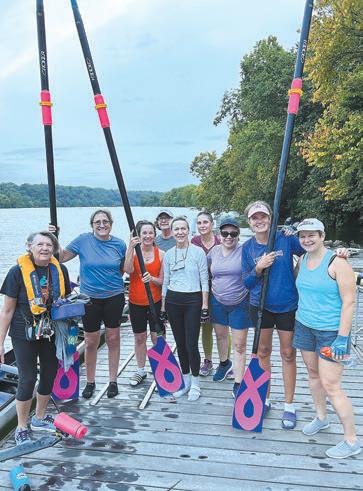
school and college rower and rowing coach, Hutson, now 51, returned to the sport a couple years ago and now rows with the Gray Knights club at Thompson Boat Center on the Georgetown waterfront in D.C.
“It’s a great activity for body and mind,” Hutson said. “When you’re on the water, you don’t have to think; you just row. There are also a lot of great people to get to know and spend time with.”
In 2002, when Doris Parker was undergoing breast cancer treatment at Walter Reed Medical Center in D.C., she frequently noticed rowers on the Potomac as she drove to appointments from her home in Alexandria. When she got the all-clear from her medical team, she was inspired to try the sport herself.
After finding it deeply helpful, both physically and mentally, Parker cofounded the D.C. chapter of WeCanRow, a national program that introduces breast cancer survivors to the sport.
WeCanRow DC includes a Learn-toRow weekend and summer-long novice program before participants decide whether to continue as regular members rowing out of Potomac Boat Club in Georgetown.
“The big message that they all come away with at the end of the Learn-to-Row weekend,” said Parker, who still coaches newcomers, “is that they can do hard things.”
Coach Cole says that, while the sport has a learning curve, patience and persistence are rewarded. “That is what keeps us all coming back,” Cole says. “It just gets better all the time.”
As Cole, Parker and others have learned, it’s never too late to learn how to row. Her message for newbies is that, with patience and practice, they can do it — and they might find it as fun, healing and meditative as she did.
“You don’t start where everybody else starts,” she said. “You don’t start where a teenager would start, but you start where you can, and you just keep going.”
Protect your eyes with sunglasses, regular exams and a healthy diet
GET THOSE STEPS
Walking 10,000 steps a day
TECH CAN HELP
Despite Parkinson’s, a musician can still make music, with the help of AI EAT LIKE EUROPEANS
The Mediterranean Diet is great for the heart, but what exactly is it?
By Lauran Neergaard
A novel pill helped people with advanced pancreatic cancer live longer, raising hopes of long-needed better treatments for one of the deadliest types of cancer.
“While not curing the cancer, it is a very large step forward,” said Dr. Zev Wainberg, of the University of California, Los Angeles, who helped lead the study. The drug is called daraxonrasib, and it blocks a mutated protein that fuels tumor growth in more than 90% of pancreatic cancer cases — a target that had eluded treatment for decades.
The daily pills nearly doubled survival time, with fewer severe side effects than continuing chemotherapy, in a study that randomly assigned the experimental drug or more chemotherapy to 500 patients whose metastatic, or spreading, cancer had quit responding to prior treatment.
The findings were published in the New England Journal of Medicine and presented May 31 at the American Society for Clinical Oncology (ASCO) meeting in Chicago, prompting a standing ovation.
Those taking daraxonrasib lived for a median of 13.2 months compared with 6.7 months for chemotherapy recipients. While that may seem like a small im-
provement, Wainberg said it marked the first drug to show a substantial advantage over chemotherapy.
“Having treated pancreatic cancer for 16 years, I actually started crying” when first seeing the study results, Dr. Rachna Shroff of the University of Arizona Cancer Center, who wasn’t involved with the research, said from the ASCO meeting. She was struck by how “patients stayed on this treatment because it was providing durable and meaningful benefit to them.”
The pills’ effects eventually wane, but recipients used them for significantly longer than the comparison group stayed on chemotherapy, reporting less pain and a better quality of life as their tumors shrank. Many still were using the drug after the data was analyzed, which Wainberg said means the survival gap may widen as researchers continue tracking them.
Dr. Brian Wolpin, of the Dana-Farber Cancer Institute, presented the findings. He said the drug should become “a new standard of care” for previously treated metastatic pancreatic cancer, adding that researchers also will explore its use earlier in the disease, including to see if tumor shrinkage might let more patients qualify for surgery.
Side effects most likely to affect pill usage were a rash that can be severe and mouth sores, he said.
Daraxonrasib’s developer, Revolution Medicines, funded the study, and the FDA plans to expedite review of the drug. Meanwhile, the agency is allowing what’s called “expanded access” to the experimental drug for patients who meet certain criteria.
The drug garnered public attention when former U.S. Sen. Ben Sasse described on “60 Minutes” how he’s had less pain while taking it. Oncologists are being flooded with requests as the special access program gets started.
Pancreatic cancer is among the most deadly forms because it’s hard to detect before it starts spreading to other organs. The American Cancer Society estimates about 67,000 new cases will be diagnosed in the U.S. this year, and more than 52,000 people will die from the disease. The fiveyear overall survival rate is 13%.
Unlike with other cancers that have benefitted from a variety of chemotherapy alternatives, pancreatic cancer has been harder to tackle.
Cancer specialists not involved in the new research expressed optimism that
this may be a turning point in the quest for new options, with dozens of experimental drugs in development.
The new drug targets mutations in the RAS gene family that normally regulates cell growth. So-called KRAS mutations are especially critical in fueling pancreatic cancer.
But a structure that made it hard for drugs to stick to the mutated proteins meant this cancer driver was long considered “undruggable.”
Revolution Medicines’ drug uses what’s essentially a molecular glue to bind with multiple KRAS subtypes. Wainberg said researchers next will probe whether the drug worked better in certain ones of those subtypes.
The drug will change pancreatic cancer treatment, said Dr. Andrew Coveler of the Fred Hutchinson Cancer Center, who wasn’t involved in the research.
“This thing works drastically differently,” he said.
Wainberg said other drugs in development target specific KRAS subtypes. Other approaches in earlier stages of testing include vaccines designed to prevent recurrence after pancreatic cancer surgery by teaching the immune system to recognize the mutated protein. AP
By Howard LeWine, M.D.
Q: I take a 500 mg calcium supplement every morning. I drink about three glasses of milk daily, plus the milk on my breakfast cereal. Is this too much calcium? Is there any danger from taking in more calcium than you need? Can it cause calcium buildup in my heart?
A: Yes, you are taking in more calcium than you need to keep your bones and the rest of your body healthy.
The current recommendation in the United States is 1,000 milligrams (mg) of calcium per day from ages 19 to 50 and then 1,200 mg per day after age 50.
However, these amounts are probably more than we actually need. For example, in the United Kingdom, the recommendation is only 700 mg per day. The
World Health Organization says that 500 mg daily is enough.
I estimated your calcium intake based on the information you provided. Eight ounces of milk contains 300 mg. Three glasses of milk is 900 mg. You are getting additional calcium from other foods. Adding the 500 mg supplement each day, your total daily consumption of calcium including other food sources is probably more than 1,700 mg per day.
Regarding your second question, does ingesting that much calcium adversely affect your health? No definitive answer on that one. Some studies have shown that men who take in very high amounts of calcium have an increased risk of dying from prostate cancer.
Other studies suggest that women who ingest high doses of calcium might
have more heart disease and may have a slightly increased risk of ovarian cancer. But none of these studies are conclusive.
The effect of calcium on the heart and circulatory system is a very interesting question. When fatty deposits build up in our arteries, they pull out calcium from the bloodstream. The calcium gets deposited inside the fatty deposits, and the calcium there makes arteries stiff. The calcium in our blood comes from our bones. There is no evidence that diets very rich in calcium harm the heart.
The known danger of taking too much calcium is elevated levels of blood calcium called hypercalcemia. If untreated, this can lead to fatigue, kidney problems and mental confusion. But this is actually quite uncommon, and usually is the re-
sult of taking high dose supplements of both calcium and vitamin D.
Unless your doctor specifically recommended the calcium supplement, you probably don’t need it. But be sure you are getting enough vitamin D. I personally recommend a multiple vitamin or a 1,000 IU vitamin D supplement daily. Like calcium, more is not necessarily better. Vitamin D enhances the absorption of calcium from the intestine into the blood, so a moderate intake of both is best.
Howard LeWine, M.D., is an internist at Brigham and Women’s Hospital in Boston and assistant professor at Harvard Medical School. For more consumer health information, see health.harvard.edu. © 2026 Harvard University. Distributed by Tribune Content Agency, LLC.
By Lauran Neergaard and Matthew Perrone
A new kind of flu vaccine moved a step closer to the U.S. market in June, as federal health advisers recommended approval of the first made with the same mRNA technology that was key to ending the Covid-19 pandemic.
The Food and Drug Administration is evaluating Moderna’s new shot, dubbed mFlusiva, for older Americans ahead of the winter flu season. Moderna is seeking full approval for the vaccine’s use in people ages 50 to 64 — along with authorization for use in those 65 and older while it conducts additional testing.
The FDA’s nine-member independent advisory committee evaluated Moderna’s studies of the vaccine and voted unanimously that its benefits appear to outweigh any risks for both age groups. The FDA will consider that recommendation in making a final decision by early August.
Tens of thousands of Americans die from influenza every year, and older adults are among the most vulnerable. There are various types of flu vaccines already available in the U.S., including three specifically recommended for people 65 and older.
But vaccines made with the Nobel Prize-winning mRNA technology are faster to manufacture than other types — something experts say might help if the shape-shifting flu virus mutates in a way that requires suddenly brewing new doses to match.
“Having this technology available puts us in a better position to be prepared for emerging strains in the future,” said Dr. Flor Munoz-Rivas of Texas Children’s Hospital, one of FDA’s advisers.
In a study of 40,000 people age 50 and older, Moderna’s mRNA vaccine reduced flu cases by about 27% compared with those given another routinely used vaccine brand. In a smaller study of people 65 and older, Moderna’s shot also generated a strong protective immune response compared with a high-dose flu vaccine already recommended for that age group.
Data showing strong immune reactions “were very compelling,” said FDA adviser Dr. Anna Durbin of Johns Hopkins University, adding that “the vaccine looks very promising.”
Moderna’s Dr. Rituparna Das told panelists that the company’s ability to quickly manufacture mRNA vaccines that closely match the latest flu strains could prevent thousands of hospitalizations in older Americans.
Severe flu cases in the U.S. generally rise in years when the flu shot doesn’t closely match the circulating virus. Moderna officials noted that flu strains for each fall’s vaccines now are chosen several months earlier than the yearly recipe update for Covid-19 shots that mostly are mRNA-based — and there can be a mismatch if the flu virus mutates after the recipe is made.
At the meeting, FDA vaccine reviewer Dr. Timothy Brennan suggested the agency was open to approving the vaccine for older adults ahead of the coming flu season, despite the need for more information about its use in frail seniors or people with weak immune systems.
If it’s approved, Moderna is planning its required next-step study to include 400,000 people 65 and older, half given the mRNA vaccine and the rest given one of today’s special-for-seniors shots. It’s supposed to repeat that study for two flu seasons.
Moderna’s data showed no major safety issues although the shot did cause some temporary reactions including injection-site pain, fever, headache, tiredness and aches. The latter reactions are common in a variety of vaccines, but occurred somewhat more often than with today’s flu shots. The FDA said that’s typical of mRNA vaccines.
Those temporary reactions can be a signal that “your immune system is responding,” said Dr. Hayley Gans, a Stanford Medicine pediatrician and FDA adviser who stressed it will be important to explain that to vaccine recipients. AP
The Disaster Distress Helpline provides free, confidential, 24/7 crisis counseling for anyone affected by extreme heat or other disasters. Services include emotional support, referrals and coping resources. Operated by SAMHSA, the helpline connects callers with trained professionals at local crisis centers. Support is available in more than 100 languages, including Spanish and ASL. For more information, visit samhsa.gov/ddh or call the hotline at at (800) 985-5990.
For free materials about area housing communities, just complete and clip this coupon and mail, or take a picture and email, to the Beacon.
District of Columbia
o Asbury Dwellings (See ad on page 18)
o Chevy Chase House (See ad on page 25)
o Bethany House (See ad on page 23)
o Brooke Grove (See ads on pages 20, 28)
o Carnegie at Washingtonian Center (See ads on pages 2, 3, 20)
o Churchill Senior Living (See ad on page 18)
o Discovery Village Chevy Chase (See ad on page 21)
o Grandview, The/Erickson (See ads on pages 20, 27)
o HIP Home Sharing (See ad on page 21)
o Homecrest House (See ad on page 22)
o Park View Bladensburg (See ad on page 16)
o Park View Columbia (See ad on page 16)
o Park View Emerson (See ad on page 16)
o Park View Laurel (See ad on page 16)
o Riderwood/Erickson (See ads on pages 20, 27)
o Aphasia Study (See ad on page 11)
o Smell Test Study (See ad on page 11)
Name
Phone (day) (evening)
By Feature Impact
As you get older, your risk for some eye diseases may increase. However, there are steps you can take to keep your eyes healthy — and it starts with taking care of your overall health.
Set yourself up for a lifetime of seeing your best with these eight tips from the experts at the National Eye Institute:
1. Find an eye doctor you trust: Many eye diseases don’t have any early
symptoms, so you could have a problem and not know it. An eye doctor can help you stay on top of your eye health. Find an eye doctor you trust by asking friends and family if they like their doctors. You can also check with your health insurance plan to find eye doctors near you.
2. Ask how often you need a dilated eye exam: Getting a dilated eye exam is the single best thing you can do for your eye health. It’s the only way to


find eye diseases early, when they’re easier to treat — and before they cause vision loss. Your eye doctor will decide how often you need an exam based on your risk for eye diseases.
3. Move more: Physical activity can lower your risk for health conditions that can affect your vision, like diabetes and high blood pressure.
If you have trouble finding time for physical activity, try building it into other activities. Walk around while you’re on the phone, do push-ups or stretch while you watch TV or dance while you’re doing chores. Anything that gets your heart pumping counts.
4. Get your family talking about eye health history: Some eye diseases — like glaucoma and age-related macular degeneration — can run in families. The next time you’re chatting with relatives, ask if anyone knows about eye problems in your family. Be sure to share what you learn with your eye doctor to see if you need to take steps to lower your risk.
5. Step up your healthy eating game: Eating healthy foods helps prevent health conditions — like diabetes or high blood pressure — that can put you at risk for eye problems.
Eat right for your sight by adding more eye-healthy foods to your plate,


such as dark, leafy greens like spinach, kale and collard greens, and fish high in omega-3 fatty acids like halibut, salmon or tuna.
6. Make a habit of wearing your sunglasses, even on cloudy days: The sun’s UV rays can harm your skin, and the same goes for your eyes. However, wearing sunglasses that block 99% to 100% of both UVA and UVB radiation can protect your eyes and lower your risk for cataracts. Look for ones labeled “UV400” or “100% UV Protection.”
7. Stay on top of long-term health conditions like diabetes and high blood pressure : Diabetes and high blood pressure can increase your risk for some eye diseases, like glaucoma. If you have diabetes or high blood pressure, ask your doctor about steps you can take to manage your condition and lower your risk of vision loss.
8. If you smoke, make a plan to quit: Quitting smoking is good for your entire body, including your eyes. Kicking the habit can help lower your risk for eye diseases like macular degeneration and cataracts. Quitting smoking is hard, but it’s possible — and a plan can help.
Test your eye health knowledge with a quick quiz and find more vision resources at nei.nih.gov/hvm.

By Mackenzie Long
Dear Mayo Clinic: I’ve read so much about the health benefits of tracking my steps. But there’s a lot of confusing information out there. How many is the right number? Are some “steps” better for you than others? Please help.
A: Whether you’re tracking steps with your phone, a smartwatch or an oldschool pedometer, the result is the same: you’ll have a good indicator of how much you’re moving during the day. The best device for you is the one you’ll use.
With many devices, you can set up alerts and goals that remind you to move. And that’s what counts. The ultimate goal is to move 150 minutes per week.
Reaping the benefits
You’re right about the health benefits of getting in your steps. In addition to keeping you strong and active, walking can help you:
• Control your blood pressure
• Lose or maintain weight
• Improve balance and coordination
• Increase core strength
• Manage stress and improve mood by releasing endorphins
• Manage your diabetes
• Reduce the risk of a heart attack
• Reduce the risk of developing Type 2 diabetes
Walking also has been shown to:
• Improve sleep
• Slow mental decline
• Lower the risk of dementia
• Reduce the risk of some cancers
• Help you lead a longer life
• Maintain independent living into older age
If you’re on a medically assisted weight-

loss journey, whether that’s bariatric surgery or a GLP-1 drug, being physically active will help burn calories, build strength, maintain muscle mass and bone density, and promote sustainable weight loss. It also can help medications work better.
Is there a magic number of steps for reaping these health benefits? Research has shown that 10,000 steps a day can lead to reductions in premature death, with a majority of that reduction happening between 4,000 and 8,000 steps. After 10,000, you’ll still see benefits, but they start to plateau.
How you get your steps doesn’t really matter. Walking has a cumulative effect on your body across your day. So, whether you walk your dog for 15 minutes in the morning and 15 minutes at night, go for a brisk 30-minute walk or spend an hour moving around the house or working in the yard, those steps all count.
The best way to start tracking your steps is to take it slow and steady. Listen to your body — it will tell you whether you’re trying to do too much.
Work more steps into your day by parking farther away from entrances, walking in place while you’re waiting for the timer on the microwave to go off, and making multiple trips to bring in packages or groceries rather than loading up in just one. You could even buy a walking pad to use while watching TV.
When you’re advised to go for a brisk
walk, what does that mean? “Brisk” is different for everyone. The average walking speed to aim for is 3 to 3.5 mph, which a device can help you measure.
The “talk test” is an easy way to identify a proper intensity. If you’re able to talk but find it difficult to carry on a full conversation, that’s “brisk” for you.
New research indicates that brisk walking can boost brain function and well-being, as well as physical health. However, walking slowly is better than
not walking at all.
Even if you’re able to get in a little bit of walking every day, your body responds to this exercise, and you gain the benefits.
Mackenzie Long, Physical Therapy/ Sports Medicine, Mayo Clinic Health System, La Crosse and Onalaska, Wisconsin © 2026 Mayo Foundation for Medical Education and Research. All Rights Reserved. Distributed by Tribune Content Agency, LLC.
If you need an affordable eye exam, the Prevention of Blindness Society of Metropolitan Washington offers eye exams by appointment for $40 for self-pay patients. Medicaid also accepted. Basic eyeglasses, including single vision and bifocals, start at $40, including frames. Appointments take place at 415 2nd St. NW, Washington, DC. For more information and to book an appointment, visit youreyes.org/summerclinic or call (202) 234-1010, ext. 236.
The Red Cross needs blood donors to keep the blood supply stable this summer. Save a life by scheduling a blood or platelet donation. Visit RedCrossBlood.org, download the Red Cross Blood Donor App or call (800) RED CROSS.


WELCOMING



Join the listeners who make WAMU News the DMV’s top morning destination. From Morning Edition to 1A, thoughtful news meets calm, clear reporting.
Listen on air at WAMU 88.5, stream online at wamu.org, or ask your smart speaker to play WAMU.

By Matthew Perrone
It’s common knowledge that ticks can spread infections that cause serious illnesses, including Lyme disease. Now health officials are trying to raise awareness of a lesser-known problem: a life-threatening allergy to meat triggered by tick bites.
The problem, known as alpha-gal syndrome, was first linked to a particular species of ticks about 15 years ago.
But cases are on the rise as more people report symptoms such as hives, diarrhea and itchiness after eating as little as a mouthful of meat and — in some cases — dairy. (The allergy doesn’t impact consumption of seafood, eggs or poultry.)
For years, the standard treatment has involved avoiding foods that come from cows, pigs and lambs as well as carrying an epinephrine injector in case of medical emergency. But regulators recently approved the first drug for the condition, and more therapies may be on the way. Here’s what to know about alpha-gal syndrome:
What causes it?
Unlike other tick-borne illnesses, such as Rocky Mountain spotted fever, alpha-gal syndrome isn’t caused by a bacteria or a virus. Instead, it occurs
when the human immune system triggers an allergic response to a type of sugar, known as alpha-gal.
Alpha-gal is found in the meat of most mammals, but not in humans or other primates. It’s also found in the saliva of certain ticks.
When eaten, the sugar is normally harmless. But when ticks bite through the skin, they can introduce the sugar directly into the bloodstream. That triggers the development of antibodies — immune system proteins that fight off foreign invaders — that identify and attack alpha-gal sugar molecules.
People who develop the antibodies will often experience a strong allergic reaction a few hours after consuming meat or dairy. But it can take weeks or months for the problem to develop, with the severity of symptoms increasing over time.
Why are more people diagnosed?
Experts point to increased awareness among health professionals and the public.
“More people have learned about it and are on the watch for this syndrome,” said Maria Diuk-Wasser, a Columbia University researcher who studies tickborne diseases.
But rising cases also reflect the expanding habitat range of the lone star



Montgomery County is committed to providing enhanced mobility services for older adults and persons with disabilities. The County’s transit system is one of the best in the country. We continue to make major changes, so we can better meet your needs and make your travel more convenient. All of Ride On’s buses are free and wheelchair accessible.
Some of your transportation options consist of Special Transportation programs such as Call-n-Ride, Same Day Access, and Medicaid Transportation.
tick, the primary source of the condition in the U.S. Often identifiable by a white dot on its back, the lone star tick is most common in the eastern and southern U.S. But in recent years it’s been reported in new parts of the country, including the Great Lakes region and as far north as Martha’s Vineyard in Massachusetts.
Researchers worry that other types of ticks, including blacklegged ticks, may also increasingly spread the condition.
Roughly 450,000 Americans are estimated to have developed the allergy, according to a 2023 CDC study.
People usually seek medical attention after experiencing worrisome symptoms, including hives, dizziness, difficulty breathing and swelling of the lips, throat, tongue or eyelids. Some people may only experience digestive issues, including diarrhea, stomach pain, vomiting and nausea.
Doctors diagnose the allergy based on results from a blood test, symptoms and other details reported by the patient, including whether they recall any recent bug bites.
The blood test detects the presence of alpha-gal antibodies, but sometimes the test can also be wrong.
“The blood test in and of itself is great,
but you can’t rely on that just for diagnosis. You need the actual symptoms too,” said Dr. Scott Commins, an alpha-gal syndrome researcher at the University of North Carolina.
“In the allergy world, we have a lot of trouble with false positives on blood tests.”
Doctors generally advise patients to avoid beef, pork, lamb and other meats from mammals. Some people are still able to consume dairy products from these animals, including milk, cheese and butter.
Those with particularly severe reactions may need to avoid foods made with other animal byproducts such as gelatin, which is found in marshmallows and gummy bears.
The allergy can fade away in some people after several years. Commins has seen that happen in about 15% to 20% of his patients. As for treatments, in 2024, the FDA approved an injectable drug called Xolair for a variety of food allergies, including alpha-gal syndrome. The drug doesn’t reverse the condition but helps reduce severe allergic reactions after accidental exposure to meat.
See TICKS, page 13



Call-n-Ride – This Montgomery County program provides subsidized taxi trips for low-income persons with disabilities and seniors. To be eligible for the Call-n-Ride Program, you must be at least 63 years of age or at least 18 years of age with a disability. Subsidy assistance is provided on a sliding fee scale determined by total household income.
This Montgomery County Transportation Program is part of the Call-n-Ride (CNR) program, designed to provide subsidized transportation service for certified MetroAccess participants who must reside in Montgomery County and have a current MetroAccess Identification Card.
Medicaid Transportation Program 240-777-5890
The Medical Assistance Transportation grant program provides transportation services for Medical Assistance recipients who reside in Montgomery County and need transportation to access medically necessary services. This program provides “last resort” transportation for ambulatory, wheelchair and stretcher-bound recipients to get to and from medical appointments, or whose medical or physical needs prevent them from using available public transportation.
By Mustakim Hasnath
Samuel Smith spent years writing songs with a guitar in his hands.
Now, the London-based singer-songwriter is using artificial intelligence (AI) tools to help him continue making music after Parkinson’s disease largely took away his ability to play guitar.
Smith, who was diagnosed with the progressive neurological disorder in 2020, recently released his second album, The Art of Letting Go.
For one of the eight tracks, an instrumental piece titled “Horizon,” he relied on platforms that use AI to generate music to create demo arrangements that would convey his vision to the musicians who then recorded the song.
The demos he created by humming rough melodies into his phone and uploading the recordings into song generators like Suno and Udio weren’t for mixing into the final studio version of “Horizon,” Smith stressed.
But tremors, stiffness and fatigue, which are common symptoms of Parkinson’s, caused his guitar skills to deteriorate during the more than a year he worked on the album, he said.
“So then I’m faced with a question,” Smith, 49, said. “‘Don’t play, don’t be creative, or find a way out, find a route.’ And for me, this was the route.”
Generative AI has divided the music industry, whose artists and record labels have complained of their copyrighted work being used to train the models behind AI-powered music tools.
Sony Music Entertainment, Universal Music Group and Warner Records sued Suno and Udio in June 2024, although Universal later reached a settlement and partnership deal with Udio, and Warner did the same with Suno.
Less discussed is what those AI platforms can do when employed by a serious musician like Smith, whose disease affects the tools central to his songwriting and identity as a guitarist: his hands.
He released his debut album, In the Springtime, in 2023, saying he wanted to give his two sons a way to remember when he could perform and record music himself.
“I’d always written, I’d also played, I always sung,” he said. “And immediately it
became clear to me that I was in trouble, that my music was going to be seriously compromised.”
The problem with AI
AI music generators use systems trained on large datasets of recorded music and audio. The platforms analyze patterns in melody, harmony and rhythm before generating new audio based on prompts or uploaded recordings.
Users don’t need musical talent to end up with a serviceable song, or even a popular one.
Smith uses AI a bit differently. He hums a song into his phone, uploads the recording, then prompts AI, describing instrumentation, mood and style.
“AI is not replacing anything for me,” he said. “It’s unlocking; it’s enabling. It’s allowing me to keep writing. I upload my lyrics; AI doesn’t create my lyrics. I upload my music; AI does not create my music.”
He added: “It then brings it to life in a way that I can play to session players and
say, ‘Here, that’s what I’m thinking; that is what I’m hearing.’”
Despite the progression of his disease, Smith recently managed to play a guitar duet with his friend.
“I hadn’t been able to play for months, but I kept telling myself that if I wrote something to take to the studio, perhaps the clouds would part for a few minutes,” Smith said.
“That’s what happened. I had a window of about 10 minutes in the studio when my arm freed up. ... So in the end, I was able to capture the last breath of my guitar playing.”
Smith said he thinks his experience demonstrated how AI could benefit society and expand creative access, if it’s developed responsibly.
“If these companies want to show they’ve got a place, a role in society, then step up,” Smith said.
“Engage with health professionals, engage with music therapists, engage with society — and show us what you can do.” AP
Healthy Adults
45-70 years old, first language is English, and at least a high school education
No history of speech-languagelearning disorders or other neurological or psychiatric diagnoses
Home computer and internet access
People with Stroke/Aphasia
Diagnosis of aphasia following a left brain injury
English as a first language
Home computer and internet access

~3.5-5 hours
*People with aphasia first complete an initial aphasia evaluation in two 2-hour sessions on Zoom
Part 2 Brain:
Participants complete an MRI then speak while in an MEG 2.5 hour session at the Maryland Neuroimaging Center
Ongoing smell loss may be one of the most important signals of brain health as we age.
A new study from The Michael J. Fox Foundation for Parkinson’s Research is exploring this link. We’re calling on everyone with and without Parkinson’s to request a simple scratch-and-sniff test and contribute to important research.
Request your test at 877-525-PPMI (7764) mysmelltest.org/beacon or
By Janet McCann
Dear
Mayo Clinic:
I’ve read that following the Mediterranean diet is good for your heart, but I’m not quite sure why. Could you fill me in?
A: Extensive research over the years continues to pinpoint the Mediterranean diet as one of the best for your heart. Why? It helps reduce chronic inflammation in the body.
Not all inflammation is bad, but once it becomes chronic, it can lead to heart disease, Type 2 diabetes, dementia and cancer. One of the main risk factors for chronic inflammation is a high-fat, high-sugar diet.
The Mediterranean diet is the opposite of that. And the best part is that eating healthy with the Mediterranean diet feels more like eating and living well. Basically, it’s a model eating plan for good health.
Built around plant-based foods, the Mediterranean diet:
• Replaces harmful fats with healthy, monounsaturated fats, which have been found to lower total cholesterol and low-density lipoprotein, also known as LDL, or “bad” cholesterol levels.
• Includes food rich in antioxidants
and phytochemicals that help reduce inflammation in the arteries.
• Supports healthy blood pressure by emphasizing potassium-rich foods and decreasing salt intake.
• Promotes whole grains, legumes, fruits and vegetables, which are high in fiber, support gut health and reduce blood sugar fluctuations.
• Encourages healthy weight because it focuses on nutrient-dense, satisfying foods that naturally curb overeating.
If you’re interested in trying the Mediterranean diet, these tips will help you get started:
• Aim for two to three servings of fruit and four or more servings of vegetables daily. Expand your fruit and vegetable horizons with pomegranates, figs, grapes, peaches, nectarines, cantaloupe, spinach, kale, Swiss chard, collard and mustard greens. Wander through a farmers market for local choices. Swap in fruits and veggies when you’re craving a snack.
• Opt for whole grains. Switch to


100% whole-grain bread, cereal and pasta. Experiment with whole grains, such as bulgur and farro.
• Add in nuts and seeds. These foods are high in fiber, protein and healthy fats. Try to eat four ¼-cup servings of raw or unsalted nuts and seeds per week.
• Use healthy fats. When cooking, use olive, avocado or grapeseed oil instead of butter. Rather than putting butter or margarine on bread, try dipping it in flavored olive oil.
• Eat fish twice a week. Fresh or water-packed tuna, salmon, trout, mackerel, sardines and herring, along with seafood such as shrimp, crab and mussels, are high in healthy omega-3 fats. Grill, steam or bake fish and seafood rather than frying it. [Ed. Note: Fish-oil supplements don’t work, according to recent research, and may even increase the risk of stroke and atrial fibrillation.]
• Reduce red meat. Substitute fish, poultry, eggs, beans or lentils for red meat. If you eat red meat, make sure it’s lean, keep portions small — usually about 3 ounces of cooked meat — and eat it sparingly.
• Don’t forget dairy. Eat low-fat Greek or plain yogurt, cottage cheese, milk and a variety of soft cheeses. Try cheeses made from goat or sheep milk, such as chèvre and feta. Stir fresh or frozen fruit into yogurt to avoid added sugars.
• Spice it up. Herbs and spices boost flavor and lessen the need for salt.
• Go easy on wine and alcohol. While red wine is often a choice in the Mediterranean diet, it’s optional. If you do drink wine or alcohol, limit your intake to one glass or less each day. Remember to include water, since it’s the
best fluid for your body.
Modify your lifestyle
While much of the Mediterranean diet revolves around healthy eating, a large part includes slowing down and savoring life — something most of us can benefit from for our well-being and mental health.
The basics of Mediterranean-style eating include:
• Sitting down at the table for at least two lunches or dinners per week
• Taking time over the meal, not eating and running
• Eating with friends and family
• Engaging in physical activity with a goal of at least 150 minutes of moderate intensity exercise per week
Plenty of eating plans are out there, but the Mediterranean diet is a holistic approach that encompasses healthy, delicious food and lifestyle choices that promote well-being. Many people who switch to this style of eating say they’ll never eat any other way again.
For more information, talk to your healthcare professional or a registered dietitian nutritionist.
Janet McCann, Registered Dietitian Nutritionist, Mayo Clinic Health System, Eau Claire, Wisconsin
Mayo Clinic Q & A is an educational resource and doesn’t replace regular medical care. This Mayo Clinic Q&A represents inquiries this healthcare expert has received from patients. For more information, visit mayoclinic.org.
© 2026 Mayo Foundation for Medical Education and Research. All Rights Reserved. Distributed by Tribune Content Agency, LLC.
New 4 You Thrift Boutique, an all-volunteer nonprofit supporting Montgomery County charities, is looking for volunteers. No special skills are needed, and training is provided. Flexible schedules are available. The shop is located at 4909 Cordell Ave., Bethesda, MD. For more information, visit new4youthrift.org or call (301) 656-2002.


By Adithi Ramakrishnan
Soft, stretchy plastics can make up grocery bags, bubble wrap and more. They’re impossible to avoid and harder still to properly dispose of.
If thrown in the trash, they can take up to hundreds of years to degrade in landfills and release harmful microplastics into the environment. Over 3 million tons of plastic bags, sacks and wraps in the United States went to landfills in 2018, according to the Environmental Protection Agency.
Grocery bags dumped in curbside recycling bins, on the other hand, can create problems for recycling.
“Once they get shredded — or even before — a lot of times they just clog recycling equipment,” said Delaware-based chemical engineering expert Erha Andini.
Learning how to manage such plastics, known as plastic films, is worthwhile, as there likely won’t be a slowdown in production anytime soon: Negotiations for a global plastic treaty have stalled in recent
From page 10
years, with the U.S. and other oil-producing countries resisting any limits on the production of plastics, which are made predominantly from oil.
While it’s difficult to live a plastic-free life, there are simple ways to get rid of the most common culprits, as well as other ways you can make a difference.
“It’s a problem of volume,” said Gary Dusek, founder of Precious Plastic NYC. “So literally the tiniest thing definitely moves the needle.”
There are many different plastics, from harder kinds like water bottles and takeout containers to softer plastic films.
Experts say the best way to describe plastic films is with examples: bread bags, plastic cereal bags and overwrap for items like toilet paper.
To identify a plastic film, you can also look for the classic three-arrow logo with a number inside it. That logo identifies what kind of plastic an object is made of — not whether it’s recyclable in a curbside bin.
The drug was first approved more than 20 years ago for patients with hard-tocontrol asthma. It works by reducing the release of biological chemicals that cause inflammation and other allergic reactions. Commins and other researchers hope to study other previously approved drugs
Many plastic films are labeled with the numbers two or four, meaning they are made of either high or low-density polyethylene. These can be dropped off for recycling at some local grocery or convenience stores.
Items without these numbers may be made with multiple kinds of plastic layered together. For example, the plastic wrap that keeps meat fresh at the grocery store, Andini said, can be made of up to five or more film layers, depending on the packaging design.
Unfortunately, putting such films in general recycling bins with the hope they’ll end up in the right place — a concept known as wishcycling — can make it harder to process other plastics, so it’s worth considering other options.
Instead of trying to put plastic films at the curb, leave them in the specific dropoff bin at a grocery or convenience store. Once dropped off, the bags are given to recyclers who reprocess them into mate-
as new options for patients.
“There are certain [biologic drugs] out there nowadays that interfere with the allergic signaling,” Commins said.
“We think that if you were on one of
rials for new things like furniture.
The company Trex, for instance, makes outdoor decking out of recycled plastic films and has a locator on its website (nextrex.com/view/findadropoff) to find drop-off points by ZIP code.
Grocery bags and soft plastics labeled with the numbers two and four are generally accepted at these bins.
Before dropping something off, make sure it’s not covered in food residue or too degraded. Such plastics aren’t good candidates for recycling and should go in the trash. Don’t forget to remove stray items like receipts from plastic bags.
NOVA Creative Reuse Center in Leesburg, Virginia, repurposes donated bubble wrap for artwork, and Precious Plastic NYC melts plastics to make clipboards and clothes hangers.
“All we’re really trying to do is take this stuff out of the environment and put it into something where we know what it is,” Dusek said.
those — or if you got one quickly enough after a tick bite — perhaps it could interfere with the entire allergic response process.”


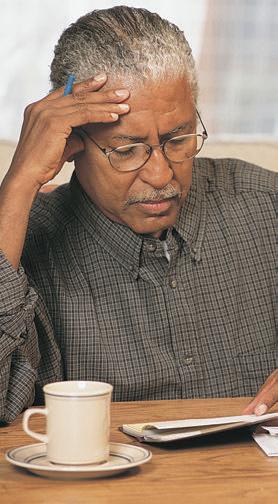




A panic attack can feel terrifying. Your heart races. Your chest tightens. You may feel dizzy, shaky, sweaty, detached or suddenly con vinced something is terribly wrong.
Many people end up in the emergency room, certain they’re having a heart attack. Well, sometimes they are! Never dismiss chest pain, shortness of breath, fainting, one-sided weakness, severe palpitations or sudden neuro logic symptoms. Get checked out.

helps with muscles by relaxing them; that’s why leg cramps respond to mag. But when levels run low (like if you drink caffeine beverages), you’ll eventually start to feel more irritable, tense, wired, restless and more prone to palpitations and cramping.
By Suzy Cohen
Once serious conditions are ruled out, you may be shocked to learn that panic attacks can mimic major medical problems almost perfectly.
As a pharmacist and author, I’ve spent years talking with people who thought they were “losing it” after a panic attack. Unlike some practitioners out there, I disagree: Panic attacks are not purely psychological. There is biology underneath that is driving these symptoms.
Check your medications
I’ve seen people become jittery from excessive caffeine, decongestants (things like pseudoephedrine for a stuffy nose), stimulant medications (think Adderall and clan), thyroid meds that are dosed too high, prednisone or other steroids, energy drinks, fasting, poor sleep or taking too many stimulating supplements together.
I’ve also seen nutrient deficiencies quietly contribute. Low magnesium is a big one. Magnesium helps regulate your nervous system and make you relaxed. It
From page 13
Don’t use some plastic films
Blood sugar instability can play a role too. If glucose suddenly drops, your body releases adrenaline to rescue you. That surge can feel exactly like panic. So can hormone fluctuations, especially during perimenopause, when cortisol and estrogen behave erratically.
How about modern life? We are overstimulated constantly. We can’t get away from the noise of things anymore: video
doorbell alerts, home monitor alerts, pings from your phone, timers, incoming texts, the TV, even an open refrigerator door. Phones. Notifications. Social media. Bad news. Poor sleep. Too much caffeine. Too little downtime. Many people are walking around in a chronic state of nervous system overdrive without realizing it. Having a panic attack does not mean you are weak. It means your nervous system probably hit overload when it didn’t have enough in its cup, and the cup runneth over.
Sometimes the best support starts with basics that sound almost too simple, like getting adequate sleep, drinking more fluids, eating more protein and leafy greens, which are rich in magnesium, consuming less caffeine and practicing breathing exercises. Sunshine wouldn’t hurt.
Try to notice when you’re getting riled up. Do your best to interrupt catastrophic thinking patterns before they spiral, or step away from people who annoy you. I also encourage people to review medications and supplements with a knowledgeable healthcare practitioner because sometimes the “cause” is hiding in plain sight.
If you’d like to read my longer article with more root causes, medication triggers, natural remedies and calming strategies, visit my website and sign up for my free newsletter at suzycohen.com.
This information is opinion only. It is not intended to treat, cure or diagnose your condition. Consult with your doctor before using any new drug or supplement.
Suzy Cohen is a registered pharmacist and author of The 24-Hour Pharmacist and Real Solutions from Head to Toe

The Positive Aging Sourcebook has helped thousands of individuals and families find the right answers — whether planning for safe and accessible living at home, exploring communities for the future, or navigating a loved one's health care crisis.
If it’s tough to drop plastic films off for recycling, consider reducing your reliance on them. Opt for reusable grocery bags, and avoid plastic packaging where possible.
Plastic wrap is an important component of food safety, as it keeps certain products like cucumbers fresh for longer. But it’s still possible to make small swaps, like grabbing individual apples from a grocery stand instead of selecting wrapped bunches. Or use beeswax-coated wraps, which last for years.
You can also shop locally and secondhand to avoid the plastic packaging used in shipped products.
Or simply reuse those plastic bags stashed under the sink. Use them for multiple grocery runs, for bathroom trash cans, to scoop pet waste or hold wet clothes.
Some things may still eventually end up in the trash, and that’s okay. Small swaps and changes are better than nothing, and your local recycling plant will be grateful.



By Diane Rossen Worthington
Chilled soups are light, flavorful, refreshing and simple to prepare. They can be made well in advance to allow them to chill properly. This means that you can prepare your soup early in the day (when it’s cooler in the kitchen) or even the day before, a real boon to the summer cook. And best of all, these soups cool us off when the temperatures are crazy hot. This bright soup tastes like pure summertime with its fresh just-picked corn, golden yellow sweet peppers and yellow cherry tomatoes.
Yellow tomatoes are sweeter and less acidic than their red cousins. If you can’t find yellow tomatoes, use the red variety and sweet red peppers for an equally delicious variation.
I like to garnish a soup with an interesting topping. Feel free to decorate as
The Greens at Hammonds Lane - 410-421-7223
Park View at Furnace Brance - 227-240-6288
Park View at Severna Park - 443-940-6735
Ednor Apartments 1 - 443-903-2847
Ednor Apartments 2 - 443-407-8882
The Greens at Irvington Mews 1 - 227-240-8179
The Greens at Irvington Mews 2 - 240-209-4809
Park Heights Place - 410-210-4889
Park View at Ashland Terrace - 443-233-0366
Park View at Coldspring - 443-238-0106
Cove Point Apartments 1 - 227-240-8710
Cove Point Apartments 2 - 240-981-5172
Evergreen Senior Apartments - 443-232-0241
The Greens at English Consul - 443-241-7976
The Greens at Liberty Road - 443-241-5393
The Greens at Logan Field - 844-431-2949
The Greens at Rolling Road - 443-280-9913
Park View at Catonsville - 240-303-8481
Park View at Dundalk* - 443-296-5284
Park View at Fullerton - 240-732-1542
Park View at Miramar Landing - 443-278-2376
Park View at Randallstown - 240-916-1522 Park View at Rosedale - 240-237-9903 Park View at Taylor - 443-419-6451 Park View at Towson - 443-870-4234 Park View at Woodlawn - 443-331-2914 Eastern Shore Park View at Easton - 443-329-9511 Harford County Park View at Bel Air - 240-929-8123
View at Box Hill - 443-363-5229
Howard County
Park View at Colonial Landing - 443-398-3046 Park View at Columbia - 443-578-3548 Park View at Ellicott City 1 - 240-923-7396
Park View at Ellicott City 2 - 227-997-7416
Park View at Emerson - 443-396-2110 Park View at Snowden River - 443-806-8105
Park View at Bladensburg* - 443-960-7019
Park View at Laurel - 443-332-7143
Park View at Laurel 2 - 443-648-9714
you wish. Try corn kernels or chopped tomatoes on top, or add some chopped green basil leaves for a pretty contrast. Remember to adjust the seasonings of the soup once it has been chilled. Cold soups usually need more seasoning, since the chilling process reduces the flavor.
Serves 6 to 8
Ingredients:
2 cups fresh corn kernels (about 4 medium ears)
1 pint yellow cherry tomatoes or 1 large yellow tomato, stemmed and coarsely chopped
1 sweet yellow pepper, seeded and diced into half-inch pieces
3 tablespoons olive oil
6 scallions, white and light green part only, finely chopped
6 cups chicken or vegetable stock
6 basil leaves
¼ cup whipping or heavy cream
Salt and freshly ground black pepper
1 teaspoon hot pepper oil
To garnish:
½ cup sour cream
Extra basil leaves, finely chopped; add just before serving to avoid darkening
Directions:
1. Reserve ¼ cup corn, 2 tablespoons diced yellow pepper and ¼ cup tomatoes. Immerse the reserved corn and yellow pepper in a saucepan of boiling water for about 2 minutes. Drain, chill and reserve with the tomatoes.
2. Heat olive oil in a large saucepan over medium heat. Add scallions and sauté until slightly soft, about 3 minutes. Add the remaining tomatoes, yellow peppers and corn to the pan and sauté for about 3 minutes. Add chicken stock and basil; bring to a boil. Reduce the heat and simmer slowly, uncovered, for about 10 minutes. Remove the basil leaves.
3. Puree the soup in the pan with a hand blender or in batches in a blender or food processor fitted with a steel blade. Transfer to a bowl. (For a smooth consistency if desired, pass through a food mill or strainer into a bowl, pressing through to get all the essence.) Add the cream, seasonings and hot pepper oil. Taste for seasoning. Chill for at least three hours.
4. To serve: Pour the soup into bowls and garnish with sour cream, tomatoes, yellow pepper, corn and chopped basil.
Diane Rossen Worthington is an authority on new American cooking. She is the author of 18 cookbooks, including Seriously Simple Parties, and a James Beard Award-winning radio show host. You can contact her at seriouslysimple.com.
© 2026 Diane Rossen Worthington. Distributed by Tribune Content Agency, LLC.

By Tara Prakash
When Terri Garfinkel moved to Washington, D.C., from Ohio, she was navigating more than a relocation. Her husband, who had been diagnosed with dementia five years ago, had a few falls, and he required more care.
So, last August, Garfinkel and her husband moved into Inspīr Embassy Row, a luxury senior living community in Dupont Circle, near their daughter.
After her husband died last fall, Garfinkel suddenly faced a new reality: life alone in an unfamiliar city. She was quite healthy and could have lived independently. But after his passing, she chose to stay at Inspīr Embassy Row.
“The caregivers had become family to me,” she said. “They provided me with an opportunity to grieve and to mourn.”
For many older adults, the death of a spouse can dramatically reshape daily life, shrinking social circles and increasing the risk of loneliness.
According to the National Institutes of Health, loneliness affects approximately one in three older adults. It can impact our health, often increasing the risk of dementia by as much as 20% and causing greater likelihood of heart disease and stroke.
Those health risks are often com-
pounded by major life transitions, including retirement and declining mobility.
A solution for loneliness
Senior living communities are increasingly positioning themselves as a response to the challenge of loneliness.
Will Nance, executive director at The Grandview Senior Living in Bethesda, Maryland, says senior living communities can offer a solution. Many older adults come to The Grandview after experiencing a loss: the death of a spouse, the passing of friends or increased distance from children. “People’s worlds have gotten much smaller,” Nance said.
For many residents, the move offers not just health support, but a chance to rebuild a social life. Nance said many residents forge new friendships soon after moving in, excited by the opportunity to “press restart and branch out again.”
Residents no longer need to get in the car to meet with a friend or play a card game — they simply walk down the hall.
“Their worlds open up,” Nance said.
The Grandview, which has roughly 300 residents, intentionally designs spaces that encourage socialization. Many common areas feature open floor plans so residents can easily gather.
The facility’s restaurant also sets aside
a community table where residents can eat with new people. “You don’t have to admit you’re by yourself,” Nance said. “You just sit down.”
Residents Bruce and Margo Fonoroff are particular fans of the community table, which has helped them meet people and make friends.
The Fonoroffs moved into The Grandview in December 2025, a decision they said is one of the best ones they could have made.
“I can’t tell you how many friends we have now,” Margo Fonoroff said.
While The Grandview offers musical performances, exercise classes and art lessons, the sense of community extends beyond these organized activities.
Bruce Fonoroff frequently helps fellow residents with small repairs. “People will ask, ‘Can you help me with this?’ and he’s willing to help,” his wife said.
“It is essentially a neighborhood,” Bruce Fonoroff said.

With more than 100 residents, Inspīr
Embassy Row also tries to cultivate a neighborhood-like environment. The facility hosts block parties on each floor, which general manager Amanda Glendinning said are consistently well at-
tended. Staff also introduce residents to others with similar hobbies.
“We try to matchmake a bit with shared interests,” Glendinning explained.
Hearing loss equals isolation
Yet even in communities designed to foster connection, loneliness can persist. Sister Nelly, a resident at Sunrise Senior Living in Silver Spring, said the feeling is often hidden.
“Very few people will tell you, ‘I’m lonely’ or ‘I’m depressed,’” she said. “They will say, ‘Leave me alone.’”
Just the other day, Sister Nelly was having breakfast with two other residents, one who struggled with hearing loss and one with dementia.
“I asked, ‘How are you today?’ ‘What did you do today?’” she said. “No answer. I asked, ‘Are you okay, my friend?’ No answer. I was sitting among people who were really lonely.”
Hearing loss is a major driver of isolation, Nance pointed out. “They don’t want to ask people to repeat things over and over again,” he said.
As conversations become difficult to follow, some people begin withdrawing
See COMMUNITY, page 21

n How do I sign up for Montgomery County’s recreation and lifelong learning classes?
n Where can my family find help if we need access to food, transportation or housing?
n I’m caring for a family member at home. Are there resources to help me?
n I suspect fraud against my grandmother. What should I do?
n I want to volunteer. Where should I look?
n How can I find legal advice?
Looking for information about local activities you can enjoy? Or do you want to help a family member stay safely at home? How about where to get the training you need to reenter the job market?
Montgomery County and various community organizations offer a wealth of programs and services geared to older residents — both those who are active and healthy, and those needing more support.
Resources are available to direct you to health, wellness and recreation programs, and provide answers to questions about safety, housing, consumer issues, caregiving, tax support, transportation, job search and tech support, as well as numerous opportunities for volunteering. Consider signing up for a regular e-newsletter (see Resources panel), and check out the monthly cable TV program, 50+ in Montgomery County, a program for and about older adults.
Regardless of what information you want to find, Montgomery County staff and information resources are here for you. Should you need it, staff can help arrange for information in a language other than English, or you can use the translation link on the County’s website.
No matter your situation, AgeFriendly Montgomery County has resources dedicated to helping you thrive. Reach out to one or more of the resources below today and discover how they can make a positive difference in your life!
Montgomery County Information Resource Telephone Line: For information on any aspect of County services, or to report abuse, call: 240-777-3000 (via Maryland Relay at 711), email ADS@ MontgomeryCountyMD.gov or visit bit.ly/MoCoResourceLine
Montgomery County Website for Residents 50+: For information about consumer issues, employment, health and wellness, recreation, safety, housing, caregiving, tax support, transportation, volunteering and much more, visit montgomerycountymd.gov/senior
Montgomery County Calendar of Events: montgomerycountymd. gov/mcg/calendar.html
Montgomery County Public Libraries: Check your local library for print, audio, large-type and e-books, as well as book clubs, computer help, tax preparation, music performances, and health and wellness programs. Most libraries have sections specifically for library users 50+ and the library website has a section specifically for older adults. Visit bit.ly/MoCoLibrary
50+ In Montgomery County: A cable television show for and about the County’s residents age 50 and older. For current and past programs, visit youtube.com/c/SeniorsToday
Senior News: An electronic newsletter that will update you about events and meetings of interest in your community, new or modified programs, benefits and services, changes in policies and/or laws, and other relevant information for older residents and caregivers. Subscribe at: bit.ly/MoCoSeniorNewsSubscribe
Maryland Senior Legal Helpline: A free telephone hotline for people 60 and over living in Maryland. Attorneys who staff the helpline provide brief legal advice to callers, or give callers a referral to another legal resource or an appropriate public or private agency. Dial 1-888-465-2468.
10100 Washingtonian Center
Gaithersburg, MD 20878
LifeAtTheCarnegie.com

Experience a new standard in retirement living at The Carnegie. Tucked between Malcolm King Park and the vibrant shopping, dining, and entertainment of Rio Washingtonian, The Carnegie offers members a best-of-both-worlds lifestyle — where peaceful outdoor spaces meet the convenience of urban living. Designed with discerning seniors in mind, The Carnegie features an all-inclusive lifestyle with premium amenities, best-in-class hospitality, exclusive partnerships, and curated experiences. As a full-service community, The Carnegie provides a continuum of care, including Independent Living, Assisted Living, and Memory Care. Call 240-981-5083 today to reserve your community experience.
301-321-8707
18100 Slade School Road
Sandy Spring, MD 20860
www.bgf.org

Imagine an extraordinary staff and the best therapies and equipment—in a beautiful environment that rejuvenates and restores. Physical therapy spaces bathed in sunlight. The quiet comfort of a garden walk or relaxing massage. Imagine getting back to the activities that matter to you. Our new, state-of-the-art rehab addition at Brooke Grove Rehabilitation and Nursing Center offers innovative therapy services for seniors, including NeuroGym® Technologies mobility training, the Korebalance system and much more. Visit us to see why Brooke Grove Retirement Village is one of the most sought-after continuing-care retirement communities in the state. Rehab here is simply different… because what surrounds you really matters.
Brooke Grove Retirement Village
301-321-8707
18100 Slade School Road
Sandy Spring, MD 20860
www.bgf.org
18100 Slade School Road
Sandy Spring, MD 20860
www.bgf.org

This community hums with warm-hearted camaraderie and a zest for life shared by residents and staff alike. Experience all that makes assisted living at Brooke Grove extraordinary. Cozy, homelike dwellings with easy access to beautiful courtyards and walking paths. Caring staff trained in using memory support techniques, building independence and lifting self-esteem. Innovative LIFE® Enrichment Programming with meaningful activities and off-site adventures. Visit us to see why Brooke Grove Retirement Village is one of the most sought-after continuing care retirement communities in the state. Living here is simply different … because what surrounds you really matters.
3140 Gracefield Road Silver Spring, MD 20904 Riderwood.com

Silver Spring’s Premier Destination for Senior Living Riderwood is the region’s favorite continuing care retirement community for a reason. Three reasons, to be precise:
1. Residences to Fit Your Budget
Choose from a variety of residences that are free from maintenance and big on modern style.
2. Resort-Style Amenities and Activities
You’ll find opportunities for dining, fitness, entertainment, education, and more just steps from your door.
3. Services to Enhance Your Well-Being
Enjoy the convenience of an on-site medical center staffed by full-time providers, plus multiple levels of care, should your needs ever change.
Get your FREE brochure today! Call 1- 877-742-4390 or visit Riderwood.com

You’ll feel it as soon as you drive onto our 220-acre campus of lush pastures and hardwood forest—all that makes independent living at Brooke Grove different. Beautiful cottages in a truly picturesque setting. Maintenance-free living, with more time for what you really want to do. Personalized fitness programs, meals prepared by talented chefs, clubs and social events. Neighbors who share your interests and passions. Come for a visit and see why Brooke Grove Retirement Village is one of the most soughtafter retirement communities in the state. Living here is simply different … because what surrounds you really matters.
6701 Democracy Blvd., Suite 150-B Bethesda, MD 20817
TheGrandviewSeniorLiving.com
More Fun. More Value. More Peace of Mind.

For distinctive retirement living, look no further than The Grandview®. The premier senior living community in Bethesda offers floor plans to fit your style and budget, exciting amenities, and services to enhance your health and well-being—all in a location you love!
Stay active and enjoy countless opportunities to explore hobbies, entertainment, education, and more. The on-site medical center is just steps from your door and security staff trained in emergency response is just moments away
Don’t wait to learn more!
Call 1-888-645-7516 or visit TheGrandviewSeniorLiving.com for your free brochure.
By James Vandeputte
When I was a boy, I worked at an “old folks’ home” in the Tenley Circle neighborhood of Northwest Washington, D.C. The “old” people at what’s now Seabury at Friendship Terrace were fun and mellow. I liked that they didn’t have the cares and woes of the workaday world. I found that old people are young people who aged — some better than others.
When I got older, I wanted to live like them. I moved into Goodwin House in Alexandria, Virginia, just three days shy of my 61st birthday. The average move-in age is 84.
At the office, I was one of the old guys. Here I’m the youngest resident. I have certainly been the object of curiosity. At first, many people would ask me my age. Or if I worked here.
But now, almost four years later, I am happier than I have ever been in all my life. Every day, at some point, I say to myself, “I can’t believe I live here” — and in a good way.
I could not replicate on my own what I have here at Goodwin House. It’s not just the amenities: a library, indoor swim-
From page 18
from social situations altogether.
Staying connected does not necessarily require moving into a retirement community. Senior centers, exercise classes and regular contact with friends can all help combat isolation.
As for Garfinkel, the shock of being alone still feels fresh, since she married right out of college and spent her entire adult life with her husband. “After all these
ming pool, gym; it’s all the amazing people I’m surrounded by.
In a retirement community, you don’t only get to know the residents; you come to know the employees — they are like family, the family you want to be around. My home is not just my apartment; my home is this community.
Why I started planning early
I’m relieved to be here now, on my own terms, because I’ve seen what happens when other people don’t plan ahead. My grandmother, a great-aunt and a neighbor stayed in their houses too long and weren’t able to make their own decisions about where they moved.
Ever since I was essentially orphaned at age 17, I learned to be self-sufficient. I’ve always wanted to be as prepared as possible; that gives me peace of mind.
When I began planning for retirement about 10 years ago, I moved from my house to an apartment. That meant taking on the exhausting work of offloading many of my possessions. I told myself that if I had separation anxiety from “stuff,” I could buy more later, but that
years, I’ve never been alone,” she said.
Yet she says she’s glad she decided to stay at Inspīr Embassy Row. She has immersed herself in the community’s activities, exercising in the saltwater pool almost daily, taking tai chi classes and participating in a Parkinson’s program.
“People think when you’re old, you just rot,” Garfinkel said. “The people at Embassy Row show me that it is an achievement to get older. It is not something to be sad about. It is something to celebrate.”

didn’t happen. I’ve learned that if you can’t eat it or wear it, don’t buy it. I have enough stuff — what I need is love, warmth and meaningful relationships.
After the move to what I thought would be my “forever home,” I asked myself, “I have this much energy now, so how much energy would I conceivably have 10 years or more in the future?” I realized that another move could be even more difficult.
So I started planning ahead. I looked around at nearby senior living communities and got on the waiting list for Goodwin House when I was 56. I hoped to move up the list by the time I was in my 60s, but I didn’t feel any pressure because I wasn’t obligated to move in at any
particular time.
During those waitlist years, I attended some events at the complex. At open houses and ice-cream socials, residents would ask me, “Are you looking for a place for your parents?”
When I replied that I was looking for my own apartment, the typical reply was, “I should have moved in sooner.” I knew I was doing the right thing.
Retiring here has saved me from social isolation. If I had stayed in my apartment in Arlington, I would essentially be on my own during the weekdays, while most of my neighbors were at work. But I’m not



Dear Savvy Senior,
What resources can you recommend for researching good places to retire in the U.S.? My husband and I are interested in relocating to a warmer climate when we retire next year.
—Looking to Relocate
Dear Looking, Whether you’re considering seasonal escapes or a permanent change, there are a wide variety of digital resources that can help you find and research new locations. Here are some tips and tools to help you get started.
Deciding where to relocate when you retire is a big decision. Consider things like cost of living, climate, taxes, healthcare, housing, crime, access to social and recreational activities, access to transportation and proximity to family and friends.

By
If you’re at the beginning of your search, a good starting point is BestPlaces.net. This website compiles demographic data from numerous reliable sources, updates it regularly and lets you easily compare cities using different criteria such as housing cost, climate, crime, religious practice, voting





patterns and education level.
They even offer a 10-question quiz, which may suggest some locations you may never have thought of.
Publications like U.S. News & World Report, Forbes, WalletHub, Bankrate and The Motley Fool publish “best places to retire” ranking lists on their websites each year.
Once you identify a few good spots, here are some additional resources that can help you dig a little deeper.
Cost of living: Affordability is often the number-one factor when deciding where to relocate.
To research and compare the cost of living with your current home, use the previously mentioned BestPlaces.net, the Economic Policy Institute Family Budget Calculator (EPI.org/resources/budget) and/or Bankrate’s cost of living calculator (Bankrate.com/real-estate/cost-of-living-calculator).
And, because housing is a big expense, check real estate listings at Zillow.com and Realtor.com.
Taxes : Some states are more tax friendly than others. To see how states treat retirees when it comes to income, sales, property and other taxes, see the tax guide at Kiplinger.com called “Taxes on Retirees: A State-by-State Guide.”
Crime rate: To evaluate how safe a community or area is, the FBI Crime Data Explorer (cde.ucr.cjis.gov) allows you to explore crime statistics at the na-
tional, state and local levels.
Climate: You can find U.S. climate/ weather information at National Centers for Environmental Information at NCEI. noaa.gov. And to research climate-change factors and the risks of extreme temperatures, wildfires, floods, hurricanes, severe storms, earthquakes and drought in different locations, use ClimateCheck. com and FEMA (Hazards.fema.gov/nri).
Healthcare: If you’re enrolled or planning to enroll in original Medicare, check the coverage and availability of providers in your new location. Search by ZIP code for healthcare providers and facilities at Medicare.gov/care-compare.
Transportation: If you plan to travel much, or expect frequent visits from your kids or grandkids, convenient access to an airport or train station is a big advantage.
Once you have narrowed down your choices, spend a couple weeks in each location at different times of the year so you can get a feel for the seasonal weather changes, and so you can carefully weigh the pros and cons of living there. You may find that you like the area more as a vacation spot than as a yearround residence.
It’s also a good idea to rent for a year before buying a home or making a commitment to a retirement community. Send your questions or comments to questions@savvysenior.org, or to Savvy Senior, P.O. Box 5443, Norman, OK 73070.

By Randy Swartwood
Americans have a good chance of living well into old age these days, which is something to cheer about.
But it also raises serious concerns for those who haven’t planned for the possibility of long-term care needs.
And the demand for those needs has never been greater.
Take a trip back through the history of aging, and the numbers are startling. In 1900, when the 20th century was about to
From page 21
on my own here at Goodwin House.
Life on the inside
There is a new Netflix series called “A Man on the Inside,” starring Ted Danson as a detective undercover at a senior living community, and the show, with its spunky and wise characters, is quite true to life.
My next-door neighbor, for instance, who just turned 100 years old, told me to let her know if her music or football game is too loud so she can turn it down.
Yet younger people like me can thrive in retirement communities and contribute to the culture. They can even inspire communities to evolve and add activities
start, just 100,000 Americans lived to be older than 85, according to the Institute on Aging.
Fast-forward to the 21st century. In 2010, that number was 5.5 million. Projections are that by 2050, the 85-plus age group will number 19 million, making it 24% of older adults and 5% of the total population.
This longevity is wonderful for those who manage to maintain good health in their later years. But an extraordinarily large percentage of people will need some
that cater to a wider age range.
Then again, when you live here, you can do everything or nothing at all. Participation in group activities is not mandatory. Just because a person moves into a retirement community doesn’t mean that they’re an extrovert. Some are here primarily for the continuing care, not the social life, activities and amenities.
Here, I’ve been given the luxury of free time. I haven’t cooked a meal since I moved into Goodwin House, and my apartment is cleaned once a week. Less to do, less worry. The 1989 song “Always Saturday” could be the theme song of where I live. Some of the lyrics are, “I want to live where it’s like today, I want to live where it’s always this way, I want to live where it’s always Saturday.”
form of long-term care, which could include in-home assistance, community and assisted living or nursing home care.
According to the federal government’s Administration for Community Living, someone who turns 65 today has nearly a 70% chance of requiring long-term care at some point during their remaining years.
Unfortunately, long-term care is not covered under Medicare, and too many Americans and their families aren’t prepared to pay for that care. Those bills can
Now that I’m retired, I can choose how I want to live each day. I worked for 45 years, and some of it I found satisfying. But I am finding another type of satisfaction now.
I’ve found that in my own community. I never planned or imagined that I would be volunteering in the healthcare center, or in the nursing care and memory care departments in my community. Now I spend my days reading to a blind woman, a stroke survivor and a woman with Parkinson’s as well as visiting patients with dementia and Alzheimer’s.
Today I have much more meaning in my life. I have made a difference in the lives of others, and vice versa.
I can understand for some the choice and concept of aging in place — the senti-
make a sizable dent in any retiree’s assets, possibly leaving little to nothing for the person’s heirs.
How expensive is long-term care?
The median cost in the United States for an assisted living facility in 2025 was $6,077 a month, according to Genworth and CareScout. A semi-private room in a nursing home was $9,555 a month.
mental attachment and memories associated with a place people want to hold onto. I have heard people say that they don’t want to live in “one of those places” or they don’t want to be in “dormitory-style living.”
But I didn’t “give up my independence” or anything else to live here. On the contrary, I have gained a great deal.
For me, the expression “Life is a journey, not a destination” isn’t quite true. I’ve found that there are many destinations along the way, even when you don’t expect them. Destinations, to me, spark delight and joy.
I’m not looking for a fountain of youth. I can and do experience feelings of joy now. Although I’m still a planner, always looking to the future, I enjoy being in the moment and savoring it.
ur smart studio, one-, and two-bedroom apartment community is thoughtfully designed for adults 62 and better. Bethany House offers comfort, convenience, and connection.
Bethany House is a perfect place to call home in Rockville!
n Laundry Facilities
n Elevator
n Landscaped Courtyard
n On-Site Parking
n Public Transportation
n Spacious Closets
n Large Windows
n Convenient to Grocery and Drug Stores
n
n
n
n
n
n
n
n




Check off advertisers of interest and mail this coupon to the Beacon with your contact info. Or you may take a picture of your completed coupon and email it to housing@thebeaconnewspapers.com.
All coupons received by August 15 will be entered into a random drawing to win luxury coach tickets to New York City courtesy of Vamoose Bus. You need not request information to win.
Check what you’re interested in and mail (or email a photo of) this coupon to: The Beacon, 3720 Farragut Ave., Suite 501, Kensington, MD 20895; email housing@thebeaconnewspapers.com You may return the free information form on page 7 with this coupon.
From page 23
Money disappears fast at those rates.
For a long time, one of the most popular ways to prepare was through a longterm care insurance policy. But those policies had a serious downside because they were a use-it-or-lose-it proposition.
If you actually needed care, the policy was there, helping you avoid raiding the entirety of your savings. But if it turned out you never needed long-term care, then those monthly payments, in a sense, had been for naught.
You or your beneficiaries didn’t receive any kind of refund. (In fairness, that’s much the way car insurance works; it’s there if you need it but provides no benefit if you don’t.)
Fortunately, there are alternative longterm care insurance options that are more flexible, allowing you to avoid that use-it-or-lose-it approach.
One option is a hybrid life insurance and long-term care insurance policy. With such a policy, if you end up needing longterm care, you can use the death benefit (the money your beneficiaries would have received when you die) to pay for it.
But if you never need long-term care, then your beneficiaries receive the full death benefit payout when you die.
Some policies also offer a cash benefit
that allows you to take money out to use at your discretion for expenses other than long-term care. [Ed. Note: According to AARP, hybrid policies’ “life insurance payouts tend to be modest unless you attach long-term care to a larger, more expensive permanent life insurance policy.”]
Another option is to self-fund by setting aside a portion of your savings to be specifically dedicated to paying for longterm care. This could be through a separate retirement account.
With this approach, you don’t pay any premiums, and if you don’t need to use the money, it will be there for your beneficiaries.
Something else to consider: Let’s say you buy a long-term care insurance policy using money from a tax-deferred account, such as an IRA, 401(k) or 403(b). You pay taxes when you withdraw money to pay the premium.
But if you then draw on the policy to pay for long-term care, the portion used to pay for the long-term care is treated as an accelerated benefit and is tax-free.
Each option for addressing long-term care has its own pros and cons. For example, the premiums for a hybrid policy typically will cost more than the premiums for a use-it-or-lose-it policy.
The key is to begin thinking about this early, long before the need arises. A financial professional who works with retirees and near retirees can help you understand the options.
Long-term care is a legitimate concern for anyone in or approaching retirement years, but with the right planning, you can limit the hit to your assets and feel
more confident about the future. Ronnie Blair contributed to this article. This article was written by and presents the views of our contributing adviser, not the Kiplinger editorial staff. Check adviser records with the SEC or with FINRA. © 2025 The Kiplinger Washington Editors, Inc. Distributed by Tribune Content Agency, LLC.
5420 Connecticut Avenue NW Washington, DC 20015 www.chevychasehouse.com

Chevy Chase House provides boutique assisted living for older adults looking for personalized care without compromising lifestyle and active living. In addition to having 24-hour nursing available, the community features Life Inspired, the daily activities program that promotes overall wellness, socialization, and a Chef-prepared dining experience. Unique to the Chevy Chase House is its partnership with FOX Rehab to not only provide on-site physical, occupational and speech therapies, but also employ a full-time exercise physiologist to help residents with improving balance and mobility, strength training, and fall prevention programming. Conveniently located on Connecticut Avenue in D.C. Call 202-905-0708 to schedule a tour or stop by Chevy Chase House to learn more.
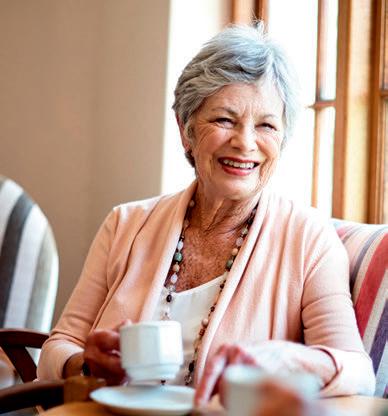

Continue enjoying the neighborhood you know and love while embracing a lifestyle designed to make each day more rewarding, while receiving the support and care you need.
Surrounded by familiar places, favorite local sites, and lifelong connections, you can enjoy the comfort of staying close to the community you cherish while discovering new opportunities to live better.
• Spacious Apartments
• Personalized Care Services
• Exceptional Chef-Prepared Dining
• Social and Wellness Programs Designed to Keep Residents Active, Connected, and Fulfilled

By Alina Tugend
Say you’ve lived in a lovely community for decades. You own your home; you have a great circle of friends and family not too far away. Then you retire — and blow it all up.
You sell and give away everything: the house, the cars, the furniture, most of your clothes and items collected over a lifetime. And hit the road.
That’s what Judy Hoctor, 61, and her husband, Kevin, 64, did in November 2022. They retired from their jobs in San Francisco, where Kevin worked for Apple and Judy for a cybersecurity start-up.
At first they thought they might work remotely, but that wasn’t viable. Retiring
in San Francisco and also traveling was just too expensive.
“Pretty quickly we realized that it would be easier to just leave everything behind, not have responsibilities, like a house and a mortgage,” Judy Hoctor said.
And rather than decide what to sell and what to keep, “we just said it would be easier to leave everything behind and live out of a suitcase and a backpack. We were looking for a different way of living.”
Retirees choosing to live in an RV, camper or boat is not a new phenomenon. Yet more retirees like the Hoctors are opting for a DIY global nomadic life.

7920 Nor folk Ave., Suite 330 Bethesda, MD 20814 nor thgaterealty.com/team/marc-hershkowitz
As you navigate complex life transitions – including downsizing, relocation, or later-in-life moves – you need a partner who looks beyond the transaction to protect your interests. Marc Hershkowitz brings a thoughtful, relationship-driven approach grounded in decades of community advocacy and education. As an expert certified as a Seniors Real Estate Specialist (SRES®), Marc provides steady guidance, clear communication, and genuine care to manage the financial and emotional complexities of major life changes. Call Marc at 202-425-8885 for a confidential consultation. Serving the DMV
That usually consists of moving every few weeks or months with no established home base.
These nomads learn from each other about how to navigate health plans, virtual mailboxes and other strategies. It’s not for everybody. But those who have lasted on the road for years often embrace the lifestyle with evangelical zeal.
For Debbie Campbell, 70, and her husband, Michael, 80, it was their daughter who initially came up with the idea of spending their retirement moving from country to country. She was living in France, and they lived in Seattle.
“We thought that was crazy. Had she looked in our checkbook?” Debbie Campbell said. But “the idea kind of just stuck. We were looking for another adventure, and Michael started doing some budgets and spreadsheets, and we thought, ‘We can’t do this.’ And then, ‘Wait a minute, yes, we can.’”
So they sold or gave away everything except for some items stashed in a storage space and took off in July 2013.
“We were boatless, carless, homeless, and we just went,” Campbell said. “We returned every year for the holidays, just after Thanksgiving through the New Year, and then we took off again.”
They ended their 12-year travel marathon in 2025, after visiting 95 countries, and now rent a place in Seattle. They have a website, SeniorNomads.com and a Facebook page, Senior Nomads. They even published a book, Your Keys, Our Home, about their experience.
Healthcare can be cheaper
repair surgery in Serbia, and both have had checkups in Thailand as well as dental appointments everywhere.
“We’ve felt very comfortable and gotten excellent care at meaningfully cheaper prices than the U.S.”
In fact, nomads say they don’t spend a lot of money on the road. The Hoctors, for example, set a budget of $5,000 a month; they estimate they spent about $63,000 in 2024.
One way to cut out the cost of accommodation: house-sit or pet-sit. Trusted Housesitters is one popular global site where people exchange pet-sitting for housing. Annual membership for pet sitters starts at $129.
Nomads are still required to pay federal taxes on Social Security, investments and other income and state taxes depending on the state they live in.
Some, who don’t own property and aren’t working, chose to “move” to a state that doesn’t charge income tax and declare that as their tax domicile — in the Hoctors’ case, South Dakota. They were required to show proof that they spent one night in the state before they could apply for their driver’s licenses and register their cars.
And how about mail?
Numerous companies offer services such as forwarding or storing hard copies of mail, shredding, digitally scanning the outside of all mail for the traveler to see it online and then the contents if requested. The cost is typically $120 to $200 annually, sometimes with additional fees.
Count on the certified Seniors Real Estate Specialist (SRES®) expertise of Marc Hershkowitz of Northgate Realty for the steady guidance, clear communication, and genuine care you deserve to simplify your future. Licensed in DC, MD, and VA.
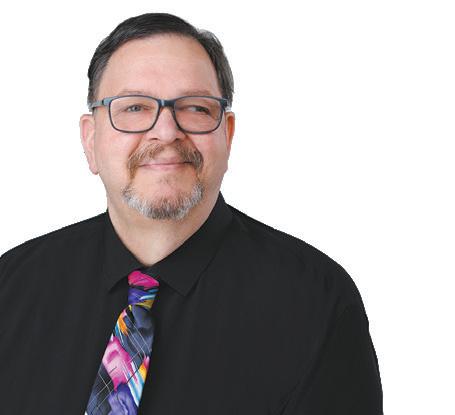

Healthcare is one overarching concern for those traveling in their later years. Regular Medicare can’t be used overseas; some Medicare Advantage plans will cover treatment — typically only emergencies — in foreign countries.
One option is to purchase global health insurance from companies like Allianz, AXA, Cigna and IMG; some plans also cover pre-existing and chronic illness.
The Hoctors chose a Cigna Global Health mid-level plan. It cost $5,781 annually for both of them for $1 million coverage outside the U.S. and includes a $3,000 deductible.

They most likely will also sign up for Medicare when they reach 65, to avoid late penalties if they don’t — even though they don’t plan to settle back in the U.S.
Planning ahead is key to a healthy experience, Manisha Santosh Parulekar, a doctor of geriatric medicine, said: “Are you on top of your prevention and screening? Are you up to date with all your vaccinations?”
That said, many nomads rave about the healthcare they receive locally.
“Good healthcare exists everywhere, not just in the U.S., and it’s cheaper,” Hoctor said. Her husband had a hernia
While the photos make the nomad life look like nonstop fun, the lifestyle requires sacrifices.
For the Campbells, one of the problems with living a 12-year-long adventure was being away from their six grandchildren for long periods of time — although they saw the three that live in France more frequently than they would have had they stayed in Seattle.
One of the reasons they decided to end their wandering life — besides feeling that they had essentially done all they wanted to do — was to be close to their four-year-old grandson, the youngest. But the couple has no regrets.
“We knew that by traveling, we were giving up some time with grandchildren while they were growing up, but we felt like we were role models for our adult children and for our grandchildren,” Michael Campbell said.
“In retirement, one doesn’t just have to sit in a rocking chair on their porch.”
This item first appeared in Kiplinger Retirement Report © 2026 The Kiplinger Washington Editors, Inc. Distributed by Tribune Content Agency, LLC.
By Donna Fuscaldo
Drew Carrington and his wife thought they had purchased their forever home nearly six years ago.
They purchased a home in an 8,000-acre golf course community in the mountains of Georgia. With the kitchen and primary suite on the first floor, the Carringtons thought they had found the perfect setup.
But now, at age 61 — with retirement drawing closer — Carrington and his wife aren’t so sure the house will suffice as they grow older.
“We observed two or three things that we didn’t anticipate when we bought the place,” Carrington said. “While the primary bedroom and kitchen are on the main floor, there is a bunch of stuff that is downstairs, like the laundry room and both home offices.”
Then there is the remoteness. The house sits at 2,200 feet in elevation, and it’s 40 minutes away from doctors and the nearest hospital. If they need a specialist, it’s an hour-long drive to Atlanta.
While the couple hasn’t listed the house for sale yet, they realize they might have to move again.
“Whatever your plan, don’t write it in ink. Life has a funny way of throwing curveballs,” Carrington recommended.
“Whatever your top priority is today might be different five years down the road. You have to think really hard about what is truly important versus what is just nice to have.”
When it comes to retiring, many homeowners want to age in place. A recent Pew Research survey found that 60% of respondents who own a home want to stay put.
For some, it’s about maintaining community ties or proximity to family and friends. Others feel an emotional security and financial stability that a new environment may not offer.
Here are three questions to ask if you are planning to stay put:
1. Will your home still serve you as you age?
Is your house functional for old age, both cognitive and physical, or is it what is known as a “Peter Pan” place? Coined by Jon Pynoos, a professor emeritus of gerontology at the University of South-
July 21
This free communityoriented discussion is for individuals navigating aging without traditional family support. Visit Ingleside at King Farm on Tue., July 21 from 10:45 a.m. to 1 p.m. to participate. Bring your own lunch and beverage or get a discount at the Ingleside cafeteria. The group meets at 701 King Farm Blvd., Rockville. For more information and to register, visit bit.ly/soloagingtalk.
ern California, a Peter Pan home is one built for people who will never get old. These houses typically have multi-levels or stairs, narrow hallways, inaccessible bathrooms and inadequate lighting.
Homes with floating stairs, no banisters and no first-floor bedroom may also be a problem. They aren’t designed to prevent falls or provide independence as you age.
“Many homes require modifications to ensure safety and accessibility, and at times, it can result in significant construction and installation costs,” Conrath said. Prepare for these costs and potential pitfalls in advance, he said.
2. Will I have access to quality healthcare?
You may be healthy when you retire and rarely visit the doctor, but that can change. As we get older, we are more prone to falls and illnesses that could re-
quire more medical care. If your home is far from a hospital, that may be a red flag that aging in place isn’t the ideal situation.
Even if you are OK with being farther from doctors and hospitals, can you afford the costs of driving and/or transportation?
3. Is it the right environment to grow old in?
Are you staying in your home because it’s where you raised your children and is filled with memories? Or do you want to be close to family, friends and your community?
When you retire, you’ll have more free time on your hands. Is the location near stores, restaurants, entertainment and places of worship? Will you be able to handle the weather if your region gets a lot of snow in the winter or faces extreme heat or wildfires in the summer?
“Is the home near the things and/or
people you want in close proximity as you get older?” asked David Blanchett, head of retirement research at Prudential. “This includes friends, family and all the things that really make life fulfilling and ensure you can stay connected.”
Ideally, you can answer “yes” to all three questions, but if you can’t, it doesn’t mean you should move. It simply means you should approach the decision with your eyes open.
“It’s pretty tough to get something that fulfills all three boxes, especially for the entire duration of retirement,” Blanchett said.
“Honestly addressing these questions can help from a planning perspective.” © 2026 Kiplinger Retirement Planning. Distributed by Tribune Content Agency, LLC.


at Brooke Grove retirement village june–september 2026
As experts in senior care, Brooke Grove Retirement Village is pleased to offer seminars and classes that promote physical, spiritual and mental well-being.
All programs will be held in-person in the Gathering Room at Brooke Grove Rehabilitation and Nursing Center, located at 18131 Slade School Road on the Sandy Spring, Maryland, campus of Brooke Grove Retirement Village. Register as indicated below or contact Toni Davis at tdavis@bgf.org with questions.
HEALTHY LIVING CLASS: “BALANCED BODY, BALANCED MIND”
Offered in partnership with Uplift Yoga July 20 through August 7
MONDAYS & FRIDAYS, 1-1:45 P.M.
This class, geared to older adults and beneficial to ALL, introduces simple and effective techniques to greatly improve your balance and agility while sneaking in a bit of simple strength training and energizing movement. Each class will begin and end with breathing and grounding techniques which, paired with class exercises, can help to reduce your risk of falls and leave you feeling strong, energized and balanced.
$20 for entire three-week session
To register, visit: bit.ly/BodyMindBG
SMOOTH MOVE SEMINAR: “STRATEGIES FOR MANAGING A LIFETIME OF STUFF”
THURSDAY, JULY 30 • 10:30–11:45 A.M.
Respected realtor and founder of the Seniors Solutions Team Eric Stewart will offer expert, compassionate guidance for those sorting and moving a lifetime of stuff.
Learn heartfelt, practical ways to pass on your stories and legacy as you gain tools and insights to lighten the load for your rightsizing journey. You’ll leave this seminar feeling confident and assured that the process of letting go will open the door to more ease, joy and connection.
FREE. Register by July 29 at: bit.ly/MoveMeBG
HEALTHY LIVING CLASS: “YOGA FOR OLDER ADULTS”
Offered in partnership with Uplift Yoga September 14 through October 2
MONDAYS & FRIDAYS · 10:30-11:45 A.M.
Yoga can benefit EVERYBODY! This gentle yoga class is geared for older adults and accessible for ALL as positions may be done from a yoga mat, sitting in a chair or standing with a chair/wall for support. Conducted at a slow pace, this class incorporates mindfulness and breathing techniques, while participants learn and practice poses that will increase strength, balance and flexibility. A regular yoga practice can also improve mobility, increase energy, boost physical function, help with pain and enrich your life!
$20 for entire three-week session Register by September 13 at: bit.ly/YogaSeptBG

Thinking about getting married again? See story on page 30.
By Liz Seegert
If you’re among the roughly 70 million people who get health coverage through Medicare, the federal insurance program for people age 65 and older and some younger people with disabilities, you’re probably already aware of some of the big changes to the system in 2026 — changes that have hit budgets hard.
This year’s 9.7% jump in premiums for Part B, which covers outpatient care, was the biggest increase in four years and eats up more than 25% of this year’s 2.8% annual inflation adjustment for Social Security benefits.
Meanwhile, cost pressures have caused some Medicare Advantage plans sold by private insurers to scale back extra benefits, such as dental, vision and hearing coverage, or eliminate others, such as allowances for transportation and over-the-counter purchases.
In some cases, private insurers have shut down plans or exited markets entirely. Those headline-grabbing shifts, however,
aren’t the only big changes to Medicare this year — and not all of the developments hurt your bottom line.
You may benefit from new policies regarding drug pricing and telehealth services. But the new requirements for prior authorization in some areas and possible further shake-ups to Advantage plans? Not so much.
“There’s a lot to think about and a lot to compare, and it can just be really overwhelming,” says Lindsey Copeland, director for federal policy at the Medicare Rights Center.
Here’s the lowdown on this year’s Medicare changes.
Some drugs are getting cheaper
New, lower prices went into effect on Jan. 1 for 10 drugs covered under Medicare Part D, the first price reductions to be negotiated by Medicare directly with pharmaceutical companies under a landmark provision in the 2022 Inflation Reduction Act.
The medications include blood thin-
ners Eliquis and Xarelto, diabetes drugs Jardiance and Januvia, and heart-failure treatment Entresto.
The nearly 9 million Part D beneficiaries who take these drugs will pay about 50% less on average than in 2025, according to the Centers for Medicare & Medicaid Services (CMS).
But individual savings will depend on the particular drug and drug plan, and could range from a few hundred dollars to several thousand, says Gerard Anderson, a professor in the department of health policy and management at Johns Hopkins Bloomberg School of Public Health.
Lower, negotiated prices on an additional 15 drugs, including the diabetes and weight-loss medications Ozempic and Wegovy, will go into effect in 2027.
A third round of negotiations, announced in January, will cover 15 more drugs, including Botox (to treat migraines and muscle conditions, not for cosmetic purposes), the GLP-1 diabetes drug Trulicity, and several cancer medications.
Those prices will take effect in 2028. What to do: If you have diabetes or another condition commonly treated by drugs whose prices have been negotiated by Medicare, but your particular medication is not among them, ask your doctor if it would be appropriate for you to switch to one that is. You could save a bundle.
During the pandemic, telehealth became more widely available, but those benefits have been on the government’s chopping block recently.
In February, Congress extended key provisions through 2027. These include allowing beneficiaries to receive services at home by video and audio, regardless of geographic location; audio-only visits for those who can’t use video; and expanded coverage for remote care by physical and occupational therapists and other health providers.
See MEDICARE, page 30
As a conservative investor, I generally maintain a 50/50 ratio of equities and bonds in my portfolio. I have recently increased the percentage of equities in my portfolio.
Because I am well past 73 and still have some traditional (non-Roth) IRAs in my portfolio, I do have to take annual required minimum distributions (RMDs).
When I take RMDs in 2026, I have taken withdrawals primarily from the bond and target funds portion of my portfolio. When I do this, the result is that I increase the proportion of equities in my portfolio, and reduce the percentage of bonds.

Until inflation rates decrease — and I doubt they will fall dramatically anytime soon — I think it makes sense to increase the percentage of equities in your portfolio and reduce the percentage of long-term bonds. That’s what I have been doing.
By Elliot Raphaelson
Because of the current high inflation in the U.S., which is unlikely to change very much in the near future, I think it makes sense to increase the percentage of equities (common stock) in my portfolio. When long-term interest rates increase, which they have recently, the value of long-term bonds in your portfolio falls in price.
As I have said many times in my column, I invest the equity portion in my portfolio mainly in diversified index funds (an example is an S&P index fund). That has worked for me on a long-term basis, and I don’t expect to change my investment philosophy.
Over the last year, my portfolio has increased over 15%. The bond portion of my portfolio, which was almost 50% of the portfolio, has increased slightly more than 8% over the last 12 months.
In previous columns, I have recommended the Vanguard Dividend Appreciation Index Fund, VDADX, which invests in companies that pay high dividends and
have a history of increasing them. I have invested in this fund for more than 15 years. The return over the last year was an increase of 21.6%.
I always reinvest dividends from this fund and avoid making any withdrawals as part of my required RMDs. Vanguard has indicated that over the last 10 years, the fund has had an annual average increase of 13.19%. Morningstar consistently gives the fund an excellent rating.
For many years I have only invested in U.S.-based equities, because their returns on average have been higher than those for overseas equities. However, this situation has been reversed. As a result, I have become more diversified and now invest approximately 10% in overseas equity funds that have had better returns.
Many investment advisers have recently recommended that investors consider investing 90% of their portfolios in equities and the remaining 10% in bonds or money-market funds. I think this is an extreme position, and I would not recommend this allocation except for investors
who are many years from retirement.
I have always recommended that investors maintain a small percentage of their portfolios in safe investments, such as money-market funds, that are immediately liquid but that also pay reasonable returns.
For example, I also maintain some funds (less than 3%) in a Vanguard money market fund that currently earns 3.61%, that are immediately liquid — even more so than one-year CDs, which currently pay approximately 4%.
Bottom line: As long as inflation rates remain high — and, in the short run, I think that will be the case — you may want to consider increasing the percentage of your portfolio in equities, as opposed to long-term bonds.
The federal reserve is unlikely to reduce interest rates in the short term. If they decide to increase interest rates, rather than decrease them, equities should continue to do better than bonds.
Elliot Raphaelson welcomes your questions and comments at raphelliot@gmail.com. © 2026 Elliot Raphaelson. Distributed
Q: My boyfriend of four years has asked me to marry him. I love him and want to be in this relationship with him forever, but I’m worried about finances for each of us in the future.
It has taken me a long time to be financially stable. I was married for 30 years; my now ex-husband destroyed our credit, and we wound up losing our home to bankruptcy.
how marriage would change anything in our already very strong relationship.

By Laura Stassi
My boyfriend and I live together in a rental; we each make about the same amount of money and split all the bills. We’re completely transparent about finances. I don’t see
—Stacy, Wisconsin A: Congratulations on getting out of a difficult marriage and re-establishing your financial footing. Plus, you’ve found love again! You’ve asked about marriage, but I’d be remiss if I didn’t note that because you and your partner are living together, you should have a legally binding cohabitation agreement.
More on that later.
Some people don’t care whether marriage makes financial sense. Instead, it’s

their ultimate expression of a romantic commitment or a spiritual, religious or moral imperative. Others, like you, don’t see how marriage could change anything. Well, it may not have an impact on your emotional connection and relationship longevity but it could, indeed, have a significant impact on your finances, for better or worse.
On the plus side: Married couples enjoy more than 1,100 tax breaks, benefits and protections that unwed couples do not. (That’s according to the civil rights advocacy group Human Rights Campaign.) For example, only a spouse can claim survivor benefits on some types of pensions; an unwed partner cannot.
On the negative side: In communityproperty states (and Wisconsin is one of them) both spouses are equally responsible for debts accumulated during the marriage. That means, among other things, that an ailing spouse’s health, medical and long-term care debt could have a devastating financial impact on the healthy spouse.
Unfortunately, this happens often enough that there’s an expression for otherwise loving couples who split up to protect the couple’s assets: “medical divorce.” (That way, the ailing spouse, with no assets or income, becomes eligible for Medicaid.)
It might be a good idea to seek out the services of a fee-only certified financial planner. A CFP takes a deep dive into a couple’s respective tax brackets, retirement accounts, assets and obligations, among other factors, and then presents long-term strategies. Through this, you’ll get a clear understanding of what it means financially, now and into the future, to walk down the aisle.
In the end, though, it’s a personal decision, which leads me to a cohabitation agreement.
A cohab agreement puts protections in place while officially spelling out the fi-
nancial living arrangements you and your partner have made. It also addresses the unexpected. If one of you decides to move out before the lease is up, for example, is there recompense for the other?
Can’t imagine something like this ever happening in your current relationship? Consider what Alexandria, Virginiabased CFP Colette Kolanko told me for a Dating While Gray episode: “I think it’s fabulous that people can find each other after they’ve gone through trials and tribulations,” she said. “But to make sure that it remains a strong relationship, you want to put in safeguards,” such as a cohabitation agreement. A CFP doesn’t write the agreement but works collaboratively with a family law attorney to establish one.
The process might sound like a hassle, and that reminds me of a scene from one of my favorite TV shows, “Shrinking.” Harrison Ford’s character, Paul, has been diagnosed with Parkinson’s disease. He’s fallen in love with his physician, Julie (Wendie Malick).
Happily living together and with no plans to wed, Paul and Julie are working with an attorney to get all the necessary paperwork in place for medical decision-making and estate distribution. Their attorney remarks there’d be a lot less paperwork if they simply got married. (Spoiler alert: They do!)
So maybe start with a cohabitation agreement, Stacy, and it can turn into a prenuptial agreement if you ever decide you really do want to put a ring on it. Speaking of prenups, that’s the subject of next month’s column.
Laura Stassi is host of the podcast Dating While Gray: The Grown-Up’s Guide to Love, Sex and Relationships and author of Romance Redux: Finding Love in Your Later Years. Send your questions to newloveafter50@gmail.com.
What to do: Ask your doctor’s office which appointments can be handled through telehealth, such as test result reviews or medication check-ins.
Advantage plans could become more restrictive
In January, the Trump administration issued a proposal to keep reimbursement rates to Medicare Advantage insurers nearly flat next year, compared with the 4% to 6% boost insurers had anticipated. The news prompted dire warnings about the possible impact on enrollees.
“Flat program funding at a time of sharply rising medical costs and high utilization of care will impact seniors’ coverage,” said Chris Bond, a spokesperson for AHIP, the national health insurance trade organization, in a statement at the time.
“If finalized, this proposal could result in
benefit cuts and higher costs for 35 million seniors and people with disabilities when they renew their Medicare Advantage coverage in October 2026,” Bond said.
In early April, CMS announced the reimbursement rate had been finalized at 2.48%, higher than the initial 0.09% proposal, but probably not high enough to prevent changes in some plans for 2027. What to do: If you’re enrolled in a Medicare Advantage plan, carefully review the “annual notice of change” you get this fall for any adjustments to premiums, deductibles, co-pays and benefits. That will give you time to consider alternatives before open enrollment, which runs from Oct. 15 to Dec. 7.
If you sign up for an Advantage plan but then have second thoughts, you can switch to a different plan or to original Medicare during open enrollment period from Jan. 1 to March 31.
© 2026 The Kiplinger Washington Editors, Inc. All rights reserved. Distributed by Tribune Content Agency, LLC.
Many Medicare enrollees are shocked to discover how many benefits come with zero, or almost zero, out-of-pocket cost, including:
1. Yearly wellness visit
2. Seasonal vaccines
3. Alcohol counseling
4. Treatment for opioid use
5. Colorectal screenings
6. Cardiovascular screenings
7. Depression screenings
8. Yearly mammograms
9. Diabetes screenings
10. Lung cancer screenings
11. Yearly prostate cancer screenings
12. Nutrition services
13. Bone density tests
14. Cervical cancer screening
15. Obesity screening and counseling
16. Sexually transmitted infection screening
17. Hepatitis C screening
18. Other services and items
In specific cases, Medicare will also cover the costs of these services or items:
• Home health services (Part A): If you’re homebound, periodic skilled nursing, physical therapy or other services can be performed at your home
at no cost if medically necessary.
• Hospice care (Part A): Hospice care is covered at no cost for terminal illness (6 months or less prognosis). You might have to pay small copays for drugs or respite care.
• Clinical lab services: Certain lab tests, such as blood tests or urinalysis, if ordered by a doctor, are covered at no cost to you under Part B.
cover
Medicare covers most healthcare needs for older Americans, but some things aren’t part of the program, such as:
1. Most routine dental care
2. Routine eye exams and glasses
3. Hearing aids and exams
4. Long-term or custodial care
5. Many chiropractors’ services
6. Elective cosmetic surgery
7. Acupuncture
8. Alternative therapies
9. Podiatrist’s routine foot care
10. Medical costs outside the U.S.
11. Most over-the-counter meds
—Kathryn Pomroy, © 2026 The Kiplinger Washington Editors, Inc. Distributed by Tribune Content Agency, LLC.
Do you have unclaimed retirement benefits? A new U.S. Department of Labor database, the Retirement Savings Lost and Found (RSLF), includes information submitted by plan administrators on participants age 65+ and potential survivor benefits. To search, visit login.gov and enter name, birth date, Social Security number and ID. For help, contact the Pension Rights Center at pensionrights.org or (202) 296-3776 or visit pensionhelp.org for free legal assistance.
Want to help immigrants and refugees learn English? The Washington English Center seeks volunteers to teach online. No prior experience is needed; training and support will be provided. You can also be a writing tutor or an online conversation tutor. For more information, visit washingtonenglish.org/volunteers or call (202) 387-2222.







Dear Seniors,
By Charon P.W. Hines
As we welcome the month of July, I find myself reflecting on what an extraordinary June we shared together. From celebrating love and inclusion to honoring the accomplishments of remarkable older adults, June was a powerful reminder of the vibrant, diverse, and resilient community that makes Washington, DC, such a special place to call home.
Last month, we continued a DACL tradition by participating in the Capital Pride Parade, where DACL proudly rolled through the streets of the District aboard our beloved “Silver Trolley.” Filled with older adults and allies, the trolley served as a visible symbol of support, inclusivity, and love for our LGBTQ+ community. It is always inspiring to see residents of all ages come together to celebrate authenticity, dignity, and belonging. At DACL, we remain committed to ensuring every older adult feels seen, valued, and welcomed.
Last month, we also crowned a new Ms. Senior DC. Congratulations to our 2026 Ms. Senior DC, Betty Entzminger, who will proudly represent the District of Columbia at the Ms. Senior America Pageant in Atlantic City this October. We also celebrate her outstanding court: First Runner-Up Fari Tumpe, Second Runner-Up Dr. Myrtle Alexander, and Third Runner-Up Cynthia Jefferson. These incredible women embody the grace that lives amongst our senior community in the District. I would also like to extend my deepest gratitude to our immediate past queen, Valerie E. Robinson, for her exceptional service and dedication throughout her reign.
This month, our nation will commemorate a historic milestone as we continue celebrating America’s 250th birthday. Here in the Nation’s Capital, we are uniquely positioned to reflect on the enduring values of democracy, civic engagement, and freedom that shape our daily lives. As we gather with family, friends, and neighbors throughout the summer, let us take pride in the role Washington, DC, plays in our nation’s story and recommit ourselves to building communities where everyone can thrive.
As temperatures continue to rise this summer, I
Congratulations to Ms. Senior DC 2026, Betty Entzminger! This year’s theme, Diamonds & Pearls, celebrated the beauty, wisdom, grace, and elegance that shine brightly through the remarkable women of the District of Columbia. Each contestant embodied the strength and brilliance that make our senior community truly extraordinary.
Please join us in congratulating our 2026 Ms.
Senior DC Court:
• First Runner-Up: Fari Tumpe
• Second Runner-Up: Dr. Myrtle Alexander
• Third Runner-Up: Cynthia Jefferson
Thank you to all of our contestants for inspiring us with your confidence, poise, and vibrant spirit. The future is bright when it is led by women who continue to prove that age is truly just a number.






encourage everyone to prioritize their health and safety. Be sure to drink plenty of water, wear sunscreen when outdoors, limit prolonged exposure to extreme heat, and seek cool, air-conditioned spaces whenever possible. Heat-related illnesses can be serious, but together, we can Beat the Heat and stay safe this summer.
If you need relief from the heat, DACL’s Senior Wellness Centers serve as cooling centers and welcoming spaces for older adults throughout the District. Whether you’re looking to participate in programming, connect with friends, or simply cool down during the hottest parts of the day, our doors are open.
Ward 1
Bernice Fonteneau Senior Wellness Center 3531 Georgia Avenue, NW, Washington, DC 20011
Wards 2 and 3
Around Town Satellite Wellness Program 4125 Albemarle Street, NW, Washington, DC 20016
Ward 4
Hattie Holmes Senior Wellness Center 324 Kennedy Street, NW, Washington, DC 20011
See DIRECTOR’S MESSAGE, page 33
Ward 5
Model Cities Senior Wellness Center 1901 Evarts Street, NE, Washington, DC 20018
Ward 6
Hayes Senior Wellness Center 500 K Street, NE, Washington, DC 20002
Ward 7
Washington Seniors Wellness Center 3001 Alabama Avenue, SE, Washington, DC 20020
Ward 8
Congress Heights Senior Wellness Center 3500 Martin Luther King, Jr. Avenue, SE, Washington, DC 20032
Lastly, as we reflect on the spring celebrations of District parents, I want to recognize Mother’s Day and Father’s Day, a time to shower our loved ones with admiration and gratitude for the hard work, sacrifice, guidance, and unconditional love they pour into raising others. Whether you are a parent, grandparent, guardian, or chosen family, mothers and fathers shape our community. We thank you for the countless ways you inspire others each day.
I look forward to all that we will accomplish together in July. Stay safe, stay connected, and stay cool.
Warm regards,
Charon P.W. Hines Director, Department of Aging and Community Living






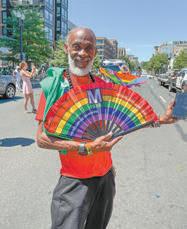











By Barbara Ruben
In Portland’s central Pearl District two summers ago, the hotel desk attendant showed me points of interest on a map of the city, including its internationally renowned rose garden and Powell’s, the world’s largest bookstore. When I asked if there were any areas to avoid after dark, he scribbled over an area of several square blocks behind the hotel.
Fast forward to 2026, and violent crime has fallen sharply as the city turned around its reputation for a large unhoused population and illegal drug use.
Now as safe as D.C., Portland is home to brew pubs, outdoor markets, intriguing neighborhoods and more than a dozen bridges crossing the Willamette River, which divides the city. A bonus: on a clear day you can see snow-capped 11,000-foot Mt. Hood shimmering in the distance.
But this bounty of attractions doesn’t mean you should spend all your time in the city. Just half an hour to the east, waterfalls plunge into the picturesque Columbia River Gorge. Two hours to the west, Oregon’s coastline offers beaches that seem nearly deserted compared to the throngs crowding the sand back on the East Coast. And just over the state line in California, some of the tallest trees on the planet tower in Redwood National Park.
Portland was founded in 1845, and 60 years later held a world’s fair-like celebration of Lewis and Clark’s westward expedition from Missouri through what became Oregon. In the early 20th century, Portland was dubbed the City of Roses for the rosebushes planted for that event, which still bloom today.
The city’s 410-acre Washington Park offers several of the city’s most popular sightseeing spots, attracting 3.5 million visitors a year.
Start with the International Rose Test Garden, where more than 10,000 rose bushes burst into bloom from late May through October. As its name suggests, the garden, which opened in 1917, serves as a testing ground for new rose varieties. Roses, some of which are named after Shakespeare’s characters in a section
of the garden devoted to the Bard, range from the grandiflora, which grows six to eight feet high, to miniatures in petite rows.
Across the street is the 12-acre Portland Japanese Garden, which was created in the 1960s as a symbol of cultural exchange and reconciliation following World War II. Today, it encompasses several distinct garden styles connected by winding paths, stone lanterns, wooden bridges and carefully composed views. In the Strolling Pond Garden, wander past koi-filled ponds, waterfalls and seasonal blooms, then linger in the meditative Sand and Stone Garden.
Take some time to explore Portland’s neighborhoods, including the Pearl District, where industrial warehouses have been converted into galleries and cafés. The Alberta Arts District pulses with murals, galleries and locally owned shops.
On Mississippi Avenue you’ll find live music venues, coffeehouses and inventive restaurants. Across the Willamette River, Hawthorne Boulevard is a haven for vintage stores and quirky independent businesses.
Another highlight is Powell’s City of Books, a full city block devoted to new and used volumes. Visitors can easily spend hours wandering its color-coded rooms, discovering everything from rare first editions to obscure travel memoirs.
Just 30 miles east of downtown Portland, the Columbia River Gorge delivers some of the Pacific Northwest’s most dramatic natural scenery, stretching for more than 80 miles along the Columbia River through a canyon between Oregon and Washington. More than 90 waterfalls tumble from the cliffs on the Oregon side alone.
Take the scenic route, U.S. 30, also called the Historic Columbia River Highway, which winds past scenic overlooks and accessible waterfalls. You can glimpse some from the road, while others require just a short hike.
The most famous waterfall is Multnomah Falls, which plunges 620 feet, making it one of the tallest year-round waterfalls in the country. The water cascading behind the Benson Bridge is one of Oregon’s most iconic images.

Sand dunes and marine life
Then head back west, past Portland toward the Pacific Ocean. My daughter and I chose a diagonal southwesterly route to avoid some of the more crowded areas (like Cannon Beach) so we could explore Oregon’s more rugged central and southern coastlines.
We headed toward Depoe Bay, where gray whales migrate north from March through May on their way to the Arctic with newborn calves.
South from there, near Florence, massive dunes rise between the highway and the ocean. The Oregon Dunes National Recreation Area contains some of the largest coastal sand dunes in North America. Numerous lightly visited state parks dot the coastline, offering spectacular views and the chance to spot seals, sea lions and otters if you’re lucky.
We stayed at the Overleaf Lodge in the small town of Yachats (pronounced yahots), about 130 miles from Portland. The lodge overlooks the rocky coast and the Smelt Sands State Recreation Site, which hugs the coastline.
Three miles south, the Cape Perpetua Scenic Area towers 800 feet above the Pacific and offers the highest viewpoint accessible by car on the Oregon Coast. At Thor’s Well, seawater surges into what appears to be a bottomless hole in the stone before exploding skyward.
Depending on how much time you have, you can explore even more of the coast for 180 miles to the California state line with views of towering rock formations called sea stacks and windswept beaches around nearly every bend.
Don’t stop at the state line because just 16 miles farther south, the Earth’s largest arboreal giants, coast redwoods, are protected in a conglomerate of parks collectively known as Redwood National and State Parks. These parks protect nearly half of the world’s remaining old-growth coastal redwood forest.
Many of the trees are more than 1,000 years old and over 300 feet tall, having survived storms, fires and centuries of change. Sunlight filters through layers of branches hundreds of feet overhead, illuminating ferns and mosses below.
Scenic drives such as Newton B. Drury Parkway pass directly through groves of immense redwoods, while trails like the Lady Bird Johnson Grove and Fern Canyon allow you to walk in their shadows and, in some cases, right inside their hollowing-out trunks.
The closest California town to the trees near the Oregon border is the coastal Crescent City, where long sandy beaches
By Sandi Barrett
Rocky shorelines, cliffside villages, sumptuous cuisine and lemons, lots and lots of lemons — Italy’s Amalfi Coast is a destination to be experienced, not simply visited.
My husband, Chris, and I embarked on a six-day walking tour of Italy’s southwestern coast with a group of 14, all active retirees. Our guided, six-day tour brought us closer to the history and culture of the region. Of course, shopping and sightseeing were definitely on the itinerary, but actually immersing ourselves in the local culture gave us a taste of la dolce vita, the sweet life.
Sorrento is an undisputed foodie paradise. Sorrento tomatoes, a coral-pink beefsteak variety, turn a simple Caprese salad into a culinary adventure. Getting to the Marina Grande at the base of Sorrento’s tufa cliffs requires navigating steep staircases and winding roadways, but intrepid diners will be treated to establishments frequented by locals.
Dine on freshly prepared catch-of-theday dishes such as seafood spaghetti, grilled calamari and fried anchovies. Of course, arancini and limoncello spritz are tasty bites and sips for la merenda (an afternoon nosh).
The quiet hamlet of Termini is perfect for embarking on a downhill, 3.5-mile hike to Marina della Lobra. Winding through olive groves and small farms, we traversed old, steep donkey pathways, enjoying the stunning views of the Bay of Naples and Capri.
The Path of the Gods is a strenuous, four-hour hike traversing a winding route from Agerola to Nocelle, 1,400 feet above the famous village of Positano. Meander through terraced vineyards, forests and limestone ridges along the coast. From Nocelle, you can take a taxi into Positano to rest and then peruse the local shops.
In the pretty village of Ravello, we discovered romantic gardens, medieval walkways and more Mediterranean views. Villa Rufolo is a 13th-century estate with beautiful Moorish gardens, perfect for a low-key walking day. When vis-
iting Ravello, do not miss Villa Cimbrone, home to the five-star Hotel Villa Cimbrone. Their gardens are open to the public, and the dramatic cliffside views from the Terrace of Infinity are worth the walk.
Another wonderful walk begins in Praiano and ends at the Convent of San Domenico, which requires climbing more than a thousand steps. The view at the top, however, is perfect. The 17thcentury convent offers a peek into the austere religious life of the time.
While in Amalfi, a lemon farm tour is a different type of hike. Though it was a hilly climb, the sensory pleasure of meandering through the lemon grove was intoxicating. A sweet, citrusy scent fills the air as you brush past climbing trellises laden with bright yellow fruit so close you can almost feel their warmth. We booked the Amalfi Lemon Experience (amalfilemonexperience.it) for a guided grove tour and wonderful lunch. No trip to the Amalfi Coast is complete without a speedboat ride. The view from water level as you pass by Praiano, with its terraced cliffs and the glittering majolica dome of the Church of San Gennaro, was delightful.
We zipped past the Li Galli Islands, home of the mythological sirens, then Positano, whose colorful buildings dot the cliffs above the beach. Finally, we glimpsed the island of Capri’s famous Faraglioni rock formations against the bright blue sky.
To easily navigate the Amalfi Coast, Sorrento is the best spot to anchor your visit. However, there are several wonderful small, rural areas, like Minori, or high-end enclaves, like Positano, which are as lovely.
We began our Italian sojourn in Rome and used Rome2Rio (rome2rio.com) to book door-to-door transportation to our Sorrento hotel, the Grand Hotel Cesare Augusto. If you are in search of a luxurious, five-star stay, try the Grand Hotel Excelsior Vittoria.
The University of Maryland’s Legacy Leadership Institute on Public Policy, in partnership with the State of Maryland, is looking for volunteers aged 50+ to serve as volunteer legislative leaders during the 2026-2027 legislative session of the Maryland General Assembly. The twelve-week classroom training (two days per week) begins on Wednesday, September 9, 2026, and ends on Wednesday, December 2nd, 2026. Classes will be held at the University of Maryland Extension, 8930 Stanford Blvd, Suite 25, Columbia, Maryland 21045. The volunteer assignment will be at the Maryland General Assembly in Annapolis. Participants will serve a minimum of two (2) days per week with a legislator’s office starting Wednesday, January 13, 2027, and ending on Monday, April 12, 2027.



Alternatively, you can fly into Naples International Airport and take a bus, taxi, train or ferry combination to the Amalfi Coast.
Avoid July and August, when the entire region is incredibly crowded and hot. The shoulder seasons (May, June, Sep-
tember and October) are less packed with tourists but still very busy. Our walking tour with EF Go Ahead Tours (goaheadtours.com) was in early May, when the weather was perfect for hiking: cool in the mornings and pleasantly warm in afternoons.
By Cynthia Washam
On my first trip to Australia, I didn’t expect to see koalas or kangaroos in the wild. I assumed the only odd Aussie critters I’d see would be in a zoo.
I lucked out when I spotted a wallaby soon after arriving at a campground south of Sydney. Luck seemed to strike again hours later, when a brushtail possum put its cold, wet nose on my exposed toes.
By the time I stepped out of our rental camper van the next morning, surrounded by a half dozen kangaroos, I knew my animal encounters had nothing to do with luck. They came from husband Bob’s and my choice to camp rather than stay in hotels.
Bob and I were so hooked on camping abroad that we did it several more times — in Europe, New Zealand and on a second trip to Australia.
Not all countries can match Australia’s wildlife, but all campsites offer loads of other perks. Our favorite was simply the freedom to go where we wanted and stay as long as we liked. Because we traveled slightly before or after peak tourist season, we could pull into a campground late in the afternoon, without reservations, and always find a site.
Another key benefit is the cost savings. The compact camper van we rented from Blacksheep Van in France recently listed for $69 a night. A roomier, off-road model with a shower and toilet from com-
petitor Roadsurfer rents for $149.
If you’re willing to tote your tent, campsites overseas also cost less than most in the United States. We paid just $27 per night for a site with electricity in the French village of Messanges on the Atlantic Ocean. Another favorite of ours was in the foothills of the Pyrenees, just outside the historic, walled village of St. Jean-Pied-de-Port, at $20 a night.
We also slashed our food costs by preparing meals in our camper vans’ compact but well-equipped kitchens.
A European practice we appreciated was the placement of campgrounds near city centers and smaller towns that draw tourists. From our site at Spain’s Gran Camping Zarautz, for instance, we walked no more than 10 minutes down a scenic path to the beach and quaint town. We also made good use of Zarautz’s nearby train station, riding 30 minutes each way to San Sebastián, where we sampled the city’s famous Basque tapas bars. If we had driven, parking would have cost more than our train tickets.

When choosing the size of a camper van to rent, consider local roads. The minivans we rented were tight on storage
space but perfect for navigating Europe’s narrow streets.
“For couples or first-time renters, compact camper vans are easier to handle and ideal for winding roads and cityadjacent campsites,” said Grace Sillano, marketing manager with Roadsurfer camper rentals. “Families may prefer larger RVs with a bathroom and shower.”
You can get an idea of driving conditions by checking out recommended camping routes at Roadsurfer.com, indiecampers. com or other rental companies’ websites. Apps can help you find campgrounds. In Europe, Bob and I used Park4night, a free app with information about campsites in more than 100 countries. ACSI Campsites Europe and camping.info provide a similar service.
Check country-specific regulations if you’re considering wilderness camping. Norway, Sweden, Scotland and some other countries allow it, though others limit camping to developed sites.
Before leaving home, check with AAA or your rental provider on requirements for an International Driving Permit. Many foreign countries require one. AAA issues permits for $20 to holders of a valid U.S. driver’s license. For more information and to apply, visit aaa-idp.com.
Round-trip tickets start at $350.
flank redwood forests, creating a destination that offers the best of both of these dazzling, dramatic worlds.
Alaska, United and Southwest airlines have nonstop flights to Portland that take just under six hours from area airports.

Oregon has a reputation for rain, and rightly so. The primary rainy season stretches from November to May, and summer and early fall have long sunny periods.
Summer in Portland has many temperate days with highs in the 70s and 80s, but heatwaves can bring spikes in temperatures to 100 or higher. The coast offers cooler temperatures, mainly in the 60s and 70s.



By Daniel Bortz
Even the most seasoned tourists can make travel mistakes when planning a vacation. Some blunders can be minor, but others can cost travelers a lot of money and heartache.
Here are six steps you can take to save money on a trip:
1. Buy travel medical insurance
Nearly one in four Americans report they’ve experienced a medical issue while traveling abroad, according to a 2023 survey sponsored by GeoBlue, an international health insurance company.
Unfortunately, most U.S. healthcare plans — including Medicare and Affordable Care Act plans — offer limited or no medical coverage outside the U.S.
One solution is to purchase a travel medical insurance policy, which provides coverage for a range of medical emergencies while traveling abroad, from minor injuries to major events such as heart attacks and strokes, to medical evacuation and emergency transport in severe cases.
Travelers spend on average $103 per policy on Squaremouth, a travel insurance comparison website, with an average trip length of 20 days. Squaremouth advises international travelers to obtain a policy that provides at least $50,000 in emergency medical coverage and $100,000 in medical evacuation coverage.
2. Check your bags in advance
Some airlines charge customers more if they check a bag at the airport, rather than paying to check a bag in advance.
For instance, JetBlue customers flying within the U.S., Latin America, the Caribbean and Canada can save up to $20 on their first two checked bags ($10 savings per bag) when they add them to their flight reservation at least 24 hours before departure. Make sure to pay for bags before you arrive at the airport.
3. Check fees carefully
Wi-Fi fees, early check-in fees, gym fees — hotels today charge guests no shortage of surcharges. It’s a widespread problem: Nearly four out of 10 U.S. adults encountered a hidden or unexpected hotel fee in the previous two years, according to a Consumer Reports 2023 survey.
Many hotels offer to reduce or, in some cases, waive certain fees for guests who join their loyalty program, which is free in most cases. Also, sometimes simply asking an employee at check-in to waive certain fees could do the trick.
In general, hidden fees should now be less of a problem since the Federal Trade Commission instituted a rule last year prohibiting hidden “junk fees” for live events and short-term lodging.
Book directly through the hotel or rental company, not through a thirdparty, to ensure you’re seeing the full costs (and because your trip is typically better secured that way).
4. Shop around for car rentals
When you’re renting a car, keep an eye out for add-ons and extra fees. For example, as Kiplinger personal finance writer Rachael Green explained, “most people can safely decline supplemental coverage, since your regular car insurance likely applies to a rental car in the U.S., and many travel credit cards offer rental car protection through the card.”
Stores such as Costco, BJ’s and Sam’s Club provide their members discounts on certain rental cars. In addition, several credit card companies offer discounts from specific companies.
AARP members save up to 35% on base rates at Avis and Budget, and AAA members save up to 20% on Hertz rentals.
Finally, check third-party sites such as Expedia or Booking.com for deals.
You might also be able to nab a lower
rate for your car rental by prepaying when you book a reservation. Some rental car companies offer limited-mileage plans at a lower cost, which could be a good option for a short trip.
5. Double-check your bill
Stop at the front desk before you leave a hotel and ask to see a copy of the bill. This only takes a few minutes and could save you a hassle if you catch a mistaken charge after you’ve left.
To avoid unnecessary fees when renting a car, always review the list of charges before you accept the keys. By doing that, Kiplinger editor Alexandra Svokos has caught and avoided tacked-on fees. She also recommends simply asking what services you really need.
“I’ve asked the desk agent if the prepaid-toll fee was worth it, based on where


I would be driving, and they’ve told me honestly when it wasn’t,” she said.
6. Join the loyalty club
Most airlines and hotels have loyalty clubs where you earn miles or points from your bookings. You can then use those points towards future trips. Additionally, many of these loyalty clubs offer automatic discounts when booking.
Sometimes you can get discounts and freebies such as upgrades and discounted checked-bag or change fees.
Joining these loyalty clubs is typically free. When booking a hotel or flight online, sign in as a member first or add your frequent-flyer or loyalty number. © 2026 The Kiplinger Washington Editors, Inc. Distributed by Tribune Content Agency, LLC.





For many older adults—and for the families who care for them—deciding whether to move is not simply a real estate decision. It is a personal one, shaped by lifestyle, finances, health considerations, and the emotional weight of leaving a home filled with memories.
Whether you are planning ahead as a couple, navigating the future on your own, adjusting after the loss of a spouse, or helping parents sort through complex choices, the process can feel overwhelming. Even knowing where to begin can be difficult.
The encouraging reality is that older adults today have more attractive and thoughtfully designed options than ever before. From independent living and age restricted communities to assisted living and continuing care, there are exceptional choices throughout the Washington region and beyond.
Still, more options can bring more questions.
How do you know when the time is right? What setting is the best fit? And before making any major decision, do you know the current value of the home that may help define what comes next?
That is often one of the most important places to begin.
To help individuals and families move forward with greater clarity, I offer a complimentary Rightsizing Guide along with a free market evaluation. The guide outlines the seven types of senior living, the five options for what to do with the things you own, and practical solutions for many of the downsizing dilemmas families face. A market evaluation provides a clearer understanding of your home’s value, helping you consider your next steps with greater confidence.
To receive your complimentary guide or schedule a free market evaluation, visit EricStewartGroup.com or call 1-800-900-9104.



By Lynda Lantz
In Signature Theatre’s current production of Pippin, the actors are so near that you can feel a breeze when they execute their death-defying choreography.
Directed by Matthew Gardiner, Signature’s lauded artistic director, choreographed by Rachel Leigh Dolan, and set in Signature’s 99-person theater, the Tony Award-winning musical takes on a magical intimacy.
The 1972 Broadway musical Pippin is a medieval play within a medieval play, with a distinctly contemporary twist. Lead Player (Cedric Neal) escorts the audience as young Pippin (Brayden Bambino), the eldest son of Charlemagne, seeks a path to a meaningful life.
Neal, a semifinalist in “The Voice UK,” is no disinterested emcee. Confident and experienced, he exhibits control in his movements and his exultant, dexterous voice.
Like any prince feeling his oats, Pippin struggles against a father and ruler, Charlemagne (Eric Hissom). Cynical and complacent, Charlemagne relies on his dumb but buff younger son, Lewis (Ryan Sellers), to fight battles. He expects his voluptuous,
ambitious wife (Maria Rizzo) to guide their son and warm their bed. She delivers her classic lyric, “I’m just an ordinary housewife and mother,” with a side of va-voom.
The young prince finds wisdom that he’s not yet seasoned enough to accept in his grandmother Berthe, played by award-winning local favorite Naomi Jacobson. Although she has retreated to the country to defuse tension with her daughter-in-law, Berthe is not sitting on any tuffets. A woman alive to life’s sensual pleasures, she urges Pippin to partake of them.
Interestingly, two of the main characters are not introduced until the second act, when Pippin meets the adorable Theo (Ellison Bihm) with his equally adorable (puppet) duck, and his mother, Catherine (Awa Sal Secka), who is running a manor.
Are they the real life that can ground Pippin? Secka plays the widow as sensible and spunky, whether she’s battling Pippin’s apathy or the Lead Player’s demands that she stick to the script. And she’s well-equipped in this fight with her compelling, angelic voice. Let’s just say that in the vocal arena, Theo proves himself to be her child.


The multi-talented players — Alanna Sibrián, Jacob Taylor Starks, Emily Steinhardt, Hank von Kolnitz, Georgia Monroe, Candice Hatakeyama, Calvin L’mont Cooper and Ben Bogen — accompany Pippin in his explorations of war, sex and general mayhem. With their acting, singing and dancing, they bring a vivid and burlesque energy to every scene.
The audience is drawn into the action, too. We are invited to sing one song as tissue-paper leaves float down from above. The musicians, led by conductor and music director Jon Kalbfleisch, add to the sense of being enveloped in the performance.






It is rare that you get to see the details of actors’ costumes up close, but in the Signature’s black-box theater, The Ark, we can see Costume Designer Erik Teague’s sharp-beaked masks, creamy lace and opulent tapestry, creating a medieval aura.
If there’s any downside to this dynamic, entertaining and sleek production, it’s that three verses are more than some songs need, even if their writer, Stephen Schwartz, also penned the songs in Wicked and Godspell
Signature Theatre is located at 4200 Campbell Ave., Arlington, VA. Free parking is available at any of the six public lots in downtown Shirlington.





Joshua Z. Rokach
Both by design and by accident, error and ignorance have skewed our understanding of America’s past. On our nation’s 250th anniversary, these books correct distortions, dispel myths and fill in gaps.
A Terrible Intimacy: Interracial Life in the Slaveholding South, by Melvin Patrick Ely, MacMillan 2026, 368 pages
For more than 100 years the Lost Cause myth of Civil War history prevailed: The war amounted to a dispute over federalism, and rebels surely lived by a Code of Honor, despite being slaveholders. Or perhaps the war was simply about states’ rights to govern themselves.
Not until the 21st century did Yale University historian David Blight underscore the truth: Racists, seeking to entrench slavery, caused the war, according to the articles of secession.
Melvin Patrick Ely, a 74-year-old professor at William & Mary and winner of the Bancroft Prize, unveils an even more fascinating discovery in his newest book. With just six court cases retrieved from Virginia archives, Ely reveals the double-standard justice system of the time. Magistrates, equivalent to citizen grand jurors, tried both races. White convicts received trials in circuit court, as do
defendants today. Black people did not. Magistrates convicted Black defendants, despite entrapment or acting in self-defense. Seemingly just outcomes resulted from twisted motives. One white man’s conviction came about because his Black victims were the hidden family of a prominent white man. A Black man’s acquittal occurred because a lower-class white woman made the false accusation (predating To Kill a Mockingbird).
Prominent secessionist lawyers defended Black people merely to protect owners from “loss of property.” That motivated the policy of not executing enslaved people but cruelly reselling them.
President Lincoln aptly declared, “In giving freedom to the slave, we assure freedom to the free.”
Mark Twain, by Ron Chernow, Penguin Random House 2025, 1,200 pages
Pulitzer Prize-winning historian Ron Chernow presents us with yet another comprehensive and thoughtful biography. In Grant Chernow fleshed out its subject’s talent as a military genius and his abhorrence of imperialism and slavery, along with naivete toward the unscrupulous people around him.
This tome does the same for Mark Twain, presenting a complicated, con-

flicted man. Chernow shows how Samuel Clemens both did and did not overcome his roots of geography and family.
Born and raised in the slaveholding part of Missouri, Samuel Clemens participated in a Confederate militia and held racist views. He reexamined and overcame those views, then used his gift for satire to expose the absurdity of white supremacy. He advocated forcefully against antisemitism.
In short, mostly through his comedic talents, he championed the underdog. His novel A Connecticut Yankee in King Arthur’s Court punctured the pretensions of the aristocracy.
Yet Twain himself harbored delusions. The Clemens family history includes some spectacular personal failures and an attraction to get-rich-quick schemes. That temptation caused Twain to fail in business. (However, his firm published Grant’s enduring memoirs.) He also had a taste for high living.
Twain had his own insecurities and engaged in conduct that mystifies modern readers. His wife suffered from cardiac illnesses and predeceased him. Twain, believing he had overwhelmed her, blamed himself for her death.
In old age, Twain interacted with a group of young women, whom he called his “Angel-Fish.” It’s puzzling that Chernow does
not even hint that anything untoward happened.
The Wounded Generation, by David Nasaw, Penguin Random House 2025, 496 pages
Americans, particularly Boomers, praise Tom Brokaw’s book The Greatest Generation, which depicts the cohort who won World War II as uniquely heroic. Brokaw contends that after the war, they proceeded with their lives, seemingly unaffected, and rebuilt America.
David Nasaw, 80, a history professor at CUNY Graduate Center, digs deeper. He reviewed personal and government records to prove otherwise.
Indeed, veterans did suffer from post-traumatic stress disorder, although PTSD wouldn’t be officially diagnosed until decades later. Vets came home to wives newly assertive from their experience in the working world and children who didn’t recognize them. Many had difficulty adjusting. Government failures contributed to the problem. The military kept fighters engaged for the duration, rather than adopting annual rotation, as it did in future wars. Science did not know how to treat PTSD. And free cigarettes distributed to calm nerves overseas caused lung cancer back home. With this book, we admire those veterans even more.

You know what they say about death and taxes, and they’re right. But two other things are inevitable for we graybeards of today.
We will meet someone who claims to have been at Woodstock in 1969.
And we will meet someone who claims to have attended the perfect game that Don Larsen pitched in the 1956 World Series.
The other day, I notched a two-fer — a guy with a badly receding hairline and a badly expanding waistline who claimed to have attended both.
he lit up the night sky with a young lady who found his charms irresistible.

Call it implausible. Call it bragging. Call it an attempt to remain forever young. I’d vote for all three.
Yet it’s amazing how often we boomers and busters run into people who play the I Was There card.
Even if those claims are true — and even if they’re not — why the abiding lust to demonstrate one’s coolness, even when the demonstrator is 80-plus?
into the stadium on that famous day, he must have had a parachute or been good at digging tunnels.
As for Woodstock, the numbers tilt a little more in my boaster’s direction. About 400,000 people attended that epic festival.
I say “about” because the whole thing devolved into chaos, so accurate figures were never available.
Roads were impassable. Port-a-potties were overrun. Ticket-takers gave up the ghost in the face of surly, drug-addled crowds. So it’s possible that my acquaintance got into the festival without paying.
room visit.
There, beside the sinks, we listened as Larsen struck out Dale Mitchell for the final out. True-blue Yankee fans, we whooped. Of course, a teacher heard us, and we ended up in the principal’s office.
As for Woodstock, I was a young newspaper reporter on that day, without much to do. Another reporter was on the scene in upstate New York.
She had found the only working payphone. A line stretched behind her for many yards. People were getting angry and ugly.
He said he cut school as a 15-year-old on Larsen Day, rode the subway from Brooklyn to the Bronx, snuck into the game and witnessed baseball history.
No Brooklyn Dodger reached base throughout nine innings — no hits, no walks, no errors. The Yankees won 2-0.
And then, with a hint of smugness, this guy said he had hitchhiked to Bethel, New York, 13 years later, just in time for the legendary music festival.
He snuck into that one, too, he said. He slept on a muddy patch of ground within earshot of the sound system.
And in case you needed to know this,





Because it’s patently competitive. I was there and you weren’t, sucker. Eat your heart out.
Could we please revert to facts?
Exactly 64,519 people paid to be inside Yankee Stadium on October 8, 1956. I lived in the Bronx then. I can report that it was darn near impossible to sneak into that august ballpark in those days.
I once considered it. Men in blue were everywhere. They would have been delighted to correct the error of a kid’s ways with an arrest, or perhaps a clout upside the head.
If my Larsen braggart really ducked





It’s also possible that he got within a mile of the sound system and gave up, as zillions did when they realized that they could get no further. If my guy heard the first licks of a Jimi Hendrix guitar solo, fine. But that doesn’t mean he has a souvenir ticket stub.
As for his romantic luck at Woodstock, or somewhere near it, I can only say that mud wouldn’t be my preferred setting for up-close-and-personal.
In my own case, I happened to hear the last two outs of the Larsen game on a transistor radio. My pal David had smuggled one into sixth-grade math class. He signaled me to request a bath-







Hurriedly, she dictated her notes to me before someone yanked the phone away from her. I fashioned a story for the next day’s paper.
It carried her byline, not mine.
Because I wasn’t there.
Just as I wasn’t there for Larsen’s still-unmatched feat.
To all aging adventurers:
You’ve lived a long time. That’s great. What isn’t great is trying to exaggerate your adventures.
If you want to impress me, show me pictures of your grandchildren. At least they’re real.
Bob Levey is a national award-winning columnist.






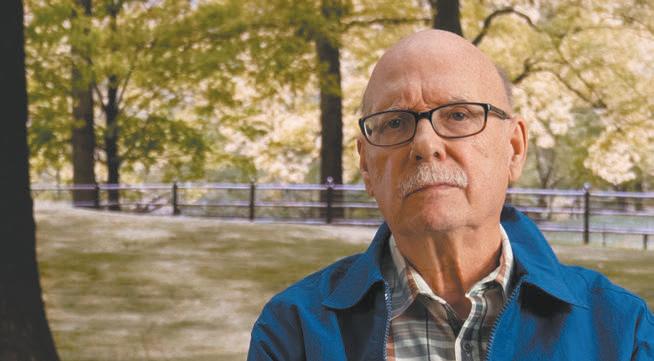

As prices for groceries, housing and health care soar, the Social Security millions of older Americans count on is more important than ever. It’s money they earned a er a lifetime of hard work, and AARP will never stop fighting to protect it.
Social Security is one of the most successful initiatives in America’s history. But it faces a funding gap that Congress must fix in the next few years to keep Social Security strong.
Join us to stand up for Social Security in the upcoming election. Be a Social Security voter. aarp.org/SocialSecurityVoter

By Feature Impact
Major historical events like war or military service make a lasting impact on family identity, values and traditions, often reverberating across multiple generations.
Throughout the 20th century, entire families felt the effects of war firsthand, with multiple generations serving. Brothers enlisted together. A father’s military legacy inspired his children to join up. Sweethearts met and married while in uniform.
All of these are examples of stories captured by the Veterans History Project, a program overseen by the Library of Congress.
The project collects and preserves the firsthand remembrances of U.S. military veterans and makes them accessible for future generations to better understand veterans’ service and sacrifice.
These personal stories encompass letters, memoirs, diaries, photographs and oral history interviews, all offering deeper insight into the long-term impact of military service.
Volunteers also collect and record veterans’ narratives. Anyone who served from World War I to today can submit their personal story, regardless of whether they saw combat.
The collections shed light on the importance of family in military experiences. Whether expressed through heartfelt letters home, enduring family legacies of service, or the experience of serving alongside loved ones, these stories reflect profound connections.
Military service makes a lasting impression on veterans, shaping the experiences and the values that guide them through life.
Ray Chavez is one such example. He was the oldest known Pearl Harbor survivor before his death in 2018.
For most of his life, he remained silent about his experiences, but in 1991, his daughter, Kathleen Chavez, who served in the U.S. Navy during Operation Desert Storm, convinced him to return to Pearl Harbor.
That trip marked the first time he spoke openly about his service. Kathleen Chavez shared their family’s deep military legacy in her oral history for the Veterans History Project.
Not all of the stories are from combatants. During the Cold War, Jennifer McNeill rose from Army dental assistant to Command Sergeant Major at the Army Eisenhower Medical Center in Fort Gor-


don, Georgia. Her collection includes a photograph of her mother sharing images of her four military daughters in uniform, underscoring how family identity and military service are closely connected.
Beacon founder Stuart Rosenthal
Listen to my original smooth-jazz-style compositions at StuartsMelodies.com or on YouTube, including:
• Visit to a Museum
• Latin Nocturne
• Waltz of Joy and more!
Share your favorites with friends and on social media, and click “subscribe” on my website or YouTube for free updates. Thank you!



Serving in the military is a deeply personal journey, but for many veterans, it’s


By Stephen Sherr
Across
1. Good place for a shopping spree
5. Brainstorming result
9. Fishmonger’s offering
13. Almost to Antarctica
14. Popcorn flick
15. Word before cow or Grail
16. “This is the type of puzzle ___” (start of a sensible claim)
19. Part of tip-off or tie-up
20. Civil legal action
22. “The best is ___ to come”
23. Wedding cake components
25. It was used to clone a T-Rex in Jurassic Park
26. Exasperation
28. Blood analysis
29. Brief brain scans
30. Second part of the claim
35. More able to play sports at the senior center
36. A crunch in Trader Joe’s Happy Trekking Trail Mix
40. Third part of the claim (very similar to the second)
44. Some more of the claim
47. The beginning of space
48. “Pick a card, ___ card”
49. The first two words in many movie trailers
50. Files on a Spotify playlist
52. Future flower
54. Send answers to your pen pal
56. Champing at the bit
59. The end of the claim
62. “Hit it where they ___” (Wee Willie Keeler)
63. Tidy
64. Rank above viscount
65. Longings
66. Residents of Olympus
67. Sturdy cart
Down
1. SAT subscore
2. Like fireplace residue
3. 1984 or 2000
4. Furniture making tool
5. Metal with atomic number 26
6. Cinco menos tres
7. CPR specialist
8. Streamer of Severance and Ted Lasso
9. Severance and Ted Lasso
10. Ingredient in Miller Lite
11. Suggest, indirectly
12. Changing up one’s hair color
17. Accomplished, as a goal
18. Side-sleeper’s contact point
21. Profs’ helpers
23. Rolodex no.
24. “Am ___ out of touch?”
26. Org. made possible by the 16th amendment
27. Workout unit
28. Model Banks
29. While lead-in
31. Old member of the string family
32. Writer Stan or Harper
33. She was cursed by 57 Down to only be able to repeat words
34. 1965’s Older Americans Act, in briefs
37. Brain protectors, for boxers and cyclists
38. A billion years, give or take
39. Like Steven Wright’s comedy
41. Break in a set of stairs
42. Trousers half
43. Soph. and jr.
44. Form letter recipient
45. Narrow street, often
46. Golf club that is an anagram for “he aims”
50. Puts loose papers into categories
51. ___ horse town
52. On the other hand
53. Single
55. Founder of Philadelphia
56. Becomes infected with
57. Zeus’ wife (and sister)
58. Child with no siblings
60. Keanu’s Matrix role
61. Disobedient, as a dog
From page 43
an experience that transcends generations.
The late Bill Toledo enlisted in the Marine Corps in October 1942 at the age of 18. Along with his uncle, Frank Toledo, and cousin, Preston Toledo, he served as a Code Talker, transmitting military messages through secret codes based on the Navajo language, which they learned while growing up in New Mexico.
In his oral history, Toledo recalled both the challenges of combat during the invasion of Iwo Jima in February 1945 and the treasured moments spent with his uncle.
“The bunch I was with, we worked together — we were always working together, helping each other,” Toledo said.
These and many other family stories of military service and remembrance are available to the public at loc.gov/vets. Contact the Veterans History Project by email at vohp@loc.gov.
Join the POB Reads Book Club on Fri., July 10 from 11 a.m. to noon, to discuss Mailman: My Wild Ride Delivering the Mail in Appalachia and Finally Finding Home by Stephen Grant. The memoir is available on Audible. To register and receive the link to participate, call (301) 951-4444 or visit pobreads.org.
Detorie


The Beacon prints classified advertising under the following headings: Business & Employment Opportunities; Caregivers; Computer Services; Entertainment; For Sale; For Sale/Rent: Real Estate; Free; Health; Home/ Handyman Services; Miscellaneous; Obituaries; Personals; Personal Services; Vacation Opportunities; and Wanted. For submission guidelines and deadlines, see the box on page 47.
CAVEAT EMPTOR!
The Beacon does not knowingly accept obscene, offensive, harmful, or fraudulent advertising. However, we do not investigate any advertisers or their products and cannot accept responsibility for the integrity of either. Respondents to classified advertising should always use caution and their best judgment.
EMPLOYMENT & REAL ESTATE ADS:
We will not knowingly or intentionally accept advertising in violation of federal, state, and local laws prohibiting discrimination based on race, color, national origin, sex, familial status or handicap in connection with employment or the sale or rental of real estate.
EXPERIENCED CAREGIVER AVAILABLE. My Name Is Pamela Obioha, and I am a compassionate and a dependable caregiver dedicated to provide quality care for seniors and individuals who need assistance with daily living. Services Include: personal care assistance, companionship, meal preparation, medication reminders, light housekeeping. I am trustworthy and committed. For more information or to discuss your caregiver needs please contact Pamela at (301) 891 0001.
A HOME HEALTHCARE - Experienced nurses, CNA, GNA are available 24/7. Cooking, companionship, personal care, housekeeping, driving. Full/Parttime or livein care. 15 years’ experience. 2405336599.
COMPUTERS, TELEVISIONS, CELL PHONE Help For Seniors. We offer patient and thorough help for seniors with all matter of technology. We come to your home. We service MD, VA and DC. Call Senior Tech Pro at 3013370028. Available 24/7 Ask for Philip.
UP TO $15,000.00 OF GUARANTEED LIFE INSURANCE! No medical exam or health questions. Cash to help pay funeral and other final expenses. Call Physicians Life Insurance Company 8662121092 or visit www. Life55plus.info/beacon
GREETINGS, MY NAME IS BEATRICE MILLER, I’m the founder and owner of Jonsaac Dynasty LLC. My product is my net hat collection. On May 15th 2026, I had the distinct opportunity of having my revolutionary hat design showcased on Fox 45 news station on their Preakness segment. This served as the Grand debut and launch of my net hat collection/ designs. The Queen Bea Hat Collection, Signature Beehive Crown Design, Revolutionary net hat construction, Hand crafted embellishments, Statement pieces for discerning women Years of passion and perfection culminated in 2026 with the launch of The Queen Bea Hat Collection. My philosophy is, that every Woman deserves to wear a crown. Website: jonsaacdynasty.org. Join The Dynasty!
NEW WINDOWS FROM WINDOW NATION. Special money saving offer zero down, zero payments, zero interest for TWO years AND buy 2 windows and get 2 FREE! Offer is valid for select models. Labor not included. Other restrictions apply. Call Window Nation today! 8559092278.
REDZONE FITNESS STUDIO-We come to you and we get results. We have many years of successful personal training experience. We also specialize in Medical Exercise. Call 4107393318 to set up a free fitness evaluation.
DENTAL INSURANCE from Physicians Mutual Insurance Company. Coverage for 400 plus procedures. Real dental insuranceNOT just a discount plan. Do not wait! Call now! Get your FREE Dental Information Kit with all the details! 18443661003 www.dental50plus.com/320 #6258
SLOWING DOWN AFTER 45 YEARS OF CONTRACTING. Small to medium jobs mainly residential but will do some commercial work. Will work all over the entire DC area. $45.00 from arrival on job. Andy 7039065429.
T & C CONSTRUCTION SERVICES LLC.
Painting, flooring installation, drywall, carpentry, windows, doors, kitchen and bathroom repairs. License and insured. Free estimate call Tony Smith @ 2405659036. MHIC # 141830.
DON’T LET THE STAIRS LIMIT YOUR MOBILITY! Discover the ideal solution for anyone who struggles on the stairs, is concerned about a fall or wants to regain access to their entire home. Call AmeriGlide today! 18663655170.
NO MORE CLEANING OUT GUTTERS.
Guaranteed! LeafFilter is the most advanced gutter protection for your home, backed by a noclog guarantee and lifetime transferable warranty. Call today 18559776078 to schedule a FREE inspection and no obligation estimate. Plus get 20% off! Seniors and military save an additional 10%. Restrictions apply, see representative for warranty and offer details.
THE BATHROOM OF YOUR DREAMS in as little as 1 day. Limited Time Offer $1000 off or No Payments and No Interest for 18 months for customers who qualify. BCI Bath & Shower. Many options available. Quality materials & professional installation. Senior & Military Discounts Available. Call Today! 18556530087.
THE MEDICAL PRACTICE OF KEVIN M
GIL MD located at 15200 Shady Grove Road #207 Rockville, MD, has been transferred to Dr. Phyllis Acquah MD effective 1 June 2026. This is the date of his retirement from the practice of medicine. Patients will continue to access to their medical records and may request copies by contacting Dr. Acquah’s office at the same location, telephone number 3016100500. This notice will run once a month for 3 consecutive months. A copy of this notice will go to the Maryland Board of Physicians.
BECOME A PUBLISHED AUTHOR. We want to Read Your Book! Dorrance PublishingTrusted by Authors Since 1920. Book manuscript submissions currently being reviewed. Comprehensive Services: Consultation, Production, Promotion and Distribution. Call for Your Free Author’s Guide 18339920110 or visit dorranceinfo.com/beacon
CONSUMER CELLULAR - the same reliable, nationwide coverage as the largest carriers. No longterm contract, no hidden fees and activation is free. All plans feature unlimited talk and text, starting at just $20/month. For more information, call 18337421303.
DIRECTV - All your entertainment. Nothing on your roof! Sign up for Directv and get your first three months of Max, Paramount+, Showtime, Starz, MGM+ and Cinemax included. Choice package $84.99/mo. Some restrictions apply. Call DIRECTV 18885724953.
I BUY GUNS & MILITARY MEMORA-
BILIA (Military/civilian firearms, medals, uniforms & insignia from all wars). Check out MidAtlantic Military Antiques positive reviews on Google. 3012010241. historian1975@gmail.com. www.midatlanticmilitaryantiques.com
LADY LOVES PRETTY AND INTERESTING THINGS: art, bricabrac, dishes, figurines, jewelry, pottery and silver. One item or entire estate. Personal favorites include Herend, Royal Copenhagen, Scandinavian pottery and glass and vintage Christmas and Halloween. Call Susan (301) 7851129. MD PML 2753.
WILL BUY MILITARY, WWII, WWI, Civil War memorabilia items. Uniforms, weapons, helmets, photos, war souvenirs, medals, photos or any other items associated with U.S., German, Japanese or other military history. Call Dave (2404640958) or email (david.obal63@ gmail.com).
WE PURCHASE ESTATES — Large or small. House calls made seven days a week. Buying furniture, art, glassware, pottery, decorative arts, jewelry, silver, coins, etc. Highend vintage preferred. Call Tom, anytime, day or night. All calls returned. 3016548678.
ALWAYS BUYING Comic Books (1930’s to 1990’s), costume jewelry (pre1980’s), old coins & paper money....U.S. & Foreign and stamp collections.....hey.... almost anything before 1980 I can hold in my arms... Call or Text Me Now: Alex at 5714265363.
16
PAYING TOP CASH FOR ANTIQUES AND COLLECTIBLES. Housecalls made with prompt, courteous service seven days a week and 25 years of experience! Buying toys, trains, militaria, glassware, advertising merchandise, paper items and much more! Contact Mason or Megan at: 4433068816.
COINS, STAMPS, PAPER MONEY, & AUTOGRAPHS WANTED. Paying top prices. Free estimates — Will travel. No collection too large or too small. 50 years of experience. Licensed. Member of major associations. Call Dirk at 3017045453 or email dirkkitchin@earthlink.net.
WANTED: OLDER VIOLINS, GUITARS, BANJOS, MANDOLINS, UKULELES. Musician/collector will pay cash for older string instruments. Jack (240) 7315353, please leave message & phone number.
CASH FOR RECORDS, CDS AND DVDS. Best price guaranteed. Free appraisals. All types of music {33, 45, 78 & CDs.} Also buying turntables and stereo equipment. Will make house calls with CURBSIDE PICKUPS. Call or text Steve at 3016465403.
CASH FOR ESTATES; moving, downsizing, single item, or whole estate. I buy a wide range of items. Gary Roman, TheAtticLLC.com. 3015200755.
Come hear The 19th Street Band at a free concert on Thu., July 16 from 6 to 8 p.m. Enjoy Americana, hillbilly and gypsy-rockin’ music at Black Hill Regional Park, 20926 Lake Ridge Dr., Boyds, MD. Pack a picnic or purchase food and drinks from local vendors. Free parking is available, but bring your own lawn chair or blanket. For more information, email info@montgomeryparks.org or call (301) 495-2595.
The Marylanders Online call center provides free one-on-one tech support in English and Spanish for Maryland residents. Techs can help with devices (software and hardware), internet service, digital skills classes and more. They are available Monday through Friday from 10 a.m. to 8 p.m. and Saturday from 10 a.m. to 5 p.m. Call (301) 405-9810 or toll-free at 1-866-206-9467. For more information, visit marylandersonline. umd.edu.
Sign up for the Brain Health Registry to help speed up the discovery of treatments for Alzheimer’s disease. It’s easy: answer some questions about your medical history, current health and lifestyle, then complete online brain tests that exercise your memory and feel like games. For more information about the UCSF-run registry and to join, visit brainhealthregistry.org.
Ongoing
Are you 50 or older? Sign up for the Maryland Senior Olympics (you don’t even have to reside in Maryland). Cycling, horseshoes and badminton are scheduled for July, while shuffleboard, bowling, volleyball and other events take place in August, September and October. The first event costs $15 to $50; additional events are $5 each. To register, visit mdseniorolympics.org or call (240) 777-4930.
July 25
This free, virtual strength-training session teaches you how to build strength using your body weight, resistance bands and dumbbells. The class takes place on Sat., July 25 at 9 a.m. via Zoom. To join, use meeting ID 831 2781 3758 or call in at (888) 788-0099. For more information and the direct link to the session, visit bit.ly/getstrongforlife.
Jumbles:
Answer:
All classified ads must be submitted and paid for online, via our website, www.thebeaconnewspapers.com/classifieds.
Deadlines and Payments: To appear in the next issue, your ad text and payment must be entered by the 5th of the preceding month for the Greater Baltimore edition; by the 20th for the D.C./Suburban Maryland and Northern Virginia editions.
Cost will be based on the number of characters and spaces in your ad:
• $25 for 1-250 • $35 for 251-500 • $50 for 501-750 (maximum length). The website will calculate this amount for you.
Note: Maryland contractors must provide a valid MHIC number.
• Each real estate listing qualifies as one ad. • All ads are subject to publisher’s discretion. Payment will be refunded if unacceptable for any reason.
To place your classified ad, visit www.thebeaconnewspapers.com/classifieds.