Aggies await return of former coach in massive conference matchup against Longhorns
By Noah Ruiz
Associate Sports Editor
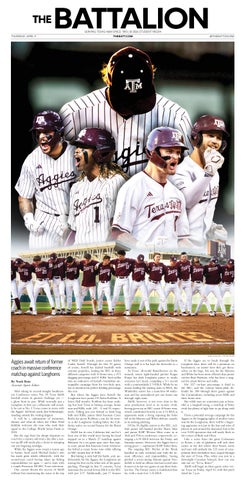
After taking its second straight Southeastern Conference series, No. 18 Texas A&M baseball awaits its greatest challenge yet — a ghost from its past. While normally just a metaphor, in this case a silhouette will actually be cast as No. 2 Texas comes to town with the Aggies’ old head coach, Jim Schlossnagle, standing outside the visiting dugout.
It will be a culmination of memories, dreams and what-ifs when the Olsen Field faithfuls welcome the man who took their squad to the College World Series Finals in 2024. But the rage from his abrupt departure to coach for a century-old rival a day after a runner-up fill will surely play a factor in stamping out any lingering nostalgia.
While the Aggies were swept a season ago in Austin, head coach Michael Earley’s unit has made great strides offensively, with the second-year coach having taken up hitting responsibilities yet again — and it starts with a couple Preseason All-SEC Team selections.
One cannot discuss the success of A&M without first mentioning the name at the top
of MLB Draft boards, junior center fielder Caden Sorrell. Through his first 30 games of action, Sorrell has slashed baseballs with extreme prejudice, leading the SEC in three different categories with 16 home runs, a .873 slugging percentage and 51 RBIs. Such stellar stats are indicative of Sorrell’s borderline unstoppable campaign from his two-hole spot, not to mention his perfect fielding percentage this year.
But where the Aggies have Sorrell, the Longhorns have junior CF Aiden Robbins. A Seton Hall transfer, Robbins has done nothing but lead Texas in batting average, home runs and RBIs, with .349, 11 and 33, respectively. Falling just one behind in both long balls and RBIs, junior third baseman Casey Borba has given Robbins a run for his money as the Longhorns’ leading hitter, the California native no second banana for the Burnt Orange.
A&M has its own California kid, and he’s been out of this world since having his hand stepped on in a March 27 matchup against Missouri. In a six-game span since that injury scare, junior first baseman Gavin Grahovac has belted as many home runs while tallying an SEC fourth-best 40 RBI.
But hitting is only half the battle, and, unfortunately for the Aggies, the Longhorns are among the best on the other side of the game: pitching. Through its first 31 contests, Texas maintains the second-lowest ERA in the SEC with just 3.07. Additionally, just 17 homers
have made it out of the park against the Burnt Orange staff as it has kept the fireworks to a minimum.
As Texas’ all-world flamethrower on the mound, senior right-handed pitcher Ruger Riojas has dealt Longhorn justice to nearly everyone he’s faced, compiling a 5-1 record with a commendable 2.74 ERA. While by no means leading the starting arms in ERA, the Wimberley native has a team-best 68 strikeouts and has surrendered just one home run through eight starts.
A&M, however, is not even close to the same production level as its in-state rivals, having given up an SEC-worst 45 home runs, which contributed heavily to its 4.74 ERA as opponents made a living exposing the holes left in the Maroon and White defense, namely in its starting pitching.
Of the 38 eligible starters in the SEC, redshirt junior left-handed pitcher Shane Sdao and junior RHP Weston Moss come in at 36th and 37th in conference, respectively, averaging a 6.09 ERA between the Friday and Saturday starters. However, the Aggies have a saving grace — sophomore RHP Aiden Sims.
The reigning SEC Pitcher of the Week handled an early weekend start with the utmost efficiency and responsibility, having pitched a seven-inning shutout against Vanderbilt to hold an offense that had scored nine homers in its last two games to just three fruitless hits. The Forney native is undefeated thus far, with a team-low 3.32 ERA.
If the Aggies are to break through the Longhorn dam, there will be a premium on baserunners, no matter how they get themselves on the bags. No one for the Maroon and White has been more efficient than junior catcher Bear Harrison, who has been a magnet for errant throws and walks.
His .527 on-base percentage is third in the SEC, and the veteran home-plate defender hit .500 through three games against the Commodores, including seven RBIs and three home runs.
But while stats are sometimes just as beautiful as a longball swing, a matchup of bitter rivals has plenty of ugly hate to go along with it. From a potential revenge campaign for the Aggies to the bragging rights of another series win for the Longhorns, there will be a lingering aggression not just in the bats and arms of players in and around the diamond, but in the over 9,000 spectators that will surely flock to the corner of Bush and Olsen.
Like a scene from the great Colosseum in Rome, a tale of gladiators will etch their names in the dirt where their blood, sweat and tears will embody the 123 years of competition their forefathers have waged through the state of Texas. Plus, when you mix in a downright Caesarian betrayal, how can one side not cry “Et tu, Brute?” A&M will begin its three-game series versus Texas on Friday, April 10, with first pitch slated for 7 p.m.
Graphic
Aggies aim to curb Rebels in Oxford
Key pitching matchups loom large in SEC road contest
By Brody Vaughn Sports Writer
they produced a triad of long shots from Wark, sophomore catcher Ariel Kowalewski and sophomore left fielder Paislie Allen.
when a pitcher misses and taking balls when they’re not strikes.”
Following an upset series win over then-No. 11 Georgia, No. 13 Texas A&M softball looks to continue its Southeastern Conference rise over a struggling Ole Miss. An emphasis on strong pitching projects to keep the Aggies atop the Rebels, a side they have dominated in the past, boasting a 21-5 all-time record.
“I just think a hard-fought series win for our team,” head coach Trisha Ford said. “Very proud of us bouncing back. There were a lot of high-pressure moments by Lessentine this weekend. Both of those games just really, really impressed me with what she was able to do.”
A&M resurrected from its loss to thenNo. 1 Texas on Easter weekend with a 2-1 series win over Georgia, powered by sophomore right-handed pitcher Sydney Lessentine. The Alamogordo, New Mexico native held the Bulldogs to just two runs in Game 1 and one run in Game 3. Games 1 and 3 saw the same formula work for an Aggie win, with clutch hits from junior first baseman Mya Perez and senior designated player Micaela Wark giving A&M the edge in two low-scoring affairs. Game 2 didn’t go A&M’s way, however, surrendering 10 runs in a home run derby for Georgia. The Aggies intended to pitch by committee, but a five-run inning surrendered by sophomore left-handed pitcher Kate Munnerlyn ran the deficit too high to climb back from. Not to say the Aggie bats didn’t have one of their best showings, as
Lessentine has been the cornerstone of the A&M rotation so far, with her 2.90 ERA and sub-one WHIP keeping SEC offenses at bay and the Aggies in low-scoring games. Junior RHP Sidne Peters will need to bring the heat as well in her start this week, as a quality performance from her could be the difference on Saturday to help the Aggies to a sweep.
While some clutch at-bats were present against the Bulldogs, the Aggies could benefit from consistent hitting all throughout the lineup. Wark, Perez and senior third baseman Kennedy Powell have held strong in SEC play, each contributing a batting average higher than .370. For A&M to have a chance in the games that Lessentine isn’t in the circle of, the bats will have to meet the skills of whoever they match up against.
“For us, it’s just working the count,” Powell said. “I think it’s important that we always talk about getting the pitcher’s pitch count up, and just the more pitches you see, the more information it is for the batters coming behind you, and capitalizing
Ole Miss’ pitching situation is similar to A&M’s, with senior RHP Kyra Aycock as the rotation’s primary starter. While she holds a 3.02 ERA, she has a problem with finding the zone, having walked just as many as she’s struck out. Junior RHP Lilly Whitten boasts a team-best 2.46 ERA, primarily out of the pen. The Aggies will need to capitalize on free bases and cash in on runners in scoring position to put runs on the board.
The Rebel bats don’t match up well in comparison to the Aggies, with just one batter hitting above .400. Still, the Maroon and White staff will need to keep freshman DP Madi George on its radar. Her 10 home runs lead her squad, forcing Lessentine and Co. to focus on keeping runners off bases and the ball in the park to curb the Rebels.
The name of the game for the Fightin’ Farmers will be to continue their fierce pitching efforts. It’s no understatement to say Lessentine is the key to this series, but to grab the sweep, the Aggies require the rest of the rotation to step up.
“We’ll be better,” Ford said. “They know that fear is a good thing, I always say, but I think they know what it takes to win at this level.”
A&M will head to Oxford, Mississippi, to begin its series against Ole Miss, starting Friday, April 10, at 6 p.m. at Ole Miss Softball Stadium.
Augusta National just means more
By Ava Loth Associate Sports Editor
There is no doubt that when April rolls around every year, the only thing on everyone’s mind is Georgia — more specifically, Augusta, Georgia.
As the first men’s major of the year, the Masters only adds to the surrounding anticipation that lies in a tradition unlike any other. With the azaleas in full bloom at Augusta National Golf Club, it can only mean one thing: Masters week is officially upon us.
With 91 prestigious invitees taking part in the 2026 Masters Tournament, a few once experienced the tradition that is the Southeastern Conference. From the veterans returning in pursuit of another green jacket to the handful of amateurs, one thing they all have in common is the pivotal stepping stones they each took to get there.
winner of the U.S. Amateur Golf Championship and will certainly be in contention for low amateur honors in Augusta.
the leaderboard on a Sunday since the 2022 RBC Heritage.
The biggest pipeline to Augusta runs less than 100 miles away in Athens, Georgia. Six Georgia Bulldogs, each in different stages of their respective careers, will return to their old home, though now for a bigger reason.
Bubba Watson will make his 18th career start in the tournament, competing for his third green jacket. But before he turned professional in 2002, he was a part of the 2001 Bulldog five that brought Georgia its 24th SEC title. A decade after turning pro in his fourth attempt at Augusta National, Watson was presented with his first of two green jackets. While he hasn’t seen the same success in recent years, he did make the cut last year for the first time since 2022, finishing tied for 14th.
Sepp Straka and Brian Harman were also a part of the powerhouse created by longtime head coach Chris Haack. Straka finished tied for 16th in last year’s edition, and two PGA Tour wins under his belt in 2025 earned him his fifth invitation. His time as a Bulldog was nothing short of spectacular, as he brought Georgia its most recent SEC Championship title in 2016. Harman, with his win at the 2025 Valero Texas Open, claimed his seventh invite in hopes of making just his fourth cut.
The No. 1 golfer in the world with six Masters starts and six Masters weekends played, Scottie Scheffler, spent his collegiate career in the Lone Star State. The Ridgewood, New Jersey native spent all four years playing for Texas, where he won three tournaments across his 50 outings.
Justin Thomas and Davis Riley both spent their collegiate careers at Alabama. Just three months after Thomas led the Crimson Tide to its first NCAA Championship title in 2013, he turned professional, joining the Korn Ferry Tour in 2014 and moving to the PGA Tour in 2015. The duo will both be up for their first green jacket and first victory of the year.
From Arkansas to the PGA Tour Latinoamérica, and now to Augusta National, Mateo Pulcini and Nicolas Echavarría both had a short time as Razorbacks but still got their taste of the competition at the collegiate level.
A trio of invitees will be the lone representatives of their schools. Tennessee’s Jackson Herrington will be competing as an amateur in only his sophomore year as a Volunteer, his runner-up finish at the 2025 U.S. Amateur having earned him his first Masters invitation.
Spending four years together in Athens, Russell Henley and Harris English’s tenure as Bulldogs brought Georgia back-to-back SEC Championship titles in 2009 and 2010. Having both gone pro in 2011, it won’t be the first Masters Tournament for the pair. A combined 15 starts in as many years between the two have brought 12 weekends and 21 rounds under par.
Now with the eyes of not only Texas, but the whole world, upon him, he will make his way back to Augusta National in a fight for his third green jacket in five years.
Across the six Bulldogs, one has yet to step foot in Athens or into his collegiate golf career. Receiving his first Masters invitation, Mason Howell is the youngest participant in this year’s field at only 18 years old. Having announced his commitment to Georgia on Sept. 10, 2024, he took the amateur world by storm in 2025. The Thomasville, Georgia native was the third-youngest
The blueprint to Scheffler’s time at Texas was none other than Jordan Spieth. While he turned professional halfway through his sophomore year, he collected more titles and awards in three semesters than most spend their entire collegiate career chasing. He claimed three individual titles during his rookie season, led the team in scoring average and was a contributing factor to the Longhorns’ NCAA Championship title in 2011. Only four years later, he was presented with a green jacket.
Now venturing to his 13th Masters, Spieth is currently ranked No. 63 in the world and has yet to see his name at the top of
Adding to the trio, Chris Gotterup and Sam Burns will make their way to Augusta National, both recipients of the Jack Nicklaus Award during their time at Oklahoma and LSU, respectively.
Gotterup, as the Scottish Open champion in 2025, notched his PGA Tour title and his first invitation to Augusta. Burns, making his fifth start, has held an invite for the last four years; however, he has only seen the weekend twice.
These names that once sought success in the form of bringing home an SEC Championship in
will now make their way down Magnolia Lane with the pristine opportunity of putting on a green
on the
April
jacket
Left to right: Pitcher Sydney Lessentine (7) begins
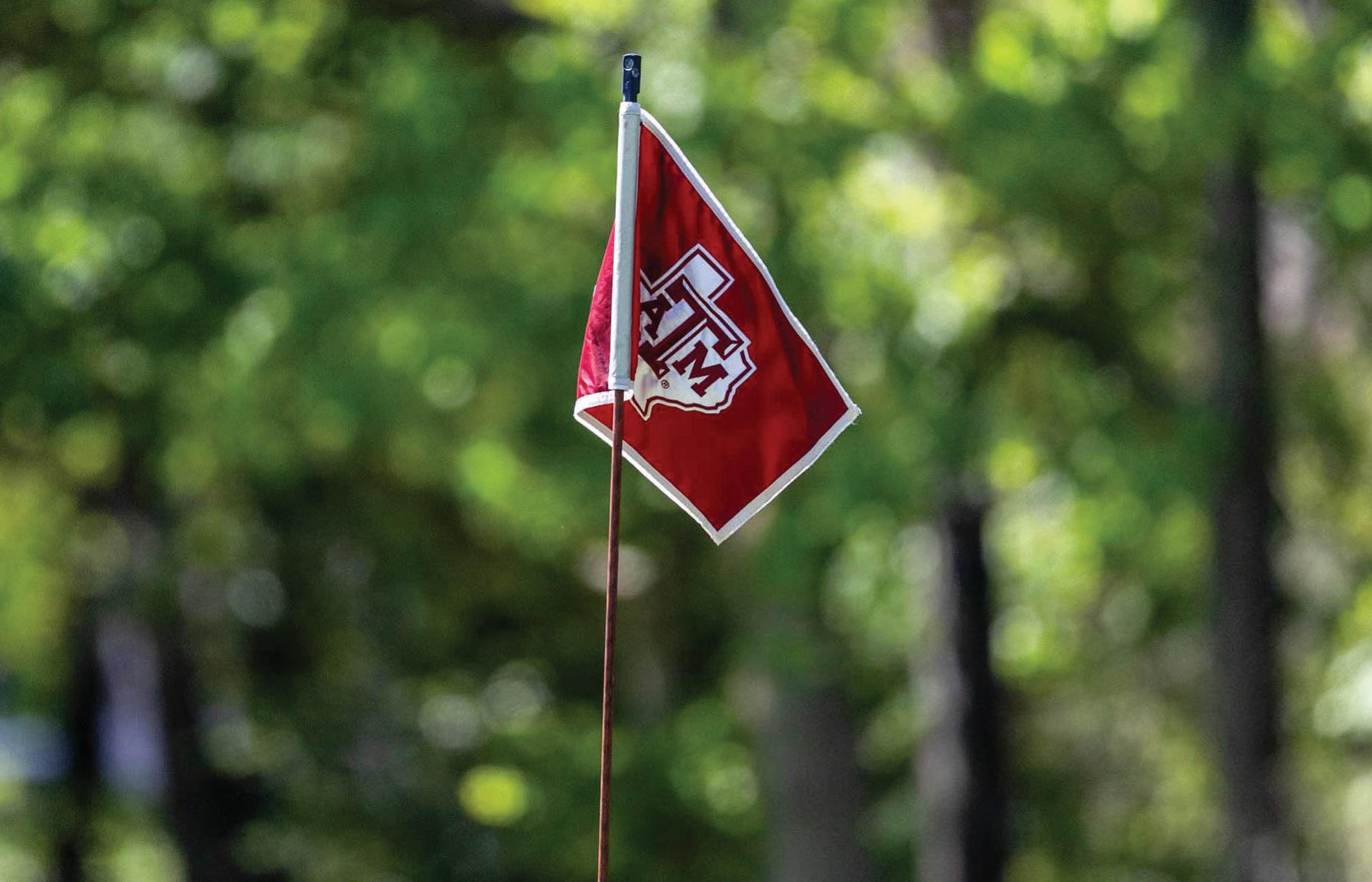
Texas A&M golf flag at The “Mo”Morial Invitational at Tradition’s Club on Tuesday, April 7, 2026. Belle Chapa — THE BATTALION
I’m different. I’m dangerous.
News Editor Julia Kazda
Photos by Spencer Halstead — THE BATTALION
Unearthing fragments of history
Anthropology professor discovers untold history of German prisoners of war, studies First Americans
By Tejas Murali Life & Arts Writer
World War II saw events like the Holocaust and the bombings in Japan that are today found in countless history textbooks and public memory. However, several lesser-known aspects of the war remain buried, both figuratively and literally — and they’re more local than one might realize. One Aggie professor has worked to unearth these secrets and forgotten fragments of history through his archeological research.
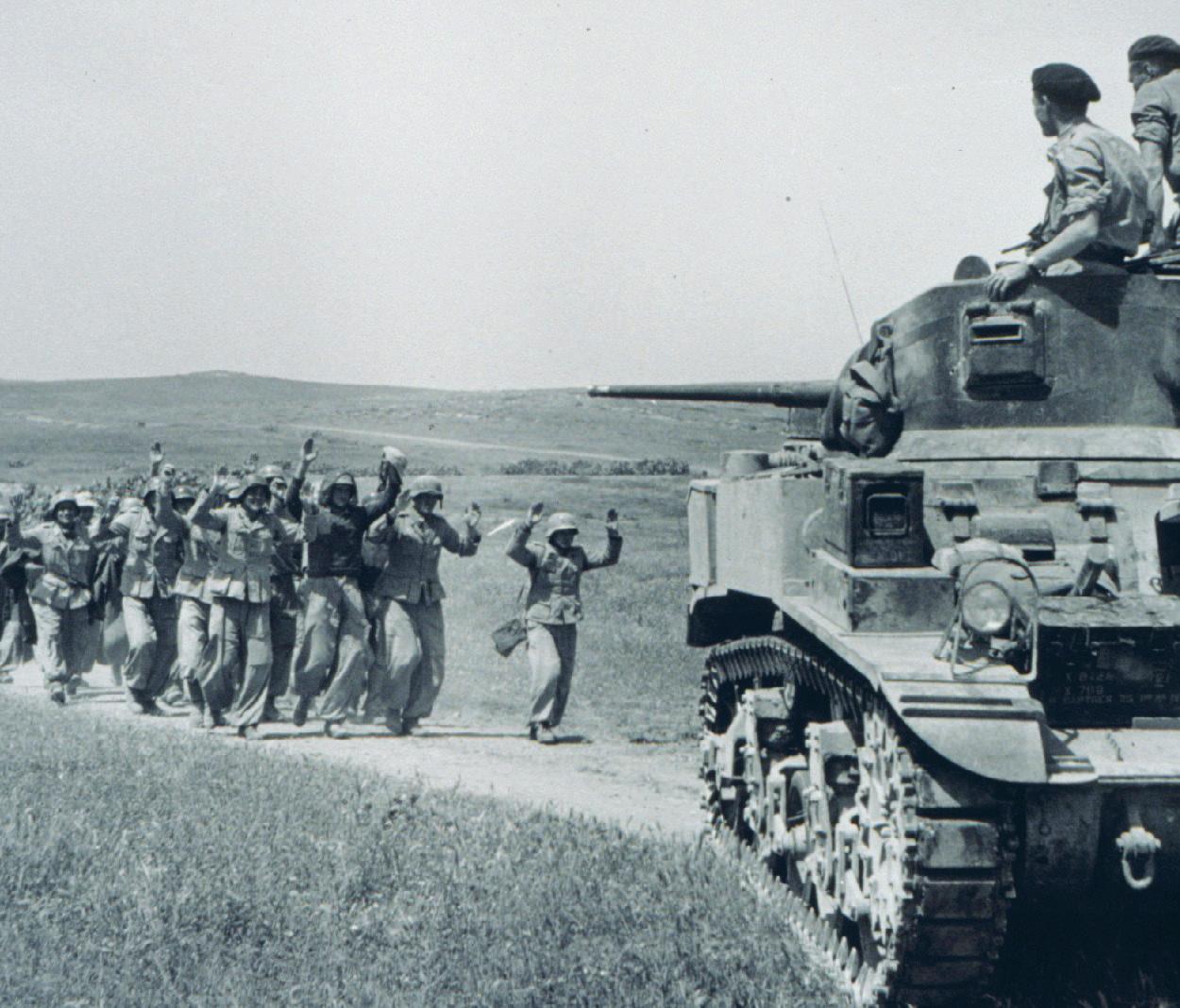
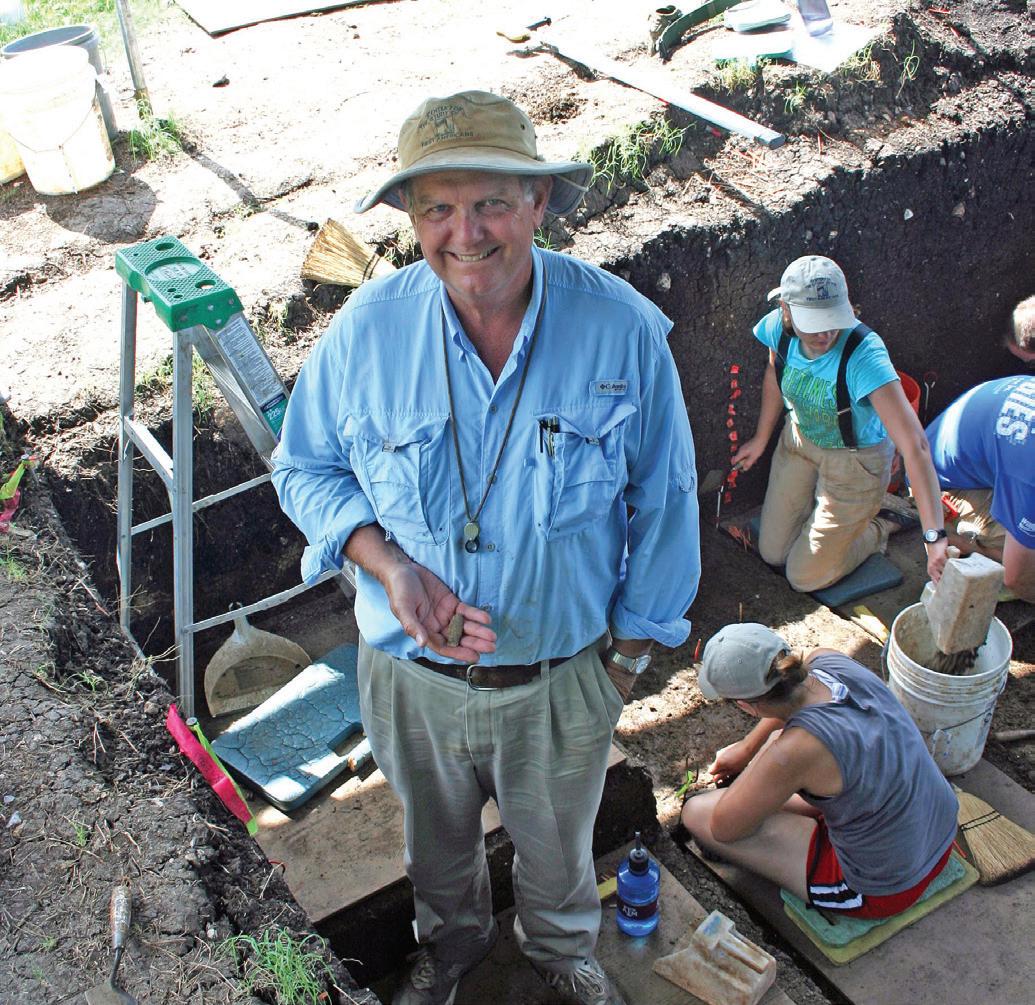
Texas A&M University Distinguished Professor of Anthropology Michael Waters, Ph.D., whose research focuses on the First Americans, has been conducting excavations around 30 miles northwest of A&M at the site of Camp Hearne, one of 700 World War II German prisoner of war, or POW, camps across the United States. Waters recently contributed to the documentary “Hitler’s Emissaries: German POWs in the United States” to share his findings on the camp. His childhood interest in the world wars, as well as a book by late Professor Emeritus of History at A&M Arnold Krammer, Ph.D., on German POW camps in the U.S., were what initially led him to search for archeological evidence in Hearne with the help of metal detection technology.
the reason they wanted to do it was because they wanted to say thank you for everything that they learned and how they were treated in the United States. These POWs went back into the ruins of Germany and helped rebuild it, and they all said that by being treated well at the camp and being introduced to American democracy and working on ranches and whatnot, they could build a better Germany.”
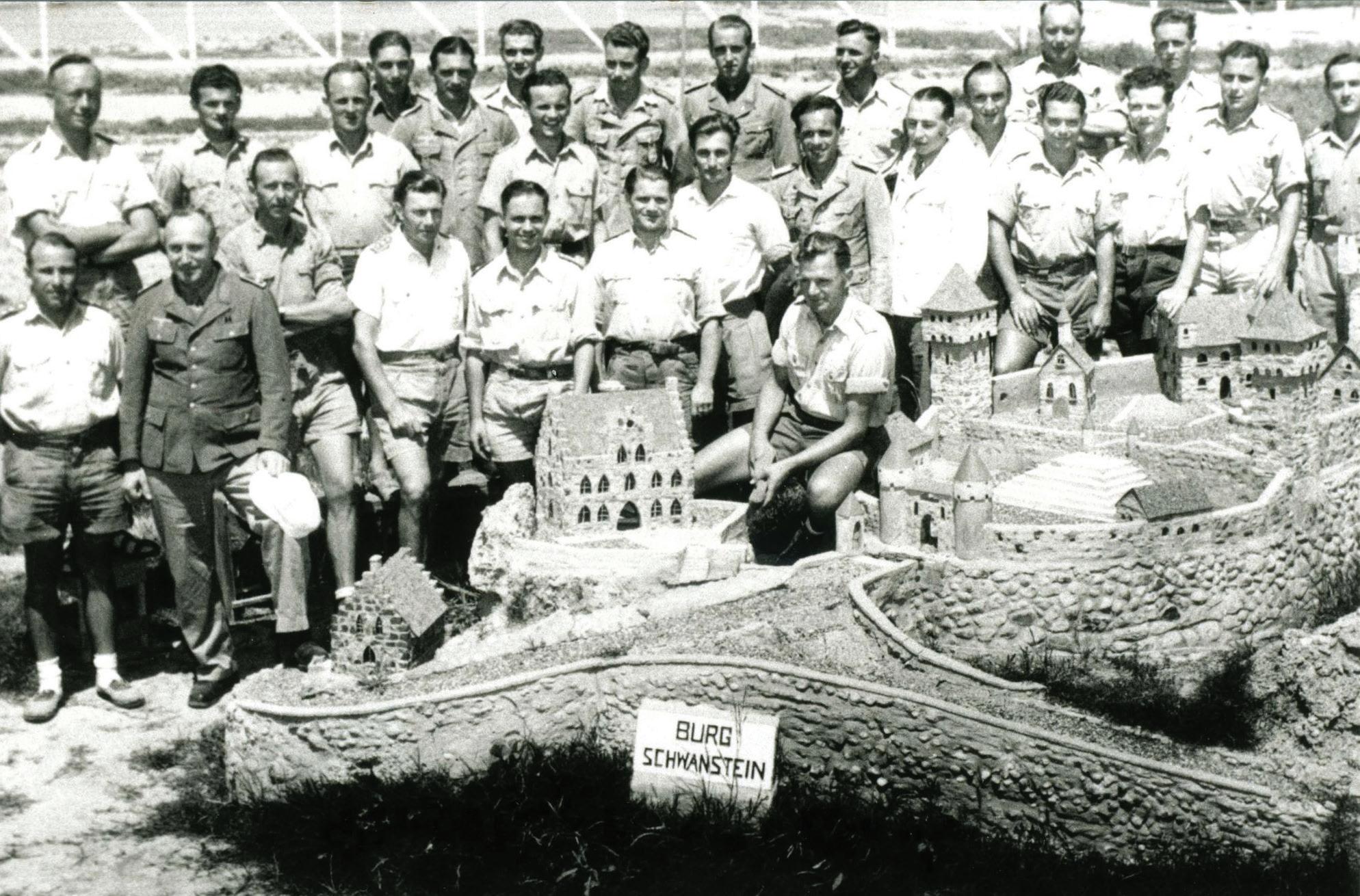
According to Waters, these German POWs played a significant role in fostering friendly ties between the U.S. and Germany after World War II. In addition to serving as a model for the rebuilding efforts, American ranch owners befriended the POWs, often exchanging items like Christmas cards, blankets and jackets after the POWs returned to Germany.
“In fact, when we had a little reunion here a long time ago of former guards and POWs, even two of the grandchildren started exchanging and spending time in Germany and the United States, one with a former guard and one with a former POW,” Waters said. “It’s kind of a success story in which we treated the German POWs quite well, they got to read the newspapers and
in the Pacific — you name it,” Waters said. “And so it just really fostered my interest in learning more about the war. … And it turned into a bigger project than I ever imagined, because I couldn’t believe what we found. And you can try to mesh all that together into a holistic story of all the aspects of camp life.”
Despite the depth of his involvement while studying the history of Camp Hearne, Waters’ primary research focus is not World War II history, but rather the study of the First Americans. The director of the Center for the Study of the First Americans at A&M, he has done extensive research into the history of Clovis, one of the prehistoric American cultures, as well as cultures that may have preceded it.
When I talked to the former POWs, they all said that this was really the first time they ever talked about the camp and their experiences there.
Michael Waters, Ph.D.
Texas A&M University Distinguished Professor of Anthropology
everything and learn from that and go back and build a successful Germany, which is now one of our allies.”
A&M AgriLife Research looks to capitalize on growing use of AI in agriculture
By Sam McMahan News Reporter
Current developments in AI capabilities are rapidly expanding to meet large-scale agricultural demands as researchers are finding new ways to integrate AI into data-collection technology for soil sciences, nutrition, livestock and wildlife.
Texas A&M has been developing an application of AI as part of its AgriLife Research organization. Director of the A&M AgriLife Research and Extension Center at Corpus Christi Juan Landivar, Ph.D., worked with his former colleague, Jinha Jung, Ph.D., now an associate professor at Purdue University, to develop digital twin technology in agriculture.
This process, reported by AgriLife Today, involves a set of trials taking place on a 200-acre cotton and sorghum farm in South Texas. AI translates the data collected by drones to produce a predictive analysis of the optimal harvesting schedule for the producer.
According to the World Economic Forum, the global population is projected to grow to nearly 10 billion by 2050, leaving agricultural producers and economists scrambling to find more efficient methods of harvesting and distributing products to meet the world’s growing food insecurity.
This is where AI has stepped in, specifically, analytical and generative AI, which possesses wide-ranging capabilities in curating economic, operational and logistical efficiency.
An analysis conducted by consulting firm McKinsey & Company showed that AI could improve on-farm input costs and yields, creating $100 billion and foster increased productive capacity and sales growth, generating $150 billion in revenue.
AI-powered IoT sensors, drones and satellite imagery are some of the key infrastructure tools assisting in agricultural development, monitoring the health of livestock and crops, soil composition and nutrient density. These applications enable producers to optimize their use of inputs, including water, fertilization, pesticides and herbicides.
Growers in the United States use about $6.6 billion in herbicides annually. Chemical use on farms is often not only environmentally and nutritionally hazardous, but also economically inefficient. Companies have sought to correct this issue by implementing AI-driven precision technology to monitor crops and alert farmers when chemicals are absolutely needed, hoping to reduce their usage by up to 90%.
“So many years ago, we did a little project in which we investigated Camp Hearne, and it turned into a book, eventually, that was published by the A&M press,” Waters said. “We did an archeological investigation, finding the old fountains that the POWs made and things that they lost out there and left behind. And then the local townspeople of Hearne and the surrounding county found out about the project and started donating things.”
Eventually, a museum was built at the site with government funding. In addition to accumulating items from the camp and visiting the National Archives, Waters was able to gather firsthand accounts from former German POWs as well as townspeople who lived in Hearne when the camps were operational.
“When I talked to the former POWs, they all said that this was really the first time they ever talked about the camp and their experiences there,” Waters said. “And
Waters was able to share the story of his discoveries at Camp Hearne when he was invited to an interview for the “Hitler’s Emissaries” documentary.
“My part was being interviewed and asked about what happened at Camp Hearne, and I just had to spend a day with [the creator],” Waters said. “The fellow who created the documentary had the large task of taking hours of interviews with different people, myself and others, as well as looking through archival footage and then putting it all together to tell the story coherently about these German POWs that were in the United States from about 1943 until about 1945.”
According to Waters, the Camp Hearne project was a way to connect his childhood curiosity surrounding the World Wars to his interest in archeology.
“My dad was in the Navy during the war, and everybody I knew when I was a kid was a veteran, so I heard stories of people from Pearl Harbor, to being in B-17s, to being
“I’ve had the privilege of excavating a site near Salado, Texas, that’s about 15,000 years old, I’ve investigated a 14,000-year-old site in Washington and then I’ve also investigated with my associate director, Jessi Halligan, the Page-Ladson site, which is 14,600 to 14,700 years old,” Waters said. “And getting to work with a geneticist to get the first prehistoric human genome at the Anzick site, which was a Clovis genome from a Clovis individual, and then being able to see what the genetic history was of the First Americans, was a highlight.” Waters continues to explore several different avenues of research into prehistoric Americans, one of which involves using radiocarbon dates to determine details about the extinction of megafauna in the Late Pleistocene, or the last Ice Age.
“Back in the Late Pleistocene, there were mammoths, horses, camels, dire wolves and saber-toothed cats living in Texas and elsewhere across North America, and nobody really knows when those animals became extinct,” Waters said. “And it’s important to know when those animals became extinct whether they all went extinct at the same time or whether it was a phased extinction. And if we can figure that out, we’ll be able to determine how much climate or human hunting was a factor in their extinction, or other things like fire, for instance.” Waters is continually motivated by the excitement of making archeological discoveries, particularly at prehistoric sites, and he hopes his enthusiasm will inspire future researchers to continue his and his colleagues’ work.
“As long as you’ve always got something exciting going on, something that’s an interesting problem that will provide answers to the past, it gets you excited to come to work and do research and everything else and then instill this excitement on all the students you work with, because they’re the next generation,” Waters said.
However, professor and Eugene Butler Endowed Chair in Agricultural Biotechnology Seth Murray, Ph.D., noted that these inputs will most likely never be meaningfully reduced, as most of the AI-integrated equipment being released is well beyond the budget of the average producer.
“The cost of a new cotton harvester is well over $1 million,” Murray said. “It will take a long time to change all of the equipment. Some equipment needed to use AI recommendations is in place on the very large high-tech farms — but there are very few of those. For my personal pomegranate farm, I use a 1967 John Deere 2510 tractor, and I don’t make enough money on farming to upgrade to any of the precise equipment that could leverage AI.”
Despite the challenges faced by the widespread adoption of AI, there are still various paths to innovation and implementation. Murray highlighted more of the impactful technology in agriculture to have come out of the AI boom.
“LLMs seem to be having the biggest direct impact in changing the nature of work [across almost every field from office work to engineering] and expertise,” Murray said. Large Language Models, or LLMs, are advanced AI systems that are designed to understand and process human language to output text, video, audio and even code. However, Murray also pointed out some of the more internal limitations of AI beyond cost, such as its tendency to generate incorrect or incomplete data, which may lead to its full integration being moderated and carefully monitored.
“Data is sparse, incomplete, disparate and very noisy and messy,” Murray said. “Most AI is designed for straightforward and complete datasets. Integrating these is necessary but may go beyond what AI can do since it needs large amounts of examples to separate and predict variables correctly.”
Although there may be speculation and concern about the effect AI will have on unemployment, Murray outlined a pattern in how firms have overreacted to the promotion of emerging technology and their efforts to roll back the damage.
“About 25 years ago the companies laid off their breeders thinking biotechnology [GMOs] were going to replace breeding — then they hired breeders like crazy when they realized that breeders are still required,” Murray said. “This happened again about five years ago with genomic prediction and drones. Plant breeding is not something you can fully automate.”
Clockwise from top: German prisoners of war showcase a castle model made at Camp Hearne. Michael Waters, Ph.D. Director of the Center and Executive Director of the North Star Archaeological Reseach Program. Prisoners of war run behind an armored vehicle in Hearne, Texas.
Photos courtesy of Michael Waters
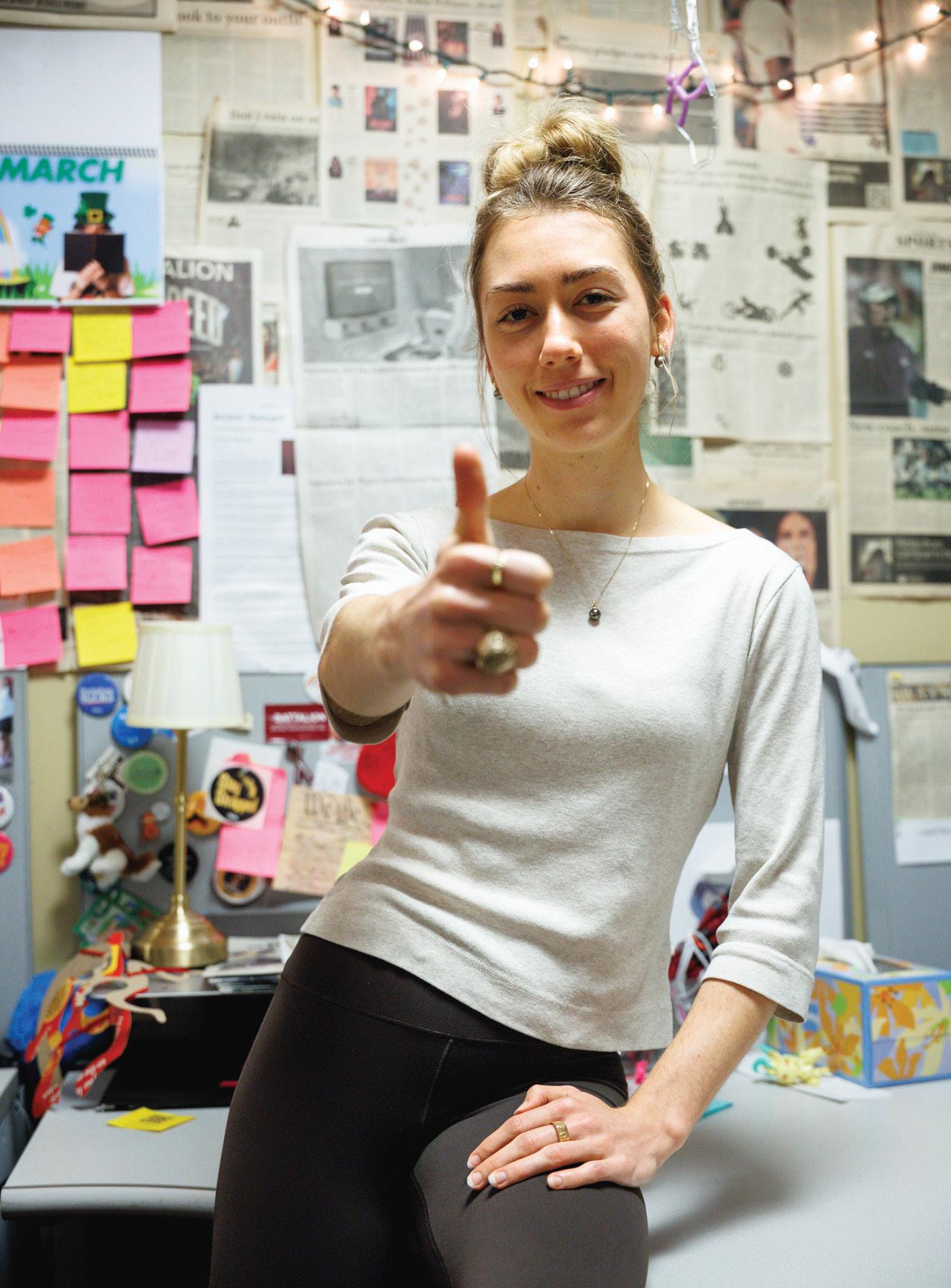
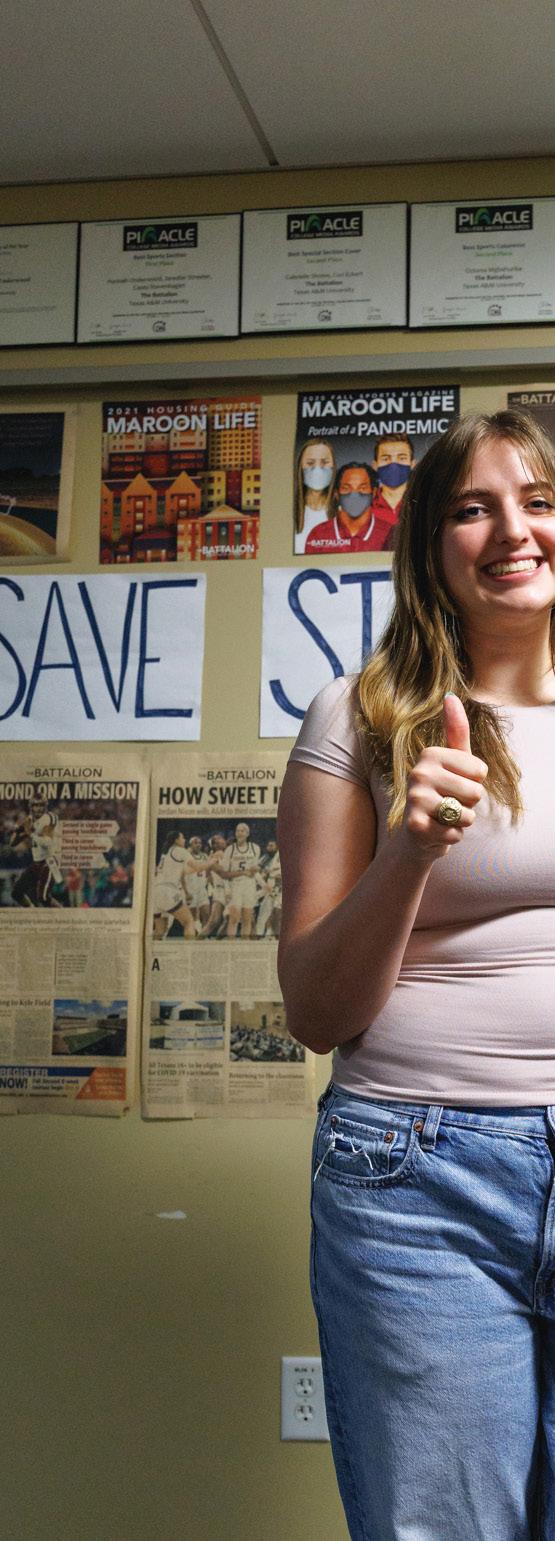
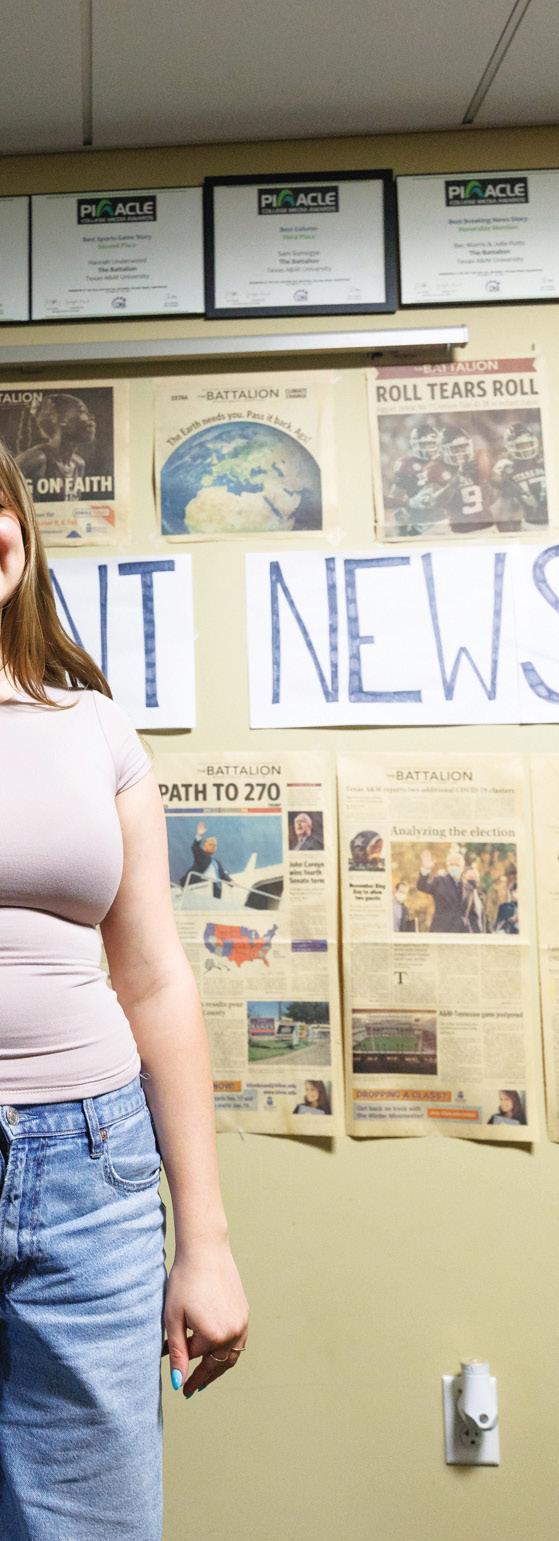
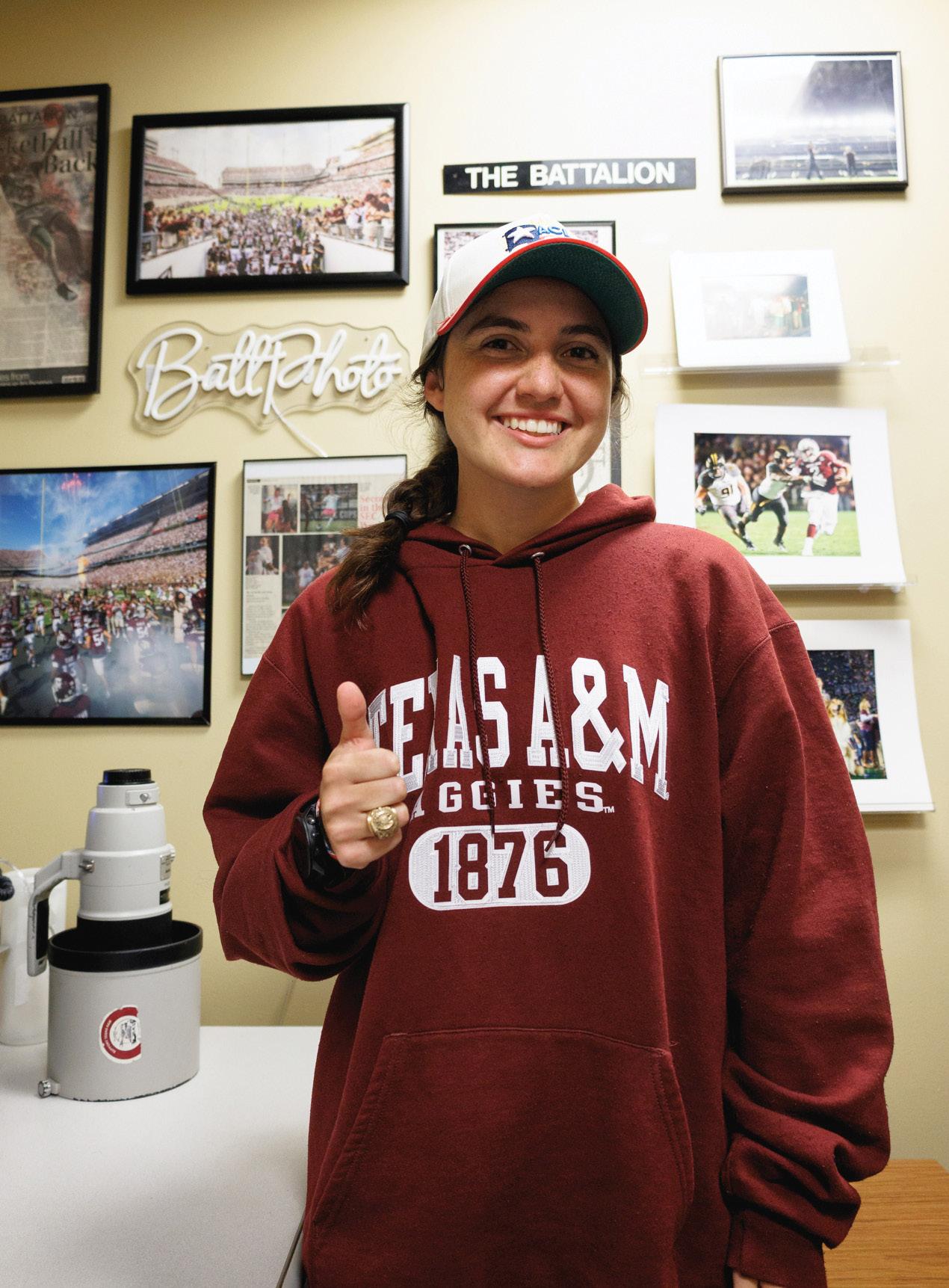
Three Battalion editors earn their
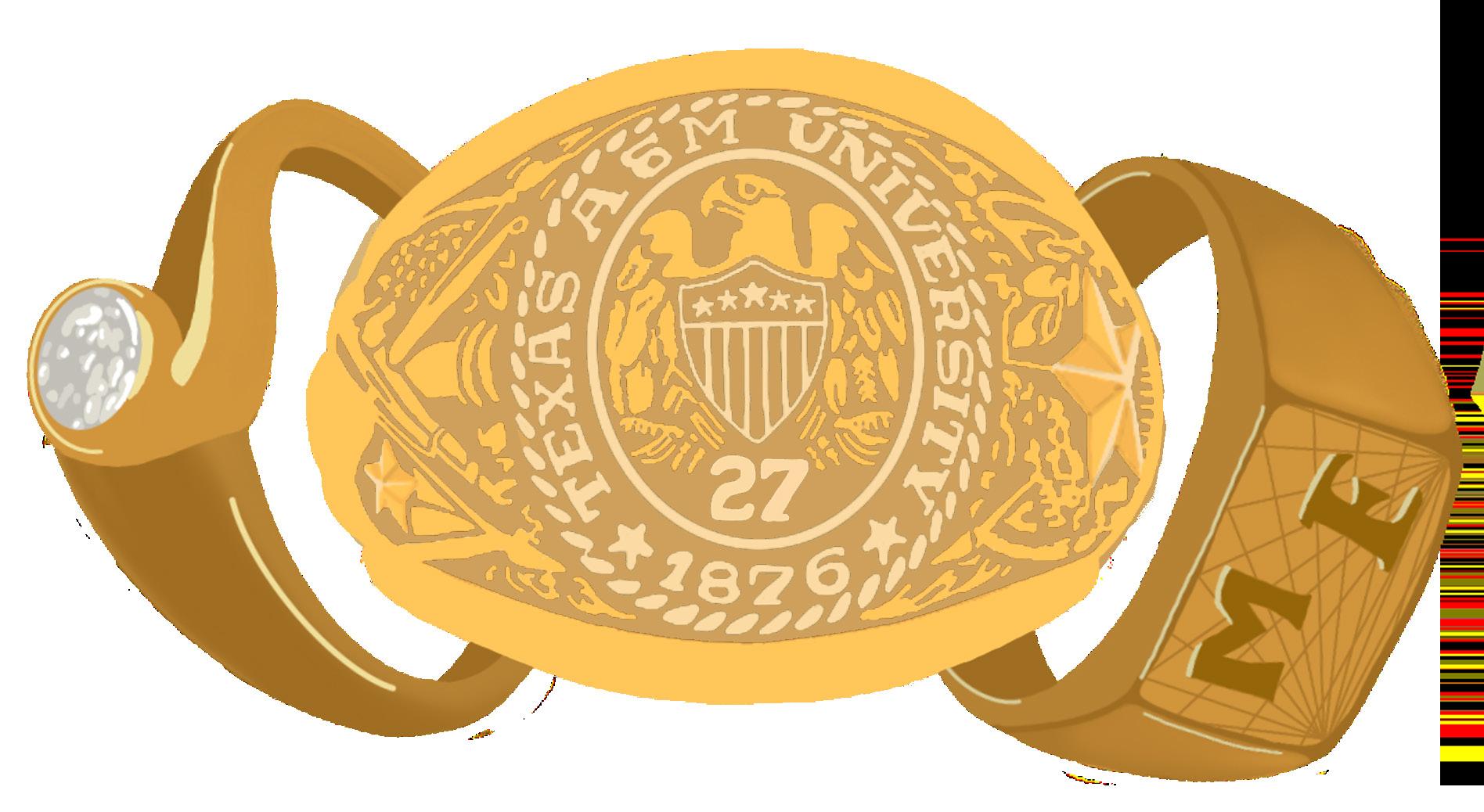
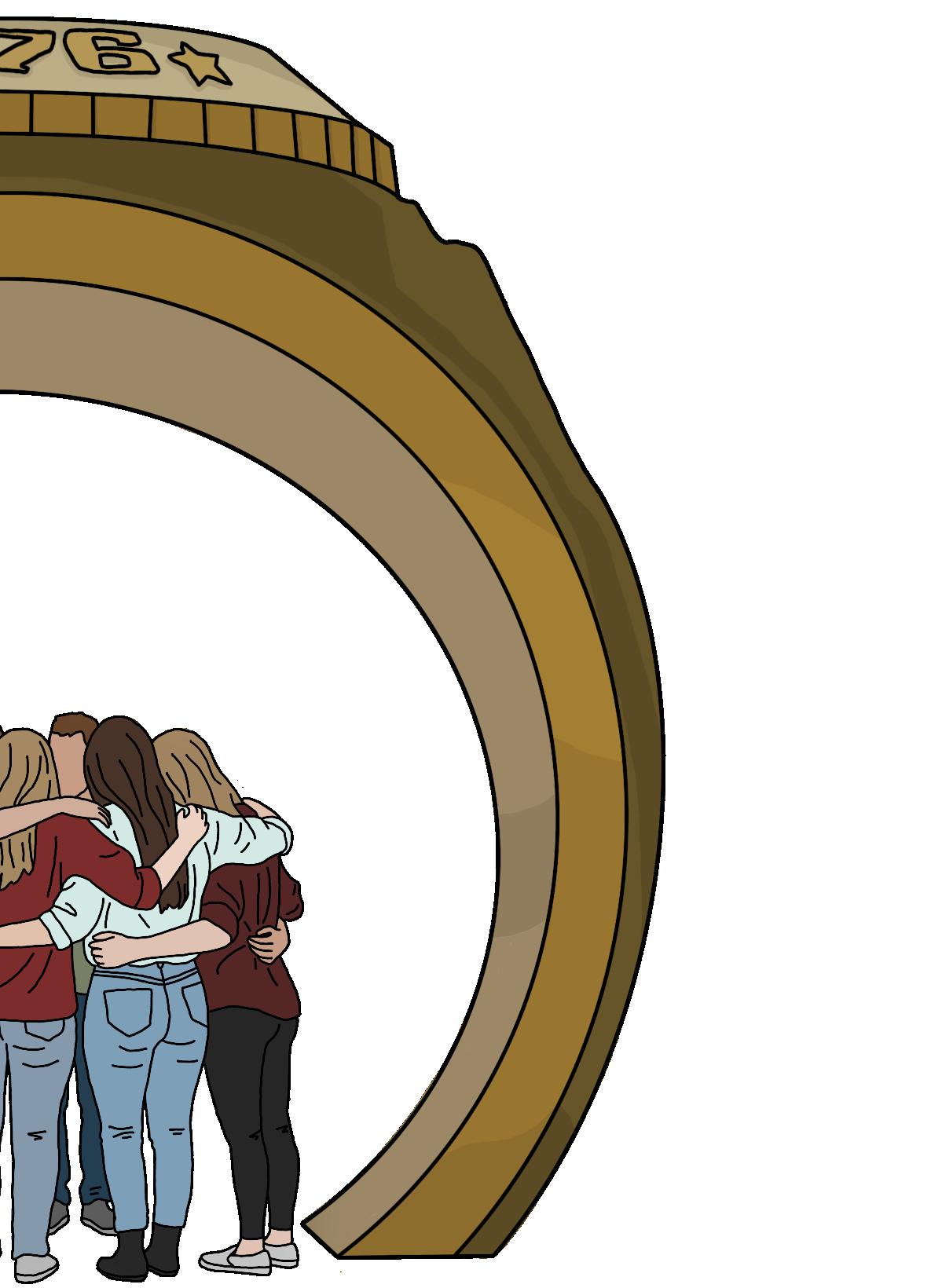
Ring Day: Threads of gold
Interweaving past, present and future
By Maeva Elizabé Associate Opinion Editor
I wear my mother’s ring on the fourth finger of my right hand, where nothing rested before it — the birth of a bond within an extant band.
It has been a sentimental anchor of sorts since I first slipped it on the day of my 18th birthday. Gifted to me by my mother, who received it from her own mother on the day she herself turned 18, it was bought at a market in South Africa and carried back to France — and now the United States — spanning land, sea and time.
The ring may be valuable in the eyes of society because of its weight in gold, but its origins make it far weightier, invaluable from a personal standpoint. Yes, it’s molded from a precious metal and inlaid with a precious stone, but it’s the fingers it encircled before mine, the hands that spun it around those fingers, that are truly precious to me.
Opposite my mother’s ring, nestled snugly upon the middle finger of my left hand, is an heirloom from another branch of my ancestral tree: my paternal great-grandmother’s chevalière ring, engraved with the initials that I myself possess three genera tions later and stamped with the distinctive hallmarks of French jewelry.
It was commis sioned as a gift from a devoted husband for his beloved wife, en trusted by a doting grandmother to her cherished grandson and passed down to an honored daughter by an adoring father.
While circular in shape, these rings are linear in legacy, strings tracing bloodlines through the years. Not only have I treasured them as the first real pieces of jewelry I could proudly call my own, but as markers of my transition from girlhood to womanhood, a cementing of my place within my lineage.
at the perfect moments and angles to be reflected as golden flashes.
Could these bright rays be interpreted as the manifestation of all the right circumstances lining up at just the right time, similar to that which led to my birth and turned strangers into a tight-knit network of proud, loyal Aggies — a version of the invisible string theory, if you will?
Possibly. Add it to the tally of strings I seem to be collecting.
I expect the Aggie Ring to be just as reflective, albeit in a different way: Its luster will be symbolic of the golden path I am forging for myself. One could also perceive its brilliance as the ring emitting shards of enlightenment, but that’s probably just wishful thinking on my part. The other explanation is clearly far less abstract and fanciful.
Regardless, as I slide this ring onto my finger, it will represent a new dimension of myself that, as emblematic as they are, my other rings cannot. Though they are mine now, they have never been, and never will be, mine alone. That truth is what constitutes their intrinsic beauty and what has hitherto inspired such philosophical jargon, the underlying thread of which I’m sure has been quite straightforward to follow, with no knots to untangle whatsoever.
Another string reference for the books — check.
If I had a nickel for every story they told, I’d have no nickels. Because metal can’t talk, obviously.
But I’d be rich all the same, because I carry with me the family I would be nowhere and no one without. I carry the culture that has shaped my outlook on life, the memories that paint the portraits of my loved ones and the relationships that have withstood the test of time.
And just as my current parure connects me to my family by blood, the Aggie Ring will tether me to my family by choice: the Aggie family. Beyond that still, it will represent the interweaving of a new string — my own — with those of my parents, grandparents and great-grandparents.
Throughout my tenure at Texas A&M, as I have worked to lay a sturdy foundation for my future, my past has steadfastly glinted from upon my fingers, the light catching my rings
In contrast, the Aggie Ring is the embodiment of my own achievements, of my own decisions and their consequences; it signifies me as a student and individual, whereas the rings passed down to me are an expression of my composite identity as a daughter, granddaughter and great-granddaughter. While my mother and great-grandmother’s rings encapsulate my heart and soul, the Aggie Ring is, in essence, the product of my drive and intellect, and I am not one without the others.
So though it may take the spot of my mother’s ring, it will not supplant it. Rather, they will complement each other — in aesthetics, of course, but also in what they symbolize.
My great-grandmother, my mother, myself — I will have the tangible representation of generations stretched across three continents hugging my fingers. Every hand I shake in every interview I undertake, every essay I write and vow I make, my family — both maroon and bleu, blanc, rouge blood running through my veins — will be with me for every milestone, major and minor. Together, the triad of gold adorning my hands will be the bridge between what made me and what I have made of myself — for myself, but also for those that came before me and those that will come after. And everyone knows a truss bridge, a unit of interconnected triangles, is indeed the strongest under pressure.
So I will now wear my Aggie Ring on the fourth finger of my right hand, where my mother’s ring rested before it — the embedding of a band within a new bond.
Ring Day: My
I am a product of everyone who has loved me
By Fallon Ferguson Life & Arts Editor
Amidst the brown and black granite of my kitchen island, I sat at the bar in a cold, leather seat, attempting to make the most important decision I had ever made in my 18 years of living: which university I would attend for the next four years of my life.
“I really do think you should just go to Texas A&M,” my mom said, smiling. My dad nodded in agreement, his Aggie Ring glinting on his right hand.
But as I stared at my computer screen, I was paralyzed. My whole life, I wanted to break free from the expectations of being a third-generation Aggie; my dream school, to which I’d been accepted, was none other than the University of Texas at Austin. At first, I only considered A&M to humor my parents, both of whom wanted me to be close to home and continue a family legacy — my grand father, my dad, my aunt, my cousin, my older sister and my other older sister had all attended A&M.
As I sat staring at my offer of acceptance from A&M in the ever-confusing Howdy portal, I accepted the admission offer.
I’m not sure what had influenced me to commit right then and there, but as soon as reality set in, I felt a surge of excitement, over shadowed only by the pit of regret forming in my stomach. However, there was nothing I could do; what was done was done, and it was time for an Aggie transformation.
After three overstimulating days at Fish Camp, I felt pre pared for what to expect as I be gan my college journey that coming August. I had made two friends, which was enough, and as my mom and I stopped for a Whataburger breakfast on our way into College Station on move-in day, I really didn’t feel anything. All I could think was, “I just need to get through these next four years, and then I can do whatever I want.”
But what then-Fallon didn’t know was that she was about to discover what made this university so special, what kept families coming back generation after generation and what kept the so-called “Aggie Spirit” alive.
After some badgering from my Fish Camp counselors, I decided to go with my discussion group to Silver Taps. I remembered little about the ceremony from my time at Fish Camp, but I knew what it represented and knew it was a uniquely Aggie tradition.
their golden bling on Ring Day
My Aggie family
As we stood at Academic Plaza, huddled together in the humidity, you could hear a pin drop. The only sound was the wind rustling through the leaves while students and faculty alike stood together all for the same reason: to honor a fellow Aggie who had fallen. The silence was deafening; it was a kind of quiet I had never experienced before.
The Corps of Cadets’ Silver Taps rifle team began to march in, and I was covered in goosebumps. I was mesmerized by their cadence, and I could only stand perfectly still and watch as they approached the center of the plaza. Finally, the bugles played Silver Taps, first to the north, next to the west, then to the south, but, as I remembered from my time at Fish Camp, never to the east — because the sun will never rise on that Aggie again. After escaping from the throes of socialization with my Fish Camp group, I went to my room and cried. I had never understood or felt what it truly meant to be a part of something bigger than myself; I had no idea who these fallen Aggies were, in fact, I couldn’t tell you one thing about them other than the fact that they were Aggies.
But then I realized something: That’s the point. It doesn’t matter who they were, the things they had done, the mistakes they had made; what matters is that they were a crucial part of something much bigger — the Soon after that first Silver Taps, I decided that I would give this whole Aggie thing a try. I joined some organizations, I involved myself in all of the sacred Aggie traditions and made friends that I truly believe will last
After a harrowing freshman year, during which all I wanted to do was transfer, I made the best decision of my life: I stayed right where I was. If it weren’t for the incredible people in my life encouraging me and loving me every step of the way, I would never be here about to accept my Aggie Ring and cement myself in an Aggie tradition. And those people are the only reason that I’m so successful today, and they’re the reason why leaving this university one year early is so painful; I think they deserve a little shoutout:
To the most important people in my life, my best friend Mallorie, my boyfriend Jacob, my mom, my dad, my sister Farrah and my little brother Jon: thank you. My successes are our successes; thank you for giving me a reason to stay at A&M, encouraging me, helping me love myself and always believing in me. I owe every joy, accomplishment and laugh to y’all; I love you all more than you will ever know. Now, let’s get that bling!
Ring Day: Picture perfect
A full-circle moment for a first-gen Aggie
By Rocio Salgado Associate Photo Chief
So, it’s finally Ring Day! As I sit here writing this with my favorite view of Kyle Field ahead, a question I can’t seem to stop asking myself is: How did I even get here?
The short answer is that I walked here from the bus stop, but I was told that this had to be 900 words … so buckle up and bear with me because I’m a photographer for a reason.
From August of 2019 when my family and I drove to a random place in the middle of nowhere called “College Station” for my sister and I to play — and suffer — in a preseason soccer tournament for the first time, to April of 2026 when my entire family has come to support me as I become the first member of our family to earn an Aggie Ring, we have come a very long way.
Growing up in San Antonio, I had no idea where I wanted to go to college or what I wanted to study, even though it seemed like everyone else had a pretty good idea. All I knew for sure was that I didn’t want to be a lawyer because it was way too much reading and that I was terrible at math, science and writing — exhibit
A: this story.
The only classes where I actually enjoyed doing the work were the photography classes I took as random electives in high school. With college applications due, I was still completely unsure about what I wanted to do with my life until one day, while talking to my mom in the kitchen of our house as she cooked quesadillas for din ner, she told me that through journalism I could turn my pas sion for sports and photography into a career.
From creating TikToks for my class, interviewing city planners and even photo- graphing March Madness, journalism has become such a large and exciting part of my life that has allowed me to meet and work with amazing people. Seeing my byline underneath published photos will never get old, and I owe it all to my mom. So, while it is technically her fault that I have to suffer through writing this, it is also thanks to her that I have a new dream to chase.
it and everything that it has given me into words.
To say I arrived here with the perfect plan of what I wanted to achieve would be a complete lie. Being 1 of 76,000 students at a school and finding your place among them is no easy task, especially when all of your close friends have coincidentally chosen to go to school out of state. The pressure of figuring out where I belonged, making relationships that lasted and finding new opportunities was extremely hard, especially as an introvert who hates talking to strangers.
Fortunately, there is always light at the end of the tunnel, and after many trials and errors, I now have an incredible community of friends who I’ve been able to share core memories with, all because I decided to take a leap of faith and step out of my comfort zone. Yet, without my dad, I never would have done it.
It took 18 years for me to learn, but I now know that being afraid is never an excuse to not do something, and it’s those experiences that make life worth living.
From signing up to learn how to shoot a bow and arrow and be like Merida, to applying to be an associate photo chief of the student newspaper in my first-ever leadership position, this rule continues to be true. So many of the goals that I have been able to achieve — like BTHO 90 hours — have happened because I was comfortable with being uncomfortable, all thanks to my dad who always knew the push I needed in order for me to go out into the world and
So, does that mean I should listen to my dad more often?
I had absolutely no idea what I was getting myself into when I accepted my admission here as a senior in high school. The word “Whoop” had never been so exciting or loud, maroon had never looked so good and sports had never been so consistently devastating — I’m looking at you, Aggie football. Now here we are, three years later, having gone absolutely insane for the Ags, trying to soak in every second spent at this amazing university and struggling to put my appreciation for
As someone who doesn’t just like things but rather becomes totally obsessed with them forever, the Aggie Spirit has fit into my life like a golden ring. Reaching this milestone means so much to me, not because I get to be part of yet another special tradition, but because I know none of it would have been possible without my mom, my dad and even my sister — who unfortunately plagues my life with burnt orange. I would not be who I am without them, and I am so proud to have their names engraved next to mine on my Aggie gold.
No sé cómo tuve tanta suerte de tenerlos. Muchas gracias por todo, y los quiero muchísimo.
So, it turns out that maybe I do know how I got here after all, and, no, it wasn’t by walking. I am so proud to be an Aggie, and I can’t wait to see where the crazy train of life goes from here.
Thanks, and Gig ‘em!
From battlefields to Houston rodeo grounds
Leroy Shafer ‘67 carries Aggie Core Values to Houston Livestock Show and Rodeo
By Therese Meney Life & Arts Writer
“Now you need to make a deal with me — you won’t leave until you get the job finished.”
It was these instructions, given to Leroy Shafer ‘67 upon beginning his 41-year-long career at the Houston Livestock Show and Rodeo, or HLSR, that best summarizes his life and career as characterized by Selfless Service and Leadership. Shafer, or “Shafe,” was named Emeritus Chief Operating Officer upon retiring from his role as HLSR’s Chief Operating Officer. His contributions, specifically through public marketing and volunteer mobilization, grew the show into the largest in the world.
This drive to never leave a job unfinished has been demonstrated by Shafe’s contributions to campus life during his time at Texas A&M, his active military service in Vietnam and his continued involvement with A&M’s College of Agriculture and Life Sciences.
“I don’t know where I would be in this world today had I not gone to Texas A&M University,” Shafe said. “All of it shaped the way I approached my life that way on.”
While studying agricultural journalism at A&M, Shafe thought his future was to be an
agriculture teacher or reporter, and he only became more interested in advertising and promotion his junior year.
“The thought that I would be working for a livestock rodeo show was the furthest thing from my mind,” Shafe said.
Along with receiving the Western Compress Opportunity Award Scholarship his freshman year, as well as the Anderson Clayton Agricultural Journalism Scholarship that went toward the remainder of his degree, Shafe was presented with the Danforth Award his senior year.
As a member of the Corps of Cadets and Corps staff, Shafe was a columnist for The Battalion through the Corps Channel. During his senior year, he was an Army ROTC aviation cadet and obtained a fixedwing private pilot license. Shafe said that from freshman year onward, he knew he and his buddies would likely serve in the Vietnam War.
From 1967 to 1988, Shafe served as a United States Army Infantry Officer, both active and reserve. He completed a tour of duty in 1970 to 1971 as a helicopter pilot with the 12th Combat Aviation Group in the Republic of Vietnam, during which he spent time as a public information liaison relaying information about the Vietnam War to news outlets.
“My military experience is extremely important to the career I ended up having,” Shafe said. “The commander of that unit saw I had an undergrad and master’s degree in journalism. … I ended up building a new
public information attachment whilst flying helicopters.”
Shafe was assigned as a pilot for flying news media, and even flew celebrities such as Morton Dean for CBS and Sammy Davis Jr., who he flew through Vietnam.
“I [knew what I] could allow them to see and not allow them to see, what was confidential and secret,” Shafe said.“ ... That got me an introduction into what it was like to support the entertainment industry.”
Coming out of the army, Shafe chose to interview with the HLSR because it was incredibly integral during his childhood. When his work first began, the stock show was attempting to grow its numbers and funds to support the construction of the Astrodome, the former venue for the event. Upon Shafe’s retirement, he shared that general attendance was 2.5 million, and with a focus on promotion and sponsorships, the annual operating income grew to $130 million.
“With today’s change in tech — AI, new rise of analytics — the environment is going to be changing continuously, the audience is going to be changing continuously, it’s extremely important that students grasp this … understand their audience, understand their product and they implement this to the fullest extent possible,” Shafe said.
A&M Agriculture and Life Sciences College Vice Chancellor and Dean Jeffrey Savell, Ph.D., has worked alongside Shafe during his role as a member on both the A&M Agriculture Leadership, Education,
and Communications Department’s, or ALEC, Advancement Board and the sounding board for A&M’s College of Agriculture and Life Sciences.
“The quiet resolve that Mr. Shafer has in his attention to detail in his ability to bring together folks to really go to the higher level is one of the really important things,” Savell said. “He listens, plans and executes, and I think that has been the secret to his success.”
Each year, more than 800 students benefit from the HLSR scholarship program, and as of 2026, the HLSR has awarded over $320 million in scholarships.
“The fact that somebody has invested in you and awarded a scholarship shows commitment, and they’re investing in you to help you get to the next level of life and transform your life,” Savell said.
In 2016, Shafe and his wife, Nancy, were the lead donors for the Thomas R. Hargrove ‘66, Ph.D, Endowed Memorial Scholarship and the lead matching donors for the Douglas P. Starr, Ph.D., Endowed Scholarship.
The couple has also arranged planned estate gifts with the A&M Foundation to fund the College of Agriculture and Life Sciences, the Corps of Cadets, the ALEC department, the Entomology Department and the School of Public Health.
“My wife Nancy and I will do everything we can to support those students,” Shafe said. “I will do anything I can to keep that environment.”
Musician Lyle Lovett collaborates with PVFA
Grammy award-winning artist continues Hagler Fellowship through residency discussions, student mentorship
By Sophia Munoz Associate Life & Arts Editor
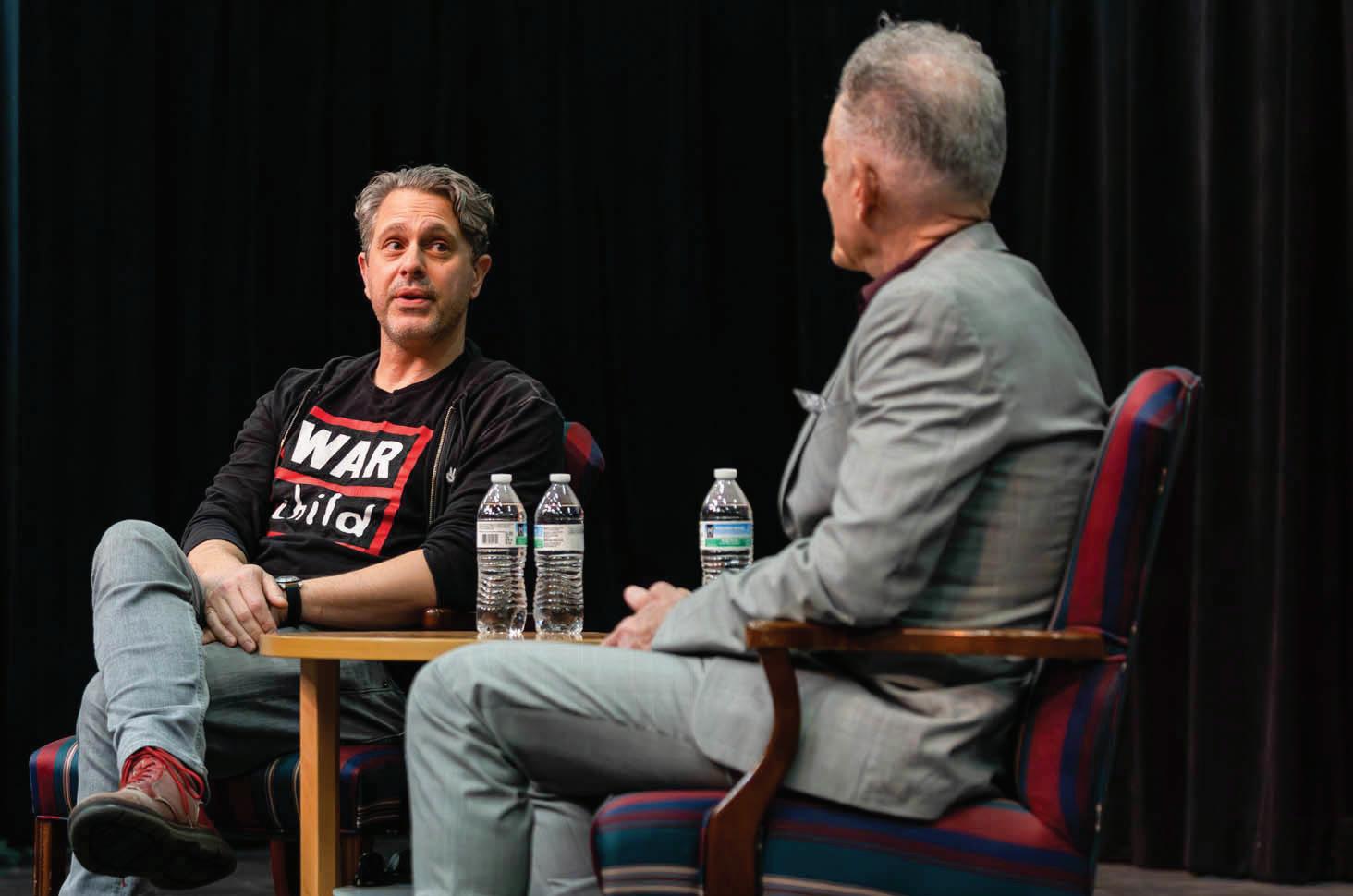
On a Wednesday morning at the Black Box Theater, two art deco pinstripe chairs sat empty in the center of the floor stage, facing 50 seats that were quickly being filled by students and others interested in the April 1 Lyle Lovett Residency Discussion. It was minutes before the presentation — camera crews from local news stations still setting up their cameras and extra chairs being pulled from the back storage room to seat the overflowing crowd — but Grammy award-winning artist Lyle Lovett ‘79 was already making his rounds, introducing himself to the audience members and camera crews alongside actor and guest speaker Thomas Sadoski.
Lovett’s Residency Discussions began in early spring as a part of his 2025-26 residency with Hagler Fellows, a Texas A&M institution for international and high-achieving scholars in their respective fields.
Fellows inducted into the institution are each assigned to a college related to their field, and Lovett, having a successful career in music, has been working closely with the College of Performance, Visualization and Fine Arts, or PVFA.
Since his discussions began, he has brought guests such Houston filmmaker Bruce Bryant, CEO of Regard Music Sean O’Malley and, for this event, Sadoski.
“Lyle and I just sort of know each other from both being from [College Station],” Sadoski said. “And when I was doing a TV show a few years back called ‘Life in Pieces,’ there was an opportunity for a guest part to come in to play an owner of a morgue, and I thought Lyle would have been perfect
for it. … Next thing you know, Lyle is on set with us, working, and we’ve just been really close buddies ever since then. And he called me up and asked me if I’d like to be a part of doing this thing here at A&M, you know, getting this college off the ground, and I’m thrilled, I’m honored that he asked me. Anything that I can do to help.”
Lovett led a discussion with Sadoski that delved into his upbringing as a young actor in College Station and his experience on projects such as the off-Broadway production “This is our Youth,” where he worked as an understudy for Mark Ruffalo.
“They brought me into the dressing room, and I met Mark Ruffalo, who I was going to understudy, and Mark Rosenthal and Missy Yager and Kenny Lonergan, the playwright, Mark Brokaw, the director,” Sadoski said during the discussion. “ … I went on 25 times over the course of eight months for both parts. And during that time, Ruffalo became kind of a mentor as an artist, you know.”
Sadoski has since worked on projects including “Wild,” “John Wick,” “Skin and Bone” and, most recently, “Adult Children.” While Lovett’s interview revolved around Sadoski’s professional career, more importantly, the two also discussed the importance of art as a whole.
“Don’t let anybody devalue you, telling you that ‘It’s a hobby’ — it’s not,” Sadoski said. “It is an essential and vital part of a society’s health. … We last longer for a reason, because we tell our stories to each other.We don’t get to learn about who we really are unless we as artists are here.”
Attendees had the opportunity at the end of the presentation to ask questions, during which many students took the chance to ask for advice pertaining to their own careers in the performing arts.
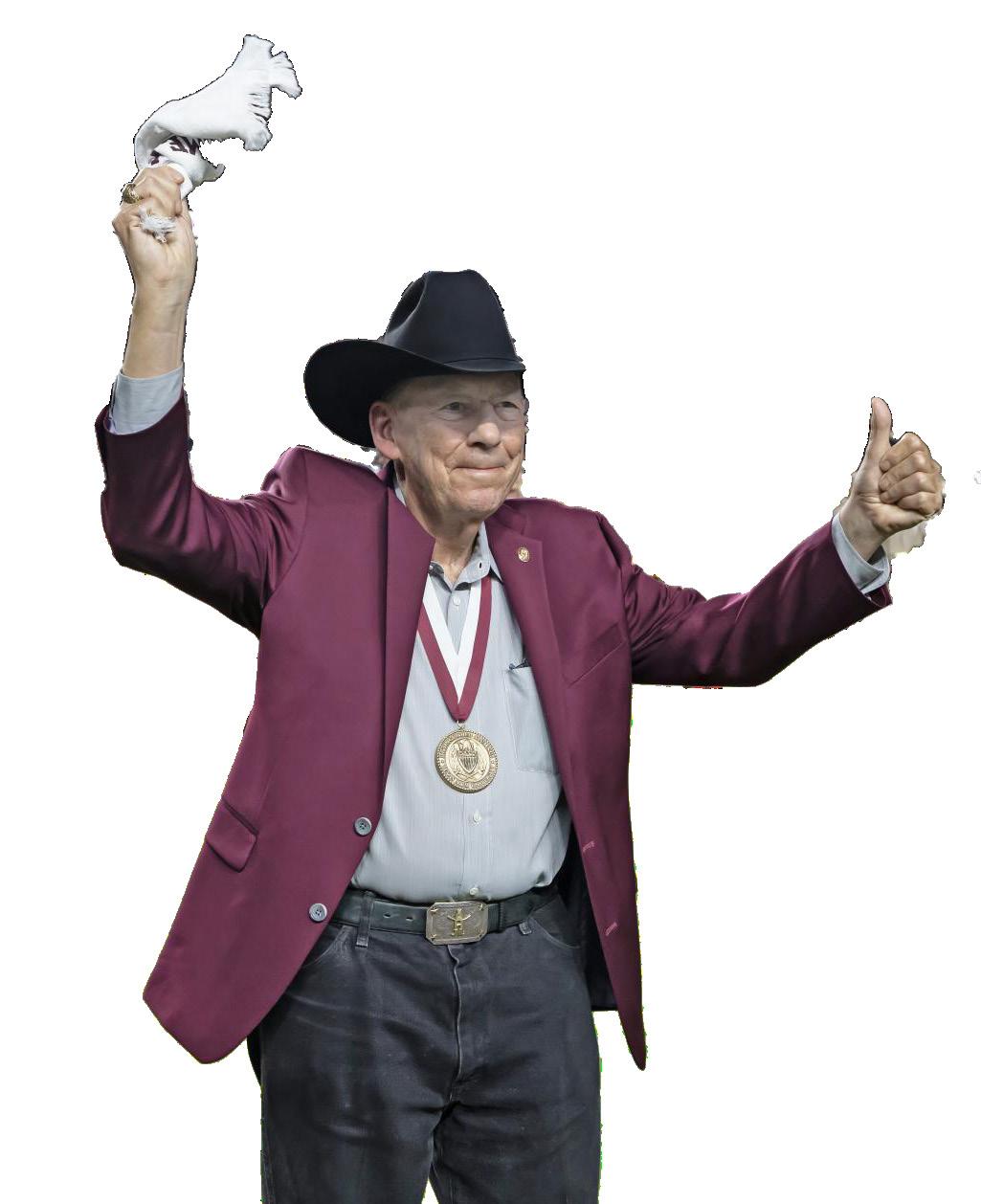
Left to right: Leroy Shafer Gigs ‘em in front of the Fightin’ Texas Aggie Band in Kyle Field. Leroy Shafer talks in an interview.
Photos courtesy of Leroy Schafer
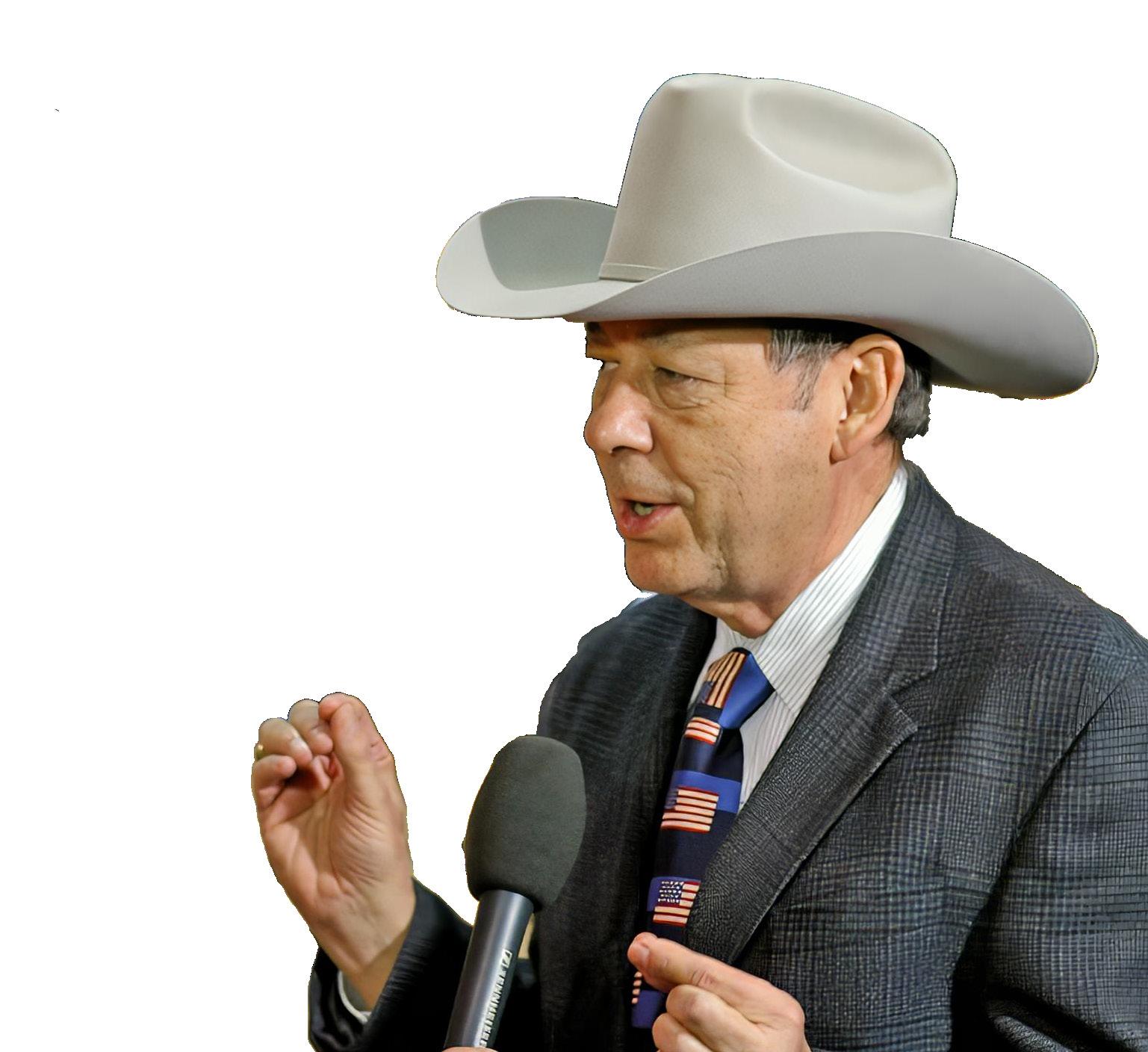
Top to bottom: Lyle Lovett ’79, four-time Grammy award-winning singer-songwriter, smiles at
attendees during Lyle Lovett Residency: Discussion With Actor Thomas Sadoski at the Liberal Arts and Humanities Black Box Theater on Wednesday, April 1, 2026. Thomas Sadoski, College Station native and critically acclaimed actor, converses with Lyle Lovett ’79, four-time Grammy award-winning singersongwriter, about his acting experience during Lyle Lovett Residency: Discussion With Actor Thomas Sadoski at the Liberal Arts and Humanities Black Box Theater on Wednesday, April 1, 2026.
Photos by Ashely Bautista — THE BATTALION
Opinion: Weighing in on body positivity
By Abby Morris
Opinion Writer
Imagine feeling uncomfortable in your body and wanting to focus on becoming healthier, maybe losing some weight, too. You document the journey online to keep yourself accountable, and as you hit share on your first post, the first comment you get accuses you of “betraying body positivity.”
Why?
Body positivity is a social movement that originally began in the late 1960s as the Fat Rights Movement. The goal was simple: to obtain equal rights for fat people and end unfair treatment and discrimination — a totally reasonable cause. The movement continued to grow and began advocating for people to “Love your body.” Then, as the internet came along, this movement migrated to social media websites like Tumblr, Instagram and Facebook, evolving into what we now know as the body positivity movement.
Today, however, body positivity has become a social media buzz phrase, and its original intent has been misconstrued. It stopped being about liberation and instead mutated into a rigid ideology that pressures people into loving themselves even if they don’t, ignores real medical problems for the sake of protecting feelings and shames those who want to change their bodies.
Performative self-love
I’ve spent around half of my life hating my body, which I know is an experience many people sadly share. If you have experienced this, then you know how hard it is to view your body in a different way. I’ve only recently become neutral about my body, and even then, the shame and hatred still surfaces when I’m feeling down.
The body positivity movement on social media pushes you to “love your body,” but by doing so, it unintentionally creates a new standard that you must love your body and feel positive about it. This puts stress on people who are body neutral or struggling to change how they view themselves. It’s unrealistic to expect someone who’s spent years of their life hating their body to suddenly do a 180 and love themself. Unfortunately, this movement has made it seem that if you don’t automatically love your body, then there’s something wrong with you.
unlearn, especially when you’ve practiced them for so long. Because of this, many mental health professionals have begun advocating for body neutrality as a more realistic goal — you don’t have to love your body, but it shouldn’t define your worth. Self-love is a journey that should be at your pace, not one dictated by social media.
Dismissing medical reality
Another idea that’s been floating around body-positive social media is that you can be healthy at any size. This stems from the Health at Every Size’s framework that follows five main principles: weight inclusivity, health enhancement, respectful care, eating for well-being and life-
This unrealistic standard makes it more difficult for people to accept themselves for who they are and instead creates feelings of guilt and shame. Behaviors are hard to
enhancing movement, aiming to shift the talk from weight loss to health gain. Encouraging healthier habits and respectful healthcare at every size is reasonable, but claiming you can be healthy at any size is simply not true. It’s a dangerous narrative to push out on social
media because, at a certain point, the size you are can begin to negatively impact your health.
The body mass index, or BMI, while an imperfect tool that doesn’t account for muscle mass or genetics, remains useful for identifying dangerous extremes.
The BMI scale has three classes of obesity: Class 1 (30-34.9), Class 2 (35-39.9) and Class 3 (40<). The higher the BMI, the more at risk you are of developing health conditions like Type 2 diabetes, high blood pressure, heart disease and stroke. Additionally, being obese — particularly those in Class 3 — increases your chance of early mortality.
But it’s not just obesity — being extremely underweight is just as, if not, more dangerous. You can experience complications such as weakness, osteoporosis, loss of energy and a weakened immune system. If you’re a woman, you’re also more likely to lose your period. Most strikingly, being extremely underweight carries a higher mortality risk than extreme obesity — a fact that rarely gets the same attention.
Neither extreme is healthy, making it impossible to support the claim that you can be healthy at any size.You can certainly be bigger or smaller and still be healthy, but not at these extremes.
Health isn’t a one-size-fits-all concept — some people will naturally look bigger or smaller. Genetics plays a significant role in weight distribution and the ability to build muscle, and you’re unable to change this. Additionally, some people have health conditions that can change how their bodies look, even if they’re not doing anything differently.
To truly be body positive, we should encourage people to pursue a standard that’s attainable for them — one where they have energy and strength to support themselves, as well as healthy vitals and bloodwork.
Treating everybody — and every body — with respect is important, but that doesn’t mean pretending that you’re healthy when you’re not.
Wanting a change
“If you truly loved your body, you wouldn’t want to change it” is a common argument I hear from people who claim they’re body positive, and I think this misses the entire point.
True body positivity means having the freedom to make choices about your own body — including the choice to change it. There’s an important difference to consider, though: Wanting to change things out of self-hatred is not the same as wanting to change things out of self-care. It feels like this movement has lost sight of that difference. There’s also a line between what’s changeable and what isn’t. You shouldn’t want to change things that are outside of your control, like height, bone structure or genetics, but having goals related to your health or fitness is completely reasonable.
Sometimes the most body-positive thing a person can do is to turn their life around to become a healthier version of themselves. Working to be a healthier person doesn’t automatically mean losing or gaining weight; it means nourishing your body with whole foods, finding a form of exercise you enjoy and focusing on accepting yourself. If the true goal of the movement is for people to feel comfortable in their own skin, then people should have no problem with you working to take care of your body.
Real body positivity should mean the freedom to accept yourself, change yourself or land somewhere in the middle without any judgment; it should mean having honest conversations about health instead of comfortable fictions; and it should mean accepting people where they are, not telling them where they should be.
The body positivity movement had the right idea — it just needs to find its way back to it.
Abby Morris is an English and political science junior and opinion writer for The Battalion.
Opinion: Silly rabbit, Easter is for Jesus!
received — but not by all.
The Jews arrested him and turned him over to the Romans, who beat and crucified him. He died on a Roman cross.
Death had won — or so they thought.
By Marie Kneeland Opinion Writer
As winter turned to spring and the cold winds of the new year warmed — or, in the heart of Texas, as we reached 90 degrees — the latest holiday on the calendar officially passed. Situated comfortably between St. Patrick’s Day and Mother’s Day, this year’s Easter week came and went in the blink of an eye. My memories of Easter are just as warm as the day it annually occurs on. I grew up with all the fun traditions you can imagine: hunting Easter eggs, getting a basket full of treats and taking an annual family photo right after church.
Just like Thanksgiving and Christmas, Easter has gotten the cosmetic treatment of commercialism. With the skyrocketing price of eggs and cheap bunny wreaths in H-E-B aisles dominating this time of year, it isn’t a stretch to suppose that future generations might look back on the 21st century and wonder why we worshipped a rabbit for a few weeks every spring.
Don’t mistake my words; I love all the traditions and games that come with the holiday season. But it would be remiss to forget that underneath all the pastel colors and Cadbury Creme Eggs, there is a true — and much more important — reason for the season.
If you haven’t heard it before, allow me a moment to share the Easter story with you.
About 2000 years ago, a baby was born in a stable. This baby was the Son of God, Jesus Christ. He grew up to preach a gospel of love and hope for humanity, a message
Three days later, Jesus rose from the dead. He conquered death, an indisputable resurrection. As Charles Spurgeon said, “There were so many witnesses to behold it, that if we do in the least degree receive the credibility of men’s testimonies, we cannot and we dare not doubt that Jesus rose from the dead.”
The Bible is the greatest story — the greatest written biography — ever told.
Maybe you’re scoffing at that. I understand the thought of a man going from dead to alive is shocking and even unbelievable, and to that I simply ask you to stay for a moment longer. Christ-believer or not, I’m certain there are days during which you need hope, and it seems impossible to find. There is no lasting hope in politicians, television or food; there is no hope in human understanding. It follows, then, to say that the only place
I once had a Sunday school teacher berate me for calling this a story, since it was something that actually happened. Storytelling, however, isn’t merely fictional. It can be imagined, of course — I love a fire-breathing dragon or laid-back hobbit as much as the next person — but that isn’t the purpose of a story.The purpose of a story is to share knowledge, to connect with people in a way that conversations often fail to.
to find hope is in something beyond human understanding. It follows that the elusive creature of peace might be found hanging on an Easter cross.
One of the most celebrated images at Easter is the cross. It’s hung on doors, painted in windows, printed on shirts — but we must never forget that the cross itself is not beautiful. Do you call a guillotine wonderful? Do you admire a noose? Crucifixion was a bru-
tal method of execution created by the Romans to induce death by asphyxiation and organ failure. And yet we find hope in it. Why?
Many, perhaps yourself included, can’t understand the reason for Christians rejoicing at an ugly piece of wood that was used to bring the death of our savior. But the beauty of the cross lies in the message it conveys as a symbol of Christianity. We celebrate death because it means life. The cross represents the hope of resurrection and the reality that only through the haze of the pain the cross projects can we see and understand God’s great love for us.
That’s why it’s important we celebrate the entire Easter week, not just the day. In light of such sacrifice, such eternal love, how can we cheapen it? How can we raise an imagined rabbit over the Son of the living God?
I’ve always found holidays to be a bright spot during the year. Easter typically falls right around the end of the semester, when stress is high and students pull themselves free from studies for a few brief days to enjoy some sunshine, jelly beans and family time. Unfortunately, reducing the celebrations to solely commercial elements takes away the heart of the holiday.
Have you ever had a cinnamon roll? Everyone knows there’s only one way to eat them — from the outside in — saving the best part, the center, for last.
Taking Jesus out of Easter is like eating a cinnamon roll, reaching the middle and finding no center. Sure, you had a cinnamon roll. Does it matter, though, if the best part is missing?
Marie Kneeland is an English honors freshman and opinion writer for The Battalion.