LIFE & ARTS
A&M researcher develops new dental biosensor in order to detect preliminary signs of common dental conditions A2
SPORTS Partida, No. 10 Texas A&M baseball heads to Baton Rouge for matchup against reigning national champion LSU A5
A&M researcher develops new dental biosensor in order to detect preliminary signs of common dental conditions A2
SPORTS Partida, No. 10 Texas A&M baseball heads to Baton Rouge for matchup against reigning national champion LSU A5
Regents pick current executive vice chancellor of A&M System, who previously served in variety of roles at university, System level
By Ian Curtis Senior Enterprise Reporter
The Texas A&M University System Board of Regents appointed System Executive Vice Chancellor Susan Ballabina, Ph.D., as sole finalist for president of the System’s flagship campus on Monday, April 13.
“On behalf of the Board, we are confident Dr. Ballabina is the right leader for Texas A&M University,” Board Chairman Robert L. Albritton said in a press release. “She brings unparalleled knowledge of Texas A&M, a collaborative leadership style and the experience and know-how to guide the university with vision and purpose. Equally importantly, she cares deeply about the people and communities this university serves.”
Ballabina now enters a state-mandated 21day waiting period before the Board can take final action.
“Having worked alongside so many dedicated members of this university for the past 30 years, I’ve seen firsthand the remarkable impact Texas A&M has on students, communities and our state,” Ballabina said in a press release. “I am honored by the trust and confidence of the Board of Regents and Chancellor [Glenn] Hegar, and if given the opportunity, I look forward to building on the incredible work already underway and leading Texas A&M into its next chapter.”
In her current role, Ballabina works with the regents to “advance key strategic initiatives” across the System’s 12 universities and eight state agencies, according to a press release from the A&M System.
Before her most recent position, Ballabina served in a variety of roles at A&M at both the university and System level, including previously serving as chief of staff in the Office of the President and leading Texas A&M AgriLife.
As part of her prior roles at A&M and within the System, Ballabina coordinated disaster relief efforts through the System’s state agencies, according to the press release. She also played a role in A&M establishing the Aplin Center, a learning hub for hospitality, retail and marketing students supported by a $60 million donation from Buc-ee’s founder Arch “Beaver” Aplin III that is currently un-
der construction.
“Dr. Ballabina is a proven leader who un derstands this institution, the people it serves and the responsibility it carries for the State of Texas,” Hegar said in a press release. “As Texas A&M celebrates its 150th year, it is critical that we have leadership focused on re sults, accountability and preparing the univer sity for continued success in the years ahead. She is prepared to lead Texas A&M forward.”
Ballabina — who will be A&M’s sixth president to take office on an interim or per manent basis since the start of the 2020-21 academic year — replaces Interim President Tommy Williams ‘78, who took over in the office after former President Mark A. Welsh III’s resignation following a scandal involving gender studies being mentioned in senior lec turer Melissa McCoul’s children’s literature course.
Williams told The Battalion soon after tak ing office that he was not seeking the perma nent position.
“I am not the right person to lead this uni versity on a long-term basis,” Williams told The Battalion in October. “I understand that I am very good at helping solve problems and turn things around. I’ve done this before in state government, and I think I can do it here.”
In the press release, Hegar thanked Wil liams — a longtime friend of his — for his time in office.
“The A&M System is grateful to Tommy Williams for his steady leadership and service to Texas A&M during this important time,” Hegar said in the press release. “He has pro vided stability and continuity for the univer sity, and we appreciate his continued com mitment to the institution.” The scandal that culminated in Welsh’s resignation sparked after state Rep. Brian Harrison (R-10) posted videos on X in September of a student confronting McCoul after she mentioned gender studies in her class and culminated in the removal of En glish department head Emily Johansen and Dean of the College of Arts & Sciences Mark Zoran from their ad ministrative positions.
Welsh received a $3.5 million payout from the System after he resigned with over three years left on his contract amidst political pressure from Gov. Greg Ab bott and the Board of Regents — according to reporting from the Texas Tribune — after a phone conversation between Welsh and a student in which Welsh initially refused to fire McCoul was leaked on X by

Governor shares perspective on future technological impact at A&M Semiconductor Institute groundbreaking
By Emily Anderson News Reporter
Gov. Greg Abbott was joined by Texas A&M University System Chancellor Glenn Hegar, Rep. Paul Dyson, A&M Regent Jay Graham, Director of the A&M Semiconductor Institute Steve Putna and other stakeholders of the Semiconductor Institute at its ceremonial groundbreaking at the RELLIS campus on April 9.
Speakers at the event focused on one point — Texas is stepping up to lead the United States, and the world, in the semiconductor industry.
“Leadership is not something you just assume, it’s something you build,” Graham said in his address. “ … This institute will help
do that. It creates a pipeline of talent, training for high-demand, high-wage jobs; it gives the industry a place to partner in skill and innovation; it ensures that the research down here in Texas translates into production here in Texas.”
Dyson emphasized the growth that this new facility will bring to Brazos County, as it becomes a leader in one of the most important and growing industries in the world.
“Semiconductors are the backbone of our modern economy,” Dyson said. “The power devices we carry, the cars we drive, life-saving medical equipment and the critical infrastructure that keeps our community safe. By investing in a world-class research facility right here at Texas A&M, we are making a clear choice to keep those jobs, that innovation and those opportunities close to home.”
Abbott was introduced by A&M Vice Chancellor for Research and Texas Semiconductor Innovation Consortium Executive Committee member Joe Elabd, Ph.D, who mentioned the impact of Abbott’s Texas CHIPS Act.
The CHIPS Act, signed by Abbott in June 2023, was created to expand and develop the semiconductor industry in Texas. The act established the Texas Semiconductor Innovation Consortium and Texas Semiconductor Innovation Fund, which helped finance the Semiconductor Institute.
Abbott emphasized how crucial the semiconductor industry is in the world right now, and how critical Texas’ role in the industry will be for the U.S. as a whole.
“There is a race for dominant leadership in chips, but at the same time we must understand, we need to do it in a way that other countries are adopting the chip used in the United States, so that every platform, every device, every software component that’s going to be built in the future, is going to be built on chips made in the United States of America,” Abbott said.
Texas’ position already ranks No. 1 in the industry, Abbott said, not including the new $44 billion Samsung facility that is coming to Taylor.
“When you add that to also what Elon
Musk announced with his Terafab lab, the future of semiconductors will basically be three countries — Taiwan, China and Texas — that will be leading the entire world in manufacturing the semiconductors that will be used operationally for pretty much everything that’s going to be done,” Abbott said. Putna told the crowd the institute has goals to connect the semiconductor industry to broader academia.
“Those of us in the semiconductor field often refer to the gap between academia and industry as ‘The valley of death,’ and we are committed to bridging those ecosystem gaps and lowering the barrier for innovation to come to market,” Putna said.
Putna brought out student volunteers from A&M’s AggieFab Nanofabrication Facility to join in at the ceremonial groundbreaking.


New tissue-adhesive sensor detects key signs of gum, tooth inflammation in real time
By Adhithi Shankar Life & Arts Writer
Over 40% of adults in the United States have periodontitis, a chronic progression of gum disease that destroys the soft tissue supporting teeth.
Though the most common cause of tooth loss, it is difficult to detect until dentists notice visual tissue damage during manual inspection. Until now, there’s been no way to detect signs of oral inflammation in real time.
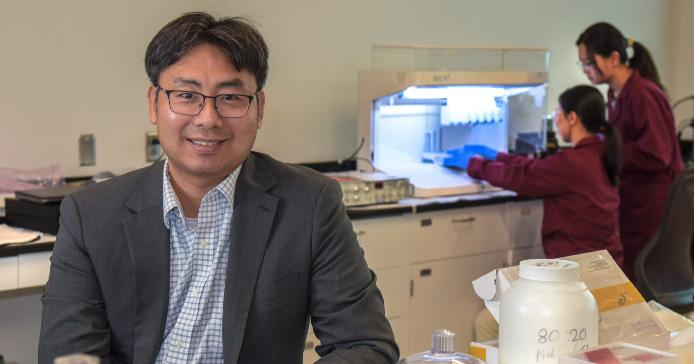
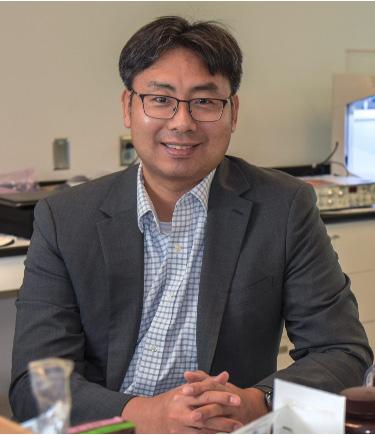
Associate professor Chenglin Wu, Ph.D., didn’t originally set out to solve this problem in the dental field. His laboratory’s work with nanomaterials began during the COVID-19 pandemic while studying the applications of MXene, an ultra-thin, metal-like inorganic compound in sensors.
“If a virus is attached on the surface of a table, it doesn’t do anything,” Wu said. “But [MXene] is so thin that anything attached to it will cause an electrical signal change on the material itself. We discovered that, and then when COVID-19 hit, we just thought, ‘Hey, we can make a sensor out of this.’”
Wu’s main collaborator on this project was Michigan State University assistant professor Shaoting Lin, Ph.D.
“We [Wu’s laboratory] were presenting our COVID-19 sensor during a conference, and then my collaborator [Lin] at the time was attending … and actually went to our presentation,” Wu said. “He really felt like we were doing solid work, not just dabbling, but really trying to put our foot in the field. And then [he] would start talking to us and thinking about ideas.”
With his background in mechanical engineering, Lin brought a fresh new perspective to the project. He helped Wu’s
team engineer the selective permeability of the sensor, filtering out unwanted molecules by their size and chemical composition.
“The goal of the hydrogel is to independently control the transport of different biomolecules,” Lin said. “Specifically, it’s going to allow the passage of the biomarker while rejecting the transport of the nontargeted biomolecules. So it enhances the sensing specificity.”
Civil engineering graduate students Jiaoli Li and Weijia Liu worked under Wu on these biosensors.Two years ago, the team realized its technology could be put to use in the field of oral health.
“[Dr. Wu and I] have a periodontal disease,” Liu said. “So why can’t we use our sensor in detecting mouth conditions? I often go to the dentist, and there’s no technique to tell whether you have a disease or any infection. … That’s how we started this project.”
The final product was a multi-layer tissue-adhesive hydrogel patch that detects tumor necrosis factor-alpha, or TNF-alpha, a key biomarker for inflammation. With the hypersensitivity of MXene, the sensor can pick up TNF-alpha at a miniscule concentration of 18.2 femtograms per milliliter. For scale, a femtogram is 1 quadrillion times smaller than a gram.
Despite this breakthrough, the team ran into a large barrier when trying to test its concept: a lack of access to live specimens. Thankfully, the Wu Lab formed a connection with the A&M Naresh K. Vashisht College of Medicine, where it tested its biosensors in the mouths of guinea pigs, who share similar oral inflammation characteristics with humans.
“We had to do in vivo animal tests, but we don’t have any experience with that,” Li said. “We are from the department of civil engineering; it can be hard for us to get connected with other professors. But luckily, we got a response from the school of medicine and Dr. Jeffrey Cirillo [Ph.D.]. He’s very kind and willing to build connections with us, and he was so generous to provide
us a lot of help with the animal tests.”
When considering the future of the dental biosensor project, Lin and Liu both pointed out that there is a large gap between the open-ended exploration of academia and the grounded reality of moving a product into the industry.The process requires many further steps like human clinical trials, manufacturing and pricing, which they
hope to tackle as the project moves forward.
“The industry has a different standard than academia,” Lin said. “They actually focus on the cost; they also care about the scalability. … It’s a long-term effort that actually requires different thought processes, trying to make all this happen. This is really a collaboration and partnership through different disciplines, different sectors.”
Cara Baxter’s mural depicts campus landmarks, scenery to make vibrant tribute to campus life in Chancellor’s Suite
By Liam Bramble Life & Arts Writer
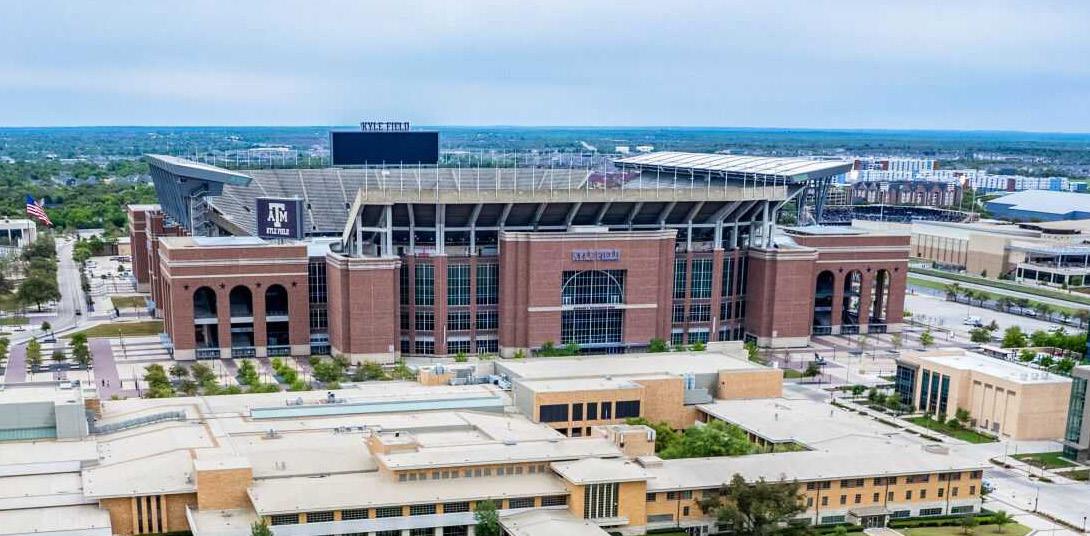
Elevator doors open to a quiet, polished space inside the Chancellor’s Suite at Kyle Field, where a vibrant landscape of the campus stretches across the wall. Framed by the branches of the Century Tree, familiar landmarks emerge in brushstrokes — a visual welcome to Aggieland has appeared.
The mural, created by Texas A&M College of Performance, Visualization & Fine Arts’ instructional assistant professor Cara Baxter, is one of the newest artistic additions to A&M. Completed just a few days before Fall 2025’s first football game, the piece blends campus identity with artistic expression, offering visitors a first impression that is both personal and distinctly Aggie.
According to Baxter, the opportunity came unexpectedly as she was preparing to begin her first semester teaching at A&M.
“It was sort of part and parcel with joining the university because my contract began in September,” Baxter said. “I was getting ready to start the new semester at my new job, getting to know my new colleagues, attending meetings. And at one of our meetings, there was just a general announcement … that there was interest
in creating a new mural at the Chancellor’s Suite, and they were looking for volunteer artists, and I volunteered.”
However, the project came with a tight deadline, as it had to be ready for the rapidly approaching football season. According to Baxter, though, that constraint became part of the appeal.
“In for a penny, in for a pound,” Baxter said. “Everything was new, everything was crazy, so I figured how much crazier could it get with the mural. And specifically, there was a pretty tight deadline.They wanted the mural to be ready for the first football game of the season. And this was in late August, so it was a really tight turnaround. And I’m a pretty speedy painter, and I like to work quickly.”
Rather than slowing the process, the limited timeline shaped how Baxter approached the work, pushing her toward a more immediate and instinctive creative process.
“I loved it,” Baxter said. “I mean, it was really fun. And I think that the tight timeline made it a challenge. You know, I wanted to deliver something really high quality in the time that they needed it.”
While considering what to include in the piece, Baxter wanted to ensure the mural would pull together recognizable elements of campus into a single composition, combining structure, symbolism and color into a unified scene.
“Essentially, it’s a stylized landscape of the university,” Baxter said. “So a few of the university landmarks are all presented together, the Academic Building, Kyle Field, Rudder Tower and framing that little
vignette is the Century Tree.”
Even though the imagery appears seamless in its final form, Baxter said the design process involved multiple concepts before settling on the final direction.
“They wanted something that was a tribute to Aggieland and a tribute to the university, which is pretty broad,” Baxter said. “So my three ideas were either the tree with the campus hallmarks, some kind of ‘Howdy’ thumbs up or something to do with the class ring.”
Once Baxter settled on her Century Tree concept, the process moved quickly from digital planning to physical execution, with efficiency playing a key role in meeting the deadline.
“I began with a digital sketch,” Baxter said. “And from there, because I didn’t have very much time to complete the mural, I used a projector to get that digital sketch set up onto the wall. And from there, I just directly painted using brushes and acrylic paint.”
Even with a more structured starting point, Baxter said the transition from digital design to paint allowed for more expression and refinement in the final piece.
“I do think that the digital imagery has a coldness to it, a lifelessness,” Baxter said. “But I wanted to make sure that this was a warm and inviting scene. So when I actually put it up on the wall, I focused on the brushwork, on the edge quality, on making it feel like you could detect a human hand.”
After days of work in the Chancellor’s Suite, Baxter stepped back to see the finished mural not just as a completed project, but as part of a transformed space.
“I was really pleased,” Baxter said. “I like the idea that it’s this warm vision of Aggieland that’s enlivening a space that could be a little bit cold otherwise.”
The location itself adds to the mural’s impact, positioned as one of the first things visitors see when entering the suite.
Beyond aesthetics, Baxter said she hopes the mural contributes to a broader recognition of the arts within A&M’s identity.
“I hope they get the sense that A&M is a home of the arts and A&M loves its arts,” Baxter said. “I like to think that it could be something they think of immediately because there are some world class, incredible artists here.”
For Baxter, the mural also represents a personal milestone — one tied closely to the beginning of her time at the university. That sense of a new era helped to shape how she views both the mural and her role at A&M, where teaching and creating exist side by side.
“I love teaching at A&M,” Baxter said. “I think Aggies make incredible students. I love my colleagues, my coworkers. I’m part of some really cool teams now.”
As visitors step into the Chancellor’s Suite, the mural stands as both a visual introduction to campus and a reflection of the people who shape it — a blend of tradition, creativity and new beginnings all captured in one piece.
“I will always associate it with arriving at this university and starting this new job,” Baxter said. “It’s just so infused with the very beginning, the start of that exciting new chapter.”

A&M looks for fifth series win in SEC play against Miss State
By Mia Riggins Sports Writer
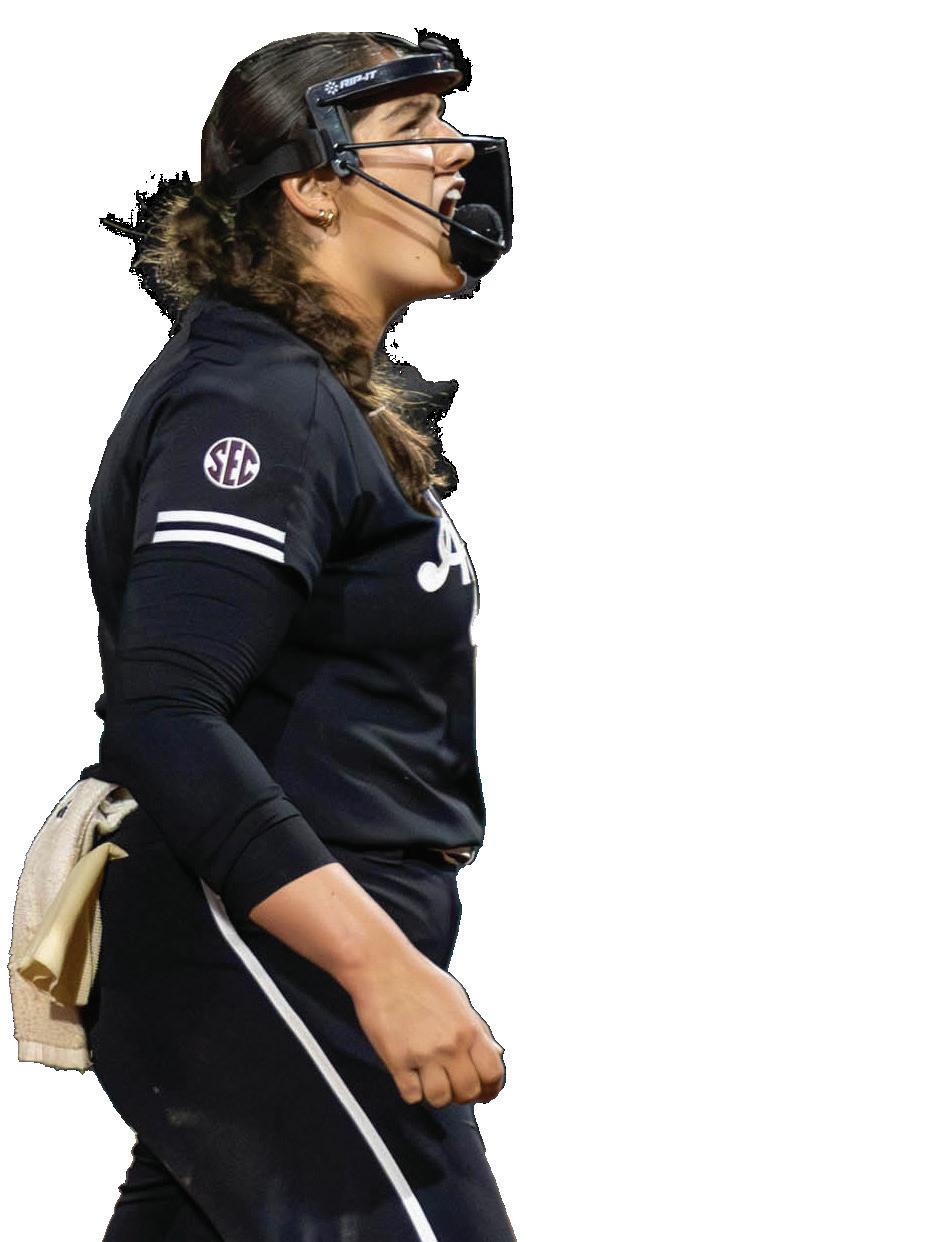
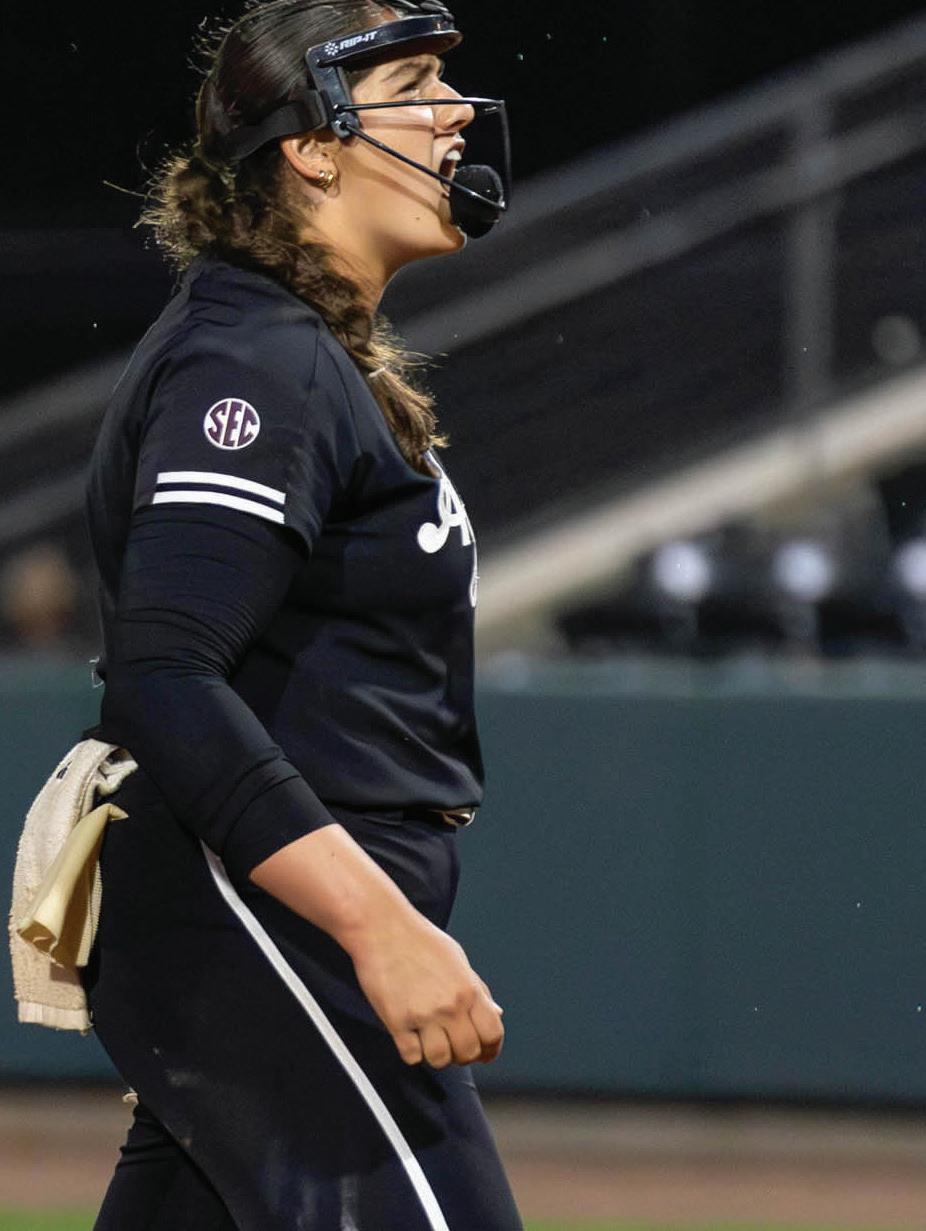
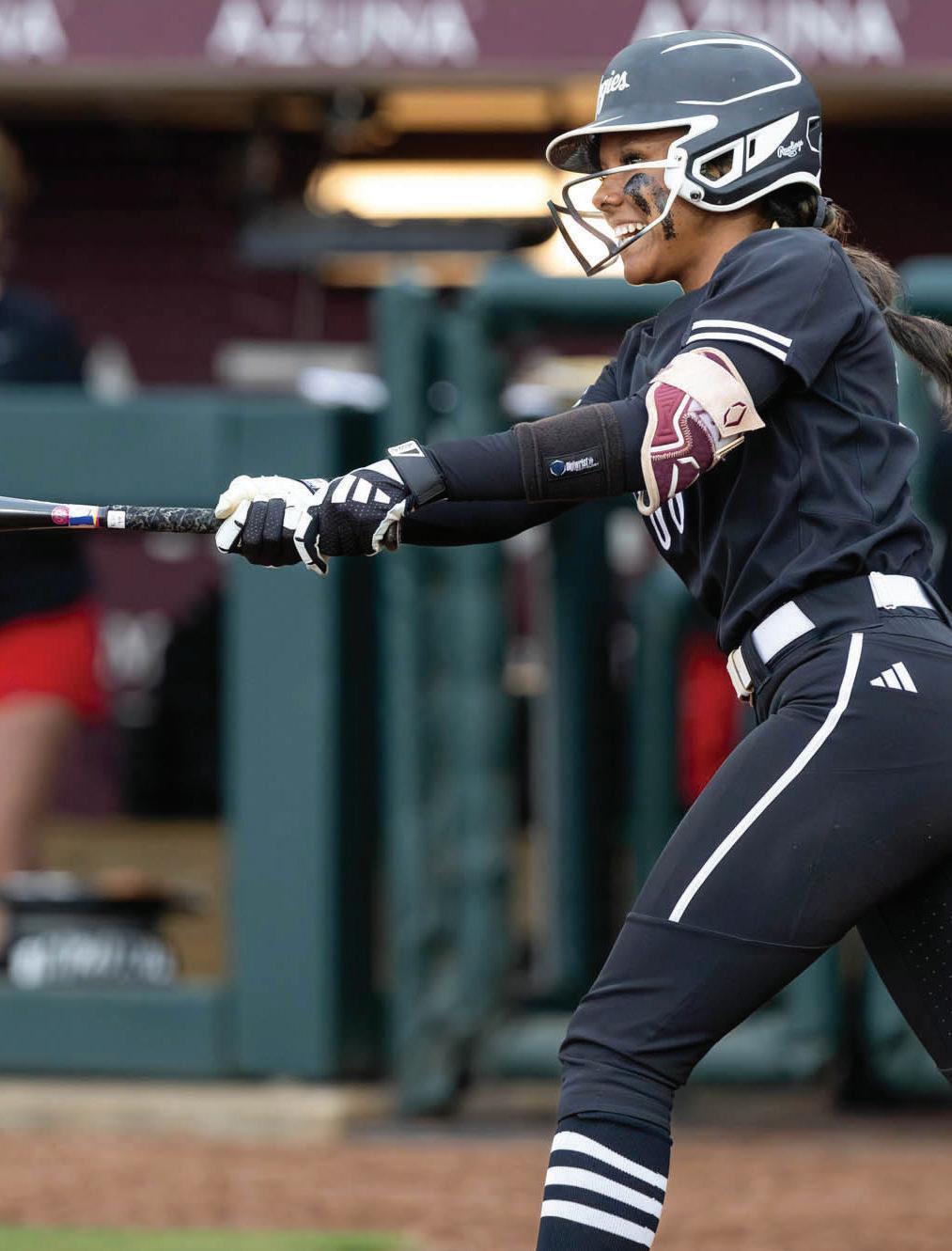
Following a series sweep over Ole Miss, No. 11 Texas A&M softball looks to ride that high as it takes on another Magnolia State opponent. A&M, who is 17-3 at home, will host No. 14 Mississippi State in front of the 12th Man at Davis Diamond for a series beginning on Friday, April 17. With its victory over the Rebels, the Aggies claimed their second series sweep of the year. A&M took Game 1, 10-6, in Oxford, Mississippi, with senior designated player Micaela Wark’s four RBIs helping to secure the win. Game 2 also ended in favor of the Aggies, 7-5, clinching the series. Game 3 was the most intense, both teams fighting tooth and nail in the final innings until A&M narrowly claimed the 10-9 win after a productive sixth inning, as Ole Miss fell short of claiming the lead in the seventh.
“Just a dogfight to be honest with you,” head coach Trisha Ford said. “In the box we battled our tails off, we did enough in the circle and just figured out a way to get a
Mississippi State also boasts an admirable 34-11 overall record with seven wins over opponents ranked at the time, while going 6-9 in conference play. The Aggies look to benefit from the Bulldogs’ struggles in league games by taking advantage of their opponent’s lackluster batting performances. Hitting is the strongest area for A&M, averaging .358 as a team prior to April 15’s game against Baylor compared to Mississippi State’s .292 for the season.
The Bulldogs will head into the weekend series following a 2-1 loss to the thenNo. 8 Arkansas Razorbacks, which dropped Mississippi State one position in the ESPN. com/USA Softball Collegiate Top 25 Poll.
The most impressive player batting for the Bulldogs is senior right fielder Kiarra Sells, a Texas native who has a .392 batting average and .817 slugging percentage. Sells, who was ranked No. 24 in Softball America’s April outfielder rankings, struggled offensively in the three-game series against Arkansas. She only scored one run throughout the series, with no hits or RBIs recorded during the weekend outing.
Senior third baseman Nadia Barbary is another Mississippi State player for A&M to keep an eye on. However, although she
boasts a .346 batting average, Barbary also struggled at the plate during the loss to Arkansas. Throughout the series she recorded two hits, one run and one RBI. To make up for their batting slump, the Bulldogs must rely on their bullpen to offset the difference.
Pitching is the greatest advantage Mississippi State has, with an outstanding combined ERA of 1.88 compared to A&M’s 3.01. The Bulldogs’ best bet at slowing the roll of the Aggie offense lies in senior right-handed pitcher Peja Goold, ranked sixth in Softball America’s April pitcher ranking with an ERA of 1.58. Nonetheless, her rubber match performance against Arkansas was not enough to pull off a win for the Bulldogs, surrendering five earned runs and nine hits. Her inconsistent results throughout the last few contests could be a vulnerability for the Maroon and White to take advantage of in the weekend series.
A&M has vulnerabilities of its own, however, struggling defensively in recent games, with underwhelming performances from junior RHP Sidne Peters and sophomore RHP Sydney Lessentine. Peters, usually a key aspect of A&M’s success, has a 2.73 ERA but has proven unreliable throughout the season. Nonetheless, she pitched heavily throughout the last series, switching off
with Lessentine and securing the win in Game 1, the save in Game 3 and pitching 8.1 total innings in the three games.
Lessentine’s performance in the series against Ole Miss was also unpredictable, as she gave up a surplus of hits in her three outings on the road. The Rebels got eight hits off of the Aggies’ ace in her 3.2 innings pitched in Game 1, and she surrendered five earned runs in Game 3.
A&M will shine offensively if it follows the lead of junior first baseman Mya Perez, who has a phenomenal .453 batting average and a .934 slugging percentage. Perez has been the not-so-secret weapon for the Aggies throughout the season, notching three hits in the three-game series in Oxford. Perez has contributed heavily to Aggie victories this season with the help of senior 3B Kennedy Powell. Powell has a .434 batting average, including four runs and seven hits in last weekend’s outing. To best the Bulldogs and secure the Aggies’ fifth series win, A&M will have to rely on its offensive standouts and present a threat to Mississippi State’s pitching.
A&M will host Mississippi State in a three-game home series at Davis Diamond, beginning on Friday, April 17, with first pitch at 7:30 p.m.

No. 10 A&M gears up for bayou battle against reeling LSU
By Dylan Fonville Sports Writer
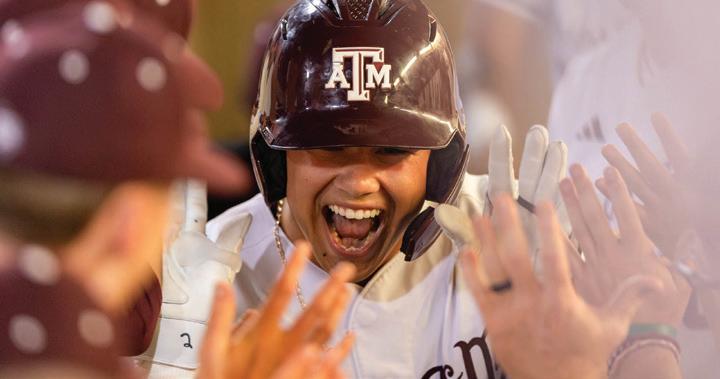
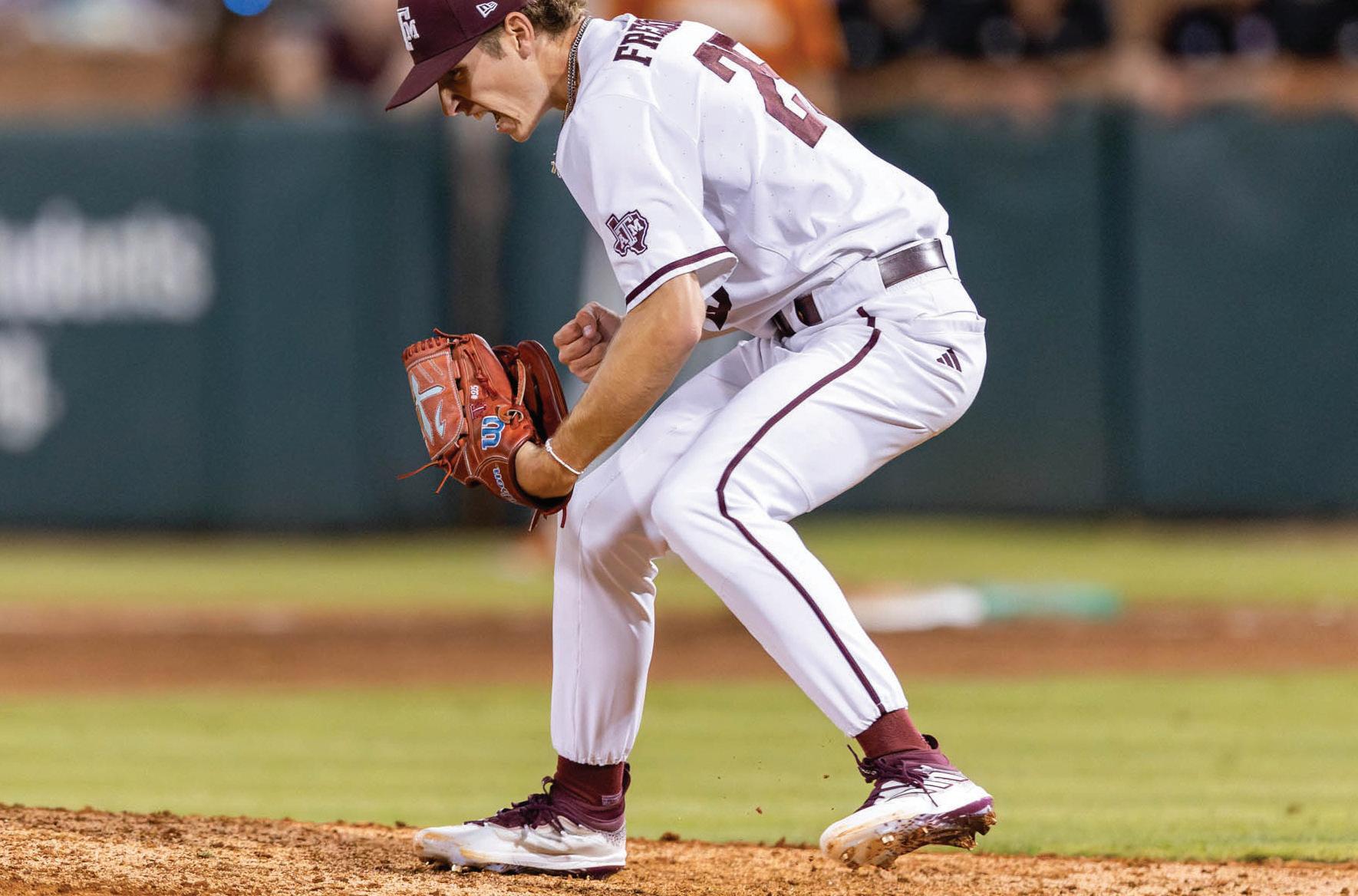
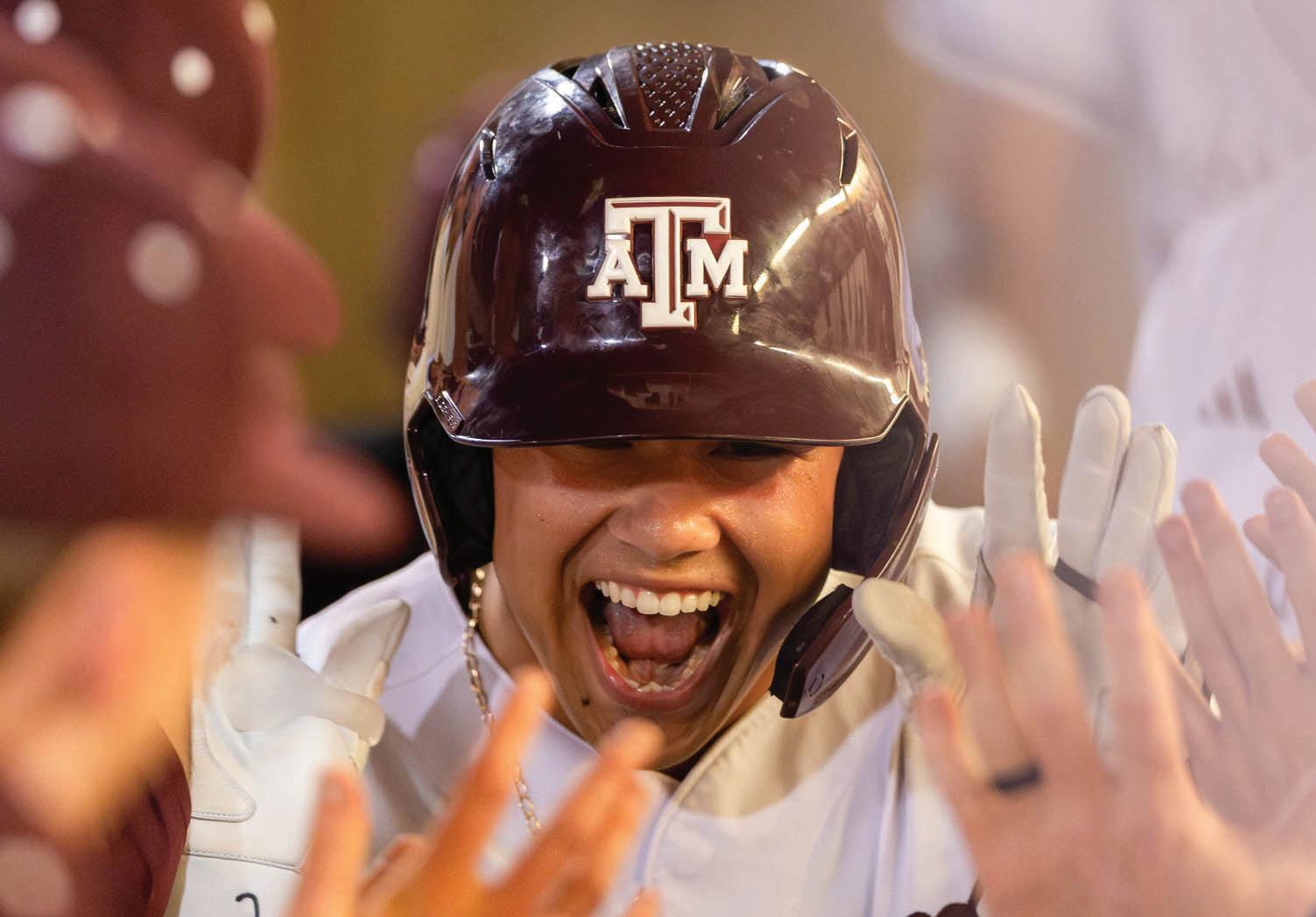
No. 10 Texas A&M baseball will take on LSU in another conference weekend showdown, just one month before the Southeastern Conference Tournament. Standing in front of the Fightin’ Farmers’ schedule is a 600-pound problem, as they leave the comfort of Olsen Field and embark on a safari to the Tigers’ den.
Returning to the globetrotter lifestyle, A&M leaves behind a triumph in the most anticipated series of the season against thenNo. 2 Texas. While it was a shortened twogame series, the Aggies outscored the Longhorns 20-12.
The Tigers just dropped out of the D1 Baseball Rankings and are now hungry for a conference win to boost their standing. When you put a bat in the hands of Perfect Game’s No. 1 rated sophomore center fielder Derek Curiel, you can expect the best of the best. The Preseason All-American has a lethal one-two combo, is quick on field and elite at bat. Though he’s had a slow season thus far, he is currently 11th in the SEC in batting average at .362, as well as tied for sixth in the SEC in hits with 54. Junior right fielder Jake Brown, is another Tiger to keep an eye on, tied for 10th nationally in total home runs at 15.
On the other side of the plate, the Tigers are less impressive but have still managed to gather conference pitching accolades this season. Sophomore right-handed pitcher Casan Evans is ranked third in strikeouts, and his teammate, sophomore RHP William Schmidt, has a 3.22 ERA,the lowest of the Tigers’ starting rotation. The pair put on an impressive showcase in the first game of the series against Oklahoma but haven’t quite been able to replicate their success.
So, how will the Aggies put down the Ti-
gers this coming series? They must compete like they’re playing Texas.
No, Texas is not the end all be all; however, beating the No. 2 team is no ordinary feat. The Fightin’ Farmers must maintain their momentum from the massive upset and apply it to this upcoming series. If they attack the Tigers with a sense of vanity, they will fall victim to a good team that is not underestimating the Aggies. On the contrary, if they play this game ready for a No. 2-ranked team and its diverse bullpen, they should pass this test with flying colors and leave the cage without a bite.
“SEC weekends, Tuesdays, we just want to play good baseball because if you play good baseball, you’ll continue to play good baseball,” head coach Michael Earley said following the Texas win.
The roster depth for A&M seems unlimited, but there are a few key players it must lean on to take on this series with the right foot forward. The sledgehammer himself, junior CF Caden Sorrell, has been undeniable and unavoidable all season long, tied for sixth across the entire league in home runs with 17. If they are able to get him productive early, he should continue his heroics.
Junior first baseman Gavin Grahovac is a vital element to the program and has earned notoriety for both his on-base production and run per game average, landing him in seventh place across the league.
In the bullpen, the pitching staff has been somewhat disappointing thus far but has been continuously showing improvement. Sophomore RHP Gavin Lyons picked up his fifth career win in the 11-4 victory against the Longhorns on April 12. In his 4.1 innings of work, he struck out five and allowed only one hit. Overall, A&M’s core depth continues to grow with every outcome and is capable of sweeping LSU if it plays its cards properly.
With the opportunity to take down another conference opponent, A&M is set to take on LSU at Alex Box Stadium, with Game 1 set for Friday, April 17, at 6 p.m.
Aggie AD Trev Alberts expects Lionel Messi to be ‘a part of’ Argentina-Honduras match
By Ian Curtis Senior Enterprise Reporter
Texas A&M Director of Athletics Trev Alberts had some things surprise him the first time Kyle Field hosted international soccer — a friendly between Brazil and Mexico — in June 2024.
Namely, a sea of pop-up vendors.
“Fans of different sports have different traditions and act differently,” Alberts said. “And so, you know, we had several just popup vendors all across [campus] … nothing necessarily wrong with that, other than that it was new.We were like, ‘What is that? How do we address that?’ I think that was part of the learning process for our campus.”
In today’s world of college athletics, one that is now dominated by revenue sharing and NIL budgets, revenue generation has quickly become the name of the game. A&M and Alberts have responded by utilizing Kyle Field to host major events outside of Aggie football — the Brazil-Mexico match that drew 85,249 fans, a George Strait concert in 2024 and an upcoming Savannah Bananas baseball game on Saturday, May 2.
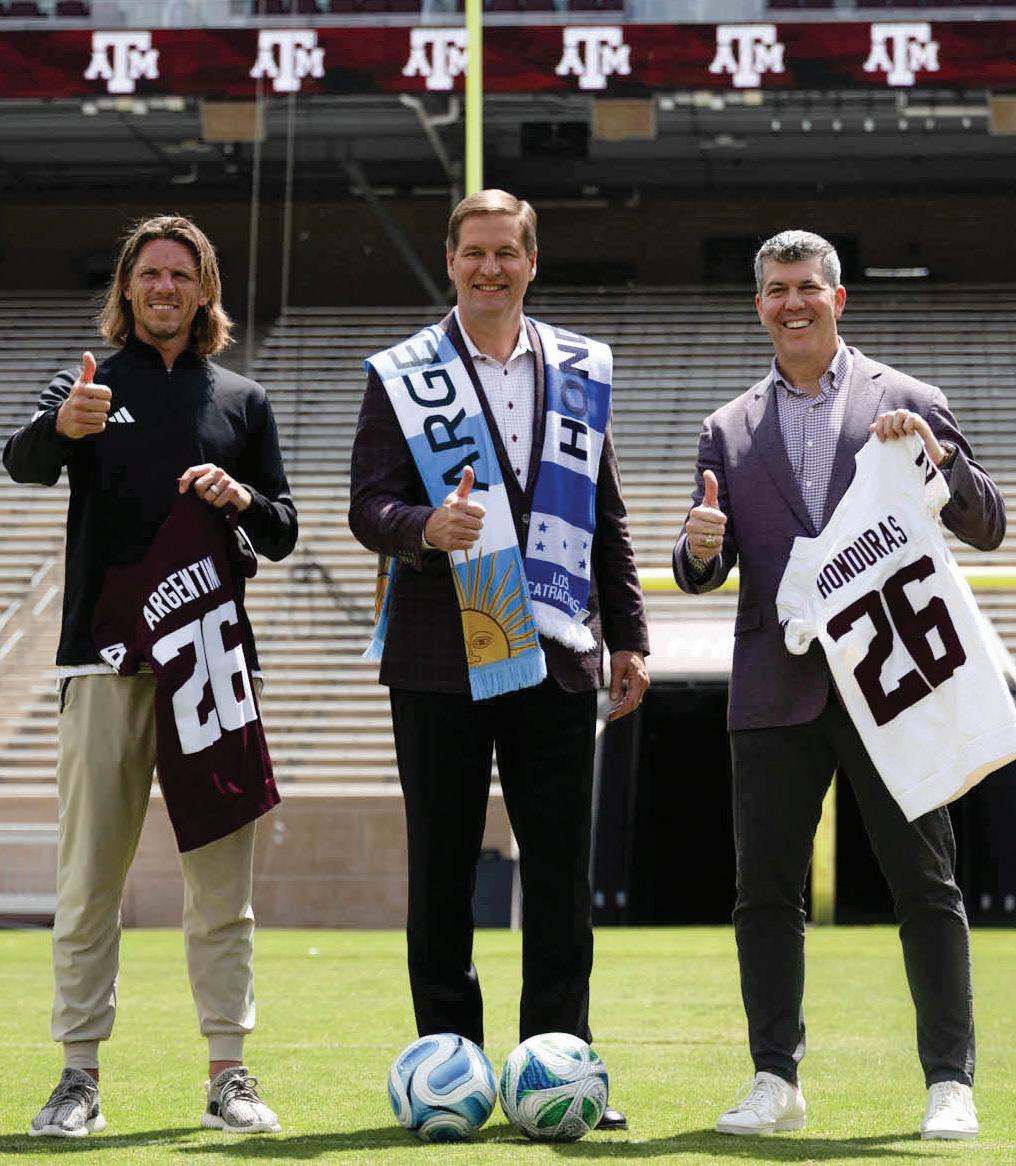
That streak is set to continue as, for just the second time in its history, Kyle Field will host Honduras and defending FIFA World Cup champion Argentina in an international friendly ahead of this year’s World Cup on Saturday, June 6.
The earlier friendly provided proof-ofconcept to the university that this was an effective revenue generator and bolstered the use of the A&M brand in this new era, Alberts said, with the Brazil-Mexico match garnering the athletic department $2.6 million.
“Essentially, we reallocated operating revenues in college athletics, right, that are directly benefiting student athletes,” Alberts said. “So how you refill those and how you look for unique opportunities to rethink those are important. … We feel confident that this is going to be a revenue generator for the department and benefit the department, and then there’s going to be a lot of qualitative things that are going to be difficult to measure, but I think are also going to advance and help.”
For Alberts, the upcoming friendly rep-
resents not only a chance to generate further revenue for the athletic department, but a chance to grow A&M’s brand on a global scale. He pointed out that the prior Mexico-Brazil match was broadcasted in 80 countries.
“I think one of the most successful things you can do is if everybody’s confused and doesn’t know what they’re doing, that’s a great sign,” Alberts said. “Because that means most or all of these people have never been to Kyle Field before, and that’s really what we’re trying to do is grow our brand. We want to have people who, perhaps had never been to a football game before, who come to Kyle Field, have a blast, and then say, ‘I need to try to come to one of those football games, too.’”
The match will be a part of Road to 26, a series of friendlies which will also feature a matchup between Argentina and Iceland at Auburn’s Jordan-Hare Stadium. Headlining both matches is a possibility of eighttime Ballon d’Or winner Lionel Messi as he looks to the pitch for Argentina.
Alberts said that although the 38-yearold legend has yet to make an official decision on playing in this year’s World Cup, he expects Argentina’s most-capped player and all-time leading goalscorer to play a role in the match at Kyle Field in some form or fashion. Argentina starts its group stage matches in Kansas City 10 days after the Honduras match.
“I don’t want to make any promises, but we do anticipate him being a part of it,” Alberts said. “I’m not sure exactly what the extent of what that looks like, but yes, we do anticipate him being a part of [the match].”
College Station Mayor John Nichols was present at the press conference, officially announcing details of the match.
Nichols recalled the early days of when soccer was first introduced to College Station — “Not one parent knew anything about coaching a soccer team” — before commenting on the economic impact that he expects the match will have on the city and local businesses.
“That is really critical, to have three or four more events beyond the football season, to help harvest the investment that the private sector has made here in hotel rooms,” Nichols said. “We support a lot of that development in many different ways, but those business people in the community count on these big weekends to help them make the bottom line and return real energy and economic value to the employees

and the citizens of the city as well.”
ESPN’s Fernando Palomo ‘95 has seen quite a bit of soccer in his time. As one of the network’s leading Spanish-language play-by-play broadcasters, he’s had the opportunity to cover the sport’s biggest stars on a variety of stages.
But few things compare to the chance of seeing the world’s biggest star at home in Aggieland, he said at a press conference announcing the match.
Palomo compared the potential of Messi taking the field at Kyle to a visit Muhammad Ali made to Aggieland in 1979, just before his final bout two years later. But, according to Palomo, Messi is still a step above the plethora of college athletes who have come to Aggieland and went on to have successful professional careers.
“Just a chance to know that he might be able to come with his national team to this place, just gives me goosebumps,” Palomo said. “I’m just beyond excited to be able to say that I might have a chance to call a soccer game in Kyle Field with the defending World Cup champions in town.”
Palomo believes the match will be a memory that both Aggies and fans of the sport and the nations involved will never forget.
“What we’re about to see, [is] not only a game but a spectacle,” Palomo said. “Something that we get to enjoy, not just for a day, but for a whole week, something that we get to talk about for not just a week but a whole lifetime. Because I think this is what we’re getting. We’re getting a defending World Cup champion to come our way.”

BCS Outlaws offer community for visually impaired athletes
By Trey Bohne Sports Writer
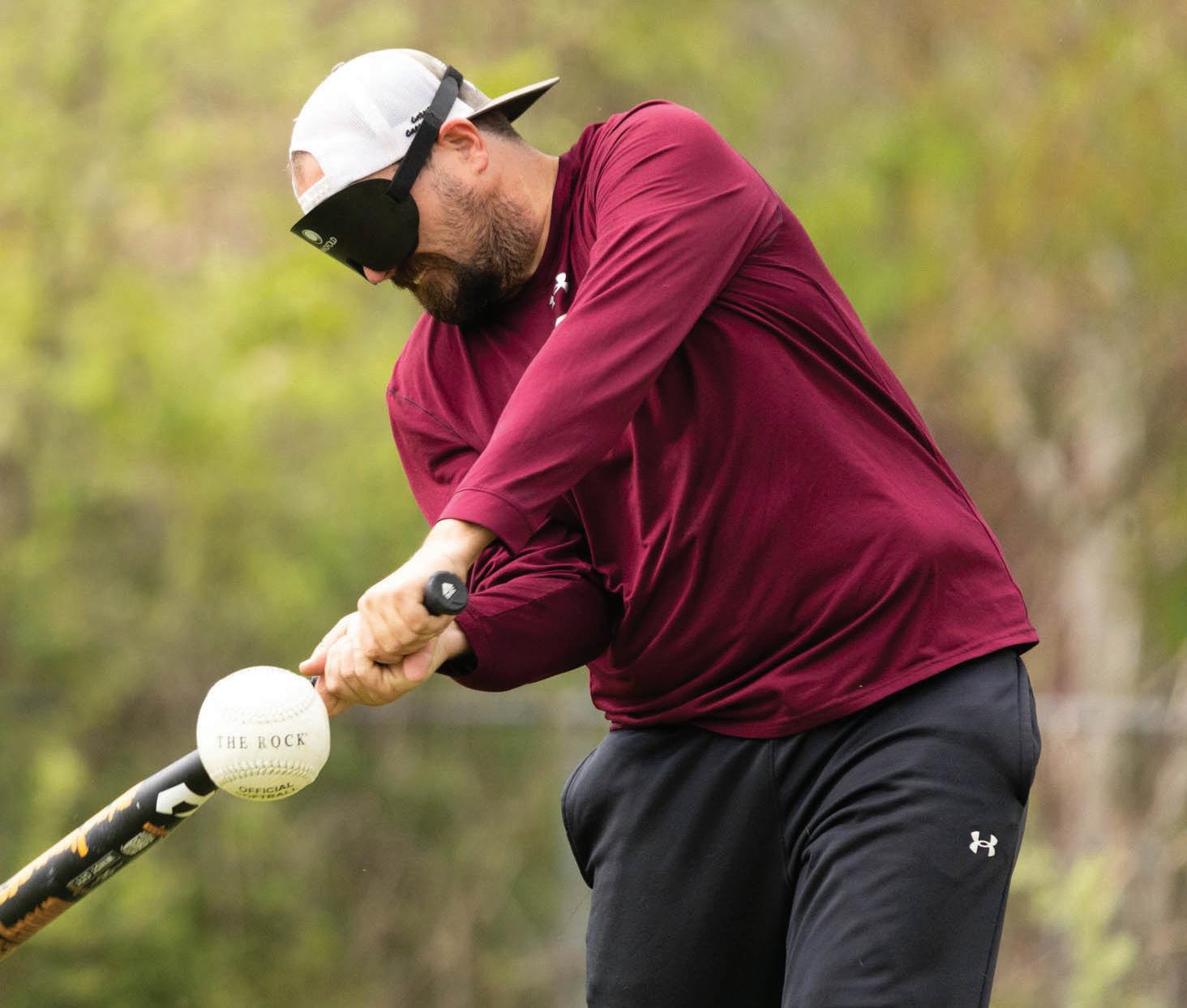
The ball starts to beep the moment it leaves the bat. Sharp, urgent voices echo across the field, but political science sophomore Alex Quick is already moving. He doesn’t see the base, the field or the players converging toward the same strip of grass. All he has is sound — the shouts of the outfield, a buzz down the baseline and the split-second instinct to trust it.
“You’re going up there completely blindfolded,” Quick said. “It’s totally based on cadence. It’s completely mental.”
There’s no time to think, only react. For the BCS Outlaws, moments like these define everything. As one of the top beep baseball — an adaptive sport for visually impaired athletes — teams in Texas, the Outlaws have made multiple runs at the National Beep Baseball Association’s World Series. Aside from wins and losses, the game they play is built on something much deeper: a community that extends far beyond the field.
At the plate, the chaos never settles.
Quick steps into the batter’s box with no visual reference point, the catcher places his bat against the plate for an idea of where
he’s standing, allowing the pitcher to begin his cadence. Next comes the hardest part of the at-bat: processing everything at once.
“You’re completely in the dark,” Quick said. “You hit the ball, and one of the bases goes off, it’s either first or third base. It’s completely random. Having the presence of mind to hit the ball, get off the base quickly and go in the right direction, it’s pretty challenging.”
As Quick takes off into the outfield, the game’s environment doesn’t make his process any easier.
“There’s a ton of different factors,” Quick said. “Rain, wind … planes, a lawn mower, people shouting on another field. It’s very mentally challenging.”
If he misses a single pitch, doubt starts to creep in. For a game where sight is removed, control is never complete.The Outlaws rely on their trust in each other to lead them to victory.
“If you miss the first ball, it kind of gets in your head,” Quick said. “‘Am I doing something wrong? Is the pitcher doing something wrong?’”
This internal voice has helped Quick navigate the chaos and develop into a key player on the Outlaws’ roster.
“The first year that I played, everyone knew me by my last name,” Quick said. “I was quick down the baseline, so it fit pretty well.”
When Quick first joined the team, his
role was limited. But as the team shrank, his opportunities grew.
“They’d throw me in the last couple of innings or put me in the back left where I wouldn’t really have a big impact,” Quick said. “I started playing more pivotal roles and taking more of a leadership position, trying to get fundraisers, reaching out to the media, stuff like that.”
With more responsibility came more confidence and better performances. The game that once felt chaotic began to make sense.
“About two years ago, things started to click,” Quick said. “My batting average went from .200-.300 to now consistently between .500-.800.”
Before beep baseball, sports were something that Quick said he had an interest in but couldn’t fully access. With his impaired vision limiting his ability to safely participate, the risk was hard to ignore.
“Sports were interesting to me but became more frustrating,” Quick said. “If a line drive hits me in the head, I can’t do anything to stop it. It was definitely frustrating to say the least.”
Quick shifted to other competitive outlets, like track and field, weightlifting and speech and debate, but something was missing.
At a leadership camp, he was introduced to beep baseball, and, within a month, he was regularly commuting from Dallas to
College Station to practice with the team.
“They had us put on blindfolds and try it,” Quick said. “They jokingly asked if I was blind, and I was like, ‘Yeah, I am!’ About a month later, I went to the World Series with them, and I haven’t left since.” On the field, success depends on more than individual athletic ability. To accommodate varying degrees of blindness, every player is blindfolded. Multiple defenders often converge on the same ball, making collisions a constant risk.
“Beep baseball is 50% communication,” Quick said. “There are three to five people trying to get the ball sometimes. You have to call people off, say ‘I got it,’ and trust that they heard you. It’s a lot of trust in the team to say the least.”
While playing in the Outlaws’ most recent tournament, that trust was put to the test.
A hard hit ball ricocheted unpredictably off a teammate’s hands, forcing Quick to adjust mid-play.
With only a shouted zone number and the sound of a ball to guide him, he tracked it down at an unusual angle and secured the out.

Where does your favorite A&M signal caller fall on the list?
By Matthew Seaver Sports Editor
Since joining the Southeastern Confer ence in 2012, Texas A&M football has had 15 different players start under center for the Maroon and White.This list of quar terbacks ranges from campus legends to forgettable field generals, all of whom have at one point felt the weight of the 12th Man on their shoulders.
Ranking these Aggie quarterbacks not only requires an abundance of experience watching A&M football, but also a keen eye for measuring the levels of aura on the gridiron. With that being said, I have built a compre hensive — and flawless — list ranking each QB since joining the SEC. Because it just means more.
15. Matt Joeckel


There had to be a last place on this list, and unfortunately for Matt Joeckel, that’s exactly where he belongs. His lone career start came as more of a circumstance after reigning Heisman Trophy winner John ny Manziel was suspended for the first half of A&M’s season opener against Rice. Joeckel never started another collegiate game, and he’s now an attorney.
14. Jake Hubenak
Down the road in Bren ham, Jake Hubenak lit things up for the Blinn Buccaneers in 2014 before serving as a sea soned backup in College Station. His first start was a loss in the 2015 Music City Bowl, fol lowed by two more starts in 2016. While the only reason he ever started was due to injuries, it’s still more than just a half.
13. Jaylen Henderson
2023. With no starting spot for the Aggies in sight, he left for Chapel Hill, North Carolina, and took Jake with him.
8. Nick Starkel
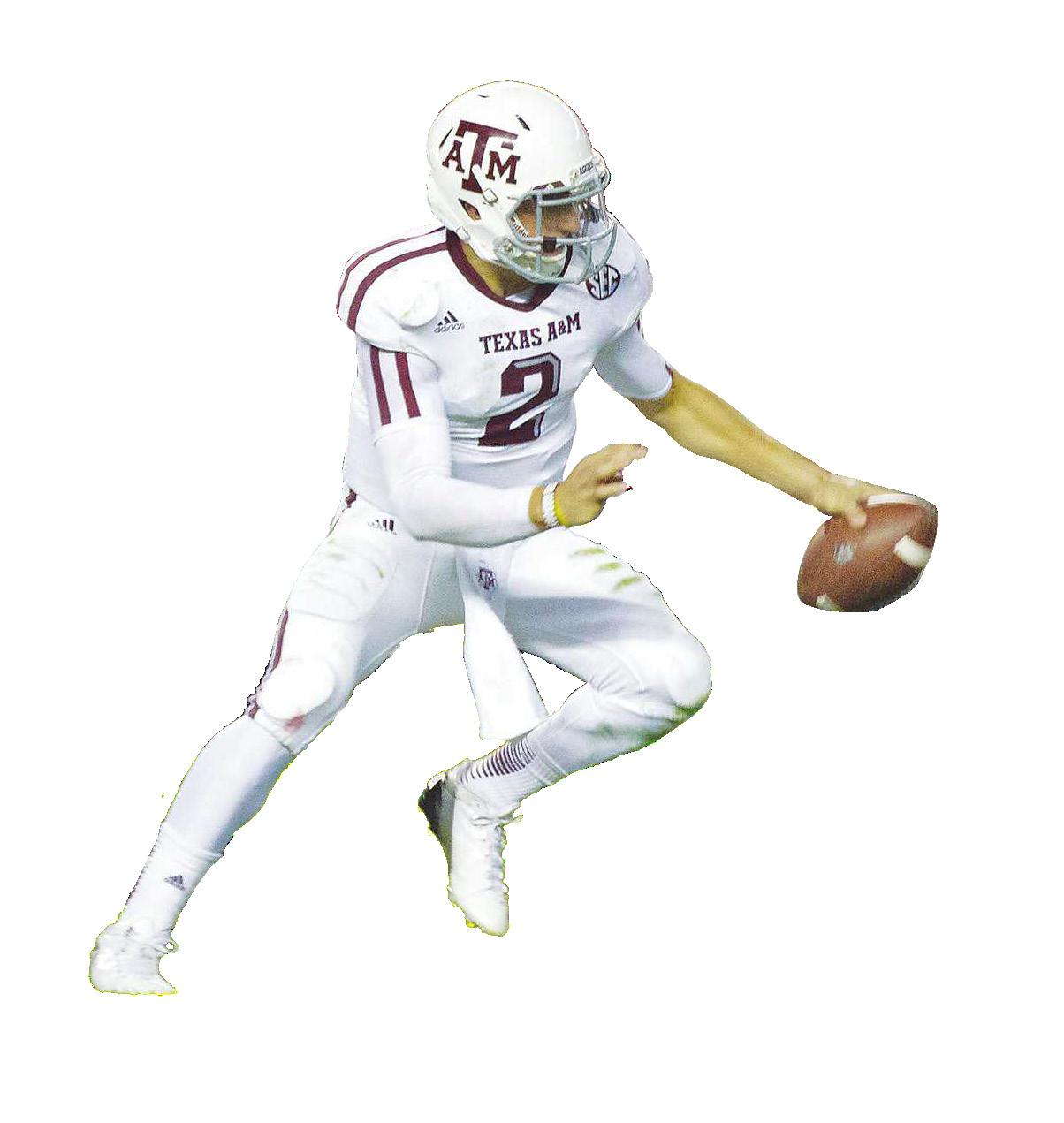
Did Nick Starkel start a ton of games at A&M? No. Did he flash statistically when given the chance to see the field? Also no. Did he lead the Aggies to any monumental tone-shifting wins? Still no! But what he lacked in skill, Starkel more than made up for in swagger, as the legend of the Justin Bieber T-shirt will live on forever. He also went up 41-10 against UCLA in 2017 before exiting due to injury. How did that
7. Kenny Hill


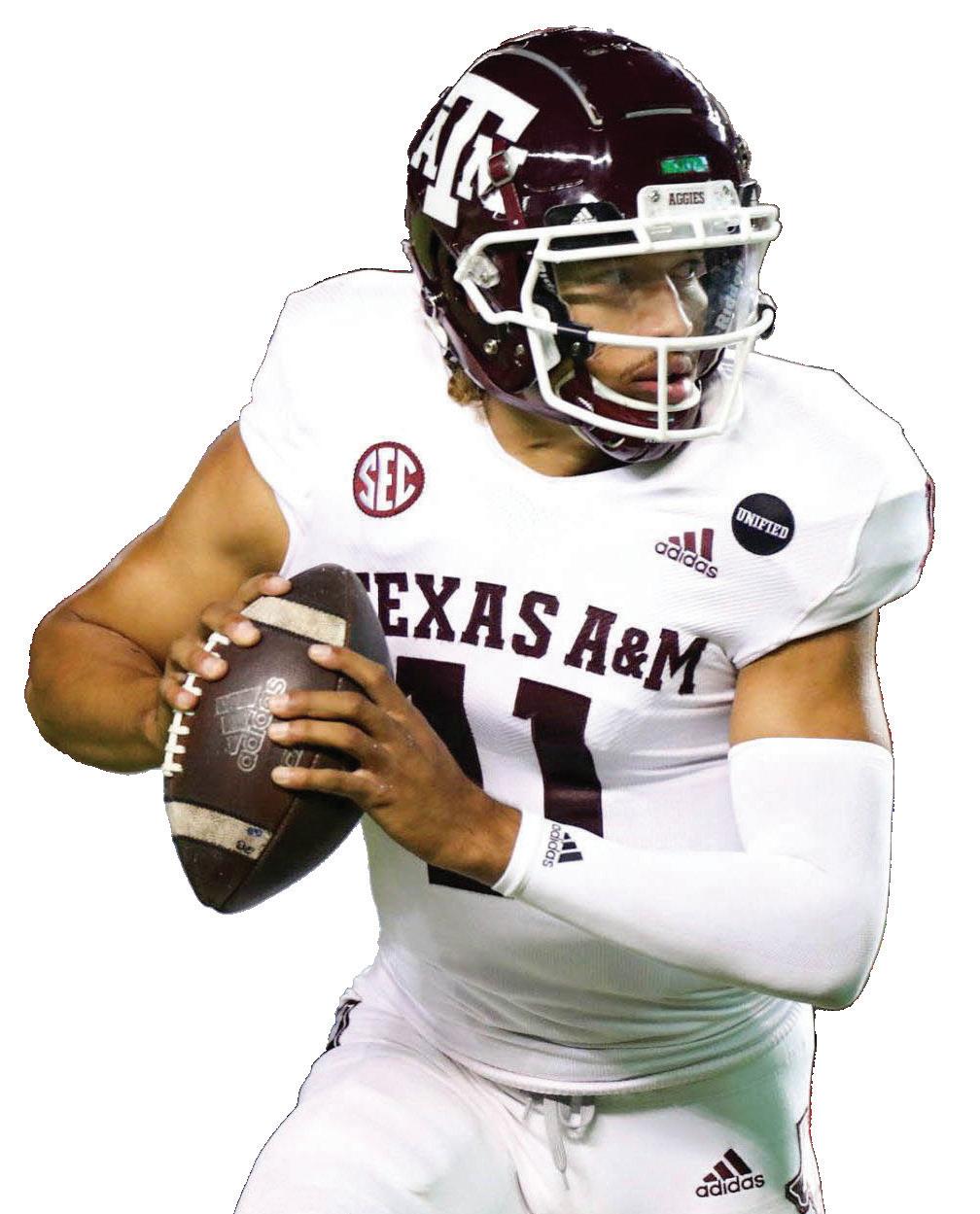
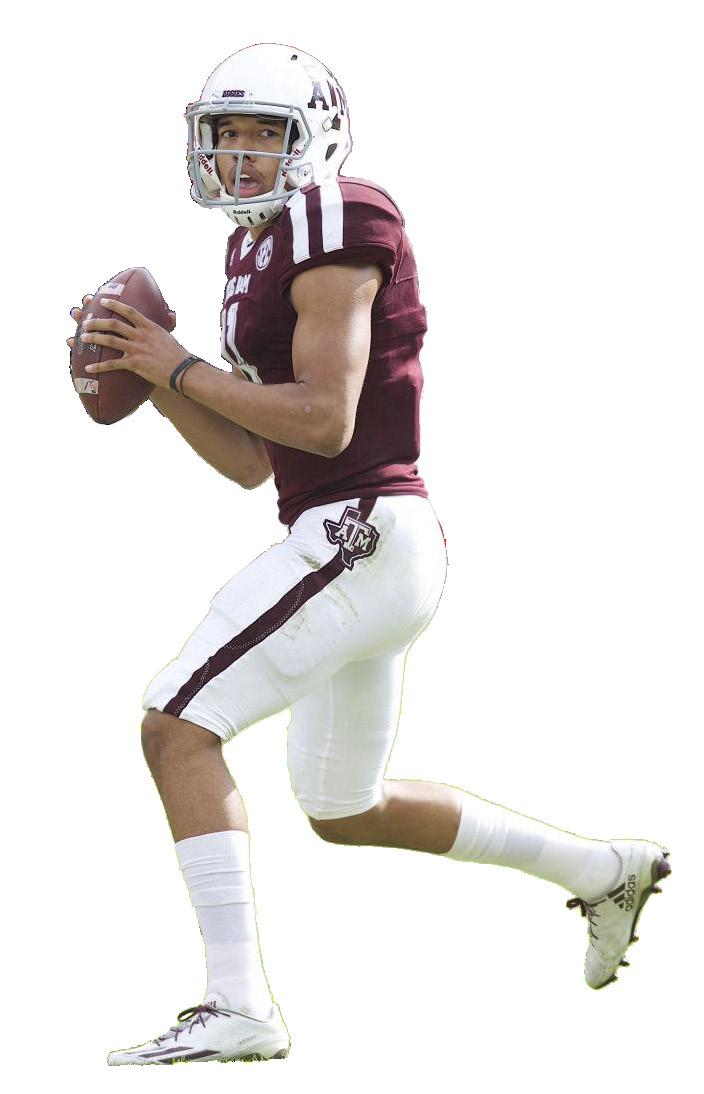
After transferring to A&M in 2023, Jaylen Henderson sat firmly at third on the depth chart. However, after injuries to both the starter and backup, Hen derson was suddenly slingshotted into the spotlight. His first career start against Mississippi State went extremely well, un like then-head coach Jimbo Fisher’s perfor mance, who was fired less than 24 hours af ter demolishing the Bulldogs. Henderson’s Aggie career ended after suffering a horrific arm injury on the first play of the 2023 Tex as Bowl.
12. Kyler Murray
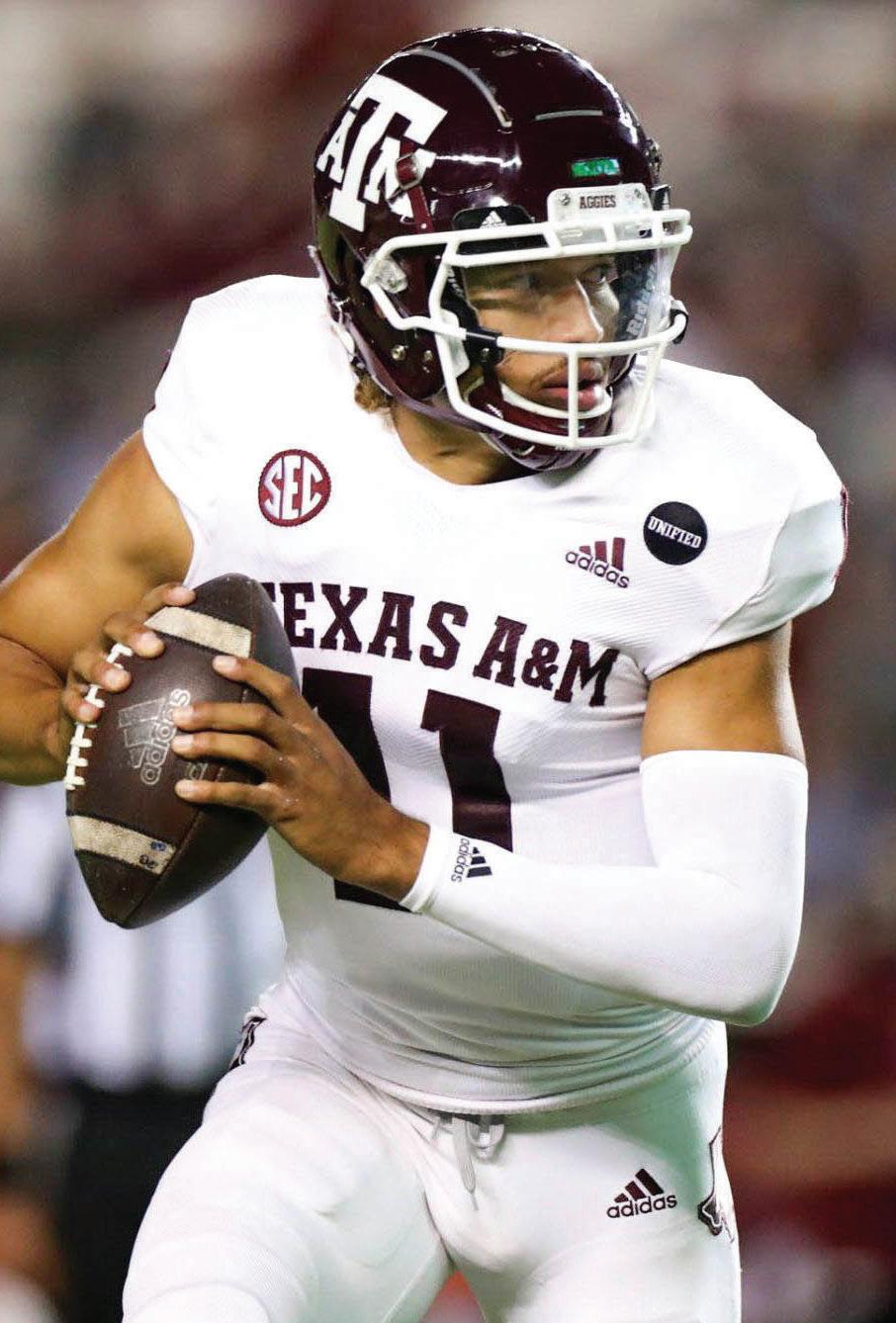
In his first game starting under center for A&M, Kenny Hill made the 12th Man forget all about Johnny Manziel after he tossed for a program-record 511 yards, including three touchdowns in a blowout against South Carolina. His aura was off the charts following this historic performance, even earning him the nickname “Kenny Trill.” The vibes were simply immaculate with Hill at the helm — too bad it only lasted eight games.
6. Zach Calzada
When the previously mentioned Haynes King went down with an injury in Week 2 of 2021, the Maroon and White relied on one man to steer the ship for the remainder of the season: Zach Calzada. While he was an inconsistent game manager, the magnitude of A&M’s upset win over then-No. 1 Alabama at Kyle Field is enough to shoot him up this rather disappointing list. He’s also an elite bar trivia answer.
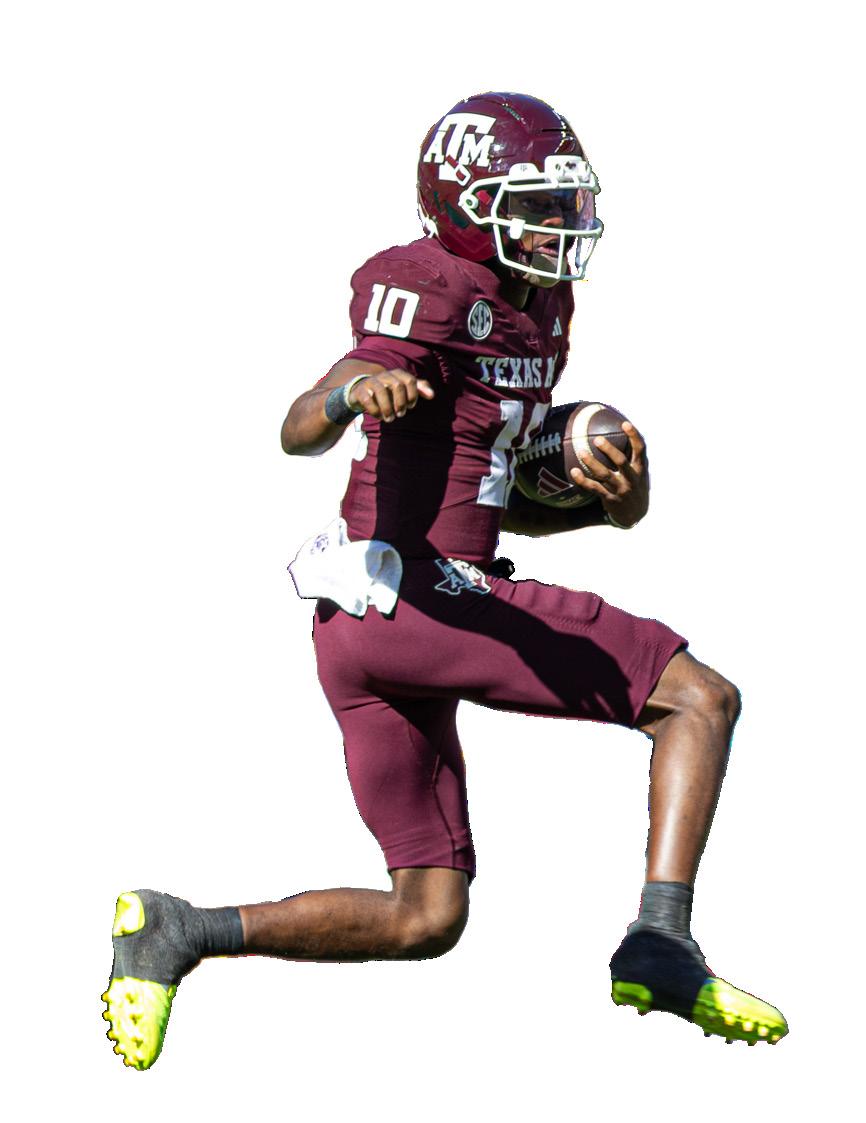
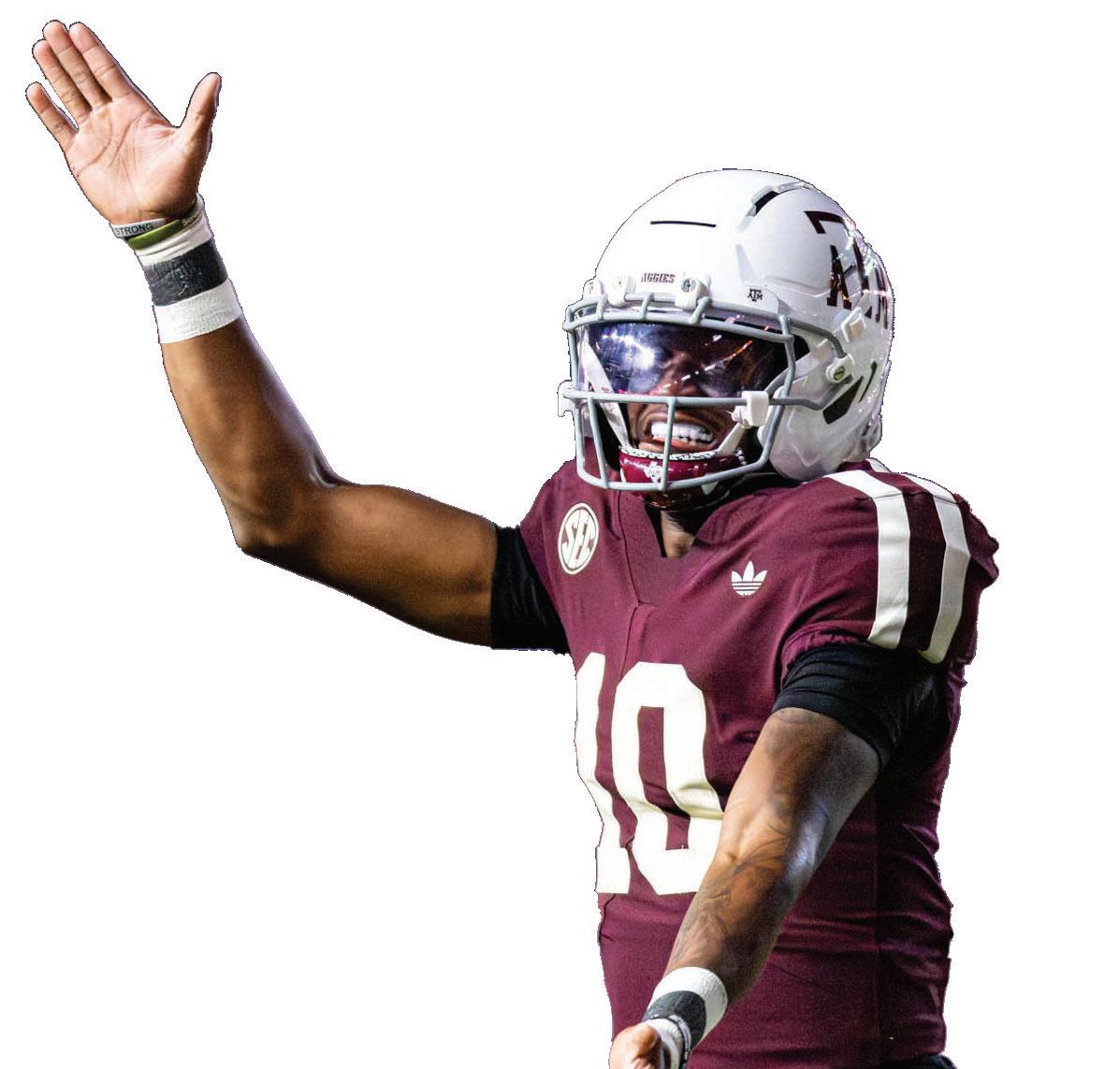
5. Conner Weigman
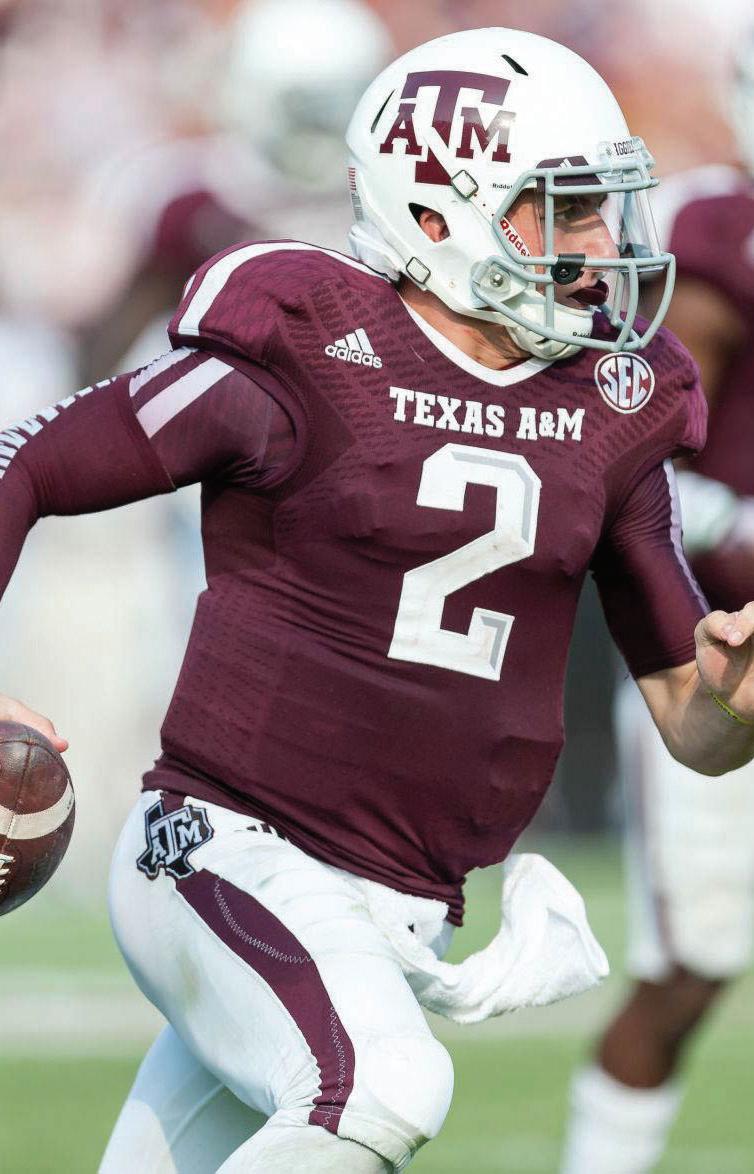
Yes, it is hilarious to rank the most accomplished Texas high school football player of all time this low, but Murray just never accomplished anything of worth at A&M. Before winning a Heisman Trophy in Norman, Oklahoma, he played a part in the most confusing QB battle of all time against Kyle Allen. Murray only started three games for A&M, including a horrific noon kickoff in blackout uniforms — woof.
11. Kyle Allen
The No. 1 QB recruit in the coun try, Kyle Allen was supposed to be the messiah of Aggie foot ball following the departure of Johnny Manziel. He replaced a struggling Kenny Hill in 2014 and eventually upset then-No. 3 Auburn at Jordan-Hare Stadi um. Unfortunately, that was the peak for Allen’s career at A&M. As previously mentioned, he was benched for Murray due to inconsistent play, later transferring to Houston, where he did nothing of significance.
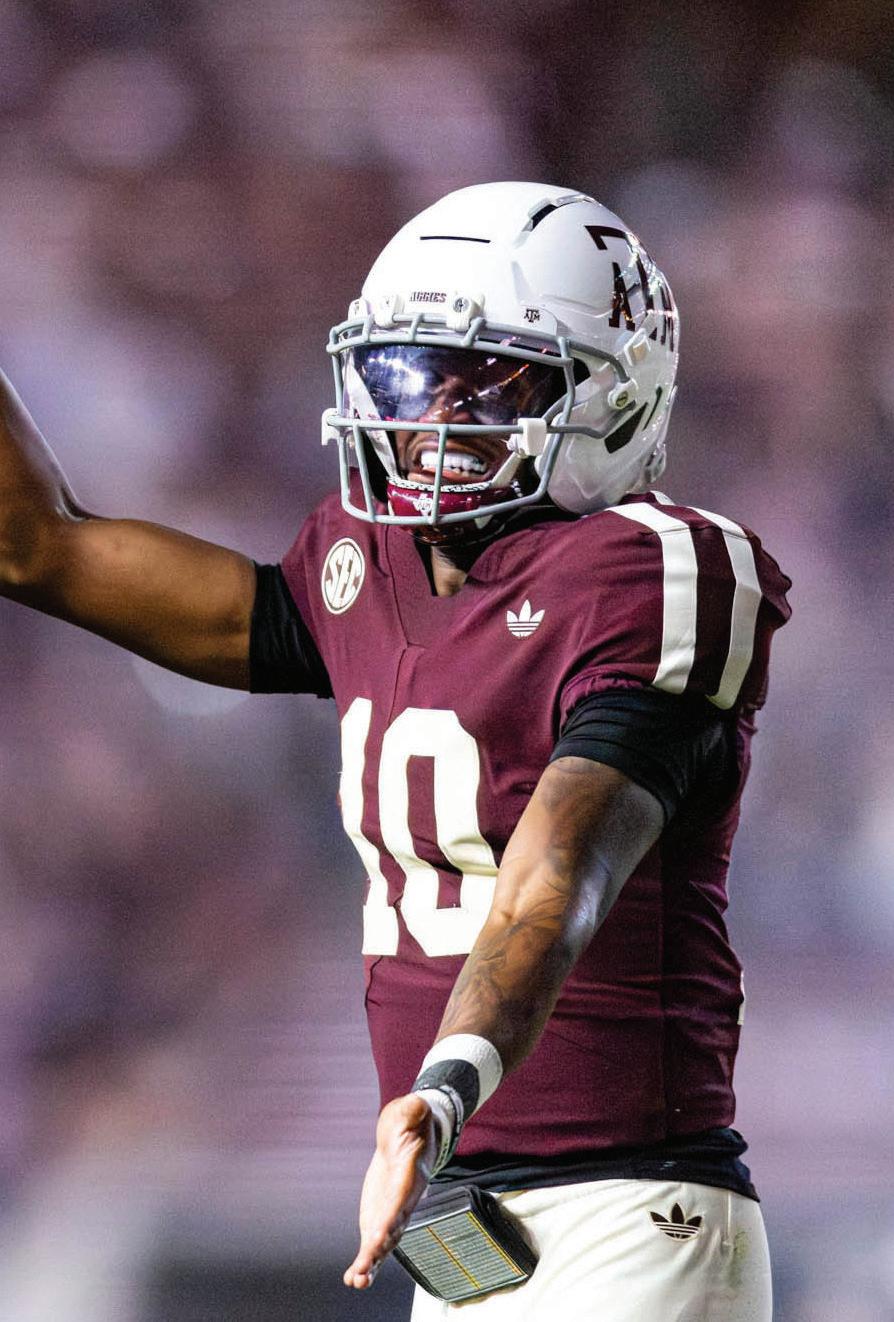
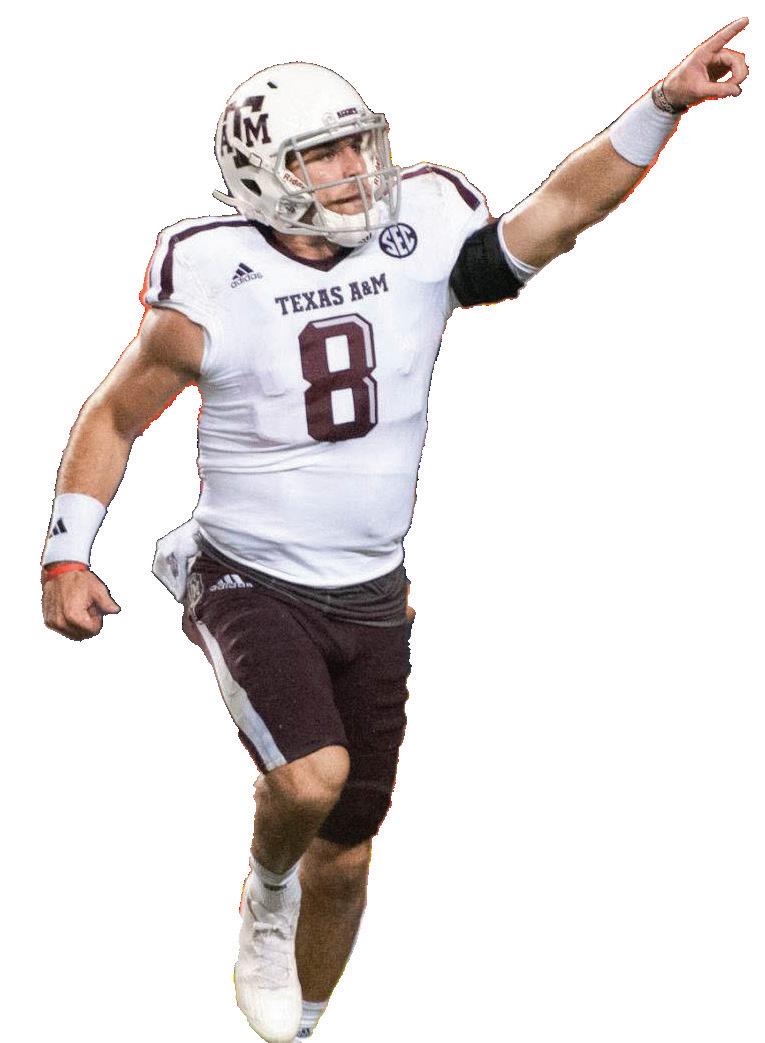

10. Haynes King
The Longview native was supposed to take A&M to the promised land after wait ing his turn behind Kellen Mond. Yet de spite all the hype, Haynes King never lived up to his hefty expectations. Injuries trou bled him his entire time at A&M, such that he started just five games, including an em barrassing Michigan-esque loss to Appala chian State.
9. Max Johnson
After two seasons with LSU, Max Johnson joined forces with his brother, tight end recruit Jake Johnson, in Ag gieland. The southpaw gunslinger spent two seasons with A&M, providing adequate services for a disappointing Haynes King in 2022 and injured Conner Weigman in
A member of A&M’s legendary 2022 signing class, Weigman might go down as the biggest “what if?” in recent history for the 12th Man. He won 8 of 13 starts — excluding his benching against LSU — with a refreshing sense of accuracy and mobility. But just like his predecessors, Weigman couldn’t escape injury, eventually allowing the knocks to affect his confidence, which culminated in him being benched for Marcel Reed.
4. Trevor Knight
In his final year of eligibility, Trevor Knight traded his Sooner crimson for Aggie maroon, and things looked up the second Knight stepped on campus. He led A&M to No. 7 in the AP Top 25, a 7-1 record and three ranked wins before suffering a shoulder injury against Mississippi State. The Aggies’ season mirrored Knight’s shoulder, collapsing into an 8-5 finish. He was an athletic improviser who could’ve taken A&M to unknown bounds if given the chance.
3. Marcel Reed
Though his time atop the A&M offense is nowhere near over, Reed has managed to do what his predecessors never could: reach the postseason. Although he suffered from inconsistencies down the stretch in 2025, Reed’s dual-threat ability gives him an incredibly high ceiling. If Reed wants to climb any higher on this list he’ll need to make a program-defining mark sooner rather than later.

2. Kellen Mond
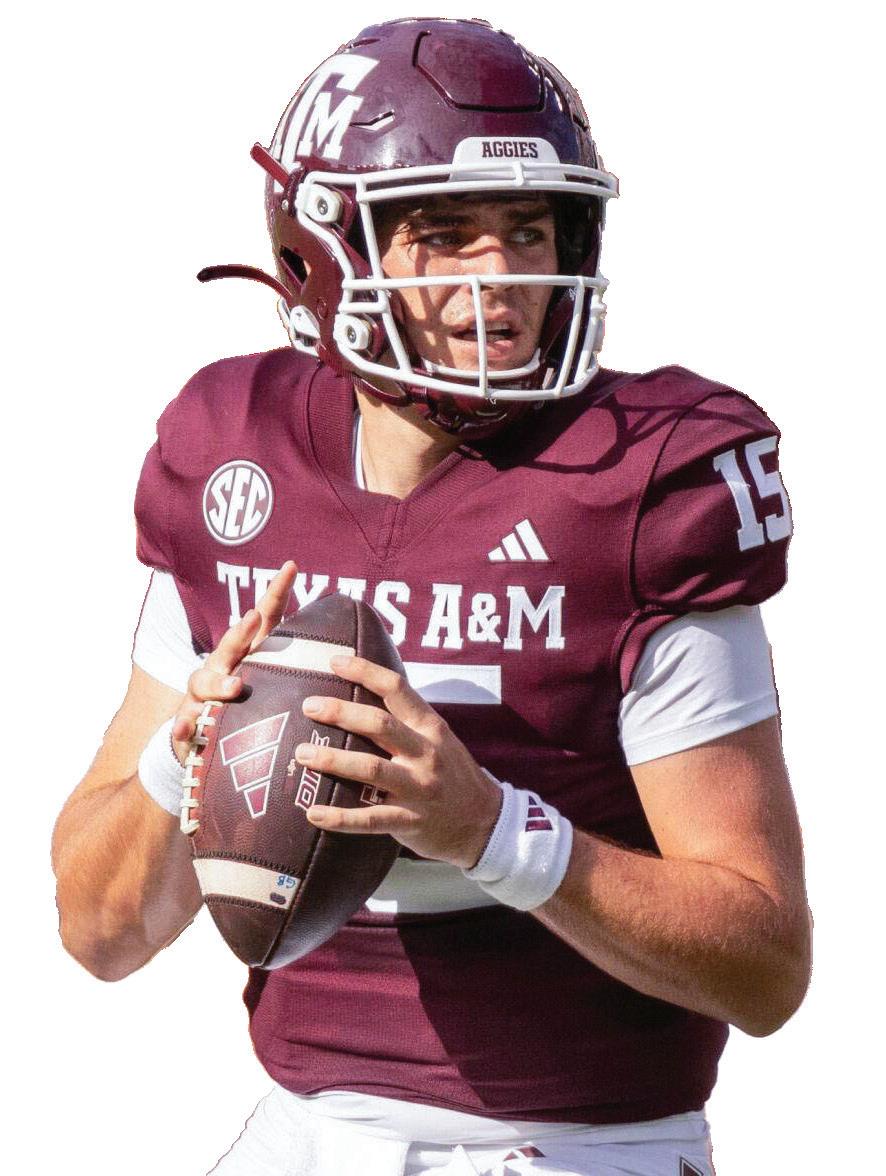
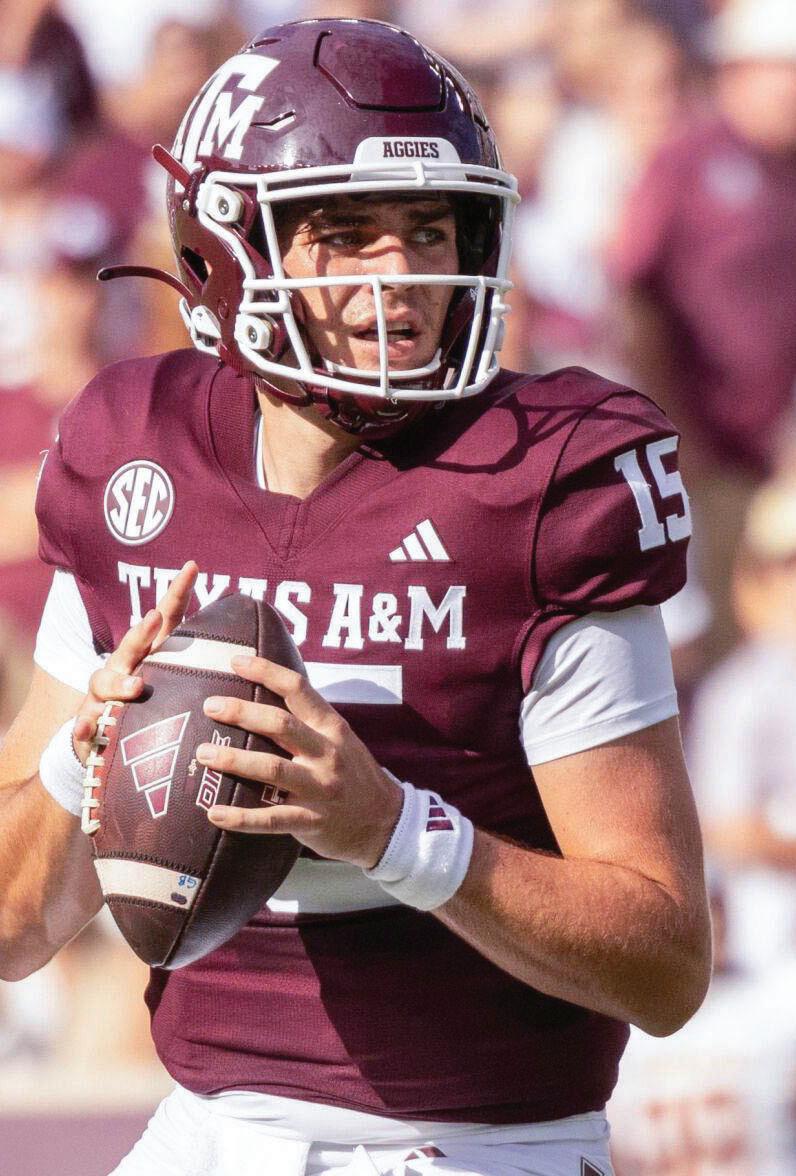
The four-year starter never put up eye-popping statistics for the Aggies, but what Kellen Mond lacked in elite-level play, he made up for in consistency. Mond managed to set the career passing yards and passing touchdowns record during his time with the Maroon and White. He also led A&M to a seven-overtime victory over LSU in 2018 and nearly got the Aggies into a then-four team College Football Playoff two seasons later.
1. Johnny Manziel
Perhaps the most obvious choice on this list — sans for people aware of who Matt Joeckel is. What hasn’t already been said about Johnny Manziel? The 2012 Heisman Trophy winner, podcaster and former bar owner would have a statue outside Kyle Field if it weren’t for his offfield antics. Then again, what could possibly be cooler than being the king of Northgate while also tearing apart defenses? It doesn’t get any better than “Johnny Football.”



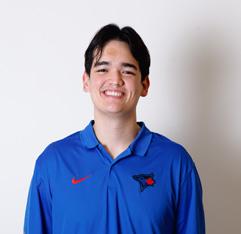





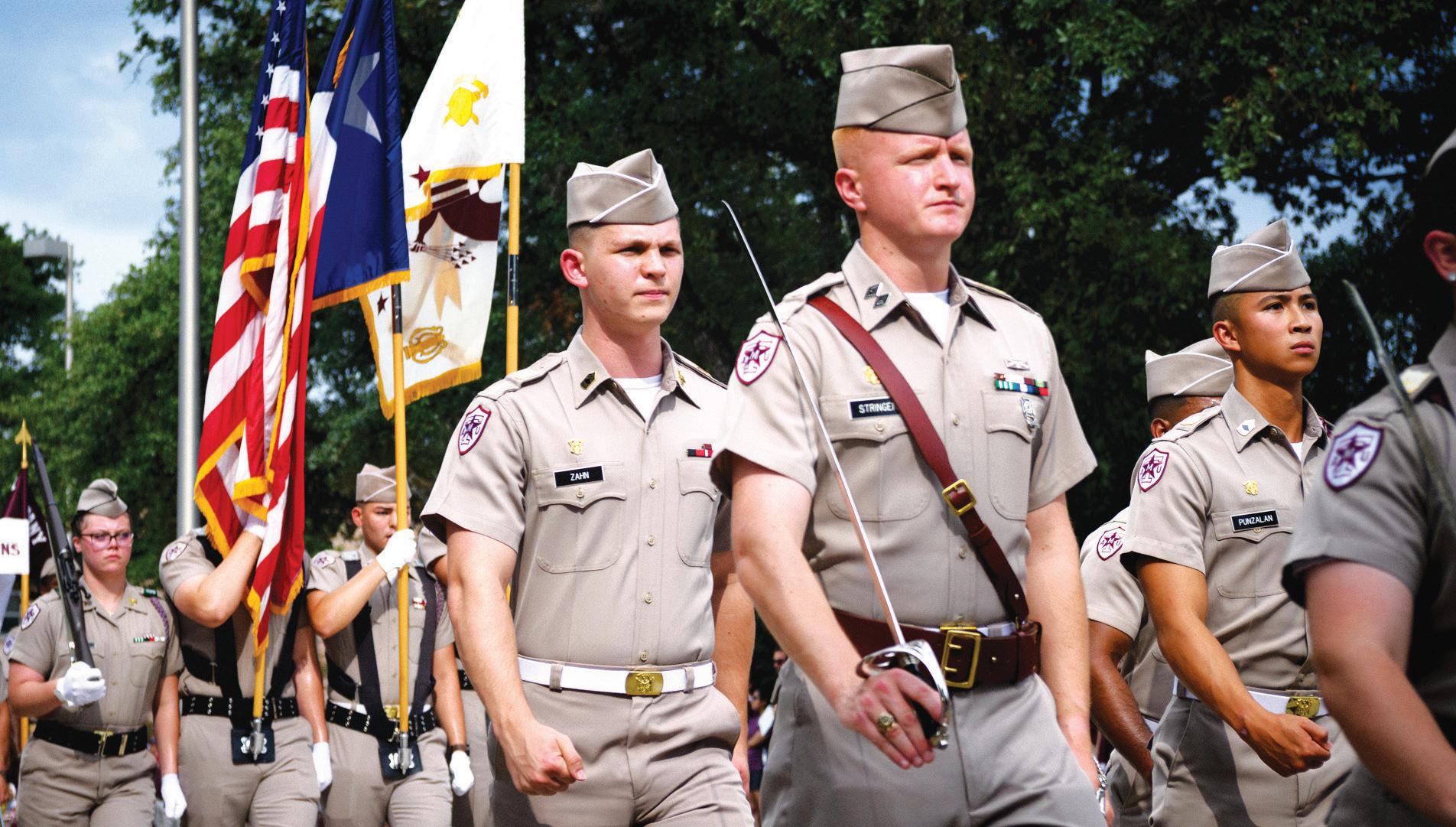
Many of us didn’t want, let alone anticipate Operation Epic Fury, but it looks like we are left with its consequences
By Sidney Uy Opinion Columnist
What awaits my generation is likely another war in the Middle East with countries it can’t even point to on a labeled map. Operation Epic Fury may as well be a continuation of this forever war.
The United States is digging itself into another war with Iran and Lebanon, while our students at home prepare for a fallout that doesn’t necessarily unfurl from nuclear weapons or airstrikes campaigns.
On March 16, Lieutenant General James W. Bierman sent a letter to the Texas A&M Corps of Cadets, responding to the commencement of Operation Epic Fury and the flare of alleged terror attacks that occurred thereafter.
Bierman cites the lone gunman attack on an ROTC unit at Old Dominion University that occurred on March 12. The shooter, Mohamed Bailor Jalloh — a man who had ties to an Islamic State group in Africa in 2016 — was ultimately subdued and killed by the ROTC students.
In the letter, Bierman explicitly stated, “This attack on an ROTC unit was intentional and symbolic.” In effect, the A&M University Police Department will be watching the Corps when they engage in training and formation activities.
Although we remain uncertain of
whether domestic terrorism will erupt on campus and whether such instances of terrorism are genuinely connected to the war in Iran, we are bearing witness to what happens when our country goes rogue.
For one, we may be ill-prepared.
How much does it cost to increase UPD presence on campus? Who, or rather what, kind of students get protection when we are dealing with what Bierman terms as “the real and unpredictable threat of terrorism?”
Where was the UPD when slews of American domestic shootings were flaring up across the country the last two decades? What kind of terrorism should we choose to respond to?
Evidently, we put all Aggies, at home and abroad, at risk. We are left with questions that will most likely go unanswered. That seems to be the recurring theme of this year’s indulgence in geopolitical conflict.
These situations point out how fragile the U.S. and its institutions of democracy are when the administration decisively backs its public into a corner. It’s ludicrous that our war with Iran isn’t even premised on the idea of stopping terrorists, but may conversely enliven them.
Our offensive foreign policy and joint U.S.-Israeli strikes tend to ricochet back.
During a temporary ceasefire, the Trump administration’s hasty attempts to push regime change in Iran forced the American public into a bulimic state of political incapacitation.
In other words, we are living in the politics of “just eat it.” Force-fed dishonesty with a tube, this administration reproduces a heinous cycle of violence we still expect others to condemn for no other purpose than political litmus testing.
Meanwhile, at least 1,830 people in Lebanon have been killed as a result of Israeli bombardments and more than 3,000 people have been killed in the war, according to our country’s forensic chief.
If Bierman is right in what we are facing now, that “homegrown terrorist attacks can emerge without warning,” what can we realistically do about it other than drill and pray it doesn’t happen to us? Who can we go to for answers and a succinct solution?
Well, what’s disturbing is that no one, especially not our U.S. representatives, seems to have a clear answer to what the country’s objective of the operation is besides vague notions of “regime change.”
Even if some U.S. congresspeople think they have a clue, the administration did not get approval from Congress to engage in this war with Iran, let alone articulate its strategic goals to the public. There were none, not even a poorly conceived exit plan, and so far, the Pentagon has claimed that 140 troops have been wounded and 13 U.S. military personnel have died as a result of Operation Epic Fury.
On February 28, at least 175 people, most of them children, were reported killed during a U.S. strike in Minab, Iran. The Trump administration attempted to sidestep and deny such allegations about the targeting of Shajarah Tayyebeh elementary school until a preliminary investigation confirmed it was a U.S. strike — a mistake due to outdated intelligence data.
Unlike the war in Iraq, we aren’t even being consistently lied to about our country’s intentions. We haven’t been tossed a bone or a bundle of fallacious odes to protecting freedom across the world. There are no elaborate patronages like “Weapons
of Mass Destruction” to manufacture consent for war.
The administration is also failing significantly at drumming up support from its most radical supporters in their base. As the public, we aren’t even being treated to the nationalist condescensions of “Epic Fury” — a name President Trump chose as a signature for his second-term legacy.
At the end of the day, we are still waiting for honest answers from not just our government, but from A&M. When we are met with radio silence on the national level regarding the purposes of foreign warfare, our institution faces the public responsibility of answering for the unanswerable.
However, A&M has chosen not to speak the unspeakable truth. It cannot aptly prepare us for this war nor justify our nation’s campaign.
In Bierman’s letter, he praises the young men and women who are engaging in combat operations against “the enemies of our country.” He ends the letter by stating, “Their numbers include many of our fellow Aggies.”
Indeed, brave Aggies are typically on the front lines, sacrificing their lives to protect their family, country and ideals in the American promise. After all, A&M commissions many skilled officers into all branches of the military service every year. Our reputation as a former military institution is impeccable, and we pride ourselves as the ones who can get it done.
But Lieutenant Bierman, do you believe your cadets support this war? Do your cadets know why we are at war with Iran?
Sidney Uy is a philosophy junior and opinion columnist for The Battalion.
about you, but I never ran into a tow truck until I came to College Station, and I most certainly wouldn’t know what to do if my car got towed.
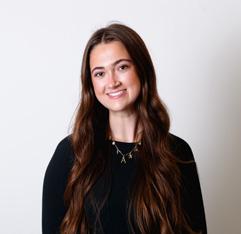
By Abby Morris Opinion Writer
I’m lying in my bed on a peaceful Saturday night when, all of a sudden, I hear a grinding, agitating rumble. With annoyance, I peek through my blinds to see not one, not two but three tow trucks attempting to tow a singular vehicle — at the inconvenient and unnecessary time of 10 p.m.
Towing in our college town has long been a problem. No matter if it’s fall or winter, rain or shine, these tow trucks constantly swim through our streets looking for their next victim. While towing isn’t inherently bad, it becomes a problem when companies start exhibiting predatory behavior. Predatory towing occurs when less-thanscrupulous towing companies use deceptive or coercive practices to take advantage of motorists in vulnerable situations.
This includes patrolling parking lots regularly to tow cars within minutes of parking, which is a common way to get towed in College Station. It seems like no one in power cares about these predatory practices or the fact that they make college students’ lives even more difficult than they already are.
College students are traditionally a financially broke group. While some are better off than others or have their parents’ financial support, that doesn’t mean they want to spend $300-$500 on a car tow fine — no one does. That’s money we could put toward rent, food, books or ourselves.
College students are also traditionally a notoriously naive group. I don’t know
These companies feed on our naivety. Since many of us don’t know the rules regarding towing, we don’t know what’s legal, illegal or what we can fight; even if we try to fight, we’re more likely to fail because these older, more practiced sharks will intimidate us out of it.
Why are these tow truck drivers such predators? It’s as if they forget that drivers are human too. Sometimes we have to park in a spot we’re not supposed to because we’re late for an exam, helping a friend in an emergency or quickly picking something up — we shouldn’t be fined hundreds of dollars for this.
I can understand if someone is taking up a spot they shouldn’t for long periods of time, but really, I can’t park for five minutes to grab my Chipotle order? Nobody’s perfect, and I seriously don’t believe that leaving your car for such a short amount of time should cost you such an exorbitant fee.
If you think towing’s a problem in public areas, it’s even worse in college apartment complexes, especially ones in our town. Most complexes have an inadequate amount of parking for visitors, making it the perfect grounds for a tow truck to catch someone slipping.
No matter what time I leave or return to my apartment, I can always find at least one tow truck circling the property. If you want to park in the visitor parking of where I live, you’re pretty much out of luck. Despite housing almost 4,000 students, there’s only about 50 visitor parking spots available, which is absolutely insufficient. There’s more than 50 people that are going to want to hang out with their

friends, have their family visit or spend time with their partner every day. Some visitors spend as long as an hour circling the only visitor lot to try to find a spot, and even if they do manage to snag one, there’s still a chance they’ll be towed. Once the sun goes down, tow trucks visibly survey these visitor spots, shining lights on each car to see if someone’s there illegally. These towing practices definitely make visiting others a lot more complicated than it should be. There’s not many other forms of transportation available for students, especially late at night. You can’t expect someone to ride a bus over at 1 a.m., pay for an Uber or walk every time they need to go somewhere. Tow sharks suck, but they aren’t completely unbeatable. There’s a couple ways to either avoid a tow or pay less by knowing your rights. If you return to your car and it hasn’t been fully hooked-up, you can regain your car without paying a charge. However, if your car has been fully hooked-up but
hasn’t left the parking lot, you must pay a drop fee to get it back, which is a charge offered by the tow operator that allows you to stop the tow without paying the full charge and additional storage charges. You have