A beginner’s guide to cooking
A mini cookbook for easy meals to prep



A beginner’s guide to cooking
A mini cookbook for easy meals to prep












Editors
Sydnei Miles, Editor-in-Chief
Hudson Elkjer, Executive Editor
Ayla Francis, Managing Editor
Olivia Ingram, Art Director
Quentin Deming, Photo Director
Sydney Hale, Social Media Manager
Brianna Buffalo, Assoc. Social Media Manager
Macy Richardson, Event Head
Sara E. Gonzales, Associate Director
Photographers
Anastasia Acosta
Andy Holder
Designers
Writers
Lucy
Valeria
Angeline Nappoly
Victoria

Reese Christian
Ismael Frausto Leija



Business & Distribution
Hamsini Mahadevan
Emma
Harley
Belle Guerra
True stories from the heart of Aggie nation
By Belle Guerra, Staff Writer
For many students at Texas A&M, living with roommates is their first real step into independence. It is often imagined as a fun and exciting part of college life: shared meals, late-night conversations and the kind of friendships that grow from living side by side. But the reality of conjoined living can sometimes look very different.
Across residence halls and apartments in Aggieland, students quickly learn that sharing a space also means sharing other people’s habits, schedules and sometimes very questionable life choices. What begins as a normal college experience can occasionally turn into something that feels closer to a survival story.
One such story begins in the quiet darkness of a White Creek apartment.
You wake up suddenly. Your room is pitch black, the heavy blackout curtains swallowing any hint of moonlight outside. For a moment you lie there, unsure why you woke up at all. The air feels wrong. Thick. Warm. The sheets cling to your arms and back as if the room itself has been slowly heating while you slept.
You roll over and grab your phone.
3:12 a.m.
The apartment should be silent at this hour. Instead, something lingers in the air. A smell. At first it is faint, barely noticeable. But as you breathe in again, it grows stronger, heavier, invading the room with a strange, salty scent. It creeps in slowly, like fog sliding under a door.
Fish.
Warm fish.
The realization hits like a nightmare you cannot wake up from.
Tuna.
At 3:12 in the morning.
You leave the safety of your room.
The hallway is dim, lit only by the faint glow of the kitchen light ahead. The smell grows stronger with every step. You glance at the thermostat on the wall.
77 degrees.
Seventy seven.
You take another step forward.
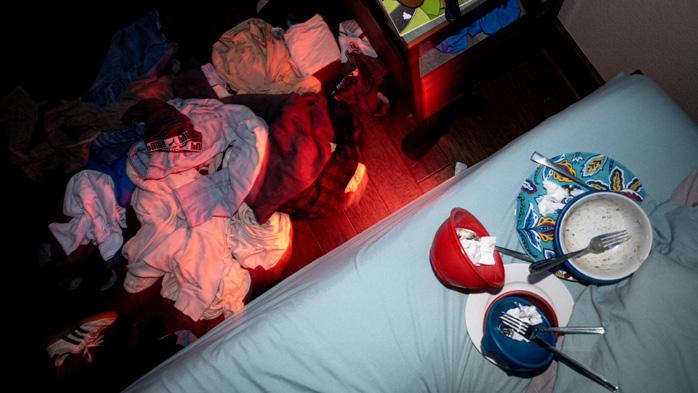
Crunch, kick, stumble.
You fall into darkness encompassing the hallway, then catch yourself, hands hitting


the floor first, before being met with the warm embrace of five-month-old unwashed laundry. You try to stand, desperately peeling sticky socks off your calves. After scrambling away from the stench, a wave of dread washes over you as you step into the kitchen.
You are being buried alive, the suffocating filth closing in around you, unable to move, struggle or scream. The world begins to spin; you take a last breath before the light dissipates from view.
But the ground is not dirt, but Swedish plastic — the grimy surface of used IKEA plates. You are not suffocating under the earth’s surface, but a Mount Vesuvius of dishes — of Pompeii-level calamity.
And in that moment, you realize something important about college life: Living with roommates means encountering habits you never expected, situations you never imagined and moments so bizarre they feel like scenes from a horror movie.
This category five roommate hurricane is all inspired by a collection of true roommate incidents sourced from all across Aggieland. While dorms and apartments may not really turn into exploding volcanoes, it is important to keep in mind that roommate horror stories are all too common.
Across campuses nationwide, roommate conflicts are one of the most common challenges students face in shared housing. A&M Residence
Life encourages students to create roommate agreements at the beginning of the semester to prevent misunderstandings about shared living spaces. Make sure you prepare for compromises, confrontation and hopefully the opportunity for a peaceful home.
Still, no agreement can fully prepare someone for the horror of warm tuna
drifting through an apartment at three in the morning.
Because sometimes the real horror of college life is not the exams, the deadlines or the stress.
Sometimes it is simply the person you live with.
And their late night snack choices.
What works best as a college student: living in a townhome
By Victoria Taylor, Staff Writer
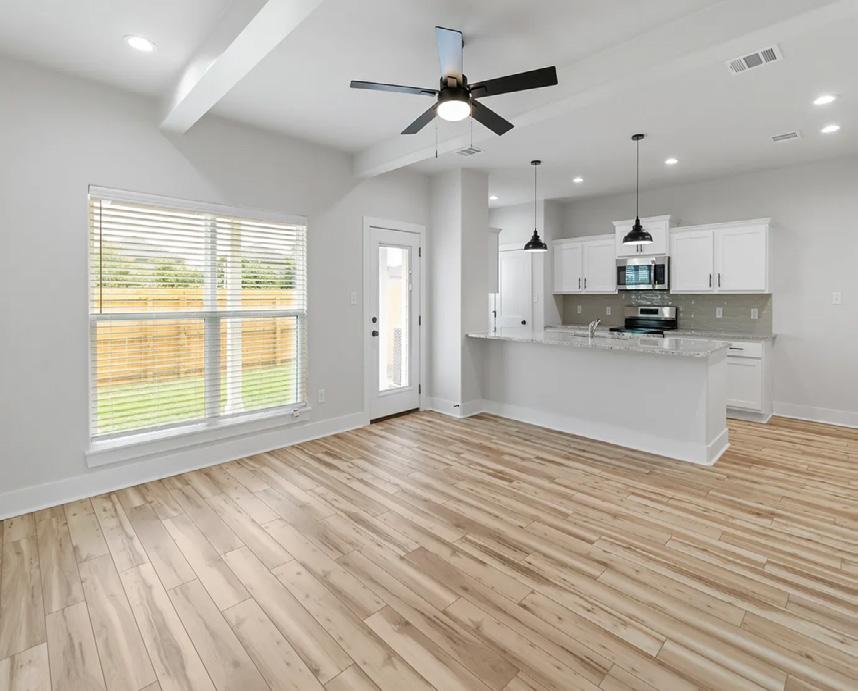
Moving to a new city for college is hard enough. You’re figuring out how to decorate your room, which organizations you’re going to join, and where your new go-to spots are. Will you live on or near campus, or distance yourself? Maybe you’re interested in a hall of nearby neighbors or maybe you prefer your own stand-alone home. Deciding among living options can be difficult, but students who have lived in both apartments and townhomes have shared their experience to make it easier for incoming students who are torn between the two. Having lived in both an apartment his freshman year and a townhome the rest of his time, construction science senior Ben Grottle prefers the comfort of walking in his own front door immediately upon arriving home.
“My first year on campus, I was living in an apartment where I had to park and walk up six flights of stairs to get to my room,” Grottle said. “It’s nice now living at Redpoint where I can park right in front of my house and go straight to my living room and kitchen.”
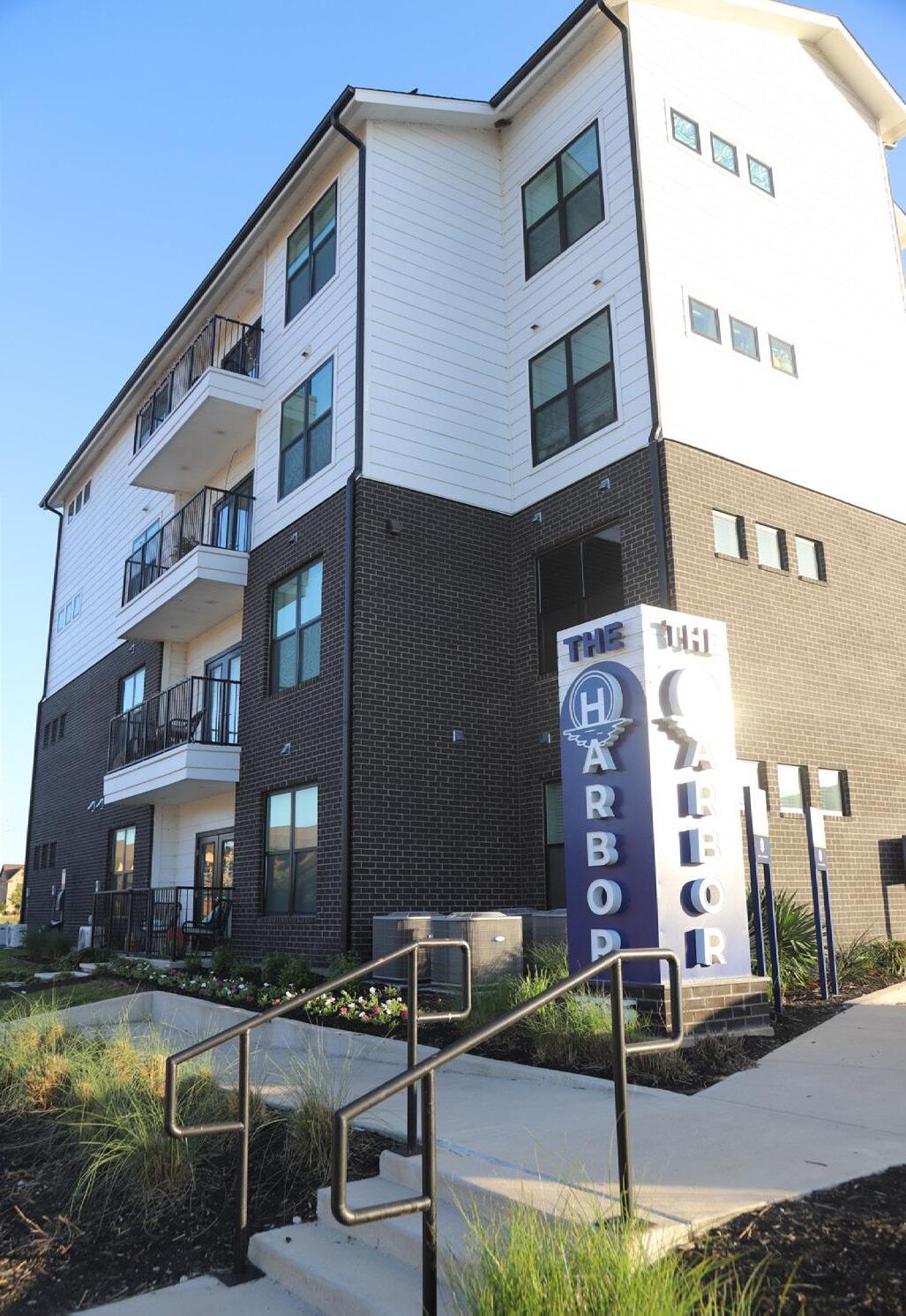
Townhomes in College Station such as Redpoint, U-Club, The Urban and others offer residents the simple accessibility of having a more homey feel while still living in a close-knit community. Townhomes are typically connected or adjacent, so you can simultaneously have neighbors and your own personal area.
Moving into a townhome was an immediate yes for petroleum engineering senior Duru Tanriverdi after she spent her freshman year in a Park West apartment.
“I really enjoy living at Redpoint because it doesn’t require much interaction with other residents like it would whenever I was living at Park West,” Tanriverdi said. “I have my own space, and knowing the place I’m walking into is my home makes me happy.”
The only downside to living at Redpoint
“I have my own space, and knowing the place I’m walking into is my home makes me happy.”
sometimes,” Tanriverdi said. “Another issue is whenever we leave our trash outside to be picked up, sometimes racoons or possums will get into the bags, causing a mess.”
Besides this issue, Tanriverdi said moving into a townhome was the best decision she could’ve made for her college living style.
On the contrary, living in an apartment provided a sense of comfort for ag leadership and development junior Hannah O’Leary.
“For my first two years of college, I lived at Park West,” O’Leary said. “I didn’t want to move after my freshman year because of the extra level of security that was there.”
O’Leary said having an eighth floor apartment made her feel extra safe because it’s already difficult to get into the front door of Park West.

3695 General Pkwy College Station, TX 77845

walk was worth it to live more blissfully.
After two years of apartment living, she ultimately decided to move out and go to The Barracks for her junior and upcoming senior year.
“I have zero complaints about living at Park West; I just decided to move out because my now-roommates wanted to get a townhouse together,” O’Leary said. “I really enjoy the space and the backyard my Barracks home provides, but there are definitely times I miss the comfort of living in my apartment.”
Overall, O’Leary thinks you cannot go wrong when looking at different apartments and townhomes in College Station to live in.
“I’ve enjoyed living in both,” O’Leary said. “I think it depends on what feels like home for that specific person.”
“I really enjoy the space and the backyard my Barracks home provides, but there are definitely times I miss the comfort of living in my apartment.”

By Harley Burger, Staff Writer
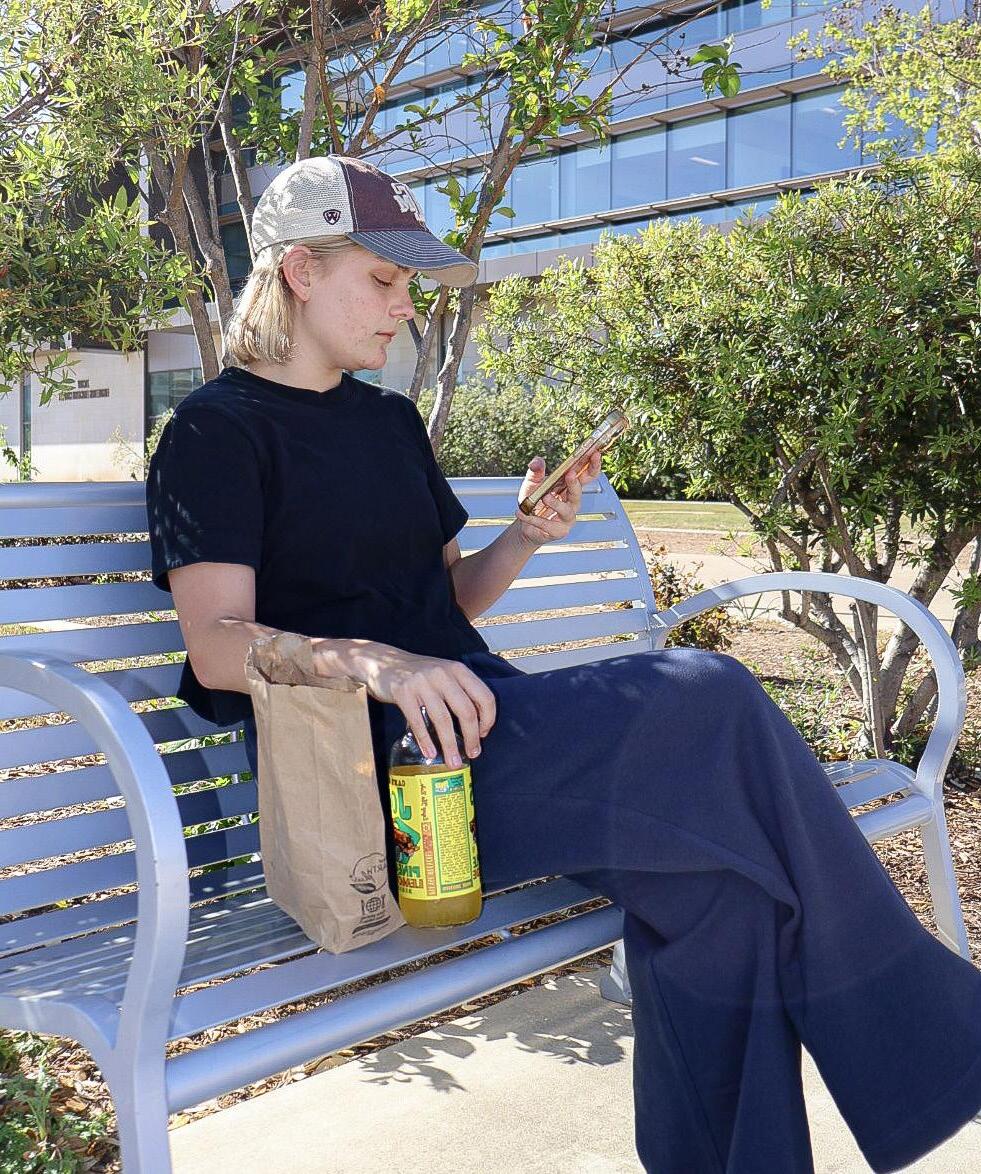
Walking to Lot 113 in the pouring rain was NOT my idea of an ideal Friday night, but it became my reality after wandering aimlesslessly in the Northside Garage for 45 minutes — searching for my vehicle to no avail. Texas A&M Transportation does not play about parking violations. Just take it from me … the girl who got towed TWICE her first semester at A&M.
If you want to avoid a $100 ticket, or simply the humiliation ritual that is a sojourn to the tow lot, consider the following transportation options that A&M and surrounding residencies offer:

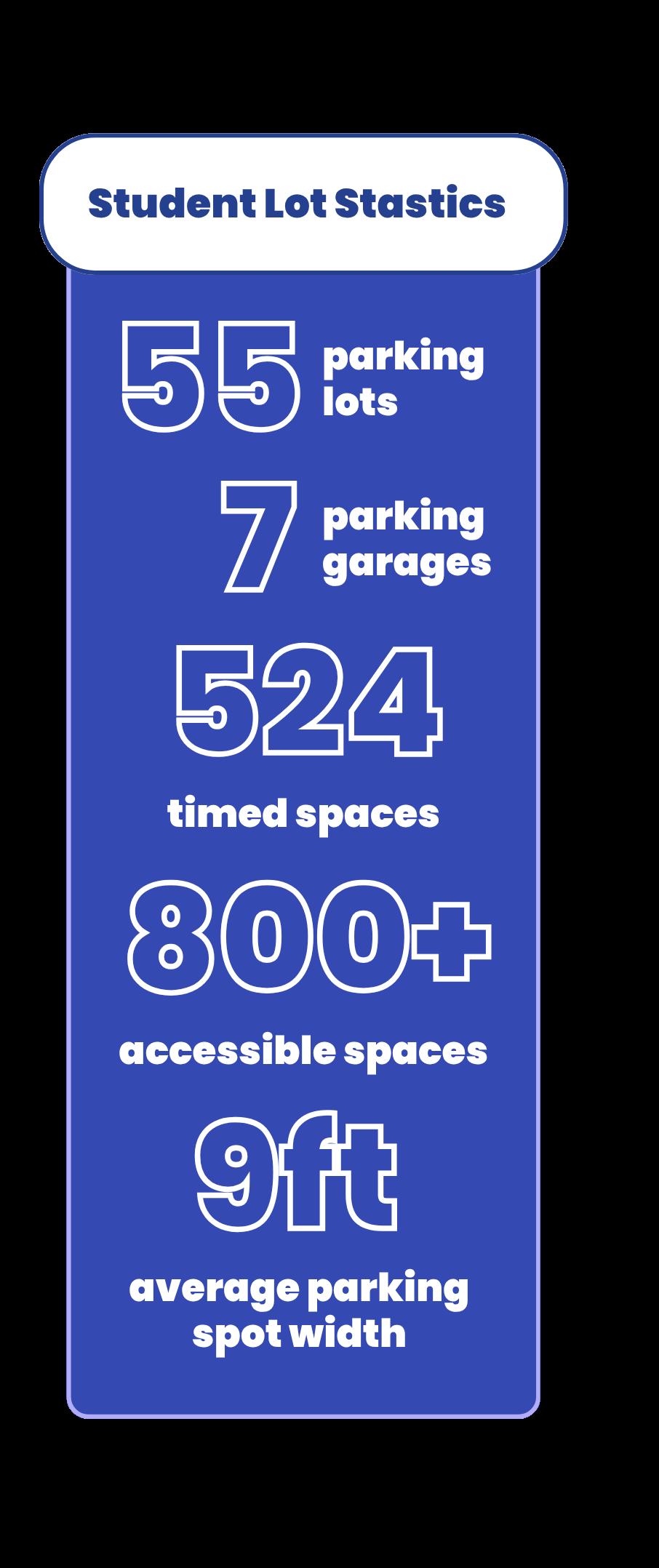
A&M offers a variety of parking locations on campus — both lots and garages — for
those who prefer to drive. For architecture senior Gertie Adair, her on-campus parking permit is a must in order to balance her rigorous academic schedule and teeming social life.
“The best part is never needing to worry about the bus schedule, but the worst part has been the uncertainty about actually finding parking,” Adair said.
To optimize your parking permit experience, Adair recommends developing a deep familiarity with the layout of campus.
“You must know your class locations, your route to classes, any bus routes you may need — and have a strategic plan when it comes to time management,” Adair said.

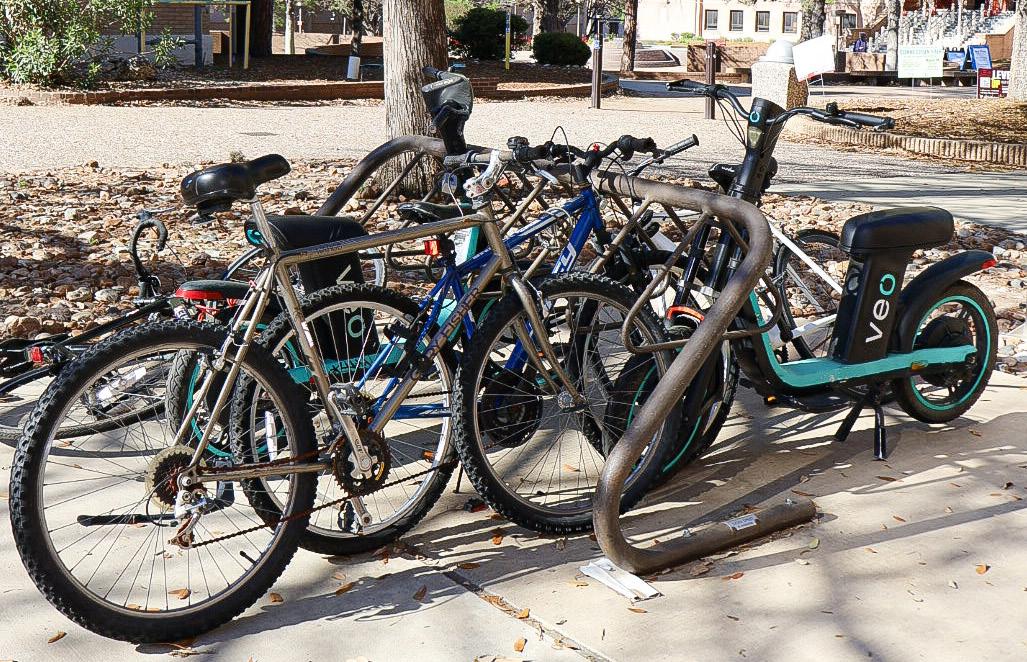
A&M encourages the use of micromobile transportation across campus. Micromobility is defined as lightweight vehicles such as bicycles, scooters and boards, according to the A&M
Transportation Services website. If you are interested in traveling on campus via a micromobile vehicle, use the same website to purchase a one-time-only $10 parking pass, then register your micromobile vehicle through the Bike Index, then label your approved ride with a permit sticker. There are bike racks strewn across campus for micromobility users to lock and store their lightweight vehicles while on campus. Just remember to follow the proper steps — unregistered vehicles will be impounded, and that’s not an empty threat!

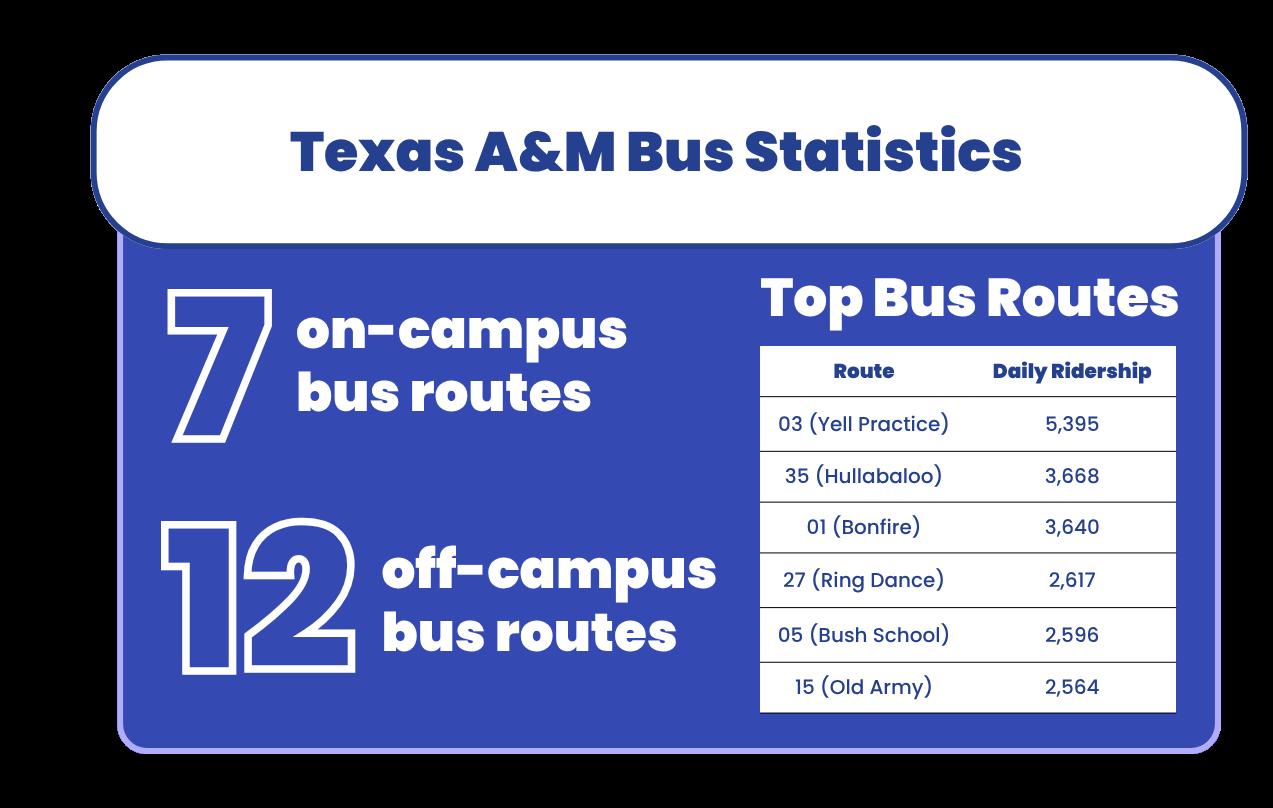
Many housing locations across the Bryan-College Station area are conveniently connected to the Aggie Spirit Bus service system. The Spirit Buses are free to use and drop students off right at the heart of campus: the Memorial Student Center. The buses operate on school days, nights, weekends — even on gamedays — helping
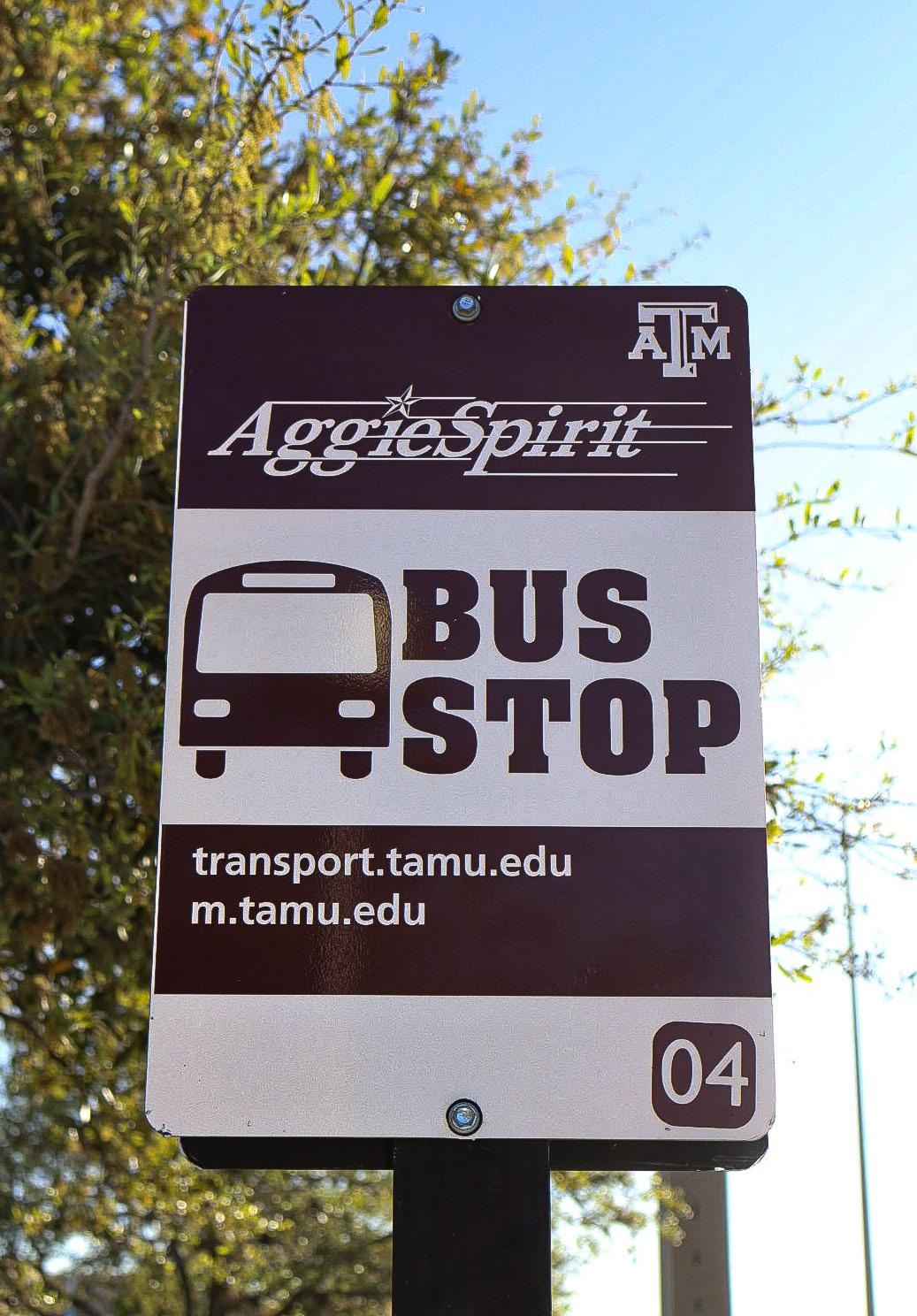
you beat the notorious gameday traffic at Kyle Field.
Architectural engineering junior Grace Wilson encourages students to take advantage of these services.
“As long as you make use of the bus schedule and app, the Aggie Spirit Bus is free, convenient and consistent,” Wilson said.

In order to promote sustainable transportation opportunities, A&M has a rideshare system available on the Transportation Services website. Veo bikes provide the fun and environmentally conscious opportunity to use a motoroperated scooter for a low price.
Forensic and investigative sciences junior Tavi Stone enthusiastically endorses the fossil-fuel-free Veo e-bike system.
“The Veos make a 15-minute walk a threeminute trip,” Stone said. “Whenever I need to get somewhere quick, I know I can count on the Veos.”
Whether you’re looking to lessen your carbon footprint or hauling from West Campus to Evans, simply scan the QR code through the Veo app for across-campus transit.

A&M Transportation Services also offers a specialized rideshare system for those seeking paratransit/disability accommodations. Information regarding this specialized transportation can also be found on the Transportation Services website. Applications for paratransit services are available through A&M’s Department of Disability Services. General questions can be directed to paratransit@ tamu.edu.
By Harley Burger, Staff Writer
Roommates can make or break your college experience. The right group of girls or guys can ensure that your apartment, townhouse or dorm feels like home, sweet home. On the flip side, failure to evaluate your roommate relationship standards can put you in serious miscommunication and social stress territory.
You may not realize just how influential your roommate relationships are, but a deep dive down Reddit’s “r/ Roommate Horror Stories” or even the Instagram page Aggie Chicks’ local spin on this trend can quickly expose the necessity of establishing clear roommate communication and expectations.
Education junior Emma Marroquin has lived in a dorm on campus for two years. Through her dorm experience, she has developed specific expectations to maintain a friendly and positive
relationship with her roommate.
“A cordial relationship, at minimum, with your prospective roommate is a must,” Marroquin said. “Some kind of commonality like major, religion or club can help foster a relationship.”
While she highlighted the benefits of roommate friendships, Marroquin also described her preference for living compatibility over closeness.
“Even if you want to room with someone you know, having a common schedule is key … I would prefer having a roommate with a similar schedule as opposed to living with a friend whose schedule completely opposes mine,” Marroquin said.
If you’re struggling to determine the values which dictate your roommate decision, this quiz will help you respond to that age-old question: What do you want in a roommate?
1. Your roommate has a date tonight, but they don’t have anything to wear. What do you do?
A. Wish them good luck on their date and their search for the perfect outfit.
B. It’s time to dig through my closet and find a bunch of options! I want to make sure they have what they need … Math 140 can wait!
C. Encourage them to take pictures of their current options. If they really don’t have anything, I’ll hand them a couple options — as long as they promise to return them.
4. You have a HUGE exam tomorrow, but your roommate wants to watch a movie. Which of the following is your response?
A. I’ll head out to Evan’s and study there. I can’t handle distractions while I study
B. I’ll bring my textbooks into the living room! I can multitask!
C. I’ll stay in my room to lock in. I can catch up with my roommate later.
2. Your roommate won’t do their dishes. How would you handle this conflict?
A. I’ll text my roommate and tell them to do their dishes. I prioritize directness and efficiency over friendliness when it comes to communication.
B. I would sit my roommate down and explain why this behavior bothers me, but I would be sure to start with the characteristics I appreciate about them.
C. I casually tell my roommate to correct this behavior. I don’t want to hurt their feelings, but our priority should be maintaining our shared space.
5. After a long day of classes, you come home and make yourself dinner. Who do you want to eat with?
A. I would prefer to eat uninterrupted. I need time to decompress after school.
B. I hope my roommate is home! I want to eat together and debrief.
C. I want to have dinner and watch my show. I’ll be glad to sit with my roommate, but I definitely value my alone time too.
3. It’s football season in Aggieland! Who do you want to pull tickets with?
A. I don’t need to pull with my roommate — I see them enough at home! Gamedays are an opportunity for me to spend time with my besties.
B. My roommate! I love the idea of blasting music and getting ready together before braving the Texas heat.
C. I want to ticket-pull with a group of friends, but I’m not opposed to meeting up with my roommate for a couple of pics in front of Kyle Field.
Find out roommateyourbasedpersonality on the letter you most!chose
You are searching for an Amicable Ally.
Your ideal roommate situation promises the comfort of a surfacelevel friendship — without the time and attention constraints of “Bestie” status. A casual companionship with your roommate can encourage effective communication without the feeling of sharing a suite with a stranger. Remember to balance your boundaries through shared interests and established expectations.
You are searching for a Built-in Bestie.
You’re searching for a roommate to truly do life with. Having a close friendship with your roomie can make your college housing situation feel like home — just remember to stand firm in your boundaries and diligently communicate to maintain a peaceful environment. You don’t want to sacrifice your standards … true friends can honestly communicate and have hard conversations.
You are searching for a Cordial Co-exister.
You aren’t looking to be close friends with your roommate — and that’s totally okay! While you shouldn’t completely close yourself off from cordiality, you can establish expectations and boundaries that promote necessary and surfacelevel communication. Don’t shy away from forming a relationship with your roommate, but don’t feel pressured into compromising your values.

A survival guide to a hectic college move-in
By Ayla Francis, Staff Writer
Think of the best friend you’ve ever had — with you through thick and thin, timelessly reliable. Now forget them. IKEA bags are your best friend now. They’re more likely to stick with you through all four years than some friendships anyway. Although I hope you make more friends in college than your packing bags, it is crucial to tackle that first day with the right allies. Let’s break down everything you need to prepare for the infamous college moving day.
Moving into a dorm or apartment means long flights of stairs and endless hallways. Boxes are practical for some items, but make sure you have a vast supply of duffel bags with handles to cram inside all your clothes, shoes, bedding, etc. for an easy carry along your journey. Most people use IKEA storage bags or similar zip-up totes; from experience, I still use the same bags to move back and forth for summer break every year. When the busy day arrives and every parking spot is taken by unloading families, you’ll be glad you invested in convenient carrying for the long haul.
Coordinate with your roommates
Before we even talk about which items to bring, you better have laid some ground rules with your roommate or roommates, if you have them. I won’t tell you to bring a microwave if you
and your other three roommates are all bringing the same one — that’s awkward. Find out beforehand what your place might already be furnished with and designate responsibilities among yourselves to all pitch in on brooms, dishes, rugs or whatever else you need.
It’s easy to get lost in all the things you’ve brought and not know where to start. On moving day, stick to the basics: most stuff can be unpacked later. Make your bed before anything so you can sleep that night, plug in lamps so you’re not in the dark, and ask your parents or smart friends to help you set up your TV, Wi-Fi, refrigerator or other difficult devices so you’re not calling them later for a step-by-step.
Once you call it a day and wave goodbye to your parents, you’re left with a mountain of boxes and bags and bins to conquer. Move-in day is already emotionally taxing on its own; you’re starting a new chapter, whether it’s your first time living away from home or you’re settling into a new semester or roommate situation. Chances are you might not be up for hours of unpacking after a long day and might just want to unwind and leave the rest for tomorrow. Make it easy on yourself and set aside a little overnight bag for toiletries, a change of clothes and a charger instead of trying to dig through every bag looking for the scattered items. Assuming you’ve followed my advice about already making your bed, you’re in for a comfy first night.
Don’t Forget!
To wrap it up, here’s a list of random things I’d recommend double-checking as an upperclassmen who’s been through this rodeo before:
Check your complex’s policies online. There’s nothing worse than having to send Fluffy home because of an unexpected no-pets rule. Each place has different rules about everything from the length of extension cords to the number of holes allowed per wall. Arrange parking ahead of time. You won’t want the headache of registering for the parking garage or finding a key fob for the gate when you’re trying to beat the crowds in.
Bring your kits. First aid and basic tools are essential for your home. Make sure you have medicine and a thermometer for when the college crud hits your hall.
Plan for shared areas. If you share a laundry room, whether with roommates or an entire floor of people, buy a laundry basket and set timers for your clothes before they get thrown on the floor (yes, this happens all the time.) You won’t want to be without a caddy and shower shoes for community bathrooms, too.
Don’t overpack. If your roommate agreed to bring picture frames for the living room wall, maybe leave your big painting at home. If you know it’ll be hot almost year-round (welcome to College Station), leave most of your sweaters, too.
P.S. Bring a mattress topper

• Chicken tenderloins
• Bowtie pasta
• Vodka pasta sauce
• Olive oil
• Salt & pepper
• All-purpose seasoning STEPS
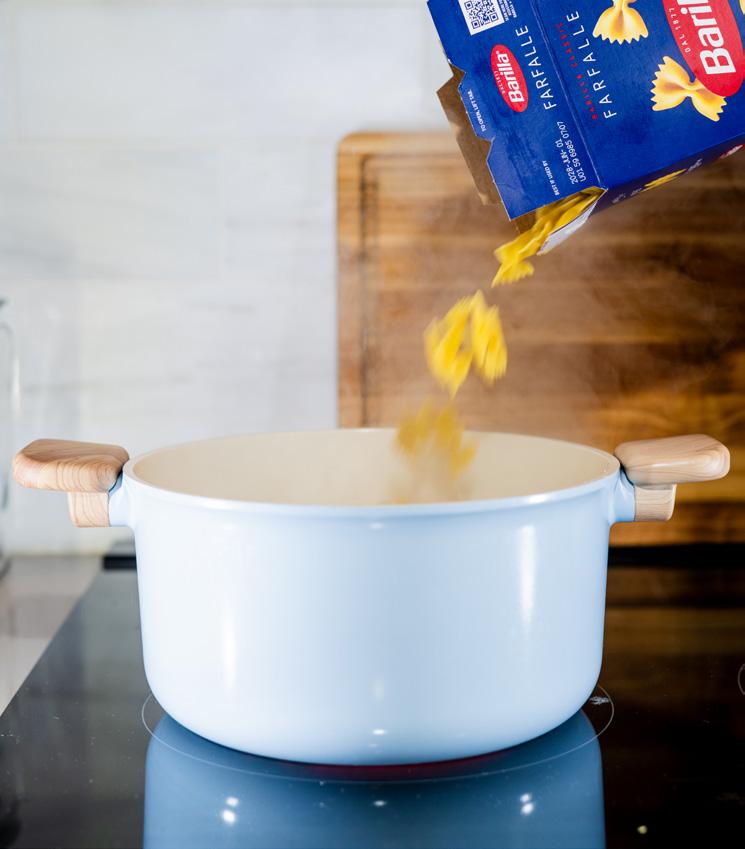
1. Begin by boiling water in a pot.
2. Once boiling, pour the pasta into the pot. Stir occasionally to thoroughly cook. Once soft, you can drain the noodles, but make sure to leave a little bit of the pasta water in the pot for taste!
3. Rub olive oil and all-purpose seasoning on chicken pieces.
4. Place the chicken in a frying pan on medium heat.
5. Check with a meat thermometer: once the chicken hits 165 F, it’s good to take off the stove.
6. Cut the chicken into smaller bitesized pieces. You can then combine the chicken and pasta noodles together in the pot, and finally add the vodka sauce.
7. Stir, plate and enjoy!
• Salmon
• Minute Rice
• Bag of broccoli
• Salt & pepper
• Olive oil
• 1 Lemon STEPS
1. Preheat the oven to 410 F.
2. Cover a sheet pan with foil, and place a little olive oil on top.
3. Place the salmon on top of the olive oil, next add salt and pepper. Flip and repeat on the other side as well!
4. Place the pan in the oven for 15 minutes, then take it out.
5. Using Minute Rice, put half a cup of rice into a microwave-safe bowl, adding half a cup of water. Place in the microwave for 3 minutes and stir.
6. Next, grab your bag of broccoli and cut a snippet off the top corner. Using the directions on the back of the bag, microwave for as long as directed. Once they are steamed, pour some lemon juice, salt and pepper, and toss the veggies.
7. All that’s left to do is plate the food! Lay the salmon down on the bed of freshly cooked rice, place the veggies alongside it and cut a slice or two of lemon to garnish the fish.
By Valeria Salazar, Staff Writer
INGREDIENTS
• Extra firm tofu
• Minute Rice
• Bell peppers
• Baby potatoes
• Soy sauce
• Honey
• Olive oil
• Salt & pepper
STEPS
Cut out and save for later!
1. Take the tofu out of its packaging. Using paper towels, gently pat it dry to absorb some of the moisture. Cut the tofu into bite-sized pieces, roughly one inch each.
2. Fill a frying pan with a little bit of olive oil, place the tofu in the pan, and let it simmer over medium heat. Keep the tofu in the pan until they begin to turn a golden-brown shade. Once bronzed, you can take them out.
3. Mix up a tablespoon of honey with a splash of soy sauce and pour over the freshly cooked tofu. This semi-sweet glaze adds a teriyaki-flavored punch.
4. Using Minute Rice, put half a cup of rice into a microwave-safe bowl, adding half a cup of water. Place in the microwave for 3 minutes and stir.
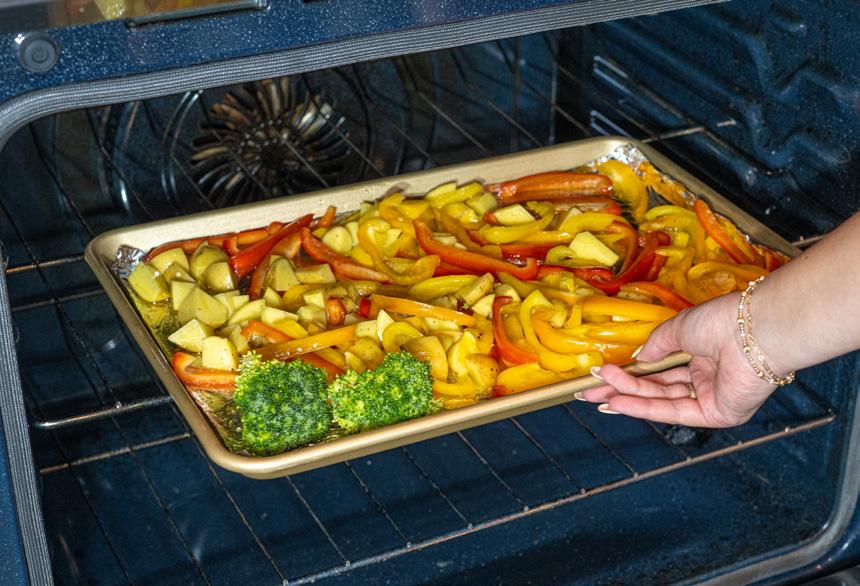
5. For the veggies, preheat the oven to 400 F. While it heats up, wash and cut the bell peppers with the baby potatoes. Toss the veggies in olive oil, salt and pepper to season them.
6. Cover a sheet pan with foil, place the veggies on top, and place them in the oven. Leave them roasting for 20 minutes, flipping halfway through to allow for maximum crispiness.
7. To plate, simply place the tofu on rice, with the roasted veggies on the side, and enjoy!
8. Slice lemon to garnish the fish.







(one is heated year round)
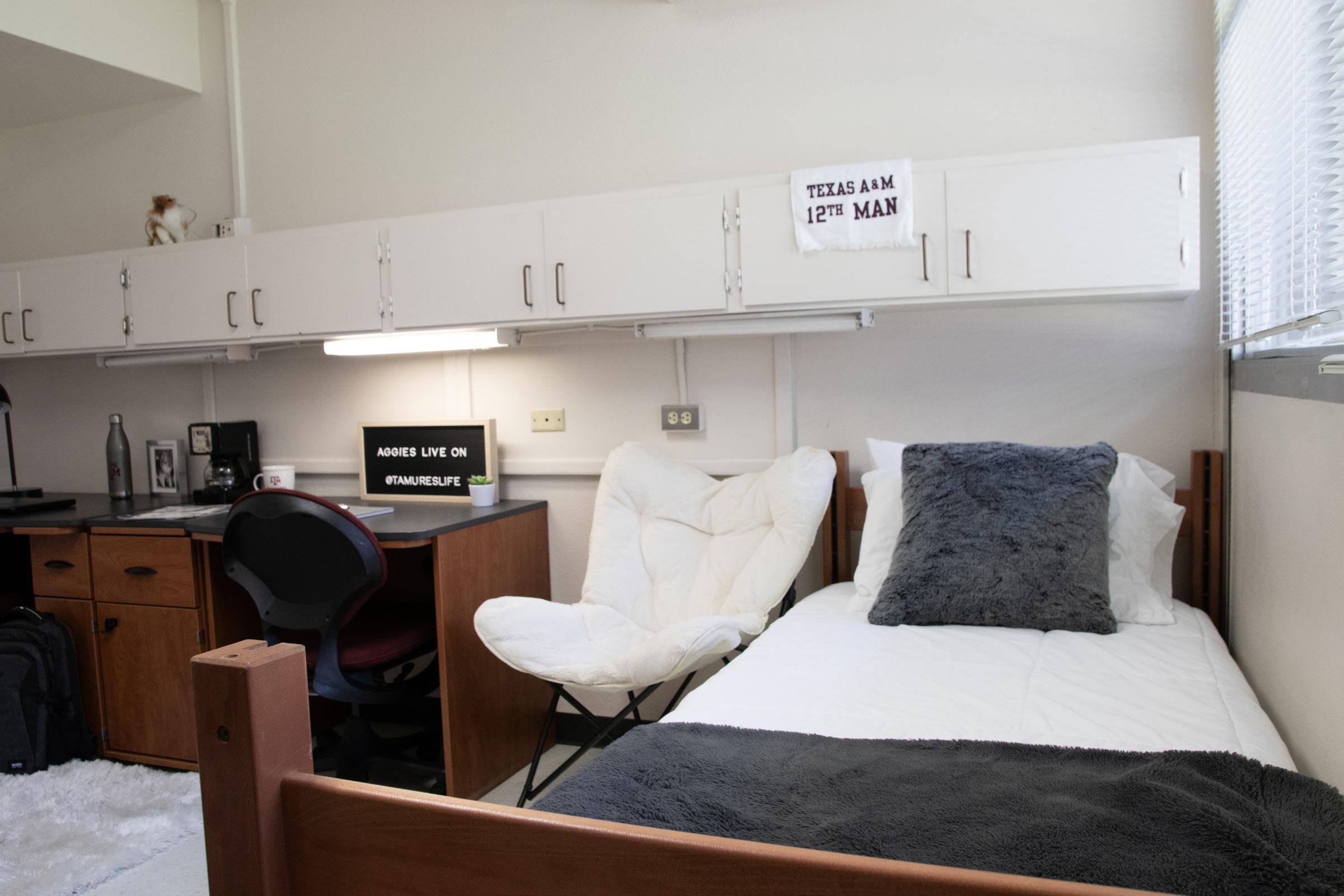
It’s move-in day, and students are wondering what their dorm will look like and if they’ll get along with their roommate along with all the other mysteries of a fresh start. However, for Aggies with disabilities, there’s an entirely different set of questions to worry about:
Will their roommate be okay with their service dog? Should they have gotten a private bedroom because of their blood sugar alarms? Does the dorm have wheelchair-accessible features?
These are only a few examples of the concerns students with disabilities face — but there’s a solution to these problems.
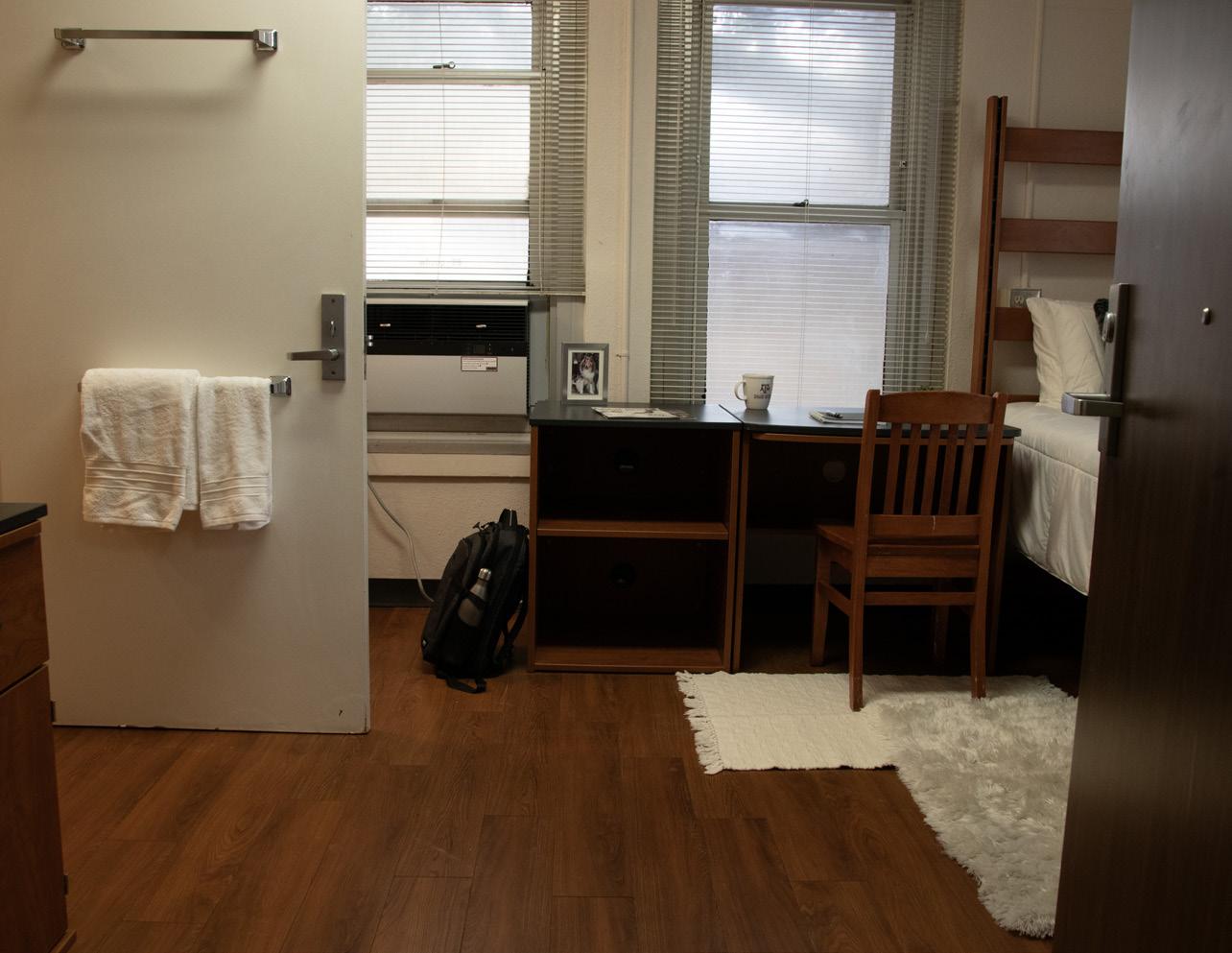
Before moving in, students can request accommodations, such as having their own private bedroom or keeping a service animal. The departments of Disability Resources and Residence Life at Texas
A&M work tirelessly in order to ensure there is no uncertainty about housing for any Aggie. Over nine residence halls, including White Creek Apartments, work with these departments to allow disability accommodations.
Common and uncommon requests
Tracey Forman, associate director of Disability Resources, said private bedrooms for health-related reasons and allowance for emotional support animals are their most common requests, but they’ve had a variety of cases.
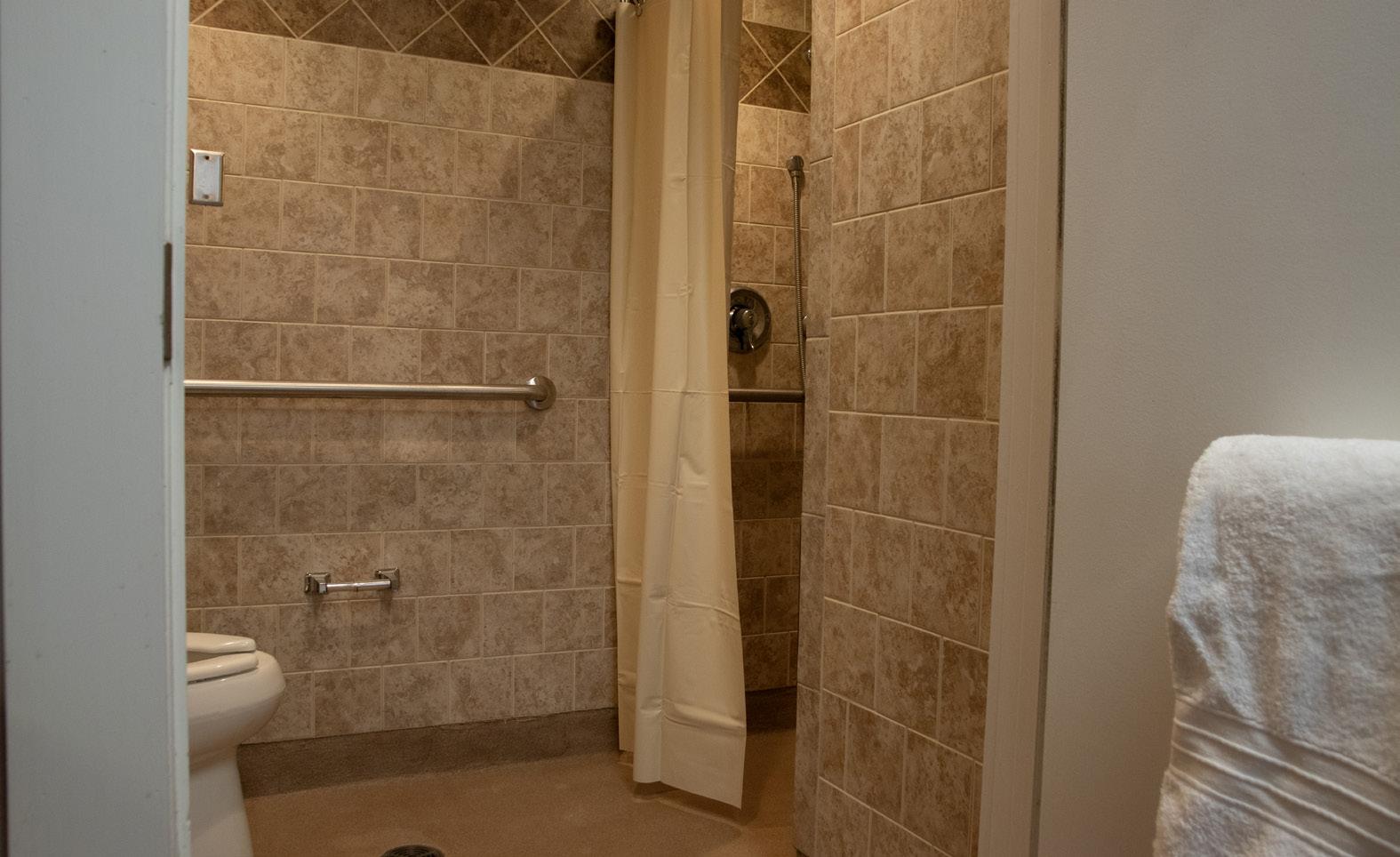
“We’ve done some very unique things in bathrooms to try to make things accommodative [like] putting in grab bars,” Forman said. “Some students who have significant physical disabilities also
ask to bring their own bed because they might need an adjustable bed … because of their physical needs, and those are those one-off, case-by-case things.”
Charlotte Benson, office manager of the Housing Assignments Office under Residence Life, said they can often work to make modifications for the uniquest cases.
“We’ve had students that were allergic and they wanted water filters. So we have the showers, even if they’re White Creek, the washing machines, the
faucets, so we’ll get [filters] installed for the student,” Benson said.
Whether students deal with mental, psychological, physical or medical disabilities, staff are working with these students to create campus housing that is as safe and comfortable as possible.
The student should first submit an application for on-campus housing through Residence Life on their website at disability. tamu.edu. From there, a student can send an accommodation request to Disability Resources for review. After the application, specific documentation is needed to secure the right housing.
“Apply for housing as soon as possible … Getting on that list sooner is better.”
“It depends on what the nature of the disability is,” Forman said. “And we have our documentation guidelines on the website, but we also [don’t] just look at documentation; we’re looking at the student’s self-report, sometimes our personal observations.”
After reviewing, they will be contacted to set up a new-student interview to go over the accommodation. However, securing these documents well before choosing
housing is of vital importance.
“If we’re talking about someone with a significant disability … they might need modifications to their room because of the wheelchair access, and so we were sometimes doing that a year ahead of time,” Forman said. “But for most common housing accommodations … we want to get that usually by April.”
Once approved, they will send all necessary information over to Residence Life and get started on selecting housing placement. For more information or resources, students can go to disability. tamu/housing.
Benson said having a conflict is rare because roommates are informed about accommodations before moving in. However, if an issue does arise, Residence Life resorts to mediation first.
“We treat everything pretty situationally,” Derek DeYonge, assistant director of housing assignments, said. “Especially when it comes to accommodations, [we] want to make sure that we’re compliant.”
It begins with sitting the roommates down to see if they can come to a resolution.
“If the mediation is unsuccessful and they have to be moved, what will happen is usually the individual with the complaint initially is the one that we would ask to move,” DeYonge said. “Students are only forced to move if there is nothing else to do under reasonable and fair circumstances.”
Advice for a new student coming in with a disability
For incoming students with disabilities, staff recommends getting on the housing list quickly to ensure accommodations are met.
“Apply for housing as soon as possible … Getting on that list sooner is better,” Lauren McGuire, access coordinator with Disability Resources, said.
Staff also wants to emphasize the importance of having a housing preference versus a true need.
“Why does somebody need a private room versus somebody [who] prefers a private room — we spend a little time unpacking that,” Forman said. “Because sometimes, it’s maybe what you prefer, but there may be another way to meet that.”
Lastly, communication is key not only with staff, but with your roommate(s).
“Talking to your roommate early before move-in even starts — we recommend that people do that because it gives them an opportunity to set expectations ahead of time, get that personal relationship ahead of time,” DeYonge said.
Future and current Aggies with disabilities can work with staff at Disability Resources and Residence Life to make sure their accommodations are taken care of for a comfortable and positive college
By Eve Bequillard, Staff Writer

By Eve Bequillard, Staff Writer
When horticulture junior Ariel DeMartino signed her lease, she did not realize what was buried deep in the fine print.
Like many students signing a lease for the first time, she did it alone and confessed that she probably didn’t understand it best. After receiving her first rent bill, she realized there were extra fees she did not know about, nor had she factored them into her budget.
Many Texas A&M students like Ariel face the same dilemma when signing their lease. They don’t know what questions to ask until the first unsuspected charge shows up in their bank account.
The following tips are from assistant director Jaclyn Upshaw-Brown and off-campus housing specialist Austin Kibler, representing Off-Campus Student Services, with advice on how to navigate signing a lease.
Before you sign, here are some things to look out for:
Extra Fees
Most apartment complexes in the Bryan-College Station area use the Texas Apartment Association, or TAA, lease. The most important information will be on the first page. This is where to search for extra fees like a parking permit or trash pickup, or even more important information like early termination. This could mean breaking your lease, having to move out and still paying rent.
Since most leasing documents often consist of 20 pages or more, most students typically skim over them. It is very important to read through it all — as boring as it might be, this helps you as the student get a better understanding of what you are comfortable with paying for. Another mistake is not putting verbal conversations in writing. Many students want to resolve issues over the phone, which is fine, just make sure to always follow up with a property manager or staff through something written, like email or text, to keep a record.
While many utility costs may be included in your rent, sometimes electricity, trash, pet or water fees are not. Before you sign, ask for the average monthly cost and be aware it might vary because of weather or roommate preferences. Be sure to have open communication with your roommates; this makes sure that everyone is paying accordingly based on their usage of utilities.
Both Upshaw-Brown and Kibler’s department in A&M Student Life works on issues regarding leasing conflicts with students and offer help in any way possible. There are one-on-one consultations to help students if a maintenance issue is not being addressed. If problems arise with a roommate, several staff members, including Kibler, are certified mediators through the state of Texas.
If legal action is needed, Student Legal Services offers an attorney for students to talk with for free. If you want to know basic answers to your leasing questions, the AggieSearch website on Student Life is a great resource. Both the Off-Campus Student Services and Student Legal Services are housed on the second floor of the Student Services Building.
While many students, like DeMartino, do not have someone to look over their lease with them, it is important to know that A&M has resources to guide students through the leasing process and know they are supported.

as of March 2026)
By Lucy Belcik, Staff Writer
This exciting collaboration between Student Life and local property managers is designed to create a supportive off-campus living experience for students. By committing to high standards in resident safety, property maintenance, fair leasing practices, and open communication with the university, we’re ensuring that students can thrive in their home away from home.
Join us in fostering a vibrant community where everyone feels secure and connected!

















By Angeline Nappoly, Staff Writer
You swipe into the dining hall and do a quick 360 to weigh your lunch options. Halfway through, you sigh; five minutes later, you’re back outside convincing yourself that a $7 latte from Starbucks somehow counts as dinner. The good news is: you are not alone in your struggle. So many Aggies have been there, but some have learned to adapt over time. They found hidden gems — a list of go-to food spots that helped them survive the semester on sheer will and dining dollars.
This is the paradise where gas station items like pretzels and chips meet favorites like sushi and parfaits. From the Pavillion to Hullabaloo to the Commons, Aggie Express is within reach everywhere across
Based in multiple locations like the Memorial Student Center (MSC,), Sbisa Dining Hall and West Campus, Chickfil-A draws some of the longest lines on campus. From chicken nuggets and spicy sandwiches to the occasional Cobb salad, Aggies turn to Chick-fil-A for both a social stop and a quick, satisfying lunch.
Nestled in the lower level of the MSC, Panda Express brings a change of pace to students’ usual food haunts, claiming the unofficial title of the most popular spot on campus after Chick-Fil-A. Those who want to mix in the occasional Chinese cuisine can treat themselves to orange chicken and


This post-workout staple is located in both the MSC and Student Recreation Center, serving students protein shakes and acai bowls for breakfast, lunch and dinner. Alongside savory treats like avocado toast and tuna wraps, Shake Smart is perfect for any meal, any time of day.
A quick stroll across from Evans Library
scene, Whoop Coop serves chicken tenders

AGGIE EXPRESS 676 Lubbock St. College Station, TX

If Starbucks or dining hall coffee isn’t your thing, Polite offers a vibrant menu of specialty drinks. This locally based coffee brand operates branches inside the Bush School of Government & Public Service, with additional locations in the Blocker Building and the Innovative Learning Classroom Building (ILCB).
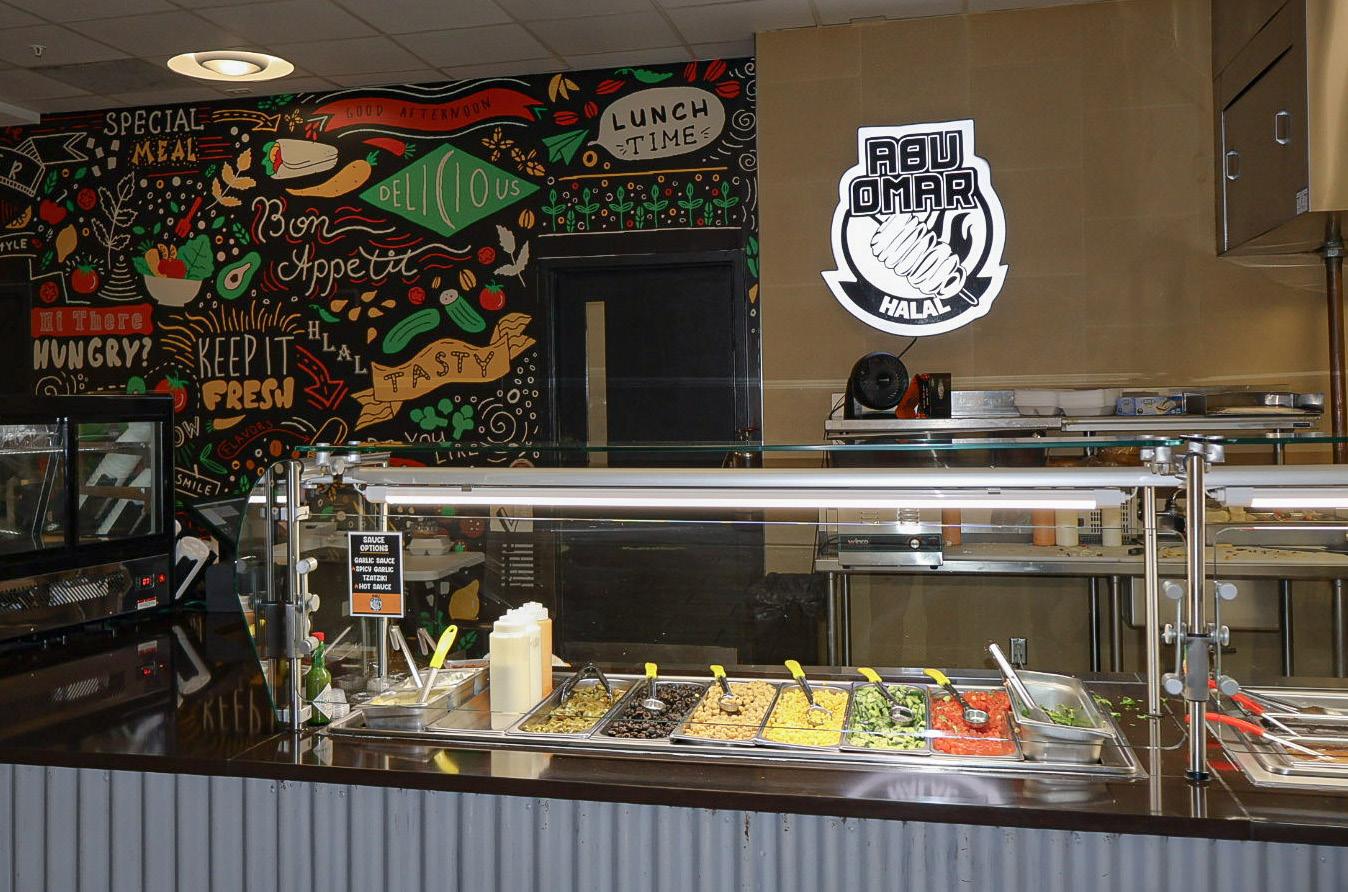
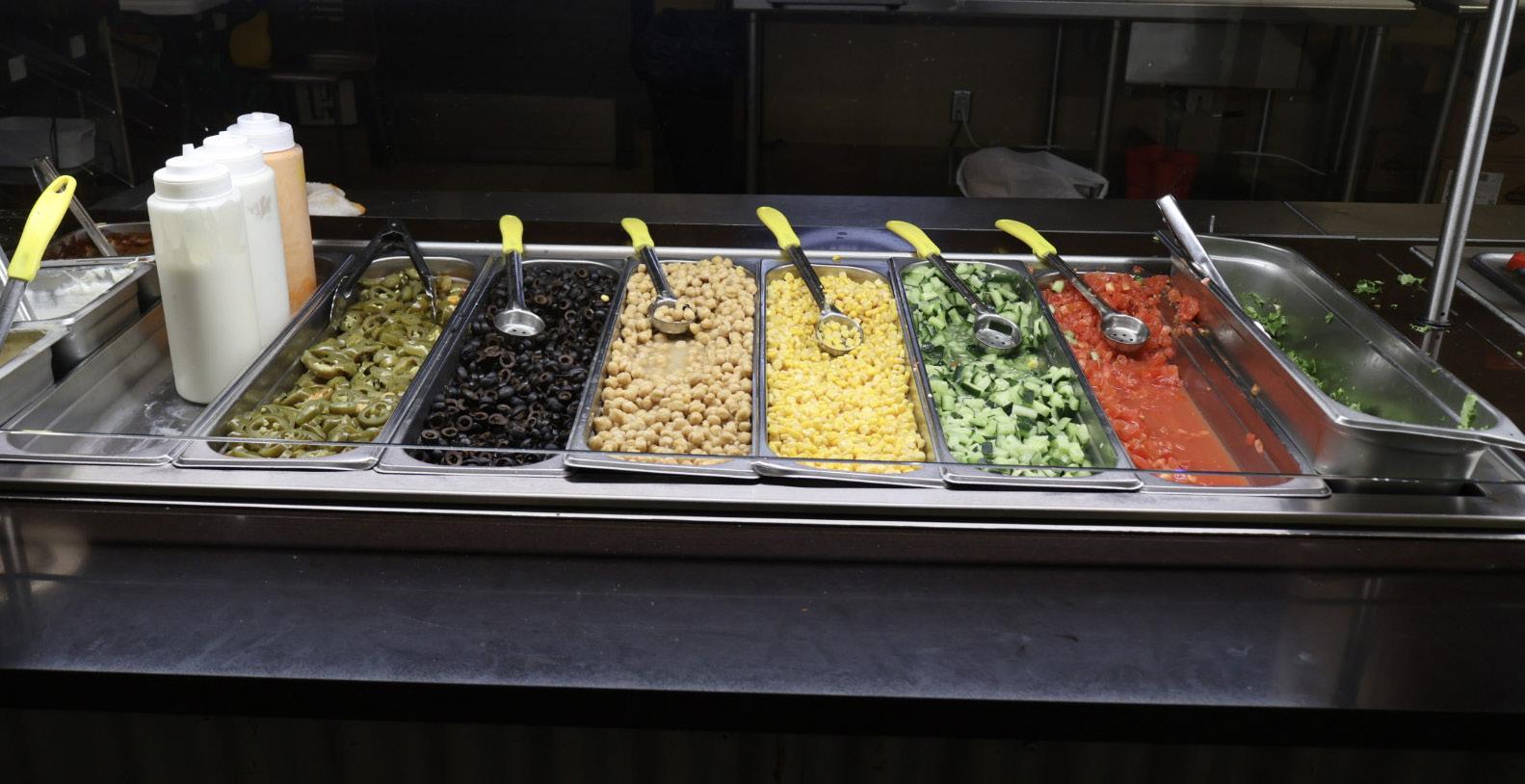
With chicken shawarmas, hummus and fries on the menu, this halal street food spot has quickly become a favorite for Aggies looking to switch up their usual meals. While not an alternative to Cava, it comes close to those looking for a Mediterranean touch.
“People who love to eat tacos are always the best people!” The restaurant’s famous tagline invites students inside the Sbisa Food Complex to grab tacos and burritos for $8.95. Cabo has competition — but which restaurant is winning? You decide who deserves the Tex-Mex campus crown.
275 Joe Routt Tamu Blvd. College Station, TX 77840
At Sbisa, West Campus and Polo Road, Houston Street Subs offers a steady selection of sandwiches and salads. It is a lighter lunch option and a craving fix for deli lovers.


275 Joe Routt Tamu Blvd. College Station, TX 77840

How your space can tell a story
By Emma Jones, Staff Writer
Every student who steps on campus must face the same daunting riteof-passage: move-in day. We’ve all been there — imagining the freedom of a fresh start and a fresh home, escalated to perfection in your head, styled exactly how you want: Pinterest-perfect.
There are so many fun and creative ways to go about this process, from hiring an interior designer to antiquing or thrifting to even repurposing a few things from home. Whether you’re a first-time freshman or a senior welcoming your last move-in day before graduation, decorating your space is a priority for self-expression. But when you get down to it, finding everything you had in mind — especially on a budget — might be harder than expected.
kind of what furniture pieces you need, it’s easier to go from there into the decorative pieces.”
Christensen noted that college students often under- or overestimate how much they’ll actually need, which could hinder the room’s ability to express uniqueness.
“I feel like a good design incorporates elements that tug at all five senses, and then that way you feel overall not overloaded, but balanced,” Christensen said.
Another way to create a unique style is by searching for specific pieces that speak to you, and Bryan-College Station offers a variety of places to look.


Adele Interiors, founded by Nikki Fort and based in College Station, has helped lavish local spaces for four years now. They have worked on a plethora of commercial and residential projects and helped countless college students design their space around their personality.
Claire Christensen, a graduate from Sam Houston University and lead designer at Adele Interiors in College Station, said that although your space in college is temporary, it is still highly important.
“There’s a lot of studying going on, and it’s kind of strenuous,”
Christensen said. “So if you have a space to come back to and ground you and remind you of yourself … it’ll make you feel good.”
Being mindful of your budget is important, Christensen said, and she and her team have found how best to help students reach goals within their means.
“One [tip] would be to start with what pieces you need,” Christensen said. “So, if you need hardcore furniture pieces, start with those staples … once you get an idea of
A beloved example is Old Bryan Marketplace, originally a car dealership that was converted into a quaint antique shop by Kay Conlee, who passed ownership to her son Grant Conlee. It has become a prominent attraction in downtown Bryan and fostered an environment to slow down and enjoy time well-spent.
“30 years ago, [Kay] opened the store,” Grant said. “She wanted to appeal to anyone — no matter what economic level you lived in, or if you lived in an apartment or a dorm, or if you lived in the biggest house in Bryan … there would be something within these walls that you could attain and feel a part of.”
It’s never too early to start curating your style, Grant said, and he noted that college students tend to choose candles and cards the most. But most of all, he encourages students to pick something that is reflective of who they are.
“Pick something that’s timelessly elegant, that will always look good no matter how you evolve your life or style,” Grant said.
When asked how he would advise someone new to thrifting pieces for their home, Grant said to slowly build a personal style without trying anything wild at first. He advised choosing long-lasting and functional pieces over trendy or more disposable items.
“If you buy nice things, they’ll look beautiful anywhere,” Grant said. “But if you buy for a spot, you’re not going to have that spot forever.”
Creating your own environment is both challenging and rewarding as a college student. Finding specific pieces that represent you can make your space both comfortable and unique: the keys to a space worth coming home to.
When most freshmen move out of their dorms at the end of the spring semester, they’re hoping — practically begging — to never return. For them, those two semesters are more than enough for this collegiate rite-of-passage. The next year, they’ve shifted into off-campus apartments or townhouses, eager for home-cooked food and the privacy of their own room. Despite this, a few of those freshmen stay behind serving as resident advisors, or RAs, to welcome the next class moving in.
RAs go through a multi-step process including a written application, a group and individual interview and team-building. Considered part-time employees, they check for work orders or incidents between residents. They are also mandatory reporters for mental health and abuse.
For second-year Mosher Hall RA Parvathi Menon, taking on this role meant paying it forward. A positive connection during her freshman year with the next-door RA in Aston Hall sparked the inspiration.
“Every time I would see him down the hallways, he would ask me how I was doing,” Menon said.
When it came time for Menon to apply, she chose to be an RA in Mosher, the Engineering Living Learning Community, or LLC.
As an aerospace engineering junior herself, Menon is able to help freshmen more than just socially and emotionally.
“Recently, one of my residents reached out to me … and I was like, ‘Wait, I can help you right now because I’m free,’” Menon said. “We were just going through his previous exam.”
Even once her residents leave Mosher for the final time, Menon tries to maintain contact, continuing to remain a support system for the residents from her previous year as an RA.
“When I see them near Zach, I talk to them,” Menon said. “I feel so great when I hear they’re doing pretty well.”
Menon’s co-worker, visualization freshman Gabriel Pardo, felt encouraged to apply because of his own experience and became a Mosher RA in fall 2025.
“I was a resident of Hullabaloo, and I worked on the community council where I got to interact with a lot of my RAs,” Pardo said. “That led me to pursue applying.”
Even though Pardo currently studies visualization, he was once an engineering student just like the freshmen he works with. Like Menon, he’s able to help them with their engineering coursework and the Entry to a Major, or ETAM, process.
“Being that this dorm is currently an LLC, it’s really a great community
for all the engineers,” Pardo said. “If I was an engineer still, I would have really appreciated being here.”
Unlike Menon and Pardo, communication senior and Eppright Hall RA Andie Wilson had a different reason for initially applying for an RA position, and it’s one that some of us might relate to all too well.
“Me being an only child, I don’t like to share,” Wilson said. “I wanted my own room, but after I started working more with the position … I just really enjoyed it.”
Wilson understands how hard it is for freshmen transitioning to college. Her own freshman year, she didn’t step outside of her dorm much.
“Now I try and make an effort to be like, ‘Hey, if you just want to stop by and grab a drink or grab a slice of pizza … ’” Wilson said. “To me, that’s an effort. It’s you showing that you’re getting there.”
For Wilson, being an RA has affected her in more ways than one. While her favorite part about the job has been connecting with her residents, she’s learned a lot in the last three years.
“It’s really taught me to think on my feet because I have had things [happen] from your entire building flooding on the first day of finals to a snake being in the bathroom,” Wilson said. “I’ve seen it all.”
By Belle Guerra, Staff Writer
By Belle Guerra, Staff Writer
College is sold to you as this perfect mix of independence, fun and late night memories, but no one really tells you about the part where your apartment turns into a full on survival situation. Somewhere between your first grocery run and your third week of classes, you realize that living on your own means being responsible for everything, including the unexpected.
From getting sick at the worst possible time to dealing with bugs, broken appliances and random housing disasters, college housing is less about aesthetics and more about being prepared. If you’re not ready for it, things can spiral fast. So consider this less of a horror story and more of a survival guide for what actually happens inside student housing at Texas A&M.
make everyone’s immune system backfire. Students often try to push through being sick because they do not want to miss class or fall behind, but that usually just makes things worse. Eventually most students encounter what feels like the four horsemen of the college apocalypse: strep, COVID-19, the flu and mono. It becomes one of those experiences that almost everyone at college goes through at least once.
When you start feeling sick, the best move is going to the A&M Student Health Center instead of trying to tough it out. They can test for things like strep or the flu, and get you what you need to recover faster.
While also being incredibly affordable (I’ve been more times than I can imagine), being healthy also means using campus resources like Rec Sports to stay active, getting enough sleep even during busy weeks and actually eating healthy balanced meals at places like Sbisa or the Commons instead of surviving off snacks, Chick-fil-A and energy drinks.
One thing nobody warns you about when you get to college is how often everyone gets sick. Somewhere between walking down Texas Avenue, crossing University Drive and sitting in a packed lecture hall, sickness just starts spreading around campus. Not to mention the horrors of Aggieland allergies. It usually starts small. Someone in your class has a cough, another person says they feel a little off and within a week it seems like half the people around you are sick. Constantly being around thousands of people makes it really easy for illness to move quickly through campus. On top of that, the weather in College Station does NOT help. One day it’s warm and sunny and the next day cold and windy, which seems to
Preparing your space ahead of time makes a noticeable difference. Keeping a small medicine setup in your room, even if it is just a drawer, allows you to actually take care of yourself when you need to. Having basic medicine, a thermometer, tissues and med options already available means you are not scrambling when you feel your worst. At the same time, keeping shared spaces clean and wiping down surfaces can help prevent sickness from spreading throughout the apartment.
One of the fastest ways for an apartment to become stressful is when cleanliness starts to slip. In shared housing, it is never just about your habits. One person leaving dishes in the sink or forgetting to take out the trash can slowly affect the entire space. At first it feels small but over time those small choices build into something much harder to ignore.
This is usually how bug problems or roommate problems start. What begins as a slightly messy kitchen can quickly turn into a situation where ants, roaches or resentment begin to show up. Suddenly your apartment feels uncomfortable to even be in. At that point, it is no longer just about cleaning, it becomes a housing issue that changes how you experience your own space.
Living in an environment like that adds unnecessary stress to your day. Instead of your apartment being somewhere you can relax, it becomes something you have to deal with. That shift is what most students are not prepared for.
The biggest difference comes from consistency. Keeping up with basic cleaning, taking out trash regularly and not letting food sit out overnight prevents most issues before they start. Along with keeping doors or windows closed. Having cleaning supplies and bug spray on hand also makes it easier to handle problems early instead of letting them build.
Oh, and get a fly swatter.
Just as important, though, is

communication. Setting expectations with roommates about shared spaces within the first week of moving in helps keep the apartment livable and avoids tension before it starts. Keeping your living space not only clean, but happy.
One of the biggest realities of college housing is that things will go wrong, and usually at the worst possible time. It is never a matter of if, but when.
leave. The sink stops draining after a long day. The hallway floods and mold starts to grow. The power goes out when you are the only one home, or the worst one of all: your Wi-Fi goes out at 11:58 p.m. It always seems to happen at the most inconvenient time ever.
What makes these moments overwhelming is not just the issue itself, but the fact that most students are not prepared for them. When something breaks in your apartment, there is no one automatically stepping in to fix it. You are the one standing there trying to figure out what to do when the washing machine is slowly turning your living room floor into Shrek’s homeland.
The bigger problem is how quickly small issues can turn into bigger ones. A slow leak does not stay small for long. A clogged drain can get worse overnight. Ignoring something because you are busy or unsure of what to do can turn a manageable situation into something that actually disrupts your life.
Being even slightly prepared makes these situations feel a lot less chaotic. Having basic

“The difference is whether your space feels like something you can manage or something that manages you.”
essentials like a plunger and a flashlight, and getting your assignments done before the last minute gives you a starting point instead of leaving you stuck.
Just as important, though, is knowing when to stop trying to fix something yourself and contact maintenance. Let’s be real, you can’t fix the pipe bursting in your ceiling, and it’s definitely not going to disappear if you ignore it. While you’re up there, make sure to check your vents for the silent killer, aka black mold. You don’t want to find yourself stuck with an unexplainable, unending illness. Taking action early, even if it is just reporting the issue, can prevent a small problem from becoming a flood.
At the end of the day, things are going to go wrong. The difference is whether your space feels like something you can manage or something that manages you.

So — you’re a college student: a freshman in a dusty dorm, a junior in an apartment (a kitchen, finally!) or even a grad student living in a house. Whether it’s your first time with your own space or maybe your first time sharing a room, one thing remains the same; at some point or another, you’ve got to clean. For all those who would jump at the chance to organize and reorganize again, and for those who would rather do anything else, here are a few short and simple ways to make cleaning easy and fun!
Why clean, anyway?
Many of you might be asking this question — the mess doesn’t bother you anyway. This might be the case, but cleaning improves a lot more than your roommate’s mood. It can improve yours, too, and can dramatically increase your motivation to finish all those other things you’ve been procrastinating.
You’ll feel much more accomplished and ready to sit down and finally finish that assignment — and it feels so much better to come home to a clean space instead of a messy one! Even if a spectacularly neat room isn’t on your list of priorities, a good reorganization makes for a fantastic reset.
What do I use to clean?
There’s a few essentials that
everyone ought to have in their pantry or under the sink. Number one: Clorox wipes; these are incredibly versatile (I mean really — from counter tops to door handles!) These are a great choice for any surfaces, big or small, that get used a lot throughout the week.
Number two: vacuum cleaner and a mop or swiffer; these are crucial to your cleaning cache — the floor is the first thing I clean when I need a reset!
Coming in at number three: Windex for windows and mirrors. You might not think this makes a large impact on a space, but having a clean mirror is a game changer. I would also advise this for a deep clean (yes, that means everything!) every two or three weeks; you might be surprised how much can accumulate!
How can I enjoy cleaning my space?
There are several ways to make tidying up a room or bathroom much more fun. One way is to turn on music! It doesn’t have to be just your boring “cleaning playlist” either — whatever makes you want to get up and move. This makes the time go by so much faster and takes your mind off of all the other things you feel like you could be doing. And if you aren’t a music person, throw on an audiobook or a podcast.
Another way is to make a checklist: write down each task you want done, then mark it off when you’re finished! Once you’ve gotten a whole list crossed
off, you’ll feel much more equipped to tackle the rest of your to-dos. . This is also a great time to take a break from the craziness of the week. Leave your phone somewhere else and take just half an hour to put your space back together. It’s calming, I promise!
How do I clean with roommates?
The key piece to a smooth cohabitation with your roommate(s) is to divide up chores. This sounds like a lot of work, and sometimes an uncomfortable conversation with someone you only just met last semester, but it results in a more relaxed dorm, apartment or house atmosphere overall.
While these chores might look different for each situation — asking your roommate to unload the dishwasher wouldn’t make much sense in a dorm — the overall communication between you and those you share space with impacts a lot. It’s important to do your part or even go the extra mile and do something to make your roommates happy, too!
By Emma Jones, Staff Writer