
ECHOES
HOW GIRLS LEARN:
The Neuroscience Behind Baldwin's Educational Approach
IN THIS ISSUE
For 135 years, long before modern studies confirmed what we already understood, Baldwin has been creating learning environments where girls succeed and thrive.
EDITOR Lisa A. Algeo
DESIGN Nicole Stettner
PHOTO CREDITS Abby Anthony, Ivory Tree Portraits, Melissa Kelly, Theresa Regan, Sideline Photos and Shira Yudkoff
All photographs are identified left to right unless otherwise noted.
We welcome letters regarding the contents of the magazine and/or issues pertaining to the school. Letters must be signed. The editor retains the right to edit at her discretion.
Please send correspondence to:
Lisa A. Algeo, Editor, Echoes | The Baldwin School 701 Montgomery Ave. | Bryn Mawr, PA 19010 lalgeo@baldwinschool.org
For general alumnae requests or information, please contact the Office of Advancement and Alumnae Engagement: Laura J. Armstrong, Chief Advancement Officer laura.armstrong@baldwinschool.org or (610) 525-2700, x286
FROM THE HEAD OF SCHOOL
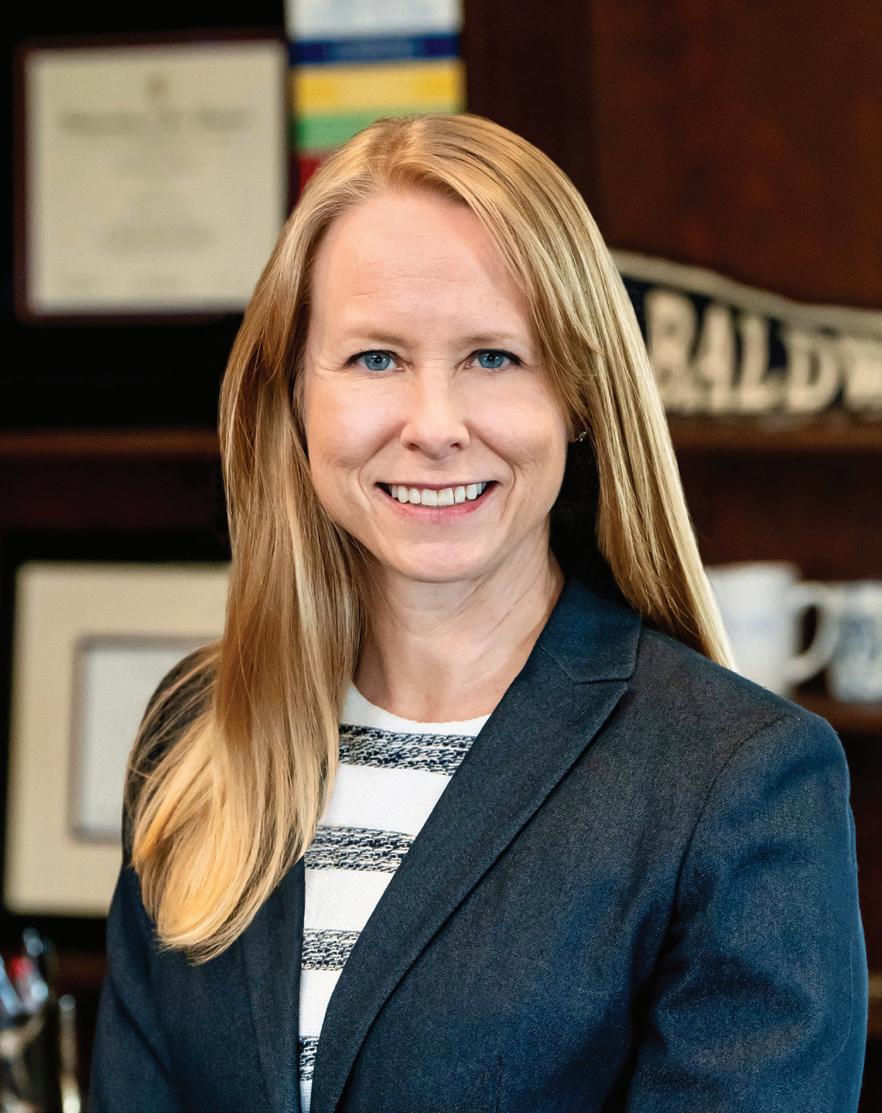
Something special happens here at Baldwin, and I see it every single day in classrooms, on playing fields, in the hallways, and in the genuine joy on our girls' faces. Our students have this wonderful, authentic curiosity about the world. They ask the kind of thoughtful questions that make teachers smile, and they seek understanding that goes beyond the surface. Our girls value and appreciate engagement and intellectual curiosity, and they actively seek out teachers and friends who share their love of learning.
Here's what makes that possible: we meet each girl exactly where she is. We understand how she learns and what she needs to thrive and be her best self. In this issue, you'll read about the fascinating brain science behind how girls learn; the research that informs much of what we do at Baldwin, from how we structure our classrooms to how we provide feedback and support. This deep understanding of girls' development allows us to create an approach that sparks genuine engagement among our girls. We nurture their curiosity, creativity, and that intrinsic motivation that comes from learning that truly matters.
Most importantly, we recognize each girl as an individual. We take time to learn what fills her cup in academics, arts, athletics, and so much more. We create space for every girl to flourish doing what she loves, because when girls are engaged in their passions, learning becomes joyful. While none of us can predict the future, we're educating each Baldwin girl to be confidently prepared for whatever comes her way and everything she dreams of achieving. You'll see evidence of this throughout these pages, from our growing Music Conservatory program nurturing the next generation of musicians to our expanded athletic programming, including the new turf field made possible by so many of you, whose generous gift reflects the transformative power of coaches and mentors in our girls' lives.
The breadth of excellence you'll find in this issue speaks to who we are as a school. Whether it's our students building self-driving cars in the DREAM Lab, competing for championships in squash, or exploring sustainability initiatives alongside brilliant alumnae that prepare them to be stewards of our world, Baldwin girls are learning to lead with purpose and confidence.
As we continue our journey toward our strategic vision, The Brilliance of Baldwin, I'm filled with gratitude for this community, for alumnae who return to campus to inspire current students, for families who trust us with their daughters, and for faculty like Bridget Doherty, whose Reed Fellowship recognition reminds us of the exceptional educators who make Baldwin extraordinary.
Thank you for being part of this remarkable story.

Lynne Macziewski Head of School
Baldwin Named #1 All-Girls High School, Private K-12 School in Pennsylvania
Baldwin is proud to announce its recent recognition by Niche as the #1 All-Girls High School in Pennsylvania and the #1 Private K - 12 School in Pennsylvania for the 2025-26 school year! In addition, Baldwin was ranked the #2 Best High School for STEM in Pennsylvania, and #15 Best All-Girls High School in the nation, reinforcing our long-standing reputation for academic excellence and innovation in education.
These rankings are more than accolades; they reflect Baldwin’s unwavering commitment to providing an educational experience intentionally Designed for Her. Powered by our four strategic pillars — Leading with Purpose, Cultivating Community, Empowering Learners, and Reimagining Our Environment — Baldwin offers a transformative learning journey that prepares girls not only to succeed, but to lead with confidence and courage.
All-School Thanksgiving Assembly
More than 50 alumnae returned to Baldwin to celebrate Thanksgiving with a festive luncheon and the beloved All-School Assembly. Their presence added a special warmth to the day as they joined our Pre-K and Kindergarten students, along with members of the 13- and 14-Year Clubs, in singing the traditional turkey songs. This joyful celebration filled the Athletic Center with Baldwin spirit and the enduring sense of community that makes this tradition so meaningful.
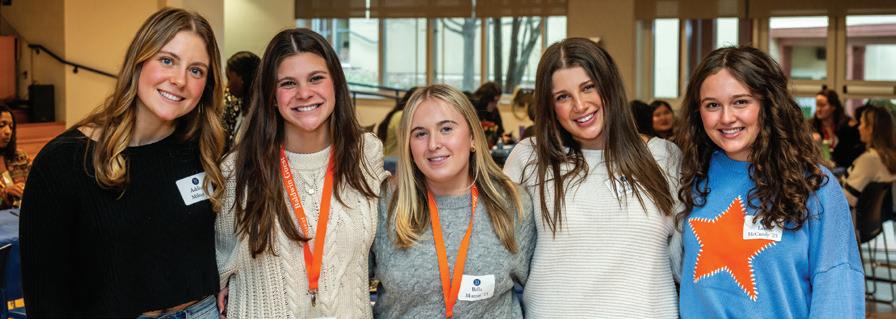
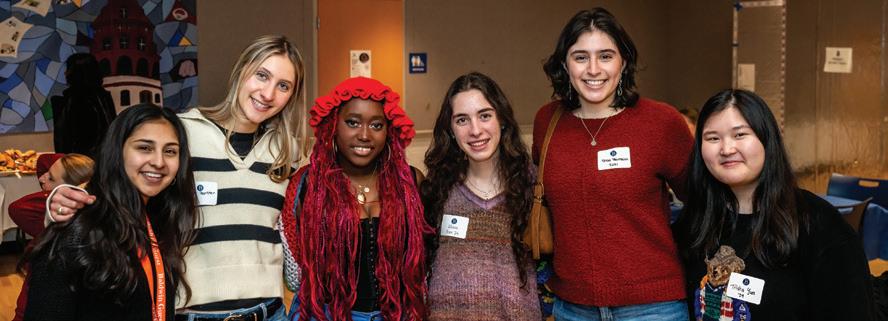
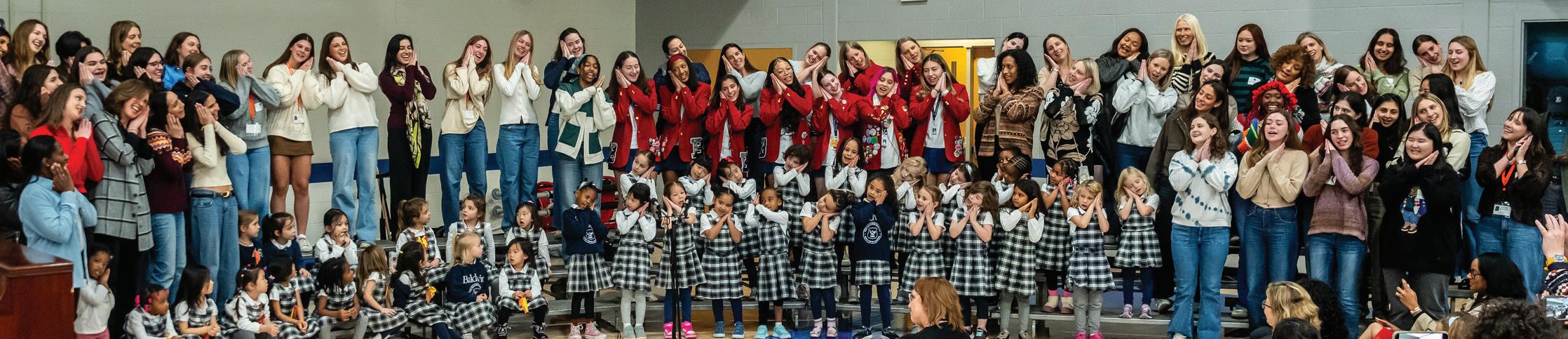
Top: Addison Milner ’25, Addison Ford ’25, Bella Murray ’25, Charly Landow ’25, and Lexi McCurdy ’25 came back to Baldwin. Bottom: Marin Alter ’24, Joelle Pearlstein ’24, Sione Brown-Alexander ’24, Eliana Jean ’24, Tessa Pearlstein ’21 and Trisha Yun ’24 reunited during the luncheon.
Trailblazer, Record-Setter, Storyteller: Jennifer Pharr Davis Visits Baldwin
Supported by The Ruth Fackenthal and Elise Tompkins Partridge ’76 Fund for Engagement in Art and Writing, Baldwin was thrilled to welcome adventurer, author, and speaker Jennifer Pharr Davis for a two-day campus visit that inspired students and faculty alike. Known for her recordbreaking hikes and compelling storytelling, Jennifer brought with her a world of experience — both on and off the trail.
A National Geographic Adventurer of the Year and former member of the President’s Council on Sports, Fitness, and Nutrition, Jennifer is no stranger to pushing the limits of what’s possible. She has hiked over 14,000 miles on six continents, including three thru-hikes of the Appalachian Trail. In 2011, she completed the iconic 2,190-mile trail in just 46 days, averaging a jaw-dropping 47 miles per day, and shattering expectations of what women (and mothers) can do in the outdoors.
Jennifer met with Middle and Upper School students during classes and assemblies, and engaged with faculty and staff during their professional development day, to share her unique journey and the lessons she’s learned along the way.
Alumnae Back On Campus
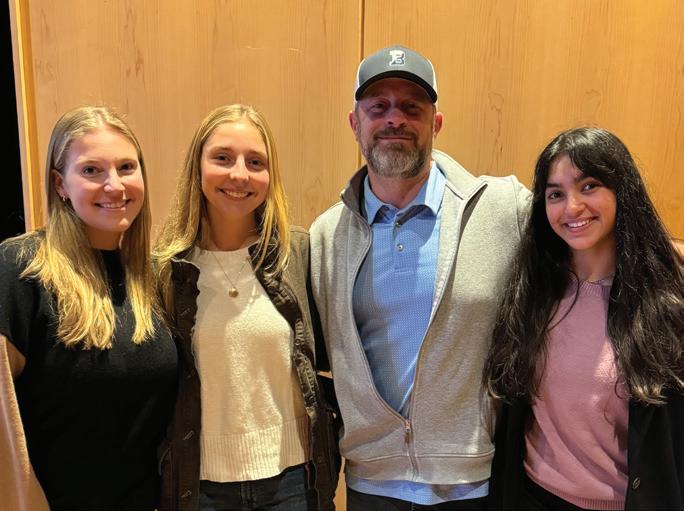
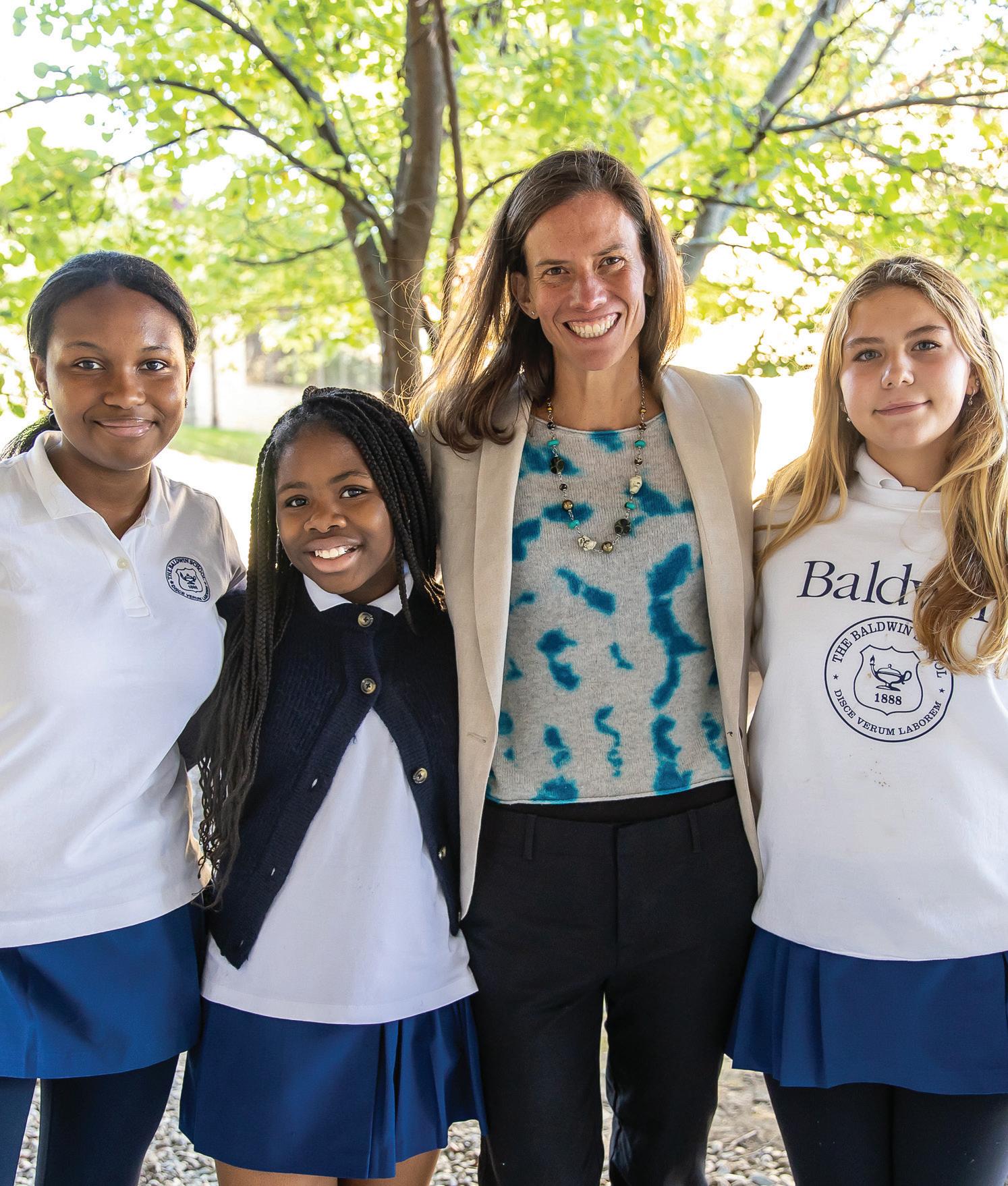
Grade 8 Senate Heads Torri Hill, Ionie-Joy Benjamin, and Avana Dilks pose with Jennifer Pharr Davis after their Middle School Assembly.
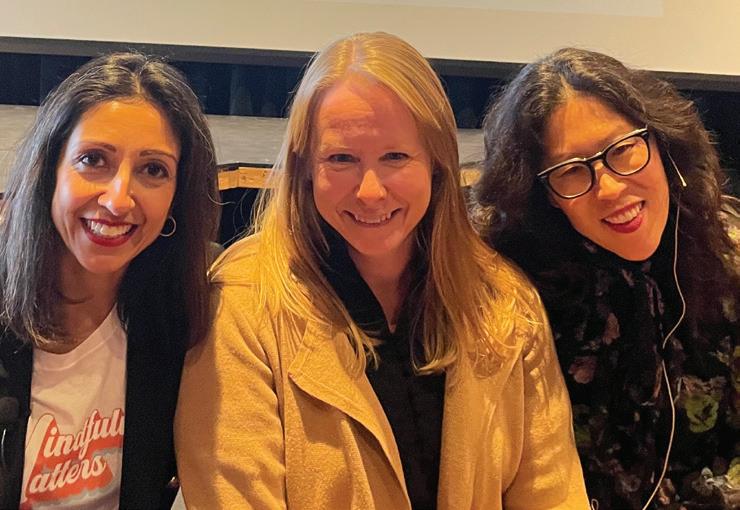
Paki (Pax) Tandon ’96 and Clara Park ’96 (pictured here with Head of School Lynne Macziewski) visited Baldwin this fall to meet with Upper School students about the mind-body connection and how to live your best life through their personal stories, life hacks, and mindfulness practices.
Sally Chen ’17 and Madeleine Marr ’17 visited History Teacher Dr. Athan Biss's U.S. Politics and Civics class recently to speak to juniors and seniors about their path from Baldwin to Capitol Hill. Sally is the Director of Communications for Rep. Lateefah Simon (D-CA), while Madeleine serves as a Housing Policy Advisor for Sen. Tina Smith (D-MN). They encouraged students to utilize their unique perspectives and interests as valuable assets for a career in politics.
Baldwin graduates Alexa Diecidue ’19, Katie Reed ’23, and Rachel Gopalani ’23 continue to use the arts to shape their academic and professional paths. They returned to Baldwin in January to discuss pursuing art in college and posed with Visual Arts Department Chair Kenny Delio.
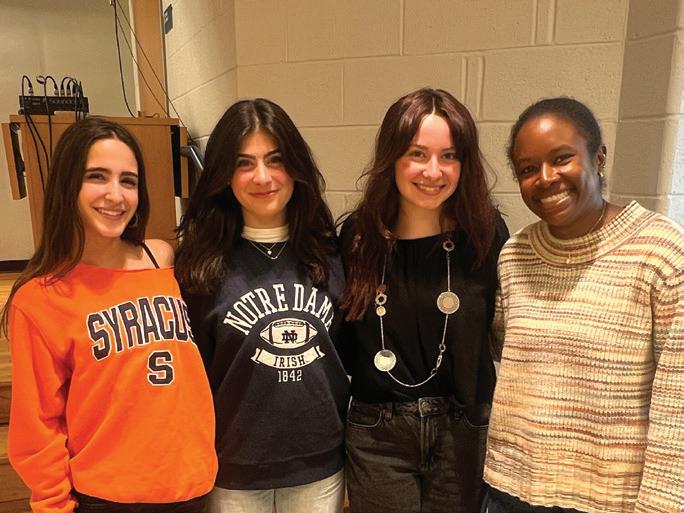
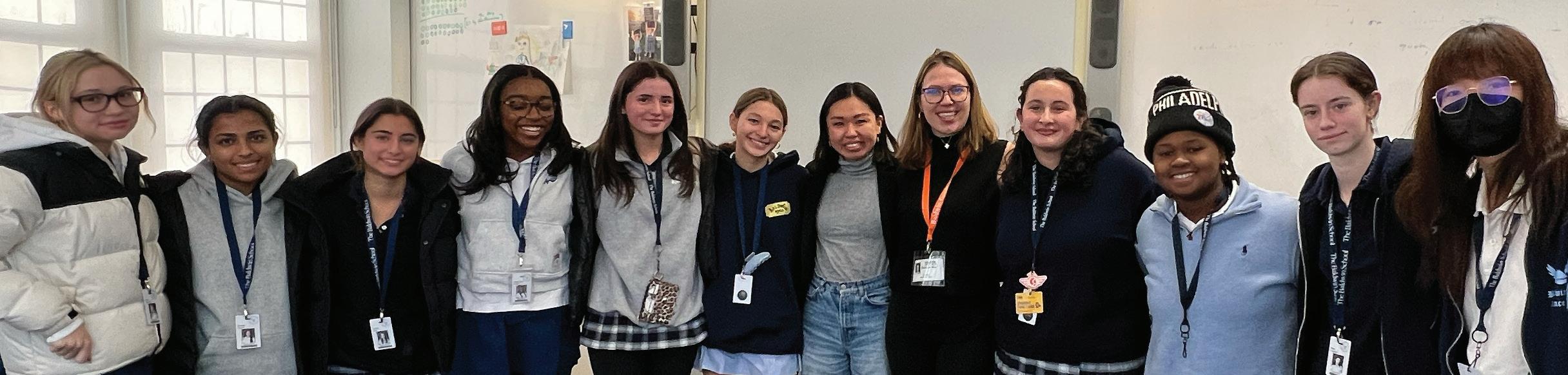
Anna Altman ’24 (Syracuse University), Caroline Parillo ’24 (University of Notre Dame), Zoe Levine ’24 (Skidmore College), and Azzaya Johnson ’19 (Baylor University) met with this year’s senior class to discuss what they can expect during the transition to college.
Alumnae Meet & Greet Inspires
Baldwin’s
“Almost Alums”
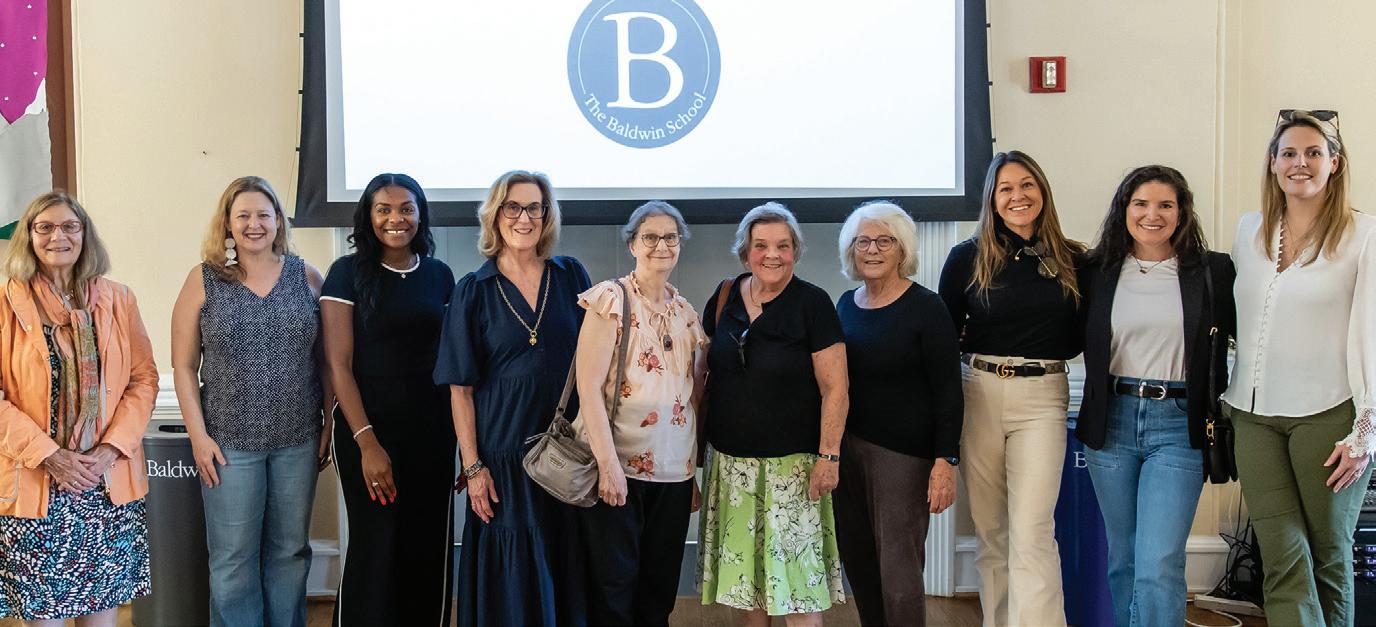
In the Baldwin Commons, formerly the Assembly Room, stories spanning six decades filled the space as alumnae from the Classes of 1960 through 2010 returned to campus to meet today’s juniors and seniors. From local graduates to one alumna visiting home from Uganda (Kimberly Burns Case ’90), alums shared reflections on life, careers, and confidence. Students gained a glimpse into the lifelong Baldwin community they’ll soon join while practicing their networking skills. The morning even included a special generational tie, with one junior’s grandmother (Helen Altenpohl Heinz ’68) among the alumnae in attendance — a reminder of Baldwin’s enduring connections across time.
Alumnae Events
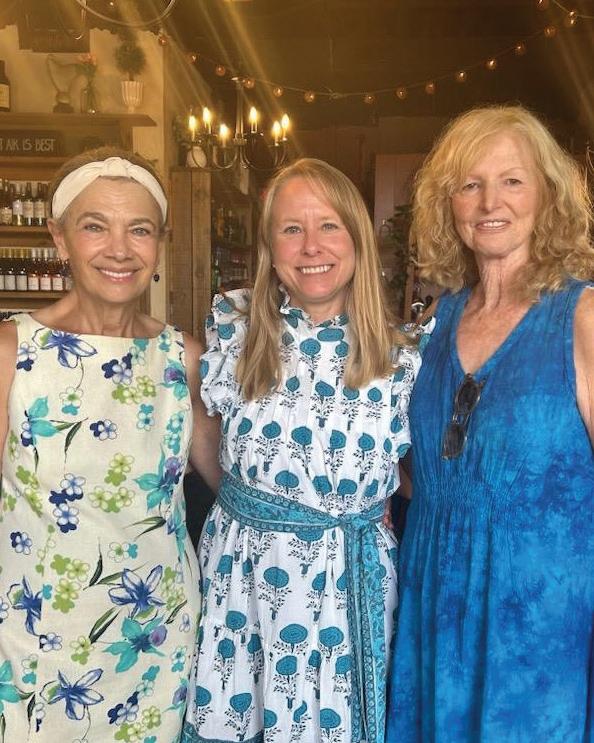
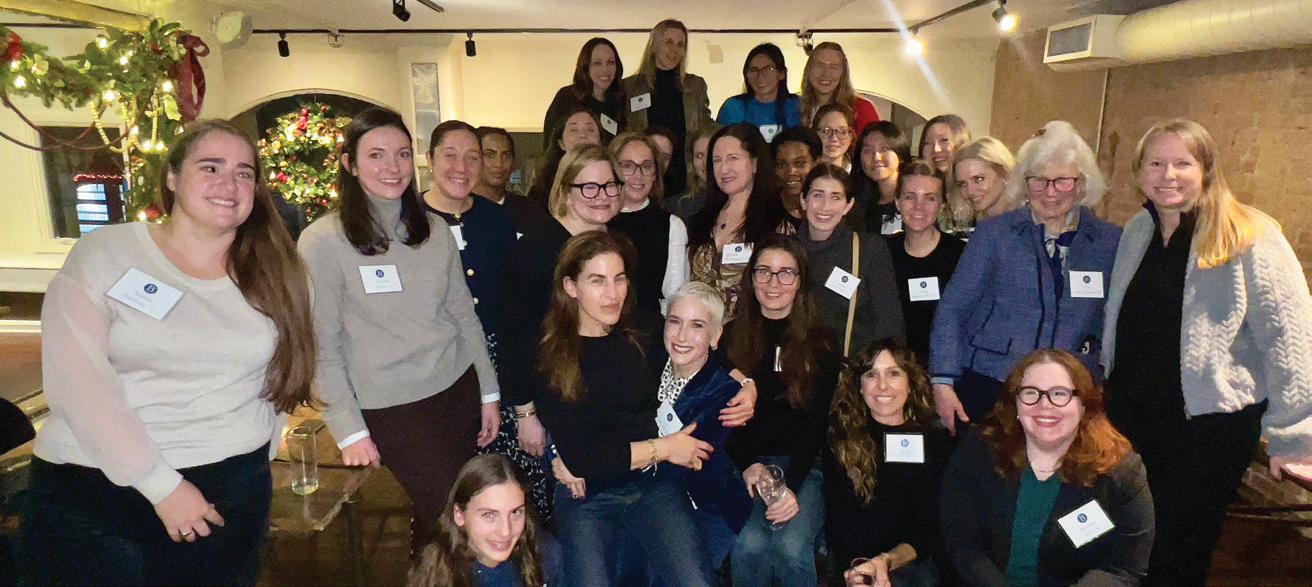
This summer brought special moments of connection, as Head of School Lynne Macziewski met with alumnae and parents in Kiawah Island, SC, and Rehoboth Beach, DE, and introduced The Brilliance of Baldwin, our new strategic plan, a roadmap that will guide our work in the years ahead. This fall, the Alumnae Leadership Council hosted an enjoyable evening of networking and light bites at Tarallucci e Vino in New York City. It was a great opportunity to reconnect, reminisce and meet fellow Baldwin alumnae.
BOOK SHELF
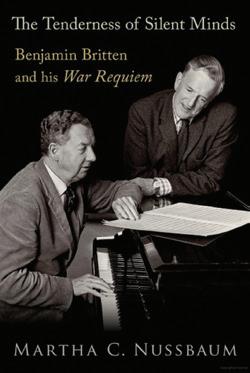
The Tenderness of Silent Minds: Benjamin Britten and his War Requiem
Martha Nussbaum ’64
The Republic of Love: Opera, Breath and Freedom (due out in 2026)
Martha Nussbaum ’64


Throw a Great Party Mary Bartlett ’65
Overheard in the Orchard Linda Weiner Hoffman ’74


A Tale for the Shadows
Joyce Lower Sherry ’76
Rocky Mountain Native Plant Primer
Lauren Springer ’77

Deborah Greenfield DeLauro ’69 and Elizabeth Hogg Sirois ’72 pose with Head of School Lynne Macziewski. Baldwin’s New York City area alumnae gathered this fall.
Virginia Butera ’69, Kimberly Burns Case ’90, Deionna Hill ’10 (P ’35), Susan Flood Thorkelson ’70, Holly Brown Patchen ’68, Helen Altenpohl Heinz ’68, Mary Oehrle French ’60, Ashley Corbett Zervalis ’02, Natalie Georges ’03 (P ’37), and Elizabeth Smith Campana ’05 networked with Baldwin’s junior and senior classes.
Investing in the Next Generation of Baldwin Athletes
Anne Davis Peterson ’81
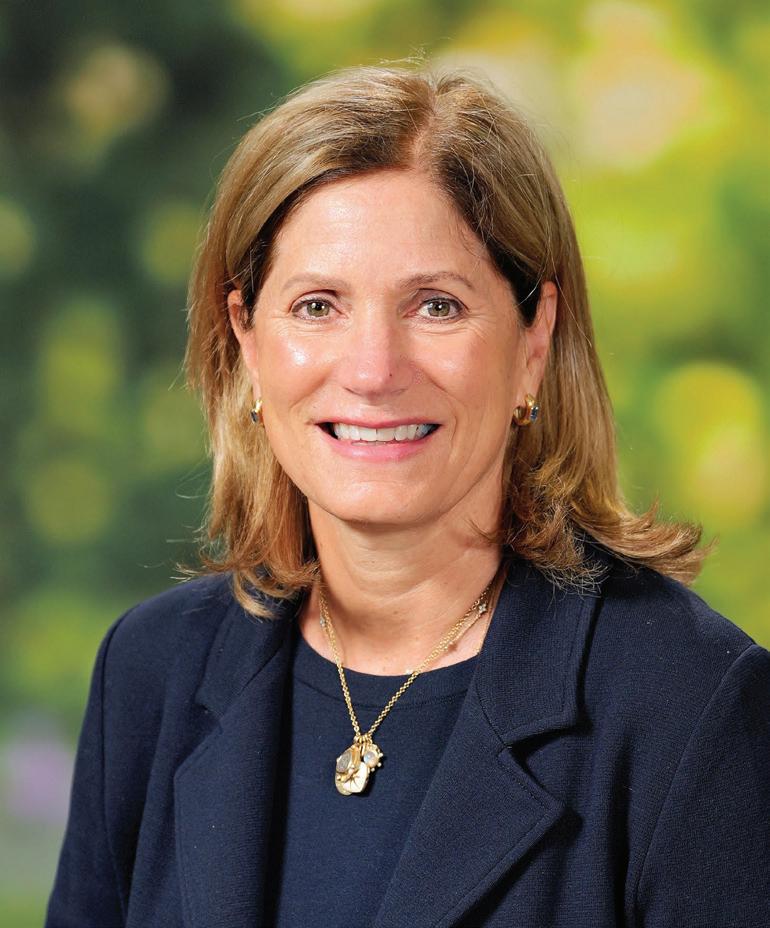
For Anne Davis Peterson ’81, giving back to Baldwin is both deeply personal and powerfully purposeful. A member of the 13-Year Club at Baldwin, Anne credits the school with providing the foundation that shaped her confidence, values, and trajectory, and she sees philanthropy as a way to ensure that same transformational experience remains available to future generations of Baldwin girls.
“Baldwin provided me an incredible educational experience that changed the course of my life,” Anne reflects. “My parents gave me the opportunity to attend Baldwin, and giving back helps ensure the School continues to grow and thrive for other young women.”
A standout student-athlete, Anne thrived on the playing fields at Baldwin, where athletics became a formative part of her identity. Through sports, she learned resilience, discipline, teamwork, and the importance of physical fitness, lessons that stayed with her long after graduation. Those values carried her to Middlebury College, where she was a political science major, a four-year varsity field hockey and lacrosse player and a captain of both teams.
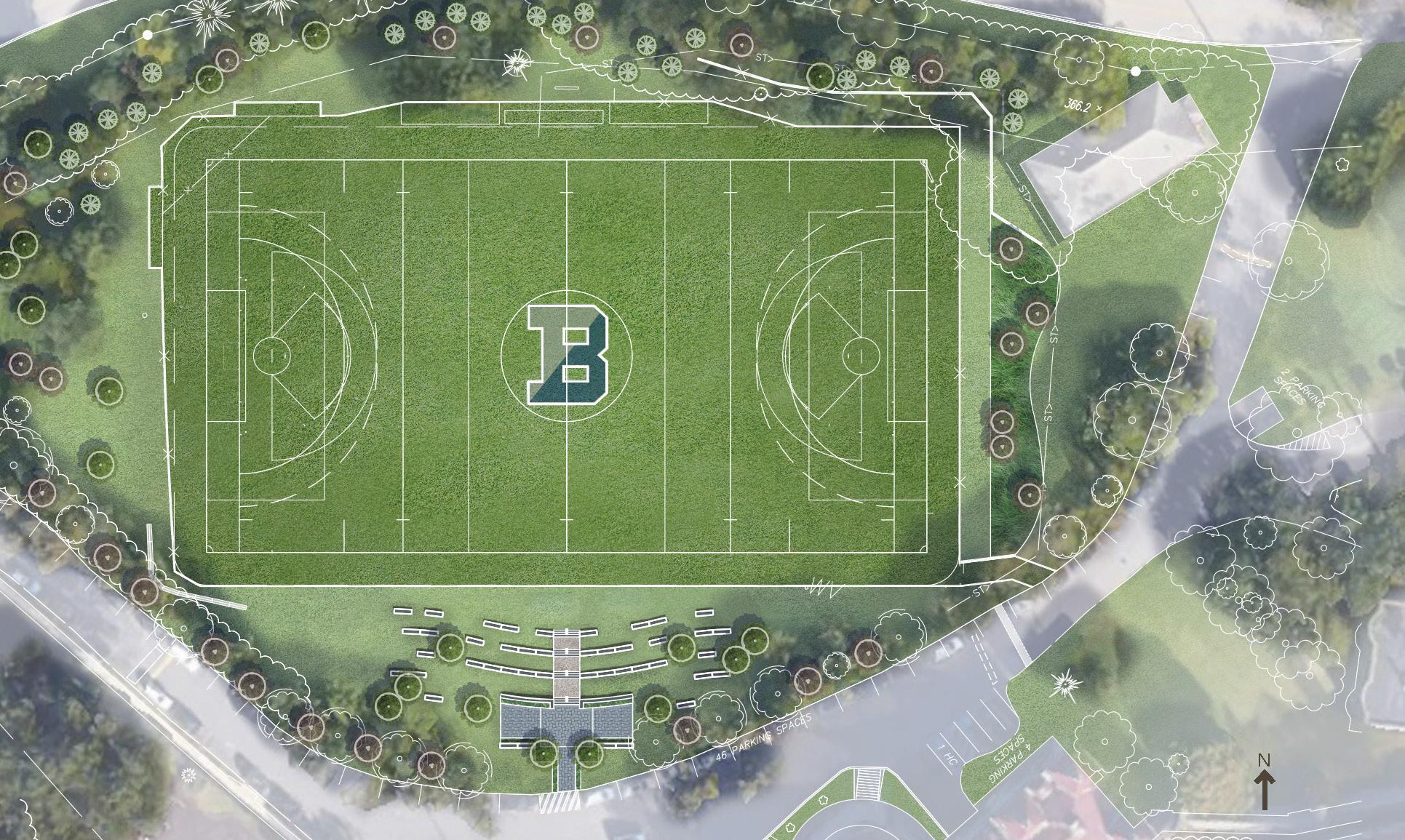
Anne’s appreciation for athletics and for Baldwin’s continued investment in its students made her enthusiastic about supporting the School’s new Upper Field turf project. The $4 million transformation will provide a modern, allweather surface for field hockey, lacrosse, and softball, significantly enhancing Baldwin’s athletic, physical education, and community programming.
“I was thrilled to see Baldwin investing in its athletic facilities,” Anne says. “When I saw the matching challenge from a current Baldwin family, I felt strongly that it was important to be part of this opportunity for the girls.”
That generous $2 million commitment established a one-to-one matching challenge for leadership-level gifts and sparked momentum for the campaign, inspiring alumnae like Anne to step forward in meaningful ways.
Looking back on her 13 years at Baldwin, Anne points to the many educators and coaches who shaped her path. Among them were Mrs. Pressman, whose passion for history pushed her academically; Anita Corl, a college field hockey star and Olympic-caliber athlete who inspired awe and ambition; and Mrs. Harlos, a longtime coach and PE department chair who devoted her career to expanding athletic opportunities for young women. Together, these mentors modeled excellence, commitment, and belief in girls’ potential.
Those lessons are woven into Anne’s life and career today. After beginning her career in real estate, she currently serves as Associate Head of School for Finance and Operations at Flint Hill School, a Junior Kindergarten –Grade 12 independent day school in Oakton, VA. Since joining Flint Hill in 1995, Anne has built a successful career in the historically male-dominated field of school finance and operations. She serves on the school’s leadership, crisis, and institutional inclusion and equity teams, and works closely with the board of trustees through its finance, investment, development, and building committees.
Her professional perspective reinforces her belief in Baldwin’s turf field project — not just as an athletic upgrade, but as an investment in students’ development and well-being. “Space always matters, but it must be purposebuilt so programs can truly come alive,” Anne explains. “Facilities play a critical role in student growth, wellness, and community.”
When asked what she hopes current and future students will gain from the new field, Anne’s answer goes beyond wins and championships. “First and always, the values of the game,” she says. “And knowing that there are people who value them as young women and are willing to invest in their opportunities. Then, when it’s their turn, they must do the same for those who come after them.”
Anne also speaks candidly about the essential role philanthropy plays at independent schools. “Philanthropy is a major income lever. It always has been and always needs to be,” she notes. “The impact of philanthropy could never be replicated by tuition dollars alone. Baldwin gave something to each of us, and it’s important that we give back to ensure it continues to thrive.”
For Baldwin seniors and fellow members of the Class of Red, Anne Davis Peterson’s story is a powerful example of how a Baldwin education — rooted in tradition, hard work, dedication, teamwork, and sisterhood — can shape a life, a career, and a lasting commitment to lifting up the generations that follow.
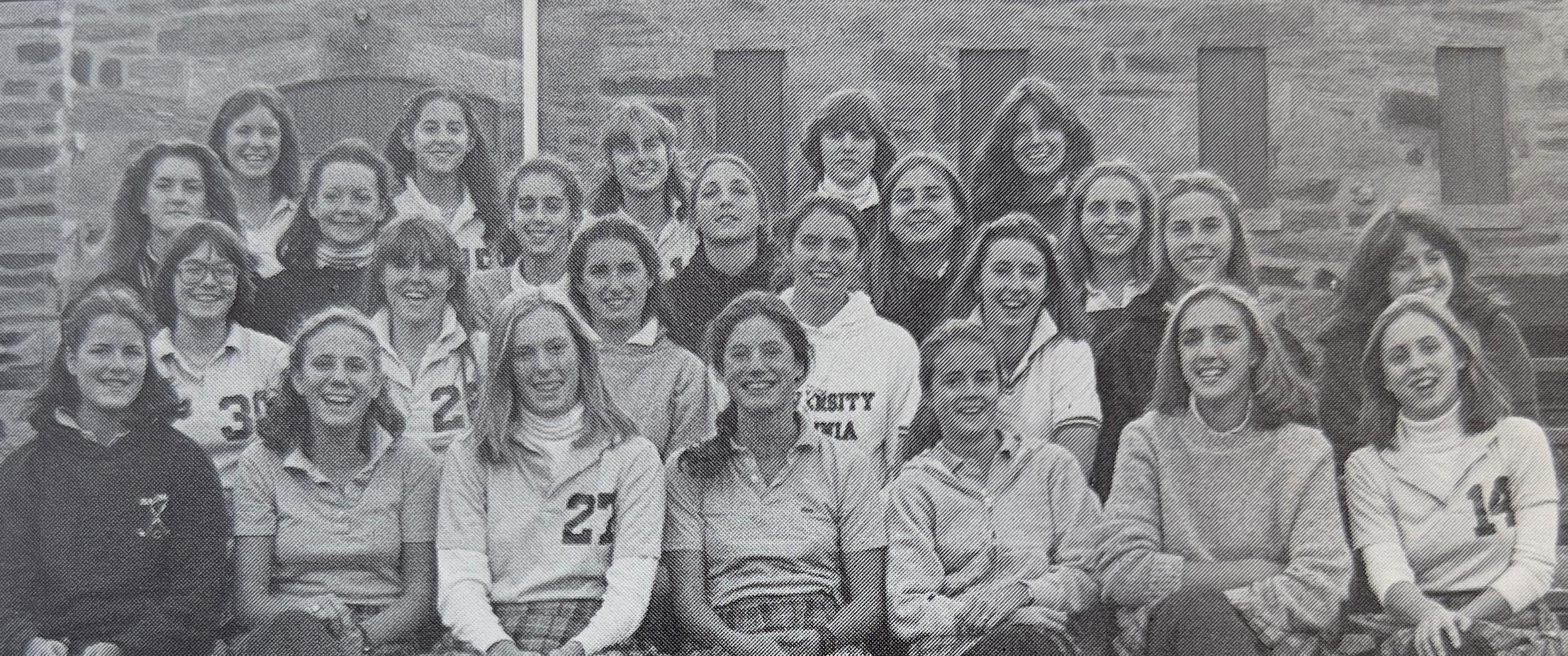
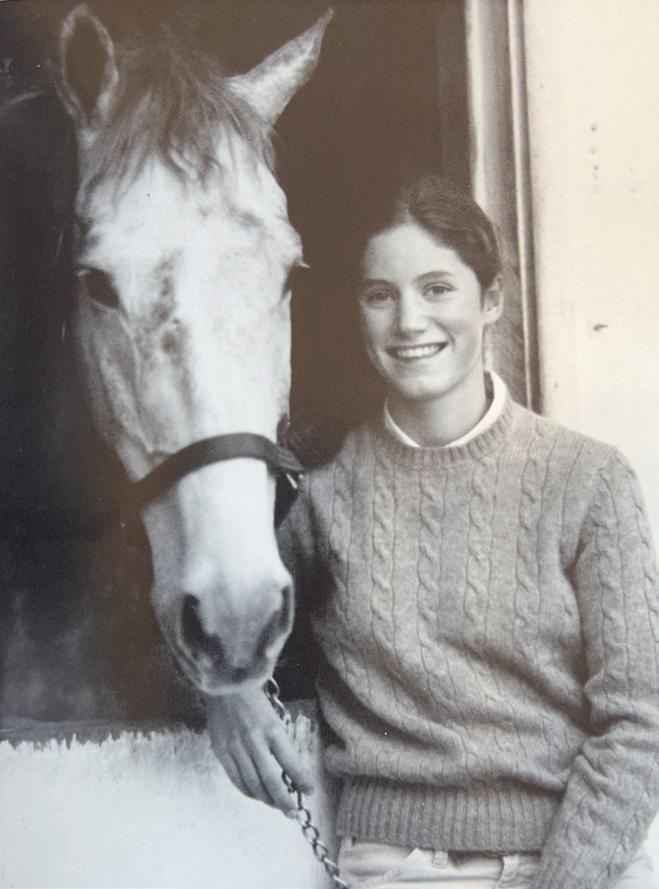
Anne Davis Peterson ’81 in her yearbook portrait. Anne (4th row, 4th student from left) with her field hockey team at Baldwin.
Human vs. AI
AROUND CAMPUS
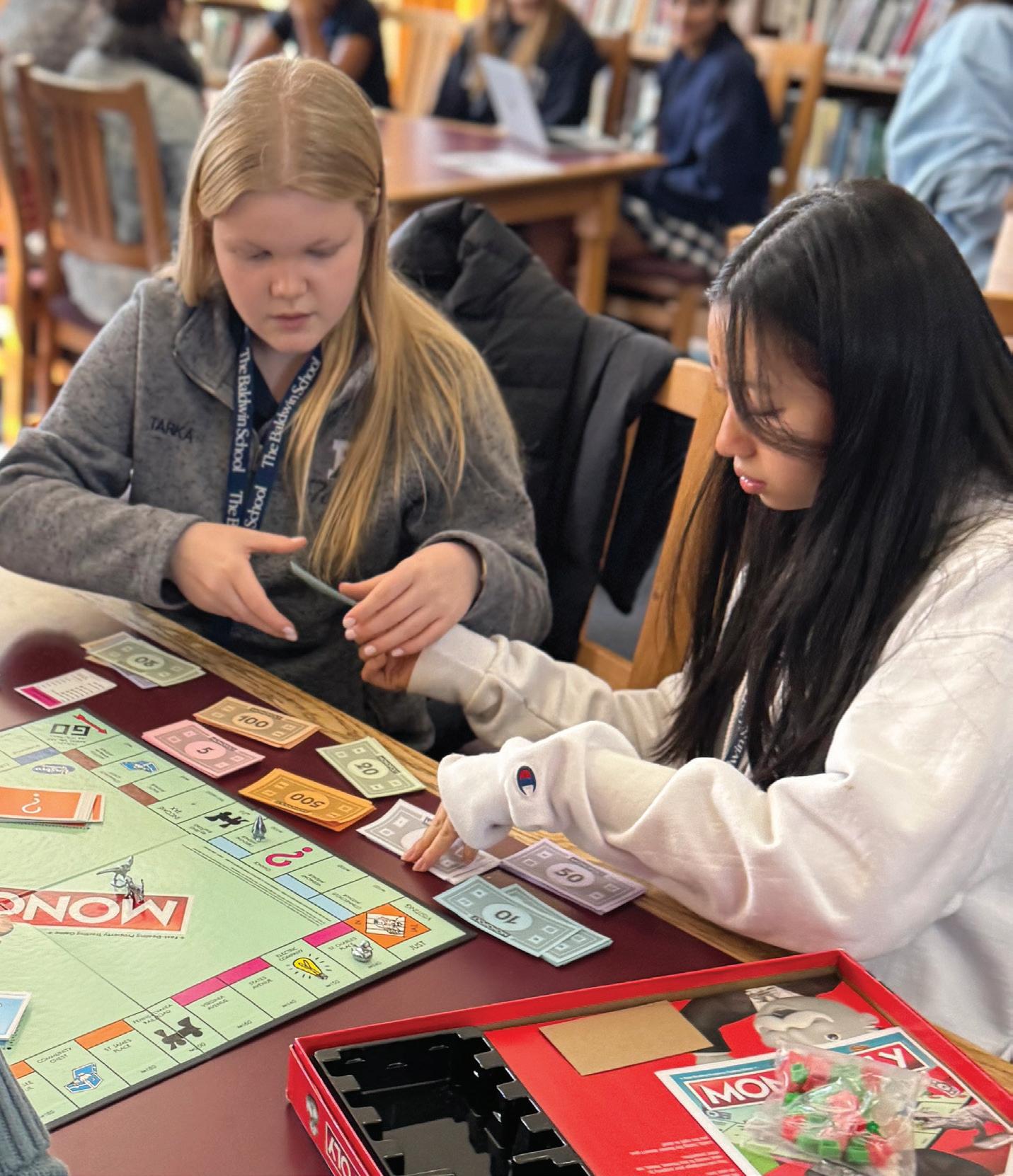
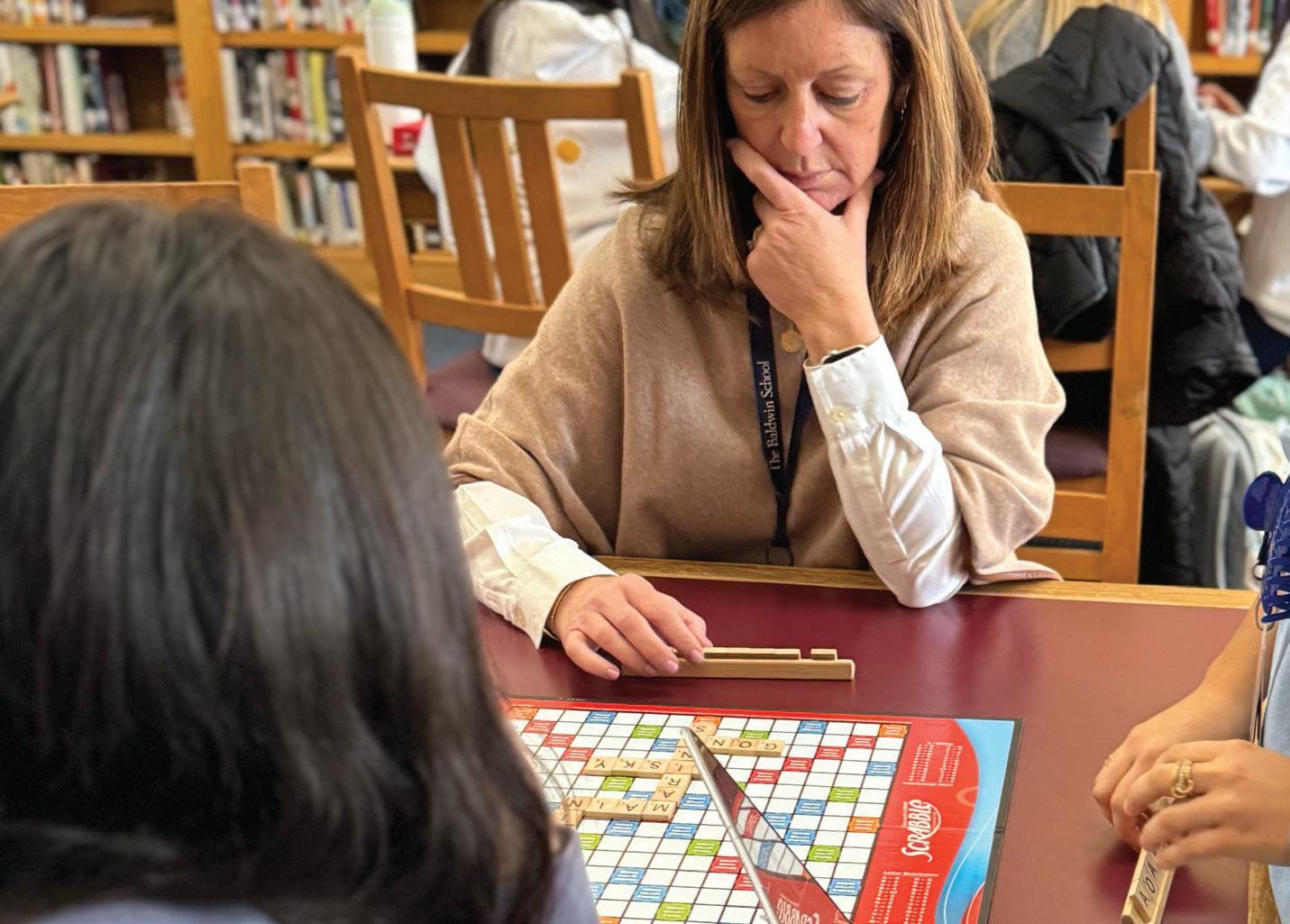
Upper School students in the Artificial Intelligence & Society Class hosted a Humans vs. AI Game Day! Students studied how games have shaped AI development, built custom Gemini Gems to design game strategies, and tested whether AI can offer a real advantage in human-centered, real-time play. This interactive drop-in event put those systems to the test, with participants trying their luck against AI in Rock Paper Scissors, Scrabble, UNO, Twenty Questions, Monopoly, and Connect Four.
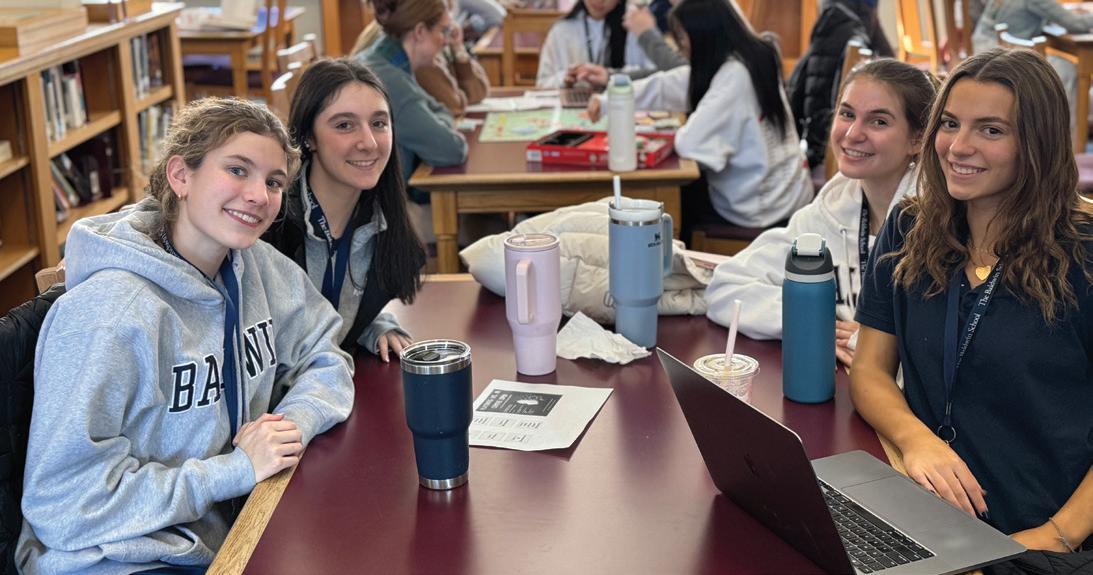
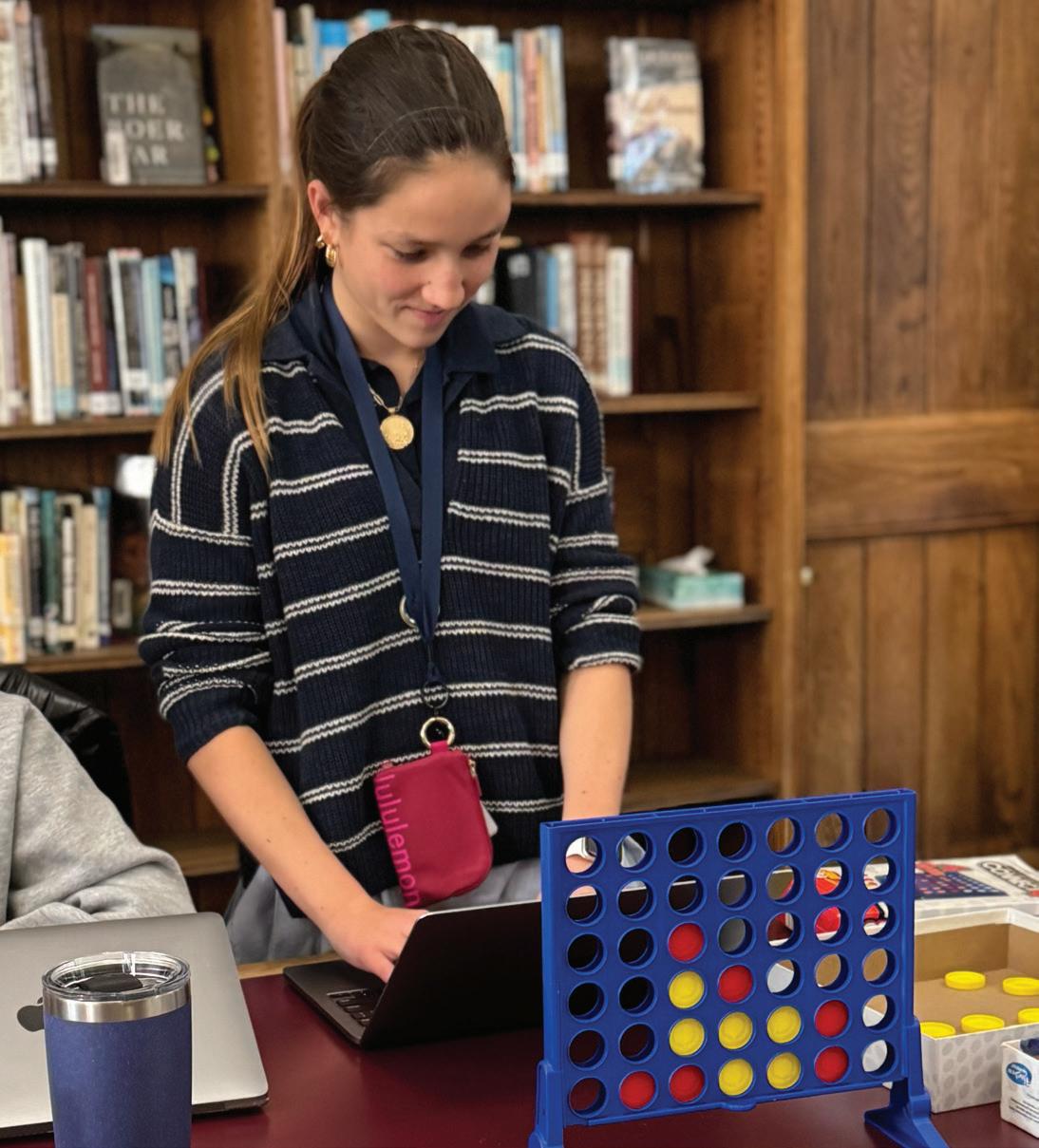
Addison Navarro ’28, Angela Karamatsoukas ’28, Sophia Papatheoharis ’28, and Sophie Roberts ’28 ran the game Rocks Paper Scissors.
Charlotte Grant ’28 teaches AI how to play Connect Four.
Head of Upper School Christie Reed tries to beat AI at Scrabble.
Sarah Tarka ’28 and Joyce Chen ’28 challenge visitors to a game of Monopoly.
AT History Special Collections Visit
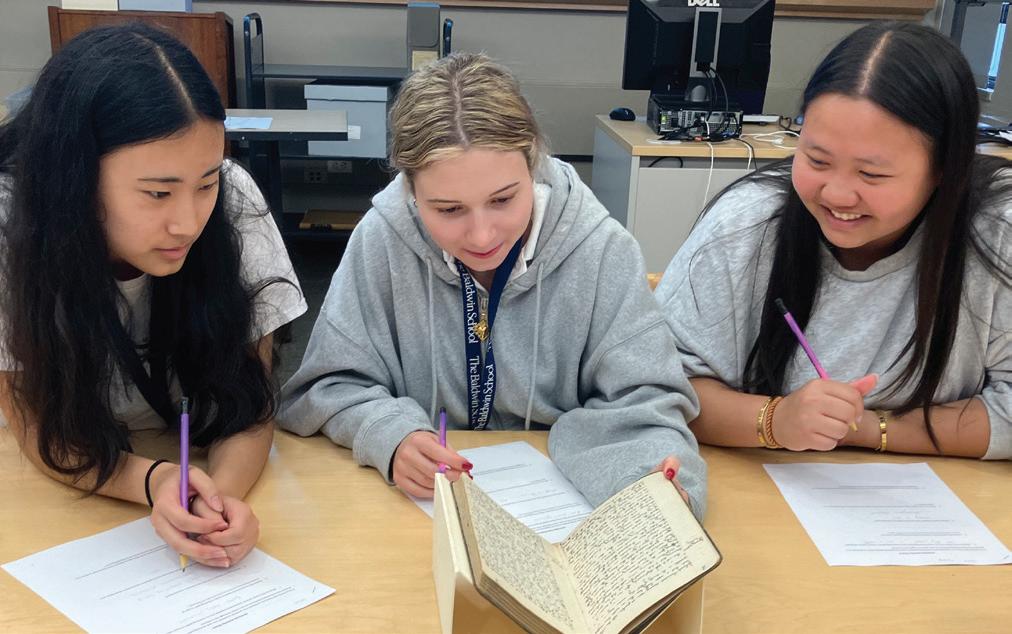
This fall, students in AT Senior History visited Bryn Mawr College Libraries' Special Collections to experience working hands-on with archival sources. After a short lesson on the kinds of materials typically held by archives and how to search in archival collections, students were given a chance to handle a range of different materials, most of them related to students at Bryn Mawr College around the turn of the 20th century. They explored boxes containing personal diaries, course syllabi, entrance exams, yearbooks, and even pro-suffrage pamphlets. This lesson helped students become more comfortable conducting research and identifying primary sources they can use for their final paper.
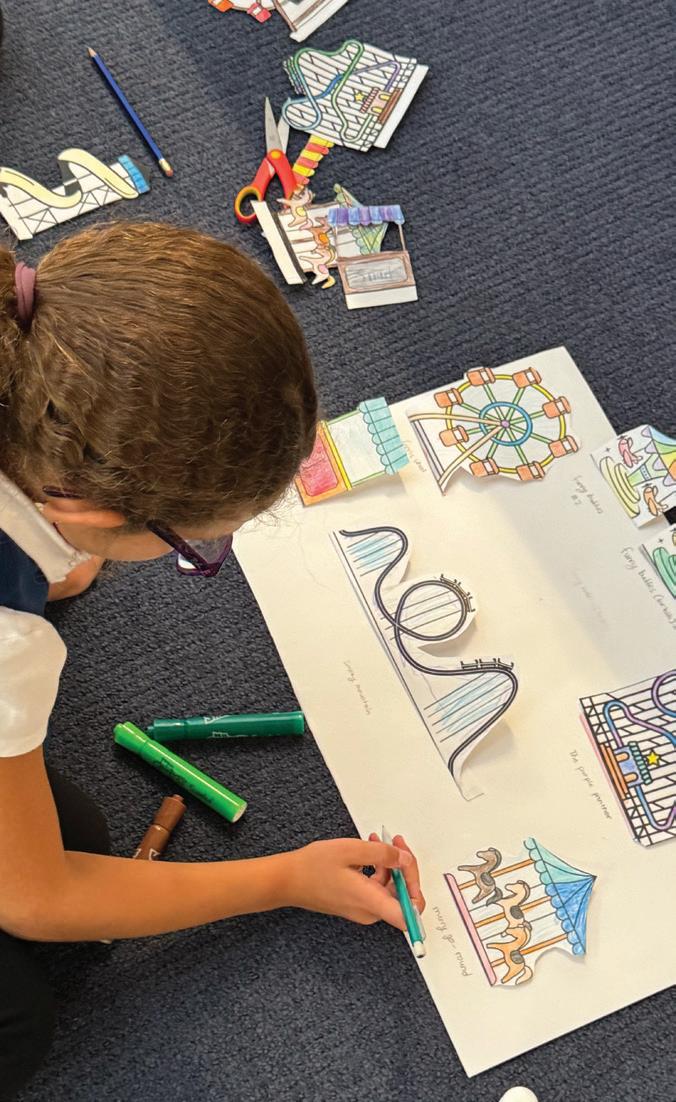
Grade 4 Designs Amusement Parks Using Math Lesson
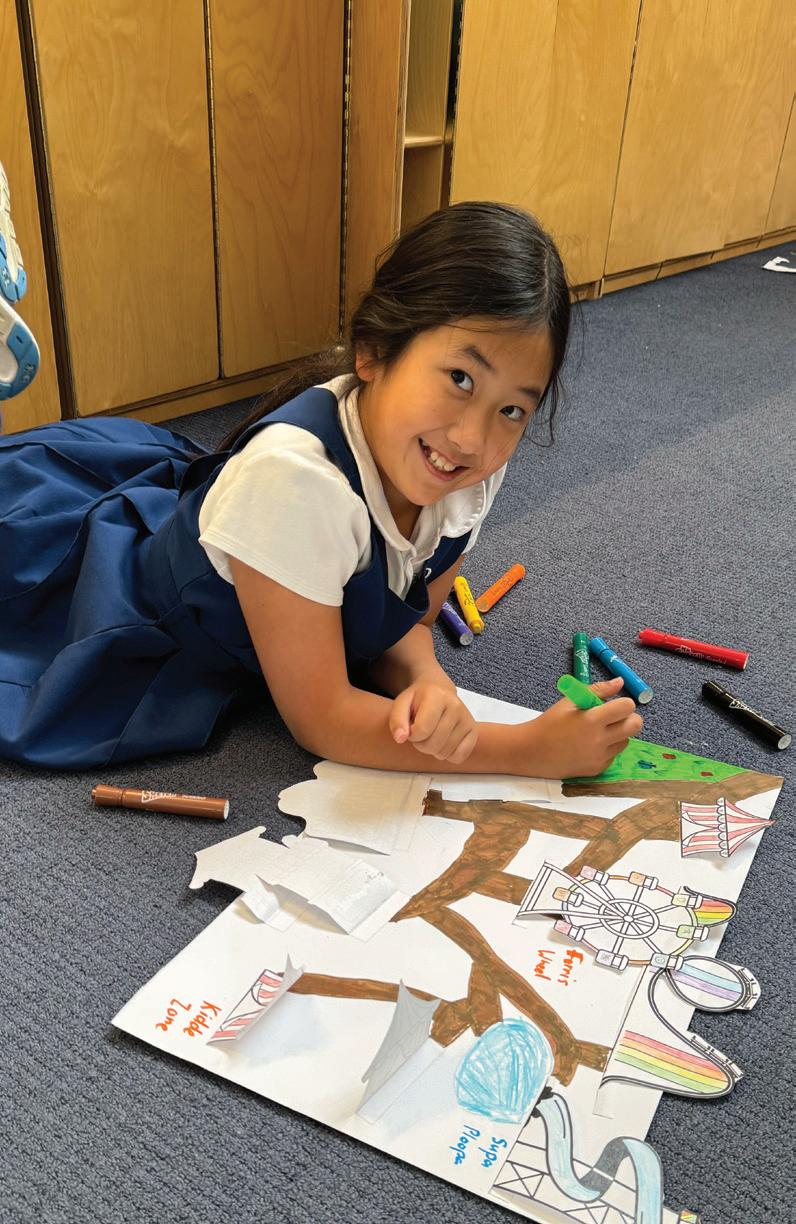
During the fourth-grade unit on multiplication and division, students took on a real-world challenge of designing their own amusement park. They calculated ticket and food prices, projected daily and long-term revenue, and determined ride capacity using their math skills. Tasked with working within a set budget, they selected rides and concessions to match the theme of their park. Once their final totals were complete, students brought their designs to life by creating models.
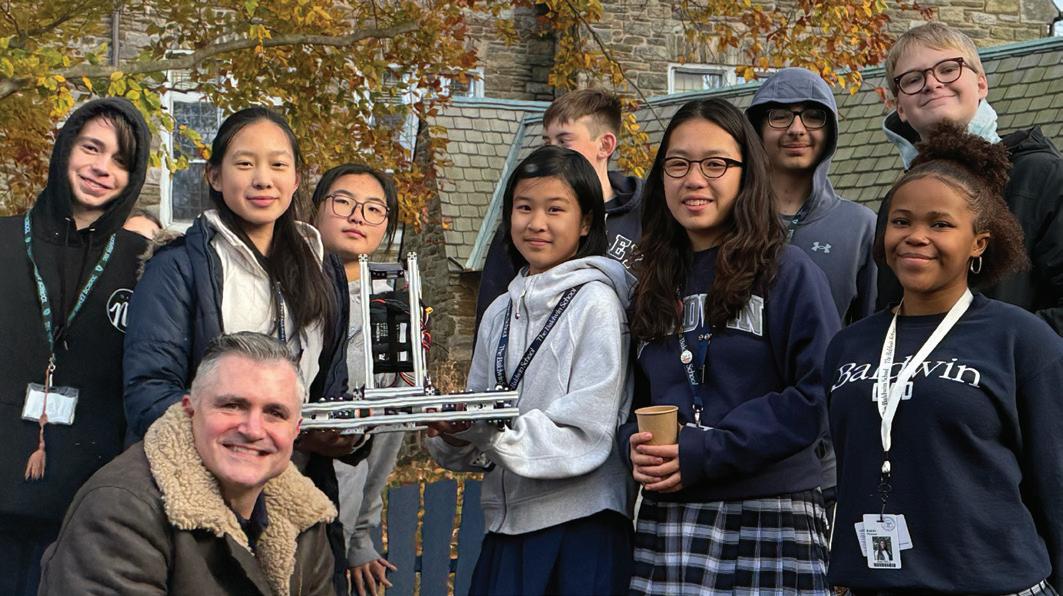
New Robotics Program Collaborates With Shipley
This year, Baldwin’s Computer Science & Engineering (CS&E) program got a serious tech boost with a new Upper School Robotics Club and a Robotics collaboration with The Shipley School. This combined robotics team consists of 21 Baldwin students and five Shipley students and competed in their final state qualifier in February. The season was an incredible opportunity for students to apply their engineering and programming skills in a competitive setting. The build season consisted of students prototyping, testing, and refining their robot. From CAD modeling and 3D printing to autonomous systems and artificial intelligence, the students were introduced to a variety of cutting-edge technologies, ensuring they graduate with a deep, versatile STEM toolkit.
Seniors Macy Li, Laura Messamore, and Violet Zhang review archival materials.
Above: Penny Dornstreich ’34 and her amusement park. Left: Claire Ma ’34 works on her amusement park model.
The Baldwin and Shipley Robotics Club show off their creation.
30 Percent of Baldwin Seniors Honored by National Merit Program
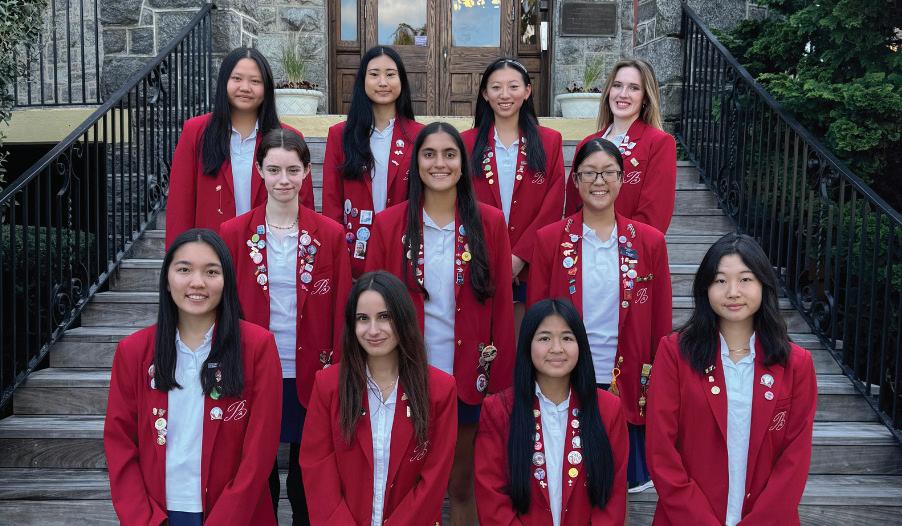
Baldwin is proud to announce that the National Merit® Scholarship Program recognized 11 members of the Class of 2026. In the 70th annual National Merit Scholarship Program, three Baldwin students have been named Semifinalists and eight students have been named Commended Students, representing almost 30 percent of the senior class.
Grade 7 DREAM Lab Students Design Self-Driving Cars
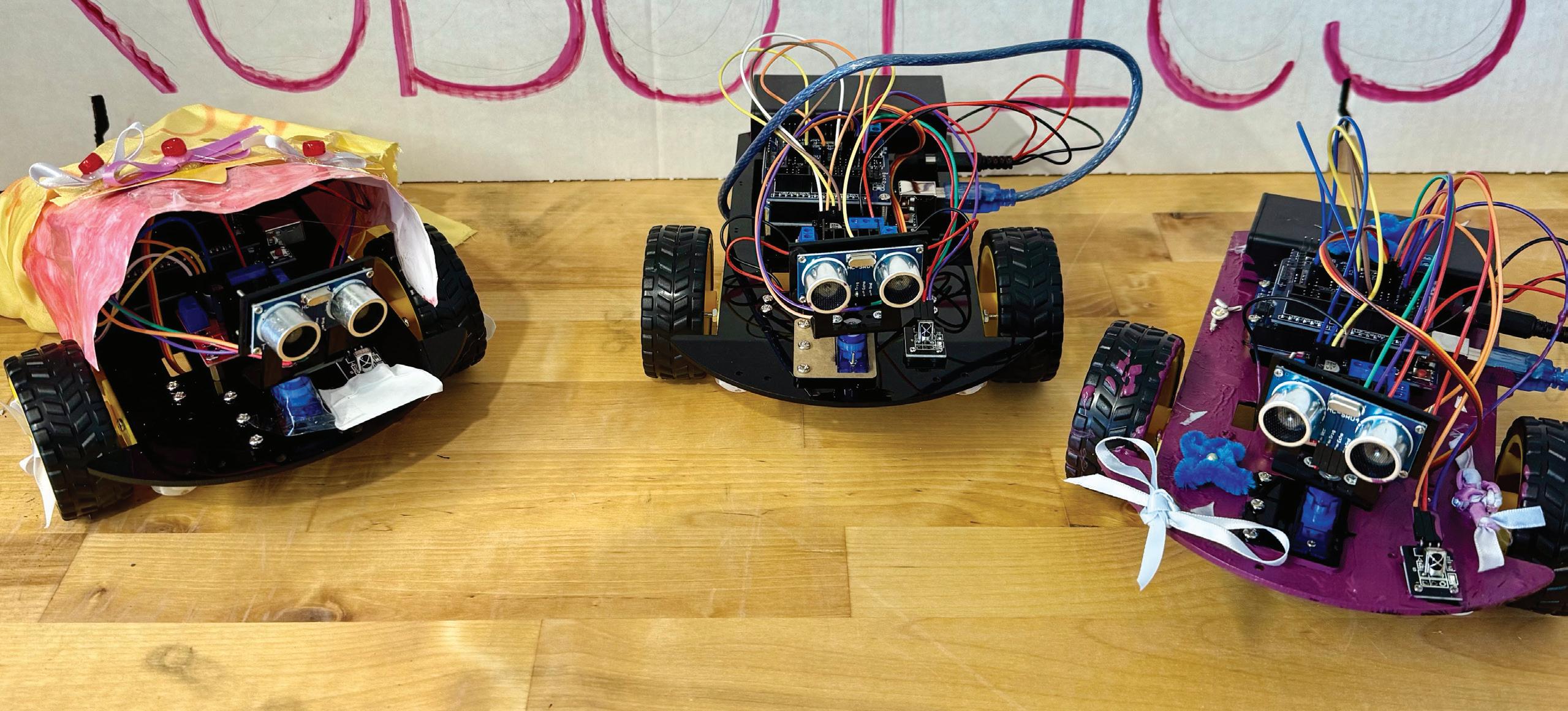
The Middle School is also getting in on the robotics action! In the DREAM Lab, seventh grade students built self-driving cars using Arduino boards and ultrasonic sensors. They spent their final class of the semester decorating their robots.
(Row 1, front): Kate Ma, Simela (Melina) Intzes, Haley Duong, Claire Lu; (Row 2): Piper Skoglund, Laila Gopalani, Angelica Tang; (Row 3): Violet Zhang, Macy Li, Jennifer Ma, Ella Esplin
Nearly
Grade 5 Students, Parents Investigate Together
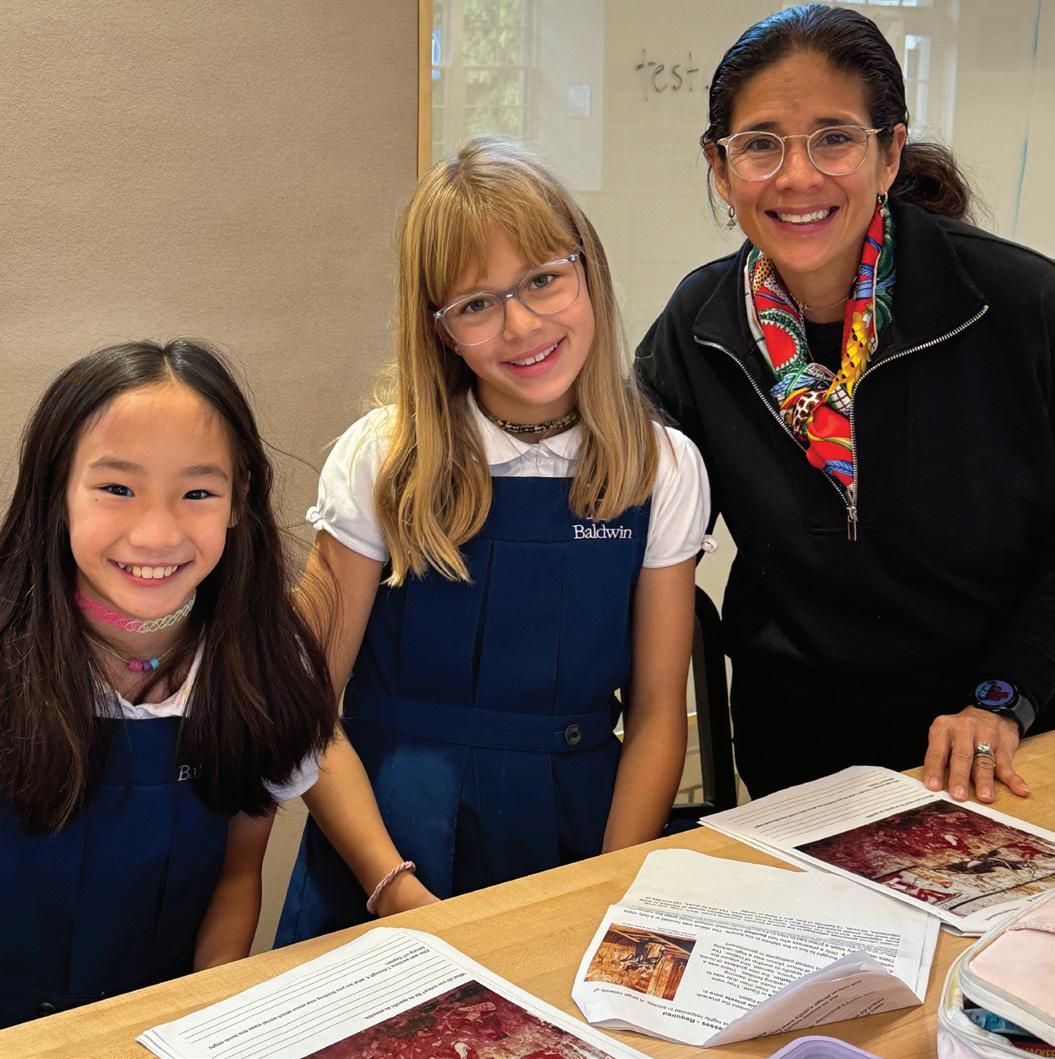
In fifth-grade humanities, students stepped into the role of historians alongside their parents. Drawing on their studies of social classes in Ancient Egypt and using Cornell Notes they created as review tools, students analyzed images from a recently discovered Egyptian tomb. By examining artistic details and connecting them to prior knowledge, families worked together to build archaeological arguments, making evidence-based claims about who may have been buried there and bringing historical reasoning vividly to life.
Pre-K i2 Unit
As part of their Wyss
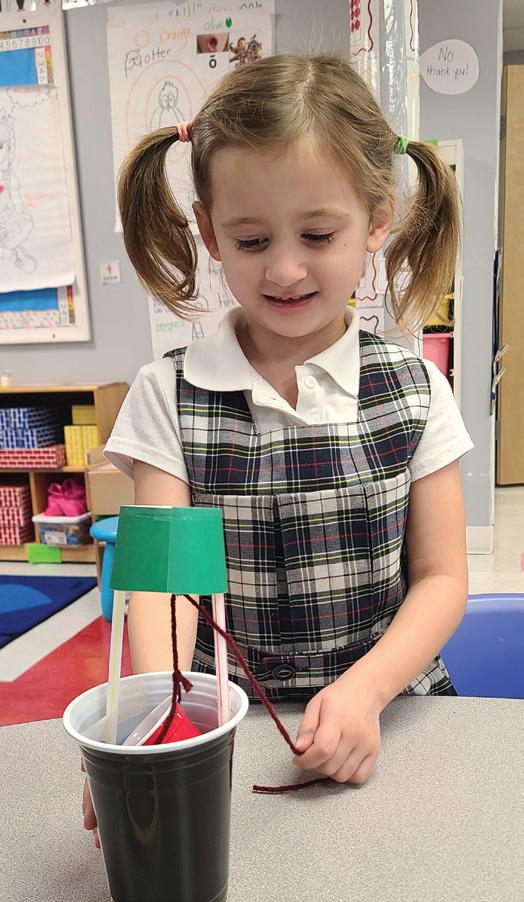
Interdisciplinary Incubator (i2) unit, Pre-K students made simple machines, like pulleys. In December, they hosted an i2 Showcase for their families, showing off their understanding of simple machines through the design and creation of their own games.
Grade 8 Explores the Silk Road
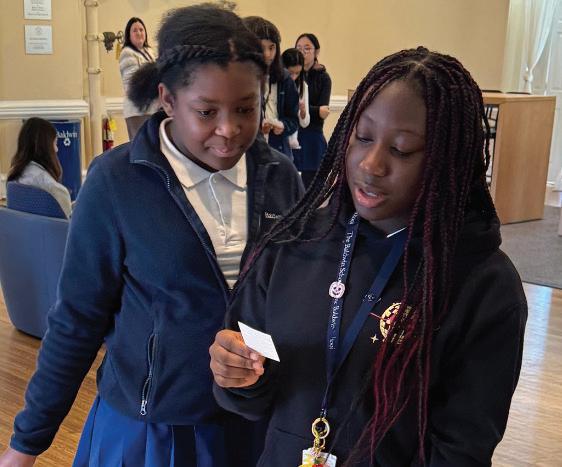
This fall, Grade 8 students explored the Silk Road as part of their study of ancient China and Greece, focusing on how goods and ideas spread between civilizations. To bring this learning to life, students played a class-designed trading game that highlighted valuable Silk Road goods, the challenges of longdistance trade, and the importance of cultural diffusion. Through encounters with bandits, harsh weather, and lost cargo, alongside successful trades in silk, spices, salt, and more, students experienced firsthand both the risks and rewards of Silk Road travel. Most importantly, learning was engaging and fun, even when luck didn’t always favor every trader!
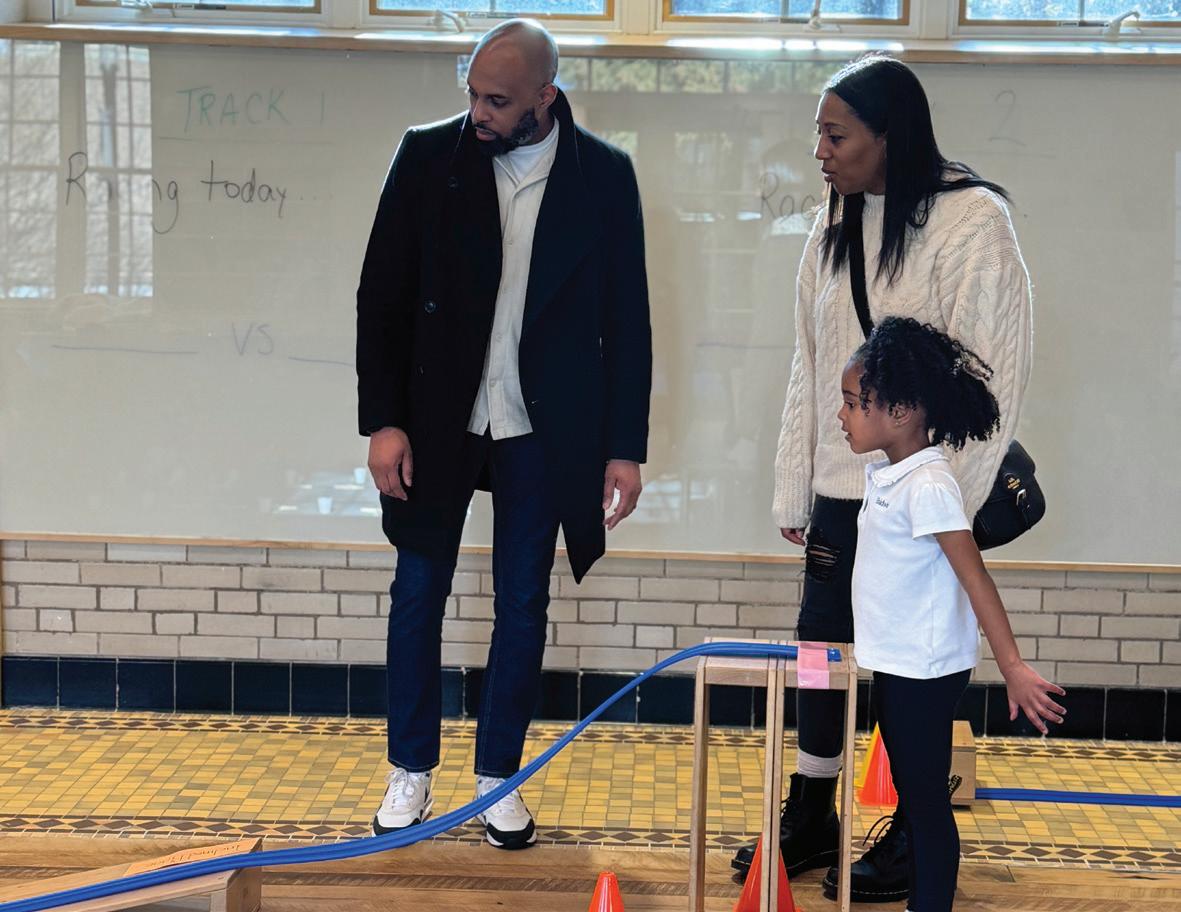
Ellie Kuoch ’33, Bella Cafiero ’33, and Bella's mom Patricia Benitez-Cafiero worked together.
Left: Beatrice Biss ’39 demonstrates how the pulley works in her well project.
Right: Remi Benson ’39 shows her parents one of their designs.
Michaela West ’30 and Yesi Banmeke ’30 concentrate on their trading game.

Upper School Presents Jesus Christ Superstar
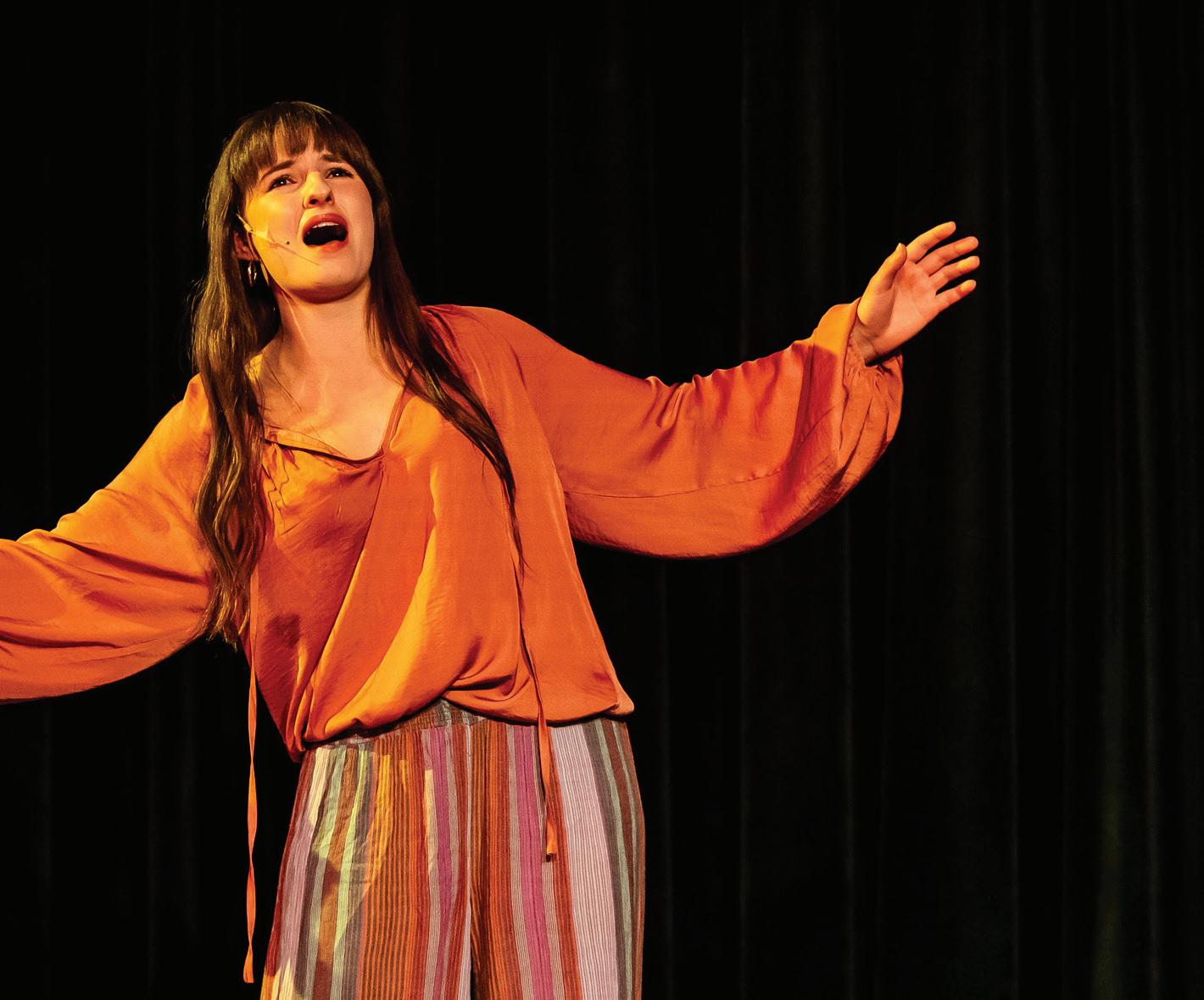
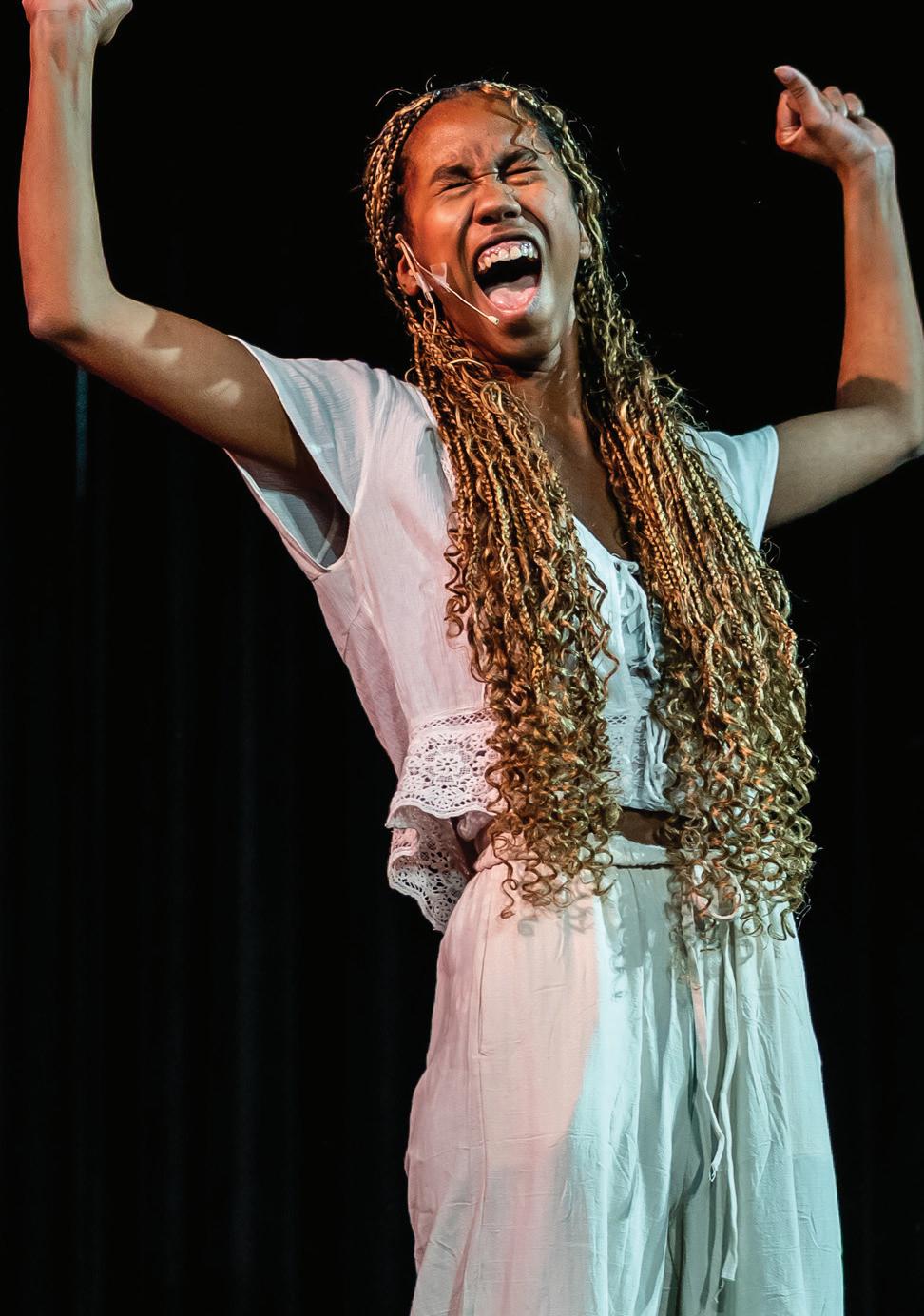
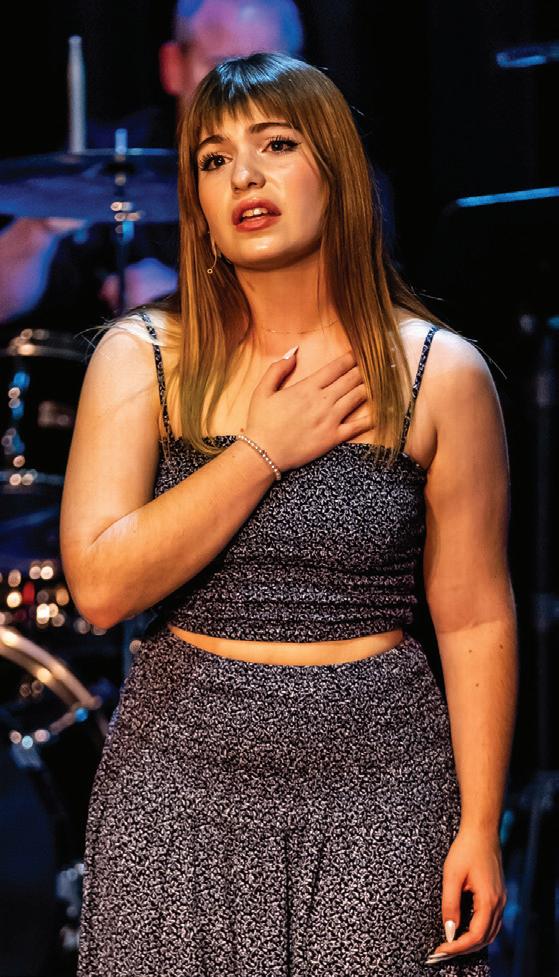
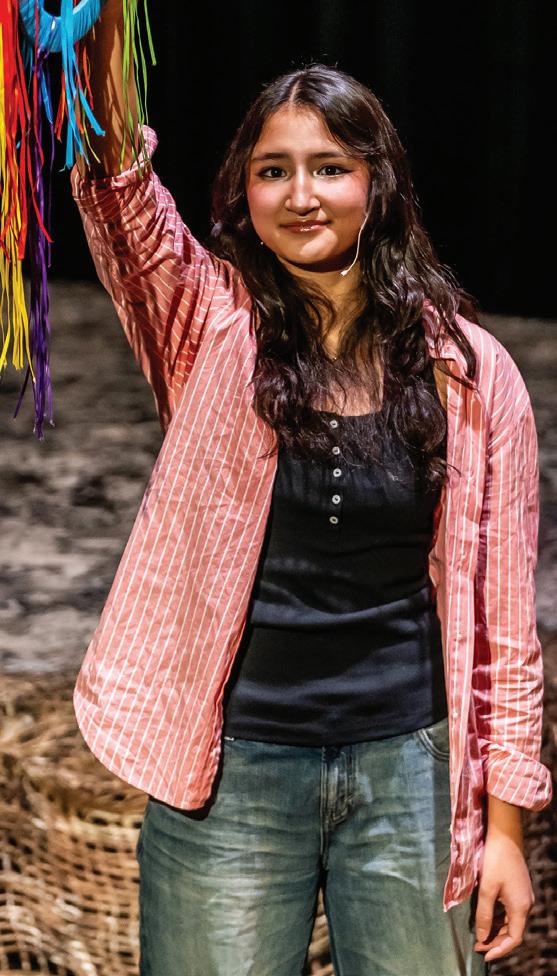
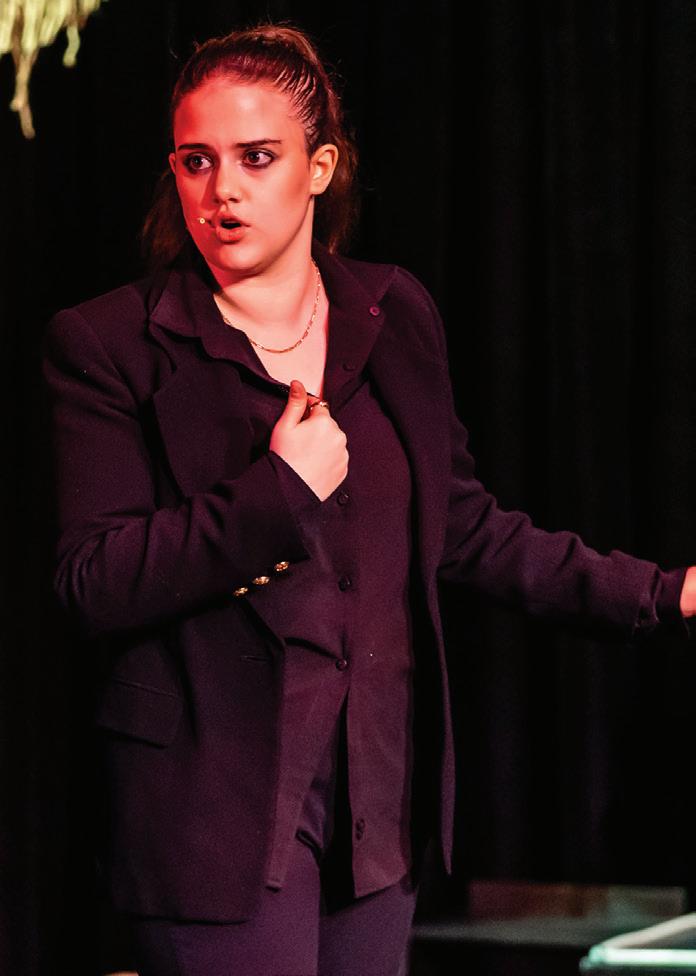
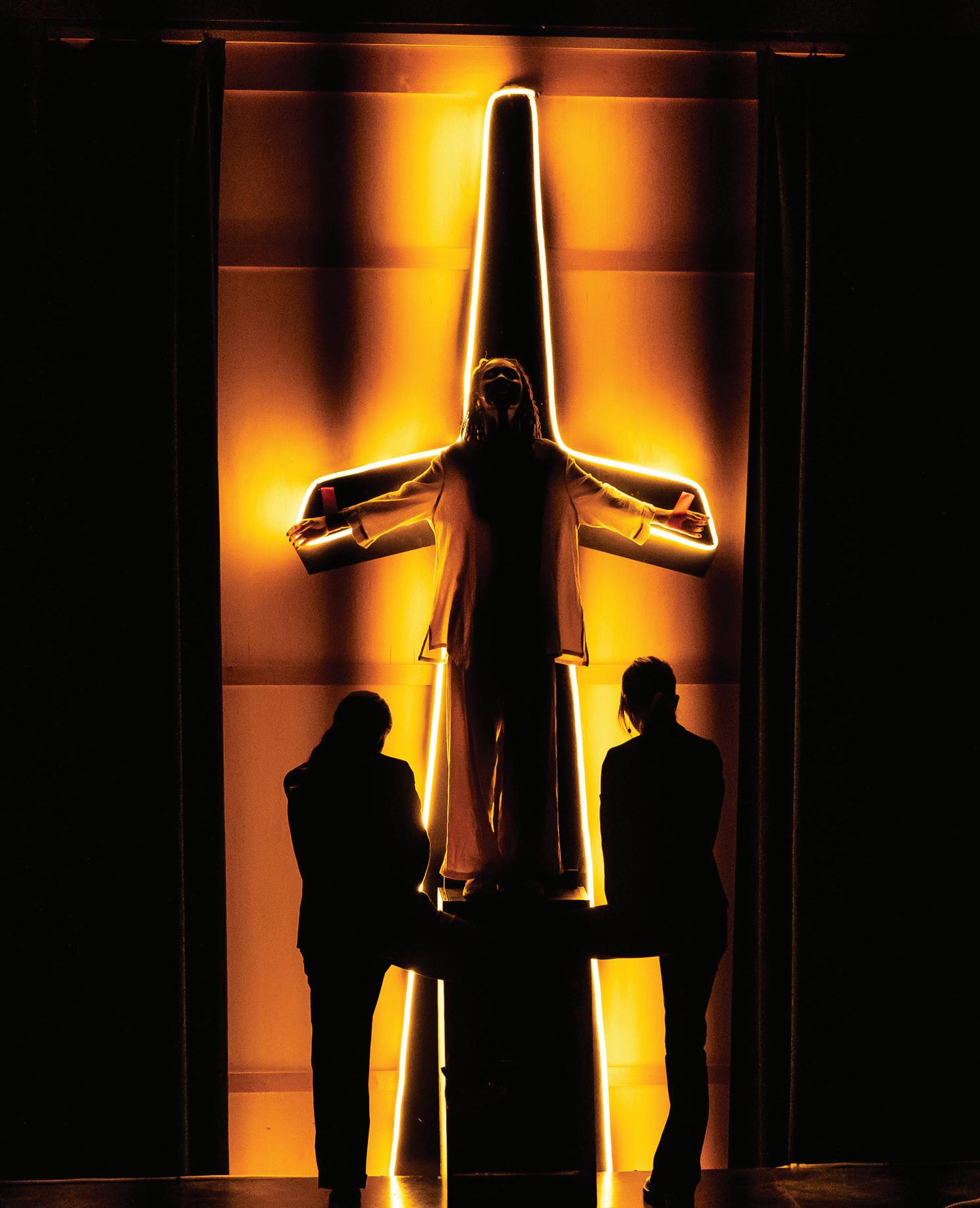
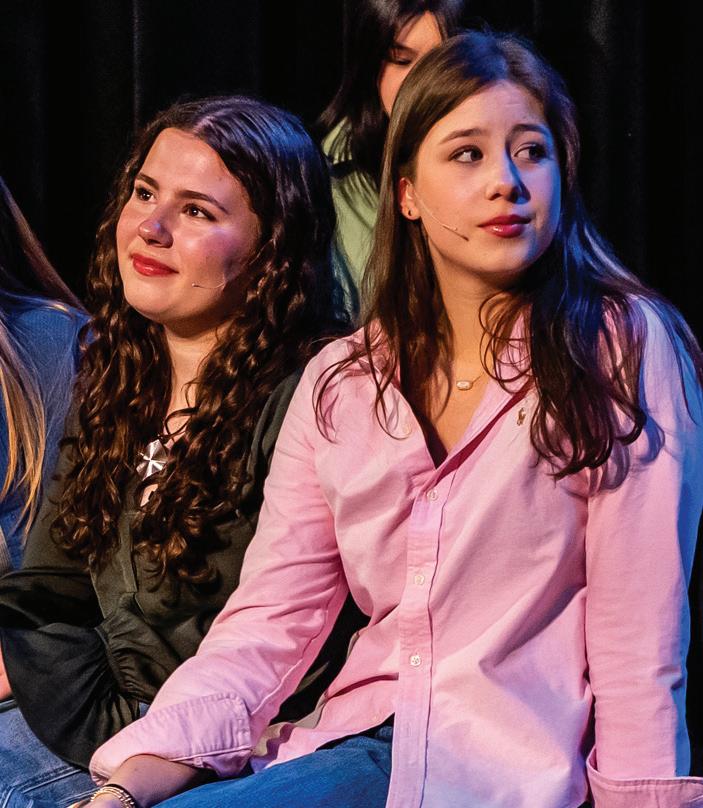
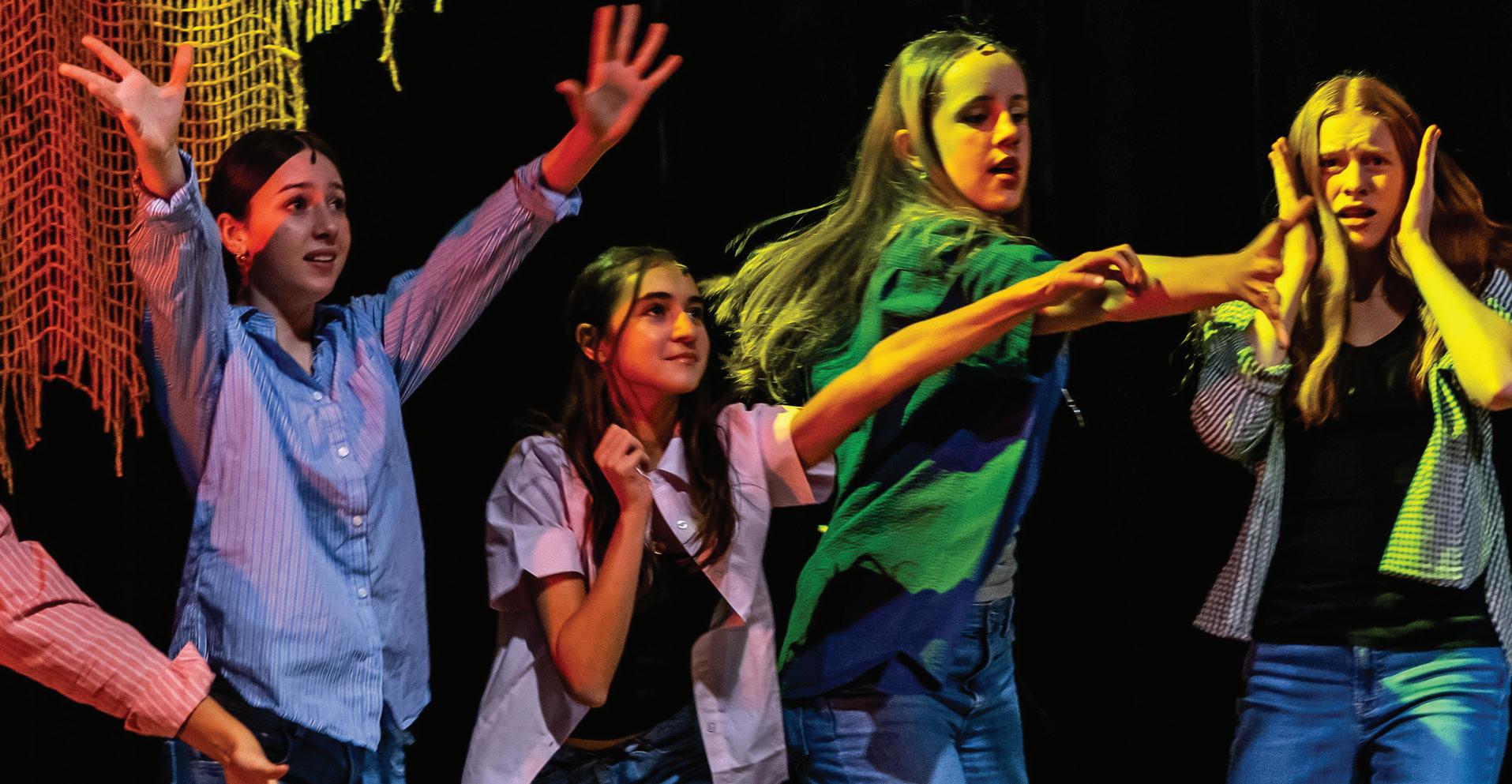
Baldwin’s Upper School production of Jesus Christ Superstar brought together over 50 Baldwin students (and one Haverford School student!) - 20 in the cast, 10 on stage crew, and many more contributing to set building through classes in Engineering 1 with Computer Science and Engineering Teacher Paul Hermans, and Musical Theatre, Dramatic Arts, and Public Speech with Theater Director Ben Dibble. Choreography was by Ambea Nmah ’26, with costumes designed by Vanessa Von Dulm ’28.

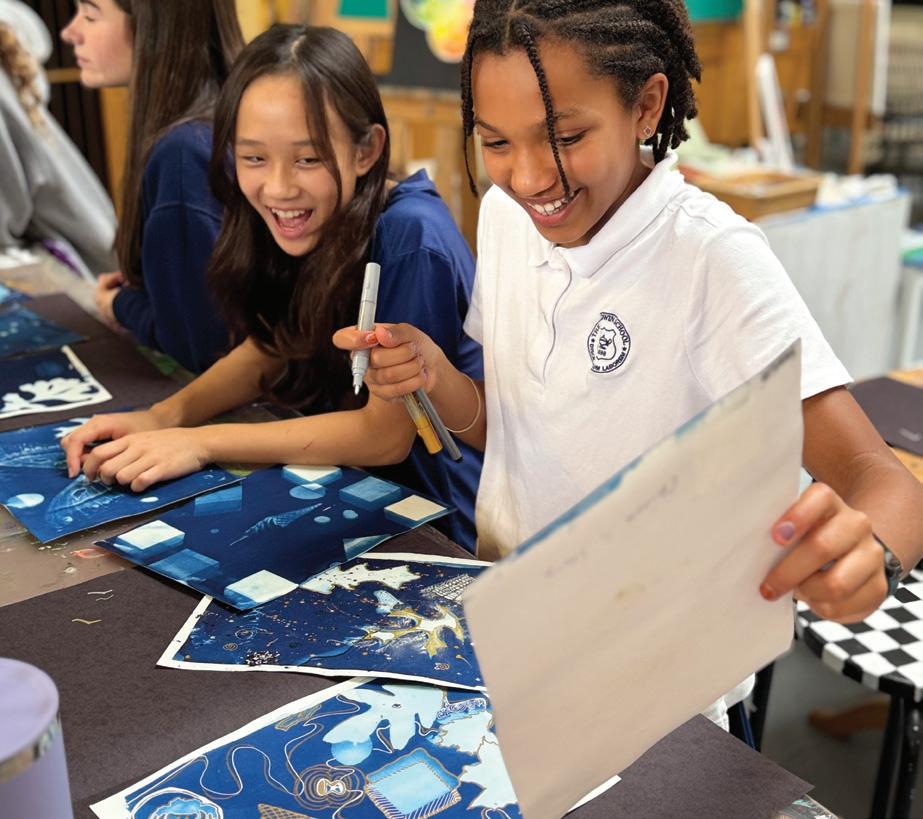
When Art Meets the Magic of Collaboration
Middle and Upper School students made art together this fall! In a cross-divisional cyanotype project, students first created designs by arranging objects on light-sensitive paper and exposing them to sunlight. Then, they swapped pieces with a partner from the other division, adding a layer of creativity using mixed-media elements to transform the original work into something completely different. The results were unpredictable and exciting, with each piece becoming a blend of two artists’ ideas and styles. It was fun for students to connect across grade levels, let go of control, and celebrate the magic of collaboration.
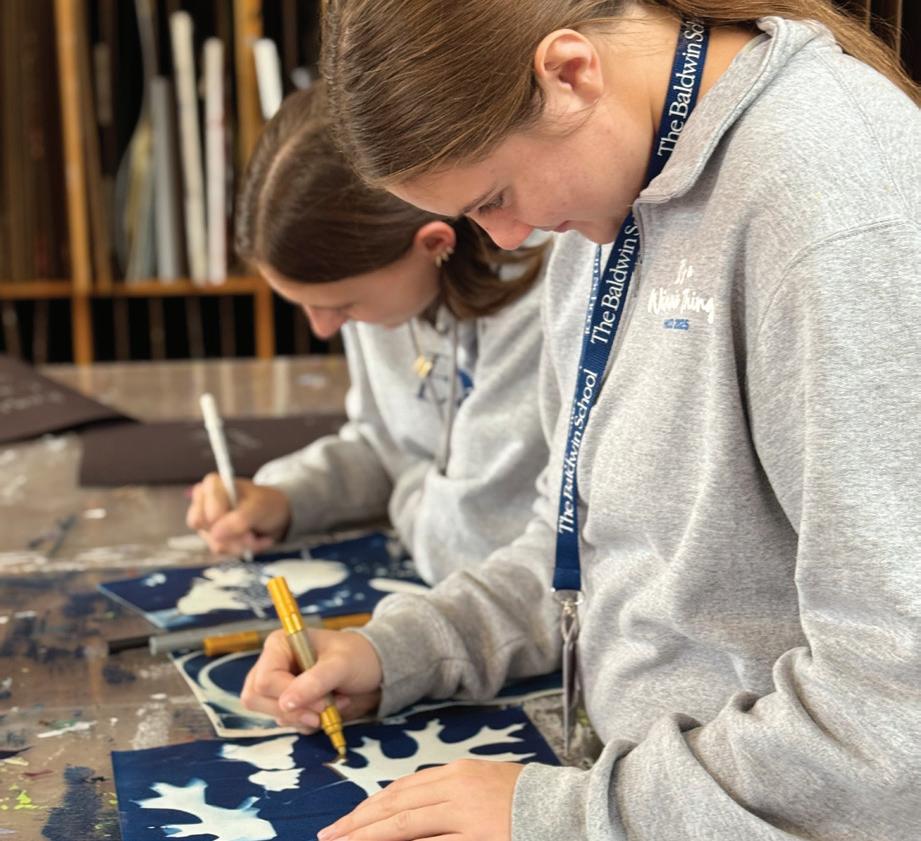
Nora Ruse ’28 and Anaka Boyd-Volz ’27 work on their projects.
Elle Han ’31 and Chiara Osuji ’31 are surprised by their art!
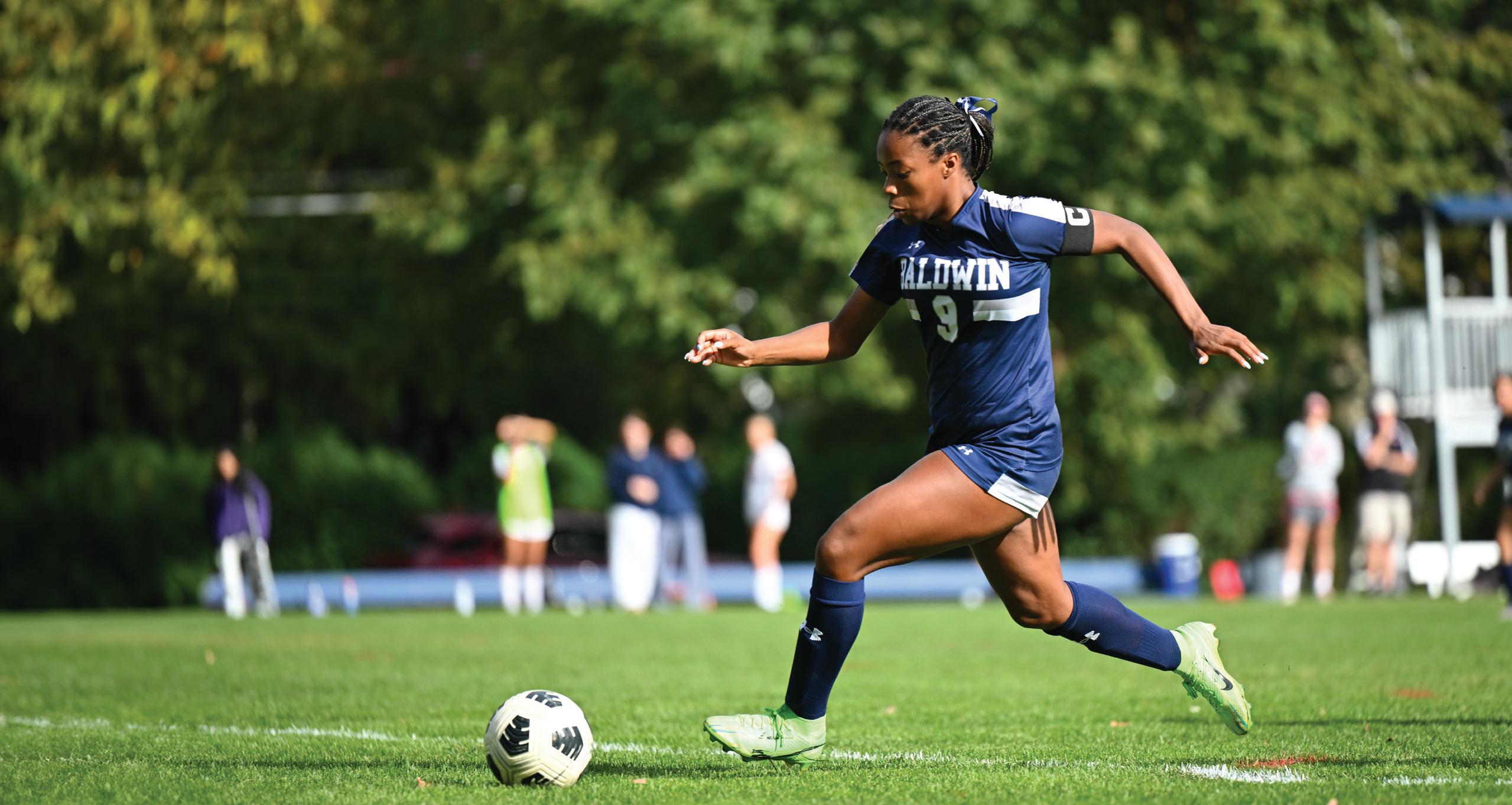
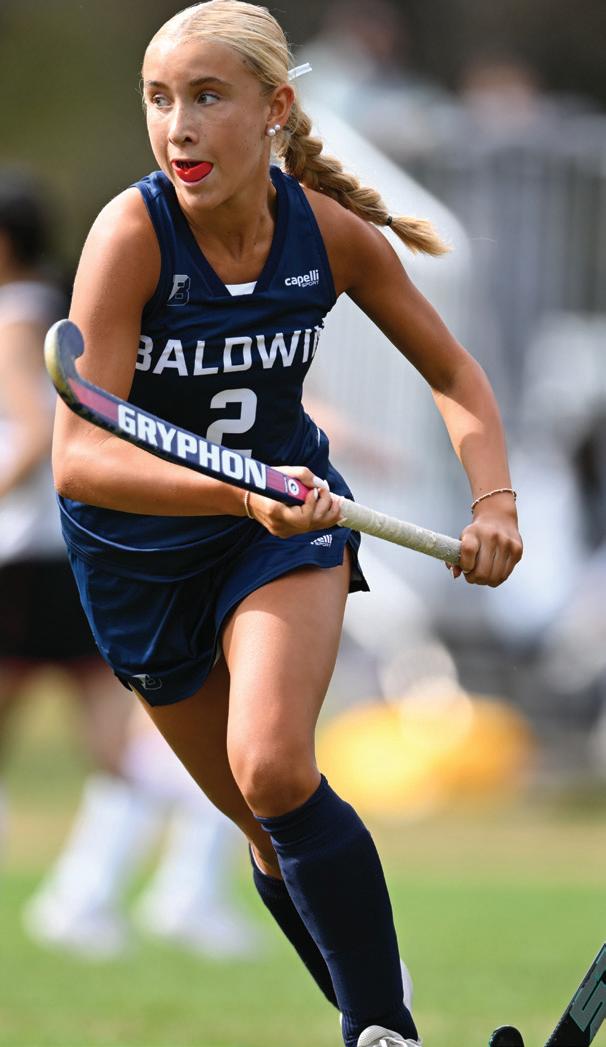
Makena Lee ’27 set the new school soccer record for goals scored in Baldwin's decisive 3-1 victory against Lawrenceville School on Homecoming Day. Makena scored the first and second goals of the game and also registered one assist on the historic day. Makena scored 27 goals during the 2025 season, tying the single season scoring record mark, and now has 86 career goals scored. She broke the previous school record of 81 career goals set by Gia Vicari ’19, Baldwin soccer's first All-American and a current professional player.
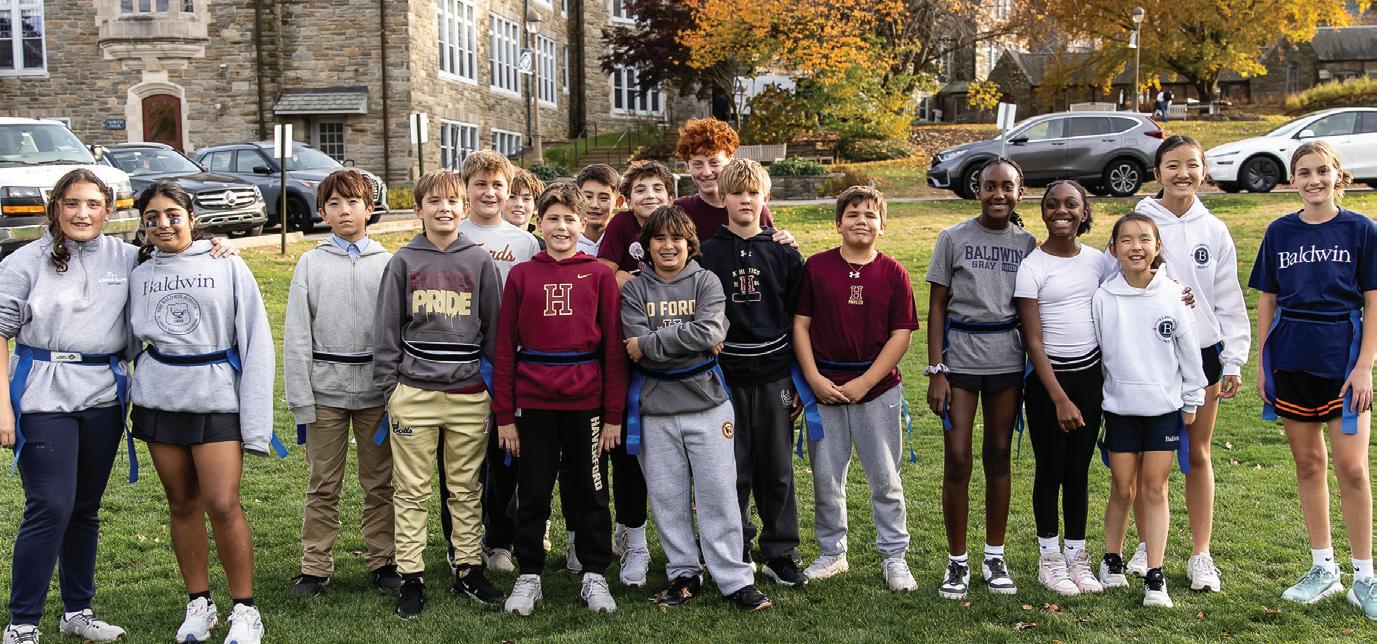
In November, Baldwin’s Middle School hosted Game Day, welcoming The Haverford School’s Middle School to campus for some friendly competition and camaraderie. Students took part in exciting outdoor games, fostering community and strengthening the bond between the two schools.
MS and JV Squash Celebrate MASA Championships
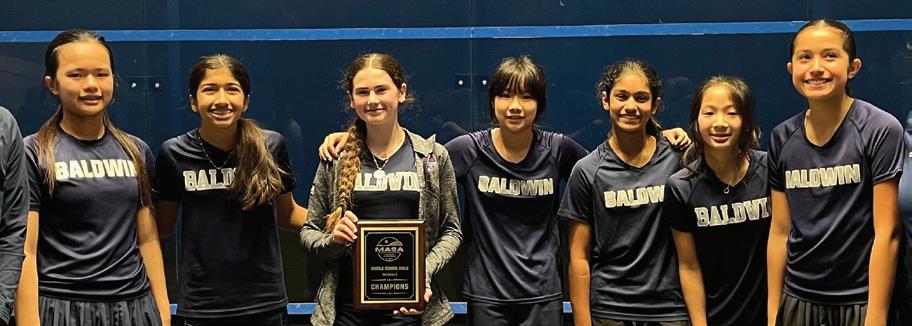
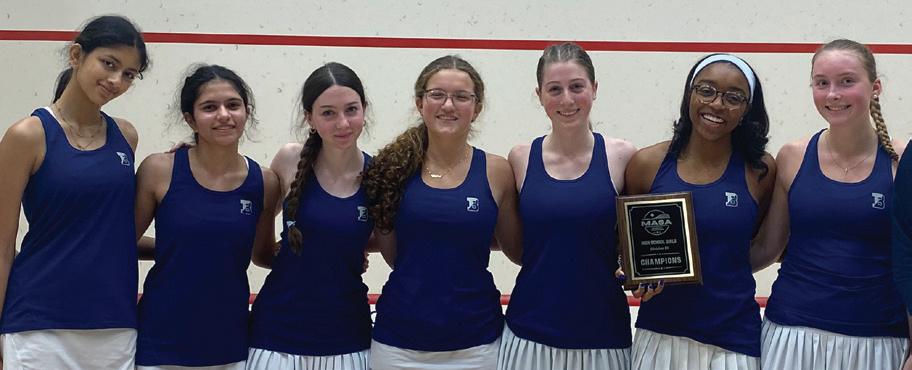
Baldwin Squash celebrated a championship weekend in December at the Specter Center in Philadelphia, as both the Middle School “A” team and the Upper School JV team captured Mid-Atlantic Squash Association (MASA) titles. The MS “A” team earned the Division I championship with decisive victories over AIS (7–0) and EA (6–1), while the Upper School JV team claimed the Division III title, posting dominant 7–0 wins against Tower Hill School and Friends’ Central School. Upper School Varsity had a strong showing and finished 4th in Division I. It was an outstanding weekend for Baldwin Squash and a testament to the depth and strength of the program.
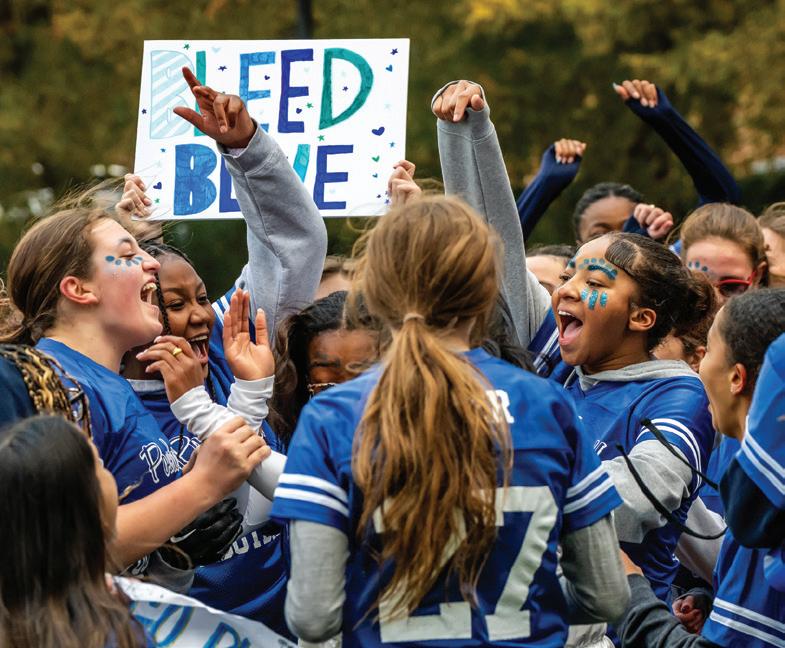
The Class of 2027 takes the “W” this year during the annual Upper School Powderpuff flag football game.
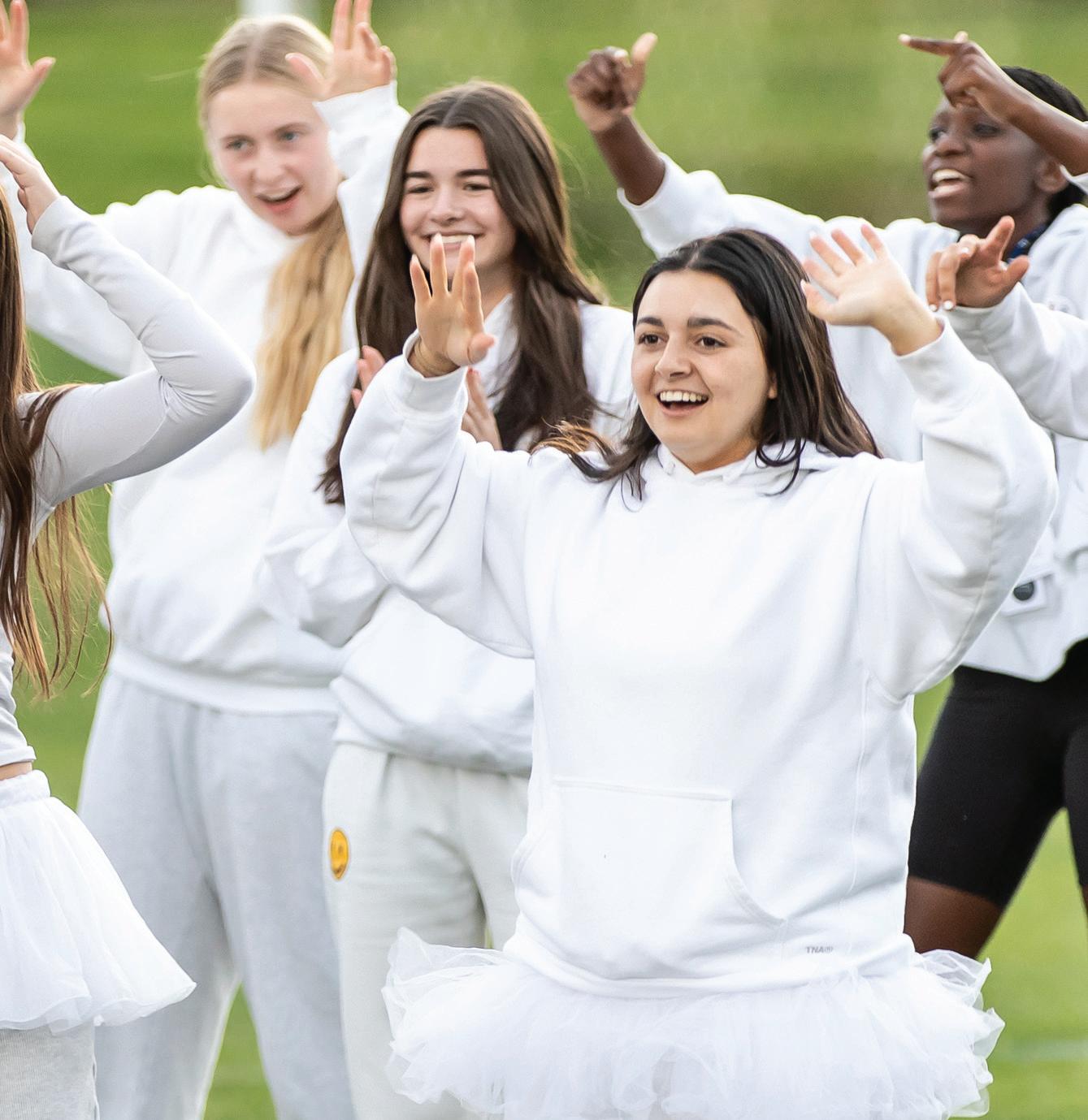
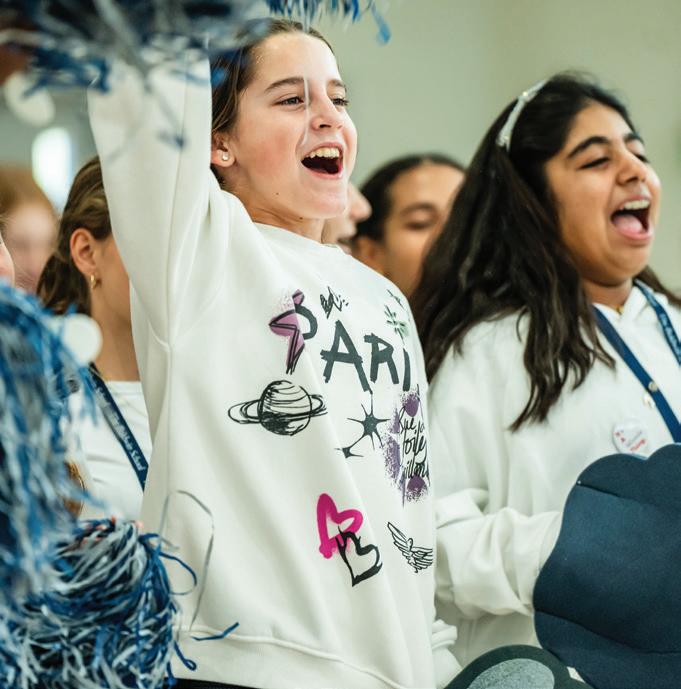

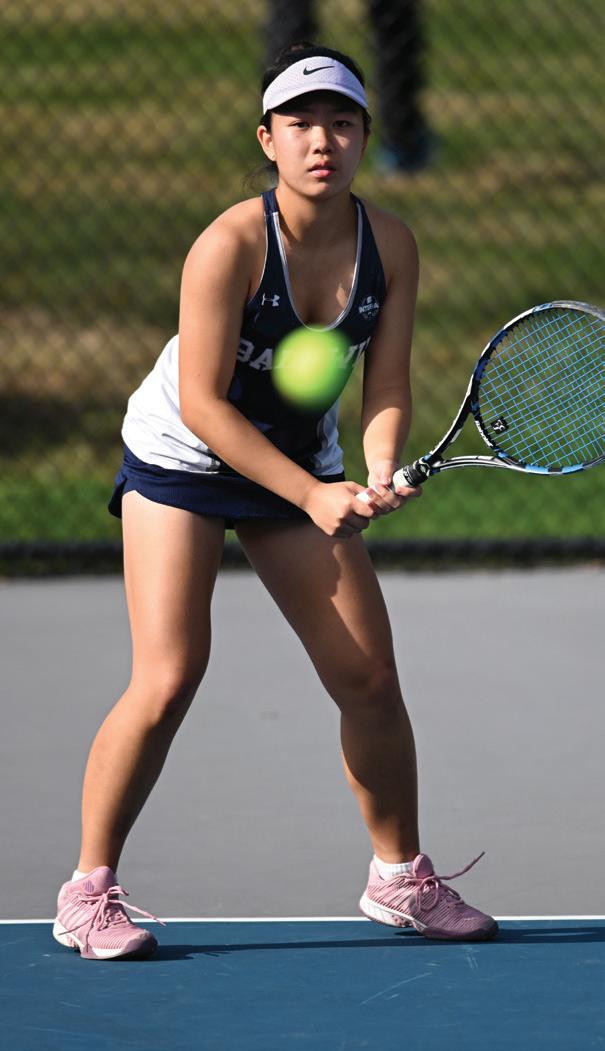
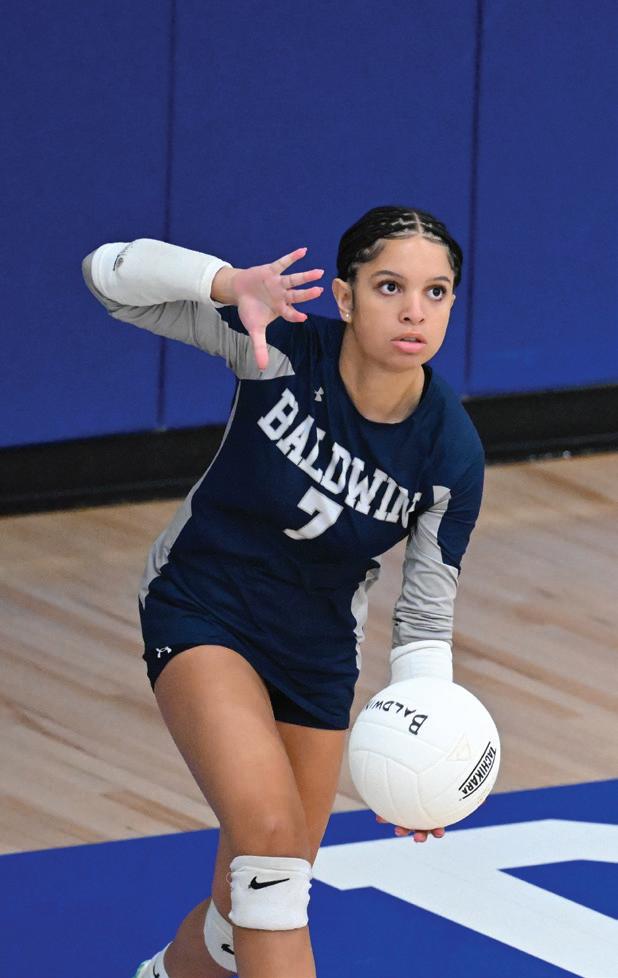
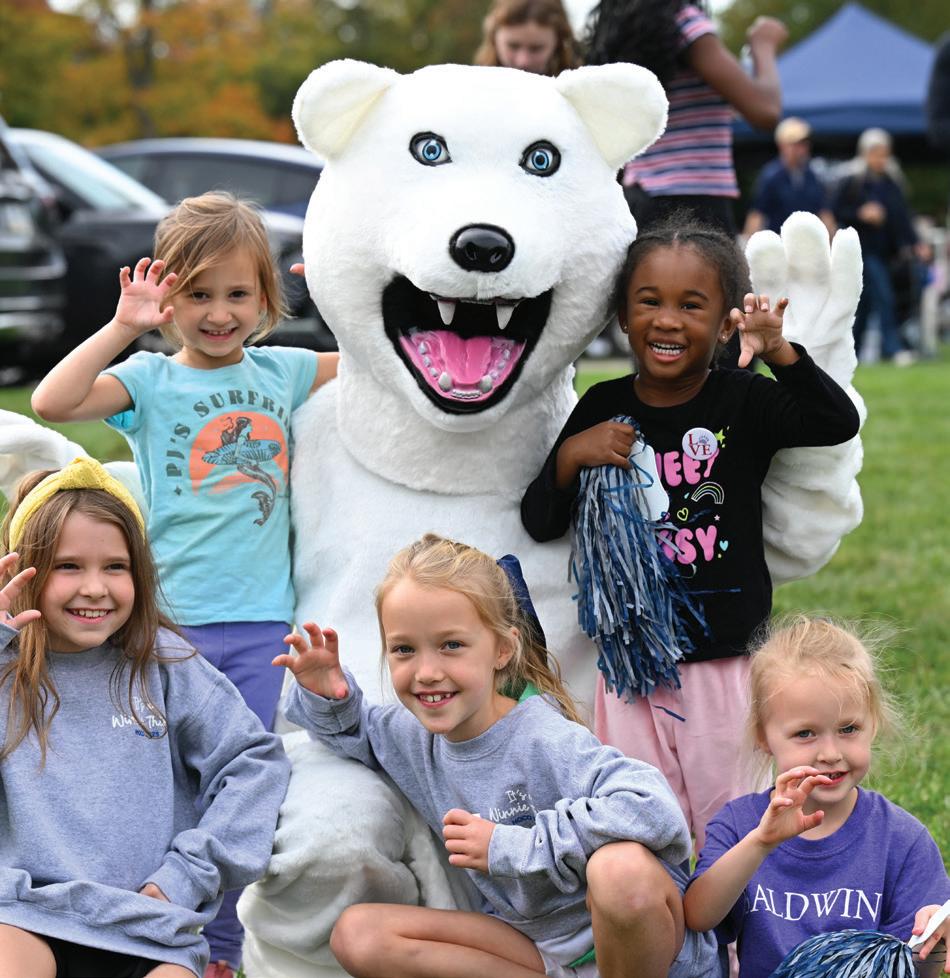
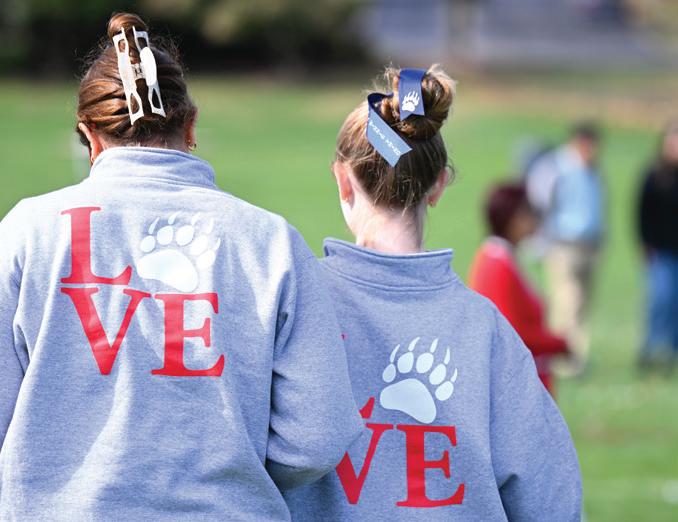
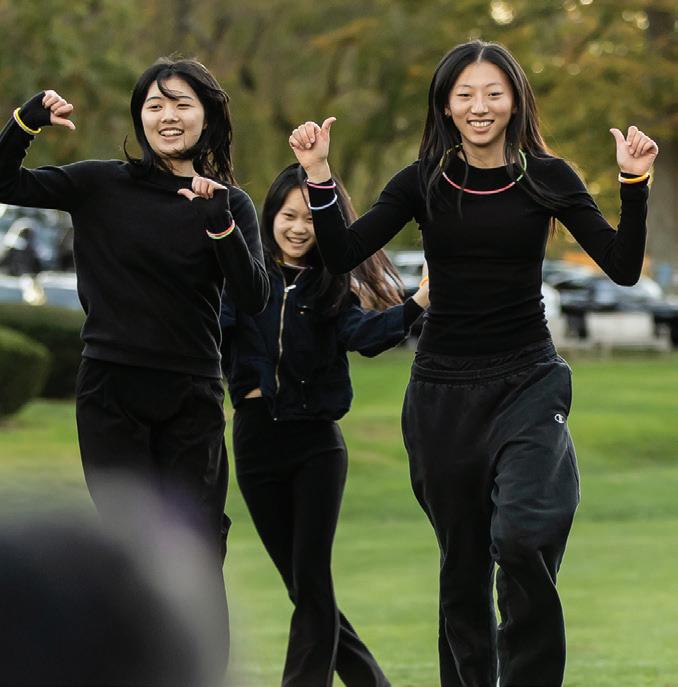
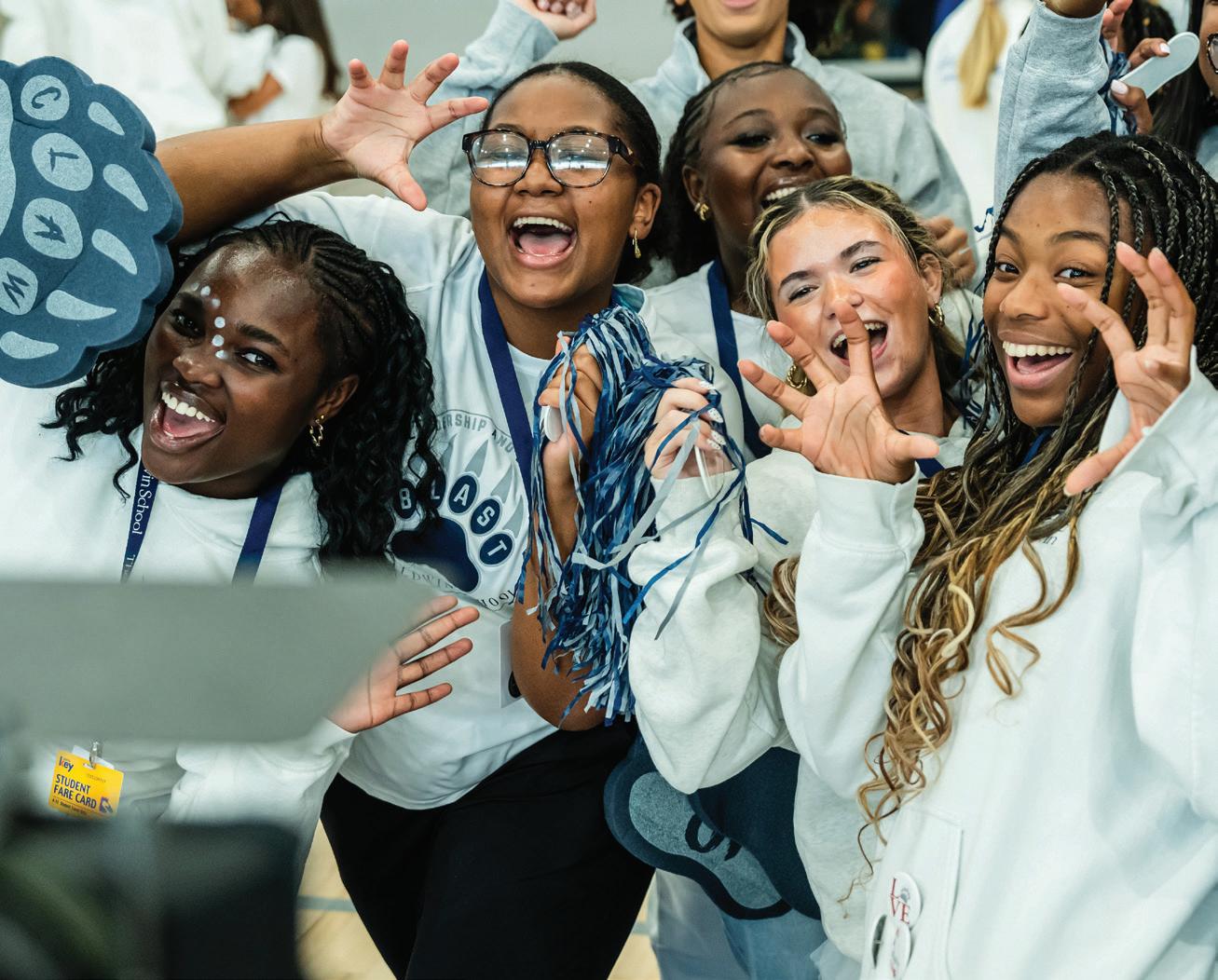
Homecoming Highlights
Homecoming Weekend was a spirited and memorable celebration for the Baldwin community. Festivities began Friday evening with student-athletes coming together for team dinners, lively team dances, and the lighting of the bonfire, where friends and families gathered to enjoy s’mores, cheers, and connection.
Campus buzzed with excitement on Saturday as the Club and Activity Fair and Junior Class BBQ filled Middle Field with food, activities, and school spirit, while fall sports teams competed with strong support from students, families, and alumnae. The weekend reflected the pride, energy, and unity of the Baldwin community and celebrated both cherished traditions and the future of Bears athletics.
Teaching with Purpose, Curiosity, and Care Bridget Doherty
When Bridget Doherty walks into a classroom, gym, or meeting space at Baldwin, she brings with her a rare blend of calm confidence, intellectual curiosity, and genuine warmth. It is this combination, along with her sustained excellence and deep commitment to students, that has earned her this year’s Reed Fellowship for Excellence in Teaching, Baldwin’s highest honor for faculty.
Created to recognize full-time teachers who demonstrate a passion for exceptional teaching across all grade levels, the Reed Fellowship celebrates educators whose impact extends far beyond their classrooms. Bridget exemplifies that mission in every sense. A seventh-grade Civics teacher, eighth-grade Financial Literacy teacher, sixthgrade Dean, middle school volleyball coach, former National Park Ranger, mentor, and colleague, Bridget is someone who “gets things done,” always thoughtfully, always with grace, and always with students at the center.
Finding Her Place in Middle School

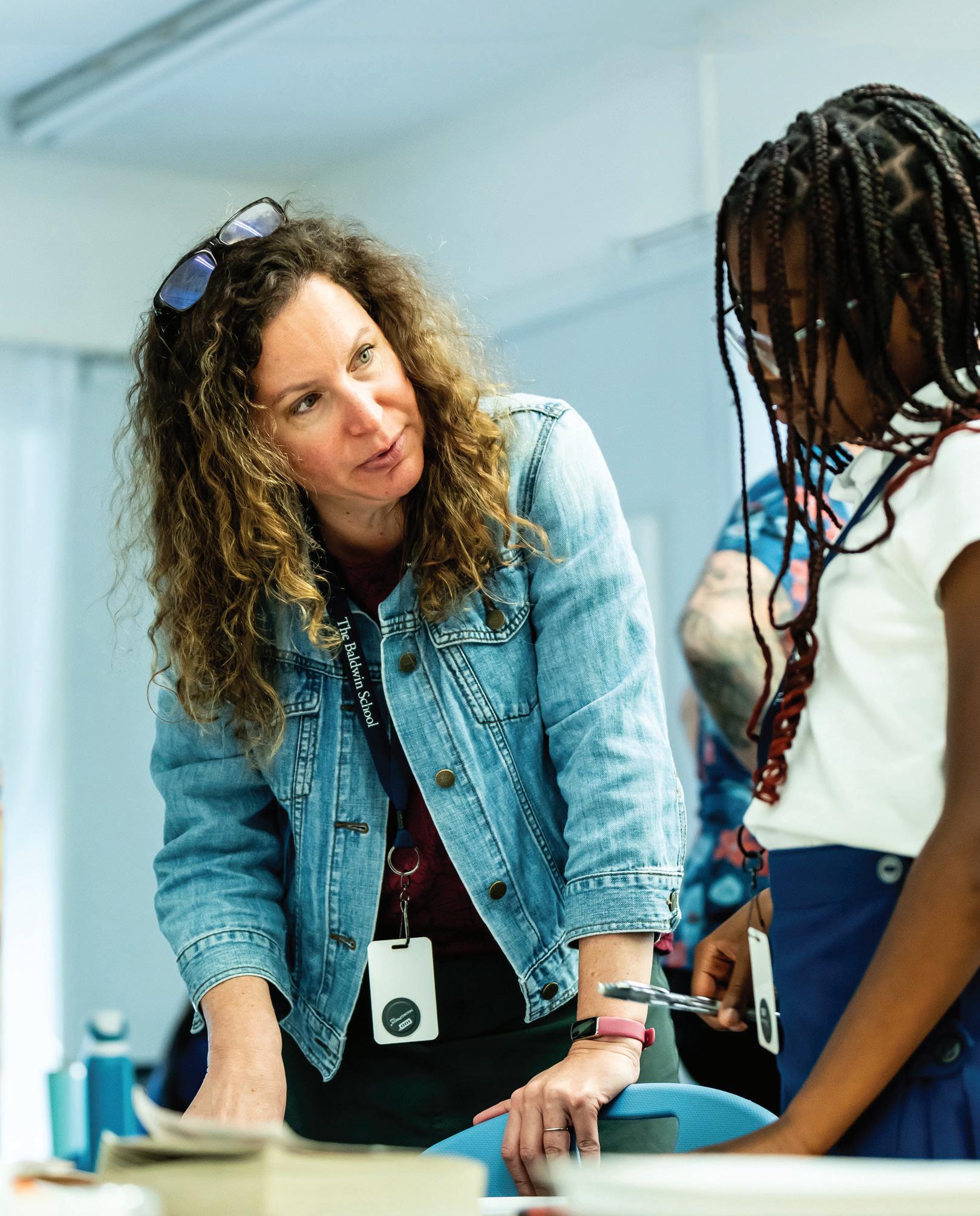
Bridget’s path to middle school education became clear early in her teaching career. While substitute teaching across lower, middle, and upper school divisions, she quickly realized where she belonged.
“Middle school was my place,” she reflected. “Students are old enough to consider the outside world and their place in it. They’re open-minded, willing to consider other perspectives, and optimistic.”
That optimism, and the energy that defines middle school, continues to inspire her. While the age group is often described as chaotic or challenging, Bridget sees possibility. “I love their enthusiasm and the way they make connections,” she said. “They get so excited when learning clicks.”
Learning Is Everywhere
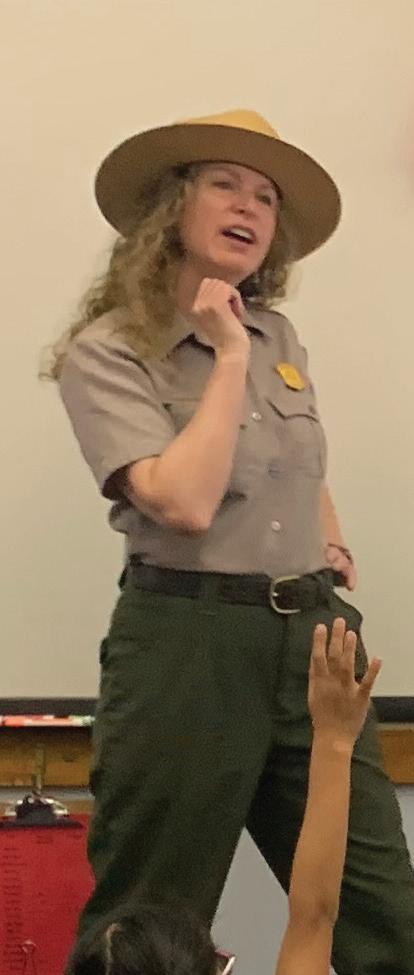
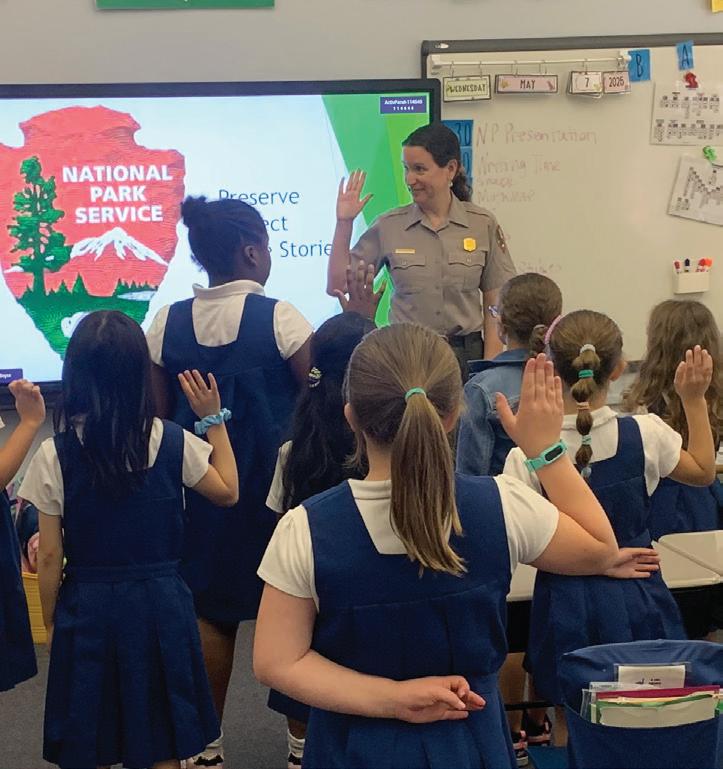
Bridget has also worked as a National Park Ranger, an experience that continues to shape her teaching philosophy. The Park Service taught her that learning is universal and curiosity has no age limit.
“Whether you’re exploring fossils with young children or discussing the Constitutional Convention with adults, there are opportunities to learn literally around every corner,” she said. “You just have to find the spark.”
That belief carries into her work at Baldwin. Each year, Bridget proudly swears in third graders as Junior National Park Rangers after their National Parks project,
ensuring students have a deep appreciation for history, nature, and place — especially the historical richness of Philadelphia.
Teaching Civic Mindedness Early
In Bridget’s Civics classroom, students are encouraged to grapple with big questions: democracy, citizenship, justice, and responsibility. She believes middle school is the perfect time for this work. “Upper school can get busy,” she explained, “and being an engaged citizen is sometimes one of the things that gets sacrificed. Middle school is where students can pause and really wrestle with complex ideas.”
Her goal is not only content mastery but skill-building, including in the areas of media literacy, respectful dialogue, empathy, and confidence in using one’s voice.
“I hope the girls I’ve taught stay involved in their communities, challenge injustice, trust their moral compasses, and of course, I hope they vote,” she said.
One of Bridget’s most beloved initiatives is the Grade 7 Immigration Project, an interdisciplinary collaboration with the English department. As a capstone experience, students research immigration stories and present their learning through writing, interviews, art, and other creative forms. Through this work, students learn to see complex issues through multiple lenses, developing both empathy and critical thinking.
Beyond the Classroom
Bridget’s influence at Baldwin extends far beyond academics. As a middle school volleyball coach, she teaches teamwork, resilience, and growth. Coaching allows her to teach the “whole student” and celebrate
strengths that may not always surface in the classroom.
As sixth-grade Dean, Wyss Interdisciplinary Institute (I2) coordinator, mentor to new faculty, and trusted thought partner across divisions, Bridget is known for her reliability and generosity. She is the colleague who quietly fills gaps, steps in for car line or coverage, supports a nervous parent, or guides a new teacher through her first parent conference. She does so humbly, never seeking recognition, and always holding herself to the highest professional standards.
A Lasting Impact
Despite the many roles she holds, Bridget makes it all look effortless. Those who know her understand the truth: she dedicates enormous care, time, and attention to everything she does. Her colleagues describe her as consistently reliable, deeply approachable, calming, collaborative, and endlessly thoughtful. Students see her as someone who listens, challenges, supports, and believes in them.
“I have the joy of seeing our students as they move up each year,” Bridget shared, reflecting on the growth she witnesses from fifth-grade visit day to eighth-grade moving-up ceremony. Helping students understand their world, their voices, and their capacity to make change is what drives her work.
As for the Reed Fellowship itself? Bridget plans to do what she loves most: learn. With museums, long walks, history, and travel calling her name, a return trip to France may be just ahead. Wherever she goes, one thing is certain: she will return with new stories and insights to ignite learning at Baldwin once again.
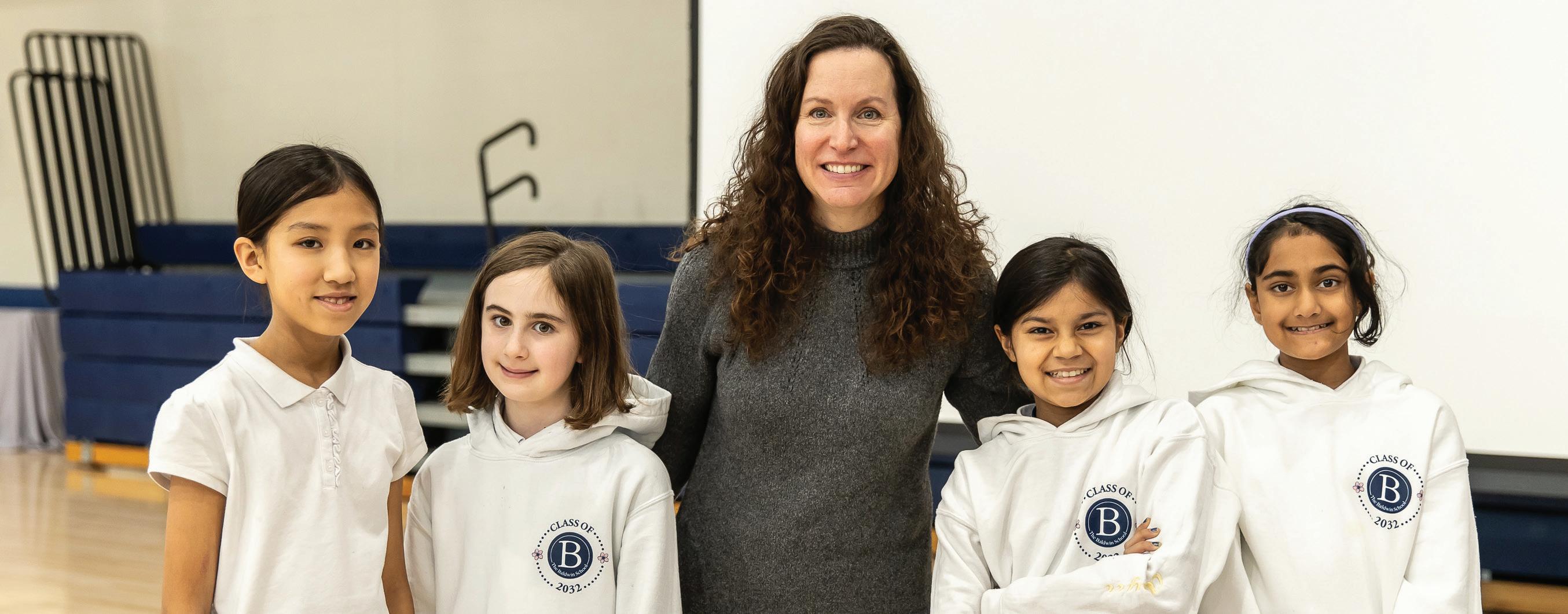
HOW GIRLS LEARN:
The Neuroscience Behind Baldwin's Educational Approach
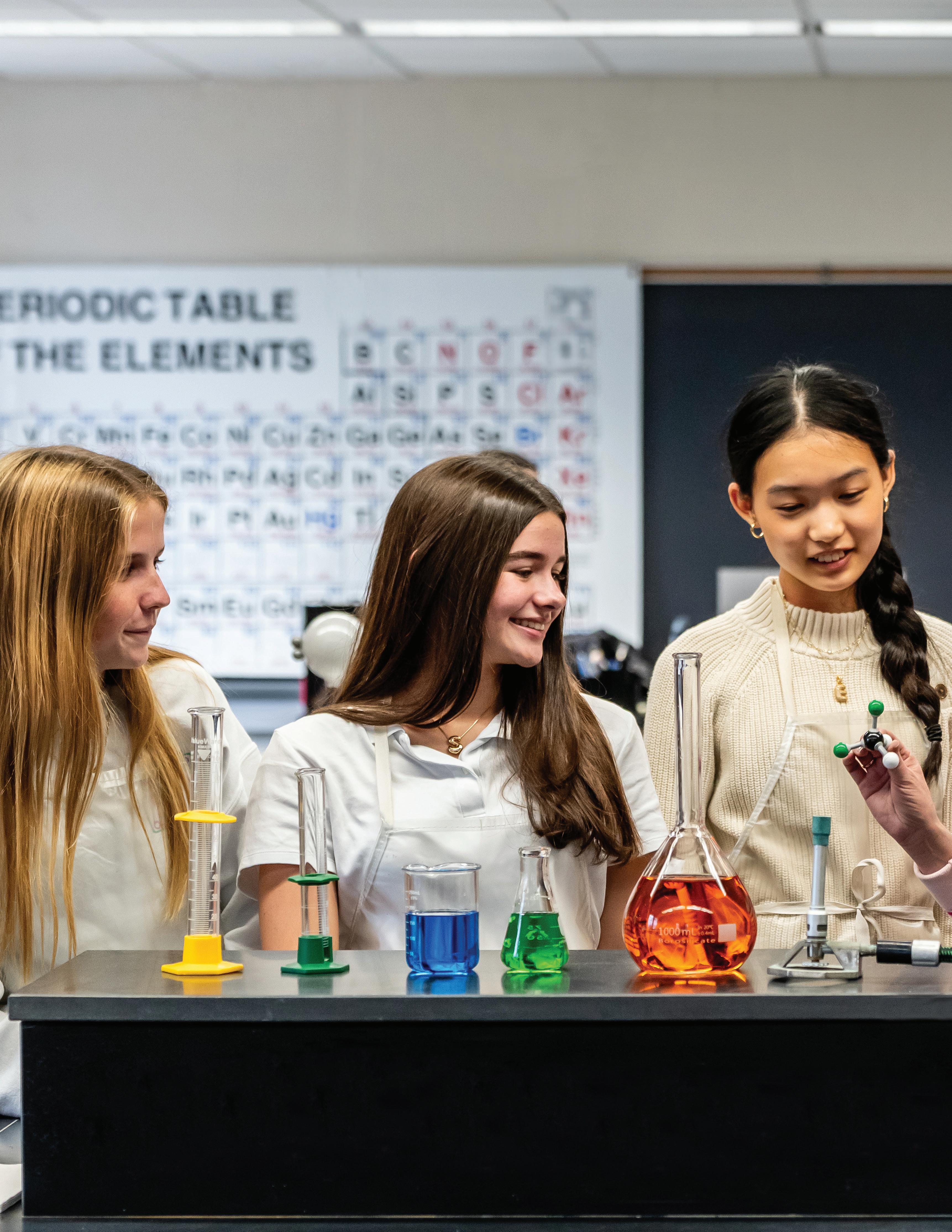


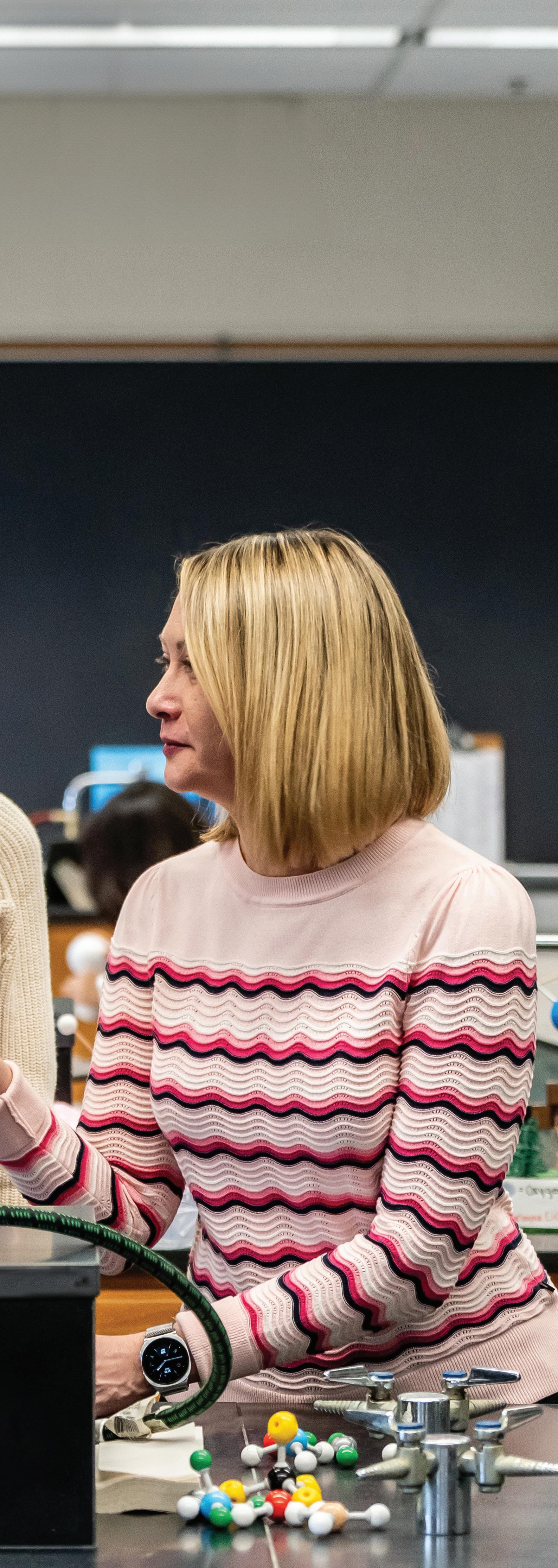
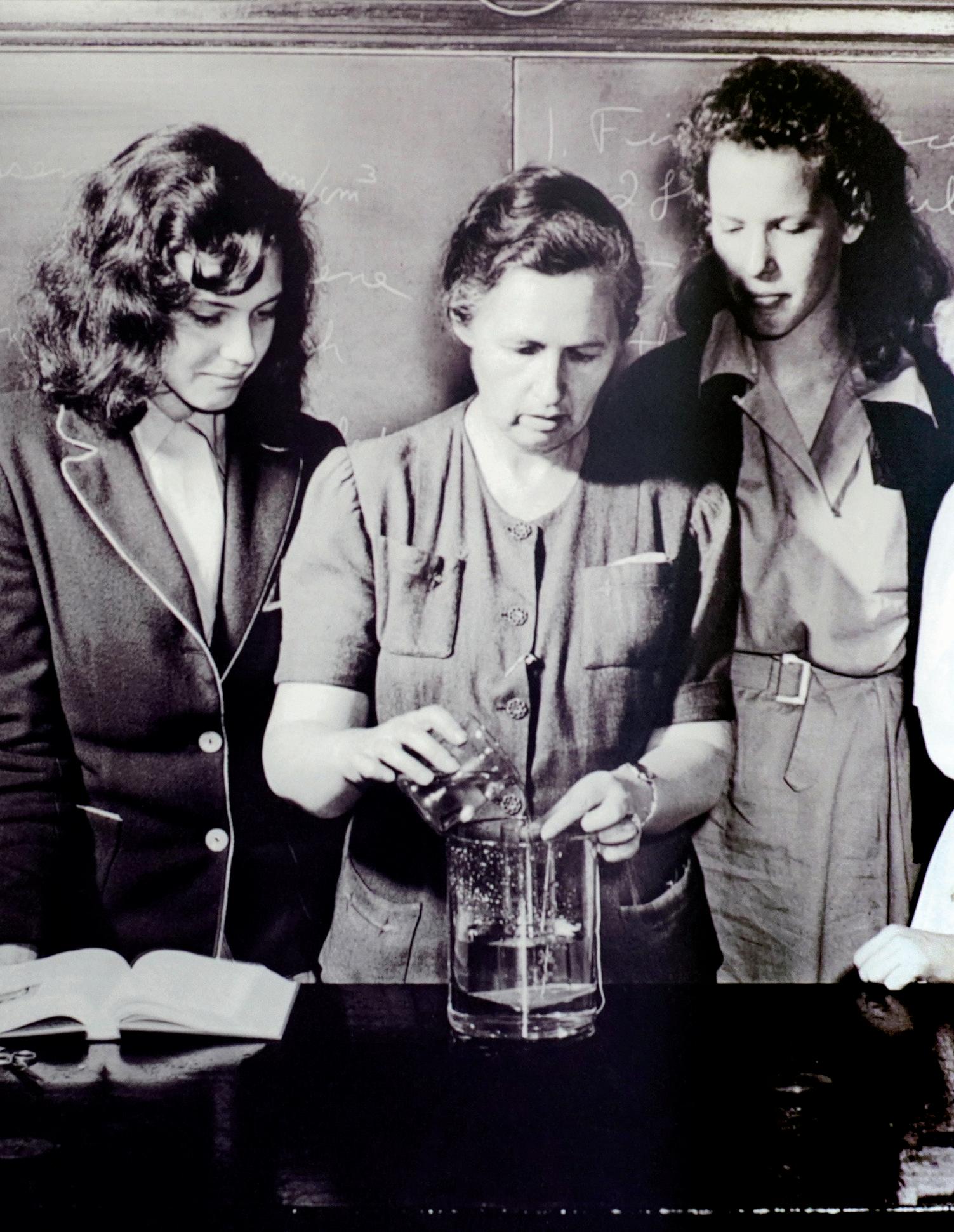
When Florence Baldwin founded The Baldwin School in 1888, she couldn't have known about neuroplasticity, hippocampal development, or hemispheric communication. Yet her pioneering belief that young women deserved an educational experience designed specifically for them has been validated by more than a century of neuroscience research. For 135 years, long before modern studies confirmed what we already understood, Baldwin has been creating learning environments where girls succeed and thrive.
The Science: Understanding How Girls' Brains Learn
Research into how we learn reveals fascinating insights about the developing brain. According to the National Academy of Sciences, the human brain exhibits distinct anatomical differences between males and females that lead to differences in learning processes. While both male and female brains contain gray matter, which serves as information processing centers, and white matter, the connections between those centers, studies show that boys and girls use those components differently. Research on brain development shows that girls' brains often mature earlier than boys' in certain areas, particularly those governing language and fine motor skills. More significantly, female brains often exhibit better interhemispheric connectivity, meaning the two halves of the brain communicate more effectively with each other. The female hippocampus, critical for learning and memory, is larger and functions differently from its male counterpart, while the two hemispheres of a girl's brain show more coordinated activity and communication.
This enhanced cross-connectivity allows girls to integrate analytical reasoning with spatial and intuitive processing simultaneously, leading to particular strengths in hands-on experiments, artistic endeavors, collaborative projects, language learning, and puzzle-solving. In contrast, male brains typically support within-hemisphere connectivity, enabling efficient processing of specialized tasks within a single hemisphere. This difference partly explains why boys often demonstrate deep focus when engaged in singular tasks, while girls can transition between tasks more quickly, which provides a foundation for the multitasking abilities many women excel at in adulthood.
How These Differences Show Up in the Classrooms at Baldwin
These neurological differences translate into distinct learning preferences and strengths that we see every day at Baldwin and allow us to thoughtfully design aspects of our educational experience around how girls learn best. Our pedagogical strategies foster critical thinking and creativity simultaneously, creating an environment in which girls can be academically ambitious while focusing on their individual passions.
Language and Memory
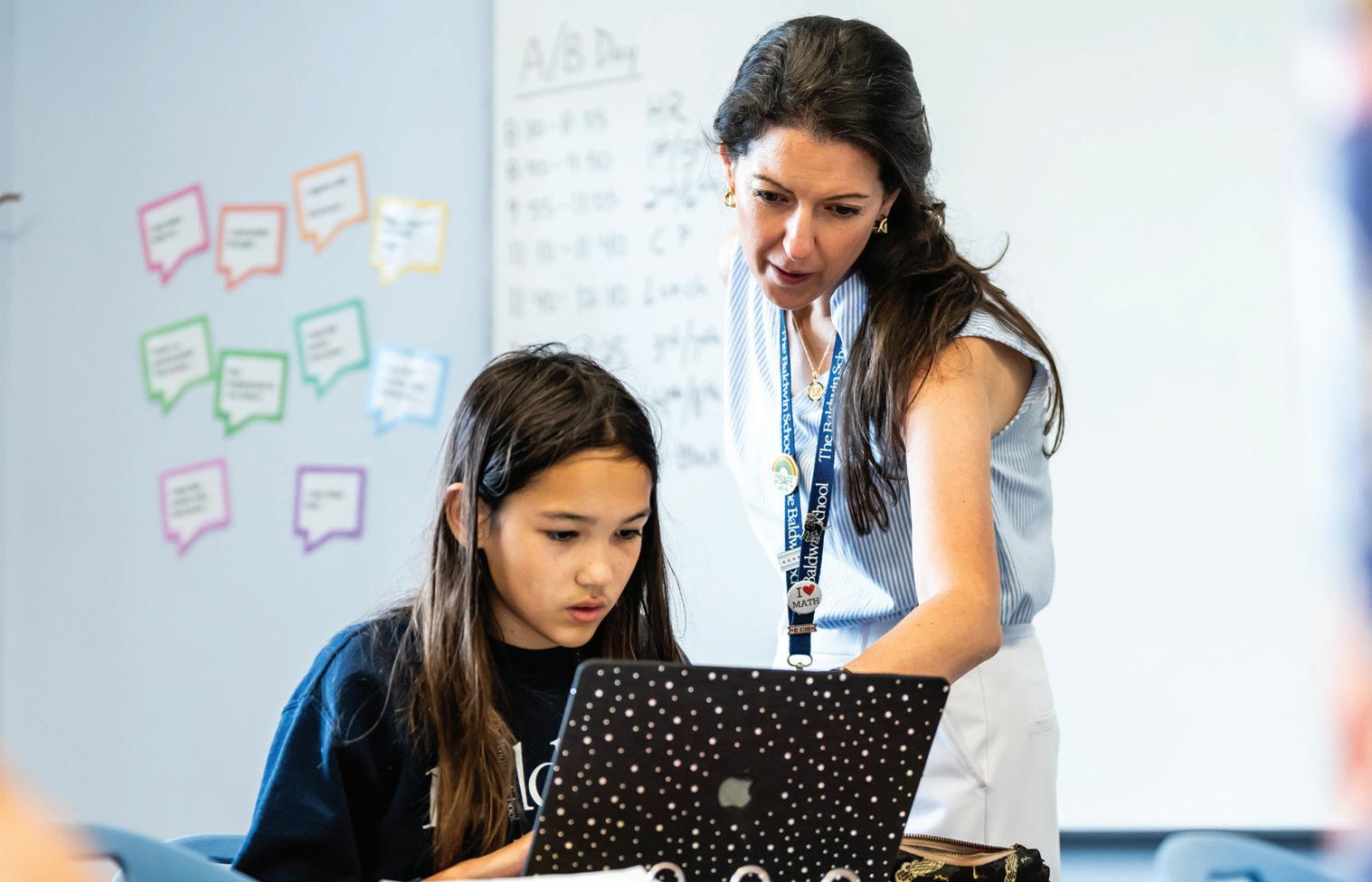

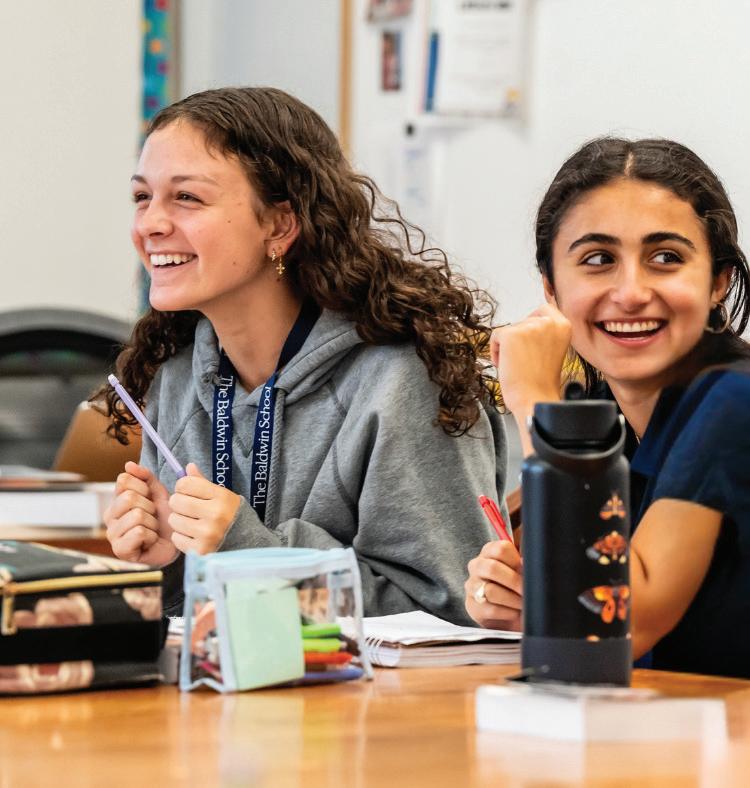
Girls' brains are wired in ways that give them natural advantages in certain areas. Because language processing occurs in both hemispheres of the brain, girls typically develop strong reading comprehension and writing skills early on. They also tend to excel at verbal tasks, precision work requiring fine-motor skills, processing information quickly, and retrieving facts from memory. Thus, they thrive in collaborative learning environments where they can talk through their thinking. Walk into a Baldwin classroom, and you'll often see girls engaged in animated conversations with peers or teachers. They may be articulating what they're learning, testing their understanding aloud, or building on each other's ideas. We structure our classes to provide plenty of opportunities for this verbal processing in both small and large-group settings, honoring girls' natural strength in communication.
Emotional Connections
Girls' brains process emotional experiences differently from boys. They tend to form more vivid memories of emotional events and recall them more quickly, partly because a specific brain region, the left amygdala, becomes more active during emotional processing. Our faculty use this knowledge to their advantage. When we help girls connect new concepts to their personal experiences, stories, or meaningful events, we deepen their understanding and make learning stick. This is underscored and supported by our knowledge of the significance of strong relationships with teachers and classmates. These relationships aren't peripheral to learning; they're essential for engagement and academic success. Girls prefer lessons that are clear, relevant to their lives, and provide opportunities to demonstrate understanding in creative, multimodal ways.
Hands-On, Experiential Learning
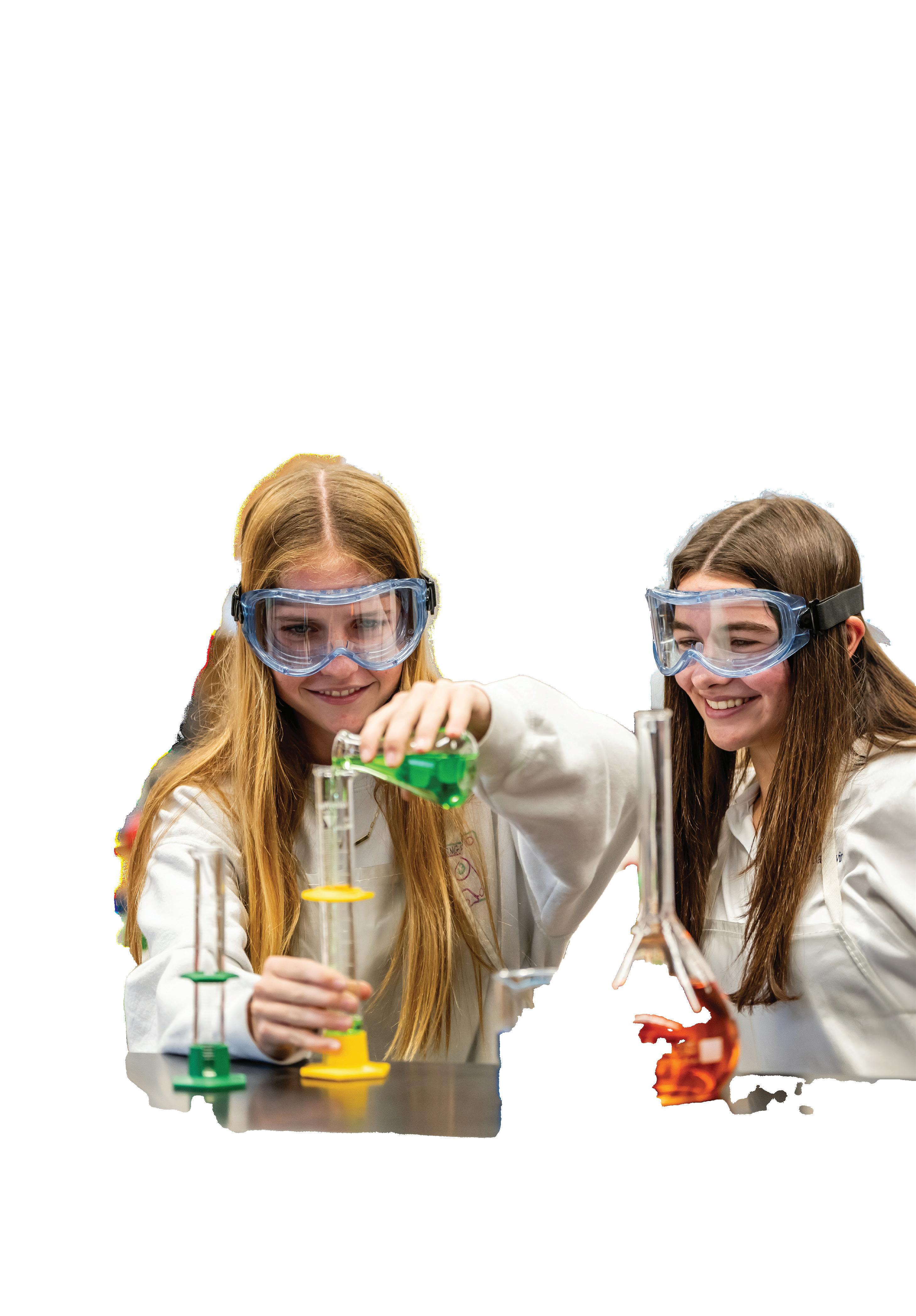
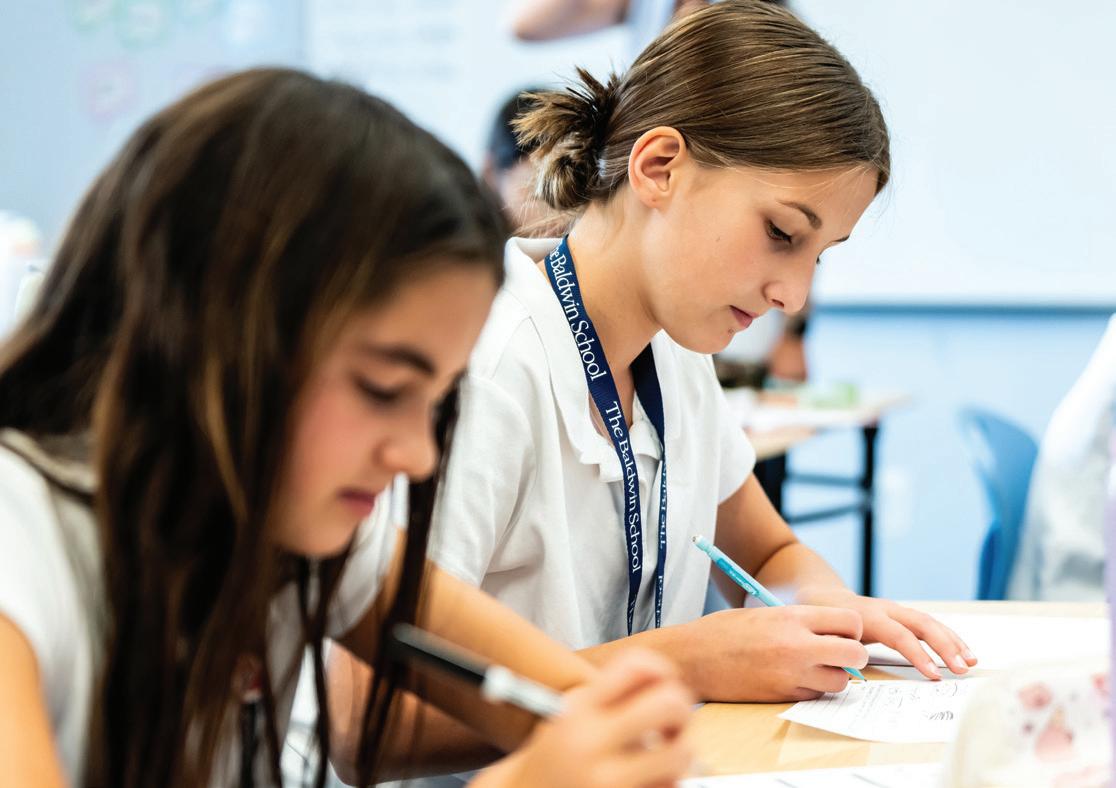
Learning is active and creative. Our curriculum emphasizes experiential approaches in which girls engage directly with content rather than simply receiving information, a practice that research shows increases synaptic connections, resulting in deeper understanding and long-term memory. In science labs, students design experiments and draw conclusions from their own data. In the humanities, they recreate historical debates and produce documentaries. Across disciplines, our girls work on collaborative projects that connect ideas from literature to science, mathematics to art. When girls tackle complex, real-world problems with their peers, whether designing sustainable solutions, analyzing community data, or creating original works that blend technology and creativity, they develop critical thinking and problem-solving skills that extend far beyond the classroom.
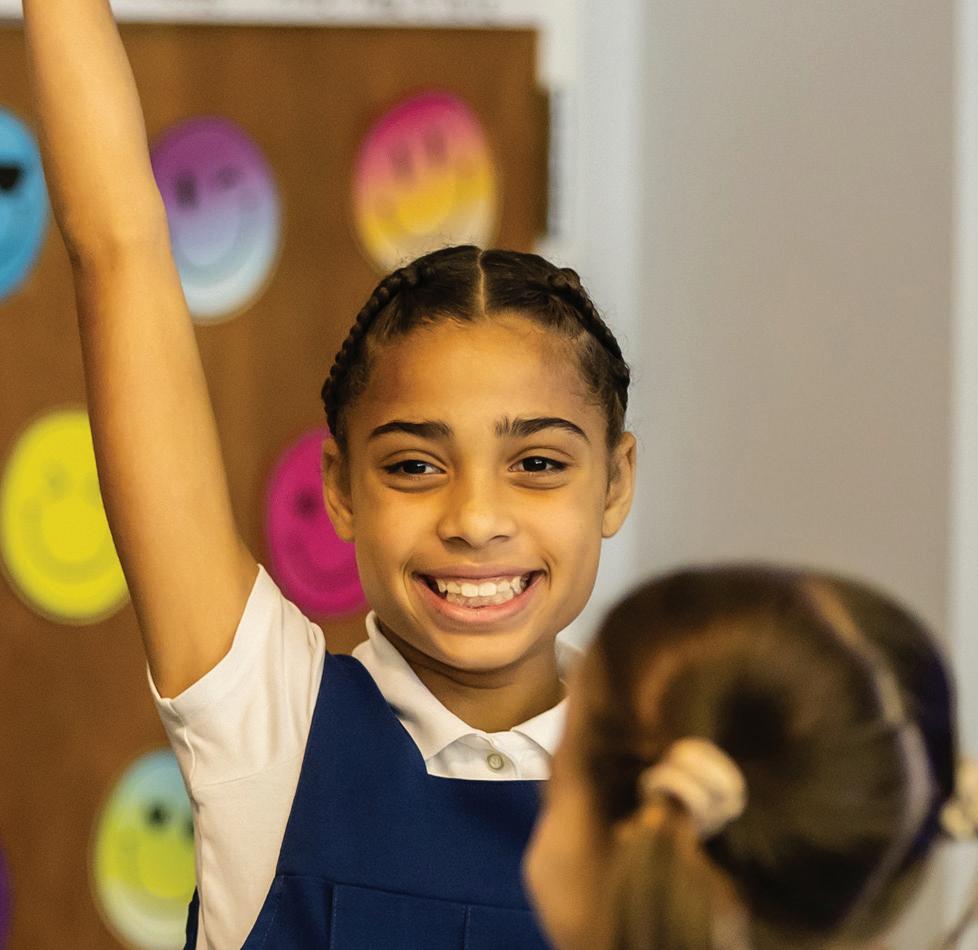
A Growth Mindset Research shows that girls thrive when they can take academic risks in environments where it's safe to try, fail, and try again without the self-consciousness that often accompanies co-ed settings. At Baldwin, we teach girls to see struggle as part of learning, not a reflection of their ability. When a girl finds a concept difficult, it simply means she hasn't mastered it yet. Carol Dweck’s foundational teachings on developing a growth mindset underscore the importance of providing individualized feedback tailored to each student's learning path, which will help her build on her strengths and work through challenges. In a supportive environment, our girls are more willing to call out answers, volunteer for leadership roles, and explore new courses or activities without fear of judgment or competition for attention.
The Confidence Connection: Understanding the Incredible Paradox
Perhaps most significantly, we understand the importance of growing each girl’s confidence in herself and her ability to do anything she sets her mind to. A groundbreaking study from King's College London followed over 15,000 sets of twins and found that individuals' perceptions of their abilities were more significant predictors of academic achievement than IQ itself. This research underscores what educators at Baldwin have long observed: confidence is fundamental to learning and success, especially for girls.
In striking reality, however, studies reveal a persistent confidence gap: girls often doubt their abilities even when they're excelling academically, while boys tend to maintain higher confidence regardless of performance. Girls are more likely to credit their success to hard work or luck rather than talent, while boys readily claim their achievements as proof of their abilities. As a result, girls tend to be far more self-critical in evaluating their work.
At Baldwin, our program and pedagogical strategies teach girls from an early age that their options are never limited by their gender. They see role models woven throughout their program, from female scientists to authors, artists, and leaders. They then become role models for the girls who will follow in their footsteps. Baldwin girls grow up with an unshakable confidence that any door is open to them and that they can lead in any field.
An Educational Experience Designed for Her
When we understand how girls learn and intentionally create environments tailored to their strengths, we don't just educate them; we empower them. At Baldwin, we've built our educational model around this principle, employing teaching strategies and learning environments designed specifically for how girls thrive. We teach girls how to think, not what to believe. We cultivate bold scholars, brave leaders, and compassionate women who know who they are and what they stand for. Every Baldwin student is equipped to discover her voice, own her strengths, and boldly forge her path as a leader.
For over 135 years, we've been exploring what's possible when you genuinely believe in girls' potential. Brain research supports and validates what Florence Baldwin understood intuitively: when you create an environment designed for how girls learn, when you build their confidence as the foundation for everything else, and when you surround them with women leaders who show them what's possible, brilliance isn't merely likely — it's inevitable.

Where Music Takes Center Stage: Inside The Baldwin Conservatory
At Baldwin, music is not an extracurricular afterthought. It is a defining part of the School’s culture, brought vividly to life through the Baldwin Conservatory, a prestigious music program dedicated to developing young musicians with rigor, care, and joy.
Housed on Baldwin’s campus, the Conservatory offers personalized private music lessons taught by world-renowned professional musicians. While Baldwin is an all-girls school, the Baldwin Conservatory is open to both boys and girls, including students not enrolled at the School. For Baldwin students, one of the program’s most meaningful advantages is the ability to take lessons during the school day, eliminating travel and making high-quality music instruction seamlessly part of daily life.
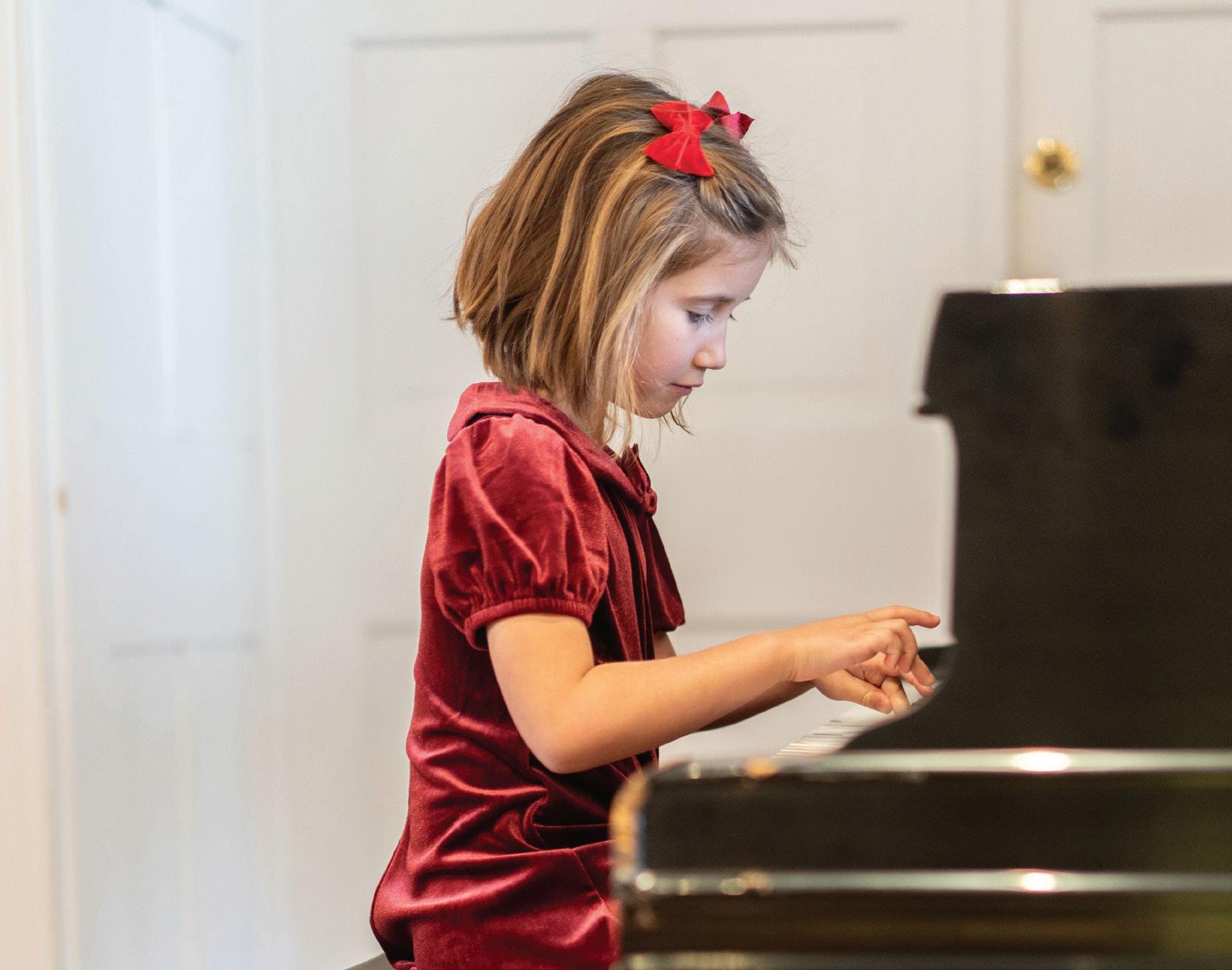
“Our goal is to guide children and nurture their creativity, patience, and self-expression, turning learning into an enjoyable journey,” says Dr. Oxana Harlamova, Director of the Baldwin Conservatory and Director of the Lower, Middle, and Upper School Ensembles. “With the right guidance, encouragement, and opportunities to perform, every child can grow, express themselves, and shine.”
From Baldwin to the World Stage
The impact of the Baldwin Conservatory is reflected in the remarkable paths its students pursue. Miranda Liu began piano lessons at Baldwin’s Conservatory at age five and is now concertmaster and first violinist of the Concerto Budapest Symphony Orchestra in Budapest, Hungary. Miranda is also the founder of the internationally recognized MiraTone Festival and Academy, which brings together top-tier performers and educators for a week of over a dozen public concerts.
Other Baldwin Conservatory alumnae stories echo Miranda’s trajectory of growth and confidence. Julia Tyminski ’13 began as a saxophone student and went on to direct her own senior-year production of Rent. Current student Amelia Adamo ’29 has been selected for the highly competitive Interlochen Arts Camp multiple years in a row, and in recent years, Baldwin students have performed at Carnegie Hall, including Amelia, Caroline Didizian ’27, Amelia Tang ’25, Angelica Tang ’26, Lily Bacharach ’31, Tara Kanumuru ’31, Miraya Gupta ’32, and Alaina Sharma ’31.

Private Lessons, Lifelong Impact
Private instruction lies at the heart of the Conservatory experience. Taught by concert musicians and professional performers, lessons are tailored to each student’s strengths and challenges. Baldwin’s private instructors gently raise the bar while sharing their own passion and expertise. Students grow in technique and expression, and they discover what they’re truly capable of.
As students move into Middle and Upper School, expectations increase alongside academic and athletic commitments. While the Conservatory remains primarily rooted in the Lower School — where about 80% of participants are younger students — those who continue into later years take on advanced repertoire, greater responsibility for practice, and opportunities to compete. For these dedicated musicians, music becomes a lasting and meaningful part of life.
Several members of Baldwin’s award-winning a cappella group, the B-Flats, also take private voice lessons through the Conservatory. This one-on-one instruction strengthens their vocal technique, expands expressive range, and brings added polish and confidence to ensemble performances, allowing students to grow as both individual musicians and collaborative performers.
In 2017, Julia Tyminski ’13 returned to Baldwin for an exciting evening of music, live performances and fine arts, with all event proceeds directly benefiting the Arts at Baldwin.
Ana Kunkel ’38
Music Woven Into Daily Life
Another defining feature of the program and what sets the Baldwin Conservatory apart is how early, and how deeply, music is integrated into students’ lives. Students are welcomed beginning in Pre-K, with children performing as early as age four. Music happens before school, during lunch and recess, and after school, supported by thoughtful transitions and caring faculty. Every child is encouraged to perform at least twice a year, making stage experience a natural and joyful part of learning rather than a source of fear.
“We define success individually, because every child’s musical journey is unique,” Oxana explains. “For some students, success means building the habit of daily practice. For others, it’s gaining the confidence to play in front of an audience or learning to read music independently. Ultimately, our greatest measure of success is that students enjoy music, feel confident expressing themselves, and develop a lasting love for their instrument.”
The Conservatory warmly welcomes everyone into its musical community, whether they are beginning their musical journey or continuing their lifelong passion.
The Transformative Power of the Arts
Oxana’s teaching spans all divisions, from Lower School general music to Middle and Upper School Orchestra and Instrumental Ensembles. Her ensembles, including Lower School “Crescendo” and the Upper School Instrumental Ensemble, create spaces where students connect, collaborate, and grow together.
In the arts, students discover who they are. Music, dance, and art allow them to express emotions and ideas that words can’t always capture. Music also teaches students that it’s okay to make mistakes. A missed note or a performance that doesn’t go as planned becomes a valuable learning moment.
Oxana also emphasizes the social and emotional benefits of music education. Ensemble work teaches students to listen, collaborate, and give constructive feedback, building trust and respect while fostering a strong sense of community.
The Conservatory’s music teachers have observed truly inspiring connections between music education and academic performance. Music requires concentration, memory, and problem-solving — skills that translate directly into better focus and discipline in the classroom.
An Invitation to Belong
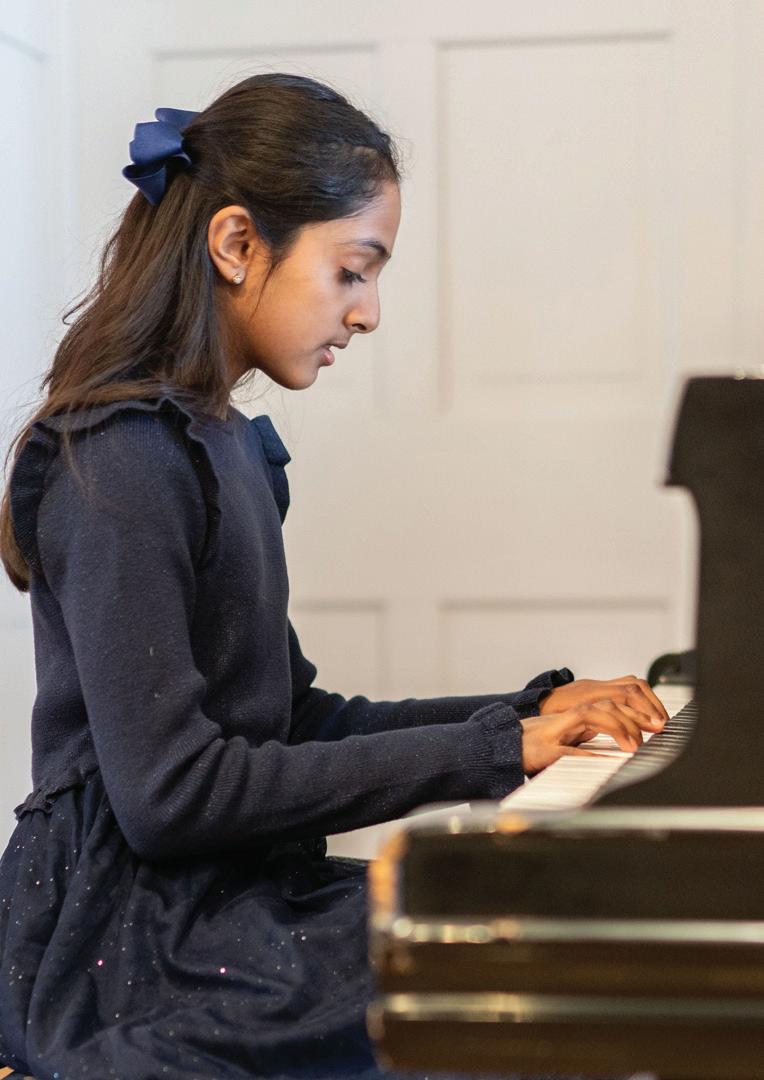
Whether students pursue music professionally or simply carry it as a lifelong passion, the Baldwin Conservatory offers something rare: an environment where excellence and encouragement coexist, and where every child’s musical voice is valued.
At Baldwin, music is more than a program; it is a pathway to self-discovery, discipline, collaboration, and joy. And for the students who step onto Baldwin’s stages, practice rooms, and ensemble spaces, it becomes a powerful part of who they are and who they will become.

Learn more about Baldwin’s Music Conservatory here.
Saranya Banerjee ’33
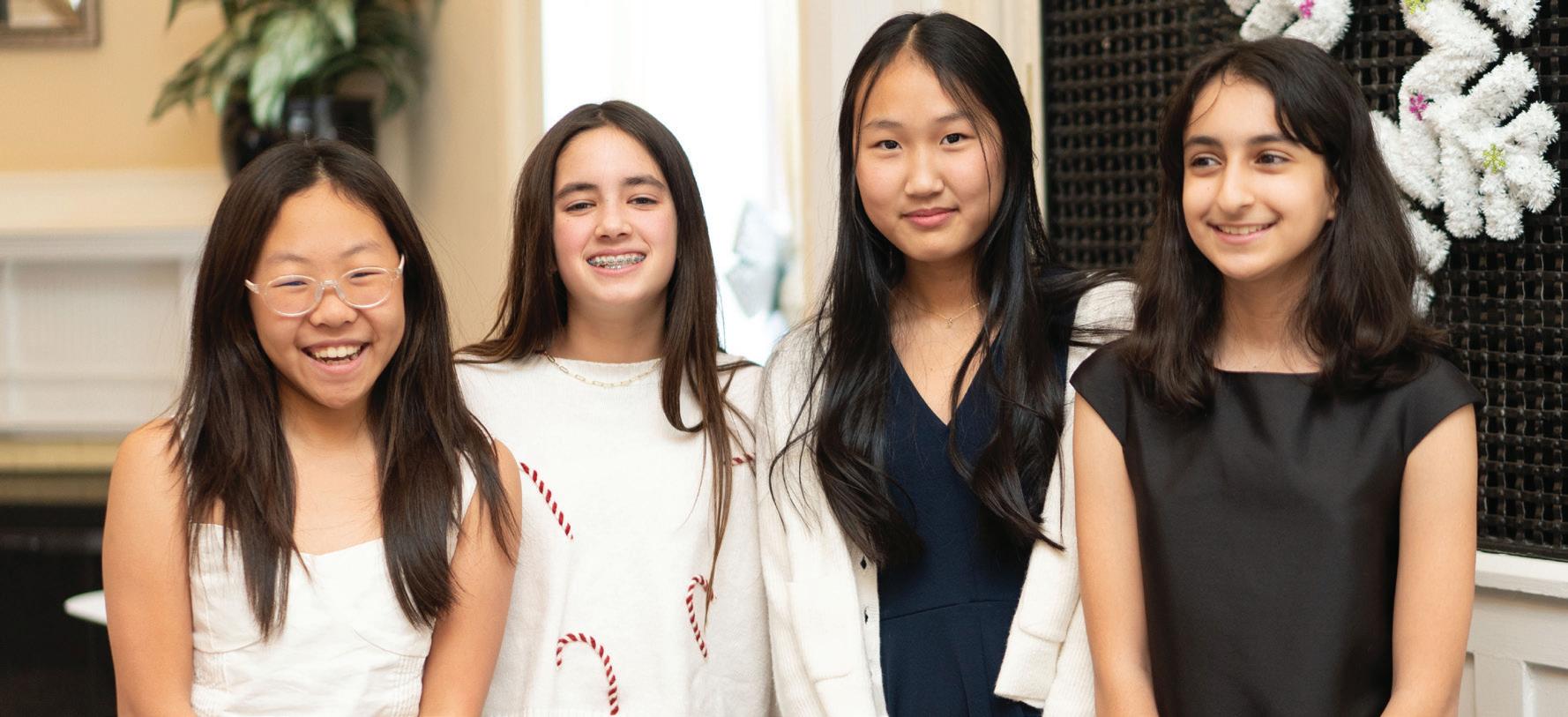
Grade 6 students Kelly Guo, Vivienne Grant, Emma Park, and Yasmin Mirgasemi performed at a Music Conservatory recital this winter.
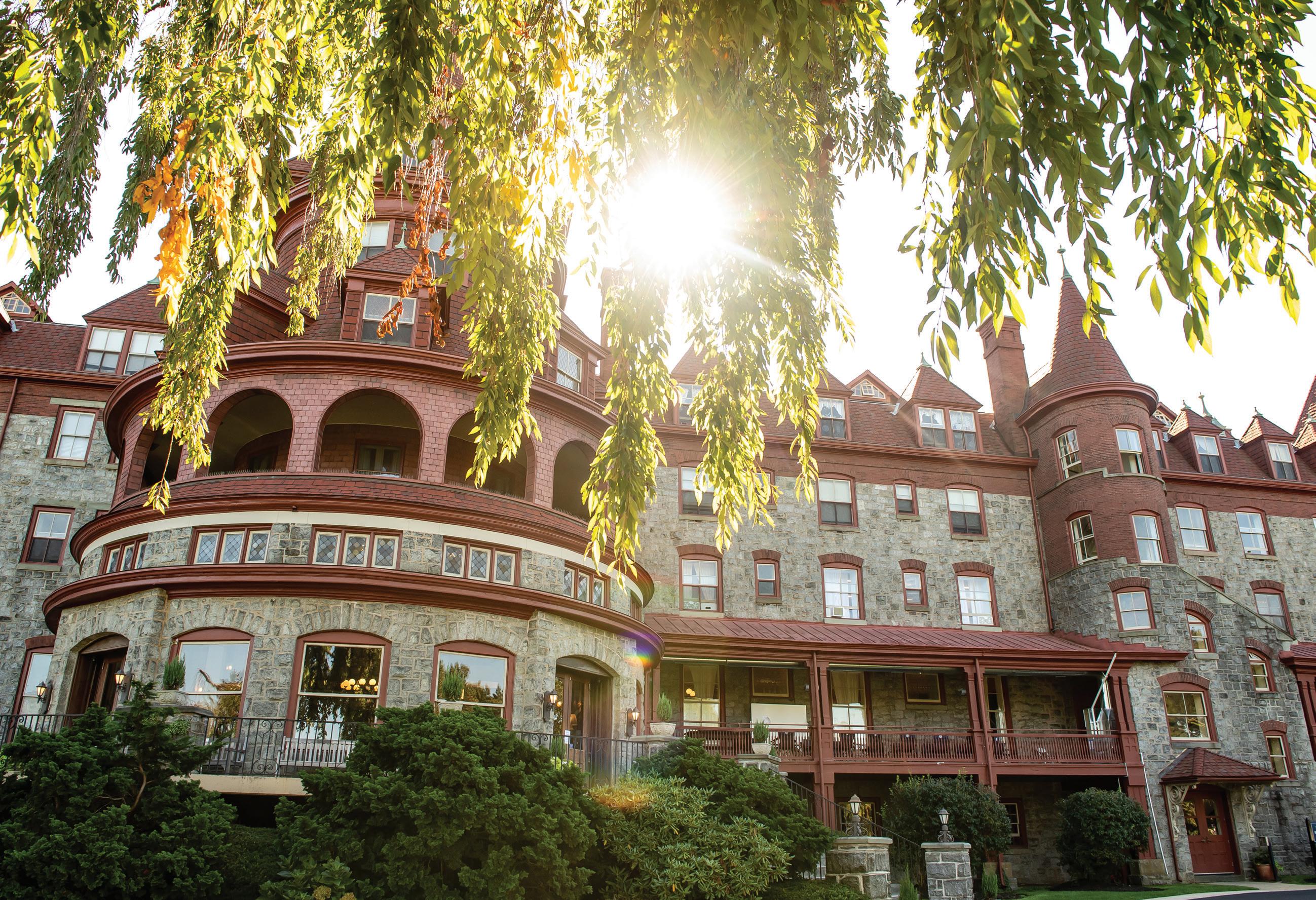
Building a Healthier Campus — and a More Conscious Future Sustainability Efforts Underway at Baldwin
At Baldwin, sustainability is no longer a single initiative or a one-time project, but a growing, campus-wide commitment rooted in education, innovation, and community. From rethinking waste management to investing in cleaner water and energy efficiency, Baldwin is taking meaningful steps to reduce its environmental footprint.
These efforts are being spearheaded by a dedicated group of faculty and staff members, in close collaboration with student-led environmental clubs, our facilities and kitchen teams, and our alumnae. Together, they have worked diligently to audit waste practices, distribute recycling containers across campus, and embed sustainable thinking into daily school life.
Recycling and Composting at Baldwin
One of the most visible changes on campus has been Baldwin’s expanded recycling and composting efforts. This year, the School partnered with J.P. Mascaro & Sons, a new waste management company whose Total Recycle facility in Birdsboro, PA, allows for single-stream recycling, making it easier than ever for the community to recycle responsibly. Almost everything can now go into one recycling bin, including flexible packaging materials such as plastic grocery bags, snack and chip bags, cereal box liners, mailers, drink pouches, and sandwich or freezer bags. Mascaro is currently the only provider able to recycle these flexible materials in a single-stream system, significantly reducing landfill waste and simplifying sustainable habits for students and faculty.
In addition, Baldwin is easing into composting practices through a partnership with Mother Compost, a local and certified Women’s Business Enterprise National Council women-owned business. The initiative began with the kitchen staff, and will expand into the dining room for students later this year.
Alumnae Involvement
Baldwin’s sustainability journey also has been enriched by the return of Rhea Jain ’21, whose academic and professional path exemplifies how environmental passion can evolve into impactful work. A recent graduate of UCLA with a degree in Environmental Science, Rhea has played an active role in Baldwin’s recent sustainability initiatives, collaborating on a comprehensive review of the School’s energy efficiency. Her work has included analyzing several years of utility bills, exploring alternatives to aging boilers and energy providers, and assessing campus spaces with an eye toward long-term carbon reduction and cost savings. She has also supported efforts to improve waste sorting and composting education through the Upper School Environmental Club, recognizing that student-facing systems can lead to lasting behavioral change.
During her recent visit to campus, Rhea spoke with the Upper School Biology class and met with Middle and Upper School Enviro Clubs over lunch. She discussed choosing a major, navigating STEM fields, and exploring the wide range of environmental career paths, many of which she herself had not fully understood as a Baldwin student.
“Students learn from the systems around them,” she explained. “When sustainability is built into daily life, it becomes a shared responsibility rather than an extracurricular hobby.”
Clean Water, Reduced Plastic
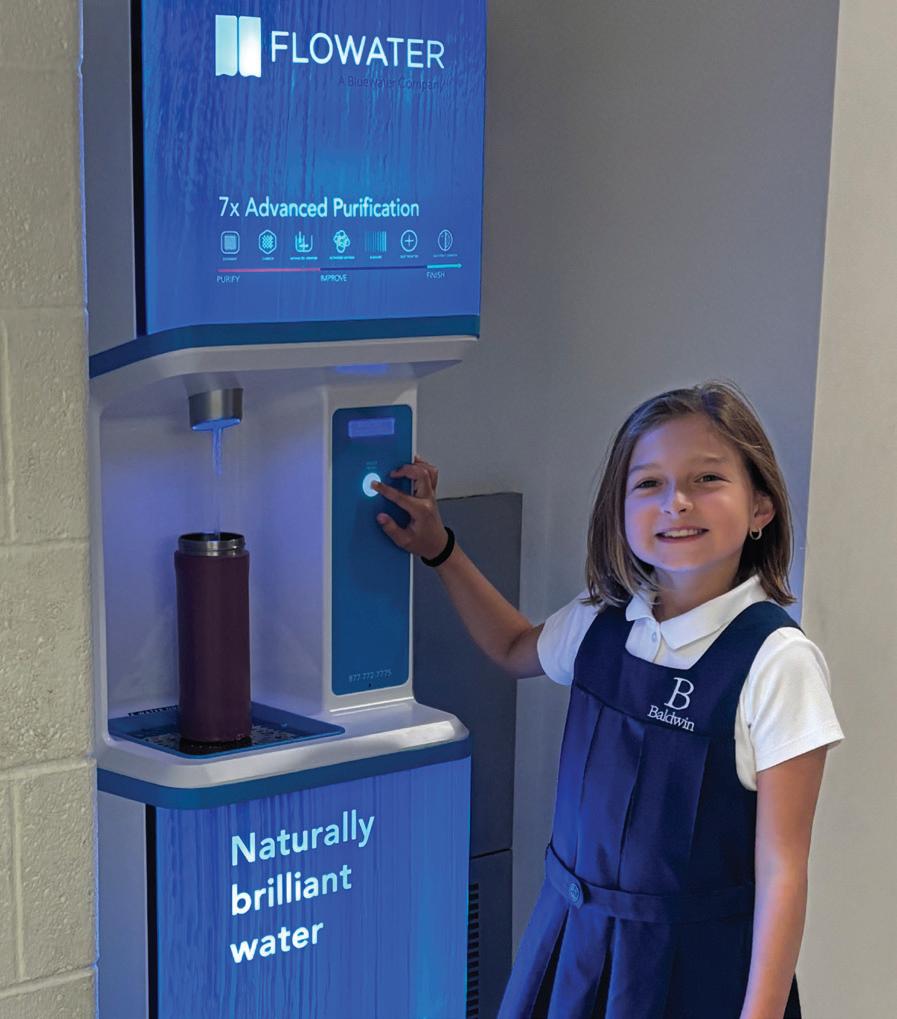
Another major sustainability upgrade can be found in the Athletic Center, where new FloWater refill stations provide students with chilled, great-tasting, ultra-purified water. These stations were made possible through a generous grant from Baldwin alumna Sarena Snider ’03 of The Sarena Snider Foundation.
FloWater’s proprietary 7× Advanced Purification process removes up to 99.9% of contaminants, including microplastics, PFAS, and heavy metals, while adding trace minerals and electrolytes for improved hydration. By making high-quality water readily available for reusable bottles and jugs, Baldwin is significantly reducing reliance on single-use plastic bottles, a major contributor to environmental pollution.

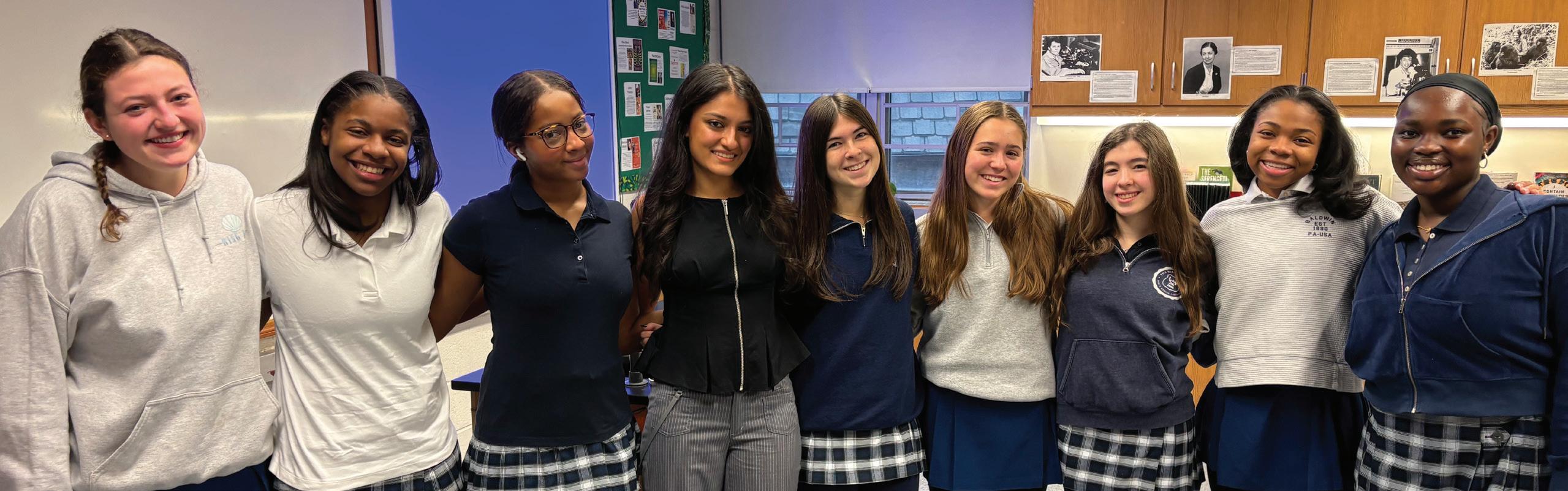
Rhea Jain ’21 (fourth from left) met with a variety of students during her recent visit.
Sarena Snider ’03
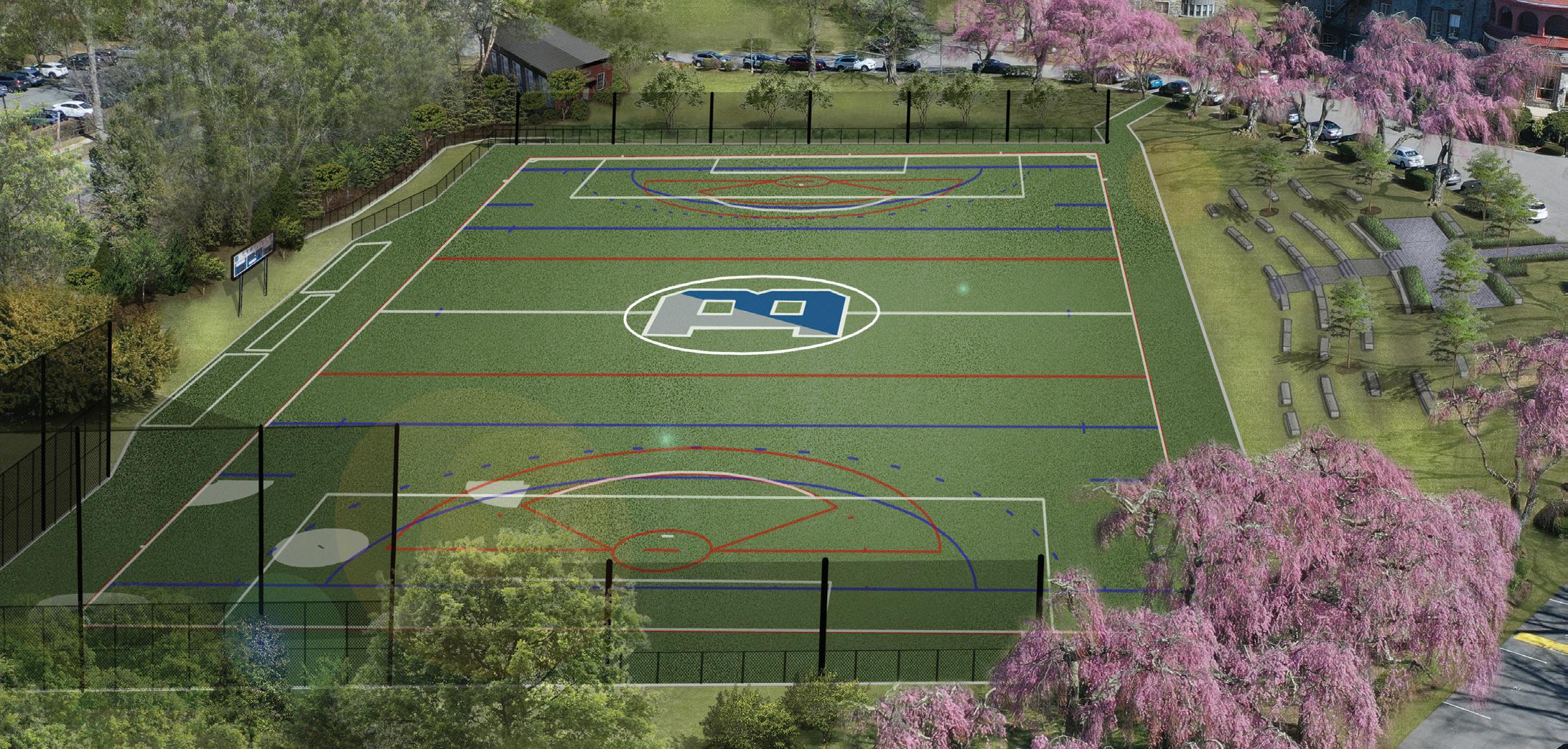
A Cooler, Greener Field: BrockFill Turf Infill
As Sarena shared, “After learning about FloWater, I approached Baldwin with the idea of giving students access to purified water while also reducing their reliance on plastic water bottles. Water quality, microplastic exposure, and plastic pollution have been central to my work since graduate school. I’m honored to support this project, which is intended to spark broader thinking about how everyday decisions connect to the long-term health of our planet.”
A documentary filmmaker and journalist, Sarena’s career has explored the intersections of people, animals, and the environment, from her early work at National Geographic Television to her current projects examining plastic, fracking, and human health in Appalachia. Her support of the FloWater initiative reflects Baldwin’s broader mission: connecting daily wellness with global responsibility.
Sustainability considerations have also extended to athletics. As part of the $4 million transformation of Baldwin’s Upper Field, the School is installing a new turf surface that uses BrockFill, an innovative, organic alternative to traditional synthetic turf infill, which is often made from petroleum-derived plastics. BrockFill is designed with both athletes and the environment in mind. Made from a renewable species of southern pine grown and replanted in continuous cycles, BrockFill is engineered to reduce surface heat, improve traction, and enhance performance, all while remaining durable, affordable, and produced in the United States. This choice reflects Baldwin’s commitment to the environment while supporting student-athletes and the broader school community.
Together, these initiatives represent more than isolated improvements; they reflect a shared vision for Baldwin’s future. By embedding sustainability into infrastructure, operations, and education, the School is modeling responsible stewardship and empowering students to carry these values beyond campus.
Riley Culbertson ’33 fills up her water bottle at the new FloWater station.
Lessons Beyond the Scoreboard
Baldwin Athletics and the Power of Girls’ Sports
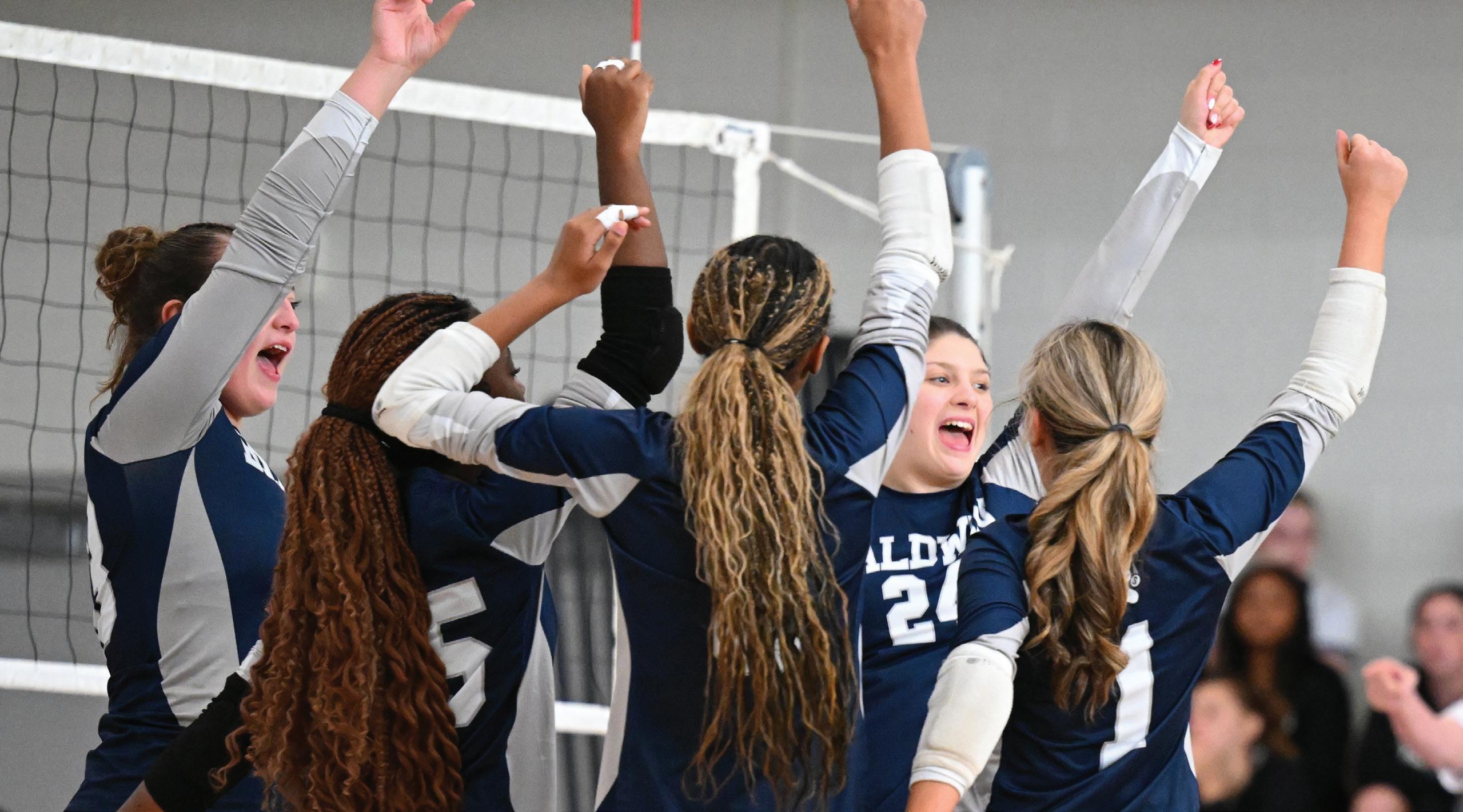
On the fields, in the pool, and on the courts at Baldwin, something powerful is taking shape. Wins and losses matter, but they are not the final measure of success. What matters most is what girls carry with them long after the whistle blows: confidence, resilience, collaboration, and the courage to lead.
“What I am most proud of is how consistently Baldwin athletics has focused on who our students are and who they are becoming, not just on how they perform,” says Baldwin’s Director of Athletics Meg Glascott-Birch. Season after season, she explains, teams demonstrate that athletics at Baldwin is about growth: celebrating hard-earned victories, learning from losses, and showing up for one another every day.
Over the course of an athletic season, students learn to trust their coaches and teammates as they navigate challenges, resolve conflicts, and share responsibility
and success. “That sense of purpose, belonging, and pride that comes from wearing the uniform and being part of something larger than oneself is the true measure of success,” Meg notes.
Whether students are scoring the winning goal or learning a new athletic skill, Baldwin athletics offers endless opportunities to develop grit, stamina, and perseverance, all while reinforcing the values of sportsmanship and teamwork. Baldwin’s 16 sports programs and state-of-the-art athletic facilities, including its new turf field, coexist seamlessly with its academic programs. Just as importantly, Baldwin emphasizes balance, supporting both physical and mental well-being while creating environments where girls’ voices are valued and growth is expected. “Students gain confidence as they try new sports, step into leadership roles, and learn to adapt when things do not go as planned,” Meg says.
For Baldwin alumnae Jordan Valutas Jacobs ’03 and Azzaya Johnson ’19 — and for Dr. Saburah Posner, Head of Baldwin’s Middle School and a former rugby player who won back-to-back national championships — these lessons were not abstract ideals. They were formative experiences that continue to shape how these women lead in high-pressure, high-impact roles both at Baldwin and in the world of sports today.
The Power of the Team
Learning Confidence Through Participation
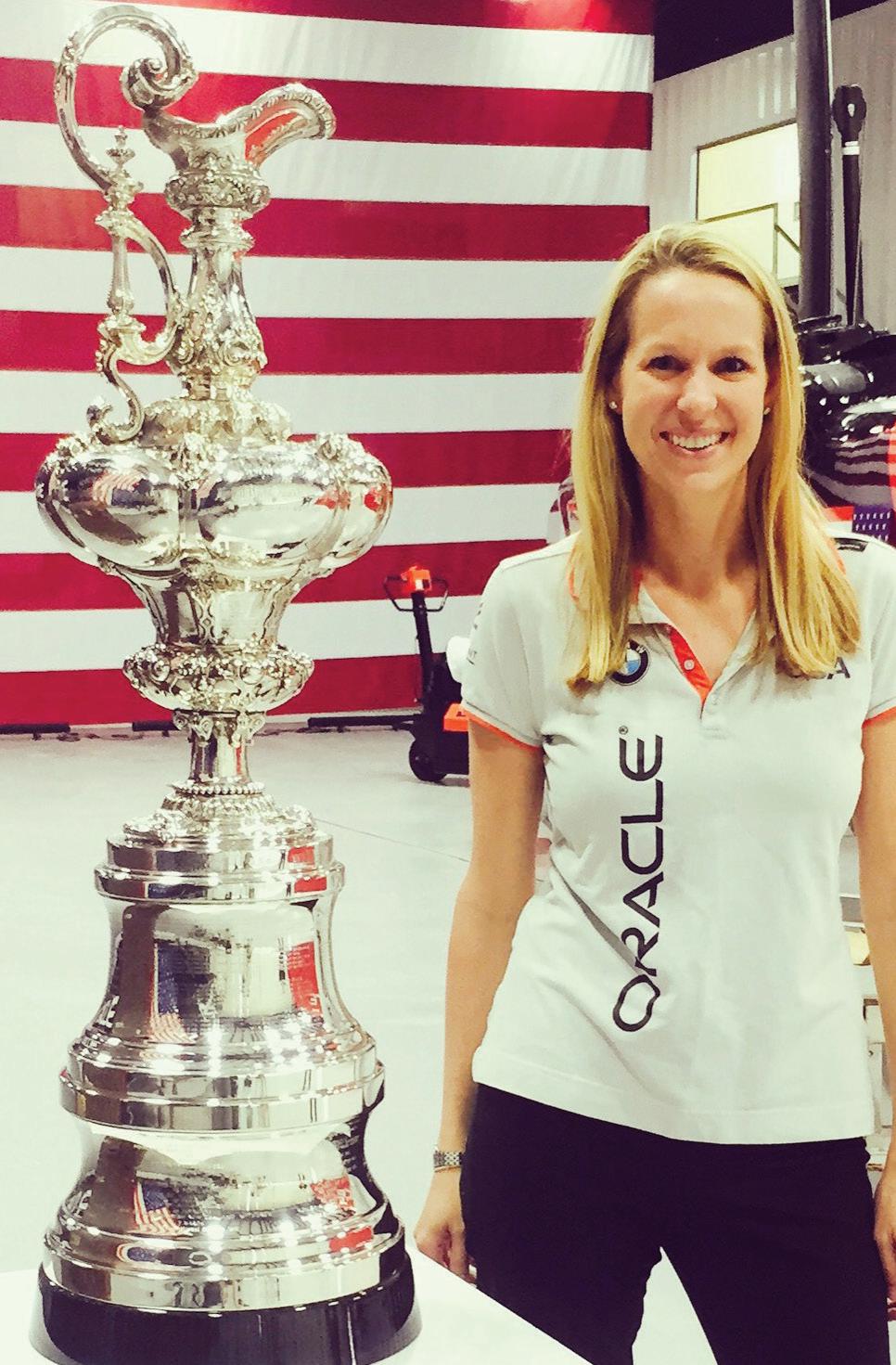
Jordan Valutas Jacobs ’03 built a career in sports marketing by doing exactly what Baldwin athletics encouraged her to do: show up, work hard, and trust herself. From the Olympic Games to the America’s Cup to Oracle’s global sports portfolio, Jordan’s path reflects the power of preparation, adaptability, and relationships. She is currently a contractor and owner of J Vantage Marketing & Events, with experience spanning the client, agency, and organizing committee sides of the sports industry.
Looking back, Jordan credits former Baldwin tennis and volleyball coach Joan Merkins with helping her build confidence at a pivotal moment. “I was not the strongest on the team, but I was a committed team member,” Jordan recalls. “Ms. Merkins was kind, encouraging, and always found an opportunity to get me on the court. Results were not the priority; getting out there and trying your best was.”
That message echoes Baldwin’s broader athletic philosophy. “Our students learn that leadership isn’t about having all the answers,” Meg explains. “It’s about showing up with integrity, resilience, and respect for others.” Those lessons prepare young women to lead with confidence and adaptability long after their final season ends.
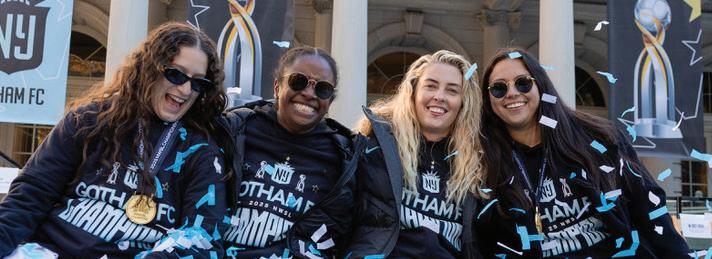
For Azzaya Johnson ’19, Home Operations Coordinator for Gotham FC, a top-tier American professional women’s soccer team and two-time National Women’s Soccer League champion (2023, 2025), Baldwin athletics revealed that leadership does not always happen in the spotlight.
“I played two sports and was a manager for a third,” Azzaya says. “Baldwin taught me that every role on a team is vital, even the ones that aren’t always recognized.” That lesson guides her work today as she supports professional athletes behind the scenes, managing logistics, communication, and matchday operations so players can perform at their best.
Azzaya remembers Baldwin’s athletic center as a second home; a place of mentorship, discipline, and belonging, especially the office of Assistant Athletic Director for Health and Wellness Kerrie Snead. “Kerrie’s dedication to our growth as athletes and people showed me that giving my best every day can lead to success in any facet of sport and life,” she says. When challenges arise, Azzaya draws directly on what Baldwin instilled in her.
“I’ve felt the spirit of Baldwin most in moments of challenge and leadership,” she explains. “The resilience and sense of purpose I developed there still guide me.”
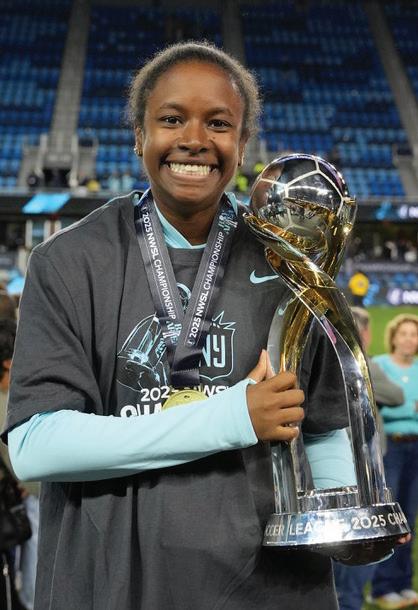
Jordan Valutas Jacobs ’03
Azzaya Johnson ’19
Sports as a Leadership Springboard
Research supports what Baldwin alumnae know firsthand. Studies from Temple University and the International Coalition of Girls’ Schools show that girls who participate in sports develop critical leadership skills, including assertiveness, problem-solving, empathy, and collaboration. Yet research also shows that girls often feel pressure to soften these traits due to unconscious gender bias.
That is where girls’ schools and intentional athletic programs make a difference. “As a girls’ school, athletics becomes a space where leadership is learned through active participation,” Meg says. “It is normalized, expected, and strengthened.” At Baldwin, girls are centered as leaders and culture-setters, learning that leadership is collaborative, purposeful, and grounded in respect.
Why Athletics Matters
Dr. Posner has seen firsthand how far women’s sports have come and why the work is far from finished. “Earlier this fall, more than 80,000 fans filled Twickenham Stadium for the Women’s Rugby World Cup Final,” she wrote in a recent parent newsletter. “That would have seemed unimaginable when I once represented the U.S. team.”
Her own journey, from youth competitions to national championships in rugby, underscores what research confirms: sports are a powerful driver of leadership, mental health, and belonging for girls. “Middle school is a critical window,” Dr. Posner explains, as she oversees Baldwin’s Middle School. “When athletic programs are inclusive, intentional, and rooted in mentorship, they do far more than develop skills; they shape character.”
At Baldwin, athletics are not just about competition. They are about discovering your voice, trusting your strength, and learning how to lead with confidence and compassion. From Middle School fields to Upper School courts to professional sports organizations around the world, Baldwin athletes carry forward the same lessons: teamwork matters, growth matters, and leadership takes many forms.
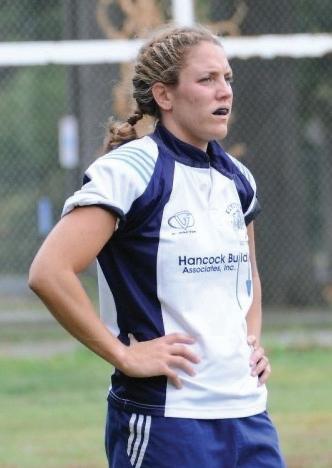
Dr. Saburah Posner
Azzaya Johnson ’19 celebrates with members of the Gotham FC organization.
BRILLIANTLY BALDWIN
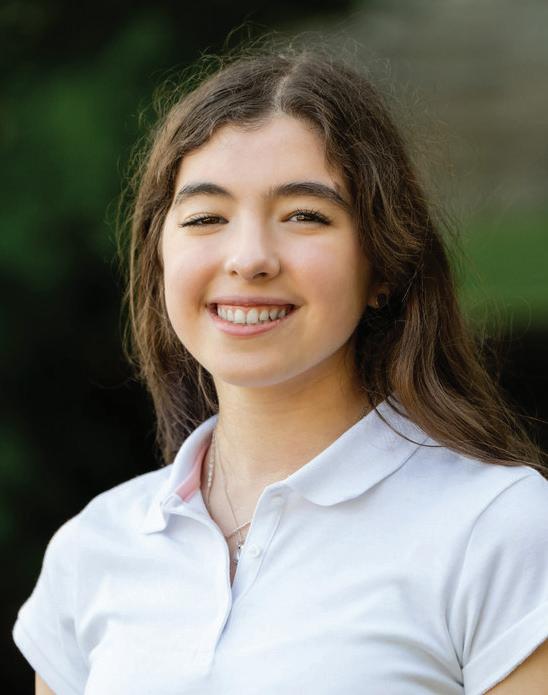
The Promise of Time
by Abby Barbaro ’27
Time never stops, nor does her promise. Her inexplicable nature reminds us of who we are and who we used to be.
I look back on time. Her plaid tunics and holiday assemblies.
Time looked forward once, to plaid kilts and blazers.
Now she looks at the present, glancing at rings on classmates' fingers.
Time never stops, nor does her promise.
I remember the time she held my hand as I walked into the ECC.
Now time has a different meaning. I look back on time. Her class trips and familiar faces.
Time travels in the Blue hallway. She glances back, smiling at us through photographs.
Time never stops, nor does her promise.
I used to like time, before she imagined the lines of my class song. Now she looks me in the eyes.
Time never stops, nor does her promise. I look back on time. Her reliable red roof and sound stone structure.
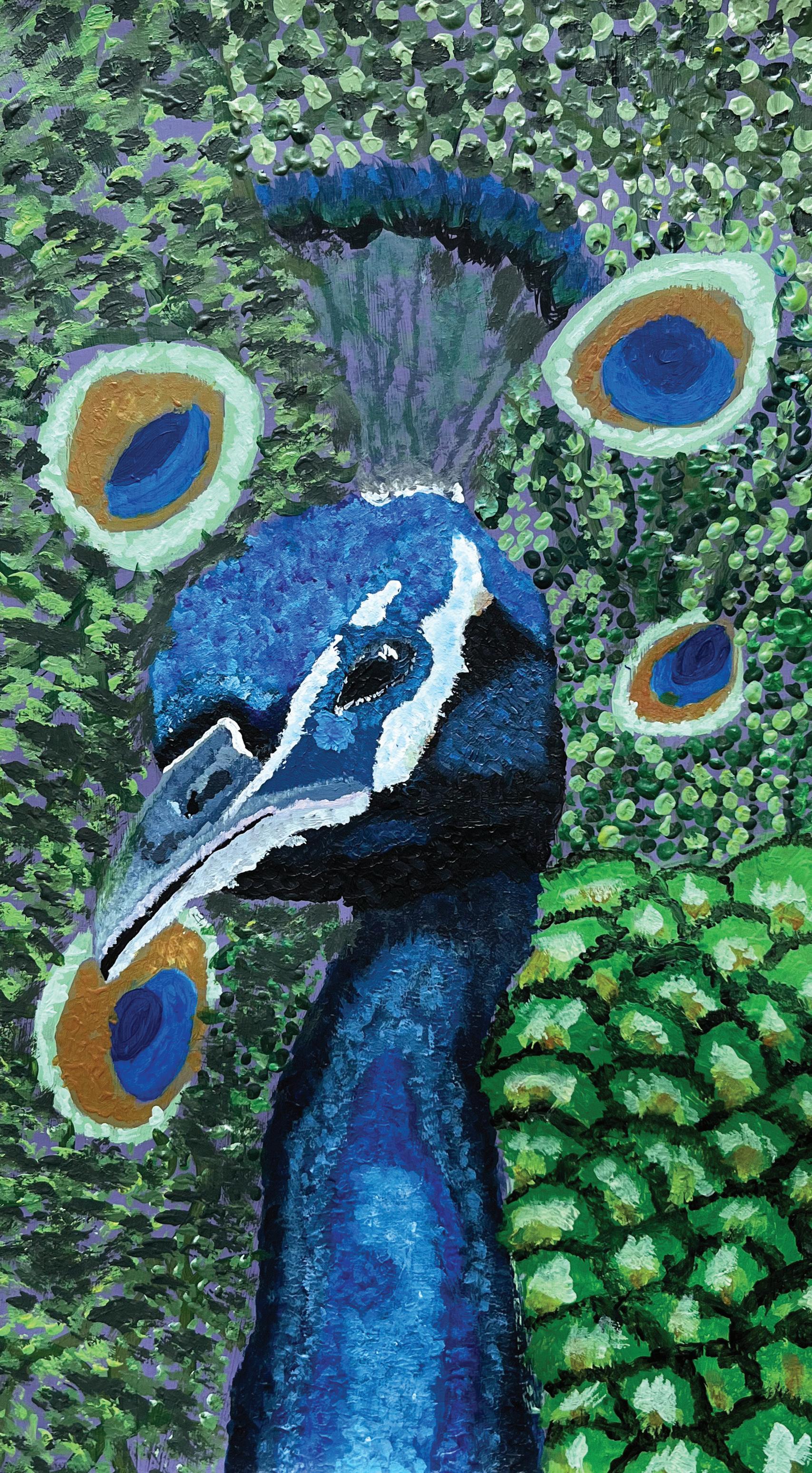
Vera Jain ’29 created this beautiful work of art during the Art Foundations class. The project was about PostImpressionism and portraiture. They discussed color theory and how many of the artists in the movement, like George Seurat, painted with little dots or dashes of color.
BRILLIANTLY BALDWIN

Fall
by Ella Welch ’35
The leaves fall without a fight, Flying through the pitch black night. Forest seems to whisper goodnight to all, Awakening the nights of fall. Gliding flipping doing tricks, The branches seem to sway with the sticks. Crunching crackling beneath my feet, A forest rhythm no one can beat. Red, yellow, brown and more, Summer seems to close its door. Goodnight to all goodnight to you, Because now, summer days are through.
Grade 7 students created acrylic paintings inspired by Georgia O’Keeffe’s close-up style, where they practiced the grid method to enlarge an image and paint its zoomed-in details. This encouraged them to observe closely and notice beauty they might have overlooked.


Lily Murphy ’26 created the cover artwork for this year’s 2025-26 Community Directory.
Lily Bachrach '31 painted the close up of a wing, while Zoey Huang ’31 painted bubbles.

April 22, 2026
May 1 - 2, 2026
ATTENTION CLASSES OF RED!
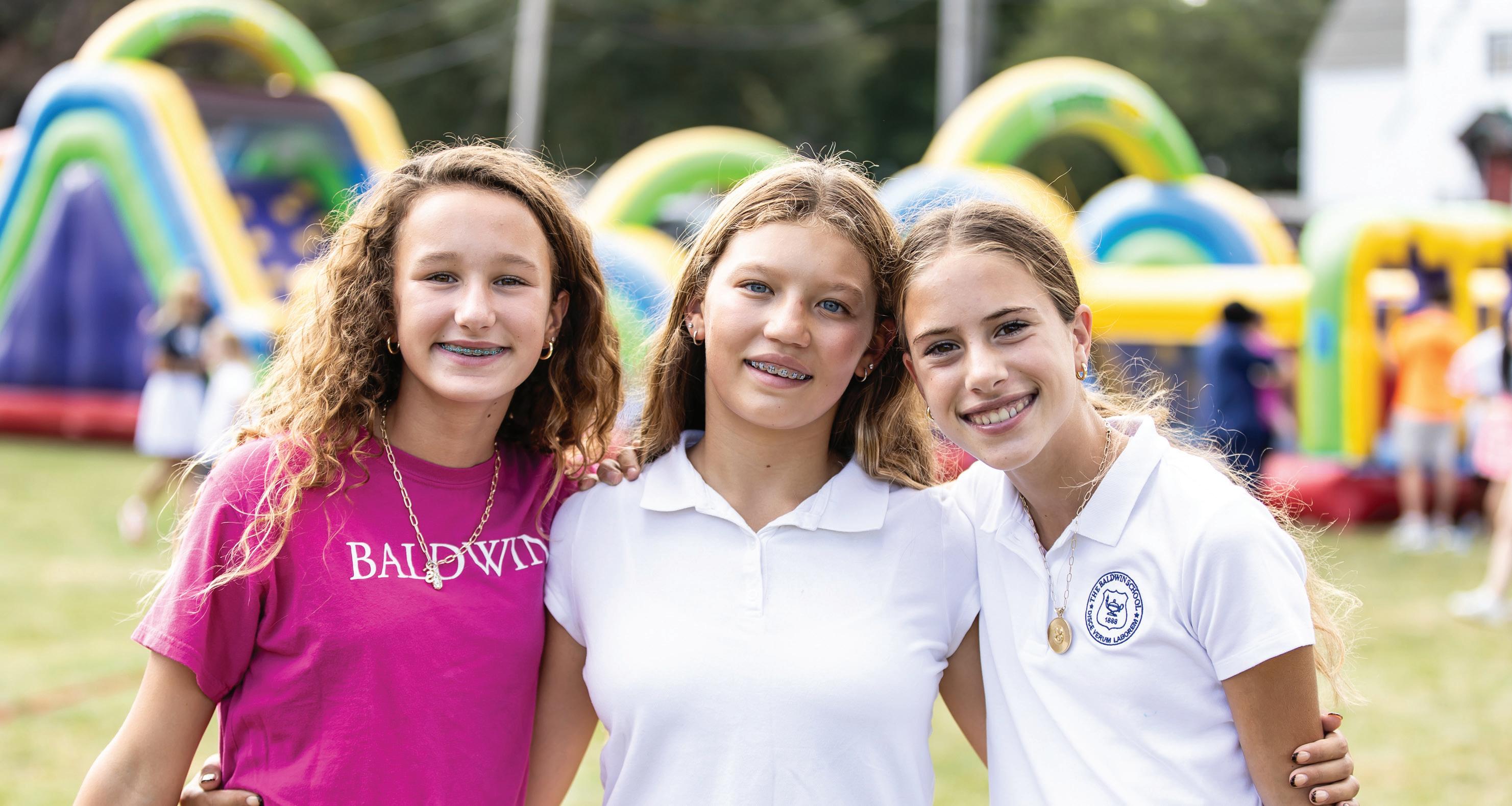
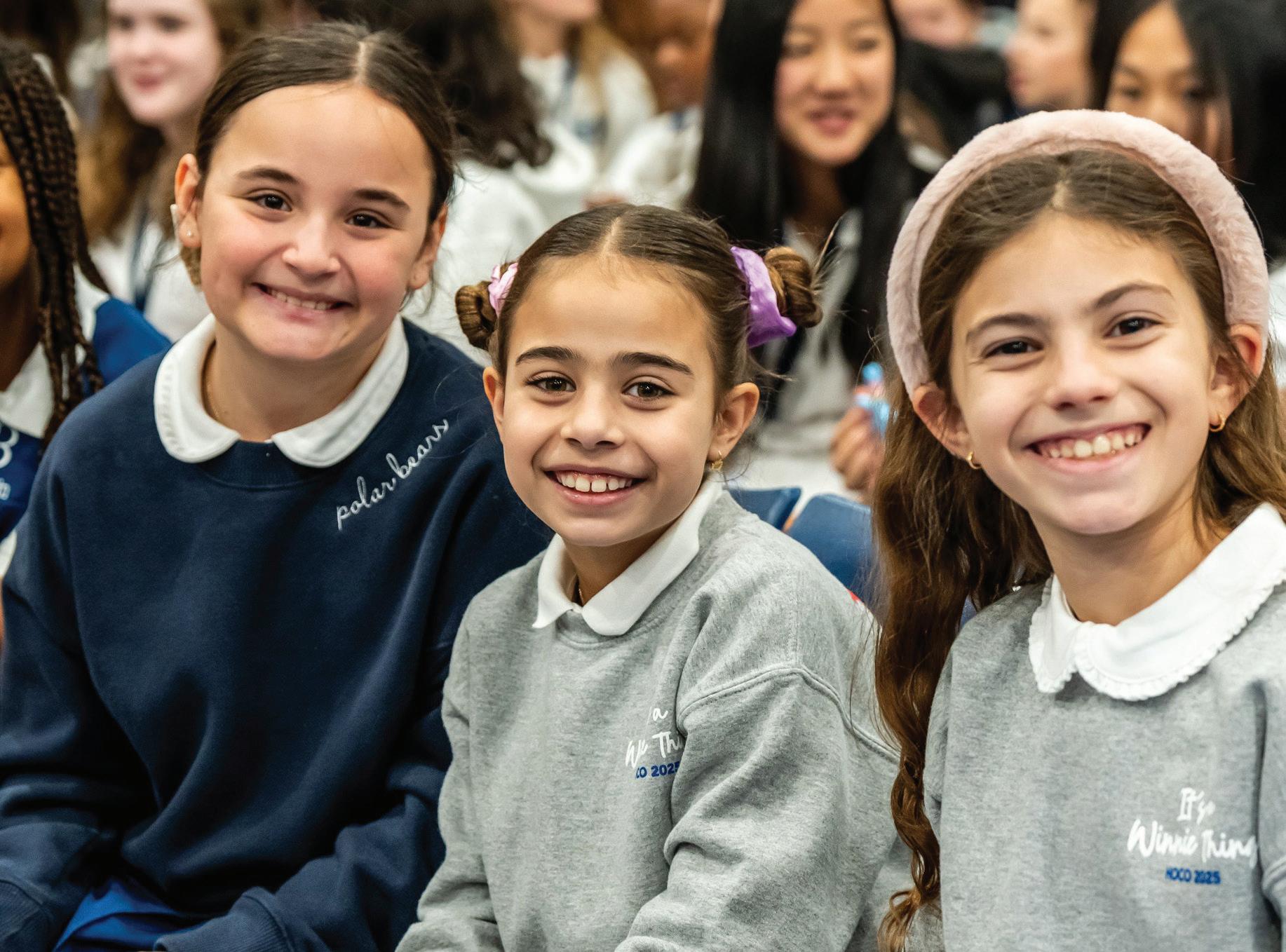
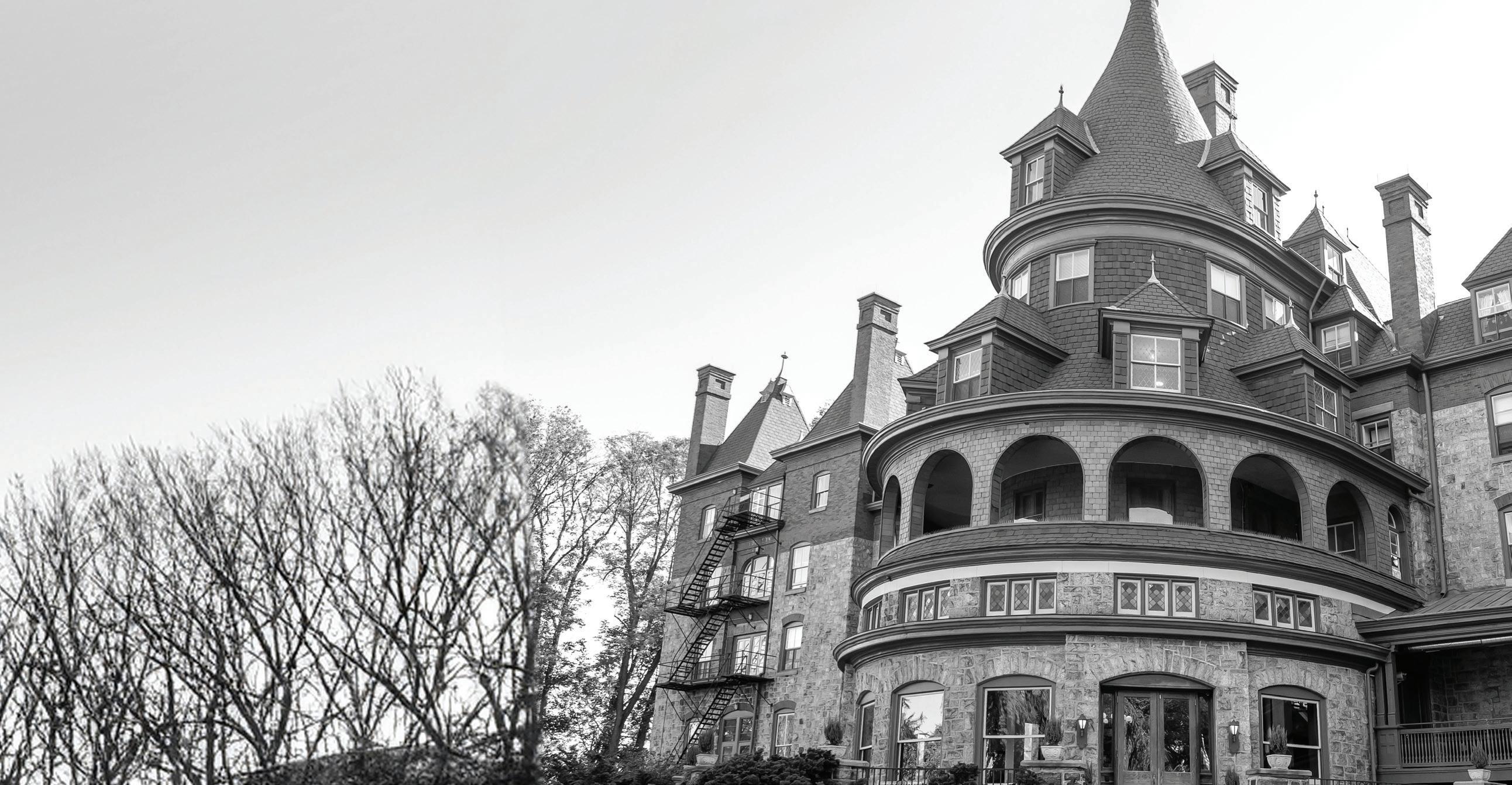
Mark your calendars for Reunion 2026, May 1 - 2. Return to campus for a weekend full of Baldwin spirit, friendship, and fun while reconnecting with classmates. Visit the website for details.
We look forward to seeing you in May!
www.baldwinschool.org/reunion