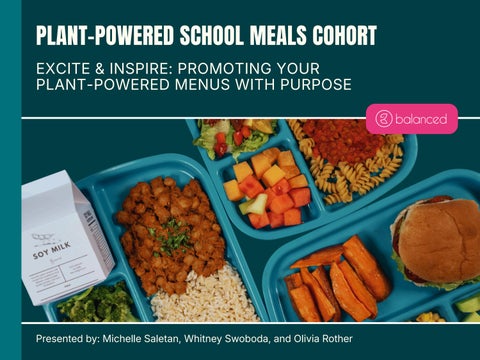
PLANT-POWERED SCHOOL MEALS COHORT EXCITE & INSPIRE: PROMOTING YOUR PLANT-POWERED MENUS WITH PURPOSE
Presented by: Michelle Saletan, Whitney Swoboda, and Olivia Rother
SUCCESS STORY SHOUTOUTS!
AGENDA In the News Marketing & Promotion Food Choice Architecture Building Buy-In for PlantPowered Menus Breakout Rooms Next Steps
Despite protein-maxxing and other meat-forward trends in the media, plant-forward dining is on the rise among American consumers. Whole plant proteins (beans, lentils, tofu) are growing in popularity — plain tofu sales up 10%. Young eaters are rejecting diet labels — menu language should skip "vegan"/"vegetarian". Flavor-focused naming wins: "Three Bean Chili" outsells "Vegan Chili".
MARKETING & PROMOTION:
BUILDING ON YOUR SUCCESS TO INSPIRE MORE STUDENTS
THE POWER OF POSITIVE MESSAGING Words Matter. Make Every Dish Sound Delicious.
Lead with flavor, not restriction. Think "Crispy Chickpea Crunch Bowl," not "meatless bowl."
Skip labels like “vegan”, “vegetarian”, or “meatless”. They can turn people away before they even taste the food.
Know your audience. Students respond to fun, flavor-forward language (crunchy, savory, zesty). Families respond to health-focused terms (nourishing, nutrient-dense).
MAKE PLANT-POWERED POPULAR Show Them Everyone's Already In.
Prosocial messaging works. When students think their peers love a dish, they're more likely to try it too.
Phrases to Try: "More students are choosing the edamame bowl than ever." "Since its debut, the veggie pot pie has only gotten more popular." “Students can’t get enough of the lentil tacosˮ "Back by popular demand - loaded black bean sweet potatoes.”
CELEBRATE & SHARE YOUR WINS Your Success Story Is Your Best Marketing Tool.
Highlight real wins: 90% of students gave the creamy hummus wrap a thumbs up. That's a story worth telling.
Spread the word: Nutrition newsletters and parent emails Social media (behind-the-scenes photos, staff shout-outs, student testimonials, a school hashtag) Local news or a press releases if your school is leading the way in your region
FOOD CHOICE ARCHITECTURE:
MAKE THE PLANT-POWERED CHOICE THE EASY CHOICE
FOOD CHOICE ARCHITECTURE Food choice architecture (FCA) is the deliberate design of an eating environment that shapes what people choose to eat without restricting their options.
A powerful tool for behavior change. Rooted in behavioral science and can strongly influence the way we select, eat, and enjoy food. Realistic, easy, low cost, and works without us being aware of it.
THE OPPORTUNITY The majority of food decisions we make are automatic and made without much intentional thought.
The environment around us shapes and influences our choices, especially our automatic decisions.
We can create intentional environments that nudge students towards plant-powered options in the cafeteria, without restricting choices or enjoyment.
PIECES OF THE PUZZLE
The missing link!
Offer plant-powered options.
Help students select, consume, and enjoy plant-powered options.
Nourished Students
SO HOW DO WE DO THIS? Make it Appealing Increase demand for plant-powered options by boosting appeal.
Make it Convenient Reduce barriers by making healthy choices easy, accessible, and automatic.
Make it Engaging Engage kids so they are part of the process to increase sense of belonging. Engage parents to create program awareness and generate buy-in. Engage administration to leverage their ability to model, teach, and generate excitement around healthy eating.
MAKE IT APPEALING Boost perceived flavor by highlighting an indulgent ingredient (creamy sauce, crunchy topping, etc.). Focus on color. Use vibrant displays to help create a sense of abundance. Color variety can impact appetite and increase consumption.
MAKE IT CONVENIENT Where food is placed shapes what students choose — placement drives participation. Focus on accessibility - cut fruit vs. whole. Optimize “eye-level” space with healthy options.
Place the menu board in a visible location (with the plant-powered entrée at the top!) Placing the plant‑powered entrée first in line or at eye level makes students more likely to choose it without any extra promotion.
STEALTH HEALTH: NUDGE, DON’T ANNOUNCE Changes don’t always need to be called out. Small changes to the environment work magic, whether students are aware of them or not.
Introducing blended burgers made with beans, lentils, or mushrooms will increase vegetable (and fiber!) consumption while keeping familiar flavors and textures. Swap heavily-processed salad bar toppings with plant proteins (ex: roasted chickpeas for bacon crumbles). Place milks at the end of the line, allowing students to select other meal components before deciding whether they want a milk.
KEY TAKEAWAYS FCA works on autopilot - shape the environment, shape the choice. Three levers: Appealing, Convenient, Engaging. Presentation and prep drive consumption. Placement is powerful: proximity, eye level, first in line. Naming shapes expectation and perceived flavor. Small, unannounced nudges beat big announcements. Mainstream it - fold plant-powered dishes into the regular menu.
BUILDING BUY-IN FOR PLANT-POWERED MENUS: BUILDING BUY-IN WITH YOUR STUDENTS AND SCHOOL COMMUNITY
BUILDING BUY-IN WITH STUDENTS Give Students a Real Seat at the Table.
Start a student advisory committee. Invite a small group of students to weigh in regularly on menu ideas, taste tests, and what's working.
Send out menu surveys. Ask students directly what they'd like to see. It builds ownership and gives you real data to guide decisions.
Set up a comment or suggestion box. A simple, low-pressure way for students to share ideas or feedback anytime, not just during a scheduled taste test.
Share nutrition education resources with teachers. Give them simple materials to reinforce menu changes in the classroom, so students hear a consistent, positive message beyond the lunch line.
TASTE TESTING BEST PRACTICES Low-Pressure Tries Build Long-Term Wins.
If possible, hand out samples personally. Leaving trays out isn't as effective. Ask simple, specific questions. Was it too spicy? Did you like the flavor? Would you choose it at lunch? This helps you know what to adjust later. Start with your own team. Let staff taste and weigh in first, so they're on board and enthusiastic before students ever see the dish. Share results. Show students and staff how their feedback shaped the menu. It builds trust and gets them more excited to try the next new thing.
BUILDING BUY-IN WITH FAMILIES
Make It a Shared Experience, Not Just an Announcement.
Frame changes as something the whole community is building together, not something being done to them. "We're excited to partner with families every step of the way."
Host a community taste test event. Invite families, teachers, and administrators to try new dishes alongside students and interact directly with your team.
Gather feedback in the moment. A quick comment card or QR code survey works well for adults. Ask what they liked and whether they'd want to see it on the menu.
Close the loop publicly. Share results in a newsletter or social post. When the community sees their feedback led to real menu decisions, it builds lasting trust and support.
$500
MICROGRANT
to host a plant-powered event at your school Funding can be used for food, supplies, or other event-related costs.
DISCUSSION TIME:
YOUR APPROACH TO PLANT-POWERED THIS SCHOOL YEAR
ORDER YOUR PLANT-POWERED SWAG!
Complete the form in Circle by August 30th to order FREE plant-powered shirts and stickers.
NEXT STEPS In the “Action Items” section on Circle: Submit your Samples request form (if you haven’t already). Review the Phase 3 Resource Guide. Review the Taste Testing Toolkit. Complete and submit your PlantPowered Swag order form by August 30th.