![]()


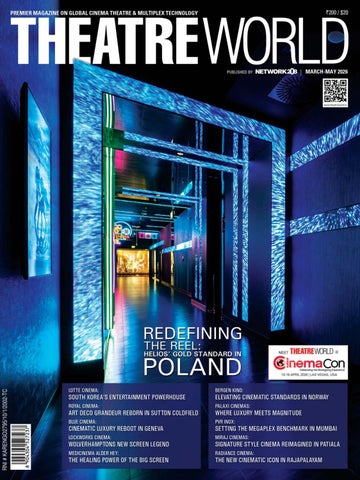
THEATREWORLD
In the grand, ever-evolving journey of the silver screen, cinema exhibition is proving once again that survival isn't just about the spectacle, it's about constant reinvention. Today, adaptation isn't a choice; it is the core strategy. As we navigate through 2026, the industry stands at a fascinating crossroad where capital flows into laser projection and immersive sound, yet the very definition of a ‘Night at the Movies’ has shifted.

The elephant in the room or rather, the 85-inch 4K screen in the living roomis no longer just a competitor; it's a benchmark. With streaming windows shrinking and home audio reaching cinema-grade quality, cinema has had to elevate its game. Theatrical success is now unapologetically eventbased. Whether it's the raw, communal energy of Pushpa 2 and Jawan , or the sheer technical wizardry of Avatar: Fire and Ash , audiences are telling us one thing: "Give us something we cannot replicate at home."
We are witnessing a 'flight to quality.' Global exhibitors are doubling down on PLF (Premium Large Formats), from IMAX to 4DX motion seating, turning the cinema hall into a sensory playground. The math is simple but stark: fewer visits per consumer, but significantly higher spend per visit.
From gourmet F&B to recliner-only auditoriums, the modern multiplex is becoming a luxury destination rather than a mere screening room.
The data from 2025 gives us plenty to celebrate, but also a reason to pause. India's box office revenue crossed a historic INR 13,000 crore, firmly planting us on the global leaderboard alongside the U.S. and China. We saw a record 37 films cross the INR 100 crore mark, proving that midbudget films with unique storytelling are finally finding their footing. Globally, theatrical exhibition is stabilising thanks to big titles, with overall box office on pace for healthier growth into 2026, but performance varies widely by region and depends heavily on blockbuster releases.
However, there is a catch. While revenues are soaring, total admissions dipped by 6%. We are making more money because tickets cost more, not because more people are walking through the doors. This is our industry's greatest challenge for rest of 2026: How do we sustain the habit of moviegoing beyond the blockbusters?
The answer may lie in diversification. Cinemas are now vibrant hubs for concert films, anime marathons, and live sports. The cinema of 2026 is a flexible canvas, a stadium for the World Cup for a night, the next a cathedral for a classic 4K re-release.
As we look at the slate for the coming months, the recovery feels stable, buoyed by a healthy mix of Hollywood franchises and local tentpoles like Dhurandhar 2 and Toxic . The cinema isn't dying; it is shedding its old skin. It remains the only place where scale, sensory immersion, and shared emotion collide to create magic.
The lights are dimming. The curtains rise. And the best is yet to come.
Steering ahead with CinemaCon, where the global exhibition business converges to define what's next. From breakthrough technologies to strategic partnerships, taking place yet another time at Caesars Palace, Las Vegas from 13th April to 16th April 2026. It's where serious onversations shape the future of cinema. If you're in the business of building, upgrading, or expanding cinemas, make sure TheatreWorld is on your radar.
Pick your latest TheatrWorld copy at CinemaCon 2026 and stay ahead of the curve.
Raghavendra T (Raghav)
Editor-Publisher
DISCLAIMER - TheatreWorld Magazine does not warrant or assume any legal liability or responsibility for the quality, accuracy, completeness, legality, reliability or usefulness of any information, product or service represented within our magazine or web site. The information provided is for knowledge or entertainment purposes only. TheatreWorld Magazine does not endorse or recommend any article, product, service or information found within said articles or advertisements. The views and opinions of the authors who have submitted articles to TheatreWorld Magazine belong to them alone and do not necessarily reflect the views of TheatreWorld Magazine or its staff.

Raghavendra T Editor-Publisher +91 9980 208 208 raghav@network208.com
Asha Ranjith Managing Director +91 9902 208 208 asha@network208.com
Himanshu Peshwani VP - Sales +91 9148 208 208 himanshu@network208.com
Shireen Mariam
Sr. Manager - Content & Marketing +91 9740 602 545 shireen@network208.com
Anand A Balan Editorial Assistant +91 8808 800 208 content@network208.com
Varsha Naidu Finance & Admin +91 9108 208 208 varsha@network208.com
Saravanan P Online
Published by Raghavendra T on behalf of NETWORK208 11/1, 7th Main, Indiranagar 2nd Stage, Bangalore 560 038, India Tel: +91 80 2529 0208 www.network208.com Printing Ramya Reprographic, Bengaluru
Sandeep Mittal Founder Editor-Publisher
RNI # KARENG02795/10/1/2002-TC
TheatreWorld is a quarterly publication, on the motion picture exhibition industry, for private circulation. It reaches out to subscribers, mainly theatre owners and trade professionals around the world. Additional copies are being promoted at major international industry tradeshows. TheatreWorld seeks the healthy promotion of the theatre industry through dissemination of useful information. Some of the information is compiled from industry sources, trade journals, company brochures for the benefit of readers, especially, theatre owners. TheatreWorld acknowledges with thanks the authors and publishers of these printed materials. Views expressed in the articles are those of the authors and not necessarily of TheatreWorld. TheatreWorld is a trademark under registration. The contents of TheatreWorld are under copyright registration. All rights reserved. Reproduction by any means in whole or part without written permission is prohibited. Unsolicited printed material is welcome but no responsibility is undertaken for the same and will not be returned. TheatreWorld does not take responsibility for the absolute accuracy of information published.

This issue of TW has two sets of page numbers - International pages TW-1 to TW-56 for TW, and India pages TM-1 to TM-42 for TM TM is inserted between pages TW-50 and TW-51 of TW
TW-8
SPECIAL STORY
TW-16 REDEFINING THE REEL: HELIOS’ GOLD STANDARD IN POLAND
TW-24 LOTTE CINEMA: SOUTH KOREA’S ENTERTAINMENT POWERHOUSE
INSTALLS
TW-21 ROYAL CINEMA: ART DECO GRANDEUR REBORN IN SUTTON COLDFIELD
TW-28 BLUE CINEMA: CINEMATIC LUXURY REBOOT IN GENEVA
TW-31 LOCKWORKS CINEMA: WOLVERHAMPTONS NEW SCREEN LEGEND TRADESHOWS
TW-39 Preview -
TW-40 Review -
TW-44 ReviewTW-51


TM-17 PALAXI CINEMAS: WHERE LUXURY MEETS MAGNITUDE
TM-27 PVR INOX: SETTING THE MEGAPLEX BENCHMARK IN MUMBAI
TM-30 MIRAJ CINEMAS: SIGNATURE STYLE CINEMA REIMAGINED IN PATIALA
TM-33 KELVIN GOLD CINEMA: THE RESURRECTION OF A LEGEND IN GUWAHATI
TM-37 DEVGN CINEX: ELEVATING THE ART OF THE MOVIEGOING IN GHAZIABAD
MEDICINEMA ALDER HEY: THE HEALING POWER OF THE BIG SCREEN
BERGEN KINO: ELEVATING CINEMATIC STANDARDS IN NORWAY

SPECIAL STORY
TM-20 AMB CINEMAS KAPALI: SOUTH INDIA'S FIRST DOLBY CINEMA
TECHNOLOGY
TM-40 GALALITE SCREENS: POWERING INDIA’S FIRST HDR CINEMA AT VIZAG

RADIANCE CINEMA: THE NEW CINEMATIC ICON IN RAJAPALAYAM


The future of cinema has arrived in Europe. Tricorne has successfully delivered Europe's largest cinema LED screen at Odeon Multicines Sambil in Madrid, Spain. This landmark achievement marks Europe's first fully acoustically transparent Tricorne LED cinema screen to operate commercially, proving that LED cinema is no longer a concept but a real and functioning format. The installation features a 17-metre curved scope format LED screen with a resolution beyond 4K, delivering a truly premium cinematic experience. The entire ecosystem is DCIcertified and powered by a GDC LED media server with an SGS-certified MTBF of 100,000 hours, ensuring long-term reliability and performance. The screen measures 17.28m in width and 7.20m in height and is composed of 216 interconnected modules precisely aligned to the millimetre. It delivers an effective resolution of 5184 by 2160 pixels, exceeding 4K in DCI Scope format, along with a contrast ratio of 600000:1 for true absolute blacks. With self-emissive pixels and HDR support up to 200 nits, the screen offers exceptional brightness and clarity. It features 16-bit colour depth in DCI P3 and also supports HFR and 3D playback using active glasses.
Digital cinema solutions provider Unique X has recently announced a long-term agreement with Cinépolis, the world's third-largest cinema exhibitor. The partnership will see Cinépolis deploy the comprehensive suite of Unique X's software across its global circuit of over 6,837 screens in 18 countries, migrating from its existing vendor. Building on an existing partnership for content services, which includes Unique X's DCP delivery service MovieTransit and live streaming platform RosettaLive, Cinépolis will adopt Unique X's RosettaBridge TMS, RosettaNet CMS, Smart Trailering, and Basekey solutions to automate and streamline its worldwide cinema operations. The migration represents a major technological step forward for Cinépolis, consolidating its operations under a single, unified software platform, while further strengthening Unique X as the world's leading TMS vendor with over 45,000 screens worldwide. In addition to the theatrical operational software deployment, Cinépolis will also be deploying Unique X's market-leading cinema advertising platform, Advertising Accord, across Mexico, India, and the Middle East. This will enable Cinépolis to further optimise and automate its advertising sales and delivery, unlocking new revenue streams and leveraging the power of Unique X's extensive cinema advertising technology. Phil Morris, Chief Commercial Officer of Unique X, commented: "We are thrilled to extend our partnership with such a respected, global circuit like Cinépolis. This agreement is a testament to the strength and

breadth of our product portfolio, offering a complete, end-to-end solution for modern cinema exhibition. By choosing to migrate to Unique X's integrated platform, Cinépolis is not only future-proofing its operations but also unlocking new opportunities for growth and efficiency. We look forward to a long and successful partnership, supporting their continued success across their impressive global circuit."
Gabriel Morales Becker, Global IT Director of Cinépolis, added: "At Cinépolis, we are constantly seeking innovative ways to enhance our operational excellence and deliver the best possible experience for our customers. The decision to partner with Unique X and migrate to their comprehensive suite of solutions was a strategic one. Their integrated platform provides us with the automation, control, and efficiency we need to manage our global circuit effectively. This move to a more unified and powerful ecosystem will be transformative for our operations, and we are excited about the new capabilities this partnership will bring to our theatres worldwide."
Unique X, the global leader in digital cinema technology, recently announced that Shanghai Film Group has chosen RosettaBridge Theatre Management System (TMS) and RosettaNet Circuit Management System (CMS) for deployment across the SFC cinemas in China. This strategic partnership, facilitated through Unique X's local partner Sagaology together with Shanghai Film Group's subsidiary, Shanghai Film SCI-TECH. According to the current plan, Sagaology will complete the deployment of the systems across SFG's cinemas by the end of 2025, and will further explore opportunities for deeper collaboration in near future.
This marks a significant milestone for Unique X in the rapidly expanding Chinese cinema market. By adopting the RosettaBridge TMS and RosettaNet CMS, Shanghai Film Group will leverage the most feature-rich and widely deployed TMS suite in the world to automate its cinema operations, streamline content management, and enhance overall efficiency across its entire circuit. The RosettaBridge TMS will
provide each of SFG's cinemas with its market-leading, advanced automated solution for cinema operations and real-time monitoring. The addition of the RosettaNet CMS will empower SFG with centralised control over its entire circuit from a single, unified interface, ensuring consistent and high-quality presentations for moviegoers across all SFG's cinemas.
"We are thrilled to partner with Shanghai Film Group, a true pioneer in the Chinese cinema industry," commented Roger Harris, Chief Executive Officer at Unique X. "This cooperation is a testament to the power and reliability of our Rosetta suite of products. Ensuring stable and consistent technical support for cinema operations is a significant accomplishment and also reflects the strengths of the Unique X product portfolio. Becoming one of the largest TMS suppliers in China underscores our commitment to this vital market and our position as the world's leading provider of cinema automation technology."
A representative of Shanghai Film SCI-TECH added: "In our pursuit of operational excellence and delivering the best possible

cinematic experience, upgrading our theatre management system was a critical step. Unique X's RosettaBridge and RosettaNet solutions offer the flexibility, automation, and centralised control we need to manage our circuit effectively. We are confident that this partnership will allow us to continue to innovate and provide our audiences with a world-class moviegoing experience."
Scrabble Entertainment DMCC (Scrabble), a wholly owned subsidiary of UFO Moviez India (UFO), and Shenzhen Timewaying Technology, the manufacturer of the HeyLED brand of DCI-certified direct view LED cinema screen, has confirmed a strategic tie-up aimed at accelerating the adoption of premium LED cinema screens across the Middle East, India and other SAARC countries (Territory). Under this partnership, Scrabble will promote, distribute, and deploy HeyLED cinema solutions in the Territory on an exclusive basis. The collaboration combines Timewaying's advanced HDRcapable direct view LED technology with Scrabble's strong industry relationships, market knowledge, and extensive operational capabilities within the exhibition sector. Timewaying, a pioneer innovator in cinema industry, operates China's largest Freedeo 3D cinema platform. Its flagship HeyLED screen is the world's most comprehensive DCI-certified LED display for cinemas, delivering exceptional HDR capability with
deeper contrast, richer details, and highly accurate preservation of creative intent for exhibition and post-production. Scrabble is a leading provider of end-to-end Digital Cinema Solution and Content services across Middle East and Africa. Established in 2011, Scrabble was the first Digital Cinema Deployment Entity and DCI Content Service provider to Indian and Hollywood Studios.
RealD, the world's leading 3D cinema technology company, and CJ 4DPLEX, the innovators behind the panoramic theatrical format SCREENX unveiled a strategic partnership. Together, the companies will integrate RealD 3D presentation into SCREENX auditoriums, delivering a next-level premium theatrical experience that surrounds audiences in expanded visuals and crystal-clear depth. The partnership will scale rapidly in collaboration with Regal Cinemas locations this holiday season, just in time for highly anticipated Avatar: Fire and Ash. By combining RealD's industry-leading 3D
presentation with SCREENX's 270-degree panoramic technology, the partnership offers filmmakers a broader creative canvas and moviegoers a new level of spectacle that can only be experienced in theatres. Elizabeth Frank, CEO of RealD, said: "RealD and CJ 4DPLEX share a passion for innovation and a belief in the power of the theatrical experience. Integrating RealD 3D into SCREENX creates something truly extraordinary - an immersive, premium format that expands both the world of the film and the imagination of the audience. It's the next evolution of what's possible on the big screen. We are thrilled to be partnering with CJ 4DPLEX and Regal to bring this to audiences across the United States."
Don Savant, CEO of CJ 4DPLEX America, added: "SCREENX was designed to enable filmmakers to push the boundaries of cinematic storytelling, and bring consumers more deeply into their movies. This partnership with RealD promises to take that vision even further. By merging SCREENX panoramic visuals with RealD's brilliant 3D technology, we're redefining what immersion means in the cinema." Eduardo Acuna, CEO of Regal Cinemas and Cineworld Group, commented: "Regal is

committed to innovating and enhancing the moviegoing experience. We are excited to take our successful SCREENX auditoriums to the next level and offer Regal movie fans an experience incomparable with any home entertainment. The combination of RealD 3D and SCREENX delivers an entirely new way to feel part of the movie."
Cinema United, the world's largest exhibition trade association, released the 2025 update to its ‘Strength of Theatrical Exhibition’ report, an annual analysis of key industry metrics beyond traditional box office performance. This year's update highlights how theatre are building loyalty through innovation, high-quality experiences, and a diverse slate of films-trends that continue to drive strong audience engagement. The report includes a special spotlight on Gen Z moviegoers, whose frequency of attendance grew by 25% over the last 12 months, the largest increase of any age group. "Weekend box office is important, but a more accurate measure is looking at the industry on an annual basis and considering myriad other factors in the marketplace to get a more complete picture of the strength of the industry," said Michael O'Leary, president and CEO of Cinema United. "2025 is a perfect example of a year where an inconsistent box office threatens

to overshadow other variables that point to a bright future for movies on the big screen."
Key findings in the 2025 update include: The number of habitual moviegoers (those who see at least six movies annually) grew by 8%.
77% of Americans aged 12-74 saw at least one movie, representing a total of more than 200 million Americans. Cinema loyalty programs in North America saw a 15% jump in new subscriptions from 2024 to 2025. Among all age groups, Gen Z went to the movies more frequently, averaging 6.1 visits, up from 4.9. 41% of Gen Z audiences went to the movies six times or more, up from 31% in 2022. In addition, the Cinema United ‘Strength of Theatrical Exhibition’ 2025 update features unreleased Gen Z-focused data from global management consulting firm McKinsey & Company's Attention Equation report, revealing new insights into what Gen Z seeks out most in going to the movies, namely, immersive moviegoing experiences and unique concessions as the two highestrated priorities. "Movie fans, led by Gen Z, in particular, love coming to the movies and theatre owners are responding by spending over $1.5 billion upgrading their theatre over the past year in North America alone," O'Leary continued.
"The number of people who saw six or more movies grew a staggering 8% last year, and with the amazing slate of 2026 movies on the horizon, that trend has a chance
to continue. Time and time again, consumers show that when investment and innovation combine with a great movie to create a special experience, the theatrical business thrives. That time-tested foundation of our industry remains strong, and we are excited to build upon it toward greater success in the coming year."
With the integration of Barco's latest projection technology ‘HDR by Barco’ into the Theatre Management System (TMS), OneCinema once again expands the technical compatibility of its system, enabling cinema operators to seamlessly incorporate the latest laser projection into their sound and vision workflows.
Dual-projection workflows can be complex across the industry, and OneCinema's TMS helps simplify this process. In dual-projection systems, two projectors operate with their own media block. For a
show to play correctly, content, playlists, and schedules must always be delivered to the appropriate server - depending on the manufacturer, sometimes only to the primary server, sometimes to the secondary, or to both.
The OneCinema TMS is capable of flexibly controlling which information is transmitted to which server. This foundation enabled a rapid implementation of the requirements for ‘HDR by Barco’. The integration of Barco's technology into the OneCinema TMS was carried out via the communication interfaces provided by Barco, ensuring reliable data exchange. As a result, OneCinema customers benefit from the TMS's high level of automation and reliability from day one, even when adopting newly introduced premium solutions.
An example of a successful implementation is Cineplex Münster, under the management of Ansgar and Anselm Esch. The premium concept ‘Ultimate.’ is being continued at this location, and in the largest auditorium with a screen area of approximately 220 m², the new ‘HDR by Barco’ solution has been deployed for the

first time in October 2025. Since this introduction, the OneCinema TMS allows for central control of the two projectors and ensures fully synchronised playlists. "Our guests expect the best possible cinema experience in the Ultimate. halls, so it was important for us to be among the first movers and integrate Barco HDR. The exceptional added value is not only created by the projectors, but above all by the content graded specifically for HDRbecause 'Content is King'," explains Anselm Esch.
In daily cinema operations, the value of integrating ‘HDR by Barco’ into the OneCinema TMS becomes clear. "Integration is essential for us, especially when working with dual projection systems. The automated distribution and monitoring of content on the synchronously playing servers are crucial for operational reliability. With OneCinema, we have a partner that works closely with the manufacturers, making the immediate integration of the new system possible. No one wants to go back to manual playlists - not even for a few days," Esch continued. The integration of Barco's HDR technology demonstrates how closely the system and projection levels work together in the OneCinema ecosystem to make cinema operations more efficient and future-proof. "It is an excellent example of the level of reliability, time savings, and operational security that can be achieved when projection and TMS are perfectly aligned. We are proud to integrate next-generation technological advancements into everyday cinema operations and to make the preparation of screenings noticeably easier." Joachim Schmitt, Founder and CEO of OneCinema.
Comscore, a trusted partner for planning, transacting and evaluating media across platforms, has rolled out a five-year agreement with Santikos Entertainment to deploy Comscore's next-generation theatre and circuit management solutionsCinema ACE and Enterprise Webacross all Santikos locations. Santikos Entertainment, which acquired VSS - Southern Theatres more than two years ago, has benefited from the reliability and efficiency of Comscore's technology through Southern's use of Cinema ACE and Enterprise Web. After observing the operational value these systems delivered, Santikos has chosen to expand its commitment by rolling out both solutions circuit wide under a new five-year agreement.
Under this extended partnership, every Santikos Theatre will utilise Comscore's Cinema ACE theatre management system, part of Comscore's Hollywood Software Suite of Solutions. The platform enables Santikos to automate show creation, the transfer of features, trailers, and encryption keys, and centralise content management. The agreement also includes Comscore's Enterprise Web circuit management application, empowering Santikos to streamline operations across all locations and facilitate seamless show execution. "We're proud to deepen our relationship with Santikos Entertainment and continue the successful partnership originally established through Southern
Theatres," said Kim Lockhart, Vice President, Product Management, Comscore.
"This circuit wide rollout of Cinema ACE and Enterprise Web demonstrates Santikos' forwardthinking approach to theatre operations and underscores our shared commitment to innovation and excellence in the exhibition space."
"Over the past several years, we've seen first-hand how Comscore's technology can simplify complex workflows and elevate operational performance," said Rob Lehman, Chief Operating Officer of Santikos Entertainment. "Extending these solutions across every Santikos location allows us to unify systems, create efficiencies, and deliver the exceptional experience our guests expect from our theatres."
Digital Light Sources (DLS), an integrator and distributor of LED, laser, projection equipment, and lighting solutions to the cinema and entertainment industries, has announced the installation of a sound transparent LED screen at Cinema Quattro's new VIP cinema complex in Liberty Lake, Washington's Noll River district. Manufactured by Lopu Tech,

the 23-foot, 2K LEDMAX direct-view LED screen is DCI-compliant, acoustically transparent, and HDRand 3D-ready. "We are very excited to collaborate closely with Cinema Quattro and congratulate them on this quantum leap into the inevitable future of cinema presentation" stated Sami Haddad, president of Digital Light Sources.
Adds Cinema Quattro founder and artistic director Jeremy Whittington: "After exploring numerous LED providers, DLS stood out for their forward-thinking technology, quality control, and pricing. We can't wait to show our guests the many advantages that come with direct-view LED screens in the realm of cinema and beyond."
Samsung Electronics supplied the new Onyx LED product (model ICD) to the premium theatre Trilith Cinemas in Fayetteville, Georgia. By creating the first case of applying the second-generation product-launched eight years after the debut of the Onyx brand-to the U.S. market, the company strengthened its business portfolio. According to the industry on the 20th, Samsung Electronics' U.S. subsidiary partnered with multiplex operator Georgia Theatre Company (GTC) and digital cinema solution corporations GDC Technology America to install the new Onyx Cinema LED screen at the Trilith auditorium.
Onyx is a brand Samsung Electronics created when it launched a theatre-dedicated light-
emitting diode (LED) screen product in 2017. It is a business-to-business (B2B) product that lets audiences watch movies on a high-definition display instead of a projector. With no edge distortion or resolution loss, it delivers the same brightness and colour from any seat and has high colour reproduction.
In April last year, Samsung Electronics unveiled the secondgeneration Onyx product at CinemaCon 2025, the world's largest film industry expo, eight years after the first generation. It became the first movie screen, rather than a projector, to receive Digital Cinema Initiatives (DCI) certification. That means it meets the digital cinema standard specifications established by DCI for picture quality, sound, and content security features.
It supports 4K (4096 x 2160) resolution and a maximum 120 Hz refresh rate. The display can express the full Digital Cinema standard colour gamut (DCI-P3). Supporting high dynamic range (HDR) technology, it delivers brightness six times higher than conventional projectors (up to 300
nits). Because it remains clear even in high ambient light, theatres can use it as a venue for various events such as concerts and sports. Standard widths are configured as 5 m (pixel pitch 1.25 mm; pixel pitch is the distance between pixels) 10 m (pixel pitch 2.5 mm) 14 m (pixel pitch 3.3 mm) 20 m (pixel pitch 5.0 mm), with options to install differently depending on the auditorium.
Trilith Cinemas, which opened in Dec. last year, consists of nine auditoriums in total. Of these, five auditoriums adopted the new Onyx product. Screen sizes vary, including 5 m, 6.4 m, and 14 m. GTC said it introduced the new Onyx product because it is suitable for creating an environment that screens films as the creators intended. GTC operates multiple theatres mainly in the south-eastern United States. It runs 25 locations and about 250 auditoriums not only in Georgia but also in Florida, South Carolina, and Virginia, ranking among the top 20 multiplex operators in the United States.
The new product is priced at $3,330 per cabinet (panel unit) based on the

U.S. website. Each cabinet measures 63.5 cm wide, 89.9 cm high, and 12.7 cm thick. A 10 m (32.8 feet) screen requires 96 cabinets.
In Korea, the new Onyx product was first applied at Lotte Cinema Sillim's 'Gwang-eum LED' auditorium in October last year in an 11 m size. The previous model began at Lotte Cinema World Tower in 2017 and was installed at six locations including Busan and Suwon. The Culver Theatre in central Culver City, California, and the Pathé Palace in Paris, France, also use Onyx screens. In November last year, Samsung Electronics participated as an official sponsor of the 11th Asian World Film Festival held at the Culver Theatre and is pursuing various activities to raise awareness of the Onyx brand.
These early 2026 commitments reflect continued engagement from leading creative and distribution partners with Barco’s premium cinema HDR technology. The titles were selected to include a broad range of genres to appeal to every moviegoer. This initial 2026 release calendar comes alongside the ongoing expansion of HDR by Barco, with new sites continuing to open in the U.K., Italy and Germany, as well as the first location in The Netherlands set to open its doors at Vue Amsterdam later this month.
HDR BY BARCO RELEASES
• 28 YEARS LATER: THE BONE TEMPLE (Sony Pictures) –January 16, 2026
• MERCY (Amazon MGM Studios) – January 23, 2026
• GOAT (Sony Pictures) – February 13, 2026
•LEE CRONIN’S THE MUMMY (Warner Bros. Pictures) – April 17, 2026
• MICHAEL (Lionsgate) – April 24, 2026
• MORTAL KOMBAT II (New Line Cinema and Warner Bros. Pictures) – May 8, 2026
• ANIMAL FRIENDS (Warner Bros. Pictures and Legendary Pictures) – June 5, 2026
• MASTERS OF THE UNIVERSE (Amazon MGM Studios) – June 5, 2026
• SUPERGIRL (DC Studios and Warner Bros. Pictures) – June 26, 2026
FOR FIRST HALF OF 2026 FOR FIRST HALF OF 2026 FOR FIRST HALF OF 2026 FOR FIRST HALF OF 2026 FOR FIRST HALF OF 2026
Announcement comes amidst HDR by Barco’s continued expansion with new locations in Italy and the Netherlands Barco, the global leader in laser-powered cinema, recently announced today the feature movie titles slated for release in HDR by Barco in the first half of 2026.
• WUTHERING HEIGHTS (Warner Bros. Pictures)February 13, 2026
• SCREAM 7 (Paramount/ Spyglass) – February 27, 2026
• THE BRIDE! (Warner Bros. Pictures) – March 6, 2026
• PROJECT HAIL MARY (Amazon MGM Studios) – March 20, 2026

Additional titles are expected to be added to the 2026 HDR by Barco release slate through next year.Based on the company’s patented Lightsteering technology, Barco’s approach to cinematic HDR works by strategically redistributing light on screen to produce images with highlights that are over 6x brighter than traditional projection, while retaining rich details in the darks for greater depth, clarity, and range. HDR by Barco delivers expansive creative possibilities for filmmakers, producing a wide color gamut with high-contrast images that captivate audiences.
This announcement follows the launch of the fully redesigned website for moviegoers, www.HDRbyBarco.com, making it easier for audiences to experience the brand’s premium HDR Lightsteering technology throughout this holiday season. Visit the website for the latest information on HDR by Barco locations, upcoming releases, and to find showtimes and purchase tickets.


Situated in one of Gdynia's most dynamic retail destinations, this eight-screen cinema stands as the inaugural showcase of a refreshed brand identity. As the first location in Poland to fully embody the operator's renewed visual and experiential concept, it signals a bold transformation in how contemporary cinemas are evolving to meet post-pandemic audience expectations.
Originally designed as a new build in 2012 by Zera2 Architekci, the cinema has evolved in several stages. Gieraltowski Architects, led by renowned architect Piotr Gieraltowski, has been involved in its transformation over the years, including the design of Café Helios and, in 2019, the architectural management of an extension that added two additional screens and introduced the Helios Dream Lounge concept. That phase opened during the pandemic period of 2021 and 2022. This recent refurbishment represents the most comprehensive transformation to date. Initiated in response to fundamental shifts in moviegoing habits, the project reimagines the cinema as a complete destination rather than simply a screening
venue. The objective was clear: create a future proof, multigenerational cinema product without major structural intervention and within realistic CAPEX and ROI parameters, which becomes visible from the moment guests enter the cinema.
Helios Gdynia is conceived as a layered and business-driven product. The movie remains the reason to visit, but the space

increasingly becomes the deciding factor. The refurbishment has delivered an immersive and impressive lobby journey along with a calm and cosy café zone. With the vision towards premiumisation, the Helios Dream VIP experience is laid through a major format upgrade with IMAX. Each layer strengthens the overall commercial offer by increasing admissions, dwell time and secondary spend. The design consciously connects two key postpandemic expectations, which is, experience and emotion. Older guests often value comfort and nostalgia, while younger audiences seek immersion, energy and shareable moments. The result is a space that speaks to families, students, young professionals and seniors alike. After all, everyone is entitled to enjoy, right?
Inspired by the atmosphere of Blade Runner directed by Ridley Scott, the design team created a coherent neo city cinema world. Architecture, lighting, reflective surfaces, graphics and animated digital content work together to generate immersion that evolves over time rather than relying on a single expensive technological gesture. Neon accents, layered lighting and warm contrasts define the mood. Reflective ceilings, retained from the original construction, were transformed through repainting and strategic illumination. Existing black floor tiles, though not the designers' preferred finish, were integrated


into the concept and enhanced through lighting design.
Key experiential landmarks include; a five-by-five-metre stainless steel art installation near the escalators supplied by Art Around, a framed VHS cassettes referencing vintage movie culture, a dedicated neon Instagram wall and curated photo points, and a warm cyberpunk inspired concession positioned as the energetic social heart Immersion
"Today, the strength of a cinema is no longer defined only by its screens or sound systems, but by the overall experience it creates around the film. At Helios S.A., we see design as a strategic business tool, one that shapes audience behaviour, encourages longer visits, and builds lasting emotional connections with the brand. Helios Gdynia reflects this philosophy: it is a cinema deliberately designed to engage visitors from the moment they enter, turning a visit to the movies into a broader, immersive experience. We believe this is the future of our industry, cinemas evolving from places where people simply watch films into destinations where they choose to spend meaningful time together."
– Tomasz Jagiello, Chief Executive Officer, Helios S.A.
is achieved through integration rather than gadgetry. Programmable lighting scenes and animated LED content allow the atmosphere to change dramatically, ensuring that repeat visits feel fresh and dynamic. From the outset, the architects worked in close collaboration with Pro Digital, co creating both the technical LED infrastructure and the content strategy. Pro Digital continues to support content creation and system operation, ensuring that the digital layer remains active and commercially relevant.
A central component of the refurbishment is the conversion of the largest auditorium to IMAX, delivered in collaboration with IMAX technical requirements and the integrator Arttech Cinema. The upgrade closely reflects the overall vision of enhancing the cinema's premium offering while maintaining operational continuity and a

disciplined approach to construction. Structural intervention was intentionally limited. The ceiling was reinforced to accommodate the IMAX speaker system and the projection window was raised to meet the precise specifications required for the format. No structural walls were altered, allowing the project to stay within budget while ensuring the cinema could continue functioning smoothly during the transformation.
The IMAX auditorium is further distinguished by a custom three dimensional patterned carpet that subtly reinforces the immersive character of the format. Projection is powered by advanced systems from Christie Digital Systems using Christie RealLaser CineLife+, alongside IMAX with Laser technology. The technical infrastructure was integrated by Arttech Cinema as the server integrator, ensuring seamless system performance across the complex. Audio throughout the cinema incorporates a range of premium sound formats including Dolby Atmos, Dolby 7.1 and Dolby 5.1, while the IMAX auditorium operates with the dedicated IMAX 12.1 sound system. Speaker systems include solutions

"Today people expect to be aesthetically surprised and charmed. Almost every destination is being elevated by design; restaurants, hotels, cafés, but also workplaces, even banks or car rentals, and that has created a new baseline of expectation. In this landscape, cinema as a retail / hospitality / entertainment destination should be even more special: a place that makes guests feel good, inspired, comfortable and a little bit 'outside everyday life. That's why we design cinemas as complete products, not just interiors. The goal is to fulfil the 'going out' experience and make people want to repeat it, across all generations. At Helios Gdynia we created a layered offer: an immersive lobby world inspired by Blade Runner, calmer zones like Café Helios, a premium Helios Dream experience we developed from scratch for Helios, and a major upgrade of the largest auditorium to IMAX. The atmosphere is driven by programmable lighting and dynamic LED content co-created with Pro Digital, so the space evolves and stays fresh for repeat visits, while remaining grounded in operational logic, CAPEX realities and ROI. In the end, the movie is the reason, but the space increasingly becomes the decision."
– Piotr Gieraltowski, Architect Engineer & Founder, Gieraltowski Architects / ExtractDesign

from Martin Audio and Christie Vive Audio, alongside the specialised IMAX speaker configuration. Screens are supplied by Harkness Screens as well as IMAX Strong screens manufactured by MDI, while three dimensional presentation is enabled through systems from DepthQ in addition to IMAX 3D.
Seating throughout the cinema is provided by Megan Seating together with Figueras Seating, integrating recliner comfort within the premium sections to elevate the viewing experience. The design atmosphere is further shaped by architectural
lighting from iGuzzini and Marset, carpets supplied by Ege Carpets and acoustical materials from RR System, all contributing to both aesthetic quality and acoustic performance. Complementing the IMAX auditorium is the Helios Dream zone, which introduces a clearly differentiated luxury format within the complex. Premium finishes, carefully designed lighting and enhanced seating comfort create an elegant environment within the cinema's broader energetic neo city concept. Positioned as a clear upsell product, the Helios Dream experience strengthens the venue's segmentation strategy while offering audiences a refined premium cinema experience.
One of the most impressive aspects of the project is that the cinema did not close for a single day. Construction was executed inside a functioning shopping mall and an operational cinema. The dedication of the Helios team was exceptional. While many cinemas choose to close for months during refurbishment, Helios prioritised continuous operation to avoid disappointing regular guests.
Architect: Gieraltowski Architects, Extract Design
Technical Consultant: Gieraltowski Architects, Extract Design
Server Integrator:Arttech Cinema
Projection: Christie Real Laser CineLife+ / IMAX with Laser
Sound: Dolby Atmos, Dolby 7.1, Dolby 5.1 / IMAX 12.1
Speakers: Martin Audio, Christie Vive Audio / IMAX
Screen: Harkness Screens; IMAX Strong / MDI Inc.
3D SystemDepthQ 3D / IMAX 3D
Seating: Megan Seating, Figueras Seating
Lighting: iGuzzini, Marset
Carpets: Ege Carpets
Acoustical Materials:RR System
Concession: POSitive Cinema, PCO, Creators

This required meticulous phasing, coordination and a maximum effect with minimum disruption mindset. Concessions, an essential part of the Helios operating model, were redesigned to maximise flow, clarity and spend while maintaining a


strong atmospheric identity. The POS and cinema operating system is provided by LSI through POSitive Cinema. Snack partnerships include Pepsi and PCO, with concession equipment supplied by Creators.
Gdynia forms part of the Tri-City metropolitan area alongside Gdansk and Sopot. The audience base is diverse, ranging from families and students to professionals and seniors.
Mainstream Polish and international releases dominate programming, with international titles typically screened in original language with Polish subtitles or Polish dubbing depending on audience profile. The cinema is also becoming a venue within one of the region's prominent international summer film festival
programs, strengthening its cultural relevance beyond commercial exhibition.
The architectural team summarises their philosophy clearly: "We see cinemas as a commercial product. The movie is the reason, but the space is increasingly the decision. In Gdynia we created a complete offer: immersive lobby experience, a premium Helios Dream world, and IMAX integrated with operational logic, CAPEX realities, lease length and ROI expectations. At the same time, we intentionally designed a strong, spectacular and memorable cinema space. We wanted it to naturally generate photo moments and inspire guests to share the experience on social media, turning the interior into a measurable marketing asset and part of the cinema's marketing engine. In short, a place people want to be, and a place they want to return to."

Helios Gdynia demonstrates how cinemas can win back audiences in post-pandemic times through a layered and holistic approach. Rather than focusing solely on technical upgrades such as IMAX, Dolby Atmos and recliner seating, the project acknowledges what guests actually see and feel every minute of their visit. The result is
not simply a refurbished building but a new cinema product. A destination that balances nostalgia with energy, comfort with spectacle, operational discipline with emotional storytelling. In Gdynia, the audience does not just discover a new screen format. They discover a completely renewed cinema world designed to be experienced, remembered and shared.


After four years of darkness and uncertainty, a treasured piece of local history has been spectacularly resurrected. Since then, this cinema has been transformed, following a multimillion-pound investment commemorating its stunning 1930s Art Deco splendour with luxurious modern amenities, effectively creating one of the UK's finest boutique cinema experiences. The transition through the decades mirrored with technical brilliance and a focus towards sensory friendly screenings has echoed with town’s spirit.
The rebirth of the Grade II listed building is far more than a simple refurbishment; it is a full-scale restoration and upgrade.
The Jervis family, owners of PDJ Cinemas, stepped in at the end of 2023, promising to bring the building back to its heyday. The project, costing over £2 million, focused on restoring original Art Deco features, installing stateof-the-art visual and audio technology, and reinventing the space for the modern moviegoer.


The cinema's history is central to its identity. It first opened its doors on April 18, 1936, as an Odeon. Designed by architect Cecil Clavering, it showcased the distinctive, glamorous style favoured by founder Oscar Deutsch. This same architectural style was mirrored in its sister cinemas in York, Harrogate, and Scarborough. Today, a century later, the Sutton Coldfield venue and the one in
Harrogate are the only two of those original buildings that still operate as a cinema, a remarkable testament to its enduring legacy.
Originally designed to seat a massive audience of over 1,600 (1028 in the stalls and 572 in the balcony), the new layout embraces a more intimate, luxury-focused approach. The refurbishment has retained four screens, now offering a total capacity of 456 seats. The dedication to luxury is evident in

the seating, which includes comfortable sofa and armchair options throughout. The main screen, Screen 1, is the venue's largest, accommodating approximately 200 seats and is located in the former circle area. The near-identical smaller screens, Screen 2 and Screen 3, each seat 45 people, and they are perfectly suited for an intimate, high-end experience.
The team behind The Royal Sutton Coldfield understands that today's cinema-goer seeks a complete night out, not just a film. This philosophy is brought to life by the new features, most notably the stunning luxury bar area. This sophisticated space, featuring elements like beautiful Indian black granite worktops, creates a striking and elegant atmosphere, ideal for a preshow cocktail or a social evening with friends. This focus on


"It's
been phenomenal! People love the Art Deco; they love the community cinema, and we've had to think outside the box as we try to bring the films to life. It feels like people really want to be part of the Royal, which means that a cinema has generated that community spirit and feel."
– Des Christie,
hospitality has already been a success. General Manager
Des Christie, who has deep local ties, having managed the Empire cinema for six years before its closure, reported a triumphant first

year, with over 160,000 admissions, matching the numbers of the old cinema, which had more seats. He noted that the refurbished venue is ‘Catering for people who want a day or night out, not just a cinema night,’ and has encouraged a different kind of clientele, helping to bring people back into the town centre. The success is such that The Royal has been shortlisted for the British Independent Film Awards (BIFA) Cinema of the Year 2025, a powerful vote of confidence from the wider industry.
The Royal Sutton Coldfield has put community access and inclusivity at the forefront of its mission, ensuring the ‘New Experience’ is open to all residents of the Royal Town.
The refurbishment made great strides in ensuring most of the venue is easily accessible. Ground Floor Access: Screens 2, 3, and 4 are all located on the ground floor and are fully accessible, with designated wheelchair spaces available in each.
A wheelchair accessible ramp is located at the front of the cinema, and a wheelchair/stair lift connects the main foyer area to the lower retail and ground floor screens. Booking: An accessible icon is clearly displayed on the website when booking to identify the wheelchair-friendly screens. Due to the building's historic structure, Screen 1, located upstairs, is not wheelchair accessible and has no lift access.
The cinema hosts a range of relaxed and inclusive screenings designed to make the magic of film available to every member of the community.
Held one Sunday each month, these screenings are adapted for guests with autism, sensory difficulties, or learning impairments. They feature lower sound levels, lights left on low throughout the


film, and a relaxed environment where guests are free to move around, make noise, or take a break. Critically, no trailers or adverts are shown before the film to ensure a calm start.
These dedicated screenings offer a warm welcome and relaxed environment specifically for guests aged 60 and over. They are a great way to socialise, enjoy timeless films, and relax with a treat.
Subtitled
To make the cinema experience more accessible for deaf and hardof-hearing audiences, the cinema aims to show popular new releases with subtitles, typically starting from the second week of release.
The story of the Sutton Coldfield cinema is a powerful narrative of resilience, community action, and dedicated investment. From its grand opening in 1936, its transition through the decades, its closure during the pandemic in 2020, and its triumphant return in 2024, the building has mirrored the town's spirit. With its combination of Art Deco elegance, new screens and sound systems, luxury seating, and a dedicated focus on community inclusion, The Royal Sutton Coldfield has successfully ushered in a new golden age for cinema in the Royal Town. It is not just a venue for watching movies-it is a social landmark and a beautiful, cultural hub ready to welcome generations to come.


The global cinema exhibition industry is in the midst of a profound transformation, moving beyond traditional projection technology to embrace premium, experiential formats. This paradigm shift, driven by audience demand for unparalleled audio-visual quality, has found its new benchmark with the comprehensive renovation and relaunch of this cinema. This ambitious project represents a strategic partnership between leading technology providers, creating a blueprint for the luxury theatrical experience of the future.
At the core of this monumental upgrade is the Korean debut of the latest evolution of the Samsung Onyx LED Cinema Screen. This display technology fundamentally redefines visual presentation by replacing the limitations of traditional projection systems with self-emitting LED modules. The installation at Lotte Cinema Sillim is particularly noteworthy, featuring a customscaled size of approximately eleven point five by six point three meters, an expansion of over thirty per cent from standard configurations made possible by Onyx's modular design. This colossal scale ensures a captivating, full-field-of-view immersion for every patron.
The technical specifications of the new Onyx screen deliver a massive
leap in picture quality. It boasts a peak brightness of up to 300 nits, approximately 6 times that of conventional digital cinema projectors. This extraordinary brightness, coupled with an infinite contrast ratio achieved through true black levels, allows for stunning High Dynamic Range (HDR) content
presentation. Even the darkest scenes retain intricate texture and depth, while vibrant colours are expressed with unparalleled accuracy and fidelity to the filmmaker's intent, covering the full DCI P3 colour gamut.
Furthermore, Onyx's self-emissive nature ensures perfect uniformity

across the entire screen, eliminating optical distortion, hot spotting, and light bleed, which are common challenges with projection. This consistency guarantees that every seat in the Gwang eum auditorium offers an optimal viewing experience. The screen's ability to maintain pristine image quality even in a non-darkened environment is a key operational advantage, enabling the venue to host alternative content such as live concert broadcasts, sports screenings, and dining cinema experiences, thus opening new, significant revenue-generating opportunities for the exhibitor beyond traditional film releases.
Recognising that a truly immersive experience is an inseparable fusion of sight and sound, the Lotte Cinema Sillim project strategically integrated the cutting-edge visual technology with a purpose-built, high-fidelity audio solution. This marked the first commercial deployment of the MAG Cinema LED Series, a product line specifically engineered to overcome the unique acoustic challenge posed by solid LED screens.
Traditional cinema audio relies on acoustically transparent screens, allowing loudspeaker channels to be positioned directly behind the image for precise sound localisation. Since

"This renewal is not simply a facility improvement; it is a significant turning point in transforming the theatre into a multi-cultural space. We will continue to present technological advancements and differentiated content to provide a unique experience for audiences."
– Kim Byung-Moon, Head of Cinema Business Division, Lotte Cultureworks

the Onyx LED screen is solid and acoustically opaque, a new approach was required.
MAG Cinema developed a suite of near-screen acoustic solutions, the LED Series, to ensure flawless

sound to image synchronisation and optimal coverage geometry.
The Gwang eum auditorium installation features a comprehensive setup, including six MAG Cinema LED two twelve near screen loudspeakers, augmented by eight MAG Cinema SUB four twenty eight cinema subwoofers and a multitude of surround and low frequency speakers. This powerful configuration, expertly installed and calibrated by Korean partner RNR, was meticulously tuned to meet the rigorous DTS:X immersive audio standards.
DTS:X technology is a nextgeneration, object-based audio codec that moves sound beyond traditional channel-based systems. It places sound objects precisely where they would naturally occur in three-dimensional space, in front of, behind, beside, and above the audience, creating a multidimensional, lifelike soundscape.
The MAG Cinema LED Series, combined with the DTS:X processing, delivers a commanding front soundstage and finely controlled low-frequency performance. This synergy results in a reference-grade audio-visual presentation where the audio objects track precisely with the on-screen visuals, deepening the audience's sense of presence and realism.
The commitment to a premium experience extends well beyond the technological core of the Gwang eum auditorium.
The broader renovation of Lotte Cinema Sillim transformed the entire venue into a modern,
multicultural hub designed for elevated comfort and convenience. The auditorium itself was fitted with luxurious recliner seating, maximising patron relaxation during the extended viewing experience.
The redesigned lobby now features self-service kiosks and enhanced amenities, streamlining the ticketing and concession processes. This focus on operational efficiency and

GDC Technology recently announced that its advanced image and audio technologies have been integrated into Lotte Cinema Sillim's newly renovated auditoriums in Seoul, Korea. The upgraded eightscreen, 841-seat multiplex, located at 330 SilLim-ro, GwanAk-gu, Seoul, demonstrates Lotte Cultureworks' commitment to delivering nextgeneration cinematic experiences through innovative sound, image, and comfort improvements.
Lotte Cinema Sillim's major upgrade introduces a ground-breaking cinematic experience: the 188-seat 'Crazy Sound LED' auditorium. This flagship screen is the first in the Lotte Cinema chain to integrate a stunning Samsung Onyx LED display with the powerful 'Crazy Sound Cinema' audio technology. Guests are immersed in perfect harmony, with the brilliant, highcontrast visuals from the DCI-
guest comfort is paramount in today's competitive entertainment landscape, where the theatrical experience must offer clear, premium differentiation from the at-home viewing model. The streamlined patron journey, from ticketing to seating, complements the high-fidelity presentation, solidifying the perception of a luxury destination.
The deployment at Lotte Cinema Sillim represents more than just a technological showcase; it is a significant declaration about the future commercial standard for theatrical presentation. By successfully integrating the latest Samsung Onyx display technology
certified HDR LED screen (powered by the GDC's SR-5520 HDR media server) matched by the DTS precision of the 'Crazy Sound Cinema' system (driven by the GDC's AIB-3000 audio processor).
Following this upgrade, Lotte Cinema Sillim now boasts two auditoriums featuring the acclaimed 'Crazy Sound Cinema.'
Introducing the 'Super LED' Auditorium Powered by Samsung Onyx + GDC's HDR media server
The 'Super LED' experience is driven by a cutting-edge Samsung Onyx display, powered exclusively by the GDC's SR-5520 HDR media server. This DCI-certified HDR LED system
redefines cinematic picture quality. It delivers exceptional super contrastover 12 times that of a conventional SDR laser projector-alongside pristine 4K resolution and true-to-life DCI-P3 colour. The result is a display that faithfully reproduces every texture, colour, and detail exactly as the filmmaker intended. Even the darkest scenes reveal unparalleled clarity, immersing the audience in the director's vision with absolute fidelity.
'Crazy Sound Cinema' powered by DTS Surround Cinema with Enhanced Bass Management
Lotte continues to expand its 'Crazy Sound Cinema' auditoriums,

with the purpose-engineered MAG Cinema LED audio solutions and the DTS:X immersive platform, the auditorium provides a model for exhibitors globally.
This installation demonstrates a powerful pathway for cinema operators to justify premium ticket pricing and establish a signature screening format around LED technology, mirroring the early success seen at Lotte Cinema's six other LED venues in Korea. The ability of the Onyx screen to facilitate diverse alternative content, from gaming tournaments to corporate events, also underscores the platform's potential for generating consistent, diversified, non-peak revenue streams.
Lotte Cinema Sillim's Gwang eum

LED auditorium is a tangible realisation of the new standard of luxury in theatrical presentation. It showcases a successful collaboration that delivers an uncompromising, next-level
cinematic experience for the audience, positioning the venue at the forefront of the industry's evolution and underscoring the indispensable value of the big screen.
utilising the advanced features of the AIB-3000 processor and DTS Surround Cinema technology.
'Crazy Sound Cinema' provides an exceptional audio experience, specifically enhancing lowfrequency output. It does so by redirecting deep bass tones from surround channels to dedicated subwoofers, overcoming the limitations of traditional surround speakers to ensure high-fidelity sound delivery.
"Our goal is to deliver the inherent emotion of movies in a more complete form through the LED screens. We are continuously expanding our LED cinemas to provide a true and unique DCI-certified HDR viewing experience."
- Yoon Yong-Seop, Head - Network Operation Center (NOC), Lotte Cultureworks
• Heightened Scene Realism and Immersion: High-precision 16-channel audio processing and accurate dialogue positioning (centre-screen dialogue localisation) create a rich sound texture and depth, placing sound effects and voices precisely where they belong, enhancing realism.
• Elevated Impact of Action: The system delivers deep, roomfilling bass, making every action scene and explosive sound effect feel powerful and tangible.
• Enhanced Emotional Experience: The ability to reproduce enriched layers and emotions of music and sound design, tailored to Lotte's unique audio signature, creates a deeper and more emotional connection to the film.
Lotte Cinema Sillim's comprehensive facility upgrade focused on both technology and comfort.
The renovation also added recliner seating in general auditoriums and expanded the lobby with new kiosks, self-service zones, and upgraded amenities.
"This renewal is not simply a facility improvement; it is a significant turning point in transforming the theatre into a multi-cultural space, we will continue to present technological advancements and differentiated content to provide a unique experience for audiences.”
- Kim Byung-Moon, Head of the Cinema Business, Lotte
Cultureworks

Geneva's entertainment landscape has just been reimagined. This new flagship venue elevates the cinematic experience through innovative technology, refined comfort, and versatile spaces that cater to both audiences and corporate events. It's a bold statement of what modern cinemas can achieve in today's competitive environment. This venue demonstrates how strategic investments in audience experience can drive engagement, loyalty, and business growth in the entertainment sector.
Geneva's cinematic scene has just been reimagined with the opening of a bold new flagship venue. Nestled in the vibrant Confédération Centre, this launch marks a strategic expansion into a key market, offering a fresh benchmark for modern cinema. Spanning 2,760 square metres, the venue is more than a movie theatre; it's an immersive entertainment destination, where cutting-edge technology, luxurious comfort, and versatile experiences come together to set a new standard for the industry.
blue Cinema Geneva has been meticulously crafted to redefine what it means to go to the movies. With six uniquely designed auditoriums, the venue offers more than just standard seating, introducing three exclusive tiers of comfort, catering to different tastes and moods:
Premium Seats: Thoughtfully designed with extra legroom and superior sightlines, these seats also include two kiosk products (snacks
and drinks) in the ticket price, ensuring a hassle-free experience.
First Seats: A step up in luxury, these reclining leather armchairs feature adjustable headrests, built-in heating, and even wireless charging stations, turning a film screening into a moment of indulgence.
First Beds: For those who want to push the boundaries of cinematic relaxation, select auditoriums feature horizontal beds, making movie-watching feel like an intimate, at-home luxury, but with the scale and spectacle of the big screen.
Adding to the sense of exclusivity, holders of First Seats or Beds also enjoy access to the First Lounge/ Foyer, a private space where unlimited non-alcoholic drinks and snacks are served up to 30 minutes before the show.
In line with its guiding concept, ‘Open Your Eyes Wide,’ blue Cinema Geneva has placed technological excellence at the very heart of its offering. Every screening is designed to impress with:
Dolby Atmos Surround Sound: Delivering multidimensional, immersive audio that envelopes the audience.
Offering unmatched clarity, brightness, and colour vibrancy, with every detail displayed in pristine quality, no matter the genre.
But the venue doesn't stop at film. Consistent with blue Cinema's established model, Geneva's flagship will also host live entertainment and major sporting event broadcasts, positioning itself as a multifunctional hub for culture, sports, and leisure.

"The opening in Geneva marks a decisive milestone in our strategic direction. It strengthens our presence in the Swiss cinema market and opens up new growth opportunities in this dynamic region. We firmly believe in cinema - the opening of the blue Cinema in Geneva is the best proof of this."
– Cyril Wick, Chief Executive Officer, Blue Entertainment AG
The appeal of blue Cinema Geneva extends far beyond the auditoriums. Its stylish cocktail bar, open to both cinema-goers and the general public, is set to become a favourite meeting point in the heart of the city. Whether for a casual drink before a screening, a late-night cocktail, or simply a social rendezvous, the bar enhances the cinema's role as a vibrant urban destination. The venue also offers flexible event spaces, making it ideal for corporate presentations, private screenings, conferences, or celebrations. With cutting-edge facilities and premium hospitality, it adds a new high-tech option to Geneva's event landscape.


Entering Geneva's highly competitive entertainment market demanded a launch strategy that was both bold and meticulously targeted. To achieve this, the cinema collaborated with Bright agency to create a comprehensive campaign designed to capture attention, spark curiosity, and resonate emotionally with audiences. The campaign combined clear messaging, compelling visuals, and memorable storytelling, ensuring that every touch point, from digital

promotions to on-site branding, communicated the venue's premium positioning. Adding to the campaign's impact, all promotional films and imagery were produced by Zurich-based Federal Studio, delivering high-quality visuals that reflected the venue's luxury and technological edge.
The co-ordinated effort ensured that the launch not only generated immediate awareness and footfall but also established a strong, lasting presence in the Geneva market from day one.
By seamlessly blending luxury comfort, state-of-the-art technology, and vibrant social spaces, the Geneva flagship is positioning itself as far more than a cinema; it is emerging as a landmark destination for culture, entertainment, and connection. For the city's discerning
audiences, it offers an experience that goes beyond watching a film, combining immersive storytelling with unrivalled comfort and versatility. This venue not only sets a new benchmark for modern
cinema but also signals a broader evolution in how entertainment spaces can engage, inspire, and bring communities together, making it a must-visit destination in Geneva's cultural landscape.

Wolverhampton has just unlocked a spectacular new chapter for its cultural landscape. A Brand-new independent cinema and bar experience has opened its doors, transforming a deeply historic city landmark into a sleek, state-of-the-art entertainment hub. Housed within the magnificent, Grade II-listed former headquarters of a worldrenowned lock manufacturer, this venue is more than just a cinema-it's a powerful blend of industrial heritage, modern luxury, and community investment. With a £2 million investment and a promise of both blockbusters and independent films, this project is set to become a keystone for the city's vibrant culture, offering a premium, yet affordable, film experience right in the heart of England.
Wolverhampton's cultural landscape is about to get a major boost with the launch of Lockworks Cinema and Bar, an independent cinema breathing new life into the historic site once home to The Light House. More than just a movie venue, this £2 million project represents a commitment to heritage and community, offering an accessible yet luxurious cinematic experience within one of the city's most iconic landmarks.

The name Lockworks is a conscious and proud nod to the building's storied history. Nestled within the historic, award-winning Grade II-listed Chubb Building, the cinema occupies a site that once served as the prestigious headquarters of the world renowned Chubb & Sons Lock and Safe Company. Constructed in 1898 and designed by C.H. Mileham, the building is a striking testament to Wolverhampton's industrial prowess. Its bold, angular façade, combined with an impressive height that was remarkable for the Victorian era, made it an
unmistakable landmark in the cityscape. For over a century, it has stood as a symbol of the city's manufacturing heritage and engineering excellence.
Now, through the vision and expertise of Unick Consulting, this historic lock factory has been transformed into a modern, cuttingedge entertainment destination. The renovation seamlessly blends the building's industrial legacy with contemporary design, retaining its architectural grandeur while introducing state-of-the-art cinema technology, stylish interiors, and vibrant social spaces. From its carefully preserved brickwork to
innovative lighting and luxury seating, every detail reflects a thoughtful marriage of past and present. Lockworks not only celebrates the building's historic significance but also positions itself as a cultural beacon for Wolverhampton, where heritage, innovation, and community converge in a uniquely immersive cinematic experience.
The Premium Cinematic Experience
Lockworks Cinema, now the sixth site for the family-run, independent group PDJ Cinemas, is set to redefine the moviegoing experience in Wolverhampton. PDJ Cinemas prides itself on over a century of industry roots and a commitment to customer service, affordable prices, and unparalleled comfort. The Wolverhampton venue features four state-of-the-art screens and the latest cinematic technology. Patrons can expect a premium, yet affordable, experience with:
Comfy Sofa and Armchair Seating: Offering a level of comfort that encourages patrons to ‘Kick Back and Relax.’
Cutting-Edge Technology: Featuring the latest in projection and sound systems.

Diverse Programming:
The lineup promises a blend of film genres, from Hollywood
blockbusters and superheroes to independent film, romance, and an excellent cinema lineup.


"This is one of the most exciting projects we have undertaken yet in terms of the history of the building and the need to keep its unique features. We have worked long and hard to create a venue with four screens and bars, and cafes outside where families and visitors can enjoy a film or just relax. Throughout the summer, we have shown all major releases, but with four screens, there will be a real variety, so there really will be something for everyone. We have done our homework and know Wolverhampton will be a successful venue for us - the city centre is going from strength to strength and this will be another piece in the chain which we are confident people will love."
– James Jervis, Director, PDJ Cinemas
Full Service Bar:
Serving up favourite drinks and snacks to complete the outing.
The Lockworks project is more than a cultural asset; it's an engine for local employment. The £2 million investment from the City of Wolverhampton Council has been crucial in bringing this vision to life and securing the building's future. The new cinema is projected to create 23 jobs, including three permanent and 20 part-time positions. Significantly, the venture is already strengthening community ties by recruiting local talent. Nine of the initial vacancies have been filled through the Wolves at Work service, an initiative that offers one-to-one support to city residents and connects them with local job opportunities.
PDJ Cinemas, with their focus on a quality experience and a personal touch across their existing venues (including The Royal Cinema in Sutton Coldfield and The Majestic Cinema in Kings Lynn) Lockworks is poised to make Lockworks a keystone for Wolverhampton's vibrant culture, providing a fantastic hub for friends and date nights alike. This venture, rooted in a structure that once symbolised


Wolverhampton's industrial might, achieves a perfect balance: honouring its past while investing in its future. By providing local jobs, reviving a Grade II-listed building, and offering a premium yet


accessible cultural experience, the new cinema is poised to become much more than just a place to watch movies. It stands as a vibrant new hub-a place where history, innovation, and film magic converge to enrich the heart of the city for years to come.

In a place where healing is paramount, even a moment of magic can make all the difference. Beyond the clinical wards and medicines, hospital beds become front row seats where young patients can explore new worlds through film. This is more than entertainment; it is a therapeutic lifeline that brings joy and a sense of normalcy to the heart of recovery.
A significant technological milestone has arrived in UK's cinema exhibition industry, incorporating with clinical wards of a hospital. Founded in 1999 by Christine Hill MBE, MediCinema has spent over two decades redefining the hospital experience by integrating the magic of film into clinical care. By designing and managing state-of-the-art cinemas within healthcare facilities, the charity provides patients and their families with a vital escape from the rigours of medical treatment. These screenings, which are fully medically supervised, allow even bedridden patients to experience the latest film releases in a setting that prioritises both safety and emotional well-being. Through strategic partnerships with the film industry, MediCinema secures movie titles at no cost, ensuring that patients of all ages can alleviate the anxiety and loneliness often associated with long hospital stays. In 2025 alone, the charity welcomed nearly 22,000 attendees across 1,617 screenings at its seven UK sites, including major facilities like Guy's Hospital in London and the Royal Victoria Infirmary in Newcastle.

In November 2024, a significant expansion took place with the opening of a ground-breaking MediCinema at Alder Hey Children's NHS Foundation Trust in Liverpool. This facility represents the first cinema within a standalone paediatric hospital in the United Kingdom and the inaugural in-hospital cinema for the North West of England.
Specifically designed to accommodate 34 individuals, the space includes provisions for hospital beds and wheelchairs, ensuring that every child can participate regardless of their
medical requirements. The inaugural screening of Moana 2, featuring a surprise appearance by the character herself, set the tone for a year of joy and a return to normalcy. By its first anniversary in November 2025, the Alder Hey site had hosted over 4,000 children and family members, including 156 patients who attended while in their hospital beds.
The impact of these cinematic experiences extends far beyond simple entertainment. Research into the MediCinema model reveals profound psychological and physical benefits for patients:


•88% reported improved mental health and coping abilities.
•94% felt less isolated during their hospital stay.
•93% experienced a decrease in stress and anxiety levels.
•55% reported a tangible reduction in physical pain.
These statistics underscore the importance of a holistic approach to healthcare. By addressing the emotional and psychological needs of patients, MediCinema fosters resilience and aids the recovery process. This dedication to the art and care in health was recognised on the global stage on February 16th 2025, when MediCinema received the prestigious BAFTA Award for Outstanding British Contribution to Cinema.


Each facility hosts at least four weekly screenings for adults and children, where patients are escorted from their wards in beds

or wheelchairs to immersive cinema spaces. This big screen experience is supported by medical staff and volunteers to ensure safety while significantly reducing patient anxiety, isolation, and physical pain. Beyond standard films, the charity organises tailored screenings for specific clinical groups, such as those navigating mental health challenges or sickle cell disease, to foster connection and dialogue. For the most vulnerable individuals or those in palliative care, personal screenings offer families a private space to create lasting memories.
This impact extends to over 65 hospitals through a nationwide program featuring arts, crafts, and character visits. A strategic partnership with a major animation studio further enhances this outreach, providing themed adventure packs and digital content to build resilience and bring comfort to young patients when it is most needed. Furthermore, the initiative integrates clinical and play teams to deliver actor Q&A sessions and interactive activities that reach beyond the cinema walls, ensuring the healing power of storytelling is accessible to everyone, including those confined to their hospital beds.
Through the support of individual donations and charitable trusts, this initiative establishes a new benchmark for innovation in healthcare. By seamlessly integrating premium entertainment with strict medical protocols, the charity ensures that a hospital admission does not result in a loss of childhood wonder or the essential comfort of family connections. This holistic approach guarantees that patients can continue to experience moments of happiness and normalcy despite the challenges of their medical journeys.
BERGEN KINO:

The competitive landscape of cinematic exhibition in Northern Europe is undergoing a significant transformation, driven by strategic investment in next-generation technology, becoming the first in the Nordic market to launch a combined, unified premium audio and visual experience. This move is not merely an upgrade; it is a calculated effort to capture the high-end patron segment by maximising experiential quality and setting a new operational standard for cinema presentation across Norway and its neighbouring countries. The successful deployment illustrates a template for operators seeking a flexible, holistic solution to elevate their most valuable screening rooms.
A significant technological milestone has been reached in Northern Europe's cinema exhibition industry. Bergen Kino's main auditorium, known as KP1, has officially completed a major modernisation, representing the region's first installation of a next-generation premium audio-visual platform. This

"We
landmark achievement marks a new era for cinema experiences in Norway and the wider Nordic market. The upgrade solidifies Bergen Kino's leadership, building on its rich history within the local film community. For years, this cinema has been a cultural cornerstone, committed to delivering memorable viewing
are incredibly proud to be the first cinema in Norway and the Nordic region to launch Dolby Vision+Atmos. Dolby's new solution fits perfectly with our own philosophy; it makes it possible to offer our guests not only a unique atmosphere in design and comfort, but also a technical quality that meets the highest standards in the world."
– Jeanette Heggland, Chief Executive Officer, Bergen Kino
experiences. This latest transformation represents a crucial expansion of its premium cinema offering. The integration of breathtaking visuals with truly immersive sound creates a combined concept designed to elevate every moment on screen. By adopting this world-class technology, Bergen Kino joins an exclusive group of global cinemas committed to delivering the absolute best in picture and audio quality available on the market, ensuring its legacy continues well into the future.
The implementation of Dolby Vision + Dolby Atmos at Bergen Kino marks a significant strategic manoeuvre in the Northern European cinema market. This deployment establishes Bergen Kino as the first cinema
operator across both Norway and the wider Nordic region to integrate this combined premium technology concept. This strategic rollout offers cinema operators a flexible, holistic solution, allowing the integration of both advanced technologies into existing premium formats. The objective is to deliver the full, high-impact patron experience efficiently across established venue infrastructure.
The initial phase of this technological enhancement is centred on KP1, the main auditorium within Bergen Kino's primary facility, Konsertpaleet. Konsertpaleet is a substantial cinematic complex housing 13 screens.
As the facility's dedicated premiere hall, KP1 features 245 luxury seats and serves as the flagship venue for this comprehensive upgrade.
Bergen Kino's commitment to superior audio experiences is well-established. Following the 2023 upgrade of its second facility, Bergen Kino LUX, all five screens there were already equipped with immersive sound technology. However, the introduction of cutting-edge visual technology to KP1 at Konsertpaleet significantly amplifies the competitive advantage. The resulting combination of powerful visual rendering, fully immersive soundscapes, and a curated environment sets a new operational and quality benchmark for premium viewing within the regional industry.
The newly upgraded KP1 has been dubbed ‘The Most Beautiful Super Hall in Western Norway.’ Beyond the state-of-the-art sound and picture provided by Dolby Vision + Atmos, the hall features premium technical specifications, including a Barco
laser projector and 4K picture quality, projecting onto the largest screen in Western Norway. The patron experience has been meticulously optimised for comfort and luxury. The 245 luxury recliners are of the highest quality, featuring electric and adjustable back and leg support. To further enhance convenience, the seats are equipped with a dedicated table and a USB port for mobile charging.

Bergen Kino's dedication to cuttingedge cinematic experiences extends beyond KP1. The facility also proudly houses Europe's largest D BOX hall. This unique space features 84 specialised seats designed to synchronise with the movements and action of the film, allowing patrons to physically feel the on-screen events. Patrons maintain control over their experience, with buttons on the side of the seat allowing them to adjust the intensity of the motion effects. This offering represents another avenue through which Bergen Kino seeks to elevate the traditional movie viewing experience. Furthermore, Bergen Kino offers several other halls optimised for superior audio. Halls KP5 and the entire LUX complex feature the


"We are excited to partner with Jeanette and her team to bring Dolby Vision+Atmos to audiences in Norway and the Nordics. This launch demonstrates how cinemas can use Dolby's technology to deliver premium experiences that are both technically superior and uniquely their own."
– Friedrich Deininger, Senior Director Cinema and Partnership, EMEA & India, Dolby Laboratories
Dolby Atmos surround system. This technology provides 360 degree premium sound via speakers mounted on the walls, ceiling, and behind the screen. Hall KP5, for example, accommodates 141 seats with adjustable backrests and offers 3D viewing capabilities.
In addition to technological upgrades, Bergen Kino has strategically redesigned several other spaces to enhance patron comfort and exclusivity. Halls KP8 and KP9 have been converted into ‘comfort halls,’ a concept that involved halving the number of seats to increase legroom. These halls now feature larger, more comfortable chairs with small tables between them for easy placement of food and drinks. The movie screen size has been increased, and the sound system is

entirely new. These comfort halls were also pioneers in Norway, being the first to offer laser projectors for superior images and colour.
For the ultimate exclusive experience, KP13 offers a highly intimate setting. This room is equipped with only 12 chairs, each positioned to ensure optimal viewing of the screen regardless of the seating location. To mark the launch, Bergen Kino, in partnership with Dolby, hosted a Dolby Atmos and Dolby Vision master class for media and industry professionals. This initiative highlighted the advanced capabilities of the technology and its implications for

future cinematic content creation and delivery. The successful debut of Dolby Vision + Dolby Atmos at Bergen Kino's main auditorium KP1 signals a new, high-value chapter in cinematic presentation for the region. Bergen Kino has embraced the full potential of nextgeneration cinema technology, ensuring that audiences can look forward to experiencing Wicked and all subsequent releases with picture and sound quality that is truly world-class. The industry celebrates Bergen Kino's achievement and anticipates many more unforgettable nights at the movies.


CinemaCon 2026 prepares to descend upon Caesars Palace in Las Vegas from April 13 to 16, marking the fourteenth edition of what has become the premier global gathering for the motion picture theatre industry. Attracting professionals from more than 80 countries, the convention serves as a vital bridge between Hollywood studios and the theatre owners who bring their stories to life on the big screen. The 2026 event promises to be the largest iteration to date, offering an expansive look at the upcoming holiday film slate while celebrating the enduring power of the theatrical experience.
CinemaCon 2026 introduces several major additions designed to broaden the scope of the convention and address the evolving needs of theatre operators. A new official morning track kicks off the event with educational programming, featuring seminars and panel discussions tailored for cinema owners of all sizes to provide actionable insights into operational efficiency and global industry interests. For the first time, the Colosseum at Caesars Palace will host the inaugural Independent Studio Showcase, an event dedicated to speciality


studios that highlights a diverse range of films intended for the big screen to ensure independent voices receive prominent visibility. Additionally, the new Trade Show Networking Reception offers an informal opening cocktail setting where attendees can preview the latest innovations and meet top industry vendors before the trade show floor officially opens.
At the heart of the convention remain the high-profile presentations that set the tone for the coming year. The annual State of the Industry program will feature keynote addresses and the presentation of the Cinema United Marquee Award. Furthermore, the Industry Think Tank 2026 brings together a panel of esteemed executives from distribution and exhibition to candidly discuss the current and future status of the motion picture theatre business. The massive trade show floor continues to be a central hub, featuring hundreds of exhibition booths and demonstration suites from technology giants like Christie
COLLECT YOUR THEATREWORLD MAGAZINE AT CINEMACON 2026 PUBLICATION BIN
and Barco. Here, attendees can explore the next generation of 4K projection, immersive audio, and cinema concessions.
The convention will conclude with the star-studded Big Screen Achievement Awards, sponsored by The Coca-Cola Company. This gala event honours top filmmakers and acting talents who have made significant contributions to the industry. By blending these celebratory moments with forward-looking business strategy, CinemaCon 2026 reaffirms its position as the ultimate launchpad for the movies and technologies that will define the box office for years to come.


CineAsia 2025 returned to Bangkok with a grand celebration of its 30th anniversary, transforming the Thai capital into the epicentre of the global film industry from December 8 to 11. Hosted at the ICONSIAM complex and the True Icon Hall, the event successfully gathered over 3,500 participants from 50 countries, including Hollywood directors, international investors, and major studio executives.

The convention highlighted a significant shift toward the 2026 film slate, with attendees receiving exclusive previews from major global studios such as Disney, Warner Bros, Paramount, Universal, Angel, and Sony. The inclusion of leading Asian studios like China Film Group and Galaxy signalled a maturing market where local and regional content now commands equal attention alongside Hollywood blockbusters. Thai cinema in particular enjoyed a moment in the spotlight, with M Studio showcasing local productions that emphasised
Thailand's growing reputation as a premier filming destination and creative hub. Session's highlighting industry metrics and growth structures were highly informative.
The trade show floor served as a playground for the latest in exhibition technology.
Key highlights included:
Projection Excellence: Christie, acting as the official projection partner, debuted new 4K RGB Hybrid cinema projectors, while


Barco showcased advanced HDR projection technology designed to lower carbon footprints without sacrificing visual quality.
Immersive Audio: Dolby presented its latest Dolby Vision and Atmos systems, reinforcing the industry's commitment to premium large-format experiences.
Enhanced Operations:
Exhibitors showcased new theatre management systems and energy-saving automation tools designed to help cinema operators increase efficiency in a post-pandemic economy.
Industry Recognition and Awards
The event culminated in an awards ceremony that honoured excellence across the Asia Pacific region. Notable accolades included:
Award Recipient
Exhibitor of the Year 2025Major Cineplex Group
Distributor of the Year 2025John Hsu, The Walt Disney Studios

Asia-Pacific Industry Champion Award (MPA) 2025Yoshishige Shimatani, Motion Picture Producers Association of Japan
APAC Box Office AchievementDemon Slayer: Kimetsu no Yaiba Infinity Castle
CineAsia Innovator Award 2025
Presented by BarcoVieshow Cinemas
Beyond the screenings and tech demos, CineAsia 2025 reinforced a new strategy led by the Tourism Authority of Thailand. By positioning the country as a highvalue destination for both film tourism and production infrastructure, the event underscored how cinematic storytelling can drive economic growth. The conference sessions offered in-depth examinations of the growing influence of Asian cinema, suggesting that the future of the big screen will be increasingly diverse and technologically sophisticated.


13-16 APRIL CINEMACON LAS VEGAS, USA www.cinemacon.com

22-25 JUNE CINEEUROPE BARCELONA, SPAIN www.cineeurope.net
18-19 AUGUST BIG CINE EXPO CHENNAI, INDIA www.bigcineexpo.com

SEPTEMBER KINO EXPO ST. PETERSBURG, RUSSIA www.kinoexpo.ru

21-23 SEPTEMBER CINELATAM MIAMI, USA www.filmexpos.com


29 SEPT-2 OCT EXPOCINE SÃO PAULO, BRAZIL www.expocine.com.br OCTOBER AUSTRALIAN INTERNATIONAL MOVIE CONVENTION GOLD COAST, AUSTRALIA www.cinemaassociation.asn.au

9-10 NOVEMBER META CINEMA DUBAI, UAE www.menacinema.com
7-10 DECEMBER CINEASIA SEOUL, SOUTH KOREA www.cineasia.com


Panellists:
Bhuvnesh Mendiratta-Managing Director, Miraj Cinemas
Denzil Dias-VP & Managing Director - India Theatrical, Warner Bros. Discovery
Devang Sampat-Managing Director, Cinépolis India
Preetham Daniel- Vice President, Theatre Development - India, SE Asia, Korea,Aus & NZ, IMAX
Satish Kottakota- Chief Executive Officer, NY Cinemas
Sushil Chaudhary- Founder & CEO, PictureTime DigiPlex
Moderator:
Karan Taurani-Executive Vice President, Elara Capital
In a digital-first world where attention is limited, the battle for audiences, particularly among Gen Z and millennials, is more intense than ever. With entertainment options only a tap away, the cinema industry must quickly adapt to connect with young viewers where they spend their time: online, on social media, and at the heart of the latest viral trends. This panel discussion, titled ‘Rebooting the Box Office: Cracking the Code for Youth, AI, and the Hype Machine’, moderated by Karan Taurani, Executive Vice President at Elara Capital,
addressed these critical concerns. The session explored industry questions regarding audience footfalls, marketing strategies, and the integration of technology. While the cinema exhibition industry continues to struggle to regain its pre-pandemic momentum, it also faces stiff competition from innovative markets and alternative entertainment options. To determine whether the exhibition industry can successfully capture the attention and time of the younger Indian demographic, it is necessary to analyse the specific areas that require immediate improvement and strategic intervention.
The panel highlighted that Gen Z and Millennials now constitute half of India's population and 60% of its consumption, prioritising premium, impulsive experiences over brand loyalty. Karan noted that while South Indian cinema's market share has surged to 45%, Hollywood has held steady at 20%. He suggested Hollywood could reach a 30% share by expanding into regional markets through strategic dubbing. Denzil confirmed that localisation is vital for growth, citing that dubbed versions of Jurassic World Rebirth generated 55% of its Indian revenue. He identified AI as a transformative tool for increasing the efficiency of


translation and lip-syncing, though he maintained that professional voice actors remain indispensable for emotional depth. The discussion concluded that the synergy between human talent and AI-driven localisation will be the key to capturing a broader Indian audience.
Karan Taurani shifted the focus to technology, seeking an IMAX perspective on the Indian market's high willingness to pay for specialised formats. Preetham explained that IMAX has seen 70 per cent growth over the last four years, expanding from 21 screens in 2022 to 35 today, with a long-term potential for 100 to 150 screens. He noted that while technology costs for exhibition partners have decreased, ticket prices have risen to reflect the premium value and immersive experience provided. The data support this premium positioning, as the IMAX box office has surged by 64 per cent compared to just 24 per cent in the broader market. Success in tier-2 cities like Surat, Lucknow, and Coimbatore has proven that the format is sustainable beyond major metros. On the technical side, Preetham clarified that while AI is not used in the projection hardware, it is
used for backend content processing and localisation, such as AI-powered dubbing and subtitling, to help original content reach global audiences more efficiently. He concluded that increased screen penetration has actually led to higher occupancy, signalling genuine, unfulfilled demand for the IMAX brand.
The discussion addressed the urgent need for AI-driven measurement tools to transform cinema advertising revenue. Karan noted that, unlike television or print, the cinema industry lacks robust mechanisms to demonstrate Return on Investment (ROI) to advertisers. Devang emphasised the severity of this issue, pointing out a 20 per cent decline in overall attendance, with annual viewership per screen dropping from 100,000 pre-pandemic to 80,000 today. Devang argued that a lack of transparent data makes advertisers hesitant to treat cinema as a primary medium. He identified AI as the essential solution for building trust through transparency. Modern AI tools can move beyond internal computerised reports to provide advertisers with real-time, verified data, including granular demographic breakdowns such as


age and gender. By replacing general perceptions with precise metrics, AI can identify high-performing locations that are often overlooked, serving as the primary enabler for sustainable growth in cinema advertising.
The topic then shifted towards whether Gen Z and Millennial audiences in non-metro regions share the same willingness to pay for premium experiences as those in major cities. Sushil explained that for audiences in tier-three to tier-five cities, the primary drivers for attendance are accessibility and a dignified viewing environment. He noted that because young people everywhere consume the same global content via mobile devices, their aspirations remain consistent regardless of their location. Satish observed that while cinematic expectations remain similar through tier-three cities, a variance in price sensitivity emerges at tier-four. He acknowledged the challenge of balancing high-quality standards with the lower ticket prices required in smaller markets. However, he emphasised that the industry must engage the 60 to 70 per cent of the population residing in these regions. He suggested that higher occupancy levels in smaller towns can successfully offset lower ticket prices, making these markets

essential for long-term growth as competition in tier-one cities intensifies.
Karan Taurani addressed the supply of content, noting that a decrease in the number of film releases across Hindi and regional genres has negatively impacted box office performance. He questioned whether artificial intelligence could simplify storytelling, improve the prediction of success rates, and ultimately increase the volume of films to drive growth for exhibitors. Bhuvnesh responded by clarifying that the volume of titles remains robust, as India is one of the world's largest film producers with significant contributions from Tamil, Telugu, Malayalam, and Hindi cinema. He argued that the primary challenge is not the quantity of films but how they are marketed and positioned. AI tools have become essential in analysing audience patterns to identify a film's unique selling point (USP). He cited the film Saiyaara as a prime example, where marketing focused heavily on its music once it became clear that the soundtrack was resonating with the audience. This strategic focus, supported by AI algorithms, allowed the film to build momentum from its music to its trailer, eventually becoming a major hit among Gen Z and Millennial viewers.


Furthermore, Bhuvnesh noted that cinema chains are now integrating AI algorithms into their own operations to treat every title with individual care. He observed that after five years of post-pandemic struggle, studios have finally decoded the types of content that succeed at the box office. This understanding has led to a highly promising line-up of films scheduled for the next eighteen months, suggesting that the industry is better equipped to produce content that aligns with modern audience expectations.
Sushil, with his expertise, suggested that the challenge varies significantly across different segments of the Indian market. In the regions where his company operates, the primary issue is not a lack of interest from the audience, but rather a lack of available content and physical exhibition centres. He argued that for the vast majority of India, which resides in smaller towns, competition from other entertainment mediums is negligible. Instead, the real hurdle is the absence of a proper distribution model and local access points. He noted that in locations such as student clusters, military areas, and tier three to five cities, a high-quality cinema experience generates

immediate demand. According to data his company is gathering at the grassroots level, audiences in these

markets are eager to watch multiple films per week. If a theatre screens three different movies in a single week, there is a strong trend of repeat customers attending all three. He concluded that if the industry can successfully build the necessary infrastructure in these underserved areas, generating consistent footfall will not be a problem.
In his closing comments, Karan Taurani described the popularity of South Indian films in Northern and Western regions as a
major trend following the pandemic. He emphasised that while quality content is essential, it must be complemented by improved facilities and tools, such as AI. The current market thrives on higher margins rather than high volume. Even with a twenty per cent decline in attendance, rising ticket prices and per-person spending in luxury formats have created a more lucrative environment. Taurani observed that Gen Z is especially willing to pay for top-tier experiences, meaning the industry must offer high-value moments to keep them coming back.


Panellists:
C V Rao-Chief Technology Officer, Annapurna Studios
Ken Liew- Executive Director, Professional Services, Christie Digital Systems
Krzysztof Rene-VP Sales Cinema EMEA, Barco Cinema
Rajiv Menon-Film Director & Cinematographer
Moderator:
Senthil Kumar-Co-founder, Qube Cinema
Introduction by:
Ujwal Nirgudkar - Chairman, SMPTE India Section & Member, Oscar Academy
This pioneer driven panel explored the evolution of cinematic experiences through technologies such as High Dynamic Range (HDR), Variable Dynamic Range (VDR), and Direct View Display (LED). These innovations redefine how stories are visually experienced on the big screen by delivering brighter highlights and deeper shadows to create a more immersive viewing environment. The discussion
evaluated the practical impact of HDR and VDR in cinema exhibition compared to the surrounding industry hype. Participants examined the implications for mastering and projection workflows while addressing the commercial considerations for exhibitors who invest in premium technologies. Furthermore, the session addressed the future of standards and compatibility across various

Ujwal Nirgudkar
platforms. The panellists shared insights into how visual storytelling integrates with the precision technology currently utilised for big screen projection.
Redefining the Cinematic Visual Standard
Senthil opened the discussion by declaring that the transition from Standard Dynamic Range (SDR) to High Dynamic Range (HDR)

represents the next major evolution in digital cinema. While the shift from film to digital improved sharpness, HDR offers a creative leap by utilising competing technologies to deliver superior contrast and colour. He contrasted the 48 nit industry standard of SDR with the enhanced capabilities of Dolby Vision at 108 nits and Barco HDR at 300 nits. Cinematographer Rajiv Menon shared his impressions of these formats, noting that the increased contrast and colour quality created a more realistic, immersive image. He argued that as HDR becomes common on consumer devices, theatres must adopt these standards to remain competitive. Comparing the visual shift to the historical move toward high fidelity audio, Menon predicted that HDR would become the industry standard as costs decrease, allowing filmmakers to better mimic the natural perception of the human eye.
Requesting a simplified explanation of Dolby Vision projectors. C V Rao added that post-production facilities previously struggled to reproduce content accurately in theatres, often facing challenges when the final theatrical projection did not match the original grade. He noted that the introduction of HDR and Dolby Cinema has resolved many

of these issues, providing results that satisfy both creators and clients. He explained that the visual quality captured on location with high-end cameras like Alexa and Red is now faithfully represented on the big screen. According to Rao, the experience in a Dolby Cinema or an HDR-equipped theatre often exceeds the expectations of filmmakers. He emphasised that these technologies encourage audiences to visit theatres by providing a superior experience compared to standard screens. He concluded that the availability of Barco HDR at 300 nits and Dolby Cinema at 108 nits represents a significant game changer for exhibitors, as it allows them to deliver the high-quality visual standards that modern audiences demand.
The Barco HDR Advantage
The discussion then transitioned to Barco HDR technology, noting its ability to project 300 nits onto a cinema screen. He asked for further technical details regarding this specific advancement. Krzysztof Rene explained that Barco utilises a specialised solution called light steering. This technology directs light precisely to specific elements of an image, allowing for simultaneously higher whites and deeper blacks within the same frame. He noted that the human eye perceives contrast more significantly than absolute


brightness, making their system's 60,000 to 1 contrast ratio particularly effective. Rene confirmed that the system complies with the recently announced HDR DCI specifications. Regarding content distribution, he introduced a tool called Lightbox, which allows post-production studios to create a digital cinema distribution master file. This ensures that HDR content can be distributed as a standard DCP, similar to SDR content, without requiring changes to existing distribution workflows. He concluded by mentioning that over 30 movies have already been deployed using this technology, with more expected in the following year.
Senthil noted that while HDR is now governed by DCI specifications, it remains incompatible with SDR and requires separate distribution files. He asked C V Rao about the logistical burdens this creates for post-production facilities. Rao explained that managing multiple formats is a major challenge, especially for pan Indian films released in numerous languages. Each language requires separate versions for 5.1 audio, Dolby Atmos, standard SDR, and various HDR formats, leading to dozens of unique DCPs for a single title. Rao expressed concern that last-minute creative changes often prevent these premium versions
from being finished in time for release. Consequently, theatres frequently receive only standard versions despite the film being produced with advanced technology. He urged filmmakers to finalise their projects at least one week before release to ensure audiences can actually experience the high-quality formats intended.
Senthil inquired whether existing projection systems could be upgraded to achieve HDR by simply increasing the laser power or adding Variable Dynamic Range (VDR) capabilities to current hardware. Ken Liew clarified that Christie VDR technology is compatible with existing Christie RealLaser projectors equipped with CineLife Plus electronics. For exhibitors who already own this specific equipment, the transition to VDR is a simple software upgrade requiring no additional hardware. However, he noted that this technology does not apply to older generations of projectors. He explained that the process requires significant processing power to scan every frame individually and analyse the brightness of each pixel, a task beyond the capabilities of older electronics.
Krzysztof Rene explained that achieving High Dynamic Range on a large screen is technically difficult compared to direct-view displays like televisions or LED walls. He noted that a major limitation of standard projection is that lasers can typically only be dimmed to 30 per cent of their power, which restricts the possible contrast range when using a single projector. He described Barco's unique construction, which utilises light steering technology. This system employs heavy dedicated hardware and intelligent software to analyse each image and direct light specifically to the brightest spots.


This approach allows a single projector to simultaneously produce 300 nits in bright areas and 5 milli-nits in black levels in dark areas within the same frame. Rene concluded by noting that this capability creates a visible difference in scenes featuring high contrast elements, such as car headlights or a fireplace, which he invited the audience to experience during a scheduled demonstration.
Senthil invited Rajiv Menon to compare the 108 nits of Dolby Vision with the 300 nits of Barco HDR. Menon observed that while darker footage might not fully showcase the difference, the true potential of 300 nits lies in high contrast scenes, such as bright landscapes where traditional projection often struggles to balance intense highlights with

absolute blacks. He noted that the most significant improvement was the high frequency response in highlights, allowing for a realistic gleam in jewellery, hair, and diamonds. For Menon, the primary value of the technology is its ability to preserve these intricate details and prevent highlights from burning out.
C V Rao recommended adopting an ACES (Academy Colour Encoding System) workflow as the most effective solution for managing multiple theatrical formats. He suggested that colourists should begin by grading for the standard DCI format, as approximately 95% of global screens still utilise standard DCPs. Once the primary grade is complete, the timeline can be transitioned into an HDR pipeline. Rao explained that while this transition does not require starting from scratch, it still necessitates a day or two of review at 1,000 nits to ensure quality. From that master HDR grade, versions for 300 nit Barco HDR and 108 nit Dolby Cinema can be derived relatively quickly. He emphasised that designing the pipeline around ACES in postproduction allows facilities to efficiently deliver these high-end formats alongside the standard version while maintaining creative consistency.
The panel concluded the session by predicting that High Dynamic Range will eventually be featured in every film. He observed that Dolby Vision is already widely used and noted that Barco HDR is gaining rapid adoption, as evidenced by their recently announced slate of titles. He expressed hope that premium technologies such as LED screens, Barco HDR, Dolby Vision, and the attractive VDR system will soon become more affordable for exhibitors. Senthil suggested that as more theatres adopt these standards, the enhanced visual quality will significantly improve the cinema experience for audiences.
U T U R E R E L E S E S A
A glimpse of movies coming soon…

Reminders of Him

Production
Universal Pictures
Director
Vanessa Caswill
Starring
Maika Monroe, Lauren Graham
Genre
Drama, Adaptation
The Breadwinner

Production
Sony Pictures
Director
Eric Appel
Starring
Nate Bargatze, Mandy Moore
Genre
Comedy
Project Hail Mary

Production
Amazon MGM Stud.
Director
Phil Lord
Starring
Ryan Gosling, Milana Vayntrub
Genre
Adventure, Sci-Fi
Forbidden Fruits

Production
MXN Entertainment
Director
Meredith Alloway
Starring
Gabrielle Union, Lili Reinhart
Genre
Comedy Horror
Ready or Not 2: Here I Come

Production
Searchlight Pictures
Director
Matt Bettinelli-Olpin
Starring
Samara Weaving, Kathryn Newton
Genre
Thriller, Sequel
Billie Eilish - Hit Me Hard and Soft: The Tour

Production
Paramount Pict.
Director
James Cameron
Starring
James Cameron, Billie Eilish
Genre
Event, Concert
Holy Days

Production
Blue Fox Entertai.
Director
Nat Boltt
Starring
Judy Davis, Miriam Margolyes
Genre
Comedy Drama

Production
Warner Bros. Pict.
Director
Kirill Sokolov
Starring
Zazie Beetz, Myha'la
Genre
Horror, Suspense
The Super Mario Galaxy


Production
Universal Pictures
Director
Aaron Horvath
Starring
Chris Pratt, Anya Taylor-Joy
Genre
Adventure, Comedy

Production
Universal Pictures
Director
Kat Coiro
Starring
Halle Bailey, Regé-Jean Page
Genre
Comedy, Romance

Production
Warner Bros. Pict.
Director
Lee Cronin
Starring
Jack Reynor, Laia Costa
Genre
Horror, Suspense
4 Kids Walk Into a Bank

Production
Amazon MGM St.
Director
Frankie Shaw
Starring
Liam Neeson, Teresa Palmer
Genre
Dark Comedy
Production
Roadside Attractions
Director
Joshua Enck
Starring
Jonathan Blair, Josh Bates
Genre
Drama, Historical

Production
Lionsgate Studios
Director
Antoine Fuqua
Starring
Jaafar Jackson, Juliano Krue Valdi
Genre
Drama, True Story

Production
Angel Studios
Director
Andy Serkis
Starring
Seth Rogen, Gaten Matarazzo
Genre
Adventure, Family

Production
20th Century
Director
David Frankel
Starring
Meryl Streep, Anne Hathaway
Genre Comedy, Drama


Production
Amazon MGM St.
Director
Kyle Balda
Starring
Hugh Jackman, Emma Thompson
Genre Comedy, Thriller


Production
Paramount Pictures
Director
Tony Scott
Starring
Kelly McGillis, Tom Cruise
Genre Action, Adventure
Production
Focus Features
Director
Curry Barker
Starring
Michael Johnston, Inde Navarrette
Genre
Horror, Suspense, Thriller

Production
Walt Disney Studios
Director
Jon Favreau
Starring
Pedro Pascal, Sigourney Weaver
Genre Action, Adventure
Production
Warner Bros. Pict.
Director
Simon McQuoid
Starring
Martyn Ford,
Desmond Chiam
Genre Action, Adventure

Production
NEON
Director
Boots Riley
Starring
Keke Palmer, Naomi Ackie
Genre
Comedy
Dhurandhar - The Revenge

Production
Jio Studios
Director
Aditya Dhar
Starring
Ranveer Singh, Sara Arjun
Genre Action, Thriller
Toxic

Production
KVN Productions
Director
Geetu Mohandas
Starring
Yash, Kiara Advani
Genre Action, Thriller
Hum Mein Shahenshah Koun

Production
Raja Roy Films
Director
Harmesh Malhotra
Starring
Shatrughan Sinha, Rajinikant
Genre Action, Drama

Production
Balaji Motion Pict.
Director
Priyadarshan
Starring
Akshay Kumar, Wamiqa Gabbi
Genre Horror, Comedy
Peddi


Production
Vriddhi Cinemas
Director
Buchi Babu Sana
Starring
Ram Charan, Janhvi Kapoor
Genre Action, Drama
Production
Aamir Khan Prod.
Director
Sunil Pandey
Starring
Junaid Khan, Sai
Pallavi
Genre Romance, Drama
Production
Jio Studios
Director
Riteish Deshmukh
Starring
Riteish Deshmukh, Genelia Deshmukh
Genre
Biographical, Drama
Production
Balaji Telefilms
Director
Deepak Kumar Mishra
Starring
Sidharth Malhotra, Tamannaah Bhatia
Genre
Mythological, Thriller