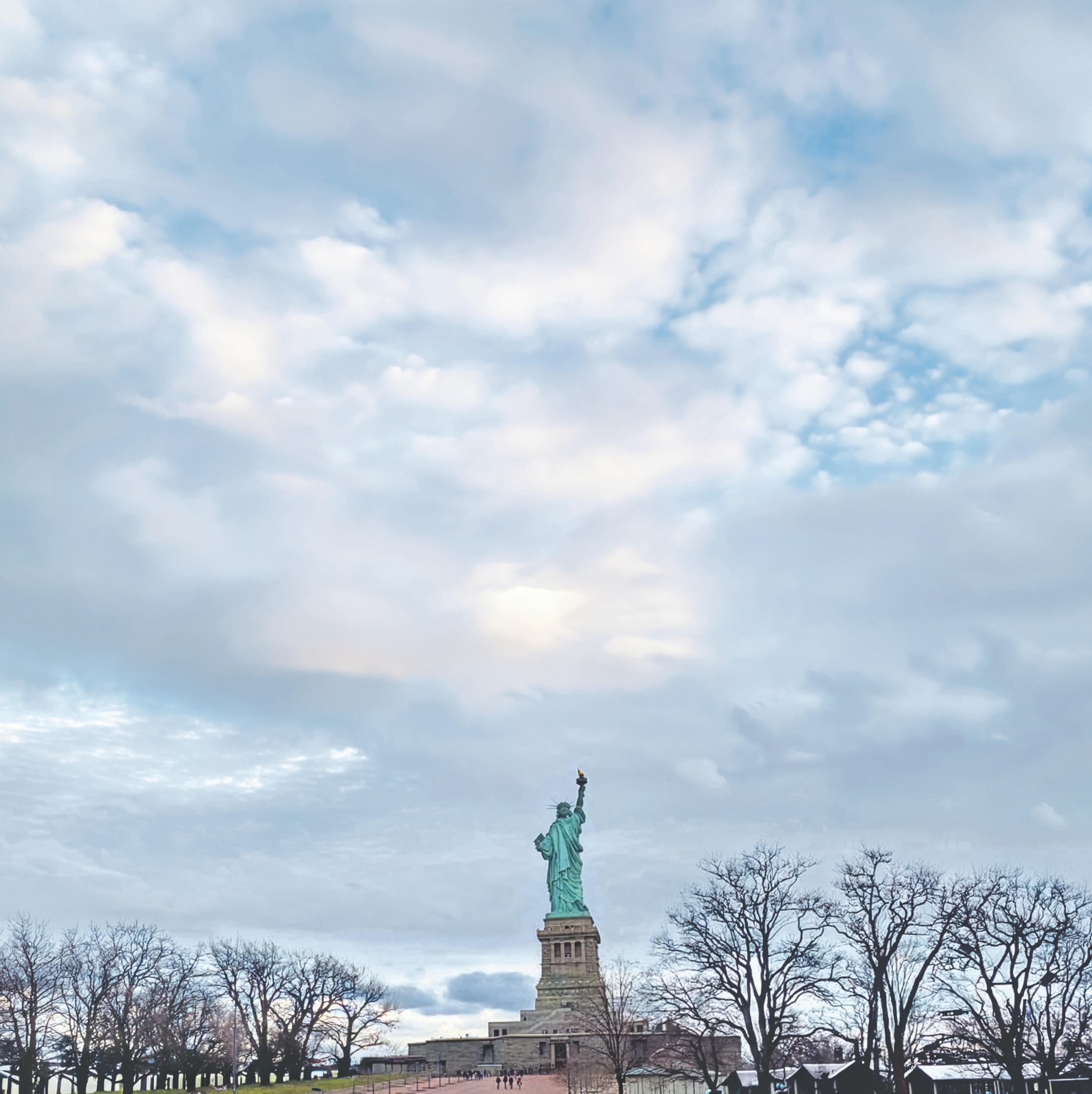
As the U.S. marks its 250th anniversary, Georgia’s early ban on slavery and the religious debates that followed reveal how faith has shaped the nation’s struggle over freedom.
By LOyALTy JEANAIM CRAIG NEWMARK Graduate School of Journalism Intern
America250 is in full swing. Congress launched a yearlong initiative to commemorate the 250th anniversary of the Declaration of Independence by encouraging Americans to observe the country’s founding through education, community events, and civic programming.
But not all Americans are feeling the festive spirit.
For years, Black Americans have debated whether the anniversary of the nation’s founding is something to celebrate.
“How is the country free when the people ain’t free?” said Rev. Jalesha Bass, digital minister at Double Love Experience Church. “How can we be free if everybody ain’t free?”
Bass, a Houston, Texas, native, said July 4 is a painful reminder that America’s founding ideals have not always been extended equally to everyone.
“We were the last to receive freedom. That’s what I think about.”
Georgia’s history offers a window into a larger American debate over freedom. Long before the Declaration of Independence was signed, religious leaders in the colony argued both for and against slavery, revealing how faith has been used to advance—and undermine—the nation’s founding ideals. That tension continued after emancipation, as abolitionists, educators, and faith leaders worked to expand the promise of liberty to those who had been excluded from it.
The Declaration famously states: “We hold these truths to be
self-evident, that all men are created equal, that they are endowed by their Creator with certain unalienable Rights, that among these are Life, Liberty and the pursuit of Happiness.”
The Declaration’s promise of liberty, written while slavery remained legal throughout the colonies, continues to evoke conflicting emotions for many Black Americans. Yet, decades before these words were ever written, Georgia was founded on similar ideals.
When Georgia was chartered by King George III in 1732, it was the only British North American colony to explicitly prohibit slavery. The effort to establish Georgia as a slavefree economy was largely led by its founder, Gen. James Oglethorpe. Oglethorpe was formerly involved in the slave trade before becoming an outspoken opponent of slavery, motivated by moral and religious convictions. He argued that slavery violated England’s constitutional and Christian ideals, a rare claim at a time when Britain’s economic survival depended on the Atlantic slave trade. In a private letter to fellow abolitionist Granville Sharp on Oct. 13, 1776, Oglethorpe reflected on the colony’s founding:
“My friends and I settled the colony of Georgia…We would not [allow] slavery (which is against the Gospel, as well as the fundamental law of England) to be authorized under our authority; we refused, as Trustees, to make a law permitting such a horrid crime.”
The colony was an experiment to prove that a viable economy could be established without slave labor. For nearly two decades, the trustees held firm to that vision.
But the experiment ultimately succumbed to economic pressure.

Colonists repeatedly petitioned to legalize slavery, arguing that they could not compete with neighboring colonies that relied on slave labor.
David Mitchell, executive director of the Atlanta Preservation Center, said the colony’s ideals caved once economic interests became a point of tension.
“As soon as you have economic challenges, all of a sudden, maybe slavery ain’t that bad. Maybe we can do it just a little bit. But once you open a door, you can’t close it. Especially once someone makes a bunch of money.”
Influential evangelical preacher George Whitefield argued that enslaved labor was necessary to sustain his Bethesda Orphan House. His support helped pave the way for slavery’s legalization in Georgia in 1751.
“Faith has been a phenomenal shield to do a lot of s*** for a long time and not be held accountable”,
Mitchell said. “People often say, ‘they’ll have to answer to God’. But I’d like some people to answer to the law. I’d like some people to answer to ethics. I’d like some people to answer to humanity.”
The competing religious visions of Oglethorpe and Whitefield foreshadowed a debate that would continue long after slavery ended: whether faith would be used to defend existing systems of power or to expand the promise of freedom.
After the Civil War, faith continued to shape the fight for freedom in different ways.
Founded in 1862, the Penn Center was the first school in the South for formerly enslaved people. Supported by Quakers, missionaries and other abolitionists, the school represented people putting their religious convictions into practice, said Robert Adams, the center’s executive director.
“Mind you, this area was surrounded by the Confederacy,” Adams said. “So there was no guarantee that this experiment was going to work. There was no guarantee they were going to walk out of there alive. But it attracted incredible people like Harriet Tubman to the region.”
Mitchell said preserving more pieces of history gives future generations more opportunities to tell diverse stories rather than relying on a single narrative.
“Humanity deserves to be preserved,” Mitchell said.
As the nation continues to honor its 250th anniversary, Adams believes the ideals celebrated on July 4 belong to every American, especially those who fought to be included.
“While I understand the reluctance and the suspicion of July 4, I’m not going to concede it. I’m not going to concede anything in the American experience to anybody else.”
By DONNELL SUGGS
MARIETTA,
GA. - Inside the gym at Wheeler High School, to the right of large yellow letters that read “Wheeler Wildcats,” was a scoreboard. Months from the start of the basketball season, the scoreboard had only one job to do on this day: reflect the attitude of the guest of honor.
The score was 45-47, and the team fouls and timeouts were set to 2 0 and 2 6 for either side.
The President of the United States arrived at the Cobb County school on the afternoon of Wednesday, July 22, 2026. The President was in the Peach State, specifically in Cobb County, to talk about Trump Accounts, a government-backed investment account for families with small children. He managed to spend the majority of his time behind the podium on stage talking about everything from the war in Iran, which he referred to as a “skirmish,” Georgia Senator Jon Ossoff, who he called a Peewee Herman impersonator, Venezuela, oil prices, former United States President Joseph R. Biden, former United States President Barack Hussein Obama, and inherited the worst economy in “the history of this country” when he was reelected in 2024 and took office in January 2025.
Trump’s accounts didn’t make the first 25 minutes of his speech. But the affairs of the state of Georgia sure did. The President did mention the savings accounts before he left the stage.
Politics, particularly national politics, have found a home in Georgia. From crucial United States Senate seats up for grabs (See: Ossoff v. Collins 2026), to who will be the next governor of an all-important battleground state (See: Bottoms v. Jackson 2026), what happens in Georgia politics affects what takes place in Washington, D.C.
The president spoke about jobs in Georgia, referring to Gwinnett County, where a factory is being built and will provide new jobs as “Gwinnett, Georgia.” That is understandable since he doesn’t spend a lot of time in North Atlanta, Metro Atlanta, or anywhere else in the state. The last time a large crowd

met to greet (or jeer) the President it was during the 2024 presidential campaign. A lame duck president at the moment, upon making his way on stage, Trump joked that he was announcing his intentions of running for president again. He knows how important securing political power in Georgia is for the Republican Party.
In anticipation of the president’s visit, dozens of people lined along Holt Road holding and waving signs that read “If he had a heart we’d bless it,” “Make America Kind Again,” and“Y’all Means All.” Georgia State Patrol, Cobb County Sheriff Department, and Cobb County Police Department vehicles also lined the road around the school and miles from the school in anticipation of Trump’s arrival. People also set up tables where they sold MAGA hats and t-shirts.
The atmosphere reminded this reporter of the times Trump campaigned in Georgia during the 2024
presidential campaign. Cobb County, though increasingly liberal year after year, remains a Republican stronghold, so it will always make sense for him to make a stop in what he and some of his guests for the day call “Trump Country.”
This may be one reason Trump decided to speak about Trump Accounts in Cobb County, the third-largest county in the state by population, rather than in Fulton County, the largest county in the state.
Republican State Senators, State Representatives, and former politicians took the stage to speak about the campaigns they are currently involved in, and then they mentioned Trump Accounts. That list includes former Senator Kelly Loeffler, Tim Fleming, and Greg Dolezal, who are running for secretary of state and lieutenant governor, respectively.
Dolezal, who spoke the longest, said the current Presidential Administration and the Republican
Party are “not only fighting to save America, we’re in a fight to save Western Civilization.”
Republican gubernatorial candidate and businessman Rick Jackson also took the stage at Wheeler.
As he stood side by side with the president, Jackson wore a matching red tie and navy suit. He is in the middle of campaigning for the governor’s seat, but dropped by the school to support Trump Accounts.
“A child’s circumstances may explain where they start, but not where they finish,” Jackson said while explaining why he is in full support of the Trump accounts program. “This is more than an account; it means you are seen, and you are an investment.”
Jackson also thanked Trump and First Lady, Melania Trump, for supporting foster care in the United States. Jackson said the President and his wife have “done more for the foster care system than any other president.”
Jackson did not mention his gubernatorial opponent, former Atlanta Mayor Keisha Lance Bottoms, during his time on stage. He stuck with the theme, at least this time.
“I wasn’t supposed to be here,” he said.
Over the weekend, Jackson made the local news and the culture blogs after stopping by Blackowned restaurant Toast on Lenox to meet with the ownership team. Pictures from that meeting went viral on social media and resulted in some backlash for the Black business owners. All it seems to have done is become free publicity for Jackson’s campaign.
Jackson may have attempted to alter his message by spending time in Black-owned businesses, he visited a barbershop last week, but his message to voters was clear when he was on stage with the current President of the United States.
“I’m going to be this guy’s favorite governor,” said Jackson.
Both Jackson and Bottoms have been campaigning lately, with Jackson holding a small rally in Cleveland, Georgia, last week, and Bottoms in Savannah. The first debate between the candidates has not been announced as yet.
Trump said Georgia has very qualified Republican candidates running for office, but if they don’t win, it doesn’t matter. “We have a lot of great candidates here, and they have to win by a lot, otherwise we’re going Communist.”
A few moments later, referring to Communism, the President said, “With Communism, everything goes to shit.”
Along with adult and teenage Trump supporters wearing MAGA hats, t-shirts, and buttons, there were children sitting on their parents’ laps. The joke, punctuated with a curse word, elicited loud pockets of laughter and applause.
Former Atlanta Braves manager Brian Snitker and current Atlanta Braves executive Mike Plant took the stage alongside the President. Snither, a World Series winner and longtime baseball man, welcomed Trump to Cobb County.
“Thank you, Mr. President, and welcome to Marietta. As you can see, Braves Country is a real thing,” Snitker, also wearing a red tie, said.
By JULIENNE LOUIS-ANDERSON
For the past several days, social media has been consumed with criticism of Jay-Z. Across timelines and platforms, people have debated his comments, questioned his legacy, and argued over whether his partnership with Target insulted the very audience that helped build his career.
The outrage has been loud, persistent, and impossible to ignore. But honestly, I’m a little surprised people aren’t just as angry at BET, a.k.a. Black Entertainment Television.
The 2026 BET Awards, held on June 28, gave viewers almost everything they wanted. The performances landed, Lauryn Hill got a long-overdue tribute, and Janet Jackson honored Teyana Taylor with the Icon Award. After years of criticism, the show felt like a return to form.
But one thing was noticeably absent: any acknowledgment of the dire, dangerous and urgent political moment Black America is in. Not once during the three-and-a-half-hour broadcast did a host, presenter, performer, or award recipient encourage viewers to vote, check their registration, or prepare for this fall’s elections.
Gag Order at BET?
And political commentator Lynae Vanee said BET officials told her that politics would not be part of this year’s Awards. This represents more than a programming choice. It signals a shift in what one of Black America’s largest cultural platforms will or won’t do with its power.
The timing is alarming. This year’s midterm elections are pivotal, with control of Congress at stake and President Donald Trump openly hostile to the Black community’s interests. At the local level, voters will elect officials who make decisions that shape everyday life for millions of Black Americans: how schools are funded, what public health investments are made, and who gets access to the ballot box.
Contrary to its acronym, BET has been more than an entertainment network for Black people. It has used its cultural influence to educate Black audiences, elevate social issues, and encourage political participation.
During the 2024 BET Awards, host Taraji P. Henson warned viewers about Project 2025. Last year, in her
acceptance speech, Doechii mentioned the war in Gaza, Trump’s immigration raids, and the government’s threats to LGBTQ+ communities. Whether audiences agreed with those messages or not, the BET stage has often been part of the long tradition of connecting Black culture to Black civic life. This year, that tradition disappeared. And that matters. nce most people do not research every judicial race or legislative issue, they rely on trusted voices to help determine what deserves their attention.
A simple reminder from a beloved artist that an election is approaching can lower the psychological and cognitive barriers to participation and bring casual voters to the polls.
Political scientists describe this phenomenon as heuristic shortcuts. Which brings us back to the outrage surrounding Jay-Z, a self-made billionaire and arguably the most influential artist in hip-hop history.
‘They Say I Sold Out’
In June, the rapper teamed up with Target for the 30th anniversary of his album, “The Blueprint.” Target sponsored a yearlong tour and took preorders for an exclusive, special-edition print of the album on white vinyl. But the partnership raised eyebrows: last year, Black activists called for a nationwide boycott of Target over its decision to end key diversity, equity, and inclusion programs following Trump’s 2024 election.
Critics accused Jay-Z of profiting from a company they believe turned its back on the Black community to appease Trump. But Jay-Z clapped back during his record-breaking run of shows in New York City last week.
“They say I sold out,” he told the crowd. “Yeah, I did sell out. Three nights. I sold Yankee Stadium the hell out.”
Many fans weren’t buying it. They flooded social media with accusations that Jay-Z had abandoned the community that helped build his empire.
Whether those criticisms are fair isn’t the point. The uproar itself is.
Black audiences clearly believe cultural icons wield influence beyond music. If that’s true, shouldn’t one of Black America’s most influential cultural institutions be held to the same standard?
Conversations around civic engagement rarely began with politicians; I witnessed this firsthand while
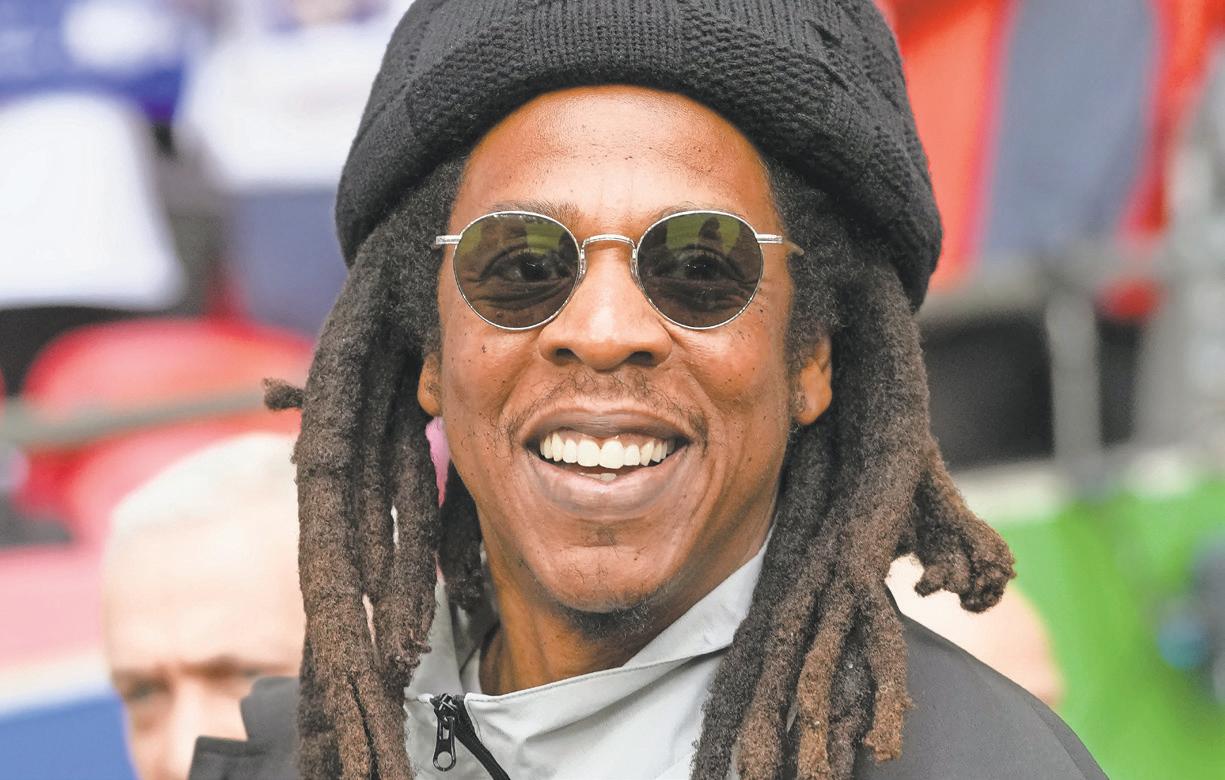
As social media attacks Jay-Z for his collaboration with Target — which was subject to a Black consumer boycott over its revocation of DEI policies, ostensibly to capitulate to Donald Trump — the author wonders why no one is upset with BET for purportedly quashing political speech during its awards show late last month. (AP Photo/Kirsty Wigglesworth, File)
working with high schoolers to increase their interest in the democratic process during the 2024 presidential election. I began with trusted celebrities, telling them Cardi B., Meg Thee Stallion, LeBron James, and Beyonce all supported former Vice President Kamala Harris during her presidential run against Trump.
Politicians recruit celebrities because they understand these heuristic shortcuts influence voters of every age. Entertainment has never existed separately from politics in Black America. That’s what made the silence during this year’s BET Awards feel so significant.
Bought and Bossed?
It also raises a broader question about whether Black media itself has sold out.
Last year, Skydance Media completed its multibillion-dollar acquisition of Paramount, BET’s parent company. Billionaire David Ellison, whose family has longstanding ties to Trump, placed the winning bid.
Critics have correctly raised concerns that billionaire ownership narrows the range of acceptable political conversation. This is sometimes through direct censorship but also through increased editorial caution and shifting corporate priorities. Senator Bernie Sanders outright stated the buyout leads to censorship, which ultimately impedes freedom of speech.
Perhaps that helps explain why political commentator Lynae Vanee said BET officials told her that politics would not be part of this year’s Awards. This represents more than a programming choice. It signals a shift in what one of Black America’s largest cultural platforms will and will not do
with its power.
There’s a famous Black saying: “To whom much is given, much is required.” With tens of millions of viewers, tens of millions of dollars in annual revenue, and an influence that spans decades, BET was built with the support of the Black community. As an institution, however, it has always meant more than entertainment.
Since it went on air in 1980, BET has evolved into a space where our communities find information, solidarity, and a sense of collective purpose. And for generations, Black culture inspires us, but policy shapes the conditions under which we live.
Entertainers and activists, from Paul Robeson to Harry Belafonte to Taraji B. Henson have understood this. Until recently, so had BET.
The BET Awards celebrated Black excellence. But as November approaches, excellence alone isn’t enough. One of Black America’s most influential stages had an opportunity to remind millions that local elections matter, that midterms matter, that democracy still requires our participation. Instead, it apparently chose silence.
If that silence is the future of Black media, then what’s at stake isn’t just one awards show. It’s whether our greatest cultural institutions, like BET, and influential artists, like Jay-Z, will continue to serve Black communities—or simply entertain them.
Julienne Louis-Anderson is a former educator who writes about the intersection of culture and politics with education and human development. She is also a Public Voices Fellow of The OpEd Project in partnership with the National Black Child Development Institute.
FOUNDED May 11, 1966
FOUNDER/EDITOR
Ed Clayton Immortalis Memoria
PUBLISHER/EDITOR
J. Lowell Ware Immortalis Memoria
The Atlanta Voice honors the life of J. Lowell Ware.
PUBLISHER Janis Ware
PRESIDENT/
GENERAL MANAGER
James A. Washington 2018-2024
COO Richard Dunn rdunn@theatlantavoice.com
DEVELOPMENT SPECIALIST
Jazmine Brazier jbrazier@theatlantavoice.com
EXECUTIVE ASSISTANT TO PUBLISHER
Chia Suggs csuggs@theatlantavoice.com
EDITOR IN CHIEF Donnell Suggs editor@theatlantavoice.com
GENERAL ASSIGNMENT REPORTERS
Laura Nwogu lnwogu@theatlantavoice.com Noah Washington nwashington@theatlantavoice.com
BUSINESS REPORTER
Tabius H. McCoy tmccoy@theatlantavoice.com
SPORTS REPORTER
Tarohn Finley tfinley@theatlantavoice.com
EDITOR AT LARGE Stan Washington swashington@theatlantavoice.com
ADVERTISING, SALES & CIRCULATION
ADVERTISING ADMINISTRATOR
Chia Suggs advertising@theatlantavoice.com
SALES
RDW Jackson rdwadman@gmail.com
SUBMISSIONS
editor@theatlantavoice.com
DIRECTOR OF PUBLIC RELATIONS
Martel Sharpe msharpe@theatlantavoice.com
CONTACT INFORMATION
633 Pryor Street, S.W. Atlanta, GA 30312 Office: 404-524-6426 info@theatlantavoice.com


SPONSORED BY JPMORGANCHASE
As you make your summer travel plans this year, or perhaps you’ve already hit the road or you’re on your way to the airport, one thing to keep in mind – without putting too much of a damper on your trip – is to stay financially vigilant when finalizing your vacation plans.
The travel and events sector is especially susceptible for fraud and scams as people are looking for deals in locations that might be unfamiliar, with bad actors savvier than ever when it comes to separating travelers from their money. Once travelers figure out their plans, they’re ready to hand over the money to make their dream vacations happen – and scammers are more than happy to take it.
Lynette Jackson, a community manager in Atlanta, offers these tips to help you avoid the latest and most common travel scams so you can relax and enjoy your trip.
Vacation rental scams
So you’ve found a great house on a vacation rental website and email the property through the website. You might have received a call back from the “owner,” who asked you to send your deposit through Zelle or another peer-to-peer app. The “owner” will often pressure you into sending a deposit to hold the property, saying there’s a lot of demand for the location, and may ask to move the conversation from the official website to a private messaging app
As your trip gets closer, you might reach out to confirm the details or assume all is well and travel to the property at the start of your trip. That’s when you discover the location is already booked, not available to rent or doesn’t exist at all.
The listing you saw could have been fake, or a fake phone number was posted to a real listing, and the true owner has no idea about your reservation. Either way, you’re stuck without lodging and your payment, with little chance of getting your money back.
Most major property rental sites offer fraud guarantees, but only if you pay and communicate with the owners through the site. To avoid lodging scams, try to see properties in person if possible, read reviews from other travelers, and pay through the official platform. Sending deposits through wire transfers or P2P apps is like sending cash -- once you send it you may not be able to get it back.
Unless you’ve won a legitimate contest or sweepstakes – and even those should be examined –there’s no such thing as a free vacation. If you get a call, text, email or other notification that you’ve won a free vacation, it may be a scam, especially if you don’t remember entering a contest. Watch out for automated calls or texts offering free vacations or “vacation deals.” There may not be a vacation package available at all, or you’ll be asked to pay processing fees, taxes and other costs to claim your “free” trip, which might include substandard accommodations.
If you did enter a contest and are told you’re the winner, you won’t be asked to send money to claim your prize. The Federal Trade Commission is a good resource for information on recognizing legitimate versus fraudulent contests.

If you hear about a charter flight or other private flight deal to a destination, sometimes including a tour or hotel stay, be extra careful. Too many would-be travelers find out after paying their money that the flight, and sometimes the entire trip, is nonexistent.
The U.S. Department of Transportation maintains updated lists of approved charter flights so you can make sure the company you’re considering is legitimate.
The event ticket industry is ripe for scammers. You might find an amazing deal for a sold-out show on social media, send money to the seller and never hear from them again. Not only do you not have concert tickets, there’s also no way to get your money back.
While some social media sellers might be legitimate, the best sources for ticket deals are verified resale sites that handle transactions and guarantee authenticity. If something goes wrong, there’s a digital
“paper trail” that can help you get your money back.
While even the most prepared consumers can fall victim to a well-executed scam, remember these tips to protect your vacation plans.
• Zelle and other P2P payment apps should be reserved for family, friends and businesses you know and trust. Treat your transactions like cash -- once scammers get the money, you may not get it back.
• Scammers are advertising on social media and social marketplaces. Whenever possible, shop through official websites and be cautious of deals that seem too good to be true before sending any money.
• Scammers can make caller ID, emails and texts display as messages from your bank or other businesses. If you are ever unsure, end the conversation and reach out to the company directly through their official website or call the number on the back of your card
For more financial health tips,
visit chase.com/security.
For informational/educational purposes only: Views and strategies described in this article or provided via links may not be appropriate for everyone and are not intended as specific advice/recommendation for any business. Information has been obtained from sources believed to be reliable, but JPMorgan Chase & Co. or its affiliates and/or subsidiaries do not warrant its completeness or accuracy. The material is not intended to provide legal, tax, or financial advice or to indicate the availability or suitability of any JPMorgan Chase Bank, N.A. product or service. You should carefully consider your needs and objectives before making any decisions and consult the appropriate professional(s). Outlooks and past performance are not guarantees of future results. JPMorgan Chase & Co. and its affiliates are not responsible for, and do not provide or endorse third party products, services, or other content. Deposit products provided by JPMorgan Chase Bank, N.A. Member FDIC. Equal Opportunity Lender. © 2026 JPMorgan Chase & Co.
By NOAH WASHINGTON
Change is coming to UNCF, according to the nonprofit’s leadership.
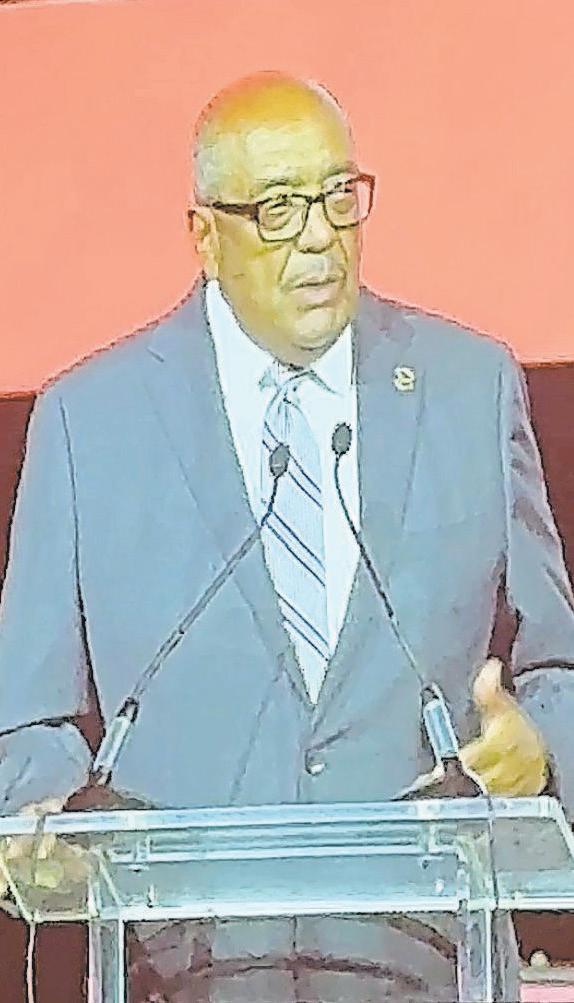
UNCF’s board chair, Milton H. Jones Jr. announced a coming leadership transition for the organization, telling the Triumph Ballroom crowd that Dr. Michael L. Lomax’s more than two decades at the helm will end with the same deliberateness that has defined his presidency.
“In every conversation that he and I have shared about this moment, Dr. Lomax has returned to the same commitment, an orderly transition in a successor position, not merely to sustain UNCF’s momentum, but to accelerate it,” said Milton H. Jones Jr., chairman of UNCF’s board of directors, addressed Lomax directly. “On behalf of the board, the staff, our member institutions, and every student whose life your work has touched, thank you.”
Lomax’s tenure spans more than five decades in HBCU life. A Morehouse College graduate who returned to teach there and at Spelman for more than 20 years, he later chaired the Fulton County Board of Commissioners as the first African American elected to that post, before leading Dillard

University and then becoming UNCF’s president and CEO in 2004. Under his leadership, UNCF has raised more than $4 billion dollars and helped more than 300,000 students earn college degrees, according to the organization.
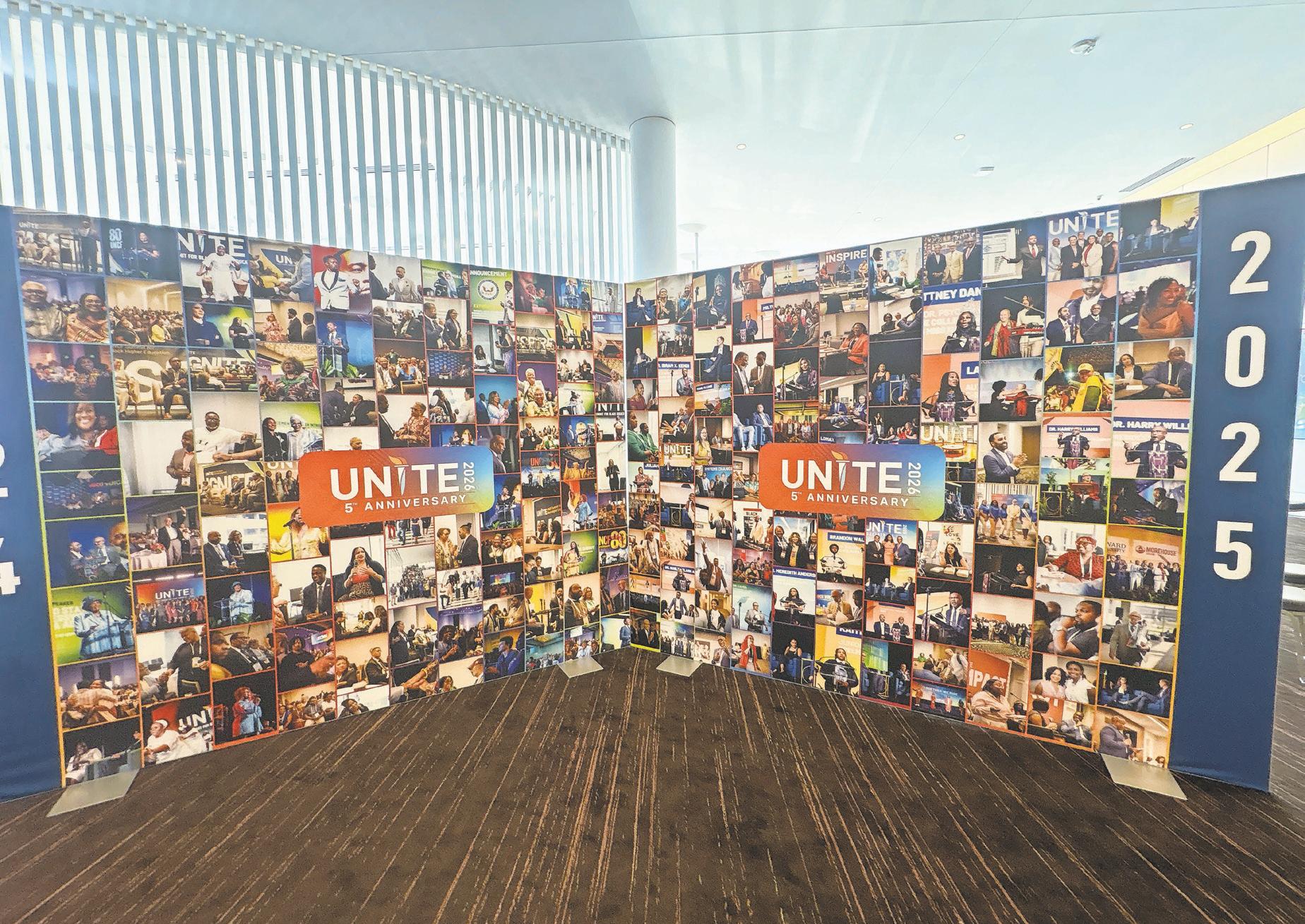
The 5th annual UNITE conference kicked off on July 20, 2026, at
the Signia by Hilton Atlanta, opening with Mayor Andre Dickens welcoming attendees to a city he described as shaped by Black vision and institution-building. Dr. Harold L. Martin Sr., chancellor emeritus of North Carolina A&T State University, delivered the night’s commencement address.
The evening also brought an update on Project Acclaim, the student-managed investment initiative UNCF launched in partnership with Adage Capital Management.
Dr. Shawn Thomas, director of investment leadership programs and Project Acclaim lead at UNCF, said the program’s first year gave two HBCUs, Morehouse College and Howard University, $4 million each in real capital to invest. By the end of the academic year, Thomas said Morehouse’s portfolio had grown to $4.9 million, while Howard’s reached $4.92 million.
“It is important to note that these students were not participating in simulations. They were not participating in virtual platforms,” Thomas said. “They were managing real capital, conducting research, defending investment decisions, and experiencing the responsibility of institutional asset management.”
Phillip Gross, co-founder and managing director of Adage Capital Management, said the firm’s bet on HBCU students paid off. “Rather than creating an environment of equal access to education, we wanted to create an environment of exceptional access to education,” Gross said.
Gross said the program has since grown to include Morgan State University and Florida A&M University, and announced two new steps for Project Acclaim. UNCF will open applications for a third cohort of institutions this year and will launch the Project Acclaim Seed Grant, a new funding pathway offering up to $350,000 over two years to at least six additional schools over the next three years to help them adopt the program’s curriculum model and build their own
student-managed funds.
“Our ultimate goal is simple,” Gross said. “To build a pathway to asset management to every HBCU in the country.”
Lomax, reflecting on his tenure in a roundtable conversation, returned to 2020 as the year that tested UNCF the most. As the pandemic forced the organization to cancel a slate of events, Lomax said the staff braced for a shortfall against that year’s $80 million fundraising goal.
“We kept everybody’s insurance, and we rolled up our sleeves, and we got to work,” Lomax said, describing the decision to retain every employee while he took a 40% pay cut of his own.
UNCF ultimately raised $250 million that year, more than three times its target. Lomax said the surge did not come solely from the organization’s largest donors.
“They came from the people we send our letters to,” he said. “We raised three times the amount from them. We said something’s happening, and it was really from the bottom up, a groundswell of support.”
As UNCF prepares for its next chapter, that same call landed in Stacey Abrams’s opening charge to the room, a reminder that the work belongs to more than any one leader or institution. Legacy, she said, is not inherited but built. “It is speaking up for HBCUs. It is investing in their leaders and investing in their futures,” Abrams said. “Together we will fight for HBCUs because that is how we fight for America.”
By LAURA NWOGU
Part of Atlanta’s charm
lies in its diverse food scene, from the rich culture to the bold flavors.
The saying often goes that “Atlanta isn’t a real place,” and what makes it unique is the bustling dining and drinking spots on every corner of the city’s neighborhoods, built to satisfy every palate. Lucky for locals and tourists alike,
there’s never a shortage of places to visit, especially when new businesses are rolling in every month.
However, the landscape of the restaurant industry is constantly in flux, and with grand openings, the city is also seeing a wave of closures from small businesses to legacy and popular restaurants.
Here is a roundup of updates on your local favorites
Local UpdatesApt 4B
2293 Peachtree Rd Unit B
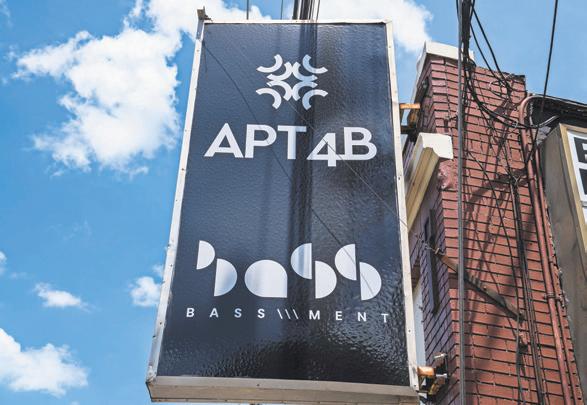
After six years in Buckhead, the popular Caribbean restaurant Apt 4B has announced it will close its original location. The restaurant’s owners announced the closure on July 15, letting guests know they would be throwing one last party that same weekend. But the good news is that it isn’t goodbye, just see you later.
The owners are planning a new location for the spot known for its
upscale Afro-Caribbean concept featuring live weekly DJs and a large collection of vinyl records in a space reminiscent of an eclectic New York City apartment. In the interim, some of its popular dishes will be served at sister restaurants J’ouvert Caribbean Kitchen and Bar and Station 11.
Mary Mac’s Tea Room
224 Ponce De Leon Ave NE
Change is inevitable, and for Mary Mac’s Tea Room, that change is coming 80 years later. For the first time ever, the iconic and beloved Southern restaurant is accepting reservations. The restaurant made the announcement on Instagram, stating, “We never want the worry of waiting for a table to keep you from visiting Atlanta’s Dining Room.” Now locals and tourists can make a planned visit to indulge in Mary Mac’s crispy fried chicken, country fried steak, and
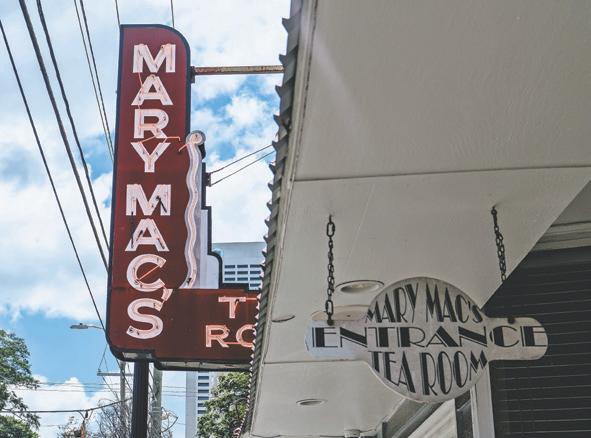
For the first time ever, the iconic and beloved Southern restaurant is accepting reservations. Photo by
sweet potato pie. Reservations are available daily from 11:00 AM to 8:30 PM.
Che Butter Jonez
627 E College Ave Ste D, Decatur
Che Butter Jonez has finally moved locations, starting a new chapter in Decatur after making its mark on Lavista Road. The burger joint, widely hailed as one of the best spots for burgers in the
city and featured on the Food Network, is currently in its soft-opening phase after opening its doors on July 8. The flavors are still the same as they serve up their popular menu items like the lamb burger and patty melt.
Maple Street Biscuit Company (West Midtown)
1085 Howell Mill Rd, Atlanta, GA 30318
West Midtown continues to experience a wave of closures, and Maple Street Biscuit Company’s Howell Mill location is the next victim. The restaurant, known for its handcrafted biscuit sandwiches, suddenly closed on Monday, July 20. It marks the end of the chain’s presence along the city’s perimeter, with other locations in Alpharetta, Woodstock, and Kennesaw. Workers were seen taking down the restaurant’s signs on Monday afternoon.


By TAROHN FINLEy Report for America Corp
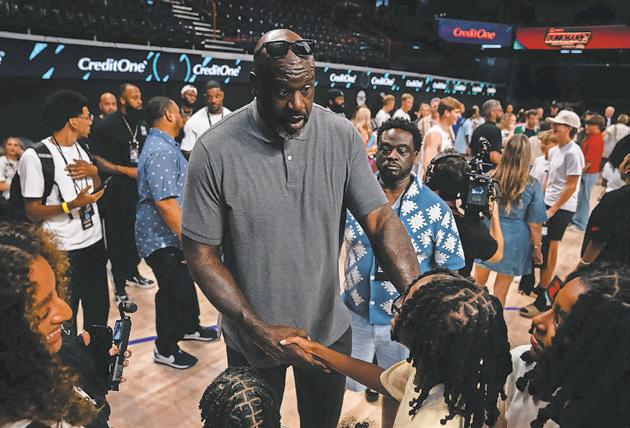
Shaquille O’Neal, the former NBA All-Star, fourtime champion, and basketball hall of famer known for his 7-foot-1 frame and powerful dunks that once ripped down backboards, is on a mission to prove fans still want to watch high-level dunking.
The NBA Slam Dunk Contest has faced criticism in recent years for its lack of star power, with the event often featuring first- or second-year players or journeymen rather than the league’s biggest names. Fans have also expressed disappointment with the creativity and difficulty of the dunks.
When O’Neal launched DUNKMAN, a professional dunk league, his goal was to showcase the world’s
best dunkers — even if that meant looking beyond the NBA.
“These guys do things that NBA players can’t and won’t do,” O’Neal said of why he created the league.
O’Neal also wanted to make the league accessible to fans, offering free admission on a first-come, first-served basis.
That approach paid off, as a packed house filled Overtime Elite Arena on Tuesday night for DUNKMAN’s inaugural event.
Group A featured Joel Henry, Doug Anderson, Dengxing Chen, Cam Hazzard, Jonathan Edwards, and Shelby McEwen. O’Neal spent much of the night on the sideline congratulating competitors after their performances, while Golden State Warriors forward Draymond Green and TNT Sports’ Adam Lefkoe called the
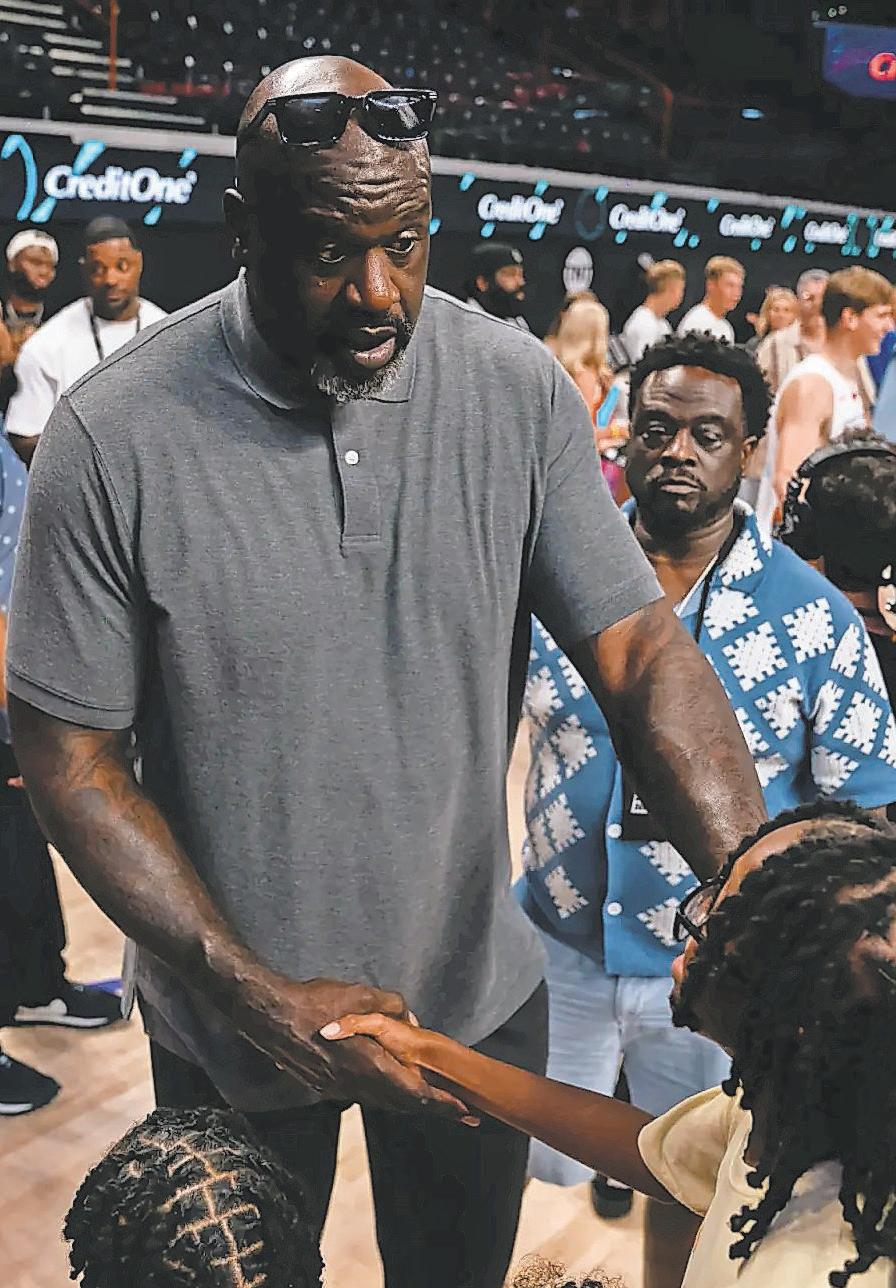

action on TNT and Max.
Cam Hazzard, a 21-year-old from Little Elm, Texas, won the Group A title with an average score of 9.55. He also earned a $35,000 prize after recording the highest-scoring dunk of the night with a signature 360 slam. Hazzard edged finalists Chen and Henry, both of whom successfully jumped over cars during the championship round.
Hazzard, who said classmates used to tease him in high school for calling himself “Hazzardous Dunks,” only began consistently posting his dunks online in recent years. After winning the title, he was still taking it all in.
“It is crazy,” Hazzard said. “This is the toughest group out of them. You have two people jumping over cars and Joel jumping over someone stacked on another person’s shoulders.”
After his interviews, Hazzard stayed to take photos, sign autographs, and interact with fans. He also hinted that he has even more spectacular dunks planned for his next appearance.
“There are things that I had to reserve because I was first, so I couldn’t really show out,” Hazzard said. “You’re going to see some crazy stuff in the championship for sure.”
Hazzard, Chen, and Henry currently rank among the top eight in the World Championship standings. The DUNKMAN World Champion will earn a $500,000 grand prize.
Next week, Tyler Curry, Jonathan Clark, Gustavo Kaakin, Mason Baker, Avante Nichols, and Dillan McCarthy will compete in Group B.

By NOAH WASHINGTON
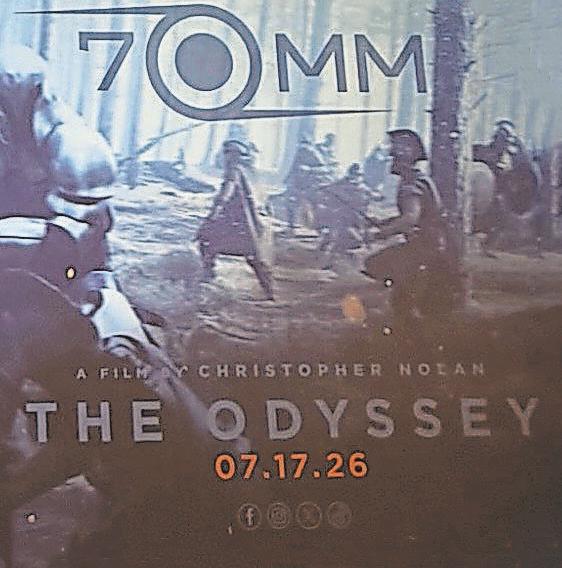
Bold, serene, and dangerous, audiences previewed Christopher Nolan’s latest Greek epic at the historic Tara Theatre this past Monday.
Nolan’s adaptation of Homer’s foundational text arrives in IMAX theaters July 17, following a monthslong marketing campaign built on secrecy, record-breaking presales, and controversy over its casting choices. Advance word suggested a film unafraid to reinterpret its 3,000-year-old source material for a modern audience. That reinterpretation is most visible in the casting of Lupita Nyong’o, rapper Travis Scott, and Corey Hawkins, all three of whom bring new energy to a story usually rendered in marble and myth.
Nyong’o takes on a dual role as Helen of Troy and her twin sister, Clytemnestra, Agamemnon’s wife. Where online speculation ahead of the film’s release framed her casting as historically incongruous, that speculation proves wrong on screen. Nyong’o brings an ethereal beauty to both roles. As Helen, that beauty is complicated by a lazy eye and a scarred face, a striking departure from the “face that launched a thousand ships” framing that has defined the character for centuries. As Clytemnestra, however, the otherworldly glamour is on full display.
Scott, cast as a wandering bard, is a bolder swing. Nolan has said he wanted the bard’s presence to echo how the Odyssey survived for centuries through oral poetry, a tradition he likened to rapping. It’s a clever piece of stunt casting on paper, and one that generated its own share of internet chatter months before the film’s release.
Benny Safdie’s Agamemnon is the film’s most commanding presence, exuding an aura reminiscent of Darth Vader in every scene he’s given, a king whose menace lands as much through stillness as through action.
The Cyclops sequence delivers the film’s most effective tension. Bill Irwin’s Polyphemus picks off Odysseus’s men one by one, and the sequence is genuinely terrifying, a rare stretch where Nolan’s “tactile realism” approach to Greek myth pays off in full.
Elsewhere, the film takes several swings, like Odysseus’s sword, and misses the tension it aims for. Uneven pacing and slower beats tend to drag the film down, but for those looking for a long-movie weekend, the 2hr and 52 minute runtime might be for you.
“The Odyssey” opened in theaters everywhere on July 17.
Notice of Class Action Settlement
Authorized by the U.S. District Court, Eastern District of New York
— Notice of Class Action Settlement —
Si desea leer este aviso en español, llámenos o visite nuestro sitio web.
TO: All merchants in the U.S. who accepted Visa or Mastercard credit or debit cards at any time since December 18, 2020. This notice (“Notice”) is authorized by the Court to inform you about an agreement to settle the equitable relief claims in a class action lawsuit, called In re Payment Card Interchange Fee and Merchant Discount Antitrust Litigation, No. 05-md01720 (BMC)(JAM)(E.D.N.Y.). The lawsuit claims that Visa and Mastercard, separately, and together with certain banks, violated antitrust laws and caused merchants to pay excessive fees for accepting Visa and Mastercard credit and debit cards, including by adopting interchange rules and rates, and other network rules, which the lawsuit has claimed constituted unlawful price fixing, unreasonable restraints of trade, and monopolization.
The defendants say they did nothing wrong. They maintain that their business practices are legal, justified, and the result of independent competition, and have benefitted both merchants and consumers. The Court has not decided who is right because the parties agreed to a settlement, which was preliminarily approved by the Court on June 9, 2026.
A. What Merchants Will Get from the Settlement
During the lawsuit, the Court previously certified an Equitable Relief Class under Federal Rule of Civil Procedure 23(b)(2) and has now preliminarily approved a settlement of the Class claims (the “Rule 23(b)(2) Class Settlement” or “Settlement”). Under the Settlement, Visa and Mastercard have agreed to substantive changes to the Visa and Mastercard rules applicable to merchants who accept their cards as a form of payment.
The Class includes all persons, businesses, and entities that accept any Visa-Branded Cards and/or Mastercard-Branded Cards in the United States at any time during the period between December 18, 2020 and the date of preliminary settlement approval, or June 9, 2026. The Court has set November 16, 2026 as the date for a final approval and fairness hearing (the “Fairness Hearing”) in connection with the Settlement, after members of the Class have had the opportunity to evaluate the Settlement and exercise their rights, as set forth in the Notice. Further information regarding the Settlement and the Fairness Hearing will be posted on www.InterchangeEquitableReliefSettlement.com.
Under the Rule 23(b)(2) Class Settlement, Mastercard and Visa will modify certain rules to preserve, establish, or expand the circumstances in which merchants can, among other things, do the following:
• Decline acceptance of Visa- or Mastercard-Branded Commercial Credit Cards and/or Premium Consumer Credit Cards.
• Surcharge customers a fee for the use of any Visa or Mastercard-Branded Credit Cards, including based on the type of card used (e.g., a different surcharge for rewards and non-rewards cards).
• Offer discounts to customers who do not pay with Visa or Mastercard-Branded Credit Cards, or based on the financial institution that issued the Visa or Mastercard-Branded Credit Card.
• Decline acceptance of Visa or Mastercard-Branded Cards at all outlets that operate under the same trade name or banner, even if that merchant accepts those same cards at outlets that operate under a different trade name or banner.
• Engage in Pilot Programs whereby they accept Visa or Mastercard-Branded Credit Cards at some but not all outlets operating under the same trade name or banner for a limited duration or test out various acceptance, surcharging and discounting options at some but not all outlets operating under the same trade name or banner, including not accepting Commercial or Premium Consumer Credit Cards, for a limited duration.
• Accept some digital wallets at brick-and-mortar locations but decline others and enable some digital wallets for on-line transactions but not enable others, and “steer” among the cards within a digital wallet under the same rules that govern steering among traditional cards.
• Receive the benefit of credit interchange rate reductions: Visa and Mastercard will reduce published and negotiated Credit Card interchange rates for U.S. merchants.
• Receive the benefit of Credit Card interchange rate caps: The Settlement Agreement reduces and caps “Standard” Consumer Credit Card rates at a specified level and otherwise caps Credit Card interchange rates, such that neither Visa nor Mastercard will increase any of its published Credit Card interchange rates above the rates effective as of March 31, 2025 and each will reduce its network-wide average Credit Card interchange rate to or below the specified level.
• Form Merchant Buying Groups that meet certain criteria to negotiate with Visa and Mastercard.
• Receive access to a Merchant Education Program, established and administered under the Settlement Agreement, to help understand and maximize the benefits of the rule changes, including how to effectively “steer” in States that restrict surcharging.
B. Monetary Aspects of the Rule 23(b)(2) Class Settlement
There is no monetary payment to members of the Class in this Settlement. This Rule 23(b)(2) Class Settlement concerns only the Equitable Relief Claims set forth in the lawsuit. Claims for monetary damages arising out of the defendants’ alleged antitrust violations are the subject of a separate settlement for the Rule 23(b)(3) Class. For information concerning the separate Rule 23(b)(3) Cash Settlement Class, please visit the website: www.PaymentCardSettlement.com
The Settlement does provide for Visa and Mastercard to make certain payments into the Rule 23(b)(2) Class Settlement Escrow Account, which money will be used to pay:
The cost of settlement administration and notice, as approved by the Court,
• The cost of Merchant Education Program expenses, as approved by the Court,
• The cost of an Independent Auditor who will ensure that Visa and Mastercard comply with the credit card interchange-rate reduction commitments, and
• Attorneys’ fees and expenses, including any named Class Representative service awards, as approved by the Court.
The money in this fund will be distributed only if the Court grants final approval of the Settlement, and the money for attorneys’ fees and expenses, and service awards to Class Representatives, will be distributed only if the Settlement has become final and all appeals are exhausted, and the Court approves the application for attorneys’ fees and expenses, and Class Representatives’ service awards.
Attorneys’ fees and expenses, and service awards to the Class Representatives: For work done through final approval of the Settlement by the Court, as well as any work they will be required to do in the future, Class Counsel will ask the Court for attorneys’ fees and reimbursement of reasonable and necessary litigation expenses, and any service awards to the named Class Representatives that the Court may award, in an amount not to exceed $206,000,000. The Settlement Agreement requires Visa and Mastercard to pay these fees and expenses separately from the other Settlement financial obligations and they will not reduce any other benefits of the Settlement; members of the Class will not be required to pay any amount toward these fees and expenses.
C. Legal Rights and Options
Merchants who are included in this lawsuit have the legal right to Object to the Settlement. The deadline to object is: September 14, 2026. To learn how to object, visit: www.InterchangeEquitableReliefSettlement.com or call toll-free: 877-318-7713.
Note: You cannot elect to be excluded from the Rule 23(b)(2) Class Settlement.
For more information about these rights and options, visit: www.InterchangeEquitableReliefSettlement.com or call toll-free: 877-318-7713.
D. If the Court Grants Final Approval of the Settlement If the Court grants final approval to the Settlement, members of the Rule 23(b)(2) Class will be bound by the terms of the Settlement and will release all claims against all released parties listed in the Settlement Agreement. The Settlement will resolve and release any claims by payment card acceptors against Visa, Mastercard and other defendants that were or could have been alleged in the lawsuit, including any claims based on interchange or other fees, no-surcharge rules, no-discounting rules, honor-all-cards rules, and any other network rules. The Settlement will also resolve any payment card acceptor claims based upon the future effect of any Visa or Mastercard rules as they were or are in place on December 18, 2020 and up to the Settlement Final Date (as defined in the Settlement Agreement), the modified rules provided for in the Settlement, or any other rules substantially similar to those rules. The release will not bar claims involving certain specified standard commercial disputes arising in the ordinary course of business.
For more information on the release, see the Superseding and Amended Rule 23(b)(2) Class Settlement Agreement at: www.InterchangeEquitableReliefSettlement.com.
E. The Court Hearing About This Settlement
On November 16, 2026 at 11:00 am ET, the Court will hold a hearing to decide whether to approve the proposed Settlement, Class Counsel’s request for attorneys’ fees and expenses, and service awards for the named Class Representatives. The hearing will take place at: United States District Court for the Eastern District of New York
U.S. District Judge Brian M. Cogan 225 Cadman Plaza East Brooklyn, NY 11201
You do not have to attend the Court hearing or hire an attorney, though you may do either at your own expense. The Court appointed the law firms of Hilliard Shadowen LLP; Grant & Eisenhofer P.A.; Freed Kanner London & Millen LLC; and Nussbaum Law Group, P.C. to represent the Class (“Class Counsel”).
F. Questions?
For more information about this case (In re Payment Card Interchange Fee and Merchant Discount Antitrust Litigation, MDL 1720), you may: Call toll-free: 877-318-7713 Visit: www.InterchangeEquitableReliefSettlement.com Write to the Class Administrator:
By TAROHN FINLEy Report for America Corp
Clayton County Public Schools coordinat-
ing supervisor Calleb Obumba first met Green Bay Packers
defensive tackle Devonte Wyatt through a minority youth violence prevention program.
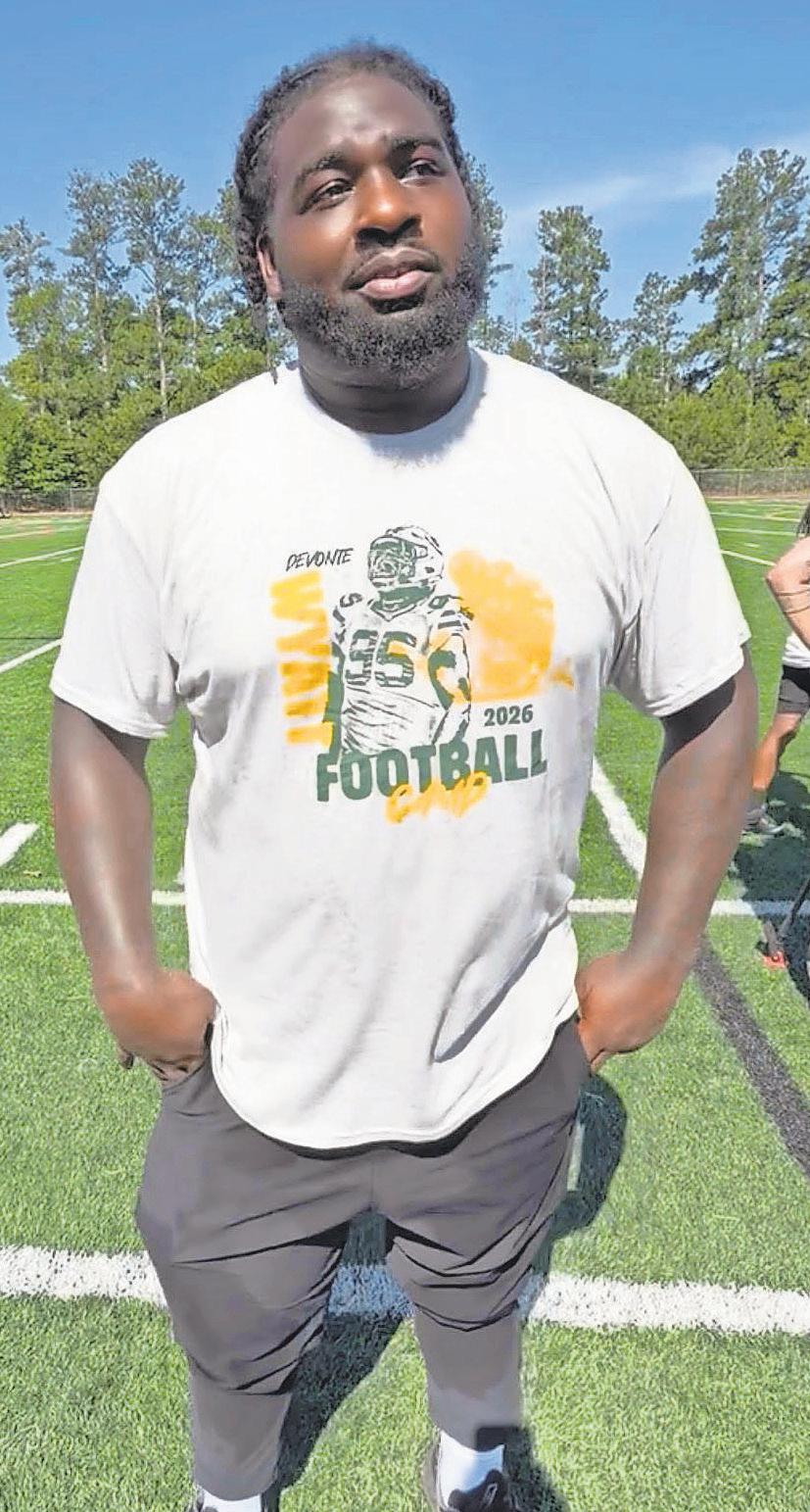
On Saturday, Wyatt shared many of the same lessons he learned from Obumba in high school during his first free youth football camp and the second annual back-to-school bash at Towers High School in Decatur.
“It’s for the younger generation,” Wyatt said about the purpose of hosting the camp. “All you see on the news is young kids killing, robbing or just doing bad things. Camps like this help keep them out of the streets.”
Giving back is especially important to Wyatt because he once played on the same field where the camp was held and never had opportunities like this growing up. Before being selected by the Green Bay Packers in the first round of the 2022 NFL Draft or helping lead the University
of Georgia to its first national championship in 41 years in 2021, the Decatur native starred at Towers High School, graduating in 2017.
Wyatt is the only first-round NFL Draft pick in Towers history and just the school’s third player to reach the NFL.
“My goal is to show the young kids that if I can make it out of Towers, anybody can,” Wyatt said. “If you want to make it out of Decatur, you can. If I can do it, they can do it even better than me.”
Although the camp was designed for children ages 8 to 14, younger children as well as both boys and girls were welcomed to participate. Campers rotated through drills for both linemen and skill-position players.
Most participants wore Wyatt’s camp T-shirt, while others sported Towers football jerseys or Packers jerseys. Watching from the sideline was Philadelphia Eagles defensive tackle Jordan Davis.
Davis, who is one year younger than Wyatt, joined him at Georgia in 2018 after Wyatt spent one
season at Hutchinson Community College. Since then, the two have remained close friends.
“I remember in college we took a groundskeeper’s golf cart for a joyride and ended up breaking the axle,” Davis said. “Me and Devonte picked the golf cart up and put it back where it was so it would look like the next person drove it and broke it. We ended up getting caught and getting in trouble.”
Despite all the fun memories they’ve shared, Davis said his greatest joy has been watching Wyatt grow as a person.
After the drills and races to the end zone, Wyatt and Davis gathered the campers for a final message before they enjoyed lunch and picked up school supplies.
Davis emphasized the importance of dreaming.
“If you can dream it, you can achieve it,” Davis said.
Wyatt focused on the importance of making good decisions and not being influenced by the negative behavior often seen on social media.
“Decision-making is a skill,”
Wyatt said.
After another successful turnout, Wyatt said he plans to continue hosting the event in his hometown for years to come.
“This was the first annual one. I’m going to do a second, third, fourth, fifth, sixth one and keep going until I’m dead and gone, and hopefully it’ll still be going,” Wyatt said.
Obumba believes Wyatt’s impact on the community is significant enough to earn NFL recognition.
“The goal is NFL Man of the Year,” Obumba said. “Not trying to chase it, but letting it happen organically because this community is very important to him. You hear all the negative things that happen around here, but he wants to be that lighthouse, that shining light. I heard a kid call him a neighborhood hero, and he doesn’t take that lightly. He’s intentional about it. He wishes he could come back more, but sometimes it isn’t about your treasures. It’s about your time, talent, and history. Seeing this is a beautiful thing. It really makes me proud.”
By DONNELL SUGGS
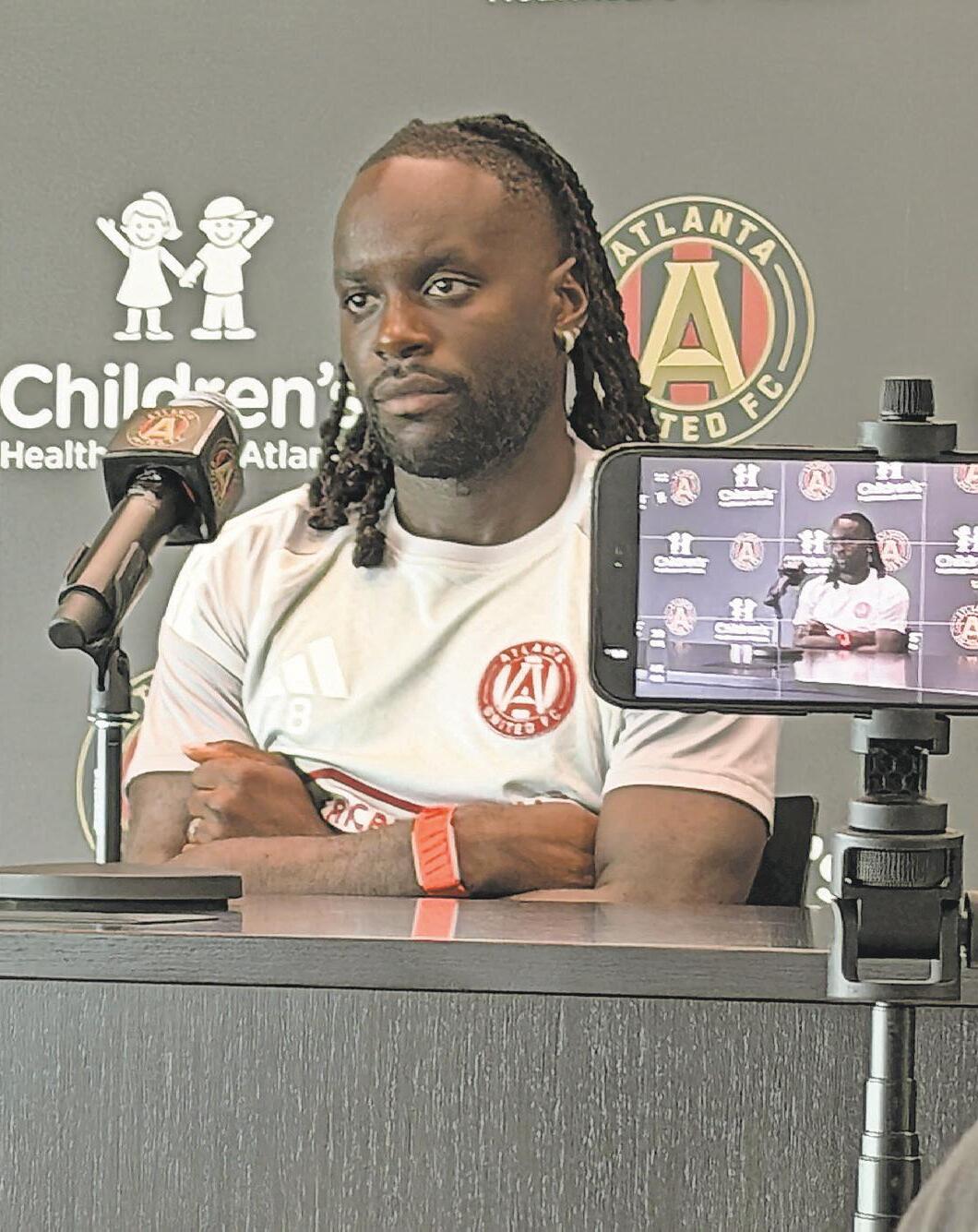
Days after leaving Nashville with another loss on their record, Atlanta United and manager Gerardo “Tata” Martino were back at the Children’s Healthcare of Atlanta Training Center on Tuesday morning. They were working on a game plan for their upcoming game in Charlotte the following day, Wednesday, July 22. The Five Stripes haven’t necessarily played poorly at Bank of America Stadium since 2022; they are 2-2 overall, but they haven’t played well this season on the road, no matter where they have been. That said, the overall mindset and approach is still enthusiastic. At least it is to one of the team’s key players and Martino.
“I’m excited about what’s to come,” said Martino when he was asked if the mounting losses have had an effect on his outlook for the season. “There are many positives that we have seen over 15 games.”
The positives have not necessarily been victories. Atlanta United is currently 3-2-10 overall, and near the bottom of the Eastern Conference standings. The overall mood is that the game in Nashville was a
golden opportunity to earn a point and it slipped through the road team’s hands. Martino said his team was the better and more dominant side during the game, but they allowed that one goal to make a difference. He believes the additions of center-backs Paulo Diaz and Junior Alonso will strengthen the team’s defensive spine going forward. Neither player will travel with the team to Charlotte, so their potential impact will have to be felt at a later date.
Ajani Fortune and Predor Amador, also keys to any success this team has had this season, were not available for the Charlotte game. Amador was out with achilles soreness and Fortune, who left the game in Nashville with a leg injury, but walked off the pitch under his own power, will be out for the next two matches including in Foxboro, Massachusetts, against the New England Revolution.
The manager and former MLS Cup winner, Martino, believes good things are on the horizon despite what it may look like at the moment.
“The attitude is not going to change. For the rest of the season, we want to have that attitude,” Martino said.
Muyumba, usually a happy-go-lucky kind of guy under the worst situations (See: 2026 season), is in agreement with his manager. Despite stating the obvious, he seems like he has a feeling things can still turn around.
“We have to start to get results, but I agree with the coach,” he said. “I am excited about what’s coming up and how we are ultimately going to look in a couple of weeks.”
Muyumba said the Nashville game was proof of what this team can look like. He used the word “progress” to describe the game. Young players like Cooper Sanchez, Matt Edwards, and Will Reilly were playing at a high level, while veterans like Muyumba, Fafa Picault, and Ronald Hernandez played their roles as starters and substitutes, respectively.
If the 2026 Boston Red Sox, 51-48 overall and 10-0 in their last 10 games, are teaching us anything, it’s that a hot streak can change the trajectory of a season. You never know what these next 14 games can prove.
“I think we want to improve and start to win games, get more confidence, and bring more smiles into that locker room,” Muyumba said.


By NOAH WASHINGTON
Before Raphael Bahindwa’s paintings of Pelé and Maradona ever reached the Rialto Center for the Arts, the partnership that put them there started with a conversation at a downtown networking mixer.
Shawn Vinson, owner of The Sun ATL gallery on Edgewood Avenue, said the collaboration began after he joined Central Atlanta Progress, a downtown business group, and met Christopher Duenow of the Rialto at a networking meeting.
“They used to do rotating art exhibitions here before COVID, and then they stopped at COVID, and they’ve done nothing since,” Vinson said. “They started thinking they wanted to start showing art again, just to have something active going on in their theater lobby. And so when he heard that I’m a gallery owner and curator, he asked if I would be interested in doing it, and I said yes right away.”
The Rialto’s first show under the partnership, staged last year, paired photographers Jim Alexander and Sue Ross with jazz photographer and musician Michael Jackson, timed to a planned Joshua Redman performance. Bahindwa’s exhibition is the second.
“This is a great place to show it for people who might not necessarily come over to Edgewood and visit The Sun,” Vinson said. “It’s a theater, it’s performing arts, so it’s the demographic that we want, people who appreciate art.”
Bahindwa’s show, drawn in part from work also on view at The Sun ATL, centers on the theater’s World Cup programming and includes portraits of Pelé and Diego Maradona alongside scenes of children playing soccer. Vinson said the artist had extra paintings from the Sun ATL show that could round out the Rialto installation.
Bahindwa said the exhibition has already drawn notice from home. Democratic Republic of the Congo Ambassador H.E. Yvette Kapinga Ngandu visited the show with her team, he said.
“She saw the old work, and that really felt (special),” Bahindwa said.
For Bahindwa, the exhibition traces back to Vinson’s earlier support, including a show that followed Alexander’s solo exhibition at the Rialto.
“Having people like Shawn from

The Sun ATL, who was actually the one who brought this to me,” Bahindwa said. “We had Jim Alexander before that. He asked, would you be willing to work on something? I’m like, bro, I’m literally cooking something with the World Cup right now because my country is coming. Do you want me to present that? And he’s like, yo, this is gonna be cool. And then now look at us.”
Bahindwa said the reception in Atlanta stood apart from that in other cities where he has had showings.
“In New York, they’re not gonna just give it to you like that. You gotta be a big known artist,” he said.
“Atlanta is different. It’s really different. People really have a different mentality here.”
For Vinson, the Rialto partnership fits into a career that began entirely outside the art world. He worked as a photographer and publicist in the music industry before taking a job as an art handler in 1991, moving to Atlanta in 1993, and opening his first gallery in 1998.
“If you do something long enough, it works out, I suppose,” Vinson said. “It’s all been organic. There was no business plan or master plan from the start. It’s just kind of, I’ve just been going with the flow all this time.”
SENIOR (62+)

Spacious 1-Bedroom Affordable! Rent Based on Annual Income Amenities, Great Location, and Convenient to Marta Please call for detailed information (404) 586-9098

RFP for Folio House Phase 1B located at 143 Alabama St SW, Atlanta, GA. BIDS DUE: July 28, 2026, at 2:00 pm PRE-BID MEETING will be held on site on July 14, 2026, at 9:00 am.
PLANS: Hard Copies of plans available upon request and at subcontractor’s expense from A1 BluePrint (www.a1blue.com), Phone: 404-524-8881 OR for a link contact Linda at Lstache@gormanusa.com. Contact Info: Linda Stache, Gorman & Company, Phone: 608-835-5177
CERTIFICATIONS: SBE/MBE/WBE/EBE/DBE/VBE and a prevailing wage rate project. This project is also NGBS Bronze, Invest Atlanta, Historic and DCA Project










FULTON COUNTY ADVERTISEMENT FOR RFP
Sealed RFP Solicitation for 26RFP1624325A-ST Legal Services for Fulton County Courts Justice Resource Center for Fulton County Superior Court General will be received And accepted by the Department of Purchasing & Contract Compliance via BidNet Direct at https://www.bidnetdirect.com/georgia/fultoncounty on Monday, August 17, 2026. All Proposal(s) submitted must be received no later than 11:00 A.M. local (Eastern) time on the stated due date.
Proposals names will be publicly read at 11:05 a.m., via Zoom. See link noted in Solicitation Document of Section 3.
Scope of Work: Fulton County, Georgia (“County”) The successful consultant will provide general legal information and advice to Fulton County citizens. The Family Law Resource Section and the Senior Legal Services of the Courts Justice Resource Center are designed to primarily assist low to moderate income individuals who ordinarily could not afford an attorney.
The Management Team is looking for a successful consultant to continue to execute and deploy the development and delivery of a Family Law legal consultation program of the Fulton County Courts Justice Resource Center (JRC). The vision is that the Family Law component will continue to function by providing onsite and remote legal consultation sessions on Family Law matters to include assistance with the completion of paperwork for purposes of filing with the Fulton County Superior and Magistrate Court Clerk’s Office. The Management Team is also looking for a successful consultant to continue to execute and deploy the development and delivery of a senior services legal consultation program of the Fulton County Courts Justice Resource Center (JRC). The JRC’s Senior Services component will function in a similar way to the Family Law component in which assistance and information would be provided to seniors (age 60 and over) who wish to educate themselves on legal issues underlying the elder population, such as Wills and Probate (Estate Planning and Guardianship), Landlord and Tenant issues (evictions), Federal and State benefits (Medicaid, Medicare, Social Security), Fraud and Elder Abuse, and Grandparents Rights. As with the family law consultation sessions, the senior services consultation component would not involve representation. The detailed scope of work and technical specifications are outlined in the Scope of Work, Section 4 of this proposal document.
In order to obtain complete information about this solicitation, please click the link below where this document and supporting documents can be downloaded, https://www.bidnetdirect.com/georgia/fultoncounty
Fee: N/A
Contract Term: 1 Year with (4) One-Year Renewal Options.
Pre-Proposal Conference:
A Pre-Proposal Conference will be held via a Web-Conference.
Date: Tuesday, August 4, 2026 Time: 10:00 A.M. Eastern Standard Time Zoom Link: https://zoom.us/j/97814100326?pwd=m1wnOm8cELMz48w7Ec74a0wUGBYVOw.1
Meeting ID: 978 1410 0326 Passcode: 644190 One tap mobile +14702509358,97814100326#,*644190#US(Atlanta) +14703812552,978141003 26#,*644190# US (Atlanta)
If you have any questions regarding this project please contact Shondra Turner, APA, (404) 612- 1100 or Email: shondra.turner@fultoncountyga.gov. Fulton County reserves the right to accept or reject any and all applications and to waive technicalities.